Biological Safety Evaluation and Surface Modification of Biocompatible Ti–15Zr–4Nb Alloy

Abstract
1. Introduction
2. Experimental Method
2.1. Test Specimens
2.2. Animals, Cells, and Bacteria
2.3. Biological Safety Evaluation Tests
2.4. Implantation of Pure Metals and Ni–Ti and High-V-Containing Ti Alloys in Rats
2.5. Implantation of Dental Implant and Grit-Blasted Ti–Zr Alloy Rods in Rabbits
2.6. Statistical Analyses
3. Results and Discussion
3.1. Biological Safety Evaluation Test
- (1)
- In the cytotoxicity (colony formation) tests at six concentrations (3.13, 6.25, 12.5, 25, 50, and 100%) of specimen extracts in the medium, no decrease in the rate of colony formation (93–101%) was induced by the test Ti–15–4 alloy. This result indicates that the test specimens were noncytotoxic.
- (2)
- In the maximization tests for sensitization evaluation, an average score of 1 or higher was considered positive for skin reactions in accordance with the ISO 10993-10 criteria. The average scores for the accelerated-condition (in 0.9%NaCl + HCl) and normal-condition (in 0.9%NaCl ) extracts were 0 for the test specimens subjected to 24 and 48 h treatments, indicating that the test specimens caused no sensitization response (no erythema) to the skin.
- (3)
- In the irritation tests of rabbits, the accelerated- and normal-condition (in 0.9%NaCl) extracts of 0.2 mL each were intradermally injected. No erythema or edema was observed at any of the injection sites at any of the observation times in all groups, resulting in a score of 0 for intradermal reactions. No significant differences in scores were observed among the accelerated condition extract injected, normal condition extract injected, and blank extract injected groups, indicating that the test specimens caused no intradermal reaction in the rabbits.
- (4)
- In the systemic toxicity tests, for the acute systemic toxicity of accelerated- and normal-condition extracts, no effects of the extracts on the general conditions and the weight of any of the mice and no abnormalities in either intraperitoneal or intrapleural organs were observed. This result indicates that the accelerated- and normal-condition extracts from the test specimens had no acute systemic toxicity. As for the normal-condition extract (121 °C for 1 h) intravenously injected to rats for 21 days, there were no significant differences between the test and control groups for both male and female rats in the weight and the amount of food intake or in the results of the urine test. In the weights of organs and the results of the hematologic and blood biochemical tests, negligible differences that reached statistical significance were observed for some items, but they were considered to be of no toxicological significance. In the macroscopic examination of the systemic organs, no abnormalities were observed for both male and female rats. In the histopathological examination, changes were occasionally found, but no noteworthy abnormalities were observed for both male and female rats. The above results indicated that no clear systemic toxicity was expressed when the normal-condition (in 0.9%NaCl) extracts from the test specimens were intravenously injected to male and female rats once a day for 21 days.
- (5)
- In the genotoxicity tests, for gene mutation inducibility, no increase in the number of revertant colonies was found. The Ti–15–4 alloy immersed in the accelerated extraction 0.9%NaCl + HCl solution showed no gene mutation inducibility. As for chromosomal aberration inducibility, no increase in the frequency of appearance of cells with chromosomal aberrations was found. This indicated that the Ti–15–4 alloy did not induce chromosomal aberrations.
- (6)
- In the implantation tests, no cellular infiltration was observed around the test specimen, and no degeneration, necrosis, bleeding, or other tissue reactions were found. In the histopathological examination, the formation of new bone was observed around the test specimen; the new bone was in direct contact with the test specimen and was calcified for all rats. Similar reactions were observed for the sites where the control Ti–6–4 was implanted. The Ti–15–4 alloy was not inflammatory but osteoconductive, similar to the control Ti–6–4.
3.2. Osteocompatibility of Pure Metals and Ni–Ti and High-V-Containing Ti Alloys
3.3. Rate of Bone Formation on Dental Implant in Rabbits
3.4. Pullout Properties of Blasted Ti–Zr Alloy after Implantation in Rabbits
4. Conclusions
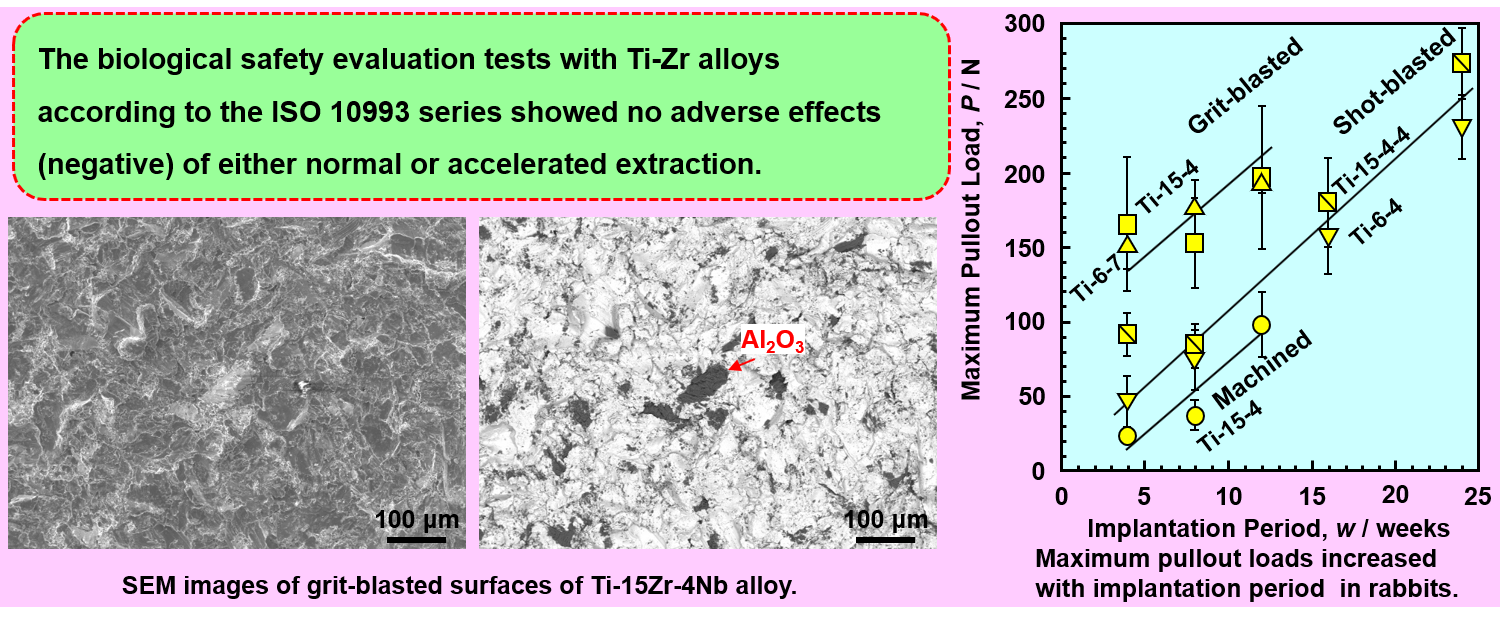
- The biological safety evaluation tests with the three Ti–Zr alloys in accordance with the ISO 10993 series showed no adverse effects (negative) of either normal or accelerated extraction. A method of evaluating biological safety under accelerated extraction condition is useful for evaluating the biological safety of highly biocompatible materials, biodegradable materials, and so on.
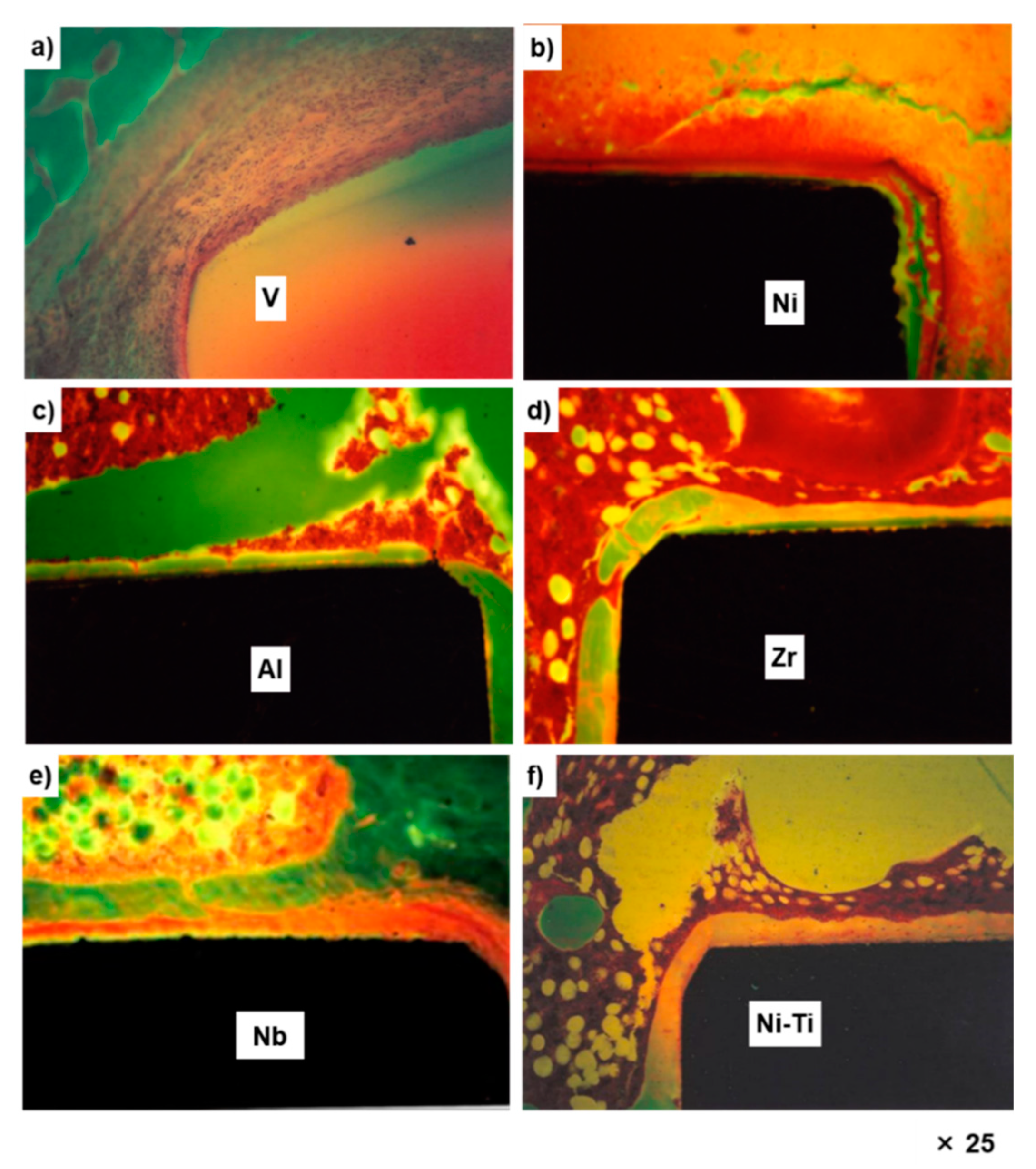
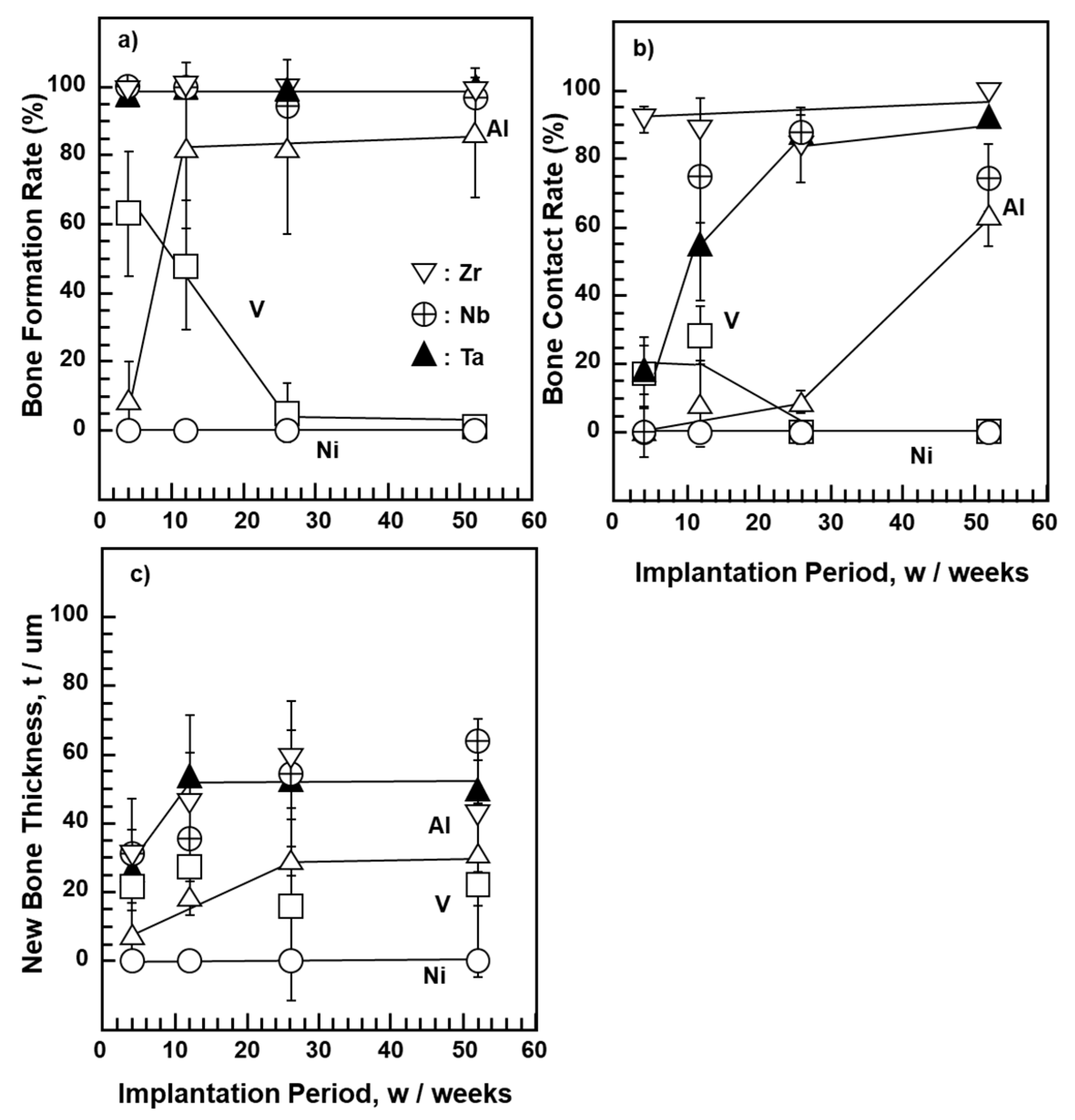
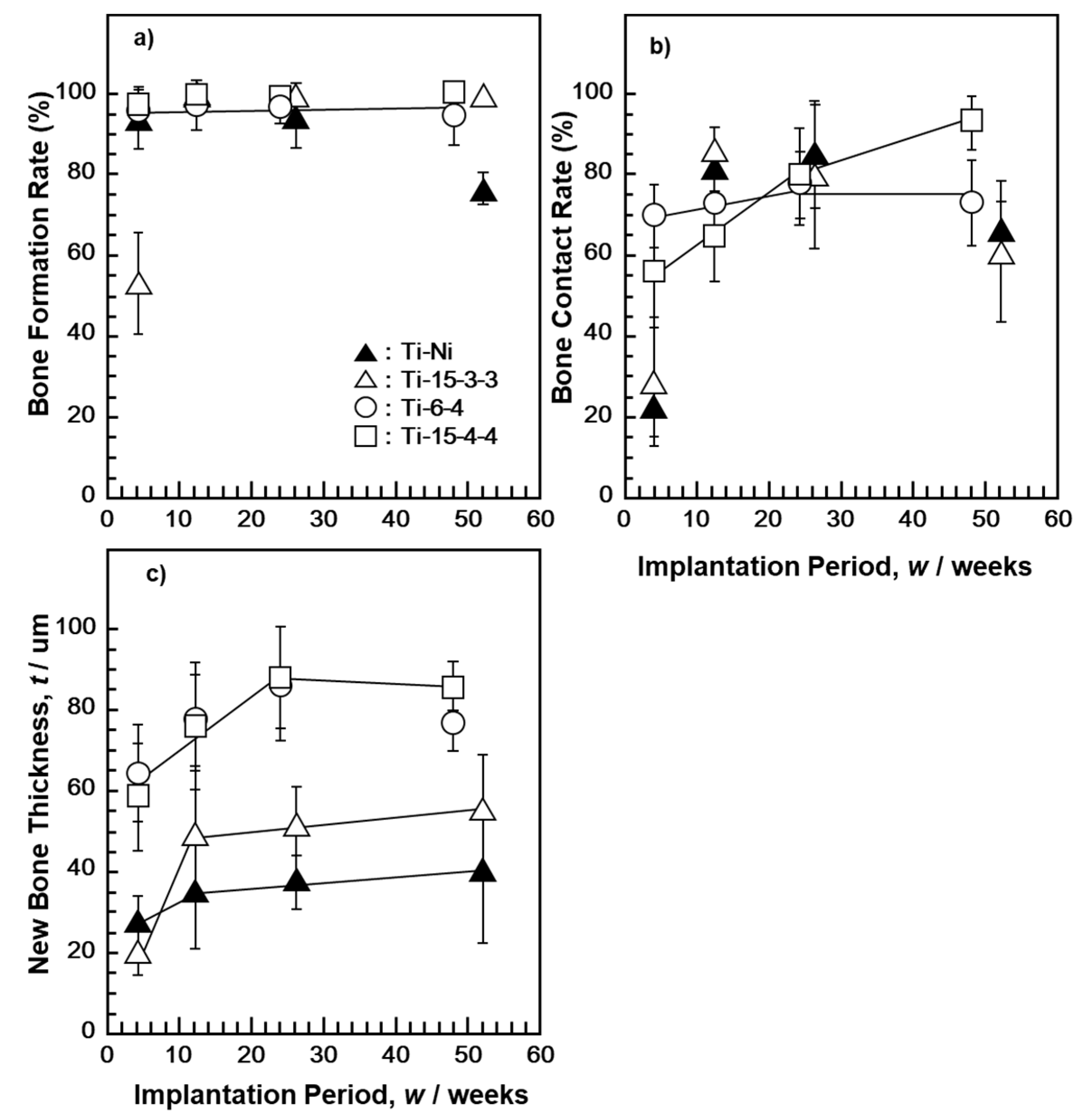
- No bone was formed around the pure V and Ni implants. The Al, Zr, Nb, and Ni–Ti implants were surrounded by new bone. The rates of new bone formation around pure Zr, Nb, and Ta implants were all approximately 100% in the first four weeks of the implantation period. The rates of bone contact were higher with pure Zr than with Nb and Ta. The new bone thicknesses for pure Zr, Nb, and Ta implants were approximately 40 μm 12 weeks after implantation. The new bone surrounding Ti–Ni and high-V-containing Ti–15–3–3 alloys tended to be thinner than that surrounding Ti–15–4–4 and Ti–6–4 alloys.
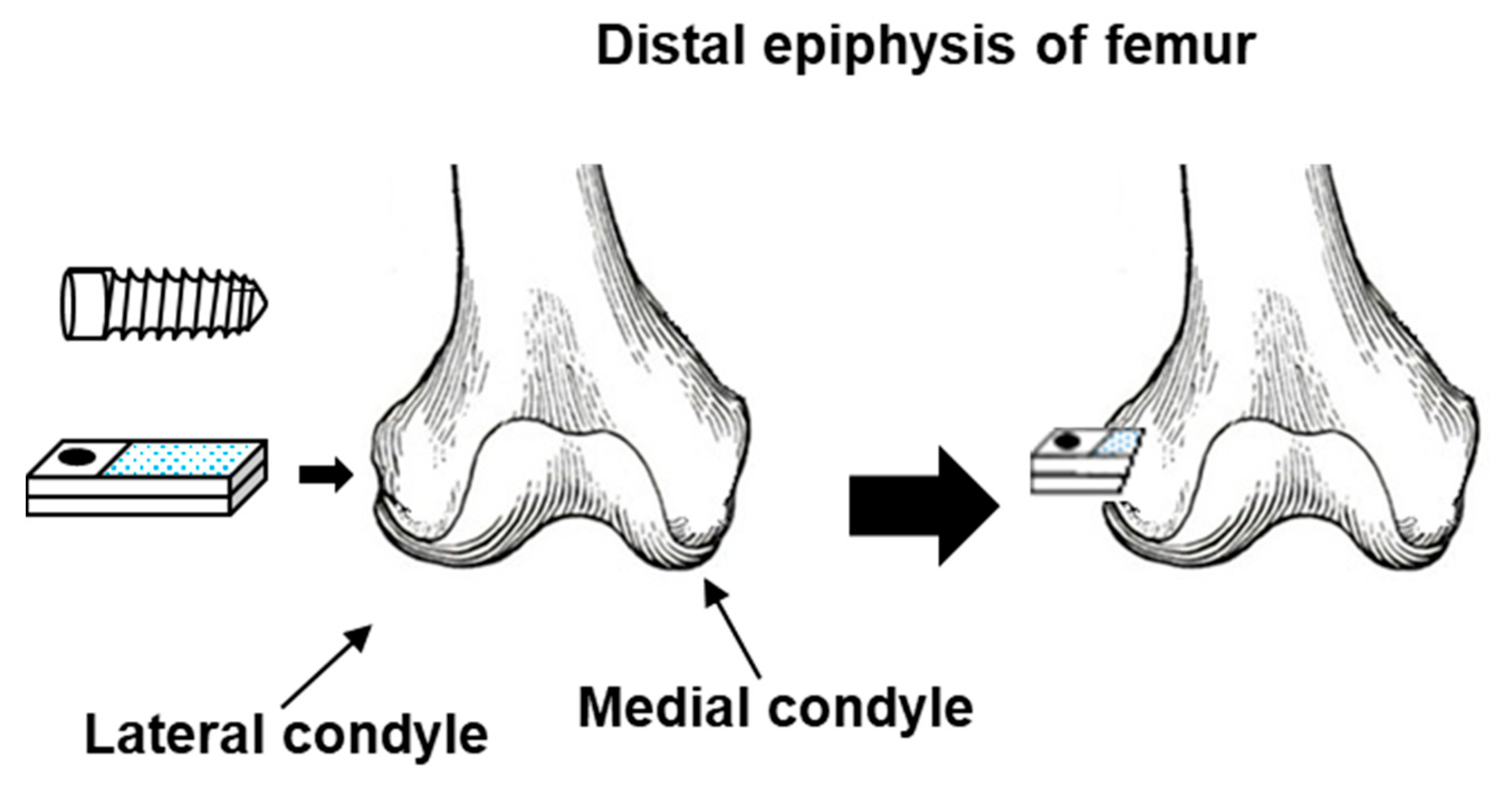
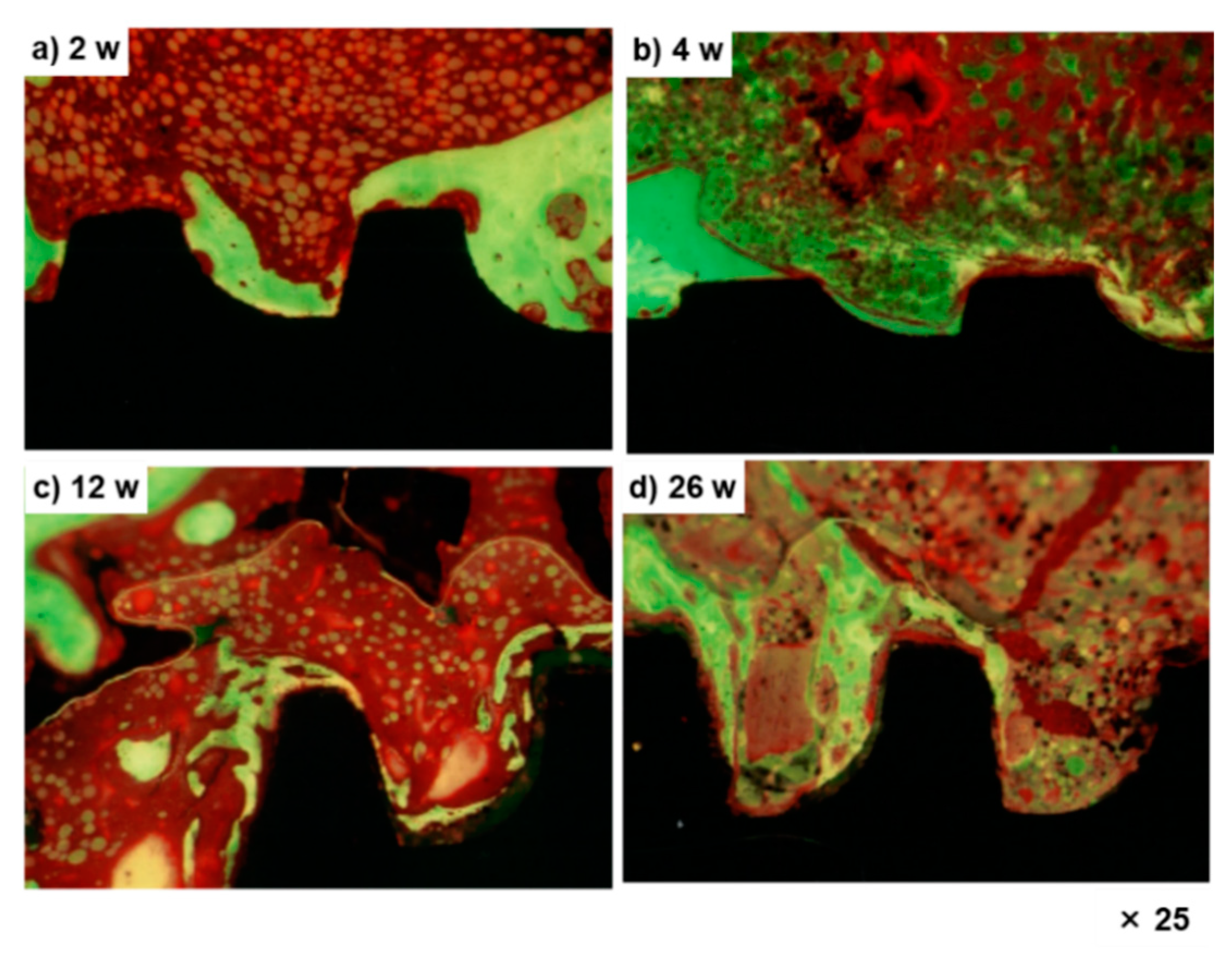
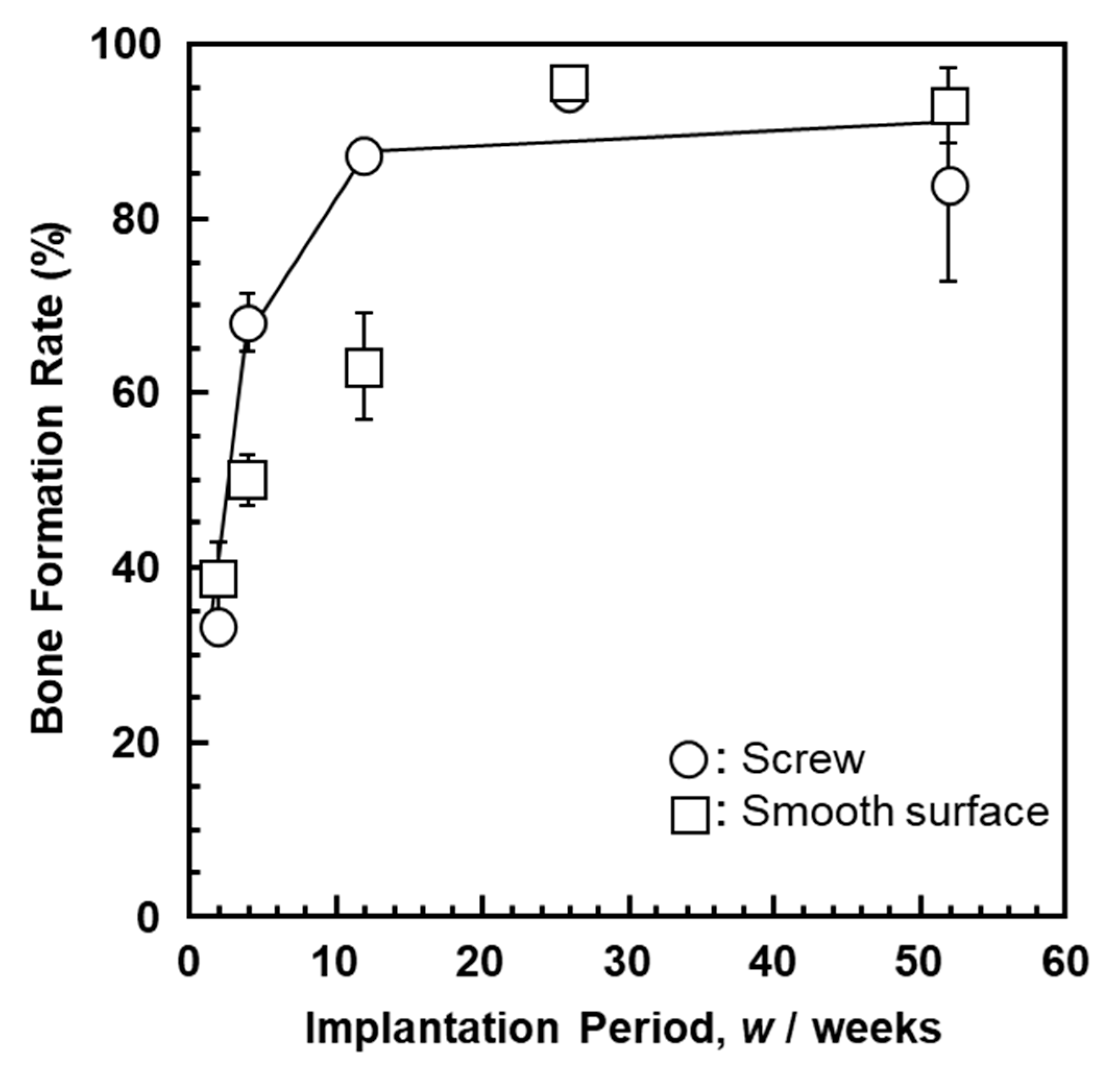
- The rate of bone formation on the threaded portion in the Ti–15–4–4 dental implant was the same as that on the smooth surface. The Ti–4–4 alloy is expected to be applicable to dental implants because it induces excellent bone formation.
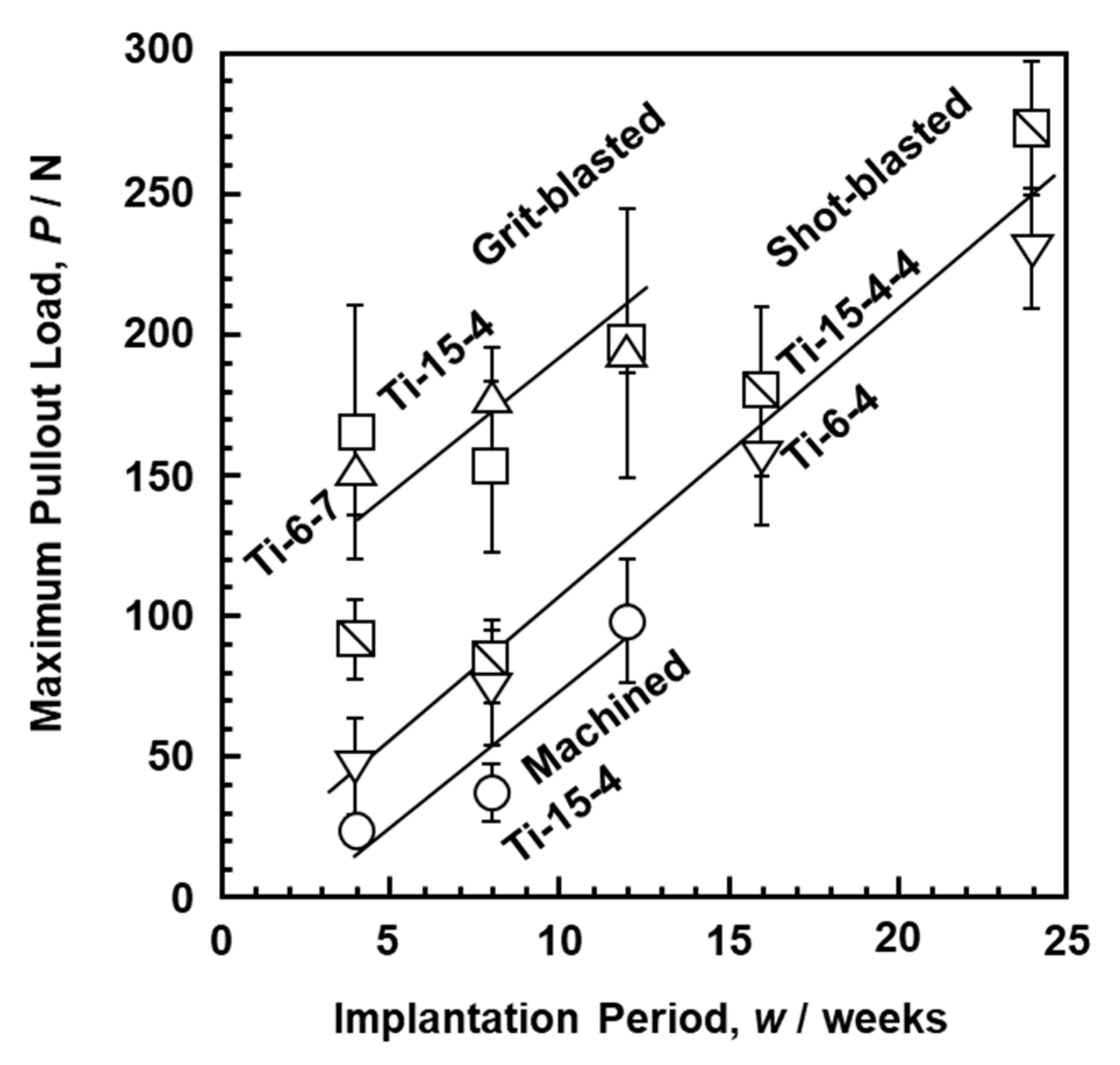
- The maximum pullout loads of the grit-blasted and shot-blasted Ti–15–4 and Ti–15–4–4 alloys increased linearly with the implantation period in rabbits. The pullout load of grit-blasted Ti–15–4 alloy rods was higher than that of shot-blasted ones.
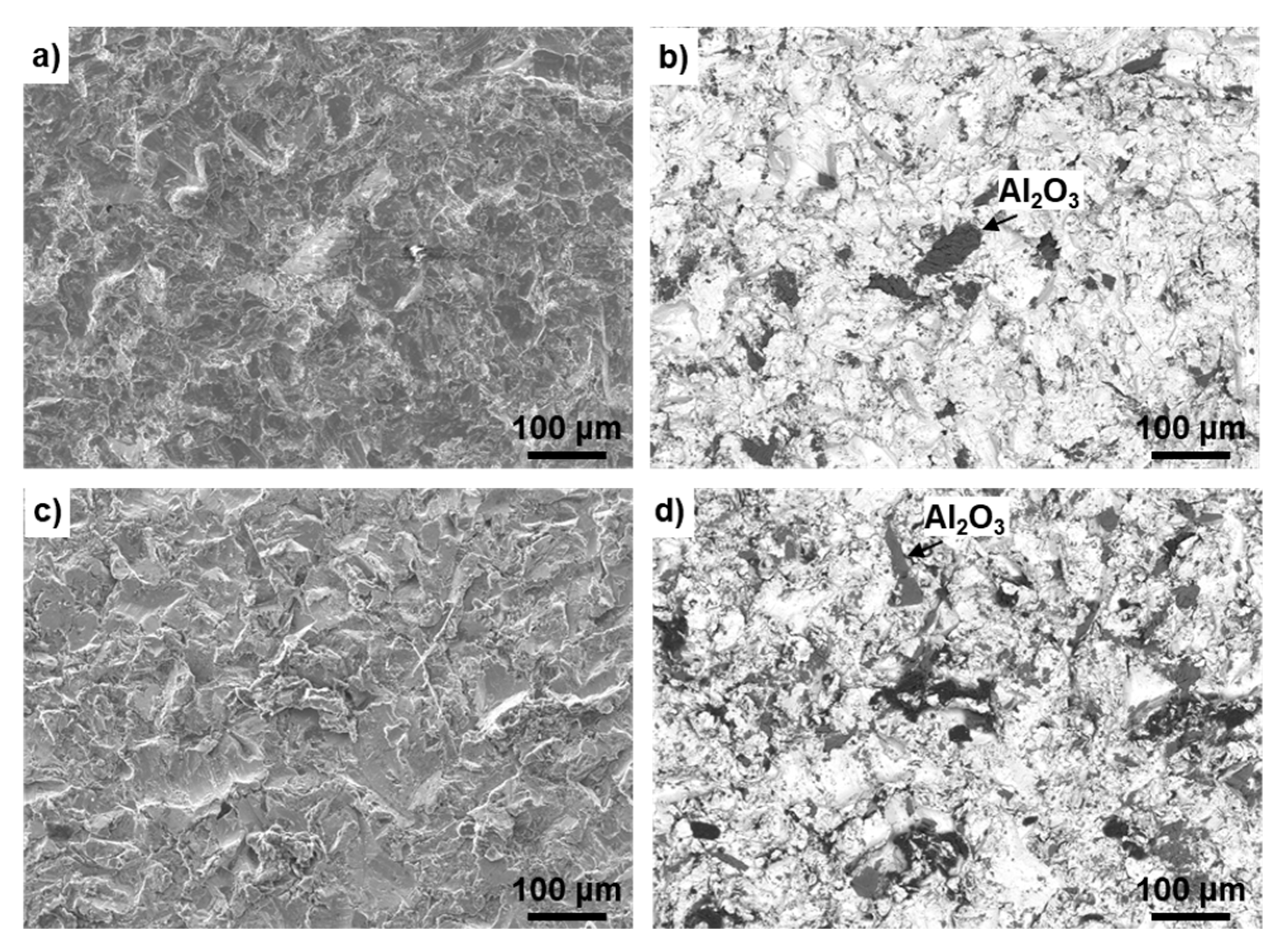
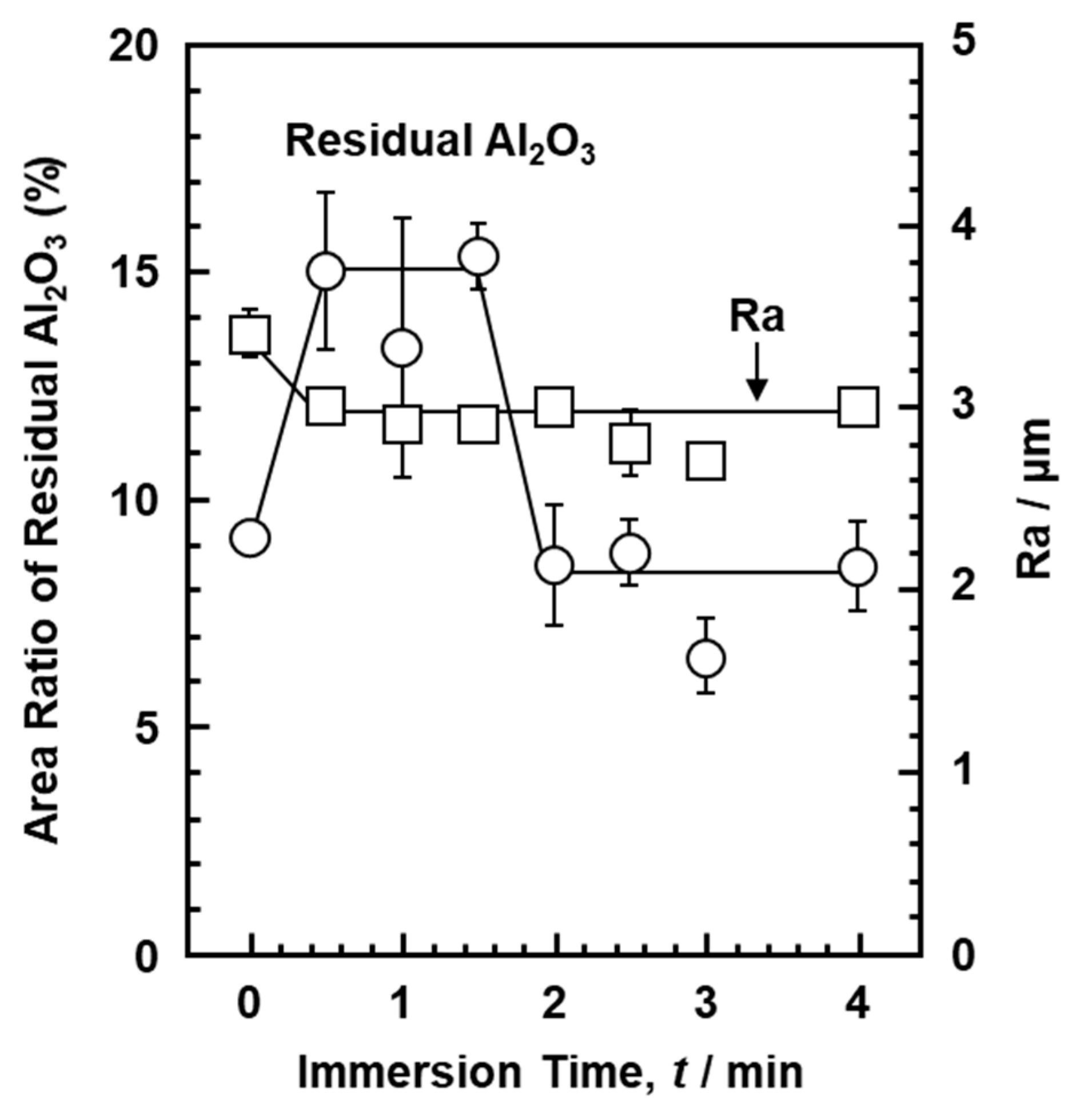
- The Ra of the Ti–15–4 alloy surface grit-blasted with 24-grit Fuji Random WA Al2O3 particles was the same as that of the grit-blasted Alloclassic stem surface. The Ra and area ratio of residual Al2O3 particles were approximately the same. It was clarified that the grit-blasted Ti–15–4 alloy could be used for artificial hip joint stems. The sensitization (maximization) tests with the accelerated-condition extract of the grit-blasted Ti–15–4 alloy showed negative results.
Author Contributions
Funding
Institutional Review Board Statement
Informed Consent Statement
Data Availability Statement
Acknowledgments
Conflicts of Interest
References
- Steinemann, S.G. Compatibility of Titanium in Soft and Hard Tissue–The Ultimate is Osseointegration; Stallforth, H., Revell, P., Eds.; Materials for medical engineering; Wiley–VCH: Weinheim, Germany, 1999; pp. 199–203. [Google Scholar]
- DiCarlo, E.F.; Bullough, P.G. The biologic responses to orthopedic implants and their wear debris. Clin. Mater. 1992, 9, 235–260. [Google Scholar] [CrossRef] [Scilit]
- Chang, B.-S.; Brown, P.R.; Sieber, A.; Valdevit, A.; Tateno, K.; Kostuik, J.P. Evaluation of the biological response of wear debris. Spine J. 2004, 4, 239S–244S. [Google Scholar] [CrossRef] [Scilit] [PubMed]
- Fini, M.; Aldini, N.N.; Torricelli, P.; Giavaresi, G.; Borsari, V.; Lenger, H.; Bernauer, J.; Giardino, R.; Chiesa, R.; Cigada, A. A new austenitic stainless steel with negligible nickel content: An in vitro and in vivo comparative investigation. Biomaterials 2003, 24, 4929–4939. [Google Scholar] [CrossRef] [Scilit]
- Lee, T.; Lee, S.; Kim, I.-S.; Moon, Y.H.; Kim, H.S.; Park, C.H. Breaking the limit of Young’s modulus in low–cost Ti–Nb–Zr alloy for biomedical implant applications. J. Alloys Compd. 2020, 828, 154401. [Google Scholar] [CrossRef] [Scilit]
- Ozan, S.; Lin, J.; Li, Y.; Wen, C. New Ti-Ta-Zr-Nb alloys with ultrahigh strength for potential orthopedic implant applications. J. Mech. Behav. Biomed. Mater. 2017, 75, 119–127. [Google Scholar] [CrossRef] [Scilit]
- Acharya, S.; Panicker, A.G.; Laxmi, D.V.; Suwas, S.; Chatterjee, K. Study of the influence of Zr on the mechanical properties and functional response of Ti-Nb-Ta-Zr-O alloy for orthopedic applications. Mater. Des. 2019, 164, 107555. [Google Scholar] [CrossRef] [Scilit]
- Hori, T.; Nagase, T.; Todai, M.; Matsugaki, A.; Nakano, T. Development of non-equiatomic Ti-Nb-Ta-Zr-Mo high-entropy alloys for metallic biomaterials. Scr. Mater. 2019, 172, 83–87. [Google Scholar] [CrossRef] [Scilit]
- Nagase, T.; Iijima, Y.; Matsugaki, A.; Ameyama, K.; Nakano, T. Design and fabrication of Ti–Zr–Hf–Cr–Mo and Ti–Zr–Hf–Co–Cr–Mo high–entropy alloys as metallic biomaterials. Mater. Sci. Eng. C 2020, 107, 110322. [Google Scholar] [CrossRef] [Scilit]
- Hua, N.; Wang, W.; Wang, Q.; Ye, Y.; Lin, S.; Zhang, L.; Guo, Q.; Brechtl, J.; Liaw, P.K. Mechanical, corrosion, and wear properties of biomedical Ti-Zr-Nb-Ta-Mo high entropy alloys. J. Alloys Compd. 2020, 157997. [Google Scholar] [CrossRef] [Scilit]
- Singth, S.; Prakash, C.; Pramanik, A.; Basak, A.; Shabadi, R.; Królczyk, G.; Bogdan-Chudy, M.; Babbar, A. Magneto–rheological fluid assisted abrasive nanofinishing of β-phase Ti-Nb-Ta-Zr alloy: Parametric appraisal and corrosion analysis. Materials 2020, 13, 5156. [Google Scholar] [CrossRef] [Scilit]
- Li, P.; Ma, X.; Tong, T.; Wang, Y. Microstructural and mechanical properties of β-type Ti-Mo-Nb biomedical alloys with low elastic modulus. J. Alloys Compd. 2020, 815, 152412. [Google Scholar] [CrossRef] [Scilit]
- Neacsu, P.; Gordin, D.-M.; Mitran, V.; Gloriant, T.; Costache, M.; Cimpean, A. In vitro performance assessment of new beta Ti-Mo-Nb alloy compositions. Mater. Sci. Eng. C 2015, 47, 105–113. [Google Scholar] [CrossRef] [Scilit]
- Zhukova, Y.; Korobkova, A.; Dubinskiy, S.; Pustov, Y.; Konopatsky, A.; Podgorny, D.; Filonov, M.; Prokoshkin, S.; Brailovski, V. The Electrochemical and mechanical behavior of bulk and porous superelastic Ti-Zr-based alloys for biomedical applications. Materials 2019, 12, 2395. [Google Scholar] [CrossRef] [Scilit] [PubMed]
- Preisler, D.; Janeček, M.; Harcuba, P.; Džugan, J.; Halmešová, K.; Málek, J.; Veverková, A.; Strásky, J. The effect of hot working on the mechanical properties of high strength biomedical Ti-Nb-Ta-Zr-O alloy. Materials 2019, 12, 4233. [Google Scholar] [CrossRef] [Scilit] [PubMed]
- Cojocaru, V.D.; Nocivin, A.; Trisca-Rusu, C.; Dann, A.; Irimescu, R.; Raducanu, D.; Galbinasu, B.M. Improving the mechanical properties of a β-type Ti-Nb-Zr-Fe-O Alloy. Metals 2020, 10, 1491. [Google Scholar] [CrossRef] [Scilit]
- Okazaki, Y. Development of low-cost manufacturing process and effects of adding small amounts of Ta, O, and N on the physical and mechanical properties of highly biocompatible Ti alloys. Mater. Trans. 2019, 60, 1769–1778. [Google Scholar] [CrossRef] [Scilit]
- Titanium Materials for Surgical Implant Applications Part 4: Wrought Titanium 15-Zirconium 4-Niobium Alloy, JIS T 7401-4; Japanese Standards Association: Tokyo, Japan, 2021.
- Biological Evaluation of Medical Devices–Part 5: Tests for in vitro Cytotoxicity, ISO 10993-5; International Organization for Standardization: Geneva, Switzerland, 2009.
- Biological Evaluation of Medical Devices–Part 10: Tests for Irritation and Skin Sensitization, ISO 10993-10; International Organization for Standardization: Geneva, Switzerland, 2010.
- Biological Evaluation of Medical Devices–Part 11: Tests for Systemic Toxicity, ISO 10993-11; International Organization for Standardization: Geneva, Switzerland, 2017.
- Biological Evaluation of Medical Devices–Part 3: Tests for Genotoxicity, Carcinogenicity and Reproductive Toxicity, ISO 10993-3; International Organization for Standardization: Geneva, Switzerland, 2014.
- Biological Evaluation of Medical Devices–Part 33: Guidance on Tests to Evaluate Genotoxicity–Supplements to ISO 10993–3, ISO/TR 10993–33; International Organization for Standardization: Geneva, Switzerland, 2015.
- Biological Evaluation of Medical Devices–Part 6: Tests for Local Effects after Implantation, ISO 10993-6; International Organization for Standardization: Geneva, Switzerland, 2016.
- Implants for Surgery–Test Solutions and Environmental Conditions for Static and Dynamic Corrosion Tests on Implantable Materials and Medical Devices, ISO 16428; International Organization for Standardization: Geneva, Switzerland, 2005.
- Delaunay, C.; Bonnomet, F.; North, J.; Jobard, D.; Cazeau, C.; Kempf, J.-F. Grit-blasted titanium femoral stem in cementless primary total hip arthroplasty. J. Arthroplasty 2001, 16, 47–54. [Google Scholar] [CrossRef] [Scilit] [PubMed]
- Hacking, S.A.; Bobyn, J.D.; Tanzer, M.; Krygier, J.J. The osseous response to corundum blasted implant surfaces in a canine hip model. Clin. Orthop. Relat. Res. 1999, 364, 240–253. [Google Scholar] [CrossRef] [Scilit] [PubMed]
- Delaunay, C.P.; Kapandji, A.I. Primary total hip arthroplasty with the Karl Zweymüller first-generation cementless prosthesis. J. Arthroplasty 1996, 11, 643–652. [Google Scholar] [CrossRef] [Scilit]
- Lass, R.; Kolb, A.; Skrbensky, G.; Reinisch, G.; Kubista, B.; Giurea, A.; Windhager, R.; Kotz, R. A cementless hip system with a new surface for osseous integration. Inter. Orthop. 2014, 38, 703–709. [Google Scholar] [CrossRef] [Scilit] [PubMed]
- Australian Orthopaedic Association, National Joint Replacement Registry, 2020 Annual Report, Hip, Knee and Shoulder Arthroplasty. 2020. Available online: https://aoanjrr.sahmri.com/home (accessed on 5 September 2020).
- Murai, K.; Takeshita, F.; Imakiire, K.; Suetugu, T. A comparative study of bone tissue reaction to Ti-implants in the tibiae between mature and young rats. J. Jpn. Prosthodont Soc. 1993, 37, 858–872. [Google Scholar] [CrossRef] [Scilit]
- Okazaki, Y.; Gotoh, E.; Nishimori, M.; Katsuda, S.; Manabe, T.; Kobayashi, K. Osteocompatibility of stainless steel, Co-Cr-Mo, Ti-6Al-4V and Ti-15Zr-4Nb-4Ta alloy implants in rat bone tissue. Mater. Trans. 2005, 46, 1610–1617. [Google Scholar] [CrossRef] [Scilit]
- Wever, D.J.; Veldhuizen, A.G.; Sanders, M.M.; Schakenraad, J.M.; van Horn, J.R. Cytotoxic, allergic and genotoxic activity of a nickel-titanium alloy. Biomaterials 1997, 18, 1115–1120. [Google Scholar] [CrossRef] [Scilit]
- Assad, M.; Chernyshov, A.; Leroux, M.A.; Rivard, C.-H. A new porous titanium-nickel alloy: Part 2. Sensitization, irritation and acute systemic toxicity evaluation. Biomed. Mater. Eng. 2002, 12, 339–346. [Google Scholar] [PubMed]
- Piozzi, R.; Ribeiro, D.A.; Padovan, L.E.M.; Filho, H.N.; Matsumoto, M.A. Genotoxicity and cytotoxicity in multiple organs induced by titanium miniplates in Wistar rats. J. Biomed. Mater. Res. 2009, 88A, 342–347. [Google Scholar] [CrossRef] [Scilit]
- Bernhardt, A.; Schneider, J.; Schroeder, A.; Papadopoulous, K.; Lopez, E.; Brückner, F.; Botzennhart, U. Surface conditioning of additively manufactured titanium implants and its influence on materials properties and in vitro biocompatibility. Mater. Sci. Eng. C Mater. Biol. Appl. 2020, 111631. [Google Scholar] [CrossRef] [Scilit]
- Pypen, C.M.; Dessein, K.; Helsen, J.A.; Gomes, M.; Leenders, H.; De Bruijn, J.D. Comparison of the cytotoxicity of molybdenum as powder and as alloying element in a niobium-molybdenum alloy. J. Mater. Sci. Mater. Med. 1998, 9, 761–765. [Google Scholar] [CrossRef] [Scilit] [PubMed]
- Cordeiro, J.M.; Nagay, B.E.; Ribeiro, A.L.R.; da Cruz, N.C.; Rangel, E.C.; Fais, L.M.G.; Vaz, L.G.; Barão, V.A.R. Functionalization of an experimental Ti-Nb-Zr-Ta alloy with a biomimetic coating produced by plasma electrolytic oxidation. J. Alloys Compd. 2019, 770, 1038–1048. [Google Scholar] [CrossRef] [Scilit]
- Okazaki, Y. Characterization of oxide film of implantable metals by electrochemical impedance spectroscopy. Materials 2019, 12, 3466. [Google Scholar] [CrossRef] [Scilit] [PubMed]
- Ikarashi, Y.; Momma, J.; Tsuchiya, T.; Nakamura, A. Evaluation of skin sensitization potential of nickel, chromium, titanium and zirconium salts using guinea-pigs and mice. Biomaterials 1996, 17, 2103–2108. [Google Scholar] [CrossRef] [Scilit]
- Okazaki, Y.; Gotoh, E. Comparison of metal release from various metallic biomaterials in vitro. Biomaterials 2005, 26, 11–21. [Google Scholar] [CrossRef] [Scilit]
- Okazaki, Y.; Gotoh, E.; Kobayashi, K. Comparison of metal concentrations in rat tibia tissues with various metallic implants. Biomaterials 2004, 25, 5913–5920. [Google Scholar] [CrossRef] [Scilit] [PubMed]
- Bandyopadhyay, A.; Mitra, I.; Shivaram, A.; Dasgupta, N. Direct comparison of additively manufactured porous titanium and tantalum implants towards in vivo osseointegration. Addit. Manuf. 2019, 28, 259–266. [Google Scholar] [CrossRef] [Scilit]
- Wang, Z.; Wang, X.; Pei, J.; Tian, Y.; Zhang, J.; Jiang, C.; Huang, J.; Pang, Z.; Cao, Y.; Wang, X.; et al. Degradation and osteogenic induction of a SrHPO4-coated Mg-Nd-Zn-Zr alloy intramedullally nail in a rat femoral shaft Fracture model. Biomaterials 2020, 247, 119962. [Google Scholar] [CrossRef] [Scilit] [PubMed]
- Zheng, Y.F.; Gu, X.N.; Xi, Y.L.; Chai, D.L. In vitro degradation and cytotoxicity of Mg/Ca composites produced by powder metallurgy. Acta Biomater. 2010, 6, 1783–1791. [Google Scholar] [CrossRef] [Scilit]
- Geetha, M.; Singh, A.K.; Asokamani, R.; Gogia, A.K. Ti based biomaterials, the ultimate choice for orthopaedic implant–A review. Prog. Mater. Sci. 2009, 54, 397–425. [Google Scholar] [CrossRef] [Scilit]
- Ikarashi, Y.; Toyoda, K.; Kobayashi, E.; Doi, H.; Yoneyama, T.; Hamanaka, H.; Tsucjiya, T. Improved biocompatibility of titanium-zirconium (Ti-Zr) alloy: Tissue reaction and sensitization to Ti-Zr alloy compared with pure Ti and Zr in rat implantation study. Mater. Trans. 2005, 46, 2260–2267. [Google Scholar] [CrossRef] [Scilit]
- Matsuno, H.; Yokoyama, A.; Watari, F.; Uo, M.; Kawasaki, T. Biocompatibility and osteogenesis of refractory metal implants, titanium, hafnium, niobium, tantalum and rhenium. Biomaterials 2001, 22, 1253–1262. [Google Scholar] [CrossRef] [Scilit]
- Kangasniemi, I.M.O.; Verheyen, C.C.P.M.; van der Velde, E.A.; de Groot, K. In vivo tensile testing of fluorapatite and hydroxylapatite plasma-sprayed coating. J. Biomed. Mater. Res. 1994, 28, 563–572. [Google Scholar] [CrossRef] [Scilit]
- Kunrath, M.F. Customized dental implants: Manufacturing processes, topography, osseointegration and future perspectives of 3D fabricated implants. Bioprinting 2020, 20, e00107. [Google Scholar] [CrossRef] [Scilit]
- Chen, C.-S.; Chang, J.-H.; Srimaneepong, V.; Wen, J.-Y.; Tung, O.-H.; Yang, C.-H.; Lin, H.-C.; Lee, T.-H.; Han, Y.; Hung, H.-H. Improving the in vitro cell differentiation and in vivo osseointegration of titanium dental implant through oxygen plasma immersion ion implantation treatment. Surf. Coat. Technol. 2020, 399, 126125. [Google Scholar] [CrossRef] [Scilit]
- Raphel, J.; Karlsson, J.; Galli, S.; Wennerberg, A.; Lindsay, C.; Haugh, M.G.; Pajarinen, J.; Goodman, S.B.; Jimbo, R.; Anderrsson, M.; et al. Engineered protein coatings to improve the osseointegration of dental and orthopaedic implants. Biomaterials 2016, 83, 269–282. [Google Scholar] [CrossRef] [Scilit] [PubMed]
- Al-Jandan, B. Effects of antiangiogenic targeted chemotherapy on the osseointegration of titanium implants in rabbits. British J. Oral Maxillofac. Surg. 2019, 57, 157–163. [Google Scholar] [CrossRef] [Scilit] [PubMed]
- Brizuela, A.; Herrerop-Climent, M.; Rios-Carrasco, E.; Rios-Santos, V.; Pérez, R.A.; Manero, J.M.; Mur, J.G. Influence of the elastic modulus on the osseointegration of dental implants. Materials 2019, 12, 980. [Google Scholar] [CrossRef] [Scilit]
- Rüger, M.; Gensior, T.J.; Herren, C.; von Walter, M.; Ocklenburg, C.; Marx, R.; Erli, H.-J. The removal of Al2O3 particles from grit-blasted titanium implant surfaces: Effects on biocompatibility, osseointegration and interface strength in vivo. Acta Biomater. 2010, 6, 2852–2861. [Google Scholar] [CrossRef] [Scilit] [PubMed]
- Joffre, T.; Isaksson, P.; Proctor, P.; Persson, C. Trabecular deformations during screw pull-out: A micro-CT study of lapine bone. Biomech. Model Mechanobiol. 2017, 16, 1349–1359. [Google Scholar] [CrossRef] [Scilit]
- Khandaker, M.; Riahinezhad, S.; Williams, W.R.; Wolf, R. Microgroove and collagen-poly (ε-caprolactone) nanofiber mesh coating improves the mechanical stability and osseointegration of titanium implants. Nanomaterials 2017, 7, 145. [Google Scholar] [CrossRef] [Scilit]
- Durham, J.W., III; Montelongo, S.A.; Ong, J.L.; Guda, T.; Allen, M.J.; Rabiel, A. Hydroxyapatite coating on PEEK implants: Biomechanical and histological study in a rabbit model. Mater. Sci. Eng. C Mater. Appl. 2016, 68, 723–731. [Google Scholar] [CrossRef] [Scilit]
- Wedemeyer, G.; Jablonski, H.; Mumdzic-Zverotic, A.; Fietzek, H.; Mertens, T.; Hilken, G.; Krüger, G.; Wissmann, A.; Heep, H.; Schlepper, R.; et al. Laser-induced nanostructures on titanium surfaces ensure osseointegration of implants in rabbit femora. Materialia 2019, 6, 100266. [Google Scholar] [CrossRef] [Scilit]
- Vandana, U.; Nancy, D.; Sabareeswaran, A.; Remya, N.S.; Rajendran, N.; Mohanan, P.V. Biocompatibility of strontium incorporated ceramic coated titanium oxide implant indented for orthopaedic applications. Mater. Sci. Eng. B 2021, 264, 114954. [Google Scholar] [CrossRef] [Scilit]
- Friedman, R.J.; An, Y.H.; Ming, J.; Draughn, R.A.; Bauer, T.W. Influence of biomaterial surface texture on bone ingrowth in the rabbit femur. J. Orthp. Res. 1996, 14, 455–464. [Google Scholar] [CrossRef] [Scilit]
- Baker, D.; London, R.M.; O’Neal, R. Rate of pull-out strength gain of dual-etched titanium implants: A comparative study in rabbits. Int. J. Oral Maxillofac. Implants 1999, 14, 722–728. [Google Scholar] [PubMed]
- Kato, M.K.N.; Onari, E.; Arisawa, E.A.L.; da Silva, N.S.; Ramos, A.S. Osseointegration feature of orthopedic Ti-10Si-5B implants. Mater. Sci. Eng. C 2009, 29, 980–986. [Google Scholar] [CrossRef] [Scilit]
- Morinaga, K.; Sasaki, H.; Park, S.; Hokugo, A.; Okawa, H.; Tahara, Y.; Colwell, C.S.; Nishimura, I. Neuronal PAS domain 2 (Npas2) facilitated osseointegration of titanium implant with rough surface through a neuroskeletal mechanism. Biomaterials 2019, 192, 62–74. [Google Scholar] [CrossRef] [Scilit]
- Schuh, A.; Uter, W.; Kachler, W.; Göske, J.; Zeiler, G.; Lill, C. Comparative surface examinations on corund blasted titanium implants and explants in total hip arthroplasty. Arch. Orthop. Trauma Surg. 2005, 125, 676–682. [Google Scholar] [CrossRef] [Scilit] [PubMed]
- Grübl, A.; Kolb, A.; Reinisch, G.; Fafilek, G.; Skrbensky, G.; Kotz, R. Characterization, quantification, and isolation of aluminum oxide particles on grit blasted titanium aluminum alloy hip implants. J. Biomed. Mater. Res. Appl. Biomater. 2007, 83B, 127–131. [Google Scholar] [CrossRef] [Scilit] [PubMed]
- Delaunay, C. Effect of hydroxyapatite coating on the radio-clinical results of a grit-blasted titanium alloy femoral taper. A case-control study of 198 cementless primary total hip arthroplasty with the AlloclassicTM system. Orthop. Traumatol. Surg. Res. 2014, 100, 739–744. [Google Scholar] [CrossRef] [Scilit] [PubMed]

| Alloy | Zr | Nb | Ta | Pd | Fe | O | N | H | C | Ti |
| Ti–15–4 | 16.10 | 3.90 | 0.17 | <0.01 | 0.026 | 0.254 | 0.080 | 0.0010 | 0.010 | Bal. |
| Ti–15–4–1 | 17.24 | 3.97 | 1.67 | 0.02 | 0.036 | 0.29 | 0.096 | 0.0027 | 0.011 | Bal. |
| Ti–15–4–4 | 16.55 | 4.0 | 3.9 | <0.01 | 0.04 | 0.28 | 0.09 | 0.0012 | 0.007 | Bal. |
| Al | V | Cr | Sn | Fe | O | N | H | C | Ti | |
| Ti–6–4 | 6.4 | 4.4 | − | − | 0.10 | 0.07 | 0.02 | 0.0027 | 0.025 | Bal. |
| Ti–15–3–3 | 3.14 | 15.285 | 3.13 | 3.06 | 0.22 | 0.109 | 0.0085 | 0.013 | − | Bal. |
| Evaluation Item | Test System | Test Specimen | Extraction |
|---|---|---|---|
| 1. Cytotoxicity Colony formation <ISO 10993-5 [19]> | Cultured cells (V79) | 4 Disks (3.5 mm diameter, 1 mm thickness) | (1) Direct contact |
| 10 Plates (2 cm × 2 cm × 1 mm) | (2) Extraction in culture medium (37 °C for 24 h)Extraction rate: 6 cm2/mL | ||
| 2. Sensitization GPMT <ISO 10993-10 [20]> | Guinea pigs | 9 Plates | Extraction rate: 3 cm2/mL (1) Accelerated extraction (0.9%NaCl + HCl, pH = 2) Neutralized with NaOH after extraction at 37 °C for 7 d (2) Extraction in 0.9%NaCl (121 °C for 1 h) |
| 3. Irritation Intracutaneous reactivity <ISO 10993-10 [20]> | Rabbits | 6 Plates | |
| 4. Systemic toxicity <ISO 10993-11 [21]> (a) Acute systemic toxicity | Mice | 8 Plates | |
| (b) Subacute systemic toxicity | Rats (21-day intravenous administration) | 51 Plates (2 cm×2 cm×1 mm) | Extraction in 0.9%NaCl (121 °C for 1 h) Extraction rate: 3 cm2/mL |
| 5. Genotoxicity <ISO 10993-3 [22] ISO 10993-33 [23]> (a) Reverse mutation | 4 strains of Salmonella typhimurium and Escherichia coli | 16 Plates (2 cm×2 cm×1 mm) | Extraction rate: 6 cm2/mL Accelerated extraction |
| (b) Chromosomal abnormalities | Cultured cells (CHL/IU) | 120 Plates (2 cm × 2 cm × 1 mm) | Extraction in medium(37 °C for 48 h) |
| 6. Implantation <ISO 10993-6 [24]> | Rats | 24 Circular rods (1.2 mm diameter, 2.5 mm length) | Femur diaphysis 3- and 6-month implantations |
| Evaluation Item | Ti–15–4 | Ti–15–4–1 | Ti–15–4–4 |
|---|---|---|---|
| 1. Cytotoxicity Colony formation | Medium extract: noncytotoxic | Medium extract: noncytotoxic | Direct contact: noncytotoxic |
| 2. Sensitization | Accelerated extract: negative | Accelerated extract: negative | 0.9%NaCl extract: negative |
| 3. Irritation Intracutaneous reactivity | Accelerated extract: negative 0.9%NaCl extract: negative | 0.9%NaCl extract: negative | |
| 4. Systemic toxicity (a) Acute systemic toxicity (b) Subacute systemic toxicity | Accelerated extract: nontoxic 0.9%NaCl extract: nontoxic 0.9%NaCl extract: nontoxic | 0.9%NaCl extract: nontoxic 0.9%NaCl extract: nontoxic | |
| 5. Genotoxicity (a) Reverse mutation (b) Chromosomal abnormality | Accelerated extract: negative Medium extract: negative | 0.9%NaCl extract: negative Medium extract: negative | 0.9%NaCl extract: negative Medium extract: negative |
| 6. Implantation | No inflammation in local implanted region, bone conductivity equivalent to control specimen | No inflammation in local implanted region, bone conductivity equivalent to control specimen | No inflammation in local implanted region, bone conductivity equivalent to control specimen |
Publisher’s Note: MDPI stays neutral with regard to jurisdictional claims in published maps and institutional affiliations. |
© 2021 by the authors. Licensee MDPI, Basel, Switzerland. This article is an open access article distributed under the terms and conditions of the Creative Commons Attribution (CC BY) license (http://creativecommons.org/licenses/by/4.0/).
Share and Cite
Okazaki, Y.; Katsuda, S.-i. Biological Safety Evaluation and Surface Modification of Biocompatible Ti–15Zr–4Nb Alloy. Materials 2021, 14, 731. https://doi.org/10.3390/ma14040731
Okazaki Y, Katsuda S-i. Biological Safety Evaluation and Surface Modification of Biocompatible Ti–15Zr–4Nb Alloy. Materials. 2021; 14(4):731. https://doi.org/10.3390/ma14040731
Chicago/Turabian StyleOkazaki, Yoshimitsu, and Shin-ichi Katsuda. 2021. "Biological Safety Evaluation and Surface Modification of Biocompatible Ti–15Zr–4Nb Alloy" Materials 14, no. 4: 731. https://doi.org/10.3390/ma14040731
APA StyleOkazaki, Y., & Katsuda, S.-i. (2021). Biological Safety Evaluation and Surface Modification of Biocompatible Ti–15Zr–4Nb Alloy. Materials, 14(4), 731. https://doi.org/10.3390/ma14040731