


Abstract
Ship propulsion electrification is an important enabler towards a sustainable shipping industry. Ship power systems are turning into modern microgrids integrating different generation/storage resources, converter technologies and electric propulsion, utilizing different control levels and communication systems. The definition of comprehensive test requirements, set-ups and procedures is critical to ensure that the equipment will behave as expected in the ship system context. Comprehensive testing is becoming increasingly challenging due to complex interactions at the system level, attributed to electrical, mechanical/hydrodynamic, control, protection, and information and communication systems present in modern and future ships. Standardization has addressed the testing of several individual components, as well as specific system tests for marine applications; however, a holistic testing approach is missing. This paper reviews the generic and maritime standards for testing ship electric power propulsion systems and equipment, focusing on generators/motors, power electronic drives and onshore power supply systems. A review of the scientific literature is performed, classifying the publications according to the testing method, such as pure hardware tests, co-simulation and hardware in the loop simulation (HIL). The need for holistic testing of shipboard microgrids is explained. A holistic HIL testing approach is proposed, which integrates hardware controllers and power equipment of different manufacturers and functions, in order to reduce the complexity and cost of sea trials. The proposed approach is accompanied by example implementation and application guidelines.
1. Introduction
The shipping industry contributes nearly 3% of the global greenhouse gas emissions [1]. The International Maritime Organization (IMO) has set important decarbonization targets [2], followed by the EU [3] and national policies. Ship propulsion electrification is an important step towards this transition, since it allows the integration of low-carbon energy resources, storage and alternative fuels in an integrated system, while also supporting hybrid propulsion. Power electronic converters are being installed at all levels, such as motor drives for electric propulsion, pumps, heating, ventilation, and air conditioning (HVAC) systems, cranes, etc. Energy management is becoming a critical component to ensure optimal operation, fuel/cost reduction and improved efficiency. In parallel, onshore power supply (OPS) at ports should support this transition by providing cleaner electric power to the ships during berth.
This transition comes with important technical, economic, regulatory and standardization challenges. A critical aspect is the definition of comprehensive test requirements, set-ups and procedures to make sure that the equipment will behave as expected in the ship system context. Obviously, this has important performance and safety implications. Testing is becoming increasingly challenging due to complex interactions at the system level, attributed to electrical, mechanical/hydrodynamic, control, protection, and information and communication technology (ICT) systems present in modern and future ships.
In the scientific literature, several publications discuss pure hardware ship power/control equipment tests in the laboratory, as well as tests at sea or in a towing tank. Moreover, several experiences of applying digital/hardware testing methods, such as hardware in the loop (HIL), have been reported. These include both controller hardware in the loop (CHIL) and power hardware in the loop (PHIL) applications. However, in most cases, the publications report specific applications and laboratory setups. In addition to research articles, relevant review papers have been published. A comprehensive review of different testing techniques for Energy Management Systems (EMSs), including model-in-the-loop, software-in-the-loop, processor-in-the-loop, HIL, platform-based testing and ship-based testing was performed in [4]. Electric propulsion drives, generation and control systems were thoroughly reviewed in [5], focusing on the design process of all-electric ships, while the importance of CHIL testing for de-risking new technologies was highlighted. Modelling and optimization methods for the power and propulsion systems of ships were reviewed in [6], including co-simulation and digital twins, among various topics. Testing and evaluation of intelligent navigation of ships was reviewed in [7], focusing on assisted maneuvering, remote control and autonomous navigation, while discussing model-scale and full-scale testing, simulation, virtual–real interactive testing paradigm and multi-dimensional digital twin modelling. Measurement and analysis of electric power quality on shipboard power system networks was reviewed in [8], including voltage and frequency fluctuations, voltage dips and swells, transients and voltage notching, fault detection and classification, harmonic distortion and voltage imbalance. Methods for structural failure analysis of ship propulsion systems were reviewed in [9], including non-destructive testing and destructive testing, while condition monitoring and fault diagnosis for marine power systems were reviewed in [10].
The need for holistic testing of terrestrial energy systems and smart grids has been recognized in [11,12], especially considering the integration of ICT and the interactions of different energy vectors (e.g., electric power and heating/cooling). Specific relevant HIL implementations for terrestrial power systems have been performed, focusing on stability [13], control [14], co-simulation with communications [15,16], SCADA [17], as well as multiphysics investigations [18]. However, a holistic testing framework for ship electric propulsion and shipboard microgrids is still missing.
Based on the above, a review paper addressing the different testing techniques for the various equipment of ship electric propulsion systems (motors, drives, local controllers, power management system (PMS), EMS, etc.) is missing. Moreover, standardization has already addressed the testing of several individual components and specific system tests for marine applications; however, a holistic testing approach for shipboard microgrids has not yet been established.
This paper sheds light on these topics by reviewing the relevant literature and standards and providing recommendations. The contributions of this paper are as follows.
- A literature review of the different testing techniques for the various equipment of ship electric propulsion systems is provided, focusing on developments of the last 10 years. The publications are classified according to the testing method: hardware power/control equipment tests in the laboratory, tests at sea or towing tank, co-simulation, CHIL, PHIL, and more advanced techniques. Moreover, the relevant generic and maritime standards for testing electric propulsion systems are reviewed.
- New trends and perspectives are discussed, and directions for future research are provided. A holistic HIL testing approach for shipboard microgrids is proposed, which includes multiple simulated and hardware components/systems and their interactions. This is beneficial for the early identification and correction of issues before ship deployment.
This paper is structured as follows. Section 2 reviews the relevant generic and maritime standards for testing ship electric power propulsion systems and equipment. A review of scientific literature concerning conventional and advanced testing methods is provided in Section 3. Section 4 focuses on new needs, trends and perspectives. Section 5 concludes the paper.
2. Standards for Testing Ship Electric Power Propulsion Systems and Equipment
Several stages are applied for the testing of electric propulsion system equipment. Factory Acceptance Tests (FATs) are performed by the original equipment manufacturer (OEM) at its premises. FATs refer to component testing, such as generators, propulsion motors and drives, PMSs [19,20], etc. It can also include testing of battery energy storage systems (BESSs), fuel cells, photovoltaics and their converters, as well as other energy sources. These tests are typically performed by different OEMs.
Next, Harbour Acceptance Tests (HATs) take place, which include integration tests on board at the harbour [20,21]. Equipment from different OEMs is integrated into the ship’s power system and tested. While FAT focuses on the testing of individual components, HAT focuses on the validation of the ship’s power system at the harbour.
Finally, sea trials are performed aiming to validate the proper power system operation at fully operational conditions. These include functional and load tests focusing on the propulsion motor and whole system performance, among others. More information can be found in IEC 60092-501:2025 [21] and the classification society’s rules/guidelines.
Specifically for the FAT testing of generators and propulsion motors, the following standards mostly apply. The same applies to shaft generators, used for hybrid propulsion.
- IEC 60034-1:2022: “Rotating electrical machines—Part 1: Rating and performance” [22]. The following tests are included: thermal performance, withstand voltage, occasional excess current, momentary excess torque, overspeed, short circuit, total harmonic distortion, electromagnetic compatibility, routine, etc.
- IEC 60034-2-1:2024: “Rotating electrical machines—Part 2–1: Standard methods for determining losses and efficiency from tests (excluding machines for traction vehicles)” [23]. It establishes methods of determining efficiencies and specific losses from tests for DC machines and AC synchronous and induction machines.
- IEC 60034-27-2:2023: “Rotating electrical machines—Part 27-2: On-line partial discharge measurements on the stator winding insulation” [24]. It addresses partial discharge online measurements of stator winding insulation of non-converter-driven rotating electrical machines with a rated voltage of 3 kV and up.
- IEC 60204-1:2016: “Safety of machinery—Electrical equipment of machines—Part 1: General requirements” [25]. Includes several tests, such as insulation resistance, protection, voltage tests, etc.
- IEEE 112-2017: “IEEE Standard Test Procedure for Polyphase Induction Motors and Generators” [26]. It includes tests for losses and the determination of efficiency for induction motors and generators, among other tests.
- IEEE 113-1985: “IEEE Guide Test Procedures for Direct-Current Machines” [27]. This includes tests for DC motors and generators, including preliminary tests, performance tests, temperature tests and miscellaneous tests.
- IEEE 115-2019: “IEEE Guide for Test Procedures for Synchronous Machines Including Acceptance and Performance Testing and Parameter Determination for Dynamic Analysis” [28]. It includes tests to determine the performance characteristics and parameters of synchronous machines.
- NEMA MG 1-2014: “Motors and Generators” [29]. Addresses performance, safety, testing, construction and manufacturing of AC and DC motors and generators.
Similarly, several standards address the FAT testing of power electronic drive systems, such as the following. These are particularly relevant for the drive systems of electric propulsion motors and shaft generators.
- IEC 61800-2:2021: “Adjustable speed electrical power drive systems—Part 2: General requirements—Rating specifications for adjustable speed AC power drive systems” [30]. It includes rating test, electrical safety, EMC test, communication profiles, etc.
- IEC 61800-3:2022: “Adjustable speed electrical power drive systems—Part 3: EMC requirements and specific test methods for PDS and machine tools” [31]. It defines the minimum requirements for emission and immunity in the frequency range from 0 Hz to 400 GHz and relevant tests.
- IEC 61800-5-1:2022: “Adjustable speed electrical power drive systems—Part 5-1: Safety requirements—Electrical, thermal and energy” [32]. Includes several tests, such as mechanical, electrical (e.g., short circuit, overload protection), etc.
- IEC 62477-1:2022: “Safety requirements for power electronic converter systems and equipment—Part 1: General” [33]. Includes several tests, such as mechanical, electrical (e.g., impulse withstand voltage, AC or DC voltage test, partial discharge test, and protective impedance test), abnormal operation, etc.
- IEEE 1566-2015: “IEEE Standard for Performance of Adjustable-Speed AC Drives Rated 375 kW and Larger” [34]. It includes performance and testing requirements focusing on petrochemical and similar applications. It includes tests for efficiency, power factor, and harmonics, among others.
Moreover, generic standards discuss harmonic distortion testing, measurement and instrumentation such as IEC 61000-4-7:2002: “Testing and measurement techniques—General guide on harmonics and interharmonics measurements and instrumentation, for power supply systems and equipment connected thereto” [35] and IEEE 1159-2019: “IEEE Recommended Practice for Monitoring Electric Power Quality” [36].
The abovementioned standards are generic and not dedicated to maritime applications. Dedicated standards for maritime applications that include testing are as follows:
- IEC 60092-501:2025: “Electrical installations in ships—Part 501: Special features—Electric propulsion plant” [21]. It applies to electric propulsion plants and specifies system design, installation and testing for different types of equipment, such as generators and their prime movers or other power sources (fuel cell, battery, etc.), propulsion motors and several other pieces of equipment. It includes tests for generators, switchboards, transformers, converters, propulsion motors, podded drives and control systems/PMSs. It also discusses in-process tests, FAT, dock tests and sea trials.
- IEEE 45.6-2016: “IEEE Recommended Practice for Electrical Installations on Shipboard—Electrical Testing” [20]. This recommended practice is dedicated to the electrical testing of shipboard electrical power systems. It addresses the testing of: “ac power systems, dc power systems, emergency power systems, shore power, power quality and harmonics, electric propulsion and maneuvering systems, motors and drives, thrusters, and steering systems intended for use with the IEEE Standard 45 series of documents. The topics covered in this document should be considered from the beginning of the project and throughout the design and construction processes, and thereby should facilitate the integration of electrical systems at the shipyard level.” This document clarifies that the equipment should be constructed and tested based on the relevant standards, while addressing marine requirements, whenever possible. It highlights that upon completion of the electric installation and before sea trials, the entire electric plant should be thoroughly inspected and tested at the dock. These tests should be in addition to the FAT testing of individual equipment. For example, specific recommendations for the testing of generating sets are included, such as governing, parallel operation (of more than one generating set), load sharing, voltage/speed regulation, etc., in order to demonstrate compliance with IEEE 45.1-2023: “IEEE Recommended Practice for Electrical Installations on Shipboard—Design” [37].
- IEEE 1662-2016: “IEEE Recommended Practice for the Design and Application of Power Electronics in Electrical Power Systems” [38]. It provides requirements for power electronics used both in land-based (onshore) and marine (offshore) electrical power systems. Relevant standards are referenced to provide correct criteria for design, testing, and maintenance.
Special reference to OPS is needed due to important standardization activities in this area. OPS provides electric power to ships during berth, allowing the generators to shut down, leading to very positive environmental and public health benefits. The main components of these systems are: transformer, frequency converter and cable management system. A milestone in the standardization of OPS has been the publication of the joint IEC/ISO/IEEE standards. Among other topics, testing is addressed in these standards, referring to other dedicated standards, where appropriate.
- IEEE/IEC 80005-1-2019: “IEC/IEEE International Standard—Utility connections in port—Part 1: High voltage shore connection (HVSC) systems—General requirements” [39].
- IEEE/IEC 80005-2-2016: “IEC/IEEE International Standard—Utility connections in port—Part 2: High and low voltage shore connection systems—Data communication for monitoring and control” [40].
- IEEE/IEC 80005-3-2025: “IEC/IEEE International Standard—Utility Connections in Port—Part 3: Low Voltage Shore Connection (LVSC) Systems—General Requirements” [41].
Moreover, the following standards are relevant for the testing of ship electric propulsion equipment:
- IEC 60092-401:1980: “Electrical installations in ships—Part 401: Installation and test of completed installation” [42].
- IEC 60092-503:2021: “Electrical installations in ships—Part 503: Special features—AC supply systems with voltages in the range of above 1 kV up to and including 36 kV” [43].
- IEEE 1709-2010: “IEEE Recommended Practice for 1 kV to 35 kV Medium-Voltage DC Power Systems on Ships” [44].
- IEC 60092-350:2020 RLV: “Electrical installations in ships—Part 350: General construction and test methods of power, control and instrumentation cables for shipboard and offshore applications” [45].
- IEC 60533:2015: “Electrical and electronic installations in ships—Electromagnetic compatibility (EMC)—Ships with a metallic hull” [46].
- IEC 60092-507:2014: “Electrical installations in ships—Part 507: Small vessels” [47].
- ISO 16315:2026: “Small craft—Electrical systems used for electrical propulsion” [48].
- IEC 61162-1:2024: “Maritime navigation and radiocommunication equipment and systems—Digital interfaces—Part 1: Single talker and multiple listeners” [49].
- IEC 60945:2002: “Maritime navigation and radiocommunication equipment and systems—General requirements—Methods of testing and required test results” [50].
- IEEE 1585-2002: “IEEE Guide for the Functional Specification of Medium Voltage (1–35kV) Electronic Series Devices for Compensation of Voltage Fluctuations” [51].
- IEEE 1826-2020: “IEEE Standard for Power Electronics Open System Interfaces in Zonal Electrical Distribution Systems Rated Above 100 kW” [52].
- IEEE P45.7 “Recommended Practice for Electrical Installations on Shipboard—AC Switchboards” (in progress)
The generic standards for the FAT testing of rotating machines and power drive systems are applicable for the testing of generators, propulsion motors/drives and shaft generators of ships. However, these standards are generic in nature and do not consider the particularities of the marine environment. Moreover, they deal with component testing, without considering interactions with other equipment at a system level. The dedicated maritime standards consider the marine environment, focusing mostly on component testing and certain system tests. The system tests offer limited flexibility concerning the applicable scenarios, especially considering the transition of ship power systems to smart microgrids, integrating various generating sources and storage. Advanced testing methods used for system testing in other industries, such as HIL, are not thoroughly addressed. Moreover, interactions among all the different subsystems at the system level, such as power system, controller levels, protection, ICT and cybersecurity, are not being considered.
Classification societies have prepared their own rules/guidelines that include detailed test requirements, setups, procedures, reports, etc., such as [53,54,55,56]. Moreover, scientific papers review standards relevant to ship power systems. Regulation of marine electric propulsion systems, based on IEC standards and domestic–foreign classification rules, was addressed in [57]. Papers [58] and [59] focused on standards specifically for OPS. IEEE and IEC standards for ships were reviewed in [60] and [61]. However, testing and validation related to ship electric propulsion systems are mentioned only in specific cases.
3. Literature Review on Testing Ship Electric Propulsion Systems and Shipboard Microgrids
Several scientific publications have been reported in the literature for the validation of ship power/control equipment related to electric propulsion and shipboard microgrids. These concern pure hardware methods, digital/digital (co-simulation), digital/hardware methods (HIL simulation) and more advanced techniques. A review of the scientific literature is performed, classifying the publications according to the main testing method used. The full classification is shown in Table 1.
Table 1.
Classification of publications according to the testing method.
Particular attention is placed on the equipment under test, the purpose of testing and the overall system, among other aspects. Review papers are highlighted due to increased relevance. Simulation-only publications are not considered in the scope of this review unless co-simulation is performed. Moreover, a small number of papers refer mostly to conventional propulsion systems but have been included in the analysis, since the discussed methods could be potentially extended to hybrid or electric propulsion.
A brief description of the main testing methods considered follows. Hardware power/control equipment tests in the laboratory refer to conventional hardware equipment testing. This can involve testing of specific components (e.g., testing of a propulsion motor) or system setups for experimental studies (e.g., laboratory shipboard microgrid). Tests at sea involve system/equipment tests and measurements during the actual operation of the ship. Moreover, ship models are scaled-down physical models of ships that are usually tested in towing tanks (or at sea in the case of large-scale models).
Co-simulation refers to the connection and interaction of two different software simulation platforms. This can include, for example, the connection of a power system simulation software with a thermal/cooling system simulation software. Moreover, real-time HIL simulation has been recognized as a valid control/power system testing method in several areas [62,63,64]. In HIL simulation, a physical device is typically interfaced to a power system that is executed in real-time in a real-time simulator (RTS). This approach allows for comprehensive testing under realistic, flexible, controllable, and repeatable conditions, helping to reduce risks before field installation. HIL simulation is categorized into CHIL and PHIL simulation, as shown in Figure 1. CHIL simulation refers to the connection of a hardware controller (e.g., converter controller, protection relay, and EMS) to a simulated system executed in the RTS. PHIL simulation involves the connection of physical power equipment (e.g., inverter and motor drive) to a simulated system in the RTS. PHIL simulation is a more complex method than CHIL, since there is actual power exchange, raising the need for a power amplifier/interface, along with performing stability/accuracy analysis.
Figure 1.
Basic topologies of CHIL and PHIL testing [65].
3.1. Pure Hardware Methods
(1) Hardware power/control equipment tests in the laboratory: Experiences of pure hardware laboratory tests cover motor/converter testing (including high power testing facilities), integrated laboratories, insulation degradation and structural failures, among others. A simplified setup for the hardware component testing of propulsion motor/drives is shown in Figure 2. An example of an integrated laboratory, integrating various resources and controllers, is shown in Figure 3.
Figure 2.
Simplified hardware setup for propulsion motor/drive testing.
Figure 3.
Simplified setup of integrated laboratory.
- Motor/converter testing: Different technologies for electric propulsion motors and converters are compared and tested in [66]. Thermal performance, no-load losses, rated motor torque, and torque versus current dependency tests are performed on a direct-drive Permanent Magnet propulsion motor, for inland ships and hybrid or full electric propulsion [67]. A 3 kW class power factor correction circuit for a ship charger was designed and tested, in order to measure efficiency and power factor and compare the performance of wide band-gap semiconductor and silicon type semiconductors [68]. A high-power lab for testing a 36.5 MW high-temperature superconductor (HTS) propulsion motor is reported in [69], focusing on full-power/torque tests to substantiate the HTS technology for Naval applications. Similarly, the testing of a 3 MW HTS propulsion motor is performed in [70], including constant and variable-load tests, endurance tests and efficiency measurement.
- Integrated laboratories: A dedicated laboratory for onboard DC power systems has been developed in [71], which includes diesel engine generator sets, dc distribution system, fuel cells, battery/supercapacitor banks, variable-speed electric motor connected to an eddy current brake, as well as PMS and EMS. A flexible test bed for Medium-Voltage DC (MVDC) and high-frequency AC architectures of electric ships is reported in [72]. An electromechanical laboratory for power quality studies of ship power systems is described in [73]. Testing of a marine DC hybrid power system is performed in [74], using a battery bank, generator, electric motor drive and brake. A laboratory-scaled testbed to assess battery/flywheel hybrid energy storage solutions in electric ships is presented in [75]. A ship AC electric power system laboratory emulator is reported in [76], focusing on frequency control and stability analysis.
- Insulation degradation and structural failures: Moreover, long-term testing for insulation degradation in rotating electrical machinery is addressed in [77], focusing on thermal, electrical, multifactor, and thermomechanical degradation reliability. Methods for structural failure analysis of ship propulsion systems are reviewed in [9], including non-destructive testing and destructive testing.
(2) Tests at sea or towing tank: Several tests at sea or towing tank have been reported in the literature, including mainly onboard system/equipment tests and measurements, as well as ship model testing.
- Onboard system/equipment tests and measurements: Condition monitoring and fault diagnosis for marine power systems was performed in [10], addressing field-testing, online condition monitoring and intelligent diagnosis. The identification and treatment of common faults of generators and switchboard main switches were explained in [78]. Ship field tests were performed to derive the parameters of the PV systems, batteries, diesel generator sets, and fuel consumption of a hybrid ship with 5000 car spaces, in order to inform the EMS [79]. Actual ship tests were performed (on a driving distance of 60 km) for the measurement of load, diesel generator, PV and battery power in order to validate the operation of the EMS [80]. Measurement and analysis of electric power quality on shipboard power system networks was reviewed in [8], including voltage and frequency fluctuations, voltage dips and swells, transients and voltage notching, fault detection and classification, harmonic distortion and voltage imbalance. A simulation framework for the propulsion system of naval vessels was derived and validated with full-scale sea trials in order to increase the fidelity of the models [81]. The electric propulsion system of a diesel–electric ice breaker ship was tested during sea trials [82], focusing on mooring, sailing, ice tests, parallel operation of generators, distribution of loads, as well as dynamic conditions.
- Ship model testing: A large-scale (25 m-long) bulk carrier model was built as the research object and tested in coastal waters to evaluate its maneuverability and analyze the influence of complex wake field environment on propulsion performance [83]. Similarly, the performance of the propulsion system of the large-scale ship model was tested on the sea, while the uncertainty of the test was analyzed using the Monte Carlo method, and the influence of the test environment was quantified [84]. An autonomous, self-propelled and self-measuring free-running ship model of an ice class tanker was tested in both a lake and a towing tank to evaluate bollard pull, shaft efficiency, self-propulsion and maneuverability, as well as to investigate the efficiency improvement resulting from changing the ship operational trim and alternative bow designs [85].
3.2. Digital/Digital Methods
(3) Co-simulation: Co-simulation methods have been used for electric ship propulsion systems. Ref. [6] reviews modelling and optimization methods for the power and propulsion systems of ships, including co-simulation and digital twins, among various topics. Co-simulation through multi-physics modelling of a coastal vessel with dc grid and battery storage is performed in [86]. Cyber-physical co-simulation of an integrated ship power system is performed in [87], focusing on the information network of the EMS.
3.3. Digital/Hardware Methods
(4) CHIL: Several CHIL applications for electric ship propulsion systems have been reported in the literature, mainly focusing on the testing of local controllers (e.g., of propulsion drives, automatic voltage regulator (AVR)), PMS, EMS and vessel-related controllers.
- Local controllers: The importance of CHIL testing for derisking new electric ship technologies before their installation on the ship is highlighted in the review paper [5], which focuses on the design process of all-electric ships and reviews the relevant components (propulsion drives, etc). CHIL testing of a controller of a pulse power compensator for a notional all-electric Naval ship is performed in [88], aiming to measure the reduction in frequency deviations caused by pulse power loads due to the active power compensation. Primary (and secondary) power management of a dc-distribution grid of an all-electric ship integrated with fuel cells, batteries and a diesel generator is tested using CHIL simulation and full-scale laboratory tests, in order to validate the simulation models [89]. CHIL testing of a commercial AVR of a synchronous generator was performed in [90], in order to diagnose and fine-tune the AVR under different dynamic load changes. A hierarchical CHIL simulation scheme for zero-emission marine vessels was proposed in [91], which includes a detailed proton-exchange membrane fuel cell model in the electrical, thermal, and fluid domains.
- PMS: A cyber-HIL platform for assessing control operations (load-shedding controller) in ship cyber–physical systems was developed in [92], which combined real-time simulation and communication network simulation. An intelligent coordination algorithm for MVDC Ship power system, including gas-based generators, batteries and super capacitors, is tested with the processor in the loop technique [93].
- EMS: A comprehensive review of different testing techniques for EMS, including model-in-the-loop, software-in-the-loop, processor-in-the-loop, HIL, platform-based testing and ship-based testing was performed in [4]. The real-time simulation of an EMS for hybrid-electric vessels, combining diesel generators and batteries, is reported in [94]. CHIL testing of an EMS for a diesel generator and battery storage-based propulsion system (considering OPS) is performed in [95], in order to validate the optimization results. A machine learning-based EMS for a solid oxide fuel cell and battery storage-based propulsion system is tested with CHIL simulation, focusing on resource efficiency, lifetime battery system, and system availability [96].
- Vessel-related controllers: Dynamic positioning computer system functionality and performance were tested with CHIL simulation, simulating environmental conditions and on-board systems such as the power system, sensors and position reference systems [97]. CHIL simulation was used for ship hydrodynamic analysis of an autonomous free-running ship model [98]. CHIL testing of controllers of an autonomous container ship was performed in [99], focusing on course-keeping and maneuvering performance under stochastic wind and current disturbances. A control mechanism of a nuclear-powered ship, including a two-loop nuclear power system, an electric power system, a mechanical system, and a hardware controller and model, is tested under steady-state and transient conditions using CHIL simulation [100].
(5) PHIL: PHIL simulation has been used several times for the testing of actual power devices of shipboard power systems, such as propulsion motors, drive systems and flywheels. From a historical point of view, the PHIL technique underwent notable advancements and reached maturity mainly through the testing of ship electric propulsion equipment.
- Electric propulsion motor and drive system: Virtual PHIL testing of a propulsion motor drive was performed in [101] to study the MVDC architecture for shipboard electric power generation and distribution. A 2.5 MW variable speed drive and induction motor of a notional Naval ship were tested with PHIL simulation, simulating the dynamics of the shipboard power system, as well as realistic ship propeller loads [102]. An electric propulsion motor and drive of a Naval notional electric ship with a DC zonal distribution system was tested with PHIL (and CHIL) simulation, focusing on the crashback maneuver [103]. Ref. [104] discusses capabilities and limitations of PHIL (and CHIL) simulation for transitioning new electric propulsion technology to the ship, as well as the validation of simulation models.
- Flywheel energy storage systems and fast power transfer: PHIL testing of a flywheel energy storage system was conducted in [105], as part of an emulated energy magazine, supplying a pulsating load of a ship. Similarly, a 360 kW modular flywheel system was tested with PHIL simulation to evaluate its behaviour when supplying a periodically pulsing DC load, in conjunction with Li-ion batteries controlled from the EMS [106]. A MW-scale MVDC modular multilevel converter (MMC) was tested with PHIL (and CHIL) simulation, to assess the fast power transfer between dynamic loads in a notional MVDC shipboard system [107].
3.4. More Advanced Techniques
Digital twins are an emerging topic for shipboard power applications. The main challenges, applications, trends and perspectives were reviewed in [108,109]. Condition monitoring rises as an important application and was reviewed in [110]. Specifically, a digital twin for monitoring the technical condition and diagnosing malfunctions of a marine internal combustion engine was presented in [111], including its application on an experimental test-bench. Condition monitoring of drivetrains in marine power transmission systems was performed using the digital twin approach [112]. An electro-thermal digital twin for predicting and observing the thermal profile of power cables was developed in [113], while a methodology for real-time torque estimation in a ship propulsion using a digital twin was presented in [114]. A hardware and software testbed to evaluate the effectiveness of digital twins in enhancing naval power and energy systems was described in [115]. A digital twin for an advanced shipboard DC microgrid based on zonal distribution was presented in [116]. The development of a standards-based digital twin for dynamic positioning experiments in a wave basin was presented in [117]. The use of a ship’s digital twin to enhance and optimize the sailing automation of ships was showcased in [118]. The combination of digital twin and HIL was discussed in [119].
The interest in artificial intelligence (AI) for shipboard power applications is increasing. Data mining was applied in the body of research concerning ship power systems, and core trends along with dominant themes were extracted [120]. Predictive maintenance to enhance fault detection and maintenance planning for naval systems was suggested in [121], while [122] focused on predictive maintenance of induction motors within ship propulsion systems. The use of AI to improve marine engine control systems was explored in [123]. Field measurements of the propulsion power, ship speed, wind speed/direction, sea and air temperature were used to train a neural network for the prediction of the propulsion power of a tanker [124]. In [125], ship model test and full-scale test data were used by an artificial neural network model for the accurate prediction of the propulsion power of polar ships. AI tools as an enabler for adopting nuclear-powered ships were addressed in [126]. Using AI for maritime cybersecurity, threat detection and mitigation was explored in [127].
Moreover, testing and evaluation of intelligent navigation of ships is reviewed in [7], focusing on assisted maneuvering, remote control and autonomous navigation, while discussing model-scale and full-scale testing, simulation, virtual–real interactive testing paradigm and multi-dimensional digital twin modelling. In [128], five universities developed remote testing and measurement strategies and devices to interconnect power system laboratories via the internet for advanced, non-destructive testing and measurement of ship power systems. A geographically distributed PHIL (GD-PHIL) environment was developed in [129], where a ship-to-shore converter was used as the power interface, connected to an RTS (located at a different location) via the public internet. The dynamic interaction between the propeller and simulated engine system was examined with HIL open water tests, which combine software and hardware components to emulate the realistic behaviour of the ship’s propulsion plant in the towing tank [130].
The advantages and limitations of the main methods considered are summarized in Table 2.
Table 2.
Advantages and limitations of the main testing methods.
4. New Needs, Trends and Perspectives
4.1. HIL in Maritime Standards/Guidelines and New Needs
Recently, the IEEE 2004-2025: “IEEE Recommended Practice for Hardware-in-the-Loop (HIL) Simulation-Based Testing of Electric Power Apparatus and Controls” [62] was published, which marks an important milestone for the wider adoption of HIL simulation by various industries. Specifically in the maritime industry, there is increasing interest in the use of HIL simulation, as also shown from the literature review. HIL testing can be used as part of FAT testing, before installing the equipment on the ship, in order to identify potential issues early and perform mitigation actions. Ref. [5] highlights that power system equipment is tested in factories, then installed/commissioned on the ship by different companies, and sea trials are the only moment for a whole system commissioning. Since arising issues are hard and costly to fix during sea trials, HIL testing proves to be beneficial. Moreover, HIL can be used at earlier stages of the production process, as a rapid prototyping tool during product development, since it allows the adaptation and fine-tuning of parameters in a very realistic environment.
Maritime standards and classification societies have partly recognized the value of HIL simulation. IEC 61892-2:2019: “Mobile and fixed offshore units—Electrical installations—Part 2: System design” [131] includes an informative annex entitled “Enhanced software simulation”, focusing on the scope of HIL testing, schedule, requirements relating to the control system, documentation and approval. Some classification society requirements mention the use of HIL simulation, such as [132], where HIL is part of computer-based system simulation testing and is considered an acceptable method. Moreover, HIL testing is offered as a service for maritime and offshore control systems [133]: Specifically, the following tests are performed for the interested parties: dynamic positioning, PMS, steering, propulsion and thruster control systems, integrated automation systems, vessel management systems, drilling systems, cranes and specialized lifting systems, integration testing across systems and vendors, etc. The use of the control system as a black box avoids the emergence of proprietary issues [133]. It should also be noted that all major manufacturers of RTS highlight the applicability of HIL simulation in the maritime domain.
Though the introduction of CHIL testing in recent standards/guidelines is encouraging, the full potential of HIL simulation has not yet been used. There are numerous applications for shipboard microgrids, where CHIL simulation can play an important role. Moreover, the use of PHIL simulation has been even less explored, despite the important experience of PHIL testing of ship electric propulsion motors and drives. Ref. [134] recently highlighted that PHIL simulation can significantly reduce time-to-market for novel energy solutions by reducing the need for timely and costly field tests. Therefore, the introduction of PHIL testing in new/updated standards/guidelines for ship power systems would be beneficial, especially concerning the validation of electric propulsion motors and drives, potentially combined with PMS in CHIL configuration.
4.2. Gaps and Research Directions
The literature review of Section 3 revealed imbalances concerning the selected equipment under test. Limited attention has been placed on the comprehensive testing of the following important components of ship electric/hybrid propulsion systems:
- Shaft generators.
- Protection system.
- OPS.
Shaft generators are used for hybrid propulsion [135] and include complex interactions between the mechanical system and the electrical system that need to be thoroughly tested. There is limited attention on current standards concerning the testing of shaft generators, which are complex components that can either work as generators or motors within the ship energy system. In addition, protection-related issues are expected due to the increased converter-interfaced generation/storage (e.g., fuel cells and battery systems), dc configurations and potential interactions between the protection and the control system, which need to be tested. There is a growing interest in DC microgrid architectures for shipboard power systems, which is challenging from a protection point of view. Moreover, OPS systems include large frequency converters and complex cable management systems [136], which are also challenging to test, considering the system perspective. Field testing of OPS systems in the port is a demanding task, and, therefore, comprehensive validation is suggested prior to installation. Overall, more research and standardization activities are suggested concerning the testing of the abovementioned equipment.
Moreover, the use of more advanced testing methods that are recently being used in terrestrial systems is suggested:
- Combined CHIL and PHIL testing: The combination of CHIL and PHIL testing for terrestrial smart grid components has been suggested in [137,138] to allow more realistic interactions, considering also the actual communication protocols. In this direction, a hardware shipboard EMS controller, a hardware PMS controller, as well as a hardware propulsion motor and drive can be tested in a realistic CHIL/PHIL environment, including the actual communications between the components.
- Digital Twin and CHIL testing: A real-time digital twin simulates a power system in real-time, but is also fed with measurements from the actual power system in the field (e.g., via the internet). Hardware equipment can be interfaced with the real-time digital twin in a CHIL configuration, such as for the EMS testing of an off-grid microgrid controller [139]. A similar approach can be applied for shipboard EMS and microgrids, where measurements from an actual ship will be fed to the digital twin. This allows the synchronized operation of the physical and digital systems, and is valuable for scenario creation, decision making, fine-tuning and personnel training, among others.
- Geographically distributed real-time simulation and CHIL/PHIL: This is a simulation approach where a single model is divided into subsystems and executed on RTS units located in different laboratories that communicate via the internet through suitable interfaces [140,141,142]. Moreover, hardware equipment can be interfaced to the RTS of the different laboratories (CHIL or/and PHIL configuration). This approach leverages the capabilities of different laboratories in a single interconnected research infrastructure. Efforts in this direction for ship power systems have been reported in [128,129], which can be revitalized and extended.
- CHIL testing on the ship using portable RTS: Diagnostic testing of an installed AVR on the ship using CHIL simulation was performed in [90] to overcome the limited flexibility of testing the AVR with an actual operating generator. This allowed different scenarios to be tested and led to more precise tuning of the AVR. In this line, it is suggested to consider the use of portable RTS for the CHIL diagnostic testing on the ship with different installed controllers, such as PMS and EMS.
4.3. Holistic Testing of Shipboard Microgrids
Modern electric/hybrid ships are becoming increasingly complex systems with a combination of different domains/systems. The most relevant are briefly presented below:
- Electric power: shipboard power system including generation, storage, distribution, electric propulsion, service loads, etc.
- Mechanical and hydrodynamic: propeller and hull dynamics, steering system, etc.
- Control: primary (local generation/storage and propulsion control), secondary (PMS) and tertiary control (EMS).
- Protection: digital relays, circuit-breakers and other protection equipment.
- Monitoring and SCADA system: sensors, alarms, software, etc.
- Thermal/cooling: HVAC, heating of fuel cells, etc.
- Electrochemical: battery storage and fuel cells (alternative fuels).
- Communication: between different controllers (e.g., EMS, PMS, local) and SCADA via protocols (e.g., Modbus, CAN bus, IEC61850), external communications, etc.
- Information systems: data analysis and storage, AI, cloud, etc.
A high-level comparison between traditional ships with conventional propulsion and modern ships with electric propulsion is provided in Table 3.
Table 3.
High-level comparison between ships with conventional propulsion and ships with electric propulsion.
The integration of ICT systems on ships is expected to increase, with the advent of AI, cloud computing, etc., similar to smart grid and microgrid developments on terrestrial systems. Cybersecurity will become increasingly important to protect critical ship systems. From this point of view, it is anticipated that the ship will turn into a cyberphysical energy system, with strong interactions among different domains. Therefore, testing at the component level (e.g., drive controller, PMS, etc.), or specific system tests, as mostly required by the current standards/guidelines, will not be sufficient. There is a need to transition from component testing to holistic cyberphysical energy system testing, considering the interactions among the different domains, before actual deployment on the ship. In this direction, multi-physics holistic simulation/testing will also be required [12].
The proposed holistic approach for the laboratory testing of shipboard microgrids before actual deployment on the ship is illustrated in Figure 4. HIL simulation is instrumental in this process, since it allows the testing of all the different hardware controllers, protection devices, and selected power devices, before ship installation. Moreover, it allows the simulation of different systems not fully available in hardware during the tests, while providing increased flexibility in scenario creation.
Figure 4.
Proposed holistic HIL testing approach for shipboard microgrids.
(1) The real-time simulation models include:
- The shipboard power system, including generation (conventional, alternative fuels, renewable), storage, distribution and consumption.
- The mechanical/hydrodynamic system, which simulates the propeller, the hull and environmental conditions.
- The electrochemical system, focusing on alternative fuels (e.g., hydrogen feeding fuel cells) and BESS aspects.
- It should be noted that the abovementioned models could run on different simulators or potentially on the same one. Depending on the purpose of the test, the simulated part can be extended with thermal/cooling systems, strengthening the multi-physics connections. This has not been included in Figure 4 to allow a clearer representation.
(2) All levels of controllers are integrated as hardware devices (CHIL simulation):
- Primary control: all the local controllers, such as the governor and AVR of the generator sets, BESS converter controller, fuel cell converter controller, renewable energy (e.g, PV or wind) converter controller, and, most importantly, the propulsion system drive controller.
- Secondary control: the PMS.
- Tertiary control: the EMS.
Interactions with the human user can also be included.
(3) The protection relays are integrated as hardware devices, while the breakers are simulated in the RTS (CHIL simulation).
(4) Selected power equipment of critical importance is integrated as hardware (PHIL simulation). This can include, for example, the propulsion motor and drive, due to its key role. If a PHIL infrastructure is not available, the motor and drive can be simulated in the RTS, and the hardware controller can be tested via CHIL simulation.
(5) Communication network interfaces or simulation. It includes the communication protocols (e.g., Modbus, CANbus), switches, communication network, etc., and is suitable to examine interoperability issues, for example, due to different equipment vendors. This can be a hardware infrastructure or a simulated version, using dedicated communication network simulators. If a simulator is used, it can allow the simulation of cyberattacks while interfaced with the RTS.
The proposed holistic testing approach allows the highly realistic testing of the operation of the whole shipboard microgrid, including as many actual hardware devices as possible, before installation on the ship. This allows to evaluate the coordination among all the control layers, examine interactions among the control and protection systems, and test interactions among the different domains/systems. The proposed approach is particularly useful for the laboratory testing of the integration of equipment from different manufacturers before ship deployment in order to identify potential issues, perform corrective actions, and tune parameters, reducing the complexity and cost of sea trials.
An example implementation is presented in Table 4, Table 5, Table 6 and Table 7, focusing on the interactions between the major subsystems. The tables include the main functions, inputs, outputs, and communications. The interactions among the hardware controllers/relays and the real-time simulated power system refer to the exchange of control signals (Table 4 and Table 5) in a CHIL configuration. On the other hand, the hardware propulsion system virtually exchanges electric power with the real-time simulated system, via a suitable power interface, in an electrical PHIL configuration (Table 6). Finally, the hardware propulsion system virtually exchanges mechanical power with the mechanical/hydrodynamic system, via a suitable power interface, in a mechanical PHIL configuration (Table 7).
Table 4.
Hardware microgrid controllers (primary, secondary and tertiary) and simulated power system (CHIL simulation).
Table 5.
Hardware protection relays and simulated power system (CHIL simulation).
Table 6.
Hardware propulsion system and simulated power system (electrical PHIL simulation).
Table 7.
Hardware propulsion system and simulated mechanical/hydrodynamic system (mechanical PHIL simulation).
An implementation sequence is suggested for the practical realization of the holistic HIL testing approach, as follows. Where appropriate, it is recommended to follow the methods suggested in IEEE 2004-2025 [62].
- i.
- Design the whole system, subsystems, and interactions.
- ii.
- Prepare the real-time simulation models and hardware components (e.g., controllers).
- iii.
- Establish the simulation/test: Test input and output signals. Ensure stability, accuracy and safety, especially of PHIL simulation.
- iv.
- Execute the simulation/test: Execute and obtain measurements from hardware devices (e.g., oscilloscopes, power analyzers) and the RTS software.
- v.
- Assess the simulation/test results.
- vi.
- Feedback and potential improvements
The proposed method is adaptable and scalable, subject to the capabilities and constraints of each lab. For example, if there is no PHIL facility available, CHIL simulation can be performed, using only the relevant controllers. Scaled-down PHIL can be applied using a scaled-down version of the power hardware equipment if the actual power hardware equipment rating (e.g., MW propulsion system) is too high for the laboratory capabilities. If limited hardware equipment is present, more parts can be included in the real-time simulation. According to the desired studies, more emphasis can be placed on electrochemical, thermal/cooling and communication systems, for example, in a co-simulation approach. On the other hand, if supported by the RTS, more subsystems (e.g., power system and mechanical system) can be executed in a single RTS.
Finally, the importance of personnel training in this multidisciplinary environment needs to be highlighted. Current and future personnel of ships and ports need to be trained/educated in a way that allows understanding of the different domains and their interactions. Industrial skill needs, skill gaps, and ways to mitigate them through personnel upskilling/reskilling and academic curricula updating need to be addressed. The discussed methods, such as HIL simulation, real-time digital twin, and the holistic testing approach, can support this important training/educational effort.
5. Conclusions
The effective testing and validation of ship power propulsion systems and equipment is an important factor towards a sustainable shipping industry. The complex system-level interactions of modern shipboard microgrids raise new challenges on testing. Several scientific articles present pure hardware testing and HIL testing experiences, however in most cases referring to specific applications. Review papers have been published, which focus on the testing of specific systems (e.g., EMS, intelligent navigation) or specific tests (e.g., structural failures and power quality measurements). There is no review paper addressing the different testing techniques for the various equipment of ship electric propulsion systems (motors, drives, local controllers, PMS, EMS, etc.). Moreover, standardization has already addressed the testing of several individual components, and specific system tests for marine applications, however a holistic testing approach is missing. This paper addresses these gaps by reviewing the relevant literature and standards, identifying needs, and providing recommendations.
The literature review categorizes the scientific papers in hardware power/control equipment tests in the laboratory, tests at sea or towing tank, co-simulation, CHIL, PHIL, and more advanced techniques. Pure hardware laboratory tests concern motor/converter testing, integrated laboratories, as well as insulation degradation and structural failures. Tests at sea or towing tank include onboard system/equipment measurements/tests and ship model testing. Co-simulation applications mainly address multi-physic modelling and cyber-physical aspects. CHIL applications are reviewed that focus on local controllers, PMS, EMS and vessel-related controllers. PHIL applications mainly address the testing of electric propulsion motors and drive systems, as well as flywheel energy storage systems. Finally, more advanced techniques focus on digital twin, virtual–real interactive testing, remote testing and measurement, geographically distributed PHIL, as well as HIL open water tests.
The review of the standards/guidelines highlighted the need to extend the range of applications of CHIL testing, as well as to consider the use of PHIL testing in standardized tests. In addition, the literature review revealed that limited attention has been placed on the comprehensive testing of shaft generators, protection systems, and OPS, highlighting the need for more research and standardization activities in these areas. Moreover, the use of more advanced testing methods that are recently being considered in terrestrial systems is recommended. This concerns the combined CHIL and PHIL testing, the combination of digital twin and CHIL testing, the extension of geographically distributed real-time simulation and HIL, as well as the CHIL testing on the ship using portable RTS. Finally, the need for holistic testing of shipboard microgrids is explained. A holistic HIL testing approach is proposed, which integrates hardware controllers/power equipment of different manufacturers and functions in order to reduce the complexity and cost of sea trials. In future work, the suggested holistic testing approach will become extended, formalized and applied. Moreover, more effort will be applied in extending the use of HIL simulation in maritime standards and guidelines. Special attention will be placed on the comprehensive testing of shaft generators, OPS and the protection system.
Funding
This research received no external funding.
Data Availability Statement
The original contributions presented in this study are included in the article. Further inquiries can be directed to the corresponding author.
Conflicts of Interest
The author declares no conflicts of interest.
References
- United Nations Conference on Trade and Development. Review of Maritime Transport: Towards a Green and Just Transition; United Nations: New York, NY, USA, 2023. [Google Scholar]
- International Maritime Organization. 2023 IMO Strategy on Reduction of Greenhouse Gas Emissions from Ships; International Maritime Organization: London, UK, 2023. [Google Scholar]
- European Parliament & Council of the European Union. Regulation (EU) 2023/1805 on the use of renewable and low-carbon fuels in maritime transport. Off. J. Eur. Union 2023, 234, 48–100. Available online: https://eur-lex.europa.eu/eli/reg/2023/1805/oj (accessed on 16 March 2026).
- Liu, H.; Fan, A.; Li, Y.; Vladimir, N. Testing methods for multi-energy ship energy management system: A systematic review. Ocean Eng. 2024, 304, 117889. [Google Scholar] [CrossRef] [Scilit]
- Sulligoi, G.; Vicenzutti, A.; Menis, R. All-Electric Ship Design: From Electrical Propulsion to Integrated Electrical and Electronic Power Systems. IEEE Trans. Transp. Electrif. 2016, 2, 507–521. [Google Scholar] [CrossRef] [Scilit]
- Mylonopoulos, F.; Polinder, H.; Coraddu, A. A Comprehensive Review of Modeling and Optimization Methods for Ship Energy Systems. IEEE Access 2023, 11, 32697–32707. [Google Scholar] [CrossRef] [Scilit]
- Liu, J.; Yang, F.; Li, S.; Lv, Y.; Hu, X. Testing and evaluation for intelligent navigation of ships: Current status, possible solutions, and challenges. Ocean Eng. 2024, 295, 116969. [Google Scholar] [CrossRef] [Scilit]
- Barros, J.; Diego, R.I. A review of measurement and analysis of electric power quality on shipboard power system networks. Renew. Sustain. Energy Rev. 2016, 62, 665–672. [Google Scholar] [CrossRef] [Scilit]
- Vizentin, G.; Vukelic, G.; Murawski, L.; Recho, N.; Orovic, J. Marine Propulsion System Failures—A Review. J. Mar. Sci. Eng. 2020, 8, 662. [Google Scholar] [CrossRef] [Scilit]
- Xu, X.; Yan, X.; Yang, K.; Zhao, J.; Sheng, C.; Yuan, C. Review of condition monitoring and fault diagnosis for marine power systems. Transp. Saf. Environ. 2021, 3, 85–102. [Google Scholar] [CrossRef] [Scilit]
- Strasser, T.; Pröstl Andrén, F.; Lauss, G.; Bründlinger, R.; Brunner, H.; Moyo, C.; Seitl, C.; Rohjans, S.; Lehnhoff, S.; Palensky, P.; et al. Towards holistic power distribution system validation and testing—An overview and discussion of different possibilities. Elektrotech. Inftech. 2017, 134, 71–77. [Google Scholar] [CrossRef] [Scilit]
- Heussen, K.; Steinbrink, C.; Abdulhadi, I.F.; Nguyen, V.H.; Degefa, M.Z.; Merino, J.; Jensen, T.V.; Guo, H.; Gehrke, O.; Bondy, D.E.M.; et al. ERIGrid Holistic Test Description for Validating Cyber-Physical Energy Systems. Energies 2019, 12, 2722. [Google Scholar] [CrossRef] [Scilit]
- Brandl, R.; Montoya, J.; Strauss-Mincu, D.; Calin, M. Power System-in-the-Loop testing concept for holistic system investigations. In Proceedings of the 2018 IEEE International Conference on Industrial Electronics for Sustainable Energy Systems (IESES), Hamilton, New Zealand, 31 January–2 February 2018; IEEE: Piscataway, NJ, USA, 2008. [Google Scholar]
- Barragán-Villarejo, M.; García-López, F.d.P.; Marano-Marcolini, A.; Maza-Ortega, J.M. Power System Hardware in the Loop (PSHIL): A Holistic Testing Approach for Smart Grid Technologies. Energies 2020, 13, 3858. [Google Scholar] [CrossRef] [Scilit]
- Tong, H.; Ni, M.; Zhao, L.; Li, M. Flexible hardware-in-the-loop testbed for cyber physical power system simulation. IET Cyber-Phys. Syst. Theory Appl. 2019, 4, 374–381. [Google Scholar] [CrossRef] [Scilit]
- Nguyen, V.H.; Besanger, Y.; Tran, Q.T.; Boudinnet, C.; Nguyen, T.L.; Brandl, R.; Strasser, T.I. Using power-hardware-in-the-loop experiments together with co-simulation for the holistic validation of cyber-physical energy systems. In Proceedings of the 2017 IEEE PES Innovative Smart Grid Technologies Conference Europe (ISGT-Europe), Turin, Italy, 26–29 September 2017; IEEE: Piscataway, NJ, USA, 2017. [Google Scholar]
- Nguyen, V.H.; Nguyen, T.L.; Tran, Q.T.; Besanger, Y.; Caire, R. Integration of SCADA Services and Power-Hardware-in-the-Loop Technique in Cross-Infrastructure Holistic Tests of Cyber-Physical Energy Systems. IEEE Trans. Ind. Appl. 2020, 56, 6. [Google Scholar] [CrossRef] [Scilit]
- Molitor, C.; Benigni, A.; Helmedag, A.; Chen, K.; Cali, D.; Jahangiri, P.; Monti, A. Multiphysics Test Bed for Renewable Energy Systems in Smart Homes. IEEE Trans. Ind. Electron. 2013, 60, 1235–1248. [Google Scholar] [CrossRef] [Scilit]
- Krüger, J.; Elliott, M.; Hopper, W. Factory Acceptance Testing: From Three Different Perspectives. In Proceedings of the 2024 IEEE IAS Pulp and Paper Industry Conference (PPIC), Charleston, WV, USA, 9–13 June 2024; IEEE: Piscataway, NJ, USA, 2024. [Google Scholar]
- IEEE 45.6-2016; IEEE Recommended Practice for Electrical Installations on Shipboard—Electrical Testing. IEEE: New York, NY, USA, 2016.
- IEC 60092-501:2025; Electrical Installations in Ships—Part 501: Special Features—Electric Propulsion Plant. IEC: Geneva, Switzerland, 2025.
- IEC 60034-1:2022; Rotating Electrical Machines—Part 1: Rating and Performance. IEC: Geneva, Switzerland, 2022.
- IEC 60034-2-1:2024; Rotating Electrical Machines—Part 2–1: Standard Methods for Determining Losses and Efficiency from Tests (Excluding Machines for Traction Vehicles). IEC: Geneva, Switzerland, 2024.
- IEC 60034-27-2:2023; Rotating Electrical Machines—Part 27-2: On-Line Partial Discharge Measurements on the Stator Winding Insulation. IEC: Geneva, Switzerland, 2023.
- IEC 60204-1:2016; Safety of Machinery—Electrical Equipment of Machines—Part 1: General Requirements. IEC: Geneva, Switzerland, 2016.
- IEEE 112-2017; IEEE Standard Test Procedure for Polyphase Induction Motors and Generators. IEEE: New York, NY, USA, 2017.
- IEEE 113-1985; IEEE Guide: Test Procedures for Direct-Current Machines. IEEE: New York, NY, USA, 1985.
- IEEE 115-2019; IEEE Guide for Test Procedures for Synchronous Machines Including Acceptance and Performance Testing and Parameter Determination for Dynamic Analysis. IEEE: New York, NY, USA, 2019.
- NEMA MG 1-2014; Motors and Generators. NEMA: Arlington, VA, USA, 2014.
- IEC 61800-2:2021; Adjustable Speed Electrical Power Drive Systems—Part 2: General Requirements—Rating Specifications for Adjustable Speed AC Power Drive Systems. IEC: Geneva, Switzerland, 2021.
- IEC 61800-3:2022; Adjustable Speed Electrical Power Drive Systems—Part 3: EMC Requirements and Specific Test Methods for PDS and Machine Tools. IEC: Geneva, Switzerland, 2022.
- IEC 61800-5-1:2022; Adjustable Speed Electrical Power Drive Systems—Part 5-1: Safety Requirements—Electrical, Thermal and Energy. IEC: Geneva, Switzerland, 2022.
- IEC 62477-1:2022; Safety Requirements for Power Electronic Converter Systems and Equipment—Part 1: General. IEC: Geneva, Switzerland, 2022.
- IEEE 1566-2015; IEEE Standard for Performance of Adjustable-Speed AC Drives Rated 375 kW and Larger. IEEE: New York, NY, USA, 2015.
- IEC 61000-4-7:2002; Testing and Measurement Techniques—General Guide on Harmonics and Interharmonics Measurements and Instrumentation, for Power Supply Systems and Equipment Connected Thereto. IEC: Geneva, Switzerland, 2002.
- IEEE 1159-2019; IEEE Recommended Practice for Monitoring Electric Power Quality. IEEE: New York, NY, USA, 2019.
- IEEE 45.1-2023; IEEE Recommended Practice for Electrical Installations on Shipboard—Design. IEEE: New York, NY, USA, 2023.
- IEEE 1662-2016; IEEE Recommended Practice for the Design and Application of Power Electronics in Electrical Power Systems. IEEE: New York, NY, USA, 2016.
- IEEE/IEC 80005-1-2019; IEC/IEEE International Standard—Utility Connections in Port—Part 1: High Voltage Shore Connection (HVSC) Systems—General Requirements. IEEE: New York, NY, USA, 2019.
- IEEE/IEC 80005-2-2016; IEC/IEEE International Standard—Utility Connections in Port—Part 2: High and Low Voltage Shore Connection Systems—Data Communication for Monitoring and Control. IEEE: New York, NY, USA, 2016.
- IEEE/IEC 80005-3-2025; IEC/IEEE International Standard—Utility Connections in Port—Part 3: Low Voltage Shore Connection (LVSC) Systems—General Requirements. IEEE: New York, NY, USA, 2025.
- IEC 60092-401:1980; Electrical Installations in Ships—Part 401: Installation and Test of Completed Installation. IEC: Geneva, Switzerland, 1980.
- IEC 60092-503:2021; Electrical Installations in Ships—Part 503: Special Features—AC Supply Systems with Voltages in the Range of Above 1 kV up to and Including 36 kV. IEC: Geneva, Switzerland, 2021.
- IEEE 1709-2010; IEEE Recommended Practice for 1 kV to 35 kV Medium-Voltage DC Power Systems on Ships. IEEE: New York, NY, USA, 2010.
- IEC 60092-350:2020; RLV: Electrical Installations in Ships—Part 350: General Construction and Test Methods of Power, Control and Instrumentation Cables for Shipboard and Offshore Applications. IEC: Geneva, Switzerland, 2020.
- IEC 60533:2015; Electrical and Electronic Installations in Ships—Electromagnetic Compatibility (EMC)—Ships with a Metallic Hull. IEC: Geneva, Switzerland, 2015.
- IEC 60092-507:2014; Electrical Installations in Ships—Part 507: Small Vessels. IEC: Geneva, Switzerland, 2014.
- ISO 16315:2026; Small Craft—Electrical Systems Used for Electrical Propulsion. ISO: Geneva, Switzerland, 2026.
- IEC 61162-1:2024; Maritime Navigation and Radiocommunication Equipment and Systems—Digital Interfaces—Part 1: Single Talker and Multiple Listeners. IEC: Geneva, Switzerland, 2024.
- IEC 60945:2002; Maritime Navigation and Radiocommunication Equipment and Systems—General Requirements—Methods of Testing and Required Test Results. IEC: Geneva, Switzerland, 2002.
- IEEE 1585-2002; IEEE Guide for the Functional Specification of Medium Voltage (1–35 kV) Electronic Series Devices for Compensation of Voltage Fluctuations. IEEE: New York, NY, USA, 2002.
- IEEE 1826-2020; IEEE Standard for Power Electronics Open System Interfaces in Zonal Electrical Distribution Systems Rated Above 100 kW. IEEE: New York, NY, USA, 2020.
- American Bureau of Shipping. ABS—Rules for Building and Classing Marine Vessels, Part 4: Vessel Systems & Machinery; American Bureau of Shipping (ABS): Spring, TX, USA, 2023. [Google Scholar]
- DNV-GL. Rules for Classification Ships: Part 6 Additional Class Notations: Chapter 2 Propulsion, Power Generation and Auxiliary Systems; DNV-GL: Høvik, Norway, 2020. [Google Scholar]
- Lloyd’s Register. Type Approval Test Specifications; Lloyd’s Register: London, UK, 2024. [Google Scholar]
- Bureau Veritas. NR206. Wind Propulsion Systems; Bureau Veritas Marine & Offshore: Courbevoie, France, 2025. [Google Scholar]
- Lee, Y.W.; Kim, J.; Jeon, H.; Kim, S.; Kim, H. Regulatory improvement of a marine electric propulsion system based on an IEC standard and domestic–foreign classification rules. J. Mar. Eng. Technol. 2025, 24, 394–404. [Google Scholar] [CrossRef] [Scilit]
- Hsu, S.-H.; Tzu, F.-M.; Chen, Y.-D.; Huang, C.-W. Navigating Safety and Compliance in High-Voltage Shore Connection Systems: A Comprehensive Exploration of IEC/IEEE 80005-1 Standards and the Guidelines of Ship Classification Societies. J. Mar. Sci. Eng. 2024, 12, 322. [Google Scholar] [CrossRef] [Scilit]
- He, J.; Li, X.; Xu, H.; Zhu, J.; Dai, P.; Chu, H. Review and Discussion on Standards for Shore-to-Ship Power Supply System. In Proceedings of the 4th Annual International Conference on Material Engineering and Application (ICMEA 2017), Wuhan, China, 15–17 December 2017; Atlantis Press: Dordrecht, The Netherlands, 2017. [Google Scholar]
- Khersonsky, Y. New IEEE standards for ships. In Proceedings of the 2011 IEEE Electric Ship Technologies Symposium, Alexandria, VA, USA, 10–13 April 2011; IEEE: Piscataway, NJ, USA, 2011; pp. 424–429. [Google Scholar]
- Khersonsky, Y.; Sulligoi, G. Standards for Ships and Oil Platforms: A Review of the Latest from the IEEE and IEC. IEEE Ind. Appl. Mag. 2016, 22, 20–27. [Google Scholar] [CrossRef] [Scilit]
- IEEE 2004-2025; IEEE Recommended Practice for Hardware-in-the-Loop (HIL) Simulation-Based Testing of Electric Power Apparatus and Controls. IEEE: New York, NY, USA, 2025.
- Faruque, M.O.; Strasser, T.; Lauss, G.; Jalili-Marandi, V.; Forsyth, P.; Dufour, C.; Dinavahi, V.; Monti, A.; Kotsampopoulos, P.; Martinez, J.A.; et al. Real-time simulation technologies for power systems design, testing, and analysis. IEEE Power Energy Technol. Syst. J. 2015, 2, 63–73. [Google Scholar] [CrossRef] [Scilit]
- Kotsampopoulos, P.; Georgilakis, P.; Lagos, D.T.; Kleftakis, V.; Hatziargyriou, N. FACTS Providing Grid Services: Applications and Testing. Energies 2019, 12, 2554. [Google Scholar] [CrossRef] [Scilit]
- Kotsampopoulos, P.; Lagos, D.; Hatziargyriou, N.; Faruque, M.O.; Lauss, G.; Nzimako, O.; Forsyth, P.; Steurer, M.; Ponci, F.; Monti, A.; et al. A Benchmark System for Hardware-in-the-Loop Testing of Distributed Energy Resources. IEEE Power Energy Technol. Syst. J. 2018, 5, 94–103. [Google Scholar] [CrossRef] [Scilit]
- Bassham, B.A. An Evaluation of Electric Motors for Ship Propulsion. Master’s Thesis, Naval Postgraduate School, Monterey, CA, USA, June 2003. [Google Scholar]
- Paulides, J.J.H.; Djukic, N.; de Roon, J.A.; Encica, L. Hybrid Propulsion Testing using Direct-Drive Electrical Machines for Super Yacht and Inland Shipping. Int. J. Transp. Eng. Technol. 2016, 2, 42–48. [Google Scholar]
- Kim, D.W.; Park, K.S.; Kim, K.C. A Study on the High Power Factor and Efficiency PFC Circuit using Wide Band-Gap Semiconductors for Ship Charger. In Proceedings of the 22nd International Conference on Electrical Machines and Systems (ICEMS), Harbin, China, 11–14 August 2019; IEEE: Piscataway, NJ, USA, 2019. [Google Scholar]
- Gamble, B.; Snitchler, G.; MacDonald, T. Full Power Test of a 36.5 MW HTS Propulsion Motor. IEEE Trans. Appl. Supercond. 2011, 21, 1083–1088. [Google Scholar] [CrossRef] [Scilit]
- Yanamoto, T.; Izumi, M.; Umemoto, K.; Oryu, T.; Murase, Y.; Kawamura, M. Load Test of 3-MW HTS Motor for Ship Propulsion. IEEE Trans. Appl. Supercond. 2017, 27, 1–5. [Google Scholar] [CrossRef] [Scilit]
- Othman, M.B.; Reddy, N.P.; Ghimire, P.; Karbalaye Zadeh, M.; Anvari-Moghaddam, A.; Guerrero, J.M. A Hybrid Power System Laboratory: Testing Electric and Hybrid Propulsion. IEEE Electrif. Mag. 2019, 7, 89–97. [Google Scholar] [CrossRef]
- Herbst, J.D.; Gattozzi, A.L.; Ouroua, A.; Uriarte, F.M. Flexible test bed for MVDC and HFAC electric ship power system architectures for Navy ships. In Proceedings of the IEEE Electric Ship Technologies Symposium (ESTS), Alexandria, VA, USA, 10–13 April 2011; IEEE: Piscataway, NJ, USA, 2011; pp. 66–71. [Google Scholar]
- Drankova, A.; Mukha, M.; Mikhaykov, S.; Krasovskyi, I. Electromechanical Laboratory Complex for Power Quality Studies of the Ship Electrical System. In Proceedings of the 2019 IEEE 20th International Conference on Computational Problems of Electrical Engineering (CPEE), Kyiv, Ukraine, 15–18 September 2019; IEEE: Piscataway, NJ, USA, 2019. [Google Scholar]
- Ghimire, P.; Zadeh, M.K.; Pedersen, E.; Thorstensen, J. Dynamic modeling, simulation, and testing of a marine DC hybrid power system. IEEE Trans. Transp. Electrif. 2021, 7, 905–919. [Google Scholar] [CrossRef] [Scilit]
- Hou, J.; Sun, J.; Hofmann, H. Control development and performance evaluation for battery/flywheel hybrid energy storage solutions to mitigate load fluctuations in all-electric ship propulsion systems. Appl. Energy 2018, 212, 919–930. [Google Scholar] [CrossRef] [Scilit]
- Tsourakis, G.; Prousalidis, J. Stability and control of a ship electric grid emulator. In Proceedings of the International Ship Control Systems Symposium (iSCSS), Liverpool, UK, 5–7 November 2024. [Google Scholar]
- Kim, H.-C.; Kim, J.-S. Development and Validation of Reliability Testing Methods for Insulation Systems in High-Voltage Rotating Electrical Machinery on Ships. J. Mar. Sci. Eng. 2025, 13, 186. [Google Scholar] [CrossRef] [Scilit]
- Yang, Y.; Jin, Z. Fault and safety protection of ship power station. IOP Conf. Ser. Earth Environ. Sci. 2020, 446, 042056. [Google Scholar] [CrossRef] [Scilit]
- Yang, R.; Yuan, Y.; Ying, R.; Shen, B.; Long, T. A Novel Energy Management Strategy for a Ship’s Hybrid Solar Energy Generation System Using a Particle Swarm Optimization Algorithm. Energies 2020, 13, 1380. [Google Scholar] [CrossRef] [Scilit]
- Yuan, Y.; Zhang, T.; Shen, B.; Yan, X.; Long, T. A Fuzzy Logic Energy Management Strategy for a Photovoltaic/Diesel/Battery Hybrid Ship Based on Experimental Database. Energies 2018, 11, 2211. [Google Scholar] [CrossRef] [Scilit]
- Martelli, M.; Figari, M. A design framework for combined marine propulsion control systems: From conceptualisation to sea trials validation. Ocean Eng. 2022, 254, 111282. [Google Scholar] [CrossRef] [Scilit]
- Grigoriev, A.V.; Weinmeister, A.V. Experience in Designing and Testing an Electric Ship Power Plant when Upgrading a Diesel–Electric Icebreaker. Russ. Electr. Eng. 2021, 92, 129–134. [Google Scholar] [CrossRef] [Scilit]
- Guo, C.; Zhong, X.; Zhao, D.; Wang, C.; Lin, J.; Song, K. Propulsion performance of large-scale ship model in real sea environment. Ocean Eng. 2020, 210, 107440. [Google Scholar] [CrossRef] [Scilit]
- Zhou, G.; Wang, Y.; Zhao, D.; Lin, J. Uncertainty Analysis of Ship Model Propulsion Test on Actual Seas Based on Monte Carlo Method. J. Mar. Sci. Eng. 2020, 8, 398. [Google Scholar] [CrossRef] [Scilit]
- Bassam, A.M.; Phillips, A.B.; Turnock, S.R.; Wilson, P.A. Experimental testing and simulations of an autonomous, self-propulsion and self-measuring tanker ship model. Ocean Eng. 2019, 186, 106065. [Google Scholar] [CrossRef] [Scilit]
- Perabo, F.; Zadeh, M. Multiphysics modeling and co-simulation of ship electric power and propulsion systems for virtual testing and verification. IEEE Trans. Transp. Electrif. 2025, 11, 5108–5121. [Google Scholar] [CrossRef] [Scilit]
- Wu, Y.; Fu, L.; Ma, F.; Hao, X. Cyber-Physical Co-Simulation of Shipboard Integrated Power System Based on Optimized Event-Driven Synchronization. Electronics 2020, 9, 540. [Google Scholar] [CrossRef] [Scilit]
- Ren, W.; Steurer, M.; Woodruff, S. Progress and challenges in real time hardware-in-the-loop simulations of integrated ship power systems. In Proceedings of the IEEE Power Engineering Society General Meeting, San Francisco, CA, USA, 16 June 2005; IEEE: Piscataway, NJ, USA, 2005. [Google Scholar]
- Chen, W.; Tai, K.; Lau, M.; Abdelhakim, A.; Chan, R.R.; Adnanes, A.K.; Tjahjowidodo, T. DC-distributed power system modeling and hardware-in-the-loop (HIL) evaluation of fuel cell-powered marine vessel. IEEE J. Emerg. Sel. Top. Ind. Electron. 2022, 3, 797–808. [Google Scholar] [CrossRef] [Scilit]
- Tarnapowicz, D.; Zaleski, T.; Matuszak, Z.; Jaskiewicz, M.; Sawicki, S. Testing the Automatic Voltage Regulators of Ship Synchronous Generators Using Hardware-in-the-Loop Technology. Energies 2024, 17, 5963. [Google Scholar] [CrossRef] [Scilit]
- Lyu, C.; Dinavahi, V. Zero-Emission Marine Vessels: Multidomain Modeling and Real-Time Hardware-in-the-Loop Emulation on Adaptive Compute Acceleration Platform: Zero-emission marine vessels: Modeling and real-time emulation. IEEE Electrif. Mag. 2023, 11, 54–63. [Google Scholar] [CrossRef] [Scilit]
- Vu, L.; Nguyen, T.L.; Abdelrahman, M.S.; Vu, T.; Mohammed, O.A. A Cyber-HIL for investigating control systems in ship cyber physical systems under communication issues and cyber attacks. IEEE Trans. Ind. Appl. 2024, 60, 2142–2152. [Google Scholar] [CrossRef] [Scilit]
- Faddel, S.; Saad, A.A.; El Hariri, M.; Mohammed, O.A. Coordination of Hybrid Energy Storage for Ship Power Systems with Pulsed Loads. IEEE Trans. Ind. Appl. 2020, 56, 1136–1145. [Google Scholar] [CrossRef]
- Torreglosa, J.P.; González-Rivera, E.; García-Triviño, P.; Vera, D. Performance Analysis of a Hybrid Electric Ship by Real-Time Verification. Energies 2022, 15, 2116. [Google Scholar] [CrossRef] [Scilit]
- Zhu, J.; Chen, L.; Xia, L.; Wang, B. Bi-Objective Optimal Design of Plug-In Hybrid Electric Propulsion System for Ships. Energy 2019, 177, 247–261. [Google Scholar]
- Ünlübayir, C.; Youssfi, H.; Khan, R.A.; Salas Ventura, S.; Fortunati, D.; Rinner, J.; Börner, M.F.; Quade, K.L.; Ringbeck, F.; Sauer, D.U. Comparative Analysis and Test Bench Validation of Energy Management Methods for a Hybrid Marine Propulsion System Powered by Batteries and Solid Oxide Fuel Cells. Appl. Energy 2024, 376, 124183. [Google Scholar] [CrossRef] [Scilit]
- Johansen, A.; Fossen, T.I.; Vik, B. Hardware-in-the-Loop Testing of DP Systems. In Proceedings of the Dynamic Positioning Conference, Trondheim, Norway, 15–16 November 2005. [Google Scholar]
- Dubey, A.C.; Subramanian, V.A. Hardware-in-the-Loop Simulation and Control Design for Autonomous Free-Running Ship Models. Def. Sci. J. 2020, 70, 469–476. [Google Scholar] [CrossRef] [Scilit]
- Ozcan, A.B.; Bayezit, I.; Kinaci, O.K.; Khan, J. Nonlinear Stability Analysis of Autonomous Container Ship under Environmental Disturbances Using Hardware-in-the-Loop Validation. Ocean Eng. 2026, 351, 124201. [Google Scholar] [CrossRef] [Scilit]
- Zhang, A.; He, X.; Cammi, A.; Wang, X. Modelica and Arduino-Based Hardware-in-the-Loop Simulation of a Nuclear-Powered Engineering Ship. Nucl. Eng. Des. 2024, 429, 113650. [Google Scholar] [CrossRef] [Scilit]
- Andrus, M.; Steurer, M.; Edrington, C.; Bogdan, F.; Ginn, H.; Dougal, R.; Santi, E.; Monti, A. Real-time simulation-based design of a power-hardware-in-the-loop setup to support studies of shipboard MVDC issues. In Proceedings of the 2009 IEEE Electric Ship Technologies Symposium, Baltimore, MD, USA, 20–22 April 2009; IEEE: Piscataway, NJ, USA, 2009. [Google Scholar]
- Sloderbeck, M.; Edrington, C.; Steurer, M. Hardware-in-the-loop experiments with a simulated electric ship power system utilizing a 5 MW Variable Voltage Source converter amplifier. In Proceedings of the 2009 IEEE International Electric Machines and Drives Conference, Miami, FL, USA, 3–6 May 2009; IEEE: Piscataway, NJ, USA, 2009. [Google Scholar]
- Ren, W.; Steurer, M.; Woodruff, S. Applying Controller and Power Hardware-in-the-Loop Simulation in Designing and Prototyping Apparatuses for Future All Electric Ship. In Proceedings of the 2007 IEEE Electric Ship Technologies Symposium, Arlington, VA, USA, 21–23 May 2007; IEEE: Piscataway, NJ, USA, 2017; pp. 443–448. [Google Scholar]
- Langston, J.; Sloderbeck, M.; Steurer, M.; Dalessandro, D.; Fikse, T. Role of hardware-in-the-loop simulation testing in transitioning new technology to the ship. In Proceedings of the 2013 IEEE Electric Ship Technologies Symposium (ESTS), Arlington, VA, USA, 22–24 April 2013; IEEE: Piscataway, NJ, USA, 2013; pp. 514–519. [Google Scholar]
- Langston, J.; Steurer, M.; Schoder, K.; Borraccini, J.; Dalessandro, D.; Rumney, T.; Fikse, T. Power hardware-in-the-loop simulation testing of a flywheel energy storage system for shipboard applications. In Proceedings of the 2017 IEEE Electric Ship Technologies Symposium (ESTS), Arlington, VA, USA, 14–17 August 2017; IEEE: Piscataway, NJ, USA, 2017; pp. 305–311. [Google Scholar]
- Downie, A.; Avras, A.; Jennett, K.; Coffele, F. Power Hardware-in-the-Loop Platform for Flywheel Energy Storage System Testing for Electric Ship Power System Applications. In Proceedings of the 2nd International Conference on Modelling and Optimisation of Ship Energy Systems (MOSES 2019), Glasgow, UK, 10 May 2019. [Google Scholar]
- Bosworth, M.; Soto, D.; Sloderbeck, M.; Hauer, J.; Steurer, M. MW-scale power hardware-in-the-loop experiments of rapid power transfers in MVDC naval shipboard power systems. In Proceedings of the 2015 IEEE Electric Ship Technologies Symposium (ESTS), Alexandria, VA, USA, 21–24 June 2015; IEEE: Piscataway, NJ, USA, 2015; pp. 459–463. [Google Scholar]
- Assani, N.; Matić, P.; Katalinić, M. Ship’s Digital Twin—A Review of Modelling Challenges and Applications. Appl. Sci. 2022, 12, 6039. [Google Scholar] [CrossRef] [Scilit]
- Madusanka, N.S.; Fan, Y.; Yang, S.; Xiang, X. Digital Twin in the Maritime Domain: A Review and Emerging Trends. J. Mar. Sci. Eng. 2023, 11, 1021. [Google Scholar] [CrossRef] [Scilit]
- Nejad, A.R.; Purcell, E.; Valavi, M.; Hudak, R.; Lehmann, B.; Guzmán, F.G.; Behrendt, F.; Bõhm, A.M.; Polach, F.V.B.U.; Nickerson, B.M.; et al. Condition Monitoring of Ship Propulsion Systems: State-of-the-Art, Development Trend and Role of Digital Twin. In Proceedings of the ASME 2021 40th International Conference on Ocean, Offshore and Arctic Engineering, Virtual, Online, 21–30 June 2021. [Google Scholar]
- Minchev, D.; Varbanets, R.; Shumylo, O.; Zalozh, V.; Aleksandrovska, N.; Bratchenko, P.; Truong, T.H. Digital Twin test-bench Performance for marine diesel engine applications. Pol. Marit. Res. 2023, 30, 81–91. [Google Scholar] [CrossRef] [Scilit]
- Johansen, S.S.; Nejad, A.R. On Digital Twin Condition Monitoring Approach for Drivetrains in Marine Applications. In Proceedings of the ASME 2019 38th International Conference on Ocean, Offshore and Arctic Engineering. Volume 10: Ocean Renewable Energy, Glasgow, UK, 9–14 June 2019; ASME: New York, NY, USA, 2019. [Google Scholar]
- Sado, K.; Hainey, R.; Peralta, J.; Downey, A.; Booth, K. Digital Twin Model for Predicting the Thermal Profile of Power Cables for Naval Shipboard Power Systems. In Proceedings of the 2023 IEEE Electric Ship Technologies Symposium (ESTS), Alexandria, VA, USA, 1–4 August 2023; IEEE: Piscataway, NJ, USA, 2023. [Google Scholar]
- Purcell, E.; Nejad, A.R.; Bekker, A. Methodology for Real-Time Torque Estimation in a Ship Propulsion Digital Twin. ASME. J. Offshore Mech. Arct. Eng. 2025, 147, 2. [Google Scholar] [CrossRef] [Scilit]
- Sado, K.; Cronin, J.; Dougal, R.; Fought, H.; Booth, K.; Nasiri, A.; Santi, E.; Wise, T.; Pais, H.; Wunderlich, A.; et al. Digital Twin Testbed for Dynamic Naval Power and Energy System Studies. In Proceedings of the 2025 IEEE Electric Ship Technologies Symposium (ESTS), Alexandria, VA, USA, 5–8 August 2025; IEEE: Piscataway, NJ, USA, 2025. [Google Scholar]
- Tavagnutti, A.A.; Vicenzutti, A.; Chiandone, M.; Bosich, D.; Sulligoi, G. The digital twin of complex shipboard DC microgrids: The high-performing synergy of compiled models and HIL platform in the dynamics emulation of zonal power electronic power distribution systems. IET Power Electron. 2025, 18, e12835. [Google Scholar] [CrossRef] [Scilit]
- Fonseca, Í.A.; Gaspar, H.M.; de Mello, P.C.; Sasaki, H.A.U. A standards-based digital twin of an experiment with a scale model ship. Comput.-Aided Des. 2022, 145, 103191. [Google Scholar] [CrossRef] [Scilit]
- Kinaci, O.K. Ship digital twin architecture for optimizing sailing automation. Ocean Eng. 2023, 275, 114128. [Google Scholar] [CrossRef] [Scilit]
- Dufour, C.; Soghomonian, Z.; Li, W. Hardware-in-the-Loop Testing of Modern On-Board Power Systems Using Digital Twins. In Proceedings of the 2018 International Symposium on Power Electronics, Electrical Drives, Automation and Motion (SPEEDAM), Amalfi, Italy, 20–22 June 2018; Fraunhofer-Institut für Energiewirtschaft und Energiesystemtechnik: Kassel, Germany, 2018; pp. 118–123. Available online: https://ieeexplore.ieee.org/document/8445302 (accessed on 16 March 2026).
- Stavroulakis, P.J.; Prousaloglou, P.; Kyriakopoulou-Roussou, M.C.; Papadimitriou, S. AI-driven data mining for sustainable ship power system technologies. Transp. Eng. 2025, 21, 100383. [Google Scholar] [CrossRef] [Scilit]
- Simion, D.; Postolache, F.; Fleacă, B.; Fleacă, E. AI-Driven Predictive Maintenance in Modern Maritime Transport—Enhancing Operational Efficiency and Reliability. Appl. Sci. 2024, 14, 9439. [Google Scholar] [CrossRef] [Scilit]
- Fera, F.; Spandonidis, C. A Fault Diagnosis Approach Utilizing Artificial Intelligence for Maritime Power Systems within an Integrated Digital Twin Framework. Appl. Sci. 2024, 14, 8107. [Google Scholar] [CrossRef] [Scilit]
- Hassan, S.M. Application of Artificial Intelligence in Marine Engine Control System: Recent Advancements. Master’s Thesis, University of Vaasa, Vaasa, Finland, 2025. [Google Scholar]
- Pedersen, B.P.; Larsen, J. Modeling of Ship Propulsion Performance. In Proceedings of the World Maritime Technology Conference (WMTC); The Institute of Marine Engineers: Mumbai, India, 2009. [Google Scholar]
- Zhou, L.; Sun, Q.; Ding, S.; Han, S.; Wang, A. A Machine-Learning-Based Method for Ship Propulsion Power Prediction in Ice. J. Mar. Sci. Eng. 2023, 11, 1381. [Google Scholar] [CrossRef] [Scilit]
- Alamaniotis, M.; Ipiotis, K. Artificial Intelligence as Enabler for Adoption of Sustainable Nuclear-Powered Maritime Ships: Challenges and Opportunities. Sustainability 2025, 17, 3654. [Google Scholar] [CrossRef] [Scilit]
- Miller, T.; Durlik, I.; Kostecka, E.; Sokołowska, S.; Kozlovska, P.; Zwolak, R. Artificial Intelligence in Maritime Cybersecurity: A Systematic Review of AI-Driven Threat Detection and Risk Mitigation Strategies. Electronics 2025, 14, 1844. [Google Scholar] [CrossRef] [Scilit]
- Miu, K.; Ajjarapu, V.; Butler-Purry, K.; Niebur, D.; Nwankpa, C.; Schulz, N.; Stankovic, A. Testing of shipboard power systems: A case for remote testing and measurement. In Proceedings of the IEEE Electric Ship Technologies Symposium, Philadelphia, PA, USA, 27 July 2005; IEEE: Piscataway, NJ, USA, 2005; pp. 195–201. [Google Scholar]
- Vogel, S.; Nguyen, H.T.; Stevic, M.; Jensen, T.V.; Heussen, K.; Rajkumar, V.S.; Monti, A. Distributed Power Hardware-in-the-Loop Testing Using a Grid-Forming Converter as Power Interface. Energies 2020, 13, 3770. [Google Scholar] [CrossRef] [Scilit]
- Huijgens, L.; Vrijdag, A.; Hopman, H. Hardware in the loop experiments with ship propulsion systems in the towing tank: Scale effects, corrections and demonstration. Ocean Eng. 2021, 226, 108789. [Google Scholar] [CrossRef] [Scilit]
- IEC 61892-2:2019; Mobile and Fixed Offshore Units—Electrical Installations—Part 2: System Design. IEC: Geneva, Switzerland, 2019.
- American Bureau of Shipping—ABS. Requirements for Hybrid and All-Electric Power Systems for Marine and Offshore Applications; American Bureau of Shipping (ABS): Spring, TX, USA, 2024. [Google Scholar]
- Services from DNV: HIL Testing: Assurance of Maritime and Offshore Control Systems. Available online: https://www.dnv.com/services/hil-testing-assurance-of-maritime-and-offshore-control-systems/ (accessed on 11 March 2026).
- De Carne, G.; Lauss, G.; D’Arco, S.; Srdic, S.; Wiegel, F.; Buticchi, G.; Kotsampopoulos, P.; Ashrafidehkordi, F.; Wald, F.; Schoder, K.; et al. Power Hardware-in-the-Loop for Electrical Systems: From Research Experience to Guidelines for Industrial Testing. IEEE Open J. Power Electron. 2026, 7, 822–842. [Google Scholar] [CrossRef] [Scilit]
- Accetta, A.; Di Piazza, M.; Prousalidis, J.; Yuksel, O.; Pucci, M.; Kotsampopoulos, P. Dynamic Modeling and Control of a PTO/PTI-Integrated Marine Propulsion System for Fuel Consumption Optimization. In Proceedings of the Accepted for Presentation at the 16th Edition of the Conference ELECTRIMACS 2026, Palermo, Italy, 18–21 May 2026. [Google Scholar]
- Daniel, H.; Trovao, J.; Boulon, L.; Kotsampopoulos, P. Shore Power Short Circuit Protection: A Bulk Carrier Case Study. In Proceedings of the Accepted for Presentation at the 16th Edition of the Conference ELECTRIMACS 2026, Palermo, Italy, 18–21 May 2026. [Google Scholar]
- Maniatopoulos, M.; Lagos, D.; Kotsampopoulos, P.; Hatziargyriou, N. Combined control and power hardware in-the-loop simulation for testing smart grid control algorithms. IET Gener. Transm. Distrib. 2017, 11, 3009–3018. [Google Scholar] [CrossRef] [Scilit]
- Paspatis, A.; Kontou, A.; Kotsampopoulos, P.; Lagos, D.; Vassilakis, A.; Hatziargyriou, N. Advanced hardware-in-the-loop testing chain for investigating interactions between smart grid components during transients. Electr. Power Syst. Res. 2024, 228, 109990. [Google Scholar] [CrossRef] [Scilit]
- Vasilakis, A.; Lagos, D.; Grapsas, I.K.; Hatziargyriou, N. Evaluating microgrid controllers using an advanced hardware-in-the-loop testing chain integrated with digital twin technology. In Proceedings of the 14th Mediterranean Conference on Power Generation Transmission, Distribution and Energy Conversion (MEDPOWER 2024), Athens, Greece, 3–6 November 2024; pp. 549–554. [Google Scholar]
- Syed, M.; Hoang, T.T.; Kontou, A.; Paspatis, A.; Burt, G.; Tran, Q.T.; Guillo-Sansano, E.; Vogel, S.; Nguyen, H.T.; Hatziargyriou, N. Applicability of Geographically Distributed Simulations. IEEE Trans. Power Syst. 2023, 38, 3107–3122. [Google Scholar] [CrossRef] [Scilit]
- Pellegrino, L.; Sandroni, C.; Bionda, E.; Pala, D.; Lagos, D.T.; Hatziargyriou, N.; Akroud, N. Remote Laboratory Testing Demonstration. Energies 2020, 13, 2283. [Google Scholar] [CrossRef] [Scilit]
- Bach, A.; Monti, A. Remote Real-Time Testing of Physical Components Using Communication Setup Automation. IEEE Access 2025, 13, 39066–39075. [Google Scholar] [CrossRef] [Scilit]
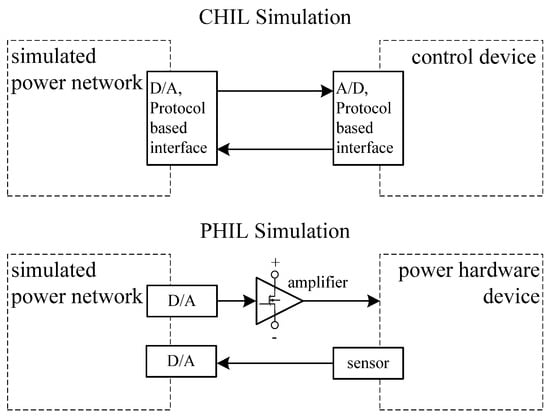
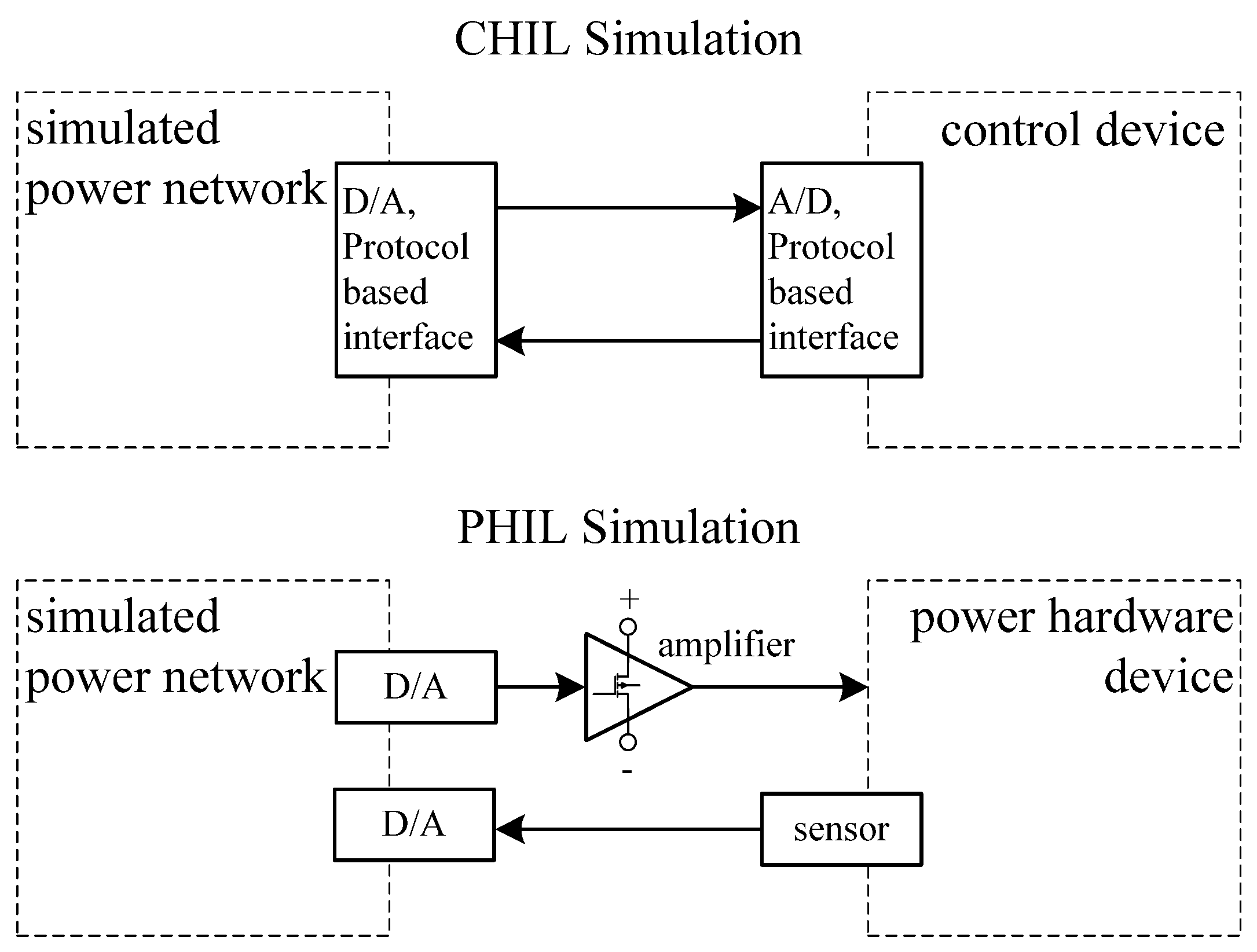
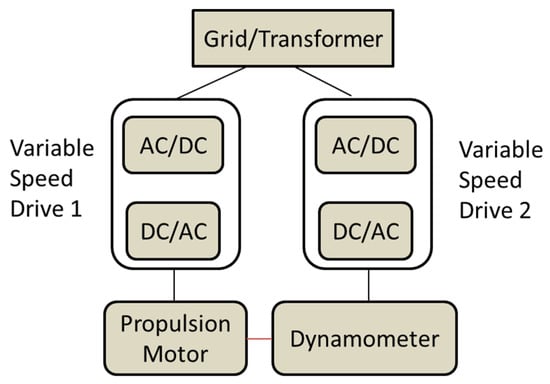
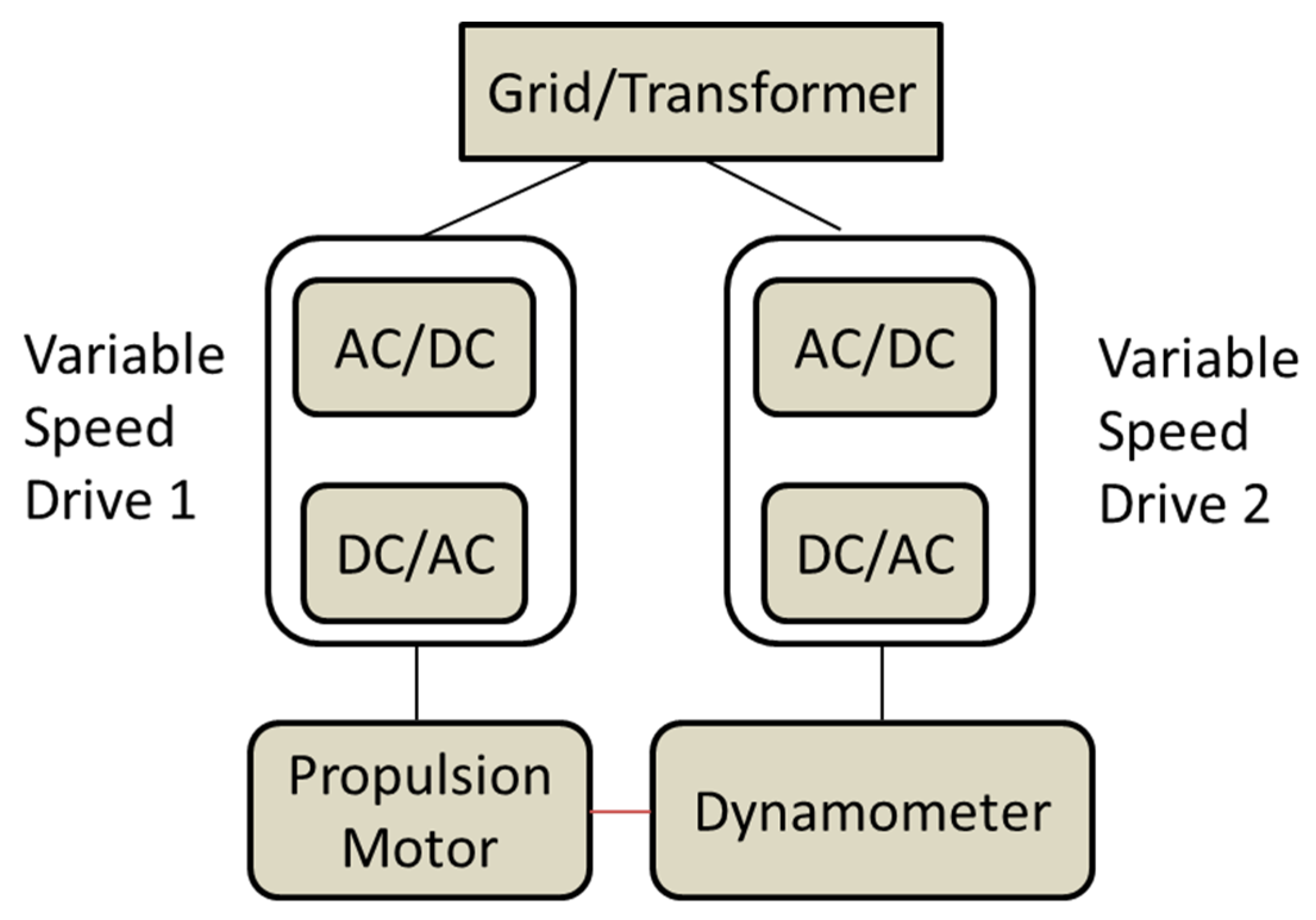
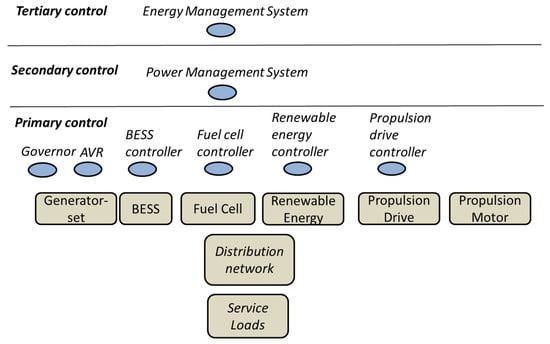
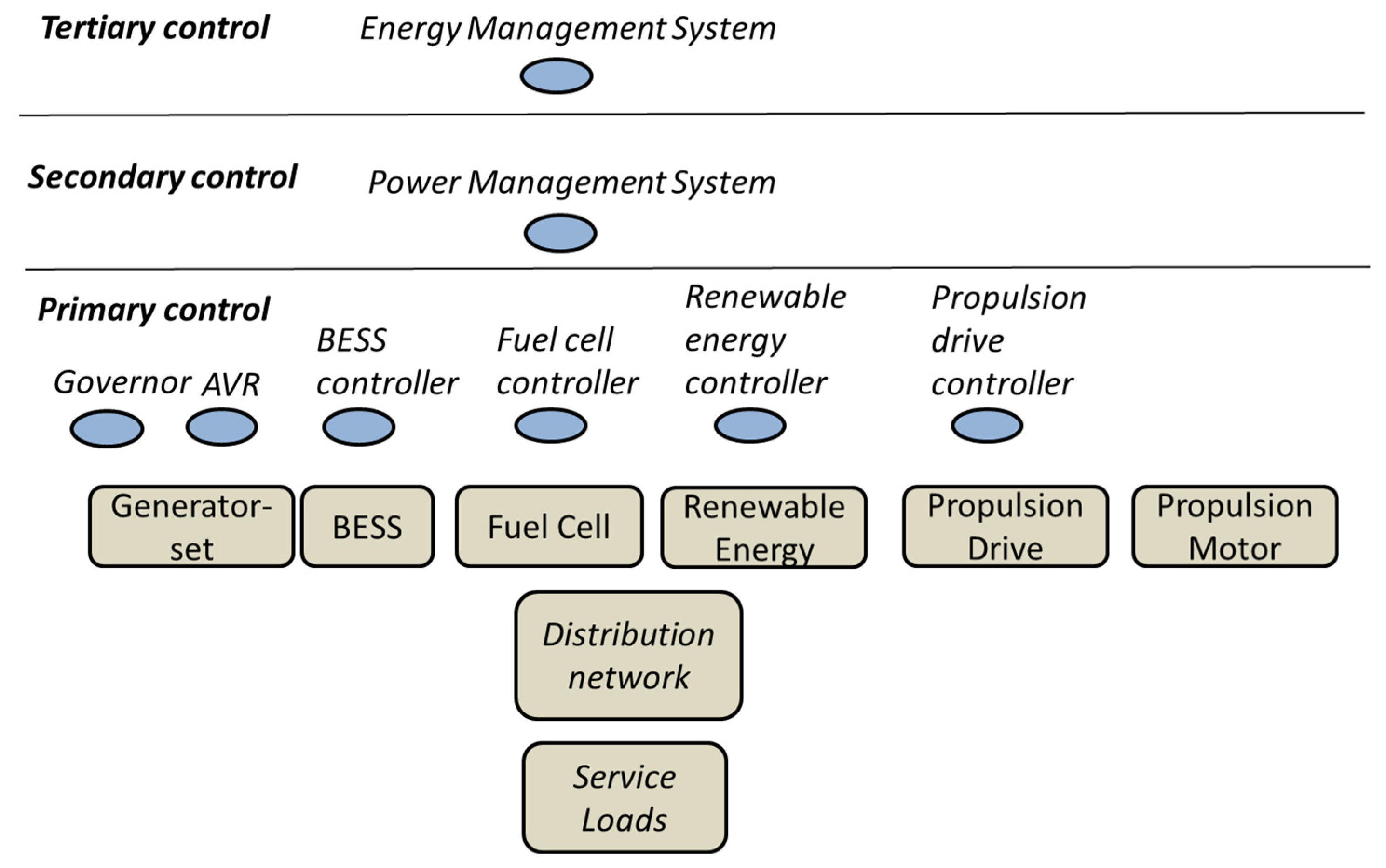
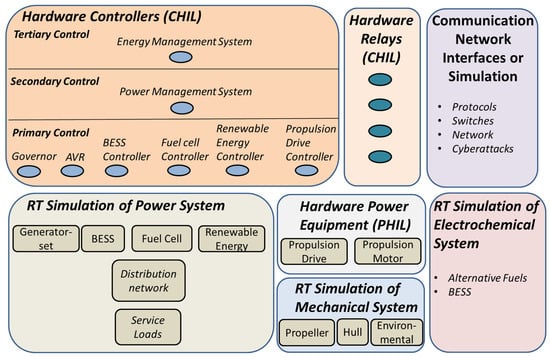
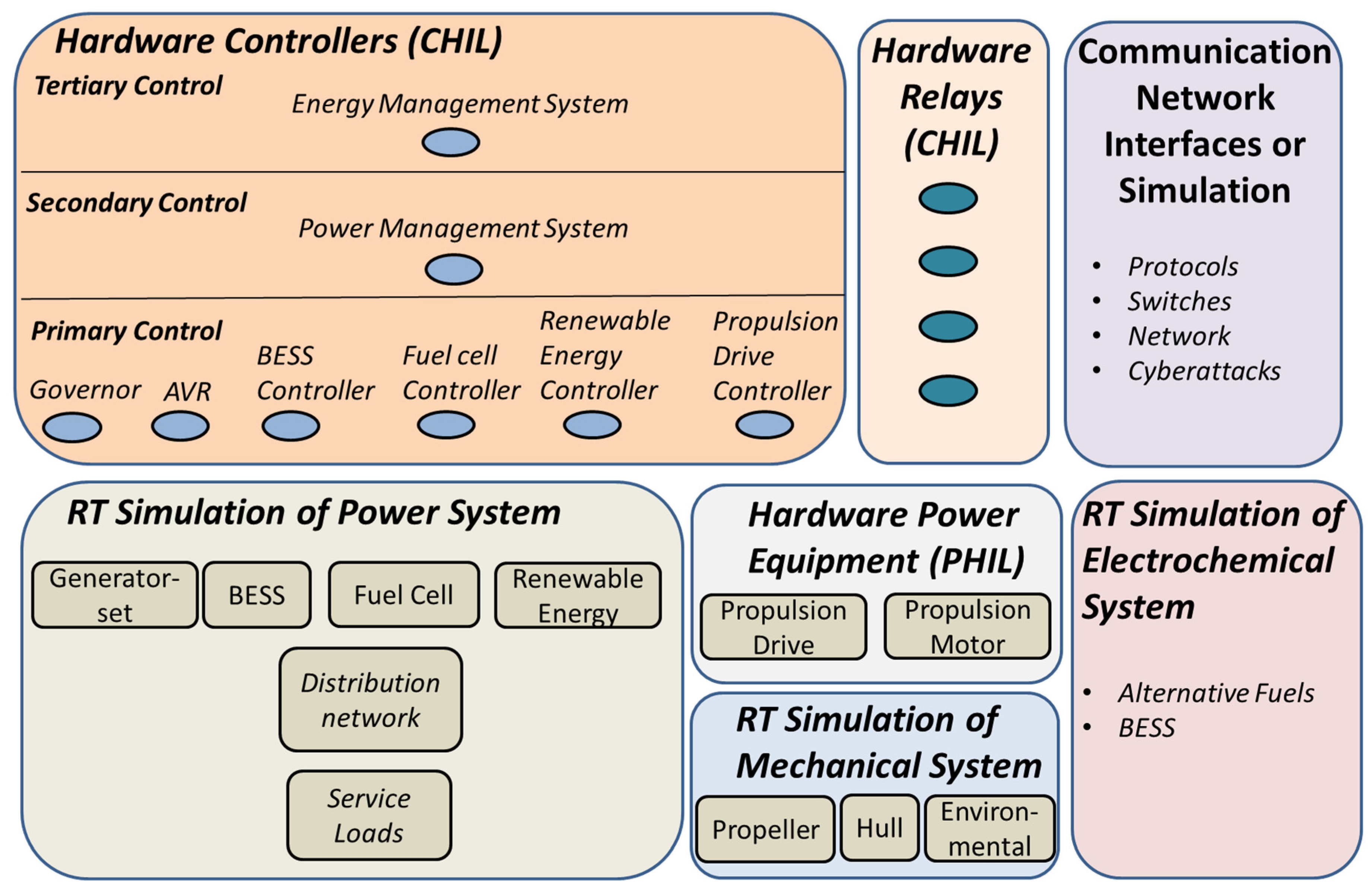

Disclaimer/Publisher’s Note: The statements, opinions and data contained in all publications are solely those of the individual author(s) and contributor(s) and not of MDPI and/or the editor(s). MDPI and/or the editor(s) disclaim responsibility for any injury to people or property resulting from any ideas, methods, instructions or products referred to in the content. |
© 2026 by the author. Licensee MDPI, Basel, Switzerland. This article is an open access article distributed under the terms and conditions of the Creative Commons Attribution (CC BY) license.