


Abstract
Renewable Energy Certificates (RECs) have emerged as critical market-based policy instruments to promote renewable energy development worldwide. This comprehensive review examines the theoretical foundations, market mechanisms, policy effectiveness, and challenges of global REC systems based on extensive international experiences spanning over two decades. RECs function by separating the environmental attributes of renewable electricity from its physical energy, creating flexible trading mechanisms that effectively channel private investment toward renewable energy projects while providing compliance tools for renewable portfolio standards. Our analysis reveals significant variations in design and implementation across major markets, including the United States, European Union, China, India, Australia, and emerging economies. Despite their widespread adoption with over 50 countries implementing various forms of REC mechanisms, these markets face persistent challenges including price volatility, limited liquidity, regulatory inconsistencies, and ongoing debates about their environmental additionality. Recent technological developments, particularly blockchain-enabled tracking systems and digital platforms, are reshaping REC markets by enhancing transparency, reducing transaction costs, and enabling smaller-scale participation. This review proposes corresponding recommendations from the dimensions of optimizing market design, promoting digital transformation and product diversification, and establishing international coordination mechanisms.
1. Introduction
The global imperative to address climate change has prompted governments worldwide to develop policies that accelerate renewable energy deployment to achieve carbon neutrality goals [1]. Among these policies, Renewable Energy Certificates (RECs) have emerged as a significant market-based instrument that creates a distinct revenue stream for renewable energy producers by separating environmental attributes from physical electricity generation [2]. They represent an evolution in renewable energy support mechanisms, moving beyond traditional subsidies and feed-in tariffs toward more market-oriented approaches that harness competitive forces to drive clean energy development [3].
RECs—also known as Green Certificates, Tradable Green Certificates (TGCs), Guarantees of Origin (GOs), or Renewable Portfolio Certificates—are tradable commodities that verify the generation of one megawatt-hour (MWh) of electricity from qualified renewable sources [4,5]. By enabling the environmental benefits of renewable energy to be traded separately from the physical electricity, RECs create flexibility for market participants and establish a monetary value for the environmental attributes of renewable generation. According to Nienhueser and Qiu [6], in the United States alone, 63% of renewable energy is purchased as RECs separate from the electricity itself, highlighting the significance of this decoupled market structure that has fundamentally transformed how clean energy value is captured and traded.
Since the late 1990s, REC mechanisms have been widely implemented across Europe, North America, and increasingly in Asia and other developing regions [7,8]. These systems often operate in conjunction with regulatory frameworks like Renewable Portfolio Standards (RPS) in the United States, which require electricity suppliers to source a specified percentage of their power from renewable sources, or the Guarantees of Origin system in the European Union, which provides a standardized tracking mechanism across member states [9]. Emerging economies including China, India, Australia, and various countries in Latin America and Africa have also established green certificate trading systems as part of their renewable energy transition strategies, adapting these mechanisms to local market conditions and policy objectives [10,11,12].
Despite over two decades of global implementation, the academic understanding of REC system performance remains fragmented. While existing literature has extensively documented individual market experiences, there remains a lack of comprehensive comparative analysis across different institutional contexts. Current research exhibits several critical limitations: (1) limited cross-regional comparison of design features between market-based systems (e.g., EU, Australia) and policy-guided systems (e.g., China, India); (2) insufficient understanding of how specific design choices—such as technology differentiation and price floors—affect market liquidity and environmental additionality; and (3) inadequate analysis of how digital transformation is reshaping these structural inefficiencies.
Addressing these gaps, this review moves beyond a descriptive summary to answer the following central research question: How do divergent market designs—specifically the tension between administrative control and market liberalization—impact the price discovery and investment efficiency of REC systems in developed versus emerging economies?
To answer this, we apply a comparative analytical framework to evaluate evidence from major global markets. Unlike previous reviews that focus solely on single jurisdictions, this study provides three specific scientific contributions:
- (1)
- It provides a typology of global REC designs, categorizing them based on their regulatory rigidity and market openness.
- (2)
- It synthesizes empirical evidence to validate the relationship between market liquidity and policy stability.
- (3)
- It proposes a technically grounded pathway for international interoperability and digital integration.
By structuring the analysis around this central inquiry, this review aims to provide a validated, scientifically grounded roadmap for the next generation of renewable energy market mechanisms.
2. Methodology and Analytical Framework
To ensure a comprehensive and systematic evaluation of global REC systems, this review adopts a multi-stage research methodology combining systematic literature review with comparative policy analysis. The framework consists of three phases: literature retrieval, content screening, and comparative synthesis.
2.1. Literature Search Strategy
We conducted a structured literature search across major academic databases, including Web of Science, Scopus, and IEEE Xplore, covering the period from 2000 to 2024. To capture the diverse terminology used globally, the search string employed Boolean operators combining core concepts: (“Renewable Energy Certificate” OR “Green Certificate” OR “Guarantees of Origin” OR “Tradable Green Certificate”) AND (“Market Mechanism” OR “Pricing” OR “Policy Effectiveness”). Given the highly regulated nature of REC markets, we extended the data collection to include “gray literature,” specifically authoritative reports from international organizations and national regulatory bodies (e.g., U.S. Environmental Protection Agency, China’s National Energy Administration, India’s Central Electricity Regulatory Commission) to ensure the accuracy of policy details and market data.
2.2. Screening and Inclusion Criteria
The initial search yielded 1200 records approximately. We applied the following inclusion criteria: (1) Peer-reviewed articles or official government reports published in English; (2) Studies focusing on the design, operation, or impact of certificate markets rather than purely technical grid integration issues; and (3) Research providing empirical data on price dynamics, additionality, or cross-border trade. Duplicate records and editorials were excluded. A final set of about 70 core documents formed the basis of this review.
2.3. Comparative Analytical Framework
To move beyond a descriptive summary, we developed a multidimensional analytical framework to standardize the comparison across heterogeneous jurisdictions (USA, EU, China, India, Australia). As presented in subsequent sections, this framework evaluates each system along four key dimensions:
- ♦
- Institutional Architecture: Legal basis, issuance bodies, and compliance mandates (RPS vs. Voluntary).
- ♦
- Market Mechanics: Trading platforms, price formation mechanisms, and liquidity.
- ♦
- Scope and Fungibility: Technology eligibility, geographic boundaries, and cross-border interoperability.
- ♦
- Performance Indicators: Impact on investment (additionality), price volatility, and environmental integrity.
3. Theoretical Foundations and Market Mechanisms
This section establishes the conceptual and operational framework of global REC systems. It first examines the economic rationale and core market mechanisms that underpin certificate trading, ranging from issuance protocols to compliance enforcement. Subsequently, it transitions to a comparative analysis of diverse system designs and implementation models adopted across different international jurisdictions to illustrate how these theoretical principles are applied in practice.
3.1. Economic Theory and Market Design
The theoretical justification for REC mechanisms is deeply rooted in environmental economics, specifically the internalization of externalities. As articulated by Madlener and Stagl [13], renewable energy generation produces positive environmental spillovers—such as carbon abatement and air quality improvements—that are systematically undervalued in traditional wholesale electricity markets. Morthorst [5] argues that this market failure necessitates a decoupling mechanism; by separating the “environmental attribute” from the “physical electron,” RECs create a parallel market that allows these external benefits to be monetized.
From a design perspective, the literature distinguishes RECs as quantity-based instruments, contrasting them with price-based mechanisms like Feed-in Tariffs (FiTs) [14]. Falconett and Nagasaka [15] demonstrate that while FiTs provide price certainty, REC systems (often coupled with Renewable Portfolio Standards) offer theoretical efficiency gains by allowing the market to discover the lowest marginal cost of abatement. However, critics such as Tanaka and Chen [16] caution that this efficiency relies heavily on market liquidity and design robustness. Consequently, the economic rationale for RECs is not merely about funding generation, but about establishing what Mozumder and Marathe [17] describe as a cost-effective equilibrium between regulatory targets and market flexibility.
Complete REC systems typically incorporate several fundamental components that determine their effectiveness and market dynamics [1,18,19]. Governments or regulatory authorities establish mandatory renewable energy consumption quotas, requiring electricity suppliers or large consumers to purchase specified percentages of renewable energy or corresponding certificates [20,21]. These obligations create the primary demand driver for REC markets [16]. The quota-setting process involves complex considerations including renewable energy resource availability, grid integration capabilities, cost implications for consumers, and alignment with broader climate and energy policy objectives. Qualified renewable energy projects receive one REC for each MWh of electricity generated, with certificates containing detailed information about generation technology, project location, timing, and environmental attributes [22]. Robust verification systems ensure certificate authenticity and prevent double-counting through sophisticated tracking systems that monitor the entire lifecycle of certificates from generation to retirement [23].
RECs trade through various mechanisms including bilateral contracts, spot markets, and futures exchanges [24]. Market structure significantly influences liquidity, price discovery, and transaction costs [25]. Bilateral contracts dominate many REC markets, particularly for compliance purposes where obligated entities seek long-term price certainty and supply security [24,26]. Spot markets provide flexibility for balancing certificate portfolios and managing short-term supply-demand imbalances [7,27]. Futures markets, though less developed in many jurisdictions, offer risk management tools and price discovery mechanisms for longer-term planning [28]. Electronic trading platforms are increasingly important for enhancing market transparency, reducing transaction costs, and enabling participation by smaller market participants [29].
Obligated entities must submit sufficient certificates within specified timeframes to fulfill quota obligations, with regulatory authorities responsible for monitoring compliance and imposing penalties for non-compliance [30]. Compliance mechanisms vary significantly across jurisdictions, with some systems allowing banking of excess certificates for future use, borrowing against future obligations, or alternative compliance payments when certificates are unavailable [31,32]. These flexibility mechanisms can significantly impact market dynamics, price volatility, and the temporal distribution of renewable energy investment [33,34]. Figure 1 illustrates the decoupling of environmental attributes from physical electricity, the creation of RECs, market trading mechanisms, and final retirement to meet regulatory quotas.
Figure 1.
Conceptual Mechanism of the Renewable Energy Certificate (REC) System.
Regarding the technology mix, the market share of generation options varies significantly by region, providing critical “guiding numbers” for market participants [35]. In the mature European Guarantee of Origin (GO) market, hydropower remains the dominant source, historically accounting for approximately 50–60% of total issuance due to the vast legacy hydro capacity [36]. In contrast, the United States and Chinese markets exhibit a structural shift toward variable renewable energy. Solar and wind certificates have become the primary drivers of liquidity in these jurisdictions, together constituting over 70% of new issuance volumes in recent years [37,38]. This statistical divergence highlights a transition where emerging markets are increasingly driven by new solar/wind deployment rather than legacy hydro baseloads [11].
3.2. Global System Designs and Implementation Models
Different countries have implemented distinct REC system designs reflecting their specific policy objectives, market conditions, and regulatory frameworks. These variations reflect different approaches to balancing efficiency, effectiveness, and equity considerations while adapting to local circumstances [20]. Table 1 shows the details.
Table 1.
Comparison of International RECs Features.
A primary distinction lies in the centralization of governance. As shown in Table 1, the European Union operates under a harmonized framework (Renewable Energy Directive) coordinated by the Association of Issuing Bodies (AIB), which facilitates cross-border recognition of Guarantees of Origin (GOs) [9]. In contrast, the United States features a fragmented landscape driven by state-level Renewable Portfolio Standards (RPS) without a unified federal law, resulting in segmented markets with limited interstate fungibility [24]. China and India employ centralized national frameworks (via the National Energy Administration/National Development and Reform Commission and Central Electricity Regulatory Commission, respectively), yet they face unique challenges in coordinating national mandates with provincial or state-level implementation [22,39].
Beyond governance structures, the mechanisms for price formation and technology differentiation also diverge significantly. Mature markets like the EU and Australia’s Large-scale Generation Certificate (LGC) system rely primarily on supply-demand dynamics to discover prices, favoring market efficiency [22,40]. Conversely, emerging markets often incorporate administrative interventions; for instance, China’s Green Electricity Certificates (GECs) and India’s REC system have historically utilized policy-guided pricing or floor/ceiling prices to protect investors. Furthermore, while the EU and China generally issue generic certificates (1 MWh equals 1 unit regardless of source), India and Australia explicitly distinguish between technologies (e.g., Solar vs. Non-Solar RECs; Small-scale vs. Large-scale), reflecting specific policy goals to support diverse technologies or distributed generation [41].
4. Global Market Development and Regional Experiences
4.1. Market Scale and Geographic Distribution
By 2024, more than 50 countries and territories have implemented various forms of renewable energy mechanisms, creating a global market for renewable energy certificates with an annual issuance of more than 5000 terawatt-hours and a market value of tens of billions of dollars (shown in Figure 2). China’s issuance is growing significantly, followed by the EU’s GOs. This widespread adoption reflects the growing recognition of RECs as effective instruments for renewable energy promotion and carbon reduction goals [7]. The global REC market has experienced remarkable growth over the past two decades, driven by expanding renewable energy deployment, strengthening policy frameworks, and increasing corporate sustainability commitments [42]. Market maturity varies significantly across regions, with developed economies generally featuring more sophisticated trading mechanisms and regulatory frameworks compared to emerging markets [43].
Figure 2.
Global RECs Issuance Trends. Note: This aggregate figure was derived by synthesizing the latest available issuance data from authoritative regional sources. Specifically, US market volumes were drawn from the National Renewable Energy Laboratory (NREL) report Status and Trends in the Voluntary Market [38]; European figures were sourced from the Association of Issuing Bodies (AIB) Monthly Statistics [36]; Australian data was obtained from the Clean Energy Regulator; and Chinese issuance volumes were referenced from the China Green Electricity Certificate Development Report [37,44].
Europe represents the most mature and integrated REC market globally, with the European Energy Certificate System (EECS) providing unified certificate standards across 28 EU member states [9]. The Guarantees of Origin system facilitated approximately 800 TWh of certificate trading in 2023, demonstrating robust market liquidity and cross-border integration [45]. The European market benefits from harmonized regulatory frameworks, standardized tracking systems, and well-established trading infrastructure that enables efficient price discovery and risk management [24]. The EU’s renewable energy directive has been instrumental in creating demand for certificates, while the bloc’s ambitious climate targets continue to drive market expansion. Notable features of the European market include its technology-neutral approach, which allows different renewable energy sources to compete on equal terms, and its sophisticated disclosure requirements that enhance transparency and prevent double-counting [9].
The United States constitutes one of the world’s largest REC markets, with 29 states and Washington D.C. implementing RPS policies [46]. Annual trading volumes reached approximately 300 TWh in 2023, driven by state-level compliance requirements and voluntary corporate procurement [20]. The US market is characterized by significant regional variation in policy design, compliance obligations, and technology eligibility criteria. States like California, Texas, and New York represent the largest REC markets, with sophisticated trading mechanisms and active participation from utilities, independent power producers, and corporate buyers [24]. The fragmented nature of the US market creates both opportunities and challenges, with price differentials across states reflecting varying supply-demand dynamics and regulatory frameworks [47]. Canada and Mexico are developing complementary certificate systems to enhance North American market integration, with efforts underway to establish mutual recognition agreements and harmonized standards [24].
4.2. Emerging Market Development
China launched voluntary green certificate trading in 2017, initially focusing on wind and solar projects that did not receive government subsidies [48]. The system transitioned to mandatory trading trials in 2021, with plans for full implementation across the power sector. China’s approach reflects its unique energy system characteristics, including rapid renewable energy deployment, centralized planning, and state-owned enterprise dominance [49]. The Chinese market faces particular challenges related to administrative price setting, limited trading activity, and coordination between national and provincial authorities [50]. Despite these challenges, China’s potential market size is enormous, given its position as the world’s largest renewable energy market and its ambitious carbon neutrality commitments [51].
India’s REC trading began in 2011 with high expectations for market development, but the system has experienced limited market activity due to insufficient demand and regulatory challenges. The Indian market faces structural problems including oversupply of certificates, weak enforcement of compliance obligations, and regulatory uncertainty that undermines investor confidence [52]. However, recent policy developments, including strengthened renewable purchase obligations and improved penalty mechanisms, suggest potential for market revival [12]. India’s federal structure creates additional complexity, with state-level implementation of national policies leading to inconsistent approaches and limited coordination [53,54].
Japan and South Korea are developing sophisticated certificate mechanisms aligned with their national energy transition strategies. Japan’s voluntary REC system focuses on corporate procurement and green premium markets, reflecting the country’s emphasis on market-based solutions and corporate sustainability initiatives [55]. The Japanese market benefits from strong corporate demand for renewable energy certificates, driven by companies’ carbon neutrality commitments and sustainability reporting requirements. South Korea implements a more comprehensive Renewable Portfolio Standard with significant penalties for non-compliance, creating strong demand for certificates [7,56]. The Korean system incorporates technology-specific multipliers that provide differentiated support for various renewable energy technologies, reflecting policy objectives to promote technology diversity and support emerging technologies [57].
Developing countries across Africa, Latin America, and Asia are increasingly implementing REC systems as part of their renewable energy and climate policies, often adapting international best practices to local conditions while addressing unique challenges related to institutional capacity and market development [58,59]. These emerging markets face common challenges including limited regulatory capacity, nascent renewable energy sectors, and weak financial markets [60]. However, they also present significant opportunities for market development, given their large renewable energy potential and growing electricity demand. International support and technology transfer play crucial roles in helping these countries establish effective REC systems [61,62].
While current trading volumes are concentrated in the Northern Hemisphere, the African continent represents a critical frontier for the future of global REC systems. Africa possesses gigantic renewable energy potential, particularly in solar and wind resources, yet it remains significantly underestimated in global market analyses [63,64]. Unlike mature markets burdened by legacy infrastructure and complex administrative transitions, many African nations have the unique opportunity to develop renewable frameworks “from scratch.” This allows for “regulatory leapfrogging,” where countries can bypass the traditional, centralized certificate models and directly adopt next-generation, digitized tracking systems (such as I-REC or blockchain-enabled standards) [65]. Currently, the I-REC standard serves as the primary mechanism bridging this gap, allowing African projects to access global finance. However, realizing this potential requires international support to establish local governance structures that ensure these “green attributes” translate into tangible local grid development rather than merely serving export markets.
4.3. Corporate Procurement and Voluntary Markets
The growth of voluntary REC markets has been one of the most significant developments in recent years, driven primarily by corporate sustainability commitments and carbon neutrality goals. Major corporations including technology companies, retailers, and manufacturers have become substantial buyers of RECs as part of their strategies to demonstrate environmental leadership and meet stakeholder expectations [66]. This voluntary demand has created new market segments and trading mechanisms that operate independently of regulatory compliance requirements [67].
Corporate procurement strategies vary significantly, with some companies focusing on local renewable energy development while others pursue global portfolios of certificates. Long-term power purchase agreements (PPAs) with embedded RECs have become increasingly popular, providing renewable energy developers with revenue certainty while giving corporate buyers greater control over additionality and environmental impact [68]. The voluntary market has also driven innovation in certificate products, including time-of-use matching, storage-coupled certificates, and enhanced tracking systems that provide greater transparency about renewable energy generation [69].
4.4. Market Integration and Cross-Border Trading
International coordination and market integration represent critical areas for REC system development, with significant potential to enhance efficiency and reduce costs. The European Union’s experience with cross-border certificate trading demonstrates the benefits of harmonized standards and mutual recognition agreements. However, most other regions lack comparable coordination mechanisms, creating barriers to trade and limiting market efficiency [70].
Efforts to establish international REC trading face various challenges including differences in renewable energy definitions, tracking systems, and regulatory frameworks. Technical standards for certificate issuance, transfer, and retirement vary across jurisdictions, complicating cross-border transactions [71]. Nevertheless, growing corporate demand for global renewable energy portfolios is driving efforts to develop international trading mechanisms and standardized certificate products. Regional initiatives in North America, Asia, and other areas are exploring options for market integration while addressing sovereignty concerns and regulatory complexity [72].
5. Market Performance and Policy Effectiveness
5.1. Market Participants and Stakeholder Analysis
The efficacy of REC markets is fundamentally shaped by the complex ecosystem of stakeholders, whose interacting motivations create dynamic supply-demand equilibria. Literature suggests that understanding these behavioral drivers is crucial for identifying structural market barriers [73].
Supply-Side Dynamics and Aggregation: On the supply side, the market is characterized by a structural dichotomy between utility-scale generators and distributed energy resources (DERs) [74]. While large independent power producers dominate certificate generation volume due to economies of scale, Dawn et al. [75] highlight that the integration of distributed systems faces significant friction due to high transaction costs and administrative complexity [76]. To address these barriers to entry for small-scale producers (e.g., rooftop solar), research by Warneryd et al. [77] emphasizes the critical role of aggregation mechanisms. By pooling certificates from multiple micro-generators, aggregators reduce the marginal cost of market participation, effectively bridging the gap between decentralized generation and centralized trading platforms [78].
Demand Drivers and Corporate Behavior: Demand-side dynamics have evolved from purely compliance-driven obligations to a complex mix of regulatory mandates and voluntary corporate procurement. Nienhueser and Qiu [6] observe that corporate buyers, including technology giants and multinational retailers, have become dominant market forces, driven by the dual motivations of sustainability reporting and brand positioning. However, Barron et al. [79] argue that this voluntary demand creates a spectrum of procurement strategies, ranging from “unbundled” spot market purchases aimed at cost minimization to long-term Power Purchase Agreements (PPAs) designed to ensure additionality. This divergence reflects a broader debate in the literature regarding the environmental integrity of different procurement models [72].
Intermediaries and Market Liquidity: The role of intermediaries—brokers, exchanges, and consulting firms—extends beyond simple matchmaking to the mitigation of information asymmetry [80]. Leite et al. [81] suggest that these actors are essential for enhancing price discovery, particularly in fragmented markets where standardized pricing is absent. The evolution from bilateral trading to electronic marketplaces represents a technological maturity that reduces search costs and improves liquidity [82]. Furthermore, financial institutions are increasingly introducing hedging instruments, which scholars note are vital for managing the price volatility inherent in renewable generation cycles [83].
Regulatory Oversight and Institutional Trust: Finally, the stability of REC markets relies heavily on the institutional framework established by regulators. Gupta and Rakshit [84] posit that effective oversight is not merely about rule enforcement but about maintaining “institutional trust.” Variations in regulatory approaches—from the market-oriented mechanisms in the US to the administrative controls in China—demonstrate the trade-off between market flexibility and policy certainty [85]. Analysis by Song et al. [56] indicates that clear enforcement mechanisms and transparent tracking systems are prerequisite conditions for preventing market failure and ensuring that certificate prices accurately reflect environmental attributes.
5.2. Price Dynamics and Market Structure
REC prices are fundamentally determined by the interplay of regulatory design features rather than marginal generation costs alone. Figure 3 illustrates the comparative price volatility in China and Australia, revealing dynamic patterns that serve as a baseline for understanding global structural divergences. The divergent trends in the figure primarily highlight the impact of compliance penalties and policy certainty. In the Australian market, the “Large-scale Generation Shortfall Charge” acts as a transparent price ceiling. As observed in the Australian panel, LGC prices generally track below this statutory penalty level, as market participants will not pay more for a certificate than the tax for non-compliance [71,86]. Consequently, the cyclical volatility visible in Figure 2 is largely driven by “deadline effects” related to annual surrender dates and banking limitations, rather than fundamental uncertainty.
Figure 3.
Transaction price of RECs in China and Australia.
In contrast, the Chinese market (Figure 3, top panel) exhibits distinct “policy-driven volatility.” Lacking a hard, statutory price ceiling similar to Australia’s shortfall charge, GEC prices have historically been sensitive to administrative announcements regarding subsidy eligibility and quota adjustments [40]. The sharp spikes in the dataset reflect sudden shifts in demand expectations triggered by policy releases, such as changes in “grid-parity” project rules, rather than regular market cycles. This comparison underscores that market-based price discovery requires stable, transparent penalty mechanisms to function effectively.
Extending this analysis to North American and European markets reveals further structural determinants of price stability. Similar to Australia, mature US markets like PJM or NEPOOL utilize “Alternative Compliance Payments” (ACP) to stabilize prices [25]. However, US markets often differ by allowing more generous “banking” provisions that allow participants to carry over excess credits, which empirical evidence suggests creates a smoother price curve compared to markets with strict vintage expirations [87]. Regarding liquidity constraints, the EU’s Guarantees of Origin (GO) system offers a contrasting model to the segmented approaches seen elsewhere. By pooling all renewable technologies into a single fungible market, the EU maximizes liquidity and reduces transaction costs [45]. This contrasts with segmented designs—such as India’s solar/non-solar split or specific US solar carve-outs—which, while supporting targeted technologies, often suffer from lower liquidity and higher susceptibility to price squeezes [24]. In summary, the comparison across these four jurisdictions indicates a fundamental trade-off: technology-neutral systems with banking provisions and clear penalty ceilings favor price stability and efficiency, whereas segmented, policy-guided systems often favor targeted development at the cost of higher volatility.
5.3. Investment Impact and Technology Promotion
RECs have demonstrated significant effectiveness in mobilizing private investment for renewable energy development, though their impact varies considerably across different market contexts and design features. Empirical evidence suggests that well-designed REC systems can reduce investment risks, improve project economics, and accelerate renewable energy deployment while promoting technological innovation and cost reductions [1,88].
RECs provide additional revenue streams that help improve project financial metrics and reduce investment risks [89]. This additional income source is particularly valuable for projects in competitive electricity markets where renewable energy may not be fully compensated for their environmental benefits [90]. Regarding revenue impact, empirical evidence reveals a stark divergence based on market structure. In US compliance markets with specific scarcity pricing, REC prices reached $35–$40/MWh in 2023, effectively contributing 30–50% of a project’s total revenue stream when compared to wholesale electricity prices [91]. In contrast, in voluntary markets, despite record trade volumes, the revenue contribution remains lower, typically accounting for less than 10% of total project value due to lower unbundled certificate prices [38]. This distinction clarifies that RECs serve as a primary financing driver mainly in scarcity-constrained compliance regimes.
Unlike single-technology subsidies, REC mechanisms promote competition among different renewable energy technologies, fostering innovation and cost reductions across the sector [92]. However, concerns exist about whether market-driven technology selection adequately supports emerging technologies with high development potential [57]. Technology-neutral REC systems generally favor the lowest-cost renewable technologies, which may not align with policy objectives to promote technology diversity or support emerging technologies. Some systems address this through technology-specific multipliers or separate markets that provide differentiated support [93].
Research indicates that REC mechanisms may influence investment timing differently than feed-in tariffs, potentially encouraging larger-scale projects while affecting the temporal distribution of renewable energy capacity additions [1,94]. REC systems typically provide greater investment certainty for large projects that can secure long-term contracts, while smaller projects may face greater challenges in accessing favorable contract terms. The temporal flexibility of REC systems can lead to uneven deployment patterns, with developers timing project completion to maximize certificate values [95].
The effectiveness of RECs in promoting investment varies significantly across market conditions and design features. Strong compliance markets with meaningful penalties tend to provide more robust investment signals than weak or voluntary markets. Market size and liquidity also influence investment impact, with larger markets generally providing better price discovery and risk management opportunities. Integration with other policy instruments can enhance or complicate investment signals, depending on the coordination between different support mechanisms [25,69].
5.4. Policy Integration and Coordination
REC systems operate within complex policy environments that include carbon trading, feed-in tariffs, tax incentives, and other renewable energy support mechanisms. Effective policy coordination is essential for maximizing synergies while avoiding conflicts or redundancies that can undermine the effectiveness of individual instruments or create market distortions [18,96].
The relationship between REC and carbon trading systems has generated considerable debate regarding double-counting and policy effectiveness. Some analysts argue for careful coordination to avoid undermining either mechanism, while others propose integrated approaches that capture both renewable energy and carbon reduction benefits [78]. The interaction between these systems depends on their scope, coverage, and design features. Well-coordinated systems can provide complementary incentives that strengthen overall decarbonization efforts, while poorly designed interactions can create perverse incentives or reduce the effectiveness of both mechanisms [87].
Many jurisdictions allow renewable energy projects to choose between feed-in tariffs and REC participation, creating complex substitution effects. Research suggests that optimal policy design should consider these interactions to avoid market distortions and ensure cost-effectiveness [55,97]. The choice between feed-in tariffs and REC participation often depends on project size, technology type, and risk preferences, with smaller projects typically preferring the certainty of feed-in tariffs while larger projects may favor the potentially higher returns from REC markets [98].
RECs increasingly serve corporate sustainability strategies, with many companies using certificate purchases to demonstrate environmental leadership. However, questions persist about whether these voluntary purchases drive additional renewable energy development or merely redistribute environmental claims [79]. The integration of REC systems with corporate sustainability reporting frameworks and science-based targets creates both opportunities and challenges for policy effectiveness. Clear additionality requirements and robust tracking systems are essential for ensuring that corporate REC purchases contribute to genuine environmental benefits [71].
Tax incentives, grants, and other financial support mechanisms can interact with REC systems in complex ways that affect project economics and investment decisions. Optimal policy design requires careful consideration of these interactions to avoid over-subsidization or gaps in support that leave certain projects unviable [99]. Regular policy reviews and stakeholder consultation processes can help identify and address coordination challenges while adapting to changing market conditions and technology costs [100].
5.5. Environmental and Social Outcomes
Beyond their economic impacts, REC systems generate important environmental and social outcomes that are crucial for evaluating their overall effectiveness as policy instruments. These broader impacts often extend beyond immediate renewable energy deployment to include effects on air quality, public health, local economic development, and social equity [101].
Environmental outcomes from REC systems include direct emissions reductions from renewable energy deployment as well as indirect effects through technology learning and cost reductions that accelerate broader clean energy adoption. Studies suggest that well-functioning REC markets can achieve substantial emissions reductions at relatively low costs compared to command-and-control regulations [102]. However, the magnitude of environmental benefits depends critically on additionality—whether REC purchases drive additional renewable energy development beyond what would occur otherwise [103].
Social outcomes include employment creation in renewable energy industries, rural economic development through land lease payments and local tax revenues, and improved energy access in some developing country contexts. REC systems can also contribute to energy security by reducing dependence on fossil fuel imports and diversifying energy supply sources [104,105]. However, the distribution of benefits and costs may vary significantly across different communities and regions, raising important equity considerations that policy makers must address [79].
The measurement and verification of environmental and social outcomes remain challenging, with ongoing debates about appropriate methodologies and metrics [106]. Improved monitoring and evaluation systems are needed to better understand the full range of impacts from REC systems and to inform policy optimization efforts. Integration with other environmental and social policies can help maximize co-benefits while addressing potential negative consequences [107].
6. Contemporary Challenges and Technological Innovation
6.1. The Additionality Debate: Compliance vs. Voluntary Dynamics
The additionality debate—whether REC purchases drive renewable energy deployment that would not have occurred otherwise—represents the most significant challenge facing the system’s credibility [46]. However, the nature of this challenge diverges fundamentally between compliance and voluntary market segments, necessitating a differentiated analysis. In compliance markets (e.g., US RPS or China’s renewable consumption quotas), additionality is structurally engineered through statutory scarcity [7]. Regulators mandate demand that exceeds the baseline supply, creating a binding constraint. As noted by Gillenwater [46], under these conditions, the REC price acts as a direct subsidy required to bridge the gap between the cost of renewable generation and wholesale electricity prices. Consequently, in strictly enforced compliance regimes, high REC prices, which are often capped only by penalty rates, provide the necessary revenue stream to make new projects bankable, thereby demonstrating strong financial additionality [92,108].
Conversely, the voluntary market faces a distinct “quality crisis” regarding additionality. Critics argue that a substantial portion of voluntary REC transactions involves “unbundled” certificates from legacy projects (e.g., old hydro or wind) that are already economically viable or fully depreciated. Research by Bjørn et al. [69] in Nature Climate Change highlights that corporate science-based targets relying on such RECs often overstate emission reductions, as purchasing these low-cost certificates (often <$1/MWh) provides negligible financial incentive for new capacity deployment. In this segment, the market functions more as an accounting mechanism for attribution rather than a catalyst for decarbonization [109].
Therefore, empirical evidence regarding whether REC revenues influence investment yields mixed results precisely because it often conflates these two markets. While project developers in compliance markets often rely on long-term REC contracts as a primary condition for financing [92], investors in voluntary markets typically view spot-market REC revenue as a windfall rather than a bankable asset. This distinction suggests that policy reforms should focus on tightening eligibility standards in the voluntary sector (e.g., requiring “new vintage” or “temporal matching”) while focusing on cost-efficiency in the compliance sector [97].
6.2. Regulatory and Design Challenges
Effective regulatory frameworks and enforcement mechanisms are crucial for REC market success, yet many systems suffer from weak oversight, inconsistent standards, and inadequate compliance monitoring [110]. Some jurisdictions lack robust systems for tracking obligated entity compliance, reducing market demand and undermining price signals. India’s experience demonstrates how weak enforcement can significantly limit market development despite well-designed policy frameworks [111]. Limited international coordination creates barriers to cross-border REC trading and reduces market efficiency. While the EU has achieved substantial harmonization through the EECS, other regions lack comparable coordination mechanisms [77]. Many REC markets suffer from inadequate data transparency, limiting participant ability to make informed decisions and reducing overall market efficiency. Improved data systems and reporting requirements could enhance market functionality [112].
Fundamental market design choices significantly influence REC system effectiveness, yet many systems incorporate features that limit their potential for promoting renewable energy development [19]. The debate over technology-specific versus technology-neutral REC systems reflects tensions between promoting technology diversity and maintaining market efficiency. While technology-specific systems can support emerging technologies, they may also create market segmentation and reduce liquidity [15]. Some systems include price floors, ceilings, or corridors that may distort market signals and reduce efficiency. China’s green certificate system, for example, has experienced limited trading due to administratively set prices that may not reflect market fundamentals [66]. REC systems vary significantly in their provisions for certificate banking and temporal trading flexibility. These design choices affect market dynamics, price volatility, and the ability to accommodate renewable energy resource variability [87].
6.3. Digital Transformation and Blockchain Innovation
Blockchain technology is emerging as a transformative force in REC markets, offering solutions to long-standing challenges related to transparency, fraud prevention, and transaction costs. Several pilot projects and commercial applications demonstrate blockchain’s potential to enhance REC market functionality [113]. Blockchain systems provide immutable records of certificate generation, ownership, and retirement, reducing fraud risks and improving market confidence. This enhanced traceability is particularly valuable for international REC trading where verification challenges are more pronounced [114]. Smart contracts and automated trading mechanisms can significantly reduce administrative costs and settlement times for REC transactions [115]. These improvements may enable smaller-scale renewable energy projects to participate more effectively in certificate markets. Blockchain platforms can facilitate peer-to-peer REC trading, potentially reducing the role of intermediaries and improving market access for distributed renewable energy systems [116,117]. This capability aligns with broader trends toward energy market decentralization [118,119].
Digital transformation is reshaping REC market infrastructure, creating opportunities for improved efficiency, broader participation, and enhanced integration with other environmental commodity markets [120]. Digital trading platforms are improving market liquidity and price discovery while reducing barriers to participation. These systems enable more efficient matching of buyers and sellers and provide better market data and analytics. AI and machine learning technologies are being applied to REC price forecasting, risk management, and market optimization [121]. These applications can help market participants make better decisions and improve overall market efficiency. Advanced data analytics capabilities are enhancing REC market transparency and enabling more sophisticated market analysis. These tools support better policy design and market monitoring [122].
6.4. Integration with Emerging Energy Technologies
The integration of RECs with emerging energy technologies such as energy storage, hydrogen production, and electric vehicle charging infrastructure is creating new opportunities and challenges for certificate system design [123]. As energy storage deployment accelerates, questions arise about how to account for the temporal shifting of renewable energy generation. Some systems are developing storage-coupled certificates that reflect the value of renewable energy time-shifting capabilities [124,125]. RECs are increasingly being used to track renewable energy consumption in sectors beyond electricity, including heating, transportation, and industrial processes. This sector coupling requires new certificate standards and verification methodologies [126]. Advanced REC systems may need to account for the grid services provided by renewable energy systems, including frequency regulation, voltage support, and other ancillary services [127,128]. This integration could create more sophisticated certificate products that better reflect renewable energy’s full value proposition.
7. Policy Recommendations and Future Outlook
7.1. Strategic Market Design and Grid Integration
To address market inefficiencies, regulatory authorities should transition toward adaptive systems by introducing dynamic pricing mechanisms. These mechanisms create temporal value differentiation, incentivizing developers to optimize deployment timing based on grid needs [129]. Simultaneously, market designers should establish “impact-weighted” categories to reward co-benefits, while financial institutions can develop long-term hedging instruments to ensure investment certainty [76].
Transmission system operators (TSOs) must align REC mechanisms with grid reliability. By establishing “grid services multipliers” and “locational premiums,” grid authorities can incentivize deployment in high-value locations and support ancillary services like voltage regulation. Finally, aggregators should pioneer “virtual power plant (VPP)” mechanisms to facilitate distributed resource participation, effectively democratizing market access while optimizing technical integration [130].
7.2. Future Technological Frontiers
Emerging technologies offer exploratory pathways for next-generation markets. Technology providers are investigating AI-driven “predictive additionality assessment” to forecast project viability and dynamically adjust certification requirements [131]. Similarly, IoT integration allows verification bodies to create “living certificates” with real-time attribute updates. Furthermore, research institutions may utilize “digital twin” simulations to stress-test market rules, potentially evolving toward AI-assisted compliance monitoring those scales oversight capabilities effectively [132,133].
7.3. Mechanisms for Cross-Border Coordination
A unified global market is currently unfeasible due to regulatory sovereignty and economic disparities. Instead, the future lies in enhancing interoperability across fragmented systems [70]. To overcome data barriers, standard-setting organizations must prioritize aligning technical specifications—such as vintage definitions and technology codes—to establish a generalized “meta-standard” that allows national registries to communicate without a central authority [134,135]. Regarding governance, governments are encouraged to pursue bilateral Mutual Recognition Agreements (MRAs) similar to the EU’s Guarantees of Origin model. This approach creates regulatory bridges that respect sovereignty while reducing transaction costs for multinational corporations. Finally, technological developers can deploy blockchain-based decentralized identifiers (DIDs) to verify cross-border certificate retirement. This technical layer effectively prevents double-counting and ensures environmental integrity independently of political centralization.
Author Contributions
Conceptualization, S.Y. and R.O.; methodology, S.Y. and R.O.; validation, S.Y., X.Z., X.L. and H.W.; formal analysis, S.Y., X.Z. and Y.L.; investigation, S.Y., X.Z., X.L., H.W., Y.L., Y.Z., N.S., G.H., S.Z., J.Z. and R.D.; resources, G.H., S.Z. and J.Z.; data curation, X.L., Y.L., Y.Z., N.S., G.H., S.Z., J.Z., Q.W. and R.D.; writing—original draft preparation, S.Y. and X.Z.; writing—review and editing, S.Y., X.Z., H.W., R.O. and Q.W.; visualization, X.L., Y.Z. and R.D. All authors have read and agreed to the published version of the manuscript.
Funding
This research was funded by the Energy Development Research Institute (EDRI) of China Southern Power. Grid-Co., Ltd. (grant number: 2800002024030103ZL00006).
Data Availability Statement
No new data were created or analyzed in this study.
Conflicts of Interest
Authors Shangheng Yao, Xuan Zhang, Xi Liu, Haijing Wang, Yuan Leng, Yuanzhe Zhu, Nan Shang, Guori Huang, Shutang Zhang, Jincan Zeng, Qin Wang and Rongfeng Deng were employed by the company Energy Development Research Institute, China Southern Power Grid. The remaining authors declare that the research was conducted in the absence of any commercial or financial relationships that could be construed as a potential conflict of interest.
References
- Polzin, F.; Egli, F.; Steffen, B.; Schmidt, T.S. How Do Policies Mobilize Private Finance for Renewable Energy?—A Systematic Review with an Investor Perspective. Appl. Energy 2019, 236, 1249–1268. [Google Scholar] [CrossRef] [Scilit]
- Corrocher, N.; Cappa, E. The Role of Public Interventions in Inducing Private Climate Finance: An Empirical Analysis of the Solar Energy Sector. Energy Policy 2020, 147, 111787. [Google Scholar] [CrossRef] [Scilit]
- Liu, D.; Jiang, Y.; Peng, C.; Jian, J.; Zheng, J. Can Green Certificates Substitute for Renewable Electricity Subsidies? A Chinese Experience. Renew. Energy 2024, 222, 119861. [Google Scholar] [CrossRef] [Scilit]
- Jensen, S.G.; Skytte, K. Interactions between the Power and Green Certificate Markets. Energy Policy 2002, 30, 425–435. [Google Scholar] [CrossRef] [Scilit]
- Morthorst, P.E. The Development of a Green Certificate Market. Energy Policy 2000, 28, 1085–1094. [Google Scholar] [CrossRef] [Scilit]
- Nienhueser, I.A.; Qiu, Y. Economic and Environmental Impacts of Providing Renewable Energy for Electric Vehicle Charging—A Choice Experiment Study. Appl. Energy 2016, 180, 256–268. [Google Scholar] [CrossRef] [Scilit]
- Choi, D.G.; Park, S.Y.; Hong, J.C. Quantitatively Exploring the Future of Renewable Portfolio Standard in the Korean Electricity Sector via a Bottom-up Energy Model. Renew. Sustain. Energy Rev. 2015, 50, 793–803. [Google Scholar] [CrossRef] [Scilit]
- Ford, A.; Vogstad, K.; Flynn, H. Simulating Price Patterns for Tradable Green Certificates to Promote Electricity Generation from Wind. Energy Policy 2007, 35, 91–111. [Google Scholar] [CrossRef] [Scilit]
- Velazquez Abad, A.; Dodds, P.E. Green Hydrogen Characterisation Initiatives: Definitions, Standards, Guarantees of Origin, and Challenges. Energy Policy 2020, 138, 111300. [Google Scholar] [CrossRef] [Scilit]
- Dawn, S.; Tiwari, P.K.; Goswami, A.K.; Mishra, M.K. Recent Developments of Solar Energy in India: Perspectives, Strategies and Future Goals. Renew. Sustain. Energy Rev. 2016, 62, 215–235. [Google Scholar] [CrossRef] [Scilit]
- Wang, G.; Zhang, Q.; Li, Y.; Mclellan, B.C. Efficient and Equitable Allocation of Renewable Portfolio Standards Targets among China’s Provinces. Energy Policy 2019, 125, 170–180. [Google Scholar] [CrossRef] [Scilit]
- Shrimali, G.; Tirumalachetty, S. Renewable Energy Certificate Markets in India—A Review. Renew. Sustain. Energy Rev. 2013, 26, 702–716. [Google Scholar] [CrossRef] [Scilit]
- Madlener, R.; Stagl, S. Sustainability-Guided Promotion of Renewable Electricity Generation. Ecol. Econ. 2005, 53, 147–167. [Google Scholar] [CrossRef] [Scilit]
- Schallenberg-Rodriguez, J. Renewable Electricity Support Systems: Are Feed-in Systems Taking the Lead? Renew. Sustain. Energy Rev. 2017, 76, 1422–1439. [Google Scholar] [CrossRef] [Scilit]
- Falconett, I.; Nagasaka, K. Comparative Analysis of Support Mechanisms for Renewable Energy Technologies Using Probability Distributions. Renew. Energy 2010, 35, 1135–1144. [Google Scholar] [CrossRef] [Scilit]
- Tanaka, M.; Chen, Y. Market Power in Renewable Portfolio Standards. Energy Econ. 2013, 39, 187–196. [Google Scholar] [CrossRef] [Scilit]
- Mozumder, P.; Marathe, A. Gains from an Integrated Market for Tradable Renewable Energy Credits. Ecol. Econ. 2004, 49, 259–272. [Google Scholar] [CrossRef] [Scilit]
- Bistline, J.E.T.; Brown, M.; Siddiqui, S.A.; Vaillancourt, K. Electric Sector Impacts of Renewable Policy Coordination: A Multi-Model Study of the North American Energy System. Energy Policy 2020, 145, 111707. [Google Scholar] [CrossRef] [Scilit]
- Wang, T.; Gong, Y.; Jiang, C. A Review on Promoting Share of Renewable Energy by Green-Trading Mechanisms in Power System. Renew. Sustain. Energy Rev. 2014, 40, 923–929. [Google Scholar] [CrossRef] [Scilit]
- Bistline, J.; Santen, N.; Young, D. The Economic Geography of Variable Renewable Energy and Impacts of Trade Formulations for Renewable Mandates. Renew. Sustain. Energy Rev. 2019, 106, 79–96. [Google Scholar] [CrossRef] [Scilit]
- Giest, S.; Mukherjee, I. Behavioral Instruments in Renewable Energy and the Role of Big Data: A Policy Perspective. Energy Policy 2018, 123, 360–366. [Google Scholar] [CrossRef] [Scilit]
- Tao, Y.; Qiu, J.; Lai, S.; Zhao, J. Renewable Energy Certificates and Electricity Trading Models: Bi-Level Game Approach. Int. J. Electr. Power Energy Syst. 2021, 130, 106940. [Google Scholar] [CrossRef] [Scilit]
- Huang, P.; Copertaro, B.; Zhang, X.; Shen, J.; Löfgren, I.; Rönnelid, M.; Fahlen, J.; Andersson, D.; Svanfeldt, M. A Review of Data Centers as Prosumers in District Energy Systems: Renewable Energy Integration and Waste Heat Reuse for District Heating. Appl. Energy 2020, 258, 114109. [Google Scholar] [CrossRef] [Scilit]
- Gaul, C.; Carley, S. Solar Set Asides and Renewable Electricity Certificates: Early Lessons from North Carolina’s Experience with Its Renewable Portfolio Standard. Energy Policy 2012, 48, 460–469. [Google Scholar] [CrossRef] [Scilit]
- Helgesen, P.I.; Tomasgard, A. An Equilibrium Market Power Model for Power Markets and Tradable Green Certificates, Including Kirchhoff’s Laws and Nash-Cournot Competition. Energy Econ. 2018, 70, 270–288. [Google Scholar] [CrossRef] [Scilit]
- Fatras, N.; Ma, Z.; Duan, H.; Jørgensen, B.N. A Systematic Review of Electricity Market Liberalisation and Its Alignment with Industrial Consumer Participation: A Comparison between the Nordics and China. Renew. Sustain. Energy Rev. 2022, 167, 112793. [Google Scholar] [CrossRef] [Scilit]
- Klessmann, C.; Nabe, C.; Burges, K. Pros and Cons of Exposing Renewables to Electricity Market Risks—A Comparison of the Market Integration Approaches in Germany, Spain, and the UK. Energy Policy 2008, 36, 3646–3661. [Google Scholar] [CrossRef] [Scilit]
- Capitán Herráiz, Á.; Rodríguez Monroy, C. Analysis of the Iberian Power Forward Price Formation. IEEE Trans. Power Syst. 2013, 28, 2942–2949. [Google Scholar] [CrossRef] [Scilit]
- Frei, F.; Loder, A.; Bening, C.R. Liquidity in Green Power Markets—An International Review. Renew. Sustain. Energy Rev. 2018, 93, 674–690. [Google Scholar] [CrossRef] [Scilit]
- McHenry, M. Policy Options When Giving Negative Externalities Market Value: Clean Energy Policymaking and Restructuring the Western Australian Energy Sector. Energy Policy 2009, 37, 1423–1431. [Google Scholar] [CrossRef] [Scilit]
- Xin-gang, Z.; Yi, Z.; Hui, W.; Zhen, W. How Can the Cost and Effectiveness of Renewable Portfolio Standards Be Coordinated? Incentive Mechanism Design from the Coevolution Perspective. Renew. Sustain. Energy Rev. 2022, 158, 112096. [Google Scholar] [CrossRef] [Scilit]
- Langniss, O.; Wiser, R. The Renewables Portfolio Standard in Texas: An Early Assessment. Energy Policy 2003, 31, 527–535. [Google Scholar] [CrossRef] [Scilit]
- Zheng, J.; Wang, J.; Yu, L. How to Improve the Effectiveness of Chinese Green Certificate Market? A Complex Network and Social Influence Analysis. J. Clean. Prod. 2022, 380, 134943. [Google Scholar] [CrossRef] [Scilit]
- Carley, S.; Davies, L.L.; Spence, D.B.; Zirogiannis, N. Empirical Evaluation of the Stringency and Design of Renewable Portfolio Standards. Nat. Energy 2018, 3, 754–763. [Google Scholar] [CrossRef] [Scilit]
- Yuan, R.; Behrens, P.; Tukker, A.; Rodrigues, J.F.D. Carbon Overhead: The Impact of the Expansion in Low-Carbon Electricity in China 2015–2040. Energy Policy 2018, 119, 97–104. [Google Scholar] [CrossRef] [Scilit]
- AIB EECS GO Statistics. Available online: https://www.aib-net.org/facts/eecs-go-statistics (accessed on 2 February 2026).
- NEA Green Power Certificate Issuance and Trading Data Disclosure. Available online: https://gec.nea.gov.cn (accessed on 2 February 2026).
- O’Shaughnessy, E.; Jena, S.; Salyer, D. Status and Trends in the U.S. Voluntary Power Market: 2023 Data; National Laboratory of the U.S. Department of Energy: Washington, DC, USA, 2025. [Google Scholar]
- Wang, G.; Zhang, Q.; Li, Y.; Mclellan, B.C.; Pan, X. Corrective Regulations on Renewable Energy Certificates Trading: Pursuing an Equity-Efficiency Trade-Off. Energy Econ. 2019, 80, 970–982. [Google Scholar] [CrossRef] [Scilit]
- Yang, D.; Jing, Y.; Wang, C.; Nie, P.; Sun, P. Analysis of Renewable Energy Subsidy in China under Uncertainty: Feed-in Tariff vs. Renewable Portfolio Standard. Energy Strategy Rev. 2021, 34, 100628. [Google Scholar] [CrossRef] [Scilit]
- Narula, K. Renewable Energy Certificates (RECs) in India—A Performance Analysis and Future Outlook. Renew. Sustain. Energy Rev. 2013, 27, 654–663. [Google Scholar] [CrossRef] [Scilit]
- Banshwar, A.; Sharma, N.K.; Sood, Y.R.; Shrivastava, R. Renewable Energy Sources as a New Participant in Ancillary Service Markets. Energy Strategy Rev. 2017, 18, 106–120. [Google Scholar] [CrossRef] [Scilit]
- Goyal, M.; Jha, R. Introduction of Renewable Energy Certificate in the Indian Scenario. Renew. Sustain. Energy Rev. 2009, 13, 1395–1405. [Google Scholar] [CrossRef] [Scilit]
- NEA. China Green Electricity Certificate Development Report. NEA: Boulogne-Billancourt, France, 2024.
- Hulshof, D.; Jepma, C.; Mulder, M. Performance of Markets for European Renewable Energy Certificates. Energy Policy 2019, 128, 697–710. [Google Scholar] [CrossRef] [Scilit]
- Gillenwater, M. Redefining RECs—Part 2: Untangling Certificates and Emission Markets. Energy Policy 2008, 36, 2120–2129. [Google Scholar] [CrossRef] [Scilit]
- Beard, L.M.; Cardell, J.B.; Dobson, I.; Galvan, F.; Hawkins, D.; Jewell, W.; Kezunovic, M.; Overbye, T.J.; Sen, P.K.; Tylavsky, D.J. Key Technical Challenges for the Electric Power Industry and Climate Change. IEEE Trans. Energy Convers. 2010, 25, 465–473. [Google Scholar] [CrossRef] [Scilit]
- Li, W.; Lu, C.; Zhang, Y.-W. Prospective Exploration of Future Renewable Portfolio Standard Schemes in China via a Multi-Sector CGE Model. Energy Policy 2019, 128, 45–56. [Google Scholar] [CrossRef] [Scilit]
- Li, M.; Patiño-Echeverri, D.; Zhang, J. Policies to Promote Energy Efficiency and Air Emissions Reductions in China’s Electric Power Generation Sector during the 11th and 12th Five-Year Plan Periods: Achievements, Remaining Challenges, and Opportunities. Energy Policy 2019, 125, 429–444. [Google Scholar] [CrossRef] [Scilit]
- Wang, C.; Engels, A.; Wang, Z. Overview of Research on China’s Transition to Low-Carbon Development: The Role of Cities, Technologies, Industries and the Energy System. Renew. Sustain. Energy Rev. 2018, 81, 1350–1364. [Google Scholar] [CrossRef] [Scilit]
- Abbas, S.; Gui, P.; Chen, A.; Ali, N. The Effect of Renewable Energy Development, Market Regulation, and Environmental Innovation on CO2 Emissions in BRICS Countries. Environ. Sci. Pollut. Res. 2022, 29, 59483–59501. [Google Scholar] [CrossRef] [Scilit]
- Gupta, S.K.; Purohit, P. Renewable Energy Certificate Mechanism in India: A Preliminary Assessment. Renew. Sustain. Energy Rev. 2013, 22, 380–392. [Google Scholar] [CrossRef] [Scilit]
- Shereef, R.M.; Khaparde, S.A. Current Status of REC Mechanism in India and Possible Policy Modifications to Way Forward. Energy Policy 2013, 61, 1443–1451. [Google Scholar] [CrossRef] [Scilit]
- Amrutha, A.A.; Balachandra, P.; Mathirajan, M. Role of Targeted Policies in Mainstreaming Renewable Energy in a Resource Constrained Electricity System: A Case Study of Karnataka Electricity System in India. Energy Policy 2017, 106, 48–58. [Google Scholar] [CrossRef] [Scilit]
- Dong, Y.; Shimada, K. Evolution from the Renewable Portfolio Standards to Feed-in Tariff for the Deployment of Renewable Energy in Japan. Renew. Energy 2017, 107, 590–596. [Google Scholar] [CrossRef] [Scilit]
- Song, X.; Han, J.; Shan, Y.; Zhao, C.; Liu, J.; Kou, Y. Efficiency of Tradable Green Certificate Markets in China. J. Clean. Prod. 2020, 264, 121518. [Google Scholar] [CrossRef] [Scilit]
- Cho, S.; Kim, J.; Lim, D. Optimal Design of Renewable Energy Certificate Multipliers Using an LCOE-Integrated AHP Model: A Case Study of South Korea. Renew. Energy 2024, 226, 120386. [Google Scholar] [CrossRef] [Scilit]
- Kapitonov, I.A.; Voloshin, V.I.; Filosofova, T.G.; Syrtsov, D.N. Development of Experience in the Application of Technologies in the Field of Alternative Energy: World Experience, Russian Practice. Renew. Energy 2021, 165, 773–782. [Google Scholar] [CrossRef] [Scilit]
- Saygin, O.; Iskenderoglu, O. The Nexus between Financial Development and Renewable Energy Consumption: A Review for Emerging Countries. Environ. Sci. Pollut. Res. 2022, 29, 14522–14533. [Google Scholar] [CrossRef] [Scilit] [PubMed]
- Barasa, M.; Bogdanov, D.; Oyewo, A.S.; Breyer, C. A Cost Optimal Resolution for Sub-Saharan Africa Powered by 100% Renewables in 2030. Renew. Sustain. Energy Rev. 2018, 92, 440–457. [Google Scholar] [CrossRef] [Scilit]
- Matinga, M.N.; Pinedo-Pascua, I.; Vervaeke, J.; Monforti-Ferrario, F.; Szabó, S. Do African and European Energy Stakeholders Agree on Key Energy Drivers in Africa? Using Q Methodology to Understand Perceptions on Energy Access Debates. Energy Policy 2014, 69, 154–164. [Google Scholar] [CrossRef] [Scilit]
- Dagnachew, A.G.; Hof, A.F.; Roelfsema, M.R.; van Vuuren, D.P. Actors and Governance in the Transition toward Universal Electricity Access in Sub-Saharan Africa. Energy Policy 2020, 143, 111572. [Google Scholar] [CrossRef] [Scilit]
- Mas’ud, A.A.; Vernyuy Wirba, A.; Muhammad-Sukki, F.; Mas’ud, I.A.; Munir, A.B.; Md Yunus, N. An Assessment of Renewable Energy Readiness in Africa: Case Study of Nigeria and Cameroon. Renew. Sustain. Energy Rev. 2015, 51, 775–784. [Google Scholar] [CrossRef] [Scilit]
- Ben Aïssa, M.S.; Ben Jebli, M.; Ben Youssef, S. Output, Renewable Energy Consumption and Trade in Africa. Energy Policy 2014, 66, 11–18. [Google Scholar] [CrossRef] [Scilit]
- Vine, E.; Hamrin, J. Energy Savings Certificates: A Market-Based Tool for Reducing Greenhouse Gas Emissions. Energy Policy 2008, 36, 467–476. [Google Scholar] [CrossRef] [Scilit]
- Yang, Y.-S.; Xie, B.-C.; Tan, X. Impact of Green Power Trading Mechanism on Power Generation and Interregional Transmission in China. Energy Policy 2024, 189, 114088. [Google Scholar] [CrossRef] [Scilit]
- Mills, A.D.; Levin, T.; Wiser, R.; Seel, J.; Botterud, A. Impacts of Variable Renewable Energy on Wholesale Markets and Generating Assets in the United States: A Review of Expectations and Evidence. Renew. Sustain. Energy Rev. 2020, 120, 109670. [Google Scholar] [CrossRef] [Scilit]
- O’Shaughnessy, E.; Heeter, J.; Shah, C.; Koebrich, S. Corporate Acceleration of the Renewable Energy Transition and Implications for Electric Grids. Renew. Sustain. Energy Rev. 2021, 146, 111160. [Google Scholar] [CrossRef] [Scilit]
- Bjørn, A.; Lloyd, S.M.; Brander, M.; Matthews, H.D. Renewable Energy Certificates Threaten the Integrity of Corporate Science-Based Targets. Nat. Clim. Change 2022, 12, 539–546. [Google Scholar] [CrossRef] [Scilit]
- Söderholm, P. The Political Economy of International Green Certificate Markets. Energy Policy 2008, 36, 2051–2062. [Google Scholar] [CrossRef] [Scilit]
- Chang, X.; Wu, Z.; Wang, J.; Zhang, X.; Zhou, M.; Yu, T.; Wang, Y. The Coupling Effect of Carbon Emission Trading and Tradable Green Certificates under Electricity Marketization in China. Renew. Sustain. Energy Rev. 2023, 187, 113750. [Google Scholar] [CrossRef] [Scilit]
- Hickey, C.; Bunn, D.; Deane, P.; McInerney, C.; Ó Gallachoir, B. The Variation in Capacity Remunerations Requirements in European Electricity Markets. Energy J. 2021, 42, 135–164. [Google Scholar] [CrossRef] [Scilit]
- Bird, L.A.; Holt, E.; Levenstein Carroll, G. Implications of Carbon Cap-and-Trade for US Voluntary Renewable Energy Markets. Energy Policy 2008, 36, 2063–2073. [Google Scholar] [CrossRef] [Scilit]
- Lee, J.M.; Howard, G. The Impact of Technical Efficiency, Innovation, and Climate Policy on the Economic Viability of Renewable Electricity Generation. Energy Econ. 2021, 100, 105357. [Google Scholar] [CrossRef] [Scilit]
- Dawn, S.; Tiwari, P.K.; Goswami, A.K.; Singh, A.K.; Panda, R. Wind Power: Existing Status, Achievements and Government’s Initiative towards Renewable Power Dominating India. Energy Strategy Rev. 2019, 23, 178–199. [Google Scholar] [CrossRef] [Scilit]
- Sovacool, B.K. The Policy Challenges of Tradable Credits: A Critical Review of Eight Markets. Energy Policy 2011, 39, 575–585. [Google Scholar] [CrossRef] [Scilit]
- Warneryd, M.; Håkansson, M.; Karltorp, K. Unpacking the Complexity of Community Microgrids: A Review of Institutions’ Roles for Development of Microgrids. Renew. Sustain. Energy Rev. 2020, 121, 109690. [Google Scholar] [CrossRef] [Scilit]
- Tsao, C.-C.; Campbell, J.E.; Chen, Y. When Renewable Portfolio Standards Meet Cap-and-Trade Regulations in the Electricity Sector: Market Interactions, Profits Implications, and Policy Redundancy. Energy Policy 2011, 39, 3966–3974. [Google Scholar] [CrossRef] [Scilit]
- Barron, A.R.; Domeshek, M.; Metz, L.E.; Draucker, L.C.; Strong, A.L. Carbon Neutrality Should Not Be the End Goal: Lessons for Institutional Climate Action from U.S. Higher Education. One Earth 2021, 4, 1248–1258. [Google Scholar] [CrossRef] [Scilit]
- Burger, S.; Chaves-Ávila, J.P.; Batlle, C.; Pérez-Arriaga, I.J. A Review of the Value of Aggregators in Electricity Systems. Renew. Sustain. Energy Rev. 2017, 77, 395–405. [Google Scholar] [CrossRef] [Scilit]
- Leite, G.d.N.P.; Weschenfelder, F.; Farias, J.G.d.; Kamal Ahmad, M. Economic and Sensitivity Analysis on Wind Farm End-of-Life Strategies. Renew. Sustain. Energy Rev. 2022, 160, 112273. [Google Scholar] [CrossRef] [Scilit]
- Johnathon, C.; Agalgaonkar, A.P.; Planiden, C.; Kennedy, J. A Proposed Hedge-Based Energy Market Model to Manage Renewable Intermittency. Renew. Energy 2023, 207, 376–384. [Google Scholar] [CrossRef] [Scilit]
- Boccard, N.; Gautier, A. Solar Rebound: The Unintended Consequences of Subsidies. Energy Econ. 2021, 100, 105334. [Google Scholar] [CrossRef] [Scilit]
- Gupta, H.; Rakshit, D. Assessing the Demand for Carbon Credits from the Most Polluting and Hard-to-Abate Sectors in India. J. Clean. Prod. 2023, 425, 138825. [Google Scholar] [CrossRef] [Scilit]
- Fagiani, R.; Hakvoort, R. The Role of Regulatory Uncertainty in Certificate Markets: A Case Study of the Swedish/Norwegian Market. Energy Policy 2014, 65, 608–618. [Google Scholar] [CrossRef] [Scilit]
- Wang, G.; Zhang, Q.; Su, B.; Shen, B.; Li, Y.; Li, Z. Coordination of Tradable Carbon Emission Permits Market and Renewable Electricity Certificates Market in China. Energy Econ. 2021, 93, 105038. [Google Scholar] [CrossRef] [Scilit]
- Hille, E.; Oelker, T.J. International Expansion of Renewable Energy Capacities: The Role of Innovation and Choice of Policy Instruments. Ecol. Econ. 2023, 204, 107658. [Google Scholar] [CrossRef] [Scilit]
- Nibedita, B.; Irfan, M. Analyzing the Asymmetric Impacts of Renewables on Wholesale Electricity Price: Empirical Evidence from the Indian Electricity Market. Renew. Energy 2022, 194, 538–551. [Google Scholar] [CrossRef] [Scilit]
- Munoz, F.D.; Pumarino, B.J.; Salas, I.A. Aiming Low and Achieving It: A Long-Term Analysis of a Renewable Policy in Chile. Energy Econ. 2017, 65, 304–314. [Google Scholar] [CrossRef] [Scilit]
- Kumar, R.; Agarwala, A. Renewable Energy Technology Diffusion Model for Techno-Economics Feasibility. Renew. Sustain. Energy Rev. 2016, 54, 1515–1524. [Google Scholar] [CrossRef] [Scilit]
- Barbose, G.L. U.S. State Renewables Portfolio & Clean Electricity Standards: 2024 Status Update; Energy Markets and Planning Department: Berkeley, CA, USA, 2024. [Google Scholar]
- Raadal, H.L.; Dotzauer, E.; Hanssen, O.J.; Kildal, H.P. The Interaction between Electricity Disclosure and Tradable Green Certificates. Energy Policy 2012, 42, 419–428. [Google Scholar] [CrossRef] [Scilit]
- Kim, J.E.; Tang, T. Preventing Early Lock-in with Technology-Specific Policy Designs: The Renewable Portfolio Standards and Diversity in Renewable Energy Technologies. Renew. Sustain. Energy Rev. 2020, 123, 109738. [Google Scholar] [CrossRef] [Scilit]
- Assereto, M.; Byrne, J. No Real Option for Solar in Ireland: A Real Option Valuation of Utility Scale Solar Investment in Ireland. Renew. Sustain. Energy Rev. 2021, 143, 110892. [Google Scholar] [CrossRef] [Scilit]
- Gillenwater, M.; Lu, X.; Fischlein, M. Additionality of Wind Energy Investments in the U.S. Voluntary Green Power Market. Renew. Energy 2014, 63, 452–457. [Google Scholar] [CrossRef] [Scilit]
- Peñasco, C.; Anadón, L.D.; Verdolini, E. Systematic Review of the Outcomes and Trade-Offs of Ten Types of Decarbonization Policy Instruments. Nat. Clim. Change 2021, 11, 257–265. [Google Scholar] [CrossRef] [Scilit]
- Zhang, Q.; Wang, G.; Li, Y.; Li, H.; McLellan, B.; Chen, S. Substitution Effect of Renewable Portfolio Standards and Renewable Energy Certificate Trading for Feed-in Tariff. Appl. Energy 2018, 227, 426–435. [Google Scholar] [CrossRef] [Scilit]
- Feng, T.; Yang, Y.; Yang, Y. What Will Happen to the Power Supply Structure and CO2 Emissions Reduction When TGC Meets CET in the Electricity Market in China? Renew. Sustain. Energy Rev. 2018, 92, 121–132. [Google Scholar] [CrossRef] [Scilit]
- Xie, H.; Wang, Y.; Ren, H.; Sun, X.; Bie, Z. Incremental Green Certificate towards Flexibility Incentive for Renewable Dominated Power Systems. J. Clean. Prod. 2022, 377, 134345. [Google Scholar] [CrossRef] [Scilit]
- Qi, L.; Lin, X.; Shi, X.; Zhang, Y.; Pan, H.; Sharp, B. Feed-in Tariffs and the Carbon Emission Trading Scheme under China’s Peak Emission Target: A Dynamic CGE Analysis for the Development of Renewable Electricity. J. Environ. Manag. 2023, 335, 117535. [Google Scholar] [CrossRef] [Scilit]
- He, J.; Chen, J.; Peng, H.; Duan, H. Exploring the Effect of Renewable Energy on Low-Carbon Sustainable Development in the Belt and Road Initiative Countries: Evidence from the Spatial-Temporal Perspective. Environ. Sci. Pollut. Res. 2021, 28, 39993–40010. [Google Scholar] [CrossRef] [Scilit]
- Hu, B.; Zhou, P.; Zhang, L.P. A Digital Business Model for Accelerating Distributed Renewable Energy Expansion in Rural China. Appl. Energy 2022, 316, 119084. [Google Scholar] [CrossRef] [Scilit]
- Gao, J.; Hou, H.; Zhai, Y.; Woodward, A.; Vardoulakis, S.; Kovats, S.; Wilkinson, P.; Li, L.; Song, X.; Xu, L.; et al. Greenhouse Gas Emissions Reduction in Different Economic Sectors: Mitigation Measures, Health Co-Benefits, Knowledge Gaps, and Policy Implications. Environ. Pollut. 2018, 240, 683–698. [Google Scholar] [CrossRef] [Scilit]
- Zhu, Q.; Chen, X.; Song, M.; Li, X.; Shen, Z. Impacts of Renewable Electricity Standard and Renewable Energy Certificates on Renewable Energy Investments and Carbon Emissions. J. Environ. Manag. 2022, 306, 114495. [Google Scholar] [CrossRef] [Scilit] [PubMed]
- Baležentis, T.; Štreimikienė, D.; Melnikienė, R.; Zeng, S. Prospects of Green Growth in the Electricity Sector in Baltic States: Pinch Analysis Based on Ecological Footprint. Resour. Conserv. Recycl. 2019, 142, 37–48. [Google Scholar] [CrossRef] [Scilit]
- Akella, A.K.; Saini, R.P.; Sharma, M.P. Social, Economical and Environmental Impacts of Renewable Energy Systems. Renew. Energy 2009, 34, 390–396. [Google Scholar] [CrossRef] [Scilit]
- Aydin, M. Renewable and Non-Renewable Electricity Consumption–Economic Growth Nexus: Evidence from OECD Countries. Renew. Energy 2019, 136, 599–606. [Google Scholar] [CrossRef] [Scilit]
- Shrimali, G.; Kniefel, J. Are Government Policies Effective in Promoting Deployment of Renewable Electricity Resources? Energy Policy 2011, 39, 4726–4741. [Google Scholar] [CrossRef] [Scilit]
- Lu, X.; Tchou, J.; McElroy, M.B.; Nielsen, C.P. The Impact of Production Tax Credits on the Profitable Production of Electricity from Wind in the U.S. Energy Policy 2011, 39, 4207–4214. [Google Scholar] [CrossRef] [Scilit]
- Kylili, A.; Fokaides, P.A. Competitive Auction Mechanisms for the Promotion Renewable Energy Technologies: The Case of the 50 MW Photovoltaics Projects in Cyprus. Renew. Sustain. Energy Rev. 2015, 42, 226–233. [Google Scholar] [CrossRef] [Scilit]
- Dulal, H.B.; Shah, K.U.; Sapkota, C.; Uma, G.; Kandel, B.R. Renewable Energy Diffusion in Asia: Can It Happen without Government Support? Energy Policy 2013, 59, 301–311. [Google Scholar] [CrossRef] [Scilit]
- Purohit, I.; Purohit, P. Technical and Economic Potential of Concentrating Solar Thermal Power Generation in India. Renew. Sustain. Energy Rev. 2017, 78, 648–667. [Google Scholar] [CrossRef] [Scilit]
- Ahl, A.; Yarime, M.; Goto, M.; Chopra, S.S.; Kumar, N.M.; Tanaka, K.; Sagawa, D. Exploring Blockchain for the Energy Transition: Opportunities and Challenges Based on a Case Study in Japan. Renew. Sustain. Energy Rev. 2020, 117, 109488. [Google Scholar] [CrossRef] [Scilit]
- Chang, K.; Ge, F.; Zhang, C.; Wang, W. The Dynamic Linkage Effect between Energy and Emissions Allowances Price for Regional Emissions Trading Scheme Pilots in China. Renew. Sustain. Energy Rev. 2018, 98, 415–425. [Google Scholar] [CrossRef] [Scilit]
- Lei, Y.-T.; Ma, C.-Q.; Mirza, N.; Ren, Y.-S.; Narayan, S.W.; Chen, X.-Q. A Renewable Energy Microgrids Trading Management Platform Based on Permissioned Blockchain. Energy Econ. 2022, 115, 106375. [Google Scholar] [CrossRef] [Scilit]
- Andoni, M.; Robu, V.; Flynn, D.; Abram, S.; Geach, D.; Jenkins, D.; McCallum, P.; Peacock, A. Blockchain Technology in the Energy Sector: A Systematic Review of Challenges and Opportunities. Renew. Sustain. Energy Rev. 2019, 100, 143–174. [Google Scholar] [CrossRef] [Scilit]
- Teng, F.; Zhang, Q.; Wang, G.; Liu, J.; Li, H. A Comprehensive Review of Energy Blockchain: Application Scenarios and Development Trends. Int. J. Energy Res. 2021, 45, 17515–17531. [Google Scholar] [CrossRef] [Scilit]
- Diniz, E.H.; Yamaguchi, J.A.; Rachael dos Santos, T.; Pereira de Carvalho, A.; Alégo, A.S.; Carvalho, M. Greening Inventories: Blockchain to Improve the GHG Protocol Program in Scope 2. J. Clean. Prod. 2021, 291, 125900. [Google Scholar] [CrossRef] [Scilit]
- Alam, K.S.; Kaif, A.M.A.D.; Das, S.K. A Blockchain-Based Optimal Peer-to-Peer Energy Trading Framework for Decentralized Energy Management with in a Virtual Power Plant: Lab Scale Studies and Large Scale Proposal. Appl. Energy 2024, 365, 123243. [Google Scholar] [CrossRef] [Scilit]
- Kirli, D.; Couraud, B.; Robu, V.; Salgado-Bravo, M.; Norbu, S.; Andoni, M.; Antonopoulos, I.; Negrete-Pincetic, M.; Flynn, D.; Kiprakis, A. Smart Contracts in Energy Systems: A Systematic Review of Fundamental Approaches and Implementations. Renew. Sustain. Energy Rev. 2022, 158, 112013. [Google Scholar] [CrossRef] [Scilit]
- Yap, K.Y.; Chin, H.H.; Klemeš, J.J. Blockchain Technology for Distributed Generation: A Review of Current Development, Challenges and Future Prospect. Renew. Sustain. Energy Rev. 2023, 175, 113170. [Google Scholar] [CrossRef] [Scilit]
- Dinesha, D.L.; Balachandra, P. Conceptualization of Blockchain Enabled Interconnected Smart Microgrids. Renew. Sustain. Energy Rev. 2022, 168, 112848. [Google Scholar] [CrossRef] [Scilit]
- Brander, M.; Bjørn, A. Principles for Accurate GHG Inventories and Options for Market-Based Accounting. Int. J. Life Cycle Assess. 2023, 28, 1248–1260. [Google Scholar] [CrossRef] [Scilit]
- Loschan, C.; Auer, H.; Lettner, G. Synergies and Competition: Examining Flexibility Options in the European Electricity Market. Int. J. Electr. Power Energy Syst. 2024, 159, 109992. [Google Scholar] [CrossRef] [Scilit]
- Zheng, N.; Jaworski, J.; Xu, B. Arbitraging Variable Efficiency Energy Storage Using Analytical Stochastic Dynamic Programming. IEEE Trans. Power Syst. 2022, 37, 4785–4795. [Google Scholar] [CrossRef] [Scilit]
- Wang, L.L.; Xian, R.C.; Jiao, P.H.; Chen, J.J.; Chen, Y.; Liu, H.G. Multi-Timescale Optimization of Integrated Energy System with Diversified Utilization of Hydrogen Energy under the Coupling of Green Certificate and Carbon Trading. Renew. Energy 2024, 228, 120597. [Google Scholar] [CrossRef] [Scilit]
- Thomaßen, G.; Redl, C.; Bruckner, T. Will the Energy-Only Market Collapse? On Market Dynamics in Low-Carbon Electricity Systems. Renew. Sustain. Energy Rev. 2022, 164, 112594. [Google Scholar] [CrossRef] [Scilit]
- Li, J.; He, X.; Niu, W.; Liu, X. Analysis of the Joint Trading of Local Green Power Certificates, Carbon Emissions Rights, and Electricity Considering Demand Flexibility. Int. J. Electr. Power Energy Syst. 2024, 155, 109653. [Google Scholar] [CrossRef] [Scilit]
- Beise, M.; Rennings, K. Lead Markets and Regulation: A Framework for Analyzing the International Diffusion of Environmental Innovations. Ecol. Econ. 2005, 52, 5–17. [Google Scholar] [CrossRef] [Scilit]
- Mishra, S.; Crasta, C.J.; Bordin, C.; Mateo-Fornés, J. Smart Contract Formation Enabling Energy-as-a-Service in a Virtual Power Plant. Int. J. Energy Res. 2022, 46, 3272–3294. [Google Scholar] [CrossRef] [Scilit]
- Ahmad, T.; Zhang, D.; Huang, C.; Zhang, H.; Dai, N.; Song, Y.; Chen, H. Artificial Intelligence in Sustainable Energy Industry: Status Quo, Challenges and Opportunities. J. Clean. Prod. 2021, 289, 125834. [Google Scholar] [CrossRef] [Scilit]
- Ahmad, T.; Zhang, D. Using the Internet of Things in Smart Energy Systems and Networks. Sustain. Cities Soc. 2021, 68, 102783. [Google Scholar] [CrossRef] [Scilit]
- Minerva, R.; Lee, G.M.; Crespi, N. Digital Twin in the IoT Context: A Survey on Technical Features, Scenarios, and Architectural Models. Proc. IEEE 2020, 108, 1785–1824. [Google Scholar] [CrossRef] [Scilit]
- Paiho, S.; Kiljander, J.; Sarala, R.; Siikavirta, H.; Kilkki, O.; Bajpai, A.; Duchon, M.; Pahl, M.-O.; Wüstrich, L.; Lübben, C.; et al. Towards Cross-Commodity Energy-Sharing Communities—A Review of the Market, Regulatory, and Technical Situation. Renew. Sustain. Energy Rev. 2021, 151, 111568. [Google Scholar] [CrossRef] [Scilit]
- Rani, P.; Sharma, P.; Gupta, I. Toward a Greener Future: A Survey on Sustainable Blockchain Applications and Impact. J. Environ. Manag. 2024, 354, 120273. [Google Scholar] [CrossRef] [Scilit]
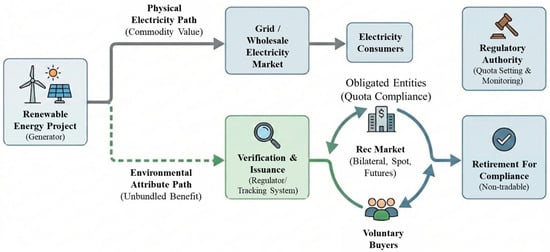
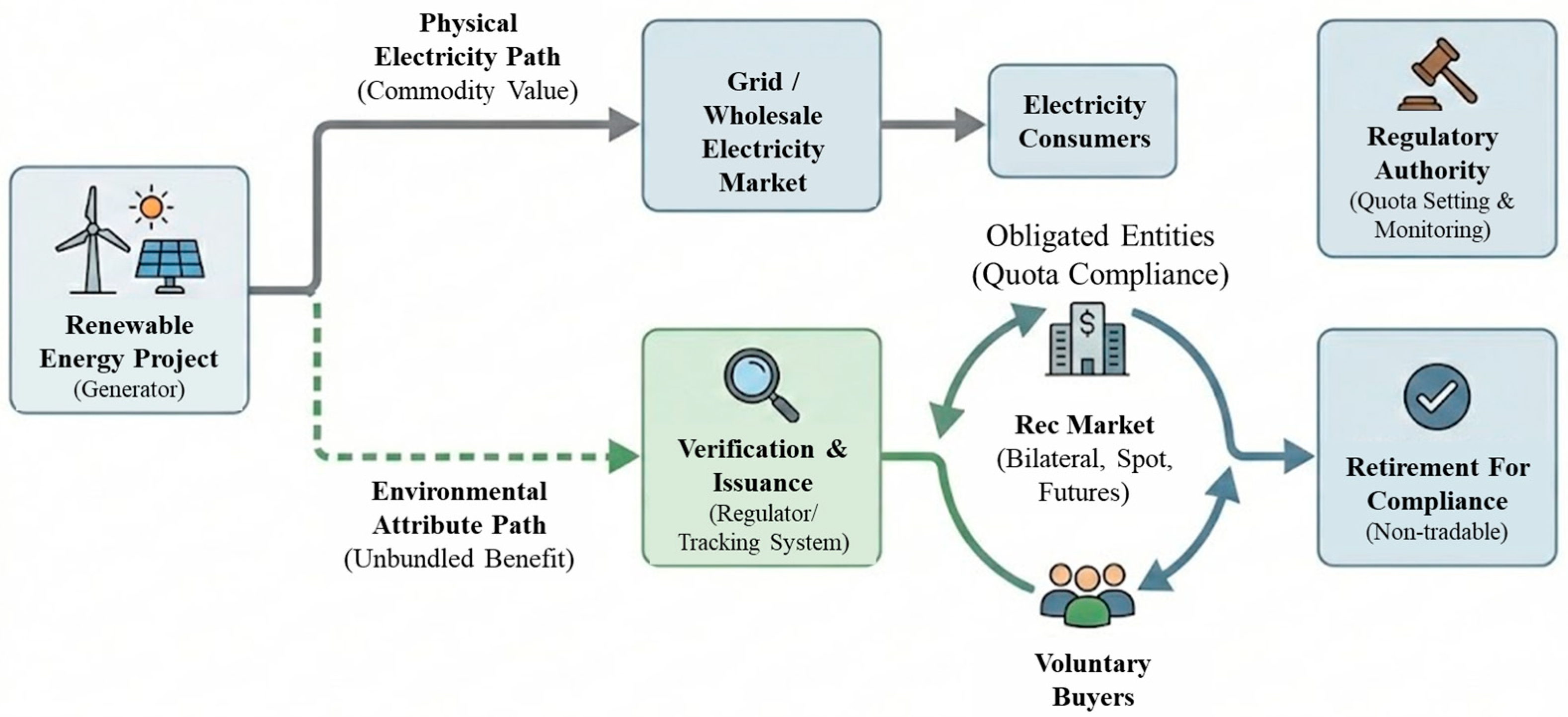
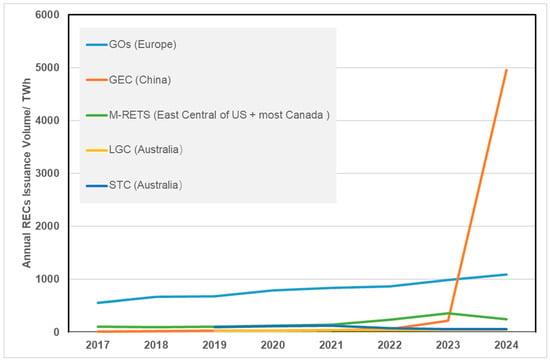
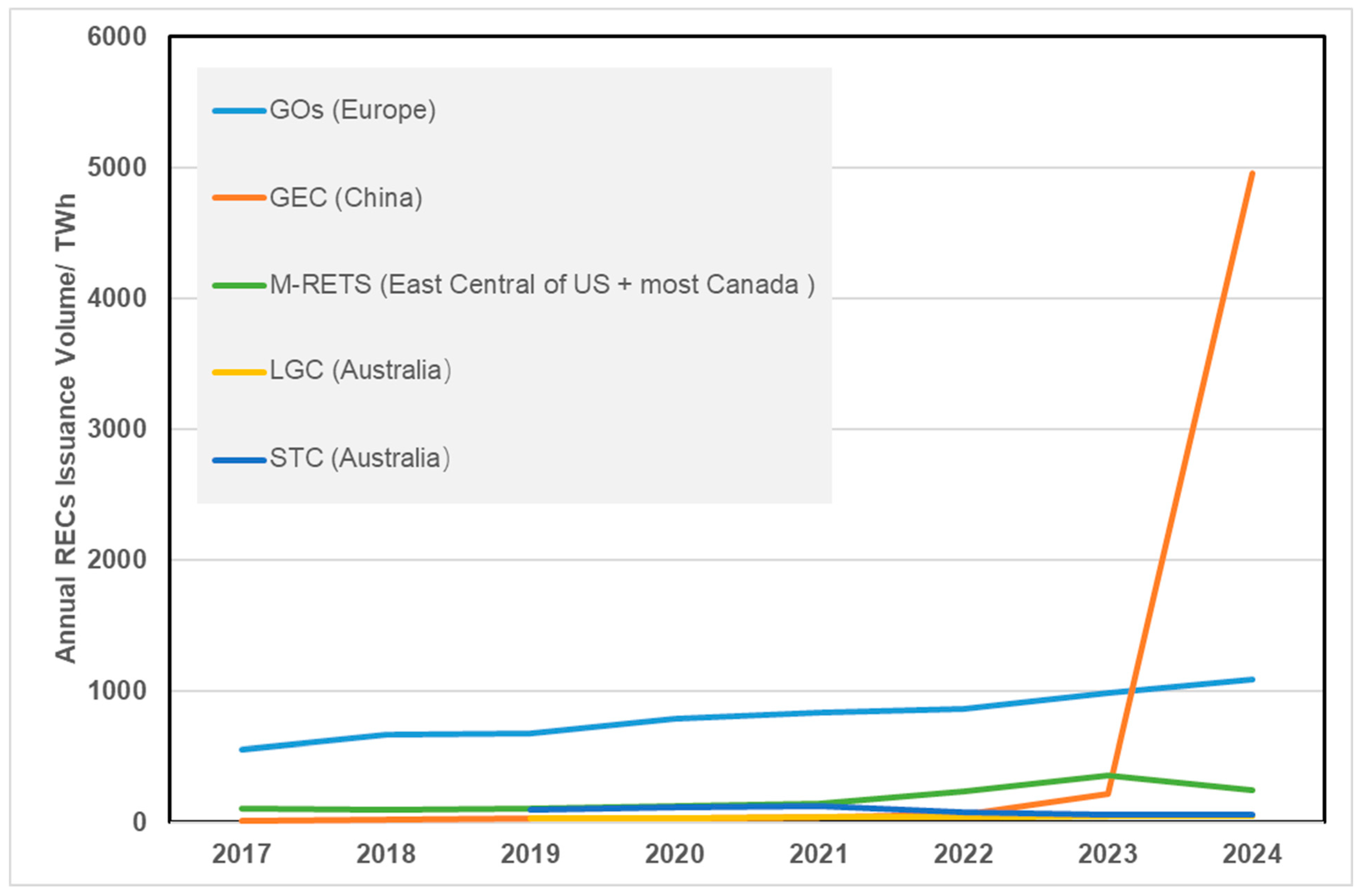
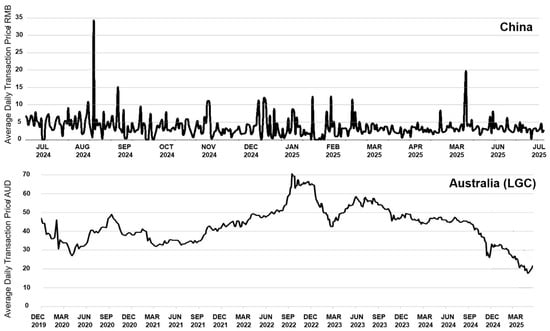
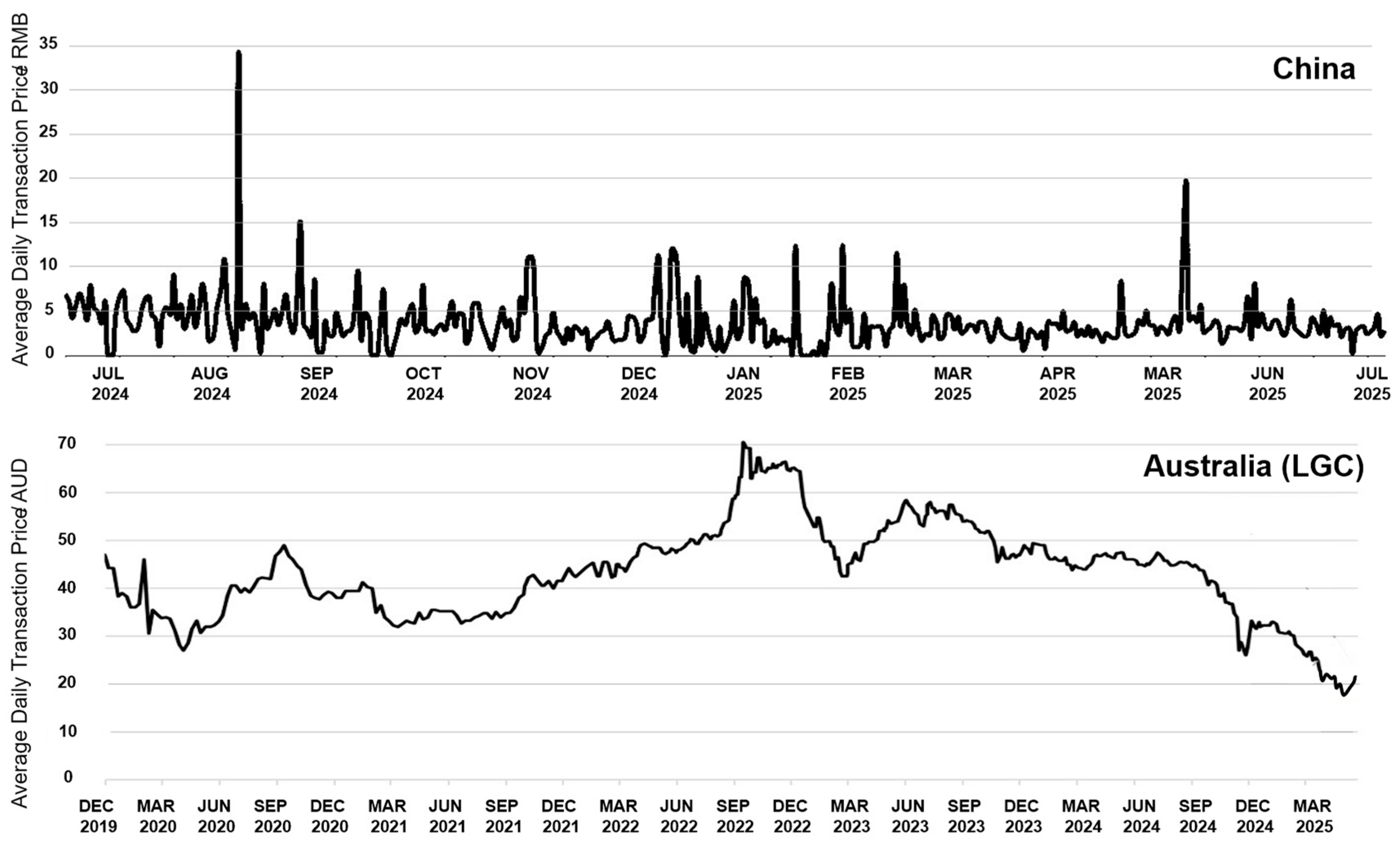

Disclaimer/Publisher’s Note: The statements, opinions and data contained in all publications are solely those of the individual author(s) and contributor(s) and not of MDPI and/or the editor(s). MDPI and/or the editor(s) disclaim responsibility for any injury to people or property resulting from any ideas, methods, instructions or products referred to in the content. |
© 2026 by the authors. Licensee MDPI, Basel, Switzerland. This article is an open access article distributed under the terms and conditions of the Creative Commons Attribution (CC BY) license.