


Abstract
Ammonia is a promising carbon-free energy carrier for decarbonizing existing fossil fuel power plants. However, its economic viability and life-cycle environmental performance remain uncertain across different power generation technologies. This study develops an integrated techno-economic analysis (TEA) and life-cycle analysis (LCA) framework to evaluate 50% ammonia co-firing in four power generation systems: subcritical pulverized coal (SubC-CP), supercritical pulverized coal (SC-CP), integrated gasification combined cycle (IGCC), and natural gas combined cycle (NGCC). Process models modified from National Energy Technology Laboratory (NETL) simulations were used to determine mass and energy balances, while TEA quantified total plant cost, levelized cost of electricity (LCOE), breakeven ammonia price, and CO2 avoidance cost (CAC). LCA evaluated well-to-gate (WTG) CO2 emissions considering both blue and green ammonia. Results show that under the current blue ammonia price of $318/tonne, all ammonia co-firing cases exhibit higher LCOEs than the reference plants, and the breakeven ammonia prices remain below current market values. Blue ammonia reduces WTG CO2 emissions by approximately 30% for coal-fired plants and 19% for NGCC where upstream ammonia production is the major emission source. Replacing blue ammonia with green ammonia further reduces WTG CO2 emissions by 27–36% and decreases the CAC by 38–60%. These results demonstrate that low-carbon, low-cost ammonia production is essential for realizing economically competitive and environmentally sustainable ammonia co-firing in future low-carbon power systems.
1. Introduction
Overall, 36% of global electricity is currently generated from coal, resulting in approximately 40% of global fossil fuel combustion emissions [1]. Reducing carbon emissions from coal- and natural-gas-fired power generation is essential for achieving a clean and sustainable energy future [2]. Three major pathways have been proposed to decarbonize the power sector. The first is to replace existing fossil-fuel power plants with new low-carbon electricity generation technologies, such as solar, wind, nuclear, and hydropower [3]. While this approach can significantly reduce greenhouse gas emissions, it requires substantial capital investment [4], extensive grid upgrades [5], and long deployment times [6]. The second approach is to integrate carbon capture, utilization, and storage (CCUS) technologies with existing coal [7] and natural gas combined cycle (NGCC) power plants [8]. Although CCUS can substantially reduce CO2 emissions, it lowers plant efficiency and faces additional challenges related to long-term CO2 transportation, utilization, and geological storage of the captured CO2 [9,10].
The third approach is to replace or partially substitute fossil fuels in coal and natural gas power plants with low-carbon alternative fuels, including biomass [11], hydrogen [12], and ammonia [13]. This approach is called co-firing. Biomass has been extensively investigated as a co-firing fuel because of its renewable nature; however, its widespread deployment is constrained by limited feedstock availability, competition with land and food production, seasonal supply variations, and logistics associated with harvesting, transportation, and storage [14,15,16]. Hydrogen is an attractive carbon-free co-firing fuel, but its practical application is hindered by expensive retrofitting infrastructure requirements and safety concerns associated with its wide flammability range [17,18,19].
Ammonia (NH3) has recently emerged as a promising carbon-free power generation fuel and co-firing fuel [20,21]. Unlike hydrogen, existing coal-fired and natural gas combined cycle power plants can be inexpensively retrofitted for ammonia co-firing through addition of an injector [22,23]. Ammonia also has advantages of higher volumetric energy density, mild condition liquefaction, and benefits from well-established global production, storage, and transportation infrastructure [24,25]. These advantages make ammonia an attractive co-firing fuel and a promising pathway for decarbonizing the existing power sector while leveraging existing power plants.
The economic viability and environmental performance of ammonia co-firing are dependent on multiple factors, including the ammonia production pathway, fuel transportation, power plant configuration, co-firing ratio, and carbon capture strategy [26]. Although previous studies have investigated individual aspects of ammonia utilization as a co-firing and power generation fuel [23,27,28], a comprehensive assessment that simultaneously evaluates the techno-economic performance and life-cycle environmental impacts of different ammonia-based co-firing power generation pathways under a consistent analytical framework remains limited.
Therefore, this study focuses on ammonia as a co-firing fuel in power generation systems and presents a comprehensive evaluation of its techno-economic and environmental performance. Techno-economic analysis (TEA) and life-cycle analysis (LCA) are conducted to compare four representative power generation technologies: integrated gasification combined cycle (IGCC), subcritical pulverized coal (SubC-PC), supercritical pulverized coal (SC-PC), and natural gas combined cycle (NGCC) [29]. For each technology, conventional fossil-fuel operation and ammonia-based fuel substitution scenarios are evaluated to quantify levelized cost of electricity (LCOE), well-to-gate greenhouse gas (GHG) emissions, CO2 avoidance cost (CAC), and the impacts of key technical and economic parameters. The results provide a systematic comparison of the economic competitiveness and decarbonization potential of ammonia utilization across different power generation technologies, offering insights to support the transition toward low-carbon electricity systems.
2. Methodologies
2.1. Four Power Generation Cases
Four power generation cases are evaluated in this work, as shown in Table 1. Each system is based on market-ready technology according to the simulation work developed by the National Energy Technology Laboratory (NETL) [29].
Table 1.
Four power generation systems studied in this work.
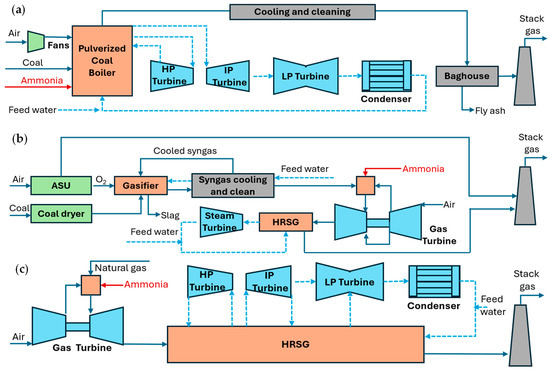
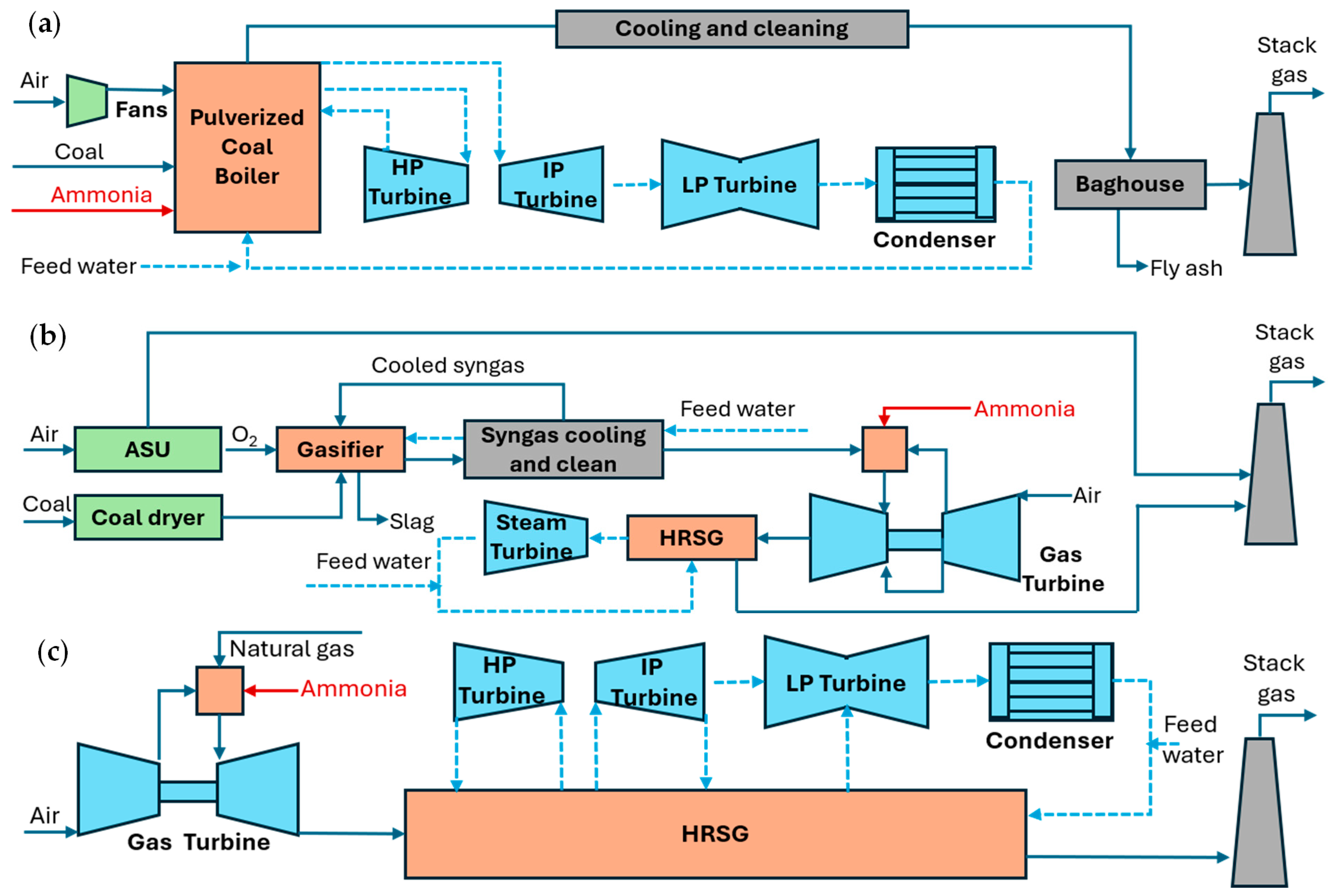
Case 1 is a subcritical coal-fired power plant (SubC-CP) [29], as illustrated in Figure 1a. In the SubC-CP, combustion air is supplied to the pulverized coal boiler by forced-draft fans, where it combusts with pulverized coal injected through burner nozzles. The heat released during combustion is used to generate steam in the boiler. The resulting flue gas exits the boiler and passes through a series of cooling and emission control units to remove nitrogen oxides (NOx) and sulfur oxides (SOx). Fly ash is subsequently separated before the cleaned flue gas is discharged through the stack. Electricity is generated through a Rankine cycle. Three steam extraction and admission pressures are employed: 167 bar at 566 °C, 42 bar at 566 °C, and 5 bar at 267 °C, with corresponding molar flow ratios of 1:0.93:0.78. High-pressure (HP) steam first expands through the HP steam turbine before being returned to the boiler for reheating. The reheated steam subsequently expands through the intermediate- and low-pressure steam turbines, generating additional power. The exhaust steam from the low-pressure (LP) turbine is condensed into liquid water in the condenser. The condensate is then pumped to the feedwater system, where it is mixed with makeup water before being returned to the boiler for steam generation, completing the Rankine cycle. For future decarbonization through ammonia co-firing, the SubC-CP plant can be retrofitted to directly inject ammonia into the pulverized coal boiler as a partial replacement for coal, thereby reducing fossil fuel consumption and associated CO2 emissions.
Figure 1.
Four power generation systems considered in this work: (a) SubC-CP and SC-CP, (b) IGCC, and (c) NGCC. Solid lines represent gases (red for ammonia, blue for air and other gas mixtures), dashed blue lines represent water and steam.
Case 2 is a supercritical coal-fired power plant (SC-CP) with a process configuration similar to that of SubC-CP, as illustrated in Figure 1a. The primary difference between the SC-CP and the SubC-CP lies in the steam operating conditions [29]. The SC-CP employs higher steam pressures and temperatures to improve the thermal efficiency of the Rankine cycle. Specifically, the three steam extraction and admission conditions are 242 bar at 593 °C, 48 bar at 593 °C, and 5 bar at 270 °C, with corresponding molar flow ratios of 1:0.83:0.72. These elevated steam conditions enable more efficient energy conversion and result in higher power generation efficiency than the SubC-CP. Similar to SubC-CP, for future decarbonization through ammonia co-firing, the SC-CP plant can be retrofitted to directly inject ammonia into the pulverized-coal boiler as a partial replacement for coal, thereby reducing fossil fuel consumption and associated CO2 emissions.
Case 3 is a Shell gasifier-based integrated gasification combined cycle (IGCC) power plant, as illustrated in Figure 1b [29]. In this configuration, the coal feed is dried to a moisture content of 5 mol% to ensure stable operation of the dry-feed gasification system. Air is separated in an air separation unit (ASU) to produce an oxygen (O2) stream with a purity of 95 mol%. The dried coal reacts with oxygen and steam (H2O) in the Shell entrained-flow gasifier at 42 bar and 1427 °C to produce raw syngas, primarily composed of hydrogen (H2) and carbon monoxide (CO). The high-temperature raw syngas is subsequently cooled through two stages of heat recovery, and a cooled syngas recycle loop, reducing its temperature to approximately 375 °C. During this process, high-pressure steam at 51 bar is generated and recycled for use in the gasifier. The cooled syngas then undergoes a series of cleanup processes, including syngas scrubbing, carbonyl sulfide (COS) hydrolysis, ammonia removal, and mercury removal, to eliminate impurities before combustion in a 2008 F-class gas turbine combustor. The gas turbine compressor supplies compressed air for syngas combustion, while the gas turbine generates electricity and produces exhaust gas at approximately 592 °C. The hot exhaust gas enters a heat recovery steam generator (HRSG), where its thermal energy is recovered to produce high-pressure steam at 124 bar and 561 °C for a steam turbine, thereby generating additional electricity through the Rankine bottoming cycle. After heat recovery, the flue gas exits the HRSG at approximately 132 °C and is discharged through the plant stack. For future decarbonization through ammonia co-firing, the IGCC plant can be retrofitted to directly inject ammonia into the gas turbine burner as a partial replacement for syngas, thereby reducing fossil fuel consumption and associated CO2 emissions.
Case 4 is a natural gas combined cycle (NGCC) power plant, as illustrated in Figure 1c [29]. In the NGCC configuration, natural gas (NG) enters the plant at 29 bar and 27 °C, meeting the fuel supply requirements of a 2017 F-class gas turbine. Ambient air is compressed in the gas turbine compressor and mixed with NG in the combustor. The fuel flow is controlled to maintain a turbine inlet temperature of 1423 °C. After expansion through the gas turbine, the exhaust gas exits at approximately 624 °C and enters the heat recovery steam generator (HRSG). The HRSG recovers thermal energy from the gas turbine exhaust, reducing the flue gas temperature to approximately 82 °C while generating three steam streams for the bottoming Rankine cycle. The steam conditions are 165 bar at 585 °C for the high-pressure (HP) steam, 35 bar at 584 °C for the intermediate-pressure (IP) steam, and 5 bar at 281 °C for the low-pressure (LP) steam, with corresponding molar flow ratios of 1:1.16:0.15. The HP steam first expands through the HP steam turbine before returning to the HRSG for reheating. The reheated steam then expands through the IP steam turbine to generate additional electricity. The exhaust steam from the IP turbine is combined with the LP steam generated in the HRSG and expands through the LP steam turbine to generate additional power. The exhaust steam from the LP turbine is condensed into liquid water in the condenser, then pumped to the feedwater system, mixed with makeup water, and returned to the HRSG for steam generation, thereby completing the Rankine cycle. For future decarbonization through plant retrofitting, the NGCC can be modified to co-fire ammonia in the gas turbine combustor as a partial replacement for natural gas, thereby reducing fossil fuel consumption and associated CO2 emissions while leveraging the existing power generation infrastructure.
For all four cases, NETL simulation is used as the baseline case, but the calculations have been changed from higher heating value (HHV)-based to lower heating value (LHV)-based according to our discussion with industrial stakeholders. The LHV energy efficiency for the four cases is calculated according to Equation (1), where is the LHV-based energy efficiency, is the net power generated, is the mass flow rate of the fuel, is the LHV of coal, is the LHV of NG, and is the LHV of ammonia.
2.2. Techno-Economic Analysis Method
The techno-economic analysis (TEA) in this study is based on the cost assumptions reported by the NETL, with all costs expressed in constant 2025 U.S. dollars. The capital investment associated with both the baseline power plants and ammonia retrofitting is estimated using the total overnight cost (TOC) methodology [29]. The TOC consists of the total plant cost (TPC), pre-production costs (PPC), inventory capital (IC), and other costs (OC), as defined in Equation (2). For ammonia co-firing retrofits, the TPC represents the total installed cost of all retrofit equipment, including purchased equipment (C), installation materials and labor, engineering and construction services, and project contingencies (all represented by Cother). Table 2 summarizes the major equipment required for retrofitting each coal-fired power plant configuration for ammonia injection. In contrast, no retrofit equipment is required for the NGCC case because natural gas is supplied directly from the pipeline, and ammonia injection does not require modifications to the existing fuel delivery system or other major process units. The purchased equipment cost is estimated using the scaling relationship given in Equation (3), whereas the associated installation costs, including materials, labor, engineering, and contingencies, are estimated using the scaling methodology described in Equation (4).
where is the purchased equipment cost, is the other cost accounted in TPC for equipment installation, is the newly designed plant size, is the purchased equipment cost of the reference plant, is the other installation cost of the reference plant, is the reference plant size, and 0.6 is the scaling exponent from the six-tenths rule [30].
Table 2.
Equipment modification for the three coal power cases.
For the cases with ammonia co-firing, according to the work of Deng et al. [13], the storage tank’s cost for ammonia’s 30-day storage is assumed to be 6.47 million USD in 2010 (9.56 million in 2025) dollars for the tank size of 8165 tonnes [13]. The total ammonia retrofitting systems’ cost including ammonia receiving, storage, dispensing, and co-firing facilities are assumed to be two times the storage cost.
PPC (pre-production costs) includes 6 months of operational labor cost, 1 month of maintenance materials, non-fuel consumables, and waste disposal, 25% of one month of fuel cost, and 2% of TPC. IC (inventory capital) includes 2 months’ supply of fuel and consumables and 0.5% of TPC. OC (other cost) includes initial cost of catalyst and chemicals, land, other owner’s cost (15% of TPC), and financing cost (2.7% of TPC).
The operating cost includes fixed operating cost (FOC) calculated according to Equation (5) and variable operating cost (VOC) according to Equation (6). The FOC includes operating and annual operating labor (AOL) as shown in Equation (7), maintenance labor (ML) which is 2.2% of TPC, administrative and support labor (AASL) which is 25% of AOL and ML, and property taxes and insurance (PTAI) which is 2.0% of TPC. For VOC calculation, is the material utilization rate and is the unit cost of the material from NETL report [29]. is the labor number listed in Table 3, is the operating labor rate at $49.4/h, b is the operating labor burden of 30%, h is the annual operating hours of 8760 h.
Table 3.
Labor numbers in power plant cases.
Fuel costs are calculated from Equation (8) where is the fuel flow rate and c is the fuel price. The baseline coal price is $53/tonne for power generation with a maximum price of $209/tonne, according to the database of U.S. Energy Information Administration (EIA) [31]. Baseline NG price is $3.52/mmBtu with a maximum price of $13.38/mmBtu in 2025 according to the data released by EIA [32]. Blue ammonia is used for baseline analysis with a (produced from natural gas auto-thermal reforming combined with oxygen combustion) price of $318/tonne [13]. The breakeven ammonia price is determined as the ammonia price at which the LCOE of the ammonia-retrofitted power plant is equal to that of the reference case.
The levelized cost of electricity (LCOE) is calculated according to Equation (9) with a levelized capital charge factor (LCCF) of 8.16% [13], and a capacity factor (CF) of 85%. MWH is the annual net megawatt-hours of power output at full capacity [29].
To quantify the ammonia price required for ammonia co-firing to be cost-competitive, we also evaluate the breakeven ammonia price under default and maximum scenarios. The breakeven ammonia price is then defined as the maximum ammonia price at which the ammonia co-firing power plant achieves the same LCOE as the corresponding reference plant without ammonia co-firing.
2.3. Life-Cycle Analysis Method
The life-cycle CO2 emissions associated with the power generation processes were quantified using the Greenhouse Gases, Regulated Emissions, and Energy Use in Technologies (GREET) 2025 model [33]. A well-to-gate (WTG) system boundary was adopted, encompassing all processes from coal mining, NG processing, and power generation. Environmental performance is evaluated using a functional unit of 1 MWh of electricity production. The analysis boundary includes onsite emissions listed in Table 4 and upstream emissions of coal, NG, and ammonia (blue and green) supplement assumed to be 39.1 kg/tonne-coal [33], 4.5 kg/mmBtu-NG [33], 660 kg/tonne-ammonia [26] and 30 kg/tonne-ammonia [26] respectively.
Table 4.
Energy and mass conversion of the four power generation cases with 0% or 50% ammonia consumptions.
2.4. Integration of Techno-Economic Analysis and Life-Cycle Analysis
To integrate the TEA and LCA outputs, the CO2 avoidance cost (CAC) is used as an economic indicator to quantify the additional cost required to reduce one tonne of WTG CO2 emissions compared with the reference system. The CO2 avoidance cost is calculated according to Equation (10).
where is the levelized cost of electricity ($/MWh) of the ammonia co-firing cases, is the LCOE of the reference cases with 0% ammonia co-firing, is the WTG CO2 emissions from reference cases and is the CO2 emissions from the ammonia co-firing cases.
3. Results
3.1. Mass and Energy Balances
To evaluate the impact of ammonia co-firing on the mass and energy balances of power generation, this study modified four NETL power plant models [29] by replacing 50% of the lower heating value (LHV) input from coal or natural gas with ammonia, resulting in the four 50% NH3 retrofitting cases presented in Table 4. Both experimental studies and numerical simulations report that ammonia co-firing at a 50% LHV ratio has a negligible impact on the thermal efficiency of coal-fired and natural gas-fired power plants [28,34]. While ammonia addition causes a small dip in the chamber temperature, it is assumed to be easily resolved via oxygen enrichment and modification of operating conditions, keeping the efficiency unchanged [28]. Therefore, this study assumes that replacing 50% of the fuel energy input with ammonia does not affect the overall energy efficiency of the reference power generation systems.
As shown in Table 4, the NGCC power plant achieves the highest energy efficiency of 59.5%, which is 14.9 percentage points higher than IGCC, 7.7 percentage points higher than SC-CP, and 19.4 percentage points higher than SubC-CP. Among the three coal-fired power generation systems, SubC-CP requires the largest amount of ammonia because of its lowest thermal efficiency, whereas NGCC has the lowest ammonia demand among all the power cases owing to its superior efficiency. The trend in onsite CO2 emissions is opposite to that of energy efficiency where NGCC has the lowest CO2 emissions and SubC-CP has the highest. Because ammonia combustion does not produce CO2, replacing 50% of the fuel energy input with ammonia reduces the onsite CO2 emissions of all four power generation systems by approximately 50%.
3.2. Techno-Economic Analysis Results
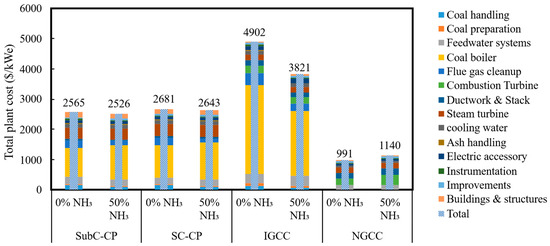
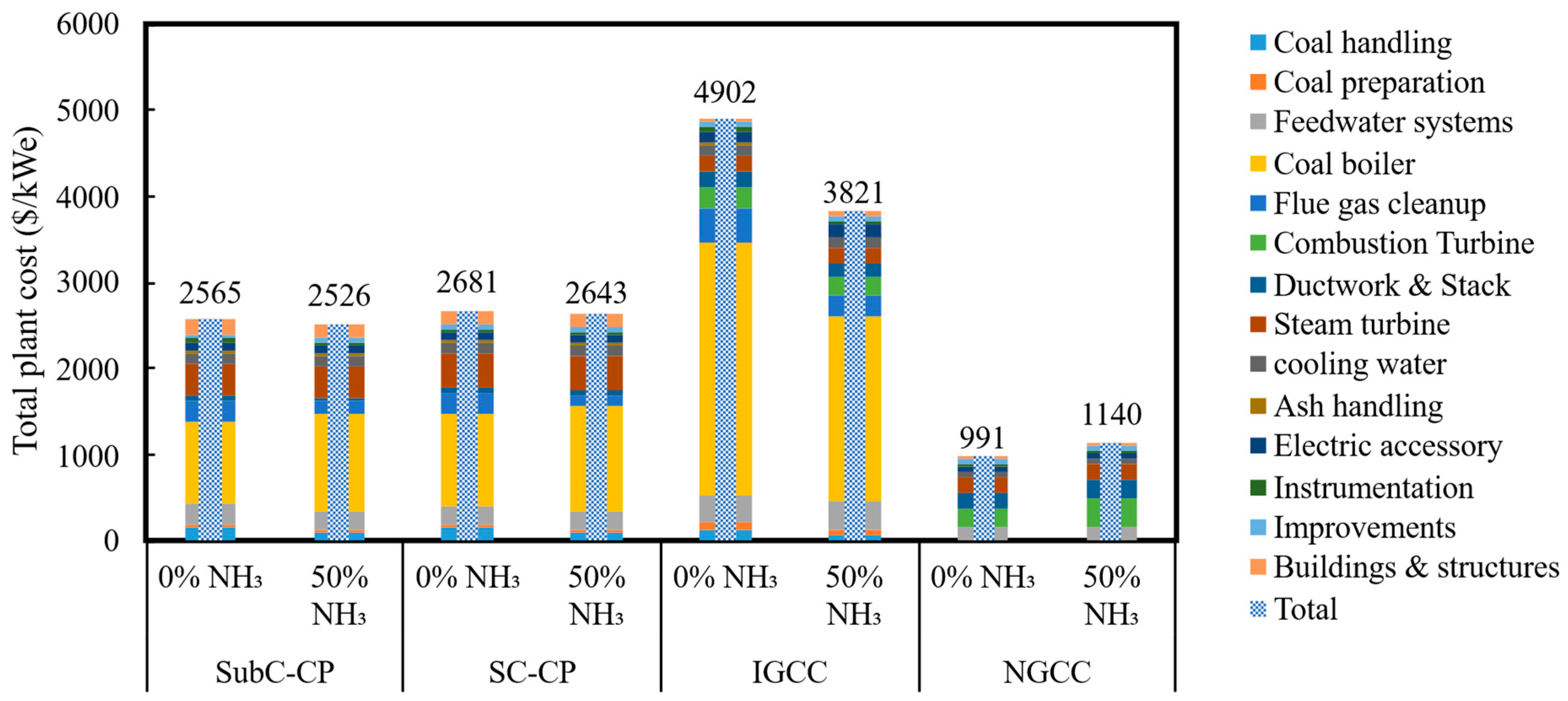
The TEA (techno-economic analysis) is based on the NETL methodology [29], with modifications to the equipment costs as summarized in Table 2. For the baseline analysis presented in Figure 2, the coal price is assumed to be $53/tonne, the natural gas price is $3.52/MMBtu, and the blue ammonia price is $318/tonne. The total plant cost, expressed in 2025 dollars per kWe, is calculated by dividing the total power plant cost by the net electricity output listed in Table 4.
Figure 2.
Total plant cost with equipment components breakdown.
As shown in Figure 2, the NGCC power plant has the lowest total plant cost among the four baseline cases. This is primarily because coal-fired power plants require complex capital-intensive systems, including coal handling, coal preparation, coal boilers, larger steam turbines, flue gas cleanup units, and ash handling facilities, whereas NGCC plants rely mainly on combustion turbines with a simpler plant configuration [29].
For the SubC-CP and SC-CP retrofitting cases, replacing 50% of the fuel energy input with ammonia reduces the plant cost associated with coal handling (−$57~59/kWe), coal preparation (−$16~17/kWe), flue gas cleanup (−$89~91/kWe), and ash handling (−$15/kWe). These savings are largely offset by the additional capital investment required for the ammonia injection system (+$139~143/kWe), resulting in only a limited reduction in total plant cost of $38~39/kWe compared with the corresponding 0% ammonia co-firing cases. The IGCC case exhibits a much larger reduction in total plant cost following ammonia retrofitting. Because the IGCC gasification and syngas processing systems are more expensive than conventional pulverized-coal boilers, replacing 50% of the coal energy input with ammonia significantly reduces the required gasifier-related equipment capacity. The resulting reduction in gasifier and associated equipment costs with the additional ammonia injection system is $769/kWe. Consequently, the total plant cost of the IGCC case decreases by approximately $1081/kWe relative to the baseline IGCC configuration.
In contrast to the coal-fired power plants, ammonia co-firing increases the capital cost of the NGCC plant because the retrofit only requires the installation of an ammonia injection system without reducing the size or cost of the existing combustion turbine and associated equipment. As a result, the total plant cost of the 50% ammonia co-firing NGCC case increases by approximately $149/kWe compared with the 0% ammonia co-firing case.
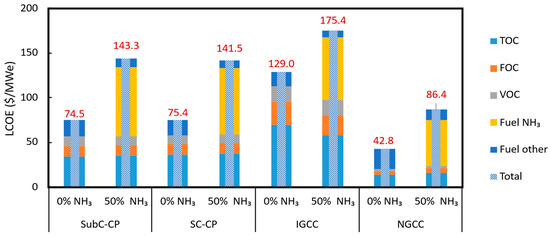
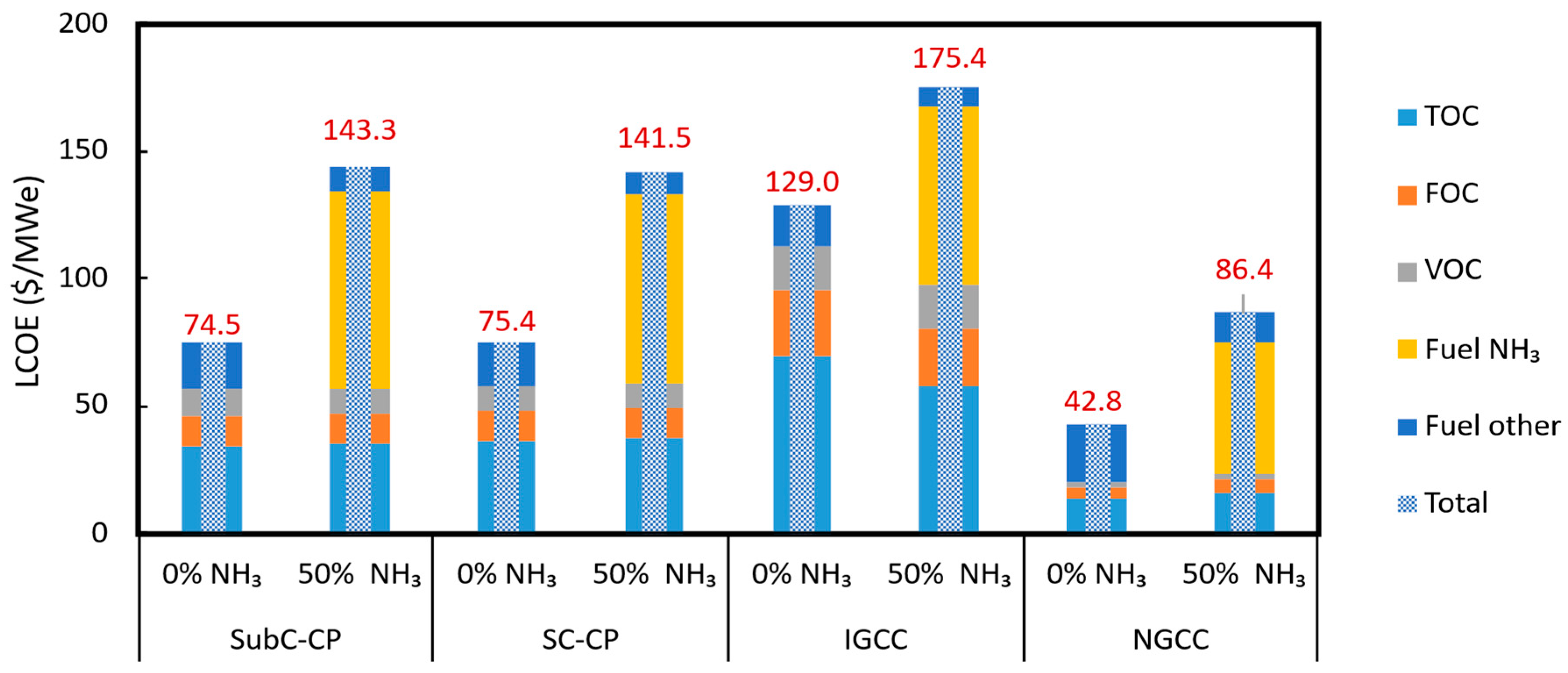
Figure 3 shows the LCOE for the four power generation systems comparing 0% ammonia co-firing cases with 50% ammonia co-firing cases. In Figure 3, under the current ammonia cost assumption of $318/tonne, all the 50% co-firing cases have higher LCOEs than 0% ammonia co-firing cases. This is because the fuel costs of ammonia are much higher compared to the fuel costs of coal ($53/tonne) and natural gas ($3.52/mmBtu or $176/tonne). However, it is noteworthy that even with the high ammonia fuel cost, NGCC with 50% co-firing has lower LCOE than IGCC with 0% co-firing and comparable LCOE to SubC-CP and SC-CP with 0% co-firing. This indicates that NGCC, with 50% ammonia co-firing, is an attractive prospect and even competitive with conventional coal-based power generation technologies.
Figure 3.
LCOE of four groups of power plant cases with 0% and 50% co-firing ammonia.
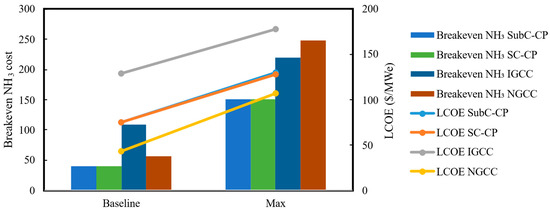
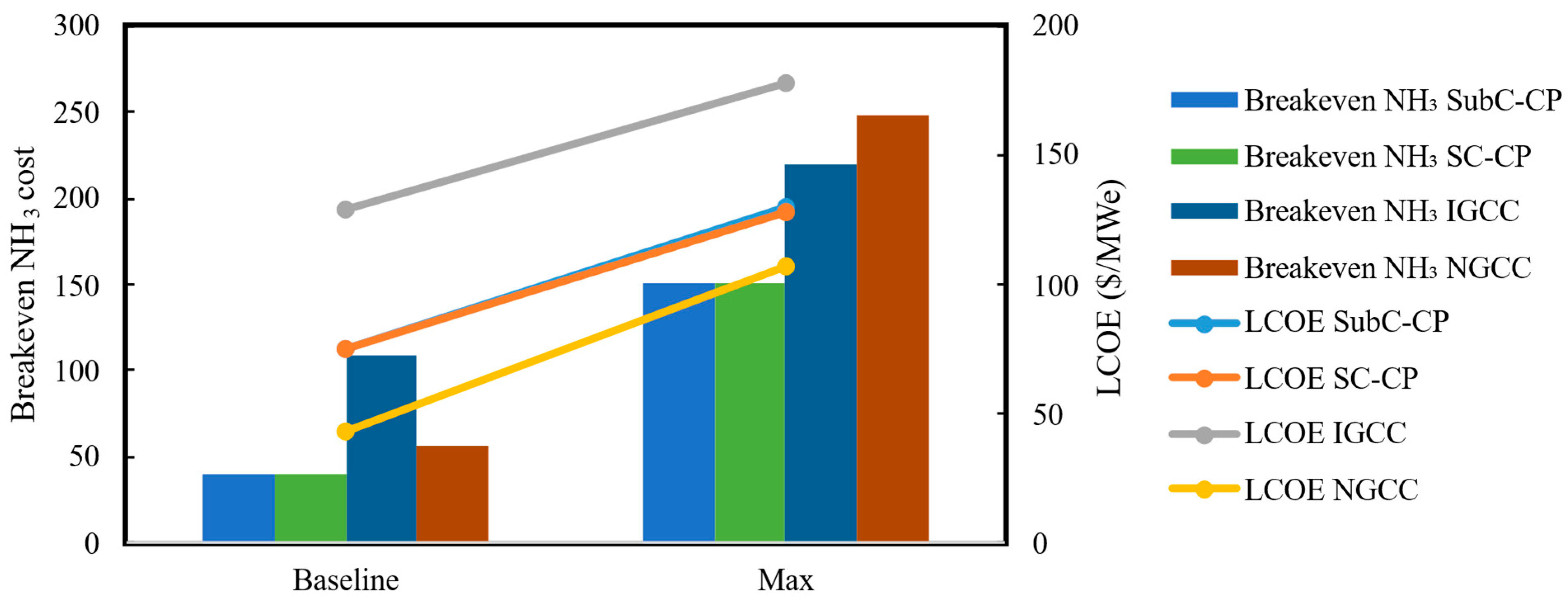
Figure 4 shows the fuel cost impact on the LCOE of the 0% ammonia co-firing cases and calculates the breakeven ammonia cost, which makes the 50% ammonia co-firing cases have the same LCOEs compared to the corresponding 0% ammonia co-firing cases. For the baseline cases, coal price is $53/tonne, and the NG price is $3.52/mmBtu, while for the maximum cases, coal price is $209/tonne, and the NG price is $13.38/mmBtu. In Figure 4, increasing fossil fuel prices significantly raises the LCOE of all four reference power generation technologies. When coal and natural gas prices increase from the baseline values to the maximum values, the LCOE of the SubC-CP, SC-CP, IGCC, and NGCC plants increases by $55, $53, $49, and $64/MWh, respectively. Among the four technologies, IGCC consistently exhibits the highest LCOE due to its higher capital investment, whereas NGCC maintains the lowest LCOE because of its superior thermal efficiency under the baseline fuel price scenario.
Figure 4.
Fuel price impacts on LCOE and the breakeven ammonia cost of four power plant cases.
The increase in fossil fuel prices also leads to a substantial increase in the breakeven ammonia price for all ammonia co-firing cases. Under the baseline fuel price assumptions, the breakeven ammonia prices are $39/tonne for both the SubC-CP and SC-CP plants, $109/tonne for the IGCC plant, and $56/tonne for the NGCC plant. Under the maximum fuel price scenario, these values increase to $150, $150, $220, and $247/tonne, respectively. This trend indicates that higher coal and natural gas prices improve the economic competitiveness of ammonia co-firing by allowing a higher ammonia price while maintaining the same LCOE as the corresponding conventional power plants. Among the four systems, the NGCC plants exhibit the largest increase in breakeven ammonia price, suggesting that ammonia co-firing in gas-based power generation technologies becomes increasingly attractive as natural gas prices rise. Nevertheless, all calculated breakeven ammonia prices remain below the baseline blue ammonia price of $318/tonne, indicating that substantial reductions in ammonia production cost are still required for 50% ammonia co-firing to become economically competitive without additional policy incentives or carbon pricing.
3.3. Life-Cycle Analysis Results
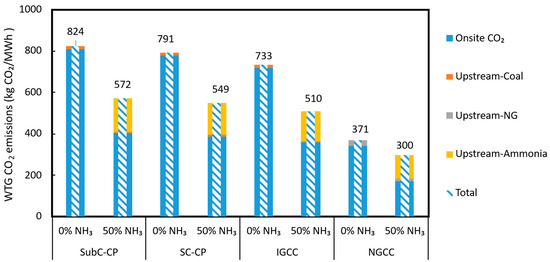
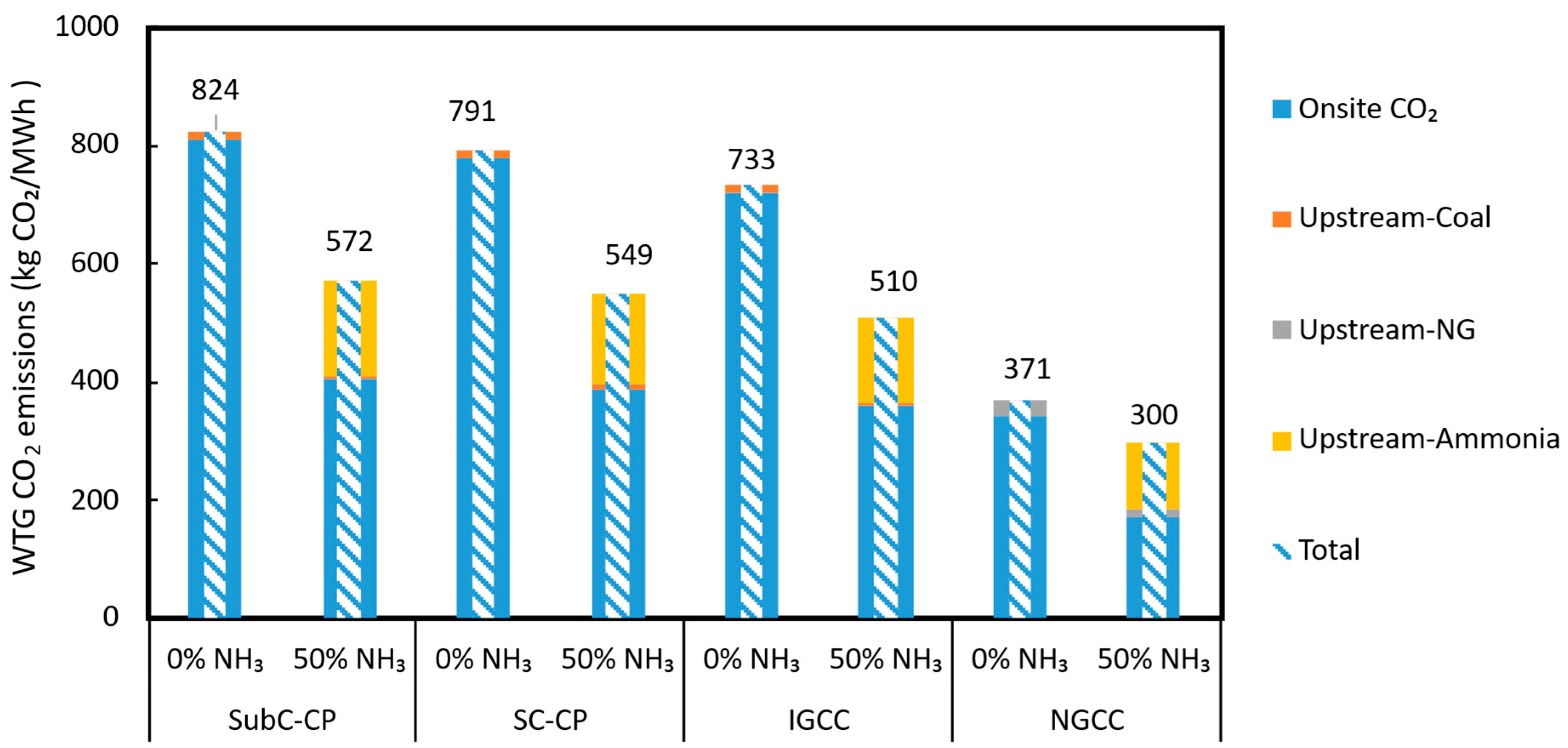
Figure 5 compares the WTG CO2 emissions of the four power generation technologies under the reference (0% ammonia) and 50% ammonia co-firing ratios. The total WTG CO2 emissions include on-site CO2 emissions associated with fuel combustion and upstream emissions associated with fuel supplementation.
Figure 5.
WTG of four groups of power plant cases with 0% and 50% co-firing ammonia.
Among the reference cases, the subcritical coal-fired power plant (SubC-CP) exhibits the highest WTG GHG emissions at 824 kg CO2/MWh, followed by the supercritical coal-fired power plant (SC-CP) at 791 kg CO2/MWh, the integrated gasification combined cycle (IGCC) at 733 kg CO2/MWh, and the natural gas combined cycle (NGCC) at 371 kg CO2/MWh. The results indicate that improving coal power generation efficiency from subcritical to supercritical and from subcritical to IGCC reduces WTG CO2 emissions, while NGCC achieves the lowest emissions due to its higher thermal efficiency and the lower carbon intensity of natural gas compared to coal.
Replacing 50% of the fuel energy input with ammonia (blue ammonia) substantially decreases total WTG CO2 emissions for all power generation systems. The emissions decrease from 824 to 572 kg CO2/MWh for SubC-CP (30.6% reduction), 791 to 549 kg CO2/MWh for SC-CP (30.6% reduction), 733 to 510 kg CO2/MWh for IGCC (30.4% reduction), and 371 to 300 kg CO2/MWh for NGCC (19.1% reduction). The larger emission reductions observed in coal-fired systems are attributed to the direct replacement of carbon-intensive coal with low-carbon blue ammonia, resulting in a significant reduction in on-site CO2 emissions. In contrast, NGCC experiences a smaller reduction because its baseline carbon emissions are already relatively low.
The contribution analysis shows that on-site CO2 emissions remain the dominant source of WTG CO2 emissions in all cases when the ammonia co-firing ratio is up to 50%. Ammonia co-firing significantly reduces this contribution by lowering fossil fuel consumption. However, the reduction in on-site emissions is partially offset by an increase in upstream ammonia production emissions, which become a major contributor in the retrofitted cases. Meanwhile, upstream emissions associated with coal and natural gas decrease because less fossil fuel is consumed. As a result, the net reduction in total WTG CO2 emissions is smaller than the reduction in on-site CO2 emissions alone.
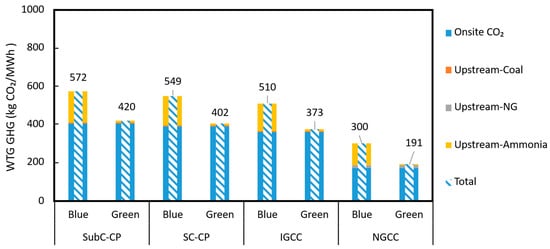
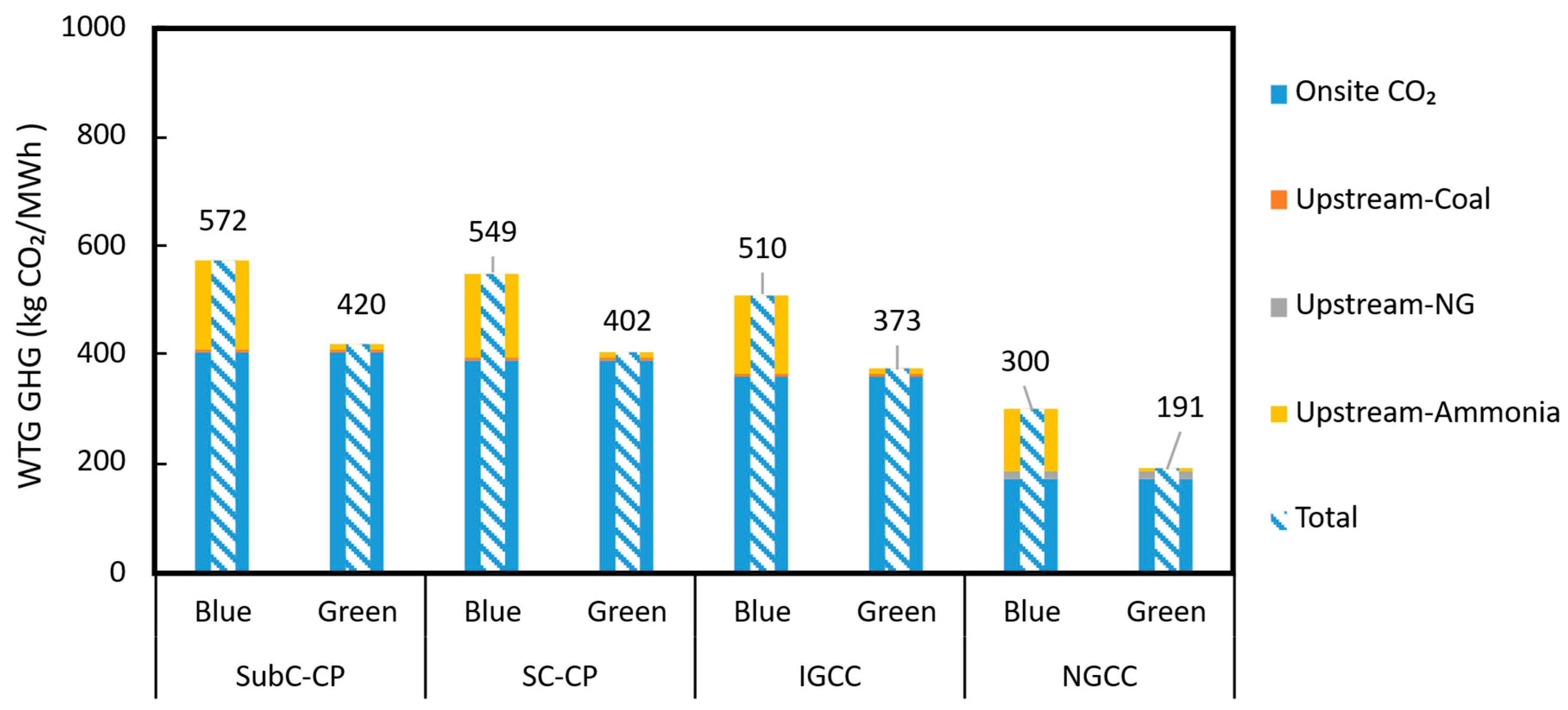
To further reduce the upstream emissions associated with ammonia production, which constitute one of the major contributors to WTG CO2 emissions in the ammonia co-firing cases, the use of blue ammonia was compared with green ammonia in Figure 6. In the baseline analysis, blue ammonia production generates 660 kg CO2/tonne NH3 through its upstream supply chain. In contrast, green ammonia, produced using renewable electricity, has a significantly lower upstream carbon footprint of only 30 kg CO2/tonne NH3 [28].
Figure 6.
WTG of four power plant cases with 50% co-firing blue ammonia and green ammonia.
In Figure 6, the WTG CO2 emissions from SubC-CP decrease from 572 to 420 kg CO2/MWh, corresponding to a 26.6% reduction using green ammonia. Similarly, the emissions decrease from 549 to 402 kg CO2/MWh (26.8%) for SC-CP, from 510 to 373 kg CO2/MWh (26.9%) for IGCC, and from 300 to 191 kg CO2/MWh (36.3%) for NGCC. These reductions are primarily attributed to the dramatic decrease in upstream ammonia production emissions when green ammonia is used instead of blue ammonia.
Among the four technologies, NGCC combined with green ammonia achieves the lowest WTG CO2 emissions at only 191 kg CO2/MWh, representing approximately a 48.5% reduction compared with the conventional NGCC without ammonia co-firing (371 kg CO2/MWh) and a 76.8% reduction compared with the conventional SubC-CP (824 kg CO2/MWh). These results demonstrate that coupling high-efficiency power generation technologies with low-carbon ammonia production can substantially enhance the life-cycle decarbonization potential of ammonia co-firing, highlighting the critical role of green ammonia in achieving deep reductions in power-sector GHG emissions.
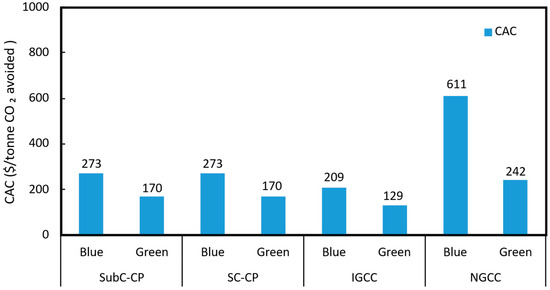
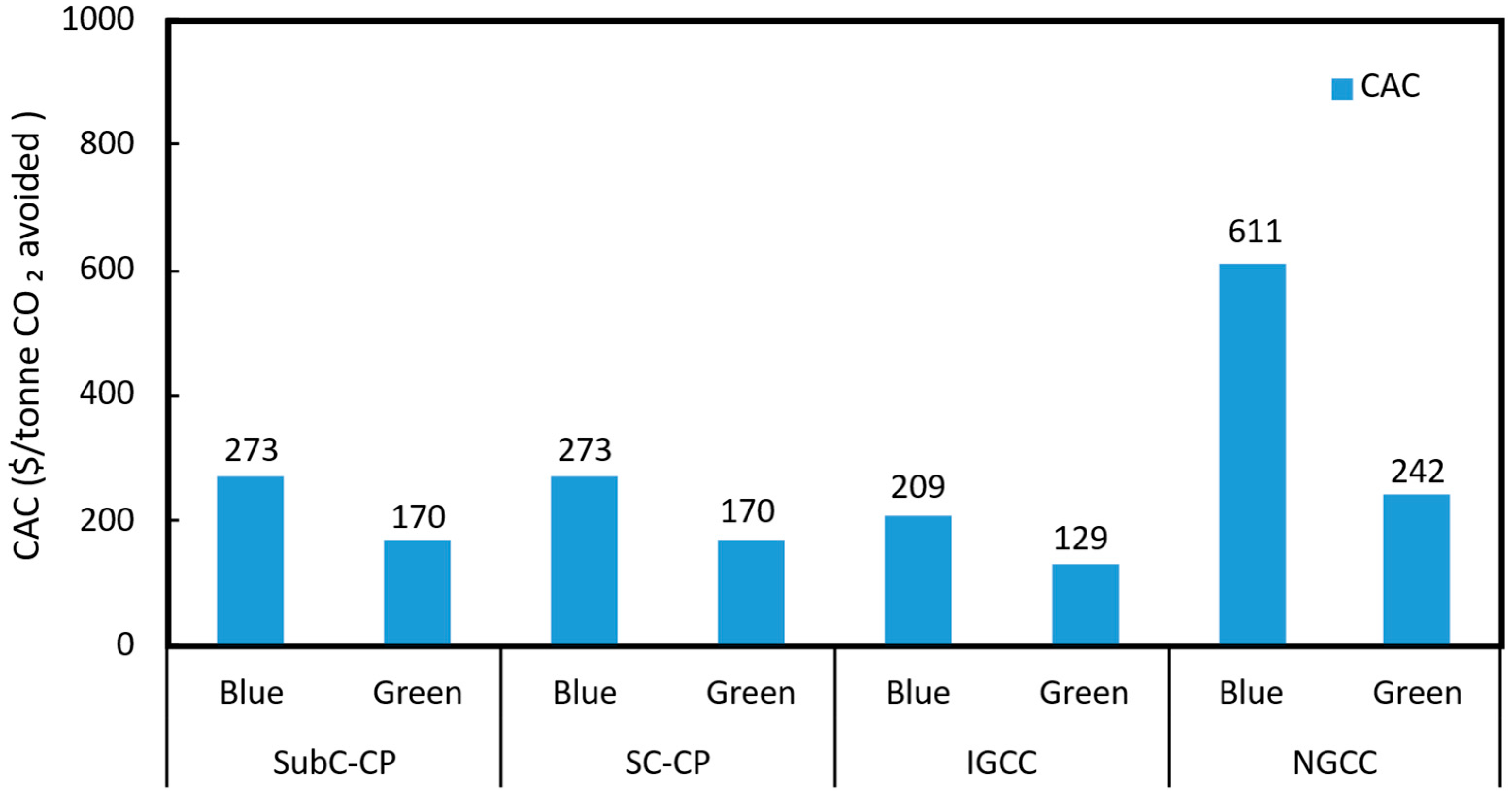
Figure 7 compares the CO2 avoidance cost (CAC) of the four power generation cases with 50% ammonia co-firing using blue and green ammonia. The CAC is calculated by considering both the increase in the levelized cost of electricity (LCOE) and the reduction in WTG CO2 emissions relative to the corresponding reference power plants without ammonia co-firing.
Figure 7.
CAC of four power plant cases with 50% co-firing blue ammonia and green ammonia.
For the blue ammonia cases, the CAC is $273/tonne CO2 avoided for both SubC-CP and SC-CP, $209/tonne CO2 avoided for IGCC, and $611/tonne CO2 avoided for NGCC. The lower CAC of IGCC is primarily attributed to its relatively lower increase in electricity generation cost while still achieving substantial CO2 emission reductions. In contrast, NGCC exhibits the highest CAC because the baseline NGCC already has comparatively low WTG CO2 emissions, resulting in a smaller amount of CO2 avoided while requiring a considerable increase in generation cost associated with ammonia co-firing.
Replacing blue ammonia with green ammonia significantly decreases the CAC for all power generation systems. The CAC decreases from $273 to $170/tonne CO2 avoided for both SubC-CP and SC-CP, from $209 to $129/tonne CO2 avoided for IGCC, and from $611 to $242/tonne CO2 avoided for NGCC, corresponding to reductions of 37.7%, 38.3%, and 60.4%, respectively. These reductions are mainly due to the substantially lower upstream CO2 emissions of green ammonia, which increase the amount of WTG CO2 emissions avoided without significantly affecting the power generation cost.
Among all the technologies evaluated, IGCC with green ammonia achieves the lowest CAC at $129/tonne CO2 avoided, indicating the most cost-effective pathway for reducing WTG CO2 emissions through ammonia co-firing. Although NGCC with green ammonia still has a relatively high CAC of $242/tonne CO2 avoided, it represents a substantial improvement over the blue ammonia case. Overall, the results demonstrate that the carbon intensity of ammonia supplement has a significant influence on the economics of ammonia co-firing. Transitioning from blue to green ammonia not only further reduces WTG CO2 emissions but also substantially improves the cost-effectiveness of CO2 avoidance, highlighting the importance of low-carbon ammonia production in future power sector decarbonization.
4. Conclusions and Future Work
This study evaluated the techno-economic and environmental performance of ammonia co-firing in four representative fossil-fuel power generation technologies, including SubC-CP, SC-CP, IGCC, and NGCC. A uniformed framework combining process simulation, techno-economic analysis (TEA), and life-cycle analysis (LCA) was developed to quantify the impacts of ammonia co-firing on mass and energy balances, plant economics, LCOE, WTG CO2 emissions, and CAC. The case with co-firing in sub-critical coal power plants is found to have the least efficiency and highest on-site CO2 emissions. The study was conducted under the assumption that replacing 50% of the fuel lower heating value with ammonia has a negligible impact on plant thermal efficiency.
Techno-economic analysis on the four power generation systems shows that ammonia co-firing affects capital investment differently depending on power generation technology. While capital costs for coal-based plants decrease due to reduced need for coal processing systems, NGCC costs increase due to additional co-firing retrofit apparatus. LCOE calculations show that the high fuel price of blue ammonia dominates the overall economics, causing all ammonia co-firing cases to exhibit higher LCOEs than their corresponding reference cases. It is found that increasing coal and natural gas prices improves the competitiveness of ammonia co-firing by increasing the breakeven ammonia price. Life-cycle analysis results show blue ammonia co-firing reduces WTG CO2 emissions by approximately 30% for the coal-fired power plants and 19% for NGCC relative to the conventional power plants. Replacing blue ammonia with green ammonia further reduces WTG CO2 emissions by approximately 27% for the coal-fired systems and 36% for NGCC under the 50% ammonia co-firing scenario. The CO2 avoidance cost is found to strongly depend on the carbon intensity of ammonia production. Among all the technologies evaluated, IGCC, with green ammonia achieves the lowest CAC of $129/tonne CO2 avoided.
Several aspects should be further investigated to improve the accuracy and applicability of the present analysis.
- Higher ammonia co-firing ratios and full ammonia combustion. Future work should evaluate co-firing ratios above 50% and eventually 100% ammonia combustion while considering combustion stability.
- Dynamic plant performance. This study assumes unchanged thermal efficiency after ammonia retrofitting. Future studies should incorporate detailed combustion modeling and dynamic process simulations to quantify the impacts of ammonia co-firing on efficiency.
- Regional supply chain assessment. The life-cycle analysis should be expanded to include geographically specific ammonia production pathways, transportation distances, renewable electricity availability, and regional fuel supply infrastructures to better evaluate real-world deployment scenarios.
- Comprehensive economic analysis. Future TEA should incorporate carbon pricing, clean fuel incentives, and production tax credits.
Author Contributions
Conceptualization, J.Z. and M.B.; methodology, J.Z.; software, Y.Z.; validation, J.Z., M.B. and Y.Z.; formal analysis, J.Z.; investigation, J.Z.; resources, J.Z.; data curation, J.Z. and M.B.; writing—original draft preparation, J.Z., Y.Z. and M.B.; writing—review and editing, J.Z. and M.B.; visualization, J.Z. and M.B.; supervision, J.Z.; project administration, J.Z.; funding acquisition, J.Z. All authors have read and agreed to the published version of the manuscript.
Funding
The research was funded by MIT Energy Initiative—Future Energy Systems Center (FESC).
Data Availability Statement
The original contributions presented in this study are included in the article. Further inquiries can be directed to the corresponding author(s).
Acknowledgments
The authors thank the financial support from MIT Future Energy System Center and industrial guidance from IHI and GTI Energy.
Conflicts of Interest
The authors declare no conflicts of interest.
References
- Filonchyk, M.; Peterson, M.P.; Yan, H.; Zhou, L.; Zhang, L.; He, Y.; Yang, S. Global greenhouse gas emissions from coal-fired power plants. Resour. Conserv. Recycl. 2026, 228, 108808. [Google Scholar] [CrossRef] [Scilit]
- Xuan, V.N. Toward a sustainable future: Determinants of renewable energy utilisation in Canada. Energy Rep. 2025, 13, 1308–1320. [Google Scholar] [CrossRef] [Scilit]
- Kabeyi, M.J.B.; Olanrewaju, O.A. Sustainable Energy Transition for Renewable and Low Carbon Grid Electricity Generation and Supply. Front. Energy Res. 2022, 9, 743114. [Google Scholar] [CrossRef] [Scilit]
- Gazheli, A.; van den Bergh, J. Real options analysis of investment in solar vs. wind energy: Diversification strategies under uncertain prices and costs. Renew. Sustain. Energy Rev. 2018, 82, 2693–2704. [Google Scholar] [CrossRef] [Scilit]
- Yao, X.; Yi, B.; Yu, Y.; Fan, Y.; Zhu, L. Economic analysis of grid integration of variable solar and wind power with conventional power system. Appl. Energy 2020, 264, 114706. [Google Scholar] [CrossRef] [Scilit]
- Schindler, D.; Behr, H.D.; Jung, C. On the spatiotemporal variability and potential of complementarity of wind and solar resources. Energy Convers. Manag. 2020, 218, 113016. [Google Scholar] [CrossRef] [Scilit]
- Han, J.; Li, J.; Tang, X.; Wang, L.; Yang, X.; Ge, Z.; Yuan, F. Coal-fired power plant CCUS project comprehensive benefit evaluation and forecasting model study. J. Clean. Prod. 2023, 385, 135657. [Google Scholar] [CrossRef] [Scilit]
- Zhang, Z.; Oh, D.-H.; Dat Nguyen, V.; Lee, C.-H.; Lee, J.-C. Techno-Economic Assessment of Natural Gas Combined Cycle Power Plants with Carbon Capture and Utilization. Energy Fuels 2023, 37, 5961–5975. [Google Scholar] [CrossRef] [Scilit]
- Rui, Z.; Zeng, L.; Dindoruk, B. Challenges in the Large-Scale Deployment of CCUS. Engineering 2025, 44, 17–20. [Google Scholar] [CrossRef] [Scilit]
- Storrs, K.; Lyhne, I.; Drustrup, R. A comprehensive framework for feasibility of CCUS deployment: A meta-review of literature on factors impacting CCUS deployment. Int. J. Greenh. Gas Control 2023, 125, 103878. [Google Scholar] [CrossRef] [Scilit]
- Gebreegziabher, T.; Oyedun, A.O.; Luk, H.T.; Lam, T.Y.G.; Zhang, Y.; Hui, C.W. Design and optimization of biomass power plant. Chem. Eng. Res. Des. 2014, 92, 1412–1427. [Google Scholar] [CrossRef] [Scilit]
- Pashchenko, D. Green hydrogen as a power plant fuel: What is energy efficiency from production to utilization? Renew. Energy 2024, 223, 120033. [Google Scholar] [CrossRef] [Scilit]
- Deng, L.; Lai, H.; Zang, G.; Menon, A.; Farnsworth, A.M.; Gencer, E.; Ghoniem, A.; Green, W.H.; Stoner, R.J. Decarbonizing of power plants by ammonia co-firing: Design, techno-economic, and life-cycle analyses. Int. J. Green Energy 2024, 21, 3521–3537. [Google Scholar] [CrossRef] [Scilit]
- Banerjee, N. Biomass to Energy—An Analysis of Current Technologies, Prospects, and Challenges. In Bioenergy Research; Springer: Berlin/Heidelberg, Germany, 2023; Volume 16, pp. 683–716. [Google Scholar] [CrossRef] [Scilit]
- Okafor, C.C.; Nzekwe, C.A.; Ajaero, C.C.; Ibekwe, J.C.; Otunomo, F.A. Biomass utilization for energy production in Nigeria: A review. Clean. Energy Syst. 2022, 3, 100043. [Google Scholar] [CrossRef] [Scilit]
- Paul, S.; Mazumder, C.; Mukherjee, S. Challenges faced in commercialization of biofuel from biomass energy resources. Biocatal. Agric. Biotechnol. 2024, 60, 103312. [Google Scholar] [CrossRef] [Scilit]
- Hwang, J.; Maharjan, K.; Cho, H. A review of hydrogen utilization in power generation and transportation sectors: Achievements and future challenges. Int. J. Hydrogen Energy 2023, 48, 28629–28648. [Google Scholar] [CrossRef] [Scilit]
- Ibrahim, G.; Lin, B.; Garrido, J.; Shin, W.; Lai, H.; Bala, A.M.; Gebreslassie, B.; Nagendran, L.; Heston, D.; Wenzhao Wu, T.; et al. Hydrogen carrier analysis tool (HyCAT): Integrated economics and emissions assessment for long distance hydrogen transportation. Fuel 2027, 428, 140270. [Google Scholar] [CrossRef] [Scilit]
- Ishaq, H.; Dincer, I.; Crawford, C. A review on hydrogen production and utilization: Challenges and opportunities. Int. J. Hydrogen Energy 2022, 47, 26238–26264. [Google Scholar] [CrossRef] [Scilit]
- Aziz, M.; Juangsa, F.B.; Irhamna, A.R.; Irsyad, A.R.; Hariana, H.; Darmawan, A. Ammonia utilization technology for thermal power generation: A review. J. Energy Inst. 2023, 111, 101365. [Google Scholar] [CrossRef] [Scilit]
- Ma, S.; Yu, L.; Jiang, H.; Yang, P.; Li, Q.; Du, M.; Ma, J.; Zhu, H. Coal-Fired Power Plants Using Ammonia for Flexibility Enhancement under Carbon Control Strategies: Status, Development, and Perspectives. Energy Fuels 2024, 38, 4946–4965. [Google Scholar] [CrossRef] [Scilit]
- Fujimori, T. Ammonia-Fueled Power Generation for Energy Transition. Engineering 2026, 59, 26–31. [Google Scholar] [CrossRef] [Scilit]
- Zheng, C.; Li, X.; Li, J.; Duan, J.; Wu, H.; Zhu, F. Investigation on the ammonia emission characteristics in coal-fired power plants of China. Fuel 2022, 314, 123046. [Google Scholar] [CrossRef] [Scilit]
- Müller, M.; Pfeifer, M.; Holtz, D.; Müller, K. Comparison of green ammonia and green hydrogen pathways in terms of energy efficiency. Fuel 2024, 357, 129843. [Google Scholar] [CrossRef] [Scilit]
- Pinzón, M.; García-Carpintero, R.; de la Osa, A.R.; Romero, A.; Abad-Correa, D.; Sánchez, P. Ammonia as a hydrogen carrier: An energy approach. Energy Convers. Manag. 2024, 321, 118998. [Google Scholar] [CrossRef] [Scilit]
- Shin, W.; Lai, H.; Ibrahim, G.; Zang, G. Toward a sustainable energy future using ammonia as an energy carrier: Global supply chain cost and greenhouse gas emissions. Energy Environ. Sci. 2026, 19, 162–188. [Google Scholar] [CrossRef] [Scilit]
- Halim, I.; Zain, N.S.; Khoo, H.H. Assessing the feasibility of Ammonia utilization for Power generation: A techno-economic-environmental study. Appl. Energy 2025, 386, 125581. [Google Scholar] [CrossRef] [Scilit]
- Lyu, Q.; Wang, R.; Du, Y.; Liu, Y. Numerical study on coal/ammonia co-firing in a 600 MW utility boiler. Int. J. Hydrogen Energy 2023, 48, 17293–17310. [Google Scholar] [CrossRef] [Scilit]
- Zoelle, A.J.; Turner, M.J.; Woods, M.C.; James, R.E., III; Fout, T.E.; Shultz, T.R. Cost and Performance Baseline for Fossil Energy Plants, Volume 1: Bituminous Coal and Natural Gas to Electricity, Revision 4; National Energy Technology Laboratory: Albany, OR, USA, 2019.
- Towler, G.; Sinnott, R. Chemical Engineering Design; Butterworth-Heinemann: Oxford, UK, 2021. [Google Scholar]
- EIA. Coal Markets; EIA: Washington, DC, USA, 2026.
- EIA. In 2025, U.S. Natural Gas Spot Prices Increased from 2024’s Record Low; EIA: Washington, DC, USA, 2026.
- Wang, M.; Cai, H.; Ou, L.; Elgowiney, A. Summary of Expansions and Updates in R&D GREET® 2025 Energy Systems and Infrastructure Assessment Division Argonne National Laboratory. 2025. Available online: https://www.anl.gov/ (accessed on 13 August 2026).
- Shin, M.; Kim, Y.; Won, W.; Kim, Y. Economic and environmental assessment of natural gas-ammonia co-firing. J. Clean. Prod. 2025, 531, 146895. [Google Scholar] [CrossRef] [Scilit]

Disclaimer/Publisher’s Note: The statements, opinions and data contained in all publications are solely those of the individual author(s) and contributor(s) and not of MDPI and/or the editor(s). MDPI and/or the editor(s) disclaim responsibility for any injury to people or property resulting from any ideas, methods, instructions or products referred to in the content. |
© 2026 by the authors. Licensee MDPI, Basel, Switzerland. This article is an open access article distributed under the terms and conditions of the Creative Commons Attribution (CC BY) license.