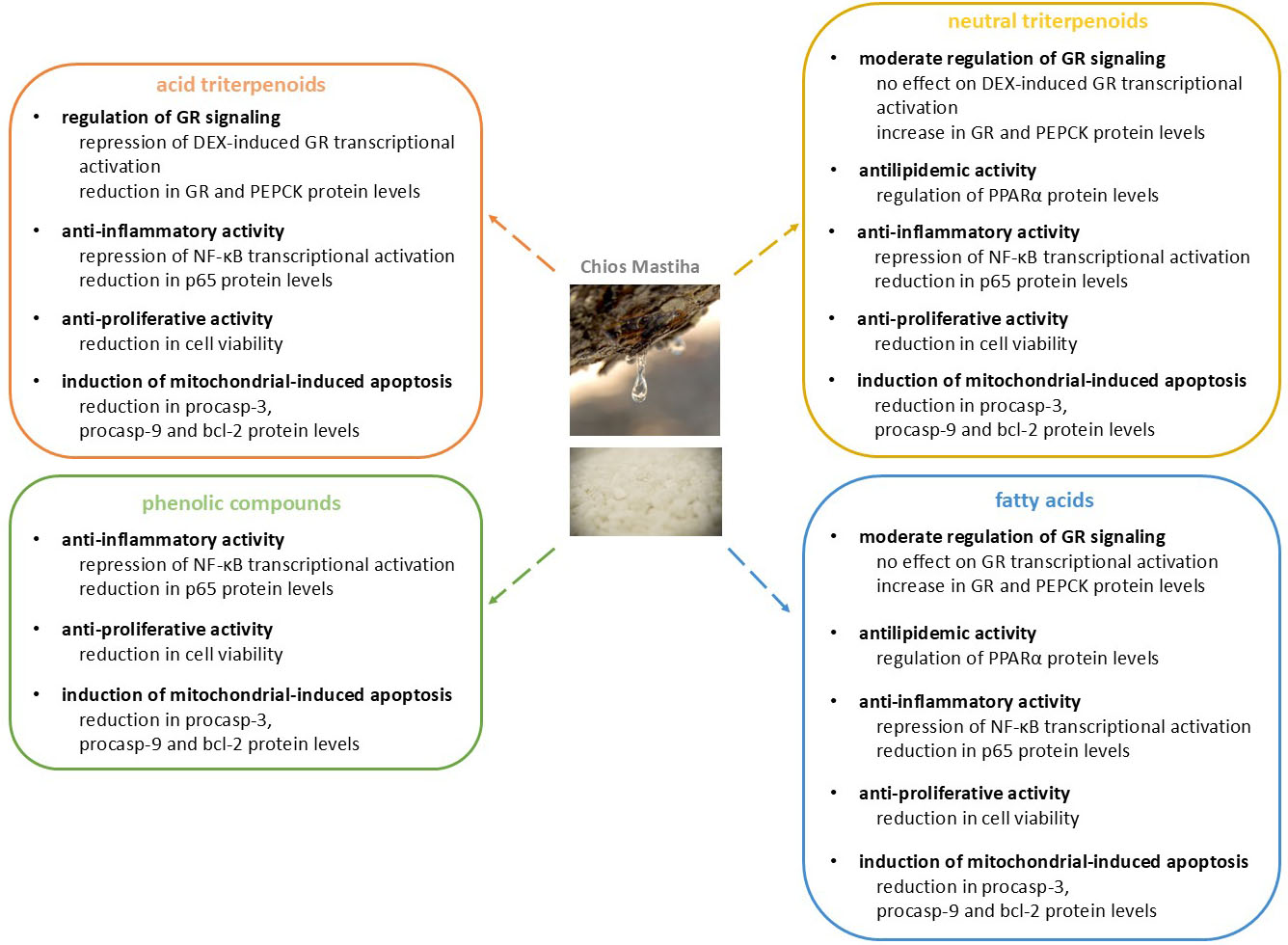

Subfractionation of Pistacia lentiscus L. var. Chia Neutral Fractions: Chemical Analysis and Evaluation of Their Biological Profiling


 , and
, and
Abstract
1. Introduction
2. Materials and Methods
2.1. Chemicals
2.2. HPLC-QTOF-MS/MS Analysis
2.3. Extraction, Isolation and Phytochemical Analysis of Chios Mastiha’s Neutral Subfractions
2.4. Antibodies
2.5. Cell Culture
2.6. MTT Cell Viability Assay
2.7. GR and NF-κB Transcriptional Activity Measurement
2.8. Western Blot Analysis
2.9. Statistical Analysis
3. Results
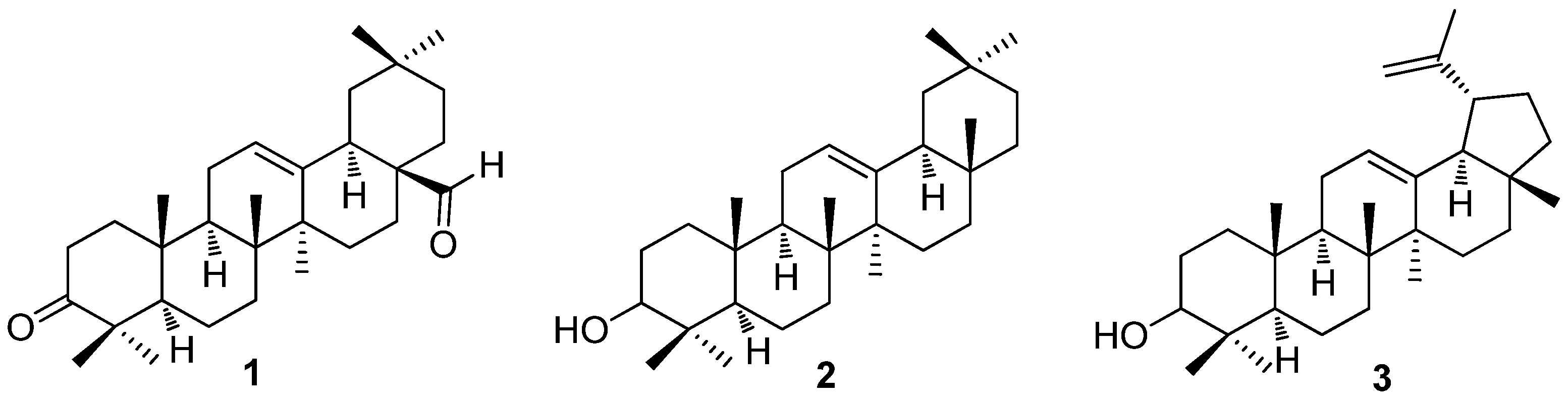
3.1. Phytochemical Analysis of Chios Mastiha Neutral Residue
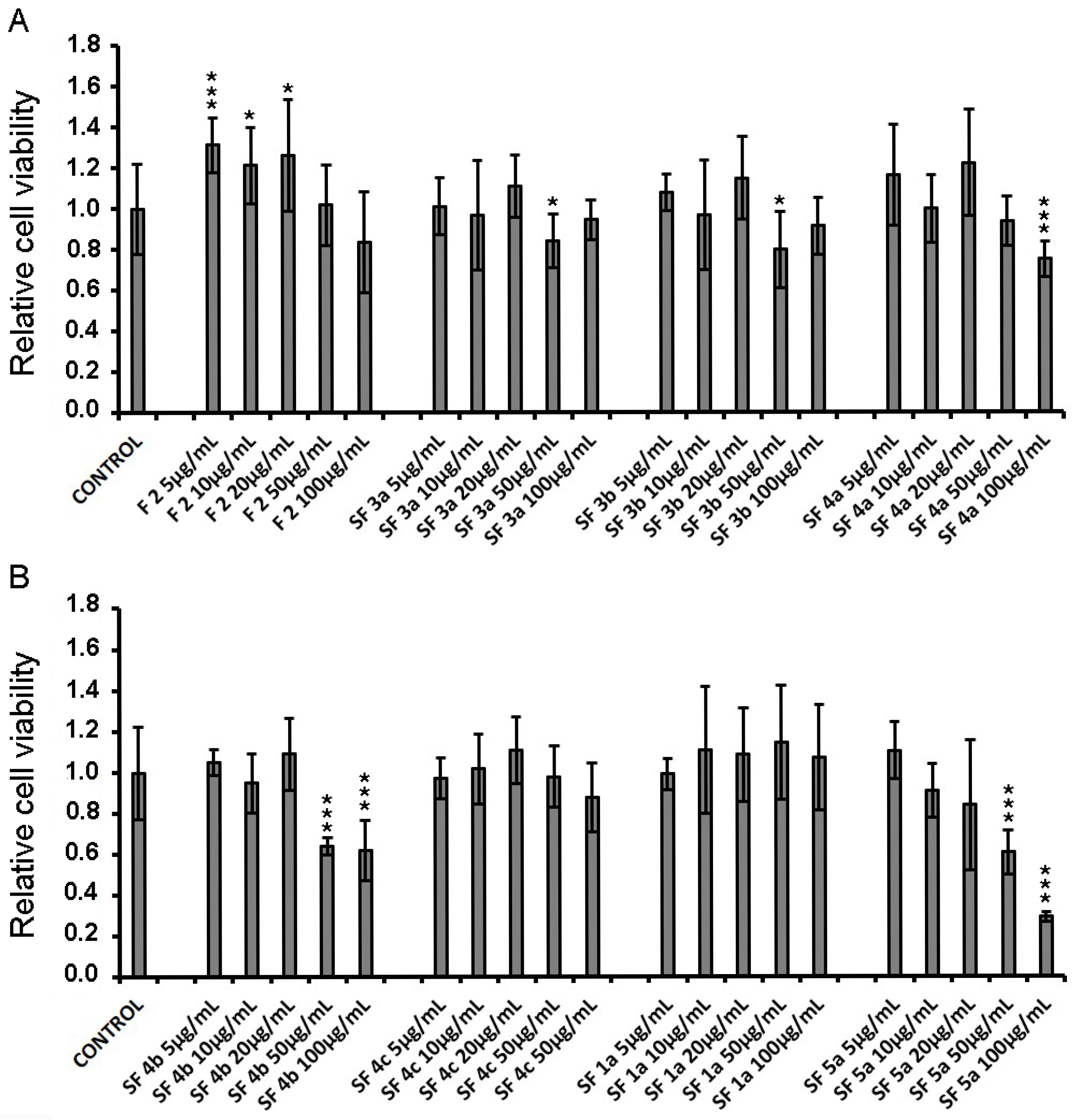
3.2. Chios Mastiha Neutral Residue Subfractions’ Effect on HEK293 Cell Proliferation
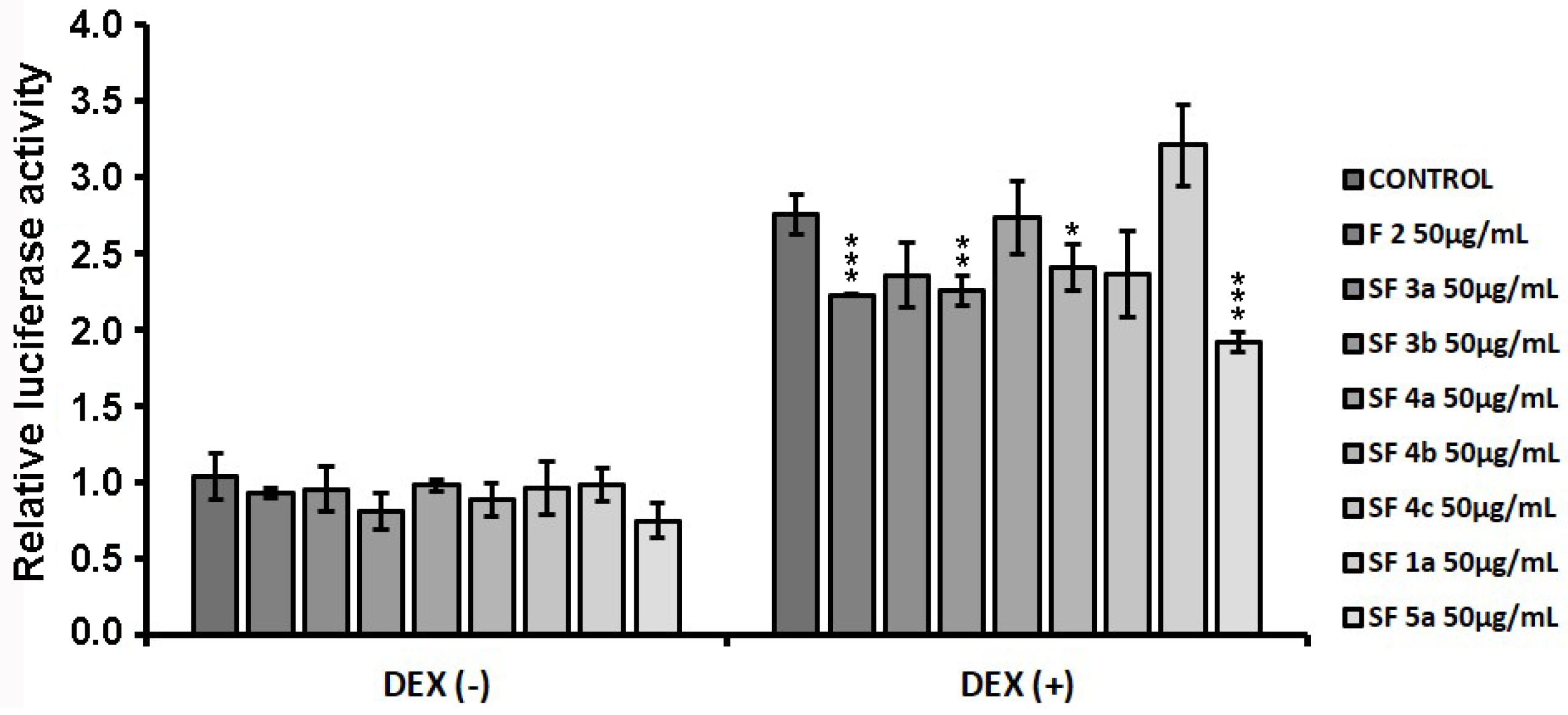
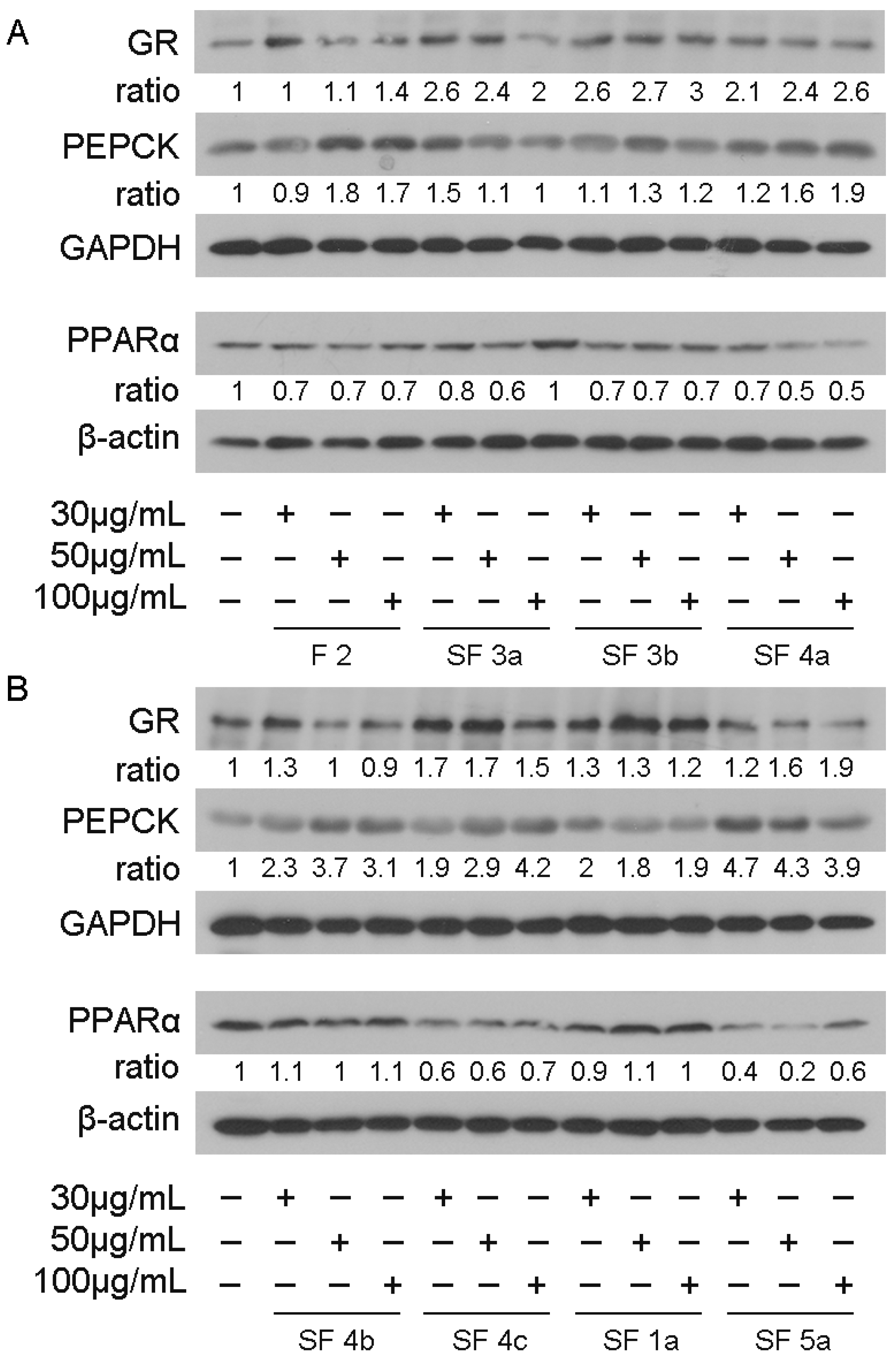
3.3. Chios Mastiha’s Neutral Residue Subfractions Slightly Suppressed DEX-Induced GR Transcriptional Activation
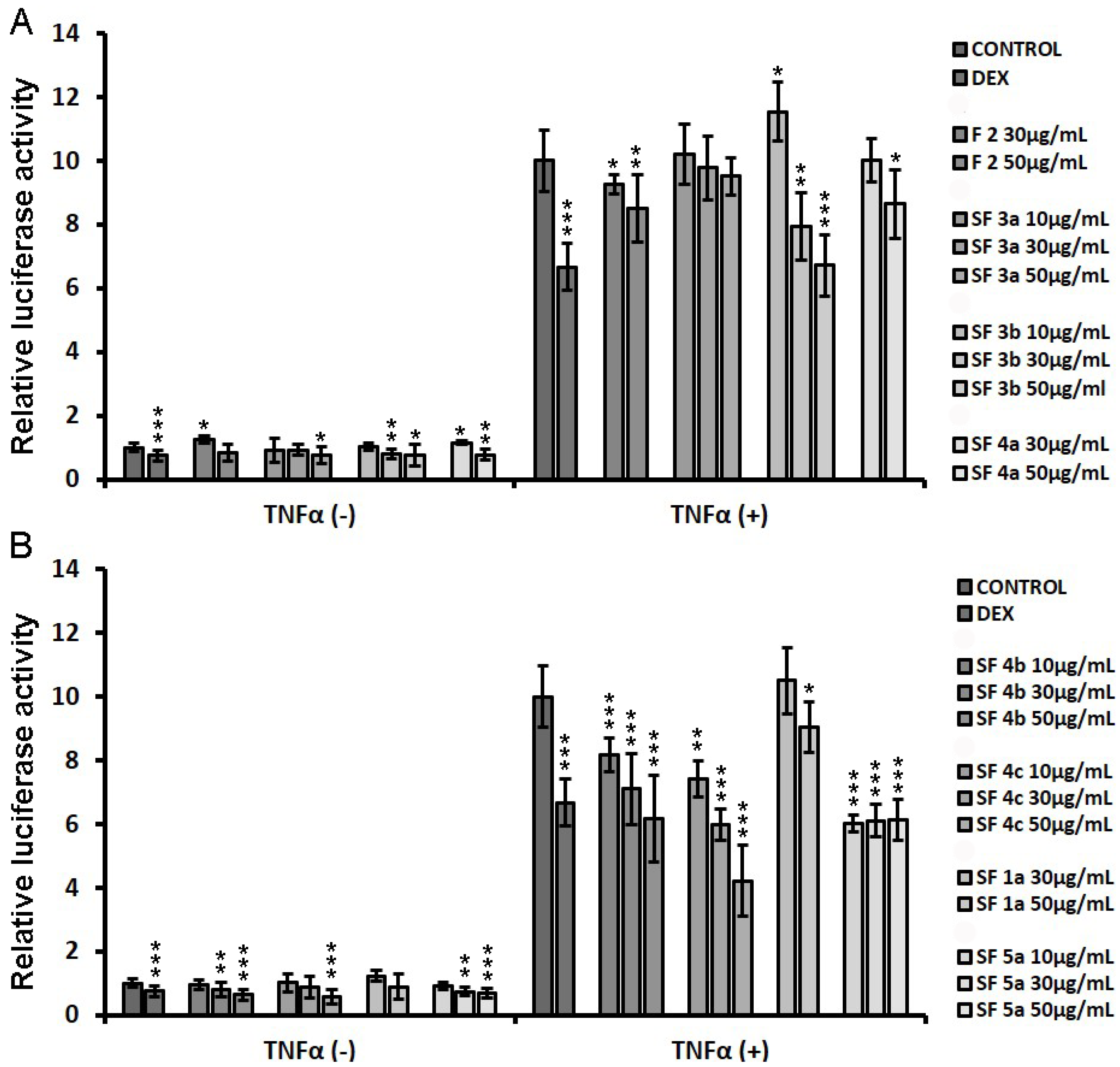
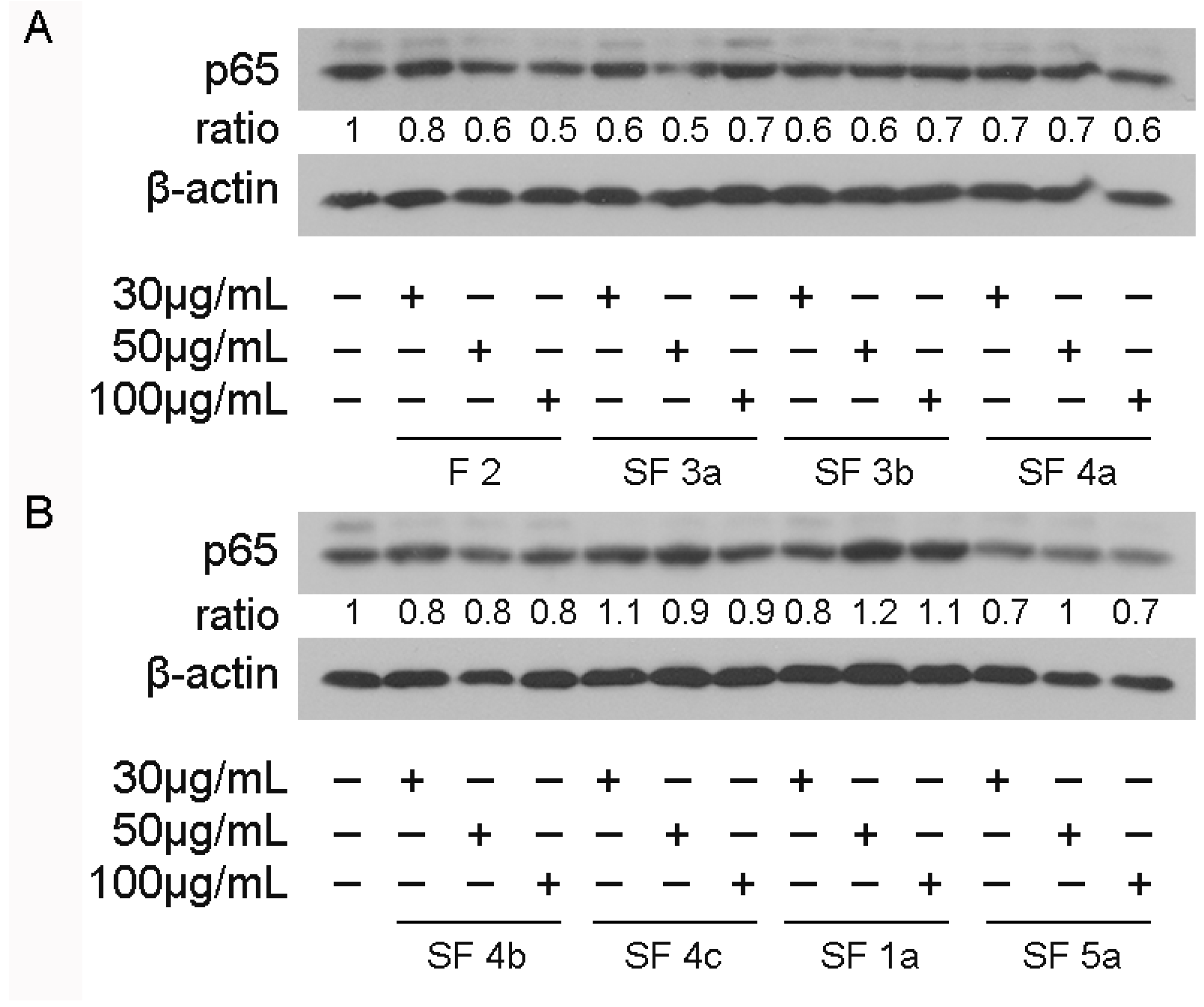
3.4. Chios Mastiha’s Neutral Residue Subfractions Suppressed the TNFα-Induced NF-κΒ Transcriptional Activation
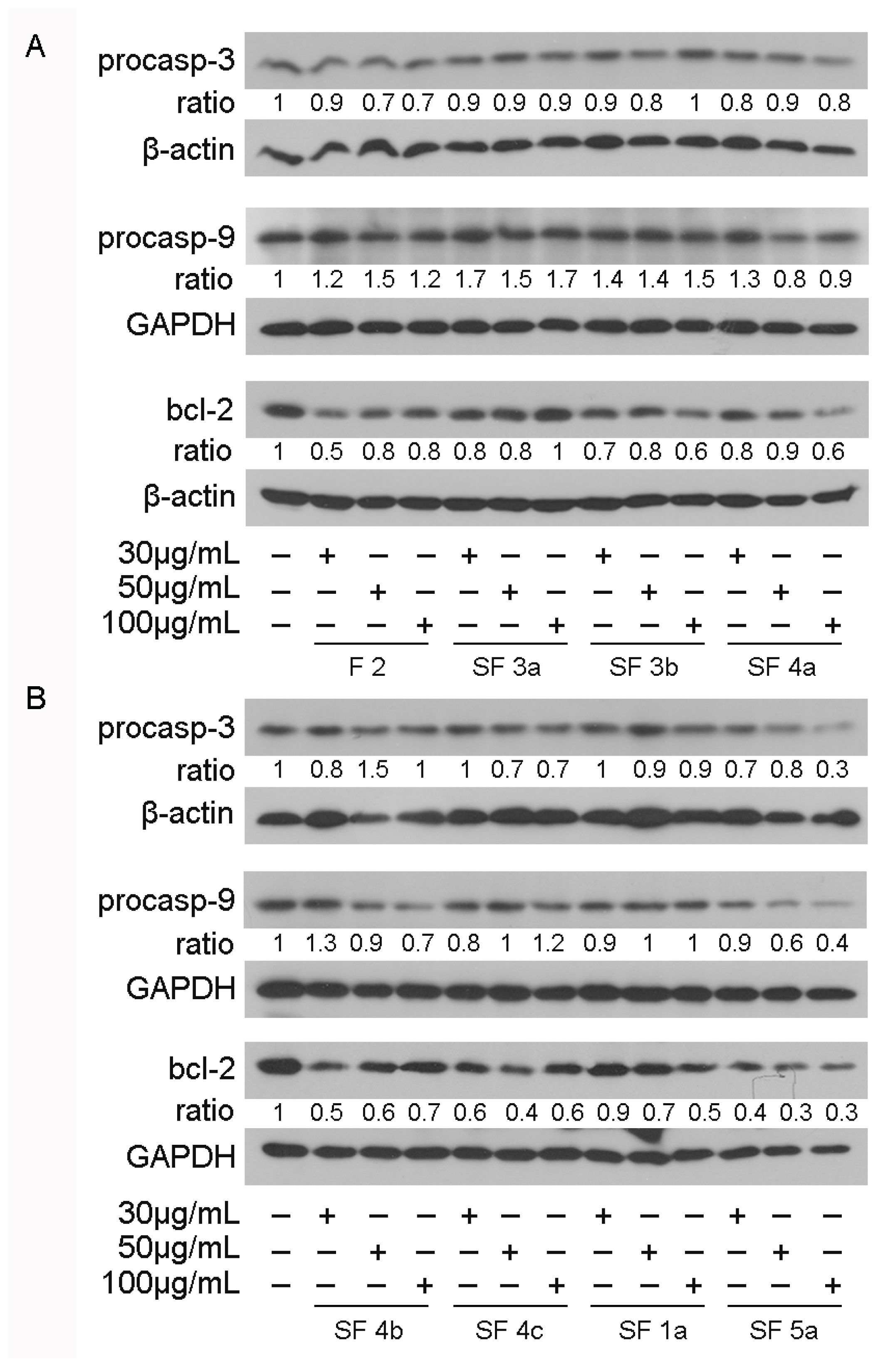
3.5. Chios Mastiha’s Subfractions’ Effect on Apoptotic Pathways
4. Discussion
5. Conclusions
Supplementary Materials
Author Contributions
Funding
Data Availability Statement
Acknowledgments
Conflicts of Interest
Abbreviations
| NMR | Nuclear magnetic resonance |
| HPLC | High-performance liquid chromatography |
| QTOF | Quadrupole time-of-flight |
| MS | Mass spectrometry |
| PEPCK | Phosphoenolpyruvate carboxykinase |
| GR | Glucocorticoid receptor |
| PPARα | Peroxisome proliferator-activated receptor alpha |
| TNFα | Tumor necrosis factor alpha |
| NF-κB | Nuclear factor kappa beta |
| DEX | Dexamethasone |
| LPC | Low-pressure chromatography |
| HEK293 | Human embryonic kidney cells 293 |
| DMEM | Dulbecco’s modified eagle medium |
| GREs | Glucocorticoid response elements |
| EtOH | Ethanol |
References
- Paraschos, S.; Mitakou, S.; Skaltsounis, A.L. Chios gum mastic: A review of its biological activities. Curr. Med. Chem. 2012, 19, 2292–2302. [Google Scholar] [CrossRef] [Scilit]
- Pachi, V.K.; Mikropoulou, E.V.; Gkiouvetidis, P.; Siafakas, K.; Argyropoulou, A.; Angelis, A.; Mitakou, S.; Halabalaki, M. Traditional uses, phytochemistry and pharmacology of Chios mastic gum (Pistacia lentiscus var. Chia, Anacardiaceae): A review. J. Ethnopharmacol. 2020, 254, 112485. [Google Scholar] [CrossRef] [Scilit] [PubMed]
- Dimas, K.S.; Pantazis, P.; Ramanujam, R. Chios mastic gum: A plant-produced resin exhibiting numerous diverse pharmaceutical and biomedical properties. In Vivo 2012, 26, 777–785. [Google Scholar]
- Georgantopoulos, A.; Kalousi, F.D.; Pollastro, F.; Tsialtas, I.; Kalogiouri, N.P.; Psarra, A.G. Chemical Analysis and Antioxidant Activities of Resin Fractions from Pistacia lentiscus L. var. Chia in Neuroblastoma SH-SY5Y Cells. Molecules 2025, 30, 997. [Google Scholar] [CrossRef] [Scilit]
- Kalousi, F.D.; Pollastro, F.; Christodoulou, E.C.; Karra, A.G.; Tsialtas, I.; Georgantopoulos, A.; Salamone, S.; Psarra, A.G. Apoptotic, Anti-Inflammatory Activities and Interference with the Glucocorticoid Receptor Signaling of Fractions from Pistacia lentiscus L. var. chia Leaves. Plants 2022, 11, 934. [Google Scholar] [CrossRef] [Scilit]
- Kalousi, F.D.; Pollastro, F.; Karra, A.G.; Tsialtas, I.; Georgantopoulos, A.; Salamone, S.; Psarra, A.G. Regulation of Energy Metabolism and Anti-Inflammatory Activities of Mastiha Fractions from Pistacia lentiscus L. var. chia. Foods 2023, 12, 1390. [Google Scholar] [CrossRef] [Scilit]
- Papada, E.; Kaliora, A.C. Antioxidant and Anti-Inflammatory Properties of Mastiha: A Review of Preclinical and Clinical Studies. Antioxidants 2019, 8, 208. [Google Scholar] [CrossRef] [Scilit] [PubMed]
- Timmermans, S.; Souffriau, J.; Libert, C. A General Introduction to Glucocorticoid Biology. Front. Immunol. 2019, 10, 1545. [Google Scholar] [CrossRef] [Scilit]
- Liu, B.; Zhang, T.N.; Knight, J.K.; Goodwin, J.E. The Glucocorticoid Receptor in Cardiovascular Health and Disease. Cells 2019, 8, 1227. [Google Scholar] [CrossRef] [Scilit]
- Oakley, R.H.; Cidlowski, J.A. The biology of the glucocorticoid receptor: New signaling mechanisms in health and disease. J. Allergy Clin. Immunol. 2013, 132, 1033–1044. [Google Scholar] [CrossRef] [Scilit] [PubMed]
- Psarra, A.M.; Sekeris, C.E. Glucocorticoids induce mitochondrial gene transcription in HepG2 cells: Role of the mitochondrial glucocorticoid receptor. Biochim. Biophys. Acta 2011, 1813, 1814–1821. [Google Scholar] [CrossRef] [Scilit]
- Baschant, U.; Culemann, S.; Tuckermann, J. Molecular determinants of glucocorticoid actions in inflammatory joint diseases. Mol. Cell. Endocrinol. 2013, 380, 108–118. [Google Scholar] [CrossRef] [Scilit]
- Cain, D.W.; Cidlowski, J.A. Specificity and sensitivity of glucocorticoid signaling in health and disease. Best Pract. Res. Clin. Endocrinol. Metab. 2015, 29, 545–556. [Google Scholar] [CrossRef] [Scilit]
- Georgatza, D.; Gorgogietas, V.A.; Kylindri, P.; Charalambous, M.C.; Papadopoulou, K.K.; Hayes, J.M.; Psarra, A.G. The triterpene echinocystic acid and its 3-O-glucoside derivative are revealed as potent and selective glucocorticoid receptor agonists. Int. J. Biochem. Cell Biol. 2016, 79, 277–287. [Google Scholar] [CrossRef] [Scilit]
- Karra, A.G.; Konstantinou, M.; Tzortziou, M.; Tsialtas, I.; Kalousi, F.D.; Garagounis, C.; Hayes, J.M.; Psarra, A.G. Potential Dissociative Glucocorticoid Receptor Activity for Protopanaxadiol and Protopanaxatriol. Int. J. Mol. Sci. 2018, 20, 94. [Google Scholar] [CrossRef] [Scilit]
- Karra, A.G.; Tziortziou, M.; Kylindri, P.; Georgatza, D.; Gorgogietas, V.A.; Makiou, A.; Krokida, A.; Tsialtas, I.; Kalousi, F.D.; Papadopoulos, G.E.; et al. Boswellic acids and their derivatives as potent regulators of glucocorticoid receptor actions. Arch. Biochem. Biophys. 2020, 695, 108656. [Google Scholar] [CrossRef] [Scilit]
- Kumar, N.; Ravindranath, B.; Seshadri, T.R. Terpenoids of Pterocarpus santalinus heartwood. Phytochemistry 1974, 13, 633–636. [Google Scholar] [CrossRef] [Scilit]
- Newmark, R.A.; Majumdar, R.N. 13C-NMR spectra of cis-polymyrcene and cis-polyfarnesene. J. Polym. Sci. Part A Polym. Chem. 1988, 26, 71–77. [Google Scholar] [CrossRef] [Scilit]
- Sholichin, M.; Yamasaki, K.; Kasai, R.; Tanaka, O. 13C Nuclear Magnetic Resonance of Lupane-Type Triterpenes, Lupeol, Betulin and Betulinic Acid. Chem. Pharm. Bull. 1980, 28, 1006–1008. [Google Scholar] [CrossRef] [Scilit]
- Karadimou, C.; Petsa, E.; Ouroumi, N.A.; Papadakis, E.N.; Kontoudakis, N.; Theocharis, S.; Mourtzinos, I.; Menkissoglu-Spiroudi, U.; Kalogiouri, N.P.; Koundouras, S. Exploration of the anthocyanin and proanthocyanidin profile of Greek red grape skins belonging to Vradiano, Limnio, and Kotsifali cultivars, analyzed by a novel LC-QTOF-MS/MS method. Phytochem. Anal. PCA 2024, 35, 1781–1793. [Google Scholar] [CrossRef] [Scilit] [PubMed]
- Mosmann, T. Rapid colorimetric assay for cellular growth and survival: Application to proliferation and cytotoxicity assays. J. Immunol. Methods 1983, 65, 55–63. [Google Scholar] [CrossRef] [Scilit]
- Psarra, A.M.; Hermann, S.; Panayotou, G.; Spyrou, G. Interaction of mitochondrial thioredoxin with glucocorticoid receptor and NF-kappaB modulates glucocorticoid receptor and NF-kappaB signalling in HEK-293 cells. Biochem. J. 2009, 422, 521–531. [Google Scholar] [CrossRef] [Scilit]
- Friedman, J.E.; Yun, J.S.; Patel, Y.M.; McGrane, M.M.; Hanson, R.W. Glucocorticoids regulate the induction of phosphoenolpyruvate carboxykinase (GTP) gene transcription during diabetes. J. Biol. Chem. 1993, 268, 12952–12957. [Google Scholar] [CrossRef] [Scilit]
- Lemberger, T.; Saladin, R.; Vazquez, M.; Assimacopoulos, F.; Staels, B.; Desvergne, B.; Wahli, W.; Auwerx, J. Expression of the peroxisome proliferator-activated receptor alpha gene is stimulated by stress and follows a diurnal rhythm. J. Biol. Chem. 1996, 271, 1764–1769. [Google Scholar] [CrossRef] [Scilit]
- Lemberger, T.; Staels, B.; Saladin, R.; Desvergne, B.; Auwerx, J.; Wahli, W. Regulation of the peroxisome proliferator-activated receptor alpha gene by glucocorticoids. J. Biol. Chem. 1994, 269, 24527–24530. [Google Scholar] [CrossRef] [Scilit]
- Assimopoulou, A.N.; Papageorgiou, V.P. GC-MS analysis of penta- and tetra-cyclic triterpenes from resins of Pistacia species. Part I. Pistacia lentiscus var. Chia. Biomed. Chromatogr. BMC 2005, 19, 285–311. [Google Scholar] [CrossRef] [Scilit]
- Papageorgiou, V.P.; Bakola-Christianopoulou, M.N.; Apazidou, K.K.; Psarros, E.E. Gas chromatographic–mass spectroscopic analysis of the acidic triterpenic fraction of mastic gum. J. Chromatogr. A 1997, 769, 263–273. [Google Scholar] [CrossRef] [Scilit]
- Haridas, V.; Xu, Z.X.; Kitchen, D.; Jiang, A.; Michels, P.; Gutterman, J.U. The anticancer plant triterpenoid, avicin D, regulates glucocorticoid receptor signaling: Implications for cellular metabolism. PLoS ONE 2011, 6, e28037. [Google Scholar] [CrossRef] [Scilit]
- Paraschos, S.; Magiatis, P.; Mitakou, S.; Petraki, K.; Kalliaropoulos, A.; Maragkoudakis, P.; Mentis, A.; Sgouras, D.; Skaltsounis, A.L. In vitro and in vivo activities of Chios mastic gum extracts and constituents against Helicobacter pylori. Antimicrob. Agents Chemother. 2007, 51, 551–559. [Google Scholar] [CrossRef] [Scilit] [PubMed]
- Laudette, M.; Sainte-Marie, Y.; Cousin, G.; Bergonnier, D.; Belhabib, I.; Brun, S.; Formoso, K.; Laib, L.; Tortosa, F.; Bergoglio, C.; et al. Cyclic AMP-binding protein Epac1 acts as a metabolic sensor to promote cardiomyocyte lipotoxicity. Cell Death Dis. 2021, 12, 824. [Google Scholar] [CrossRef] [Scilit] [PubMed]
- Penuelas, I.; Encio, I.J.; Lopez-Moratalla, N.; Santiago, E. cAMP activates transcription of the human glucocorticoid receptor gene promoter. J. Steroid Biochem. Mol. Biol. 1998, 67, 89–94. [Google Scholar] [CrossRef] [Scilit]
- Yang, J.; Reshef, L.; Cassuto, H.; Aleman, G.; Hanson, R.W. Aspects of the control of phosphoenolpyruvate carboxykinase gene transcription. J. Biol. Chem. 2009, 284, 27031–27035. [Google Scholar] [CrossRef] [Scilit]
- Dhakras, P.S.; Hajarnis, S.; Taylor, L.; Curthoys, N.P. cAMP-dependent stabilization of phosphoenolpyruvate carboxykinase mRNA in LLC-PK1-F+ kidney cells. Am. J. Physiol. Ren. Physiol. 2006, 290, F313–F318. [Google Scholar] [CrossRef] [Scilit]
- Al-Khayri, J.M.; Sahana, G.R.; Nagella, P.; Joseph, B.V.; Alessa, F.M.; Al-Mssallem, M.Q. Flavonoids as Potential Anti-Inflammatory Molecules: A Review. Molecules 2022, 27, 2901. [Google Scholar] [CrossRef] [Scilit]
- Wang, L.; Cai, Y.; Jian, L.; Cheung, C.W.; Zhang, L.; Xia, Z. Impact of peroxisome proliferator-activated receptor-alpha on diabetic cardiomyopathy. Cardiovasc. Diabetol. 2021, 20, 2. [Google Scholar] [CrossRef] [Scilit]
- Rakhshandehroo, M.; Knoch, B.; Muller, M.; Kersten, S. Peroxisome proliferator-activated receptor alpha target genes. PPAR Res. 2010, 2010, 612089. [Google Scholar] [CrossRef] [Scilit]
- Honda, A.; Hosoda, A.; Kamichatani, W.; Ogasawara, M.; Miyazaki, S.; Kashiwagi, N.; Kamata, S.; Ishii, I. Peroxisome Proliferator-Activated Receptor alpha/delta/gamma Activation Profile by Endogenous Long-Chain Fatty Acids. Int. J. Mol. Sci. 2025, 26, 12020. [Google Scholar] [CrossRef] [Scilit]
- Kamata, S.; Oyama, T.; Saito, K.; Honda, A.; Yamamoto, Y.; Suda, K.; Ishikawa, R.; Itoh, T.; Watanabe, Y.; Shibata, T.; et al. PPARalpha Ligand-Binding Domain Structures with Endogenous Fatty Acids and Fibrates. iScience 2020, 23, 101727. [Google Scholar] [CrossRef] [Scilit] [PubMed]
- Kartalis, A.; Didagelos, M.; Georgiadis, I.; Benetos, G.; Smyrnioudis, N.; Marmaras, H.; Voutas, P.; Zotika, C.; Garoufalis, S.; Andrikopoulos, G. Effects of Chios mastic gum on cholesterol and glucose levels of healthy volunteers: A prospective, randomized, placebo-controlled, pilot study (CHIOS-MASTIHA). Eur. J. Prev. Cardiol. 2016, 23, 722–729. [Google Scholar] [CrossRef] [Scilit] [PubMed]
- Triantafyllou, A.; Chaviaras, N.; Sergentanis, T.N.; Protopapa, E.; Tsaknis, J. Chios mastic gum modulates serum biochemical parameters in a human population. J. Ethnopharmacol. 2007, 111, 43–49. [Google Scholar] [CrossRef] [Scilit] [PubMed]
- Edosuyi, O.; Choi, M.; Igbe, I.; Oyekan, A. Role of peroxisome proliferator-activated receptor (PPARα) in mediating renoprotective effects of fumarate. J. Pharm. Bioresour. 2025, 22, 37–44. [Google Scholar] [CrossRef] [Scilit]
- Georgiadis, I.; Karatzas, T.; Korou, L.M.; Agrogiannis, G.; Vlachos, I.S.; Pantopoulou, A.; Tzanetakou, I.P.; Katsilambros, N.; Perrea, D.N. Evaluation of Chios mastic gum on lipid and glucose metabolism in diabetic mice. J. Med. Food 2014, 17, 393–399. [Google Scholar] [CrossRef] [Scilit] [PubMed]
- Lee, C.; Lee, J.W.; Seo, J.Y.; Hwang, S.W.; Im, J.P.; Kim, J.S. Lupeol inhibits LPS-induced NF-kappa B signaling in intestinal epithelial cells and macrophages, and attenuates acute and chronic murine colitis. Life Sci. 2016, 146, 100–108. [Google Scholar] [CrossRef] [Scilit]
- Liu, K.; Zhang, X.; Xie, L.; Deng, M.; Chen, H.; Song, J.; Long, J.; Li, X.; Luo, J. Lupeol and its derivatives as anticancer and anti-inflammatory agents: Molecular mechanisms and therapeutic efficacy. Pharmacol. Res. 2021, 164, 105373. [Google Scholar] [CrossRef] [Scilit] [PubMed]
- Loza-Rodriguez, H.; Estrada-Soto, S.; Alarcon-Aguilar, F.J.; Huang, F.; Aquino-Jarquin, G.; Fortis-Barrera, A.; Giacoman-Martinez, A.; Almanza-Perez, J.C. Oleanolic acid induces a dual agonist action on PPARgamma/alpha and GLUT4 translocation: A pentacyclic triterpene for dyslipidemia and type 2 diabetes. Eur. J. Pharmacol. 2020, 883, 173252. [Google Scholar] [CrossRef] [Scilit]
- Popeijus, H.E.; van Otterdijk, S.D.; van der Krieken, S.E.; Konings, M.; Serbonij, K.; Plat, J.; Mensink, R.P. Fatty acid chain length and saturation influences PPARalpha transcriptional activation and repression in HepG2 cells. Mol. Nutr. Food Res. 2014, 58, 2342–2349. [Google Scholar] [CrossRef] [Scilit]
- Thirupathi, A.; Silveira, P.C.; Nesi, R.T.; Pinho, R.A. beta-Amyrin, a pentacyclic triterpene, exhibits anti-fibrotic, anti-inflammatory, and anti-apoptotic effects on dimethyl nitrosamine-induced hepatic fibrosis in male rats. Hum. Exp. Toxicol. 2017, 36, 113–122. [Google Scholar] [CrossRef] [Scilit]
- Qin, L.; Xiao, Q.; Deng, X. Research Progress on the Role and Mechanism of Flavonoids in Improving Metabolic Associated Fatty Liver Disease. Diabetes Metab. Syndr. Obes. Targets Ther. 2025, 18, 4597–4607. [Google Scholar] [CrossRef] [Scilit]
- Carrizzo, A.; Puca, A.; Damato, A.; Marino, M.; Franco, E.; Pompeo, F.; Traficante, A.; Civitillo, F.; Santini, L.; Trimarco, V.; et al. Resveratrol improves vascular function in patients with hypertension and dyslipidemia by modulating NO metabolism. Hypertension 2013, 62, 359–366. [Google Scholar] [CrossRef] [Scilit]
- Caporali, S.; De Stefano, A.; Calabrese, C.; Giovannelli, A.; Pieri, M.; Savini, I.; Tesauro, M.; Bernardini, S.; Minieri, M.; Terrinoni, A. Anti-Inflammatory and Active Biological Properties of the Plant-Derived Bioactive Compounds Luteolin and Luteolin 7-Glucoside. Nutrients 2022, 14, 1155. [Google Scholar] [CrossRef] [Scilit] [PubMed]
- Kim, S.; Shin, H.J.; Kim, S.Y.; Kim, J.H.; Lee, Y.S.; Kim, D.H.; Lee, M.O. Genistein enhances expression of genes involved in fatty acid catabolism through activation of PPARalpha. Mol. Cell. Endocrinol. 2004, 220, 51–58. [Google Scholar] [CrossRef] [Scilit]
- Liu, H.; Zhong, H.; Yin, Y.; Jiang, Z. Genistein has beneficial effects on hepatic steatosis in high fat-high sucrose diet-treated rats. Biomed. Pharmacother. 2017, 91, 964–969. [Google Scholar] [CrossRef] [Scilit] [PubMed]
- Shehnaz, S.I.; Roy, A.; Vijayaraghavan, R.; Sivanesan, S. Luteolin Mitigates Diabetic Dyslipidemia in Rats by Modulating ACAT-2, PPARalpha, SREBP-2 Proteins, and Oxidative Stress. Appl. Biochem. Biotechnol. 2023, 195, 4893–4914. [Google Scholar] [CrossRef] [Scilit]
- Saleem, M. Lupeol, a novel anti-inflammatory and anti-cancer dietary triterpene. Cancer Lett. 2009, 285, 109–115. [Google Scholar] [CrossRef] [Scilit]
- Holanda Pinto, S.A.; Pinto, L.M.; Cunha, G.M.; Chaves, M.H.; Santos, F.A.; Rao, V.S. Anti-inflammatory effect of alpha, beta-Amyrin, a pentacyclic triterpene from Protium heptaphyllum in rat model of acute periodontitis. Inflammopharmacology 2008, 16, 48–52. [Google Scholar] [CrossRef] [Scilit]
- Krishnan, K.; Mathew, L.E.; Vijayalakshmi, N.R.; Helen, A. Anti-inflammatory potential of beta-amyrin, a triterpenoid isolated from Costus igneus. Inflammopharmacology 2014, 22, 373–385. [Google Scholar] [CrossRef] [Scilit]
- Genito, C.J.; Eckshtain-Levi, M.; Piedra-Quintero, Z.L.; Krovi, S.A.; Kroboth, A.; Stiepel, R.T.; Guerau-de-Arellano, M.; Bachelder, E.M.; Ainslie, K.M. Dexamethasone and Fumaric Acid Ester Conjugate Synergistically Inhibits Inflammation and NF-kappaB in Macrophages. Bioconjugate Chem. 2021, 32, 1629–1640. [Google Scholar] [CrossRef] [Scilit]
- Jannus, F.; Sainz, J.; Reyes-Zurita, F.J. Principal Bioactive Properties of Oleanolic Acid, Its Derivatives, and Analogues. Molecules 2024, 29, 3291. [Google Scholar] [CrossRef] [Scilit] [PubMed]
- Baxa, D.M.; Yoshimura, F.K. Genistein reduces NF-kappa B in T lymphoma cells via a caspase-mediated cleavage of I kappa B alpha. Biochem. Pharmacol. 2003, 66, 1009–1018. [Google Scholar] [CrossRef] [Scilit]
- Barreca, M.M.; Alessandro, R.; Corrado, C. Effects of Flavonoids on Cancer, Cardiovascular and Neurodegenerative Diseases: Role of NF-kappaB Signaling Pathway. Int. J. Mol. Sci. 2023, 24, 9236. [Google Scholar] [CrossRef] [Scilit] [PubMed]
- Cardenas, H.; Arango, D.; Nicholas, C.; Duarte, S.; Nuovo, G.J.; He, W.; Voss, O.H.; Gonzalez-Mejia, M.E.; Guttridge, D.C.; Grotewold, E.; et al. Dietary Apigenin Exerts Immune-Regulatory Activity in Vivo by Reducing NF-kappaB Activity, Halting Leukocyte Infiltration and Restoring Normal Metabolic Function. Int. J. Mol. Sci. 2016, 17, 323. [Google Scholar] [CrossRef] [Scilit]
- Rizwan, A.; Shaikh, H.; Farooqi, H. Anticancer Potential of Polyphenols in Legumes: Mechanisms and Insights. Curr. Drug Metab. 2025, 26, 489–506. [Google Scholar] [CrossRef] [Scilit]
- Ruan, J.; Shi, Z.; Cao, X.; Dang, Z.; Zhang, Q.; Zhang, W.; Wu, L.; Zhang, Y.; Wang, T. Research Progress on Anti-Inflammatory Effects and Related Mechanisms of Astragalin. Int. J. Mol. Sci. 2024, 25, 4476. [Google Scholar] [CrossRef] [Scilit]
- Sun, Z.; Liu, K.; Liang, C.; Wen, L.; Wu, J.; Liu, X.; Li, X. Diosmetin as a promising natural therapeutic agent: In vivo, in vitro mechanisms, and clinical studies. Phytother. Res. PTR 2024, 38, 3660–3694. [Google Scholar] [CrossRef] [Scilit]
- Pereira, I.; Severino, P.; Santos, A.C.; Silva, A.M.; Souto, E.B. Linalool bioactive properties and potential applicability in drug delivery systems. Colloids Surf. B Biointerfaces 2018, 171, 566–578. [Google Scholar] [CrossRef] [Scilit]
- Lee, S.Y.; Le, D.D.; Bae, C.S.; Park, J.W.; Lee, M.; Cho, S.S.; Park, D.H. Oleic acid attenuates asthma pathogenesis via Th1/Th2 immune cell modulation, TLR3/4-NF-kappaB-related inflammation suppression, and intrinsic apoptotic pathway induction. Front. Immunol. 2024, 15, 1429591. [Google Scholar] [CrossRef] [Scilit]
- Ren, J.; Chung, S.H. Anti-inflammatory effect of alpha-linolenic acid and its mode of action through the inhibition of nitric oxide production and inducible nitric oxide synthase gene expression via NF-kappaB and mitogen-activated protein kinase pathways. J. Agric. Food Chem. 2007, 55, 5073–5080. [Google Scholar] [CrossRef] [Scilit] [PubMed]
- Chang, C.S.; Sun, H.L.; Lii, C.K.; Chen, H.W.; Chen, P.Y.; Liu, K.L. Gamma-linolenic acid inhibits inflammatory responses by regulating NF-kappaB and AP-1 activation in lipopolysaccharide-induced RAW 264.7 macrophages. Inflammation 2010, 33, 46–57. [Google Scholar] [CrossRef] [Scilit]
- Boddu, S.H.; Alsaab, H.; Umar, S.; Bonam, S.P.; Gupta, H.; Ahmed, S. Anti-inflammatory effects of a novel ricinoleic acid poloxamer gel system for transdermal delivery. Int. J. Pharm. 2015, 479, 207–211. [Google Scholar] [CrossRef] [Scilit] [PubMed]
- Huang, Q.; Chen, C.; Zhang, Z.; Xue, Q. Anti-inflammatory effects of myristic acid mediated by the NF-kappaB pathway in lipopolysaccharide-induced BV-2 microglial cells. Mol. Omics 2023, 19, 726–734. [Google Scholar] [CrossRef] [Scilit] [PubMed]
- Wang, B.; Wu, L.; Chen, J.; Dong, L.; Chen, C.; Wen, Z.; Hu, J.; Fleming, I.; Wang, D.W. Metabolism pathways of arachidonic acids: Mechanisms and potential therapeutic targets. Signal Transduct. Target. Ther. 2021, 6, 94. [Google Scholar] [CrossRef] [Scilit]
- Qiu, T.; Yang, X.; Wang, J.; Pan, C.; Chu, X.; Xiong, J.; Xie, J.; Chang, Y.; Wang, C.; Zhang, J. Obesity-induced elevated palmitic acid promotes inflammation and glucose metabolism disorders through GPRs/NF-kappaB/KLF7 pathway. Nutr. Diabetes 2022, 12, 23. [Google Scholar] [CrossRef] [Scilit]
- Wang, X.; Zhang, C.; Bao, N. Molecular mechanism of palmitic acid and its derivatives in tumor progression. Front. Oncol. 2023, 13, 1224125. [Google Scholar] [CrossRef] [Scilit]
- Barros, F.W.; Bandeira, P.N.; Lima, D.J.; Meira, A.S.; de Farias, S.S.; Albuquerque, M.R.; dos Santos, H.S.; Lemos, T.L.; de Morais, M.O.; Costa-Lotufo, L.V.; et al. Amyrin esters induce cell death by apoptosis in HL-60 leukemia cells. Bioorganic Med. Chem. 2011, 19, 1268–1276. [Google Scholar] [CrossRef] [Scilit]
- Maiyo, F.; Moodley, R.; Singh, M. Phytochemistry, cytotoxicity and apoptosis studies of Β-sitosterol-3-o-glucoside and beta-amyrin from prunus africana. Afr. J. Tradit. Complement. Altern. Med. AJTCAM 2016, 13, 105–112. [Google Scholar] [CrossRef] [Scilit]
- Wen, S.; Gu, D.; Zeng, H. Antitumor effects of beta-amyrin in Hep-G2 liver carcinoma cells are mediated via apoptosis induction, cell cycle disruption and activation of JNK and P38 signalling pathways. J. BUON Off. J. Balk. Union Oncol. 2018, 23, 965–970. [Google Scholar]
- Miglietta, A.; Bozzo, F.; Bocca, C.; Gabriel, L.; Trombetta, A.; Belotti, S.; Canuto, R.A. Conjugated linoleic acid induces apoptosis in MDA-MB-231 breast cancer cells through ERK/MAPK signalling and mitochondrial pathway. Cancer Lett. 2006, 234, 149–157. [Google Scholar] [CrossRef] [Scilit]
- Scorrano, L.; Penzo, D.; Petronilli, V.; Pagano, F.; Bernardi, P. Arachidonic acid causes cell death through the mitochondrial permeability transition. Implications for tumor necrosis factor-alpha aopototic signaling. J. Biol. Chem. 2001, 276, 12035–12040. [Google Scholar] [CrossRef] [Scilit] [PubMed]
- Wang, K.; Xie, X.; Hu, X.; Wang, Z.; Xia, J.; Wu, Q. Stearic acid alleviates aortic medial degeneration through maintaining mitochondrial dynamics homeostasis via inhibiting JNK/MAPK signaling. iScience 2024, 27, 110594. [Google Scholar] [CrossRef] [Scilit] [PubMed]
- Mercola, J. Molecular and cellular mechanisms of pentadecanoic acid. World J. Biol. Chem. 2025, 16, 111258. [Google Scholar] [CrossRef] [Scilit]



| Compounds | Quantitative Measurement (μg/L) | |||||||
|---|---|---|---|---|---|---|---|---|
| F2 | SF 3a | SF 3b | SF 4a | SF 4b | SF 4c | SF 1a | SF 5a | |
| Polyketides | ||||||||
| Apigenin | - | - | - | 37.8 | - | - | 8.9 | - |
| Astragalin | - | - | - | - | - | - | - | 4.4 |
| Diosmetin | - | - | - | 68.2 | - | - | - | - |
| Flavidin | 149.5 | 145.6 | 142.9 | 176.5 | 199.4 | 205.5 | 166.6 | 142.4 |
| Genistein | - | - | - | 37.8 | - | - | 8.9 | 0.0 |
| Hesperidin | 4.1 | 3.8 | 4.4 | 4.1 | 4.3 | 4.8 | 4.6 | 4.4 |
| Isoliquiritigenin di-glucoside | 3.2 | 2.9 | 3.1 | 2.9 | 2.9 | 3.1 | 3.2 | 3.2 |
| Luteolin glucoside | 1.7 | 0.3 | 2.2 | 0.8 | 0.4 | 0.8 | 5.9 | 4.4 |
| Resveratrol | 2.2 | 1.9 | 3.5 | 6.0 | 6.6 | 1.1 | 18.7 | 0.1 |
| Phenylpropanoids | ||||||||
| Fumaric acid | 15.8 | - | 13.4 | 1.6 | - | - | - | 55.6 |
| Coniferaldehyde | 100.5 | 93.2 | 106.6 | 94.1 | 89.9 | 96.1 | 99.0 | 101.9 |
| Feroyl quinic acid | 1.5 | - | 4.6 | - | - | - | - | 59.3 |
| Methoxycinnamic acid | 17.2 | 21.3 | 25.5 | 21.0 | 25.9 | 22.1 | 21.4 | 21.8 |
| Fatty acids | ||||||||
| Homoisocitric acid | - | - | - | - | - | - | - | 3.7 |
| Palmitic acid | 4428.6 | 4488.6 | 11,308.6 | 11,077.1 | 7994.3 | 4954.3 | 4265.7 | 5257.1 |
| Stearic acid | 5825.7 | 6705.7 | 6120.0 | 6565.7 | 8491.4 | 6614.3 | 6254.3 | 6968.6 |
| Oleic acid | 1210.3 | 636.3 | 4737.1 | 2378.0 | 1071.4 | 1223.1 | 563.4 | 1363.4 |
| Linoleic acid | 195.5 | 196.1 | 498.9 | 199.3 | 348.6 | 310.3 | 132.3 | 136.8 |
| α-Linolenic acid | 23.5 | 10.5 | 21.1 | 9.8 | 21.3 | 26.2 | 12.8 | 13.7 |
| Caprylic acid | 26.5 | 16.9 | 21.0 | 20.1 | 25.1 | 23.4 | 19.5 | 23.5 |
| Ricinoleic acid | 20.1 | 9.8 | 17.5 | 8.7 | 20.6 | 24.1 | 12.3 | 12.8 |
| Crepenynic acid | 20.5 | 9.5 | 19.7 | 10.2 | 19.4 | 23.1 | 13.2 | 12.9 |
| γ-Linolenic acid | 22.8 | 8.5 | 18.6 | 10.4 | 20.7 | 25.3 | 12.4 | 12.9 |
| Nebraskanic acid | 96.6 | 90.5 | 57.9 | 63.3 | 59.1 | 71.7 | 58.1 | 77.1 |
| Myristic acid | 279.1 | 311.4 | 246.0 | 258.2 | 351.4 | 278.0 | 261.5 | 161.5 |
| Arachidonic acid | 6.1 | 8.7 | 8.7 | 19.4 | 232.7 | 55.1 | 14.7 | 20.3 |
| Pentadecanoic acid | 108.7 | 306.0 | 246.6 | 312.6 | 348.6 | 161.4 | 200.0 | 92.5 |
| Octyl formate | 44.5 | 53.5 | 62.5 | 55.9 | 44.3 | 49.3 | 59.8 | 46.1 |
| Terpenoids | ||||||||
| 6,7-dihydro-7-hydroxylinalool | 61.3 | 40.5 | 68.8 | 58.8 | 67.3 | 53.7 | 70.0 | 67.0 |
| α-irone | 16.9 | 22.0 | 26.9 | 22.1 | 27.7 | 21.8 | 21.0 | 22.1 |
Disclaimer/Publisher’s Note: The statements, opinions and data contained in all publications are solely those of the individual author(s) and contributor(s) and not of MDPI and/or the editor(s). MDPI and/or the editor(s) disclaim responsibility for any injury to people or property resulting from any ideas, methods, instructions or products referred to in the content. |
© 2026 by the authors. Licensee MDPI, Basel, Switzerland. This article is an open access article distributed under the terms and conditions of the Creative Commons Attribution (CC BY) license.
Share and Cite
Kalousi, F.D.; Georgantopoulos, A.; Camola, A.; Kalogiouri, N.P.; Pollastro, F.; Psarra, A.-M.G. Subfractionation of Pistacia lentiscus L. var. Chia Neutral Fractions: Chemical Analysis and Evaluation of Their Biological Profiling. Nutraceuticals 2026, 6, 33. https://doi.org/10.3390/nutraceuticals6020033
Kalousi FD, Georgantopoulos A, Camola A, Kalogiouri NP, Pollastro F, Psarra A-MG. Subfractionation of Pistacia lentiscus L. var. Chia Neutral Fractions: Chemical Analysis and Evaluation of Their Biological Profiling. Nutraceuticals. 2026; 6(2):33. https://doi.org/10.3390/nutraceuticals6020033
Chicago/Turabian StyleKalousi, Foteini D., Achilleas Georgantopoulos, Aurora Camola, Natasa P. Kalogiouri, Federica Pollastro, and Anna-Maria G. Psarra. 2026. "Subfractionation of Pistacia lentiscus L. var. Chia Neutral Fractions: Chemical Analysis and Evaluation of Their Biological Profiling" Nutraceuticals 6, no. 2: 33. https://doi.org/10.3390/nutraceuticals6020033
APA StyleKalousi, F. D., Georgantopoulos, A., Camola, A., Kalogiouri, N. P., Pollastro, F., & Psarra, A.-M. G. (2026). Subfractionation of Pistacia lentiscus L. var. Chia Neutral Fractions: Chemical Analysis and Evaluation of Their Biological Profiling. Nutraceuticals, 6(2), 33. https://doi.org/10.3390/nutraceuticals6020033