Next Issue
Volume 19, May
Previous Issue
Volume 19, March


Pharmaceuticals, Volume 19, Issue 4 (April 2026) – 130 articles

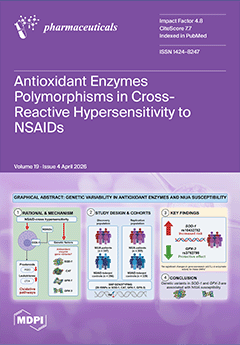
Cover Story (view full-size image): Nonsteroidal anti-inflammatory drugs (NSAIDs) are the leading cause of hypersensitivity reactions (HSRs) to drugs, with most patients reacting to at least two chemically unrelated NSAIDs. The underlying mechanism has been linked to alterations in the arachidonic acid (AA) pathway due to cyclooxygenase-1 inhibition; however, the involvement of other mechanisms cannot be excluded. As AA metabolism involves redox reactions, a role for first-line antioxidant defence enzymes (CAT, GPX, and SOD) is plausible. Moreover, since NSAID-HSRs are idiosyncratic—occurring only in susceptible individuals—the contribution of genetic factors should be considered. In this study, we evaluated for the first time genetic variants in CAT, GPX, and SOD in two independent Spanish populations. View this paper
  • Issues are regarded as officially published after their release is announced to the table of contents alert mailing list.
  • You may sign up for e-mail alerts to receive table of contents of newly released issues.
  • PDF is the official format for papers published in both, html and pdf forms. To view the papers in pdf format, click on the "PDF Full-text" link, and use the free Adobe Reader to open them.
Order results
Result details
Section
Select all
Export citation of selected articles as:
16 pages, 4399 KB  
Article
Identification and Functional Analysis of Targets of Dehydrodiisoeugenol in Bladder Cancer Based on Chemoproteomics-Based Profiling
by Zhao Zhai, Fan Wu, Guoli Sheng, Bin Jia, Bolin Jia, Peng Du and Yong Zhang
Pharmaceuticals 2026, 19(4), 651; https://doi.org/10.3390/ph19040651 - 21 Apr 2026
Viewed by 739
Abstract
Background/Objectives: The clinical management of bladder cancer is severely impeded by high recurrence rates and the rapid emergence of chemoresistance, necessitating the discovery of novel therapeutic agents with distinct mechanisms of action. Dehydrodiisoeugenol (DHE), a bioactive neolignan, exhibits potent anti-tumor efficacy, yet its [...] Read more.
Background/Objectives: The clinical management of bladder cancer is severely impeded by high recurrence rates and the rapid emergence of chemoresistance, necessitating the discovery of novel therapeutic agents with distinct mechanisms of action. Dehydrodiisoeugenol (DHE), a bioactive neolignan, exhibits potent anti-tumor efficacy, yet its direct molecular targets and mode of action remain elusive. Methods: To deconvolute the mechanism of DHE, we integrated a phenotypic screening approach using 2D cell lines and 3D patient-derived organoids with a chemoproteomics-based activity-based protein profiling (ABPP) strategy. We synthesized a functionalized photoaffinity probe to capture the specific interactome of DHE under physiological conditions and validated targets via cellular thermal shift assays (CETSA), quantitative mass spectrometry, and 100 ns molecular dynamics (MD) simulations. Results: DHE exhibited potent dose-dependent cytotoxicity in bladder cancer cells, with IC50 values of 39.23 μM in T24 and 34.58 μM in 5637 cells. In 3D patient-derived organoids, DHE significantly reduced viability (p < 0.0001). Using a dual-filtering ABPP strategy, we identified 65 high-confidence candidate targets, prioritizing PTPN1 (PTP1B) as the primary functional interactor. Comparative molecular docking and 100 ns MD analyses showed that multiple stereoisomers of DHE could adopt plausible PTPN1-binding modes. Mechanistically, organoid proteomics indicated that DHE engagement with PTPN1 disrupts ER membrane homeostasis, thereby modulating the PI3K-Akt signaling axes. Conclusions: These findings establish PTPN1 as a critical druggable vulnerability in bladder cancer and define the molecular basis for the therapeutic potential of DHE. This study highlights the power of combining chemoproteomics with physiological 3D models to accelerate the translation of natural products into precision cancer therapies. Full article
(This article belongs to the Special Issue Adjuvant Therapies for Cancer Treatment: 2nd Edition)
Show Figures

Figure 1

21 pages, 1107 KB  
Review
An Overview of the Presence of Cephalosporin Antibiotics in Aquatic Environments
by Ramona-Alexandra Ciausu, Mircea Nicusor Nicoara, Ionut-Alexandru Chelaru, Gabriel Andrei Andronic, Alin Stelian Ciobica and Dorel Ureche
Pharmaceuticals 2026, 19(4), 650; https://doi.org/10.3390/ph19040650 - 21 Apr 2026
Viewed by 819
Abstract
Background: Cephalosporins, widely used β-lactam antibiotics, are becoming significant environmental pollutants, primarily due to their high use and persistence. They are released into the environment mainly through wastewater treatment plants, agricultural runoff, and hospital discharge, with particularly high concentrations recorded in effluents. Conventional [...] Read more.
Background: Cephalosporins, widely used β-lactam antibiotics, are becoming significant environmental pollutants, primarily due to their high use and persistence. They are released into the environment mainly through wastewater treatment plants, agricultural runoff, and hospital discharge, with particularly high concentrations recorded in effluents. Conventional wastewater treatment methods have inadequate removal efficiency, while advanced treatments, such as ozonation, activated carbon adsorption, and advanced oxidation processes, although more efficient, may produce toxic by-products. Recent studies emphasize the importance of improved detection and monitoring techniques and advocate for stricter effluent regulations. Despite growing research attention, important knowledge gaps remain, including limited long-term field monitoring, insufficient data on environmentally realistic exposure scenarios, and incomplete assessment of transformation-product toxicity. Methods: The search strategy used the SCOPUS and PUBMED databases with the keywords “cephalosporin” AND “aquatic environment”, resulting in 341 records. After applying predefined inclusion and exclusion criteria, 110 peer-reviewed English-language studies meeting predefined thematic inclusion criteria and relevant to the occurrence, environmental fate, ecotoxicological effects, antimicrobial resistance, and removal of cephalosporins in aquatic environments were included in the narrative synthesis. Results: The literature on cephalosporins in aquatic environments has expanded significantly from 1978 to 2025, prompted by concerns about pharmaceutical contamination and antibiotic resistance. Studies from 2016 to 2025 used advanced and multidisciplinary monitoring techniques, revealed key pollution sources such as wastewater treatment plants and hospitals, and correlated antibiotic residues with resistance genes, highlighting the need for continued monitoring and mitigation efforts. Ecotoxicological and fate studies further indicate that transformation processes may generate products with altered or increased toxicity, complicating environmental risk assessment. Conclusions: The literature shows increasing attention to cephalosporins in aquatic environments, reporting associations with antimicrobial resistance and adverse effects on aquatic organisms, including potential toxicity from transformation products. This review highlights the need for integrated monitoring, standardized toxicity assessment, and improved treatment strategies within a One Health framework. Full article
Show Figures

Graphical abstract

18 pages, 2264 KB  
Article
Short Peptide with Sequence of LAGAAHF, Identified from Edible Bird’s Nest, Reduces Dermatitis Symptoms in Mice
by Queenie Wing Sze Lai, Yaxin Wang, Shengying Lin, Gary Ka Wing Yuen, Dusadee Ospondpant, Alex Xiong Gao, Tina Ting Xia Dong, Xuncai Liu, Qunyan Fan and Karl Wah Keung Tsim
Pharmaceuticals 2026, 19(4), 649; https://doi.org/10.3390/ph19040649 - 21 Apr 2026
Viewed by 615
Abstract
Background/Objectives: Native to the Indo-Pacific region, edible bird’s nests (EBN; Yan Wo in Chinese) are the solidified saliva of swiftlets (Aerodramus fuciphagus and A. maximus) and have been consumed as a traditional functional food for centuries. However, the bioactive components [...] Read more.
Background/Objectives: Native to the Indo-Pacific region, edible bird’s nests (EBN; Yan Wo in Chinese) are the solidified saliva of swiftlets (Aerodramus fuciphagus and A. maximus) and have been consumed as a traditional functional food for centuries. However, the bioactive components and underlying mechanisms of EBN remain poorly understood. EBN consists of over 60% protein, much of which is heavily glycosylated, forming complex glycoconjugates that are resistant to enzymatic digestion. This study examines the properties of EBN-derived bioactive peptides and assesses their potential for skin moisturization and anti-inflammation when applied topically. Methods: EBN was double-boiled for an extended period, then digested with gastric enzymes to extract active peptides. Digestion was over 90% efficient, and peptide molecular weights were measured. The enzymatic digest was then fractionated using an activity-guided approach based on assays for skin moisturization and anti-inflammatory properties. Results: A novel bioactive heptapeptide, with the sequence LAGAAHF and designated EBNP3, was identified and characterized. It attenuated TNF-α-induced inflammatory responses in HaCaT keratinocytes and alleviated dermatitis symptoms in a DNCB-induced C57BL/6 mouse model. Conclusions: EBN-derived peptides with skin moisturizing and anti-inflammatory activities hold significant promise for development into functional ingredients for skincare products. Full article
(This article belongs to the Section Biopharmaceuticals)
Show Figures

Figure 1

24 pages, 2076 KB  
Review
Targeting the Ras–Ral Signaling Axis in Type 2 Diabetes Mellitus: A Dual-Modulation Approach to Correcting Insulin Resistance and β-Cell Dysfunction
by Narayanan Thulasi, Kannan Harithpriya, Kumar Ganesan and Kunka Mohanram Ramkumar
Pharmaceuticals 2026, 19(4), 648; https://doi.org/10.3390/ph19040648 - 21 Apr 2026
Viewed by 779
Abstract
Type 2 diabetes mellitus (T2DM) is driven by insulin resistance and β-cell dysfunction. While Ras GTPases are known for oncogenic signaling, emerging evidence implicates the Ras–Ral axis as a critical regulator of glucose homeostasis. This review synthesizes the distinct roles of Ras and [...] Read more.
Type 2 diabetes mellitus (T2DM) is driven by insulin resistance and β-cell dysfunction. While Ras GTPases are known for oncogenic signaling, emerging evidence implicates the Ras–Ral axis as a critical regulator of glucose homeostasis. This review synthesizes the distinct roles of Ras and Ral in metabolism. Ras hyperactivation promotes insulin resistance and inflammation via MAPK/PI3K pathways, whereas RalA supports GLUT4 translocation and insulin granule exocytosis. We propose a dual-pathway hypothesis: T2DM pathophysiology involves an imbalance characterized by excessive Ras signaling and insufficient Ral-mediated metabolic actions. Consequently, we explore the therapeutic potential of rebalancing this axis through combinatorial strategies, that selectively inhibit pathogenic Ras while enhancing protective Ral activity. We critically evaluate current Ras-targeted agents (e.g., farnesyltransferase inhibitors, allele-specific inhibitors) and discuss the emerging frontier of Ral-specific enhancers. Finally, we outline key translational challenges and future directions for validating this axis as a target for precision medicine in T2DM. Full article
(This article belongs to the Special Issue Antidiabetic Agents: New Drug Discovery Insights and Prospects)
Show Figures

Figure 1

29 pages, 1027 KB  
Article
Insights into Molecular Mechanisms of Polyphenolic Compounds from Helichrysum italicum by Inverse Molecular Docking Fingerprint Approach
by Veronika Furlan, Vid Ravnik, Urban Bren and Marko Jukić
Pharmaceuticals 2026, 19(4), 647; https://doi.org/10.3390/ph19040647 - 21 Apr 2026
Viewed by 1034
Abstract
Background/Objectives: Natural compounds occupy a pharmacologically rich chemical space, characterized by abundant scaffolds, extensive functional group elaboration, and defined stereochemistry. In this context, Helichrysum italicum, a Mediterranean medicinal plant, represents a valuable source of polyphenols with multiple biological and pharmacological activities. [...] Read more.
Background/Objectives: Natural compounds occupy a pharmacologically rich chemical space, characterized by abundant scaffolds, extensive functional group elaboration, and defined stereochemistry. In this context, Helichrysum italicum, a Mediterranean medicinal plant, represents a valuable source of polyphenols with multiple biological and pharmacological activities. Methods: Here, we introduce an inverse molecular docking fingerprint approach to systematically investigate eight major Helichrysum italicum polyphenols, including α-pyrones (arzanol, ethylpyrone), flavonols (gnaphaliin, kaempferol, quercetin), and flavanones (naringenin, pinocembrin, hesperetin). More than 40,000 human protein structures from the Protein Data Bank were screened to generate target-based inverse docking score fingerprints for each compound. Results: Hierarchical clustering of these fingerprints revealed shared binding patterns among structurally related polyphenols and enabled hypothesis generation regarding potential synergistic effects. Notably, favorable interactions were identified with PPARG and CARM1, supporting therapeutic relevance in inflammation and cancer, alongside additional targets associated with neurodegeneration and bone metabolism. Conclusions: This study establishes inverse docking fingerprints as a robust, mechanism-oriented method for natural product research and highlights Helichrysum italicum polyphenols as starting points for medicinal chemistry and drug discovery. Full article
Show Figures

Graphical abstract

1 pages, 132 KB  
Retraction
RETRACTED: Huang et al. Adenine Inhibits the Invasive Potential of DLD-1 Human Colorectal Cancer Cell via the AMPK/FAK Axis. Pharmaceuticals 2021, 14, 860
by Chien-Wei Huang, You-Cian Lin, Chia-Hung Hung, Han-Min Chen, Jiun-Tsai Lin, Chau-Jong Wang and Shao-Hsuan Kao
Pharmaceuticals 2026, 19(4), 646; https://doi.org/10.3390/ph19040646 - 21 Apr 2026
Viewed by 443
Abstract
The journal retracts the article, “Adenine Inhibits the Invasive Potential of DLD-1 Human Colorectal Cancer Cell via the AMPK/FAK Axis” [...] Full article
15 pages, 1477 KB  
Article
Comparative Pharmacological Profiling of Psychotherapeutic Drugs Reveals a Functional Taxonomy Based on Direct Inhibition of Smooth Muscle Excitability
by María Jesús Castrillejo, Alfonso Velasco, Juan F. Mielgo-Ayuso, Jesús Pérez, Manuel Garrosa, Carlos Alberto Rodríguez-Arias and Diego Fernández-Lázaro
Pharmaceuticals 2026, 19(4), 645; https://doi.org/10.3390/ph19040645 - 21 Apr 2026
Viewed by 509
Abstract
Background: Autonomic side effects are a major determinant of tolerability for many psychotherapeutic drugs. While often attributed to receptor-mediated mechanisms, the potential contribution of direct modulation of smooth muscle excitability remains poorly characterized at a comparative pharmacological level. Methods: A systematic comparative pharmacological [...] Read more.
Background: Autonomic side effects are a major determinant of tolerability for many psychotherapeutic drugs. While often attributed to receptor-mediated mechanisms, the potential contribution of direct modulation of smooth muscle excitability remains poorly characterized at a comparative pharmacological level. Methods: A systematic comparative pharmacological profiling of a broad panel of psychotherapeutic drugs (antidepressants, antipsychotics, and anxiolytics) was conducted using a standardized ex vivo model. Potassium chloride (KCl, 105 mM) was used to induce depolarization-dependent contraction in three isolated smooth muscle preparations (rat uterus, rat vas deferens, and guinea-pig ileum). Inhibitory potency (IC50), dose-dependency, and tissue consistency were integrated to define functional inhibitory profiles. Results: Psychotherapeutic drugs exhibited marked heterogeneity in their ability to inhibit K+-induced smooth muscle contraction. Integrative analysis stratified compounds into four distinct functional profiles: (i) High Inhibitory Liability (e.g., nortriptyline, paroxetine), characterized by low micromolar IC50 values and dose-dependent inhibition across multiple tissues; (ii) Non-Selective Inhibition (e.g., flunarizine, cinnarizine), showing consistent but dose-independent inhibition; (iii) Tissue-Dependent Inhibition (e.g., risperidone, reboxetine); and (iv) Minimal Inhibition (e.g., moclobemide). Agents classified within the High Inhibitory Liability profile correspond to drugs known to carry a higher clinical burden of autonomic adverse effects. Conclusions: This study reveals a previously underrecognized pharmacodynamic dimension of psychotherapeutic drugs and establishes a comparative functional taxonomy based on their direct, non-receptor-mediated inhibition of smooth muscle excitability. The identified profiles provide a mechanism-informed framework for contextualizing autonomic side-effect liability and may support improved safety evaluation in psychotherapeutic drug development. Full article
(This article belongs to the Section Pharmacology)
Show Figures

Graphical abstract

36 pages, 4287 KB  
Review
Osteocytes in the Metastatic Bone Niche: Mechanistic Pathways and Therapeutic Targets
by Alhomam Dabaliz, Mohamad Bakir, Lana Fatash, Mais Aldoush and Khalid Said Mohammad
Pharmaceuticals 2026, 19(4), 644; https://doi.org/10.3390/ph19040644 - 20 Apr 2026
Viewed by 821
Abstract
Osteocytes, once viewed mainly as passive bone-embedded cells, are now recognized as active regulators of the metastatic bone niche. Emerging evidence indicates that these cells integrate mechanical, inflammatory, and tumor-derived cues to influence metastatic seeding, dormancy, reactivation, and lesion progression in bone. This [...] Read more.
Osteocytes, once viewed mainly as passive bone-embedded cells, are now recognized as active regulators of the metastatic bone niche. Emerging evidence indicates that these cells integrate mechanical, inflammatory, and tumor-derived cues to influence metastatic seeding, dormancy, reactivation, and lesion progression in bone. This review synthesizes current understanding of osteocyte contributions to skeletal metastasis. We discuss core signaling axes, including osteocyte-derived RANKL/OPG balance, Wnt antagonists (sclerostin/DKK1), mechanotransduction pathways (Piezo1 signaling and connexin-43 hemichannels), and osteocyte paracrine mediators (extracellular vesicles and senescence-associated factors), and examine how each axis modulates tumor cell dormancy, osteolysis, or osteoblastic progression. We then review translational strategies targeting osteocytes, recent preclinical and clinical insights. Emerging biomarkers (e.g., serum sclerostin, DKK1, bone turnover markers) and immune–skeletal imaging approaches are also considered. Controversies, including the paradoxical effects of sclerostin blockade and the identity of in vivo RANKL sources, are discussed. Finally, we outline key knowledge gaps and propose endpoints for future trials. In summary, an osteocyte-centric perspective reveals novel targets and strategies for managing bone metastases, guiding future translational research. Full article
(This article belongs to the Special Issue Recent Advances in Cancer Diagnosis and Therapy)
Show Figures

Graphical abstract

21 pages, 9972 KB  
Article
Silibinin Potentiates Antimicrobial Action and Reduces Staphyloxanthin in Staphylococcus aureus
by José Lima Pereira-Filho, Amanda Graziela Gonçalves Mendes, Carmem Duarte Lima Campos, Viviane da Silva Sousa Almeida, Aleania Polassa Almeida Pereira, Israel Viegas Moreira, Cinara Regina Aragão Vieira Monteiro, Louriane Nunes Gomes, Cristianne Roberta Rhoden, Antonio José Cantanhede-Filho, Lucilene Amorim Silva, Alberto Jorge Oliveira Lopes, Rafael Cardoso Carvalho and Valério Monteiro-Neto
Pharmaceuticals 2026, 19(4), 643; https://doi.org/10.3390/ph19040643 - 18 Apr 2026
Viewed by 857
Abstract
Background/Objectives: The emergence of methicillin-resistant Staphylococcus aureus (MRSA) necessitates innovative strategies to overcome conventional resistance mechanisms. This study investigated the potential of the natural flavonolignan silibinin (SIL) as an antivirulence agent against S. aureus, with a particular emphasis on its putative multi-target [...] Read more.
Background/Objectives: The emergence of methicillin-resistant Staphylococcus aureus (MRSA) necessitates innovative strategies to overcome conventional resistance mechanisms. This study investigated the potential of the natural flavonolignan silibinin (SIL) as an antivirulence agent against S. aureus, with a particular emphasis on its putative multi-target antibacterial activity and its capacity to potentiate the effects of ciprofloxacin (CIP). Methods: The antibacterial and antivirulence properties of SIL were assessed using both in vitro and in silico approaches. The minimum inhibitory concentration (MIC) and minimum bactericidal concentration (MBC) were determined, and its synergistic interaction with CIP was evaluated using checkerboard assays. Inhibition of biofilm formation, as well as disruption of established biofilms, was assessed using an MTT-based viability assay. Staphyloxanthin (STX) inhibition was examined through pigment extraction and spectrophotometric quantification of pathway intermediates. Molecular docking studies were conducted to predict the binding affinities of the compounds to key bacterial targets, while safety was evaluated through haemolytic and cytotoxicity assays. Results: SIL exhibited weak to moderate direct antibacterial activity (MICs of 256–512 µg/mL), which is characteristic of many natural product scaffolds. Notably, SIL potentiated the activity of CIP, reducing its MIC by up to fourfold against selected resistant strains of S. aureus. SIL significantly inhibited biofilm formation and disrupted established mature biofilms in a strain-dependent manner. In vitro metabolic profiling and in silico analyses provided mechanistic insights into the effects of SIL on STX biosynthesis. Precursor accumulation data suggest inhibition at the diapophytoene desaturase (CrtN) catalytic step, representing a potential mechanism not previously reported for flavonolignans. Molecular docking studies further predicted favourable binding affinities for CrtM and other key targets. Importantly, SIL exhibited no haemolytic activity and low cytotoxicity in macrophages at synergistic concentrations. Conclusions: This study provides evidence that SIL functions as a dual-action agent, potentiating ciprofloxacin efficacy while reducing STX production and inhibiting biofilm formation, thereby impairing key virulence mechanisms of S. aureus. These findings, together with its favourable safety profile, provide a strong rationale for the development of silibinin-based topical adjuvants to combat drug-resistant Staphylococcus infections in humans. Full article
Show Figures

Graphical abstract

15 pages, 1226 KB  
Article
PPAR-α Agonist Suppresses Expression of Immune Mediators in B Cells in a Murine Model of Systemic Lupus Erythematosus
by Haneen A. Al-Mazroua, Hussain N. Alhamami, Mushtaq A. Ansari, Ahmed Nadeem, Sabry M. Attia, Saleh A. Bakheet, Abdulaziz M. S. Alsaad, Hatun A. Alomar, Alaa A. Alanteet and Sheikh F. Ahmad
Pharmaceuticals 2026, 19(4), 642; https://doi.org/10.3390/ph19040642 - 18 Apr 2026
Viewed by 784
Abstract
Background/Objectives: Systemic lupus erythematosus (SLE) is a chronic autoimmune disorder characterized by immune dysregulation that leads to widespread inflammation and damage across multiple organs. B lymphocytes play a vital role in SLE, with abnormal development and activation leading to autoreactive antibody production and [...] Read more.
Background/Objectives: Systemic lupus erythematosus (SLE) is a chronic autoimmune disorder characterized by immune dysregulation that leads to widespread inflammation and damage across multiple organs. B lymphocytes play a vital role in SLE, with abnormal development and activation leading to autoreactive antibody production and immune complex formation, which damages tissues. Methods: The PPARα agonist WY14643 has anti-inflammatory effects in various inflammatory conditions, including CNS diseases. We investigated whether WY14643 decreases inflammatory mediator production in CD45R+ cells in the MRL/lpr mouse model of SLE. Flow cytometry was used to evaluate WY14643’s impact on the expression of IFN-γ, IL-6, iNOS, MCP-1, IL-1α, IL-2, Notch-1, Notch-3, GITR, and NF-κB p65 in splenic CD45R+ B cells. Additionally, we assessed the effect of WY14643 on the mRNA levels of these markers in the kidney using RT-PCR. Results: WY14643 decreased inflammatory markers such as CD45R+IFN-γ+, CD45R+IL-6+, CD45R+iNOS+, CD45R+MCP-1+, CD45R+IL-1α+, CD45R+IL-2+, CD45R+Notch1+, CD45R+Notch3+, CD45R+GITR+, and CD45R+NF-κB p65+ in splenic cells from MRL/lpr mice. Furthermore, WY14643 also lowered mRNA expression of IFN-γ, IL-6, iNOS, MCP-1, IL-2, IL-1α, Notch-1, Notch-3, GITR, and NF-κB p65 in the kidney. Conclusions: This study shows that WY14643 inhibits the production of inflammatory mediators and significantly reduces autoimmune features, including kidney inflammation, in MRL/lpr mice. Our results indicate that WY14643, a PPAR-α agonist, could be a potential therapy for lupus nephritis. Full article
(This article belongs to the Section Pharmacology)
Show Figures

Graphical abstract

22 pages, 11165 KB  
Article
Analgesic and Anti-Inflammatory Activity of Ambroxol in the Treatment of Endometriosis: An Experimental Study in Wistar Rats
by Gustavo Medeiros Frota, Wilwana Guimarães Barbalho Santos, Joana Tenório-Meireles, Eduardo Rodrigues Silva, Amanda Tissore Forwille Reis, Rennan Abud Pinheiro Santos, Larissa Rodrigues de Sousa, Rafael Antônio Freire Carvalho, Joicy Cortez de Sá Sousa, Eduardo Martins de Sousa, Rafael de Abreu Lima, Rafael Cardoso Carvalho, Marcelo Souza de Andrade, João Batista Santos Garcia and Maria do Socorro de Sousa Cartágenes
Pharmaceuticals 2026, 19(4), 641; https://doi.org/10.3390/ph19040641 - 18 Apr 2026
Viewed by 556
Abstract
Background/Objective: This study evaluated the analgesic and anti-inflammatory effects of ambroxol in an experimental model of endometriosis. Methods: Ambroxol was administered at doses of 10, 50, and 100 mg/kg (Abx 10, Abx 50, and Abx 100) by daily gavage for 21 days. A [...] Read more.
Background/Objective: This study evaluated the analgesic and anti-inflammatory effects of ambroxol in an experimental model of endometriosis. Methods: Ambroxol was administered at doses of 10, 50, and 100 mg/kg (Abx 10, Abx 50, and Abx 100) by daily gavage for 21 days. A medroxyprogesterone-treated group (Progesterone) was included as a positive control. Pain was assessed using validated behavioral tests, including the Rat Grimace Scale (RGS), the von Frey test, and the rotarod test. Additionally, interleukin-1β (IL-1β) levels and total leukocyte counts were measured in peritoneal lavage fluid. The volumetric reduction in endometriotic implants was evaluated by ultrasonography, while histopathological analysis characterized inflammatory infiltrate and epithelial layer integrity using a standardized scoring system. Results: All ambroxol doses reduced spontaneous pain manifestations throughout the treatment. The mechanical withdrawal threshold significantly increased from the second week onward, and motor quality improved over the course of the study. A significant reduction in IL-1β levels compared with the negative control (Control(−)) was observed on day 21. Abx 50 and Abx 100 significantly reduced implant volumes (48.2% and 56.2%, respectively) and promoted marked disruption of the endometriotic epithelial layer. When compared with Progesterone, higher doses—particularly 100 mg/kg—demonstrated comparable efficacy. Conclusions: Taken together, these pleiotropic effects support the potential for drug repurposing in endometriosis. Full article
Show Figures

Graphical abstract

20 pages, 5472 KB  
Article
Artemisia argyi Levl.et Vant Extract (AALE) and Parthenolide Suppress Respiratory Syncytial Virus (RSV) via the RIG-I/TLR3 Pathway In Vivo and In Vitro
by Zeting Tan, Rongshun Liang, Adam Junka, Haoxuan Sun, Jie Jiang, Haojia Ma, Shisong Fang and Yanfang Sun
Pharmaceuticals 2026, 19(4), 640; https://doi.org/10.3390/ph19040640 - 18 Apr 2026
Viewed by 804
Abstract
Background: Respiratory syncytial virus (RSV) is a leading global pathogen of acute lower respiratory tract infection, posing significant risks to infants, the elderly, and immunocompromised patients. Artemisia argyi Levl.et Vant Extract (AALE) and its active components have a variety of pharmacological effects, [...] Read more.
Background: Respiratory syncytial virus (RSV) is a leading global pathogen of acute lower respiratory tract infection, posing significant risks to infants, the elderly, and immunocompromised patients. Artemisia argyi Levl.et Vant Extract (AALE) and its active components have a variety of pharmacological effects, but their anti-RSV potential remains unclear. The aim of this study is to investigate the anti-RSV activity of AALE and parthenolide and its underlying mechanisms. Methods: Cell counting kit-8 (CCK-8) assay was used to determine the anti-RSV activities of AALE and parthenolide. Time-of-addition assay and phase of action analysis were used to explore the effect of drugs on the viral replication cycle. Quantitative polymerase chain reaction (qRCR), immunofluorescence (IF) and Western blot (WB) were used to investigate the effects of AALE and parthenolide on RSV-F gene and protein and on RIG-I/TLR-3 pathway related molecules in vitro. In vivo antiviral efficacy was verified by hematoxylin–eosin (HE) staining for lung histopathology, quantitative real-time PCR (qPCR) quantification of RSV-F, RIG-I, TLR-3, IRF3, IL-6, and IFN-β gene expression in lung tissues, and enzyme-linked immunosorbent assay (ELISA) for serum IL-6 and IFN-β levels. Results: AALE exhibited the strongest anti-RSV activity among the extracts (SI = 27.6), while parthenolide was the most potent monomeric compound (SI = 8.19). In vitro, both AALE and parthenolide were effective in the co-treatment and post-treatment models, reducing RSV-F gene and F protein levels in infected cells. Furthermore, they alleviated RSV infection by regulating RIG-I and TLR-3 pathway-related genes and proteins. In vivo, AALE and parthenolide suppressed lung index and RSV proliferation, attenuated lung injury, and down-regulated RIG-I, TLR-3, IRF3, IL-6, and IFN-β expression in the lungs of RSV-infected mice. Conclusions: AALE and its component parthenolide can inhibit the invasion and replication of RSV, making it a potential candidate for the treatment of RSV-related diseases. Full article
(This article belongs to the Section Natural Products)
Show Figures

Figure 1

15 pages, 1816 KB  
Article
Anti-Inflammatory Activities of Baobab Fruit Extracts in TNF-α/IFN-γ-Stimulated HaCaT Keratinocytes with LC–MS/MS and HPLC Profiling
by Shi-Heon Kang, Soon Yeong Park, Hoon Kim and Sanghyun Lee
Pharmaceuticals 2026, 19(4), 639; https://doi.org/10.3390/ph19040639 - 18 Apr 2026
Viewed by 775
Abstract
Background/Objectives: Atopic dermatitis (AD)-related skin inflammation involves the release of cytokines and chemokines from keratinocytes; therefore, keratinocyte-based models are widely used to evaluate the anti-inflammatory potential of botanical extracts. This study examined the relationship between phytochemical profiles and anti-inflammatory potential of baobab [...] Read more.
Background/Objectives: Atopic dermatitis (AD)-related skin inflammation involves the release of cytokines and chemokines from keratinocytes; therefore, keratinocyte-based models are widely used to evaluate the anti-inflammatory potential of botanical extracts. This study examined the relationship between phytochemical profiles and anti-inflammatory potential of baobab fruit 30% and 70% ethanol extracts (BE-30 and BE-70, respectively) in a TNF-α/IFN-γ (TI)-stimulated HaCaT keratinocyte model. Methods: The anti-inflammatory effects of both extracts were evaluated by measuring cytokine and chemokine secretion in TI-stimulated HaCaT cells. Phytochemical characterization was performed using liquid chromatography–tandem mass spectrometry (LC–MS/MS) and targeted high-performance liquid chromatography (HPLC). Results: Both extracts were non-cytotoxic. TI-stimulation markedly increased interleukin (IL)-6, IL-8 and monocyte chemotactic protein (MCP)-1 secretion, while BE-30 and BE-70 significantly reduced all three mediators in a dose-dependent manner. At comparable doses, BE-70 exhibited greater inhibition than BE-30. BE-30 showed a non-monotonic IL-8 response at low concentrations, whereas BE-70 consistently reduced IL-8 in a dose-dependent manner. LC–MS/MS profiling revealed a polyphenol-rich composition, including flavonol glycosides and related phenolic compounds. HPLC confirmed the presence of four marker analytes (procyanidin B2, epicatechin, rutin and tiliroside), which were enriched in BE-70. The content of these four polyphenols was 1.94-fold higher in BE-70. Conclusions: Baobab fruit extracts exhibit anti-inflammatory activity associated with polyphenols. These findings suggest that they could be used as analytical standards and in dermatological applications. Full article
Show Figures

Figure 1

18 pages, 2343 KB  
Article
The Molecular Structures of Liquid and Glassy Nifedipine and Felodipine and Their Incorporation into PVP
by Chris J. Benmore, Stephen K. Wilke, Samrat Amin, Richard Weber, Pamela A. Smith, Stephen R. Byrn, Olivia Gibbons, Ethan Earl, Stephen Davidowski and Jeffery L. Yarger
Pharmaceuticals 2026, 19(4), 638; https://doi.org/10.3390/ph19040638 - 18 Apr 2026
Viewed by 798
Abstract
Background: Amorphous drug formulations are commonly used to improve the solubility and bioavailability of poorly soluble molecular pharmaceuticals, yet less is known about their molecular conformations and local bonding interactions than their crystalline phases. Methods: High-energy X-ray diffraction structure factor measurements [...] Read more.
Background: Amorphous drug formulations are commonly used to improve the solubility and bioavailability of poorly soluble molecular pharmaceuticals, yet less is known about their molecular conformations and local bonding interactions than their crystalline phases. Methods: High-energy X-ray diffraction structure factor measurements have been made on liquid and glassy nifedipine (NIF), felodipine (FEL), NIF 1:3 polyvinylpyrrolidone (PVP), and FEL 1:3 PVP wt.% mixtures. The corresponding X-ray pair distribution functions have been interpreted using empirical potential structure refinement using different models and density functional theory conformer calculations. Results: In both NIF and FEL, the NH···O inter-molecular hydrogen bonds between the pyridyl nitrogen and ester carbonyls are found to be considerably weaker than those observed in the crystalline polymorphs. For nifedipine, it is proposed that either inter-molecular NH…ON nitro bonds are present and/or a fraction (<20%) of conformational changes, with the aryl ring flipped, occur in the liquid state. For felodipine, the models indicate significant disorder associated with the methyl and ethyl side chains in the liquid state, with the main peak intensity at 3.0 Å arising from intra-molecular Cl-Cl atom pairs. When nifedipine molecules are incorporated into PVP, our models show they possess stronger NH···O bonds to the PVP polymer than felodipine molecules, which have stronger affinity for bonding to the polymer than to other felodipine molecules. Conclusions: The amorphous forms of both NIF and FEL show much weaker hydrogen bonding than found in their crystalline phases. Liquid NIF also exhibits configurations which are not observed in the crystal phases. Full article
(This article belongs to the Special Issue Crystal Engineering in the Pharmaceutical Sciences)
Show Figures

Graphical abstract

14 pages, 1068 KB  
Systematic Review
Efficacy and Safety of Tegoprazan in Helicobacter pylori Eradication: An Umbrella Review of Meta-Analyses
by Dmitrii N. Andreev, Alsu R. Khurmatullina, Igor V. Maev, Dmitry S. Bordin, Andrey V. Zaborovskiy, Yury A. Kucheryavyy, Filipp S. Sokolov and Petr A. Beliy
Pharmaceuticals 2026, 19(4), 637; https://doi.org/10.3390/ph19040637 - 17 Apr 2026
Viewed by 681
Abstract
Objective: This umbrella review synthesizes and critically appraises the evidence on the efficacy and safety of tegoprazan-based versus proton pump inhibitor (PPI)-based regimens for Helicobacter pylori (H. pylori) eradication. Methods: This umbrella review was pre-registered in PROSPERO (CRD420251271120). Systematic reviews and [...] Read more.
Objective: This umbrella review synthesizes and critically appraises the evidence on the efficacy and safety of tegoprazan-based versus proton pump inhibitor (PPI)-based regimens for Helicobacter pylori (H. pylori) eradication. Methods: This umbrella review was pre-registered in PROSPERO (CRD420251271120). Systematic reviews and meta-analyses published between 1 January 2018 and 10 December 2025 were identified through MEDLINE/PubMed, EMBASE, and the Cochrane Library. Reviews comparing tegoprazan-based and PPI-based eradication regimens in adult patients were included. Methodological quality was assessed using AMSTAR-2, risk of bias with ROBIS, and certainty of evidence with GRADE. Pooled relative risks (RRs) were calculated, with subgroup analyses by study design, treatment duration, and therapeutic regimen. Results: Eight systematic reviews and meta-analyses encompassing 17 primary studies and 12,714 participants were included. Tegoprazan-based regimens were associated with a statistically significant improvement in eradication efficacy compared with PPI-based therapies (RR = 1.019; 95% CI: 1.003–1.035; p = 0.021). In randomized controlled trials, the benefit was more pronounced (RR = 1.037; 95% CI: 1.015–1.061; p = 0.001), whereas no statistically significant benefit was observed in non-randomized studies (RR = 1.014; 95% CI: 0.991–1.037; p = 0.235). The efficacy advantage was mainly confined to quadruple therapy regimens (RR = 1.044; 95% CI: 1.002–1.088; p = 0.038). Tegoprazan-based regimens were associated with a lower incidence of overall adverse events compared with the PPI group (RR = 0.930; 95% CI: 0.885–0.976; p = 0.003). Conclusions: Tegoprazan-containing regimens were associated with a modest but statistically significant improvement in H. pylori eradication compared with PPI-containing regimens, particularly in randomized controlled trials and quadruple therapy regimens. Full article
Show Figures

Figure 1

24 pages, 57948 KB  
Article
Inflammation-Driven JNK Activation Promotes EMT and Metastasis in Gastric Cancer and Is Attenuated by Huangjin Shuangshen Granules
by Shuo Zhang, Chen Huang, Zhiyuan Song, Jiaheng Lou, Jingcheng Zhang, Sicheng Zhao, Tao Jiang and Guangji Zhang
Pharmaceuticals 2026, 19(4), 636; https://doi.org/10.3390/ph19040636 - 17 Apr 2026
Viewed by 584
Abstract
Background: Gastric cancer (GC) is characterized by aggressive invasion and early peritoneal dissemination, which are strongly driven by chronic inflammation and epithelial–mesenchymal transition (EMT). c-Jun N-terminal kinase (JNK), a stress-responsive serine/threonine kinase within the mitogen-activated protein kinase (MAPK) family, integrates inflammatory cues to [...] Read more.
Background: Gastric cancer (GC) is characterized by aggressive invasion and early peritoneal dissemination, which are strongly driven by chronic inflammation and epithelial–mesenchymal transition (EMT). c-Jun N-terminal kinase (JNK), a stress-responsive serine/threonine kinase within the mitogen-activated protein kinase (MAPK) family, integrates inflammatory cues to promote EMT and metastasis. Huangjin Shuangshen granules (HJSS) is a multi-component traditional Chinese medicine (TCM) formula derived from Simiao Yong’an Decoction and clinically used as an adjuvant therapy for GC. However, whether HJSS restrains inflammation-driven metastasis through modulation of JNK-associated EMT signaling remains unclear. Methods: The anti-metastatic efficacy of HJSS was evaluated using integrated in vivo and in vitro models, combined with transcriptomics, network pharmacology and molecular validation. Results: HJSS markedly attenuated LPS-induced metastatic behavior and inflammatory activation. Multilevel analyses converged on MAPK8/JNK as a central regulatory node. HJSS reversed EMT progression and inhibited nuclear phosphorylation of JNK without affecting its upstream kinases. Thermal-shift assays and molecular docking supported potential target engagement of HJSS-derived constituents, including possible interactions with JNK-related signaling targets. Pharmacologic reactivation of JNK partially abrogated the inhibitory effects of HJSS, confirming JNK-dependent action. Conclusions: HJSS suppresses inflammation-driven GC metastasis primarily by attenuating JNK-associated EMT, potentially through modulation of JNK activation by its bioactive constituents. These findings provide mechanistic insight into HJSS as a low-toxicity anti-metastatic strategy and support further exploration of its active constituents. Full article
(This article belongs to the Section Pharmacology)
Show Figures

Graphical abstract

14 pages, 2210 KB  
Article
XGBPred-ACSM: A Hybrid Descriptor-Driven XGBoost Framework for Anticancer Small Molecule Prediction
by Priya Dharshini Balaji, Subathra Selvam, Anuradha Thiagarajan, Honglae Sohn and Thirumurthy Madhavan
Pharmaceuticals 2026, 19(4), 635; https://doi.org/10.3390/ph19040635 - 17 Apr 2026
Viewed by 701
Abstract
Background/Objectives: Cancer remains one of the leading global health burdens, mainly because of the lack of specificity and off-target toxicity associated with conventional therapeutic approaches. To move toward more efficient anticancer drug discovery, we have developed an advanced machine-learning-based architecture that allows [...] Read more.
Background/Objectives: Cancer remains one of the leading global health burdens, mainly because of the lack of specificity and off-target toxicity associated with conventional therapeutic approaches. To move toward more efficient anticancer drug discovery, we have developed an advanced machine-learning-based architecture that allows for predictive modeling of anticancer small molecules. Methods: A total of 3600 compounds with experimentally validated IC50 values were systematically processed to derive a comprehensive suite of molecular representations comprising 2D physicochemical descriptors, structural fingerprints, and hybrid descriptor sets generated via the Mordred and PaDEL frameworks. A total of six machine learning algorithms—Random Forest (RF), Extreme Gradient Boosting (XGB), Gradient Boosting (GB), Extra-Trees classifier (ET), Adaptive Boosting (AdaBoost), and Light Gradient Boosting Machine (LightGBM)—were trained and benchmarked via a rigorous model evaluation protocol incorporating 10-fold cross-validation along with multiple performance metrics. Ensemble voting strategies were also examined to assess potential performance. Result: Of all configurations, the XGB-Hybrid architecture emerged as the most robust and generalizable classifier with an AUC of 0.88 and accuracy of 79.11% on the independent test set. To ensure interpretability and mechanistic insight, SHAP-based feature analysis was conducted, by which feature contributions could be quantified and the molecular determinants most influential for anticancer activity discrimination were revealed. Altogether, the current study establishes an XGB-Hybrid framework as technically rigorous, interpretable, and high-performance predictive modeling with the ability to accelerate early-stage anticancer small molecule identification. Conclusions: The study has brought into focus the transformational effect of machine learning in modern computational oncology and rational drug design pipelines. Full article
(This article belongs to the Special Issue Artificial Intelligence-Assisted Drug Discovery)
Show Figures

Figure 1

22 pages, 1890 KB  
Review
When Red Blood Cells Meet Carbon Monoxide: Yin and Yang in Medicines and Pharmaceuticals
by Taisei Nagasaki, Victor Tuan Giam Chuang, Masaki Otagiri and Kazuaki Taguchi
Pharmaceuticals 2026, 19(4), 634; https://doi.org/10.3390/ph19040634 - 17 Apr 2026
Viewed by 579
Abstract
Carbon monoxide (CO) is a poisonous gas because it disrupts functional oxygen transport of red blood cell (RBC) by binding heme of hemoglobin with high affinity. Contrarily, endogenous CO, which is constantly generated in the process of heme degradation by heme oxygenase, functions [...] Read more.
Carbon monoxide (CO) is a poisonous gas because it disrupts functional oxygen transport of red blood cell (RBC) by binding heme of hemoglobin with high affinity. Contrarily, endogenous CO, which is constantly generated in the process of heme degradation by heme oxygenase, functions as a gaseous mediator necessary for maintaining physiological homeostasis. This toxicological (Yin) and physiological (Yang) duality presents a distinctive problem in medical and pharmaceutical applications, prompting the central question of this review: How can strict control over CO’s exposure dynamics, magnitude, kinetics, and tissue context be achieved to enable its safe therapeutic use? Here, we integrate the Yin and Yang of CO through an innovative exposure-engineering framework, leveraging the inherent RBC characteristics to offer a novel conceptualization for therapeutic development. We highlight the role of native RBCs as a biologically grounded platform that can convert hemoglobin binding—classically viewed as the basis of CO toxicity—into a measurable and controllable buffering mechanism. Then, reconciling the Yin and Yang of CO based on RBCs enables medical and pharmaceutical modulation that is attractive for clinical situations, therapeutics and diagnostics. Finally, we discuss key translational challenges—local concentration control, patient-specific risk stratification, manufacturability and critical quality attributes, and regulatory positioning—and outline how quantifiable exposure control can enable the safe clinical development of RBC-based CO therapy. Full article
(This article belongs to the Special Issue Pharmaceutical Blood Products)
Show Figures

Graphical abstract

23 pages, 3353 KB  
Article
Theranostic vNAR-Based Immunoconjugates Achieve Selective Intracellular Cisplatin Delivery in Embedded 3D HER2-Positive Breast Cancer In Vitro Model
by Andrea C. Alfonseca-Ladrón de Guevara, Alejandro Manzanares-Guzmán, Jessica A. Badillo-Mata, Mirna Burciaga-Flores, Pavel H. Lugo-Fabres and Tanya A. Camacho-Villegas
Pharmaceuticals 2026, 19(4), 633; https://doi.org/10.3390/ph19040633 - 17 Apr 2026
Viewed by 736
Abstract
Background/Objectives: Precise intracellular delivery of chemotherapeutics remains a major challenge in HER2-positive breast cancer, where intratumoral heterogeneity and limited tissue penetration constrain efficacy. A key contributor is the tumor-restricted epidermal growth factor receptor variant III (EGFRvIII), a constitutively active, ligand-independent mutant generated [...] Read more.
Background/Objectives: Precise intracellular delivery of chemotherapeutics remains a major challenge in HER2-positive breast cancer, where intratumoral heterogeneity and limited tissue penetration constrain efficacy. A key contributor is the tumor-restricted epidermal growth factor receptor variant III (EGFRvIII), a constitutively active, ligand-independent mutant generated by deletion of exons 2–7. Although classically associated with glioblastoma, lung (NSCLC), head/neck, and prostate cancers, EGFRvIII is also present in subsets of HER2-positive breast cancers, where low-abundance subclones drive aggressive phenotypes and attenuate therapeutic responses. HER2–EGFRvIII co-expression amplifies oncogenic signaling, supported by frequent co-expression in ErbB2-positive primary tumors and metastases, and by sustained receptor phosphorylation in the absence of EGFR gene amplification, depicting EGFRvIII as a compelling therapeutic target. Methods: We evaluated the shark-derived single-domain antibody vNAR R426 as a modular theranostic platform for receptor-mediated cisplatin delivery. Conjugation to cisplatin and fluorescein enabled simultaneous intracellular drug transport and immunofluorescence-based detection in EGFRvIII-positive SKBR3 cells and 3D spheroids. The compact vNAR-based immunoconjugates support efficient receptor recognition, internalization, and intracellular trafficking, features rarely achieved by conventional IgG antibodies. Results: vNARCDDP elicited robust, receptor-mediated cytotoxicity, achieving an IC50 of 2.68 µM—approximately 50-fold lower than that of free cisplatin—while unconjugated vNAR maintained scaffold biocompatibility. In three-dimensional spheroid models, the theranostic vNAR (vNARCDDP+FITC) exhibited deep and uniform penetration throughout tumor-like architectures, with immunofluorescence intensity closely correlating with regions of intracellular drug delivery and the initiation of cytotoxic responses. Notably, cisplatin conjugation did not impair tissue diffusion or receptor engagement, facilitating effective payload delivery to both peripheral and central cell populations. Conclusions: By integrating tumor-restricted targeting and efficient intracellular drug delivery within a modular single-domain scaffold, vNAR R426 represents a next-generation theranostic platform capable of addressing intratumoral heterogeneity. This approach combines potent cytotoxic activity with immunofluorescence-based detection, thereby advancing the rational design of precision therapeutics for HER2-positive breast cancer. Full article
Show Figures

Graphical abstract

21 pages, 11682 KB  
Article
Mechanism of Bao Jing Tablets in Chronic Prostatitis/Chronic Pelvic Pain Syndrome: Insights from Multi-Omics and Network Pharmacology
by Haitao Ge, Yan Zhang, Siqi Jin, Chen Wang and Fujiang Wang
Pharmaceuticals 2026, 19(4), 632; https://doi.org/10.3390/ph19040632 - 17 Apr 2026
Viewed by 670
Abstract
Background/Objectives: To investigate the therapeutic potential and mechanistic basis of Bao Jing Tablet (BJT) for chronic prostatitis/chronic pelvic pain syndrome (CP/CPPS) via an experimental autoimmune prostatitis (EAP) rat model, through integrating network pharmacology, metabolomics, proteomics, and animal experiments. Methods: UPLC-ZenoTOF 7600-MS/MS [...] Read more.
Background/Objectives: To investigate the therapeutic potential and mechanistic basis of Bao Jing Tablet (BJT) for chronic prostatitis/chronic pelvic pain syndrome (CP/CPPS) via an experimental autoimmune prostatitis (EAP) rat model, through integrating network pharmacology, metabolomics, proteomics, and animal experiments. Methods: UPLC-ZenoTOF 7600-MS/MS was used to analyze the chemical composition of BJT. The therapeutic effect of BJT was evaluated using an experimental autoimmune prostatitis (EAP) rat model. Lipid metabolomics, proteomics, and integrated network pharmacology analyses were performed to investigate the potential mechanisms and active components of BJT in treatment. Results: A total of 174 constituents were identified in BJT, among which 54 major active compounds were screened for further analysis. Network pharmacology and combined multi-omics analysis indicate that the protein targets of HIF-1α, Akt, and PI3K/Akt, as well as the Glycolysis pathway, play important roles in the improvement of CP/CPPS. Conclusions: Our results demonstrated that BJT was an effective drug to improve the development of CP/CPPS. This is associated with the PI3K/Akt–HIF-1α-Glycolysis pathways. Full article
Show Figures

Figure 1

20 pages, 8157 KB  
Article
(5R)-5-Hydroxytriptolide (LLDT-8) Ameliorates Experimental Autoimmune Myositis via Suppression of the NLRC5/MHC-I Signaling Pathway
by Tingting Hao, Qing Qi, Cancan Xie, Li Chen, Meijuan Shao, Que Wang, Zemin Lin, Fenghua Zhu, Xiaoqian Yang, Shijun He and Jianping Zuo
Pharmaceuticals 2026, 19(4), 631; https://doi.org/10.3390/ph19040631 - 17 Apr 2026
Viewed by 500
Abstract
Background: Idiopathic inflammatory myopathies (IIMs), characterized by muscle weakness and chronic inflammation, currently lack highly effective therapies. This study investigated the therapeutic potential and underlying mechanism of (5R)-5-hydroxytriptolide (LLDT-8), a triptolide derivative with reduced toxicity, using an experimental autoimmune myositis (EAM) mouse model [...] Read more.
Background: Idiopathic inflammatory myopathies (IIMs), characterized by muscle weakness and chronic inflammation, currently lack highly effective therapies. This study investigated the therapeutic potential and underlying mechanism of (5R)-5-hydroxytriptolide (LLDT-8), a triptolide derivative with reduced toxicity, using an experimental autoimmune myositis (EAM) mouse model and in vitro assays. Methods: Forty female BALB/c mice were randomly assigned to five groups: normal, vehicle, methylprednisolone (MP), LLDT-8 (0.0625 mg/kg), and LLDT-8 (0.125 mg/kg). EAM mice were treated with LLDT-8 (0.0625 or 0.125 mg/kg) or methylprednisolone as a positive control. Cellular experiments and molecular docking were performed to investigate potential mechanisms of LLDT-8. Results: LLDT-8 significantly attenuated clinicopathological features, including muscle weakness and pain sensitivity, while reducing serum levels of aspartate aminotransferase and lactate dehydrogenase. Histological analysis revealed that LLDT-8 reduced inflammatory cell infiltration and the presence of CD4+ and CD8+ T cells in muscle tissues. Mechanistically, LLDT-8 inhibited the expression of nucleotide-binding oligomerization domain receptor caspase recruitment domain 5 (NLRC5), a key transcriptional regulator of major histocompatibility complex-I (MHC-I). This suppression extended to downstream antigen presentation-related molecules, including the transporter associated with antigen processing and proteasome 20S subunit beta. Molecular docking further confirmed the high binding affinity of LLDT-8 to both NLRC5 and MHC-I. Conclusions: LLDT-8 alleviates inflammatory muscle injury by targeting the NLRC5/MHC-I signaling axis, suggesting it may be a promising therapeutic candidate for IIMs. Full article
(This article belongs to the Section Pharmacology)
Show Figures

Figure 1

15 pages, 1611 KB  
Article
Minimally Invasive Therapeutic Drug Monitoring of Immunosuppressants in Children with Kidney Diseases: Validation of Fingerstick Sampling Using LC-MS/MS
by Marika Ishii, Jun Aoyagi, Natsuka Kimura, Masanori Kurosaki, Tomomi Maru, Kazuya Tanimoto, Mitsuaki Yoshino, Takane Ito, Takahiro Kanai, Hitoshi Osaka, Ryozo Nagai and Kenichi Aizawa
Pharmaceuticals 2026, 19(4), 630; https://doi.org/10.3390/ph19040630 - 16 Apr 2026
Viewed by 714
Abstract
Background/Objectives: Therapeutic drug monitoring (TDM) of immunosuppressants is essential in treating pediatric kidney diseases; however, repeated venipuncture is burdensome in children. We evaluated whether minimally invasive fingerstick capillary sampling combined with liquid chromatography–tandem mass spectrometry (LC-MS/MS) provides results analytically comparable to those [...] Read more.
Background/Objectives: Therapeutic drug monitoring (TDM) of immunosuppressants is essential in treating pediatric kidney diseases; however, repeated venipuncture is burdensome in children. We evaluated whether minimally invasive fingerstick capillary sampling combined with liquid chromatography–tandem mass spectrometry (LC-MS/MS) provides results analytically comparable to those of conventional venous sampling. Methods: Capillary whole blood (2.8 µL) was collected via fingersticks from pediatric patients receiving mycophenolate mofetil, with or without tacrolimus (TAC) or cyclosporine A (CsA). Drug concentrations were quantified using a previously validated simultaneous LC-MS/MS method and compared with conventional venous sampling using linear regression and Bland–Altman analyses. Results: Seventy-four paired samples from 21 patients were analyzed. Strong correlations were observed between capillary and venous samples for mycophenolic acid (MPA), TAC, and CsA (R2 > 0.90). Hematocrit correction improved agreement for MPA. Bland–Altman analyses demonstrated acceptable bias across analytes. Conclusions: Fingerstick-based microvolume sampling combined with LC-MS/MS provides analytically reliable immunosuppressant quantification in pediatric patients. Although larger clinical validation is required, this minimally invasive approach may reduce procedural burden and may support future outpatient or home-based TDM strategies. Full article
Show Figures

Graphical abstract

30 pages, 2487 KB  
Review
Ferroptosis in Neuropsychiatric and Neurodegenerative Disorders: Shared Mechanisms and Disease-Specific Signatures
by Mingxin Liu, Chen Zeng and Zizhen Si
Pharmaceuticals 2026, 19(4), 629; https://doi.org/10.3390/ph19040629 - 16 Apr 2026
Viewed by 1201
Abstract
Neuropsychiatric and neurodegenerative disorders impose a substantial global health burden, yet progress in mechanism-based therapy remains limited by clinical heterogeneity and an incomplete understanding of disease biology. Emerging evidence implicates ferroptosis—an iron-dependent form of lipid peroxidation-driven cell death—as a shared pathogenic process across [...] Read more.
Neuropsychiatric and neurodegenerative disorders impose a substantial global health burden, yet progress in mechanism-based therapy remains limited by clinical heterogeneity and an incomplete understanding of disease biology. Emerging evidence implicates ferroptosis—an iron-dependent form of lipid peroxidation-driven cell death—as a shared pathogenic process across primary psychiatric disorders and neurodegenerative diseases with prominent neuropsychiatric features. In this review, we synthesize evidence from major depressive disorder, schizophrenia, substance use disorders, Alzheimer’s disease (AD), and Parkinson’s disease (PD), highlighting ferroptosis as a common mechanism linking iron dyshomeostasis to neuronal dysfunction. Mechanistically, ferroptosis is organized around three interconnected modules: amino acid metabolism, lipid peroxidation, and iron handling. These pathways converge on mitochondrial dysfunction, oxidative damage, and neuroinflammatory amplification. We further propose that each disorder displays a distinct ferroptosis signature, including dopamine quinone-mediated GPX4 loss in PD, AICD-dependent transcriptional reprogramming in AD, and inflammatory–glutamatergic lowering of the ferroptotic threshold in depression and schizophrenia. Together, these insights position ferroptosis as a candidate framework for biomarker development, patient stratification, and mechanism-informed therapeutic intervention across neuropsychiatric disease. Full article
(This article belongs to the Section Pharmacology)
Show Figures

Graphical abstract

21 pages, 672 KB  
Review
Ketamine and Esketamine in Obsessive–Compulsive Disorder: A Scoping Review of Clinical and Mechanistic Evidence
by Maria Marmureanu, Mariana Valy Besoiu, Vlad Dionisie, Mihnea Costin Manea, Catalin Pleșea-Condratovici, Sorana Iulia Voican and Mirela Manea
Pharmaceuticals 2026, 19(4), 628; https://doi.org/10.3390/ph19040628 - 16 Apr 2026
Viewed by 1727
Abstract
Background/Objective: A substantial proportion of patients with obsessive–compulsive disorder (OCD) does not respond adequately to first-line treatments such as selective serotonin reuptake inhibitors and cognitive-behavioral therapy. OCD has traditionally been conceptualized as a serotonergic disorder. However, emerging evidence suggests that glutamatergic dysfunction [...] Read more.
Background/Objective: A substantial proportion of patients with obsessive–compulsive disorder (OCD) does not respond adequately to first-line treatments such as selective serotonin reuptake inhibitors and cognitive-behavioral therapy. OCD has traditionally been conceptualized as a serotonergic disorder. However, emerging evidence suggests that glutamatergic dysfunction plays an important role. Ketamine and esketamine are NMDA receptor antagonists with rapid antidepressant effects and have therefore attracted interest as potential treatments for OCD. This scoping review aims to map and synthesize the existing preclinical and clinical evidence regarding the therapeutic potential of ketamine and esketamine in OCD. Methods: A scoping review methodology based on the Arksey and O’Malley framework and Joanna Briggs Institute guidance was applied. Searches were conducted in PubMed, Scopus, and Web of Science. Studies that examined ketamine or esketamine in OCD populations or relevant experimental models were included. Results: Twenty-one studies met the inclusion criteria, of which five were preclinical studies and sixteen were clinical investigations. Preclinical evidence suggests that ketamine and esketamine improve compulsive-like behaviors. Clinical studies suggest that ketamine can produce rapid reductions in obsessive symptoms, though results remain inconsistent. Most trials evaluated single administrations, while limited evidence suggests that repeated dosing strategies may provide greater clinical benefit. Conclusions: Ketamine and esketamine show promise as rapid acting interventions for OCD, particularly in treatment refractory cases. However, current evidence remains preliminary and heterogeneous. Future research should prioritize adequately powered randomized trials and investigation of repeated administration protocols with longer follow-up periods to determine efficacy and optimal clinical implementation. Full article
(This article belongs to the Special Issue Recent Advances in Psychopharmacology: 2nd Edition)
Show Figures

Graphical abstract

24 pages, 1570 KB  
Article
Repurposing Product Nkabinde for Hepatitis B Virus Therapy: A Network Pharmacology and Molecular Docking Investigation
by Samuel Chima Ugbaja, Siphathimandla Authority Nkabinde, Magugu Nkabinde and Nceba Gqaleni
Pharmaceuticals 2026, 19(4), 627; https://doi.org/10.3390/ph19040627 - 16 Apr 2026
Viewed by 720
Abstract
Background: Hepatitis B virus (HBV) infection continues to be a major public health concern, especially in sub-Saharan Africa, where widespread epidemics and restricted availability of long-term antiviral therapies result in higher mortality and morbidity rates. Drug repurposing represents a strategic approach to [...] Read more.
Background: Hepatitis B virus (HBV) infection continues to be a major public health concern, especially in sub-Saharan Africa, where widespread epidemics and restricted availability of long-term antiviral therapies result in higher mortality and morbidity rates. Drug repurposing represents a strategic approach to accelerate the discovery of effective therapies by leveraging agents with demonstrated antiviral and immunomodulatory activity. Product Nkabinde (PN) is a patented African polyherbal formulation initially developed for the treatment of HIV. Recent experimental studies demonstrate PN’s potent anti-HIV activity and significant immunomodulatory effects in human immune cells, implicating host-directed mechanisms relevant to chronic viral infections. This study combines an integrative application of network pharmacology and molecular docking to evaluate the repurposing potential of PN as a multi-target agent in HBV. Method: Bioactive components of PN were screened, and compound-associated targets were intersected with HBV-associated genes (proteins) to construct a protein–protein interaction (PPI) network. Topological analysis identified 10 hub targets (STAT1, STAT3, SRC, HCK, EGFR, SYK, PIK3CA, PIK3CB, PIK3R1, and PTPN11). Gene Ontology and KEGG pathway enrichment were performed with an FDR cut-off < 0.05. Significantly enriched pathways included JAK–STAT signaling, chemokine signaling, EGFR-TKI resistance, PI3K complex signaling, and viral infection pathways, particularly those related to Kaposi sarcoma virus and HSV-1, indicating immunoregulatory and antiviral roles. Molecular docking was performed using AutoDock Vina 1.1.2 to evaluate binding affinity and interaction mode of key PN phytochemicals against the hub proteins, and results were compared to their respective co-crystallized ligands. Results: Molecular docking indicated that major phytochemicals from PN exhibited significant binding affinities across all 10 hub host targets, typically outperforming or closely matching their respective co-crystallized ligands. The strongest contacts were observed for β-sitosterol–PIK3CB (−14.2 kcal/mol) and oleanolic acid–SYK (−14.0 kcal/mol), which were significantly stronger than the co-crystallized ligands (−7.9 and −8.3 kcal/mol, respectively), indicating robust stabilization within catalytic and regulatory pockets. Procyanidin B2 toward HCK (−10.5 vs. −7.9 kcal/mol) and PIK3CA (−9.5 vs. −7.3 kcal/mol), quercetin toward PIK3R1 (−10.6 vs. −8.2 kcal/mol) and PTPN11 (−9.2 vs. −7.5 kcal/mol), rutin toward SRC (−10.5 vs. 7.8 kcal/mol), and diosgenin toward EGFR (−9.4 vs. 8.4 kcal/mol). Procyanidin B2 maintained robust multi-hydrogen bonding networks, demonstrating significant binding, despite STAT1 and STAT3 docking showing identical affinities to co-crystals. Conserved hydrogen bonds, π–cation interactions, and significant hydrophobic packing at ATP-binding clefts and regulatory domains supported these interaction patterns, indicating competitive suppression of host signaling nodes taken over by HBV. Conclusions: Together, these results demonstrate that the components of PN possess strong multitarget binding capabilities across the PI3K/AKT, JAK–STAT, SRC-family kinase, EGFR, and SYK pathways, supporting their potential repurposing as host-directed HBV therapeutics with the ability to impede immune evasion, viral persistence, and HBV-associated oncogenic progression. Full article

(This article belongs to the Section Pharmacology)
Show Figures

Graphical abstract

25 pages, 2525 KB  
Review
Targeting Pain and Depression in Alzheimer’s Disease: Translational Insights and Emerging Treatments
by Ivona Costachescu, Gabriela-Dumitrita Stanciu, Raluca Maria Gogu and Bogdan-Ionel Tamba
Pharmaceuticals 2026, 19(4), 626; https://doi.org/10.3390/ph19040626 - 15 Apr 2026
Cited by 1 | Viewed by 786
Abstract
Alzheimer’s disease (AD) is primarily recognized for progressive cognitive decline driven by beta-amyloid accumulation and tau pathology. However, many individuals with AD also experience chronic pain and depressive symptoms, which significantly impair daily functioning and quality of life and increase caregiver burden. These [...] Read more.
Alzheimer’s disease (AD) is primarily recognized for progressive cognitive decline driven by beta-amyloid accumulation and tau pathology. However, many individuals with AD also experience chronic pain and depressive symptoms, which significantly impair daily functioning and quality of life and increase caregiver burden. These non-cognitive features are frequently underrecognized, despite evidence suggesting they share overlapping biological pathways with neurodegeneration. Emerging data highlight the role of neuroinflammation, oxidative stress, hypothalamic–pituitary–adrenal axis dysregulation, and endocannabinoid system alterations in linking AD pathology to disturbances in pain processing and mood regulation. Persistent microglial activation, cytokine imbalance, redox disruption, and chronic stress signaling may simultaneously promote neuronal vulnerability while shaping affective and nociceptive responses. This review synthesizes current preclinical and clinical evidence on the interplay between pain, depression, and AD, emphasizing their shared pathophysiological mechanisms and clinical relevance. Recognizing these symptoms as integral components of disease progression, rather than isolated comorbidities, can inform the development of integrated, multidimensional therapeutic strategies in AD care. Full article
(This article belongs to the Special Issue Pharmacotherapy for Alzheimer’s Disease, 2nd Edition)
Show Figures

Graphical abstract

15 pages, 1846 KB  
Article
Innovative Buccal Nanofibers for Dual Delivery of Tadalafil and Dapoxetine for Erectile Dysfunction and Premature Ejaculation Conditions
by Ali A. Alamer, Khulud A. Alsulami, Abdullah A. Alshehri, Fahad A. Almughem, Nojoud Al Fayez, Meshal K. Alnefaie, Ahmed A. Almulaifi, Alhassan H. Aodah and Essam A. Tawfik
Pharmaceuticals 2026, 19(4), 625; https://doi.org/10.3390/ph19040625 - 15 Apr 2026
Viewed by 1079
Abstract
Background: Erectile dysfunction (ED) and premature ejaculation (PE) are prevalent conditions affecting men’s sexual health, for which tadalafil and dapoxetine have shown promise in their treatment, respectively. Conventional oral dosage forms face limitations, including variable absorption and delayed onset of action. In [...] Read more.
Background: Erectile dysfunction (ED) and premature ejaculation (PE) are prevalent conditions affecting men’s sexual health, for which tadalafil and dapoxetine have shown promise in their treatment, respectively. Conventional oral dosage forms face limitations, including variable absorption and delayed onset of action. In this study, we developed electrospun nanofibers using polyvinylpyrrolidone for buccal drug delivery as an alternative dosage form to oral tablets. This route offers advantages such as easy administration, suitability for those with difficulty swallowing, particularly the elderly, and a rapid onset of action via the blood capillaries, which might improve bioavailability. Methods: PVP nanofibers loaded with tadalafil and dapoxetine were fabricated using a modified electrospinning procedure with the Spraybase system, where an 8% (w/v) PVP ethanol solution containing 1.5% dapoxetine and 0.5% tadalafil was electrospun under controlled conditions (800 µL/h flow rate, 15 cm distance, 0.55 mm needle, and 8–10 kV) to produce uniform fibers. Results: The morphology of the nanofibers was characterized using SEM, revealing smooth, uniform fibers with an average diameter of 218 ± 50 nm for drug-loaded nanofibers. This nanofibrous system also demonstrated ultra-rapid disintegration occurring within 4 ± 1 s and consistent drug loading and encapsulation efficiency for both drugs. The release profile showed a burst drug release after 15 min, which accounted for >45% for tadalafil and >50% for dapoxetine, followed by a sustained increment in the drug release that reached > 60% for tadalafil and >78% for dapoxetine after 30 min until a complete drug release (100%) for both drugs after 180 min. In vitro cytotoxicity studies on human dermal fibroblasts confirmed the safety of both medications, with cell viability exceeding 50%, at concentrations of 1.56 to 25 µg/mL for tadalafil and 4.69 to 9.38 µg/mL for dapoxetine after 24 and 48 h of incubation. Conclusions: These findings highlight the potential of PVP-based nanofibers as a novel buccal delivery system for the combined treatment of ED and PE. Full article
(This article belongs to the Section Pharmaceutical Technology)
Show Figures

Graphical abstract

22 pages, 2717 KB  
Review
Peptide-Based Nanogels for Pharmaceutical and Biotechnological Applications: From Fmoc-FF to Other Peptide Sequences
by Mariangela Rosa, Sabrina Marino, Giancarlo Morelli, Antonella Accardo and Carlo Diaferia
Pharmaceuticals 2026, 19(4), 624; https://doi.org/10.3390/ph19040624 - 15 Apr 2026
Viewed by 881
Abstract
Peptide-based materials represent a rapidly growing field in nanotechnology, bridging bottom-up self-assembly and top-down approaches for the development of functional nanostructures. Among these systems, peptide-based nanogels (NGs), namely nanogels in which peptides assume a structural role, have emerged as a promising class of [...] Read more.
Peptide-based materials represent a rapidly growing field in nanotechnology, bridging bottom-up self-assembly and top-down approaches for the development of functional nanostructures. Among these systems, peptide-based nanogels (NGs), namely nanogels in which peptides assume a structural role, have emerged as a promising class of injectable formulations. Typically characterized by a core–shell architecture, these systems are closely related to peptide hydrogels in terms of structural organization. This review provides a state-of-the-art overview of peptides used as core structural elements for NG formulation, focusing on the peptide building blocks employed, the main formulation methodologies, and their current applications, with particular emphasis on pharmaceutical ones. Their potential as drug delivery systems and stimuli-responsive platforms for controlled and targeted release is also reported. For clarity, the reported formulations are classified according to the chemical nature of the core-structuration peptide, distinguishing systems based on Fmoc-FF from those derived from other primary sequences, including Boc-protected tripeptides, dehydropeptides, and chemically crosslinked peptide assemblies. Full article
(This article belongs to the Collection Feature Review Collection in Biopharmaceuticals)
Show Figures

Figure 1

30 pages, 3616 KB  
Review
Recent Advances in Benzimidazole–Triazole Hybrids for Single- and Multi-Target Protein Kinase Inhibition
by Hamzeh M. Abu Al Rub and Ahmed G. Eissa
Pharmaceuticals 2026, 19(4), 623; https://doi.org/10.3390/ph19040623 - 15 Apr 2026
Viewed by 971
Abstract
Background/Objectives: Protein kinases play a crucial role in cancer initiation, progression, and therapeutic resistance by regulating signalling pathways involved in tumour growth and survival. Consequently, they represent major targets in anticancer drug discovery. Among heterocyclic scaffolds explored in kinase inhibitor design, benzimidazole has [...] Read more.
Background/Objectives: Protein kinases play a crucial role in cancer initiation, progression, and therapeutic resistance by regulating signalling pathways involved in tumour growth and survival. Consequently, they represent major targets in anticancer drug discovery. Among heterocyclic scaffolds explored in kinase inhibitor design, benzimidazole has emerged as a privileged structure due to its strong hydrogen-bonding capability and structural resemblance to purine moieties. Triazole motifs are also widely incorporated into bioactive molecules because of their metabolic stability, favourable electronic properties, and ability to establish key interactions within kinase active sites. This review aims to summarise and critically discuss benzimidazole- and triazole-based kinase inhibitors, both as individual scaffolds and as hybrid systems, with emphasis on their kinase targets and multitarget potential. Methods: The relevant literature was surveyed from major scientific databases focusing on studies describing the synthesis, biological evaluation, and molecular modelling of benzimidazole- and triazole-containing kinase inhibitors. Results: Numerous studies demonstrate that both benzimidazole and triazole scaffolds exhibit significant kinase inhibitory activity against oncogenic targets, including EGFR, cyclin-dependent kinases (CDKs), and components of the PI3K/Akt/mTOR signalling pathway. Hybrid molecules combining these pharmacophores frequently enhance binding interactions and facilitate the development of multitarget kinase inhibitors. Structure–activity relationship trends indicate that pharmacophore accessibility, substitution patterns, and linker architecture influence inhibitory potency and selectivity. Conclusions: Overall, benzimidazole- and triazole-based scaffolds represent promising platforms for developing next-generation multitarget anticancer agents and provide valuable insights for the rational design of improved kinase inhibitors. Full article
Show Figures

Graphical abstract

22 pages, 19869 KB  
Article
Development of Pseudoginsenoside RT2 as a Novel Gut-Selective Agent: Integrated Pharmacodynamic and Pharmacokinetic Evaluation of an Ocotillol Ginsenoside for Ulcerative Colitis
by Zhuoqiao Li, Junzhe Wu, Jia Wang, Yuwei Liu, Linxuan Liu, Yiyuan Wang, Yanbo Bu, Xiaoyu Geng and Jinping Liu
Pharmaceuticals 2026, 19(4), 622; https://doi.org/10.3390/ph19040622 - 15 Apr 2026
Cited by 1 | Viewed by 490
Abstract
Background/Objectives: Ulcerative colitis is a chronic inflammatory bowel disease marked by a disrupted intestinal barrier and consequent aberrant immune responses. Pseudoginsenoside RT2, an ocotillol-type ginsenoside abundant in Panax herbs, represents a potential therapeutic candidate, yet its anti-ulcerative colitis efficacy and pharmacokinetic profile [...] Read more.
Background/Objectives: Ulcerative colitis is a chronic inflammatory bowel disease marked by a disrupted intestinal barrier and consequent aberrant immune responses. Pseudoginsenoside RT2, an ocotillol-type ginsenoside abundant in Panax herbs, represents a potential therapeutic candidate, yet its anti-ulcerative colitis efficacy and pharmacokinetic profile remain unclear. This study aimed to elucidate RT2’s therapeutic potential for ulcerative colitis through a parallel evaluation of pharmacodynamic efficacy and pharmacokinetic properties. Methods: The anti-ulcerative colitis efficacy and in vivo disposition of RT2 were investigated in a trinitrobenzene sulfonic acid-induced rat colitis model. An ultra-performance liquid chromatography–tandem mass spectrometry method was employed to delineate its pharmacokinetic characteristics and quantify its distribution in various tissues following oral administration. Results: Pharmacodynamically, RT2 demonstrated significant efficacy in the UC rat model by repairing the intestinal barrier (by promoting goblet cell regeneration and upregulating tight junction proteins and mucin) and restoring immune homeostasis (by correcting T-helper 17/regulatory T-cell imbalance and reducing pro-inflammatory cytokines while elevating anti-inflammatory cytokines). Pharmacokinetically, RT2 exhibited rapid absorption, slow elimination, and high colonic accumulation, with concentrations in the inflamed colon being significantly higher than those in healthy rats. Furthermore, the biphasic concentration–time profile may account for its prolonged systemic residence time and enhanced local exposure. In summary, through parallel efficacy and pharmacokinetic studies, this work systematically reveals its characteristics as a therapeutic agent that exhibits high colonic accumulation and acts via barrier repair and immunomodulation. Conclusions: These findings provide a theoretical foundation for the development of RT2 as a novel gut-selective drug candidate for UC. Full article
(This article belongs to the Section Medicinal Chemistry)
Show Figures

Graphical abstract

Previous Issue
Next Issue
Back to TopTop