Recent Advances in Benzimidazole–Triazole Hybrids for Single- and Multi-Target Protein Kinase Inhibition



Abstract
1. Introduction
2. Key/Crucial Kinases in Cancer
3. Common Heterocyclic Scaffolds in Anticancer Drug Design

| Compound Name | Structure | Cancer Type | Reference |
|---|---|---|---|
| Abemaciclib |  | Advanced or metastatic breast cancers. | [35] |
| Bendamustine |  | Lymphocytic leukaemia | [30] |
| Binimetinib |  | Metastatic melanoma | [29] |
| Selumetinib | 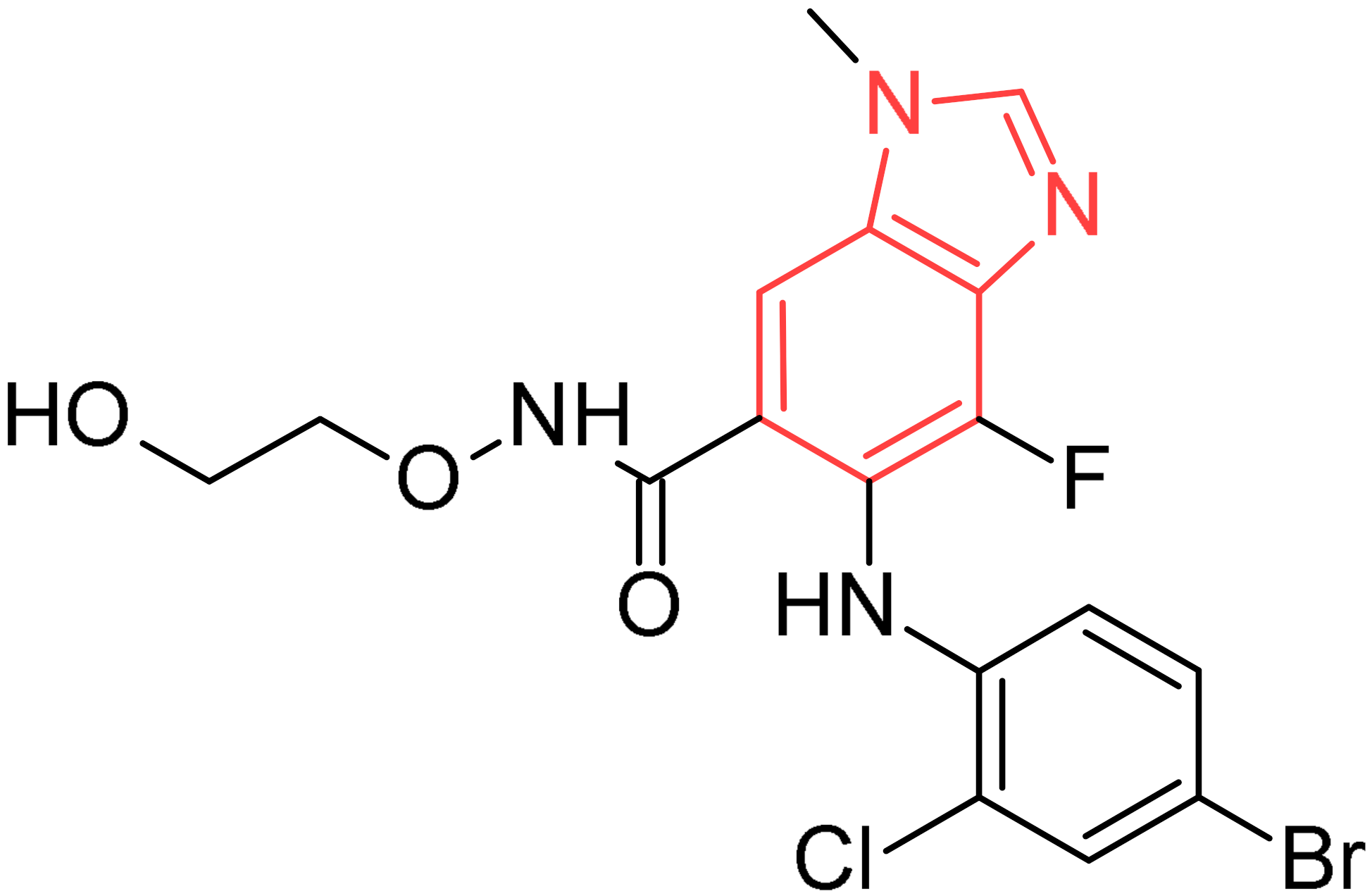 | Neurofibromatosis type 1 | [36] |
| Compound Name | Structure | Target | Reference |
|---|---|---|---|
| Deucravacitinib |  | Tyrosine Kinase 2 | [43] |
| Tucatinib |  | HER2 | [44] |
| Mubritinib |  | HER2 | [45] |
3.1. Benzimidazole Compounds as Kinase Inhibitors
3.1.1. Benzimidazoles Targeting EGFR
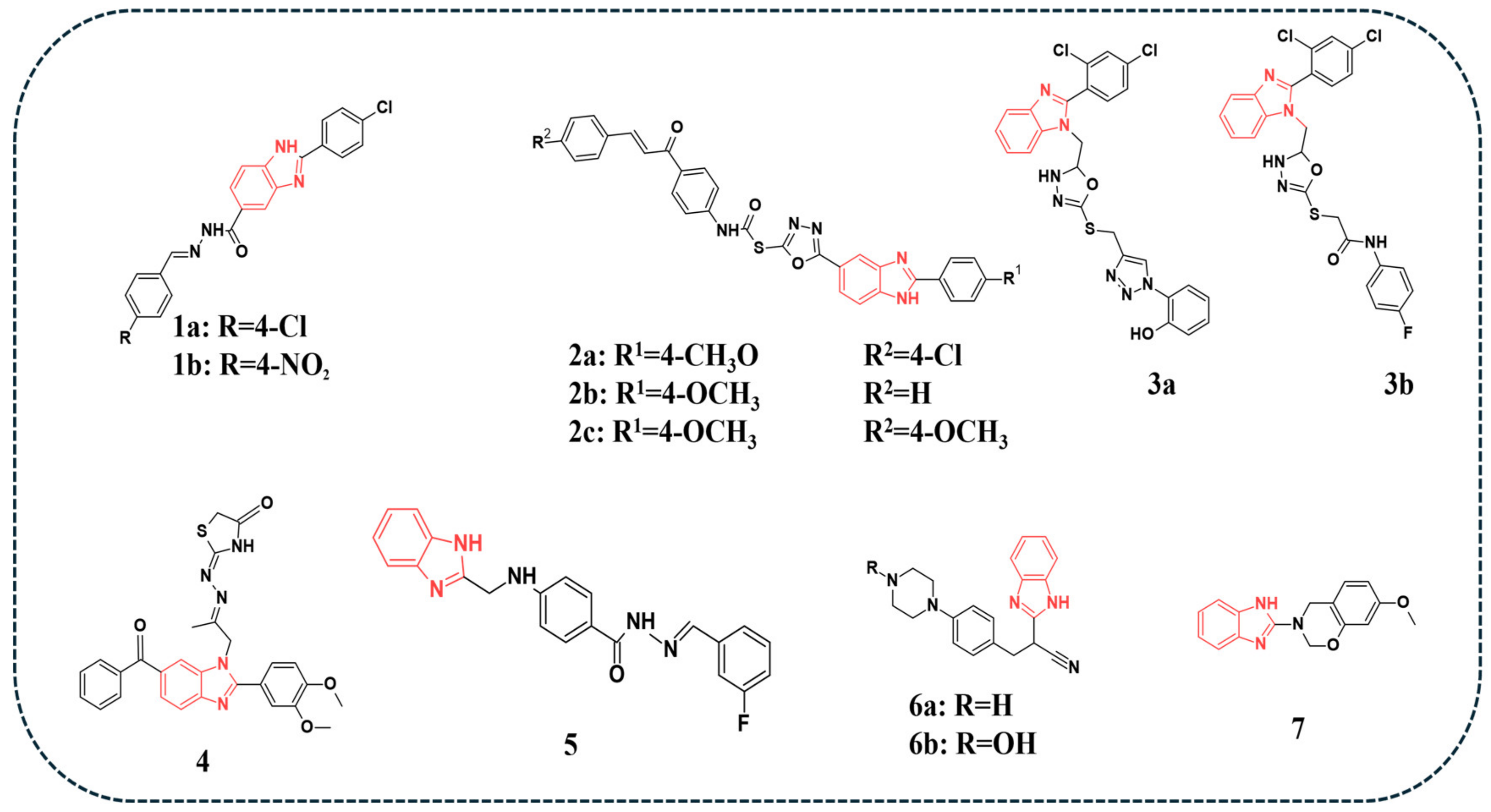
| Compound No. | EGFR Inhibitory Activity | Reference | |
|---|---|---|---|
| (IC50) | Reference Drug (Erlotinib) | ||
| 1a | 0.09 µM | 0.08 µM | [47] |
| 1b | 0.11 µM | ||
| 2a | 0.80 µM | 0.08 µM | [48] |
| 2b | 0.55 µM | ||
| 2c | 0.90 µM | ||
| 3a | 0.33 µM | 0.39 µM | [49] |
| 3b | 0.38 µM | ||
| 4 | 0.109 µM | 0.079 µM | [50] |
| 5 | 30.1 nM | 61.1 nM | [51] |
3.1.2. Benzimidazoles Targeting PI3K/Akt/mTOR Pathway
| Compound No. | Inhibitory Activity | Reference | ||||
|---|---|---|---|---|---|---|
| (IC50) | ||||||
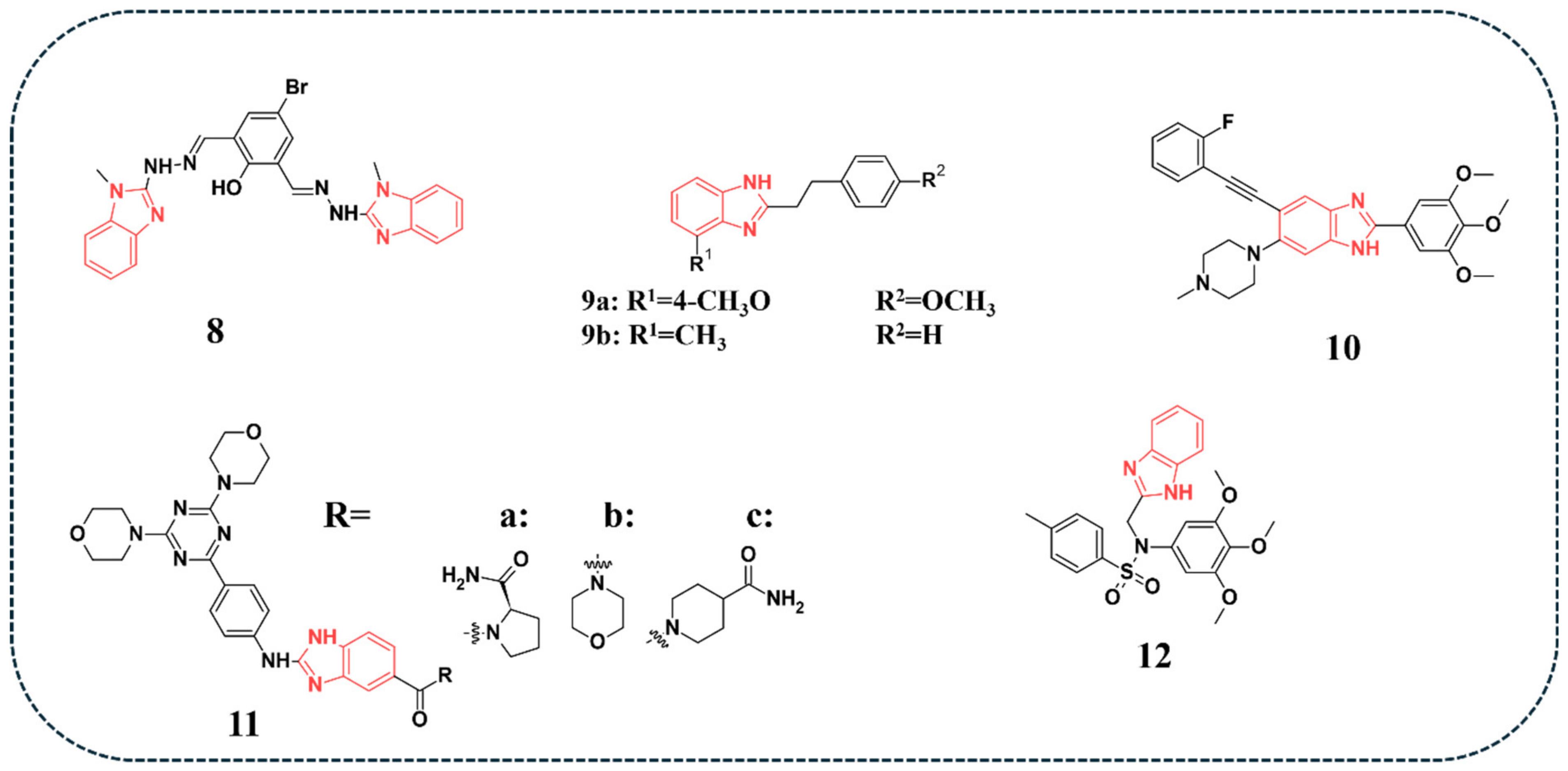
| 11 | PI3Ks | mTOR | [57] | |||
| PI3Ka | PI3Kb | PI3Kγ | PI3Kδ | |||
| a | 7.3 nM | 21.3 nM | 444 nM | 5.1 nM | 5.6 nM | |
| b | 20.1 nM | 28 nM | >1000 nM | 13 nM | 12.9 nM | |
| c | 14.6 nM | 34 nM | 849 nM | 2.3 nM | 15.4 nM | |
| Reference drug (gedatolisib) | 6 nM | - | - | - | 2.1 nM | |
3.1.3. Benzimidazoles as CDK Inhibitors
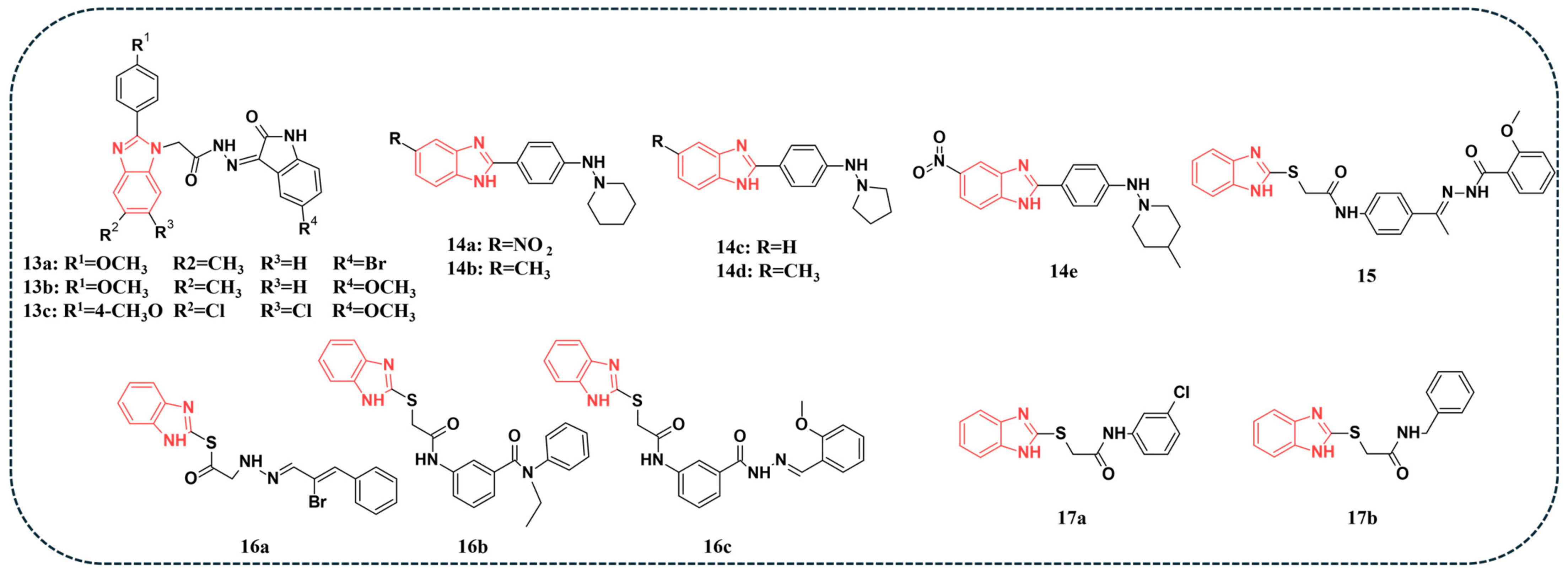
| Compound No. | CDK Inhibitory Activity | Reference | |
|---|---|---|---|
| (IC50) | Reference Drug | ||
| CDK2 | [59] | ||
| 13a | 0.40 μM | Staurosporine 0.022 µM | |
| 13b | 0.09 μM | ||
| 13c | 0.04 µM | ||
| CDK6 | [60] | ||
| 14a | 0.197 µM | Staurosporine 0.319 µM | |
| 14b | 1.49 µM | ||
| 14c | - | ||
| 14d | 0.761 µM | ||
| 14e | 0.172 µM | ||
| CDK2 | |||
| 17a | 423.81 nM | Imatinib 155.09 nM | [63] |
| 17b | 330.21 nM | ||
3.2. Triazole Compounds as Kinase Inhibitors
3.2.1. Triazoles Targeting EGFR
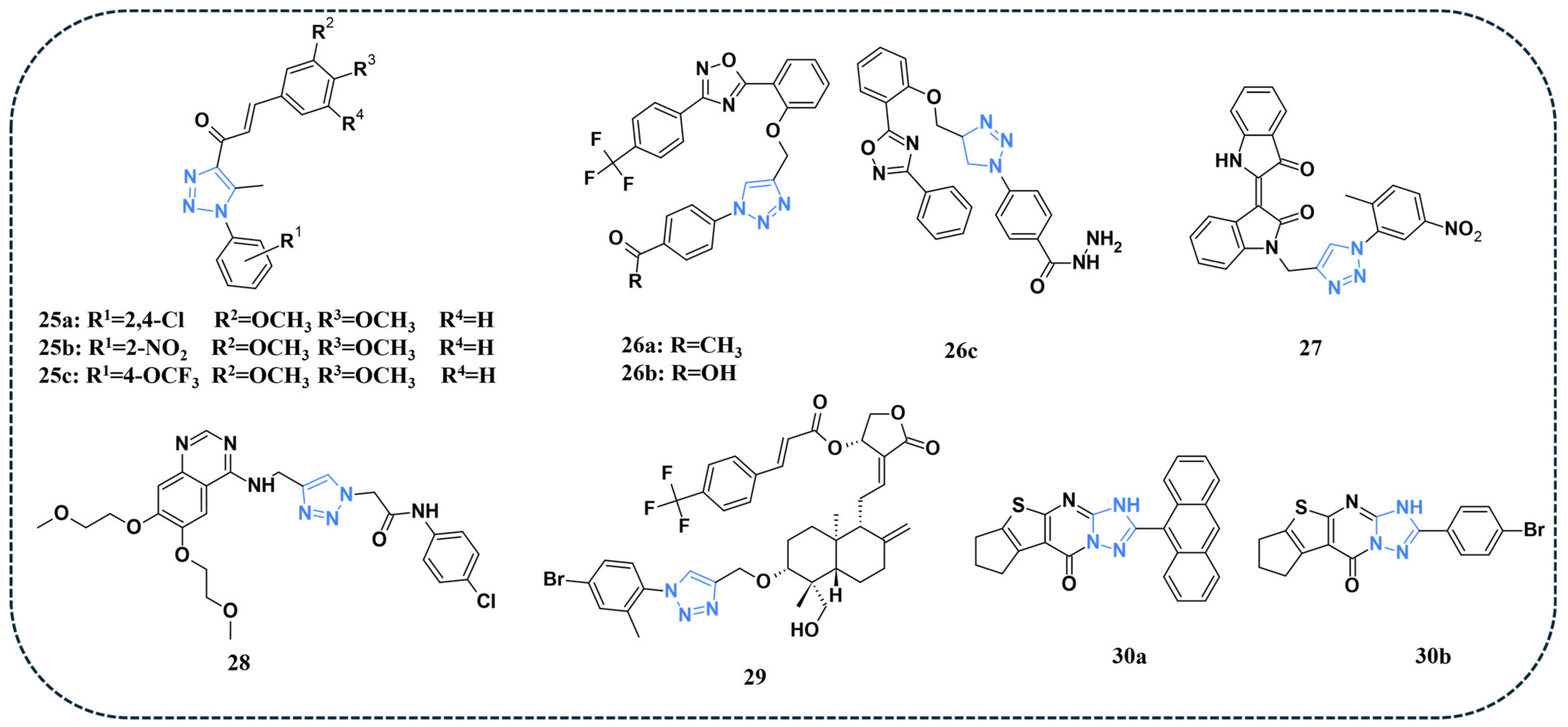
| Compound No. | EGFR Inhibitory Activity | Reference | |
|---|---|---|---|
| (IC50) | Reference Drug | ||
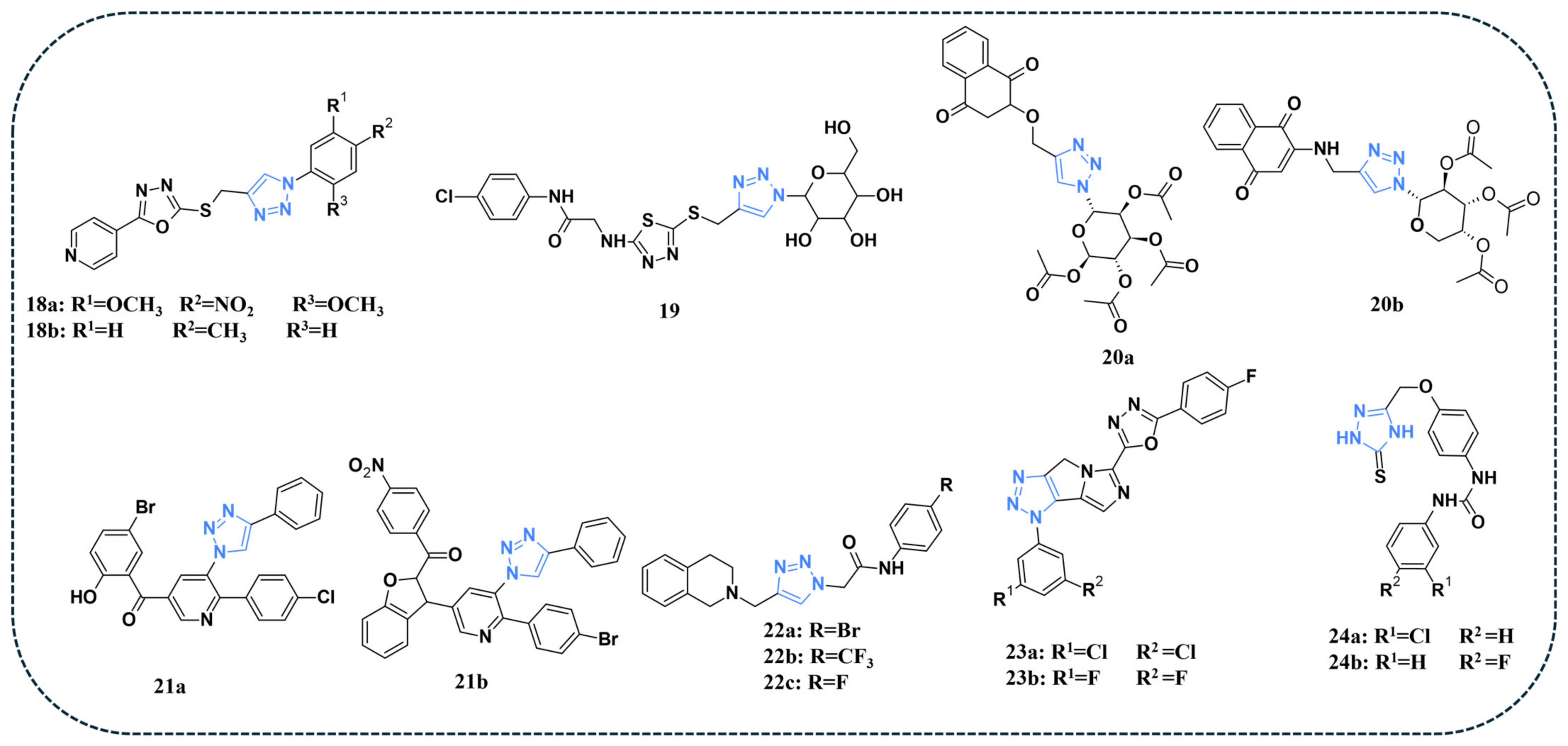
| 18a | 0.313 µM | Erlotinib 0.039 µM | [71] |
| 19 | 0.21 µM | Erlotinib 0.18 µM | [72] |
| 23a | 0.37 µM | Erlotinib 0.44 µM | [76] |
| 23b | 0.29 µM | ||
| 24a | 630 µM | Gefitinib 0.0094 µM | [77] |
| 24b | 0.0351 µM | ||
3.2.2. Triazoles Targeting PI3K/Akt/mTOR Pathway
3.2.3. Triazoles as CDK Inhibitors
| Compound No. | CDK Inhibitory Activity | Reference | |
|---|---|---|---|
| (IC50) | Reference Drug | ||
| CDK2 | [84] | ||
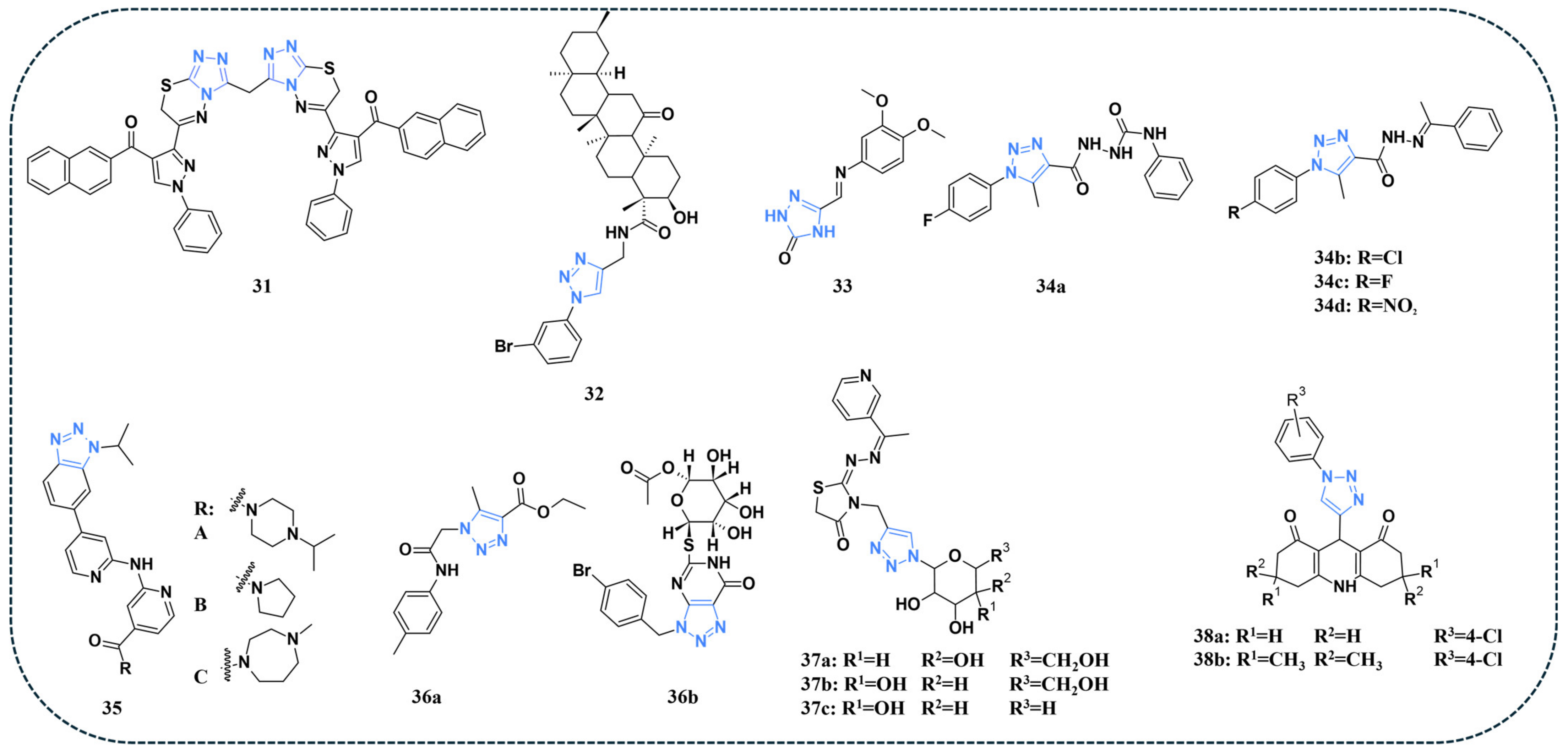
| 31 | 87.9 nM | Roscovitine 140 nM | |
| CDK9 | [88] | ||
| 35a | 3.37 nM | AZD5438 18.25 nM | |
| 35b | 1.32 nM | ||
| 35c | 2.90 nM | ||
| CDK2 | |||
| 37a | 0.33 µM | Roscovitine 0.42 µM | [65] |
| 37b | 0.19 µM | ||
| 37c | 0.12 µM | ||
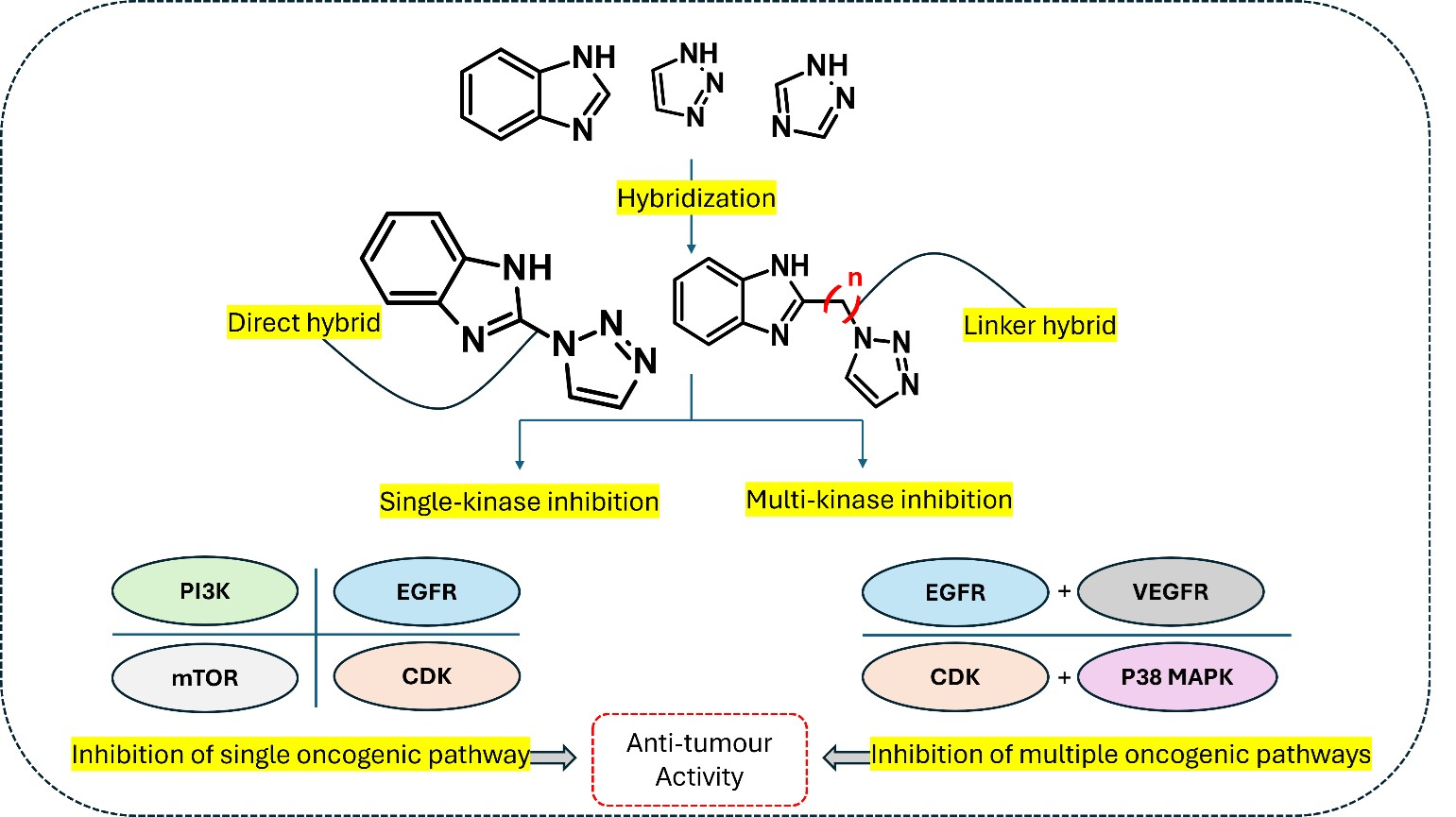
4. Benzimidazole–Triazole Hybrids for Protein Kinase Inhibition
4.1. Single Targeting
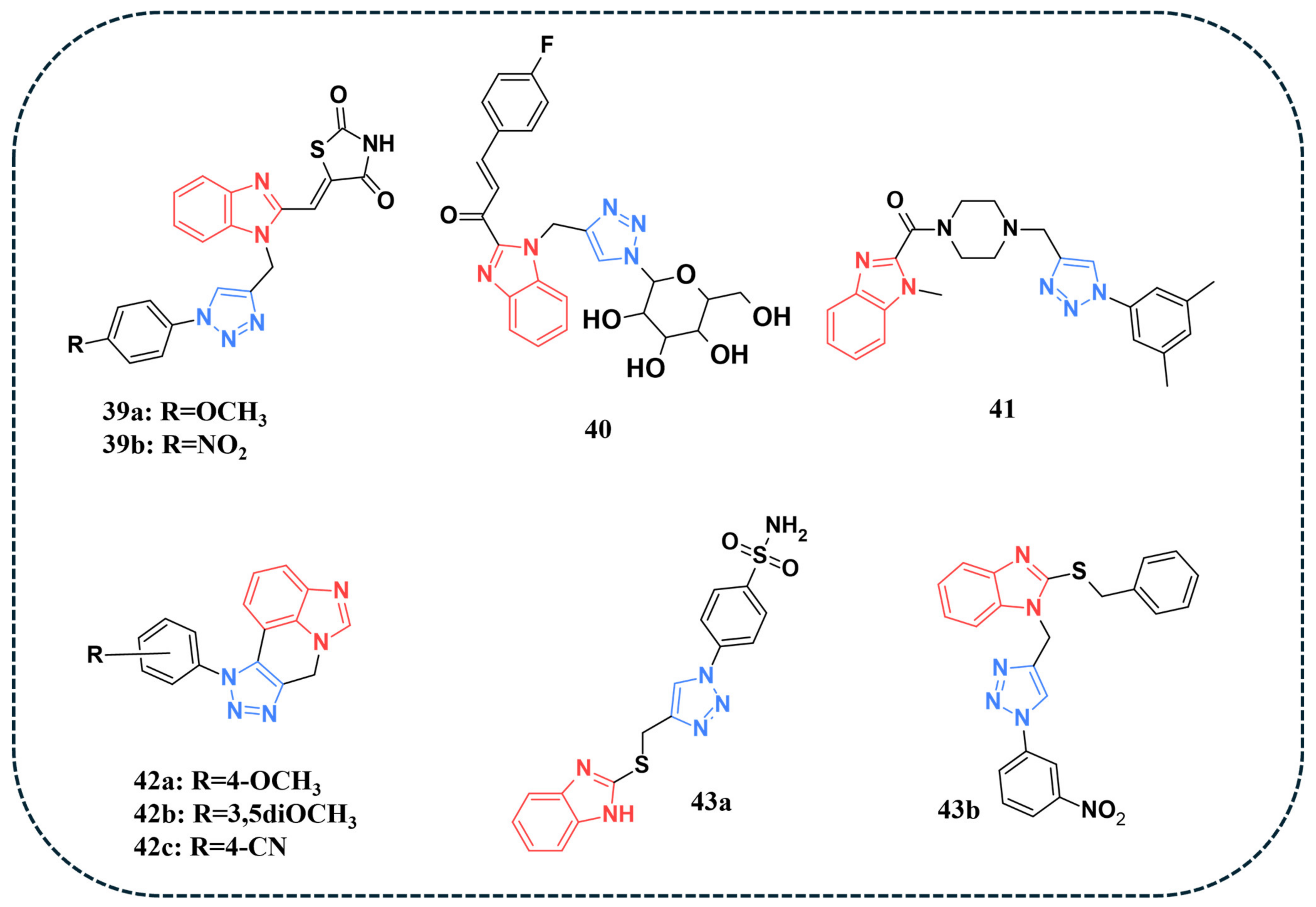
| Compound No. | EGFR Inhibitory Activity | Reference | |
|---|---|---|---|
| (IC50) | Reference Drug (Erlotinib) | ||
| 39a | 0.15 µM | 0.42 µM | [94] |
| 39b | 0.21 µM | ||
| 40 | 0.069 µM | 0.048 µM | [95] |
| 41 | 0.19 µM | 0.40 µM | [96] |
| 42a | 0.86 µM | 1.26 µM | [97] |
| 42b | 0.89 µM | ||
| 42c | 2.38 µM | ||
| 43a | 78 nM | 80 nM | [93] |
| 43b | 73 nM | ||
4.2. Multi-Targeting
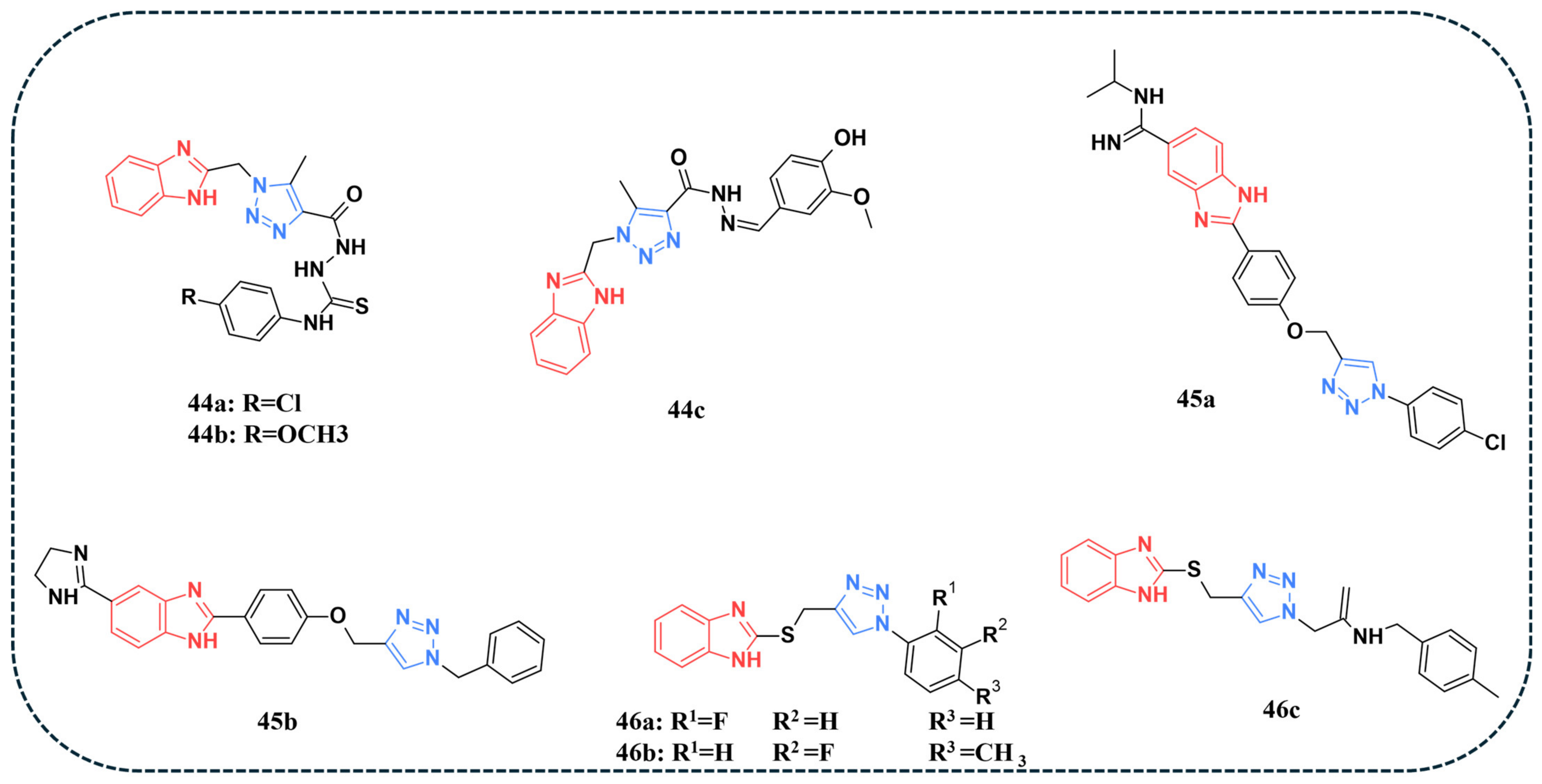
| Compound No. | Kinase Inhibitory Assay | Reference | ||
|---|---|---|---|---|
| IC50 | ||||
| Targets | [92] | |||
| EGFR | VEGFR-2 | Topo II | ||
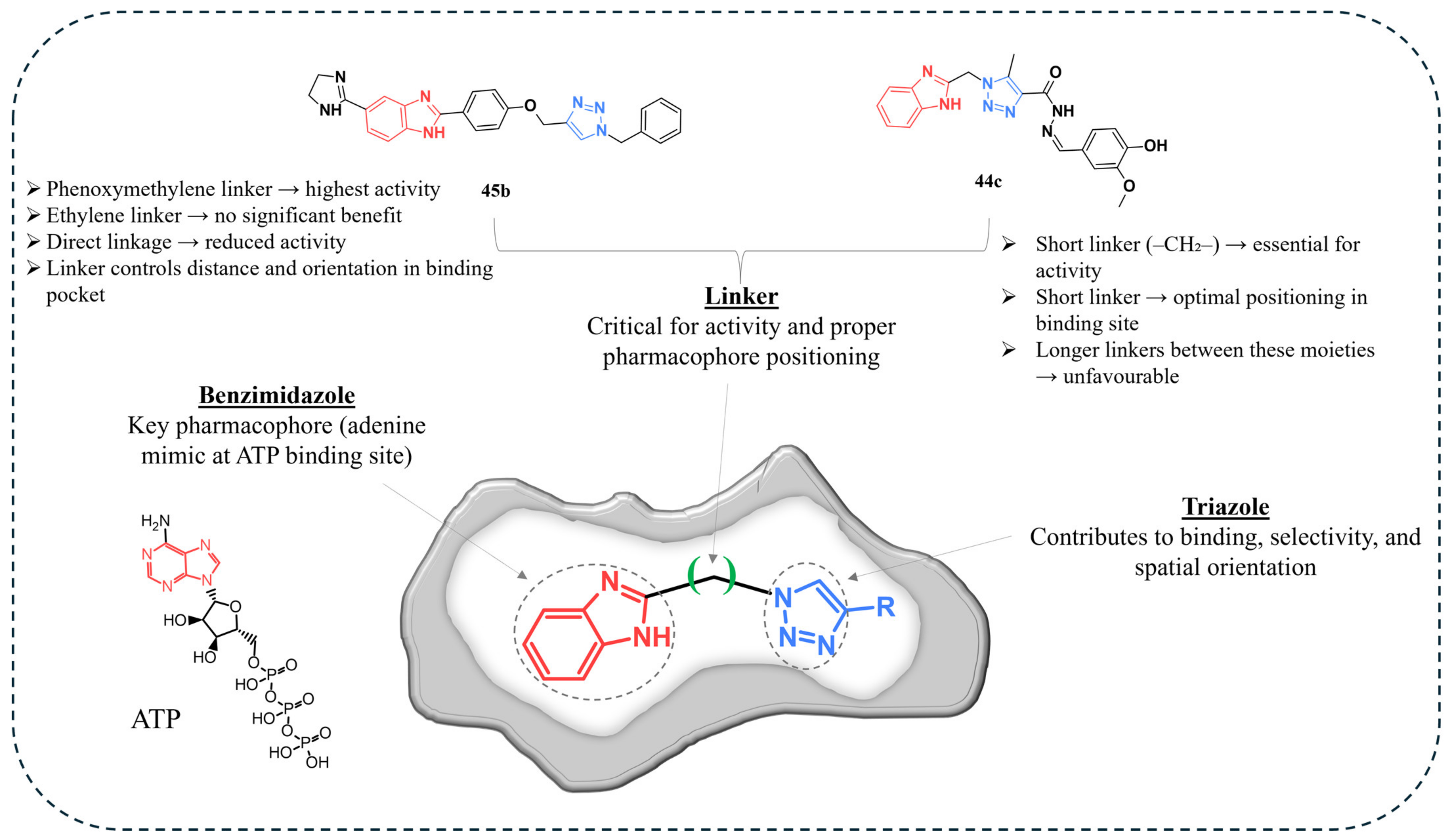
| 44a | 0.086 µM | 0.107 µM | 2.52 µM | |
| 44c | 0.131 µM | 0.229 µM | 8.37 µM | |
| Gefitinib | 0.052 µM | - | - | |
| Sorafenib | - | 0.048 µM | - | |
| Doxorubicin | - | - | 3.62 µM | |
| Targets | [102] | |||
| EGFR-TKWT | EGFRT790 | VEGFR-2 | ||
| 46a | 0.51 ng/mL | 17.63 ng/mL | 1.79 ng/mL | |
| 46b | 1.25 ng/mL | 35.5 ng/mL | 2.55 ng/mL | |
| 46c | 0.32 ng/mL | 10.05 ng/mL | 1.27 ng/mL | |
| Reference drug | 10.01 ng/mL | 75.58 ng/mL | 3.31 ng/mL | |
5. Structure–Activity Relationships
6. Conclusions and Perspectives
Author Contributions
Funding
Data Availability Statement
Acknowledgments
Conflicts of Interest
References
- GBD 2023 Cancer Collaborators. The global, regional, and national burden of cancer, 1990–2023, with forecasts to 2050: A systematic analysis for the Global Burden of Disease Study 2023. Lancet 2025, 406, 1565–1586. [Google Scholar] [CrossRef] [Scilit] [PubMed]
- Ferlay, J.; Evrik, M.; Lam, F.; Laversanne, M.; Colombet, M.; Mery, L.; Piñeros, M.; Znaor, A.; Soerjomataram, I.; Bray, F. Global Cancer Observatory: Cancer Today. 2024. Available online: https://gco.iarc.who.int/today/en/dataviz/pie?mode=population&group_populations=0 (accessed on 11 March 2026).
- Bray, F.; Laversanne, M.; Sung, H.; Ferlay, J.; Siegel, R.L.; Soerjomataram, I.; Jemal, A. Global cancer statistics 2022: GLOBOCAN estimates of incidence and mortality worldwide for 36 cancers in 185 countries. CA Cancer J. Clin. 2024, 74, 229–263. [Google Scholar] [CrossRef] [Scilit] [PubMed]
- Talib, W.H.; Alsayed, A.R.; Barakat, M.; Abu-Taha, M.I.; Mahmod, A.I. Targeting Drug Chemo-Resistance in Cancer Using Natural Products. Biomedicines 2021, 9, 1353. [Google Scholar] [CrossRef] [Scilit] [PubMed]
- Satija, G.; Sharma, B.; Madan, A.; Iqubal, A.; Shaquiquzzaman, M.; Akhter, M.; Parvez, S.; Khan, M.A.; Alam, M.M. Benzimidazole based derivatives as anticancer agents: Structure activity relationship analysis for various targets. J. Heterocycl. Chem. 2022, 59, 22–66. [Google Scholar] [CrossRef] [Scilit]
- Giamas, G.; Stebbing, J.; Vorgias, C.E.; Knippschild, U. Protein kinases as targets for cancer treatment. Pharmacogenomics 2007, 8, 1005–1016. [Google Scholar] [CrossRef] [Scilit] [PubMed]
- Maurer, G.; Tarkowski, B.; Baccarini, M. Raf kinases in cancer-roles and therapeutic opportunities. Oncogene 2011, 30, 3477–3488. [Google Scholar] [CrossRef] [Scilit] [PubMed]
- Paul, M.K.; Mukhopadhyay, A.K. Tyrosine kinase–Role and significance in Cancer. Int. J. Med. Sci. 2004, 1, 101. [Google Scholar] [CrossRef] [Scilit] [PubMed]
- Samuels, Y.; Wang, Z.; Bardelli, A.; Silliman, N.; Ptak, J.; Szabo, S.; Yan, H.; Gazdar, A.; Powell, S.M.; Riggins, G.J.; et al. High frequency of mutations of the PIK3CA gene in human cancers. Science 2004, 304, 554. [Google Scholar] [CrossRef] [Scilit] [PubMed]
- Czech, M.P. PIP2 and PIP3: Complex roles at the cell surface. Cell 2000, 100, 603–606. [Google Scholar] [CrossRef] [Scilit] [PubMed]
- He, Y.; Sun, M.M.; Zhang, G.G.; Yang, J.; Chen, K.S.; Xu, W.W.; Li, B. Targeting PI3K/Akt signal transduction for cancer therapy. Signal Transduct. Target Ther. 2021, 6, 1–17. [Google Scholar] [CrossRef] [Scilit] [PubMed]
- Pérez-Fidalgo, J.A.; Gambardella, V.; Pineda, B.; Burgues, O.; Piñero, O.; Cervantes, A. Aurora kinases in ovarian cancer. ESMO Open 2020, 5, e000718. [Google Scholar] [CrossRef] [Scilit] [PubMed]
- Yang, G.; Chang, B.; Yang, F.; Guo, X.; Cai, K.Q.; Xiao, X.; Wang, H.; Sen, S.; Hung, M.-C.; Mills, G.B.; et al. Aurora kinase A promotes ovarian tumorigenesis through dysregulation of the cell cycle and suppression of BRCA2. Clin. Cancer Res. 2010, 16, 3171–3181. [Google Scholar] [CrossRef] [Scilit] [PubMed]
- Liu, Q.; Kaneko, S.; Yang, L.; Feldman, R.I.; Nicosia, S.V.; Chen, J.; Cheng, J.Q. Aurora-A abrogation of p53 DNA binding and transactivation activity by phosphorylation of serine 215. J. Biol. Chem. 2004, 279, 52175–52182. [Google Scholar] [CrossRef] [Scilit] [PubMed]
- Saxton, R.A.; Sabatini, D.M. mTOR Signaling in Growth, Metabolism, and Disease. Cell 2017, 168, 960–976. [Google Scholar] [CrossRef] [Scilit] [PubMed]
- Harwood, F.C.; Geltink, R.I.K.; O’hara, B.P.; Cardone, M.; Janke, L.; Finkelstein, D.; Entin, I.; Paul, L.; Houghton, P.J.; Grosveld, G.C. ETV7 is an essential component of a rapamycin-insensitive mTOR complex in cancer. Sci. Adv. 2018, 4, eaar3938. [Google Scholar] [CrossRef] [Scilit] [PubMed]
- Hua, H.; Kong, Q.; Zhang, H.; Wang, J.; Luo, T.; Jiang, Y. Targeting mTOR for cancer therapy. J. Hematol. Oncol. 2019, 12, 1–19. [Google Scholar] [CrossRef] [Scilit] [PubMed]
- Law, M.E.; Corsino, P.E.; Narayan, S.; Law, B.K. Cyclin-dependent kinase inhibitors as anticancer therapeutics. Mol. Pharmacol. 2015, 88, 846–852. [Google Scholar] [CrossRef] [Scilit] [PubMed]
- Pellarin, I.; Dall’aCqua, A.; Favero, A.; Segatto, I.; Rossi, V.; Crestan, N.; Karimbayli, J.; Belletti, B.; Baldassarre, G. Cyclin-dependent protein kinases and cell cycle regulation in biology and disease. Signal Transduct. Target. Ther. 2025, 10, 1–62. [Google Scholar] [CrossRef] [Scilit] [PubMed]
- Ramani, S.; Samant, S.; Manohar, S.M. The Story of EGFR: From Signaling Pathways to a Potent Anticancer Target. Future Med. Chem. 2022, 14, 1267–1288. [Google Scholar] [CrossRef] [Scilit] [PubMed]
- Grandis, J.R.; Sok, J.C. Signaling through the epidermal growth factor receptor during the development of malignancy. Pharmacol. Ther. 2004, 102, 37–46. [Google Scholar] [CrossRef] [Scilit] [PubMed]
- Garuti, L.; Roberti, M.; Bottegoni, G. Benzimidazole derivatives as kinase inhibitors. Curr. Med. Chem. 2014, 21, 2284–2298. [Google Scholar] [CrossRef] [Scilit] [PubMed]
- Song, J.; Jang, S.; Lee, J.W.; Jung, D.; Lee, S.; Min, K.H. Click chemistry for improvement in selectivity of quinazoline-based kinase inhibitors for mutant epidermal growth factor receptors. Bioorg. Med. Chem. Lett. 2019, 29, 477–480. [Google Scholar] [CrossRef] [Scilit] [PubMed]
- El-Gamal, M.I.; Zaraei, S.-O.; Madkour, M.M.; Anbar, H.S. Evaluation of Substituted Pyrazole-Based Kinase Inhibitors in One Decade (2011–2020): Current Status and Future Prospects. Molecules 2022, 27, 330. [Google Scholar] [CrossRef] [Scilit] [PubMed]
- Chen, P.; Norris, D.; Das, J.; Spergel, S.H.; Wityak, J.; Leith, L.; Zhao, R.; Chen, B.-C.; Pitt, S.; Pang, S.; et al. Discovery of novel 2-(aminoheteroaryl)-thiazole-5-carboxamides as potent and orally active Src-family kinase p56 Lck inhibitors. Bioorg. Med. Chem. Lett. 2004, 14, 6061–6066. [Google Scholar] [CrossRef] [Scilit] [PubMed]
- Yang, Y.; Zhang, Y.; Yang, L.; Zhao, L.; Si, L.; Zhang, H.; Liu, Q.; Zhou, J. Discovery of imidazopyridine derivatives as novel c-Met kinase inhibitors: Synthesis, SAR study, and biological activity. Bioorg. Chem. 2017, 70, 126–132. [Google Scholar] [CrossRef] [Scilit] [PubMed]
- Innocenti, P.; Woodward, H.; O’FEe, L.; Hoelder, S. Expanding the scope of fused pyrimidines as kinase inhibitor scaffolds: Synthesis and modification of pyrido[3,4-d]pyrimidines. Org. Biomol. Chem. 2015, 13, 893–904. [Google Scholar] [CrossRef] [Scilit] [PubMed]
- Ghosh, S.; Ramarao, T.A.; Samanta, P.K.; Jha, A.; Satpati, P.; Sen, A. Triazole based isatin derivatives as potential inhibitor of key cancer promoting kinases- insight from electronic structure, docking and molecular dynamics simulations. J. Mol. Graph. Model. 2021, 107, 107944. [Google Scholar] [CrossRef] [Scilit]
- Bendell, J.C.; Javle, M.; Bekaii-Saab, T.S.; Finn, R.S.; Wainberg, Z.A.; Laheru, D.A.; Weekes, C.D.; Tan, B.R.; Khan, G.N.; Zalupski, M.M.; et al. A phase 1 dose-escalation and expansion study of binimetinib (MEK162), a potent and selective oral MEK1/2 inhibitor. Br. J. Cancer 2017, 116, 575–583. [Google Scholar] [CrossRef] [Scilit]
- Patekar, M.B.; Milunović, V.; Jakobac, K.M.; Perica, D.; Rogulj, I.M.; Kursar, M.; Planinc-Peraica, A.; Kolonić, S.O. Bendamustine: An Old Drug in the New Era For Patients with Non-Hodgkin Lymphomas and Chronic Lymphocytic Leukemia. Acta Clin. Croat. 2018, 57, 542. [Google Scholar] [CrossRef] [Scilit]
- Gorai, S.; Rathore, G.; Das, K. Selumetinib—A Comprehensive Review of the New FDA-Approved Drug for Neurofibromatosis. Indian Dermatol. Online J. 2024, 15, 701. [Google Scholar] [CrossRef] [Scilit] [PubMed]
- Oncology Times. Available online: https://journals.lww.com/oncology-times/blog/fdaactionsandupdates/pages/post.aspx?PostID=119 (accessed on 19 October 2025).
- Alheety, N.F.; Awad, S.A.; Alheety, M.A.; Darwesh, M.Y.; Abbas, J.A.; Besbes, R. Benzimidazole Derivatives: A Review of Advances in Synthesis, Biological Potential, Computational Modelling, and Specialized Material Functions. Chemistry 2026, 8, 1. [Google Scholar] [CrossRef] [Scilit]
- Lopes, A.B.; Wagner, P.; Gulea, M. Synthesis of Benzimidazole-Fused Medium-Sized N,S-Heterocycles via Palladium-Catalyzed Cyclizations. Eur. J. Org. Chem. 2019, 2019, 1361–1370. [Google Scholar] [CrossRef] [Scilit]
- Blancas, I.; Grosjean, J.; Pedersini, R.; Buzzoni, C.; Sleilaty, G.; Molero, A.; Tamma, A.; Chouaki, N.; Atienza, M.; Emde, A.; et al. Abemaciclib for treating patients with HR+/HER2- metastatic breast cancer: A real-world study in France, Italy and Spain. Futur. Oncol. 2024, 20, 2371–2384. [Google Scholar] [CrossRef] [Scilit] [PubMed]
- Gross, A.M.; Wolters, P.L.; Dombi, E.; Baldwin, A.; Whitcomb, P.; Fisher, M.J.; Weiss, B.; Kim, A.; Bornhorst, M.; Shah, A.C.; et al. Selumetinib in Children with Inoperable Plexiform Neurofibromas. N. Engl. J. Med. 2020, 382, 1430–1442. [Google Scholar] [CrossRef] [Scilit] [PubMed]
- Bozorov, K.; Zhao, J.; Aisa, H.A. 1,2,3-Triazole-containing hybrids as leads in medicinal chemistry: A recent overview. Bioorg. Med. Chem. 2019, 27, 3511–3531. [Google Scholar] [CrossRef] [Scilit] [PubMed]
- Bonandi, E.; Christodoulou, M.S.; Fumagalli, G.; Perdicchia, D.; Rastelli, G.; Passarella, D. The 1,2,3-triazole ring as a bioisostere in medicinal chemistry. Drug Discov. Today 2017, 22, 1572–1581. [Google Scholar] [CrossRef] [Scilit] [PubMed]
- Kala, N.; Rahate, K.P. Triazole as Potent Anti-cancer Agent- A Pharmacophoric Scaffold. Curr. Cancer Ther. Rev. 2021, 18, 95–117. [Google Scholar] [CrossRef] [Scilit]
- Akhtar, J.; Khan, A.A.; Ali, Z.; Haider, R.; Yar, M.S. Structure-activity relationship (SAR) study and design strategies of nitrogen-containing heterocyclic moieties for their anticancer activities. Eur. J. Med. Chem. 2017, 125, 143–189. [Google Scholar] [CrossRef] [Scilit] [PubMed]
- Liang, T.; Sun, X.; Li, W.; Hou, G.; Gao, F. 1,2,3-Triazole-Containing Compounds as Anti–Lung Cancer Agents: Current Developments, Mechanisms of Action, and Structure–Activity Relationship. Front. Pharmacol. 2021, 12, 661173. [Google Scholar] [CrossRef] [Scilit]
- Slavova, K.I.; Todorov, L.T.; Belskaya, N.P.; Palafox, M.A.; Kostova, I.P. Developments in the Application of 1,2,3-Triazoles in Cancer Treatment. Recent Pat. Anticancer Drug Discov. 2020, 15, 92–112. [Google Scholar] [CrossRef] [Scilit] [PubMed]
- Wrobleski, S.T.; Moslin, R.; Lin, S.; Zhang, Y.; Spergel, S.; Kempson, J.; Tokarski, J.S.; Strnad, J.; Zupa-Fernandez, A.; Cheng, L.; et al. Highly Selective Inhibition of Tyrosine Kinase 2 (TYK2) for the Treatment of Autoimmune Diseases: Discovery of the Allosteric Inhibitor BMS-986165. J. Med. Chem. 2019, 62, 8973–8995. [Google Scholar] [CrossRef] [Scilit] [PubMed]
- O’Brien, N.A.; Huang, H.K.T.; McDermott, M.S.J.; Madrid, A.M.; Luo, T.; Ayala, R.; Issakhanian, S.; Gong, K.W.; Lu, M.; Zhang, J.; et al. Tucatinib has Selective Activity in HER2-Positive Cancers and Significant Combined Activity with Approved and Novel Breast Cancer–Targeted Therapies. Mol. Cancer Ther. 2022, 21, 751–761. [Google Scholar] [CrossRef] [Scilit] [PubMed]
- Calderon, A.; Soldan, S.S.; De Leo, A.; Deng, Z.; Frase, D.M.; Anderson, E.M.; Zhang, Y.; Vladimirova, O.; Lu, F.; Leung, J.C.; et al. Identification of Mubritinib (TAK 165) as an inhibitor of KSHV driven primary effusion lymphoma via disruption of mitochondrial OXPHOS metabolism. Oncotarget 2020, 11, 4224. [Google Scholar] [CrossRef] [Scilit] [PubMed]
- Nakka, M.; Tadikonda, R.; Rayavarapu, S.; Sarakula, P.; Vidavalur, S. ChemInform Abstract: A Simple and Efficient Synthesis of 3,4,5-Trisubstituted/N-Fused 1,2,4-Triazoles via Ceric Ammonium Nitrate Catalyzed Oxidative Cyclization of Amidrazones with Aldehydes Using Polyethylene Glycol as a Recyclable Reaction Medium. ChemInform 2015, 46, 517–525. [Google Scholar] [CrossRef] [Scilit]
- Youssif, B.G.M.; Morcoss, M.M.; Bräse, S.; Abdel-Aziz, M.; Abdel-Rahman, H.M.; El-Ella, D.A.A.; Abdelhafez, E.M. Benzimidazole-Based Derivatives as Apoptotic Antiproliferative Agents: Design, Synthesis, Docking, and Mechanistic Studies. Molecules 2024, 29, 446. [Google Scholar] [CrossRef] [Scilit] [PubMed]
- Hagar, F.F.; Abbas, S.H.; Gomaa, H.A.M.; Youssif, B.G.M.; Sayed, A.M.; Abdelhamid, D.; Abdel-Aziz, M. Chalcone/1,3,4-Oxadiazole/Benzimidazole hybrids as novel anti-proliferative agents inducing apoptosis and inhibiting EGFR & BRAFV600E. BMC Chem. 2023, 17, 1–22. [Google Scholar] [CrossRef] [Scilit]
- Nazreen, S.; Almalki, A.S.A.; Elbehairi, S.E.I.; Shati, A.A.; Alfaifi, M.Y.; Elhenawy, A.A.; Alsenani, N.I.; Alfarsi, A.; Alhadhrami, A.; Alqurashi, E.A.; et al. Cell Cycle Arrest and Apoptosis-Inducing Ability of Benzimidazole Derivatives: Design, Synthesis, Docking, and Biological Evaluation. Molecules 2022, 27, 6899. [Google Scholar] [CrossRef] [Scilit] [PubMed]
- El-Meguid, E.A.A.; El-Deen, E.M.M.; Nael, M.A.; Anwar, M.M. Novel benzimidazole derivatives as anti-cervical cancer agents of potential multi-targeting kinase inhibitory activity. Arab. J. Chem. 2020, 13, 9179–9195. [Google Scholar] [CrossRef] [Scilit]
- Mirgany, T.O.; Asiri, H.H.; Rahman, A.F.M.M.; Alanazi, M.M. Discovery of 1H-benzo[d]imidazole-(halogenated)Benzylidenebenzohydrazide Hybrids as Potential Multi-Kinase Inhibitors. Pharmaceuticals 2024, 17, 839. [Google Scholar] [CrossRef] [Scilit]
- Sarita, K.; Kumar, N.; Agrawal, A.; Mali, S.N.; Sharma, S. In Vitro and InSilico Evaluation of 2-(1H-Benzo[d]imidazol-2-yl)-3-(4-(piperazin-1-yl)phenyl)propanenitrile as Epidermal Growth Factor Receptor Tyrosine Kinase Inhibitors. Russ. J. Bioorg. Chem. 2024, 50, 1563–1572. [Google Scholar] [CrossRef] [Scilit]
- Gali, S.; Raghu, D.; Mallikanti, V.; Thumma, V.; Vaddiraju, N. Design, synthesis of benzimidazole tethered 3,4-dihydro-2H-benzo[e] [1, 3] oxazines as anticancer agents. Mol. Divers. 2024, 28, 1347–1361. [Google Scholar] [CrossRef] [Scilit] [PubMed]
- Xu, Y.; Feng, X.; Zhou, Q.; Jiang, W.; Dai, Y.; Jiang, Y.; Liu, X.; Li, S.; Wang, Y.; Wang, F.; et al. Novel Small Molecular Compound AE-848 Potently Induces Human Multiple Myeloma Cell Apoptosis by Modulating the NF-κB and PI3K/Akt/mTOR Signaling Pathways. Onco Targets Ther. 2020, 13, 13063. [Google Scholar] [CrossRef] [Scilit] [PubMed]
- Makalesi, A.; Col, O.F.; Haj Ersan, R. Investigation of the Effects of Benzimidazole Derivatives on the mTOR Pathway in Breast Cancer. Enstitüsü Derg. J. Sci. Technol. 2025, 18, 361–371. [Google Scholar] [CrossRef] [Scilit]
- Li, S.-S.; Chen, J.-J.; Zhang, M.-M.; Wang, W.-X.; Zhang, W.-Y.; Ma, C. Design, synthesis, and biological evaluation of novel benzimidazole derivatives as anti-cervical cancer agents through PI3K/Akt/mTOR pathway and tubulin inhibition. Eur. J. Med. Chem. 2024, 271, 116425. [Google Scholar] [CrossRef] [Scilit] [PubMed]
- Wu, T.-T.; Guo, Q.-Q.; Chen, Z.-L.; Wang, L.-L.; Du, Y.; Chen, R.; Mao, Y.-H.; Yang, S.-G.; Huang, J.; Wang, J.-T.; et al. Design, synthesis and bioevaluation of novel substituted triazines as potential dual PI3K/mTOR inhibitors. Eur. J. Med. Chem. 2020, 204, 112637. [Google Scholar] [CrossRef] [Scilit] [PubMed]
- Song, J.; Gao, Q.-L.; Wu, B.-W.; Li, D.; Shi, L.; Zhu, T.; Lou, J.-F.; Jin, C.-Y.; Zhang, Y.-B.; Zhang, S.-Y.; et al. Novel tertiary sulfonamide derivatives containing benzimidazole moiety as potent anti-gastric cancer agents: Design, synthesis and SAR studies. Eur. J. Med. Chem. 2019, 183, 111731. [Google Scholar] [CrossRef] [Scilit] [PubMed]
- Abdel-Mohsen, H.T.; Syam, Y.M.; El-Ghany, M.S.A.; El-Karim, S.S.A. Benzimidazole-oxindole hybrids: A novel class of selective dual CDK2 and GSK-3β inhibitors of potent anticancer activity. Arch. Pharm. 2024, 357, e2300721. [Google Scholar] [CrossRef] [Scilit] [PubMed]
- Ali, A.M.; Tawfik, S.S.; Bhongade, B.A.; Massoud, M.A.; Mostafa, A.S. Design, synthesis, and in silico insights into dual-inhibition of CDK-6/Aurora A kinase by 2-phenylbenzimidazole-based small molecules. J. Mol. Struct. 2024, 1300, 137215. [Google Scholar] [CrossRef] [Scilit]
- Shao, L.; Feng, N.; Zhou, Y.; Li, C.; Chen, D.; Li, C.; Zhou, X.; Li, Z.; Wang, Z. Design, synthesis, and in vitro antitumor evaluation of novel benzimidazole acylhydrazone derivatives. Mol. Divers. 2025, 29, 4595–4607. [Google Scholar] [CrossRef] [Scilit] [PubMed]
- Tahlan, S.; Kumar, S.; Ramasamy, K.; Lim, S.M.; Shah, S.A.A.; Mani, V.; Narasimhan, B. In-silico molecular design of heterocyclic benzimidazole scaffolds as prospective anticancer agents. BMC Chem. 2019, 13, 1–22. [Google Scholar] [CrossRef] [Scilit]
- El-Hameed, R.H.A.; Fatahala, S.S.; Sayed, A.I. Synthesis of Some Novel Benzimidazole Derivatives as Anticancer Agent and Evaluation for CDK2 Inhibition Activity. Med. Chem. 2021, 18, 238–248. [Google Scholar] [CrossRef] [Scilit] [PubMed]
- Kassem, A.F.; Younis, A.; Nossier, E.S.; Awad, H.M.; El-Sayed, W.A. Pyridine-based glycosides bearing 1,2,4-triazole and their 1,3,4-oxadiazole analogues as potential EGFR and CDK-2 inhibitors: Design, synthesis, antiproliferative activity and in silico studies. J. Mol. Struct. 2024, 1313, 138741. [Google Scholar] [CrossRef] [Scilit]
- Kassem, A.F.; Omar, M.A.; Nossier, E.S.; Awad, H.M.; El-Sayed, W.A. Novel pyridine-thiazolidinone-triazole hybrid glycosides targeting EGFR and CDK-2: Design, synthesis, anticancer evaluation, and molecular docking simulation. J. Mol. Struct. 2023, 1294, 136358. [Google Scholar] [CrossRef] [Scilit]
- Zeidan, M.A.; Ashour, H.F.; Yassen, A.S.A.; Elmaaty, A.A.; Farag, A.B.; Sharaky, M.; Alzahrani, A.Y.A.; AL Mughram, M.H.; Al-Karmalawy, A.A. Dual EGFR and telomerase inhibitory potential of new triazole tethered Schiff bases endowed with apoptosis: Design, synthesis, and biological assessments. RSC Med. Chem. 2024, 16, 1208–1222. [Google Scholar] [CrossRef] [Scilit] [PubMed]
- Kudapa, V.; Saritha, B.; Sailaja, B.B.V. Synthesis of New 1,4-Disubstituted 1,2,3-Triazole Hybrids: In Vitro Anti-Breast Cancer and Anti-EGFR Activity, and In Silico Molecular Docking Studies. Russ. J. Bioorg. Chem. 2025, 51, 1789–1800. [Google Scholar] [CrossRef] [Scilit]
- Ravish, A.; Siddappa, T.P.; Xi, Z.; Vishwanath, D.; Mohan, A.; Basappa, S.; Krishnamurthy, N.P.; Lobie, P.E.; Pandey, V.; Basappa, B. Electrochemical Synthesis of Versatile Pyrimidine and Oxadiazoles Tethered Triazoles as Inhibitors of VEGFR-2 in Human Breast Cancer Cells. Catalysts 2023, 13, 1353. [Google Scholar] [CrossRef] [Scilit]
- Ayoup, M.S.; Shawki, I.; Abdel-Hamid, H.; Ghareeb, D.A.; Masoud, A.; Harras, M.F.; El-Atawy, M.; Alharbi, N.S.; Ismail, M.M.F. Targeting EGFR/PI3K/AKT/mTOR signaling in lung and colon cancers: Synthesis, antitumor evaluation of new 1,2,4-oxdiazoles tethered 1,2,3-triazoles. RSC Adv. 2024, 14, 16713–16726. [Google Scholar] [CrossRef] [Scilit]
- Xie, L.; Huang, J.; Chen, X.; Yu, H.; Li, K.; Yang, D.; Chen, X.; Ying, J.; Pan, F.; Lv, Y.; et al. Synthesis of Rapamycin Derivatives Containing the Triazole Moiety Used as Potential mTOR-Targeted Anticancer Agents. Arch. Pharm. 2016, 349, 428–441. [Google Scholar] [CrossRef] [Scilit] [PubMed]
- Alshamari, A.K.; AlRashidi, A.A.; Abdella, F.I.A.; Alshammari, H.K.; Alshammari, M.Z.; Alsaif, N.O.S.; El Malah, T. EGFR tyrosine kinase inhibitor: Design, synthesis, characterization, biological evaluation, and molecular docking of novel 1,3,4-oxadiazole, thio-methyl, and 1,2,3-triazole hybrids. J. Saudi Chem. Soc. 2025, 29, 1–18. [Google Scholar] [CrossRef] [Scilit]
- Hussein, A.M.; El-Sofany, W.I.; Alminderej, F.M.; Albadri, A.E.A.E.; Awad, H.M.; Nossier, E.S.; El-Sayed, W.A. New Thiadiazole-Triazole Hybrid Glycosides as Potential EGFR and VEGFR-2 Inhibitors: Synthesis, Anticancer Activity, and Docking Simulation. ChemistrySelect 2025, 10, e04887. [Google Scholar] [CrossRef] [Scilit]
- Singh, K.; Chhetri, K.; Singh, R.; Khanna, A.; Yadav, U.C.S.; Sagar, R. Design, synthesis, and molecular docking of 1,4-naphthoquinone based glycoconjugates as chiral glycohybrids targeting lung cancer. Bioorg. Chem. 2025, 163, 108776. [Google Scholar] [CrossRef] [Scilit] [PubMed]
- Elumalai, D.; Devarajan, K.; Leelakrishnan, S.; Devalingam, N.; Rengarajan, V.; Kannan, T.; Jayabal, K. Design, Synthesis, and Molecular Docking Studies of Triazolylpyridine and Triazolylpyridinylbenzofuran Hybrids as Potential EGFR Inhibitors. ChemistrySelect 2025, 10, e01972. [Google Scholar] [CrossRef] [Scilit]
- Chabhadiya, B.K.; Naik, H.N.; Mohite, B.A.; Agrawal, M.; AlAjmi, M.F.; Meena, A.; Meena, R.; Alam, M.R.; Jauhari, S. Investigation of novel Tetrahydroisoquinoline derivatives as potent anti-lung cancer agents: In vitro and In silico studies. J. Mol. Struct. 2025, 1341, 142574. [Google Scholar] [CrossRef] [Scilit]
- Johnpasha, S.; Azam, M.; Kapavarapu, R.; Thupurani, M.K.; Al-Resayes, S.I.; Janapatla, U.R.; Min, K.; Narsimha, S. Microwave assisted one-pot synthesis of novel 1,3,4-oxadiazole-imidazo[1′,5′:1,2]pyrrolo[3,4-d][1,2,3]triazoles as potent EGFR targeting anticancer agents. J. Mol. Struct. 2025, 1341, 142569. [Google Scholar] [CrossRef] [Scilit]
- Türe, A.; Gülcan, M.M.; Birgül, S.İ.D.; Erdoğan, O.; Erdoğan, Ö.; Tuncay, F.Ö.; Çakmak, Ü.; Kolcuoğlu, Y.; Cevik, O.; Akdemir, A.; et al. Novel triazole-urea hybrids as promising EGFR inhibitors: Synthesis, molecular modeling and antiproliferative activity studies against breast cancer. J. Mol. Struct. 2025, 1347, 143367. [Google Scholar] [CrossRef] [Scilit]
- Shaheen, M.A.; Darwish, K.M.; Kishk, S.M.; El-Sayed, M.A.-A.; Salama, I. Development of 1,2,3-triazole hybrids as multi-faced anticancer agents co-targeting EGFR/mTOR pathway and tubulin depolymerization. Bioorg. Chem. 2025, 156, 108153. [Google Scholar] [CrossRef] [Scilit] [PubMed]
- Ayoup, M.S.; Ghanem, M.; Abdel-Hamid, H.; Elghamry, I.; Abu-Serie, M.M.; Masoud, A.A.; Ghareeb, D.A.; Harras, M.F.; Ismail, M.M.F.; Negm, A. Investigating the Anticancer Activity of Novel 1,2,4-Oxadiazole-Linked 1,2,3-Triazole Moieties via EGFR/pI3K/mTOR Cascade Down-Regulation. Polycycl. Aromat. Compd. 2025, 45, 1580–1599. [Google Scholar] [CrossRef] [Scilit]
- Gowda, S.V.; Kim, N.Y.; Harsha, K.B.; Gowda, D.; Suresh, R.N.; Deivasigamani, A.; Mohan, C.D.; Hui, K.M.; Sethi, G.; Ahn, K.S.; et al. A new 1,2,3-triazole-indirubin hybrid suppresses tumor growth and pulmonary metastasis by mitigating the HGF/c-MET axis in hepatocellular carcinoma. J. Adv. Res. 2025, 73, 341–356. [Google Scholar] [CrossRef] [Scilit] [PubMed]
- Dehghan-Nayeri, M.J.; Peytam, F.; Foroumadi, A.; Mahdavi, M. Synthesis, characterization, anti-proliferative, and apoptotic activity of a novel quinazoline-containing 1,2,3-triazole toward three human cancer cells. Sci. Rep. 2025, 15, 1–12. [Google Scholar] [CrossRef] [Scilit] [PubMed]
- Vishwanadham, Y.; Madhuri, R.; Shivaraj; Appaji, D.; Kavita, W. Targeting PI3K/AKT/mTOR Signaling with Novel Andrographolide Analogues Potentially Induces Apoptosis and Inhibits the Metastatic Ability of Human Breast Cancer Cells: Rational Design, Synthesis, and In Vitro Studies. Russ. J. Bioorg. Chem. 2025, 51, 601–628. [Google Scholar] [CrossRef] [Scilit]
- Elsenbawy, E.S.M.; Alshehri, Z.S.; Babteen, N.A.; Abdel-Rahman, A.A.-H.; El-Manawaty, M.A.; Nossier, E.S.; Arafa, R.K.; Hassan, N.A. Designing Potent Anti-Cancer Agents: Synthesis and Molecular Docking Studies of Thieno[2,3-d][1,2,4]triazolo[1,5-a]pyrimidine Derivatives. Molecules 2024, 29, 1067. [Google Scholar] [CrossRef] [Scilit] [PubMed]
- Salem, M.E.; Mahrous, E.M.; Ragab, E.A.; Nafie, M.S.; Dawood, K.M. Synthesis and Anti-Breast Cancer Potency of Mono- and Bis-(pyrazolyl[1,2,4]triazolo[3,4-b][1,3,4]thiadiazine) Derivatives as EGFR/CDK-2 Target Inhibitors. ACS Omega 2023, 8, 35359–35369. [Google Scholar] [CrossRef] [Scilit]
- Rehman, N.U.; Moghtaderi, H.; Mohammadi, S.; Khan, S.N.; Halim, S.A.; Anwar, M.U.; Rahman, S.M.; Gibbons, S.; Csuk, R.; Avula, S.K.; et al. Semisynthesis of Novel Alicyclic Triterpene-Triazole Derivatives from Boswellia sacra Gum Resin: Potential Anti-breast Cancer and Immunomodulatory Effects on T-Cell Activation. ACS Omega 2025, 10, 21715–21730. [Google Scholar] [CrossRef] [Scilit] [PubMed]
- Balavanthapu, R.; Vedula, G.S. Novel 5-((Phenylimino)methyl)-1,2,4-triazol-3-one Derivatives: Synthesis, Anticancer Potential and Molecular Docking Insights. Asian J. Chem. 2025, 37, 1257–1265. [Google Scholar] [CrossRef] [Scilit]
- Al-Karmalawy, A.A.; Zeidan, M.A.; Elmaaty, A.A.; Sharaky, M.; Yassen, A.S.; Khaleel, E.F.; Eldehna, W.M.; Ashour, H.F. Design and synthesis of new 1,2,3-triazole derivatives as VEGFR-2/telomerase downregulatory candidates endowed with apoptotic potential for cancer treatment. Bioorg. Chem. 2025, 156, 108159. [Google Scholar] [CrossRef] [Scilit] [PubMed]
- Zhong, Y.; Xu, J.; Zhou, R.; Tang, L.; Ding, S.; Ren, Z.; Song, N.; Hu, B.; Yang, H.; Sun, Y.; et al. Identification of a Novel Selective CDK9 Inhibitor for the Treatment of CRC: Design, Synthesis, and Biological Activity Evaluation. J. Med. Chem. 2024, 67, 4739–4756. [Google Scholar] [CrossRef] [Scilit]
- Mohamed, A.M.; El-Bayaa, M.N.; Elnaggar, D.H.; Abdel-Hafez, N.A.; Mohamed, S.F.; Elsayed, M.A.; Abou-Amra, E.S.; Omran, M.M.; El-Sayed, W.A. Novel [1,2,3]triazoles, [1,2,3]triazolo[4,5-d]Pyrimidines, and Some of Their Glycoside Derivatives: Synthesis and Molecular Modeling as Potential Apoptotic Antitumor Agents. Polycycl. Aromat. Compd. 2024, 44, 1470–1494. [Google Scholar] [CrossRef] [Scilit]
- Praveenkumar, E.; Gurrapu, N.; Kolluri, P.K.; Shivaraj; Subhashini, N.; Dokala, A. Selective CDK4/6 inhibition of novel 1,2,3-triazole tethered acridinedione derivatives induces G1/S cell cycle transition arrest via Rb phosphorylation blockade in breast cancer models. Bioorg. Chem. 2021, 116, 105377. [Google Scholar] [CrossRef] [Scilit] [PubMed]
- Marinescu, M. Benzimidazole-Triazole Hybrids as Antimicrobial and Antiviral Agents: A Systematic Review. Antibiotics 2023, 12, 1220. [Google Scholar] [CrossRef] [Scilit]
- Othman, D.I.A.; Hamdi, A.; Tawfik, S.S.; Elgazar, A.A.; Mostafa, A.S. Identification of new benzimidazole-triazole hybrids as anticancer agents: Multi-target recognition, in vitro and in silico studies. J. Enzym. Inhib. Med. Chem. 2023, 38, 2166037. [Google Scholar] [CrossRef] [Scilit] [PubMed]
- Ahmed, A.A.Y.; Mohammed, A.F.; Almarhoon, Z.M.; Bräse, S.; Youssif, B.G.M. Design, synthesis, and apoptotic antiproliferative action of new benzimidazole/1,2,3-triazole hybrids as EGFR inhibitors. Front. Chem. 2024, 12, 1541846. [Google Scholar] [CrossRef] [Scilit]
- Vanaparthy, A.; Thallapally, K.K.; Banothu, D.; Polkampally, K.; Kondrapolu, R.S.; Nukala, S.K.; Manchal, R. Synthesis and in-vitro anti-EGFR screening of new 1,2,3-triazole-benzimidazole hybrids and insilico studies. Chem. Biol. Lett. 2025, 12, 1271. [Google Scholar] [CrossRef] [Scilit]
- Srour, A.M.; El-Bayaa, M.N.; Temirak, A.; Alanzy, A.L.; Awad, H.M.; Saleh, A.; Saleh, M.G.; El-Sayed, W.A. New benzimidazole-triazole glycoconjugates as anti-cancer agents and EGFR inhibitors. Sci. Rep. 2025, 15, 1–15. [Google Scholar] [CrossRef] [Scilit]
- Pinnoju, P.; Kudikala, S.; Scandakashi, M.; Ramesh, M.; Madderla, S. In Vitro Antibreast Cancer and Anti-EGFR Studies of Some Novel Benzimidazole-Piperazine Containing 1,2,3-Triazoles. Russ. J Bioorg. Chem. 2024, 50, 1724–1734. [Google Scholar] [CrossRef] [Scilit]
- Modugu, S.R.; Nukala, S.K.; Dasari, G.; Bokkala, K.; Srinivas, B. Synthesis of Fused 1,2,3-Triazoles of Benzimidazole Using Copper (I) Catalysis; in Vitro and in Silico Studies. ChemistrySelect 2024, 9, e202404527. [Google Scholar] [CrossRef] [Scilit]
- Celik, I.; Ayhan-Kılcıgil, G.; Karayel, A.; Guven, B.; Onay-Besikci, A. Synthesis, molecular docking, in silico ADME, and EGFR kinase inhibitor activity studies of some new benzimidazole derivatives bearing thiosemicarbazide, triazole, and thiadiazole. J. Heterocycl. Chem. 2022, 59, 371–387. [Google Scholar] [CrossRef] [Scilit]
- Elddin, H.; Khasawneh, N.; Hassan, H.M.; Alharbi, A.A.; Almagharbeh, W.T.; Fanoukh, R.; Al-Aouadi, A.; Kaur, K.; Maranan, R.; Farhan, H.; et al. Current progress of 1,2,3-triazole hybrids as EGFR inhibitors for cancer therapy—A literature review. RSC Adv. 2025, 15, 40998–41047. [Google Scholar] [CrossRef] [Scilit]
- Mavrova, A.; Yancheva, D. Benzimidazole-based hybrids as inhibitors of EGFR/VEGFR-2 and their combinations with other enzymes: Design, synthesis, and activity. Bioorg. Chem. 2025, 164, 108920. [Google Scholar] [CrossRef] [Scilit] [PubMed]
- Bistrović, A.; Krstulović, L.; Harej, A.; Grbčić, P.; Sedić, M.; Koštrun, S.; Pavelić, S.K.; Bajić, M.; Raić-Malić, S. Design, synthesis and biological evaluation of novel benzimidazole amidines as potent multi-target inhibitors for the treatment of non-small cell lung cancer. Eur. J. Med. Chem. 2018, 143, 1616–1634. [Google Scholar] [CrossRef] [Scilit] [PubMed]
- Soliman, M.A.; Eltamany, E.H.; Boraei, A.T.A.; Aouad, M.R.; Aljuhani, A.; Almohaywi, B.; Awaji, A.A.; Alghamdi, R.; Aljohani, A.K.B.; Ahmed, H.E.A. Novel Benzimidazole-1,2,3-Triazole Hybrids: Synthesis, Dual Antimicrobial, Anticancer Activity, Mechanistic Insights, and Computational Studies. ChemistrySelect 2025, 10, e202500813. [Google Scholar] [CrossRef] [Scilit]
- Bansal, Y.; Silakari, O. The therapeutic journey of benzimidazoles: A review. Bioorg. Med. Chem. 2012, 20, 6208–6236. [Google Scholar] [CrossRef] [Scilit] [PubMed]
- Agalave, S.G.; Maujan, S.R.; Pore, V.S. Click chemistry: 1,2,3-triazoles as pharmacophores. Chem. Asian. J. 2011, 6, 2696–2718. [Google Scholar] [CrossRef] [Scilit] [PubMed]





Disclaimer/Publisher’s Note: The statements, opinions and data contained in all publications are solely those of the individual author(s) and contributor(s) and not of MDPI and/or the editor(s). MDPI and/or the editor(s) disclaim responsibility for any injury to people or property resulting from any ideas, methods, instructions or products referred to in the content. |
© 2026 by the authors. Licensee MDPI, Basel, Switzerland. This article is an open access article distributed under the terms and conditions of the Creative Commons Attribution (CC BY) license.
Share and Cite
Abu Al Rub, H.M.; Eissa, A.G. Recent Advances in Benzimidazole–Triazole Hybrids for Single- and Multi-Target Protein Kinase Inhibition. Pharmaceuticals 2026, 19, 623. https://doi.org/10.3390/ph19040623
Abu Al Rub HM, Eissa AG. Recent Advances in Benzimidazole–Triazole Hybrids for Single- and Multi-Target Protein Kinase Inhibition. Pharmaceuticals. 2026; 19(4):623. https://doi.org/10.3390/ph19040623
Chicago/Turabian StyleAbu Al Rub, Hamzeh M., and Ahmed G. Eissa. 2026. "Recent Advances in Benzimidazole–Triazole Hybrids for Single- and Multi-Target Protein Kinase Inhibition" Pharmaceuticals 19, no. 4: 623. https://doi.org/10.3390/ph19040623
APA StyleAbu Al Rub, H. M., & Eissa, A. G. (2026). Recent Advances in Benzimidazole–Triazole Hybrids for Single- and Multi-Target Protein Kinase Inhibition. Pharmaceuticals, 19(4), 623. https://doi.org/10.3390/ph19040623