Article

Utilizing Interactive Surfaces to Enhance Learning, Collaboration and Engagement: Insights from Learners’ Gaze and Speech


by
Kshitij Sharma
*,
Ioannis Leftheriotis
and
Michail Giannakos
Department of Computer Science, Norwegian University of Science and Technology, 7491 Trondheim, Norway
*
Author to whom correspondence should be addressed.
Sensors 2020, 20(7), 1964; https://doi.org/10.3390/s20071964
Submission received: 10 March 2020 / Revised: 25 March 2020 / Accepted: 29 March 2020 / Published: 31 March 2020

Abstract

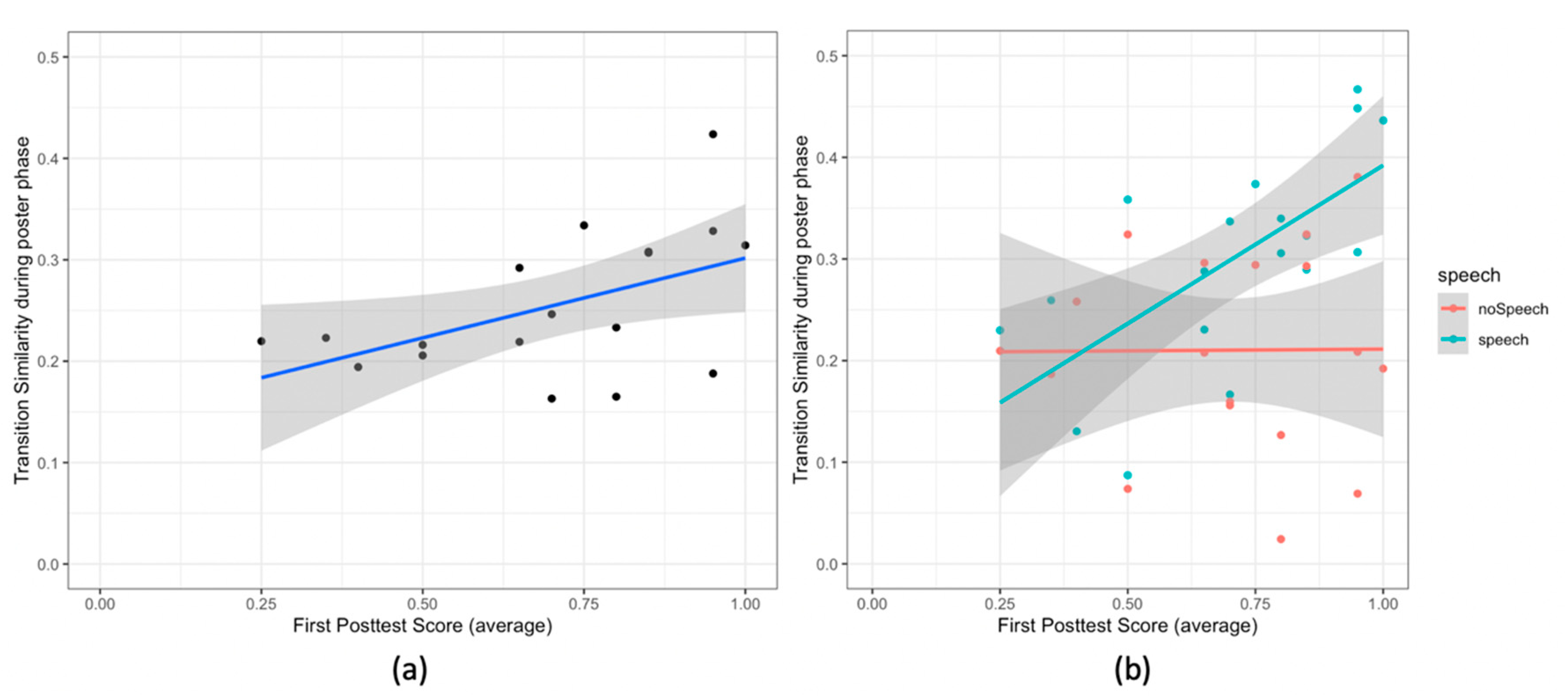
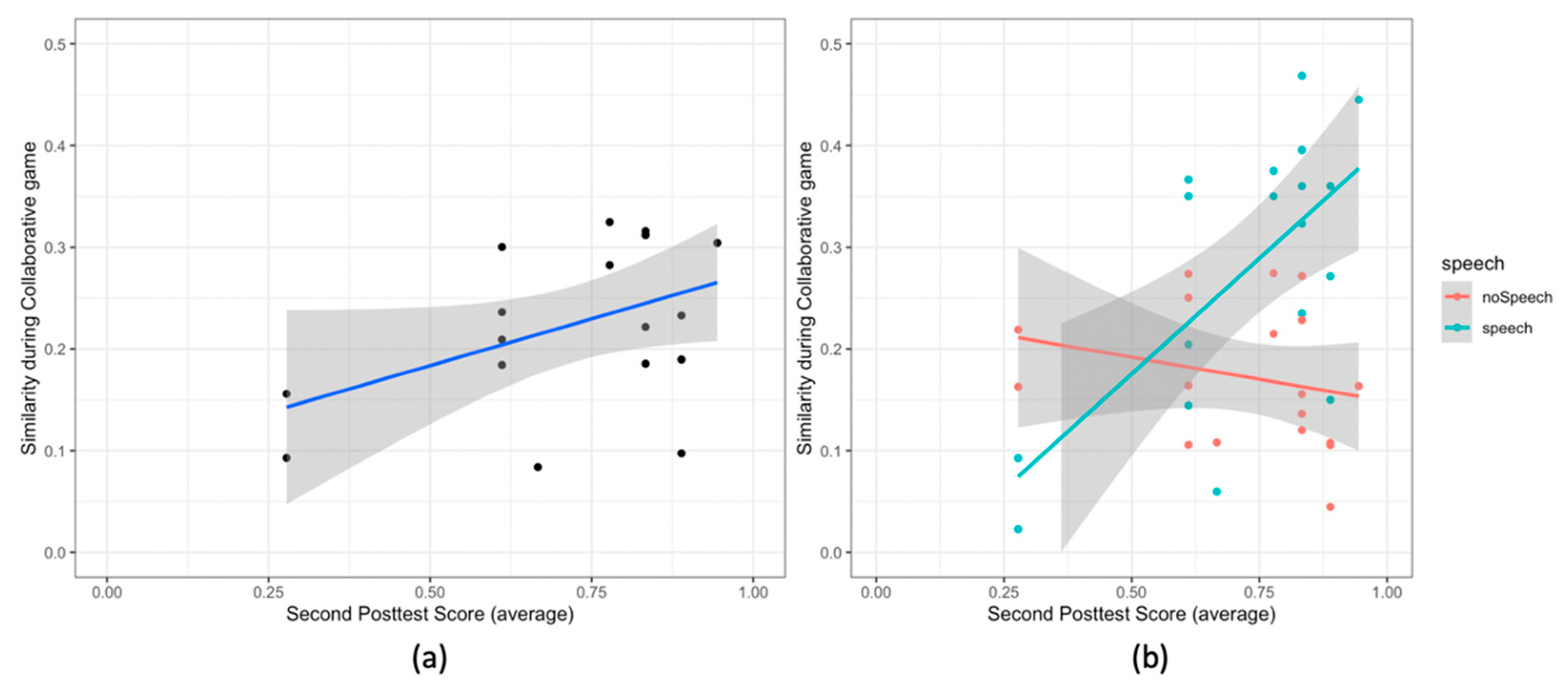
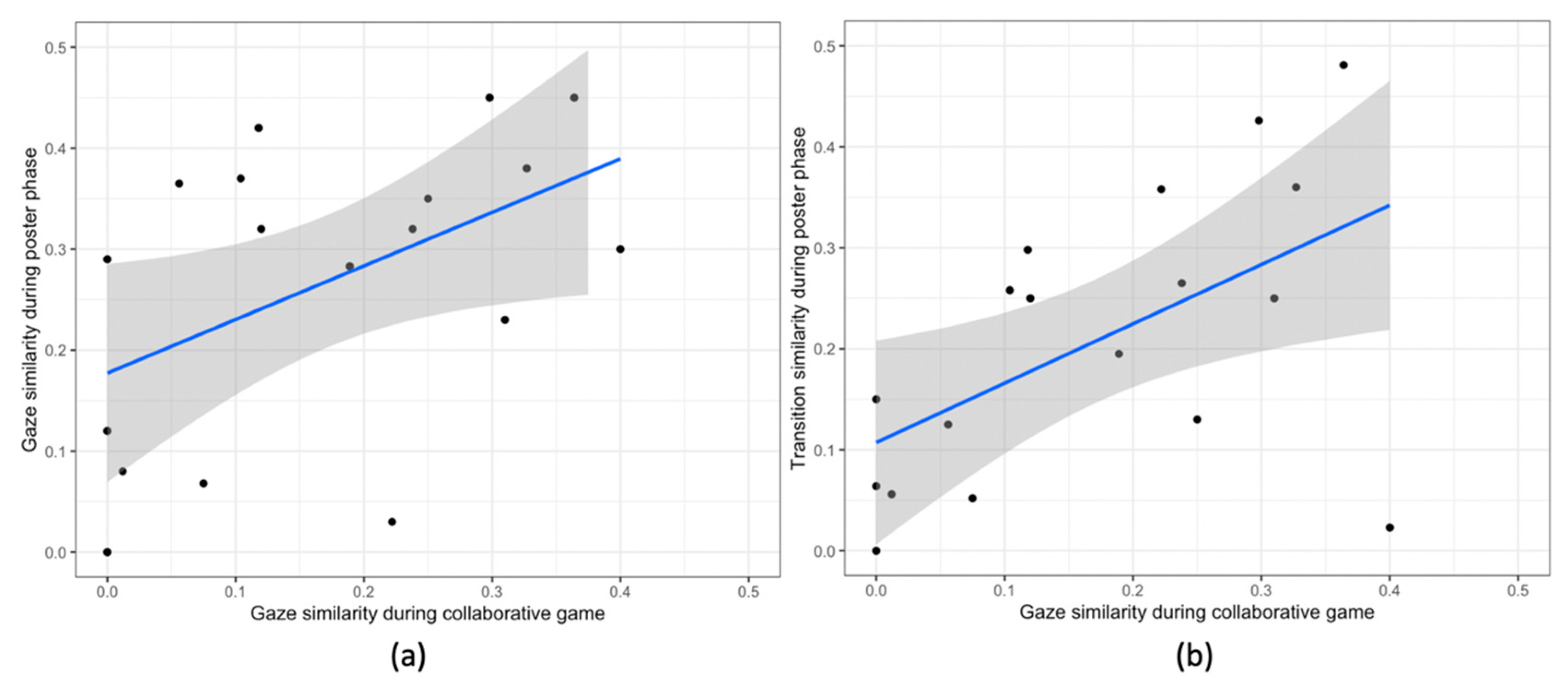
Interactive displays are becoming increasingly popular in informal learning environments as an educational technology for improving students’ learning and enhancing their engagement. Interactive displays have the potential to reinforce and maintain collaboration and rich-interaction with the content in a natural and engaging manner. Despite the increased prevalence of interactive displays for learning, there is limited knowledge about how students collaborate in informal settings and how their collaboration around the interactive surfaces influences their learning and engagement. We present a dual eye-tracking study, involving 36 participants, a two-staged within-group experiment was conducted following single-group time series design, involving repeated measurement of participants’ gaze, voice, game-logs and learning gain tests. Various correlation, regression and covariance analyses employed to investigate students’ collaboration, engagement and learning gains during the activity. The results show that collaboratively, pairs who have high gaze similarity have high learning outcomes. Individually, participants spending high proportions of time in acquiring the complementary information from images and textual parts of the learning material attain high learning outcomes. Moreover, the results show that the speech could be an interesting covariate while analyzing the relation between the gaze variables and the learning gains (and task-based performance). We also show that the gaze is an effective proxy to cognitive mechanisms underlying collaboration not only in formal settings but also in informal learning scenarios.
Keywords: eye-tracking; dual eye-tracking; multitouch interactive displays; CSCL; informal learning; collaboration outcome; mobile eye-tracking; MMLA; multimodal learning analytics eye-tracking; dual eye-tracking; multitouch interactive displays; CSCL; informal learning; collaboration outcome; mobile eye-tracking; MMLA; multimodal learning analytics