State-of-the-Art Reviews in Tourism and Hospitality

Editors


E-Mail Website
Collection Editor
School of Management, Swansea University, Swansea, UK
Interests: destination marketing; destination management; smart destinations; technology; accessibility; disability; sustainable development; digitization; leadership; employment; corporate responsibility; climate change; over-tourism
Special Issues, Collections and Topics in MDPI journals

E-Mail Website
Collection Editor
Coles College of Business, Kennesaw State University, Kennesaw, GA, USA
Interests: financial management and control; accounting; auditing; feasibility analysis; asset management; entrepreneurial ecosystems; operations management
Special Issues, Collections and Topics in MDPI journals

E-Mail Website
Collection Editor
1. JLS, Emeritus Professor of Geography, Virginia Tech, Blacksburg, VA 24061, USA
2. Executive Director, Center for the Study of Cuban Culture and Economy, Blacksburg, VA 24060, USA
Interests: cultural branding; international marketing; iconic branding; place branding
Special Issues, Collections and Topics in MDPI journals

E-Mail Website
Collection Editor
Rosen College of Hospitality Management, University of Central Florida, 9907 Universal Blvd, Orlando, FL 32816, USA
Interests: destination marketing and management; sustainable tourism and tourism resilience

Topical Collection Information

Dear Colleagues,

State-of-the-art reviews are a new category of article in Tourism and Hospitality. This will only be available as a publishing option to authors who are specifically invited by our guest editor team.

Each state-of-the-art review paper is intended to identify and analyse an important emerging issue in a defined area of tourism and/or hospitality. We are particularly interested in covering multidisciplinary issues that cross the traditional divide between tourism and hospitality. The purpose of a state-of-the-art review paper is to present an authoritative and definitive overview of the present state of knowledge, as well as to identify an agenda for future research in the topic area.

Accordingly, we would like each paper to be jointly authored by three or more authors who are well known and well regarded in the field. The guest editor team are available to help in the team-building process by approaching potential co-authors.

These papers are major undertakings, and in recognition that a greater word limit will be needed to cover the ground, papers in this new category can be up to 12,000 words in length.

There will be a series of rolling deadlines for state-of-the-art review papers. The first is noted above, and others will follow at approximately 6-month intervals.

As these are invited papers, we are pleased to confirm that we will waive our usual article processing charge.

Papers must be within the scope of Tourism and Hospitality, which includes but is not limited to the following:

  • Consumer behaviour and marketing;
  • Human resource management;
  • Demand and technological forecasting;
  • Smart, virtual, and digital innovations;
  • Branding and brand management;
  • Design, planning, and development;
  • Managing environmental, economic, and social impacts;
  • Market segmentation, targeting, positioning;
  • Social responsibility, sustainability, and ethics;
  • Participatory, e-commerce, and sharing business models;
  • Operations management;
  • Training and staff development;
  • Strategic management and marketing;
  • Organisational behaviour, values, and culture;
  • Networking, partnerships, and collaboration;
  • Gender and identity;
  • Change management;
  • Product and service innovation;
  • Service, delivery, quality, and recovery;
  • Social media marketing and management;
  • Risk, safety, security, and crisis management;
  • Customer motivations, satisfaction, and intentions.

Papers should provide a narrative, state-of-the art review of current research on the chosen topic. Please avoid writing reviews that are primarily bibliometric, which tend to be of limited academic value. Please also avoid the use of the ‘systematic review’ method, as such papers tend to be too narrow in focus.

Papers can be submitted using the APA 7th edition referencing or MDPI house style, whichever is most convenient.

Please note that State-of-the-Art Review papers are by invitation only.

Prof. Dr. Brian Garrod
Dr. Leonard Jackson
Prof. Dr. Joseph L. Scarpaci
Prof. Dr. Alan Fyall
Collection Editors

Manuscript Submission Information

Manuscripts should be submitted online at www.mdpi.com by registering and logging in to this website. Once you are registered, click here to go to the submission form. All submissions that pass pre-check are peer-reviewed. Accepted papers will be published continuously in the journal (as soon as accepted) and will be listed together on the collection website. Research articles, review articles as well as short communications are invited. For planned papers, a title and short abstract (about 250 words) can be sent to the Editorial Office for assessment.

Submitted manuscripts should not have been published previously, nor be under consideration for publication elsewhere (except conference proceedings papers). All manuscripts are thoroughly refereed through a single-blind peer-review process. A guide for authors and other relevant information for submission of manuscripts is available on the Instructions for Authors page. Tourism and Hospitality is an international peer-reviewed open access monthly journal published by MDPI.

Please visit the Instructions for Authors page before submitting a manuscript. The Article Processing Charge (APC) for publication in this open access journal is 1400 CHF (Swiss Francs). Submitted papers should be well formatted and use good English. Authors may use MDPI's English editing service prior to publication or during author revisions.

Keywords

  • tourism
  • hospitality
  • interdisciplinary topics
  • state-of-the-art review
  • narrative review
  • emerging issues
  • future research agenda

Published Papers (6 papers)

2026

Jump to: 2024, 2023

21 pages, 360 KB  
Article
Competency-Based Training Framework for Hotel Management: A Delphi Study
by María del Pilar Puente-Martínez and Ángeles Bueno-Villaverde
Tour. Hosp. 2026, 7(5), 138; https://doi.org/10.3390/tourhosp7050138 - 12 May 2026
Viewed by 491
Abstract
The transformation of the hospitality industry has increased the demand for managerial profiles capable of integrating technical, strategic, and socio-emotional competencies. However, a persistent gap remains between the competencies required by the labor market and those developed through formal education. This study aims [...] Read more.
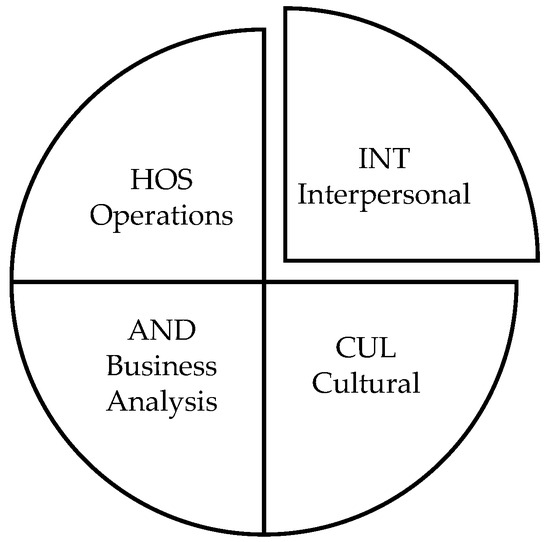
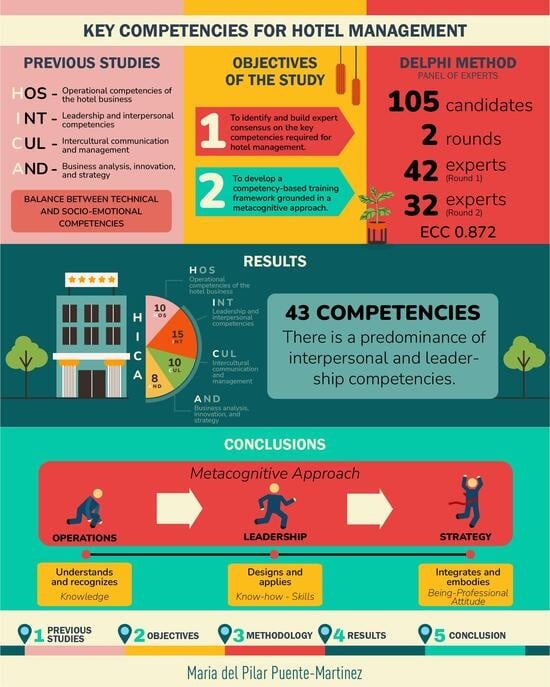
The transformation of the hospitality industry has increased the demand for managerial profiles capable of integrating technical, strategic, and socio-emotional competencies. However, a persistent gap remains between the competencies required by the labor market and those developed through formal education. This study aims to identify and validate the core competencies of hotel management and to translate them into a structured training proposal. A two-round Delphi study was conducted with senior hotel management experts (n = 42 in round 1; n = 32 in round 2), using a competency matrix derived from prior research. Quantitative analysis included frequency distributions, weighted scores, and consensus indicators. The results show a high level of consensus stability (3.1% disagreement), leading to a final matrix of 43 competencies organized into four dimensions: operational, interpersonal, cultural-communicative, and strategic. Interpersonal and leadership competencies emerged as the most prominent, highlighting their structural role in effective managerial performance. Based on these findings, a progressive training framework is proposed, structured around three domains (operations, leadership, and strategy) and supported by a metacognitive pathway that integrates planning, monitoring, and evaluation processes. This study contributes to the professionalization of hotel management by providing an empirically grounded competency model and a coherent framework for aligning educational programs with industry demands. Full article
Show Figures

Graphical abstract

52 pages, 3215 KB  
Review
State-of-the-Art Review on the Rise of Experiential and Transformative Travel: Reassessing Value, Meaning and Impact
by Evangelos Christou, Chryssoula Chatzigeorgiou and Ioanna Simeli
Tour. Hosp. 2026, 7(2), 59; https://doi.org/10.3390/tourhosp7020059 - 22 Feb 2026
Cited by 1 | Viewed by 3253
Abstract
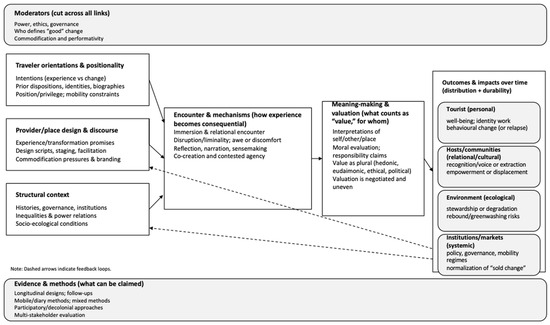
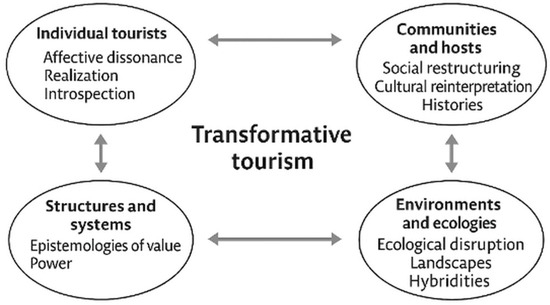
Experiential and transformative travel are increasingly central in tourism scholarship and “life-changing” marketing, yet the proliferation of these labels has produced conceptual drift and persistent accountability gaps. This paper presents a narrated critical integrative review that distinguishes experiential travel from transformative travel and [...] Read more.
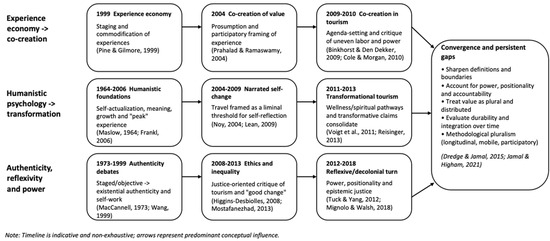
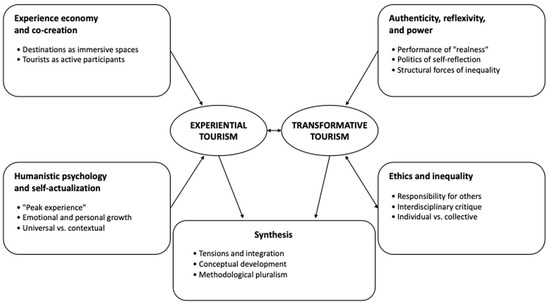
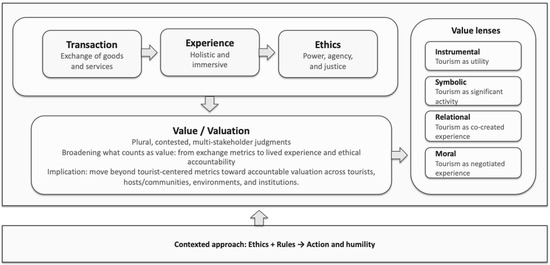
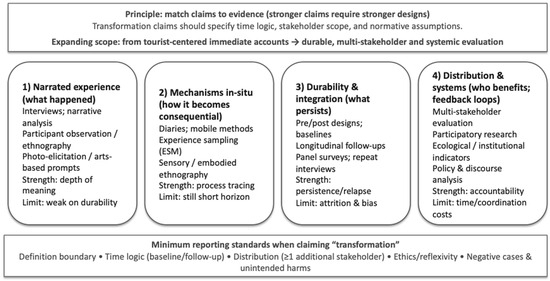
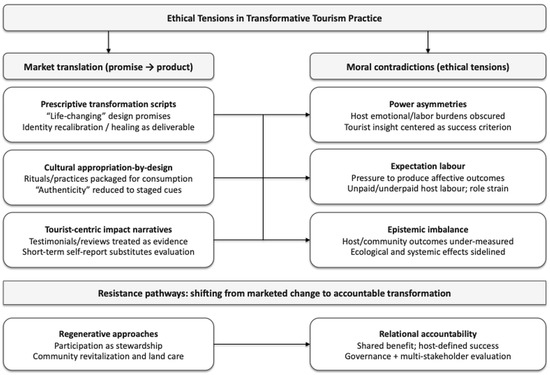
Experiential and transformative travel are increasingly central in tourism scholarship and “life-changing” marketing, yet the proliferation of these labels has produced conceptual drift and persistent accountability gaps. This paper presents a narrated critical integrative review that distinguishes experiential travel from transformative travel and synthesizes how value, meaning-making, impact and methods are theorized across stakeholders and time. Searches of Scopus and the Web of Science Core Collection, supplemented by citation chasing, yielded 1284 records; screening produced 168 tourism-focused and 103 foundational sources (271 total). Iterative coding indicates that experiential research commonly foregrounds experience design and short-horizon valuation, whereas transformative research emphasizes change-over-time yet often relies on tourist self-narratives. Across both streams, valuation expands from transactional utility to affective, existential and ethical registers but remains frequently tourist-centred; meaning-making is patterned by narrative scripts and platform mediation; and impacts are distributed and ambivalent across tourists, hosts/communities, environments and institutions. Methodologically, claims about durability and justice are often unsupported by designs that assess persistence, comparison and distribution. This state-of-the-art review paper contributes working definitions and boundary conditions, an integrative framework linking antecedents, encounter mechanisms, valuation and multi-stakeholder impacts, and a method-specified research agenda with minimum reporting standards to support accountable research and practice. Full article
Show Figures

Figure 1

2024

Jump to: 2026, 2023

17 pages, 1393 KB  
Article
Destination Image Semiotics: Evidence from Asian and European Upscale Hospitality Services
by Estela Marine-Roig
Tour. Hosp. 2024, 5(2), 472-488; https://doi.org/10.3390/tourhosp5020029 - 7 Jun 2024
Cited by 9 | Viewed by 5795
Abstract
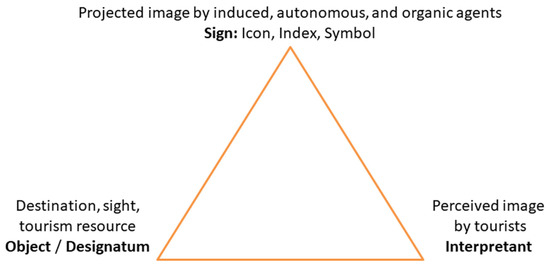
Given the importance of semiotics and destination image (TDI) in the field of tourism and hospitality marketing, this study proposes a conceptual model that integrates Peirce’s semiotic triad, Grönroos’s quality service model, and Morris’s semiotic trichotomies in the TDI formation circle. The new [...] Read more.
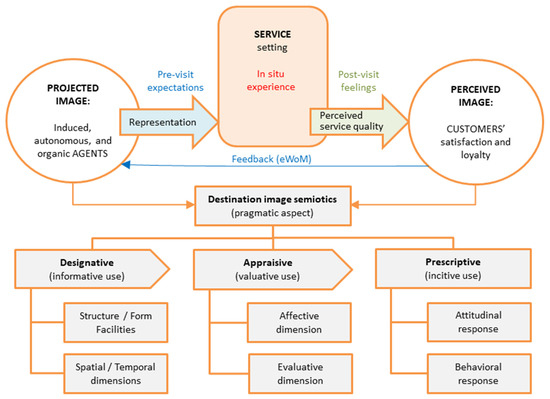
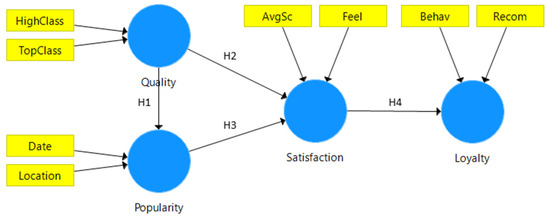
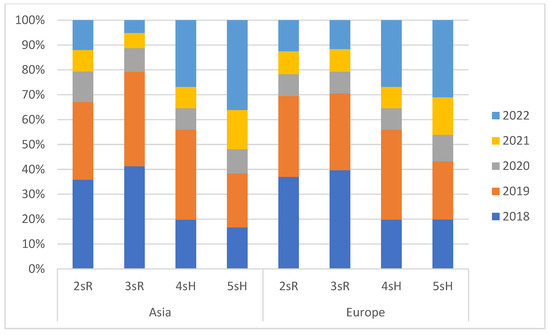
Given the importance of semiotics and destination image (TDI) in the field of tourism and hospitality marketing, this study proposes a conceptual model that integrates Peirce’s semiotic triad, Grönroos’s quality service model, and Morris’s semiotic trichotomies in the TDI formation circle. The new framework aims to measure the contribution of quality hospitality services to online TDI formation. Using scaled comparisons of homogeneous big data, this framework was empirically tested with all two- and three-star Michelin restaurants and a sample of 100 four- and five-star hotels, all located in Asia and Europe, reviewed in 317,979 online travel reviews (OTRs) hosted on TripAdvisor. The results showed that three-star restaurants and five-star hotels are more popular in terms of the number of OTRs, but diners and guests are more satisfied with and loyal to two-star restaurants and four-star hotels. This big data finding contradicts previous survey-based research on quality services. Instead, the results confirm that consumer satisfaction positively affects consumer loyalty. The new approach to the TDI from a semiotic perspective—destination image semiotics—can represent a paradigm shift in the analysis of TDI through user-generated content (UGC). The proposed conceptual framework integrates several sound theoretical models to extract maximum insights from UGC. Full article
Show Figures

Figure 1

21 pages, 833 KB  
Article
Trade Fairs, Host Cities and Tourism Development: The Case of Thessaloniki, Greece
by Dimitris Kourkouridis, Yannis Frangopoulos and Asimenia Salepaki
Tour. Hosp. 2024, 5(2), 333-353; https://doi.org/10.3390/tourhosp5020022 - 12 Apr 2024
Cited by 14 | Viewed by 6911
Abstract
The literature has mainly focused on the significant business opportunities that companies obtain from their participation in trade fairs while less interest has been given to their impacts on the host regions. However, trade fairs are events with complex socio-spatial dimensions and an [...] Read more.
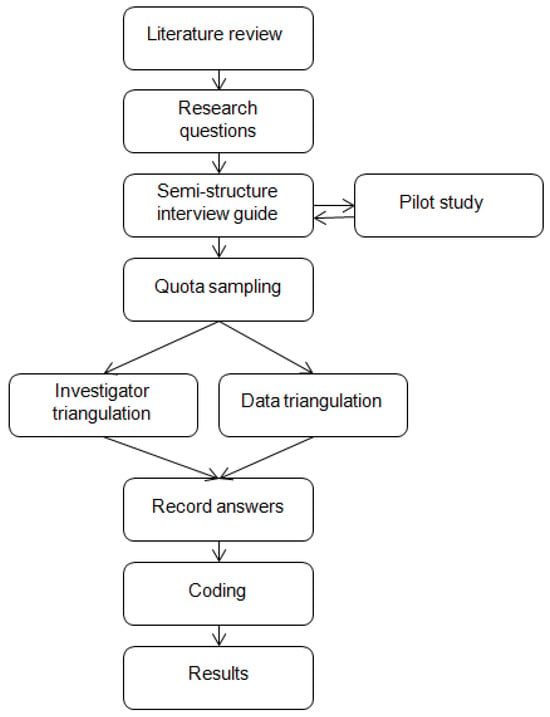
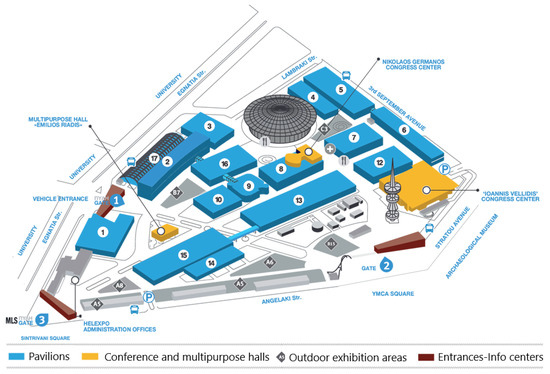
The literature has mainly focused on the significant business opportunities that companies obtain from their participation in trade fairs while less interest has been given to their impacts on the host regions. However, trade fairs are events with complex socio-spatial dimensions and an important scope of urban governance that need further analysis. The purpose of this article is to investigate the attitudes, opinions and representations of the exhibitors and visitors of the trade fairs in Thessaloniki, regarding the trade fair itself and its efficiency, the city of Thessaloniki as a destination, as well as the relationship between trade fairs and the city. The method of collecting qualitative material and information involved in-depth interviews with a semi-structured interview guide, while quota sampling was used. In total, 103 interviews were conducted at the trade fairs of Zootechnia and Detrop. Results show that the effect of trade fair activity on the city of Thessaloniki is strong and multi-layered. Also, the relationship between trade fair activity and the city is interactive and two-way, as one feeds and is powered by the other. Moreover, the need for coordination and cooperation between local agencies in an urban governance framework was highlighted. Full article
Show Figures

Figure 1

19 pages, 1281 KB  
Article
The Great Canadian (Electric) Road Trip: Evaluating EV Use in National Park Tourism
by Natalie L. B. Knowles, Daniel Scott and Samuel Mitchell
Tour. Hosp. 2024, 5(2), 314-332; https://doi.org/10.3390/tourhosp5020021 - 11 Apr 2024
Cited by 5 | Viewed by 5460
Abstract
As part of its 2050 net zero emission commitment, Canada has a mandate to transition to electric vehicles (EVs) to decarbonize transportation. While the EV charging infrastructure is expanding in urban areas, the infrastructure for inter-city and nature-based tourism has not been assessed. [...] Read more.
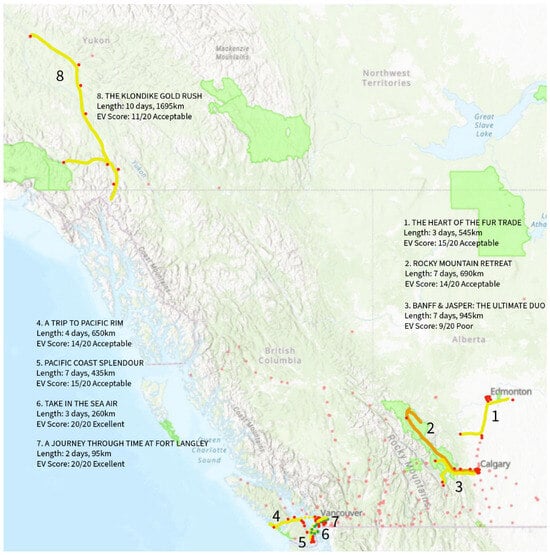
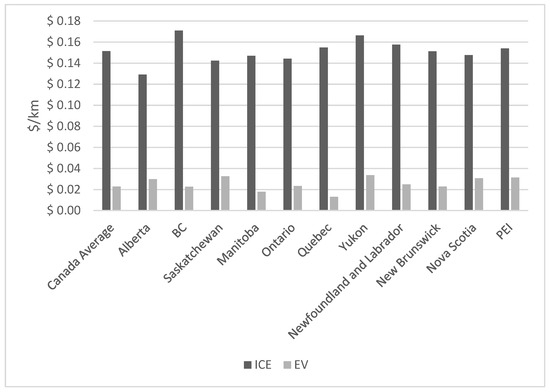
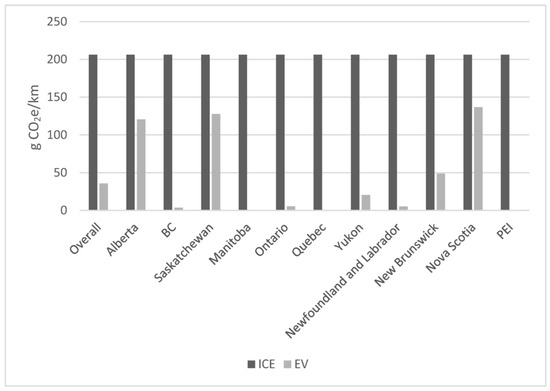
As part of its 2050 net zero emission commitment, Canada has a mandate to transition to electric vehicles (EVs) to decarbonize transportation. While the EV charging infrastructure is expanding in urban areas, the infrastructure for inter-city and nature-based tourism has not been assessed. This study combined four metrics of feasibility and convenience into an EV readiness index to evaluate 94 road trip itineraries associated with Canada’s iconic national parks. Index scores ranged from not possible (0) to equal to the travel experience of internal combustion vehicle (20). With the summer range, the average one-day route score was 19.2, as 82% of one-day itineraries could be completed without requiring additional charging. Multi-day routes scored lower (14.0), with 24% being highly inconvenient or impossible due to gaps between charging stations. With a reduced winter EV range, average index scores for one- and multi-day trips declined as charging needs increased (18.4 and 13.2, respectively). Across the 94 travel routes, EVs were estimated to produce only 17% of the carbon dioxide emissions of internal combustion vehicles (this was much lower in some provinces). The findings also highlight key regional differences in tourism EV readiness and where infrastructure is needed to provide equitable access to Canada’s national parks for tourists seeking to decarbonize their holiday travel. Full article
Show Figures

Figure 1

2023

Jump to: 2026, 2024

20 pages, 379 KB  
Review
State-of-the-Art Review on Destination Marketing and Destination Management
by Stephan Reinhold, Pietro Beritelli, Alan Fyall, Hwan-Suk Chris Choi, Christian Laesser and Marion Joppe
Tour. Hosp. 2023, 4(4), 584-603; https://doi.org/10.3390/tourhosp4040036 - 29 Nov 2023
Cited by 20 | Viewed by 15423
Abstract
This article presents a narrative perspective review of the state-of-the-art of destination marketing and management. The past 15 years of developments, stretching from technological advances enabling methodological progress and new consumer behavior to climate, health, and financial crises, require a reassessment of previous [...] Read more.
This article presents a narrative perspective review of the state-of-the-art of destination marketing and management. The past 15 years of developments, stretching from technological advances enabling methodological progress and new consumer behavior to climate, health, and financial crises, require a reassessment of previous academic contributions and current practices. Referring back to the social origins of destinations, this article conceptualizes destinations as a heterogeneous space of flows and proposes future research linked to tourist demand and tourism supply, sustainability and resilience, technological shifts, and institutions. Finally, six broader streams of conversations suggest how to advance the marketing and management of destinations related to a destination ontology grounded in flows, with a focus on processes and action, stewardship and collaboration, resilient destinations, transient and permanent residents, as well as new instrumental technologies and augmented experiences. Full article
Back to TopTop