





You are currently viewing a new version of our website. To view the old version click .
  • Tracked for
    Impact Factor
  • 3.3
    CiteScore
  • 23 days
    Time to First Decision

Instruments

Instruments is an international, peer-reviewed, open access journal on scientific instrumentation and its related methods and theory, published quarterly online by MDPI.

All Articles (406)

Accurate measurement of shoulder muscle strength is important for diagnosis, treatment planning, and monitoring recovery. Hand-held dynamometers (HHDs) are widely used in clinical practice but are affected by operator strength, patient positioning, and device stabilization, particularly under high-load conditions. No previous study has directly compared HHD measurements with a reference load cell in a rigid serial configuration or evaluated the effect of different load cell signal processing strategies on the final strength value. The aim of this study was to compare HHD measurements with those obtained from a reference load cell in a rigid serial configuration and to assess how different signal processing strategies applied to load cell data influence the final outcomes. A custom 3D-printed support was developed to align a commercial HHD and a load cell in series, ensuring identical loading conditions. Measurements were performed under two conditions: (i) application of known weights (9.81–98.10 N) and (ii) standardized strength tasks in five healthy volunteers. Agreement between instruments was evaluated using Bland–Altman analysis and Root Mean Square Error (RMSE). In static validation (i.e., experiments applying know weights), the load cell demonstrated stable performance, with standard deviations below 1% of the applied load. HHD variability increased with load, with RMSE rising from 0.55 N at 9.81 N to 5.06 N at 98.10 N. In human testing, the HHD consistently underestimated muscle strength compared with the load cell, with mean differences ranging from −15 N to −19 N, over exerted force ranges of approximately 20–90 N. Overall, the load cell provided stable reference measurements, while the choice of signal processing strategy influenced the results: plateau-phase analysis tended to reduce systematic bias but did not consistently narrow the limits of agreement.

20 December 2025

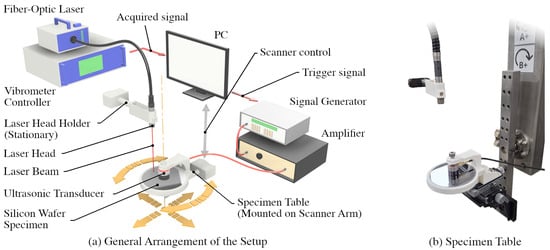
(a) A 3D-printed modular support securely attaches the load cell with screws and bolts. (b) A custom casing stabilizes the HHD. (c) The final configuration integrates the load cell, HHD, and support structure. (d) Example of a healthy participant performing one task from the experimental protocol: the participant was instructed to exert maximal muscle force against the two devices, arranged in a serial configuration.

Scalable Relay Switching Platform for Automated Multi-Point Resistance Measurements

  • Edoardo Boretti,
  • Kostiantyn Torokhtii and
  • Enrico Silva
  • + 1 author
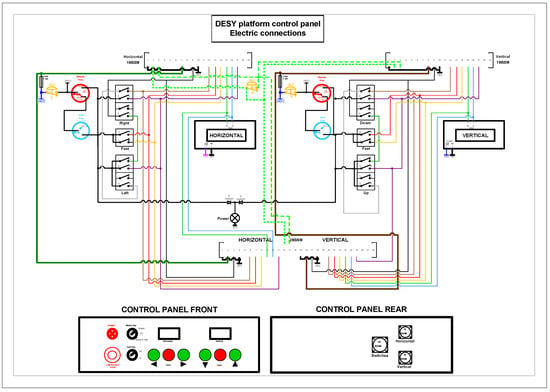
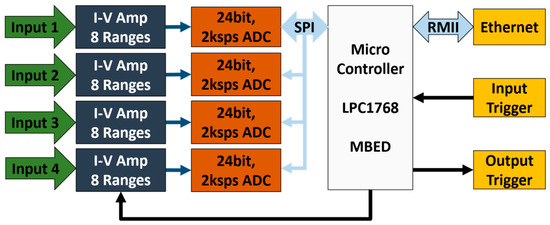
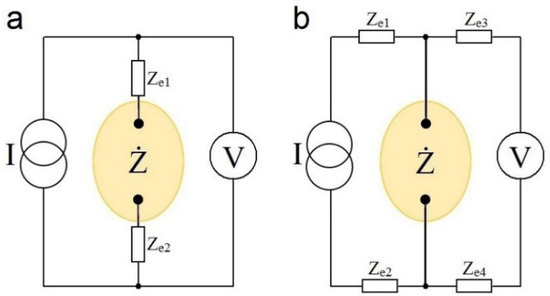
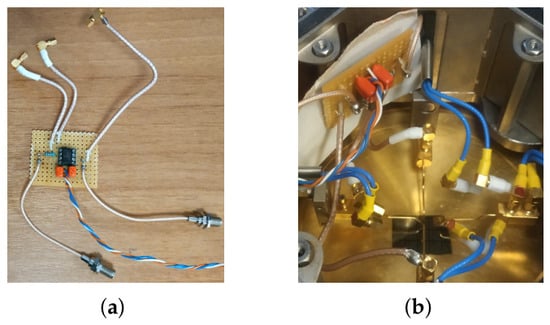
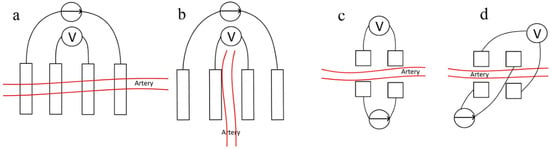
In both research and industrial settings, it is often necessary to expand the input/output channels of measurement instruments using relay-based multiplexer boards. In research activities in particular, the need for a highly flexible and easily configurable solution frequently leads to the development of customized systems. To address this challenge, we developed a system optimized for automated direct current (DC) measurements. The result is based on a 4×4 switching platform that simplifies measurement procedures that require instrument routing. The platform is based on a custom-designed circuit board controlled by a microcontroller. We selected bistable relays to guarantee contact stability after switching. We finally developed a system architecture that allows for straightforward expansion and scalability by connecting multiple platforms. We share both the hardware design source files and the firmware source code on GitHub with the open-source community. This work presents the design and development of the proposed system, followed by the performance evaluation. Finally, we present a test of our designed system applied to a specific case study: the DC analysis of complex resistive networks through multi-point resistance measurements using only a single voltmeter and current source.

31 December 2025
Wavelength-shifting (WLS) materials are used in radiation detectors to convert ultraviolet photons into visible light, enabling improved photon detection in systems such as scintillators and optical diagnostics for nuclear fusion devices. However, the long-term performance of these materials under radiation is still a critical issue in high-dose environments. In this work, we investigated the radiation tolerance of three WLS compounds (TPB, NOL1, and SB2001), each deposited on reflective substrates (ESR and E-PTFE), resulting in six distinct WLS/substrate systems. The samples underwent gamma irradiation at absorbed doses of 100 kGy, 500 kGy, and 1000 kGy, as well as fast neutron (14.1 MeV) irradiation up to a fluence of 1.9 × 10¹³ n/cm2. Qualitative photoluminescence and reflectance measurements were performed before and after irradiation to assess changes in optical performance. Gamma exposure caused spectral broadening in several samples, particularly those with TPB and SB2001, with variations of the two metrics used to compare the performance of the materials exceeding 10% at the highest doses. Neutron-induced effects were generally weaker and did not exhibit a clear fluence dependence. Reflectance degradation was also observed, with variations depending on both the WLS material and the deposition method. These findings contribute to the understanding of WLS material stability under radiation and support their qualification for use in optical components exposed to harsh nuclear environments.

20 December 2025

Design of Spectrometer Energy Measurement Setups for the Future EuPRAXIA@SPARC_LAB and SSRIP Linacs

  • Danilo Quartullo,
  • David Alesini and
  • Alessandro Cianchi
  • + 11 authors

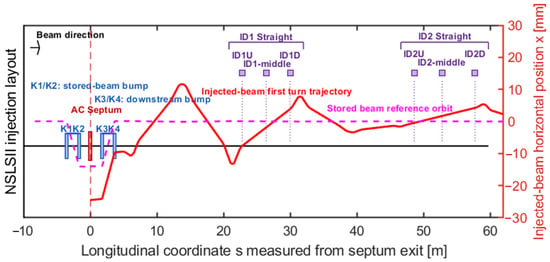
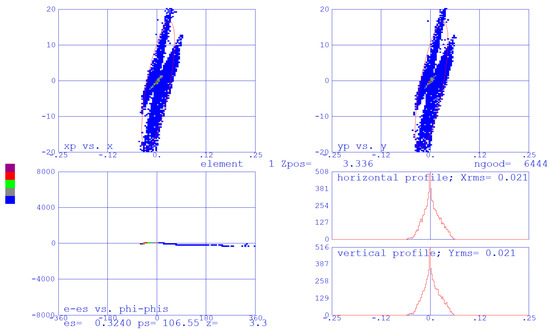
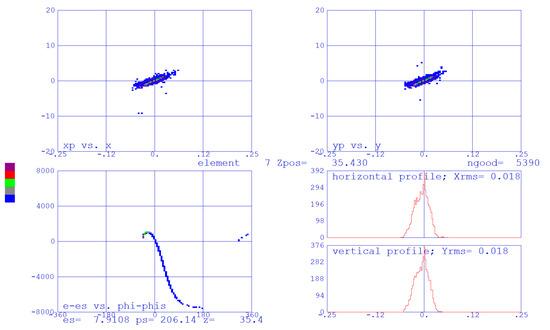
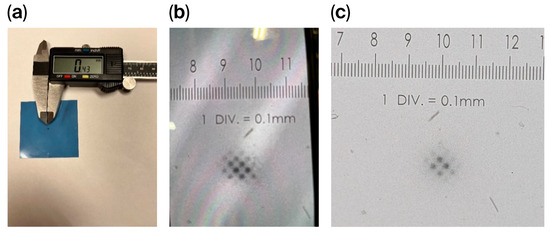
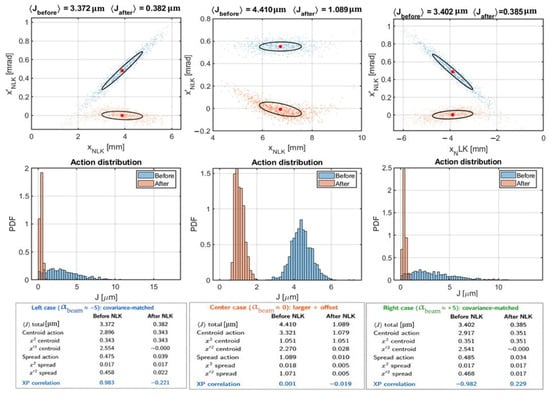
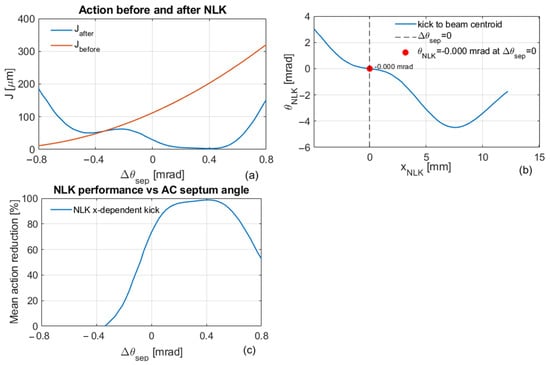
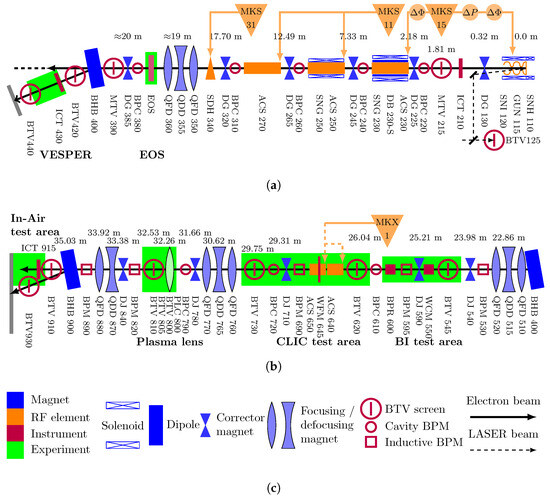
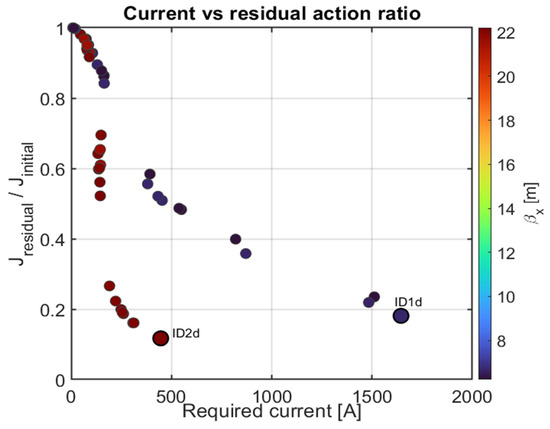
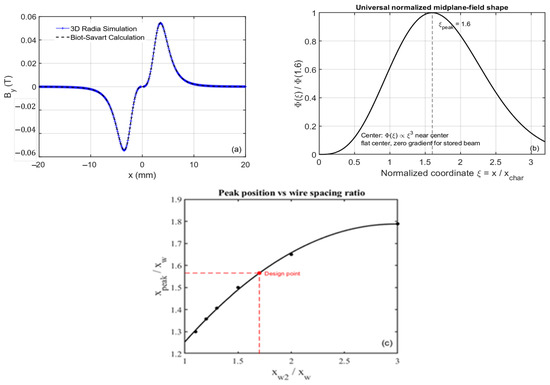
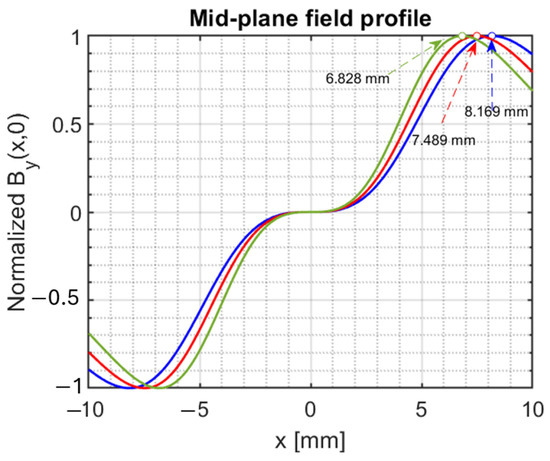
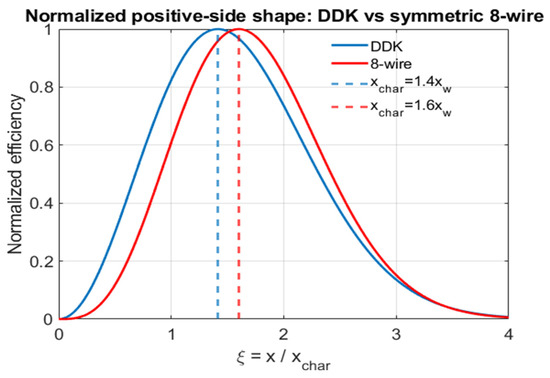
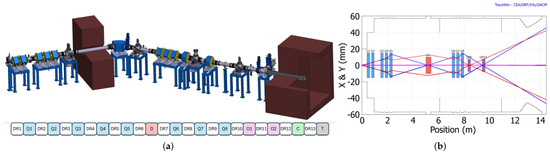
EuPRAXIA@SPARC_LAB is an FEL (Free-Electron Laser) user facility currently under construction at INFN-LNF in the framework of the EuPRAXIA collaboration. The electron beam will be accelerated to 1 GeV by an X-band RF linac followed by a plasma wakefield acceleration stage. This high-brightness linac requires diagnostic devices able to measure the beam parameters with high accuracy and resolution. To monitor the beam energy and its spread, magnetic dipoles and quadrupoles will be installed along the linac, in combination with viewing screens and CMOS cameras. Macroparticle beam dynamics simulations have been performed to determine the optimal energy measurement setup in terms of accuracy and resolution. Similar diagnostics evaluations have been carried out for the spectrometer installed at the 100 MeV RF linac of the radioactive beam facility SSRIP (IFIN-HH, Romania), whose commissioning, foreseen for 2026, will be performed by INFN-LNF in collaboration with IFIN-HH. Optics measurements have been performed to characterize the resolution and magnification of the optical system that will be used at SSRIP, and probably also at EuPRAXIA@SPARC_LAB, for beam energy monitoring.
17 December 2025

News & Conferences

Issues

Open for Submission

Editor's Choice

Reprints of Collections

Advances in Space AstroParticle Physics
Reprint

Advances in Space AstroParticle Physics

Frontier Technologies for Particle Measurements in Space
Editors: Matteo Duranti, Valerio Vagelli
Selected Papers from the 19th International Conference on Calorimetry in Particle Physics (CALOR 2022)
Reprint

Selected Papers from the 19th International Conference on Calorimetry in Particle Physics (CALOR 2022)

Editors: Fabrizio Salvatore, Antonella De Santo, Iacopo Vivarelli

Get Alerted

Add your email address to receive forthcoming issues of this journal.

XFacebookLinkedIn
Instruments - ISSN 2410-390X