

Skip to Content
You are currently on the new version of our website. Access the old version .

Drones

Drones is an international, peer-reviewed, open access journal that focuses on the design and applications of drones (including unmanned aerial vehicles (UAVs), Unmanned Aircraft Systems (UASs), Remotely Piloted Aircraft Systems (RPASs), etc.) and also of unmanned marine/water/underwater drones, unmanned ground vehicles, fully autonomous driving and space drones, and published monthly online by MDPI.

Quartile Ranking JCR - Q1 (Remote Sensing)

All Articles (3,301)

The advancement of autonomous driving technologies necessitates the development of sophisticated object detection systems capable of integrating heterogeneous sensor data to overcome the inherent limitations of unimodal approaches. While multi-modal fusion strategies offer promising solutions, they confront significant challenges such as data alignment complexities in early fusion and computational burdens coupled with overfitting risks in deep fusion methodologies. To address these issues, we propose a Multi-modal Multi-class Late Fusion (MMLF) framework that operates at the decision level. This late-fusion strategy preserves the architectural integrity of individual detectors and facilitates the flexible integration of diverse modalities. A key innovation of our approach is the incorporation of an evidence-theoretic uncertainty quantification mechanism, based on Dempster-Shafer theory, which provides a mathematically grounded confidence measure. Comprehensive offline evaluations on the KITTI benchmark dataset demonstrate the effectiveness of our framework, showing substantial performance improvements across multiple metrics (including 2D detection, 3D detection, and bird’s-eye view tasks) while simultaneously achieving significant reductions in uncertainty estimates—by approximately 77% for cars, 76% for pedestrians, and 67% for cyclists. These results collectively enhance both the reliability and interpretability of object detection outcomes. This work provides a versatile and scalable solution for multi-modal object detection that effectively addresses critical challenges in autonomous driving applications.

13 February 2026

System architecture. (a) Flowchart of the proposed method: in step 1, each of the m 3D candidates is computed for IOU with each of the n 2D candidates to have k hypothetical fused pairs, and fused class features with uncertainty are obtained based on these pairs through Evidence-Based Fusion Module (detailed in (b)). In step 2, the hypothetical objective scores are computed by a 2D CNN and then concatenated with the fused class features with uncertainty which ultimately is used in step 3 to build fused matching tensor 
  
    M
    F
  
 to get the final fused prediction. (b) Detailed structure of the Evidence-Based Fusion Module.

6D Physical Interaction with an Omnidirectional Aerial Robot

  • Ruben Veenstra,
  • Ahmed Ali and
  • Antonio Franchi
  • + 1 author
In this paper, we present a physical interaction scheme for omnidirectional multirotor aerial vehicles (MRAVs) equipped with fixedly tilted non-coplanar propellers, based on an admittance control architecture. An external wrench observer is employed to estimate the interaction wrench at the end-effector, hence eliminating the need for an additional force/torque sensor. We show that using the nominal allocation matrix in this class of admittance controllers can lead to a contact loss during complex interaction scenarios due to unmodeled and state-dependent aerodynamics effects. To address this issue, we propose a method for identifying the wrench map across different regions of the vehicle’s orientation in using free-flight experimental data. This is achieved by formulating a Quadratic Programming (QP) optimization whose solution provides the best approximation of the wrench map for a given orientation of the MRAV. The effectiveness of this approach is experimentally demonstrated, including static point contacts at various orientations, sliding contact, and peg-in-hole tasks.

13 February 2026

Representation of the Omnirotor, with body frame 
  
    F
    B
  
, end-effector frame 
  
    F
    E
  
, and propeller frame 
  
    F
    
      P
      i
    
  
.

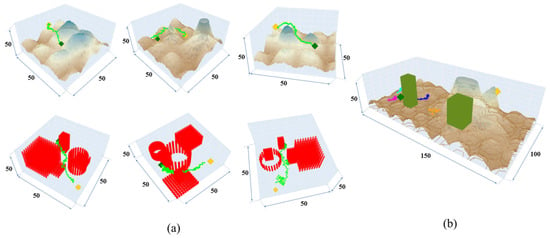
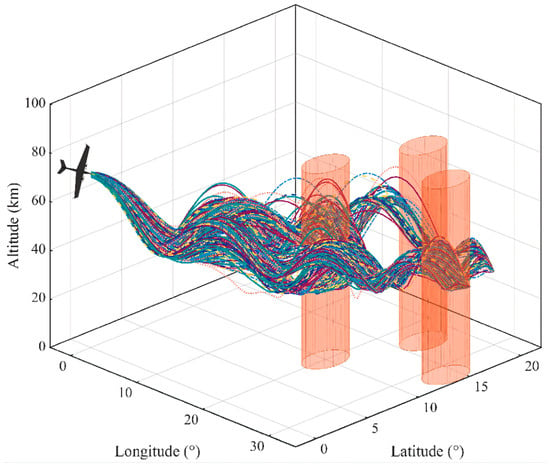
High-altitude low-speed aerostats are ideal unmanned platforms for communication coverage, remote sensing, environmental monitoring, aviation support, and other applications. To address practical operational needs such as rapid emergency deployment, this paper proposes a path planning method for low-speed aerostats based on the Markov decision process (MDP). The method is optimized to minimize deployment time while accounting for discrepancies between forecasted and actual wind fields. An uncertain wind field model is established to incorporate wind-related uncertainties into the MDP framework, with key parameters—including the state space, action set, immediate reward, and transition probability—designed accordingly. A mathematical model is formulated to address the global path planning problem under complex constraints, such as horizontal wind resistance capability, altitude control capacity, and flight time requirements. Simulation results demonstrate that the proposed method enables aerostats to achieve optimal 2D and 3D path planning under complex constraints. Furthermore, regional reachability is quantitatively analyzed, providing technical support for the rapid deployment of aerostats to target areas in practical applications. The core innovations of this work lie in the integration of a probabilistic wind uncertainty model with a constraint-aware MDP framework, enabling optimal 3D path planning and quantitative reachability analysis for high-altitude low-speed aerostats.

12 February 2026

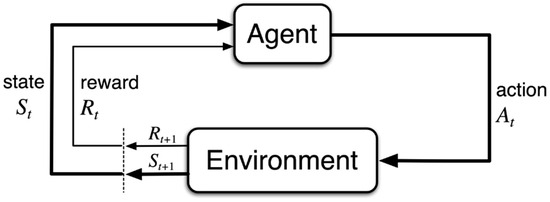
Model of MDP.

Improvements in thermal infrared imaging provide new opportunities for drone-based wildlife surveys. The use of thermal sensors can be limited by ambient temperatures and vegetation cover, which can limit opportunities to survey during optimal biological seasons. Pre-programming isotherm settings in thermal cameras has the potential to allow surveys during warmer environmental conditions. We evaluated night-time surveys of white-tailed deer (Odocoileus virginianus) using isotherm settings in a 102 ha enclosed property in South Texas during February (winter) and July (summer) 2022. Detection probabilities were 0.84 and 0.65 during winter and summer, respectively. Percent woody cover was 48.1% and 60.7% during these seasons, respectively. The seasonal pattern in detection probabilities met expectations in terms of visibility bias caused by canopy cover. Despite different detection probabilities among seasons, population estimates were similar because distance sampling accounted for visibility bias. The use of isotherm settings allowed us to survey during temperatures previously thought to be too warm for ideal contrast (~21 °C vs. 30 °C), which provides more opportunities to survey during biologically important seasons typically associated with warm temperatures (i.e., fawning and antlerogenesis). We recommend the use of distance sampling methods to evaluate and correct for visibility bias during thermal-based drone surveys because detections of focal species may vary with vegetation.
11 February 2026

Example images using RGB, traditional thermal technology, and isothermal technology from our study site in South Texas. Panel (A,B) were from a morning survey on 1 February 2020 with RGB and traditional thermal technology, respectively. Panels (C,D) were obtained with isothermal technology during February and July 2022 nocturnal surveys, respectively. White-tailed deer are pointed out with arrows, except in the RGB image. The use of pre-programmed isotherm thresholds can reduce “noise” in thermal imagery and improve detection of focal species.
News & Conferences

Issues

Open for Submission

Editor's Choice

Reprints of Collections

Advances in Multi-Scale Geographic Environmental Monitoring
Reprint

Advances in Multi-Scale Geographic Environmental Monitoring

Theory, Methodology and Applications Volume II
Editors: Jingzhe Wang, Yangyi Wu, Yinghui Zhang, Ivan Lizaga, Zipeng Zhang

Get Alerted

Add your email address to receive forthcoming issues of this journal.

XFacebookLinkedIn
Drones - ISSN 2504-446X