Special Issue "New Research in Childhood Nutrition"

A special issue of Children (ISSN 2227-9067). This special issue belongs to the section "Global and Public Health".

Deadline for manuscript submissions: 30 September 2021.

Special Issue Editor

Dr. Jose J. Muros Molina
E-Mail Website
Guest Editor
Department of Didactics of Musical, Plastic and Corporal Expression, University of Granada, 18071 Granada, Spain
Interests: physical activity; health; anthropometry; childhood
Special Issues and Collections in MDPI journals

Special Issue Information

Dear Colleagues,

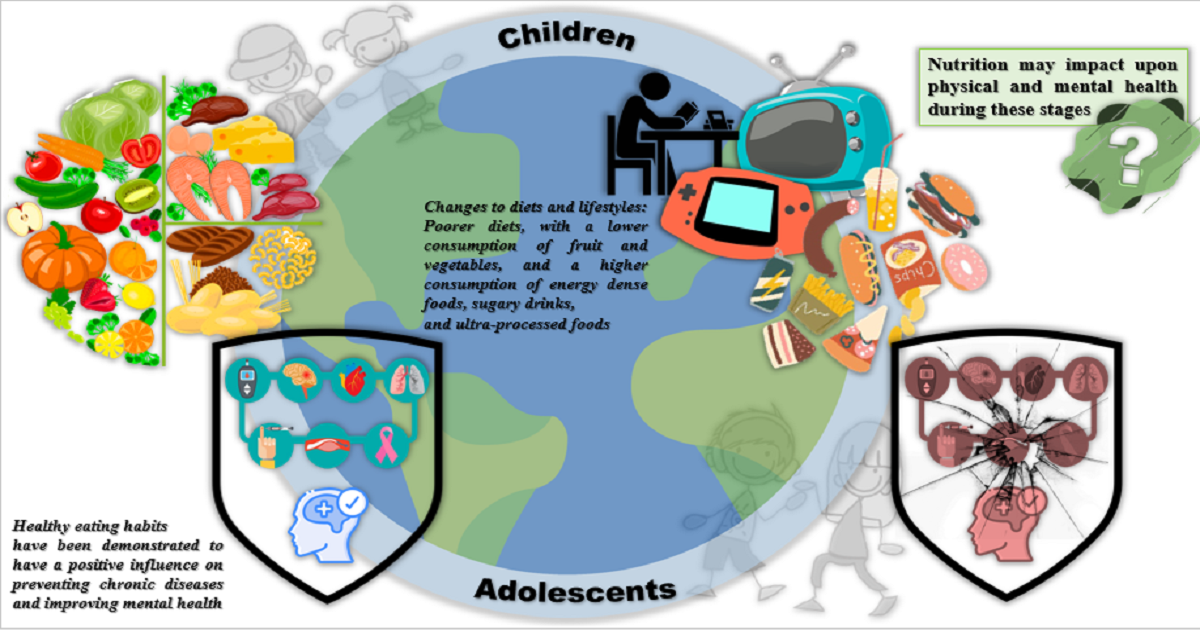
Childhood is a key stage for the acquisition of behaviours that are likely to endure into adulthood. It is therefore not surprising that engagement in healthy eating is considered to be one of the most important habits to be acquired by children for them to develop into healthy adults. Healthy eating habits have been demonstrated to have a positive influence on preventing chronic diseases and improving mental health in children and adolescents.

The goal of this Special Issue in Children is to highlight new research in childhood nutrition. We welcome reviews and original research which consider novel approaches and identify gaps in knowledge. We also encourage submissions that explore how nutrition may impact upon physical and mental health during these stages.

Dr. Jose J. Muros
Guest Editor

Manuscript Submission Information

Manuscripts should be submitted online at www.mdpi.com by registering and logging in to this website. Once you are registered, click here to go to the submission form. Manuscripts can be submitted until the deadline. All papers will be peer-reviewed. Accepted papers will be published continuously in the journal (as soon as accepted) and will be listed together on the special issue website. Research articles, review articles as well as short communications are invited. For planned papers, a title and short abstract (about 100 words) can be sent to the Editorial Office for announcement on this website.

Submitted manuscripts should not have been published previously, nor be under consideration for publication elsewhere (except conference proceedings papers). All manuscripts are thoroughly refereed through a single-blind peer-review process. A guide for authors and other relevant information for submission of manuscripts is available on the Instructions for Authors page. Children is an international peer-reviewed open access monthly journal published by MDPI.

Please visit the Instructions for Authors page before submitting a manuscript. The Article Processing Charge (APC) for publication in this open access journal is 1600 CHF (Swiss Francs). Submitted papers should be well formatted and use good English. Authors may use MDPI's English editing service prior to publication or during author revisions.

Keywords

  • nutrition
  • Mediterranean diet
  • nutrients
  • minerals
  • vitamins
  • health
  • malnutrition
  • weight disorders
  • anthropometric measurements
  • children
  • adolescents
  • parents

Published Papers (5 papers)

Order results
Result details
Select all
Export citation of selected articles as:

Research

Article
Maternal Tobacco and Alcohol Use in Relation to Child Malnutrition in Gauteng, South Africa: A Retrospective Analysis
Children 2021, 8(2), 133; https://doi.org/10.3390/children8020133 - 11 Feb 2021
Cited by 1 | Viewed by 554
Abstract
Tobacco and alcohol use among mothers is associated with numerous adverse consequences for affected offspring, including poor growth and development. This study determined the association between maternal tobacco and alcohol use, and malnutrition, among infants aged ≤ 12 months (n = 300), [...] Read more.
Tobacco and alcohol use among mothers is associated with numerous adverse consequences for affected offspring, including poor growth and development. This study determined the association between maternal tobacco and alcohol use, and malnutrition, among infants aged ≤ 12 months (n = 300), in selected health facilities situated in Gauteng, South Africa. Data on alcohol and tobacco use were collected using a validated questionnaire, in addition to mothers’ socio-demographic characteristics and obstetric history. Stunting (low height/length-for-age), underweight (low weight-for-age) and thinness (low body mass index-for-age) were calculated using z-scores based on the World Health Organization child growth standards. The association of tobacco and alcohol use with stunting, underweight and thinness was analysed using logistic regression analysis. The results showed a mean age of 29 years (24.0; 35.0) for mothers and 7.6 ± 3 months for infants, and over half of the mothers were unemployed (63%). Approximately 18.7% of mothers had used tobacco and 3% had used alcohol during pregnancy. The prevalence of current tobacco and alcohol use among mothers were estimated at 14.3% and 49.7%, respectively, and almost three-quarters (67.3%) of them were still breastfeeding during the study period. Stunting (55%) was the most prevalent malnutrition indicator among infants, while underweight was 41.7%, and thinness was 22%. Current tobacco use was associated with increased odds of being thin [OR = 2.40, 95% CI: 1.09–5.45), and after adjusting for confounders, current alcohol use was associated with the likelihood of being underweight [AOR = 1.96, 95% CI: 1.06–3.63] among infants. Future prospective cohort studies that examine growth patterns among infants who are exposed to maternal tobacco and alcohol use from the intrauterine life to infancy are necessary to inform, partly, the public health programmes, to reduce malnutrition among children. Full article
(This article belongs to the Special Issue New Research in Childhood Nutrition)
Article
Breakfast Food Advertisements in Mediterranean Countries: Products’ Sugar Content in the Adverts from 2015 to 2019
Children 2021, 8(1), 14; https://doi.org/10.3390/children8010014 - 31 Dec 2020
Viewed by 1911
Abstract
Although Spain was considered to be the healthiest country in the world in 2019, some studies reported that Mediterranean diet (MD) adherence, especially for breakfast, is low among children in Mediterranean countries, where child obesity is increasing alarmingly. This study correlated longitudinally the [...] Read more.
Although Spain was considered to be the healthiest country in the world in 2019, some studies reported that Mediterranean diet (MD) adherence, especially for breakfast, is low among children in Mediterranean countries, where child obesity is increasing alarmingly. This study correlated longitudinally the sugar content of breakfast products with advertising strategies. The research design applied quantitative analysis to compile the advertising data from 2015 to 2019 for all media, qualitative analysis of the content, and the use of popular characters to promote the food purchase. Additionally, a nutritional analysis was used to determine the products’ sugar content. The results were analyzed according to the target they were aimed at (adults or children). Results showed that the Spanish food industry promoted unhealthy products for breakfast, especially those targeted to children, with very high sugar content. To improve the childhood obesity rate in Spain, greater involvement from the food industry is needed. The reformulation of breakfast products must be a priority along with additional sugar reduction strategies so as not to lose adherence to MD in younger generations. More nutrition education is necessary among children, especially on balanced breakfast consumption, a basic meal that helps children to concentrate better in class during the morning. Full article
(This article belongs to the Special Issue New Research in Childhood Nutrition)
Show Figures

Graphical abstract

Article
Physical Activity Level, Mediterranean Diet Adherence, and Emotional Intelligence as a Function of Family Functioning in Elementary School Students
Children 2021, 8(1), 6; https://doi.org/10.3390/children8010006 - 24 Dec 2020
Cited by 1 | Viewed by 720
Abstract
(1) Background: Family is considered as one of the most important elements for the transmission of healthy habits that improve the lives of students. For this reason, the present study aims to describe the degree of family functionality, emotional intelligence, Mediterranean diet adherence, [...] Read more.
(1) Background: Family is considered as one of the most important elements for the transmission of healthy habits that improve the lives of students. For this reason, the present study aims to describe the degree of family functionality, emotional intelligence, Mediterranean diet adherence, and extra-curricular physical activity engagement. A further aim is to perform a correlational analysis between these variables. (2) Methods: To this end, an ad hoc questionnaire was used, alongside the APGAR, KIDMED, and Trait Meta Mood Scale (TMMS-24). (3) Results: Finally, the data suggest that a high percentage of students need to improve their diet. Further, students reporting severe family dysfunction showed worse outcomes. Thus, levels of emotional clarity were lower when family functionality was poor. Poor diet quality was also associated with lower emotional attention, with Mediterranean diet adherence being positively related to emotional clarity and repair, as well as normal family functionality. (4) Conclusions: Boys showed higher levels of adherence to the Mediterranean diet adherence, while girls reported higher family functionality. Thus, compliance with the minimum recommendations for physical activity engagement was associated with adequate adherence to the Mediterranean diet. The importance of diet for obtaining an optimal physical condition, adequate emotional state, and family functionality is highlighted. Full article
(This article belongs to the Special Issue New Research in Childhood Nutrition)
Article
Association of Vitamin D Status and Physical Activity with Lipid Profile in Korean Children and Adolescents: A Population-Based Study
Children 2020, 7(11), 241; https://doi.org/10.3390/children7110241 - 19 Nov 2020
Cited by 1 | Viewed by 574
Abstract
Dyslipidemia is one of the important influencing factors of cardiovascular health in the youth, and thus, assessment of its etiology is important. We aimed to investigate the association of dyslipidemia with vitamin D and physical activity in Korean children and adolescents. Data of [...] Read more.
Dyslipidemia is one of the important influencing factors of cardiovascular health in the youth, and thus, assessment of its etiology is important. We aimed to investigate the association of dyslipidemia with vitamin D and physical activity in Korean children and adolescents. Data of 3183 subjects aged 12–18 years in the Korea National Health and Nutrition Examination Survey were analyzed. Participants were divided into subgroups according to sex, body mass index, 25-hydroxyvitamin D levels, and lipid profile. The mean 25-hydroxyvitamin D level was 16.15 ng/mL, which was below normal. In total, 79.3% of the subjects had vitamin D deficiency. Females had lower vitamin D levels and a higher incidence of dyslipidemia compared to males. Vitamin D deficiency was significantly associated with high density lipoprotein cholesterol (HDL-C) levels. The low HDL-C group consisted of a higher proportion of subjects with vitamin D deficiency and low physical activity. This study suggests that vitamin D deficiency is prevalent in Korean children and adolescents. Vitamin D deficiency and low physical activity are related with low HDL-C levels. Maintaining sufficient vitamin D levels and physical activity may help prevent dyslipidemia. Full article
(This article belongs to the Special Issue New Research in Childhood Nutrition)
Show Figures

Figure 1

Article
The Nutritional Profile of Food Advertising for School-Aged Children via Television: A Longitudinal Approach
Children 2020, 7(11), 230; https://doi.org/10.3390/children7110230 - 17 Nov 2020
Viewed by 766
Abstract
The prevalence of childhood obesity continues to increase. Screen time, one of the most documented reasons for the obesogenic environment, enhances childhood obesity, since advertisements for unhealthy food products are still broadcast on channels for children. This is presently one of the main [...] Read more.
The prevalence of childhood obesity continues to increase. Screen time, one of the most documented reasons for the obesogenic environment, enhances childhood obesity, since advertisements for unhealthy food products are still broadcast on channels for children. This is presently one of the main challenges for the government in Spain, since the current laws and obligations are not updated. This study aims to analyze food advertising aimed at children on Spanish television in 2013 and 2018 on children’s and general channels to test the effect of laws and obligations over time. In total, we viewed 512 h of the most viewed channels, two children’s and two general channels, during the week and on weekends during specific periods of 2013 and 2018. Food advertising was categorized as core, non-core, and other food advertisement (CFA, NCFA, and OFA, respectively) according to the nutritional profile. A total of 2935 adverts were analyzed, 1263 in 2013 and 1672 in 2018. A higher proportion of NCFAs were broadcast on children’s channels than in prior years, rising from 52.2% to 69.8% (p < 0.001). Nowadays, the risk of watching NCFAs on children’s channels compared to general channels turns out to be higher (Odds ratio > 2.5; p < 0.001), due to exposure to adverts for high-sugar and high-fat foods such as cakes, muffins, cookies, and fried and frozen meals rich in fat. In conclusion, the trends of nutritional profiles in food advertising on television are worsening over time, since the prevalence of NCFAs was higher in 2018 than in 2013. Currently, CFAs are not mainly broadcast on children’s channels, confirming high-risk exposure to non-core food advertising by watching them. Thus, food advertising laws and obligations should be adapted to increase compliance. Full article
(This article belongs to the Special Issue New Research in Childhood Nutrition)
Show Figures

Figure 1

Back to TopTop