


Bridging Design and Construction: Integrated Building Design Management for a Low-Carbon Built Environment
Special Issue Information
Dear Colleagues,
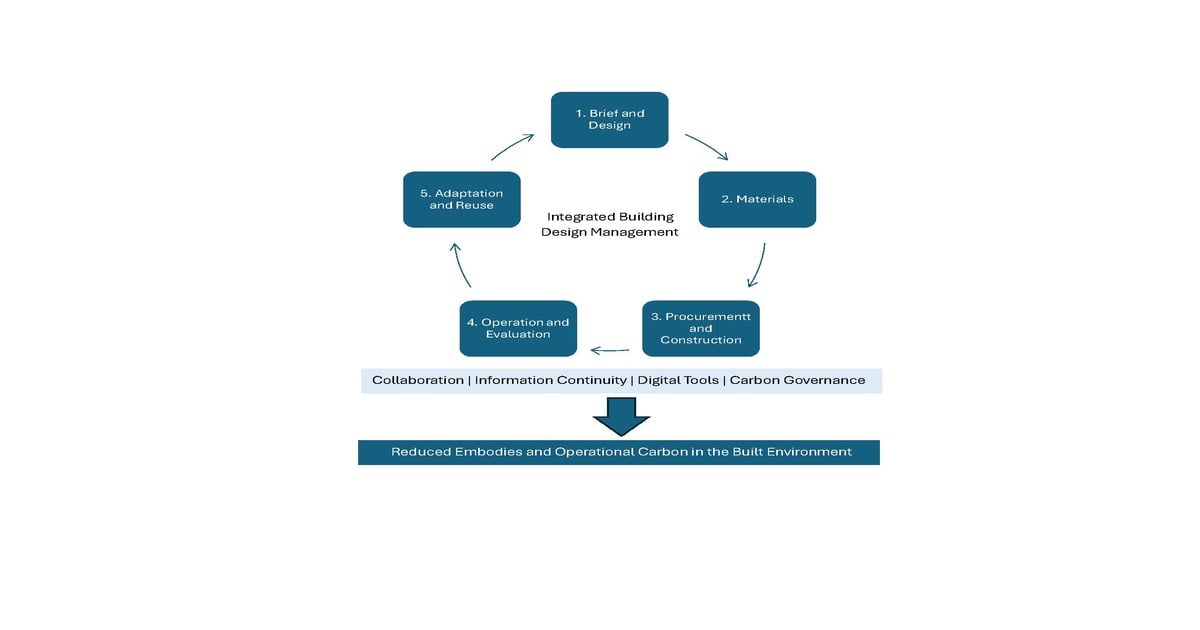
The urgent transition to a low-carbon built environment requires building design and construction delivery to be managed as an integrated process. Decisions made during project briefing and design, including those relating to building form, passive strategies, material selection, structural systems, building services, adaptability and end-of-life planning, have significant implications for operational and embodied carbon. However, fragmented responsibilities, ineffective interdisciplinary coordination, discontinuities in project information, and value-driven changes during procurement and construction can weaken ambitious design intentions. These challenges frequently contribute to gaps between predicted and measured building performance. Achieving meaningful carbon reductions therefore requires effective building design management that connects architectural quality, technical performance, constructability, cost, procurement and whole-life carbon objectives.
This Special Issue invites research examining how integrated building design management can support the planning, coordination, implementation and evaluation of low-carbon buildings across their life cycles. Particular attention is given to the processes, tools, governance arrangements and collaborative practices through which sustainability objectives are translated from project briefs and early design concepts into procurement requirements, construction outcomes and operational performance. The Special Issue aligns with the scope of Architecture by addressing architectural and building design, design methods and management, building technologies, environmental performance, retrofit, construction processes, and the wider cultural and environmental dimensions of the built environment.
The Special Issue seeks to bring together architects, engineers, design managers, quantity surveyors, construction managers, building scientists, policymakers, and industry practitioners. Original research articles, systematic and critical reviews, methodological contributions, and well-evidenced case studies are welcome.
Potential topics include, but are not limited to, the following:
- Integrated and interdisciplinary building design management for carbon reduction;
- Design decision-making, coordination and information continuity across project stages;
- Whole-life carbon assessment, targets, benchmarks and design optimisation;
- Climate-responsive, passive, regenerative and net-zero building design;
- Low-embodied-carbon, bio-based, recycled and reused materials;
- Circular design, adaptability, design for disassembly and component reuse;
- Constructability, value management and the preservation of low-carbon design intent;
- Procurement models, contracts and early contractor involvement;
- BIM, digital twins, artificial intelligence and data-driven design decisions;
- Prefabrication, off-site construction and low-carbon delivery methods;
- Retrofit, refurbishment and adaptive reuse;
- Carbon governance, regulations, standards and professional responsibilities;
- Post-occupancy evaluation and the design-to-performance gap.
Collectively, the contributions will advance understanding of how building design management can bridge design and construction, strengthen life-cycle accountability, and deliver measurable, scalable, and context-responsive carbon reductions.
Dr. Marini Samaratunga
Prof. Dr. Srinath Perera
Dr. Martina Murphy
Guest Editors
Manuscript Submission Information
Manuscripts should be submitted online at www.mdpi.com by registering and logging in to this website. Once you are registered, click here to go to the submission form. Manuscripts can be submitted until the deadline. All submissions that pass pre-check are peer-reviewed. Accepted papers will be published continuously in the journal (as soon as accepted) and will be listed together on the Special Issue website. Research articles, review articles as well as short communications are invited. For planned papers, a title and short abstract (about 250 words) can be sent to the Editorial Office for assessment.
Submitted manuscripts should not have been published previously, nor be under consideration for publication elsewhere (except conference proceedings papers). All manuscripts are thoroughly refereed through a single-anonymized peer-review process. A guide for authors and other relevant information for submission of manuscripts is available on the Instructions for Authors page. Architecture is an international peer-reviewed open access quarterly journal published by MDPI.
Please visit the Instructions for Authors page before submitting a manuscript. The Article Processing Charge (APC) for publication in this open access journal is 1200 CHF (Swiss Francs). Submitted papers should be well formatted and use good English. Authors may use MDPI's English editing service prior to publication or during author revisions.
Keywords
- low-carbon architecture
- whole-life carbon
- embodied carbon
- operational carbon
- sustainable construction
- net-zero buildings
- circular design
- adaptive reuse
- life-cycle assessment
- building performance
- climate-responsive design
- digital design
Benefits of Publishing in a Special Issue
- Ease of navigation: Grouping papers by topic helps scholars navigate broad scope journals more efficiently.
- Greater discoverability: Special Issues support the reach and impact of scientific research. Articles in Special Issues are more discoverable and cited more frequently.
- Expansion of research network: Special Issues facilitate connections among authors, fostering scientific collaborations.
- External promotion: Articles in Special Issues are often promoted through the journal's social media, increasing their visibility.
- Reprint: MDPI Books provides the opportunity to republish successful Special Issues in book format, both online and in print.
Published Papers


Architecture - ISSN 2673-8945