


Thresholds: [Interior] Architecture
Special Issue Information
Dear Colleagues,
Positioning
“The in-between is what fosters and enables the other’s transition from being the other of the one to its own becoming, to reconstituting another relation, indifferent terms” (Grosz, 2001, p. 94).
The moment we mention the term interior with architecture, the notion of exterior inevitably surfaces. Yet, discourse around this threshold of interiority remains underexplored. Interior architecture, by its very nature, emerges from this division and becomes a liminal space: a productive ground for critical inquiry and creative interpretation.
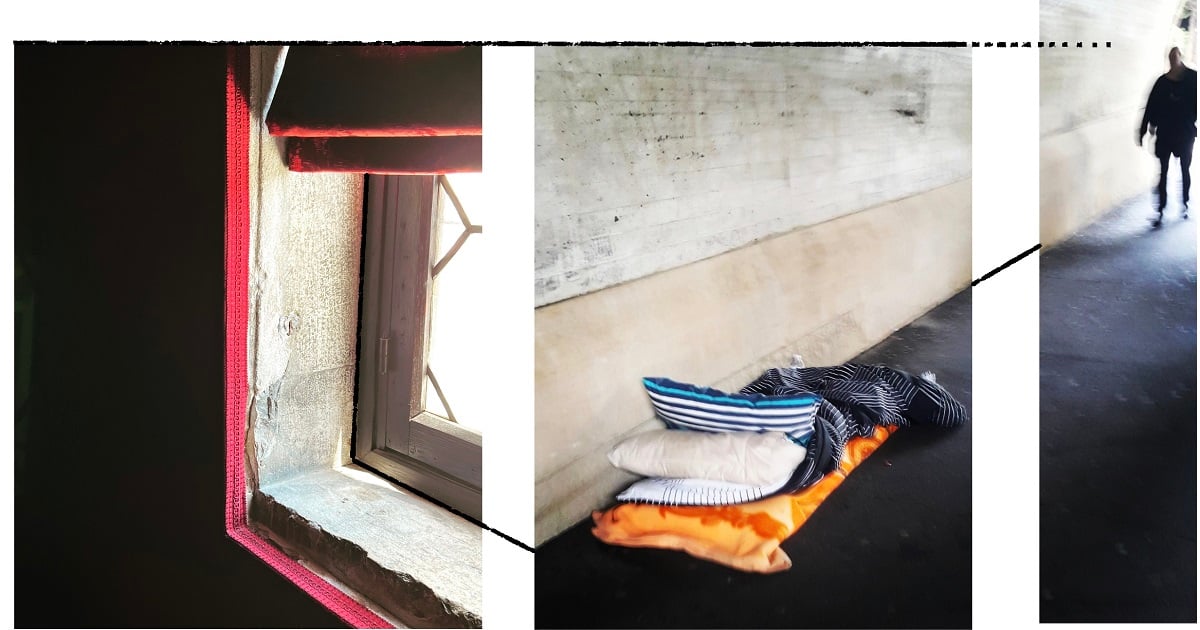
We construct binaries to divide, categorize, and label thresholds, while simultaneously acknowledging that these conditions coexist, interrelate, and continuously reconstitute one another. A threshold may manifest as interiority in physical form, such as a wall delineating a historical city, a building entrance forming a semi-public space, a room containing a bed, a bedcover concealing its mattress, or even the air trapped within a revolving door. It may also appear through temporal conditions, such as the transformation of a public bench into the interiority of a rough sleeper.
Thresholds may also be liminal, experiental or performative, emerging through social expectations or unspoken cultural norms that act as boundaries. Both material or immaterial conditions can construct forms of interiority, such as between public and private realms, or can delineate the sacred and the profane. Non-physical thresholds may operate through intangible mechanisms: social, cultural, and psychological constructs that define an inclusion, or perceptual boundaries created by light, sound, or atmosphere, or digital interfaces that mediate new spatial experiences, generating virtual interiors and communities. This Special Issue welcomes research outcomes from a variety of architectural and non-architectural backgrounds, provided the discourse is framed around thresholds defined by or within an interiority.
Call for Papers
This call invites contributions that interrogate thresholds as liminal spaces, zones of in-betweenness that enable transformation and becoming. We seek explorations of the potentials of thresholds as productive, generative conditions under the following seven thematic subsections:
Ontologies of Thresholds: Exploring philosophical and theoretical frameworks of interiority and how interior architecture negotiates concepts of a threshold.
Temporal and Experiential Dimensions: Analyzing how time, movement, and sensory experience influence the perception and design of liminal spaces.
Material and Spatial Practices: Investigating how materiality, construction approaches, and design strategies shape thresholds within interior architecture.
Social and Cultural Approaches: Investigating how thresholds emerge within different social, cultural, and geographic settings.
Ecologies of Transition: Examining environmental, sustainable, and ecological dimensions of thresholds and their impact on interior architecture.
Hybrid Interfaces: Exploring digital, virtual, and augmented environments such as in films and video games as evolving thresholds within contemporary interior architecture.
Pedagogies, Practices and Professions: Exploring the thresholds that define and/or expand/limit the pedagogy, practice and profession of interiors—'architecture', 'interior', 'design' and 'decoration'.
Research articles may adopt a methodological focus, draw primarily on empirical data, examine specific case studies, or engage in theoretical argumentation.
Research articles may be methodologically motivated, data-driven, case study-focused, or theoretical.
Grosz, E. (2001). Architecture from the Outside: Essays on Virtual and Real Space. MIT Press.
Dr. Demet Dincer
Dr. Sing D’Arcy
Guest Editors
Manuscript Submission Information
Manuscripts should be submitted online at www.mdpi.com by registering and logging in to this website. Once you are registered, click here to go to the submission form. Manuscripts can be submitted until the deadline. All submissions that pass pre-check are peer-reviewed. Accepted papers will be published continuously in the journal (as soon as accepted) and will be listed together on the special issue website. Research articles, review articles as well as short communications are invited. For planned papers, a title and short abstract (about 250 words) can be sent to the Editorial Office for assessment.
Submitted manuscripts should not have been published previously, nor be under consideration for publication elsewhere (except conference proceedings papers). All manuscripts are thoroughly refereed through a single-anonymized peer-review process. A guide for authors and other relevant information for submission of manuscripts is available on the Instructions for Authors page. Architecture is an international peer-reviewed open access quarterly journal published by MDPI.
Please visit the Instructions for Authors page before submitting a manuscript. The Article Processing Charge (APC) for publication in this open access journal is 1200 CHF (Swiss Francs). Submitted papers should be well formatted and use good English. Authors may use MDPI's English editing service prior to publication or during author revisions.
Keywords
- interior architecture
- interior design
- contemporary architecture
- spatial experience
- thresholds
- liminal space
- in-betweenness
Benefits of Publishing in a Special Issue
- Ease of navigation: Grouping papers by topic helps scholars navigate broad scope journals more efficiently.
- Greater discoverability: Special Issues support the reach and impact of scientific research. Articles in Special Issues are more discoverable and cited more frequently.
- Expansion of research network: Special Issues facilitate connections among authors, fostering scientific collaborations.
- External promotion: Articles in Special Issues are often promoted through the journal's social media, increasing their visibility.
- Reprint: MDPI Books provides the opportunity to republish successful Special Issues in book format, both online and in print.
Published Papers


Architecture - ISSN 2673-8945