Agronomy 2025, 15(1), 149; https://doi.org/10.3390/agronomy15010149 - 9 Jan 2025
Cited by 3 | Viewed by 2901
Abstract
►
Show Figures
In South Korea, spring potatoes account for over 60% of total potato production, but global warming and anomalous weather events may impact their growth and yield. This study examined potato cultivation practices across 12 locations with varying climates, analyzing meteorological factors, soil properties,
[...] Read more.
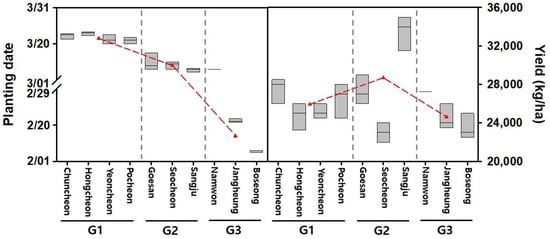
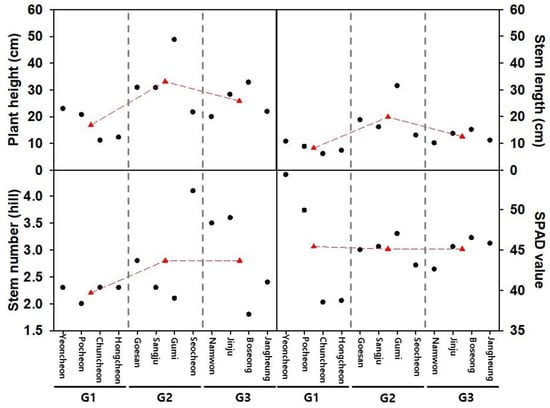
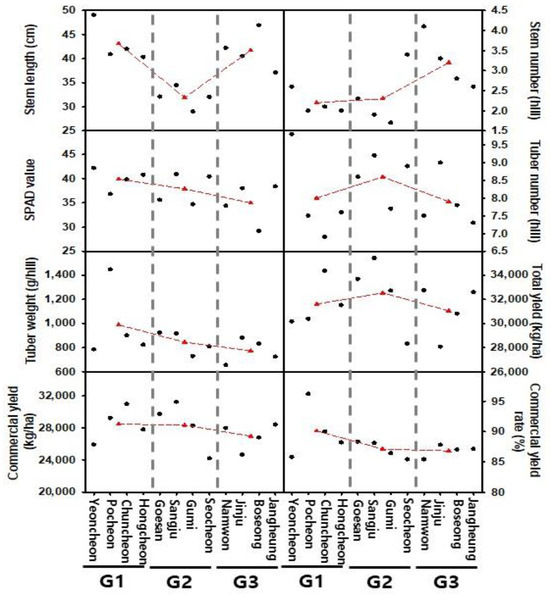
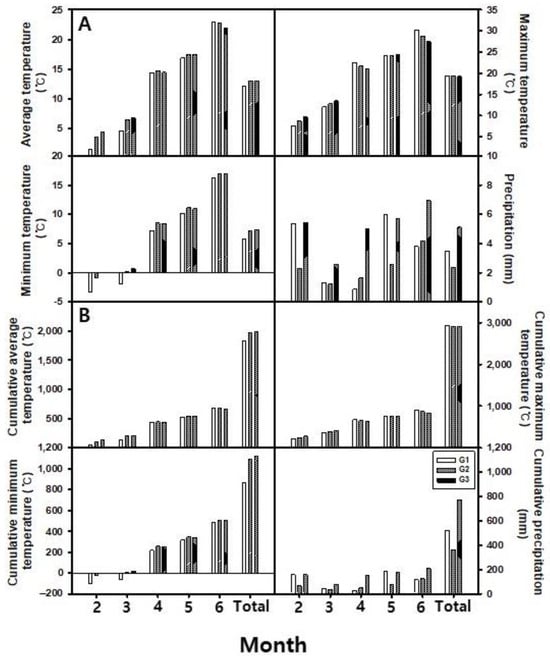
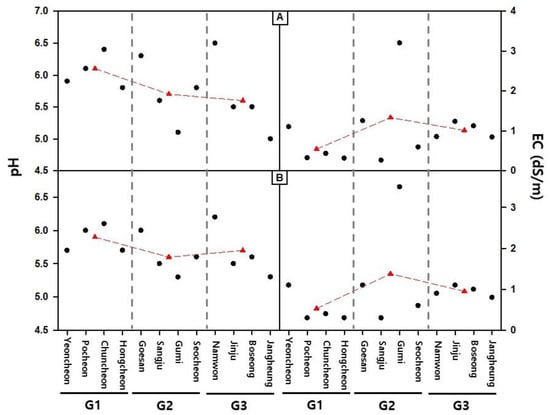
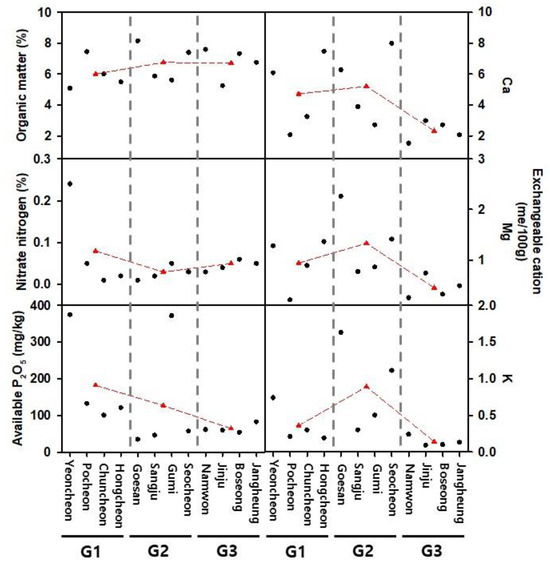
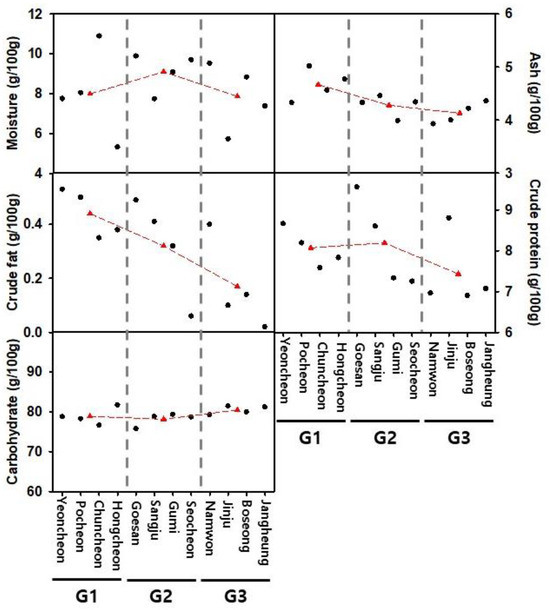
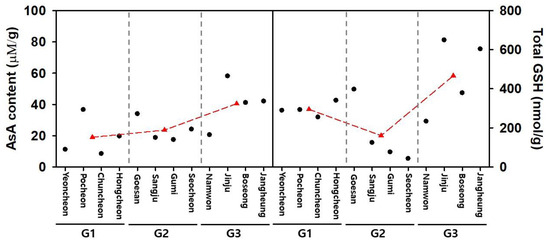
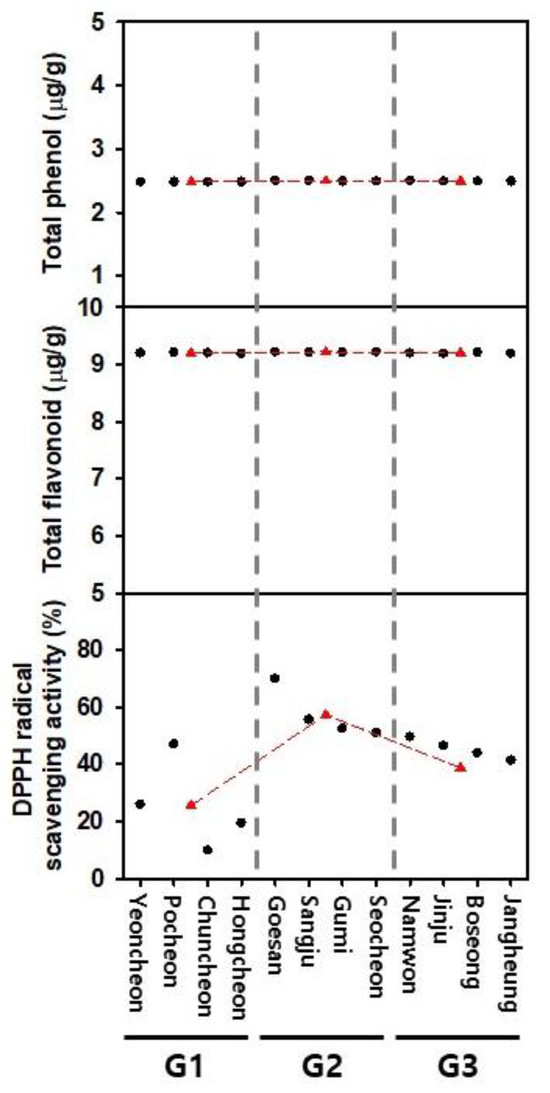
In South Korea, spring potatoes account for over 60% of total potato production, but global warming and anomalous weather events may impact their growth and yield. This study examined potato cultivation practices across 12 locations with varying climates, analyzing meteorological factors, soil properties, and potato composition to identify stable cultivation areas. A survey of 45 farms revealed earlier planting dates in G3 regions compared to G2 and G1. Regions were classified into three groups (G1, G2, and G3) based on climatic conditions, with G1 representing the most temperate regions, G2 indicating regions with moderate climates, and G3 including areas with the warmest climates. The Superior variety was predominately cultivated in average areas of 1.4 ha. Yields ranged from 22,500 to 35,000 kg/ha, with G2 regions producing the highest yields. During tuber formation, plant height in G2 and G3 was greater than in G1, but no differences were noted at harvest. Planting times correlated with higher February and March temperatures, which were highest in G3. Soil properties were suitable across all regions, with minor variations. Ash and crude fat content were highest in G1 crops, while ascorbate and glutathione levels were highest in G3. No significant differences were found in total phenol and flavonoid content, though G2 and G3 showed higher antioxidant activity. Similar weather during the main growth period (April–June) minimized regional differences in growth, yield, and quality, but ongoing monitoring is recommended as climate change progresses. Overall, this study provides insights into how climatic conditions affect potato cultivation in South Korea and emphasizes the importance of adapting farming practices to ensure stable yields under changing climate conditions.
Full article
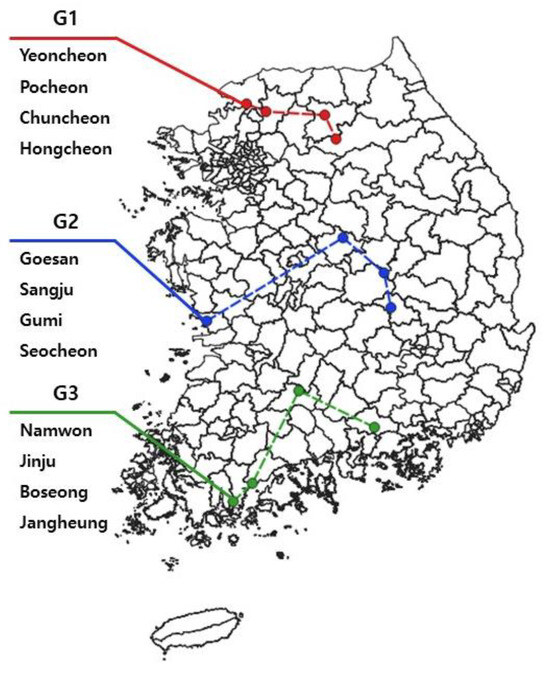
Figure 1