Skip to Content
You are currently on the new version of our website. Access the old version .
  • 23 days
    Submission to First Decision
  • 6 days
    Acceptance to Publication

Journal of Phytomedicine

Journal of Phytomedicine is an international, peer-reviewed, open access journal on all aspects of phytomedicines published quarterly online by MDPI.
  • Open Access— free for readers, with article processing charges (APC) paid by authors or their institutions.
  • Rapid Publication: first decisions in 18 days; acceptance to publication in 7 days (median values for MDPI journals in the first half of 2026).
  • Recognition of Reviewers: Reviewers whose reports are timely and of high quality receive an APC discount voucher for a future publication in an MDPI journal. Become a reviewer.

Get Alerted

Add your email address to receive forthcoming issues of this journal.

All Articles (13)

  • Review
  • Open Access

Neuroprotective Biomolecules from Hericium erinaceus: A Biochemical Perspective

  • Goutham Padmakumar Sarala,
  • Olivia Holly Roberts and
  • Monique S. J. Simmonds

Hericium erinaceus (lion’s mane) is among the most widely marketed natural product preparations for cognitive health and has a long-documented history of use in East Asian traditional medicine alongside botanical drugs. Its principal bioactive constituents, the cyathane diterpenoids, meroterpenoids and structural polysaccharides, belong to the same natural product chemistry, pharmacokinetic and quality control framework applied to plant-derived phytomedicines. Therefore, H. erinaceus faces the same translational questions of batch consistency, bioavailability and mechanistic definition. Scientific evidence remains complicated by the variations in fruiting body and mycelium biochemistry, extraction procedures and pharmacokinetic data. The current work addresses this gap by compiling natural product chemistry, structure–activity relationships, mechanisms of action, preclinical and human studies, along with analytical quality control of H. erinaceus metabolites. It proposes a matrix-specific quality control approach supported by authentication, biochemical makeup and markers for the starting material (fruiting body/mycelium), in addition to critically evaluating the relevant current studies for strengths and weaknesses. Using bioanalytics, mass spectrometry and metabolomics, we also highlight methodologies for compound quantification and novel biomolecule discovery. By linking chemical standardisation to the clinical evidence base, this review provides a quality assessment framework of the kind required for herbal and other natural product remedies. It also identifies the pharmacokinetic and trial design gaps that currently limit integration of these preparations into evidence-based practice.

J. Phytomed.

28 October 2026

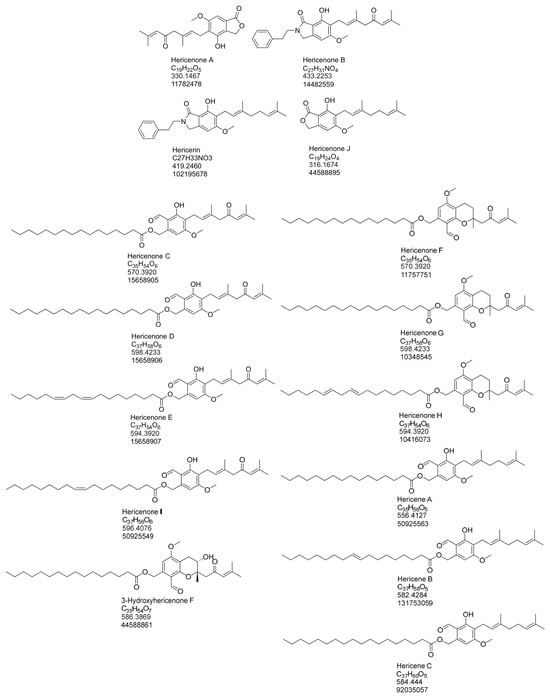
Name, molecular formula, mono-isotopic mass and PubChem IDs of bioactive hericenones, hericerin and hericene isolated from fruit bodies and/or mycelia of H. erinaceus.
  • Article
  • Open Access

Arboviruses transmitted by Aedes mosquitoes, including Zika (ZIKV), Chikungunya (CHIKV), and Mayaro (MAYV) viruses, lack approved antiviral therapies. This study evaluated the cytotoxicity and antiviral activity of ethanolic extracts and fractions from stems and leaves of Indigofera suffruticosa Mill. (Fabaceae), and isolated the active principles through bioguided fractionation. Extracts were obtained by cold maceration and partitioned into chloroform, ethyl acetate, and aqueous methanol fractions. Cytotoxicity was assessed by the MTT assay in MRC-5 and Vero cells, and antiviral activity was determined in simultaneous treatment-infection assays in Vero cells. The stem ethanolic extract showed potent anti-ZIKV activity (EC50 = 29.43 ± 1.43 µg/mL; SI > 13.59). The chloroform fraction displayed broad-spectrum efficacy, with EC50 = 89.48 ± 2.70 µg/mL (ZIKV; SI > 4.47), 37.05 ± 2.26 µg/mL (CHIKV; SI > 10.80), and 42.39 ± 3.60 µg/mL (MAYV; SI > 9.44). Bioguided fractionation afforded 3-O-β-D-glucosyl-β-sitosterol, which exhibited selective anti-alphavirus activity against CHIKV (EC50 = 151.76 µM; SI = 2.02) and MAYV (EC50 = 150.35 µM; SI = 2.03), but was inactive against ZIKV, indicating that additional constituents account for the anti-flaviviral effect. Indigofera suffruticosa is a promising source of broad-spectrum anti-arboviral agents, supporting further bioassay-guided isolation and mechanistic studies.

J. Phytomed.

4 October 2026

  • Review
  • Open Access

Uvaria chamae P. Beauv., commonly known as finger root or bush banana, is an important medicinal and edible plant widely used in West and Central Africa. Its increasing use in traditional medicine has intensified harvesting pressure on natural populations, highlighting the need for comprehensive scientific knowledge to support its sustainable management and valorization. This narrative review aimed to provide a comprehensive and up-to-date synthesis of the available knowledge on the taxonomy, ecology, propagation, phytochemistry, ethnomedicinal uses, and pharmacological properties of Uvaria chamae, with particular emphasis on its antidiabetic and anti-infective potential. Relevant literature published between 2004 and 2026 was retrieved through structured literature searches of PubMed, Scopus, Embase, African Journals Online, Google Scholar and the Environmental Science Collection using predefined search terms. Peer-reviewed articles, conference papers, theses, books, and other relevant scientific sources addressing the ethnomedicinal uses, pharmacology, toxicity, biology, and conservation of Uvaria chamae were screened and selected according to predefined eligibility criteria. The review revealed that Uvaria chamae contains a diverse range of bioactive constituents, including alkaloids, flavonoids, acetogenins, terpenoids, phenolic compounds, and essential oils, which have been associated with various biological activities. Experimental studies provide evidence supporting its antidiabetic and anti-infective potential, while available toxicological data suggest low toxicity at the doses tested. The review also identified important knowledge gaps, particularly regarding clinical validation, mechanisms of action, propagation biology, and sustainable exploitation strategies. The available evidence highlights Uvaria chamae as a promising source of bioactive compounds for further investigation in the management of diabetes and infectious diseases. By consolidating existing knowledge and identifying research priorities, this review provides a scientific foundation for future studies and supports ongoing efforts toward the conservation, domestication, sustainable utilization, and valorization of this important medicinal species.

J. Phytomed.

30 September 2026

  • Review
  • Open Access

Adaptogens, Performance, and Psychophysiological Responses to Exercise: A Narrative Review

  • Daphne G. Schmid,
  • Maggie M. Pitts and
  • Christopher G. Ballmann
  • + 1 author

Adaptogens are a group of bioactive substances that are purported to enhance non-specific resistance to stress and promote physiological homeostasis. Adaptogens are typically derived from specific medicinal plants or fungi, with many having been used in folk medicine for centuries for their stress-reducing properties. Emerging evidence has shown that adaptogens modulate various aspects of stress responses through hormonal, neural, and cellular mechanisms, which are highly relevant to performance and responses to exercise. Adaptogens may exert ergogenic effects by modulating fatigue, autonomic balance, neuromuscular function, and metabolic responses during exercise. Collectively, evidence has suggested that adaptogens have the potential to improve responses to exercise and enhance performance during aerobic, sprint, and resistance modes of activity. Despite promising findings, the current body of literature is highly fragmented, heterogeneous in study design, and has largely failed to bridge the gap between mechanisms in preclinical models and applicable exercise performance outcomes in humans. Furthermore, the psychophysiological underpinning of potential improvements to exercise responses remains less described. The purpose of this narrative review is to synthesize current evidence of adaptogens, supplementation, and responses to exercise as it pertains to performance, physiological, and psychological domains. Particularly, adaptogen supplements (i.e., Rhodiola Rosea, Ashwagandha, Cordyceps, Panax ginseng), which are commercially available and prominent in the exercise literature, are highlighted. Information related to dosing, effectiveness, and underlying mechanisms of action are discussed with an emphasis on how this influences psychophysiological responses to exercise. Lastly, future research needs and limitations based on the current literature are discussed. Despite some promising evidence of the ergogenic effects of adaptogens, this review highlights the need for additional well-controlled studies with more emphasis on psychophysiological mechanisms before widespread recommendations for their use can be made.

J. Phytomed.

1 September 2026

Highly Accessed Articles

News & Conferences

Latest Issues

Open for Submission

Journal Sections

XFacebookLinkedIn
J. Phytomed. - ISSN 3042-9250