


Abstract
Uvaria chamae P. Beauv., commonly known as finger root or bush banana, is an important medicinal and edible plant widely used in West and Central Africa. Its increasing use in traditional medicine has intensified harvesting pressure on natural populations, highlighting the need for comprehensive scientific knowledge to support its sustainable management and valorization. This narrative review aimed to provide a comprehensive and up-to-date synthesis of the available knowledge on the taxonomy, ecology, propagation, phytochemistry, ethnomedicinal uses, and pharmacological properties of Uvaria chamae, with particular emphasis on its antidiabetic and anti-infective potential. Relevant literature published between 2004 and 2026 was retrieved through structured literature searches of PubMed, Scopus, Embase, African Journals Online, Google Scholar and the Environmental Science Collection using predefined search terms. Peer-reviewed articles, conference papers, theses, books, and other relevant scientific sources addressing the ethnomedicinal uses, pharmacology, toxicity, biology, and conservation of Uvaria chamae were screened and selected according to predefined eligibility criteria. The review revealed that Uvaria chamae contains a diverse range of bioactive constituents, including alkaloids, flavonoids, acetogenins, terpenoids, phenolic compounds, and essential oils, which have been associated with various biological activities. Experimental studies provide evidence supporting its antidiabetic and anti-infective potential, while available toxicological data suggest low toxicity at the doses tested. The review also identified important knowledge gaps, particularly regarding clinical validation, mechanisms of action, propagation biology, and sustainable exploitation strategies. The available evidence highlights Uvaria chamae as a promising source of bioactive compounds for further investigation in the management of diabetes and infectious diseases. By consolidating existing knowledge and identifying research priorities, this review provides a scientific foundation for future studies and supports ongoing efforts toward the conservation, domestication, sustainable utilization, and valorization of this important medicinal species.
1. Introduction
In recent years, diabetes and infectious diseases have increasingly shaped the global public health landscape, with their burden falling most heavily on low- and middle-income countries [1]. Diabetes alone affects an estimated 589 million adults worldwide, representing more than one in nine people aged 20–79 years, and this number is projected to rise to 853 million by 2050, with nearly three-quarters of cases occurring in resource-limited settings [2,3]. Sub-Saharan Africa is experiencing the fastest growth, a trend clearly reflected in Benin, where diabetes prevalence has risen sharply from 1.4% in 2011 to approximately 8.1% in 2024, corresponding to nearly 467,000 affected adults, most of whom remain undiagnosed [3,4]. At the same time, infectious diseases continue to exert a heavy toll. This burden is intensified by the global rise of antimicrobial resistance, which is now responsible for over 1.27 million deaths annually worldwide and threatens the effectiveness of existing therapies, particularly in countries with fragile health systems [5,6,7]. The coexistence of rapidly expanding non-communicable diseases such as diabetes alongside long-standing infectious diseases, puts strong pressure on healthcare systems and communities. Despite advances in modern medicine, treatment costs, adverse effects, and limited accessibility, especially in rural areas, continue to restrict effective care. As a result, many people rely on traditional medicine, which continues to play an important role in local health practices [8,9,10,11,12]. In this context, medicinal plants retain a vital role as accessible and culturally accepted therapeutic resources, highlighting their continued relevance in addressing both metabolic and infectious diseases [13,14]. These plants have significantly contributed to the development of newly discovered drugs and continue to play an invaluable role in the advancement of drug discovery [15,16]. Among these plants, the genus Uvaria has attracted growing scientific interest.
The genus Uvaria (Annonaceae), an important group of angiosperms, comprises approximately 171 accepted species distributed throughout the Old World tropics, including tropical Africa, Madagascar, South and Southeast Asia, New Guinea, and northern Australia [17,18,19,20]. Most species are aromatic climbing or trailing shrubs, although a few occur as trees [17,18,21]. Traditionally, Uvaria species have been widely used in folk medicine for the treatment of fever, malaria, jaundice, infections, menstrual disorders, diabetes, and epilepsy [17,18,22]. In addition to their medicinal value, several species produce edible fruits of nutritional and economic importance, particularly in tropical Africa [21,23]. Owing to their long-standing use of therapeutic resources and their richness in bioactive compounds, Uvaria species have attracted considerable scientific interest, leading to numerous phytochemical and pharmacological investigations aimed at validating traditional uses and identifying potential drug leads [24,25,26,27].
One species that genus that has garnered particular interest in West Africa is Uvaria chamae, because of its wide-ranging ethnomedicinal applications adding to its promising pharmacological properties linked to its rich phytochemical profile. Uvaria chamae, commonly referred to as finger root or bush banana in English, and bananier de brousse or bananier sauvage in French, is a climbing medicinal plant native to both the wet and dry tropical forests of West and Central Africa [21,28,29]. Local communities across its range have given it various names, reflecting its physical traits, uses, and cultural significance [30,31]. In Benin, it is known as “Hovi kokwé” in Fon and “agbanan” in Adja and Mina [30,32] among others. In Nigeria, it goes by “Mmimi ohia” in Igbo, “Kaskaifi” in Hausa, and “Oko aja” in Yoruba [33,34,35]. Across Africa, this adaptable plant plays a key role in traditional healing practices. The plant’s roots, stems, and leaves are traditionally used to address a wide range of health problems, from digestive troubles and skin irritations to respiratory issues, bites, poisoning, mental disorders, and hemorrhoids [36]. According to Bongers et al. [37] its fruits are also consumed as food and used in the beverage industry for flavoring. Scientific studies have confirmed many of these traditional uses. Phytochemicals extracted from different parts of Uvaria chamae have demonstrated a range of pharmacological effects, including anticancer, antimicrobial, anti-inflammatory, antioxidant, antidiabetic, antimalarial, and antiparasitic effects [21]. However, the plant’s popularity in traditional medicine has led to overharvesting, threatening its survival in the wild. This pressure is further intensified by habitat loss caused by human activities such as farming and urban expansion, particularly in regions like Benin, where the species is especially vulnerable [38,39,40].
To safeguard this valuable species, domestication is essential, not only to conserve its natural populations but also to enhance its economic and medicinal potential. Yet, there remains a lack of foundational knowledge necessary for sustainable management and effective utilization. A comprehensive synthesis of existing research is crucial to guide future studies and conservation strategies.
Despite its extensive ethnomedicinal use and growing scientific interest, knowledge on Uvaria chamae remains fragmented across the literature. Numerous studies have documented its traditional applications, phytochemical composition, and diverse pharmacological activities. However, an updated synthesis specifically linking its bioactive constituents to its antidiabetic and anti-infective properties remains limited. Moreover, the increasing demand for the species in traditional medicine, coupled with habitat degradation and other anthropogenic pressures, threatens the sustainability of natural populations. In this context, a comprehensive assessment of current knowledge is essential not only to support the discovery of novel therapeutic agents but also to promote the sustainable utilization, domestication, and conservation of this valuable medicinal resource. Based on the available studies on Uvaria chamae, we hypothesize that consolidating current knowledge on its traditional uses, phytochemistry, biological activities, and conservation status will facilitate its sustainable valorization and help identify priorities for future research. Therefore, this narrative review provides an updated overview of the taxonomy, distribution, ethnomedicinal uses, phytochemistry, pharmacological properties, toxicity, and propagation prospects of Uvaria chamae, with particular emphasis on its antidiabetic and anti-infective potential.
2. Methods
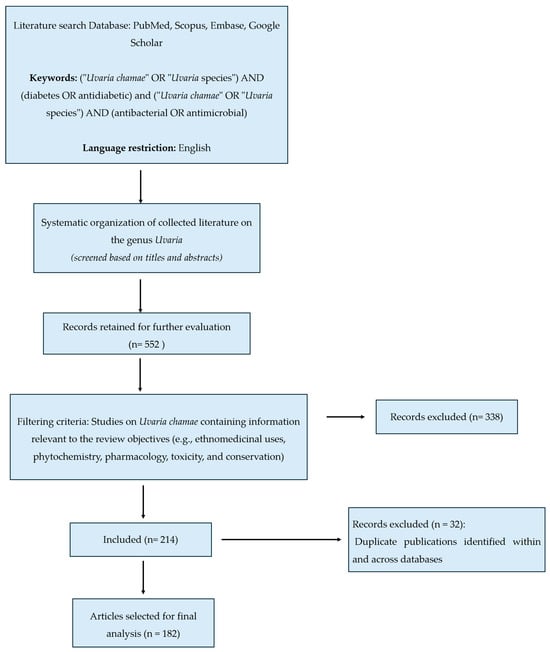
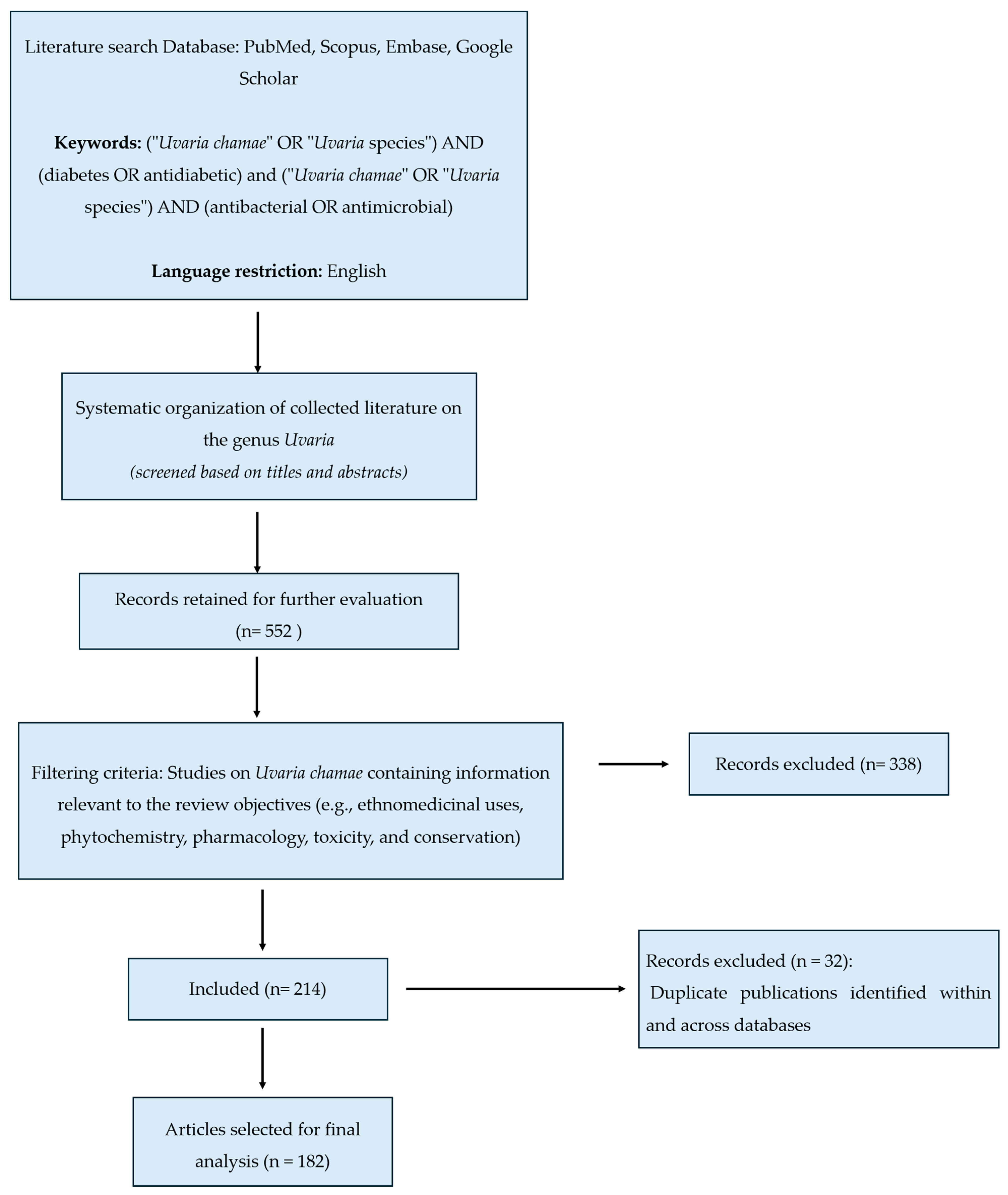
The methodology adopted for this narrative review was structured into four successive phases. The literature search was performed between January 2025 and July 2026, and included publications published from 2004 and 2026. Initially, a comprehensive search of multiple academic databases was undertaken to identify relevant studies. Subsequently, the retrieved records were organized and screened, with emphasis placed on publications concerning the genus Uvaria. The third phase involved narrowing the scope to Uvaria chamae, during which relevant information was extracted, categorized, and reclassified according to the objectives of the review. Finally, the selected literature was critically examined, and the resulting evidence was synthesized to generate an integrated overview of the biological, phytochemical, and ethnomedicinal attributes of the species. The methodological approach used in this review is illustrated in a flow diagram (Figure 1).
Figure 1.
Flow diagram of the literature search scheme used for this review.
2.1. Searching for Papers Across Multiple Databases
A comprehensive review of the relevant literature was conducted using a range of electronic databases, including PubMed, Embase, Scopus, African Journals Online, Google Scholar and the Environmental Science Collection. The search encompassed a wide array of sources such as peer-reviewed journal articles, technical reports, theses, books, and other relevant academic resources. Additional data were drawn from reputable biodiversity and conservation platforms like the Global Biodiversity Information Facility (GBIF) and the International Union for Conservation of Nature (IUCN).
To ensure a comprehensive literature search, multiple keyword combinations were employed. These included (“Uvaria chamae” OR “Uvaria species”) AND (diabetes OR antidiabetic OR antibacterial OR antimicrobial), together with additional terms related to the botanical description and ethnomedicinal uses of the species. The keywords were searched both individually and in different combinations to maximize the coverage and retrieval of relevant studies.
2.2. Systematic Organization of the Collected Literature on the Genus Uvaria
To ensure the inclusion of the relevant literature, all retrieved records were initially screened based on their titles and abstracts, with emphasis placed on publications addressing the genus Uvaria. Publications were considered eligible if they were written in English and were relevant to the objectives of the review. The full texts of potentially eligible records were subsequently examined to identify additional relevant references. Following this process, 552 publications were retained for further evaluation.
2.3. Extraction and Reclassification of Paper Content Based on Uvaria chamae
Following the screening of titles and abstracts, studies were retained if they specifically addressed Uvaria chamae and provided information relevant to the objectives of this review, including its ethnomedicinal uses, phytochemical composition, biological and pharmacological activities (particularly antidiabetic and anti-infective effects), toxicity, biology, or conservation. Publications focusing on other Uvaria species without reporting data on Uvaria chamae, as well as studies lacking sufficient relevance to the scope of the review, were excluded. The study selection process ultimately resulted in 182 eligible publications for final analysis (Figure 1). These selected studies were catalogued in an Excel spreadsheet, from which key information, including the title, authors, year of publication, research domain, country of study, plant part investigated, and major findings, was extracted for further analysis. However, not all included publications were cited individually in the manuscript. In cases where multiple studies reported similar findings, only the most relevant, authoritative, or recent references were retained to avoid redundancy and improve readability.
2.4. Review of the Selected Studies
Drawing on the selected literature, a detailed analysis was conducted to identify key findings, highlight recurring themes, and reveal gaps in current knowledge. This synthesis provides a comprehensive overview of the research landscape surrounding Uvaria chamae, particularly in relation to its potential role in the management of diabetes and infectious diseases, while also identifying directions for future research. By systematically organizing and comparing findings across studies, it was possible to assess the strength, consistency, and limitations of the available evidence. The outcomes of this process provide a foundation for interpreting the broader implications of the existing literature and for identifying priority areas requiring further investigation.
3. Results
3.1. Historical and Geographical Trends of the Publications
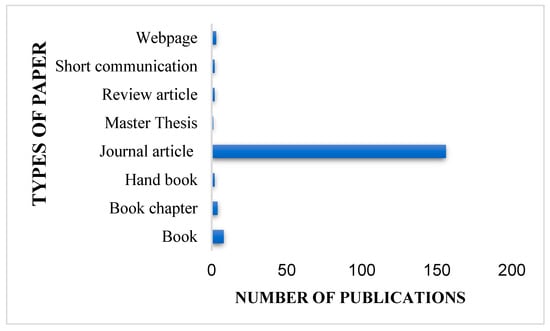
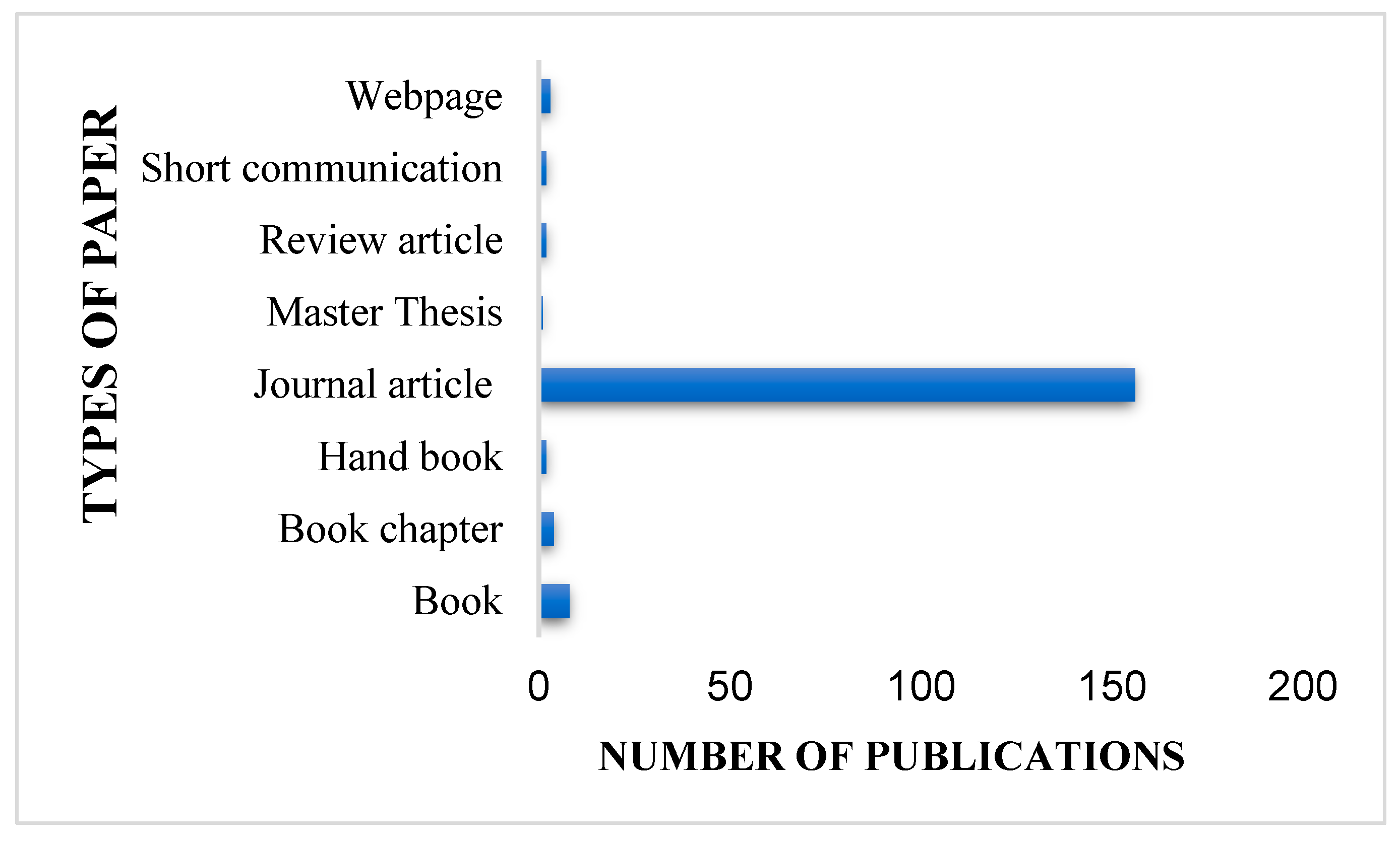
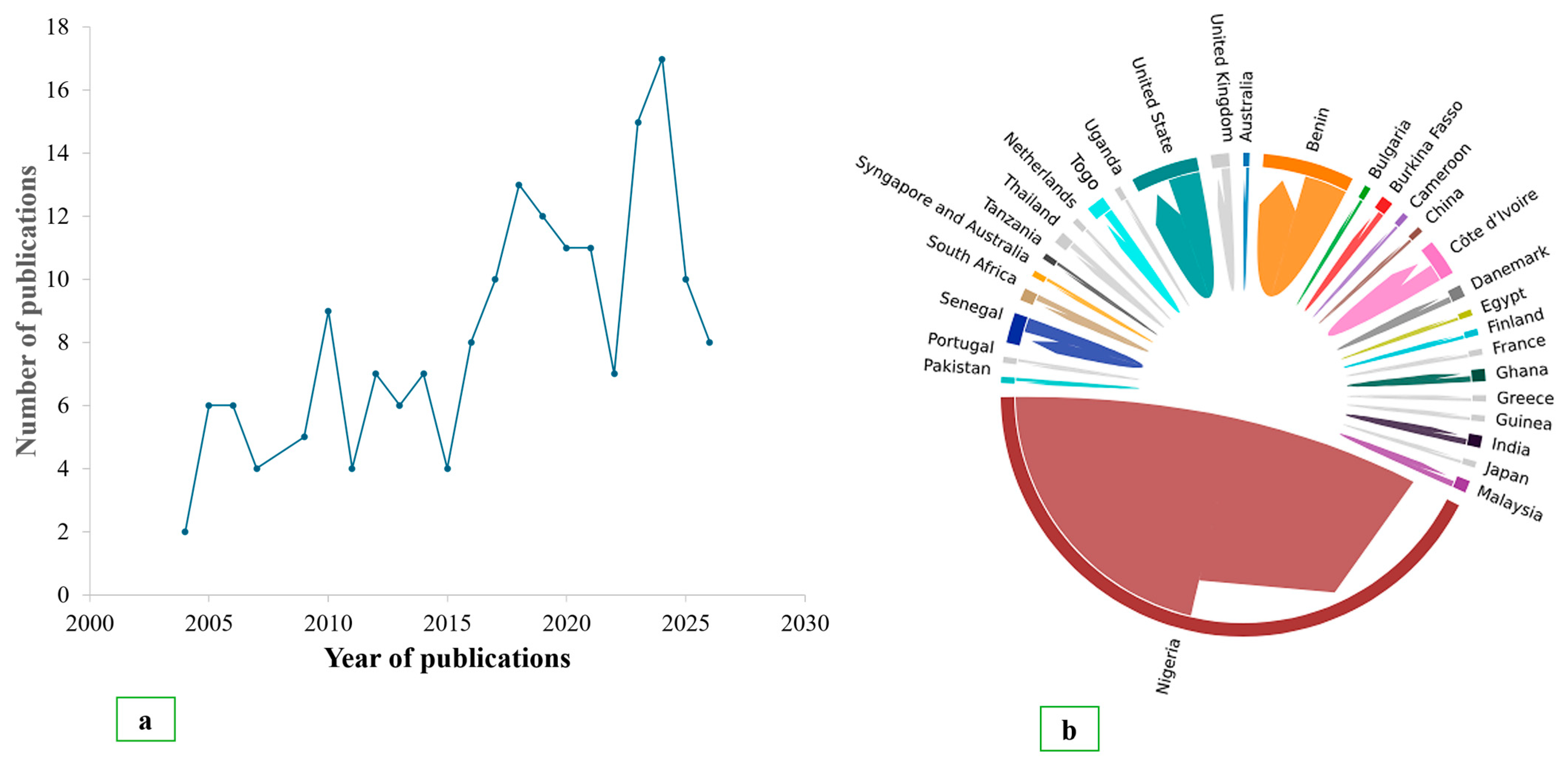
A total of 182 publications have been selected on Uvaria chamae, spanning various formats: 159 were journal articles, 2 were reviews, 2 appeared in handbooks, 5 were book chapters, 8 were full-length books, 1 was a master’s thesis, 2 were short communications, and 3 were sourced from websites (Figure 2). These publications, released between 2004 and 2026, show a fluctuating but generally increasing trend across the species’ geographical range (Figure 3a). The number of publications selected for this review has generally increased over time, with a marked increase in recent years and peak publication outputs recorded around 2023–2024 (Figure 3a).
Figure 2.
Types of publications on Uvaria chamae.
Figure 3.
Temporal (a) and spatial (b) trends of publications on Uvaria chamae.
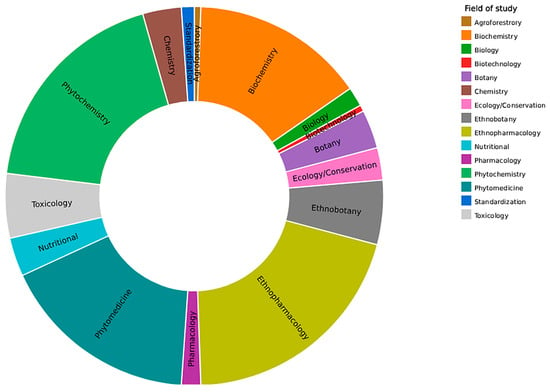
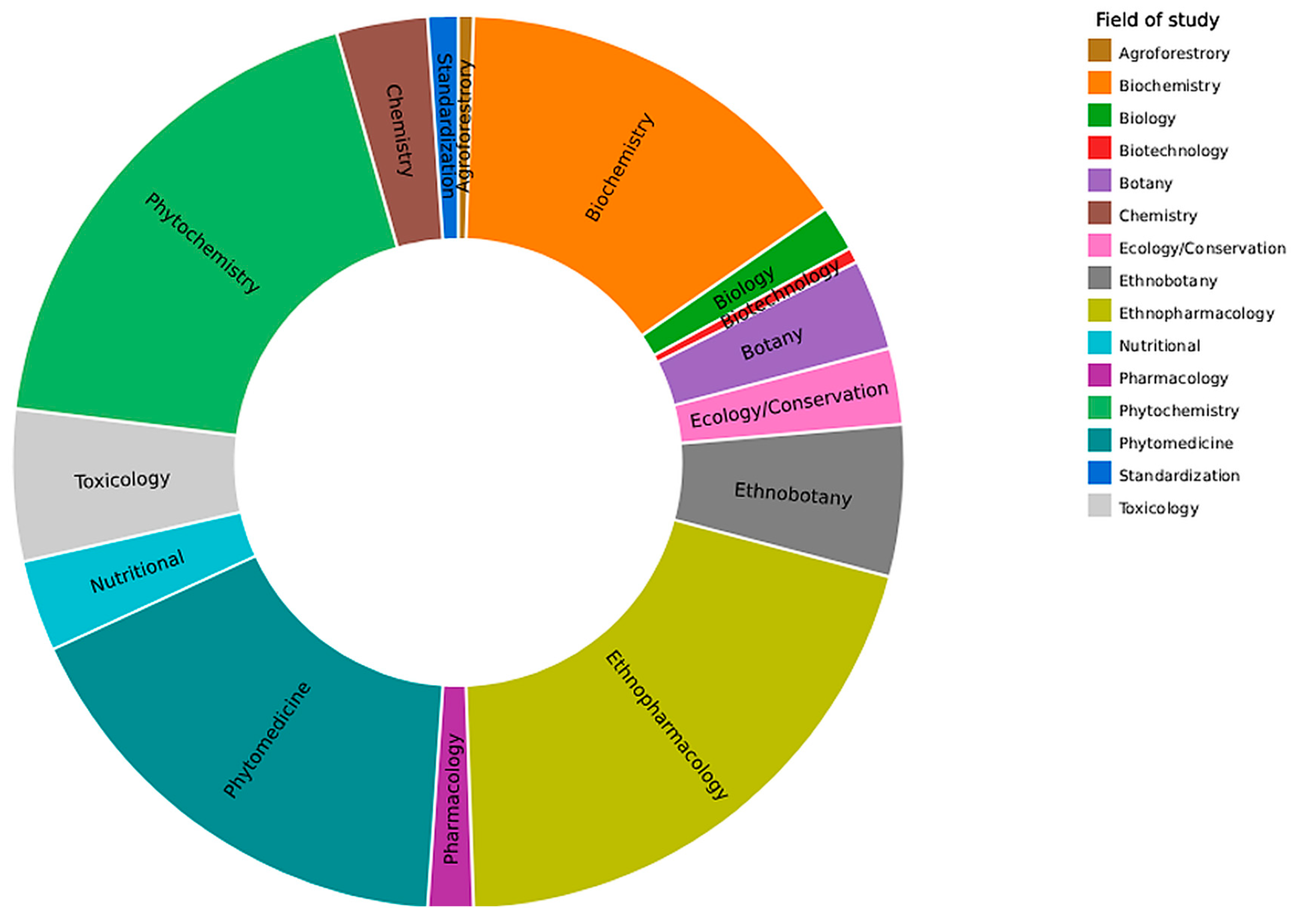
Geographically, West Africa dominated the research landscape, with Nigeria contributing the largest share (104 publications), followed by the Republic of Benin with 15 (Figure 3b). In terms of subject matter, most of the selected studies focused on ethnopharmacology (37 articles) and phytochemistry (34 articles). Other prominent fields included phytomedicine (31 articles) and biochemistry (27 articles). Conversely, areas such as agroforestry, biotechnology, biology, standardization, ecology, and conservation received comparatively limited attention (Figure 4).
Figure 4.
Number of publications on Uvaria chamae per field of study.
3.2. Taxonomy and Botanical Traits
Uvaria chamae is a climbing shrub naturally found in tropical and subtropical climates, with a broad distribution across West and Central Africa, from Senegal all the way to the Democratic Republic of Congo [29]. In the Republic of Benin, the plant grows in marginal forests, deciduous forests, savannahs, as well as in thickets and fallow lands [32]. It is found within the Guineo-Congolian and Sudano-Guinean biogeographical zones of the country [40]. The first scientific description of Uvaria chamae was provided by French botanist Antoine Michel François Joseph de Beauvois in 1816, who documented it in his botanical work Flore d’Oware et de Bénin, en Afrique [41].
Uvaria chamae is taxonomically classified under the phylum Tracheophyta, class Magnoliopsida, order Magnoliales, family Annonaceae, and belongs to the genus Uvaria. Several synonyms have been recorded for this species, including Unona macrocarpa DC, Uvaria cristata R. Br., Uvaria cylindrica Schumacher & Thonn., Uvaria echinata A. Chev., Uvaria nigrescens Engl. & Diels, and Xylopiastrum macrocarpum (DC.) Roberty [42,43].
The botanical characteristics of Uvaria chamae, based on the morphology of its various plant parts, are summarized in Table 1. These traits are commonly used by local communities to distinguish the species from other forest plants, particularly during foraging or when collecting medicinal resources.
Table 1.
Botanical description of Uvaria chamae.
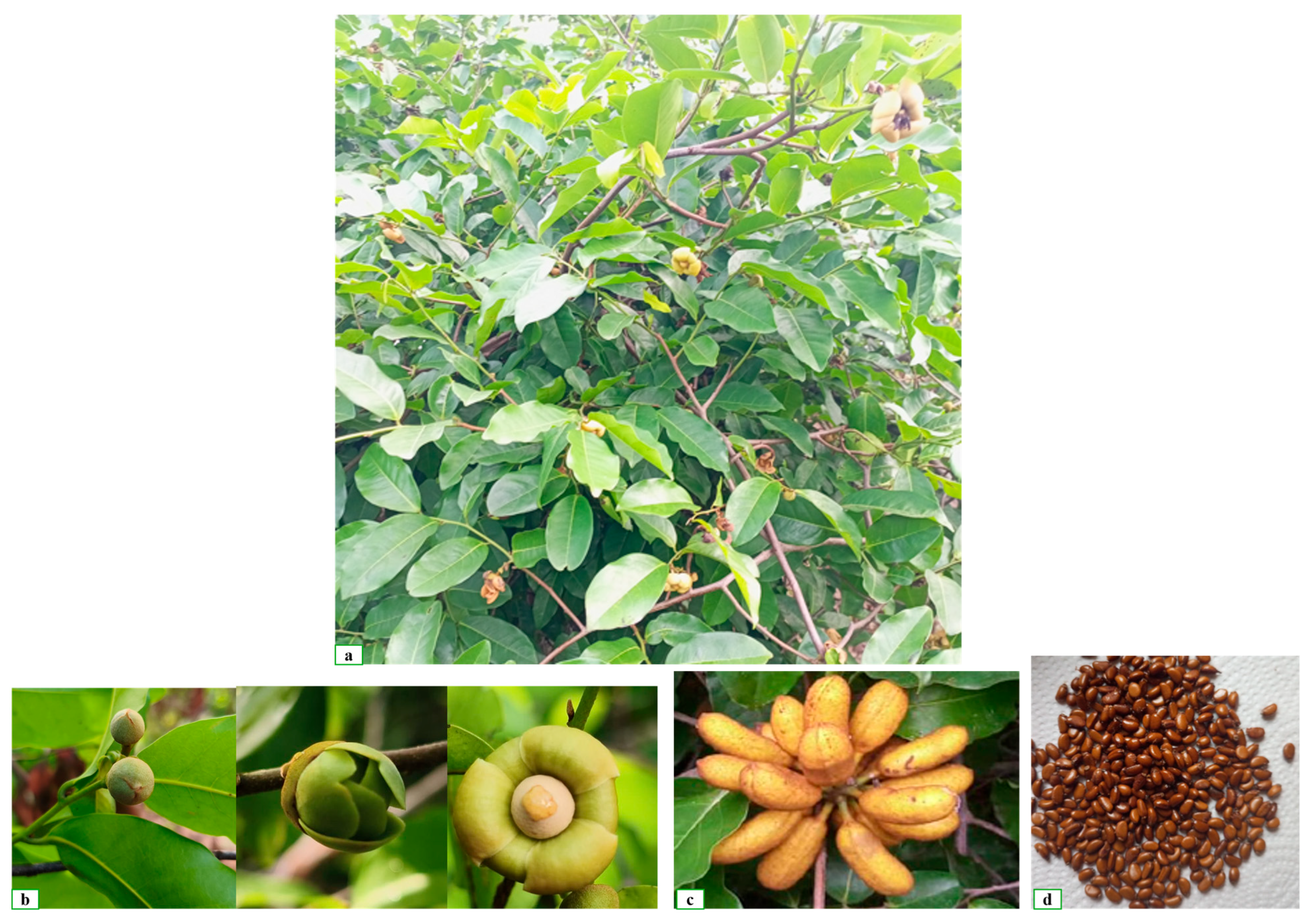
Figure 5.
(a) Shrub of Uvaria chamae P. Beauv.; (b) Flower; (c) Fruits; (d) Seeds (Source: Hounsou photo; June 2025).
3.3. Vernacular Taxonomy
Across the regions where it naturally grows, Uvaria chamae is a familiar fruit-bearing tree, and researchers have carefully documented various local names attributed to it. Local communities throughout West and Central Africa identify and classify Uvaria chamae based on a combination of its morphological features, practical uses, and cultural relevance [30,31]. According to Favi et al. [46], the existence of multiple local names for a single species reflects its cultural and ecological significance within the communities that recognize it. As a result, different ethnic groups have recorded a diverse range of names for Uvaria chamae, as shown in Table 2. Oluremi et al. [31] suggested that the fruit’s finger-like carpels, which grow in clusters, may have inspired many of these names, often translated as “bush banana” or similar terms that imply wildness. Daï et al. [30] further noted that the meanings behind these local names typically reflect either the plant’s morphological features (such as its fruits, stems, leaves), or its cultural and practical roles within the community. For example, the name “Hovi kokwé,” used by the Fon sociolinguistic groups in Benin, is linked to its use in twin ceremonies, where “Hovi” refers to twins in their cultural context.
Table 2.
Vernacular names of Uvaria chamae.
3.4. Geographical Distribution and Ecological Aspects
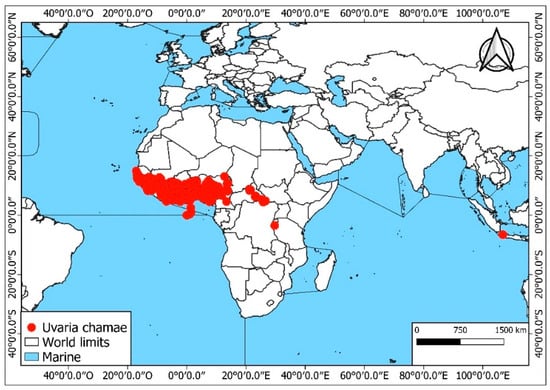
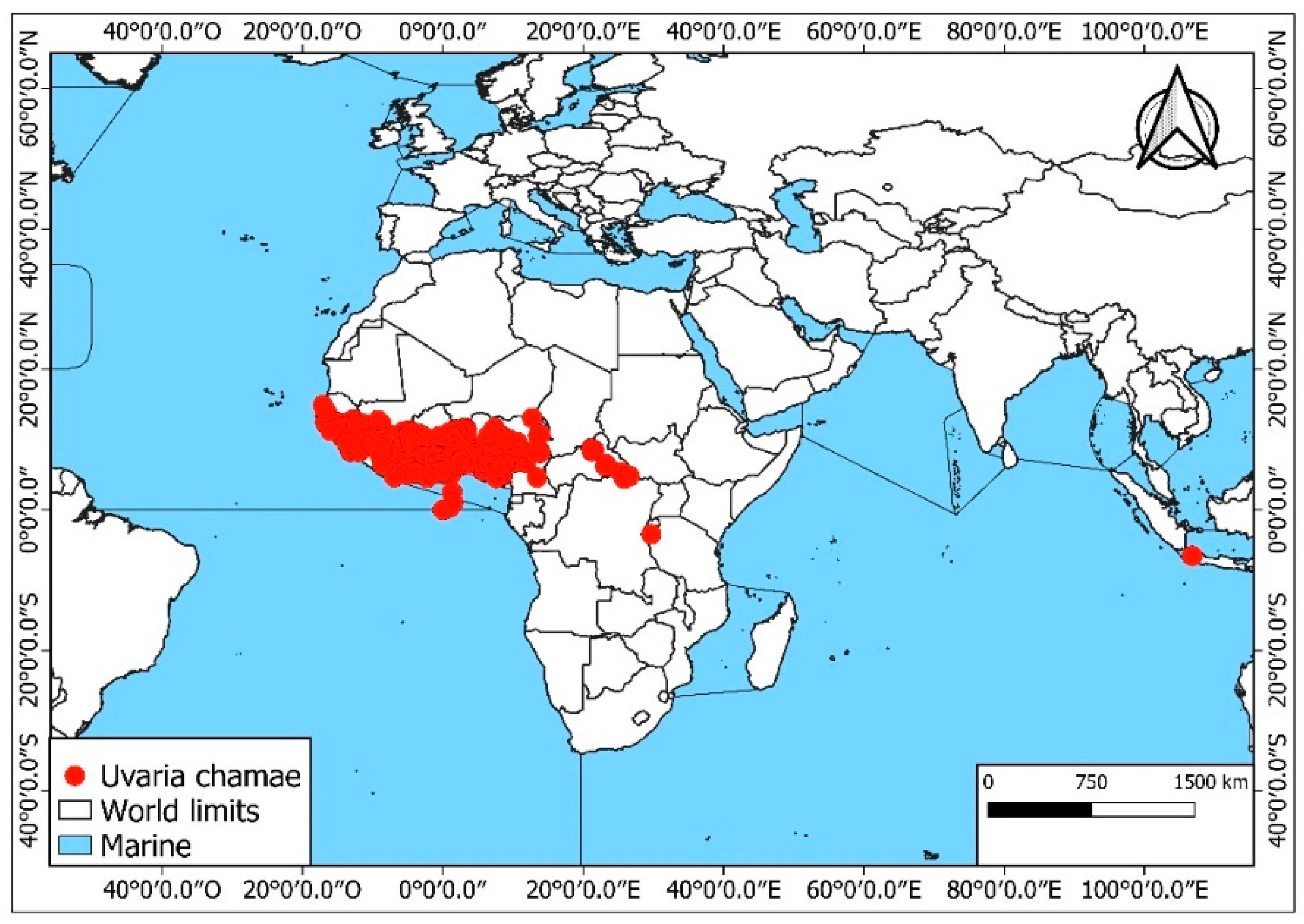
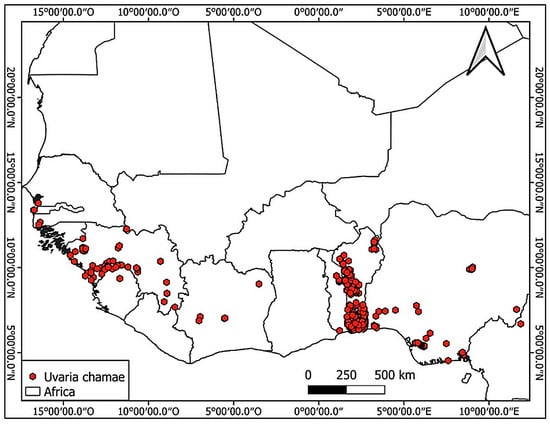
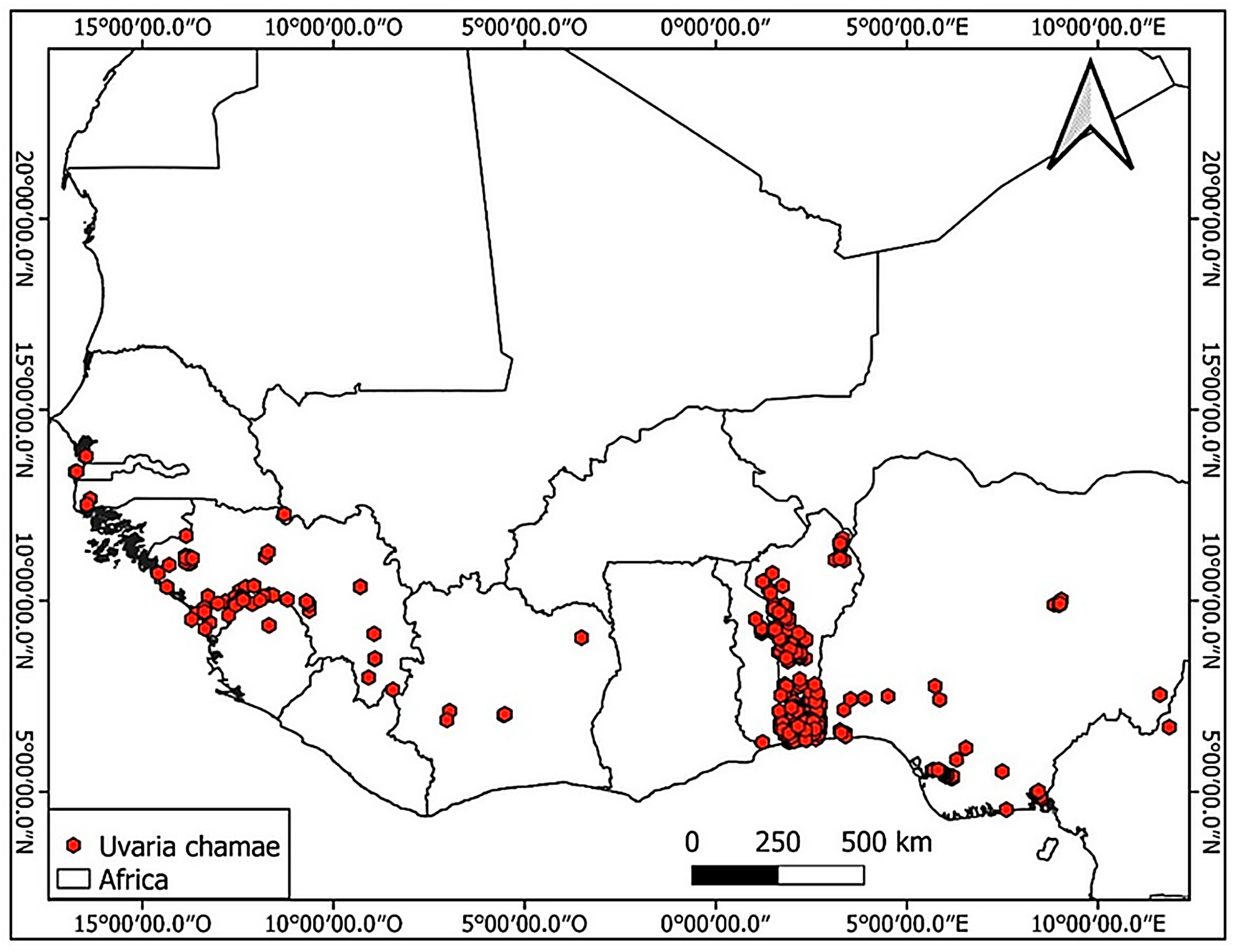
Uvaria chamae is a climbing shrub that thrives in both humid and arid tropical forests across West and Central Africa [28]. As noted by Lim [43], while the species originates from these regions, it has also been introduced to other parts of Africa and tropical areas worldwide, largely due to the ornamental appeal of its unusual, finger-like fruits. Its adaptability to a wide range of environmental conditions allows it to thrive in diverse habitats. The species has a broad geographic range, occurring across various regions in Africa, Asia, South America, and Australia [51] (Figure 6). In Africa, the plant is found in countries such as Senegal, Guinea, Mali, Sierra Leone, Liberia, Côte d’Ivoire, Ghana, Togo, Benin, Nigeria, the Central African Republic, and the Democratic Republic of Congo [29] (Figure 7). In Benin, Uvaria chama is commonly found in fields, fallows, and savannahs [32], and earlier research reported that the plant can still be found in the Guineo-Congolian and Sudano-Guinean biogeographical zones of the country [40].
Figure 6.
Geographical distribution of Uvaria chamae P. Beauv. across the globe. This figure is the author’s own elaboration based on occurrence data retrieved from the Global Biodiversity Information Facility (GBIF). GBIF Occurrence Download. Available online: https://doi.org/10.15468/dl.s9fegr (accessed on 7 August 2026).
Figure 7.
Geographical distribution of Uvaria chamae P. Beauv. in West Africa. This figure is the author’s own elaboration based on occurrence data retrieved from the Global Biodiversity Information Facility (GBIF). GBIF Occurrence Download. Available online: https://doi.org/10.15468/dl.s9fegr (accessed on 7 August 2026).
Ecologically, Uvaria chamae is often located near streams or in damp, swampy forest regions, where it thrives in low-light environments and adapts well to a variety of soil types and climatic conditions. It occurs at elevations ranging from sea level up to 1500 m, in areas with average annual temperatures between 22 and 35 °C, and rainfall levels of 1250–3000 mm [38,40,43].
In addition to its ecological adaptability, Uvaria chamae has shown potential for use in agroforestry systems. A study by Udofia et al. [52] found that the species contains essential nutrients such as phosphorus, nitrogen, and potassium, which are vital for plant growth and high crop yields. Based on these findings, the authors recommended intercropping Uvaria chamae with food crops to enhance soil fertility, making it a valuable component in sustainable agricultural practices.
3.5. Phenology, Reproduction Biology and Germination
Uvaria chamae seems to exhibit distinct phenological patterns and reproductive strategies, although detailed studies on its biology remain limited in the scholarly literature. Daï et al. [39], based on regeneration mechanisms observed through excavation, suggested that Uvaria chamae mostly regenerates through vegetative propagation, specifically by resprouting and suckering. These mechanisms enable the formation of clonal groups composed of genetically identical individuals. Similarly, Wangbitching et al. [53] demonstrated the regenerative potential of root segments in Uvaria chamae. This capacity for vegetative reproduction provides the species with a competitive advantage in disturbed habitats and distinguishes it from species that rely predominantly on sexual reproduction through seeds. Additionally, the plant can also reproduce sexually through seeds [54,55]. The seed’s germination period typically ranges from 3 to 6 weeks when maintained at a temperature of 25–28 °C [54]. Moreover, information regarding the phenological patterns of Uvaria chamae is also somewhat scarce. However, according to Akoegninou et al. [32], the species appears to exhibit a bimodal flowering and fruiting cycle in the Republic of Benin. This means the plant produces flowers and fruits twice annually, typically in January and again in September.
Pollination mechanisms in Uvaria chamae are not well documented. Nevertheless, studies on related species within the Uvaria genus and the broader Annonaceae family provide useful insights. Earlier research by Liu et al. [56] suggests that Uvaria species are likely pollinated by beetles and bees. For instance, Uvaria cordata attracts small beetles through floral scent and structure [57]. Similarly, Uvaria elmeri has been observed to rely on cockroaches as its main pollinators, particularly in lowland tropical forests [58]. Given the star-shaped and visually appealing flowers of Uvaria chamae, it is likely that the species follows a generalist pollination strategy, attracting a variety of insect visitors [57].
Furthermore, seed dispersal in Uvaria chamae is also not thoroughly studied, but evidence from the genus suggests a strong reliance on animal-mediated dispersal. Fruits of the Uvaria genus are widely reported to be consumed by primates, which disperse seeds through their feces [59]. Additionally, ripe fruits of Uvaria chamae are known to be eaten by both humans and various animals [43], all of which may contribute to seed dispersal either through ingestion or external transport. As a result, seed dispersers likely include primates such as monkeys, which ingest the fruits and excrete the seeds, as well as rodents and birds, which may contribute to seed dispersal through their feeding behavior or by transporting seeds externally.
Thus, these reproductive traits, vegetative propagation, generalist pollination, and animal-assisted seed dispersal highlight the potential ecological flexibility of Uvaria chamae and its ability to thrive in a variety of tropical environments.
3.6. Edible Uses of Uvaria chamae
Uvaria chamae plays a vital role in supporting rural communities, offering a diverse range of goods and services [39]. Its young leaves are commonly consumed as vegetables, while the ash from its stem serves as an alternative to salt in food preparation [45]. The fruits of this species are widely used in the beverage industry to enhance flavor and are highly valued for consumption [37,60]. A study by Daï et al. [30] further supported these findings, reporting that the ripe fruits of Uvaria chamae, particularly the aril surrounding the seeds, are delicious and well-appreciated by consumers. The seeds of this species are commonly utilized in soup preparation, adding depth and nutritional value to meals [61]. According to Achigan et al. [62], its root bark is also incorporated into soup, traditionally believed to enhance milk production in nursing mothers.
To investigate and validate the potential of the species as dietary supplements, there is a need for proper evaluation of the nutritional content of its various edible parts. Thus, research by Orhu et al. [63] revealed appreciable concentrations of protein, fiber, moisture, essential amino acids, vitamins E and C, calcium, and potassium in the leaves of Uvaria chamae, highlighting their potential as a rich source of macronutrients, minerals, and vitamins essential for human health. Furthermore, Enin et al. [64], evaluated the nutritional composition of the root bark, stem bark, and leaves of the plant. Their findings showed the following proximate composition ranges: carbohydrates (87.76–91.83%), caloric value (375.87–387.57 kcal), fiber (2.40–2.93%), fat (0.50–0.80%), protein (3.93–5.70%), ash (1.30–5.51%), and moisture (9.43–79.80%). The highest carbohydrate and caloric values were observed in the root bark. These results are further supported by Edem [65], who also reported high carbohydrate and fiber contents in the plant’s root. Overall, the various parts of Uvaria chamae are rich in energy and bioactive compounds, reinforcing their potential nutritional applications. However, it is important to note that no published data is currently available on the nutritional value of the plant’s fruits, despite their widespread and appreciated consumption.
3.7. Health Benefits of Uvaria chamae
For centuries, the roots, leaves, fruits, stem and bark of Uvaria chamae, commonly known as bush banana or finger root, have held a significant place in traditional medicine [21,36]. These natural components have been employed to address a wide spectrum of health conditions, demonstrating the long-standing knowledge embedded in ancient healing practices.
In Nigerian traditional medicine, the root of Uvaria chamae is utilized as a remedy for fever, while its root bark is employed to treat dysentery [66]. For the people of Borneo in Asia, the traditional use of this plant involves crushing its leaves to extract a juice which is then applied directly to cuts and open skin to help them heal. Leaf infusions are also a common remedy among the native population, used as a lotion to treat swollen joints [67,68]. Root-bark is also traditionally used for contraception [69]. As per Iwu [42], in West Africa, Uvaria chamae is primarily valued for its role in traditional medicine, where it is used to prepare remedies for jaundice and intermittent fevers, offering a natural approach to healing. Furthermore, a decoction made from the roots and bark is used as a natural remedy for catarrh and overall body pain, offering relief through traditional healing methods [70]. This plant has long been utilized in traditional medicine to address a variety of health conditions, including digestive disorders, fever, menstrual pain, abdominal discomfort, gastroenteritis, bronchitis, cancer, and wound healing [21,34,71,72]. The sap extracted from the leaves, stems, and roots is traditionally used to promote wound healing, while a decoction made from the leaves serves as a natural remedy for reducing fever, febrifuge, and malaria [21,51].The roots are recommended for the treatment of heart diseases and nosebleeds [73]. Uvaria chamae is also used to treat conditions such as female infertility, coughs, enteralgia, and edema [74]. In Ghana, the root of Uvaria chamae is included in traditional hospital prescriptions for treating dysentery [43]. Additionally, this author reported that in Sierra Leone, the root is valued for its purgative and fever-reducing (febrifugal) properties. It is also used to treat sores, and a traditional preparation known as n’taba is reputed to cure infantile rickets. In the Republic of Benin, the plant is known to treat hemorrhages, dysentery, wounds, sore throats, abdominal pain, fatigue, respiratory problems, and anemia [75], diabetes, and infectious diseases [76]. Furthermore, a recent ethnobotanical survey by Daï et al. [30] provided a detailed account of the traditional uses of Uvaria chamae in treating various health conditions, including anemia, malaria, stomach aches, sexual weakness, and ulcers, among others. The study documented the specific plant parts used, methods of preparation, associated species or elements when relevant, routes of administration, and dosage guidelines employed in the treatment of these ailments.
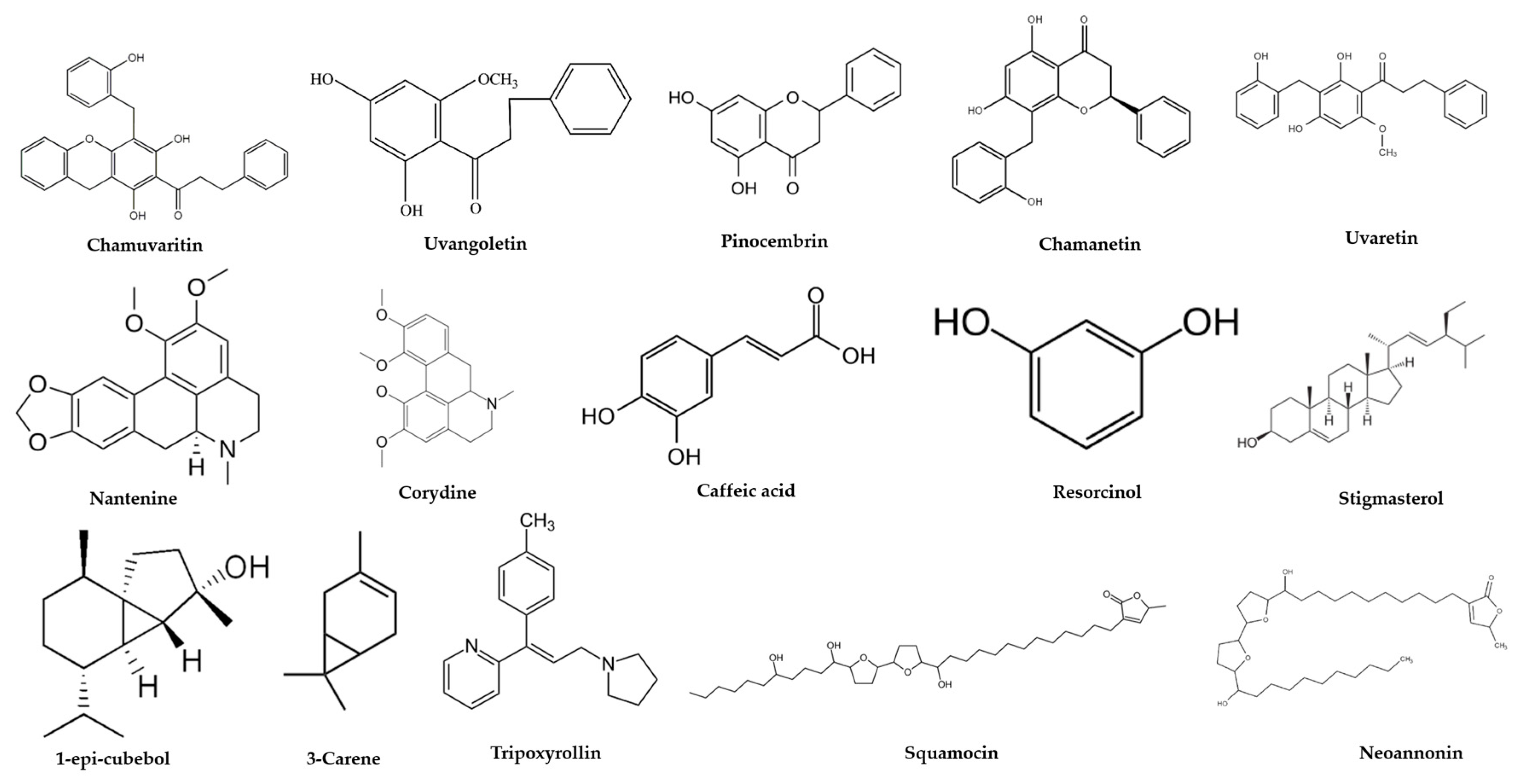
Due to its therapeutic properties, Uvaria chamae has gained recognition as a valuable natural remedy for promoting well-being. This has sparked scientific interest in exploring its pharmacological activities, which are largely attributed to its rich phytochemical profile including acetogenins, alkaloids, flavonoids, essential oils, phenolics, and terpenoids, as summarized in Table 3 and illustrated in Figure 8.
Table 3.
Phytochemical compounds identified in various parts of Uvaria chamae.
Figure 8.
Chemical structures of selected phytochemical compounds isolated from Uvaria chamae.
3.8. Anti-Diabetic Activities of Uvaria chamae
Diabetes mellitus is a chronic metabolic disorder characterized by persistent hyperglycemia resulting from impaired insulin secretion, insulin resistance, or both [34]. Owing to the increasing global burden of the disease, medicinal plants have been extensively investigated as potential sources of antidiabetic agents [87,88]. Among these, Uvaria chamae has attracted attention due to its traditional use in the management of diabetes. Emeka et al. [33] investigated in Nigeria the in vivo hypoglycemic effects of an aqueous methanolic extract of Uvaria chamae roots in normoglycemic rats. The findings revealed a significant reduction in blood glucose levels (p < 0.05), demonstrating the extract’s potential in glucose regulation. Similarly, earlier study carried out by Sanvee et al. [50] in Togo demonstrated that the hydroalcoholic leaf extract of Uvaria chamae exhibited the most potent antihyperglycemic activity (p < 0.05) in both in vitro and ex vivo models using Wistar rats. Furthermore, studies conducted in Nigeria Emeka et al. [33] and Emordi et al. [34] reported the antidiabetic properties of the ethanolic root extracts of Uvaria chamae in rats with diabetes induced by streptozotocin and alloxan, highlighting its potential to stimulate the regeneration of pancreatic islets of Langerhans. Additionally, the study revealed its ability to inhibit key enzymes, α-amylase and α-glucosidase, which play a crucial role in glucose metabolism.
According to Agiriga and Siwela [89], diabetes is linked to oxidative stress and disruptions in lipid metabolism, both of which contribute to metabolic imbalances and complications associated with the disease. In a study conducted in Nigeria on Streptozotocin-induced diabetic rats, Olumese et al. [90] found that both aqueous and ethanolic root extracts of Uvaria chamae significantly lowered blood glucose levels by 38% and 53%, respectively. Additionally, the plant extract improved the lipid profile of the rats, as demonstrated by reductions in triglyceride (TG) levels, total cholesterol (TC), non-high-density lipoprotein (non-HDL), low-density lipoprotein (LDL) cholesterol, and very-low-density lipoprotein (VLDL) levels.
3.9. Anti-Infectious Potential of Uvaria chamae
Crude extracts, fractions, and isolated compounds derived from Uvaria chamae have been shown to possess antimicrobial properties, demonstrating their potential in combating various microbial infections.
The research carried out in Benin by Reigada et al. [91] demonstrated that the ethanolic root extract of Uvaria chamae is the most biologically active preparation, exhibiting strong and selective antibacterial activity against Staphylococcus aureus and methicillin-resistant S. aureus (MRSA) with a minimum inhibitory concentration (MIC) of 4 µg/mL and a minimum bactericidal concentration (MBC) of 8 µg/mL. Time-kill kinetics revealed a bacteriostatic effect at the MIC and a bactericidal effect at higher concentrations, confirming concentration-dependent activity. The extract significantly inhibited and disrupted staphylococcal biofilms and, unlike ciprofloxacin, did not induce resistance upon repeated exposure. Mechanistic studies showed no membrane damage but clear alterations in bacterial cell wall morphology. Importantly, the extract demonstrated low cytotoxicity in A549 lung epithelial cells and THP-1 monocytic cells, with no observable toxicity in Caenorhabditis elegans. In the C. elegans infection model, treatment with the extract at 14 and 32 µg/mL led to a significant reduction in bacterial burden, confirming in vivo efficacy. Liquid Chromatography–Mass Spectrometry (LC-MS) and Ultra-Performance Liquid Chromatography–Photodiode Array–Quadrupole Time-of-Flight Mass Spectrometry (UPLC-PDA-QTOF/MS) analysis of active fractions identified known antimicrobial metabolites, consistent with the reported phytochemical profile of Uvaria chamae roots. Collectively, these findings highlight Uvaria chamae root extract as a potent, safe, and resistance-sparing antibacterial agent with translational relevance for addressing antimicrobial resistance in Africa. The antibacterial potential of hexane, dichloromethane, ethyl acetate, and butanol fractions derived from the hydroalcoholic leaf extract of Uvaria chamae was assessed in Burkina Faso by Kaboré et al. [92] using diffusion and microdilution methods on an agar medium. The study tested six bacterial strains: Salmonella typhi ATCC 19430, Escherichia coli ATCC 8739, Staphylococcus aureus ATCC 25923, Pseudomonas aeruginosa ATCC 9027, Bacillus cereus ATCC 13061, and Listeria monocytogenes ATCC 7644. All six strains exhibited sensitivity to the plant-derived fractions, with the butanol fraction displaying the most potent activity, comparable to the standard antibiotic gentamicin. Minimum inhibitory concentrations (MICs) ranged from 37 μg/mL for gentamicin to 1.67 mg/mL for the butanol fraction. Additionally, the minimum bactericidal concentrations (MBCs) varied between 0.037 mg/mL and 2.500 mg/mL, depending on the bacterial strain. Additionally, in Nigeria, extracts from the roots, leaves, and bark of Uvaria chamae have demonstrated significant antibacterial properties, including activity against Streptococcus mutans, a key contributor to dental caries [84]. The study further explored how fractions derived from the plant’s root bark affect the virulent traits of S. mutans, which play a crucial role in cavity formation. Findings revealed that Uvaria chamae extract, rich in proanthocyanidins, effectively inhibits bacterial adhesion and acid production in S. mutans. This suggests its potential application in limiting the proliferation and pathogenicity of S. mutans by suppressing the expression of genes associated with dental decay, thereby contributing to the prevention and control of cavities. On the other hand, the aqueous extract of Uvaria chamae leaves exhibited the highest inhibitory activity against Salmonella spp. (virulent strain) and Salmonella enterica, as demonstrated by the study conducted in Benin by Legba et al. [93] using both in vitro and in vivo models in chicks. This study’s findings indicate that the studied plant holds strong potential as a key ingredient in enhancing traditional medicine for the effective treatment of salmonellosis.
Furthermore, Koudokpon et al. [79] reported in their study conducted in Benin the promising potential activity of ethanol root extracts of Uvaria chamae against Gram-positive cocci, including methicillin-resistant Staphylococcus aureus (MRSA) and vancomycin-resistant Enterococcus faecalis (Van A and B), showing greater activity than standard vancomycin and methicillin, respectively. According to the authors, the sensitivity of the plant’s extracts to the tested strains could be associated with ten isolated chalcones and dihydrochalcones, namely: diuvaretin (chalcone form), uvaretin (chalcone form), iso-uvaretin (chalcone form), uvangoletin, chamanetin, iso-uvaretin, dichamanetin, diuvaretin, and uvaretin. Building on these previous findings, Togbé et al. [94] further supported the safe application of Uvaria chamae extracts for managing S. aureus skin infections. Their work proposed a skin cream formulation, thereby setting the stage for preclinical trials and, ultimately, the potential availability of this cream on the market. Similarly, in an earlier review article, Agbebi et al. [23] summarized findings from earlier studies on the antimicrobial activity of flavonoids compounds isolated from the plant. Pinocembrin, for instance, showed activity against Candida albicans and Staphylococcus aureus (Gram-positive cocci) with MIC values of 6.25 and 12.5 μg/mL, respectively. The review also noted that chamanetin, isochamanetin, and dichamanetin exhibited antimicrobial activity, with dichamanetin demonstrating the best antimicrobial activity, having MICs ranging from 2 to 7.5 μg/mL and MBCs ranging from 4 to 7.5 μg/mL. Furthermore, in an in vitro study using a human placental cell line (JEG-3) model, Lee et al. [95] confirmed the antiviral potential of Pinocembrin, reporting an IC50 of 17.4 μM.
3.10. Antidiabetic and Anti-Infective Formulations Derived from Uvaria chamae
The translation of medicinal plants into pharmaceutical formulations represents an important step in the valorization of ethnomedicinal knowledge and the development of evidence-based therapeutic products. Such formulations can improve the stability, standardization, safety, and efficacy of plant-derived bioactive compounds while facilitating their practical application. Although numerous studies have investigated the pharmacological properties of Uvaria chamae, only a limited number of formulations incorporating this species have been reported. To date, no antidiabetic formulation derived from Uvaria chamae has been reported. However, limited literature exists on anti-infective formulations incorporating this species. Notably, research conducted in Benin by Togbé et al. [94] resulted in the development of a topical skin cream formulated from the ethanolic root extract of Uvaria chamae for the treatment of skin infections. Their findings demonstrated acceptable macroscopic characteristics and satisfactory homogeneity of the formulation, along with significant wound-healing potential, as evidenced by its bactericidal activity against the tested Staphylococcus aureus strains. Additionally, Ogunkunle et al. [96] reported Haematol B, a standardized haematinic polyherbal formulation developed in Nigeria containing the leaf of Uvaria chamae P. Beauv. (5.5%), together with the leaf sheath of Sorghum bicolor Moench (30.0%), fruit calyx of Hibiscus sabdariffa L. (20.0%), stem bark of Theobroma cacao L. (10.0%), Khaya senegalensis (Desr.) A. Juss. (5.5%), Mangifera indica L. (5.5%), root of Aristolochia ringens Vahl. (7.0%), root bark of Sarcocephalus latifolius (5.5%), Zanthoxylum zanthoxyloides (Lam.) Zepern & Timler (5.5%), and seed of Garcinia kola Heckel (5.5%). The formulation demonstrated promising haematinic and antimalarial activities. Although Haematol B was not developed as an antimicrobial product, the inclusion of U. chamae highlights its contribution to herbal preparations with haematinic and antimalarial properties. Given the significant role of anemia in malaria and other infectious conditions, these findings further underscore the potential of the species for incorporation into evidence-based supportive therapeutic formulations. Nevertheless, to date, no clinical evidence has been documented for these formulations.
3.11. Safety and Tolerability of Uvaria chamae
Understanding the safety and toxicity profiles of the plant’s chemical components is a key factor in assessing its viability for medicinal or therapeutic purposes [23,97]. Beyond whole-plant extracts, researchers have investigated the safety profiles of individual compounds isolated from Uvaria chamae. Chamuvarinin has also been evaluated for toxicity on mammalian cell lines and was found to be safe [98]. Furthermore, several chalcones and dihydrochalcones, like diuvaretin, uvaretin, iso-uvaretin, uvangoletin, chamanetin, and dichamanetin, have been isolated from these plants. When these compounds were tested on cell lines at their effective concentrations, they consistently showed no signs of toxicity [79,82]. The ethanol extract of Uvaria chamae leaves also showed promising cytotoxicity against human sarcoma cell line [71]. Moreover, the same extract showed no signs of toxicity in rats following oral administration at doses up to 5000 mg/kg body weight. This was confirmed by the absence of changes in their general behavior or weight, and no fatalities during the experiment [50]. Likewise, when Sprague Dawley rats were given a single oral dose of the plant’s root aqueous extract up to 5000 mg/kg, no indications of acute toxicity were observed, suggesting an LD50 value exceeding 5000 mg/kg [36]. Furthermore, a 28-day subchronic oral toxicity study found no adverse effects, establishing a safe threshold for the extract over a prolonged exposure. Similarly, the aqueous extract of Uvaria chamae leaves demonstrated a reassuring safety profile. Ejeh et al. [99] reported a significant increase in the pooled body weights of treated rats, suggesting the extract did not cause any adverse effects on their growth. Consistent with these observations, an acute toxicity study further supported the safety of the plant by reporting an LD50 value greater than 5000 mg/kg [65]. In addition to crude extracts, isolated compounds have also been evaluated in animal models. The triterpenoids lupeol and stigmasterol, isolated from the plant, exhibited no signs of toxicity in mice following oral administration at doses up to 10 mg/kg [100]. The safety profile of compounds isolated from Uvaria chamae has also been explored through computational approaches. An earlier computer-based (in silico) study on uvarinol reported generally positive results regarding its potential as a drug candidate. Although its pharmacokinetic predictions suggested favourable drug-likeness and low toxicity, the study indicated that it may have limited gastrointestinal absorption [101]. These findings suggest that while uvarinol may be effective and safe, improvements in bioavailability may be required to optimize its therapeutic potential.
Based on these findings, Uvaria chamae emerges as a valuable reservoir of phytochemical compounds with significant potential as drug candidates. Encouragingly, when used at their effective doses, the toxicity of these compounds to human cells is minimal, making them promising options for further pharmaceutical exploration. However, to establish their safety with certainty, further extensive research is essential. Conducting in vivo studies in live animals, followed by human clinical trials, will be critical in gaining a more detailed and comprehensive understanding of the safety profile of these promising phytochemicals.
3.12. Conservation Status and Strategies for Sustainable Management of Uvaria chamae
Although Uvaria chamae is listed as “Least Concern” on the IUCN Red List of Threatened Species [102], meaning it is not globally facing a high risk of extinction, the reality on the ground tells a different story. At the local level, particularly in parts of West Africa like Benin and Burkina Faso, the species is facing increasing threats [38,103]. Despite limited research across the continent, studies from these two countries have shed light on the growing pressure on Uvaria chamae. In Benin and Burkina Faso, local communities have observed a troubling decline in its populations, with the plant now considered locally threatened. Research by Fachola et al. [104] and Daï et al. [38,39,40] highlighted that in Benin, this vulnerability is largely driven by human activities. These include the uncontrolled harvesting of its roots for traditional medicine, extension of agricultural land and conversion of its primary habitats (fallow lands and farmlands), expansion of settlements leading to habitat loss. In Burkina Faso, Gnoumou and Adouabou [103] emphasized another challenge: livestock grazing on young Uvaria chamae plants, including suckers and seedlings, severely hampers the species’ ability to regenerate and survive. According to the authors, although climate change is a contributing factor, direct human and animal actions represent the most significant current threats on the species.
These local declines underscore the need for targeted conservation efforts at the regional level to ensure the continued availability of this valuable shrub. As such, while no protective measures of the species have yet to be adopted by the local population [105], earlier research has recommended cultivating Uvaria chamae in home and botanical gardens, as well as conserving it in its natural habitats, to promote the sustainability of the bush banana and maintain the ecosystem services it provides [30].
4. Conclusions, Knowledge Gaps, and Prospects
This review highlights Uvaria chamae as a medicinally and economically important African species with considerable pharmacological potential. The available evidence supports its traditional use and indicates that the species contains a diverse range of bioactive compounds associated with antidiabetic, anti-infective, antioxidant, anti-inflammatory, and other biological activities. Furthermore, currently available toxicological studies suggest a generally favorable safety profile at the doses tested. However, most evidence remains limited to in vitro and animal studies, and no clinical investigations have yet been reported.
Despite the growing body of research on Uvaria chamae, important knowledge gaps remain. Quantitative information on the abundance of bioactive constituents is still limited and heterogeneous, restricting comparisons among studies and complicating the translation of preclinical findings into therapeutic applications. In addition, the mechanisms underlying several reported pharmacological activities remain insufficiently characterized.
From a conservation perspective, increasing demand for Uvaria chamae in traditional medicine, coupled with intensive root harvesting, habitat degradation, agricultural expansion, urbanization, and other anthropogenic pressures, threatens natural populations in parts of its native range and highlights the need for sustainable management strategies. Although Uvaria chamae is currently classified as “Least Concern” on the IUCN Red List, available local evidence suggests that updated assessments may be necessary in regions where population declines have been reported. Strengthening conservation initiatives, promoting domestication programs, and encouraging sustainable harvesting practices will be essential to safeguard this valuable medicinal resource while ensuring its continued availability for future generations.
Future research should prioritize clinical validation of the antidiabetic and anti-infective properties of Uvaria chamae, detailed investigations of the mechanisms of action of its major bioactive compounds, and standardized phytochemical quantification studies. Particular attention should also be given to the identification of active constituents responsible for the observed pharmacological effects, as well as to pharmacokinetic, toxicological, and formulation studies that could facilitate their therapeutic development. Additional efforts should focus on reproductive biology, genetic diversity, propagation methods, and domestication strategies to support sustainable utilization and conservation of the species. Furthermore, comprehensive ecological studies and population monitoring programs are needed to better understand the long-term impacts of harvesting on natural populations. Addressing these priorities will contribute to the long-term valorization, preservation, and responsible exploitation of this important medicinal plant while providing a stronger scientific foundation for its future pharmaceutical and conservation applications.
Author Contributions
Conceptualization, writing—original draft preparation, K.E.H.; writing—original draft preparation, T.S.; review and editing, C.B.G.; review and editing, M.Q.; review and editing, R.A.H. All authors have read and agreed to the published version of the manuscript.
Funding
This review paper was written as part of the PRD-2024 VALUCHAM project, funded by the Académie de Recherche et d’Enseignement Supérieur (ARES) through a partnership between the University of Abomey-Calavi, Benin, and the Université catholique de Louvain (UCLouvain), Belgium. The work was supported under Project No. PRD-2024-Benin-Quinet.
Institutional Review Board Statement
Not applicable.
Informed Consent Statement
Not applicable.
Data Availability Statement
No new data were created or analyzed in this study. Data sharing is not applicable to this article.
Conflicts of Interest
The authors declare no conflicts of interest.
References
- World Health Organization. Global Health Estimates 2016: Deaths by Cause, Age, Sex, by Country and by Region, 2000–2016; World Health Organization: Geneva, Switzerland, 2018; pp. 1242–1247. [Google Scholar]
- FID. IDF Diabetes Atlas 2021|IDF Diabetes Atlas. 2021. Available online: https://diabetesatlas.org/atlas/tenth-edition/ (accessed on 7 August 2026).
- FID. Atlas du diabète de la FID 2025. In Atlas du Diabète; IDF: Brussels, Belgium, 2025; Available online: https://diabetesatlas.org/fr/resources/idf-diabetes-atlas-2025/ (accessed on 7 August 2026).
- Issaka, A.; Stevenson, C.; Paradies, Y.; Houehanou, Y.C.N.; Bosu, W.K.; Kiwallo, J.B.; Wesseh, C.S.; Houinato, D.S.; Nazoum, D.J.P.; Cameron, A.J. Association between Urban–Rural Location and Prevalence of Type 2 Diabetes and Impaired Fasting Glucose in West Africa: A Cross–Sectional Population–Based Epidemiological Study. BMJ Open 2023, 13, e063318. [Google Scholar] [CrossRef] [Scilit] [PubMed]
- Alaoui Mdarhri, H.; Benmessaoud, R.; Yacoubi, H.; Seffar, L.; Guennouni Assimi, H.; Hamam, M.; Boussettine, R.; Filali-Ansari, N.; Lahlou, F.A.; Diawara, I.; et al. Alternatives Therapeutic Approaches to Conventional Antibiotics: Advantages, Limitations and Potential Application in Medicine. Antibiotics 2022, 11, 1826. [Google Scholar] [CrossRef] [Scilit] [PubMed]
- Arias, C.A.; van Duin, D. What Is Antimicrobial Resistance? JAMA 2025, 334, 930. [Google Scholar] [CrossRef] [Scilit] [PubMed]
- Miller, W.R.; Arias, C.A. ESKAPE Pathogens: Antimicrobial Resistance, Epidemiology, Clinical Impact and Therapeutics. Nat. Rev. Microbiol. 2024, 22, 598–616. [Google Scholar] [CrossRef] [Scilit] [PubMed]
- Chaughule, R.S.; Barve, R.S. Role of Herbal Medicines in the Treatment of Infectious Diseases. Vegetos 2023, 37, 41–51. [Google Scholar] [CrossRef] [Scilit] [PubMed]
- Ogunlakin, A.D.; Onifade, T.R.; Ojo, O.A.; Adesanya, E.O.; Berena, G.A.; Ayeni, P.O.; Omolekan, T.O.; Ogunlakin, M.A.; Iyinkristi, D.A.; Sonibare, M.A.; et al. Antidiabetic Potential of Carica papaya L. and Its Constituents: From Folkloric Uses to Products Development. BCHD 2023, 6, 126. [Google Scholar] [CrossRef] [Scilit]
- Ojo, O.A.; Ogunlakin, A.D.; Gyebi, G.A.; Ayokunle, D.I.; Odugbemi, A.I.; Babatunde, D.E.; Ajayi-Odoko, O.A.; Iyobhebhe, M.; Ezea, S.C.; Akintayo, C.O. GC-MS Chemical Profiling, Antioxidant, Anti-Diabetic, and Anti-Inflammatory Activities of Ethyl Acetate Fraction of Spilanthes filicaulis (Schumach. and Thonn.) CD Adams Leaves: Experimental and Computational Studies. Front. Pharmacol. 2023, 14, 1235810. [Google Scholar] [CrossRef] [Scilit] [PubMed]
- Shanmugam, K.R.; Shanmugam, B.; Subbaiah, G.V.; Ravi, S.; Reddy, K.S. Medicinal Plants and Bioactive Compounds for Diabetes Management: Important Advances in Drug Discovery. CPD 2021, 27, 763–774. [Google Scholar] [CrossRef] [Scilit] [PubMed]
- Xu, X.; Wang, G.; Zhou, T.; Chen, L.; Chen, J.; Shen, X. Novel Approaches to Drug Discovery for the Treatment of Type 2 Diabetes. Expert. Opin. Drug Discov. 2014, 9, 1047–1058. [Google Scholar] [CrossRef] [Scilit] [PubMed]
- Alam, S.; Sarker, M.R.; Sultana, T.N.; Chowdhury, N.R.; Rashid, M.A.; Chaity, N.I.; Zhao, C.; Xiao, J.; Hafez, E.E.; Khan, S.A.; et al. Antidiabetic Phytochemicals from Medicinal Plants: Prospective Candidates for New Drug Discovery and Development. Front. Endocrinol. 2022, 13, 800714. [Google Scholar] [CrossRef] [Scilit] [PubMed]
- Rahman, M.; Dhar, P.S.; Sumaia; Anika, F.; Ahmed, L.; Islam, R.; Sultana, N.A.; Cavalu, S.; Pop, O.; Rauf, A. Exploring the Plant-Derived Bioactive Substances as Antidiabetic Agent: An Extensive Review. Biomed. Pharmacother. 2022, 152, 113217. [Google Scholar] [CrossRef] [Scilit] [PubMed]
- Ndam Ngoungoure, V.L.; Mfotie Njoya, E.; Ngamli Fewou, S.; Fils Ella, A.; McGaw, L.J.; Moundipa, P.F. Acetylcholinesterase Inhibitory, Anti-Inflammatory and Antioxidant Properties of Some Cameroonian Medicinal Plants Used to Treat Some Neurological Disorders. Investig. Med. Chem. Pharmacol. 2019, 2, 33. [Google Scholar] [CrossRef] [Scilit]
- Ngolo, L.M.; Faraja, F.M.; Ngandu, O.K.; Kapepula, P.M.; Mutombo, S.M.; Tshitenge, T.B. Phytochemical Screening, UPLC Analysis, Evaluation of Synergistic Antioxidant and Antibacterial Efficacy of Three Medicinal Plants Used in Kinshasa, D.R. Congo. Sci. Rep. 2025, 15, 10083. [Google Scholar] [CrossRef] [Scilit] [PubMed]
- Christopher, R. Plant Species of the Genus Uvaria: Ethnobotanical Uses, Biological Activities and Phytochemistry. Nat. Prod. Res. 2022, 36, 2946–2961. [Google Scholar] [CrossRef] [Scilit] [PubMed]
- Jalil, J.; Attiq, A.; Hui, C.C.; Yao, L.J.; Zakaria, N.A. Modulation of Inflammatory Pathways, Medicinal Uses and Toxicities of Uvaria Species: Potential Role in the Prevention and Treatment of Inflammation. Inflammopharmacology 2020, 28, 1195–1218. [Google Scholar] [CrossRef] [Scilit] [PubMed]
- Royal Botanic Gardens, Kew Uvaria L.|Plants of the World Online|Kew Science. Available online: http://powo.science.kew.org/taxon/urn:lsid:ipni.org:names:30043123-2 (accessed on 25 July 2026).
- Don, K.P.K.; Josthna, P. Herbal Plant Uvaria Species and Its Therapeutic Potentiality. World J. Environ. Biosci. 2020, 9, 33–38. [Google Scholar] [CrossRef] [Scilit]
- Parmar, V.S.; Tyagi, O.D.; Malhotra, A.; Singh, S.K.; Bisht, K.S.; Jain, R. Novel Constituents of Uvaria Species. Nat. Prod. Rep. 1994, 11, 219–224. [Google Scholar] [CrossRef] [Scilit] [PubMed]
- Mohanty, S.P.; Barik, D.P.; Moharana, A. A Comprehensive Review on Uvaria Species: Conservation Status, Ethnobotanical Uses and Pharmacological Activities. Drug Pharm. Sci. Arch. 2023, 3, 56–67. [Google Scholar] [CrossRef] [Scilit]
- Agbebi, E.A.; Omotuyi, O.I.; Oyinloye, B.E.; Okeke, U.B.; Apanisile, I.; Okor, B.; Adefabijo, D. Ethnomedicine, Phytochemistry, and Pharmacological Activities of Uvaria chamae P. Beauv.: A Comprehensive Review. Naunyn-Schmiedeberg’s Arch. Pharmacol. 2024, 397, 5421–5436. [Google Scholar] [CrossRef] [Scilit] [PubMed]
- Adjanohoun, E. Contribution Aux Études Ethnobotaniques et Floristiques En République Populaire Du Bénin; Agence de Coopération Culturelle et Technique (ACCT): Paris, France, 1989. [Google Scholar]
- Akand, S.K.; Rahman, A.; Ali, R.; Husain, M.; Danish, M.; Khan, M.R.; Ali, N.; Akram, M.F.; Rub, A. Prunus amygdalus var. amara Seed Extract Enhances the Antileishmanial Activity of Miltefosine. BMC Complement. Med. Ther. 2025, 25, 273. [Google Scholar] [CrossRef] [Scilit] [PubMed]
- Fikry, E.M.; Ahmed, A.Y. Hepatotoxicity and Antioxidants: An Overview. J. Drug Deliv. 2019, 9, 1068–1077. [Google Scholar] [CrossRef] [Scilit]
- Nzuza, S.; Zondi, S.; Owira, P.M.O. Naringin Prevents HIV-1 Protease Inhibitors-Induced Metabolic Complications in Vivo. PLoS ONE 2017, 12, e0183355. [Google Scholar] [CrossRef] [Scilit] [PubMed]
- Abu, T.; Rex-Ogbuku, E.; Idibiye, K. A Review: Secondary Metabolites of Uvaria chamae p. Beauv.(Annonaceae) and Their Biological Activities. Int. J. Agric. Environ. Food Sci. 2018, 2, 177–185. [Google Scholar] [CrossRef] [Scilit]
- Niang Diop, F. Flore Illustrée du Sénégal et des Régions Voisines. Available online: https://www.gbif.org/dataset/6a97172b-09ed-4b18-9ade-3b3f4f649825/taxon?q=Uvaria+chamae+ (accessed on 13 January 2026).
- Daï, E.H.; Idohou, R.; Toyi, S.S.M.; Houndonougbo, J.S.H.; Azihou, F.A.; Ouédraogo, A.; Hotes, S.; Assogbadjo, A.E. Utilitarian Diversity and Options for the Sustainable Use of the Bush Banana Uvaria chamae P. Beauv. in Benin (West Africa). J. Ethnobiol. Ethnomedicine 2025, 21, 26. [Google Scholar] [CrossRef] [Scilit] [PubMed]
- Oluremi, B.B.; Osungunna, M.O.; Omafuma, O.O. Comparative Assessment of Antibacterial Activity of Uvaria chamae Parts. Afr. J. Microbiol. Res. 2010, 4, 1391–1394. [Google Scholar]
- Akoegninou, A.; Van der, B.; Van der, M. Analytical Flora of Benin; Backhuys Publishers: Kerkwerve, The Netherlands, 2006; p. 1034. [Google Scholar]
- Emeka, E.J.; Oluwatoyin, A.E.; Adekunle, O.I.; Ignis, I.O. Preliminary Phytochemical Screening and Evaluation of Hypoglycemic Properties of the Root Extract of Uvaria chamae. Bangladesh J. Pharmacol. 2015, 10, 326–331. [Google Scholar] [CrossRef] [Scilit]
- Emordi, J.E.; Agbaje, E.O.; Oreagba, I.A.; Iribhogbe, O.I. Antidiabetic Effects of the Ethanolic Root Extract of Uvaria Chamae P. Beauv (Annonaceae) in Alloxan-Induced Diabetic Rats: A Potential Alternative Treatment for Diabetes Mellitus. Adv. Pharmacol. Sci. 2018, 2018, 1314941. [Google Scholar] [CrossRef] [Scilit] [PubMed]
- Oladeji, O.S.; Adelowo, F.E.; Ayodele, D.T.; Odelade, K.A. Phytochemistry and Pharmacological Activities of Cymbopogon Citratus: A Review. Sci. Afr. 2019, 6, e00137. [Google Scholar] [CrossRef] [Scilit]
- Olumese, F.E.; Onoagbe, I.O.; Eze, G.I.; Omoruyi, F.O. Safety Assessment of Uvaria Chamae Root Extract: Acute and Subchronic Toxicity Studies. J. Afr. Assoc. Physiol. Sci. 2016, 4, 53–60. [Google Scholar]
- Bongers, F.; Parren, M.P.E.; Traoré, D. Forest Climbing Plants of West Africa: Diversity, Ecology and Management; CABI: Nairobi, Kenya, 2005; ISBN 978-0-85199-914-2. [Google Scholar]
- Daï, E.H.; Houndonougbo, J.S.H.; Idohou, R.; Assogbadjo, A.E.; Kakaï, R.G. Current Knowledge and Future Prospects on the Declining Uvaria chamae P. Beauv. in Sub-Saharan Africa: A Global Systematic Review for Its Sustainable Management. S. Afr. J. Bot. 2022, 151, 74–84. [Google Scholar] [CrossRef] [Scilit]
- Daï, E.H.; Salako, K.V.; Hotes, S.; Assogbadjo, A.E. Morphological Variability of ‘Bush Banana’ (Uvaria chamae) and Its Environmental Determinants in Benin, West Africa. Genet. Resour. Crop Evol. 2024, 71, 4049–4065. [Google Scholar] [CrossRef] [Scilit]
- Daï, E.H.; Hermann Houndonougbo, J.S.; Idohou, R.; Ouédraogo, A.; Kakaï, R.G.; Hotes, S.; Assogbadjo, A.E. Modeling Current and Future Distribution Patterns of Uvaria chamae in Benin (West Africa): Challenges and Opportunities for Its Sustainable Management. Heliyon 2023, 9, e13658. [Google Scholar] [CrossRef] [Scilit] [PubMed]
- de Beauvois, P. Flore d’Oware et de Benin, En Afrique; Hachette Livre: Vanves, France, 1816; Volume 2, p. 43. [Google Scholar]
- Iwu, M.M. Pharmacognostical Profile of Selected Medicinal Plants from: Handbook of African Medicinal Plants, 2nd ed.; CRC Press: Boca Raton, FL, USA, 2014. [Google Scholar]
- Lim, T.K. Uvaria Chamae. Edible Medicinal and Non-Medicinal Plants; Springer: Dordrecht, The Netherlands, 2012; pp. 231–236. ISBN 978-90-481-8660-0. [Google Scholar]
- Anowi, C.F.; Ekwueme, P.O. Ethnobotanical Survey of Medicinal Plants Used to Treat Malaria by the Traditional Medicine Practitioners in Umuahia, Abia State, Nigeria. Int. J. Ayurvedic Herb. Med. 2019, 9, 3629–3665. Available online: https://interscience.org.uk/images/article/v9-i5/4ijahm.pdf (accessed on 7 August 2026).
- Orwa, C. Agroforestree Database: A Tree Reference and Selection Guide, Version 4.0; World Agroforestry Centre (ICRAF): Nairobi, Kenya, 2009; Available online: https://www.researchgate.net/deref/http%3A%2F%2Fwww.worldagroforestry.org%2Foutput%2Fagroforestree-database?_tp=eyJjb250ZXh0Ijp7ImZpcnN0UGFnZSI6Il9kaXJlY3QiLCJwYWdlIjoicHVibGljYXRpb24iLCJwb3NpdGlvbiI6InBhZ2VDb250ZW50In19 (accessed on 7 August 2026).
- Favi, G.A.; Dassou, G.H.; Djidohokpin, D.; Ouachinou, J.M.-A.S.; Kpétikou, C.G.; Gbedolo, E.; Anagonou, A.; Hidalgo-Triana, N.; Adomou, A.C. The Resource Availability Hypothesis (RAH) and Cross-Cultural Patterns: Which One Explains West African Cochlospermum Species’ Uses in Benin? J. Ethnobiol. Ethnomedicine 2022, 18, 56. [Google Scholar] [CrossRef] [Scilit] [PubMed]
- Bouquet, A.; Debray, M. Plantes Médicinales de la Côte d’Ivoire; ORSTOM: Paris, France, 1974; 232p, ISBN 2-7099-0341-5. [Google Scholar]
- Fall, D.; Pimentel, L.; Champy, P.; Gleye, C.; Laurens, A.; Hocquemiller, R. A New Adjacent Bis-Tetrahydrofuran Annonaceous Acetogenin from the Seeds of Uvaria Chamae. Planta Med. 2006, 72, 938–940. [Google Scholar] [CrossRef] [Scilit] [PubMed][Green Version]
- Kerharo, J.; Adam, J.-G. La Pharmacopée Sénégalaise Traditionnelle: Plantes Médicinales et Toxiques; Vigot Frères: Paris, France, 1974. [Google Scholar]
- Sanvee, S.C.J.; Kombate, B.; Kantati, Y.T.; Kpoyizoun, P.K.; Badjabaissi, E.; Assih, M.; Diallo, A.; Bakoma, B. Phytochemistry, Antihyperglycemic, Antioxidant and Anti- Inflammatory Properties of Uvaria Chamae and Sida Linifolia Extracts: Potential Implication in Diabetic Disease. Pharmacogn. J. 2024, 16, 582–590. [Google Scholar] [CrossRef] [Scilit]
- Okwu, D.E.; Iroabuchi, F. Phytochemical Composition and Biological Activities of Uvaria Chamae and Clerodendoron Splendens. J. Chem. 2009, 6, 553–560. [Google Scholar] [CrossRef] [Scilit]
- Udofia, S.; Uluocha, O.; Owoh, P.; Asuquoekpo, C. Evaluation of Two Indigenous Multipurpose Shrub Species for Agroforestry Practices in Nigeria. Afrrev. Stech. Int. J. Sci. Technol. 2014, 3, 16–26. [Google Scholar] [CrossRef] [Scilit][Green Version]
- Wangbitching, J.d.D.; Dangai, Y.; Oumarou, Z.H.; Fawa, G.; Binwe, J.-B.; Madi, R.D.A.; Apana, H.J.E.; Eyenga, F.S.; Mapongmetsem, P.M. Interactive Effects of Substrate and Length on the Ability of Root Segment Cuttings of Burkea Africana (Hook) and Uvaria Chamae (P. Beauv) to Regenerate. Am. J. Agric. For. 2026, 14, 74–91. [Google Scholar] [CrossRef] [Scilit]
- Sunshine-Seeds Uvaria Chamae—Fruit & Useful Plants, U. Available online: https://www.sunshine-seeds.de/product_info.php?products_id=45125&language=en (accessed on 3 June 2025).
- Tropical Plants Database Uvaria Chamae—Useful Tropical Plants. Available online: https://tropical.theferns.info/viewtropical.php?id=Uvaria+chamae (accessed on 3 June 2025).
- Liu, M.-F.; Chen, J.; Pang, C.-C.; Scharaschkin, T.; Saunders, R.M.K. More than Fruity Scents: Pollination Biology, Scent, and Spectral Reflectance of Annonaceae Species. Plant Species Biol. 2025, 40, 403–425. [Google Scholar] [CrossRef] [Scilit]
- Pang, C.-C.; Saunders, R.M.K. The evolution of alternative mechanisms that promote outcrossing in Annonaceae, a self-compatible family of early-divergent angiosperms. Bot. J. Linn. Soc. 2014, 174, 93–109. [Google Scholar] [CrossRef] [Scilit]
- Nagamitsu, T.; Inoue, T. Cockroach Pollination and Breeding System of Uvaria Elmeri (Annonaceae) in a Lowland Mixed-Dipterocarp Forest in Sarawak. Am. J. Bot. 1997, 84, 208–213. [Google Scholar] [CrossRef] [Scilit]
- Zhou, L.; Su, Y.C.F.; Thomas, D.C.; Saunders, R.M.K. ‘Out--of--Africa’ Dispersal of Tropical Floras during the Miocene Climatic Optimum: Evidence from Uvaria (Annonaceae). J. Biogeogr. 2012, 39, 322–335. [Google Scholar] [CrossRef] [Scilit]
- Ambé, G.A. Edible Wild Fruits in Guinean Savannas of the Ivory Coast: State of the Knowledge by Local Population, the Malinké. Biotechnol. Agron. Société ET Environ. 2001, 5, 43–58. [Google Scholar]
- Mapongmetsem, P.; Kapchie, V.; Tefempa, B. Diversity of Local Fruit Trees and Their Contribution in Sustaining the Rural Livelihood in the Northern Cameroon. Ethiop. J. Env. Stud. Manag. 2012, 5, 32–36. [Google Scholar] [CrossRef] [Scilit]
- Achigan, E.G.; Pasquini, M.W.; Assogba, F.; N’danikou, S.; Yédomonhan, H.; Dansi, A.; Ambrose, B. Traditional Vegetables in Benin; Institut National des Recherches Agricoles du Bénin: Cotonou, Benin, 2010. [Google Scholar]
- Orhu, A.; Kweki, G.; Kadiri, H.; Asagba, S. Nutraceutical Assessment and Amino Acids Profile of Leaves of Medicinal Plant: Uvaria Chamae (Bush Banana). J. Appl. Sci. Environ. Manag. 2024, 28, 3071–3077. [Google Scholar] [CrossRef] [Scilit]
- Enin, G.; Shaibu, S.E.; Ujah, G.A.; Ibu, R.O.; Inangha, P. Phytochemical and Nutritive Composition of Uvaria chamae P. Beauv. Leaves, Stem Bark and Root Bark. ChemSearch J. 2022, 12, 9–14. [Google Scholar]
- Edem, G. Exploring the Scientific Basis behind the Therapeutic Efficacy of Uvaria chamae: A Major Plus to Alternative Medicine. NMIR 2023, 4, 1–7. [Google Scholar] [CrossRef] [Scilit] [PubMed]
- Monon, K.; Abdoulaye, T.; Karamoko, O.; Adama, C. Phytochemical Composition, Antioxidant and Antibacterial Activities of Root of Uvaria chamae P. Beauv.(Annonaceae) Used in Treatment of Dysentery in North of Côte d’Ivoire. Int. J. Pharmacogn. Phytochem. Res. 2015, 7, 1047–1053. [Google Scholar]
- Ainslie, J.R. List of Plants Used in Native Medicine in Nigeria; Institute Paper 7; Imperial Forestry Institute, Oxford University: Oxford, UK, 1937. [Google Scholar]
- Oliver-Bever, B.E.P. Medicinal Plants in Tropical West Africa; Cambridge University Press: Cambridge, UK, 1986. [Google Scholar]
- Borokini, T.I.; Omotayo, F.O. Phytochemical and Ethnobotanical Study of Some Selected Medicinal Plants from Nigeria. J. Med. Plants Res. 2012, 6, 1106–1118. [Google Scholar] [CrossRef] [Scilit]
- Kadiri, M.; Ojewumi, A.; Amuda, A.; Ogunderu, O.; Fadimu, O. Ethnobiological Survey of Indigenous Flora Used for Management of Catarrh and Arthritis in Abeokuta. Int. J. Green. Herb. Chem. 2014, 3, 1690–1704. [Google Scholar]
- Asenye, G.E.; Akinleye, T.E.; George, U.E.; Mgbeje, B.I.; Adewumi, O.M.; Adeniji, J.A.; Ogbole, O.O.; Ebong, P.E. Cytotoxic Action of the Leaves of Uvaria Chamae P.Beauv. and Dicliptera paniculata (Forssk.) I.Darbysh. from Nigeria Mediated through Intrinsic Apoptotic Pathway Induction in Four Cancer Cell Lines. Phytomed. Plus 2023, 3, 100423. [Google Scholar] [CrossRef] [Scilit]
- Popoola, T.D.; Awodele, O.; Omisanya, A.; Obi, N.; Umezinwa, C.; Fatokun, A.A. Three Indigenous Plants Used in Anti-Cancer Remedies, Garcinia Kola Heckel (Stem Bark), Uvaria chamae P. Beauv. (Root) and Olax subscorpioidea Oliv. (Root) Show Analgesic and Anti-Inflammatory Activities in Animal Models. J. Ethnopharmacol. 2016, 194, 440–449. [Google Scholar] [CrossRef] [Scilit] [PubMed]
- Owolabi, M.S.; Adewale, O.R.; Dosoky, N.S.; Setzer, W.N. 1-Nitro-2-Phenylethane Dominates the Chemical Composition of the Leaf Essential Oil of Uvaria chamae from Badagry, Nigeria. Am. J. Essent. Oils Nat. Prod. 2013, 1, 48–50. [Google Scholar]
- Ouattara, D.; Kouamé, D.; Tiébré, M.; Cissé, A.; N’Guessan, K.E. Diversité Floristique et Usages Des Plantes Dans La Zone Soudanienne Du Nord-Ouest de La Côte d’Ivoire. J. Anim. Plant Sci. 2016, 31, 4815–4830. [Google Scholar]
- Adomou, A.; Yedomonhan, H.; Djossa, B.; Legba, S.; Oumorou, M.; Akoegninou, A. Etude Ethnobotanique Des Plantes Médicinales Vendues Dans Le Marché d’Abomey-Calavi Au Bénin. Int. J. Bio. Chem. Sci. 2012, 6, 745–772. [Google Scholar] [CrossRef] [Scilit]
- Dougnon, V.; Agbodjento, E.; Hounsa, E.; Legba, B.B.; Deguenon, E.; Bohoungbe, N.; Akotegnon, R.; Klotoe, J.R.; Dougnon, J. An ethnobotanical survey of seventeen plants species used against diarrhoea and other diseases in southern Benin (West Africa). J. Biol. Res.-Boll. Della Soc. Ital. DI Biol. Sper. 2021, 94. [Google Scholar] [CrossRef] [Scilit]
- Okorie, D.A. New Benzyldihydrochalcones from Uvaria Chamae. Phytochemistry 1977, 16, 1591–1594. [Google Scholar] [CrossRef] [Scilit]
- Uwaifo, A.O.; Okorie, D.A.; Bababunmi, E.A. Mutagenicity of Chamuvaritin: A Benzyldihydrochalcone Isolated from a Medicinal Plant. Cancer Lett. 1979, 8, 87–92. [Google Scholar] [CrossRef] [Scilit] [PubMed]
- Koudokpon, H.; Armstrong, N.; Dougnon, T.V.; Fah, L.; Hounsa, E.; Bankolé, H.S.; Loko, F.; Chabrière, E.; Rolain, J.M. Antibacterial Activity of Chalcone and Dihydrochalcone Compounds from Uvaria Chamae Roots against Multidrug-Resistant Bacteria. BioMed. Res. Int. 2018, 2018, 1453173, Erratum in BioMed. Res. Int. 2019, 2019, 5962198. https://doi.org/10.1155/2019/5962198. [Google Scholar] [CrossRef] [Scilit] [PubMed]
- Lasswell, W.L.; Hufford, C.D. Cytotoxic C-Benzylated Flavonoids from Uvaria Chamae. J. Org. Chem. 1977, 42, 1295–1302. [Google Scholar] [CrossRef] [Scilit] [PubMed]
- Hufford, C.D.; Lasswell, W.L. Uvaretin and Isouvaretin. Two Novel Cytotoxic C-Benzylflavanones from Uvaria Chamae L. J. Org. Chem. 1976, 41, 1297–1298. [Google Scholar] [CrossRef] [Scilit] [PubMed]
- Popoola, T.D.; Guetchueng, S.T.; Ritchie, K.J.; Awodele, O.; Dempster, N.M.; Akinloye, O.; Sarker, S.D.; Fatokun, A.A. Potent Nrf2-Inducing, Antioxidant, and Anti-Inflammatory Effects and Identification of Constituents Validate the Anti-Cancer Use of Uvaria Chamae and Olax Subscorpioidea. BMC Complement. Med. Ther. 2021, 21, 234. [Google Scholar] [CrossRef] [Scilit] [PubMed]
- Philipov, S.; Ivanovska, N.; Istatkova, R.; Velikova, M.; Tuleva, P. Phytochemical Study and Cytotoxic Activity of Alkaloids from Uvaria Chamae P. Beauv. Die Pharm. 2000, 55, 688–689. [Google Scholar]
- Madiba, M.; Oluremi, B.B.; Gulube, Z.; Oderinlo, O.O.; Marimani, M.; Osamudiamen, P.M.; Patel, M. Anti-Streptococcus Mutans, Anti-Adherence and Anti-Acidogenic Activity of Uvaria Chamae P. Beauv. J. Ethnopharmacol. 2023, 300, 115673. [Google Scholar] [CrossRef] [Scilit] [PubMed]
- Akolade, O.R.; Chinwe, A.S.; Olalekan, B.T.; Halima, A.T.; Fatima, A.A.; Emuejevoke, T.T.; Herbert, C.A. Haematological and Genotoxicity Evaluations of Phytochemical Compounds from N-Hexane Extract of Uvaria Chamae Stem on Selected Organs in Mice. Ann. Sci. Technol. 2018, 3, 28–34. [Google Scholar] [CrossRef] [Scilit]
- Fall, D.; Duval, R.A.; Gleye, C.; Laurens, A.; Hocquemiller, R. Chamuvarinin, an Acetogenin Bearing a Tetrahydropyran Ring from the Roots of Uvaria Chamae. J. Nat. Prod. 2004, 67, 1041–1043. [Google Scholar] [CrossRef] [Scilit] [PubMed]
- Obakiro, S.B.; Kiyimba, K.; Lukwago, T.W.; Lulenzi, J.; Owor, R.O.; Andima, M.; Hokello, J.F.; Kawuma, C.; Nantale, G.; Kibuule, D.; et al. Ethnobotanical Study of Plants Used in Management of Diabetes Mellitus in Eastern Uganda. Phytomed. Plus 2023, 3, 100486. [Google Scholar] [CrossRef] [Scilit]
- Barkaoui, M.; Katiri, A.; Boubaker, H.; Msanda, F. Ethnobotanical Survey of Medicinal Plants Used in the Traditional Treatment of Diabetes in Chtouka Ait Baha and Tiznit (Western Anti-Atlas), Morocco. J. Ethnopharmacol. 2017, 198, 338–350. [Google Scholar] [CrossRef] [Scilit] [PubMed]
- Agiriga, A.; Siwela, M. Monodora Myristica (Gaertn.) Dunal: A Plant with Multiple Food, Health and Medicinal Applications: A Review. Am. J. Food Technol. 2017, 12, 271–284. [Google Scholar] [CrossRef] [Scilit]
- Olumese, F.E.; Omoruyi, F.O.; Onoagbe, I.O. Effects of Uvaria Chamae Root Extracts on Blood Glucose, Inflammatory Markers, Lipid Profile, Liver and Renal Status in Streptozotocin–Induced Diabetic Rats. Niger. J. Physiol. Sci. 2019, 34, 207–213. [Google Scholar] [PubMed]
- Reigada, I.; Togbe, E.; Sovegnon, T.; Ylätalo, M.; Kapp, K.; Zore, M.; Sipari, N.; Legba, B.; Dougnon, V.; Hanski, L. Potent Antimicrobial and Anti-Biofilm Effects of Uvaria Chamae on Staphylococcus Aureus Strains via Potential Cell Wall Interference and Lack of Resistance Induction. J. Ethnopharmacol. 2025, 353, 120434. [Google Scholar] [CrossRef] [Scilit] [PubMed]
- Kaboré, K.; Dibala, C.; Sama, H.; Diao, M.; Somda, M.; Dicko, M. Phenolic Content, Antioxidant Potential, and Antimicrobial Activity of Uvaria Chamae (Annonaceae), a Food Plant from Burkina Faso. Biochem. Res. Int. 2024, 2024, 1289859. [Google Scholar] [CrossRef] [Scilit] [PubMed]
- Legba, B.; Dougnon, V.; Chabi, Y.; Gbaguidi, C.; Aniambossou, A.; Deguenon, E.; Dougnon, J.; Kpodekon, M.; Baba-Moussa, L. Evaluation of In-Vivo Anti-Salmonella Activity of Uvaria Chamae, Lantana Camara and Phyllantus Amarus Used in Benin, West Africa. BMC Vet. Res. 2020, 16, 49. [Google Scholar] [CrossRef] [Scilit] [PubMed]
- Togbe, E.; Koudokpon, H.; Ayena, A.C.; Assogba, P.; Hounsa, E.; Watara, A.E.; Agbodjento, E.E.; Ohouko, F.E.; Klotoe, J.R.E.; Baba-Moussa, L.; et al. Development of a Uvaria chamae-based cream: A novel approach against Staphylococcus aureus skin infections. Microbes Infect. Dis. 2024. [Google Scholar] [CrossRef] [Scilit]
- Le Lee, J.; Loe, M.W.C.; Lee, R.C.H.; Chu, J.J.H. Antiviral Activity of Pinocembrin against Zika Virus Replication. Antivir. Res. 2019, 167, 13–24. [Google Scholar] [CrossRef] [Scilit] [PubMed]
- Ogunkunle, A.T.J.; Oyelakin, T.M.; Enitan, A.O.; Oyewole, F.E. A Quantitative Documentation of the Composition of Two Powdered Herbal Formulations (Antimalarial and Haematinic) Using Ethnomedicinal Information from Ogbomoso, Nigeria. Evid.-Based Complement. Altern. Med. 2014, 2014, 751291. [Google Scholar] [CrossRef] [Scilit] [PubMed]
- Al-Kadmi, W.M.H. Acute Toxicity, Antioxidant and Wound Healing Potential of Ethanolic Extract of Goniothalamus Umbrosus in Rats/Wasan MJ Hussain Al-Kadmi. Ph.D. Thesis, University of Malaya, Lembah Pantai, Malaysia, 2012. [Google Scholar]
- Florence, G.J.; Fraser, A.L.; Gould, E.R.; King, E.F.; Menzies, S.K.; Morris, J.C.; Thomson, M.I.; Tulloch, L.B.; Zacharova, M.K.; Smith, T.K. Development of Simplified Heterocyclic Acetogenin Analogues as Potent and Selective Trypanosoma brucei Inhibitors. ChemMedChem 2016, 11, 1503–1506. [Google Scholar] [CrossRef] [Scilit] [PubMed]
- Ejeh, S.A.; Abalaka, S.E.; Usende, I.L.; Alimi, Y.A.; Oyelowo, F.O. Acute Toxicity, Oxidative Stress Response and Clinicopathological Changes in Wistar Rats Exposed to Aqueous Extract of Uvaria Chamae Leaves. Sci. Afr. 2019, 3, e00068. [Google Scholar] [CrossRef] [Scilit]
- Kangsamaksin, T.; Chaithongyot, S.; Wootthichairangsan, C.; Hanchaina, R.; Tangshewinsirikul, C.; Svasti, J. Lupeol and Stigmasterol Suppress Tumor Angiogenesis and Inhibit Cholangiocarcinoma Growth in Mice via Downregulation of Tumor Necrosis Factor-α. PLoS ONE 2017, 12, e0189628. [Google Scholar] [CrossRef] [Scilit] [PubMed]
- Agbebi, E.A.; Adeyemi, S.O.; Adewale, A.I.; Ajofoyinbo, O.S.; Olugbogi, E.A.; Oyinloye, O.M.; Anuoluwa, I.A.; Agbebi, T.O.; Ajiboye, B.O.; Oyinloye, B.E. Uvarinol and Dichamanetin Derived from Uvaria Chamae as Potential Dual-Site Inhibitors Against PBP2a in Methicillin Resistant Staphylococcus Aureus: An In Silico Study. Pharmaceuticals 2025, 18, 529. [Google Scholar] [CrossRef] [Scilit] [PubMed]
- IUCN Uvaria Chamae. The IUCN Red List of Threatened Species 2019: E.T156107113A156107115. IUCN SSC Global Tree Specialist Group & Botanic Gardens Conservation International (BGCI). Available online: https://www.iucnredlist.org/species/156107113/156107115 (accessed on 16 June 2025).
- Gnoumou, A.; Adouabou, A.B. Étude de la dynamique spatio-temporelle de la réserve de la Comoé-Léraba et de ses terroirs environnants (Burkina Faso, Afrique de l’Ouest). JABs 2021, 157, 16213–16222. [Google Scholar] [CrossRef] [Scilit]
- Fachola, B.O.; Gbesso, H.F.; Lougbegnon, O.T.; Agossou, N. Gestion Durable de Parkia Biglobosa (Jacq.) R.Br. Ex G. Don, de Daniellia Oliveri (Rolfe) Hutch. et de Uvaria Chamae P. Beauv., Trois Espèces Végétales Autochtones Utilisées Dans Le Département Du Plateau Au Sud-Est Benin. AFLASH 2019, 6, 93–99. [Google Scholar]
- Djego, J.; Djego-Djossou, S.; Cakpo, Y.; Agnani, P.; Sinsin, B. Evaluation du potentiel ethnobotanique des populations rurales au Sud et au centre du Bénin. Int. J. Bio. Chem. Sci. 2012, 5, 1432–1447. [Google Scholar] [CrossRef] [Scilit][Green Version]

Disclaimer/Publisher’s Note: The statements, opinions and data contained in all publications are solely those of the individual author(s) and contributor(s) and not of MDPI and/or the editor(s). MDPI and/or the editor(s) disclaim responsibility for any injury to people or property resulting from any ideas, methods, instructions or products referred to in the content. |
© 2026 by the authors. Licensee MDPI, Basel, Switzerland. This article is an open access article distributed under the terms and conditions of the Creative Commons Attribution (CC BY) license.