


Abstract
Many students enter university having started or helped to run a business. This exploratory study asks whether such self-reported business experience alters the weight that entrepreneurial intention places on attitude, perceived behavioral control and subjective norm in the Theory of Planned Behavior. We analyzed a cross-sectional survey of 483 Albanian university students, 189 of whom reported having started or managed a business, with a moderated regression specified before estimation but after an exploratory screen of the same data. Three limits frame the findings: attitude, perceived control and intention were not empirically distinct; the single experience item pools founding, managing and family-business involvement; and neither entrepreneurship education nor learning from experience was measured. Experience was not associated with a stronger perceived-control path, and no moderation of the attitude path was detected. The subjective-norm path was stronger among students reporting experience in the pre-specified model and positive in every specification, but the difference was not robust to measurement, model specification or sample composition. The study offers a first, tentative estimate of this difference, documents a measurement problem in a widely used intention questionnaire, and specifies what future studies must measure. It supports no recommendation for teaching or curriculum design.
1. Introduction
Whether entrepreneurship education changes what students intend to do is, on the evidence, an open question. A meta-analysis of 73 studies found a significant but small association between entrepreneurship education and entrepreneurial intention, which became non-significant after controlling for students’ pre-course intention [1]. A systematic review of 159 studies in higher education concluded that the evidence rests largely on short-term, subjective outcomes such as intention, reports inconsistent and sometimes negative effects, and says little about how, or for whom, education works [2]. One of the few studies to ask “for whom” found that the same compulsory course raised intention among students with little prior exposure to entrepreneurship and lowered it among those who already had some [3]. That heterogeneity is the starting point of this paper. Scholarly discussion has moved from asking whether entrepreneurship can be taught to asking how it is learned, and from what [4,5,6]; if prior exposure changes what a course does, a prior question is whether it changes what intention rests on.
A substantial minority of students arrive in the classroom having already started, run, or helped to run a business. Such experience is a possible source of informal learning, but having had an experience is not the same as having learned from it [4,5], and this study observes only whether students report the experience. The Theory of Planned Behavior (TPB) [7] is the default lens for explaining students’ intention to start a business, through personal attitude toward the behavior (PA), perceived behavioral control over it (PBC), and the subjective norm (SN) attached to it [8,9]. The theory does not claim that the three antecedents carry the same weight everywhere: their relative importance is expected to vary across behaviors and populations [7,10], and meta-analytic and review work on entrepreneurial intention reports contextual boundary conditions on the intention models and places such conditions on the research agenda [11,12,13]. Whether the weights also vary with students’ own business experience is not known. The question matters for theory, because estimates pooled across students would then describe neither group well, and for the evaluation of entrepreneurship education, because a course that works through one antecedent would not reach all students in the same way. The outcome studied here is intention alone. Entrepreneurship education pursues broader aims—initiative, creativity, opportunity recognition, collaboration, acting under uncertainty and the creation of value in its several forms [14]—and intention is only the most studied of its short-term outcomes [2]; the claims below are confined to it.
The paper is organized around one research question: does the weight that entrepreneurial intention places on attitude, perceived behavioral control and subjective norm differ between students who report prior business experience and those who do not? We take it in three parts. RQ1 asks how the three antecedents are associated with intention in this sample. RQ2 asks whether those associations differ between students with and without self-reported business experience. RQ3 asks how far any difference depends on how the constructs are measured, how the model is specified and who is in the sample.
The study is an exploratory analysis of a cross-sectional survey of 483 university students in Albania. The question was first suggested by a screen of the same dataset, and the model was specified before estimation but not registered (Section 3.3), so the results are estimates to be replicated, not confirmatory tests. Three limits apply throughout and are stated here, before the findings. First, attitude, perceived behavioral control and intention were not empirically distinct in this sample, so their separate associations with intention, and any moderation estimated net of them, cannot be read as independent effects (Section 3.2). Second, experience was measured with a single yes/no item that does not separate founding a venture from managing one or from involvement in a family business, so the findings cannot be tied to a particular kind of experience or to the mechanisms that theory attaches to it (Section 2.2). Third, the survey did not measure participation in entrepreneurship education, teaching processes or learning outcomes, so the contribution to entrepreneurship education is indirect.
Within these limits, the study gives the following answers. Attitude and perceived control were strongly associated with intention, and subjective norm was not associated with it once they were taken into account (RQ1). No moderation of the attitude path was detected, and the perceived-control path was not stronger among students reporting experience, contrary to what self-efficacy-calibration accounts predict (RQ2). The subjective-norm path was stronger among students reporting experience in the pre-specified model, and positive in every specification we ran, but the difference did not hold when the model specification, the measurement version or the composition of the sample was varied (RQ3). We therefore present it as a tentative, direction-consistent but imprecise signal. The study makes three contributions, each narrower than the well-documented claim that prior exposure matters for entrepreneurial intention [15,16]. It gives a first estimate of whether the norm path differs with students’ own business experience and shows how far that estimate holds. It documents that a widely used intention questionnaire did not separate attitude, perceived control and intention in this population, which matters for any study, including evaluations of entrepreneurship courses, that reads these constructs separately. And it specifies what a study able to answer the educational question would need to measure (Section 5.3). Whether entrepreneurship courses should differ for students with and without experience is a question for such a study; it is not an implication of these data.
2. Theoretical Background and Research Questions
2.1. The Theory of Planned Behavior and Entrepreneurial Intention
Ajzen’s Theory of Planned Behavior [7] explains intention to perform a given behavior as a function of three antecedents: personal attitude (the individual’s overall evaluation of performing the behavior), subjective norm (perceived social pressure to perform or not perform it), and perceived behavioral control (perceived ease or difficulty of performing it). In its current formulation, the reasoned action approach [10], the three antecedents are formed from accessible behavioral, normative and control beliefs, and the relative weight of each antecedent in forming intention is an empirical matter that varies with the behavior and the population [7,10,17]. Applied to entrepreneurship [8,9], the TPB predicts that students who evaluate entrepreneurship favorably, believe important others would approve, and feel capable of executing it form stronger entrepreneurial intentions; the theory’s robustness in predicting both intentions and subsequent start-up actions has been shown in longitudinal adult samples [18,19], and its record in entrepreneurship research has been reviewed by Lortie and Castogiovanni [20]. This yields the baseline expectations examined under RQ1, which the analysis plan recorded as hypotheses:
H1a.
Personal attitude (PA) is positively associated with entrepreneurial intention (EI).
H1b.
Perceived behavioral control (PBC) is positively associated with EI.
H1c.
Subjective norm (SN) is positively associated with EI.
H1c is retained although SN is, on average, the weakest of the three paths: it was non-significant in the founding entrepreneurship test of the theory [8], it is generally a weak predictor of intention in the general TPB meta-analysis [21], and it has been contested in the entrepreneurship literature since early tests of the model [22]. The average hides variation, however: across twelve countries social norms were the one antecedent significant in every national student sample [23], and across six countries SN was the only antecedent whose effect varied with culture [24]; meta-analytic evidence points to contextual boundary conditions on the intention models [11], recent systematic reviews place such conditions on the research agenda [12,13], and in an Albanian student sample (556 students at three public universities) the norm path has been reported as positive [25]. Its role here is as much to license the moderation test in H2c as to stand as a strong claim in its own right.
2.2. Business Experience as a Possible Boundary Condition
What business experience means in this study. Prior entrepreneurial exposure is not one thing. It can be direct—founding a venture, managing one, or working in a family or small firm—or observational, through parents and other role models; it can be brief or sustained, and it can have gone well or badly. Early work already showed that the breadth of exposure and its positiveness relate to different beliefs [15], and a review of the literature found the evidence on how, and in which contexts, exposure matters to be ambiguous [16]. Exposure is also distinct from learning. The entrepreneurial-learning literature treats experience and the knowledge gained from it as different things, connected by a learning process [4,5], so two people with the same experience need not have learned the same thing from it. The survey analyzed here asked one question, “Have you ever started or managed a business?”, answered yes or no (Section 3.2). Five terms are therefore used in a restricted sense throughout:
- Business experience is a student’s report of having started or managed a business in any capacity. The indicator pools founding a venture, managing one and involvement in a family business, and records nothing about duration, recency or outcome.
- Learning from experience was not measured. Reporting business experience is not evidence of having acquired entrepreneurial knowledge from it, and no claim about entrepreneurial learning is made.
- Subjective norm is the injunctive norm: the perceived approval of family, friends and colleagues. It is not a measure of access to networks, mentors or resources.
- Entrepreneurial intention is a stated intention to start a business, not behavior. In this sample it was not empirically distinct from attitude and perceived behavioral control (Section 3.2), which limits what the separate coefficients of the three antecedents can mean.
- Entrepreneurship education was not measured. The survey did not record course participation, teaching processes or learning outcomes; first-year status is the only proxy for course exposure (Section 3.1).
The expectations examined under RQ2 concern the strength of the antecedent–intention paths, not the level of the antecedents. Most of the literature on prior experience explains levels: in the first TPB test to include it, prior self-employment experience influenced intention only indirectly, through the three antecedents [26], and a wider literature shows that experience raises perceived control, improves attitude, or exposes students to role models [15,16,27]. A moderation hypothesis needs a further step—an argument about why an antecedent should become a more (or less) informative input to intention once a student has run a business. The reasoned action approach treats the relative weights of the three antecedents as empirical quantities that vary with the behavior and the population, and treats direct experience as one of the background factors that changes which beliefs are accessible and how accurately they reflect the person’s situation [10]; it does not contain a rule that links the accessibility or diagnosticity of a belief to its regression weight. The step from the one to the other is therefore our extension of the theory, and we say so where we make it. We develop the argument separately for each path, in the order theory → mechanism → why the slope should change → expected direction, and we are explicit about where the derivation is weakest. Each mechanism presupposes experience of a particular kind—own, enacted and consequential—which the indicator defined above does not isolate. The mechanisms therefore motivate the expectations; they are not themselves tested, and the results cannot be attributed to them. The analysis plan recorded the expectations as hypotheses H2a–H2c, and we keep those labels so that the text, the tables and the Supplementary Materials can be read together.
Perceived behavioral control (H2b). Theory. Ajzen argues that perceived control predicts behavior to the extent that it accurately reflects actual control, and that accuracy improves with direct experience of the behavior [7,10]; Bandura identifies mastery experience—direct performance accomplishment—as the most informative source of efficacy beliefs [28], and Ajzen treats perceived behavioral control as compatible with self-efficacy [17]. Mechanism. A student who has started or managed a business holds control beliefs grounded in performance rather than in conjecture; a systematic review of entrepreneurial self-efficacy places prior entrepreneurial experience among its antecedents [27], and Zhao, Seibert and Hills show that self-efficacy carries the effect of prior entrepreneurship-related experience on intention among business students [29]. Why the slope should change. If experience makes perceived control a more accurate signal of what the student can actually do, intention should rely on it more heavily. Ajzen’s accuracy argument concerns the prediction of behavior from perceived control [7,17]; that a more diagnostic belief also earns more weight in the intention it informs is our extension of it, not a claim the reasoned action approach makes, and it is a prediction about the PBC → EI slope, not about the level of PBC. Direction and precedent. Positive. The prediction has been tested directly in one published student sample, reported in a book chapter: among 528 Turkish business undergraduates, a yes/no start-up-experience indicator strengthened the self-efficacy → intention path (β = 0.13) and the attitude → intention path (β = 0.17) [30]; a study of entrepreneurial-competition experience among 804 Chinese students reported the same strengthening of the self-efficacy → intention path, although the interaction coefficient it reports is negative [31]. H2b is therefore as much a replication test as a derivation.
Subjective norm (H2c). Theory. The SN items used here measure injunctive norms—the perceived approval of family, friends and colleagues—not descriptive norms about what referents themselves do [9,10]; the two are empirically distinct, and descriptive norms add explanatory power beyond injunctive ones [32]. In the reasoned action approach, who the referents are and how motivated the person is to comply with them determine the level of the subjective norm [10]; the weight of the norm in intention is treated as an empirical quantity that varies with the behavior and the population, and the one tested account of that variation within the approach itself, discussed below, concerns perceived control, so the derivation has to go beyond the theory to connect experience to the weight. Mechanism. Social-embeddedness and network theory holds that social ties become entrepreneurially relevant once a person is engaged in action [33,34]; running or helping to run a business places a student inside the networks—family, customers, suppliers, mentors—whose approval governs access to resources, customers and advice. The family-business literature shows that such exposure shapes intention in ways that depend on its form: the career intentions of students with a family-business background divide between succession, founding and employment [35], entrepreneurial intentions are transmitted across generations with a strength that varies between cultures [36], and parents’ performance in entrepreneurship acts as a double-edged sword for that transmission [37]. Two things the SN items do not measure should be kept distinct from them: access to mentors, useful contacts or resources, and social support. Network activation is the hypothesized mechanism through which experience should change the weight of approval; the study tests the moderation it predicts, not the mechanism itself. Why the slope should change. For a student without experience, referents’ approval is a generalized attitude of other people toward a hypothetical career; for a student with experience, the same referents are the people who have watched the attempt and on whom the next step depends, so their approval is more consequential for what the student does next. Our proposal—and it is ours, not a claim of the reasoned action approach—is that approval that is consequential in this way carries more weight in intention, so that the injunctive norm should matter more among experienced students even if the level of perceived approval does not change. One implication should be noted: if experienced students also read approval as information about feasibility, the theory would route that information through control beliefs rather than through the norm, so a larger direct SN weight is not the only pattern the mechanism could produce, which is one reason the moderation is reported with and without the attitude and control terms in the model (Section 4.4).
Direction and precedent. Positive—and this is the weakest link in the derivation, because the closest empirical analogs point the other way, and so does the one account of variation in the SN weight within the reasoned action approach itself. Where a different kind of exposure, entrepreneurship education, has been used to moderate the normative route in student samples, it weakened the direct SN → intention path in Oman [38] and the self-efficacy-mediated route in Vietnam [39], on the argument that educated students rely less on their social reference groups [39]; in Spain it weakened the SN → control link but strengthened the SN → attitude link [40]; and an Indian study reports the reverse [41]. The one study that has tested whether the social validation of entrepreneurship conditions the TPB paths, in Austrian and Finnish adults, found that regional legitimacy strengthened the attitude → intention and intention → behavior links but left the SN → intention link unchanged [42]; the role-model literature concerns the functions role models serve and the levels of attitude and self-efficacy they shape, not the weight of norms [43,44]. La Barbera and Ajzen find, in three studies and in a preregistered study in two countries (in three of its four behavior-by-country samples), that the weight of injunctive and descriptive norms in intention falls as perceived control rises [45,46]; since experienced students report higher perceived control, that account predicts a weaker, not a stronger, SN path for them, and Section 4.4 tests it. Our prediction rests on a distinction with a theoretical source: Bandura separates enactive mastery from vicarious experience as sources of belief [28], and the reasoned action approach treats such background experiences as determinants of which beliefs are salient [10]. Classroom and vicarious exposure supply information that can substitute for referents’ approval; lived business experience embeds the student in the referent networks whose approval becomes consequential [33,34]. Meta-analytically, the SN → EI correlation is larger among postgraduate than undergraduate students (0.24 versus 0.15) [47]; this is only an indirect indication, since the comparison is by degree level rather than experience, and none of the TPB meta-analyses we are aware of codes prior experience itself as a moderator.
Personal attitude (H2a). Theory. Attitude in the TPB is a global evaluation formed from many behavioral beliefs about the consequences of the behavior [7,10]. Mechanism, and why the derivation is open. The experiential-learning literature gives a reason to expect attitude to be recalibrated by experience as much as control: Kolb’s cycle treats concrete experience as something that reorganizes how subsequent evaluative information is processed [48], Politis and Cope model entrepreneurial knowledge as the transformed product of prior experience [4,5], and Krueger argues that the deep beliefs underlying attitude, control and norm perceptions are all experientially anchored [6]. On that reading, experience could change the weight of attitude as well as its level, and the one direct precedent found the attitude path strengthened by start-up experience [30]. Against it, attitude is an overall evaluation of the behavior that is comparatively stable, rather than a situational task-mastery judgment [7], so experience may change how favorable students’ evaluation is without changing how much intention rests on it. Direction. We could not derive a direction from the mechanisms reviewed, and the pre-specified analysis plan recorded H2a as a predicted non-effect. In the light of the conflict between that record and both the theory and the precedent just cited, we state H2a as an open question: the test is two-sided, as it was in the plan, and we report equivalence bounds and Bayes factors for it (Supplementary Tables S12.3 and S12.4) rather than treating a non-significant result as support for a null.
H2a.
(Open question) Prior business experience may moderate the PA → EI path; no direction is predicted.
H2b.
Prior business experience strengthens (positively moderates) the PBC → EI path.
H2c.
Prior business experience strengthens (positively moderates) the SN → EI path.
A note on falsifiability. H2b and H2c are both stated in the strengthening direction because that is what the mechanisms we rely on predict, although for H2c the closest empirical analogs and the control-interaction account point the other way. A competing, restriction-of-range account—in which real experience narrows variance in perceived control and shifts intention’s basis toward social validation instead—exists for PBC specifically and was noted before estimation, so that a reversed finding cannot later be read as post hoc rationalization. The directional predictions for H2b and H2c and the treatment of H2a as a non-effect were in the locked analysis plan (Section 3.3); the rival account for the SN weight stated above (the control interaction of La Barbera and Ajzen), Section 2.3 and the restatement of H2a as an open question were added at revision, after the results were known, and are presented as such. As Section 4 shows, the pre-specified model did not bear out the H2b expectation: the estimate was negative on the full instrument and essentially zero on the reduced one, so it is read as a null or as an unestablished reversal depending on the instrument.
2.3. Why the Social Channel May Matter More in a Post-Transition Context
The sample is Albanian, and the social channel may be unusually consequential in a post-transition Western Balkan context. Albania belongs to the laggard group in the comparative evidence on institutional barriers and small-firm growth in transition economies [49]; its family businesses are an important source of jobs and their succession the biggest challenge they face [50]; small firms grew in an institutional environment marked by insufficient information and corruption, in which access to wider professional, social and possibly political connections is one explanation offered for the faster growth of older entrepreneurs’ firms [51]; and entrepreneurs in neighboring Kosovo rely on informal institutions, personal networks and trust to compensate for deficient formal ones [52]. Cross-national TPB evidence gives the expectation a basis: students in developing economies report stronger subjective norms, as well as stronger attitudes, control and intentions, than students in developed ones [53]; social norms were significant in every one of twelve national student samples [23]; and the SN effect is the one that varies with culture [24]. Student evidence from Albania is consistent with this: among fourth-year students at three universities, a family-business background was associated with stronger subjective norms and self-efficacy toward entrepreneurship (reported without test statistics) [54], and a TPB study of 556 students at three public universities found subjective norms positively related to intention, while self-efficacy had a weaker-than-expected effect [25]. Where approval from family and acquaintances is also access to resources and protection against a thin formal support system, the reading of injunctive norms on which H2c rests should hold with particular force, and the SN path may carry more weight than in the Western samples that dominate the literature. This section was added at revision, after the results were known; it is placed before them so that the SN moderation can be read against this expectation and is not generalized without replication in settings where the social channel matters less. Section 5.4 returns to the expectation in the light of the results.
2.4. What Has and Has Not Been Tested
Prior entrepreneurial exposure has a long record in the entrepreneurial-intention literature as an antecedent of the three beliefs [15,26,55,56,57,58] and, more recently, as a moderator of what entrepreneurship education achieves [2]: prior exposure and family background have been found to condition the association between coursework and intention in French, Chinese and Romanian student samples [3,59,60,61], usually weakening it [3,60,61], and a review of that literature concluded that how, and in which contexts, exposure matters remains unclear and that prior findings are ambiguous [16]. It has rarely been treated as a boundary condition on the belief–intention paths themselves. Conditions on the weight of the SN path have been tested with other moderators—perceived control [45,46]; regional legitimacy, with a null result on the SN path [42]; national culture [24]; and degree level [47]—but not with the respondent’s own experience. Where the TPB paths have been moderated in student samples, the moderator has usually been entrepreneurship education [38,39,40,41] or family-business background: among 319 Spanish students, the PBC → EI path differed between those with and without self-employed parents, while the SN → EI path did not [62], and among 403 female Nepali undergraduates a business-family background weakened both the attitude and the control paths [63].
The respondent’s own experience has been used as a TPB path moderator among students in the Turkish study already cited [30], which tested the self-efficacy and attitude paths and did not estimate a subjective-norm interaction. A Hong Kong study of 200 students found that exposure to entrepreneurship moderated the attitude- and control-mediated routes from entrepreneurial learning to intention but not the norm-mediated route [64]. The one multi-group comparison by current venture ownership used a general population rather than a student sample [65]. In Albania itself, the one published moderation study of student intention that we are aware of concerns digital content creation as a boundary condition on personality effects among female students—it strengthened the extraversion → intention path but not the openness → intention path [66]—rather than experience or the TPB paths. To our knowledge, no published study has tested a student’s own prior business experience as a moderator of the SN → EI path, and none has tested it against the norm and control paths jointly in a single model; the SN weight has been shown to be conditional on other factors, as noted above, but not on this one. That, rather than the general proposition that experience matters, is the gap this study addresses, and the three paths are kept separate because the prior evidence on each differs. The present data can address that gap only for experience as broadly reported (Section 2.2).
2.5. Research Questions and Conceptual Model
Figure 1 summarizes the model examined under the three research questions. RQ1 concerns the associations of the three TPB antecedents with EI (H1a–H1c). RQ2 concerns whether self-reported business experience moderates those associations: a strengthening of the PBC → EI and SN → EI paths was expected (H2b, H2c), and moderation of the PA → EI path (H2a) is examined without a directional expectation. RQ3 concerns how far any moderation depends on measurement, model specification and sample composition, and has no path of its own in the figure.
Figure 1.
Conceptual model: self-reported prior business experience as a possible boundary condition on the paths from the Theory of Planned Behavior (TPB) antecedents to entrepreneurial intention (EI). Solid arrows are the expected main associations (H1a–H1c; RQ1); dashed arrows are the expected moderations (H2b, H2c; RQ2); H2a, moderation of the PA → EI path, is an open question examined without a directional prediction.
3. Materials and Methods
3.1. Sample and Procedure
The analytic sample comprises 483 university students in Albania (of 500 surveyed). Of these, 390 (80.7%) were enrolled in business, economics, finance, marketing, accounting, or business informatics programs, and the remainder were enrolled in psychology, engineering, health, architecture, law, or design programs; 294 reported no prior business experience, and 189 reported prior business experience. Seventeen respondents were excluded because their answer to the business-experience item was a free-text description of partial or indirect exposure (e.g., helping in a family business, “kind of”, having worked in a business) that could not be coded unambiguously as yes/no; these 17 cases are used in an alternative-coding sensitivity check (Supplementary Table S7.5). Nearly half of the analytic sample (238; 49.3%) was enrolled at one institution, anonymized here as Institution A; the remaining 245 respondents came from at least 15 other institutions, none contributing more than 7% of the sample, and included 55 who did not name their institution and were treated as not belonging to Institution A. Sample characteristics by experience group are reported in Section 4.1.
The study is a cross-sectional, self-administered online survey. Data were collected through a structured online questionnaire administered via Google Forms (Google LLC, Mountain View, CA, USA) between October 2024 and March 2025. The survey link was distributed in two complementary ways: in several universities, faculty members shared the link or a QR code directly with students during classroom sessions, and in other institutions the link was sent through official university email systems to students’ institutional email addresses. Participation was voluntary and anonymous, and respondents were informed of the academic purpose of the study before completing the questionnaire. The inclusion criterion was current enrollment at an Albanian university; the survey was open to students of all genders. Respondents were reached by convenience sampling, chosen for reasons of accessibility, so the sample is not probability-based. Gender, degree level (Bachelor/Master/Other), first-year status, field of study and institution were recorded and are used as covariates or as groupings in the sensitivity analyses (Section 3.3). Item-level responses to the 20 TPB items were complete for all 500 respondents. One respondent reported an age of 17 and was retained: participation was anonymous and consent was given by completing the questionnaire under the waiver described in the Institutional Review Board Statement; no separate parental consent procedure was in place. Excluding this case changes no coefficient of the pre-specified model by more than 0.002 (Supplementary Table S17). The preparation of the data file, including the correction of two defects in the survey export and the treatment of unusable age entries, is documented in Supplementary Note S3.
Entrepreneurship-education context of the sampled programs. Most respondents were studying in programs where entrepreneurship is one course among many rather than the focus of the degree: business administration (including its Albanian-language variants), business informatics, finance, marketing, e-business, accounting, and economics account for 390 of the 483 respondents, and no respondent named a dedicated entrepreneurship program. At Institution A, entrepreneurship is a compulsory course in the Bachelor of Business Administration, Business Informatics and MBA programs and an elective in the Finance, Banking and Economics programs; comparable curriculum information is not available for the other institutions. Two features of the sample matter for the higher-education reading. First, 62% of respondents were in their first year (72% at Institution A, 52% elsewhere), so most had not yet reached the year in which such a course is usually taken; for them, prior business experience is exposure acquired before or outside the curriculum. Second, the questionnaire did not ask whether a respondent had taken an entrepreneurship course, so course exposure cannot be separated from year of study, and first-year status is the only proxy for it in the models. The experience indicator therefore captures informal, out-of-class exposure to running a business, which is the contrast Section 2.2 draws with formal instruction; the missing course-exposure measure is treated as a limitation in Section 5.4.
3.2. Measures
Entrepreneurial intention (EI) and its three TPB antecedents—personal attitude (PA), perceived behavioral control (PBC) and subjective norm (SN)—were measured with the 20-item Entrepreneurial Intention Questionnaire of Liñán and Chen [9], in the version used by Liñán, Nabi and Krueger [67]: six PBC, five PA, three SN and six EI items, six of them reverse-coded (two each for PBC, PA and EI), rated on a 7-point scale and re-scored before averaging into the composite construct scores analyzed here. Item wording and construct assignment are given in Supplementary Note S1.
Measurement quality. Two properties of the instrument in this sample shape everything that follows; the full psychometric record is in Supplementary Tables S2–S4 and S8–S10. First, the six reverse-coded items did not function as intended. Every one loaded weakly on its intended factor (standardized loadings 0.08–0.37, versus 0.52–0.88 for positively worded items), a known pattern of misresponse to reversed items in surveys [68,69]. With them, internal consistency was acceptable (Cronbach’s α 0.69–0.82) but convergent validity was not: average variance extracted (AVE) was below 0.50 for PBC, PA and EI. Without them, the 14-item version has adequate convergent validity (AVE 0.50–0.69; composite reliability 0.80–0.89). The analysis plan was written for the 20-item composites, so the pre-specified model is reported on them and the 14-item composites serve as the psychometrically preferable check (Section 4.4). Second, attitude, perceived control and intention are not empirically distinct. Heterotrait–monotrait ratios (HTMT) [70] exceed 0.90 for PA–EI (1.045 on the full item set; 0.962 on the reduced set) and for PBC–EI (0.975; 0.902), and the latent correlations, which the current guideline prefers to HTMT [71], give the same verdict (PA–EI 0.95; PBC–EI 0.90). SN is the antecedent most separable from the outcome, though not perfectly so: its ratio with EI is 0.73 on the full set and 0.79 on the reduced set. Configural, metric and partial scalar invariance across experience groups were supported for the 14-item model; for the 20-item composites that assurance is weaker (Supplementary Table S8).
Three consequences follow for interpretation. The coefficients of PA and PBC, and the variance the model explains, partly reflect overlap between predictors and outcome; they are not evidence for separate attitude and control paths. Any SN × experience coefficient estimated with PA and PBC in the model is a partial effect, measured against the part of intention that attitude and control do not account for, so it is reported with and without them (Section 4.4). And a latent-variable model is not a remedy: with latent correlations of this size its path coefficients are unstable suppression estimates.
Business experience. Experience was captured by a single self-reported item, “Have you ever started or managed a business?”, with yes/no response options and a free-text alternative, coded 0 = no and 1 = yes. As set out in Section 2.2, the item does not distinguish starting from managing a business, nor an own venture from a family business, and records nothing about depth, recency or outcome. The prevalence of “yes” answers supports a broad reading: 39% of a sample that is 62% first-year with a median age of 20 report having started or managed a business, a share that almost certainly mixes own-venture experience with informal involvement in a family or employer’s business. Of the 17 free-text answers that could not be coded, four mention a family business and nine describe having helped in or worked for a business. No variable in the survey identifies the kind of experience; two partial proxies, perceived family support and field of study, are examined in Supplementary Table S16 and bound, but do not resolve, the ambiguity of the item.
Other measures. The survey also included measures of perceived social support, individual entrepreneurial orientation, personality and digital skills. None enters the pre-specified model; they serve as alternative covariates, as a marker variable and as proxies in the supplementary analyses (Supplementary Table S1).
3.3. Analytical Strategy
Status of the analysis. The analysis is exploratory. The question was first surfaced by an exploratory screen of four candidate moderation specifications on this dataset, run alongside a companion study; the analysis plan was then written and locked internally on 7 September 2026, before any of the six tests reported here was run, and it was not deposited in a public registry. We refer to the model fixed in that plan as pre-specified, not preregistered. Because the data had been screened before the plan was written, the plan separates planned from post hoc analyses but cannot make the planned tests confirmatory: expectations formed with the help of existing observations and examined on the same observations are postdictions, not predictions [72]. We therefore report the pre-specified model in full, label every other analysis as post hoc, and read p-values, including those adjusted for multiplicity, as descriptive. Exploratory and post hoc analyses are informative when they are reported transparently and labeled as such [73].
Model. Under the plan, we estimated Equation (1):
with PA, PBC and SN grand-mean-centered [74] before forming the product terms, Exp the binary experience indicator, covariates gender (female), first-year status and degree level, and ordinary least squares (OLS) estimation with heteroskedasticity-robust (HC3) standard errors (SE), t-distributed test statistics and 95% confidence intervals (CI) throughout. Because PA, PBC and SN are centered and Exp is not, β1–β3 are the conditional antecedent slopes for students without business experience. Residual diagnostics for Equation (1) are shown in Supplementary Figure S1.
How the research questions are addressed. RQ1 is addressed by the three antecedent slopes of Equation (1), read together with the zero-order correlations. RQ2 is addressed by the three interaction terms and the group-specific slopes they imply. The plan specified these six tests (H1a–H1c, H2a–H2c) and applied the Holm step-down correction [75] (hereafter Holm) across them; given the status of the analysis, the Holm-adjusted p-values are reported as the plan’s criterion and are not error rates for a confirmatory test. RQ3 is addressed by sensitivity analyses of four kinds, each chosen because it bears on a specific limit of the design: (i) model specification—a ladder of models that moves from the total SN × experience effect (EI regressed on SN, experience and their product alone) to the partial effect in Equation (1); (ii) measurement—re-estimation on the 14-item composites and a multi-group structural equation model that tests whether the latent SN → EI path differs between groups; (iii) sample composition—re-estimation within and outside Institution A and among business and economics students only; and (iv) analytic choices—a specification-curve analysis [76,77] of 450 specifications formed by crossing five measurement variants, five covariate sets, six samples and three estimators. Of these, only the refit that excludes Institution A was in the plan; the others were added after the plan was locked and are post hoc. The remaining pre-specified checks (bootstrap, gender interactions, influential cases, alternative coding of the 17 partial-exposure respondents) and post hoc checks (marker variable, age adjustment, Tobit and ordinal models, family-support proxies, equivalence tests, Bayes factors and others) are reported in the Supplementary Materials, and the complete analytic record is in Supplementary Note S4. Where one of them changes a conclusion, the main text says so.
Precision. No a priori power analysis was conducted because the sample predated the question. A sensitivity analysis indicates that, with n = 483 and 11 predictors, a single-degree-of-freedom test has 80% power for an interaction with Cohen’s f2 ≥ 0.016; the corresponding minimum detectable coefficients are 0.16 for SN × experience, 0.26 for PBC × experience, and 0.19 for PA × experience. The design is therefore insensitive to smaller interactions, and a non-significant interaction term is not evidence that moderation is absent (Supplementary Tables S12.3 and S12.4).
All analyses were conducted in R version 4.3.3 (R Foundation for Statistical Computing, Vienna, Austria) [78]; packages, versions and random seeds are listed in the Supplementary Materials (Supplementary Note S4).
4. Results
4.1. Sample Characteristics and Descriptive Statistics
Table 1 describes the analytic sample by experience group. Students who reported business experience were less likely to be women (61% versus 75%), about a year older on average, and more often enrolled at Institution A; the groups did not differ in first-year status, degree level, or field of study. Students who reported experience also scored higher on all four constructs. Gender, first-year status, and degree level are covariates in Equation (1); institution and age are examined in the sensitivity analyses (Section 4.4). Table 2 reports the correlations of the four constructs.
Table 1.
Sample characteristics and construct scores by prior business experience (no experience n = 294; experience n = 189; total n = 483).
Table 2.
Pearson correlations of the four constructs (n = 483; means and standard deviations are in Table 1).
4.2. RQ1: Associations of the Antecedents with Intention
Table 3 reports the pre-specified moderated regression model. In answer to RQ1, PA (b = 0.640, 95% CI [0.545, 0.735]) and PBC (b = 0.473, 95% CI [0.343, 0.603]) were strongly associated with EI among students without experience, as expected under H1a and H1b. These two coefficients, and the model’s R2 of 0.750, should be read in the light of Section 3.2: with r(PA, EI) = 0.81 and a latent PA–EI correlation of 0.95, they partly reflect construct overlap rather than a substantive path, and the explained variance is not evidence for the model. SN was not associated with EI among students without experience once PA and PBC were in the model (conditional slope b = −0.018, 95% CI [−0.093, 0.056]), although the zero-order SN–EI correlation is 0.60 (Table 2). The flat slope is a partial effect given PA and PBC, not an absence of association, so H1c holds for the zero-order association and not for the conditional slope. Variance-inflation factors were 3.2–4.4 for the antecedent and interaction terms and below 1.2 for the remaining terms.
Table 3.
Pre-specified moderated regression model (Equation (1); n = 483; R2 = 0.750; adjusted R2 = 0.744) and the group-specific simple slopes it implies.
4.3. RQ2: Differences by Self-Reported Business Experience
In answer to RQ2, the three interaction terms of Table 3 give three different pictures. The lower block of the table gives the group-specific slopes they imply, and Figure 2 plots the two interactions for which a direction was expected. Experienced students’ intention was also higher at the antecedent means (experience main effect b = 0.206, 95% CI [0.087, 0.326]).
Figure 2.
Predicted entrepreneurial intention (EI) by prior business experience, from the pre-specified model in Table 3 (n = 294 without and 189 with experience). Gender and first-year status are set at their sample proportions and degree level at Bachelor; shaded bands are HC3-based 95% confidence bands; x-axes span the 5th–95th percentiles. In both panels, the solid line shows students without prior business experience and the dashed line students with prior business experience. (a) PBC × experience (H2b, not supported: the expected strengthening was not found). (b) SN × experience (H2c, direction-consistent; positive in the pre-specified model, qualified in Section 4.4).
Attitude (H2a). The PA × experience term was small and not significant (b = −0.069, 95% CI [−0.240, 0.103]; Holm p = 0.862). No moderation of the attitude path was detected, but the interval is wide, and moderation too small for this design to detect is not excluded.
Perceived behavioral control (H2b). The expectation was that experience would strengthen the PBC path. It did not. The PBC × experience term was negative on the 20-item composites (b = −0.206, 95% CI [−0.417, 0.005]; Holm p = 0.167) and essentially zero on the 14-item composites (b = −0.007, p = 0.950; Supplementary Table S10.2). The conditional PBC slope was 0.473 among students without experience and 0.267 among those reporting it. Because the size of the estimate depends on the sample and its sign on the instrument, we read it as a failure to find the expected strengthening, not as evidence of a weakening.
Subjective norm (H2c). The SN × experience term was positive (b = 0.162, 95% CI [0.047, 0.277]; f2 = 0.017). The conditional SN slope was −0.018 (95% CI [−0.093, 0.056]) among students without experience and 0.143 ([0.055, 0.232]) among those reporting it, and group-specific regressions show the same pattern (Supplementary Tables S6 and S10.3). The term met the criterion set in the analysis plan (Holm p = 0.024). Because the question arose from a screen of the same data (Section 3.3), that criterion is not a confirmatory test; and because the coefficient is a partial effect estimated against an outcome that overlaps with attitude and control (Section 3.2), what it means depends on the analyses reported under RQ3.
4.4. RQ3: How Far the Subjective-Norm Difference Holds
RQ3 asks how far the one positive moderation depends on choices that the limits of the design make consequential. Table 4 gathers the analyses that bound it. Every other check is reported in the Supplementary Materials (Supplementary Note S5; Supplementary Tables S19 and S20; Supplementary Figure S2).
Table 4.
Analyses that bound the SN × experience estimate of the pre-specified model.
Model specification: a partial difference, not a total one. With EI regressed on SN, experience and their product alone, the SN slope is 0.476 (95% CI [0.400, 0.552]) among students without experience and 0.544 ([0.465, 0.623]) among those reporting it: both positive, with a difference (0.068, SE = 0.056, p = 0.222) that is small and not significant. Adding PA and PBC as main effects reduces both SN slopes to near zero and leaves the interaction at 0.038 (p = 0.287). It reaches 0.12 when one antecedent is dropped and the other enters with its interaction, and 0.162 only when all six terms are present. In total, therefore, the intention of students reporting experience is not detectably more strongly associated with social approval than that of other students; net of attitude and control and of their own group-specific weights, approval accounts for more of what remains. The regressions of PA and PBC on SN are similar in the two groups, so the pattern does not reflect a difference in how SN feeds the other two antecedents (Supplementary Table S13.1). Nor is it the control interaction of La Barbera and Ajzen [45,46] in another guise: an SN × PBC term added to Equation (1) is 0.000 (SE = 0.018) and leaves the SN × experience term at 0.162 (Supplementary Table S18).
Measurement: similar in size, not significant on the preferable instrument or at the latent level. On the 14-item composites the point estimate is similar in raw units (b = 0.142, SE = 0.087) but its bootstrap 95% CI includes zero ([−0.021, 0.317]; raw p = 0.104). The loss of precision traces almost entirely to the EI measure: replacing only EI with its four-item version raises the SE of the interaction from 0.059 to 0.095 (Supplementary Table S10.4). The significant result therefore rests on the version of the instrument with documented measurement defects. At the latent level, a multi-group structural equation model on the 14-item measurement model gives no evidence that the SN → EI path differs by group: constraining the path to equality costs almost nothing in fit (Δχ2(1) = 0.26, p = 0.608). With latent PA–EI and PBC–EI correlations above 0.90, the latent paths themselves are unstable and are not interpreted (Supplementary Table S15).
Sample composition: concentrated outside the largest institution. Within Institution A alone (n = 238), the interaction was 0.049 (p = 0.550), against 0.264 (p = 0.004) in the other institutions (n = 245), and a three-way SN × experience × institution term was −0.221 (p = 0.068). Part of the larger interaction outside Institution A reflects a flat-to-negative SN slope among students without experience there (−0.100, against 0.096 inside Institution A) rather than a steeper slope among those reporting experience. Institution A is also the one institution for which entrepreneurship is known to be a compulsory course in the main business programs, and its respondents are more often first-year students (72% versus 52%), so the design cannot say whether the difference is institutional, curricular or compositional. Restricting the sample to business and economics students (n = 390) kept the direction of the estimate (0.130, p = 0.045) but lost its Holm-corrected significance (Supplementary Tables S7.6 and S13.2).
Analytic choices: consistent in direction, dependent on measurement and sample for significance. Across the 450 specifications, all estimates were positive (median b = 0.119; interquartile range 0.075–0.145), 173 (38%) were significant at p < 0.05, and none was significantly negative. Significance depends on measurement and sample, not on covariates or estimator: 20-item composites are significant in 73–84% of specifications and 14-item composites in 18%; excluding Institution A yields significance in 80%, and restricting to business students in 9%. Joint tests against a null imposed by removing the fitted interaction gave p = 0.006–0.014 (Supplementary Tables S12.1 and S13.3; Supplementary Figure S2).
Checks that left the estimate unchanged. On the 20-item composites, the pre-specified bootstrap, gender-interaction, influential-case and alternative-coding checks, and the post hoc checks that added a marker variable, an Institution A indicator, the family-support subscale or an SN × PBC term, excluded the respondent aged 17, or re-estimated the model as a Tobit, left the estimate between 0.148 and 0.163; an ordinal model reproduced the pattern. Adjusting for age on the 444 respondents with usable age gave a similar estimate (0.144) that fell below Holm-corrected significance (Supplementary Tables S19 and S20).
The other two interactions. Neither the PA × experience term nor the PBC × experience term can be declared absent. No equivalence test established that either is negligible, and under a plausible prior the Bayes factors give only anecdotal evidence for no moderation (Supplementary Tables S12.3 and S12.4). The restriction-of-range account of the PBC result that was noted before estimation (Section 2.2) was not supported either: students reporting experience had higher but not less dispersed perceived control (Supplementary Table S12.5).
5. Discussion
5.1. What the Results Show
The study asked whether the weight that students’ entrepreneurial intention places on attitude, perceived behavioral control and subjective norm differs with self-reported business experience. On RQ1, attitude and perceived control were strongly associated with intention, and subjective norm had no association with it beyond them among students without experience. Because attitude, perceived control and intention were not empirically distinct in this sample, this is best read as showing that students who evaluate entrepreneurship favorably and feel capable of it also say they intend to pursue it, not as evidence about the relative weight of three separate antecedents.
On RQ2, experience did not amplify the model. No moderation of the attitude path was detected at the precision this design affords, which leaves the question open rather than settled. The perceived-control path was not stronger among students reporting experience. That is a non-replication: the one published student-sample test of own start-up experience found the self-efficacy → intention path strengthened [30], and a test of competition experience reported the same [31], whereas family-business exposure has been found to weaken the control path [63], and that path has been found to differ between students with and without self-employed parents [62]. Read against those four studies, the sign of experience moderation on the control path appears to depend on how experience is operationalized. The present indicator pools the kinds of experience those studies separate, so our estimate cannot adjudicate between them.
On RQ2 and RQ3 together, the one positive result is a tentative signal. In the pre-specified model, subjective norm carried more weight among students reporting experience, and the direction of the difference was the same in all 450 specifications. But the difference exists only net of attitude and control; it is not significant on the psychometrically preferable 14-item instrument or at the latent level; and it is not detected within Institution A. Stated without interpretation, the data show that among students reporting business experience, perceived approval accounts for somewhat more of the variation in intention that attitude and control leave unexplained. They do not show that these students’ intention is more closely tied to approval overall.
5.2. Theoretical Interpretation and Contribution
The expectations in Section 2.2 were derived from two mechanisms—the calibration of control beliefs through mastery, and the activation of the networks whose approval matters—that presuppose own, enacted experience. The experience indicator does not isolate that kind of experience, and the survey measured perceived approval, not access to mentors, contacts or resources. The results therefore neither support nor refute the mechanisms. Network activation remains one candidate explanation of the subjective-norm signal, and others fit the same pattern equally well: selection, if students with strong normative support are more likely to have been involved in a business, often the family’s own; reverse causation, if students who already intend to start a business seek out experience; an institutional difference unrelated to experience (Section 4.4); and measurement, since an interaction estimated on composite scores is exposed to error in the product term and here reaches significance only on the instrument version that includes the reverse-coded items. A cross-sectional design with one undifferentiated indicator cannot separate these.
Two comparisons with prior work are worth recording as leads, not conclusions. The sign of the estimate is the opposite of what most of the education-exposure literature reports: entrepreneurship education has been found to weaken the normative route in Oman and Vietnam [38,39], with a mixed result in Spain [40] and a contrary one in India [41]. And the account in which the norm loses weight as perceived control rises [45,46] would have predicted a lighter weight for students reporting experience, who report higher control, yet an SN × PBC term is nil in these data (Section 4.4). The distinction drawn in Section 2.2 between vicarious or classroom exposure and lived experience would reconcile the first contrast, but it is exactly the distinction that the present measure cannot make. Testing it within one sample, with both kinds of exposure measured, is the most direct follow-up to this study.
Within these limits, the study makes three contributions. First, it provides, to our knowledge, the first estimate of whether the subjective-norm path differs with students’ own business experience (Section 2.4), with its sensitivity reported in full. Second, it documents that a widely used intention instrument did not separate attitude, perceived control and intention in an Albanian student sample and that its reverse-coded items did not function, which bears on any study that interprets the relative weights of these constructs. Overlap of this kind can go unnoticed, because the Fornell–Larcker comparison and the inspection of cross-loadings, long the dominant checks in variance-based structural equation modeling, often fail to flag constructs that are not distinct [70]. Third, it shows, by what it could not answer, what a study of experience as a boundary condition has to measure. It does not establish a boundary condition on the Theory of Planned Behavior.
5.3. Implications for Entrepreneurship Education Research: Limited and Indirect
The question that motivated the study was educational: if the same course affects students with and without prior exposure differently [3], do the intentions of the two groups rest on different things? The study cannot answer it. It did not measure participation in entrepreneurship education, teaching processes or learning outcomes; having business experience is not equivalent to having learned from it [4,5]; and intention is only one of the outcomes that entrepreneurship education pursues [14]. The findings therefore provide no basis for recommendations on differentiated teaching or curriculum design, and nothing in them bears on the educational value of mentoring, networking or capability-building content for either group.
What the study offers higher education is indirect, and it concerns research design, not teaching practice. First, studies that evaluate entrepreneurship courses through intention and its antecedents should check, before interpreting path weights, whether the constructs are empirically distinct in their sample and whether reverse-coded items function; here, the constructs were not distinct, and the reverse-coded items did not function. Second, prior experience should be recorded at intake by type (an own venture, a managed business, involvement in a family business) and by duration and recency, because a single yes/no item cannot be linked to any mechanism. Third, the educational question requires course participation (compulsory or elective, and the year taken) and learning outcomes to be measured alongside prior experience, preferably with intention and its antecedents assessed before and after the course. Such a design could test whether the association between coursework and intention differs by type of prior experience, and whether the normative antecedent is more closely associated with intention among students who have run a business of their own. These are hypotheses to be tested, not findings to be applied.
5.4. Limitations
- Measurement of the constructs. Attitude, perceived control and intention were not empirically distinct (HTMT ≥ 0.90), and convergent validity was adequate only without the six reverse-coded items (Section 3.2). This is a threat to the meaning of the results, not only to their precision: H1a is close to tautological, and the SN × experience coefficient is a partial coefficient in a near-collinear system. The stability of its sign across specifications is reassuring, but its magnitude should not be read as the change in the SN slope in any absolute sense. A latent-variable model is not a remedy (Section 3.2).
- Measurement of experience. The single yes/no item cannot distinguish starting from managing, an own venture from a family business, or the depth, recency, sector, or success of the experience, and the share of “yes” answers suggests that it is better read as exposure to running a business than as founding experience (Section 3.2). The proxies available in the survey bound this but do not resolve it (Supplementary Table S16). The findings cannot be attributed to founding experience, and the mechanisms discussed in Section 2.2 were inferred, not examined.
- Education and learning not measured. For the higher-education reading, this is the main gap. The survey did not record whether, or in which year, a respondent had taken an entrepreneurship course, and it did not measure what students learned from their experience or from their studies. First-year status is only a coarse proxy for course exposure (Section 3.1).
- Cross-sectional design and common-method variance. All constructs come from one self-report survey at one point in time. Causal direction cannot be established; experience may be a consequence of intention, and selection on the outcome can itself produce slope differences. Common-method variance cannot be ruled out: Harman’s test is uninformative here [69], and the post hoc marker variable correlates too highly with the constructs to be a clean marker (Supplementary Note S2; Supplementary Table S11).
- Sample composition and context. The sample is a convenience sample from one country, nearly half of it (49.3%) from a single institution, and the SN × experience difference is concentrated outside that institution (Section 4.4). Experienced and inexperienced students also differ in gender, age and institution (Table 1), and the design cannot rule out unmeasured differences between the groups. The expectation in Section 2.3 that the SN path carries unusual weight in a post-transition context holds for the zero-order association (r = 0.60, against meta-analytic values of 0.15–0.24 [47]) but not for the partial slope, so the comparison with other settings depends on whether attitude and control are partialed out. The result should not be generalized without replication.
- Exploratory status and analytic multiplicity. The question arose from an exploratory screen of the same dataset, the plan was not registered, and many analyses were run on one dataset, most of them post hoc and several at reviewers’ request (Section 3.3; Supplementary Note S4). The specification curve bounds how much the conclusion depends on our choices; it does not remove that dependence. The SN × experience effect is also small (f2 = 0.017) and sits at the floor of what a sample of this size detects with 80% power, which is one reason its significance is sensitive to specification.
6. Conclusions
This exploratory study asked whether the weight that students’ entrepreneurial intention places on attitude, perceived behavioral control and subjective norm differs with self-reported business experience. In a cross-sectional sample of 483 Albanian students, no moderation of the attitude path was detected, and the perceived-control path was not stronger among students reporting experience. The subjective-norm path was stronger among them in the pre-specified model and positive in all 450 specifications, but the difference is a partial one, is not significant on the reduced 14-item instrument or at the latent level, and is not detected within the largest institution. Because attitude, perceived control and intention were not empirically distinct, because the experience measure pools different kinds of experience, and because neither entrepreneurship education nor learning was measured, the result is a tentative, direction-consistent but imprecise signal and not an established boundary condition, and it carries no implication for teaching or curriculum design. What the study adds is a first estimate of that difference with its limits in full view, a documented measurement problem in a widely used intention questionnaire, and a specification for the next study: whether the basis of intention differs with students’ prior experience is worth testing in designs that measure the type of experience, course participation and learning outcomes directly.
Supplementary Materials
The following supporting information can be downloaded at: https://www.mdpi.com/article/10.3390/higheredu5040147/s1, Note S1: item wording, construct assignment, and reverse-coding; Table S1: descriptive statistics for all administered scale composites; Table S2: internal consistency and convergent validity; Table S3: confirmatory factor analysis: standardized loadings; Table S4: reverse-wording method-factor models; Table S5: full coefficient table for the pre-specified model (Equation (1)); Table S6: group-specific structural models (observed composites); Table S7: full robustness battery (S7.1 bootstrap; S7.2 institutional exclusion; S7.3 gender-interaction check; S7.4 outlier sensitivity; S7.5 alternative experience coding; S7.6 business and economics students only); Table S8: measurement invariance across experience groups and an exploratory latent path comparison; Table S9: discriminant validity: heterotrait–monotrait ratios (HTMT); Table S10: reduced 14-item measurement model and re-estimation of the pre-specified model; Table S11: marker-variable check; Table S12: specification curve, joint tests, equivalence tests (including minimum detectable effects), Bayes factors under two priors and PBC variance check; Table S13: additional checks (reduced models, institutional heterogeneity, wild-bootstrap joint test, PBC and PA specification curves, age-adjusted refit, Tobit and ordinal re-estimations); Table S14: partial versus total effect of SN × experience: a ladder of models; Table S15: multi-group structural model with the SN → EI path constrained across groups; Table S16: family-support and field-of-study proxies for the experience measure; Table S17: Equation (1) with and without the respondent aged 17; Table S18: Equation (1) with an SN × PBC term, and the SN × PBC term within groups; Table S19: pre-specified robustness checks of the SN × experience and PBC × experience interactions; Table S20: post hoc checks of the SN × experience and PBC × experience interactions; Figure S1: residual diagnostics for Equation (1); Figure S2: specification curve for the SN × experience interaction (450 specifications); Note S2: common-method variance (Harman’s single-factor test); Note S3: data preparation and exclusions; Note S4: complete analytic record; Note S5: additional results. References [79,80,81,82,83,84,85,86,87,88,89,90,91,92,93,94,95,96,97] are cited in the Supplementary Materials.
Author Contributions
Conceptualization, V.K., D.A. and G.U.; methodology, I.K.; formal analysis, I.K.; investigation, V.K., I.K., D.A. and E.D.; data curation, G.U.; writing—original draft preparation, V.K. and I.K.; writing—review and editing, D.A., G.U. and E.D.; supervision, I.K. All authors have read and agreed to the published version of the manuscript.
Funding
This study was funded by the National Agency for Scientific Research and Innovation (NASRI), Albania (contract No. 1079, 27 June 2025). NASRI had no involvement in the conduct of the research or in the preparation or submission of the manuscript.
Institutional Review Board Statement
Ethical review and approval were waived for this study by the Council of Ethics of the University of New York Tirana because the survey was anonymous and posed no more than minimal risk.
Informed Consent Statement
Participation was voluntary and anonymous; respondents were informed of the academic purpose of the study before completing the questionnaire and consented by completing it.
Data Availability Statement
The data are available from the corresponding author upon request, due to privacy restrictions associated with the survey data and the ongoing use of the dataset in a companion study. The full raw survey export is not shared because its free-text fields could identify respondents.
Acknowledgments
During the preparation of this manuscript, the authors used Claude Opus 5.5 (Anthropic, San Francisco, CA, USA) for the purposes of language editing. The authors have reviewed and edited the output and take full responsibility for the content of this publication.
Conflicts of Interest
The authors declare no conflicts of interest.
References
- Bae, T.J.; Qian, S.; Miao, C.; Fiet, J.O. The relationship between entrepreneurship education and entrepreneurial intentions: A meta-analytic review. Entrep. Theory Pract. 2014, 38, 217–254. [Google Scholar] [CrossRef] [Scilit]
- Nabi, G.; Liñán, F.; Fayolle, A.; Krueger, N.; Walmsley, A. The impact of entrepreneurship education in higher education: A systematic review and research agenda. Acad. Manag. Learn. Educ. 2017, 16, 277–299. [Google Scholar] [CrossRef] [Scilit]
- Fayolle, A.; Gailly, B. The impact of entrepreneurship education on entrepreneurial attitudes and intention: Hysteresis and persistence. J. Small Bus. Manag. 2015, 53, 75–93. [Google Scholar] [CrossRef] [Scilit]
- Politis, D. The process of entrepreneurial learning: A conceptual framework. Entrep. Theory Pract. 2005, 29, 399–424. [Google Scholar] [CrossRef] [Scilit]
- Cope, J. Toward a dynamic learning perspective of entrepreneurship. Entrep. Theory Pract. 2005, 29, 373–397. [Google Scholar] [CrossRef] [Scilit]
- Krueger, N.F., Jr. What lies beneath? The experiential essence of entrepreneurial thinking. Entrep. Theory Pract. 2007, 31, 123–138. [Google Scholar] [CrossRef] [Scilit]
- Ajzen, I. The theory of planned behavior. Organ. Behav. Hum. Decis. Process. 1991, 50, 179–211. [Google Scholar] [CrossRef] [Scilit]
- Krueger, N.F., Jr.; Reilly, M.D.; Carsrud, A.L. Competing models of entrepreneurial intentions. J. Bus. Ventur. 2000, 15, 411–432. [Google Scholar] [CrossRef] [Scilit]
- Liñán, F.; Chen, Y.-W. Development and cross-cultural application of a specific instrument to measure entrepreneurial intentions. Entrep. Theory Pract. 2009, 33, 593–617. [Google Scholar] [CrossRef] [Scilit]
- Fishbein, M.; Ajzen, I. Predicting and Changing Behavior: The Reasoned Action Approach; Psychology Press: New York, NY, USA, 2010. [Google Scholar]
- Schlaegel, C.; Koenig, M. Determinants of entrepreneurial intent: A meta-analytic test and integration of competing models. Entrep. Theory Pract. 2014, 38, 291–332. [Google Scholar] [CrossRef] [Scilit]
- Liñán, F.; Fayolle, A. A systematic literature review on entrepreneurial intentions: Citation, thematic analyses, and research agenda. Int. Entrep. Manag. J. 2015, 11, 907–933. [Google Scholar] [CrossRef] [Scilit]
- Donaldson, C. Intentions resurrected: A systematic review of entrepreneurial intention research from 2014 to 2018 and future research agenda. Int. Entrep. Manag. J. 2019, 15, 953–975. [Google Scholar] [CrossRef] [Scilit]
- Bacigalupo, M.; Kampylis, P.; Punie, Y.; Van den Brande, G. EntreComp: The Entrepreneurship Competence Framework; EUR 27939 EN; Publications Office of the European Union: Luxembourg, 2016. [Google Scholar] [CrossRef]
- Krueger, N. The impact of prior entrepreneurial exposure on perceptions of new venture feasibility and desirability. Entrep. Theory Pract. 1993, 18, 5–21. [Google Scholar] [CrossRef] [Scilit]
- Zapkau, F.B.; Schwens, C.; Kabst, R. The role of prior entrepreneurial exposure in the entrepreneurial process: A review and future research implications. J. Small Bus. Manag. 2017, 55, 56–86. [Google Scholar] [CrossRef] [Scilit]
- Ajzen, I. The theory of planned behavior: Frequently asked questions. Hum. Behav. Emerg. Technol. 2020, 2, 314–324. [Google Scholar] [CrossRef] [Scilit]
- Kautonen, T.; van Gelderen, M.; Tornikoski, E.T. Predicting entrepreneurial behaviour: A test of the theory of planned behaviour. Appl. Econ. 2013, 45, 697–707. [Google Scholar] [CrossRef] [Scilit]
- Kautonen, T.; van Gelderen, M.; Fink, M. Robustness of the theory of planned behavior in predicting entrepreneurial intentions and actions. Entrep. Theory Pract. 2015, 39, 655–674. [Google Scholar] [CrossRef] [Scilit]
- Lortie, J.; Castogiovanni, G. The theory of planned behavior in entrepreneurship research: What we know and future directions. Int. Entrep. Manag. J. 2015, 11, 935–957. [Google Scholar] [CrossRef] [Scilit]
- Armitage, C.J.; Conner, M. Efficacy of the theory of planned behaviour: A meta-analytic review. Br. J. Soc. Psychol. 2001, 40, 471–499. [Google Scholar] [CrossRef] [Scilit] [PubMed]
- Autio, E.; Keeley, R.H.; Klofsten, M.; Parker, G.G.C.; Hay, M. Entrepreneurial intent among students in Scandinavia and in the USA. Enterp. Innov. Manag. Stud. 2001, 2, 145–160. [Google Scholar] [CrossRef] [Scilit]
- Engle, R.L.; Dimitriadi, N.; Gavidia, J.V.; Schlaegel, C.; Delanoe, S.; Alvarado, I.; He, X.; Buame, S.; Wolff, B. Entrepreneurial intent: A twelve-country evaluation of Ajzen’s model of planned behavior. Int. J. Entrep. Behav. Res. 2010, 16, 35–57. [Google Scholar] [CrossRef] [Scilit]
- Moriano, J.A.; Gorgievski, M.; Laguna, M.; Stephan, U.; Zarafshani, K. A cross-cultural approach to understanding entrepreneurial intention. J. Career Dev. 2012, 39, 162–185. [Google Scholar] [CrossRef] [Scilit]
- Alimehmeti, G.; Shaqiri, G. Factors determining entrepreneurial intentions: A case study from Albania. Acad. J. Interdiscip. Stud. 2015, 4, 233–240. [Google Scholar] [CrossRef] [Scilit]
- Kolvereid, L. Prediction of employment status choice intentions. Entrep. Theory Pract. 1996, 21, 47–58. [Google Scholar] [CrossRef] [Scilit]
- Newman, A.; Obschonka, M.; Schwarz, S.; Cohen, M.; Nielsen, I. Entrepreneurial self-efficacy: A systematic review of the literature on its theoretical foundations, measurement, antecedents, and outcomes, and an agenda for future research. J. Vocat. Behav. 2019, 110, 403–419. [Google Scholar] [CrossRef] [Scilit]
- Bandura, A. Self-Efficacy: The Exercise of Control; W.H. Freeman: New York, NY, USA, 1997. [Google Scholar]
- Zhao, H.; Seibert, S.E.; Hills, G.E. The mediating role of self-efficacy in the development of entrepreneurial intentions. J. Appl. Psychol. 2005, 90, 1265–1272. [Google Scholar] [CrossRef] [Scilit] [PubMed]
- Sabah, Ş. Entrepreneurial intention: Theory of planned behaviour and the moderation effect of start-up experience. In Entrepreneurship—Practice-Oriented Perspectives; Franco, M., Ed.; IntechOpen: Rijeka, Croatia, 2016; pp. 87–101. [Google Scholar] [CrossRef] [Scilit] [PubMed]
- Wu, L.; Jiang, S.; Wang, X.; Yu, L.; Wang, Y.; Pan, H. Entrepreneurship education and entrepreneurial intentions of college students: The mediating role of entrepreneurial self-efficacy and the moderating role of entrepreneurial competition experience. Front. Psychol. 2022, 12, 727826. [Google Scholar] [CrossRef] [Scilit] [PubMed]
- Rivis, A.; Sheeran, P. Descriptive norms as an additional predictor in the theory of planned behaviour: A meta-analysis. Curr. Psychol. 2003, 22, 218–233. [Google Scholar] [CrossRef] [Scilit]
- Aldrich, H.E.; Zimmer, C. Entrepreneurship through social networks. In The Art and Science of Entrepreneurship; Sexton, D.L., Smilor, R.W., Eds.; Ballinger: Cambridge, MA, USA, 1986; pp. 3–23. [Google Scholar]
- Kim, P.H.; Aldrich, H.E. Social capital and entrepreneurship. Found. Trends Entrep. 2005, 1, 55–104. [Google Scholar] [CrossRef] [Scilit]
- Zellweger, T.; Sieger, P.; Halter, F. Should I stay or should I go? Career choice intentions of students with family business background. J. Bus. Ventur. 2011, 26, 521–536. [Google Scholar] [CrossRef] [Scilit]
- Laspita, S.; Breugst, N.; Heblich, S.; Patzelt, H. Intergenerational transmission of entrepreneurial intentions. J. Bus. Ventur. 2012, 27, 414–435. [Google Scholar] [CrossRef] [Scilit]
- Criaco, G.; Sieger, P.; Wennberg, K.; Chirico, F.; Minola, T. Parents’ performance in entrepreneurship as a “double-edged sword” for the intergenerational transmission of entrepreneurship. Small Bus. Econ. 2017, 49, 841–864. [Google Scholar] [CrossRef] [Scilit]
- Shah, I.A.; Amjed, S.; Jaboob, S. The moderating role of entrepreneurship education in shaping entrepreneurial intentions. J. Econ. Struct. 2020, 9, 19. [Google Scholar] [CrossRef] [Scilit]
- Pham, V.H.; Nguyen, T.K.C.; Nguyen, T.B.L.; Tran, T.T.T.; Nguyen, T.V.N. Subjective norms and entrepreneurial intention: A moderated-serial mediation model. J. Entrep. Manag. Innov. 2023, 19, 113–140. [Google Scholar] [CrossRef] [Scilit] [PubMed]
- Entrialgo, M.; Iglesias, V. The moderating role of entrepreneurship education on the antecedents of entrepreneurial intention. Int. Entrep. Manag. J. 2016, 12, 1209–1232. [Google Scholar] [CrossRef] [Scilit]
- Tewari, A. Fostering entrepreneurial intent: How entrepreneurial education moderates the subjective norms–intention relationship through self-efficacy. J. Innov. Entrep. 2026, 15, 24. [Google Scholar] [CrossRef] [Scilit]
- Kibler, E.; Kautonen, T.; Fink, M. Regional social legitimacy of entrepreneurship: Implications for entrepreneurial intention and start-up behaviour. Reg. Stud. 2014, 48, 995–1015. [Google Scholar] [CrossRef] [Scilit]
- Bosma, N.; Hessels, J.; Schutjens, V.; Van Praag, M.; Verheul, I. Entrepreneurship and role models. J. Econ. Psychol. 2012, 33, 410–424. [Google Scholar] [CrossRef] [Scilit]
- Nowiński, W.; Haddoud, M.Y. The role of inspiring role models in enhancing entrepreneurial intention. J. Bus. Res. 2019, 96, 183–193. [Google Scholar] [CrossRef] [Scilit]
- La Barbera, F.; Ajzen, I. Control interactions in the theory of planned behavior: Rethinking the role of subjective norm. Eur. J. Psychol. 2020, 16, 401–417. [Google Scholar] [CrossRef] [Scilit] [PubMed]
- La Barbera, F.; Ajzen, I. Moderating role of perceived behavioral control in the theory of planned behavior: A preregistered study. J. Theor. Soc. Psychol. 2021, 5, 35–45. [Google Scholar] [CrossRef] [Scilit]
- Liao, Y.-K.; Nguyen, V.H.A.; Caputo, A. Unveiling the role of entrepreneurial knowledge and cognition as antecedents of entrepreneurial intention: A meta-analytic study. Int. Entrep. Manag. J. 2022, 18, 1623–1652. [Google Scholar] [CrossRef] [Scilit]
- Kolb, D.A. Experiential Learning: Experience as the Source of Learning and Development; Prentice-Hall: Englewood Cliffs, NJ, USA, 1984. [Google Scholar]
- Hashi, I.; Krasniqi, B.A. Entrepreneurship and SME growth: Evidence from advanced and laggard transition economies. Int. J. Entrep. Behav. Res. 2011, 17, 456–487. [Google Scholar] [CrossRef] [Scilit]
- Ramadani, V.; Bexheti, A.; Rexhepi, G.; Ratten, V.; Ibraimi, S. Succession issues in Albanian family businesses: Exploratory research. J. Balk. Near East. Stud. 2017, 19, 294–312. [Google Scholar] [CrossRef] [Scilit]
- Xheneti, M.; Bartlett, W. Institutional constraints and SME growth in post-communist Albania. J. Small Bus. Enterp. Dev. 2012, 19, 607–626. [Google Scholar] [CrossRef] [Scilit]
- Lajqi, S.; Krasniqi, B.A. Entrepreneurial growth aspirations in challenging environment: The role of institutional quality, human and social capital. Strateg. Change 2017, 26, 385–401. [Google Scholar] [CrossRef] [Scilit]
- Iakovleva, T.; Kolvereid, L.; Stephan, U. Entrepreneurial intentions in developing and developed countries. Educ. Train. 2011, 53, 353–370. [Google Scholar] [CrossRef] [Scilit]
- Kume, A.; Kume, V.; Shahini, B. Entrepreneurial characteristics amongst university students in Albania. Eur. Sci. J. 2013, 9, 206–225. [Google Scholar]
- Carr, J.C.; Sequeira, J.M. Prior family business exposure as intergenerational influence and entrepreneurial intent: A Theory of Planned Behavior approach. J. Bus. Res. 2007, 60, 1090–1098. [Google Scholar] [CrossRef] [Scilit]
- Zapkau, F.B.; Schwens, C.; Steinmetz, H.; Kabst, R. Disentangling the effect of prior entrepreneurial exposure on entrepreneurial intention. J. Bus. Res. 2015, 68, 639–653. [Google Scholar] [CrossRef] [Scilit]
- Malebana, M.J.; Mahlaole, S.T. Prior entrepreneurship exposure and work experience as determinants of entrepreneurial intentions among South African university of technology students. Front. Psychol. 2023, 14, 1176065. [Google Scholar] [CrossRef] [Scilit] [PubMed]
- Nessel, K.; Kościółek, S.; Leśniak, A. Role of subjective norms in shaping entrepreneurial intentions among students. Econ. Bus. Rev. 2024, 10, 80–100. [Google Scholar] [CrossRef] [Scilit]
- Sun, J.; Shi, J.; Zhang, J. From entrepreneurship education to entrepreneurial intention: Mindset, motivation, and prior exposure. Front. Psychol. 2023, 14, 954118. [Google Scholar] [CrossRef] [Scilit] [PubMed]
- Xu, J.; Fu, Y.; Zhang, X. Does entrepreneurship education in China develop entrepreneurial intention? The role of self-efficacy and experience. PLoS ONE 2023, 18, e0286090. [Google Scholar] [CrossRef] [Scilit] [PubMed]
- Georgescu, M.-A.; Herman, E. The impact of the family background on students’ entrepreneurial intentions: An empirical analysis. Sustainability 2020, 12, 4775. [Google Scholar] [CrossRef] [Scilit]
- Amofah, K.; Saladrigues Solé, R.; Arthur, J.L.; Owusu, E. Entrepreneurial intentions: The role of parental self-employment. Int. J. Educ. Econ. Dev. 2024, 15, 234–266. [Google Scholar] [CrossRef] [Scilit]
- Gautam, P.K. Social norms, entrepreneurial attitude, and perceived behavioral control for women’s entrepreneurial intentions: A moderated mediation model. Tribhuvan Univ. J. 2026, 41, 53–61. [Google Scholar] [CrossRef] [Scilit]
- Zhang, F.; Wei, L.; Sun, H.; Tung, L.C. How entrepreneurial learning impacts one’s intention towards entrepreneurship: A planned behavior approach. Chin. Manag. Stud. 2019, 13, 146–170. [Google Scholar] [CrossRef] [Scilit]
- Miralles, F.; Giones, F.; Gozun, B. Does direct experience matter? Examining the consequences of current entrepreneurial behavior on entrepreneurial intention. Int. Entrep. Manag. J. 2017, 13, 881–903. [Google Scholar] [CrossRef] [Scilit]
- Kola, V.; Ulaj, G.; Aliu, D.; Kasapi, I.; Drishti, E. Does content creation strengthen the personality–entrepreneurial intention relationship? Evidence from female university students. J. Women’s Entrep. Educ. 2026, 1–2, 169–194. [Google Scholar] [CrossRef] [Scilit]
- Liñán, F.; Nabi, G.; Krueger, N. British and Spanish entrepreneurial intentions: A comparative study. Rev. Econ. Mund. 2013, 33, 73–103. [Google Scholar]
- Weijters, B.; Baumgartner, H. Misresponse to reversed and negated items in surveys: A review. J. Mark. Res. 2012, 49, 737–747. [Google Scholar] [CrossRef] [Scilit]
- Podsakoff, P.M.; MacKenzie, S.B.; Lee, J.-Y.; Podsakoff, N.P. Common method biases in behavioral research: A critical review of the literature and recommended remedies. J. Appl. Psychol. 2003, 88, 879–903. [Google Scholar] [CrossRef] [Scilit] [PubMed]
- Henseler, J.; Ringle, C.M.; Sarstedt, M. A new criterion for assessing discriminant validity in variance-based structural equation modeling. J. Acad. Mark. Sci. 2015, 43, 115–135. [Google Scholar] [CrossRef] [Scilit]
- Rönkkö, M.; Cho, E. An updated guideline for assessing discriminant validity. Organ. Res. Methods 2022, 25, 6–14. [Google Scholar] [CrossRef] [Scilit]
- Nosek, B.A.; Ebersole, C.R.; DeHaven, A.C.; Mellor, D.T. The preregistration revolution. Proc. Natl. Acad. Sci. USA 2018, 115, 2600–2606. [Google Scholar] [CrossRef] [Scilit] [PubMed]
- Hollenbeck, J.R.; Wright, P.M. Harking, sharking, and tharking: Making the case for post hoc analysis of scientific data. J. Manag. 2017, 43, 5–18. [Google Scholar] [CrossRef] [Scilit]
- Aiken, L.S.; West, S.G. Multiple Regression: Testing and Interpreting Interactions; Sage: Newbury Park, CA, USA, 1991. [Google Scholar]
- Holm, S. A simple sequentially rejective multiple test procedure. Scand. J. Stat. 1979, 6, 65–70. [Google Scholar]
- Steegen, S.; Tuerlinckx, F.; Gelman, A.; Vanpaemel, W. Increasing transparency through a multiverse analysis. Perspect. Psychol. Sci. 2016, 11, 702–712. [Google Scholar] [CrossRef] [Scilit] [PubMed]
- Simonsohn, U.; Simmons, J.P.; Nelson, L.D. Specification curve analysis. Nat. Hum. Behav. 2020, 4, 1208–1214. [Google Scholar] [CrossRef] [Scilit] [PubMed]
- R Core Team. R: A Language and Environment for Statistical Computing, version 4.3.3; R Foundation for Statistical Computing: Vienna, Austria, 2024. Available online: https://www.R-project.org/ (accessed on 4 October 2026).
- Zimet, G.D.; Dahlem, N.W.; Zimet, S.G.; Farley, G.K. The Multidimensional Scale of Perceived Social Support. J. Personal. Assess. 1988, 52, 30–41. [Google Scholar] [CrossRef] [Scilit]
- John, O.P.; Srivastava, S. The Big Five trait taxonomy: History, measurement, and theoretical perspectives. In Handbook of Personality: Theory and Research, 2nd ed.; Pervin, L.A., John, O.P., Eds.; Guilford Press: New York, NY, USA, 1999; pp. 102–138. [Google Scholar]
- Bolton, D.L.; Lane, M.D. Individual entrepreneurial orientation: Development of a measurement instrument. Educ. Train. 2012, 54, 219–233. [Google Scholar] [CrossRef] [Scilit]
- Helsper, E.J.; Schneider, L.S.; van Deursen, A.J.A.M.; van Laar, E. The Youth Digital Skills Indicator: Report on the Conceptualisation and Development of the ySKILLS Digital Skills Measure; ySKILLS, KU Leuven: Leuven, Belgium, 2021. [Google Scholar] [CrossRef]
- Chen, F.F. Sensitivity of goodness of fit indexes to lack of measurement invariance. Struct. Equ. Model. 2007, 14, 464–504. [Google Scholar] [CrossRef] [Scilit]
- Lindell, M.K.; Whitney, D.J. Accounting for common method variance in cross-sectional research designs. J. Appl. Psychol. 2001, 86, 114–121. [Google Scholar] [CrossRef] [Scilit] [PubMed]
- Siemsen, E.; Roth, A.; Oliveira, P. Common method bias in regression models with linear, quadratic, and interaction effects. Organ. Res. Methods 2010, 13, 456–476. [Google Scholar] [CrossRef] [Scilit]
- Lakens, D.; Scheel, A.M.; Isager, P.M. Equivalence testing for psychological research: A tutorial. Adv. Methods Pract. Psychol. Sci. 2018, 1, 259–269. [Google Scholar] [CrossRef] [Scilit]
- Wagenmakers, E.-J. A practical solution to the pervasive problems of p values. Psychon. Bull. Rev. 2007, 14, 779–804. [Google Scholar] [CrossRef] [Scilit] [PubMed]
- Dienes, Z. Using Bayes to get the most out of non-significant results. Front. Psychol. 2014, 5, 781. [Google Scholar] [CrossRef] [Scilit] [PubMed]
- Zeileis, A. Econometric computing with HC and HAC covariance matrix estimators. J. Stat. Softw. 2004, 11, 1–17. [Google Scholar] [CrossRef] [Scilit]
- Zeileis, A.; Hothorn, T. Diagnostic checking in regression relationships. R News 2002, 2, 7–10. [Google Scholar]
- Rosseel, Y. lavaan: An R package for structural equation modeling. J. Stat. Softw. 2012, 48, 1–36. [Google Scholar] [CrossRef] [Scilit]
- Revelle, W. psych: Procedures for Psychological, Psychometric, and Personality Research, R package version 2.4.1; Northwestern University: Evanston, IL, USA, 2024. Available online: https://CRAN.R-project.org/package=psych (accessed on 4 October 2026).
- Canty, A.; Ripley, B.D. boot: Bootstrap R (S-Plus) Functions, R Package Version 1.3-30. 2024. Available online: https://CRAN.R-project.org/package=boot (accessed on 4 October 2026).
- Venables, W.N.; Ripley, B.D. Modern Applied Statistics with S, 4th ed.; Springer: New York, NY, USA, 2002. [Google Scholar] [CrossRef] [Scilit]
- Therneau, T.M. survival: A Package for Survival Analysis in R, R Package Version 3.5-8. 2024. Available online: https://CRAN.R-project.org/package=survival (accessed on 4 October 2026).
- Fox, J.; Weisberg, S. An R Companion to Applied Regression, 3rd ed.; Sage: Thousand Oaks, CA, USA, 2019. [Google Scholar]
- Aguinis, H.; Beaty, J.C.; Boik, R.J.; Pierce, C.A. Effect size and power in assessing moderating effects of categorical variables using multiple regression: A 30-year review. J. Appl. Psychol. 2005, 90, 94–107. [Google Scholar] [CrossRef] [Scilit] [PubMed]
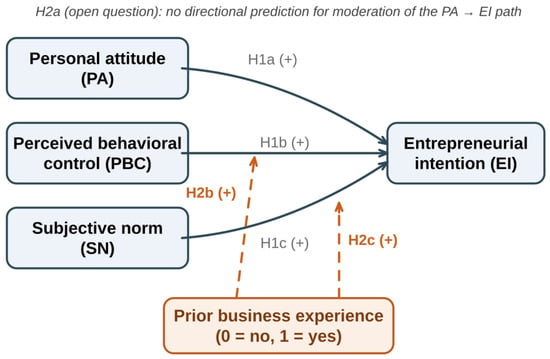
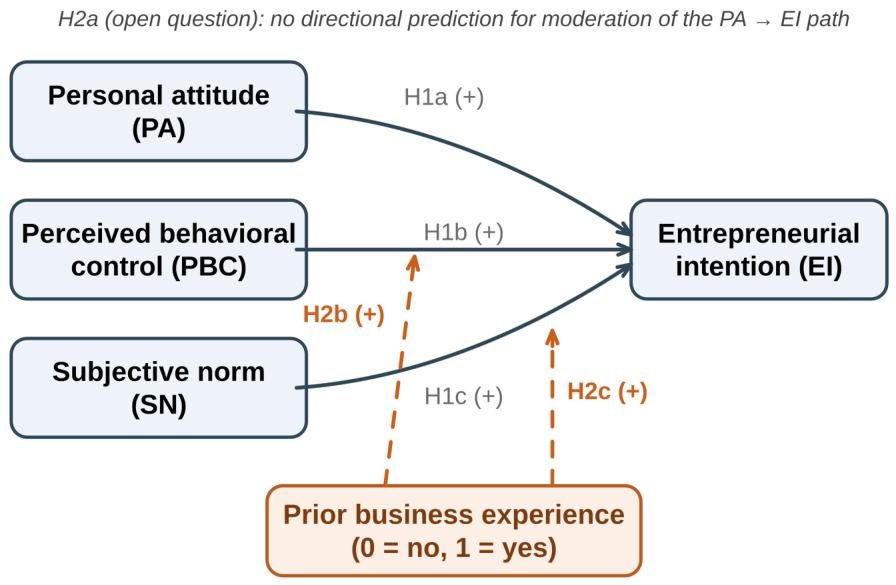
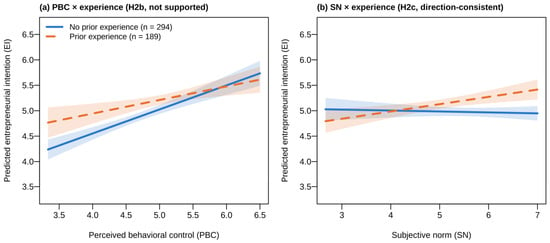
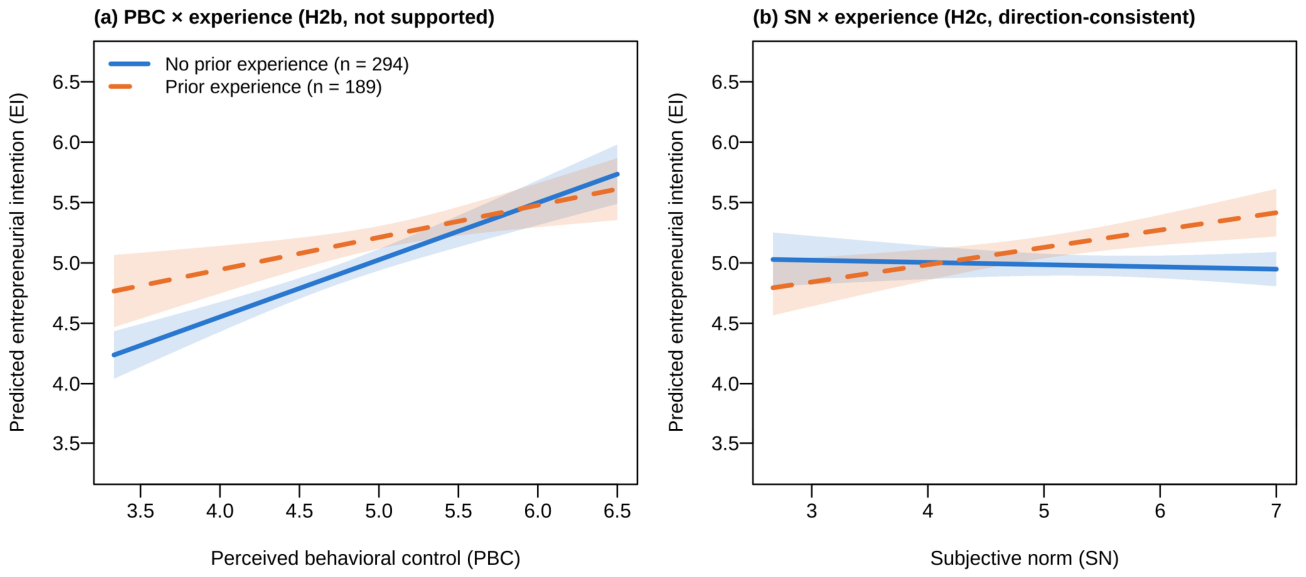

Disclaimer/Publisher’s Note: The statements, opinions and data contained in all publications are solely those of the individual author(s) and contributor(s) and not of MDPI and/or the editor(s). MDPI and/or the editor(s) disclaim responsibility for any injury to people or property resulting from any ideas, methods, instructions or products referred to in the content. |
© 2026 by the authors. Licensee MDPI, Basel, Switzerland. This article is an open access article distributed under the terms and conditions of the Creative Commons Attribution (CC BY) license.