


Abstract
Generative artificial intelligence (GenAI) challenges whether submitted academic work can serve as credible evidence of individual learning. This study examined GenAI use, critical AI practices, active teaching and assessment strategies, and self-reported verifiable-learning capabilities in higher education. A convergent post-intervention mixed-methods design involved 94 undergraduates from five cohorts, three disciplinary contexts, and two academic stages at a public university in Ecuador. Critical AI use (M = 4.06/5, SD = 0.60) and verifiable-learning capabilities (M = 3.96/5, SD = 0.60) were high and strongly associated (Spearman’s ρ = 0.641, p < 0.001), whereas GenAI-use frequency was unrelated to either construct. Final-semester students reported higher critical AI use (Holm-adjusted p = 0.004; Cliff’s δ = 0.441), but all were enrolled in Information Technology Regulations; academic stage and discipline were therefore structurally confounded. Revision, applied projects, demonstrations, authentic problems, feedback, and practical workshops received the highest ratings. Qualitative findings emphasised practice, verification, and responsible AI use, while students supported multi-source assessment and explicit rules for permitted AI use. The findings support human-centred assessment designs that prioritise critical governance of AI and credible demonstration of individual learning.
1. Introduction
Generative artificial intelligence (GenAI) has altered the conditions under which academic work is produced and, consequently, the inferences educators can make from submitted products. Students can now use GenAI systems to generate, reorganise, improve, and evaluate text, images, code, analyses, presentations, and other academic artefacts with increasing fluency [1,2]. This development does not make AI use inherently incompatible with learning; rather, it challenges assessment practices that infer individual competence primarily from the quality of a final product [3]. International frameworks increasingly emphasise that students require not only the ability to use AI tools, but also human agency, ethical judgement, critical evaluation, and the capacity to recognise the limitations of AI-generated outputs [4].
This distinction is increasingly important because frequent AI use should not be treated as equivalent to AI literacy. Recent higher education research conceptualises GenAI literacy as a multidimensional capability encompassing knowledge and use of AI, creation, evaluation, and ethical engagement, while performance-based assessment research indicates that demonstrated GenAI literacy can predict GenAI-supported task performance more effectively than self-reported proficiency [5,6]. In parallel, evaluative judgement has been identified as increasingly important in GenAI-rich assessment because students need to judge the quality of both AI outputs and the processes through which those outputs are produced [7]. These findings imply that educational research needs to look beyond whether students use GenAI and examine how they evaluate, adapt, verify, and remain accountable for AI-assisted work.
In the present study, critical AI use refers to the practices through which students retain evaluative control and responsibility over AI-assisted work. These practices include independently engaging with a problem before consulting AI, verifying and contextualising AI-generated outputs, identifying errors or limitations, distinguishing personal from AI-generated contributions, protecting sensitive information, and recognising situations in which AI should not replace human judgement or verification. Critical AI use is therefore treated as conceptually distinct from frequency of GenAI use: the former concerns the quality and accountability of students’ engagement with AI, whereas the latter reflects exposure or intensity of use.
The assessment problem is therefore not resolved simply by prohibiting GenAI or attempting to identify AI-generated content. Emerging scholarship increasingly distinguishes between communicating rules about acceptable AI use and structurally redesigning assessment so that intended learning outcomes remain observable and defensible [3,8,9]. Current higher education guidance similarly calls for assessment systems that both prepare students to work ethically and critically with AI and provide trustworthy evidence that learning outcomes have actually been achieved [10]. Recent work further frames assessment redesign as an institutional and pedagogical change process rather than a narrow technological response to GenAI [11]. In particular, assessment reform has increasingly emphasised authentic engagement, evidence of the learning process, contextualised assessment, and multiple sources of evidence rather than reliance on a single academic artefact [10,12].
Active learning provides an established pedagogical foundation for this transition. Practical workshops, problem solving, authentic projects, iterative feedback, revision, and student explanation shift attention from passive receipt of information toward observable engagement with disciplinary knowledge. Extensive evidence shows that active learning can improve student performance compared with traditional lecturing [13], while feedback research emphasises that learning is strengthened when students have opportunities to interpret feedback, act on it, and improve subsequent work [14,15,16]. At the same time, students’ feelings of learning do not necessarily correspond to measured learning [17]. In AI-rich environments, this distinction becomes even more consequential because a polished product may conceal substantial variation in the student’s actual understanding and contribution.
These established traditions also show that assessment serves purposes beyond grading or certification. Sustainable assessment emphasises the development of students’ capacity to judge and regulate the quality of their own future learning [18], while formative-assessment research positions feedback as a process through which students monitor performance, interpret quality information, and act to improve subsequent work [19]. Authentic assessment further connects assessment with realistic tasks, disciplinary standards, and professional contexts in which knowledge must be applied rather than merely reproduced [20]. These perspectives provide an important foundation for assessment in the GenAI era, but they largely predate the current capacity of generative systems to contribute substantially to apparently high-quality academic artefacts. Consequently, authentic activity, feedback, and active participation remain important but do not, by themselves, resolve the evidentiary problem of determining what a student can personally explain, perform, verify, justify, and transfer when AI has contributed to the submitted work. This tension provides a basis for connecting established assessment-for-learning principles with complementary mechanisms for making individual learning observable and defensible.
Building on these concerns, the present study operationalises verifiable learning as the student’s capacity to personally demonstrate the knowledge, reasoning, procedures, judgement, and transfer represented by academic work, including work produced with GenAI assistance. In the present study, this capacity encompasses explaining concepts in one’s own words, executing essential procedures, justifying decisions, detecting errors, transferring knowledge to new situations, defending one’s work orally, responding to unanticipated questions, distinguishing personal understanding from AI-generated production, performing essential components independently, and evaluating one’s own work using disciplinary criteria. Verifiable learning is presented here as a preliminary, study-specific operationalisation rather than as an established or independently validated psychometric construct. It is informed by adjacent work on evaluative judgement, assessment validity, process visibility, and trustworthy evidence of learning in GenAI-rich environments [3,7,12]. This perspective shifts the assessment question from whether AI contributed to an academic artefact to what evidence is required to establish that meaningful human learning remains present within AI-assisted academic work.
Despite growing research on students’ GenAI literacy [5,6], student perceptions and uses of GenAI [1], and assessment redesign in response to GenAI [2,3,12], comparatively little empirical evidence has examined these dimensions simultaneously across multiple disciplinary contexts while combining reported AI practices, perceptions of active assessment, self-reported learning capabilities, and criterion-referenced judgement scenarios. Addressing this gap, the present study examined GenAI use and assessment practices across five undergraduate cohorts representing three disciplinary contexts and two stages of academic progression.
The study makes three explicitly bounded contributions. First, it offers a preliminary operationalisation of verifiable learning as an assessment principle rather than a validated stand-alone scale. Second, it empirically separates frequency of GenAI use from the critical practices through which students evaluate, adapt, verify, and remain accountable for AI-assisted work. Third, it integrates self-report, criterion-referenced scenarios, and qualitative accounts to distinguish practices that help build learning from those that make individual competence more observable. Together, these contributions position assessment redesign as a human-centred challenge: the aim is not to eliminate GenAI from academic work, but to ensure that technological assistance remains compatible with student agency, evaluative judgement, and credible evidence of individual learning. Accordingly, the study was guided by the following overarching research question:
Main RQ. What evidence is required to establish that meaningful human learning remains present within AI-assisted academic work?
To address this overarching question, four complementary subquestions were examined:
RQ1. How do university students use GenAI, and what levels of critical AI use and exploratory indicators of AI dependence do they exhibit across disciplinary contexts and academic stages?
RQ2. Which active teaching and assessment strategies are perceived as most supportive of verifiable learning, and how is their perceived contribution associated with students’ self-reported verifiable-learning capabilities?
RQ3. How consistently do students identify appropriate responses in common and discipline-specific scenario-based judgment tasks, and how do these results complement their self-reported critical AI practices?
RQ4. What changes to assessment practices and institutional planning do students support to make individual learning more observable, accountable, and defensible in GenAI-rich higher education?
2. Materials and Methods
2.1. Study Design
This study employed a convergent post-intervention mixed-methods multi-cohort design [21] to examine university students’ use of generative artificial intelligence (GenAI), their critical AI practices, their perceptions of active teaching and assessment strategies, and their self-reported capacity to demonstrate what this study operationalises as verifiable learning. Quantitative and qualitative data were collected through an anonymous online questionnaire administered at the end of the 2026-1 academic period. The study was embedded in an educational intervention implemented across five intact undergraduate cohorts representing three disciplinary contexts and two stages of university education.
The study was not designed as an experiment or quasi-experiment. No control group or pre-intervention measurement was used. Accordingly, the analyses were intended to characterise patterns, examine associations, explore differences across cohorts, and identify convergent evidence regarding teaching and assessment practices rather than to establish causal effects of the intervention.
Quantitative and qualitative strands were analysed separately and subsequently integrated through comparison of convergent, complementary, and divergent patterns during interpretation. Consistent with a convergent mixed-methods logic, integration occurred after the separate analyses by aligning findings around the study domains and research questions. A joint display was then constructed to make the principal integrated inferences explicit rather than treating the quantitative and qualitative strands as parallel results.
2.2. Educational Setting and Participants
The study was conducted at Universidad Técnica de Machala (UTMACH), a public higher education institution in Ecuador. Participants were undergraduate students enrolled in five cohorts taught by the same instructor during the 2026-1 academic period. The instructor was also a member of the research team. The cohorts represented three different disciplinary contexts: three third-semester cohorts of Graphic Design Tools (Herramientas para el Diseño Gráfico), one third-semester cohort of Scientific Research (Investigación Científica), and one tenth-semester cohort of Information Technology Regulations (Normativas de TI).
All final-semester participants were therefore enrolled in Information Technology Regulations, whereas all Graphic Design Tools and Scientific Research participants were in the third semester. Academic stage was consequently structurally confounded with disciplinary context in this sample. Any comparisons between third- and final-semester students were therefore treated as exploratory contextual comparisons and should not be interpreted as independent developmental effects of progression through university. The questionnaire did not systematically measure participants’ previous coursework in data governance, privacy, regulation, or related subjects; consequently, the extent to which prior curricular exposure contributed to the observed differences cannot be determined.
All students in the participating cohorts were invited to complete the online questionnaire at the end of the educational intervention. A total of 95 responses were submitted. Ninety-four participants provided informed consent and were therefore included in the analytical dataset. One response corresponded to a participant who declined consent and was excluded from all analyses. The final sample comprised 12 students from Graphic Design Tools–A, 22 from Graphic Design Tools–B, 18 from Graphic Design Tools–C, 13 from Scientific Research, and 29 from Information Technology Regulations (N = 94).
2.3. Pedagogical Intervention
Although disciplinary content and learning products differed across courses, the five cohorts were taught using a common pedagogical core designed in response to the increasing availability of GenAI. The intervention was based on the principle that AI could be used as a legitimate support for ideation, explanation, revision, production, and problem solving, while students remained responsible for verifying outputs and personally demonstrating the knowledge, procedures, and judgement associated with the intended learning outcomes.
The common pedagogical core incorporated short conceptual explanations and instructor modelling, supervised practical workshops, authentic problems and cases, project-based activities, guided use of GenAI, iterative feedback, opportunities to revise and improve work, and oral presentation or demonstration. Students were frequently required to explain decisions, respond to questions that were not available in advance, identify inconsistencies, and relate the product submitted to the process through which it had been developed. In group activities, the quality of the collective product was complemented, when appropriate, by questions or demonstrations intended to provide evidence of individual understanding.
The disciplinary implementation varied according to the course. In Graphic Design Tools, students developed and demonstrated technical and creative products involving user experience, interface design, vector graphics, image editing, accessibility, and audiovisual production. In Scientific Research, activities focused on research problems, hypotheses and variables, observation, sampling, methodological coherence, data analysis, triangulation, and scientific communication. In Information Technology Regulations, students worked with ethical and regulatory cases, evidence-based assessment, information security, cloud-security maturity, incident scenarios, digital evidence, and technical–legal reasoning.
Across the three contexts, the intervention shifted the main assessment question from “What did the student submit?” toward “What can the student explain, execute, justify, verify, and transfer from the work submitted?” This distinction provided the pedagogical basis for the study-specific construct of verifiable learning examined in the questionnaire.
The workshops, projects, demonstrations, oral presentations, questioning, feedback episodes, and other classroom activities described above constituted components of the educational intervention and were not recorded or analysed as independent observational research data. All empirical findings reported in this study derive from the anonymous questionnaire, including its quantitative items, scenario-based judgement tasks, and open-ended responses. Classroom activities therefore provide the pedagogical context in which the study was embedded rather than an additional source of formal research evidence.
2.4. Development and Structure of the Questionnaire
A study-specific questionnaire was developed to reflect the pedagogical practices implemented across the five cohorts and the research questions of the study. The instrument was administered in Spanish and was not presented as a previously validated psychometric scale. Instead, sets of items were used to operationalise constructs relevant to the intervention, and their internal consistency was subsequently examined in the analytical sample.
Item generation was informed by contemporary work on student AI competency, evaluative judgement, responsible and permitted use of GenAI in assessment, and assessment redesign in AI-rich learning environments [4,7,8,10]. The resulting item sets were mapped to the research questions and to the common pedagogical components implemented across the five cohorts. Because the questionnaire was developed for the present study, these conceptual alignments were used to support item development and interpretation rather than to claim prior psychometric validation.
The questionnaire contained eight analytical components. First, background questions captured prior experience with GenAI, frequency of GenAI use in the course, AI tools used, class attendance, age range, and course/cohort. Second, nine items examined the purposes for which students used GenAI, including conceptual clarification, idea generation, summarisation, writing, technical or creative production, data analysis, presentation preparation, revision of self-produced work, and near-complete delegation of an activity. Responses ranged from 0 (never) to 4 (always).
Third, eight five-point Likert items assessed critical AI practices, including attempting to understand a problem before consulting AI, producing an initial idea independently, verifying AI-generated information, detecting errors or irrelevant outputs, adapting responses to context, distinguishing personal from AI contributions, protecting sensitive information, and recognising situations in which AI should not replace personal judgement or verification. Two additional items examined exploratory indicators of AI dependence: accepting well-written AI responses without verification and experiencing difficulty initiating or completing activities without AI.
Fourth, students evaluated the contribution of 11 teaching and assessment strategies: practical workshops, step-by-step instructor demonstrations, authentic problems or cases, applied projects, collaborative work, immediate feedback, opportunities for revision, oral defence, unanticipated questions, audiovisual or tutorial resources, and permitted AI use accompanied by verification and personal explanation. Responses ranged from 1 (did not contribute) to 5 (contributed greatly).
Fifth, self-reported verifiable-learning capabilities were operationalised through 10 items assessing students’ perceived capacity to explain course concepts in their own words, execute essential procedures, justify decisions, detect errors, transfer knowledge to new situations, defend their work orally, respond to unanticipated questions, distinguish personal understanding from AI-generated production, perform essential components independently, and evaluate the quality of their own work using disciplinary criteria. Items were rated from 1 (strongly disagree) to 5 (strongly agree).
2.5. Assessment Redesign and Institutional Implications
Sixth, eight Likert items examined students’ views regarding assessment in AI-rich learning environments. Items addressed the evidentiary limitations of relying exclusively on unsupervised final products, the value of combining product, process, practical performance, and oral defence, the usefulness of practical workshops and oral questioning, the need to specify permitted AI use, the incorporation of process and verification evidence into institutional formats, and perceptions of fairness in multi-source assessment.
Participants were also asked to select up to five elements they considered priorities for future institutional planning and assessment formats. Options included defining permitted levels of AI use, documenting the AI tool and purpose, recording verification sources, preserving evidence of drafts and revisions, practical individual demonstration, oral defence, identifying individual contributions to group work, data protection, documenting feedback and revisions, and differentiated weighting of product, process, practical performance, and defence.
2.6. Scenario-Based Judgement Tasks
Seventh, scenario-based judgement questions were incorporated to complement self-reported perceptions with criterion-referenced decisions. Three common scenarios were answered by all participants. These assessed: (1) appropriate verification of a convincing AI response containing references; (2) appropriate evidence for determining whether individual members of a group had learned from a high-quality collective product; and (3) characteristics of responsible AI use. Each item had one predefined best response and was scored as correct (1) or incorrect (0).
Two additional scenarios were tailored to each disciplinary context. Graphic Design Tools scenarios addressed usability/accessibility evaluation and practical demonstration of audiovisual editing procedures. Scientific Research scenarios examined the integrity of AI-generated references and fabricated results, as well as the coherence between research objectives and data-collection techniques. Information Technology Regulations scenarios addressed verification of AI-generated legal claims against official sources and the protection of sensitive organisational data when using public AI tools.
Because the discipline-specific scenarios differed in content and observed difficulty, they were not treated as psychometrically equivalent items for cross-disciplinary comparisons. Cross-cohort inferential analyses therefore relied on the three common scenarios, whereas discipline-specific scenarios were analysed descriptively within their respective disciplinary contexts.
The complete wording of the three common and six discipline-specific scenario-based judgement tasks, including all response options, the predefined best response, and the scoring criterion, is provided in Supplementary Table S3A–D. The scenarios are reproduced in the original Spanish administered to participants together with an English translation to support transparency and reproducibility. These tasks were developed for the present study and should not be interpreted as a previously validated scenario-based assessment instrument.
2.7. Open-Ended Questions
Finally, four open-ended questions invited students to identify the strategy that contributed most to their learning, describe an instance in which AI supported learning or produced an error or limitation, propose changes that UTMACH should consider in teaching or assessment in response to contemporary AI use, and identify aspects of the pedagogical approach that should be maintained or improved in future implementations.
Open-ended responses were analysed using an inductive–deductive, codebook-based thematic approach. This terminology distinguishes the structured shared-codebook process used in the present study from reflexive thematic analysis [22]. Following preliminary review, a shared 22-code operational codebook was developed and applied to the complete corpus. Two researchers independently coded all 376 responses (94 participants × four open-ended questions). Intercoder agreement was evaluated at the binary code-decision level using overall percent agreement and code-specific Cohen’s κ. The agreement analysis was used as a qualitative quality-assurance check and to identify code-boundary ambiguity; the manuscript does not report consensus-coded frequencies. Themes were refined by examining recurrent patterns, convergence and divergence across courses and academic stages, and illustrative responses. Closely related codes with lower κ were interpreted at the broader thematic level rather than as standalone quantitative frequency estimates. The operational codebook and per-code agreement statistics are provided in the Supplementary Materials.
2.8. Data Collection and Ethical Considerations
Participation in the research questionnaire was voluntary and independent of course grading. Before accessing the questionnaire, students received information about the purpose of the study, the voluntary nature of participation, anonymity, the intended scientific use of aggregated data, and their right not to participate. Electronic informed consent was required. The questionnaire was completed individually during a scheduled classroom session after course grades had been communicated to students. At the beginning of the session, the instructor explained how to access and navigate the electronic form but did not provide guidance regarding the substantive content of the questions or intervene in students’ responses. Students were free to accept or decline participation and to respond according to their own judgement. Participation remained voluntary, anonymous, and independent of course grading. No names, institutional email addresses, student identification numbers, or other directly identifying information were collected. No prior ethics approval or formal exemption determination was sought from or issued by an accredited Research Ethics Committee for Human Subjects (Comité de Ética de Investigación en Seres Humanos, CEISH) or another formally authorised ethics review body. At the time of data collection, Universidad Técnica de Machala did not have its own accredited CEISH. The study involved a non-clinical educational intervention embedded within scheduled university courses, followed by an anonymous online questionnaire. The authors report this status transparently rather than characterising the study as having received a formal ethics exemption.
2.9. Data Cleaning and Quality Assurance
The original response file was preserved unchanged, and data cleaning was conducted on a working copy. The non-consenting response was removed before any substantive analysis. Text labels were standardised without modifying their substantive meaning; in particular, a truncated export label corresponding to the neutral Likert category (“neither agree nor disagree”) was normalised to the complete category.
A branching configuration issue in the online questionnaire caused some students in two Graphic Design Tools cohorts to receive discipline-specific scenarios intended for other courses. These non-applicable responses were excluded. For each participant, only the two discipline-specific scenarios corresponding to the course in which the student was enrolled were retained. The common quantitative item sets were complete for all 94 consenting participants.
2.10. Quantitative Analysis
Descriptive analyses included frequencies and percentages for categorical variables and means, standard deviations, medians, and interquartile ranges, where appropriate, for ordinal items and composite scores. GenAI-use purpose items were coded from 0 (never) to 4 (always), while agreement items and perceived contribution items were coded on five-point scales.
Study-specific composite indices were calculated as the mean of their component items for critical AI use, perceived contribution of teaching and assessment strategies, self-reported verifiable learning, exploratory AI-dependence indicators, and support for assessment redesign. Internal consistency was examined using Cronbach’s alpha and McDonald’s omega. Because the two dependence items constituted an exploratory indicator rather than a validated scale, results for this construct were interpreted cautiously.
Spearman rank-order correlations were used to examine associations among critical AI use, perceived teaching-strategy contribution, verifiable learning, AI-dependence indicators, support for assessment redesign, frequency of GenAI use, and performance on the common scenario-based judgement items. Differences across the five cohorts were examined using Kruskal–Wallis tests because cohort sizes were unequal and the primary outcomes were derived from ordinal responses. When omnibus tests were statistically significant, pairwise comparisons were conducted with correction for multiple testing. Effect sizes were reported where appropriate. Statistical significance was evaluated at α = 0.05.
Exploratory comparisons between third-semester and final-semester students were conducted using Mann–Whitney U tests. Holm correction was applied when multiple related comparisons were examined, and Cliff’s delta (δ) was used to quantify effect size. In addition, an exploratory linear regression model with HC3 heteroskedasticity-robust standard errors was used to examine the association between academic stage and critical AI use while accounting for age category and previous AI experience. Because all final-semester participants were enrolled in Information Technology Regulations, academic stage and disciplinary context could not be fully disentangled; therefore, this model was interpreted as exploratory rather than causal or confirmatory.
For this exploratory model, academic stage was coded as 0 = third semester and 1 = final semester; age category and previous AI experience were entered as ordered variables reflecting increasing age and experience levels.
Associations between self-reported constructs were interpreted as correlational and potentially influenced by common-method variance. Scenario-based judgement results were therefore used as complementary criterion-referenced evidence rather than as a direct measure of overall academic performance.
Because the teaching-strategy items represented heterogeneous pedagogical practices rather than a previously established unidimensional scale, their aggregate mean was treated as a descriptive strategy-contribution index. Item-level rankings remained the primary basis for interpretation. All quantitative analyses were performed in Python 3.13.5 using pandas 2.2.3, NumPy 2.3.5, SciPy 1.17.0, and statsmodels 0.14.6.
2.11. Mixed-Methods Integration
Quantitative and qualitative findings were integrated after the independent analysis of each strand using a question- and domain-based comparison procedure. For each research question, quantitative indicators were aligned with the qualitative themes addressing the same substantive domain. The research team then compared the two strands to identify convergence, complementarity, divergence, and instances in which one strand clarified limitations or ambiguities in the other. Convergence was identified when quantitative and qualitative evidence supported a substantively consistent interpretation; complementarity was identified when one strand added contextual or explanatory information not available from the other; and divergence was examined when the strands suggested different or only partially consistent interpretations. Qualitative code frequencies were not used to statistically validate quantitative estimates. Instead, participants’ qualitative accounts were used to contextualise and explain quantitative patterns, while quantitative results provided information about the distribution and strength of patterns reflected in the qualitative accounts. The resulting integrated comparisons were organised in a joint display presented in the Results section, from which the principal mixed-methods inferences were derived. Integration therefore occurred at the interpretation stage through explicit comparison of evidence rather than through statistical merging of qualitative and quantitative data.
2.12. Use of Generative AI
ChatGPT (GPT-5.6 Sol; OpenAI, San Francisco, CA, USA) was used to assist with the visual structuring and graphical presentation of the conceptual synthesis shown in the Discussion section. The scientific content and conceptual relationships were derived from the study findings and were reviewed and validated by the authors. Generative AI was not used to generate or analyse research data, code qualitative responses, or make final statistical or interpretive decisions. The authors take full responsibility for the content of the study.
3. Results
3.1. Participants and GenAI-Use Context
A total of 95 questionnaires were submitted. One respondent did not provide informed consent and was excluded from all analyses, resulting in a final analytical sample of 94 students. The sample comprised 65 third-semester students (69.1%) and 29 tenth-semester (final-semester) students (30.9%). The third-semester group included three cohorts of Graphic Design Tools (n = 52) and one cohort of Scientific Research (n = 13), whereas the final-semester group corresponded to Information Technology Regulations (n = 29). The distribution of participants across cohorts is presented in Table 1.
Table 1.
Distribution of participants across cohorts.
Most participants reported previous experience with generative artificial intelligence (GenAI): 40.4% described their prior experience as basic, 48.9% as intermediate, and 7.4% as advanced, while only 3.2% reported no previous experience. GenAI use during the courses was also frequent: 47.9% reported using it several times per week, 38.3% several times per month, 9.6% once or twice during the course, and 4.3% almost every day. ChatGPT (81.9%) and Gemini (76.6%) were the most frequently reported tools.
Attendance was high, with 83.0% of the analytical sample reporting attendance at 85–100% of face-to-face classes or activities.
3.2. Purposes of GenAI Use
Students used GenAI primarily as a support for ideation, conceptual understanding, revision, and production rather than for complete task substitution. On a frequency scale ranging from 0 (never) to 4 (always), generating ideas, alternatives, or examples received the highest mean score (M = 2.35, SD = 0.89), followed by requesting conceptual explanations (M = 2.28, SD = 0.91), reviewing or improving previously produced work (M = 2.24, SD = 1.10), and generating designs, images, code, scripts, or technical resources (M = 2.23, SD = 0.94).
In contrast, using GenAI to complete almost an entire activity with little personal effort was the least frequently reported behaviour (M = 1.35, SD = 1.11). The reported purposes of GenAI use are summarised in Table 2.
Table 2.
Purposes of GenAI use.
3.3. Critical AI Use and Exploratory Dependence Indicators
Students reported generally high levels of critical AI use (M = 4.06, SD = 0.60). The eight-item critical AI-use composite demonstrated good internal consistency (Cronbach’s α = 0.841; McDonald’s ω = 0.843). The highest-rated behaviours were attempting to understand the problem before consulting AI (M = 4.28), recognising when AI should not replace personal judgement or verification (M = 4.24), verifying AI-generated information (M = 4.04), and distinguishing personal contributions from AI-generated contributions (M = 4.03).
Two additional items examined potential reliance on AI. Accepting a well-written AI response without verification and experiencing difficulty initiating or completing tasks without AI yielded a combined exploratory indicator of M = 2.84 (SD = 0.90). Internal consistency was modest (α = 0.633; ω = 0.632); therefore, this measure was interpreted as an exploratory indicator rather than as a validated dependence scale.
3.4. Perceived Contribution of Teaching and Assessment Strategies
The teaching and assessment strategies were evaluated positively overall (M = 3.90, SD = 0.76), with high internal consistency across the 11 items (Cronbach’s α = 0.947; McDonald’s ω = 0.950). The highest-rated strategy was the opportunity to revise, correct, and improve previous versions of work (M = 4.07), followed by applied projects or final products (M = 4.03), step-by-step instructor demonstrations (M = 4.00), authentic problems or cases (M = 3.96), and immediate feedback during task completion (M = 3.94). Table 3 presents the perceived contribution of the 11 teaching and assessment strategies.
Table 3.
Perceived contribution of teaching and assessment strategies.
Permitted AI use accompanied by verification and personal explanation was also evaluated positively (M = 3.93).
3.5. Self-Reported Verifiable-Learning Capabilities
The 10-item self-reported verifiable-learning composite showed high internal consistency (α = 0.933; ω = 0.935) and a mean score of 3.96 (SD = 0.60). Students reported greatest confidence in executing essential procedures (M = 4.04), evaluating the quality of their own work using technical or academic criteria (M = 4.03), justifying decisions (M = 4.02), and explaining concepts in their own words (M = 4.01).
Comparatively lower scores were observed for detecting errors in an apparently correct response or product (M = 3.83), defending work orally without relying on written materials (M = 3.86), and responding to unanticipated questions (M = 3.86). Although these scores remained above the scale midpoint, they identify error detection and spontaneous demonstration as comparatively more demanding components of verifiable learning. The item-level results for verifiable learning are presented in Table 4.
Table 4.
Self-reported verifiable-learning capabilities.
3.6. Scenario-Based Judgement
Performance on the three common scenario-based judgement tasks was high. Eighty-eight percent of students identified verification of AI-generated references and claims as the appropriate academic response, 90.4% selected a combination of product, process evidence, practical demonstration, and individual questioning as the strongest evidence of learning in a group task, and 87.2% correctly identified the conditions for responsible AI use. The mean common-scenario score was 2.66 out of 3 (SD = 0.80; median = 3).
The limited variability in these items indicates a ceiling effect and constrains their ability to differentiate higher levels of judgement. Therefore, they were interpreted as criterion-referenced checks rather than as a continuous measure of academic performance. Performance on the three common scenario-based judgement tasks is summarised in Table 5.
Table 5.
Common scenario-based judgement results.
Discipline-specific scenarios were analysed descriptively because their content and difficulty were not equivalent. Correct response rates were 98.1% and 96.2% for the two Graphic Design Tools scenarios, 76.9% and 84.6% for the Scientific Research scenarios, and 96.6% and 93.1% for the Information Technology Regulations scenarios. Correct-response rates in the Scientific Research scenarios were descriptively lower than those observed within the other discipline-specific scenario sets. However, no inferential comparisons across disciplines were conducted because the scenario content and difficulty differed substantively.
3.7. Associations Among Critical AI Use, Teaching Strategies, and Verifiable Learning
Critical AI use was strongly and positively associated with self-reported verifiable learning (Spearman’s ρ = 0.641, p < 0.001). The perceived contribution of teaching and assessment strategies was also positively associated with self-reported verifiable learning (ρ = 0.396, p < 0.001), while critical AI use was positively associated with support for assessment redesign (ρ = 0.423, p < 0.001). The associations among the main study variables are presented in Table 6.
Table 6.
Associations among main study variables.
In contrast, frequency of GenAI use was not significantly associated with either critical AI use (ρ = −0.178, p = 0.087) or self-reported verifiable learning (ρ = −0.130, p = 0.211). The exploratory dependence indicator showed a negative but non-significant association with self-reported verifiable learning (ρ = −0.191, p = 0.066). Neither critical AI use (ρ = 0.161, p = 0.122) nor frequency of GenAI use (ρ = −0.150, p = 0.150) was significantly associated with performance on the three common scenario-based judgement tasks.
Because critical AI use and the verifiable-learning composite were measured through self-report items, these associations were interpreted cautiously and not as evidence of causality.
3.8. Academic-Stage Comparison: Third-Semester Versus Final-Semester Students
An exploratory academic-stage analysis compared students enrolled in the third semester (n = 65, 69.1%) with students enrolled in the tenth (final) semester (n = 29, 30.9%). The third-semester group comprised students from Graphic Design Tools and Scientific Research, whereas all final-semester students were enrolled in Information Technology Regulations. As expected, the groups differed substantially in age distribution: 58.5% of third-semester students were aged 18–20 years, whereas no final-semester student belonged to this age group; among final-semester students, 55.2% were aged 21–23 years and 44.8% were aged 24 years or older.
Critical AI use was significantly higher among final-semester students (median = 4.50, IQR = 4.13–4.75) than among third-semester students (median = 4.00, IQR = 3.63–4.25). The difference remained statistically significant after correction for multiple comparisons (Mann–Whitney test, unadjusted p < 0.001; Holm-adjusted p = 0.004; Cliff’s δ = 0.441), indicating a moderate effect size.
Item-level analyses showed that final-semester students reported greater engagement in several critical AI practices. After Holm correction, significant differences were retained for attempting to understand the problem before consulting AI (M = 4.62 vs. 4.12), producing an initial independent attempt (M = 4.31 vs. 3.82), verifying AI-generated information (M = 4.38 vs. 3.89), adapting AI outputs to the specific context (M = 4.28 vs. 3.82), and protecting sensitive or restricted information when using public AI systems (M = 4.45 vs. 3.78).
An exploratory HC3-robust linear model including academic stage, age category, and previous AI experience showed that membership in the final-semester group remained positively associated with critical AI use (B = 0.409, 95% CI [0.090, 0.727], p = 0.012). However, academic stage cannot be interpreted as an independent explanatory factor because all final-semester participants belonged to the Information Technology Regulations course. Academic stage and disciplinary context were therefore structurally confounded in the present study.
Despite the difference in self-reported critical AI practices, performance on the three common scenario-based judgement tasks did not differ significantly between academic stages. Third-semester students obtained a mean score of 2.62 out of 3, compared with 2.76 among final-semester students (p = 0.659). Correct-response rates were high in both groups, supporting the ceiling effect observed for the common scenario items.
Verifiable learning showed a descriptively higher distribution among final-semester students (median = 4.00, IQR = 4.00–4.60) than among third-semester students (median = 4.00, IQR = 3.60–4.20). However, this difference did not remain statistically significant after correction for multiple comparisons (Holm-adjusted p = 0.126).
At the item level, the ability to detect errors in an apparently correct response or product was higher among final-semester students (M = 4.17) than among third-semester students (M = 3.68), and this difference remained statistically significant after Holm correction across the 10 verifiable-learning items (adjusted p = 0.032). Academic-stage comparisons across the main outcomes are summarised in Table 7.
Table 7.
Comparison of main outcomes between third- and final-semester students.
3.9. Cross-Cohort Differences
Differences across the five cohorts were examined for critical AI use, exploratory AI-dependence indicators, perceived contribution of teaching and assessment strategies, verifiable learning, support for assessment redesign, and performance on the three common scenario-based judgement tasks. Significant between-cohort differences were observed for critical AI use and perceived contribution of teaching and assessment strategies, whereas the remaining outcomes did not differ significantly across cohorts.
Critical AI use differed significantly across cohorts (Kruskal–Wallis H = 14.88, p = 0.005, ε2 = 0.122). Median scores ranged from 3.75 (IQR = 3.63–4.00) in Scientific Research and 3.81 (IQR = 3.63–4.13) in Graphic Design Tools–C to 4.50 (IQR = 4.13–4.75) in Information Technology Regulations. Pairwise Mann–Whitney comparisons with Holm correction showed that the statistically significant difference was between Graphic Design Tools–C and Information Technology Regulations (Holm-adjusted p = 0.006). No other pairwise comparison remained statistically significant after correction for multiple testing.
The perceived contribution of teaching and assessment strategies also differed significantly across cohorts (H = 19.68, p < 0.001, ε2 = 0.176). Graphic Design Tools–C showed the lowest median strategy-contribution score (median = 3.05, IQR = 2.75–3.50), whereas the remaining cohorts showed higher distributions: Graphic Design Tools–A (median = 4.05, IQR = 3.70–4.50), Graphic Design Tools–B (median = 4.05, IQR = 3.73–4.77), Scientific Research (median = 4.00, IQR = 3.55–4.27), and Information Technology Regulations (median = 4.00, IQR = 3.73–4.91). After Holm correction, Graphic Design Tools–C differed significantly from Graphic Design Tools–A (adjusted p = 0.003), Graphic Design Tools–B (adjusted p = 0.002), Scientific Research (adjusted p = 0.027), and Information Technology Regulations (adjusted p = 0.002). No statistically significant differences were observed among the remaining four cohorts.
In contrast, no statistically significant differences were found across cohorts for verifiable learning (H = 6.99, p = 0.137), the exploratory AI-dependence indicator (H = 6.98, p = 0.137), support for assessment redesign (H = 5.06, p = 0.282), or performance on the three common scenario-based judgement tasks (H = 2.38, p = 0.666). Thus, although students’ reported critical AI practices and their perceptions of the pedagogical strategies varied across some cohorts, the five groups showed no statistically detectable differences in overall verifiable learning, support for assessment redesign, AI-dependence indicators, or common scenario performance. Cross-cohort comparisons are presented in Table 8, with statistically significant Holm-adjusted pairwise comparisons reported in Table 9.
Table 8.
Main outcomes across the five cohorts.
Table 9.
Significant Holm-adjusted pairwise comparisons.
3.10. Support for Assessment Redesign
Students showed generally high support for assessment practices that incorporate multiple sources of evidence rather than relying exclusively on a final academic product. The eight-item assessment-redesign composite had a mean score of 3.95 out of 5 (SD = 0.61) and demonstrated good internal consistency (Cronbach’s α = 0.862; McDonald’s ω = 0.869).
The strongest level of agreement concerned the use of questions during presentations to determine whether students had actually understood their work, with 85.1% of participants selecting “agree” or “strongly agree” (M = 4.10, SD = 0.79). Practical workshops were also strongly supported as a means of demonstrating learning compared with traditional unsupervised assignments (79.8%; M = 4.01, SD = 0.87). In addition, 77.7% agreed that combining product, process, practical performance, and oral defence provides more reliable evidence of learning (M = 4.06, SD = 0.89), while the same proportion reported that oral defence encouraged them to prepare and understand their own work more thoroughly (77.7%; M = 4.07, SD = 0.88).
Regarding the explicit integration of GenAI into assessment, 74.5% agreed that learning activities should clearly specify the purposes for which AI may be used and the components that students must complete personally (M = 3.88, SD = 0.95). Similarly, 74.5% supported incorporating AI use, evidence of the learning process, verification, and individual demonstration into institutional planning and assessment formats (M = 4.01, SD = 0.75). Furthermore, 75.5% considered an assessment approach combining the produced work, participation in the process, practical performance, and individual explanation to be fairer (M = 3.95, SD = 0.79).
A more heterogeneous response emerged for the statement that an unsupervised take-home assignment submitted as a final product is, by itself, insufficient to determine how much each student has learned. Although 48.9% agreed or strongly agreed with this statement, 42.6% selected the neutral response, and 8.5% disagreed or strongly disagreed (M = 3.53, SD = 0.86). This item therefore showed substantially greater uncertainty than the other assessment-redesign items. Students’ responses regarding assessment redesign are summarised in Table 10.
Table 10.
Student perspectives on assessment redesign in GenAI-rich learning environments.
3.11. Priorities for Institutional Assessment Formats
When asked to select up to five elements that should be incorporated into future institutional planning and assessment formats, students most frequently prioritised the explicit definition of the permitted level of AI use (n = 75, 79.8%). The next most frequently selected elements were documenting feedback and subsequent improvements (n = 55, 58.5%), identifying the AI tool used and its purpose (n = 55, 58.5%), and incorporating oral defence and questioning (n = 53, 56.4%).
Other selected priorities included data-protection and privacy restrictions (n = 38, 40.4%), differentiated weighting of product, process, practical performance, and defence (n = 35, 37.2%), identification of each group member’s individual contribution (n = 34, 36.2%), individual practical demonstration (n = 32, 34.0%), preservation of drafts, versions, or other evidence of the learning process (n = 32, 34.0%), and documentation of sources or verification mechanisms (n = 31, 33.0%).
The distribution of responses therefore showed that the most frequently selected institutional priority was not the prohibition of GenAI, but the establishment of explicit conditions governing its permitted use. Students also frequently selected mechanisms that increase transparency regarding how AI was used and that provide additional evidence of the learning process and individual understanding. The institutional assessment priorities selected by participants are presented in Table 11.
Table 11.
Student priorities for institutional planning and assessment formats.
3.12. Qualitative Findings
Independent coding yielded 8104 agreements across 8272 binary coding decisions (97.97% overall agreement). Across the 22 operational codes, the median Cohen’s κ was 0.865, and the mean κ was 0.829; 15 codes had κ ≥ 0.80 and 20 had κ ≥ 0.60. Two closely related practice codes showed lower agreement beyond chance despite high raw agreement: problem solving/application (PRA-3; κ = 0.357; raw agreement = 91.5%) and mastery of disciplinary tools/procedures (PRA-4; κ = 0.365; raw agreement = 89.6%). Because these categories were adjacent in scope, they were interpreted cautiously within the broader practice-and-authentic-application theme rather than used for precise frequency comparisons. Full per-code statistics are provided in the Supplementary Materials.
All 94 participants responded to the four open-ended questions, yielding 376 qualitative responses. The thematic analysis identified four recurrent and interconnected themes: (1) learning through practice and authentic application; (2) instructional scaffolding, feedback, and individual demonstration; (3) AI as a useful but fallible support tool; and (4) the need for explicit, regulated, and educationally meaningful integration of AI into assessment. Anonymous participant identifiers (P01–P94) are used below. Illustrative quotations were translated from Spanish into English by the authors and checked against the original responses for semantic equivalence. Minor grammatical adjustments were made only where necessary to improve readability in English without altering the participants’ intended meaning.
3.12.1. Learning Through Practice and Authentic Application
Practical activity was the most recurrent feature in students’ descriptions of what had contributed to their learning. Participants referred to workshops, applied projects, problem solving, cases, in-class task completion, and opportunities to use disciplinary tools rather than relying exclusively on theoretical explanation. Students frequently described practice as the mechanism through which concepts became understandable, and errors became visible.
This pattern was evident across the three disciplinary contexts, although the form of practice differed. Graphic Design Tools students emphasised direct manipulation of design and audiovisual software, Scientific Research students referred to developing the research process progressively through its different stages, and Information Technology Regulations students highlighted case analysis and application to organisational or professional situations. One final-semester student explained that projects involving real institutions “force you to understand why things are done, not just memorise theory” (P73).
Students also repeatedly recommended maintaining practical activities in future implementations, with several requesting an even stronger connection to authentic professional contexts. In the final-semester cohort, for example, some participants explicitly proposed conducting practical assessments with real organisations rather than relying exclusively on hypothetical cases.
3.12.2. Instructional Scaffolding, Feedback, and Individual Demonstration
A second theme concerned the value of instructional scaffolding and iterative improvement. Students repeatedly mentioned step-by-step demonstrations, opportunities to ask questions, immediate feedback, revision of previous work, and teacher guidance as mechanisms that helped them identify mistakes and improve their performance. Several participants described learning as an iterative process in which an initial attempt was followed by feedback, correction, and a new version rather than by a single final submission.
Oral presentation and questioning also appeared frequently, but with a somewhat different function. Students described presentations, teacher questions, peer evaluation, and explanation of procedures as mechanisms that encouraged preparation and made individual understanding more visible. For example, one participant recommended maintaining “presentations to justify the work” while ensuring that AI was used responsibly (P13), whereas another specifically proposed asking students questions during activities to determine their actual level of understanding and whether they had personally completed the work (P33).
Responses concerning future improvements also highlighted the need to strengthen feedback, clarify assessment criteria, and ensure more balanced participation in group work. Several students noted that group activities could conceal unequal contributions and suggested increasing individual explanation or verification within collaborative tasks.
3.12.3. AI as a Useful but Fallible Support Tool
Students generally described GenAI as a useful learning support rather than as an unquestioned source of knowledge. Reported uses included obtaining additional explanations, organising ideas, improving writing, summarising complex material, troubleshooting software, generating design alternatives, reviewing work, and clarifying unfamiliar concepts. However, students also provided concrete examples of inaccurate, incomplete, outdated, or contextually inappropriate AI outputs.
Third-semester students frequently described AI as immediate technical or explanatory support. Graphic Design Tools students, for example, reported using AI to locate functions in Adobe Illustrator or Premiere, understand editing procedures, identify interface errors, and obtain design suggestions. Scientific Research students described using AI to structure sections of a research project, improve explanations, or organise ideas, while recognising that references and methodological suggestions still required verification. One participant explained that AI-assisted suggestions were reviewed, selected, and modified before being incorporated into the research work (P82).
Final-semester students more frequently referred to verification in relation to legal provisions, standards, official documents, and the currency of regulatory information. Students described cases in which AI cited incorrect legal provisions, provided outdated regulatory links, or produced information that had to be checked against official sources. One participant reported that AI provided links to regulations that were no longer in force, leading the student to independently locate and verify the current regulation (P75). Another stated that the experience had taught them to “always verify official sources” (P54).
This descriptive contrast complements the quantitative academic-stage findings: final-semester students reported stronger critical AI practices, while the qualitative responses show a particular emphasis on source verification, regulatory validity, contextual appropriateness, and professional responsibility. Because academic stage and disciplinary context overlap in this sample, these qualitative differences are interpreted as contextual patterns rather than as effects of academic progression alone.
3.12.4. From AI Prohibition to Explicit and Accountable Integration
The fourth theme concerned how the university should respond institutionally to GenAI. A recurrent position was that AI should neither be ignored nor prohibited indiscriminately. Instead, students proposed clearer rules regarding when AI may be used, what purposes are acceptable, what must be completed personally, and how AI-assisted work should be verified and explained. Several responses explicitly framed AI as a tool that students need to learn to use responsibly because it is already part of contemporary academic and professional practice.
Students also connected responsible AI use with assessment redesign. Their proposals included more practical activities, case-based assessment, problem solving, oral explanation, individual questioning, verification of sources, transparency regarding AI use, and greater emphasis on reasoning and application rather than memorisation alone. A Scientific Research student summarised this position by arguing that although a written response can now be generated easily, “the student must demonstrate that they understand what they present” (P82).
At the same time, responses were not uniformly supportive of unrestricted AI use. Some students explicitly proposed moderate or controlled use, limits for simple tasks, stronger verification, or mechanisms intended to reduce excessive reliance. A small number also suggested AI-detection mechanisms. Overall, however, the dominant qualitative pattern favoured regulated integration and learning-oriented accountability rather than blanket prohibition.
Taken together, the qualitative findings converged with the quantitative results in three main respects. First, students consistently valued practical application, feedback, and revision as mechanisms for developing learning. Second, they viewed GenAI as educationally useful when its outputs were critically reviewed, adapted, and verified rather than accepted automatically. Third, they supported assessment practices that make individual understanding more visible through process evidence, practical performance, questioning, and explanation. The qualitative responses therefore reinforce the distinction between using AI to support the production of academic work and being able to personally demonstrate the learning represented by that work. Table 12 presents a joint display of the principal quantitative and qualitative findings, highlighting convergence, complementarity, and the limited discriminative capacity of the common scenario tasks.
Table 12.
Integrated mixed-methods synthesis of quantitative and qualitative findings.
4. Discussion
The present study examined how university students use GenAI, how they evaluate a set of active teaching and assessment practices, and how these experiences relate to self-reported capabilities within what this study operationalises as verifiable learning. Across five cohorts, three disciplinary contexts, and two stages of academic progression, the findings reveal a pattern that is more nuanced than a simple distinction between AI use and non-use. Students were already regular users of GenAI, but frequency of use was not significantly associated with either critical AI use or self-reported verifiable learning. In contrast, critical AI practices were strongly associated with students’ perceived capacity to explain, execute, justify, transfer, and independently demonstrate their learning. At the same time, students expressed broad support for assessment practices that combine the quality of the final product with evidence of process, practical performance, verification, and individual explanation.
These findings suggest that the educational challenge posed by GenAI is not primarily whether students use AI, but how its use is governed within the learning process and what evidence is required to establish that meaningful human competence remains present in AI-assisted academic work.
4.1. Frequency of GenAI Use Is Not Equivalent to Critical AI Use
One of the clearest findings was the absence of a statistically significant association between frequency of GenAI use and either critical AI use or self-reported verifiable learning. Students who reported using GenAI more frequently did not necessarily report stronger verification, contextual adaptation, independent reasoning, or capacity to demonstrate their own learning. This distinction is important because familiarity and frequency can easily be interpreted as indicators of AI competence, particularly among students who routinely interact with generative systems.
Experimental evidence suggests that GenAI-supported performance does not necessarily translate into deeper independent learning. LLM assistance can reduce mental effort while compromising depth in student scientific inquiry [23], and experimental evidence outside higher education similarly shows that GenAI support can improve immediate task performance while insufficiently structured use may undermine subsequent independent learning [24]. Together, these findings highlight the importance of instructional guardrails rather than unrestricted assistance.
Related evidence from university students indicates that AI dependence can also be associated with poorer critical-thinking outcomes through cognitive fatigue, while AI literacy may act as an important contextual resource in this relationship [25].
This distinction is consistent with recent work showing that GenAI literacy is not reducible to exposure or self-perceived proficiency and that performance-based literacy measures can provide information not captured by self-report alone [5,6].
The present findings support a more demanding understanding of AI literacy. Critical engagement with GenAI involves more than knowing how to obtain a useful response. It requires the capacity to evaluate whether the response is accurate and relevant, adapt it to disciplinary requirements, recognise when AI should not replace personal judgement, distinguish human from AI contributions, and protect sensitive information. These dimensions are consistent with contemporary AI competency frameworks that emphasise human agency, critical evaluation, ethical responsibility, and informed decision-making rather than tool use alone [4,7].
This distinction was also reflected in the strong positive association between critical AI use and self-reported verifiable learning (ρ = 0.641, p < 0.001). Students who described themselves as more likely to understand before consulting AI, verify its outputs, adapt them to context, and recognise their limits also reported greater confidence in explaining concepts, executing procedures, justifying decisions, transferring knowledge, and defending their work. This association should not be interpreted causally because both constructs were measured through self-report and may be influenced by common-method variance. Nevertheless, its magnitude indicates that critical AI practices and self-reported verifiable learning are closely connected within the educational experience examined.
The scenario-based results provide an important complement to these perceptions. Students performed well on the three common judgement scenarios, but the resulting ceiling effect limited their capacity to discriminate among different levels of competence. Consequently, the study does not provide evidence that students reporting greater critical AI use necessarily performed better on these common tasks. Rather, the results suggest that future assessments of AI literacy should include more demanding performance-based situations capable of differentiating advanced levels of verification, judgement, and transfer. The value of complementing self-report with performance-based measures is also consistent with the rationale underlying GLAT [6].
4.2. Learning Was Associated with Doing, Receiving Feedback, and Revising
The strategies receiving the highest ratings were opportunities to revise and improve previous work, applied projects, step-by-step instructor demonstrations, authentic problems and cases, immediate feedback, and practical workshops. This ordering is noteworthy because it places iterative and performance-oriented experiences above passive or purely receptive forms of instruction. This distinction is also compatible with evidence that assessment experiences can shape students’ evaluative judgement by requiring them to engage with quality criteria and make informed judgements about their own and others’ work [26].
The qualitative findings reinforced this pattern. Across the five cohorts, students repeatedly identified workshops, practical activities, applied projects, case-based tasks, and opportunities to correct and improve their work as central contributors to learning. These responses were not limited to one disciplinary context. Graphic Design Tools students emphasised direct practice with design and audiovisual tools; Scientific Research students highlighted the progressive construction and revision of research components; and Information Technology Regulations students referred to the application of concepts to cases and professional situations. Across these contexts, students consistently described learning as something that became clearer through doing, correcting, and applying rather than through receiving information alone.
The prominence of revision is particularly relevant. Students did not identify the first production of an academic artefact as the most valuable aspect of the learning process; instead, the highest-rated quantitative strategy was the opportunity to correct and improve previous versions. This finding converged directly with the qualitative coding, in which feedback, correction, revision, and opportunities to produce improved versions appeared recurrently across responses. The convergence of both data sources supports a view of learning as an iterative process in which initial performance is followed by feedback, error recognition, adjustment, and renewed performance. This interpretation is consistent with feedback models that conceptualise feedback not as information delivered to students, but as a process that must enable subsequent action and improvement [14,15,16].
Within GenAI-rich environments, such iteration may become even more important because the production of an apparently polished first version can be increasingly automated. The educational value therefore shifts toward what students do with that first output: whether they can evaluate it, recognise its limitations, improve it, justify the changes made, and explain the disciplinary reasoning underlying the final version.
The positive association between students’ ratings of teaching and assessment strategies and verifiable learning (ρ = 0.396, p < 0.001) further supports the relevance of this pedagogical configuration. Although this relationship does not establish that the intervention caused higher learning, it indicates that students who perceived greater value in practical workshops, authentic cases, feedback, revision, demonstration, and guided AI use also reported stronger capacities to explain, apply, and defend what they had learned.
The qualitative evidence also clarifies why oral questioning and individual explanation should be distinguished from workshops or projects. Students commonly described workshops, practice, feedback, and revision as mechanisms that helped them construct learning, whereas oral explanation, questioning, and demonstration were more often described as ways of showing whether they had actually understood and personally completed the work. This distinction suggests that some pedagogical practices primarily support the development of learning, while others increase its observability and therefore its evidentiary value for assessment.
These findings are consistent with broader evidence supporting active learning approaches, in which students engage directly with problems, decisions, and disciplinary practices rather than functioning primarily as recipients of information [13]. They are also consistent with evidence showing that students’ perceptions of what feels effective do not always correspond directly to measured learning [17]. In GenAI-supported learning, this distinction becomes especially consequential because the apparent quality of a product can no longer be assumed to reflect the amount or quality of cognitive work performed by the student.
4.3. From Final-Product Assessment to Multiple Sources of Evidence
The findings do not support the conclusion that take-home assignments have lost their educational value. Only 48.9% of participants agreed that an unsupervised final product alone was insufficient to determine individual learning, while 42.6% selected a neutral response. This uncertainty cautions against framing assessment reform as the elimination of traditional assignments.
A substantially clearer pattern emerged when students considered combinations of evidence. More than three quarters agreed that product, process, practical performance, and oral defence together provide more reliable evidence of learning, 79.8% considered practical workshops stronger demonstrations of learning than traditional unsupervised assignments, and 85.1% agreed that questions during presentations help reveal whether students actually understand the work they present.
These findings support complementarity rather than replacement. A written assignment, design, report, project, or other final artefact can remain valuable evidence of what students are able to produce. However, when GenAI contributes substantially to that production, the evidentiary strength of the artefact can be increased by combining it with information about how the work was developed, revised, verified, and personally explained or performed [3,10,12,27].
Interactive oral assessments provide one concrete example of this complementary evidentiary approach, with recent higher education research showing their potential to assess disciplinary understanding through direct student explanation and interaction [28].
The qualitative findings reinforce this interpretation. Students repeatedly distinguished between using AI to support academic production and being able to justify, verify, or demonstrate the knowledge represented by that production. Assessment integrity in GenAI-rich environments may therefore depend less on determining whether AI was used and more on designing complementary evidence that makes individual understanding observable.
4.4. Academic Stage, Disciplinary Context, and Critical AI Practices
The exploratory comparison between third-semester and final-semester students identified a significant difference in critical AI use. Final-semester students reported higher critical AI use than third-semester students, with a moderate effect size. Importantly, the groups did not differ significantly in the general frequency with which they used GenAI. The difference therefore concerned reported practices surrounding AI use rather than simple exposure to the technology.
This finding differs from O’Dea et al. [5], who found no significant effect of educational level across their four GenAI-literacy dimensions. Previous higher education research has nevertheless identified differences in AI-chatbot perceptions and usage across academic levels and disciplinary fields [29]. Together, these findings reinforce the need to interpret academic-stage differences in relation to disciplinary and educational context rather than progression alone.
The practices differentiating the final-semester group were particularly informative: understanding the problem before consulting AI, producing an initial independent attempt, verifying AI-generated information, adapting outputs to the specific context, and protecting sensitive or restricted information. These behaviours describe a form of AI use characterised by greater evaluative control and responsibility rather than greater technological intensity.
The qualitative analysis converged with this quantitative pattern. Responses from final-semester students contained more recurrent references to checking official sources, verifying whether legal or regulatory information remained current, protecting confidential or restricted information, and questioning the validity of apparently convincing AI-generated responses. Students in Information Technology Regulations described situations in which GenAI provided outdated legal information, incorrect references, or responses that required confirmation against official sources. Verification was therefore described not merely as an academic recommendation, but as part of responsible professional decision-making.
Privacy and information protection also emerged more visibly in the final-semester responses. Students referred to the risks of introducing organisational information, evidence, logs, or potentially sensitive data into public AI systems and to the need to anonymise or protect such information. This qualitative emphasis is consistent with the significantly higher quantitative score observed among final-semester students for protecting sensitive or restricted information when using public AI tools.
These findings should be interpreted cautiously because academic stage and disciplinary context were structurally confounded: all final-semester students were enrolled in Information Technology Regulations, whereas third-semester students were enrolled in Graphic Design Tools or Scientific Research. Although final-semester membership remained positively associated with critical AI use after adjustment for age and previous AI experience in the HC3-robust model, this analysis cannot isolate academic progression from disciplinary context. The stronger emphasis on verification, privacy, and contextual judgement may therefore reflect the combined influence of disciplinary content, pedagogical emphasis, and accumulated academic experience rather than academic stage alone.
This caution is further supported by the scenario-based results. Despite higher self-reported critical AI use among final-semester students, the two academic stages did not differ significantly in performance on the three common judgement scenarios. The ceiling effect observed in these items may have limited discrimination between more advanced levels of judgement. Future studies should therefore incorporate more complex scenarios requiring students to identify partially correct outputs, conflicting sources, contextual exceptions, privacy trade-offs, or situations in which AI-generated recommendations remain plausible but professionally inappropriate.
The item-level finding concerning error detection is also relevant. Final-semester students reported greater ability to identify errors in apparently correct outputs, while error detection was one of the comparatively weakest dimensions of verifiable learning across the sample as a whole. Taken together with the qualitative accounts of outdated regulations, incorrect citations, and inappropriate AI suggestions, this result suggests that error detection should be treated as a central component of future AI-integrated assessment rather than as an incidental digital skill. This emphasis is consistent with calls to develop students’ evaluative judgement specifically for assessing the quality of GenAI outputs and processes [7].
4.5. Toward Verifiable Learning as a Human-Centred Assessment Principle in the GenAI Era
Verifiable learning was operationalised in this study to address a specific assessment problem: an academic product may increasingly be produced with substantial GenAI assistance without providing sufficient information about the student’s underlying understanding, reasoning, procedural competence, or judgement. Verifiable learning therefore shifts attention from authorship of every component of an artefact toward the student’s capacity to demonstrate the learning outcomes that the artefact is intended to represent. This concern is closely related to contemporary debates about assessment validity and the increasing difficulty of inferring individual capability from an artefact whose production may have been substantially mediated by GenAI [3,12].
The operationalisation used in this study incorporated the capacity to explain concepts in one’s own words, execute essential procedures, justify decisions, detect errors, transfer knowledge, defend work orally, respond to unanticipated questions, distinguish personal understanding from AI-generated production, perform essential components independently, and evaluate one’s own work using disciplinary criteria. The high internal consistency observed in the present sample provides preliminary support for treating these capabilities as related, although further construct validation is required.
This perspective does not imply that students should produce academic work without AI. Rather, when AI contributes to a product, the assessment challenge becomes determining whether the student retains meaningful control over the disciplinary knowledge and decisions represented by that product. The findings suggest five complementary sources of evidence: the final product, evidence of the development process, observable performance, verification of information and AI outputs, and individual demonstration through explanation, justification, or transfer. The emphasis on multiple and contextualised sources of evidence is consistent with current sector-level principles for assuring learning in GenAI-rich environments [10].
The mixed-methods results further suggest a potentially useful functional distinction between learning-building and learning-verification functions. Practical workshops, authentic projects, guided demonstrations, iterative feedback, and revision appeared primarily to create opportunities for developing competence, whereas source verification, error detection, practical demonstration, oral questioning, justification, and individual explanation appeared particularly useful for making that competence visible and accountable. However, these categories should not be interpreted as mutually exclusive. They describe predominant functional emphases rather than discrete classes of educational practice. Explanation, justification, error detection, transfer, practical demonstration, feedback, and questioning may simultaneously contribute to the development of competence and provide evidence that competence has been achieved. Learning-building and learning-verification are therefore better understood as overlapping functions within assessment design. Distinguishing their predominant purposes may nevertheless help educators design assessment systems that both support learning and generate credible evidence that learning has occurred. This interpretation extends work on evaluative judgement and process-focused assessment by emphasising the complementary relationship between developing competence and making that competence observable and defensible [7,12]. Figure 1 presents this empirically informed synthesis while explicitly representing the overlap between the two functions.
Figure 1.
Empirically informed synthesis of overlapping learning-building and learning-verification functions in GenAI-rich assessment. The figure connects AI-assisted academic work, overlapping pedagogical functions, complementary sources of assessment evidence, and the study-specific operationalisation of verifiable learning. Learning-building and learning-verification represent predominant functional emphases rather than mutually exclusive categories. The arrows indicate the conceptual organisation of the synthesis and should not be interpreted as tested causal pathways. The figure is derived from the present study and should not be interpreted as a validated model.
Consistent with the synthesis shown in Figure 1, students’ institutional priorities reinforced the importance of transparent and accountable AI integration. The most frequently selected change was the explicit definition of permitted levels of AI use, an approach that is conceptually aligned with frameworks designed to make permissible GenAI involvement explicit at the assessment-task level [8]. Other highly selected priorities included documenting feedback and improvements, identifying the AI tool used and its purpose, and incorporating oral defence and questioning. These findings favour transparent and accountable integration rather than either unrestricted use or blanket prohibition.
Pilot implementation of this approach has also shown how explicit AI-use levels can support changes in assessment practice while providing greater clarity for students and educators regarding where human input and critical thinking remain necessary [30].
The institutional implications of the present findings are therefore consistent with calls for assessment reform that treats GenAI integration as a broader pedagogical and organisational redesign process rather than merely an academic-integrity intervention [11].
4.6. Synthesis Across the Research Questions
The overarching research question asked what evidence is required to establish that meaningful human learning remains present within AI-assisted academic work. Across the quantitative and qualitative strands, the findings indicate that no single source of evidence is sufficient for this purpose. Instead, the study points toward a complementary evidentiary configuration combining the quality of the final product with evidence of the learning process, practical performance, verification of information and AI outputs, and individual explanation or defence. This interpretation does not imply that every assessment must include all five elements; rather, the combination should be aligned with the intended learning outcomes and the extent to which GenAI can mediate production of the assessed artefact.
Regarding RQ1, students were already regular users of GenAI, but frequency of use was not significantly associated with either critical AI use or self-reported verifiable learning. The more informative distinction concerned how students governed AI-assisted work through verification, adaptation, independent engagement, error recognition, and protection of sensitive information. The apparent advantage of final-semester students in critical AI use must nevertheless be interpreted as a contextual pattern because academic stage and disciplinary context were structurally confounded.
Regarding RQ2, revision, applied projects, instructor demonstrations, authentic problems, immediate feedback, and practical workshops received the highest ratings, and the perceived contribution of the teaching and assessment strategies was positively associated with self-reported verifiable learning. The qualitative findings similarly emphasised doing, feedback, correction, and improved versions. These results position iterative and authentic activity as important learning-building conditions while also showing that some of the same practices can contribute to verification when students are required to explain, justify, or perform what they have learned.
Regarding RQ3, students demonstrated high recognition of appropriate responses in the three common scenario-based judgement tasks, but the ceiling effect limited discrimination among higher levels of judgement, and the scenario score was not significantly associated with critical AI use. The scenarios therefore functioned more effectively as baseline criterion-referenced checks than as sensitive performance measures. Their limitations reinforce the need for future tasks involving ambiguous evidence, partially correct AI outputs, conflicting sources, and more demanding transfer or verification decisions.
Regarding RQ4, students supported explicit rules for permitted AI use and assessment systems that combine multiple forms of evidence. Their strongest institutional priority was defining the permitted level of AI use, while substantial proportions also supported documenting feedback and improvement, declaring the AI tool and purpose, incorporating oral defence, and attending to privacy and data protection. Taken together, these findings suggest that the institutional response to GenAI should move beyond a binary permitted/prohibited framework and toward transparent, human-centred assessment designs in which AI assistance is aligned with learning outcomes and accompanied by credible evidence of individual understanding and performance.
4.7. Limitations and Future Research
Several limitations should be considered when interpreting the findings of this study. First, the research was conducted at a single public university in Ecuador and involved five intact cohorts from three disciplinary contexts. Although the inclusion of multiple cohorts and two stages of academic progression increases contextual diversity, the sample was not probabilistic, and the findings should not be generalised statistically to the broader university population or to higher education institutions in other contexts.
Second, the study used a post-intervention design without a pre-intervention measurement, control group, or comparison condition. Consequently, the observed levels of critical AI use, verifiable learning, and support for assessment redesign cannot be attributed causally to the pedagogical intervention. The findings identify patterns, associations, and convergence between students’ experiences and the teaching and assessment practices implemented, but they do not demonstrate that these practices caused changes in student competence.
Third, all participating cohorts were taught by the same instructor, who was also a member of the research team. Although this provided relative consistency in the implementation of the pedagogical principles, it introduced potential instructor-specific, expectancy, social-desirability, and Hawthorne-type effects. The questionnaire was completed in the classroom with the instructor present; however, it was administered after course grades had been communicated, the instructor only explained the technical operation of the form, and no guidance or intervention was provided regarding students’ substantive responses. These procedures, together with anonymity, voluntariness, and explicit independence from course grading, were intended to reduce perceived pressure and social-desirability effects, but they cannot eliminate them entirely. Future multi-instructor studies using independent data collectors would provide a stronger test of whether the observed patterns persist across instructors and institutional contexts.
Fourth, several of the principal constructs were measured through self-report. Critical AI use and the verifiable-learning composite were strongly associated, but both were derived from students’ perceptions and may therefore be affected by common-method variance, social desirability, or differences in students’ ability to accurately evaluate their own competence. Accordingly, the present study should not be interpreted as having objectively verified individual learning. The scenario-based judgement questions were included to provide complementary criterion-referenced evidence; however, the high proportion of correct responses generated ceiling effects that limited their capacity to discriminate among students with different levels of judgement.
Fifth, the questionnaire was developed specifically for this study and was not presented as a previously validated psychometric instrument. The critical AI-use, teaching-strategy, verifiable-learning, and assessment-redesign item sets demonstrated satisfactory to high internal consistency in the present sample, but reliability within one dataset does not establish construct validity. In particular, the two-item AI-dependence indicator showed only modest internal consistency and was therefore treated as exploratory. Further research should examine the factorial structure, convergent and discriminant validity, measurement invariance, and test–retest reliability of the proposed constructs using larger and more heterogeneous samples.
Sixth, cohort sizes were unequal, with the Scientific Research cohort comprising only 13 participants. This restricted the statistical power available for some between-group analyses. In addition, academic stage and disciplinary context were structurally confounded: all tenth-semester participants were enrolled in Information Technology Regulations, while the third-semester students were enrolled in Graphic Design Tools or Scientific Research. The observed differences between academic stages should therefore not be interpreted as independent effects of progression through the curriculum.
Seventh, the discipline-specific scenario tasks were intentionally contextualised to the learning outcomes of each course. This strengthened their authenticity but prevented direct psychometric or inferential comparison across disciplines because the scenarios differed in content and difficulty. Their results were consequently interpreted descriptively within each disciplinary context.
Eighth, although intercoder agreement was high overall, two adjacent practice-related codes showed low Cohen’s κ despite high raw agreement. This indicates residual ambiguity in distinguishing general problem solving/application from mastery of specific disciplinary tools or procedures. The qualitative results were therefore interpreted at the broader thematic level, and no precise consensus-coded frequencies are reported for these categories. Future studies should refine these code boundaries and test the codebook in an independent corpus.
Finally, a branching configuration issue in the online questionnaire exposed some Graphic Design Tools students to scenarios intended for other courses. These non-applicable responses were identified during data cleaning and excluded before analysis, and only the scenarios corresponding to each participant’s enrolled course were retained. Although this issue did not affect the common scales or the three common judgment scenarios, future implementations should pilot-test the complete online branching structure before data collection.
Future research should address these limitations through longitudinal and multi-institutional designs. A particularly valuable next step would be to implement the pedagogical approach with pre- and post-intervention measures across multiple instructors, courses, academic stages, and disciplinary fields. Where feasible, comparison conditions could help determine whether particular combinations of practical workshops, iterative feedback, AI verification, oral questioning, and individual demonstration produce measurable changes in learning outcomes.
Future mixed-methods studies should also incorporate semi-structured interviews with purposively selected participants representing different disciplinary contexts, academic stages, and patterns of AI use. Interviews could provide more fine-grained evidence regarding how students interpret verification, negotiate boundaries between personal and AI-generated contributions, respond to uncertainty or conflicting information, and experience multi-source assessment practices. Such evidence would complement questionnaire responses and provide a stronger basis for explaining the mechanisms underlying the quantitative patterns observed.
Future studies should also develop more demanding performance-based assessments. Rather than relying primarily on scenarios with one clearly preferable response, students could be required to identify partially correct AI outputs, reconcile conflicting sources, correct flawed analyses, explain disciplinary exceptions, justify the rejection of plausible AI recommendations, or perform tasks under conditions in which AI assistance is progressively reduced. Such designs would provide a stronger test of whether students can transfer critical AI judgement to unfamiliar and professionally relevant situations.
The construct of verifiable learning also requires further investigation. The present operationalisation offers an initial empirical basis, but subsequent studies should examine whether its proposed components—explanation, execution, justification, error detection, transfer, oral defence, spontaneous response, autonomy, and evaluative judgement—form a coherent and replicable measurement structure. Validation should include expert review, cognitive testing, exploratory and confirmatory factor analysis with adequate samples, and relationships with external indicators of academic or professional performance.
Finally, the distinction emerging from the mixed-methods findings between learning-building and learning-verification functions should be tested explicitly in future research. Subsequent studies should examine how particular practices simultaneously contribute to competence development and to the observability of that competence, and whether different combinations are more appropriate for particular disciplines, learning outcomes, or levels of permitted GenAI assistance. Multi-institutional, multi-instructor, and longitudinal implementations will be necessary before the conceptual distinction proposed here can be treated as a transferable or validated assessment framework.
5. Conclusions
The central challenge posed by GenAI to higher education assessment is not simply that students can use AI to produce academic work, but that the quality of a submitted artefact can no longer be assumed to provide sufficient evidence of the knowledge, reasoning, judgement, and disciplinary competence personally held by the student. The present findings therefore support moving beyond predominantly product-centred and summative judgements toward assessment designs that combine formative opportunities for practice, feedback, and revision with complementary evidence of process, practical performance, verification, and individual explanation.
Across the five cohorts examined, frequency of GenAI use was not significantly associated with either critical AI use or self-reported verifiable learning. What appeared more educationally consequential was how students governed AI-assisted work: whether they attempted to understand problems independently, verified and contextualised AI outputs, recognised limitations, protected sensitive information, and remained accountable for final decisions. Likewise, students particularly valued revision, applied projects, authentic problems, demonstrations, feedback, and practical workshops, while also supporting oral questioning, practical demonstration, and explicit rules governing permitted AI use. Together, these findings reinforce the value of assessment systems that support learning while also generating credible evidence of individual competence.
The distinction proposed between learning-building and learning-verification should be interpreted as an overlapping functional distinction rather than a separation into mutually exclusive practices. The same activity may both develop competence and make that competence observable, depending on how it is designed and used. Within this perspective, verifiable learning may represent a potentially useful assessment principle for GenAI-rich higher education, but the construct remains a preliminary operationalisation that requires further conceptual development and independent validation before it can be treated as an established assessment framework.
The findings also require important qualifications. All final-semester participants were enrolled in Information Technology Regulations; academic stage and disciplinary context were therefore structurally confounded, and the observed differences in critical AI use cannot be attributed independently to academic progression. In addition, the common scenario-based judgement tasks produced substantial ceiling effects, limiting their capacity to discriminate higher levels of evaluative judgement. The single-institution, single-instructor, post-intervention design and reliance on several self-report measures further constrain causal and generalisable interpretation.
Within these boundaries, the study supports a human-centred direction for assessment reform. GenAI need not be treated as inherently incompatible with learning, nor should assessment reform depend primarily on prohibition or detection. A more defensible approach is to align permitted AI assistance with intended learning outcomes and to design assessment so that student agency, reasoning, verification, disciplinary judgement, practical performance, and individual explanation remain visible. In this sense, the fundamental question for assessment in the GenAI era is not whether students used AI, but whether they can critically govern its use and credibly demonstrate the learning that AI-assisted work is intended to represent.
Supplementary Materials
The following supporting information can be downloaded at https://www.mdpi.com/article/10.3390/higheredu5040140/s1, Table S1A: Operational qualitative codebook: definitions; Table S1B: Operational qualitative codebook: inclusion/exclusion rules and source questions; Table S2: Independent intercoder agreement by operational code; Table S3A: Common scenario-based judgement tasks; Table S3B: Graphic Design Tools: discipline-specific scenario-based judgement tasks; Table S3C: Scientific Research: discipline-specific scenario-based judgement tasks; Table S3D: Information Technology Regulations: discipline-specific scenario-based judgement tasks. The Supplementary Materials contain no verbatim open-ended participant responses.
Author Contributions
Conceptualization, J.C.-P.; methodology, J.C.-P. and F.T.J.; validation, F.T.J. and M.M.R.A.; formal analysis, J.C.-P., F.T.J. and M.M.R.A.; investigation, J.C.-P., F.T.J. and M.M.R.A.; data curation, J.C.-P.; writing—original draft preparation, J.C.-P.; writing—review and editing, J.C.-P., F.T.J. and M.M.R.A.; visualisation, J.C.-P.; supervision, F.T.J.; project administration, J.C.-P. All authors have read and agreed to the published version of the manuscript.
Funding
This research was funded by Universidad Técnica de Machala (Ecuador).
Institutional Review Board Statement
No prior ethics approval was obtained for this study. An institutional determination issued on 18 September 2026 by the Vice-Rectorate for Research, Outreach and Postgraduate Studies of Universidad Técnica de Machala concluded that, given the characteristics and conditions under which the study was conducted, prior approval by a Research Ethics Committee for Human Subjects (CEISH) was not required. The institutional determination explicitly states that it does not constitute retrospective ethics approval or replace the authority of a CEISH in studies for which prior ethical review is required.
Informed Consent Statement
Informed consent was obtained electronically from all subjects involved in the study. One respondent who did not provide consent was excluded from all analyses.
Data Availability Statement
The aggregate numerical data and aggregated qualitative intercoder-reliability outputs supporting the findings of this study are publicly available in Zenodo at https://doi.org/10.5281/zenodo.24284718. Participant-level responses and verbatim open-ended responses are not publicly deposited because the participant information specified aggregate analysis and because the small cohort sizes and contextual details could increase the risk of participant re-identification. The operational qualitative codebook and complete scenario-based judgement tasks are provided in the Supplementary Materials. Additional de-identified information may be considered upon reasonable request, subject to institutional and ethical safeguards.
Acknowledgments
During the preparation of this manuscript, the authors used ChatGPT (GPT-5.6 Sol; OpenAI, San Francisco, CA, USA) for the visual structuring and graphical presentation of Figure 1. The authors reviewed and edited all AI-assisted output and take full responsibility for the content of this publication.
Conflicts of Interest
The authors declare no conflicts of interest.
Abbreviations
The following abbreviations are used in this manuscript:
| GenAI | Generative artificial intelligence |
| UTMACH | Universidad Técnica de Machala |
| GDT | Graphic Design Tools |
| SR | Scientific Research |
| ITR | Information Technology Regulations |
| CEISH | Research Ethics Committee for Human Subjects |
| LLM | Large language model |
References
- Chan, C.K.Y.; Hu, W. Students’ voices on generative AI: Perceptions, benefits, and challenges in higher education. Int. J. Educ. Technol. High. Educ. 2023, 20, 43. [Google Scholar] [CrossRef] [Scilit]
- Bower, M.; Torrington, J.; Lai, J.W.M.; Petocz, P.; Alfano, M. How should we change teaching and assessment in response to increasingly powerful generative artificial intelligence? Outcomes of the ChatGPT teacher survey. Educ. Inf. Technol. 2024, 29, 15403–15439. [Google Scholar] [CrossRef] [Scilit]
- Corbin, T.; Dawson, P.; Liu, D. Talk is cheap: Why structural assessment changes are needed for a time of GenAI. Assess. Eval. High. Educ. 2025, 50, 1087–1097. [Google Scholar] [CrossRef] [Scilit]
- Miao, F.; Shiohira, K.; Lao, N. AI Competency Framework for Students; UNESCO: Paris, France, 2024.
- O’Dea, X.; Ng, D.T.K.; O’Dea, M.; Shkuratskyy, V. Factors affecting university students’ generative AI literacy: Evidence and evaluation in the UK and Hong Kong contexts. Policy Futures Educ. 2026, 24, 13–34. [Google Scholar] [CrossRef] [Scilit]
- Jin, Y.; Martinez-Maldonado, R.; Gašević, D.; Yan, L. GLAT: The generative AI literacy assessment test. Comput. Educ. Artif. Intell. 2025, 9, 100436. [Google Scholar] [CrossRef] [Scilit]
- Bearman, M.; Tai, J.; Dawson, P.; Boud, D.; Ajjawi, R. Developing evaluative judgement for a time of generative artificial intelligence. Assess. Eval. High. Educ. 2024, 49, 893–905. [Google Scholar] [CrossRef] [Scilit]
- Perkins, M.; Furze, L.; Roe, J.; MacVaugh, J. The Artificial Intelligence Assessment Scale (AIAS): A framework for ethical integration of generative AI in educational assessment. J. Univ. Teach. Learn. Pract. 2024, 21, 49–66. [Google Scholar] [CrossRef] [Scilit]
- Corbin, T.; Dawson, P.; Nicola-Richmond, K.; Partridge, H. ‘Where’s the line? It’s an absurd line’: Towards a framework for acceptable uses of AI in assessment. Assess. Eval. High. Educ. 2025, 50, 705–717. [Google Scholar] [CrossRef] [Scilit]
- Tertiary Education Quality and Standards Agency (TEQSA). Enacting Assessment Reform in a Time of Artificial Intelligence; TEQSA: Melbourne, Australia, 2025.
- Laidlaw, P. Supporting assessment redesign in the age of AI: A critical practice-based framework for equitable change. Teach. High. Educ. 2026, 31, 1412–1435. [Google Scholar] [CrossRef] [Scilit]
- Winstone, N.E.; Gravett, K.; Elkington, S. Black Box Assessment: Rethinking integrity and learning for a time of generative AI. Assess. Eval. High. Educ. 2026, 1–18. [Google Scholar] [CrossRef] [Scilit]
- Freeman, S.; Eddy, S.L.; McDonough, M.; Smith, M.K.; Okoroafor, N.; Jordt, H.; Wenderoth, M.P. Active learning increases student performance in science, engineering, and mathematics. Proc. Natl. Acad. Sci. USA 2014, 111, 8410–8415. [Google Scholar] [CrossRef] [Scilit] [PubMed]
- Boud, D.; Molloy, E. Rethinking models of feedback for learning: The challenge of design. Assess. Eval. High. Educ. 2013, 38, 698–712. [Google Scholar] [CrossRef] [Scilit]
- Carless, D.; Boud, D. The development of student feedback literacy: Enabling uptake of feedback. Assess. Eval. High. Educ. 2018, 43, 1315–1325. [Google Scholar] [CrossRef] [Scilit]
- Henderson, M.; Phillips, M.; Ryan, T.; Boud, D.; Dawson, P.; Molloy, E.; Mahoney, P. Conditions that enable effective feedback. High. Educ. Res. Dev. 2019, 38, 1401–1416. [Google Scholar] [CrossRef] [Scilit]
- Deslauriers, L.; McCarty, L.S.; Miller, K.; Callaghan, K.; Kestin, G. Measuring actual learning versus feeling of learning in response to being actively engaged in the classroom. Proc. Natl. Acad. Sci. USA 2019, 116, 19251–19257. [Google Scholar] [CrossRef] [Scilit] [PubMed]
- Boud, D. Sustainable assessment: Rethinking assessment for the learning society. Stud. Contin. Educ. 2000, 22, 151–167. [Google Scholar] [CrossRef] [Scilit]
- Nicol, D.J.; Macfarlane-Dick, D. Formative assessment and self-regulated learning: A model and seven principles of good feedback practice. Stud. High. Educ. 2006, 31, 199–218. [Google Scholar] [CrossRef] [Scilit]
- Villarroel, V.; Bloxham, S.; Bruna, D.; Bruna, C.; Herrera-Seda, C. Authentic assessment: Creating a blueprint for course design. Assess. Eval. High. Educ. 2018, 43, 840–854. [Google Scholar] [CrossRef] [Scilit]
- Creswell, J.W.; Plano Clark, V.L. Designing and Conducting Mixed Methods Research, 3rd ed.; SAGE Publications: Thousand Oaks, CA, USA, 2018. [Google Scholar]
- Braun, V.; Clarke, V. One size fits all? What counts as quality practice in (reflexive) thematic analysis? Qual. Res. Psychol. 2021, 18, 328–352. [Google Scholar] [CrossRef] [Scilit]
- Stadler, M.; Bannert, M.; Sailer, M. Cognitive ease at a cost: LLMs reduce mental effort but compromise depth in student scientific inquiry. Comput. Hum. Behav. 2024, 160, 108386. [Google Scholar] [CrossRef] [Scilit]
- Bastani, H.; Bastani, O.; Sungu, A.; Ge, H.; Kabakcı, Ö.; Mariman, R. Generative AI without guardrails can harm learning: Evidence from high school mathematics. Proc. Natl. Acad. Sci. USA 2025, 122, e2422633122. [Google Scholar] [CrossRef] [Scilit] [PubMed]
- Tian, J.; Zhang, R. Learners’ AI dependence and critical thinking: The psychological mechanism of fatigue and the social buffering role of AI literacy. Acta Psychol. 2025, 260, 105725. [Google Scholar] [CrossRef] [Scilit] [PubMed]
- Fischer, J.; Bearman, M.; Boud, D.; Tai, J. How does assessment drive learning? A focus on students’ development of evaluative judgement. Assess. Eval. High. Educ. 2024, 49, 233–245. [Google Scholar] [CrossRef] [Scilit]
- Foung, D.; Lin, L.; Chen, J. Reinventing assessments with ChatGPT and other online tools: Opportunities for GenAI-empowered assessment practices. Comput. Educ. Artif. Intell. 2024, 6, 100250. [Google Scholar] [CrossRef] [Scilit]
- Davey, S.K.; Birbeck, D.; Nallaya, S.; Sallows, G.; Della Vedova, C.B. Utilising one-on-one interactive oral assessments as the major final assessment within a bioscience course. Assess. Eval. High. Educ. 2025, 50, 1154–1171. [Google Scholar] [CrossRef] [Scilit]
- Stöhr, C.; Ou, A.W.; Malmström, H. Perceptions and usage of AI chatbots among students in higher education across genders, academic levels and fields of study. Comput. Educ. Artif. Intell. 2024, 7, 100259. [Google Scholar] [CrossRef] [Scilit]
- Furze, L.; Perkins, M.; Roe, J.; MacVaugh, J. The AI Assessment Scale (AIAS) in action: A pilot implementation of GenAI-supported assessment. Australas. J. Educ. Technol. 2024, 40, 38–55. [Google Scholar] [CrossRef] [Scilit]
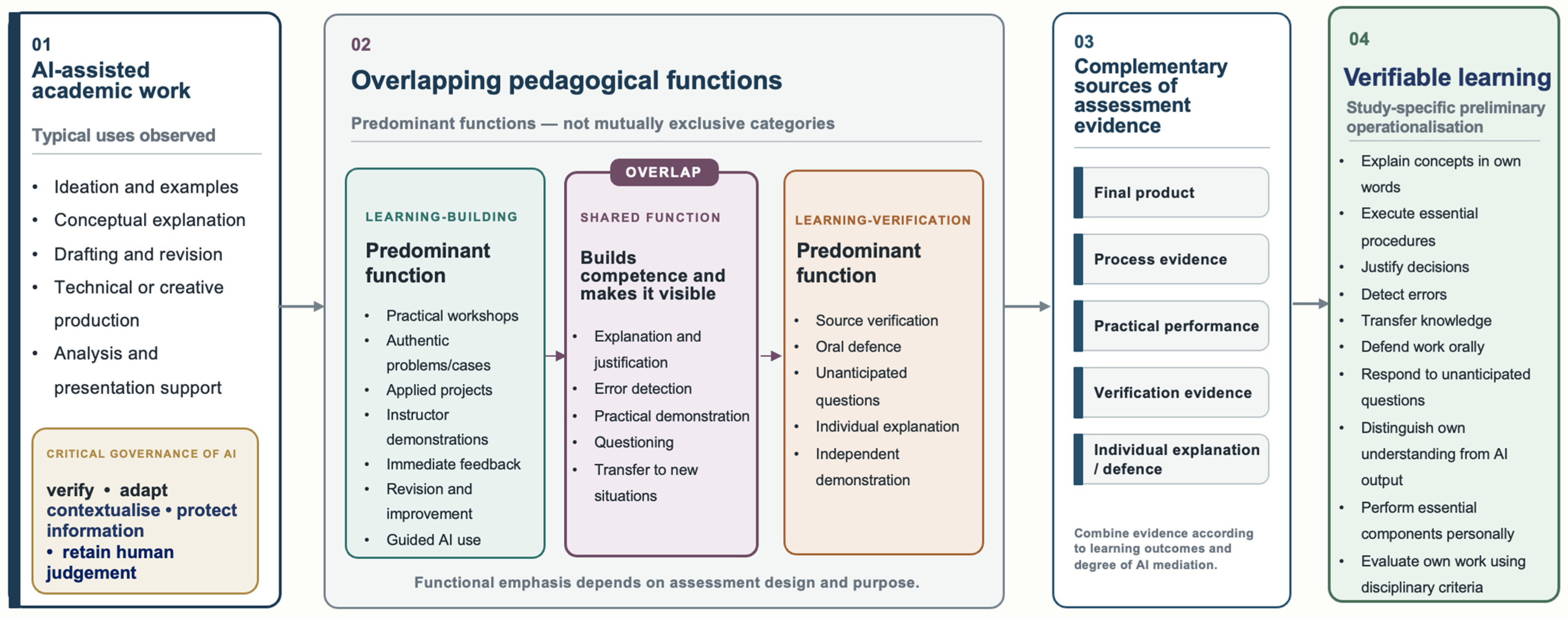

Disclaimer/Publisher’s Note: The statements, opinions and data contained in all publications are solely those of the individual author(s) and contributor(s) and not of MDPI and/or the editor(s). MDPI and/or the editor(s) disclaim responsibility for any injury to people or property resulting from any ideas, methods, instructions or products referred to in the content. |
© 2026 by the authors. Licensee MDPI, Basel, Switzerland. This article is an open access article distributed under the terms and conditions of the Creative Commons Attribution (CC BY) license.