


Abstract
Generative artificial intelligence (AI) is reshaping doctoral education, yet few empirically evaluated pedagogical models integrate AI literacy with research and teaching competence. This study examined changes associated with implementing the Dr. I.D.E.A. Model, which positions doctoral candidates who are also university teachers as co-researchers of their own research and teaching practice under an explicit responsible-AI framework. A participatory action research design with convergent triangulation was implemented during the 2025–2026 academic year. Thirty-four doctoral candidates participated in four collaborative virtual workshops organised through cycles of planning, action, observation and critical reflection. Self-report measures administered at three time points were integrated with interviews, focus groups, observation notes, reflective logbooks and independently verified academic products. Self-reported research competence, AI-supported digital competence and creative-pedagogical competence increased significantly between each pair of measurement points (pre–post dₐᵥ = 1.83, 2.10 and 1.69, respectively). All participants integrated generative AI into at least one university course, and 76.5% implemented a sustained course redesign. Because the design lacked a comparison group and relied on perceived competence, maturation, testing effects, response-shift bias and the programme’s ordinary activities may also account for the changes. The findings are therefore associative rather than causal and constitute preliminary evidence that warrants controlled replication in other doctoral contexts.
1. Introduction
The expansion of generative artificial intelligence (AI) is reshaping higher education and redefining current training demands. Universities increasingly require researchers who can operate within human and AI environments and sustain critical and ethical educational practices in digital learning contexts [1,2,3]. Within this scenario, doctoral programmes face the dual task of preparing researchers who can use AI critically and who can transform their own teaching practice through it [4].
Research on doctoral education consistently identifies three core competency domains that doctoral training must develop in an integrated way. The first domain concerns research competence, which enables doctoral students to design and conduct rigorous original research. The second domain involves digital competence with artificial intelligence, which supports more efficient and self-regulated academic work. The third domain involves creative-pedagogical competence, which connects research competence to the transformation of teaching practice [5,6,7]. Although these competency domains are widely recognised, they have generally been examined as separate dimensions rather than as components of integrated pedagogical models capable of fostering their simultaneous development.
Generative AI adds a new layer of complexity to doctoral education because it changes how researchers search for information, analyse data, and construct knowledge [8,9,10]. Empirical studies show that even experienced academic readers find it difficult to distinguish AI-generated from human-written texts: blinded reviewers correctly identified only 68% of ChatGPT (Version Dec 15)-generated scientific abstracts [11], and teachers had difficulty identifying AI-generated texts among student essays [12]. Qualitative research with doctoral students further documents fear, resistance and ethical uncertainty about how to adopt AI in doctoral work [13]. Recognising AI-generated content and integrating it critically and ethically into academic work therefore cannot be left to individual trial and error.
Participatory action research (PAR) offers a useful framework for developing transformative approaches to doctoral education. This tradition treats participants as co-researchers and organises learning through iterative cycles of action and reflection [14,15]. Digital environments extend these processes through distributed collaboration and technological mediation, including generative AI [16]. Recent evidence further indicates that PAR can foster the professionalisation and scholarly socialisation of emerging researchers by strengthening collaboration, communication and digital literacy [17]. Within this perspective, competency development is expected to emerge through authentic cycles of collaborative inquiry, critical reflection and the transformation of educational practice [15,17,18].
1.1. Three Interrelated Competency Domains in Contemporary Doctoral Education
Recent scholarship identifies complementary needs in contemporary doctoral education. Ashonibare [19] argues that transversal-skills training requires coordinated efforts among universities, external partners and doctoral candidates, while García-Morante et al. [20] identify a persistent gap between academically oriented PhD training and the practical demands of cross-sectoral work. These contributions support doctoral programmes that integrate transferable competencies within authentic academic and professional activity.
Building on these contributions and on frameworks of doctoral socialisation and teacher knowledge [4,7,21], we argue that contemporary doctoral training in educational sciences needs to develop three interrelated competencies: research competence, digital competence with AI support, and creative-pedagogical competence. Rather than functioning as isolated domains, these competencies are expected to interact to support rigorous research, the critical integration of AI into academic practice, and the transformation of university teaching through evidence-informed pedagogical innovation, an assumption consistent with calls to integrate transversal competencies into doctoral curricula [19,22] and with integrative models of technology-enhanced teacher knowledge [21,23].
Research competence refers to the capacity to formulate research problems, design rigorous studies, analyse evidence and communicate findings that contribute original knowledge [7]. In doctoral education, this competence is exercised through authentic research products and progressively refined through supervision, peer review and scholarly dissemination.
Digital competence with AI support builds upon the DigCompEdu framework [6] and recent conceptualisations of AI literacy [24,25,26,27]. It encompasses the critical evaluation of AI-generated outputs, ethical and transparent use of generative AI, source verification through indexed databases, and the capacity to integrate AI into research processes without replacing scholarly judgement. The recent literature warns against substituting systematic literature searching with probabilistic AI synthesis and emphasises the need for institutional frameworks that regulate responsible AI use in higher education [2,28,29,30,31].
Creative-pedagogical competence refers to the capacity to design, facilitate and evaluate innovative learning experiences by integrating research evidence, pedagogical knowledge and emerging digital technologies into teaching practice [5]. Within doctoral programmes in educational sciences, this competence is particularly relevant because doctoral candidates are typically active university teachers whose own educational practice constitutes a continuous object of inquiry and systematic transformation [18]. Consequently, pedagogical creativity extends beyond the generation of original ideas to include the reflective redesign of teaching informed by research and supported by digital innovation.
These three competencies constitute the conceptual foundation of the Dr. I.D.E.A. Model. Rather than being developed independently, the model assumes that they evolve through reciprocal interactions fostered by active learning [32,33,34], collaborative digital environments and personal learning networks [35,36], and participatory action research [14,17].
1.2. Active Learning, Collaborative Digital Environments and Personal Learning Networks
Active learning refers to instructional approaches that engage learners in constructing knowledge through activity, dialogue and reflection rather than through the passive reception of information; a meta-analysis of 225 studies showed that it improves performance in higher education compared with traditional lecturing [34]. In doctoral education, active approaches can foster creative, collaborative and reflective learning environments: problem-based learning has been used to train doctoral students in critical thinking and experimental design [33], and the Teaching–Learning Patchwork Technique has been applied as an active methodology that promotes pedagogical innovation and collaborative reflection [32]. The present intervention extended this active learning orientation through problem-based learning, project-based learning, collaborative inquiry, flipped classroom and design thinking.
Collaborative digital environments (e.g., Moodle, communication applications and shared workspaces) complement these pedagogical approaches by facilitating continuous interaction, peer review and the progressive refinement of doctoral work. Through synchronous and asynchronous collaboration, they provide opportunities for feedback, collective reflection and sustained scholarly dialogue, all of which are essential for competency development. Table S4 in the Supplementary Material summarises the specific active learning methodologies implemented in the present intervention.
Within these environments, the model draws on the notion of personal learning networks (PLNs), understood as personalised systems of people, resources and digital tools with which educators interact to support ongoing learning and professional growth [35], and on communities of practice, in which shared repertoires are constructed through sustained participation in a joint enterprise [36]. For doctoral candidates who are also university teachers, PLN practices connect the doctoral cohort with supervisors, academic discussants, invited specialists and disciplinary peers beyond the formal sessions, so that feedback on research and teaching products circulates continuously. In the Dr. I.D.E.A. Model (Figure 1), PLN practices and communities of practice constitute the relational infrastructure of the collaborative digital environment.
Figure 1.
Structure of the Dr. I.D.E.A. Model. The outer loop represents the participatory action research (PAR) cycle (planning, action, observation and critical reflection) within which each workshop was organised. Active learning methodologies and collaborative digital environments interact in a “dynamic synergy” around doctoral training, the articulating axis for the integrated development of research, AI-supported digital and creative-pedagogical competence. Generative AI, defined by literacy, ethics and pedagogical and research mediation, is the foundational layer governed by the responsible-AI framework. PBL = problem-based learning; PjBL = project-based learning; PLN = personal learning network; AI = artificial intelligence.
Within the doctoral programme in educational sciences examined in this study, peer review is organised through designated peer reviewers acting as academic discussants (“opponents” in the programme’s terminology), formally responsible for providing structured academic critique of doctoral papers and thesis chapters. This process was supported through Moodle forums, shared Google Workspace documents and a complementary Telegram community, enabling iterative feedback before, during and after each workshop.
Active learning approaches and collaborative digital environments constitute the pedagogical dimension of the Dr. I.D.E.A. Model. By creating authentic spaces for collaborative inquiry, critical dialogue and AI-supported reflection, they provide the conditions through which research competence, digital competence with AI support and creative-pedagogical competence develop in an integrated manner.
1.3. Responsible Use of Generative AI as a Transversal Dimension
In the Dr. I.D.E.A. Model, responsible AI use is not treated as a fourth competency domain but as a transversal governance dimension that conditions how the three competencies are developed. International analyses of AI ethics guidelines converge on principles such as transparency, justice and fairness, non-maleficence, responsibility and privacy [37], and education-specific guidance emphasises human agency, verification and accountability [2,30]. In scholarly publishing, COPE establishes that AI tools cannot be listed as authors and that their use must be transparently declared [31], while the post-plagiarism perspective argues that AI use can no longer be addressed solely through prohibition but requires explicit educational responses [9].
For doctoral education, these principles imply three requirements: (a) AI outputs must be verified against indexed scholarly sources rather than accepted as evidence [28,29]; (b) AI use must be documented so that supervisors and examiners can audit it; and (c) responsibility for interpretation and authorship must remain with the doctoral candidate. In the model, these requirements correspond to the foundational layer labelled generative AI (literacy, ethics, and pedagogical and research mediation) in Figure 1, and they are operationalised through the institutional framework described in Section 2.2.2.
1.4. Research Gap and Conceptual Contribution of the Dr. I.D.E.A. Model
However, despite the growing literature on AI in higher education [1,3,8,10], doctoral competencies [7,19,20,22] and active learning in doctoral training [32,33], the literature on doctoral education still shows a lack of empirically tested pedagogical models that integrate active learning approaches, collaborative digital environments and generative AI within a coherent competency framework supported by applied research designs. Existing AI-related work in doctoral education has focused mainly on doctoral students’ adoption of AI [13] or on AI-assisted supervision [38], rather than on the joint development of research, digital and pedagogical competencies. This gap provides the rationale for the present study.
The novelty of the Dr. I.D.E.A. Model does not lie in any of its components taken separately, all of which are established in the literature, but in the way it relates them. Table 1 positions the model with respect to the frameworks on which it builds. DigCompEdu [6] and the UNESCO AI Competency Framework for Teachers [30] describe what educators should be able to do with digital technologies and AI, but they were not designed for researcher development; AI-literacy models [24,25,26,27] describe general competencies for understanding and evaluating AI; TPACK and Intelligent-TPACK [21,23] model the knowledge teachers need to integrate technology or AI into teaching; and doctoral-education frameworks address research competence, socialisation and transferable skills [4,7,19] without specifying how AI should be integrated. None of these frameworks takes as its unit of analysis the doctoral candidate who is simultaneously a researcher and a university teacher, and none specifies a mechanism through which AI-related competence developed in research is transferred to teaching, and vice versa.
Table 1.
Positioning of the Dr. I.D.E.A. Model in relation to existing frameworks.
The model makes three conceptual contributions. First, it adopts a dual-role premise: the doctoral candidate’s own teaching practice is treated as an object of doctoral inquiry, so that research competence, AI-supported digital competence and creative-pedagogical competence are exercised on the same authentic problems rather than in parallel training modules [4,18]. Second, it specifies a transfer mechanism: each authentic product (a thesis chapter, a teaching design or a manuscript) passes through a complete PAR cycle with structured critique by designated academic discussants, so that AI-supported revision is socially validated before it is adopted [14,15,17]. Third, it embeds responsible AI as an operational governance layer (an agreed rubric of authorised, conditional and non-authorised uses, AI-use logbooks and mandatory verification in indexed databases) rather than as a separate ethics module [2,30,31].
From these premises, the model derives three propositions that can be examined empirically: (P1) the three competency domains co-develop, so that their change scores are positively associated; (P2) competence developed in the doctoral context is transferred to the candidates’ own university teaching; and (P3) iterative, socially validated work on authentic products supports scientific socialisation. The present study provides a first, exploratory examination of these propositions within an authentic doctoral programme through a participatory action research design integrating quantitative, qualitative and product-based evidence; it does not test them causally.
RQ: How is the implementation of the Dr. I.D.E.A. Model associated with changes in research competence, AI-supported digital competence, creative-pedagogical competence, university teaching practice and scientific socialisation among doctoral candidates who are also university teachers?
General objective: To examine the changes associated with the implementation of the Dr. I.D.E.A. Model in relation to research competence, AI-supported digital competence, creative-pedagogical competence, the transformation of educational practice, and scientific socialisation among doctoral candidates who were also university teachers in a doctoral programme in educational sciences.
Specific objectives:
- Competency development: To analyse changes in research competence, AI-supported digital competence and creative-pedagogical competence following implementation of the four collaborative workshops.
- Transformation of educational practice: To examine the changes introduced by doctoral candidates in their own university teaching practice through the critical integration of generative AI into instructional design, formative feedback and learning assessment.
- Scientific socialisation: To examine the academic outputs and scholarly engagement associated with the intervention, including journal manuscript submissions, conference presentations and other documented research products.
Hypothesis: Implementation of the Dr. I.D.E.A. Model was expected to be associated with improvements in self-reported research competence, AI-supported digital competence and creative-pedagogical competence, together with qualitative evidence of changes in educational practice and observable indicators of scientific socialisation, consistent with propositions P1–P3.
2. Materials and Methods
This study examined the changes associated with implementing the Dr. I.D.E.A. Model (Development of Competencies and Transformation of Educational Practice in Doctoral Education through the Dynamic Integration of Active Learning Environments with Artificial Intelligence) within a doctoral programme in educational sciences. A participatory action research design [14] was adopted to examine changes associated with the intervention across iterative cycles of planning, action, observation and critical reflection. To strengthen the interpretation of findings, a convergent triangulation strategy [39] integrated quantitative, qualitative and product-based evidence collected throughout the intervention. Figure 1 summarises the structure of the model and its relationship to the research design; its components are explained in Section 2.2.1.
2.1. Study Context and Intervention Setting
The study was conducted during the 2025–2026 academic year within a public technological university in Cuba offering a doctoral programme in educational sciences. The programme prepares teacher-researchers in education, engineering and architecture through biweekly doctoral workshops involving doctoral candidates, supervisors, academic discussants and members of the Doctoral Committee. At the time of the study, 41 doctoral candidates were in the active predoctoral phase: 19 at the host institution and 22 at associated Cuban higher education institutions participating through formal inter-institutional agreements. The five-month intervention (September 2025–January 2026) combined four collaborative virtual workshops with structured asynchronous work; the complete sequence is detailed in Supplementary Material S2.
2.2. The Dr. I.D.E.A. Intervention
The Dr. I.D.E.A. intervention combined active learning, collaborative digital environments and the responsible use of generative AI in authentic doctoral activities organised through iterative participatory action research cycles. Doctoral candidates collaboratively analysed, discussed and refined real doctoral products while reflecting on their research and teaching practices. As part of the model evaluation process, its conceptual and methodological structure was assessed by 36 international experts across criteria of conceptual clarity, internal coherence, methodological adequacy, AI integration, evaluation strategy and replicability (Table S5, Supplementary Material).
2.2.1. Structure and Functioning of the Model
Figure 1 represents the model as four interacting layers. (1) The pedagogical layer comprises active learning methodologies (problem-based learning, project-based learning, flipped classroom and collaborative learning; Table S4) and collaborative digital environments (Moodle forums, shared Google Workspace documents and a Telegram community), which support PLN practices and communities of practice (Section 1.2). The two-way arrow labelled “dynamic synergy” indicates that the methodologies define the tasks, while the digital environments sustain interaction around those tasks between synchronous sessions. (2) Doctoral training is the articulating axis: all activities are organised around authentic doctoral products whose improvement requires research, AI-supported digital and creative-pedagogical competence simultaneously. (3) Generative AI is the foundational layer, defined by three functions (AI literacy, ethics, and pedagogical and research mediation) and regulated by the institutional framework for responsible use (Section 2.2.2). (4) The outer PAR cycle organises the whole intervention.
The four PAR phases were operationalised in every workshop as follows. Planning: the presenting candidate prepared an authentic product and declared, according to the institutional rubric (Table S13), which AI uses were intended. Action: two designated academic discussants and the rest of the group reviewed the product asynchronously; the candidate then revised it with AI support and, for teaching-related products, implemented it in his or her own course. Observation: evidence of the process was recorded in AI-use logbooks, Moodle and Telegram records and facilitator observation notes. Critical reflection: the synchronous session examined the product, the AI uses and their consequences, and the agreed revisions and reflections informed the planning of the next cycle. At the programme level, the mid-intervention evaluation functioned as a meta-cycle whose conclusions were used to adjust the refinement phase (Supplementary Material S2).
2.2.2. Institutional Framework for Responsible Use of AI
Consistent with Section 1.3, responsible AI use was implemented as the operational form of the model’s foundational layer rather than as a separate component. The framework was informed by the doctoral programme’s internal policy and Doctoral Committee agreements, UNESCO recommendations [2,30], COPE guidance [31] and DigCompEdu [6]. Six principles governed AI use: complementarity with human judgement, documentation through individual logbooks, verification in indexed databases, academic integrity, data protection and critical pedagogical reflection. These principles were translated into an informed-consent document and an institutional rubric of authorised, conditional and non-authorised uses (Table S13), which participants co-constructed and calibrated during Workshop 1 using 20 prototypical scenarios (multi-rater κ = 0.84; Table S14). Aggregated compliance records are reported in Table S12. Because compliance was largely self-documented, these records indicate adherence to the agreed procedures rather than an independent audit of all AI use.
2.2.3. Intervention Procedure
The intervention comprised four two-hour collaborative virtual workshops (eight synchronous hours in total) with structured asynchronous preparation, peer review and follow-up. The four workshops were delivered between September and October 2025; they were followed by a guided practical implementation phase in eight thematic Telegram groups (October–November 2025), the mid-intervention evaluation (November 2025), a refinement phase with advanced collaborative projects and on-demand mentoring (December 2025) and the final evaluation (January 2026). In each cycle, doctoral candidates prepared an authentic academic product, received critical review from designated academic discussants and peers, discussed it collaboratively, and subsequently refined it with supervisor support. The complete five-month sequence and workshop structure are reported in Supplementary Material S2 and Table S16. Routine supervision and the programme’s ordinary formative activities continued in parallel and were not part of the intervention (see Section 4.4).
The workshops addressed: (1) ethics, academic integrity and responsible AI use; (2) AI-supported innovation in university teaching; (3) AI for investigating and improving educational practice; and (4) scientific writing, dissemination and doctoral defence. Problem-based learning, project-based learning, collaborative inquiry, flipped classroom and design thinking supported these activities (Table S4). Three core categories of AI use (idea generation, AI-assisted qualitative analysis and information structuring) were operationalised through agreed definitions, authorised examples and counterexamples (Table S14, Supplementary Material). Each workshop constituted a complete PAR cycle of planning, action, observation and critical reflection, with revised doctoral products informing subsequent cycles.
2.2.4. Mapping of Workshop Content onto the Constructs of the Model
Table 2 makes explicit how each workshop addressed the three competency domains and the responsible-AI layer, and which product or evidence source captured each target. Each workshop had a primary target domain, but all workshops required the three competencies, because products were revised with AI support, critiqued by peers and, where applicable, transferred to teaching.
Table 2.
Mapping of the four workshops onto the constructs of the Dr. I.D.E.A. Model.
2.2.5. Doctoral Candidates as Co-Researchers
In line with the participatory tradition [14,16,17], doctoral candidates were not treated merely as recipients of an educational intervention. Their role as co-researchers was enacted in five documented ways: (a) they co-constructed the rules of the inquiry by negotiating and calibrating the institutional rubric of AI uses and the operational definitions of the AI uses examined (Workshop 1; Tables S13 and S14); (b) they selected the authentic products and the problems of their own teaching practice that were investigated in each cycle; (c) they conducted research-action projects in their own courses and generated primary data on them through reflective logbooks (Table S2); (d) they acted as designated academic discussants who produced structured critiques of their peers’ products, thereby participating in the observation and critical-reflection phases; and (e) they evaluated the intervention in the mid-intervention focus groups, whose conclusions were used to adjust the refinement phase (Table S2).
At the same time, participation was not uniform across all research decisions. The overall evaluation design, the selection of the standardised instruments and the statistical analyses were defined by the research team, whose members also held academic roles in the programme. Following the distinction between modes of participation in participatory research [40], the study is therefore best characterised as collaborative participatory action research, in which candidates co-produced the intervention and the practical knowledge it generated, while the evaluation framework remained the responsibility of the research team. This insider position is addressed in the reflexivity statement (Section 2.5) and in the limitations (Section 4.4).
2.3. Participants
2.3.1. Recruitment Procedure
Recruitment followed a non-probabilistic purposive sampling strategy. Because the accessible population was relatively small (N = 41), recruitment sought to invite all doctoral candidates in the active predoctoral phase rather than selecting a subsample. In September 2025, the Doctoral Programme Coordination and the Doctoral Committee issued a formal institutional call addressed to the 41 doctoral candidates enrolled in the active predoctoral phase (19 from the host institution and 22 from associated institutions participating under formal inter-institutional agreements; see Section 2.1). The invitation was disseminated through three official channels: institutional email, the programme’s Moodle platform and the inaugural virtual session.
Of the 41 doctoral candidates invited, 39 expressed initial interest. These 39 candidates were screened sequentially, first against the inclusion criteria and then against the exclusion criteria (Section 2.3.3). Two candidates did not meet the inclusion criterion related to their stage of doctoral training, leaving 37 eligible candidates. None of these 37 candidates met any exclusion criterion; in particular, none reported previous certified training in generative AI (Table S17). Of the 37 eligible candidates, three withdrew because of workload, while 34 completed the informed-consent process and all three measurement phases, constituting the final study sample. The final sample therefore represented 82.9% of the active doctoral population and 91.9% of the eligible candidates.
2.3.2. Sample Characteristics
The final sample comprised 34 doctoral candidates (mean age = 29.8 years, SD = 4.2; range = 25–41 years). All participants were active university teachers, consistent with the teacher-researcher profile of the doctoral programme. The sample was multidisciplinary, comprising participants from educational sciences (58.8%, n = 20), engineering (26.5%, n = 9) and computer sciences (14.7%, n = 5) (Table S17, Supplementary Material).
2.3.3. Inclusion and Exclusion Criteria
The inclusion criteria were: (1) enrolment in the doctoral programme during the 2025–2026 academic year (host or associated institution); (2) active predoctoral status with a Doctoral Committee-approved training plan; (3) ongoing development of a doctoral product suitable for AI-supported critical review; (4) provision of written informed consent; and (5) sufficient digital competence and internet access to participate in the technology-mediated activities.
The exclusion criteria, applied after inclusion screening, were: (1) previous certified training in generative AI applied to educational research, to avoid ceiling effects in AI-related measures; (2) academic leave or imminent doctoral defence, which would prevent completion of the five-month cycle; and (3) any conflict of interest related to the study. No eligible candidate was excluded under these criteria.
2.4. Measures
The operationalisation of the three competency domains, including their dimensions, indicators and corresponding assessment instruments, is summarised in Table S3 (Supplementary Material), and the prior psychometric evidence for each instrument is summarised in Table S19. Because all instruments are self-report measures, they capture perceived (self-assessed) competence rather than demonstrated competence; observable performance was approached separately through product-based evidence (Section 2.5).
2.4.1. Research Competence
Perceived research competence was assessed using the Munich Research Competence Scale (MRCS) [7], comprising 10 items rated on a five-point scale (1 = not at all to 5 = to a very high degree). In its validation sample of 570 medical doctoral candidates and graduates, exploratory factor analysis, scree-plot inspection and Velicer’s MAP test supported a unidimensional structure with satisfactory loadings for all items [7]. Because the MRCS was developed in medicine, its use with candidates in educational sciences, engineering and computer sciences required the additional validity checks described in Section 2.4.4. Higher scores indicate higher perceived research competence.
2.4.2. Digital Competence with AI Support
Digital competence with AI support was assessed through a composite measure combining the Student Digital Competence Scale (SDiCoS) [41], consisting of 28 five-point Likert items, and one adapted item from the Meta AI Literacy Scale (MAILS) [24,25] evaluating participants’ perceived ability to critically assess AI-generated information within the context of doctoral research. The SDiCoS was validated with 156 higher-education students; its six components showed composite reliabilities between 0.835 and 0.898 and average variance extracted between 0.527 and 0.677, and a covariance-based replication yielded χ2/df = 2.02 and RMSEA = 0.080 [41]. The MAILS has accumulated validity evidence across several studies, and a 10-item short version of the original 34-item instrument has shown good fit in confirmatory factor analysis [25]. Because the SDiCoS measures general digital competence, the AI-specific content of the composite rests mainly on the adapted MAILS item and on the AI-related application of digital skills in the doctoral tasks; this limitation of construct coverage is discussed in Section 4.4.
2.4.3. Creative-Pedagogical Competence
Creative-pedagogical competence was assessed through a composite measure integrating 20 items from the Kaufman Domains of Creativity Scale (K-DOCS) [5], 10 corresponding to the Scholarly Creativity domain and 10 to the Mechanical/Scientific Creativity domain, with the 24-item Pedagogical Competencies Scale (PCS), a preliminarily validated instrument developed for this study. All items were rated on a five-point scale. The K-DOCS has shown a five-factor structure with convergent and discriminant validity [42], and a reliability-generalisation meta-analysis of 56 studies estimated pooled alpha coefficients of 0.858 for the Scholarly and 0.867 for the Mechanical/Scientific subscales [43]. The Mechanical/Scientific domain was retained because 41.2% of the sample came from engineering and computer sciences, where pedagogical creativity is frequently exercised through technical and experimental tasks; nevertheless, the conceptual distance between some of its items and teaching creativity is acknowledged (Section 4.4). The PCS was developed through a literature review, expert judgement by eight doctors in educational sciences (aggregate content validity index = 0.91), cognitive interviews and an external pilot (n = 20; α = 0.82–0.87 per dimension and 0.89 for the total scale). Its development process, dimensional structure and preliminary psychometric properties are reported in Table S1a–c (Supplementary Material).
2.4.4. Composite Score Construction and Construct Validity
Two composite indices were defined a priori, before data analysis, and retained on the original 1–5 response metric. Their construction followed a theory-driven rationale [44]: each composite combines an established instrument covering the general domain (the SDiCoS for digital competence; the selected K-DOCS domains for creativity) with content specific to the target construct in the doctoral context (the adapted MAILS item for the critical evaluation of AI output; the PCS for pedagogical competence).
Each composite was calculated as the unweighted mean of its items: the digital competence with AI index as the mean of the 28 SDiCoS items and the adapted MAILS item (29 items), and the creative-pedagogical competence index as the mean of the 20 selected K-DOCS items and the 24 PCS items (44 items). Each item therefore received equal weight; consequently, the SDiCoS contributes 28/29 of the digital composite and the PCS 24/44 of the creative-pedagogical composite. This weighting scheme is reported explicitly because instruments with more items make a larger numerical contribution to the composite; accordingly, the composites are interpreted as theory-driven indices rather than as newly validated latent scales.
Internal consistency at baseline was α = 0.86 for the digital competence with AI composite and α = 0.88 for the creative-pedagogical competence composite. These coefficients are treated as reliability evidence for the present sample, not as evidence of construct validity.
The adapted MAILS item followed the adaptation procedure proposed by Koch et al. [25]. The original statement (“I can critically evaluate the quality of AI-generated information”) was contextualised as: “I can critically evaluate the quality of AI-generated information in the context of my doctoral research.” Translation followed a forward–backward procedure involving two bilingual experts. Because only a single adapted item was incorporated, no additional psychometric inference beyond its descriptive use was claimed.
Because the quantitative conclusions depend on self-report measures, the suitability of additional item-response validation was considered. Rasch modelling was not used to claim construct validation in the present sample. Although rating-scale and pre–post ‘rack-and-stack’ approaches can be used to examine item functioning across occasions [45,46,47], the study contains only 34 independent participants; the three repeated observations do not increase the number of independent persons available for stable item-fit, local-dependence and differential-item-functioning assessment [48,49]. We therefore report the established psychometric evidence for the source instruments and the external pilot evidence for the PCS (Table S19), together with the internal consistency observed for the two composite indices, and treat the composites as theory-driven indices rather than fully validated latent scales. Larger independent samples are required for Rasch or confirmatory factor analysis and for longitudinal measurement-invariance testing.
All instruments were administered at three measurement points: pre-intervention (T1; first week of September 2025, before Workshop 1), mid-intervention (T2; November 2025, after the four workshops and the guided implementation phase) and post-intervention (T3; January 2026, after the refinement phase). The intervals of approximately eight to ten weeks were chosen for three reasons: (a) each measurement closed a distinct phase of the PAR design (Table S2), so that T1–T2 captured change associated with the workshop cycles and T2–T3 change associated with implementation and refinement in authentic teaching and research; (b) changes in teaching practice and in doctoral products require several weeks of enactment within an academic term to become observable; and (c) intervals of this length reduce the likelihood that participants remember their previous responses, mitigating, although not eliminating, testing effects.
2.5. Data Analysis
Quantitative, qualitative and product-based evidence were integrated through a convergent triangulation strategy [39]. Quantitative analyses were conducted using SPSS version 28 and jamovi version 2.4.
Changes across the three measurement points were analysed using one-way repeated-measures ANOVA with Greenhouse–Geisser correction when the assumption of sphericity was violated. Because an omnibus effect does not identify which occasions differ, all three pairwise comparisons (T1–T2, T2–T3 and T1–T3) were tested with paired-samples t-tests with Bonferroni adjustment. Pearson correlation coefficients were calculated to examine associations among the change scores (T3 − T1) of the three competency domains.
Because the design is within-subjects, effect sizes were computed with formulas for dependent observations [50,51]. The primary effect size was Cohen’s dₐᵥ, the mean difference divided by the average of the standard deviations at the two occasions, which expresses change in the metric of the scores and is comparable with effect sizes from between-subjects designs [50]. Because dₐᵥ does not incorporate the correlation between occasions, Cohen’s dz (the mean difference divided by the standard deviation of the difference scores) is also reported; it corresponds directly to the paired t statistic (dz = t/√n) [50]. The 95% confidence intervals for dz were obtained by inverting the noncentral t distribution, and those for dₐᵥ with the approximate noncentral method for dependent designs [52]. Cohen’s benchmarks [53] were used descriptively only, because they were developed for independent groups and tend to overstate the practical magnitude of within-subject change.
Qualitative evidence derived from semi-structured interviews (n = 15 at baseline), four focus-group sessions, participant observation notes and reflective logbooks was analysed through thematic analysis following Braun and Clarke [54,55,56]. Because the analysis combined a deductive codebook derived from the three competency domains with inductive codes, involved two coders and estimated inter-coder agreement (κ = 0.81; Table S8), it is more accurately described as codebook (hybrid inductive–deductive) thematic analysis [55,57] than as fully reflexive thematic analysis, and the label has been corrected accordingly. The procedure comprised familiarisation with the data, initial coding in NVivo 14, development of candidate themes within and across domains, review of themes against the full data set, and definition of themes. Two levels of themes were distinguished: descriptive themes that summarise shared practices (Table S8) and interpretive themes that articulate the meaning participants attributed to those practices (Section 3.5). Theme prevalence was reported as the number of participants who expressed each theme, not as an indicator of its importance.
Reflexivity: Members of the research team also held academic roles within the doctoral programme. This insider position facilitated access and contextual interpretation but could also encourage socially desirable responses and the confirmation of the model’s assumptions. To mitigate these risks, consent was managed by a faculty member not involved in academic evaluation (Section 2.6), analytic memos were kept throughout coding, and divergent or disconfirming evidence was actively sought and reported (Section 3.5).
Observable academic products (including journal manuscript submissions, conference presentations, dissertation chapter drafts and teaching materials) were independently audited by the Doctoral Committee and incorporated as a third source of evidence. These products were used as indicators of observed academic activity and of enactment in teaching; they are not, in themselves, measures of competence level or of the effectiveness of the intervention (Section 3.6). Indicators of participation in the collaborative digital environment were derived from Moodle activity logs and Telegram message records. Only substantive academic interactions (e.g., peer feedback, methodological discussion and document review) were counted.
Integration followed a convergent design in which the three strands were analysed separately and then merged through joint displays [39,58]. Integration was performed at the level of each competency domain rather than at the level of the individual participant: group-level change scores were compared with the prevalence of qualitative themes across participants and with the proportion of participants with documented products. Following the triangulation protocols of Farmer et al. [59] and O’Cathain et al. [60], each meta-inference was classified as agreement (the strands point in the same direction, refer to closely related aspects of the construct, and the corresponding theme is shared by at least three-quarters of participants), partial agreement (the strands point in the same direction but refer to different constructs, such as frequency of use versus competence, or the theme is shared by a minority), silence (one strand provides no information on the aspect) or dissonance (the strands point in different directions). The final judgements were checked against the stated criteria and agreed through discussion; they are reported with their justification in Tables S9–S11 and the divergent evidence in Table S18. The correspondence between the strands and the PAR phases is presented in Table S7. Qualitative excerpts illustrate the themes and were not selected to represent the average participant.
Complete quantitative data were obtained from all participants across the three measurement points. Two partial qualitative records (1.9% of all qualitative entries) were missing and were handled through pairwise deletion.
Given the intentional sampling strategy and the absence of a comparison group, inferential statistics were interpreted as evidence of changes associated with the intervention rather than as evidence of causal effects. Threats to internal validity inherent in single-group pre–post designs (maturation, testing effects, response-shift bias, history, regression to the mean and demand characteristics) were considered explicitly in the interpretation (Section 4.4) [61].
2.6. Ethical Considerations
The study protocol, including its ethical and AI-use framework, the anonymised processing of data and the scientific dissemination of results, was formally approved by the programme’s Doctoral Committee in an extraordinary session held on 8 September 2025 (Minutes No. 07). The final validation of these minutes was signed by the director of the coordinating research centre in her capacity as chair of its Ethics Committee. Within the Cuban institutional context, the coordinating research centre’s Ethics Committee is responsible for overseeing the ethical review of research involving doctoral candidates and the processing of research data.
To minimise potential institutional coercion, three safeguards were implemented. First, informed consent was managed by a faculty member who was not involved in participants’ academic evaluation. Second, participants received written assurance that participation or non-participation would have no consequences for supervision, doctoral assessment, academic progression or credit recognition. Third, all data were anonymised using alphanumeric identification codes and managed in accordance with institutional data-protection procedures.
All participants provided written informed consent authorising participation in the study, anonymous data analysis and publication of the findings.
3. Results
3.1. Quantitative Results
The quantitative findings reported in this subsection derive from self-report scales completed by the 34 participants at three measurement points (pre-, mid- and post-intervention) and therefore refer to perceived competence. To mitigate the social-desirability bias inherent in self-report measures, these findings are interpreted together with the qualitative evidence (Section 3.5) and the observable product-based evidence (Section 3.6), following the convergent triangulation strategy described in the methodology.
Greenhouse–Geisser-corrected repeated-measures ANOVA revealed a statistically significant effect of time across the three measurement points for all three competency domains: research competence, F(1.92, 63.36) = 87.4, p < 0.001, partial η2 = 0.73, ε = 0.96; AI-supported digital competence, F(1.94, 64.02) = 124.8, p < 0.001, partial η2 = 0.79, ε = 0.97; and creative-pedagogical competence, F(1.90, 62.70) = 71.9, p < 0.001, partial η2 = 0.69, ε = 0.95.
Bonferroni-adjusted pairwise comparisons indicated statistically significant increases between each pair of measurement points in all three domains (all p < 0.001; Table 3 and Table 4). From pre- to post-intervention, perceived research competence increased from M = 3.21 (SD = 0.74) to M = 4.43 (SD = 0.59) (ΔM = 1.22; dₐᵥ = 1.83, 95% CI [1.31, 2.35]; dz = 2.22); perceived AI-supported digital competence increased from M = 2.98 (SD = 0.91) to M = 4.65 (SD = 0.68) (ΔM = 1.67; dₐᵥ = 2.10, 95% CI [1.52, 2.67]; dz = 2.57); and perceived creative-pedagogical competence increased from M = 3.29 (SD = 0.80) to M = 4.53 (SD = 0.67) (ΔM = 1.24; dₐᵥ = 1.69, 95% CI [1.19, 2.18]; dz = 2.00). Pairwise comparisons for all intervals are presented in Table 4.
Table 3.
Descriptive and inferential results for self-reported (perceived) doctoral competencies across three measurement points (N = 34).
Table 4.
Bonferroni-adjusted pairwise comparisons between measurement points (N = 34).
Pairwise comparisons (Table 4) showed that the increases were not confined to the overall pre–post contrast: all three domains increased significantly both between T1 and T2 (the period of the four workshop cycles and the guided implementation phase) and between T2 and T3 (the refinement and consolidation phase). The increases were of similar magnitude in both intervals for research competence and AI-supported digital competence, whereas for creative-pedagogical competence the T2–T3 increase (dₐᵥ = 0.69) was smaller than the T1–T2 increase (dₐᵥ = 0.99).
The size of these changes calls for cautious interpretation. Three features of the data contribute to the large standardised values: the moderate dispersion of scores on a bounded 1–5 scale; the high stability of individual differences across occasions (an implied average between-occasion correlation of approximately 0.66–0.70), which inflates dz in particular; and a relatively low baseline for AI-supported digital competence, which left more room for change. Moreover, the changes refer to perceived competence and occurred over five months, during which participants also continued their ordinary doctoral activities; they should therefore not be read as the magnitude of a causal effect of the intervention (Section 4.4).
3.2. Associations Between Competency Domains
Positive and statistically significant associations were observed among the change scores (T3 − T1) in the three competency domains. The strongest association was found between change in research competence and change in AI-supported digital competence (r = 0.61, p < 0.001), followed by change in AI-supported digital competence and creative-pedagogical competence (r = 0.58, p < 0.001), and change in research competence and creative-pedagogical competence (r = 0.54, p < 0.01). The complete correlation matrix is presented in Table S6 (Supplementary Material).
These associations are consistent with proposition P1 of the Dr. I.D.E.A. Model (co-development of the three domains). However, given the correlational nature of the analysis and the shared self-report method, which can inflate correlations among change scores [62], they should not be interpreted as evidence of causal relationships.
3.3. Use and Perceived Value of Artificial Intelligence Tools
By the end of the intervention, 32 of the 34 participants (94.1%) reported using generative AI tools at least once a week for academic activities (Table S15, Supplementary Material), with their use governed by the institutional framework presented in Table S13. ChatGPT was the most frequently used tool (M = 4.2 sessions/week, SD = 1.8), followed by Perplexity (M = 2.7, SD = 1.4) and Gamma/Genspark (M = 1.9, SD = 1.1). These figures describe frequency of use and are not indicators of competence.
NotebookLM and Algor Education were used regularly by 38.2% of participants and received a mean perceived usefulness rating of M = 4.09 (SD = 0.84) on the five-point scale.
Participants reported that generative AI complemented rather than replaced conventional academic information retrieval. Throughout the intervention, all participants also reported regular consultation of indexed databases, including Web of Science (M = 3.8 searches/week, SD = 1.5), Scopus (M = 3.1, SD = 1.3), SciELO (M = 2.9, SD = 1.2) and ERIC (M = 2.4, SD = 1.0).
3.4. Participation in Collaborative Environments
Participation in the collaborative digital environment was sustained throughout the five-month intervention. Participants generated a mean of 7.8 substantive interactions per week (SD = 2.3) across Moodle and complementary communication platforms, distributed between synchronous workshop discussions and asynchronous peer-review activities.
The complementary Telegram community extended interaction beyond the formal workshops, reaching a mean of 8.5 substantive interactions per participant per week during the most active phase of the intervention. These interaction patterns indicate sustained collaborative participation and continuous peer exchange throughout the intervention.
3.5. Integration of Quantitative, Qualitative and Product-Based Evidence
Integration was performed at the level of each competency domain using the criteria described in Section 2.5. Of the 11 meta-inferences examined in the joint displays (Tables S9–S11), five were classified as agreement and six as partial agreement; no instance of dissonance was identified, although several divergent findings qualify the overall pattern (Table S18).
For research competence, the interpretive theme “from procedural compliance to epistemic agency” captures participants’ accounts of moving from following formal templates to taking responsibility for problem formulation, methodological design and analytical decisions (85.3% of participants), which agrees with the increase in perceived research competence. For AI-supported digital competence, the theme “AI as an exploratory layer that must be audited” describes hybrid information-search practices in which generative AI was used to explore and structure information while indexed databases remained the primary mechanism for source verification (97.1%), with logbooks making this verification traceable (100%). For creative-pedagogical competence, the theme “one’s own course as a laboratory” expresses how participants treated the redesign of learning activities, formative feedback and AI-assisted assessment as an object of inquiry linked to their dissertations (88.2%).
Divergent evidence qualifies these convergences (Table S18). First, the strands do not measure the same construct: high frequencies of AI use (94.1% weekly use) and of AI integration into courses (100%) document behaviour, whereas the scales capture perceived competence; agreement between them supports the plausibility, but not the level, of competence. Second, change was not universal: eight participants (23.5%) did not implement a sustained course redesign, nine (26.5%) did not maintain AI-supported practices at the short-term follow-up, four (11.8%) did not show substantial dissertation progress, and 17 (50.0%) did not submit a manuscript. Third, participants’ reflections identified persistent tensions (the temptation to delegate analytical judgement to AI, the risk of homogenised scientific writing and the burden of documenting AI use; Section 4.3), and AI-assisted qualitative pre-coding remained a conditional use requiring supervision (47.1%; Table S12).
The frequencies of the descriptive themes are presented in Table S8, the joint displays with convergence ratings and their justification in Tables S9–S11, and the divergent evidence in Table S18 (Supplementary Material). Because integration was conducted at the domain level, individual quotations illustrate shared themes but are not linked to individual change scores.
3.6. Observable Academic Outcomes
The indicators reported in this subsection were derived from documented academic products independently verified by the Doctoral Committee (e.g., journal manuscript submissions, conference presentations, dissertation chapter drafts and teaching materials) rather than from participants’ self-reports. Accordingly, they are presented separately from the self-report findings described in Section 3.1, Section 3.2, Section 3.3 and Section 3.4. Three levels of interpretation are distinguished: (a) observed activities, which document what participants did (e.g., submitting a manuscript or redesigning a course); (b) demonstrated competence, which would require a quality assessment of those products against explicit criteria and is available here only for the dissertation chapters reviewed by the Doctoral Committee; and (c) outcomes attributable to the intervention, which would require baseline or comparative data that the present design does not provide. The indicators reported below belong mainly to the first level.
3.6.1. Integration of Artificial Intelligence in Teaching Practice
All 34 participants (100%) incorporated generative AI into at least one of their university courses during the intervention. Documented applications included the redesign of learning activities, the development of open educational resources, AI-assisted assessment rubrics and AI-supported formative feedback.
Among these participants, 26 (76.5%) implemented a sustained redesign of at least one course, operationally defined as a documented revision of session plans, teaching materials and assessment procedures incorporating generative AI over a minimum period of three consecutive weeks.
3.6.2. Academic Production and Socialisation
Table 5 summarises the independently verified academic activities. During the observation period (September 2025–March 2026), 17 participants submitted manuscripts to indexed journals and 21 presented papers at scientific conferences. The Doctoral Committee verified substantial progress in dissertation development for 30 of the 34 doctoral candidates through its review of updated dissertation chapters during the observation period. In this study, “substantial progress” therefore refers to progress formally recorded by the Doctoral Committee on the basis of those updated chapters; the available records do not support a more granular common threshold across candidates. “Sustained use of AI” refers to continued use of AI tools documented at the short-term follow-up; no minimum frequency threshold was imposed in the available follow-up records. These indicators should not be interpreted as effects of the intervention: doctoral candidates in an active predoctoral phase routinely prepare manuscripts, conference papers and chapters, and many of these products would probably have been produced without the intervention.
Table 5.
Frequency distribution of observed academic activities during and after the intervention (N = 34).
A short-term follow-up conducted after completion of the intervention showed continued use of AI-supported practices among 73.5% of participants. This indicator should be interpreted as preliminary evidence of short-term continuation beyond the formal intervention period.
4. Discussion
The findings derived from the quantitative, qualitative and product-based evidence are broadly consistent with the study hypothesis and with propositions P1–P3, while remaining subject to the methodological limitations discussed in this section. The convergence observed across the three complementary sources of evidence increases confidence that changes occurred during the implementation of the Dr. I.D.E.A. Model, but it does not establish that they were caused by it.
4.1. Interpretation of Main Findings in Relation to the Hypothesis
The findings can be interpreted across three interconnected dimensions of doctoral education: competency development, transformation of educational practice and scientific socialisation. Together, these dimensions reflect the multidimensional nature of doctoral education in educational sciences and are broadly consistent with the study hypothesis, while remaining subject to the methodological limitations discussed in this section.
Regarding competency development, the substantial increases observed in perceived research competence, AI-supported digital competence and creative-pedagogical competence are consistent with the proposition that these domains may be developed as an interconnected system rather than as isolated training components. This interpretation is consistent with research conceptualising research competence as a multidimensional capacity developed through authentic doctoral activity [7,63], with evidence supporting the development of digital competence through structured educational interventions [41], and with doctoral learning approaches that employ problem-based activities to strengthen critical thinking and research design [33]. It also aligns with recent calls to integrate transversal and psychosocial competencies systematically into doctoral curricula rather than treating them as supplementary training [22]. Within this context, one contribution of the Dr. I.D.E.A. Model is the integration of these competency domains through authentic doctoral products, collaborative peer review and AI-supported formative activities.
Regarding the transformation of educational practice, the finding that all participants incorporated AI into at least one university course and that most implemented a sustained course redesign indicates that the intervention period was accompanied by documented changes extending beyond self-reported digital skills. These changes included documented modifications to instructional design, formative feedback and assessment practices. This interpretation is consistent with evidence indicating that active learning approaches in doctoral education can foster creative, collaborative and reflective professional learning [32,64], and that authentic teaching experiences contribute to doctoral candidates’ development as university educators [65,66]. The findings also complement emerging research on doctoral students’ adoption of generative AI in academic contexts [13] and on supervisory models in which AI, doctoral candidates and supervisors interact within collaborative mentoring structures [38]. Unlike approaches centred primarily on the use of AI for thesis production, the Dr. I.D.E.A. Model encouraged participants to transfer their learning to the redesign of their own university teaching under explicit ethical and pedagogical guidelines.
However, implementation was not uniform. As detailed in Table S18, eight participants (23.5%) did not implement a sustained course redesign, and nine (26.5%) did not maintain AI-supported practices at the short-term follow-up. AI-assisted qualitative pre-coding also remained a conditional use requiring supervision for 47.1% of participants. Together with the reported tensions around delegating analytical judgement, homogenisation of scientific writing and the documentation burden, these findings indicate that initial uptake does not automatically translate into sustained curricular redesign. They therefore qualify the positive implementation pattern and point to the need for ongoing faculty support, institutional governance and structured follow-up when the model is transferred beyond the formal intervention period.
Regarding scientific socialisation, the submission of journal manuscripts and the presentation of conference papers document scholarly activity during the observation period; in the absence of baseline or comparative data, however, they cannot be interpreted as evidence that the intervention increased academic productivity, because candidates at this stage of doctoral training would probably have produced much of this work in any case. What the qualitative evidence adds is participants’ account of how structured discussant review and AI-supported revision changed the way these products were prepared (Table S10). This interpretation is consistent with contemporary conceptions of doctoral education that emphasise developmental processes extending beyond completion of the dissertation towards broader professional, collaborative and scholarly engagement [67]. It also responds to calls for doctoral programmes to embed transversal competencies within authentic academic and professional activities [19,20] and to align doctoral training with explicit graduate profiles and candidates’ developmental expectations [68]. The findings further highlight the coordinating role of doctoral programmes in creating structured opportunities for supervision, peer review and scholarly dissemination [69]. Nevertheless, these indicators represent submissions and conference presentations completed during the observation period and should not be interpreted as evidence of publication success or long-term scientific impact.
Taken together, the findings refine rather than confirm the conceptual contribution of the model. The pattern of correlated change scores is compatible with P1, the documented teaching redesigns with P2, and participants’ accounts of discussant review with P3; however, each proposition was examined with a design and measures that cannot isolate the contribution of the model from the doctoral programme in which it was embedded. The main theoretical value of the study is therefore to specify these propositions and the mechanisms they imply (dual-role inquiry, socially validated AI-supported revision and embedded governance) in a form that can be tested in controlled and comparative designs (Section 4.5).
4.2. Implications for Doctoral Education Policy and Institutional Practice
The findings suggest that the Dr. I.D.E.A. Model may offer a useful institutional framework for integrating research competence, AI-supported digital competence and creative-pedagogical competence within doctoral education, rather than addressing these domains through separate or sequential training initiatives. This interpretation is consistent with calls to embed transversal and psychosocial competencies systematically within doctoral curricula [19,22] and to strengthen the institutional structures that connect doctoral learning with authentic academic activity through supervision, collaboration and scholarly engagement [69].
Within AI-mediated doctoral education, the findings also highlight the importance of institutional governance. Rather than viewing the use of generative AI as an exclusively individual responsibility, doctoral programmes may benefit from establishing explicit frameworks that define the complementary roles of doctoral candidates, supervisors and AI systems within research, teaching and scholarly activities [38].
Accordingly, the findings suggest that institutional investment in AI-mediated doctoral education should extend beyond providing access to technological tools. Equally important are the development of clear ethical and pedagogical guidelines, collaborative peer-review structures, supervisor professional development, mechanisms that ensure transparency and traceability in the use of AI, and opportunities for doctoral candidates to apply these competencies through authentic research, university teaching and scholarly dissemination activities.
At an operational level, propositions P1–P3 can be translated into three practical strategies for instructional designers and faculty developers in higher education. P1 suggests designing integrated development sequences in which research, AI-supported digital and creative-pedagogical competencies are addressed through the same authentic task rather than through separate workshops. P2 implies embedding explicit transfer-to-practice requirements, for example by asking doctoral candidates to adapt an AI-supported research or learning activity to one of their own courses and document the redesign, implementation and reflection process. P3 supports structured peer-review routines in which authentic products are iteratively revised with AI support, discussed by designated academic peers and documented through traceable responsible-AI procedures. Together, these strategies shift professional development from tool-focused AI training towards competency integration, supervised transfer to practice and scholarly socialisation.
4.3. Ethical Challenges and Emerging Tensions
The convergence between self-report data and observable academic products is compatible with the view that the institutional framework for the responsible use of AI supported its integration into doctoral education without displacing human authorship. Nevertheless, participants’ reflections identified three persistent tensions: the temptation to delegate analytical judgement to AI systems, the possibility that AI-assisted revision may contribute to the homogenisation of scientific writing, and the growing need to document AI use as an integral component of doctoral literacy.
These findings are consistent with concerns regarding the reliability, transparency and critical evaluation of generative AI outputs in higher education [28,29], as well as with international guidance emphasising human agency, verification and accountability as fundamental principles for the responsible educational use of AI [2,30,31]. They also align with the emerging concept of a post-plagiarism context, in which AI use can no longer be addressed solely through prohibition but instead requires explicit educational, ethical and institutional responses [9].
At the same time, the absence of documented unauthorised AI use during the intervention should be interpreted with caution. This finding reflects participants’ behaviour within a structured and supervised educational context supported by explicit institutional guidelines and should not be interpreted as evidence that the ethical risks associated with AI-assisted authorship were eliminated. Rather, it highlights the continuing importance of institutional governance, critical reflection and transparent documentation as central components of responsible AI integration in doctoral education.
4.4. Limitations
Most importantly, because this single-group study did not include a control or comparison group, none of the observed changes can be conclusively attributed to the Dr. I.D.E.A. Model. The large standardised effect sizes quantify within-person changes in self-reported perceived competence; they should not be interpreted as causal intervention effects or as demonstrated gains in actual competence.
Several limitations should be considered when interpreting the findings. First, the study employed a single-group participatory action research design without a comparison group. Statistically significant change over time therefore does not establish that the Dr. I.D.E.A. Model caused the improvements, and several alternative explanations remain plausible: maturation, because doctoral candidates progress in research, teaching and AI use over five months regardless of any specific intervention; history, including the rapid societal diffusion of generative AI tools and the programme’s ordinary supervision and formative activities, which continued in parallel; testing effects arising from the repeated administration of the same scales; response-shift bias, because participants’ internal standards for judging their own competence may change as they learn more about a domain, which can distort pre–post self-reports [61]; regression to the mean, particularly for AI-supported digital competence, which had the lowest baseline; and demand characteristics, given that the intervention was implemented by programme staff. The modest dosage of the formal intervention (eight synchronous hours plus associated asynchronous work) further suggests that the observed changes are unlikely to be attributable to the workshops alone. The findings should therefore be interpreted as changes in perceived competence that co-occurred with the implementation of the model, not as its effects.
Second, the intentional sample was drawn from a single doctoral programme whose candidates are also university teachers and who participated voluntarily (82.9% of the active population), which limits the transferability of the findings to programmes with different profiles, disciplines or cultures. The insights most likely to transfer are the design principles of the model (dual-role inquiry, discussant review of authentic products and embedded AI governance) rather than the magnitude of the observed changes.
Third, two of the competency measures (digital competence with AI and creative-pedagogical competence) were operationalised through composite indices integrating multiple instruments. Although these indices showed satisfactory baseline internal consistency and the component instruments have prior validity evidence (Table S19), their construct coverage is uneven: the AI-specific content of the digital composite rests mainly on a single adapted MAILS item, and some K-DOCS Mechanical/Scientific items are only indirectly related to pedagogical creativity. The present sample of 34 independent participants was not treated as sufficient for definitive Rasch or confirmatory factor validation, and the PCS has only preliminary validation. Further validation through Rasch modelling or confirmatory factor analysis, longitudinal measurement-invariance testing and larger independent samples is required.
Fourth, the quantitative findings rely on self-report measures and therefore indicate perceived rather than demonstrated competence; they are susceptible to social desirability, response-shift bias and common-method variance [62]. Product-based evidence was used to complement them, but it documents activities rather than competence levels and lacks a baseline. Future studies should include performance-based assessments (e.g., rubric-based rating of research and teaching products by blinded assessors) and retrospective then–post measures to estimate response shift [61].
Fifth, the follow-up period was limited to a short period after completion of the intervention. Although this provided preliminary evidence of continued AI use, longer-term longitudinal studies are required to determine the persistence of the observed changes.
Finally, the researchers’ insider position within the programme, although consistent with participatory action research, may have influenced both participants’ responses and the interpretation of the data, despite the safeguards described in Section 2.5 and Section 2.6.
4.5. Future Research
Future research should examine the applicability and robustness of the Dr. I.D.E.A. Model across different institutional, disciplinary and cultural contexts. Quasi-experimental designs with comparison cohorts or waiting-list groups, and staggered implementation across programmes, would allow stronger causal inferences, while replication studies involving doctoral programmes from other fields would contribute to assessing the transferability of the proposed competency framework.
Longitudinal research with extended follow-up periods is also needed to determine whether the observed improvements in doctoral competencies and educational practice are sustained over time. In addition, future studies should investigate whether the integration of AI into doctoral education translates into measurable improvements in doctoral candidates’ own teaching effectiveness and their students’ learning outcomes.
Future research may also explore the differential contribution of individual components of the Dr. I.D.E.A. Model, including collaborative peer review, structured active learning methodologies and AI-supported learning activities, in order to identify the mechanisms through which competency development is fostered in doctoral education.
5. Conclusions
This study provides preliminary evidence of changes associated with the implementation of the Dr. I.D.E.A. Model within a doctoral programme in educational sciences. The findings show increases in self-reported research competence, AI-supported digital competence and creative-pedagogical competence, together with documented changes in participants’ university teaching practice and scholarly activity. Because the design lacked a comparison group and relied on perceived competence, these changes cannot be attributed causally to the model.
The principal contribution of the Dr. I.D.E.A. Model lies in proposing an integrated framework that combines active learning, collaborative digital environments and the responsible use of generative AI within authentic doctoral education, in specifying the mechanisms through which it is expected to operate (dual-role inquiry, socially validated AI-supported revision of authentic products and embedded responsible-AI governance), and in providing a first exploratory evaluation of it. Rather than treating research, digital and pedagogical competencies as separate domains, the model conceptualises them as interconnected dimensions of doctoral development supported through collaborative inquiry and reflective practice.
Although the findings should be interpreted within the limitations of a participatory action research design conducted in a single institutional context, they suggest that competency-oriented and ethically governed integration of AI may represent a promising direction for strengthening doctoral education. Future research across diverse institutional and disciplinary settings will be necessary to examine the transferability and long-term sustainability of this approach.
Supplementary Materials
The following supporting information can be downloaded at: https://www.mdpi.com/article/10.3390/higheredu5040141/s1, Supplementary Materials S1 and S2 and Tables S1a–c and S2–S19, including the preliminary validation of the Pedagogical Competencies Scale, PAR cycles, competency operationalisation, active methodologies, expert evaluation, correlation and triangulation matrices, qualitative themes, responsible-AI records, AI-use indicators, workshop structure, sample characteristics, divergent evidence and prior psychometric evidence for the instruments.
Author Contributions
Conceptualization, A.P.A.; methodology, A.P.A.; software, A.P.A.; validation, A.P.A. and O.E.M.; formal analysis, A.P.A.; investigation, A.P.A. and O.E.M.; data curation, A.P.A.; writing—review and editing, A.P.A. and O.E.M. All authors have read and agreed to the published version of the manuscript.
Funding
This research received no external funding.
Institutional Review Board Statement
The study was conducted in accordance with the Declaration of Helsinki and was approved by the Ethics Committee of the Reference Centre for Advanced Education (Centro de Referencia para la Educación de Avanzada, CREA), Universidad Tecnológica de La Habana “José Antonio Echeverría” (CUJAE) (Approval No. 18/2025, 8 September 2025). The intervention was additionally authorised by the Doctoral Committee of the Doctoral Programme in Educational Sciences (Minutes No. 07, 8 September 2025).
Informed Consent Statement
Written informed consent was obtained from all participants involved in the study, including consent for anonymous data analysis and publication of the findings.
Data Availability Statement
The anonymised data supporting the findings of this study are available from the corresponding author upon reasonable request, subject to institutional ethical and privacy restrictions. The data have not been deposited in a public repository.
Acknowledgments
The authors thank the doctoral programme coordination, research-centre leadership, supervisors, invited specialists, faculty members and especially the doctoral candidates who participated in the study. During the preparation of this manuscript, the authors used generative AI tools Genspark 6.0 (web version) and ChatGPT-6 (web version; OpenAI) solely for English-language revision of selected sections. No AI tool was used to generate scientific content, design the methodology, perform the statistical analysis or interpret the findings. The authors reviewed and edited all outputs and take full responsibility for the content of the publication.
Conflicts of Interest
The authors declare no conflicts of interest.
References
- García-Peñalvo, F.J. La percepción de la inteligencia artificial en contextos educativos tras el lanzamiento de ChatGPT: Disrupción o pánico. Educ. Knowl. Soc. 2023, 24, e31279. [Google Scholar] [CrossRef] [Scilit]
- UNESCO. Guidance for Generative AI in Education and Research; UNESCO: Paris, France, 2023. [Google Scholar] [CrossRef] [Scilit]
- Campbell, V.M. Revolucionando la educación: Integración de inteligencia artificial en sistemas de gestión del aprendizaje. RIDE Rev. Iberoam. Investig. Desarro. Educ. 2025, 15, 30. [Google Scholar] [CrossRef] [Scilit]
- Austin, A.E. Preparing the next generation of faculty: Graduate school as socialization to the academic career. J. High. Educ. 2002, 73, 94–122. [Google Scholar] [CrossRef] [Scilit]
- Kaufman, J.C. Counting the muses: Development of the Kaufman Domains of Creativity Scale (K-DOCS). Psychol. Aesthet. Creat. Arts 2012, 6, 298–308. [Google Scholar] [CrossRef] [Scilit]
- Redecker, C. European Framework for the Digital Competence of Educators: DigCompEdu; Punie, Y., Ed.; Publications Office of the European Union: Luxembourg, 2017. [Google Scholar] [CrossRef]
- Epstein, N.; Reimer, M.; Gartmeier, M.; Fischer, M.R.; Berberat, P.O.; Huber, J. The Munich Research Competence Scale: Research competence among doctoral candidates and graduates in medicine. Results from the second wave of the Bavarian Graduate Study in Medicine. Beitr. Hochschulforsch. 2021, 43, 210–226. [Google Scholar]
- Montaño Medina, G.A. Predicción de la calidad e innovación científica en el ámbito académico. AULA Rev. Humanid. Cienc. Soc. 2025, 71, 2. [Google Scholar] [CrossRef] [Scilit]
- Eaton, S.E. Global trends in education: Artificial intelligence, postplagiarism, and future-focused learning for 2025 and beyond—2024–2025 Werklund Distinguished Research Lecture. Int. J. Educ. Integr. 2025, 21, 12. [Google Scholar] [CrossRef] [Scilit]
- Kasneci, E.; Seßler, K.; Küchemann, S.; Bannert, M.; Dementieva, D.; Fischer, F.; Gasser, U.; Groh, G.; Günnemann, S.; Hüllermeier, E.; et al. ChatGPT for good? On opportunities and challenges of large language models for education. Learn. Individ. Differ. 2023, 103, 102274. [Google Scholar] [CrossRef] [Scilit]
- Gao, C.A.; Howard, F.M.; Markov, N.S.; Dyer, E.C.; Ramesh, S.; Luo, Y.; Pearson, A.T. Comparing scientific abstracts generated by ChatGPT to real abstracts with detectors and blinded human reviewers. npj Digit. Med. 2023, 6, 75. [Google Scholar] [CrossRef] [Scilit] [PubMed]
- Fleckenstein, J.; Meyer, J.; Jansen, T.; Keller, S.D.; Köller, O.; Möller, J. Do teachers spot AI? Evaluating the detectability of AI-generated texts among student essays. Comput. Educ. Artif. Intell. 2024, 6, 100209. [Google Scholar] [CrossRef] [Scilit]
- Oliveira, J.; Murphy, T.; Vaughn, G.; Elfahim, S.; Carpenter, R.E. Exploring the adoption phenomenon of artificial intelligence by doctoral students within doctoral education. New Horiz. Adult Educ. Hum. Resour. Dev. 2024, 36, 248–262. [Google Scholar] [CrossRef] [Scilit]
- Kemmis, S.; McTaggart, R. Participatory action research: Communicative action and the public sphere. In The SAGE Handbook of Qualitative Research, 3rd ed.; Denzin, N.K., Lincoln, Y.S., Eds.; SAGE: Thousand Oaks, CA, USA, 2005; pp. 559–603. [Google Scholar]
- Kemmis, S.; McTaggart, R.; Nixon, R. The Action Research Planner: Doing Critical Participatory Action Research; Springer: Singapore, 2014. [Google Scholar] [CrossRef] [Scilit]
- Bradbury, H. If it’s all socially constructed, how do we do research?: Powering together in Action Research for Transformations. In The Routledge International Handbook of Postmodern Therapies; Routledge: New York, NY, USA, 2025; pp. 457–469. [Google Scholar]
- Tremblay-Wragg, É.; Mathieu-Chartier, S.; Déri, C.E.; Beaupré-Boivin, K.; Lafrance St-Martin, L.I. Participatory action research: A gateway to the professionalization of emerging scholars. Trends High. Educ. 2025, 4, 29. [Google Scholar] [CrossRef] [Scilit]
- Kemmis, S. Action research as a practice-based practice. Educ. Action Res. 2009, 17, 463–474. [Google Scholar] [CrossRef] [Scilit]
- Ashonibare, A.A. Doctoral education in Europe: Models and propositions for transversal skill training. Stud. Grad. Postdr. Educ. 2023, 14, 164–170. [Google Scholar] [CrossRef] [Scilit]
- García-Morante, M.; Weise, C.; Diaz Villalba, L.K.; Castelló, M. Strengths and weaknesses of PhD training to develop alternative careers: Perspectives of PhD holders working outside academia. Stud. Grad. Postdr. Educ. 2025, 16, 338–355. [Google Scholar] [CrossRef] [Scilit]
- Celik, I. Towards Intelligent-TPACK: An empirical study on teachers’ professional knowledge to ethically integrate artificial intelligence (AI)-based tools into education. Comput. Hum. Behav. 2023, 138, 107468. [Google Scholar] [CrossRef] [Scilit]
- Safer, D.A.; Freedman, V.H.; Markman, A.B. A new paradigm in PhD education: Mapping and integrating psychosocial competencies to the PhD curriculum. Front. Educ. 2025, 10, 1474588. [Google Scholar] [CrossRef] [Scilit]
- Mishra, P.; Koehler, M.J. Technological pedagogical content knowledge: A framework for teacher knowledge. Teach. Coll. Rec. 2006, 108, 1017–1054. [Google Scholar] [CrossRef] [Scilit]
- Carolus, A.; Koch, M.J.; Straka, S.; Latoschik, M.E.; Wienrich, C. MAILS—Meta AI Literacy Scale: Development and testing of an AI literacy questionnaire based on well-founded competency models and psychological change. arXiv 2023, arXiv:2302.09319. [Google Scholar] [CrossRef] [Scilit]
- Koch, M.J.; Carolus, A.; Wienrich, C.; Latoschik, M.E. Meta AI literacy scale: Further validation and development of a short version. Heliyon 2024, 10, e39686. [Google Scholar] [CrossRef] [Scilit] [PubMed]
- Long, D.; Magerko, B. What is AI literacy? Competencies and design considerations. In Proceedings of the 2020 CHI Conference on Human Factors in Computing Systems, Honolulu, HI, USA, 25–30 April 2020; pp. 1–16. [Google Scholar] [CrossRef] [Scilit]
- Ng, D.T.K.; Leung, J.K.L.; Chu, S.K.W.; Qiao, M.S. Conceptualizing AI literacy: An exploratory review. Comput. Educ. Artif. Intell. 2021, 2, 100041. [Google Scholar] [CrossRef] [Scilit]
- Chan, C.K.Y.; Hu, W. Students’ voices on generative AI: Perceptions, benefits, and challenges in higher education. Int. J. Educ. Technol. High. Educ. 2023, 20, 43. [Google Scholar] [CrossRef] [Scilit]
- Susarla, A.; Gopal, R.D.; Thatcher, J.B.; Sarker, S. The Janus effect of generative AI: Charting the path for responsible conduct of scholarly activities in information systems. Inf. Syst. Res. 2023, 34, 399–408. [Google Scholar] [CrossRef] [Scilit]
- UNESCO. AI Competency Framework for Teachers; UNESCO: Paris, France, 2024. [Google Scholar] [CrossRef] [Scilit]
- Committee on Publication Ethics (COPE). COPE Position: Authorship and AI; COPE: Eastleigh, UK, 2024. [Google Scholar] [CrossRef] [Scilit]
- Souza, J.S.; Pedruzzi Junior, A.; Matitz, Q.R.; Rese, N. Teaching-learning patchwork technique: Proposed active methodology applied to doctoral education. Qual. Rep. 2024, 29, 283–307. [Google Scholar] [CrossRef] [Scilit]
- Schaller, M.D.; Gencheva, M.; Gunther, M.R.; Weed, S.A. Training doctoral students in critical thinking and experimental design using problem-based learning. BMC Med. Educ. 2023, 23, 579. [Google Scholar] [CrossRef] [Scilit] [PubMed]
- Freeman, S.; Eddy, S.L.; McDonough, M.; Smith, M.K.; Okoroafor, N.; Jordt, H.; Wenderoth, M.P. Active learning increases student performance in science, engineering, and mathematics. Proc. Natl. Acad. Sci. USA 2014, 111, 8410–8415. [Google Scholar] [CrossRef] [Scilit] [PubMed]
- Trust, T.; Krutka, D.G.; Carpenter, J.P. “Together we are better”: Professional learning networks for teachers. Comput. Educ. 2016, 102, 15–34. [Google Scholar] [CrossRef] [Scilit]
- Wenger, E. Communities of Practice: Learning, Meaning, and Identity; Cambridge University Press: Cambridge, UK, 1998. [Google Scholar] [CrossRef] [Scilit]
- Jobin, A.; Ienca, M.; Vayena, E. The global landscape of AI ethics guidelines. Nat. Mach. Intell. 2019, 1, 389–399. [Google Scholar] [CrossRef] [Scilit]
- Iatrellis, O.; Bania, A.; Samaras, N.; Kosmopoulou, I.; Panagiotakopoulos, T. ChatGPT in doctoral supervision: Proposing a tripartite mentoring model for AI-assisted academic guidance. Int. J. Dr. Stud. 2025, 20, 009. [Google Scholar] [CrossRef] [Scilit] [PubMed]
- Creswell, J.W.; Plano Clark, V.L. Designing and Conducting Mixed Methods Research, 3rd ed.; SAGE: Thousand Oaks, CA, USA, 2018. [Google Scholar]
- Cornwall, A.; Jewkes, R. What is participatory research? Soc. Sci. Med. 1995, 41, 1667–1676. [Google Scholar] [CrossRef] [Scilit] [PubMed]
- Tzafilkou, K.; Perifanou, M.; Economides, A.A. Development and validation of students’ digital competence scale (SDiCoS). Int. J. Educ. Technol. High. Educ. 2022, 19, 30. [Google Scholar] [CrossRef] [Scilit] [PubMed]
- McKay, A.S.; Karwowski, M.; Kaufman, J.C. Measuring the muses: Validating the Kaufman Domains of Creativity Scale (K-DOCS). Psychol. Aesthet. Creat. Arts 2017, 11, 216–230. [Google Scholar] [CrossRef] [Scilit]
- Sen, S.; Yörük, S. A reliability generalization meta-analysis of the Kaufman Domains of Creativity Scale. J. Creat. Behav. 2023, 57, 812–837. [Google Scholar] [CrossRef] [Scilit]
- Messick, S. Validity of psychological assessment: Validation of inferences from persons’ responses and performances as scientific inquiry into score meaning. Am. Psychol. 1995, 50, 741–749. [Google Scholar] [CrossRef]
- Andrich, D. A rating formulation for ordered response categories. Psychometrika 1978, 43, 561–573. [Google Scholar] [CrossRef] [Scilit]
- Bond, T.G.; Yan, Z.; Heene, M. Applying the Rasch Model: Fundamental Measurement in the Human Sciences, 4th ed.; Routledge: New York, NY, USA, 2020. [Google Scholar] [CrossRef] [Scilit]
- Wright, B.D. Rack and stack: Time 1 vs. time 2 or pre-test vs. post-test. Rasch Meas. Trans. 2003, 17, 905–906. [Google Scholar]
- Linacre, J.M. Sample size and item calibration stability. Rasch Meas. Trans. 1994, 7, 328. [Google Scholar]
- Christensen, K.B.; Makransky, G.; Horton, M. Critical values for Yen’s Q3: Identification of local dependence in the Rasch model using residual correlations. Appl. Psychol. Meas. 2017, 41, 178–194. [Google Scholar] [CrossRef] [Scilit] [PubMed]
- Lakens, D. Calculating and reporting effect sizes to facilitate cumulative science: A practical primer for t-tests and ANOVAs. Front. Psychol. 2013, 4, 863. [Google Scholar] [CrossRef] [Scilit] [PubMed]
- Morris, S.B.; DeShon, R.P. Combining effect size estimates in meta-analysis with repeated measures and independent-groups designs. Psychol. Methods 2002, 7, 105–125. [Google Scholar] [CrossRef] [PubMed]
- Algina, J.; Keselman, H.J. Approximate confidence intervals for effect sizes. Educ. Psychol. Meas. 2003, 63, 537–553. [Google Scholar] [CrossRef] [Scilit]
- Cohen, J. Statistical Power Analysis for the Behavioral Sciences, 2nd ed.; Lawrence Erlbaum Associates: Hillsdale, NJ, USA, 1988. [Google Scholar]
- Braun, V.; Clarke, V. Reflecting on reflexive thematic analysis. Qual. Res. Sport Exerc. Health 2019, 11, 589–597. [Google Scholar] [CrossRef] [Scilit]
- Braun, V.; Clarke, V. Can I use TA? Should I use TA? Should I not use TA? Comparing reflexive thematic analysis and other pattern-based qualitative analytic approaches. Couns. Psychother. Res. 2021, 21, 37–47. [Google Scholar] [CrossRef] [Scilit]
- Braun, V.; Clarke, V. One size fits all? What counts as quality practice in (reflexive) thematic analysis? Qual. Res. Psychol. 2021, 18, 328–352. [Google Scholar] [CrossRef] [Scilit]
- Fereday, J.; Muir-Cochrane, E. Demonstrating rigor using thematic analysis: A hybrid approach of inductive and deductive coding and theme development. Int. J. Qual. Methods 2006, 5, 80–92. [Google Scholar] [CrossRef] [Scilit]
- Fetters, M.D.; Curry, L.A.; Creswell, J.W. Achieving integration in mixed methods designs—Principles and practices. Health Serv. Res. 2013, 48, 2134–2156. [Google Scholar] [CrossRef] [Scilit] [PubMed]
- Farmer, T.; Robinson, K.; Elliott, S.J.; Eyles, J. Developing and implementing a triangulation protocol for qualitative health research. Qual. Health Res. 2006, 16, 377–394. [Google Scholar] [CrossRef] [Scilit] [PubMed]
- O’Cathain, A.; Murphy, E.; Nicholl, J. Three techniques for integrating data in mixed methods studies. Br. Med. J. 2010, 341, c4587. [Google Scholar] [CrossRef] [Scilit] [PubMed]
- Howard, G.S. Response-shift bias: A problem in evaluating interventions with pre/post self-reports. Eval. Rev. 1980, 4, 93–106. [Google Scholar] [CrossRef] [Scilit]
- Podsakoff, P.M.; MacKenzie, S.B.; Lee, J.-Y.; Podsakoff, N.P. Common method biases in behavioral research: A critical review of the literature and recommended remedies. J. Appl. Psychol. 2003, 88, 879–903. [Google Scholar] [CrossRef] [Scilit] [PubMed]
- Sandoval-Henríquez, F.J.; Sáez-Delgado, F. Revisión sistemática sobre competencias de investigación en estudiantes de educación superior. Pág. Educ. 2023, 16, 186–211. [Google Scholar] [CrossRef] [Scilit]
- López-Forniés, I.; Asión-Suñer, A. Potenciar la creatividad con inteligencia artificial. Cuad. Cent. Estud. Diseño Comun. Ens. 2024, 223, 175–183. [Google Scholar] [CrossRef] [Scilit]
- Burns, V.F.; Mintzberg, S. Co-teaching as teacher training: Experiential accounts of two doctoral students. Coll. Teach. 2019, 67, 94–99. [Google Scholar] [CrossRef] [Scilit]
- Xia, J.; Sun, S.A.; Gao, X.A. The other side of PhD education: A systematic review of research on PhD students’ development as university teachers. Rev. Educ. 2025, 13, e70024. [Google Scholar] [CrossRef] [Scilit]
- Bao, Y.; Kehm, B.M.; Ma, Y. From product to process: The reform of doctoral education in Europe and China. Stud. High. Educ. 2018, 43, 524–541. [Google Scholar] [CrossRef] [Scilit]
- Núñez-Valdés, K.; González, J.A. Perfil de egreso doctoral: Una propuesta desde el análisis documental y las expectativas de los doctorandos. IE Rev. Investig. Educ. REDIECH 2019, 10, 161–175. [Google Scholar] [CrossRef] [Scilit]
- Pérez Lemus, L.; González Martínez, M.C.; Keeling Alvarez, M. Buenas prácticas en la formación doctoral: Rol de los coordinadores para potenciar este camino científico. Horiz. Pedagóg. 2021, 10, 49–59. Available online: https://horizontepedagogico.cu/index.php/hop/article/view/195 (accessed on 4 July 2026).
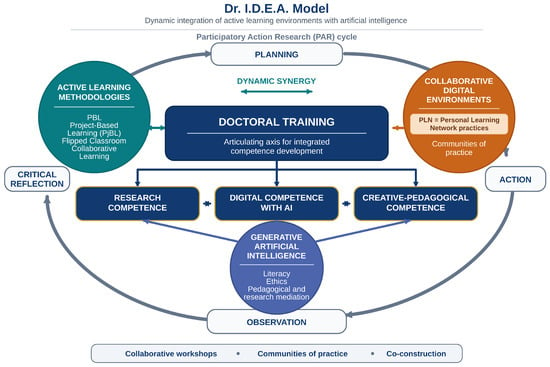

Disclaimer/Publisher’s Note: The statements, opinions and data contained in all publications are solely those of the individual author(s) and contributor(s) and not of MDPI and/or the editor(s). MDPI and/or the editor(s) disclaim responsibility for any injury to people or property resulting from any ideas, methods, instructions or products referred to in the content. |
© 2026 by the authors. Licensee MDPI, Basel, Switzerland. This article is an open access article distributed under the terms and conditions of the Creative Commons Attribution (CC BY) license.