


Abstract
First-year students in STEM programs face significant academic and personal challenges that can undermine retention and success, particularly for those navigating new institutional environments without prior college experience. While self- regulated learning (SRL) theory offers a well-established framework for understanding how students plan and reflect, less attention has been paid to the performance phase, the stage where students must translate plans into action amid real academic and social demands. This qualitative study examines the experiences of 15 first-year life science students across three institution types, a Hispanic-Serving Institution, a predominantly white institution, and a liberal arts college, to investigate what plans students formed at the end of their first semester and what factors facilitated or hindered implementation during their second semester. Using thematic analysis of semi-structured interviews, three major plan themes emerged: help-seeking, internal academic adjustments, and managing social and emotional well-being. Facilitating factors for these plans included small class sizes, anonymized participation tools, approachable instructors, peer and family support, counseling services, and structured planning tools, while hindering factors included fear of judgment, high instructor-student ratios, scheduling conflicts, academic burnout, and unsupportive living environments. The findings reveal that plan implementation depended on the interplay of intersecting psychological, social, and structural factors, which created unique conditions that influenced whether students were able to enact their plans. Importantly, the findings reveal that plan implementation unfolded not as a linear process but through nested micro-cycles of forethought, performance, and reflection within the performance phase, triggered by specific events throughout the semester. These findings have implications for how institutions design learner-centered support for STEM students not only at key transition points, but also throughout the semester, to address the conditions that influence whether students are able to successfully implement, adapt, or abandon their regulatory efforts.
1. Introduction
1.1. Navigating the Academic System
The transition to college can be filled with both psychosocial and academic challenges that first-year students must navigate. This first year of college can offer opportunities for growth, where students must learn to quickly adapt to both demanding academic and non-academic environments. Yet, many incoming students are unprepared for the rapid increase in curricular pace [1] and rigorous coursework [2], particularly among those pursuing degrees in STEM fields [3,4]. STEM students may face other academic hurdles such as disappointing exam results, self-doubt about their ability to succeed in STEM coursework, or feelings of exclusion in the classroom or lab setting [5]. In addition, they may also face the same non-academic challenges as other students such as low self-confidence [6], feelings of marginalization [7], peer pressure (defined as perceived norms and expectations from peers, [8], and adjustments to new living environments [9]. These early experiences can significantly shape students’ perceptions of their place in STEM [10], and influence their motivation [11], identity development [12], retention in STEM fields [3,4], and persistence in college overall [13].
The challenges that often arise in students’ first year can prompt critical self-reflection. For example, disappointing early exam results may be interpreted as a fixed assessment of ability, leading students to question if they belong in their chosen STEM majors and academic paths [14], especially in introductory biology courses known for high failure and low retention rates [15]. Those same exam results could instead be a motivator to attend office hours more regularly or adjust study habits depending on the self-reflection journey a student follows [16].
1.2. A Framework for Self-Reflection
Self-Regulated Learning (SRL) theory offers a useful framework for understanding how these cognitive and non-cognitive factors intersect in the first year of college (see Figure 1) and has been particularly well documented through introductory life science courses [17]. SRL describes three cyclical phases that guide students’ metacognitive development: (1) forethought, where students set goals, plan, and anticipate challenges; (2) performance, where they apply and monitor strategies; and (3) self-reflection, where they evaluate their outcomes and reactions.
Figure 1.
The Self-Regulated Learning (SRL) Cycle [17].
In the forethought phase, students analyze tasks and draw on motivational beliefs. During the performance phase, they move from intention to action, implementing their plans, adjusting strategies, and responding to real-time challenges. This phase has been described as the most challenging stage of SRL [18], as students must actively enact and regulate their learning. During the performance phase, based on SRL, students draw on a range of self-control strategies, including self-instruction, imagery, attention focusing, task strategies, environmental structuring, and help-seeking. They also rely on self-observation strategies by monitoring their own learning processes and outcomes. These monitoring processes represent the metacognitive work of tracking whether strategies are effective and adjusting behavior accordingly [19].
1.3. The Importance of the Process
Although much of the scholarship using SRL theory highlights the importance of all three phases, less research has focused on students’ experiences surrounding their performance phase. Much work has documented valuable insights into the forethought phase, focusing on planning and goal setting [20,21]. A key component missing from the scholarship, however, is understanding how students navigate the process and experiences surrounding plan implementation within the performance phase.
Focusing on students’ experiences in the performance phase can illuminate moment-to-moment realities of self-regulation, the points where intentions meet context, where barriers or supports emerge, and where students’ plans either gain traction or break down. Understanding this phase is crucial for identifying the conditions under which students’ intended plans translate into meaningful academic actions. Prior work has demonstrated these processes during the performance phase using quantitative approaches, for example, by tracking digital traces of learning behaviors [22]. Yet less work has qualitatively documented how students experience their movement through these phases from their own perspective. Evaluating students’ accounts through their personal lens can provide insight into the persistence, adaptability, and feasibility of their strategic adjustments in realistic contexts.
1.4. Study Focus
In this study, we focus on first-year science students’ journeys during the forethought and performance phases of SRL. We specifically sought to understand the intricacies and specific factors that impact their experiences with making plans and taking actions within their first year of college. As shown in Figure 2, the performance phase examined in this study does not represent students’ first experience with performance within the self-regulated learning cycle in their first semester. Rather, it reflects a second iteration that took place during the second semester. Students had already moved through an earlier cycle in their first semester, during which they engaged in academic performance and were later prompted to reflect on that experience. That initial reflection therefore functioned not only as reflection on the first iteration, but also as forethought for the second iteration, as students used it to plan for their second semester. In this study, we focus on students’ performance during that second iteration, as described in the interviews (Figure 2). Focusing on this second performance phase offered a more concrete understanding of students’ self-regulated learning because they now had firsthand experience with what academic performance entails and had developed informed ideas about how to improve their second attempt based on lessons learned from the first.
Figure 2.
Study Timing Within the First-Year SRL Cycle.
The previous literature gathered first-year STEM students’ written reflections at the end of their first semester (first iteration) to capture how students assessed their personal growth and academic progress, including the plans they hoped to carry into their second semester [10]. The authors identified academic and non-academic factors that shape early college experiences, ranging from academic adjustments (e.g., time management, help-seeking, responding to academic setbacks) to personal and emotional growth (e.g., managing mental health, coping with uncertainty) and navigating social contexts.
While reflection initiates growth, identifying the factors that support or hinder follow-through during the performance phase is particularly important for students. Considering this, we interviewed students during their second semester, after they had reflected on their personal and academic growth and plans at the end of their first semester and as they navigated a subsequent phase of performance. We asked them to (1) recall the plans they formed earlier and (2) describe whether and how they attempted to put those plans into practice. In doing so, we aim to shift attention to the next phases of SRL: forethought (students’ plans) and performance (students’ plan implementation and outcomes) during the second semester.
This study investigates two questions:
- What plans do first-year life science students decide to implement at the end of their first semester?
- What factors, from the students’ perspectives, facilitate or hinder their successful or unsuccessful implementation of these plans during their second semester?
2. Materials and Methods
2.1. Research Design
A total of 496 life science students who enrolled in introductory biology courses were given the following prompt at the end of their first semester: “Describe one or two things you learned about yourself this semester that were important and/or will help you be a better person going forward”. Fifteen students who had written self-reflections about this prompt were interviewed during their second semester to better understand how they implemented the plans described in those reflections. Although self-regulated learning (SRL) informed our overall conceptual understanding of students’ planning and implementation processes, it was not used as a predetermined coding framework in this study; rather, we used an inductive approach so that patterns in students’ experiences could emerge from the data. During the interviews, we asked students to recall the plans they had made at the conclusion of their first semester and to share their perspectives on the factors that facilitated or hindered the implementation of those plans during second semester. This design rests on a specific epistemological position about what interview data can reveal about self-regulated learning. SRL can be studied either as an unfolding event, captured through online or trace-based methods such as log data, think-aloud protocols, and multimodal channels [22,23,24], or through learners’ own accounts of how they regulated their learning. Our interviews access the latter: students’ retrospective reconstructions of their planning and implementation, narrated near the end of the second semester. We treat these reconstructions as a legitimate object of analysis rather than as an imperfect proxy for observed behavior, because the way students interpret and narrate their own regulatory efforts is itself consequential for how they plan and act in subsequent cycles [25]. At the same time, we are explicit about the boundaries this places on our claims. This design supports conclusions about which conditions students perceived as facilitating or hindering their plans, and about how they retrospectively organized those experiences into sequences of attempt, evaluation, and revision. It does not support claims that we observed regulation as it occurred in real time, nor that any particular configuration of conditions caused a given outcome. Accordingly, we describe the micro-cycles reported in this study as patterns students reconstructed in their accounts, and we frame the relationships we identify as associations students themselves drew rather than as determined effects.
2.2. Participants and Instrumentation
The study population of students was selected as a subsample of 496 students who enrolled in introductory biology courses and wrote self-reflections at the end of their first-semester life science class in the Fall of 2024. Introductory Biology is a STEM course that some studies have shown can act as a gateway. Lack of success in these gateway courses tends to be predictive of student retention in the major. Unfortunately, these courses still have high percentages of unproductive outcomes [26].
Study participants were recruited from three institutions: a large Land-Grant predominantly white institution (PWI) and a large Hispanic-Serving Institution (HSI), both on the U.S. East Coast, and a liberal arts college (LAC) in the Midwest. In Spring 2025, all 496 participants who had reflected on their first-semester experience were invited to participate in follow-up interviews. Invitation emails detailing the study and participation incentives were sent to students. Fifteen students across the three institutions agreed to participate in interviews (Table 1). All procedures were reviewed and approved by the Institutional Review Board at Florida International University (IRB #23-0483).
Table 1.
Demographic Characteristics of Participants by Institution Type.
2.3. Data Collection
The 15 interviews were conducted via Zoom in Spring 2025, near the end of students’ second semester. Interviews were semi-structured and lasted between 45 and 60 min. The interview questions are included in Appendix A. All interviews were recorded, transcribed, securely stored, and analyzed using QCAMAP, a collaborative qualitative coding platform [27].
2.4. Data Analysis
We employed thematic analysis of the interview transcripts to explore first-year students’ perspectives on strategy changes during their second semester of college. This inductive approach is well-suited for identifying themes and interpreting patterns within qualitative data without imposing predetermined frameworks [28]. By allowing themes to emerge naturally from the interview transcripts, we were able to capture the complexity of students’ experiences with strategy implementation, as well as the various motivational factors and obstacles they encountered. Furthermore, consistent with qualitative conventions, quotations were selected for their analytic and illustrative value rather than their frequency. Some illustrate themes shared across interviews, while others highlight distinctive or divergent individual experiences; quotations are not intended to indicate prevalence.
Following anonymization of the data, authors began by reading through the transcripts to become familiarized with students’ responses and noting initial impressions. During the initial coding phase, authors practiced incident-to-incident coding, a method to code data based on meaningful actions or events described in the transcript, to capture key ideas and maintain consistency of interpretation across transcripts [29]. As coding progressed, a codebook was developed and iteratively refined, allowing for consolidation of overlapping codes and clearer definitions of major concepts. Throughout this process, authors engaged in memoing to record reflections, analytical decisions, and potential linkages between themes, an approach that enhanced transparency and methodological rigor [30].
Once no new thematic insights emerged (data saturation), we synthesized the data into core themes that reflected the most significant patterns within the interviews. We then invited an inter-rater coder to independently code a subset of the data to enhance the reliability and validity of the codebook. After the codebook was validated, we used a process of ‘dialogic reflexivity’, where we talked through each code and theme until reaching full consensus [31]. Following theme development, we conducted a further comparative pass across the full set of transcripts, oriented not to individual plans in isolation but to the conditions surrounding them. Rather than examining each account separately, we read across participants to consider how facilitating and hindering factors co-occurred around each plan type, which conditions recurred across multiple accounts, and which appeared in only one. Particular attention was given to contrasting cases in which students described the same plan under different circumstances; for example, intentions to increase in-class engagement among students in large lecture sections compared with those in small sections, as such contrasts helped clarify which conditions appeared consequential for a given plan. This comparative work proceeded interpretively, through repeated reading and sustained discussion among the authors using the process of dialogic reflexivity described above, rather than through formal tabulation of cases. Table 2 is the consolidated product of this synthesis, presenting each plan alongside the hindering and facilitating factors identified across the sample, organized by domain. Consistent with the retrospective design, we treat these configurations as patterns in students’ accounts rather than as verified causal structures.
Table 2.
Students’ Plans (Forethought) and the Factors That Facilitated or Hindered Their Implementation Across Three Domains.
3. Results
In the following results section, we unpack three major themes that emerged from our analysis. We describe what students’ self-set plans for change looked like as they entered the second semester and, most importantly, the factors that either facilitated or hindered their attempts to implement and follow through with those plans. Some of these factors were pre-existing supports or barriers, while others emerged post-implementation as students received feedback and adapted their strategies. For organizational purposes, we divided students’ plans into three major themes, regardless of outcome. These include: (1) help-Seeking, (2) internal academic adjustments, and (3) managing social and emotional well-being. Then, we describe the types of factors that influenced student plan outcomes, describing what factors lead to either unsuccessful plans (whether they were implemented with negative outcomes or never implemented) or successful plans; we describe these factors as “hindering factors” or preventors, and “facilitating factors” or motivators respectively. Table 2 summarizes these plan themes and the associated facilitating or hindering factors that led to plan outcomes.
Conceptual summary of factors shaping first-year STEM students’ implementation of planned behavior changes: hindering factors (preventors) leading to unsuccessful implementation (left-red), planned actions (forethought) (center-purple), and facilitating factors (motivators) associated with successful implementation (right-green), organized across three types of student plans—external help-seeking, internal academic adjustments, and managing social and emotional well-being.
- Theme One: Help-Seeking
In this section, we introduce the first theme: “Help-Seeking.” Under this theme, students developed plans for the second semester that focused on building external modes of support to help them improve in their second semester. These types of plans included (a) improving in-classroom engagement, (b) utilizing office hours, and (c) building relational or personal connections with faculty. Each of these plans was influenced by different factors that either facilitated their success or prevented their implementation. Below, we describe each type of plan first-year students desired to implement, as well as the factors that either led to successful or unsuccessful implementation in their second semester.
Plan 1 (a)—Improving In-classroom Engagement
When students described plans to improve their engagement in the classroom, they often described a desire to be more actively involved and participate in class activities: “I made it my mission to hold myself accountable and I make sure that I show up to as many classes as possible.” They also expressed plans for interacting with their instructors more, stating that they plan to ask more questions: “[I decided to] stay after class if I’m able to and ask the teacher more questions”, “I decided to go to TA help hours”.
When students were able to successfully implement their plans for in-classroom engagement, factors that facilitated this type of plan included (a) small class sizes and (b) anonymized interactive tools. Students who were successful in improving their classroom engagement felt they were able to do so because of the pre-existing factor of small class sizes. It helped them feel more comfortable and confident in their ability to engage more with their peers or instructors: “My classes have been relatively small this semester… I prefer [that]… you get more interaction overall with the teacher because it’s a smaller class size… I feel more comfortable here… like, I feel more in place.” Small class sizes allowed students to feel like they had more opportunities to interact with their professor directly. A student particularly shared how small class sizes with low student-to-teacher ratios were a main reason they chose to attend their specific university “I decided on [small liberal arts university] so I could have more one-on-one time with my professors.”
Additionally, anonymized interactive tools facilitated successful plans for classroom engagement. Question tools such as iClickers gave students a comfortable entry point without the pressure of speaking out loud in front of peers: “There was also iClickers and I asked a lot of questions in the lectures and worksheets freely.” Students were able to ask questions without fear of judgment especially in larger lecture halls while still receiving direct, in-the-moment feedback from their professors, describing this mode of engagement as offering a sense of freedom: “So having that sense of like anonymous… is kind of reassuring and [teacher]’s like, ‘Oh, there’s like no dumb questions… I’d rather have you ask the same question than fail the question later on.’”. This structure relieved external pressure and supported their desire to participate more actively in class.
At the same time, students, specifically from large institutions, described hindering factors that made their plans for increased classroom engagement difficult to enact and ultimately unsuccessful. Interestingly, these factors often prevented plan implementation before any attempt, including (i) a high instructor–student ratio and (ii) professor beratement in class.
While small classroom size helps with students’ engagement, large lecture halls cause some students to avoid seeking help because of embarrassment or fear of judgment. One student shared that they and their peers avoided asking questions, stating, “some kids are embarrassed to ask questions in like 300-people lectures…I don’t want to be like asking a dumb question.” This account illustrates a pattern several students described, in which large lecture settings heightened intimidation and discouraged help-seeking.
Students also shared the difficulty in engaging with professors because of a high instructor-student ratio, making it difficult to have any direct contact with their professors: “I do sometimes have difficulty learning in large classroom settings, as I’m more used to being able to ask questions openly from my teacher and… work things out… in a 1-on-1 type thing or [a smaller] classroom…”
Most concerning were the moments when students described direct beratement or chastising from their professors: “We were doing a group assignment and I didn’t understand it… and he was like, ‘Well you should know this already.’ And he said it in front of everyone. I felt so embarrassed”. These moments, however brief or minuscule, enabled an environment where students felt pressure and a fear of failure when they entered the classroom. Even when students planned to engage more in the classroom, they were unsuccessful in doing so because of negative interactions with their faculty.
In some cases, students’ efforts to engage were not static, but iterative. One student described second semester as “putting… things that I learned for first semester to the test,” explaining that “it was still kind of trial and error.” After attending TA help hours once, she realized that “this actually helps,” and from that point forward, “Every time I would have an assignment due, I made it my point to go at least once that week that it was due.”
On the other hand, in some cases, students’ classroom engagement also appeared to follow a negative cycle, in which discomfort reduced help-seeking and limited engagement further reinforced that discomfort. In large lecture settings, some students described avoiding questions because they feared appearing unintelligent, explaining that they were “embarrassed to ask questions in like 300-people lectures” and did not want to ask “a dumb question.” Such accounts suggest that intimidation in large classrooms could suppress participation at the moment it was most needed, leaving students less likely to seek clarification and potentially more likely to remain confused or disengaged in later class interactions. These instances (either negative or positive) suggest that help-seeking was not always a one-time plan, but sometimes developed through small cycles of trying, evaluating, and repeating strategies that proved useful.
Plan 1 (b)—Utilizing Office Hours
As part of their broader help-seeking plans, several students intended to attend biology office hours more consistently in the second semester. In this regard, students’ experience with office hours for other courses encouraged them to decide to show up in office hours for their biology course: “I [decided] … to go to office hours because… I went to office hours [in another class] and that definitely helped me.”
When it came to utilizing office hours, (i) having motivation and (ii) having clear academic or career goals encouraged students to seek out faculty support. Motivations, particularly career aspirations such as entering medical school, contributed to disciplined help-seeking: “If I want to go into the medical field, I need to nip this in the bud now. So I took more advantage of office hours and TA help hours.” Here, this student describes their internal motivation to go into medicine as their driving force and says how they intend to act on it by seeking help through office hours.
However, (i) sense of embarrassment about asking for help and (ii) logistical conflicts, such as scheduling and extracurricular demands, restricted opportunities to attend office hours: “…I didn’t approach the… Teacher or the T.A.s… Um, I genuinely think it was more like… a sense of embarrassment… …get over my embarrassment to realize… like if you need help, just ask for it.”. This student’s account echoes prior literature showing that undergraduates may experience shame when seeking help [32]. Regarding the logistical conflicts, one student explained, “I thought I had all these hours, but I was traveling and wanted to do nothing after [rowing] racing including office hours.” Another student explained this: “Her office hours for me was when I had another class… that first semester I was so busy, I had really no time. And spring semester is when my main season is for rowing. So having that on top of it, I’m crazy busy in the spring… I wasn’t able to go to office hours… it just happened to be that she didn’t have the office hours at the time that it was good for me.” These accounts illustrate how logistical hindering factors like time pressures and fatigue could prevent students from following through on their plans, even when they aimed to use office hours as a resource.
Plan 1 (c)—Building relational or personal connections with faculty
Finally, some students described their plan to reach out beyond help-seeking with their academic studies, but also desired to increase their communication with their instructors about their underlying mental and emotional states surrounding their academic lives. Students often recognized the value of strengthening access to their instructors when they described regret about having limited contact with their instructors during their first semester. One student explained: “I decided to talk to [my instructor] more. I do regret not speaking to my professors in the first semester because none of them knew I was struggling. I think they assumed I wasn’t trying, which was the complete opposite.”
Students mentioned (i) instructor approachability and (ii) small class size as facilitating factors. Instructor approachability as a preexisting factor shaped students’ comfort level in following through on this plan: “I actually really liked biology partially because of the teacher I had and could talk to her; my friends had different teachers who were less sympathetic.” This contrast underscores how instructor demeanor directly influenced students’ help-seeking behaviors and course experiences.
On the other hand, (i) negative feedback from instructors and (ii) structural barriers in large institutions occasionally reinforced students’ lack of sense of belonging: “My professor called me a ‘deer in headlights’…I didn’t feel like I belonged in biology.” Additionally, students at larger institutions described barriers that fostered a mindset of distance, one that made it harder for them to approach and build connections with instructors. One student noted: “He has so many students… you wouldn’t really think a professor would [remember you].”, “Our school is huge, over 20,000 people…you feel small and like you don’t belong.” They further described how a lack of representation in a predominantly white institution contributed to feelings of isolation: “You could walk in the dining hall, walk in the library and not see anyone of your complexion”.
For some students, building stronger relationships with instructors was an evolving process shaped by reflection and revision. One student recognized that in the first semester “none of my professors knew what was going on” and later reflected that she “definitely regret[ted] not reaching out to them.” This realization appeared to shape a revised second-semester approach in which she became more intentional about asking for help and making herself visible to instructors. For her, the plan to connect with faculty grew out of earlier experiences of feeling invisible to instructors.
- Theme Two: Internal Academic Adjustments
In this section, we introduce the theme “Internal Academic Adjustments.” Under this theme, students developed plans focused on strengthening their own academic practices to better navigate the demands of the second semester. These types of plans included (a) adopting more intentional study techniques (e.g., color-coding notes, using active recall, or teaching material to peers), (b) practicing disciplined time management through structured calendars and reminders, and (c) persisting in the STEM major program despite challenges. Each of these plans was influenced by different factors that either facilitated their success or prevented their implementation in the second semester. One student explained: “Because of how bad I did on the first exam and during the semester, I wanted to change how I studied and try my best not to let those struggles carry into the second semester.” Another noted: “I started figuring out what works best for me”. For these students, academic setbacks served as a reflection moment to enter the second semester with more intentional plans.
Plan 2 (a)—Intentional study techniques
In adopting intentional study techniques, students described how reflection on first exam results and ineffective past study techniques, such as memorization often carried over from high school, ignited the need to practice more intentional modes of study: “I changed my study habits. I learned that color-coding works for all my courses, not just math.” “I learned I can think about the things in the test with a color in mind, I can look at it and I can close my eyes and like envision it.” Other students tried flashcards or teaching the biology concepts to their peers: “I moved more to the flashcards at the beginning of the [second] semester”, “I would pretend that I was teaching them to somebody else after going through and taking all the notes.”
However, (i) lack of time was factored in for some students who wanted to try new and different study techniques. Some continued relying on passive strategies like rote note-taking due to time constraints: “I don’t fully learn material by just writing notes or reading…but I didn’t have much time to explore other methods.”, “I don’t really have that much time to explore and find other study methods… I just don’t have time.”
In some cases, students’ use of intentional study techniques developed through small cycles of trying, evaluating, and revising their strategies. One student, for example, explained that after realizing her earlier approach “does not work for me,” she “shifted towards the flashcards” so she could better test her memory, suggesting that reflection on what was ineffective shaped a new study method. Similarly, another student described moving away from memorization after the first exam and instead beginning to “teach it to myself,” later explaining that this helped both with better grades and longer retention.
Plan 2 (b)—Disciplined time management
Some students explicitly reflected that their usual study routines were no longer effective, especially as their schedules became more demanding, prompting them to search for more efficient strategies: “I’ve kind of been sticking to the same one while I write down… but as I fill my schedule up with more and more things, I realized that’s not as efficient.” For better time management, students benefited from factors such as (i) time management tools and (ii) strong academic and career goals. Time-management tools such as Google Calendar and alarms helped students translate their intention into day-to-day decisions: “If someone asked me to do something, I could look [at my calendar] and say, no, I have to do this.” Apart from using time management tools, being motivated by strong academic and career goals helped students regulate their time management: “you need to manage time because you’re like in college, like this is your future.”, “I just need to get through this [time management] because I need to be a doctor per se”. These quotes imply that strong motivation leads students to adopt time management as a tool for achieving their goals.
While factors such as strong academic and career goals and a calendar supported students in practicing time management, some external issues such as (i) their living environment hindered some students from following their time management plan. Roommates with poor academic habits normalized missing classes for a student: “Seeing my roommate, sleep through class and I already had lack of motivation too”.
In some cases, disciplined time management developed through small cycles of reflection and adjustment. One student’s account illustrates this cycle: in her first semester she completed assignments “on the day of,” as she had in high school, but after missing deadlines and not receiving full points, she “made sure that did not happen again.” In the following semester, she revised her routine by completing assignments “at least two days in advance rather than the day of,” while also recognizing that she could improve further by starting even earlier.
Alongside positive adjustments, some students described a negative cycle in time management in which delay itself became self-reinforcing. One student explained that even when a task was simple, he would tell himself he could do it “maybe an hour later,” and then “the hour gets pushed back another hour and another hour till like, it’s eventually last minute.” In this case, having control over one’s time did not immediately translate into disciplined use of it; instead, postponement accumulated across the day until work was completed under pressure. For him, flexibility enabled procrastination rather than disciplined use of time.
Plan 2 (c)—Persisting in the STEM major program despite challenges
Several students described a goal of persisting in the life science pathway, an intention that represented both commitment to their academic path and resilience in the face of early difficulties in biology coursework: “I always had that mentality of if you start something, you have to finish it, whether you like it or not.” Some students experienced difficulties and failures in the first semester and still decided to stay in the biology major: “After I failed that test, I was like, what do I do? Do I drop the course? Like, do I need to switch my whole bio major? … But nonetheless, I endured through it”.
Students’ plans to remain in their major were supported by (i) the academic and emotional encouragement they received from family and friends: “I stayed with my major and my program simply because my friends are there, and I feel like I am getting support from the people who are not just my friends, but like the program coordinator and the upperclassmen”, “all my family members, siblings who’ve all done the college thing, all graduated. So they know where I’m at or whatever”, “I have to give credit to God… but my friends…having that social network of people that helped me… without them, I wouldn’t have been able to get through it.”, family encouragement reinforced persistence and shaped career motivation: “If I become a doctor, my family could benefit from that.” Finally, being surrounded by peers created a sense of community for students that helped them develop a clear sense of direction in their major: “There were people in my major dealing with the same struggles, and that really helped me stay on track and not feel lost in such a big school.”
On the other hand, the plan for persisting in the major was unsuccessful for some students and they had a change of heart about their major in the second semester, leading to a decision to change it. While peers and family helped sustain motivation, internal barriers such as (i) self-doubt and uncertainty about belonging, and (ii) lack of motivation persisted. Self-doubt about intellectual capability recurred across several students’ accounts, as one described: “I still wondered whether I was intelligent enough to continue in the major”. For some students, the pace of the course felt overwhelming and reinforced a sense of inadequacy; as one explained: “Sometimes it was harder for me to understand the material and it took me longer to process a lot of what I needed to be doing. [so] I always felt behind and I didn’t really deserve to be there.”
Also, when students struggled with new material, a lack of motivation emerged and prevented them from investing sufficient effort into their studies: “I didn’t have as much motivation to change because I knew it wasn’t what I wanted to pursue.” They faced diminished motivation when uncertain about their chosen major. In fact, struggling with new material led some students to question whether they were in the right major.
Finally, in some cases, persistence in the STEM major emerged through iterative cycles of challenge and revision. After an early failure, one student recalled, “After I failed that test, I was like, what do I do? Do I drop the course? Like, do I need to switch my whole bio major?” Yet she ultimately “endured through it,” changed how she studied, and performed better on the next test. For her, persistence was not a single decision but was reinforced through cycles of difficulty and renewed effort.
- Theme Three: Managing Social and Emotional Well-being
This theme highlights how personal circumstances outside the classroom, including (a) maintaining mental health and (b) managing roommate relationships, shaped students’ plans for the second semester and influenced their ability to concentrate, feel emotionally grounded, and sustain motivation.
Plan 3 (a) Maintaining Mental Health
Starting a STEM major, especially in life sciences, can create a sense of urgency as students try to meet academic goals and simply survive the intensity and fast pace of college courses they were not used to in high school. The effort to make academic adjustments led many students to let their mental health slip, resulting in burnout in numerous cases: “I was always filled with so much work [in the first semester].” Another summarized simply: “I’ve had a [mental] struggle and sometimes I just had to, like, cry in the shower.”. One student admitted: “I struggle with an eating disorder…I got worse [in the first semester] …I wasn’t really taking care of myself.” By the start of the second semester, students became more intentional about organizing the mental health part of their lives: “I decided, um, put myself into therapy this semester to kind of give myself that support that I needed.” Based on their experiences in the first semester, students planned to prioritize maintaining mental health. While several factors supported their efforts to protect mental health, some hindered their ability to follow through with these plans.
Some facilitating factors that helped students maintain their mental health were (i) reaching out to counselling services and (ii) getting support from friends and family. Students described positive experiences with counseling services: “I talked to people at health services…they were helpful.” Another student reflected on how therapy supported their overall growth, sharing, “Especially with going to therapy, I think I did learn a little bit more about myself and, like, me as a person, not just me academically. I think I learned a lot about my emotions and how to support myself and take care of myself.”
Regarding mental support from friends and family, students described plans to support their mental health, often through routines and relationships that would help balance academic stress. Peer relationships were central: “I [planned to] spend more time with my friends…so that it’s not just academic.” Another explained: “My friends have very much helped me with my mental health…because a lot of my mental health would be associated with school.” Small social rituals, such as walking around campus with friends, also became deliberate coping strategies while socializing: “I was struggling a lot with school, and they were there to calm me down every time I was stressing out. We would go on walks around campus just to not think about school and get some fresh air, and I feel like those have helped me and also made us close friends.”
Family played a role in creating an understanding, supportive environment for first year students which helped them successfully maintain their mental health: “All my siblings have gone to college or are in college, and both my parents and their parents went too, so college is just a normal thing in our family. When I’m stressed they understand what it’s like”, “Having my friends and family supporting me motivates me…even when I’m extremely stressed.” As a facilitating factor, the role of family as an emotional support system is undeniable although being far. One out-of-state student, reflecting on the transition of moving away from home, emphasized how family remained their emotional anchor: “It isn’t very easy to not be around my family all the time anymore. They aren’t there to help me with work like they used to, and even though they still support me from afar and I reach out to them regularly, it’s not the same because I don’t see them every day anymore. It’s very different, and it can be hard to manage, especially when I get really homesick.”.
Being a facilitating factor for maintaining students’ mental health, however, (i) family can also exert pressure on students’ mental health, especially those first-generation students: “a lot of times it’s difficult to convey the importance of going to class…to my mother and family members.” These family knowledge gaps could create a feeling of isolation for students: “Since I’m first generation…[my family] don’t understand what dropping a course means…I don’t even know how to explain this…I’m completely lost.”
Another factor that impacted students’ efforts for maintaining mental health was heavy load of courses that caused academic burnout: “I was doing nine classes my first semester… when I was doing it, it really was rough, and I’ve had, I’ve had a struggle” and “I did experience lots of burnout and a lot of loss of motivation, especially towards the end of the semester.” For a student, this burnout was coupled with housing instability: “it’s not that I’m homeless. It’s just that it’s very hectic. The most important thing on my mind was where are we going to live? But I would also like to focus on school”.
This heavy workload also caused students to have less time for restorative habits and hobbies that would help them maintain their mental health: “I just did not have time to do any self-care. I neglected all my hobbies…” and “I did notice that because of the amount of schoolwork I do have, I’ve been, like, a little distant from family… I have a lot less time to do my own hobbies”. For this student, distance from family, a source of support, caused a mental breakdown. In this regard, having long-term prior mental health conditions was a condition that made it harder to get out of burnout for some students: “I suffer from depression in the spring semester usually after towards the end of January is usually when it starts and then it doesn’t end until like the end of May” and “I was depressed for other reasons, because it does happen, like, every year pretty much. Just for, like, some personal reasons”.
Finally, in some cases, students’ efforts to maintain mental health also developed through small cycles of struggle, reflection, and adjustment. After experiencing burnout and emotional strain in the first semester, some students entered the second semester with more intentional support-seeking plans. One student, for example, explained, “I decided… [to] put myself into therapy this semester,” and later reflected that therapy helped them “learn a little bit more about myself” and “how to support myself and take care of myself.”
Furthermore, for some students, maintaining mental health also involved negative cycles in which academic strain reduced access to the very practices that might have supported emotional recovery. Students described being “always filled with so much work,” having “a lot of loss of motivation,” and neglecting self-care because they “did not have time to do any self-care” and had “a lot less time to do [their] own hobbies.” Taken together, these accounts suggest that heavy workload could generate burnout, while burnout simultaneously limited time and energy for restorative habits, allowing stress to compound rather than ease across the semester. These accounts suggest that maintaining mental health was not always treated as a fixed personal trait, but sometimes emerged through iterative efforts to recognize distress, seek support, and reflect on what was helping.
Plan 3 (b) Manage roommate dynamics (setting boundaries)
Managing roommate dynamics was a key non-academic challenge for some students, as tensions at home sometimes escalated beyond everyday discomfort and began to directly affect their well-being and capacity to cope during the semester: “Little by little, the whole situation took a toll on… my mental health because I was very stressed about the situation… Eventually halfway through the semester I ended up having to move rooms…”, and “I was stressed all the time. I lost like 10 pounds in like a month…”. As part of social wellbeing, many students intentionally planned to address roommate dynamics as they entered their second semester, often by setting boundaries and initiating open conversations. One student recalled: “At the end of the first semester, I [planned] to set boundaries” Another explained: “I decided to talk to him [ the roommate].”and “when I first met my second roommate, I made it very clear… that if there’s an issue, I need to talk about it from the get-go, because if not, it’s not going to work out…”
The factors that facilitated the path for students to communicate better with their roommates included the pre-existing environment that they already lived in. (i) Structured residential settings provided environments where students could follow through on these plans. Living Learning Communities (LLCs), for example, offered shared academic goals and built-in peer support: “I lived in the pharmacy LLC. So we were all in the same classes…if we needed help, we could just talk to each other and that was really helpful. So it kind of built in a support system.” Such environments created stability that fostered both academic and social resilience [33]. In these settings, when students took initiative to talk to their roommates, it often led to positive outcomes: “our relationship improved after that [in the second semester].” Another explained: “we ended up talking, and [my roommate] understood his faults; he apologized.” “we talked and luckily, she agreed… we never had any issues because of that.”
On the other hand, (i) cultural/racial disconnect made it difficult to communicate with a roommate and contributed to tension for some students especially for marginalized students: “…having like a white roommate who was very understanding… but there’s so much understanding he can do to a point where he’s not understanding where I’m truly coming from… I understand, but it’s just how I’m feeling. So that did cause a little friction.” This quote suggests that even when a roommate is well-intentioned, racial and cultural differences can limit mutual understanding and create tension, particularly for marginalized students. Furthermore, (ii) avoiding conflict can get in the way of communicating with their roommate: “I do have a roommate, but we don’t really talk much. We’re just kind of doing our own thing. I try to keep to myself to avoid any issues because I’ve heard about roommate conflicts.” This student’s approach reminds us how first-generation students often use a collectivistic conflict resolution style, characterized by avoiding direct communication and maintaining harmony, when dealing with roommate conflicts [34].
Finally, in some cases, managing roommate dynamics also developed through small cycles of tension, reflection, and revised communication. After experiencing conflict in the first semester, some students entered the second semester with a more intentional plan to set boundaries and address problems early. One student explained, “at the end of the first semester, I [planned] to set boundaries,” and later described how, with a new roommate, “I made it very clear… that if there’s an issue, I need to talk about it from the get-go.” This revised approach appeared to improve the outcome, as the student reflected, “we talked and luckily, she agreed… we never had any issues because of that.” These accounts suggest that roommate management was not always a one-time adjustment, but sometimes emerged through iterative efforts to recognize conflict, revise communication, and establish clearer expectations.
Although some students were able to improve roommate relationships through communication and boundary-setting, roommate situations were not always positive. In some cases, negative cycles were especially visible in students’ accounts of roommate conflict. One student described how roommate tension “took a toll on… my mental health,” which then “added on to my stress about schoolwork,” leaving her unable to keep up academically. As the strain intensified, she became “stressed all the time,” lost weight, and found that even after moving rooms it was “hard to get back into the groove of doing everything.” This account suggests that roommate conflict could set off a reinforcing loop in which interpersonal stress undermined emotional well-being, emotional strain disrupted academic functioning, and those academic struggles further deepened distress.
4. Discussion
Introductory Biology students from our study reported diverse and highly contextualized approaches to navigating their second semester of higher education. Our thematic analysis of their accounts points to dynamic, negotiated patterns of engagement and reflection that students associated with behavioral pivots during the second semester, the focus of our study. As a meta-reflection, students’ choices within a more granular time period should engender a methodological rethinking of how forethought, performance, and reflection unfold in the context of the traditional higher education academic semester. Before we identify and articulate the emergent behavioral patterns, we will broadly discuss the main thematic categories that we see based on their interviews.
4.1. Social and Academic Behaviors of Second Semester Students
During interviews near the end of their second semester, students described the plans they had carried into that semester and the factors that facilitated or hindered their implementation (Table 2). These accounts reveal that students approached the semester with thoughtful, self-directed plans that were a vital part of their academic progress. They focused heavily on seeking external support and adjusting their own strategies to sustain internal persistence, while a portion of plans centered on social and emotional actions that directly or indirectly shaped their academic environments.
Students’ plans for external help-seeking, such as improving in-class engagement, were hindered by a range of factors, both academic and non-academic. These included fear of judgment, negative peer-modelling and lack of study behavior, professor beratement, and high instructor-student ratios [35]. Yet, these same plans became more feasible when students also experienced positive factors that influenced classroom dynamics such as smaller classes, with anonymized tools that reduced the social risk of participation, and students were able to build more trusting relationships with their professors [36]. Taken together, we can see that a student’s individual agency for planning to seek help is a major step in student self-regulation processing, yet their environment can facilitate either an adaptive or maladaptive feedback loop. Student intentions regarding their plans for external support can be met with positive dynamics that facilitate continual support-seeking behavior (such as when a professor responds positively to student outreach) or face compound stressors that spiral students into self-doubt or reduced sense of belonging (i.e., negative peer environment or emotional distancing by professors leads to reduced coping and shutting down).
Similar to students’ plans for internal academic adjustments, internal motivation for growth versus systematic or structural gaps was also a challenging dynamic for plan success, where the surrounding environment played a major role in facilitating plan success when students faced internal psychological factors. Attempts to adopt intentional study techniques were often limited by time constraints [37]. such as rigorous coursework, a demanding job, or extracurricular responsibilities. Students’ efforts to maintain disciplined time management were made more difficult by health challenges and negative roommate environments [38], but were supported when students had clear academic or career goals. Similarly, persistence in the major was shaped by this interplay, as self-doubt and low motivation could undermine follow-through [5], whereas Living Learning Communities [39], supportive peers, and family support helped sustain commitment [40]. Additionally, reflection on ineffective past study habits or exam failure helped motivate students to try new strategies [41]. Interestingly, however, some students were able to combat challenging structural environments when they had very high self-agency by being anchored by strong academic or career goals [42].
A similar pattern appeared in students’ efforts to manage social and emotional well-being: academic burnout, housing instability [43], unfamiliarity of the family with the college system, and lack of time for restorative habits made this difficult, while academic communities, peer support, mental health services, and emotionally responsive roommates made these plans more attainable. It is worth noting that the findings indicate that maintaining mental health was associated with the greatest number of barriers, underscoring the need for institutions to place greater emphasis on creating proactive infrastructure to provide early access to mental well-being resources for STEM students before potential difficulties arise. Additionally, family and roommate relationships often played dual roles, functioning as emotional anchors in some cases [44,45], while in others creating barriers through unfamiliarity with college demands or the normalization of unproductive academic habits [46,47].
The following discussion delves into the interplay of factors that influenced students’ performance and describes what these patterns mean for how we support students through this critical transition.
4.2. Intersecting Factors Shaping Plan Implementation
When looking across students’ plans, processes, and outcomes throughout their second semester, two noteworthy patterns emerge. First, across all types of plans, a dynamic interplay of social, psychological, and structural factors shaped implementation. Second, students moved through recurring, within-semester cyclical processes as they navigated these factors.
Across students’ second-semester performance cycles, plan implementation was shaped by a dynamic interaction of psychological, social, and structural conditions. These conditions rarely operated in isolation; rather, they formed constellations of influence that shaped whether students could act on their intentions. Consider a student who planned to improve their in-class engagement and participate more actively. That single plan encountered conditions operating simultaneously across multiple dimensions: psychologically, fear of judgment and self-doubt made raising a hand feel risky; socially, negative peer modeling normalized silence and professor beratement compounded the cost of perceived failure; structurally, a high instructor–student ratio made meaningful interaction with an instructor feel out of reach [35]. On the other hand, when we interviewed students from a smaller class section, they discussed the same psychological and social pressures but reported them as being manageable. In these instances, students’ plans did not change, but rather the configuration of conditions surrounding it influenced plan outcomes in different ways, and this configuration appeared closely tied to whether the student could follow through.
Notably, factors within a student’s non-academic life heavily influenced academic outcomes, and vice versa. For example, housing instability or family unfamiliarity with college eroded academic capacity [43,46], just as academic setbacks depleted the emotional reserves students needed for non-academic plans [5]. Of all plan types, efforts to maintain mental health and emotional well-being faced the greatest number of barriers, suggesting that students’ psychological resources were the most vulnerable to being depleted [48].
When these conditions compounded simultaneously, students encountered an intention–implementation gap: genuine plans, formed with real effort, that became inactionable not through lack of commitment but through the convergence of barriers from multiple directions at once. Implementation gaps therefore were not necessarily evidence of individual failure, and students’ responses strongly pointed to something more structural such as competing time demands, large class sizes, housing instability, and scheduling conflicts, as the chief drivers of plan outcomes. Our findings suggest that to more deeply understand first-year student persistence and adaptation we must balance our understanding of individual motivation or grit, with the internal, institutional, and relational contexts students navigate. Furthermore, the dynamic interplay of the factors underscores the need for us to understand them both individually and how they intersect. Ultimately, the intersections impact students’ plan implementation in unique ways.
Our study suggests that there are possibilities for future research studies on the academic and social behavior of college students to explore the quantifiable degree to which hindering and facilitation factors interact to influence student behavior. While our qualitative analysis provides an emergent model that signals the relationship, the preciseness of that relationship would be more useful to college educators and other shareholders in the student’s success journey.
4.3. Theoretical Implications: The Role of Micro-Cycles Within SRL
A recurring pattern embedded within the interplay of factors was the iterative nature of plan implementation itself. While students often described their plans at the broad level of a semester, their accounts also revealed performance cycles operating at a finer grain. Rather than enacting change in a single, decisive move, many students described repeated attempts: trying a new strategy after exam failure, evaluating whether it worked, and revising their approach in response to what they encountered. Some students built momentum through these micro-cycles, for instance, attending office hours once, finding the interaction helpful, and subsequently building weekly visits into their routine.
Others, however, found single negative experiences redirecting their entire trajectory through another micro-cycle; one student received critical feedback from a professor, withdrew from asking questions in class, and subsequently disengaged from help-seeking altogether. This was equally true in the negative direction. When barriers were present, students sometimes fell into reinforcing maladaptive micro-cycles in which a combination of large class sizes, time constraints from work, and fear of judgment compounded over time, creating cascading avoidance of academic engagement rather than resolution. These nested cycles, shaped by the very contextual conditions (social, structural, and psychological) that the interplay of factors produced, ultimately appeared to shape whether students’ plans gained traction, stalled, or were abandoned over the course of the second semester. Understanding these micro-cycles, how they are triggered, what sustains them, and what disrupts them, is therefore central to understanding how students experience and reconstruct self-regulated learning during the performance phase.
Azevedo [49] identified a critical gap in SRL research: we have a limited understanding of how context influences the processes students use to regulate their learning. This study addresses that gap by demonstrating that contextual responsiveness during the performance phase is not a fixed trait students either possess or lack, but a dynamic process in which students adjust their strategies in response to shifting environmental demands, as they reconstructed it in their retrospective accounts. Plan implementation is not a linear process of executing predetermined strategies through self-control and self-monitoring [25]; it depends on how psychological, social, and structural conditions interact as students move through performance, and the impact of any single factor is not fixed but contingent on the surrounding context [23,50]. Students in this study were not simply carrying out plans formed at the end of semester one; they were continually renegotiating those plans in response to the conditions they encountered in semester two, as surrounding environments enabled, constrained, or redirected their regulatory efforts in ways they could not have anticipated. Yet contextual responsiveness alone does not fully capture what students’ accounts reveal: the performance phase appears to operate at more than one level at once, and it is the structure of those levels that carries significant theoretical implications.
In the context of self-regulated learning, the performance phase has traditionally been conceptualized as a semester-long period during which students execute their predetermined plans. This macro-level performance typically unfolds in three phases: forethought occurs at the beginning of the semester when students set goals and form plans; performance spans the middle of the semester as students attempt to implement those plans; and reflection occurs at the end of the semester as students assess their progress.
However, students’ interviews revealed a more complex reality. Within that single macro-level performance phase, Performance 2 (shown in blue in Figure 3), students were not passively executing a fixed plan. Instead, they were simultaneously engaged in numerous smaller cycles of self-regulation, what we characterize as nested micro-cycles within the performance phase. These micro-cycles operate with the same structure as the macro-level cycle: each micro-cycle contains its own forethought (a student decides to try attending office hours), its own performance (the student attends and experiences an interaction), and its own reflection (the student evaluates whether it was helpful and decides whether to continue). Importantly, these micro-cycles are triggered by specific, concrete events throughout the semester, such as a disappointing quiz result, a decision about whether to ask a question in class, a conflict with a roommate, or feedback from an instructor, rather than occurring at fixed time points.
Figure 3.
The macro-level performance phase (Semester 2, shown in blue) contains multiple nested micro-cycles of SRL. At the macro-level, students experience forethought at the beginning of the semester (Self-Reflection 1/Forethought 2), performance throughout the semester, and reflection at the end (Self-Reflection 2). Within the performance phase, students simultaneously navigate micro-cycles triggered by specific events. Each micro-cycle contains its own forethought, performance, and reflection. Structural, psychological, and emotional/social factors impact plan implementation at both levels.
The critical finding is that these micro-level negotiations, as students recounted them, are not inconsequential details. When a student decides to attend office hours despite fear of judgment, they undergo a micro-cycle of forethought–performance–reflection that reshapes the very contextual conditions they face. They interact with a professor (altering the social dynamic), experience support (shifting their psychological belief in their capability), and reflect on whether to repeat the behavior (integrating it into their semester-long pattern). These accumulating micro-cycles, dozens of small adjustments, renegotiations, and strategy shifts occurring throughout the semester, collectively shape the trajectory of the macro-level performance phase. In other words, first-year students’ semester-long academic outcomes are not shaped solely by the plans they form at the semester’s beginning; students’ accounts suggest they are shaped by the continuous, iterative micro-level choices and renegotiations they make throughout the semester in response to the structural, social, and psychological conditions they encounter.
Interviews with students indicate that, within the performance phase in this study, self-regulated learning unfolded at two interconnected levels: a macro-level cycle spanning the semester as a whole, and multiple nested, event-triggered regulatory cycles within it. These within-phase cycles were evident across participants and were activated by specific academic and social events such as a disappointing quiz result, decisions about attending office hours, or interpersonal conflict in living environments. Rather than operating as isolated responses, these cycles reflected iterative forethought, performance, and reflection processes occurring at a finer grain of analysis during ongoing plan implementation. This pattern is consistent with [1], who emphasize the dynamic and continuous monitoring and adaptation of learning strategies in response to contextual conditions as central to self-regulated learning processes.
To visualize this, consider two levels of SRL operating simultaneously. At the macro-level, the two-semester sequence represents one complete SRL loop: students performed in semester one, reflected at its conclusion, used that reflection as forethought when entering semester two, and then performed again. This macro structure is captured in Figure 3. Within semester two, however, students were not simply executing a fixed plan. They were continuously triggering smaller loops: a student attends office hours once, finds it helpful, and builds it into a weekly routine; another receives harsh feedback from a professor, withdraws from asking questions, and disengages further; a third tries flashcards after failing the first exam, evaluates whether the strategy worked, and either commits to it or pivots. Each of these moments involves its own forethought, performance, and reflection, a complete SRL loop operating at the level of a single decision or event, repeating throughout the semester in sequence, yet simultaneously feeding into the wider macro loop unfolding across the academic year. It is these micro-cycles, layered inside the macro loop of performance (Figure 3), that capture the depth of students’ dynamic and intricate processing as they move along their academic journey.
Viewed this way, successful regulation during the performance phase depends not solely on the quality of the initial plan, self-monitoring capacity, or self-control, but on the ongoing interaction between the learner and the environments in which that plan is enacted. The micro-cycle structure reveals that the performance phase is less a single arc than a series of recursive, context-dependent decisions, each one shaped by the conditions students encounter, and each one feeding back into both the next micro-cycle and the broader semester-level trajectory. This framing has direct implications for how institutions design support for students navigating this phase.
If institutional supports are calibrated only to the macro-level, orientation at the start of the semester, a reflection prompt at the end, they risk missing the moments that shape whether students’ plans succeed or fail. It is at the micro level, in the daily and event-driven decisions students make throughout the semester, that regulatory behavior is most actively shaped. Early in the semester, low-stakes quizzes, practice problem sets, and regular classroom polling can build confidence and establish positive micro-cycles before high-stakes assessments arrive. Structured peer environments, including living learning communities and activities that prompt reflection on social inequities such as Chance at Birth [51] can create the social conditions that support students as they begin acting on their plans. Mid-semester, when micro-cycle density is highest, the instructional environment becomes especially consequential: instructors who maintain a supportive tone, use anonymous interactive tools, and make help-seeking feel low-risk can intervene at precisely the moments when students are deciding whether to engage or withdraw. Toward the end of the semester, structured opportunities for reflection, brief metacognitive prompts, guided journaling, or low-stakes check-ins, can help students evaluate which micro-cycles served them and carry that awareness into the next macro loop. Across all of these moments, the goal is the same: to meet students where their regulatory behavior is actually happening, not only at the transition points that are easiest for institutions to see.
Future research should examine how interventions designed around the micro-cycle structure of the performance phase, targeting the specific events that trigger regulatory loops, can support students’ ability to implement and sustain their plans. Understanding not just what supports help, but when and at what grain they matter most, will be essential for institutions seeking to support students not only at key transition points but continuously, inside and outside the classroom.
4.4. Limitations and Future Directions
Several limitations should be noted. Our findings rest on a single retrospective interview with each student, conducted near the end of the second semester. This design captures how students reconstructed and made sense of their planning and implementation, but it does not permit observation of regulatory processes as they occurred, and the micro-cycles we describe are therefore patterns identified in students’ accounts rather than directly observed sequences. Relatedly, our cross-case synthesis proceeded through interpretive comparison and team discussion rather than systematic case-by-case tabulation; future work applying formal cross-case matrices could specify these configurations more precisely. Future research could address these boundaries by employing longitudinal or repeated interviews, diary and experience-sampling methods, or trace-based and think-aloud approaches capable of capturing regulatory activity closer to the moment it occurs.
5. Concluding Thoughts
Ultimately, these findings illustrate that micro-cycles and the interplay of contextual factors appear to operate in a mutually shaping relationship: micro-cycles are shaped by the conditions students encounter, and through their accumulation across the semester, they reshape those very conditions. Understanding first-year success requires recognizing this cycle, one in which students are neither passive recipients of institutional barriers nor entirely self-directed agents, but active negotiators continuously adapting to and transforming the contextual conditions they navigate.
This study contributes to a growing body of work calling for contextually grounded accounts of self-regulated learning. By centering the voices of first-year STEM students as they reflected on their own planning and implementation across two semesters, the findings offer exploratory grounding for what SRL theory has often assumed: that the performance phase is not a smooth execution of prior forethought, but a messy, iterative, and deeply context-dependent process. The identification of nested micro-cycles within the macro-level semester arc provides a more granular lens for understanding how and why students’ regulatory trajectories diverge, and points toward a more precise vocabulary for studying, measuring, and supporting self-regulation in real academic contexts. Furthermore, this granular understanding demands equally granular institutional action: support systems must evolve from one-time interventions to sustained, responsive guidance that meets students in their iterative work of plan implementation.
To deliver an improved comprehensive academic experience, institutions must move from episodic interventions to sustained, contextualized support that recognizes that students navigate micro-level decisions and renegotiations throughout the semester. This requires examining structural barriers (including class size, work flexibility, resource access), building relational support (such as advisor connections, peer communities), and integrating academic and non-academic services to address the holistic nature of first-year students’ experiences.
Author Contributions
Conceptualization, M.A., N.C. and B.D.; Methodology, M.A.; Validation, B.D.; Formal analysis, M.A.; Investigation, M.A.; Resources, B.D.; Data curation, M.A.; Writing—original draft, M.A.; Writing—review & editing, M.A., N.C. and B.D.; Visualization, M.A. and N.C.; Supervision, B.D.; Project administration, M.A.; Funding acquisition, B.D. All authors have read and agreed to the published version of the manuscript.
Funding
This research received no external funding. The work was completed as part of a doctoral dissertation research at Florida International University.
Institutional Review Board Statement
The study was conducted in accordance with the Declaration of Helsinki, and approved by Ethics Committee of Florida International University (IRB #23-0483), approved on 10 November 2023.
Informed Consent Statement
Written informed consent has been obtained from the participants to publish this paper.
Data Availability Statement
The datasets generated and analyzed during the current study are not publicly available due to the sensitive and potentially identifiable nature of qualitative interview data but are available from the corresponding author on reasonable request, subject to institutional ethical approval.
Acknowledgments
The authors thank the participating students and instructors across the three institutions for their time and insights, as well as colleagues from SAES lab who provided feedback on earlier versions of this work.
Conflicts of Interest
The authors declare no conflicts of interest.
Appendix A
Lead Interview questions:
- Tell me a little bit about yourself?
- Which experiences do you think most impacted your life in the first semester?
- Can you describe a moment when you realized you needed to change something about the way you study or approach classes?
- At the end of your first semester, what kinds of plans did you make for how you wanted to approach the second semester?
- Thinking about those plans, what steps did you take to make them happen in the second semester?
- Which of your plans were you able to follow through on?
- What helped you succeed in doing so?
- Which plans were harder to follow?
- What challenges or obstacles made it difficult?
- What advice would you give to a new student finishing their first semester and planning for the second?
References
- Murphy, J. Best Practices for Growing the STEM Pipeline for Women. In Developing an Intercultural Responsive Leadership Style for Faculty and Administrators; IGI Global Scientific Publishing: Hershey, PA, USA, 2020; pp. 182–201. [Google Scholar] [CrossRef] [Scilit]
- Holland, D. The Struggle to Belong and Thrive. In Talking about Leaving Revisited; Springer: Berlin/Heidelberg, Germany, 2019. [Google Scholar] [CrossRef] [Scilit]
- Chen, X.; Soldner, M. STEM Attrition: College Students’ Paths into and out of STEM Fields (NCES 2014-001); U.S. Department of Education, National Center for Education Statistics: Washington, DC, USA, 2013. Available online: https://nces.ed.gov/pubs2014/2014001rev.pdf (accessed on 14 June 2026).
- Seymour, E.; Hunter, A.-B. Talking About Leaving Revisited: Persistence, Relocation, and Loss in Undergraduate STEM Education; Springer: Berlin/Heidelberg, Germany, 2019. [Google Scholar] [CrossRef] [Scilit]
- Henry, M.; Shorter, S.; Charkoudian, L.; Heemstra, J.; Corwin, L. FAIL Is Not a Four-Letter Word: A Theoretical Framework for Exploring Undergraduate Students’ Approaches to Academic Challenge and Responses to Failure in STEM Learning Environments. CBE Life Sci. Educ. 2019, 18, ar11. [Google Scholar] [CrossRef] [Scilit] [PubMed]
- Bhardwaj, J. In search of self-efficacy: Development of a new instrument for first year Computer Science students. Comput. Sci. Educ. 2017, 27, 79–99. [Google Scholar] [CrossRef] [Scilit]
- Hatfield, N.; Brown, N.; Topaz, C.M. Do introductory courses disproportionately drive minoritized students out of STEM pathways? PNAS Nexus 2022, 1, pgac167. [Google Scholar] [CrossRef] [Scilit] [PubMed]
- Xu, L.; Zhang, J.; Ding, Y.; Zheng, J.; Sun, G.; Zhang, W.; Philbin, S. Understanding the role of peer pressure on engineering students’ learning behavior: A TPB perspective. Front. Public Health 2023, 10, 1069384. [Google Scholar] [CrossRef] [Scilit] [PubMed]
- Horvath, A. College Living Environments and Stress: Commuters Versus On-Campus Residency. IU South Bend Undergrad. Res. J. 2012, 12, 81–85. [Google Scholar]
- Azizi, M.; Dewsbury, B. Self-regulated learning in STEM: Non-academics matter. J. Microbiol. Biol. Educ. 2025, 26, e0016625. [Google Scholar] [CrossRef] [Scilit] [PubMed]
- Dyrberg, N.R.; Holmegaard, H.T. Motivational patterns in STEM education: A self-determination perspective on first year courses. Res. Sci. Technol. Educ. 2019, 37, 90–109. [Google Scholar] [CrossRef] [Scilit]
- Cohen, S.; Hazari, Z.; Mahadeo, J.; Sonnert, G.; Sadler, P. Examining the effect of early STEM experiences as a form of STEM capital and identity capital on STEM identity: A gender study. Sci. Educ. 2021, 105, 1126–1150. [Google Scholar] [CrossRef] [Scilit]
- Skinner, E.; Saxton, E.; Currie, C.; Shusterman, G. A motivational account of the undergraduate experience in science: Brief measures of students’ self-system appraisals, engagement in coursework, and identity as a scientist. Int. J. Sci. Educ. 2017, 39, 2433–2459. [Google Scholar] [CrossRef] [Scilit]
- Casanova, J.; Castro-Lopez, A.; Bernardo, A.; Almeida, L. The Dropout of First-Year STEM Students: Is It Worth Looking beyond Academic Achievement? Sustainability 2023, 15, 1253. [Google Scholar] [CrossRef] [Scilit]
- Freeman, S.; Haak, D.; Wenderoth, M.P.; Ebert-May, D. Increased Course Structure Improves Performance in Introductory Biology. CBE Life Sci. Educ. 2011, 10, 175–186. [Google Scholar] [CrossRef] [Scilit] [PubMed]
- Boyle, C.; Hashemi, N. From Struggles to Success: Investigating the Impact of Early Learning Assessments on Students Performance and Motivation. Educ. Sci. 2023, 13, 225. [Google Scholar] [CrossRef] [Scilit]
- Paris, S.G.; Paris, A.H. Classroom applications of research on self-regulated learning. Educ. Psychol. 2001, 36, 89–101. [Google Scholar] [CrossRef] [Scilit] [PubMed]
- Nurjanah, R.L. Self-regulated learning phases on reading comprehension: Students’ perception. Int. J. Res. Educ. 2021, 1, 51–59. [Google Scholar] [CrossRef] [Scilit]
- Zimmerman, B.J. A Social Cognitive View of Self- Regulated Academic Learning. J. Educ. Psychol. 1989, 81, 329–339. [Google Scholar] [CrossRef] [Scilit]
- Wong, J.; Baars, M.; He, M.; de Koning, B.B.; Paas, F. Facilitating goal setting and planning to enhance online self-regulation of learning. Comput. Hum. Behav. 2021, 124, 106913. [Google Scholar] [CrossRef] [Scilit]
- McCardle, L.; Webster, E.; Haffey, A.; Hadwin, A. Examining students’ self-set goals for self-regulated learning: Goal properties and patterns. Stud. High. Educ. 2017, 42, 2153–2169. [Google Scholar] [CrossRef] [Scilit]
- Raković, M.; Bernacki, M.L.; Greene, J.A.; Plumley, R.D.; Hogan, K.A.; Gates, K.M.; Panter, A.T. Examining the critical role of evaluation and adaptation in self-regulated learning. Contemp. Educ. Psychol. 2022, 68, 102027. [Google Scholar] [CrossRef] [Scilit]
- Winne, P.H.; Hadwin, A.F. Studying as self-regulated learning. In Metacognition in Educational Theory and Practice; Hacker, D.J., Dunlosky, J., Graesser, A.C., Eds.; Lawrence Erlbaum Associates: Mahwah, NJ, USA, 1998; pp. 277–304. [Google Scholar]
- Azevedo, R.; Gašević, D. Analyzing multimodal multichannel data about self-regulated learning with advanced learning technologies: Issues and challenges. Comput. Hum. Behav. 2019, 96, 207–210. [Google Scholar] [CrossRef] [Scilit]
- Zimmerman, B.J. Attaining self-regulation: A social cognitive perspective. In Handbook of Self-Regulation; Boekaerts, M., Pintrich, P.R., Zeidner, M., Eds.; Academic Press: Cambridge, MA, USA, 2000; pp. 13–39. [Google Scholar]
- Koch, A. It’s About the Gateway Courses: Defining and Contextualizing the Issue: It’s About the Gateway Courses: Defining and Contextualizing the Issue. New Dir. High. Educ. 2017, 2017, 11–17. [Google Scholar] [CrossRef] [Scilit]
- Mayring, P.; Fenzl, T. Qualitative Content Analysis with QCAmap. 2019. Available online: https://www.qcamap.org (accessed on 14 June 2026).
- Braun, V.; Clarke, V. Using thematic analysis in psychology. Qual. Res. Psychol. 2006, 3, 77–101. [Google Scholar] [CrossRef] [Scilit]
- Groen, C.; Simmons, D.; Mcnair, L. An Introduction to Grounded Theory: Choosing and Implementing an Emergent Method. In Proceedings of the 2017 ASEE Annual Conference & Exposition, Columbus, OH, USA, 24–28 June 2017. [Google Scholar] [CrossRef] [Scilit]
- Birks, M.; Chapman, Y.; Francis, K. Memoing in qualitative research. J. Res. Nurs. 2008, 13, 68–75. [Google Scholar] [CrossRef] [Scilit]
- Snyder, K.; Turesky, E. Dancing the Data: A Duo-Ethnographic Exploration Toward Dialogic Reflexivity in Qualitative Data Analysis. Qual. Inq. 2022, 29, 558–570. [Google Scholar] [CrossRef] [Scilit]
- Hsu, J.L.; Holick, G.; Green, R.M.; Schwartz, E.B.; Rowland-Goldsmith, M. “Asking for help feels like a weakness”: Factors shaping first-year students’ expectations of STEM course office hours. Int. J. STEM Educ. 2025, 12, 40. [Google Scholar] [CrossRef] [Scilit]
- Dahl, L.; Duran, A.; Hooten, Z.; Stipeck, C.; Youngerman, E.; Mayhew, M. Investigating the Influence of Residential Learning Communities on Student Experiences. Learn. Communities Res. Pract. 2020, 8, 6. [Google Scholar]
- Burgos-Calvillo, R.; Vasquez-Salgado, Y.; Greenfield, P. Cultural modes of conflict resolution, roommate satisfaction, and school belonging: The role of socioeconomic status in university peer relations. Curr. Res. Ecol. Soc. Psychol. 2024, 7, 100192. [Google Scholar] [CrossRef] [Scilit] [PubMed]
- Prananto, K.; Cahyadi, S.; Lubis, F.; Hinduan, Z. Perceived teacher support and student engagement among higher education students—A systematic literature review. BMC Psychol. 2025, 13, 1–22. [Google Scholar] [CrossRef] [Scilit] [PubMed]
- Barreca, M. Encouraging college student active engagement in learning: Student response methods and anonymity. J. Comput. Assist. Learn. 2017, 33, 621–632. [Google Scholar] [CrossRef] [Scilit]
- Blasiman, R.; Dunlosky, J.; Rawson, K. The what, how much, and when of study strategies: Comparing intended versus actual study behaviour. Memory 2017, 25, 784–792. [Google Scholar] [CrossRef] [Scilit] [PubMed]
- Nourafkan, N.; Jumah, B.; Asif, R.; Dehghanmongabadi, A. Conflicts between Students Living on-Campus Dormitories. SEISENSE J. Manag. 2020, 3, 31–43. [Google Scholar] [CrossRef] [Scilit]
- Cowan, C.; Brady, M.; Arvizu, J.; Reece, A.; Weinman, B.; Zivot, M. Cultivating not Weeding: STEM First Year Learning Community Fosters Student Persistence and Engagement. J. Coll. Stud. Retent. Res. Theory Pract. 2022, 26, 500–527. [Google Scholar] [CrossRef] [Scilit]
- LaDue, N.; Zocher, E.; Dugas, D. “It Just Makes It Feel Like You’re Not Alone”: A Qualitative Study of a Social Support Group for High-Achieving, Low-Income STEM Majors. J. STEM Educ. Res. 2024, 7, 227–256. [Google Scholar] [CrossRef] [Scilit]
- Fwu, B.; Chen, S.; Wei, C.; Wang, H. I believe; therefore, I work harder: The significance of reflective thinking on effort-making in academic failure in a Confucian-heritage cultural context. Think. Ski. Creat. 2018, 30, 19–30. [Google Scholar] [CrossRef] [Scilit]
- Wolters, C.; Brady, A. College Students’ Time Management: A Self-Regulated Learning Perspective. Educ. Psychol. Rev. 2020, 33, 1319–1351. [Google Scholar] [CrossRef] [Scilit]
- Kornbluh, M.; Wilking, J.; Roll, S.; Donatello, R. Exploring housing insecurity in relation to student success. J. Am. Coll. Health 2022, 72, 680–684. [Google Scholar] [CrossRef] [Scilit] [PubMed]
- Bueno, E.; Velasquez, S.; Deil-Amen, R.; Jones, C. “That Was the Biggest Help”: The Importance of Familial Support for Science, Technology, Engineering, and Math Community College Students. Front. Educ. 2022, 7, 768547. [Google Scholar] [CrossRef] [Scilit]
- Jain, T.; Kapoor, M. The Impact of Study Groups and Roommates on Academic Performance. Rev. Econ. Stat. 2013, 97, 44–54. [Google Scholar] [CrossRef] [Scilit]
- Chang, J.; Wang, S.; Mancini, C.; McGrath-Mahrer, B.; De Jesus, S. The complexity of cultural mismatch in higher education: Norms affecting first-generation college students’ coping and help-seeking behaviors. Cult. Divers. Ethn. Minor. Psychol. 2020, 26, 280–294. [Google Scholar] [CrossRef] [Scilit] [PubMed]
- Pu, S.; Yan, Y.; Zhang, L. Peers, Study Effort, and Academic Performance in College Education: Evidence from Randomly Assigned Roommates in a Flipped Classroom. Res. High. Educ. 2020, 61, 248–269. [Google Scholar] [CrossRef] [Scilit]
- Paulus, L.; Spinath, F.M.; Hahn, E. How do educational inequalities develop? The role of socioeconomic status, cognitive ability, home environment, and self-efficacy along the educational path. Intelligence 2021, 8, 101528. [Google Scholar] [CrossRef] [Scilit]
- Azevedo, R. Theoretical, conceptual, methodological, and instructional issues in research on metacognition and self-regulated learning: A discussion. Metacognition Learn. 2009, 4, 87–95. [Google Scholar] [CrossRef] [Scilit]
- Järvelä, S.; Hadwin, A.F. New frontiers: Regulating learning in CSCL. Educ. Psychol. 2013, 48, 25–39. [Google Scholar] [CrossRef] [Scilit]
- Dewsbury, B.M. A Chance at Birth: An Academic Development Activity To Promote Deep Reflection on Social Inequities. J. Microbiol. Biol. Educ. 2020, 21, 2037. [Google Scholar] [CrossRef] [Scilit] [PubMed]
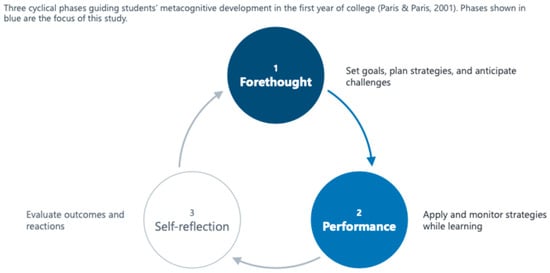
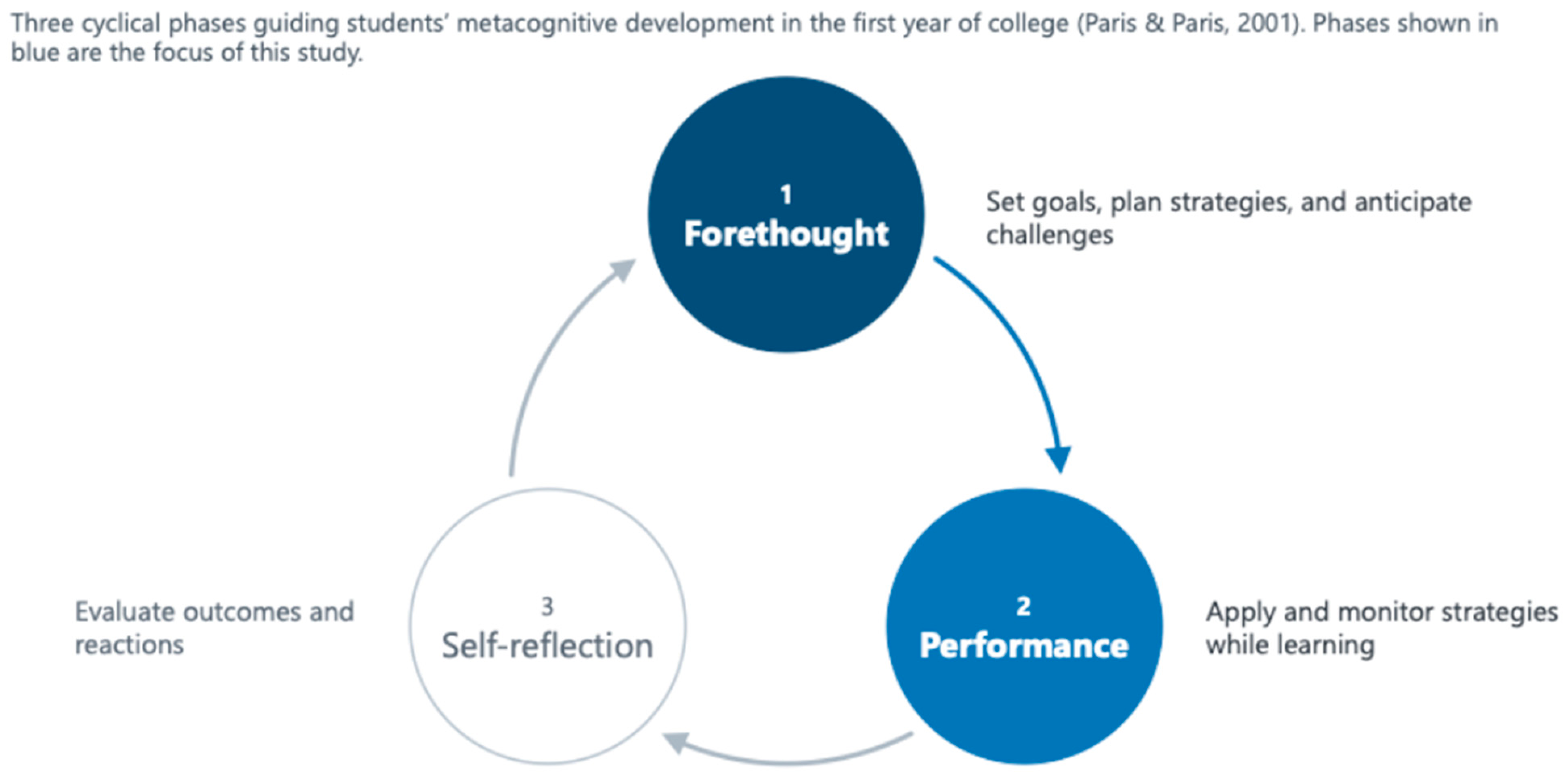
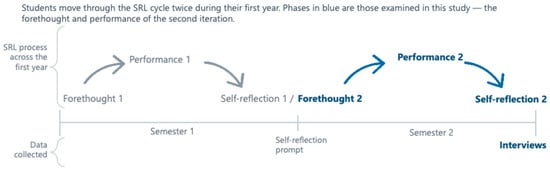
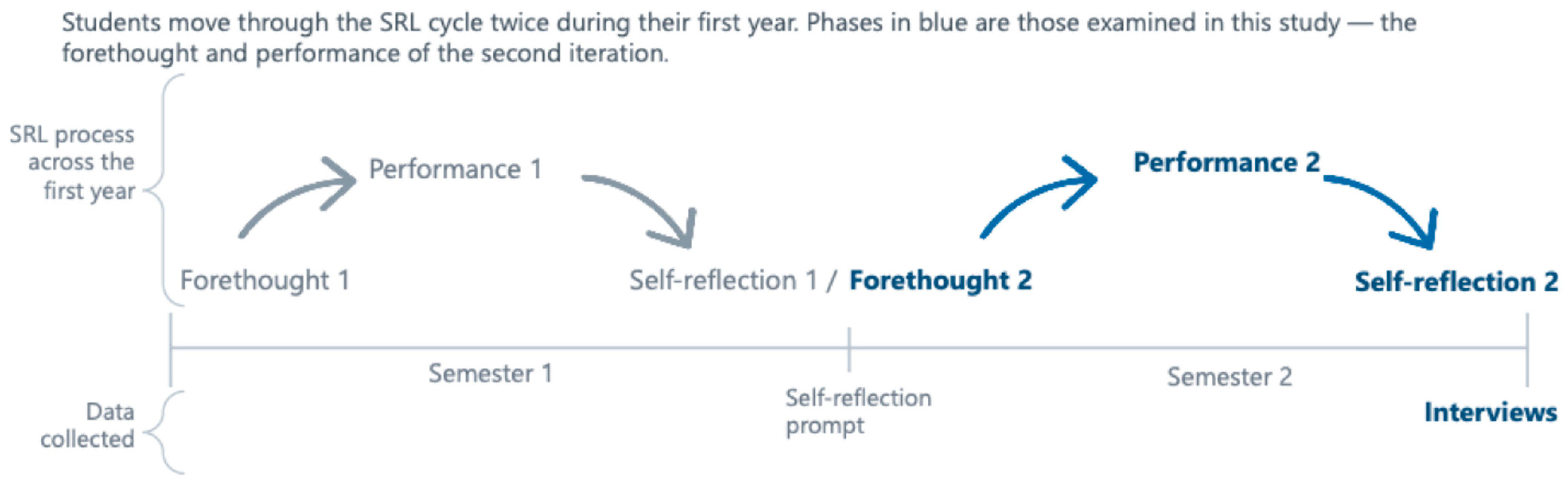
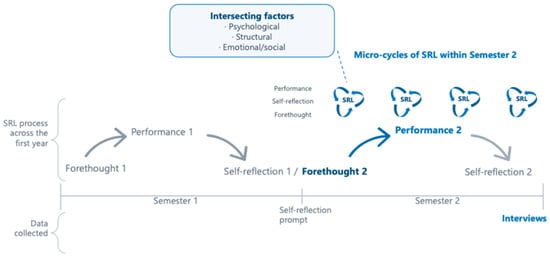
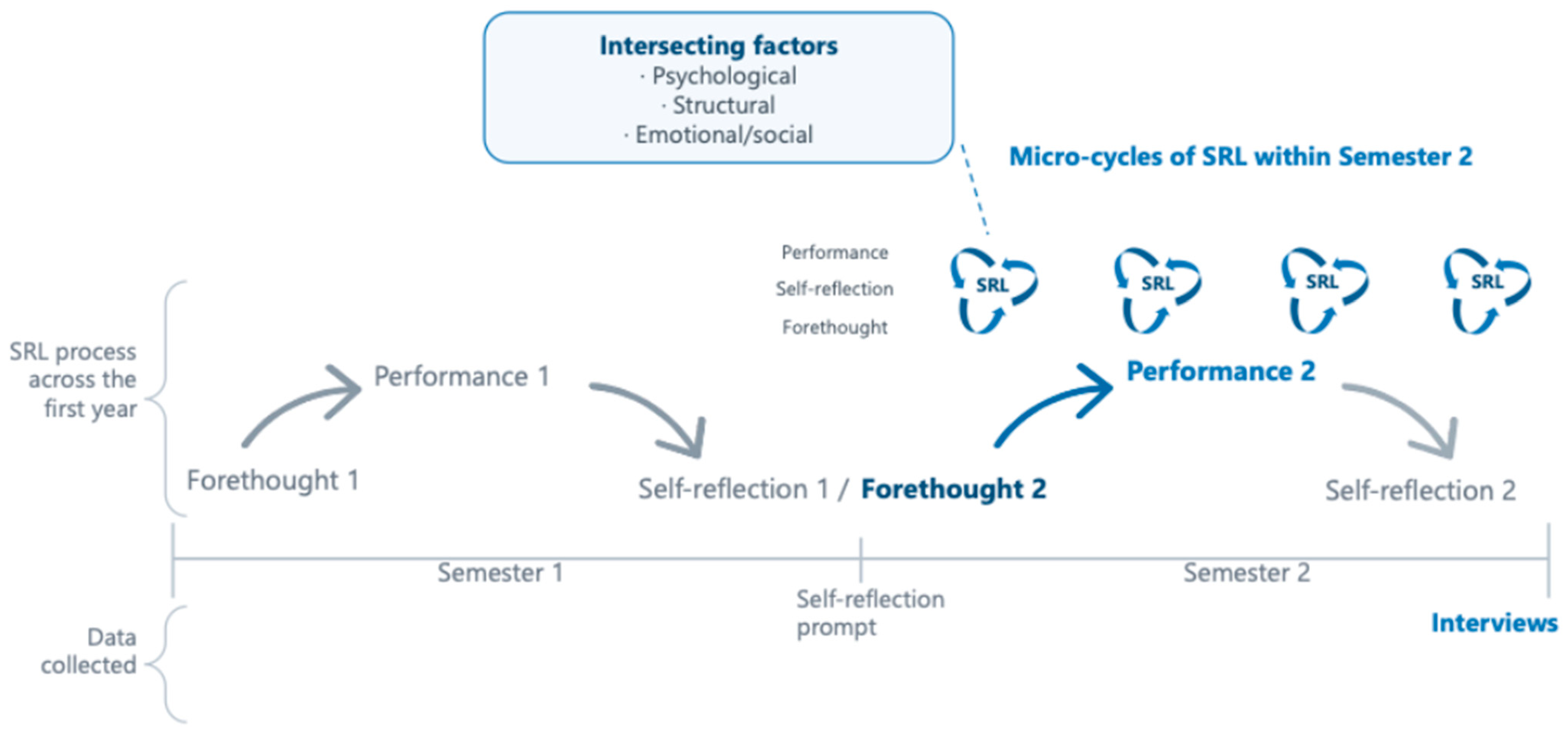

Disclaimer/Publisher’s Note: The statements, opinions and data contained in all publications are solely those of the individual author(s) and contributor(s) and not of MDPI and/or the editor(s). MDPI and/or the editor(s) disclaim responsibility for any injury to people or property resulting from any ideas, methods, instructions or products referred to in the content. |
© 2026 by the authors. Licensee MDPI, Basel, Switzerland. This article is an open access article distributed under the terms and conditions of the Creative Commons Attribution (CC BY) license.