


Abstract
Agricultural seeds are sold as commodities yet seed quality can be non-uniform. Despite the extensive literature showing that plasma treatments of seeds provides advantages for many crops, lettuce studies, particularly in indoor farming systems, are limited. This study provides a systematic investigation of the impacts of non-thermal plasma treatments with various feed gases (N2, O2, dry air, and wet air) on the germination and growth characteristics of four lettuce cultivars (Red Oakleaf (RO), Black Simpson (BS), Valley Heart Romaine (VHR), and Paris Romaine (PR)) under controlled cultivation conditions in an agrivoltaic agrotunnel. Although the germination time was not conclusively affected by the treatments, the results show a complex interaction between germination rate and yield across the different cultivars and plasma treatments. Except for PR seeds (77.8% vs. 65.8% control), wet air plasma treatments increased germination rates by 18.7–100% over controls for all other cultivars. In yield analysis, wet air treatment had the strongest effect, especially for VHR (51.7 vs. 42.5 g/pot). Treatments did not notably affect RO. For BS, N2 treatment gave the highest increase (54.2 vs. 48.1 g/pot), while PR responded best to O2 treatment (58.4 vs. 51.8 g/pot). The energy consumption of plasma treatments was negligible for all treatments, while labor costs for small batches of seeds accounted for the largest share of secondary operating costs (839, 622, and 659 h/year, respectively for BS, VHR, and PR). Despite additional expenses, including labor, O&M, and degradation costs, the reduced seed requirements from higher germination rates and higher yield increased net profit by 12.0% compared to untreated cultivation in the most impacted (Valley Heart Romaine) lettuce. There is an opportunity for further cost optimization of the non-thermal plasma treatment for each type of lettuce seed.
1. Introduction
Controlled environment agriculture (CEA), particularly indoor farming (IF) facilities have expanded because of increasing controllability of farming by providing high spatial efficiency [1], year-round production [1,2,3], low water use [2], low pesticide and herbicide use [4], etc. [5,6,7,8]. This, in turn, increases the labor and energy costs associated with the high-tech instrumentation and high level of production [9]. Agrivoltaics, by integrating the least expensive and easy-to-deploy renewable energy source, solar photovoltaics (PVs), into the agricultural farms [10,11], could offer the chance to mitigate the energy costs of CEA buildings operated at agricultural lands [12]. Agrivoltaic agrotunnels are the most aggressive examples of PV-powered IF in practice that could address the energy costs by offering a net-zero grid-connected CEA powered by a PV system with a considerably low levelized cost of electricity (LCOE) [13]. Agrivoltaic agrotunnels, as well as other IF systems studied in the literature, have shown a good profit margin for high-value crops such as herbs [7,14,15]. For other greens such as salads, however, they are also economically profitability at a lower rate [16]. This underscores the need for further investigations on cost optimizations and yield improvements leading to higher profitability levels. One scientific approach would be to reduce the labor and consumable materials costs and increase the revenue by improving the quality of seeds.
Agricultural seeds are sold as commodities, but the quality of all seeds is not the same as they need to be treated to increase the chance of their germination [17]. Conventional seed treatments often rely on costly or environmentally harmful chemicals, highlighting the need for more sustainable alternatives [18]. There are some cutting-edge techniques that can improve the seed quality by boosting the plant growth rate and the transformation of bioactive chemicals, protein, and peroxidase concentrations, as well as the decontamination of the seeds [19]. Plasma treatment, as one of the common methods, is extensively studied in the literature [20]. Plasma treatment is an environmentally friendly technology for agriculture [21], which addresses both bacterial and fungal plant diseases and boosts the yield, which accordingly contributes to higher revenue and higher food security levels [22]. The positive influences of plasma treatment were investigated on a wide range of crops including wheat [23,24], oat [25], lentil [26], rice [27], soybean [28], pea [29], rapeseed [30], radish [31], hemp [32], green chiretta [33], micro-greens [34], cucumber [35], and tomato [36]. Non-thermal plasma (NTP), also referred to as cold plasma, is a form of plasma that remains out of thermodynamic equilibrium and operates at temperatures near room temperature. It can be carefully controlled to avoid causing thermal damage to biological materials [37]. Plasma is an ionized gas generated under atmospheric or low-pressure conditions. NTP produces reactive species, electromagnetic fields, and UV radiation that alter seed molecules. Common plasma devices in agriculture include dielectric barrier discharge (DBD), microwave, corona, gliding arc, plasma jet, and radiofrequency-based plasma systems [38]. Typical feed gases include nitrogen (N2), oxygen (O2), dry/wet air, noble gases, reactive gases, hydrocarbons, and gas mixtures [38]. The biologic effects of NTP on various types of commodity seeds, particularly the ones used for traditional farming, have been extensively evaluated [37,38,39]. Although there are a few pieces of research on the positive impact of NTP-activated water or nutrient solution and root-applied NTP treatments on the growth metrics (including yield [40,41,42,43], leaf area [41,42], leaf count [44], germination rate [41], chlorophyll content [41,45], and mineral uptake [42,46]) of CEA cultivation of leafy greens, particularly lettuce, the studies on the direct-commodity seed treatments are scarce. One study showed that the effectiveness of the direct seed treatments of mung bean, mustard and radish were higher than that of the indirect nutrient water treatments [18]. Three gas types including air, N2, and O2 were utilized in this non-thermal DBD plasma treatment study. For all three gas types, the germination probability of mung bean, mustard and radish was significantly improved after seed treatment. The positive impact of combined plasma-activated water with plasma-treated seeds on seed germination and seedling growth was observed for 10 and 20 min seed treatment duration. When the exposure time of seeds and water to plasma discharges was extended, however, the effect turned out to be adverse [47]. In another study on aeroponic cultivation of two lettuce varieties (Perl Gem and Cervanek), seeds were treated with low-pressure air or DBD plasmas [48]. Although seed treatments influenced germination and early growth, they had no significant effect on biomass accumulation or the head-to-root ratio in either lettuce cultivars. In a cold atmospheric plasma generated in helium with and without reactive gases of N2 or O2 for lentil seed treatment, the germination rate was kept constant, and the germination time was improved by 5–8 h by adding nitrogen while remaining unchanged when adding oxygen. Water absorption was also improved from 37% to 50% for the helium–nitrogen mixture [49]. Wheat seed germination was evaluated under three plasma treatment conditions: (1) dry jet, (2) indirect plasma-activated water, and (3) wet jet [50]. It was shown that wet jet and indirect plasma-activated water achieved higher germination rates than the dry jet.
Despite the extensively proven advantages of direct and indirect plasma treatments on the growth indicators of a vast majority of crops in the literature, the research results on lettuce are very limited, thereby inconclusive. No significant investigations have been conducted on different methods and gas type influences on commodity lettuce seeds. Although other power-to-x applications of plasma have been elaborated in the literature [51], practical power-to-food potentials of plasma for indoor cultivation considering the real conditions and additional costs have not been investigated. To fill this research gap, in this study, four different lettuce seeds including Red Oakleaf, Black Simpson, Valley Heart Romaine, and Paris Romaine are treated under NTP of N2, O2, dry air, and wet air feed gases. The treated and untreated (control) seeds are cultivated in a real full-scale vertical farming facility in an agrotunnel. To determine if it is worthwhile to use excess electricity and/or labor to enhance the yield of indoor lettuce crops, an economic trade-off analysis between the revenue improvements and cost increments, due to the secondary operating expenditures of the plasma reactor on the agrivoltaic agrotunnel, is carried out.
2. Materials and Methods
The whole research procedure is explained in two sections. First, NTP treatments and cultivation experiments are detailed. Secondly, the cost and energy analysis methodology is provided.
2.1. Non-Thermal Plasma Experiments
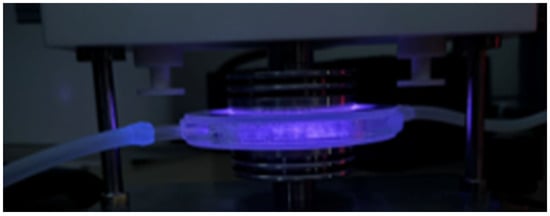
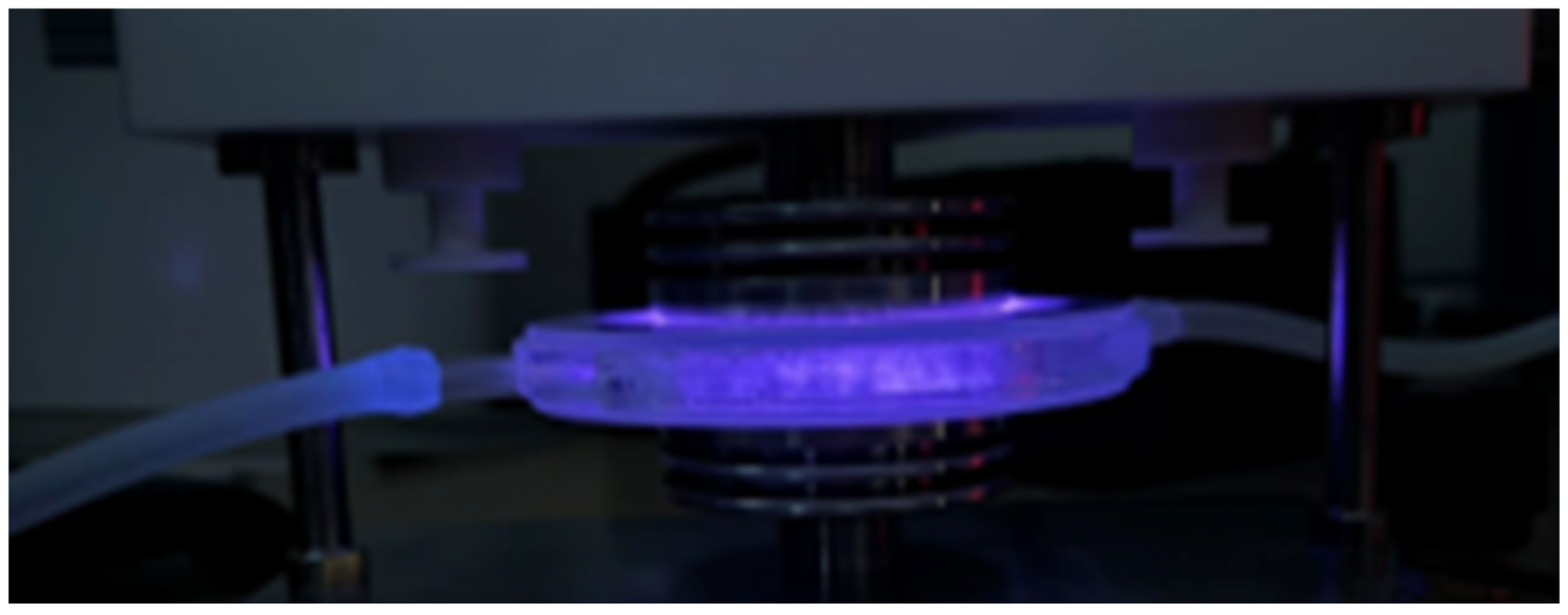
The non-thermal plasma system for seed treatment was operated at room temperature and atmospheric pressure within a disk-type non-thermal plasma reactor (Nanjing Suman Electronics Co., Ltd., Nanjing, China). As shown in Figure 1, the quartz disk-type reactor, with an outer diameter of 95 mm and an inner diameter of 60 mm, was positioned between the high-voltage and grounded electrodes. The effective discharge zone covered an area of 28.26 cm2 with a gap of 8 mm. For all seed types, the same treatment conditions were applied: 25 seeds were treated with plasma for 2 min in the quartz disk-type reactor under a power density of 1.9 W.cm−2 (input voltage of 30 V and an input current of 2.4 A). The discharge was driven by a 9.0 kHz sinusoidal AC power source with an RMS voltage of 8.5 kV. Different working gases were employed for plasma-assisted seed treatment, including N2, O2, and dry air, each introduced at a flow rate of 20 mL min−1. Wet air with 3.3% water content was obtained by passing dry air through a water bubbler installed upstream of the plasma reactor.
Figure 1.
Experimental setup of the disk-type non-thermal plasma reactor for seed treatment.
After plasma treatment, the seeds were sown immediately, since the surface activation induced by reactive species is transient. Prolonged storage leads to hydrophobic recovery of the seed coat and diminishes the enhanced water uptake capacity [24,48,52]. Moreover, the plasma-triggered biochemical signaling and enzymatic activities are short-lived, and excessive storage may even result in the accumulation of unfavorable oxidative by-products, thereby reducing the treatment benefits [28].
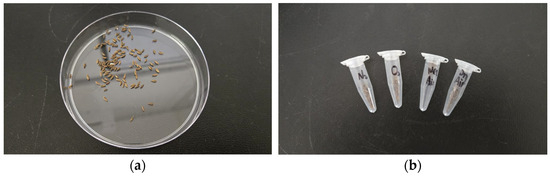
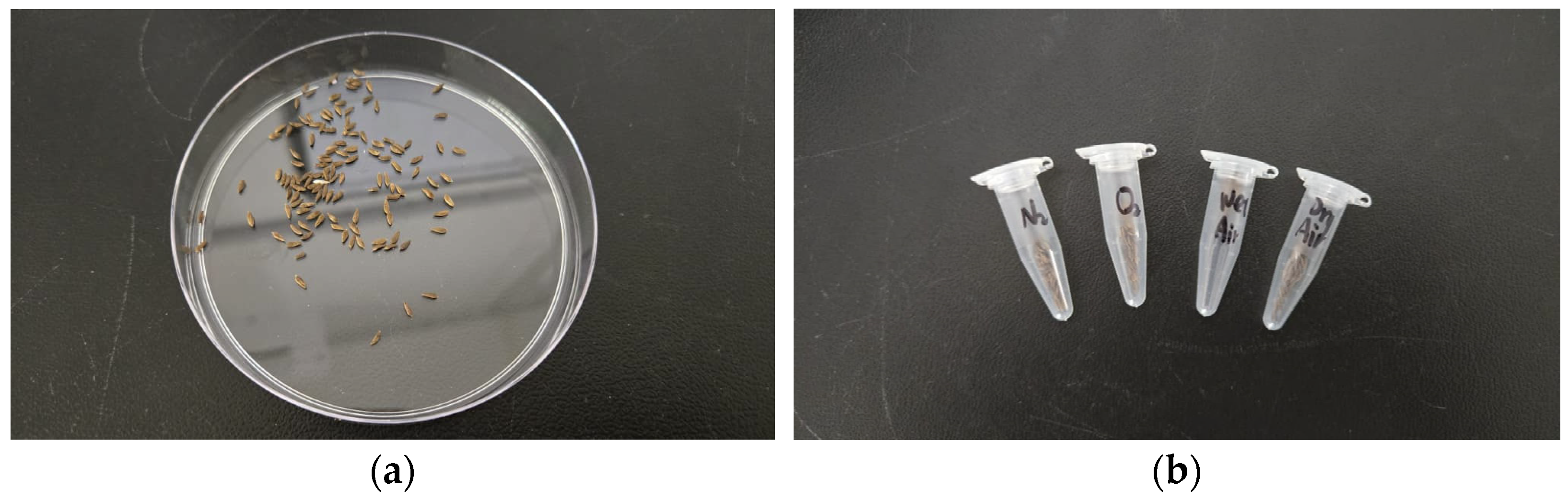
Four cultivars, all in lettuce family, were selected to be tested. Red Oakleaf (RO), Black Simpson (BS), Valley Heart Romaine (VHR), and Paris Romaine (PR) were the tested seeds. Figure 2 presents the treated and untreated Black Simpson seeds in vial tubes and sterile dishes. There is no visible difference between them. They were planted in different groups of single to multiple seeds per pot. Both treated and untreated seeds were planted in peat pots by the usual hydroponic substrate used in agrotunnels, a 70/30 mix of coco coir and perlite [53], to study their performance under real conditions. The experiments were performed in two replications.
Figure 2.
The picture of Black Simpson lettuce seed samples: (a) untreated seeds in sterile dish, and (b) treated seeds in vial tubes.
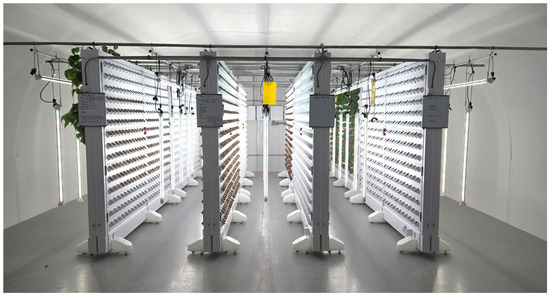
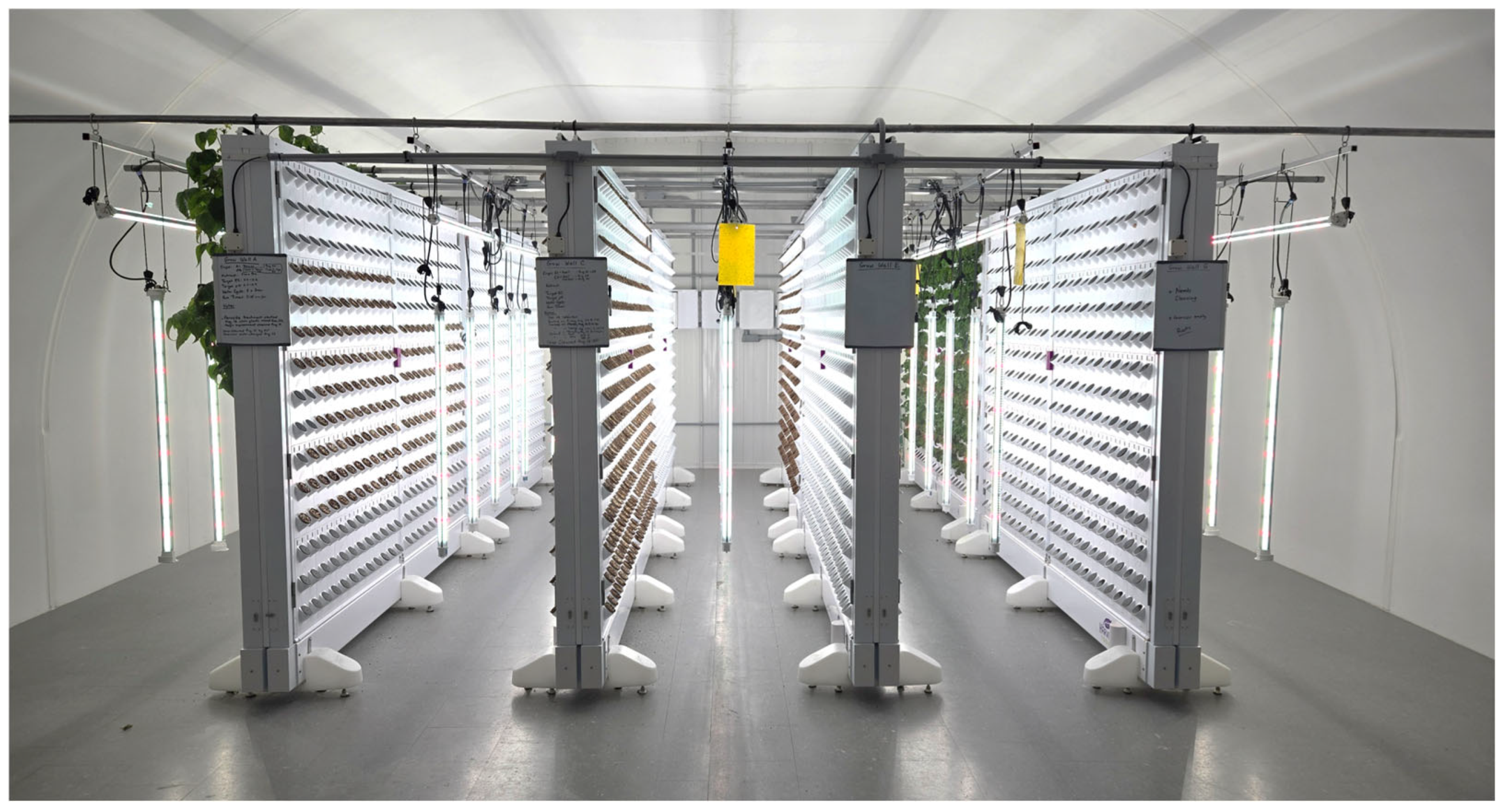
The planted pots were placed on true vertical hydroponic–aeroponic walls [54] in the agrivoltaic agrotunnel, Ilderton, ON, Canada [13]. Figure 3 shows the layout of the vertical grow walls in the main grow room of the agrotunnel. The light sources were BGL 180A LEDs (FSSC, London, ON, Canada) [54] with an average PPFD of 115 μmol/m2/s [16] and were operated for 24 h per day.
Figure 3.
An agrivoltaic agrotunnel with 8 grow walls used in the study.
All seeds were treated in identical environmentally controlled conditions. The cups were irrigated by nutrient water, whose pH level was balanced within the range of 6.0–7.0 and the electrical conductivity was maintained between 1.5 and 2.0 mS/cm. The watering cycle was performed twice per day for 2 min. The grow room was kept at a temperature of between 22 and 23 °C with a relative humidity ranging from 50% to 55%.
2.2. Energy and Economic Trade-Off Analysis
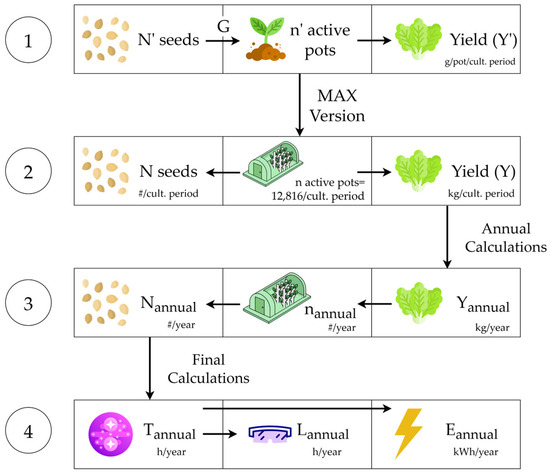
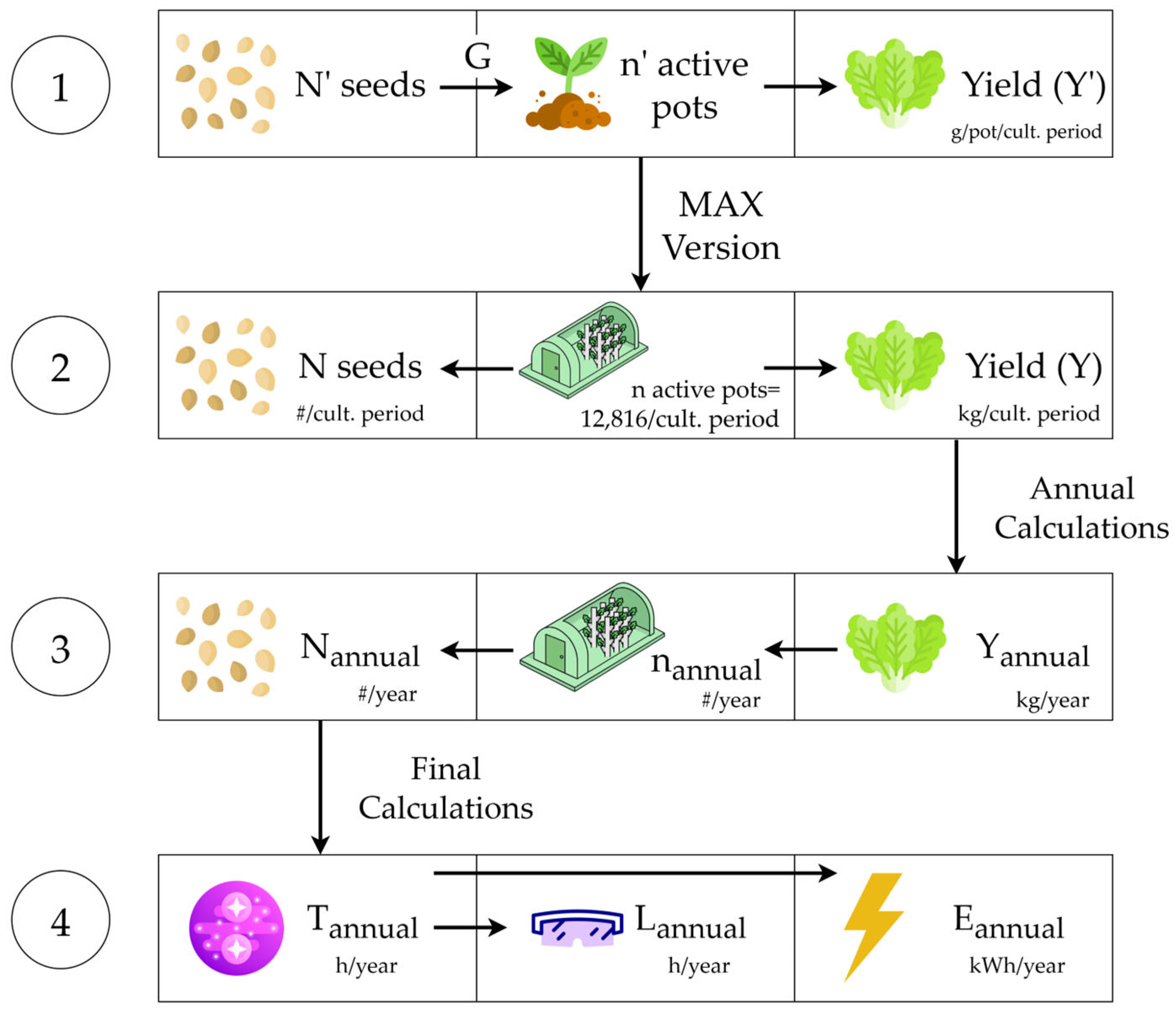
Three main growth metrics of germination rate ( in %), germination time ( in days), and fresh biomass yield ( in kg/cultivation period) were measured and compared between four gas types for NTPs and the control plants. The cultivation period is defined as the time from planting to the last harvest, in days. These three metrics were either directly or indirectly connected to the total number of required commodity seeds (), annual yield ( in kg/year), annual energy required ( in kWh/year) for plasma treatments, and total labor time dedicated to the implementation of treatments ( in h/year), all of which are the main economic drivers in the trade-off analysis. Figure 4 illustrates the estimation process of annual evaluating metrics (State 3 and 4) for the commercial MAX version of the agrotunnel (12,816 grow ports) based on the experimented data (State 1). State 2 represents the calculations per cultivation period. All the parameters are defined in Table 1.
Figure 4.
The annual cost and revenue estimation procedure for commercial MAX agrotunnel.
Table 1.
Technoeconomic parameters definitions and units.
Actual number of required seeds per cultivation period is calculated using Equation (1).
All annual parameters () were estimated by extrapolating the equivalents calculated during the cultivation period () to the whole year, as shown in Equation (2).
Energy required for each type of plasma treatment is calculated using the fundamental electrical quantities measured for the current disk-type quartz plasma reactor provided in Table 2.
Table 2.
Electrical parameter values for treatment of 25 seeds.
To perform the economic analysis, several basic assumptions must be made, and the primary cost per unit values for key operating expenditures should be defined. First, the total number of required seeds per year provides the basis for calculating the annual seed cost, annual treatment labor time, and annual treatment energy, which is defined as the multiplication of the plasma reactor’s power rating () and the annual treatment time (), as shown in Equation (3). The energy cost for the case study in London, ON, expressed in $/kWh, was obtained from the utility rates provided by London Hydro [56].
The average cost of lettuce seeds was considered to be $1.62 USD per 1000 seeds [57,58,59]. On the other hand, the annual revenue ( in USD$/year) can be calculated using Equation (4). The average unit price of organic lettuce was assumed to be $25.35 USD/kg [60].
To prepare the reactor for each treatment cycle, the operator must perform several pretreatment tasks, such as removing the treated seeds, cleaning the reactor, and adding the next batch, which takes approximately 10 min per cycle. The minimum wage in Ontario, set at $12.67 USD/h, was used as the unit labor cost [61]. The capital cost of the current lab-scale system, including the plasma generator and quartz reactor, with a total operating lifetime of 20,000 h, is $3600 USD [62]. The average operation and maintenance (O&M) cost for similar devices is assumed to be 5% of the initial fixed cost [63]. The degradation cost of the equipment can be estimated based on the ratio of the annual treatment time to the total lifetime operating hours.
3. Results
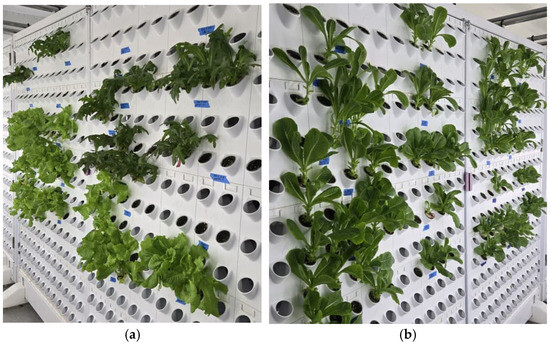
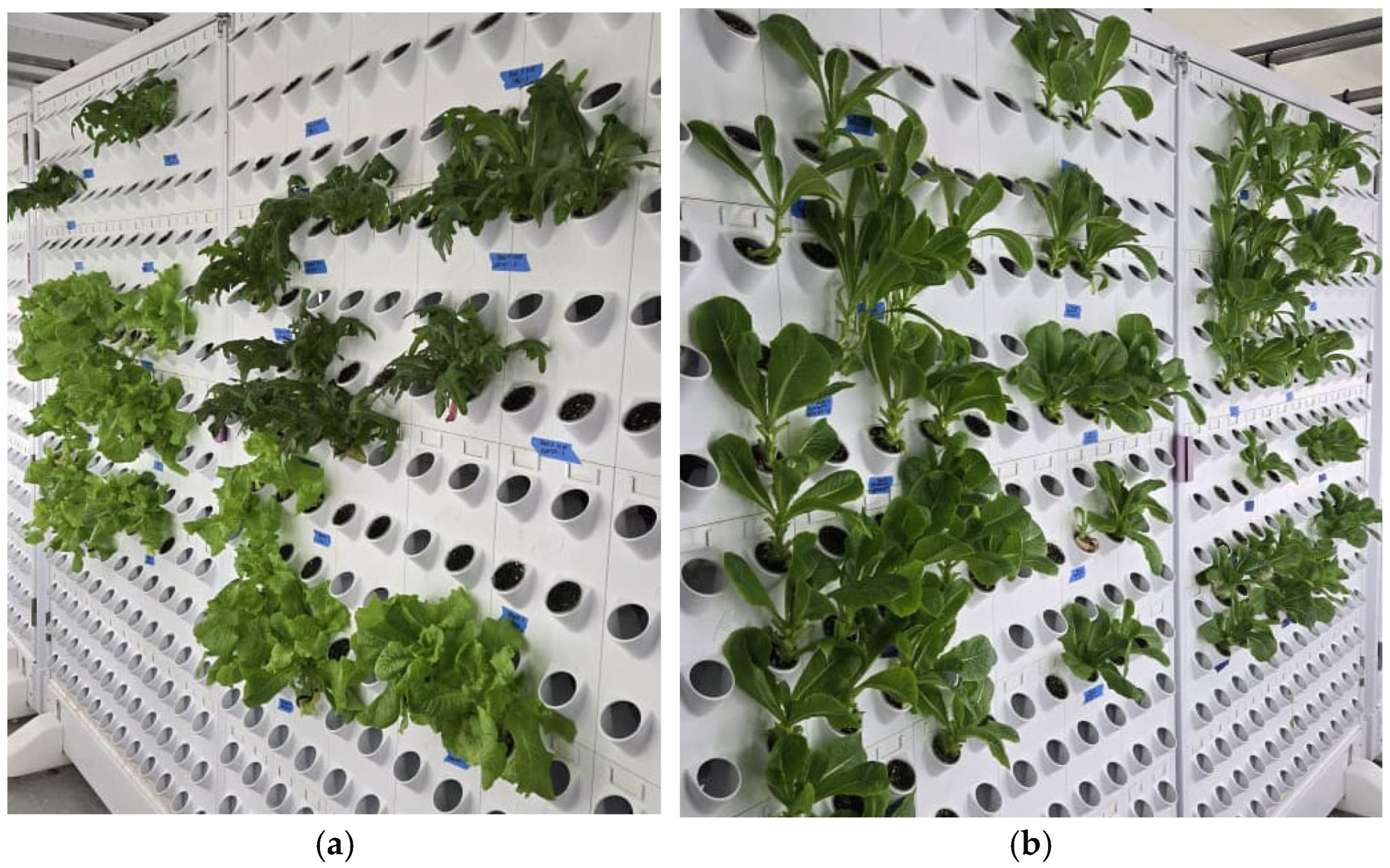
In this section, the results of all measurement and calculation procedures defined in Figure 4 will be elaborated. The first phase of results will present experimental investigations of the cultivation processes. Figure 5 shows the mature lettuce plants on vertical grow walls in the agrotunnel, proving the success of cultivation and maintenance experiments. All varieties had a cultivation period () of two months.
Figure 5.
The ready to harvest crops on the grow walls: (a) RO and BS on side 1, and (b) VHR and PR on side 2.
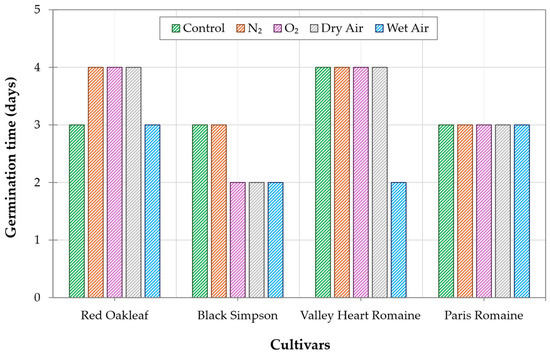
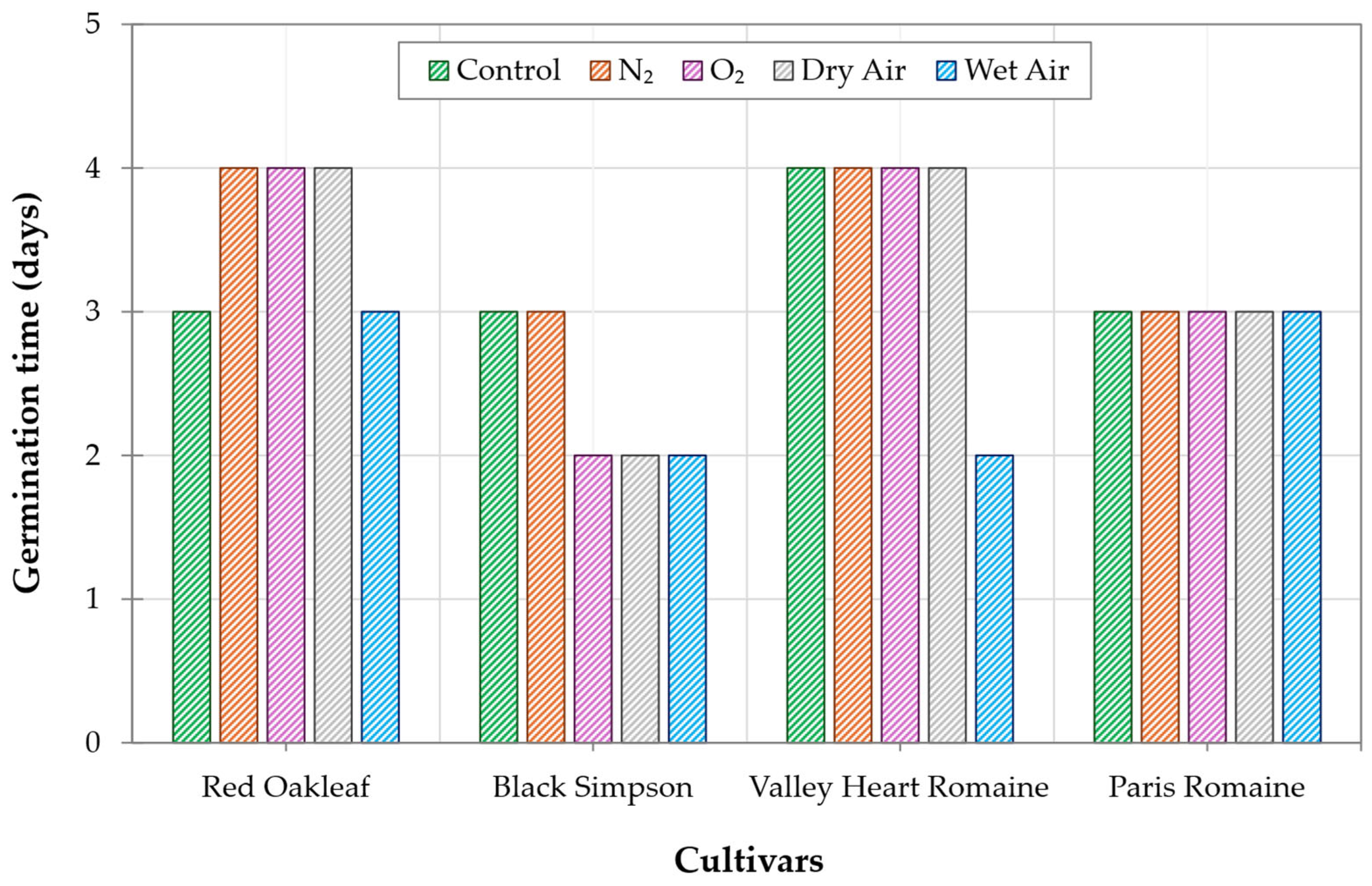
As the first parameter, the germination time was investigated. Figure 6 presents the germination time of different cultivars under various treatments and the control condition. According to the results, there was no significant difference in among the treatments as of a commercial system scale (in days). The main variation is attributed to the cultivar type. It should also be noted that the effect of will be indirectly examined through the yield and cultivation period of the plants. Therefore, is not considered a parameter to be evaluated independently.
Figure 6.
Germination time () of seeds (control vs. NTP treatments).
Germination rate () is the first key parameter demonstrating the economic effectiveness of plasma treatments, both directly and indirectly. The average of all treated and control seeds is reported in Table 3. As shown in Table 3, for the Red Oakleaf cultivar, the wet air treatment resulted in a germination rate of 50%, compared to 25% for the control seeds (100% improvement). Similarly, for the Black Simpson and Valley Heart Romaine varieties, the wet air treatment again achieved higher values (81.5% and 82.4%, respectively) compared to the control (63.9% and 69.4%, respectively). Paris Romaine seeds, however, showed a higher (77.8%) under the O2 treatment, followed by the control group with 65.8%.
Table 3.
Average germination rate of seeds (control vs. NTP treatments).
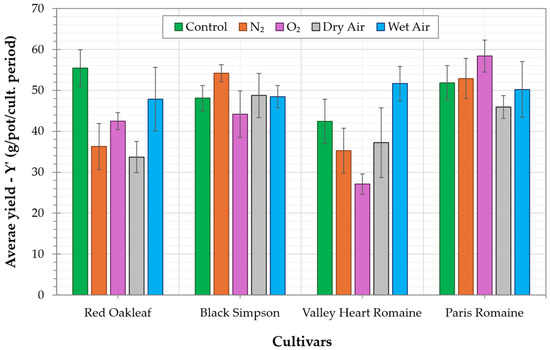
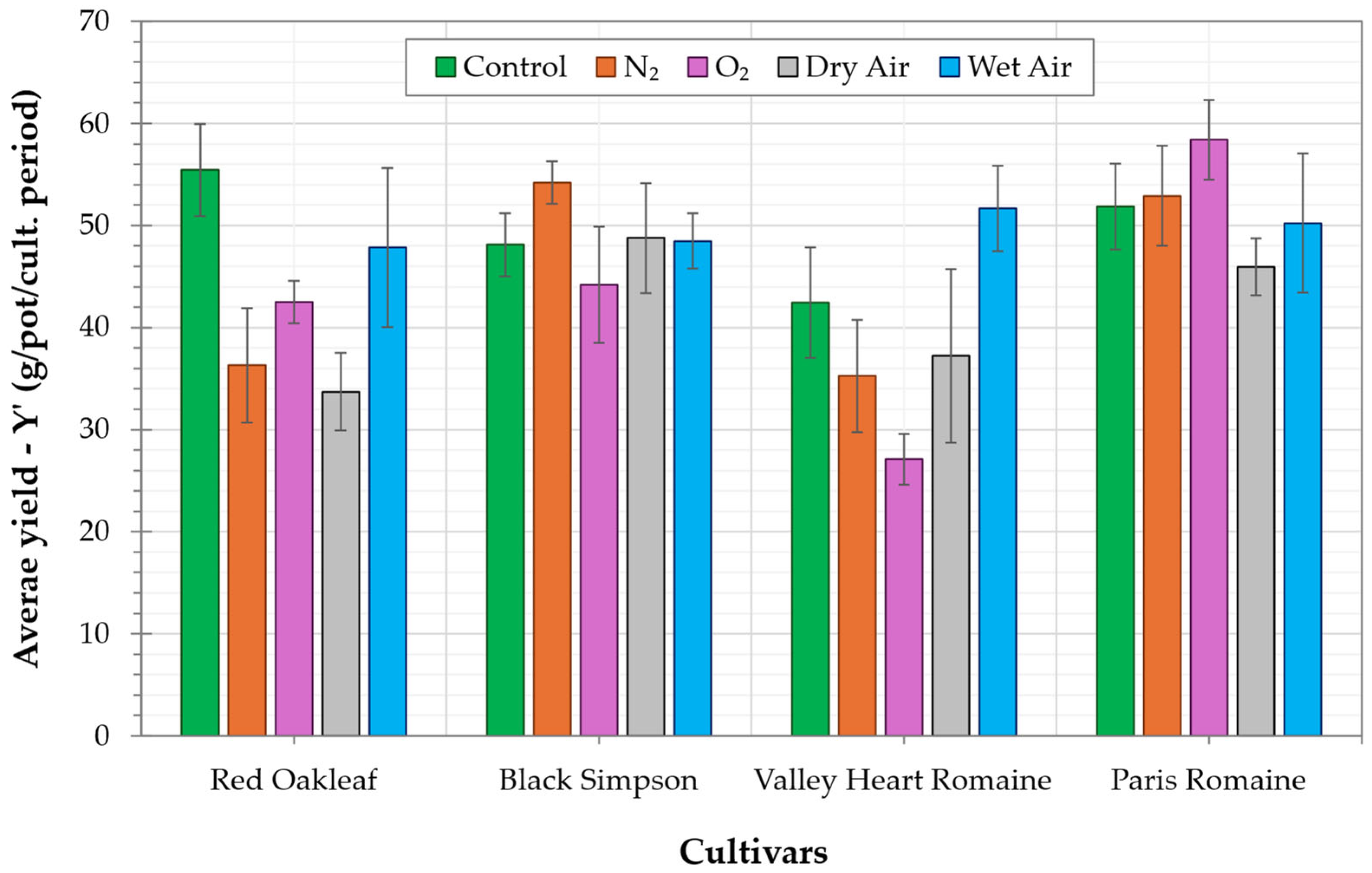
Successful treatments can be identified by evaluating the yield investigations shown by Figure 7. Wet air treatment had the most considerable impact generally, with the most significant impact on VHR (51.7 vs. 42.5 g/pot/cult. period in control). Treatments of Red Oakleaf seeds were not effective according to the reported results. For Black Simpson, although dry air and wet air treatments performed reasonably, the most significant change resulted from N2 treatment (54.2 vs. 48.1 g/pot/cult. period in control). Finally, for Paris Romaine, O2 treatment led to a reasonably significant yield (58.4 g/pot/cult. period) compared to control (51.8 g/pot/cult. period).
Figure 7.
Average yield of cultivated crops (control vs. NTP treatments) only including those that germinated.
With the potential for growing organic products in the agrivoltaic agrotunnel [16], the selection of the BS, VHR, and PR cultivars can provide the key components of a spring mix or green mix lettuce pack [16]. Therefore, the application of three plasma treatments, N2, O2, and wet air, on the selected seeds were investigated, and an economic trade-off analysis considering the secondary costs was conducted.
The key parameters for the successful treatments, as presented in Table 4, were used for the cost analysis. The germination rate, annual yield, and annual seed requirements were all improved for the NTP-treated seeds of the Romaine family compared to that in the control. Despite the higher total yield for treated BS seeds, their germination rate was lower than control seeds, which led to more total seed requirements, and more treatment labor in turn. Among the Romaine varieties, VHR seed treatment caused a 21.7% yield improvement (3973 vs. 3264 kg/year) compared to the PR variety with 12.6% (4491 vs. 3987 kg/year). The germination rate for the VHR variety was also higher compared to PR, leading to a reduced seed count (93,320 vs. 98,838 per year), seed treatment time (124 vs. 132 h/year), and labor hours (622 vs. 659 h/year). Table 4 also reveals that the energy consumption of plasma treatments is small and negligible in cost analysis. Following the assessment of the final annual calculations, the VHR variety can be identified as the most responsive to the NTP seed treatments. The cost–revenue trade-off analysis is shown in Table 5, comparing the wet air treated seeds with the control seeds.
Table 4.
The average values of key defining parameters for the cost analysis of selected treatment cultivars.
Table 5.
Final cost-revenue trade-off analysis between the untreated and plasma-treated seed cultivation in indoor vertical farming.
Table 5 presents the final results of the cost and revenue analysis for the VHR wet air treatment. The energy cost of the treatments was negligible because solar electricity generation was equal to 177,100 kWh/year [16] while the entire annual plasma treatment was only 9 kWh. On the other hand, the labor cost represents the largest contribution to the secondary operating expenditures of the NTP process ($7882 USD/year). Despite the additional secondary costs associated with the plasma treatments, especially labor, the reduced number of required seeds and the higher yield resulted in an overall 12.0% increase in the net profit compared to the untreated seed cultivation ($92,481 vs. $82,573 USD/year).
4. Discussion
This article investigated the effect of non-thermal plasma treatments with different feed gases on the germination and growth metrics of different lettuce seeds in practical growing conditions of a vertical indoor farming facility (agrivoltaic agrotunnel). In addition, the economic viability of these practices was studied and compared by conducting the combined revenue–cost trade-off analysis. Four lettuce seeds of Red Oakleaf, Black Simpson, Valley Heart Romaine, and Paris Romaine were tested under four feed gases of N2, O2, dry air, and wet air. A quartz disk-type non-thermal plasma reactor was used with 30 V, 2.4 A, and a 2 min duration of treatment.
Wet air treatment generally resulted in better performance in germination rate (18.7–100% improvement) compared to the equivalent control plants, except for PR, whose germination rate increased by 18.1% under O2 treatment. Exposure to O2 plasma can be attributed to the formation of O3 and O· radicals, which may mildly oxidize seeds and enhance respiration rates [31]. For seed types with thin seed coats, however, the same 2 min O2 treatment may oxidize membrane proteins beyond the beneficial activation threshold, thereby inhibiting germination (as seen in Figure 7).
The total fresh weight production, however, was the most important factor in selecting the successful cultivar–treatment combinations. Except for RO, for which there was no significant positive improvement in production yield, wet air could result in either neutral or significant positive yield increments for the treated cultivars. Unlike O2- or air-based plasmas, the N2 discharge primarily generates reactive nitrogen species, including NO, NO2, and N2O. Element O may originate from residual gases within the reactor. The differing response of BS seeds compared to VHR and PR seeds may be attributable to their greater sensitivity to NOx in certain enzymes, which indicates an area of future work. Thus, except for the N2-treated BS seeds, which could produce 12.6% more fresh weight but was accompanied by a decreased germination rate of 4.3%, both the total yield and germination rate of Romaine seeds (VHR and PR) were positively responsive to the wet air and O2 treatments, respectively. The contrasting results between dry and wet air plasma treatments can be attributed to the different reaction pathways induced by the presence of water vapor. In dry air, the discharge predominantly produces O· and O3, which imposes strong oxidative stress on the seed coat, leading to surface hardening and limited water permeability. Conversely, introducing a small fraction of water vapor suppresses O3 formation while enabling OH· and H2O2 generation through O-H2O reactions. These species cause mild oxidation and introduce polar oxygen-containing groups on the cuticular surface, enhancing water imbibition and germination [37]. VHR-wet air treatment with 21.7% total yield improvements and an 18.7% higher germination rate compared to control, was selected to conduct further revenue–cost analyses on the NTP process integrated into the IF system. The observation of somewhat different results among various plant cultivar, as similarly observed in the literature [24,25,32,33,47,48,49], may be attributed to several factors, including seed or plant genetics, contamination, insufficient plasma processing energy or duration, etc.
This study also revealed that using the current quartz disk-type reactor for a 112 m2 indoor farming facility with 76,896 active ports for a year-round production, would impose a negligible amount of electricity load (9 kWh/year) on the system with a total solar generation of 177,100 kWh/year. Since the current plasma device can only treat a batch of 25 seeds at a time, the operation of this reactor demands for a considerable amount of time, thereby contributing a notable labor cost (44% of total raised revenue due to the wet air treatment of VHR seeds). Although the positive effects of wet air treatment on germination rate and total yield led to an overall 12.0% increase in net profit compared to untreated seed cultivation, despite the additional labor, O&M, and degradation costs associated with operating NTP reactors, there is a need for future studies to explore alternative commercial- or industrial-scale systems with higher treatment capacities. A potential solution is to use fluidized-bed reactors, where gas flow keeps seeds in motion for uniform exposure to reactive species. The system also supports continuous, large-scale operation with adjustable residence time and automated feed and collection. In addition, there is a significant opportunity to reduce labor costs by using an automated system to load and unload seeds during pre- and post-treatment processes. Future research is also needed to investigate the effects of NTP on a wider range of lettuce seed varieties obtained from the same vendors and to replicate the experiments multiple times to improve the reliability of the results. Moreover, examining the influence of voltage and treatment duration on seed decontamination and growth enhancement could lead to further progression in the techno-economic optimization of the process.
5. Conclusions and Summary of Results
This research determined how non-thermal plasma treatments with various feed gases (N2, O2, dry air, and wet air) influence the germination and growth characteristics of different lettuce cultivars (Red Oakleaf, Black Simpson, Valley Heart Romaine, and Paris Romaine) under real cultivation conditions in an agrivoltaic agrotunnel. Furthermore, the study assesses the economic feasibility of these treatments through a comprehensive revenue–cost trade-off analysis. The germination time had an indirect impact on the growth performance of the plants during their lifespan.
Except for treated PR seeds with a 77.8% germination rate vs. control of 65.8%, wet air plasma treatments could result in higher germination rates (18.7–100% improvement) compared to control (untreated) seeds. This factor directly indicates the total required seeds for the operation of a commercial MAX agrotunnel with 12,816 active ports.
In yield analysis, the wet air treatment showed the greatest impact, particularly for the VHR variety (51.7 vs. 42.5 g/pot/cultivation period in the control). The treatments had no notable effect on RO, however. For BS, the N2 treatment yielded the highest improvement (54.2 vs. 48.1 g/pot/cultivation period), while for PR, the O2 treatment led to a significant increase (58.4 vs. 51.8 g/pot/cultivation period). Hence, BS, VHR, and RO were selected to conduct further cost–revenue analyses.
Although treated BS seeds produced a higher total yield, their lower germination rate increased the required seed quantity and treatment labor time. Among the Romaine cultivars, VHR showed the best response to NTP treatment, with a 21.7% yield improvement (3973 vs. 3264 kg/year) compared to PR’s 12.6% (4491 vs. 3987 kg/year). The higher germination rate of VHR also reduced annual seed requirements (93,320 vs. 98,838), treatment time (124 vs. 132 h), and labor hours (622 vs. 659 h). Accordingly, the VHR variety demonstrated the greatest response to NTP treatment with wet air feed gas. The energy consumption of plasma treatments was negligible for all treatments and cultivar types. In contrast, labor costs ($7882 USD/year) accounted for the largest share of secondary operating costs in the NTP process. Despite these additional expenses, including labor, O&M, and degradation costs, the reduced seed requirements and higher yield led to a 12.0% increase in net profit compared to untreated cultivation ($92,481 vs. $82,573 USD/year).
Author Contributions
Conceptualization, Y.Z. and J.M.P.; methodology, N.A. and N.Z.; validation, N.A., N.Z., Y.Z. and J.M.P.; formal analysis, N.A., N.Z., Y.Z. and J.M.P.; investigation, N.A. and N.Z.; resources, Y.Z. and J.M.P.; data curation, N.A.; writing—original draft preparation, N.A., N.Z., Y.Z. and J.M.P.; writing—review and editing, N.A., N.Z., Y.Z. and J.M.P.; visualization, N.A. and N.Z.; supervision, Y.Z. and J.M.P.; project administration, Y.Z. and J.M.P.; funding acquisition, Y.Z. and J.M.P. All authors have read and agreed to the published version of the manuscript.
Funding
This research was supported by Carbon Solutions @ Western, Mitacs, Natural Sciences and Engineering Research Council of Canada and the Thompson Endowment.
Institutional Review Board Statement
Not applicable.
Informed Consent Statement
Not applicable.
Data Availability Statement
The original contributions presented in this study are included in the article. Further inquiries can be directed to the corresponding authors.
Acknowledgments
The authors have reviewed and edited the output and take full responsibility for the content of this publication.
Conflicts of Interest
The authors declare no conflicts of interest.
Abbreviations
The following abbreviations are used in this manuscript:
| CEA | Controlled environment agriculture |
| IF | Indoor farming |
| PV | Photovoltaics |
| LCOE | Levelized cost of electricity |
| NTP | Non-thermal plasma |
| RO | Red Oakleaf |
| BS | Black Simpson |
| VHR | Valley Heart Romaine |
| PR | Paris Romaine |
References
- Ahamed, M.S.; Sultan, M.; Monfet, D.; Rahman, M.S.; Zhang, Y.; Zahid, A.; Bilal, M.; Ahsan, T.M.A.; Achour, Y. A Critical Review on Efficient Thermal Environment Controls in Indoor Vertical Farming. J. Clean. Prod. 2023, 425, 138923. [Google Scholar] [CrossRef] [Scilit]
- Sadek, N.; Kamal, N.; Shehata, D. Internet of Things Based Smart Automated Indoor Hydroponics and Aeroponics Greenhouse in Egypt. Ain Shams Eng. J. 2024, 15, 102341. [Google Scholar] [CrossRef] [Scilit]
- Mitchell, C.A. History of Controlled Environment Horticulture: Indoor Farming and Its Key Technologies. HortScience 2022, 57, 247–256. [Google Scholar] [CrossRef] [Scilit]
- Stein, E.W. The Transformative Environmental Effects Large-Scale Indoor Farming May Have on Air, Water, and Soil. Air Soil Water Res. 2021, 14, 1178622121995819. [Google Scholar] [CrossRef] [Scilit]
- Beacham, A.M.; Vickers, L.H.; Monaghan, J.M. Vertical Farming: A Summary of Approaches to Growing Skywards. J. Hortic. Sci. Biotechnol. 2019, 94, 277–283. [Google Scholar] [CrossRef] [Scilit]
- Ampim, P.A.Y.; Obeng, E.; Olvera-Gonzalez, E. Indoor Vegetable Production: An Alternative Approach to Increasing Cultivation. Plants 2022, 11, 2843. [Google Scholar] [CrossRef] [Scilit]
- Avgoustaki, D.D.; Xydis, G. Indoor Vertical Farming in the Urban Nexus Context: Business Growth and Resource Savings. Sustainability 2020, 12, 1965. [Google Scholar] [CrossRef] [Scilit]
- Despommier, D. Vertical Farms, Building a Viable Indoor Farming Model for Cities. Field Actions Sci. Rep. J. Field Actions 2019, 68–73. [Google Scholar]
- Kurnik, J. Chapter 19—Indoor Farms for Tomorrow’s Cities: Improving Environmental and Economic Performance. In Urban and Regional Agriculture; Droege, P., Ed.; Academic Press: San Diego, CA, USA, 2023; pp. 533–560. ISBN 978-0-12-820286-9. [Google Scholar]
- Cho, J.; Park, S.M.; Park, A.R.; Lee, O.C.; Nam, G.; Ra, I.-H. Application of Photovoltaic Systems for Agriculture: A Study on the Relationship between Power Generation and Farming for the Improvement of Photovoltaic Applications in Agriculture. Energies 2020, 13, 4815. [Google Scholar] [CrossRef] [Scilit]
- Jamil, U.; Bonnington, A.; Pearce, J.M. The Agrivoltaic Potential of Canada. Sustainability 2023, 15, 3228. [Google Scholar] [CrossRef] [Scilit]
- Asgari, N.; Hayibo, K.S.; Groza, J.; Rana, S.; Pearce, J.M. Greenhouse Applications of Solar Photovoltaic Driven Heat Pumps in Northern Environments. Renew. Sustain. Energy Rev. 2025, 207, 114920. [Google Scholar] [CrossRef] [Scilit]
- Asgari, N.; Jamil, U.; Pearce, J.M. Net Zero Agrivoltaic Arrays for Agrotunnel Vertical Growing Systems: Energy Analysis and System Sizing. Sustainability 2024, 16, 6120. [Google Scholar] [CrossRef] [Scilit]
- Shao, Y.; Zhou, Z.; Chen, H.; Zhang, F.; Cui, Y.; Zhou, Z. The Potential of Urban Family Vertical Farming: A Pilot Study of Shanghai. Sustain. Prod. Consum. 2022, 34, 586–599. [Google Scholar] [CrossRef] [Scilit]
- Avgoustaki, D.D.; Xydis, G. Energy Cost Reduction by Shifting Electricity Demand in Indoor Vertical Farms with Artificial Lighting. Biosyst. Eng. 2021, 211, 219–229. [Google Scholar] [CrossRef] [Scilit]
- Asgari, N.; Basdeo, A.; Givans, J.; Pearce, J.M. Lighting and Revenue Analysis of Grow Lights in Agrivoltaic Agrotunnel for Lettuces and Swiss Chard. Preprint 2025. [Google Scholar] [CrossRef] [Scilit]
- (PDF) Quality Seed Production: A Cornerstone of Modern Agriculture and Allied Sectors. Available online: https://www.researchgate.net/publication/388273238_Quality_Seed_Production_A_Cornerstone_of_Modern_Agriculture_and_Allied_Sectors (accessed on 2 October 2025).
- Liu, B.; Honnorat, B.; Yang, H.; Arancibia, J.; Rajjou, L.; Rousseau, A. Non-Thermal DBD Plasma Array on Seed Germination of Different Plant Species. J. Phys. D Appl. Phys. 2018, 52, 025401. [Google Scholar] [CrossRef] [Scilit]
- Bhabani, M.G.; Shams, R.; Dash, K.K. Microgreens and Novel Non-Thermal Seed Germination Techniques for Sustainable Food Systems: A Review. Food Sci. Biotechnol. 2024, 33, 1541–1557. [Google Scholar] [CrossRef] [Scilit] [PubMed]
- Meier, A.; Essumang, D.; Hummerick, M.; Johnson, C.; Kruger, M.; Massa, G.; Engeling, K. Reviewing Plasma Seed Treatments for Advancing Agriculture Applications on Earth and into the Final Frontier. Gravitational Space Res. 2021, 9, 133–158. [Google Scholar] [CrossRef] [Scilit]
- Bilea, F.; Garcia-Vaquero, M.; Magureanu, M.; Mihaila, I.; Mildažienė, V.; Mozetič, M.; Pawłat, J.; Primc, G.; Puač, N.; Robert, E.; et al. Non-Thermal Plasma as Environmentally-Friendly Technology for Agriculture: A Review and Roadmap. Crit. Rev. Plant Sci. 2024, 43, 428–486. [Google Scholar] [CrossRef] [Scilit]
- Šerá, B. Non-Thermal Plasma Technology: A Sustainable Solution for Agriculture. In Advances in Seed Quality Evaluation and Improvement; Roy, B., Shukla, G., Dunna, V., Sharma, P., Shukla, P.S., Eds.; Springer Nature: Singapore, 2025; pp. 225–242. ISBN 978-981-96-5178-8. [Google Scholar]
- Jiang, J.; He, X.; Li, L.; Li, J.; Shao, H.; Xu, Q.; Ye, R.; Dong, Y. Effect of Cold Plasma Treatment on Seed Germination and Growth of Wheat. Plasma Sci. Technol. 2014, 16, 54. [Google Scholar] [CrossRef] [Scilit]
- Dobrin, D.; Magureanu, M.; Mandache, N.B.; Ionita, M.-D. The Effect of Non-Thermal Plasma Treatment on Wheat Germination and Early Growth. Innov. Food Sci. Emerg. Technol. 2015, 29, 255–260. [Google Scholar] [CrossRef] [Scilit]
- Sera, B.; Špatenka, P.; Šerý, M.; Vrchotova, N.; Hrušková, I. Influence of Plasma Treatment on Wheat and Oat Germination and Early Growth. IEEE Trans. Plasma Sci. 2010, 38, 2963–2968. [Google Scholar] [CrossRef] [Scilit]
- Gutiérrez-León, D.G.; Serrano-Ramírez, T.; López-Callejas, R.; Rodríguez-Méndez, B.G. Non-Thermal Plasma as an Alternative to Enhance the Early Growth Structures in Lentil Plants. Agronomy 2022, 12, 2920. [Google Scholar] [CrossRef] [Scilit]
- Bian, J.-Y.; Guo, X.-Y.; Lee, D.H.; Sun, X.-R.; Liu, L.-S.; Shao, K.; Liu, K.; Sun, H.-N.; Kwon, T. Non-Thermal Plasma Enhances Rice Seed Germination, Seedling Development, and Root Growth under Low-Temperature Stress. Appl. Biol. Chem. 2024, 67, 2. [Google Scholar] [CrossRef] [Scilit]
- Ling, L.; Jiafeng, J.; Jiangang, L.; Minchong, S.; Xin, H.; Hanliang, S.; Yuanhua, D. Effects of Cold Plasma Treatment on Seed Germination and Seedling Growth of Soybean. Sci. Rep. 2014, 4, 5859. [Google Scholar] [CrossRef] [Scilit]
- Kyzek, S.; Holubová, Ľ.; Medvecká, V.; Tomeková, J.; Gálová, E.; Zahoranová, A. Cold Atmospheric Pressure Plasma Can Induce Adaptive Response in Pea Seeds. Plasma Chem. Plasma Process. 2019, 39, 475–486. [Google Scholar] [CrossRef] [Scilit]
- Puligundla, P.; Kim, J.-W.; Mok, C. Effect of Corona Discharge Plasma Jet Treatment on Decontamination and Sprouting of Rapeseed (Brassica napus L.) Seeds. Food Control 2017, 71, 376–382. [Google Scholar] [CrossRef] [Scilit]
- Puligundla, P.; Kim, J.-W.; Mok, C. Effects of Nonthermal Plasma Treatment on Decontamination and Sprouting of Radish (Raphanus sativus L.) Seeds. Food Bioprocess Technol. 2017, 10, 1093–1102. [Google Scholar] [CrossRef] [Scilit]
- Sera, B.; Sery, M.; Gavril, B.; Gajdova, I. Seed Germination and Early Growth Responses to Seed Pre-Treatment by Non-Thermal Plasma in Hemp Cultivars (Cannabis sativa L.). Plasma Chem. Plasma Process. 2017, 37, 207–221. [Google Scholar] [CrossRef] [Scilit]
- Tong, J.; He, R.; Zhang, X.; Zhan, R.; Chen, W.; Yang, S. Effects of Atmospheric Pressure Air Plasma Pretreatment on the Seed Germination and Early Growth of Andrographis Paniculata. Plasma Sci. Technol. 2014, 16, 260. [Google Scholar] [CrossRef] [Scilit]
- Motrescu, I.; Ciolan, M.A.; Calistru, A.E.; Jitareanu, G. Germination and Growth Improvement of Some Micro-Greens under the Influence of Reactive Species Produced in a Non-Thermal Plasma (NTP). Agronomy 2023, 13, 150. [Google Scholar] [CrossRef] [Scilit]
- Guragain, R.P.; Baniya, H.B.; Guragain, D.P.; Pradhan, S.P.; Subedi, D.P. From Seed to Sprout: Unveiling the Potential of Non-Thermal Plasma for Optimizing Cucumber Growth. Heliyon 2023, 9, e21460. [Google Scholar] [CrossRef] [Scilit]
- Măgureanu, M.; Sîrbu, R.; Dobrin, D.; Gîdea, M. Stimulation of the Germination and Early Growth of Tomato Seeds by Non-Thermal Plasma. Plasma Chem. Plasma Process. 2018, 38, 989–1001. [Google Scholar] [CrossRef] [Scilit]
- Leti, L.-I.; Gerber, I.C.; Mihaila, I.; Galan, P.-M.; Strajeru, S.; Petrescu, D.-E.; Cimpeanu, M.-M.; Topala, I.; Gorgan, D.-L. The Modulatory Effects of Non-Thermal Plasma on Seed’s Morphology, Germination and Genetics—A Review. Plants 2022, 11, 2181. [Google Scholar] [CrossRef] [Scilit] [PubMed]
- Ahmed, N.; Yong, L.X.; Yang, J.H.C.; Siow, K.S. Review of Non-Thermal Plasma Technology and Its Potential Impact on Food Crop Seed Types in Plasma Agriculture. Plasma Chem. Plasma Process. 2025, 45, 421–462. [Google Scholar] [CrossRef] [Scilit]
- Šerá, B.; Scholtz, V.; Jirešová, J.; Khun, J.; Julák, J.; Šerý, M. Effects of Non-Thermal Plasma Treatment on Seed Germination and Early Growth of Leguminous Plants—A Review. Plants 2021, 10, 1616. [Google Scholar] [CrossRef] [Scilit] [PubMed]
- Puccinelli, M.; Carmassi, G.; Lanza, D.; Maggini, R.; Vernieri, P.; Incrocci, L. Effect of Nutrient Solution Activated with Non-Thermal Plasma on Growth and Quality of Baby Leaf Lettuce Grown Indoor in Aeroponics|EBSCOhost. Available online: https://openurl.ebsco.com/contentitem/doi:10.3390%2Fagriculture15040405?sid=ebsco:plink:crawler&id=ebsco:doi:10.3390%2Fagriculture15040405 (accessed on 6 August 2025).
- Than, H.A.Q.; Pham, T.H.; Nguyen, D.K.V.; Pham, T.H.; Khacef, A. Non-Thermal Plasma Activated Water for Increasing Germination and Plant Growth of Lactuca Sativa L. Plasma Chem. Plasma Process. 2022, 42, 73–89. [Google Scholar] [CrossRef] [Scilit]
- Mosha, A.H.; Shen, P.; Gao, J.; Elsherbiny, O.; Qureshi, W.A. Optimizing Plasma Discharge Intensities and Spraying Intervals for Enhanced Growth, Mineral Uptake, and Yield in Aeroponically Grown Lettuce. Horticulturae 2025, 11, 650. [Google Scholar] [CrossRef] [Scilit]
- Nicoletto, C.; Falcioni, V.; Locatelli, S.; Sambo, P. Non-Thermal Plasma and Soilless Nutrient Solution Application: Effects on Nutrient Film Technique Lettuce Cultivation. Horticulturae 2023, 9, 208. [Google Scholar] [CrossRef] [Scilit]
- Stoleru, V.; Stratulat, C.; Teliban, G.; Padureanu, S.; Patras, A.; Burlica, R.; Dirlau, D.; Astanei, D.; Beniuga, O. Morphological, Physiological and Productive Indicators of Lettuce under Non-Thermal Plasma. In Proceedings of the 2018 International Conference and Exposition on Electrical and Power Engineering (EPE), Iasi, Romania, 18–19 October 2018; pp. 0937–0942. [Google Scholar]
- Carmassi, G.; Cela, F.; Trivellini, A.; Gambineri, F.; Cursi, L.; Cecchi, A.; Pardossi, A.; Incrocci, L. Effects of Nonthermal Plasma (NTP) on the Growth and Quality of Baby Leaf Lettuce (Lactuca sativa Var. Acephala Alef.) Cultivated in an Indoor Hydroponic Growing System. Horticulturae 2022, 8, 251. [Google Scholar] [CrossRef] [Scilit]
- Ruamrungsri, S.; Sawangrat, C.; Panjama, K.; Sojithamporn, P.; Jaipinta, S.; Srisuwan, W.; Intanoo, M.; Inkham, C.; Thanapornpoonpong, S. Effects of Using Plasma-Activated Water as a Nitrate Source on the Growth and Nutritional Quality of Hydroponically Grown Green Oak Lettuces. Horticulturae 2023, 9, 248. [Google Scholar] [CrossRef] [Scilit]
- Sivachandiran, L.; Khacef, A. Enhanced Seed Germination and Plant Growth by Atmospheric Pressure Cold Air Plasma: Combined Effect of Seed and Water Treatment. RSC Adv. 2017, 7, 1822–1832. [Google Scholar] [CrossRef] [Scilit]
- Jankaitytė, E.; Naučienė, Z.; Degutytė-Fomins, L.; Judickaitė, A.; Žūkienė, R.; Januškaitienė, I.; Kudirka, G.; Koga, K.; Shiratani, M.; Mildažienė, V. Seed Treatment with Cold Plasma Induces Changes in Physiological and Biochemical Parameters of Lettuce Cultivated in an Aeroponic System. Agronomy 2025, 15, 1371. [Google Scholar] [CrossRef] [Scilit]
- Dufour, T.; Gutierrez, Q.; Bailly, C. Sustainable Improvement of Seeds Vigor Using Dry Atmospheric Plasma Priming: Evidence through Coating Wettability, Water Uptake, and Plasma Reactive Chemistry. J. Appl. Phys. 2021, 129, 084902. [Google Scholar] [CrossRef] [Scilit]
- Shaer, M.E.; Welily, H.E.; Zaki, A.; Arafa, H.; ElSebaei, A.; ElDaly, M.; Mobasher, M. Germination of Wheat Seeds Exposed to Cold Atmospheric Plasma in Dry and Wet Plasma-Activated Water and Mist. Plasma Med. 2020, 10, 1–13. [Google Scholar] [CrossRef] [Scilit]
- Sun, J.; Qu, Z.; Gao, Y.; Li, T.; Hong, J.; Zhang, T.; Zhou, R.; Liu, D.; Tu, X.; Chen, G. Plasma Power-to-X (PP2X): Status and Opportunities for Non-Thermal Plasma Technologies. J. Phys. D Appl. Phys. 2024, 57, 503002. [Google Scholar] [CrossRef] [Scilit]
- Volin, J.C.; Denes, F.S.; Young, R.A.; Park, S.M.T. Modification of Seed Germination Performance through Cold Plasma Chemistry Technology. Crop Sci. 2000, 40, 1706–1718. [Google Scholar] [CrossRef] [Scilit]
- Mother Earth Coco Plus Perlite Mix|50L|RHP Certified Natural Plant Growth Media: Amazon.ca: Patio, Lawn & Garden. Available online: https://www.amazon.ca/Mother-Earth-Perlite-Certified-Natural/dp/B09QXTJ345 (accessed on 2 October 2025).
- Shadd, A.; Asgari, N.; Pearce, J.M. Effects of Spectral Ranges on Growth and Yield in Vertical Hydroponic–Aeroponic Hybrid Grow Systems for Radishes and Turnips. Foods 2025, 14, 1872. [Google Scholar] [CrossRef] [Scilit]
- Google Finance CAD/USD Currency Exchange Rate & News. Available online: https://www.google.com/finance/quote/CAD-USD (accessed on 3 April 2025).
- Residential Electricity Rates. Available online: https://www.londonhydro.com/accounts-services/electricity-rates/residential-electricity-rates (accessed on 7 October 2025).
- Black Seeded Simpson Lettuce. Available online: https://visseed.com/products/lettuce-black-seeded-simpson (accessed on 7 October 2025).
- Parris Island. Available online: https://www.westcoastseeds.com/products/parris-island (accessed on 7 October 2025).
- Valley Heart Lettuce. Available online: https://www.veseys.com/ca/valleyheartlettuce.html (accessed on 7 October 2025).
- Organic Green Leaf Lettuce (5 Oz) Delivery or Pickup Near Me. Available online: https://www.instacart.ca/products/27298381-organic-green-leaf-lettuce-5-oz (accessed on 7 October 2025).
- Minimum Wage by Province. Retail Council of Canada 2025. Available online: https://www.retailcouncil.org/resources/quick-facts/minimum-wage-by-province/ (accessed on 1 February 2026).
- Coronalab—Nanjing Suman Plasma Technology Co. Available online: http://www.coronalab.net/index.php?lang=en (accessed on 1 February 2026).
- Martini, L.M.; Coller, G.; Schiavon, M.; Cernuto, A.; Ragazzi, M.; Dilecce, G.; Tosi, P. Non-Thermal Plasma in Waste Composting Facilities: From a Laboratory-Scale Experiment to a Scaled-up Economic Model. J. Clean. Prod. 2019, 230, 230–240. [Google Scholar] [CrossRef] [Scilit]

Disclaimer/Publisher’s Note: The statements, opinions and data contained in all publications are solely those of the individual author(s) and contributor(s) and not of MDPI and/or the editor(s). MDPI and/or the editor(s) disclaim responsibility for any injury to people or property resulting from any ideas, methods, instructions or products referred to in the content. |
© 2026 by the authors. Licensee MDPI, Basel, Switzerland. This article is an open access article distributed under the terms and conditions of the Creative Commons Attribution (CC BY) license.