Article

Sand Fly (Diptera: Psychodidae) Diversity in Abandoned Khettara Irrigation Systems of Urban and Periurban Marrakech, Morocco, and Implications for Leishmaniasis Transmission


1
Microbial Biotechnologies, Agrosciences and Environment Laboratory (BioMAgE), Faculty of Sciences Semlalia, Cadi Ayyad University, Marrakech 40 000, Morocco
2
Infectious Diseases and Immunity in Global Health Program, Research Institute of the McGill University Health Centre, Montreal, QC H4A 3J1, Canada
3
Department of Microbiology and Immunology, McGill University, Montreal, QC H3A 2B4, Canada
4
ISPITS-Higher Institute of Nursing Professions and Health Techniques, Ministry of Health and Social Protection, Rabat 10 000, Morocco
*
Author to whom correspondence should be addressed.
Zoonotic Dis. 2026, 6(2), 23; https://doi.org/10.3390/zoonoticdis6020023
Submission received: 25 March 2026 / Revised: 23 May 2026 / Accepted: 26 May 2026 / Published: 3 June 2026

Simple Summary

Abandoned underground irrigation systems, known as Khettara in the Marrakech region of Morocco, have the potential to serve as suitable microhabitats for sand flies, which are small insects that can act as vectors for leishmaniasis. The present study assessed the presence of sand flies and the species composition within these structures. A total of 477 sand flies were collected and subsequently identified as belonging to six different species. It is acknowledged that several of the recorded species are recognized as vectors of leishmaniasis in Morocco. The findings indicate that the abandoned Khettara system provides a habitat for diverse sand fly populations, including species of medical importance. Our observations constitute the first descriptive data on sand fly species composition of these structures and suggest that such abandoned biotopes may contribute to maintaining vector habitats in urban and periurban landscapes. The study highlights the necessity for ongoing monitoring of abandoned irrigation systems to enhance comprehension of their potential contribution to sand fly ecology and the associated public health risk.

Abstract

Khettara are traditional underground irrigation systems widely distributed in southern Morocco, many of which are currently abandoned. These semi-subterranean ecosystems may provide suitable microhabitats for phlebotomine sand flies, yet no entomological investigations have previously been conducted in the Khettara system of the Marrakech region. This study aimed to assess the abundance of sand fly and species composition within this unique environment and to evaluate its potential epidemiological significance. A total of 477 sand fly specimens (Diptera: Psychodidae) were collected and identified, representing six species; Phlebotomus (Phlebotomus) papatasi (28.72%) was the predominant species followed by Sergentomyia (Grassomyia) dreyfussi (23.06%), S. (Sergentomyia) fallax (18.87%), S. (S.) minuta (10.69%), P. (Larroussius) longicuspis (9.85%), and P. (Paraphlebotomus) sergenti (8.81%). Notably, S. (G.) dreyfussi was collected for the first time in the urban area of Marrakech. The findings demonstrate considerable sand fly diversity within the Khettara ecosystem compared to previously documented urban sand fly assemblages in Marrakech. Importantly, three of the six identified species are confirmed vectors of leishmaniasis in Morocco. These results suggest that the Khettara system may represent a potential refuge of some proven and potential vectors of leishmaniases in Morocco. Surveillance and integrated vector control strategies should therefore be considered in the Marrakech region, particularly in and around abandoned Khettara structures.

1. Introduction

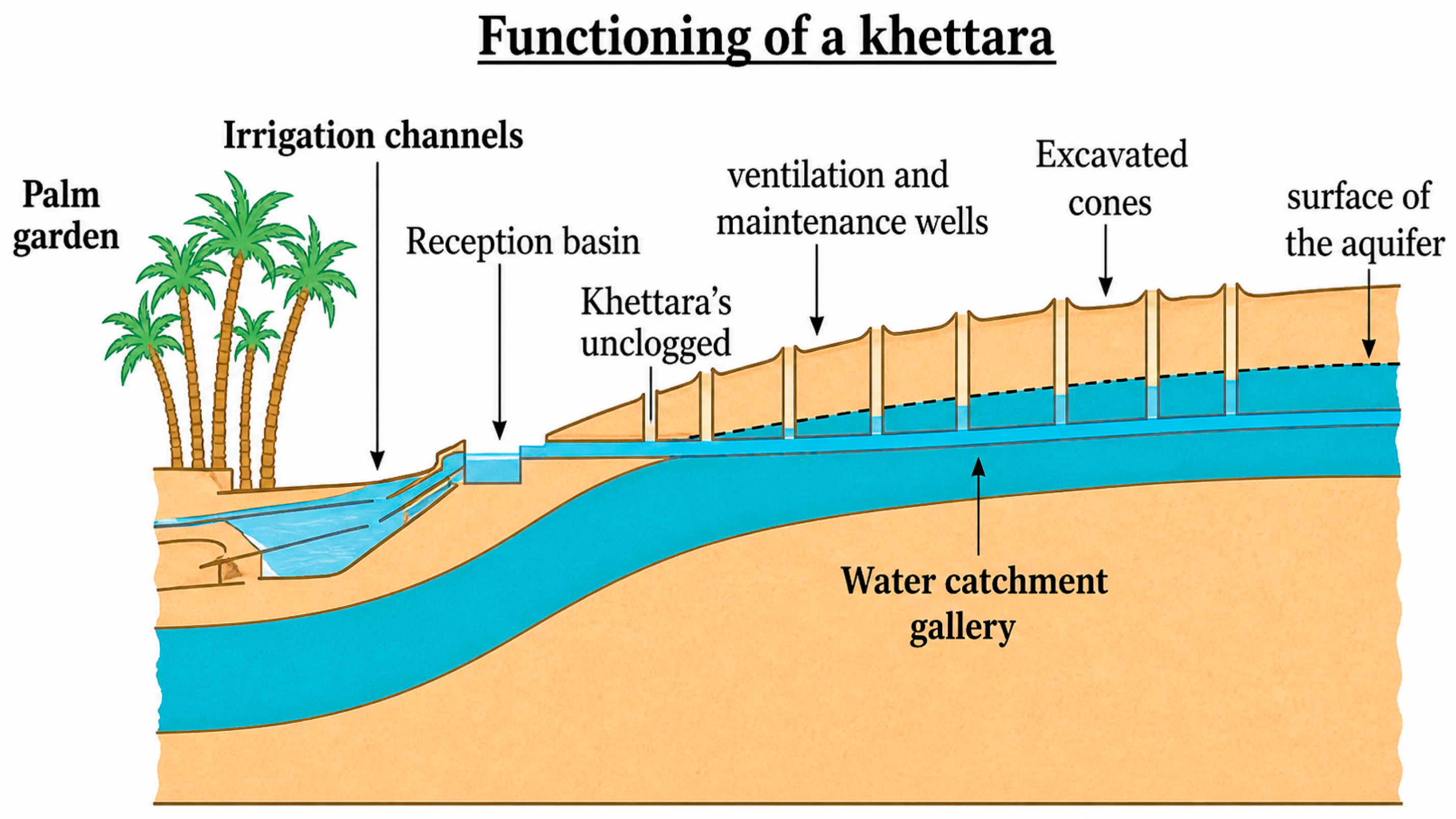
Marrakech, one of Morocco’s historic imperial cities, developed in close connection with traditional water-management systems adapted to the semi-arid conditions of the Haouz plain. Among the most notable of these infrastructures are the Khettara systems, subterranean drainage galleries designed to intercept groundwater and transport it by gravity to irrigated areas [1,2,3]. Similar to the qanat systems of the Middle East, Khettara consists of gently sloping underground tunnels connected by a succession of regularly spaced vertical shafts that capture shallow aquifers and channel water toward the surface [4,5]. The water emerging from the gallery outlet is then distributed through open irrigation canals known as Seguia, which supply surrounding agricultural lands [6]. Although historically widespread in the Marrakech region, many Khettara systems have been progressively abandoned in recent decades due to groundwater depletion, modernization of irrigation techniques, and rapid urban expansion [2].
Abandoned segments of these irrigation systems are increasingly found within urban and periurban environments, where they create semi-confined microhabitats. These environments are typically characterized by relatively stable temperatures, elevated humidity, and the accumulation of organic matter [2]. In addition, soil properties play a key role in shaping sand fly ecology. Soil texture influences moisture retention, aeration, and the buildup of organic material, all of which contribute to microclimatic stability and are critical for larval development and the suitability of adult resting sites [7]. These environmental conditions may create suitable habitats for sand fly vectors of leishmaniasis. However, no entomological studies have yet assessed sand flies (Diptera: Psychodidae) within Khettara systems [8]. Phlebotomine sand flies are proven vectors of Leishmania parasites, the causative agents of leishmaniasis, a group of neglected tropical diseases affecting millions of people worldwide [9]. In Morocco, leishmaniasis remains endemic and represents a significant public health concern. According to the Moroccan Ministry of Health, 2556 cases of cutaneous leishmaniasis and 86 cases of visceral leishmaniasis were reported in 2014, indicating the continued circulation of the parasite in several regions of the country [10]. Furthermore, the epidemiological distribution of the disease has evolved considerably in recent decades, with increasing numbers of cases reported in periurban and urban areas where transmission was previously rare or absent [11]. Environmental changes, urbanization, and habitat modification have been identified as important factors influencing the ecology and distribution of sand fly vectors and the epidemiology of leishmaniasis [12,13]. Khettara systems may provide favorable microhabitats for sand fly populations, as they offer sheltered environmental conditions and may host various vertebrate species, including mammals and reptiles that could act as potential reservoirs of Leishmania parasites [13,14].
Therefore, the objective of the present study is to analyze the biodiversity and species composition of phlebotomine sand flies in urban and periurban Khettara systems in Marrakech, an ecosystem that has never been investigated from an entomological perspective. Understanding sand fly diversity in these unique habitats may provide valuable insights into vector ecology and contribute to improving surveillance and control strategies for leishmaniasis in rapidly urbanizing areas.

2. Materials and Methods

2.1. Sand Fly Collection

Sand fly trapping was performed in the urban and the per-urban Marrakech city Khettara ecosystem (Figure 1).
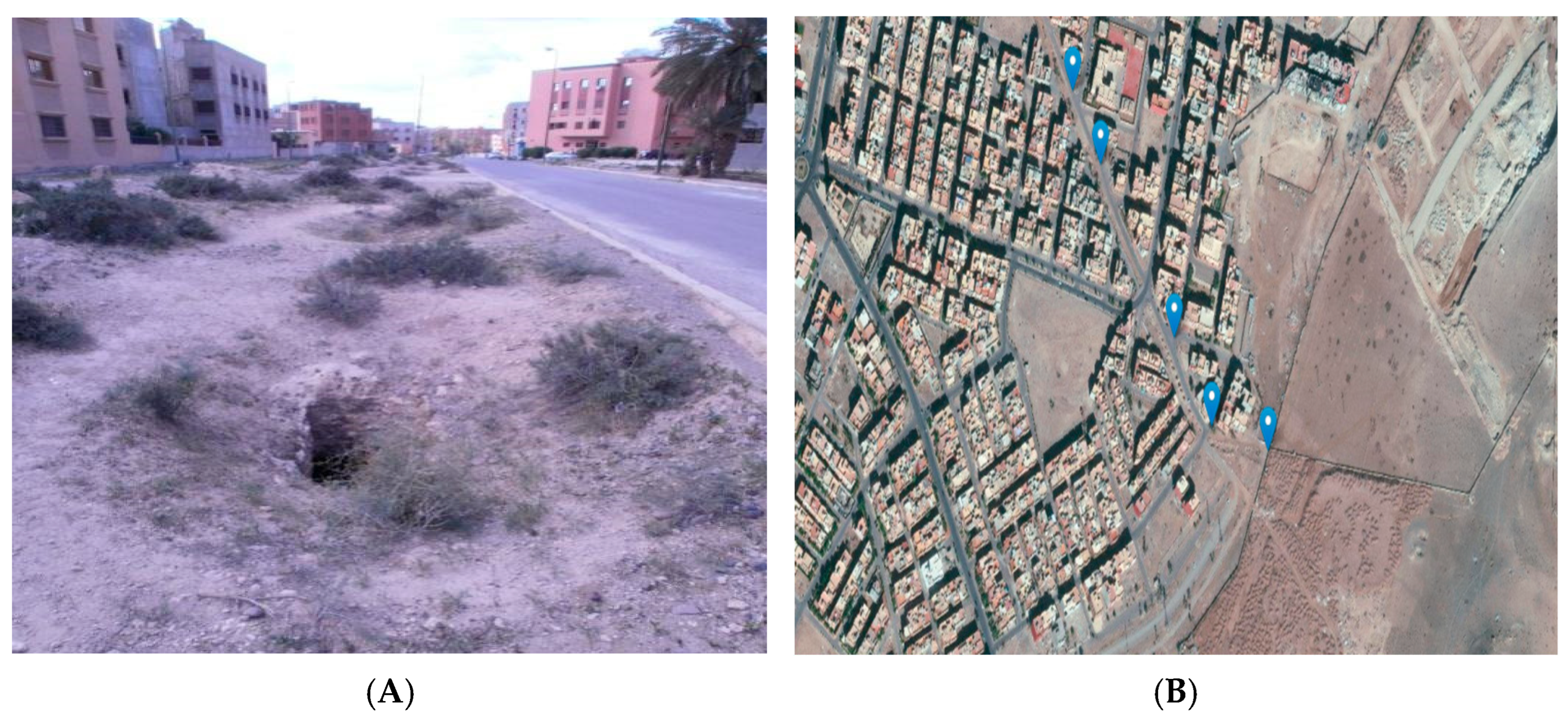
The study area is characterized by an arid climate, with mean monthly maximum and minimum temperatures of 41.1 °C in July and 4 °C in December, respectively. The Khettara is a traditional groundwater drainage system consisting of a series of regularly spaced wells connected by underground galleries d (Figure 2A). The Khettara irrigation system is abandoned and localized in urban and periurban areas of Marrakech(Figure 2B).
In the Marrakech area, sand fly activity shows seasonal variation with both mono-modal (peak in May) and bi-modal patterns (peaks in May and October–November), as previously reported by Boussaa et al. [15]. Based on this pattern, sand flies were collected during May and October to maximize species diversity. Sampling was conducted using 200 sticky paper traps (A4 sheets coated with castor oil) [16] and four CDC light traps (John W. Hock Company, Gainesville, FL, USA) [17] deployed within Khettara structures. Sticky traps were placed in sheltered microhabitats likely to harbor resting sand flies at approximately 30–50 cm above ground level, while CDC light traps were positioned at approximately 1 m above ground to capture actively flying specimens. Traps were operated for two consecutive nights during each sampling month. All traps were operated overnight and retrieved the following morning, corresponding to a total sampling effort of 400 sticky traps and 8 CDC light traps per sampling period. All caught specimens were preserved in 70% ethanol, cleared in 20% potash and Marc-André solution, and then mounted on microscope slides using Hoyer’s medium for morphological identification.
Sand fly species were then identified by the morphological examination of the male genitalia, the pharyngeal armature, and female spermthecae, using the identification key adapted from Lewis [18] and Killick-Kendrick et al. [19]. For Larroussius species, the females were identified by examining the dilatation of distal parts of spermathecal ducts and males by examining the shape of the copulatory valves and counting the number of coxite hairs [19].

2.2. Soil Physicochemical Characterization of Khettara Habitats

Soil samples were collected to characterize environmental conditions potentially influencing sand fly habitat suitability. Approximately 500 g of soil was sampled from two microhabitats: the main channel and shaft walls of the Khettara system. Analyses included soil pH, moisture content, total organic matter, and particle size distribution (granulometry). All measurements were performed in triplicate. Soil parameters were selected based on their known ecological relevance to sand fly development, resting behavior, and survival, particularly in semi-subterranean environments.
Soil moisture content was determined using the gravimetric method. Fresh soil samples were weighed (Ph), oven-dried at 105 °C to constant weight (Ps), and moisture content calculated as H (%) = [(Ph − Ps)/Ps] × 100.
Organic matter content was estimated using the Anne method [20] based on total organic carbon, applying the appropriate conversion factor OM (%) = OC (%) × 1.724. Organic matter contributes to nutrient availability and microbial activity in potential larval habitats.
Particle size distribution was determined using standard sedimentation-based methods. Organic matter was removed using hydrogen peroxide (H2O2) prior to analysis. Soil texture was then classified based on sedimentation behavior of particles. Soil data were analyzed in GraphPad Prism 10.2.2.

2.3. Data Analysis

Various ecological parameters were calculated to characterize sand fly populations across different sites and habitats. Relative frequency was calculated as (number of specimens of a given species/total number of specimens) × 100. Species diversity was assessed using the Shannon diversity index (H′ = −Σpi log2pi), where pi represents the proportional abundance of species i. Biodiversity was further evaluated using the Margalef index, calculated as (S − 1)/lnN, where S is the total number of species and N is the total number of individuals in the sample. A Bray-Curtis dissimilarity analysis was used to assess differences in species composition between sampling sites and/or sampling periods based on abundance data. In addition, a chi-square test was performed to evaluate differences in categorical variables such as species distribution and relative frequency across sample sites.

3. Results

A total of 477 sand flies belonging to six species were collected across the two study sites. The distribution of species differed between Marrakech Khettara (S1) and Tameslohte Khettara (S2). A chi-square test revealed a highly significant difference in species composition between the two sites (χ2 = 87.7, df = 5, p < 0.0001). Table 1 provides a detailed summary of the number of specimens per species and their relative abundance. Morphological identification showed the existence of three species of the genus Phlebotomus (P. papatasi, P. longicuspis, and P. sergenti) and three kinds of the genus Sergentomyia (S. dreyfussi, S. fallax, and S. minuta). In addition, four males and one female exhibited morphological traits characteristic of P. perniciosus, and these preliminary observations require confirmation through further sampling and validation using molecular or enzymatic typing methods. A Bray-Curtis dissimilarity analysis indicated moderate similarity between the two Khettara sites (BC = 0.296), suggesting partially overlapping sand fly assemblages with differences driven mainly by variation in S. dreyfussi abundance. This species was recorded for the first time in an urban area of Marrakech. This highlights a potential expansion of its ecological range. S. dreyfussi dominated the urban Khettara system (S1) in terms of relative abundance, suggesting that urban microhabitats may favor its proliferation. Conversely, P. papatasi was the most abundant species in the periurban Khettara system, suggesting potential ecological differentiation between urban and periurban habitats (Table 2). Species richness was the same at both sites (S = 6). The Simpson index was higher in S2 (0.96) than in S1 (0.88), indicating greater evenness in S2. S. dreyfussi dominated in S1, while P. papatasi was dominant in S2. Shannon index values were similar between sites (2.35 in S1 and 2.32 in S2) (Table 2).
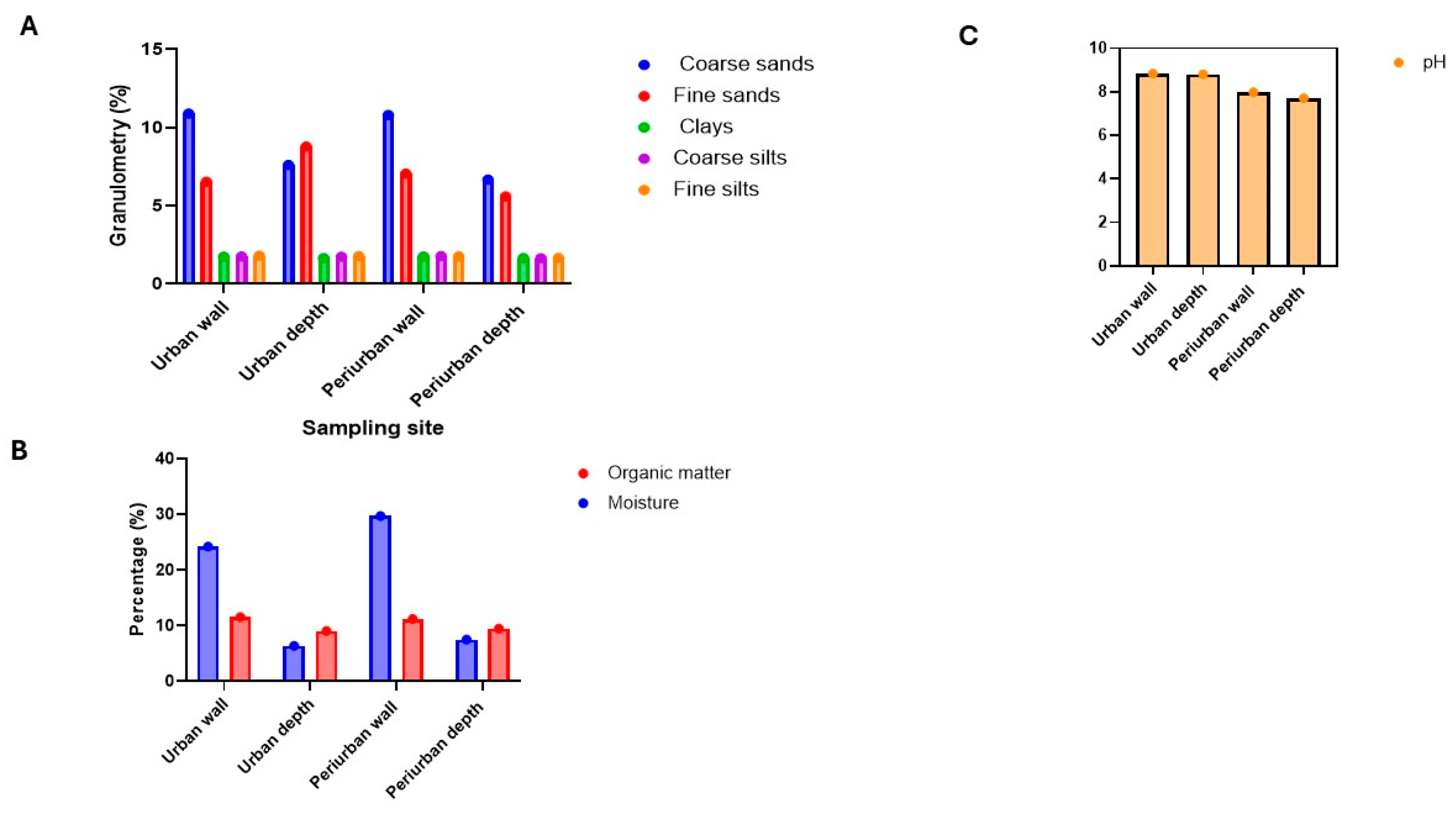
Figure 3 presents the substrate characterization of the Khettara systems in urban and periurban areas. Both systems exhibited similar granulometric composition, humidity, and organic matter content, with only minor differences in pH between the urban and periurban Khettara. In contrast, marked variation was observed between wall and depth samples within both systems, particularly for humidity and organic matter content. These differences likely reflect microenvironmental heterogeneity, which may influence sand fly resting and breeding sites, as moisture and organic matter are critical factors for larval development and adult survival. Understanding these substrate characteristics can therefore provide valuable insights into vector ecology and help guide targeted control strategies.

4. Discussion

In the current investigation, we present the findings of an entomological study carried out in abandoned Khettara irrigation systems situated in the metropolitan and suburban regions of Marrakech. The objective of this investigation was the characterization of the current composition of sand fly species inhabiting these environments, providing preliminary data for future studies on Leishmania transmission in this ecological setting. A total of six species of phlebotomine sand flies were identified, belonging to the genera Phlebotomus and Sergentomyia: P. papatasi, P. sergenti, P. longicuspis, S. dreyfussi, S. fallax, and S. minuta. Among these, several Phlebotomus species are recognized vectors or suspected vectors of different forms of Leishmania in Morocco and throughout the Mediterranean region [21,22]. In contrast, species belonging to the genus Sergentomyia are generally not considered epidemiologically important in the transmission of human leishmaniasis, although they remain ecologically relevant components of sand fly communities [9,23]. Cutaneous leishmaniasis caused by Leishmania major is widely distributed in arid and semi-arid regions of North Africa, the Middle East, and Central Asia [24]. In Morocco, P. papatasi is the confirmed vector of L. major, while the rodent Meriones shawi serves as the principal reservoir host [25]. This species is well adapted to arid environments and is among the most widely distributed sand flies in Morocco [21,25]. In the present study, P. papatasi was one of the dominant species and was particularly abundant in the periurban Khettara system. Its presence highlights the ecological suitability of these habitats for this medically important sand fly species. We also recorded the presence of Phlebotomus sergenti, the principal vector of Leishmania tropica in Morocco. This species is commonly associated with semi-arid and urbanized environments and plays an important role in the epidemiology of anthroponotic cutaneous leishmaniasis in several Moroccan regions. Similarly, P. longicuspis, a species associated with visceral leishmaniasis transmission in Morocco, was also identified in the surveyed sites [26,27]. In addition, several specimens morphologically resembling P. perniciosus were observed. Given the taxonomic complexity of the Larroussius group in Morocco [28], more sampling and molecular characterization are needed to confirm these observations. The species S. minuta, S. fallax, and S. dreyfussi were detected in our study. These sand flies are not recognized as vectors of human leishmaniasis [29]. While the presence of Leishmania DNA suggests they may carry the parasite, there is no evidence that they can support its full development or transmit it to humans [30]. Therefore, they remain potential but unproven vectors. Although these species are not usually regarded as vectors of human leishmaniasis, their occurrence contributes valuable ecological information regarding sand fly biodiversity and habitat distribution within Khettara systems. Notably, S. dreyfussi, previously associated mainly with rural environments, was observed in an urban Khettara habitat, suggesting possible ecological adaptation to these semi-confined environments. Our observation offers novel insights into the ecological distribution of this species and indicates that it might be able to adapt to urban environments under specific ecological circumstances, such as the case of the Khettara ecosystem. Even when located within urban areas, these structures maintain unique ecological conditions that resemble natural rural habitats. As a result, the Khettara system might act as a microecosystem able to protect sand fly species that would otherwise be harmed by urbanization [15,29,31]. On the other hand, our study provides preliminary descriptive data on sand fly species composition and relative abundance across two Khettara sites over two sampling periods. The results serve as a baseline for these poorly characterized habitats. However, the limited spatial and temporal sampling design restricts inference at the population level, does not capture seasonal or broader ecological variability and precludes the application of robust beta-diversity analyses for formal community-level comparisons. The findings should therefore be considered exploratory. Although known or potential vector species of Leishmania were identified, no direct evidence of parasite infection was performed in the analyzed specimens. Future work should address these limitations by expanding sampling coverage across sites and seasons. Molecular screening of sand flies for Leishmania infection should be incorporated. Integration of reservoir and human data would strengthen epidemiological relevance. Such studies are needed to better define transmission dynamics in these ecosystems.

5. Conclusions

Overall, the results of this study provide preliminary insights into the presence and composition of sand fly populations associated with Khettara systems in urban and periurban environments. These findings suggest that such habitats may contribute to local sand fly ecology. Continued surveillance in these environments may help improve understanding of sand fly distribution and support further assessment of potential risks related to the circulation of Leishmania in regions undergoing rapid urbanization.

Author Contributions

Conceptualization, F.O. and A.B.; methodology, F.O., M.D. and S.B.; software, F.O. and S.B.; validation, S.B. and A.B.; formal analysis, F.O. and M.D.; investigation, F.O.; resources, A.B.; data curation, S.B.; writing original draft preparation, F.O.; writing review and editing, S.B. and M.D.; supervision, A.B. All authors have read and agreed to the published version of the manuscript.

Funding

This research received no external funding.

Institutional Review Board Statement

This study involved wild-caught phlebotomine sand flies collected from Khettara ecosystems in urban and periurban Marrakech, Morocco. No experimental manipulations, housing, breeding, or vertebrate hosts were involved. All specimens were collected and handled in accordance with Moroccan national regulations for entomological surveillance and relevant international guidelines for invertebrate collection. No Institutional Animal Care and Use Committee (IACUC) or equivalent ethics approval was required, as our study did not involve any animals, human subjects, or vertebrate cell lines.

Informed Consent Statement

Not applicable.

Data Availability Statement

The original contributions presented in this study are included in the article. Further inquiries can be directed to the corresponding author.

Conflicts of Interest

The authors declare no conflicts of interest.

References

  1. Beraaouz, M.; Abioui, M.; Hssaisoune, M.; Martínez-Frías, J. Khettaras in the Tafilalet oasis (Morocco): Contribution to the promotion of tourism and sustainable development. Built Herit. 2022, 6, 24. [Google Scholar] [CrossRef]
  2. Esenarro, D.; Vilchez, J.; Adrianzen, M.; Raymundo, V.; Gómez, A.; Cobeñas, P. Management Techniques of Ancestral Hydraulic Systems, Nasca, Peru; Marrakech, Morocco; and Tabriz, Iran in Different Civilizations with Arid Climates. Water 2023, 15, 3407. [Google Scholar] [CrossRef]
  3. English, P.W. The origin and spread of qanats in the Old World. Proc. Am. Philos. Soc. 1968, 112, 170–181. [Google Scholar]
  4. Beaumont, P. Qanat Systems in Iran. Int. Assoc. Sci. Hydrol. Bull. 1971, 16, 39–50. [Google Scholar] [CrossRef]
  5. Lightfoot, D.R. Syrian qanat Romani: History, ecology, abandonment. J. Arid Environ. 1996, 33, 321–336. [Google Scholar] [CrossRef]
  6. Waller, P.; Yitayew, M. Open Channel Flow. In Irrigation and Drainage Engineering; Waller, P., Yitayew, M., Eds.; Springer International Publishing: Cham, Switzerland, 2016; pp. 185–207. [Google Scholar]
  7. Feliciangeli, M.D. Natural breeding places of phlebotomine sandflies. Med. Vet. Entomol. 2004, 18, 71–80. [Google Scholar] [CrossRef]
  8. Daoudi, M.; Outammassine, A.; Amane, M.; Hafidi, M.; Boussaa, S.; Boumezzough, A. Climate Change Influences on the Potential Distribution of the Sand Fly Phlebotomus sergenti, Vector of Leishmania tropica in Morocco. Acta Parasitol. 2022, 67, 858–866. [Google Scholar] [CrossRef]
  9. Cecílio, P.; Cordeiro-da-Silva, A.; Oliveira, F. Sand Flies: Basic Information on the Vectors of Leishmaniasis and Their Interactions with Leishmania Parasites. Commun. Biol. 2022, 5, 305. [Google Scholar] [CrossRef] [PubMed]
  10. Mniouil, M.; Fellah, H.; Amarir, F.; Et-Touys, A.; Bekhti, K.; Adlaoui, E.B.; Bakri, Y.; Nhammi, H.; Sadak, A.; Sebti, F. Epidemiological Characteristics of Visceral Leishmaniasis in Morocco (1990–2014): An Update. Acta Trop. 2017, 170, 169–177. [Google Scholar] [CrossRef]
  11. Baghad, B.; Mouhsine, Z.; Chekairi, F.Z.; Amine, B.; El Idrissi Saik, I.; Lemkhayar, K.; Lemrani, M.; Soussi Abdallaoui, M.; Chiheb, S.; Riyad, M. New Epidemio-Clinical Insights into Cutaneous Leishmaniasis Caused by Leishmania infantum in Casablanca, Morocco. Infect. Dis. Now 2025, 55, 105111. [Google Scholar] [CrossRef]
  12. Soni, H.; Yadav, R.K.; Patra, S.K. Global Impact of Urbanization on Ecosystems: A Comprehensive Bibliometric Analysis. Nat. Hazards Res. 2025, 5, 21–35. [Google Scholar] [CrossRef]
  13. Bezerra-Santos, M.A.; Dantas-Torres, F.; Maia, C.; Volf, P.; Otranto, D. Bio-Ecology and Management of Phlebotomine Sand Flies: Unraveling the Complexity of Vector Control. J. Pest Sci. 2026, 99, 11. [Google Scholar] [CrossRef]
  14. Zheng, X.; He, J.; Guo, X.; Xiao, Y.; Liao, X.; Zhu, Z.; Chen, D. Unraveling Molecular Mechanistic Disparities in Pathogenic Visceral Leishmania Resistance between Reptiles and Mammals through Comparative Transcriptomic Analyses. Acta Trop. 2024, 258, 107349. [Google Scholar] [CrossRef]
  15. Boussaa, S.; Guernaoui, S.; Pesson, B.; Boumezzough, A. Seasonal Fluctuations of Phlebotomine Sand Fly Populations (Diptera: Psychodidae) in the Urban Area of Marrakech, Morocco. Acta Trop. 2005, 95, 86–91. [Google Scholar] [CrossRef]
  16. Elnaiem, D.E.; Khogali, A.; Alsharif, B.; Dakein, O.; Jibreel, T.; Hassan, M.; Edries, H.H.; Elhadi, H.; Elnur, B.; Osman, O.F.; et al. Understanding Sand Fly Sampling Methods: Sticky Traps Are Attraction-Based and Not Interceptive Sampling Tools of Phlebotomus orientalis. Parasit. Vectors 2020, 13, 389. [Google Scholar] [CrossRef]
  17. Somwang, P.; Khositharattanakool, P.; Pathawong, N.; Pongsiri, A.; Davidson, S.A.; Ponlawat, A. Field Evaluation of Four Commercial Light Traps, Trap Placement, and Effect of Carbon Dioxide on Phlebotomine Sand Fly Collection in Northern Thailand. Acta Trop. 2021, 220, 105953. [Google Scholar] [CrossRef]
  18. Lewis, D.J. The Phlebotomine Sandflies (Diptera: Psychodidae) of the Oriental Region. Bull. Br. Mus. Nat. Hist. Entomol. 1978, 37, 217–343. [Google Scholar] [CrossRef]
  19. Killick-Kendrick, R.; Tang, Y.; Killick-Kendrick, M.; Sang, D.K.; Sirdar, M.K.; Ke, L.; Ashford, R.W.; Schorscher, J.; Johnson, R.H. The Identification of Female Sandflies of the Subgenus Larroussius by the Morphology of the Spermathecal Ducts. Parassitologia 1991, 33, 335–347. [Google Scholar] [PubMed]
  20. Anne, P. Sur le dosage rapide du carbone organique des sols. Ann. Agron. 1945, 15, 161–172. [Google Scholar]
  21. Boussaa, S.; Kahime, K.; Samy, A.M.; Salem, A.B.; Boumezzough, A. Species Composition of Sand Flies and Bionomics of Phlebotomus papatasi and P. sergenti (Diptera: Psychodidae) in Cutaneous Leishmaniasis Endemic Foci, Morocco. Parasit. Vectors 2016, 9, 60. [Google Scholar] [CrossRef]
  22. Daoudi, M.; Boussaa, S.; Hafidi, M.; Boumezzough, A. Potential Distributions of Phlebotomine Sandfly Vectors of Human Visceral Leishmaniasis Caused by Leishmania infantum in Morocco. Med. Vet. Entomol. 2020, 34, 385–393. [Google Scholar] [CrossRef]
  23. Maia, C.; Depaquit, J. Can Sergentomyia (Diptera, Psychodidae) Play a Role in the Transmission of Mammal-Infecting Leishmania? Parasite 2016, 23, 55. [Google Scholar] [CrossRef]
  24. Kumar, N.; Kakru, D.K.; Arcot, R.; Lakhanpal, S.; Singh, S.K.; Kumar, S.; Paul, J.R. Cutaneous Leishmaniasis: Emerging Insights in Epidemiology, Diagnosis, and Treatment. Front. Pharmacol. 2026, 17, 1744348. [Google Scholar] [CrossRef]
  25. Daoudi, M.; Outammassine, A.; Olivier, D.; Amane, M.; Beaulieu, M.; Akarid, A.; Ndao, M.; Hafidi, M.; Boussaa, S.; Boumezzough, A. Modeling the Impact of Climate Change for the Potential Distribution of the Main Vector and Reservoirs of Zoonotic Cutaneous Leishmaniasis Due to Leishmania major in Morocco. Front. Trop. Dis. 2025, 6, 1629454. [Google Scholar] [CrossRef]
  26. Di Muccio, T.; Marinucci, M.; Frusteri, L.; Maroli, M.; Pesson, B.; Gramiccia, M. Phylogenetic Analysis of Phlebotomus Species Belonging to the Subgenus Larroussius (Diptera, Psychodidae) by ITS2 rDNA Sequences. Insect Biochem. Mol. Biol. 2000, 30, 387–393. [Google Scholar] [CrossRef] [PubMed]
  27. Mhaidi, I.; El Kacem, S.; Ait Kbaich, M.; El Hamouchi, A.; Sarih, M.; Akarid, K.; Lemrani, M. Molecular Identification of Leishmania Infection in the Most Relevant Sand Fly Species and in Patient Skin Samples from a Cutaneous Leishmaniasis Focus in Morocco. PLoS Negl. Trop. Dis. 2018, 12, e0006315. [Google Scholar] [CrossRef] [PubMed]
  28. Pereira, S.; Pita-Pereira, D.; Araujo-Pereira, T.; Britto, C.; Costa-Rego, T.; Ferrolho, J.; Vilhena, M.; Rangel, E.F.; Vilela, M.L.; Afonso, M.O. First Molecular Detection of Leishmania infantum in Sergentomyia minuta (Diptera, Psychodidae) in Alentejo, Southern Portugal. Acta Trop. 2017, 174, 45–48. [Google Scholar] [CrossRef]
  29. Boussaa, S.; Boumezzough, A.; Sibold, B.; Alves-Pires, C.; Morillas Marquez, F.; Glasser, N.; Pesson, B. Phlebotomine Sandflies (Diptera: Psychodidae) of the Genus Sergentomyia in Marrakech Region, Morocco. Parasitol. Res. 2009, 104, 1027–1033. [Google Scholar] [CrossRef]
  30. Remadi, L.; Farjallah, D.; Chargui, N.; Belgacem, S.; Baba, H.; Zrieq, R.; Alzain, M.A.; Babba, H.; Haouas, N. Blood Meal Analysis and Molecular Detection of Mammalian Leishmania DNA in Wild-Caught Sergentomyia spp. from Tunisia and Saudi Arabia. Parasitol. Res. 2023, 122, 2181–2191. [Google Scholar] [CrossRef]
  31. Guernaoui, S.; Boumezzough, A. Habitat Preferences of Phlebotomine Sand Flies (Diptera: Psychodidae) in Southwestern Morocco. J. Med. Entomol. 2009, 46, 1187–1194. [Google Scholar] [CrossRef] [PubMed]
Figure 1. Diagram of the Khattara irrigation system.
Zoonoticdis 06 00023 g001
Figure 2. Khettara showing the Qanat shafts located in Marrakech city (A). Aerial view (B).
Zoonoticdis 06 00023 g002
Figure 3. Granulometric composition and physicochemical characteristics of urban and periurban Khettara soils. (A) Distribution of granulometric fractions (%) including coarse sands, fine sands, clays, coarse silts, and fine silts in wall and depth samples collected from urban and periurban Khettara. (B) Moisture content and organic matter (%) measured in the different sampling sites. (C) pH values of urban and periurban Khettara soil samples.
Zoonoticdis 06 00023 g003
Table 1. Number of sand fly species collected per site and by sex.
Site (Code)Marrakech Khettara (S1)Tameslohte Khettara (S2)Total
Altitude (m)420560
Co-ordinates31°40′03.9″ N31°29′34.8″ NM/FAll%
8°01′21.6″ W8°05′07.7″ W
Phlebotomus papatasiM41377813728.72
F392059
P. sergentiM101323428.81
F81119
P. longicuspisM141024479.85
F20323
Sergentomyia fallaxM2226489018.87
F261642
S. minutaM2018385110.69
F31013
S. dreyfussiM3294111023.06
F63669
Total298179477
Table 2. Biodiversity indices of sand flies across sampling sites.
SitesS (Species Richness)IndividualsBiodiversity IndexDominant SpeciesShannon Index
S162980.88S. dreyfussi2.35
S261790.96P. papatasi2.32
Disclaimer/Publisher’s Note: The statements, opinions and data contained in all publications are solely those of the individual author(s) and contributor(s) and not of MDPI and/or the editor(s). MDPI and/or the editor(s) disclaim responsibility for any injury to people or property resulting from any ideas, methods, instructions or products referred to in the content.