


Abstract
Backyard chicken farming is a longstanding practice in Romania, with over 13 million birds raised in such systems to provide households with essential sources of eggs and meat. Despite advantages such as low production costs and the potential for organic husbandry, backyard poultry remains highly vulnerable to parasitic infections due to limited biosecurity measures and minimal regulatory oversight. This study aimed to evaluate the efficacy of a plant-based anthelmintic product in naturally infected backyard flocks. Among the 35 backyard farms examined, 24 (68.6%) tested positive for helminth infections, with prevalence rates of 51.4% for Ascaridia galli/Heterakis gallinarum, 57.1% for Capillaria spp., and 40% for Strongyloides avium. Positive households were assigned to three groups: untreated control, fenbendazole-treated, and herbal product-treated. The plant-based formulation consisted of alcoholic extracts from seven locally sourced plants, Thymus serpyllum, Calendula officinalis, Inula helenium, Tanacetum vulgare, Origanum vulgare, Artemisia annua, and Artemisia absinthium, and was administered via drinking water at a dose of 5 mL/L for seven consecutive days. Anthelmintic efficacy was assessed using the fecal egg count reduction test (FECRT). Fecal samples were collected before treatment and on days 7, 14, and 21 post-treatment, and examined using flotation and the McMaster technique. Both the plant-based and fenbendazole-treated groups exhibited significant reductions in egg counts for A. galli/H. gallinarum (p ≤ 0.00001), although neither treatment reached the 90% efficacy threshold required for reliable parasitic control in poultry. The herbal formulation achieved a 91.33% reduction in fecal egg counts overall and a complete (100%) efficacy against Strongyloides avium at 7 and 21 days post-treatment, respectively. At 14 days post-treatment, the mean FECRT values across all parasite species ranged from 13.64% in the untreated control group to 71.86% in the fenbendazole-treated group and 67.11% in the herbal-treated group. The highest reduction was observed in the fenbendazole group against Ascaridia galli/Heterakis gallinarum (85.22 ± 11.86), while the lowest was recorded in the control group against S. avium (–31.63 ± 96.64). Overall, our findings indicate that plant-based anthelmintics are a promising, environmentally friendly option for organic backyard poultry systems, offering a viable alternative to conventional chemical treatments.
1. Introduction
Backyard poultry farming is a long-standing practice worldwide, providing households with accessible sources of eggs and meat and contributing to food security, particularly in rural communities [1,2,3]. In recent years, renewed interest in small-scale poultry systems has emerged, driven by consumer concerns regarding intensive farming practices, sustainability, animal welfare, and food safety [4,5]. While gastrointestinal helminth infections represent a global challenge for poultry production systems, their impact is particularly pronounced in small-scale backyard operations, where biosecurity measures and structured parasite control programs are often limited [5]. In this context, Romania represents a relevant example, as backyard poultry rearing remains deeply rooted in rural tradition, with over 13 million birds raised in such systems according to regional veterinary authorities [6].
Despite advantages such as low production costs and the potential for organic husbandry, backyard poultry systems are characterized by limited biosecurity measures and minimal veterinary oversight, which increase vulnerability to infectious and parasitic diseases [5,6]. Recent surveys have reported high prevalence rates of gastrointestinal parasites in free-range and backyard chickens, including Ascaridia galli, Heterakis gallinarum, Capillaria spp., Strongyloides avium, and Eimeria spp., which negatively affect bird health, productivity, and overall flock performance [6].
Control of helminth infections in poultry relies primarily on the use of synthetic anthelmintic compounds, particularly benzimidazoles such as fenbendazole or flubendazole, or imidazothiazoles, and tetrahydropyrimidines, which are widely applied due to their broad-spectrum activity and ease of administration [7]. However, in Romania, internal parasite control in poultry is not subject to standardized regulatory programs and is rarely applied on a routine basis, particularly in backyard flocks. Moreover, improper use of these products, particularly in small-scale systems, has raised concerns regarding drug residues in poultry meat and eggs and the potential development of anthelmintic resistance [8,9,10]. These risks are especially relevant in Romania, where a substantial proportion of consumers obtain eggs from backyard flocks or informal markets, as highlighted by the SafeConsume project [11].
Growing consumer demand for organic and sustainably produced animal products has further encouraged the search for alternative parasite control strategies that minimize reliance on synthetic chemicals [12]. Under European organic production regulations, the use of conventional veterinary drugs is restricted, promoting interest in natural products and phytotherapeutic approaches for disease prevention and control [13]. In this context, numerous studies have demonstrated the anthelmintic potential of medicinal plants and plant-derived compounds in poultry, with varying degrees of efficacy against common helminths. However, reported outcomes have often been inconsistent, influenced by differences in plant species, phytochemical composition, extraction methods, dosage, treatment duration, and experimental design, resulting in effects ranging from substantial parasite reduction to minimal or transient responses [14,15,16,17,18,19,20].
In addition to their role in parasite control, plant-derived additives have gained increasing attention in poultry nutrition due to their potential to improve growth performance, gut health, and nutrient utilization in broiler and layer systems. Recent studies have shown that natural phytogenic feed additives can enhance body weight gain, feed conversion efficiency, and intestinal morphology in broilers, particularly under dietary stress conditions, indicating broader nutritional benefits beyond antimicrobial effects [21,22].
Based on these considerations, the present study aimed to evaluate the in vivo anthelmintic efficacy of a polyherbal plant extract in naturally infected backyard-raised chickens in Romania using the fecal egg count reduction test (FECRT), providing field-based evidence for its potential application in sustainable poultry production systems.
2. Materials and Methods
2.1. Experimental Protocol
This investigation was designed as a prospective observational field trial conducted in naturally infected backyard chicken flocks. No experimental infection or manipulation beyond the administration of prescribed treatments was performed. The research protocol was reviewed and approved by the Ethics Committee of the University of Agricultural Sciences and Veterinary Medicine of Cluj-Napoca (Decision No. 400/12.09.2023).
The study followed a controlled comparative design including three parallel groups (untreated control, fenbendazole-treated, and herbal-treated), with households serving as the experimental units.
The study was conducted between September 2023 and June 2024, during which 35 rural backyard households were screened for natural helminth infections. The anthelmintic efficacy trial was subsequently carried out in the positive flocks over a 21-day post-treatment period.
Households constituted the primary sampling and analytical unit. Inclusion criteria were: (i) backyard flocks with at least 15 adult chickens, (ii) natural infection confirmed by coproparasitological examination, and (iii) owner consent for repeated sampling and treatment administration. The study was conducted in rural backyard households located in northwestern Romania, where chickens of mixed local breeds were maintained primarily for household egg and meat production. Flocks consisted of adult birds aged approximately 1–4 years, originating from local small-scale breeding or informal exchanges among households. No standardized vaccination or health management programs were implemented. Birds had not received recent anthelmintic treatments prior to inclusion in the study.
Following initial screening, only helminth-positive households were included. Twenty-four of the 35 households met the inclusion criteria and were randomly assigned to one of three experimental groups (n = 8 households per group): untreated control, fenbendazole-treated, and herbal-treated (Table 1).
Table 1.
Experimental groups and treatments.
From each household, three pooled fecal samples were collected at each time point by combining multiple freshly deposited droppings from both the coop floor and outdoor run areas in approximately equal proportions (about 50% from each location). Sampling was consistently performed during the morning hours to ensure freshness and comparability across households.
The flock-level sampling approach reflects natural exposure conditions in backyard poultry systems, where continuous environmental reinfection may occur. Each pooled sample consisted of approximately 20 g of feces, homogenized in sterile airtight containers. Samples were stored at 4 °C immediately after collection and transported to the laboratory, with processing occurring within 24 h to ensure sample integrity. Individual or flock-level water intake was not quantified under field conditions, as medicated water was provided ad libitum and replenished throughout the day to ensure continuous access.
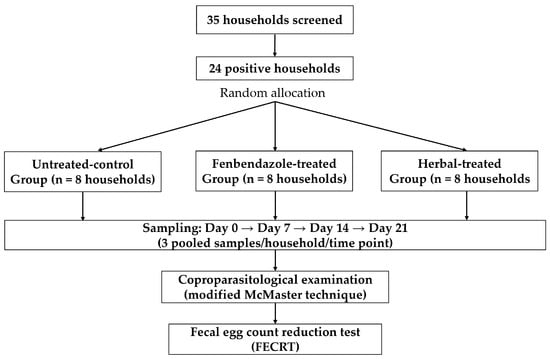
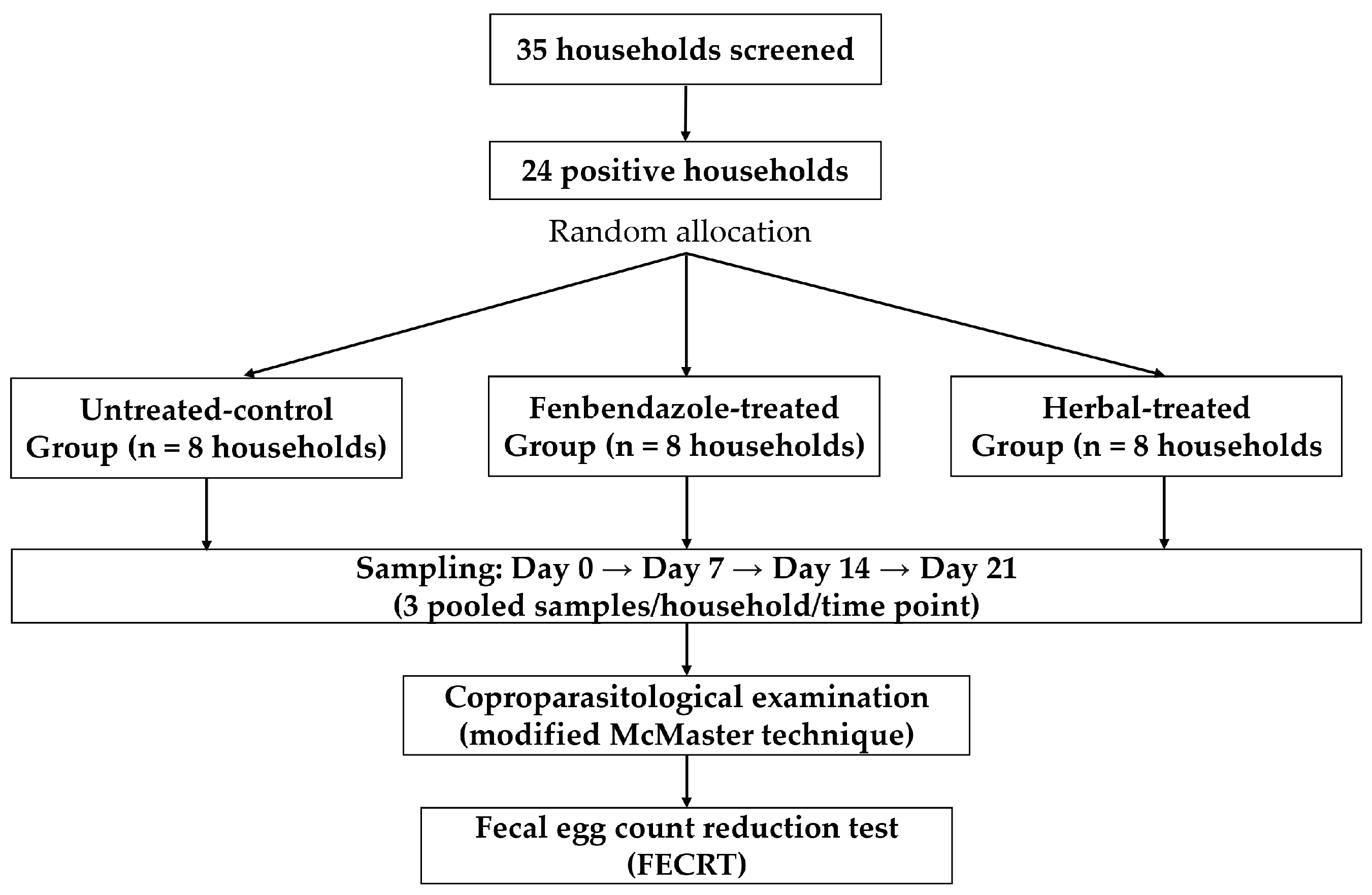
Coproparasitological examination was performed using sodium chloride flotation (specific gravity 1.18) and the modified McMaster technique. Anthelmintic efficacy was assessed using the fecal egg count reduction test (FECRT) (Figure 1).
Figure 1.
Experimental protocol and sampling timeline of the trial.
2.2. Determination of the Active Compounds in the Herbal Product
The anthelmintic herbal product is an alcoholic extract obtained from seven indigenous plants: Thymus serpyllum, Calendula officinalis, Inula helenium, Tanacetum vulgare, Origanum vulgare, Artemisia annua, and Artemisia absinthium.
The active ingredients of the herbal medicinal product were determined by a high-performance liquid chromatography (HPLC) system (Thermo Finnigan, San Jose, CA, USA) with UV detection. The method used was developed and validated [12]. Briefly, the stationary phase was a Nucleodur C18 Gravity 3 μm (150 × 4.6 mm) column (Macherey-Nagel™, Düren, Germany), the mobile phase consisted of a mixture of 10 mM phosphate buffer, pH = 2.5, and acetonitrile and gradient elution mode was applied. The detection was carried out at 205 nm. The following flavonoids and polyphenols were tested: caffeic acid, chlorogenic acid, quercitrin, quercetin, and apigenin.
2.3. Treatments
The plant-based product was administered to the Herbal treatment group ad libitum in drinking water daily for 7 days (Table 1). The herbal formulation was a commercially available plant-based product manufactured in Romania, and the administered dose followed the manufacturer’s recommended instructions, with 5 mL of product per liter of water. Throughout the day, the medicated water was replenished as needed to ensure unrestricted access. Each morning, the remaining medicated water was replaced with freshly prepared water containing the plant product at the recommended dose.
The fenbendazole-treated group received a commercially available fenbendazole-based product (Rombendazol F, Romvac) administered at a dose of 1.0 mg/kg body weight/day for five consecutive days. (Table 1). The untreated control group did not receive any form of medication throughout the experiment.
2.4. Fecal Egg Count Reduction Test
Three collective fecal samples were collected from each household (24 fecal samples/group) before treatment (BT) and at 7, 14, and 21 days post-treatment (PT). The samples were analyzed by the modified McMaster technique (analytical sensitivity of 20 EPG) to determine the number of eggs per gram of feces (EPG). Three counts were performed for each fecal sample, resulting in 72 counts for each experimental group.
The fecal egg count reduction test (FECRT) quantifies the reduction in helminth egg excretion following anthelmintic treatment within the same experimental unit. It was calculated using the formula: %FECRT = 100 × (1 − post-treatment EPG/pre-treatment EPG). According to the World Association for the Advancement of Veterinary Parasitology (WAAVP) guidelines for chickens and turkeys, FECRT values ≥ 90% were considered indicative of effective parasite control, whereas values below this threshold were interpreted as reduced efficacy or potential resistance [23].
2.5. Statistical Analysis
Frequency, prevalence, and its 95% confidence interval (95% CI) were calculated for each identified helminth infection in Epitools [24]. Differences in prevalence among parasite species and between single and mixed infections were assessed using chi-square tests.
Households were considered the independent experimental units throughout the analysis. The primary outcome variable was the number of eggs per gram (EPG), treated as a continuous variable. Differences among treatment groups and sampling time points were analyzed with one-way ANOVA in MedCalc Statistical Software (version 23.3.7). When variance heterogeneity was detected, ANOVA with unequal variances (Welch’s correction) was applied.
FECRT was selected as the recommended method for assessing anthelmintic efficacy in poultry according to WAAVP guidelines, with values ≥ 90% considered indicative of effective parasite control.
The significance threshold was set at p ≤ 0.05.
3. Results
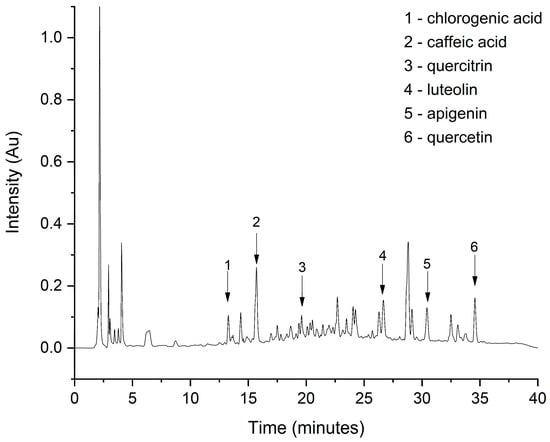
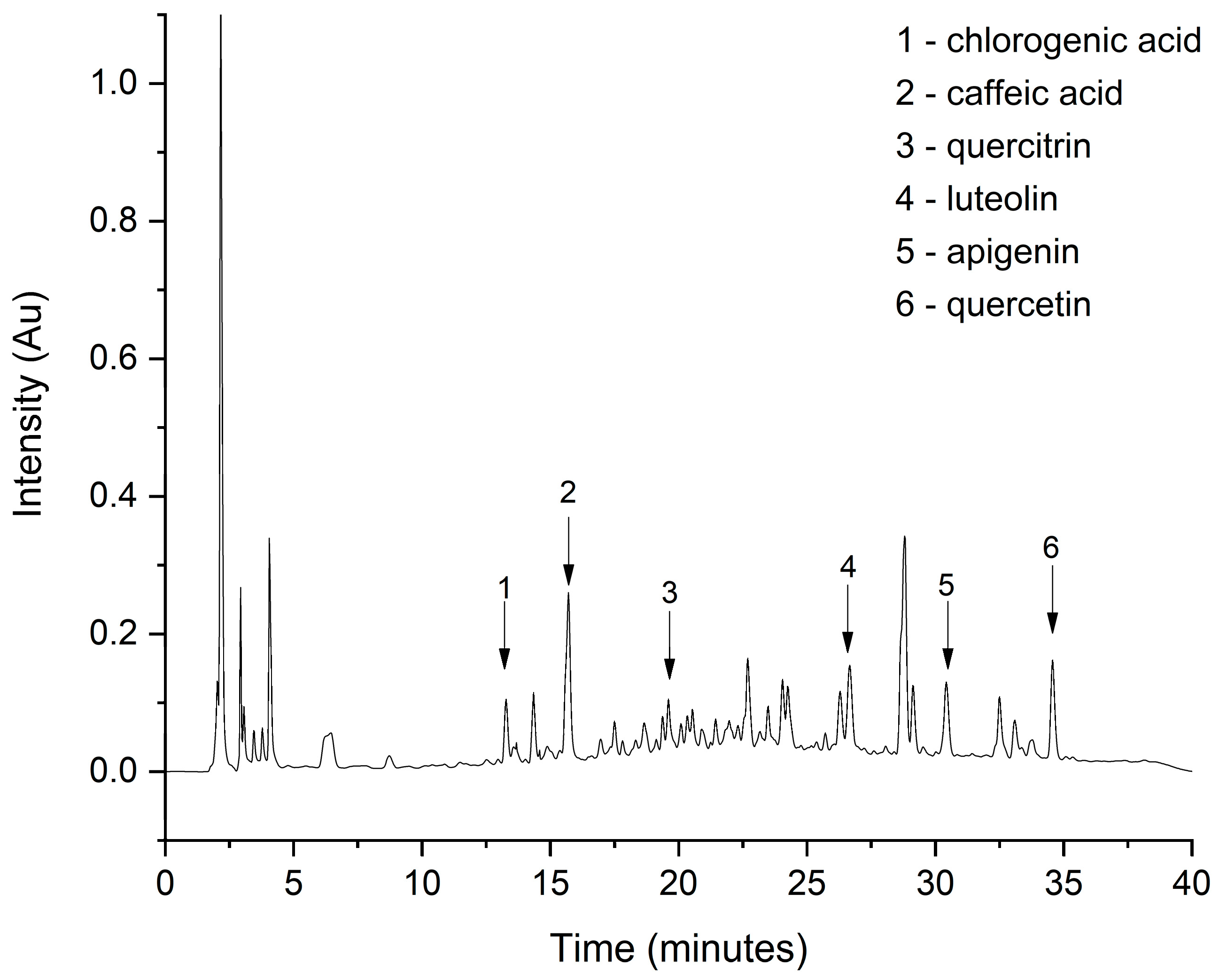
The chemical profile of the herbal formulation is presented in Figure 2. The formulation contained measurable levels of several flavonoids and polyphenolic compounds, including caffeic acid (225 μg/mL), chlorogenic acid (2147 μg/mL), quercitrin (305 μg/mL), quercetin (121 μg/mL), luteolin (489 μg/mL), and apigenin (95 μg/mL).
Figure 2.
Quantitative profiling of the herbal extract identified six bioactive compounds. Chlorogenic acid was the predominant constituent.
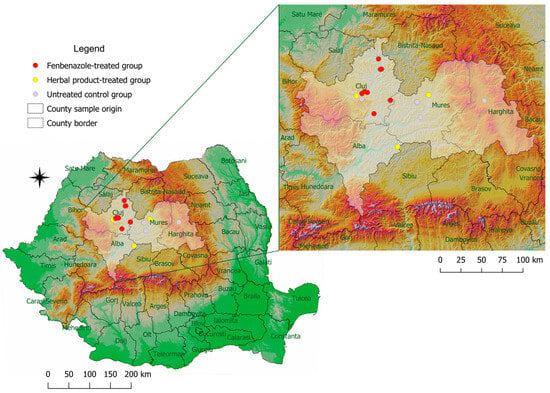
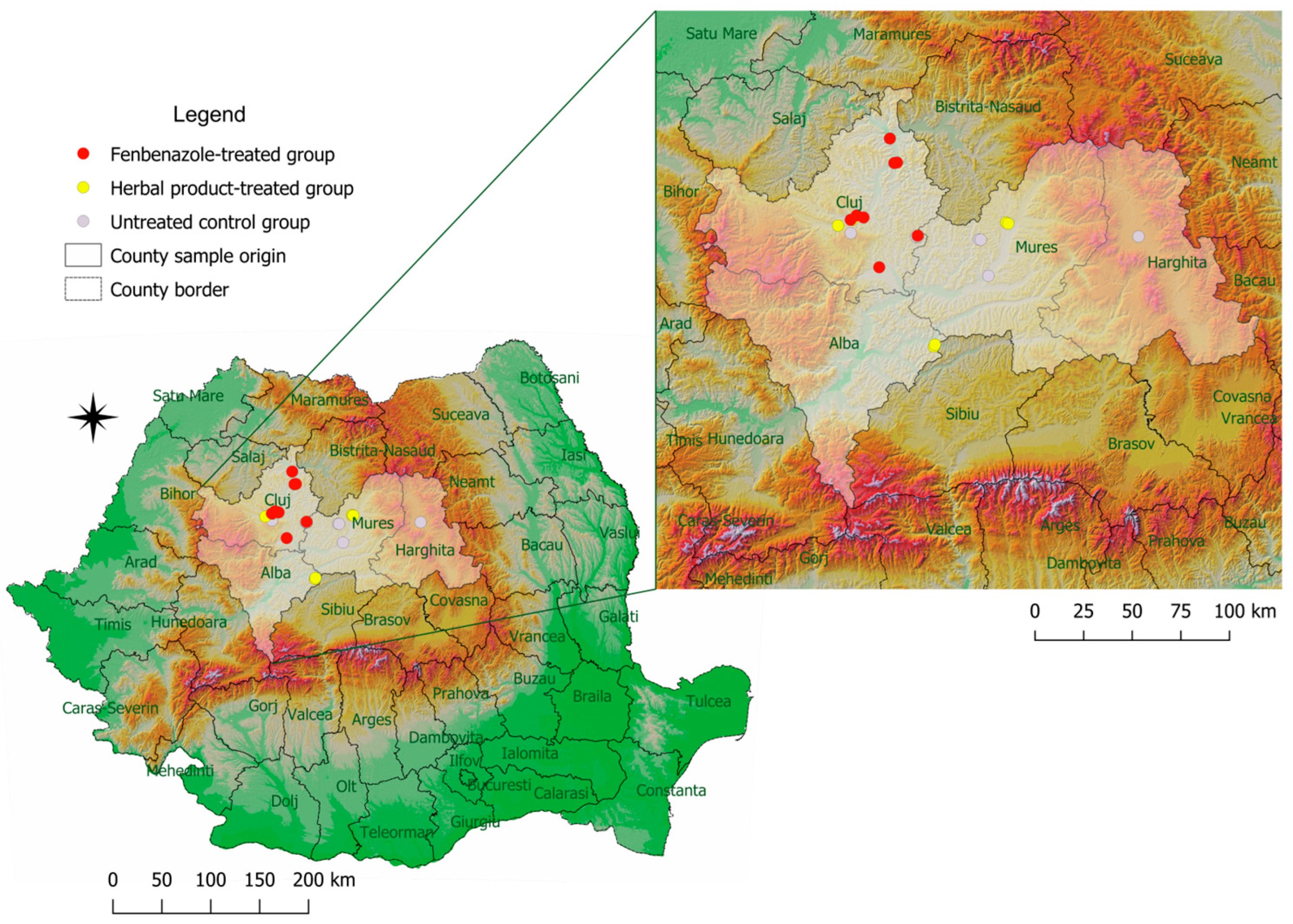
Twenty-four (68.6%, 95% CI: 52.0–81.5) out of 35 chicken households screened for helminth infections were found positive before the start of the efficacy evaluation experiment, distributed across four counties in Romania: Cluj, Alba, Covasna and Harghita (Figure 3).
Figure 3.
Geographic distribution of the households included in the study area. The map illustrates the spatial location of each sampled household, highlighting the coverage of the surveyed region and the dispersion of sampling points used for parasitological assessment.
The coproparasitological examination revealed the presence of Ascaridia galli/Heterakis gallinarum eggs in 18 households (51.4%; 95% CI: 35.6–67.0), Capillaria spp. eggs in 20 households (57.1%; 95% CI: 40.9–72.0), and Strongyloides avium eggs in 14 households (40%; 95% CI: 25.6–56.4) (Table 2). Also, oocysts of Eimeria spp. were detected in 20 out of 35 households (57.1%; 95% CI: 40.9–72.0) (Table 2). Mixed infections were significantly (p = 0.00004) more frequent (22/35; 62.86%) compared to single infections (2/35; 5.71%) (Table 2). Among mixed cases, infections with two (14.3%; 95% CI:), three (25.7%; 95% CI:), and four (22.9%; 95% CI:) parasites were identified.
Table 2.
Frequency and prevalence of parasitic infections identified in chickens raised in household systems (n = 35).
The number of households positive for helminth infections in chickens at different time points following treatment is presented in Table 3. The table reports the number of positive households in the control, fenbendazole, and herbal-treatment groups at Days 0, 7, 14, and 21 for A. galli/H. galinarum, Capillaria spp., and Strongyloides avium.
Table 3.
Number of positive households for helminth infection in chickens before and after the treatment.
Prior to treatment, the mean EPG values for A. galli/H. gallinarum were 242 ± 197 overall, with the herbal-treatment group (329 ± 222) showing significantly higher values than both the control (237 ± 187) and fenbendazole (167 ± 136) groups (p = 0.013). During treatment, significant reductions were recorded at days 7, 14, and 21 in both the fenbendazole-treated and herbal-treated groups (p ≤ 0.00001). At 7 days after treatment, significant within-group differences in mean EPG were observed (p = 0.03), and by 21 days post-treatment, these reductions persisted in both treated groups (p = 0.004). In contrast, EPG values in the untreated control group increased above pre-treatment levels (Table 4). At the same time point, both treated groups exhibited significantly lower parasite burdens than the control group, while no statistically significant differences were detected between the fenbendazole-treated and herbal-treated groups.
Table 4.
Mean fecal egg counts (EPG ± SD) of helminth species in backyard chickens before and after treatment.
The FECRT values at 7 days post-treatment for A. galli/H. gallinarum were 45.93%, 94.38%, and 79.04% for the control, fenbendazole-treated, and herbal-treated groups, respectively. At 14 days post-treatment, reductions reached 50.2% in the control group, 85.22% in the fenbendazole-treated group, and 60.45% in the herbal-treated group. By 21 days post-treatment, the corresponding values were –4.9%, 67.18%, and 70.79%, indicating sustained efficacy of both treatments compared with the control.
Initial parasitological assessment revealed mean EPG values for Capillaria spp. of 374 ± 363, with the control (478 ± 418) and herbal treatment groups (421 ± 372) showing significantly higher values compared with the fenbendazole group (225 ± 214). Statistically significant differences in mean EPG were observed between the control and treated groups at 7 days (p = 0.01), 14 days (p = 9 × 10⁻⁴), and 21 days post-treatment (p = 0.03). In contrast, the control group exhibited higher EPG values at 21 days than at pre-treatment. No statistically significant differences were detected between the fenbendazole-treated and herbal-treated groups at 21 days post-treatment.
Regarding the fecal egg count reduction test (FECRT), values at 7 days post-treatment were –8.89% in the control group, 76.38% in the fenbendazole-treated group, and 63.31% in the herbal-treated group. By 14 days, reductions increased to 22.36%, 59.68%, and 67.36%, respectively. At 21 days post-treatment, the corresponding reductions were –29.81% in the control group, 14.95% in the fenbendazole-treated group, and 31.23% in the herbal-treated group. The comparatively lower and more variable efficacy observed against Capillaria spp. is consistent with the distinct biology of these nematodes. Capillaria species are known to embed deeply within the intestinal mucosa, which may limit drug exposure compared with lumen-dwelling parasites such as Ascaridia galli. In addition, Capillaria infections are often more persistent and have been reported to respond less predictably to standard anthelmintic dosing regimens, frequently requiring repeated treatments or higher exposure durations to achieve effective control. These biological characteristics likely contributed to the reduced FECRT values observed in the present field trial.
Before treatment was initiated, the mean EPG values for Strongyloides avium were 336 ± 615, with values ranging from 139 ± 165 in the control group to 553 ± 981 in the fenbendazole-treated group and 321 ± 261 in the herbal-treated group. By day 21, both the fenbendazole and herbal-treated groups tested negative, indicating complete elimination of Strongyloides spp. eggs, with statistically significant differences compared with the control group (p = 0.002).
The FECRT at 7 days post-treatment showed reductions of 64.2% in the control group, 96.7% in the fenbendazole-treated group, and 91.33% in the herbal-treated group. By 14 days post-treatment, reductions remained evident in both treated groups, reaching 70.7% in the fenbendazole-treated group and 73.52% in the herbal-treated group, while the control group showed a negative reduction percentage (–31.63%). At 21 days post-treatment, both treated groups recorded negative results, confirming the complete absence of Strongyloides spp. eggs.
The FECRT values and their 90% confidence intervals for the evaluated helminths are presented in Table 5. FECRT values are reported for each treatment group at Days 7, 14, and 21 for A. galli/H. galinarum, Capillaria spp., and Strongyloides avium.
Table 5.
Fecal egg count reduction test (FECRT) and its 90% confidence interval (CI) following fenbendazole and herbal treatments.
4. Discussions
Parasitic infections in backyard poultry are often overlooked by small-scale farmers due to the absence of immediate, severe symptoms. However, these infections can significantly impact bird health, reducing feed efficiency, growth rates, and overall productivity [17]. The presence of gastrointestinal parasites, such as Ascaridia galli, Capillaria spp., and Eimeria spp., not only compromises poultry performance but also increases susceptibility to secondary infections, further affecting flock well-being and production [5]. This study did not involve experimental infection; all birds were naturally infected and maintained under their routine backyard husbandry conditions. Therefore, the findings reflect real-field performance of the tested treatments.
A significant finding was the high frequency of mixed infections (62.86%), with a considerable number of birds infected with multiple helminths and protozoan parasites. This supports previous research indicating that co-infections are a frequent occurrence in backyard poultry due to exposure to contaminated environments and lack of targeted deworming strategies [2,3,6]. The presence of mixed infections (A. galli, Capillaria spp., and Eimeria spp.) further complicates disease management, as some parasites may compete for resources while others may enhance susceptibility to co-infections [4].
The results of this study provide valuable insights into the anthelmintic efficacy of a plant-based treatment compared to fenbendazole in backyard poultry. The high prevalence of gastrointestinal parasites in backyard chickens, with a 53.1% infection rate in the surveyed flocks, confirms previous reports indicating that biosecurity limitations in small-scale poultry systems contribute to increased parasitic burdens [6].
The fecal egg count reduction test (FECRT) demonstrated that the herbal treatment achieved notable reductions in parasite load, particularly against Strongyloides avium (100% at 21 days post-treatment), higher than fenbendazole at 21 days (70.79%), in the case of A. galli/H. gallinarum and performing comparably against Capillaria spp. This aligns with previous studies suggesting that certain plant-based formulations exhibit significant anthelmintic properties, potentially due to bioactive compounds such as tannins, flavonoids, and alkaloids [14,15,18,19,20,24]. However, overall efficacy did not consistently reach the WAAVP-recommended threshold of 90% required for reliable parasite control.
The control group, which received no treatment, exhibited increased egg counts at 21 days post-treatment, reinforcing the need for effective parasite management in backyard poultry systems. These findings further highlight the risk of reinfection in untreated birds, a common challenge in free-range poultry management [5].
Medicinal plants have been used for centuries, and their role in contemporary livestock management is gaining renewed interest. This resurgence is driven by the declining efficacy of synthetic drugs and growing concerns about their potential negative effects [25]. Consequently, herbal extracts are being increasingly explored as viable alternatives for both preventive and therapeutic applications [26].
Several studies have explored the anthelmintic potential of plant-based treatments in poultry, demonstrating varying degrees of efficacy [18,19,20,21,27,28]. Nigella sativa (black cumin) extract, for example, has shown strong activity against Ascaridia galli in Aseel chickens, with thymoquinone identified as a key bioactive compound [27]. Similarly, extracts from ginger (Zingiber officinale) and turmeric (Curcuma longa) have demonstrated anthelmintic activity against Ascaridia galli by inducing neuromuscular dysfunction, leading to immobilization and parasite death within 48 h, likely through disruption of energy metabolism and neurotransmission [28].
The anthelmintic efficacy observed in our study is likely a result of the synergistic action of the bioactive compounds present in the complex herbal mixture. The current study focused on the evaluation of seven medicinal plants, Thymus serpyllum, Calendula officinalis, Inula helenium, Tanacetum vulgare, Origanum vulgare, Artemisia annua, and Artemisia absinthium, selected for their documented or potential anthelmintic properties. Previous research supports the antiparasitic potential of several of these species.
For instance, Artemisia absinthium (white wormwood) has shown anti-embryonation activity against Ascaridia galli eggs [29], although in vivo results in poultry have been variable [30]. Beyond direct effects on parasite development, dietary supplementation with Artemisia species has been associated with broader physiological benefits in chickens, including modulation of gut microbiota, improved intestinal morphology, and enhanced immune-related responses. Experimental studies have demonstrated that Artemisia annua supplementation can partially reduce parasitic burden while improving gut health and performance parameters in both broiler chickens and laying hens challenged with enteric parasites [15,31]. In addition, inclusion of Artemisia absinthium in broiler diets has been reported to influence metabolic traits and digestive function, further supporting its potential as a functional phytogenic additive in poultry production systems [32]. These findings suggest that Artemisia-based formulations may exert combined antiparasitic and host-supportive effects, which may contribute to the efficacy patterns observed under field conditions.
Likewise, Tanacetum vulgare and Inula helenium contribute with compounds like alantolactone and tannins. Their extracts have exhibited in vitro ovicidal effects against Ascaridia galli [26], suggesting a direct impact on egg viability and parasite transmission potential. Moreover, a recent study showed that alantolactone inhibits mitochondrial function and motility in nematodes [33], and tannins can bind to the proline-rich proteins in the cuticle, impairing movement and nutrition [34]. While in vivo evidence for Thymus serpyllum, Calendula officinalis, and Artemisia annua in poultry helminth control remains limited, related experimental studies have highlighted the antiparasitic activity of their major bioactive constituents, including thymol, flavonoids, and artemisinin derivatives. These compounds are known to interfere with parasite metabolism, membrane integrity, and oxidative balance, which may contribute to the biological effects observed in complex herbal formulations [35]. Recent research on Calendula officinalis saponins has demonstrated their ability to fragment the cytoskeleton (tubulin and actin fibers) of nematodes and alter their immune recognition, rendering them more vulnerable to the host’s immune system [36].
These findings, consistent with the outcomes observed in our experiment, reinforce the potential of these plant-derived compounds as sustainable and effective alternatives for parasite control in poultry [37]. A lower-than-expected efficacy of fenbendazole against certain nematode species (Ascaridia galli and Capillaria spp.) was observed, particularly at later post-treatment time points. However, this decline is most likely attributable to continuous environmental reinfection under backyard field conditions rather than a true reduction in drug activity. The participating households did not implement standardized sanitary or biosecurity practices, which may have facilitated rapid parasite re-exposure following treatment. Although fenbendazole remains a widely used anthelmintic in poultry, increasing reports of anthelmintic resistance in helminth populations highlight the importance of monitoring treatment performance under field conditions and exploring complementary control strategies [38].
The widespread use of chemical compounds in animal products can also contribute to chemical residues, which not only impact food safety but also increase the risk of antimicrobial resistance in humans [39]. In response to this, consumer preference for organic animal products has grown, with increasing awareness of dietary choices and their implications [40]. Organic certification regulations, such as Regulation (EU) 2018/848, restrict the use of synthetic compounds in poultry farming, further driving interest in natural herbal alternatives for disease prevention and management. This study was conducted under natural backyard field conditions, which inherently involve variability in management practices, environmental exposure, and reinfection pressure that could not be fully controlled. The use of pooled fecal samples at the flock level, while appropriate for field-based efficacy assessments, did not allow evaluation of individual bird responses or parasite burden heterogeneity within households. In addition, water intake and individual treatment dosage could not be precisely quantified due to ad libitum administration, which may have contributed to variability in treatment exposure.
The absence of in vitro dose–response assays and pharmacodynamic evaluations limited the mechanistic interpretation of the herbal formulation’s antiparasitic activity. Furthermore, the relatively short post-treatment monitoring period may not fully capture longer-term reinfection dynamics or sustained efficacy.
Future research should include controlled experimental trials to determine optimal dosing regimens, in vitro assessments to characterize active compound mechanisms, and longer-term field studies integrating management and hygiene interventions. Comparative evaluations combining phytogenic formulations with improved biosecurity strategies may further clarify their role within integrated parasite control programs for backyard poultry systems.
5. Conclusions
The plant-based formulation evaluated in this study demonstrated measurable anthelmintic activity in naturally infected backyard chickens, with the highest effectiveness observed against Strongyloides avium and more moderate reductions in Ascaridia galli/Heterakis gallinarum and Capillaria spp. Compared with fenbendazole, the herbal product showed promising but incomplete efficacy, supporting its potential role as a complementary control option rather than a direct replacement for conventional anthelmintics.
From a practical perspective, the formulation may be incorporated as an adjunct component within integrated parasite management strategies. Plant-based products could be used in rotation schemes with synthetic anthelmintics to reduce selection pressure for resistance, or applied during periods of lower infection intensity to support parasite control while minimizing chemical inputs. When combined with improved hygiene practices and flock management, such approaches may contribute to more sustainable helminth control in backyard poultry systems.
These findings highlight the relevance of plant-derived approaches for parasite management in backyard and organic poultry production. Further research focusing on optimized dosing strategies, repeated treatment schedules, and long-term effects on parasite transmission dynamics is warranted to better define the practical role of herbal anthelmintics.
Author Contributions
M.C.: Data curation, Writing—original draft, Writing—review & editing. A.B.: Methodology, Data curation, Investigation. M.F.: Funding acquisition, Resources, Writing—review & editing. V.M.: Investigation, Methodology, Validation. C.M.: Data curation, Investigation, Methodology, Validation. V.E.: Methodology, Validation. F.I.: Methodology, Validation. A.G.: Conceptualization, Data curation, Formal Analysis, Funding acquisition, Investigation, Methodology, Project administration, Supervision, Validation, Writing—review & editing. All authors have read and agreed to the published version of the manuscript.
Funding
The authors declare that financial support was received for the research, authorship, and/or publication of this article. This work was supported by SC PROMEDIVET SRL (grant number 17084/17.07.2023).
Institutional Review Board Statement
This study was conducted in accordance with ethical standards for animal research and welfare. The research protocol was reviewed and approved by the Ethics Committee of the University of Agricultural Sciences and Veterinary Medicine of Cluj-Napoca, under Decision No. 400/12.09.2023. Fecal samples were collected in the shortest possible time, ensuring that the procedures did not cause pain or distress to the animals, and their daily activities remained unaffected. No experimental infection was conducted, as the animals were naturally infested. In compliance with Directive 2010/63/EU and Romanian Law 43/2014 on the protection of animals used for scientific purposes, all procedures were non-invasive and adhered to bioethical and welfare regulations to minimize animal discomfort while ensuring the integrity of the study.
Informed Consent Statement
All efforts were made to ensure the welfare of the animals throughout the study. The research was conducted in accordance with local legislation and institutional requirements, and written informed consent was obtained from the owners for the participation of their animals in this study.
Data Availability Statement
The data presented in this study are available upon request from the corresponding author due to confidentiality and institutional restrictions.
Conflicts of Interest
Author Mihaly Fazakas was employed by the company SC Promedivet SRL. The authors declare that this study received funding from SC PROMEDIVET SRL. The funder had the following involvement with the study: funding acquisition, provision of resources, and manuscript review and editing. The remaining authors declare that the research was conducted in the absence of any commercial or financial relationships that could be construed as a potential conflict of interest.
References
- Pollock, S.L.; Stephen, C.; Skuridina, N.; Kosatsky, T. Raising chickens in city backyards: The public health role. J. Community Health 2012, 37, 734–742. [Google Scholar] [CrossRef] [Scilit]
- Lockhart, C.Y.; Stevenson, M.A.; Rawdon, T.G. A cross-sectional study of ownership of backyard poultry in two areas of palmerston north, New Zealand. New Zealand Vet. J. 2010, 58, 155–159. [Google Scholar] [CrossRef] [Scilit]
- Elkhoraibi, C.; Blatchford, R.A.; Pitesky, M.E.; Mench, J.A. Backyard chickens in the United States: A survey of flock owners. Poult. Sci. 2014, 93, 2920–2931. [Google Scholar] [CrossRef] [Scilit]
- Whitehead, M.L.; Roberts, V. Backyard poultry: Legislation, zoonoses and disease prevention. J. Small Anim. Pract. 2014, 55, 487–496. [Google Scholar] [CrossRef] [Scilit]
- Gentile, N.; Carrasquer, F.; Marco-Fuertes, A.; Marin, C. Backyard poultry: Exploring non-intensive production systems. Poult. Sci. 2024, 103, 103284. [Google Scholar]
- Coroian, M.; Hociotă, C.-C.; Varga, E.; Fülöp, I.; Fazakas, M.; Györke, A. Occurrence of Eimeria spp. and Intestinal Helminths in Free-Range Chickens from Northwest and Central Romania. Vet. Sci. 2024, 11, 20. [Google Scholar] [CrossRef] [Scilit]
- Permin, A.; Hansen, J.W. Epidemiology, Diagnosis and Control of Poultry Parasites; Food and Agriculture Organization of the United Nations (FAO): Rome, Italy, 1998. [Google Scholar]
- Goetting, V.; Lee, K.A.; Tell, L.A. Pharmacokinetics of veterinary drugs in laying hens and residues in eggs: A review of the literature. J. Vet. Pharmacol. Ther. 2011, 34, 521–556. [Google Scholar] [CrossRef] [Scilit]
- Patel, T.; Marmulak, T.; Gehring, R.; Pitesky, M.; Clapham, M.O.; Tell, L.A. Drug residues in poultry meat: A literature review of commonly used veterinary antibacterials and anthelmintics used in poultry. J. Vet. Pharmacol. Ther. 2018, 41, 761–789. [Google Scholar]
- Zirintunda, G.; Biryomumaisho, S.; Kasozi, K.I.; Batiha, G.E.-S.; Kateregga, J.; Vudriko, P.; Nalule, S.; Olila, D.; Kajoba, M.; Matama, K.; et al. Emerging anthelmintic resistance in poultry: Can ethnopharmacological approaches offer a solution? Front. Pharmacol. 2022, 12, 774896. [Google Scholar] [CrossRef] [Scilit] [PubMed]
- Ferreira, V.; Cardoso, M.; Magalhães, R.; Maia, R.; Neagu, C.; Dumitraşcu, L.; Nicolau, A.; Teixeira, P. Occurrence of Salmonella spp. in eggs from backyard chicken flocks in Portugal and Romania-Results of a preliminary study. Food Control 2020, 113, 107180. [Google Scholar] [CrossRef] [Scilit]
- Napolitano, F.; Girolami, A.; Braghieri, A. Organic meat: Market development and consumer willingness to pay. In Organic Farming: Methods, Economics and Structure; Nova Science Publishers: Hauppauge, NY, USA, 2009; pp. 113–126. [Google Scholar]
- Regulation (EU) 2018/848 of the European Parliament and of the Council of 30 May 2018 on Organic Production and Labelling of Organic Products and Repealing Council Regulation (EC) No 834/2007. Available online: http://data.europa.eu/eli/reg/2018/848/oj/eng (accessed on 30 October 2021).
- Pop, L.M.; Varga, E.; Coroian, M.; Nedișan, M.E.; Mircean, V.; Dumitrache, M.O.; Farczádi, L.; Fülöp, I.; Croitoru, M.D.; Fazakas, M.; et al. Efficacy of a commercial herbal formula in chicken experimental coccidiosis. Parasites Vectors 2019, 12, 343. [Google Scholar] [CrossRef] [Scilit] [PubMed]
- Coroian, M.; Pop, L.M.; Popa, V.; Friss, Z.; Oprea, O.; Kalmár, Z.; Pintea, A.; Borșan, S.-D.; Mircean, V.; Lobonțiu, I.; et al. Efficacy of Artemisia annua against coccidiosis in broiler chickens: A field trial. Microorganisms 2022, 10, 2277. [Google Scholar] [CrossRef] [Scilit]
- Coroian, M.; Hociotă, C.C.; Varga, E.; Fülöp, I.; Fazakas, M.; Györke, A. Efficacy of a polyherbal formula for controlling lice infestation in chickens and goats in backyard farming system in Romania. Front. Anim. Sci. 2024, 5, 1494650. [Google Scholar] [CrossRef] [Scilit]
- Gržinić, G.; Piotrowicz-Cieślak, A.; Klimkowicz-Pawlas, A.; Górny, R.L.; Ławniczek-Wałczyk, A.; Piechowicz, L.; Olkowska, E.; Potrykus, M.; Tankiewicz, M.; Krupka, M.; et al. Intensive poultry farming: A review of the impact on the environment and human health. Sci. Total Environ. 2023, 858, 160014. [Google Scholar] [CrossRef] [Scilit]
- Raza, A.; Muhammad, F.; Bashir, S.; Aslam, B.; Anwar, M.I.; Naseer, M.U. In-vitro and in-vivo anthelmintic potential of different medicinal plants against Ascaridia galli infection in poultry birds. World’s Poult. Sci. J. 2016, 72, 115–124. [Google Scholar]
- Symeonidou, I.; Bonos, E.; Moustakidis, K.; Florou-Paneri, P.; Christaki, E.; Papazahariadou, M. Botanicals: A natural approach to control ascaridiosis in poultry. J. Hell. Vet. Med. Soc. 2018, 69, 711–722. [Google Scholar]
- Jamil, M.; Aleem, M.T.; Shaukat, A.; Khan, A.; Mohsin, M.; Rehman, T.U.; Abbas, R.Z.; Saleemi, M.K.; Khatoon, A.; Babar, W.; et al. Medicinal Plants as an Alternative to Control Poultry Parasitic Diseases. Life 2022, 12, 449. [Google Scholar] [CrossRef] [Scilit]
- Al-Garadi, M.A.; Alhotan, R.A.; Hussein, E.O.; Qaid, M.M.; Suliman, G.M.; Al-Badwi, M.A.; Fazea, E.H.; Olarinre, I.O. Effects of a natural phytogenic feed additive on broiler performance, carcass traits, and gut health under diets with optimal and reduced energy and amino acid density. Poult. Sci. 2025, 104, 105014. [Google Scholar] [CrossRef] [Scilit]
- Ren, J.; Ren, S.; Yang, H.; Ji, P. Effects of Phytogenic Feed Additive on Production Performance, Slaughtering Performance, Meat Quality, and Intestinal Flora of White-Feathered Broilers. Vet. Sci. 2025, 12, 396. [Google Scholar] [PubMed]
- Yazwinski, T.A.; Chapman, H.D.; Davis, R.B.; Letonja, T.; Pote, L.; Maes, L.; Vercruysse, J.; Jacobs, D.E. World Association for the Advancement of Veterinary Parasitology (WAAVP) guidelines for evaluating the effectiveness of anthelmintics in chickens and turkeys. Vet. Parasitol. 2003, 116, 159–173. [Google Scholar] [CrossRef] [Scilit]
- Sergeant, E.S.G. Epitools Epidemiological Calculators. Ausvet. 2018. Available online: http://epitools.ausvet.com.au (accessed on 5 October 2025).
- Zirintunda, G.; Kateregga, J.; Nalule, S.; Biryomumaisho, S.; Omujal, F.; Okwee-Acai, J.; Vudriko, P. Extracts of Carica papaya L. and Capsicum annuum L. showed comparable efficacy to piperazine citrate and levamisole hydrochloride in treatment of poultry helminths. Beni-Suef Univ. J. Basic Appl. Sci. 2025, 14, 25. [Google Scholar] [CrossRef] [Scilit]
- Giannenas, I.; Sidiropoulou, E.; Bonos, E.; Christaki, E.; Florou-Paneri, P. The history of herbs, medicinal and aromatic plants, and their extracts: Past, current situation and future perspectives. In Feed Additives; Academic Press: Cambridge, MA, USA, 2020; pp. 1–18. [Google Scholar]
- Hartady, T.; Syamsunarno, M.R.A.; Priosoeryanto, B.P.; Jasni, S.; Balia, R.L. Review of herbal medicine works in the avian species. Vet. World 2021, 14, 2889. [Google Scholar] [CrossRef] [Scilit]
- Angel, C.; Akhter, N.; Arijo, A.; Qureshi, T.A.; Gandahi, J.A.; Qazi, I.H. Comparative efficacy of ivermectin and Nigella sativa against helminths in Aseel chickens (Gallus gallus domesticus). J. Helminthol. 2019, 93, 533–538. [Google Scholar] [CrossRef] [Scilit] [PubMed]
- Bazh, E.K.; El-Bahy, N.M. In vitro and in vivo screening of anthelmintic activity of ginger and curcumin on Ascaridia galli. Parasitol. Res. 2013, 112, 3679–3686. [Google Scholar] [CrossRef] [Scilit]
- Poulopoulou, I.; Horgan, M.J.; Siewert, B.; Siller, M.; Palmieri, L.; Martinidou, E.; Martens, S.; Fusani, P.; Temml, V.; Stuppner, H.; et al. In vitro evaluation of the effects of methanolic plant extracts on the embryonation rate of Ascaridia galli eggs. Vet. Res. Commun. 2023, 47, 409–419. [Google Scholar] [CrossRef] [Scilit] [PubMed]
- Terra-Long, M.T.; Pietruska, A.; Gulizia, J.P.; True, T.; Butler, J.; McCrea, B.A.; Pacheco, W.J.; Bourassa, D.V.; Hauck, R. Effect of Supplementation with Artemisia absinthium or Pumpkin Seed Powder on Ascaridia galli Worm Burdens, Productivity, Nutrient Digestibility, and Cytokine Gene Expression in Laying Hens. Avian Dis. 2025, 69, 74–81. [Google Scholar] [CrossRef] [Scilit]
- Sharma, M.K.; Liu, G.; Choppa, V.S.R.; Rafieian-Naeini, H.R.; Mahdavi, F.S.; Marshall, B.; Gogal, R.M.; Kim, W.K. Effects of Artemisia annua supplementation on the performance and gut health of laying hens challenged with mixed Eimeria species. Front. Physiol. 2024, 15, 1381548. [Google Scholar] [CrossRef] [Scilit]
- Al-Hussany, A.N.; Kadhim, M.J. Evaluation of biotic potential of wormwood (Artemisia absinthium L.) as feed supplement for some production traits of broiler chicks. Sarhad J. Agric. 2025, 41, 817–825. [Google Scholar] [CrossRef] [Scilit]
- Kļaviņa, A.; Keidāne, D.; Ganola, K.; Lūsis, I.; Šukele, R.; Bandere, D.; Kovalcuka, L. Anthelmintic activity of Tanacetum vulgare L. (leaf and flower) extracts against Trichostrongylidae nematodes in sheep in vitro. Animals 2023, 13, 2176. [Google Scholar] [CrossRef] [Scilit]
- Hoste, H.; Jackson, F.; Athanasiadou, S.; Thamsborg, S.M.; Hoskin, S.O. The effects of tannin-rich plants on parasitic nematodes in ruminants. Trends Parasitol. 2006, 22, 253–261. [Google Scholar] [CrossRef] [Scilit]
- Ranasinghe, S.; Armson, A.; Lymbery, A.J.; Zahedi, A.; Ash, A. Medicinal plants as a source of antiparasitics: An overview of experimental studies. Pathog. Glob. Health 2023, 117, 535–553. [Google Scholar] [CrossRef] [Scilit] [PubMed]
- Doligalska, M.; Jóźwicka, K.; Szewczak, L.; Nowakowska, J.; Brodaczewska, K.; Goździk, K.; Pączkowski, C.; Szakiel, A. Calendula officinalis triterpenoid saponins impact the immune recognition of proteins in parasitic nematodes. Pathogens 2021, 10, 296. [Google Scholar] [CrossRef] [Scilit] [PubMed]
- Zaman, M.A.; Abbas, R.Z.; Qamar, W.; Qamar, M.F.; Mehreen, U.; Shahid, Z.; Kamran, M. Role of secondary metabolites of medicinal plants against Ascaridia galli. World’s Poult. Sci. J. 2020, 76, 639–655. [Google Scholar]
- Mund, M.D.; Khan, U.H.; Tahir, U.; Mustafa, B.E.; Fayyaz, A. Antimicrobial drug residues in poultry products and implications on public health: A review. Int. J. Food Prop. 2017, 20, 1433–1446. [Google Scholar] [CrossRef] [Scilit]
- Napolitano, F.; Braghieri, A.; Piasentier, E.; Favotto, S.; Naspetti, S.; Zanoli, R. Effect of information about organic production on beef liking and consumer willingness to pay. Food Qual. Prefer. 2010, 21, 207–212. [Google Scholar] [CrossRef] [Scilit]

Disclaimer/Publisher’s Note: The statements, opinions and data contained in all publications are solely those of the individual author(s) and contributor(s) and not of MDPI and/or the editor(s). MDPI and/or the editor(s) disclaim responsibility for any injury to people or property resulting from any ideas, methods, instructions or products referred to in the content. |
© 2026 by the authors. Licensee MDPI, Basel, Switzerland. This article is an open access article distributed under the terms and conditions of the Creative Commons Attribution (CC BY) license.