
Article

Extender- and Gentamicin-Dependent Protection of Turkey Spermatozoa Against Bacteriospermia and Oxidative Damage During Liquid Storage

1
Institute of Biotechnology, Faculty of Biotechnology and Food Sciences, Slovak University of Agriculture in Nitra, Tr. A. Hlinku 2, 949 76 Nitra, Slovakia
2
Institute of Applied Biology, Faculty of Biotechnology and Food Sciences, Slovak University of Agriculture in Nitra, Tr. A. Hlinku 2, 949 76 Nitra, Slovakia
3
AgroBioTech Research Centre, Slovak University of Agriculture in Nitra, Tr. A. Hlinku 2, 949 76 Nitra, Slovakia
4
Institute of Horticulture, Faculty of Landscape Engineering, Slovak University of Agriculture in Nitra, Tr. A. Hlinku 2, 949 76 Nitra, Slovakia
5
School of Medical and Health Sciences, University of Economics and Human Sciences in Warsaw, Okopowa 59, 010 43 Warsaw, Poland
6
Chair of Animal Breeding and Biotechnology, Institute of Veterinary Medicine and Animal Sciences, Estonian University of Life Sciences, Kreutzwaldi 62, 51006 Tartu, Estonia
*
Author to whom correspondence should be addressed.
Poultry 2026, 5(2), 26; https://doi.org/10.3390/poultry5020026
Submission received: 19 January 2026 / Revised: 13 February 2026 / Accepted: 2 March 2026 / Published: 6 March 2026

Abstract

Efficient liquid storage of turkey semen is critical for artificial insemination, but its use is limited by bacteriospermia and oxidative damage. This study evaluated the effects of gentamicin supplementation in Glutac and Sperm Motility Medium (SMM) on bacterial load and sperm quality after 2 and 24 h of liquid storage. Semen from turkeys (n = 40) was assessed for motility, viability, plasma membrane and acrosome integrity, mitochondrial and metabolic activity, oxidative profile, apoptosis, DNA integrity, and microbiological status. The sperm motility and kinematic parameters declined significantly after 24 h in all the groups. However, both extenders (particularly SMM) maintained significantly higher motility than the untreated control. Gentamicin further improved the motility, viability, and plasma membrane and acrosome integrity. The mitochondrial activity and mitochondrial membrane potential were significantly higher in the extender-treated groups than in the controls at 2 and 24 h, whereas the superoxide and total ROS production were significantly higher in the controls. The total antioxidant capacity declined markedly in the untreated controls, especially after 24 h. Gentamicin significantly reduced bacterial load, most effectively in SMM, and decreased DNA fragmentation compared with the untreated controls. In conclusion, gentamicin supplementation—particularly in SMM—reduces bacteriospermia and oxidative stress while preserving turkey sperm quality during liquid storage.

1. Introduction

Liquid storage of turkey spermatozoa is a key factor for successful artificial insemination and long-term genetic improvement in turkey populations [1]. However, maintaining semen quality during liquid storage remains challenging, primarily due to bacterial contamination. Even under controlled collection conditions, cloacal bacteria and/or microorganisms introduced via handling equipment can contaminate semen samples and proliferate rapidly during storage [2].
The presence of bacteria in semen, known as bacteriospermia, can impair spermatozoa through several mechanisms. Products of bacterial metabolism, such as reactive oxygen species (ROS), ammonia, and lipopolysaccharides, can disrupt the sperm plasma membrane and induce oxidative stress. This can lead to lipid peroxidation, reduced membrane fluidity, and acrosomal damage. In addition, bacterial adhesion to the sperm surface may impair motility and interfere with capacitation and fertilization. Some bacterial species may also compete with spermatozoa for energy substrates in the extender, further reducing cell survival and the overall fertility performance [3,4,5].
To control bacterial growth, antibiotics are routinely added to semen extenders. Gentamicin, a broad-spectrum aminoglycoside antibiotic, is among the most commonly used agents in poultry semen preservation. It is effective against both Gram-positive and Gram-negative bacteria and is generally considered to have low sperm toxicity [6,7,8]. Nevertheless, gentamicin use must be optimized as inappropriate concentrations or prolonged exposure may alter sperm metabolism and compromise membrane stability.
At the same time, the range of antibiotics that are suitable for inclusion in semen extenders has become increasingly limited as many compounds can adversely affect sperm survival. Moreover, even low-level antibiotic exposure may promote the emergence, dissemination, and persistence of resistant bacteria. Indeed, resistance has been reported among bacterial isolates from poultry semen against commonly used antibiotics, including penicillin, ampicillin, chloramphenicol, and tetracycline, in broiler chickens [9,10,11]. Therefore, reducing antibiotic use in semen extenders and identifying effective strategies to control microbial contamination are important for improving semen quality while mitigating antimicrobial resistance [12].
In general, semen extenders and media are designed to provide an environment that supports sperm viability and motility during storage. They typically contain buffering agents, energy substrates (e.g., glucose or fructose), and antimicrobial additives. Extenders provide osmotic and nutritional support, maintain pH stability, and protect spermatozoa from cold shock and oxidative stress. Among the media developed for poultry semen, the Beltsville Poultry Semen Extender (BPSE) is widely used, whereas Lake and Glutac extenders are valued for their simplicity and strong physiological buffering capacity [2,13].
The combination of an appropriate extender and an optimized antibiotic regimen may therefore represent an effective strategy to reduce bacterial contamination and preserve sperm quality during liquid storage. Accordingly, the present study evaluated the effects of gentamicin supplementation on bacterial load and a comprehensive panel of sperm quality parameters after different storage intervals and across extenders, with the goal of improving reproductive efficiency and biosecurity in turkey breeding.

2. Materials and Methods

2.1. Animals, Sampling and Storage

Semen samples from 40 mature turkeys (Big 6 breed) were collected by the cloacal massage in the local breeding farm (Branko Nitra, a.s.) in the springtime (March–April) and immediately transported to the laboratory. All animals were treated according to the ethical standards outlined in the Slovak Animal Protection Regulation RD 377/12, following the European Directive 2010/63/EU.
Liquid storage used Glutac (AMP-Lab GmbH, Münster, Germany) and SMM (Sperm Motility Medium; Slovak University of Agriculture in Nitra, Nitra, Slovakia) medium with or without gentamicin (GEN; 0.25 g/L; Sigma Aldrich, St. Louis, MO, USA). A control (CTRL) was diluted in the phosphate-buffered saline (Sigma-Aldrich, St. Louis, MO, USA) with or without gentamicin. Each sample was divided into six equal aliquots and diluted with selected medium at laboratory temperature, either with or without gentamicin, as follows: CTRL; CTRL + GEN; Glutac; Glutac + GEN; SMM and SMM + GEN. Following liquid storage, all samples were stored in the fridge at 4 °C and analyzed after 2 and 24 h.
Following storage at 4 °C, aliquots were gently mixed and equilibrated to the analysis temperature prior to evaluation. Motility and kinematic parameters were assessed using a pre-warmed stage (37 °C). For fluorescence-based assessments, samples were processed and incubated at controlled temperatures according to the respective staining protocols, and measurements were performed immediately thereafter.

2.2. Sperm Movement and Kinetics

The motility patterns of sperm were assessed by the computer-assisted sperm analysis (CASA) system (version 14.0 TOX IVOS II, Hamilton-Thorne Biosciences, Beverly, CA, USA), including motility, progressive motility, curvilinear velocity, straight-line velocity, average path velocity, straightness of trajectory, amplitude of lateral displacement, beat-cross frequency and linearity [14].

2.3. Viability, Membrane and Acrosomal Integrity

The viability of sperm cells was evaluated using dual eosin–nigrosine slide staining (Sigma-Aldrich, St. Louis, MO, USA), which were examined under light microscope (Nikon Eclipse E100LED MV R; Nikon, Tokyo, Japan). At least 300 cells were counted per slide [4].
Assessment of acrosomal integrity used fast green-rose bengal slide staining (Sigma-Aldrich, St. Louis, MO, USA). All slides (300 sperm/slide) were observed under light microscope (Nikon Eclipse E100LED MV R; Nikon, Tokyo, Japan), and percentage of cells with intact acrosomes was determined [4].

2.4. Mitochondrial Functionality and Superoxide Production

The activity of mitochondria was determined with plate MTT (Sigma-Aldrich, St. Louis, MO, USA) assay [14] by the enzymatic reduction of tetrazolium bromide salt into formazan through to succinate-coenzyme Q reductase. A final absorbance was measured at 570/620 nm with microplate photometer (Glomax Multi+, Promega Corporation, Madison, WI, USA).
A total intracellular production of superoxide was quantified with the help of NBT (Sigma-Aldrich, St. Louis, MO, USA) assay [15] based on the colorimetric reaction of yellow tetrazolium chloride to blue formazan through the activity of superoxide. Similarly to MTT, the absorbance is measured at 570/620 nm with microplate photometer (Glomax Multi+, Promega Corporation, Madison, WI, USA).
The mitochondrial membrane potential analysis was performed with the commercially available kit (JC-1 Mitochondrial Membrane Potential Assay Kit, Cayman Chemical, Ann Arbor, MI, USA), which contains mitochondria-specific fluorescent dye JC-1. Fluorescent signal was measured on dark plate with combined spectro-fluoro-luminometer (Glomax Multi+, Promega, Madison, WI, USA) [16].
AlamarBlue colorimetric test (BioSource International, Nivelles, Belgium) was used for the evaluation of cell metabolic activity, which is based on the conversion of blue resazurin into pink resorufin by viable cells. The measurement of reduced AlamarBlue was performed by the spectrophotometer (Glomax Multi+, Promega Corporation, Madison, WI, USA) at specific wavelength 560/590 nm [17].

2.5. Oxidative Profile and Total Antioxidant Capacity

The generation of ROS was determined with chemiluminescent method, including luminol (Sigma-Aldrich, St. Louis, MO, USA) as a probe. The final concentration of generated ROS was expressed through relative light units (RLUs) quantified by the Glomax Multi+ reader (Promega Corporation, Madison, WI, USA) [16].
The level of lipid peroxidation was determined by thiobarbituric acid-reactive substance (TBARS) assay through to the amount of malondialdehyde (MDA) in treated samples. Evaluation of final absorbance was performed on Glomax Multi+ (Promega Corporation, Madison, WI, USA) at 560/540 nm, as previously published [14].
As an indicator of protein oxidation, the concentration of protein carbonyls (PCs) was quantified with the help of modified dinitrophenylhydrazine (DHPH) method. Results were obtained from spectrophotometer (Cary 60 UV–vis spectrophotometer, Agilent Technologies, Santa Clara, CA, USA) at 360 nm [14].
A chemiluminescent assay including luminol and horseradish peroxidase was used for the evaluation of total antioxidant capacity (TAC) as previously described [14]. The assessment of chemiluminescence was performed using a combined spectro-fluoro-luminometer (Glomax Multi+, Promega Corporation, Madison, WI, USA).

2.6. Apoptosis, Necrosis and DNA Fragmentation

The progress of apoptosis was evaluated with commercially available Annexin V-FLUOS kit (Roche, Basel, Switzerland) with added propidium iodide (PI) as an indicator of cell necrosis. Based on the fluorescent signal, stained spermatozoa were divided into three groups as follows: (a) viable (AV/PI), (b) apoptotic (AV+/PI) and necrotic (AV/PI+). A combined spectro-fluoro-luminometer Glomax Multi+ (Promega Corporation, Madison, WI, USA) was provided for all measurements [18].
For analysis of the level of DNA fragmentation index, we used Halomax DNA fragmentation test kit (Halotech DNA, Madrid, Spain) by following attached protocol. Prepared samples were observed under fluorescent microscope (Leica DM IL TED, Leica Microsystems, Wetzlar, Germany) at magnif. x40/300 cells per sample [19].

2.7. Bacteriology

The bacteria from samples were quantified after inoculation into sterile blood agar (BA, Blood Agar Base No. 2; Merck, Darmstadt, Germany) and tryptone soya agar (TSA, Soyabean Casein Digest Agar; Merck, Darmstadt, Germany) under aerobic conditions: 37 ± 1 °C for 24 h. For obtaining pure colonies, the bacteria were incubated again in the fresh TSA agar under same conditions. Following that, purified colonies were identified by the matrix-assisted laser desorption/ionization time-of-flight (MALDI-TOF) Biotyper mass spectrometry (Brucker Daltonics, Bremen, Germany), Microflex LT Instrument, flexControl software version 3.4 and the MALDI Biotyper Bruker Taxonomy database (Bruker Daltonics, Bremen, Germany), as previously described [4,20].

2.8. Statistics

Obtained data were evaluated by the GraphPad Prism (version 10.1.1 for Mac; GraphPad Software, La Jolla, CA, USA), and the data were analyzed by one-way repeated-measures ANOVA (within-subject factor: time; treatments compared within each time point) using the Geisser–Greenhouse correction, followed by Tukey’s multiple-comparisons test. Results are presented as mean ± SD; n = 40. The level of statistical significance was set at: * p < 0.05; ** p < 0.01; *** p < 0.001 and **** p < 0.0001.

3. Results

3.1. Sperm Motility Characteristics

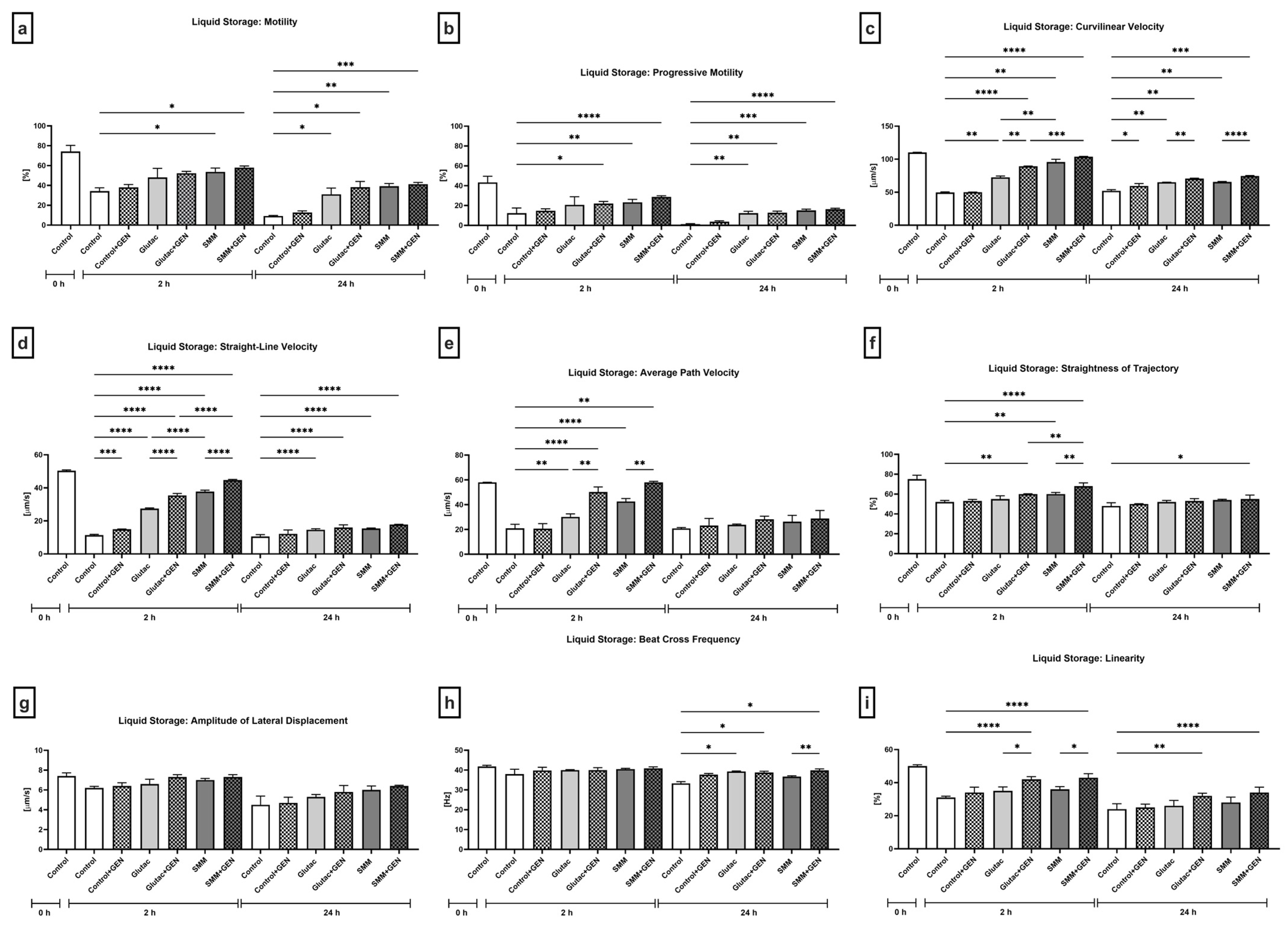
Across liquid storage, time had a strong negative effect on sperm motion, with the control showing a rapid decline by 2 h and a further deterioration by 24 h in total motility (Figure 1a) and progressive motility (Figure 1b). In contrast, the Glutac and SMM extenders preserved the sperm motion significantly better than the control at 2 h, and this advantage generally persisted at 24 h, when the control approached minimal residual movement, while Glutac/SMM maintained a significantly higher sperm motility (p < 0.05 in the case of Glutac; p < 0.01 with respect to SMM). Where indicated by post hoc comparisons, GEN supplementation further improved the motility outcomes, most consistently for Glutac + GEN (p < 0.05 in the case of motility; p < 0.01 with respect to progressive motility) and SMM + GEN (p < 0.01 in relation to motility; p < 0.001 with respect to progressive motility).
A similar pattern was observed for kinematic velocities. VCL (Figure 1c), VSL (Figure 1d), and VAP (Figure 1e) dropped markedly in the control after 2 h, whereas Glutac and SMM sustained significantly higher values, with the highest velocities typically observed in the GEN-supplemented variants. By 24 h, the velocities decreased across all the groups compared with earlier timepoints, but Glutac/SMM (especially with GEN) generally retained higher velocity profiles than the control, in line with the significant pairwise differences shown (p < 0.0001 in the case of VSL; p < 0.01 for Glutac + GEN and p < 0.001 for SMM + GEN in the case of VCL).
Regarding trajectory descriptors, straightness (STR) declined with storage (Figure 1f), but SMM + GEN showed a clearer preservation of STR at 2 h relative to the control and/or non-supplemented counterparts (p < 0.01). Linearity (LIN) followed the same direction (Figure 1i): GEN supplementation increased LIN at 2 h (notably for Glutac + GEN and SMM + GEN; p < 0.0001), and this effect remained detectable at 24 h, where the GEN-supplemented conditions maintained higher LIN than the control and/or their non-supplemented counterparts (p < 0.01 with respect to Glutac + GEN; p < 0.0001 in the case of SMM + GEN). In contrast, ALH showed no prominent between-group differences (Figure 1g), suggesting that lateral head displacement was comparatively less sensitive to the treatment conditions within this storage window.
Finally, BCF remained broadly comparable among the groups early in storage, but, at 24 h, modest treatment-associated differences emerged, including higher values in selected supplemented conditions (Figure 1h), consistent with the significant post hoc contrasts shown (p < 0.05 in the case of Glutac and SMM in comparison to the control).

3.2. Viability, Membrane and Acrosome Integrity

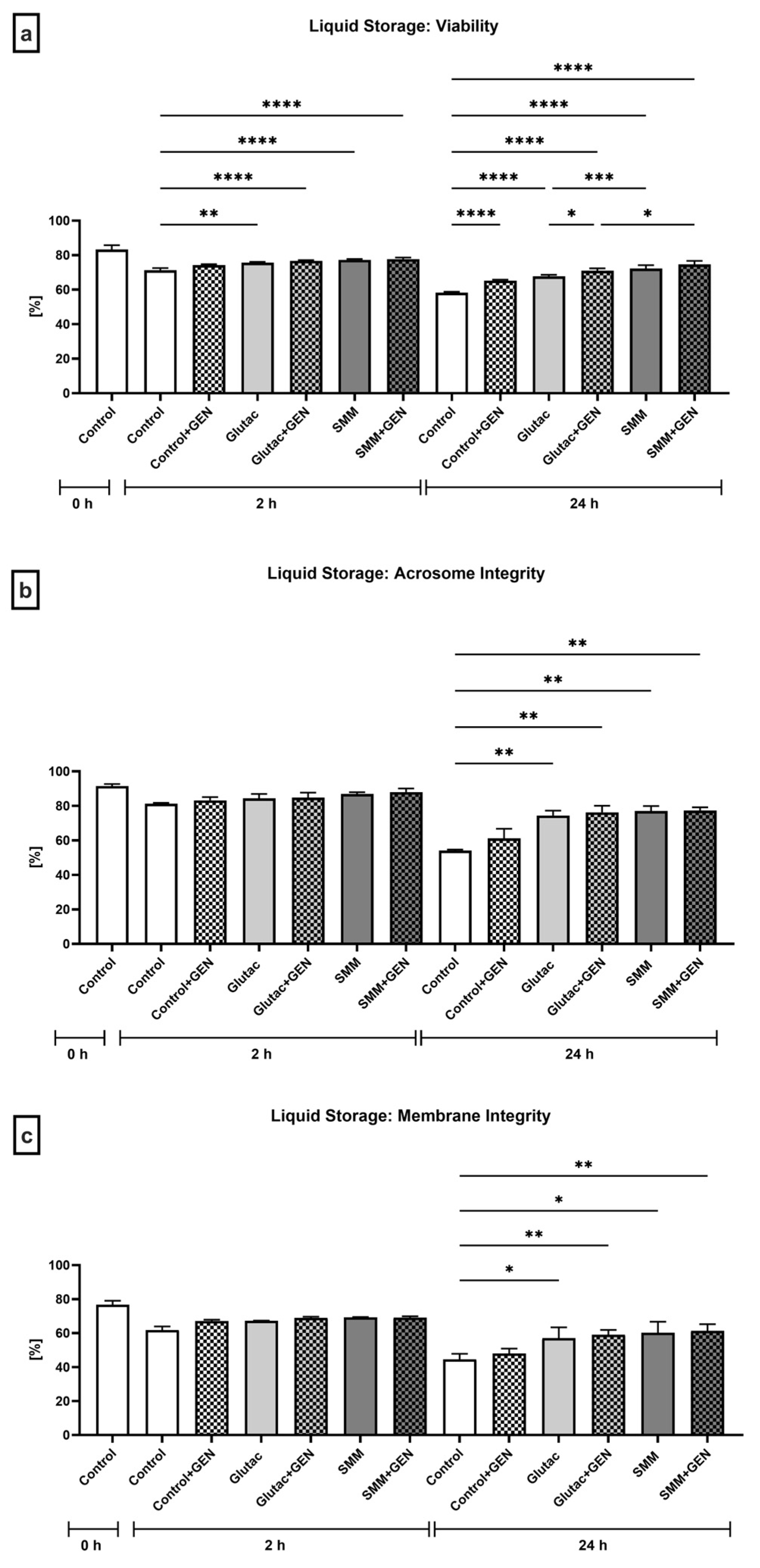
In the case of viability (Figure 2a), the baseline (0 h) control showed the highest values, followed by a significant decline by 2 h, and a further drop at 24 h. At 2 h, all the GEN-supplemented groups (Control + GEN, Glutac ± GEN, and SMM ± GEN) maintained viability at levels comparable to or slightly higher than the 2 h control, whereas, at 24 h, the separation between the groups became clear: the Glutac and SMM treatments preserved significantly higher viability than the 24 h control (p < 0.0001), with GEN-supplemented variants generally showing the best retention of mitochondrial metabolism (p < 0.0001 in comparison with the control).
For acrosome integrity (Figure 2b), the values remained relatively stable across the groups at 2 h (only modest differences), but, after 24 h, the control exhibited a marked reduction inacrosome stability. All the treatment groups, particularly Glutac (±GEN) and SMM (±GEN), retained significantly higher acrosome integrity than the 24 h control (p < 0.01), indicating improved protection of the acrosomal compartment during prolonged semen storage.
A similar trend was observed for plasma membrane integrity (Figure 2c). While membrane integrity decreased by 2 h when compared with 0 h, the strongest decline occurred at 24 h, where the control reached the lowest values. In contrast, Glutac and SMM (with or without GEN) maintained significantly higher membrane integrity at 24 h (p < 0.05), with the GEN-supplemented groups tending to show the highest mean values among the treatments (p < 0.01).

3.3. Mitochondrial Functionality, Metabolic Activity and Superoxide Production

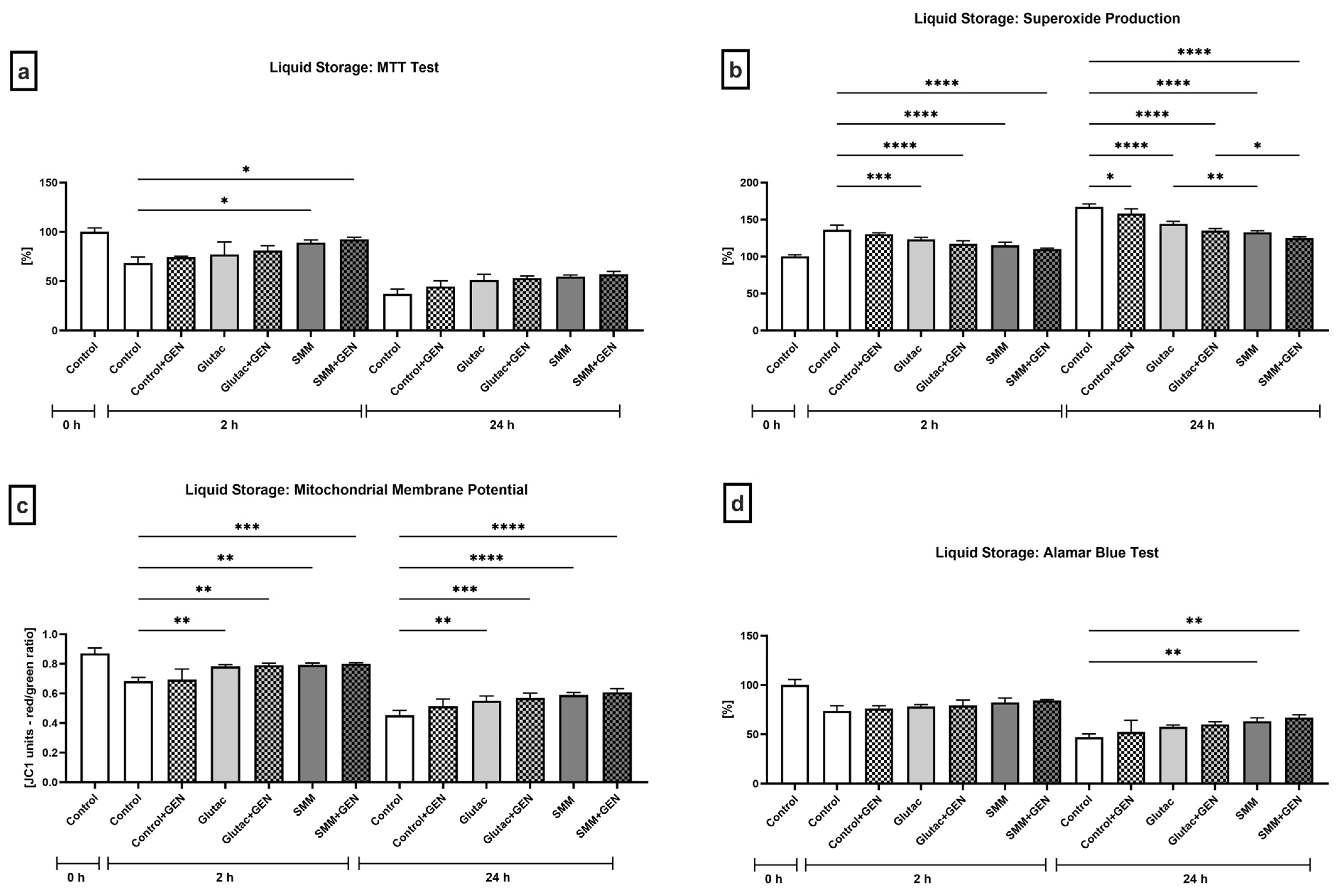
Markers of mitochondrial/metabolic performance showed a clear time-dependent decline during liquid storage, while oxidative load increased, particularly in the non-supplemented control (Figure 3a–d).
In the MTT assay (Figure 3a), mitochondrial/metabolic activity decreased from the baseline, with a pronounced drop already evident at 2 h in the control. At this timepoint, SMM and SMM + GEN maintained significantly higher MTT values than the 2 h control, indicating better preservation of cellular metabolic capacity (p < 0.05). By 24 h, the MTT values were markedly reduced across all the groups, and group separation was less pronounced.
In parallel, superoxide production (Figure 3b) rose strongly with storage time. Relative to the baseline, superoxide increased at 2 h in the control and rose further by 24 h. All the supplemented conditions showed lower superoxide generation than the corresponding control, with the largest reductions generally observed in Glutac (p < 0.001)/SMM (p < 0.0001), and GEN supplementation provided an additional decrease where indicated by post hoc comparisons (p < 0.0001). At 24 h, superoxide remained highest in the control, while SMM + GEN achieved the lowest values among the treatments (p < 0.0001), and significant differences were also detectable between selected treatment pairs.
Consistent with these oxidative patterns, the mitochondrial membrane potential (JC-1 red/green ratio) (Figure 3c) declined from the baseline at 2 h and decreased further by 24 h. At both timepoints, the Glutac and SMM treatments preserved significantly higher mitochondrial membrane potential than the control (p < 0.01 in the case of Glutac; p < 0.0001 with respect to SMM), with the GEN-supplemented variants tending to retain the highest ratios, especially at 24 h (p < 0.001 in relation to Glutac; p < 0.0001 with respect to SMM).
Finally, the Alamar Blue assay (Figure 3d) supported a progressive loss of metabolic activity over time. While the differences among the groups were modest at 2 h, by 24 h, the SMM and SMM + GEN groups maintained significantly higher Alamar Blue reduction than the control (p < 0.01), indicating better retention of metabolic competence under prolonged storage.

3.4. Apoptosis, Necrosis and DNA Status

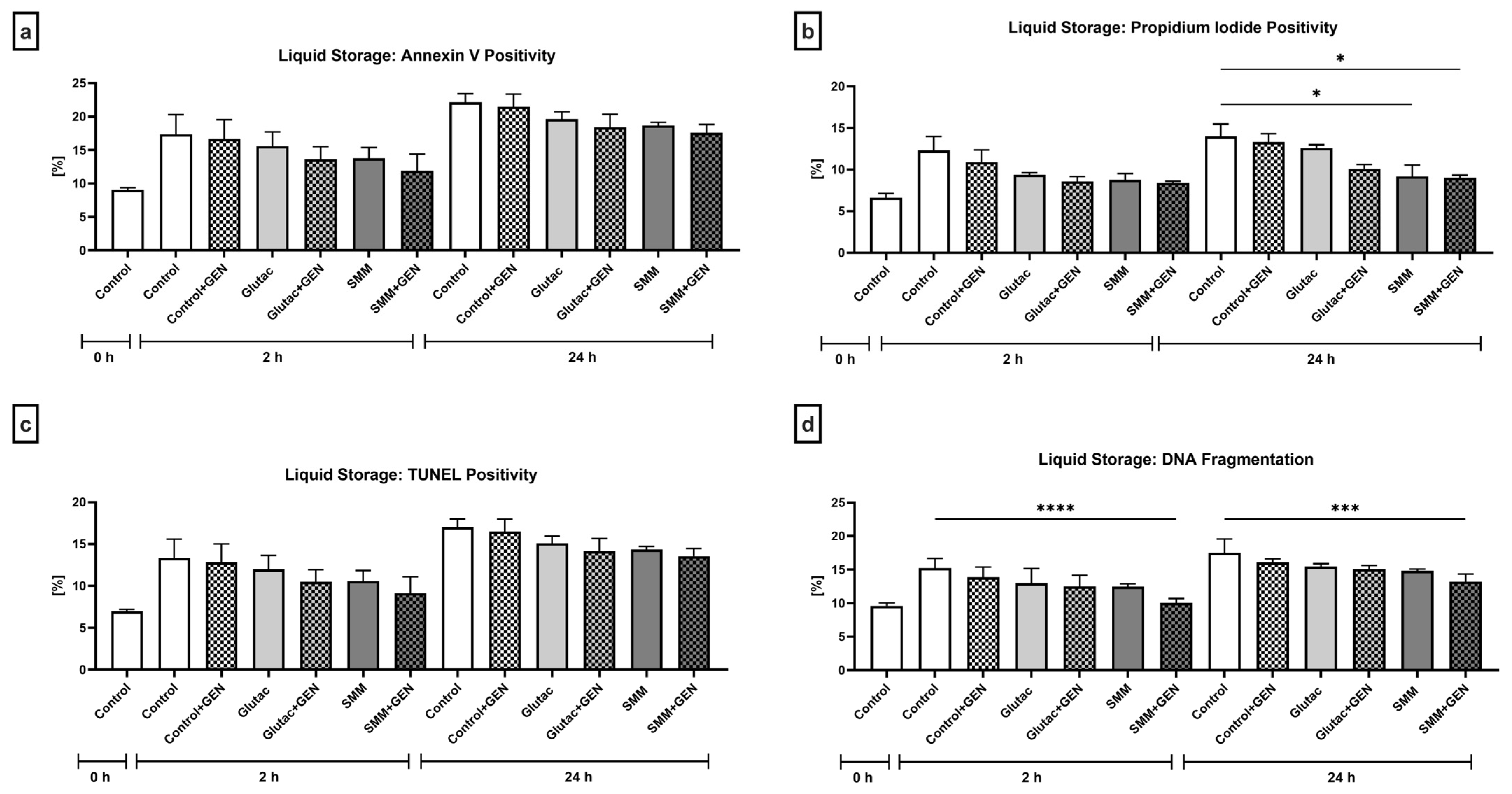
The assessment of apoptosis-related endpoints demonstrated a clear time-dependent shift toward cell damage during liquid storage, with the most pronounced deterioration in the non-supplemented control, particularly after 24 h (Figure 4a–d). Specifically, the fraction of viable/intact spermatozoa decreased with storage, while apoptosis-associated populations increased, consistent with progressive loss of cellular homeostasis over time (Figure 4a–c). The largest separation among the groups was evident at 24 h, where the Glutac- and SMM-based treatments maintained a more favorable profile than the control, reflected by higher proportions of intact cells and lower proportions of apoptosis-associated subpopulations according to the post hoc comparisons.
In parallel, cells with compromised chromatin packaging increased with storage duration (Figure 4d), again peaking in the 24 h control. Both the Glutac and SMM conditions mitigated this increase, and, where indicated, GEN supplementation provided an additional protective effect, yielding the lowest proportion of DNA-fragmented cells among the supplemented groups (p < 0.001).

3.5. Oxidative Profile

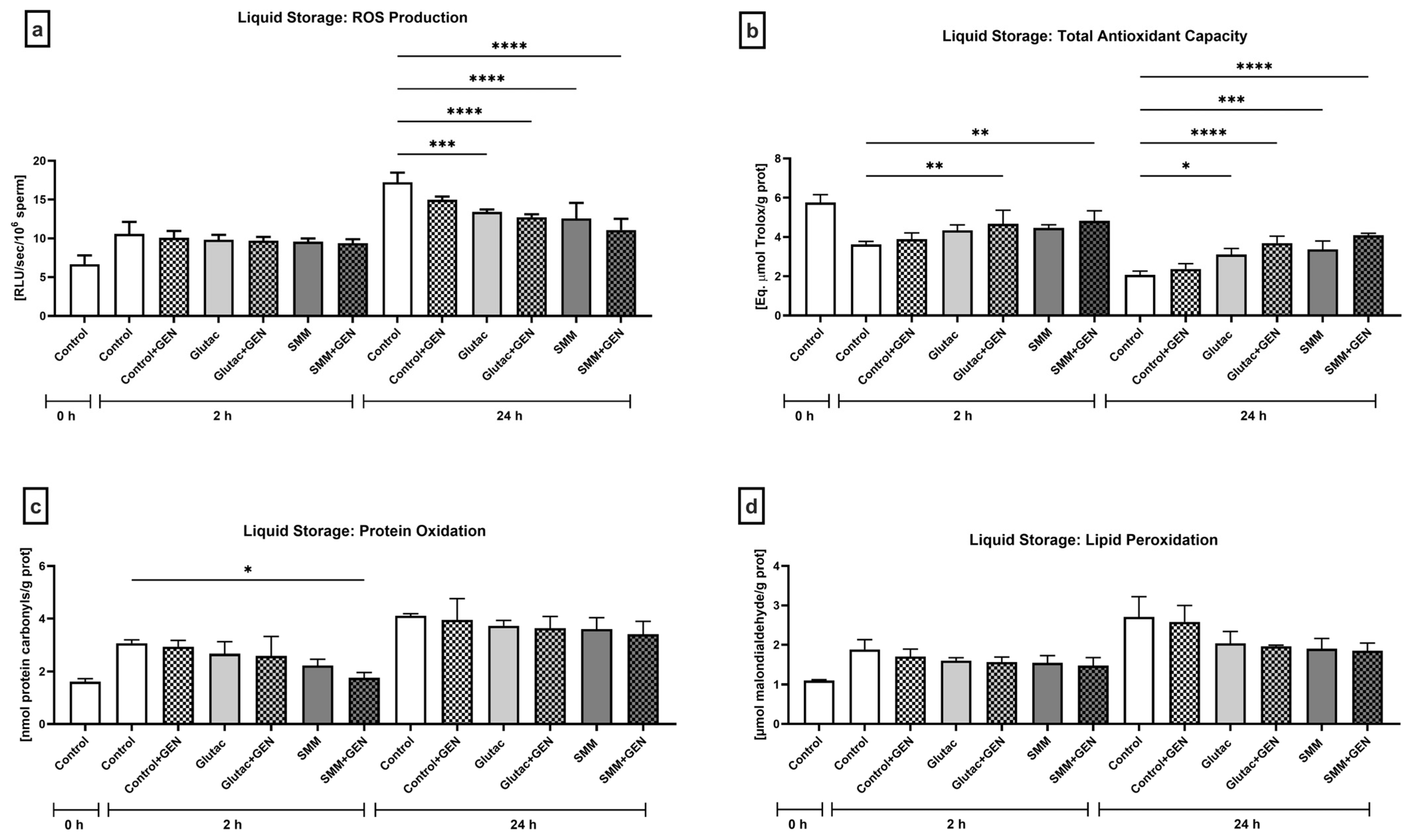
Liquid storage of turkey spermatozoa induced a progressive oxidative imbalance, characterized by increased ROS generation and oxidative damage markers, accompanied by a decline in total antioxidant capacity (TAC) (Figure 5a–d).
ROS production (Figure 5a) increased from the baseline and remained moderately elevated at 2 h across all the groups. By 24 h, ROS rose sharply in the control, whereas all the experimental groups showed significantly lower ROS than the 24 h control, with the lowest ROS levels observed in the SMM + GEN group (p < 0.0001), followed by Glutac + GEN (p < 0.0001).
In parallel, TAC (Figure 5b) declined markedly with storage time, dropping from the 0 h control to lower levels at 2 h and reaching the lowest values at 24 h in the control. At 2 h, TAC was higher in Glutac/SMM + GEN than in the control (p < 0.01), and, at 24 h, the separation between the groups became more pronounced: Glutac and SMM maintained significantly higher TAC than the 24 h control (p < 0.05 in the case of Glutac; p < 0.001 with respect to SMM), with GEN supplementation generally providing the strongest retention of antioxidant defense mechanisms (p < 0.0001).
For protein oxidation (Figure 5c), the protein carbonyl levels increased substantially at 2 h compared with the baseline, with a treatment-dependent mitigation: SMM + GEN showed significantly lower protein carbonyl formation than the 2 h control (p < 0.0001). By 24 h, the protein carbonyl levels were elevated across all the groups; however, between-group differences were less prominent.
Similarly, lipid peroxidation (Figure 5d) increased with storage duration, with the highest mean values in the 24 h control. Although post hoc significance was not highlighted, the Glutac/SMM treatments, especially with GEN, tended to show lower MDA than the control at both 2 h and 24 h, consistent with an overall protective trend against membrane lipid oxidation.

3.6. Microbiology

In total, we identified eight families, 11 genera and 22 bacteria species isolated from turkey semen from the control group (Figure S1) and both media (Glutac and SMM) without GEN treatment during 2 (Figures S2, S6 and S10) and 24 (Figures S3, S7 and S11) hours of storage, including: Bacillus spp. (B. subtilis and B. cereus), Citrobacter brakii, Empedobacter brevis, Enterococcus spp. (E. avium, E. faecium and E. faecalis), Escherichia coli, Morganella morgani, Micrococcus luteus, Proteus spp. (P. hauseri, P. mirabilis, P. penneri and P. vulgaris), Staphylococcus spp. (S. chromogenes, S. cohnii, S. epidermidis, S. lentus, S. simulans, S. warneri and S. alactolyticus) and Vagococcus fluvialis.
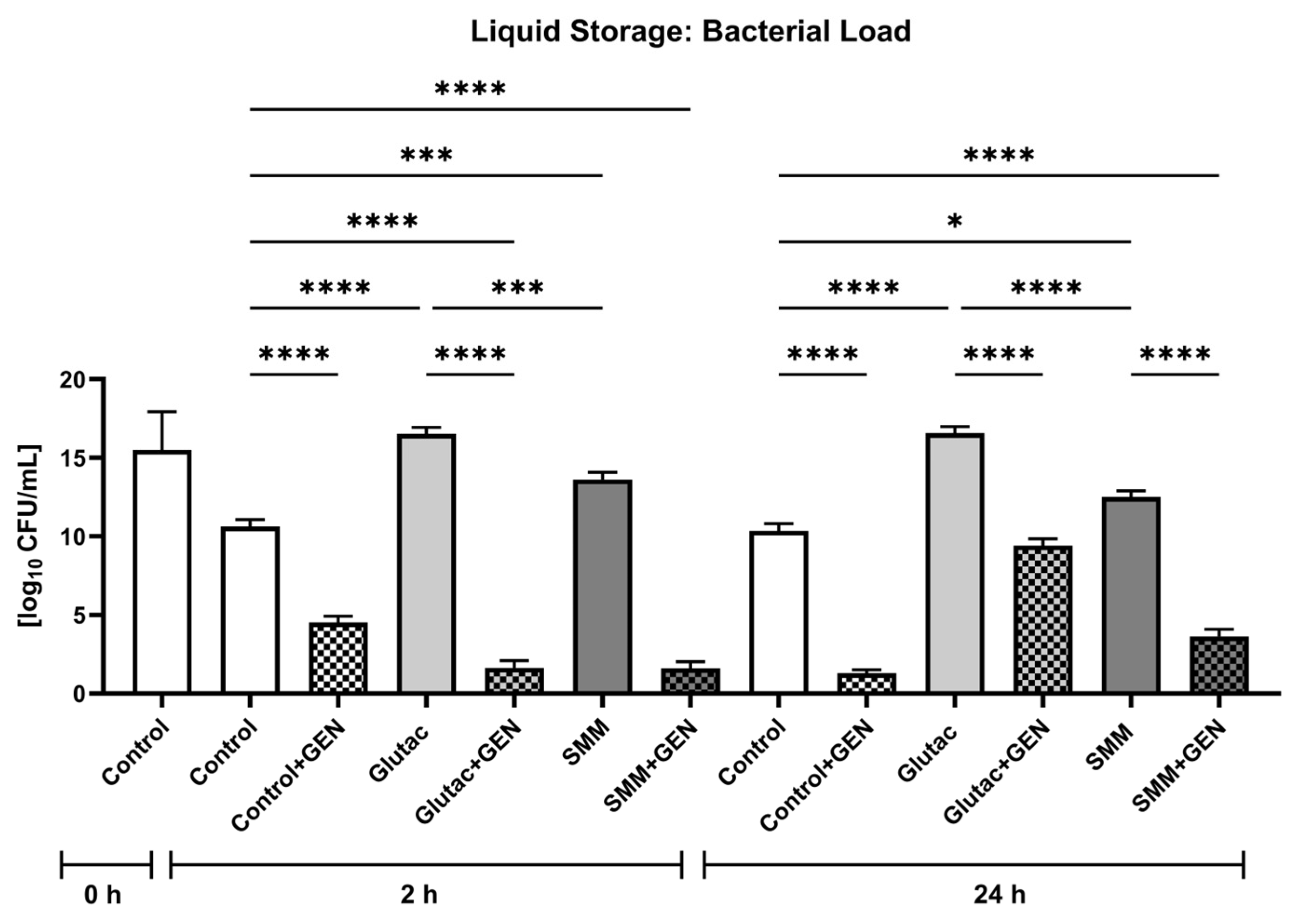
Bacterial load differed markedly among the storage conditions and was strongly influenced by gentamicin (GEN) (Figure 6). At 0 h, the baseline control exhibited a relatively high bacterial count. After 2 h of storage, the un-supplemented control maintained a moderate bacterial load, whereas Control + GEN reduced bacterial counts several-fold (Figure S4), indicating a clear antimicrobial effect of GEN (p < 0.0001). In contrast, Glutac without GEN showed the highest bacterial burden at 2 h, exceeding the un-supplemented control, while Glutac + GEN markedly suppressed bacterial growth to near-minimal levels (p < 0.0001) (Figure S8). A similar pattern was observed for SMM: SMM alone maintained substantial bacterial counts, although at significantly lower levels in comparison with the control (p < 0.0001), whereas SMM + GEN reduced the load to very low levels, comparable to the lowest values across the treatments (p < 0.0001) (Figure S11).
After 24 h of storage with gentamicin in the control (Figure S5) as well as both media (Glutac and SMM), we identified the same species as after 2 h incubation (Figures S9 and S13). More resilient bacteria were represented by the Enterococcus spp. (E. avium, E. faecium and E. faecalis), Staphylococcus spp. (S. cohnii, S. epidermidis and S. warneri), Bacillus cereus, Escherichia coli, Morganella morganii, Streptococcus alactolyticus and Vagococcus fluvialis.
By 24 h, the bacterial counts remained high in Glutac and moderate in the un-supplemented control and SMM, while the GEN-supplemented groups consistently showed reduced bacterial loads (p < 0.0001). Notably, Control + GEN maintained the lowest bacterial burden at 24 h, and SMM + GEN also remained low, whereas Glutac + GEN displayed an intermediate-to-high bacterial count at 24 h, suggesting diminished long-term suppression in Glutac compared with the other GEN-supplemented treatments. Overall, Tukey post hoc comparisons confirmed significant reductions in bacterial load with GEN, and Glutac without GEN consistently produced the highest counts, particularly at both 2 h and 24 h (p < 0.0001).

4. Discussion

The present study demonstrated that the selected media (Glutac and Sperm Motility Medium; SMM) were effective in preserving the qualitative parameters of turkey spermatozoa during short-term liquid storage. Overall, SMM performed better than Glutac after 2 and 24 h of storage. Moreover, gentamicin supplementation reduced the bacterial load in both media and was associated with improved overall sperm quality.
Oxidative stress is widely recognized as a principal mechanism underlying sperm deterioration during liquid storage. Turkey spermatozoa are particularly susceptible due to the high content of polyunsaturated fatty acids (PUFAs) in their membranes, which increases vulnerability to lipid peroxidation [21]. During storage, an imbalance between reactive oxygen species (ROS) generation and antioxidant defenses results in progressive oxidative damage that affects membrane integrity, mitochondrial activity, DNA stability, and sperm motility.
In the early phase of storage (up to 2 h), ROS production generally remains within physiological limits and can be neutralized by endogenous antioxidants. In contrast, prolonged storage (24 h and beyond) promotes ROS accumulation that exceeds the antioxidant capacity and induces oxidative stress [1]. This progressive oxidative imbalance appears to be a key driver of the time-dependent decline in sperm quality.
Consistent with previous studies [22,23,24], we observed a gradual reduction in turkey sperm motility during liquid storage. Motility remained relatively high during the first hours of storage, with only minor differences compared with fresh semen. By contrast, 24 h of storage resulted in a pronounced decline in total motility, in agreement with earlier reports [22,25]. This decline likely reflects cumulative metabolic stress rather than immediate structural damage as motility often decreases more rapidly than viability. Reduced motility during prolonged storage has been linked to alterations in flagellar function, ATP depletion, and oxidative damage to axonemal proteins [26]. Because motility is highly energy-dependent, it represents an early and sensitive indicator of sperm deterioration. Interestingly, certain kinematic parameters (velocity, linearity, and beat-cross frequency) increased after 24 h of storage. These changes may reflect alterations in movement patterns during storage and/or the selective survival of sperm subpopulations with distinct motility characteristics.
Mitochondrial function plays a crucial role in maintaining sperm motility. Slowińska et al. [27] suggested that impaired mitochondrial activity contributes significantly to motility decline during extended storage. The close relationship between mitochondrial dysfunction, ROS overproduction, and ATP deficiency supports the hypothesis that oxidative stress-induced mitochondrial damage is a critical mechanism underlying storage-mediated sperm injury.
DNA integrity was relatively preserved during short-term storage (2 h), consistent with previous findings indicating that genomic stability remains largely intact during early storage. However, extended storage has been shown to increase DNA fragmentation, particularly after 48 h [28,29].
In our study, the global ROS generation increased after extended storage (24 h), especially in the untreated control. Gentamicin supplementation was associated with lower ROS production at 24 h compared with the untreated control. Nevertheless, at 24 h, the ROS levels did not differ significantly among the experimental groups regardless of the medium used or gentamicin treatment. It will be of interest to determine how ROS generation progresses beyond 24 h. Previous studies [22,27] reported substantial oxidative stress and increased ROS after 48 h of storage. At this time point, the endogenous antioxidant defense system appears to be insufficient, which is accompanied by marked deterioration in parameters such as motility and mitochondrial membrane potential. This is consistent with the report by Zaniboni and Cerolini [25], who observed a continuous decrease in motility and viability. Furthermore, malondialdehyde (MDA), a key marker of lipid peroxidation (LPO), increased significantly from 0 to 48 h.
In turkey spermatozoa, lipid peroxidation compromises both plasma and mitochondrial membranes, resulting in impaired ion regulation, mitochondrial dysfunction, and loss of motility. These effects become more pronounced after 24–48 h of storage, highlighting the cumulative nature of oxidative damage and membrane phospholipid degradation [30,31]. Lipid peroxidation has been reported to correlate negatively with sperm motility in turkey semen, suggesting that this process affects not only plasma membrane integrity and function but may also disrupt mitochondrial activity, reduce ATP availability, and consequently impair motility during refrigerated storage [32]. A recent study further confirmed that the quality of stored turkey semen is strongly time-dependent: during storage up to 72 h, the total antioxidant capacity declined sharply, while MDA increased continuously in a glucose-based extender without supplementation [33]. Fortunately, under routine practice, semen is typically processed within a few hours after collection, which helps to maintain quality for artificial insemination.
Bacteriospermia represents another important factor that can negatively affect turkey semen quality by impairing motility, viability, membrane integrity, and fertilizing potential. Similar to our findings, Alkali et al. [8] identified Escherichia coli, Enterococcus faecalis, and Bacillus subtilis in turkey semen and reported sensitivity to pefloxacin, gentamicin, and ciprofloxacin, whereas resistance occurred against the penicillin–streptomycin combination. In general, enterococci and Bacillus spp. are naturally present in the avian intestinal tract but are also commonly associated with fecal contamination. According to Haines et al. [34], endotoxin release from bacteria may negatively affect sperm motility and morphology. Triplett et al. [35] investigated the influence of intestinal bacteria on Beltsville Small White turkey semen and confirmed that six bacterial strains, including E. coli, reduced semen quality and motility during 24 h exposure, likely due to sperm agglutination and an unfavorable microenvironment. These findings are consistent with earlier observations in rooster semen [34]. The effectiveness of gentamicin against Enterobacter spp. isolated from Large White and indigenous turkey semen was highlighted by Ngu et al. [36], with gentamicin showing high sensitivity based on inhibition-zone assessment; ciprofloxacin displayed intermediate sensitivity. Gentamicin can also be combined with other antibiotics to enhance antimicrobial activity against selected strains. In this context, an antibiotic cocktail including gentamicin successfully suppressed Campylobacter and Salmonella previously detected in turkey semen diluted in Butterfield’s phosphate diluent [37].
Finally, we observed that, after 24 h of storage, the bacterial load in the Glutac medium supplemented with gentamicin was higher than in SMM with gentamicin. One possible explanation is that Glutac contains components that better support bacterial survival and/or constituents that reduce gentamicin efficacy (e.g., through binding or reduced bioavailability). However, because Glutac is a commercially available medium with an undisclosed composition, this interpretation remains speculative and requires targeted follow-up.

5. Conclusions

In summary, turkey semen quality during liquid storage is strongly influenced by extender type, storage duration, oxidative stress, and bacterial contamination. Both media preserved sperm quality, with SMM performing slightly better overall, while gentamicin supplementation reduced bacterial load and supported sperm viability. Prolonged storage was associated with reduced motility and viability, likely driven by mitochondrial dysfunction and oxidative damage, highlighting the importance of short-term storage and effective antimicrobial control.

Supplementary Materials

The following supporting information can be downloaded at: https://www.mdpi.com/article/10.3390/poultry5020026/s1, Figure S1. Krona chart of the identified bacteria by MALDI-TOF MS Biotyper obtained from liquid stored turkey semen at time 0 h (non-treated control); Figure S2. Krona chart of the identified bacteria by MALDI-TOF MS Biotyper obtained from liquid stored turkey semen at time 2 h (non-treated control); Figure S3. Krona chart of the identified bacteria by MALDI-TOF MS Biotyper obtained from liquid stored turkey semen at time 24 h (non-treated control); Figure S4. Krona chart of the identified bacteria by MALDI-TOF MS Biotyper obtained from liquid stored turkey semen at time 2 h (gentamicin treated control); Figure S5. Krona chart of the identified bacteria by MALDI-TOF MS Biotyper obtained from liquid stored turkey semen at time 24 h (gentamicin treated control); Figure S6. Krona chart of the identified bacteria by MALDI-TOF MS Biotyper obtained from liquid stored turkey semen at time 2 h (non-treated Glutac media); Figure S7. Krona chart of the identified bacteria by MALDI-TOF MS Biotyper obtained from liquid stored turkey semen at time 24 h (non-treated Glutac media); Figure S8. Krona chart of the identified bacteria by MALDI-TOF MS Biotyper obtained from liquid stored turkey semen at time 2 h (Glutac media treated with gentamicin); Figure S9. Krona chart of the identified bacteria by MALDI-TOF MS Biotyper obtained from liquid stored turkey semen at time 24 h (Glutac media treated with gentamicin); Figure S10. Krona chart of the identified bacteria by MALDI-TOF MS Biotyper obtained from liquid stored turkey semen at time 2 h (non-treated SMM media); Figure S11. Krona chart of the identified bacteria by MALDI-TOF MS Biotyper obtained from liquid stored turkey semen at time 24 h (non-treated SMM media); Figure S12. Krona chart of the identified bacteria by MALDI-TOF MS Biotyper obtained from liquid stored turkey semen at time 2 h (SMM media treated with gentamicin); Figure S13. Krona chart of the identified bacteria by MALDI-TOF MS Biotyper obtained from liquid stored turkey semen at time 24 h (SMM media treated with gentamicin).

Author Contributions

Conceptualization, E.T. and F.B.; methodology, M.Ď., M.K. and E.T.; formal analysis, F.B. and E.T.; investigation, M.Ď., E.T. and M.K.; resources, T.S. and E.T.; data curation, E.T.; writing—original draft preparation, F.B.; writing—review and editing, F.B. and E.T.; supervision, E.T.; project administration, E.T.; funding acquisition, E.T. All authors have read and agreed to the published version of the manuscript.

Funding

This research was funded by Slovak Research and Development Agency grant no. APVV-21-0095 and by the VEGA 1/0067/24 grant.

Institutional Review Board Statement

The animals and sample collection were carefully handled in accordance with ethical guidelines as stated in the Slovak Animal Protection Regulation RD 377/12, which conforms to European Union Regulation 2010/63. Since semen collection is routinely performed at the company Branko, a.s., causing no harm or discomfort, special ethical approval was not needed for this type of experiment.

Informed Consent Statement

Written informed consent for publication was obtained from an authorized representative of the Branko, a.s. company (owner of the turkeys).

Data Availability Statement

The original contributions presented in this study are included in the article. Further inquiries can be directed to the corresponding author.

Acknowledgments

We would like to thank the technical support staff from Branko, a.s. for their assistance during semen collection.

Conflicts of Interest

The authors declare no conflicts of interest.

References

  1. Partyka, A.; Nizański, W. Advances in storage of poultry semen. Anim. Reprod. Sci. 2022, 246, 106921. [Google Scholar] [CrossRef]
  2. Mohan, J.; Kolluri, G.; Srivastava, V.; Tyagi, J.S.; Tiwari, A.K. Bacterial contamination of poultry semen, its dilution and storage. World’s Poult. Sci. J. 2023, 79, 593–617. [Google Scholar] [CrossRef]
  3. Dutta, S.; Sengupta, P.; Izuka, E.; Menuba, I.; Jegasothy, R.; Nwagha, U. Staphylococcal infections and infertility: Mechanisms and management. Mol. Cell. Biochem. 2020, 474, 57–72. [Google Scholar] [CrossRef]
  4. Lenický, M.; Slanina, T.; Kačániová, M.; Galovičová, L.; Petrovičová, M.; Ďuračka, M.; Benko, F.; Kováč, J.; Tvrdá, E. Identification of bacterial profiles and their interactions with selected quality, oxidative, and immunological parameters of turkey semen. Animals 2021, 11, 1771. [Google Scholar] [CrossRef] [PubMed]
  5. Al Azad, M.A.R.; Rahman, M.M.; Amin, R.; Begum, M.I.A.; Fries, R.; Husna, A.; Khairalla, A.S.; Badruzzaman, A.T.M.; El Zowalaty, M.E.; Lampang, K.N.; et al. Susceptibility and Multidrug Resistance Patterns of Escherichia coli Isolated from Cloacal Swabs of Live Broiler Chickens in Bangladesh. Pathogens 2019, 8, 118. [Google Scholar] [CrossRef] [PubMed]
  6. Boamah, V.E.; Agyare, C.; Odoi, H.; Dalsgaard, A. Practices and factors Influencing the Use of Antibiotics in Selected Poultry Farms in Ghana. J. Antimicrob. Agents 2016, 2, 120. [Google Scholar]
  7. Tam, V.H.; Kabbara, S.; Vo, G.; Schilling, A.; Coyle, E.A. Comparative Pharmacodynamics of Gentamicin against Staphylococcus aureus and Pseudomonas aeruginosa. Antimicrob. Agents Chemother. 2006, 50, 2626–2631. [Google Scholar] [CrossRef]
  8. Alkali, I.M.; Asuku, S.O.; Umar, M.B.; Abba, A.; Mustapha, A.; Bukar, M.M.; Waziri, M.A. Microbial Contaminants in fresh and Extended Turkey Semen and their Sensitivity to Antibiotics. Nig. Vet. J. 2020, 41, 1–6. [Google Scholar] [CrossRef]
  9. Johansson, A.; Greko, C.; Engstrom, B.E.; Karlsson, M. Antimicrobial susceptibility of Swedish, Norwegian and Danish isolates of Clostrisium perfringens from poultry, and distribution of tetracycline resistance genes. Vet. Microbiol. 2004, 99, 251–257. [Google Scholar] [CrossRef]
  10. Tvrdá, E.; Petrovičová, M.; Ďuračka, M.; Benko, F.; Slanina, T.; Galovičová, L.; Kačániová, M. Short-Term Storage of Rooster Ejaculates: Sperm Quality and Bacterial Profile in Selected Commercial Extenders. Antibiotics 2023, 12, 1284. [Google Scholar] [CrossRef]
  11. Ahmed, K.; Das, K.K.; George, S. Bacterial Flora of Poultry Semen and Their Antibiotic Sensitivity Pattern. Int. J. Appl. Pure Sci. Agric. 2015, 1, 39–41. [Google Scholar]
  12. Morrell, J.M.; Wallgren, M. Alternatives to Antibiotics in Semen Extenders: A Review. Pathogens 2014, 3, 934–946. [Google Scholar] [CrossRef] [PubMed]
  13. Khoso, Z.A.; Rajput, N.; Laghari, I.H.; Kaka, A.; Khokar, T.A. A Review on Poultry; Semen Storage and Preservation. J. Bioresour. Manag. 2024, 11, 253–264. [Google Scholar]
  14. Tvrdá, E.; Ďuračka, M.; Kačániová, M.; Slanina, T. Cryoprotective and antibacterial effects of resveratrol on frozen-thawed turkey spermatozoa. Contemp. Agric. 2025, 74, 64–74. [Google Scholar] [CrossRef]
  15. Lukacova, J.; Jambor, T.; Knazicka, Z.; Tvrda, E.; Kolesarova, A.; Lukac, N. Dose- and time-dependent effects of bisphenol A on bovine spermatozoa in vitro. J. Environ. Sci. Health A 2015, 50, 669–676. [Google Scholar] [CrossRef]
  16. Duracka, M.; Lukac, N.; Kacaniova, M.; Kantor, A.; Hleba, A.; Ondruska, L.; Tvrda, E. Antibiotics Versus Natural Biomolecules: The Case of In Vitro Induced Bacteriospermia by Enterococcus faecalis in Rabbit Semen. Molecules 2019, 24, 4239. [Google Scholar] [CrossRef]
  17. Jambor, T.; Arvay, J.; Tvrda, E.; Kovacik, A.; Greifova, H.; Lukac, N. The Effect of Apium graveolens L., Levisticum officinale and Calendula officinalis L. on Cell Viability, Membrane Integrity, Steroidogenesis, and Intercellular Communication in Mice Leydig Cells in Vitro. Physiol. Res. 2021, 70, 615–625. [Google Scholar] [CrossRef]
  18. Najafi, A.; Mohammadi, H.; Sharifi, S.D.; Rahimi, A. Apigenin supplementation substantially improves rooster sperm freezability and post-thaw function. Sci. Rep. 2024, 14, 4527. [Google Scholar] [CrossRef]
  19. Blank, M.H.; Ruivo, L.P.; Novaes, G.A.; Lemos, E.C.; Losano, J.D.A.; Siqueira, A.F.P.; Pereira, R.J.G. Assessing different liquid-storage temperatures for rooster spermatozoa. Anim. Reprod. Sci. 2021, 233, 106845. [Google Scholar] [CrossRef]
  20. Kačániová, M.; Terentjeva, M.; Štefániková, J.; Žiarovská, J.; Savitskaya, T.; Grinshpan, D.; Kowalczewski, P.; Vukovic, N.; Tvrdá, E. Chemical composition and antimicrobial activity of selected essential oils against Staphylococcus spp. isolated from human semen. Antibiotics 2020, 9, 765. [Google Scholar] [CrossRef]
  21. Cerolini, S.; Zaniboni, L.; Maldjian, A.; Gliozzi, T. Effect of docosahexaenoic acid and α-tocopherol enrichment in chicken sperm on semen quality, sperm lipid composition and susceptibility to peroxidation. Theriogenology 2006, 66, 877–886. [Google Scholar] [CrossRef]
  22. Pardyak, L.; Liszewska, E.; Judycka, S.; Machcińska-Zielińska, S.; Karol, H.; Dietrich, M.A.; Goljo, E.; Arent, Z.; Bilińska, B.; Rusco, G.; et al. Liquid semen storage-induced alternation in the protein composition of turkey (Meleagris gallopavo) spermatozoa. Theriogenology 2024, 216, 69–81. [Google Scholar] [CrossRef]
  23. Douard, V.; Hermier, D.; Magistrini, M.; Labbé, C.; Blesbois, E. Impact of changes in composition of storage medium on lipid content and quality of turkey spermatozoa. Theriogenology 2004, 61, 1–13. [Google Scholar] [CrossRef] [PubMed]
  24. Iaffaldano, N.; Manchisi, A.; Rosato, M.P. The preservability of turkey semen quality during storage in relation to strain and age of males. Anim. Reprod. Sci. 2008, 109, 266–273. [Google Scholar] [CrossRef]
  25. Zaniboni, L.; Cerolini, S. Liquid storage of turkey semen: Changes in quality parameters, lipid composition and susceptibility to induced in vitro peroxidation in control, n-3 fatty acids and alpha-tocopherol rich spermatozoa. Anim. Reprod. Sci. 2009, 112, 51–65. [Google Scholar] [CrossRef]
  26. Douard, V.; Hermier, D.; Labbe, C.; Magistrini, M.; Blesbois, E. Role of seminal plasma in damage to turkey spermatozoa during in vitro storage. Theriogenology 2005, 63, 126–137. [Google Scholar] [CrossRef]
  27. Slowińska, M.; Liszewska, E.; Judycka, S.; Konopka, M.; Ciereszko, A. Mitochondiral membrane potential and reactive oxygen species in liquid stored and cryopreserved turkey (Meleagris gallopavo) spermatozoa. Poult. Sci. 2018, 97, 3709–3717. [Google Scholar] [CrossRef] [PubMed]
  28. Kotlowska, M.; Dietrich, G.; Wojtczak, M.; Karol, H.; Ciereszka, A. Effects of liquid storage on amidase activity, DNA fragmentation and motility of turkey spermatozoa. Theriogenology 2007, 67, 276–286. [Google Scholar] [CrossRef] [PubMed]
  29. Gliozzi, T.M.; Zaniboni, L.; Cerolini, S. DNA fragmentation in chicken spermatozoa during cryopreservation. Theriogenelogy 2011, 75, 1613–1622. [Google Scholar] [CrossRef]
  30. Douard, V.; Hermier, D.; Blesbois, E. Changes in Turkey Semen Lipids During Liquid In Vitro Storage. Biol. Reprod. 2000, 63, 1450–1456. [Google Scholar] [CrossRef]
  31. Douard, V.; Hermier, D.; Magistrini, M.; Blesbois, E. Reproductive period affects lipid composition and quality of fresh and stored spermatozoa in Turkeys. Theriogenology 2003, 59, 753–764. [Google Scholar] [CrossRef] [PubMed]
  32. Rosato, M.P.; Centoducati, G.; Santacroce, M.P.; Iaffaldano, N. Effects of lycopene on in vitro quality and lipid peroxidation in refrigerated and cryopreserved turkey spermatozoa. Br. Poult. Sci. 2012, 53, 545–552. [Google Scholar] [CrossRef] [PubMed]
  33. Izanloo, H.; Soleimanzadeh, A.; Bucak, M.N.; Imani, M.; Zhandi, M. The effects of varying concentrations of glutathione and trehalose in improving microscopic and oxidative stress parameters in Turkey semen during liquid storage at 5 °C. Cryobiology 2021, 101, 12–19. [Google Scholar] [CrossRef] [PubMed]
  34. Haines, M.D.; Parker, H.M.; McDaniel, C.D.; Kiess, A.S. Impact of 6 different intestinal bacteria on broiler breeder sperm motility in vitro. Poult. Sci. 2013, 92, 2174–2181. [Google Scholar] [CrossRef]
  35. Triplett, M.D.; Parker, H.M.; McDaniel, C.D.; Kiess, A.S. Influence of 6 different intestinal bacteria on Beltsville Small White turkey semen. Poult. Sci. 2016, 95, 1918–1926. [Google Scholar] [CrossRef]
  36. Ngu, G.T.; Etchu, K.A.; Butswat, I.S.R.; Woogeng, I.N. Semen and microbial characteristics of two breeds of turkeys in an arid tropical environment of Bauchi State, Nigeria. Afr. J. Microbiol. Res. 2014, 8, 2174–2182. [Google Scholar] [CrossRef][Green Version]
  37. Donoghue, A.M.; Blore, P.J.; Cole, K.; Loskutoff, N.M.; Donoghue, D.J. Detection of Campylobacter or Salmonella in Turkey Semen and the Ability of poultry Semen Extenders to reduce Their Concentrations. Physiol. Reprod. 2004, 83, 1728–1733. [Google Scholar] [CrossRef]
Figure 1. The effect of medium (Glutac and SMM), time of liquid storage (2 h and 24 h) and gentamicin treatment on movement characteristics of turkey spermatozoa (n = 40), including motility (a), progressive motility (b), curvilinear velocity (c), straight-line velocity (d), average path velocity (e), straightness of trajectory (f), amplitude of lateral displacement (g), beat-cross frequency (h) and linearity (i). Mean ± SD. * p < 0.05; ** p < 0.01; *** p < 0.001; **** p < 0.0001.
Poultry 05 00026 g001
Figure 2. The effect of medium (Glutac and SMM), time of liquid storage (2 h and 24 h) and gentamicin treatment on viability (a), membrane (b) and acrosome integrity (c) of turkey spermatozoa (n = 40). Mean ± SD. * p < 0.05; ** p < 0.01; *** p < 0.001; **** p < 0.0001.
Poultry 05 00026 g002
Figure 3. The effect of medium (Glutac and SMM), time of liquid storage (2 h and 24 h) and gentamicin treatment on mitochondrial functionality (a), superoxide production (b), mitochondrial membrane potential (c) and metabolic activity (d) of turkey spermatozoa (n = 40). Mean ± SD. * p < 0.05; ** p < 0.01; *** p < 0.001; **** p < 0.0001.
Poultry 05 00026 g003
Figure 4. The effect of medium (Glutac and SMM), time of liquid storage (2 h and 24 h) and gentamicin treatment on apoptosis (a), necrosis (b) and DNA status (c,d) of turkey spermatozoa (n = 40). Mean ± SD. * p < 0.05; *** p < 0.001; **** p < 0.0001.
Poultry 05 00026 g004
Figure 5. The effect of medium (Glutac and SMM), time of liquid storage (2 h and 24 h) and gentamicin treatment on ROS production (a), total antioxidant capacity (b), protein oxidation (c) and lipid peroxidation (d) of turkey spermatozoa (n = 40). Mean ± SD. * p < 0.05; ** p < 0.01; *** p < 0.001; **** p < 0.0001.
Poultry 05 00026 g005
Figure 6. The effect of medium (Glutac and SMM), time of liquid storage (2 h and 24 h) and gentamicin treatment on the bacterial load of turkey spermatozoa (n = 40). Mean ± SD. * p < 0.05; *** p < 0.001; **** p < 0.0001.
Poultry 05 00026 g006
Disclaimer/Publisher’s Note: The statements, opinions and data contained in all publications are solely those of the individual author(s) and contributor(s) and not of MDPI and/or the editor(s). MDPI and/or the editor(s) disclaim responsibility for any injury to people or property resulting from any ideas, methods, instructions or products referred to in the content.