


Abstract
The use of waste eggshell as a support material for nickel catalysts in the dry reforming of methane (DRM) aims to enhance hydrogen production while controlling catalyst deactivation caused by carbon deposition. Catalyst samples were prepared by wet impregnation and characterized by N2 adsorption–desorption measurements, X-ray diffractometry (XRD), thermogravimetric analysis (TGA), temperature-programmed reduction, desorption of CO2 and oxidation (H2-TPR, CO2-TPD and TPO), and scanning electron microscopy (SEM). Catalyst activity experiments were conducted at temperatures ranging from 500 to 750 °C, with both reduced and unreduced samples, utilizing a 1.5:1 mixture of CH4 and CO2 in a fixed-bed reactor, accompanied by online gas chromatography for analysis. By employing a low calcination temperature (500 °C), the integrity of the eggshell support was maintained. The Ni20 catalyst, with an intermediate nickel loading, exhibited the highest CH4 (24.5%) and CO2 (60.5%) conversion and showed minimal carbon formation. Notably, the basicity of the eggshell support contributed to the suppression of carbon deposition, as evidenced by the TPO and SEM analyses. The results suggest that the inherent basicity of the eggshell enhances catalyst resistance to coking while also contributing to the mitigation of eggshell waste.
1. Introduction
Hydrogen has emerged as a promising alternative energy source due to fossil fuel depletion and the need to reduce emissions, as its combustion produces energy without CO2 emissions [1,2,3,4,5,6]. While steam reforming of methane (SRM) is the main method for industrial H2 production, researchers are increasingly exploring dry reforming of methane (DRM), also known as CO2 reforming, which utilizes two greenhouse gases: CO2 and CH4 [7,8,9]. Thus, the DRM represents a sustainable approach to hydrogen production and greenhouse gas emissions mitigation.
The implementation of DRM faces significant challenges, particularly those related to catalyst deactivation and the dynamics of the reaction. The primary reaction, which converts CH4 and CO2 into synthesis gas (H2 and CO), is highly endothermic ( = 247 kJ mol−1, Equation (1)) [7,10,11,12,13]. This characteristic leads to substantial energy requirements and contributes to catalyst deactivation through active metal sintering.
In addition to the primary reaction, some parallel reactions further complicate the process. Methane decomposition (Equation (2)) results in carbon deposition, increasing catalyst deactivation [14,15,16]. The Boudouard reaction shown in Equation (3) also produces carbon, while the reverse water–gas shift reaction (RWGS) shown in Equation (4) reduces the H2/CO ratio, affecting the overall reaction efficiency [17,18].
Given these challenges, the choice of a proper catalyst is essential. Table 1 compares the main advantages and limitations of common DRM catalyst design strategies. The use of Ni as an active metal offers activity similar to that of noble metals at a lower cost but faces deactivation, mainly caused by coking and sintering [13,19,20,21,22]. Numerous studies have highlighted the roles of acidity and basicity in DRM catalysts [15,23,24,25]. While acidic sites primarily contribute to catalyst deactivation through coking, whose carbon deposits age and graphitize, basic sites play a crucial role in facilitating the adsorption of CO2 [26]. This adsorption is necessary for gasifying carbon deposits. Chemisorbed CO2 reacts with nickel and other active metals to form intermediate carbonate species, which then react with CH4 to generate CO [27,28]. Additionally, research by Abdullah et al. [3] reviewed that increased basicity lowers the activation energy required for DRM, thereby enhancing catalytic activity.
Table 1.
Advantages and disadvantages of different DRM catalyst strategies.
These properties can be tuned through the choice of support [29,30]. High-surface-area supports usually enhance metal dispersion and increase the number of accessible active sites, although excessive metal loading may lead to crystallite growth, weaker metal–support interactions, and greater susceptibility to sintering [31,32,33]. In addition, basic supports such as MgO and La2O3 favor CO2 adsorption and dissociation [19,34,35], reducible supports such as CeO2, ZrO2, and TiO2 facilitate carbon removal through mobile oxygen vacancies [36,37,38], and neutral or slightly acidic supports such as SiO2 and Al2O3 are valued for their high surface area and ability to disperse the active phase, despite their lower capacity for in situ carbon elimination [30,37,39,40].
Among other strategies, Dama et al. [24] demonstrated that alkaline-earth-metal-substituted perovskites such as CaZr1−xNixO3 can deliver long-term DRM stability due to their strong metal–support interaction and resistance to carbon formation. More recently, MXene-based catalysts (e.g., Ni/V2CTx and V2O3-V8C7 oxy-carbides) have emerged as a new class of supports capable of achieving high CH4 and CO2 conversions, although their coking behavior is highly dependent on the synthesis route [41,42]. Layered double hydroxides (LDHs) and their derived mixed oxides have also shown excellent performance in DRM, offering high Ni dispersion, strong metal–support interaction, and improved resistance to sintering and carbon deposition [14,28].
Zhang et al. [43] emphasized the potential of Ca-based catalysts in the DRM, highlighting their multifaceted roles as support, promoter, and active phase. A key advantage of Ca is its capacity to enhance catalytic performance while concurrently addressing catalyst deactivation. Specifically, Ca promotes the dispersion of active metals, resulting in smaller particle sizes that improve interactions between the metal and the support, thereby decreasing deactivation by sintering [43,44]. Furthermore, the incorporation of Ca increases the basicity of the catalyst, facilitating CO2 adsorption and the gasification of coke deposits on the catalyst surface, which mitigates this form of deactivation [43,44].
One promising Ca source is eggshell, which is rich in calcium carbonate and is a biodegradable waste material [45,46]. Other researchers have demonstrated that calcined eggshell can serve as a catalyst support in processes such as biomass tar cracking [47], steam reforming of methane [48], and steam reforming of ethanol [49], showing lower deactivation due to carbon deposition. However, its application in DRM remains unexplored. In addition, the utilization of eggshells contributes to the decrease in industrial waste and the environmental problems caused by it. Eggshells are expected to generate 8 million tons of waste per year as a byproduct of egg processing industries, often discarded without any prior treatment [50,51]. The chemical and environmental advantages of eggshells motivate the present investigation. Therefore, this work aims to evaluate CH4 and CO2 conversions in the dry reforming of methane (DRM), over Ni-based catalysts supported on eggshells with different nickel loadings, while assessing the influence of reduction pretreatment and the mitigation of carbon deposition.
2. Results and Discussion
2.1. Preliminary Tests
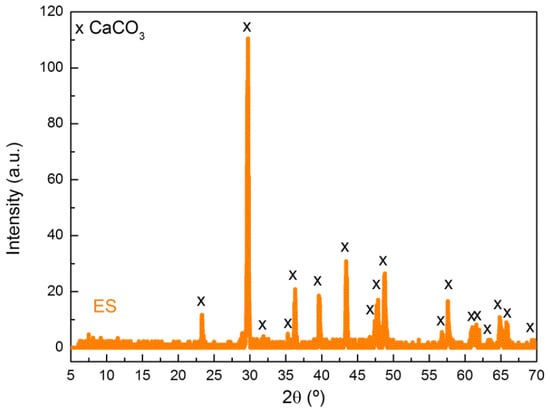
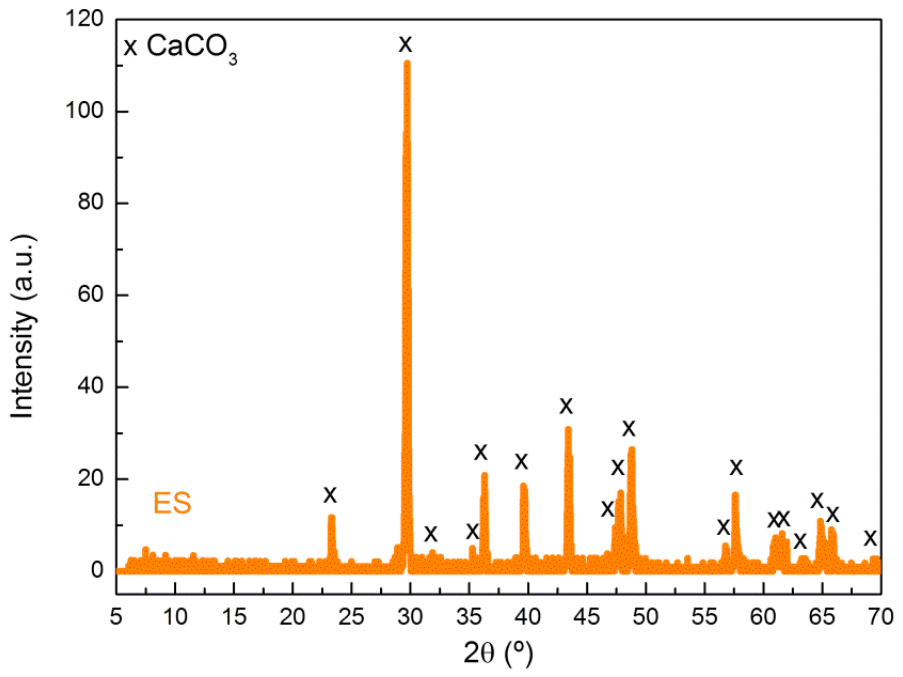
Initially, the composition of the eggshell support (ES) used as a catalyst support was analyzed. Table 2 displays the results from XRF analysis of the eggshell, revealing that it is primarily composed of calcium, accounting for about 96.5% of its content, with minor amounts of Mg, P, Na, and K. According to the literature, this calcium is mainly present in the form of carbonate [45,50,52]. Figure 1 shows the XRD results of the pristine eggshell, which exhibits the characteristic CaCO3 reflections (23, 29.4, 31.4, 36, 39.4, 43, 47.5, 48.5, 56.6, 57.4, 60.7, 63, 64.7, and 65.6°) [53,54], confirming the XRF results. The average crystallite size of CaCO3 was calculated from the most intense reflection at 29.4° as 41.3 nm.
Table 2.
XRF results of ES in % (g/100 g).
Figure 1.
XRD pattern of the pristine ES.
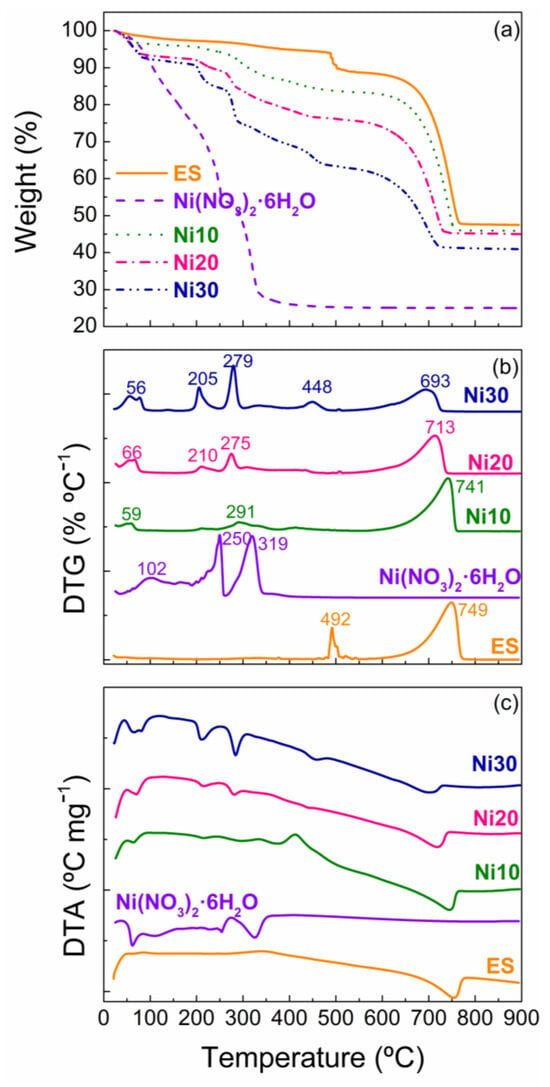
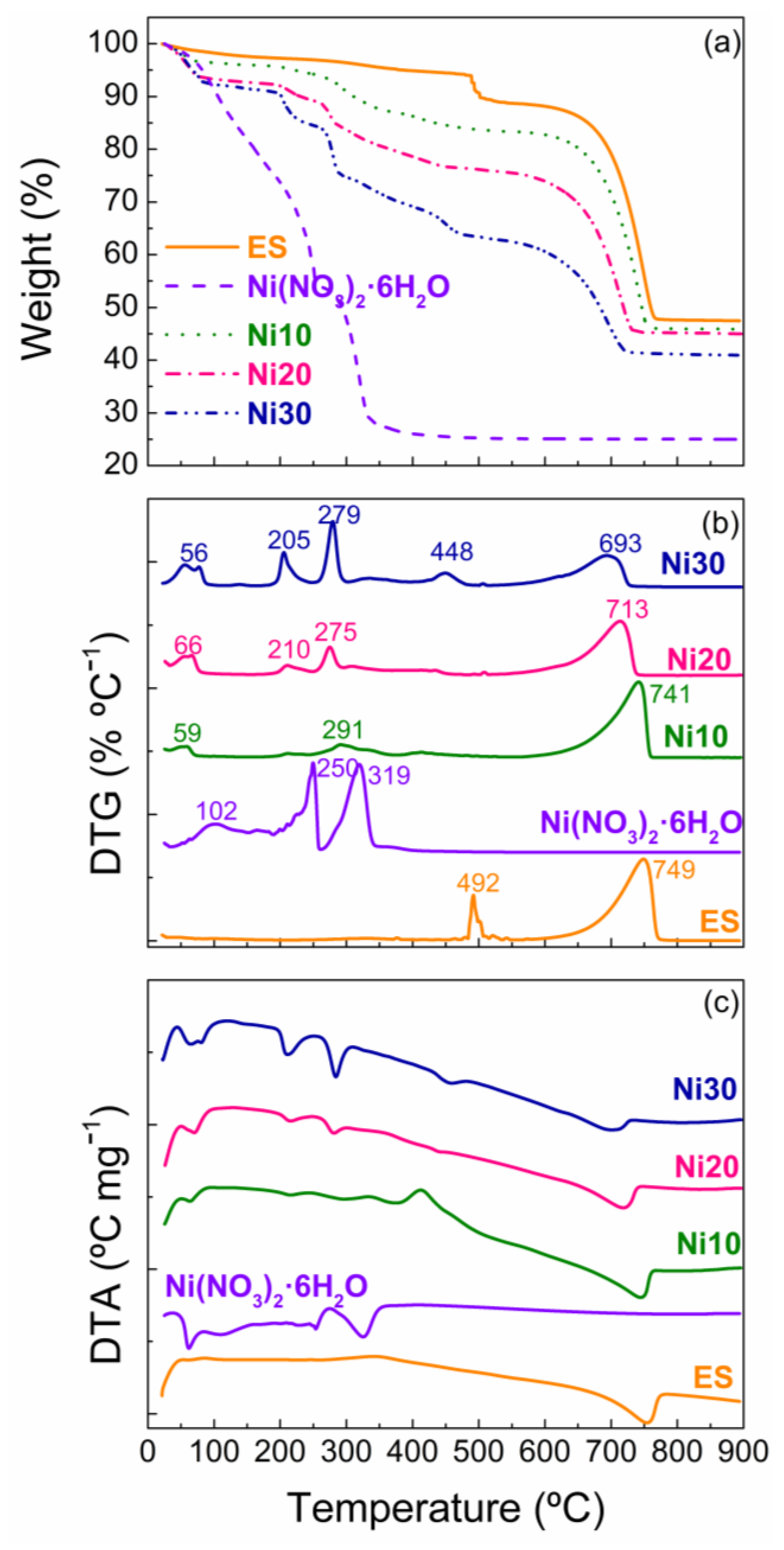
Figure 2 presents the TGA results for pristine ES, which shows a minor mass loss around 500 °C and a major mass loss of about 45% between 600 and 800 °C. According to Queirós et al. [55], the initial mass loss is attributed to the decomposition of residual organic matter, which happens between 220 and 570 °C. Meanwhile, the later mass loss is associated with the decomposition of CaCO3 into CaO, which takes place between 600 and 800 °C [56]. Figure 2 also includes the TGA results for pure Ni(NO3)2·6H2O and the three prepared samples with varying Ni contents. Brockner et al. [57] noted that the decomposition of Ni(NO3)2·6H2O occurs in three stages. In the first stage, occurring below 200 °C, water is released, resulting in Ni(NO3)2·2H2O, followed by oxidation into Ni(NO3)(OH)2·H2O and partial condensation into Ni(NO3)(OH)1.5O0.25·H2O. In the second stage, at 250 °C, Ni2O3 is formed, while in the third stage, around 300 °C, this oxide decomposes into NiO [57]. The three samples with Ni impregnated on ES displayed a combination of both Ni(NO3)2·6H2O and ES decomposition behaviors. The main difference lies in the temperature at which CaCO3 decomposition occurs, which is inversely proportional to the metallic content in the sample. This trend suggests that higher metallic content facilitates the decomposition process. This shift in CaCO3 decomposition temperature caused by transition metals has been reported in the literature [58,59,60,61]. Based on these results, preliminary tests were carried out at a calcination temperature of 750 °C to achieve the CaO phase.
Figure 2.
TG (a), DTG (b) and DTA (c) results of the uncalcined samples, pristine ES and Ni(NO3)2·6H2O metal precursor.
Figure 3 presents the H2-TPR results for the three samples, calcined at 750 °C. Reduction temperatures below 350 °C would represent the reduction in bulk NiO with no interaction with the support, which is not present in any of the profiles in Figure 3. Meanwhile, reduction temperatures between 400 and 500 °C indicate the reduction in NiO species with weak interactions with the support whereas temperatures in the intermediate range (500–600 °C) correspond to NiO species with moderate interactions with the support. Higher temperatures (>600 °C) reflect NiO species with strong chemical interactions with the support [62,63,64,65]. This interpretation is consistent with Tian et al. [66], who reported that CaO–Ni materials present the coexistence of free NiO and NiO interacting with CaO, with the support-interacting species being reduced at higher temperatures. The samples do not exhibit a carbonate decomposition region between 650 and 850 °C [56], indicating that the calcination process at 750 °C was sufficient to convert all CaCO3 into CaO. The reduction profiles reveal notable differences among the samples. The Ni10 sample shows a smaller reduction area with three peaks that are more widely spaced within the range of 350 to 675 °C. In contrast, the samples with higher Ni content exhibit a larger reduction area, and the three peaks are closer together, specifically between 350 and 600 °C, indicating that these samples are more uniform than Ni10. Notably, the Ni20 and Ni30 samples also differ; the first peak for Ni30 is higher, while the second peak for Ni20 is more pronounced. This indicates that Ni20 has a slightly stronger interaction between the active phase and the support, as most of this sample is reduced at a higher temperature than Ni30.
Figure 3.
H2-TPR results of samples calcined at 750 °C.
However, as shown in Figure S1 (see Supplementary Materials), when the samples calcined at 750 °C were tested in the DRM reaction, methane conversion was very low for all samples, with only the reduced ones showing some activity. The exception was the Ni30 sample, which demonstrated activity at 750 °C even without reduction. These low conversions may be related to the exposure of Ni particles to excessively high temperatures during calcination, which can promote sintering and crystallite growth, potentially reducing the number of accessible active sites. A lower calcination temperature of 500 °C was therefore used for subsequent characterization and activity tests. This temperature may also help to maintain most of the support as CaCO3, decreasing decomposition prior to Ni reduction. Considering that these results were obtained for Ni catalysts supported on CaO from the beginning of the reaction, the following sections present findings obtained from samples calcined at 500 °C.
2.2. Catalyst Characterization
Table 3 displays the textural properties obtained from N2 physisorption for the samples calcined at 500 °C, alongside the pristine support (ES) calcined under the same conditions. The BET surface area (SBET) of ES is relatively low, measuring 1.3 m2 g−1, characteristic of this material [67]. In contrast, the impregnated samples demonstrated an increase in this value, with the Ni20 sample exhibiting the highest surface area. This increase in surface area can be attributed to the evolution of gases during decomposition in the calcination process [68]. Notably, the Ni30 sample showed a larger pore diameter, as indicated by the pore size distribution in Figure S2 (see Supplementary Materials), suggesting that higher nickel content contributes to modifications in the pore structure. This trend likely reflects the deposition of larger nickel particles within the pores. Also, the isotherms are type II, which are given by the physisorption on nonporous or macroporous materials [69].
Table 3.
Specific surface area and average crystallite size of the calcined samples.
Some researchers have shown that micropores enhance local reagent concentration, mesopores facilitate mass transport, and hierarchical or porous morphologies increase the exposure of active sites [70,71,72]. Among the tested catalysts, Ni20 exhibits the highest BET surface area (5.4 m2 g−1) and an intermediate pore size distribution (Table 3, Figure S2), compared to Ni10 and Ni30. This combination of smaller and intermediate pores may enhance local CH4 and CO2 concentrations near Ni sites while facilitating diffusion through the catalyst particle. In addition, the increased surface area can improve the accessibility of Ni sites relative to the other samples.
In addition to the increase in surface area, the crystallite size was influenced by nickel loading. As shown in Table 3, the average crystallite size increased with nickel content, with the Ni20 sample exhibiting the largest crystallites, at 26 nm. This result suggests better incorporation of Ni at an intermediate loading, consistent with the higher surface area observed for the Ni20 sample. Conversely, the Ni10 and Ni30 samples exhibited smaller and more varied crystallite sizes, which can be attributed to less efficient metal dispersion at lower loadings or a tendency for nickel agglomeration at higher loadings.
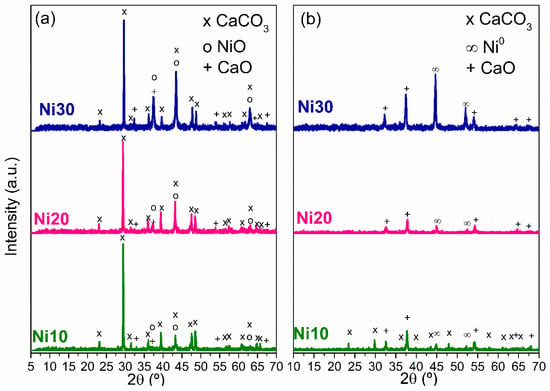
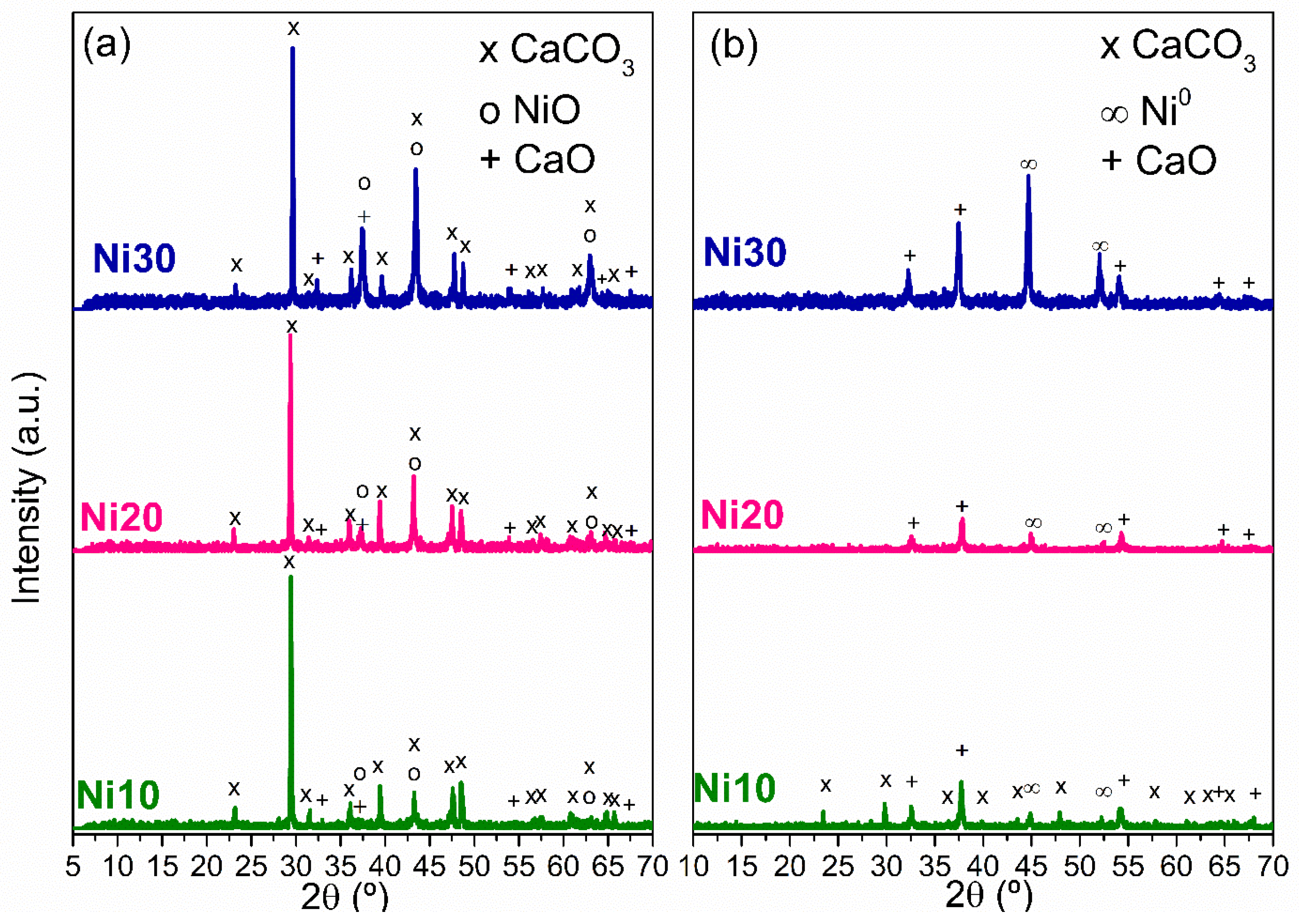
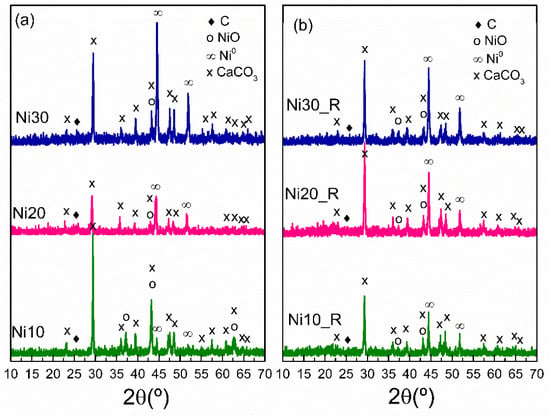
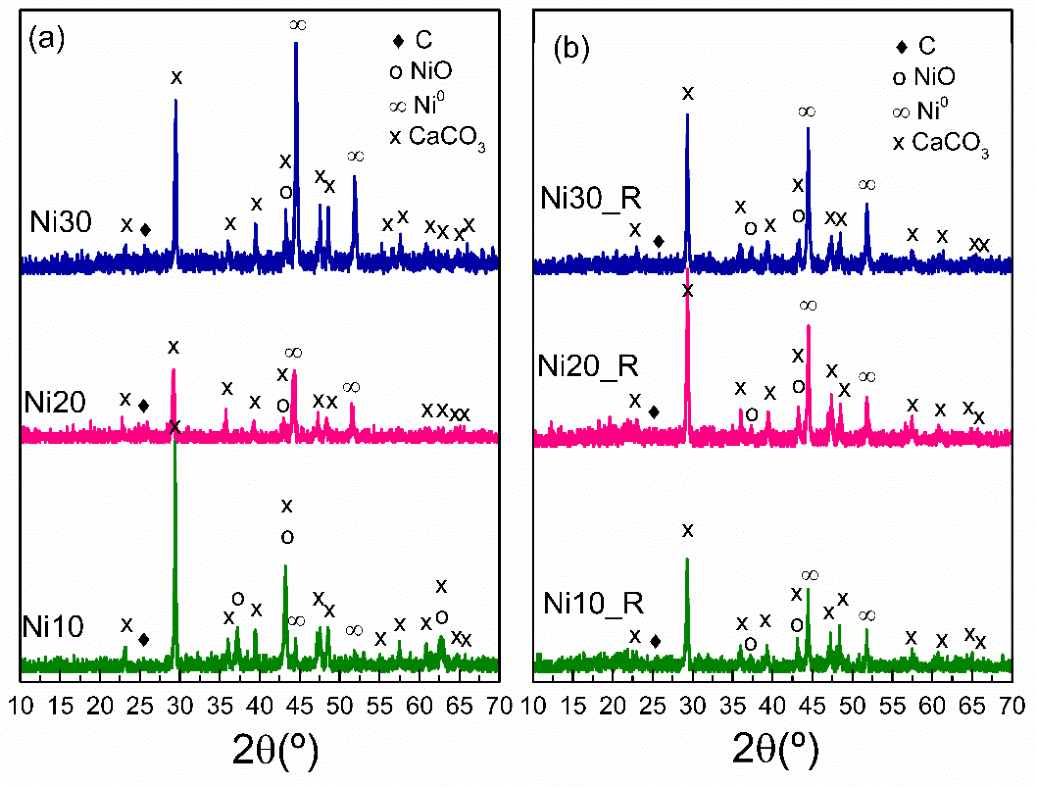
The diffractograms of the samples calcined at 500 °C, presented in Figure 4a, show signals corresponding to CaCO3 and NiO (37.2, 43.2, and 62.9°) [28]. The presence of reflections at ~32, 37, and 53.8° related to CaO suggests that partial decomposition of calcium carbonate took place even when calcination was performed at 500 °C. This decomposition was especially notable in the Ni30 sample, which exhibited a more intense CaO signal due to its higher metal loading, indicating that Ni promotes CaCO3 decomposition due to nickel nitrate decomposition [58,59,60,61].
Figure 4.
XRD patterns of the samples (a) calcined at 500 °C and (b) reduced at 600 °C.
The average crystallite size obtained from Figure 4a is included in Table 3, revealing the highest value for the Ni20 sample. This result suggests a better incorporation of Ni in the sample with intermediate Ni content, agreeing with the specific surface area results. Also, the relatively large values can be attributed to the lower specific surface area of the support, which hindered the formation of smaller crystallites following impregnation. The diffractograms of the reduced samples (Figure 4b) displayed signals at 44.3° and 51.7°, corresponding to the Ni0 phase [28]. The Ni20 and Ni30 samples did not exhibit the CaCO3 signal, indicating that carbonate decomposition was complete when reduced at 600 °C for 1 h, particularly due to the higher metal loading.
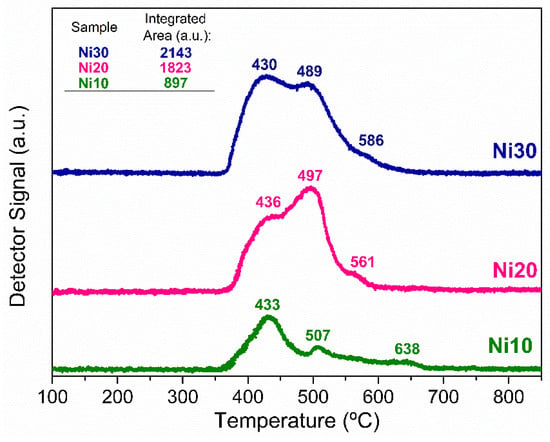
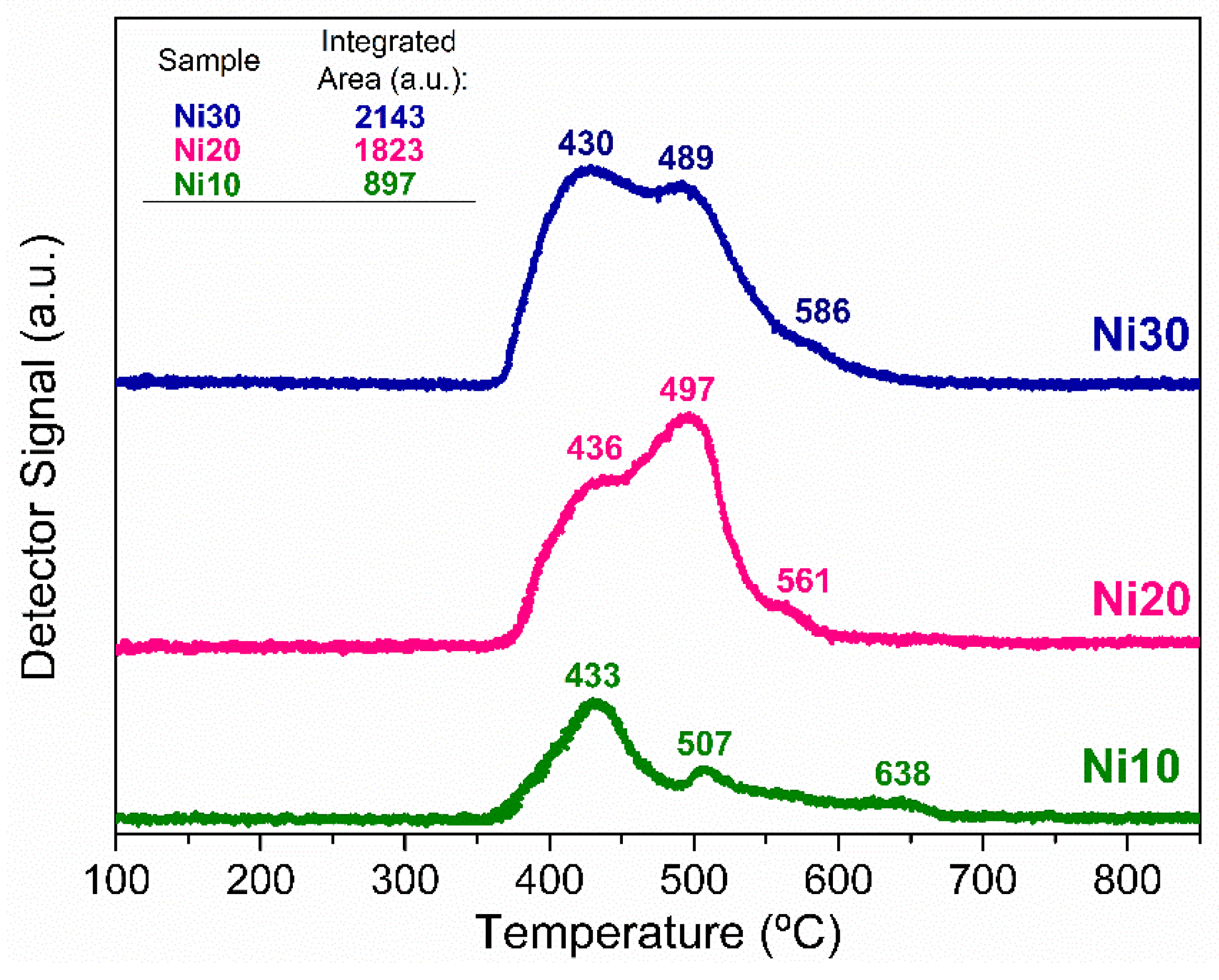
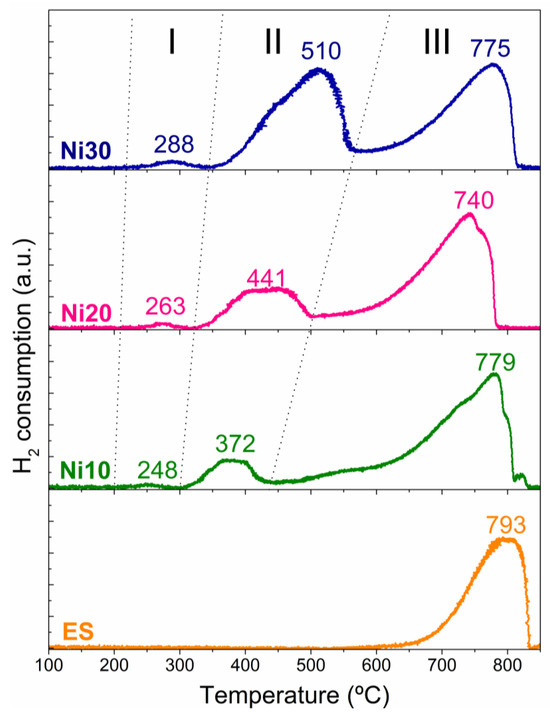
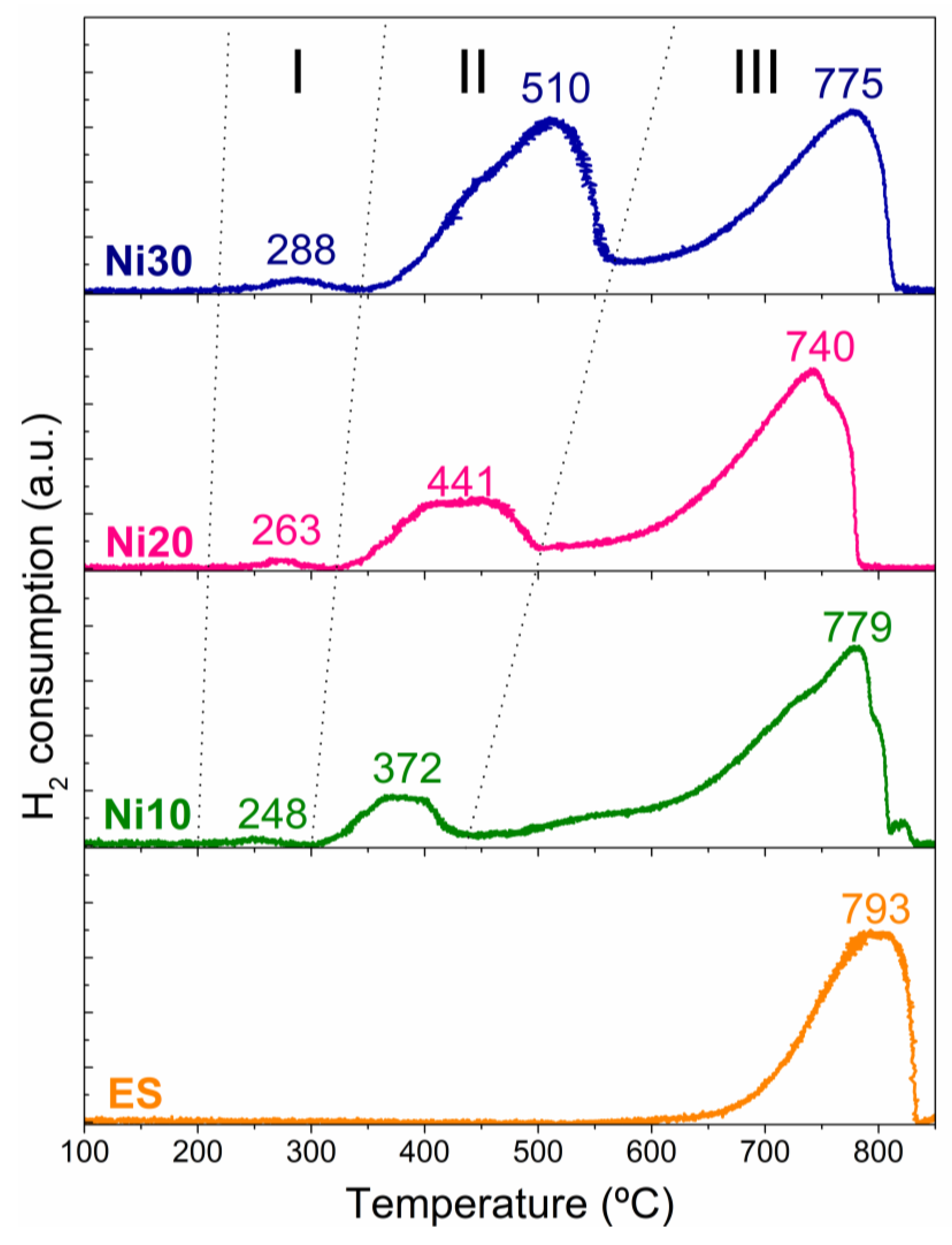
Figure 5 displays the H2-TPR profiles for the samples calcined at 500 °C, alongside those of a pure calcined ES under identical conditions. Table 4 provides the integrated areas of these profiles, including the area adjusted by subtracting the equivalent decomposition area derived from the pure calcined ES profile, as well as the integrated peak areas. The samples exhibited three clear peaks. The first small peak (I), between 200 and 300 °C, and the second prominent peak (II), in the range of 372–510 °C, correspond to the reduction in NiO with weak to medium interaction with ES. Both the temperature and the area of these peaks increased with Ni loading, indicating that higher Ni content enhances the interaction between the active phase and the support [62,63]. The third peak, observed at 740–779 °C (peak III), after subtracting the contribution from ES, corresponds to strongly interacting NiO species, associated with smaller Ni crystallites.
Figure 5.
H2-TPR profiles of the samples and pure ES calcined at 500 °C.
Table 4.
Integrated area of H2-TPR profiles of the samples and pure ES calcined at 500 °C.
The CO2-TPD profiles of Ni20 catalysts calcined at 500 °C and 750 °C are shown in Figure S3, and their quantitative data are shown in Table S1 (Supplementary Materials) to verify the basicity of the Ni/Eggshell catalysts, using different calcination temperatures for comparison. For Ni20_500, desorption is dominated by carbonate decomposition, with a small contribution from medium-strength basic sites at 377 °C [73]. In contrast, Ni20_750 exhibits two CO2 desorption peaks with similar areas at 358 and 635 °C, respectively, indicating the presence of medium and strong basic sites [67,73].
2.3. Catalyst Activity
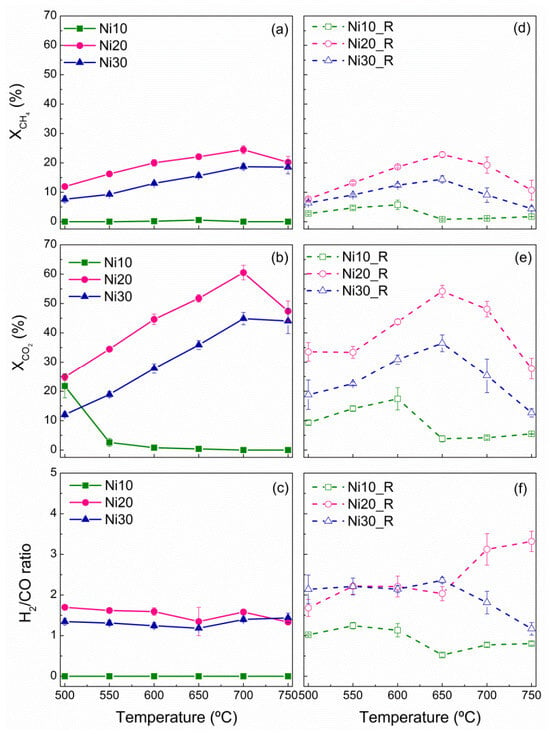
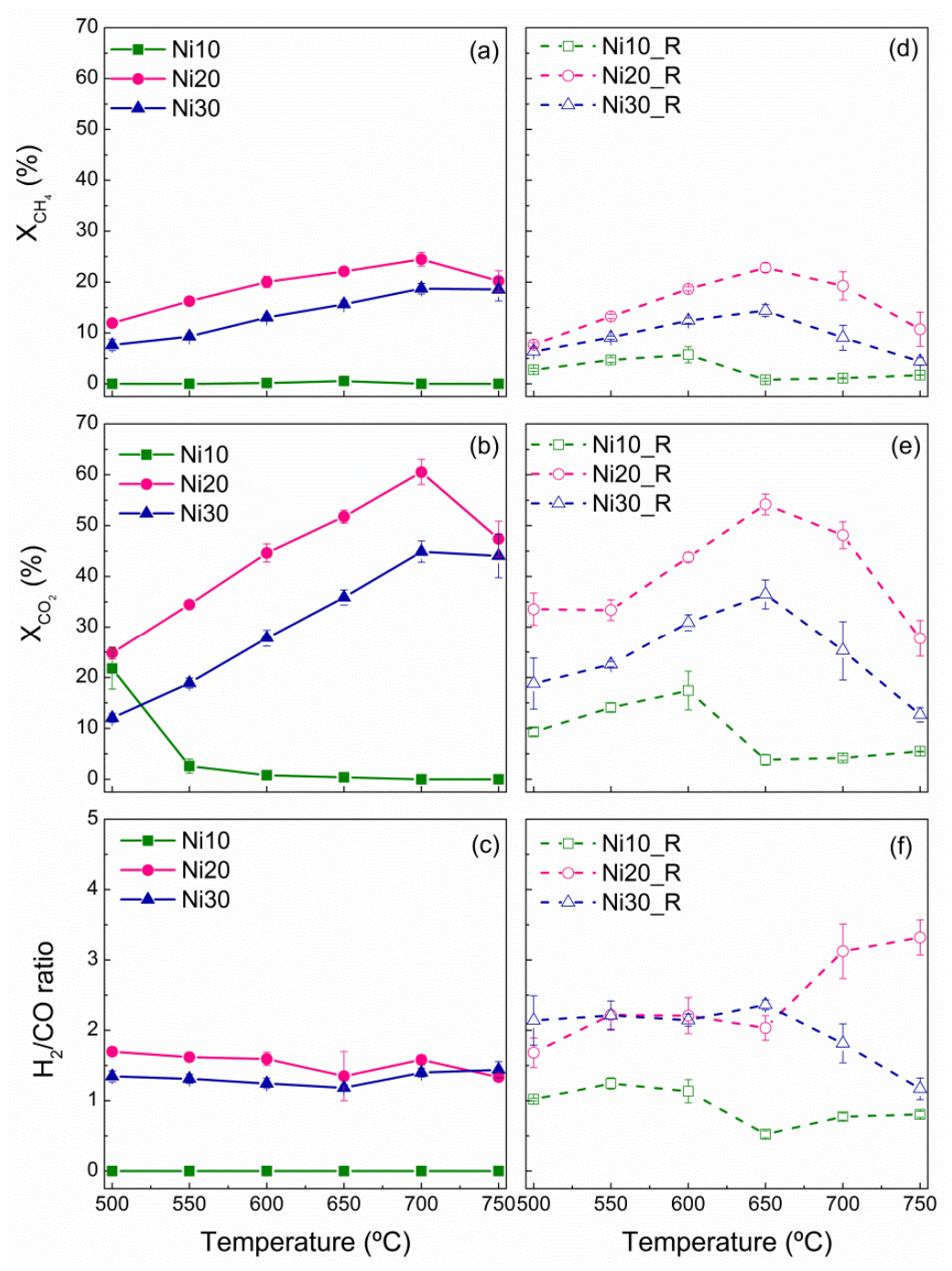
The catalytic tests for the samples calcined at 500 °C (unreduced) and samples reduced at 600 °C were performed from 500 °C to 750 °C. Figure 6 shows the activity in terms of CH4 and CO2 conversion, along with the H2/CO ratio. Among the unreduced samples (without reduction) (Figure 6a,b), the Ni20 sample exhibited the highest methane and CO2 conversions (XCH4 = 24.5% and XCO2 = 60.5%). This suggests that an intermediate Ni loading is optimal among the samples tested for achieving higher catalytic performance. The observed trend was that conversions reached maximum values at 700 °C followed by a decline at 750 °C. This shows that higher temperatures lead to increased catalyst deactivation [25,65]. The deactivation of the Ni20 sample at 750 °C could be attributed to the sintering of nickel particles, since this sample presented the largest NiO crystallite size (Table 3). As the temperature increases, the increased mobility of nickel particles may promote agglomeration, decreasing the available active sites for reaction [74,75].
Figure 6.
(a,d) CH4 and (b,e) CO2 conversion and (c,f) H2/CO ratio in different reaction temperatures over (a–c) unreduced samples and (d–f) samples reduced with H2.
However, the Ni30 sample showed a less pronounced decrease in activity at 750 °C, suggesting that it is more thermally stable. This stability can be linked to the smaller NiO crystallite size in the Ni30 sample, which decreases sintering at elevated temperatures [74,75]. On the other hand, the Ni10 sample showed very low catalytic activity, except for a small CO2 conversion at 500 °C. This behavior may be due to insufficient metal content and the smallest NiO crystallite size among all samples (13 nm) making it more difficult to activate with methane, which is a milder reducing gas [76,77].
A similar trend for the XCH4 and XCO2 (Figure 6d,e) was observed for the reduced samples, where Ni20 obtained the best results (XCH4 = 22.9 and XCO2 = 54%), though the maxima occurred at a lower temperature (650 °C). The increased H2/CO ratio observed in the reduced samples (Figure 6f) suggests that methane decomposition (Equation (2)) affected the reaction at higher temperatures [78,79]. This is likely due to the enhanced dispersion of nickel following reduction, which increases the number of active sites available for the reaction and promotes methane decomposition (Equation (2)) [79]. Simultaneously, this improved dispersion appears to decrease the influence of basic sites provided by the ES [15,26].
In contrast, while the reduced Ni10 sample exhibited some activity, its performance was substantially lower than that of the Ni20 and Ni30 samples. This disparity is likely due to the combination of smaller nickel particle size and lower nickel loading in the Ni10 sample, which limits the availability of active sites for the reaction [77].
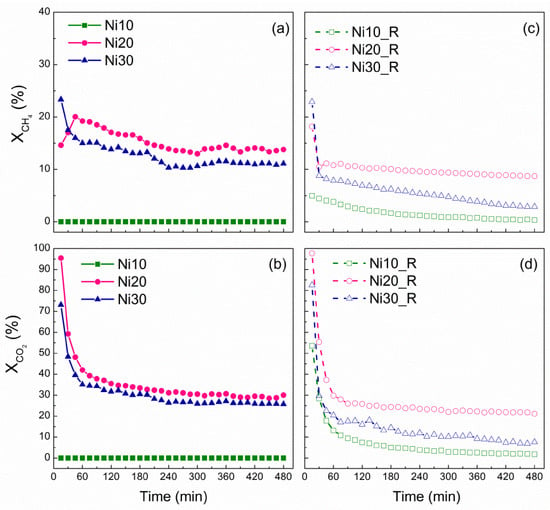
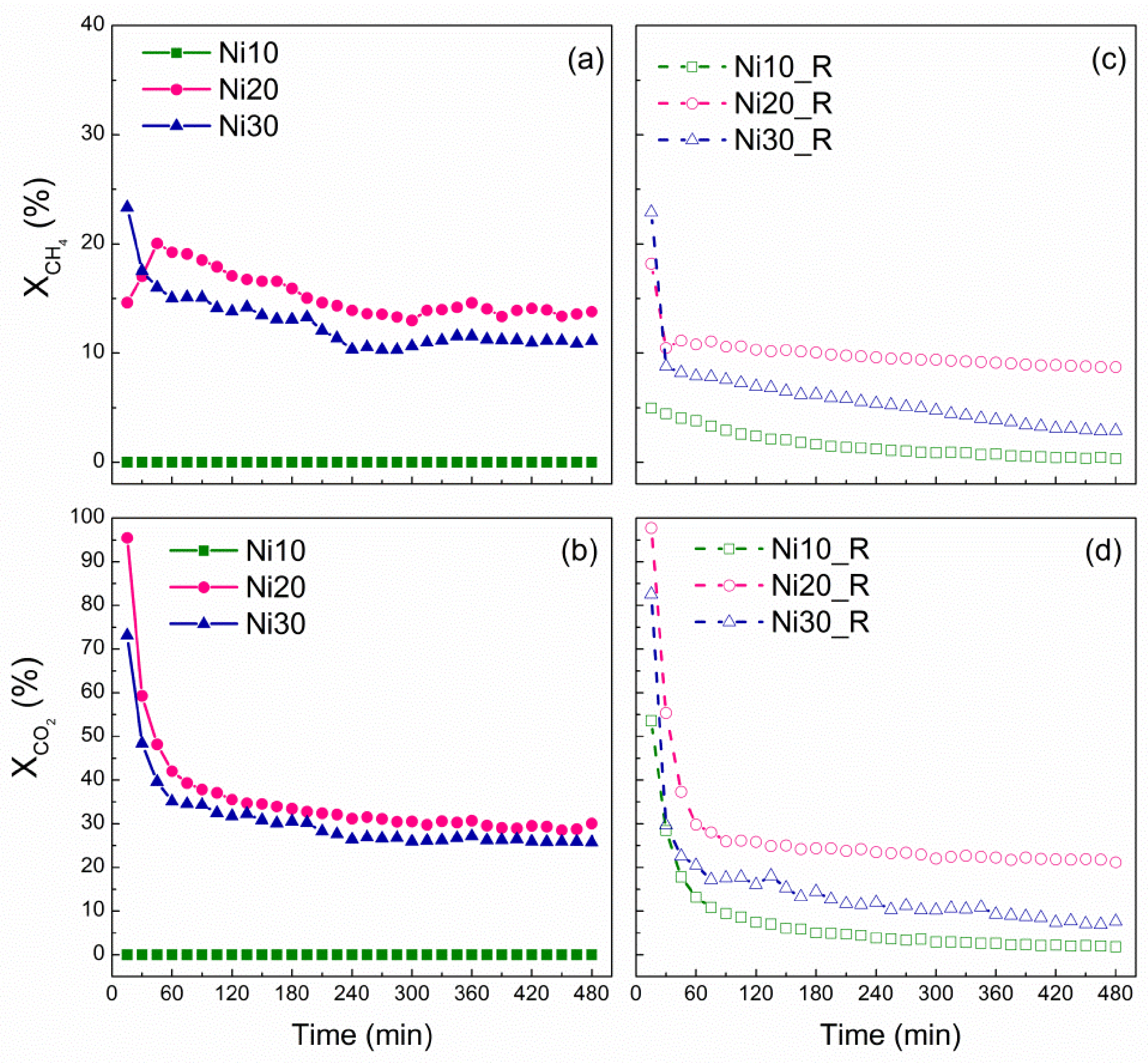
Figure 7 presents the fixed-temperature tests at 600 °C for the samples calcined at 500 °C. Among the unreduced (calcined-only) samples (Figure 7a,b), Ni10 also exhibited no activity. In contrast, all other catalysts showed activity for 8 h but deactivated at varying rates. Consistent with the temperature test results, the Ni20 sample showed the highest conversions. For the reduced samples (Figure 7c,d), Ni20 demonstrated a smaller decrease in its conversions compared to the others, including Ni30, which deactivated at a higher rate. Ni10 reacted only at the beginning with lower conversions, soon reaching conversions of 0%. Regarding CO2, the first data points show nearly complete conversion due to the reaction of CaO in the support with CO2, forming CaCO3. The subsequent sharp decrease during the first 30 min corresponds to the progressive consumption of this reactive CaO as the system reaches steady state under DRM conditions.
Figure 7.
(a,c) CH4 and (b,d) CO2 conversion during fixed temperature tests at 600 °C over (a,b) calcined samples and (c,d) samples reduced with H2.
To complement the conversion data, the apparent CH4 and CO2 consumption rates at 600 °C were calculated and are presented in Table S2 (please check Supplementary Materials). The results confirmed the trend observed from the conversion data, with Ni20 showing the highest activity among the unreduced samples, reaching CH4 and CO2 consumption rates of 29.4 and 43.6 mL min−1 gcat−1, respectively. The apparent activation energy for CH4 consumption also followed this trend, with Ni20 presenting the lowest value among the unreduced catalysts, 24.4 kJ mol−1. In contrast, Ni10 showed a much higher apparent activation energy, 156.4 kJ mol−1, consistent with its very low catalytic activity. For the reduced samples, Ni20_R presented slightly lower reaction rates and a higher activation energy than Ni20, indicating that H2 reduction did not improve the catalytic behavior of this sample under the evaluated conditions.
2.4. Catalysts Characterization After Reaction
XRD analysis of the spent catalysts after fixed-temperature tests at 600 °C, shown in Figure 8, revealed a small signal at 25°, attributed to carbon formation [28,44]. However, its intensity is almost the same as the signal noise, indicating minimal carbon formation. Additionally, all samples, including the unreduced samples, exhibited signals at 44.5 and 51.9°, corresponding to Ni0, which shows the reduction in NiO during the reaction. Reflections at 37 and 43°, associated with NiO, were also observed in all samples. Instead of CaO, all samples displayed CaCO3 signals, which can be attributed to the presence of CO2 as a reactant, which should carbonate the CaO present in the catalysts [80].
Figure 8.
XRD patterns of spent samples after fixed temperature tests at 600 °C (a) without and (b) with H2 reduction.
From the average crystallite size of metallic nickel reported in Table 5, obtained by XRD analysis and compared to the fresh reduced samples in Figure 4b, it is shown that all samples experienced sintering, with Ni20 showing the lowest crystallite growth. Among the unreduced samples, Ni20 presented the smallest crystallite size, while Ni10 and Ni30 exhibited large crystallites. Meanwhile, among the samples reduced with H2, a similar crystallite size after reaction was observed for all samples.
Table 5.
Average crystallite size of fresh (before reaction) and spent (after reaction) samples after fixed temperature tests at 600°C.
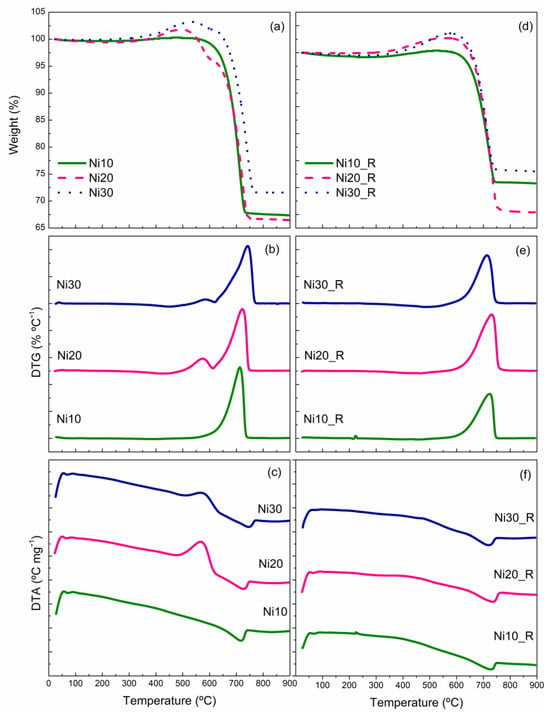
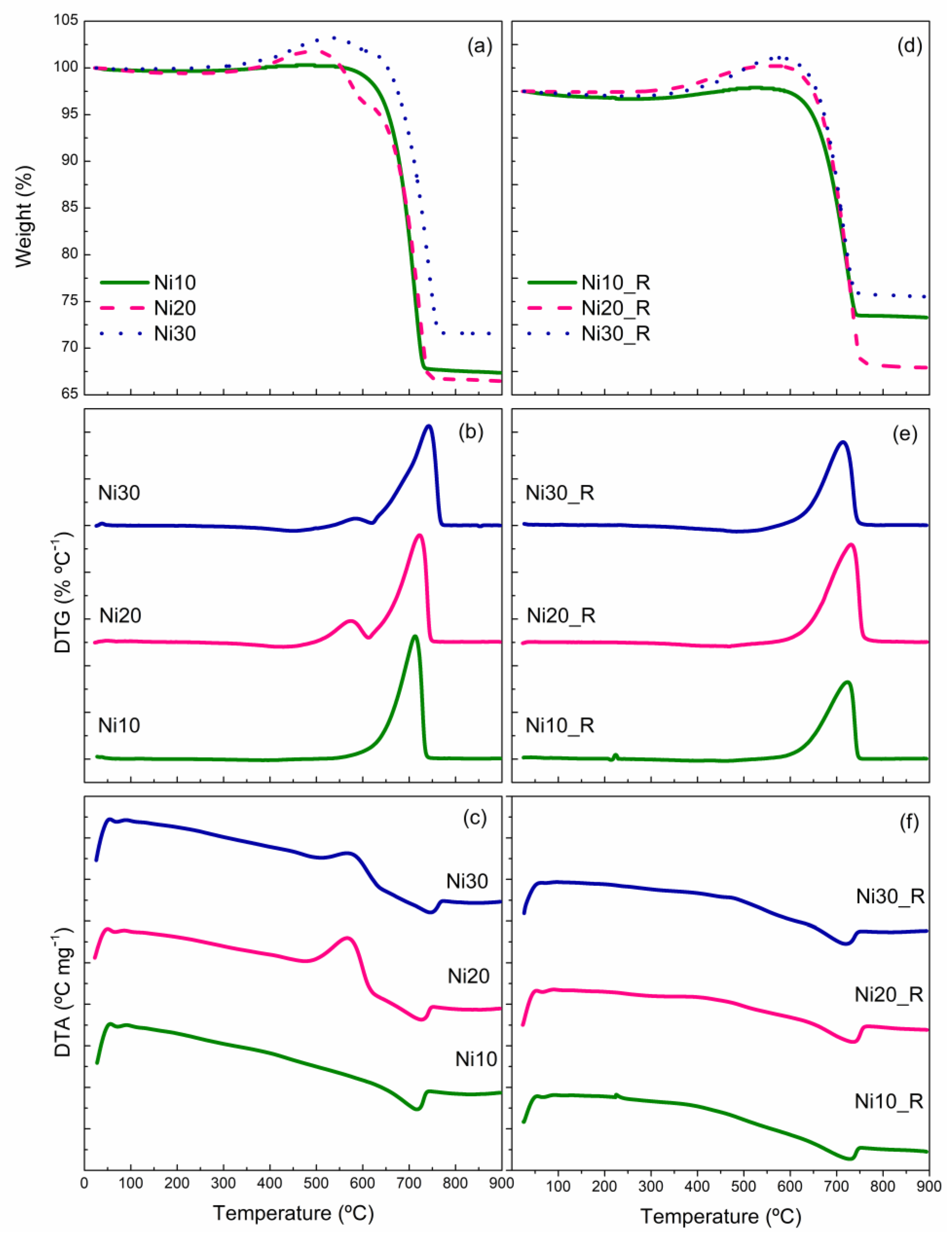
The TPO results in Figure 9 did not reveal significant carbon production, despite the presence of small amounts of structured carbon detected by XRD analysis, which are likely minimal. This outcome is due to the inherent basicity of the ES, which promotes carbon gasification [15,47].
Figure 9.
TPO/DTG and DTA of spent samples after fixed temperature tests at 600 °C (a–c) without and (d–f) with H2 reduction.
The analysis showed a mass gain between 450 and 600 °C, with a more pronounced increase observed for Ni20 and Ni30, both with and without reduction. This mass gain is due to the oxidation of metallic nickel present in these samples, agreeing with the XRD analyses of the spent catalysts, which demonstrate the presence of metallic Ni even in the Ni20 and Ni30 samples that were not subjected to the reduction step [25,81]. The XRD and TPO results show that the 10% CH4 in the heating atmosphere and the H2 produced during the reaction were enough to reduce NiO on the surface. Additionally, in the TPO results, a significant mass loss was noted above 600 °C, which is attributed to the decomposition of CaCO3 to CaO [58,59,60,61].
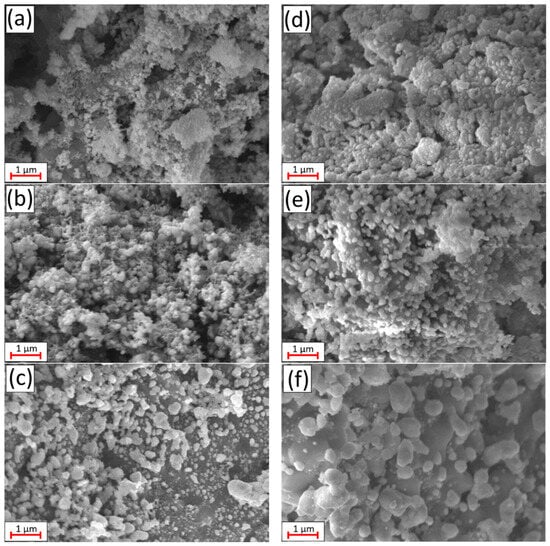
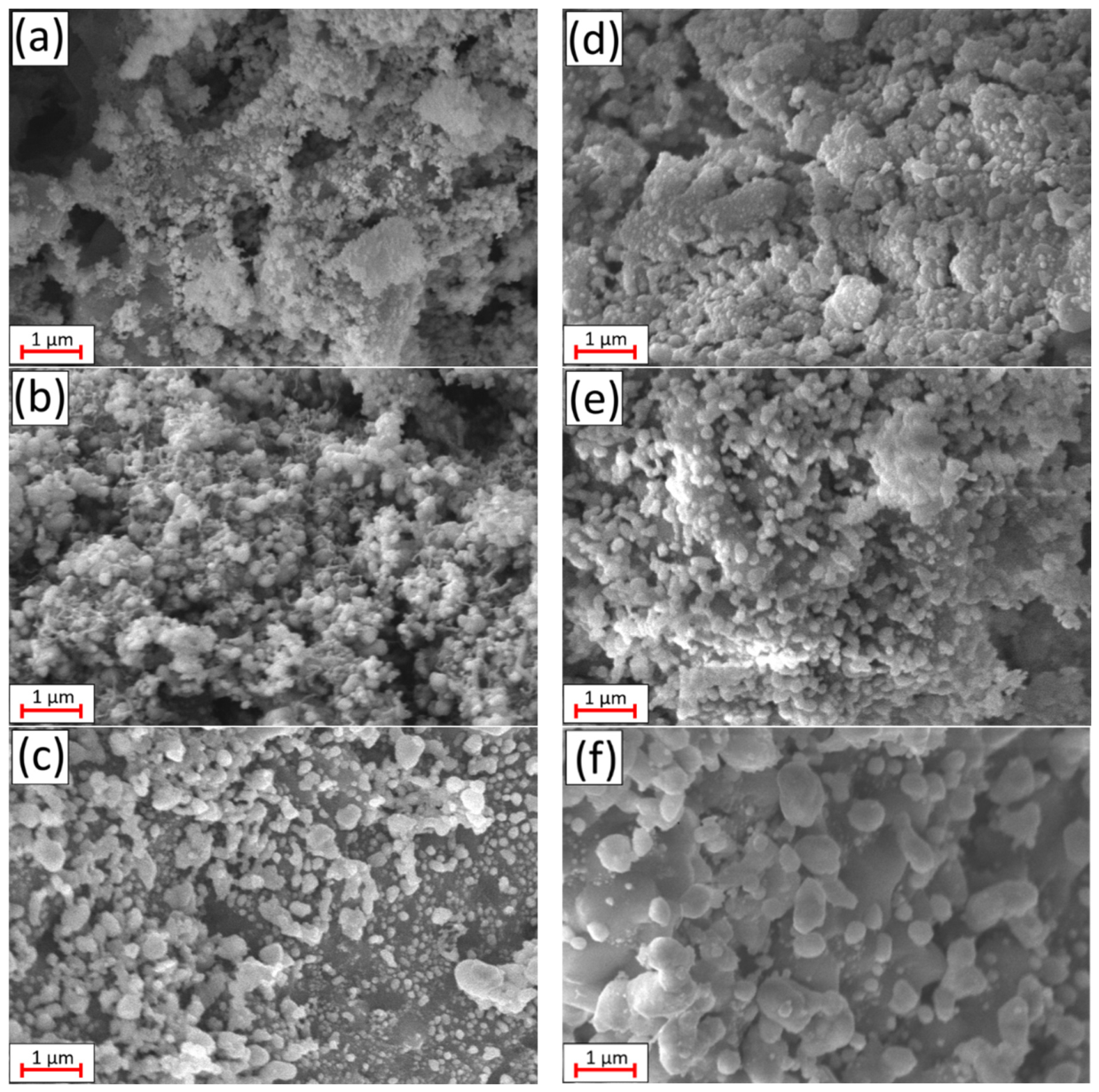
Figure 10 shows the SEM images of the spent catalysts. None of the samples showed appreciable carbon deposition, consistent with the TPO analyses. The exception was Ni20 (Figure 10b), which showed a few short-length carbon filaments. This was also the sample with the highest CH4 and CO2 conversions, showing that this sample promoted carbon deposition by CH4 decomposition (Equation (2)). However, at the same time, it was gasifying these carbon deposits through the reverse Boudouard reaction (Equation (3)), keeping the catalyst active. Also, carbon filaments are known to be less detrimental to catalyst activity than other types of carbon [14,18,82,83]. This sample also apparently showed the smallest particles for the support, despite the larger agglomeration. All samples showed agglomerates on top of the support related to sintering [65], especially the Ni10 sample, which may explain its lower conversions. Ni30 apparently showed the largest support particles, with and without H2 reduction, which may be the cause for its lower conversions than Ni20.
Figure 10.
SEM of spent samples after fixed temperature tests at 600 °C: (a) Ni10, (b) Ni20, (c) Ni30, (d) Ni10_R, (e) Ni20_R and (f) Ni30_R. Magnification of all images: 30,000×.
When compared with traditional supports for the DRM reaction (Table 6), the eggshell precursor showed advantages but also disadvantages. When using other common supports, the conversions achieve higher values, but it also causes more deactivation through coking. Beyond catalytic performance, the environmental and sustainability aspects of the supports must also be considered. Eggshell-derived CaCO3 offers a renewable and waste-based alternative with a significantly reduced environmental footprint compared to synthetic oxides such as Al2O3, ZSM-5, SiO2, MgO, TiO2, and ZrO2, whose preparation typically involves high-temperature calcination steps and non-renewable precursors. Thus, the use of waste eggshell not only mitigates solid waste disposal issues but also contributes to more sustainable catalyst design.
Table 6.
Comparison among the results reported in the literature and obtained in this work.
The Ni catalysts supported on waste eggshell demonstrated that deactivation by carbon deposition, one of the main challenges in DRM, can be decreased using this low-cost support. Although the catalytic activity remains modest compared to other catalysts, the suppression of carbon deposition represents an important advancement. Future efforts may focus on optimizing nickel dispersion and loading to further enhance performance, although the current results already advance one of the fundamental limitations in catalyst durability in DRM, namely deactivation by coking.
3. Materials and Methods
3.1. Catalyst Synthesis
The eggshell support (ES) was prepared using waste chicken eggshells from homes in Porto Alegre, Brazil. The internal membrane was removed, and the eggshells were rinsed with distilled water. The cleaned eggshells were dried in an oven at 110 °C for 12 h. The dried eggshells were ground, resulting in a powder used as a support for nickel through the wet impregnation method [64,77,88]. For each sample, eggshell powder was mixed with deionized water at a ratio of 25 mL per gram of powder, together with the required amount of nickel nitrate (Ni(NO3)2·6H2O, 97% P.A., Vetec Química Fina, Ltda., Duque de Caxias, Brazil) to obtain Ni loadings of 10, 20, and 30 wt. %. The mixture underwent agitation for 4 h before being dried in an oven at 80 °C until completely dry. The dried samples were sieved (32–42 mesh) and subsequently calcined at 500 °C or 750 °C in the preliminary tests for 2 h under an airflow of 50 mL min−1. The resulting samples were labeled as Nix, where x represents the mass percentage of Ni (10, 20, and 30).
3.2. Catalyst Characterization
X-ray fluorescence spectrometry analysis (XRF) was carried out to determine the chemical composition of the eggshell support. The sample was prepared by the pressed tablet methodology. The X-ray fluorescence spectrometer used was a WDS Rigaku RIX 2000 (Rigaku Co., Tokyo, Japan) with a Rh X-ray tube. The results were obtained through quantitative analysis using a calibration curve from Geostandards tabled rock standards.
The calcined samples were subjected to N2 physisorption analysis using a Quantachrome 4200e (Anton Paar, Boynton Beach, FL, USA) pore and surface analyzer. Prior to analysis, the samples underwent vacuum degassing process at 300 °C for 3 h. The physisorption analysis was carried out using liquid nitrogen (−196 °C). The specific surface area was determined employing the multipoint BET method [14,25,28].
X-ray diffraction analysis (XRD) was performed to determine the crystalline phases of the materials. The XRD diffractogram was obtained using a Bruker D2 Phaser diffractometer (Bruker Co., Billerica, MA, USA), at 30 kV, with radiation of 0.154 nm. The 2θ range was from 10 to 70°, with steps of 0.02° and an exposure time of 1 s [25,28].
The average size of crystallites was estimated according to Scherrer’s equation (Equation (5)):
where K = 0.9, λ is the Cu-Kα radiation wavelength (0.154 nm), β is the full width at half maximum of the most intense peak reflection signal, and θ is the corresponding angle.
The thermal decomposition of the support and prepared catalysts was evaluated by thermogravimetry coupled with differential thermal analysis, conducted on a TA thermobalance (Model SDT600, TA Instruments, New Castle, DE, USA). The samples underwent heating from room temperature to 900 °C at a rate of 10 °C min−1, in the presence of a synthetic air flow maintained at 100 mL min−1. The same equipment and conditions were also used to determine the temperature-programmed oxidation (TPO) of the spent catalysts to verify carbon oxidation [25,28].
The temperature-programmed reduction (H2-TPR) analyses were carried out on the calcined samples using a heating rate of 10 °C min−1 up to 850 °C. The reduction was performed in a 10:90 mixture of H2:N2 at a total flow rate of 30 mL min−1 [25,28], using multipurpose bench flow equipment (SAMP3, Termolab, Rio de Janeiro, Brazil) equipped with a thermal conductivity detector. CO2 temperature-programmed desorption (CO2-TPD) analyses were conducted in the same equipment: 200 mg of the calcined samples were first purged under He flow (30 mL min−1) at 100 °C for 30 min, and then exposed to CO2 (30 mL min−1) for 30 min to saturate the surface. After a subsequent 30 min purge with He to remove physisorbed CO2, the sample was heated to 800 °C at 10 °C min−1 under He flow while monitoring CO2 desorption.
Scanning electron microscopy (SEM, Zeiss Evo MA10, Carl Zeiss Microscopy GmbH, Munich, Germany) was employed to examine the spent catalysts and assess the carbonaceous deposits formed after reaction. Prior to imaging, the samples received a thin gold coating [28].
3.3. Catalyst Activity
The activity runs were conducted at atmospheric pressure in a tubular quartz reactor. A catalyst sample of around 100 mg was placed on quartz wool inside the reactor. The runs were performed at 500, 550, 600, 650, 700, and 750 °C. At each temperature, five successive analyses of 5 min were performed, resulting in an operating period of approximately 30 min before the temperature was increased to the next value. Gas flow rates were controlled by digital mass flow controllers (Bronkhorst, Gelderland, The Netherlands), maintaining a total flow rate of 100 mL min−1, with a ratio of 1.5/1/7.5 for CH4/CO2/N2, respectively, and a GHSV of 60,000 mL h−1 gcat−1. The CH4/CO2 ratio of 1.5 aimed to mimic real biogas [25,28,89,90]. In the case of reduced samples, labeled with an additional “_R”, the reduction step was carried out in situ at 600 °C for 1 h under a 100 mL min−1 flow of a mixture of H2:N2 with 10% H2. The catalytic activity of the samples was also evaluated without the H2 reduction step, being heated under CH4/N2 flow with 10% CH4 to the reaction temperature. Additionally, reactions were conducted at a fixed temperature of 600 °C for 8 h [25,28].
The analysis of products and unconverted reagents was performed online using a gas chromatograph (Varian 3600cx, Varian Inc., Palo Alto, CA, USA) equipped with a Porapak Q packed column and a thermal conductivity detector. CH4 and CO2 conversions were calculated based on Equations (6) and (7), respectively [25,28].
The volumetric consumption rates of CH4 and CO2 were calculated at 600 °C according to Equations (8) and (9):
where vi,in is the inlet volumetric flow rate of reactant i, Xi is the fractional conversion, and Wcat is the catalyst mass. The CH4 activation energy was estimated from Arrhenius plots of ln(k) as a function of 1/T, assuming pseudo-first-order behavior, according to Equation (10):
where k is the apparent rate constant and v0 is the total inlet volumetric flow rate, including the inert gas.
4. Conclusions
In this study, the performance of nickel catalysts supported on waste eggshells for the CO2 reforming of methane was investigated. The findings highlight the advantages of using a low calcination temperature in conjunction with the inherent properties of the eggshell support to control carbon deposition and enhance catalytic stability.
The use of eggshells, which are rich in calcium carbonate, offers a dual benefit: they serve as a support for nickel and promote the gasification of carbon deposits during the reforming process. Calcining the catalysts at a lower temperature of 500 °C, it facilitated the capture and transformation of CO2 while minimizing the risk of coking. This approach not only led to a more favorable catalytic environment but also significantly reduced the formation of carbonaceous deposits that are common challenges in nickel-based catalysts.
The results demonstrated that the Ni20 catalyst exhibited the highest methane and CO2 conversions. The fixed-temperature tests confirmed that the eggshell support effectively contributed to carbon gasification, ensuring sustained catalytic activity during time on stream. Also, the Ni20 sample activated with CH4 atmosphere instead of H2 in situ reduction showed a higher final CH4 conversion.
Overall, the incorporation of waste eggshell as a support material at low calcination temperatures presents a sustainable pathway for improving the efficiency of CO2 reforming processes. This approach contributes to waste mitigation and addresses the issue of catalyst deactivation by carbon deposition.
Supplementary Materials
The following supporting information can be downloaded at https://www.mdpi.com/article/10.3390/methane5020017/s1. Figure S1: Activity tests of the samples calcined at 750 °C, with (_R) and without reduction. CH4 conversion (a) and CO2 conversion (b); Figure S2: Calcined samples at 500 °C N2 adsorption–desorption isotherms (a–c) and pore diameter distribution (d–f); Figure S3: CO2-TPD analysis of Ni20 calcined at 500 °C and 750 °C; Table S1: Quantitative data of CO2-TPD analysis; Table S2: CH4 and CO2 volumetric consumption rates at 600 °C and CH4 activation energy.
Author Contributions
Conceptualization, O.W.P.-L.; validation, I.G.W.; formal analysis, O.W.P.-L. and I.G.W.; investigation, I.G.W.; writing—original draft preparation, I.G.W.; writing—review and editing, O.W.P.-L.; supervision, O.W.P.-L. All authors have read and agreed to the published version of the manuscript.
Funding
This research was funded by the Brazilian Agency for Improvement of Graduate Personnel-CAPES and National Council for Scientific and Technological Development-CNPq Brazilian agencies.
Data Availability Statement
Data will be made available on request.
Acknowledgments
The authors are grateful for the financial support provided by CAPES (Brazilian Agency for Improvement of Graduate Personnel) and CNPq (National Council for Scientific and Technological Development).
Conflicts of Interest
The authors declare no conflicts of interest.
References
- Ni, M.; Leung, D.Y.C.; Leung, M.K.H.; Sumathy, K. An Overview of Hydrogen Production from Biomass. Fuel Process. Technol. 2006, 87, 461–472. [Google Scholar] [CrossRef] [Scilit]
- Liguras, D.K.; Kondarides, D.I.; Verykios, X.E. Production of Hydrogen for Fuel Cells by Steam Reforming of Ethanol over Supported Noble Metal Catalysts. Appl. Catal. B 2003, 43, 345–354. [Google Scholar] [CrossRef] [Scilit]
- Abdullah, B.; Abd Ghani, N.A.; Vo, D.V.N. Recent Advances in Dry Reforming of Methane over Ni-Based Catalysts. J. Clean. Prod. 2017, 162, 170–185. [Google Scholar] [CrossRef] [Scilit]
- Abdeen, F.R.H.; Mel, M.; Jami, M.S.; Ihsan, S.I.; Ismail, A.F. A Review of Chemical Absorption of Carbon Dioxide for Biogas Upgrading. Chin. J. Chem. Eng. 2016, 24, 693–702. [Google Scholar] [CrossRef] [Scilit]
- Holladay, J.D.; Hu, J.; King, D.L.; Wang, Y. An Overview of Hydrogen Production Technologies. Catal. Today 2009, 139, 244–260. [Google Scholar] [CrossRef] [Scilit]
- Cavalcante, I.O.; Simão Neto, F.; da Silva Sousa, P.; da Silva Aires, F.I.; Dari, D.N.; Chaves de Lima, R.K.; dos Santos, J.C.S. Evolving Sustainable Energy Technologies and Assessments through Global Research Networks: Advancing the Role of Blue Hydrogen for a Cleaner Future. RSC Sustain. 2023, 2, 348–368. [Google Scholar] [CrossRef] [Scilit]
- Usman, M.; Wan Daud, W.M.A.; Abbas, H.F. Dry Reforming of Methane: Influence of Process Parameters—A Review. Renew. Sustain. Energy Rev. 2015, 45, 710–744. [Google Scholar] [CrossRef] [Scilit]
- de la Piscina, P.R.; Homs, N. Use of Biofuels to Produce Hydrogen (Reformation Processes). Chem. Soc. Rev. 2008, 37, 2459–2467. [Google Scholar] [CrossRef] [Scilit]
- Xu, Z.P.; Zhang, J.; Adebajo, M.O.; Zhang, H.; Zhou, C. Catalytic Applications of Layered Double Hydroxides and Derivatives. Appl. Clay Sci. 2011, 53, 139–150. [Google Scholar] [CrossRef] [Scilit]
- Alipour, Z.; Babu Borugadda, V.; Wang, H.; Dalai, A.K. Syngas Production through Dry Reforming: A Review on Catalysts and Their Materials, Preparation Methods and Reactor Type. Chem. Eng. J. 2023, 452, 139416. [Google Scholar] [CrossRef] [Scilit]
- Chein, R.Y.; Chen, Y.C.; Yu, C.T.; Chung, J.N. Thermodynamic Analysis of Dry Reforming of CH4 with CO2 at High Pressures. J. Nat. Gas. Sci. Eng. 2015, 26, 617–629. [Google Scholar] [CrossRef] [Scilit]
- Muraleedharan Nair, M.; Kaliaguine, S. Structured Catalysts for Dry Reforming of Methane. New J. Chem. 2016, 40, 4049–4060. [Google Scholar] [CrossRef] [Scilit]
- Aramouni, N.A.K.; Touma, J.G.; Tarboush, B.A.; Zeaiter, J.; Ahmad, M.N. Catalyst Design for Dry Reforming of Methane: Analysis Review. Renew. Sustain. Energy Rev. 2018, 82, 2570–2585. [Google Scholar] [CrossRef] [Scilit]
- Rosset, M.; Féris, L.A.; Perez-Lopez, O.W. Biogas Dry Reforming over Ni-Al Catalyst: Suppression of Carbon Deposition by Catalyst Preparation and Activation. Int. J. Hydrogen Energy 2020, 45, 6549–6562. [Google Scholar] [CrossRef] [Scilit]
- Abdulrasheed, A.; Jalil, A.A.; Gambo, Y.; Ibrahim, M.; Hambali, H.U.; Shahul Hamid, M.Y. A Review on Catalyst Development for Dry Reforming of Methane to Syngas: Recent Advances. Renew. Sustain. Energy Rev. 2019, 108, 175–193. [Google Scholar] [CrossRef] [Scilit]
- Carapellucci, R.; Giordano, L. Steam, Dry and Autothermal Methane Reforming for Hydrogen Production: A Thermodynamic Equilibrium Analysis. J. Power Sources 2020, 469, 228391. [Google Scholar] [CrossRef] [Scilit]
- Bradford, M.C.J.; Vannice, M.A. CO2 Reforming of CH4. Catal. Rev. 1999, 41, 1–42. [Google Scholar] [CrossRef] [Scilit]
- Calgaro, C.O.; Rocha, A.L.; Perez-Lopez, O.W. Deactivation Control in CO2 Reforming of Methane over Ni–Mg–Al Catalyst. React. Kinet. Mech. Catal. 2020, 130, 159–178. [Google Scholar] [CrossRef] [Scilit]
- Ibrahim, A.A.; Fakeeha, A.H.; Abasaeed, A.E.; Wazeer, I.; Bentalib, A.; Siva Kumar, N.; Abu-Dahrieh, J.K.; Al-Fatesh, A.S. The Effectiveness of Ni-Based Bimetallic Catalysts Supported by MgO-Modified Alumina in Dry Methane Reforming. Catalysts 2023, 13, 1420. [Google Scholar] [CrossRef] [Scilit]
- Fan, M.S.; Abdullah, A.Z.; Bhatia, S. Utilization of Greenhouse Gases through Dry Reforming: Screening of Nickel-Based Bimetallic Catalysts and Kinetic Studies. ChemSusChem 2011, 4, 1643–1653. [Google Scholar] [CrossRef] [Scilit]
- Demicheli, M.C.; Ponzi, E.N.; Ferretti, O.A.; Yeramian, A.A. Kinetics of Carbon Formation from CH4-H2 Mixtures on Nickel-Alumina Catalyst. Chem. Eng. J. 1991, 46, 129–136. [Google Scholar] [CrossRef] [Scilit]
- Pakhare, D.; Spivey, J. A Review of Dry (CO2) Reforming of Methane over Noble Metal Catalysts. Chem. Soc. Rev. 2014, 43, 7813–7837. [Google Scholar] [CrossRef] [Scilit]
- Aziz, M.A.A.; Jalil, A.A.; Wongsakulphasatch, S.; Vo, D.-V.N. Understanding the Role of Surface Basic Sites of Catalysts in CO2 Activation in Dry Reforming of Methane: A Short Review. Catal. Sci. Technol. 2020, 10, 35–45. [Google Scholar] [CrossRef] [Scilit]
- Dama, S.; Ghodke, S.R.; Bobade, R.; Gurav, H.R.; Chilukuri, S. Active and Durable Alkaline Earth Metal Substituted Perovskite Catalysts for Dry Reforming of Methane. Appl. Catal. B 2018, 224, 146–158. [Google Scholar] [CrossRef] [Scilit]
- Wenzel, I.G.; Perez-Lopez, O.W. CO2 Reforming of Methane over Ni-Al-LDH Catalysts Prepared with Different Precipitants. Mater. Chem. Phys. 2025, 329, 130115. [Google Scholar] [CrossRef] [Scilit]
- Hambali, H.U.; Jalil, A.A.; Abdulrasheed, A.A.; Siang, T.J.; Abdullah, T.A.T.; Ahmad, A.; Vo, D.N. Fibrous Spherical Ni-M/ZSM-5 (M: Mg, Ca, Ta, Ga) Catalysts for Methane Dry Reforming: The Interplay between Surface Acidity-basicity and Coking Resistance. Int. J. Energy Res. 2020, 44, 5696–5712. [Google Scholar] [CrossRef] [Scilit]
- Saha, B.; Khan, A.; Ibrahim, H.; Idem, R. Evaluating the Performance of Non-Precious Metal Based Catalysts for Sulfur-Tolerance during the Dry Reforming of Biogas. Fuel 2014, 120, 202–217. [Google Scholar] [CrossRef] [Scilit]
- Steffens, C.M.; Perez-Lopez, O.W. Biogas Dry Reforming over Li–Ni–Al LDH-Derived Catalysts. Int. J. Hydrogen Energy 2024, 71, 205–216. [Google Scholar] [CrossRef] [Scilit]
- Munnik, P.; de Jongh, P.E.; de Jong, K.P. Recent Developments in the Synthesis of Supported Catalysts. Chem. Rev. 2015, 115, 6687–6718. [Google Scholar] [CrossRef] [Scilit] [PubMed]
- Al-Fatesh, A.S.; Patel, N.; Fakeeha, A.H.; Alotibi, M.F.; Alreshaidan, S.B.; Kumar, R. Reforming of Methane: Effects of Active Metals, Supports, and Promoters. Catal. Rev. Sci. Eng. 2024, 66, 2209–2307. [Google Scholar] [CrossRef] [Scilit]
- Dai, J.; Zhang, H. Recent Advances in Catalytic Confinement Effect within Micro/Meso-Porous Crystalline Materials. Small 2021, 17, 2005334. [Google Scholar] [CrossRef] [Scilit]
- Das, S.; Sengupta, M.; Patel, J.; Bordoloi, A. A Study of the Synergy between Support Surface Properties and Catalyst Deactivation for CO2 Reforming over Supported Ni Nanoparticles. Appl. Catal. A Gen. 2017, 545, 113–126. [Google Scholar] [CrossRef] [Scilit]
- Tian, X.; Shi, Y.; Zhang, J.; Wang, F. Photothermal Dry Reforming of Methane Reaction over (Ni/Ce0.8Zr0.2O2)@SiO2 Catalysts: The Ni Content Regulation. Green Energy Environ. 2025, 10, 1751–1763. [Google Scholar] [CrossRef] [Scilit]
- Bachiller-Baeza, B.; Mateos-Pedrero, C.; Soria, M.A.; Guerrero-Ruiz, A.; Rodemerck, U.; Rodríguez-Ramos, I. Transient Studies of Low-Temperature Dry Reforming of Methane over Ni-CaO/ZrO2-La2O3. Appl. Catal. B 2013, 129, 450–459. [Google Scholar] [CrossRef] [Scilit]
- Goula, M.A.; Charisiou, N.D.; Siakavelas, G.; Tzounis, L.; Tsiaoussis, I.; Panagiotopoulou, P.; Goula, G.; Yentekakis, I.V. Syngas Production via the Biogas Dry Reforming Reaction over Ni Supported on Zirconia Modified with CeO2 or La2O3 Catalysts. Int. J. Hydrogen Energy 2017, 42, 13724–13740. [Google Scholar] [CrossRef] [Scilit]
- Ibrahim, A.A.; Fakeeha, A.H.; Lanre, M.S.; Al-Awadi, A.S.; Alreshaidan, S.B.; Albaqmaa, Y.A.; Adil, S.F.; Al-Zahrani, A.A.; Abasaeed, A.E.; Al-Fatesh, A.S. The Effect of Calcination Temperature on Various Sources of ZrO2 Supported Ni Catalyst for Dry Reforming of Methane. Catalysts 2022, 12, 361. [Google Scholar] [CrossRef] [Scilit]
- Ivanova, S.; Pitchon, V.; Petit, C. Application of the Direct Exchange Method in the Preparation of Gold Catalysts Supported on Different Oxide Materials. J. Mol. Catal. A Chem. 2006, 256, 278–283. [Google Scholar] [CrossRef] [Scilit]
- Lian, Z.; Olanrele, S.O.; Si, C.; Yang, M.; Li, B. Critical Role of Interfacial Sites between Nickel and CeO2 Support in Dry Reforming of Methane: Revisit of Reaction Mechanism and Origin of Stability. J. Phys. Chem. C 2020, 124, 5118–5124. [Google Scholar] [CrossRef] [Scilit]
- Brunelle, J.P. Preparation of Catalysts by Adsorption of Metal Complexes on Mineral Oxides. In Pure & Applied Chemistry; Pergarnon Press Ltd.: Oxford, UK, 1979; pp. 211–232. [Google Scholar]
- Zaki, M.I.; Hasan, M.A.; Al-Sagheer, F.A.; Pasupulety, L. In Situ FTIR Spectra of Pyridine Adsorbed on SiO2–Al2O3, TiO2, ZrO2 and CeO2: General Considerations for the Identification of Acid Sites on Surfaces of Finely Divided Metal Oxides. Colloids Surf. A Physicochem. Eng. Asp. 2001, 190, 261–274. [Google Scholar] [CrossRef] [Scilit]
- Wysocka, I.; Karczewski, J.; Gołąbiewska, A.; Łapiński, M.; Cieślik, B.M.; Maciejewski, M.; Kościelska, B.; Rogala, A. Nickel Phase Deposition on V2CTx/V2AlC as Catalyst Precursors for a Dry Methane Reforming: The Effect of the Deposition Method on the Morphology and Catalytic Activity. Int. J. Hydrogen Energy 2023, 48, 10922–10940. [Google Scholar] [CrossRef] [Scilit]
- Huang, N.; Su, T.; Qin, Z.; Ji, H. Nickel Supported on Multilayer Vanadium Carbide for Dry Reforming of Methane. ChemistrySelect 2022, 7, e202203873. [Google Scholar] [CrossRef] [Scilit]
- Zhang, Z.; Zhang, Y.; Liu, L. Role and Mechanism of Calcium-Based Catalysts for Methane Dry Reforming: A Review. Fuel 2024, 355, 129329. [Google Scholar] [CrossRef] [Scilit]
- Calgaro, C.O.; Perez-Lopez, O.W. Biogas Dry Reforming for Hydrogen Production over Ni-M-Al Catalysts (M = Mg, Li, Ca, La, Cu, Co, Zn). Int. J. Hydrogen Energy 2019, 44, 17750–17766. [Google Scholar] [CrossRef] [Scilit]
- Yaşar, F. Biodiesel Production via Waste Eggshell as a Low-Cost Heterogeneous Catalyst: Its Effects on Some Critical Fuel Properties and Comparison with CaO. Fuel 2019, 255, 115828. [Google Scholar] [CrossRef] [Scilit]
- Wei, Z.; Xu, C.; Li, B. Application of Waste Eggshell as Low-Cost Solid Catalyst for Biodiesel Production. Bioresour. Technol. 2009, 100, 2883–2885. [Google Scholar] [CrossRef] [Scilit]
- Manera, C.; Perondi, D.; Dotto, G.L.; Barcellos, T.; Godinho, M. Study of Mayenite Produced from Waste Eggshell as Support for Ni–Co Catalysts for Biomass Tar Cracking. Chem. Eng. Res. Des. 2021, 176, 218–228. [Google Scholar] [CrossRef] [Scilit]
- Ayesha, M.; Khoja, A.H.; Butt, F.A.; Sikandar, U.; Javed, A.H.; Naqvi, S.R.; ud din, I.; Mehran, M.T. Sorption Enhanced Steam Reforming of Methane over Waste-Derived CaO Promoted MgNiAl Hydrotalcite Catalyst for Sustainable H2 Production. J. Environ. Chem. Eng. 2022, 10, 107651. [Google Scholar] [CrossRef] [Scilit]
- Qasim, M.; Ayoub, M.; Singh, K.; Inayat, A.; Shamsuddin, R.; Danish, M.; Farrukh, S. A Comparative Study of Eggshell and Commercial Sorbent-Based Catalysts through Synthesis and Characterization for SESR Process. Sustainability 2023, 15, 14762. [Google Scholar] [CrossRef] [Scilit]
- Laca, A.; Laca, A.; Díaz, M. Eggshell Waste as Catalyst: A Review. J. Environ. Manag. 2017, 197, 351–359. [Google Scholar] [CrossRef] [Scilit]
- Sathiparan, N. Utilization Prospects of Eggshell Powder in Sustainable Construction Material—A Review. Constr. Build. Mater. 2021, 293, 123465. [Google Scholar] [CrossRef] [Scilit]
- Ayodeji, A.A.; Ojewumi, M.E.; Rasheed, B.; Ayodele, J.M. Data on CaO and Eggshell Catalysts Used for Biodiesel Production. Data Brief 2018, 19, 1466–1473. [Google Scholar] [CrossRef] [Scilit]
- Sahadat Hossain, M.; Ahmed, S. Crystallographic Characterization of Naturally Occurring Aragonite and Calcite Phase: Rietveld Refinement. J. Saudi Chem. Soc. 2023, 27, 101649. [Google Scholar] [CrossRef] [Scilit]
- Sahadat Hossain, M.; Jahan, S.A.; Ahmed, S. Crystallographic Characterization of Bio-Waste Material Originated CaCO3, Green-Synthesized CaO and Ca(OH)2. Results Chem. 2023, 5, 100822. [Google Scholar] [CrossRef] [Scilit]
- Queirós, M.V.A.; Bezerra, M.N.; Feitosa, J.P.A. Composite Superabsorbent Hydrogel of Acrylic Copolymer and Eggshell: Effect of Biofiller Addition. J. Braz. Chem. Soc. 2017, 28, 2004–2012. [Google Scholar] [CrossRef] [Scilit]
- Yin, X.; Duan, X.; You, Q.; Dai, C.; Tan, Z.; Zhu, X. Biodiesel Production from Soybean Oil Deodorizer Distillate Usingcalcined Duck Eggshell as Catalyst. Energy Convers. Manag. 2016, 112, 199–207. [Google Scholar] [CrossRef] [Scilit]
- Brockner, W.; Ehrhardt, C.; Gjikaj, M. Thermal Decomposition of Nickel Nitrate Hexahydrate, Ni(NO3)2·6H2O, in Comparison to Co(NO3)2·6H2O and Ca(NO3)2·4H2O. Thermochim. Acta 2007, 456, 64–68. [Google Scholar] [CrossRef] [Scilit]
- Chingakham, C.; David, A.; Sajith, V. Fe3O4 Nanoparticles Impregnated Eggshell as a Novel Catalyst for Enhanced Biodiesel Production. Chin. J. Chem. Eng. 2019, 27, 2835–2843. [Google Scholar] [CrossRef] [Scilit]
- de los Milagros Deharbe, M.; Gómez, L.E.; Boix, A.V.; Serra, R.M. Synthesis and Characterization of Eggshell-Based Catalysts for the Treatment of Gaseous Pollutants. Appl. Catal. A Gen. 2023, 668, 119471. [Google Scholar] [CrossRef] [Scilit]
- Zhao, X.; Hu, J.; Zong, B.; Wang, Y.; Lu, J.; Wu, C. Achieving Nearly 100% CO2 Conversion via CaCO3-carbon Reverse Boudouard Reaction in an Integrated CO2 Capture and Utilization Process Using Carbon as the Reducing Agent (C-ICCU). Chem. Eng. J. 2025, 522, 168153. [Google Scholar] [CrossRef] [Scilit]
- Lux, S.; Baldauf-Sommerbauer, G.; Siebenhofer, M. Hydrogenation of Inorganic Metal Carbonates: A Review on Its Potential for Carbon Dioxide Utilization and Emission Reduction. ChemSusChem 2018, 11, 3357–3375. [Google Scholar] [CrossRef] [Scilit]
- Xu, Y.; Du, X.; Li, J.; Wang, P.; Zhu, J.; Ge, F.; Zhou, J.; Song, M.; Zhu, W. A Comparison of Al2O3 and SiO2 Supported Ni-Based Catalysts in Their Performance for the Dry Reforming of Methane. J. Fuel Chem. Technol. 2019, 47, 199–208. [Google Scholar] [CrossRef] [Scilit]
- Daroughegi, R.; Meshkani, F.; Rezaei, M. Enhanced Activity of CO2 Methanation over Mesoporous Nanocrystalline Ni–Al2O3 Catalysts Prepared by Ultrasound-Assisted Co-Precipitation Method. Int. J. Hydrogen Energy 2017, 42, 15115–15125. [Google Scholar] [CrossRef] [Scilit]
- Lima, D.S.; Calgaro, C.O.; Perez-Lopez, O.W. Hydrogen Production by Glycerol Steam Reforming over Ni Based Catalysts Prepared by Different Methods. Biomass Bioenergy 2019, 130, 105358. [Google Scholar] [CrossRef] [Scilit]
- Steffens, C.M.; Perez-Lopez, O.W. Dry Reforming of Biogas Over Li–Ni–Al Catalysts: Influence of Li Incorporation Method. Greenh. Gases Sci. Technol. 2026, e70016. [Google Scholar] [CrossRef] [Scilit]
- Tian, S.; Yan, F.; Zhang, Z.; Jiang, J. Calcium-Looping Reforming of Methane Realizes in Situ CO2 Utilization with Improved Energy Efficiency. Sci. Adv. 2019, 5, eaav5077. [Google Scholar] [CrossRef] [Scilit] [PubMed]
- dos Santos Lima, D.; Perez-Lopez, O.W. Light Olefins by Methane Partial Oxidation Using Hydrated Waste Eggshell as Catalyst. Fuel 2021, 300, 120947. [Google Scholar] [CrossRef] [Scilit]
- Sietsma, J.R.A.; Friedrich, H.; Broersma, A.; Versluijs-Helder, M.; Jos van Dillen, A.; de Jongh, P.E.; de Jong, K.P. How Nitric Oxide Affects the Decomposition of Supported Nickel Nitrate to Arrive at Highly Dispersed Catalysts. J. Catal. 2008, 260, 227–235. [Google Scholar] [CrossRef] [Scilit]
- Thommes, M.; Kaneko, K.; Neimark, A.V.; Olivier, J.P.; Rodriguez-Reinoso, F.; Rouquerol, J.; Sing, K.S.W. Physisorption of Gases, with Special Reference to the Evaluation of Surface Area and Pore Size Distribution (IUPAC Technical Report). Pure Appl. Chem. 2015, 87, 1051–1069. [Google Scholar] [CrossRef] [Scilit]
- Zhang, B.; Ma, L.; Shen, J.; Tian, X.; Zhang, R.; Ding, M. Engineering of Metal–Support Interfaces and Cun-Ov Synergistic Sites in Cu/CeO2 Catalyst for Enhanced Low-Temperature CO2 Hydrogenation. ACS Catal. 2026, 16, 491–503. [Google Scholar] [CrossRef] [Scilit]
- Liu, Y.; Jiao, X.; Jiang, X.; Xing, C.; Qi, X.; Wang, X.; Cabot, A. Anion-Directed Engineering of High-Entropy Layered Double Hydroxides for Oxygen Evolution Catalysis. ACS Nano 2026, 20, 6732–6741. [Google Scholar] [CrossRef] [Scilit]
- Chen, X.; Li, Y.-Y.; Lin, Z.-H.; Song, J.-Y.; Xia, R.-Q.; Zhou, C.-W.; Wang, Y.-M.; Han, Y.; Jiang, H.-L.; Ning, G.-H.; et al. Regulating the Topology and Pore Size of Covalent Metal-Organic Framework for Boosting Catalytic CO2 Conversion. Chem 2026, 103006. [Google Scholar] [CrossRef] [Scilit]
- Yang, W.; Feng, Y.; Chu, W. Promotion Effect of CaO Modification on Mesoporous Al2O3-Supported Ni Catalysts for CO2 Methanation. Int. J. Chem. Eng. 2016, 2016, 2041821. [Google Scholar] [CrossRef] [Scilit]
- Liu, W.; Liang, Z.; Ruan, R.; Dang, C.; Cai, W. The Effect of Nanosheet Size on the Sintering Resistance of Dendritic Layered Ni/Al2O3 Catalyst in Methane Dry Reforming. Fuel 2026, 403, 136153. [Google Scholar] [CrossRef] [Scilit]
- Lin, X.; Huang, M.; Zhu, H.; Wan, C.; Li, D.; Jiang, L. Hydrotalcite-Derived Nickel–Gallium Alloy Catalysts with Enhanced Resistance against Metal Sintering for Methane Decomposition. Int. J. Hydrogen Energy 2023, 48, 10016–10031. [Google Scholar] [CrossRef] [Scilit]
- Zardin, L.; Perez-Lopez, O.W. Hydrogen Production by Methane Decomposition over Co-Al Mixed Oxides Derived from Hydrotalcites: Effect of the Catalyst Activation with H2 or CH4. Int. J. Hydrogen Energy 2017, 42, 7895–7907. [Google Scholar] [CrossRef] [Scilit]
- Wenzel, I.G.; Perez-Lopez, O.W. H2 Production by CO2 Reforming of Methane over Ni/XCaO·yAl2O3 Catalysts. Int. J. Hydrogen Energy 2026, 229, 154665. [Google Scholar] [CrossRef] [Scilit]
- Zahid, U.; Sarifuddin, W.S.; Mahadi, A.H.; Holilah; Prasetyoko, D.; Bahruji, H. CeNiO3 Perovskite Nanoparticles Synthesized Using Gelatin as a Chelating Agent for CO2 Dry Reforming of Methane. RSC Sustain. 2024, 2, 3806–3816. [Google Scholar] [CrossRef] [Scilit]
- Schrenk, F.; Lindenthal, L.; Drexler, H.; Berger, T.; Rameshan, R.; Ruh, T.; Föttinger, K.; Rameshan, C. How Reduction Temperature Influences the Structure of Perovskite-Oxide Catalysts during the Dry Reforming of Methane. RSC Sustain. 2024, 2, 3334–3344. [Google Scholar] [CrossRef] [Scilit]
- Imani, M.; Tahmasebpoor, M.; Sánchez-Jiménez, P.E. Metal- Based Eggshell Particles Prepared via Successive Incipient Wetness Impregnation Method as a Promoted Sorbent for CO2 Capturing in the Calcium Looping Process. J. Environ. Chem. Eng. 2023, 11, 110584. [Google Scholar] [CrossRef] [Scilit]
- Perez-Lopez, O.W.; Senger, A.; Marcilio, N.R.; Lansarin, M.A. Effect of Composition and Thermal Pretreatment on Properties of Ni–Mg–Al Catalysts for CO2 Reforming of Methane. Appl. Catal. A Gen. 2006, 303, 234–244. [Google Scholar] [CrossRef] [Scilit]
- Akbari, E.; Rezaei, M.; Montazeri, Z.; Monjazi, R.; Mansourian, G. Synergistic Catalytic Effects of Nickel-Based Catalysts on Calcium Aluminate Supports in Methane Dry and Combined Reforming Processes. Process Saf. Environ. Prot. 2025, 196, 106903. [Google Scholar] [CrossRef] [Scilit]
- Sabokmalek, S.; Alavi, S.M.; Rezaei, M.; Akbari, E. Fabrication and Catalytic Evaluation of Ni/CaO–Al2O3 in Glycerol Steam Reforming: Effect of Ni Loading. J. Energy Inst. 2023, 109, 101270. [Google Scholar] [CrossRef] [Scilit]
- Qiu, H.; Ran, J.; Huang, X.; Ou, Z.; Niu, J. Unrevealing the Influence That Preparation and Reaction Parameters Have on Ni/Al2O3 Catalysts for Dry Reforming of Methane. Int. J. Hydrogen Energy 2022, 47, 34066–34074. [Google Scholar] [CrossRef] [Scilit]
- Zhang, Y.; Zhang, G.; Liu, J.; Li, T.; Wang, Y.; Zhao, Y.; Li, G.; Zhang, Y. Dry Reforming of Methane over Ni/SiO2 Catalysts: Role of Support Structure Properties. Fuel 2023, 340, 127490. [Google Scholar] [CrossRef] [Scilit]
- Bamatraf, N.A.; Alreshaidan, S.B.; Ibrahim, A.A.; Fakeeha, A.H.; Abasaeed, A.E.; Abahussain, A.A.M.; Alotibi, M.F.; Bagabas, A.A.; Al-Fatesh, A.S. Different Supported Ni Catalysts for Dry Reforming of Methane: Effect of Calcination Temperature. J. King Saud. Univ. Sci. 2023, 35, 102958. [Google Scholar] [CrossRef] [Scilit]
- Niu, Z.; Han, P.; Du, Y.; Han, Z.; Lang, L.; Li, X.; Yin, X. Ni-La Confined in TiO2 Nanotubes with Efficient Activity and Stability for Dry Methane Reforming. Renew. Energy 2025, 248, 123150. [Google Scholar] [CrossRef] [Scilit]
- Dias, Y.R.; Perez-Lopez, O.W. Effect of Ni/Cu Ratio on Activity and Selectivity of CO2 methanation over Ni-Cu/SiO2 Catalysts. Greenh. Gases Sci. Technol. 2022, 12, 156–169. [Google Scholar] [CrossRef] [Scilit]
- Zhao, X.; Joseph, B.; Kuhn, J.; Ozcan, S. Biogas Reforming to Syngas: A Review. iScience 2020, 23, 101082. [Google Scholar] [CrossRef] [Scilit]
- Gao, Y.; Jiang, J.; Meng, Y.; Yan, F.; Aihemaiti, A. A Review of Recent Developments in Hydrogen Production via Biogas Dry Reforming. Energy Convers. Manag. 2018, 171, 133–155. [Google Scholar] [CrossRef] [Scilit]

Disclaimer/Publisher’s Note: The statements, opinions and data contained in all publications are solely those of the individual author(s) and contributor(s) and not of MDPI and/or the editor(s). MDPI and/or the editor(s) disclaim responsibility for any injury to people or property resulting from any ideas, methods, instructions or products referred to in the content. |
© 2026 by the authors. Licensee MDPI, Basel, Switzerland. This article is an open access article distributed under the terms and conditions of the Creative Commons Attribution (CC BY) license.