


Abstract
Following the rising global demand for sustainable solutions within the chemical industry, this narrative review evaluates dimethyl ether (DME) production routes focusing on both economic performance and environmental sustainability. Special focus is given to landfill biogas (LFB) as a source to obtain DME. Assessment was performed through narrative comparison of facility capacity, DME pricing, environmental impacts, and Technology Readiness Level (TRL). Studies from 2015 onwards are considered, unless well-established methods are referenced. We searched for industrial-scale studies reporting economic viability and techno-economic-environmental feasibility, including modeling plants, government reports, and conference papers in English. Two primary routes for DME synthesis are identified: the commercially proven indirect route, and an emerging, future-focused direct synthesis in a single reactor. A comparative analysis reveals that natural gas (NG) and coal are the most economical feedstocks for DME synthesis (305–485 €/t), but carry the highest environmental impacts. Biogenic feedstocks offer economic competitiveness (270–550 €/t for biomass and 350–785 €/t for biogas) with lower CO2 emissions, while renewable hydrogen and carbon capture CO2 are recognized as long-term solutions (910–2610 €/t). The timeline for their industrial realization will be determined by advancements in innovation, research, and economic incentives to bridge the price gaps existing today.
1. Introduction
Industrial advances, technological development and population growth continue to influence global energy demand [1]. In fact, many European countries are already concerned about heat waves and temperatures rising above 40 °C [2]. Current limitations in standalone renewable energy supply in the climate change context have led to growing investment in low-carbon fuels [3]. Moreover, unmitigable environmental impacts on fossil-based chemical processes have paved the way for more sustainable production pathways [4]. Examples of novel energy vectors that stand as cradle-to-use low emission carriers are hydrogen (H2), ammonia (NH3), methanol (CH3OH, MeOH) and dimethyl ether (CH3OCH3, DME) [5]. These products can potentially be used for long-distance transport and long-term storage of renewable energy, as well as an alternative to fossil fuel production of chemicals and energy [6]. In fact, carbon-neutral processes could become a reality using carbon capture CO2 and green H2. Specifically, greater attention has been paid to DME due to its dual use as a clean energy carrier and as a sustainable precursor for valuable chemicals (e.g., aromatics, olefins, and synthetic gasoline) [7,8]. It could even be an affordable, low-impact fuel if obtained from renewable biogenic sources like biomass and biogas [2].
To the author’s knowledge, this article provides insight into the most recent data and advances with regard to DME production processes. In contrast to earlier reviews, our study covers research from multiple sources to comprehensively compare their various production methods in terms of their economic and environmental viability. A key target of our analysis is the identification of technological bottlenecks in DME systems, while also underscoring its potential as a sustainable, carbon-neutral alternative. Special focus is placed on landfill biogas (LFB) potential as feedstock for biogenic dimethyl ether (bio-DME) production. LFB conversion to bio-DME is not sufficiently reported in the literature, despite its potential as a sustainable alternative to fossil-based DME.
2. Methods
The present narrative review updates all current DME industrial production routes (from the year 2015 to the present) to establish an accurate comparison of their facility capacity, DME pricing, environmental impacts, and Technology Readiness Level (TRL), thereby assessing the potential of LFB-to-DME processes for industrial adoption. Among the 170 cited references, all major industrial DME production routes were covered. Studies lacking techno-economic or environmental data, non-English publications, and patents were excluded unless critical for historical context or referenced in peer-reviewed studies. We searched Google Scholar, Scopus, Web of Science, ACS Publications, Frontiers, Taylor & Francis, commercial intelligence reports, and reputable conference proceedings for industrial-scale studies reporting techno-economic viability. Environmental comparative assessment is subject to diversified life cycle assessment (LCA) scopes, input data, enclosed results, and the potential use of more basic formulas among studies to address the overall impacts of each production route.
3. Dimethyl Ether Overview
DME is the simplest ether species, with both physical and chemical properties being alike to liquefied petroleum gas (LPG) [9]. DME is a colorless gas under atmospheric conditions, and it is neither toxic nor carcinogenic [9,10]. At room temperature, DME dissolves in a 7–8%wt. in water but does not have any influence on the pH in aqueous solutions [11]. Similarly to LPG, DME is handled for transport and storage in the liquid state under low pressures [12,13,14]. DME can be produced from different fossil fuel, bio and renewable sources: natural gas (NG), coal, biomass and MeOH are examples of feedstocks used today. Table 1 summarizes the main physical properties gathered for DME.
Table 1.
Physical properties of DME as a pure chemical species [15,16,17].
The global DME market size in 2024 was reported to range between 7.60 and 9.77 billion US$ [5,18,19,20,21]. Currently, 65% of the total DME production is destined to blend with LPG for transport applications along with domestic uses and heating [22,23,24]. DME is also sold as an aerosol propellant as a progressive substitute for chlorofluorocarbon species, that enhance ozone layer destruction [9]. Other products in the market based on DME are pesticides and refrigerants [25]. The intrinsic interest of DME use as a solvent in chemical and petrochemical processes lies in its low boiling point, the absence of sulfur-based compounds, and its easy removal by pressure reduction [26,27]. Moreover, DME properties as an organic solvent, such as low dielectric constant, medium polarity, miscibility with water, and affinity for oils make it suitable for food and pharmaceutical product extraction, contaminant removal from water mixtures, and solvent injection in heavy oil recovery [25]. Growing interest is being placed in DME conversion to olefins and aromatics over MeOH due to its higher reactivity, lower synthesis temperature, and slower catalyst deactivation [28].
Renewable Applications
Clean and renewable fuels are a growing focus of investment and development in automobiles due to more strict emission regulations [29]. Among these, DME stands out as a synthetic alternative to diesel for use in compression ignition engines [10]. In fact, DME properties make it suitable for substituting not only diesel, but also gas turbine fuel and LPG [5]. In this sense, Table 2 presents a properties comparison between different fossil-based and alternative fuels. DME could be a more efficient fuel, free of soot and sulfur emissions, if engines are effectively adapted due to oxygen presence in its chemical formula, its autoignition properties, and high cetane number [30,31,32]. While CO2 emissions associated with the DME oxidation process are like those of some fossil fuels, DME is advantageous in the production stage due to a more flexible process with greater opportunities for emission control [5]. Additionally, as an alternative fuel, DME has a safer storage capacity in comparison to others like H2 or NH3 [33]. Nevertheless, a hazardous flash point of as much as 40 °C, a wide flammability range of 3.4–18.0%vol, and a high vapor pressure (Table 2) impose well-documented DME storage limitations requiring specific infrastructure [17,34,35]. Some disadvantages found in the literature for DME uses as fuel are narrower working conditions in engines, poor anti-knock performance, and worse viscosity than diesel and petroleum-related fuels [30]. Currently, DME serves as an additive to diesel and LPG for soot, NOx and particulate matter emissions reduction. DME deployment as a pure fuel is limited today due to the ASTM D7901-23 aimed at quality specifications, along with the European Alternative Fuels Infrastructure Regulation [36,37,38].
As an energy carrier, liquid H2 produced via solar electrolysis is the cleanest option today [39]. However, a critical challenge arises from the hydrogen economy due to long-term storage and long-distance transportation needs [9]. Two alternatives emerged to solve this problem: (i) liquid organic hydrogen carriers and low-melting solids that are potentially hydrogenated and dehydrogenated using catalysts, and (ii) circular H2 carriers such as MeOH, formic acid and DME, which are produced from captured CO2 and renewable H2 for its potential storage [9,40,41]. Regarding the latter, DME steam reforming produces a cleaner syngas (a mixture of H2 and CO gases) with greater H2 content than NG, MeOH, ethanol and gasoline. Moreover, the optimum temperature for DME reforming is lower than that of methane (CH4) and gasoline, thus enabling lower energy requirements along the process [42].
Another possible use for DME in this context is its feed to fuel cells as a hydrogen source, or otherwise its use in gas turbines to generate power [24,43]. Some companies like BP, ENI, and Haldor-Topsoe have previously considered DME use as a gas turbine fuel, with great focus on offshore plants or those where NG supply is not possible [44]. Analogous energy storage technologies have been explored as well, such as thermal recovery systems in indirect power cycles [45]. DME is currently being studied for renewable solar energy storage through thermochemical processes. This involves MeOH decomposition to syngas and its subsequent reprocessing to MeOH or DME in order to recover energy release from the exothermicity of the process [24,46]. Lastly, applications related to industrial chemical pathways existing today have been previously considered, such as DME applications in district heating networks.
Table 2.
Physicochemical properties comparison for different fossil and renewable fuels [24,47,48,49,50,51,52].
4. Production Routes
DME serves as a fuel additive, as an intermediate for hydrocarbon fuels and chemicals production, and as a syngas valorization platform from renewable sources [25]. However, the economic, energy, and environmental performance stemming from DME production strongly depends on feedstock choice, pretreatment technologies, syngas conversion routes, and DME synthesis configuration. Among all production routes, NG reforming is the most acknowledged method for syngas generation today [53]. Figure 1 depicts all DME production roues discussed in this work. Table 3 summarizes the main reactions involved in the different routes subjected to study.
Figure 1.
Current production routes for dimethyl ether (DME) synthesis. Modified from [54,55,56].
Table 3.
Reaction compilation for all DME synthesis routes today [52,56,57,58,59,60,61,62,63,64].
4.1. Feedstock to Syngas: Pretreatment and Initial Conversion
Inlet syngas composition settles the dominant reaction pathway. Traditional feedstocks (e.g., NG, shale gas, coal) and biomass rely on CO hydrogenation as the key reaction mechanism. For its part, CO2 hydrogenation may prevail as the primary reaction for carbon capture-based processes and biogas [54]. Reforming technologies are the major method used for NG and biogas conversion to syngas. In case of solid feedstocks, such as coal, biomass and petroleum coke, gasification (via endothermic steam gasification and exothermic oxidation reactions) is the main process to obtain syngas [65,66]. Nonetheless, contaminants of many kinds may be removed prior to syngas production. For example, particulate matter, condensable hydrocarbons (e.g., tars), alkali metals, and sulfur, nitrogen and fluor compounds, should be removed if present in high concentrations [65]. In this section, the most acknowledged industrial-scale conversion configurations to syngas are explained in depth.
4.1.1. Fossil Feedstock: Natural Gas
NG conversion requires syngas production following a reforming process. An ideal H2:CO ratio of 1:1 is desired for the direct dimethyl ether synthesis route [67]. Prior to NG syngas production, sulfur-based impurities must be removed due to potential catalyst poisoning. Also, other impurities like moisture, solids and trace components (e.g., As, Hg) can be present in this feedstock. There are several reforming configurations available to produce syngas from NG. Steam reforming is a mature technology that accounts for almost half of the hydrogen production worldwide [68]. In this process, steam and hydrocarbons react in a reformer reactor with the help of a metal-based catalyst to produce syngas at conditions of 800–900 °C and 15–30 bar [69,70]. This reaction is highly endothermic (Equation (1)), thus requiring high temperatures that are provided in a fired tube furnace. Steam surplus is supplied to prevent solid carbon deposition in the catalyst surface in H2O:CH4 ratios of 2:1 to 6:1, depending on syngas application [70]. Higher temperatures during steam reforming produce more H2 and CO due to greater CH4 conversion, which in turn lowers CO2 production and diminishes carbon generation. Since at temperatures over 730 °C the reverse water–gas shift (rWGS) reaction (Equation (2)) becomes more important, a balance must be established so as not to consume more H2 by rWGS than is produced by CH4 reforming [71].
CO2 is an oxidizing reactant which also produces syngas via reforming. Dry reforming consists of CH4 reforming with carbon capture CO2 in conditions of 650–1000 °C and pressures of 1–14 atm (Equation (3)), thus consuming two main greenhouse gases (GHGs) contributing to climate change [72,73]. Nevertheless, some limitations restrict further development of this technology: (i) energy requirements are higher than that of steam reforming; (ii) dry reforming conditions enhance faster coke formation, making catalyst design a key parameter; (iii) syngas obtained through dry reforming has a H2:CO ratio lower than 1:1, thus limiting downstream applications [74]. Alternatively, partial oxidation of methane from NG leads to syngas production with potentially lower energy consumption and greater efficiency (Equation (4)) [75]. Autothermal reforming is a technology that couples endothermic steam reforming and exothermic partial oxidation [61]. The reformer reactor is divided into three sections: burner, combustion zone and catalytic zone [76,77]. This disposition makes methane react with oxygen under the presence of noble (e.g., Pt, Rh, Pd) or non-noble (Ni, Co) metal catalysts to produce syngas in a single step (Equation (5)). The global reaction is given at temperatures over 1000 °C that leads to high reaction rates and space-time yield [78], with the flame reaching up to 2000 °C. The upper part of the catalytic bed is in contact with combustion gases at temperatures ranging from 1100 to 1400 °C, thereby requiring high-thermal-stability catalysts with an adequate energy removal configuration [79]. An oxygen supply lower than that of the stochiometric combustion reaction is sought for greater syngas yields with lower CO2 and H2O content [71]. In general terms, H2:CO ratios for each technology are approximately 3.5:1.0 for steam reforming, 2.5:1.0 for autothermal reforming, 1.9:1.0 for partial oxidation and 1.0:1.0 for dry reforming [74].
4.1.2. Fossil Feedstock: Coal
Coal is transformed into syngas via gasification using water, air or oxygen. This technology is widely acknowledged as the most efficient process to produce electricity, energy, and chemicals, with lower GHG emissions than coal combustion [80]. Gasification is apt for coal of many kinds ranging from low to high rank: lignite, sub-bituminous coal, bituminous coal, and anthracites [81]. The gasification process takes place in four main stages: (i) autothermal heating via oxidation and other exothermic reactions; (ii) high-temperature pyrolysis to obtain light hydrocarbons along with char and tar; (iii) oxidation of the char formed in the pyrolysis stage to obtain gaseous CO2 and H2O; (iv) CO2 and H2O reduction into CO, H2 and CH4 as key gasification products [82,83]. The overall process operates at temperatures ranging from 900 to 1600 °C, depending on the specific coal processed [84].
Different types of gasifiers are available for coal gasification today. The solid feedstock inlet in fluidized bed gasifiers follows the upward direction of the gas stream, thus causing the fluidization of the solid bed phenomena as reactions occur. This configuration tolerates many coal ranks, but good-quality, non-caking, high-reactivity coals with low moisture best suit the process [85]. Bubbling bed gasifiers and circulating fluidized bed gasifiers are two different configurations for this type of gasification. However, bubbling beds are not usually considered due to their many disadvantages: dilution of reaction gas, shorter residence time, finer char particle inlet, and limited oxidant diffusion between phases lead to lower carbon conversion [85]. For its part, entrained flow gasifiers have high carbon conversion with shorter residence times due to their higher temperature operation from 1200 to 1800 °C. This configuration is available at commercial, industrial-scale plants since they provide feedstock flexibility, low tar production, and high syngas yield potential [86]. Lastly, fixed bed gasifiers have a simple configuration suitable for small-scale production from 10 kW to 10 MW in a cost-efficient way. Each gasification stage in fixed bed configurations is associated with a stage-dependent stratified temperature. This last type of gasifier has a poorer performance in terms of heat transfer and solids-gas mixing than that of fluidized beds and entrained flow gasifiers, thus causing uneven radial distribution of temperature and operational issues like slagging, bridging, and clinkering [87]. There are two configurations for fixed bed gasifiers: updraft, with the gasifying agent being introduced in the bottom of the reactor and the solid feedstock fed from the top, and downdraft, with the gas inlet located above the reduction zone and flowing along with the descending feedstock down to the bottom of the gasifier [87].
4.1.3. Biogenic Feedstock: Biomass
Biomass is a non-fossil and biodegradable feedstock, including agricultural waste, forestry products, and industrial and municipal waste [88]. Biomass properties make it suitable for gasification technology to produce syngas since gasification transforms sustainable and waste biomass into energy, fuels and valuable chemical products with low environmental impacts [83]. Feedstock selection is crucial in biomass gasification; the choice is dependent on cellulose, hemicellulose and lignin content, as well as the biomass properties determined from proximate and ultimate analysis [88]. The global reaction mechanism is equal to coal gasification (see Equation (6)), comprising four sequential stages for partial oxidation to take place at temperatures between 400 and 500 °C [83]. Steam gasification is reported to produce higher H2 content syngas with a better calorific value than air and oxygen gasification [89,90]. The syngas obtained via biomass gasification is commonly reported to have a H2:COx ratio of 0.6–1.8, along with a CO2:CO ratio of 0.1 to 0.5. However, these ratios are different for fossil-based syngas: a H2:COx ratio greater than 2.0 and a CO2:CO ratio lower than 0.1 make the latter more suitable for conversion to chemicals processes [91]. In biomass gasification, fixed bed gasifiers produce syngas with low tar content, but their applications are scale-limited. Conversely, fluidized bed gasifiers can handle wider particle sizes, but they are exposed to ash melting while producing higher tar content syngas [92]. Gao et al. [93] studied biomass properties, as well as reactor specifications, on overall gasification operation. The following statements were demonstrated: (i) torrefaction as a pretreatment produces higher H2, CO and CH4 concentrations; (ii) entrained flow gasifiers yield a higher syngas production but have limited feedstock requirements; (iii) steam as a gasification agent considerably increases H2 concentration; (iv) a high volatile fraction hinders the concentration of each syngas component, while non-excessive moisture content promotes H2 in syngas.
In general, biomass feedstock supply is sometimes uncertain due to a more heterogeneous, scattered, low-energy-density and seasonal supply [94]. Co-gasification technology combines coal and biomass as potential feedstocks to obtain syngas with reduced environmental impacts while assuring a non-seasonal dependent supply. Coupling biomass to coal gasification implies CO2 production reduction and solving operational problems due to the high nitrogen and sulfur content of coal. Moreover, coal reactivity performance benefits from biomass mixing since the latter has a high content in volatiles and greater porosity in char particles, thus improving the heterogeneous reaction rates [94,95]. In the end, biomass potential use in readily available coal facilities is the most advantageous method to use this feedstock as a gasification fuel. Previous biomass-based investigations explored the co-production of DME along with MeOH, power, or H2 as well. For instance, Xu et al. [90] explored a combined DME and power production along with CO2 capture based on corn straw gasification. They stated an ideal gasification temperature of 800 °C, with results showing a syngas calorific value as high as 16.50 MJ/kg and a carbon conversion rate of 100%. Yang et al. [96] conducted a comparative LCA between three biomass gasification-based DME-power polygeneration systems. Among these, the syngas chemical-looping combustion process had the lowest carbon footprint and overall environmental impact, followed by the water–gas shift and alkaline electrolysis systems due to higher energy requirements. The key statement they concluded is that the DME production stage is the main contributor to carbon footprint between biomass acquisition, biomass transport, and biomass gasification to DME production.
4.1.4. Biogenic Feedstock: Biogas
Biogas production stems from microorganisms by organic biomass breakdown via anaerobic processing (Equation (7)) [97]. It is a gas mixture of biogenic CH4 and CO2, along with impurities like moisture, H2S, N2, NH4 and O2, and trace elements like siloxanes [98]. Biogas composition and properties rely on substrate choice, type of bacteria, and process conditions. Biomethane is the main gas product from biogas since its characteristics make it alike to NG, thus enabling its substitution for many applications such as injection in the NG grid [97]. Biogas is most suitable for syngas production through reforming technologies. If biogas is destined to fuel synthesis, CO2 and moisture removal are not required since they enhance its heating value [99]. In case its purpose is syngas production for biochemicals obtention, neither CO2 nor O2 content need be taken into consideration. This implies relevant cost reductions related to the biogas purification stage. Even so, H2S, NH3 and particulates are commonly present in high concentrations. The removal of these contaminants is a priority to avoid equipment and pipeline corrosion, as well as to prevent faster catalyst deactivation [100]. After impurities removal, different reforming configurations can be considered equivalent to NG reforming (see Section 4.1.1). Carbon deposition avoidance is particularly relevant inside biogas reforming reactors due to higher CO2 presence, which leads to coke formation via the Boudouard reaction (Equation (8)). In this sense, biogas reforming is limited by catalyst deactivation due to coke accumulation, CH4 decomposition, and metal sintering stemming from low catalytic thermal stability for such a high temperature process [101]. Thus, steam and oxygen inlet, as well as operational conditions and catalyst nature, should be carefully chosen [61].
Different studies acknowledge syngas production from biogas depending on operating conditions, feed composition, and conversion technology [99]. Parente et al. [102] compared LFB feed composition (CH4:CO2 ratio of 1.5:1.0, varying H2O content) and bi-reforming configurations via a conventional reactor and a hydrogen permselective membrane reactor. They concluded that a conventional reforming reactor could operate at higher temperatures (800 °C), thus reaching almost complete conversions of CH4 and CO2 to a syngas H2:CO ratio of 1:1. For its part, the membrane reforming reactor is ideal to produce clean, renewable hydrogen with values up to 0.73 molH2/molLFB. Doğan Özcan et al. [103] investigated novel particulate NiCe/MgAl catalysts in the oxidative steam reforming of biogas, reaching conversions of 94% for CH4 and 80% for CO2, but with lower resistance to carbon deposition than that of monolithic NiCe/MgAl catalysts. Nonetheless, both catalysts proved to be highly sensitive to H2S poisoning, with 50 ppm of H2S within inlet biogas reducing CH4 conversion by 50% in less than 4 h. This fact highlights the need for sulfur-resistant improvements in industrial-scale biogas reactors. Lastly, Ravindran et al. [104] gathered LCA biogas-to-syngas conversion pathways to produce green energy-dense fuels (i.e., FT-fuels, MeOH, and DME). They all proved to be promising for driving decarbonization in the transport sector. However, some limitations remain: efforts should be placed on standardized assessment frameworks and multidimensional methods adoption. From a technical perspective, methane leakage control in anaerobic digestion is critical to enhance the sustainability credentials of green fuels since their key environmental indicator is global warming potential.
4.1.5. Power-to-Liquid: Electrolytical H2 and Carbon Capture CO2
Power-to-X technologies are nowadays a trending focus of investment due to the production of synthetic energy carriers. With these, fluctuations in renewable energy production could potentially be covered [105]. Among the considered products for Power-to-X, DME stands out as a substitute for diesel and liquefied petroleum gas [14]. Studies in the literature address Power-to-DME conversion efficiencies up to 55%, while a maximum of 58% is reached in Power-to-MeOH systems [47]. For its part, stationary energy storage round-trip efficiencies reach up to 90% [106]. Today, Power-to-DME is based on (i) renewable energy-based water electrolysis for H2 synthesis, and (ii) carbon capture CO2 from industrial flue gases or direct air capture (Equations (9) and (10)). Renewable water electrolysis is reaching commercial scale today, with upcoming industrial projects becoming a reality in the years to come. However, electricity generation must be routed from renewable energy sources or by nuclear power plants to adequately associate near-zero emissions with Power-to-DME [107]. Among electrolyzer configurations, proton exchange membranes and alkaline water electrolysis are usually acknowledged in the literature, with temperature conditions ranging between −20 and 200 °C [108,109]. A growing demand has been placed on solid oxide electrolysis cells (SOECs) due to their potential for H2O, CO2 and electricity conversion into syngas [110].
Carbon Capture, Storage and Utilization (CCUS) technologies are available in industrial facilities today. However, they are the highest cost component with elevated capital needs, operational expenses, and maintenance costs [111]. This is greatly influenced by technical and economic factors. Co-electrolysis of H2O and CO2 may well be an interesting choice from an energy storage perspective. The resulting syngas from this method could be further transformed into DME, ethanol, or synthetic diesel [110]. Specifically, reusing CO2 and renewable H2 for DME synthesis holds great potential for intermittent renewable energy peaks storage [112]. Nevertheless, co-electrolysis is an energy-demanding process by itself since operating temperatures include temperatures from 600 to 1000 °C [108].
4.2. Syngas to Dimethyl Ether: Direct vs. Indirect Routes
DME production follows one of the following configurations: (i) the direct conversion route (DCR), starting with syngas (formerly CO, H2 and CO2) to directly produce DME, or (ii) the indirect conversion route (ICR), beginning with MeOH from previously converted syngas to separately obtain DME. In the former process, MeOH is also present as an intermediate chemical. Thus, the main difference between both pathways lies in whether MeOH synthesis and its dehydration to DME take place in the same reactor or by following two separate steps (see Figure 2) [42]. Findings from the literature show that the DCR reaches higher yields than those of the indirect route [113]. The DCR reaches higher energy and exergy efficiencies due to reduced equilibrium constraints, thus leading to lower limitations in thermodynamic performance [114,115]. However, different companies prefer to follow the ICR to avoid technology maturity risks, diversify the market to produce both MeOH and DME, and take advantage of the greater heat integration potential [116]. Approximate H2:CO ratios of 2:1 for the ICR and 1:1 for the DCR optimize DME production since the combined stoichiometry of MeOH synthesis (Equations (11) and (12)) and its dehydration (Equation (13)) consumes CO at a higher rate relative to H2 than the ICR [42,113,117]. DME synthesis is extensively carried out in fixed bed reactors. Slurry phase reactors would be a low investment substitute in the DCR since they offer good heat transference. Fluidized bed reactors show better heat removal while favoring free catalyst–syngas interaction. Reactive distillation reaches higher selectivity toward MeOH dehydration to DME. Membrane reactors are specifically suitable due to their perm-selectivity that enables water vapor removal during DME synthesis [118].
Figure 2.
Process diagram of DME routes from sweet syngas studied: (A) direct conversion, and (B) indirect synthesis.
Syngas conversion to DME has traditionally been performed through the ICR. In this process, the initial syngas is compressed, as well as the H2:COx ratio adjusted, prior to MeOH synthesis. The MeOH reactor consists of several tubes loaded with commercial catalyst (Cu/ZnO/Al2O3) and surrounded by boiling water that removes heat from the global exothermic reactions [119]. Operational conditions inside the reactor are reported to be in the range of 240–280 °C and 30–70 bar [120]. The outlet stream of the reactor is cooled through a heat exchanger followed by a flash tank, where MeOH and H2O are separated from the gases (H2, CO, CO2). These gases are partially recycled back to the reactor feed to obtain higher conversion rates. The MeOH-H2O stream enters a distillation column to obtain purified MeOH that enters the DME production stage. After pumping and heating, MeOH is converted to DME in 70–85% rates in one pass. For this last reactor, typical conditions of 220–400 °C and 1–30 bar over acid catalysts (γ-Al2O3) are given [27,121]. In the end, two sequential distillation columns purify DME as a product, MeOH as a byproduct, and residual H2O.
For its part, recent interest has increased regarding MeOH synthesis and dehydration in the same reactor following the DCR. By this, the thermodynamic equilibrium is displaced to consequently ease CO2 conversion. In other words, the thermodynamic limitations are lowered because of the fast in situ MeOH dehydration. This allows working in the DCR at higher temperatures and lower pressures than in the ICR’s MeOH synthesis [122,123]. In general terms, the DCR performs better in terms of energy and exergy efficiencies. The DCR optimizes CO2 valorization at CO2:(CO + CO2) ratios over 0.75 under 250–300 °C and 2–20 bar [122]. Commercial hybrid catalysts composed of CuO/ZnO/Al2O3 with Cu-modified γ-Al2O3 exist today [117,124]. As shown in Table 4, the operational parameters differ slightly between direct and indirect dimethyl ether synthesis reactors. In general terms, increasing CO2 feedstock content and higher reaction temperatures negatively affect DME yields, whereas greater reaction pressures have a favorable effect. After DME synthesis, a distillation train is installed to separate unreacted gases, purge gas, DME as the main product, MeOH as a byproduct, and wastewater.
Table 4.
Comparison of operational parameters between direct and indirect DME synthesis reactors.
4.3. Landfill Biogas to Dimethyl Ether: Case Study
Biogas is produced from either anaerobic digesters or landfills via biological degradation of organic compounds. Figure 3 shows the process configuration proposal for LFB capture and conversion to DME given literature findings. First, LFB previously emitted to the environment must be captured via gas collection wells. The composition of the LFB depends on the organic waste collected and the fermentation process. Table 5 summarizes the average LFB composition found in the literature. For instance, H2S content varies from 10 to 10,000 ppmv, and siloxanes are usually found between 0.005 and 15 mg/m3 in LFB. H2S must be removed prior to any biogas use, while siloxanes potentially form glassy microcrystalline silica that affect process equipment lifespan [100,125]. Moreover, peaks increase while activity and CH4 and CO2 conversions decrease with silica deposition in reforming catalysts [125]. H2S presence in gases for hydrogen production purposes must be less than 0.01 ppm [126]. Siloxane concentration in feed gases is limited to 2.8 mg/m3 following recommendations from engine manufacturers [125]. In order to meet such severe limitations, both components can be removed in a single adsorption unit using iron hydroxide-based commercial adsorbent. These reach more than a 99.9% removal efficiency for H2S while reducing more than 90% of LFB siloxane content [126]. Water precipitation in a refrigerated flash tank should also be performed for LFB propelling. If particulate matter is present, adequate mechanical filters should be installed for removal as well [100].
Figure 3.
Process diagram proposal for DME production from LFB.
Table 5.
Landfill biogas (LFB) composition analysis based on the literature.
Later, steam reforming takes place for syngas production from biomethane at conditions in the range of 700–1000 °C and 1–25 bar [120,130]. Under such conditions, coke deposition is likely to occur following the Boudouard equilibrium. This limitation involves the main limitation for Ni and Co-based commercial catalysts today, but can be addressed by using alkaline support materials like CaO and MgO [66,131]. The resulting syngas, composed of H2, CO and CO2, is compressed to the DME reactor. Methane content in LFB is usually insufficient to meet a H2:COx ratio of 1:1 sought in the optimized synthesis of DME. Thus, WGS supported with steam takes place for greater H2 content in syngas. Both WGS and DME synthesis take place at similar conditions of 235–350 °C and 38–40 bar [120,132,133]. After raw DME synthesis, initial unreacted gases are recycled after separation from key products in a flash tank. Purge gases are flared to obtain an alternative source of energy. In the end, DME purification takes place along MeOH obtention as a co-product by means of a distillation train. With similar configurations to this one, DME purities greater than 98.5% are found in the literature in alignment with potential fuel applications in compression ignition engines following ASTM D7901-23 standards [36,120].
5. Technological Challenges Comparison Between Routes
The most readily available and efficient method to produce syngas towards DME synthesis is NG steam reforming. Other feedstocks and technologies currently demand lower expenses within the chemicals market, for which novel approaches like process intensification are arising [134]. The main drawback in steam reforming is potential carbon formation and metal sintering in Ni catalysts occurring at high temperatures, thus affecting activity and stability [135]. In general, limitations in reforming methods are related to catalyst deactivation due to oxidation, sintering, poisoning or coking phenomena [77]. For its part, dry reforming is not well implemented on an industrial scale yet. Oxidation via CO2 means that dry reforming catalysts need more consideration concerning the active metal, support, promoters and structural design. Moreover, research in dry reforming has been oriented to impurity-free feedstock, but NG and biogas impurities can poison the catalyst [136]. Instead, autothermal reforming has been successfully demonstrated in industries such as oil and gas, chemicals, and power generation [137]. The exothermic nature of partial oxidation compensates for the required heat in steam reforming, but it also diminishes the H2:CO2 ratio as the methane oxidation reaction is increased. Reactant mixing and oxygen-to-hydrocarbons ratio is key to reach catalyst stability, successful methane conversion, and required syngas quality [77]. Conversely, biogas reforming already poses difficult environmental management. Common challenges to NG regarding catalyst durability are reported. Special optimization of temperature and steam inlet, as well as a thorough biogas quality measurement, must be carried out [138].
Along with steam reforming, gasification is a mature, well reported technology in the literature. Limitations for this method are acknowledged in the literature regarding lower carbon conversion, tar formation, ash slagging and product syngas quality. Conversely, catalytic gasification is not implemented on a commercial scale because of elevated costs, as well as catalyst degradation and evaporation at high temperatures [139,140]. In co-gasification systems, some limitations arise from different density, particle specific gravity, shape and size. These cause mixture segregation during gasification which, coupled with diverse devolatilization temperatures, lead to coal volatilization reduction [141]. Meanwhile, black liquor gasification mitigates the impacts of liquid effluent and contributes to pollution abatement from biomass processing to pulp. Focus should be placed on biomass physicochemical properties and pulping typology since they influence operational conditions such as temperature, pressure and residence time [142].
Regarding renewable syngas, CO2 capture systems are energy-demanding, including processes like impurity removal, concentration, absorption-regeneration and waste disposal [143]. CO2 capture involves ¾ of the total capital and operational costs in CCUS. Moreover, CCUS technologies are extremely expensive and do not have enough global capacity today [3]. Fossil-based hydrogen combined with carbon storage is the most viable short-term pathway as long as fossil fuels lead the global economy [144,145]. On the other hand, electrolytical H2 faces materials’ expenses, system durability, and economic unviability. Green hydrogen through water electrolysis application is limited to 4% due to its unfeasibility [146]. Future research prioritizes electrocatalytic performance, energy efficiency, and electrolysis integration with waste heat recovery systems [147]. Materials development, embrittlement mitigation, and electricity cost reduction would ensure a safe and reliable modus operandi within renewable electrolysis [148].
Once syngas is synthesized, the aforementioned direct and indirect routes for DME production take place. DME production through the ICR is the most common large-scale choice today [149]. Research continues to focus on finding accurate catalyst combinations and bi-functional catalysts via the DCR to achieve greater selectivity and yields. This process is still underdeveloped, requiring scale up for commercial use [118]. Regarding CO2 hydrogenation to MeOH and DME, heterogeneous catalysts are already available and the technology is mature. It could be widespread once economic barriers regarding CO2 capture and H2 production, along with elevated carbon footprint, are minimized [150]. A TRL comparison between the routes studied is provided in Table 6 for reference.
Table 6.
Technology Readiness Level (TRL) of DME feedstocks’ processing and production routes.
6. Economic and Environmental Perspectives
Different techno-economic and environmental investigations address the feedstocks studied in this review. The main parameters of each study are gathered in Table 7. This comparison includes the syngas production route from each raw material, the specific DME conversion route, product characterization (i.e., quantified products and DME selling price), and the environmental assessment carried out in each study. Below is a brief introduction to every study considered in this section. Environmental comparative assessments are subject to variations in LCA frameworks, input data, interpreted findings, and the potential application of simplified methodological frameworks, all of which collectively influence the evaluation of environmental impacts. To ensure accurate economic comparison, all costs have been normalized to a common base year using CEPCI index and a unified currency (€). However, the provided analysis does not account for specific location, facility scale, or currency inflation effects. Results should be interpreted with these limitations in mind.
Nizami and Purwanto [159] carried out a techno-economic analysis of DME production from high-content CO2 NG. Two CO2 sequestration technologies were compared: controlled free zone (CFZ) and membrane technology. DME is produced via direct synthesis in a plug flow reactor. The study reports CFZ separation yielding higher hydrocarbon recovery and CO2 capture while requiring less energy and NG consumption than membrane-based carbon capture. Mevawala et al. [160] presented a techno-economic optimization of shale gas conversion through direct and indirect routes to DME. The breakeven DME price is lower for the direct synthesis route, with scaling reducing it even more. While the direct route offers higher DME yield, it requires more complex and energy-intensive processes, while the indirect route is more cost-effective in current market conditions. Tetrisyanda et al. [161] conducted an integrated coal gasification plant design to produce multiple chemicals from low-rank wet coal: DME, MeOH, ammonia, and synthetic natural gas (SNG). Direct DME synthesis followed the JFE Company technology: MeOH was produced via Isothermal Methanol Converter Casale technology, ammonia was synthesized through Ammonia Casale technology, and SNG was obtained in Topsoe adiabatic fixed bed methanation reactors. The outcome of the project was positive, with CO2 as a byproduct increasing economic potential and mitigating environmental impacts.
Clausen et al. [162] studied DME production from torrefied woody biomass with similar properties to coal, thus enabling coal gasification equipment use. Two configurations are explored: a recycling process to maximize DME yield from unconverted syngas, and a one-through configuration with electricity generation from unconverted gases. The recycle plant achieves lower DME production costs due to higher DME yield and lower electricity consumption, while the one-through plant benefits from additional electricity generation despite higher capital costs. Negri et al. [163] gasified a hydrothermal carbonization-based hydrochar from wet sewage sludge to later produce DME in an indirect conversion configuration. Their average selling price of DME is significantly lower than the competitive market price mainly due to the additional income from processing sewage sludge, which is considered a waste material with negative cost. Following this reasoning, sewage sludge cost is the most impactful parameter on production cost. Ribeiro Domingos et al. [164] compared a conventional kraft pulp mill with integrated black liquor gasification plants for MeOH and DME co-production. Following the indirect route and integrating energy recovery through a Rankine cycle and a heat integration strategy, DME is produced. They found out that integrating black liquor gasification and renewable electricity with MeOH and DME production significantly enhances energy efficiency and reduces carbon emissions compared to conventional setups.
Fedeli et al. [120] presented a conceptual design for biogas (67%vol CH4) conversion to DME in a one-step direct route with a hybrid catalyst (CuO/ZnO/Al2O3 and γ-alumina). Their focus was on designing a DME production facility with feasibility for use as a biofuel in alignment with European Union RED II targets [165]. They identified reactor temperatures as a critical process variable, with higher temperatures increasing DME yield but also raising thermal load in the downstream purification section. Merkouri et al. [166] converted landfill gas into DME and secondary product MeOH via DRM and direct DME synthesis. Heat recovery from the combustion of unreacted gases enhanced overall energy efficiency, reducing utility demands. They concluded that atmospheric pressure DRM and direct synthesis with a (250 °C, 50 bar) reactor feed led to the right balance between utilities and revenues from products. Uddin et al. [167] explored a combined DME production from simultaneous steam and dry reforming of methane (landfill gas or NG), carbon dioxide (ammonia plant or landfill gas), and water. The study highlights the economic viability of the process, with DME price results being comparable to conventional diesel fuel. Environmental analysis shows that using landfill gas-derived CO2 results in negative cradle-to-gate GHGs emissions, whereas using CO2 from an ammonia plant achieves a significant reduction in emissions compared to conventional pathways.
Kofler et al. [168] analyzed four DME production configurations (both direct and indirect) that integrate biomass gasification (wheat straw, bamboo) with H2 from SOECs and off-grid renewable electricity. The results show that the indirect synthesis systems achieve higher carbon and energy efficiencies compared to one-stage systems, but the lowest levelized cost of fuel was achieved by the bamboo-based one-stage synthesis system. This last configuration benefits from lower hydrogen and electricity consumption while receiving high byproduct revenues, particularly from biochar and process heat. Baena-Moreno et al. [124] co-produced biomethane and DME from biogas and green H2. The process consists of four main stages: biogas pre-cleaning to remove H2S and siloxanes, biogas upgrading to separate methane and carbon dioxide using membrane technology, hydrogen production via water electrolysis powered by renewable electricity, and DME synthesis through indirect catalytic conversion. Their economic analysis indicates that the proposed process is currently unprofitable under baseline conditions, for which they explored increased DME prices, feed-in tariffs subsidies for biomethane injection into the gas grid, and investment subsidies. Lastly, Dieterich et al. [105] proposed four renewable DME production pathways from green H2 through PEM technology and carbon capture CO2, within the context of PtX applications. These consisted of direct and indirect DME production configurations evaluating whether gas should be prepared via the rWGS process to convert CO2 to CO, or otherwise feed CO2 directly into the synthesis process. The study underlines that direct routes have lower capital expenditures but higher operational costs due to reduced heat integration potential. In the end, electrolytical hydrogen supply has the most significant impact on DME production costs, followed by carbon dioxide supply pricing.
Table 7.
Techno-economic and environmental comparison between different DME studies available in the literature.
7. Conclusions
A balance between profitability and sustainable procedures must be met in order to limit the global warming increase by <2 °C, as stated by the European Union. DME holds great potential to contribute to this target, with a variety of applications in renewable fuels and low-impact energy systems. The existing literature reports limited data regarding LFB conversion to bio-DME, despite its significant potential as a sustainable alternative to conventional fossil-based DME. This narrative review comprehensively examines all current industrial production pathways for DME. The analysis focuses on establishing a precise comparison of facility capacities, DME pricing, environmental impacts, and TRL. Through this evaluation, the study novelty lies in assessing the industrial adoption potential of the LFB-to-DME process.
Routing DME production, syngas must be produced prior to it. A wide variety of feedstocks are available to synthesize syngas with both biogenic and renewable origins. The leading feedstocks to obtain syngas today are NG via steam reforming and coal through gasification for economic reasons, but they hold the highest environmental impacts. These technologies can be applied to biomass and biogas with little change in configuration, thus easing their industrial implementation. Biogenic feedstocks are economically comparable to fossil-based solutions with lower CO2 emissions. After syngas production, two routes are reported in the literature for DME synthesis. The commercially proven technology is the indirect route, with the dehydration of pure MeOH occurring in a different reactor to that of MeOH synthesis. Nevertheless, research development in obtaining DME directly from syngas in a single reactor holds great potential. Renewable H2 and CO2 are acclaimed as the long-term route to produce DME, but they are economically uncompetitive under current market conditions. The timeline for when bio-DME and renewable DME production routes become a reality largely depends on the pace of advances in innovation and research, along with industrial implementation and economic incentives to compensate for price gaps. Future work should focus on further developing the following aspects regarding LFB to reduce costs in situ: (i) reforming expenses reduction while developing H2S and siloxanes-tolerant catalysts; (ii) process intensification in purification stages; (iii) green H2 supply with lower electrolysis expenses; (iv) foster policy mechanisms for LFB carbon credit monetization.
Author Contributions
Conceptualization, D.C.-G. and F.M.B.-M.; methodology, D.C.-G. and F.M.B.-M.; formal analysis, D.C.-G. and F.M.B.-M.; investigation, D.C.-G., M.C.Q.-Q., F.M.B.-M., M.R.-G. and F.V.-B.; data curation, D.C.-G. and F.M.B.-M.; writing—original draft preparation, D.C.-G., M.C.Q.-Q., F.M.B.-M., M.R.-G. and F.V.-B.; writing—review and editing, D.C.-G., M.C.Q.-Q., F.M.B.-M. and F.V.-B.; visualization, D.C.-G.; supervision, F.M.B.-M., M.R.-G. and F.V.-B.; project administration, F.M.B.-M.; funding acquisition, F.V.-B. All authors have read and agreed to the published version of the manuscript.
Funding
This research was funded by CDTI and Energía Sur de Europa SL, grant number PI-2617/35/2025, through the research project “Methanol Production From Landfill Biogas”. The authors would like to thank the “Circular Economy Chair” of the Universidad de Sevilla for advice and financial support.
Institutional Review Board Statement
Not applicable.
Informed Consent Statement
Not applicable.
Data Availability Statement
Not applicable.
Conflicts of Interest
The authors declare no conflicts of interest.
Abbreviations
The following abbreviations are used in this manuscript:
| Bio-DME | Biogenic Dimethyl Ether |
| CCUS | Carbon Capture, Utilization and Storage |
| DCR | Direct Conversion Route |
| DME | Dimethyl Ether |
| GHGs | Greenhouse Gases |
| HCs | Hydrocarbons |
| ICR | Indirect Conversion Route |
| LCA | Life Cycle Assessment |
| LFB | Landfill Biogas |
| LHV | Lower Heating Value |
| MeOH | Methanol |
| NG | Natural Gas |
| rWGS | Reverse Water–Gas Shift |
| SNG | Synthetic Natural Gas |
| SOECs | Solid Oxide Electrolysis Cells |
| TRL | Technology Readiness Level |
References
- LeBlanc, S.; Yu, X.; Wang, L.; Zheng, M.; LeBlanc, S.; Yu, X.; Wang, L.; Zheng, M. Dimethyl Ether to Power Next-Generation Road Transportation. Int. J. Automot. Manuf. Mater. 2023, 2, 3. [Google Scholar] [CrossRef] [Scilit]
- Tyagi, P.; Kumar, V. Present and Future Perspectives of Liquid-Phase Slurry Processes Involved in Methanol and Dimethyl Ether Synthesis Using Biomass-Derived Syngas. Energy Fuels 2023, 37, 3328–3354. [Google Scholar] [CrossRef] [Scilit]
- Arutyunov, V.; Savchenko, V.; Sedov, I.; Arutyunov, A.; Nikitin, A. The Fuel of Our Future: Hydrogen or Methane? Methane 2022, 1, 96–106. [Google Scholar] [CrossRef] [Scilit]
- Liu, X.; Li, S.; Liu, Y.; Cao, Y. Formic Acid: A Versatile Renewable Reagent for Green and Sustainable Chemical Synthesis. Chin. J. Catal. 2015, 36, 1461–1475. [Google Scholar] [CrossRef] [Scilit]
- Adnan, M.A.; Fajar Mukti, N.I. Dimethyl Ether as a Future Energy Vector: Economic Feasibility and Environmental Sustainability. Renew. Energy 2026, 256, 124043. [Google Scholar] [CrossRef] [Scilit]
- Centi, G.; Perathoner, S. The Chemical Engineering Aspects of CO2 Capture, Combined with Its Utilisation. Curr. Opin. Chem. Eng. 2023, 39, 100879. [Google Scholar] [CrossRef] [Scilit]
- Tokay, K.C.; Dogu, T.; Dogu, G. Dimethyl Ether Synthesis over Alumina Based Catalysts. Chem. Eng. J. 2012, 184, 278–285. [Google Scholar] [CrossRef] [Scilit]
- Shukurov, J.; Fayzullaev, N. Direct Synthesis of Dimethyl Ether from Synthesis Gas. AIP Conf. Proc. 2024, 3045, 060042. [Google Scholar] [CrossRef] [Scilit]
- Catizzone, E.; Freda, C.; Braccio, G.; Frusteri, F.; Bonura, G. Dimethyl Ether as Circular Hydrogen Carrier: Catalytic Aspects of Hydrogenation/Dehydrogenation Steps. J. Energy Chem. 2021, 58, 55–77. [Google Scholar] [CrossRef] [Scilit]
- U.S. Department of Energy Alternative Fuels Data Center: Dimethyl Ether. Available online: https://afdc.energy.gov/fuels/emerging-dme (accessed on 2 April 2026).
- Zheng, Q.; Watanabe, M. Advances in Low-Temperature Extraction of Natural Resources Using Liquefied Dimethyl Ether. Resour. Chem. Mater. 2022, 1, 16–26. [Google Scholar] [CrossRef] [Scilit]
- Methanol Institute DME: An Emerging Global Fuel. Available online: https://methanol.org/wp-content/uploads/2016/06/DME-An-Emerging-Global-Guel-FS.pdf (accessed on 2 April 2026).
- Semmel, M.; Steiner, L.; Bontrup, M.; Sauer, J.; Salem, O. Catalyst Screening and Reaction Kinetics of Liquid Phase DME Synthesis under Reactive Distillation Conditions. Chem. Eng. J. 2023, 455, 140525. [Google Scholar] [CrossRef] [Scilit]
- Arcoumanis, C.; Bae, C.; Crookes, R.; Kinoshita, E. The Potential of Di-Methyl Ether (DME) as an Alternative Fuel for Compression-Ignition Engines: A Review. Fuel 2008, 87, 1014–1030. [Google Scholar] [CrossRef] [Scilit]
- Park, S.H.; Lee, C.S. Combustion Performance and Emission Reduction Characteristics of Automotive DME Engine System. Prog. Energy Combust. Sci. 2013, 39, 147–168. [Google Scholar] [CrossRef] [Scilit]
- Sinteco S.r.l. DME; Sinteco: Trecate, Italy, 2020. [Google Scholar]
- PubChem. Dimethyl Ether (DME); SAGE Publications Ltd.: London, UK, 2026; Volume 38.
- EIN Presswire. Dimethyl Ether Market Size USD 7.93 Bn in 2024—Growth & Trends 2025–2032. Available online: https://www.einpresswire.com/article/852368946/dimethyl-ether-market-size-usd-7-93-bn-in-2024-growth-trends-2025-2032 (accessed on 8 May 2026).
- Straits Research. Dimethyl Ether Market Size, Growth & Demand Report by 2033. Available online: https://straitsresearch.com/report/dimethyl-ether-market (accessed on 8 May 2026).
- Growth Market Reports. Dimethyl Ether Market Research Report 2033. Available online: https://growthmarketreports.com/report/dimethyl-ether-market-global-industry-analysis (accessed on 8 May 2026).
- Mangalindan, J.R.; Mahnaz, F.; Vito, J.; Suphavilai, N.; Shetty, M. Tandem Cu/ZnO/ZrO2-SAPO-34 System for Dimethyl Ether Synthesis from CO2 and H2: Catalyst Optimization, Techno-Economic, and Carbon-Footprint Analyses. ACS Eng. Au 2025, 5, 267–283. [Google Scholar] [CrossRef] [Scilit] [PubMed]
- DATAM Intelligence. Dimethyl Ether Market Size, Share, Industry, Forecast and Outlook 2024–2031. Available online: https://www.datamintelligence.com/research-report/dimethyl-ether-market (accessed on 2 April 2026).
- Peinado, C.; Liuzzi, D.; Sluijter, S.N.; Skorikova, G.; Boon, J.; Guffanti, S.; Groppi, G.; Rojas, S. Review and Perspective: Next Generation DME Synthesis Technologies for the Energy Transition. Chem. Eng. J. 2024, 479, 147494. [Google Scholar] [CrossRef] [Scilit]
- Rodriguez-Pastor, D.A.; Soltero, V.M.; Chacartegui, R. Methanol to Dimethyl Ether (DME) Assessment toward Thermochemical Energy Storage. Chem. Eng. J. 2025, 509, 161286. [Google Scholar] [CrossRef] [Scilit]
- Ateka, A.; Rodriguez-Vega, P.; Ereña, J.; Aguayo, A.T.; Bilbao, J. A Review on the Valorization of CO2. Focusing on the Thermodynamics and Catalyst Design Studies of the Direct Synthesis of Dimethyl Ether. Fuel Process. Technol. 2022, 233, 107310. [Google Scholar] [CrossRef] [Scilit]
- Chai, M.; Chen, Z.; Nourozieh, H.; Yang, M.; Chai, B. Introduce Dimethyl Ether (DME) as a Solvent for Steam-Assisted Gravity Drainage (SAGD) Co-Injection: An Effective and Environmental Application. Fuel 2023, 341, 127639. [Google Scholar] [CrossRef] [Scilit]
- Chmielarz, L. Dehydration of Methanol to Dimethyl Ether—Current State and Perspectives. Catalysts 2024, 14, 308. [Google Scholar] [CrossRef] [Scilit]
- Ateka, A.; Rodriguez-Vega, P.; Ereña, J.; Aguayo, A.T.; Bilbao, J. Kinetic Modeling and Reactor Design of the Direct Synthesis of Dimethyl Ether for CO2 Valorization. A Review. Fuel 2022, 327, 125148. [Google Scholar] [CrossRef] [Scilit]
- Wang, Y.; Liu, H.; Huang, Z.; Liu, Z. Study on Combustion and Emission of a Dimethyl Ether-Diesel Dual-Fuel Premixed Charge Compression Ignition Combustion Engine with LPG (Liquefied Petroleum Gas) as Ignition Inhibitor. Energy 2016, 96, 278–285. [Google Scholar] [CrossRef] [Scilit]
- Putrasari, Y.; Lim, O. Dimethyl Ether as the Next Generation Fuel to Control Nitrogen Oxides and Particulate Matter Emissions from Internal Combustion Engines: A Review. ACS Omega 2022, 7, 32–37. [Google Scholar] [CrossRef] [Scilit]
- Thomas, G.; Feng, B.; Veeraragavan, A.; Cleary, M.J.; Drinnan, N. Emissions from DME Combustion in Diesel Engines and Their Implications on Meeting Future Emission Norms: A Review. Fuel Process. Technol. 2014, 119, 286–304. [Google Scholar] [CrossRef] [Scilit]
- Song, R.; Li, K.; Feng, Y.; Liu, S. Performance and Emission Characteristics of DME Engine with High Ratio of EGR. Energy Fuels 2009, 23, 5460–5466. [Google Scholar] [CrossRef] [Scilit]
- Azizi, Z.; Rezaeimanesh, M.; Tohidian, T.; Rahimpour, M.R. Dimethyl Ether: A Review of Technologies and Production Challenges. Chem. Eng. Process. Process Intensif. 2014, 82, 150–172. [Google Scholar] [CrossRef] [Scilit]
- Zhang, K.; Meng, X.; Wu, J. Flammability Limits of Binary Mixtures of Dimethyl Ether with Five Diluent Gases. J. Loss Prev. Process Ind. 2014, 29, 138–143. [Google Scholar] [CrossRef] [Scilit]
- Jones, J.C. Uncertainties in the Flash Point of Dimethyl Ether. J. Loss Prev. Process Ind. 2001, 14, 429–430. [Google Scholar] [CrossRef] [Scilit]
- ASTM D7901-23; Standard Specification for Dimethyl Ether for Fuel Purposes. ASTM International: West Conshohocken, PA, USA, 2023. Available online: https://store.astm.org/d7901-23.html (accessed on 10 April 2026).
- Styring, P.; Dowson, G.R.M.; Tozer, I.O. Synthetic Fuels Based on Dimethyl Ether as a Future Non-Fossil Fuel for Road Transport From Sustainable Feedstocks. Front. Energy Res. 2021, 9, 663331. [Google Scholar] [CrossRef] [Scilit]
- European Commission. Alternative Fuels Infrastructure—Mobility and Transport. Available online: https://transport.ec.europa.eu/transport-themes/clean-transport/alternative-fuels-sustainable-mobility-europe/alternative-fuels-infrastructure_en (accessed on 8 May 2026).
- Al-Breiki, M.; Bicer, Y. Comparative Life Cycle Assessment of Sustainable Energy Carriers Including Production, Storage, Overseas Transport and Utilization. J. Clean. Prod. 2021, 279, 123481. [Google Scholar] [CrossRef] [Scilit]
- Niermann, M.; Beckendorff, A.; Kaltschmitt, M.; Bonhoff, K. Liquid Organic Hydrogen Carrier (LOHC)—Assessment Based on Chemical and Economic Properties. Int. J. Hydrogen Energy 2019, 44, 6631–6654. [Google Scholar] [CrossRef] [Scilit]
- Aakko-Saksa, P.T.; Cook, C.; Kiviaho, J.; Repo, T. Liquid Organic Hydrogen Carriers for Transportation and Storing of Renewable Energy—Review and Discussion. J. Power Sources 2018, 396, 803–823. [Google Scholar] [CrossRef] [Scilit]
- Lotfollahzade Moghaddam, A.; Hazlett, M.J. Methanol Dehydration Catalysts in Direct and Indirect Dimethyl Ether (DME) Production and the Beneficial Role of DME in Energy Supply and Environmental Pollution. J. Environ. Chem. Eng. 2023, 11, 110307. [Google Scholar] [CrossRef] [Scilit]
- Rodriguez-Pastor, D.A.; Garcia-Guzman, A.; Marqués-Valderrama, I.; Ortiz, C.; Carvajal, E.; Becerra, J.A.; Soltero, V.M.; Chacartegui, R. A Flexible Methanol-to-Methane Thermochemical Energy Storage System (TCES) for Gas Turbine (GT) Power Production. Appl. Energy 2024, 356, 122398. [Google Scholar] [CrossRef] [Scilit]
- Fleisch, T.H.; Basu, A.; Gradassi, M.J.; Masin, J.G. Dimethyl Ether: A Fuel for the 21st Century. Stud. Surf. Sci. Catal. 1997, 107, 117–125. [Google Scholar] [CrossRef] [Scilit]
- Rodríguez-Pastor, D.A.; Carvajal, E.; Becerra, J.A.; Soltero, V.M.; Chacartegui, R. Methanol-Based Thermochemical Energy Storage (TCES) for District Heating Networks. Energy 2024, 298, 131292. [Google Scholar] [CrossRef] [Scilit]
- Rodriguez-Pastor, D.A.; Marqués-Valderrama, I.; Soltero, V.M.; Chacartegui, R. Analysis of Indirect Power Cycles for a Novel Methanol-to-Methane TCES-CSP System. Energy Convers. Manag. 2024, 314, 118633. [Google Scholar] [CrossRef] [Scilit]
- Dieterich, V.; Buttler, A.; Hanel, A.; Spliethoff, H.; Fendt, S. Power-to-Liquid via Synthesis of Methanol, DME or Fischer–Tropsch-Fuels: A Review. Energy Environ. Sci. 2020, 13, 3207–3252. [Google Scholar] [CrossRef] [Scilit]
- Swain, P.K.; Das, L.M.; Naik, S.N. Biomass to Liquid: A Prospective Challenge to Research and Development in 21st Century. Renew. Sustain. Energy Rev. 2011, 15, 4917–4933. [Google Scholar] [CrossRef] [Scilit]
- Agyekum, E.B.; Okonkwo, P.C.; Rashid, F.L. Research on Biomass Energy and CO2 Conversion to Methanol: A Combination of Conventional and Bibliometric Review Analysis. Carbon Res. 2025, 4, 4. [Google Scholar] [CrossRef] [Scilit]
- Zhou, F.; Yu, J.; Wu, C.; Fu, J.; Liu, J.; Duan, X. The Application Prospect and Challenge of the Alternative Methanol Fuel in the Internal Combustion Engine. Sci. Total Environ. 2024, 913, 169708. [Google Scholar] [CrossRef] [Scilit]
- Boretti, A. Phased Transition from Methane to Hydrogen in Internal Combustion Engines: Utilizing Hythane and Direct Injection Jet Ignition for Enhanced Efficiency and Reduced Emissions. Int. J. Hydrogen Energy 2024, 80, 1255–1265. [Google Scholar] [CrossRef] [Scilit]
- Semelsberger, T.A.; Borup, R.L.; Greene, H.L. Dimethyl Ether (DME) as an Alternative Fuel. J. Power Sources 2006, 156, 497–511. [Google Scholar] [CrossRef] [Scilit]
- Pérez-Fortes, M.; Bojarski, A.D. Modelling Syngas Generation. Green Energy Technol. 2011, 64, 55–88. [Google Scholar] [CrossRef] [Scilit]
- Al-Breiki, M.; Bicer, Y. Dimethyl Ether. In Sustainable Energy Carriers for Energy Storage and Transport; Springer: Cham, Switzerland, 2025; pp. 105–122. [Google Scholar] [CrossRef] [Scilit]
- Cabrera-Gallardo, D.; Baena-Moreno, F.M.; Rodríguez-Galán, M.; Vidal-Barrero, F. A Review of Recent Advances on the Path towards a Greener Methanol Industry. Gas Sci. Eng. 2026, 149, 205881. [Google Scholar] [CrossRef] [Scilit]
- Al-Qadri, A.A.; Nasser, G.A.; Adamu, H.; Muraza, O.; Saleh, T.A. CO2 Utilization in Syngas Conversion to Dimethyl Ether and Aromatics: Roles and Challenges of Zeolites-Based Catalysts. J. Energy Chem. 2023, 79, 418–449. [Google Scholar] [CrossRef] [Scilit]
- Mondal, K.; Sasmal, S.; Badgandi, S.; Chowdhury, D.R.; Nair, V. Dry Reforming of Methane to Syngas: A Potential Alternative Process for Value Added Chemicals—A Techno-Economic Perspective. Environ. Sci. Pollut. Res. 2016, 23, 22267–22273. [Google Scholar] [CrossRef] [Scilit]
- Brar, J.S.; Singh, K.; Wang, J.; Kumar, S. Cogasification of Coal and Biomass: A Review. Int. J. For. Res. 2012, 2012, 363058. [Google Scholar] [CrossRef] [Scilit]
- Galvagno, A.; Chiodo, V.; Urbani, F.; Freni, F. Biogas as Hydrogen Source for Fuel Cell Applications. Int. J. Hydrogen Energy 2013, 38, 3913–3920. [Google Scholar] [CrossRef] [Scilit]
- Jung, S.; Lee, J.; Moon, D.H.; Kim, K.H.; Kwon, E.E. Upgrading Biogas into Syngas through Dry Reforming. Renew. Sustain. Energy Rev. 2021, 143, 110949. [Google Scholar] [CrossRef] [Scilit]
- Qiu, P.; Li, C.; Liu, B.; Yan, D.; Li, J.; Jia, L. Materials of Solid Oxide Electrolysis Cells for H2O and CO2 Electrolysis: A Review. J. Adv. Ceram. 2023, 12, 1463–1510. [Google Scholar] [CrossRef] [Scilit]
- Kansha, Y.; Ishizuka, M.; Song, C.; Tsutsumi, A. Process Intensification for Dimethyl Ether Production by Self-Heat Recuperation. Energy 2015, 90, 122–127. [Google Scholar] [CrossRef] [Scilit]
- Hilfinger, F.; Kubas, D.; Krossing, I. Does Direct Dimethyl Ether Synthesis from Carbon Dioxide and Hydrogen Yield More Valuable Products than the Equivalent Methanol Production? A Review on Recent Work. Chem. Ing. Tech. 2024, 96, 1060–1070. [Google Scholar] [CrossRef] [Scilit]
- Deng, Y.; Margot, V.E.; Liu, H.; Baeyens, J. Techno-Economic Feasibility and Kinetic Optimization of Dry Reforming of Methane. J. Environ. Chem. Eng. 2026, 14, 121021. [Google Scholar] [CrossRef] [Scilit]
- Taghaddom, K.; Saadi, M.K.; Kiani, P.; Rahimpour, H.R.; Rahimpour, M.R. Activated Carbon for Syngas Purification. In Advances in Synthesis Gas: Methods, Technologies and Applications: Volume 2: Syngas Purification and Separation; Elsevier: Amsterdam, The Netherlands, 2023; pp. 229–250. [Google Scholar] [CrossRef] [Scilit]
- U.S. Energy Information Administration. International Energy Outlook, 2010; U.S. Energy Information Administration: Washington, DC, USA, 2010.
- Aasberg-Petersen, K.; Dybkjær, I.; Ovesen, C.V.; Schjødt, N.C.; Sehested, J.; Thomsen, S.G. Natural Gas to Synthesis Gas—Catalysts and Catalytic Processes. J. Nat. Gas Sci. Eng. 2011, 3, 423–459. [Google Scholar] [CrossRef] [Scilit]
- García, L. Hydrogen Production by Steam Reforming of Natural Gas and Other Nonrenewable Feedstocks. In Compendium of Hydrogen Energy: Hydrogen Production and Purification; Woodhead Publishing: Sawston, UK, 2015; Volume 1, pp. 83–107. [Google Scholar] [CrossRef] [Scilit]
- Ghoneim, S.A.; El-Salamony, R.A.; El-Temtamy, S.A. Review on Innovative Catalytic Reforming of Natural Gas to Syngas. World J. Eng. Technol. 2016, 4, 116–139. [Google Scholar] [CrossRef]
- Bharadwaj, S.S.; Schmidt, L.D. Catalytic Partial Oxidation of Natural Gas to Syngas. Fuel Process. Technol. 1995, 42, 109–127. [Google Scholar] [CrossRef] [Scilit]
- Noureldin, M.M.B.; Elbashir, N.O.; El-Halwagi, M.M. Optimization and Selection of Reforming Approaches for Syngas Generation from Natural/Shale Gas. Ind. Eng. Chem. Res. 2014, 53, 1841–1855. [Google Scholar] [CrossRef] [Scilit]
- Lavoie, J.M. Review on Dry Reforming of Methane, a Potentially More Environmentally-Friendly Approach to the Increasing Natural Gas Exploitation. Front. Chem. 2014, 2, 92076. [Google Scholar] [CrossRef] [Scilit]
- Alibrahim, H.A.; Khalafalla, S.S.; Ahmed, U.; Park, S.; Lee, C.J.; Zahid, U. Conceptual Design of Syngas Production by the Integration of Gasification and Dry-Reforming Technologies with CO2 Capture and Utilization. Energy Convers. Manag. 2021, 244, 114485. [Google Scholar] [CrossRef] [Scilit]
- Afzal, S.; Sengupta, D.; Sarkar, A.; El-Halwagi, M.; Elbashir, N. Optimization Approach to the Reduction of CO2 Emissions for Syngas Production Involving Dry Reforming. ACS Sustain. Chem. Eng. 2018, 6, 7532–7544. [Google Scholar] [CrossRef] [Scilit]
- Li, L.; Md Dostagir, N.H.; Shrotri, A.; Fukuoka, A.; Kobayashi, H. Partial Oxidation of Methane to Syngas via Formate Intermediate Found for a Ruthenium-Rhenium Bimetallic Catalyst. ACS Catal. 2021, 11, 3782–3789. [Google Scholar] [CrossRef] [Scilit]
- Ahmed, S.; Krumpelt, M. Hydrogen from Hydrocarbon Fuels for Fuel Cells. Int. J. Hydrogen Energy 2001, 26, 291–301. [Google Scholar] [CrossRef] [Scilit]
- Farsi, M. Reforming Process Design and Modeling: Steam, Dry, and Autothermal Reforming. In Advances in Synthesis Gas: Methods, Technologies and Applications: Volume 4: Syngas Process Modelling and Apparatus Simulation; Elsevier: Amsterdam, The Netherlands, 2023; pp. 123–140. [Google Scholar] [CrossRef] [Scilit]
- Al-Sayari, S.A. Recent Developments in the Partial Oxidation of Methane to Syngas. Open Catal. J. 2013, 6, 17–28. [Google Scholar] [CrossRef] [Scilit]
- Dybkjaer, I. Tubular Reforming and Autothermal Reforming of Natural Gas—An Overview of Available Processes. Fuel Process. Technol. 1995, 42, 85–107. [Google Scholar] [CrossRef] [Scilit]
- Dai, F.; Zhang, S.; Luo, Y.; Wang, K.; Liu, Y.; Ji, X. Recent Progress on Hydrogen-Rich Syngas Production from Coal Gasification. Processes 2023, 11, 1765. [Google Scholar] [CrossRef] [Scilit]
- Midilli, A.; Kucuk, H.; Topal, M.E.; Akbulut, U.; Dincer, I. A Comprehensive Review on Hydrogen Production from Coal Gasification: Challenges and Opportunities. Int. J. Hydrogen Energy 2021, 46, 25385–25412. [Google Scholar] [CrossRef] [Scilit]
- Matamba, T.; Iglauer, S.; Keshavarz, A. A Progress Insight of the Formation of Hydrogen Rich Syngas from Coal Gasification. J. Energy Inst. 2022, 105, 81–102. [Google Scholar] [CrossRef] [Scilit]
- Guran, S. Thermochemical Conversion of Biomass. In Practices and Perspectives in Sustainable Bioenergy; Green Energy and Technology; Springer: New Delhi, India, 2020; pp. 159–194. [Google Scholar] [CrossRef] [Scilit]
- Xu, J.; Yang, Y.; Li, Y.W. Recent Development in Converting Coal to Clean Fuels in China. Fuel 2015, 152, 122–130. [Google Scholar] [CrossRef] [Scilit]
- Krishnamoorthy, V.; Pisupati, S.V. A Critical Review of Mineral Matter Related Issues during Gasification of Coal in Fixed, Fluidized, and Entrained Flow Gasifiers. Energies 2015, 8, 10430–10463. [Google Scholar] [CrossRef] [Scilit]
- Adeoye, O.O.; Silva Lora, E.E.; Andrade, R.V.; Pupo, L.P.; Jaén, R.L. Review of Entrained Flow Co-Gasification Technology of Biomass with Different Fuels. Fuel 2026, 404, 136420. [Google Scholar] [CrossRef] [Scilit]
- You, S.; Ok, Y.S.; Tsang, D.C.W.; Kwon, E.E.; Wang, C.H. Towards Practical Application of Gasification: A Critical Review from Syngas and Biochar Perspectives. Crit. Rev. Environ. Sci. Technol. 2018, 48, 1165–1213. [Google Scholar] [CrossRef] [Scilit]
- Suparmin, P.; Purwanti, N.; Oscar Nelwan, L.; Halomoan Tambunan, A. Syngas Production by Biomass Gasification: A Meta-Analysis. Renew. Sustain. Energy Rev. 2024, 206, 114824. [Google Scholar] [CrossRef] [Scilit]
- Gil, J.; Corella, J.; Aznar, M.P.; Caballero, M.A. Biomass Gasification in Atmospheric and Bubbling Fluidized Bed: Effect of the Type of Gasifying Agent on the Product Distribution. Biomass Bioenergy 1999, 17, 389–403. [Google Scholar] [CrossRef] [Scilit]
- Xu, W.; Zhang, J.; Wu, Q.; Wang, Y.; Zhao, W.; Zhu, Z.; Wang, Y.; Cui, P. Energy, Exergy and Economic (3E) Analyses of a Novel DME-Power Polygeneration System with CO2 Capture Based on Biomass Gasification. Appl. Energy 2024, 374, 124031. [Google Scholar] [CrossRef] [Scilit]
- Guo, X.; Liu, F.; Hua, Y.; Xue, H.; Yu, J.; Mao, D.; Rempel, G.L.; Ng, F.T.T. One-Step Synthesis of Dimethyl Ether from Biomass-Derived Syngas on CuO-ZnO-Al2O3/HZSM-5 Hybrid Catalyst: Combination Method, Synergistic Effect, Water-Gas Shift Reaction and Catalytic Performance. Catal. Today 2023, 407, 125–134. [Google Scholar] [CrossRef] [Scilit]
- Quintero-Coronel, D.A.; Lenis-Rodas, Y.A.; Corredor, L.; Perreault, P.; Bula, A.; Gonzalez-Quiroga, A. Co-Gasification of Biomass and Coal in a Top-Lit Updraft Fixed Bed Gasifier: Syngas Composition and Its Interchangeability with Natural Gas for Combustion Applications. Fuel 2022, 316, 123394. [Google Scholar] [CrossRef] [Scilit]
- Gao, Y.; Wang, M.; Raheem, A.; Wang, F.; Wei, J.; Xu, D.; Song, X.; Bao, W.; Huang, A.; Zhang, S.; et al. Syngas Production from Biomass Gasification: Influences of Feedstock Properties, Reactor Type, and Reaction Parameters. ACS Omega 2023, 8, 31620–31631. [Google Scholar] [CrossRef] [Scilit]
- Hernández, J.J.; Aranda-Almansa, G.; Serrano, C. Co-Gasification of Biomass Wastes and Coal−Coke Blends in an Entrained Flow Gasifier: An Experimental Study. Energy Fuels 2010, 24, 2479–2488. [Google Scholar] [CrossRef] [Scilit]
- Kamble, A.D.; Saxena, V.K.; Chavan, P.D.; Mendhe, V.A. Co-Gasification of Coal and Biomass an Emerging Clean Energy Technology: Status and Prospects of Development in Indian Context. Int. J. Min. Sci. Technol. 2019, 29, 171–186. [Google Scholar] [CrossRef] [Scilit]
- Yang, L.; Shan, R.; Xu, W.; Cui, P.; Wang, S.; Wang, Y.; Zhu, Z. Comparative Life Cycle Carbon Footprint Assessment of Three DME-Power Polygeneration Systems Based on Biomass Gasification. Renew. Energy 2026, 259, 125105. [Google Scholar] [CrossRef] [Scilit]
- Mignogna, D.; Ceci, P.; Cafaro, C.; Corazzi, G.; Avino, P. Production of Biogas and Biomethane as Renewable Energy Sources: A Review. Appl. Sci. 2023, 13, 10219. [Google Scholar] [CrossRef] [Scilit]
- Jameel, M.K.; Mustafa, M.A.; Ahmed, H.S.; Mohammed, A.J.; Ghazy, H.; Shakir, M.N.; Lawas, A.M.; Mohammed, S.K.; Idan, A.H.; Mahmoud, Z.H.; et al. Biogas: Production, Properties, Applications, Economic and Challenges: A Review. Results Chem. 2024, 7, 101549. [Google Scholar] [CrossRef] [Scilit]
- Zhao, X.; Joseph, B.; Kuhn, J.; Ozcan, S. Biogas Reforming to Syngas: A Review. iScience 2020, 23, 101082. [Google Scholar] [CrossRef] [Scilit]
- Mota, N.; Alvarez-Galvan, C.; Navarro, R.M.; Fierro, J.L.G. Biogas as a Source of Renewable Syngas Production: Advances and Challenges. Biofuels 2011, 2, 325–343. [Google Scholar] [CrossRef] [Scilit]
- Hong Phuong, P.; Cam Anh, H.; Tri, N.; Phung Anh, N.; Cam Loc, L. Effect of Support on Stability and Coke Resistance of Ni-Based Catalyst in Combined Steam and CO2 Reforming of CH4. ACS Omega 2022, 7, 20092–20103. [Google Scholar] [CrossRef] [Scilit]
- Parente, M.; Soria, M.A.; Madeira, L.M. Hydrogen and/or Syngas Production through Combined Dry and Steam Reforming of Biogas in a Membrane Reactor: A Thermodynamic Study. Renew. Energy 2020, 157, 1254–1264. [Google Scholar] [CrossRef] [Scilit]
- Doğan Özcan, M.; Özcan, O.; Akın, A.N. Effect of H2S on Oxidative Steam Reforming of Biogas for Syngas Production over MgAl-Supported Ni–Ce-Based Catalysts. Int. J. Hydrogen Energy 2025, 143, 1186–1197. [Google Scholar] [CrossRef] [Scilit]
- Ravindran, J.K.; Fagg, D.P.; Coelho, M.C. Current Production Routes and Life Cycle Analysis of “Green Energy-Dense Fuels” from Biogas: A Comprehensive Review. Appl. Energy 2025, 402, 126832. [Google Scholar] [CrossRef] [Scilit]
- Dieterich, V.; Neumann, K.; Niederdränk, A.; Spliethoff, H.; Fendt, S. Techno-Economic Assessment of Renewable Dimethyl Ether Production Pathways from Hydrogen and Carbon Dioxide in the Context of Power-to-X. Energy 2024, 301, 131688. [Google Scholar] [CrossRef] [Scilit]
- Wickerts, S.; Arvidsson, R.; Nordelöf, A.; Svanström, M.; Johansson, P. Prospective Life Cycle Assessment of Lithium-Sulfur Batteries for Stationary Energy Storage. ACS Sustain. Chem. Eng. 2023, 11, 9553–9563. [Google Scholar] [CrossRef] [Scilit]
- Bruninx, K.; Moncada, J.A.; Ovaere, M. Electrolytic Hydrogen Has to Show Its True Colors. Joule 2022, 6, 2437–2440. [Google Scholar] [CrossRef] [Scilit]
- Zong, S.; Zhao, X.; Jewell, L.L.; Zhang, Y.; Liu, X. Advances and Challenges with SOEC High Temperature Co-Electrolysis of CO2/H2O: Materials Development and Technological Design. Carbon Capture Sci. Technol. 2024, 12, 100234. [Google Scholar] [CrossRef] [Scilit]
- Raya-Imbernón, A.; Samu, A.A.; Barwe, S.; Cusati, G.; Fődi, T.; Hepp, B.M.; Janáky, C. Renewable Syngas Generation via Low-Temperature Electrolysis: Opportunities and Challenges. ACS Energy Lett. 2024, 9, 288–297. [Google Scholar] [CrossRef] [Scilit]
- Sun, X.; Chen, M.; Liu, Y.-L.; Hjalmarsson, P.; Ebbesen, S.D.; Jensen, S.H.; Mogensen, M.B.; Hendriksen, P.V. Durability of Solid Oxide Electrolysis Cells for Syngas Production. J. Electrochem. Soc. 2013, 160, F1074–F1080. [Google Scholar] [CrossRef] [Scilit]
- Wilberforce, T.; Olabi, A.G.; Sayed, E.T.; Elsaid, K.; Abdelkareem, M.A. Progress in Carbon Capture Technologies. Sci. Total Environ. 2021, 761, 143203. [Google Scholar] [CrossRef] [Scilit]
- Perathoner, S.; Centi, G. CO2 Recycling: A Key Strategy to Introduce Green Energy in the Chemical Production Chain. ChemSusChem 2014, 7, 1274–1282. [Google Scholar] [CrossRef] [Scilit] [PubMed]
- Nakyai, T.; Patcharavorachot, Y.; Arpornwichanop, A.; Saebea, D. Comparative Exergoeconomic Analysis of Indirect and Direct Bio-Dimethyl Ether Syntheses Based on Air-Steam Biomass Gasification with CO2 Utilization. Energy 2020, 209, 118332. [Google Scholar] [CrossRef] [Scilit]
- Xu, W.; Wei, M.; Chang, S.; Zhou, H.; Wang, Y.; Zhu, Z.; Cui, P. Sustainable Dimethyl Ether Synthesis Pathway Based on MSW Gasification and Carbon Dioxide Utilization. Energy 2025, 337, 138561. [Google Scholar] [CrossRef] [Scilit]
- Chen, W.H.; Hsu, C.L.; Wang, X.D. Thermodynamic Approach and Comparison of Two-Step and Single Step DME (Dimethyl Ether) Syntheses with Carbon Dioxide Utilization. Energy 2016, 109, 326–340. [Google Scholar] [CrossRef] [Scilit]
- Fleisch, T.H.; Basu, A.; Sills, R.A. Introduction and Advancement of a New Clean Global Fuel: The Status of DME Developments in China and Beyond. J. Nat. Gas Sci. Eng. 2012, 9, 94–107. [Google Scholar] [CrossRef] [Scilit]
- Shikada, T.; Ohno, Y.; Ogawa, T.; Ono, M.; Mizuguchi, M.; Tomura, K.; Fujimoto, K. Direct Synthesis of Dimethyl Ether Form Synthesis Gas. Stud. Surf. Sci. Catal. 1998, 119, 515–520. [Google Scholar] [CrossRef] [Scilit]
- Mane, S.; Bhatkar, A.; Mekala, S.P.; Ramakrishnan, A.; Marimuthu, P.; Manikandan, M.; Valappil, N.P.; Thirumalaiswamy, R. A Review of Dimethyl Ether Synthesis Routes and Recent Technological Advancements. In Handbook of Materials Science, Volume 3; Springer: Singapore, 2025; pp. 337–364. [Google Scholar] [CrossRef] [Scilit]
- Babapoor, A.; Samimi, F.; Mirzayi, B.; Paar, M. Alternative Strategies for Effective Utilization of Carbon Dioxide in Dimethyl Ether Synthesis. Chem. Eng. Technol. 2023, 46, 956–968. [Google Scholar] [CrossRef] [Scilit]
- Fedeli, M.; Negri, F.; Manenti, F. Biogas to Advanced Biofuels: Techno-Economic Analysis of One-Step Dimethyl Ether Synthesis. J. Clean. Prod. 2022, 376, 134076. [Google Scholar] [CrossRef] [Scilit]
- Eikeland, M.; Larsen, S.; Numme, O.; Trasti, E.J.; Bråthen, T. Green Production of Dimethyl Ether (DME)—Indirect Conversion of Synthesis Gas Produced from Biomass. Scand. Simul. Soc. 2023, 200, 358–364. [Google Scholar] [CrossRef] [Scilit]
- Ateka, A.; Pérez-Uriarte, P.; Gamero, M.; Ereña, J.; Aguayo, A.T.; Bilbao, J. A Comparative Thermodynamic Study on the CO2 Conversion in the Synthesis of Methanol and of DME. Energy 2017, 120, 796–804. [Google Scholar] [CrossRef] [Scilit]
- Aguayo, A.T.; Ereña, J.; Mier, D.; Arandes, J.M.; Olazar, M.; Bilbao, J. Kinetic Modeling of Dimethyl Ether Synthesis in a Single Step on a CuO−ZnO−Al2O3/γ-Al2O3 Catalyst. Ind. Eng. Chem. Res. 2007, 46, 5522–5530. [Google Scholar] [CrossRef] [Scilit]
- Baena-Moreno, F.M.; Gonzalez-Castaño, M.; Arellano-García, H.; Reina, T.R. Exploring Profitability of Bioeconomy Paths: Dimethyl Ether from Biogas as Case Study. Energy 2021, 225, 120230. [Google Scholar] [CrossRef] [Scilit]
- Elsayed, N.H.; Elwell, A.; Joseph, B.; Kuhn, J.N. Effect of Silicon Poisoning on Catalytic Dry Reforming of Simulated Biogas. Appl. Catal. A Gen. 2017, 538, 157–164. [Google Scholar] [CrossRef] [Scilit]
- Lee, J.M.; Shin, J.; Lee, M.J.; Kim, W.J.; Song, H.; Kim, S.D. Simultaneous Removal Process of Hydrogen Sulfide and Siloxanes and Field Application of Iron Hydroxide Desulfurization Agent for Green Hydrogen Production from Biogas. Detritus 2023, 23, 76–82. [Google Scholar] [CrossRef] [Scilit]
- Godoy, V.; Martín-Lara, M.Á.; Garcia-Garcia, G.; Arjandas, S.; Calero, M. Environmental Impact Assessment of the Production of Biomethane from Landfill Biogas and Its Use as Vehicle Fuel. Renew. Energy 2024, 237, 121685. [Google Scholar] [CrossRef] [Scilit]
- Rey, M.D.; Font, R.; Aracil, I. Biogas from MSW Landfill: Composition and Determination of Chlorine Content with the AOX (Adsorbable Organically Bound Halogens) Technique. Energy 2013, 63, 161–167. [Google Scholar] [CrossRef] [Scilit]
- Lo Basso, G.; Pastore, L.M.; Mojtahed, A.; de Santoli, L. From Landfill to Hydrogen: Techno-Economic Analysis of Hybridized Hydrogen Production Systems Integrating Biogas Reforming and Power-to-Gas Technologies. Int. J. Hydrogen Energy 2023, 48, 37607–37624. [Google Scholar] [CrossRef] [Scilit]
- Braga, L.B.; Silveira, J.L.; Da Silva, M.E.; Tuna, C.E.; Machin, E.B.; Pedroso, D.T. Hydrogen Production by Biogas Steam Reforming: A Technical, Economic and Ecological Analysis. Renew. Sustain. Energy Rev. 2013, 28, 166–173. [Google Scholar] [CrossRef] [Scilit]
- Hou, Z.; Chen, P.; Fang, H.; Zheng, X.; Yashima, T. Production of Synthesis Gas via Methane Reforming with CO2 on Noble Metals and Small Amount of Noble-(Rh-) Promoted Ni Catalysts. Int. J. Hydrogen Energy 2006, 31, 555–561. [Google Scholar] [CrossRef] [Scilit]
- Hernández, B.; Martín, M. Optimal Process Operation for Biogas Reforming to Methanol: Effects of Dry Reforming and Biogas Composition. Ind. Eng. Chem. Res. 2016, 55, 6677–6685. [Google Scholar] [CrossRef] [Scilit]
- Fedeli, M.; Negri, F.; Bornazzini, A.; Montastruc, L.; Manenti, F.; Kiss, A.A. Process Design and Downstream Optimization of the Direct Synthesis Route for Cleaner Production of Dimethyl Ether from Biogas. J. Clean. Prod. 2024, 443, 141060. [Google Scholar] [CrossRef] [Scilit]
- Ganguli, A.; Bhatt, V. Hydrogen Production Using Advanced Reactors by Steam Methane Reforming: A Review. Front. Therm. Eng. 2023, 3, 1143987. [Google Scholar] [CrossRef] [Scilit]
- Yusuf, B.O.; Umar, M.; Kotob, E.; Abdulhakam, A.; Taialla, O.A.; Awad, M.M.; Hussain, I.; Alhooshani, K.R.; Ganiyu, S.A. Recent Advances in Bimetallic Catalysts for Methane Steam Reforming in Hydrogen Production: Current Trends, Challenges, and Future Prospects. Chem. Asian J. 2024, 19, e202300641. [Google Scholar] [CrossRef] [Scilit]
- Awad, M.M.; Hussain, I.; Mustapha, U.; Ahmed Taialla, O.; Musa Alhassan, A.; Kotob, E.; Shafiu Abdullahi, A.H.; Ganiyu, S.A.; Alhooshani, K. A Critical Review of Recent Advancements in Catalytic Dry Reforming of Methane: Physicochemical Properties, Current Challenges, and Informetric Insights. Int. J. Hydrogen Energy 2024, 76, 202–233. [Google Scholar] [CrossRef] [Scilit]
- Zahid, U.; Khalafalla, S.S.; Alibrahim, H.A.; Ahmed, U.; Jameel, A.G.A. Techno-Economic Evaluation of Simultaneous Methanol and Hydrogen Production via Autothermal Reforming of Natural Gas. Energy Convers. Manag. 2023, 296, 117681. [Google Scholar] [CrossRef] [Scilit]
- Nogales-Delgado, S.; Álvez-Medina, C.M.; Montes, V.; González, J.F. A Review on the Use of Catalysis for Biogas Steam Reforming. Catalysts 2023, 13, 1482. [Google Scholar] [CrossRef] [Scilit]
- Santana, H.E.P.; Jesus, M.; Santos, J.; Rodrigues, A.C.; Pires, P.; Ruzene, D.S.; Silva, I.P.; Silva, D.P. Lignocellulosic Biomass Gasification: Perspectives, Challenges, and Methods for Tar Elimination. Sustainability 2025, 17, 1888. [Google Scholar] [CrossRef] [Scilit]
- Shahabuddin, M.; Alam, T. Gasification of Solid Fuels (Coal, Biomass and MSW): Overview, Challenges and Mitigation Strategies. Energies 2022, 15, 4444. [Google Scholar] [CrossRef] [Scilit]
- Singh Brar, J.; Singh, K.; Zondlo, J. Technical Challenges and Opportunities in Co-Gasification of Coal and Biomass. In Proceedings of the Central Hardwood Conference Proceedings, Morgantown, WV, USA, 26–28 March 2012. [Google Scholar]
- Thapliyal, B.P.; Dixit, A.K. Black Liquor: Chemical, Physical and Combustion Properties and Their Importance in Chemical Recovery Operations. In Black Liquor Waste Management in the Pulp and Paper Industry; Springer: Singapore, 2026; pp. 1–28. [Google Scholar] [CrossRef] [Scilit]
- Wu, Z.; Liang, X.; Liang, D.; Huang, Z. CO2 Capture from Biomass Gasification Current Technologies, Challenges and Future Prospects. Acad. J. Sci. Technol. 2023, 7, 206–212. [Google Scholar] [CrossRef] [Scilit]
- Muradov, N. Low-Carbon Production of Hydrogen from Fossil Fuels. Compend. Hydrog. Energy Hydrog. Prod. Purif. 2015, 1, 489–522. [Google Scholar] [CrossRef] [Scilit]
- Katebah, M.; Al-Rawashdeh, M.; Linke, P. Analysis of Hydrogen Production Costs in Steam-Methane Reforming Considering Integration with Electrolysis and CO2 Capture. Clean. Eng. Technol. 2022, 10, 100552. [Google Scholar] [CrossRef] [Scilit]
- Zhang, W.; Liu, M.; Gu, X.; Shi, Y.; Deng, Z.; Cai, N. Water Electrolysis toward Elevated Temperature: Advances, Challenges and Frontiers. Chem. Rev. 2023, 123, 7119–7192. [Google Scholar] [CrossRef] [Scilit]
- Hussain, F.; Alhababi, A.A.A.; Yadav, K. A Critical Review of Electrolysis-Based Hydrogen Production: Advancements and Limitations. Green Hydrog. Prod. Storage Transp. Appl. 2025, 125–139. [Google Scholar] [CrossRef] [Scilit]
- Ahad, M.T.; Bhuiyan, M.M.H.; Sakib, A.N.; Becerril Corral, A.; Siddique, Z. An Overview of Challenges for the Future of Hydrogen. Materials 2023, 16, 6680. [Google Scholar] [CrossRef] [Scilit]
- Sobczak, J.; Wysocka, I.; Murgrabia, S.; Rogala, A. A Review on Deactivation and Regeneration of Catalysts for Dimethyl Ether Synthesis. Energies 2022, 15, 5420. [Google Scholar] [CrossRef] [Scilit]
- Álvarez, A.; Bansode, A.; Urakawa, A.; Bavykina, A.V.; Wezendonk, T.A.; Makkee, M.; Gascon, J.; Kapteijn, F. Challenges in the Greener Production of Formates/Formic Acid, Methanol, and DME by Heterogeneously Catalyzed CO2 Hydrogenation Processes. Chem. Rev. 2017, 117, 9804–9838. [Google Scholar] [CrossRef] [Scilit] [PubMed]
- IEA. Hydrogen TCP TRL Assesment. Available online: https://www.ieahydrogen.org/trl-assesment/ (accessed on 18 March 2026).
- Rosa, L.; Mazzotti, M. Potential for Hydrogen Production from Sustainable Biomass with Carbon Capture and Storage. Renew. Sustain. Energy Rev. 2022, 157, 112123. [Google Scholar] [CrossRef] [Scilit]
- Hydrogen TCP. TECHNOLOGY READINESS LEVEL (TRL)—Autothermal Reforming with CCUS. 2023. Available online: https://paneltrlassessments.ieahydrogen.org/documentosFront/descarga/3ad5006e0e0dba721b9e8f5ca0a3e6a1 (accessed on 18 March 2026).
- Bento, C.; Lopes, T.F.; Rodrigues, P.; Gírio, F.; Silva, C. Biogas Reforming as a Sustainable Solution for Hydrogen Production: Comparative Environmental Metrics with Steam-Methane Reforming and Water Electrolysis in the Portuguese Context. Int. J. Hydrogen Energy 2024, 66, 661–675. [Google Scholar] [CrossRef] [Scilit]
- Bioenergy in the European Union. Available online: https://setis.ec.europa.eu/bioenergy-european-union_en (accessed on 18 March 2026).
- Jafri, Y.; Wetterlund, E.; Mesfun, S.; Rådberg, H.; Mossberg, J.; Hulteberg, C.; Furusjö, E. Combining Expansion in Pulp Capacity with Production of Sustainable Biofuels—Techno-Economic and Greenhouse Gas Emissions Assessment of Drop-in Fuels from Black Liquor Part-Streams. Appl. Energy 2020, 279, 115879. [Google Scholar] [CrossRef] [Scilit]
- Báthori, A.M.; Cormos, C.C. Green Hydrogen Production by Intensified Biogas Reforming via Sorption-Enhanced Technology: An Energy, Exergy, Economic and Environmental (4E) Analysis. Int. J. Hydrogen Energy 2025, 155, 150363. [Google Scholar] [CrossRef] [Scilit]
- Busch, T.; Derichs, J.; Klütz, T.; Linßen, J.; Stolten, D. The Hydrogen Supply Chain—A Comprehensive Literature Review Incorporating Purity Analysis. Int. J. Hydrogen Energy 2025, 164, 149367. [Google Scholar] [CrossRef] [Scilit]
- Nizami, M.; Purwanto, W.W. Techno-Economic Analysis of Natural Gas High CO2 Content for Dimethyl Ether Production with Different CO2 Separation Using CFZ and Membrane Technologies. IOP Conf. Ser. Earth Environ. Sci. 2021, 673, 012015. [Google Scholar] [CrossRef] [Scilit]
- Mevawala, C.; Jiang, Y.; Bhattacharyya, D. Techno-Economic Optimization of Shale Gas to Dimethyl Ether Production Processes via Direct and Indirect Synthesis Routes. Appl. Energy 2019, 238, 119–134. [Google Scholar] [CrossRef] [Scilit]
- Tetrisyanda, R.; Wiguno, A.; Wibawa, G. Techno-Economic Analysis Study of Coal Gasification Plant into Various Strategic Chemicals. IOP Conf. Ser. Earth Environ. Sci. 2021, 882, 012080. [Google Scholar] [CrossRef] [Scilit]
- Clausen, L.R.; Elmegaard, B.; Houbak, N. Technoeconomic Analysis of a Low CO2 Emission Dimethyl Ether (DME) Plant Based on Gasification of Torrefied Biomass. Energy 2010, 35, 4831–4842. [Google Scholar] [CrossRef] [Scilit]
- Negri, F.; Nova, A.; Basso, D.; Manenti, F. Techno-Economic Analysis of Dimethyl Ether Biofuel Production Plant Based on Sewage Sludge Gasification. Chem. Eng. Trans. 2022, 94, 1087–1092. [Google Scholar] [CrossRef]
- Ribeiro Domingos, M.E.G.; Flórez-Orrego, D.; Teles dos Santos, M.; de Oliveira, S.; Maréchal, F. Techno-Economic and Environmental Analysis of Methanol and Dimethyl Ether Production from Syngas in a Kraft Pulp Process. Comput. Chem. Eng. 2022, 163, 107810. [Google Scholar] [CrossRef] [Scilit]
- European Commission Renewable Energy—Recast to 2030 (RED II). Available online: https://joint-research-centre.ec.europa.eu/welcome-jec-website/reference-regulatory-framework/renewable-energy-recast-2030-red-ii_en (accessed on 9 March 2026).
- Merkouri, L.P.; Ahmet, H.; Ramirez Reina, T.; Duyar, M.S. The Direct Synthesis of Dimethyl Ether (DME) from Landfill Gas: A Techno-Economic Investigation. Fuel 2022, 319, 123741. [Google Scholar] [CrossRef] [Scilit]
- Uddin, M.M.; Simson, A.; Wright, M.M. Techno-Economic and Greenhouse Gas Emission Analysis of Dimethyl Ether Production via the Bi-Reforming Pathway for Transportation Fuel. Energy 2020, 211, 119031. [Google Scholar] [CrossRef] [Scilit]
- Kofler, R.; Campion, N.; Hillestad, M.; Meesenburg, W.; Clausen, L.R. Techno-Economic Analysis of Dimethyl Ether Production from Different Biomass Resources and Off-Grid Renewable Electricity. Energy Fuels 2024, 38, 8777–8803. [Google Scholar] [CrossRef] [Scilit]
- Maxwell, C. Cost Indices. Available online: https://toweringskills.com/financial%20analysis/cost-indices/ (accessed on 9 March 2026).
- European Central Bank. Euro Foreign Exchange Reference Rates. Available online: https://www.ecb.europa.eu/stats/policy_and_exchange_rates/euro_reference_exchange_rates/html/index.en.html (accessed on 16 March 2026).
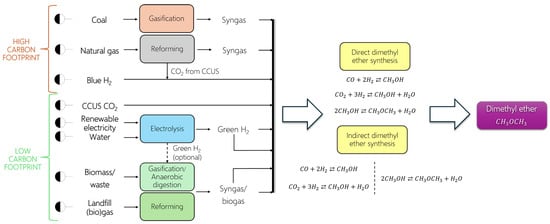
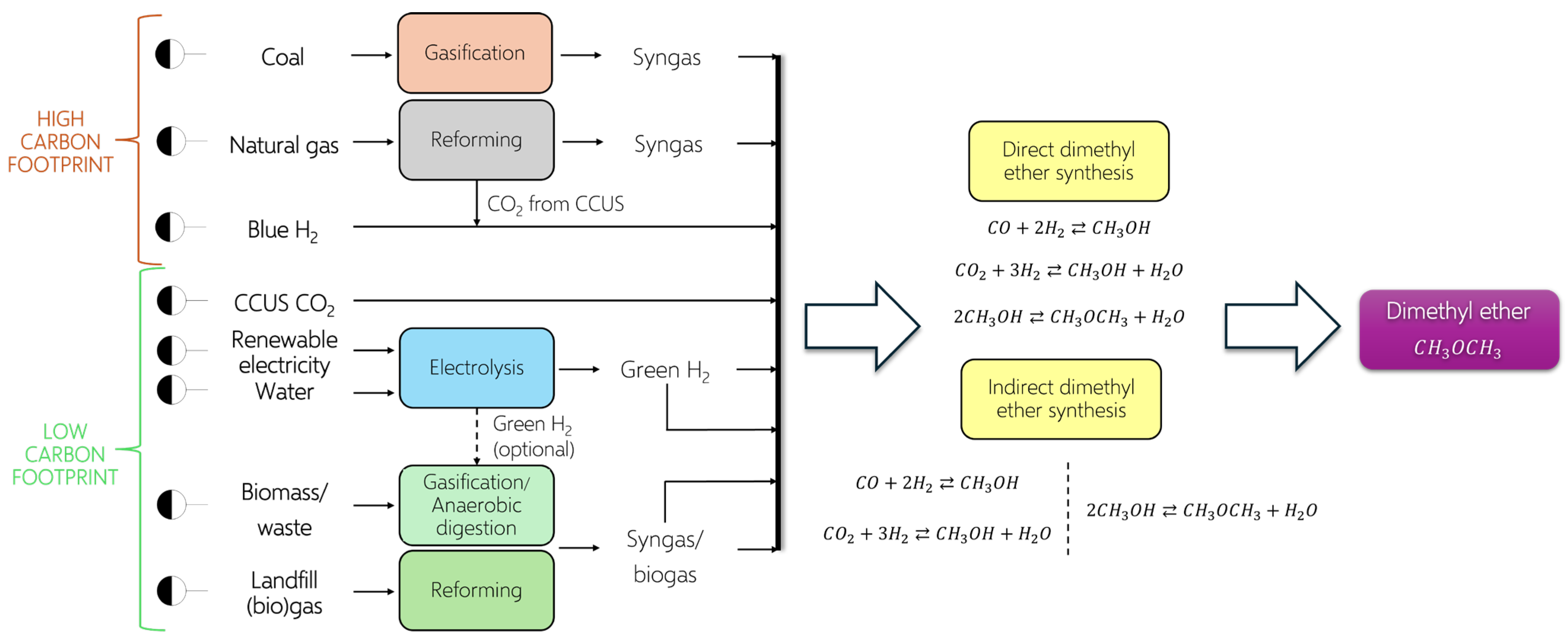
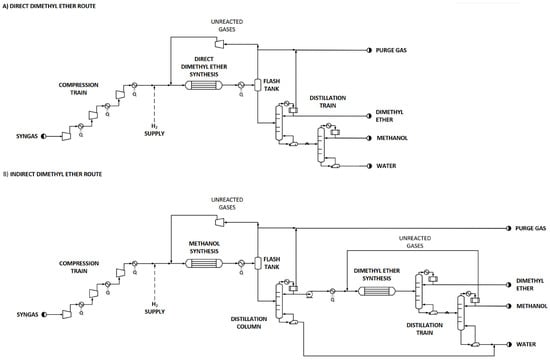
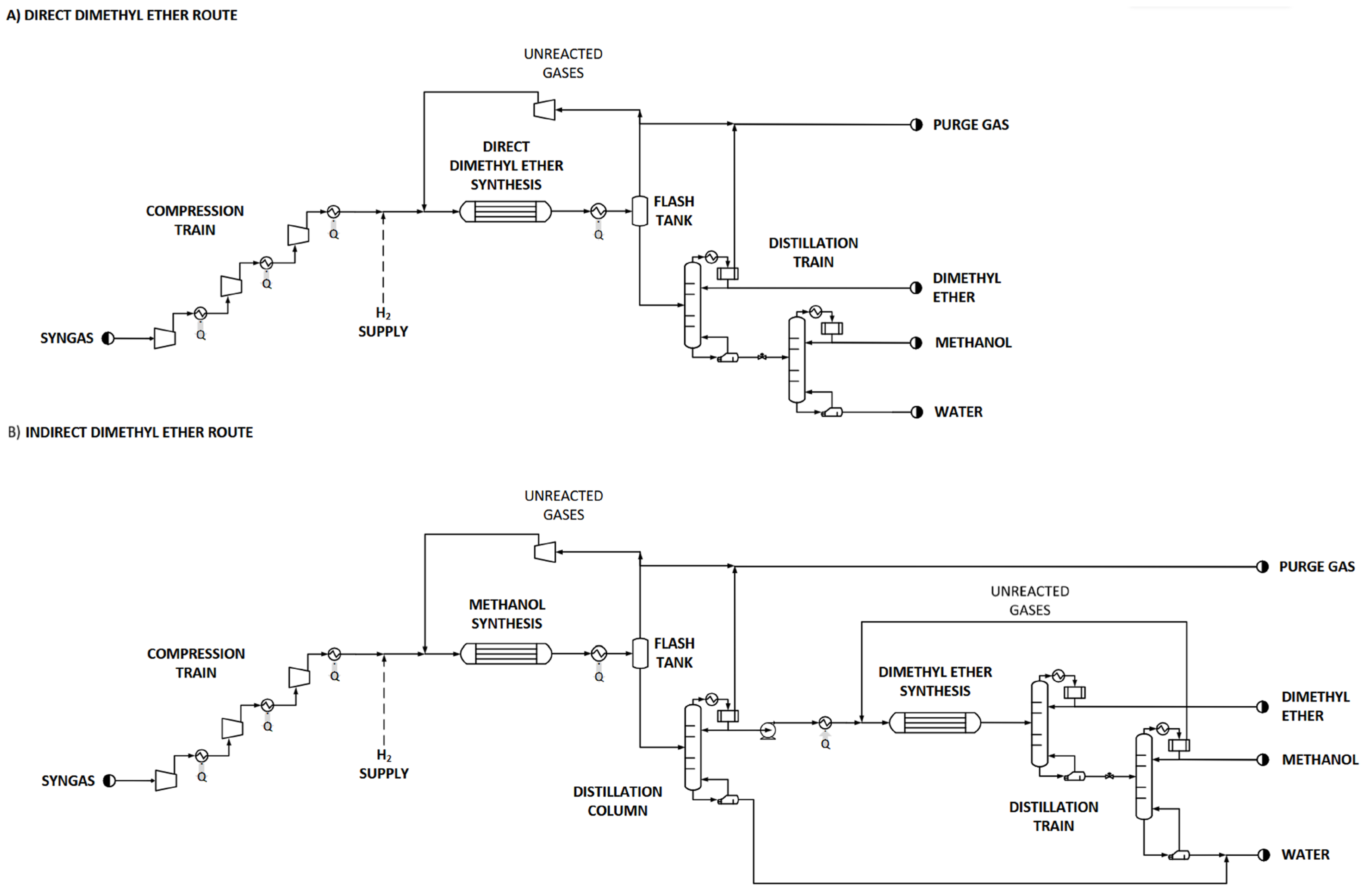
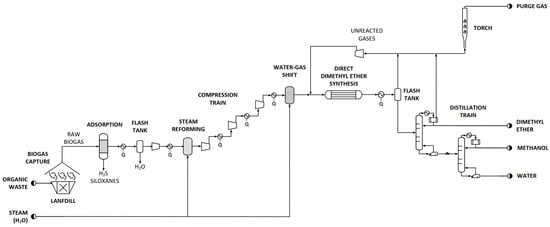
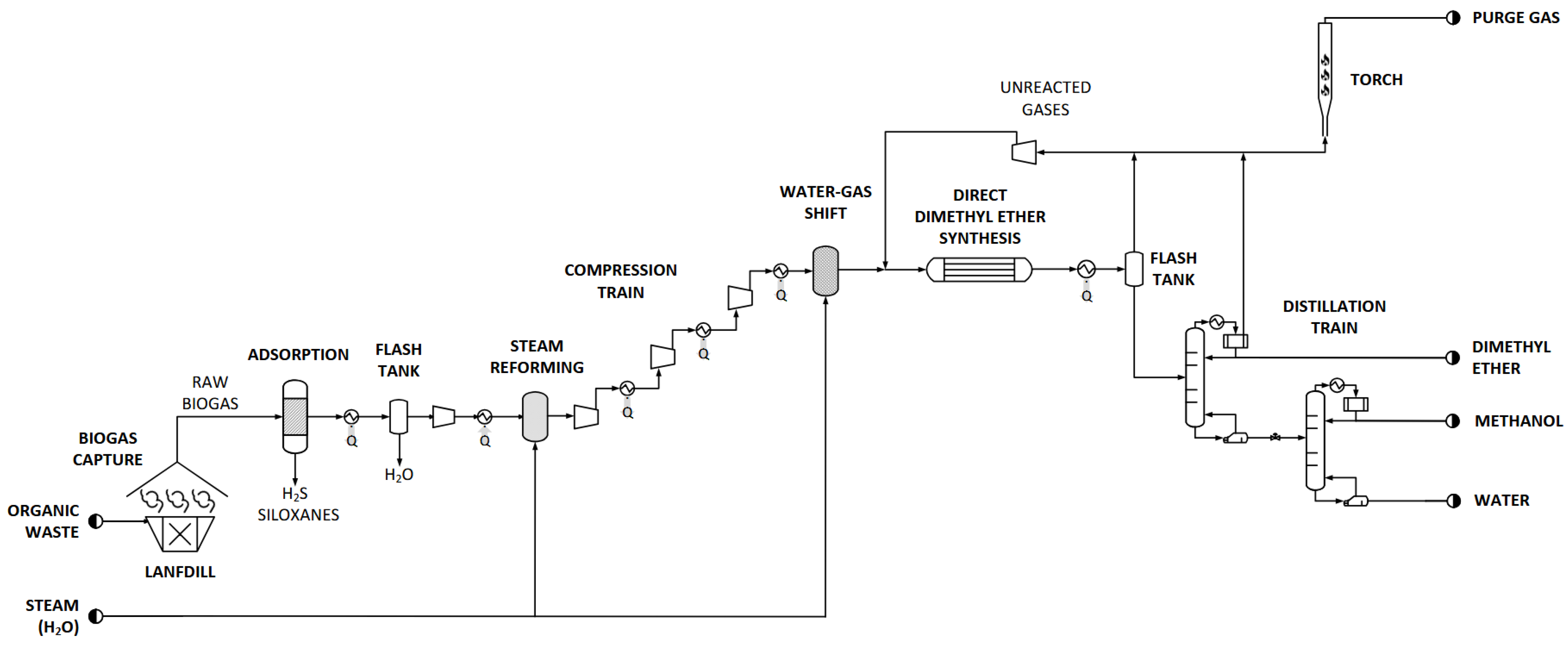

Disclaimer/Publisher’s Note: The statements, opinions and data contained in all publications are solely those of the individual author(s) and contributor(s) and not of MDPI and/or the editor(s). MDPI and/or the editor(s) disclaim responsibility for any injury to people or property resulting from any ideas, methods, instructions or products referred to in the content. |
© 2026 by the authors. Licensee MDPI, Basel, Switzerland. This article is an open access article distributed under the terms and conditions of the Creative Commons Attribution (CC BY) license.