


Abstract
Wave energy is a viable renewable resource for islands and isolated coastal areas looking to lessen their reliance on fossil fuels. However, the majority of wave energy converter (WEC) evaluations address site-specific limitations, including coastal erosion, sedimentary conditions, and cold-region processes, as secondary factors, with a primary focus on hydrodynamic performance and energy generation. This gap matters especially for low-lying island systems, where infrastructure resilience, coastline stability, and energy generation must be supported concurrently. Using the Magdalen Islands (Gulf of St. Lawrence, Canada) as a constraint-defining reference system, this work offers a site-constrained, erosion-aware critical analysis of WEC technology. The proposed framework uses an exclusion–prioritization strategy based on technical restrictions, such as seasonal ice processes, erosion-prone sandy beaches, and limited offshore infrastructure tolerance, rather than optimizing only for energy production. The analysis shows that several offshore WEC concepts raise significant technical and environmental concerns under these conditions. The most technically sound solutions are shore-based and nearshore-integrated technologies, especially oscillating water column (OWC) systems and overtopping converters, which feature limited seabed interaction, offer structural robustness, and allow integration with coastal protection infrastructure. The screening logic is expressed as an explicit two-stage procedure that combines a disqualifying exclusion rule based on physical survivability criteria with a weighted rating of the remaining candidates, and its outcome is shown to be robust to weighting within the resolution of the rating scheme. Compared to traditional energy-centric approaches, the framework supports more robust decision-making by offering a transferable methodology for early-stage technology screening in cold-region and erosion-sensitive coastal contexts.
1. Introduction
Wave energy is widely recognized as one of the most energy-dense marine renewable energy resources. It represents a promising option for island and coastal power systems seeking to reduce their dependence on imported fossil fuels. Global resource assessments have consistently highlighted the high power density of ocean waves relative to other marine renewable resources, particularly in mid- and high-latitude regions exposed to persistent wind forcing and energetic storm systems [1,2]. Consequently, wave energy has repeatedly been identified as a valuable component of hybrid renewable energy systems for isolated and island communities, where decarbonization objectives, energy security concerns, and the high costs of fuel transportation remain significant challenges.
Over the past two decades, wave energy converter (WEC) technologies have been the subject of extensive research and numerous review studies, primarily focusing on hydrodynamic performance, power take-off (PTO) systems, control strategies, and technological maturity [3,4]. These studies have significantly improved the understanding of energy capture mechanisms, device classifications, and operational performance under energetic offshore conditions. However, most existing assessments implicitly treat deployment sites primarily as energy resources rather than as constraint-dominated engineering environments. As a result, key factors such as coastal erosion dynamics, sedimentary conditions, and cold-region processes are often addressed as secondary environmental considerations rather than as primary drivers of technology selection.
Despite the growing body of literature on wave energy technologies, relatively few studies have explicitly integrated coastal protection objectives, coastal erosion processes, and renewable energy generation within a unified technology-selection framework. Existing reviews assess WECs primarily through energy production metrics, hydrodynamic performance, technological maturity, or control strategies. In contrast, the potential role of WECs as components of coastal resilience infrastructure remains comparatively underexplored. Consequently, decision-oriented frameworks that can simultaneously evaluate wave energy technologies against both energy production requirements and site-specific coastal engineering constraints are currently lacking.
This limitation becomes particularly important for low-lying island systems located in cold, storm-prone regions. In such environments, wave energy deployment must simultaneously address renewable energy generation, shoreline stability, and long-term structural resilience under severe environmental loading. Wave energy devices and their interaction with nearshore hydrodynamics can directly influence sediment transport pathways and coastal erosion rates, particularly along shorelines composed of sandy sediments or weakly consolidated sedimentary materials [5,6]. In addition, cold-region processes such as seasonal ice formation, freeze–thaw cycles, and ice-induced loading impose significant constraints on structural design, material selection, and mechanical complexity [6,7]. Under these conditions, the suitability of a WEC technology cannot be assessed solely by energy-capture efficiency or technological maturity.
Instead, technology selection must account for complex interactions among wave climate characteristics, seabed conditions, coastal morphology, seasonal ice processes, and opportunities for integration with existing coastal infrastructure. Technologies that perform effectively in deep-water offshore environments may become unsuitable in shallow, erosion-sensitive coastal zones that require extensive mooring systems or seabed anchoring. Conversely, technologies with lower hydrodynamic efficiency may perform better overall when evaluated using broader engineering criteria, including survivability, coastal compatibility, environmental resilience, and long-term operational reliability [4].
In this context, the Magdalen Islands (Gulf of St. Lawrence, Canada) provide a particularly relevant reference system for assessing wave energy technologies under combined erosion and cold-region constraints. The archipelago experiences some of the highest coastal erosion rates in Eastern Canada and is exposed to a highly energetic and strongly seasonal wave climate. It is also affected by cold-region processes, including seasonal ice formation and the ongoing reduction in winter ice cover associated with climate change [5,8].
The islands are connected by a series of narrow sand barriers and a single main transportation corridor, making critical infrastructure particularly vulnerable to coastal erosion, storm surges, and wave-induced damage (Figure 1). At the same time, there is increasing pressure to maintain key socioeconomic activities, notably fisheries, while preserving environmentally sensitive coastal ecosystems and reducing dependence on imported fossil-fuel-based electricity generation. Although wind energy already contributes to the local electricity supply, renewable energy penetration remains limited, underscoring the need for additional resilient, locally available energy resources.
Figure 1.
Location of the Magdalen Islands: (a) regional setting in the Gulf of St. Lawrence, eastern Canada; (b) the archipelago, whose islands are linked by narrow sand barriers. (Map created by the authors from the full-resolution GSHHG shoreline database [9]).
The practical case for developing wave energy at this site rests as much on the archipelago’s energy situation as on its wave resource. The Magdalen Islands are not connected to the provincial transmission grid and are supplied by Hydro-Québec through an autonomous network. The Cap-aux-Meules thermal station, commissioned in 1991, has an installed capacity of 67 MW against a winter peak demand of about 44 MW and is now reaching the end of its service life [10]. Hydro-Québec’s own assessment of a proposed wind project for the archipelago indicates the scale of fuel displacement at stake for any local renewable resource: it was expected to avoid the consumption of close to 11 million litres of fuel oil and the emission of some 34 kt CO2 eq per year [11]. The decarbonization pathway for this network has proved unusually difficult to settle. A submarine cable interconnection from the Gaspé Peninsula was pursued from 2018 onward, was returned for further analysis by the Régie de l’énergie in 2022 [12] and was ultimately set aside in June 2025 in favour of a replacement generating station on the Cap-aux-Meules site, running on low-carbon fuel and scheduled for commissioning in 2035 [10,13].
Two consequences follow, and together they define the practical need this review addresses. First, the archipelago will remain an islanded system dependent on combustion-based firm capacity for the foreseeable future, so that any local renewable resource contributes directly to displacing fuel rather than to a marginal change in a large, interconnected mix. Second, the periods of highest electricity demand coincide with the winter months in which the local wave resource is at its most energetic, a temporal correlation that few other renewable resources at this latitude offer and that is examined quantitatively in Section 2.5. At the same time, the same winter storms that carry this energy are the principal agent of the coastal erosion that threatens the single road corridor linking the islands. Wave energy at this site is therefore not simply an additional generation option; it is one of the few interventions that addresses both the energy and coastal-protection problems through the same physical process, which underpins the constraint-driven selection framework developed below.
Against this backdrop, the present study proposes a site-constrained, erosion-aware critical review of wave energy converter technologies. Rather than treating the Magdalen Islands as a simple application example, the archipelago serves as a constraint-defining reference system for evaluating the suitability of different WEC concepts. Unlike conventional technology-centred reviews that seek to identify the most efficient or technologically advanced devices, this work adopts a decision-oriented perspective that explicitly links wave climate conditions, coastal erosion processes, cold-region constraints, and WEC technological characteristics.
The objective is not to identify a universally optimal wave energy technology, but rather to establish a structured framework for excluding unsuitable concepts and prioritizing conditionally viable alternatives for erosion-sensitive island environments. By treating coastal erosion and cold-region processes as primary engineering filters, the proposed framework aims to support early-stage technology screening and decision-making for wave energy deployment in cold-region coastal systems facing increasing climate-driven pressures.
The remainder of this paper is organized as follows. Section 2 presents the site-specific constraints and engineering requirements that govern wave energy deployment in the Magdalen Islands, including wave climate characteristics, coastal erosion processes, cold-region conditions, and socio-environmental considerations. Section 3 critically evaluates the major families of wave energy converters in light of these constraints and discusses their relative suitability for deployment in erosion-sensitive island environments. Section 4 develops the proposed exclusion–prioritization framework and identifies technologies that are unsuitable, conditionally viable, or promising for long-term integration into coastal infrastructure. Section 5 examines the environmental and socio-technical implications of wave energy deployment, with particular emphasis on marine ecosystems, coastal processes, fisheries, social acceptance, and climate adaptation. Finally, Section 6 summarizes the main findings and discusses future research directions for integrating wave energy development with coastal resilience objectives in cold-region island systems.
2. Site Constraints and Engineering Requirements
The Magdalen Islands represent a particularly challenging environment for wave energy deployment due to the combined influence of physical, environmental, and socio-technical constraints. Unlike many wave energy assessments that primarily evaluate sites based on resource availability, this study treats the Magdalen Islands as a constraint-defining engineering system in which environmental loading conditions, coastal processes, and operational limitations govern technology suitability.
The engineering evaluation of WEC technologies is structured around four principal constraints: a highly energetic and strongly seasonal wave climate; severe coastal erosion affecting low-elevation sandy and sandstone shorelines; cold-region processes, including seasonal ice formation and freeze–thaw cycles; and limited tolerance for large offshore infrastructure due to ecological sensitivities, navigational requirements, and the presence of economically important coastal activities, particularly lobster fishing.
Taken together, these constraints impose stringent requirements on structural robustness, deployment configuration, seabed interaction, survivability, and long-term operational reliability.
2.1. Wave Climate and Hydrodynamic Conditions
The wave climate of the Magdalen Islands is strongly seasonal and frequently exposed to energetic winter storms. Measurements collected in the Gulf of St. Lawrence indicate that significant wave heights commonly exceed 3–4 m during winter storm events, with even larger values observed offshore under extreme conditions [8]. In contrast, summer wave conditions are considerably milder, resulting in pronounced seasonal variability in wave energy availability.
From an engineering perspective, this wave regime implies that technology selection should prioritize survivability under extreme loading conditions rather than optimizing annual average energy production. Devices that rely on narrow-band resonance, precise tuning, or limited operational bandwidth may experience significant performance degradation or structural loading during high-energy winter events [3,4]. Consequently, WEC technologies considered for deployment in the Magdalen Islands must operate under broad wave spectra, highly variable sea states, and elevated peak loads.
2.2. Coastal Erosion and Sedimentary Environment
In the Magdalen Islands, severe coastline erosion is a significant engineering limitation. The archipelago is highly susceptible to erosion from waves, storm surges, and rising sea levels because it is primarily composed of sandy beaches and loosely cemented sandstone cliffs [5]. In certain areas, coastline retreat rates are among the highest in Eastern Canada, endangering coastal ecosystems, transportation routes, and infrastructure.
The interaction between WEC foundations and the seabed becomes a crucial design concern in erosion-prone sedimentary environments. Technologies that require deep foundations, complex anchoring systems, or constant seabed contact may cause long-term instability, sediment redistribution, and local scour [14]. Therefore, from a technical perspective, WEC solutions that minimize seabed contact or can be incorporated into reinforced coastal structures are naturally preferred.
2.3. Cold-Region Processes and Ice-Related Constraints
Cold-region phenomena further limit wave energy deployment in the Magdalen Islands. While long-term trends show a steady decrease in winter ice cover, seasonal ice formation, freeze–thaw cycles, and ice-induced mechanical stress still affect nearshore and coastal structures [6,7]. Although such events are infrequent, ice can still damage floating structures and exposed mechanical parts.
These constraints impose strict criteria for mechanical robustness, material choice, and structural simplicity. WECs with articulated joints, exposed moving parts, or intricate power take-off systems are more susceptible to impact damage and ice-induced fatigue. In cold-region operating conditions, physically large systems with shielded power take-off components and minimal mechanical complexity exhibit better durability [7].
2.4. Infrastructure Integration and Socio-Environmental Constraints
Wave energy deployment in the Magdalen Islands is limited not only by physical processes but also by ecological sensitivity, fishing activity, navigational needs, and strong social attachment to coastal environments [5,15]. In this small island context, large offshore or nearshore installations and extensive exclusion zones may interfere with fishing activities, navigation routes, and the visual character of coastal landscapes.
These limitations reduce the feasibility of large offshore arrays from both technical and planning perspectives, favouring nearshore or shore-based solutions integrated with existing coastal infrastructure, such as harbour facilities, riprap revetments, or breakwaters.
While infrastructure-integrated WECs can reduce visual and spatial impacts and contribute to coastal stabilization, site selection and design must explicitly consider potential interactions with nearshore economic activities, particularly lobster fishing [16].
2.5. Quantitative Characterization of Design-Governing Wave Conditions and Long-Term Climate Robustness
While Section 2.1 introduced the qualitative characteristics of the regional wave climate, the present section focuses on the quantitative hydrodynamic conditions that govern structural design, survivability requirements, and technology screening. For this purpose, Site C (Pointe-aux-Loups, 28 m water depth) is adopted as the design-governing reference location because it captures some of the highest wave energy levels affecting the Magdalen Islands [8].
Observational data from the 2012–2013 field campaign conducted by the Institut des sciences de la mer de Rimouski of the Université du Québec à Rimouski (ISMER-UQAR) form the basis for characterizing the wave climate. Measurements obtained using Acoustic Wave and Current (AWAC) profilers reveal a strongly seasonal wave regime with pronounced directional dependence. As illustrated by the monthly wave roses at Pointe-aux-Loups (Site C; Figure 2), winter conditions are dominated by northwesterly waves associated with intense extratropical storms, whereas transitional seasons show significant contributions from southerly storm systems [8]. This directional variability directly affects WEC orientation, structural loading, and mooring configuration.
Figure 2.
Monthly wave roses for Site C (Pointe-aux-Loups). High-energy northwesterly waves dominate winter months, with significant contributions from southerly storm systems in autumn (adapted with the authors’ permission from [8]; the labels of the original figure have been translated into English by the present authors).
Seasonal variability poses a major design constraint for deploying WECs in the Magdalen Islands. At Site C, significant wave heights commonly range between 2 and 4 m during winter conditions, while extreme storm events may generate wave heights of 5–6 m. In contrast, summer conditions are considerably milder, with significant wave heights generally remaining below 2 m. Wave power estimates derived from standard deep-water formulations indicate average winter energy levels of approximately 15–25 kW/m under moderate conditions, increasing to 40–60 kW/m during severe storm events [8].
This pronounced seasonality matters because peak wave energy availability coincides with periods of elevated electricity demand and increased exposure to coastal hazards. However, from an engineering perspective, the primary implication is that survivability under extreme winter loading becomes a more critical design criterion than maximizing annual energy production. Consequently, technologies to be deployed in the Magdalen Islands must demonstrate adequate structural resilience under highly energetic, rapidly varying sea states.
Extreme events and storm surges further amplify hydrodynamic constraints. Water-level records obtained at the Grosse-Île Nord tide station indicate storm-induced surges exceeding +0.6 m above predicted tidal levels during major winter events, with combined water levels reaching approximately +1.2 m during the February 2013 storm (Figure 3) [8]. Such elevated water levels increase wave attack on nearshore and shore-based structures, intensify coastal erosion processes, and increase structural loading on coastal infrastructure. These conditions reinforce the need for conservative design margins and robust WEC concepts that maintain performance and structural integrity under extreme environmental conditions.
Figure 3.
Water levels recorded at Grosse-Île Nord, including predicted tides and storm-induced surges. The February 2013 storm produced one of the highest combined water levels on record (adapted with the authors’ permission from [8]; the axis labels of the original figure have been translated into English by the present authors).
Overall, the wave climate at Site C is characterized by strong seasonality, pronounced directional coherence, and frequent extreme events that govern upper-bound hydrodynamic loading conditions. In this study, wave resource characterization is not used to maximize theoretical energy yield, but to establish engineering constraints, technology exclusion criteria, and prioritization pathways for WEC deployment. These design-governing conditions constitute a critical input to the constraint-driven technology selection framework developed in the following sections.
The 2012–2013 record used above characterizes one ice-affected season and therefore represents the seasonal structure of the local wave climate rather than its long-term statistics. For screening purposes, this is a deliberate limitation: the framework developed in Section 4 is driven by the nature of the governing constraints, namely ice presence, sediment mobility and storm-surge exposure, rather than by return-period design values, which would require a multi-decadal hindcast. The design conditions that govern technology selection must nevertheless be referenced to longer time scales, and three benchmarks are relevant at this site.
The first concerns extreme events. Post-tropical storm Fiona, in September 2022, provides the most severe recent benchmark for the archipelago. A storm tide of at least 1.22 m combined with waves of 6 to 8 m produced coastal submergence at several locations, and a shoreline retreat of nearly 18 m was recorded during this single event at a beach in Plaisance Bay [17,18]. The storm tide is of the same order as the +1.2 m combined water level of February 2013 shown in Figure 3, but the associated shoreline response was roughly fifty times the mean annual regional retreat rate of approximately 0.37 m per year observed between 2000 and 2023 [18]. Observations following the same storm on the north shore of Prince Edward Island, a comparable sandy coast in the southern Gulf of St. Lawrence, document coastal land loss exceeding 51 km2 and dune loss exceeding 11 km2 [19]. Events of this class, including Hurricane Dorian in 2019 and Fiona in 2022, now define the effective upper bound of the loading envelope that any deployed structure must survive, and their frequency is the principal source of uncertainty in that envelope.
Table 1 places the event resolved by the instrumented record alongside the most severe recent event for which published measurements are available for the archipelago. The two are separated by nine years, and only the later event has a documented shoreline response, which is why the survival condition below refers to the later event rather than to the observed record alone.
Table 1.
Extreme events used to define the survival condition at the Magdalen Islands. The February 2013 event is the one resolved by the instrumented record of Figure 3; post-tropical storm Fiona post-dates that record and is reported from published post-storm assessments [17,18].
The archipelago was also affected by the winter storm of late November 2018 and by post-tropical storm Dorian in September 2019. These events confirm the recurrence of the class within a single decade, but we do not tabulate them here because measurements established on the same basis as those in Table 1 were not available to the present authors.
The second concerns slow variables acting over the service life of a deployed system. Relative sea level at the Magdalen Islands rose by an average of 4.3 mm per year between 1964 and 2014, above the global mean, reflecting the archipelago’s post-glacial subsidence [18,20,21]. Projections for 2100 range from a 0.87 m rise under the high-emission Shared Socioeconomic Pathway SSP5-8.5 to 1.41–1.60 m under a high-end scenario including an additional West Antarctic contribution [20,22]. In parallel, the winter ice cover that historically shielded the shoreline from wave attack is declining; in 2024, less than 10 percent of the St. Lawrence surface was ice-covered, the lowest value recorded in fifty years [18]. The combined effect is a longer wave-exposure season acting on a higher mean water level, which shifts the design point of any coastal structure upward over its lifetime rather than holding it constant.
The third concerns translating these observations into screening criteria. Three design-governing conditions follow: (i) a survival condition referenced to a storm tide of the order of 1.2 m superimposed on the astronomical tide, with significant wave heights of 6 to 8 m in the exposed northwestern and northeastern sectors and allowing for a mean water level up to approximately 1 m higher by the end of the century; (ii) an ice-loading condition covering static pressure from landfast ice, dynamic impact from drifting floes during break-up, and freeze–thaw cycling of exposed structural elements and of any air chamber or turbine duct; and (iii) a sediment-mobility condition requiring any bottom-referenced foundation to tolerate large, rapid changes in bed level without loss of support, since the shoreline may retreat by more than 15 m during a single event. A complete structural design would additionally require 50-year and 100-year return-period values derived from a long-term regional hindcast; establishing those values lies beyond the scope of a screening framework and is identified as a priority in Section 6.
2.6. Synthesis: Site Constraints as Engineering Filters for WEC Selection
Taken together, the wave climate, storm-surge exposure, erosion-prone sedimentary environment, cold-region processes, and socio-environmental constraints of the Magdalen Islands substantially restrict the range of technically viable wave energy converter technologies. These constraints favour systems that can withstand extreme storm loading, minimize interaction with mobile seabeds, and integrate effectively with nearshore or shore-based infrastructure.
From a technology-selection perspective, the most critical engineering requirements are structural robustness, limited dependence on complex mooring or anchoring systems, resistance to ice-related loading, and compatibility with coastal protection objectives. Technologies that fail to meet these requirements are unlikely to deliver acceptable long-term performance, regardless of theoretical energy-capture efficiency.
Accordingly, the Magdalen Islands are treated not only as a case study but also as a constraint-defining engineering filter through which the broader applicability of WEC technologies in cold-region island systems can be assessed. The following sections build on this framework to evaluate, exclude, and prioritize WEC concepts based on their ability to meet these site-specific engineering requirements.
3. Evaluation of Wave Energy Converter Technologies Under Site Constraints
WEC technologies show markedly different levels of suitability in erosion-sensitive coastal environments and cold-region operating conditions. Unlike conventional reviews that compare technologies primarily on hydrodynamic performance or energy conversion efficiency, this assessment evaluates WEC concepts against the engineering constraints identified in Section 2, including extreme and seasonal wave loading, erosion-prone sedimentary environments, cold-region processes, and the need for nearshore or shore-based integration. From this constraint-driven perspective, technologies that perform well under offshore energy-production objectives may pose significant technical and operational risks in the Magdalen Islands. In contrast, other concepts may remain viable despite moderate energy-conversion efficiency [3,4].
3.1. Floating Oscillating Body Devices (Point Absorbers and Attenuators)
Floating oscillating body wave energy converters (OFWECs), including point absorbers and attenuator-type devices, have received considerable attention because of their relatively high energy-capture efficiency and deployment flexibility in offshore environments [3,23]. These systems (Figure 4) typically rely on multi-line mooring arrangements to keep station while harvesting energy from the relative motion of floating bodies induced by incident waves [24,25].
Figure 4.
Schematic representation of the main floating oscillating body wave energy converter (OFWEC) configurations: (a) surface-piercing heaving point absorber (e.g., AquaBuoy and PowerBuoy); (b) submerged pressure-differential point absorber (e.g., Archimedes Wave Swing, AWS); (c) attenuator with hinged floating sections. (Figure created by the authors with the assistance of generative AI, based on the device concepts described in [25,26]).
From the perspective of the Magdalen Islands, however, several engineering challenges limit their suitability. The combination of energetic winter storms and morphodynamically active seabeds creates significant uncertainties about long-term mooring stability and structural survivability, particularly in areas with sandy sediments. In addition, articulated joints, exposed mechanical components, and multiple moving elements increase susceptibility to fatigue, storm-induced loading, and ice-related damage under cold-region operating conditions [4,27,28].
Although floating oscillating body devices remain attractive solutions for deep-water offshore applications, their dependence on complex mooring systems and exposed mechanical components increases both technical risk and maintenance requirements in erosion-sensitive coastal environments. Consequently, their applicability in the Magdalen Islands appears limited when evaluated against the combined constraints of coastal erosion, severe winter storms, and seasonal ice processes.
3.2. Oscillating Wave Surge Converters (OWSCs)
Oscillating wave surge converters (OWSCs) extract energy from the horizontal motion of water particles in shallow nearshore environments. These systems can achieve relatively high energy-capture efficiencies in energetic wave climates and are often considered attractive for nearshore deployment [26].
However, their reliance on bottom-mounted foundations introduces important constraints in erosion-sensitive environments such as the Magdalen Islands. Because OWSCs directly interact with the seabed, they can alter near-bed hydrodynamics, leading to localized scour and sediment redistribution. In mobile sandy environments, these processes may accelerate erosion and compromise long-term foundation stability. Furthermore, their shallow-water deployment increases exposure to severe storm loading, wave impacts, and ice-related mechanical stresses during winter conditions.
As a result, despite their favourable hydrodynamic performance, OWSCs exhibit limited compatibility with the coastal resilience objectives and sedimentary conditions that characterize the Magdalen Islands.
3.3. Oscillating Water Column (OWC) Systems
Oscillating water column (OWC) systems generate electricity from the oscillation of a confined water column, which drives air through a turbine. These systems can be deployed as fixed or floating structures and may be installed onshore, nearshore, or offshore, providing significant flexibility in deployment configuration [4,24].
Within the context of the Magdalen Islands, nearshore and shore-integrated OWC systems present several engineering advantages. Their rigid structural configuration and absence of submerged moving mechanical components improve survivability under energetic wave conditions while reducing vulnerability to ice-related damage. Moreover, when integrated into coastal protection infrastructure, such as breakwaters or seawalls, OWCs can generate renewable energy while attenuating incoming wave energy, thereby contributing to shoreline stabilization and erosion mitigation [16].
Although OWCs generally exhibit moderate hydrodynamic efficiency compared with some offshore technologies, their structural robustness, limited interaction with erosion-prone seabeds, and compatibility with infrastructure-integrated deployment strategies make them strong candidates for deployment in cold-region island environments.
3.4. Overtopping Wave Energy Converters (OWECs)
Overtopping wave energy converters (OWECs) capture wave energy by directing overtopped water into an elevated reservoir from which it is subsequently released through low-head turbines (Figure 5). Owing to their large structural dimensions and gravity-based operating principle, these systems are generally well suited to energetic wave environments [29].
Figure 5.
Basic structure and operating principle of overtopping technology (Figure created by the authors with the assistance of generative AI, based on the concepts described in [29]).
From an engineering standpoint, OWECs exhibit several characteristics that closely align with the constraints identified for the Magdalen Islands. Their structural robustness, relatively low mechanical complexity, and limited reliance on articulated moving components enhance resilience under extreme storm conditions and cold-region operation. Furthermore, when integrated into coastal protection infrastructure, OWECs can simultaneously contribute to renewable energy production and wave attenuation, thereby supporting coastal erosion mitigation objectives.
The principal limitations of OWECs include their relatively large footprint, elevated capital costs, and moderate hydrodynamic efficiency. Nevertheless, these disadvantages may be partially offset by their contribution to coastal resilience, reduced maintenance requirements, and compatibility with multi-functional coastal infrastructure concepts [4,30].
3.5. Comparative Implications Under Site Constraints
When evaluated against the combined constraints of extreme wave loading, erosion-prone sedimentary environments, cold-region processes, and socio-environmental sensitivity, clear differences emerge among the major WEC families considered in this review. Technologies that rely on extensive mooring systems, deep seabed anchoring, or direct interaction with mobile seabeds are generally more vulnerable to long-term technical risks under the conditions encountered in the Magdalen Islands.
Conversely, technologies that emphasize structural robustness, limited seabed interaction, and compatibility with existing coastal infrastructure align more closely with the engineering requirements identified in Section 2. In particular, OWC systems and OWECs are the most promising concepts, offering opportunities to integrate with coastal protection infrastructure while reducing exposure to erosion-related and cold-region operational risks.
This comparative assessment underpins the technology exclusion and prioritization framework developed in the following section, which formalizes the relative suitability of different WEC concepts through a constraint-driven decision process.
To make this comparison explicit rather than purely qualitative, Table 2 summarizes the techno-economic characteristics of the six WEC configurations considered in this review, and Table 3 translates the site constraints of Section 2 into an explicit screening matrix. The entries of Table 2 are comparative rather than absolute: published cost and performance figures for wave energy converters remain strongly device-specific and site-specific, and the absence of a dominant technology means that levelized cost estimates carry wide uncertainty at the technology-readiness levels considered here [31,32,33,34].
Table 2.
Comparative techno-economic characteristics of the wave energy converter families considered, evaluated for a cold-region, erosion-sensitive island site. TRL, technology readiness level.
Table 3.
Constraint-based screening matrix. Ratings range from 0 (incompatible) to 3 (fully compatible). A rating of 0 on S1, S2 or S3 triggers exclusion regardless of the weighted score. Dashes (—) indicate that a weight is not applicable. OWC, oscillating water column.
Three published observations support the ordering in Table 2. In terms of hydrodynamic conversion efficiency, comparative assessments of capture width ratio place the pitching flap (i.e., the oscillating wave surge converter) first, followed by the oscillating water column, with the overtopping converter last [35]. In terms of cost, the principal drawback of oscillating water columns is a relatively high structural cost that raises the levelized cost of energy, and this cost increases from nearshore to deep-water locations and from mild to extreme wave conditions [36]; the same gradient is one reason why a nearshore or shore-integrated deployment is preferred here. As an order-of-magnitude comparison, a techno-economic assessment at a common site reports a levelized cost of 316.90 EUR/MWh for a floating overtopping platform, 735.94 EUR/MWh for an attenuator, and 2967.85 EUR/MWh for a point absorber [31].
Table 3 formalizes the screening logic. Each family is rated from 0 to 3 on seven criteria derived directly from Section 2, where 3 denotes full compatibility with the site constraint, and 0 denotes an incompatibility that cannot be resolved by design at the current state of the art. Two stages follow from this rating. In the exclusion stage, a score of 0 on any of the three physical survivability criteria S1, S2, or S3 removes the technology from further consideration, regardless of its aggregate score, since these constraints cannot be traded against energy performance. In the prioritization stage, the remaining technologies are ranked by the weighted sum of all seven criteria.
The weighting factors reflect engineering priorities for early-stage screening rather than mathematically optimized values. They structure the decision process, while the sensitivity analysis shows that the main conclusions remain robust to moderate variations in weighting. The weights are not arbitrary, and their rationale is stated here explicitly. Together, the three physical survivability criteria carry half of the total weight because they determine whether a device survives at the site at all, whereas energy conversion performance carries 0.20. This deliberate subordination of energy performance to physical compatibility is the central methodological claim of this review and the point on which it departs from conventional energy-centric screening. Of the remaining criteria, integration with coastal-protection infrastructure carries 0.15, whereas socio-environmental compatibility and maintenance access carry the smallest weights because they modulate project feasibility rather than technical viability.
Two features of the result deserve comment. First, the exclusion rule alone removes four of the six families: the three offshore floating configurations on sea-ice tolerance, and the oscillating wave surge converter on seabed mobility, despite the latter having the highest energy score in the matrix. This is the intended behaviour of a constraint-driven framework and illustrates why an energy-weighted ranking would have retained a technology that the site excludes. Second, the two retained technologies are separated by only 0.05 on the weighted scale, which is smaller than the rating scheme’s resolution. A sensitivity test in which each weight is varied by up to 25 percent, with the remaining weights renormalized, shows that the ranking between the oscillating water column and the integrated overtopping converter reverses whenever the weight on sea-ice tolerance exceeds approximately 0.19, or the weight on energy performance falls below approximately 0.16. The two technologies should therefore be jointly prioritized, with the choice between them determined by site-specific factors, particularly the severity of ice action at the candidate location and the availability of an existing breakwater section to host the device.
4. Technology Exclusion and Prioritization Framework
When coastal erosion dynamics, cold-region processes, and ecological constraints in sensitive coastal environments are treated as primary engineering considerations, the evaluation of WEC technologies fundamentally changes. Concepts that may appear attractive based solely on hydrodynamic efficiency, energy production potential, or offshore performance can become unsuitable once decision-making explicitly incorporates long-term structural stability, seabed interaction, environmental compatibility, and coastal resilience objectives. Consequently, technology selection in erosion-sensitive island environments should not be based exclusively on energy-centric optimization criteria, but rather on a constraint-driven framework that systematically excludes unsuitable concepts and prioritizes viable alternatives [3,4,24].
The framework is intended for a defined audience and a defined decision stage. Its users are project developers, municipal and regional coastal-management authorities, and funding agencies, operating at the pre-feasibility stage that precedes site-specific resource modelling, detailed structural design and environmental impact assessment. At that stage, the objective is not to size or optimize a device but to reduce a long list of candidate technologies to a short list that justifies the cost of detailed modelling, permitting studies and stakeholder consultation. The framework is accordingly a screening instrument rather than a design or investment tool, and the technologies it retains still require full hydrodynamic, structural and economic assessment before deployment. The ratings and weights of Table 3 provide the operational form of the two stages described in the following subsections.
4.1. Technology Exclusion Under Site-Specific Engineering Constraints
The first stage of the proposed framework identifies and excludes technologies that are fundamentally incompatible with the engineering constraints of the deployment environment, regardless of their theoretical energy-capture potential. In the Magdalen Islands, the dominant constraints include mobile sandy seabeds, extreme storm loading, coastal erosion processes, and cold-region operating conditions. These constraints impose requirements that operational control strategies alone cannot fully mitigate. As a result, technologies that rely heavily on seabed anchoring systems, complex mooring arrangements, or exposed mechanical components face elevated structural and operational risks [4].
Floating offshore oscillating body devices. Floating oscillating body devices, including point absorbers and attenuator-type systems, are widely recognized for their high offshore energy-capture efficiency. However, the multi-line mooring systems required for their deployment are particularly sensitive to scour development, anchor instability, and cyclic degradation under severe storm loading in sandy and erosion-prone environments. These challenges are further exacerbated in cold regions, where exposed joints, articulated components, and mechanical interfaces are vulnerable to ice-related loading, fatigue, and long-term deterioration. Consequently, within the proposed framework, floating oscillating body devices are considered unsuitable for deployment in nearshore and transitional-depth environments characteristic of the Magdalen Islands [6,30,37].
Nearshore oscillating wave surge converters. OWSCs are also excluded by the proposed framework because they depend heavily on direct seabed attachment and significantly influence near-bed hydrodynamics. Although these systems can achieve favourable energy-capture efficiencies in energetic shallow-water environments, their bottom-mounted foundations may promote local scour, sediment redistribution, and seabed instability in mobile sandy settings. These processes conflict with coastal resilience objectives because they may accelerate erosion and compromise long-term shoreline stability. Furthermore, shallow-water deployment exposes these devices to elevated storm loading and ice-related impacts, increasing structural vulnerability under cold-region operating conditions [29].
4.2. Conditional Prioritization of Viable WEC Technologies
Following the exclusion stage, the framework identifies technologies that satisfy minimum compatibility and survivability requirements and can therefore be considered conditionally viable. Prioritization is based on engineering characteristics that enhance long-term reliability under the constraints identified in Section 2, including reduced mechanical complexity, limited dependence on seabed anchoring, structural robustness under extreme loading conditions, and compatibility with nearshore or shore-based infrastructure. In this multi-objective coastal engineering context, technologies are selected not because they are universally optimal, but because they provide the most favourable balance among energy production, operational reliability, environmental compatibility, and coastal protection objectives [4,38].
Oscillating water column systems. The proposed framework identifies shore-based and nearshore-integrated OWC systems as one of the most suitable technology families for deployment in the Magdalen Islands. Their rigid structural configuration, absence of submerged moving mechanical components, and reduced interaction with erosion-prone seabeds enhance survivability under severe storm conditions and improve resilience to cold-region operating environments. In addition, OWCs can be integrated into coastal infrastructure such as breakwaters and seawalls, enabling simultaneous renewable energy production and wave attenuation. This dual functionality contributes directly to shoreline stabilization and coastal resilience objectives. Although their hydrodynamic efficiency is generally moderate, their overall system performance, operational reliability, and compatibility with coastal protection infrastructure justify their prioritization within the proposed framework [16,38].
Overtopping wave energy converters. OWECs are also prioritized because their gravity-based operating principle and large structural mass provide high robustness under extreme storm loading conditions. When integrated into shore-based or nearshore coastal defence structures, OWECs can simultaneously generate electricity and reduce wave energy reaching vulnerable shorelines, supporting erosion mitigation and coastal protection objectives. Although these systems typically exhibit larger footprints, higher capital costs, and lower energy conversion efficiencies than some offshore alternatives, their structural reliability and contribution to long-term coastal resilience make them attractive candidates for erosion-sensitive island environments [16,29].
4.3. Long-Term Positioning of Hybrid Infrastructure-Integrated Concepts
Hybrid concepts that directly integrate wave energy conversion into coastal protection infrastructure represent a promising long-term pathway for erosion-prone island systems. By combining energy extraction functions with breakwaters, seawalls, or shoreline reinforcement structures, these concepts can maximize infrastructure utilization while reducing marginal environmental impacts. Such approaches are particularly attractive in environments where coastal protection and renewable energy generation are simultaneously required.
However, despite their conceptual advantages, most hybrid systems remain at relatively low technology-readiness levels and have yet to be extensively validated under cold-region operating conditions. Significant uncertainties remain regarding long-term structural performance, maintenance requirements, and lifecycle costs. Accordingly, the proposed framework classifies hybrid infrastructure-integrated concepts as strategic long-term opportunities rather than near-term deployment solutions [16,39].
4.4. Synthesis of the Exclusion–Prioritization Decision Logic
Figure 6 summarizes the proposed exclusion–prioritization framework developed in this study. The framework translates the site-specific engineering constraints identified in Section 2 into a structured technology-screening methodology. Rather than ranking WEC technologies solely by energy-conversion performance, the approach first eliminates concepts fundamentally incompatible with erosion-sensitive cold-region environments and then prioritizes technologies that balance energy production, structural resilience, environmental compatibility, and coastal protection.
Figure 6.
Constraint-driven exclusion–prioritization framework proposed for wave energy converter (WEC) selection in cold-region, erosion-sensitive island environments.
The proposed framework formalizes a two-stage decision pathway for WEC selection in erosion-sensitive cold-region island environments. The first stage excludes technologies fundamentally incompatible with site-specific engineering constraints. The second stage then prioritizes technologies that offer acceptable trade-offs among energy production, structural robustness, environmental compatibility, and coastal resilience objectives.
Although developed using the Magdalen Islands as a constraint-defining reference system, the framework is intentionally transferable. It may be adapted to other erosion-prone or cold-region coastal environments by modifying the relevant site-specific thresholds and engineering criteria. By explicitly linking technology selection to environmental and infrastructure constraints, the framework provides a structured methodology for early-stage screening and decision-making that extends beyond conventional energy-centric assessments [3,24].
This transferability stems from the framework’s structure rather than demonstrated results. The framework has so far been applied only to the Magdalen Islands, and its behaviour at a second site has not been tested. A meaningful external test would require application to another cold-region, erosion-prone coastal system with an independent constraint set, for example, the north shore of Prince Edward Island, where the sedimentary setting is comparable and the shoreline response to an extreme event is documented [19], or a sub-Arctic archipelago where ice action is more severe and the weighting of criterion S2 would dominate. Until such a test is carried out, transferability should be read as a design intention of the method and not as a validated property.
Unlike conventional WEC assessment methodologies, which primarily rank technologies by energy conversion performance or technological maturity, the proposed framework explicitly integrates coastal erosion, cold-region processes, and infrastructure compatibility as primary screening criteria. This shift in perspective allows wave energy deployment to be evaluated not only as an energy-generation strategy but also as a component of broader coastal resilience and climate adaptation planning.
4.5. Regulatory and Permitting Constraints
The exclusion and prioritization criteria developed above are technical, but they operate within a consenting environment that independently constrains what can be deployed. In Canada, marine renewable energy projects fall under overlapping federal and provincial jurisdiction, and no single statute governs them [40,41]. Works affecting fish and fish habitat require review and, where harm cannot be avoided, authorization by Fisheries and Oceans Canada under the Fisheries Act, with additional obligations under the Species at Risk Act. Any structure placed in navigable waters is subject to approval by Transport Canada under the Canadian Navigable Waters Act, including public notice and a comment period. Larger projects may trigger a federal assessment under the Impact Assessment Act, and offshore renewable energy activities in federal offshore areas are regulated by the Canada Energy Regulator under the Canadian Energy Regulator Act and the associated offshore renewable energy regulations [42]. Regulatory agencies also carry a duty to consult Indigenous communities [40,43]. Internationally, consenting has been identified repeatedly as a principal non-technical barrier to ocean energy deployment, with the burden falling disproportionately on projects at low technology-readiness levels [41].
This regulatory structure reinforces rather than contradicts the technical screening of Section 2 and Section 4, and it does so asymmetrically across the technology families. Configurations requiring seabed anchoring over extended areas of soft bottom, submarine cabling across fish habitat, and the occupation of navigable water are precisely those that trigger the largest number of authorizations, the most extensive baseline and monitoring programmes, and the longest consenting timelines. For a small island utility, these transaction costs may exceed the technical risk premium and effectively act as an additional exclusion criterion for the offshore floating families already removed in Section 4.1. Conversely, a converter integrated into an existing or planned breakwater is assessed as a modification of a coastal-protection work whose footprint, navigational implications, and habitat effects are largely already established, which shortens the consenting pathway. A permitting dimension could therefore be added to Table 3 as a further criterion; it is not included here because its weighting is jurisdiction-specific and would compromise the transferability discussed in Section 4.4. Recent Canadian practice in the adjacent tidal stream sector, where a staged authorization approach has combined environmental protection with regulatory predictability for early deployments, indicates a plausible pathway for wave energy demonstration projects in the Gulf of St. Lawrence [41].
5. Environmental and Social Considerations
WECs pose complex environmental, geomorphological, and societal challenges when deployed in coastal and island environments, especially in areas experiencing climate-driven stresses and increased coastal erosion. With their shallow sedimentary coasts, rising storm exposure, diminishing seasonal ice cover, and significant socioeconomic reliance on marine resources, the Magdalen Islands constitute an environmentally sensitive case study. As a result, social and environmental factors are crucial to the viability of wave energy production in this area, not incidental.
5.1. Environmental Interactions with Marine Ecosystems
The environmental compatibility of WECs is an important factor in technology selection in environmentally sensitive coastal regions such as the Magdalen Islands. Throughout their life cycle, WECs interact with marine ecosystems through physical, acoustic, electromagnetic, and hydrodynamic processes, from installation to decommissioning. Conceptual frameworks proposed by Riefolo et al. (2015) and Boehlert and Gill (2010) illustrate the spatial and temporal evolution of these interactions and highlight the importance of considering cumulative impacts [44,45].
In soft-bottom environments, WEC foundations, mooring systems, and submerged structures introduce hard substrates that may act as artificial reefs, locally enhancing biodiversity through colonization by fish, macroalgae, and benthic organisms. While such effects can increase local species richness, they may also alter species composition and trophic interactions, underscoring the need for long-term ecological monitoring [46,47].
Acoustic impacts are primarily associated with construction activities such as anchoring and pile driving. Although installation noise may temporarily affect fish and marine mammal behaviour, operational noise from most WECs is generally low and spatially limited, and typically lower than that associated with offshore wind installations [44]. Electromagnetic fields generated by subsea power cables (Figure 7) represent an additional, localized stressor, with species-specific sensitivity, particularly among elasmobranchs, highlighting the importance of cable shielding and burial as mitigation measures [48].
Figure 7.
Conceptual representation of electromagnetic field (EMF) attenuation around a buried subsea power cable, illustrating the localized nature of exposure and the rapid decay of field intensity with increasing distance from the cable. (Figure created by the authors based on the concepts described in [49]).
5.2. Effects on Coastal Processes, Sediment Transport, and Erosion
The interaction between WEC deployment and coastal hydrodynamics represents one of the most important considerations in erosion-sensitive environments. Because WECs modify incident wave energy, they can influence sediment transport pathways, nearshore circulation patterns, and shoreline evolution. Wave attenuation maps and sediment flux diagrams from studies by Mendoza et al. (2014) [14] and Contestabile et al. (2016) [16] show that WECs, especially OWECs and OWCs integrated into breakwaters, can significantly reduce wave energy reaching the coast.
This is especially relevant for the Magdalen Islands. Government studies, such as the Cadre d’intervention en érosion et submersion côtière (Framework for Addressing Coastal Erosion and Flooding) [5], identify areas where wave energy exacerbates coastal erosion. Infrastructure-integrated WECs can locally reduce wave energy reaching the shoreline if designed for local bathymetry and sediment characteristics, as supported by wave-attenuation studies.
However, localized seabed scour and sediment redistribution around WEC foundations and nearshore structures remain concerns. Wave–structure interactions that alter near-bed flow and turbulence are the primary cause. Insufficient scour protection and poor foundation design in sandy conditions can increase sediment instability and erosion. This underscores the need for hydrodynamic–morphodynamic modelling and adaptive design strategies that consider site-specific sediment characteristics and long-term morphological changes, as highlighted in the literature.
The mechanism by which these effects propagate to the shoreline is now reasonably well established and merits a quantitative statement. A converter or array removes and reflects part of the incident wave energy, creating a wave shadow in its lee; reductions in significant wave height of up to approximately 30 percent have been reported behind wave farms, the magnitude depending on device type, water depth, incident conditions and array configuration [50,51,52,53]. Where the shadow reaches the surf zone, reduced wave height and wave setup generate alongshore pressure gradients, which in turn drive longshore currents that converge in the lee of the farm [54]. Modelling with a phase-resolving wave-flow model further indicates that these converging flows favour sediment accumulation directly in the lee and divergence updrift and downdrift of the farm, so the resulting signature is a shoreline reorientation rather than a uniform reduction in erosion [54]. Changes are largest for compact arrays close to shore and become small for widely spaced arrays at greater offshore distance [54,55].
This distinction matters for the present framework, and the available evidence does not support the stronger claim that nearshore or infrastructure-integrated converters reduce net erosion at the sediment-cell scale. The published modelling shows a redistribution of sediment: accretion in the sheltered sector, with a compensating deficit at the margins of the shadow. Whether this represents a net benefit depends on where the protected asset lies relative to the device and on the cell’s alongshore extent and therefore cannot be established by technology screening alone. Site-specific coupled wave–hydrodynamic–morphodynamic modelling is required before claiming any erosion-reduction benefit for a specific deployment. This qualification applies with particular force at the Magdalen Islands, where the sand barriers carrying the main transport route form long, largely uninterrupted littoral cells in which a downdrift deficit would propagate rather than remain local.
The retained and excluded families differ in the character, not only the magnitude, of these effects. Offshore floating arrays act principally through the far-field wave shadow, and the effect at the shoreline is attenuated by distance and by wave spreading, but is also the least controllable. Bottom-mounted oscillating wave surge converters combine a near-field effect, namely local scour and bed-level change around the foundation in a mobile sandy bed, with a strong wave shadow generated within the surf zone itself, which is the least favourable combination in the present setting. From a morphodynamic standpoint, converters integrated into a breakwater behave essentially as the host coastal structure does: the dominant effects are reflection at the structure, toe scour, and the end-effect erosion typical of shore-parallel and shore-connected works, and they can be assessed using established coastal-structure design practice rather than requiring new methods. One quantified illustration of the dual-use trade-off is a coupled hydrodynamic, spectral wave and sediment transport assessment of a nearshore oscillating wave surge array over 1-, 10- and 20-year horizons, which reports an annual production of 562.3 MWh per device at a capacity factor of 18.34 percent and a capture efficiency of 49.9 percent, and that the array retained 278,427 m3 of sediment over twenty years, reducing erosion by 42 percent, while showing that wave attenuation and sediment retention depend jointly on array spacing and distance from shore [56]. Layout configurations that maximize beach protection and those that maximize energy capture are not identical, although dedicated multi-objective optimization suggests that they need not be strongly in conflict [39,57,58].
5.3. Marine Use Conflicts, Social Acceptance, and Governance
Potential interactions between WEC installations and fishing operations must be carefully considered because fisheries play a major socioeconomic role in the Magdalen Islands. This consideration is particularly important because lobster fishing constitutes one of the region’s most economically significant marine activities. The International Council for the Exploration of the Sea (ICES, 2021) [49] presents regional overlap maps between fishing areas and renewable energy installations, synthesizing empirical findings to show possible synergies and conflict zones.
Exclusion zones surrounding WECs may serve as de facto marine protected areas, increasing local fish abundance and biodiversity, although they may limit access for certain fishing methods. Fish abundance and habitat association statistics reported by Inger et al. (2009) [47] show enhanced fish occurrence around marine renewable infrastructure. However, these advantages remain site-specific and require long-term validation.
Navigation safety is another critical consideration, particularly for floating or nearshore WEC arrays. Clear marking, marine spatial planning, and stakeholder consultation are essential to minimize risks and conflicts.
The success of marine renewable energy projects depends on social acceptability, particularly in small island communities with a strong sense of connection to place. Previous studies have demonstrated that perceived fairness, community participation, visual impacts, and the distribution of benefits and risks strongly influence public acceptance of marine renewable energy projects [15].
Visual impact is often one of the main concerns. Residents of the Magdalen Islands are particularly sensitive to changes in coastal environments, as demonstrated by the photographic simulations and visual effect evaluations reported by the Communauté maritime des Îles-de-la-Madeleine (CMIM, 2023) [5]. These studies suggest that the public is more inclined to embrace low-profile, shore-based, or infrastructure-integrated WECs than large offshore floating systems.
This inference should be stated with care, because it rests on visual-preference material rather than measured acceptance outcomes, and the wider literature does not support a simple relationship between device profile and public support. One detailed case study of a shoreline oscillating water column plant at Mutriku in the Basque Country records local opposition driven jointly by visual and noise impacts, by the cost and uncertain profitability of the installation, and by the perception that community groups had been excluded from the planning process [59]. Survey work on the west coast of North America similarly finds that the strongest concerns about wave energy relate to marine life, the scenic value of the coast, and fishing activity, and that opposition is better explained by attachment to place than by proximity alone [60,61]. Two implications follow for the present framework. First, reducing the visible profile of a converter lowers one component of opposition but does not by itself secure acceptance. Second, a shore-based installation is more, not less, exposed to noise-related objection and to daily visual contact with residents. Social acceptance is accordingly represented in Table 3 as a moderating criterion with low weight rather than as a discriminator between technologies, and it is identified here as requiring dedicated community survey work at the Magdalen Islands before any siting decision.
5.4. Cold-Region and Climate Change Considerations
Cold-region processes and climate-change-driven coastal evolution introduce additional constraints that directly affect the long-term viability of wave energy infrastructure. Seasonal ice formation, freeze–thaw cycles, extreme storm events, and declining winter ice cover collectively modify the loading environment experienced by coastal and nearshore structures. Wadhams (2014) [6] illustrates possible loading situations for nearshore structures in ice-prone areas using graphic representations of ice–structure interaction processes.
Sea-level rise and storm intensity projections for Atlantic Canada show that coastal infrastructure is becoming more vulnerable to wave action [7]. Using time-series plots, CMIM (2023) further details the seasonal decline in ice cover, highlighting the loss of natural winter wave protection and the resulting acceleration of erosion [5].
5.5. Integrated Synthesis and Implications for the Magdalen Islands
The literature reviewed in this section indicates that environmental and socio-technical considerations do not fundamentally alter the technology prioritization framework proposed in Section 4; rather, they reinforce it. In the Magdalen Islands, ecological sensitivity, fisheries dependence, coastal erosion, and climate-change-related pressures collectively favour wave energy technologies that minimize seabed disturbance, reduce conflicts with existing marine uses, and contribute to coastal resilience objectives.
The reviewed literature shows that, when designed appropriately, WECs typically have lower ecological impacts than other offshore renewable technologies. Negative effects such as underwater noise, electromagnetic fields, and seabed disturbance are generally localized and can be mitigated through design and operational controls. Positive effects, such as artificial reef formation and increased fish biomass, may also occur around WEC structures [44,45,47]. However, in sandy, erosion-sensitive environments, wave–structure interactions and sediment dynamics are significant constraints, as poor siting or insufficient scour protection can exacerbate sediment instability.
From a coastal engineering perspective, nearshore and shore-based WEC technologies—especially OWC systems integrated into coastal infrastructure and OWECs—emerge as the most technically viable options. When properly designed, these systems can generate renewable energy while attenuating incoming wave energy [16]. This dual function aligns with the Magdalen Islands’ objectives of reducing exposure to storm waves and coastal flooding [5,7].
Social acceptability also influences WEC viability in island settings. Stakeholder engagement, perceived fairness, visual impact, and environmental performance are crucial factors in public acceptance [15]. Technologies that integrate with existing coastal infrastructure or have a minimal visual footprint are more likely to gain long-term societal support in communities connected to coastal landscapes and fisheries.
Finally, cold-region processes and climate change add further engineering challenges. Reduced seasonal ice cover in the Gulf of St. Lawrence has increased wave exposure and accelerated erosion, placing more strain on coastal infrastructure resilience [7]. In this context, wave energy deployment should be part of a broader strategy that integrates renewable energy production with coastal adaptation, ecosystem protection, and risk mitigation.
6. Conclusions
This study demonstrates that conventional energy-centric metrics are insufficient for selecting WEC technologies in cold-region island environments. When coastal erosion dynamics, sedimentary conditions, and cold-region processes are explicitly treated as primary engineering constraints, the range of technically viable WEC solutions is substantially reduced. This finding highlights a fundamental limitation of conventional technology-screening approaches, which frequently prioritize hydrodynamic efficiency or theoretical energy potential without explicitly accounting for site-specific engineering constraints, coastal dynamics, and cold-region operating conditions.
Using the Magdalen Islands as a constraint-defining reference system, this work shows that several offshore and nearshore WEC concepts frequently emphasized in the literature may present elevated technical and environmental risks when deployed in erosion-sensitive, storm-dominated coastal settings. Technologies that rely on complex mooring systems, deep seabed anchoring, or exposed mechanical components are particularly vulnerable to scour, anchor instability, ice-related damage, and long-term maintenance challenges. In contrast, shore-based and nearshore-integrated technologies, notably OWC systems and OWECs, emerge as the most technically coherent options under such conditions.
Although these technologies generally exhibit moderate hydrodynamic efficiency, their structural robustness, limited interaction with erosion-prone seabeds, and compatibility with coastal protection infrastructure provide decisive advantages under multi-objective engineering criteria. Their ability to simultaneously generate renewable energy and attenuate incoming wave energy aligns wave energy deployment with shoreline stabilization and coastal resilience goals, an essential consideration for erosion-prone island systems such as the Magdalen Islands.
This work’s primary contribution is a decision-oriented exclusion–prioritization framework that explicitly links WEC typologies to site-specific engineering constraints. Unlike conventional reviews that primarily compare technologies based on energy conversion performance, technological maturity, or hydrodynamic characteristics, the proposed framework integrates coastal erosion processes, cold-region operating conditions, and infrastructure compatibility as primary screening criteria. Rather than identifying a universally optimal technology, the framework provides a transferable methodology for early-stage technology selection in erosion-sensitive island environments and other cold-region coastal systems. By formalizing exclusion criteria and conditional prioritization pathways, the approach supports more robust, defensible engineering decision-making amid increasing climate-driven uncertainty.
From an engineering perspective, the results further support integrating wave energy systems into multipurpose coastal infrastructure, rather than viewing wave energy as a standalone energy project. In erosion-sensitive environments, such integrated solutions offer opportunities to combine renewable energy production, coastal protection, and long-term infrastructure resilience.
Future research should focus on coupled wave–structure–sediment modelling and on quantitatively assessing the dual benefits of wave energy extraction and coastal erosion mitigation. Long-term field monitoring in cold regions will also be essential to validate the performance, durability, and environmental compatibility of prioritized technologies as climatic conditions continue to evolve. Ultimately, the results suggest that wave energy technologies are likely to contribute most effectively to the sustainability of cold-region island systems when conceived not only as energy-generation devices but also as integral components of broader coastal resilience and climate adaptation strategies.
Three further needs follow directly from the limitations of the present analysis. The wave statistics used here characterize a single season and should be replaced with a multi-decadal regional hindcast yielding 50-year and 100-year return-period values for wave height, water level, and ice loading, so that the survival condition in Section 2.5 can be stated as a design value rather than an observed benchmark. The screening framework has been applied to a single site and requires application to at least one independent cold-region, erosion-prone coastal system before its transferability can be regarded as established. The coastal-protection co-benefit attributed to infrastructure-integrated converters requires sediment-cell-scale morphodynamic modelling, since published evidence currently supports sediment redistribution rather than a net reduction in erosion.
Author Contributions
Conceptualization, O.R. and D.P.V.B.; methodology, O.R. and M.M.; formal analysis, O.R.; investigation, O.R.; writing—original draft preparation, O.R.; writing—review and editing, M.M., D.P.V.B. and A.I.; supervision, D.P.V.B. and A.I.; funding acquisition, D.P.V.B. and A.I. All authors have read and agreed to the published version of the manuscript.
Funding
This research was funded by the Fonds de recherche du Québec—Nature et technologies (FRQNT), Audace program, grant number 2026-AUDC-374633, and by the Natural Sciences and Engineering Research Council of Canada (NSERC), Discovery Grants RGPIN-2024-03882 (D.P.V.B.) and RGPIN-2025-04831 (A.I.).
Data Availability Statement
No new data were generated or analyzed in support of this research. All information discussed in this review is derived from previously published literature cited accordingly throughout the manuscript.
Acknowledgments
The authors gratefully acknowledge the support of École de technologie supérieure (ÉTS) and the contributions of colleagues involved in the modelling and review of this work. During the preparation of this manuscript, the authors used ChatGPT (GPT-5, OpenAI) for language editing, readability improvement, restructuring of selected sections, drafting support for limited portions of the text, and preparation of the schematic in Figure 5, and Claude (Claude Opus 5.5, Anthropic) for proofreading and for preparing Figure 1 and Figure 4. The authors have reviewed and edited the output and take full responsibility for the content of this publication.
Conflicts of Interest
The authors declare no conflicts of interest. The funders had no role in the design of the study; in the collection, analysis, or interpretation of data; in the writing of the manuscript; or in the decision to publish the results.
References
- Cornett, A.M. A global wave energy resource assessment. In ISOPE International Ocean and Polar Engineering Conference; ISOPE: Mountain View, CA, USA, 2008. [Google Scholar]
- Smith, H.C.; Haverson, D.; Smith, G.H. A wave energy resource assessment case study: Review, analysis and lessons learnt. Renew. Energy 2013, 60, 510–521. [Google Scholar] [CrossRef] [Scilit]
- Drew, B.; Plummer, A.R.; Sahinkaya, M.N. A review of wave energy converter technology. Proc. Inst. Mech. Eng. Part A J. Power Energy 2009, 223, 887–902. [Google Scholar] [CrossRef] [Scilit]
- Guo, B.; Ringwood, J.V. A review of wave energy technology from a research and commercial perspective. IET Renew. Power Gener. 2021, 15, 3065–3090. [Google Scholar] [CrossRef] [Scilit]
- CMIM. Rapport—Cadre Intervention en Érosion et Submersion Côtière (2023); CMIM: Cap-aux-Meules, QC, Canada, 2023. [Google Scholar]
- Wadhams, P. Ice in the Ocean; CRC Press: Boca Raton, FL, USA, 2014. [Google Scholar]
- Côté, H.; Siron, R.; Logan, T.; Charron, I. The Ouranos 2015 Synthesis on Climate Change Knowledge in Quebec: The Journey of a Regional Contribution to an Ensemble of Complementing Climate Change Assessments. In Proceedings of the AGU Fall Meeting Abstracts, Washington, DC, USA, 10–14 December 2018. [Google Scholar]
- Neumeier, U.; Joly, S. Vagues, Courants, Niveau d’Eau et Glace de Mer aux Îles-de-la-Madeleine de Juillet 2012 à Juin 2013; Report Prepared for the Ministère des Transports du Québec; Institut des Sciences de la Mer de Rimouski (ISMER), Université du Québec à Rimouski: Rimouski, QC, Canada, 2014; Available online: http://www.bv.transports.gouv.qc.ca/mono/1184862.pdf (accessed on 19 September 2026).
- Wessel, P.; Smith, W.H.F. A global, self-consistent, hierarchical, high-resolution shoreline database. J. Geophys. Res. Solid Earth 1996, 101, 8741–8743. [Google Scholar] [CrossRef] [Scilit]
- Hydro-Québec. Îles-de-la-Madeleine: New Generating Station. Project Page. Available online: https://www.hydroquebec.com/projects/generating-station-idlm/ (accessed on 19 September 2026).
- Hydro-Québec. Hydro-Québec Confirme son Engagement à Réduire les Émissions de GES aux Îles-de-la-Madeleine; Hydro-Québec: Montréal, QC, Canada, 2023. [Google Scholar]
- Hydro-Québec. Transition Énergétique aux Îles-de-la-Madeleine–Hydro-Québec Prend Acte de la Décision de la Régie de L’énergie. Press Release. 2 September 2022. Available online: https://nouvelles.hydroquebec.com/nouvelles/communiques/tout-quebec/transition-energetique-aux-iles-de-la-madeleine-hydro-quebec-prend-acte-de-la-decision-de-la-regie-de-lenergie.html (accessed on 19 September 2026).
- Hydro-Québec. Concrete Solutions to Ensure the Energy Security of Îles-de-la-Madeleine. Press Release. 4 June 2025. Available online: https://news.hydroquebec.com/news/press-releases/gaspesie-iles-de-la-madeleine/concrete-solutions-ensure-energy-security-iles-madeleine.html (accessed on 19 September 2026).
- Mendoza, E.; Silva, R.; Zanuttigh, B.; Angelelli, E.; Andersen, T.L.; Martinelli, L.; Nørgaard, J.Q.H.; Ruol, P. Beach response to wave energy converter farms acting as coastal defence. Coast. Eng. 2014, 87, 97–111. [Google Scholar] [CrossRef] [Scilit]
- Devine-Wright, P. Public engagement with large-scale renewable energy technologies: Breaking the cycle of NIMBYism. Wiley Interdiscip. Rev. Clim. Change 2011, 2, 19–26. [Google Scholar] [CrossRef] [Scilit]
- Contestabile, P.; Ferrante, V.; Di Lauro, E.; Vicinanza, D. Prototype overtopping breakwater for wave energy conversion at port of Naples. In ISOPE International Ocean and Polar Engineering Conference; ISOPE: Mountain View, CA, USA, 2016. [Google Scholar]
- National Hurricane Center. Tropical Cyclone Report: Hurricane Fiona (AL072022); NOAA National Hurricane Center: Miami, FL, USA, 2023. [Google Scholar]
- Ouranos. Coastal Erosion and Submergence—Observed Changes. Ouranos, Montreal, Quebec. Available online: https://www.ouranos.ca/en/climate-phenomena/coastal-erosion-submergence-observed-changes (accessed on 19 September 2026).
- Pang, T.; Wang, X.; Basheer, S.; Guild, R. Landcover-based detection of rapid impacts of extreme storm on coastal landscape. Sci. Total Environ. 2024, 932, 173099. [Google Scholar] [CrossRef] [Scilit] [PubMed]
- Ouranos. Coastal Erosion and Submergence—Projected Changes. Ouranos, Montreal, Quebec. Available online: https://www.ouranos.ca/en/climate-phenomena/coastal-erosion-submergence-projected-changes (accessed on 19 September 2026).
- Rémillard, A.M.; St-Onge, G.; Bernatchez, P.; Hétu, B.; Buylaert, J.-P.; Murray, A.S.; Lajeunesse, P. Relative sea-level changes and glacio-isostatic adjustment on the Magdalen Islands archipelago (Atlantic Canada) from MIS 5 to the late Holocene. Quat. Sci. Rev. 2017, 171, 216–233. [Google Scholar] [CrossRef] [Scilit]
- Ouranos. Sea Level Rise—Projected Changes. Ouranos, Montreal, Quebec. Available online: https://www.ouranos.ca/en/climate-phenomena/sea-level-rise-projected-changes (accessed on 19 September 2026).
- Shi, H.; Liu, Z. Research status and development tendency of ocean wave energy. Sci. Technol. Rev. 2021, 39, 22–28. [Google Scholar]
- Falcão, A.F.d.O. Wave energy utilization: A review of the technologies. Renew. Sustain. Energy Rev. 2010, 14, 899–918. [Google Scholar] [CrossRef] [Scilit]
- Lian, J.; Wang, X.; Wang, X.; Wu, D. Research on wave energy converters. Energies 2024, 17, 1577. [Google Scholar] [CrossRef] [Scilit]
- Zhao, X.; Ning, D.; Zhang, C.; Kang, H. Hydrodynamic investigation of an oscillating buoy wave energy converter integrated into a pile-restrained floating breakwater. Energies 2017, 10, 712. [Google Scholar] [CrossRef] [Scilit]
- Chen, Q.; Zang, J.; Birchall, J.; Ning, D.; Zhao, X.; Gao, J. On the hydrodynamic performance of a vertical pile-restrained WEC-type floating breakwater. Renew. Energy 2020, 146, 414–425. [Google Scholar] [CrossRef] [Scilit]
- Ma, Z.; Mao, Y.; Cheng, Y.; Zhai, G. Effect of the PTO damping force on the 2D oscillating buoy wave energy converter integrated into a pile-restrained floating breakwater. Iran. J. Sci. Technol. Trans. Mech. Eng. 2020, 44, 961–973. [Google Scholar] [CrossRef] [Scilit]
- Zhang, Y.; Zhao, Y.; Sun, W.; Li, J. Ocean wave energy converters: Technical principle, device realization, and performance evaluation. Renew. Sustain. Energy Rev. 2021, 141, 110764. [Google Scholar] [CrossRef] [Scilit]
- Lo, H.-Y.; Park, Y.S.; Liu, P.L.-F. On the run-up and back-wash processes of single and double solitary waves—An experimental study. Coast. Eng. 2013, 80, 1–14. [Google Scholar] [CrossRef] [Scilit]
- Guo, C.; Sheng, W.; De Silva, D.G.; Aggidis, G. A Review of the Levelized Cost of Wave Energy Based on a Techno-Economic Model. Energies 2023, 16, 2144. [Google Scholar] [CrossRef] [Scilit]
- Tetu, A.; Fernandez Chozas, J. A Proposed Guidance for the Economic Assessment of Wave Energy Converters at Early Development Stages. Energies 2021, 14, 4699. [Google Scholar] [CrossRef] [Scilit]
- Konispoliatis, D.N. Floating Oscillating Water Column Wave Energy Converters: A Review of Developments. J. Energy Power Technol. 2024, 6, 5. [Google Scholar] [CrossRef] [Scilit]
- Md Yasir, A.S.H.; Omar, M.A.; Mohd Azhar, N.A.; Mukhtar, A.; Yusoff, M.Z. A comprehensive review of recent advancements and challenges in breakwater oscillating water column technology for wave energy conversion. Energy Rep. 2025, 13, 4095–4113. [Google Scholar] [CrossRef] [Scilit]
- Teixeira-Duarte, F.; Clemente, D.; Giannini, G.; Rosa-Santos, P.; Taveira-Pinto, F. Review on layout optimization strategies of offshore parks for wave energy converters. Renew. Sustain. Energy Rev. 2022, 163, 112513. [Google Scholar] [CrossRef] [Scilit]
- Rosati, M.; Henriques, J.C.C.; Ringwood, J.V. Oscillating-water-column wave energy converters: A critical review of numerical modelling and control. Energy Convers. Manag. X 2022, 16, 100322. [Google Scholar] [CrossRef] [Scilit]
- Whitehouse, R.J.; Harris, J.M.; Sutherland, J.; Rees, J. The nature of scour development and scour protection at offshore windfarm foundations. Mar. Pollut. Bull. 2011, 62, 73–88. [Google Scholar] [CrossRef] [Scilit] [PubMed]
- Briganti, R.; Dodd, N. Absorbing-generating seaward boundary conditions for fully-coupled hydro-morphodynamical solvers. Coast. Eng. 2015, 99, 96–108. [Google Scholar] [CrossRef] [Scilit]
- Teixeira-Duarte, F.; Rosa-Santos, P.; Taveira-Pinto, F. Optimizing Nearshore Wave Energy Farms: A Multi-Objective Genetic Algorithm Framework for Power Capture and Coastal Protection. Coast. Eng. 2025, 204, 104907. [Google Scholar] [CrossRef] [Scilit]
- Pacific Northwest National Laboratory. Key Legislation for Consenting Marine Renewable Energy—Country-Specific Guidance Document: Canada; Tethys, PNNL: Richland, WA, USA, 2024. [Google Scholar]
- Ocean Energy Systems. Consenting Processes for Ocean Energy: Update on Barriers and Recommendations; OES: Lisbon, Portugal, 2016. [Google Scholar]
- Government of Canada. Canada Offshore Renewable Energy Regulations; Canada Gazette, Part I; Government of Canada: Ottawa, ON, Canada, 2024; Volume 158. [Google Scholar]
- Ocean Energy Systems. Ocean Energy in the World—Canada: Country Information and Consenting Process; OES: Lisbon, Portugal; Available online: https://www.ocean-energy-systems.org/ocean-energy-in-the-world/canada/ (accessed on 19 September 2026).
- Riefolo, L.; Lanfredi, C.; Azzellino, A.; Vicinanza, D. Environmental impact assessment of wave energy converters: A review. In Proceedings of the International Conference on Applied Coastal Research SCACR, Florence, Italy, 28 September–1 October 2015. [Google Scholar]
- Boehlert, G.W.; Gill, A.B. Environmental and ecological effects of ocean renewable energy development: A current synthesis. Oceanography 2010, 23, 68–81. [Google Scholar] [CrossRef] [Scilit]
- Langhamer, O. Artificial reef effect in relation to offshore renewable energy conversion: State of the art. Sci. World J. 2012, 2012, 386713. [Google Scholar] [CrossRef] [Scilit] [PubMed]
- Inger, R.; Attrill, M.J.; Bearhop, S.; Broderick, A.C.; Grecian, W.J.; Hodgson, D.J.; Mills, C.; Sheehan, E.; Votier, S.C.; Witt, M.J.; et al. Marine renewable energy: Potential benefits to biodiversity? An urgent call for research. J. Appl. Ecol. 2009, 46, 1145–1153. [Google Scholar] [CrossRef] [Scilit]
- Öhman, M.C.; Sigray, P.; Westerberg, H. Offshore windmills and the effects of electromagnetic fields on fish. AMBIO A J. Hum. Environ. 2007, 36, 630–633. [Google Scholar] [CrossRef] [Scilit]
- Birchenough, S.; Boon, A.; Braeckman, U.; Brey, T.; Brzana, R.; Buyse, J.; Capet, A.; Carey, D.; Causon, P.; Coolen, J.W.P.; et al. Working Group on Marine Benthal and Renewable Energy Developments (WGMBRED); ICES: Copenhagen, Denmark, 2021. [Google Scholar]
- Ozkan, C.; Perez, K.; Mayo, T. The impacts of wave energy conversion on coastal morphodynamics. Sci. Total Environ. 2020, 712, 136424. [Google Scholar] [CrossRef] [Scilit] [PubMed]
- Moradi, M.; Chertouk, N.; Ilinca, A. Modelling of a Wave Energy Converter Impact on Coastal Erosion, a Case Study for Palm Beach-Azur, Algeria. Sustainability 2022, 14, 16595. [Google Scholar] [CrossRef] [Scilit]
- Abanades, J.; Greaves, D.; Iglesias, G. Wave farm impact on the beach profile: A case study. Coast. Eng. 2014, 86, 36–44. [Google Scholar] [CrossRef] [Scilit]
- Chang, G.; Ruehl, K.; Jones, C.A.; Roberts, J.; Chartrand, C. Numerical modeling of the effects of wave energy converter characteristics on nearshore wave conditions. Renew. Energy 2016, 89, 636–648. [Google Scholar] [CrossRef] [Scilit]
- Rijnsdorp, D.P.; Hansen, J.E.; Lowe, R.J. Understanding coastal impacts by nearshore wave farms using a phase-resolving wave model. Renew. Energy 2020, 150, 637–648. [Google Scholar] [CrossRef] [Scilit]
- David, D.R.; Rijnsdorp, D.P.; Hansen, J.E.; Lowe, R.J.; Buckley, M.L. Predicting coastal impacts by wave farms: A comparison of wave-averaged and wave-resolving models. Renew. Energy 2022, 183, 764–780. [Google Scholar] [CrossRef] [Scilit]
- Boodoo, A.; Cross, J.S.; Ridgewell, C.; Kortelainen, V.; Vuorinen, M.; Harouna-Mayer, A. Long-term impacts and design considerations of dual-purpose wave farms for energy generation and coastal protection. Appl. Energy 2025, 401, 126805. [Google Scholar] [CrossRef] [Scilit]
- Cui, L.; Sergiienko, N.Y.; Cohen, N.; Leontini, J.S.; Cazzolato, B.S.; Flocard, F.; Manasseh, R. Coastal response to wave energy converter arrays: A semi-analytical model for control of nearshore currents and beach morphology. Renew. Energy 2026, 263, 125497. [Google Scholar] [CrossRef] [Scilit]
- Berrio, Y.; Rivillas-Ospina, G.; Ruiz-Martínez, G.; Arango-Manrique, A.; Ricaurte, C.; Mendoza, E.; Silva, R.; Casas, D.; Bolívar, M.; Díaz, K. Energy conversion and beach protection: Numerical assessment of a dual-purpose WEC farm. Renew. Energy 2023, 219, 119555. [Google Scholar] [CrossRef] [Scilit]
- Heras-Saizarbitoria, I.; Zamanillo, I.; Laskurain, I. Social acceptance of ocean wave energy: A case study of an OWC shoreline plant. Renew. Sustain. Energy Rev. 2013, 27, 515–524. [Google Scholar] [CrossRef] [Scilit]
- Stelmach, G.; Hazboun, S.; Brandt, D. Public perceptions of wave energy development on the west coast of North America: Risks, benefits, and coastal attachment. Ocean Coast. Manag. 2023, 241, 106666. [Google Scholar] [CrossRef]
- Bailey, I.; West, J.; Whitehead, I. Out of Sight but Not out of Mind? Public Perceptions of Wave Energy. J. Environ. Policy Plan. 2011, 13, 139–157. [Google Scholar] [CrossRef] [Scilit]
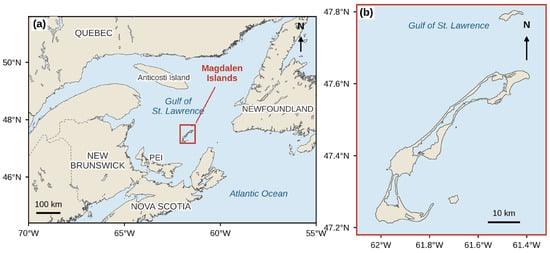
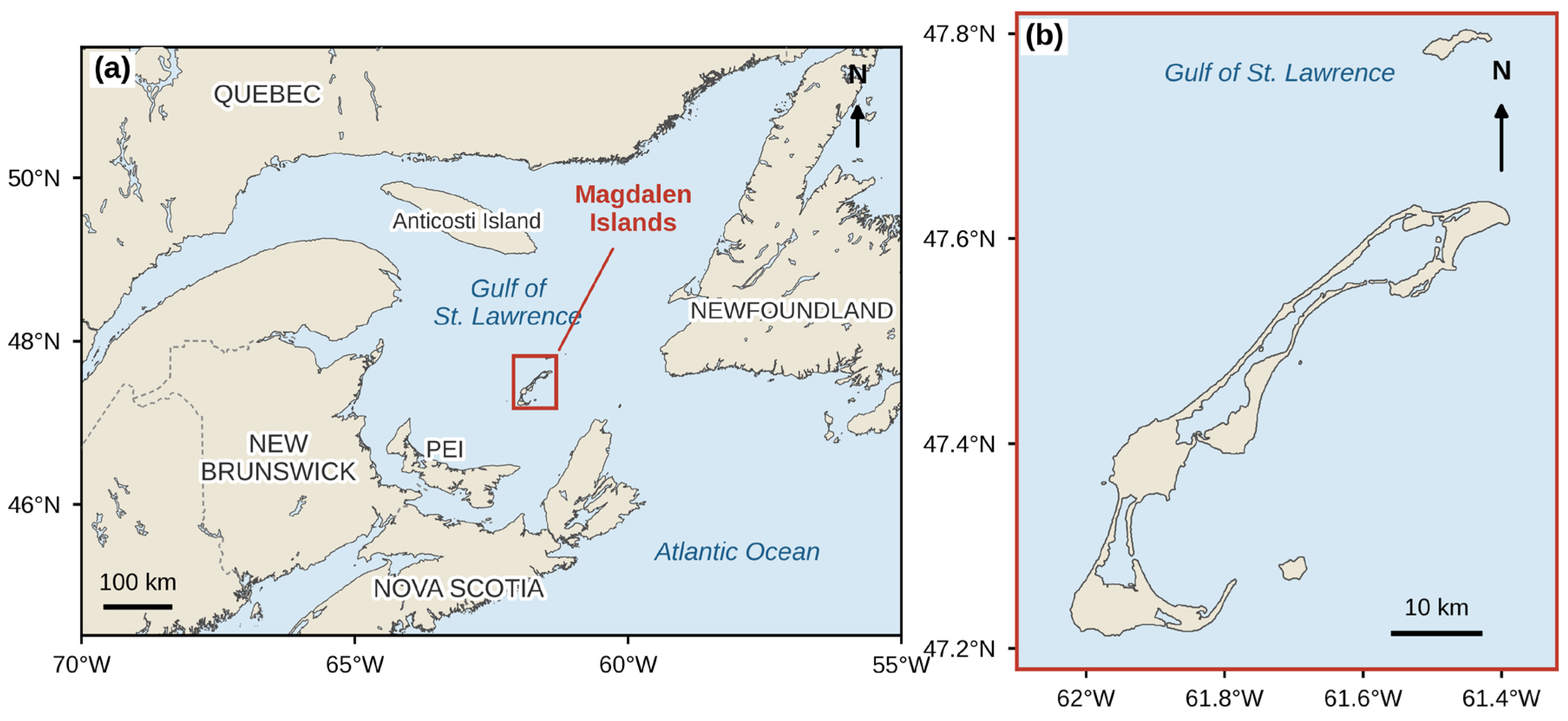
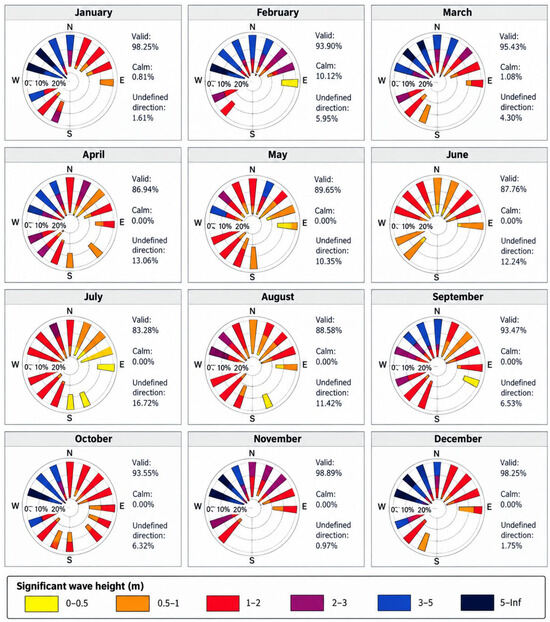
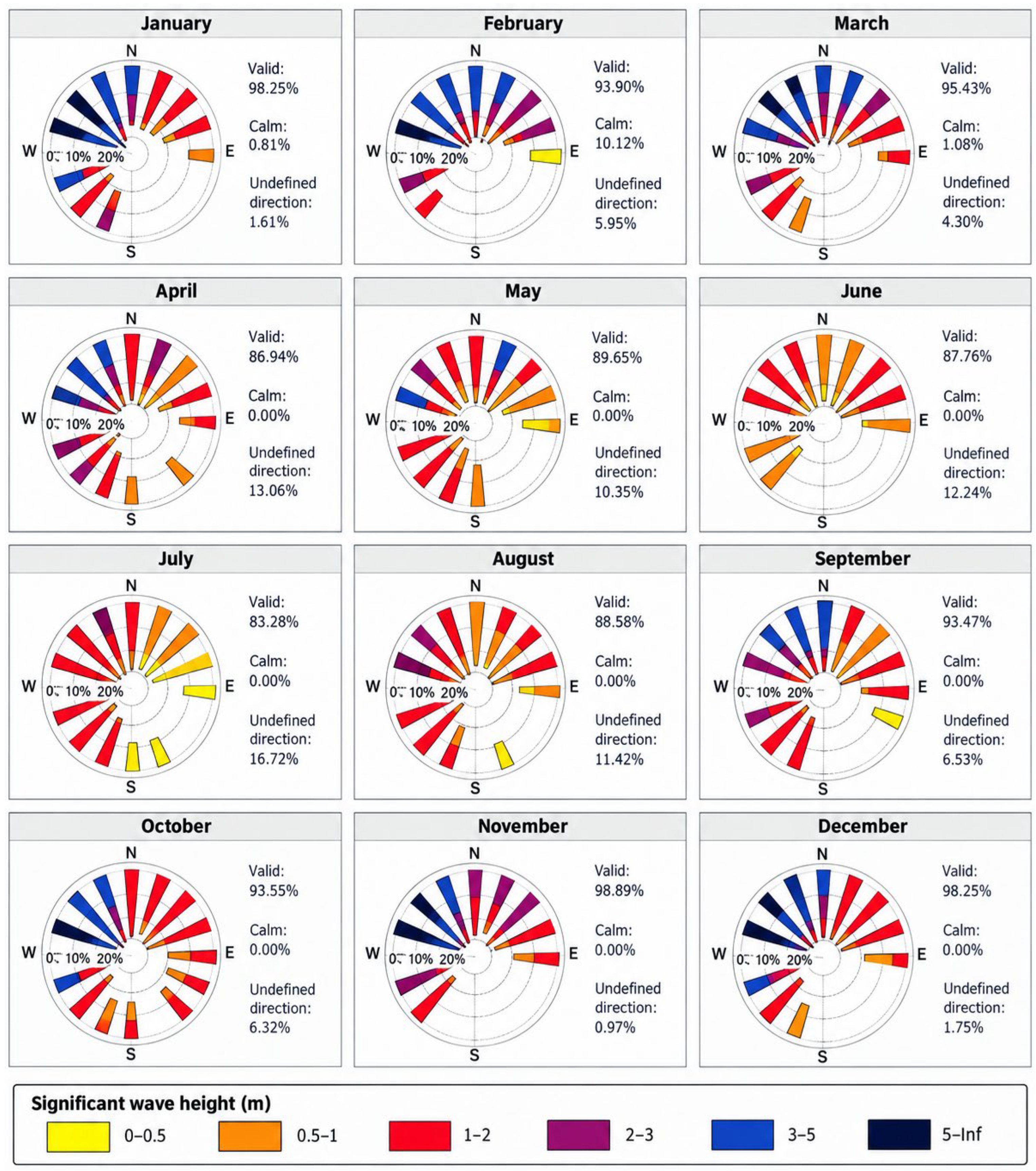
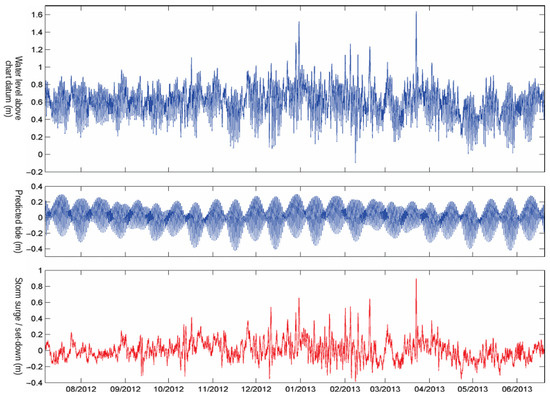
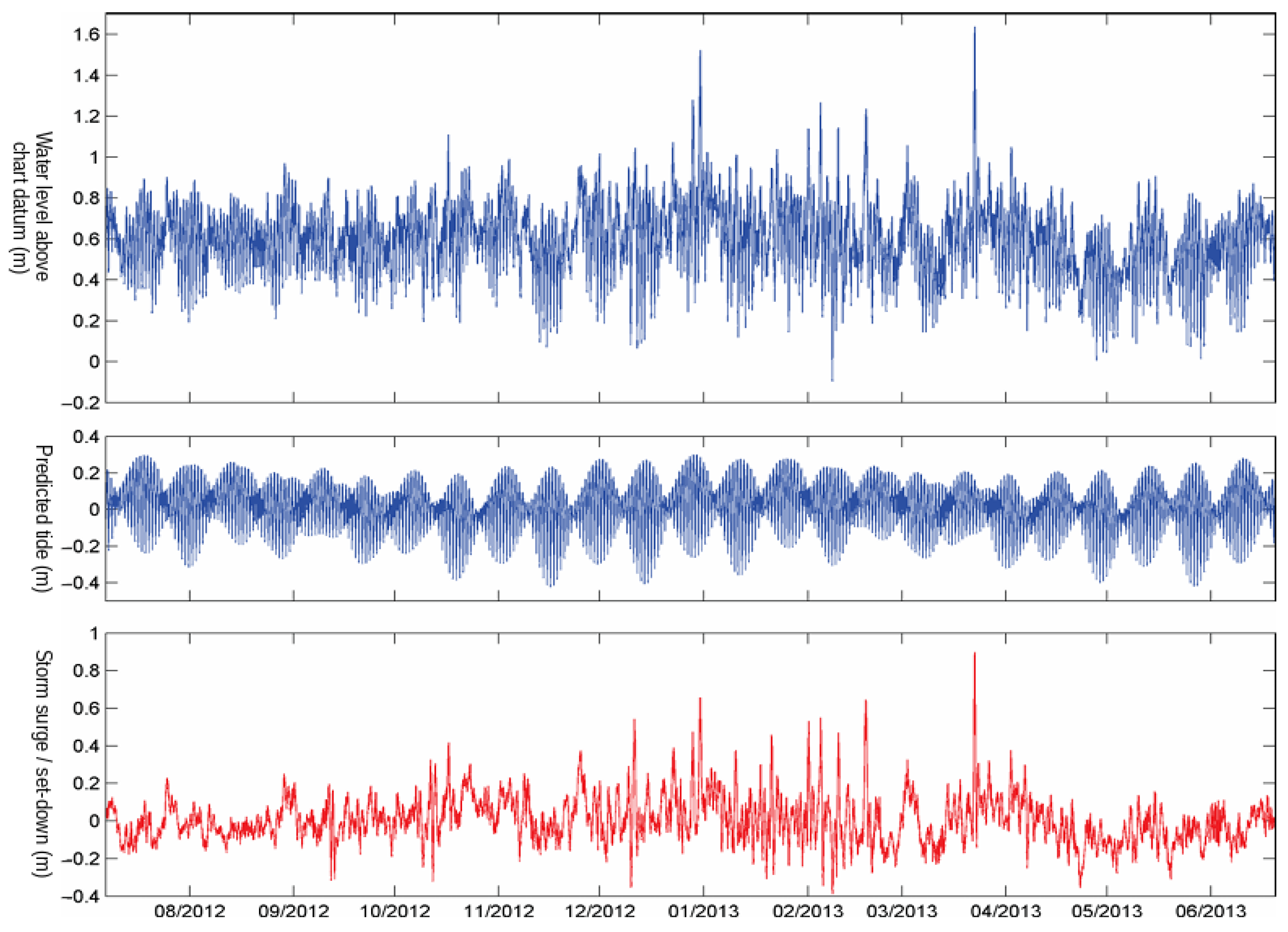
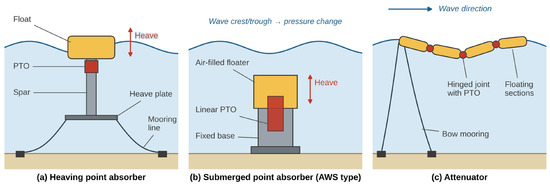
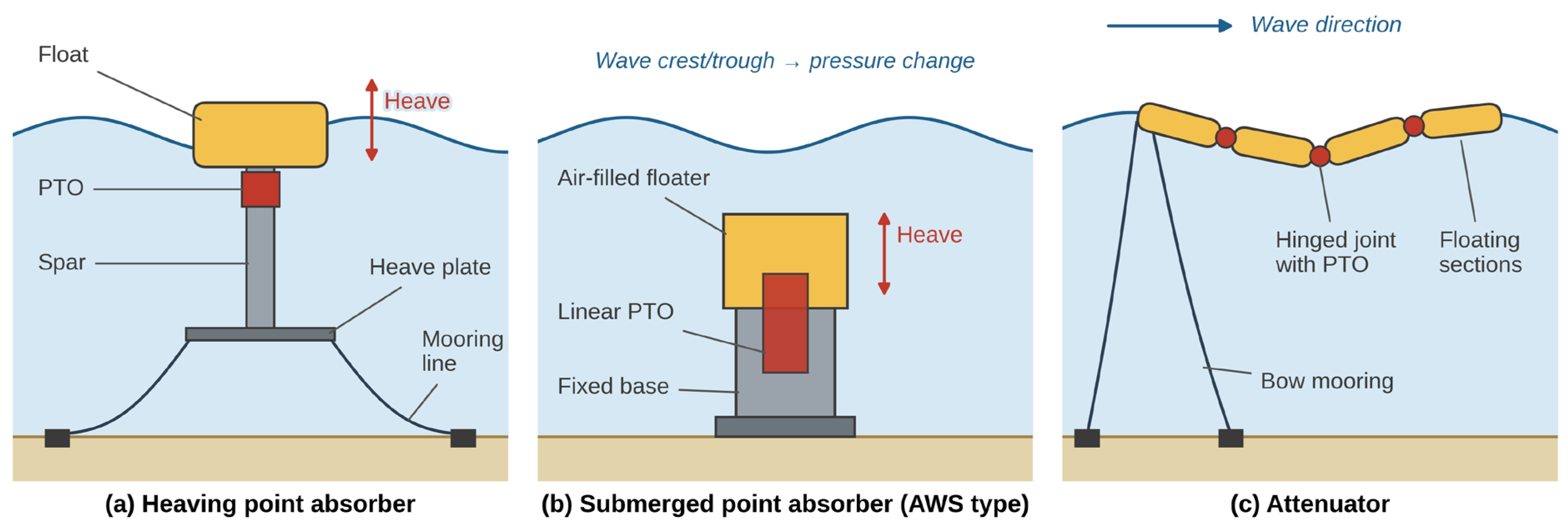
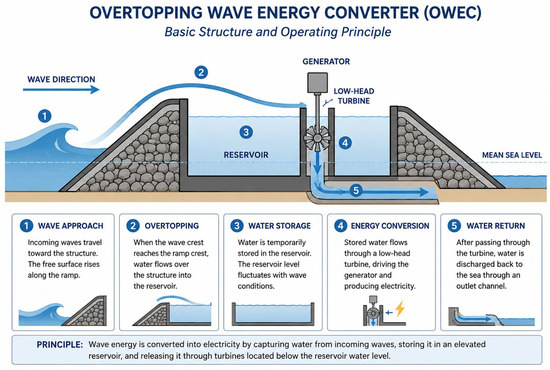
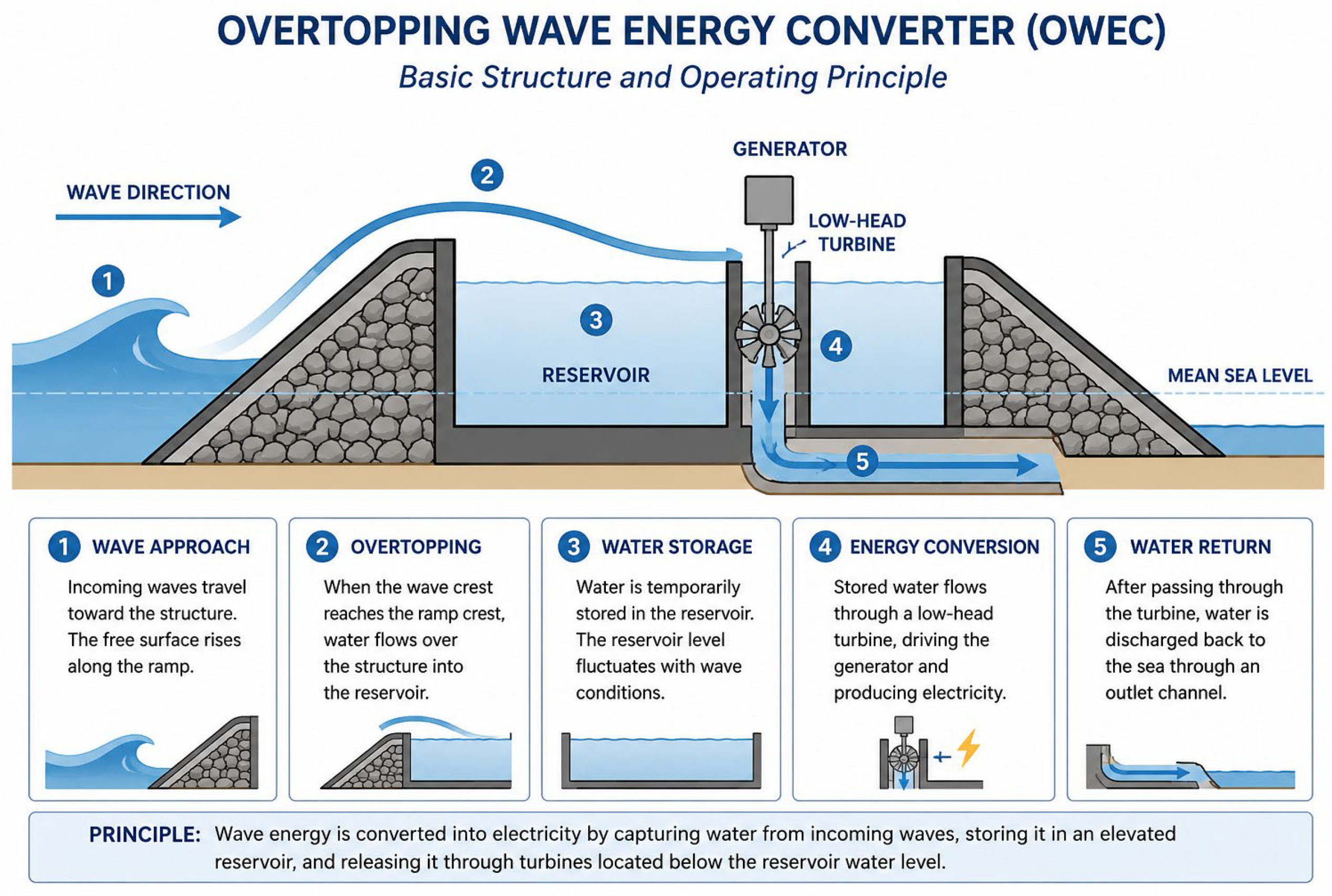
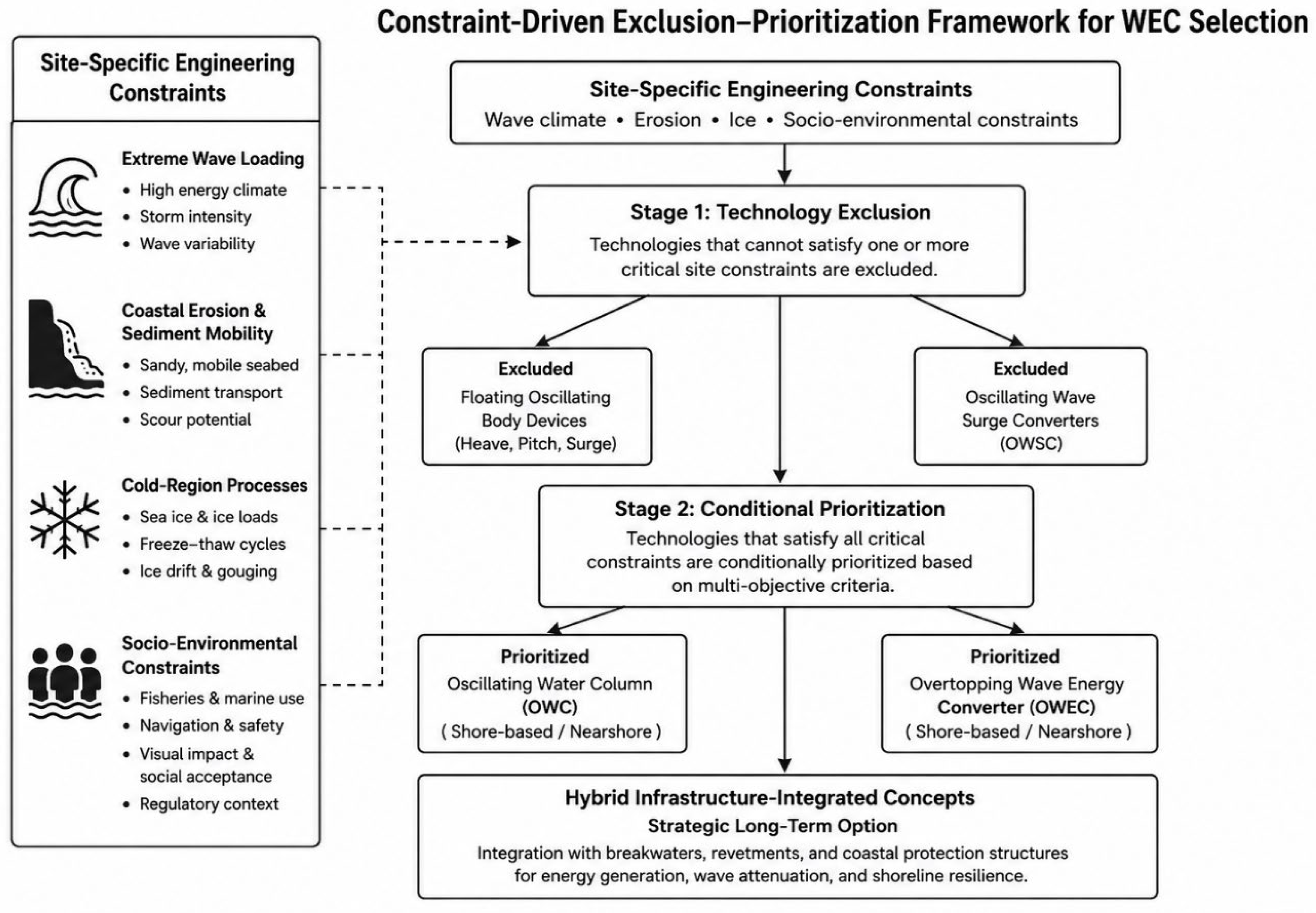
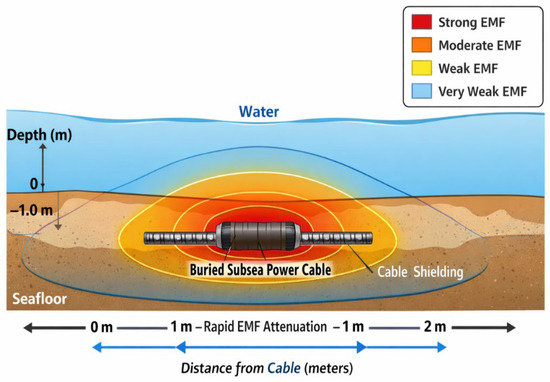
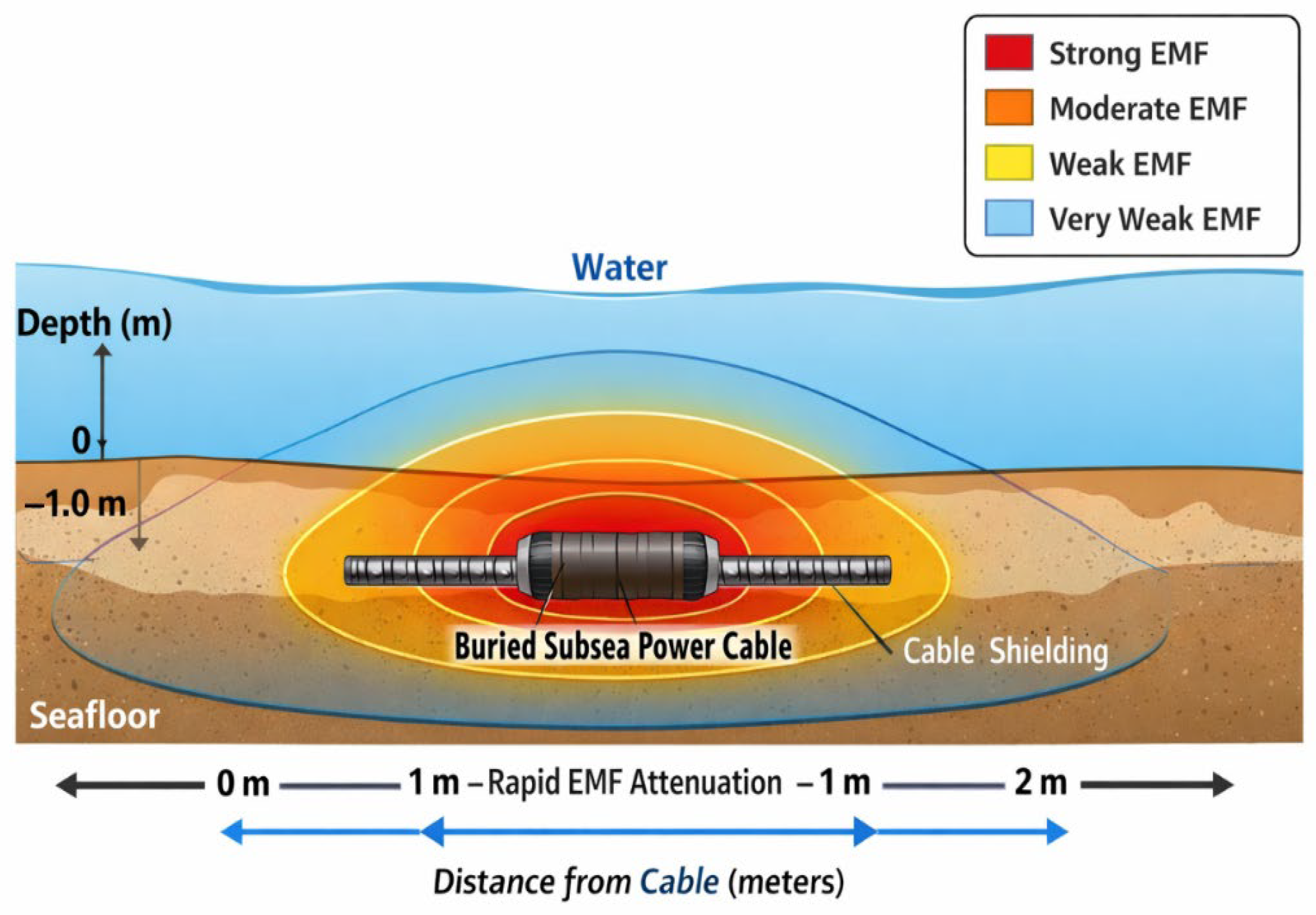

Disclaimer/Publisher’s Note: The statements, opinions and data contained in all publications are solely those of the individual author(s) and contributor(s) and not of MDPI and/or the editor(s). MDPI and/or the editor(s) disclaim responsibility for any injury to people or property resulting from any ideas, methods, instructions or products referred to in the content. |
© 2026 by the authors. Licensee MDPI, Basel, Switzerland. This article is an open access article distributed under the terms and conditions of the Creative Commons Attribution (CC BY) license.