


Abstract
Human remains detection (HRD) canines are a class of odor detection canines trained with training aids representative of distinctive stages of putrefaction. This is necessary for canines to detect the whole spectrum of decomposition products, which is encountered in operational deployments. Understanding the definition of the cadaveric profile can help better train canine detection teams and assist with technological developments. This study aimed to (1) monitor chemical odor profiles utilizing two containment vessels, and (2) monitor two preservation methods on chemical odor profile changes as a function of freezing to thawing cycles. Instrumental analysis used solid phase microextraction- gas chromatography/mass spectrometry (SPME-GC/MS) for identification of volatile organic compounds (VOCs) from tissue/bone samples of pig carcasses at various decomposition stages. Samples were analyzed weekly for six (6) weeks to monitor chemical odor profiles as a function of time. Clear vials provided slightly better storage stability for the fresh stage compared to amber vials. However, amber vials were more suitable for the advanced decay and skeletal stages, helping to preserve the chemical odor profile. Regarding the preservation methods, a continuous preservation method portrayed better reproducibility of the original odor profile throughout the 6-week period, as depicted from higher Spearman correlation values. This study is the first to explore simulated training aids under freezing conditions, uncovering the dynamic and complex nature of odor over time. The results highlight that understanding these shifting odor profiles is essential for canine handlers aiming to optimize the realism and effectiveness of maintenance training.
1. Introduction
The utilization of canines as a biological detector tool has increased immensely as they assist various law enforcement agencies in locating a wide variety of target substances, such as explosives, narcotics, pests, and human remains [1,2,3,4,5]. Human remains detection (HRD) canines—also commonly referred to as cadaver dogs or victim recovery dogs—are an evolved specialty from the search and recovery discipline [2]. HRD canine teams are deployed in operational scenarios needing the recovery of whole bodies or body parts. Due to the highly dynamic and variable process of human decomposition, it is imperative for canine handlers to utilize a wide assortment of training aids to optimize the canine’s ability to locate the target substances [2,6,7]. Hence, these canines are trained on a variety of decomposition odor sources, such as whole bodies, body parts, tissue, bone, and decomposition fluids [2]. Other odor sources utilized for training can include clothing from a deceased victim, blood, soil [8,9], and even synthetic training aid formulations. Enhanced training on an array of decomposition training odor sources reinforces the canine’s odor memory to respond to target odor compounds in operational contexts and thus maximizes their efficacy.
A canine’s ability to accurately locate human remains is highly dependent on the training aid’s ability to mimic the odor profile of decomposing human remains. Therefore, the chemical odor characterization of these training aids is critical knowledge to further understand odor stability and persistence. One of the biggest challenges within HRD canine teams is the procurement of representative decomposition odor sources for training purposes. Thus, when a canine team is able to obtain training aids for routine maintenance training and assessments, a crucial factor to consider is optimal storage and containment for the preservation of odor samples [10]. To date, there is a dearth of knowledge on the stability of the chemical odor profile from decomposition training aids after prolonged storage periods. To further complicate the situation, the different decomposition stages depict unique odor profiles across the full putrefactive spectrum, thus raising concerns as to optimal protocols to safeguard the integrity of different types of odor sources. Understanding how these odor profiles behave as a function of time concurrently with storage regimens is of high importance as it can bridge the knowledge gap as to how the chemical odor characterization of decomposition training aids changes over time [3].
As previously discussed, these canines are trained with various materials, which can either be actual materials (flesh, blood, bone, teeth, and soil, clothing, or other materials containing decomposition fluids) or artificial odors, like putrescine, cadaverine, and commercial corpse scents [11]. A common training aid for these canines is human blood, which can be used anywhere between hours and months after collection—though this poses a risk of inconsistency as the age may lead to a reduction in the efficiency for training [12]. Thus, several studies have focused on identifying the differences in chemical odor characterization between fresh and aged blood, as well as analyzing these chemical characterizations as a function of age and storage [11,12]. These studies found that fresh blood had a distinct volatile organic compound (VOC) profile when compared to that of aged blood, and that storage conditions (room temperature vs. fridge vs. freezer) also played a role in the VOC profile [11,12]. To further exemplify that fresh and aged blood produce different VOC profiles, Buis et al. (2019) investigated a canine’s sensitivity to an array of aged decomposition fluid samples (up to 24 months old) [10]. The HRD canine teams used for this study had previously been trained on blood, bone, and fresh decomposition fluid (0–3 months old). The teams were able to correctly locate 90% of the diluted samples aged for 6, 9, and 12 months; however, the canines’ ability to locate samples decreased once they surpassed 15 months. Thus, it was interpreted that the odor of samples aged for 15 months had changed, and therefore the canines did not recognize the odor as decomposition fluid given that they had only been previously trained on fresh samples [10]. Another recent study by Whaley et al. assessed the early evolution of odor profiles from blood 48 h after removal to identify any significant changes that could affect canine detection of blood [13]. Their results showed a distinction of inter-blood odor profiles four hours after collection, yielding a fresh odor profile from hours 1 to 4, which then evolved into a different odor profile representing that of aged blood. These samples concurrently underwent canine trials, and showed maximum canine detection of 34–36 h old blood samples and a lack of detection of 1–2 h old samples by canines not previously trained with fresh materials [13]. This study emphasized that fresh blood depicts distinctive traits for canine perception and recognition, and must be taken into consideration when training solely with aged blood samples.
The chemical odor characterization of human bones has also been studied because, unlike early stages of decomposition, skeletal remains are composed of little to no soft tissue, mostly just bone [14]. Given that bones consist of less organic matter than soft tissue, this could lead to a reduction in VOC emissions, which has been seen with decreased success rates of HRD canines when searching for older and/or skeletonized remains [14]. Ouimet et al. (2025) focused on identifying which VOCs were emitted from different human bones (right clavicle, first right rib, right humerus and three lumbar vertebrae) and examined how HRD canines performed when detecting these samples [14]. Their results delineated that human bone odor profiles consisted of mostly aromatics and linear aliphatic compounds, and the least abundant were sulfur-containing compounds—which are commonly seen in decomposition studies involving soft tissue and earlier decomposition stages [14]. Furthermore, while variation was seen in the odor profiles of the different bone types sampled, there was no significant difference. In terms of HRD canine detection capabilities, it was found that while canines required frequent exposure to the bones, they were able to successfully locate them. However, given that exposure was necessary, the authors recommended that HRD canines receive regular training with skeletal remains in order to maintain and optimize detection accuracy [14].
A direct comparison of the odor profiles of human remains and non-human remains has also been done by Tsontakis et al. (2025) [15]. In this study, human remains samples consisted of decayed amputated lower limbs and included ankle, tibia, and fibula portions with either minimal tissue or no tissue at all. Non-human remains samples included pig, moose, deer, and bear bones in various stages of decomposition [15]. The results showed 168 VOCs detected from the human bone samples, with 8 of those also being detected in pig bones, 2 being detected in moose bones, 35 in bear bones, and 38 in deer bones. However, there was a significantly larger number of VOCs detected in human bones when compared to non-human bones [15]. Concurrent canine testing in this study also portrayed the ability of HRD canines to discriminate between human and non-human bone samples [15].
The effects of freezing and thawing on patterns of postmortem change have also previously been evaluated [16]. Micozzi (1986) performed necropsies on eight female Wistar rats—four which were frozen at −7 °C for 4 weeks and thawed at room temperature (22 °C) for 8 h before field placement, and four which were killed 2 h prior to field placement [16]. Overall, it was found that decomposition progressed from the “outside-in” in the frozen-thawed animals, while in the fresh-killed animals, it occurred from the “inside-out” [16].
Ueland et al. (2021) investigated the role of hydrophobic lipids as a soft tissue biomarker in human tissue to determine their capability as an assistant for PMI estimations [17]. Lipids were extracted from decomposing tissue of two whole human donors for a 69-day period. Donor 1 had been kept frozen prior to sampling, and Donor 2 was fresh, allowing for both donors to be studied under the same environmental conditions. The samples were analyzed via gas chromatography with tandem mass spectrometry (GC-MS/MS). Statistically significant differences were observed in the decomposition chemistry of the fresh vs. frozen human cadavers, with the fresh cadaver showing distinct stages of decomposition [17].
Regarding storage effects on VOC profiles, other disciplines have also attempted to study this area. Odeyemi et al. (2018) reviewed the current knowledge of seafood spoilage microbiota, VOCs, and the effects of the storage temperature and packaging conditions on the quality of seafood [18]. The effectiveness of modified atmosphere packaging (MAP) in extending the shelf life of seafood products was analyzed, with results showing that a higher oxygen level (75–80%), and storage temperature of 2 ± 1 °C favored the stability of packaged mussel and led to lower production of metabolic products [18]. Additionally, a study performed by Amaro et al. (2018) analyzed VOCs of fresh-cut cantaloupe melon stored at 0, 5, and 10 °C for a 14-day period [19]. Results indicated that storage at 0 °C was the most effective at minimizing microbial growth and loss of vitamin C, especially as the storage time increased [19]. On a similar part of the spectrum, the global demand and trade for meat products requires a long shelf life while simultaneously maintaining a high quality of these products [20]. Although freezing is a common practice for preservation of meat, studies have shown that the freezing temperature, along with the duration of being frozen, have an impact on the physicochemical and microbiological parameters of the meat [20,21,22,23,24].
In addition to the food industry, researchers focusing on human scent have also studied the effects of storage on VOCs. Exhaled breath is quickly becoming an essential non-invasive biomarker, and therefore the need for evaluating the long-term storage stability of exhaled breath VOCs is also growing [25]. Harshman et al. (2016) collected exhaled breath via TenaxTA thermal desorption tubes, stored them at different temperatures, and then monitored the VOCs with a GC-MS for 31 days [25]. It was found that samples stored at temperatures of 4 °C retained the VOCs most consistently. However, samples were only deemed stable up to 14 days across all storage conditions—after this time period, the samples either gained or lost 1–2 standard deviations in their abundance [25]. Overall, Harshman et al. was able to provide recommendations for proper storage conditions and the storage length of exhaled breath samples [25], which could be translated into the area of decomposition VOCs.
Hudson et al. (2009) tested numerous storage container types to determine the effects of these conditions on collected VOC human scent samples [26]. Gauze pads were sealed into five different storage containers (glass screw top vials; Ziploc, Freezer Guard Seal, Pint Size bags; KPAK Heavy Duty SealPAK Pouches; KPAK Aluminized Pouches; polyethylene pouches). The VOC profiles of the gauze pads stored in these various containers were then analyzed in triplicate at time intervals of 1, 2, and 5 weeks using GC/MS [26]. The gauze pad stored in the glass vial portrayed the least amount of background compounds, and the Heavy Duty KPACK pouches contributed the most compounds [26]. Given that the glass vials were deemed to be the most optimal storage container for the gauze collection materials, they were used for subsequent storage of samples [26].
For the second part of this study, gauze pads were used to collect hand odor samples and then placed in 10 mL glass vials. These samples were exposed to four different environmental conditions (room temperature, −80 °C temperature, dark, and UVA/UVB light). The VOCs in the headspace of the samples were extracted via solid-phase microextraction (SPME) and analyzed using GC/MS over a 7-week period. It was found that 100% cotton material did not behave well in the −80 °C storage condition because the VOC profiles portrayed greater differences in the latter weeks of this study (weeks 5 and 7). Additionally, the scent profile underwent the most variation between weeks 0 and 3. It was also concluded that scent samples should not be stored under excessive amounts of UVA/UVB light because it could alter the human scent profile as it leads to the production of methyl esters and aldehydes [26]. Overall, the glass vials exposed to minimal light provided the optimal environment for stored human scent samples as these VOC profiles appeared more stable [26].
With respect to human remains detection and canine training aids, a recent review and survey by Whaley et al. showcased the plethora of factors that could influence or change the odor profile of remains, to include age, environmental factors, containment, and storage [27]. Additionally, survey results from HRD canine handlers from around the world portrayed that there is no standardized methodology in terms training aid age/frequency of replacement, containment vessels, or storage conditions. Given that decomposition is a dynamic process, it is difficult to provide a universally applied recommendation, though a general conclusion can be made in stating that HRD canines should be exposed to the full bouquet of decomposition odor in order to maximize their adaptability and efficacy [27]. The authors concluded by stating there is a need for standardization in training protocols along with a need for further research on preparation and storage of training aids in order to improve HRD canine efficacy [27].
Given the paucity of research investigating the effects of storage conditions on decomposition training aids, the present study aimed to address this gap by examining how different containment and preservation methods influence chemical odor profiles over time. Specifically, the objectives of this study were to (1) monitor chemical odor profiles using two types of containment vessels (clear vs. amber vials) over a 6-week period, and (2) assess the effects of two preservation methods (continuous vs. preserved) on chemical odor profile changes as a function of freeze–thaw cycling.
2. Materials and Methods
2.1. Subjects
Animal models are widely used within decomposition odor studies due to legal and biohazard implications [28]. Pigs are the most popular among taphonomic research given their various anatomical similarities to humans. Regarding dermal similarities, both species share comparable amounts of hair distribution [28]. A pig’s internal anatomy, size of chest cavity, and ratio of fat to muscle are other commonly cited similarities [28]. One study compared the volatile organic compounds (VOCs) emitted from decomposing cow, chicken, and pig samples to previously reported VOCs emitted from human remains [29]. Results showed that animal models were not an exact match to humans in regard to VOC profiles, but there were similar compounds emitted from both, therefore proving comparable considering that acquisition of human remains is limited [29].
Thus, nine (9) pig (Sus scrofa) carcasses were used for this study. This study has been reviewed and approved by Texas Tech University’s (TTU) Animal Care and Use Committee under IACUC #21058-07. Coordination was done with TTU’s Swine Unit for the supply and euthanasia of the pig carcasses. All pigs were euthanized via gas anesthetics to prevent wounds on the carcass, which would introduce additional variables to the decomposition process. A total of three seasons was performed, with three pig carcasses utilized each time. Male pigs with an average weight of 46 pounds (lbs.) were used for this study.
2.2. Pretreatment of Collection Materials
Sample collection and storage vials used for this experiment were clear and amber 40 mL glass SPME vials with a screw cap and PTFE/Silicone septa (Supelco, Sigma Aldrich, St. Louis, MO, USA). While these materials are biologically sterile, that does not equate to analytically clean [30]. Therefore, to remove any possible remnant VOCs that could lead to background contamination, these storage materials underwent a pretreatment by following previous procedures described by Prada et al. (2011) [30]. The glass vials were sterilized via methanol solvent rinsing followed by a 2 h heating period in a 105 °C oven. The septa and caps were sterilized in the same manner for 15 min.
2.3. Pig Placement
The pig carcasses were laid out on a field site located behind the Texas Tech Department of Environmental Toxicology and covered with metal cages to prevent any disturbances from scavengers. Each carcass was assigned a target decomposition stage (fresh, advanced decay, dry/skeletal). They were checked and photographed daily until they reached their designated stage. Field conditions were also recorded on these daily checks—including ambient temperature, ground temperature, and humidity.
2.4. Season Information
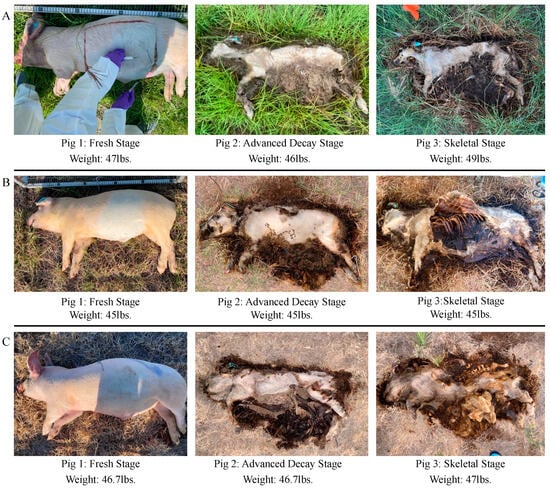
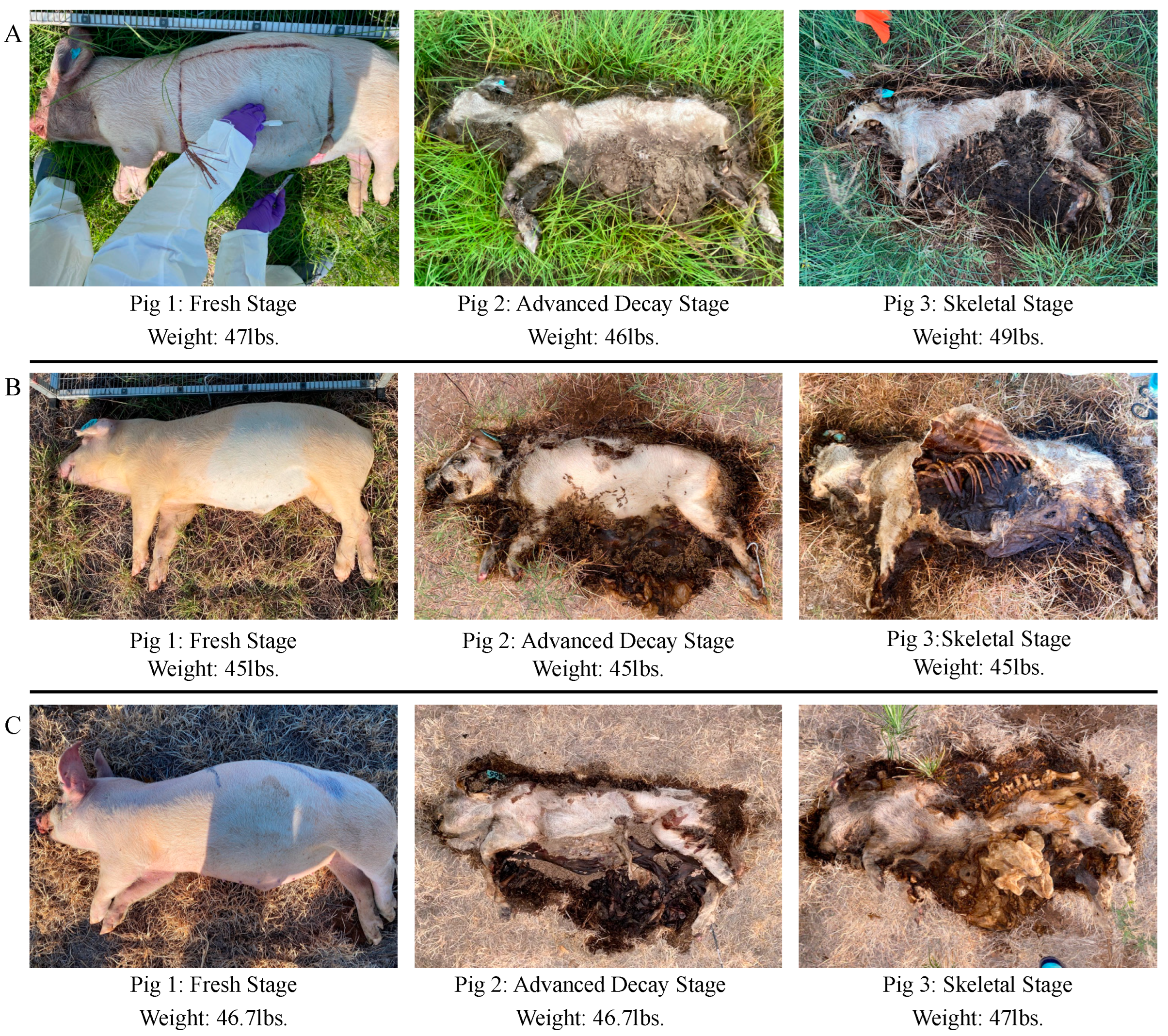
Each individual pig was assigned one target stage of decomposition (fresh, advanced decay, skeletal). Twenty-four hours after the placement day, samples were collected from the “fresh” pig, and then that pig was disposed of accordingly. Samples were collected from the “advanced decay” stage when there was still slight moisture present on the carcass/soil, as well as entomological activity. “Skeletal” samples were collected when the carcass appeared dry and all entomological activity had halted. While the “skeletal” pigs did not reach complete skeletonization, only bones were collected; therefore, the samples within the vials were representative of the skeletal stage of decomposition. While samples were collected from one pig, the remaining pig(s) were left undisturbed until they reached their individual target stage of decomposition. One pig was used per target stage of decomposition to avoid the introduction of any external factors and thus alter the decomposition process. During sample collection, the same region of the carcass was focused on—all samples were collected from the torso. This region was chosen as previous research has indicated a higher number and abundance of VOCs in this body location in both tissue and larval masses [31]. Figure 1 depicts the pig carcasses once they reached their designated decomposition stage.
Figure 1.
Images of carcasses at time of sample collection. Weights of each pig carcass are listed below the corresponding picture. (A) Season 1; (B) Season 2; (C) Season 3.
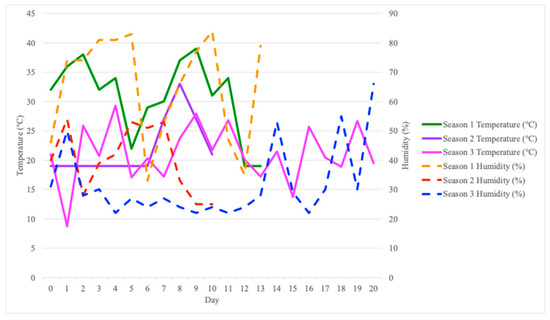
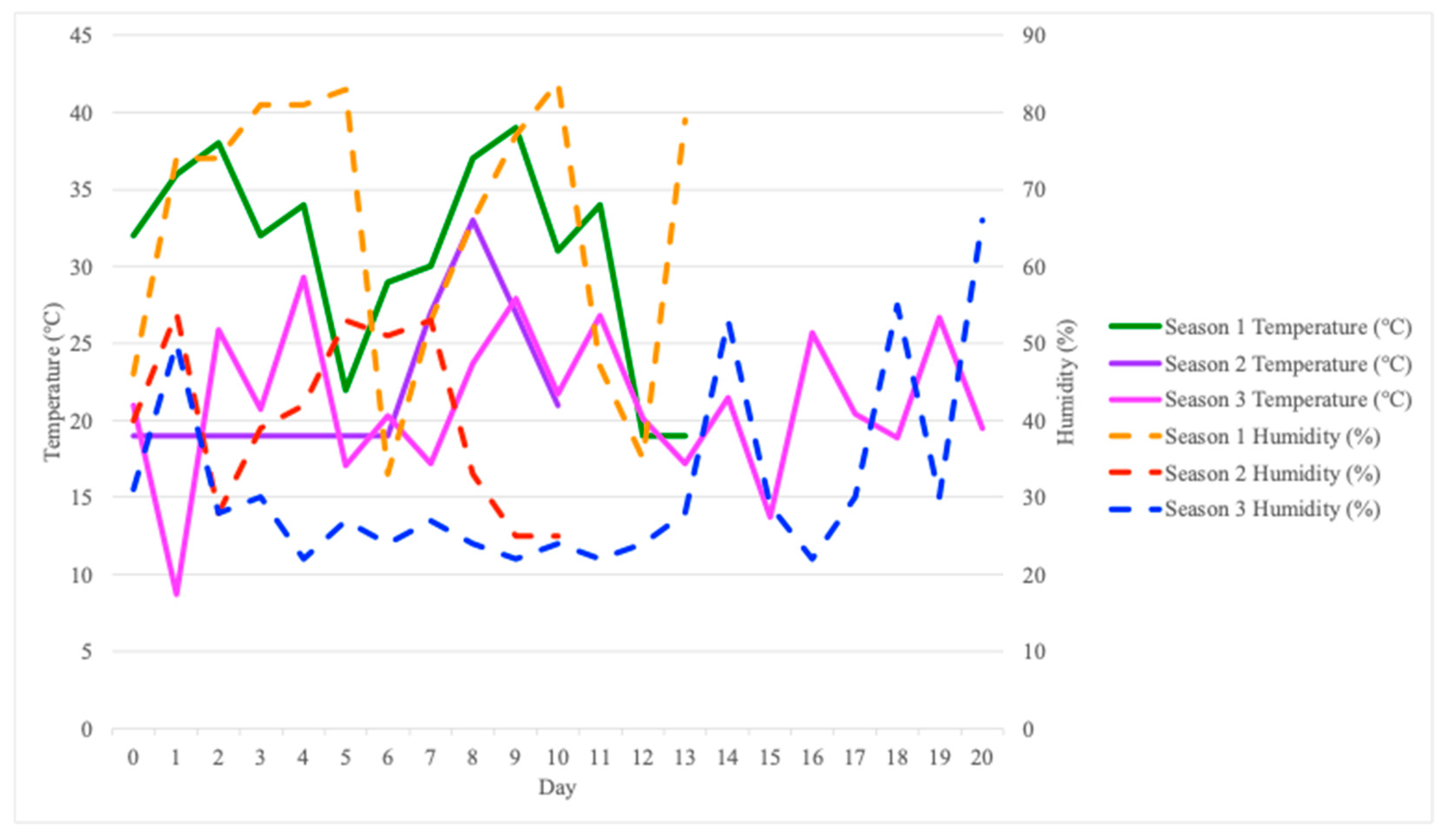
As previously discussed, the methodology was performed three times across distinctive seasons. For the first season, the pig carcasses were laid out on the field in July. Season 2 carcasses were laid out in September, and those of season 3 were laid out in April. These times were subject to the availability of pig carcasses from the swine unit to match a weight criterion (45–48 lbs). During the decomposition process, the pig carcasses underwent daily observations in which photographs were taken. Additionally, field conditions were recorded—this included the ambient temperature, ground temperature, and relative humidity. The field conditions recorded throughout the entirety of each season are depicted in Figure 2. The schedule of sample collection for each season can be seen in Table 1.
Figure 2.
Field conditions (temperature and humidity) recorded throughout each season.
Table 1.
Schedule of sampling collection.
2.5. Sample Collection
Once each pig carcass reached their targeted decomposition stage, a total of 42 tissue/bone samples were collected from the carcass at once. Of the 42 samples, 21 were placed in clear vials while the remaining 21 were placed in amber vials. All samples underwent an initial headspace extraction and GC/MS analysis so that the data could serve as a baseline for “Week 0” and be used for comparison with data collected in the weeks to follow.
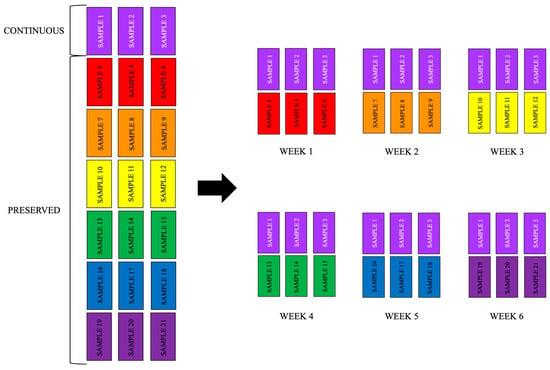
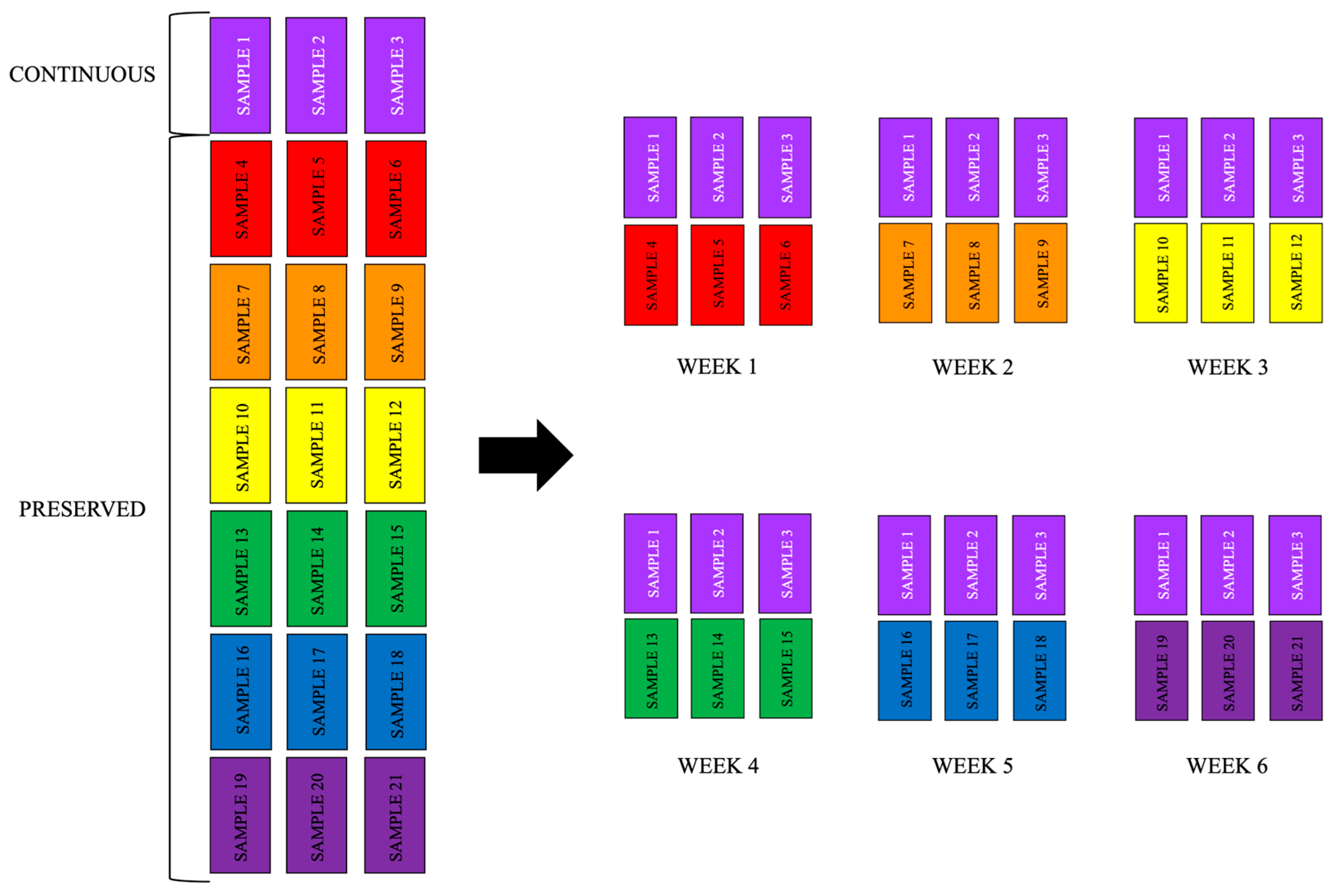
Three samples were labeled “Weekly,” while the rest were divided into groups of three and assigned a number between 1 and 6. This number indicated what week they would be analyzed. Following the initial Week 0 analysis (baseline), all samples were stored in a −80 °C freezer. Research has shown that metabolism stops at temperatures between −10 °C and −25 °C, while the data for microbial growth at low temperatures and the temperature sensitivity of food spoilage is typically −20 °C [32]. While −20 °C refrigeration conditions are routinely encountered for storage purposes, this study evaluated storage and preservation using a −80 °C freezer to ensure minimal microbial activity for the purpose of this study. Previous work in the area of volatile odor stability and persistence utilized −80 °C as a targeted condition [26], and hence this study followed that freezing condition. Figure 3 depicts the sampling scheme followed for this study. As previously mentioned, a total of 42 samples were collected from each pig at the targeted decomposition stage—21 samples were stored in clear vials, and 21 samples were stored in amber vials. As can be seen below, the three “Weekly” samples are shown in light purple, while the remaining 18 samples are shown in various colors, depicting how these samples were analyzed only once across the 6-week analysis period. This sampling scheme was repeated for each study variable (decomposition stage, containment vessel, season).
Figure 3.
Schematic representing sample analysis per study variables. The different colors signify that they were analyzed on a different week, whereas the light purple represents the samples that were repetitively analyzed on a weekly basis.
Moving forward, the “Weekly” samples will be referred to as the continuous samples, as they were continuously thawed and frozen each week for the 6-week period—in turn simulating routine training aid handling, where they are thawed out during canine training sessions. This allowed for the monitoring of the effect of repetitive freezing–thawing procedures on the volatile odor profile. For a 6-week period, the continuous triplicate, along with the corresponding triplicate for that week (preserved), were taken out of the freezer and allowed to reach room temperature to mimic the handling performed by canine handlers during training [10,11]. After the thawing period, SPME fibers were injected into the vials for extraction of the VOCs present in their headspace. This extraction period took place for 24 h. Afterwards, the SPME fiber was removed from the vial and injected into the GC/MS for instrumental analysis using the method that will be described in a latter section.
2.6. Solid-Phase Microextraction (SPME)
The headspace extractions of all collected samples utilized divinylbenzene/carboxen/polydimethylsiloxane (DVB/CAR/PDMS) fibers (Supelco, Sigma Aldrich, St. Louis, MO, USA) with an exposure time of 24 h at room temperature. Prior to any sampling, each SPME fiber was conditioned for three 30 min sessions at an oven temperature of 250 °C to ensure that the fibers were clean and ready to be used. Following this pretreatment, a blank fiber instrument run was performed to guarantee an absence of contaminants or lingering volatiles on the fiber. A 24 h headspace SPME extraction was performed on the samples. Given that 24 h represents an extended sample duration, the authors acknowledge that some evolution of the VOC profile during this sampling period cannot be entirely excluded. However, this extended sampling duration was selected to maximize analytical sensitivity and provide robust capture of low-abundance, odor-relevant VOCs known to be essential for forensic odor characterization.
2.7. Gas Chromatography/Mass Spectrometry (GC/MS) Method
An Agilent Technologies GC 7890A with an Agilent Technologies 5975C inert XL MSD with a triple-axis detector (Agilent Technologies, Santa Clara, CA, USA) was the instrument used to separate and analyze compounds extracted on the SPME fibers. A Rtx®-5 capillary 30 m × 250 μm × 0.25 μm column (Restek Corporation, Bellefonte, PA, USA) was used. Helium was used as a carrier gas at a flow rate of 1.0 mL/min. The temperature ramp was programmed from 35 °C to 260 °C beginning with a 1 min hold at 35 °C and then increasing the temperature to 80 °C at 3 °C/min with a 0 min hold. The temperature was then increased to 120 °C at 10 °C/min with a 0 min hold. The final temperature was reached by ramping the temperature at 40 °C/min with a 0 min hold. The injector temperature was set at 250 °C in splitless mode. The total run time for analysis was 23.5 min. Mass spectra were repeatedly scanned from 50 to 550 amu. The criteria for the compounds identified were those with detected peaks greater than or equal to a mass spectral quality of 80% or above. All generated data was analyzed using Chemstation software, version 10.1.49 (Agilent Technologies, Santa Clara, CA, USA) and the National Institute of Standards and Technology mass spectral library (NIST 2017), version 2.3 for compound identification. Compounds known to be products of the column or sampling process were not included in the analysis.
Given that decomposition samples can yield a plethora of compounds, several common compounds that were present across the different decomposition stages and seasons were chosen to create liquid solutions of known concentrations ranging from 5 to 100 parts per million (ppm) to create external calibration curves for quantitation purposes. This was done by injecting the liquid solutions into the GC/MS system using the same method utilized for the headspace sampling. These compounds included 1-tridecene, 2-piperidinone, 2-undecanone, acetophenone, benzaldehyde, butanoic acid, dimethyl disulfide, hexanoic acid, indole, p-cresol, pentanoic acid, phenethyl alcohol, phenol, and quinoline. To monitor temporal changes in the instrument, weekly instrument and SPME blanks were performed along with recurring calibration curves to monitor drifts. The generated equation from the calibration curves was used to calculate the limit of detection (LOD) and limit of quantitation (LOQ) for each selected compound, as shown in Table 2. Additionally, the generated equations were used to convert the detected peak areas into an estimated concentration in ppm.
Table 2.
LOD and LOQ values of selected decomposition volatiles.
2.8. Statistical Analysis
Statistical analysis was performed via JMP®, Version 16.0.0, SAS Institute Inc. (Cary, NC, USA). Important variables in this study included the type and abundance of compounds being detected for each sample’s volatile odor profile, as well as the type of storage containment vessel (clear vs. amber) and the preservation method (continuous vs. preserved). Compounds retained for data analysis were classified as “primary” compounds of each triplicate being sampled—in other words, these compounds were detected among all three samples during the week of analysis.
Spearman rank correlation was performed as it is a nonparametric technique utilized for the evaluation of the correlation between two independent variables [33]. In this study, the data were categorized by the decomposition stage, type of vial, and season. The peak areas of all primary compounds for every week of analysis were ranked in ascending order to evaluate the similarity of compound abundance across the analysis period. The odor profiles from each week were compared to each other (i.e., week 1 vs. week 2), yielding 49 possible pairs for the continuous preservation method and 36 pairs for the preserved preservation method for each of the study variables. A correlation value of 1 signifies a perfect positive correlation, while an r value of −1 represents a perfect negative correlation, and a correlation value of 0 means no correlation [33]. For the purpose of this study, the authors declared a match/no match threshold of 0.7 as an operationally defined criterion. This threshold was chosen to provide a conservative and reproducible means of assessing odor profile similarity while minimizing over-interpretation of minor rank-order fluctuations within complex VOC datasets. Spearman rank correlation thresholds have previously been used to evaluate odor profile similarity in human scent [30,34] and smokeless powder [35] matrices in which relative compound ordering was the primary analytical objective, rather than absolute abundance. Within these contexts, rank-based metrics have proven robust to concentration variability while remaining sensitive to meaningful changes in odor-relevant chemical composition. Thus, the 0.7 threshold in the present study represents an operational choice grounded in prior empirical application and aligned with this study’s goal of comparing relative odor signatures rather than establishing a universal or biologically fixed cutoff.
Further statistical analysis focused on performing a general linear model on the raw VOC accumulation of the samples from each decomposition stage to determine the impact of the study variables (season, containment vessel, preservation method). The model was used to compare between peak area responses of primary odor compounds and evaluate if there was a significant difference in abundance from each targeted variable at a 95% confidence interval (p ≤ 0.05).
3. Results
3.1. Overview of Results
The objectives of this study were to (1) monitor chemical odor profiles utilizing two vial types (clear and amber) across a 6-week period, and (2) monitor routine handling techniques on chemical odor profile changes from freezing to thawing cycle conditions. To accomplish this, the method was repeated three times across distinctive seasons (July, September, April). During each season, three pigs were utilized, and each was assigned a target decomposition stage (fresh, advanced decay, skeletal). Upon sample collection for each pig, 21 tissue/bone samples were placed in clear vials and 21 tissue/bone samples were placed in amber vials. Following that, some samples underwent a continuous preservation method, in which they were analyzed on a weekly basis, while the remaining samples underwent a preserved preservation method—meaning that these samples were stored in the freezer and only analyzed once throughout the 6-week analysis period of this study. To monitor the instrument’s stability throughout this study, weekly instrument and SPME blanks were performed, along with recurring calibration curves, and no significant drift or contamination issues were observed.
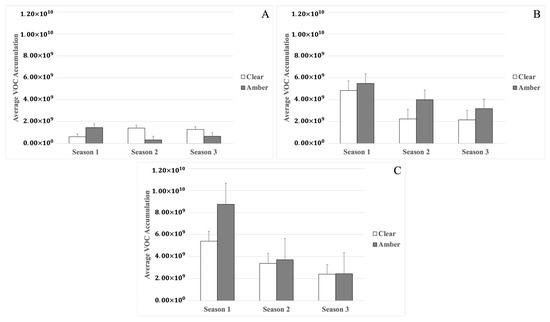
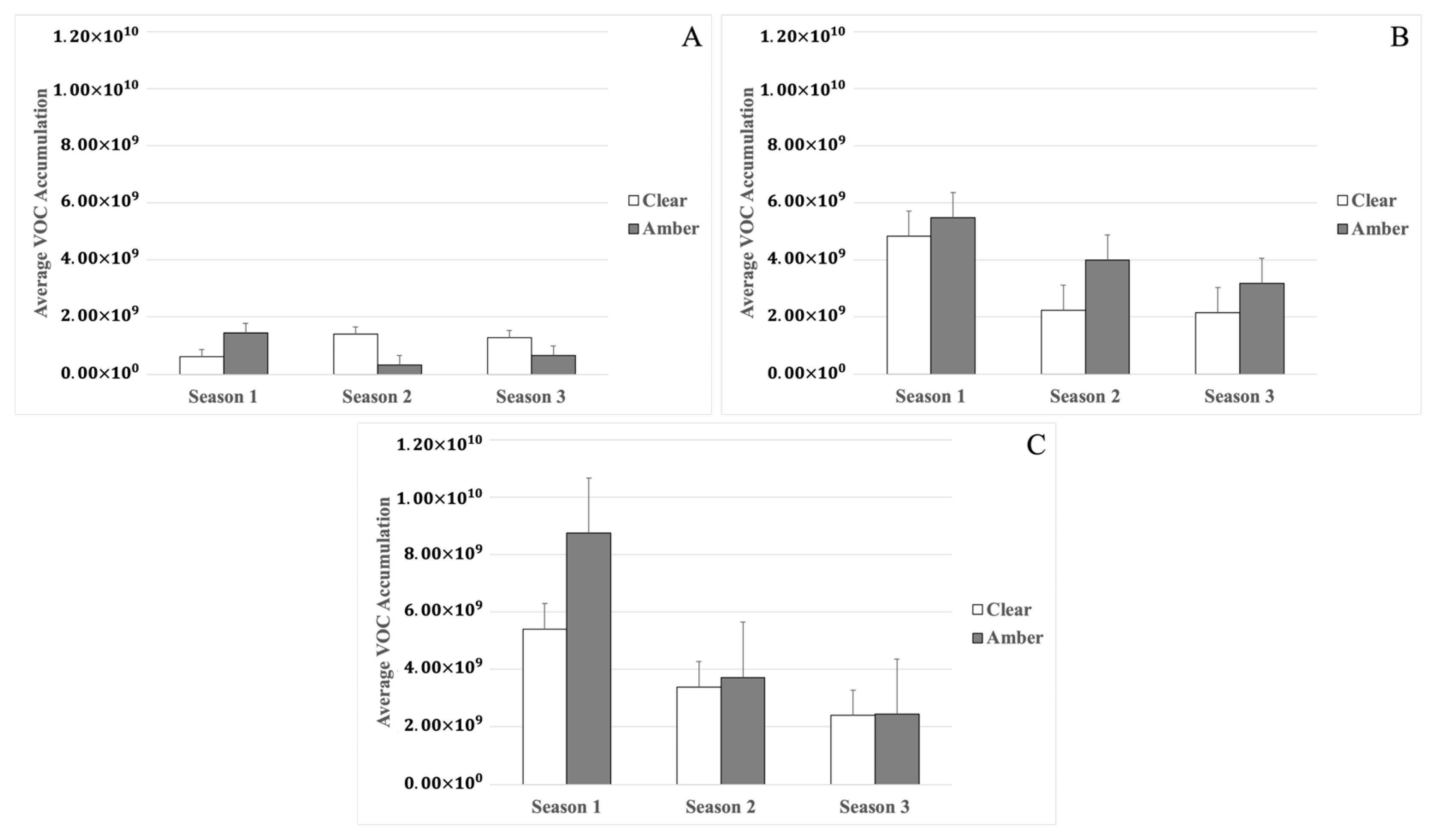
Published literature has already proven that decomposition stages have distinct chemical odor characterizations [3,6,29,36,37]. Figure 4 below shows the varying VOC accumulations of the three different stages before analyzing the central study variables. This figure provides a snapshot of what was detected at the beginning of this study. Through this observation, each stage emitted a different amount of VOC accumulation, thereby corroborating previous research stating that each stage of decomposition not only emits different compounds but also distinctive ratios of these compounds as well.
Figure 4.
Bar graph depicting total VOC accumulation of the samples at baseline for each stage of decomposition and season. It also compares VOC accumulation between clear and amber vials: (A) fresh; (B) advanced decay; (C) skeletal.
3.2. Chemical Odor Characterization in Different Storage Containment Vessels
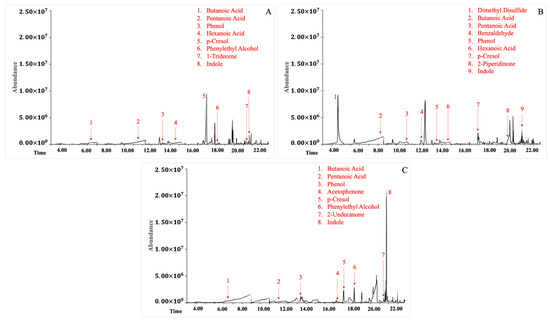
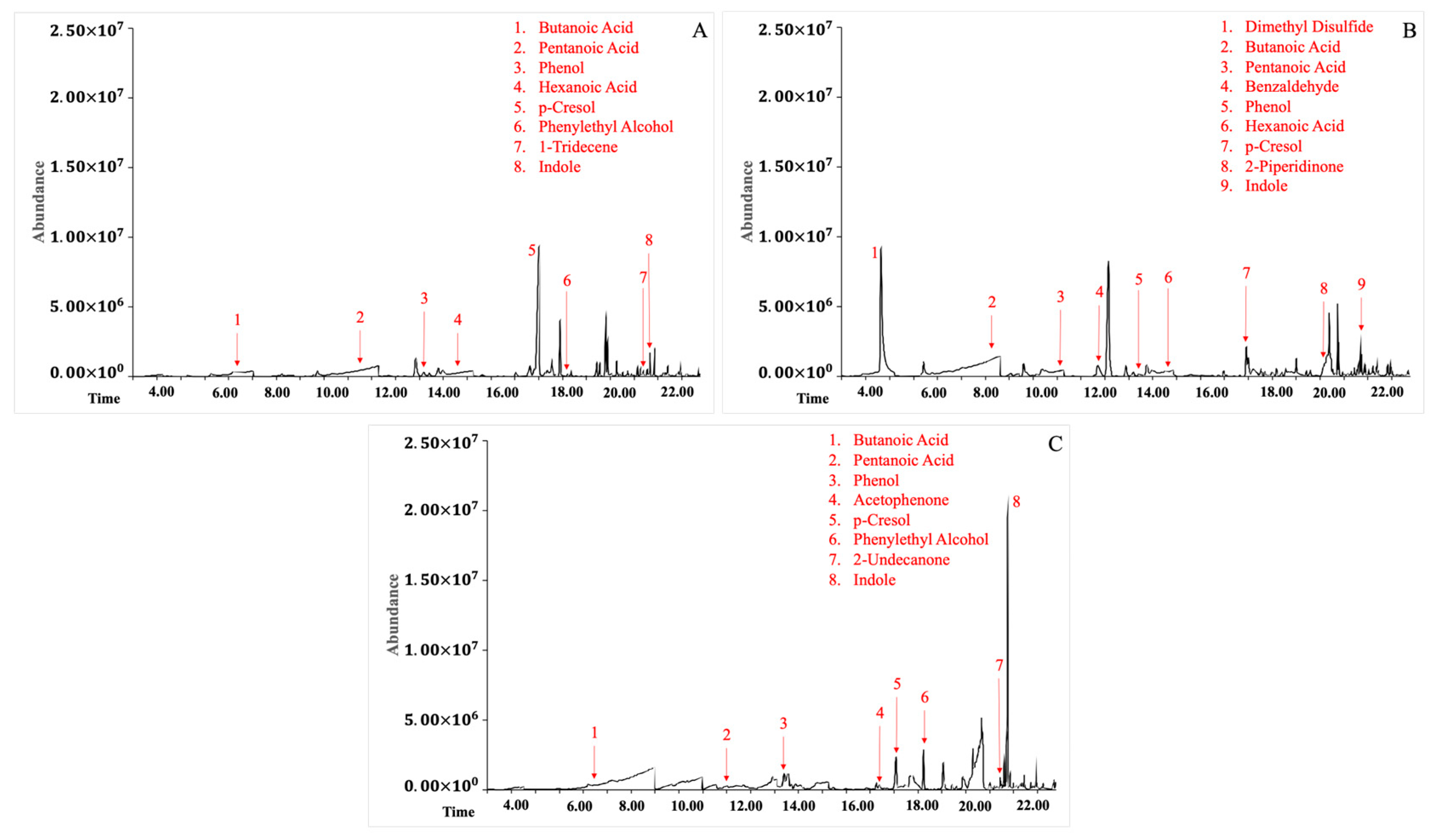
In the present study, primary compounds observed included 1-tridecene, 2-piperidinone, 2-undecanone, acetophenone, benzaldehyde, butanoic acid, dimethyl disulfide, hexanoic acid, indole, p-cresol, pentanoic acid, phenethyl alcohol, phenol, and quinoline. Figure 5 below depicts examples of total ion chromatograms (TICs) for each targeted stage of decomposition, noting the aforementioned compounds; quinoline was present in minute amounts and thus difficult to indicate within the chromatograms. Similar compounds have been reported in previous decomposition studies [29,36,37,38], therefore confirming the ability of the current study’s method to detect previously reported compounds within the decomposition odor published literature. Additionally, the present study corroborated that each stage of decomposition is distinctive as it emits different compounds and different amounts of these compounds.
Figure 5.
Examples of total ion chromatograms (TICs) for each stage of decomposition: (A) fresh, (B) advanced decay, (C) skeletal.
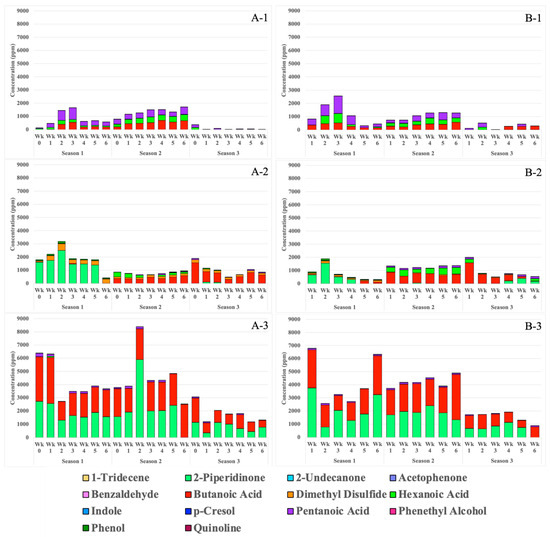
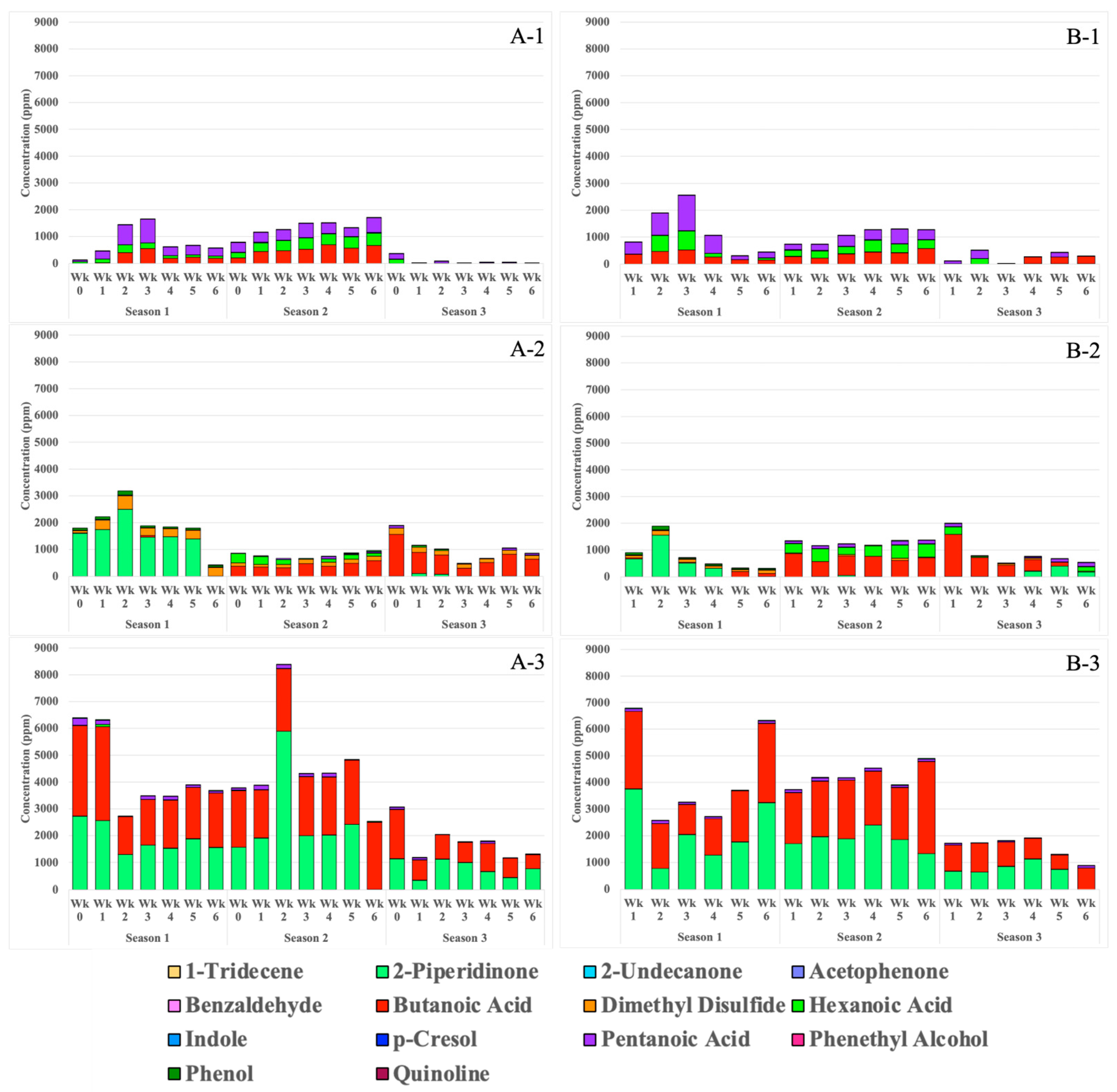
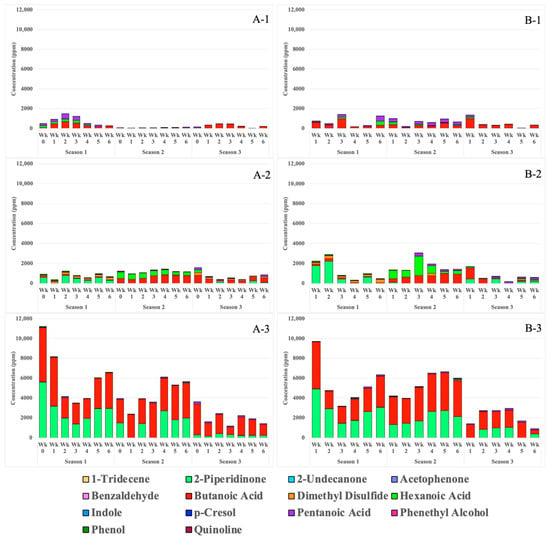
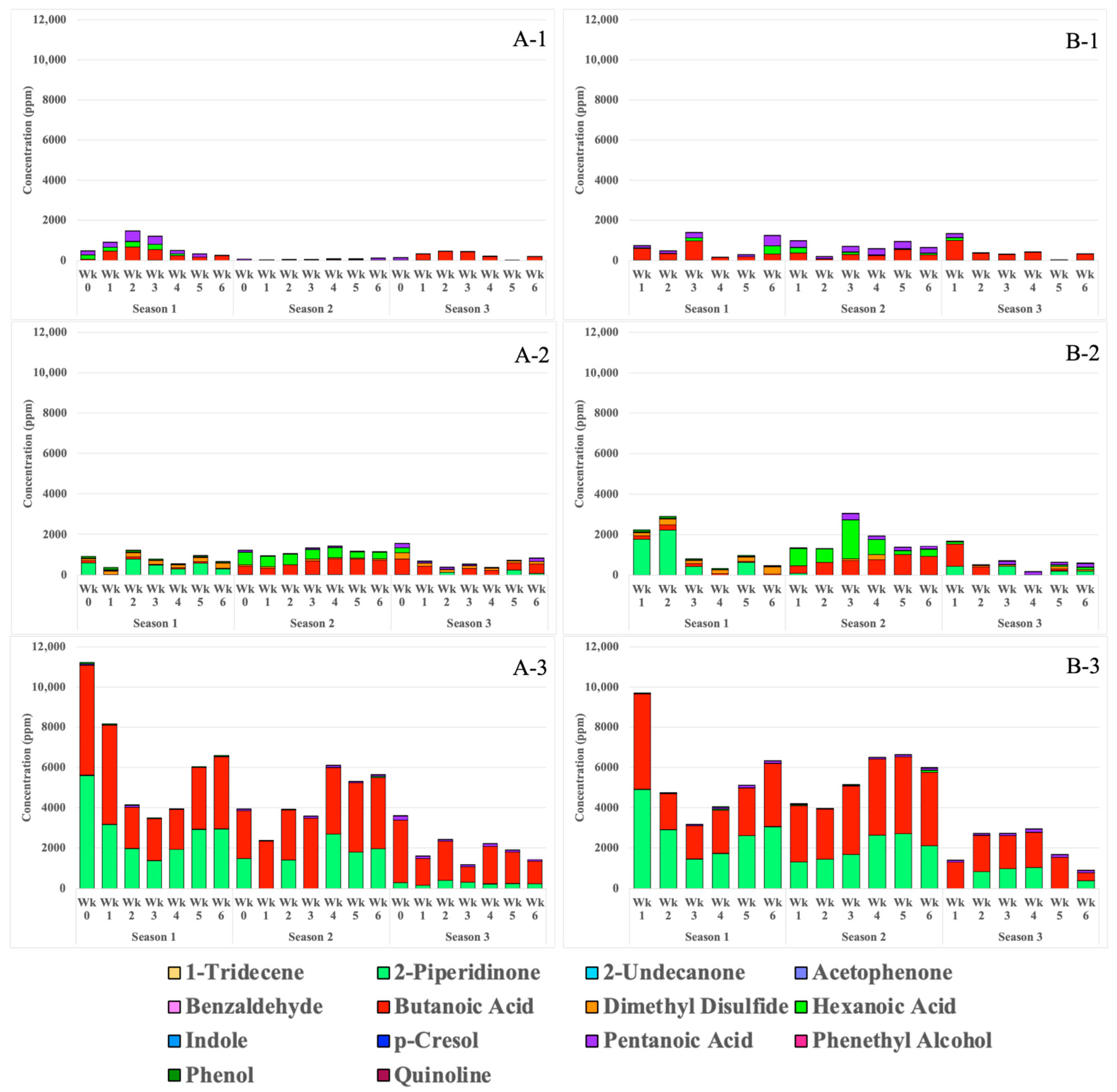
To monitor how the chemical odor profiles of the samples fluctuated throughout the 6-week analysis period, stacked bar graphs were created, and the raw peak areas were converted into estimated concentrations in ppm using the generated equations procured from the calibration curves of the selected compounds. Figure 6 depicts the chemical characterization of samples stored in clear vials, while Figure 7 portrays the odor profiles of samples stored in amber vials. In the continuous samples, it can be seen that both the skeletal stage yielded a higher compound abundance than the advanced decay and fresh stages throughout the tested time period. The same observation was seen among the preserved samples—fresh emitted the lowest compound abundance, while skeletal emitted the highest.
Figure 6.
(A-1) Odor profiles consisting of pertinent compounds detected across the 6-week analysis period for continuous fresh samples stored in clear vials. (B-1) Odor profiles consisting of pertinent compounds detected across the 6-week analysis period for preserved fresh samples stored in clear vials. (A-2) Odor profiles consisting of pertinent compounds detected across the 6-week analysis period for continuous advanced decay samples stored in clear vials. (B-2) Odor profiles consisting of pertinent compounds detected across the 6-week analysis period for preserved advanced decay samples stored in clear vials. (A-3) Odor profiles consisting of pertinent compounds detected across the 6-week analysis period for continuous skeletal samples stored in clear vials. (B-3) Odor profiles consisting of pertinent compounds detected across the 6-week analysis period for preserved skeletal samples stored in clear vials.
Figure 7.
(A-1) Odor profiles consisting of pertinent compounds detected across the 6-week analysis period for continuous fresh samples stored in amber vials. (B-1) Odor profiles consisting of pertinent compounds detected across the 6-week analysis period for preserved fresh samples stored in amber vials. (A-2) Odor profiles consisting of pertinent compounds detected across the 6-week analysis period for continuous advanced decay samples stored in amber vials. (B-2) Odor profiles consisting of pertinent compounds detected across the 6-week analysis period for preserved advanced decay samples stored in amber vials. (A-3) Odor profiles consisting of pertinent compounds detected across the 6-week analysis period for continuous skeletal samples stored in amber vials. (B-3) Odor profiles consisting of pertinent compounds detected across the 6-week analysis period for preserved skeletal samples stored in amber vials.
Additionally, within both preservation methods, samples of the season 1 cycle emitted the overall highest compound abundance, while the samples of the season 3 cycle emitted the lowest abundance. The average temperature recorded during the observation period of season 1 was 31 °C, while the average temperature during season 3 was 21 °C—10 °C colder than the first season. This observation was as expected, as previous research evaluating the seasonal variability of VOC emissions of decomposing remains has concluded that colder temperatures lead to a lower number of compounds and abundance, while warmer temperatures lead to a high number of compounds and abundance [39,40,41].
3.3. Preservation Method—Continuous or Preserved?
For this study, two different preservation methods were used for storing the collected decomposition training aid samples—continuous (6 freeze–thaw cycles) and preserved (1 freeze–thaw cycle). Spearman rank correlations were utilized to evaluate the strength of similarity among the weekly samples to the baseline week odor profile. This was conducted using the primary odor compounds for each triplicate set, thus establishing a standardized volatile odor pattern for that corresponding week. When two weeks are well correlated, the Spearman coefficient is 1.00. Therefore, performing the correlation across the weeks would allow for an objective monitoring of how close the volatile odor profiles for each week were to one another. The authors of this study deemed a match/no match threshold of 0.7 or above as an indicator of odor stability on the collected samples. Thus, the results can objectively measure how much the weekly samples changed from a baseline of 1.00.
3.3.1. Fresh Stage
Using the match/no match threshold of 0.7, Table 3 was created to show the percent of pairs that were closely related within the fresh stage of decomposition. As can be seen, the continuous preservation method yielded higher percentages when compared to samples stored in amber vials. The 0% means that there were no values of 0.7 or above, signifying that the odor profiles of these samples were distinct from one another, and thus failed to reproduce the original odor detected at baseline (week 0).
Table 3.
Percentages of sample pairs that met the 0.7 threshold in the fresh stage across all seasons, and both containment vessels and preservation methods.
3.3.2. Advanced Decay Stage
Table 4 represents the percentage of pairs that met the 0.7 threshold within the advanced decay stage. Overall, this stage of decomposition yielded higher values than those previously seen in the fresh stage. When comparing preservation methods, the continuous method portrayed higher values than the preserved method, indicating better reproducibility of the original odor profile taken at baseline. Using clear containment vessels with a continuous preservation method, only season 1 yielded a high percentage of reproducibility. On the other hand, with the amber containment vessels under a continuous preservation method, the odor profile had a 49% reproducibility rate for two of the three seasons tested.
Table 4.
Percentages of sample pairs that met the 0.7 threshold in the advanced decay stage across all seasons, and both containment vessels and preservation methods.
3.3.3. Skeletal Stage
Table 5 signifies the percentage of samples that met the 0.7 criteria threshold for the skeletal samples. Overall, this stage yielded the highest percentages of all three decomposition stages—indicating that the skeletal stage is more reproducible regardless of the preservation method and containment vessel. When comparing between the two preservation methods used in the present study, it can be seen that the continuous method allowed for better reproducibility given the higher number of correlation values. Both preservation methods yielded high reproducibility with the use of clear vials, while the continuous preservation method provided better reproducibility when stored in amber vials.
Table 5.
Percentages of sample pairs that met the 0.7 threshold in the skeletal stage across all seasons, and both containment vessels and preservation methods.
Through observations of the tables listed above, the continuous preservation method (six freeze–thaw cycles) led to higher correlation values, and thus better reproducibility of the desired odor profile versus the preserved preservation method, where the samples underwent only one freeze–thaw cycle. When comparing the different decomposition stages, the fresh samples provided the lowest correlation values overall, while the skeletal stage provided the highest correlation values.
3.4. Linear Model Analysis
Given that decomposition stages are distinctive, targeted variables (containment vessel type and preservation method) were evaluated for each stage of decomposition to monitor changes within that stage. As can be seen in the first section of the results, each stage is distinctive; therefore, an innate variation is already expected. With that said, a multi-factor ANOVA, or general linear model, was performed on each stage of decomposition to determine the effect of combined targeted variables on the total VOC accumulation of the samples. For the purpose of this study, target variables included the season (1, 2, 3), preservation method (continuous, preserved), and containment vessel type (clear, amber).
The linear model for the fresh stage showed that the season (p < 0.0001) and preservation (p < 0.0001) had a statistically significant effect on VOC accumulation. While there was no significant interaction across all tested variables, this model was able to capture how the second season (September) and the preservation method (continuous) were significantly different from their counterparts.
The linear model for the advanced decay stage showed that the season (p < 0.0001) and containment (p = 0.0041) had a statistically significant effect on VOC accumulation. Again, there was no significant interaction across all tested variables, but this model was able to show how the first season (July) and the containment (amber vial) were significantly different from their counterparts.
The linear model for the skeletal stage showed that the season (p < 0.0001) and containment (p < 0.0001) had a statistically significant effect on VOC accumulation. As seen in the two prior stages, here there was also no significant interaction across all tested variables. However, this model was able to capture how the first and second seasons (July and September), as well as containment (amber vial), were significantly different from their counterparts.
This information proves that an innate variation exists. What is statistically significant for one stage of decomposition is not significant for the other; therefore, each stage of decomposition should be treated differently as they are distinctive from one another.
4. Discussion
As previously mentioned, decomposition can yield an assortment of compounds. In this study, compounds observed included 1-tridecene, 2-piperidinone, 2-undecanone, acetophenone, benzaldehyde, butanoic acid, dimethyl disulfide, hexanoic acid, indole, p-cresol, pentanoic acid, phenethyl alcohol, phenol, and quinoline. Similar compounds have been observed in previous decomposition studies [29,36,37,38], therefore confirming the ability of the current study’s method to detect previously reported compounds within the decomposition odor published literature. Additionally, the present study corroborated that each stage of decomposition is distinctive as it emits different amounts of these compounds (Figure 4).
To provide an initial snapshot of the data, however, statistical analysis included a general linear model to determine the effect of combined targeted variables on the total VOC accumulation for each stage of decomposition (fresh, advanced decay, skeletal). The target factors were the season (1, 2, 3), preservation method (continuous, preserved), and containment type (clear vials, amber vials).
Within the fresh stage of decomposition, the season (p < 0.0001) and preservation method (p < 0.0001) had a statistically significant effect on the VOC accumulation. While the significant interaction did not include the containment vessel type, the model showed that the second season (September) was statistically different from the first and third seasons, and the continuous preservation method was statistically distinct from the preserved. Given that the fresh stage is the initial phase of biological and chemical breakdown, a lack of containment vessel effect can suggest that tissues collected are not affected by light degradation at this earlier putrefactive stage. While seasonal and preservation methods were significant, this preliminary result corroborates the previous literature in the early postmortem stages, where samples collected within the first 24 h after death tend to be separated from other decomposition-stage samples as fresh tissue is highly dynamic and constantly changing at an hourly level [36].
In the advanced decay stage of decomposition, the linear model showed that the season (p < 0.0001) and containment vessel type (p = 0.0041) had a statistically significant effect on VOC accumulation. There was no significant interaction between all tested variables; however, this model was able to capture how the first season (July) was statistically different from the volatile abundance in the last two seasons, as well as how the abundance of the amber vials was statistically different from the abundance of the clear vials. These results depict the greater effect of outside temperature on the more advanced stages of decomposition. Advanced stages are characterized by higher abundances of VOCs, which the model was able to highlight. Furthermore, the effect on the containment vessel indicates a sensitive odor bouquet affected by potential light degradation.
Lastly, the linear model for the skeletal stage showed that the season (p < 0.0001) and containment vessel type (p < 0.0001) had a statistically significant effect on VOC accumulation. Once more, there was no significant interaction across all tested variables; however, this model was able to capture how the first two seasons (July and September) were significantly different from the last season. Additionally, this model showed that the VOC abundance of the amber vials was statistically different from the clear vials. While skeletal remains are at the end of the decomposition spectrum, the results depict that the season is a strong factor within this stage as well, and just as with the advanced decay samples, this suggests that light degradation can be a factor to consider when discussing odor stability in bone matrices.
Among all three stages of decomposition, seasonal variation had a statistically significant effect on VOC accumulation. In the fresh stage, the containment vessel type did not have a significant effect, but the preservation method (continuous) did. This signifies that for fresh samples, the containment vessel type is not significant, but the continuous preservation method is more effective at preserving the chemical odor characterization. For the advanced decay and skeletal stages, the linear model showed that the preservation method was not significant, but the containment vessel type (amber) was significant. This information suggests that the amber vials are more effective at preserving the chemical odor characterization of samples in the advanced decay and skeletal stages of decomposition.
Within the Spearman rank correlations, the continuous preservation method portrayed higher correlation values. This signifies that the ratios of the compounds were more stable across the storage period, and hence, there was better reproducibility of the original odor profile. Additionally, the amber vials seemed to be more sensitive to odor changes in the fresh samples, as was seen in the reduced correlation values. Within the advanced decay samples stored in clear vials, the continuous preservation method led to higher correlation values, thus showing that the continuous preservation method was more effective at producing indistinguishable odor profiles across the 6-week analysis period. In the skeletal clear samples, the Spearman rank correlations portray that the continuous preservation method had overall higher correlation values across the 6-week analysis period, thereby showing that this preservation method was more effective at conserving the original odor profile.
When looking at the fresh samples stored in amber vials, a comparison of the Spearman correlation rank on both preservation methods shows that the season 1 continuous samples were the only ones that depicted a match threshold of 0.7 or greater. In terms of seasons 2 and 3, the continuous samples had negative correlation values, thus showing that there was a lack of reproducibility of the original odor profile within these sets of samples. While the preserved samples showed no match threshold of 0.7 or greater, they also did not have any negative correlation values—in turn signifying that for the fresh amber samples, the preserved preservation method had better reproducibility of the odor profile. Among the advanced decay samples, when looking at the Spearman rank correlation performed, we can see that the continuous preservation method had higher correlation values—therefore, showing that the continuous preservation method was more effective at reproducing the odor profile. In the skeletal samples, Spearman rank correlations depict that the continuous preservation method had overall higher correlation values, thus signifying that this method was more effective at preserving the original odor profile throughout the analysis period.
Overall, in general, a continuous preservation approach yields higher correlation values across all seasons and stages under study. Autolysis and putrefaction, the two main sub-processes of decomposition, are inhibited by low temperatures and freezing [42]. When considering the freeze/thaw cycles, “reactivation” of these processes occurs when frozen tissue reverts to higher temperatures. This leads to irreversible disruptions of cell-to-cell connections in the tissue [43]. With an increasing number of freeze/thaw cycles, the number of disruptions increases, which release intracellular components into the extracellular area. This hypothesis might explain underlying cellular processes that account for the increase in the Spearman rank correlation values, but further testing would need to be performed in order to confirm that repeated freeze/thaw cycles truly equate to enhanced odor stability. However, it may be possible that more freeze/thaw cycles encountered lead to higher intracellular components being regenerated and thus result in a more similar odor volatile array being detected. On the contrary, the preserved handled samples exposed to only one freeze/thaw cycle did not encounter these opportunities for consistent cellular breakdown and thus equated to different odor profiles than that captured at baseline. It also suggests that when utilizing training aids stored under refrigerated conditions for long periods of time, handlers must allow an adequate thawing time for samples to be useful for training exercises.
Documented variation in the chemical odor profiles across decomposition stages supports the need for tailored preservation methods of decomposition training aids. The results indicate that simulated training aid odor profiles change over time, with third-season samples exposed to the coldest temperatures exhibiting lower overall chemical concentrations than those from the first two seasons.
General linear models performed on each stage of decomposition showed that each stage should be treated differently to effectively preserve and reproduce the original odor profile. With fresh samples, the containment vessel type was not significant, but the continuous preservation method was significant. On the other hand, among the advanced decay and skeletal samples, the preservation method is not significant, while the containment vessel type is significant, with amber being more effective. Spearman rank correlation showed that there were lower correlations between the odor profiles of the fresh samples and the two other decomposition stages. Additionally, this statistical analysis proved that the continuous preservation method (six freeze–thaw cycles) led to higher correlation values, and hence better reproducibility.
Interlacing the results of the general linear model and Spearman rank correlation can lead to the conclusion that fresh samples should be stored in clear vials under a continuous preservation method to better reproduce the odor profile. Advanced decay and skeletal samples should also be stored under a continuous preservation method, but they should be stored in amber vials. Fresh samples not only demonstrated lower VOC accumulation but also depicted higher sensitivity to potential light degradation. With respect to the preservation method, the continuous method obtained higher correlation for all decomposition stages. This indicates that multiple freeze/thaw cycles might induce disruption of cell-to-cell connections in tissues—with more cycles, there are more disruptions, and thus more odor availability.
5. Conclusions
The use of canines as a biological detector tool has increased immensely as they now assist various law enforcement agencies to locate a wide variety of target substances, such as explosives, narcotics, pests, and human remains. HRD canines are an evolved specialty from the search and recovery discipline that are trained to locate human remains in a variety of forms, such as whole bodies, body parts, tissue, bone, and decomposition fluids. Given that the canine’s ability to accurately locate human remains is highly dependent on the training aid’s ability to mimic the odor profile of decomposing human remains, the chemical odor characterization of these training aids must be monitored. Understanding how these odor profiles behave as a function of time concurrently with storage regimens is of high importance as it can bridge the knowledge gap as to how the chemical odor characterization of decomposition training aids changes over time, and how long they are able to serve their purpose as an effective canine training aid.
This study was conducted using nine adult male pig (Sus scrofa) cadavers as the animal model with a focus on three decomposition stages for tissue and/or bone sample collection during three distinctive sampling seasons: July, September, and April of 2021–2022. The objectives of this research were to (1) monitor chemical odor profiles utilizing two containment vessel types (clear and amber vials) across a 6-week period, and (2) monitor two preservation methods (continuous, preserved) on chemical odor profile changes from freezing to thawing conditions.
Modeling results indicated that continuous preservation was most effective for fresh samples, with clear vials favored by correlation analyses; in advanced decay and skeletal samples, the preservation method showed no interaction, though amber vials were significant and continuous samples exhibited higher correlation ranks. These findings demonstrate that preservation efficacy is maximized by using clear vials for fresh decomposition training aids, amber vials for advanced decay and skeletal aids, and continuous preservation to ensure consistent and indistinguishable odor profiles. The present study employed a −80 °C freezer to minimize microbial activity and reduce biological degradation; however, the authors acknowledge that a −20 °C freezer is more commonly used for routine storage by handlers. This higher freezing temperature was deliberately selected to provide the maximum possible inhibition of biological degradation and to evaluate whether odor profiles could be stabilized under extreme storage conditions. Nevertheless, the findings demonstrated that even at −80 °C, substantial temporal fluctuations in chemical odor profiles persisted, suggesting that storage under typical refrigeration or −20 °C conditions would likely result in even greater variability. Future research should therefore incorporate −20 °C storage conditions to assess differences attributable to this variable. Furthermore, the authors also acknowledge that samples within each stage and season originated from a single pig carcass and that, as such, the study design does not constitute biological replication at the animal level. The unit of replication within this study is the individual sampling vial—an intentional design choice aligned with the study objective of characterizing within-source odor variability and chemical profile evolution across various decomposition stages and seasons under controlled conditions. While this study makes no inference regarding inter-animal variability, it does provide foundational, proof-of-concept data necessary to inform subsequent studies that are incorporating true biological replication across multiple carcasses. Additionally, studies employing human cadaveric material are warranted to determine whether similar volatile organic compound (VOC) trends occur. Despite the limitation of using a human analogue model, the current study represents an important first step toward quantifying the effects of freeze–thaw cycling and containment systems on simulated decomposition training aids.
Author Contributions
Methodology, formal analysis, investigation, data curation, writing—original draft preparation, A.C.M.; conceptualization, writing—review and editing, C.H.; conceptualization, resources, methodology, supervision, project administration, funding acquisition, writing—review and editing, P.A.P.-T. All authors have read and agreed to the published version of the manuscript.
Funding
This research was funded by Sirius Metrics, Inc., Award # A21-0148.
Institutional Review Board Statement
This study has been reviewed and approved by Texas Tech University’s (TTU) Animal Care and Use Committee under IACUC #21058-07, 7 August 2022.
Informed Consent Statement
Not applicable.
Data Availability Statement
The original contributions presented in this study are included in the article. Further inquiries can be directed to the corresponding author.
Conflicts of Interest
Author Chris Holleyman was employed by the company Sirius Metrics, Inc. The remaining authors declare that this research was conducted in the absence of any commercial or financial relationships that could be construed as potential conflicts of interest. The authors declare that this study received funding from Sirius Metrics, Inc. The funder was not involved in the study design, collection, analysis, interpretation of data, the writing of this article or the decision to submit it for publication.
References
- Furton, K.G.; Caraballo, N.I.; Cerreta, M.M.; Holness, H.K. Advances in the Use of Odour as Forensic Evidence through Optimizing and Standardizing Instruments and Canines. Philos. Trans. R. Soc. B 2015, 370, 20140262. [Google Scholar] [CrossRef] [Scilit]
- DeGreeff, L.E.; Weakley-Jones, B.; Furton, K.G. Creation of Training Aids for Human Remains Detection Canines Utilizing a Non-Contact, Dynamic Airflow Volatile Concentration Technique. Forensic Sci. Int. 2012, 217, 32–38. [Google Scholar] [CrossRef] [Scilit]
- Dargan, R.; Forbes, S.L. Cadaver-detection Dogs: A Review of Their Capabilities and the Volatile Organic Compound Profile of Their Associated Training Aids. Wiley Interdiscip. Rev. Forensic Sci. 2021, 3, e1409. [Google Scholar] [CrossRef] [Scilit]
- Titus, K.C.; Gallegos, S.F.; Prada-Tiedemann, P.A. Forensic Odor Analysis: Current Application in Postmortem Examinations. Res. Rep. Forensic Med. Sci. 2022, 12, 1–12. [Google Scholar] [CrossRef] [Scilit]
- Tipple, C.A.; Caldwell, P.T.; Kile, B.M.; Beussman, D.J.; Rushing, B.; Mitchell, N.J.; Whitchurch, C.J.; Grime, M.; Stockham, R.; Eckenrode, B.A. Comprehensive Characterization of Commercially Available Canine Training Aids. Forensic Sci. Int. 2014, 242, 242–254. [Google Scholar] [CrossRef] [Scilit]
- Iqbal, M.A.; Nizio, K.D.; Ueland, M.; Forbes, S.L. Forensic Decomposition Odour Profiling: A Review of Experimental Designs and Analytical Techniques. TrAC Trends Anal. Chem. 2017, 91, 112–124. [Google Scholar] [CrossRef] [Scilit]
- Dargan, R.; Patel, D.; Burr, W.S.; Daoust, B.; Samson, C.; Forbes, S.L. Using Ethically Sourced Training Aids for Human Remains Detection Dog Training. Forensic Chem. 2024, 40, 100589. [Google Scholar] [CrossRef] [Scilit]
- Alexander, M.B.; Hodges, T.K.; Wescott, D.J.; Aitkenhead-Peterson, J.A. The Effects of Soil Texture on the Ability of Human Remains Detection Dogs to Detect Buried Human Remains. J. Forensic Sci. 2016, 61, 649–655. [Google Scholar] [CrossRef] [Scilit] [PubMed]
- Alexander, M.B.; Bytheway, J.; Aitkenhead-Peterson, J.A. Application of Soil in Forensic Science: Residual Odor and HRD Dogs. Forensic Sci. Int. 2015, 249, 304–313. [Google Scholar] [CrossRef] [Scilit]
- Buis, R.C.; Rust, L.; Nizio, K.D.; Rai, T.; Stuart, B.H.; Forbe, S.L. Investigating the Sensitivity of Cadaver-Detection Dogs to Aged, Diluted Decomposition Fluid. J. Forensic Identif. 2019, 69, 367–377. [Google Scholar]
- Forbes, S.L.; Rust, L.; Trebilcock, K.; Perrault, K.A.; McGrath, L.T. Effect of Age and Storage Conditions on the Volatile Organic Compound Profile of Blood. Forensic Sci. Med. Pathol. 2014, 10, 570–582. [Google Scholar] [CrossRef] [Scilit]
- Rust, L.; Nizio, K.D.; Forbes, S.L. The Influence of Ageing and Surface Type on the Odour Profile of Blood-Detection Dog Training Aids. Anal. Bioanal. Chem. 2016, 408, 6349–6360. [Google Scholar] [CrossRef] [Scilit] [PubMed]
- Whaley, F.; Albizu, V.; Cruz, J.; Dargan, R.; DeGreeff, L. Investigation of Distinct Odor Profiles of Blood over Time Using Chemometrics and Detection Canine Response. Chemosensors 2025, 13, 349. [Google Scholar] [CrossRef] [Scilit]
- Ouimet, F.; Patel, D.; Tsontakis, M.; Samson, C.; Forbes, S.L. Establishing the Volatile Organic Compound Profile and Detection Capabilities of Human Remain Detection Dogs to Human Bones. Forensic Sci. Int. Synerg. 2025, 10, 100566. [Google Scholar] [CrossRef] [Scilit]
- Tsontakis, M.; Patel, D.; Ouimet, F.; Samson, C.; Burr, W.S.; Forbes, S.L. The Comparison of Volatile Organic Compound Profiles between Human and Non-Human Bones and Its Application to Human Remains Detection Dogs. Forensic Chem. 2025, 42, 100642. [Google Scholar] [CrossRef] [Scilit]
- Micozzi, M.S. Experimental Study of Postmortem Change Under Field Conditions: Effects of Freezing, Thawing, and Mechanical Injury. J. Forensic Sci. 1986, 31, 953–961. [Google Scholar] [CrossRef] [Scilit] [PubMed]
- Ueland, M.; Collins, S.; Maestrini, L.; Forbes, S.L.; Luong, S. Fresh vs. Frozen Human Decomposition—A Preliminary Investigation of Lipid Degradation Products as Biomarkers of Post-Mortem Interval. Forensic Chem. 2021, 24, 100335. [Google Scholar] [CrossRef] [Scilit]
- Odeyemi, O.A.; Burke, C.M.; Bolch, C.C.J.; Stanley, R. Seafood Spoilage Microbiota and Associated Volatile Organic Compounds at Different Storage Temperatures and Packaging Conditions. Int. J. Food Microbiol. 2018, 280, 87–99. [Google Scholar] [CrossRef] [Scilit]
- Amaro, A.L.; Spadafora, N.D.; Pereira, M.J.; Dhorajiwala, R.; Herbert, R.J.; Müller, C.T.; Rogers, H.J.; Pintado, M. Multitrait Analysis of Fresh-Cut Cantaloupe Melon Enables Discrimination between Storage Times and Temperatures and Identifies Potential Markers for Quality Assessments. Food Chem. 2018, 241, 222–231. [Google Scholar] [CrossRef] [Scilit]
- Kluth, I.-K.; Teuteberg, V.; Ploetz, M.; Krischek, C. Effects of Freezing Temperatures and Storage Times on the Quality and Safety of Raw Turkey Meat and Sausage Products. Poult. Sci. 2021, 100, 101305. [Google Scholar] [CrossRef] [Scilit]
- Kim, Y.H.B.; Liesse, C.; Kemp, R.; Balan, P. Evaluation of Combined Effects of Ageing Period and Freezing Rate on Quality Attributes of Beef Loins. Meat Sci. 2015, 110, 40–45. [Google Scholar] [CrossRef] [Scilit]
- Vieira, C.; Diaz, M.T.; Martínez, B.; García-Cachán, M.D. Effect of Frozen Storage Conditions (Temperature and Length of Storage) on Microbiological and Sensory Quality of Rustic Crossbred Beef at Different States of Ageing. Meat Sci. 2009, 83, 398–404. [Google Scholar] [CrossRef] [Scilit]
- Hansen, E.; Juncher, D.; Henckel, P.; Karlsson, A.; Bertelsen, G.; Skibsted, L.H. Oxidative Stability of Chilled Pork Chops Following Long Term Freeze Storage. Meat Sci. 2004, 68, 479–484. [Google Scholar] [CrossRef] [Scilit]
- Leygonie, C.; Britz, T.J.; Hoffman, L.C. Impact of Freezing and Thawing on the Quality of Meat: Review. Meat Sci. 2012, 91, 93–98. [Google Scholar] [CrossRef] [Scilit] [PubMed]
- Harshman, S.W.; Mani, N.; Geier, B.A.; Kwak, J.; Shepard, P.; Fan, M.; Sudberry, G.L.; Mayes, R.S.; Ott, D.K.; Martin, J.A.; et al. Storage Stability of Exhaled Breath on Tenax TA. J. Breath Res. 2016, 10, 046008. [Google Scholar] [CrossRef] [Scilit]
- Hudson, D.T.; Curran, A.M.; Furton, K.G. The Stability of Collected Human Scent Under Various Environmental Conditions. J. Forensic Sci. 2009, 54, 1270–1277. [Google Scholar] [CrossRef] [Scilit]
- Whaley, F.; Greco, D.; Mercando, K.; Dargan, R.; DeGreeff, L. Type and Storage of Human Remains Detection Canine Training Aids: A Review and Handler Survey. Forensic Sci. Int. Synerg. 2025, 11, 100625. [Google Scholar] [CrossRef] [Scilit] [PubMed]
- Rojas Guevara, J.U.; Prada Tiedemann, P.A.; Titus, K.C.; Córdoba Parra, J.D.; Bohórquez, G.A. Forensic Studies with Human Analogues: Evaluation of Decomposition and the Use of Residual Odor Detection Dogs; Editorial de la Dirección Nacional de Escuelas de la Policía Nacional de Colombia (Vicerrectoría de Investigación): Bogotá, Colombia, 2020; ISBN 978-958-59955-7-4. [Google Scholar]
- Cablk, M.E.; Szelagowski, E.E.; Sagebiel, J.C. Characterization of the Volatile Organic Compounds Present in the Headspace of Decomposing Animal Remains, and Compared with Human Remains. Forensic Sci. Int. 2012, 220, 118–125. [Google Scholar] [CrossRef] [Scilit] [PubMed]
- Prada, P.A.; Curran, A.M.; Furton, K.G. The Evaluation of Human Hand Odor Volatiles on Various Textiles: A Comparison Between Contact and Noncontact Sampling Methods. J. Forensic Sci. 2011, 56, 866–881. [Google Scholar] [CrossRef] [Scilit]
- Blanar, K.; Prada-Tiedemann, P.A. Characterization of the Volatile Odor Profile from Larval Masses in a Field Decomposition Setting. Forensic Chem. 2020, 21, 100288. [Google Scholar] [CrossRef] [Scilit]
- Clarke, A.; Morris, G.J.; Fonseca, F.; Murray, B.J.; Acton, E.; Price, H.C. A Low Temperature Limit for Life on Earth. PLoS ONE 2013, 8, e66207. [Google Scholar] [CrossRef] [Scilit] [PubMed]
- Gauthier, T. Detecting Trends Using Spearman’s Rank Correlation Coefficient. Environ. Forensics 2001, 2, 359–362. [Google Scholar] [CrossRef] [Scilit]
- Curran, A.M.; Prada, P.A.; Furton, K.G. The Differentiation of the Volatile Organic Signatures of Individuals Through SPME-GC/MS of Characteristic Human Scent Compounds. J. Forensic Sci. 2010, 55, 50–57. [Google Scholar] [CrossRef] [Scilit]
- Rangel, M.N.; Medrano, A.C.; Browning, H.; Gallegos, S.F.; Kane, S.A.; Hall, N.J.; Prada-Tiedemann, P.A. The Chemical Fingerprint of Smokeless Powders: Insights from Headspace Odor Volatiles. Powders 2025, 4, 21. [Google Scholar] [CrossRef] [Scilit]
- Armstrong, P.; Nizio, K.D.; Perrault, K.A.; Forbes, S.L. Establishing the Volatile Profile of Pig Carcasses as Analogues for Human Decomposition during the Early Postmortem Period. Heliyon 2016, 2, e00070. [Google Scholar] [CrossRef] [Scilit]
- Dekeirsschieter, J.; Verheggen, F.J.; Gohy, M.; Hubrecht, F.; Bourguignon, L.; Lognay, G.; Haubruge, E. Cadaveric Volatile Organic Compounds Released by Decaying Pig Carcasses (Sus domesticus L.) in Different Biotopes. Forensic Sci. Int. 2009, 189, 46–53. [Google Scholar] [CrossRef] [Scilit] [PubMed]
- Hoffman, E.M.; Curran, A.M.; Dulgerian, N.; Stockham, R.A.; Eckenrode, B.A. Characterization of the Volatile Organic Compounds Present in the Headspace of Decomposing Human Remains. Forensic Sci. Int. 2009, 186, 6–13. [Google Scholar] [CrossRef] [Scilit] [PubMed]
- Kasper, J.; Mumm, R.; Ruther, J. The Composition of Carcass Volatile Profiles in Relation to Storage Time and Climate Conditions. Forensic Sci. Int. 2012, 223, 64–71. [Google Scholar] [CrossRef] [Scilit]
- Forbes, S.L.; Perrault, K.A.; Stefanuto, P.-H.; Nizio, K.D.; Focant, J.-F. Comparison of the Decomposition VOC Profile during Winter and Summer in a Moist, Mid-Latitude (Cfb) Climate. PLoS ONE 2014, 9, e113681. [Google Scholar] [CrossRef] [Scilit]
- Deo, A.; Forbes, S.L.; Stuart, B.H.; Ueland, M. Profiling the Seasonal Variability of Decomposition Odour from Human Remains in a Temperate Australian Environment. Aust. J. Forensic Sci. 2020, 52, 654–664. [Google Scholar] [CrossRef] [Scilit]
- Levy, A.D.; Harcke, H.T.; Mallak, C.T. Postmortem Imaging: MDCT Features of Postmortem Change and Decomposition. Am. J. Forensic Med. Pathol. 2010, 31, 12–17. [Google Scholar] [CrossRef] [Scilit] [PubMed]
- van der Made, A.D.; Maas, M.; Beenen, L.F.M.; Oostra, R.J.; Kerkhoffs, G.M.M.J. Postmortem Imaging Exposed: An Aid in MR Imaging of Musculoskeletal Structures. Skeletal Radiol. 2013, 42, 467–472. [Google Scholar] [CrossRef] [Scilit] [PubMed]

Disclaimer/Publisher’s Note: The statements, opinions and data contained in all publications are solely those of the individual author(s) and contributor(s) and not of MDPI and/or the editor(s). MDPI and/or the editor(s) disclaim responsibility for any injury to people or property resulting from any ideas, methods, instructions or products referred to in the content. |
© 2026 by the authors. Licensee MDPI, Basel, Switzerland. This article is an open access article distributed under the terms and conditions of the Creative Commons Attribution (CC BY) license.