


Abstract
We reexamined the critical importance of water motion in measuring algal growth and photosynthetic rates, addressing a significant limitation in traditional static incubation approaches. It presents a comprehensive framework for dynamic measurement methods that better simulate natural hydrodynamic conditions experienced by both macroalgae and other benthic autotrophs. We considered the barrier effects of the diffusion boundary layer surrounding the algae on the fluxes of gases and nutrients across the cellular membrane, and integrates findings demonstrating that flow-enhanced mass transfer of nutrients, inorganic carbon and O2 across diffusion boundary layers can increase photosynthetic performance in macroalgae including the tested Sargassum, Porphyra and Macrocystis species. We provide quantitative comparisons demonstrating that increased velocities of water current can enhance photosynthetic and/or nutrient uptake rates compared to stagnant conditions. The comparative analysis highlights the advantages of flowing water systems in reducing diffusion limitations and better simulating natural environments against the technical simplicity of static methods. We detailed practical methodologies including flow-through system setup and sealed chamber with magnetic stirring techniques for macroalgae, and brush substrate for benthic diatoms. These approaches enable diurnal physiological tracking and reveal saturation responses to increasing water velocities. The methodological framework provides researchers with robust protocols for more accurate assessment of algal photosynthesis and primary productivity in both experimental and applied contexts such as aquaculture, carbon sequestration, and ecological monitoring.
1. Introduction
Algae and other aquatic plants play crucial roles in primary production and global carbon cycling in marine and freshwater ecosystems. The accurate measurement of their growth and photosynthesis rates is fundamental to understanding aquatic ecological processes, evaluating ecosystem productivity, and predicting the response of aquatic systems to environmental changes. Traditionally, most measurements of their growth and photosynthesis have been conducted in still enclosures or closed systems, often with parts of large individuals, such as punched disks or “leaf” or a branch of macroalgae. However, natural aquatic environments (such as oceans, rivers, and lakes) are mostly in flowing or mixed states, which differ significantly from static enclosure conditions. In addition, different parts of macroalgae have varied photosynthetic characteristics, further complicating accurate measurement in photosynthetic performance of whole macroalgal individuals [1,2].
Earlier studies on the macroalgae, Macrocystis [3,4], Sargassum [5] and Porphyra [6] have shown that water current velocity affects their photosynthesis and nutrient uptake rates either in an enclosed water system by stirring or recirculating [3,4] or in a flow-through system [5,6]. Growth of another macroalga, Cladophora sp., is enhanced by flowing water [7]. In addition, enhanced water flow treatments resulted in higher benthic species density (+56%) and richness (+74%) [8]. These findings showed that photosynthetic rates and growth of these plants increased with increased flowing rates of water until saturation. The role of water motion as a key determinant of marine macroalgal production has been comprehensively reviewed by Hurd [9], yet a systematic methodological comparison across different measurement approaches has been lacking. Although photosynthesis of aquatic plants can be measured with closed systems or flow-through systems, their advantages and disadvantages have not been systematically analyzed. It was shown that flowing conditions at saturating light levels led to about 41% enhancement of photosynthetic rates in Ulva lactuca (Table 1) [10], while a 5-fold increase in water motion increased DIC uptake efficiency [11]. Recently, it has been shown that the productivity of Sargassum thunbergii increased significantly at flow velocity of 3 and 9 cm s−1 compared to static condition [12]. These works demonstrate the unique advantages of measuring macroalgal growth and photosynthesis in flowing water [13,14].
While the importance of the diffusion boundary layer and water flow in modulating algal photosynthesis has been recognized for decades, it has been paid inefficient attentions in algal studies. There are numerous reports showing controversial results due to non-visualized selective biases caused by ignoring the diffusion boundary layer or aeration rates. Therefore, a comprehensive methodological synthesis that systematically compares different measurement approaches with quantitative data is timely needed. Our review addresses this by: (1) providing the first systematic quantitative comparison of flow-through systems, sealed chambers with magnetic stirring, and static incubation methods; (2) synthesizing scattered quantitative data from multiple studies into a unified framework (see Table 1); and (3) proposing standardized protocols adaptable across different algal groups. This synthesis provides researchers with evidence-based guidance for selecting appropriate measurement methods and highlights knowledge gaps that warrant future investigation. In addition, this paper compares the advantages and disadvantages of measurements in flowing versus still water bodies, thereby providing a theoretical and methodological basis for future research activities.
2. Rationale for Measuring Photosynthesis of Macroalgae in Flowing Seawater
2.1. Effects of Water Flow on Material Exchange at the Algal Surface
A key factor affecting algal growth and photosynthesis is the supply of nutrients and inorganic carbon (such as CO2 and HCO3−) from the surrounding environment. In aquatic environments, a diffusion boundary layer (DBL) exists on the surface of the plants or cells (Figure 1). This layer acts as a barrier to the diffusion of nutrients and CO2, restricting their uptake by algae and other marine autotrophs including seagrass. Since CO2 and O2 diffuse much more slowly (about 9000 times) in seawater than in air, the DBL on the algal surface is relatively thick in still water, which easily leads to nutrient and CO2 limitation as well as high O2-induced photorespiration, thereby inhibiting growth and photosynthesis of aquatic algae [15]. Thus, while DBL thickness is largely determined by macroalgal morphology and water velocity [2], high-velocity water flow, including waves and currents, can also cause physical damage to macroalgae by inducing excessive drag that leads to tissue breakage, deformation, and detachment from their substrate [16].
In flowing seawater, the shear force generated by water flow can effectively reduce the thickness of the DBL surrounding the algal thalli or cells. This reduction in DBL thickness significantly enhances the diffusion rate of nutrients (such as nitrogen and phosphorus) and CO2 from the bulk water to the algal surface, ensuring a sufficient supply of these essential substances for algal physiological activities. Growth and photosynthesis of macroalgae [17] and phytoplankton [18,19] are likely to be limited by CO2 in natural seawater, especially when population density is high and water movement is slow [20]. This further endorses that enhanced water flow can alleviate carbon limitation by promoting CO2 supply. For macroalgae such as Sargassum and Pyronia spp. [5,6], such enhanced material exchange is the main reason for their faster growth and photosynthesis in flowing seawater [21].
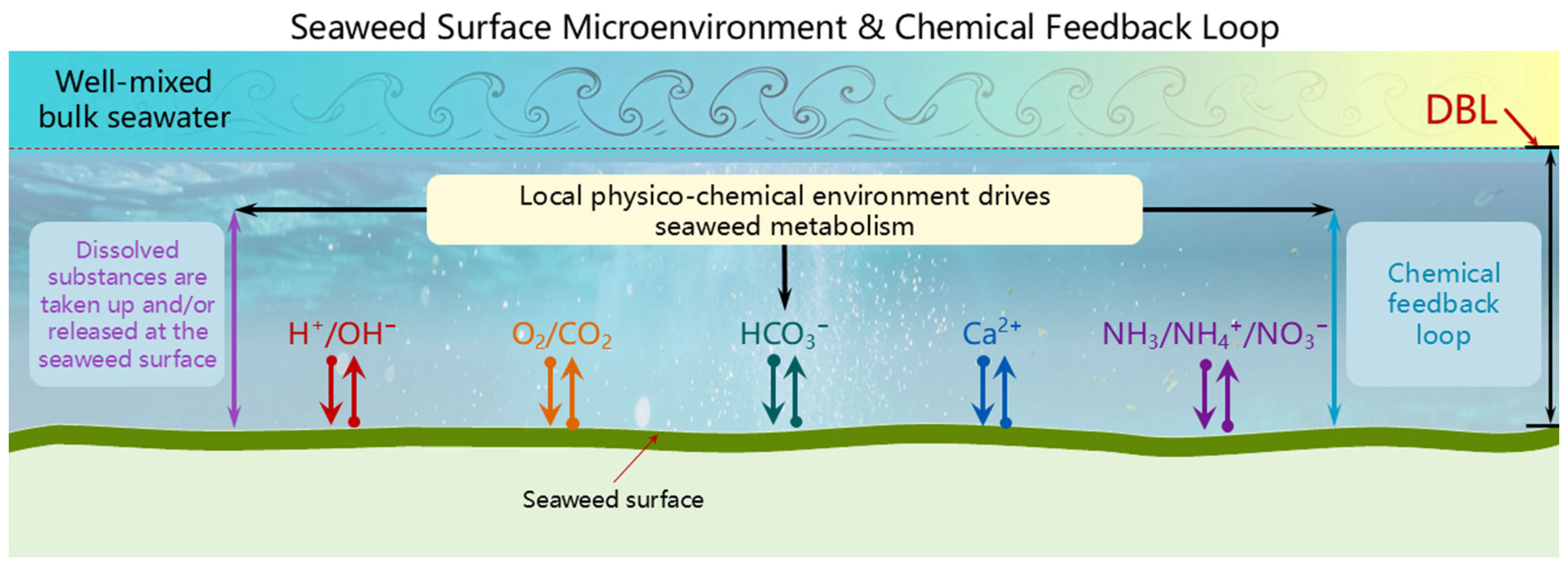
The thickness of diffusion boundary layer (DBL) is negatively correlated with velocity of water flow. When water flows over a macroalga, benthic organisms, or something solid like a stone, the current velocity decreases toward their surfaces and approaches nearly zero at the surface due to frictional drag. Therefore, the velocity boundary layer (VBL) exists over the surfaces, affecting the DBL above benthic autotrophs. The ratio of DBL to VBL thickness is a constant coefficient, the Schmidt number, which is usually described as Sc = ν/D (ν = kinematic viscosity, D = molecular diffusion coefficient of the solute in the fluid). It should be noted that the Sc values differ at different levels of salinity and temperature and among different molecules. The higher Sc of seawater means molecular diffusion of gases/nutrients is slower in the ocean compared to lakes/rivers at the same temperature level. This matters for slower diffusive nutrient uptake by marine phytoplankton and macroalgae. Molecular transport across boundary layers around organisms or at sediment–water interfaces are more constrained in marine environments. Therefore, comparisons of current velocity on diffusion of certain molecules should be compared under the same physical and chemical conditions, otherwise, corresponding calibrations should be made. Nevertheless, it can be simplified that faster velocity of seawater flow results in thinner DBL, which can be visualized by using dyes [3,9]. Therefore, exchanges of ions or gases during algal metabolism can be affected by water velocity (Figure 2). Photosynthetic rates of tested corals with symbiotic microalgae were shown to be 2–3 times faster in flowing than in static waters [22]. The green macroalga, Ulva sp., grows faster with increased water velocity especially in the presence of wave surge (Table 1) [23]. These phenomena are caused by promoted exchanges of molecules or ions under flowing or mixed conditions.
2.2. Regulating Effects of Water Flow and Mixing on Physiology of Primary Producers
Sunlight is essential for algal photosynthesis and growth. In natural aquatic environments, both light intensity and spectral composition change dynamically with time and space in addition to water transparency. Water flow and mixing can alter light exposures to algae, thereby regulating their photosynthetic efficiency. For phytoplankton (including eukaryotic and prokaryotic species), mixing causes disturbance of the water body, affecting their upward and downward movement. This movement changes the duration and intensity of their exposure to solar radiation (including photosynthetically active radiation, PAR, and ultraviolet radiation, UVR); it also affects the DBL surrounding phytoplankton cells.
Table 1.
Quantitative comparison of physiological parameter measured under different flow conditions and methodological approaches. +X% denotes the percentage increase of the parameter under flowing or stirred conditions relative to non or less-influenced treatments.
Figure 1.
Imaged gradients of CO2, O2, nutrients and pH surrounding macroalgal thallus (A) and microalgal cell ((B), based on Gao [15]) within the diffusion boundary layer, which creates a barrier for the transport of the molecules or ions. The light-colored area and width of the lines (A) or symbols ((B), red arrows) indicate the gradients of biogenic elements or their diffusion boundary layer (DBL).
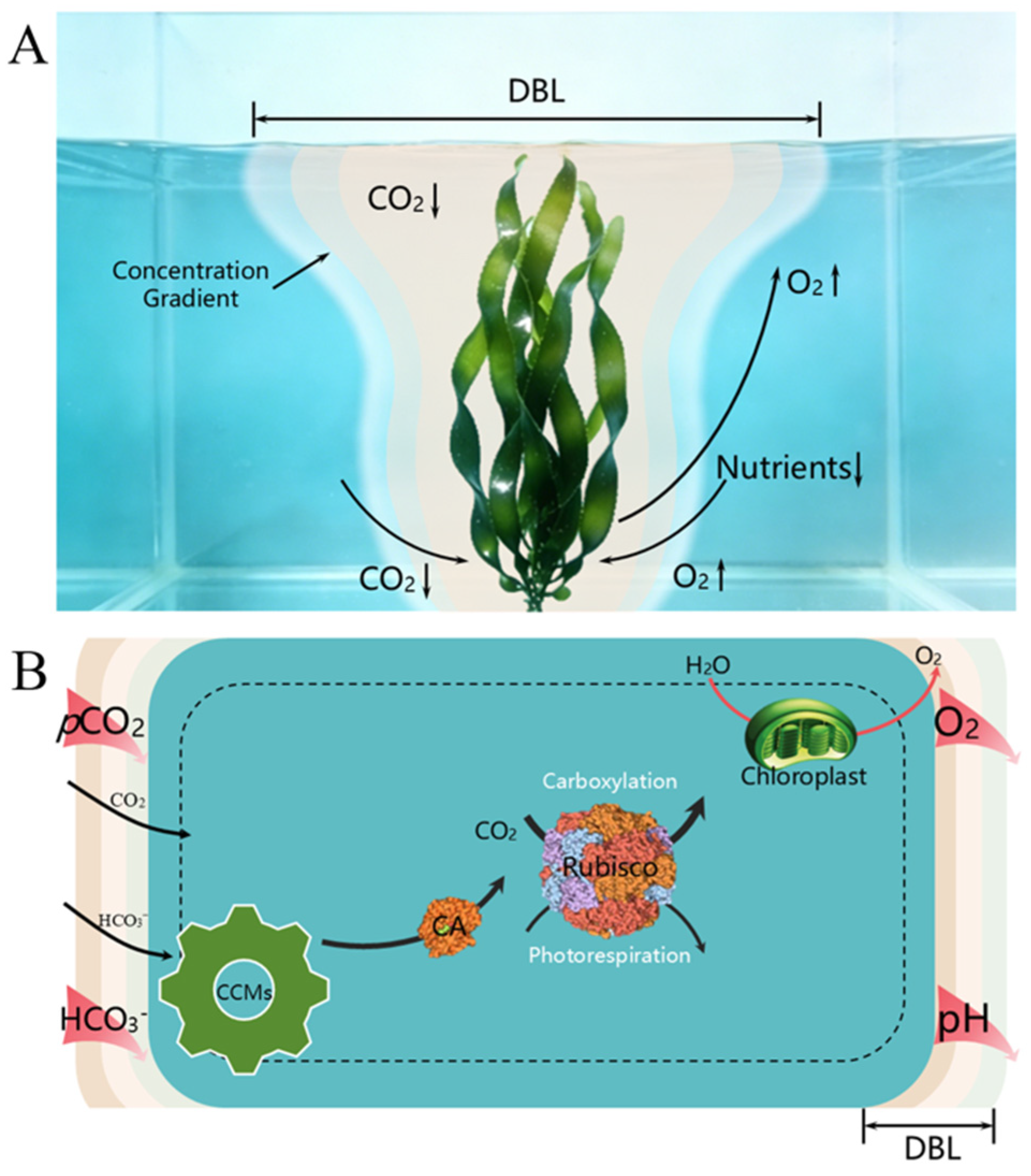
Figure 2.
Schematic illustration of a macroalga’s surface microenvironment and its chemical feedback loops, established based on Hurd [29]. The diffusion boundary layer (DBL) thickness is determined by seawater velocity, limiting exchange between the well-mixed bulk seawater and macroalgal surface. Algal metabolism modulates surface pH and the concentration of dissolved ions or molecules (H+, OH−, O2, inorganic carbon species, Ca2+, and nutrients), which in turn creates a local physicochemical environment that feeds back to regulate metabolic activity.
Moderate mixing can help phytoplankton avoid prolonged exposure to high PAR or UVR, thereby ameliorating UV- or high-PAR-induced photodamages [30,31]. A study on coastal phytoplankton assemblages off the South China Sea showed that solar UVR inhibited phytoplankton photosynthesis under static conditions, but stimulated it under fast mixing conditions [30]. This is because moderate mixing allows phytoplankton to alternate between high and low or dim light environments, providing sufficient time for the repair of photodamage to the photosynthetic apparatus induced by UVR or high PAR, thus enhancing photosynthetic carbon fixation. It had been demonstrated, almost half a century ago, that phytoplankton photosynthetic C fixation was higher under moderate levels of simulated mixing than the static and fast mixing conditions [32]. Such mixing-modulated effects on phytoplankton can mainly be attributed to changed modes of solar exposures, since DBL of small cells, like phytoplankton, can be neglected in the agitated water.
For macroalgae or other benthic autotrophs, as mentioned above, growing in flowing seawater allows them to photosynthesize and grow faster compared to static conditions, which is mainly due to enhanced transport and subsequent uptake of nutrients and CO2 (or bicarbonate) during daytime. However, such effects of water dynamics would differ under different levels of light, temperature and nutrients, since their modulating efficiency affects the thickness of DBL surrounding macroalgal thalli (Figure 1).
2.3. Saturation and Harmful Effects of Water Flow on Algae
Although water flow generally promotes algal photosynthesis, this promoting effect is not unlimited. Light-saturated photosynthesis or growth of the tested macroalgae increased with flow rate but tended to saturate at current velocities of 3–9 cm s−1 [3,5,6,12,23]. For Sargassum siliquastrum canopy, gross photosynthesis rates increased with water velocity but began to decrease beyond 9 cm s−1 under controlled flume conditions [27]. This saturation effect may be related to the maximum rate of nutrient uptake and photosynthetic capacity of algae. When the flow rate reaches a certain threshold, the supply of nutrients and CO2 has already met the maximum demand of algae, and further increasing the flow rate will not significantly improve the photosynthesis rate. That is, water flow can influence net primary productivity of benthic algae at low to moderate velocities by mitigating mass transfer limitation by DBL. However, plasticity of algal morphology and the interaction of these morphotypes with flow may represent a trade-off between maximizing photosynthetic assimilation and reducing the susceptibility of their thallus to mechanical damage and/or dislodgement by hydrodynamic forces [16,33]. Morphology of the intertidal macroalga Chondrus crispus is altered by hydrodynamic forces, being more planiform in areas with higher levels of water motions [34]. Populations of Laminaria digitata growing in the greatest and lowest water motions showed the lowest growth rates, indicating the enhancing and inhibiting effects of water motion or hydrodynamic forcing are velocity-dependent [35].
3. Methods for Measuring Growth and Photosynthesis of Macroalgae in Flowing Water
Water flow should be considered a fundamental factor, equivalent to light and nutrients, in determining photosynthesis rates in marine benthic autotrophs [22]. In addition, incubating macroalgae in flowing through systems with fresh seawater allows for diurnal observation of their diurnal physiological performance from sunrise to sunset [36], which helps to better understand their dynamic responses to natural light changes under changed levels of flow and/or different environmental scenarios. Basic approaches to measure growth, photosynthesis or other physiological parameters of benthic autotrophs in flowing water are summarized below.
Measuring Methods
The basic method for measuring macroalgal photosynthesis was previously published [13], which provides a foundational framework for related measurements. Here, we reexamine the reported methods and attempt to optimized it for measurements of photosynthesis and/or nutrient uptake in macroalgae under flowing seawater conditions. In addition to flow-through systems, sealed chambers equipped with magnetic stirrers can be used to generate water motion and reduce DBL thickness [11]. The key steps are as follows.
(1) Sample Preparation: Select healthy and uniform macroalgal thalli (such as whole individuals of Sargassum, Pyronia on ropes) or other benthic autotrophs, rinse them with filtered seawater to remove surface attachments. While part of macroalgal plants can be used for logistic reasons, it is recommended to use whole individuals because different parts of macroalgae exhibit different photosynthetic activities [37].
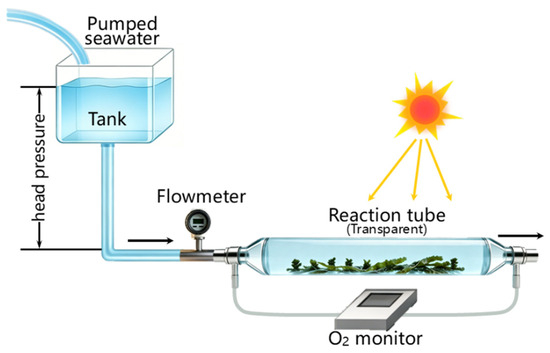
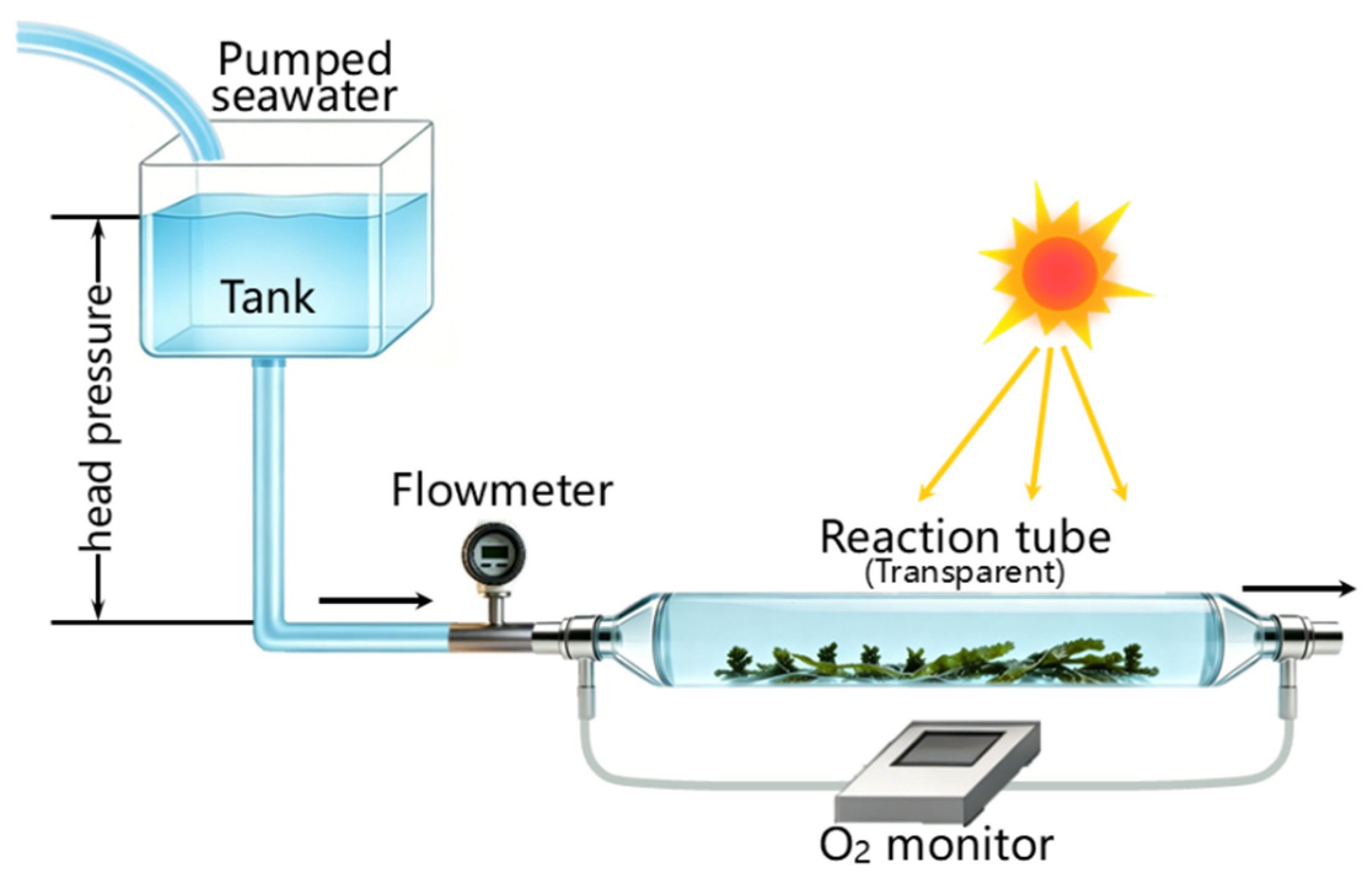
(2) Flow-through System Setup: Use a flow-through or circulating flow system composed of peristaltic pump (or use water gravity from a tank located above ground), reaction chamber, flow meter and oxygen electrode (Figure 3) to set up the system. The reaction chamber is made of transparent materials (such as glass or acrylic or quartz) to ensure sufficient light penetration. The peristaltic pump is used to control the flow rate of seawater, and a flow meter is installed to monitor the actual flow rate in real time. Here, we name the reaction chamber as assimilation tube (AT), with a diameter (d, cm) and length (L), which can be altered to meet experimental need. The water velocity (v, cm min−1) within the tube can be estimated based on flow rate (f, ml min−1) and d as follows: . One should be aware of the fact that the larger the volume of AT the slower the turnover rate of seawater. In the case using the circulating flow system, the water is not renewed, so that nutrients and CO2 and dissolved inorganic carbon (DIC) decreases and dissolved O2 (DO) increases with time.
Figure 3.
Illustration of seawater flow-through system for measuring photosynthetic O2 evolution rates under sunlight or constant artificial light conditions (redrawn based on Gao, Xu, Zheng and Ke [13]). Peristaltic pump may be used alternatively instead of head pressure.
(3) Sealed chamber with magnetic stirring: as an alternative to flow-through systems, photosynthetic measurements can be carried out in a sealed chamber equipped with a magnetic stirrer, which generates internal water circulation and reduces DBL thickness [11]. Compared with flow-through systems, this method offers several advantages, including simpler apparatus setup and a closed system with excellent signal integration over the measurement period. The sealed stirred-chamber approach is particularly suitable for short-term measurements of photosynthesis or respiration. However, a key limitation is that algal samples often need to be fragmented to fit within the chamber, and such physical wounding may reduce photosynthetic activity, hardly reflecting a whole individual’s photosynthetic capacity. When the water in a closed system is mixed, flow-through and closed systems give similar results for incubations not longer than several hours. However, with extended incubation times or high biomass loads, productivity in the sealed system is depressed due to nutrient/DIC depletion or oxygen buildup [38]. Therefore, the sealed stirred-chamber approach is more suitable for short-term measurements, whereas flow-through systems are better suited for long-term, diurnal, or near-natural conditions. The two approaches should therefore be regarded as complementary rather than mutually exclusive. Direct paired comparisons of the same algal samples between flow-through systems and sealed stirred chambers remain scarce and warrant future investigation.
(4) Measurement Process: While maintaining known amount of macroalga or other benthic autotrophs in the tube and allowing the filtered seawater (aerated in advance to ensure air-seawater constant CO2/O2 partial pressures if these two gases are not used as a driver) to flow through the reaction chamber continuously with constant flow rate, dissolved oxygen (DO) is monitored with the same (different DO sensors exhibit different sensitivities) oxygen sensor at inlet and outlet sides, so that changes of DO can be used to estimate photosynthetic O2 evolution rates. Changes in DIC between the inlet and outlet can also be used to estimate photosynthetic C removal from the water.
(5) Diurnal Observation: To realize diurnal observation of macroalgal physiological performance, the flow-through system can be placed under natural sunlight. The above photosynthetic O2 evolution or inorganic C removal rates are measured at regular intervals (minutes to hours depending on the flow rate) from sunrise to sunset. The initial point of outlet measurements of DO take 10 to 20 min, since turnover rate of the seawater depends on size of the tube holding algal thalli. The growth rate can be calculated by measuring the fresh weight or dry weight of the macroalgae within a time span of days depending on the measurable increase of biomass.
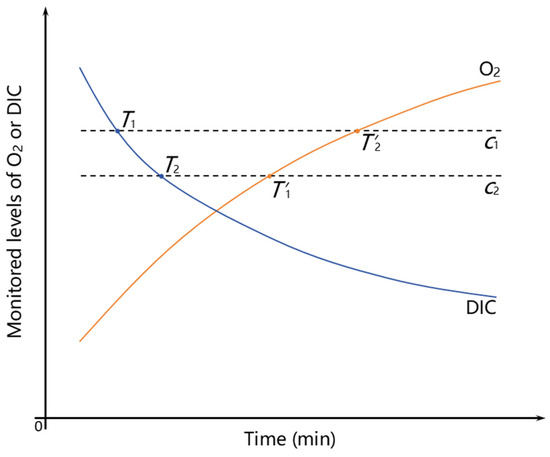
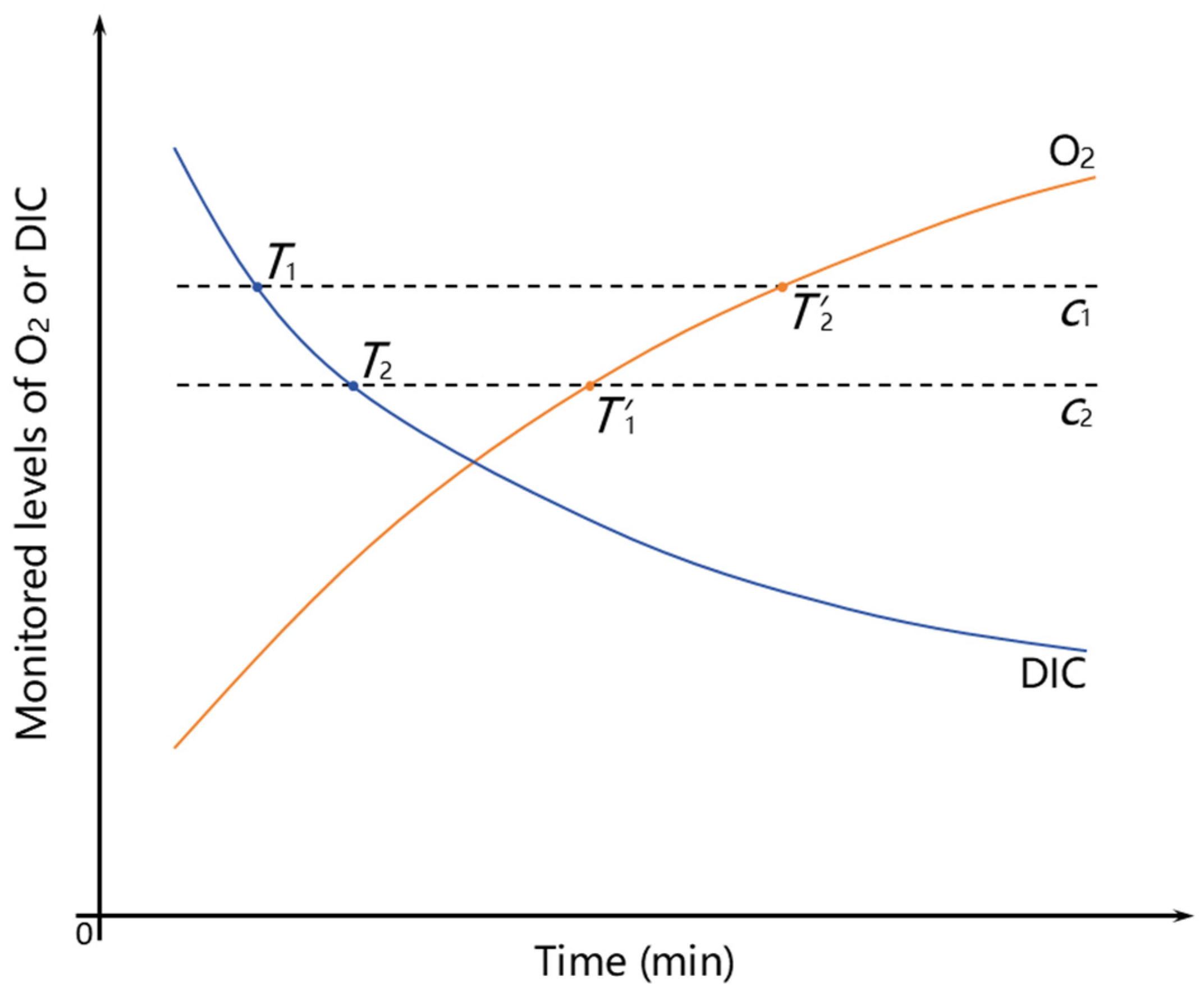
(6) Calculation of photosynthetic rates: (1) For the flow-through system, net photosynthetic rates (Pn) can be estimated as follows. , where Pn is expressed as µmol O2 g (W)−1 h−1, w is the fresh or dry weight (g) of the sample enclosed in the tube, and f is the flow rate as liter per minute. (2) For the circulating flow system the apparent photosynthetic O2 evolution or DIC removal can be estimated as follows with parameters illustrated in Figure 4: Pn′ = (C1 − C2)/(T2 − T1)/w, where C1 at T1 and C2 at T2 represent linear changes in levels of DIC or DO over time (T2 − T1). Here, the total volume (V) of the recirculating system is usually unknown due to the unknown inner space within the recirculating equipment. Therefore, V should be estimated as follows by measuring the same sample twice: , where V0 is the known volume added to the system after the first measurement, r1 is the slope of the DIC (or DO) concentration change over time before the addition of V0, and r2 is the slope after the addition of known volume (V0), so that the second measurement is carried out with the total volume (Vt) of V + V0. Since the photosynthetic rate and weight of the sample are the same when used for calculating Pn, the system volume of V can be estimated as above. Then, the net photosynthetic rate can be calculated as .
Figure 4.
Derived linear (the shorter the time span between T1 and T2, the closer the linearity) changes in concentrations (C1, C2) of dissolved O2 or dissolved inorganic carbon (DIC within the recirculating flow system for calculation of photosynthetic rates of macroalgae enclosed in the reaction tube. If the macroalgae are placed in the air mimicking low tide emersed condition, then DIC can be taken as CO2 concentration, as previously shown [39].
(7) Measurement for benthic diatoms: Benthic diatoms are attached to the surface of substrates, and their growth and photosynthesis are closely related to the flow conditions of the overlying water. We conceptualize a method for measuring photosynthesis and/or growth of benthic diatoms: allow them to attach to the bristles of brushes by detaching and letting them re-attach and grow on the brush bristles, and then treat the brushes as an individual of macroalgae as mentioned above (Figure 3 and Figure 4). This method simplifies the measurement process while simulating the natural attachment environment of benthic diatoms. However, its efficacy needs to be tested.
4. Merits of Measuring Algal Photosynthesis and/or Growth in Flowing Seawater
Natural aquatic environments are mostly flowing or mixed, and measuring algal growth and photosynthesis in flowing seawater can better simulate the natural habitat conditions of algae. Compared with still-water measurements, this method can avoid or minimize the “bottle effect”, which results in nonnegligible changes in nutrient concentrations, pH, pCO2 and DO that affect algal physiological activities (Figure 2).
Flowing through the seawater system allows for long-term continuous observation and diurnal dynamic monitoring of algae in nearshore or at marine stations. For macroalgae, this enables the study of changes in physiological performance (such as photosynthesis rate, nutrient uptake rate) over the diurnal light cycle, which helps to fully understand the dynamic adaptation mechanisms of algae to environmental drivers under fluctuating light and temperature conditions.
The methods established in this study are applicable to different algal groups, including macroalgae (such as Sargassum, Porphyra, Ulva, Gracilaria, and Laminaria) and benthic diatoms as well as seagrasses. By adjusting the experimental setup (such as flow rate, reaction chamber size or diameter), the measurement requirements for different algal types can be met. For example, the brush method for benthic diatoms and the dialysis bag method for phytoplankton [14] are innovative improvements based on macroalgae measurement methods, expanding the application scope of flowing water measurement technology.
5. Pros and Cons of Measurements in Flowing and Still Water Bodies
5.1. Measurements in Flowing Water
The flowing water encompasses two types of dynamic systems: (1) flow-through systems, where seawater is continuously renewed, and (2) circulating flow systems, where a fixed volume of seawater is recirculated in a closed loop. The advantages and disadvantages of these types are as follows.
Advantages: (1) High ecological relevance: The experimental conditions are close to the natural environment, avoiding the bottle effect and ensuring the authenticity of the measurement results. (2) Ability to study dynamic responses: It can simulate the dynamic changes of environmental factors (such as flow velocity) in natural water bodies, revealing the dynamic adaptation mechanisms of algae. (3) Wide applicability: The method is suitable for various algal groups, including macroalgae, phytoplankton, and benthic diatoms. (4) Promotes material exchange: It enhances the supply of nutrients and CO2, avoiding nutrient limitation and more accurately reflecting the maximum photosynthetic capacity of algae under natural conditions.
Disadvantages: (1) Complex experimental setup: The flow-through system requires precise control of flow rate and requires relatively more advanced instruments, such as sensitive oxygen electrode. (2) Difficult operation: During the experiment, it is necessary to ensure the stability of the flow system, prevent leakage, and regularly calibrate the instruments, which increases the difficulty of operation and the workload of the experimenters. (3) High technical requirements: For the measurement of benthic diatoms, special methods (such as dialysis bags, brush colonization) are required, and pretest should be conducted to confirm its suitability. (4) While this flow-through system can be used either outside or indoor, modes (laminar or turbulent) of water flow should be considered.
As an alternative to flow-through systems, photosynthetic measurements can be carried out in a sealed chamber equipped with a magnetic stirrer. Compared with flow-through systems, this method offers several advantages, including (1) simpler apparatus setup and (2) a closed system with excellent signal integration over the measurement period. However, this approach has notable disadvantages: (1) the thalli of large macroalgal individuals need to be fragmented to fit the chamber. This approach may cause entangled thalli if not fragmented or punched, if fragmented or punched, disks or parts of the fragmented thallus can hardly reflect the photosynthetic capacity of intact individuals due to wound-induced harms and/or different photosynthetic activities of different parts [37]. (2) nutrient/DIC depletion and O2 buildup in the closed system would suppress photosynthetic productivity with prolonged incubation or high ratios of algal biomass to water volume.
5.2. Measurements in Still Water
Advantages: (1) Simple experimental setup: It only requires basic equipment such as incubators and test tubes, with low experimental costs and easy popularization. (2) Easy operation: the experimental process is simple, and the parameters are easy to control. (3) Convenient for single-factor controlling. (4) Stable experimental conditions: The still water system is relatively closed, and the environmental parameters can be maintained relatively stable within a range by controlling biomass density [15].
Disadvantages: (1) Low ecological relevance: The closed environment is very different from natural flowing water environments, and the bottle effect is obvious, which may lead to deviations in results. (2) Inability to simulate dynamic environmental changes: It cannot reflect the dynamic changes of flow rate, light and other factors in the natural environment, and the measured results may not truly reflect the physiological status of algae in the natural environment. (3) Nutrient limitation: The thick DBL on the algal surface in still water leads to insufficient supply of nutrients and CO2, which may underestimate the photosynthetic capacity of algae, though shaking can somehow reduce the impacts of DBL. (4) Limited applicability: It is difficult to simulate the growth environment of large macroalgae and benthic diatoms.
6. Cautions for Applying Flow-Through System Methods
Measuring macroalgal growth and photosynthesis in a flow-through seawater system has important theoretical and practical significance. The rationale is based on the promotion of material exchange by water flow, the regulation of light utilization, and the saturation effect of flow rate on photosynthesis. However, the following cautions should be noted:
- (1)
- The material type of the assimilation tube (or reaction vessel) would affect solar light exposures; only quartz tubes allow full spectrum of solar irradiance to penetrate.
- (2)
- Turbulent flows within the tubes should be avoided, especially when examining effects of water velocity.
- (3)
- Different water velocities can be achieved by varying both the tube diameter and flow rate, but one needs to make sure that the difference in DO or DIC between the inlet and outlet waters is significantly large enough for assessment of photosynthetic or respiratory rates.
- (4)
- The flow rate and size of the tubes determine turnover rate of seawater travelling through it; therefore, pretests may be needed to determine the appropriate biomass to place in the tube and the time required for the DO level at outlet to reach a steady state under constant light and temperature conditions.
Author Contributions
Conceptualization, K.G.; data curation, H.L.; writing—original draft preparation, K.G. and H.L.; writing—review and editing, K.G., J.X. and H.L.; funding acquisition, K.G. All authors have read and agreed to the published version of the manuscript.
Funding
This study was supported by the National Natural Science Foundation of China (42361144840 and 41720104005) to Kunshan Gao.
Data Availability Statement
No new data were created or analyzed in this study. Data sharing is not applicable to this article.
Acknowledgments
The authors thank the laboratory engineers Xianglan Zeng and Wenyan Zhao for their logistical and technical support.
Conflicts of Interest
The authors declare no conflict of interest.
References
- Gao, K. Comparative photosynthetic capacities of different parts of Sargassum horneri (Phaeophyta). Jpn. J. Phycol. 1991, 39, 245–252. [Google Scholar]
- Raven, J.A.; Hurd, C.L. Ecophysiology of photosynthesis in macroalgae. Photosynth. Res. 2012, 113, 105–125. [Google Scholar] [CrossRef] [Scilit] [PubMed]
- Wheeler, W.N. Effect of boundary layer transport on the fixation of carbon by the giant kelp Macrocystis pyrifera. Mar. Biol. 1980, 56, 103–110. [Google Scholar] [CrossRef] [Scilit]
- Hurd, C.L.; Nelson, W.A.; Falshaw, R.; Neill, K.F. History, current status and future of marine macroalgal research in New Zealand: Taxonomy, ecology, physiology and human uses. Phycol. Res. 2004, 52, 80–106. [Google Scholar] [CrossRef] [Scilit]
- Gao, K. Effects of seawater current speed on the photosynthetic oxygen evolution of Sargassum thunbergii (Phaeophyta). Jpn. J. Phycol. 1991, 39, 291–293. [Google Scholar]
- Gao, K.; Aruga, Y.; Asada, K.; Ishihara, T.; Akano, T.; Kiyohara, M. Enhancement of photosynthetic CO2 fixation of the red alga Porphyra yezoensis Ueda in flowing seawater. Jpn. J. Phycol. 1992, 40, 397–400. [Google Scholar]
- Liu, X.; Chen, Y. A review on the ecology of Cladophora. J. Lake Sci. 2018, 30, 881–896. [Google Scholar] [CrossRef] [Scilit]
- Palardy, J.E.; Witman, J.D. Water flow drives biodiversity by mediating rarity in marine benthic communities. Ecol. Lett. 2011, 14, 63–68. [Google Scholar] [CrossRef] [Scilit] [PubMed]
- Hurd, C.L. Water motion, marine macroalgal physiology, and production. J. Phycol. 2000, 36, 453–472. [Google Scholar] [CrossRef] [Scilit] [PubMed]
- Koch, E. The effect of water flow on photosynthetic processes of the alga Ulva lactuca L. Hydrobiologia 1993, 260, 457–462. [Google Scholar] [CrossRef] [Scilit]
- James, R.K.; Hepburn, C.D.; Pritchard, D.; Richards, D.K.; Hurd, C.L. Water motion and pH jointly impact the availability of dissolved inorganic carbon to macroalgae. Sci. Rep. 2022, 12, 21947. [Google Scholar] [CrossRef] [Scilit] [PubMed]
- Zhao, Z.; Qin, S.; Liu, Z.; Tang, J.; Xiao, S.; Zhong, Z. Response of carbon sequestration capacity of Sargassum thunbergii to water flow speed. Haiyang Xuebao 2022, 44, 113–122. [Google Scholar] [CrossRef]
- Gao, K.; Xu, J.; Zheng, Y.; Ke, C. Measurement of benthic photosynthesis and calcification in flowing-through seawater with stable carbonate chemistry. Limnol. Oceanogr. Methods 2012, 10, 555–559. [Google Scholar] [CrossRef] [Scilit][Green Version]
- Tian, Y.; Yi, X.; Gao, K. Applying Dialysis Bags to Grow Microalgae and Measure Grazing Rates by Secondary Producers. Front. Physiol. 2022, 13, 838001. [Google Scholar] [CrossRef] [Scilit] [PubMed]
- Gao, K. Approaches and involved principles to control pH/pCO2 stability in algal cultures. J. Appl. Phycol. 2021, 33, 3497–3505. [Google Scholar] [CrossRef] [Scilit]
- Burnett, N.P.; Koehl, M. Ecological biomechanics of damage to macroalgae. Front. Plant Sci. 2022, 13, 981904. [Google Scholar] [CrossRef] [Scilit] [PubMed]
- Gao, K.; Aruga, Y.; Asada, K.; Ishihara, T.; Akano, T.; Kiyohara, M. Enhanced growth of the red alga Porphyra yezoensis Ueda in high CO2 concentrations. J. Appl. Phycol. 1991, 3, 355–362. [Google Scholar] [CrossRef] [Scilit]
- Hein, M.; Sand-Jensen, K. CO2 increases oceanic primary production. Nature 1997, 388, 526–527. [Google Scholar] [CrossRef] [Scilit]
- Schippers, P.; Lürling, M.; Scheffer, M. Increase of atmospheric CO2 promotes phytoplankton productivity. Ecol. Lett. 2004, 7, 446–451. [Google Scholar] [CrossRef] [Scilit]
- Xia, J.; Gao, K. Effects of doubled atmospheric CO2 concentration on the photosynthesis and growth of Chlorella pyrenoidosa cultured at varied levels of light. Fish. Sci. 2003, 69, 767–771. [Google Scholar] [CrossRef] [Scilit]
- Noisette, F.; Hurd, C. Abiotic and biotic interactions in the diffusive boundary layer of kelp blades create a potential refuge from ocean acidification. Funct. Ecol. 2018, 32, 1329–1342. [Google Scholar] [CrossRef] [Scilit]
- Mass, T.; Genin, A.; Shavit, U.; Grinstein, M.; Tchernov, D. Flow enhances photosynthesis in marine benthic autotrophs by increasing the efflux of oxygen from the organism to the water. Proc. Natl. Acad. Sci. USA 2010, 107, 2527–2531. [Google Scholar] [CrossRef] [Scilit] [PubMed]
- Barr, N.G.; Kloeppel, A.; Rees, T.A.V.; Scherer, C.; Taylor, R.B.; Wenzel, A. Wave surge increases rates of growth and nutrient uptake in the green seaweed Ulva pertusa maintained at low bulk flow velocities. Aquat. Biol. 2008, 3, 179–186. [Google Scholar] [CrossRef] [Scilit]
- Kregting, L.T.; Hepburn, C.D.; Savidge, G. Seasonal differences in the effects of oscillatory and uni-directional flow on the growth and nitrate-uptake rates of juvenile Laminaria digitata (Phaeophyceae). J. Phycol. 2015, 51, 1116–1126. [Google Scholar] [CrossRef] [Scilit] [PubMed]
- Gerard, V. In situ water motion and nutrient uptake by the giant kelp Macrocystis pyrifera. Mar. Biol. 1982, 69, 51–54. [Google Scholar] [CrossRef] [Scilit]
- Hepburn, C.D.; Holborow, J.D.; Wing, S.R.; Frew, R.D.; Hurd, C.L. Exposure to waves enhances the growth rate and nitrogen status of the giant kelp Macrocystis pyrifera. Mar. Ecol. Prog. Ser. 2007, 339, 99–108. [Google Scholar] [CrossRef] [Scilit]
- Inoue, Y.; Terada, R.; Belleza, D.F.; Nishihara, G.N. Effect of water velocity on the physiology of a collapsing Sargassum siliquastrum canopy under a controlled environment. Phycol. Res. 2020, 68, 313–322. [Google Scholar] [CrossRef] [Scilit]
- Parker, H. Influence of relative water motion on the growth, ammonium uptake and carbon and nitrogen composition of Ulva lactuca (Chlorophyta). Mar. Biol. 1981, 63, 309–318. [Google Scholar] [CrossRef] [Scilit]
- Hurd, C.L. Slow-flow habitats as refugia for coastal calcifiers from ocean acidification. J. Phycol. 2015, 51, 599–605. [Google Scholar] [CrossRef] [Scilit] [PubMed]
- Helbling, E.W.; Gao, K.; Gonçalves, R.J.; Wu, H.; Villafañe, V.E. Utilization of solar UV radiation by coastal phytoplankton assemblages off SE China when exposed to fast mixing. Mar. Ecol. Prog. Ser. 2003, 259, 59–66. [Google Scholar] [CrossRef] [Scilit]
- Jin, P.; Gao, K.; Villafañe, V.E.; Campbell, D.A.; Helbling, E.W. Ocean acidification alters the photosynthetic responses of a coccolithophorid to fluctuating ultraviolet and visible radiation. Plant Physiol. 2013, 162, 2084–2094. [Google Scholar] [CrossRef] [Scilit] [PubMed]
- Marra, J. Phytoplankton photosynthetic response to vertical movement in a mixed layer. Mar. Biol. 1978, 46, 203–208. [Google Scholar] [CrossRef] [Scilit]
- Stewart, H.L.; Carpenter, R.C. The effects of morphology and water flow on photosynthesis of marine macroalgae. Ecology 2003, 84, 2999–3012. [Google Scholar] [CrossRef] [Scilit]
- Gutierrez, L.M.; Fernández, C. Water motion and morphology in Chondrus crispus (Rhodophyta). J. Phycol. 1992, 28, 156–162. [Google Scholar] [CrossRef] [Scilit]
- Kregting, L.; Blight, A.J.; Elsäßer, B.; Savidge, G. The influence of water motion on the growth rate of the kelp Laminaria digitata. J. Exp. Mar. Biol. Ecol. 2016, 478, 86–95. [Google Scholar] [CrossRef] [Scilit]
- Gao, K.; Umezaki, I. Studies on diurnal photosynthetic performance of Sargassum thunbergii I. Changes in photosynthesis under natural sunlight. Jpn. J. Phycol. 1989, 37, 89–98. [Google Scholar]
- Gao, K.; Umezaki, I. Comparative photosynthetic capacities of the leaves of upper and lower parts of Sargassum plants. Bot. Mar. 1988, 31, 231–236. [Google Scholar] [CrossRef] [Scilit]
- Bottom, D. A flow-through system for field measurements of production by marine macroalgae. Mar. Biol. 1981, 64, 251–257. [Google Scholar] [CrossRef] [Scilit]
- Gao, K.; Ji, Y.; Aruga, Y. Relationship of CO2 concentrations to photosynthesis of intertidal macroalgae during emersion. Hydrobiologia 1999, 398, 355–359. [Google Scholar] [CrossRef] [Scilit]
Disclaimer/Publisher’s Note: The statements, opinions and data contained in all publications are solely those of the individual author(s) and contributor(s) and not of MDPI and/or the editor(s). MDPI and/or the editor(s) disclaim responsibility for any injury to people or property resulting from any ideas, methods, instructions or products referred to in the content. |
© 2026 by the authors. Licensee MDPI, Basel, Switzerland. This article is an open access article distributed under the terms and conditions of the Creative Commons Attribution (CC BY) license.