


Abstract
Seaweeds are sustainable, nutrient-rich resources with potential for use in the development of functional foods. Fermentation represents a powerful biotechnological approach to enhance the nutritional, sensory and bioactive profile of seaweed-based products. This review synthesizes the literature published between 2010 and 2025, addressing recent advances in seaweed pre-treatment technologies, fermentation processes and their integration into diverse food matrices, together with associated health benefits. The diversity of seaweeds applied in fermentation, dominated by brown algae, is examined alongside key pre-treatment strategies, ranging from conventional approaches to emerging technologies including ultrasound, high-pressure processing and assisted fermentation, with emphasis on their impact on fermentability and bioactive recovery. The role of microbial groups is critically discussed in relation to their metabolic contributions and functional outcomes. Overall, fermented seaweed-enriched foods emerge as promising innovations in functional food development, with antioxidant activity being the most consistently reported benefit. Seaweed versatility is evidenced by its incorporation into a wide range of fermented products, including miso, beverages, dairy alternatives and sauces. Key future research directions include optimizing microbial–seaweed interactions, exploring under-investigated pre-treatment technologies such as freezing, and elucidating the mechanisms linking fermentation to heavy metal reduction, with the ultimate goal of improving process control, product quality and consumer acceptance.
1. Introduction
Seaweeds, also known as macroalgae, have gained increasing attention in recent years, particularly in the fields of nutrition and functional food development. Global production has expanded sharply over the last two decades, rising from approximately 11 million tonnes in 2000 to 35 million tonnes in 2019, with close to 80% of harvested seaweed destined for human consumption [1]. This rising interest is also evident in the growing number of publications between 2010 and 2020, which increased from fewer than 10 per year to over 90, exploring the potential applications of seaweed and innovative fermentation techniques to produce value-added food products [2]. These trends highlight the challenge and opportunity of expanding the role of seaweeds in promoting sustainable and healthy food systems. Seaweeds are valuable raw materials that are currently being explored for their use in functional foods, driven by increasing consumer interest in foods that promote health and well-being. Due to their nutritional richness and bioactive compounds, seaweeds have been associated with numerous health benefits, including positive effects on cardiovascular and mental health, weight control, gastrointestinal health, and blood glucose regulation, among others [3,4].
The properties of seaweeds position them among the four major alternative protein sources, with the potential to replace conventional protein ingredients in both human and animal diets within the European Union [5]. This positioning is due to their potential to improve food security and reduce the environmental impacts of food and feed production [6]. Together, these perspectives highlight the need to maximize the use of marine resources for social well-being, as outlined in the strategies and action plans of Blue Economy policies [7,8,9]. The importance of sustainably optimizing the use of these available resources as potential food sources was also emphasized, thereby contributing to global development challenges [10].
Traditionally, seaweeds have been used as a food source in coastal communities, particularly in Asia, where seaweeds from the genera Porphyra (nori) and Laminaria (kombu) are staples in local cuisines [11,12]. Their wide variety of preparation methods emphasizes their versatility, as they can be consumed fresh, dried, defrosted, fermented, cooked, or processed using different combinations of these methods. They are also incorporated into a wide range of products, including snacks, pasta, salads, fruit and vegetable juices, and even beverages. They can be cooked either whole or chopped and used in various dishes together with rice or beans, for example [1,13].
In addition to their role in human diets, seaweeds have long been incorporated into animal feed, with promising results in different applications. Research has shown, for instance, that dietary supplementation with seaweeds can improve growth performance and immune response in broiler chicks [14]. Similarly, the inclusion of seaweeds in the diets of laying quail has been linked to the production of eggs with low-cholesterol content [15]. In aquaculture, seaweeds have been identified as nutritionally valuable and are used as a source of high-value enzymes in feed supplements, contributing to improved feed efficiency [16,17,18].
More recently, seaweeds have been recognized as a valuable renewable resource for the bioenergy sector, where they are used as feedstock for the production of biofuels, including bioethanol and biogas [19,20,21,22,23,24]. Additionally, seaweeds are used to produce lactic acid, a precursor for biodegradable polymers and plastics [25,26]. However, the bioenergy sector has faced challenges, particularly regarding the techno-economic feasibility of using seaweed biomass as feedstock [27]. These applications highlight the versatility of seaweeds and their potential to address sustainability challenges across various industrial sectors. Across these applications, fermentation has emerged as a critical biotechnology for achieving significant advancements, unlocking the full potential of seaweeds in industrial contexts.
Looking ahead, innovations in fermentation are expected to expand the range of seaweed applications, extending from traditional uses to the development of functional foods. Fermentation is recognized as one of the oldest food preservation technologies and is deeply rooted in the traditions of communities worldwide [1]. The advantages associated with the fermentation process are widely discussed in numerous studies today. Besides producing foods with desirable sensory and/or functional characteristics, these benefits also include the improved digestibility and enhanced bioavailability of certain nutrients [28,29,30]. Among the various approaches to enhancing the health benefits of seaweeds, fermentation stands out as a transformative process used to overcome the limitations of seaweed biodigestibility. Seaweeds are recognized for their wide range of bioactive compounds with beneficial effects on health, resulting from a more balanced protein fraction compared to many other vegetables, a high content of polysaccharides (including fibre), secondary metabolites (such as polyphenols and carotenoids), minerals, and vitamins [11,31,32]. However, despite the nutritional quality of macroalgae, the literature highlights significant challenges regarding the biodigestibility of nutrients. For example, the digestibility of proteins in macroalgae is generally reported to be low [5]. This problem can be attributed to the rigidity of the cell wall, its stability in both acidic and alkaline environments, as well as the lack of specific digestive enzymes in the human gastrointestinal tract [3,33], while fermentation can have a positive impact on digestibility. Moreover, the growing interest in fermentation also stems from the critical need to develop sustainable alternatives for preserving seaweed, as fresh macroalgae typically have a very short shelf life [31,34].
Drawing on studies published between 2010 and 2025, this review focuses on seaweed fermentation, fermented foods containing seaweeds, and their associated health benefits. In particular, the review highlights the main pre-treatments performed prior to fermentation, as well as key parameters such as fermentation medium, duration, pH, temperature, the macroalgae species used, and the fermenting cultures. Particular emphasis is given to ultrasound and freezing as cell-disruption pre-treatments, since these approaches are still poorly explored.
Building upon these considerations, the present review also provides the conceptual framework supporting an ongoing study exploring ultrasound and freezing as pre-treatment strategies to enhance fermentation performance in Gracilaria gracilis and Codium tomentosum. G. gracilis and C. tomentosum belong to genera reported among the most abundant macroalgal groups recorded in studies from southern Mozambique, particularly on Inhaca Island [35,36,37], highlighting their potential occurrence and prospective exploitation along the Mozambican coast [38,39]. At the same time, both species are well-established in international markets and gastronomy, with a long tradition of use in Portugal for direct consumption [40] and as sources of bioactive compounds [41,42]. In this context, these species are mentioned as illustrative examples linking ecological availability and cultural–commercial relevance, rather than as a specific focus of this review. Unlike previous reviews with a narrower temporal or thematic focus, this work provides a comprehensive synthesis of seaweed fermentation research published between 2010 and 2025.
Review Approach Methodology
A structured literature search was conducted to identify relevant studies on seaweed fermentation for food applications. Three major scientific databases—Scopus, ScienceDirect, and Web of Science—were used to ensure broad coverage of the available literature. The search strategy included combinations of the following keywords: macroalgae AND fermentation, seaweed AND fermentation AND food, seaweed AND koji, and seaweed AND miso. The search was limited to articles published between 2010 and 2025.
The retrieved records were initially screened based on titles and abstracts, followed by full-text evaluation to assess their relevance and consistency with the scope of this review. Studies were included when they addressed the fermentation of macroalgae for food-related applications. Studies focusing exclusively on algae fermentation for bioenergy production or non-food uses, such as animal feed (e.g., aquaculture, silage, and feed formulations), were excluded. Following the selection process, a total of 72 studies were retained and analyzed. The selected literature was systematically organized and synthesized according to key aspects relevant to seaweed fermentation, including macroalgal species and taxonomic groups, pre-treatment methods, fermentation microorganisms (culture types), fermentation media, process conditions (time, temperature, and pH), and types of fermented food products, as well as their associated functional and health-related properties. This approach allowed for a structured and critical synthesis of the current state of knowledge, while acknowledging the heterogeneity of methodologies and reporting practices across studies.
2. Seaweed Fermentation as a Functional Food Strategy
2.1. Diversity of Seaweeds Used in Fermentation
The utilization of various seaweed species in fermentation for developing innovative food ingredients has significantly increased over the past decades, as evidenced by the growing frequency of seaweed types by publication year (Figure 1), based on a targeted literature search across Scopus, ScienceDirect, and Web of Science using predefined keywords (Section Review Approach Methodology). Brown algae, such as Saccharina latissima, Saccharina japonica, and Sargassum spp., have been extensively studied, particularly in the most recent period (2019–2025). Red algae, such as Gracilaria spp. and Porphyra spp., have also shown a notable increase in research interest during the same time frame. Beyond their unique chemical compositions and functional properties, often described as high nutritional value [43], the preference for certain species is influenced by factors such as their availability and abundance in specific regions [31], their status as some of the most highly produced and economically valued seaweeds [44,45] and their traditional applications in food and medicine [46].
Figure 1.
Frequency of fermented seaweed types by article publication year.
In contrast, green algae, while recognized for their abundance in vitamins and minerals, have consistently shown a lower frequency of studies across all evaluated periods, highlighting a potentially underexplored area for future research. This observation is supported by the fact that global production of green seaweed began later, only after 1980, compared to other species, and has remained the lowest among them to this day [1]. Moreover, their composition, which is richer in cellulose compared to other algae species, presents significant challenges for microbial processing. Green seaweeds are believed to contain high levels of ulvans, polysaccharides composed of less fermentable sugars such as galactose, rhamnose, and xylose, which can also limit access to other, more fermentable compounds [2]. These structural and compositional characteristics may contribute to the lower representation of green seaweeds in fermentation studies, reflecting the technological challenges associated with the bioconversion of ulvan and glucuronan-rich biomasses. Addressing these challenges may facilitate the broader commercial exploitation of green seaweeds and promote their incorporation into innovative fermented food products.
2.2. Pre-Treatment of Seaweeds for Fermentation
The seaweed stabilization and processing methods remain the primary limitation to proceeding with fermentation [5]. A considerable number of studies recommend fermentation as a promising future approach for the seaweed industry. Despite the promising outcomes, the comparison of studies is hampered by the lack of standardized fermentation conditions, inconsistent reporting of biomass-to-medium ratios, and limited reproducibility of microbial inoculum levels.
Since the supply of nutrients for fermentation is crucial, effective pre-treatment methods to break the cell walls and hydrolyze complex molecules assume the key challenge. Macroalgal biomass exhibits a highly complex and heterogeneous structural organization, in which structural polysaccharides such as alginates and fucoidans (brown algae), agar and carrageenans (red algae), and ulvans and glucuronan (green algae) are closely integrated within a matrix also containing proteins, phenolic compounds, and minerals, where strong intermolecular interactions contribute to a compact and recalcitrant cell wall structure [47,48]. This architecture restricts enzyme accessibility and limits the release of fermentable sugars from the biomass [3,5,33]. Consequently, efficient pre-treatment strategies are required to disrupt cell wall integrity, weaken polymer associations, and enhance the hydrolysis of complex carbohydrates into readily fermentable monosaccharides. This inherent structural recalcitrance underpins the diversification of pre-treatment approaches aimed at improving sugar recovery yields for subsequent fermentation processes. The choice of pre-treatment methods is critical, as they impact not only fermentation efficiency but also the retention of bioactive compounds [12,48,49]. The pre-treatment of macroalgae before fermentation has evolved, driven by advancements in processing technologies and a better understanding of algal composition. This section reviews the progression of macroalgae pre-treatment methods, focusing on their historical context, the increasing diversification of techniques, and recent innovations.
2.2.1. Drying and Grinding Pre-Treatment Approaches
Early approaches for pre-treating macroalgae involved simple methods such as drying and grinding, which were essential for preserving biomass after harvest and reducing particle size for further use. Drying, in particular, remains the most commonly used preservation method when seaweed biomass is not processed immediately. However, several studies have consistently reported its negative impact on total phenolic and flavonoid contents, as well as on amino acids, fatty acids, and vitamin C levels [50,51].
For instance, Martelli et al. [52] demonstrated that traditional drying techniques applied to Himanthalia elongata (a brown algae species), combined with storage under dark conditions, were effective in maintaining biochemical stability to a certain extent. Similarly, Hung et al. [53], processed green (Ulva sp.) and brown (Laminaria sp.) algae by air-drying at controlled temperatures (40 °C), followed by grinding and sieving to obtain uniform particle sizes, thereby enhancing the substrate’s suitability for subsequent applications. The adoption of sieving to produce fine and consistent biomass powders, as reported by Kim et al. [54] and Lee & Ra [55], further refined the methodology by improving substrate uniformity. Achieving uniform particle size for fermentation processes is well known to be crucial, as it can strongly influence fermentation efficiency and the quality of the final product.
Recent research reflects a growing emphasis on optimizing macroalgae drying treatments. Air-drying at moderate temperatures (40–50 °C), as employed by Healy et al. [48] and Nagarajan et al. [45], offers a compromise between energy consumption and biomass quality. Emerging technologies, such as infrared, microwave, superheated steam, and freeze-drying, have shown potential to improve both energy efficiency and product quality. Nevertheless, their commercial scalability remains limited, particularly for high-volume processing [1]. Although drying is primarily used as a preservation method, it is rarely explored as a pre-treatment for fermentation. Increasingly, fermentation itself is being proposed as a more sustainable and efficient alternative to the limitations associated with drying in macroalgae utilization. Although drying improves biomass stability, handling, and shelf life, it may compromise thermosensitive compounds. At the same time, the use of fresh biomass poses challenges related to high moisture content and rapid post-harvest degradation. These limitations highlight the need for alternative or complementary processing strategies.
2.2.2. Other Fresh Biomass Handling Techniques
The utilization of fresh seaweed for fermentation typically involves post-harvest sanitization followed by the selected pre-treatment. Maiorano et al. [31] proposed a thermal pre-treatment to stabilize freshly harvested Gracilaria gracilis, consisting of immersion in drinking water at 100 °C for 3–5 min, followed by cooling at room temperature and subsequent grinding. After fermentation, the samples retained a good fatty acid nutritional value, but a significant decrease in bioactive compounds, such as vitamin E and A, was observed compared to the untreated raw material, probably as a result of the heat exposure during pre-treatment. Similarly, Bruhn et al. [56] processed S. latissima (sugar kelp) by subjecting it to a thermal pre-treatment at 95 °C for 15 min, followed by cooling to 37 °C and particle size reduction. Notably, the study reported that the estimated protein content of the sugar kelp product remained unchanged after heat treatment and fermentation. Guided by the sequential pre-treatment steps applied to fresh biomass, and with particular emphasis on heavy metals, variations in downstream fermentation outcomes must be interpreted in relation to the combined effects of processing conditions and substrate characteristics. Contradictory findings have been reported regarding the effectiveness of fermentation in reducing heavy metals, with some studies observing significant reductions, while others report no relevant changes. These inconsistencies are likely linked to differences in fresh biomass pre-treatment steps and intensity, microbial metabolism, and seaweed mineral composition. Bruhn et al. [56] emphasized that fermentation enhanced the quality of sugar kelp by reducing levels of two toxic trace metals (Cd and Hg). However, the mechanisms responsible for this reduction during pre-treatment and fermentation remain unclear. Regarding arsenic (As), another common harmful element commonly found in seaweeds, Wang et al. [24] demonstrated that sequential processing, with hot water and citric acid, followed by fermentation with Lacticaseibacillus rhamnosus, effectively decreased As levels in Sargassum fusiforme. Notably, this processing sequence not only reduced arsenic but also increased the levels of organic acids and amino acids. However, despite these promising findings, further research is needed to elucidate the mechanisms driving arsenic reduction during each processing stage, particularly during fermentation, which is considered a critical step. Building on this discussion, Tolpeznikaite et al. [4] investigated the influence of fermentation on Baltic Sea macroalgae, including its impact on trace elements. Unlike the findings of Wang et al. [57], the authors did not observe notable differences in heavy metal concentrations post-fermentation. Consequently, further comparative studies are essential to better understand the factors that determine the efficacy of fermentation in reducing the content of heavy metals, and the interplay between microbial activity and metal bioavailability during the process. In an effort to clarify these uncertainties Ren et al. [58] identified steaming, citric acid treatment, and fermentation with Streptococcus thermophilus as the most effective sequence for reducing As, Cr, and Cd in S. fusiforme, proposing that each step plays a distinct and complementary mechanistic role by linking steaming to cell disruption, citric acid treatment to metal chelation, and fermentation to changes in metal speciation.
Akomea-Frempong et al. [59] demonstrated that blanching, cooling in ice water, and freezing of S. latissima significantly improved moisture content, colour (lightness and greenness), and overall sensory quality, thereby enhancing consumer acceptance. Although a reduction in phenolic content and antioxidant capacity was observed, these results are aligned with previous studies using temperatures above 90 °C [31,56].
Other studies have opted for immediate processing after harvest, typically involving cleaning and particle size reduction prior to fermentation [60,61,62]. In addition to demonstrating potential as a shelf-life extension strategy that could replace drying or freezing, these studies also highlighted a notable increase in antioxidant activity after fermentation, in contrast to those using pre-thermal treatment.
As an alternative to heat treatment, freezing is a widely utilized method for preserving fresh macroalgae biomass [63,64]. Although it is frequently used as a preservation step prior to fermentation, the potential effects of freezing on the fermentation process remain poorly understood. In addition, there is a lack of systematic studies defining the optimal conditions for freezing or refrigeration, as well as their effectiveness in preserving seaweed quality over time. The formation of ice crystals during freezing may disrupt cell walls, impacting the release of intracellular compounds and subsequently affecting fermentation dynamics. Future studies investigating this relationship could help optimize pre-treatment strategies to preserve quality and improve fermentation efficiency in macroalgae-based products.
2.2.3. Advanced Technologies and Multi-Step Pre-Treatments
As research on algal fermentation continues to advance, innovative pre-treatment techniques have been developed, particularly targeting the breakdown of cell walls and the improvement of intracellular compounds’ bioavailability. As suggested by pioneering or previous studies, enhancing fermentation efficiency often requires optimized pre-treatments and the addition of fermentable sugars [4,45]. The combination of physical, thermal, and chemical treatments has become increasingly common in recent protocols, demonstrating an ongoing effort to optimize the fermentability and nutritional quality of macroalgae.
Water soaking is a commonly employed strategy to extract water-soluble compounds prior to fermentation, with key variables such as algae-to-water ratio and soaking duration influencing the extraction yield. Rianingsih et al. [65] applied a 1:12 algae-to-water ratio, soaking for 6 h, followed by processing in a soymilk maker to enhance extraction. Similarly, Arafiles et al. [49] and del Olmo et al. [50] applied soaking ratios of 1:20 (18 h at 4 °C) and 1:10 (20 min at room temperature with stirring), respectively, followed by centrifugation. Bae & Kim [66] treated Laminaria japonica at a 1:3 ratio and heated the mixture at 70 °C for 1 h before centrifugation. Ultrasound-assisted approaches have also emerged. Aung et al. [43] optimized conditions using a 1:20 ratio, 80 °C for 15 min in an ultrasonic bath at 35 kHz, but no soaking time was reported. Despite methodological variability, these studies illustrate the diversity of technological approaches for aqueous extraction and the use of seaweed extracts as fermentation substrates. However, the diversity in seaweed species and fermentation conditions makes it difficult to define an optimal pre-treatment method. Despite these limitations and the fact that these techniques are restricted to water-soluble compounds, all studies consistently report increased total phenolic content, antioxidant activity, and probiotic growth in the liquid fraction, highlighting their potential value in the fermented food industry. The reported improvements vary considerably across studies and are often not directly comparable, making it difficult to assess the overall extraction efficiency and standardization of water soaking.
Enzymatic and acid hydrolysis have been widely investigated as alternative strategies capable of releasing not only water-soluble but also bound fermentable compounds from marine algae. Due to the complex and rigid nature of macroalgal cell wall matrices, acid and enzymatic hydrolysis have been explored as strategies capable of weakening structural polysaccharide networks through bond cleavage, promoting cell wall disruption and the depolymerization of polysaccharides and other macromolecules [54,67,68]. Acid hydrolysis typically proceeds via protonation of glycosidic oxygen atoms, increasing the susceptibility of glycosidic bonds to cleavage and leading to partial solubilization of structural polysaccharides [69]. In contrast, enzymatic hydrolysis relies on the substrate-specific action of carbohydrate-active enzymes and other enzymes which catalyze bond cleavage [32]. These processes improve biomass accessibility, increase the availability of fermentable sugars, and enhance the efficiency of subsequent fermentation processes.
These approaches have evolved over the years, employing a variety of enzymes and chemical conditions to optimize the efficiency and yield of fermentation extracts or algal biomass, as summarized in Table 1.
Table 1.
Enzymatic and Acid Hydrolysis Strategies for Seaweed Biomass.
Uchida et al. [72] explored enzymatic hydrolysis for seaweed pre-treatment in the preparation of nori sauces, using combinations of protease, peptidase, and mannanase enzymes. Lin et al. [68] investigated enzymatic saccharification following acid hydrolysis, emphasizing the importance of adjusting the pH after acid hydrolysis for optimal enzymatic activity. Algal biomass was first treated with 0.2 M and 0.4 M HCl for 20, 30, and 60 min. The pH of the hydrolysates was then adjusted to 4.5 before cellulase treatment (7.6 U/mL at 37 °C for 48 h). Trung et al. [67] further optimized enzymatic strategies using Hydropuntia eucheumatoides pre-treated with 5 mM citric acid at 120 °C for 15 min, followed by hydrolysis with combinations of β-glucanase, β-galactosidase, and glucoamylase at 50 °C and 150 rpm for 96 h. The study systematically explored the critical role of optimized enzyme-to-biomass ratios in enhancing hydrolysis efficiency. Nagarajan et al. [45] and Sudhakar et al. [71] evaluated dilute acid hydrolysis for lactic acid production, treating seaweed with 1% to 15% H2SO4 at 121 °C for 15 to 20 min, followed by filtration or centrifugation. Tamura et al. [32] applied enzymatic treatment to Sargassum horneri powder, pre-treated with 33 mM phosphate buffer (pH 5.0 adjusted with 1 M HCl), before cellulase hydrolysis (45 °C, 120 rpm for 24 h). The hydrolysate was further treated with pressurization and heat sterilization (121 °C for 15 min), emphasizing the interplay between enzymatic and thermal methods for effective hydrolysis.
Tabacof et al. [69] employed dilute acid-thermic hydrolysis using 1% (v/v) H2SO4 at 111 °C (0.5 bar) for 45 min, followed by press filtration and clarifying steps to detoxify the hydrolysate. Different algae-to-acid solution ratios (20–40%) were tested, aiming to achieve fermentable sugar concentrations above 30 g/L for efficient lactic acid production. This approach demonstrated the importance of precise thermal and chemical conditions for enhancing sugar yields. Kim et al. [54] integrated thermal acid hydrolysis with enzymatic saccharification for U. pinnatifida to obtain γ-aminobutyric acid. The pre-treatment involved H2SO4 concentrations of 90–540 mM, seaweed slurry concentrations of 2–12% (w/v), and hydrolysis times of 15–120 min. The pH of the hydrolysate was then adjusted to 5.0 with 5 M NaOH before enzymatic treatment using Viscozyme L, Celluclast 1.5 L, and Spirizyme Fuel (16 U/mL each) at 45 °C and 150 rpm for 48 h. This study optimized multiple variables, including acid concentration and enzyme selection, to maximize the production of fermentable sugars.
Overall, these studies show a gradual evolution from simple enzymatic formulations to integrated strategies combining thermal, acid, and enzymatic processes. Enzyme blends, acid concentrations, and process conditions have been refined over time, leading to higher yields and more efficient workflows. Considering the complexity of algal biomass composition, enzymatic hydrolysis targeting proteins (proteases and peptidases), complex carbohydrates (β-galactosidase and glucoamylase), and structural polysaccharides (cellulase, β-glucanase, and mannanase) promotes the release of peptides, amino acids, and fermentable sugars, while reducing cell wall recalcitrance. Consequently, combined hydrolysis strategies, including acid pretreatment and enzymatic hydrolysis using blended enzyme systems, are often more effective in enhancing fermentable sugar yields. This improves microbial growth, substrate accessibility, and overall fermentation efficiency, ultimately increasing the production of bioactive compounds. However, the selection of specific enzymes and acids, as well as their concentrations and process conditions, remains dependent on the target compounds, food safety considerations, and the algae species employed. Furthermore, enzymatic pre-treatment offers notable advantages, including high specificity, mild operating conditions, low energy consumption, and no need for specialized equipment [73]. However, these advantages are challenged by the high cost of enzyme production and purification, which potentially outweighs the benefits for large-scale applications [49]. These limitations highlight the persistent need for alternative or complementary approaches, which may offer more cost-effective and scalable solutions.
In this context, emerging technologies such as ultrasound and high-pressure processing have gained attention as innovative pre-treatment methods for algae, offering a promising alternative to enzymatic or chemical approaches [74]. Ultrasound-assisted hydrolysis, in particular, has shown high potential in enhancing biomass processing efficiency. Wang et al. [75] demonstrated that applying ultrasound at 612 W for 10 min to 1.25 g of hydrated Betaphycus gelatinum in 50 mL of distilled water, with 0.4 mL of 6 M HCl, effectively enhanced substrate preparation for fermentation and positively influenced pH, viable cell numbers, reducing sugar content, antioxidant activity, and total phenolic content.
Additionally, Pop et al. [73] investigated the effects of ultrasound pre-treatment by subjecting algal samples to ultrasonication for 45 min at 35 kHz and 40 ± 2 °C. The study compared untreated, fermented, and ultrasonicated algae, highlighting differences in extract preparation. After lyophilization, the extracts were obtained using a 70:30 ethanol–water solution under stirring at room temperature, followed by centrifugation and filtration. Ethanol was removed by rotary evaporation to obtain concentrated extracts. Although this study confirmed the potential of ultrasound to improve biomass processing and bioactive compound extraction, it did not specifically evaluate its impact on fermentation.
More recently, Healy et al. [48] investigated the effects of ultrasound (probe at 20 kHz, 13 mm diameter, for 10 min, and bath for 30 min) and high-pressure processing (500 MPa for 3 min) on the fermentation of Alaria esculenta by lactic acid bacteria and symbiotic cultures of bacteria and yeast. These technologies significantly influenced organic acid production during fermentation, resulting in a lower pH and reduced sugar content. Healy et al. [48] also highlighted the need for further research to better understand how these technologies can impact the nutritional profile of the final product.
Yang et al. [76] introduced ultrasound-assisted fermentation as an innovative approach by applying low-intensity pulsed ultrasonication (133.99 W/L; 5 s on/5 s off for 5 min) directly during the fermentation of Porphyra yezoensis sauce by Lactiplantibacillus plantarum. When applied at the logarithmic growth phase, this process-integrated technology enhanced microbial growth, bioactive compound production, and flavour, representing a shift from conventional ultrasound pre-treatments toward active fermentation control.
The evolution of macroalgae pre-treatment reflects a clear progression from basic processing methods to more sophisticated, multi-step techniques that enhance the fermentability and bioavailability of algal biomass while considering scalability and sustainability. However, advanced technologies still face challenges, including high costs, the need for specialized equipment, and the requirement for further optimization for different algae species and fermentation conditions. Future research should continue to explore novel methods, focusing on eco-friendly and cost-effective approaches capable of unlocking the full potential of macroalgae as a renewable resource for high-value fermented products.
2.2.4. Seaweed Storage Before Fermentation
The storage of seaweed before fermentation plays a crucial role in preserving its biochemical properties, protecting bioactive compounds, preventing microbial contamination, and ensuring the overall efficiency of the fermentation process. Variations in storage conditions, such as temperature, moisture content, and the state of the biomass (fresh, dried, or powdered), can significantly impact the quality and yield of fermented products. This section reviews the storage strategies reported for different macroalgae species, emphasizing their impact on the subsequent fermentation process.
Temperature is a key factor in maintaining the stability of seaweed’s nutritional and functional components. Several studies have reported the use of freezing and refrigeration techniques to preserve seaweed prior to fermentation. One consistent approach involves freezing freshly harvested or pre-processed biomass at sub-zero temperatures. For example, Maiorano et al. [31] stored fresh algal biomass at −40 °C, a temperature that effectively stabilizes sensitive bioactive compounds. Similarly, Bruhn et al. [56] froze freshly harvested kelp at −20 °C, while Lin et al. [68] also used −20 °C storage to maintain seaweed quality. This temperature range appears effective across various species and processing methods. Wang et al. [75] demonstrated that crushed algae could be successfully preserved at −20 °C, maintaining both structural and chemical stability. Likewise, L. japonica, after grinding and sieving, was stored at −20 °C before further analysis [77]. In another study, a mixture of brown seaweed species, H. elongata, Laminaria digitata, and Laminaria saccharina, was stored at −18 °C until analysis, demonstrating slight variations in freezing conditions tailored to specific seaweed species [78]. Hung et al. [79] also reported the storage of seaweed in a freezer, although specific temperatures were not disclosed. However, these studies generally do not specify the duration of storage or its potential effects on fermentation outcomes.
In addition to conventional freezing, some studies have applied ultra-low-temperature storage to further enhance the preservation of bioactive compounds. Tolpeznikaite et al. [4] took this approach a step further by storing frozen samples at −80 °C, a temperature particularly advantageous for long-term preservation and the stabilization of delicate bioactive molecules. Similarly, the aqueous extract of L. japonica was stored at −70 °C after extraction to ensure its bioactive properties [66]. These ultra-low-temperature practices suggest a growing interest in more rigorous preservation techniques, complementing the sub-zero storage conditions commonly reported.
Although freezing and ultra-low-temperature approaches are the most widely used strategies, some studies have explored milder cold storage as a balance between preservation and practical handling. Sørensen et al. [12] stored wet seaweed at 2 °C until processing, effectively slowing microbial growth while maintaining moisture content. Healy et al. [48] stored seaweed powders at 4 °C, ensuring chemical and structural stability for experimental applications. Allahgholi et al. [63] maintained fresh frozen seaweed biomass at ice-cold temperatures during processing to prevent degradation, highlighting the importance of temperature control even after initial freezing. Additionally, Ulva spp. and Gracilaria spp. were vacuum-packed at 4 °C to preserve quality prior to fermentation [80]. These examples demonstrate that, depending on the intended application, both freezing and refrigeration can be effectively tailored to maintain the integrity of seaweed.
By contrast, some studies have examined ambient storage of dried or powdered seaweed, leveraging dehydration to extend shelf life and avoid the need for temperature control. Martelli et al. [52] stored dried, ground seaweed at room temperature in the dark to minimize degradation caused by light exposure. Similarly, Paredes-Camacho et al. [81] packed sun-dried algae in dark polyethylene bags for transport, effectively limiting exposure to both light and oxygen. Gracilaria tenuistipitata was also sun-dried and stored at room temperature [78]. While such methods are convenient, they may compromise the long-term stability of bioactive compounds and are generally suited for shorter periods before use.
In summary, the proper storage of seaweed prior to fermentation is crucial to preserve bioactive compounds, avoid microbial contamination, and ensure consistent fermentation results. Temperature-controlled storage, particularly freezing, is widely utilized to maintain the biochemical integrity of seaweed, whereas ambient storage is more practical but can result in gradual degradation of sensitive compounds. The storage of fresh seaweed, in particular, requires meticulous handling to prevent spoilage. A better understanding of the implications of these storage methods is essential for optimizing fermentation processes and achieving high-quality fermented seaweed products.
2.3. Common Microorganisms in Algal Fermentation
The fermentation of macroalgae has emerged as a promising approach to enhance nutritional content, release bioactive compounds, and develop innovative functional foods. Macroalgae, classified into brown, red, and green groups, display distinct biochemical compositions that influence the selection of microorganisms used for fermentation. A diverse range of microorganisms has been employed in macroalgae fermentation, primarily lactic acid bacteria, yeasts, and fungi. This section reviews the microorganisms commonly used in macroalgae fermentation, based on recent studies and linking them to specific algal groups, as illustrated in Figure 2.
Figure 2.
Frequency of fermentation inoculum for each seaweed type (based on recent studies 2010–2025).
2.3.1. Lactic Acid Bacteria
Lactic acid bacteria (LAB) are the most widely used microorganisms in the fermentation of macroalgae. Species such as L. plantarum, L. rhamnosus, Lactobacillus acidophilus, and Lacticaseibacillus casei are particularly relevant due to their probiotic properties and their ability to improve the sensory qualities of fermented products. They are frequently applied in the fermentation of both brown and red algae, as shown in Figure 2.
L. plantarum has been widely employed in the fermentation of various brown algae, including Sargassum sp. [65], S. latissima [56], A. esculenta [63], H. elongata, L. digitata, and L. saccharina [78]. It has also been applied to red seaweeds such as Gracilaria fisheri [82] and P. yezoensis [44]. Across studies, the use of L. plantarum has consistently demonstrated several benefits, particularly a significant reduction in pH, which enhances seaweed preservation and extends shelf life [56,63]. Additionally, fermentation with L. plantarum can enhance the nutritional profile of seaweed-based products by increasing the bioavailability of beneficial compounds, including bioactive peptides, antioxidants, and minerals [56]. Some studies have also reported the production of γ-aminobutyric acid, a bioactive compound with potential health-promoting effects [82]. Its adaptability to a variety of carbohydrate substrates, including laminarin-derived oligosaccharides and mannitol, further supports its effectiveness in seaweed fermentation [63]. Despite these advantages, challenges remain, such as optimizing fermentation conditions to limit spoilage from endogenous seaweed microbiota and ensuring stability during storage [78]. Future research should focus on refining process parameters and exploring synergies between L. plantarum and other LAB species to maximize metabolic activity and ensure consistent product quality.
L. rhamnosus also plays a prominent role in seaweed fermentation. It has been used in the fermentation of brown algae, such as H. elongata [52], S. latissima, and L. digitata [78], as well as red algae, including Eucheuma spinosum [83]. In some cases, it has been applied in combination with Enterococcus faecalis to ferment red algae like Gelidium sp. and Gracilaria sp. [84]. Fermentation with L. rhamnosus has been associated with enhanced bioavailability of bioactive compounds, improved solubility, and potential health benefits. For example, its application to E. spinosum increased glucuronic acid content and enhanced anti-allergic activity [83]. In brown seaweeds, it promoted substantial bacterial growth and released phenolic and flavonoid compounds into the fermentation medium, highlighting its potential in the development of functional foods [78]. Moreover, fermentation with L. rhamnosus produced antioxidant-rich extracts from red algae, such as Gelidium sp. and Gracilaria sp., supporting their potential to protect against oxidative stress [84]. However, despite these benefits, certain limitations have been observed. In H. elongata, fermentation led to a reduction in antimicrobial activity and phenolic content, suggesting that not all bioactive properties are consistently enhanced [52]. These findings highlight the need for further optimization to maximize the functional benefits of L. rhamnosus in seaweed-based products.
L. acidophilus is another LAB species frequently used in seaweed fermentation. Compared to L. rhamnosus, L. acidophilus showed a stronger impact on the fermentation of Sargassum sp., resulting in a marked reduction in pH and an increase in antioxidant activity [65]. It also enhances the breakdown of complex macromolecules by boosting the activity of amylases, proteases, and lipases, thereby improving nutrient bioavailability. In the fermentation of G. gracilis, L. acidophilus contributed to maintaining a favourable ω-6/ω-3 fatty acid ratio, which is nutritionally beneficial [31]. However, its impact on bioactive compounds can vary depending on the seaweed species and fermentation conditions. While enzymatic activity can enhance the solubility and bioavailability of certain antioxidants, reductions in specific bioactive molecules, such as provitamin A carotenoids, have been reported after fermentation in Gracilaria sp. [31]. Lin et al. [68] also highlighted the potential of macroalgae as a carbon source for lactic acid fermentation, emphasizing the importance of optimizing fermentation conditions to ensure efficient sugar utilization. These findings suggest that although L. acidophilus is effective at breaking down seaweed components and producing beneficial metabolites, precise control of the fermentation process is necessary to preserve key bioactive compounds and fully exploit its functional benefits.
2.3.2. Fungi
In addition to lactic acid bacteria, filamentous fungi have also been explored as potential agents for seaweed fermentation. Their diverse enzymatic capabilities can enhance nutrient availability, improve sensory properties, and contribute to more sustainable food production. Among these, Aspergillus oryzae and Paradendryphiella salina have shown to be particularly promising. Uchida et al. [85] investigated the development of koji, a traditional fermentation starter based on A. oryzae, cultivated directly on P. yezoensis. The resulting seaweed-derived koji exhibited high enzymatic activity, including glycosidase, protease, and phosphatase, comparable to conventional soy sauce and rice koji. This fermentation process enabled the efficient degradation of nori, enhancing the flavour profile of fermented seaweed sauces.
Similarly, Landeta-Salgado et al. [86] explored the fermentation of Ulva spp. with P. salina, a marine-derived fungus, to produce mycoprotein and surface-active proteins. The authors reported a high yield of mycoprotein with a favourable amino acid profile comparable to that of commercial mycoprotein products, such as Quorn. Additionally, fungal fermentation reduced the polysaccharide content of Ulva while increasing protein concentration, suggesting that this approach can significantly enhance the nutritional quality of seaweed-derived proteins. Nonetheless, challenges remain, including consumer acceptance, safety evaluations, and sensory optimization, before these products can be widely commercialized.
Another key advantage of fungal fermentation is its potential to enhance the bioavailability of bioactive compounds. Norakma et al. [87] demonstrated that solid-state fermentation of Kappaphycus spp. with A. oryzae led to significant increases in phenolic compounds, amino acids, and volatile compounds. Caffeic acid, a potent antioxidant, was particularly elevated after fermentation, demonstrating the ability of fungal enzymes to release bioactive compounds from the seaweed matrix. Similarly, the fermentation of L. japonica extract enhanced its antioxidant activity and phenolic content, and elevated the levels of γ-aminobutyric acid [66]. These findings reinforce the potential of fungal fermentation as a natural method to improve the functional properties of seaweed-based food ingredients.
Beyond nutritional improvements, fungal fermentation has also been shown to enhance sensory attributes. One of the main barriers to seaweed consumption is its strong marine odour, which many consumers find unappealing. Seo et al. [88] investigated the impact of A. oryzae fermentation on L. japonica extract and found that the process significantly reduced off-flavours by breaking down key volatile compounds such as isovaleric acid, allyl isothiocyanate, and octanal. After four days of fermentation, overall odour intensity was markedly decreased, suggesting that fungal fermentation may improve the palatability of seaweed-based products and broaden their consumer appeal.
Overall, fungal fermentation represents a promising approach for improving the functional, nutritional, and sensory attributes of fermented seaweed. The enzymatic action of fungi such as A. oryzae and P. salina can enhance protein content, release bioactive compounds, and reduce undesirable sensory characteristics.
However, further research is required to optimize fermentation conditions, address food safety concerns, such as the potential for mycotoxin production, and evaluate consumer acceptance to fully unlock the potential of fungal-fermented seaweed products.
2.3.3. Yeasts
Yeast fermentation has emerged as a promising approach to enhance the functional properties of seaweed, building on the established benefits of bacterial and fungal fermentation. Several studies have demonstrated that fermentation with yeasts, particularly Saccharomyces cerevisiae, can markedly improve the bioavailability of bioactive compounds, antioxidant capacity, and overall nutritional composition of various seaweed species [46,74]. For example, Kim et al. [89] found that the fermentation of L. japonica with S. cerevisiae increased glycoprotein levels, which were associated with enhanced anti-obesity effects. Similarly, Sibero et al. [51] and Wijesinghe et al. [90] reported increased phenolic content and antioxidant activity in Ecklonia cava and Gracilaria verrucosa when fermented with Candida utilis and Aureobasidium melanogenum, respectively. These findings highlight the capacity of yeast fermentation to modify the biochemical composition of seaweed, making its bioactive components more accessible and functionally active.
Fermentation time is a critical factor in the effectiveness of fermentation. Wijesinghe et al. [90] observed that antioxidant properties declined with prolonged fermentation, whereas Fatmawati et al. [61] found that G. verrucosa reached peak antibacterial and antioxidant activity after nine days of fermentation. Such differences emphasize the importance of carefully controlling fermentation conditions to maximize functional benefits. Determining the optimal duration for each combination of yeast strain and seaweed species is essential to ensuring consistent production of bioactive compounds.
Despite its potential, yeast fermentation of seaweed remains relatively underexplored and faces several challenges before it can be applied at an industrial scale. Strain selection is crucial, as different yeast species exhibit distinct enzymatic profiles and metabolic pathways. Furthermore, optimizing parameters such as pH, temperature, and fermentation time is essential to preserve functional properties while minimizing the formation of undesirable metabolites. Additional research is needed to address safety requirements and consumer acceptance, ultimately enabling the full exploitation of yeast-fermented seaweed for functional food applications.
2.3.4. Symbiotic Cultures
A recent trend in seaweed fermentation is the use of symbiotic cultures of bacteria and yeast (SCOBY), although research exploring its full potential remains limited (Figure 2). Unlike conventional single-microbe fermentations, the use of SCOBY creates complex microbial interactions that can enhance the production of bioactive compounds and diverse metabolic outputs. Healy et al. [48] demonstrated that SCOBY fermentation of A. esculenta significantly influenced the production of organic acids, particularly acetic acid, while also reducing allergen content compared to unfermented controls. Similarly, Yue et al. [46] reported that the synergistic effects of S. cerevisiae and Lactiplantibacillus in the fermentation of L. japonica increased the levels of organic acids, phenolic compounds, and unsaturated fatty acids, ultimately enhancing antioxidant and hypoglycemic properties. These findings suggest that SCOBY fermentation could be an efficient method for improving the functional attributes of seaweed.
Comparative analyses reveal that while working separately, LAB fermentation is effective at reducing pH and promoting probiotic growth, and yeast fermentation excels at modifying bioactive compounds; the SCOBY combines these advantages by supporting a dynamic microbial ecosystem. Healy et al. [74] demonstrated that SCOBY outperformed single-species cultures, such as L. plantarum and S. cerevisiae, across multiple fermentation parameters. Moreover, the microbial diversity within SCOBY appears highly adaptable to different seaweed substrates, as shown by variations in fungal abundance and its superior performance in fermenting A. esculenta compared to S. latissima, likely due to differences in carbohydrate composition.
Nonetheless, challenges persist in optimizing fermentation conditions and ensuring consistent production of bioactive compounds. Future research should focus on refining these parameters and assessing the long-term viability of SCOBY-fermented seaweed for functional food applications.
Although LAB fermentation has been extensively studied, the broader potential of mixed microbial cultures, including consortia of bacteria, yeast, and fungi, remains largely unexplored. Such synergistic fermentations could generate products with enhanced health benefits and novel sensory profiles. However, issues such as pH stability, fermentation duration, and microbial viability within seaweed matrices need further investigation to facilitate industrial-scale application.
2.4. Food Products Incorporating Fermented Seaweeds and Health Benefits
2.4.1. Seaweed-Enriched Fermented Foods: Functional and Nutritional Benefits
According to a recent review by Smith and co-authors [5], seaweeds have diverse applications in food processing, serving as nutritional enhancers and improving shelf stability. While they have been incorporated into products such as bread, noodles, pasta, dairy alternatives, and meat-based items, there are relatively few examples of the use of fermented algae in foods. Seaweed-enriched fermented products encompass a wide variety of categories, including beverages, dairy alternatives, sauces, and vegetable-based products, summarized in Table 2.
Table 2.
Fermented food with seaweed, potential health benefits, and fermentation conditions.
These formulations leverage the functional properties of seaweeds to enhance both the nutritional profiles and bioactive potential of the final food matrix. Examples include probiotic beverages made from seaweed extracts or whole biomass, which have demonstrated notable antioxidant and enzymatic activity. However, these findings are still preliminary, and further research is recommended, particularly on sensory evaluation and consumer acceptance [65,67,82,90]. Kombucha enriched with Porphyra dentata demonstrated promising in vitro antidiabetic properties, with fermentation parameters such as time and temperature influencing acidity, microbial growth, and the retention of bioactive compounds [43]. Similarly, sauerkraut-style fermentations combining kelp and cabbage have improved shelf life, texture, and microbial quality. Preservation methods, such as blanching and freezing, have also been shown to enhance both marketability and consumer acceptance [59,62]. Notable examples include seaweed-fermented sauces rich in bioactive compounds that enhance the nutritional and sensory properties of foods. L. plantarum, for example, has been used to ferment P. yezoensis sauce, increasing lactic acid levels, lowering pH, boosting antioxidant capacity, and enabling the production of allergen-free sauces, an important benefit for individuals with food sensitivities [44,76,85,91,93]. However, few studies have suggested specific consumption methods or culinary applications for these fermented sauces. In this context, Vasileiou et al. [64] proposed an innovative application in which fermented A. esculenta was effectively incorporated into spreadable dairy matrices such as cream cheese. Fermentation reduced typical brown seaweed off-flavours, provided sensory advantages over simple acidification, and enhanced nutritional value.
As widely discussed, fermentation consistently enhances the bioavailability of seaweed-derived bioactive compounds, resulting in products with enhanced health-promoting potential. All the studies listed in Table 2 reported that fermented seaweed products exhibit high total phenolic content (TPC) and strong antioxidant activity, key factors in reducing oxidative stress and promoting overall health. This antioxidant activity is largely attributed to fermented-derived metabolites, including peptides, polysaccharides, and organic acids, which act synergistically with seaweed’s natural bioactive compounds, such as phlorotannins, flavonoids, and phenolic acids, to neutralize free radicals [3,96].
In addition to their well-documented antioxidant properties, fermented seaweed-based products have demonstrated other relevant health benefits. For example, kombucha incorporating P. dentata has shown potential antidiabetic effects by modulating α-amylase inhibition, likely due to the phenolic compounds and organic acids produced during fermentation [43].
Incorporating fermented seaweeds into dairy alternatives, such as yoghurts and milk, has been associated with improved probiotic viability and gut health benefits. Seaweed-derived nutrients and the components of milk contribute to essential bioactive compounds, including phospholipids and vitamins, while also increasing dietary fibre content, which supports gut microbiota balance and digestive health [50,60]. Probiotics combined with dietary fibre play a crucial role in improving metabolic functions and overall gastrointestinal well-being. Similarly, fermented seaweed beverages and sauces may contribute to cardiovascular health due to the presence of γ-aminobutyric acid (GABA) and essential amino acids [82,86,93]. GABA has been linked to blood pressure reduction and vascular relaxation [82], while essential amino acids, including leucine, isoleucine, lysine, and phenylalanine, support lipid metabolism, insulin sensitivity, collagen synthesis, and vascular function [93]. Although the direct cardiovascular effects of these products remain underexplored, the existing evidence suggests a potential protective role.
Beyond gut and cardiovascular benefits, fermented seaweed products have shown several additional health-promoting effects. H. elongata extracts, for example, display antimicrobial activity against pathogenic microorganisms even outside a food matrix [52,97]. The fermentation of G. gracilis has been shown to enhance enzymatic activity, notably increasing β-amylase, protease, and lipase, while also improving the n-6/n-3 fatty acid ratio and producing a lipid profile rich in vitamins E and A [31,78].
Fermented S. horneri has shown antihypertensive activity in vivo, significantly reducing blood pressure in animal models [32,66]. Likewise, the microbial transformation of L. japonica has been linked to increased soluble dietary fibre, improving glycemic control by slowing glucose release [90,97]. Fermented L. japonica also exhibits anti-obesity potential through the inhibition of adipocyte differentiation and triglyceride accumulation [89], as well as anticoagulant activity associated with alginate-rich polysaccharides containing mannuronic acid [97]. Furthermore, L. japonica fermentation reduces inflammatory responses by limiting the production of nitric oxide and reactive oxygen species [77]. The fermentation of S. japonica and Undaria pinnatifida with Monascus spp. enhanced their antidiabetic and anti-obesity effects by inhibiting α-amylase, α-glucosidase, and lipase [80].
These findings confirm that fermented seaweed-based foods hold great promise as functional food products. Their health-promoting properties, demonstrated even outside specific food matrices, support their development for broader applications.
2.4.2. Fermentation Medium and Process Considerations
The fermentation process is influenced by multiple factors, including the concentration of fermentable substrates (sugars or other organic materials), the abundance and viability of active microorganisms, and the surrounding environmental conditions. Variables such as temperature, pH, pressure, salinity, and the mixing dynamics of the fermentation medium are critical determinants of fermentation outcomes [28]. Based on water activity, fermentation systems can be classified as submerged/liquid, semi-solid, or solid-state, each with distinct microbial interactions and environmental requirements [3,4]. Seaweed-based fermentations vary considerably depending on the chosen medium, duration, temperature, and final pH, which collectively shape microbial activity and the biochemical transformations that occur during the process, as summarized in Table 2.
In solid-state fermentations, such as kelp sauerkraut and nori koji, the process typically occurs at ambient temperatures (~22–30 °C) over extended periods (6–167 days). The final pH generally drops below 4.0, creating an environment that favours lactic acid bacteria (LAB) such as L. plantarum and Leuconostoc mesenteroides. These microbes are essential for acidification and microbial stabilization [59,62]. Fungi such as A. oryzae also play a pivotal role in these systems, particularly in nori koji, where they enhance protein hydrolysis and amino acid availability [85]. The long fermentation times typical of solid-state systems enable extensive enzymatic activity and metabolic transformations, often resulting in unique sensory attributes and improved nutritional profiles.
Semi-solid fermentations, including seaweed-based sauces and yoghurts, are generally carried out at moderate and controlled temperatures (25–37 °C) and for shorter durations compared to solid-state fermentations. The final pH usually ranges between 3.5 and 5.5, depending on the microbial composition. For instance, P. yezoensis sauce undergoes a 21-day fermentation at 37 °C, resulting in a complex microbial consortium that includes Limosilactobacillus fermentum, L. casei, and S. thermophilus. These microorganisms contribute to the breakdown of complex biomolecules such as polysaccharides, proteins, and porphyrins, ultimately enhancing antioxidant activity and overall product acceptability [91]. By contrast, Caulerpa racemosa yogurt requires only 6 h of fermentation at 37 °C to reach a pH of 4.04, demonstrating how acidification rates and timeframes can vary significantly within semi-solid systems [60].
Liquid fermentations, such as seaweed extract-based probiotic beverages and fermented milk products enriched with seaweed, are characterized by shorter fermentation times (24–96 h) at controlled temperatures (32–37 °C). These systems typically maintain higher final pH values (4.5–5.2), which promote the survival and metabolic activity of strains such as L. acidophilus, Bifidobacterium longum, and Saccharomyces boulardii, microorganisms that prefer milder acidification [50,67].
A noteworthy case is the production of nori sauce, a semi-solid fermentation that can extend for up to 2 years at 23 °C. This prolonged process, driven primarily by the halophilic LAB Tetragenococcus halophilus, allows for deep biochemical transformations that significantly alter the product’s composition and flavour [85].
Overall, the interplay between fermentation medium, time, temperature, and pH determines the viability of microbial ecosystems and the resulting chemical transformations in seaweed-based products. Solid-state fermentations favour extended enzymatic activity and lower final pH values, while semi-solid and liquid fermentations enable more controlled microbial interactions in shorter timeframes, leading to a wide diversity of biochemical profiles.
2.4.3. Methodological Limitations and Reporting Inconsistencies
Despite the growing body of research on seaweed fermentation, the comparability and reproducibility of published studies remain limited by several methodological weaknesses. Many studies fail to report or control key parameters such as pH evolution during fermentation, despite its central role in microbial growth, metabolite formation and product safety. In addition, there is a wide and often unjustified variability in seaweed-to-medium ratios, fermentation times and temperatures, which hampers the establishment of optimal processing windows. Furthermore, the literature is characterized by a lack of comparative experimental designs, with most studies evaluating single pre-treatment strategies in isolation rather than performing side-by-side comparisons of drying, ultrasound, high-pressure processing or freezing under identical fermentation conditions. These limitations highlight the urgent need for harmonized experimental designs to ensure reproducibility and facilitate cross-study comparisons.
3. Conclusions and Perspectives
This review highlights the significant potential of seaweed fermentation as a strategy to enhance the value of macroalgal biomass for food applications. The diversity of seaweed species, particularly brown and red algae, together with their distinct biochemical compositions, underpins their suitability as substrates for fermentation processes. Across the analyzed studies, fermentation has consistently demonstrated its ability to improve the functional profile of seaweed-based products, with antioxidant activity emerging as the most frequently reported outcome.
From a macroalgal perspective, the effectiveness of fermentation is strongly influenced by species-specific characteristics, including cell wall structure, polysaccharide composition, and mineral content, which directly affect substrate accessibility and microbial metabolism. In this context, pre-treatment strategies play a critical role in modulating biomass structure and enabling efficient biotransformation. While conventional approaches such as drying and thermal treatments remain widely used, emerging technologies including ultrasound, high-pressure processing, and freezing show promising potential, although their mechanisms and scalability require further investigation.
Despite the growing body of research, several limitations constrain the comparability and reproducibility of current studies. The lack of standardized protocols, particularly regarding pre-treatment conditions and fermentation parameters, as well as inconsistent reporting of key variables such as pH, temperature, and biomass-to-medium ratios, hampers cross-study evaluation. In addition, contradictory findings have been reported regarding the impact of fermentation on heavy metal content, highlighting the need for a clearer mechanistic understanding of metal transformation and bioavailability during processing.
Future research should prioritize the development of harmonized experimental frameworks and the optimization of microbial selection, including the use of tailored consortia and controlled inoculum levels. Greater emphasis should also be placed on elucidating the interactions between macroalgal composition and microbial metabolism, as well as on expanding studies to underexplored species, particularly green macroalgae. Furthermore, sensory quality and consumer acceptance remain critical yet under-investigated aspects for the successful translation of fermented seaweed products into the market.
Overall, advancing seaweed fermentation requires an integrated approach that combines macroalgal biology, process optimization, and food application, in order to unlock the full potential of marine biomass as a sustainable resource for future food systems.
Author Contributions
Conceptualization, G.F.N., C.P., M.C.N. and I.S.; investigation, G.F.N.; writing—original draft, G.F.N.; writing—review and editing, G.F.N., C.P., M.C.N. and I.S., supervision, C.P., M.C.N. and I.S.; funding acquisition, M.C.N. and I.S. All authors have read and agreed to the published version of the manuscript.
Funding
This research was funded by: (i) “Pacto da Bioeconomia Azul” (Project No. C644915664-00000026) within the WP5 Algae Vertical, funded by Next Generation EU European Fund and the Portuguese Recovery and Resilience Plan (PRR), under the scope of the incentive line “Agendas for Business Innovation” through the funding scheme C5—Capitalization and Business Innovation; (ii) PhD Grant CECA-PRT/BD/154185/2022.
Data Availability Statement
No new data were created or analyzed in this study. Data sharing is not applicable to this article.
Acknowledgments
Foundation for Science and Technology (FCT), UID/04129/2025, LEAF Research Centre.
Conflicts of Interest
The authors declare no conflict of interest.
References
- FAO; WHO. Report of the Expert Meeting on Food Safety for Seaweed: Current Status and Future Perspectives; Food Safety and Quality Series No. 13; FAO: Rome, Italy, 2022. [Google Scholar] [CrossRef] [Scilit]
- Reboleira, J.; Silva, S.; Chatzifragkou, A.; Niranjan, K.; Lemos, M.F.L. Seaweed Fermentation within the Fields of Food and Natural Products. Trends Food Sci. Technol. 2021, 116, 1056–1073. [Google Scholar] [CrossRef] [Scilit]
- Pérez-Alva, A.; MacIntosh, A.J.; Baigts-Allende, D.K.; García-Torres, R.; Ramírez-Rodrigues, M.M. Fermentation of Algae to Enhance Their Bioactive Activity: A Review. Algal Res. 2022, 64, 102684. [Google Scholar] [CrossRef] [Scilit]
- Tolpeznikaite, E.; Ruzauskas, M.; Pilkaityte, R.; Bartkevics, V.; Zavistanaviciute, P.; Starkute, V.; Lele, V.; Zokaityte, E.; Mozuriene, E.; Ruibys, R.; et al. Influence of Fermentation on the Characteristics of Baltic Sea Macroalgae, Including Microbial Profile and Trace Element Content. Food Control 2021, 129, 108235. [Google Scholar] [CrossRef] [Scilit]
- Smith, E.; Etienne, J.; Montanari, F. Alternative Protein Sources for Food and Feed; Scientific Foresight Unit, European Parliamentary Research Service (EPRS): Brussels, Belgium, 2024. [Google Scholar] [CrossRef]
- Mendes, M.C.; Navalho, S.; Ferreira, A.; Paulino, C.; Figueiredo, D.; Silva, D.; Gao, F.; Gama, F.; Bombo, G.; Jacinto, R.; et al. Algae as Food in Europe: An Overview of Species Diversity and Their Application†. Foods 2022, 11, 1871. [Google Scholar] [CrossRef] [Scilit] [PubMed]
- March, A.; Woolley, M.; Failler, P. Integration of Climate Change Mitigation and Adaptation in Blue Economy Planning in Africa. Mitig. Adapt. Strateg. Glob. Change 2024, 29, 38. [Google Scholar] [CrossRef] [Scilit]
- Wardhani, B.; Santoso, Y.W.; Mubah, A.S.; Pratamasari, A.; Dugis, V.; Latifah; Yu, Y.W. The Trap of the Blue Economy: Evidence from Lombok Island, Indonesia. J. Mar. Isl. Cult. 2023, 12, 224–239. [Google Scholar] [CrossRef] [Scilit]
- Webb, P.; Somers, N.K.; Thilsted, S.H. Seaweed’s Contribution to Food Security in Low- and Middle-Income Countries: Benefits from Production, Processing and Trade. Glob. Food Sec. 2023, 37, 100686. [Google Scholar] [CrossRef] [Scilit]
- Gouveia, L.; Batista, A.P.; Sousa, I.; Raymundo, A.; Bandarra, N. Microalgae in Novel Food Products. In Food Chemistry Research Developments; Papadopoulos, K.N., Ed.; Nova Science Publishers, Inc.: Hauppauge, NY, USA, 2009; pp. 75–111. [Google Scholar]
- Monteiro, P.; Lomartire, S.; Cotas, J.; Pacheco, D.; Marques, J.C.; Pereira, L.; Gonçalves, A.M.M. Seaweeds as a Fermentation Substrate: A Challenge for the Food Processing Industry. Processes 2021, 9, 1953. [Google Scholar] [CrossRef] [Scilit]
- Sørensen, J.S.; Madsen, S.K.; Bang-Berthelsen, C.H.; Hansen, L.T. Quality and Safety Aspects in Fermentation of Winged Kelp (Alaria esculenta) and Sugar Kelp (Saccharina latissima) by the Natural Microbiota with or without Addition of a Lactiplantibacillus plantarum Starter Culture. Food Res. Int. 2021, 150, 110800. [Google Scholar] [CrossRef] [Scilit]
- Matheus, J.; Alegria, M.J.; Nunes, M.C.; Raymundo, A. Algae-Boosted Chickpea Hummus: Improving Nutrition and Texture with Seaweeds and Microalgae. Foods 2024, 13, 2178. [Google Scholar] [CrossRef] [Scilit]
- Choi, Y.J.; Lee, S.R.; Oh, J.W. Effects of Dietary Fermented Seaweed and Seaweed Fusiforme on Growth Performance, Carcass Parameters and Immunoglobulin Concentration in Broiler Chicks. Asian-Australas. J. Anim. Sci. 2014, 27, 862–870. [Google Scholar] [CrossRef] [Scilit] [PubMed]
- Reski, S.; Rusli, R.K.; Montesqrit; Mahata, M.E. The Effect of Using Fermentation Products Turbinaria murayana Seaweed in Rations on the Quality of Quail Eggs (Coturnix japonica). Adv. Anim. Vet. Sci. 2023, 11, 453–458. [Google Scholar] [CrossRef] [Scilit]
- Fernandes, H.; Martins, N.; Vieira, L.; Salgado, J.M.; Castro, C.; Oliva-Teles, A.; Belo, I.; Peres, H. Pre-Treatment of Ulva Rigida Improves Its Nutritional Value for European Seabass (Dicentrarchus labrax) Juveniles. Algal Res. 2022, 66, 102803. [Google Scholar] [CrossRef] [Scilit]
- Ferreira, M.; Salgado, J.M.; Fernandes, H.; Peres, H.; Belo, I. Potential of Red, Green and Brown Seaweeds as Substrates for Solid State Fermentation to Increase Their Nutritional Value and to Produce Enzymes. Foods 2022, 11, 3864. [Google Scholar] [CrossRef] [Scilit]
- Hardjani, D.K.; Suantika, G.; Aditiawati, P. Nutritional Profile of Red Seaweed Kappaphycus alvarezii after Fermentation Using Saccharomyces cerevisiae as a Feed Supplement for White Shrimp Litopenaeus vannamei Nutritional Profile of Fermented Red Seaweed. J. Pure Appl. Microbiol. 2017, 11, 1637–1645. [Google Scholar] [CrossRef] [Scilit]
- Braga, A.F.M.; Lens, P.N.L. Natural Fermentation as an Inoculation Strategy for Dark Fermentation of Ulva spp. Hydrolysate. Biomass Bioenergy 2023, 176, 106902. [Google Scholar] [CrossRef] [Scilit]
- Chades, T.; Scully, S.M.; Ingvadottir, E.M.; Orlygsson, J. Fermentation of Mannitol Extracts from Brown Macro Algae by Thermophilic Clostridia. Front. Microbiol. 2018, 9, 1931. [Google Scholar] [CrossRef] [Scilit]
- Fernández-Medina, P.; Álvarez-Gallego, C.J.; Caro, I. Yield Evaluation of Enzyme Hydrolysis and Dark Fermentation of the Brown Seaweed Rugulopteryx okamurae Hydrothermally Pretreated by Microwave Irradiation. J. Environ. Chem. Eng. 2022, 10, 108817. [Google Scholar] [CrossRef] [Scilit]
- Pham, T.N.; Nam, W.J.; Jeon, Y.J.; Yoon, H.H. Volatile Fatty Acids Production from Marine Macroalgae by Anaerobic Fermentation. Bioresour. Technol. 2012, 124, 500–503. [Google Scholar] [CrossRef] [Scilit]
- Wahab, M.A.; Kebelmann, K.; Schartel, B.; Griffiths, G. Improving Bio-Oil Chemical Profile of Seaweeds Through Anaerobic Fermentation Pre-Treatment. Energy Convers. Manag. 2021, 245, 114632. [Google Scholar] [CrossRef] [Scilit]
- Wang, D.; Yun, E.J.; Kim, S.; Kim, D.H.; Seo, N.; An, H.J.; Kim, J.H.; Cheong, N.Y.; Kim, K.H. Efficacy of Acidic Pretreatment for the Saccharification and Fermentation of Alginate from Brown Macroalgae. Bioprocess Biosyst. Eng. 2016, 39, 959–966. [Google Scholar] [CrossRef] [Scilit] [PubMed]
- Hidawati; Saraswaty, V.; Marganingrum, D.; Nissa, R.C.; Abdullah, A.H.D.; Handayani, S. The Carrageenan Fermentation Process for (L)-Lactic Acid Production Using Lactobacillus plantarum: Effect of Fermentation Time. In Proceedings of the IOP Conference Series: Earth and Environmental Science; IOP Publishing Ltd.: Bristol, UK, 2023; Volume 1201. [Google Scholar] [CrossRef] [Scilit]
- Nagarajan, D.; Chen, C.Y.; Ariyadasa, T.U.; Lee, D.J.; Chang, J.S. Macroalgal Biomass as a Potential Resource for Lactic Acid Fermentation. Chemosphere 2022, 309, 136694. [Google Scholar] [CrossRef] [Scilit]
- Soleymani, M.; Rosentrater, K.A. Techno-Economic Analysis of Biofuel Production from Macroalgae (Seaweed). Bioengineering 2017, 4, 92. [Google Scholar] [CrossRef] [Scilit]
- Marco, M.L.; Sanders, M.E.; Gänzle, M.; Arrieta, M.C.; Cotter, P.D.; De Vuyst, L.; Hill, C.; Holzapfel, W.; Lebeer, S.; Merenstein, D.; et al. The International Scientific Association for Probiotics and Prebiotics (ISAPP) Consensus Statement on Fermented Foods. Nat. Rev. Gastroenterol. Hepatol. 2021, 18, 196–208. [Google Scholar] [CrossRef] [Scilit] [PubMed]
- Santos, M.V.; Banfi, S.; Santos, R.; Mota, M.; Raymundo, A.; Prista, C. Improving Chestnut Physicochemical Properties through Fermentation—Development of Chestnut Amazake. Food Chem. 2023, 17, 100597. [Google Scholar] [CrossRef] [Scilit]
- Simões, S.; Santos, R.; Sousa, I.; Prista, C.; Raymundo, A. Fermented Unripe Tomato Paste—Development of Innovative Salad Dressings as a Contribution to Circular Economy. Food Sci. Technol. Int. 2022, 102, 1422–1429. [Google Scholar] [CrossRef] [Scilit] [PubMed]
- Maiorano, G.; Ramires, F.A.; Durante, M.; Palamà, I.E.; Blando, F.; De Rinaldis, G.; Perbellini, E.; Patruno, V.; Gadaleta Caldarola, C.; Vitucci, S.; et al. The Controlled Semi-Solid Fermentation of Seaweeds as a Strategy for Their Stabilization and New Food Applications. Foods 2022, 11, 2811. [Google Scholar] [CrossRef] [Scilit]
- Tamura, M.; Shimizu, S.; Nagai, H.; Yoshinari, O.; Hamada-Sato, N. Enhancement of the Antihypertensive Effect of Fermented Sargassum horneri with Lactiplantibacillus pentosus SN001. Fermentation 2022, 8, 330. [Google Scholar] [CrossRef] [Scilit]
- Nie, J.; Fu, X.; Wang, L.; Xu, J.; Gao, X. A Systematic Review of Fermented Saccharina japonica: Fermentation Conditions, Metabolites, Potential Health Benefits and Mechanisms. Trends Food Sci. Technol. 2022, 123, 15–27. [Google Scholar] [CrossRef] [Scilit]
- Yen, Y.; Weisbjerg, M.R.; Rautenberger, R.; Fečkaninová, A.; Novoa-Garrido, M. Improving Fermentation of Saccharina latissima and Alaria esculenta Silages with Additives for Preserving Biomass and Antioxidants. J. Appl. Phycol. 2022, 34, 625–636. [Google Scholar] [CrossRef] [Scilit]
- Américo, M.J.; Amone-Mabuto, M.; Santos, R.; Dias, V.; Bandeira, S.O. Filling the Gaps: New Seaweed Distribution Records from the Coast of Mozambique, Western Indian Ocean. West. Indian Ocean J. Mar. Sci. 2025, 24, 43–61. [Google Scholar] [CrossRef] [Scilit]
- Coppejans, E.; Leliaert, F.; Schils, T. New Records of Marine Benthic Algae for the Mozambican Coast, Collected at Inhaca Island. S. Afr. J. Bot. 2002, 68, 342–348. [Google Scholar] [CrossRef] [Scilit]
- Critchley, A.; Aken, M.; Bandeira, S.; Kalk, M. A revised list of seaweeds from Inhaca Island, Mozambique. S. Afr. J. Bot. 1997, 63, 426–435. [Google Scholar] [CrossRef] [Scilit]
- Msuya, F.E.; Bolton, J.; Pascal, F.; Narrain, K.; Nyonje, B.; Cottier-Cook, E.J. Seaweed Farming in Africa: Current Status and Future Potential. J. Appl. Phycol. 2022, 34, 985–1005. [Google Scholar] [CrossRef] [Scilit]
- Msuya, F.E.; Buriyo, A.; Omar, I.; Pascal, B.; Narrain, K.; Ravina, J.J.M.; Mrabu, E.; Wakibia, J.G. Cultivation and Utilisation of Red Seaweeds in the Western Indian Ocean (WIO) Region. J. Appl. Phycol. 2014, 26, 699–705. [Google Scholar] [CrossRef] [Scilit]
- Araújo, R.; Vázquez Calderón, F.; Sánchez López, J.; Azevedo, I.C.; Bruhn, A.; Fluch, S.; Garcia Tasende, M.; Ghaderiardakani, F.; Ilmjärv, T.; Laurans, M.; et al. Current Status of the Algae Production Industry in Europe: An Emerging Sector of the Blue Bioeconomy. Front. Mar. Sci. 2021, 7, 1247. [Google Scholar] [CrossRef] [Scilit]
- Oliveira, S.; Sousa, I.; Raymundo, A.; Bengoechea, C. Three-Dimensional Printing of Red Algae Biopolymers: Effect of Locust Bean Gum on Rheology and Processability. Gels 2024, 10, 166. [Google Scholar] [CrossRef] [Scilit]
- Vinagre, F.; Alegria, M.J.; Ferreira, A.S.; Nunes, C.; Nunes, M.C.; Raymundo, A. Characterization and Gelling Potential of Macroalgae Extracts Obtained Through Eco-Friendly Technologies for Food-Grade Gelled Matrices. Gels 2025, 11, 290. [Google Scholar] [CrossRef] [Scilit]
- Aung, T.; Eun, J.B. Impact of Time and Temperature on the Physicochemical, Microbiological, and Nutraceutical Properties of Laver Kombucha (Porphyra dentata) during Fermentation. LWT 2022, 154, 112643. [Google Scholar] [CrossRef] [Scilit]
- Gao, T.; Chen, J.; Xu, J.; Gu, H.; Zhao, P.; Wang, W.; Pan, S.; Tao, Y.; Wang, H.; Yang, J. Screening of a Novel Lactiplantibacillus plantarum MMB-05 and Lacticaseibacillus casei Fermented Sandwich Seaweed Scraps: Chemical Composition, In Vitro Antioxidant, and Volatile Compounds Analysis by GC-IMS. Foods 2022, 11, 2875. [Google Scholar] [CrossRef] [Scilit] [PubMed]
- Nagarajan, D.; Oktarina, N.; Chen, P.T.; Chen, C.Y.; Lee, D.J.; Chang, J.S. Fermentative Lactic Acid Production from Seaweed Hydrolysate Using Lactobacillus sp. And Weissella sp. Bioresour. Technol. 2022, 344, 126166. [Google Scholar] [CrossRef] [Scilit]
- Yue, Q.; Wang, Z.; Yu, F.; Tang, X.; Su, L.; Zhang, S.; Sun, X.; Li, K.; Zhao, C.; Zhao, L. Changes in Metabolite Profiles and Antioxidant and Hypoglycemic Activities of Laminaria japonica after Fermentation. LWT 2022, 158, 113122. [Google Scholar] [CrossRef] [Scilit]
- Vega-Gómez, L.M.; Torrego-Moreno, E.; Cebrián-Lloret, V.; Castanedo, M.; Martínez, J.C.; Recio, I.; Martínez-Sanz, M. Unravelling the Multi-Scale Structure of Cell Walls from Edible Seaweed Species and the Impact of Processing Treatments. Food Hydrocoll. 2026, 170, 111720. [Google Scholar] [CrossRef] [Scilit]
- Healy, L.; Zhu, X.; Dong, G.; Selli, S.; Kelebek, H.; Sullivan, C.; Tiwari, U.; Tiwari, B.K. Investigation into the Use of Novel Pretreatments in the Fermentation of Alaria esculenta by Lactiplantibacillus plantarum and Kombucha SCOBY. Food Chem. 2024, 442, 138335. [Google Scholar] [CrossRef] [Scilit]
- Arafiles, K.H.V.; Iwasaka, H.; Eramoto, Y.; Okamura, Y.; Tajima, T.; Matsumura, Y.; Nakashimada, Y.; Aki, T. Value-Added Lipid Production from Brown Seaweed Biomass by Two-Stage Fermentation Using Acetic Acid Bacterium and Thraustochytrid. Appl. Microbiol. Biotechnol. 2014, 98, 9207–9216. [Google Scholar] [CrossRef] [Scilit]
- del Olmo, A.; Picon, A.; Nuñez, M. Probiotic Dynamics during the Fermentation of Milk Supplemented with Seaweed Extracts: The Effect of Milk Constituents. LWT 2019, 107, 249–255. [Google Scholar] [CrossRef] [Scilit]
- Sibero, M.T.; Savitri, A.M.; Frederick, E.H.; Sedjati, S. Metabolites Alteration and Antioxidant Activity of Gracilaria Verrucosa after Fermentation Using Aureobasidium Melanogenum MTGK.31. Squalen Bull. Mar. Fish. Postharvest Biotechnol. 2023, 18, 9–20. [Google Scholar] [CrossRef] [Scilit]
- Martelli, F.; Favari, C.; Mena, P.; Guazzetti, S.; Ricci, A.; Del Rio, D.; Lazzi, C.; Neviani, E.; Bernini, V. Antimicrobial and Fermentation Potential of Himanthalia elongata in Food Applications. Microorganisms 2020, 8, 248. [Google Scholar] [CrossRef] [Scilit]
- Hung, Y.H.R.; Chang, Y.H.; Lin, H.J.; Chiang, L.H.; Lin, H.T.V. Enhanced Antioxidant Activity of Brown Seaweed Laminaria japonica by Fermentation Using Isolated Bacillus subtilis. Bioresour. Bioprocess. 2025, 12, 69. [Google Scholar] [CrossRef] [Scilit]
- Kim, N.Y.; Kim, J.M.; Son, J.Y.; Ra, C.H. Synbiotic Fermentation of Undaria pinnatifida and Lactobacillus brevis to Produce Prebiotics and Probiotics. Appl. Biochem. Biotechnol. 2023, 195, 6321–6333. [Google Scholar] [CrossRef] [Scilit] [PubMed]
- Lee, S.Y.; Ra, C.H. Evaluation of Pretreatment and GABA Production Using Levilactobacillus brevis Fermentation of the Seaweed Saccharina japonica. Biotechnol. Bioprocess Eng. 2023, 28, 568–576. [Google Scholar] [CrossRef] [Scilit]
- Bruhn, A.; Brynning, G.; Johansen, A.; Lindegaard, M.S.; Sveigaard, H.H.; Aarup, B.; Fonager, L.; Andersen, L.L.; Rasmussen, M.B.; Larsen, M.M.; et al. Fermentation of Sugar Kelp (Saccharina latissima)—Effects on Sensory Properties, and Content of Minerals and Metals. J. Appl. Phycol. 2019, 31, 3175–3187. [Google Scholar] [CrossRef] [Scilit]
- Wang, L.; Cui, Y.R.; Oh, S.; Paik, M.J.; Je, J.G.; Heo, J.H.; Lee, T.K.; Fu, X.; Xu, J.; Gao, X.; et al. Arsenic Removal from the Popular Edible Seaweed Sargassum fusiforme by Sequential Processing Involving Hot Water, Citric Acid, and Fermentation. Chemosphere 2022, 292, 133409. [Google Scholar] [CrossRef] [Scilit]
- Ren, X.; Yang, X.; Ahn, G.; Zhang, H.; Wang, L.; Mao, X. Removal of Heavy Metals and Enhancement of Flavor from Sargassum fusiforme through Sequential Processing Involving Steaming, Citric Acid, and Fermentation. Food Res. Int. 2025, 221, 117549. [Google Scholar] [CrossRef] [Scilit]
- Akomea-Frempong, S.; Skonberg, D.I.; Camire, M.E.; Perry, J.J. Impact of Blanching, Freezing, and Fermentation on Physicochemical, Microbial, and Sensory Quality of Sugar Kelp (Saccharina latissima). Foods 2021, 10, 2258. [Google Scholar] [CrossRef] [Scilit] [PubMed]
- Dewi, E.N.; Purnamayati, L. Characterization of Caulerpa Racemosa Yogurt Processed Using Lactobacillus bulgaricus and Streptococcus thermophilus. Food Res. 2021, 5, 54–61. [Google Scholar] [CrossRef] [Scilit]
- Fatmawati, F.; Sibero, M.T.; Trianto, A.; Wijayanti, D.P.; Sabdono, A.; Pringgenies, D.; Radjasa, O.K. The Influence of Fermentation Using Marine Yeast Hortaea Werneckii SUCCY001 on Antibacterial and Antioxidant Activity of Gracilaria Verrucosa. Biodiversitas 2022, 23, 5258–5266. [Google Scholar] [CrossRef] [Scilit]
- Skonberg, D.I.; Fader, S.; Perkins, L.B.; Perry, J.J. Lactic Acid Fermentation in the Development of a Seaweed Sauerkraut-Style Product: Microbiological, Physicochemical, and Sensory Evaluation. J. Food Sci. 2021, 86, 334–342. [Google Scholar] [CrossRef] [Scilit] [PubMed]
- Allahgholi, L.; Jönsson, M.; Christensen, M.D.; Jasilionis, A.; Nouri, M.; Lavasani, S.; Linares-Pastén, J.A.; Hreggviðsson, G.Ó.; Karlsson, E.N. Fermentation of the Brown Seaweed Alaria esculenta by a Lactic Acid Bacteria Consortium Able to Utilize Mannitol and Laminari-Oligosaccharides. Fermentation 2023, 9, 499. [Google Scholar] [CrossRef] [Scilit]
- Vasileiou, A.; Jensen, A.L.M.; Westman, S.Y.; Stanojevic, D.; Karlsson, E.N.; Sæther, M.; Ahrné, L.; Bredie, W.L. Sensory and Physical Characterization of Cream Cheese and Baobab Spreads Containing Seaweed (Alaria esculenta) and Effect of LAB Fermentation on Consumer Acceptance. Future Foods 2025, 12, 100765. [Google Scholar] [CrossRef] [Scilit]
- Rianingsih, L.; Sumardianto. Antioxidant Activity in Seaweed (Sargassum sp.) Extract Fermented with Lactobacillus plantarum and Lactobacillus acidophilus. In Proceedings of the IOP Conference Series: Earth and Environmental Science; IOP Publishing Ltd.: Bristol, UK, 2020; Volume 530. [Google Scholar] [CrossRef] [Scilit]
- Bae, H.-N.; Kim, Y.M. 7-Improvement of the Functional Qualities of Sea Tangle Extract through Fermentation by Aspergillus oryzae. Korean Soc. Fish. Aquat. Sci. 2010, 13, 12–17. [Google Scholar] [CrossRef] [Scilit]
- Trung, V.T.; Van Huynh, T.; Thinh, P.D.; San, P.T.; Bang, T.H.; Hang, N.T. Probiotic Fermented Beverage from Macroalgae. Nat. Prod. Commun. 2021, 16, 1–9. [Google Scholar] [CrossRef] [Scilit]
- Lin, H.T.V.; Huang, M.Y.; Kao, T.Y.; Lu, W.J.; Lin, H.J.; Pan, C.L. Production of Lactic Acid from Seaweed Hydrolysates via Lactic Acid Bacteria Fermentation. Fermentation 2020, 6, 37. [Google Scholar] [CrossRef] [Scilit]
- Tabacof, A.; Calado, V.; Pereira, N. Third Generation Lactic Acid Production by Lactobacillus pentosus from the Macroalgae Kappaphycus alvarezii Hydrolysates. Fermentation 2023, 9, 319. [Google Scholar] [CrossRef] [Scilit]
- Uchida, M.; Kurushima, H.; Ishihara, K.; Murata, Y.; Touhata, K.; Ishida, N.; Niwa, K.; Araki, T. Characterization of Fermented Seaweed Sauce Prepared from Nori (Pyropia yezoensis). J. Biosci. Bioeng. 2017, 123, 327–332. [Google Scholar] [CrossRef] [Scilit]
- Sudhakar, M.P.; Dharani, G. Evaluation of Seaweed for the Production of Lactic Acid by Fermentation Using Lactobacillus plantarum. Bioresour. Technol. Rep. 2022, 17, 100890. [Google Scholar] [CrossRef] [Scilit]
- Pop, O.L.; Kumar, P.; Zaky, A.A.; Bartkiene, E. Effect of Solid-State Fermentation and Ultrasonication Processes on Antimicrobial and Antioxidant Properties of Algae Extracts. Front. Nutr. 2022, 9, 990274. [Google Scholar] [CrossRef] [Scilit]
- Healy, L.E.; Zhu, X.; Kakagianni, M.; Poojary, M.M.; Sullivan, C.; Tiwari, U.; Curtin, J.; Sun, D.W.; Tiwari, B.K. Fermentation of Brown Seaweeds Alaria esculenta and Saccharina latissima for New Product Development Using Lactiplantbacillus plantarum, Saccharomyces cerevisiae and Kombucha SCOBY. Algal Res. 2023, 76, 103322. [Google Scholar] [CrossRef] [Scilit]
- Wang, Z.; Zhao, C.; Guo, Z.; Li, S.; Zhu, Z.; Grimi, N.; Xiao, J. Fermentation of Betaphycus gelatinum Using Lactobacillus brevis: Growth of Probiotics, Total Polyphenol Content, Polyphenol Profile, and Antioxidant Capacity. Foods 2023, 12, 3334. [Google Scholar] [CrossRef] [Scilit] [PubMed]
- Yang, J.; Gao, T.; Wang, Q.; Xu, J.; Zhou, F.; Ding, Y.; Du, H.; Pan, S.; Tao, Y.; Wu, Y. Ultrasound-Assisted Fermentation of Porphyra yezoensis Sauce at Different Growth Stages Using Lactiplantibacillus plantarum: Metabolic Response and Biological Activity. Ultrason. Sonochem. 2024, 102, 106727. [Google Scholar] [CrossRef] [Scilit]
- Lin, H.T.V.; Lu, W.J.; Tsai, G.J.; Chou, C.T.; Hsiao, H.I.; Hwang, P.A. Enhanced Anti-Inflammatory Activity of Brown Seaweed Laminaria japonica by Fermentation Using Bacillus subtilis. Process Biochem. 2016, 51, 1945–1953. [Google Scholar] [CrossRef] [Scilit]
- Gupta, S.; Abu-Ghannam, N.; Scannell, A.G.M. Growth and Kinetics of Lactobacillus plantarum in the Fermentation of Edible Irish Brown Seaweeds. Food Bioprod. Process. 2011, 89, 346–355. [Google Scholar] [CrossRef] [Scilit]
- Hung, Y.H.R.; Peng, C.Y.; Huang, M.Y.; Lu, W.J.; Lin, H.J.; Hsu, C.L.; Fang, M.C.; Lin, H.T.V. Monitoring the Aroma Compound Profiles in the Microbial Fermentation of Seaweeds and Their Effects on Sensory Perception. Fermentation 2023, 9, 135. [Google Scholar] [CrossRef] [Scilit]
- Suraiya, S.; Lee, J.M.; Cho, H.J.; Jang, W.J.; Kim, D.G.; Kim, Y.O.; Kong, I.S. Monascus spp. Fermented Brown Seaweeds Extracts Enhance Bio-Functional Activities. Food Biosci. 2018, 21, 90–99. [Google Scholar] [CrossRef] [Scilit]
- Paredes-Camacho, R.M.; González-Morales, S.; González-Fuentes, J.A.; Rodríguez-Jasso, R.M.; Benavides-Mendoza, A.; Charles-Rodríguez, A.V.; Robledo-Olivo, A. Characterization of Sargassum spp. from the Mexican Caribbean and Its Valorization through Fermentation Process. Processes 2023, 11, 685. [Google Scholar] [CrossRef] [Scilit]
- Ratanaburee, A.; Kantachote, D.; Charernjiratrakul, W.; Penjamras, P.; Chaiyasut, C. Enhancement of γ-Aminobutyric Acid in a Fermented Red Seaweed Beverage by Starter Culture Lactobacillus plantarum DW12. Electron. J. Biotechnol. 2011, 14. [Google Scholar] [CrossRef] [Scilit]
- Zhang, J.; Liu, Q.; Gu, F.; Liu, Y.; Zhou, Y.; Li, Y.; Chen, H.; Liu, H.; Xiao, A.; Liu, G. Effects of Lactobacillus Fermentation on Eucheuma spinosum Polysaccharides: Characterization and Mast Cell Membrane Stabilizing Activity. Carbohydr. Polym. 2023, 310, 120742. [Google Scholar] [CrossRef] [Scilit] [PubMed]
- Wu, S.C.; Wang, F.J.; Pan, C.L. The Comparison of Antioxidative Properties of Seaweed Oligosaccharides Fermented by Two Lactic Acid Bacteria. J. Mar. Sci. Technol. 2010, 18, 537–545. [Google Scholar] [CrossRef] [Scilit]
- Uchida, M.; Hideshima, N.; Araki, T. Development of Koji by Culturing Aspergillus oryzae on Nori (Pyropia yezoensis). J. Biosci. Bioeng. 2019, 127, 183–189. [Google Scholar] [CrossRef] [Scilit] [PubMed]
- Landeta-Salgado, C.; Cicatiello, P.; Lienqueo, M.E. Mycoprotein and Hydrophobin like Protein Produced from Marine Fungi Paradendryphiella salina in Submerged Fermentation with Green Seaweed Ulva spp. Algal Res. 2021, 56, 102314. [Google Scholar] [CrossRef] [Scilit]
- Norakma, M.N.; Zaibunnisa, A.H.; Razarinah, W.A.R.W. The Changes of Phenolics Profiles, Amino Acids and Volatile Compounds of Fermented Seaweed Extracts Obtained through Microbial Fermentation. In Proceedings of the Materials Today: Proceedings; Elsevier Ltd.: Amsterdam, The Netherlands, 2021; Volume 48, pp. 815–821. [Google Scholar] [CrossRef] [Scilit]
- Seo, Y.S.; Bae, H.N.; Eom, S.H.; Lim, K.S.; Yun, I.H.; Chung, Y.H.; Jeon, J.M.; Kim, H.W.; Lee, M.S.; Lee, Y.B.; et al. Removal of Off-Flavors from Sea Tangle (Laminaria japonica) Extract by Fermentation with Aspergillus oryzae. Bioresour. Technol. 2012, 121, 475–479. [Google Scholar] [CrossRef] [Scilit] [PubMed]
- Kim, Y.M.; Jang, M.S. Anti-Obesity Effects of Laminaria japonica Fermentation on 3T3-L1 Adipocytes Are Mediated by the Inhibition of C/EBP-α/β and PPAR-γ. Cell. Mol. Biol. 2018, 64, 71–77. [Google Scholar] [CrossRef] [Scilit]
- Wijesinghe, W.A.J.P.; Won-Woo, L.; Young-Mog, K.; Young-Tae, K.; Se-Kwon, K.; Byong-Tae, J.; Jin-Soo, K.; Min-Soo, H.; Won-Kyo, J.; Ahn, G.; et al. Value-Added Fermentation of Ecklonia Cava Processing By-Product and Its Antioxidant Effect. J. Appl. Phycol. 2012, 24, 201–209. [Google Scholar] [CrossRef] [Scilit]
- Yang, J.; Gao, T.; Ge, F.; Sun, H.; Cui, Z.; Wei, Z.; Wang, S.; Show, P.L.; Tao, Y.; Wang, W. Porphyra yezoensis Sauces Fermented with Lactic Acid Bacteria: Fermentation Properties, Flavor Profile, and Evaluation of Antioxidant Capacity In Vitro. Front. Nutr. 2022, 8, 810460. [Google Scholar] [CrossRef] [Scilit]
- Astuti, P.D.; Zaibunnisa, A.H.; Norakma, M.N.; Adibah, B.A. Effects of Solid-State Fermentation of Seaweed (Caulerpa racemosa) on Antioxidant Assay and Flavour Profile. Food Res. 2023, 7, 37–45. [Google Scholar] [CrossRef] [Scilit]
- Uchida, M.; Kurushima, H.; Hideshima, N.; Araki, T.; Ishihara, K.; Murata, Y.; Touhata, K.; Ishida, N. Preparation and Characterization of Fermented Seaweed Sauce Manufactured from Low-Quality Nori (Dried and Fresh Fronds of Pyropia yezoensis). Fish. Sci. 2018, 84, 589–596. [Google Scholar] [CrossRef] [Scilit]
- Geng, C.; Liu, S.Q.; Lu, Y. Co-Fermentation of Probiotic Lactic Acid Bacteria and Pichia Kluyveri Enhances the Probiotic Viability and Flavor Profile of Enzyme-Hydrolyzed Kombu (Saccharina japonica) Slurry. Int. J. Food Microbiol. 2026, 447, 111553. [Google Scholar] [CrossRef] [Scilit]
- Ali, M.Q.; Azhar, M.A.; Munaim, M.S.A.; Ruslan, N.F.; Nour, A.H.; Ahmad, N.; Noman, A.E.; Alsubhi, L.M. Quality Characteristics and Antioxidant Activity of Fermented Symbiotic Beverages Supplemented with Eucheuma cottonii. Discov. Food 2025, 5, 292. [Google Scholar] [CrossRef] [Scilit]
- Bennett, J.P.; Robinson, L.F.; Gomez, L.D. Valorisation Strategies for Brown Seaweed Biomass Production in a European Context. Algal Res. 2023, 75, 103248. [Google Scholar] [CrossRef] [Scilit]
- Shobharani, P.; Nanishankar, V.H.; Halami, P.M.; Sachindra, N.M. Antioxidant and Anticoagulant Activity of Polyphenol and Polysaccharides from Fermented Sargassum sp. Int. J. Biol. Macromol. 2014, 65, 542–548. [Google Scholar] [CrossRef] [Scilit]
- Zhou, L.; Zhao, L.; Su, Y.; Li, K. In Vitro Hypoglycemic Potential of Dietary Fiber from Fermented Seaweed. In Proceedings of the IOP Conference Series: Materials Science and Engineering; Institute of Physics Publishing Lda: Bristol, UK, 2019; Volume 612. [Google Scholar] [CrossRef] [Scilit]
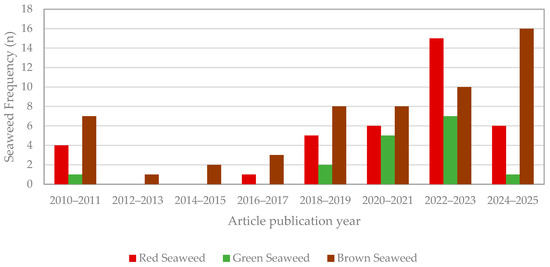
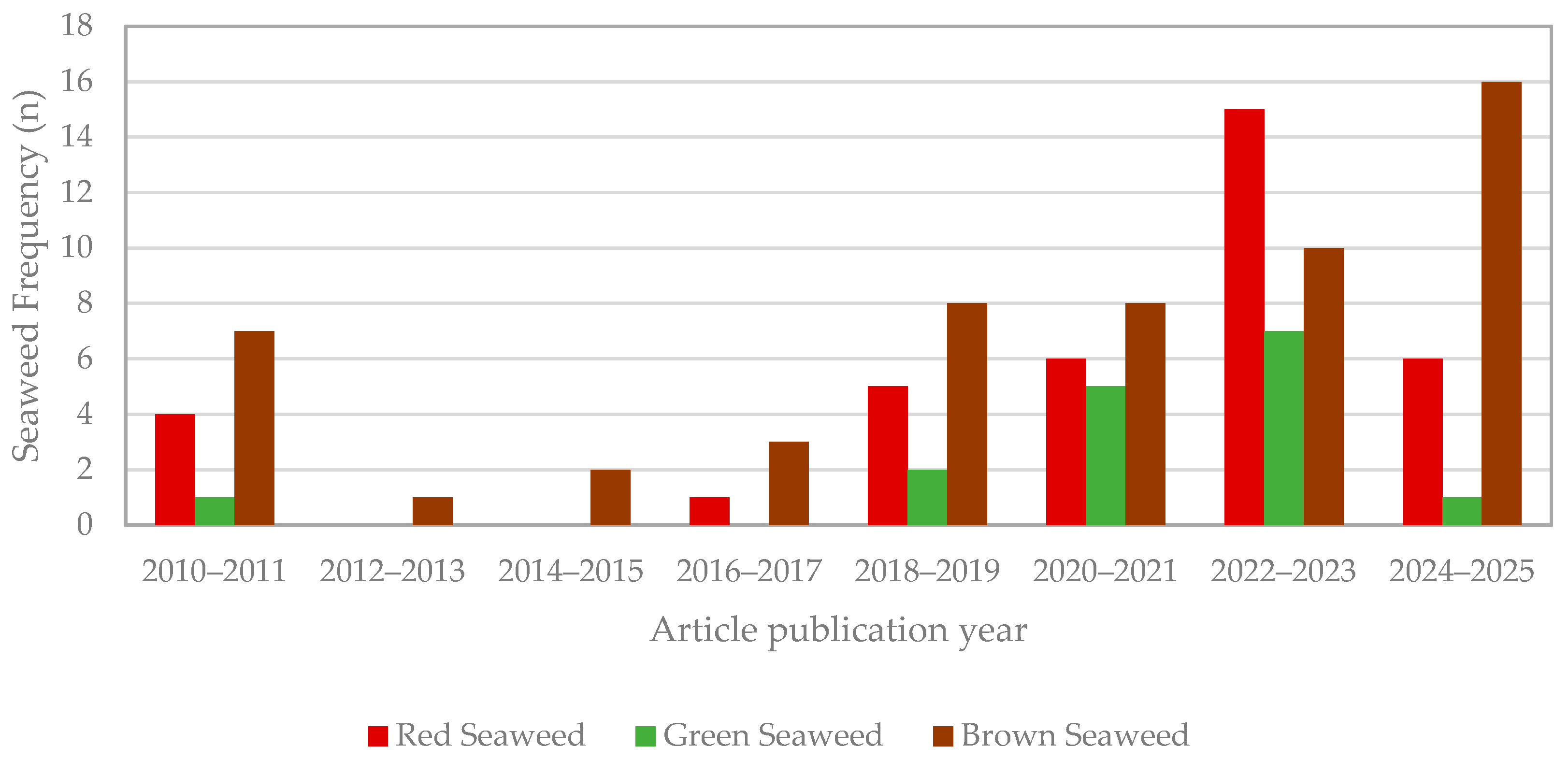
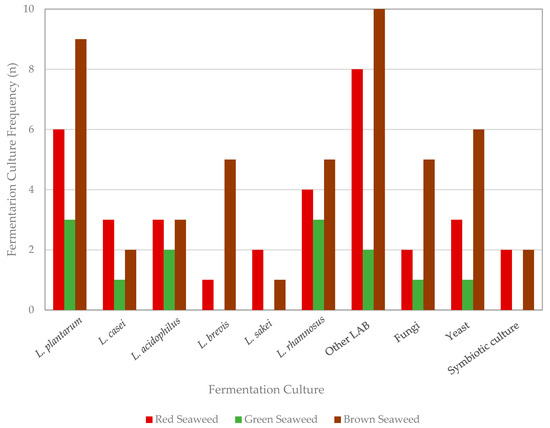
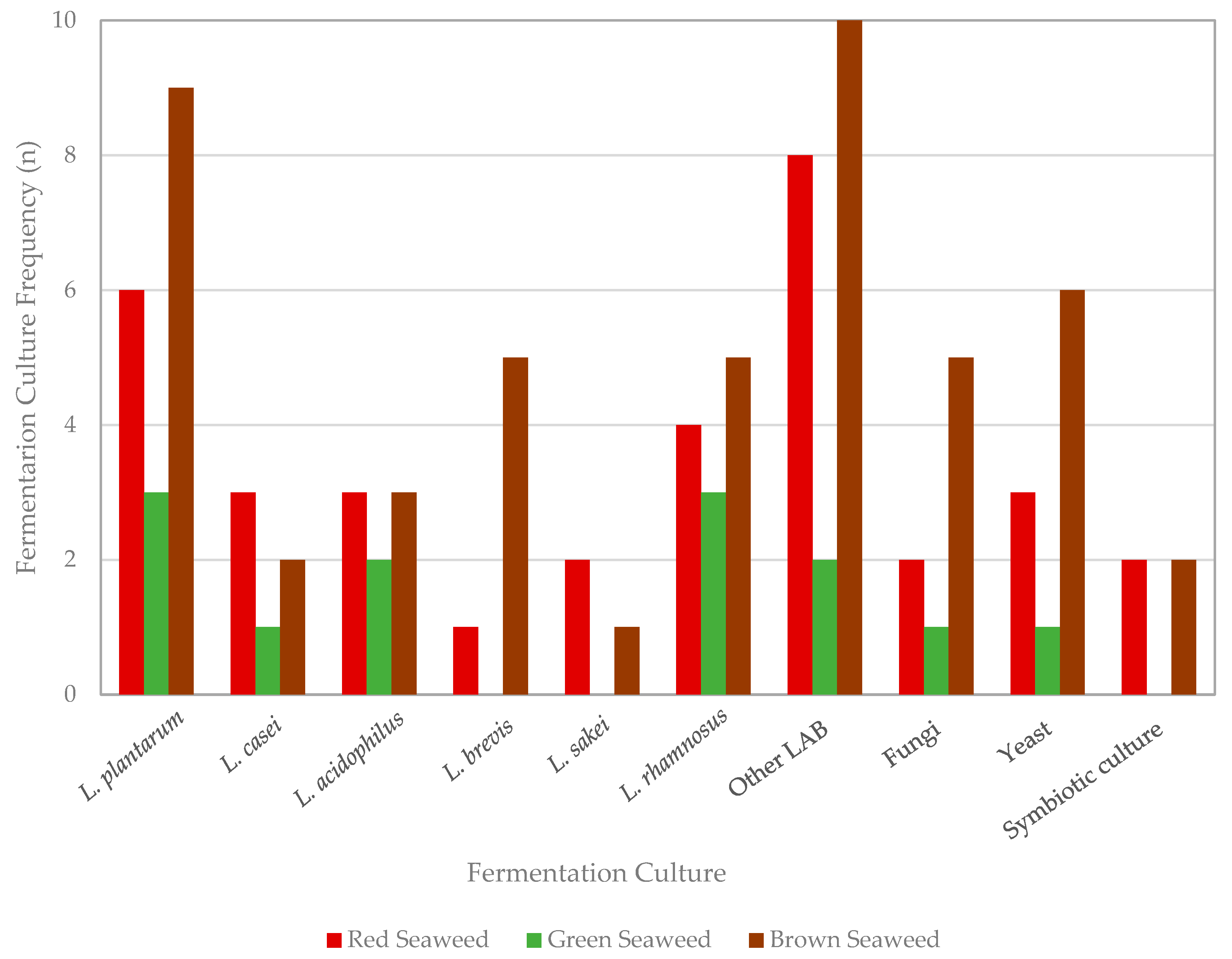

Disclaimer/Publisher’s Note: The statements, opinions and data contained in all publications are solely those of the individual author(s) and contributor(s) and not of MDPI and/or the editor(s). MDPI and/or the editor(s) disclaim responsibility for any injury to people or property resulting from any ideas, methods, instructions or products referred to in the content. |
© 2026 by the authors. Licensee MDPI, Basel, Switzerland. This article is an open access article distributed under the terms and conditions of the Creative Commons Attribution (CC BY) license.