


Abstract
Early-stage architectural design is characterized by high decision uncertainty, ill-defined requirements, and limited opportunities to elicit reliable user feedback, despite the disproportionate impact of early decisions on downstream outcomes. While recent AI-enabled design tools increasingly support generative exploration and performance-driven optimization, they largely rely on static models trained on aggregated data, thereby producing “average-user” responses that fail to capture pronounced inter-individual variation in architectural preferences. This conceptual framework paper, developed through critical narrative synthesis of interdisciplinary literature, argues that meta-learning—i.e., learning-to-learn—offers a conceptually appropriate mechanism to address this personalization gap by enabling rapid adaptation to a new user’s preference structure from limited interactions, while leveraging transferable knowledge learned across many users. Drawing on a structured, PRISMA-informed literature identification process complemented by purposive theoretical sampling across user-centered design traditions in architecture, computational preference-elicitation methods, and contemporary meta-learning research, the paper develops a theoretically grounded conceptual framework for adaptive user preference modeling in early-stage design workflows. The framework articulates four interdependent constructs—(1) Preference Representation, (2) Adaptation Engine, (3) Design Space Navigator, and (4) Feedback Loop—describing how iterative preference refinement can co-evolve with design-space exploration without displacing architectural agency. An illustrative application scenario is also presented to demonstrate the operational logic of the framework in a realistic early-stage design context. The paper further formulates a set of testable propositions and evaluation pathways to guide future empirical investigation, alongside a discussion of implications for practice and education and key ethical considerations (bias, privacy, and digital equity). The proposed framework provides conceptual scaffolding for developing AI-augmented, user-responsive design systems that are aligned with the epistemic conditions of early-stage architectural design.
1. Introduction
Architectural design is fundamentally concerned with creating spaces that meaningfully accommodate human inhabitation. The importance of integrating user preferences into the design process has long been recognized within architectural theory and practice, as buildings profoundly influence the experiences, well-being, and productivity of their occupants [1]. However, achieving genuine user-centered design remains challenging, particularly because users’ preferences are heterogeneous, often tacit, and difficult to systematically incorporate into design decisions [1]. This challenge intensifies during the early stages of design, where foundational decisions about spatial configuration, form, and program carry disproportionate influence over a project’s trajectory, yet where uncertainty about user needs is at its peak [2].
The integration of artificial intelligence into architectural practice has accelerated markedly, offering new possibilities for creative exploration and decision support. Comprehensive reviews document how diverse AI techniques—from evolutionary computing to transformer models—are being deployed across the design process [3,4,5,6]. Vissers-Similon et al. [3] demonstrate that evolutionary computing and transformer models hold significant potential for early design stages, while Li et al. [4] emphasize AI’s capacity to enhance design efficiency. These developments signal a transformation extending beyond automation toward genuine augmentation of design thinking.
Early-stage architectural design presents a distinctive epistemological condition: unlike subsequent stages where requirements crystallize into specifications, the conceptual phase is characterized by ill-defined problem spaces [5]. As Eastman [2] observes, early concept designs are “hugely important in determining the eventual success and impact of a project.” The design process involves interactive thinking where problems and solutions co-evolve [7], and user preferences are dynamic constructs that emerge through engagement with design possibilities [8].
Despite proliferating AI applications in architecture, a significant gap persists: the capacity for systems to meaningfully personalize responses to individual user preferences. Current AI-based design tools operate on static models trained on aggregated data, optimizing for “average” preferences [9,10]. Research demonstrates that users exhibit highly individualized reactions that generic models fail to capture [9], while neural network approaches learn fixed mappings that do not account for individual variation [10,11]. This “personalization gap” represents a fundamental tension between contemporary machine learning and the individualized nature of architectural inhabitation [12,13].
This paper proposes that meta-learning—“learning to learn”—offers a conceptually well-aligned approach to bridging this personalization gap. Meta-learning enables faster adaptation and generalization to new situations with scarce data [14,15], allowing systems to adapt rapidly to new users from minimal examples [16]. This capacity for few-shot adaptation has been demonstrated in personalized aesthetics assessment [17]. The alignment between these capabilities and early architectural design conditions—limited feedback opportunities, heterogeneous user populations, and the need for responsive computational support—suggests meta-learning as an underexplored yet promising mechanism for adaptive personalization in architecture.
The contribution of this paper is a conceptual framework that articulates how meta-learning mechanisms might be integrated into early-stage architectural design workflows to enable adaptive user preference modeling. This framework is developed through critical synthesis of three knowledge domains: user-centered design traditions within architecture [1,7], computational approaches to preference elicitation and design exploration [8,12,13], and recent advances in meta-learning for personalization tasks [14,16,17]. Rather than presenting empirical validation or technical implementation, the paper offers a theoretically grounded architecture for thinking about adaptive personalization in design—one that positions the user not as a source of fixed requirements but as an evolving participant whose preferences co-develop with the design itself [1,5].
It is important to situate the methodological character of this contribution explicitly. This paper is a conceptual framework paper in the tradition of theory-building scholarship, developed through critical narrative synthesis of interdisciplinary literature spanning architectural design theory, computational preference modeling, and meta-learning research. The paper’s contribution is theoretical: it identifies a conceptual gap, integrates knowledge across previously disconnected domains, and proposes a coherent framework articulating constructs, relationships, and testable propositions for future empirical investigation. The paper does not claim to present a systematic review, nor does it offer empirical validation or technical implementation of the proposed constructs. Rather, it fulfills the scholarly function that conceptual frameworks serve in emerging interdisciplinary fields: providing the integrative theoretical scaffolding that precedes and guides empirical research programs. The literature base was assembled through a structured, PRISMA-informed identification process for domain-specific meta-learning research, complemented by purposive theoretical sampling across the three contributing knowledge domains—an approach consistent with theory-building methodology in design research, where the objective is comprehensive conceptual coverage rather than exhaustive empirical enumeration (see Section Methodological Approach for methodological details). To enhance the operational interpretability of the proposed framework, the paper also includes an illustrative scenario demonstrating how the framework functions within a realistic early-stage architectural design context.
The paper proceeds as follows. Section Methodological Approach describes the methodological approach employed for literature identification and synthesis. Section 2 establishes the theoretical foundations by tracing the evolution of user-centered design in architecture, surveying the computational design landscape, and examining methods of preference elicitation from participation to personalization. Section 3 characterizes the early-stage design challenge, reviewing current approaches to preference integration and identifying the personalization gap as the central problem motivating this work. Section 4 introduces meta-learning as an adaptive mechanism, explaining why conventional static AI models fall short and how learning-to-learn paradigms offer relevant capabilities. Section 5 presents the conceptual framework itself, defining its constructs, workflow dynamics, architectural implications, an illustrative scenario demonstrating operational logic, and propositions for future evaluation. Section 6 discusses theoretical contributions, implications for practice and education, ethical considerations, and limitations. Section 7 concludes with a synthesis of the argument and its significance for architecture in the digital age.
Methodological Approach
The development of this conceptual framework required a structured yet flexible approach to literature identification and synthesis, appropriate to the theory-building objectives of the study. Rather than following a single-protocol systematic review—which would presuppose a well-defined empirical question within a single disciplinary domain—this paper employs a critical narrative synthesis across three intersecting knowledge areas: (1) user-centered design traditions in architecture, (2) computational approaches to preference modeling and design exploration, and (3) meta-learning and few-shot adaptation research in artificial intelligence.
Literature identification proceeded through two complementary strategies. First, a PRISMA-informed exploratory search was conducted across Scopus and Web of Science using structured Boolean queries combining meta-learning terminology (e.g., “meta-learning,” “few-shot learning,” “learning-to-learn,” “MAML”) with architectural design terms (e.g., “architectural design,” “early design,” “conceptual design,” “building performance”). This search, covering the period 2020–2026, identified the current empirical landscape of meta-learning applications in built-environment domains, confirming both the emerging relevance of meta-learning to architectural contexts and the absence of existing frameworks for adaptive user preference modeling in early-stage design. Second, purposive theoretical sampling was employed to identify foundational and seminal contributions within each of the three contributing domains. This involved targeted searches within domain-specific databases, iterative citation chaining from key works, and expert-informed identification of canonical references in architectural design theory, preference elicitation methodology, and meta-learning research.
The synthesis followed an integrative logic characteristic of theory-building scholarship: identifying convergent themes, conceptual correspondences, and complementary insights across domains that, when brought into dialogue, reveal opportunities for novel theoretical integration. The resulting framework is thus grounded in a literature base that is deliberately broader than any single search protocol would yield, reflecting the interdisciplinary scope of the contribution. This approach is consistent with established methodology for conceptual framework development in design research, where the objective is to achieve comprehensive theoretical coverage across contributing disciplines rather than exhaustive enumeration of empirical studies within a single domain. In rapidly evolving fields such as meta-learning, carefully selected recent contributions were considered when they offered essential insights not yet fully reflected in the peer-reviewed literature, though preference was given to peer-reviewed sources wherever suitable alternatives were available.
2. Theoretical Foundations
2.1. User-Centered Design in Architecture
User-centered design (UCD) in architecture has evolved from participatory design movements to contemporary personalization paradigms, reflecting recognition that the built environment profoundly shapes human experience [1]. Researchers have developed increasingly sophisticated methods for incorporating user perspectives into design.
Mahmoodi [7] situates the design process within interactive thinking, where cognitive modes integrate with stages of understanding, idealizing, and presenting. Successful outcomes emerge through iterative engagement between designers and users, with understanding co-developing through structured exploration [7].
Contemporary implementations have embraced technological mediation for preference elicitation. Ma et al. [1] demonstrate how immersive virtual reality (IVR) and discrete choice modeling (DCM) can be integrated within end-user-engaged processes, generating systematic variations and identifying preferences through design choice simulations, enabling quantitatively informed decisions that accommodate heterogeneous preferences [1]. This addresses the difficulty of capturing reliable feedback on unbuilt designs.
Affective computing represents further evolution in user-centered approaches. Farrag et al. [18] introduce emotionally responsive environments through their AiMotional Ecosystems framework, detecting and analyzing human emotional states using eye tracking, facial expression analysis, and biometric sensing [18]. Such approaches extend user-centeredness toward dynamic adaptation to occupants’ affective states.
The trajectory from participatory design to personalization reflects shifts in conceptualizing the user. Early approaches emphasized collective engagement, treating user groups as homogeneous constituencies. Contemporary paradigms acknowledge fundamental heterogeneity and seek mechanisms for accommodating individual variation [1].
2.2. Computational Design and the Evolution of Digital Tools
Computational tools have transformed architectural design while revealing persistent limitations in engaging with user preferences. Each generation of digital tools has reshaped possibilities in ways that both enable and constrain user-responsive approaches [5,6].
Castro Pena et al. [5] note that conceptual design presents distinctive challenges, characterized by ill-defined problem spaces where requirements are not yet articulated. AI applications should orient toward exploration rather than optimization within predetermined search spaces [5]. If requirements emerge through design, computational tools must support preference discovery rather than optimizing against fixed criteria.
As et al. [19] present research on deep neural networks that extract design building blocks and recombine them into new designs. Unlike rule-based approaches like shape grammars, deep learning systems discover patterns directly from data [19], holding potential for identifying latent preferences, though current implementations focus on formal criteria rather than user preference modeling.
Newton [20] surveys GANs in architectural design, demonstrating their capacity to synthesize new designs through learning from examples. The unsupervised nature of GAN training offers promise for applications where qualitative knowledge is difficult to formalize, though their application to user preference modeling remains largely unexplored [20].
Li et al. [6] review generative AI models across architectural design steps, noting significant lag between AI advancement and adoption in practice, partly due to algorithmic complexity [6]. The most powerful tools often operate as black boxes whose outputs do not transparently reflect user preferences. Figure 1 illustrates the timeline of computational design tools and user engagement modalities in architecture.
Figure 1.
Timeline of Computational Design Tools and User Engagement Modalities in Architecture. The dashed diagonal arrow indicates the increasing trajectory of computational capability across successive generations of computational design tools; the upward arrow beside “Computational Capability” denotes the increase in this capability over time. The horizontal arrow indicates the comparatively lagging progression of personalization.
Despite their generative capabilities, current computational design tools exhibit significant limitations in accommodating individualized user input at early design stages. Most tools operate on predetermined performance metrics or learned patterns from existing designs, without mechanisms for incorporating real-time user feedback or adapting to individual preference variations [5,6]. The challenge is not merely technical but conceptual: prevailing computational paradigms assume relatively stable optimization targets, whereas user preferences in architectural contexts are often dynamic, context-dependent, and emergent through engagement with design possibilities.
As a result, existing approaches remain limited in their ability to adapt to individual user preferences in real time, reinforcing the personalization gap identified in Section 1.
2.3. Preference Elicitation: From Participation to Personalization
Research in human–computer interaction and image aesthetics provides theoretical vocabulary for preference elicitation in design contexts. The distinction between explicit and implicit preferences, and between generic and personalized assessment, offers frameworks applicable to architectural preference modeling [12,13].
Yang et al. [12] address the challenge of personalized image aesthetics assessment (PIAA), which they distinguish from generic image aesthetics assessment (GIAA). While GIAA treats the mean opinion score across multiple raters as ground truth, this approach merely reflects an average opinion that neglects the highly subjective nature of aesthetic tastes [12]. The PARA database they introduce annotates images with both objective image attributes (composition, color, lighting) and subjective human-oriented attributes (content preference, emotion, difficulty of judgment, willingness to share), along with desensitized subject information including personality traits [12]. This multi-dimensional annotation framework acknowledges that personalized aesthetic preferences emerge from complex interactions between image characteristics and individual user attributes.
Zhu et al. [13] propose multi-attribute interactive reasoning for personalized aesthetics, observing that existing models inadequately capture the mutual influence between image and user attributes. Their framework constructs relationships between subjective and objective attributes [13], suggesting that architectural preference modeling must attend to both design attributes and user characteristics.
Tu [21] presents methodology for analyzing affective responses to virtual spaces using wearable sensors including EEG, galvanic skin response, and heart rate monitoring. Experiments demonstrated correlations between physiological data and spatial parameters [21], offering potential for capturing implicit preference signals that users may not consciously articulate. Table 1 compares participation-based and personalization-based approaches to user engagement in design.
Table 1.
Comparison of Participation-Based vs. Personalization-Based Approaches to User Engagement in Design.
Table 1 highlights the fundamental shift from collective, participation-based approaches toward individualized, personalization-based models. This transition underscores the limitations of aggregated preference representations and reinforces the need for adaptive mechanisms capable of capturing inter-individual variability—an essential requirement for early-stage architectural design.
The transition from participation to personalization in preference elicitation reflects evolving understanding of user diversity and the limitations of aggregated preference models. Traditional participatory approaches treated user groups as relatively uniform constituencies whose collective input could guide design decisions. Contemporary personalization paradigms recognize that aesthetic and functional preferences vary substantially across individuals and that this variation cannot be adequately captured through averaging mechanisms [12,13]. The challenge for architectural applications lies in developing preference elicitation methods that respect individual variation while remaining practically feasible within design workflows where extensive data collection from each user is neither possible nor desirable.
The theoretical vocabulary from preference elicitation research provides conceptual foundations for this framework. Explicit preferences are directly articulated; implicit preferences manifest through choices and physiological responses [12,21]. This distinction is relevant for early-stage design, where users may not have well-formed opinions and implicit signals may reveal preferences not yet available to conscious reflection.
Together, these three strands of literature—user-centered design, computational design, and preference elicitation—establish the theoretical foundation for the proposed framework, highlighting both the potential and the limitations of current approaches and motivating the need for adaptive, meta-learning-based personalization mechanisms in early-stage architectural design.
3. The Early-Stage Design Challenge
3.1. Decision Uncertainty and Design Space Complexity
Early stages of architectural design present a distinctive epistemological condition characterized by ill-defined problem spaces [5]. Eastman [2] observes that early concept designs are “hugely important in determining the eventual success and impact of a project,” noting that later development “can only partially ameliorate a bad one.” This asymmetry establishes the conceptual phase as a critical juncture.
Concept design has remained largely a mental exercise based on tacit knowledge and accumulated expertise [2], posing challenges for systematic preference integration. El-Attar [22] characterizes architectural design problems as inherently complex and undefined, exhibiting interdependencies that emerge through the design process itself [22].
The complexity of early-stage decisions derives from multiple factors: the combinatorially vast design space, multiple and often conflicting evaluation criteria, and non-linear relationships between design decisions and user experience consequences [2,22].
This inherent complexity creates what might be termed “decision uncertainty”—a condition in which designers must make consequential choices without complete information about user needs, contextual factors, or the experiential implications of their decisions. Traditional design education addresses this uncertainty through the cultivation of design judgment: an integrated capacity for holistic assessment developed through exposure to exemplary precedents, critical reflection on completed projects, and iterative refinement of design intuitions over years of practice [22]. However, such expertise remains difficult to formalize, transfer, or augment computationally, creating barriers to systematic integration of user preferences in early design stages.
3.2. Current Approaches to Preference Integration
Integrating user preferences has prompted diverse responses, from participatory approaches to computational techniques. A persistent tension exists between depth of preference capture and practical workflow constraints [1,8]. Current approaches range from participation-based methods to emerging personalization strategies.
Sönmez [8] reviews example-based computational design, noting that designers navigate complexity through co-evolution of problems and solutions [8]. User preferences are emergent constructs that develop through engagement with possibilities, not static inputs to be optimized against. Designers employ heuristics and precedents while engaging in dynamic framing [8].
Cho et al. [23] demonstrate how EEG combined with event-related potential analysis can capture unconscious emotional responses to architectural stimuli. Their CNN-LSTM approach achieved high accuracy in classifying affective responses, suggesting real-time objective measures can inform early-stage design [23], addressing the difficulty users experience in articulating preferences for unfamiliar configurations.
Hartanto et al. [24] combine eye-tracking and EEG with computational aesthetics, demonstrating correlations between biometric engagement indicators and aesthetic preferences [24]. Such approaches capture implicit preference signals through physiological responses, revealing preferences not yet available to verbal articulation.
Computational approaches to aesthetic evaluation have similarly evolved toward greater sophistication. Zhang and Ban [25] present a framework for automatic aesthetic evaluation of interior design based on visual features, combining low-level visual features, rule-based features, human visual system features, and high-level aesthetic features to predict aesthetic quality. However, they acknowledge a fundamental challenge: “there is no unified, definite and objective evaluation standard for the evaluation of image aesthetics” because aesthetic responses involve both subjective factors (educational background, aesthetic experience, cultural region, personal preferences) and diverse objective factors [25]. This recognition of inherent subjectivity in aesthetic judgment motivates approaches that accommodate individual variation rather than seeking universal standards. Table 2 demonstrates that while participation-based, neuroscientific, and computational approaches each offer valuable insights into user preferences, none provides a comprehensive, scalable, and adaptive solution capable of addressing individual variation in early-stage design contexts.
Table 2.
Comparison of Current Preference Integration Approaches: Participation-Based vs. Neuroscientific vs. Computational Methods.
3.3. The Personalization Gap in Existing AI-Based Design Tools
Despite proliferating AI applications, a significant gap persists: the capacity for systems to personalize responses to individual user preferences. Current tools operate on static models trained on aggregated data without mechanisms for adapting to individual variation [5,6]. This “personalization gap” represents a fundamental tension between machine learning statistics and individualized architectural inhabitation.
Zhang et al. [9] investigated AI’s ability to evoke emotional responses through architectural imagery, finding architecture students exhibited greater sensitivity to emotional nuances than non-architecture students. This demonstrates that emotional interpretation is shaped by training, suggesting generic models cannot capture individual variation [9]. AI struggled to convey negative emotions, indicating gaps with implications for preference modeling.
Phelan et al. [10] describe predicting meeting room utilization using neural networks trained on data from 56 office buildings, outperforming human designers [10]. However, this exemplifies static mapping: learning fixed relationships without mechanisms for individual variation, optimizing for average rather than personalized response.
Wu and Liu [11] demonstrate neural networks for site analysis, with models effectively encoding aggregated design expertise [11]. Yet this represents compiled knowledge rather than adaptive responsiveness to individual user characteristics.
The personalization gap in existing AI design tools can be understood through three interrelated dimensions. First, most current systems employ what might be termed “one-size-fits-all” models: trained once on aggregated data and applied uniformly to all users regardless of individual differences in aesthetic preferences, functional requirements, or experiential histories [12,13]. Second, these systems typically lack mechanisms for incorporating user feedback during the design process itself; they cannot learn from an individual user’s responses to design proposals and adapt their subsequent suggestions accordingly. Third, even systems that do collect user input often aggregate this input across users, treating individual responses as noisy samples from a population distribution rather than as signals of meaningful individual variation [9]. As shown in Figure 2, current AI systems apply uniform models across users, while actual user preferences exhibit significant inter-individual variation, highlighting the mismatch that defines the personalization gap.
Figure 2.
The Personalization Gap: Illustration of How Current AI Tools Apply Uniform Models While User Preferences Exhibit Individual Variation. In the ideal adaptive system, the arrows indicate adaptive outputs tailored to each user, while the white circles represent individual users or user-specific preference profiles.
This gap is particularly consequential for early-stage design, where exploratory processes create opportunities for preference discovery that static models cannot support. If preferences co-evolve with design proposals [8], tools that cannot adapt miss essential information. The challenge is developing approaches supporting dynamic preference formation—learning from limited feedback and adapting accordingly. Additionally, this gap highlights the need for adaptive learning mechanisms capable of rapidly incorporating limited user-specific feedback while leveraging transferable knowledge across users, motivating the exploration of meta-learning approaches in the subsequent section.
4. Meta-Learning as an Adaptive Mechanism
4.1. From Static Models to Learning-to-Learn
Current AI applications rely on static models that cannot adapt to individual variation. Meta-learning addresses this by shifting from learning specific tasks to learning how to learn—acquiring transferable knowledge enabling rapid adaptation with minimal information. Understanding this shift is essential for bridging the personalization gap in early-stage design.
Conventional machine learning operates through task-specific optimization: models train on datasets, learning fixed parameters [14]. This succeeds for well-defined problems with abundant data but encounters difficulties with inherent preference variability, where each user potentially represents a distinct distribution that cannot be captured by a static model.
Static model limitations become apparent in “preference heterogeneity”—where users respond differently to identical configurations based on individual histories. A model trained on aggregated data learns an averaged response that may not represent any individual. As Bahranifard and Ghaffari [26] observe, deep learning requires large datasets, creating mismatch with contexts where extensive individual data is impractical.
Meta-learning represents a fundamentally different approach [14,26]. Rather than optimizing for a single task, it optimizes the learning process itself, identifying inductive biases that transfer across tasks [14]. Operating at task and meta levels, this hierarchical structure enables systems to approach new tasks with accumulated knowledge, requiring far fewer examples for competent performance.
The distinction can be understood through expertise development: a designer evaluating thousands of configurations develops intuitions and frameworks transferring to novel situations. Similarly, meta-learning systems learn how preferences are structured and how to extract preference-relevant information from limited feedback, enabling rapid adaptation to new users [14,26].
Bahranifard and Ghaffari [26] distinguish between metric-based methods (learning similarity functions), model-based methods (task-specific adaptation mechanisms), and optimization-based methods (efficient parameter updates). For architectural preference modeling, these approaches offer complementary possibilities for capturing individual responses while retaining distinctive characteristics. As illustrated in Figure 3, meta-learning differs fundamentally from static learning by enabling rapid adaptation to new users through transferable knowledge acquired across tasks.
Figure 3.
Conceptual Comparison: Static Learning vs. Meta-Learning Paradigms for User Preference Modeling. The arrows indicate the direction of the learning and adaptation process, showing how static learning produces generic outputs from aggregated data, whereas meta-learning transfers knowledge across tasks/users and rapidly adapts to a new user from limited examples to generate personalized outputs.
The transition to learning-to-learn frameworks has profound implications. Meta-learning treats preferences as emergent phenomena requiring ongoing adaptation, aligning with design dynamics where preferences evolve through engagement rather than existing fully formed [8]. A meta-learning approach would support the co-evolutionary process through which preferences and proposals mutually inform each other.
4.2. Few-Shot Learning in Architectural Design Contexts
Few-shot learning addresses enabling systems to perform on new tasks with small numbers of examples. This is directly relevant to architectural preference modeling, where workflow constraints limit preference elicitation. Understanding few-shot adaptation provides foundations for learning preferences from minimal feedback.
Few-shot learning is formalized as N-way K-shot classification: distinguishing N categories from K examples each [15,27]. In architecture, categories might represent preference dimensions and examples a user’s responses to design alternatives. The challenge is inferring stable patterns from sparse observations.
Finn et al. [16] introduced Model-Agnostic Meta-Learning (MAML), training parameters such that small gradient steps with limited data produce good generalization. MAML learns an initialization from which task-specific adaptation proceeds efficiently—the initialization places models where loss landscapes of related tasks align [16].
Translating MAML to architectural preferences: a system trains across many users, learning an initialization from which individual preferences can be efficiently approximated with minimal feedback. User responses to alternatives provide gradient signals for adaptation, dependent on meta-training having captured general principles of preference organization [16].
Gharoun et al. [15] survey few-shot methods: metric-based, memory-based, and optimization-based learning. Metric-based approaches learn embeddings where similarity corresponds to category membership. For architecture, this suggests learning representations where proximity corresponds to evaluation similarity—enabling preference inference through comparison to rated examples.
He et al. [27] note few-shot methods must extract sufficient information from limited examples. Strategies include better feature representations, data augmentation, and leveraging external knowledge [27]. For architecture: improved extraction discerns preference-relevant qualities; augmentation expands training sets; knowledge integration connects sparse feedback to broader understandings.
Episodic training involves many episodes simulating few-shot scenarios: small support sets and query sets [15,27]. Training across thousands of episodes develops generalizable strategies. For architecture, this involves sampling different users and alternatives, developing strategies for inferring preferences from limited observations.
Architecture introduces specific considerations: unlike discrete classification, preferences involve continuous dimensions, contextual dependencies, and ambiguity. Few-shot frameworks require extension for the graded, contextual, and multidimensional character of architectural preferences [15,27]. Table 3 demonstrates how core few-shot learning principles can be meaningfully translated into architectural design contexts, highlighting the feasibility of adapting machine learning concepts to preference-driven design processes.
Table 3.
Few-Shot Learning Approaches and Their Potential Architectural Applications.
4.3. Suitability of Meta-Learning for Architectural Preference Modeling
This section synthesizes arguments for why meta-learning approaches are well-suited to architectural preference modeling. The alignment between meta-learning capabilities and design requirements suggests a conceptually appropriate match between paradigm and domain.
The personalization challenge exhibits precisely the structure meta-learning addresses: related but distinct tasks (individual preferences) with limited data but shared regularities. Zhu et al. [17] demonstrate this in personalized aesthetics assessment, treating each user’s preferences as a distinct task using bilevel gradient optimization [17].
The bilevel structure of Zhu et al. [17] provides an instructive model: outer level optimizes for adaptability across users; inner level adapts to individuals. This captures an important intuition: while individuals differ, general principles about preference structure exist [17].
Finn and Levine [28] provide theoretical grounding: deep representations with gradient descent can approximate any learning algorithm. This suggests that if learnable patterns exist in preference-spatial relationships, meta-learning can capture them [28].
The characteristics of early-stage architectural design create particular affordances for meta-learning approaches. As established in Section 3, early design phases involve exploration of possibilities rather than optimization of fixed requirements; preferences emerge and evolve through engagement with alternatives; and designers must make consequential decisions under uncertainty about user responses. Meta-learning frameworks that support ongoing adaptation align naturally with this dynamic context. Unlike static models that assume preferences exist to be discovered, meta-learning systems can participate in the co-evolutionary process through which preferences and design proposals mutually inform each other—updating their understanding of user preferences as the design process unfolds [16,28].
Elsken et al. [29] demonstrate that model architectures can be meta-learned for rapid adaptation. This implies that rather than assuming fixed structure, systems might adapt representational structure to different preference organizations—functional, aesthetic, social, or environmental [29].
Meta-learning relaxes traditional machine learning’s assumption of same-distribution training and test data. By designing for distribution shift, systems train across task distributions to prepare for new tasks. This matches architecture, where each user represents a new task from the preference distribution [14,15].
Meta-learning frameworks offer: graceful scaling with available data; principled uncertainty maintenance; iterative refinement during design; separation of offline general learning from online individual learning [14,17,28]. Figure 4 clarifies the relationship between population-level learning, where generalizable knowledge is acquired across users, and individual-level adaptation, where user-specific preferences are refined through limited feedback.
Figure 4.
Meta-Learning Framework for Architectural Preference Modeling: Relationship Between Population-Level Training and Individual-Level Adaptation. The dotted outline indicates the population-level meta-training boundary, within which shared preference patterns are learned across multiple users/tasks; the ellipsis (…) denotes additional users/tasks beyond the examples shown. The vertical arrow represents the transfer of meta-learned knowledge from population-level learning to individual-level adaptation for a new user.
Meta-learning offers not merely technical capability, but a conceptual framework aligned with early-stage design conditions. Its emphasis on learning from limited data, adapting to individual variation, and supporting ongoing refinement corresponds to designers’ challenges. These insights provide the theoretical basis for the conceptual framework presented in the following section, which operationalizes meta-learning principles within early-stage architectural design workflows.
5. Conceptual Framework: Adaptive Preference-Guided Design
This section presents the paper’s central contribution: a conceptual framework for adaptive user preference modeling in early-stage architectural design, integrating meta-learning mechanisms to address the personalization gap. The framework articulates conceptual constructs and design logic through which adaptive modeling might inform early-stage exploration—architecturally grounded, theoretically coherent, and operationally suggestive. Figure 5 presents the framework’s constructs and relationships. Each construct receives specific inputs and produces defined outputs: the Preference Representation receives sparse user signals and produces encoded preference vectors; the Adaptation Engine receives encoded preferences and produces an adapted preference model; the Design Space Navigator receives adapted model parameters and generates design alternatives; and the Feedback Loop receives user responses to presented alternatives and produces refinement signals that update the Preference Representation, completing the cycle.
Figure 5.
The Adaptive Preference-Guided Design Framework: Constructs and Relationships.
As shown in Figure 5, the framework operates as a closed-loop system in which user feedback continuously refines preference representations, enabling adaptive and iterative design exploration.
5.1. Framework Constructs and Theoretical Grounding
The framework comprises four interrelated constructs: Preference Representation, Adaptation Engine, Design Space Navigator, and Feedback Loop. Each addresses specific functional requirements while maintaining connections to theoretical foundations. This subsection defines each construct, articulates its grounding, and specifies its functional role.
The Preference Representation construct addresses the fundamental challenge of encoding user preferences in computationally tractable forms while preserving their nuanced, contextual, and evolving character. Drawing on the distinction between explicit and implicit preferences established in Section 2.3, this construct encompasses both articulated user statements and inferred preference patterns derived from user interactions with design alternatives. The theoretical grounding lies in the preference elicitation literature’s recognition that preferences are not static attributes to be extracted but dynamic phenomena that emerge through engagement with possibilities [12,13]. Within meta-learning frameworks, preference representations serve as the task-specific data from which adaptation proceeds—the sparse observations that meta-learned knowledge structures must interpret and respond to [30,31]. The construct must accommodate multiple modalities of preference expression, from verbal descriptions and numerical ratings to implicit behavioral signals such as attention patterns and selection sequences.
The Adaptation Engine embodies meta-learning capabilities for rapid personalization from limited feedback, maintaining structures encoding general preference principles while supporting individual specialization [30,32]. Grounded in optimization-based, metric-based, and model-based approaches [31,32], it must operate under high uncertainty, limited feedback, and co-evolutionary dynamics.
The Design Space Navigator mediates between adapted preferences and generative exploration, supporting exploratory logic rather than optimizing against fixed criteria [33,34]. It generates alternatives probing preference structures while remaining responsive to constraints, incorporating architectural knowledge [35]. It maintains design agency with humans while leveraging AI for expanded exploration.
The Feedback Loop establishes iterative dynamics where user responses continuously refine understanding of preferences, treating each interaction as opportunity for improvement [36,37]. Grounded in design as iterative process [7,33], it supports multiple adaptation temporalities: immediate responses, cumulative refinement, and longer-term preference evolution learning. Table 4 summarizes the framework constructs, their theoretical anchors, and functional roles.
Table 4.
Framework Constructs: Definitions, Theoretical Anchors, and Functional Roles.
As shown, Table 4 highlights the functional differentiation of the framework constructs, demonstrating how each component contributes to a coherent adaptive system that integrates user preferences with design exploration.
These constructs create coherent system logic: meta-learned knowledge interprets sparse feedback, preferences guide alternative generation, responses provide ongoing refinement, and refined preferences inform subsequent generation. This cyclical operation positions adaptation as continuous, responsive, and co-evolutionary.
5.2. Adaptive Workflow and Feedback Dynamics
This subsection describes how constructs operate through iterative feedback cycles enabling progressive refinement. The adaptive workflow specifies interaction modalities, articulating how meta-learning enables personalization through engagement rather than extensive preliminary elicitation.
The workflow initiates when a user engages, providing available initial information—requirements, inclinations, references, or constraints. This need not be comprehensive; adaptive capabilities accommodate sparse or incomplete specifications. The Adaptation Engine receives input alongside meta-learned knowledge, generating an initial adaptation hypothesis informed by general patterns [30,36].
The framework conceptualizes the handling of preference ambiguity—an inherent characteristic of early-stage architectural design—in three complementary ways. First, ambiguity is treated not as noise to be eliminated but as informative signal indicating under-explored preference dimensions that warrant targeted design-space exploration. Second, multidimensional preferences are conceptualized as decomposable into lower-dimensional subspaces that meta-learning can learn to identify, reducing the effective complexity of the adaptation task. Third, the iterative feedback mechanism provides a self-correcting process where initial ambiguity is progressively resolved through targeted exploration across multiple interaction cycles. In conceptual terms, user feedback would function analogously to gradient signals in optimization-based meta-learning or similarity-based updates in metric-based approaches—the precise computational formalization of this translation remains an important challenge for future implementation research.
The Design Space Navigator generates alternatives exploring preference-relevant design space—strategically selected to maximize information gain while maintaining coherence [34,35]. The process identifies likely interest dimensions while probing uncertain aspects, balancing responding to understood preferences with discovering uncaptured aspects.
The user then engages with the generated alternatives, providing feedback through whatever modalities the system supports—explicit ratings, comparative judgments, selection behaviors, verbal commentary, or implicit attention patterns. This feedback constitutes the task-specific data that drives preference model refinement through the meta-learning mechanism. The Feedback Loop processes user responses, extracting preference-relevant signals and converting them into gradient information (in optimization-based approaches) or similarity-based updates (in the sense used in metric-based meta-learning approaches) that refine the adapted preference model [31,37]. Critically, this refinement operates efficiently because meta-learned knowledge structures are optimized for rapid adaptation from limited feedback. The learning-to-learn paradigm enables effective updates from a small number of user responses, although their reliability depends on the quality of prior knowledge, the dimensionality of the preference space, and the consistency of user input. Figure 6 includes a legend distinguishing between user input, system adaptation processes, and generated design outputs.
Figure 6.
Adaptive Workflow Cycle: User-System Interaction and Preference Refinement Loop.
Refined models inform subsequent generation, producing alternatives reflecting updated understanding while exploring uncertain aspects. Through iterations, systems develop accurate models supporting progressive alignment with user needs. The workflow tracks preference changes, distinguishing model refinement from actual preference evolution.
Ma et al. [36] emphasize that multimodal inputs enhance adaptation efficiency. As the framework’s architecture matures, the workflow could potentially integrate verbal responses, selection patterns, attention behaviors, and physiological responses—each conceptualized as a future modality that the framework is designed to accommodate rather than as an assumed component of initial implementation. Meta-learning could weight these signals based on demonstrated predictive value while adapting to individual interaction patterns [36], though each modality carries specific instrumentation requirements and confounding factors that would need dedicated investigation (see Section 6.4).
Temporal dynamics include rapid within-session cycles and longer-term cross-session adaptation. Knowledge structures persist between interactions. The meta-learning mechanism improves with accumulated user experience. Zhao et al. [37] demonstrate rapid architecture adaptation; analogously, the framework adapts both parameters and structural assumptions about preference organization.
5.3. Architectural Implications and Design Agency
Adaptive AI in design workflows raises questions about agency distribution. This subsection examines how the framework affects practice, ensuring its positioning as augmentation is grounded and defensible, addressing concerns about AI displacement while articulating how adaptive modeling might enhance rather than diminish design’s creative and professional dimensions.
Bhatt et al. [33] articulate that AI should manifest understanding of spatial cognition while supporting rather than supplanting human judgment. The framework embraces this, positioning constructs as instruments extending capabilities. It generates alternatives for human evaluation and supports exploration, but does not make design decisions. Agency remains with human participants [33].
For architects, the framework complements professional expertise. Adaptive modeling provides ongoing insight into user responses. The Navigator generates alternatives designers can evaluate and modify. Yiannoudes [34] observes AI works best when integrated into workflows preserving human direction. The framework treats AI outputs as inputs to human processes, not final products [34].
For users, the framework shifts preference articulation from upfront specification to ongoing engagement, enabling preferences to emerge through interaction. Wang et al. [35] emphasize collaboration should prioritize user experience and ensure complexity does not exclude meaningful participation. The framework makes preference expression natural and iterative [35].
The framework’s treatment of design agency can be further understood through consideration of what decisions remain with which participants. Architects retain responsibility for establishing design frameworks, defining appropriate design vocabularies, ensuring functional and regulatory compliance, and exercising professional judgment about design quality. Users retain responsibility for evaluating design alternatives according to their own values and preferences, providing feedback that guides adaptation, and ultimately approving design directions for further development. The AI system operates within the boundaries established by architects, generating alternatives that respect professional design constraints while exploring user-preference-relevant variations. This distribution preserves the essential professional and personal dimensions of architectural design while leveraging AI capabilities for enhanced personalization and exploration.
Critical perspectives raise legitimate concerns about bias, homogenization, and craft erosion [35]. Meta-learning embodies patterns potentially not representing all users equally. Deployment requires attention to representation in training, response to divergent preferences, and identification of biases—persistent considerations requiring continued vigilance.
The proposed framework could conceptually interface with existing architectural software ecosystems at multiple points. Parametric modeling environments such as Grasshopper within Rhino provide natural integration points for the Design Space Navigator, where preference-guided exploration could drive parametric variation and design alternative generation. Performance simulation toolchains (e.g., Ladybug Tools for environmental analysis) could supply objective performance feedback that complements subjective user preferences within the Feedback Loop construct. BIM-based workflows offer structured design data representations that could support the Preference Representation construct’s encoding of multi-dimensional design attributes. While specific technical implementation details remain beyond the scope of this conceptual paper, these alignment points suggest that the framework’s constructs are compatible with existing design practice infrastructure, facilitating potential future integration without requiring wholesale workflow transformation.
Several potential tensions and failure modes within the framework merit acknowledgment. First, a trade-off exists between the Preference Representation and Adaptation Engine constructs: richly encoded multi-modal preference representations may exceed the Adaptation Engine’s capacity for rapid few-shot adaptation, creating tension between representational fidelity and adaptation speed. Second, aggressive design-space exploration by the Design Space Navigator—generating highly diverse alternatives to maximize information gain—may confuse or fatigue users, degrading feedback quality and undermining the Feedback Loop’s refinement function. Third, a cold-start failure scenario arises when meta-learned knowledge structures produce poor initial adaptations for users whose preferences fall outside the distribution of training users, potentially requiring fallback mechanisms or human designer intervention. Fourth, the challenge of distinguishing genuine preference evolution from noisy or inconsistent feedback (preference drift versus model stability) could cause the Adaptation Engine to oscillate rather than converge. These failure scenarios suggest that robust implementations would need to incorporate safeguards such as confidence thresholds, fallback protocols, and transparency mechanisms that communicate uncertainty to both users and designers.
5.4. Framework Propositions and Evaluation Pathways
A framework’s value lies partly in generating testable propositions that translate theoretical claims into empirically investigable predictions. This subsection articulates such propositions, specifying expected relationships and predicted outcomes as hypotheses for future research. These propositions are explicitly speculative in the sense that they have not been empirically tested; they constitute a research agenda intended to guide the development from conceptual contribution to validated methodology. The proposed framework is conceptually differentiated from existing static and rule-based approaches through its adaptive, user-specific learning capabilities.
Proposition 1.
Meta-learning-based adaptation will achieve accurate preference modeling with significantly fewer interactions than non-adaptive approaches. Evaluation would compare accuracy across conditions, measuring interactions required for thresholds [38]. Meta-learning should demonstrate superior sample efficiency in sparse-data conditions.
Proposition 2.
Iterative feedback cycles will outperform one-shot elicitation. Evaluation would compare outcomes and satisfaction across feedback structures, measuring whether iterative adaptation produces preferred designs [7,21].
Proposition 3.
Framework-supported design exploration will produce outcomes rated more favorably by users than exploration without adaptive preference guidance. This proposition addresses the framework’s ultimate practical value, predicting that its adaptive mechanisms will improve design outcomes from users’ perspectives. Evaluation would compare user satisfaction, preference alignment, and design quality assessments across framework-supported and control conditions. Li et al. [39] demonstrate evaluation approaches for AI-aided architectural design that could inform such assessments, though adaptation for preference-focused evaluation would be required. The proposition acknowledges that demonstration of practical value is essential for framework adoption in professional contexts.
Proposition 4.
The framework will maintain or enhance user sense of agency compared to non-adaptive tools. Evaluation would employ measures of perceived agency and participation across conditions, reflecting commitment to human-centered principles [33,35]. Table 5 demonstrates how the proposed framework translates into empirically testable propositions, linking theoretical claims with practical evaluation strategies.
Table 5.
Framework Propositions and Corresponding Evaluation Strategies.
Methodological pathways include: design experiments implementing prototypes at varying sophistication; user studies assessing experiences and satisfaction; computational simulations exploring dynamics under varied parameters [38]. Open-source evaluation infrastructure would support cumulative research progress.
These propositions constitute a research agenda. Advancing from conceptual framework to validated methodology requires empirical investigation, construct refinement, and iterative development. The framework provides conceptual scaffolding while acknowledging that practical value remains to be demonstrated.
5.5. Illustrative Scenario: Applying the Framework to Early-Stage Residential Design
To enhance the practical interpretability of the proposed framework, this section presents an illustrative application scenario demonstrating how the framework operates in a realistic early-stage architectural design context. This scenario is intended as an illustrative conceptual demonstration rather than an empirical validation, designed to enhance the operational clarity and interpretability of the proposed framework.
Consider a scenario in which an architect is designing a two-bedroom apartment for a young couple. In the initial interaction (Cycle 1), the users provide limited explicit feedback: they express a preference for “open, bright spaces” and mention they enjoy cooking together. The Preference Representation construct encodes these sparse signals as an initial preference vector spanning spatial openness, natural light levels, and kitchen–living integration dimensions. The Adaptation Engine, drawing on meta-learned priors from previous user–design interactions, generates an initial adapted preference model that extrapolates from these sparse cues—for instance, inferring likely preferences for sightlines, material lightness, and spatial flow based on patterns observed across similar user profiles. The Design Space Navigator then uses this adapted model to generate three design alternatives that vary systematically along the most uncertain preference dimensions: one emphasizing a fully open plan, another with a semi-enclosed kitchen featuring a large pass-through, and a third with distinct spatial zones connected by wide openings.
In Cycle 2, the users respond to the presented alternatives. They express strong preference for the semi-enclosed kitchen option, noting they like the sense of separation while cooking but want to maintain visual connection. They also indicate that the third option felt “too fragmented.” The Feedback Loop transmits these responses—both the explicit verbal preferences and the comparative ranking—back to the Adaptation Engine, which updates the preference model. The meta-learning mechanism refines its understanding: the user preference space is now better characterized along the openness–enclosure continuum, with a revealed preference for intermediate spatial definition rather than fully open or fully closed configurations. The Design Space Navigator generates a second set of alternatives that explores finer variations within this preferred zone—varying ceiling heights, floor-level changes, and material transitions as alternative means of spatial definition.
By Cycle 3, the system has developed a sufficiently refined preference model to generate alternatives that closely align with the users’ evolving preferences, while the architect retains control over programmatic, structural, and contextual decisions. Crucially, the architect’s professional judgment mediates between the system’s preference-informed suggestions and broader design considerations (site orientation, structural feasibility, regulatory constraints) that the preference model does not address. This scenario demonstrates the framework’s key operational characteristics: progressive preference refinement from sparse initial feedback, systematic exploration of the design space guided by preference uncertainty, and preservation of design agency through human–AI collaboration rather than automation. It also illustrates the co-evolutionary dynamic central to the framework—the users’ preferences become more articulated through engagement with alternatives, while the system’s understanding deepens through iterative feedback. This illustrative scenario does not constitute empirical validation, but rather serves to clarify the operational logic of the framework and its potential application in practice.
6. Discussion
The conceptual framework developed in this paper represents an attempt to bridge two domains that have evolved largely in parallel: architectural design theory’s longstanding concern with user engagement and computational intelligence’s recent advances in adaptive learning. This discussion situates the framework within broader disciplinary conversations, examines its implications for practice and education, addresses ethical considerations that must accompany any AI integration into design processes, and acknowledges the limitations that constrain the framework’s current contribution while charting directions for future research.
6.1. Theoretical Contributions
The framework contributes to three intersecting domains: architectural theory on user-centered design, computational design research on human–AI interaction, and AI-assisted architecture. Each merits examination in relation to existing discourse.
The framework advances user-centered design discourse by reconceptualizing preference articulation and design development. Traditional participatory approaches positioned engagement as collective and staged. The framework shifts toward individualized, continuous adaptation [1,18], reinterpreting participatory ideals for contexts where individual modeling becomes feasible. The theoretical contribution articulates how adaptive mechanisms support co-evolutionary design [7], extending to preference co-evolution.
Within computational design research, the framework proposes conceptual architecture for integrating meta-learning with design workflows, addressing the adaptive personalization gap [8,22,23]. The contribution is conceptual, specifying how constructs mediate between meta-learned knowledge and design generation, building on Oxman’s [19] analysis while addressing personalization challenges.
For AI-assisted architecture, the framework introduces meta-learning as a design-relevant paradigm [14,26]. Meta-learning emphasizes adaptation and transfer rather than task-specific optimization. The framework translates these capabilities into architectural terms, arguing its capacity for rapid adaptation [15,16] aligns with early-stage design constraints. The field should attend to how AI systems learn and adapt to individuals.
The integration of these three contributory strands produces a theoretical perspective that is greater than its individual components. By connecting architectural theory’s concern with user engagement, computational design’s attention to human–AI interaction, and meta-learning’s mechanisms for adaptive personalization, the framework offers a coherent conceptualization of how AI might support preference-guided design without displacing the human judgment central to architectural practice. The bilevel structure identified in the framework—meta-level learning across users and task-level adaptation to individuals [17,30]—provides a theoretical model for understanding how general design knowledge might be leveraged while respecting individual differences, a balance that previous approaches have struggled to achieve.
To situate the framework’s contribution more precisely, it is useful to compare its positioning against existing approaches to preference-informed design. Traditional participatory methods operate at the group level with slow manual adaptation cycles and high data requirements, making them poorly suited to individual-level personalization in early-stage design. Collaborative filtering approaches enable user-level personalization but require substantial user history data that is unavailable during initial design interactions. Standard transfer learning offers domain-level adaptation but requires significant retraining data and lacks the rapid adaptation capability needed for sparse-feedback scenarios. Rule-based parametric tools provide deterministic responses based on fixed rules but cannot adapt to individual user preferences or evolve through interaction. The proposed meta-learning framework is distinctive in combining individual-level personalization with rapid adaptation from sparse feedback, specifically designed for the epistemic conditions of early-stage architectural design where preferences are emergent, data is minimal, and iterative co-evolution between user and design is essential. This comparative positioning clarifies that the framework’s contribution lies not in any single capability but in the integration of rapid adaptation, individual-level modeling, and design-process alignment within a coherent conceptual architecture.
6.2. Implications for Architectural Practice and Education
While requiring empirical validation, the framework suggests implications for how practice might evolve and how education might prepare practitioners for human–AI collaboration, warranting examination of professional identity and pedagogical approach.
For practice, designers would function as curators and critics of AI-generated interpretations rather than primary need interpreters. This redirects expertise toward distinctly human tasks: establishing vocabularies, ensuring contextual sensitivity, exercising judgment [33,34]. Architects might leverage AI to explore more alternatives while retaining evaluation responsibility [40].
Changes in architect-client interaction: adaptive systems shift articulation burden from users to systems, potentially democratizing access for those lacking architectural vocabulary [35,39]. However, questions arise about what is lost when elicitation becomes implicit—whether dialogic consultation opportunities might be diminished.
Yang [41] identifies AI potential for sustainable design but notes challenges in explainability and transferability. These apply to adaptive preference modeling—architects must understand interpretations. Deployment requires interpretability: systems explaining adaptations in evaluable terms [41].
For architectural education, the framework suggests several pedagogical implications. First, curricula would need to prepare students for collaborative relationships with AI systems, developing critical capacities to evaluate AI-generated alternatives and adaptations rather than simply accept them. This preparation extends beyond technical training in specific tools to encompass conceptual understanding of how adaptive systems learn and what assumptions they embed. Second, education would need to address the ethical dimensions of AI-assisted design more thoroughly than current curricula typically do—a point elaborated in the following section. Third, the framework suggests value in educational approaches that emphasize the irreducibly human dimensions of architecture: the cultural interpretation, contextual judgment, and ethical reasoning that AI systems cannot provide regardless of their adaptive sophistication [33,40].
Iterative adaptation implies studio pedagogy should emphasize working with evolving requirements rather than optimizing against fixed specifications, aligning education with professional practice dynamics and preparing students for continuous adaptation.
6.3. Ethical Considerations, Bias, and Digital Equity
Adaptive AI integration raises ethical considerations requiring proactive address. Meta-learning creates harm potential if deployed without attention to bias, privacy, accessibility, and digital equity. Responsible development requires these as integral to design logic, not external constraints.
Algorithmic bias is significant: if training underrepresents certain groups, meta-learned knowledge embeds biases disadvantaging users with different patterns [42,43]. No single approach satisfies all metrics [42]; implementations must attend to representation and response to divergent patterns.
Bias extends to cultural assumptions: architectural preferences are culturally situated. Systems trained on one context may embed inappropriate assumptions [43]. Preference concepts may not transfer across cultures, requiring cultural sensitivity at collection and deployment stages.
Data privacy concerns arise from the framework’s reliance on user feedback to drive preference adaptation. The iterative nature of the proposed workflow generates substantial data about individual users—not only their explicit responses to design alternatives but potentially implicit signals derived from attention patterns, selection behaviors, and interaction dynamics. This preference data is inherently sensitive, revealing information about users’ aesthetic dispositions, functional needs, and potentially their psychological characteristics or life circumstances. Framework implementations must incorporate robust privacy protections, ensuring that preference data is collected only with informed consent, used only for intended purposes, and protected against unauthorized access or misuse. The risk that preference data might be commodified, shared, or exploited for purposes beyond design assistance must be explicitly addressed in deployment guidelines.
Accessibility and equity: tools requiring digital literacy may exclude users lacking capabilities, exacerbating inequalities. Democratizing commitment is undermined if implementation creates barriers. Deployment requires inclusive design principles accommodating diverse users.
Broader questions: buildings profoundly shape experience. The framework positions AI as augmenting human judgment, but efficiency pressures could automate aspects deserving deliberate attention. Ethical deployment requires maintaining human oversight while resisting automation momentum [33,35].
6.4. Limitations and Future Research Agenda
The framework requires substantial further development. Transparent acknowledgment of limitations provides context for interpreting contributions and establishes foundations for a research agenda.
The fundamental limitation is untested status: the framework has not been instantiated or empirically evaluated. Propositions remain hypotheses; workflow dynamics remain theoretical. Future research must prioritize empirical evaluation from simulations to user studies.
The framework’s scope is also limited in ways that future research should address. The current formulation focuses on early-stage architectural design, leaving questions about later design phases unexplored. How adapted preference models should inform detailed design development, construction documentation, or post-occupancy evaluation remains unspecified. Similarly, the framework addresses individual user preferences without extensively treating the collective dimensions of design for shared spaces, multi-user buildings, or public architecture. Research extending the framework to these contexts would enhance its applicability across the full range of architectural design situations.
Technological feasibility: while meta-learning demonstrates impressive capabilities [16,17,27], architectural preferences are multidimensional, contextual, and tacit in ways that may resist proven approaches. Research into computational requirements and achievable performance would establish realistic expectations.
Cross-cultural applicability: constructs may not transfer across cultural contexts. Research across settings—attending to communication norms, aesthetic traditions, and interaction patterns—is essential for generalizable validity and would inform bias mitigation. Table 6 maps these limitations to corresponding future research priorities.
Table 6.
Limitations and Corresponding Future Research Priorities.
It is important to emphasize that the absence of empirical validation is a deliberate scoping decision consistent with the paper’s positioning as a theory-building contribution, rather than an oversight. Conceptual frameworks serve essential scholarly functions in emerging interdisciplinary fields: they identify gaps, integrate knowledge across domains, articulate constructs and relationships, and generate testable propositions that guide subsequent empirical research. In the intersection of meta-learning and architectural design—a nascent field with no existing theoretical frameworks—this type of contribution is a necessary precursor to meaningful empirical work.
Regarding scalability, several challenges require attention. While meta-learning’s sample efficiency is a primary advantage for per-user adaptation, the meta-training phase requires exposure to many users or tasks. In architectural contexts, assembling sufficiently large and diverse meta-training sets may require collaborative data-sharing across firms, institutions, or research projects, and strategies such as synthetic data generation through parametric simulation or federated meta-learning approaches that preserve data privacy merit investigation. Furthermore, practical deployment requires integration with existing design workflows and tools; ensuring that adaptive preference modeling does not add prohibitive complexity to already complex design processes is essential, as is developing interfaces that make the framework’s operation transparent and controllable by design professionals.
Regarding computational considerations, current MAML and related algorithms are computationally tractable for few-shot tasks involving moderate parameter counts. Architectural preference spaces, while multidimensional, may be lower-dimensional than visual recognition tasks where meta-learning is routinely applied. The primary computational challenge likely lies in the Design Space Navigator’s generative capacity rather than the Adaptation Engine’s meta-learning operations. Detailed computational profiling requires prototype implementation, which is identified as a priority future research direction.
The framework incorporates implicit modalities—such as attention patterns, physiological responses, and behavioral signals—as inputs to preference modeling. Each modality carries specific instrumentation requirements (e.g., eye-tracking systems, physiological sensors) that constrain practical deployment, and confounding factors (fatigue, environmental noise, VR-specific artifacts, cognitive load) pose significant challenges for signal extraction. Initial implementations of the framework would likely rely primarily on explicit feedback modalities (verbal responses, ratings, selections) with implicit modalities introduced incrementally as instrumentation and signal processing mature. The computational and practical feasibility of multi-modal preference capture in real-world design workflows requires dedicated investigation. Table 6 summarizes the key limitations of the proposed framework and outlines corresponding priorities for future research, providing a structured roadmap for advancing the framework from conceptual contribution to validated methodology.
As shown in Table 6, the identified limitations span technical, methodological, and socio-cultural dimensions, underscoring the need for a comprehensive and interdisciplinary research agenda.
A research agenda emerges: near-term—computational simulations, prototype development, small-scale user studies; medium-term—comparative studies, cross-cultural investigations, longitudinal tracking; longer-term—integration studies, educational research, real-world implementation evaluation.
The limitations acknowledged in this section do not diminish the framework’s contribution but rather contextualize it appropriately as a first step in what must be a sustained, multi-phase research program. The framework provides conceptual scaffolding for this program—articulating the questions that require investigation, the constructs that must be operationalized, and the relationships that empirical research should examine. Advancing from conceptual framework to validated methodology will require the collaborative efforts of researchers spanning computational intelligence, architectural design, human–computer interaction, and design cognition—precisely the interdisciplinary engagement that the framework’s theoretical integration is intended to facilitate. Together, these directions position the proposed framework as a foundational step toward a new research trajectory in adaptive, user-centered architectural design, requiring sustained interdisciplinary collaboration.
7. Conclusions
This paper, positioned as a conceptual framework contribution developed through critical narrative synthesis of interdisciplinary literature, addresses how artificial intelligence might support design personalization during early stages, where user preferences remain underdeveloped and extensive data collection is infeasible. Through a PRISMA-informed literature identification process, complemented by purposive theoretical sampling across architectural design theory, computational preference modeling, and meta-learning research, the study identifies meta-learning—learning how to learn—as a conceptually well-aligned mechanism capable of enabling rapid adaptation from minimal feedback while leveraging transferable knowledge across users.
The conceptual framework constitutes the primary contribution of this work. It articulates four interrelated constructs—Preference Representation, Adaptation Engine, Design Space Navigator, and Feedback Loop—that together provide a coherent architecture for integrating adaptive preference modeling into early-stage design workflows. Grounded in established theoretical foundations, the framework’s iterative structure aligns with co-evolutionary understandings of design, enabling preference formation and design exploration to evolve in parallel.
The significance of this contribution extends beyond technical capability to a reconceptualization of user-centered design in AI-augmented contexts. Traditional participatory approaches were not designed to support individualized, continuous adaptation. In contrast, the proposed framework introduces mechanisms for learning from individual user responses over time, shifting from static, upfront elicitation toward dynamic, iterative preference modeling.
Crucially, the framework positions artificial intelligence as augmenting rather than displacing human agency. Architects and users retain interpretive authority and decision-making responsibility, while AI operates within human-defined boundaries—supporting exploration, informing judgment, and enhancing responsiveness without determining outcomes. This preserves the irreducibly human dimensions of architectural practice while leveraging computational capabilities.
The paper also addresses the ethical dimensions inherent in integrating adaptive AI into design processes. As discussed in Section 6, considerations of algorithmic bias, data privacy, accessibility, and digital equity are not peripheral concerns but integral factors shaping how such systems should be designed, deployed, and governed. Acknowledging these dimensions, alongside the framework’s limitations, reflects a commitment to responsible and reflective scholarship in a domain where technological potential must be carefully balanced against societal implications.
More broadly, the paper contributes to ongoing discourse by demonstrating how machine learning concepts can be meaningfully translated into architectural terms. It proposes a model of human–AI collaboration that neither overstates automation nor dismisses computational potential, offering a structured foundation for interdisciplinary research in AI-assisted architectural design.
The framework remains conceptual and awaits empirical validation. The proposed propositions require testing, and the constructs require operationalization through implementation. The illustrative scenario presented in Section 5.5 provides a concrete demonstration of the framework’s operational logic within a realistic early-stage design context, enhancing interpretability while maintaining its theory-building scope. Conceptual frameworks, however, serve a critical role in emerging interdisciplinary fields: they define problems, integrate knowledge, and guide future empirical inquiry. In this respect, the present work establishes a coherent starting point for sustained, multi-phase research into adaptive preference modeling in architecture.
Ultimately, the proposed framework establishes a conceptual foundation for advancing adaptive, user-centered architectural design through artificial intelligence, positioning meta-learning as a key mechanism for bridging the personalization gap in early-stage design.
As architecture continues to negotiate its relationship with computational intelligence, the nature of human–AI interaction becomes increasingly consequential. The framework suggests that adaptive learning mechanisms are more appropriate than static systems for design contexts characterized by uncertainty and evolving user needs. If architecture is fundamentally concerned with supporting human flourishing, then responding to individual differences through adaptive systems represents a meaningful alignment between computational capability and architectural purpose. The central challenge lies in realizing this alignment responsibly while preserving human agency and professional judgment.
Author Contributions
Conceptualization, M.N.; methodology, M.N.; validation, M.N.; formal analysis, M.N.; investigation, M.N.; writing—original draft preparation, M.N.; writing—review and editing, M.N., Y.M. and A.E.; supervision, Y.M. and A.E. All authors have read and agreed to the published version of the manuscript.
Funding
This research received no external funding.
Institutional Review Board Statement
Not applicable.
Informed Consent Statement
Not applicable.
Data Availability Statement
No new data were created or analyzed in this study.
Acknowledgments
The authors would like to thank the anonymous reviewers for their valuable insights and feedback, which helped improve the quality of this work.
Conflicts of Interest
The authors declare no conflicts of interest.
References
- Ma, J.; Erdogmus, E.; Yang, E. A User-Centered Building Design Approach Using Immersive Virtual Reality and Discrete Choice Modeling. Build. Environ. 2025, 284, 113400. [Google Scholar] [CrossRef] [Scilit]
- Eastman, C.M. Automated Assessment of Early Concept Designs. Archit. Des. 2009, 79, 52–57. [Google Scholar] [CrossRef] [Scilit]
- Vissers-Similon, E.; Dounas, T.; De Walsche, J. Classification of Artificial Intelligence Techniques for Early Architectural Design Stages. Int. J. Archit. Comput. 2025, 23, 387–404. [Google Scholar] [CrossRef] [Scilit]
- Li, Y.; Chen, H.; Yu, P.; Yang, L. A Review of Artificial Intelligence in Enhancing Architectural Design Efficiency. Appl. Sci. 2025, 15, 1476. [Google Scholar] [CrossRef] [Scilit]
- Castro Pena, M.L.; Carballal, A.; Rodríguez-Fernández, N.; Santos, I.; Romero, J. Artificial Intelligence Applied to Conceptual Design: A Review of Its Use in Architecture. Autom. Constr. 2021, 124, 103550. [Google Scholar] [CrossRef] [Scilit]
- Li, C.; Zhang, T.; Du, X.; Zhang, Y.; Xie, H. Generative AI Models for Different Steps in Architectural Design: A Literature Review. Front. Archit. Res. 2025, 14, 759–783. [Google Scholar] [CrossRef] [Scilit]
- Mahmoodi, A.S.M. The Design Process in Architecture: A Pedagogic Approach Using Interactive Thinking. Ph.D. Thesis, University of Leeds, Leeds, UK, 2001. [Google Scholar]
- Sönmez, N.O. A Review of the Use of Examples for Automating Architectural Design Tasks. Comput.-Aided Des. 2018, 96, 13–30. [Google Scholar] [CrossRef] [Scilit]
- Zhang, Z.; Fort, J.M.; Giménez Mateu, L. Decoding Emotional Responses to AI-Generated Architectural Imagery. Front. Psychol. 2024, 15, 1348083. [Google Scholar] [CrossRef] [Scilit]
- Phelan, N.; Davis, D.; Anderson, C. Evaluating Architectural Layouts with Neural Networks. In Proceedings of the Symposium on Simulation for Architecture and Urban Design, Toronto, ON, Canada, 22–24 May 2017; pp. 67–73. [Google Scholar]
- Wu, P.-K.; Liu, S.-Y. The Application of Artificial Neural Networks to Facilitate the Architectural Design Process. In Proceedings of the Frontiers in Technology Conference (FTC 2019), San Francisco, CA, USA, 14–15 November 2019; pp. 79–89. [Google Scholar] [CrossRef] [Scilit]
- Yang, Y.; Xu, L.; Li, L.; Qie, N.; Li, Y.; Zhang, P.; Guo, Y. Personalized Image Aesthetics Assessment with Rich Attributes. In Proceedings of the IEEE/CVF Conference on Computer Vision and Pattern Recognition (CVPR), New Orleans, LA, USA, 18–24 June 2022; pp. 19861–19869. [Google Scholar] [CrossRef] [Scilit]
- Zhu, H.; Zhou, Y.; Shao, Z.; Du, W.; Wang, G.; Li, Q. Personalized Image Aesthetics Assessment via Multi-Attribute Interactive Reasoning. Mathematics 2022, 10, 4181. [Google Scholar] [CrossRef] [Scilit]
- Vettoruzzo, A.; Bouguelia, M.-R.; Vanschoren, J.; Rögnvaldsson, T.; Santosh, K.C. Advances and Challenges in Meta-Learning: A Technical Review. IEEE Trans. Pattern Anal. Mach. Intell. 2024, 46, 4763–4779. [Google Scholar] [CrossRef] [Scilit] [PubMed]
- Gharoun, H.; Momenifar, F.; Chen, F.; Gandomi, A.H. Meta-Learning Approaches for Few-Shot Learning: A Survey of Recent Advances. ACM Comput. Surv. 2024, 56, 294. [Google Scholar] [CrossRef] [Scilit]
- Finn, C.; Abbeel, P.; Levine, S. Model-Agnostic Meta-Learning for Fast Adaptation of Deep Networks. In Proceedings of the International Conference on Machine Learning (ICML), Sydney, Australia, 11–15 August 2017; Volume 70, pp. 1126–1135. [Google Scholar]
- Zhu, H.; Li, L.; Wu, J.; Zhao, S.; Ding, G.; Shi, G. Personalized Image Aesthetics Assessment via Meta-Learning with Bilevel Gradient Optimization. IEEE Trans. Cybern. 2022, 52, 1798–1811. [Google Scholar] [CrossRef] [Scilit]
- Farrag, F.; Kassas, M.; Ibrahim, A.; Abdelmohsen, S. AiMotional Ecosystems: An Affective Computing Pedagogical Framework for Generating Emotionally Responsive Environments. In Proceedings of the XXVIII Conference of the Iberoamerican Society of Digital Graphics (SIGraDi 2024), Barcelona, Spain, 13–15 November 2024; pp. 1235–1246. [Google Scholar] [CrossRef] [Scilit]
- As, I.; Pal, S.; Basu, P. Artificial Intelligence in Architecture: Generating Conceptual Design via Deep Learning. Int. J. Archit. Comput. 2018, 16, 306–327. [Google Scholar] [CrossRef] [Scilit]
- Newton, D. Generative Deep Learning in Architectural Design. Technol. Archit. Des. 2019, 3, 176–189. [Google Scholar] [CrossRef] [Scilit]
- Tu, H. Analyzing Affective Responses to Virtual Spaces Using Physiological Sensors and Verbal Descriptions. Master’s Thesis, Massachusetts Institute of Technology, Cambridge, MA, USA, 2023. [Google Scholar]
- El-Attar, M.S.T. Application of Artificial Intelligence in Architectural Design. Ph.D. Thesis, Al-Azhar University, Cairo, Egypt, 1997. [Google Scholar]
- Cho, J.E.; Kang, S.Y.; Hong, Y.Y.; Jun, H.J. Predicting Architectural Space Preferences Using EEG-Based Emotion Analysis: A CNN-LSTM Approach. Appl. Sci. 2025, 15, 4217. [Google Scholar] [CrossRef] [Scilit]
- Hartanto, E.; Chen, A.; Koh, I. Empirical Insights into Architectural Aesthetics: A Neuroscientific Perspective. In Proceedings of the 29th CAADRIA Conference, Singapore, 20–26 April 2024; Association for Computer-Aided Architectural Design Research in Asia: Hong Kong, China, 2024; Volume 3, pp. 69–78. [Google Scholar] [CrossRef] [Scilit]
- Zhang, Z.; Ban, J. Aesthetic Evaluation of Interior Design Based on Visual Features. Int. J. Mob. Comput. Multimed. Commun. 2022, 13, 12. [Google Scholar] [CrossRef] [Scilit]
- Bahranifard, Z.; Ghaffari, S. A Survey of Meta-Learning: Paradigms, Applications, and Challenges. SSRN 2024, preprint. [Google Scholar] [CrossRef] [Scilit]
- He, K.; Pu, N.; Lao, M.; Lew, M.S. Few-Shot and Meta-Learning Methods for Image Understanding: A Survey. Int. J. Multimed. Inf. Retr. 2023, 12, 14. [Google Scholar] [CrossRef] [Scilit]
- Finn, C.; Levine, S. Meta-Learning and Universality: Deep Representations and Gradient Descent Can Approximate Any Learning Algorithm. In Proceedings of the International Conference on Learning Representations (ICLR), Vancouver, BC, Canada, 30 April–8 May 2018. [Google Scholar] [CrossRef] [Scilit]
- Elsken, T.; Staffler, B.; Metzen, J.H.; Hutter, F. Meta-Learning of Neural Architectures for Few-Shot Learning. In Proceedings of the IEEE/CVF Conference on Computer Vision and Pattern Recognition (CVPR), Seattle, WA, USA, 13–19 June 2020; pp. 12365–12375. [Google Scholar] [CrossRef] [Scilit]
- Alom, M. Meta-Learning: Adaptive and Fast Learning Systems. J. Artif. Intell. Gen. Sci. 2024, 2, 91–97. [Google Scholar] [CrossRef] [Scilit]
- Yao, F. A Learning Theory of Meta Learning. Natl. Sci. Rev. 2024, 11, nwae133. [Google Scholar] [CrossRef] [Scilit]
- Mohammadi, F.G.; Amini, M.H.; Arabnia, H.R. An Introduction to Advanced Machine Learning: Meta-Learning Algorithms, Applications, and Promises. In Advances in Intelligent Systems and Computing; Springer: Cham, Switzerland, 2020; Volume 1123, pp. 129–144. [Google Scholar] [CrossRef] [Scilit]
- Bhatt, M.; Suchan, J.; Schultz, C.; Kondyli, V.; Goyal, S. Artificial Intelligence for Predictive and Evidence-Based Architecture Design. In Proceedings of the AAAI Conference on Artificial Intelligence, Phoenix, AZ, USA, 12–17 February 2016; pp. 4349–4350. [Google Scholar] [CrossRef] [Scilit]
- Yiannoudes, S. Shaping Architecture with Generative Artificial Intelligence: Deep Learning Models in Architectural Design Workflow. Architecture 2025, 5, 94. [Google Scholar] [CrossRef] [Scilit]
- Wang, A.; Dong, J.; Lee, L.-H.; Shen, J.; Hui, P. A Survey on Deep Learning for Design and Generation of Virtual Architecture. ACM Comput. Surv. 2024, 57, 29. [Google Scholar] [CrossRef] [Scilit]
- Ma, Y.; Zhao, S.; Wang, W.; Li, Y.; King, I. Multimodality in Meta-Learning: A Comprehensive Survey. Knowl.-Based Syst. 2022, 250, 108976. [Google Scholar] [CrossRef] [Scilit]
- Zhao, Y.; Gao, X.; Shumailov, I.; Fusi, N.; Mullins, R.D. Rapid Model Architecture Adaption for Meta-Learning. In Proceedings of the Advances in Neural Information Processing Systems (NeurIPS), New Orleans, LA, USA, 28 November–9 December 2022. [Google Scholar] [CrossRef] [Scilit]
- Krishnan, S.; Yazdanbakhsh, A.; Prakash, S.; Jabbour, J.; Uchendu, I.; Ghosh, S.; Boroujerdian, B.; Richins, D.; Tripathy, D.; Faust, A.; et al. ArchGym: An Open-Source Gymnasium for Machine Learning Assisted Architecture Design. In Proceedings of the International Symposium on Computer Architecture (ISCA), Orlando, FL, USA, 17–21 June 2023. [Google Scholar] [CrossRef] [Scilit]
- Li, P.; Li, B.; Li, Z. Sketch-to-Architecture: Generative AI-Aided Architectural Design. arXiv 2024. [Google Scholar] [CrossRef] [Scilit]
- Hussein, M.F.; Arabasy, M.; Abukeshek, M.; Shraa, T. Metaheuristic Machine Learning for Optimizing Sustainable Interior Design: Enhancing Aesthetic and Functional Rehabilitation in Housing Projects. Asian J. Civ. Eng. 2025, 26, 829–842. [Google Scholar] [CrossRef] [Scilit]
- Yang, L. Generative AI for Sustainable Architectural Design Optimization. Sci. J. Technol. 2025, 7, 96–105. [Google Scholar] [CrossRef] [Scilit]
- Abdullah, A.A.; Mohammed, N.S.; Khanzadi, M.; Asaad, S.M.; Abdul, Z.K.; Maghdid, H.S. In-Depth Analysis on Machine Learning Approaches: Techniques, Applications, and Trends. ARO Sci. J. Koya Univ. 2025, 13, 190–202. [Google Scholar] [CrossRef] [Scilit]
- Chua, H.N.; Jasser, M.B.; Issa, B.; Wong, R.T.K. Differentiating Artificial Intelligence, Machine Learning, Deep Learning, and Data Mining. IEEE Access 2025, in press. [Google Scholar] [CrossRef] [Scilit]
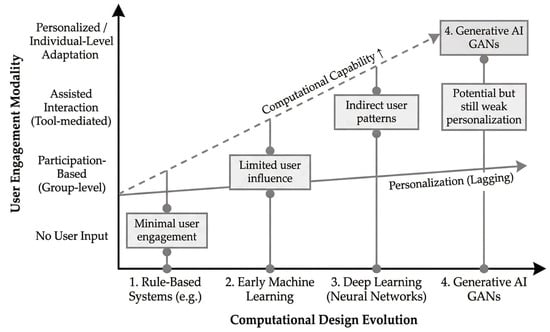
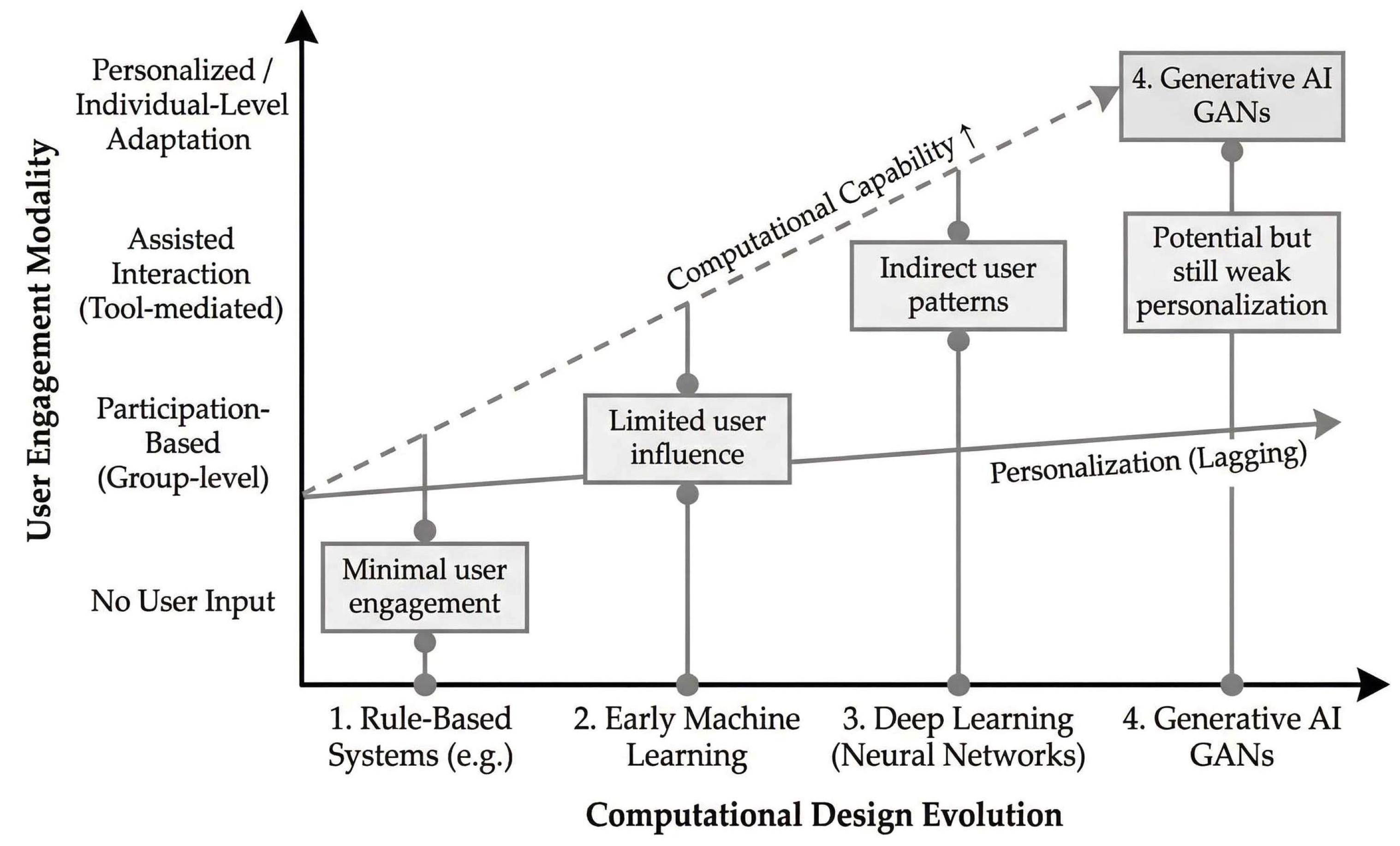
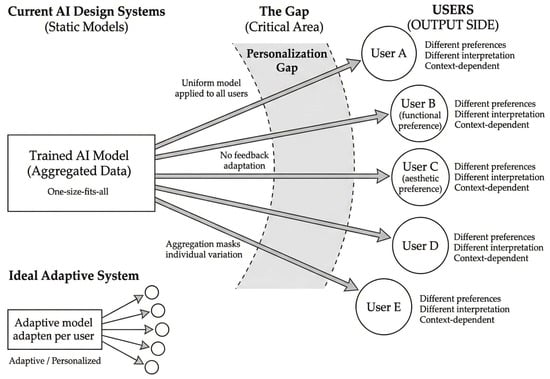
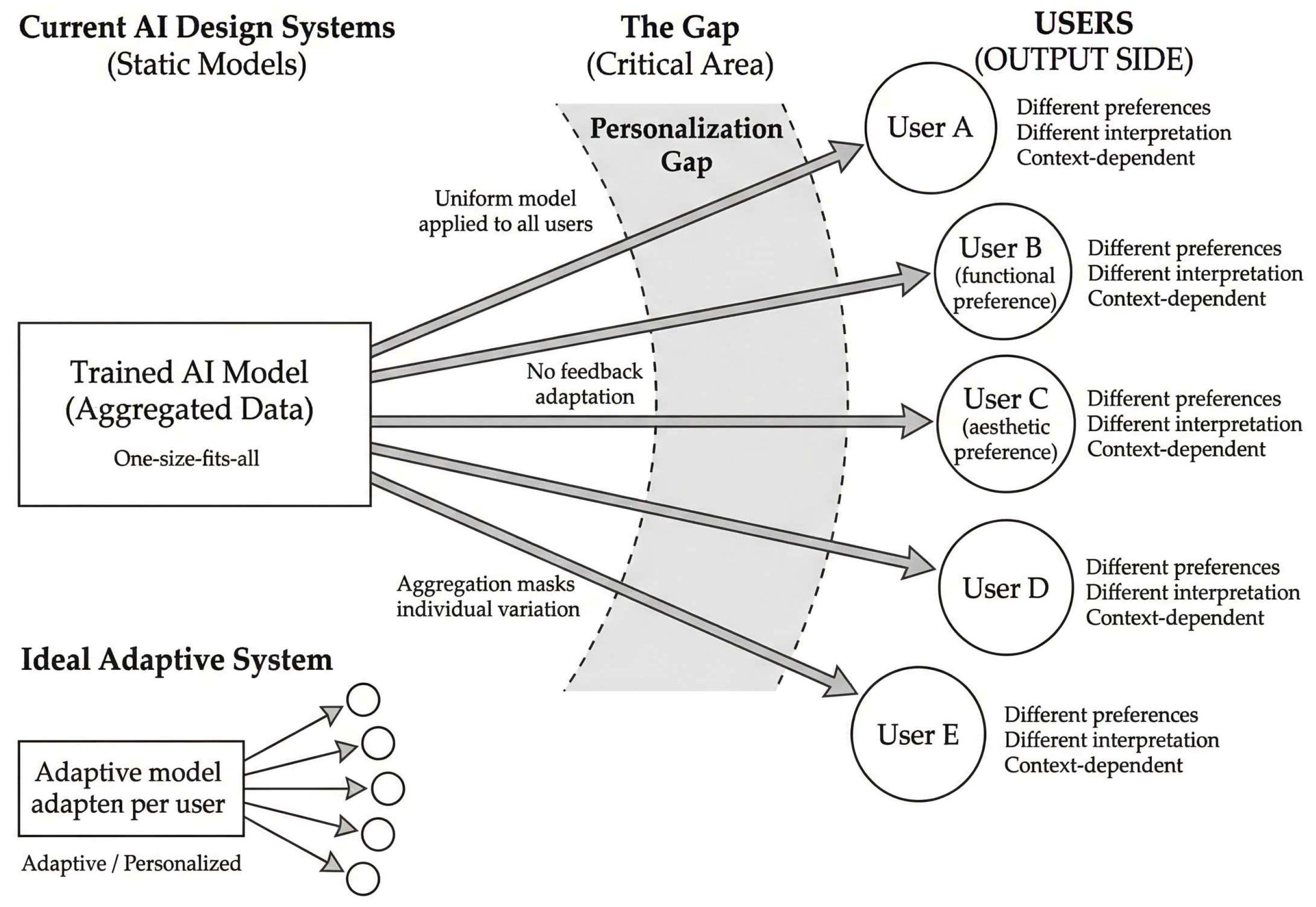
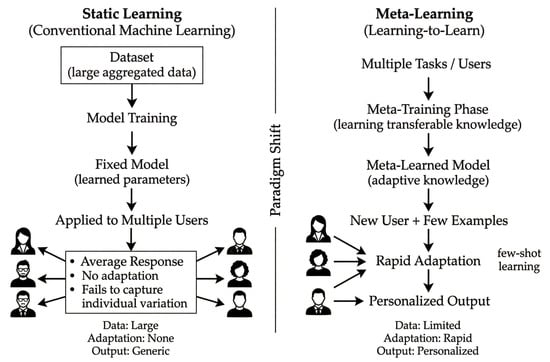
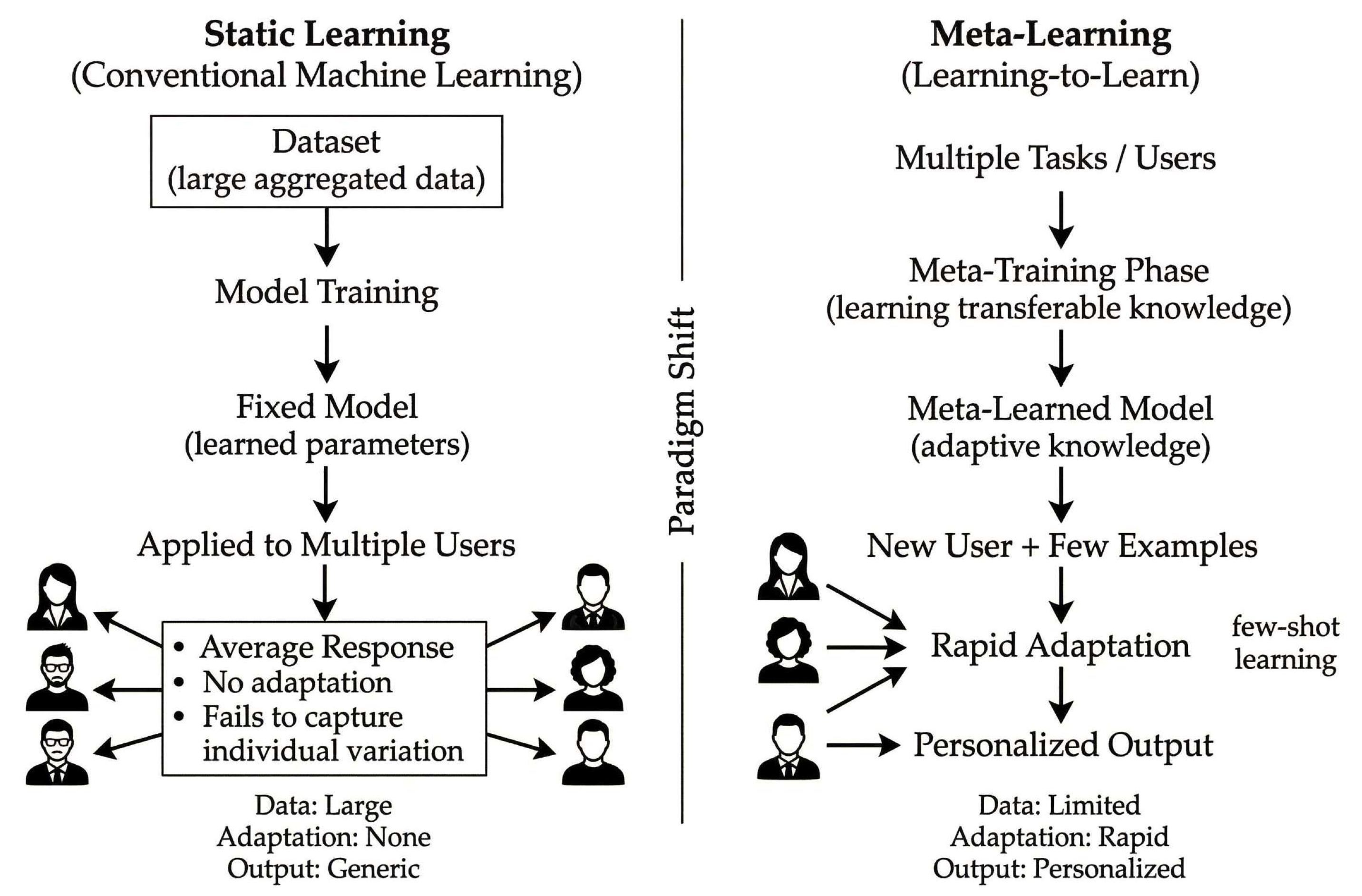
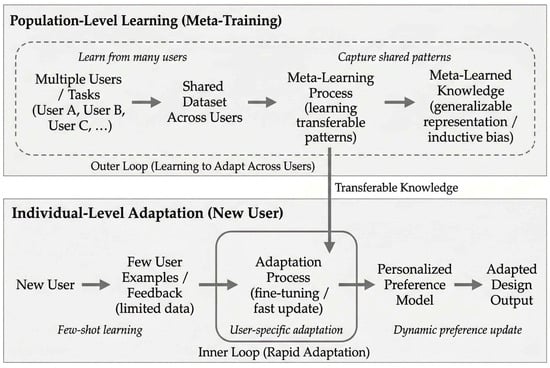
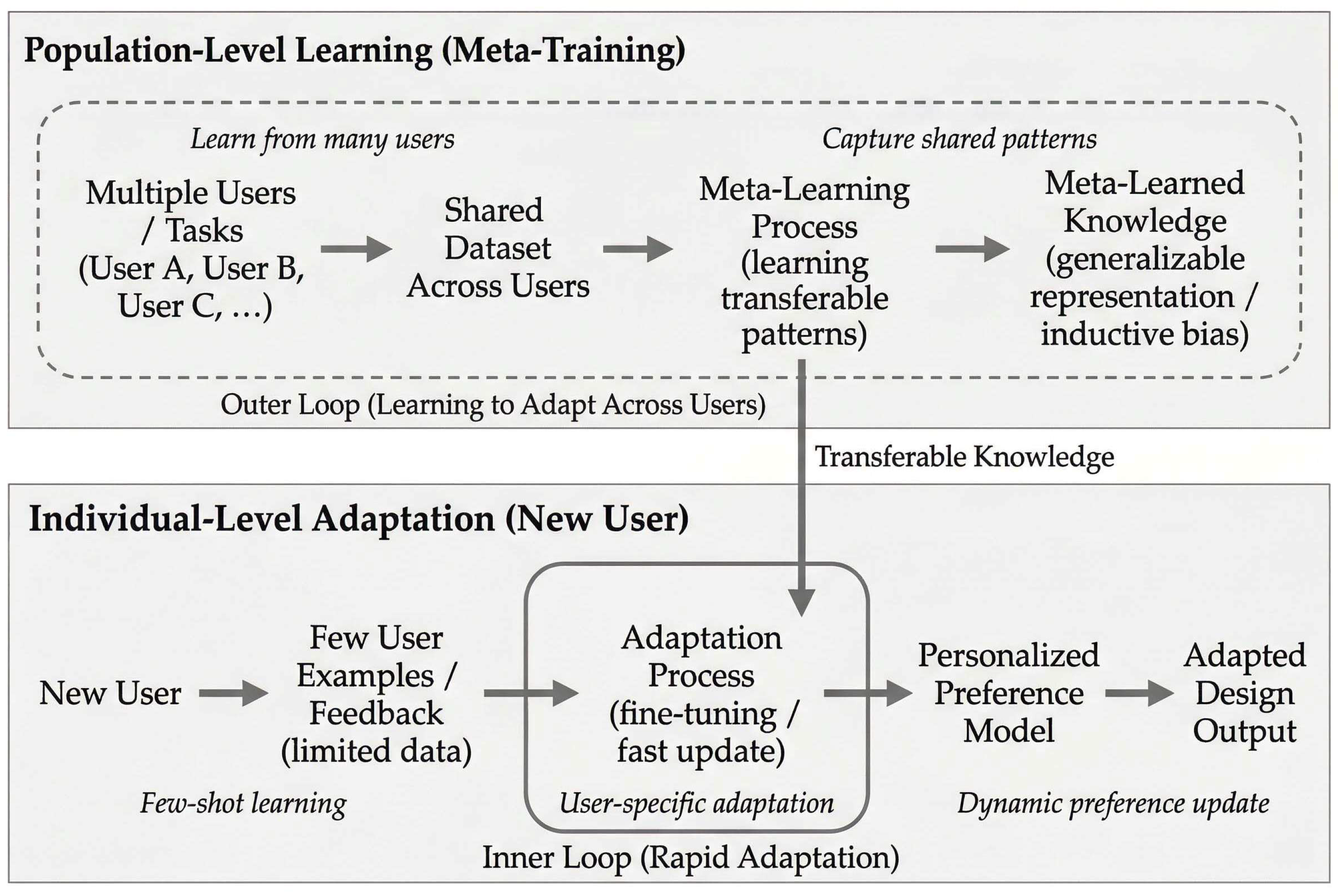
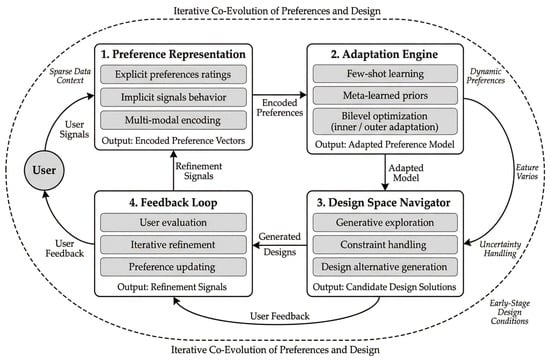
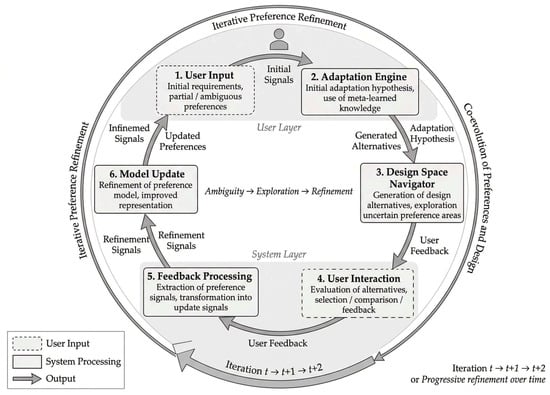

Disclaimer/Publisher’s Note: The statements, opinions and data contained in all publications are solely those of the individual author(s) and contributor(s) and not of MDPI and/or the editor(s). MDPI and/or the editor(s) disclaim responsibility for any injury to people or property resulting from any ideas, methods, instructions or products referred to in the content. |
© 2026 by the authors. Licensee MDPI, Basel, Switzerland. This article is an open access article distributed under the terms and conditions of the Creative Commons Attribution (CC BY) license.