


Abstract
Microplastics have become a ubiquitous environmental pollutant, widely distributed across various media within natural ecosystems and human living environments. Currently, scholars have primarily focused on the characteristics of microplastics in natural environments, while research into microplastics within snow cover in agricultural areas remains scarce. This study focuses on the Songnen Plain in Northeast China, where 25 sampling points were selected in February 2023. Through laboratory analysis and modelling techniques, it examines the spatial distribution characteristics and potential sources of microplastics within snow cover on agricultural fields. Results indicate the following: (1) The average abundance of microplastics in snow cover on the Songnen Plain was 1451.07 N·L−1. Fragment-type microplastics predominated, with over 86.38 ± 6.62% of particles concentrated within the 20–50 μm size range. A total of 27 types of microplastic polymers were detected, with polyamide (PA) being the predominant polymer type, while polyethylene (PE), polytetrafluoroethylene (PTFE), and polylactic acid (PLA) were the secondary predominant polymer types. Potential sources of microplastics in snow cover on the Songnen Plain encompass agricultural production activities, emissions from industrial buildings, domestic waste inputs, road traffic sources, and textiles and wastewater. (2) Microplastic abundance in agricultural areas is 1–4 orders of magnitude higher than in natural areas, and comparable to or 1 order of magnitude higher than in urban snow. The particle size of microplastics in farmland snow cover is comparable to that in natural areas, being slightly smaller than that in urban snow. The morphology of microplastics in snow cover farmland is essentially identical between natural and urban areas. The composition of microplastics in snow cover farmland differs from that in natural areas, with polyamide (PA) being the most prevalent component, whereas polyethylene terephthalate (PET) dominates in natural areas. Compared to urban areas, the proportion of polytetrafluoroethylene (PTFE) and polylactic acid (PLA) in snow microplastics is higher in agricultural regions.
1. Introduction
Microplastics (MPs), as an emerging anthropogenic pollutant, are widely distributed throughout the world’s oceans and terrestrial environments now [1,2,3,4]. The 2016 United Nations Environment Assembly listed microplastic pollution alongside global climate change, ozone depletion and ocean acidification as major global environmental issues. Research indicates that exposure to microplastics can lead to their accumulation in the human body; individuals may ingest large amounts of microplastics through food, drinking water, food packaging, or even via inhalation and skin contact [5,6,7]. Consequently, the distribution and characteristics of microplastics have garnered significant international attention. Research findings also confirm that the cryosphere (glaciers, snow cover, sea ice) has become a major accumulation site for microplastics [8,9,10,11]. Among these, snow has been identified as a significant sink and major reservoir for atmospheric microplastics due to its large surface area, low density per snowflake, and reduced terminal velocity [12,13,14].
For studies on the distribution and characteristics of microplastics in snow, researchers have initiated investigations in natural areas minimally impacted by human activity, including the polar regions [15], the Tibetan Plateau [16,17,18], the Alps [19], the Andes [20], and remote mountainous regions of the North American west coast [21]. Results indicate that microplastic abundance in these natural snow regions ranged from 0.11 to 14.4 × 10³ N·L−1, exhibiting significant variability. The highest microplastic abundance was observed in Arctic snow, while the lowest was recorded in alpine lakes of the Carnic Alps in northeastern Italy. Microplastics in natural snowfields predominantly occur as fibres and fragments, though film and granular forms are also present, with fibrous particles exceeding the dimensions of fragmentary ones. Microplastic sizes range from 11 to 2500 μm, with over 90% measuring less than 100 μm. For instance, fibre-like microplastics in snow from the Andes Mountains in South America reached lengths of 2500 μm, while in the Aosta Valley of the Western Alps in Italy, fibre-like dimensions ranged from 83 to 1910 μm, with fragment-like forms only measuring 50 to 422 μm [22]. In terms of colour, the highest proportions are white, blue, transparent, black and red, though variations exist across different regions. Common microplastic polymers found in natural snow cover include polyethylene terephthalate (PET), polyethylene (PE), polyamide (PA), and rubber [23,24]. The predominant polymer constituents vary across different natural regions: Acrylates are the primary polymers in Arctic snow, while Polyethylene Terephthalate (PET) dominates in Antarctic and Himalayan snow. Polyethylene (PE) is the main polymer in snow from the Qinghai–Tibet Plateau and the Alps [16,17,19,22]. The above studies indicate that microplastics are ubiquitous in snow across natural regions with minimal human activity, and that the characteristics of snow microplastics vary across different natural regions.
Compared to natural areas, microplastics in snow cover within urban regions heavily impacted by human activity have garnered increasing attention in recent years. These include urban areas in Bremen and Bavaria (Europe), Ankara (Turkey), Hokkaido (Japan), industrial zones in Northeast China, and the typical city of Harbin. Microplastic abundance in snowfall varies considerably between cities, with European urban snowfall exhibiting the highest levels reaching 154 × 103 N·L−1 [1], while other regions recorded levels ranging from 68 to 4.52 × 10⁴ N·L−1 [25,26,27,28,29]. Compared to natural areas, microplastic abundance in urban snow is 1–2 orders of magnitude higher. Morphologically, it includes fibres, fragments, films, foam, and ring-shaped items, exhibiting greater diversity than in natural areas. The majority of microplastics in urban snow cover measure < 100 μm, with filamentous microplastics exhibiting significantly larger dimensions than other morphologies. Compared to European urban snow cover, the longest filament detected measured 14,314 μm, whilst average dimensions in other cities remained below 500 μm. Microplastics in urban snow exhibit a richer colour spectrum than those in natural areas, with over twenty distinct hues recorded. However, the predominant colours mirror those found in natural settings, with white, transparent, black, red, and blue being the most prevalent. Polymer diversity is greater than in natural areas. Beyond common polymers like polyethylene terephthalate (PET), polyethylene (PE), polyamide (PA), rubber, polystyrene (PS), polyvinyl chloride (PVC), polymethyl methacrylate (PMMA), polypropylene (PP),urban snow accumulations exhibit higher proportions of polymers such as polyvinyl acetate (EVA) and alkyd resins (Alkyd Varnish) [12,25,27,28]. The above analyses indicate that microplastic abundance in urban snow is markedly elevated and exhibits complex composition, warranting heightened attention.
Beyond urban areas, agricultural zones also constitute regions significantly impacted by human activity, though the nature of this impact differs fundamentally from that observed in cities. Agricultural practices such as plastic mulching, fertilisation, and irrigation contribute to microplastic contamination of farmland, emerging as an invisible threat to agricultural ecosystems. This contamination inflicts multi-layered and complex harm upon soil, crops, and indeed the entire ecological services provided by farmland [29]. However, research on microplastic pollution in agricultural zones remains considerably scarce. The Songnen Plain in Northeast China spans an area of 18.28 × 10⁴ km2, accounting for approximately 1.9% of China’s total land area. With over a century of agricultural cultivation history, it serves as a vital grain-producing region and significant commercial grain base in China, contributing 25% of the nation’s total grain output [30]. Situated within China’s second-largest stable snow cover zone, the Songnen Plain experiences an average annual snow cover period exceeding 120 days, with an average snow depth of 13.57 cm [31]. Consequently, this study employs the Songnen Plain as its research area to analyse the distribution and characteristics of microplastics within its snow cover, alongside their formation mechanisms. This work expands the scope of global microplastic pollution research, providing scientific evidence to safeguard global ecological security.
2. Data and Methods
2.1. Study Area
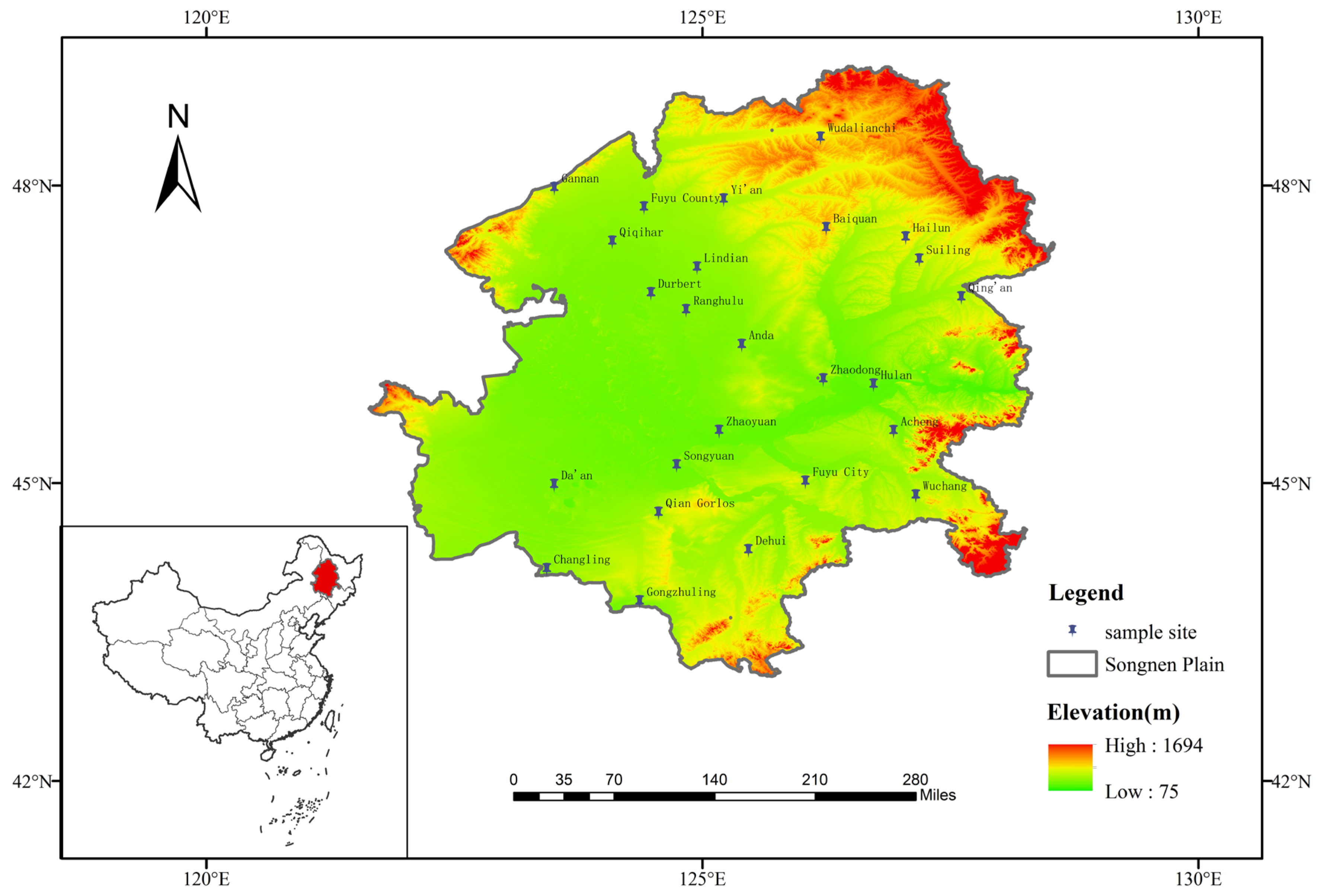
The study area selected is the Songnen Plain in Northeast China. Situated between 43°36′–49°26′ N latitude and 121°21′–128°18′ E longitude, it constitutes the largest component of the Northeast Plain. Located in the central part of the Songliao Basin, it covers a total area of 182,800 km2, accounting for approximately 1.9% of China’s total land area. Primarily formed by the alluvial deposits of the Songhua and Nen rivers, it maintains an average elevation of approximately 200 metres. The eastern, northern, and western borders of the Songnen Plain are enclosed by the Eastern Mountains, the Lesser Khingan Range, and the Greater Khingan Range, respectively, with only its southern flank opening towards the Songliao watershed dividing Jilin Province. The surface morphology of the Songnen Plain exhibits a distinct annular structure. Its outer rim comprises the foreland eroded hills of the Greater and Lesser Khingan Ranges and the Eastern Mountains. Moving inward sequentially are the foothill alluvial and fluvial terraces along the basin’s periphery, followed by the flat alluvial plain within the basin itself. The Songnen Plain possesses fertile soils, predominantly black earth and black calcareous earth, distributed across the foreland terraces and plain terraces. These soils feature deep profiles, sound structure, high fertility, and extensive arable land, constituting one of the world’s three major black earth belts. The Songnen Plain is one of China’s key commercial grain production bases, yielding abundant corn, soybeans, sorghum, potatoes, wheat, flax, sugar beet, sunflowers and other crops under a single-crop rotation system. Boasting expansive pastures and abundant fodder, the Songnen Plain serves as Heilongjiang Province’s principal agro-pastoral base. Situated within China’s second-largest stable snow cover zone, it possesses both the widest extent and deepest average snow depth within this region. The snow season spans 30 to 190 days from south to north, with maximum annual accumulated snow depth reaching 498 cm and an average depth of 13.57 cm, with an average snow density of 0.169 g/cm3 and average liquid water content of 0.648%. It distinguishes itself from other snow regions through its substantial annual snow storage volume and pronounced interannual variability.
2.2. Sample Collection
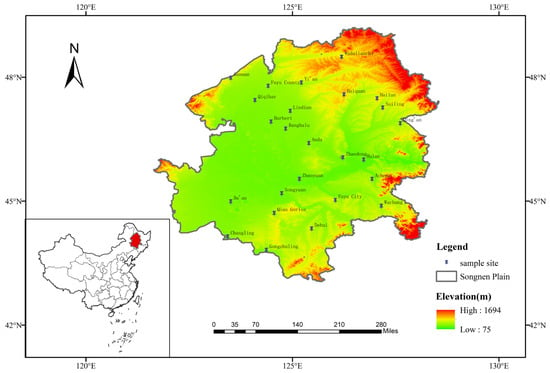
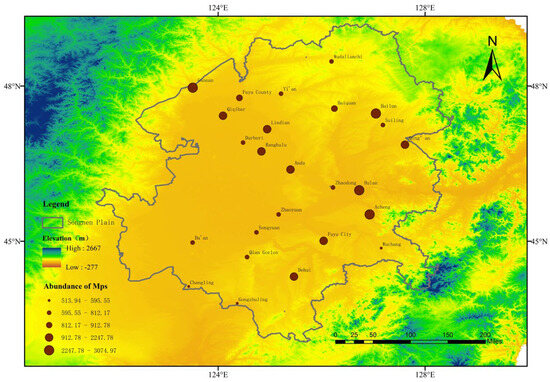
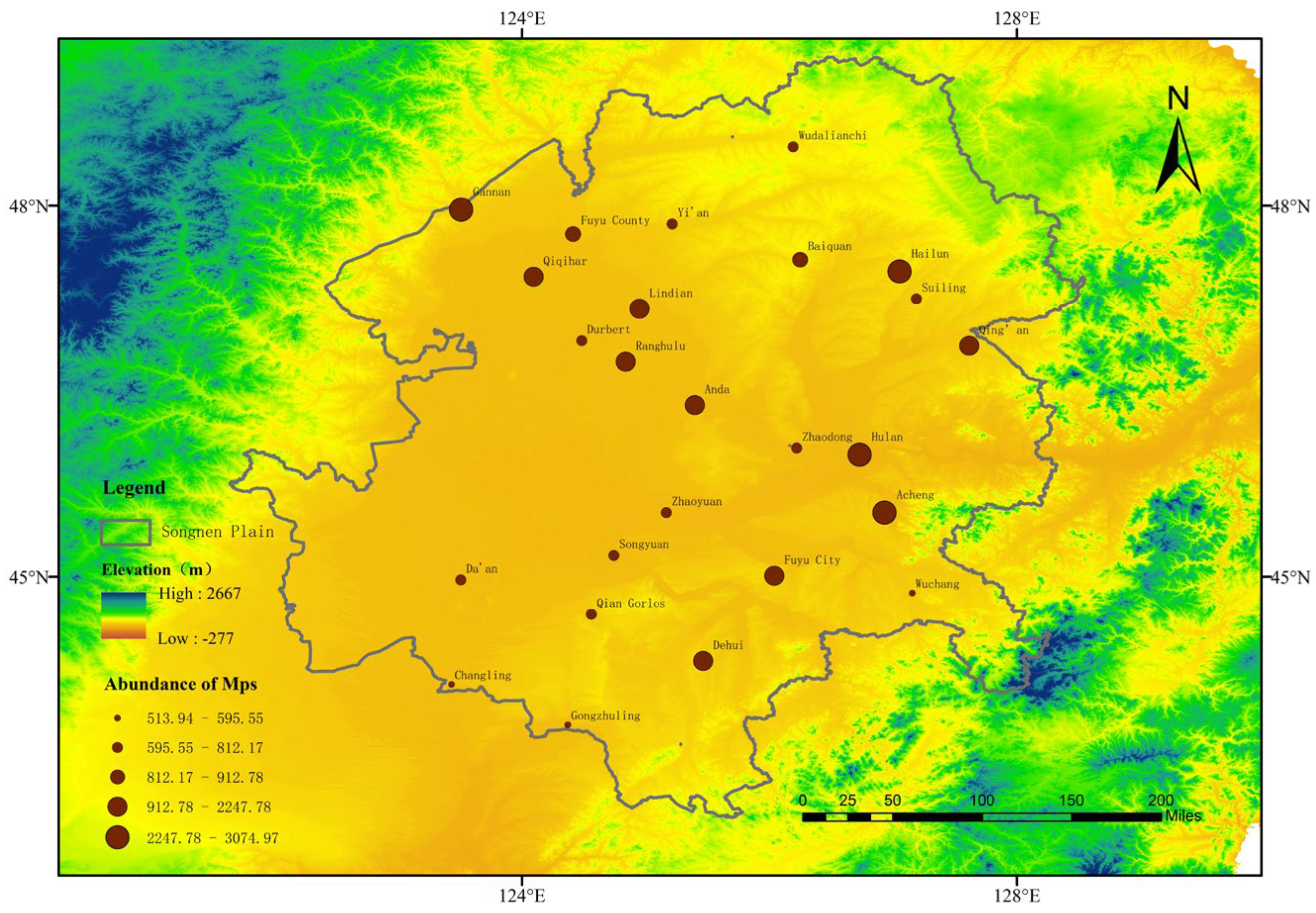
The study was based on a snow survey conducted in February 2023, selecting 25 sampling points within the agricultural fields of the Songnen Plain (Figure 1). These points were generally situated away from urban areas, with no industrial or mining enterprises within a 20-kilometre radius, and three snow samples were collected from each location. Prior to sampling, glass containers (500 mL) were rinsed three times with purified water, dried at room temperature [20], and wrapped in aluminium foil for storage. Sampling was conducted under clear, windless or light wind conditions. To minimise anthropogenic disturbance, all personnel collected samples while positioned downwind [19]. Snow samples were collected using a steel spoon at a depth of 5 cm. Each sample was placed into a separate glass container and stored frozen until laboratory analysis.
Figure 1.
Study area and sampling points.
2.3. Methods for Measuring Microplastic Abundance and Physical Properties
Place snow samples in the laboratory at ambient temperature to thaw naturally. Take 100 mL of meltwater from each sample for analysis. All reagents shall be filtered three times through a 0.45 μm PTFE membrane prior to use. Consumables shall be rinsed three times with anhydrous ethanol that has been filtered through the same membrane before use. Accurately weigh the sample and record its mass. Vacuum-filter the sample using a 13 μm steel membrane. Place the resulting filter membrane into a rinsed 20 mL sample bottle. Add 15 mL of 30% hydrogen peroxide to the bottle. After ultrasonication for 30 min, allow the mixture to stand for 40 h. This permits thorough reaction between the hydrogen peroxide and organic matter, thereby digesting the natural polymeric organic compounds within the sample. After digestion, filter the digestate through a 13 μm steel membrane. Rinse the filter membrane multiple times with small volumes of 30 mL ultrapure water and 30 mL ethanol until no visible white foreign matter remains on the membrane. Submerge the treated membrane in ethanol solution and sonicate for 30 min. Remove the membrane and repeatedly rinse both sides with ethanol to disperse microplastics as thoroughly as possible into the ethanol solution. Concentrate the resulting ethanol dispersion in an infrared drying oven to approximately 150 microliters. Titrate the entire concentrated solution onto the high-reflectance glass of the LDIR. Allow the ethanol to evaporate completely before proceeding with testing.
To control microplastic contamination, all reagents were filtered through 0.45 μm PTFE membranes, labware was rinsed with ethanol and filtered ultrapure water, cotton lab coats were worn, and sample processing was conducted in a laminar flow hood. Three ultrapure water blanks processed identically to snow samples contained only 1 PP, 1 PTFE, and 1 PA particle per liter, while instrument blanks detected no microplastics. All sample data were background-corrected by subtracting batch-specific blank means. The average microplastic abundance in snow was (1.45 ± 0.86) × 103 N·L−1, with blank values accounting for approximately 0.2% of this value, indicating negligible experimental contamination.
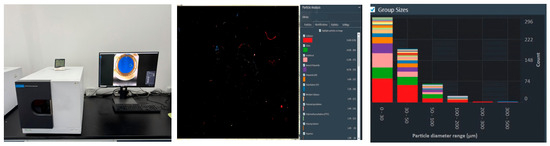
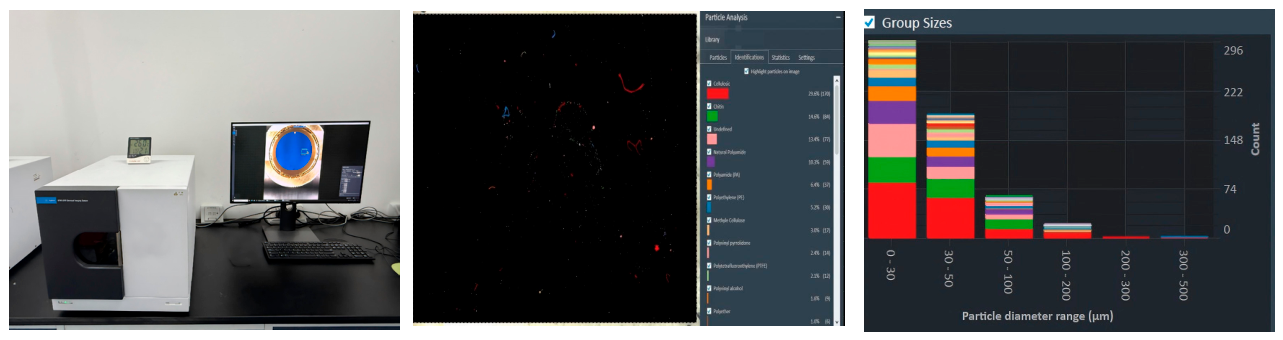
Methodology for measuring microplastic abundance and size: Microplastic (MP) abundance and size analysis was conducted using the LDIR laser direct infrared imaging system (Agilent 8700 Santa Clara, CA, USA) (Figure 2). This instrument employs quantum cascade laser technology and infrared spectral imaging to achieve rapid automated identification and quantitative analysis of microplastics. During testing, the system first performs a fully automated scan of the sample on the filter membrane, acquiring infrared spectra point by point. These are then matched against an internal polymer spectral library to accurately identify the chemical composition of the microplastics. Subsequently, the software automatically quantifies the particle count (abundance) of microplastics across different polymer types based on the identification results. Concurrently, it measures the projected area and equivalent diameter of each particle, thereby precisely calculating their size distribution. This entire process efficiently yields microplastic abundance, size, and chemical identity information without requiring staining or complex pre-treatment [32,33]. For instance, by selecting the automatic detection mode for the 20–500 μm particle size range, the system’s built-in algorithms perform microplastic abundance statistics and size distribution analysis. Concurrently, polymer similarity is introduced as an identification criterion, with only particles exhibiting a similarity score exceeding 0.70 classified as valid microplastics. This approach enhances the accuracy and reliability of detection results. This technology offers highly efficient and user-friendly operation, laying the foundation for standardising microplastic detection methodologies [34].
Figure 2.
Characteristics of microplastics observation.
Morphometric analysis of microplastics: The LDIR laser direct infrared imaging system (Agilent 8700) enables preliminary classification and statistical analysis based on particle shape parameters such as width, height, area, and perimeter. Parameters including aspect ratio, eccentricity, circularity, and solidity may be employed to characterise morphology [35].
Method for observing microplastic coloration: As LDIR cannot directly discern the colour characteristics of microplastics (MPs), following completion of all detection procedures within the system, ten randomly selected identified microplastic particles are extracted from each sample. These are subjected to manual visual inspection under an optical microscope, with the colour information of each particle being recorded (Figure 2).
2.4. Analytical Methods for Tracing the Sources of Microplastics
This study employs the back-trajectory method to analyse the sources of microplastic transport pathways. Utilising atmospheric transport models, the back-trajectory method simulates the movement paths of air masses prior to their arrival at sampling points, thereby tracing the potential source regions of pollutants. The atmospheric trajectory analysis employed the MeteoInfo model developed by Dr Wang Yaqiang of the Chinese Academy of Meteorological Sciences. This model calculates the backward trajectories of air masses reaching the sampling site during the defined period based on meteorological data. Through cluster analysis, it identifies primary transport pathways and potential source regions, providing crucial evidence for deciphering the origins and transport processes of atmospheric microplastics. Among these, meteorological data is sourced from the Global Data Assimilation System (GDAS) provided by the National Centers for Environmental Prediction (NCEP) in the United States. This dataset encompasses global distributions of primary atmospheric state variables including temperature, pressure, humidity, and wind fields, typically featuring a spatial resolution of 1° × 1° and temporal resolution of hourly or tri-hourly intervals. GDAS data may be downloaded via NOAA’s FTP server (ftp://arlftp.arlhq.noaa.gov/pub/archives/gdas1 accessed on 20 October 2025) for use in MeteoInfo trajectory calculations. This study simulates atmospheric backward trajectories using the Songnen Plain in Northeast China. The simulation period spans December 2022 to February 2023, corresponding to a 72 h trajectory duration with 6 h intervals. Simulations were conducted at two altitudes: 500 m and 1500 m above ground level, with air mass trajectories subsequently clustered.
Further analysis of microplastic emission sources in snow employed the Positive Matrix Factorization (PMF) model (US Environmental Protection Agency PMF Version 5.0). This model identifies intrinsic characteristics within extensive environmental concentration datasets to determine the number, source spectrum, and contribution of emission sources [36]. It has evolved into a robust and comprehensive source apportionment factor analysis tool widely adopted both domestically and internationally. Proposed by Paatero and Tapper, this model finds extensive application in environmental pollution source analysis, enabling quantitative assessment of source contributions [37,38]. The study employed 25 samples comprising 13 types of microplastic polymers as input parameters to quantitatively evaluate microplastic pollution source contributions in agricultural snow. Its matrix-based mathematical model is expressed as:
where i denotes the sample number, j denotes the polymer type, k denotes the factor number, p denotes the total number of factors, xij represents the concentration of polymer j in sample i, gik denotes the relative contribution of factor k to sample i, fkj denotes the concentration of polymer j within factor k, and eij denotes the residual of polymer j in sample i.
The factors extracted by PMF are often interpreted as sources. Through iterative computation, the process continues until the minimum value of the objective function Q is attained for a given p. The definition formula for Q is:
where n denotes the number of samples, m denotes the number of polymers, and uij represents the uncertainty of the jth polymer in sample i.
3. Results
3.1. Microplastic Abundance in Snow Cover of the Songnen Plain
Microplastics were detected in all snow samples collected from farmland across the Songnen Plain, with abundances ranging from 513.94 N·L−1 to 3074.97 N·L−1. The average microplastic abundance was 1451.07 N·L−1. The spatial distribution of microplastic abundance in snow cover over farmland on the Songnen Plain indicates higher microplastic concentrations in the northwestern and eastern farmland snow cover compared to other regions (Figure 3). The highest microplastic abundance was recorded in the Hailun area of the northeastern region, reaching 3074.97 N·L−1, while the southern Gongzhuling area recorded the lowest abundance at 513.94 N·L−1. The spatial variation coefficient was 0.6, indicating substantial spatial variation in microplastic content within farmland snow across the Songnen Plain.
Figure 3.
Distribution of Microplastic Abundance in Snow Cover on Farmland of the Songnen Plain.
3.2. Morphological Characteristics of Microplastics in Snow-Covered Farmland on the Songnen Plain
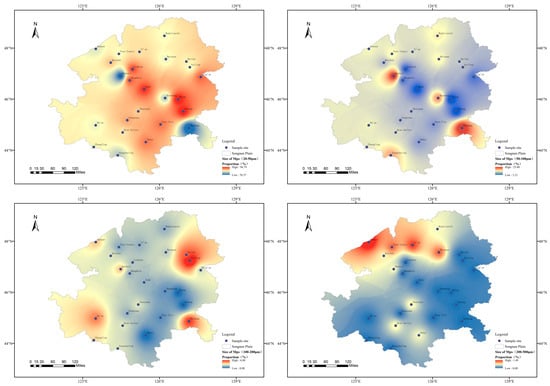
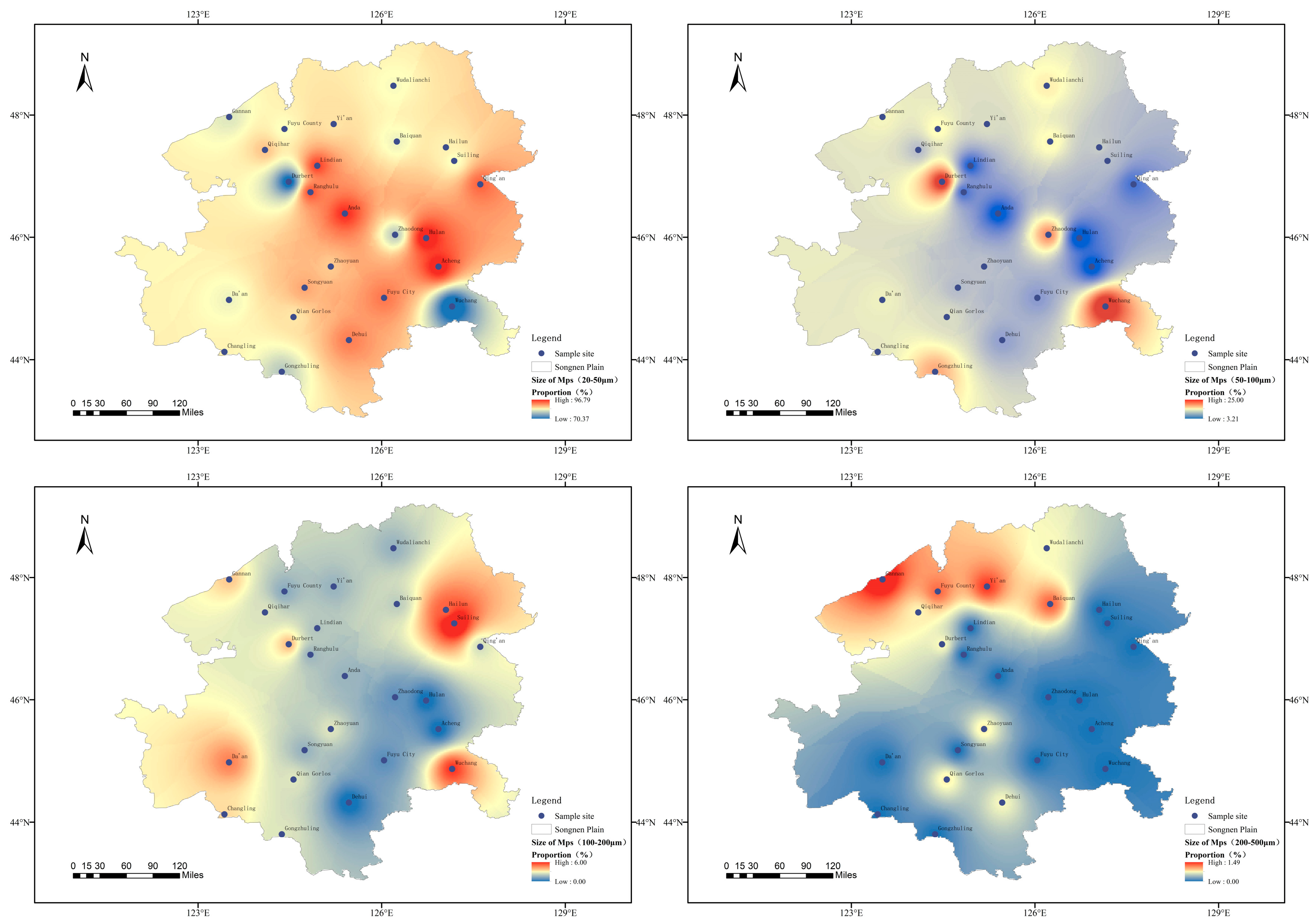
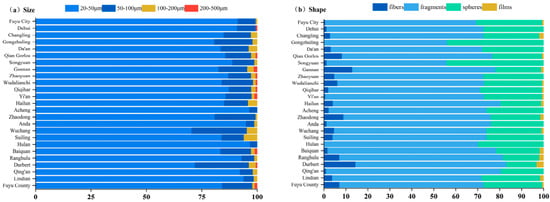
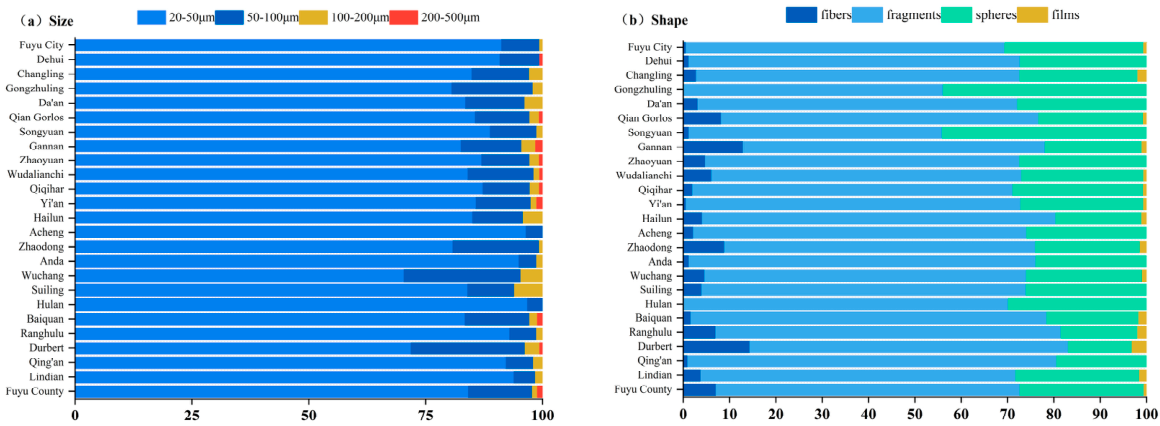
The size and morphological distribution of microplastics in snow cover over farmland on the Songnen Plain are shown in Figure 4. Microplastics in this snow cover ranged in particle size from 20 to 500 μm, with an average diameter of approximately 37 μm. Particles within the 20–50 μm size range constituted 86.38 ± 6.62% of the total; 97.67% of the microplastic particles have a diameter of less than 100 μm. From the spatial distribution of snow microplastic particle sizes in the Songnen Plain (as shown in Figure 3), microplastics in the 20–50 μm size range are widely distributed, with the highest proportion found in farmland snow in the Hulan area, reaching 96.79%. Microplastics in the 50–100 μm size range have a relatively high proportion only in snow from certain cultivated lands, for example, accounting for 25% in Wuchang cultivated land snow and 24.38% in Duerbote cultivated land. Microplastics in the 100–200 μm size range account for a certain proportion in both the eastern and western regions of the Songnen Plain. Large-sized microplastics in the 200–500 μm range are relatively concentrated in the northern part of the Songnen Plain.
Figure 4.
Spatial Distribution of Microplastic Size in Snow Cover on Farmland of the Songnen Plain.
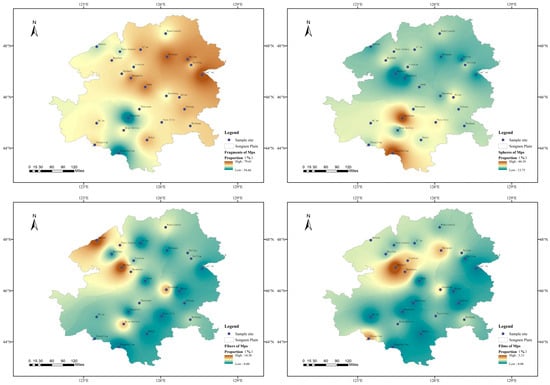
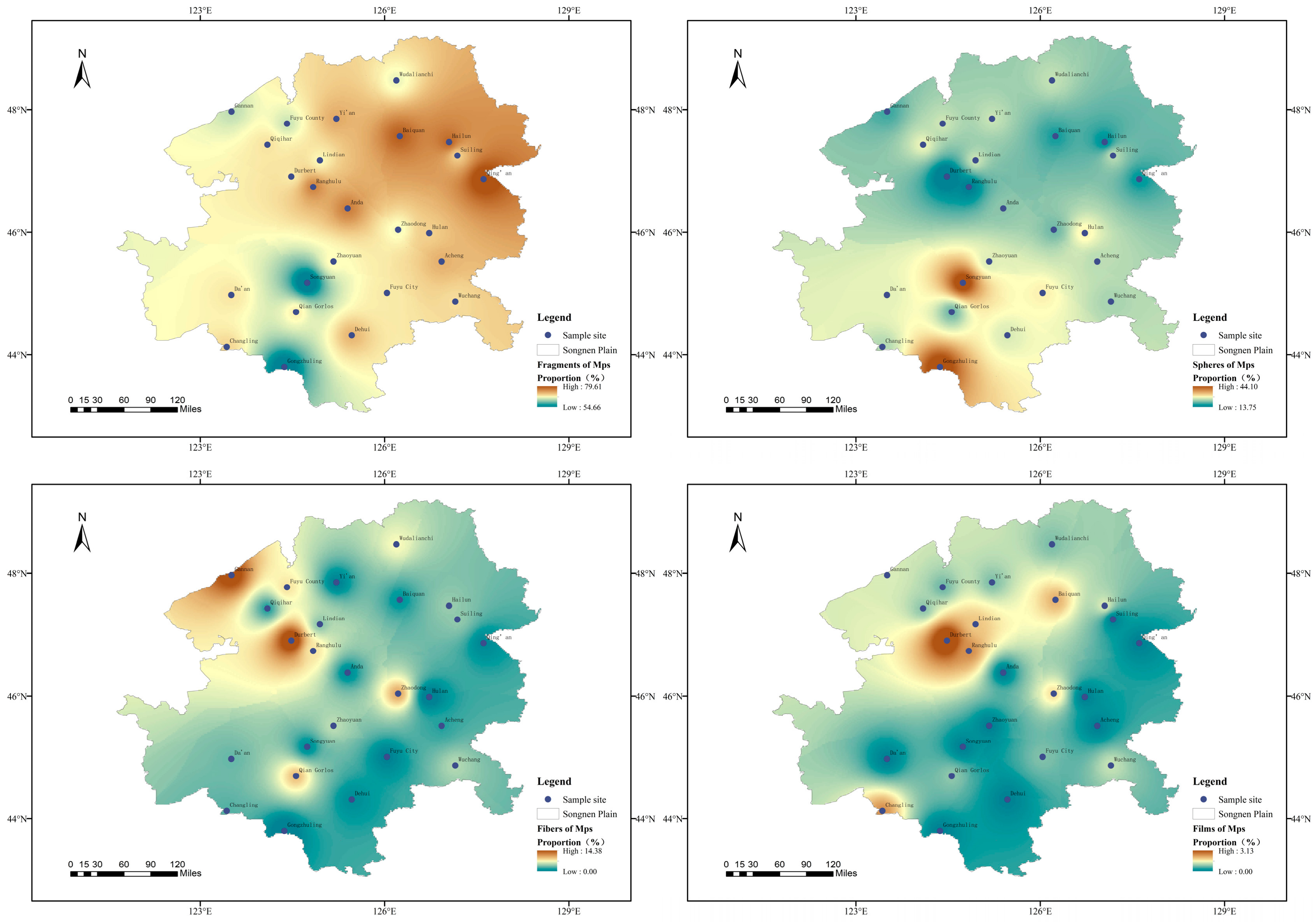
Microplastics in snow-covered farmland on the Songnen Plain can be categorised morphologically into fragments, fibres, spheres and films (Figure 5). Fragments constituted the most prevalent form, accounting for 69.3 ± 5.5%. The proportion of spherical microplastics was 25.82 ± 6.83%, while fibrous and film microplastics accounted for less than 5%. Spatially, fragmented microplastics were widely distributed and showed a decreasing trend from the northeast to the southwest of the Songnen Plain. Relatively high proportions of fragmented microplastics were observed in Qing’an, Baiquan, and Hailun, where this morphological type accounted for more than 75% of microplastics in cropland snow. In contrast, spherical microplastics exhibited an opposite spatial pattern and were mostly concentrated in the southwestern Songnen Plain, with their proportion exceeding 40% in cropland snow from Songyuan and Gongzhuling. Fibrous and film microplastics accounted for relatively low proportions overall, but their proportions in cropland snow from Dorbod and Gannan were higher than those in other areas.
Figure 5.
Spatial distribution of microplastic morphologies in farmland snow cover across the Songnen Plain.
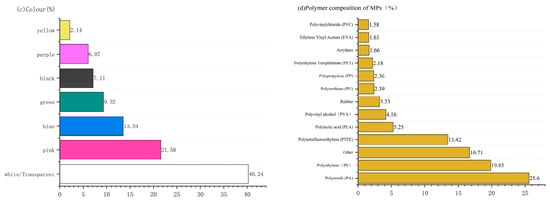
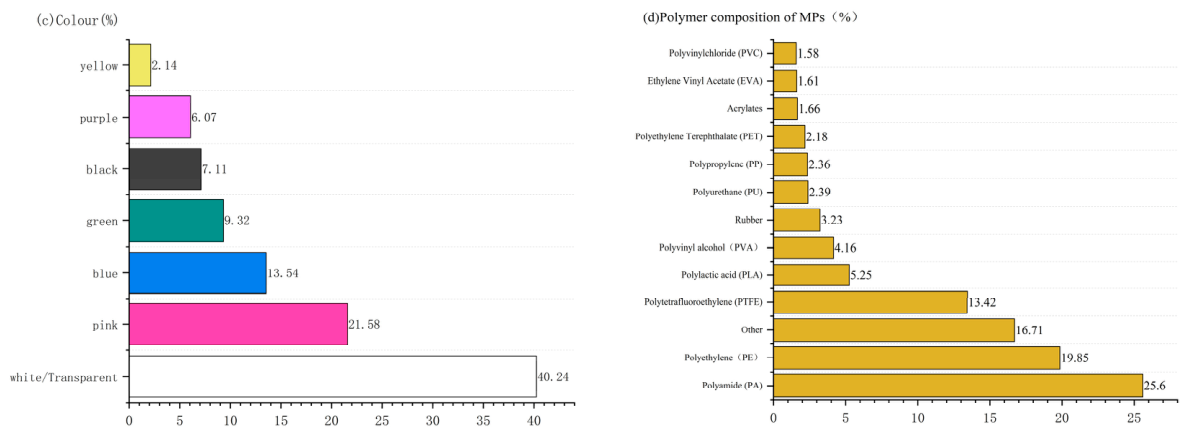
Microplastics in snow-covered farmland on the Songnen Plain exhibited a variety of colours, including white, pink, blue, green, black, purple, and yellow. Among these, white microplastics accounted for the highest proportion at 40.24%, followed by pink at 21.58%. Together, these two colours constituted over 60% of the total. Yellow microplastics were the least prevalent, representing only 2.14% (Figure 6).
Figure 6.
Shape characteristics and polymer types of microplastics in snow cover on the Songnen Plain.
3.3. Composition of Microplastics in Snowfall on the Songnen Plain
A total of 27 distinct polymer types were identified in microplastics within snow-covered farmland on the Songnen Plain (Figure 6d). Polyamide (PA) constituted the predominant polymer type at 25.6%, followed by polyethylene (PE) (19.85%), polytetrafluoroethylene (PTFE) (13.42%), and polylactic acid (PLA) (5.25%). These four polymers accounted for 64.12% of all polymers identified. Others included polyethylene terephthalate (PET), ethylene vinyl acetate (EVA), polyurethane (PU), polyvinyl chloride (PVC), polypropylene (PP), rubber, polymethyl methacrylate (PMMA), and polyvinyl alcohol (PVA).
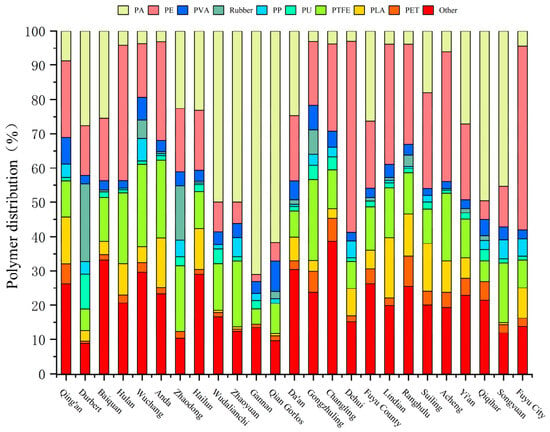
Spatially, polyamide (PA) exhibited the highest proportion (71.14%) in snow-covered farmland across the Gannan region in the western Songnen Plain. Polyethylene (PE), polytetrafluoroethylene (PTFE), and polylactic acid (PLA) were the most prevalent polymers in snow-covered farmland within the central Ande region and the southeastern Hulan region (Figure 7). Regarding regional microplastic polymer types, polyamide (PA), polyethylene (PE), polyethylene terephthalate (PET), polytetrafluoroethylene (PTFE), and polyvinyl alcohol (PVA) were detected in all samples. This indicates that microplastics in farmland snow on the Songnen Plain of Northeast China predominantly comprise polyamide (PA), polyethylene (PE), polyethylene terephthalate (PET), polytetrafluoroethylene (PTFE), and polyvinyl alcohol (PVA). Among these, the snow samples from farmland in the Changling area of the southwest region contained the highest number of microplastic types, comprising 25 polymers. The samples from the Wudalianchi area in the north contained the fewest, with 15 polymers detected. Microplastic compositions in snow samples from other regions exceeded 15 types, indicating the relatively complex composition of microplastics in farmland snow across the Songnen Plain.
Figure 7.
Distribution of Microplastic Polymers in Snow on the Songnen Plain.
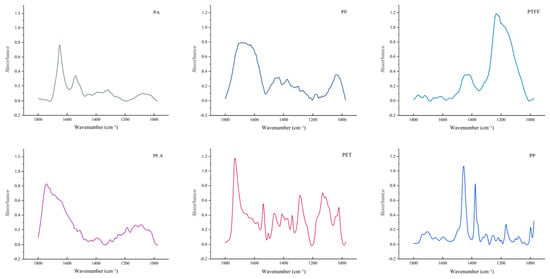
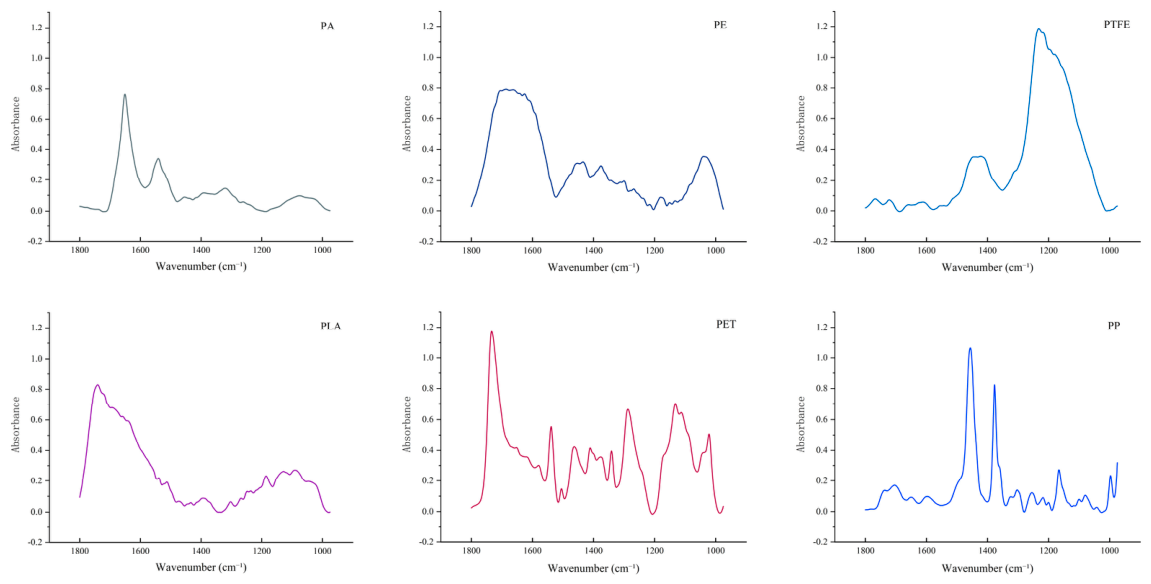
Other polymers include (Figure 8): acrylates, ethylene vinyl acetate (EVA), polyvinyl chloride (PVC), alkyd varnish (ALK), polystyrene (PS), ethylene acrylic acid (EAA), phenol formaldehyde resin (PF), phenolic epoxy resin (PER), polycarbonate (PC), polyether, polyimide (PI), polyisobutylene (PIB), polymethyl methacrylate (PMMA), polysulfone (PSF), polyvinyl butyral (PVB), polyacetal (POM), polyvinyl pyrrolidone (PVP), and polymerized styrene butadiene rubber (SBR).
Figure 8.
Spectroscopic profiles of microplastic polymers in snow samples from the Songnen Plain.
3.4. Analysis of Potential Sources of Microplastics in Snowfall on the Songnen Plain
3.4.1. Analysis of Microplastic Transport Pathways
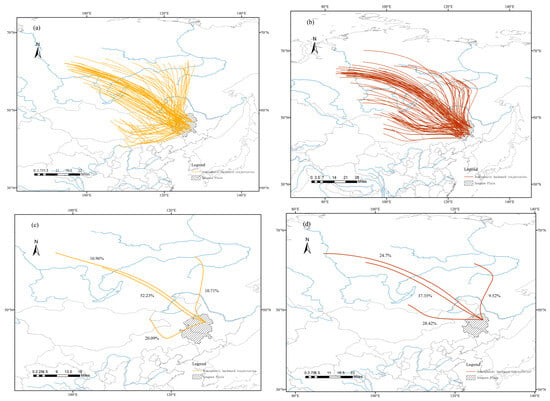
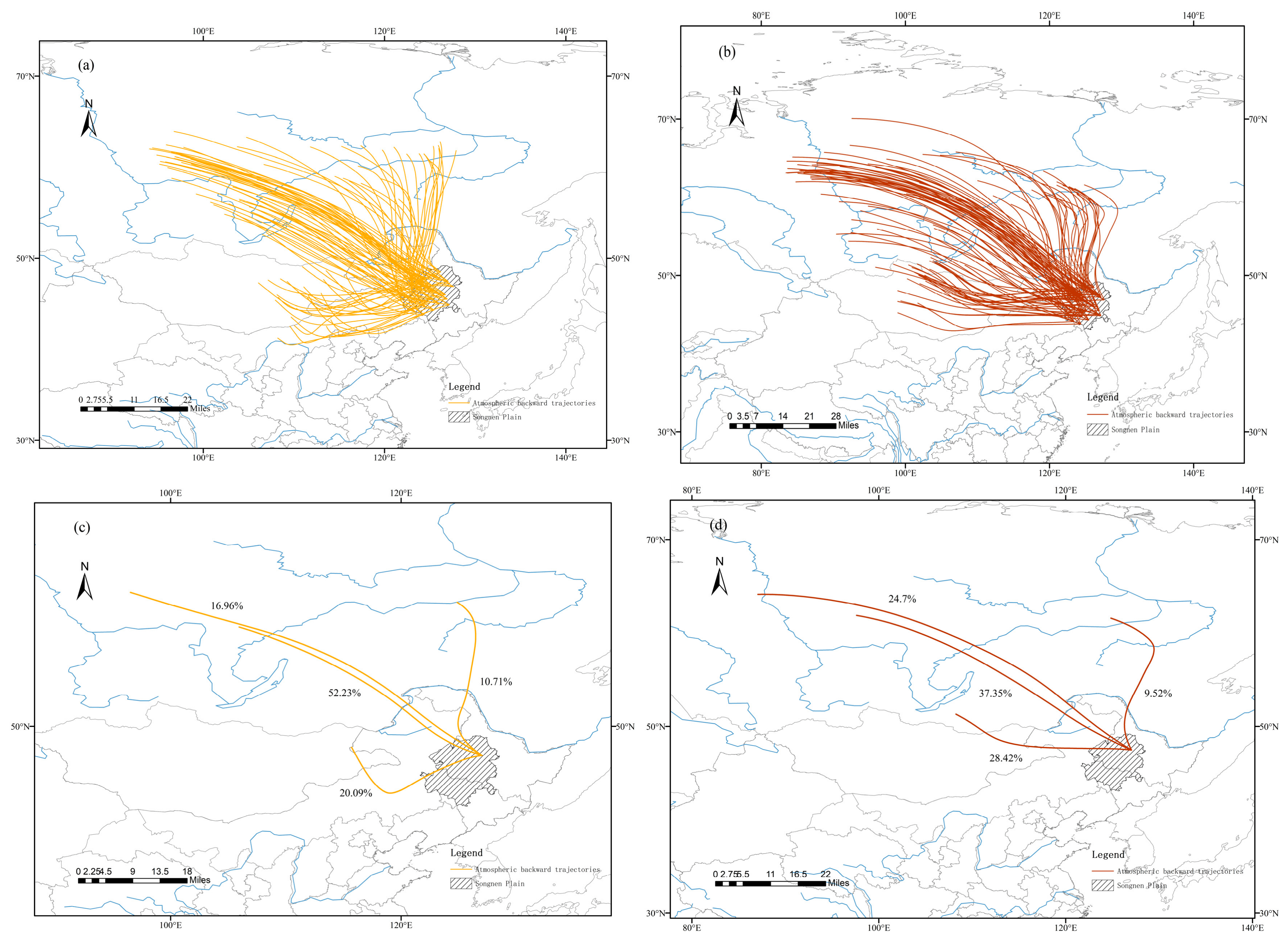
During the snow accumulation period in the Songnen Plain from December 2022 to February 2023, under the dominance of the winter Siberian High, the atmospheric backward trajectory simulation results at heights of 500 m and 1500 m over the farmland areas of the Songnen Plain (Figure 9) indicate that the atmospheric sources of snow microplastics were dominated by cross-border transport, with additional contributions from regional transport within China, and that the transport pathways differed significantly between the two height levels. At 500 m (Figure 9a), the air mass sources were mainly divided into three branches: air masses from the northwest and due north originated from the Siberian region, while those from the southwest mostly passed through central Inner Mongolia and North China. Industrial emissions and weathered dust from urban waste in the areas along these pathways may constitute important sources of microplastics. The trajectories at 1500 m (Figure 9b) show that the northwest air masses were more pronounced, with more significant cross-border long-distance transport characteristics. This layered difference indicates that the source directions of snow microplastics in the farmland of the Songnen Plain may be the result of the combined effects of regional near-surface transport and cross-border long-distance transport: air masses at 500 m mainly reflect regional local medium-distance diffusion, whereas air masses at 1500 m reflect the contribution of cross-border long-distance transport.
Figure 9.
Backward trajectories of air masses over farmland of the Songnen Plain from December 2022 to February 2023: (a) 500 m and (b) 1500 m. Cluster analysis of air mass backward trajectories over farmland in the Hailun area: (c) 500 m and (d) 1500 m.
Taking the farmland in the Hailun area, which had the highest snow microplastic abundance, as an example (Figure 9c,d), the atmospheric trajectories at 500 m were predominantly from the northwest, with a clustering proportion of nearly 70%. The air masses were transported southeastward from western Siberia, passing through the Inner Mongolia Plateau in northeastern China and the industrial areas of western Heilongjiang Province. Within the atmospheric transport pathway regions, industrial emission sources and weathered dust generated from municipal solid waste may constitute important sources of microplastics. At 1500 m, the northwestward atmospheric transport trajectories were likewise significant, with a clustering proportion of approximately 62%, making it the dominant source direction and exhibiting more pronounced cross-border long-distance transport characteristics.
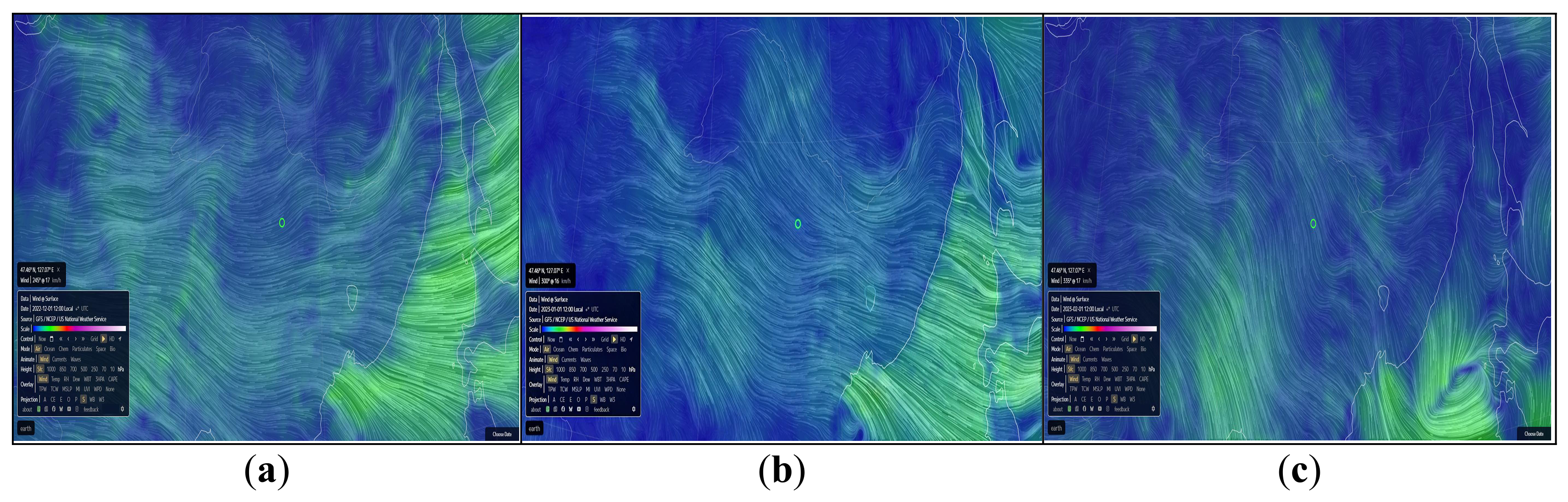
Image analysis of wind field characteristics over the Songnen Plain from December 2022 to February 2023 (Figure 10) indicates that westerlies and southwesterlies were the absolutely dominant wind directions in this region during the study period. This wind field pattern provided the dynamic conditions for the transregional atmospheric transport of microplastics from the western Songnen Plain.
Figure 10.
Wind field map for December 2022 to February 2023. (a) December 2022. (b) January 2023. (c) February 2023. (Data source: https://earth.nullschool.net/ accessed on 25 October 2025).
MeteoInfoMap back-trajectory simulations further confirm that the external input pathways of microplastics within snow cover on farmland in the Songnen Plain can be traced back to Siberia and the Mongolian Plateau, revealing their potential contribution to transboundary long-range transport. Combining back-trajectory analysis with wind field overlay studies from this research, atmospheric microplastic transport pathways across the Songnen Plain consistently traverse urban agglomerations and industrial zones in western Northeast China and northern Hebei Province.
It is therefore inferred that, although long-range transboundary transport constitutes a significant source of microplastics in snow within the study area, regional local sources likely contribute a greater proportion. As a primary source of atmospheric microplastics [38], urban emissions disperse and settle via atmospheric circulation into surrounding agricultural zones. This process should be a key consideration in the prevention, control, and source management of microplastic contamination in snow across the Songnen Plain.
3.4.2. Potential Sources of Microplastics in Snow Cover Farmland on the Songnen Plain
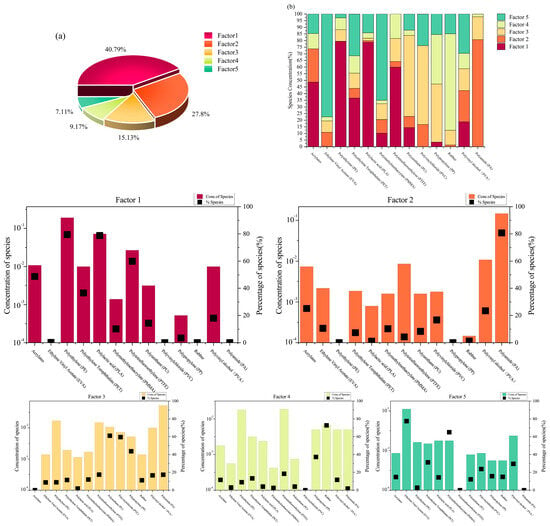
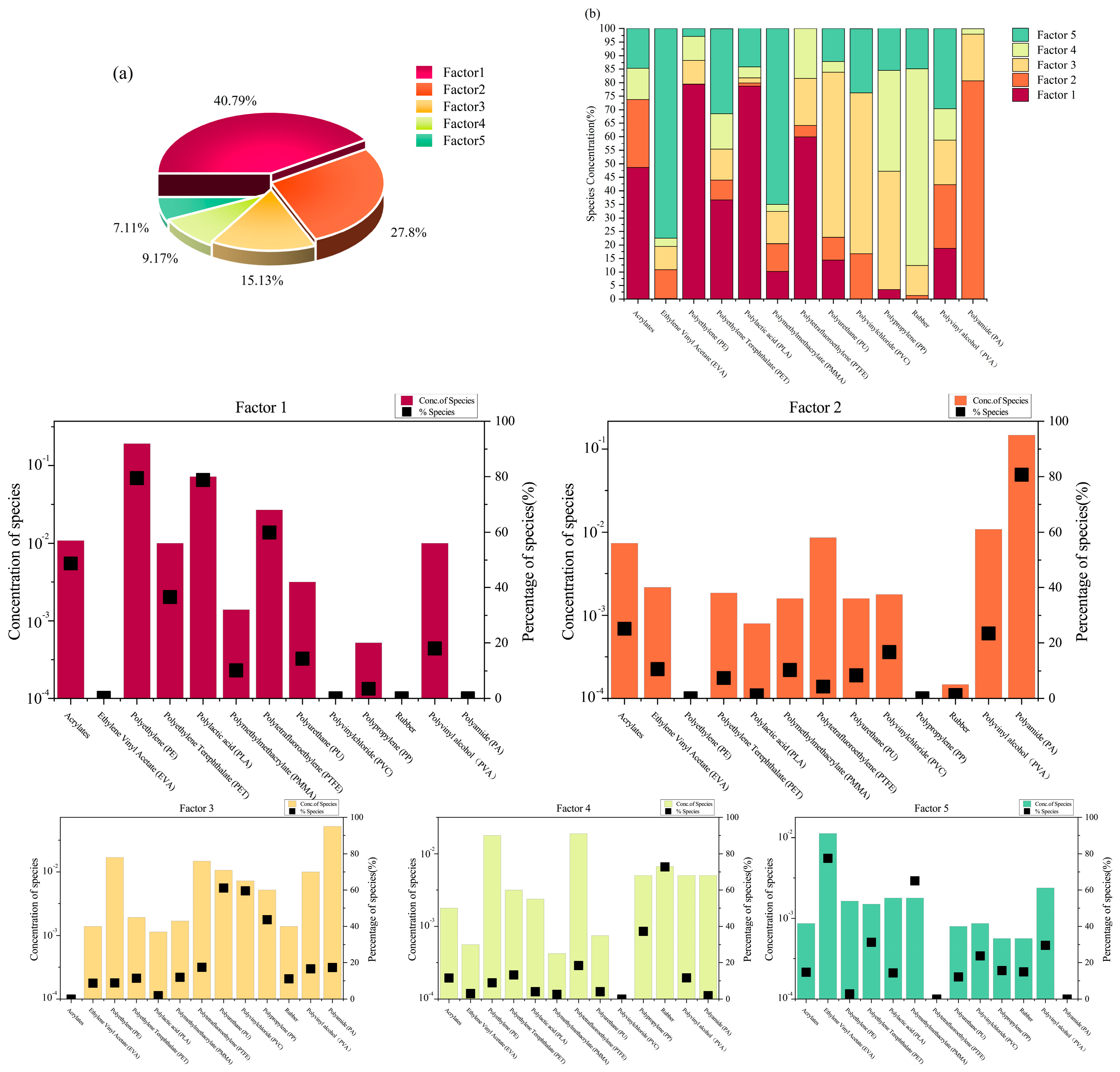
The study employed a source apportionment model based on Positive Matrix Factorization (PMF) to further investigate the potential sources and their respective contributions to microplastics in snow-covered farmland on the Songnen Plain. Analysis of the factor matrices (representing the chemical composition profiles of each potential pollution source) identified five distinct factors (Figure 11). Results indicate that the combined contribution of the first three factors exceeds 80%. The contribution order is Factor 1 (40.79%) > Factor 2 (27.8%) > Factor 3 (15.13%) > Factor 4 (9.17%) > Factor 5 (7.11%). The polymer contributions within each factor provide key clues to their potential sources.
Figure 11.
Potential source factors of microplastics in snow on the Songnen Plain. (a) Proportion of each factor; (b) Proportion of major polymers within each factor.
Further analysis reveals that polyethylene (PE) (79.5%) and polylactic acid (PLA) (78.8%) constitute the predominant polymers in Factor 1. Both serve as primary materials for agricultural mulch and fertiliser packaging. The farmyard composting process may incorporate unsorted PE plastic fragments alongside PLA items labelled as ‘compostable’ (e.g., food packaging, tableware), potentially introducing these materials into the agricultural environment. Consequently, Factor 1 likely originates from agricultural activities.
Polyamide (PA), commonly known as nylon, contributed significantly more (80.7%) to Factor 2 than other polymers. This study indicates that polyamide (PA) constitutes the highest proportion of microplastics within snow-covered farmland on the Songnen Plain. Combining factor analysis with morphological observations, it cannot be attributed solely to a single source such as textiles or sewage. It likely originates from multiple sources collectively. Therefore, Factor 2 may represent a composite source including textiles and wastewater, necessitating further research to definitively identify its origins.
In Factor 3, polyurethane (PU) (61.1%) and polyvinyl chloride (PVC) (59.5%) made significant contributions. PU and PVC are two emblematic materials in industrial and construction sectors. While their applications in consumer goods are dispersed, they are frequently used extensively and concurrently in areas such as building insulation (PU) and pipe fittings (PVC). Construction and demolition waste may contain polyvinyl chloride (PVC) piping [39,40,41]. The co-occurrence of these two polymers strongly suggests fragmentation and release from building renovation, demolition, or industrial site waste. This may indicate that Factor 3 originates from industrial construction sources.
Rubber is a primary material in automotive tyre production, contributing significantly (72.8%) to Factor 4, potentially indicating road traffic sources [42,43]. Sub-zero temperatures accelerate plastic degradation, rendering plastics and rubber more prone to fragmentation [44]. Tyre wear is a recognised source of particulate air pollution [45], and microplastics derived from rubber may persist longer in the atmosphere and undergo sustained transport [46] and may also result in atmospheric deposition.
In Factor 5, polyethylene-vinyl acetate (EVA) (77.5%) makes a significant contribution, while polymethyl methacrylate (PMMA) (65%) also plays a notable role, presenting a more complex picture. Polyethylene-vinyl acetate (EVA) is predominantly used in photovoltaic encapsulation films [47], food packaging [48], and footwear manufacturing. Polymethyl methacrylate (PMMA), commonly known as ‘acrylic’, is extensively employed in automotive lamp covers, optical instruments, advertising light boxes, sanitary ware, and various coatings. Research indicates that ethylene-vinyl acetate (EVA) belongs to thermoplastic polymers and may be regarded as plastic waste in the environment [49]. An Arctic study attributed the presence of polymethyl methacrylate (PMMA) to waste incineration or discarded materials [50]. This suggests potential origins from domestic waste containing plastic polymers.
4. Discussion
4.1. Comparative Distribution of Microplastic Abundance in Snow Cover
The average microplastic abundance in snow across the agricultural zone of the Songnen Plain was 1451.07 N·L−1. This compares with natural regions: Antarctica (29 N·L−1), the Arctic (625 N·L−1), the Qinghai–Tibet Plateau (339.22 ± 51.85 N·L−1), the southern slope of Mount Everest (30 N·L−1) and northern slope (95.0 ± 11.65 N·L−1), and the Andes Mountains in South America (101.2 N·L−1). This represents a 3–4 order-of-magnitude increase compared to the Alps (0.11 ± 0.19 N·L−1) and remote mountainous regions of the North American west coast (5.1–539 N·L−1).
Compared to urban areas, microplastic abundance in snow from densely populated regions such as Bremen and Bavaria in Europe ranged from 0.19 × 10³ to 154 × 103 N·L−1 and the average microplastic concentration in snow from industrial areas in Northeast China (4.52 ± 3.05) × 104 N·L−1 was one order of magnitude higher than in this study [1]. However, microplastic abundances in snow from urban Ankara, Turkey (86 N·L−1) and Inner Mongolia Plateau cities in China (68–199 N·L−1) were significantly lower than those in this study [27,28]. The microplastic abundance in snow from urban areas of Hokkaido, Japan (4.2 × 10³ N·L−1) was comparable to this study [25].
As no studies on microplastics in agricultural snowpack have been conducted to date, no effective comparative data exists for this study’s abundance findings. Previous research reported an average microplastic abundance of 604 N·L−1 in surface snow on farmland within Harbin city, which differs from the microplastic abundances detected in snow on farmland near Harbin in Hulan (2499.71 N·L−1) and Acheng (2738.64 N·L−1). These variations in microplastic abundance may be attributed to differing sampling, filtration, and detection methodologies employed in microplastic studies [51].
4.2. Discussion on the Physical Characteristics of Microplastics in Snow Cover on Farmland in the Songnen Plain
In terms of microplastic particle size characteristics, the study found that nearly 97% of the microplastics in farmland snow cover of the Songnen Plain were smaller than 100 μm. This aligns with findings from natural snow regions where most microplastics are smaller than 100 μm (Arctic snow microplastics: 98% ≤ 100 μm; Antarctic: 95% ≤ 50 μm; Qinghai–Tibet Plateau: 80% ≤ 50 μm) [52]. Compared to microplastics in urban snow, those in farmland snow on the Songnen Plain exhibited smaller sizes. In Ankara, Turkey, 61.94% of microplastics were smaller than 100 μm, while filamentous microplastics in European urban snow were significantly larger than those in agricultural areas.
The microplastic particle sizes measured in snow cover over farmland on the Songnen Plain in this study are comparable to those reported in previous research, which generally indicate smaller microplastic particles in snow across Northeast China (20–50 μm) and a predominant size range of 10–100 μm in snow over farmland within Harbin city [12]. It is noteworthy that with a minimum detection limit of 20 μm, snow microplastics may not exhibit particle size saturation at the smallest detectable scale [1]. Regardless of the origins of smaller microplastics or variations in detection methods, our findings may underestimate both the size and abundance of microplastic particles within agricultural snow cover.
Comparisons of microplastic morphology with existing studies indicate that both flakes and fibres constitute a significant proportion of microplastics in snow cover across both natural and urban areas, alongside diverse forms including films, pellets, foam, spheres, and circular shapes [17,20,28]. The findings indicate that fragmentary microplastics account for nearly 70% of the microplastics in snow from agricultural fields on the Songnen Plain. This aligns with documented observations of predominantly fragmentary microplastics in snow from industrial areas of Northeast China, alongside higher fragment content in snow from agricultural fields within Harbin city [12,27]. In contrast, fibre-shaped microplastics are more prevalent in neighbouring cities on the Inner Mongolia Plateau. Studies have found that rural snow contains significantly higher levels of film and fragment-shaped microplastics than fibre-shaped forms [14,28,29], which aligns with the findings of this study.
Microplastics within snow cover on farmland may migrate into soil through shape alteration. Existing literature confirms that filamentous microplastics are more likely to adhere to the soil surface during snowmelt and become entangled within the soil matrix [53]. The high proportion of particulate microplastics detected in our snow samples may significantly influence their migration into soil via meltwater runoff. Unlike filamentous microplastics, which readily adhere or become entangled in surface layers, fragmentary microplastics possess a smaller diameter-to-thickness ratio and more regular shapes. Consequently, during snowmelt and surface runoff, they may more readily undergo rolling or suspended migration with water flow, thereby exhibiting greater migration potential both horizontally and vertically [54]. Previous studies indicate that once fragmented microplastics enter the soil, they can migrate to deeper layers via water infiltration or soil disturbance, increasing the risk of their dispersion throughout the soil profile [53]. Consequently, the high proportion of fragmented microplastics in snow cover over farmland in the Songnen Plain indicates their significant potential for vertical contamination of agricultural soils. Subsequent research should focus on their migration and accumulation processes within the soil.
Color can often serve as an identifier for plastic types, ranging from transparent to various hues including white, bright orange, blue, green, purple, and black [55,56]. In this study, white and pink were the predominant colours of microplastics. Within natural areas, transparent, white, blue, and black are more commonly observed [19,20,23]. Urban areas exhibit greater colour diversity, featuring not only white, transparent, black, and blue but also blue-green, red, yellow, brown, and orange [1,28]. Studies indicate that in rural and relatively remote areas, microplastics within snowpack predominantly exhibit white or transparent colours [57].
Microplastics of varying colours, particularly dark hues (black, grey, brown), absorb solar radiation and heat surface snowpack. Their light-absorbing properties significantly alter snow albedo, thereby influencing melt rates in cryospheric regions [58]. Even transparent plastics may enhance light absorption through ageing processes such as abrasion and oxidation [59]. The light-absorbing properties of microplastics within snow may influence solar radiation uptake during the melting period, operating through mechanisms analogous to the effects of black carbon (BC) in snow on the significantly accelerated cryosphere melting observed in recent decades [60,61]. Microplastics formed during or after snow accumulation may influence accelerated snowmelt processes [59], potentially leading to higher microplastic concentrations in snow during the melt season.
4.3. Polymer Composition of Microplastics in Snow Cover in Major Agricultural Regions of China
This study found that polyamide (PA) was the predominant polymer among microplastics detected in snow cover over farmland on the Songnen Plain, accounting for the highest proportion of all identified polymers. This characteristic contrasts with reports from most remote natural regions (such as Antarctica, the Qinghai–Tibet Plateau, and the Alps), where polyethylene terephthalate (PET) is commonly the dominant polymer in snow [23]. Polyamide (PA), valued for its high strength, finds extensive applications in synthetic fibres, textiles (including winter clothing), automotive components, fisheries, and packaging materials [62]. Its use in Antarctic research equipment and detection in European urban snow and household dust indicate PA’s widespread dispersion via atmospheric transport and human activities [63]. The high proportion of PAHs in this study area reflects the combined effects of local and regional agricultural activities (e.g., agricultural fibre products), textile production, wastewater discharge, or regional atmospheric deposition.
Polyethylene (PE) constitutes another primary polymer type in this study. As a low-density, high-toughness plastic, PE is extensively utilised in agricultural mulch films, packaging bags, and similar products [64]. Its persistence in the environment renders it a common microplastic contaminant across various global environmental media [17,65]. As a significant agricultural region, the Songnen Plain’s extensive use of PE mulch films may constitute a major source of PE microplastics within snow cover.
The polymer spectrum revealed in this study exhibits a characteristic markedly distinct from purely natural or typical urban environments, namely a relatively high proportion of polytetrafluoroethylene (PTFE) and polylactic acid (PLA). PTFE finds extensive application in industries such as automotive and chemical manufacturing, food processing, and medical devices due to its exceptional chemical stability and weather resistance [66]. In recent years, PTFE microplastics have been detected in rivers, the atmosphere, agricultural soils, and even wastewater [67,68], suggesting it has emerged as a novel environmental pollutant. Its presence in snow cover within agricultural zones may stem from atmospheric deposition of industrial emissions or specific waste streams such as sludge wastewater.
Particularly noteworthy is the detection of PLA. As a bio-based biodegradable plastic, PLA is being promoted as an environmentally friendly alternative to conventional plastics (such as PE mulch film) for agricultural applications [69]. However, its ‘biodegradable’ nature does not imply rapid and complete mineralization in natural environments. Conversely, PLA degradation requires specific temperature, humidity, and microbial conditions, progressing extremely slowly in cold or arid environments [70,71]. This protracted degradation cycle, coupled with its susceptibility to physical fragmentation during use (e.g., under mulch film), may instead lead to the accumulation of PLA microplastics in the environment [72]. Previous studies have detected PLA microplastics in marine sediments and sewage treatment plants [73]. The detection of PLA in snow in this study directly confirms that such ‘biodegradable’ plastics can also enter and persist in cold environmental media as microplastics. This finding carries significant implications for assessing their actual environmental risks.
The microplastic polymer composition in the snow cover on farmland in the Songnen Plain includes both widely prevalent polymers (e.g., PA and PE) and types (e.g., PTFE, and PLA) that may show greater specificity to regional or agricultural activities. This combination distinctly reflects the region’s exposure to multiple pollution sources: agricultural practices (PE mulch film, PLA products), industrial emissions (potentially contributing PTFE), and everyday activities (PA fibres). The detection of PLA is particularly noteworthy, as even biodegradable alternatives intended to address plastic pollution can become sources of microplastic contamination if their lifecycle management is inadequate.
4.4. Potential Sources of Microplastics in Farmland Snow Cover on the Songnen Plain
Atmospheric dry deposition and wet deposition are the main pathways for the accumulation of microplastics in snow cover. Extensive research indicates that atmospheric long-range transport and deposition constitute significant pathways for microplastics to disperse into remote regions [74]. Microplastics in snow cover across natural regions such as the Arctic mainland primarily originate from long-range atmospheric transport of terrestrial sources. Synthetic fibres and plastic fragments, including polyethylene terephthalate (PET) and polyamide (PA), can undergo interregional and even transboundary transport via wind currents, ultimately settling through snowfall in natural areas such as Antarctica, the Arctic, and high-altitude mountain ranges. Research indicates that a significant proportion of these fine fibres (e.g., particles < 225 micrometres) derive from this pathway [29]. Major urbanised regions in Northern Europe, Eastern China, the Middle East and Latin America constitute the primary sources of road microplastics [75]. The findings of this study confirm that microplastics in snow on the Songnen Plain originate from both local anthropogenic contributions and atmospheric transport. In the potential source analysis, human agricultural production and daily-life activities were considered the main sources of microplastics, with local sources influenced by concentrated human activities having a significant impact. In the Songnen Plain, local emission sources such as production in industrial cities, tire wear particles from urban traffic, weathering of waste generated by production and daily life, and winter heating combustion all directly affect microplastics in farmland snow cover. The relatively high proportions of polymers such as polytetrafluoroethylene (PTFE), rubber, polyurethane (PU), polyvinyl chloride (PVC), polypropylene (PP), polymethyl methacrylate (PMMA), and polyvinyl alcohol (PVA) may be closely related to industrial production. Furthermore, quantitative assessments of contributions from atmospheric transport and local emission sources require further investigation.
Discussion on the Dry and Wet Deposition and Migration of Microplastics in Agricultural Snow cover: Snowfall effectively captures microplastics of varying sizes due to larger snowflake particles, lower density, and slower terminal velocity [13]. However, snowfall is not the sole pathway for microplastic deposition, as microplastics also enter snow cover via dry deposition [76]. Snow captures aerosol particles 50 times more efficiently than rainwater [64]. Snow accumulates various atmospheric particulate matter, forming a natural repository of substances [77]. The atmospheric backward trajectory analysis revealed the potential source directions affecting microplastics in snow cover over the Songnen Plain. However, the trajectories track the movement pathways of air masses rather than the deposition fate of microplastics themselves. In natural areas, the main polymer components of microplastics in snow cover were polyamide (PA), polyethylene terephthalate (PET), polyethylene (PE), polypropylene (PP), and polyurethane (PU), confirming that long-distance atmospheric transport can deposit microplastics containing these polymers in snow cover. In the snow cover of the Songnen Plain, polyamide (PA), polyethylene (PE), polyethylene terephthalate (PET), polypropylene (PP), and polyurethane (PU) also accounted for relatively high proportions, indicating the possibility that microplastics in the snow cover of the Songnen Plain originate from atmospheric dry deposition. However, the scavenging efficiency of snow-dominated wet deposition for microplastics in winter is highly dependent on the surface properties of microplastics, especially their hydrophilicity and hydrophobicity. Global-scale model estimates indicate that dry deposition is the dominant removal pathway for microplastics, with an average scavenging rate of 61%. However, due to interactions with clouds, smaller hydrophilic microplastics undergo more wet deposition [78]. A study analyzed microplastics in cloud water samples from multiple mountain peaks at elevations of 1300–3776 m in Japan. The results showed that microplastics containing hydrophilic groups such as carbonyl and/or hydroxyl groups (e.g., polyethylene terephthalate (PET), polyamide (PA), and polycarbonate (PC)) were present at relatively high levels. Most polypropylene (PP) was degraded and contained carbonyl and/or hydroxyl groups, suggesting that these polymers may act as condensation nuclei for ice crystals and water droplets in clouds [79]. Among the microplastic polymers in the snow cover of the Songnen Plain, there are both polymers commonly found in atmospheric transport, such as polyamide (PA), polyethylene (PE), and polyethylene terephthalate (PET), as well as polymers such as polypropylene (PP) and polyvinyl chloride (PVC) that act as condensation nuclei for ice crystals and water droplets in clouds during wet deposition. This indicates the combined effects of atmospheric dry and wet deposition on microplastics in the snow cover of the Songnen Plain. Future research should also focus on microplastics in snowfall, using active collection methods to analyze microplastics in each snowfall event, so as to clarify the mechanisms of microplastics during atmospheric transport and wet deposition.
The deposition of microplastics is influenced not only by pollution sources but also closely linked to factors such as precipitation, atmospheric boundary layer characteristics, wind speed, and wind direction [80]. In this study, microplastic particles in snow on the Songnen Plain predominantly ranged between 20 and 50 μm in diameter. This size distribution aligns closely with the migration patterns of atmospheric particulate matter, providing direct size-based evidence supporting the hypothesis that microplastics enter snow environments via atmospheric dry and wet deposition. The transport and enrichment effects of wind fields on pollutants have been validated at the regional scale: Wen et al. found that during the winter northwest wind season, the abundance of microplastics in snow was significantly higher in the Changbai Mountain region than in the Greater Khingan Range, with the former being approximately three times that of the latter [12]. This confirms the general principle that pollutant fluxes are higher downwind of the prevailing wind direction, which is broadly consistent with the findings of this study indicating higher microplastic abundance downwind of the prevailing wind direction.
5. Conclusions
- (1)
- This study represents the first systematic investigation into the distribution characteristics and sources of microplastics within snow cover on farmland in agricultural regions. In snow samples collected from farmland across the Songnen Plain, microplastic abundance ranged from 513.94 N·L−1 to 3074.97 N·L−1, with an overall average abundance of 1451.07 N·L−1. This indicates a degree of microplastic accumulation within snow cover over agricultural areas in Northeast China. In terms of physical properties, microplastics in the snow cover exhibited particle sizes ranging from 20 to 500 μm, with 96.79% of the particles measuring less than 100 μm; fragmented microplastics were the dominant form.
- (2)
- Identification of the polymer composition revealed polyamide (PA) as the predominant material, accounting for 25.6% of the total. This was followed by polyethylene (PE), polytetrafluoroethylene (PTFE), and polylactic acid (PLA), collectively constituting the primary constituents of microplastics in agricultural snow.
- (3)
- Regarding potential sources of microplastics in farmland snow on the Songnen Plain, the study identified five possible pathways: firstly, agricultural activities such as plastic mulch use and fertiliser application; secondly, plastic waste generated during industrial construction; thirdly, plastic particles from road traffic emissions; fourthly, degradation and migration of plastic items from household waste; and fifthly, textiles and wastewater sources, potentially involving cross-contamination through multiple pathways.
Author Contributions
Writing—original draft preparation, F.Z. and S.W.; Visualization, F.Z.; Investigation, S.W., Y.H. and Y.Z.; Writing—review and Editing, L.Z. All authors have read and agreed to the published version of the manuscript.
Funding
This research was funded by National Natural Science Foundation of China (Grant No. 42671175), The Hainan Provincial Philosophy and Social Sciences Project (No. HNSK(ZC) 22166), and National Natural Science Foundation of China (Grant No. 42306250).
Data Availability Statement
The datasets generated and/or analysed during the current study are not publicly available due to project confidentiality but are available from the corresponding author on reasonable request. Correspondence and requests for data should be addressed to Shiwen Wang (wsw1919@stu.hrbnu.edu.cn).
Acknowledgments
During the preparation of this manuscript, the authors used specific AI tools, e.g., ChatGPT 4.0 and DeepSeek, as language-support tools to improve clarity, grammar, and readability. After using this tool/service, the authors carefully reviewed and edited all content as needed, and take full responsibility for the accuracy, interpretation, and integrity of the published article.
Conflicts of Interest
The authors declare no conflicts of interest.
References
- Bergmann, M.; Mützel, S.; Primpke, S.; Tekman, M.B.; Trachsel, J.; Gerdts, G. White and wonderful? Microplastics prevail in snow from the Alps to the Arctic. Sci. Adv. 2019, 5, eaax1157. [Google Scholar] [CrossRef] [Scilit]
- Thompson, R.C.; Courtene-Jones, W.; Boucher, J.; Pahl, S.; Raubenheimer, K.; Koelmans, A.A. Twenty years of microplastic pollution research-what have we learned? Science 2024, 386, eadl2746. [Google Scholar] [CrossRef] [Scilit]
- Dev, S.; Schwarz, D.; Rashedin, M.; Hasan, M.I.; Kholodova, D.; Billings, S.; Barnes, D.L.; Misarti, N.; Saleh, N.B.; Aggarwal, S. Unveiling microplastics pollution in Alaskan waters and snow. Environ. Sci. Water Res. Technol. 2024, 10, 2020–2029. [Google Scholar] [CrossRef] [Scilit]
- Allen, S.; Allen, D.; Phoenix, V.R.; Le Roux, G.; Jiménez, P.D.; Simonneau, A.; Binet, S.; Galop, D. Atmospheric transport and deposition of microplastics in a remote mountain catchment. Nat. Geosci. 2019, 12, 339–344, Correction in Nat. Geosci. 2019, 12, 679. https://doi.org/10.1038/s41561-019-0409-4. [Google Scholar] [CrossRef] [Scilit]
- Vethaak, A.D.; Legler, J. Microplastics and human health. Science 2021, 371, 672–674. [Google Scholar] [CrossRef] [Scilit]
- Li, Y.; Chen, L.P.; Zhou, N.L.; Chen, Y.Y.; Ling, Z.C.; Xiang, P. Microplastics in the human body: A comprehensive review of exposure, distribution, migration mechanisms, and toxicity. Sci. Total Environ. 2024, 946, 174215. [Google Scholar] [CrossRef] [Scilit]
- Tang, K.H.D.; Li, R.H.; Li, Z.; Wang, D. Health risk of human exposure to microplastics: A review. Environ. Chem. Lett. 2024, 22, 1155–1183. [Google Scholar] [CrossRef] [Scilit]
- Zhang, Y.; Gao, T.; Kang, S.; Allen, S.; Luo, X.; Allen, D. Microplastics in glaciers of the Tibetan Plateau: Evidence for the long-range transport of microplastics. Sci. Total Environ. 2021, 758, 143634. [Google Scholar] [CrossRef] [Scilit]
- Obbard, R.W.; Sadri, S.; Wong, Y.Q.; Khitun, A.A.; Baker, I.; Thompson, R.C. Global warming releases microplastic legacy frozen in Arctic Sea ice. Earth’s Future 2014, 2, 315–320. [Google Scholar] [CrossRef] [Scilit]
- González-Pleiter, M.; Lacerot, G.; Edo, C.; Pablo Lozoya, J.; Leganés, F.; Fernández-Piñas, F.; Rosal, R.; Teixeira-de-Mello, F. A pilot study about microplastics and mesoplastics in an Antarctic glacier. Cryosphere 2021, 15, 2531–2539. [Google Scholar] [CrossRef] [Scilit]
- Rosso, B.; Scoto, F.; Hallanger, I.G.; Larose, C.; Gallet, J.C.; Spolaor, A.; Bravo, B.; Barbante, C.; Gambaro, A.; Corami, F. Characteristics and quantification of small microplastics (<100 µm) in seasonal svalbard snow on glaciers and lands. J. Hazard. Mater. 2024, 467, 133723. [Google Scholar] [CrossRef] [Scilit]
- Wen, H.; Xu, H.; Ma, Y.; Zhang, C.; Zhang, D.; Wang, X. Diverse and high pollution of microplastics in seasonal snow across Northeastern China. Sci. Total Environ. 2024, 907, 167923. [Google Scholar] [CrossRef] [Scilit]
- Abbasi, S.; Rezaei, M.; Mina, M.; Sameni, A.; Oleszczuk, P.; Turner, A.; Ritsema, C. Entrainment and horizontal atmospheric transport of microplastics from soil. Chemosphere 2023, 322, 138150. [Google Scholar] [CrossRef] [Scilit]
- Materić, D.; Ludewig, E.; Brunner, D.; Röckmann, T.; Holzinger, R. Nanoplastics transport to the remote, high-altitude Alps. Environ. Pollut. 2021, 288, 117697. [Google Scholar] [CrossRef] [Scilit]
- Jones-Williams, K.; Rowlands, E.; Primpke, S.; Galloway, T.; Cole, M.; Waluda, C.; Manno, C. Microplastics in Antarctica-A plastic legacy in the Antarctic snow? Sci. Total Environ. 2025, 966, 178543. [Google Scholar] [CrossRef] [Scilit]
- Wang, Z.Q.; Kang, S.C.; Zhang, Y.L.; Luo, X.; Kang, Q.Q.; Chen, P.F.; Guo, J.M.; Hu, Z.F.; Yang, Z.Z.; Zheng, H.J.; et al. Microplastics in glaciers of Tibetan Plateau: Characteristics and potential sources. Sci. Total Environ. 2024, 954, 176370. [Google Scholar] [CrossRef] [Scilit]
- Napper, I.E.; Davies, B.F.R.; Clifford, H.; Elvin, S.; Koldewey, H.J.; Mayewski, P.A.; Miner, K.R.; Potocki, M.; Elmore, A.C.; Gajurel, A.P.; et al. Reaching new heights in plastic pollution—Preliminary findings of microplastics on Mount Everest. One Earth 2020, 3, 621–630. [Google Scholar] [CrossRef] [Scilit]
- Wang, Y.H.; Xu, X.Q.; Wu, J.Y.; Dong, Z.B.; Su, Y.; Huang, G.F.; Guo, Q.; Feng, Z.X.; Jia, H.Z.; Zhao, J.; et al. Microplastics and nanoplastics on Mt. Everest. Cell Rep. Sustain. 2025, 2, 100467. [Google Scholar] [CrossRef] [Scilit]
- Pastorino, P.; Pizzul, E.; Bertoli, M.; Anselmi, S.; Kusce, M.; Menconi, V.; Prearo, M.; Renzi, M. First insights into plastic and microplastic occurrence in biotic and abiotic compartments, and snow from a high-mountain lake (Carnic Alps). Chemosphere 2021, 265, 129121. [Google Scholar] [CrossRef] [Scilit]
- Cabrera, M.; Valencia, B.G.; Lucas-Solis, O.; Calero, J.L.; Maisincho, L.; Conicelli, B.; Moulatlet, G.M.; Capparelli, M.V. A new method for microplastic sampling and isolation in mountain glaciers: A case study of one Antisana glacier, Ecuadorian Andes. Case Stud. Chem. Environ. Eng. 2020, 2, 100051. [Google Scholar] [CrossRef] [Scilit]
- Karapetrova, A.; Cowger, W.; Michell, A.; Braun, A.; Bair, E.; Gray, A.; Gan, J.Y. Exploring microplastic distribution in Western North American snow. J. Hazard. Mater. 2024, 480, 136126. [Google Scholar] [CrossRef] [Scilit]
- Parolini, M.; Antonioli, D.; Borgogno, F.; Gibellino, M.C.; Fresta, J.; Albonico, C.; De Felice, B.; Canuto, S.; Concedi, D.; Romani, A.; et al. Microplastic contamination in snow from Western Italian Alps. Int. J. Environ. Res. Public Health 2021, 18, 768. [Google Scholar] [CrossRef] [Scilit]
- Aves, A.R.; Revell, L.E.; Gaw, S.; Ruffell, H.; Schuddeboom, A.; Wotherspoon, N.E.; LaRue, M.; McDonald, A.J. First evidence of microplastics in Antarctic snow. Cryosphere 2022, 16, 2127–2145. [Google Scholar] [CrossRef] [Scilit]
- Zhang, Y.L.; Gao, T.G.; Kang, S.C.; Sillanpää, M. Importance of atmospheric transport for microplastics deposited in remote areas. Environ. Pollut. 2019, 254, 112953. [Google Scholar] [CrossRef] [Scilit]
- Ohno, H.; Iizuka, Y. Microplastics in snow from protected areas in Hokkaido, the northern island of Japan. Sci. Rep. 2023, 13, 9942. [Google Scholar] [CrossRef] [Scilit]
- Wang, H.; Zhu, T.T.; Wang, J.; Liu, Y. Microplastic pollution in Pearl River networks: Characteristic, potential sources, and migration pathways. Water Res. 2025, 276, 123261. [Google Scholar] [CrossRef] [Scilit]
- Yu, H.W.; Shao, J.R.; Jia, H.W.; Gang, D.G.; Ma, B.W.; Hu, C.Z. Characteristics and influencing factors of microplastics in snow in the inner Mongolia plateau, China. Engineering 2024, 37, 69–77. [Google Scholar] [CrossRef] [Scilit]
- Babaei, P.; Nikravan, A.; Meral, A.; Kibar, B.; Güllü, G. A first assessment of microplastic contamination in the snow of Ankara, Turkey. Environ. Sci. Pollut. Res. 2023, 30, 103690–103702. [Google Scholar] [CrossRef] [Scilit]
- Abbasi, S.; Alirezazadeh, M.; Razeghi, N.; Rezaei, M.; Pourmahmood, H.; Dehbandi, R.; Mehr, M.R.; Ashayeri, S.Y.; Oleszczuk, P.; Turner, A. Microplastics captured by snowfall: A study in Northern Iran. Sci. Total Environ. 2022, 822, 153451. [Google Scholar] [CrossRef] [Scilit]
- Zhang, F.; Zhang, L.J.; Pan, M.X.; Zhong, X.Y.; Zhao, E.B.; Wang, Y.F.; Du, C. Black carbon and mineral dust in snow cover across a typical city of Northeast China. Sci. Total Environ. 2022, 807, 150397. [Google Scholar] [CrossRef] [Scilit]
- Zhang, F.; Zhang, L.J.; Zheng, Y.J.; Wang, S.W.; Huang, Y.T. Remote Sensing-Based Simulation of Snow Grain Size and Spatial-Temporal Variation Characteristics of Northeast China from 2001 to 2019. Remote Sens. 2023, 15, 4970. [Google Scholar] [CrossRef] [Scilit]
- Scircle, A.; Cizdziel, J.; Tisinger, L.; Anumol, T.; Robey, D. Occurrence of microplastic pollution at oyster reefs and other coastal sites in the Mississippi sound, USA: Impacts of freshwater inflows from flooding. Toxics 2020, 8, 35. [Google Scholar] [CrossRef] [Scilit]
- Ghanadi, M.; Joshi, I.; Dharmasiri, N.; Jaeger, J.E.; Burke, M.; Bebelman, C.; Symons, B.; Padhye, L.P. Quantification and characterization of microplastics in coastal environments: Insights from laser direct infrared imaging. Sci. Total Environ. 2024, 912, 168835. [Google Scholar] [CrossRef] [Scilit]
- Zhang, Y.L.; Gao, T.G.; Kang, S.C.; Shi, H.H.; Mai, L.; Allen, D.; Allen, S. Current status and future perspectives of microplastic pollution in typical cryospheric regions. Earth-Sci. Rev. 2022, 226, 103924. [Google Scholar] [CrossRef] [Scilit]
- Chandran, P.J.I.; Veerasingam, S. Laser Direct Infrared Spectroscopy: A cutting-edge approach to microplastic detection in environmental samples. Talanta 2025, 284, 127284. [Google Scholar] [CrossRef] [Scilit]
- Hartmann, N.B.; Hüffer, T.; Thompson, R.C.; Hassellöv, M.; Verschoor, A.; Daugaard, A.E.; Rist, S.; Karlsson, T.; Brennholt, N.; Cole, M.; et al. Are we speaking the same language? Recommendations for a definition and categorization framework for plastic debris. Environ. Sci. Technol. 2019, 53, 1039–1047. [Google Scholar] [CrossRef] [Scilit]
- Paatero, P.; Tapper, U. Positive matrix factorization: A non-negative factor model with optimal utilization of error estimates of data values. Environmetrics 1994, 5, 111–126. [Google Scholar] [CrossRef] [Scilit]
- Paatero, P. Least squares formulation of robust non-negative factor analysis. Chemom. Intell. Lab. Syst. 1997, 37, 23–35. [Google Scholar] [CrossRef] [Scilit]
- Yang, S.Y.; Brasseur, G.; Walters, S.; Lichtig, P.; Li, C.W.Y. Global atmospheric distribution of microplastics with evidence of low oceanic emissions. npj Clim. Atmos. Sci. 2025, 8, 81. [Google Scholar] [CrossRef] [Scilit]
- Wright, S.L.; Ulke, J.; Font, A.; Chan, K.L.A.; Kelly, F.J. Atmospheric microplastic deposition in an urban environment and an evaluation of transport. Environ. Int. 2020, 136, 105411. [Google Scholar] [CrossRef] [Scilit]
- Barnes, D.K.A.; Galgani, F.; Thompson, R.C.; Barlaz, M. Accumulation and fragmentation of plastic debris in global environments. Philos. Trans. R. Soc. B Biol. Sci. 2009, 364, 1985–1998. [Google Scholar] [CrossRef] [Scilit]
- Luo, Z.X.; Zhou, X.Y.; Su, Y.; Wang, H.M.; Yu, R.L.; Zhou, S.F.; Xu, E.G.; Xing, B.S. Environmental occurrence, fate, impact, and potential solution of tire microplastics: Similarities and differences with tire wear particles. Sci. Total Environ. 2021, 795, 148902. [Google Scholar] [CrossRef] [Scilit]
- Gossmann, I.; Herzke, D.; Held, A.; Schulz, J.; Nikiforov, V.; Georgi, C.; Evangeliou, N.; Eckhardt, S.; Gerdts, G.; Wurl, O.; et al. Occurrence and backtracking of microplastic mass loads including tire wear particles in northern Atlantic air. Nat. Commun. 2023, 14, 3707. [Google Scholar] [CrossRef] [Scilit]
- Rathnaweera, S.S.; Vik, E.A.; Manamperuma, L.D.; Åstebol, S.O.; Vollertsen, J.; Heier, L.S.; Kronvall, K.W. Study of traffic-related pollution and its treatment with a particular focus on microplastics in tunnel wash and road runoff water. Water Sci. Technol. 2023, 88, 874–884. [Google Scholar] [CrossRef] [Scilit]
- Panko, J.M.; Hitchcock, K.M.; Fuller, G.W.; Green, D. Evaluation of tire wear contribution to PM2.5 in urban environments. Atmosphere 2019, 10, 99. [Google Scholar] [CrossRef] [Scilit]
- Evangeliou, N.; Grythe, H.; Klimont, Z.; Heyes, C.; Eckhardt, S.; Lopez-Aparicio, S.; Stohl, A. Atmospheric transport is a major pathway of microplastics to remote regions. Nat. Commun. 2020, 11, 3381. [Google Scholar] [CrossRef] [Scilit]
- Czanderna, A.W.; Pern, F.J. Encapsulation of PV modules using ethylene vinyl acetate copolymer as a pottant: A critical review. Sol. Energy Mater. Sol. Cells. 1996, 43, 101–181. [Google Scholar] [CrossRef] [Scilit]
- Mhumak, C.; Pechyen, C. Development and characterization of polypropylene/polyethylene vinyl acetate/micro cellulose trays as a prototype for chilled food packaging application. Walailak J. Sci. Technol. (WJST) 2018, 15, 765–777. [Google Scholar] [CrossRef] [Scilit]
- Stark, M. Letter to the Editor Regarding “Are We Speaking the Same Language? Recommendations for a Definition and Categorization Framework for Plastic Debris”. Environ. Sci. Technol. 2019, 53, 4677. [Google Scholar] [CrossRef] [Scilit]
- Hamilton, B.M.; Harris, L.N.; Provencher, J.F.; Rochman, C.M. The utility of monitoring snow for microplastics in the Arctic: A pilot study from Iqaluktuuttiaq, Nunavut. Arct. Sci. 2024, 10, 476–482. [Google Scholar] [CrossRef] [Scilit]
- Liao, Z.L.; Ji, X.L.; Ma, Y.; Lv, B.Q.; Huang, W.; Zhu, X.; Fang, M.Z.; Wang, Q.; Wang, X.D.; Dahlgren, R.; et al. Airborne microplastics in indoor and outdoor environments of a coastal city in Eastern China. J. Hazard. Mater. 2021, 417, 126007. [Google Scholar] [CrossRef] [Scilit]
- Zhang, Y.L.; Kang, S.C.; Gao, T.G. Microplastics have light-absorbing ability to enhance cryospheric melting. Adv. Clim. Change Res. 2022, 13, 455–458, Corrigendum in Adv. Clim. Change Res. 2023, 14, 810. https://doi.org/10.1016/j.accre.2023.10.001. [Google Scholar] [CrossRef] [Scilit]
- Rillig, M.C.; Ingraffia, R.; Machado, A.A.D. Microplastic incorporation into soil in agroecosystems. Front. Plant Sci. 2017, 8, 1805. [Google Scholar] [CrossRef] [Scilit]
- Galloway, T.S.; Cole, M.; Lewis, C. Interactions of microplastic debris throughout the marine ecosystem. Nat. Ecol. Evol. 2017, 1, 0116. [Google Scholar] [CrossRef] [Scilit]
- Hidalgo-Ruz, V.; Gutow, L.; Thompson, R.C.; Thiel, M. Microplastics in the marine environment: A review of the methods used for identification and quantification. Environ. Sci. Technol. 2012, 46, 3060–3075. [Google Scholar] [CrossRef] [Scilit]
- Zhang, Y.L.; Kang, S.C.; Allen, S.; Allen, D.; Gao, T.G.; Sillanpää, M. Atmospheric microplastics: A review on current status and perspectives. Earth-Sci. Rev. 2020, 203, 103118. [Google Scholar] [CrossRef] [Scilit]
- Ambrosini, R.; Azzoni, R.S.; Pittino, F.; Diolaiuti, G.; Franzetti, A.; Parolini, M. First evidence of microplastic contamination in the supraglacial debris of an alpine glacier. Environ. Pollut. 2019, 253, 297–301. [Google Scholar] [CrossRef] [Scilit]
- Revell, L.E.; Kuma, P.; Le Ru, E.C.; Somerville, W.R.C.; Gaw, S. Direct radiative effects of airborne microplastics. Nature 2021, 598, 462–467. [Google Scholar] [CrossRef] [Scilit]
- Ming, J.; Wang, F. Microplastics’ Hidden Contribution to Snow Melting. Eos 2021, 102. [Google Scholar] [CrossRef] [Scilit]
- Bond, T.C.; Doherty, S.J.; Fahey, D.W.; Forster, P.M.; Berntsen, T.; DeAngelo, B.J.; Flanner, M.G.; Ghan, S.; Kärcher, B.; Koch, D.; et al. Bounding the role of black carbon in the climate system: A scientific assessment. J. Geophys. Res. Atmos. 2013, 118, 5380–5552. [Google Scholar] [CrossRef] [Scilit]
- Peiponen, K.E.; Räty, J.; Ishaq, U.; Pélisset, S.; Ali, R. Outlook on optical identification of micro-and nanoplastics in aquatic environments. Chemosphere 2019, 214, 424–429. [Google Scholar] [CrossRef] [Scilit]
- Villanova-Solano, C.; Hernández-Sánchez, C.; Díaz-Peña, F.J.; González-Sálamo, J.; González-Pleiter, M.; Hernández-Borges, J. Microplastics in snow of a high mountain national park: El Teide, Tenerife (Canary Islands, Spain). Sci. Total Environ. 2023, 873, 162276. [Google Scholar] [CrossRef] [Scilit]
- Dris, R.; Gasperi, J.; Mirande, C.; Mandin, C.; Guerrouache, M.; Langlois, V.; Tassin, B. A first overview of textile fibers, including microplastics, in indoor and outdoor environments. Environ. Pollut. 2017, 221, 453–458. [Google Scholar] [CrossRef] [Scilit]
- Kasirajan, S.; Ngouajio, M. Polyethylene and biodegradable mulches for agricultural applications: A review. Agron. Sustain. Dev. 2012, 32, 501–529, Erratum in Agron. Sustain. Dev. 2012, 33, 443. https://doi.org/10.1007/s13593-012-0132-7. [Google Scholar] [CrossRef] [Scilit]
- Law, K.L. Plastics in the marine environment. Annu. Rev. Mar. Sci. 2017, 9, 205–229. [Google Scholar] [CrossRef] [Scilit]
- Dhanumalayan, E.; Joshi, G.M. Performance properties and applications of polytetrafluoroethylene (PTFE)—A review. Adv. Compos. Hybrid Mater. 2018, 1, 247–268. [Google Scholar] [CrossRef] [Scilit]
- Huang, Y.L.; Zhang, W.W.; Zhang, S.F.; Jin, F.; Fang, C.; Ma, X.D.; Wang, J.Y.; Mu, J.L. Systematical insights into distribution and characteristics of microplastics in near-surface waters from the East Asian Seas to the Arctic Central Basin. Sci. Total Environ. 2022, 814, 151923. [Google Scholar] [CrossRef] [Scilit]
- Sakali, A.; Egea-Corbacho, A.; Coello, D.; AlbendÃn, G.; Arellano, J.; RodrÃguez-Barroso, R. Analysis of microplastics in the reuse of compost in three agricultural sites (Cádiz, Spain) as a circular economy strategy: Detection of micropollutants and incidence of plastic ingestion levels by annelids. Environ. Sci. Pollut. Res. 2024, 31, 51747–51759. [Google Scholar] [CrossRef] [Scilit]
- Tan, Z.J.; Yi, Y.J.; Wang, H.Y.; Zhou, W.L.; Yang, Y.R.; Wang, C.Y. Physical and degradable properties of mulching films prepared from natural fibers and biodegradable polymers. Appl. Sci. 2016, 6, 147. [Google Scholar] [CrossRef] [Scilit]
- Folino, A.; Karageorgiou, A.; Calabrò, P.S.; Komilis, D. Biodegradation of wasted bioplastics in natural and industrial environments: A review. Sustainability 2020, 12, 6030. [Google Scholar] [CrossRef] [Scilit]
- Hayes, D.G.; Wadsworth, L.C.; Sintim, H.Y.; Flury, M.; English, M.; Schaeffer, S.; Saxton, A.M. Effect of diverse weathering conditions on the physicochemical properties of biodegradable plastic mulches. Polym. Test. 2017, 62, 454–467. [Google Scholar] [CrossRef] [Scilit]
- Ali, W.; Ali, H.; Gillani, S.; Zinck, P.; Souissi, S. Polylactic acid synthesis, biodegradability, conversion to microplastics and toxicity: A review. Environ. Chem. Lett. 2023, 21, 1761–1786. [Google Scholar] [CrossRef] [Scilit]
- Bancin, L.J.; Walther, B.A.; Lee, Y.C.; Kunz, A. Two-dimensional distribution and abundance of micro-and mesoplastic pollution in the surface sediment of Xialiao Beach, New Taipei City, Taiwan. Mar. Pollut. Bull. 2019, 140, 75–85. [Google Scholar] [CrossRef] [Scilit]
- Allen, D.; Allen, S.; Abbasi, S.; Baker, A.; Bergmann, M.; Brahney, J.; Butler, T.; Duce, R.A.; Eckhardt, S.; Evangeliou, N. Microplastics and nanoplastics in the marine atmosphere environment. Nat. Rev. Earth Environ. 2022, 3, 393–405. [Google Scholar] [CrossRef] [Scilit]
- Zhang, Y.L.; Kang, S.C.; Luo, X.; Shukla, T.; Gao, T.G.; Allen, D.; Allen, S.; Bergmann, M. Microplastics and nanoplastics pose risks on the Tibetan Plateau environment. Sci. Bull. 2024, 69, 589–592. [Google Scholar] [CrossRef] [Scilit]
- Materic, D.; Kasper-Giebl, A.; Kau, D.; Anten, M.; Greilinger, M.; Ludewig, E.; van Sebille, E.; Röckmann, T.; Holzinger, R. Micro-and nanoplastics in alpine snow: A new method for chemical identification and (semi) quantification in the nanogram range. Environ. Sci. Technol. 2020, 54, 2353–2359. [Google Scholar] [CrossRef] [Scilit]
- Malygina, N.S.; Biryukov, R.Y.; Kuryatnikova, N.A.; Mitrofanova, E.Y.; Pershin, D.K.; Zolotov, D.V.; Chernykh, D.V. Microplastics in the snow cover of the south of Western Siberia. Conf. Ser. Earth Environ. Sci. 2020, 611, 012034. [Google Scholar] [CrossRef] [Scilit]
- McErlich, C.; Goddard, F.; Aves, A.; Hardacre, C.; Evangeliou, N.; Hewitt, A.; Revell, L. Description and evaluation of airborne microplastics in the United Kingdom Earth System Model (UKESM1. 1) using GLOMAP-mode. Geosci. Model Dev. 2025, 18, 8827–8854. [Google Scholar] [CrossRef] [Scilit]
- Wang, Y.Z.; Okochi, H.; Tani, Y.; Hayami, H.; Minami, Y.; Katsumi, N.; Takeuchi, M.; Sorimachi, A.; Fujii, Y.; Kajino, M.; et al. Airborne hydrophilic microplastics in cloud water at high altitudes and their role in cloud formation. Env. Chem. Lett. 2023, 21, 3055–3062. [Google Scholar] [CrossRef] [Scilit]
- Brahney, J.; Mahowald, N.; Prank, M.; Cornwell, G.; Klimont, Z.; Matsui, H.; Prather, K.A. Constraining the atmospheric limb of the plastic cycle. Proc. Natl. Acad. Sci. USA 2021, 118, e2020719118. [Google Scholar] [CrossRef] [Scilit]
Disclaimer/Publisher’s Note: The statements, opinions and data contained in all publications are solely those of the individual author(s) and contributor(s) and not of MDPI and/or the editor(s). MDPI and/or the editor(s) disclaim responsibility for any injury to people or property resulting from any ideas, methods, instructions or products referred to in the content. |
© 2026 by the authors. Licensee MDPI, Basel, Switzerland. This article is an open access article distributed under the terms and conditions of the Creative Commons Attribution (CC BY) license.