


Abstract
The study of river basins is key to understanding the dynamics of microplastic (MPs) generation, transport, and accumulation in regions where various productive activities converge and waste management is limited. The objective of this study was to characterize economic activities in the Tecolutla River basin, Mexico, to identify risk factors associated with MPs generation and release throughout the production chain. A descriptive applied research study was conducted using a structured questionnaire administered to 19 economic units distributed across seven municipalities in the Tecolutla River basin, Veracruz, Mexico. The instrument allowed for the evaluation of the use of plastic materials in inputs, production processes, final products, and waste management practices. Among the economic units analyzed (n = 19), 94.7% reported the use of polymeric materials, with a predominance of thermoplastics such as polyethylene terephthalate (PET), polyvinyl chloride (PVC), and polypropylene (PP), which have a high potential for secondary fragmentation. Within the tertiary sector, accommodation and food preparation services account for the highest proportion of units with limited separation and recycling practices. Activities in the secondary sector, especially the textile and construction industries, showed a high potential for releasing this pollutant due to the use of synthetic fibers, composite materials, and the absence of retention systems. The results provide a basis for the design of mitigation strategies targeting priority productive sectors at the watershed scale.
1. Introduction
The plastics industry has maintained sustained growth in recent years. By 2024, global production is estimated to reach 420 million metric tons, with a value of USD 651 billion. The projected annual growth rate is 4.2% through 2030 [1,2]. Asia-Pacific is the leading region in terms of production, specifically China with 33%, followed by the United States (18%), Europe (15%), and Latin America (4%), among others [3].
The packaging sector is the main destination for plastic, followed by construction and the automotive sector [4]. In Mexico, nearly 7 million tons of plastic are produced. This sector is made up of 5000 economic units, generating more than one million jobs, with an annual production value of 388 million pesos, representing about 3.1% of the Gross Domestic Product (GDP) [5,6,7,8,9].
The production and consumption of plastics generate waste at various stages of the life cycle, which are usually identified as post-consumer (discarded by the end user) and post-industrial (generated during manufacturing) [10,11,12]. About 45% of global plastics are used for single-use packaging, accounting for most of the plastic waste generated annually [13,14]. On the other hand, about 10% of the plastic produced is recycled, 10% is incinerated, and 80% accumulates in landfills or the natural environment [15]. In the case of Mexico, the figure is higher, as 90% of single-use plastic is not recycled [16,17].
Inadequate management of plastic waste promotes its fragmentation, leading to the generation of microplastics (MPs) that contaminate soil, water bodies, marine environments, among others [18,19]. This type of pollution has become a significant environmental problem due to its persistence in ecosystems, as well as its adverse effects on biodiversity and human health, which have been extensively studied [20,21,22]. These emerging pollutants, defined as plastic particles smaller than 5 mm, have been detected in various environments [23,24] and their impact has been widely addressed in different water bodies, including remote lakes [25], tropical rivers [26], and oceans [27].
From a watershed perspective, MPs can have multiple sources of origin, either primary (cosmetics, textiles, pellets) or secondary, entering aquatic systems through untreated wastewater discharges, urban runoff, industrial and agricultural activities, as well as the degradation of larger plastics in the environment [13,26,28]. The lack of adequate wastewater treatment infrastructure in certain regions intensifies the pollution of water bodies downstream.
Recent studies highlight the importance of taking into account the territorial context, urban infrastructure, and local production practices as factors that significantly influence the microplastic load in water systems [29]. Complementary research in Mexico and Europe suggests understanding the dynamics of land use and proximity to urban and industrial areas [30,31]. Comprehensive analysis of watersheds allows for the identification of vertical and longitudinal patterns in MPs concentration, as well as evidence of their transport to remote regions by ocean currents and atmospheric processes [27,32], as well as the role of productive activities in shaping seasonal variations of MPs. in the modulation of microplastics in different seasons of the year [26].
It is important to note that plastic pollutants originate from anthropogenic activities, such as domestic wastewater flows and releases from wastewater treatment plants [33], as well as economic and industrial activities [34,35,36]. For example, aquaculture and fishing activities in the primary sector are identified as a significant source of microplastics in marine environments due to the use of plastic packaging, nets, and utensils [37,38,39] or in fish feed [40,41]. Industrial and textile activities also release plastic microfibers during the production process and in the discharge of industrial wastewater [42].
Furthermore, tourism is one of the main sources of microplastic pollution due to the intensive use of single-use plastics [43,44]. Several studies have established a positive correlation between tourist numbers and MPs levels on beaches, as well as a seasonal increase in synthetic fibers in residential wastewater treatment plants, with pollution not limited to the surface [45,46]: it has already been documented in caves, port areas, and residential areas, as well as the detection of polymers in fish, indicating their incorporation into the food chain [47,48].
Given this context, some questions arise: How can productive activities in the Tecolutla River basin be identified? Is it possible to establish the risk factors for microplastic generation? Therefore, the objective of this study is to characterize the economic activities in the Tecolutla River basin to identify practices that favor the release of MPs in the production chain, from raw materials to final products and waste management.
2. Materials and Methods
2.1. Study Area
The study area is the Tecolutla River basin (exorheic) within Hydrological Region No. 27 (RH27 Papaloapan), located between 19° 28′ 10″ and 20° 30′ 45″ north latitude and 96° 57′ 39″ and 98° 14′ 30″ west longitude, with an area of 7709 km2 located and distributed between the states of Puebla (73.8%), Veracruz (22.6%), Tlaxcala (2.8%), and Hidalgo (0.8%), with an altitude ranging from sea level to 3495 m above sea level [49].
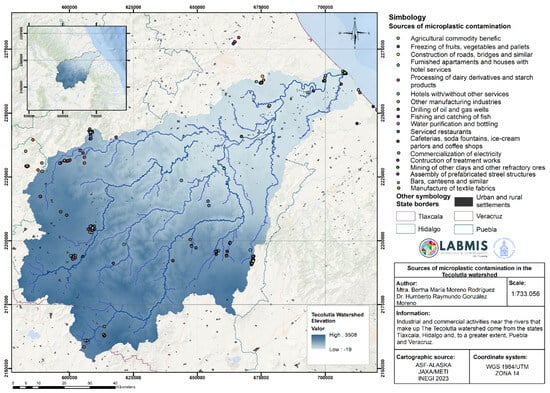
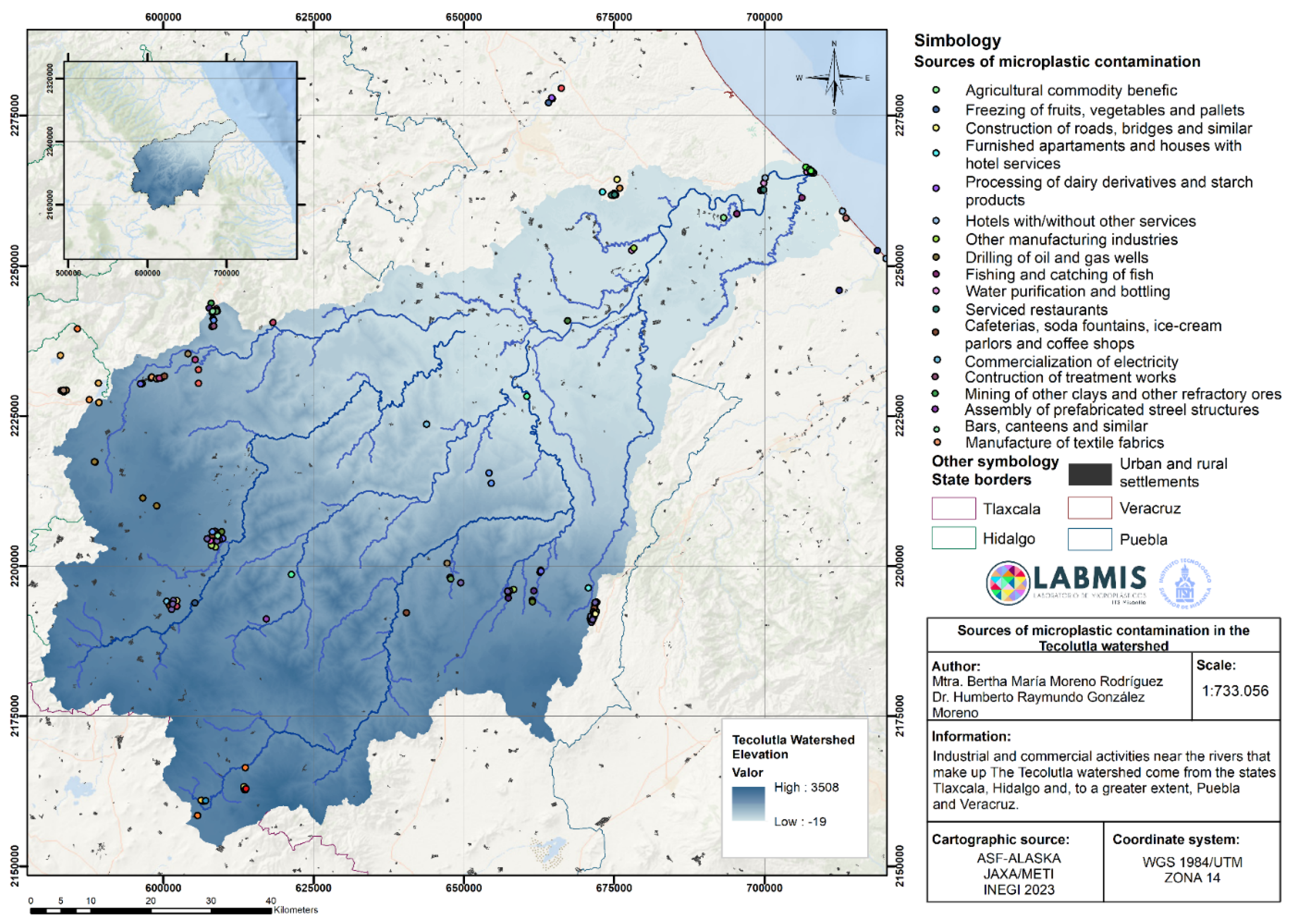
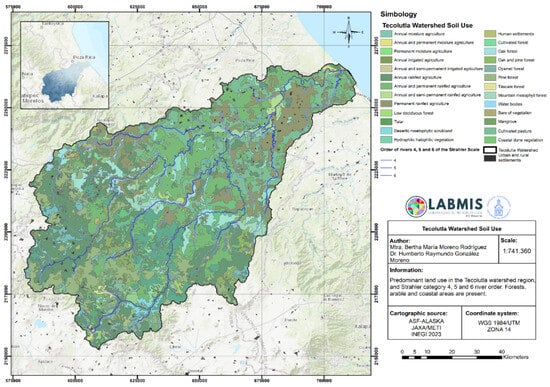
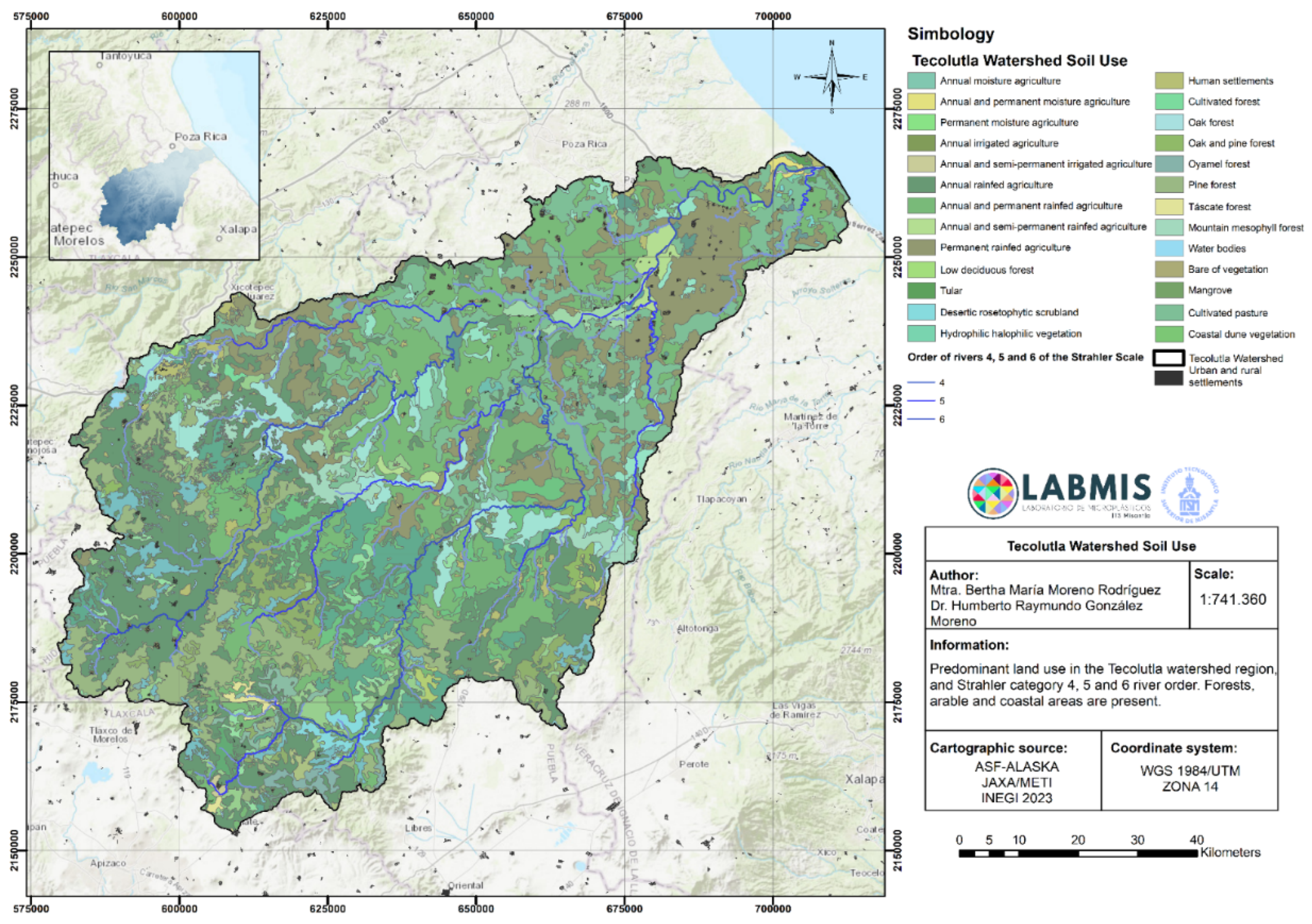
For the geographical location, two thematic maps were used, produced by the Microplastics Laboratory (LABMIS) of the ITS in Misantla (Misantla, Veracruz, Mexico), based on data from the Alaska Satellite Facility (ASF, Fairbanks, AK, USA), Japan Aerospace Exploration Agency (JAXA, Tokyo, Japan) and the Ministry of Economy, Trade and Industry (METI, Tokyo, Japan), and the National Institute of Statistics and Geography (INEGI, Aguascalientes, Mexico) in World Geodetic System (WGS)/Universal Transverse Mercator (UTM) Zone 14 projection. The pollution sources map locates industrial, commercial, and service activities (Figure 1), while the land use map of the Tecolutla River basin shows agricultural, forestry, urban, and ecological conservation areas (Figure 2).
Figure 1.
Spatial distribution of potential sources of microplastic pollution in the Tecolutla River basin. The map highlights economic activities and hydrological characteristics. Source: Prepared by LABMIS-ITS Misantla (Misantla, Veracruz, Mexico) using QGIS 3.28 (QGIS Development Team, Open Source Geospatial Foundation, Beaverton, OR, USA) with data from INEGI (Aguascalientes, Mexico), ASF (Fairbanks, AK, USA), JAXA (Tokyo, Japan), METI (Tokyo, Japan).
Figure 2.
Land use in the Tecolutla River basin. Includes agricultural, forest, urban, and ecological areas. Source: LABMIS-ITS Misantla (Misantla, Veracruz, Mexico, based on INEGI (Aguascalientes, Mexico, 2023) using QGIS 3.28 (QGIS Development Team, Open Source Geospatial Foundation, Beaverton, OR, USA) (WGS84/UTM Zone 14N).
2.2. Research Design
The study followed a descriptive, non-experimental applied research design with a mixed-methods approach. Statistical analysis and graphical representation tools were used to characterize the use of plastic materials at various stages of production processes, identify production practices, and assess waste management in the economic units of the basin. The analysis focused on exploratory data analysis, allowing for the identification of patterns and trends in variables associated with polymer use, economic sectors, and territorial conditions.
2.3. Questionnaire Design
A structured questionnaire was designed to gather information on productive activities in the Tecolutla River Basin, consisting of seventy-three (73) questions divided into the following five sections, as show in Table 1.
Table 1.
Structure of the questionnaire on productive activities in the Tecolutla River Basin.
The instrument was validated through expert review, with the participation of seven specialists in environmental research, the industrial sector, and business activities. The evaluation was conducted using an electronic form administered through a combination of remote and in-person methods, in which the experts provided their analysis based on criteria such as clarity, structure, relevance, and thematic coverage, as well as open-ended comments.
Most experts (80%) considered the instrument adequate in general terms, noting primarily the need to improve the wording and specificity of some items. Based on the feedback, redundancies were eliminated, questions were restructured into a dichotomous format (yes/no) to generate some sub-questions, and additional questions were added. As a result, the instrument evolved from 60 to 73 items, the version used in data collection.
The questionnaire used to characterize productive activities and plastic use is included as Supplementary Material (File S1) and includes a summary of the main changes resulting from the validation (Table S1).
2.4. Sample Selection
The universe consisted of active economic units (companies, businesses, any type of commercial entity) operating within the Tecolutla River basin in the states of Tlaxcala, Hidalgo, Puebla, and Veracruz, including agricultural, fishing, manufacturing, commercial, and service companies with the potential to generate plastics. Georeferenced data, hydrographic cartography, land use maps, and databases from the National Institute of Statistics and Geography and the National Statistical Directory of Economic Units [50,51] were incorporated for territorial location.
A non-probabilistic sampling of 19 economic units was used, considering the following criteria: located within the geographical limits of the Tecolutla River basin, in the most densely populated areas, located in proximity to water bodies of order 4, 5, and 6 given their relevance for the transport of pollutants, small, medium, and large economic units in the primary, secondary, and tertiary economic sectors were considered. According to these criteria, the sample consisted of a total of 19 economic units distributed throughout the basin as show in Table 2.
Table 2.
Selected sample.
2.5. Instrument Application, Data Collection, and Processing
The structured questionnaire on productive activities in the Tecolutla River Basin was administered from 4 May 2024 to 1 March 2025, in stages, beginning with the upper part of the basin (Tlaxcala and Hidalgo), the middle part (Puebla), and concluding with the lower part of the basin (Veracruz). This period includes the design, validation, and refinement phases of the survey instrument, as well as its administration across various municipalities, taking into account the geographic dispersion of the selected economic units. In this regard, the study followed a cross-sectional approach aimed at understanding productive activities during the specified time frame. Data were recorded using an electronic form; the collected data were organized and systematized in spreadsheets (Microsoft Excel 365, Microsoft Corporation, Redmond, WA, USA) and analyzed using statistical tools (Minitab 19, Minitab LLC, State College, PA, USA). The statistical analysis performed was descriptive in nature, including absolute and relative frequencies, with the aim of characterizing the use of plastic materials across the stages of the production cycle. Additionally, data visualization tools such as heat maps and comparative graphs were used to facilitate the identification of patterns in plastic use by sector and type of economic activity.
To construct the environmental risk index by municipality, categorical variables related to infrastructure conditions and territorial factors linked to the potential generation of plastic waste were defined, including the operation of wastewater treatment plants (WWTPs), the presence of open-air dumps, the impact of hydrometeorological events, and the drought index. These variables were coded binarily (presence/absence) and weighted uniformly, assuming independence among factors, thereby yielding a score per municipality, which was classified into three ordinal risk levels (low, medium, and high), allowing for systematic comparison among the analyzed municipalities.
Given the sample size (n = 19) and the non-probabilistic nature of the sampling, no statistical inference tests or parametric modeling were performed. Consequently, the results should be interpreted from an analytical–exploratory perspective.
Artificial intelligence (AI)-based tools were used exclusively for the purposes of graphic enhancement and visualization. Specifically, AI-assisted tools were employed to optimize the visual quality and clarity of certain figures, without altering the scientific content or the underlying data.
3. Results and Discussion
3.1. Location and Identification of Economic Units
In terms of population, 1,241,419 people live in the basin, of whom 646,215 are female and 593,624 are male, representing 52% and 48%, respectively. This population is distributed across four states, 74 municipalities, and 2262 localities. The state of Puebla accounts for 81.6% of the total population of the basin, followed by the state of Veracruz with 17%, Tlaxcala with 1%, and Hidalgo with 0.40% [52].
The localities included in the sample have a reported population of 278,049, of which 53% are women and 47% are men. On average, each municipality reports 12,166 inhabited private dwellings, with figures ranging from 995 to 26,988 dwellings. Slightly more than half (54%) of the dwellings have a washing machine, which has socioeconomic implications such as water use and the generation of plastic microfibers [52].
Environmental, social, and infrastructure conditions can significantly affect the generation and dispersion of microplastics. Eighty-six percent report a total absence or inadequate functioning of wastewater treatment plants (WWTPs).
In 83% of the localities, there are open dumps, some of them clandestine, which lack local provisions for environmental control, increasing the risk of leaching, plastic fragmentation, and rain runoff [53].
All localities are close to permanent waterways, such as the Moctezuma River, the Apulco River, the Tenango Dam, the Cazones River, etc. This geographical condition intensifies the possibility of transport to larger waterways, especially during the rainy season [54]. Sixty-six percent of municipalities report recent impacts from hurricanes or tropical cyclones, such as Hurricane Grace (2021) and Hurricane Katia (2017). These hydrometeorological events favor the spread of poorly managed solid waste [55].
The prevailing climate in these areas is humid, with abundant seasonal rainfall and high relative humidity, coupled with a drought index ranging between 0.73 and 0.78, which leads to regions with mixed vulnerability: high exposure to temporary droughts, but also high rainfall [56]. This would promote the mechanical and photochemical degradation of exposed plastics, accelerating their conversion into microfragments.
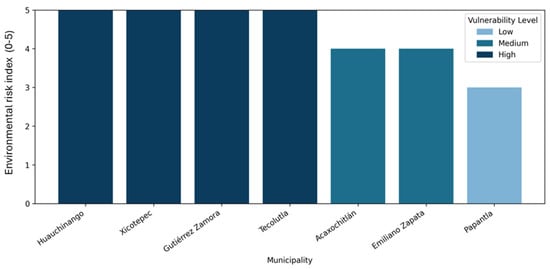
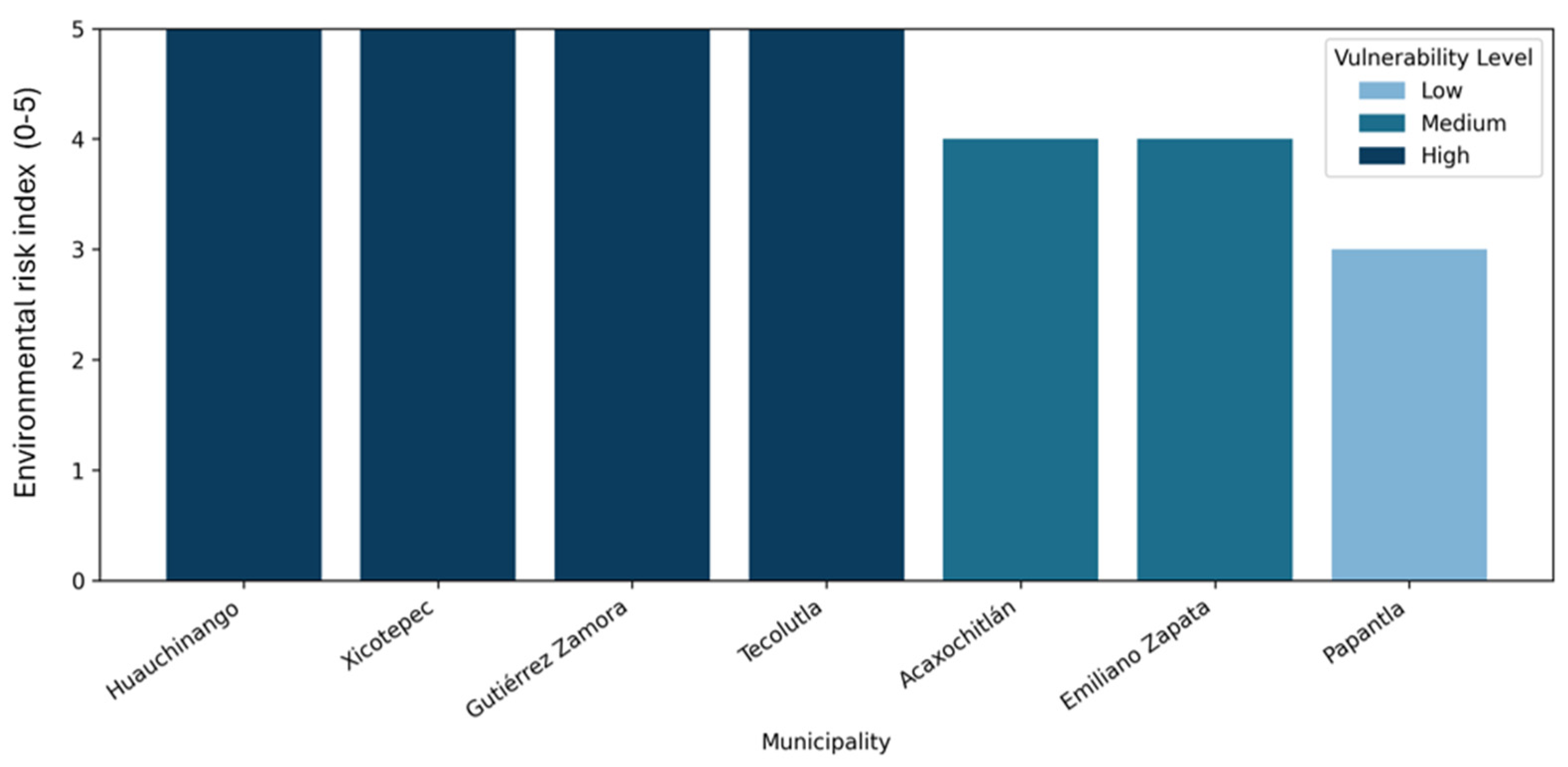
Using the above information, we were able to develop an environmental risk index (Figure 3) applied to the seven municipalities in the Tecolutla River basin in Mexico where the 19 selected economic units are located, with the aim of estimating their vulnerability to microplastic dispersion. This index was constructed based on five key factors: operation of wastewater treatment plants (WWTPs), presence of landfills, proximity to water bodies, impact of hurricanes, and drought index. Each factor was coded binarily (presence/absence) and aggregated at the municipal level to construct the environmental risk index; the results reflect contextual risk conditions rather than individual assessments of economic units. Six municipalities present high risk due to deficiencies in sanitation infrastructure and exposure to extreme weather events. This approach facilitates the identification of priority areas for environmental interventions.
Figure 3.
Environmental risk index by municipality based on infrastructure and hydrometeorological exposure. Source: authors’ elaboration based on field data (2024–2025) and databases from INEGI, INECC, and CONAGUA.
3.2. Characteristics of the Economic Sector
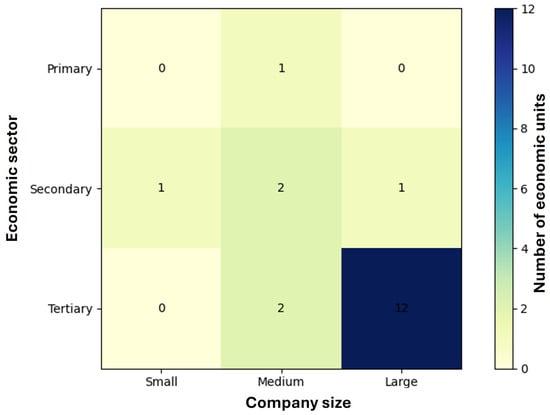
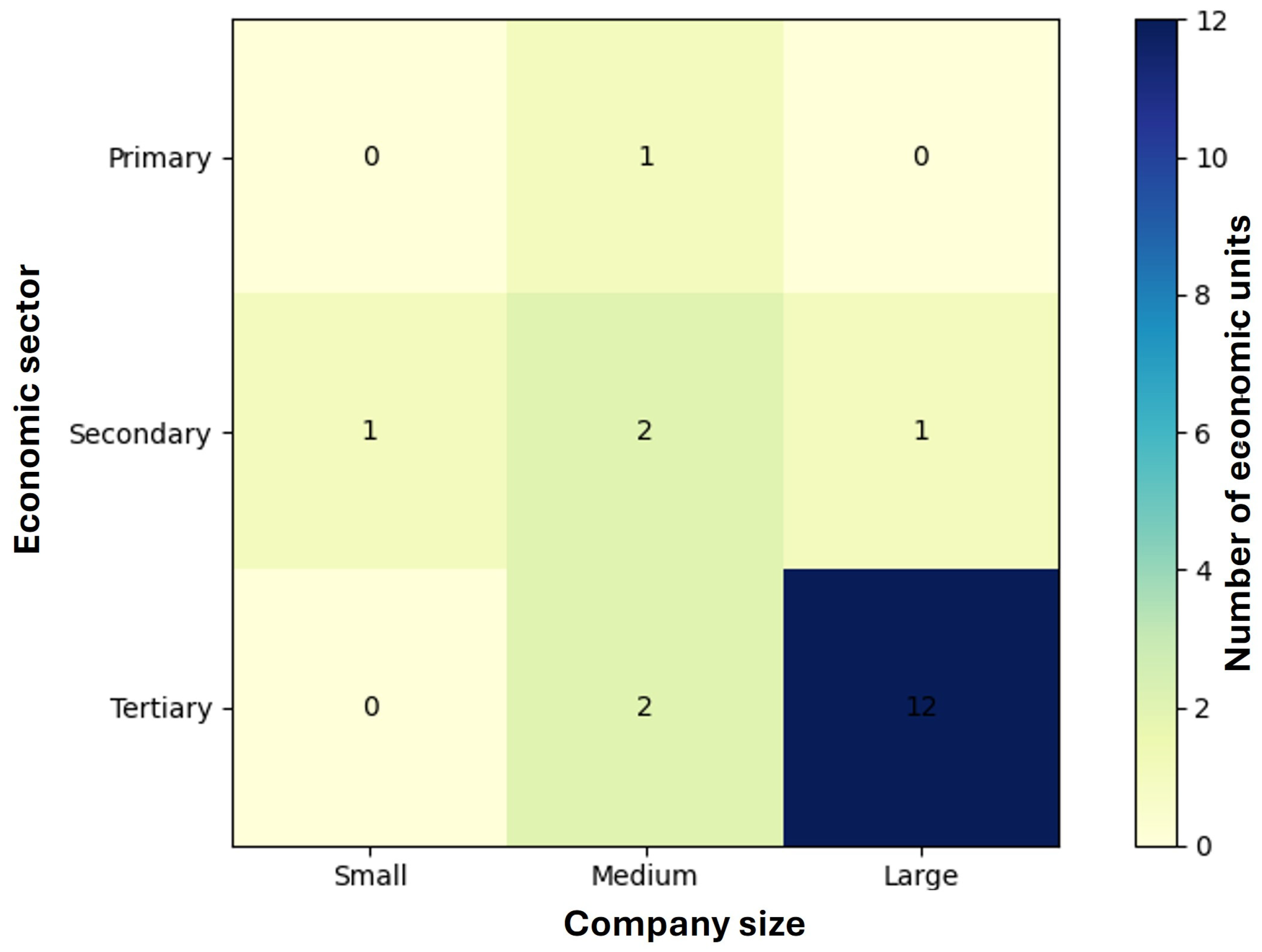
The visual analysis (Figure 4) using a heat map shows a marked concentration of small businesses in the tertiary sector (63.2%), primarily in accommodation and food service, suggesting a shift toward a service-based economy as well as a possible association with increased use of single-use plastics, synthetic cleaning products, and packaging, which have been identified as potential sources of secondary microplastics. The secondary sector, representing 21.1% of the sample, exhibits greater diversity in size: 10% are medium-sized, 5.3% are large, and 5.3% are small, and they are associated with manufacturing and construction activities. The low presence of primary activities (5.3%), with only one medium-sized fishing cooperative, reflects a transition toward higher-value-added activities.
Figure 4.
Distribution of company size by economic sector in the Tecolutla River basin. Data from 19 economic units surveyed. Source: authors’ fieldwork (2024–2025).
3.3. Information on Inputs
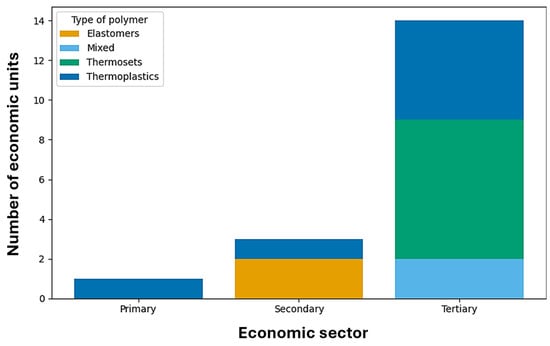
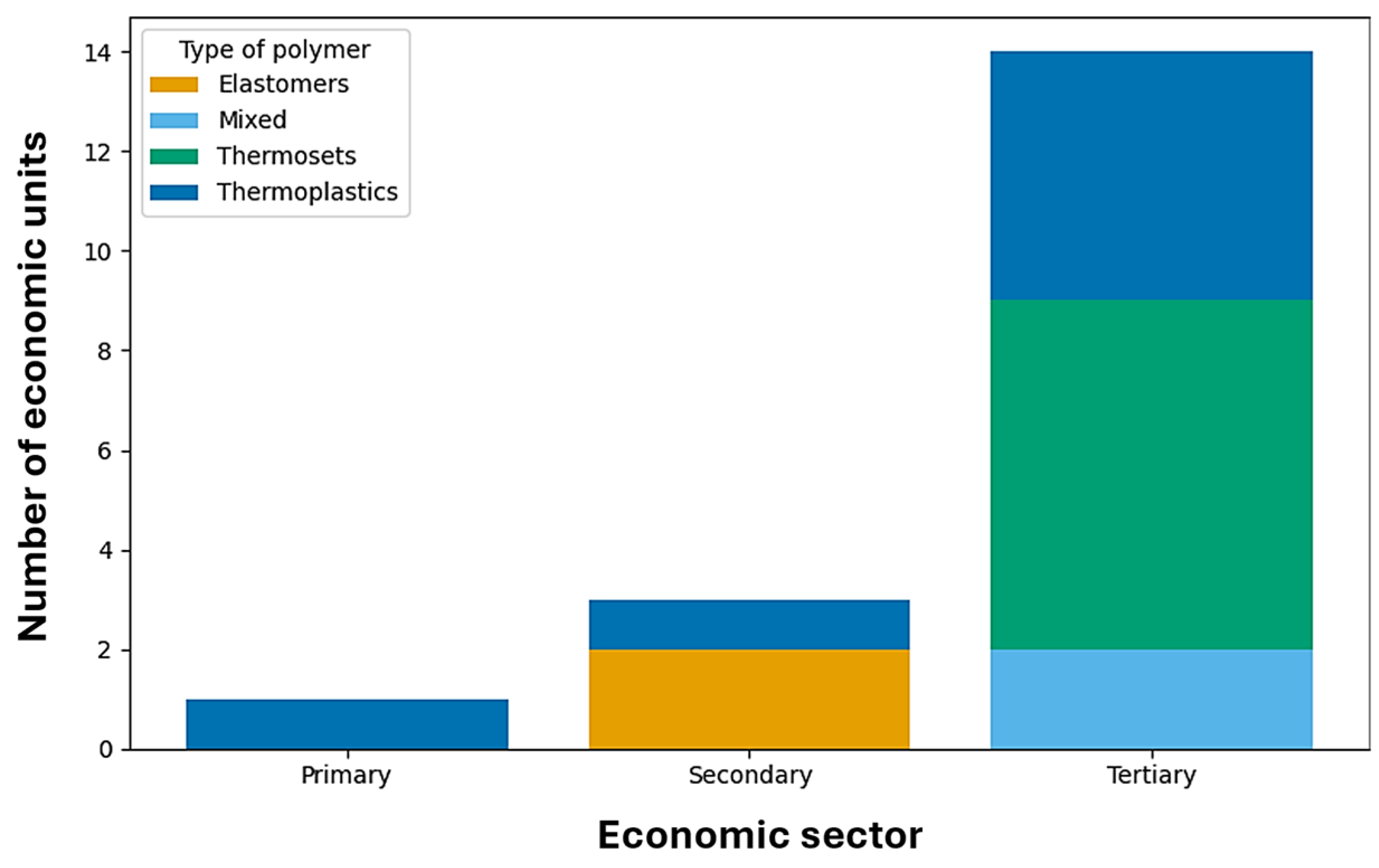
The results reflect a high dependence on plastic materials used in production inputs. In total, 94.7% of economic units incorporate some type of polymer, suggesting a high potential for the generation of secondary microplastics due to the intensive use of materials susceptible to fragmentation. Thermosets are used in 42.1% of cases, such as polyester, polyurethane, and epoxy resins, which are common in construction, civil engineering, and textile manufacturing; thermoplastics (PVC, PET, polypropylene, polystyrene) are used in 31.6% of cases for packaging, utensils, or containers; and elastomers such as natural or synthetic rubber are used in 10.5% of cases.
Figure 5 shows the distribution of polymer use by economic sector. Within the sample analyzed, the service sector accounts for the largest number of economic units using thermoplastic and thermoset polymers, followed by the secondary sector. The primary sector accounts for a limited share of the economy, suggesting a possible link between economic activities and the intensity of plastic consumption. The predominant use of thermoplastics PET, polyethylene (PE), or polypropylene (PP), which are widely used in single-use packaging, suggests a high potential for microplastic generation due to their easy fragmentation through thermal, mechanical, and photochemical action; thermosets used in industry as coatings and adhesives are more resistant to recycling and degradation, which can be a persistent source of MP generation over time through wear and tear.
Figure 5.
Types of polymers used by sector: thermoplastics, thermosets, elastomers. Data from structured surveys in 19 economic units. Source: authors (2024).
3.4. Information on the Production Process and Final Product
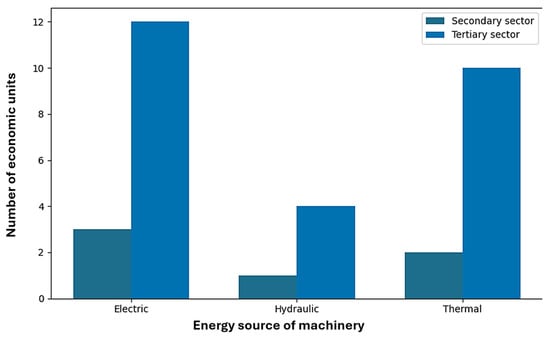
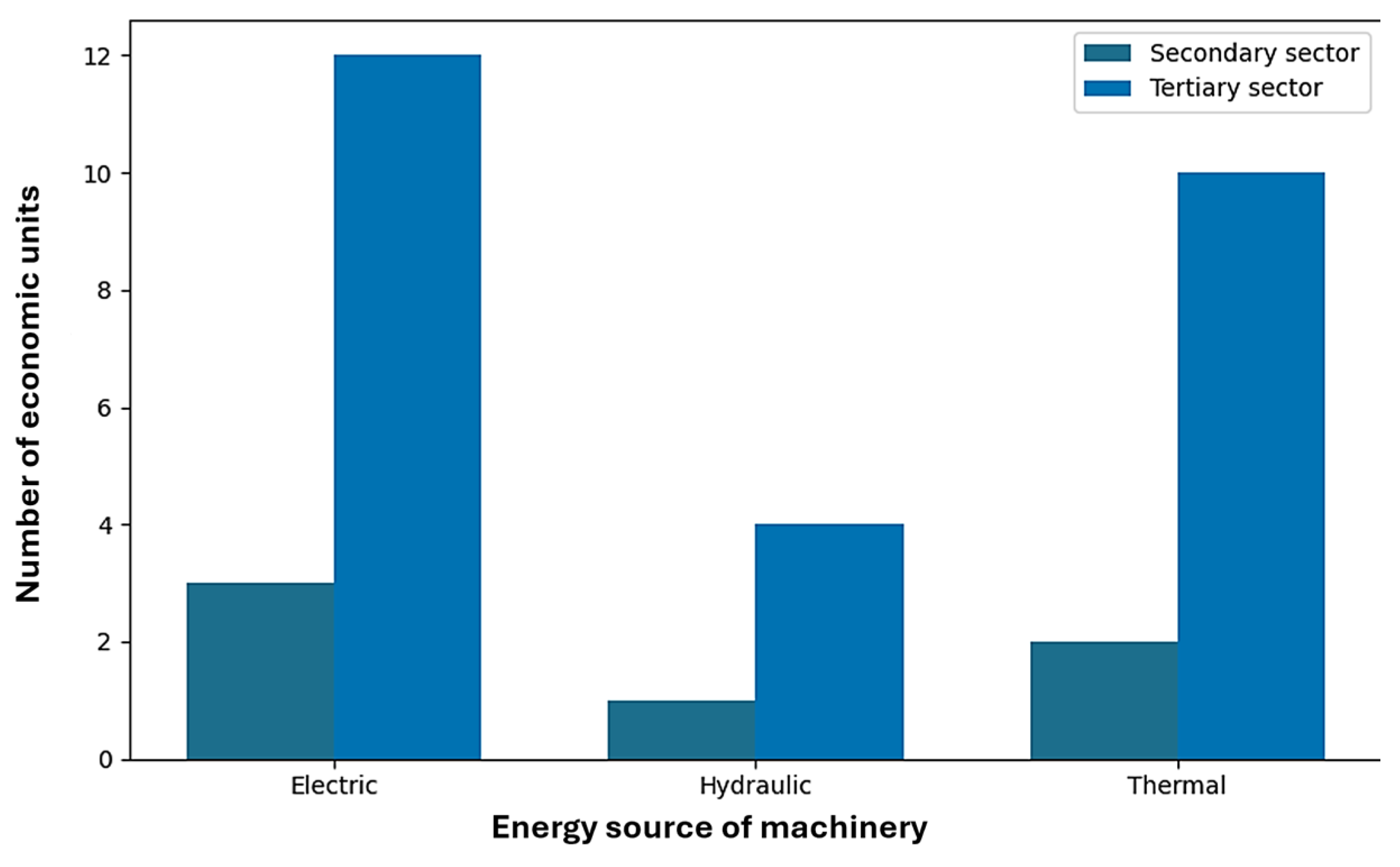
Most economic units (94.7%) use some type of powered machinery, indicating a high level of technological advancement in production processes and suggesting a potential increase in the risk of generating microplastics, since electrical and hydraulic equipment incorporates plastic components such as seals, hoses, and coatings made from high-strength thermoplastics, which, according to the literature, can undergo wear due to friction, heat, or vibration during continuous operation, leading to the gradual release of plastic particles into the environment (Figure 6).
Figure 6.
Use of machinery by type of energy (electric, thermal, manual) in the economic units surveyed. Implications for the generation of microplastics. Source: analysis of field surveys, 2025.
On the other hand, the technical equipment commonly found in industrial kitchens or heating processes is associated with a potential risk of generating microscopic particles that are released into the air when subjected to high temperatures [57]. This is consistent with recent studies showing that plastic materials can release polymeric micropollutants under mechanical and thermal stress through stress-induced phase separation processes [58].
This suggests the possible presence of industrial microplastics, understood as those derived from industrial use and not from everyday consumption. It is important to note that the municipalities of Tecolutla, Gutiérrez Zamora, and Papantla have the highest number of businesses using this type of technology.
3.5. Primary Sector—Fishing Activities
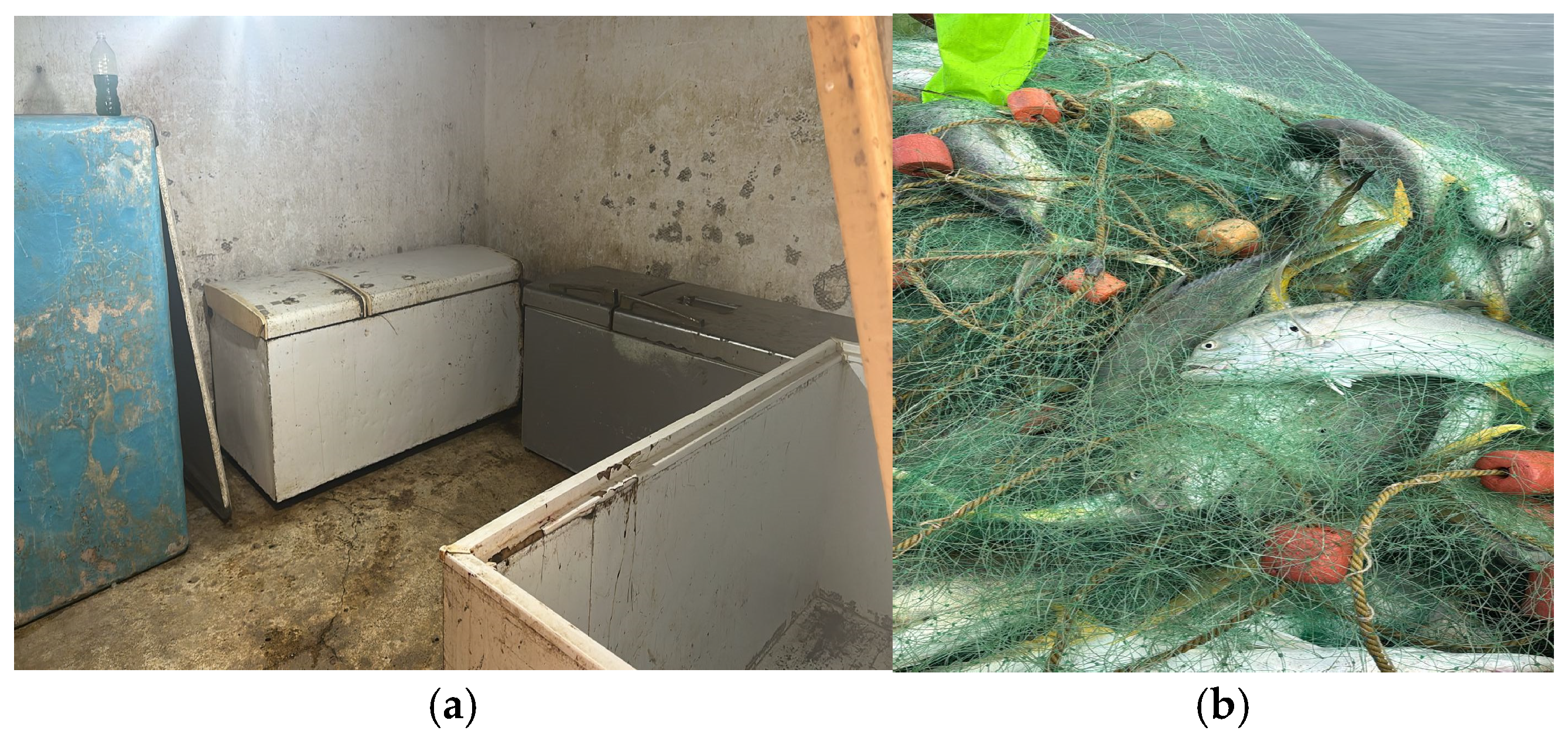
In the case of fishing, the economic unit is a fishing cooperative located in the municipality of Huauchinango, Puebla, on the Tenango dam, where fishing nets made of synthetic plastics such as nylon, fiber, and polyester are used as the primary tool (Figure 7). The organization reports that it does not have specific protocols for the collection or handling of broken or lost (ghost) nets.
Figure 7.
Artisanal fishing practices in the Tenango reservoir (Huauchinango, Puebla). (a) Informal storage of nets and fishing equipment in cooperative facilities. (b) Use of fishing nets made from synthetic polymers (nylon, fiber, and polyester), potential sources of microplastics due to wear, fragmentation, and loss of material. Source: field photographs taken by the authors, 2025.
As for the vessels, they use synthetic coatings that are applied as repairs are needed; since most of these vessels are old, this could increase the release of potentially toxic particles. It is worth noting that, in this activity, the final product is transported in metal, wood, or cardboard containers, which reduces the use of plastic packaging. These practices create conditions conducive to the release of microplastics, particularly due to the wear and tear of equipment and tools, as well as the loss of synthetic nets into the aquatic environment.
3.6. Secondary Sector: Textile Industry
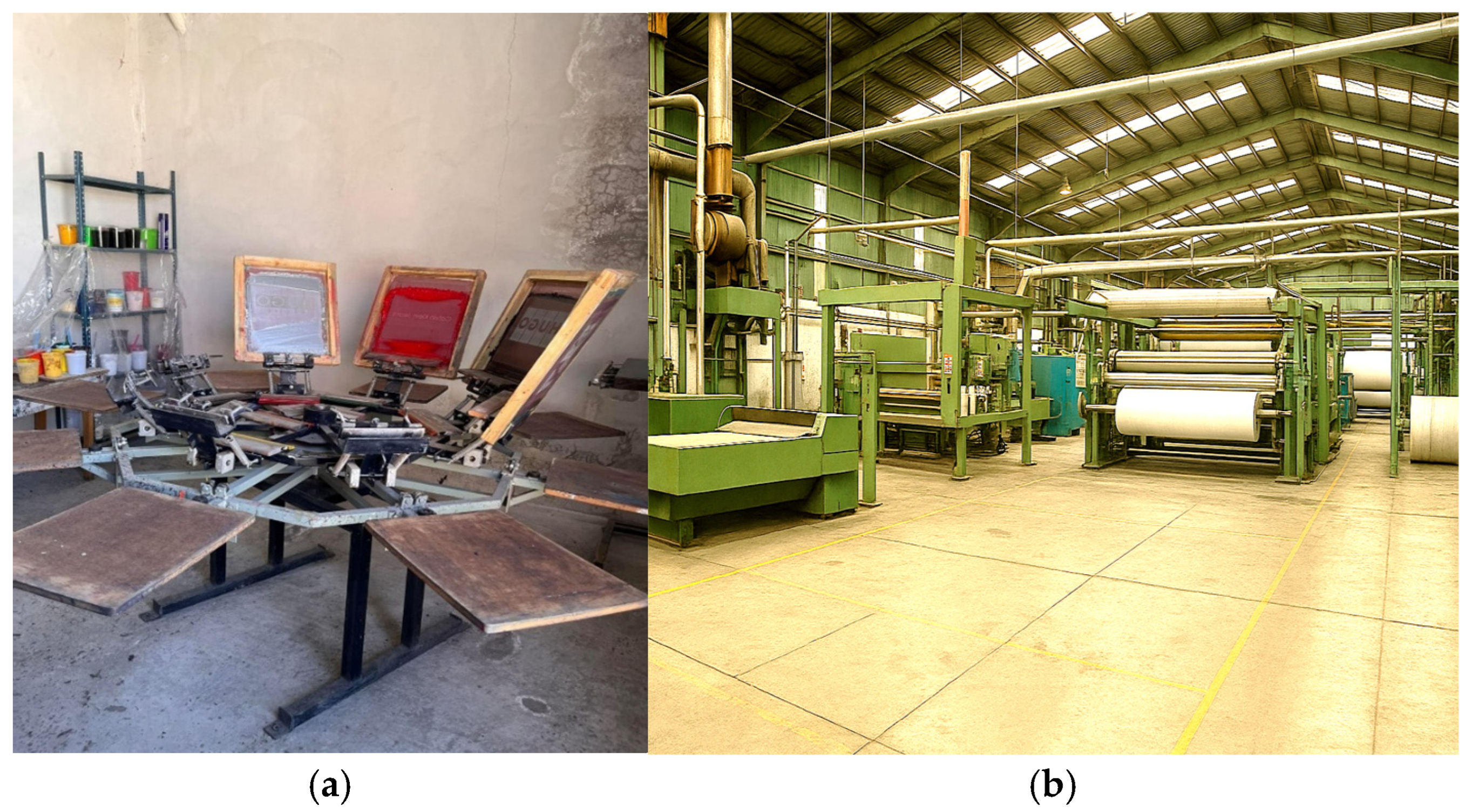
Two companies with textile activities were identified within the basin, specifically manufacturing textile inputs (Acaxochitlán, Hidalgo) and clothing (Emiliano Zapata, Tlaxcala). They reported the use of synthetic fibers as an essential raw material (nylon and polyester). Textile cutting is done with manual scissors and some semi-industrial blades, with the economic unit in the municipality of Acaxochitlán referring to automated processes and greater technological advancement (Figure 8).
Figure 8.
Textile production centers in Emiliano Zapata (Tlaxcala) and Acaxochitlán (Hidalgo). (a) Textile production process with semi-manual operations and use of basic machinery. (b) Industrial textile manufacturing process with automated machinery. Source: field photographs taken by the authors, 2025.
With regard to washing and filtration processes, both carry out washing processes without adding additional filters to retain plastic microfibers, which could lead to microfibers being released directly into the local water system. This is compounded by a lack of waste management, recycling, or additional treatment, and the use of containers made of plastic and cardboard. This is a linear disposal pattern without circularity, which increases the likelihood of microfibers being released directly into the environment.
These findings are related to the infrastructure available in these localities. In the case of Acaxochitlán, there is a wastewater treatment plant, but it is not operational, while Emiliano Zapata does not have one, which increases the possibility of direct discharge of microfibers into the environment. Both municipalities have nearby rivers and streams: in Acaxochitlán, the Moctezuma River and the Tecolutla and Cazones River basins; in Emiliano Zapata, the Apulco River and the Esperanza River. This proximity may favor the transport of MPs along the hydrographic network. Likewise, both municipalities have open dumps, increasing the risk of plastic waste transport by surface runoff, wind, or infiltration.
The climate in both locations is humid and rainy, with a history of hurricane damage (Hurricane Grace in 2021 in Acaxochitlán, Cyclone Earl in 2016 in Emiliano Zapata), which can remobilize improperly managed waste and accelerate the dispersion of MPs. The results suggest the possible existence of a significant risk of microfiber (MF) dispersion in the Tecolutla River basin, due to the convergence of industrial processes that generate large amounts of plastic microfibers, poor management of liquids and solids, proximity to water bodies, and climatic conditions conducive to the transport of pollutants
3.7. Secondary Sector: Construction Industry
Information was collected from two economic units, located in Xicotepec and Huauchinango, both in the state of Puebla, which use polymer-based inputs such as silicones, waterproofing agents, and coatings, representing a direct source of plastic materials. One hundred percent use tools composed of polymers and metal. The use of PVC and GRP (glass-reinforced polyester) molds was observed, as well as expanded polyethylene ducts, which are considered to be highly persistent in the environment. The machinery used includes concrete mixers, industrial drills, chainsaws, and backhoes, which implies constant mechanical wear and tear and the likely generation of secondary plastic waste.
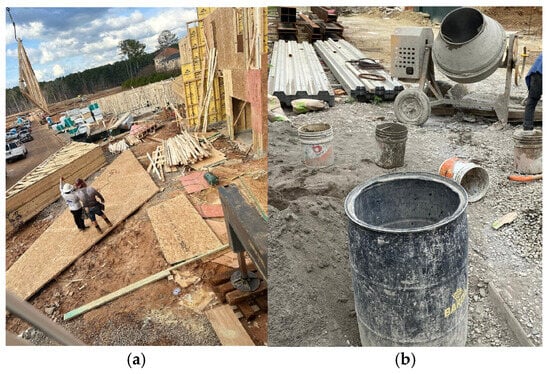
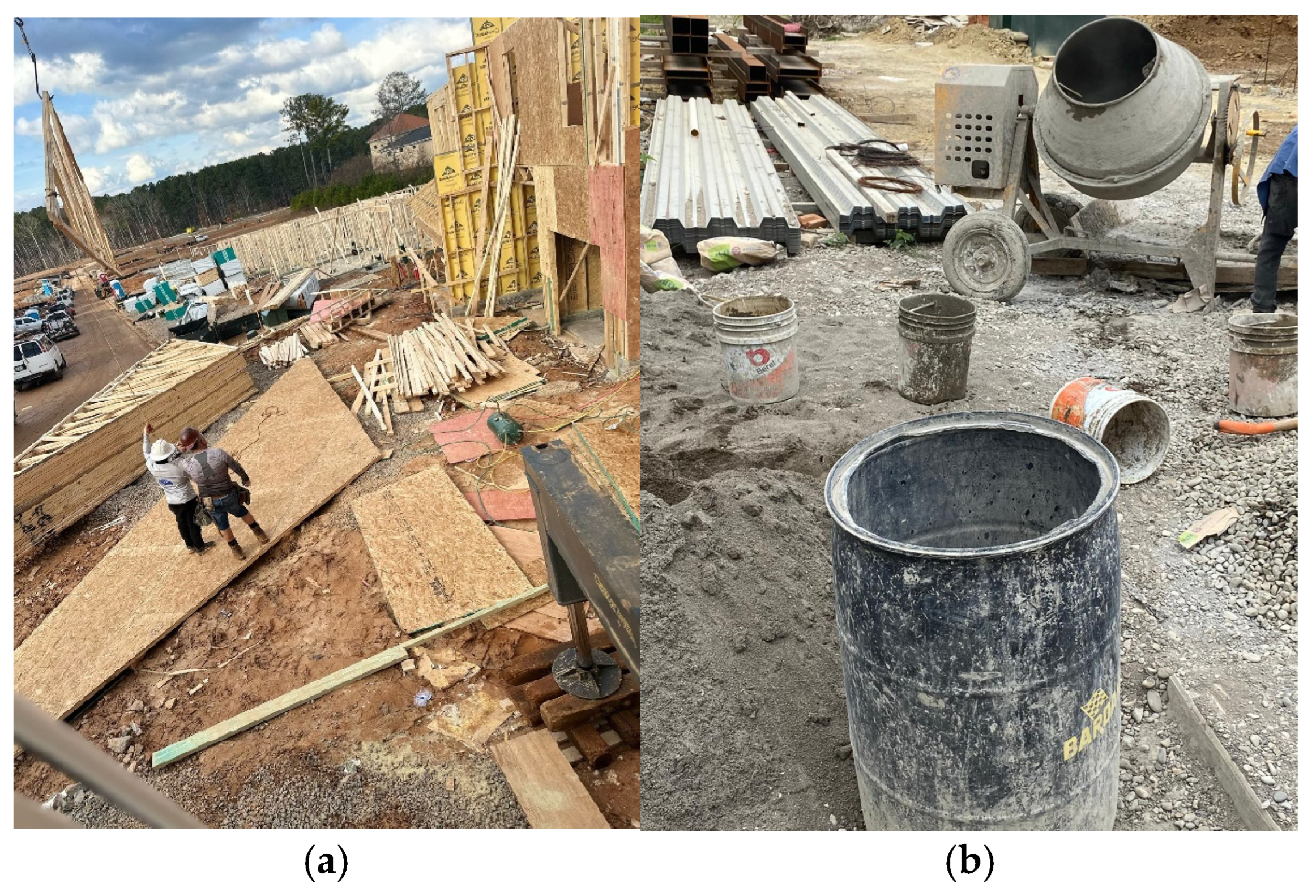
In terms of waste management, only one of the two economic units reported separating waste, and both use plastic containers and polypropylene sacks to transport and handle materials. This increases the risk of MPs release. At the municipal level, more than 95% of homes have electricity, piped water, and drainage, which represents a favorable infrastructure but does not guarantee the proper treatment of industrial waste. It should be noted that only one of the economic units separates waste. Typical activities in the construction sector are shown in Figure 9, where the use of wooden structures, concrete machinery, and plastic containers is evident.
Figure 9.
Construction sector activities in the municipalities of Xicotepec and Huauchinango (Puebla). (a) Building work using wooden structures, hand tools, and construction materials. (b) Use of machinery, containers, and receptacles made of plastic materials during construction activities, potential sources of microplastics due to wear and fragmentation. Source: field observation by the authors, 2025.
3.8. Tertiary Sector: Accommodation and Food Preparation Services
The study examined 14 economic units in the service sector, revealing widespread use of plastic materials in operational practices, particularly in cleaning processes (86%), such as plastic brooms, fiber cloths, and scouring pads—items identified in the literature as potential sources of plastic microfiber release during use and wear. Fifty percent use plastic materials such as nylon and polyester in product packaging within their processes. Waste management is deficient, as only 43% of respondents separate organic and inorganic waste.
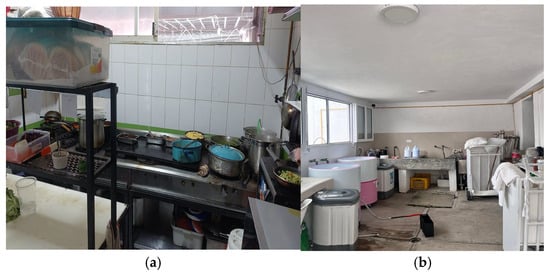
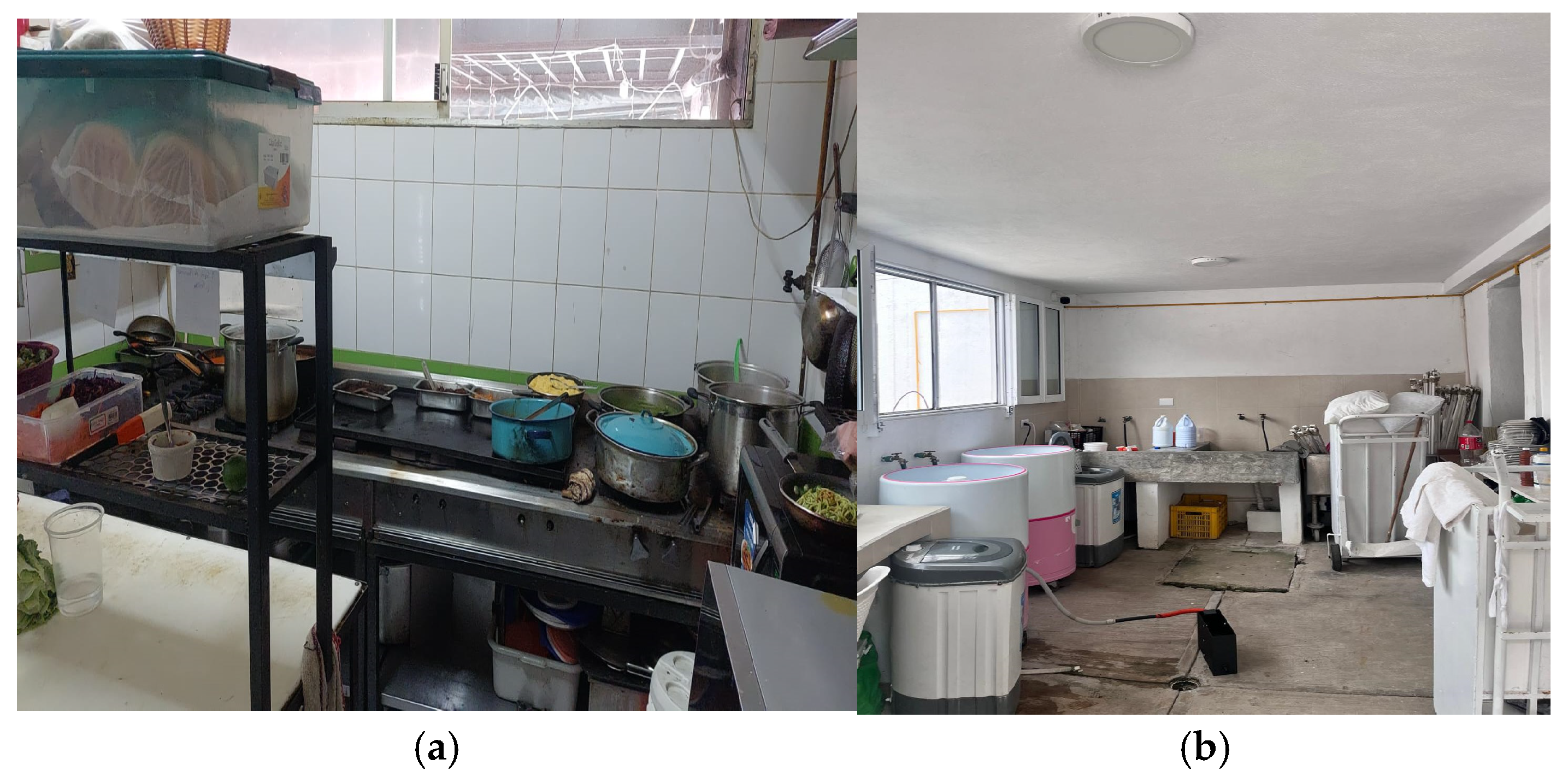
Seventy-one percent do not implement actions to reduce single-use plastics, such as replacing containers with biodegradable or reusable materials. Similarly, 86% lack the infrastructure or machinery for recycling, and only 14% reported practices such as composting or internal reuse of waste. One hundred percent use plastic bags for the storage and handling of supplies, finished products, and waste. For food consumption, 71% use reusable metal cutlery, while the rest use plastic materials, mostly in takeaway services. These conditions are illustrated in Figure 10.
Figure 10.
Food preparation and laundry areas in accommodation services in the Tecolutla River basin. (a) Food preparation area where the use of utensils, containers, and surfaces made of plastic materials can be observed. (b) Laundry area with limited infrastructure for the management and treatment of gray water and waste associated with textile washing, a potential source of plastic microfibers. Source: field documentation by the authors, 2024–2025.
This pattern reinforces the role of inadequate wastewater management as a critical driver of microplastic release in the tertiary sector. Notably, none of the municipalities analyzed (Huauchinango, Xicotepec, Papantla, Gutiérrez Zamora, and Tecolutla) have operational wastewater treatment plants (WWTPs) for gray water generated by hotels and restaurants, substantially increasing the risk of direct discharge. This issue is particularly pronounced in Tecolutla (lower basin), where seasonal drought and growing anthropogenic pressure exacerbate stress on the riparian ecosystem.
3.9. Sustainable Development Goals (SDGs) and National Strategic Programs (PRONACES)
At the end of the survey, two questions were added, one with the intention of identifying which of the 17 SDGs of the 2030 agenda are considered relevant by the organizations and the other to evaluate the alignment of productive activities with the ten axes of the PRONACES of the Ministry of Science, Humanities, Technology, and Innovation (SECIHTI) in order to identify regional patterns and visualize the coherence between economic sectors and the declared axis. It is important to note that 100% of the respondents were unaware of both the SDGs and the PRONACES, so the responses required a prior explanation of their conceptualization [59].
With regard to the SDGs, it is observed that the economic units analyzed in the Tecolutla River basin show a stronger link to Goal 8 (Decent work and economic growth), Goal 12 (Responsible consumption and production), and Goal 9 (Industry, innovation, and infrastructure), which were selected by at least half of the respondents, indicating a relative awareness of the impact of activities on sustainable economic development, resource efficiency, and responsible innovation. With regard to PRONACES, the most frequently mentioned were Culture, Socio-ecological Systems, and Food Sovereignty, showing a perception of the impact not only in the economic sphere, but also in the social and environmental dimensions, especially in relation to production-territory interaction, as well as the preservation of cultural practices.
4. Conclusions
The results of this study show consistent patterns of plastic material use and management in the economic units of the Tecolutla River basin. More than 94% of the companies surveyed use some type of polymer in their inputs or final products, with thermoplastics such as PET, PVC, and polypropylene standing out. These are relevant due to their high presence in consumer waste and their potential to become secondary MPs through physical or mechanical degradation.
The tertiary sector, accommodation services, and food preparation account for the largest number of units, showing patterns of linear consumption and limited implementation of recycling and waste segregation measures. In the case of the secondary sector, textile manufacturing, and construction companies, there is a high presence of synthetic fibers and elastomers in inputs, machinery, and final products, which increases the risk of plastic microfibers being released into the environment, especially in the absence of filters and retention systems.
In addition to the above, infrastructure and environmental conditions exacerbate the potential for microplastic dispersion. The municipalities of Tecolutla, Gutiérrez Zamora, and Papantla combine factors such as high density, tourism, proximity to bodies of water, lack of wastewater treatment plants, and the presence of open dumps. Conditions that, combined with heavy rainfall, could create conditions conducive to the transport of plastic waste toward the coast.
The findings are consistent with previous studies that highlight the relevance of socioeconomic activities and infrastructure in the load of MPs in urban and rural watersheds. This is the case of the Atoyac River basin in Mexico or the water systems in China, which offer parallels regarding the pressure exerted by the textile and construction sectors on the aquatic environment [25,29].
From a socioeconomic perspective, it was observed that 71% of economic units do not apply any type of policy to reduce single-use plastics and only 43% separate waste, which highlights a gap in the knowledge and application of the SDGs and PRONACES axes, which, although recognized in discourse, are not integrated into local production practices. Greater coordination between the productive sectors, higher education, and municipal governments would be useful to promote ecological transition with an emphasis on filtering technologies, recycling, and training.
Among the study’s limitations, it should be noted that while the study allows for an exploratory characterization, the results may not be representative of all productive sectors in the watershed due to the use of non-probabilistic sampling, which limits the ability to draw statistical inferences about all economic units. Furthermore, the analysis focused on practices reported by the interviewees, which implies potential biases in the reported information. The study does not include direct measurements of the mechanisms of microplastic generation or release, and the interpretations are based on prior scientific evidence and the characteristics of the analyzed production processes.
However, the intentional design of the sample allowed for coverage of key sectors and strategic areas, providing an initial approach to analyzing productive activities in the Tecolutla River basin and their relationship to the potential generation of microplastics. Therefore, the findings should be interpreted as analytical generalizations rather than statistical ones, and future studies with probabilistic designs and direct measurements of microplastic concentrations are required for their validation.
Supplementary Materials
The following supporting information can be downloaded at: https://www.mdpi.com/article/10.3390/microplastics5020069/s1, File S1: Questionnaire for the characterization of productive activities and plastic use in the Tecolutla River watershed, including the complete instrument and a summary of modifications derived from expert validation; Table S1: Summary of changes resulting from expert validation.
Author Contributions
Conceptualization, B.M.-R. and H.R.G.-M.; methodology, B.M.-R. and C.P.-M.; software, B.M.-R.; validation, B.M.-R., H.R.G.-M., and L.A.P.-P.; formal analysis, B.M.-R. and Y.B.-P.; investigation, B.M.-R., C.P.-M., and Y.B.-P.; resources, H.R.G.-M. and G.M.-C.; data curation, B.M.-R. and L.A.P.-P.; writing—preparation of the original draft, B.M.-R.; writing—review and editing, H.R.G.-M., C.P.-M. and G.M.-C.; visualization, B.M.-R. and Y.B.-P.; supervision, H.R.G.-M. and G.M.-C.; project management, B.M.-R.; funding acquisition, H.R.G.-M. and G.M.-C. All authors have read and agreed to the published version of the manuscript.
Funding
This research did not receive external funding.
Institutional Review Board Statement
Not applicable.
Informed Consent Statement
Not applicable.
Data Availability Statement
Original contributions presented in this study are included in the article/Supplementary Material. Further inquiries can be directed to the corresponding authors.
Acknowledgments
To the Graduate Department of the Instituto Tecnológico Superior de Misantla, specifically the Doctorate in Engineering Sciences program, for the facilities, support, and academic guidance provided in the development of this study. While preparing this manuscript, the authors used artificial intelligence-based tools to enhance the visual presentation of some figures. The authors have reviewed and validated all the results generated and assume full responsibility for the content of this publication.
Conflicts of Interest
The authors declare that they have no conflicts of interest.
References
- Precedence Research. Plastics Market Size and Forecast Report 2024–2032; Precedence Research: Ottawa, ON, Canada, 2024; Available online: https://www.precedenceresearch.com/plastics-market (accessed on 15 September 2024).
- Grand View Research. Plastics Market Size, Share & Trends Analysis Report, 2024–2030; Grand View Research: San Francisco, CA, USA, 2024; Available online: https://www.grandviewresearch.com/industry-analysis/global-plastics-market (accessed on 15 January 2025).
- Fernandes, A.N.; Bertoldi, C.; Lara, L.Z.; Stival, J.; Alves, N.M.; Cabrera, P.M.; Grassi, M.T. Microplastics in Latin America Ecosystems: A Critical Review of the Current Stage and Research Needs. J. Braz. Chem. Soc. 2022, 33, 303–326. [Google Scholar] [CrossRef] [Scilit]
- OECD. Global Plastics Outlook: Economic Drivers, Environmental Impacts and Policy Options; OECD Publishing: Paris, France, 2022. [Google Scholar] [CrossRef] [Scilit]
- National Institute of Statistics and Geography (INEGI). Economic Censuses 2019; INEGI: Aguascalientes, Mexico, 2020; Available online: https://www.inegi.org.mx/programas/ce/2019/ (accessed on 15 September 2024).
- GlobeNewswire. Mexico Plastic Industry Research Report 2024–2033; GlobeNewswire: Los Angeles, CA, USA, 2023; Available online: https://www.globenewswire.com (accessed on 15 September 2024).
- ANIPAC. Annual Report on the Plastics Industry in Mexico, 2023; National Association of Plastics Industries (ANIPAC): Mexico City, Mexico, 2023. [Google Scholar]
- Mejía-Estrella, I.A.; Peña-Montes, C.; Peralta-Peláez, L.A.; Del Real Olvera, J.; Sulbarán-Rangel, B. Microplastics in Sandy Beaches of Puerto Vallarta on the Pacific Coast of Mexico. Sustainability 2023, 15, 15259. [Google Scholar] [CrossRef] [Scilit]
- National Institute of Statistics and Geography (INEGI). National Accounts System of Mexico; INEGI: Aguascalientes, Mexico, 2024; Available online: https://www.inegi.org.mx (accessed on 15 September 2024).
- Al-Sabagh, A.M.; Yehia, F.Z.; Eshaq, G.; Rabie, A.M.; ElMetwally, A.E. Greener routes for recycling of polyethylene terephthalate. Egypt. J. Pet. 2016, 25, 53–64. [Google Scholar] [CrossRef] [Scilit]
- Schulte, A.; Kampmann, B.; Galafton, C. Measuring the Circularity and Impact Reduction Potential of Post-Industrial and Post-Consumer Recycled Plastics. Sustainability 2023, 15, 12242. [Google Scholar] [CrossRef] [Scilit]
- PlasticsEurope. Plastics—The Facts 2023: An Analysis of European Plastics Production, Demand and Waste Data; PlasticsEurope: Brussels, Belgium, 2023; Available online: https://plasticseurope.org (accessed on 15 September 2024).
- Geyer, R.; Jambeck, J.R.; Law, K.L. Production, use, and fate of all plastics ever made. Sci. Adv. 2017, 3, e1700782. [Google Scholar] [CrossRef] [Scilit]
- Pilapitiya, P.G.C.N.T.; Ratnayake, A.S. The World of Plastic Waste: A Review. Clean. Mater. 2024, 11, 100220. [Google Scholar] [CrossRef] [Scilit]
- UNEP. From Pollution to Solution: A Global Assessment of Marine Litter and Plastic Pollution; United Nations Environment Programme: Nairobi, Kenya, 2021. [Google Scholar]
- Li, K.; Ward, H.; Lin, H.X.; Tukker, A. Economic viability requires higher recycling rates for imported plastic waste than expected. Nat. Commun. 2024, 15, 7578. [Google Scholar] [CrossRef] [Scilit]
- ANIPAC. Plastic Recycling Rates in Mexico 2023; National Association of Plastics Industries (ANIPAC): Mexico City, Mexico, 2023. [Google Scholar]
- Sobhani, Z.; Lei, Y.; Tang, Y.; Wu, L.; Zhang, X.; Naidu, R.; Megharaj, M.; Fang, C. Microplastics generated when opening plastic packaging. Sci. Rep. 2020, 10, 4841. [Google Scholar] [CrossRef] [Scilit]
- Wang, W.; Ge, J.; Yu, X.; Li, H. Environmental fate and impacts of microplastics in soil ecosystems: Progress and perspective. Sci. Total Environ. 2020, 708, 134841. [Google Scholar] [CrossRef] [Scilit]
- Yong, C.Q.Y.; Valiyaveettil, S.; Tang, B.L. Toxicity of Microplastics and Nanoplastics in Mammalian Systems. Int. J. Environ. Res. Public Health 2020, 17, 1509. [Google Scholar] [CrossRef] [Scilit]
- Prata, J.C.; da Costa, J.P.; Lopes, I.; Duarte, A.C.; Rocha-Santos, T. Environmental exposure to microplastics: An overview on possible human health effects. Sci. Total Environ. 2020, 702, 134455. [Google Scholar] [CrossRef] [Scilit] [PubMed]
- González-Pleiter, M.; Tamayo-Belda, M.; Pulido-Reyes, G.; Amariei, G.; Leganés, F.; Rosal, R.; Fernández-Piñas, F. Secondary nanoplastics released from a biodegradable microplastic severely impact freshwater environments. Environ. Sci. Nano 2019, 6, 1382–1392. [Google Scholar] [CrossRef] [Scilit]
- Peng, G.; Xu, P.; Zhu, B.; Bai, M.; Li, D. Microplastics in freshwater river sediments in Shanghai, China: A case study of risk assessment in mega-cities. Environ. Pollut. 2018, 234, 448–456. [Google Scholar] [CrossRef] [Scilit]
- Huanaco Huamán, R.; Gamboa Fuentes, N.R. Microplastics in river sediments in the lower basin of the Rímac River, Peru. Espac. Desarro. 2023, 40, 36–57. [Google Scholar] [CrossRef] [Scilit]
- Dong, S.; Xia, J.; Sheng, L.; Wang, W.; Liu, H.; Gao, B. Transport characteristics of fragmental polyethylene glycol terephthalate (PET) microplastics in porous media under various chemical conditions. Chemosphere 2021, 276, 130214. [Google Scholar] [CrossRef] [Scilit]
- Donoso, J.M.; Rios-Touma, B. Microplastics in tropical Andean rivers: A perspective from a highly populated basin. Sci. Total Environ. 2020, 742, 140514. [Google Scholar] [CrossRef] [Scilit]
- Kanhai, L.D.K.; Gårdfeldt, K.; Lyashevska, O.; Hassellöv, M.; Thompson, R.C.; O’Connor, I. Microplastics in sub-surface waters of the Arctic Central Basin. Mar. Pollut. Bull. 2018, 130, 8–18. [Google Scholar] [CrossRef] [Scilit]
- Gorman, D.; Moreira, F.T.; Turra, A.; Fontenelle, F.R.; Combi, T.; Bícego, M.C.; de Castro Martins, C. Organic contamination of beached plastic pellets in the South Atlantic: Risk assessments can benefit by considering spatial gradients. Chemosphere 2019, 223, 608–615. [Google Scholar] [CrossRef] [Scilit]
- Reshadi, M.A.M.; Rezanezhad, F.; Shahvaran, A.R.; Ghajari, A.; Kaykhosravi, S.; Slowinski, S.; Van Cappellen, P. Assessment of environmental and socioeconomic drivers of urban stormwater microplastics using machine learning. Sci. Rep. 2025, 15, 90612. [Google Scholar] [CrossRef] [Scilit]
- Shruti, V.C.; Jonathan, M.P.; Rodriguez-Espinosa, P.F.; Rodríguez-González, F. Microplastics in freshwater sediments of Atoyac River basin, Puebla City, Mexico. Sci. Total Environ. 2019, 654, 154–163. [Google Scholar] [CrossRef] [Scilit]
- Bordós, G.; Urbányi, B.; Micsinai, A.; Kriszt, B.; Palotai, Z.; Szabó, I.; Hantosi, Z.; Szoboszlay, S. Identification of microplastics in fish ponds and natural freshwater environments of the Carpathian basin, Europe. Chemosphere 2019, 216, 110–116. [Google Scholar] [CrossRef] [Scilit]
- Lenaker, P.L.; Baldwin, A.K.; Corsi, S.R.; Mason, S.A.; Reneau, P.C.; Scott, J.W. Vertical distribution of microplastics in the water column and surficial sediment from the Milwaukee River Basin to Lake Michigan. Environ. Sci. Technol. 2019, 53, 12227–12237. [Google Scholar] [CrossRef] [Scilit]
- Waldschläger, K.; Born, M.; Cowger, W.; Gray, A.; Schüttrumpf, H. Settling and rising velocities of environmentally weathered micro- and macroplastic particles. Environ. Res. 2020, 191, 110192. [Google Scholar] [CrossRef] [Scilit] [PubMed]
- Akbari, A.; Taghavi, K.; Jaafari, J. Sources of microplastics in the environment and human exposure routes: A review. Caspian J. Health Res. 2024, 9, 163–176. [Google Scholar] [CrossRef] [Scilit]
- Kumar, R.; Sharma, P.; Manna, C.; Jain, M. Abundance, interaction, ingestion, ecological concerns, and mitigation policies of microplastic pollution in riverine ecosystems: A review. Sci. Total Environ. 2021, 782, 146695. [Google Scholar] [CrossRef] [Scilit]
- FAO. Microplastics in Fisheries and Aquaculture: Status of Knowledge on Their Occurrence and Implications for Aquatic Organisms and Food Safety; FAO: Rome, Italy, 2017; Available online: https://openknowledge.fao.org/handle/20.500.14283/i7677en (accessed on 17 November 2024).
- Nabi, N.; Ahmad, I.; Amin, A.; Rather, M.A.; Ahmed, I.; Hajam, Y.A.; Khursheed, S.; Malik, M.M.; Abubakr, A. Understanding the sources, fate and effects of microplastics in aquatic environments with a focus on risk profiling in aquaculture systems. Rev. Aquac. 2024, 16, 1947–1980. [Google Scholar] [CrossRef] [Scilit]
- Fred-Ahmadu, O.H.; Ahmadu, F.O.; Adedapo, A.E.; Oghenovo, I.; Ogunmodede, O.T.; Benson, N.U. Microplastics and chemical contamination in aquaculture ecosystems: The role of climate change and implications for food safety—A review. Environ. Sci. Eur. 2024, 36, 181. [Google Scholar] [CrossRef] [Scilit]
- Mohsen, M.; Su, F.; Lin, J.; Li, X.; Lu, K.; Zhang, C. Microplastic contamination in aquafeed ingredients used as protein and carbohydrate sources. Bull. Environ. Contam. Toxicol. 2024, 113, 41. [Google Scholar] [CrossRef] [Scilit]
- Siddique, M.A.M.; Tahsin, T.; Das, K. Microplastic contamination in commercial tilapia feeds: Lessons from a developing country. Aquac. Int. 2025, 33, 1877–1895. [Google Scholar] [CrossRef] [Scilit]
- Magalhães, S.; Paciência, D.; Rodrigues, J.M.M.; Lindman, B.; Alves, L.; Medronho, B.; Rasteiro, M.d.G. Insights on microplastic contamination from municipal and textile industry effluents and their removal using a cellulose-based approach. Polymers 2024, 16, 2803. [Google Scholar] [CrossRef] [Scilit]
- Urban-Malinga, B.; Zalewski, M.; Jakubowska, A.; Wodzinowski, T.; Malinga, M.; Pałys, B.; Dąbrowska, A. Microplastics on sandy beaches of the southern Baltic Sea. Mar. Pollut. Bull. 2020, 155, 111170. [Google Scholar] [CrossRef] [Scilit] [PubMed]
- Nam, P.N.; Pham, Q.T.; Ngo Thi, X.T.; Nguyen Thi, M.D.; Duong, T.T.; Le Thi, P.Q.; Le, N.D.; Phuong, N.A.; Duong, T.N.; Le, Q.T. Initial survey on microplastic waste in coastal water in Nam Dinh. Vietnam J. Mar. Sci. Technol. 2022, 22, 209–216. [Google Scholar] [CrossRef] [Scilit]
- Horpet, P.; Jaroensutasinee, M.; Jaroensutasinee, K. Impacts of tourism on marine debris and microplastic detection at Samui Island, Southern Thailand. IOP Conf. Ser. Earth Environ. Sci. 2021, 145–153. [Google Scholar] [CrossRef] [Scilit]
- Franco, A.A.; Iglesias-Arroyo, D.; Egea-Corbacho, Á.; Martín-García, A.P.; Quiroga, J.M.; Coello, M.D. Influence of tourism on microplastic contamination at wastewater treatment plants in the coastal municipality of Chiclana de la Frontera. Sci. Total Environ. 2023, 900, 165573. [Google Scholar] [CrossRef] [Scilit]
- Muhsin; Ahmad, S.W.; Yanti, N.A.; Mukhsar; Nanneng Safitri, A. Distribution and mitigation efforts for microplastic pollution in Kendari Bay as the mainstay coastal tourism area of Southeast Sulawesi. J. Phys. Conf. Ser. 2021, 1899, 012012. [Google Scholar] [CrossRef] [Scilit]
- Marzuki, I.; Lestari, S.A.; Putra, I.P. Investigation of microplastic exposure to marine fish in the marine tourism area of Makassar City. Indones. J. Chem. Res. 2022, 10, 38–46. [Google Scholar] [CrossRef] [Scilit]
- Secretariat of Civil Protection of the State of Veracruz (SPC). Risk Atlas of the State of Veracruz; Government of the State of Veracruz: Veracruz, Mexico, 2021.
- National Institute of Statistics and Geography (INEGI). National Geostatistical Framework; INEGI: Aguascalientes, Mexico, 2020. [Google Scholar]
- National Institute of Statistics and Geography (INEGI). National Statistical Directory of Economic Units (DENUE); INEGI: Aguascalientes, Mexico, 2022. [Google Scholar]
- National Institute of Statistics and Geography (INEGI). 2020 Population and Housing Census; INEGI: Aguascalientes, Mexico, 2021; Available online: https://www.inegi.org.mx/programas/ccpv/2020 (accessed on 20 May 2024).
- National Institute of Ecology and Climate Change (INECC). Institutional Program of the National Institute of Ecology and Climate Change 2020–2024: Progress and Results 2022; INECC: Mexico City, Mexico, 2022; Available online: https://www.gob.mx/inecc (accessed on 20 May 2024).
- GESAMP (Joint Group of Experts on the Scientific Aspects of Marine Environmental Protection). Sources, Fate and Effects of Microplastics in the Marine Environment: A Global Assessment; International Maritime Organization: London, UK, 2015. [Google Scholar] [CrossRef] [Scilit]
- Chamas, A.; Moon, H.; Zheng, J.; Qiu, Y.; Tabassum, T.; Jang, J.H.; Abu-Omar, M.; Scott, S.L.; Suh, S. Degradation rates of plastics in the environment. ACS Sustain. Chem. Eng. 2020, 8, 3494–3511. [Google Scholar] [CrossRef] [Scilit]
- National Water Commission (CONAGUA). Water Statistics in Mexico 2023; CONAGUA: Mexico City, Mexico, 2023; Available online: https://www.gob.mx/conagua (accessed on 20 May 2024).
- Blettler, M.; Ulla, M.; Rabuffetti, A.; Garello, N. Plastic pollution in freshwater ecosystems: Macro-, meso-, and microplastic debris in a floodplain lake. Environ. Monit. Assess. 2017, 190, 656. [Google Scholar] [CrossRef] [Scilit]
- Li, D.; Li, P.; Shi, Y.; Sheerin, E.D.; Zhang, Z.; Yang, L.; Xiao, L.; Hill, C.; Gordon, C.; Ruether, M.; et al. Stress-Induced Phase Separation in Plastics Drives the Release of Amorphous Polymer Micropollutants into Water. Nat. Commun. 2025, 16, 3814. [Google Scholar] [CrossRef] [Scilit]
- United Nations. Transforming Our World: The 2030 Agenda for Sustainable Development; United Nations: New York, NY, USA, 2015; Available online: https://sdgs.un.org/2030agenda (accessed on 17 September 2024).
- National Council of Science and Technology (CONACYT). National Strategic Programs (PRONACES); CONACYT: Mexico City, Mexico, 2019; Available online: https://conahcyt.mx/pronaces (accessed on 17 September 2024).

Disclaimer/Publisher’s Note: The statements, opinions and data contained in all publications are solely those of the individual author(s) and contributor(s) and not of MDPI and/or the editor(s). MDPI and/or the editor(s) disclaim responsibility for any injury to people or property resulting from any ideas, methods, instructions or products referred to in the content. |
© 2026 by the authors. Licensee MDPI, Basel, Switzerland. This article is an open access article distributed under the terms and conditions of the Creative Commons Attribution (CC BY) license.