


Abstract
The presence of microplastics (<5 mm) has become a major threat to marine ecosystems and the organisms inhabiting them. This issue affects a wide range of animals, including commercially important marine fish, whose ingestion of microplastics can cause mechanical and metabolic damage. This study aimed to characterize the main types of microplastic-like particles ingested by Centropomus viridis, Cynoscion othonopterus, Pomadasys macracanthus, Diapterus peruvianus, Lutjanus colorado, and Scomberomorus sierra, important commercial fish species in northwestern Mexico. Four sampling events were conducted over an annual cycle (November to August) in the lagoon and insular systems of Navachiste and Ohuira, Sinaloa, Mexico (RAMSAR sites 1826 and 2025). A total of 556 individuals were captured, and their stomach contents were analyzed using stereoscopic microscopy. Systematic sediment sampling was also performed at each capture site (El Coloradito, El Caracol, El Huitussi, El Aparecido, El Cerro Cabezón, Topolobampo, El Cerro Partido, and El Tortugo) by examining the upper 30 cm of sediment to ensure representativeness of the particle inventory. Four of the six analyzed species (C. viridis, C. othonopterus, P. macracanthus, and D. peruvianus) contained microplastic-like particles (MP-p), totaling 163 items, with an average ingestion rate of 0.29 items individual−1. The omnivorous species D. peruvianus showed the highest ingestion (0.52 items individual−1; 0.0029 items g−1 wet weight). Five categories of MP-p were distinguished based on morphology and fluorescence; however, their polymeric identity cannot be confirmed without spectroscopic analyses. Sediment results showed that most microplastic-like fragments occurred at site 2025 during autumn, spring, and summer, while levels at site 1826 did not differ significantly. This study provides the first evidence of microplastic contamination in these fish species and in this region of northwestern Mexico.
1. Introduction
Microplastic pollution has emerged as a major global environmental concern due to its persistence, ubiquity, and ability to interact with biological and physicochemical processes in aquatic ecosystems [1]. Microplastics (MPs), defined as plastic particles smaller than 5 mm, originate from the fragmentation of larger debris and from primary sources intentionally manufactured at microscopic sizes [2]. Their widespread occurrence in surface waters, sediments, and marine and coastal organisms highlights their environmental mobility and long-term stability [3].
Beyond their physical presence, microplastics raise ecological and toxicological concerns through both direct biological interactions and the indirect transport of contaminants. In fish, microplastic ingestion has been documented across diverse marine regions, with evidence of particle translocation from the gastrointestinal tract into internal organs such as the liver [4,5]. Such internalization has been associated with oxidative stress, inflammatory responses, and metabolic alterations that may compromise organismal health [6]. Ingestion variability is influenced by behavioral traits, particularly swimming activity, which increases the probability of particle intake during feeding interactions [7,8].
Microplastics can also absorb complex environmental contaminants, including heavy metals and organic pollutants, potentially altering their mobility, bioavailability, and toxicological effects [9]. Adsorption capacity depends on polymer type and environmental conditions [10], reinforcing the role of MPs as vectors of co-contaminants in aquatic systems [11]. Although substantial progress has been made in detecting and characterizing microplastics in aquatic environments, methodological inconsistencies in sampling strategies, analytical identification, and size-based classification continue to limit cross-study comparability and standardized risk assessments [12]. Recent reviews have highlighted the increasing complexity of detecting microplastics and their diverse impacts on aquatic ecosystems, emphasizing the need for standardized monitoring in protected areas [13,14]. In particular, the integration of advanced detection methods is essential for mapping global pollution effectively [14], while understanding the sources and pathways in urban-influenced environments remains a priority for developing successful remediation strategies in sensitive aquatic habitats [13].
Marine and coastal ecosystems are particularly susceptible to microplastic contamination, and fish represent the most exposed biological groups because of their trophic position and ecological importance. In the Mexican Pacific, especially in the Gulf of California, microplastic ingestion has been documented in several commercially important species [15]. Fibers and fragments predominate in coastal systems influenced by fishing activities, urban discharge, and other anthropogenic inputs, as observed in lagoons of the southern Gulf of Mexico [16]. Coastal lagoons and estuaries often function as accumulation zones where microplastics interact with organic and inorganic pollutants, facilitating their transport across ecosystem compartments [17].
Despite growing global and national evidence of microplastic contamination, protected coastal wetlands in northwestern Mexico remain insufficiently studied. Among them, the San Ignacio–Navachiste–Macapule (Site 1826) and the Santamaría–Topolobampo–Ohuira (Site 2025) lagoon systems, designated in 2008 and 2009, respectively [18,19], lack baseline data on the occurrence, bioavailability, and ingestion of microplastics by commercially important fish. This knowledge gap limits ecological risk assessment and informed management of these ecologically and socioeconomically valuable systems. To address this deficiency, we evaluated the presence, abundance, morphology, and polymer types of microplastics in fish and sediments and identified potential sources of input. Our results demonstrate prevalent environmental contamination that mirrors biological uptake, providing a critical baseline for regional monitoring and a necessary perspective for the long-term conservation of these protected coastal ecosystems.
We hypothesize that the abundance of MP-p will be significantly greater in the Ohuira Lagoon because of its proximity to urban and industrial centers than in the more isolated Navachiste system and that benthic-feeding fish will exhibit higher ingestion rates because of particle precipitation in the sediment.
2. Materials and Methods
2.1. Study Area
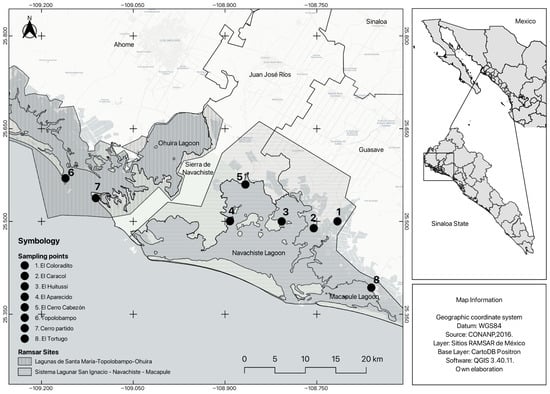
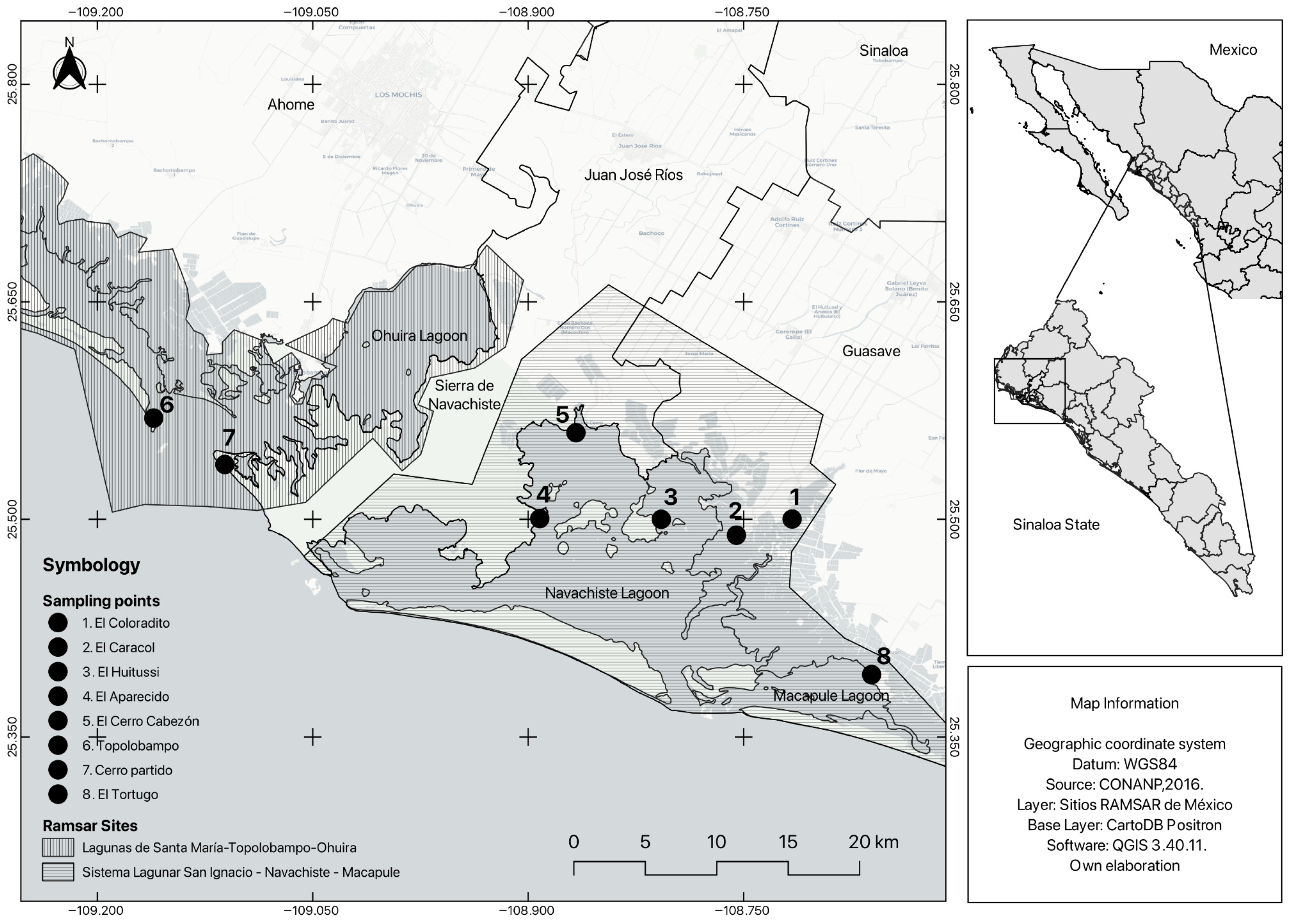
The San Ignacio–Navachiste–Macapule Lagoon System (Navachiste Lagoon System) is in the north of the state of Sinaloa between 25°15′ and 25°35′ north latitude and 108°30′ and 109°03′ west longitude. The Navachiste Lagoon System (Figure 1) has an approximate area of 280 km2, and the system is made up of three coastal lagoons: San Ignacio with an approximate area of 52 km2, Navachiste with 190 km2, and Macapule with 38 km2 [18,20,21]. The lagoons constitute a shallow system from 0.5 m to 5 m, except for a channel of natural origin that runs along San Ignacio Lagoon, where the depths reach 12 m [20]. It is formed by diverse ecosystems, including sand barrier islands, islands, bays, mangroves, dry deciduous forests, wetlands, and shrublands. These characteristics have allowed it to be classified as a RAMSAR site (1826) “Sistema Lagunar San Ignacio–Navachiste–Macapule”, and its islands are also included in the “Protected Area for Flora and Fauna of the Gulf of California Islands” Decree of 1978. The surrounding terrestrial vegetation consists of a tropical dry forest and desert-like columnar cacti and mangroves, covering from 10,000 to almost 12,000 ha [21].
Figure 1.
Location of the RAMSAR sites No. 1826 and No. 2025 in Northwestern Mexico. The shaded areas represent the lagoon systems, and the black dots indicate the specific sampling stations. The map was generated using QGIS software (QGIS Development Team, Open Source).
The Santa María–Topolobampo–Ohuira Lagoon system (RAMSAR site 2025) is a system of three coastal lagoons, with a total of eight islands: six in Ohuira Bay, one in Topolobampo Bay, and one in Santa María Bay. Mangroves include Rhizophora mangle, Laguncularia racemosa, Avicennia germinans, and Conocarpus erectus. The site is home to 84% of the migratory waterfowl distributed in Mexico during the winter. It is subject to flooding and storms caused by tropical cyclones that regularly occur in the area; thus, the system functions as a shoreline stabilizer by reducing the energy runoff caused by rainfall. The site is located within the Area of Protection of Flora and Fauna “Islas del Golfo de California”, a World Heritage natural site and UNESCO Biosphere Reserve [19].
2.2. Sampling
Four samplings were implemented during an annual cycle to cover all the seasons (autumn, November 2018; winter, January 2019; spring, April 2019 and summer August 2019) at eight different sampling sites located in the main fishing villages of the lagoon system at the two Ramsar sites: site 2025 (Cerro Partido and Topolobampo) and site 1826 (El Tortugo, El Coloradito, El Caracol, El Huitussi, El Cerro Cabezón, El Aparecido) (Figure 1). The capture sites were selected based on the fishermen’s fishing areas at each site. The number of organisms captured was undetermined for each season to simulate the fishing techniques commonly practiced in the area. The capture of the species was directed using a “cast net” in shallow areas, a “drift net”, and a fishing rod in the case of deeper areas. Focused on species of high commercial importance for human consumption in the northern part of the state of Sinaloa, such fish species were Centropomus viridis, Cynoscion othonopterus, Pomadasys macracanthus, Diapterus peruvianus, Lutjanus colorado, and Scomberomorus sierra [22]. We verified that the fish caught were not under any special protection status or threat risk [23]. The captured organisms were placed in cold water to slowly decrease their metabolism until they reached the lethargy phase to ensure a dignified euthanasia and were transported to the aquaculture department at the facilities of the Instituto Politécnico Nacional (CIIDIR-Sinaloa). Intertidal sediment sampling was conducted following a suitably adapted protocol from [24], in which 1 kg of sand cores was collected to a depth of 30 cm. This thickness was deliberately selected to ensure the representativeness of the particle inventory, given that hydrodynamic forcing facilitates the infiltration and burial of polymers into subsurface layers [25]. To mitigate any risk of exogenous polymer contamination, the samples were preserved in glass containers and processed in situ via mechanical sieving (5 mm), thus ensuring the selective retention of the microplastic fraction [24].
2.3. Sample Analysis
Basic morphometric data were taken from each fresh organism: total length (TL, cm) with a Pentair FMB2 ichthyometer (0.01 mm) (Pentair, Apopka, FL, USA) and total weight (±0.1 g) using an Ohaus brand balance (Ohaus, Parsippany, NJ, USA). The stomachs were individually labeled and stored at −20 °C. Before the stomach contents were removed, the samples were defrosted at room temperature, and plastic material was avoided during the organic matter digestion process. The stomach contents of the fish that had crustaceans and mollusks as prey were diluted with distilled water and digested in 200 mL of 30% (v/v) H2O2, the solution was filtered with Whatman No. 40 paper (Whatman, Maidstone, UK), the filters were dried in an oven at 50 °C, and the MPs were collected in a glass jar using a Leica model DM4000 optical microscope (Leica Microsystems, Wetzlar, Germany) [26]. This technique was adapted from a study focused on bivalves, and it worked adequately for this research.
2.4. Quality Assurance and Contamination Control
To prevent cross-contamination by exogenous polymers, a strict plastic-free protocol was implemented following the guidelines established by Lusher [27]. All the processing stages were conducted in a controlled-access environment using exclusively glassware, stainless steel, and aluminum instruments. Before use, all the equipment was rinsed in triplicate with distilled water to ensure the removal of any residual microparticles [28]. The work surfaces were disinfected with 70% ethanol and covered with high-purity aluminum foil. To mitigate the deposition of airborne particles, the samples remained covered with inert materials during both dissection and analysis. Furthermore, 100% cotton laboratory coats and powder-free nitrile gloves were worn to prevent the accidental transfer of synthetic fibers to biological samples.
2.5. Sample Observations
Once the microplastic samples were separated from the other inorganic elements, such as mollusk shell fragments, grains of sand, and undigested fish bones, a staining process was performed using Nile red dye [29,30]. This staining is possible because Nile Red is capable of adsorbing on the plastic surface and fluorescing when it is irradiated with blue light [30]. The microplastics were counted with a Leica model DM4000 digital microscope with a magnification ranging from 10× to 150× and a 5 MPixel Leica model DFC450 C camera coupled to the microscope (Leica Microsystems, Wetzlar, Germany). Microplastic identification followed standardized morphological criteria—color, shape, and texture—according to Hidalgo-Ruz [3]. This visual approach was robust for the recovered size range (0.33–4.82 mm) and consistent with baseline monitoring, allowing for reliable polymer categorization based on known industrial forms. While Nile Red is a recognized screening tool, the lack of spectroscopic confirmation (FTIR/Raman) is a limitation for definitive polymer identification. Consequently, the recovered items are referred to as “microplastic-like particles” (MP-p). This conservative approach focuses on abundance and morphology, providing a reliable baseline for these RAMSAR sites that is consistent with fluorescence-based monitoring.
Sample sizes exhibited seasonal variations, reflecting the natural phenology of the target species and local artisanal fishery dynamics. To mitigate potential bias arising from fluctuating sampling efforts and to ensure spatiotemporal comparability, the abundance of microplastics (MPs) was normalized. The data are expressed as the MP concentration per individual (items·ind−1) and per unit of biomass (items·g−1 dry weight). This standardization procedure aligns with international monitoring protocols for bioindicators [27], ensuring a rigorous statistical analysis by decoupling MP abundance from sampling effort, thus allowing for an objective comparison between the evaluated periods.
2.6. Statistical Analysis
The data analysis was structured into two main components. First, a general descriptive analysis was conducted to quantify and characterize the presence of microplastic-like particles (MP-p) in both the fish species and the sediment samples through graphical and numerical summaries. Second, inferential statistics were employed to detect significant differences. Prior to analysis, the data were tested for normality [31] and homoscedasticity using Levene’s test. One-way analysis of variance (ANOVA) was subsequently applied with a 95% confidence level, followed by Tukey’s post hoc test for mean comparisons. All the statistical procedures were performed using STATISTICA version 7.0 software (StatSoft Inc., Tulsa, OK, USA).
The use of one-way ANOVA was prioritized to ensure a robust and transparent comparison of MP-p concentrations across discrete spatial (sampling sites) and temporal (seasons) scales. This approach directly aligns with the primary objective of establishing a foundational baseline inventory for these RAMSAR sites. By focusing on these core factors, the analysis maximizes statistical power and provides a rigorous framework for identifying significant environmental variations, serving as a basis for future multivariate ecological modeling.
Additionally, to classify the dominance of MP-p in the sediment of the two RAMSAR sites, an Olmstead–Tukey diagram was constructed [32]. Under this framework, the particles were categorized on the basis of their abundance and frequency relative to the mean: (1) dominant (high frequency and high abundance), (2) occasional (high frequency and low abundance), (3) common (low frequency and high abundance), and (4) rare (low frequency and low abundance).
3. Results
3.1. Occurrence and Characterization of Microplastic-like Particles in Commercial Fish
A total of 556 individuals from six commercially important fish species were examined to assess the occurrence and characteristics of MP-p. Microplastic abundance was standardized and expressed as items individual−1 and items g−1 biomass to allow comparisons among species. The following subsections detail the ecological relationships between feeding habits and species identification, followed by a comprehensive analysis of the specific polymers recovered from the gastrointestinal tract.
3.1.1. Identification of the Studied Species
The stomachs of 556 organisms distributed among six different species (C. viridis, C. othonopterus, P. macracanthus, D. peruvianus, S. sierra, and Lutjanus colorado) were analyzed (Table 1) and taxonomically identified according to Fischer [32]. The organisms were classified according to their feeding habits and were described as follows: carnivorous fish generally show the characteristics of predators of smaller species, such as small crustaceans and mollusks, except for the species D. peruvianus, which can adopt omnivorous habits because of the scarcity of live prey.
Table 1.
General characteristics of the organisms analyzed and the number of individuals captured by each species.
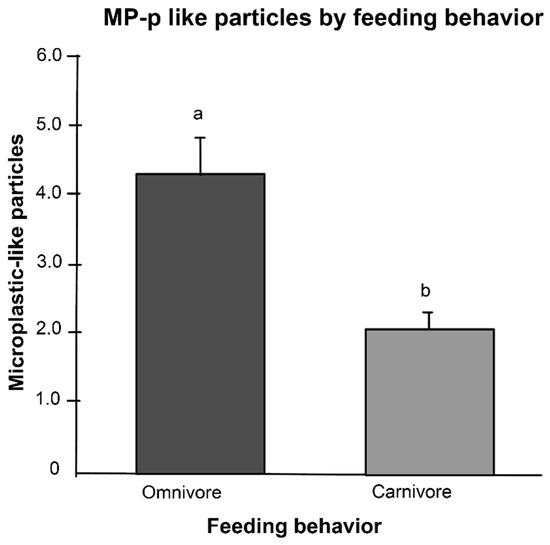
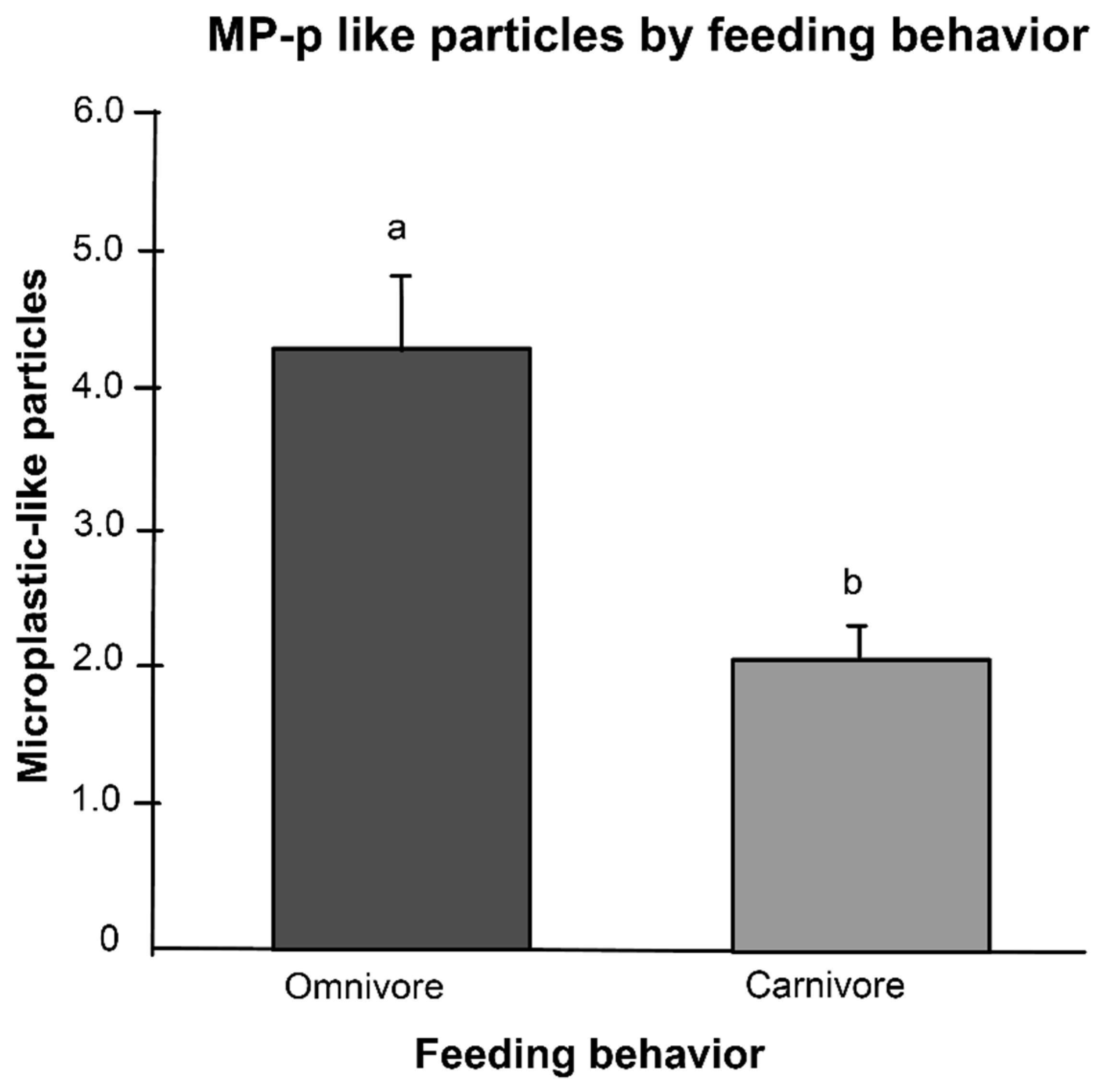
The species captured in the present work were divided by feeding habits, with two main groups (omnivores and carnivores) established. The species that were positioned within the first group were D. peruvianus, while the rest of the species were classified as carnivores (Table 1). Despite being represented by a single species, omnivorous organisms consumed more MP-p, with 4.3 more particles found in omnivorous organisms than in carnivorous organisms, which presented an average of two fragments per organism (Figure 2). The percentage of MP-p corresponded to omnivorous organisms, with 65% of the total fragments found, while the remaining 35% were carnivorous.
Figure 2.
Particles of microplastics are found in the stomachs of fish according to their feeding habits. One-way ANOVA (p < 0.05). The letters above the bars indicate each group.
3.1.2. Microplastic-like Particles: Particle Presence and Feeding Habits
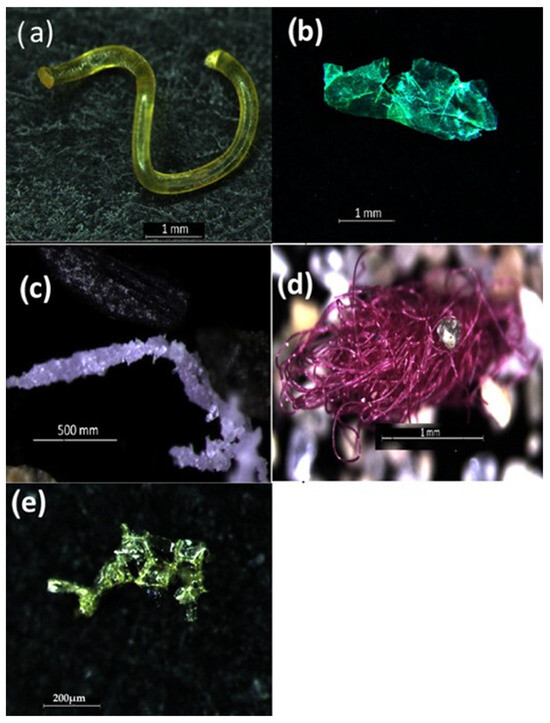
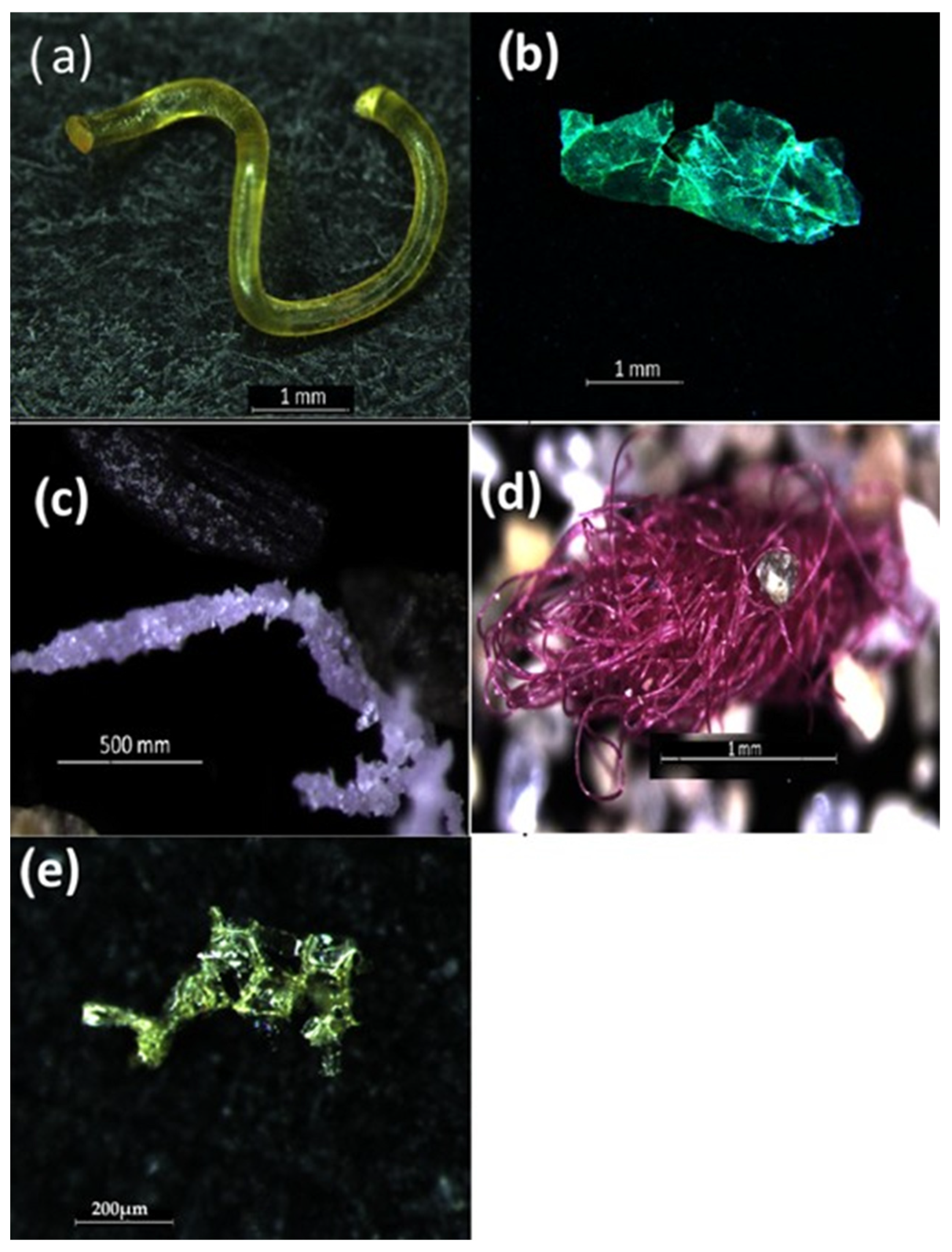
The identification of microplastic types was carried out arbitrarily according to their shape and appearance under the microscope, although a confirmatory chemical analysis is needed for the classification of these polymers. Among all the contaminants found in the analyzed species (Table 2), nylon was the most abundant microplastic and was found in four of the six species observed in this study (P. macracanthus, D. peruvianus, C. othonopterus, and C. viridis), with 99 particles distributed among these organisms. Polyurethane was found, with 42 counted fragments observed in one organism of D. peruvianus. Fragments of plastic bags (polyethylene) were present in P. macracanthus, with 14 plastic elements distributed in four organisms of this species. Polyethylene terephthalate (PET) with six fragments was observed in two D. peruvianus organisms. Finally, two fragments of polyester fibers (both blue) were observed in one D. peruvianus organism. The sizes corresponding to each type of microplastic are described in Table 2, with sizes ranging from 0.33 to 4.72 mm. This polymer belongs to the family of polyamides and is completely artificial. The sizes of the nylon fragments varied from 0.54 to 4.72 mm. This type of plastic is widely used in the manufacturing of fishing nets. During the sampling in this study, it was common to find many of these elements along the coastline and the islands adjacent to the selected sampling points. The species that were contaminated by this type of plastic were D. peruvianus, P. macracanthus, C. othonopterus, and C. viridis, with this element being the most common in the analysis in this study. The colors found were yellow (Figure 3) and white.
Table 2.
Microplastic-like particles found in the stomach of the fish studied.
Figure 3.
(a) Nylon fragment, yellow color, observed in silver snook C. viridis; (b) fragment of a polyethylene bag found in P. macracanthus; (c) fragment of blue nylon, observed in the stomach of P. macracanthus; (d) polyester fibers found in C. othonopterus; (e) polyurethane fragments found in D. peruvianus.
3.1.3. Microplastic Types Present in Fish Stomachs
The microplastic-like particles that were observed corresponded to threads resembling those used in conventional fishing gear for the area (hook and net lines). The observed colors ranged from transparent white to yellow or amber, with sizes ranging from 2.3 to 4.72 mm (Figure 3a).
Another material present in the stomach of the fish analyzed was polyethylene, which is in the stomach of P. macracanthus and varies in size from 0.97 to 4.15 mm. The fragments found were white (Figure 3b). P. macracanthus was the only species that was contaminated by this type of plastic. With four contaminated organisms (out of the total of 137 analyzed for this species), polyethylene was present in 2.91% of the organisms studied for this species, which represents 0.69% of the total sample analyzed.
Nylon was another element present in P. macracanthus; in contrast to the contaminants found in the C. viridis species, the observed fragments were blue (Figure 3c). There were 4 organisms contaminated by this type of material for C. viridis, representing 9.3% of the individuals sampled for this species and 0.71% of the individuals in the total sample.
C. othonopterus was contaminated by polyester fibers. The fibers observed were blue (Figure 3d), which resemble materials used in the textile industry. C. othonopterus was the only species that was present in this material, with only one contaminated sample (1.44%) of this species.
Finally, contamination was observed in the stomach of only one organism of the species D. peruvianus containing polyurethane fragments (Figure 3e). This individual had 42 elements, and the sample contaminated by this type of plastic represented 0.49% of the individuals belonging to this species.
To complement the biological findings, the environmental availability of microplastics was assessed through the analysis of surface sediments at both Ramsar sites, as detailed in the following sections.
3.2. Microplastic Distribution in Surface Sediments
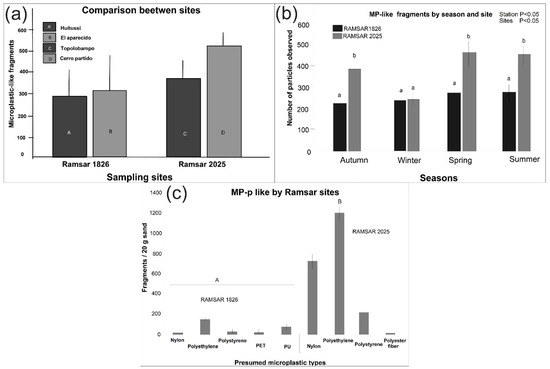
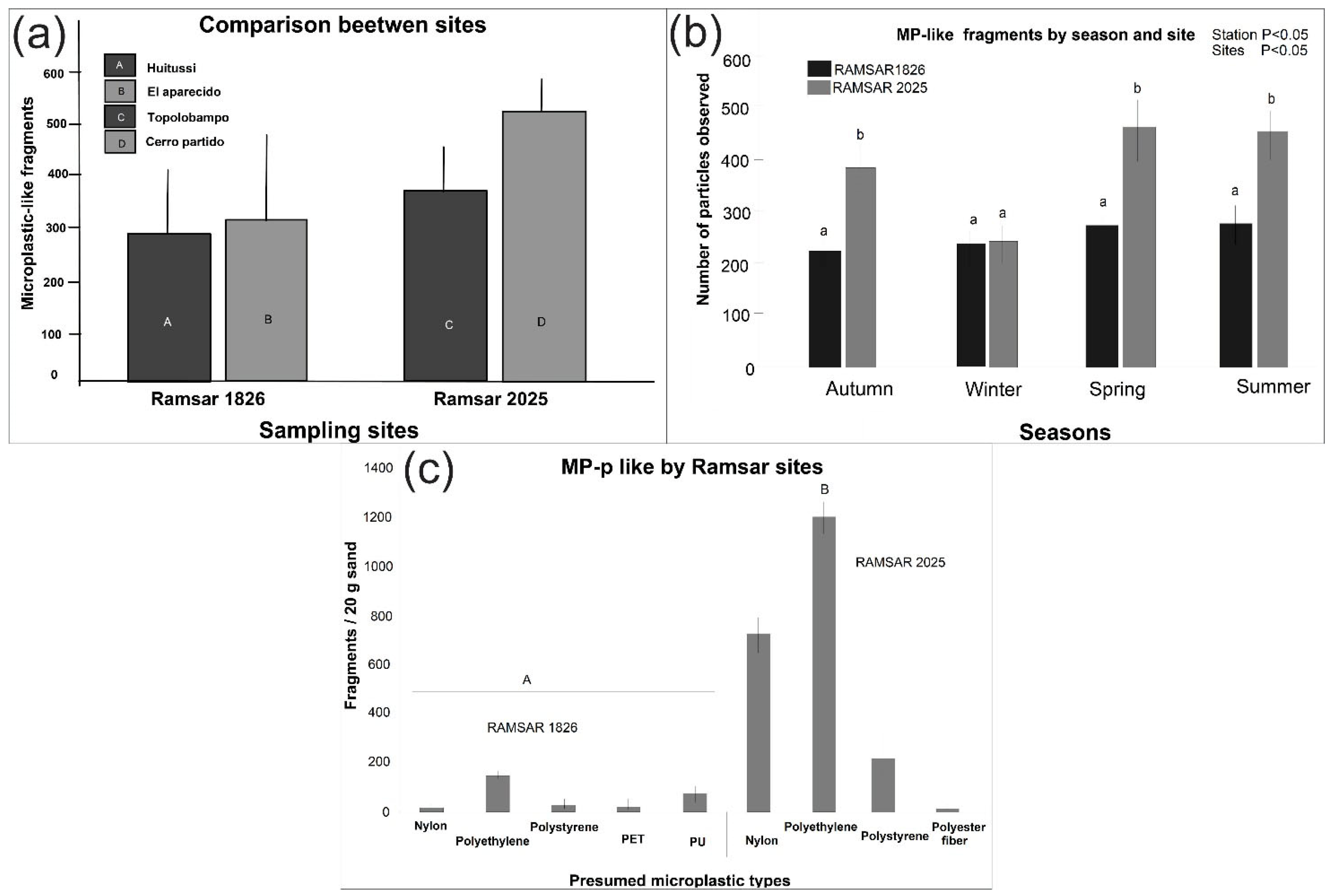
The sand samples collected in the study area contained numerous microplastic particles. Polyethylene was the most abundant, with 1200 fragments per 20 g of sediment at the RAMSAR 2025 site, whereas polyester fibers were the least abundant at the same site. As shown in Figure 4, a higher abundance of microplastics been reported at the RAMSAR 2025 site, whereas a higher diversity of microplastics was observed at the RAMSAR 1826 site (Figure 4).
Figure 4.
Microplastic types found in the sediment of both RAMSAR sites. Factorial ANOVA (p < 0.05). The letters above the bars indicate each group. “S*M denotes the variable comparing microplastic-like types by season.”.
3.3. Variability in the Types of Microplastics in the Sediment According to Seasonality at the RAMSAR Site
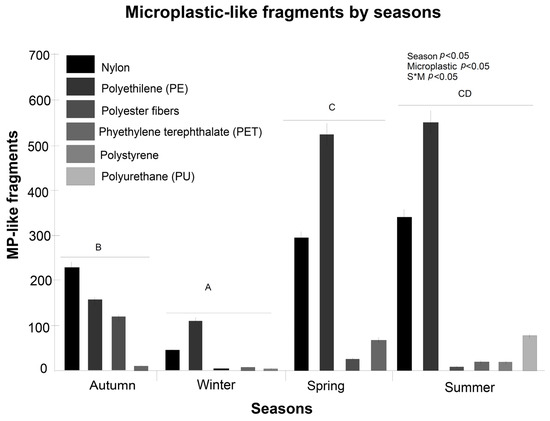
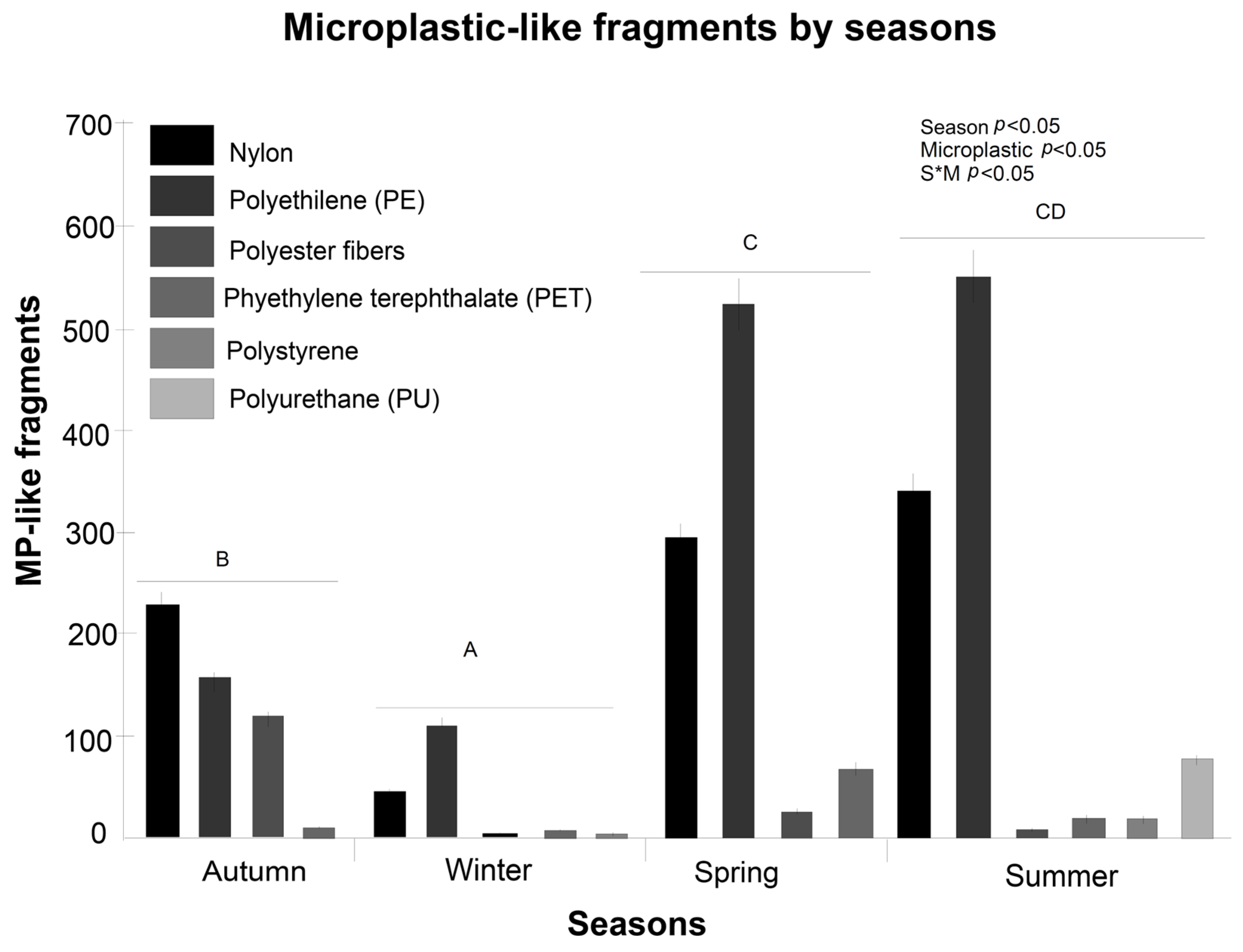
The difference between the microplastics found according to seasonality was very striking; the cumulative abundance of microplastic particles was greatest during the spring and summer, with polyethylene being the most abundant, followed by nylon. On the other hand, the least abundant type of microplastic was polystyrene during the winter season. All types of nylon, such as polyethylene, were present during all the samplings (Figure 5a).
Figure 5.
(a). Number of microplastic fragments found in the sediment by season. Factorial ANOVA (p < 0.05), (b). Number of fragments of microplastics found in the sediment by site (RAMSAR). One-way ANOVA (p < 0.05). (c). Fragments of microplastics found in sediment by communities belonging to RAMSAR sites. One-way ANOVA (p > 0.05). The letters above the bars indicate each group.
Microplastic fragments were found in the sand at both RAMSAR sites. Most microplastic fragments were detected at the 2025 site during the autumn, spring, and summer. However, at the 1826 site, the fragment numbers did not significantly differ (Figure 5b).
The number of fragments that were found in the different communities belonging to the RAMSAR sites did not significantly differ. However, the sand samples from the communities of Topolobampo Port and Cerro Partido, which belong to the site RAMSAR 2025, had a greater number of fragments (Figure 5c).
3.4. Classification of the Dominant Types of Microplastics Found at the RAMSAR Site
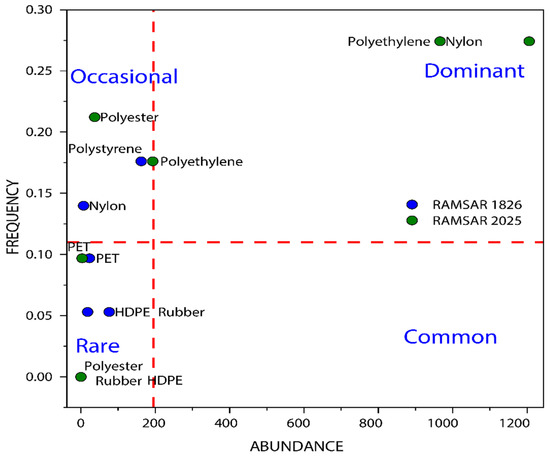
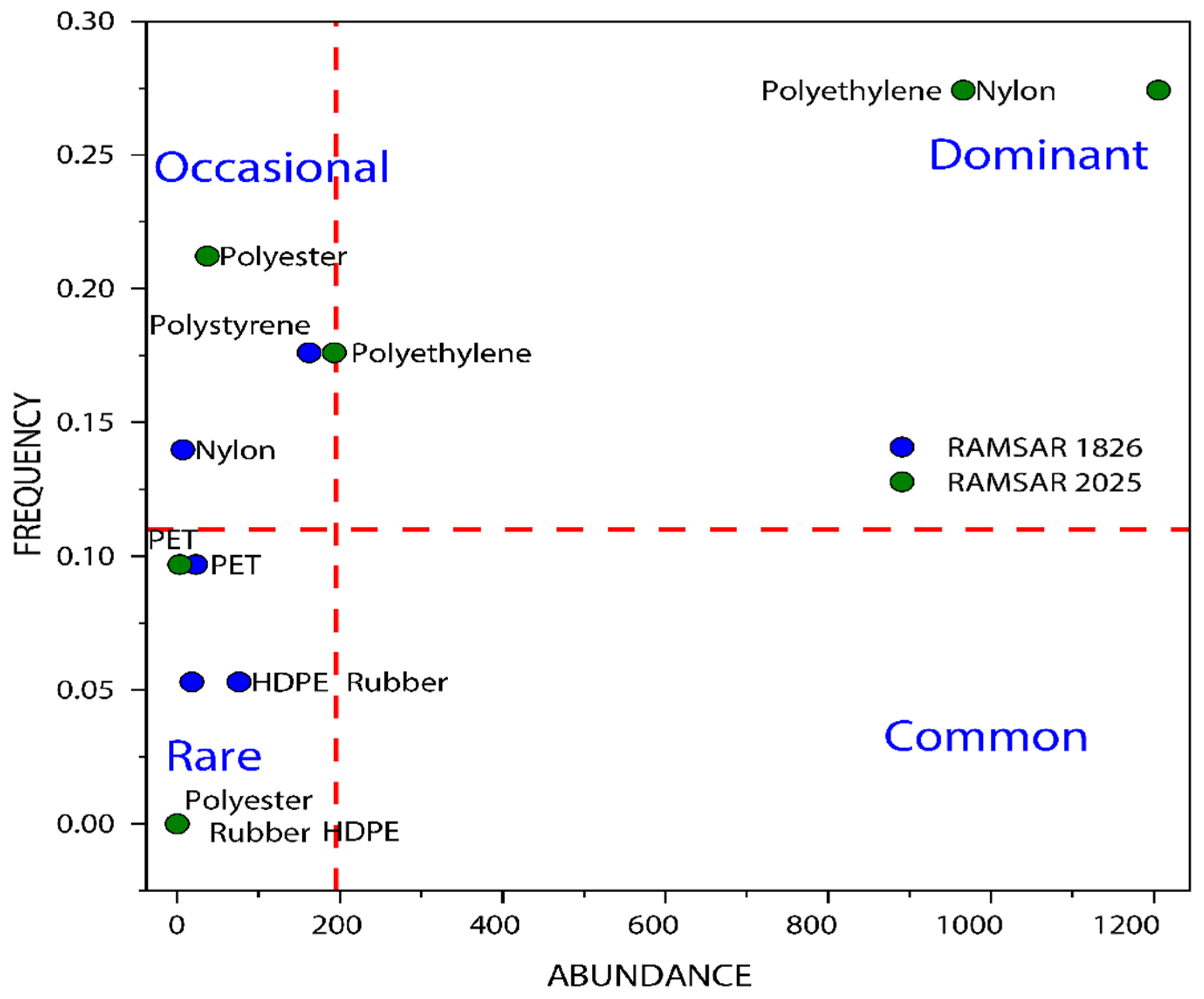
Analysis of the abundance of MPs through the Olmstead–Tukey diagram revealed that nylon and polyethylene were dominant at Ramsar site 2025; however, no MPs were grouped within the common category, and the types of MPs, such as polyester, polystyrene and PET (Ramsar 2025), were grouped in the occasional category, as were the polyethylene, nylon and PET types from site 1826; however, the rare MPs were HDPE, rubber, polyester, and polystyrene (site 2025) and HDPE and rubber from site 1826 (Figure 6).
Figure 6.
Olmstead–Tukey diagram of the rank abundance of microplastics according to the RAMSAR site (2025 and 1826). The red dashed lines represent the threshold values dividing the spatial distribution into four categories: Dominant, Common, Occasional, and Rare.
4. Discussion
4.1. Feeding Habits and the Presence of Microplastics
The results of the present study indicate a significant presence of microplastics across different trophic levels, supporting the hypothesis that feeding strategy is a primary driver of ingestion in the lagoons studied. Our findings, which reveal a high incidence of particles in predatory species, suggest that microplastics are bioconcentrated through the food chain, posing potential toxicological risks [33]. These observations align with the trends described by McGoran et al. [34], who reported that the amount of microplastics found in the digestive tract of fish from aquatic environments is high. However, while studies such as that of Davison and Asch [35] reported a relatively low incidence (9.2%) of occurrence in mesopelagic fish in the North Pacific, our data reveal a markedly higher frequency of occurrence. This discrepancy suggests that compared with broader oceanic patterns, microplastic intake at these specific RAMSAR sites is more closely related to high local contamination levels and anthropogenic proximity.
This local pressure is further evidenced when our results are compared with regional data; for instance, Mazariegos-Ortíz et al. [36] reported contamination rates of 38% for D. peruvianus and 40% for C. viridis in Guatemala. In the present work, omnivorous fish presented a greater proportion of ingested microplastics than herbivores and carnivores did, which reinforces the findings of Mizraji et al. [37]. These findings confirm that species with broader diets and active feeding behavior in the water column have a significantly greater potential for plastic uptake because of their opportunistic feeding strategies and the greater availability of items within the water column [38].
The concentrations of microplastic-like particles observed in this study are consistent with those reported for marine fish from other regions of the eastern Pacific and the Gulf of Mexico. Similar ingestion rates have been documented in coastal fish species, suggesting that microplastic contamination is widely distributed in marine ecosystems influenced by fishing activities and coastal urbanization [39,40]. In addition, the predominance of fibers and synthetic polymers such as Nylon observed in the present study agrees with previous reports indicating that textile-derived fibers and fishing-related materials are among the most common microplastic types detected in marine fish [40]. These similarities suggest that the sources and environmental behavior of microplastics in the study area may follow patterns reported in other coastal ecosystems.
Most MP-p have shapes and sizes similar to those of organic particles and planktonic organisms, making them bioavailable for ingestion by fish groups that feed on the seabed [41]. These particles are accessible to various foraging guilds in the benthos, including filter feeders, detritivores, and planktivores [42,43,44]. The presence of MP-p in species such as D. peruvianus suggests a potential pathway for the reintroduction of precipitated synthetic particles from the seafloor into littoral, pelagic, and nektonic food webs [41,45]. In addition to polymer composition, the size and type of microplastic-like particles detected in this study showed clear patterns among the analyzed species. Fibers were the dominant particle type, which may reflect the prevalence of synthetic materials associated with fishing activities and coastal human activities in the study area [46,47]. These particles can remain suspended in the water column and may be ingested either directly from the environment or indirectly through prey items. The distribution of microplastics among the studied species and sampling areas suggests that environmental exposure and feeding behavior may play an important role in determining ingestion patterns.
Previous studies on plastic ingestion by vertebrates have reported diverse physical effects, such as internal abrasions, digestive blockages, and potential impacts on feeding behavior and growth rates [48,49,50,51,52]. While this study focused on the abundance and morphology of MP-p, the literature indicates that small organisms and invertebrates may also face similar physical risks, including the potential blockage of feeding appendages [53,54].
With respect to chemical risks, the literature mentions that substances used in plastic manufacturing, such as certain additives or monomers, could have toxicological implications if released into the organism [55,56,57,58]. However, as chemical characterization of the particles or toxicological assays were not performed in this study, these effects remain a subject for further investigation. Similarly, while the presence of MP-p in commercial species highlights a potential route for human exposure through the food chain, definitive conclusions regarding human health risks require more specific analytical and epidemiological research [59].
The presence of MP-p in these RAMSAR sites increases their bioavailability and the likelihood of exposure for multiple species, representing a factor that could influence the dynamics of the local marine food web [60].
4.2. Comparison by Area
Compared with the Navachiste lagoon system, the Ohuira lagoon area has a higher incidence of plastic contaminants; thus, studies based on the relationship between microplastics and marine current dynamics are suggested. Most of the fish species in this study have sandy-muddy habitats in shallow areas near beaches. It is inferred that the amount of microplastic particles present in the digestive tract of the fish could be related to the proximity to urban areas of the marine ecosystem and their influence on the environment [61,62,63]. Among the most recurrent colors of the microplastics in the present study were white, transparent, and amber, which probably resulted from the fragmentation of plastic bags, fishing lines made of cane, and possible capture and trawl nets. The distribution of these colors relative to the total abundance provides critical insights into the potential for visual misidentification by ichthyofauna. Specifically, the predominance of white and transparent particles may be attributed to a “sensory trap” mechanism, where these light-colored fragments mimic the appearance of natural prey such as translucent zooplankton or fish larvae [64]. This visual overlap increases the likelihood of active ingestion by predators and opportunistic feeders alike. Furthermore, the presence of amber-colored fragments—often associated with advanced photodegradation and weathering—not only reflects the aging of secondary microplastics but also increases their visibility against the water column, potentially attracting species that target organic detritus [65]. Morphological analysis of the recovered particles, characterized by a predominance of fibrous and fragment-like structures resembling materials commonly used in fishing gear and packaging plastics, with dimensions significantly exceeding 1.0 mm, supports the hypothesis that these contaminants originate primarily from fisheries-related activities. These findings are consistent with the prevalence of secondary microplastics in high-priority conservation areas, where the fragmentation of abandoned, lost, or otherwise discarded fishing gear (ALDFG) is driven by mechanical and solar degradation [66]. The persistence of fiber-like particles is particularly concerning, as materials with similar appearance and properties to nylon are engineered for high tensile strength and durability, leading to prolonged environmental residence times and increasing the probability of ingestion by benthic and pelagic organisms [67]. Similarly, the high frequency of fragments visually consistent with polyethylene-type plastics underscores the impact of the global packaging industry, which accounts for approximately 30% of plastic production and grows at a rate of 12% annually, significantly contributing to the influx of single-use debris into coastal lagoons [68].
The detection of these particles reflects a contamination pattern that transcends geographical and regulatory boundaries, a phenomenon increasingly observed in seawater across global marine protected areas [69]. Furthermore, the persistence of these synthetic polymers in marine ecosystems poses severe biological and ecological risks, emphasizing the urgency of sustainable mitigation approaches within these sensitive environments [70]. Considering that the most abundant polymer is a main component for the manufacture of the primary fishing tools used in the area (nylon) and of materials such as those used for making containers (PET) and single-use bags (polyethylene), it is reasonable that these pieces have been found both in the sediments of the study area and in the intestines of the fish examined.
This study provides a critical baseline for RAMSAR sites, yet it has certain limitations. The absence of spectroscopic confirmation (FTIR/Raman) precludes the identification of specific polymers, and the cross-sectional nature of the sampling limits conclusions regarding long-term biomagnification processes. Future research incorporating chemical characterization and multiyear monitoring will be essential to fully resolve the pollution dynamics in these protected areas.
5. Conclusions
The findings of this study confirm the research hypothesis, suggesting that compared with the Navachiste system, urban and industrial proximity in the Ohuira Lagoon favors a greater accumulation of microplastics (p < 0.05). The results indicate that feeding habits play a relevant role in ingestion; omnivorous and benthic species were the most common, notably Diapterus peruvianus with an average of 5.04 items·ind−1, compared to the 2.0 items·ind−1 observed in carnivores. When standardized by biomass, concentrations reached up to 0.0029 items g−1. Finally, the prevalence of fiber-like particles visually consistent with materials used in fishing gear (99 items) suggests the influence of fisheries, although the overall presence of contaminants could be linked to a broader range of anthropogenic activities, including tourism, vessel traffic, and the potential runoff of debris through agricultural drains during the rainy season.
This research highlights a higher incidence at the Ohuira RAMSAR site and indicates that feeding habits influence susceptibility to ingestion, with omnivorous species exhibiting higher particle accumulation. The presence of these contaminants across various trophic levels suggests the existence of transfer pathways within the local marine food web.
The analysis of the recovered particles—primarily fibers and fragments whose morphology resembles commonly used fishing and packaging materials—points to a direct relationship with the area’s socioeconomic activities, including fisheries and tourism. These results underscore the importance of strengthening environmental education and awareness programs aimed at both visitors and local communities to promote responsible waste management. Furthermore, the persistence of these materials highlights the need to implement integrated management strategies, such as the systematic recovery of discarded fishing gear. Ultimately, this information is fundamental for supporting informed decision-making and the design of public policies that ensure the ecological health and sustainability of these RAMSAR ecosystems in the Mexican Pacific.
It is also important to emphasize that, due to the lack of FTIR/Raman analyses, the particles identified here should be interpreted as microplastic-like particles rather than confirmed microplastics.
Author Contributions
Conceptualization, A.S.-M.; methodology, M.A.R.V.; software, M.A.R.V., R.d.J.A.R., M.E.O., and A.S.-M.; validation, A.S.-M., J.P.A.M. and I.G.M.Á.; formal analysis, M.A.R.V., and M.G.-M.; investigation, M.A.R.V., A.S.-M. and J.P.A.M.; resources, A.S.-M., J.P.A.M., and I.G.M.Á.; data curation, M.A.R.V., and A.S.-M.; writing—original draft preparation, M.A.R.V.; writing—review and editing, M.A.R.V., A.S.-M., and K.A.V.C., L.P.S.B.; visualization, A.S.-M.; supervision, A.S.-M.; project administration, A.S.-M.; funding acquisition, A.S.-M. All authors have read and agreed to the published version of the manuscript.
Funding
This research was financially supported by grants from the National Polytechnic Institute (Project: SIP 20180826): Evaluation of the health condition and performance in culture in floating cages of the red snapper Lutjanus colorado (Jordan & Gilbert, 1882) fed with a diet based on fishery byproducts.
Institutional Review Board Statement
This study did not involve human subjects; the fish analyzed were from commercial discharges for human consumption in fishing communities, so permission from the ethics committee was not needed.
Informed Consent Statement
This manuscript did not involve any work with human beings.
Data Availability Statement
The raw data supporting the conclusions of this article will be made available by the authors on request.
Acknowledgments
The authors thank the staff and students of CIIDIR-Sinaloa for providing the facilities to support this research. We thank SECIHTY for the PhD fellowship (grant number 4005797) received by Martín Armando Román Vega. The authors would like to thank the anonymous reviewers for their insightful comments and suggestions, which significantly improved the quality of this manuscript. We also express our gratitude to CIIDIR-IPN, Unidad Sinaloa, for providing the laboratory facilities and equipment necessary for this research. Furthermore, we thank all the technical staff and collaborators who assisted during the sampling and laboratory procedures for their invaluable support.
Conflicts of Interest
The authors declare that they have no known competing financial interests or personal relationships that could have appeared to influence the work reported in this paper.
References
- Alvarez-zeferino, J.C.; Ojeda-benítez, S.; Cruz-salas, A.A.; Martínez-salvador, C.; Morillas, A.V. Dataset of quantification and classification of microplastics in Mexican sandy beaches. Data Brief 2020, 33, 106473. [Google Scholar] [CrossRef] [Scilit] [PubMed]
- Andrady, A.L. The plastic in microplastics: A review. Mar. Pollut. Bull. 2017, 119, 12–22. [Google Scholar] [CrossRef] [Scilit] [PubMed]
- Hidalgo-Ruz, V.; Gutow, L.; Thompson, R.C.; Thiel, M. Microplastics in the Marine Environment: A Review of the Methods Used for Identification and Quantification. Environ. Sci. Technol. 2012, 46, 3060–3075. [Google Scholar] [CrossRef] [Scilit] [PubMed]
- Lu, Y.; Zhang, Y.; Deng, Y.; Jiang, W.; Zhao, Y.; Geng, J.; Ding, L.; Ren, H.-Q. Uptake and Accumulation of Polystyrene Microplastics in Zebrafish (Danio rerio) and Toxic Effects in Liver. Environ. Sci. Technol. 2016, 50, 4054–4060. [Google Scholar] [CrossRef] [Scilit]
- McIlwraith, H.K.; Kim, J.; Helm, P.; Bhavsar, S.P.; Metzger, J.S.; Rochman, C.M. Evidence of Microplastic Translocation in Wild-Caught Fish and Implications for Microplastic Accumulation Dynamics in Food Webs. Environ. Sci. Technol. 2021, 55, 12372–12382. [Google Scholar] [CrossRef] [Scilit]
- Barboza, L.G.A.; Vieira, L.R.; Branco, V.; Figueiredo, N.; Carvalho, F.; Carvalho, C.; Guilhermino, L. Microplastics cause neurotoxicity, oxidative damage and energy-related changes and interact with the bioaccumulation of mercury in the European seabass, Dicentrarchus labrax (Linnaeus, 1758). Aquat. Toxicol. 2018, 195, 49–57. [Google Scholar] [CrossRef] [Scilit]
- Li, B.; Liang, W.; Fu, S.; Fu, C.; Cai, Z.; Munson, A.; Shi, H. Swimming behavior affects ingestion of microplastics by fish. Aquat. Toxicol. 2024, 266, 106798. [Google Scholar] [CrossRef] [Scilit]
- Rochman, C.M.; Tahir, A.; Williams, S.L.; Baxa, D.V.; Lam, R.; Miller, J.T.; Teh, F.-C.; Werorilangi, S.; Teh, S.J. Anthropogenic debris in seafood: Plastic debris and fibers from textiles in fish and bivalves sold for human consumption. Sci. Rep. 2015, 5, 14340. [Google Scholar] [CrossRef] [Scilit]
- Khalid, N.; Aqeel, M.; Noman, A.; Khan, S.M.; Akhter, N. Interactions and effects of microplastics with heavy metals in aquatic and terrestrial environments. Environ. Pollut. 2021, 290, 118104. [Google Scholar] [CrossRef] [Scilit]
- Liu, G.; Dave, P.H.; Kwong, R.W.M.; Wu, M.; Zhong, H. Influence of Microplastics on the Mobility, Bioavailability, and Toxicity of Heavy Metals: A Review. Bull. Environ. Contam. Toxicol. 2021, 107, 710–721. [Google Scholar] [CrossRef] [Scilit]
- Rafa, N.; Ahmed, B.; Zohora, F.; Bakya, J.; Ahmed, S.; Ahmed, S.F.; Mofijur, M.; Chowdhury, A.A.; Almomani, F. Microplastics as carriers of toxic pollutants: Source, transport, and toxicological effects. Environ. Pollut. 2024, 343, 123190. [Google Scholar] [CrossRef] [Scilit] [PubMed]
- Li, C.; Busquets, R.; Campos, L.C. Assessment of microplastics in freshwater systems: A review. Sci. Total Environ. 2020, 707, 135578. [Google Scholar] [CrossRef] [Scilit] [PubMed]
- Gündoğdu, S.; Köşker, A.R.; Akarsu, C.; Aydoğan, B.; Aydoğan, B.; Blettler, M.; Büyükdeveci, F.; Cvijanović, D.; Despina, C.; Gallitelli, L. Micro- and nanoplastic pollution in urban influenced aquatic environments: Sources, pathways, and remediation strategies. Mar. Pollut. Bull. 2026, 223, 119048. [Google Scholar] [CrossRef] [Scilit] [PubMed]
- Solayman, H.; Robby, M.D.A.; Satriaji, F.V.; Hossain, K.; Kang, K.; Aziz, A.A.; Shiu, R.-F.; Jiang, J.-J. Mapping global microplastic pollution: Integrating advanced detection and monitoring in aquatic ecosystems. Mar. Pollut. Bull. 2026, 222, 118685. [Google Scholar] [CrossRef] [Scilit]
- Salazar-Pérez, C.; Amezcua, F.; Rosales-Valencia, A.; Green, L.; Pollorena-Melendrez, J.; Sarmiento-Martínez, M.; Ramírez, I.T.; Gil-Manrique, B.; Hernandez-Lozano, M.; Muro-Torres, V.; et al. First insight into plastics ingestion by fish in the Gulf of California, Mexico. Mar. Pollut. Bull. 2021, 171, 112705. [Google Scholar] [CrossRef] [Scilit]
- Sánchez-Campos, M.; Ponce-Vélez, G.; Sanvicente-Añorve, L.; Alatorre-Mendieta, M. Microplastic contamination in three environmental compartments of a coastal lagoon in the southern Gulf of Mexico. Environ. Monit. Assess. 2024, 196, 1012. [Google Scholar] [CrossRef] [Scilit]
- Zambrano-Pinto, M.V.; Tinizaray-Castillo, R.; Riera, M.A.; Maddela, N.R.; Luque, R.; Díaz, J.M.R. Microplastics as vectors of other contaminants: Analytical determination techniques and remediation methods. Sci. Total Environ. 2024, 908, 168244. [Google Scholar] [CrossRef] [Scilit]
- Service, R.S.I. Sistema Lagunar San Ignacio—Navachiste—Macapule. World Heritage Site. 2008. Available online: https://rsis.ramsar.org/ris/1826 (accessed on 18 February 2026).
- Service, R.S.I. Lagunas de Santa María-Topolobampo-Ohuira. UNESCO Biosphere Reserve World Heritage site. 2009. Available online: https://rsis.ramsar.org/ris/2025 (accessed on 18 February 2026).
- Escobedo Urias, D.; Hernández Real, M.T.; Herrera Moreno, N.; Ulloa Pérez, A.E. Efecto de los Aportes de Aguas Residuales Sobre el Nivel de Eutrofización en la Laguna de El Colorado, Ahome, Sinaloa. 2003; Technical Report SIP 20030302.
- Sánchez-Prieto, M.C.; Luna-González, A.; Espinoza-Tenorio, A.; González-Ocampo, H.A. Planning Ecotourism in Coastal Protected Areas; Projecting Temporal Management Scenarios. Sustainability 2021, 13, 7528. [Google Scholar] [CrossRef] [Scilit]
- Morzaria-Luna, H.N.; Turk-Boyer, P.; Polanco-Mizquez, E.I.; Downton-Hoffmann, C.; Cruz-Piñón, G.; Carrillo-Lammens, T.; Loaiza-Villanueva, R.; Valdivia-Jiménez, P.; Sánchez-Cruz, A.; Peña-Mendoza, V.; et al. Coastal and Marine Spatial Planning in the Northern Gulf of California, Mexico: Consolidating stewardship, property rights, and enforcement for ecosystem-based fisheries management. Ocean Coast. Manag. 2020, 197, 14. [Google Scholar] [CrossRef] [Scilit]
- SEMARNAT. Norma Oficial Mexicana NOM-059-SEMARNAT-2010, Protección Ambiental-Especies Nativas de México de Flora y Fauna Silvestres-Categorías de Riesgo y Especificaciones para su Inclusión, Exclusión o Cambio-Lista de Especies en Riesgo; Diario Oficial de la Federación: Ciudad de México, Mexico, 2010; Available online: https://www.dof.gob.mx/normasOficiales/4254/semarnat/semarnat.htm (accessed on 6 January 2026).
- Besley, A.; Vijver, M.G.; Behrens, P.; Bosker, T. A standardized method for sampling and extraction methods for quantifying microplastics in beach sand. Mar. Pollut. Bull. 2017, 114, 77–83. [Google Scholar] [CrossRef] [Scilit]
- Turra, A.; Manzano, A.B.; Dias, R.J.S.; Mahiques, M.M.; Barbosa, L.; Balthazar-Silva, D.; Moreira, F.T. Three-dimensional distribution of plastic pellets in sandy beaches: Shifting paradigms. Sci. Rep. 2014, 4, 4435. [Google Scholar] [CrossRef] [Scilit] [PubMed]
- Valencia-Velasco, F.; Guabloche-Zuñiga, A.; Alvariño, L.; Iannacone, J. Standardization of a protocol to evaluate microplastics in marine bivalves in the department of Lima, Peru. Biologist 2020, 18, 119–134. [Google Scholar] [CrossRef] [Scilit]
- Lusher, A.L.; Welden, N.A.; Sobral, P.; Cole, M. Sampling, isolating and identifying microplastics ingested by fish and invertebrates. Anal. Methods 2017, 9, 1346–1360. [Google Scholar] [CrossRef] [Scilit]
- Masura, J.; Baker, J.; Foster, G.; Arthur, C. Laboratory Methods for the Analysis of Microplastics in the Marine Environment: Recommendations for Quantifying Synthetic Particles in Waters and Sediments; NOAA Technical Memorandum; NOS-OR&R-48; National Oceanic and Atmospheric Administration (NOAA): Washington, DC, USA, 2015.
- Shim, W.J.; Song, Y.K.; Hong, S.H.; Jang, M. Identification and quantification of microplastics using Nile Red staining. Mar. Pollut. Bull. 2016, 113, 469–476. [Google Scholar] [CrossRef] [Scilit] [PubMed]
- Maes, T.; Jessop, R.; Wellner, N.; Haupt, K.; Mayes, A.G. A rapid-screening approach to detect and quantify microplastics based on fluorescent tagging with Nile Red. Sci. Rep. 2017, 7, 44501. [Google Scholar] [CrossRef] [Scilit]
- Craig, A.R.; Fisher, W.W. Randomization tests as alternative analysis methods for behavior-analytic data. J. Exp. Anal. Behav. 2019, 111, 309–328. [Google Scholar] [CrossRef] [Scilit]
- Fischer, W.; Krupp, F.; Schneider, W.; Sommer, C.; Carpenter, K.E.; Niem, V.H. Guía FAO Para la Identificación de Especies Para Los Fines de la Pesca- Pacífico Centro Oriental; Organizacion de las Naciones Unidad para la Agricultura y la Alimentación: Roma, Italy, 1995. [Google Scholar]
- Bucol, L.A.; Romano, E.F.; Cabcaban, S.M.; Siplon, L.M.D.; Madrid, G.C.; Bucol, A.A.; Polidoro, B. Microplastics in marine sediments and rabbitfish (Siganus fuscescens) from selected coastal areas of Negros Oriental, Philippines. Mar. Pollut. Bull. 2020, 150, 4. [Google Scholar] [CrossRef] [Scilit]
- McGoran, A.R.; Clark, P.F.; Morritt, D. Presence of microplastic in the digestive tracts of European flounder, Platichthys flesus, and European smelt, Osmerus eperlanus, from the River Thames. Environ. Pollut. 2017, 220, 744–751. [Google Scholar] [CrossRef] [Scilit]
- Davison, P.; Asch, R.G. Plastic ingestion by mesopelagic fishes in the North Pacific Subtropical Gyre. Mar. Ecol. Prog. Ser. 2011, 432, 173–180. [Google Scholar] [CrossRef] [Scilit]
- Mazariegos Ortíz, C.H.; Xajil-Sabán, M.; Blanda, E.; Delvalle-Borrero, D. Ocurrencia de microplásticos en el tracto digestivo de peces de la Reserva Natural de Usos Múltiples Monterrico, Guatemala. Ecosistemas 2021, 30, 2188. [Google Scholar] [CrossRef] [Scilit]
- Mizraji, R.; Ahrendt, C.; Perez-Venegas, D.; Vargas, J.; Pulgar, J.; Aldana, M.; Ojeda, F.P.; Duarte, C.; Galbán-Malagón, C. Is the feeding type related with the content of microplastics in intertidal fish gut? Mar. Pollut. Bull. 2017, 116, 498–500. [Google Scholar] [CrossRef] [Scilit]
- Garcia, T.D.; Cardozo, A.L.P.; Quirino, B.A.; Yofukuji, K.Y.; Ganassin, M.J.M.; dos Santos, N.C.L.; Fugi, R. Ingestion of Microplastic by Fish of Different Feeding Habits in Urbanized and Non-urbanized Streams in Southern Brazil. Water Air Soil Pollut. 2020, 231, 434. [Google Scholar] [CrossRef] [Scilit]
- Phillips, M.B.; Bonner, T.H. Occurrence and amount of microplastic ingested by fishes in watersheds of the Gulf of Mexico. Mar. Pollut. Bull. 2015, 100, 264–269. [Google Scholar] [CrossRef] [Scilit] [PubMed]
- Jonathan, M.P.; Sujitha, S.B.; Rodriguez-Gonzalez, F.; Campos Villegas, L.E.; Hernández-Camacho, C.J.; Sarkar, S.K. Evidences of microplastics in diverse fish species off the Western Coast of Pacific Ocean, Mexico. Ocean Coast. Manag. 2021, 204, 105544. [Google Scholar] [CrossRef] [Scilit]
- Maghsodian, Z.; Sanati, A.M.; Tahmasebi, S.; Shahriari, M.H.; Ramavandi, B. Study of microplastics pollution in sediments and organisms in mangrove forests: A review. Environ. Res. 2022, 208, 112725. [Google Scholar] [CrossRef] [Scilit]
- Thompson, R.C.; Olsen, Y.; Mitchell, R.P.; Davis, A.; Rowland, S.J.; John, A.W.G.; McGonigle, D.; Russell, A.E. Lost at Sea: Where Is All the Plastic? Science 2004, 304, 838. [Google Scholar] [CrossRef] [Scilit]
- Browne, M.A.; Dissanayake, A.; Galloway, T.S.; Lowe, D.M.; Thompson, R.C. Ingested Microscopic Plastic Translocates to the Circulatory System of the Mussel, Mytilus edulis (L.). Environ. Sci. Technol. 2008, 42, 5026–5031. [Google Scholar] [CrossRef] [Scilit]
- Halsband, C.; Booth, A.M. Ecological Impacts of Particulate Plastics in Marine Ecosystems. In Particulate Plastics in Terrestrial and Aquatic Environments, 1st ed.; CRC Press: Boca Raton, FL, USA, 2020; p. 16. [Google Scholar]
- Katsanevakis, S.; Verriopoulos, G.; Nicolaidou, A.; Thessalou-Legaki, M. Effect of marine litter on the benthic megafauna of coastal soft bottoms: A manipulative field experiment. Mar. Pollut. Bull. 2007, 54, 771–778. [Google Scholar] [CrossRef] [Scilit]
- Wang, J.; Tan, Z.; Peng, J.; Qiu, Q.; Li, M. The behaviors of microplastics in the marine environment. Mar. Environ. Res. 2016, 113, 7–17. [Google Scholar] [CrossRef] [Scilit]
- Xue, B.; Zhang, L.; Li, R.; Wang, Y.; Guo, J.; Yu, K.; Wang, S. Underestimated Microplastic Pollution Derived from Fishery Activities and “Hidden” in Deep Sediment. Environ. Sci. Technol. 2020, 54, 2210–2217. [Google Scholar] [CrossRef] [Scilit]
- Yamashita, R.; Takada, H.; Fukuwaka, M.; Watanuki, Y. Physical and chemical effects of ingested plastic debris on short-tailed shearwaters, Puffinus tenuirostris, in the North Pacific Ocean. Mar. Pollut. Bull. 2011, 62, 2845–2849. [Google Scholar] [CrossRef] [Scilit] [PubMed]
- López-Martínez, S.; Morales-Caselles, C.; Kadar, J.; Rivas, M.L. Overview of global status of plastic presence in marine vertebrates. Glob. Change Biol. 2021, 27, 728–737. [Google Scholar] [CrossRef] [Scilit] [PubMed]
- Sana, S.S.; Dogiparthi, L.K.; Gangadhar, L.; Chakravorty, A.; Abhishek, N. Effects of microplastics and nanoplastics on marine environment and human health. Environ. Sci. Pollut. Res. 2020, 27, 44743–44756. [Google Scholar] [CrossRef] [Scilit] [PubMed]
- Gregory, M.R. Environmental implications of plastic debris in marine settings—Entanglement, ingestion, smothering, hangers-on, hitch-hiking and alien invasions. Philos. Trans. R. Soc. B Biol. Sci. 2009, 364, 2013–2025. [Google Scholar] [CrossRef] [Scilit]
- Pan, Y.; Long, Y.; Hui, J.; Xiao, W.; Yin, J.; Li, Y.; Liu, D.; Tian, Q.; Chen, L. Microplastics can affect the trophic cascade strength and stability of plankton ecosystems via behavior-mediated indirect interactions. J. Hazard. Mater. 2022, 430, 128415. [Google Scholar] [CrossRef] [Scilit]
- Derraik, J.G.B. The pollution of the marine environment by plastic debris: A review. Mar. Pollut. Bull. 2002, 44, 842–852. [Google Scholar] [CrossRef] [Scilit]
- Galgani, F.; David, F.; Jan Andries, V.F.; Stelios, K.; Thomas, M.; John, M.; Lex, O.; Isabelle, P.; Georg, H.; Richard, T.; et al. Marine Strategy Framework Directive: Task Group 10 Report: Marine Litter; Publications Office of the European Union: Luxembourg, 2010. [Google Scholar]
- Oehlmann, J.; Schulte-Oehlmann, U.; Kloas, W.; Jagnytsch, O.; Lutz, I.; Kusk, K.O.; Wollenberger, L.; Santos, E.; Paull, G.C.; Van Look, K.J.W.; et al. A critical analysis of the biological impacts of plasticizers on wildlife. Philos. Trans. R. Soc. B Biol. Sci. 2009, 364, 2047–2062. [Google Scholar] [CrossRef] [Scilit]
- Talsness, C.E.; Andrade, A.J.M.; Kuriyama, S.N.; Taylor, J.A.; Saal, F.S.V. Components of plastic: Experimental studies in animals and relevance for human health. Philos. Trans. R. Soc. B Biol. Sci. 2009, 364, 2079–2096. [Google Scholar] [CrossRef] [Scilit]
- Halden, R.U. Plastics and Health Risks. Annu. Rev. Public Health 2010, 31, 179–194. [Google Scholar] [CrossRef] [Scilit]
- Hidalgo-Serrano, M.; Borrull, F.; Marcé, R.M.; Pocurull, E. Phthalate esters in marine ecosystems: Analytical methods, occurrence and distribution. TrAC Trends Anal. Chem. 2022, 151, 14. [Google Scholar] [CrossRef] [Scilit]
- Courtene-Jones, W.; Clark, N.J.; Fischer, A.C.; Smith, N.S.; Thompson, R.C. Ingestion of Microplastics by Marine Animals. In Plastics and the Ocean; John Wiley & Sons, Inc.: Hoboken, NJ, USA, 2022; pp. 349–366. [Google Scholar]
- Andrady, A.L. Microplastics in the marine environment. Mar. Pollut. Bull. 2011, 62, 1596–1605. [Google Scholar] [CrossRef] [Scilit]
- Peters, C.A.; Bratton, S.P. Urbanization is a major influence on microplastic ingestion by sunfish in the Brazos River Basin, Central Texas, USA. Environ. Pollut. 2016, 210, 380–387. [Google Scholar] [CrossRef] [Scilit] [PubMed]
- Murphy, F.; Russell, M.; Ewins, C.; Quinn, B. The uptake of macroplastic & microplastic by demersal & pelagic fish in the Northeast Atlantic around Scotland. Mar. Pollut. Bull. 2017, 122, 353–359. [Google Scholar] [CrossRef] [Scilit] [PubMed]
- Halstead, J.E.; Smith, J.A.; Carter, E.A.; Lay, P.A.; Johnston, E.L. Assessment tools for microplastics and natural fibres ingested by fish in an urbanised estuary. Environ. Pollut. 2018, 234, 552–561. [Google Scholar] [CrossRef] [Scilit] [PubMed]
- Shaw, D.G.; Day, R.H. Colour- and form-dependent loss of plastic micro-debris from the North Pacific Ocean. Mar. Pollut. Bull. 1994, 28, 39–43. [Google Scholar] [CrossRef] [Scilit]
- Endo, S.; Takizawa, R.; Okuda, K.; Takada, H.; Chiba, K.; Kanehiro, H.; Ogi, H.; Yamashita, R.; Date, T. Concentration of polychlorinated biphenyls (PCBs) in beached resin pellets: Variability among individual particles and regional differences. Mar. Pollut. Bull. 2005, 50, 1103–1114. [Google Scholar] [CrossRef] [Scilit]
- Convention on Wetlands. The Fight Against Plastic Pollution Is Crucial for Wetlands and for the Services They Provide Us; Secretariat of the Convention on Wetlands: Gland, Switzerland, 2023; Available online: https://www.ramsar.org/sites/default/files/2023-11/Wetlands_Plastic_Pollution_e.pdf (accessed on 6 January 2026).
- Geyer, R.; Jambeck, J.R.; Law, K.L. Production, use, and fate of all plastics ever made. Sci. Adv. 2017, 3, e1700782. [Google Scholar] [CrossRef] [Scilit]
- Jambeck, J.R.; Geyer, R.; Wilcox, C.; Siegler, T.R.; Perryman, M.; Andrady, A.; Narayan, R.; Law, K.L. Plastic waste inputs from land into the ocean. Science 2015, 347, 768–771. [Google Scholar] [CrossRef] [Scilit]
- Nunes, B.Z.; Huang, Y.; Ribeiro, V.V.; Wu, S.; Holbech, H.; Moreira, L.B.; Xu, E.G.; Castro, I.B. Microplastic contamination in seawater across global marine protected areas boundaries. Environ. Pollut. 2023, 316, 120692. [Google Scholar] [CrossRef] [Scilit]
- Marcharla, E.; Vinayagam, S.; Gnanasekaran, L.; Soto-Moscoso, M.; Chen, W.-H.; Thanigaivel, S.; Ganesan, S. Microplastics in marine ecosystems: A comprehensive review of biological and ecological implications and its mitigation approach using nanotechnology for the sustainable environment. Environ. Res. 2024, 256, 119181. [Google Scholar] [CrossRef] [Scilit]

Disclaimer/Publisher’s Note: The statements, opinions and data contained in all publications are solely those of the individual author(s) and contributor(s) and not of MDPI and/or the editor(s). MDPI and/or the editor(s) disclaim responsibility for any injury to people or property resulting from any ideas, methods, instructions or products referred to in the content. |
© 2026 by the authors. Licensee MDPI, Basel, Switzerland. This article is an open access article distributed under the terms and conditions of the Creative Commons Attribution (CC BY) license.