


Abstract
The environmental persistence of post-consumer plastics remains a critical challenge due to their chemical stability, the presence of additives, and prior environmental weathering. This study evaluates the partial biodegradation and chemical transformation of post-consumer low-density polyethylene (LDPE) and expanded polystyrene (EPS) by Tenebrio molitor larvae under uncontrolled environmental conditions. Four diets were tested, including LDPE+S and EPS+S (polymers supplemented with wheat bran), to assess the influence of a co-substrate on larval performance and polymer transformation. Fourier-transform infrared spectroscopy (FTIR) revealed the emergence of oxygen-containing functional groups (–OH and C=O) in the frass, which were absent or negligible in pristine materials, indicating oxidative modification of the polymer matrix. Gel permeation chromatography (GPC) revealed pronounced reductions in number-average molecular weight (Mn) and increased polydispersity for EPS-derived fractions, consistent with heterogeneous chain scission and partial depolymerization. For LDPE, GPC evidenced the formation of THF-soluble, low-molecular-weight polymer-derived fragments, indicating fragmentation despite the inability to quantify pristine LDPE due to its insolubility in the mobile phase. Gas chromatography–mass spectrometry (GC–MS) identified aromatic hydrocarbons, phthalate esters, organosiloxanes, and fatty acid derivatives, reflecting both degradation intermediates and migrated additives from post-consumer plastics. Together, these results provide integrated evidence that Tenebrio molitor can induce chemical transformation of post-consumer LDPE and EPS under non-controlled environmental conditions, offering mechanistic insight into a biologically mediated degradation pathway that is directly relevant to realistic plastic waste scenarios.
1. Introduction
Plastic production and consumption have increased significantly worldwide in recent years. It is estimated that by 2030, global plastic production will reach 619 million metric tons [1], while 400.3 million tons were reported to have been produced in 2022 alone [2]. Accumulation, improper disposal, and the inherently slow degradation rate of plastics are among the main environmental concerns. Among the most widely used materials, low-density polyethylene (LDPE) and expanded polystyrene (EPS) are particularly prevalent in single-use packaging applications due to their low cost, versatility, and favorable mechanical properties [3,4]. However, these polymers are conventionally regarded as non-biodegradable, as their carbon–carbon backbone and chemical stability confer strong resistance to microbial attack and natural decomposition processes [3,4,5]. Consequently, any structural changes observed in LDPE and EPS should be interpreted as partial biodegradation or biotransformation, rather than inherent biodegradability.
Recent studies have demonstrated that Tenebrio molitor larvae are capable of ingesting and partially transforming EPS and LDPE, with evidence suggesting the involvement of gut-associated microbiota in polymer modification [3,5,6,7,8,9,10,11]. For example, Yang et al. reported that polystyrene consumption by Tenebrio molitor has been observed in multiple countries, although confirmed biodegradation has only been documented in a limited number of sites [5]. While these studies provide important insights into polymer fragmentation and oxidation mechanisms, they have largely relied on virgin or laboratory-grade polymers, often under strictly controlled temperature and humidity conditions [5,9,11].
Post-consumer plastics differ substantially from virgin polymers, as they typically contain additives such as plasticizers, antioxidants, and stabilizers and may have undergone prior environmental weathering, including ultraviolet exposure, oxidation, and mechanical abrasion [10]. These factors can significantly influence polymer susceptibility to biological transformation and the chemical nature of the degradation products formed. Despite their environmental relevance, the chemical transformation of post-consumer LDPE and EPS during biological digestion remains insufficiently characterized in the literature.
In this context, the present study investigates the partial biodegradation and chemical transformation of post-consumer LDPE and EPS by Tenebrio molitor larvae, focusing on changes in molecular weight distribution and functional group composition, as well as the identification of degradation products and migrated additives. Rather than proposing a formal methodological framework, this work provides integrated analytical evidence based on Fourier-transform infrared spectroscopy (FTIR), gel permeation chromatography (GPC), and gas chromatography–mass spectrometry (GC–MS). By directly examining post-consumer materials under ambient, non-controlled conditions, this study aims to bridge the gap between laboratory-based biodegradation experiments and the chemical complexity of real-world plastic waste streams.
2. Materials and Methods
2.1. Larvae
Tenebrio molitor larvae (n ≈ 2000) were obtained from a local farm in Mérida, YUC, Mexico. Upon arrival, the larvae measured approximately 3 cm in length and were visually inspected to ensure the absence of pupae or visible damage. Prior to experimentation, larvae were acclimated for six days under ambient laboratory conditions and fed a standard wheat bran diet to stabilize physiological conditions. During acclimation and experimentation, larvae were housed in polypropylene containers (28 × 14 × 11 cm) and maintained without artificial control of temperature or relative humidity. Commercial wheat bran (Comercializadora Mayorista del Golfo S.A. de C.V., Mérida, YUC, Mexico) was used, with an approximate composition of 59.70% carbohydrates, 14.70% protein, 7.75% fiber, 2.90% fat, and 4.70% ash.
2.2. Plastic Substrates
Post-consumer EPS and LDPE were selected as representative polymeric waste due to their widespread use in single-use consumer products.
2.2.1. Source and Collection of Plastics
EPS was collected from post-consumer EPS protective packaging used for household appliance cushioning, specifically from the packaging of a domestic refrigerator, while LDPE was obtained from single-use shopping bags and flexible packaging films. All materials were collected from local commercial establishments in Mérida, YUC, Mexico, immediately after consumer use.
Only visually intact items free of heavy soiling, food residues, or oil contamination were selected to minimize interference from extraneous organic matter. No washing, drying, or chemical, physical, or thermal pretreatment was applied prior to experimentation.
2.2.2. Initial Condition and Terminology Standardization
Throughout the manuscript, the term EPS refers exclusively to expanded polystyrene foam derived from post-consumer protective packaging materials, while LDPE refers exclusively to post-consumer low-density polyethylene films and bags. The terms PS and EPS are not used interchangeably; unless explicitly stated otherwise (e.g., calibration standards), all results and discussions pertain specifically to EPS rather than to polystyrene in general. In this study, the term “pristine” refers to post-consumer LDPE and EPS materials prior to larval exposure, used as unexposed reference samples for comparative analyses.
Given their post-consumer origin, the EPS and LDPE materials may have experienced varying degrees of prior environmental exposure, such as light oxidation, mechanical stress, or abrasion during their service life. No attempt was made to artificially standardize or pre-condition the materials (e.g., UV irradiation, chemical oxidation, or thermal aging), as the objective of this study was to evaluate biologically mediated chemical transformation under conditions representative of realistic plastic waste streams.
For experimental control purposes, post-consumer EPS and LDPE materials with comparable size and initial mass to those used in the feeding experiments were included as abiotic controls. These materials were incubated under identical ambient conditions in the absence of larvae and weighed at the beginning and at the end of the experimental period. The abiotic controls were incorporated as endpoint analytical references to distinguish changes attributable to larval activity from those potentially arising from prior use history or passive environmental processes.
2.2.3. Preparation and Initial Mass
EPS was cut into blocks measuring 7 × 5 × 1.5 cm (two units per container), and LDPE was cut into square sheets measuring 5 × 5 cm (14 pieces per container). Each EPS container therefore contained two independent fragments, which were treated as a single experimental unit for mass balance purposes. All masses were determined using an analytical balance (±0.001 g).
The total initial plastic mass per container at the start of the experiment was 1.0141 g for LDPE, 1.0488 g for LDPE+S, 6.1524 g for EPS, and 5.8841 g for EPS+S.
2.3. Experimental Design and Diets
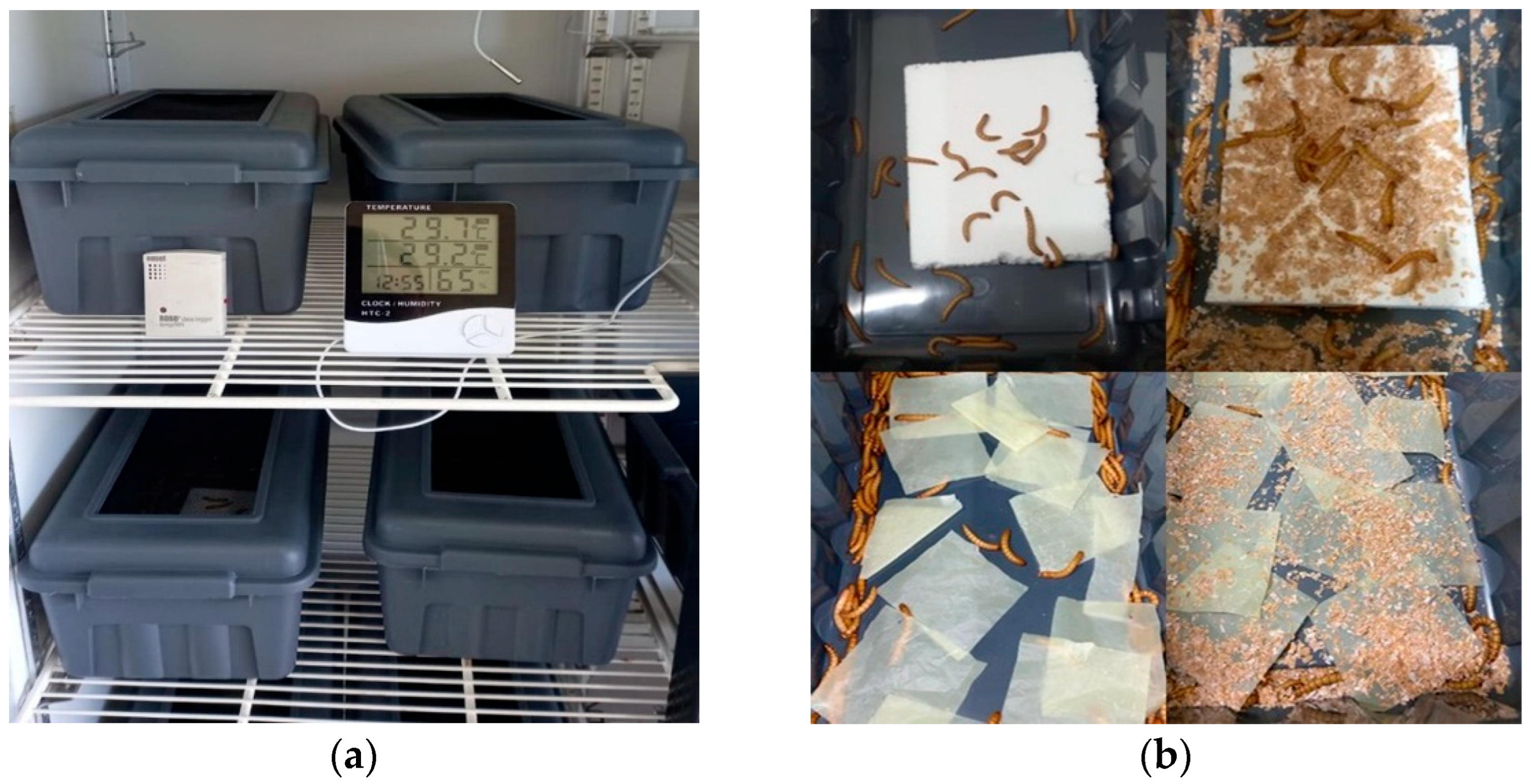
Following acclimation, a total of 400 Tenebrio molitor larvae were randomly assigned to four experimental groups (100 larvae per group) according to diet composition. Two groups were fed polymer-only diets, consisting exclusively of EPS or LDPE without nutritional supplementation, while the remaining two groups received the corresponding polymer diets supplemented with wheat bran (EPS+S and LDPE+S). A schematic overview of the experimental setup and dietary groups is provided in Appendix A (Figure A1).
Throughout the manuscript, the term polymer-only diet refers to diets composed exclusively of the plastic substrate in the absence of wheat bran supplementation. For the supplemented diets (EPS+S and LDPE+S), 5.0 g of wheat bran was added per container at the beginning of the experiment, and no additional supplementation was provided during the 10-day experimental period. The experiment was conducted for 10 days, with descriptive monitoring performed at 48 h intervals.
Abiotic control samples were included in the experimental design as described in Section 2.2.2 and were used exclusively as endpoint analytical references.
2.4. Sampling Procedure and Frass Collection
Plastic fragments were visually inspected at each sampling point, and their mass was recorded exclusively for descriptive monitoring purposes; all plastic pieces were temporarily removed, weighed individually, and returned to the original container to allow for continued interaction with the larvae.
Every 24 h, all larvae from each treatment were gently transferred to a clean container for standardized a 12 h frass-collection period, after which they were returned to their original containers. This procedure was repeated consistently throughout the experiment to enable standardized frass sampling without altering larval density across treatments. Collected frass samples were stored at 0–4 °C until further analysis.
Plastic fragments were visually inspected and handled at intermediate time points as part of the experimental procedure; however, quantitative plastic mass loss was determined exclusively from endpoint measurements obtained at the end of the 10-day experimental period. Intermediate handling steps were not used for quantitative degradation assessment, as repeated weighing and reintroduction of plastic fragments could interfere with accurate net mass loss determination.
The 10-day experimental period refers to the total calendar duration of the experiment. During this time, larvae were exposed to plastic substrates in repeated 24 h contact intervals, each followed by a 12 h frass-collection period during which larvae were temporarily separated from the plastics. As a result, approximately six to seven effective larva–plastic exposure intervals occurred over the experimental period. The 12 h frass-collection intervals were not considered part of the exposure time. The initial time point (day 0), corresponding to pristine plastic prior to larval ingestion, was not included as a sampling point for chemical analysis, as no frass is generated before larval feeding. Ambient temperature and relative humidity were continuously monitored throughout the experiment using a HOBO® data logger (Onset Computer Corporation, Bourne, MA, USA).
2.5. Larval Weight Gain Coefficient (WGC)
Larval biomass was recorded at each 48 h sampling interval as total group biomass and corresponding number of larvae per treatment. At each sampling point, the Weight Gain Coefficient (WGC) was calculated as a relative index based on the mean larval biomass per individual, according to Equation (1):
where Wt and Nt represent the total larval biomass and number of larvae at a given sampling point, respectively, and W0 and N0 correspond to the initial values at day 0. This formulation normalizes changes in larval biomass to the initial mean mass per larva and accounts for variations in larval number due to larva-to-pupa transition.
WGC values were calculated at each sampling interval to monitor larval biomass dynamics for internal evaluation purposes. However, for clarity and comparative analysis among diets, only the endpoint WGC values (Day 10 normalized to Day 0) are presented in Section 3.1. Intermediate WGC values were not included in the main manuscript, as the progressive reduction in larval number over time introduces variability that may complicate direct comparison among treatments. The endpoint WGC was therefore selected as a robust summary metric reflecting cumulative biomass retention under each dietary condition.
2.6. Physicochemical Characterization
Polymeric residues contained in the frass were extracted using tetrahydrofuran (THF) as the solvent. THF extraction was used to determine the mass of residual plastics present in the frass. The frass consisted of an extractable and a non-extractable fraction. The extractable portion was composed of undigested LDPE and/or EPS polymers, as well as chemically modified plastic residues. In contrast, the non-extractable fraction consisted of other residual materials [12,13]. The samples were placed in a beaker with 10 mL of THF (Meyer®, Mexico City, Mexico) and stirred magnetically at 300 rpm at 50 °C for 4 h. After solvent evaporation, an additional 5 mL of THF was added to recover the extractable fraction. This solution was then filtered using a syringe fitted with a 0.22 μm PTFE membrane into a 5 mL glass vial.
2.6.1. Fourier-Transform Infrared Spectroscopy (FTIR)
Functional group analysis of LDPE, EPS, and frass samples was performed using a Thermo Nicolet Nexus 670-FTIR (Madison, WI, USA) spectrometer under the following analytical conditions: 64 scans, 4 cm−1 resolution, and a scanning velocity of 0.6329 cm/s, using a DTGS detector with a KBr window. Spectra were collected in the wavenumber range of 400–4000 cm−1. An attenuated total reflectance (ATR) accessory was employed for solid sample analysis, with approximately 0.3 g of material placed on the crystal surface [13]. Spectral data and plots were processed using OMNIC® software (Thermo Fisher Scientific Inc., Madison, WI, USA).
As an analytical control for FTIR interpretation, frass collected from larvae reared exclusively on wheat bran was subjected to the same THF-based extraction and FTIR analysis. This sample was not part of the experimental diets or treatments but was analyzed solely to assess whether endogenous larval metabolites contribute to detectable FTIR signals under the applied analytical protocol.
2.6.2. High-Performance Liquid Chromatography (HPLC–GPC)
To evaluate changes in the molecular weight distribution of THF-soluble polymer-derived fractions present in the frass, the number-average molar mass (Mn), weight-average molar mass (Mw), and polydispersity index (Mw/Mn) were determined. For this purpose, the filtered solution obtained after THF extraction corresponding to the extractable polymeric fraction was used for analysis.
The solutions were injected into an Agilent 1100 Series HPLC system adapted for gel permeation chromatography (GPC), equipped with a 10 μL injection loop and a Phenomenex LC column (250 × 4.6 mm) with a molecular weight exclusion range of 10 kDa to 1000 kDa. Tetrahydrofuran (THF) was used as the mobile phase at a flow rate of 1.0 mL/min.
Calibration was performed using polystyrene standards (Sigma-Aldrich®, St. Louis, MO, USA), with molecular weights ranging from 580 g mol−1 to 538,000 g mol−1. Chromatographic data was processed using Agilent GPC/SEC software (version A.02.01, Agilent Technologies, Santa Clara, CA, USA).
For comparative purposes, frass collected from larvae reared exclusively on wheat bran was processed under the same THF-based extraction and GPC conditions to evaluate potential background signals in the absence of plastic exposure.
2.6.3. Gas Chromatography–Mass Spectrometry (GC–MS)
The identification of organic compounds present in the extractable fraction obtained with THF from larval frass collected after exposure of EPS and LDPE diets was carried out using gas chromatography coupled with mass spectrometry (GC–MS).
The analysis was performed using a Thermo Scientific Trace 1310 gas chromatograph coupled to an ISQ LT mass spectrometer (Thermo Scientific, Waltham, MA, USA). The temperature program consisted of an initial increase from 50 °C (held for 1 min) to 220 °C (held for 1 min) at a rate of 4 °C/min, followed by a further increase to 300 °C (held for 1 min) at a ramp rate of 5 °C/min. A 1 μL volume of sample was injected in splitless mode, with a carrier gas flow rate of 50 mL/min. Ultra-high-purity helium was used as the carrier gas, and a capillary HP-5MS UI column (30 m × 0.250 mm × 0.25 μm; Agilent/J&W, Santa Clara, CA, USA) served as the stationary phase. The ionization energy of the mass spectrometer was set at 70 eV, operating in full scan mode with a detection range of 50 to 700 m/z.
Compound identification was carried out by comparing the acquired mass spectra with those in the NIST05 spectral library, using the MS Search Program v.2.0. All reagents used were of HPLC grade and were purchased from JT Baker (Mallinckrodt Baker Inc., Estado de México, Mexico).
As an analytical control for GC–MS interpretation, frass collected from larvae reared exclusively on wheat bran without plastic exposure was subjected to the same THF-based extraction and GC–MS analysis under identical conditions. This control was included to assess whether endogenous larval metabolites generate detectable GC–MS signals under the applied extraction and analytical protocol.
3. Results
3.1. Larval Survival Dynamics and Biomass Retention
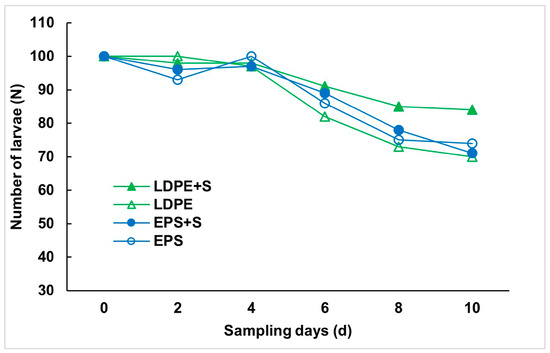
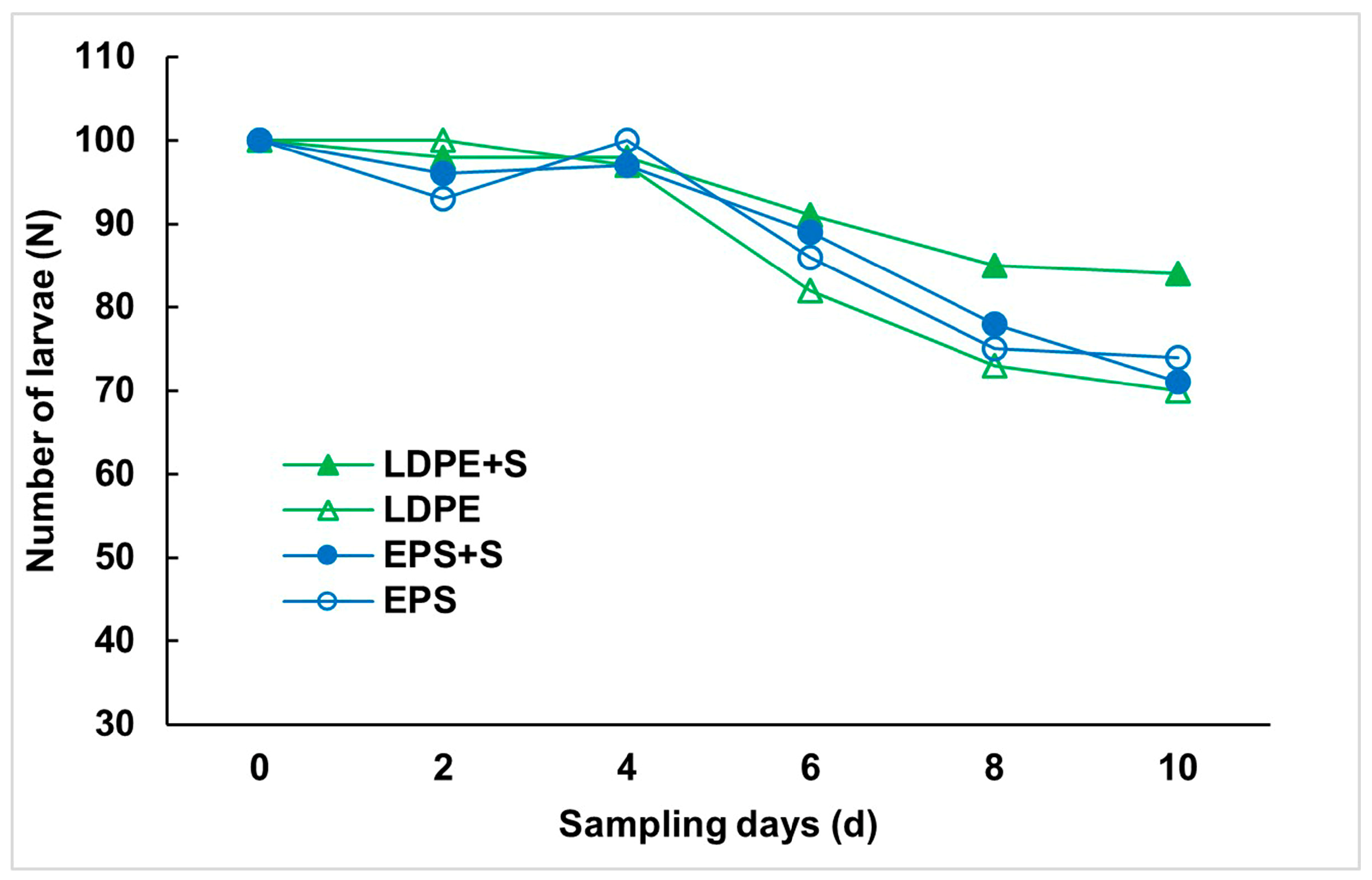
Larval dynamics over the 10-day experimental period are shown in Figure 1 as changes in the number of individuals remaining in the larval stage. At the final sampling point (Day 10), a slight reduction in the number of individuals was observed across all diets. At Day 10, 70 and 84 larvae remained in the LDPE-only and LDPE+S diets, respectively, whereas 74 and 71 larvae remained in the EPS-only and EPS+S diets.
Figure 1.
Temporal evolution of larval number during the 10-day experimental period under LDPE-only, LDPE+S, EPS-only, and EPS+S diets. Values represent the number of individuals remaining in the larval stage at each sampling point. Reductions in larval number reflect larva-to-pupa transition, as pupae were not reintroduced into the experimental system.
Overall, diets consisting exclusively of plastic resulted in a marginally greater re-duction in larval number compared to their corresponding diets supplemented with wheat bran, although the differences among diets were minor.
Previous studies have reported comparable trends: Yang et al. [13] found that EPS ingestion does not significantly affect larval survival, whereas Bozek et al. [14] observed larval weight loss when larvae are maintained on polymer-only diets, which provide insufficient energy but still allow for survival for extended periods [15,16,17].
Table 1 summarizes the larval biomass at the initial (Day 0) and final (Day 10) sampling points, together with the relative WGC calculated at the endpoint for each diet. Although all diets showed a decrease in total larval biomass over the experimental period, differences in relative biomass retention per individual were observed among diets. Larvae fed polymer-only diets exhibited a reduction in mean larval mass by Day 10, which was most pronounced in the EPS polymer-only diet (WGC = 0.886). In contrast, diets supplemented with wheat bran showed near-stable relative biomass, with WGC values close to unity for LDPE+S (1.013) and EPS+S (0.985).
Table 1.
Larval biomass and relative WGC at the final sampling point (Day 10).
Because the number of larvae decreased over time as a result of larva-to-pupa transition, the WGC was calculated as a relative index based on mean larval biomass per individual normalized to the initial value (Day 0). This normalization enables direct comparison among diets while accounting for temporal variations in larval numbers and prevents confounding effects arising from group-level biomass changes.
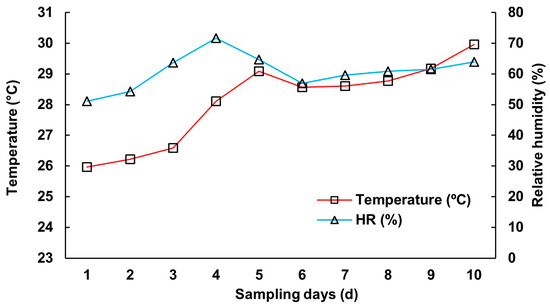
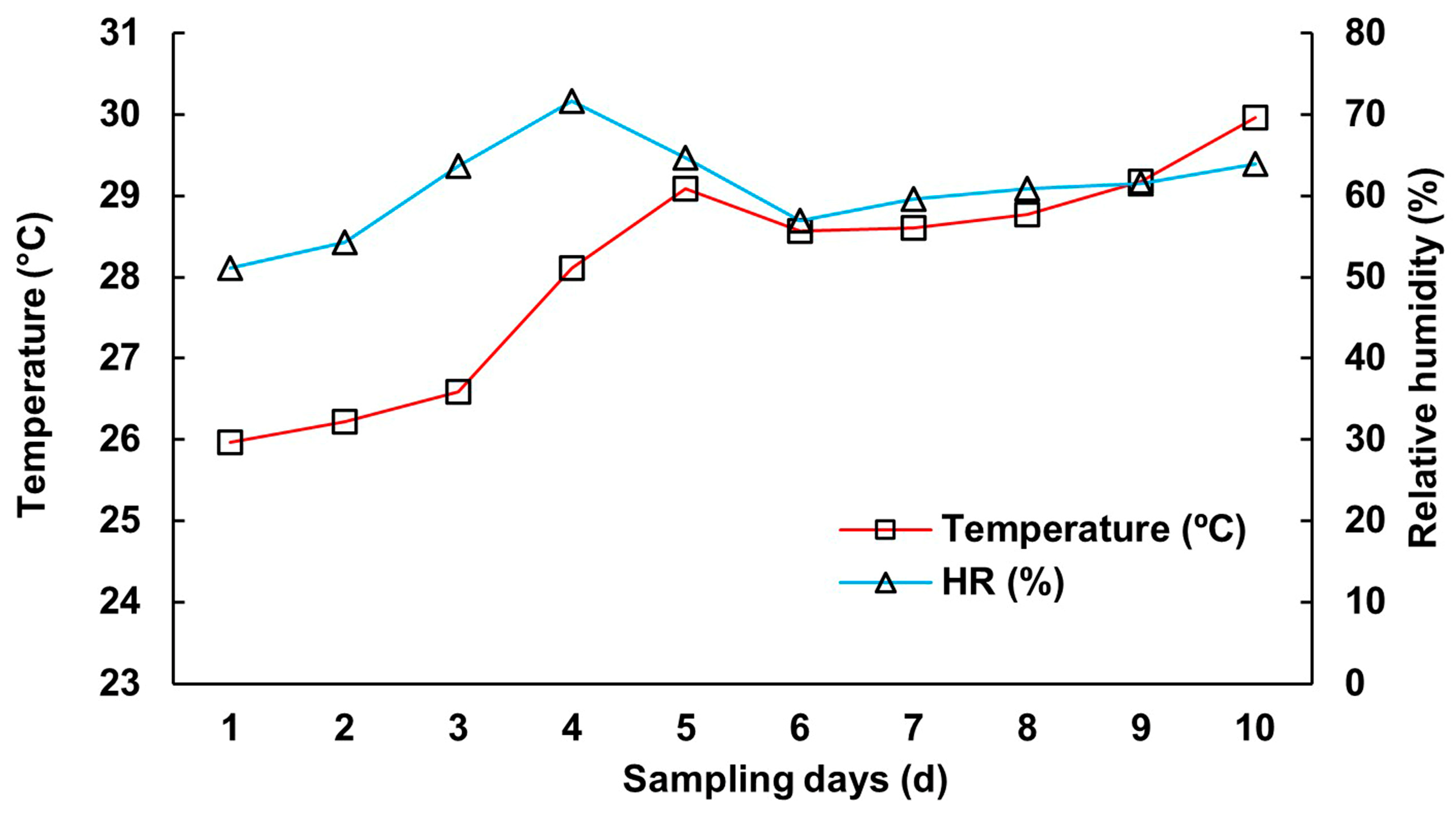
Figure 2 presents the mean daily temperature (°C) and relative humidity (%) recorded during the 10-day monitoring period under ambient, uncontrolled conditions. Temperature values ranged from 25.96 °C to 29.9 °C, which fall within the optimal thermal range for Tenebrio molitor development (20–30 °C) [18]. Previous studies commonly report 25 °C as the standard reference temperature for controlled laboratory experiments involving this species [8,11,15,16,18].
Figure 2.
Temporal variation in mean daily temperature (°C) and relative humidity (%) recorded in the experimental area during the 10-day experimental period under ambient conditions.
Relative humidity fluctuated between 51.02% and 71.59% over the experimental period, showing temporal variability rather than remaining within a narrow interval. Several sampling days exhibited relative humidity values near the 65–70% range, while those of other days were lower. Overall, despite the absence of artificial environmental control, both temperature and humidity remained within physiologically suitable ranges and did not appear to impose limiting stress on larval activity during the experiment [18].
3.2. Plastic Biodegradation
All results reported in this section correspond to a total experimental duration of 10 calendar days, during which larvae and plastic substrates were co-present in repeated 24 h exposure intervals. Quantitative plastic mass loss was calculated exclusively from endpoint measurements obtained at the end of the experimental period (day 10), while subsequent measurements were used solely for descriptive monitoring purposes.
Table 2 summarizes the initial masses of EPS and LDPE fragments and the final masses measured at the end of the 10-day experimental period, together with the corresponding plastic mass loss expressed in grams and percentage. Final mass values represent the remaining material after cumulative larval interaction over the experimental duration, excluding residues and frass.
Table 2.
Initial and final mass of EPS and LDPE fragments measured before exposure and at the end of the 10-day experimental period and corresponding plastic consumption by diet.
Abiotic control plastics incubated in the absence of larvae did not exhibit measurable mass loss or detectable chemical changes relative to pristine reference materials under the applied analytical conditions. In the case of LDPE, no THF-soluble fractions were detected in either abiotic or pristine samples, consistent with the known insolubility of intact LDPE in the solvent used.
Across all diets, measurable plastic mass changes were observed over the full 10-day experimental period, with clear differences between polymers and dietary conditions. Diets supplemented with wheat bran exhibited greater plastic mass loss than their corresponding polymer-only diets. For LDPE, the LDPE+S diet showed the highest overall mass consumption at the experimental endpoint (0.1118 g; 10.66%), whereas LDPE-only resulted in lower consumption (0.0493 g; 4.86%). In contrast, EPS exhibited substantially lower cumulative mass loss over the same experimental period. Although net reductions in EPS mass were detected for both EPS-only (0.0641 g; 1.04%) and EPS+S (0.0793 g; 1.35%) diets at the endpoint, these values reflect modest changes relative to the initial mass. This behavior is consistent with the greater structural stability of polystyrene and supports the interpretation that EPS undergoes limited early-stage fragmentation compared with LDPE under the applied conditions.
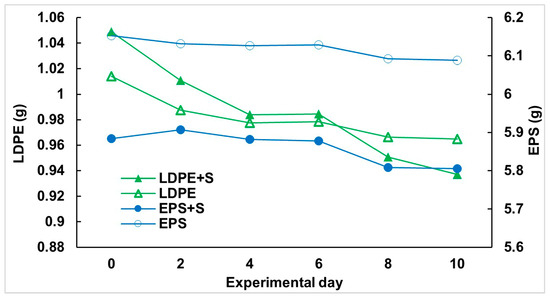
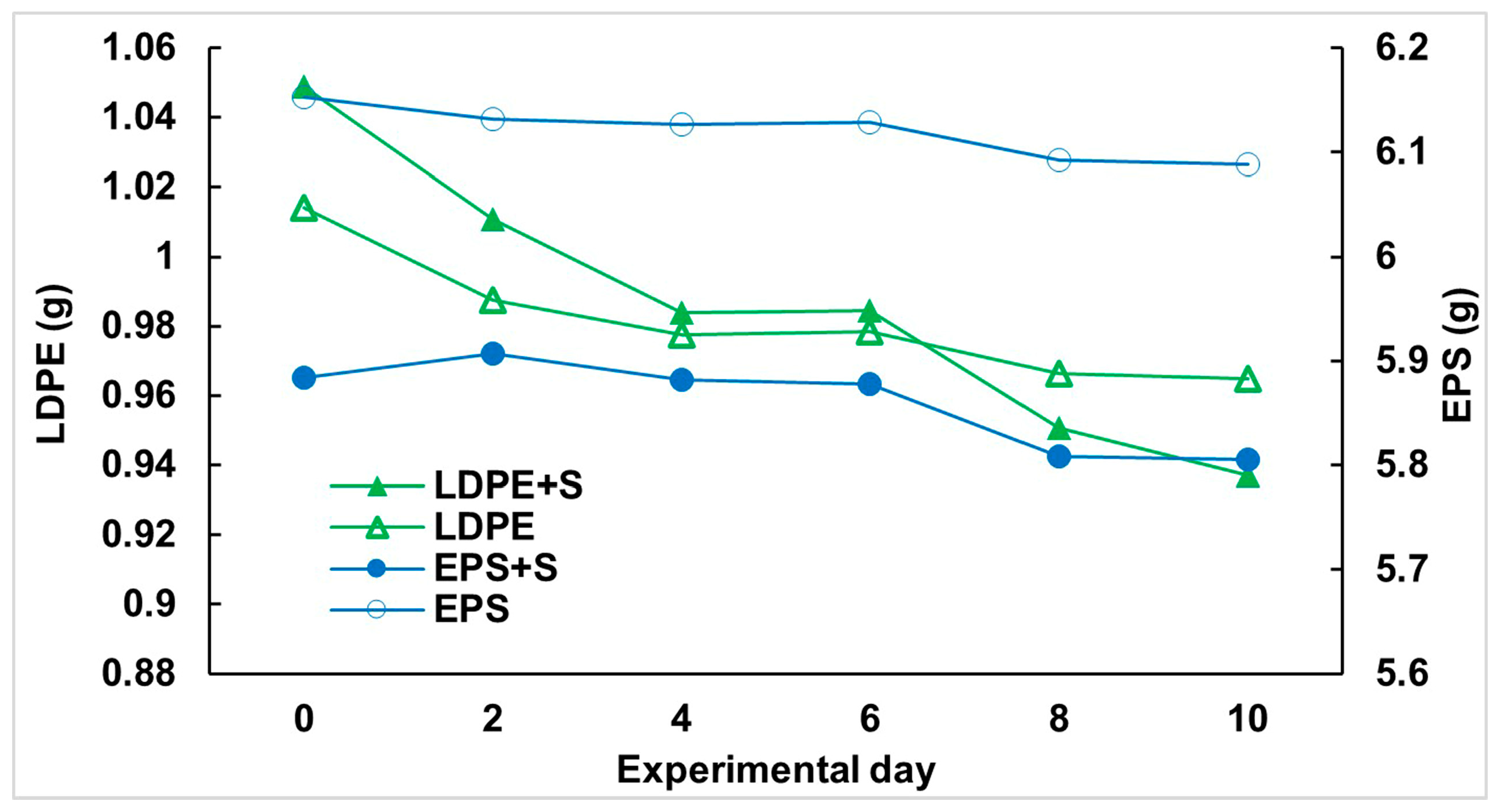
Figure 3 illustrates temporal variation in the measured mass of LDPE and EPS fragments under each dietary condition over the experimental period. These measurements are presented for descriptive purpose only, reflecting relative trends in mass variation over time rather than quantitative degradation metrics. Quantitative assessment of plastic mass loss was based exclusively on endpoint measurements obtained at the end of the 10-day experimental period, as summarized in Table 2.
Figure 3.
Descriptive temporal trends in the measured mass of LDPE and EPS fragments under each diet during the experimental period. Mass measurements were recorded at 48 h intervals (experimental days 0, 2, 4, 6, 8, 10) for monitoring purposes only. These values do not represent quantitative degradation metrics; mass loss was determined exclusively from endpoint measurements obtained at the end of the 10-day experiment (Table 2).
3.2.1. FTIR Analysis
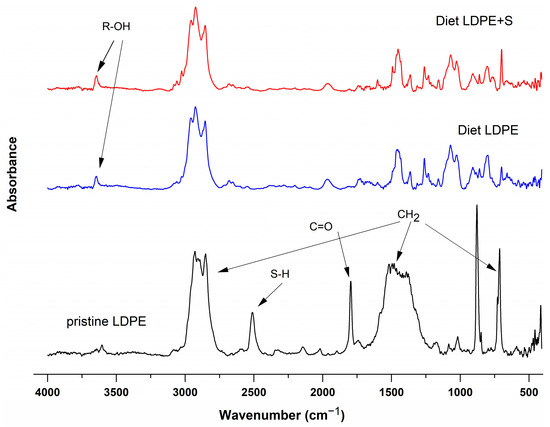
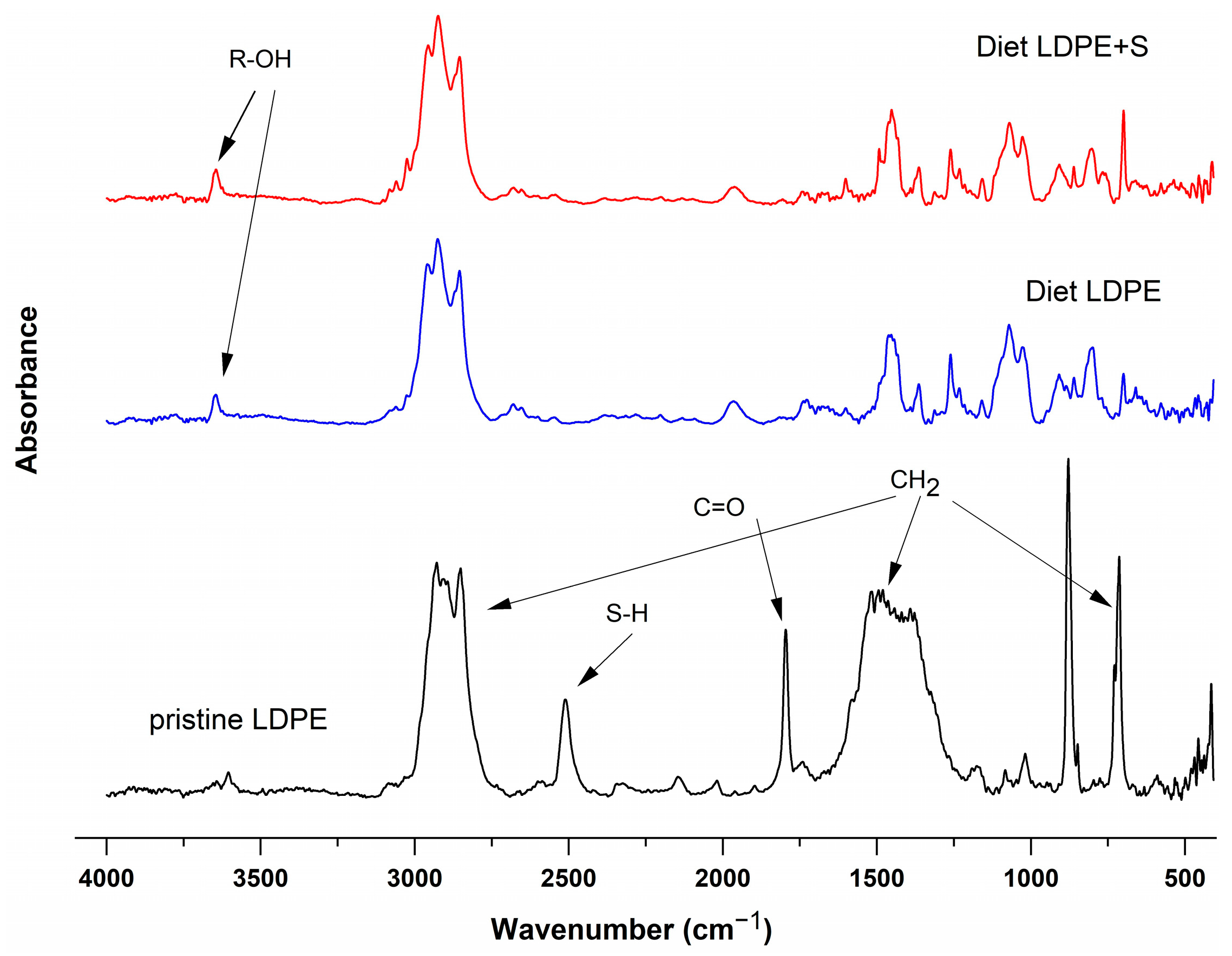
Figure 4 presents the FTIR spectra of unexposed LDPE and the extractable residues identified in the frass of larvae after feeding on the LDPE and LDPE+S diets. In the spectrum of pristine LDPE, absorption bands were observed at 2929 cm−1 and 2853 cm−1, corresponding to the asymmetric and symmetric stretching vibrations of C–H bonds in methylene (CH2) groups. In the region between 1600 cm−1 and 1300 cm−1, signals associated with the bending vibrations of CH2 and CH3 groups were detected, whereas the band at 717 cm−1 was assigned to the out-of-plane rocking mode of CH2, characteristic of the semicrystalline structure of polyethylene [19].
Figure 4.
FTIR spectra of pristine LDPE and of extractable residues detected in frass from Tenebrio molitor larvae fed on LDPE and LDPE+S diets, highlighting the emergence of oxygen-containing functional groups after larval exposure.
In addition, a characteristic absorption band at 2514 cm−1 was identified and assigned to sulfhydryl (S–H) stretching vibrations, potentially associated with sulfur containing additives used during polymer processing. Although this feature has not been previously reported in polyethylene (PE) biodegradation studies, its occurrence is supported by general spectroscopic references [20]. Furthermore, the appearance of a weak band at 1795 cm−1 indicates the formation of carbonyl (C=O) functionalities, such as anhydrides or lactones, which are typically as-sociated with oxidative degradation pathways involving C–C bond scission within the polymer backbone. These findings are consistent with previously reported spectra of pristine LDPE [9,16,19].
In the FTIR spectra of the frass produced by Tenebrio molitor larvae fed with LDPE-based diets and the LDPE+S mixture, clear evidence of chemical modification was observed compared to the pristine LDPE. Absorption bands appearing in the 1000–1200 cm−1 region were assigned to C–O stretching vibrations, indicating oxygen incorporation into the polymer matrix. In addition, a distinct band at 3640 cm−1 corresponding to O–H stretching was detected, suggesting the formation of hydroxyl groups. Bending vibrations attributable to alcohol (R–OH) functionalities were also identified between 1300 cm−1 and 1450 cm−1. The presence of these absorption features, absent in the pristine LDPE spectrum supports the formation of oxygen containing functional groups, likely formed during the biodegradation process.
These absorption bands were absent in the spectrum of pristine LDPE, indicating that chemical transformations were induced by biological activity. Collectively, the spectra suggest chemical transformations consistent with C–C bond scission and oxidative degradation processes, including carbonyl (C=O) and hydroxyl (–OH) moieties, consistent with oxidative biodegradation processes. Comparable results have been reported by Wu et al. [15], Khlaif et al. [20], Bulak et al. [21] and Bombelli et al. [22], the latter of whom investigated similar degradation pathways using Galleria mellonella larvae.
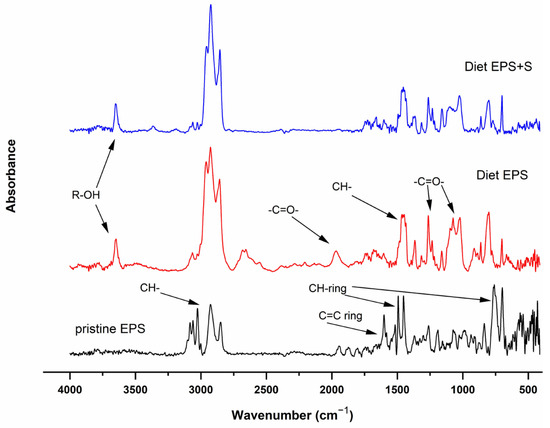
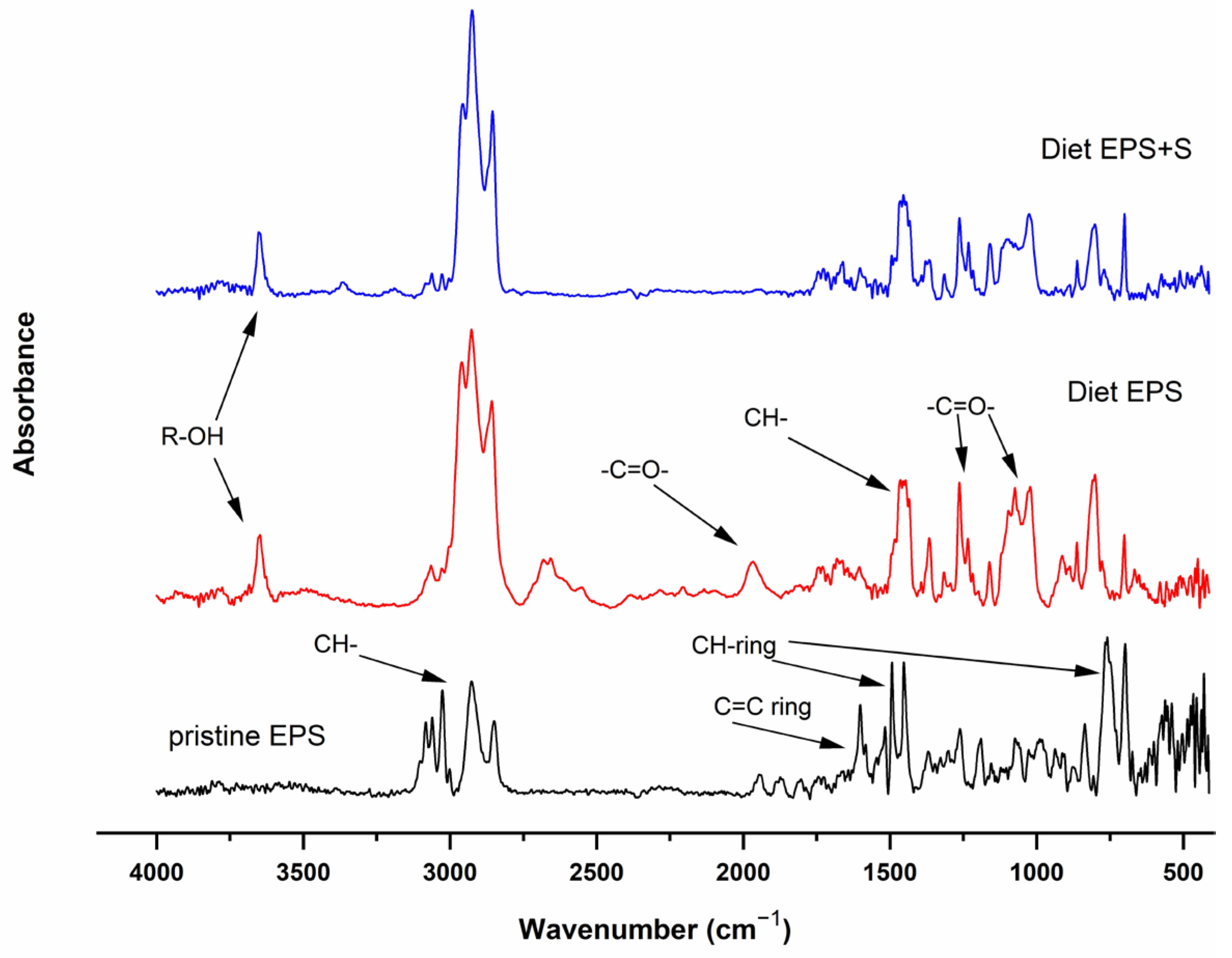
Figure 5 presents the FTIR spectra of pristine EPS and of the extractable residues recovered from the frass of larvae fed on the EPS and EPS+S mixture diets. In the spectrum of pristine EPS, absorption bands were identified between 2860 cm−1 and 2955 cm−1, corresponding to the stretching vibrations of C–H bonds in CH2 groups. The characteristic aromatic ring vibrations were confirmed by bands at 3061 cm−1 and 3082 cm−1, assigned to C–H stretching in the benzene ring. Additional bands at 698 cm−1 and 758 cm−1 were attributed to out-of-plane C–H bending in the aromatic system. Furthermore, absorptions at 1452 cm−1, 1492 cm−1, and 1601 cm−1 corresponded to C=C stretching vibrations within the benzene ring. These spectral features are consistent with previously reported FTIR profiles of pristine EPS [8,16,23,24].
Figure 5.
FTIR spectra of pristine EPS and of extractable residues detected in frass from Tenebrio molitor larvae fed on EPS and EPS+S diets, highlighting changes in aromatic and oxygen-containing functional groups after larval exposure.
The FTIR spectra of the frass from Tenebrio molitor larvae fed on EPS and EPS+S mixture diets revealed clear chemical modifications relative to pristine EPS. A band at 3645 cm−1, within the O–H stretching region (3600–3650 cm−1), indicated the formation of hydroxyl groups consistent with oxidative or hydrolytic processes associated with biodegradation. The characteristic aromatic bands of EPS at 698 cm−1 and 758 cm−1 (out-of-plane C–H bending) showed decreased intensity in the frass-derived extracts. In contrast, bands at 1452 cm−1 and 1492 cm−1 associated with aromatic C=C stretching exhibited relative intensity changes and band broadening, while the band near 1601 cm−1 appeared attenuated compared to pristine EPS. Alterations were also observed in the intensities of aliphatic and aromatic C–H stretching bands (2860–2955 cm−1 and 3061–3082 cm−1), which may reflect oxygen incorporation and increased surface polarity of the polymer fragments. These spectral changes are consistent with previously reported FTIR patterns associated with EPS biodegradation and chemical transformation [16,21,25,26,27].
FTIR analysis of frass collected from larvae reared exclusively on wheat bran, included as an analytical control, did not show detectable absorption bands beyond those attributable to the solvent under the applied conditions (Figure S1). This observation supports the interpretation that the additional absorption features detected in plastic-fed samples are associated with polymer-related chemical transformations rather than endogenous larval metabolites.
3.2.2. GPC Analysis
Gel permeation chromatography (GPC) was employed to assess changes in the molar mass distribution of LDPE- and EPS-derived fractions detected in larval frass following ingestion under the different dietary conditions.
A total of 20 individual frass-derived extracts were processed for GPC analysis. These samples were selected to represent all dietary treatments (LDPE, LDPE+S, EPS, EPS+S) and different sampling points across the experimental period, prioritizing extracts with sufficient recovered material after THF extraction. Of the 20 samples analyzed, nine yielded quantifiable chromatographic signals, whereas the remaining samples were below the detection limit of the analytical system, indicating that a substantial fraction of polymer-derived material exhibited molar masses outside the measurable range under the applied chromatographic conditions. No detectable chromatographic signals were observed in frass collected from larvae reared exclusively on wheat bran and processed under identical THF-based extraction and GPC conditions (Figure S2), confirming the absence of polymer-related material in the analytical control. Although frass samples originated from different sampling points across the experimental period, the GPC analysis was not designed as a time-resolved assessment. Detected polymer-derived fractions are therefore interpreted as endpoint evidence of polymer fragmentation and molecular-weight heterogeneity, rather than as indicators of temporal evolution in Mn or polydispersity index.
Although a larger number of LDPE fragments were initially used compared to EPS, a higher number of EPS-related chromatographic signals were detected and reported. This difference reflects intrinsic polymer chemistry rather than sample abundance. EPS degradation yields aromatic oligomers and additive-related compounds that are more readily extractable, soluble in THF, and detectable by GPC and GC–MS. In contrast, LDPE degradation predominantly produces low-molecular-weight aliphatic fragments that frequently fall below the detection limits of the analytical system or remain insoluble under the applied conditions.
Samples were assigned sequential identification numbers for internal tracking purposes. Only samples yielding detectable chromatographic signals are reported in Table 3, while non-detectable samples are noted accordingly.
Table 3.
Number-average molar mass (Mn) and polydispersity index (Đ) of polymer-derived fractions detected in larval frass by GPC analysis.
Table 3 summarizes the number-average molar mass (Mn) and polydispersity index (Đ) values obtained for LDPE- and EPS-derived fractions detected in larval frass under the different dietary conditions. For EPS, one unexposed reference sample was included, exhibiting an initial Mn of 188,626 g mol−1 and a polydispersity index of 2.14. In contrast, pristine LDPE could not be quantified by GPC due to its insolubility in tetrahydrofuran (THF), which was used as the mobile phase; therefore, no initial Mn or Đ values are reported for this polymer. Several frass samples did not yield detectable chromatographic signals, indicating that the corresponding polymer-derived fractions were below the detection limit of the analytical system.
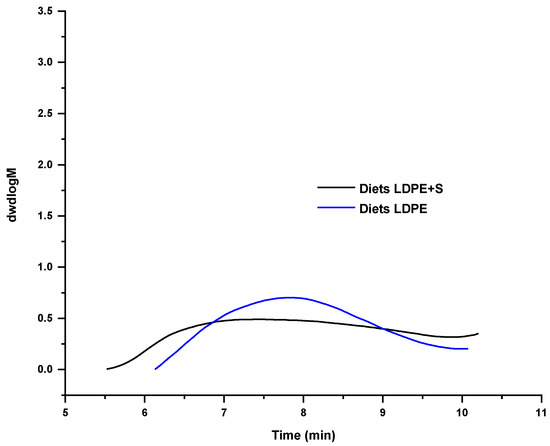
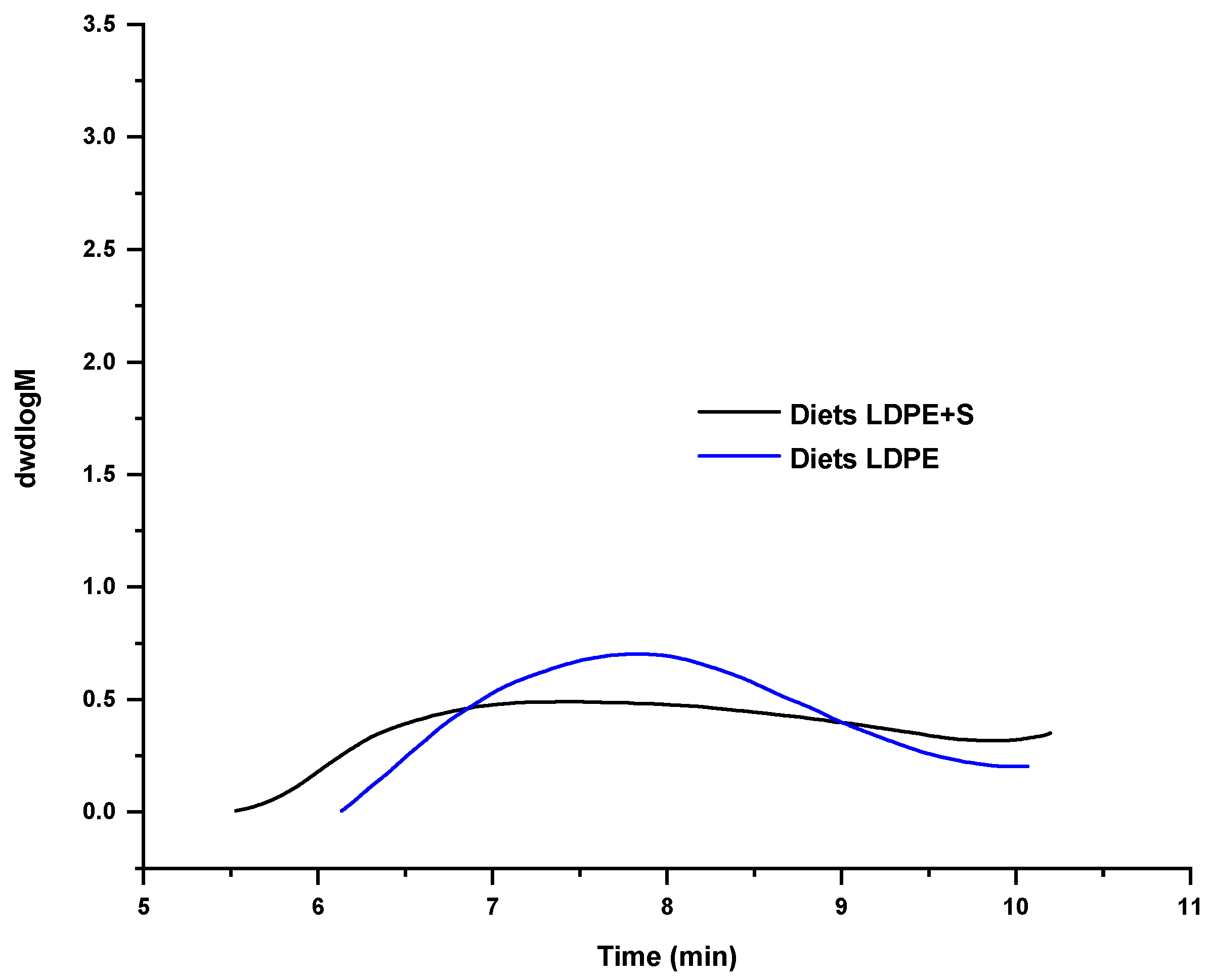
Figure 6 presents the GPC-derived molar mass distribution curves of LDPE-related fractions detected in frass from larvae fed on LDPE and LDPE+S diets. Compared with typical polymer distributions, the curves obtained from frass samples exhibit flattened profiles, indicative of a broadened range of molecular weights. For LDPE-derived fractions, the GPC profiles revealed low number-average molar mass (Mn) values and relatively elevated polydispersity indices, indicating a broad and heterogeneous distribution of THF-soluble fragments. Variability in Mn and polydispersity among detectable LDPE-related samples reflects differences in the molecular characteristics of the recovered fragments rather than a resolved temporal progression. Given that GPC data were obtained from selected frass-derived extracts yielding detectable signals, these results are interpreted as representative of the molecular diversity of LDPE-derived fragments generated during larval exposure, rather than as time-resolved degradation trends. In the LDPE+S diet, lower Mn values and higher Đ values were observed relative to the LDPE-only diet (Table 3), reflecting a broader molecular weight distribution of the detected fragments.
Figure 6.
Representative GPC-derived molar mass distribution curves of LDPE-related fractions detected in frass from larvae fed on LDPE and LDPE+S diets. Curves correspond to THF-soluble polymer-derived fragments recovered from frass extracts that yielded detectable chromatographic signals.
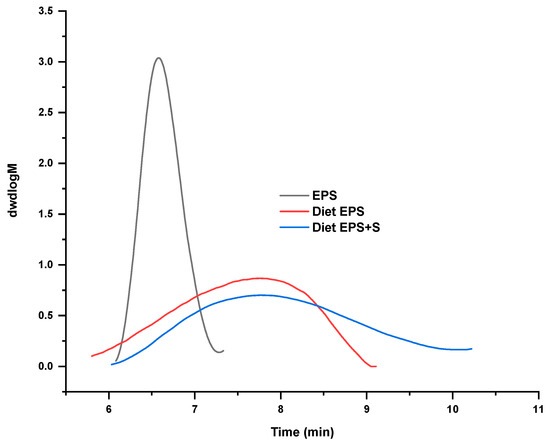
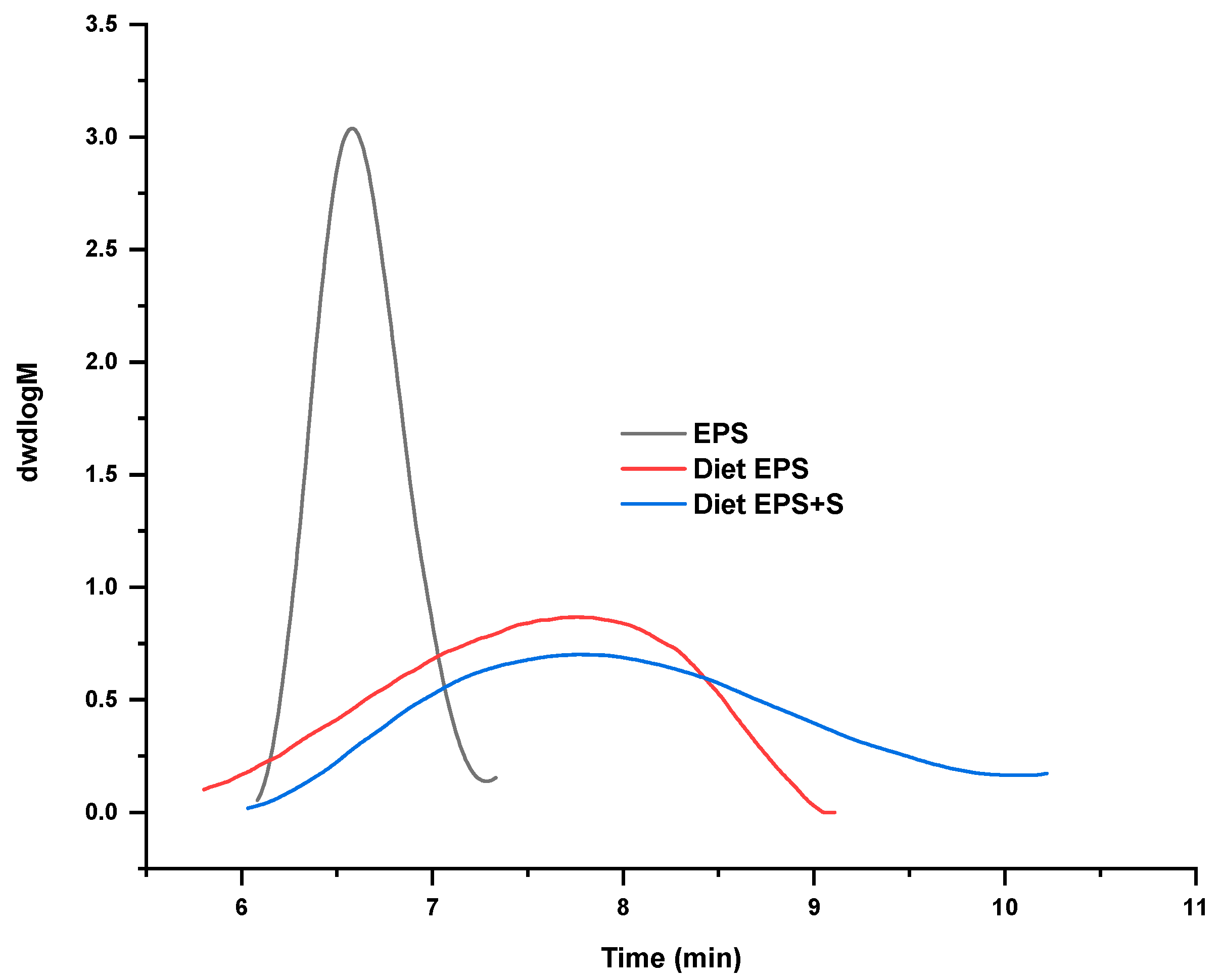
Figure 7 shows the molar mass distribution curves of pristine EPS and EPS-related fractions detected in frass from larvae fed on EPS and EPS+S diets. The pristine EPS sample displayed a narrow and well-defined distribution, whereas frass-derived samples exhibited markedly flattened profiles, consistent with a broader distribution of chain lengths. Across sampling points, EPS-derived fractions detected in frass showed substantially reduced Mn values relative to the pristine reference (Table 3), together with moderate to elevate polydispersity indices. These features indicate heterogeneous fragmentation and partial depolymerization of EPS, reflecting the presence of structurally diverse THF-soluble polymer-derived fragments recovered under the different dietary conditions, rather than time-dependent molecular-weight evolution.
Figure 7.
Representative GPC-derived molar mass distribution curves of pristine EPS (reference) and EPS-related fractions detected in frass from larvae fed on EPS and EPS+S diets. Frass-derived curves represent typical profiles of THF-soluble polymer fragments recovered under each dietary condition.
3.2.3. GC–MS Analysis
To identify chemical compounds associated with polymer exposure and trans-formation mediated by larval activity, gas chromatography coupled with mass spectrometry (GC–MS) analysis was performed. The same THF-based extracts prepared for GPC analysis were used for GC–MS characterization. A total of 20 samples were analyzed, and the resulting signals were interpreted by comparison with the instrument’s mass spectral library, allowing for the identification of several compounds associated with polymer exposure and transformation. The analysis was carried out under the instrumental conditions and identification criteria described in the Section 2.
Table 4 summarizes the chemical compounds identified in the frass of Tenebrio molitor larvae, including 14 coded components (ID), their retention times (RT), and corresponding toxicological estimates. Toxicological classification was performed according to the Globally Harmonized System (GHS) [28], together with organ-specific toxicity and toxicological endpoints predicted using the computational model Pro-Tox-II 3.0 [29]. According to the GHS classification, most compounds were assigned to Classes IV and V, indicating moderate to low predicted oral toxicity [28]. Regarding organ-specific toxicity, compounds E and L were associated with potential adverse effects on the respiratory system. With respect to toxicological endpoints, all identified compounds were predicted to be capable of crossing the blood–brain barrier, suggesting a potential risk to the central nervous system [29,30].
Table 4.
Chemical compounds identified by GC-MS in the frass of Tenebrio molitor fed with LDPE and EPS diets and their respective mixtures, along with toxicological estimates (GHS, ProTox-II).
The detected compounds included aromatic hydrocarbons, organosiloxanes, antioxidants, as well as esters and amides of fatty acids. Their occurrence is consistent with polymer-associated chemical features, including degradation products, migrated additives, or residual impurities originating from polymer manufacturing processes [31].
The detection of GC–MS-identified compounds was further compared according to diet type and sampling point. In terms of detection frequency, compounds B, C, E, G, and I were consistently detected across all diets and sampling points, whereas compounds D, H, and J exhibited intermittent detection patterns throughout the experimental period. The EPS+S and LDPE+S diets resulted in the highest cumulative number of compound detections (37 and 29, respectively), followed by the EPS and LDPE diets (32 and 25 detections, respectively). In terms of overall chemical diversity, the EPS+S, EPS, and LDPE+S diets enabled the identification of all 14 compounds detected in this study, whereas only 11 compounds were identified in the LDPE-only diet (see Appendix B, Table A1 for compound occurrence by diet and sampling point). Sampling points correspond to sequential frass collections obtained after repeated larva–plastic exposure intervals during the experiment, rather than to calendar days.
These results suggest that the inclusion of wheat bran may enhance the chemical diversity of compounds excreted by the larvae, potentially due to increased microbial and enzymatic metabolic complexity induced by the co-presence of organic material, as previously reported by Tsochatzis et al. [46]. Temporal variations in both the number and identity of detected compounds were also observed, in agreement with degradation dynamics reported in related studies [47,48].
To support the interpretation of the analytical results, frass obtained from larvae reared exclusively on wheat bran and processed under identical THF-based extraction protocols was evaluated as an analytical control across all techniques. Under the applied conditions, these control samples did not yield detectable polymer-related signals by FTIR or GPC, while GC–MS chromatograms were dominated by solvent-related compounds, as shown in Figure S3, and differed from those detected in plastic-exposed samples These observations support the interpretation that the signals detected in FTIR, GPC, and GC–MS analyses are associated with plastic-derived material rather than endogenous larval metabolites or analytical background.
4. Discussion
4.1. Larval Survival and Biomass Dynamics
Larval survival remained relatively stable across all dietary treatments throughout the 10-day experimental period, with only minor reductions in larval number observed at the final sampling point. These reductions were comparable among diets and are primarily attributable to normal larva-to-pupa transition rather than acute mortality, as no abrupt declines or treatment-specific losses were detected. This indicates that short-term exposure to LDPE- and EPS-based diets did not induce lethal effects under the experimental conditions applied, in agreement with previous studies on Tenebrio molitor fed polymer-based diets [9,16,17]. These observations are consistent with earlier reports showing that T. molitor larvae can survive for extended periods on plastic-based diets despite their low nutritional value. Yang et al. [9] reported that EPS ingestion does not significantly impair larval survival, whereas Božek et al. [14] and Brandon et al. [12] observed that plastic-only diets mainly result in reduced growth or weight loss rather than increased mortality, reflecting energetic limitation rather than acute toxicity. In this context, polymer ingestion appears to constrain energy balance rather than induce direct lethal effects.
Accordingly, changes in larval performance were evaluated using the Weight Gain Coefficient (WGC), which normalizes biomass to the number of surviving individuals and accounts for developmental transitions during the experiment. Polymer-only diets resulted in a greater relative loss of biomass per individual by Day 10, with the lowest WGC observed for the EPS-only treatment, whereas diets supplemented with wheat bran showed WGC values close to unity. This indicates that the presence of an organic co-substrate mitigated biomass loss and supported basal metabolic demands during plastic exposure, consistent with previous findings on the role of co-substrates in sustaining larval metabolism under plastic-feeding conditions [16,48].
Although wheat bran provides an additional nutritional input, larval development and pupation in Tenebrio molitor are regulated by complex physiological and metabolic processes that may be altered under plastic-feeding conditions. Recent studies have shown that exposure to synthetic polymers can induce metabolic trade-offs, gut microbiome restructuring, and detoxification responses, potentially redirecting energetic resources away from growth and metamorphosis even in the presence of supplementary nutrients [9,14]. In this context, the slightly higher retention of larvae observed in the supplemented diets likely reflects a stabilization of larval survival and biomass maintenance rather than an acceleration of developmental progression. Similar patterns have been reported in Tenebrionidae larvae exposed to polystyrene-based diets, where nutritional supplementation did not necessarily correspond to faster pupation rates.
Pupation in Tenebrio molitor typically occurs after longer developmental periods and is strongly influenced by environmental stability and nutritional balance. Within the relatively short experimental window evaluated in this study, larval dynamics therefore primarily reflect early physiological responses to diet composition rather than complete developmental transitions. The observed differences among diets thus indicate a stabilizing effect of the organic co-substrate on larval survival and biomass retention, rather than enhanced or accelerated metamorphosis.
4.2. Plastic Mass Changes
Plastic mass loss was observed across all treatments over the 10-day experimental period, with clear differences among dietary conditions. Diets supplemented with wheat bran exhibited higher plastic mass loss than their corresponding polymer-only diets, particularly for LDPE, where the LDPE+S treatment showed the greatest relative consumption. In contrast, EPS exhibited lower overall mass loss, which is consistent with its aromatic backbone and greater intrinsic resistance to degradation compared with polyethylene [4,23,49].
The relatively limited mass loss observed for EPS compared with LDPE aligns with previous reports indicating that polyethylene-based materials tend to be more susceptible to early-stage fragmentation and surface erosion than polystyrene under biologically mediated conditions [16,21,48]. However, gravimetric mass loss alone cannot distinguish between physical abrasion, partial ingestion, and chemically meaningful degradation, and therefore does not fully capture the underlying trans-formation mechanisms.
For this reason, plastic mass loss in the present study is interpreted as a descriptive indicator of larval–polymer interaction rather than a standalone measure of biodegradation. The subsequent FTIR and GPC analyses provide complementary chemical and molecular-weight evidence that allow for discrimination between simple mass reduction and genuine chemical modification of the polymer matrix, in line with recent recommendations for multi-analytical assessment of biologically mediated plastic degradation [21,23,48,50,51].
4.3. Chemical Transformations Evidenced by FTIR Analysis
FTIR analysis provided clear evidence of chemical modifications in both LDPE- and EPS-derived residues recovered from larval frass, supporting the occurrence of biologically mediated polymer transformation rather than simple physical fragmentation. In LDPE-fed treatments, the appearance of oxygen-containing functional groups, including carbonyl (C=O), hydroxyl (–OH), and C–O stretching bands, indicates oxidative processes consistent with C–C bond scission and surface oxidation of the polyethylene backbone. Similar FTIR features have been reported in studies investigating LDPE degradation by Tenebrio molitor and other insect larvae, where oxidative functionalization is considered an early indicator of polymer degradation [9,16,19,21].
For EPS, FTIR spectra revealed changes in both aliphatic and aromatic regions, including decreased intensity of out-of-plane aromatic C–H bending bands and alterations in C=C stretching vibrations within the benzene ring. These spectral changes suggest structural rearrangements and partial oxidation of the aromatic framework, which is generally regarded as more resistant to degradation due to resonance stabilization [20,21]. Comparable FTIR patterns have been reported during EPS degradation mediated by Tenebrio molitor and Galleria mellonella, where oxidative modification precedes extensive chain scission [16,21,22,25,26,27].
Importantly, the inclusion of a bran-only frass control processed under identical analytical conditions did not show additional FTIR absorption bands beyond those attributable to the solvent (Figure S1). This confirms that the spectral features detected in plastic-fed samples originate from plastic-associated material rather than endogenous larval metabolites, strengthening the attribution of the detected functional groups to polymer transformation processes induced during larval exposure, in line with methodological recommendations for biodegradation studies [21,50,51].
4.4. Molecular Weight Changes and Depolymerization Assessed by GPC
GPC analysis revealed substantial alterations in the molecular weight distribution of THF-soluble polymer-derived fractions recovered from larval frass, providing molecular-level evidence of polymer fragmentation. As the analysis was not designed to resolve temporal evolution, these results are interpreted as endpoint indicators rather than time-dependent molecular weight changes. For EPS-derived fractions, the marked reduction in number-average molar mass (Mn) and the increase in polydispersity index (Đ) relative to the pristine reference indicate heterogeneous chain scission and partial depolymerization. In contrast, for LDPE, GPC results indicate the presence of THF-soluble, low-molecular-weight polymer-derived fragments generated during larval exposure, rather than quantified reductions in Mn or increases in polydispersity, as pristine LDPE could not be quantified under the chromatographic conditions employed [16,21,48].
For LDPE, the detection of THF-soluble fractions in frass, despite the insolubility of pristine LDPE in THF, suggests that larval digestion and associated biochemical processes generate lower-molecular-weight fragments with altered chemical properties. Although GPC did not allow for direct quantification of intact LDPE, the absence of detectable signals in wheat-bran-only frass controls processed under identical extraction and analytical conditions (Figure S2) supports the interpretation that the observed chromatographic profiles originate from plastic-derived material rather than analytical artifacts or biological background [11,12,16].
In the case of EPS, all frass-derived samples exhibited pronounced reductions in Mn relative to the pristine reference, together with moderate to elevated polydispersity values, indicating irregular fragmentation and partial depolymerization of the polymer chains. Such behavior has been reported in previous studies examining EPS degradation by insect larvae, where enzymatic and oxidative mechanisms lead to non-uniform molecular weight reduction [16,21,22]. Minor inter-sample variability in Mn and Đ among EPS-derived frass extracts reflects the heterogeneous nature of THF-soluble fragment populations recovered across different samples, rather than systematic time-dependent trends. Importantly, none of the EPS-related frass samples approached the Mn of pristine EPS, supporting the conclusion that polymer depolymerization occurred under all EPS-based dietary conditions. Collectively, the GPC results complement the FTIR findings and confirm that polymer transformation in this system involves not only surface oxidation but also measurable changes in molecular weight distribution.
4.5. Chemical Diversity, Additives, and Degradation Products Identified by GC–MS
GC–MS analysis revealed a diverse set of organic compounds in the frass of larvae exposed to LDPE and EPS diets, predominantly including aromatic hydrocarbons, antioxidants, plasticizers, organosiloxanes, and fatty acid derivatives. Many of these compounds are commonly associated with polymer additives or degradation products, indicating that larval interaction with plastics facilitates the release, transformation, or migration of embedded chemical constituents [28,29,30,31,48].
The detection of compounds such as butylated hydroxytoluene (BHT), phthalate esters, and phenolic derivatives is consistent with previous reports on plastic additive migration during biodegradation or environmental weathering [31,38,39,40]. The higher chemical diversity observed in diets supplemented with wheat bran suggests that the presence of an organic co-substrate may enhance microbial or enzymatic activity within the larval gut or associated microbiota, thereby increasing the detectability of transformation products rather than implying a higher degree of polymer degradation as previously proposed by Tsochatzis et al. [47].
Crucially, bran-only frass controls analyzed under identical GC–MS conditions (Figure S3) did not exhibit the compound profiles detected in plastic-exposed samples, confirming that the identified chemicals are not attributable to endogenous larval metabolism alone. While GC–MS does not distinguish between degradation products and migrated additives, the combined analytical evidence supports the conclusion that plastic exposure contributes to the observed chemical complexity, highlighting the need to consider additive release and transformation in assessments of insect-mediated plastic degradation [31,47,48].
4.6. Polymer Transformation and Environmental Context
Taken together, the gravimetric, spectroscopic, chromatographic, and molecular-weight analyses indicate that Tenebrio molitor larvae induce early-stage transformation of LDPE and EPS under short-term exposure conditions. Rather than complete mineralization, the results demonstrate partial oxidation, fragmentation, and chemical modification of polymers, accompanied by the release or transformation of additive-related compounds. This multi-analytical approach aligns with current recommendations emphasizing that plastic biodegradation should be evaluated using complementary techniques rather than mass loss alone [21,23,50,51].
The observed mitigation of biomass loss and enhanced chemical diversity in supplemented diets further underscores the role of co-substrates in sustaining larval metabolism and potentially facilitating polymer transformation processes. Similar synergistic effects between plastics and organic matter have been reported in other in-sect-based degradation systems, suggesting that co-feeding strategies may influence degradation pathways and transformation dynamics [16,48].
From an environmental perspective, these findings highlight both the potential and the limitations of insect-mediated plastic transformation. While Tenebrio molitor larvae can initiate chemical modification and fragmentation of common polymers, the generation of additive-derived compounds raises important considerations regarding downstream environmental and toxicological impacts. Accordingly, insect-based plastic degradation should be regarded as an early-stage transformation process within a broader waste-management framework rather than as a standalone solution, warranting further investigation into long-term degradation pathways, additive fate, and associated ecological risks [23,31,47,48].
5. Conclusions
This study demonstrates that Tenebrio molitor larvae are capable of inducing measurable physicochemical transformations in post-consumer expanded polystyrene (EPS) and low-density polyethylene (LDPE) under short-term exposure conditions. Evidence of polymer-associated transformation was supported by complementary analytical approaches, including endpoint plastic mass loss, FTIR-detected functional group modifications, reductions in molecular weight distributions assessed by GPC, and the identification of polymer-related compounds and additives in larval frass by GC–MS.
Larval survival remained stable across all dietary conditions, with changes in larval number primarily reflecting normal larva-to-pupa transition rather than acute mortality. Biomass dynamics, evaluated using a normalized Weight Gain Coefficient (WGC), indicated that polymer-only diets led to relative biomass loss per individual, whereas supplementation with wheat bran mitigated this effect. These results indicate that plastic ingestion did not induce lethal stress but imposed energetic limitations that were partially offset by the presence of an organic co-substrate.
Comparative analyses showed that diets supplemented with wheat bran were associated with increased plastic mass loss and greater chemical diversity in frass extracts, suggesting that the presence of an accessible carbon source may facilitate metabolic and microbial processes linked to polymer transformation. However, the observed changes correspond to partial depolymerization and chemical modification rather than complete mineralization.
Overall, the findings support the use of Tenebrio molitor larvae as a biological model for investigating early-stage transformation pathways of plastic polymers under environmentally relevant, post-consumer conditions. Although the transformations observed do not constitute full biodegradation, they provide insight into initial processes that may contribute to downstream fragmentation and alteration of plastic materials in biological systems. Future studies incorporating longer exposure periods, controlled abiotic comparisons, and quantitative mineralization endpoints will be essential to further clarify the environmental significance of insect-mediated plastic transformation.
Supplementary Materials
The following supporting information can be downloaded at: https://www.mdpi.com/article/10.3390/microplastics5010055/s1, Figure S1: FTIR spectra of wheat bran frass control and THF solvent; Figure S2: GPC chromatograms of wheat bran frass control and THF blank; Figure S3: GC–MS total ion chromatogram (TIC) of wheat bran frass control.
Author Contributions
Conceptualization, I.Á.-L., D.G.L.-C. and M.d.C.P.-C.; methodology, I.Á.-L., D.G.L.-C. and A.Á.-O.; formal analysis, J.A.A.-B. and A.Á.-O.; investigation, G.G.-V. and C.A.Q.-F.; resources, M.d.C.P.-C.; data curation, I.Á.-L. and A.Á.-O.; writing—original draft preparation, I.Á.-L. and A.Á.-O.; writing—review and editing, J.A.A.-B., A.Á.-O., M.d.C.P.-C. and J.R.L.-C.; supervision, G.G.-V. and C.A.Q.-F.; project administration, M.d.C.P.-C. and J.R.L.-C. All authors have read and agreed to the published version of the manuscript.
Funding
This research was supported by a doctoral scholarship awarded to Israel Ávila Lázaro by the Secretaría de Ciencia, Humanidades, Tecnología e Innovación (SECIHTI, Mexico) (Scholarship No. 350950).
Institutional Review Board Statement
Ethical review and approval were waived for this study because the experiments involved Tenebrio molitor larvae, which are invertebrates. The use of insects for laboratory experiments does not require approval from bioethics committees and is not subject to procedures in accordance with Directive 2010/63/EU of the European Parliament and of the Council on the protection of animals used for scientific purposes. This approach is also consistent with the Mexican Official Norm NOM-062-ZOO-1999 governing the use and care of laboratory animals.
Informed Consent Statement
Not applicable.
Data Availability Statement
The original contributions presented in this study are included in the article and Supplementary Materials. Further inquiries can be directed to the corresponding authors.
Acknowledgments
The authors would like to express their gratitude to Mariela Lope Navarrete from the Instrumental Analysis Laboratory of the Faculty of Chemical Engineering, Universidad Autónoma de Yucatán (UADY); Avel Adolfo González Sánchez from the Environmental Engineering Laboratory, Faculty of Engineering, UADY; and William Santiago González Gómez from the National Laboratory of Nano and Biomaterials, Center for Research and Advanced Studies of the National Polytechnic Institute (Cinvestav-IPN), for their valuable technical assistance. The National Laboratory of Nano and Biomaterials at Cinvestav-IPN is supported by funding from the projects FOMIX-Yucatán 2008-108160, CONACYT LAB-2009-01-123913, 292692, 294643, 188345, and 204822.
Conflicts of Interest
The authors declare no conflicts of interest.
Appendix A
Figure A1.
Schematic representation of the experimental setup used in the biodegradation study. (a) Plastic containers used as experimental units. (b) Dietary treatments applied, including polymer-only diets (EPS or LDPE) and polymer diets supplemented with wheat bran (EPS+S and LDPE+S). Each container contained two EPS fragments or fourteen LDPE fragments, as described in Section 2.2.3. The schematic representation is not drawn to scale and does not reflect relative fragment size or mass.
Appendix B
Table A1.
Chemical compounds identified by GC-MS in larval excreta as a function of the EPS and LDPE diets and their respective mixtures.
References
- United Nations Environment Programme (UNEP). El Estado de los Plásticos: Perspectiva del Día Mundial del Medio Ambiente 2018. Available online: https://www.unep.org/es/resources/informe/el-estado-de-los-plasticos-perspectiva-del-dia-mundial-del-medio-ambiente-2018 (accessed on 11 November 2025).
- Plastics Europe. Plastics—The Facts 2023. Available online: https://plasticseurope.org/es/knowledge-hub/plastics-the-fast-facts-2023/ (accessed on 11 November 2025).
- Shahnawaz, M.; Sangale, M.K.; Ade, A.B. Plastic Waste Disposal and Reuse of Plastic Waste. In Bioremediation Technology for Plastic Waste; Springer: Singapore, 2019; pp. 21–30. [Google Scholar] [CrossRef] [Scilit]
- Shah, A.A.; Hasan, F.; Hameed, A.; Ahmed, S. Biological degradation of plastics: A comprehensive review. Biotechnol. Adv. 2008, 26, 246–265. [Google Scholar] [CrossRef] [Scilit]
- Yang, S.-S.; Wu, W.-M.; Brandon, A.M.; Fan, H.Q.; Receveur, J.P.; Li, Y.; Wang, Z.Y.; Fan, R.; McClellan, R.L.; Gao, S.H.; et al. Ubiquity of polystyrene digestion and biodegradation within yellow mealworms, larvae of Tenebrio molitor Linnaeus (Coleoptera: Tenebrionidae). Chemosphere 2018, 212, 262–271. [Google Scholar] [CrossRef] [Scilit]
- Yang, S.-S.; Brandon, A.M.; Xing, D.F.; Yang, J.; Pang, J.W.; Criddle, C.S.; Ren, N.Q.; Wu, W.M. Progresses in Polystyrene Biodegradation and Prospects for Solutions to Plastic Waste Pollution. In IOP Conference Series: Earth and Environmental Science; IOP Publishing: Bristol, UK, 2018. [Google Scholar] [CrossRef] [Scilit]
- Kuan, Z.J.; Chan, B.K.N.; Gan, S.K.E. Worming the Circular Economy for Biowaste and Plastics: Hermetia illucens, Tenebrio molitor, and Zophobas morio. Sustainability 2022, 14, 1594. [Google Scholar] [CrossRef] [Scilit]
- Yang, Y.; Yang, J.; Wu, W.-M.; Zhao, J.; Song, Y.; Gao, L.; Yang, R.; Jiang, L. Biodegradation and mineralization of polystyrene by plastic-eating mealworms: Part 2. Chemical and physical characterization and isotopic tests. Environ. Sci. Technol. 2015, 49, 12080–12086. [Google Scholar] [CrossRef] [Scilit]
- Yang, J.; Yang, Y.; Wu, W.-M.; Zhao, J.; Jiang, L. Evidence of polyethylene biodegradation by bacterial strains from the guts of plastic-eating waxworms. Environ. Sci. Technol. 2014, 48, 13776–13784. [Google Scholar] [CrossRef] [Scilit]
- Yang, Y.; Yang, J.; Wu, W.-M.; Zhao, J.; Song, Y.; Gao, L.; Yang, R.; Jiang, L. Biodegradation and mineralization of polystyrene by plastic-eating mealworms: Part 2. Role of gut microorganisms. Environ. Sci. Technol. 2015, 49, 12087–12093. [Google Scholar] [CrossRef] [Scilit] [PubMed]
- Yang, S.-S.; Brandon, A.M.; Flanagan, J.C.; Yang, J.; Ning, D.; Cai, S.Y.; Fan, H.Q.; Wang, Z.Y.; Ren, J.; Benbow, E.; et al. Biodegradation of polystyrene wastes in yellow mealworms (larvae of Tenebrio molitor Linnaeus): Factors affecting biodegradation rates and the ability of polystyrene-fed larvae to complete their life cycle. Chemosphere 2018, 191, 979–989. [Google Scholar] [CrossRef] [Scilit]
- Brandon, A.M.; Gao, S.H.; Tian, R.; Ning, D.; Yang, S.S.; Zhou, J.; Wu, W.M.; Criddle, C.S. Biodegradation of polyethylene and plastic mixtures in mealworms (larvae of Tenebrio molitor) and effects on the gut microbiome. Environ. Sci. Technol. 2018, 52, 6526–6533. [Google Scholar] [CrossRef] [Scilit] [PubMed]
- Yang, S.-S.; Ding, M.-Q.; Zhang, Z.-R.; Ding, J.; Bai, S.-W.; Cao, G.-L.; Zhao, L.; Pang, J.-W.; Xing, D.-F.; Ren, N.-Q.; et al. Confirmation of biodegradation of low-density polyethylene in dark- versus yellow-mealworms (larvae of Tenebrio obscurus versus Tenebrio molitor) via gut microbe-independent depolymerization. Sci. Total Environ. 2021, 789, 147915. [Google Scholar] [CrossRef] [Scilit]
- Bożek, M.; Hanus-Lorenz, B.; Rybak, J. The studies on waste biodegradation by Tenebrio molitor. E3S Web Conf. 2017, 17, 00011. [Google Scholar] [CrossRef] [Scilit]
- Wu, Q.; Tao, H.; Wong, M.H. Feeding and metabolism effects of three common microplastics on Tenebrio molitor L. Environ. Geochem. Health 2019, 41, 17–26. [Google Scholar] [CrossRef] [Scilit]
- Nukmal, N.; Umar, S.; Amanda, S.P.; Kanedi, M. Effect of Styrofoam waste feeds on the growth, development and fecundity of mealworms (Tenebrio molitor). Online J. Biol. Sci. 2018, 18, 24–28. [Google Scholar] [CrossRef] [Scilit]
- Matyja, K.; Rybak, J.; Hanus-Lorenz, B.; Wróbel, M.; Rutkowski, R. Effects of polystyrene diet on Tenebrio molitor larval growth, development and survival: Dynamic Energy Budget (DEB) model analysis. Environ. Pollut. 2020, 264, 114740. [Google Scholar] [CrossRef] [Scilit]
- Ong, S.Y.; Zainab-L, I.; Pyary, S.; Sudesh, K. A novel biological recovery approach for PHA employing selective digestion of bacterial biomass in animals. Appl. Microbiol. Biotechnol. 2018, 102, 2117–2127. [Google Scholar] [CrossRef] [Scilit]
- Coates, J. Interpretation of infrared spectra: A practical approach. In Encyclopedia of Analytical Chemistry; Wiley: Hoboken, NJ, USA, 2000. [Google Scholar]
- Khlaif, A.T.; Abdulhay, H.S. Polyethylene degradation by plastivores greater wax worm larvae (Galleria mellonella). Iraqi J. Sci. 2023, 64, 2144–2152. [Google Scholar] [CrossRef]
- Bulak, P.; Proc, K.; Pytlak, A.; Puszka, A.; Gawdzik, B.; Bieganowski, A. Biodegradation of different types of plastics by Tenebrio molitor insect. Polymers 2021, 13, 3508. [Google Scholar] [CrossRef] [Scilit]
- Bombelli, P.; Howe, C.J.; Bertocchini, F. Polyethylene biodegradation by caterpillars of the wax moth Galleria mellonella. Curr. Biol. 2017, 27, R292–R293. [Google Scholar] [CrossRef] [Scilit] [PubMed]
- Chamas, A.; Moon, H.; Zheng, J.; Qiu, Y.; Tabassum, T.; Jang, J.H.; Abu-Omar, M.; Scott, S.L.; Suh, S. Degradation rates of plastics in the environment. ACS Sustain. Chem. Eng. 2020, 8, 3494–3511. [Google Scholar] [CrossRef] [Scilit]
- Yang, L.; Gao, J.; Liu, Y.; Zhuang, G.; Peng, X.; Wu, W.M.; Zhuang, X. Biodegradation of expanded polystyrene and low-density polyethylene foams in larvae of Tenebrio molitor Linnaeus (Coleoptera: Tenebrionidae): Broad versus limited extent depolymerization and microbe-dependence versus independence. Chemosphere 2021, 262, 127818. [Google Scholar] [CrossRef] [Scilit] [PubMed]
- Hernández, G.H.; Aguirre, C.J. Estimación de calidad en polímeros empleando sensores virtuales. Dyna 2005, 72, 65–73. [Google Scholar]
- Yang, S.S.; Ding, M.Q.; Ren, X.R.; Zhang, Z.R.; Li, M.X.; Zhang, L.L.; Pang, J.W.; Chen, C.X.; Zhao, L.; Xing, D.F.; et al. Impacts of physical–chemical properties of polyethylene on depolymerization and biodegradation in yellow and dark mealworms with high-purity microplastics. Sci. Total Environ. 2022, 828, 154458. [Google Scholar] [CrossRef] [Scilit]
- Lou, Y.; Li, Y.; Lu, B.; Liu, Q.; Yang, S.S.; Liu, B.; Ren, N.; Wu, W.M.; Xing, D. Response of the yellow mealworm (Tenebrio molitor) gut microbiome to diet shifts during polystyrene and polyethylene biodegradation. J. Hazard. Mater. 2021, 416, 126222. [Google Scholar] [CrossRef] [Scilit]
- UNECE (United Nations Economic Commission for Europe). Globally Harmonized System of Classification and Labelling of Chemicals (GHS); United Nations: Geneva, Switzerland, 2023. [Google Scholar]
- Banerjee, P.; Kemmler, E.; Dunkel, M.; Preissner, R. ProTox 3.0: A webserver for the prediction of toxicity of chemicals. Nucleic Acids Res. 2024, 52, W513–W520. [Google Scholar] [CrossRef] [Scilit]
- Banerjee, P.; Eckert, A.O.; Schrey, A.K.; Preissner, R. ProTox-II: A webserver for the prediction of toxicity of chemicals. Nucleic Acids Res. 2018, 46, W257–W263. [Google Scholar] [CrossRef] [Scilit]
- Lusher, A.L.; Allan, I.; Röhler, L.; Snekkevik, V.K.; Collard, F.; Hjelset, S. Interim Report: Quantification of Microplastic and Plastic Additives in Water and Fish in RAS (WP1); Norwegian Institute for Water Research: Oslo, Norway, 2024; ISSN 1894-7948. [Google Scholar]
- Sobhani, Z.; Panneerselvan, L.; Fang, C.; Naidu, R.; Megharaj, M. Chronic and transgenerational effects of polystyrene microplastics at environmentally relevant concentrations in earthworms (Eisenia fetida). Environ. Toxicol. Chem. 2021, 40, 2240–2246. [Google Scholar] [CrossRef] [Scilit]
- Maddela, N.R.; Kakarla, D.; Venkateswarlu, K.; Megharaj, M. Additives of plastics: Entry into the environment and potential risks to human and ecological health. J. Environ. Manag. 2023, 348, 119364. [Google Scholar] [CrossRef] [Scilit]
- European Chemicals Agency (ECHA). Hazardous Chemicals Found in Cosmetic Products. 2025. Available online: https://echa.europa.eu/-/hazardous-chemicals-found-in-cosmetic-products (accessed on 23 February 2025).
- Khandare, S.D.; Agrawal, D.; Mehru, N.; Chaudhary, D.R. Marine bacterial-based enzymatic degradation of low-density polyethylene (LDPE) plastic. J. Environ. Chem. Eng. 2022, 10, 107437. [Google Scholar] [CrossRef] [Scilit]
- Li, Y.; Chen, J.; Yang, Y.; Li, C.; Peng, W. Molecular characteristics of volatile components from willow bark. J. King Saud Univ. Sci. 2020, 32, 1932–1936. [Google Scholar] [CrossRef] [Scilit]
- Su, Q.Z.; Vera, P.; Nerín, C.; Lin, Q.B.; Zhong, H.N. Safety concerns of recycling post-consumer polyolefins for food contact uses: Regarding (semi-)volatile migrants untargetedly screened. Resour. Conserv. Recycl. 2021, 167, 105365. [Google Scholar] [CrossRef] [Scilit]
- Estremera, C.; Paiva, R.; Aznar, M.; Nerín, C.; Domeno, C. Identification of volatile and non-volatile migrants released during sous vide cooking by UPLC-IMS-QTOF and DI-SPME-GC–MS using a design of experiments approach. Food Packag. Shelf Life 2024, 43, 101297. [Google Scholar] [CrossRef] [Scilit]
- Simon, T.R.; Zhao, F. Chemical characterization of particulates and volatile organic compounds emitted during fused deposition modeling. Manuf. Lett. 2023, 35, 1284–1292. [Google Scholar] [CrossRef] [Scilit]
- Hahladakis, J.N.; Velis, C.A.; Weber, R.; Iacovidou, E.; Purnell, P. An overview of chemical additives present in plastics: Migration, release, fate and environmental impact during their use, disposal and recycling. J. Hazard. Mater. 2018, 344, 179–199. [Google Scholar] [CrossRef] [Scilit]
- Jiang, S.C.; Yang, Y.F.; Ge, S.B.; Zhang, Z.F.; Peng, W.X. Preparation and properties of novel flame-retardant PBS wood–plastic composites. Arab. J. Chem. 2018, 11, 844–857. [Google Scholar] [CrossRef] [Scilit]
- Catizane, C.; Jiang, Y.; Sumner, J. Improving plastic pyrolysis oil quality via an electrochemical process for polymer recycling: A review. Energy Adv. 2024, 3, 366–388. [Google Scholar] [CrossRef] [Scilit]
- European Chemicals Agency (ECHA). Mapping Exercise—Plastic Additives Initiative. 2025. Available online: https://echa.europa.eu/mapping-exercise-plastic-additives-initiative (accessed on 18 February 2025).
- da Costa, J.P.; Avellan, A.; Mouneyrac, C.; Duarte, A.; Rocha-Santos, T. Plastic additives and microplastics as emerging contaminants: Mechanisms and analytical assessment. TrAC Trends Anal. Chem. 2023, 158, 116898. [Google Scholar] [CrossRef] [Scilit]
- Gauquie, J.; Devriese, L.; Robbens, J.; De Witte, B. A qualitative screening and quantitative measurement of organic contaminants on different types of marine plastic debris. Chemosphere 2015, 138, 348–356. [Google Scholar] [CrossRef] [Scilit] [PubMed]
- Tsochatzis, E.; Berggreen, I.E.; Tedeschi, F.; Ntrallou, K.; Gika, H.; Corredig, M. Gut microbiome and degradation product formation during biodegradation of expanded polystyrene by mealworm larvae under different feeding strategies. Molecules 2021, 26, 7568. [Google Scholar] [CrossRef] [Scilit] [PubMed]
- Tsochatzis, E.D.; Berggreen, I.E.; Nørgaard, J.V.; Theodoridis, G.; Dalsgaard, T.K. Biodegradation of expanded polystyrene by mealworm larvae under different feeding strategies evaluated by metabolic profiling using GC–TOF–MS. Chemosphere 2021, 281, 130840. [Google Scholar] [CrossRef] [Scilit]
- Tsochatzis, E.; Lopes, J.A.; Gika, H.; Theodoridis, G. Polystyrene biodegradation by Tenebrio molitor larvae: Identification of generated substances using a GC–MS untargeted screening method. Polymers 2021, 13, 17. [Google Scholar] [CrossRef] [Scilit]
- Cole, L. Polystyrene: Synthesis, Characteristics and Applications; Nova Science Publishers: New York, NY, USA, 2014. [Google Scholar]
- Andrady, A.L. Plastics and Environmental Sustainability; Wiley: Hoboken, NJ, USA, 2015. [Google Scholar]
- Hoshino, A.; Tsuji, M.; Fukuda, K.; Nonagase, M.; Sawada, H.; Kimura, M. Changes in molecular structure of biodegradable plastics during degradation in soils estimated by FT-IR and NMR. Soil Sci. Plant Nutr. 2002, 48, 469–473. [Google Scholar] [CrossRef] [Scilit]

Disclaimer/Publisher’s Note: The statements, opinions and data contained in all publications are solely those of the individual author(s) and contributor(s) and not of MDPI and/or the editor(s). MDPI and/or the editor(s) disclaim responsibility for any injury to people or property resulting from any ideas, methods, instructions or products referred to in the content. |
© 2026 by the authors. Licensee MDPI, Basel, Switzerland. This article is an open access article distributed under the terms and conditions of the Creative Commons Attribution (CC BY) license.