


Abstract
Real-time selective sequencing on nanopore platforms offers a programmable way to enrich target molecules and deplete background DNA during a run. This approach, widely known as adaptive sampling (AS), has been applied across host depletion, metagenomics, targeted loci, plasmid/AMR workflows, and RNA/transcriptomic protocols, but reported performance varies substantially across studies. This review synthesizes current algorithmic and empirical evidence with emphasis on sequencing-relevant outcomes, including absolute informative yield, target-coverage behavior, throughput effects, and run-to-run stability. Across use cases, relative enrichment is frequently observed, but gains in usable genomic output are strongly conditioned by fragment-length distributions, reference quality, decision-loop latency, and rejection-associated penalties in total yield and pore longevity. Evidence from targeted-panel and complex-locus studies further indicates that improved depth concentration can coexist with coverage non-uniformity and context-specific trade-offs relative to wet-lab enrichment. Overall, the literature supports AS as a valuable but condition-dependent strategy whose benefit is greatest when assay design, reference selection, and computational constraints are jointly optimized.
1. Introduction
Across clinical, environmental, and agricultural genomics, there is growing demand for sequencing strategies that prioritize informative molecules within finite run time and flow-cell budget [1,2,3,4,5]. Despite major advances in library preparation and bioinformatic automation, most next-generation sequencing (NGS) workflows still depend on batch processing and multi-step turnaround, creating a persistent gap between raw data generation and biologically interpretable output [6,7]. In host-rich or compositionally complex samples, this gap is amplified by the large share of reads that are uninformative for the target question.
Long-read nanopore sequencing emerged as a compelling alternative partly because it sidestepped this constraint. Continuous data streaming, portable instruments, and real-time analysis opened the possibility that sequencing could be shaped around the needs of an ongoing experiment rather than performed as a static, offline measurement [8,9]. These characteristics motivated a natural question: if sequencing can be observed as it happens, could it also be selectively directed toward the most informative molecules? This idea, now referred to collectively as adaptive sampling (AS), suggested that one might enrich low-abundance pathogens, deplete overwhelming host background, focus depth on genomic regions of interest, or reduce overall sequencing cost without specialized wet-lab enrichment [10,11,12].
Early demonstrations reinforced this optimism [8,9]. Reports of substantial fold-enrichment, simplified workflows, and dramatic improvements in the fraction of informative reads encouraged expectations that AS could replace hybrid capture, accelerate pathogen identification, and make long-read sequencing more economical [12,13]. Over time, these expectations were generalized across diverse application domains, including rare-species detection, plasmid and antimicrobial resistance (AMR) profiling, gene panels, structural variants, and RNA sequencing, often without detailed evidence that comparable performance could be reproduced in routine laboratory settings [14,15,16,17,18].
The broader literature shows a more conditional pattern. Studies diverge widely in the enrichment they observe, the extent of host depletion achieved, and the conditions under which AS provides a clear advantage over conventional sequencing. Reported outcomes are highly sensitive to sample composition, DNA fragment lengths, reference quality, run-to-run variability, and the computational environment in which AS is executed [12,19,20]. Complicating matters further, methodological reporting is inconsistent across studies: tool configuration, runtime assumptions, and endpoint definitions are often under-specified, making cross-study interpretation difficult.
The goal of this review is to synthesize those results in a way that is useful for genomics practice. We organize the field by four major use cases: host depletion and metagenomic enrichment, plasmid and AMR analysis, targeted panels and complex loci, and RNA/transcriptomic workflows. We then compare commonly stated goals for each use case with measured outcomes. This review does not dispute the existence of enrichment effects reported in prior work. Instead, it asks how those effects should be interpreted once throughput loss, absolute informative yield, effective target coverage, and reproducibility are considered together. While many of the underlying constraints have been described previously in individual studies, our contribution is to integrate them into a practical, throughput-aware interpretation of AS performance.
The remainder of the paper is organized as follows. Section 2 provides background on nanopore adaptive sampling and the control-loop constraints that shape real-time decisions. Section 3 summarizes the major algorithmic and implementation styles used for AS. Section 4 synthesizes the main goals reported across major application domains. Section 5 reviews empirical performance and recurring limitations from independent evaluations. Section 6 summarizes design lessons and reporting guidance. Section 7 outlines open research directions. Section 8 presents the conclusions.
2. Background
Nanopore sequencing differs from conventional NGS technologies not only in its ability to generate long reads, but in the form in which data are produced. Rather than emitting discrete images or synthesized fragments, Oxford Nanopore Technologies (ONT) devices stream electrical current measurements from individual nanopores as molecules pass through them. These current traces, segmented into short temporal windows, form a continuous data stream that can be interpreted, analyzed, and acted upon while sequencing is still in progress [21,22]. Basecallers such as Guppy and Dorado convert each window into nucleotide sequence, and downstream mappers or classifiers assign provisional identities that are updated as more signal accumulates [8,23,24]. This architecture, continuous acquisition, chunked processing, and incremental refinement, makes nanopore sequencing uniquely amenable to real-time control.
AS exploits this property by allowing external software to influence which molecules a device continues to sequence. Through ONT’s Read Until interface, a real-time streaming and control API that exposes early read data and accepts per-read commands, a controller receives early evidence about a molecule (either as raw signal or as a partially basecalled fragment) and issues a command instructing the device to retain the read, eject it, or ignore it [25,26]. From the instrument’s perspective, these decisions reshape how pore time is allocated: molecules deemed uninformative occupy the pore only briefly, whereas target molecules are allowed to run to completion. Conceptually, AS turns the sequencing run into a feedback system in which data acquisition and data interpretation proceed in lockstep, as depicted in Figure 1.
Figure 1.
Conceptual overview of nanopore sequencing and adaptive sampling in real-time pathogen genomics.
Although the underlying control idea is simple, its performance is governed by several system-level constraints. First, sequencing proceeds in fixed-duration “chunks” of signal, and all computation required for a decision, signal pre-processing, optional basecalling, mapping or classification, and the return of a control message, must complete within the interval between chunks. This establishes a tight latency budget that depends on pore count, flow-cell chemistry, and compute resources [10,25]. Second, because each rejected molecule consumes some amount of pore time before being unblocked, enrichment gained through selective acceptance can be accompanied by lower total yield [12,27]. The trade-off between on-target fraction and total bases sequenced is, therefore, inherent to any AS strategy. Third, the effectiveness of read selection depends on characteristics such as fragment length distribution, sample complexity, and reference quality [11,12]; short or degraded fragments, highly repetitive genomes, and poorly defined targets all reduce the clarity of early decisions.
These system considerations distinguish the mechanism of AS from the algorithms that implement it. Controllers may differ in whether they operate on raw signal or nucleotide sequence, whether they rely on alignment, hashed lookup, or learned models, and whether their acceptance rules are static or dynamic. The present section is limited to the operational context in which AS occurs; the algorithmic landscape, including signal-level, basecall-level, and coverage-aware strategies, is addressed in detail in Section 3. Here, it suffices to emphasize that AS is not a single algorithm but a coordination layer that sits between real-time data acquisition and computational decision-making. Some limits are intrinsic to the AS paradigm, notably the latency budget, uncertainty from partial reads, and pore time consumed before rejection. Others are implementation-dependent, including mapping sensitivity, classification accuracy, scheduler behavior, and hardware throughput. Its practical behavior is, therefore, shaped as much by hardware throughput, latency, and pore occupancy dynamics as by the classification logic used to make accept/reject decisions. This end-to-end pore-to-decision feedback loop, and the associated latency budget, is summarized in Figure 2.
Figure 2.
High-level schematic of adaptive sampling: signal acquisition, chunked processing, provisional read assessment, and real-time feedback to the device.
3. Algorithms and Implementation Styles
3.1. Signal-Level Methods
Signal-level AS operates directly on raw ionic current, bypassing explicit basecalling (Figure 3A). The earliest Read Until demonstrations compared an incoming squiggle segment to a simulated reference signal using dynamic time warping (DTW) [25]. The core decision is whether a short prefix of the observed trace matches any position in the target reference well enough to justify continued sequencing. DTW is conceptually general, but its quadratic scaling in the query and reference window lengths makes low-latency decisions difficult as the reference grows; accordingly, DTW-based controllers were largely confined to small references and served primarily as proof-of-concept systems for real-time rejection.
Figure 3.
Schematic comparison of primary adaptive sampling architectures. (A) Signal-level methods bypass basecalling and operate directly on raw current features using pre-built indices or neural networks, enabling low latency but requiring specialized preprocessing and/or training. (B) Basecall-and-align methods convert signal to sequence first and then use standard aligners, increasing flexibility but incurring the computational overhead and latency of real-time basecalling (highlighted in red).
A second generation reduced DTW-style costs by indexing squiggle features in a k-mer-like manner. UNCALLED maps short runs of current levels to probable k-mers and uses these to query an FM-index of the reference [11]. By aggregating evidence across multiple squiggle-derived k-mers, it can localize reads against large genomes with substantially lower latency than DTW. RawHash, RawAlign, and Sigmoni extend this strategy with refined discretization, hashing, and scoring to improve robustness under noise and drift [28,29,30]. In practice, the scalability of these approaches depends heavily on reference preprocessing into indices that support many thousands of short, approximate queries per second across pores.
A third strand uses learned classifiers directly on current traces. SquiggleNet applies a convolutional neural network to short signal windows to classify reads (e.g., host vs. target) without explicit alignment [31], and ReadCurrent and NanoDeep extend this idea to richer multi-class and panel-selection tasks [32,33]. Here, the engineering burden shifts from index construction to training robust models across chemistries and run conditions, while maintaining inference within tight chunked-streaming latency budgets.
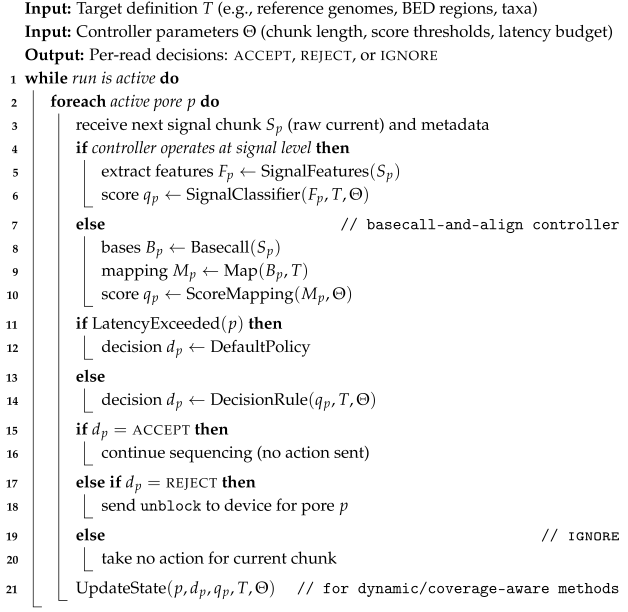
Across signal-level methods, the dominant trade-off is between decision accuracy and per-chunk compute (and/or index/model size). DTW-like approaches are flexible but often too slow and memory-intensive for large references or high pore counts [25]; k-mer-indexed approaches scale better but require careful tuning to control false rejections [11,28]; and neural approaches can be fast at runtime but depend on training-set representativeness and may degrade on novel taxa or chemistries [31,33]. These design choices map directly onto the generic controller loop in Algorithm 1, specialized by the choice of SignalClassifier and its reference index/model.
| Algorithm 1: Generic adaptive sampling controller |
 |
3.2. Basecall-and-Align Methods
Basecall-and-align AS first converts signal to short sequence fragments and then maps them to a reference in real time (Figure 3B). In the commercial ONT stack, this is implemented in MinKNOW [34]: signal chunks are basecalled by Guppy or Dorado, mapped against a user reference, and mapping scores/locations drive accept/reject decisions returned to device firmware [10,23]. From a user perspective, this “built-in” mode can be configured with reference files and target BED (Browser Extensible Data) annotations [35] through the ONT interface, with decisions handled internally.
Open-source controllers implement a similar loop in user space. ReadFish subscribes to the Read Until API stream, performs chunk-level basecalling and mapping, and issues per-read decisions from a user-space controller [10]. RUBRIC and ReadBouncer follow the same template but differ in chunk batching, aligner/classifier choice, and the conservativeness of decision rules under uncertainty [36,37]. Related extensions apply basecall-and-align control to cDNA and direct RNA, with transcriptome-specific references and spliced-alignment considerations [38,39].
Because basecalling and alignment sit in the inner loop, performance depends strongly on basecaller/model choice, chunk length, and available hardware. Shorter chunks reduce time-to-decision but increase overhead and may reduce mapping reliability if sequence context is insufficient [10]. Longer chunks provide more alignment signal but risk wasting pore time on reads that will ultimately be rejected. GPU-accelerated basecalling enables high pore counts and larger models but can dominate energy/cost in portable sequencing setups, whereas CPU-only configurations may need to reduce model complexity or pore density to remain within latency budgets [23].
Algorithm 1 captures the control-loop structure shared by both major AS families. For each active pore, the controller first receives the next signal chunk and associated metadata (line 3). It then follows one of two scoring paths: a signal-level path based on feature extraction and SignalClassifier (lines 4–6), or a basecall-and-align path based on Basecall, Map, and ScoreMapping (lines 7–10). After scoring, a latency check determines whether the controller should revert to a default action when computation falls behind (lines 11–14). The resulting decision is then translated into a concrete sequencing action: accept continues sequencing, reject sends an unblock command, and ignore leaves the current chunk untouched (lines 15–20). Finally, the optional UpdateState step (line 21) provides the hook required by dynamic or coverage-aware strategies.
3.3. Dynamic and Coverage-Aware Strategies
Many early AS workflows treat targeting as static: the user specifies fixed regions, contigs, or taxa (often via BED/FASTA), and reads are accepted or rejected based on whether they match that set. In practice, marginal information value is state-dependent: once a region has sufficient depth, additional reads provide diminishing returns, whereas undercovered loci, low-abundance taxa, or rare alleles may warrant more aggressive retention. Dynamic and coverage-aware controllers incorporate this dependence directly into the decision rule so that “what to keep” evolves during the run [19].
BOSS-RUNS exemplifies this shift by maintaining a running model of coverage and uncertainty and updating per-locus value scores as reads accumulate [19]. Reads predicted to reduce uncertainty in poorly covered or high-priority regions are preferentially accepted, while reads mapping to oversampled loci are more likely to be rejected. Related approaches similarly track depth in real time and adjust retention probabilities at the level of loci or broader windows [40,41,42]. More broadly, dynamic policies can adapt to taxonomic composition, structural-variation objectives, or user-defined constraints such as maximizing variant sensitivity in selected genes while capping host background [15,43].
3.4. System Considerations
Beyond algorithmic choice, AS behavior is constrained by system design: where computation runs, how data and control messages move, and how robustly the stack behaves under real laboratory conditions. Most workflows rely on GPU basecalling and CPU mapping/classification on a host workstation or small server connected to an ONT device [44,45]. Signal-level methods add feature extraction or neural inference, which can run on CPUs/GPUs or specialized accelerators such as FPGAs and embedded SoCs [28,29,46,47,48]. GPU-rich systems may become I/O- and scheduling-limited, while CPU-only configurations often struggle as pore counts and read lengths increase.
AS must decide fast enough that rejecting an uninformative molecule still saves meaningful pore time. Only a limited prefix of the current trace (typically tens to hundreds of milliseconds) can be processed before the opportunity cost of continuing grows quickly [10,19]. The end-to-end budget includes acquisition/buffering, signal processing or basecalling, mapping/classification, and the round-trip control message back to the device.
Chunking, batching, and scheduling, therefore, become first-order parameters: larger chunks can improve basecaller efficiency but delay decisions, while very small chunks reduce latency at the cost of overhead and potentially unstable classification [19,49]. Real-time control also imposes yield penalties: rejected reads still consume pore time and reagents before being unblocked, so aggressive rejection can raise on-target fractions while reducing total yield [17,27]. Empirical studies frequently report trade-offs between enrichment and absolute yield, as well as run-to-run variability driven by system load, background composition, and operator choices [15,43].
Finally, software maturity and integration can be limiting in practice. While MinKNOW lowers barriers for basic AS, open-source controllers (e.g., ReadFish, UNCALLED, BOSS-RUNS) vary widely in installation complexity, monitoring support, and compatibility with laboratory pipelines [10,11,19]. Operational features such as robust logging, live dashboards, and hooks into LIMS (laboratory information management system) and analysis workflows are important for routine clinical or public-health use but are not uniformly available. Consequently, some groups report that the maintenance burden of AS can outweigh theoretical benefits in regulated environments or smaller laboratories with limited bioinformatics support [43,50,51]. In the remainder of this review, we treat these system constraints as first-class considerations when evaluating reported performance and formulating best-practice recommendations.
4. Expectations Across Major Use Cases
AS emerged in an ecosystem already shaped by metagenomic sequencing, hybrid capture panels, and amplicon assays. From the outset, early papers and community discussion framed AS as a way to steer sequencing effort toward what matters most in a given run: microbial reads rather than host, rare organisms rather than abundant commensals, and clinically actionable loci rather than the rest of the genome [10,11,52]. This framing drove high expectations. If a software layer can evaluate the beginning of each molecule and make a real-time accept/reject decision, then AS might reduce wet-lab overhead, compress turnaround time, and lower the depth (and cost) required to answer clinical or ecological questions [13,43]. Across the literature, the strongest success conditions can be summarized compactly as follows:
- Host depletion works best when background DNA is dominant, reads are long enough to permit early rejection, and a high-quality host reference is available.
- Plasmid and AMR targeting works best when mobile-element sequence is sufficiently distinct from chromosome and enough depth remains after rejection to preserve genomic context.
- Target panels and complex loci benefit most when moderate on-target enrichment is useful, rapid panel reconfiguration matters, and the application does not demand extremely uniform ultra-deep coverage.
- RNA and transcriptomic applications are more constrained because reads are often shorter and noisier, making depletion of abundant transcripts more reliable than strong enrichment of rare targets.
4.1. Host Depletion and Metagenomic Enrichment
A central expectation is that AS can function as a software-based host depletion method for metagenomic samples dominated by human or other host DNA. Proof-of-concept studies and technical notes frequently report substantial reductions in host-aligned reads and describe apparent microbial enrichments of 5–20× (or more) relative to unenriched controls [12,53,54]. Across proof-of-concept and clinical demonstrations, AS is, therefore, positioned as a mechanism to reduce the share of host-aligned reads and increase the apparent proportion of microbial signal by several-fold [16,55]. In blood-stage malaria, AS produced average enrichment on the order of a few-fold, with reported dependence on starting concentration and read length, and was presented as operationally attractive when frozen samples constrain alternative enrichment strategies [55]. In ecological surveillance settings, where background and diversity can be higher, expected gains are often framed as more modest; for example, tick-borne pathogen sequencing reported roughly a ∼2× increase in targeted pathogen sequences [53]. Beyond human host depletion, depletion-mode AS has also been applied to animal- and plant-associated microbiomes, including plant root metagenomes and bovine reproductive tract samples, with the explicit goal of reducing host DNA contamination and enabling downstream taxonomic and functional profiling of resident microbiota [13,56].
The intuitive promise is simple: if host fragments can be rejected after brief inspection, pore time and sequencing reagents are reallocated to the remaining molecules, ideally increasing microbial yield and improving sensitivity for low-abundance pathogens without requiring additional wet-lab depletion.
4.2. Target Panels and Gene Sets
A second cluster of expectations concerns AS as a software-defined alternative (or complement) to hybrid capture panels and amplicon assays for predefined gene sets. In this framing, the aim is not to suppress an entire host genome, but to concentrate sequencing depth on selected loci, including clinically relevant genes, cancer panels, pharmacogenomic targets, or structural-variation hotspots, using a target reference (FASTA/BED) that can be updated without redesigning capture probes [40]. Proof-of-concept demonstrations show that panel-style AS can increase the apparent fraction of on-target bases and accelerate time-to-coverage for selected loci, motivating direct comparisons with capture-panel workflows [40,57].
From a user perspective, these demonstrations translate into several concrete expectations. First, that a single flow cell could deliver deep coverage across a curated panel (e.g., hundreds of genes) while minimizing irrelevant sequencing, thereby reducing downstream compute and storage demands. Second, that AS panels could be rapidly reconfigured: changing a BED file or target reference rather than ordering new oligos, with the prospect of per-sample targeting in multiplexed runs [40]. Third, that panel-style AS may better tolerate copy-number changes and large indels than fixed amplicons, because long reads can traverse breakpoints and because off-target reads may still contribute useful genome-wide signals such as copy-number inference [40,58].
4.3. Plasmids, AMR, and Mobile Elements
Because nanopore reads can span entire plasmids and long mobile elements, AS has also been associated with the goal of streamlined plasmid and AMR enrichment. Many groups in antimicrobial resistance, hospital epidemiology, and environmental surveillance would like to concentrate sequencing effort on plasmids, integrons, and transposons carrying resistance or virulence genes, while retaining enough chromosomal context for strain-level analysis [58,59]. Expectations in this domain commonly have two components: (i) that AS will increase the fraction of reads covering resistance genes and their mobile genetic context, enabling faster plasmid reconstruction and tracking movement between species or strains [60,61]; and (ii) that this can be achieved with less wet-lab overhead than plasmid extraction, long-range PCR, or other targeted protocols, particularly for complex or low-biomass samples where classical plasmid preparation is difficult.
At the same time, community discussions often distinguish relative enrichment from absolute recovery. In microbial communities, AS has been reported to increase the composition of AMR-gene reads while reducing total sequencing output; in low-abundance regimes, this means broad resistome detection may still require substantially more sequencing to offset the throughput penalty [14]. In host-rich clinical samples, anticipated improvements for AMR-associated loci are frequently tied to host depletion workflows. Cheng et al. describe a rapid approach in which AS-based host depletion increased microbial yield by at least ∼8× in bronchoalveolar lavage fluid and enabled species-level ARG detection within hours [16]. Sun et al. similarly report improved microbial signal and antibiotic-resistance prediction for rapid diagnosis of Mycoplasma pneumoniae using AS [62]. Related clinical evaluations also apply AS to rapid detection of bacteria and AMR genes in intra-amniotic infection [63] and to comprehensive pathogen identification and AMR prediction from positive blood cultures [59]. Broader programmable-targeting studies extend beyond AMR to host depletion in complex samples, plant immune-gene families, and rapid tumour molecular profiling using nanopore methylation sequencing [57,64,65,66,67].
Overall, the expectation is that AS provides a sequencing-time “knob” for plasmids and mobile elements that can accelerate recovery of resistance loci and their genomic context. Implicitly, success is assumed to depend on (i) how distinctive mobile-element sequence is relative to chromosome and background DNA, (ii) how comprehensive and current the target/reference set is (to avoid missing novel or rearranged plasmids), and (iii) whether throughput remains sufficient to assemble plasmid backbones and link ARGs to their hosts.
4.4. Transcriptomics and RNA
AS has also attracted interest in transcriptomics and RNA sequencing, particularly where rapid detection of fusions, isoform usage, or expression changes is clinically meaningful. In both cDNA and direct RNA protocols, long reads can capture full-length transcripts, fusion junctions, and complex splicing patterns. Early feasibility studies for applying AS to direct RNA sequencing (first released as a preprint and later peer-reviewed) argued that RNA-specific constraints make depletion strategies more straightforward than enrichment and demonstrated suppression of highly abundant, uninformative transcript classes [38]. Subsequent work further showed that combining direct RNA sequencing with AS can enrich RNAs of interest in transcriptomic mixtures [39]. At the same time, a dedicated evaluation of targeted transcriptome sequencing suggests that enrichment is often modest (relative to alternatives such as hybridization capture) and that short read lengths and lower sequencing quality can limit performance, even when overall expression and splicing profiles remain largely preserved [17].
Expectations in the RNA context often emphasize speed and interpretability. In oncology and hematology, users anticipate that AS can accelerate detection of driver fusions and clinically relevant expression signatures by enriching known targets in real time. One example is targeted long-read single-cell sequencing, where adaptive nanopore sequencing was combined with short-read scRNA-seq to validate coding variants and characterize cancer-associated rearrangements [68]. In virology and infectious disease, a related expectation is that AS can prioritize viral molecules over abundant host RNA/cDNA to support rapid characterization of viral load, strain, and transcript structure from clinical samples. Programmable targeting workflows such as NASCarD aim to combine selective sequencing with library strategies for PCR-free targeted SARS-CoV-2 genome sequencing [69]. More recently, direct RNA multiplexing and signal-based demultiplexing have enabled barcode-specific AS for dRNA-seq, including demonstrations of enriching low-abundance viral RNA and rapid phenotypic profiling in SARS-CoV-2 infection experiments [70]. Collectively, these studies shape an implicit expectation that decision logic developed for DNA targets can be transferred to RNA with comparable flexibility.
4.5. Complex Host Loci and Structural Variation
A final set of expectations concerns applying AS to structurally complex and clinically consequential regions of the host genome, including MHC/HLA, KIR loci, blood-group clusters, X-inactivation regions, repeat arrays, and large structural variants [26,42,71,72,73,74]. These loci remain challenging even with long-read WGS because resolving haplotypes, copy-number changes, and repeats often requires deep coverage and careful downstream phasing and variant calling [72,74,75]. In principle, AS offers a compromise: enrich molecules that enter a complex region so that pore time is spent on informative alleles, breakpoints, and repeat tracts rather than on the rest of the genome.
Proof-of-concept studies illustrate this appeal for highly polymorphic immune loci, including adaptive sampling for phased mapping of the swine MHC and for resolving MHC class II haplotypes in rhesus macaques [42,72,76,77]. In parallel, targeted long-read designs are positioned as software-defined alternatives to capture-based assays for clinically relevant loci, with the goal of supporting joint SNV/SV detection (and, in some implementations, additional signal layers) within a single sequencing run [26,73,78,79]. A related expectation is that enrichment can make allele-specific and epigenetic assays more practical by concentrating reads where methylation or imprinting is informative; adaptive nanopore sequencing has, therefore, been applied to X-chromosome inactivation skew and to fine-mapping regulatory risk loci via targeted native CpG methylation profiling [73,80,81,82]. Across these applications, AS is commonly presented as a way to allocate sequencing time toward difficult loci, with long-read variant calling pipelines (e.g., PEPPER–Margin–DeepVariant) acting as a necessary complement for accurate variant calling and phasing [75,82].
Lastly, similar expectations motivate AS in host-dominant pathogen surveillance settings, where background DNA can overwhelm microbial signal. Adaptive sampling has been used in culture-independent tuberculosis surveillance from host-rich samples, reinforcing the view that reference design and targeting choices can materially influence depth accumulation on informative microbial reads [26,74,83].
Together, these expectations define the backdrop against which AS is evaluated. These cross-domain expectations and their main practical limitations are summarized in Table 1. In Section 5, we contrast these stated goals with measured outcomes, including enrichment factors, yield penalties, and operational constraints documented in independent studies.
Table 1.
Summary of major adaptive sampling use cases, their expected benefits, recurring practical limitations, and the most informative evaluation priorities.
5. Empirical Performance and Limitations
The empirical literature on nanopore AS consistently supports measurable enrichment or depletion, but with benefits that are often smaller, less stable across runs, and more context-dependent than early narratives implied [43,84]. These observations do not contradict prior reports of enrichment. Rather, they refine their interpretation by accounting for throughput loss, run-to-run variability, and absolute informative yield. Across domains, three recurring constraints shape practical performance: (i) throughput penalties from frequent unblocking, (ii) latency ceilings within the real-time decision loop, and (iii) imperfect early classification from partial reads [10,11,15,17,26,39]. These factors widen the gap between theoretical selectivity and routine flow-cell outcomes. Figure 4 illustrates this distinction: the fraction of on-target reads can improve even when the absolute number of informative bases remains flat or declines after rejection overhead and pore-time loss are included. Below we synthesize these realities with an emphasis on net gains after yield loss, compositional and coverage biases, and operational limitations that emerge in everyday laboratory practice.
Figure 4.
Conceptual distinction between relative enrichment and absolute informative yield. (A) Relative enrichment can increase as the fraction of on-target reads rises. (B) Absolute informative yield can remain flat or decline when rejection overhead, latency, and pore-time loss reduce the total number of informative bases obtained in a fixed run.
5.1. Host Depletion and Metagenomics
Host depletion is a common motivation for AS, but the literature makes clear that depletion is not “free”: AS can reduce total yield and can systematically alter the composition of accepted reads. Benchmarking on intestinal biopsy samples reported substantially fewer total bases under AS, accompanied by shorter reads, different read-count distributions, and shifts in apparent relative abundance for specific taxa compared with standard shotgun sequencing [54]. Controlled mock-community experiments similarly show that headline fold-changes in relative abundance can shrink once reduced throughput during rejection is accounted for, motivating efficiency-aware metrics rather than enrichment alone [12]. Evaluations on host-rich clinical specimens suggest that absolute gains can be modest, for example ∼1.6–2.0× increases in bacterial sequenced bases in periprosthetic tissue or ∼1.7× increases in bacterial depth in vaginal metagenomes [27,85]. Conversely, some studies report higher apparent enrichment but emphasize trade-offs such as loss of active pores and limited downstream impact on AMR gene detection in sputum, underscoring that fold-enrichment does not necessarily translate into more actionable microbial signal [4]. Outcomes can also be tool-dependent: head-to-head benchmarking indicates that host-depletion performance varies across adaptive sampling implementations and operational settings [43].
Library properties and background dominance further modulate performance. Short or degraded fragments can blunt depletion because the decision window consumes too much of the molecule before rejection becomes beneficial; in tsetse-fly iDNA pools, 85–99% of short-read data remained insect-derived and ONT adaptive sampling did not substantially reduce this proportion [86]. At the other extreme, some sample types show large practical gains: in bronchoalveolar lavage fluid (BALF), AS increased microbial yield (after removing host reads) by at least ∼8× across all tested samples and enabled rapid pathogen and AMR profiling [16]. Taken together, reported performance spans a wide range, and the key question is often not whether AS can shift composition, but whether it increases the absolute number of informative microbial bases enough to improve genome recovery and interpretation at fixed sequencing effort.
These realities matter because clinical and public-health value hinges on which metric is optimized (fraction of non-host reads versus absolute microbial bases), how much total yield is sacrificed, and whether the reference/database matches what is truly present. Laboratories may hope that a single flow cell yields enough non-host coverage to identify pathogens, estimate relative abundance, or track resistance determinants in samples such as blood, respiratory swabs, tissue biopsies, or wastewater without extensive upstream depletion [87]. In practice, outcomes depend on reference choice and upstream wet-lab preparation. In a foodborne outbreak investigation (mashed-potato matrix), extraction method and the AS target database traded off between rapid detection and higher-resolution characterization, illustrating that depletion/enrichment behavior is tightly coupled to both sample preparation and reference design [88]. Reference-dependent selection can also degrade when non-targets are near-neighbors or when diversity is high; graph-based AS methods were introduced in part to improve sensitivity and specificity under these conditions [89]. Overall, host depletion via AS can meaningfully improve microbial signal, but performance is strongly sample- and protocol-dependent and can be overstated when fold-enrichment is reported without explicitly accounting for yield loss or reference mismatch [12,43].
5.1.1. Bias and Variability in Metagenomic Adaptive Sampling
Metagenomic adaptive sampling can enrich predefined taxa or sequence classes, but reported effect sizes depend strongly on how “gain” is defined. In mock communities, large increases in the fraction of target reads are achievable, yet the corresponding increase in useful bases is typically smaller once rejection-driven yield loss is included in the denominator [12]. This distinction matters in practice because downstream sensitivity (e.g., assembly, variant calling, AMR detection) scales with absolute informative yield rather than with on-target fraction alone.
A second recurring observation is that AS can act as an intervention on community measurement itself. Some host-depletion benchmarks report shifts in observed relative abundance under AS compared with unenriched sequencing, consistent with preferential retention/rejection interacting with fragment length and early-classification behavior [54]. Other datasets find that overall community composition remains broadly consistent while sensitivity improves, indicating that the magnitude of compositional distortion is context dependent [27]. More recent approaches that adapt targets during a run explicitly frame AS as a way to redistribute sequencing effort to reduce coverage bias and accelerate resolution of under-sampled components, further underscoring that AS is not composition-neutral in general [19].
Run-to-run variability is, therefore, not an anomaly but a predictable consequence of sensitivity to library and flow-cell state. Short or degraded fragments reduce the window in which rejection can recover pore time, and some real-world matrices show limited practical benefit under these conditions [86]. Operational factors that change decision timing or rejection aggressiveness (compute load, parameterization, pore age) can further widen variability, with some clinical evaluations emphasizing that pore/throughput penalties can dominate the expected enrichment signal [4,43].
5.1.2. Host Depletion Is Constrained by Reference Completeness
For host depletion, improvements are often more striking in non-host fraction than in absolute non-host yield. Selective human depletion has been reported to increase effective microbial profiling sensitivity with modest gains in overall sequencing depth, illustrating that composition can shift in the desired direction without creating a host-free library in absolute terms [27]. Similarly, clinical benchmarking in host-rich tissue samples reports only ∼1.6–2.0× increases in bacterial sequenced bases, highlighting that the net gain can remain limited even when depletion is functioning as intended [85].
A key practical constraint is that depletion performance inherits all limitations of the host reference. In plant metagenomics, for example, host depletion efficiency is expected to degrade with lower-quality or less contiguous host assemblies, and substituting related genomes is possible but can reduce rejection effectiveness [13]. Reference dependence also helps explain failures in challenging mixtures: when the dominant background cannot be cleanly represented (or when fragments are too short to classify early), AS may not materially reduce host carryover [86]. Even in controlled bacterial settings, adaptive sampling studies emphasize that reference choice can introduce specific failure modes, reinforcing that host depletion should be treated as a tunable filter whose outcomes depend on both reference fidelity and pore-economics under rejection [15].
5.2. Panels and Targeted Loci
For targeted panels, reported gains depend strongly on the metric used. Benchmarking emphasizes that relative enrichment within accepted reads can overstate practical benefit unless paired with throughput-aware measures such as the absolute enrichment factor (AEF), which incorporates pore activity, rejection speed, and total bases sequenced [43]. In a COSMIC-panel enrichment task spanning hundreds of genes across a tens-of-megabases search space, tools achieved only a few-fold AEF overall despite clear targeting, and high classification accuracy did not consistently translate into proportionally higher AEF because of sequencing-yield trade-offs [43]. Fragment-length distributions further modulate outcomes: size selection and read-length shifts can measurably change enrichment, and locus-focused studies report improved performance when short fragments are removed [43,89].
Panel-based AS also inherits reference dependence. Performance can degrade in repetitive or highly polymorphic regions, or when targets are poorly represented by linear references. Graph-based approaches have, therefore, been proposed to reduce near-neighbor confusion and improve decision specificity [89]. In some clinical contexts, wet-lab enrichment can still dominate when ultra-deep locus coverage or ultra-long reads are required. Recent prenatal-diagnostics work on DMPK repeat analysis instead reinforces a narrower point: adaptive sampling can be useful in this setting, but demanding repeat-sizing applications still require careful validation and may favor alternative enrichment workflows when very high locus-specific performance is needed [90].
5.2.1. Coverage Non-Uniformity and Comparison with Wet-Lab Panels
Empirical studies show that AS can concentrate sequencing effort on predefined targets, but also reveal persistent non-uniformity across panel loci. In many panel-style deployments, median on-target coverage increases relative to untargeted WGS at matched sequencing depth, with reported enrichment factors on the order of 5–20× for subsets of genes [42,74,79,82]. However, coverage gains are often heterogeneous across targets, with dropouts and patchiness that tend to localize to GC-rich segments, repetitive sequence, and regions with reduced mappability under short decision chunks [42,72,74,91].
Comparisons with hybrid capture and amplicon sequencing highlight practical trade-offs. Capture panels can deliver more even coverage but add wet-lab complexity and turnaround time, while amplicon assays can achieve very high depth for well-behaved targets yet remain sensitive to primer mismatches and certain forms of structural variation [82,91]. In this landscape, AS-based panels typically occupy an intermediate position: they are readily reconfigurable (e.g., by editing target intervals) and can tolerate some structural diversity, but they often do not match the uniformity of optimized capture protocols in demanding diagnostic settings [42,74,79]. This conclusion is reinforced by repeat- and locus-focused applications in which very deep or highly uniform locus coverage remains difficult to guarantee with AS alone and alternative targeted-enrichment workflows may still be preferred [90].
5.2.2. Structurally Complex Loci and Structural Variation
Structurally complex loci amplify several implicit fragilities of AS. Decisions must be made early in regions enriched for shared sequence, segmental duplication, and paralogy, where reference mismatch and ambiguous mapping can lead to allele drop-out or unintended retention. This concern is explicit in pharmacogene haplotyping studies that treat inter-individual variation and near-neighbor confusion as core design constraints for adaptive targeting [42,74,91]. Repeat-mediated disorders and SV-heavy genes further underscore the dependence on absolute on-target depth: AS has been used to size and phase the D4Z4 repeat array in FSHD1 and to resolve a structural duplication in OTOF, demonstrating the benefit of long reads spanning complex events but also the reliance on sufficient coverage and mapping specificity [26,92,93]. Consequently, increasing on-target fraction alone does not guarantee adequate reads to phase haplotypes or resolve breakpoints when molecules are short, repeats are long, or pore survival degrades under aggressive rejection.
Overall, AS can act as a sequencing-time control parameter for complex host loci and SVs, but success depends on (i) target uniqueness within repeats and segmental duplications, (ii) reference completeness under population diversity, and (iii) whether pore dynamics still permit sufficient absolute coverage to phase haplotypes, call CNVs, and resolve breakpoints [71,73,76,77].
5.3. Plasmids and AMR
Plasmid- and AMR-focused AS often does shift composition toward targets, but the most important practical point is that compositional enrichment frequently outpaces improvements in absolute target yield once yield loss from rejection is included. In plasmid-mixture experiments, selective sequencing increased the fraction of plasmid reads and could speed plasmid reconstruction, yet absolute plasmid yield rose only modestly because total throughput dropped under frequent unblocking [14,15]. This same composition-throughput tradeoff shows up in other selective-sequencing settings where targets are sparse: enrichment can look dramatic in relative terms while the number of actionable target bases increases only slightly unless pore activity remains high and rejection overhead is low [59]. Practically, this means AMR success depends less on headline fold-enrichment than on whether the run still accumulates enough on-target depth (and long-enough molecules) to assemble plasmid backbones and to link ARGs to their host genomes within the time budget of the workflow [14,15].
A second recurring limitation is that “plasmid/ARG targeting” is rarely a clean matching problem: mobile elements share high-identity segments with chromosomes (IS elements, integrons, conserved genes), so early decisions made on partial chunks can misclassify reads and inadvertently deplete exactly the flanking context needed for transmission tracking [15]. The operational levers, decision-window length, target/reference design (what counts as “on-target”), and mapper behavior under high error and near-neighbor similarity, therefore, matter as much as the biological question, and improvements in long-read mapping sensitivity/speed are part of the AS performance envelope [94]. Importantly, these fragilities are not unique to AMR: AS studies in fragmented, noisy, or mixed-DNA settings (e.g., noninvasive samples) and in large, repetitive genomes similarly emphasize that enrichment is bounded by read-length distributions, reference completeness, and the degree to which the target sequence is uniquely identifiable early in a molecule [61,62,64,65].
Finally, “real-world” implementations highlight that low target fractions and downstream filtering can dominate the end result. In workflows where the effective target space is extremely small relative to background, even a large relative enrichment can still yield very few usable target molecules after basecalling/QC, and long runs may be required, at which point pore attrition becomes a first-order constraint [58,95]. Clinical pipeline reports (e.g., rapid sequencing from positive blood cultures) underscore the same point from the opposite direction: fast organism ID and resistance profiling are achievable only when library prep, throughput, and analysis are jointly tuned so that enough high-quality microbial sequence is generated quickly; AS is best viewed as one tunable component in that system rather than a drop-in replacement for wet-lab enrichment or careful experimental design [59].
5.4. RNA and Transcriptomics
For RNA applications, the empirical record suggests that AS is feasible but more constrained than for DNA, largely because direct RNA libraries have lower throughput and many molecules are short relative to the time needed to basecall, map, and decide in real time [17,39]. In practice, this makes depletion the more reliable operating mode: removing a small set of highly abundant, uninformative transcripts can free pore time and improve effective coverage for the rest of the transcriptome. Consistent with this, direct RNA studies emphasize careful parameter tuning and report robust depletion of dominant transcript classes (e.g., mitochondrial transcripts in cardiac samples), framing AS as a pragmatic way to reduce “wasted” sequencing rather than a drop-in replacement for targeted capture [38].
When used for enrichment, gains are often incremental and can be capped by decision latency and read-length distributions: enrichment may be clear within the accepted pool, yet translate into only modest increases in the absolute number of target reads within a fixed run time [39]. A focused evaluation of targeted transcriptome sequencing likewise reports only modest enrichment (e.g., ∼1–2× depending on library type), with performance limited by short reads and lower sequencing quality compared with alternatives like hybridization capture [17]. Finally, recent workflow advances hint at where RNA AS may become more practical: signal-based demultiplexing enables barcode-specific adaptive sampling in direct RNA runs, supporting real-time enrichment of low-abundance viral RNA and “barcode balancing” in multiplexed experiments [70].
Taken together, the results reported so far point to incremental rather than transformative gains in transcriptomic settings. In cDNA workflows, enrichment is most plausible when the target space is small and well-defined, but practical performance is shaped by the wide dynamic range of transcript abundance and by isoform diversity, both of which can make early classification noisy and reduce separation between targets and background. These issues are amplified when sequencing quality is lower than in comparable DNA experiments, because classification errors compound quickly once decisions must be made near the beginning of the molecule. Direct RNA protocols add further constraints: throughput is lower, many molecules are short, and fragility of pores and additional latency from basecalling further compress the decision window, making accurate real-time accept/reject decisions harder to sustain over long runs.
Operationally, decision latency and pore health become central limiting factors for RNA use cases where depth must be accumulated on rare targets. Frequent unblocking and classification overhead can accelerate pore decline and reduce total yield, eroding some of the apparent benefit from targeted enrichment. Overall, AS can tilt coverage toward transcripts of interest (e.g., known fusions, specific isoforms, or low-abundance viral RNAs), but it does not yet deliver fully “panel-like” behavior for RNA, and users must weigh modest enrichment against added configuration complexity and potential bias in expression estimates.
5.5. Operations and Usability
Across domains, a consistent reality is the operational cost of running AS in routine workflows. Throughput penalties are common because pore time is spent on fragments that are ultimately rejected and because decision-making introduces additional latency; matched AS runs can, therefore, yield fewer total bases than unenriched runs, sometimes by tens of percent [10,12,26,27,43,51]. Frequent unblocking has also been associated with faster decline in active pore counts in several studies, although effect sizes vary with chemistry and control strategy [61,96,97,98]. Consequently, fold-enrichment must be interpreted alongside reduced total yield and shortened effective run lifetime.
Robustness and tuning are often as important as raw selectivity. Protocols expose interacting parameters, including chunk length, mapping thresholds, allowable targets, and unblock policies, that can be sensitive and non-intuitive, and multiple benchmarking studies note substantial dependence on these settings [10,17,26,43]. Compute requirements further constrain deployment: basecall-and-align control loops require high GPU throughput, and scenarios where compute falls behind (e.g., GPU contention or I/O bottlenecks) degrade enrichment and throughput [10,26,43]. Finally, software maturity and integration remain uneven. ONT’s built-in AS is tightly coupled to MinKNOW, while third-party tools vary in monitoring, error handling, and downstream compatibility, leading many users to reserve AS for exploratory or research runs rather than routine diagnostics [11,19,40,50,51].
Taken together, these studies do not negate the utility of AS, but they position it as a tool defined by constrained trade-offs rather than “free” enrichment. In later sections, we translate these findings into practical guidance on when AS is likely to be worthwhile and how to interpret outcomes in an application-specific, yield-aware manner.
6. Design Lessons and Best-Practice Guidelines
Integrating the algorithmic landscape (Section 3), application expectations (Section 4), and empirical performance (Section 5), the central lesson is that AS is conditionally high-value and otherwise high-variance. The dominant constraints on AS are consistent: throughput penalties from rejection, latency ceilings in the decision loop, and imperfect early classification from partial reads [10,11,26,43,84]. The practical question is, therefore, rarely whether AS can shift composition, but whether it increases absolute informative yield and target coverage enough to improve usable genomic output once yield loss and variability are included [12,43,54].
6.1. Indications and Preconditions for Practical Benefit
AS is most defensible when (i) background dominates targets by a large and stable margin, (ii) targets and background can be represented by references that match what is truly present, and (iii) the operational bottleneck is informative yield rather than raw sequencing output [10,11,12]. Empirically, host depletion in clinical metagenomic settings illustrates both the opportunity and the scale of typical gains: several evaluations report modest increases in absolute microbial signal (e.g., approximately 1.6–2.0× increases in bacterial sequenced bases in tissue specimens and approximately 1.7× increases in bacterial depth in vaginal metagenomes), while other matrices can show substantially larger gains (e.g., at least approximately 8× increases in microbial yield after removing host reads in BALF) [16,27,85]. This range implies that suitability is sample- and protocol-dependent; strong results are most likely when the background is both dominant and reference-addressable, and when library properties preserve a usable decision window [13,86].
Targeted locus and panel applications can also benefit, but the expected magnitude should be calibrated to throughput-aware metrics. Benchmarking emphasizes that even when targeting is accurate, absolute enrichment factors that account for yield loss and pore activity can remain only a few-fold over large search spaces [43]. In practice, AS-based panels are most compelling when flexibility and rapid reconfiguration outweigh the uniformity advantages of optimized wet-lab panels, and when the downstream objective is reachable with moderate, not ultra-deep, on-target depth [43,91].
6.2. Settings Where Alternatives Often Dominate
AS is least reliable when reference completeness is low or when near-neighbor sequence similarity is high enough that early mapping is ambiguous, because false rejections and false acceptances can co-occur and erase nominal gains [11,43,89]. It is also a poor substitute when the primary requirement is highly uniform coverage with straightforward qualification and stability across operators. In repeat-mediated or ultra-deep locus applications, wet-lab enrichment may still remain preferable, while adaptive sampling is better viewed as a flexible but context-dependent alternative rather than a universal replacement [90]. More broadly, the operational literature documents that matched AS runs can yield substantially fewer total bases than unenriched runs, sometimes by tens of percent, and that frequent unblocking can accelerate loss of active pores depending on chemistry and control aggressiveness [10,12,27,96]. These penalties matter most in throughput-dominated projects, where any reduction in total yield or run lifetime directly increases cost per sample.
RNA and transcriptomics provide an additional boundary case. Direct RNA and targeted transcriptome studies generally report incremental enrichment (often on the order of approximately 1–2× depending on library type), consistent with shorter molecules and compressed decision windows that limit the value of real-time rejection [17,39]. In such regimes, depletion of a small set of dominant transcripts can be more reliable than enrichment, and expectations should be framed accordingly [38].
6.3. Engineering and Tuning Under Latency Budgets
Once AS is justified, tuning should be approached as a latency- and yield-constrained systems problem rather than a single parameter sweep. Fragment-length distributions control how much of a molecule is consumed before a stable decision is possible, while chunk size and thresholds trade latency against early classification error [10,12]. Reference strategy should be explicit about whether the objective is depletion, enrichment, or both; failures attributed to the algorithm are frequently traceable to reference mismatch, near-neighbor confusion, or ambiguous mapping in repetitive sequence [11,15,89]. Scaling constraints become sharper on high pore-count instruments, where compute and I/O contention can degrade both enrichment and throughput if the decision loop falls behind [10,26].
6.4. Reporting Elements Used for Comparable Genomic Evaluation
Because fold-enrichment can increase while absolute informative yield stagnates, throughput-aware outcomes are central to interpretation [12,43]. Across benchmarking and application papers, informative reporting elements often include (i) informative yield as absolute on-target bases per unit time (and per flow cell) with a matched unenriched baseline, (ii) effective coverage over intended loci rather than genome-wide averages, (iii) end-to-end decision latency for the full loop (signal acquisition through pore action) expressed as a distribution, and (iv) yield and pore-lifetime effects associated with rejection [10,12,43,54]. Together, these endpoints provide a strong basis for comparing sequencing efficiency and interpretable genomic output across run conditions.
7. Future Directions
Near-term progress is likely to be driven less by isolated algorithmic gains and more by coordinated improvements in decision reliability, determinism at scale, and evaluation standards. First, early classification will likely need to become more robust in the regimes that currently produce brittle behavior, including repetitive sequence, near-neighbor taxa, and incomplete references; graph-based and reference-augmented strategies are motivated by these failure modes [11,15,89]. Second, systems design likely needs to treat timing as a first-class constraint: empirical scaling work suggests that end-to-end determinism and throughput under load can dominate real-world performance, particularly on high-density instruments [10,26]. Third, control strategies are increasingly formulated around throughput-aware objectives, rather than optimizing on-target fraction alone; coverage-aware approaches indicate that selection can be treated as sequential allocation of pore time to reduce uncertainty and bias [19,43]. Finally, comparability is likely to remain limited without shared benchmarks and standardized reporting that include informative yield, effective coverage, latency distributions, and robustness; recent benchmarking studies provide a foundation, but broader community datasets and consistent metric suites are still needed to make claims portable across labs and sample types [43,84].
8. Conclusions
The empirical literature supports that AS can produce measurable enrichment or depletion, but that practical benefit is bounded by rejection-driven throughput loss, decision-loop latency, and early-classification error, which together create large context dependence across samples and protocols. Reported gains span modest increases in absolute microbial signal in some host-rich clinical specimens (approximately 1.6–2.0×) to substantially larger improvements in selected matrices (at least approximately 8× after host removal in BALF), while targeted panels often achieve only a few-fold throughput-aware enrichment when yield penalties are accounted for. These results imply that AS should be treated as a yield- and latency-constrained sequencing design space rather than a universal enrichment substitute.
The literature consistently indicates that predictive interpretation of AS requires end-to-end workflow evaluation rather than a single enrichment metric. Many reports emphasize expected acceleration while providing limited measurement of full-loop latency and throughput penalties. Studies that include informative yield, effective coverage on intended loci, latency distributions for the full decision loop, and robustness outcomes are generally the most comparable and the most useful for identifying when AS improves sequencing efficiency per flow cell.
Author Contributions
Conceptualization, A.S. and S.M.; investigation, A.S.; writing—original draft preparation, A.S.; writing—review and editing, A.S. and S.M.; supervision, S.M. All authors have read and agreed to the published version of the manuscript.
Funding
This research was funded by the Natural Sciences and Engineering Research Council of Canada (NSERC) and the Mitacs Lab2Market program.
Institutional Review Board Statement
Not applicable.
Informed Consent Statement
Not applicable.
Data Availability Statement
No new data were created or analyzed in this study. Data sharing is not applicable to this article.
Conflicts of Interest
The authors declare no conflicts of interest.
References
- Christians, F.C.; Akhund-Zade, J.; Jarman, K.; Venkatasubrahmanyam, S.; Noll, N.; Blauwkamp, T.A.; Bercovici, S.; Zielinska, A.; Carr, A.L.; Craney, A.; et al. Analytical and clinical validation of direct detection of antimicrobial resistance markers by plasma microbial cell-free DNA sequencing. J. Clin. Microbiol. 2024, 62, e00425-24. [Google Scholar] [CrossRef] [Scilit]
- Bellankimath, A.B.; Branders, S.; Kegel, I.; Ali, J.; Asadi, F.; Johansen, T.E.B.; Imirzalioglu, C.; Hain, T.; Wagenlehner, F.; Ahmad, R. Metagenomic sequencing enables accurate pathogen and antimicrobial susceptibility profiling in complicated UTIs in approximately four hours. Nat. Commun. 2025, 17, 187. [Google Scholar] [CrossRef] [Scilit]
- Di Pilato, V.; Bonaiuto, C.; Morecchiato, F.; Antonelli, A.; Giani, T.; Rossolini, G.M. Next-generation diagnostics of bloodstream infections enabled by rapid whole-genome sequencing of bacterial cells purified from blood cultures. eBioMedicine 2025, 114, 105633. [Google Scholar] [CrossRef] [Scilit]
- Xu, Y.; Peng, M.; Zhou, T.; Yang, Y.; Xu, P.; Xie, T.; Cao, X.; Chen, B.; Ouyang, J. Diagnostic performance of metagenomic next-generation sequencing among hematological malignancy patients with bloodstream infections after antimicrobial therapy. J. Infect. 2025, 90, 106395. [Google Scholar] [CrossRef] [Scilit] [PubMed]
- Zhao, Y.; Zhang, W.; Zhang, X. Application of metagenomic next-generation sequencing in the diagnosis of infectious diseases. Front. Cell. Infect. Microbiol. 2024, 14, 1458316. [Google Scholar] [CrossRef] [Scilit]
- Satam, H.; Joshi, K.; Mangrolia, U.; Waghoo, S.; Zaidi, G.; Rawool, S.; Thakare, R.P.; Banday, S.; Mishra, A.K.; Das, G.; et al. Next-generation sequencing technology: Current trends and advancements. Biology 2023, 12, 997. [Google Scholar] [CrossRef] [Scilit]
- Aalam, J.; Shah, S.N.A.; Parveen, R. An extensive review on infectious disease diagnosis using machine learning techniques and next generation sequencing: State-of-the-art and perspectives. Comput. Biol. Med. 2025, 189, 109962. [Google Scholar] [CrossRef] [Scilit] [PubMed]
- Tyler, A.D.; Mataseje, L.; Urfano, C.J.; Schmidt, L.; Antonation, K.S.; Mulvey, M.R.; Corbett, C.R. Evaluation of Oxford Nanopore’s MinION sequencing device for microbial whole genome sequencing applications. Sci. Rep. 2018, 8, 10931. [Google Scholar] [CrossRef] [Scilit] [PubMed]
- Sanderson, N.D.; Street, T.L.; Foster, D.; Swann, J.; Atkins, B.L.; Brent, A.J.; McNally, M.A.; Oakley, S.; Taylor, A.; Peto, T.E.; et al. Real-time analysis of nanopore-based metagenomic sequencing from infected orthopaedic devices. BMC Genom. 2018, 19, 714. [Google Scholar] [CrossRef] [Scilit]
- Payne, A.; Holmes, N.; Clarke, T.; Munro, R.; Debebe, B.J.; Loose, M. Readfish enables targeted nanopore sequencing of gigabase-sized genomes. Nat. Biotechnol. 2021, 39, 442–450. [Google Scholar] [CrossRef] [Scilit]
- Kovaka, S.; Fan, Y.; Ni, B.; Timp, W.; Schatz, M.C. Targeted nanopore sequencing by real-time mapping of raw electrical signal with UNCALLED. Nat. Biotechnol. 2021, 39, 431–441. [Google Scholar] [CrossRef] [Scilit] [PubMed]
- Martin, S.; Heavens, D.; Lan, Y.; Horsfield, S.; Clark, M.D.; Leggett, R.M. Nanopore adaptive sampling: A tool for enrichment of low abundance species in metagenomic samples. Genome Biol. 2022, 23, 11. [Google Scholar] [CrossRef] [Scilit]
- Verhoeven, J.T.P.; Malwe, A.S.; Roussel, N.; Nielsen, I.B.; Mak, S.S.T.; Nielsen, T.K.; Barnes, C.J. Adaptive sampling with Oxford Nanopore offers a simple way to improve the efficiency of plant metagenomic studies. New Phytol. 2025, 248, 1620–1624. [Google Scholar] [CrossRef] [Scilit]
- Wrenn, D.C.; Drown, D.M. Nanopore adaptive sampling enriches for antimicrobial resistance genes in microbial communities. GigaByte 2023, 2, gigabyte103. [Google Scholar] [CrossRef] [Scilit] [PubMed]
- Ulrich, J.U.; Epping, L.; Pilz, T.; Walther, B.; Stingl, K.; Semmler, T.; Renard, B.Y. Nanopore adaptive sampling effectively enriches bacterial plasmids. mSystems 2024, 9, e00945-23. [Google Scholar] [CrossRef] [Scilit]
- Cheng, H.; Sun, Y.; Yang, Q.; Deng, M.; Yu, Z.; Zhu, G.; Qu, J.; Liu, L.; Yang, L.; Xia, Y. A rapid bacterial pathogen and antimicrobial resistance diagnosis workflow using Oxford nanopore adaptive sequencing method. Brief. Bioinform. 2022, 23, bbac453. [Google Scholar] [CrossRef] [Scilit]
- DeBruyne, N.; Wang, F.; Xu, Y.; Lin, L. Evaluating the potential and limitations of nanopore adaptive sampling for targeted transcriptome sequencing. Genome Biol. 2025, 26, 349. [Google Scholar] [CrossRef] [Scilit]
- Fuhrmeister, E.R.; Kim, S.; Mairal, S.A.; McCormack, C.; Chieng, B.; Swarthout, J.M.; Paulos, A.H.; Njenga, S.M.; Pickering, A.J. Context-Seq: CRISPR-Cas9 targeted nanopore sequencing for transmission dynamics of antimicrobial resistance. Nat. Commun. 2025, 16, 5898. [Google Scholar] [CrossRef] [Scilit]
- Weilguny, L.; De Maio, N.; Munro, R.; Manser, C.; Birney, E.; Loose, M.; Goldman, N. Dynamic, adaptive sampling during nanopore sequencing using Bayesian experimental design. Nat. Biotechnol. 2023, 41, 1018–1025. [Google Scholar] [CrossRef] [Scilit] [PubMed]
- Sajib, M.S.I.; Brunker, K.; Oravcova, K.; Everest, P.; Murphy, M.E.; Forde, T. Advances in Host Depletion and Pathogen Enrichment Methods for Rapid Sequencing–Based Diagnosis of Bloodstream Infection. J. Mol. Diagn. 2024, 26, 741–753. [Google Scholar] [CrossRef] [Scilit] [PubMed]
- Jain, M.; Koren, S.; Miga, K.H.; Quick, J.; Rand, A.C.; Sasani, T.A.; Tyson, J.R.; Beggs, A.D.; Dilthey, A.T.; Fiddes, I.T.; et al. Nanopore sequencing and assembly of a human genome with ultra-long reads. Nat. Biotechnol. 2018, 36, 338–345. [Google Scholar] [CrossRef] [Scilit] [PubMed]
- Wang, Y.; Zhao, Y.; Bollas, A.; Wang, Y.; Au, K.F. Nanopore sequencing technology, bioinformatics and applications. Nat. Biotechnol. 2021, 39, 1348–1365. [Google Scholar] [CrossRef] [Scilit] [PubMed]
- Oxford Nanopore Technologies. Dorado: A High-Accuracy Basecaller for Nanopore Sequencing. 2023. Available online: https://github.com/nanoporetech/dorado (accessed on 5 May 2026).
- Li, H. Minimap2: Pairwise alignment for nucleotide sequences. Bioinformatics 2018, 34, 3094–3100. [Google Scholar] [CrossRef] [Scilit]
- Loose, M.; Malla, S.; Stout, M. Real-time selective sequencing using nanopore technology. Nat. Methods 2016, 13, 751–754. [Google Scholar] [CrossRef] [Scilit]
- Munro, R.; Payne, A.; Holmes, N.; Moore, C.; Cahyani, I.; Loose, M. Enhancing nanopore adaptive sampling for PromethION using readfish at scale. Genome Res. 2025, 35, 877–885. [Google Scholar] [CrossRef] [Scilit]
- Marquet, M.; Zöllkau, J.; Pastuschek, J.; Viehweger, A.; Schleußner, E.; Makarewicz, O.; Pletz, M.W.; Ehricht, R.; Brandt, C. Evaluation of microbiome enrichment and host DNA depletion in human vaginal samples using Oxford Nanopore’s adaptive sequencing. Sci. Rep. 2022, 12, 4000. [Google Scholar] [CrossRef] [Scilit] [PubMed]
- Firtina, C.; Mansouri Ghiasi, N.; Lindegger, J.; Singh, G.; Cavlak, M.B.; Mao, H.; Mutlu, O. RawHash: Enabling fast and accurate real-time analysis of raw nanopore signals for large genomes. Bioinformatics 2023, 39, i297–i307. [Google Scholar] [CrossRef] [Scilit]
- Lindegger, J.; Firtina, C.; Ghiasi, N.M.; Sadrosadati, M.; Alser, M.; Mutlu, O. Rawalign: Accurate, fast, and scalable raw nanopore signal mapping via combining seeding and alignment. IEEE Access 2024, 12, 196855–196865. [Google Scholar] [CrossRef] [Scilit]
- Shivakumar, V.S.; Ahmed, O.Y.; Kovaka, S.; Zakeri, M.; Langmead, B. Sigmoni: Classification of nanopore signal with a compressed pangenome index. Bioinformatics 2024, 40, i287–i296. [Google Scholar] [CrossRef] [Scilit]
- Bao, Y.; Wadden, J.; Erb-Downward, J.R.; Ranjan, P.; Zhou, W.; McDonald, T.L.; Mills, R.E.; Boyle, A.P.; Dickson, R.P.; Blaauw, D.; et al. SquiggleNet: Real-time, direct classification of nanopore signals. Genome Biol. 2021, 22, 298. [Google Scholar] [CrossRef] [Scilit]
- Fan, K.; Li, M.; Zhang, J.; Xie, Z.; Jiang, D.; Bo, X.; Zhao, D.; Shi, S.; Ni, M. ReadCurrent: A VDCNN-based tool for fast and accurate nanopore selective sequencing. Brief. Bioinform. 2024, 25, bbae435. [Google Scholar] [CrossRef] [Scilit]
- Lin, Y.; Zhang, Y.; Sun, H.; Jiang, H.; Zhao, X.; Teng, X.; Lin, J.; Shu, B.; Sun, H.; Liao, Y.; et al. NanoDeep: A deep learning framework for nanopore adaptive sampling on microbial sequencing. Brief. Bioinform. 2024, 25, bbad499. [Google Scholar] [CrossRef] [Scilit]
- Oxford Nanopore Technologies. MinKNOW Experiment Companion (Version MKE_1013_v1_revDM_29Oct2025). Available online: https://nanoporetech.com/document/experiment-companion-minknow (accessed on 10 December 2025).
- Niu, J.; Denisko, D.; Hoffman, M.M. The Browser Extensible Data (BED) Format. 2022. Available online: https://raw.githubusercontent.com/samtools/hts-specs/master/BEDv1.pdf (accessed on 5 May 2026).
- Edwards, H.S.; Krishnakumar, R.; Sinha, A.; Bird, S.W.; Patel, K.D.; Bartsch, M.S. Real-time selective sequencing with RUBRIC: Read until with basecall and reference-informed criteria. Sci. Rep. 2019, 9, 11475. [Google Scholar] [CrossRef] [Scilit]
- Ulrich, J.U.; Lutfi, A.; Rutzen, K.; Renard, B.Y. ReadBouncer: Precise and scalable adaptive sampling for nanopore sequencing. Bioinformatics 2022, 38, i153–i160. [Google Scholar] [CrossRef] [Scilit]
- Naarmann-de Vries, I.S.; Gjerga, E.; Gandor, C.L.A.; Dieterich, C. Adaptive sampling for nanopore direct RNA-sequencing. RNA 2023, 29, 1939–1949. [Google Scholar] [CrossRef] [Scilit]
- Wang, J.; Yang, L.; Cheng, A.; Tham, C.Y.; Tan, W.; Darmawan, J.; Florez de Sessions, P.; Wan, Y. Direct RNA sequencing coupled with adaptive sampling enriches RNAs of interest in the transcriptome. Nat. Commun. 2024, 15, 481. [Google Scholar] [CrossRef] [Scilit]
- Munro, R.; Holmes, N.; Moore, C.; Carlile, M.; Payne, A.; Tyson, J.R.; Williams, T.; Alder, C.; Snell, L.B.; Nebbia, G.; et al. A framework for real-time monitoring, analysis and adaptive sampling of viral amplicon nanopore sequencing. Front. Genet. 2023, 14, 1138582. [Google Scholar] [CrossRef] [Scilit] [PubMed]
- Llamas-López, M.; Garrido-Rodríguez, P.; Cuenca-Guardiola, J.; Navarro Manzano, E.; Padilla Ruiz, J.; Ayala, F.; Macías, J.; de la Morena Barrio, M.; Fernández-Breis, J.; Lozano, M.; et al. Analysis of the Elements Involved in the Enrichment of a Panel of Genomic Regions by Nanopore Sequencing Using Adaptive Sampling, 2023. European Genome-phenome Archive study accession EGAS00001007375. Available online: https://ega-archive.org/studies/EGAS00001007375 (accessed on 5 May 2026).
- Deserranno, K.; Tilleman, L.; Deforce, D.; Van Nieuwerburgh, F. Comparative evaluation of Oxford Nanopore Technologies’ adaptive sampling and the Twist long-read PGx panel for pharmacogenomic profiling. Front. Pharmacol. 2025, 16, 1653999. [Google Scholar] [CrossRef] [Scilit]
- Yang, L.; Lin, Y.; Li, P.; Wang, K.; Li, J.; Liu, Y.; Bo, X.; Ni, M.; Li, P.; Song, H. A comprehensive benchmarking of adaptive sampling tools for nanopore sequencing. Genome Biol. 2025, 26, 281. [Google Scholar] [CrossRef] [Scilit] [PubMed]
- Chen, P.; Sun, Z.; Wang, J.; Liu, X.; Bai, Y.; Chen, J.; Liu, A.; Qiao, F.; Chen, Y.; Yuan, C.; et al. Portable nanopore-sequencing technology: Trends in development and applications. Front. Microbiol. 2023, 14, 1043967. [Google Scholar] [CrossRef] [Scilit] [PubMed]
- Zhang, T.; Li, H.; Jiang, M.; Hou, H.; Gao, Y.; Li, Y.; Wang, F.; Wang, J.; Peng, K.; Liu, Y.X. Nanopore sequencing: Flourishing in its teenage years. J. Genet. Genom. 2024, 51, 1361–1374. [Google Scholar] [CrossRef] [Scilit]
- Dunn, T.; Sadasivan, H.; Wadden, J.; Goliya, K.; Chen, K.Y.; Blaauw, D.; Das, R.; Narayanasamy, S. Squigglefilter: An accelerator for portable virus detection. In Proceedings of the MICRO-54: 54th Annual IEEE/ACM International Symposium on Microarchitecture; Association for Computing Machinery: New York, NY, USA, 2021; pp. 535–549. [Google Scholar]
- Shih, P.J.; Saadat, H.; Parameswaran, S.; Gamaarachchi, H. Efficient real-time selective genome sequencing on resource-constrained devices. GigaScience 2023, 12, giad046. [Google Scholar] [CrossRef] [Scilit]
- Soysal, M.; Koliogeorgi, K.; Firtina, C.; Ghiasi, N.M.; Nadig, R.; Mao, H.; de Oliveira Junior, G.F.; Liang, Y.; Zambaku, K.; Sadrosadati, M.; et al. MARS: Processing-in-memory acceleration of raw signal genome analysis inside the storage subsystem. In Proceedings of the 39th ACM International Conference on Supercomputing; Association for Computing Machinery: New York, NY, USA, 2025; pp. 513–534. [Google Scholar]
- Singh, G.; Alser, M.; Denolf, K.; Firtina, C.; Khodamoradi, A.; Cavlak, M.B.; Corporaal, H.; Mutlu, O. RUBICON: A framework for designing efficient deep learning-based genomic basecallers. Genome Biol. 2024, 25, 49. [Google Scholar] [CrossRef] [Scilit]
- LooseLab. Readfish v2024.3.0 — Dorado >= 7.3.9 Support. Available online: https://github.com/LooseLab/readfish (accessed on 10 December 2025).
- Xu, W.; Top, J.; Viveen, M.C.; Slyzkyi, A.; Hermans, N.; van Erp, S.; Eiloz, D.; Anthony, R.; Kremer, K.; Schürch, A.C. Limited value of Nanopore adaptive sampling in a long-read metagenomic profiling workflow of clinical sputum samples. BMC Med. Genom. 2026, 19, 8. [Google Scholar] [CrossRef] [Scilit]
- Mordig, M.; Rätsch, G.; Kahles, A. SimReadUntil for benchmarking selective sequencing algorithms on ONT devices. Bioinformatics 2024, 40, btae199. [Google Scholar] [CrossRef] [Scilit] [PubMed]
- Kipp, E.J.; Lindsey, L.L.; Khoo, B.; Faulk, C.; Oliver, J.D.; Larsen, P.A. Metagenomic surveillance for bacterial tick-borne pathogens using nanopore adaptive sampling. Sci. Rep. 2023, 13, 10991. [Google Scholar] [CrossRef] [Scilit]
- Marchukov, D.; Li, J.; Juillerat, P.; Misselwitz, B.; Yilmaz, B. Benchmarking microbial DNA enrichment protocols from human intestinal biopsies. Front. Genet. 2023, 14, 1184473. [Google Scholar] [CrossRef] [Scilit]
- De Meulenaere, K.; Cuypers, W.L.; Gauglitz, J.M.; Guetens, P.; Rosanas-Urgell, A.; Laukens, K.; Cuypers, B. Selective whole-genome sequencing of Plasmodium parasites directly from blood samples by Nanopore adaptive sampling. mBio 2024, 15, e01967-23. [Google Scholar] [CrossRef] [Scilit] [PubMed]
- Ong, C.T.; Ross, E.M.; Boe-Hansen, G.; Turni, C.; Hayes, B.J.; Fordyce, G.; Tabor, A.E. Adaptive sampling during sequencing reveals the origins of the bovine reproductive tract microbiome across reproductive stages and sexes. Sci. Rep. 2022, 12, 15075. [Google Scholar] [CrossRef] [Scilit]
- Vermeulen, C.; Pagès-Gallego, M.; Tops, B.B.J.; Meuleman, W.H.J.; de Boer, S.; van der Spek, P.J.; Moes, A.F.M.; van Roosmalen, M.J.; van Dijk, R.; de Bruijn, A.M.; et al. Rapid tumour classification with intraoperative nanopore methylation sequencing. Nature 2023, 622, 843–850. [Google Scholar] [CrossRef] [Scilit]
- Sokolovskii, R.; Ramirez-Garcia, R.; Heinis, T. Adaptive sampling in nanopore sequencing for PCR-free random access in DNA data storage. bioRxiv 2024. [Google Scholar] [CrossRef] [Scilit]
- Liu, P.Y.; Wu, H.C.; Li, Y.L.; Cheng, H.W.; Liou, C.H.; Chen, F.J.; Liao, Y.C. Comprehensive pathogen identification and antimicrobial resistance prediction from positive blood cultures using nanopore sequencing technology. Genome Med. 2024, 16, 141. [Google Scholar] [CrossRef] [Scilit]
- Williams, V.; Chevrier, J.; Elligsen, M.; Lam, P.W.; Kozak, R.; Powis, J.E.; Leis, J.A. Antibiotic-exposure guided prevalence screening for vancomycin-resistant Enterococcus: Better value for hospitals. Infect. Control Hosp. Epidemiol. 2026, 47, 223–224. [Google Scholar] [CrossRef] [Scilit] [PubMed]
- Frank, L.E.; Lindsey, L.L.; Kipp, E.J.; Faulk, C.; Stone, S.; Roerick, T.M.; Moore, S.A.; Wolf, T.M.; Larsen, P.A. Rapid molecular species identification of mammalian scat samples using nanopore adaptive sampling. bioRxiv 2023. [Google Scholar] [CrossRef] [Scilit]
- Sun, Y.; Li, X.; He, J.; Zhao, L.; Chen, Q.; Lei, L.; Chen, J.; Zhong, L.; Li, G.; Xia, Y.; et al. Rapid diagnosis of Mycoplasma pneumoniae and prediction of antibiotic resistance by nanopore adaptive sampling. iLABMED 2024, 2, 266–276. [Google Scholar] [CrossRef] [Scilit]
- Chaemsaithong, P.; Jenjaroenpun, P.; Pongchaikul, P.; Singsaneh, A.; Thaipisuttikul, I.; Romero, R. Rapid detection of bacteria and antimicrobial resistant genes in intraamniotic infection using nanopore adaptive sampling. Am. J. Obstet. Gynecol. 2023, 229, 690–693. [Google Scholar] [CrossRef] [Scilit]
- Wanner, N.M.; Larsen, P.A.; McLain, A.; Faulk, C. The mitochondrial genome and Epigenome of the Golden lion Tamarin from fecal DNA using Nanopore adaptive sequencing. BMC Genom. 2021, 22, 726. [Google Scholar] [CrossRef] [Scilit] [PubMed]
- Belinchon-Moreno, J.; Berard, A.; Canaguier, A.; Chovelon, V.; Cruaud, C.; Engelen, S.; Feriche-Linares, R.; Le-Clainche, I.; Marande, W.; Rittener-Ruff, V.; et al. Nanopore adaptive sampling to identify the NLR gene family in melon (Cucumis melo L.). BMC Genom. 2025, 26, 126. [Google Scholar] [CrossRef] [Scilit]
- Halldorsson, S.; Nagymihaly, R.M.; Leske, H.; Brandal, P.; Panagopoulos, I.; Lund-Iversen, M.; Patel, A.; Sahm, F.; Vik-Mo, E.O. OS06.5.A Accurate and comprehensive evaluation of MGMT promoter methylation by nanopore sequencing. Neuro-Oncology 2024, 26, v21. [Google Scholar] [CrossRef] [Scilit]
- Filser, M.; Hamza, A.; Girard, E.; Servant, N.; Renault, V.; Merchadou, K.; Bourneix, C.; Varlet, P.; Uro-Coste, E.; Tauziède-Espariat, A.; et al. PATH-12. A new powerful tool to simultaneously deliver DNA methylation profile and driver fusions detection based on nanopore sequencing. Neuro-Oncology 2022, 24, i161. [Google Scholar] [CrossRef] [Scilit]
- Grimes, S.M.; Kim, H.S.; Roy, S.; Sathe, A.; Ayala, C.I.; Bai, X.; Almeda-Notestine, A.F.; Haebe, S.; Shree, T.; Levy, R.; et al. Single-cell multi-gene identification of somatic mutations and gene rearrangements in cancer. NAR Cancer 2023, 5, zcad034. [Google Scholar] [CrossRef] [Scilit]
- Terrazos Miani, M.A.; Borcard, L.; Gempeler, S.; Baumann, C.; Bittel, P.; Leib, S.L.; Neuenschwander, S.; Ramette, A. NASCarD: Nanopore Adaptive Sampling with Carrier DNA for PCR-Free Enrichment and Sequencing of Pathogens in Clinical Samples. Pathogens 2024, 13, 61. [Google Scholar] [CrossRef] [Scilit]
- van der Toorn, W.; Bohn, P.; Liu-Wei, W.; Olguin-Nava, M.; Gribling-Burrer, A.S.; Smyth, R.P.; von Kleist, M. Demultiplexing and barcode-specific adaptive sampling for nanopore direct RNA sequencing. Nat. Commun. 2025, 16, 3742. [Google Scholar] [CrossRef] [Scilit] [PubMed]
- Gueuning, M.; Thun, G.; Koller, S.; Sigurdardottir, S.; Trost, N.; Wagner, L.; Mayer, B.; Engström, C.; Mattle-Greminger, M.; Meyer, S. Resolving RH and GYP hybrid alleles while accessing the entire blood group genome with Nanopore adaptive sampling. medRxiv 2025. [Google Scholar] [CrossRef] [Scilit]
- Belinchon-Moreno, J.; Berard, A.; Canaguier, A.; Le-Clainche, I.; Mistral, P.; Leyre, K.; Rittener-Ruff, V.; Lagnel, J.; Hinsinger, D.; Faivre-Rampant, P.; et al. Intra-specific NLR allelic diversity and genomic landscape for plant resistance association studies. bioRxiv 2025. [Google Scholar] [CrossRef] [Scilit]
- Geoffrion, N.; Lawruk-Desjardins, C.; Langlois, S.; Aleman Alvarado, M.; Dreyer, N.; Carrier, A.C.; Lisi, V.; Richer, C.; St-Hilaire, A.R.; Tremblay-Dauphinais, P.; et al. Single-workflow Nanopore whole genome sequencing with adaptive sampling for accelerated and comprehensive pediatric cancer profiling. medRxiv 2025. [Google Scholar] [CrossRef] [Scilit]
- Patel, A.; Göbel, K.; Ille, S.; Hinz, F.; Schoebe, N.; Bogumil, H.; Meyer, J.; Brehm, M.; Kardo, H.; Schrimpf, D.; et al. Prospective, multicenter validation of a platform for rapid molecular profiling of central nervous system tumors. Nat. Med. 2025, 31, 1567–1577. [Google Scholar] [CrossRef] [Scilit] [PubMed]
- Shafin, K.; Pesout, T.; Chang, P.C.; Nattestad, M.; Kolesnikov, A.; Goel, S.; Baid, G.; Kolmogorov, M.; Eizenga, J.M.; Miga, K.H.; et al. Haplotype-aware variant calling with PEPPER–Margin–DeepVariant enables high accuracy in nanopore long-reads. Nat. Methods 2021, 18, 1322–1332. [Google Scholar] [CrossRef] [Scilit] [PubMed]
- Ho, S.; Mosbruger, T.; Dinou, A.; Monos, D.S. The complete haplotypic characterization of the swine MHC using Oxford Nanopore Technologies’ (ONT) adaptive sampling and sequencing. Optimizing the swine xenotransplantation model. Hum. Immunol. 2025, 86, 111403. [Google Scholar] [CrossRef] [Scilit]
- de Groot, N.; van der Wiel, M.; Le, N.G.; de Groot, N.G.; Bruijnesteijn, J.; Bontrop, R.E. Unraveling the architecture of major histocompatibility complex class II haplotypes in rhesus macaques. Genome Res. 2024, 34, 1811–1824. [Google Scholar] [CrossRef] [Scilit]
- Nakamura, W.; Hirata, M.; Oda, S.; Chiba, K.; Okada, A.; Mateos, R.N.; Sugawa, M.; Iida, N.; Ushiama, M.; Tanabe, N.; et al. A comprehensive workflow for target adaptive sampling long-read sequencing applied to hereditary cancer patient genomes. medRxiv 2023. [Google Scholar] [CrossRef] [Scilit]
- Middlezong, W.; Stinnett, V.; Phan, M.; Phan, B.; Morsberger, L.; Klausner, M.; Ghabrial, J.; DeMetrick, N.; Zhu, J.; James, T.; et al. Rapid Detection of PML::RARA Fusions in Acute Promyelocytic Leukemia: CRISPR/Cas9 Nanopore Sequencing with Adaptive Sampling. Biomolecules 2024, 14, 1595. [Google Scholar] [CrossRef] [Scilit] [PubMed]
- Göçük, S.A.; Lancaster, J.; Su, S.; Jolly, J.K.; Edwards, T.L.; Hickey, D.G.; Ritchie, M.E.; Blewitt, M.E.; Ayton, L.N.; Gouil, Q. Measuring X-chromosome inactivation skew for X-linked diseases with adaptive nanopore sequencing. Genome Res. 2024, 34, 1954–1965. [Google Scholar] [CrossRef] [Scilit] [PubMed]
- Tian, Y.; McDonnell, S.K.; Wu, L.; Larson, N.B.; Wang, L. Fine mapping regulatory variants by characterizing native CpG methylation with nanopore long-read sequencing. Hum. Genet. Genom. Adv. 2026, 7, 100532. [Google Scholar] [CrossRef] [Scilit]
- Ahsan, M.U.; Gouru, A.; Chan, J.; Zhou, W.; Wang, K. A signal processing and deep learning framework for methylation detection using Oxford Nanopore sequencing. Nat. Commun. 2024, 15, 1448. [Google Scholar] [CrossRef] [Scilit] [PubMed]
- Ghielmetti, G.; Loubser, J.; Kerr, T.J.; Stuber, T.; Thacker, T.; Martin, L.C.; O’Hare, M.A.; Mhlophe, S.K.; Okunola, A.; Loxton, A.G.; et al. Advancing animal tuberculosis surveillance using culture-independent long-read whole-genome sequencing. Front. Microbiol. 2023, 14, 1307440. [Google Scholar] [CrossRef] [Scilit]
- Lim, R.M.; Arme, T.M.; Arinaitwe, M.; Barungi, A.; Crellen, T.; Jacobs, A.; Pedersen, A.B.; Webster, J.P.; Lamberton, P.H. How useful is Nanopore adaptive sampling for sequencing Schistosoma mansoni miracidia? Wellcome Open Res. 2025, 10, 239. [Google Scholar] [CrossRef] [Scilit]
- Street, T.L.; Bejon, P.; Leach, L.; Oakley, S.; Young, B.C.; Sanderson, N.D. Nanopore adaptive sampling for bacterial identification from periprosthetic joint replacement tissue. medRxiv 2025. [Google Scholar] [CrossRef] [Scilit]
- Khan, A.; Carter, R.; Mpamhanga, C.D.; Masiga, D.; Channumsin, M.; Ciosi, M.; Manangwa, O.; Mramba, F.; Ijaz, U.Z.; Auty, H.; et al. Swatting Flies: Biting Insects as Non-Invasive Samplers for Mammalian Population Genomics. Mol. Ecol. 2025, 34, e17661. [Google Scholar] [CrossRef] [Scilit]
- Herbert, J.; Thompson, S.; Beckett, A.H.; Robson, S.C. Impact of microbiological molecular methodologies on adaptive sampling using nanopore sequencing in metagenomic studies. Environ. Microbiome 2025, 20, 47. [Google Scholar] [CrossRef] [Scilit]
- Buytaers, F.E.; Verhaegen, B.; Van Nieuwenhuysen, T.; Roosens, N.H.; Vanneste, K.; Marchal, K.; De Keersmaecker, S.C. Strain-level characterization of foodborne pathogens without culture enrichment for outbreak investigation using shotgun metagenomics facilitated with nanopore adaptive sampling. Front. Microbiol. 2024, 15, 1330814. [Google Scholar] [CrossRef] [Scilit]
- Horsfield, S.T.; Fok, B.C.T.; Fu, Y.; Turner, P.; Lees, J.A.; Croucher, N.J. Optimizing nanopore adaptive sampling for pneumococcal serotype surveillance in complex samples using the graph-based GNASTy algorithm. Genome Res. 2025, 35, 1025–1040. [Google Scholar] [CrossRef] [Scilit]
- Shichiri, Y.; Inagaki, H.; Mariya, T.; Murase, Y.; Sugimoto, T.; Sugihara, E.; Nishizawa, H.; Kurahashi, H. Potential of Nanopore Long Read Sequencing for Determining CTG Repeat Lengths in the DMPK1 Gene During Prenatal or Preimplantation Genetic Testing. Prenat. Diagn. 2026, 46, 251–259. [Google Scholar] [CrossRef] [Scilit] [PubMed]
- Deserranno, K.; Tilleman, L.; Rubben, K.; Deforce, D.; Van Nieuwerburgh, F. Targeted haplotyping in pharmacogenomics using Oxford Nanopore Technologies’ adaptive sampling. Front. Pharmacol. 2023, 14, 1286764. [Google Scholar] [CrossRef] [Scilit]
- Huang, M.; Zhang, Q.; Wu, S.; Liang, Y.; Wang, Y.; Xu, Z.; Hu, P. Accurate detection of D4Z4 repeats, methylation and allele haplotype in facioscapulohumeral muscular dystrophy 1 using nanopore long-read adaptive sampling sequencing: A pilot study. J. Med. Genet. 2025, 62, jmg-2025-110827. [Google Scholar] [CrossRef] [Scilit]
- Kumai, T.; Nishio, S.y.; Moteki, H.; Katada, A.; Usami, S.i. Auditory Neuropathy Caused by a Structural Variation in the OTOF Gene, Identified Using Oxford Nanopore Adaptive Sampling. Genes 2025, 16, 116. [Google Scholar] [CrossRef] [Scilit]
- Sovic, I.; Sikic, M.; Wilm, A.; Fenlon, S.N.; Chen, S.; Nagarajan, N. Fast and sensitive mapping of error-prone nanopore sequencing reads with GraphMap. bioRxiv 2015. [Google Scholar] [CrossRef] [Scilit]
- Cassens, J.; Kipp, E.J.; Frank, L.E.; Larsen, P.A.; Oliver, J.D. Evaluating the diagnostic capabilities of nanopore sequencing for Borrelia burgdorferi detection in blacklegged ticks. bioRxiv 2025. [Google Scholar] [CrossRef] [Scilit] [PubMed]
- Chevrier, S.; Richard, C.; Mille, M.; Bertrand, D.; Boidot, R. Nanopore adaptive sampling accurately detects nucleotide variants and improves the characterization of large-scale rearrangement for the diagnosis of cancer predisposition. Clin. Transl. Med. 2025, 15, e70138. [Google Scholar] [CrossRef] [Scilit] [PubMed]
- Yuen, Z.W.S.; Shanmuganandam, S.; Stanley, M.; Jiang, S.; Hein, N.; Daniel, R.; McNevin, D.; Jack, C.; Eyras, E. Profiling age and body fluid DNA methylation markers using nanopore adaptive sampling. Forensic Sci. Int. Genet. 2024, 71, 103048. [Google Scholar] [CrossRef] [Scilit]
- Shim, H. NAD: Noise-augmented direct sequencing of target nucleic acids by augmenting with noise and selective sampling. F1000Research 2025, 14, 423. [Google Scholar] [CrossRef] [Scilit]
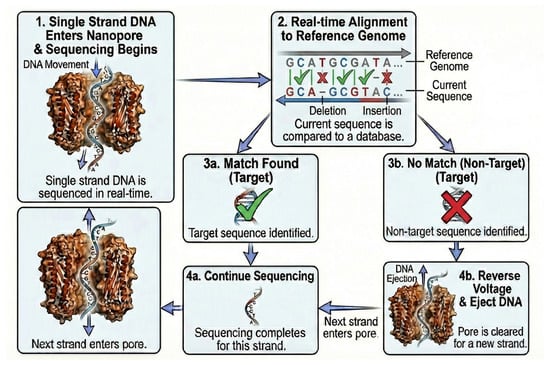
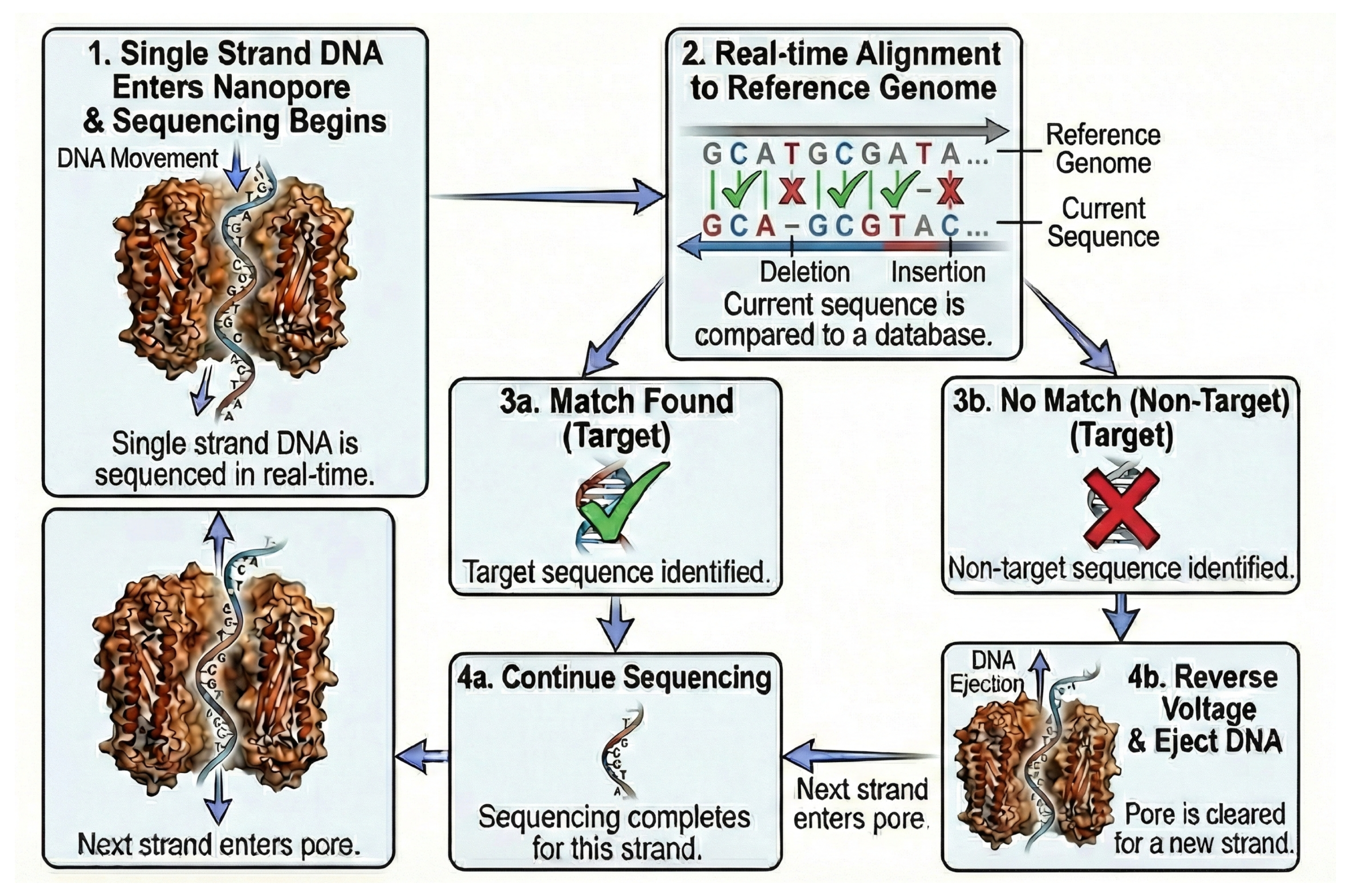
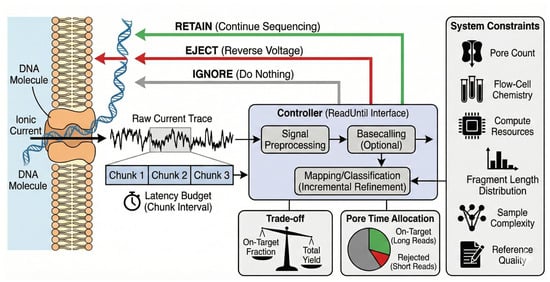
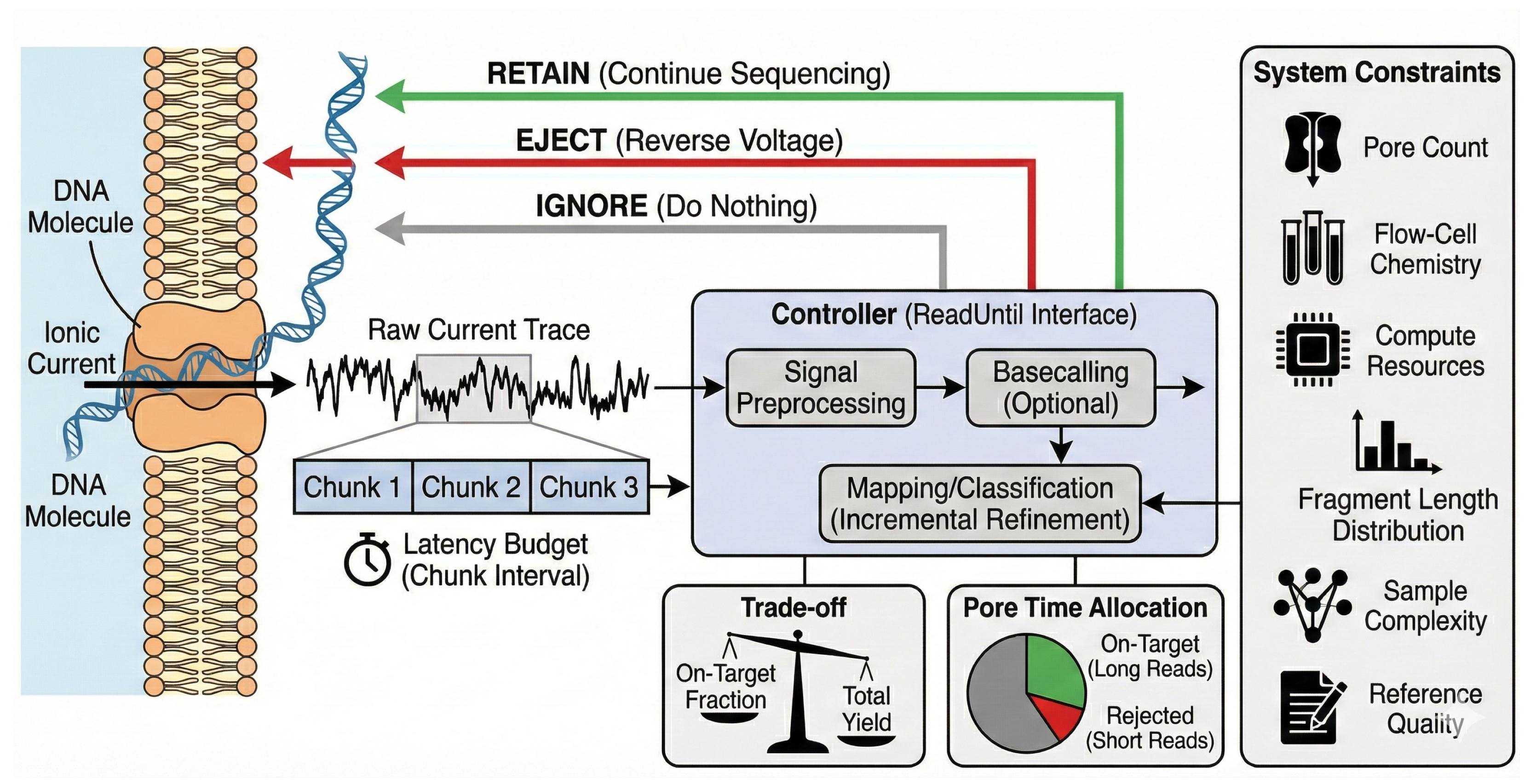
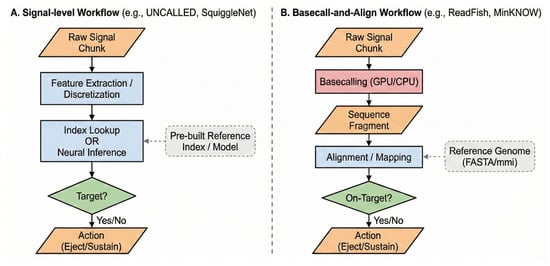
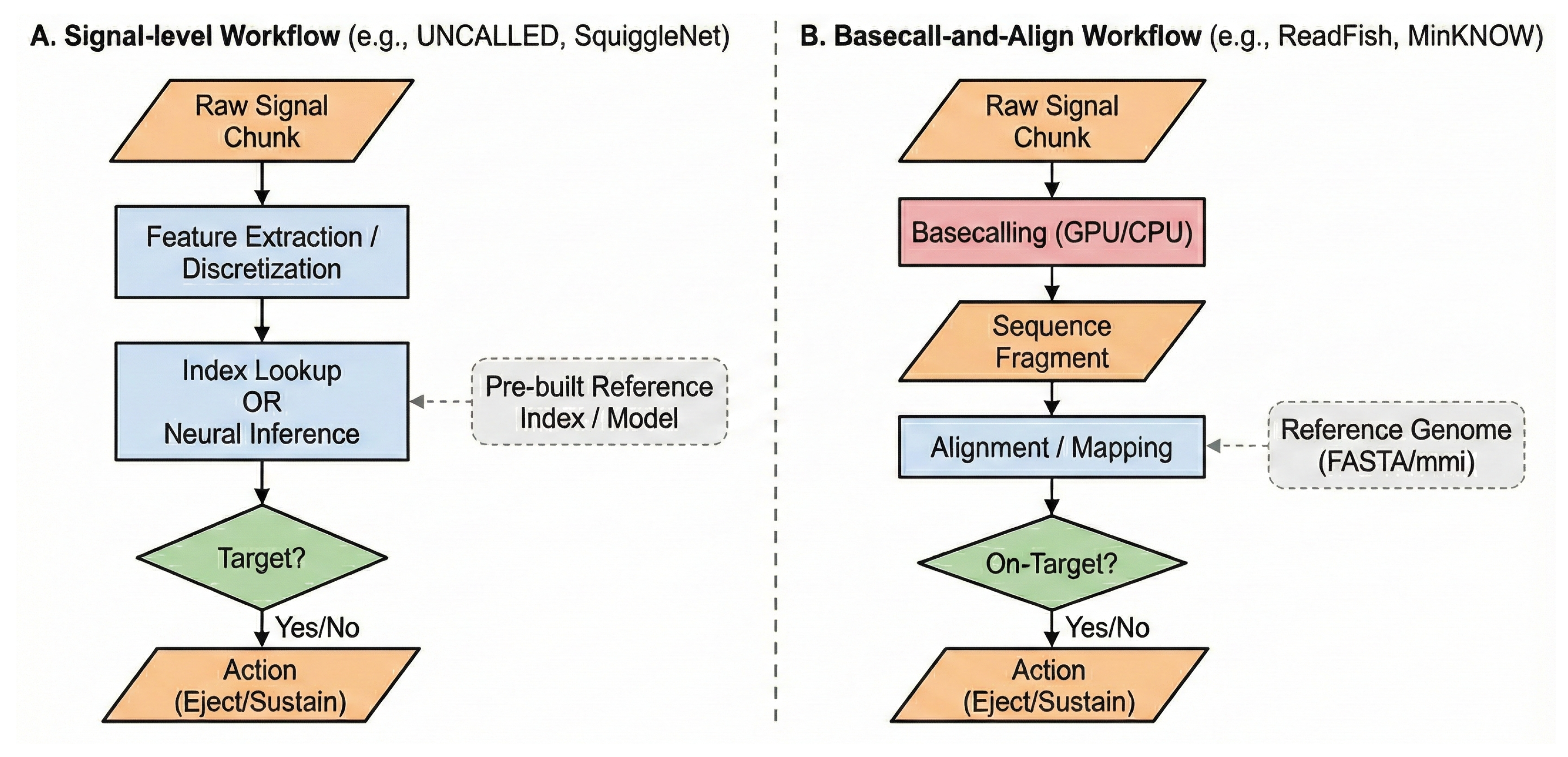
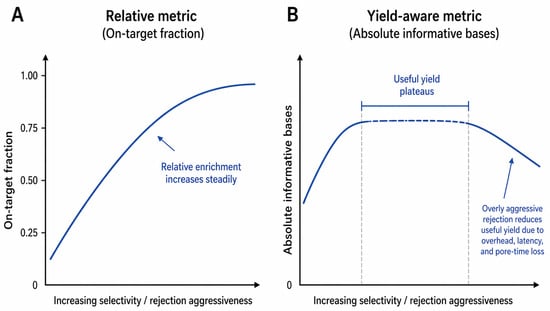
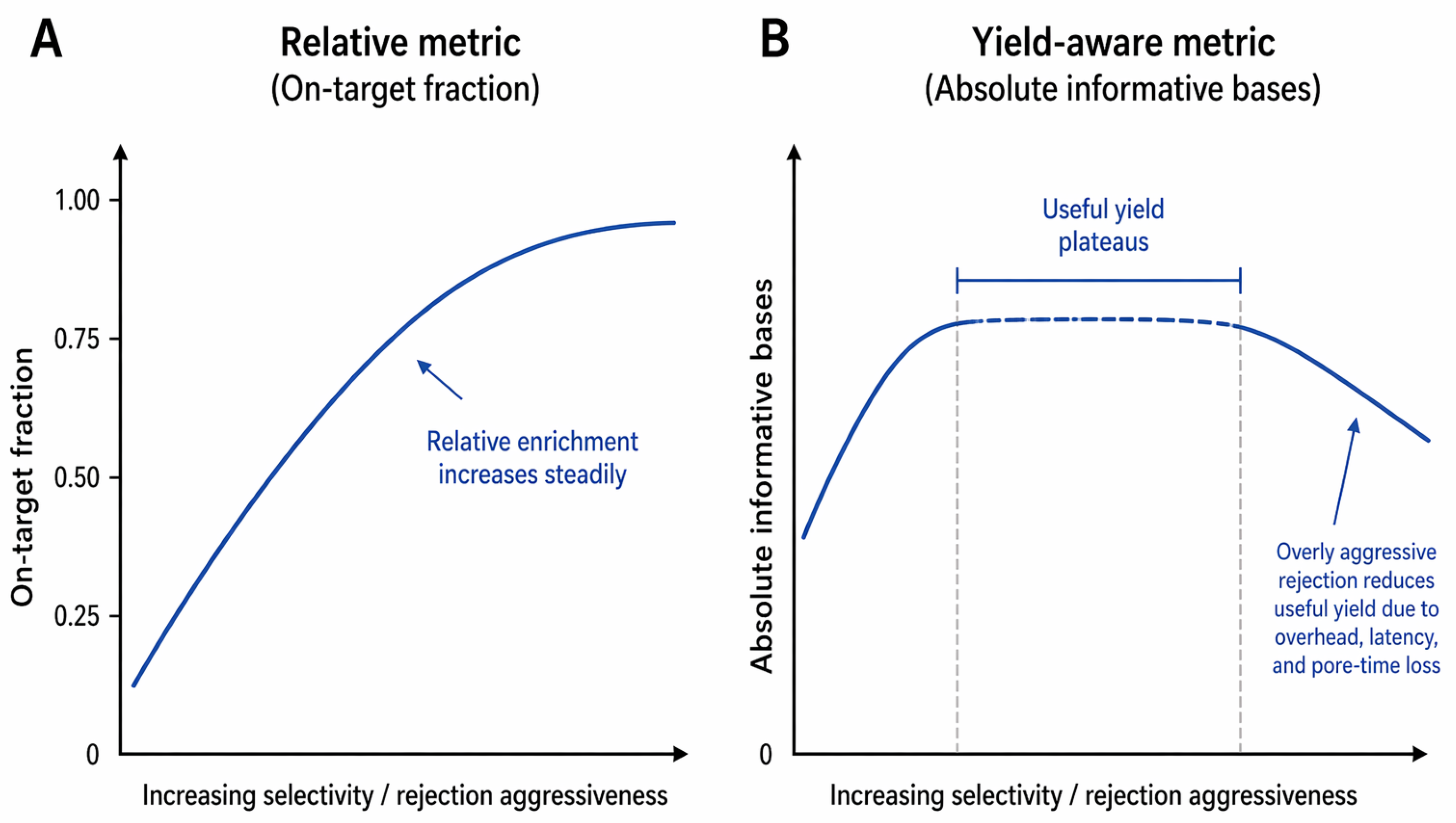

Disclaimer/Publisher’s Note: The statements, opinions and data contained in all publications are solely those of the individual author(s) and contributor(s) and not of MDPI and/or the editor(s). MDPI and/or the editor(s) disclaim responsibility for any injury to people or property resulting from any ideas, methods, instructions or products referred to in the content. |
© 2026 by the authors. Licensee MDPI, Basel, Switzerland. This article is an open access article distributed under the terms and conditions of the Creative Commons Attribution (CC BY) license.