


Abstract
Background: Long non-coding RNAs (lncRNAs) are increasingly recognized as key regulators of gene expression, playing pivotal roles in diverse biological processes, including reproduction. This study identified and characterized lncRNAs located near fertility-associated genes in Retinta beef cattle, exploring their potential regulatory roles via DNA–RNA triplex formation using in silico approaches. Methods: We applied an integrative bioinformatics pipeline to identify potential triplex interactions, predicting structurally accessible regions within the lncRNAs and demonstrating the statistical enrichment of binding sites across known regulatory genomic elements. Results: Twelve protein-coding genes previously linked to female fertility or male scrotal circumference were analyzed, revealing 16 unique lncRNAs within ±50 kb windows, predominantly on BTA5. We predicted high-confidence triplex-forming oligonucleotides (TFOs) for most gene-lncRNA pairs. Our results suggest robustness and sequence specificity, as interactions were disrupted by sequence permutation or when a control background sequence was used. RNA secondary-structure analysis revealed that TFOs generally lie in exposed regions, supporting their accessibility for triplex formation. Furthermore, promoter and regulatory regions of fertility-associated genes were enriched in predicted triplex target sites (TTSs), with some overlapping CpG islands and enhancer regions, leading to the hypothesis that these lncRNAs might play a role in epigenetic regulation. Conclusions: Overall, these findings establish computationally derived hypotheses regarding the potential molecular mechanisms by which lncRNAs may modulate reproductive efficiency in cattle and highlight specific lncRNAs as promising targets for functional studies and marker-assisted breeding.
1. Introduction
Fertility traits play a vital role in the beef cattle industry, directly influencing herd productivity and profitability [1,2,3]. Nevertheless, evaluating female reproductive performance is challenging due to environmental variability, low heritability, and limited reliable data from extensively managed herds [4,5], particularly in breeds managed under extensive production systems. In this context, selection programs often rely on indirect criteria, with scrotal circumference (SC) being the most widely used indicator. SC is easy to measure, moderately to highly heritable [6,7], and genetically correlated with female reproductive traits, making it a useful tool for improving fertility through sire selection [8,9]. Bulls with larger SC reach puberty earlier and produce daughters with greater reproductive precocity and longevity [10,11].
In recent years, genomic information has been increasingly applied in beef cattle, demonstrating its potential to improve economically important traits [2,12,13]. In livestock, genome-wide association studies (GWAS) based on single-nucleotide polymorphisms (SNPs) have enabled the identification of numerous genes associated with female fertility [14,15] and male SC [16,17].
However, the effect of a gene not only relies on its sequence and variants, but also on its interactions with other regulatory genes. There is increasing evidence that different types of non-coding RNAs play important roles in the regulation of genes related to reproductive fitness in several species, including cattle. Among them, long non-coding RNAs (lncRNAs) have recently started to receive more attention. LncRNAs are defined as transcripts longer than 200 nucleotides that do not encode functional proteins. Their main function is the regulation of gene expression via transcriptional coactivation/repression [18,19,20].
A key mechanism of lncRNA-mediated regulation involves the formation of DNA-RNA triplexes, in which the lncRNA binds directly to the major groove of duplex DNA through alternative pairings to the canonical Watson–Crick interactions, known as Hoogsteen or reverse Hoogsteen base pairing [21,22]. Triplexes can act in either a cis- or trans-regulatory manner on neighboring or distant genes, respectively [23,24]. It is well established that these structures can recruit chromatin-modifying complexes to specific genomic regions to regulate gene expression via DNA methylation, histone modifications, and chromatin remodeling [22,25].
LncRNAs are increasingly recognized as key regulators of a plethora of genes involved in central biological functions, including reproduction. For instance, they have been implicated in spermatogenesis and male infertility [26], as well as ovarian function, implantation, and embryogenesis [27,28]. Their tissue-specific expression and regulatory versatility make lncRNAs promising targets for understanding the genetic control of fertility traits.
Retinta is a native Spanish cattle breed, primarily raised in the southern and western regions of Spain, which together host about 90% of the national population. The National Association of Retinto Breeders (ACRE) estimates the breed’s population at 250,000 cows, of which 20,715 are part of the performance control nucleus and breed improvement program as of 2023 [29]. The Retinta breed is raised under an extensive management system within the “Dehesa”, a distinctive Mediterranean ecosystem that combines mountain shrublands with open oak woodlands and hosts a wide variety of tree and shrub species [30]. This breed is highly adapted to semi-arid, dry, and hot conditions with scarce resources [31], and is recognized for its strong maternal abilities [32]. Analysis of several female fertility traits in this breed revealed candidate genes involved in folliculogenesis, steroidogenesis, immune modulation, and cell cycle control. A substantial proportion of lncRNAs was also detected, indicating potential regulatory roles in reproductive processes through gene expression modulation at multiple levels [15]. In a subsequent study, Ziadi et al. [17] identified 198 genomic regions encompassing 118 protein-coding and 80 RNA genes associated with SC. Several genes, including GSTM3, SPATA1, HFM1, and MSH4, had previously been linked to male fertility. Notably, six regions overlapped between male and female fertility traits, comprising two shared protein-coding genes.
In the present study, we investigated for the first time in a beef cattle breed, the potential interactions between lncRNAs and genes associated with female fertility and SC in Retinta cattle. Specifically, we aimed to predict putative DNA-RNA triplex interactions between protein-coding genes previously detected in two GWAS analyses related to fertility and SC. To prioritize lncRNAs with potential cis-regulatory roles, we considered nearby lncRNAs with structural features compatible with triplex formation in the genomic context of the target genes. This integrative approach provides mechanistic insights into lncRNA-mediated regulation of reproductive traits and identifies candidate lncRNAs for future functional validation and potential use in breeding programs.
2. Materials and Methods
2.1. Genome-Wide Association Study Analysis
The present study integrates data from two previously published investigations on Retinta beef cattle. The first study employed a weighted single-step genome-wide association approach (wssGWAS) to identify candidate genes and genomic regions associated with female fertility. Four traits were used to define female fertility: age at first calving (AFC) of the whole population, interval between first and second calving (CI12), average calving interval (ACI), and reproductive efficiency at last calving (RE), which was calculated as the percentage deviation between the optimal and real parity number of females at each age, following the procedure described by Jiménez et al. [33]. The second study applied a single-step genome-wide association analysis (ssGWAS) to identify genes common to male scrotal circumference and the aforementioned traits. Detailed information on these studies is available in Morales et al. [15] and Ziadi et al. [17].
2.2. Selection of Long Non-Coding RNA Genes and Upstream Regions of Candidate Genes
lncRNAs located at 50 kb or less from the transcription start site (TSS) of protein-coding genes previously associated with fertility in the Retinta breed [15,17] were selected to retain high-confidence and biologically relevant elements. Windows of ±50 kb were used to reduce the rate of false positives according to previous evidence [34,35]. The sequences of the lncRNA transcripts were retrieved from the Ensembl database release 115 (genome assembly ARS-UCD2.0) using the biomaRt R package v.2.64.0 [36].
On the other hand, the genomic coordinates of the promoter regions were determined as the region spanning the 3500 bp upstream and 1500 bp downstream of the TSS for each gene (following a similar approach as Xu et al. [37]). These sequences were also downloaded from the Ensembl database release 115 (genome assembly ARS-UCD2.0) using the biomaRt R package v.2.64.0 [36].
2.3. In Silico Prediction of DNA-RNA Triplexes in Gene Upstream Regions
To determine potential interactions between lncRNAs and the candidate genes, DNA-RNA triplex interactions were predicted within the promoter regions of the aforementioned genes and the lncRNAs previously identified. We used the command-line version of the LongTarget software v1.0 (https://github.com/LongTarget/LongTarget, accessed on 29 September 2025), which predicts all the possible DNA-RNA triplexes that may form between the provided DNA genomic sequence and the lncRNA, considering Hoogsteen and reverse Hoogsteen interactions. These are consequently aligned to the query lncRNA, and the positions with the highest density of predicted triplexes are finally selected as the top-scoring triplex-forming oligonucleotide (TFO1) [38].
Default parameters defined in the help page were applied, including -r 0 (all Hoogsteen and reverse Hoogsteen interactions were considered), -c 5000 (maximum cut length for sequence scanning), -i 60 (minimum % identity), -S 1.0 (minimum stability), -ni 20 (minimum TFO length), -na 100,000 (maximum TFO length), -pc 0 (CC penalty), -pt −1000 (TT penalty), -ds 15 (distance between TFOs), and -lg 50 (offset value). Options -f1 and -f2 indicate the query DNA and lncRNA sequences in FASTA format, respectively. Commands are provided as Supplementary Material File S1.
DNA and RNA sequences were read from and written to FASTA files using functions from the Biostrings R package [39]. Shuffled DNA and lncRNA sequences for the permutation test were generated using the function shuffle_sequences from the R package universalmotif [40], with parameters k = 2 and method = euler to keep the dinucleotide frequency as recommended by Antonov et al. [41]. The sequence of the GHR (Growth Hormone Receptor) gene promoter region, located on BTA20, was also downloaded from the Ensembl database release 115 (genome assembly ARS-UCD2.0).
2.4. Analysis of lncRNA Sequence Accessibility
Software RNAplfold v2.7.0 [42] from the Vienna package v2.7.0 [43] (https://github.com/ViennaRNA/ViennaRNA, accessed on 20 October 2025) with option -u was applied to study the sequence accessibility of candidates lncRNAs, as exposure of the TFOs is essential for the interaction of these molecules with the double-helix DNA. RNAplfold applies a sliding window approach to estimate local RNA secondary structure probabilities, making it a suitable choice for studying the structure of lncRNAs, which are usually long and constituted by a modular structure. Default parameters for maximum base pair span (L = 70) and window size (W = 70) were used, together with option -u 1 to obtain the unpaired probability (Punp) per nucleotide, with values ranging from 0 (buried within the structure) to 1 (maximum exposition). Commands are provided as Supplementary Material File S2.
2.5. Identification of DNA Regulatory Features
The annotation of regulatory features such as promoters, enhancers, CpG islands, and other functionally relevant genomic elements was retrieved from Ensembl release 115 (genome assembly ARS-UCD2.0). To systematically quantify the overlap between the predicted lncRNA-binding regions (triplex target sites, TTS) and these regulatory elements, a custom bioinformatics pipeline was developed in the R statistical environment v4.5.0 [44], using functions from the data.table v1.17.8 [45] and dplyr v1.1.4 [46] packages. The genomic coordinates of both the predicted triplexes and the regulatory features were converted into interval objects using the GenomicRanges package v1.60.0 [47].
We then analyzed the overlap between the predicted lncRNA-binding regions and the annotation. The findOverlaps function was employed to intersect the TTS intervals with the regulatory coordinates. Based on this intersection, the total number of predicted triplexes was calculated and classified as either mapping “within regulatory regions” (overlapping at least one regulatory feature) or “outside regulatory regions”. Summary statistics, including mean, were calculated for each group to characterize the data. Normality of the triplex counts in regulatory and non-regulatory regions was assessed using the Shapiro–Wilk test (implemented in R v4.5.0 [44] via the shapiro.test function), which indicated that the data were not normally distributed, supporting the use of non-parametric approaches. To provide a standardized measure of this enrichment while accounting for zero values, a global log2 fold-change (log2FC) was computed as log2((mean regulatory count + 1)/(mean non-regulatory count + 1)), representing the relative difference in triplex abundance between the two groups.
A Monte Carlo permutation test was performed to assess the spatial enrichment of predicted lncRNA TTS within regulatory regions. For this analysis, the observed differences in triplex counts between regulatory and non-regulatory regions were randomly reassigned 10,000,000 times, generating a null distribution of expected overlaps under the assumption of no enrichment. In R, this was implemented by randomly flipping the sign of each pairwise difference for every iteration and calculating the sum of differences for each permuted dataset. The observed sum of differences was then compared to this null distribution to calculate an empirical two-tailed p-value, providing a statistical assessment of whether the enrichment of TTS in regulatory regions was greater than expected by chance. Finally, the predicted lncRNA-binding sites and their overlaps with regulatory annotations were visualized using the Ensembl Genome Browser.
3. Results and Discussion
Genetic evaluations of reproductive traits are limited in extensively managed breeds, where environmental factors such as feed availability, climate, health, and management complicate estimation of genetic parameters. Molecular markers can improve selection by providing insight into genetic potential. In Retinta cattle, GWAS analyses of female fertility traits identified candidate genes involved in folliculogenesis, steroidogenesis, immune modulation, and cell cycle control, alongside numerous lncRNAs suggesting regulatory roles [15]. To characterize putative gene-lncRNA interactions related to female fertility and SC in Retinta cattle, we predicted DNA-RNA triplex-forming oligonucleotides (TFOs) using LongTarget v1.0. After that, pairing probabilities along lncRNAs were calculated with RNAplfold v2.7.0. The genomic context of target genes was also analyzed to evaluate the biological plausibility of these in silico predictions, thereby establishing robust hypotheses regarding their potential regulatory or epigenetic mechanisms.
3.1. Identification of Relevant Protein-Coding Candidate Genes and LncRNAs
We first selected highly relevant candidate protein-coding genes that had been previously associated with female fertility or SC in Retinta cattle [15,17]. Only genes with previous evidence of involvement in reproductive physiology were considered to ensure high biological relevance. Genomic windows extending ±50 kb from the transcription start site (TSS) of each gene were defined to identify nearby lncRNA loci compatible with potential cis-regulatory interactions. The window size was chosen to limit false positives, based on a previous study showing that commonly used ranges for defining potential cis-regulatory lncRNAs are often too broad and prone to spurious associations [35]. Of the candidate protein-coding genes, most of which are located on BTA5, 12 genes had at least one lncRNA locus within these windows (Table 1).
Table 1.
Function of genes associated with female fertility and scrotal circumference in Retinta beef cattle breed.
By identifying protein-coding genes and their proximal lncRNAs, we provide a basis for hypothesizing how these interactions might contribute to the genetic regulation of fertility-associated traits in Retinta cattle. Growing evidence emphasizes the regulatory role of lncRNAs in several biological processes, including reproduction. For instance, many potential lncRNAs have been reported in spermatogenesis and male infertility in cattle. Selvaraju et al. [48] conducted sequencing analyses to characterize spermatozoal transcripts in fresh bull semen, revealing that spermatozoa retain a diverse repertoire of RNAs, including lncRNAs. In a subsequent study, Wang et al. [26] performed an integrated analysis of lncRNAs in Holstein bull sperm with varying motility levels to investigate the potential roles of lncRNAs in sperm motility. They identified 11,561 lncRNAs in total, of which 2517 were differentially expressed between high- and low-motility sperm groups. Additionally, they discovered that the lncRNA TCONS_000417333 targets the gene ephrin A1 (EFNA1), which plays a role in male reproductive physiology. The role of lncRNAs has also been widely recognized in female reproduction, mainly ovarian function, implantation, and embryogenesis [49,50,51]. Notably, several lncRNAs identified by de Souza-Fonseca et al. [50] were potentially involved in the regulation of different stages of embryo development, including XLOC_000749 and XLOC_020064, which were co-expressed with COL4A4.
Our analysis revealed 19 unique lncRNA loci in the previously defined genomic windows (Table 2). Some of them were proximal to multiple genes, suggesting potential shared regulatory roles. The number of lncRNAs per gene varied from one to four, with lengths ranging from 407 to 6167 nucleotides, representing a 10-fold difference that is in line with the typical heterogeneity in lncRNA size [52]. The distances between lncRNAs and their putative target genes varied substantially, from 0.35 kb to nearly 50 kb (Table 2), consistent with previous reports of cis-acting lncRNAs in other species [53,54].
Table 2.
Distance between fertility-associated protein-coding genes and long non-coding RNAs (lncRNAs) found in their proximity (<50 kb).
It is widely accepted that lncRNAs can act through cis or trans mechanisms, acting on neighboring or distant genes, respectively. Some lncRNAs, such as H19 and XIST in humans, can even regulate gene expression in both a cis and a trans manner. Cis-acting lncRNAs target genes located in the proximity, though a consensus about what distances are compatible with this mechanism remains elusive, with examples spanning from the order of 100 up to 100,000 base pairs [34,35,53,55]. However, Dhaka et al. [35] demonstrated that this “naïve definition” is linked to a high false positive rate. This fact poses a challenge for the in silico prediction of lncRNA-DNA binding sites using bioinformatics tools. Several triplex prediction software have been developed to date, including LongTarget, which considers all the possible Hoogsteen and reverse Hoogsteen interactions between the queries that the most cited triplex-prediction program, Triplexator, may overlook [38,55,56,57].
The distances between lncRNAs and their putative target protein-coding genes reported in our study fall within a range that is consistent with previously reported cis-regulatory relationships. For example, in mice, the lncRNA Chaserr is located immediately upstream of its target gene, Chd2 [54], while other cis-lncRNAs, such as Peril, regulate genes situated more than 1 Mb away [53,58]. These observations highlight the substantial heterogeneity in the genomic spacing of cis-acting lncRNAs, suggesting that regulatory effects can occur over both short and long distances.
3.2. Triplex Formation Prediction
To explore potential interactions between the previously selected fertility-associated genes and proximal lncRNAs, we used the LongTarget software. First, the program identifies all possible triplexes that may form between the input lncRNA and genomic region based on Hoogsteen and reverse Hoogsteen interactions and then clusters them to determine the TFO with the highest density of overlapping binding sites (TFO1). As input, we used the promoter sequences of the candidate fertility-associated genes, including both the immediate upstream and downstream regions of the transcription start site (TSS), to capture all potential regulatory features. The same analysis was performed with the shuffled lncRNA and genomic sequences, as well as with the promoter region of gene GHR, located on a different chromosome, BTA20. These permutation and background analyses constitute our controls.
Triplex interactions were predicted for all the gene-lncRNA pairs, except for FRS2-lncRNA145543 and IFNG-lncRNA138747, which were subsequently discarded from downstream analysis. In most cases, random shuffling of both lncRNA and promoter sequences significantly reduced the number of overlapping triplexes (Table 3). For the SP1-lncRNA129258 pair, the values drop from 63 to 3 triplexes overlapping TFO1 when using the promoter region of SP1 vs. a permutated version of the same sequence. The same happens when we use a shuffled lncRNA129258 sequence, yielding 3 triplexes. These values are compatible with the results reported by He et al. [38], who suggested that such sporadic signals mainly reflect background noise. They are also indicative of strong sequence specificity, as the interactions are disrupted when changing the nucleotide order.
Table 3.
Number of overlapping triplexes defining TFO1 for selected gene-lncRNA pairs, together with the corresponding counts obtained from shuffled lncRNA sequences, shuffled target sequences, and control sequences.
The results of the background analysis further support these observations. The number of triplexes obtained for the interaction of the lncRNAs and the promoter of a gene encoded in another chromosome is significantly lower (Table 3). This supports the sequence specificity of the predicted interactions and rules out the potential binding of the lncRNAs to repeated or low-complexity regions that are widespread across the genome [38,59].
We further characterize the biophysical properties of the TFO1 for each gene-lncRNA pair. The length varied greatly, ranging from 51 to more than 80. These sizes agree with previous experimental data showing that the minimum RNA length required for a triplex to be constituted is 19 bases [60]. These results also support the conclusions of He et al. [38], who noted that triplexes of such sizes are difficult to find just by chance, supporting the computational robustness of the predictions. The mean sequence identity was 63.9%, showing little variation between the different gene-lncRNA pairs. This is expected given that Hoogsteen and reverse Hoogsteen base pairs tolerate a higher proportion of mismatches between the nucleic acids than the canonical Watson–Crick interactions, allowing for an enhanced flexibility that has previously been associated with their role as scaffolds to recruit epigenetic machinery [37,61]. This flexibility is further supported by experimental evidence. For instance, Leisegang et al. [61] showed that lncRNA HIF1α-AS1 (hypoxia-inducible factor 1A-antisense 1) and its target, the EPHA2 gene, form a stable DNA-RNA triplex that contains mismatches. Detailed data can be found in Table S1 of the Supplementary Materials.
However, genomic proximity alone is not sufficient to demonstrate cis-regulatory interactions. To address this limitation, it is crucial to distinguish the regulatory activity of the mature lncRNA transcripts from other mechanisms inherent to their genomic location. For instance, it has been described that coexpression between lncRNAs and nearby genes can result from transcriptional noise, with the lncRNA transcripts representing by-products of local transcription rather than functional regulators. This may occur when the promoter region of the lncRNA locus acts as an enhancer for a proximal gene, or when the process of transcription itself establishes a chromatin environment that promotes gene expression of neighboring loci, independently of the formation of DNA-RNA triplex interactions with the lncRNA transcript [62]. In other cases, lncRNA loci and other genes located in the same topologically associating domains (TADs) are co-regulated by common enhancers [63], leading to apparent associations that are not a consequence of any regulatory activity performed by the lncRNA transcripts, but rather due to the 3D organization of the chromatin [64].
3.3. LncRNA Accessibility
LncRNAs are characterized by a complex modular structure with loops that include both double-stranded and single-stranded regions. Steric constraints in buried regions prevent triplex formation. Therefore, exposure of the TFOs within lncRNA structures is a prerequisite for their interaction with genomic targets. We used RNAplfold from the Vienna package to assess whether the predicted TFOs lie in accessible regions of the candidate lncRNAs, adding an additional layer of information to our analysis. This software computes accessibility at each position within the RNA sequence in terms of the unpaired probability (Punp), which is the probability that a given nucleotide is exposed in the structure, considering thermodynamic constraints, and it is therefore potentially accessible for interactions. Values range from 0 (fully paired/buried) to 1 (fully unpaired/exposed).
We aimed to determine the mean Punp for the predicted TFO1 of each gene-lncRNA pair. Our results showed that TFO1 could usually be found in highly exposed regions, in most cases with a mean Punp well above the common threshold of 0.5 [59] (Table 4). The highest probability values were obtained for the CSF1-lncRNA104858 and IFNG-lncRNA152399, with Punp = 0.83 and 0.81, respectively. These values further support the computational plausibility of the predicted interactions between the genes and lncRNA under study through DNA-RNA triplexes, providing new evidence at the biophysical and thermodynamic levels.
Table 4.
Positions of triplex-forming oligonucleotides (TFOs) within lncRNAs for selected gene-lncRNA pairs, with corresponding mean unpaired probabilities (Punp).
Our results also indicate that considering the RNA secondary structure may refine in silico triplex prediction by prioritizing thermodynamically accessible regions, a hypothesis also supported by other authors [59,65,66]. LncRNAs are usually highly structured, with loops and other complex structural elements [52,65,67]. For instance, Maternally Expressed Gene 3 (MEG3) and HOX transcript antisense intergenic RNA (HOTAIR) are human lncRNAs constituted by several modules and structural motifs with specific functions. They both promote the recruitment of Polycomb Repressive Complex 2 (PRC2), which is involved in transcription repression through epigenetic mechanisms [53,55,67,68,69]. However, as mentioned above, structural exposition is a requisite for the formation of triplexes, given that RNA nucleotides buried within the structure are not available to establish the required interactions with the DNA double helix [59,65,66]. For these reasons, including structural information in DNA-RNA triplex prediction pipelines is expected to yield more biologically plausible interaction candidates for future experimental validation.
Matveishina et al. [59] compared the performance of two structure-prediction tools, reaching the conclusion that RNAplfold [42] provides the best results. Thanks to its sliding window approach, RNAplfold is more suitable for addressing the structure of lncRNAs than methods relying on the whole RNA sequence for two main reasons. The first one is associated with the computational cost that would be required for molecules of such length. The second observation has biological significance. Due to the modular architecture of lncRNAs, folding can happen co-transcriptionally, before the full RNA molecule is transcribed [42]. Supporting this notion, it has been described that base pairing within the lncRNA structure predominantly occurs between nucleotides located in the same module, as is the case with human lncRNA HOTAIR [69].
3.4. Regulatory Context of Fertility-Associated Genes
Finally, we included information about the genomic context of the fertility-associated genes that may form triplex interactions with lncRNAs. The aim was to complete our previous results with biologically relevant information regarding the regulatory landscape of the candidate genes, which may shed some light on the functional role of DNA-RNA triplex interactions.
Analysis of the genomic context of the potential fertility-associated target genes revealed that their promoter regions are enriched in computationally predicted triplex target sites. Promoters were defined as the regions extending 3500 bp upstream and 1500 bp downstream of the TSS of each gene to include the core promoter and other potentially regulatory elements. Further analysis of the targeted genomic windows revealed that several predicted lncRNA-binding sites in the DNA (TTS) overlap with annotated regulatory elements according to current genome annotations, including CpG islands, active chromatin regions, and enhancers.
We evaluated the distribution of predicted lncRNA triplex target sites (TTSs) relative to regulatory versus non-regulatory regions. Across all lncRNA–gene pairs, triplexes were more frequently observed in regulatory regions (mean = 3.23) than in non-regulatory regions (mean = 1.46), corresponding to a global log2 fold-change of 0.78, which is indicative of moderate enrichment. Shapiro–Wilk tests showed that the distributions of triplex counts in both groups were not normally distributed (p < 0.001), justifying the use of non-parametric approaches.
The statistical significance of this spatial enrichment was evaluated using a paired Monte Carlo permutation test (10,000,000 iterations), randomizing the sign of differences between regulatory and non-regulatory triplex counts. The observed sum of differences was evaluated against the permuted distribution and was found to be statistically significant at the 0.05 level (p = 0.05). This result provides computational evidence supporting the hypothesis that the predicted lncRNA target sites are not randomly distributed across the genome, but instead are highly concentrated within functional regulatory regions.
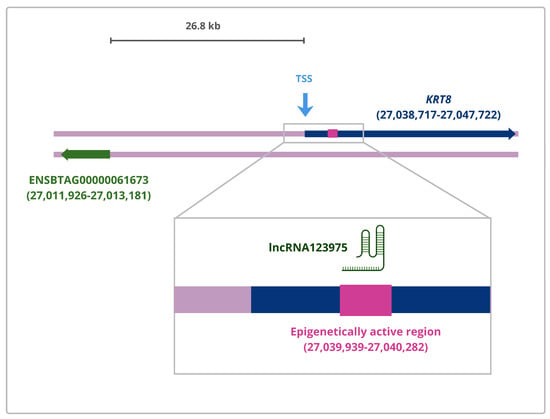
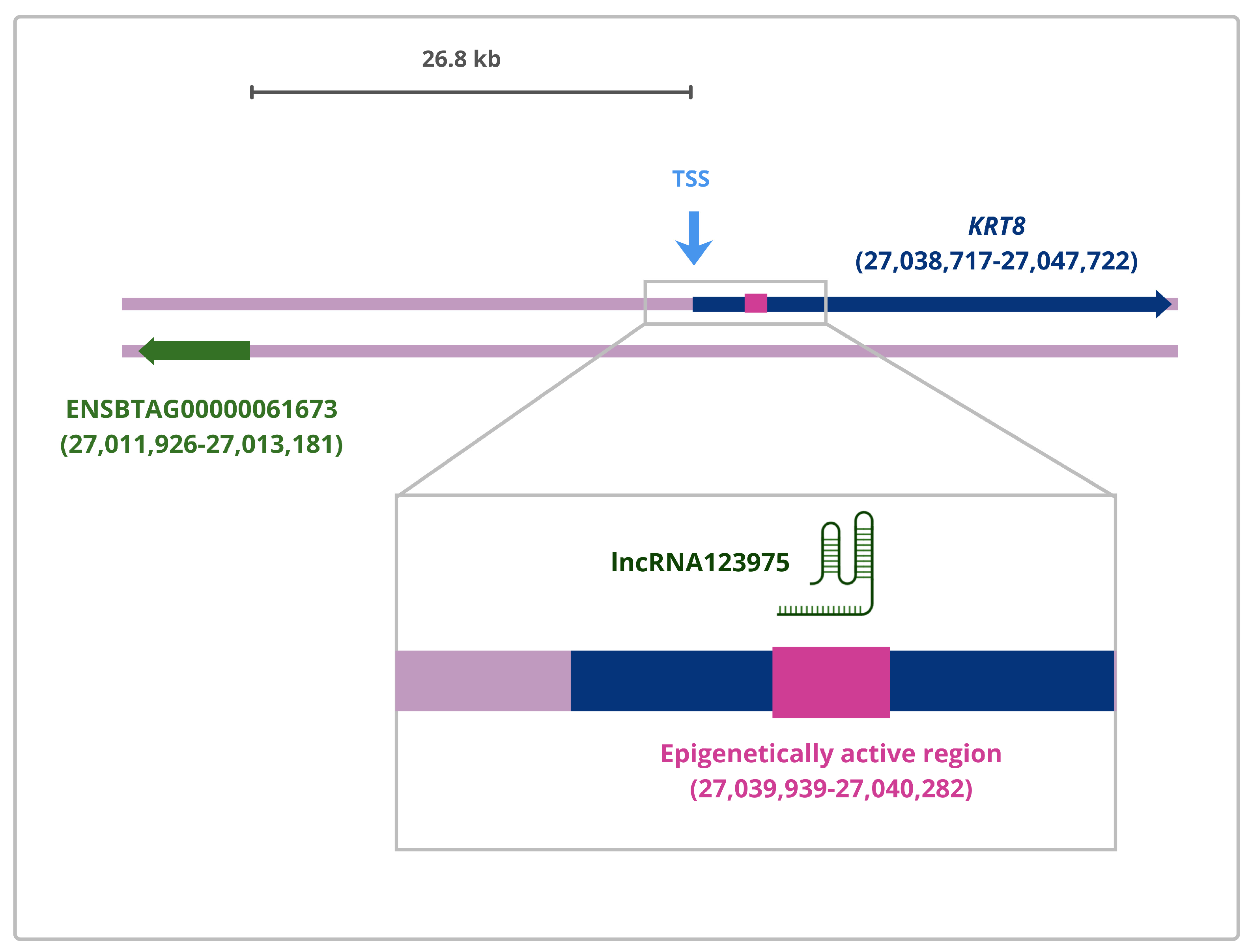
Importantly, the predicted triplex target sites were found within different types of regulatory regions, including CpG islands, active chromatin regions, promoters, and enhancers. For example, the triplex interaction predicted between KRT8 and lncRNA123975 mapped directly to an epigenetically modified accessible region according to the Ensembl database (Figure 1). Similarly, the predicted binding sites for KRT18-lncRNA114215 and KRT18-lncRNA123975 both overlap with CpG islands located within transcriptionally active chromatin regions (Figures S1 and S2). A comparable promoter-proximal localization was observed for the KRT8-lncRNA88580 pair, where the predicted triplex target site co-localizes with both an active chromatin region and the core promoter (Figure S3). Beyond core promoters, we also identified a triplex interaction between SP1 and lncRNA117549 situated within an epigenetically open enhancer element (Figure S4). LncRNAs that bind to such distal regulatory sequences have been described as enhancer lncRNAs in other studies (e-lncRNAs), functioning as essential structural scaffolds that dynamically regulate gene expression by coordinating enhancer–promoter interactions [35].
Figure 1.
Genomic context of the top-scoring triplex target site (TTS) between gene KRT8 and lncRNA123975. The KRT8 locus is presented as a dark blue horizontal arrow (27,038,717–27,047,722), with the transcription start site (TSS) in light blue. The ENSBTAG00000061673 locus, which encodes lncRNA123975, is shown as a dark green horizontal arrow (27,011,926–27,013,181) located 26.8 kb upstream of the TSS. The lncRNA transcript is represented by its secondary structure, illustrating its interaction with an epigenetically active region (magenta box) spanning coordinates 27,039,939-27,040,282.
It is well established that lncRNAs interact with genomic DNA by forming DNA-RNA triplex structures at specific sequences, mainly located in promoters and other regulatory features that usually lie in the upstream regions of their target genes. Based on these established mechanisms, we hypothesize that the high-confidence triplex interactions predicted in our study may similarly serve to guide epigenetic modifying complexes to the promoters of fertility genes, though experimental functional validation is required to confirm this regulatory model [37,38,53,55,70,71]. Examples of lncRNA in human and mice that are known to interact with promoter regions include KHPS1, PARTICLE, and FENDRR, whose target genes are SPHK1, MAT2A, and FOXF1, respectively. The triplex formation between KHPS1 and SPHK1 is associated with the recruitment of a histone acetylase that opens the chromatin, thereby activating transcription. Alternatively, PARTICLE and FENDRR interact with Polycomb Repressive Complex 2 (PRC2), which is involved in gene expression repression [55,57,60,61].
This mechanism has also been suggested to take place in bovines, where a growing number of lncRNAs have been associated with transcriptional regulation. For instance, Gao et al. [72] reported three genes involved in male sexual maturation that were regulated by lncRNAs [72]. On the same line, a previous transcriptome study focused on the endometrium of fertile vs. subfertile Holstein cows revealed the co-expression of some lncRNAs and SGPP1 (sphingosine-1-phosphate phosphatase 1), a gene with a central role in a metabolic pathway essential for the proliferation of the uterus tissue, which is required for a successful pregnancy [50].
3.5. Limitations and Future Directions
The results presented here rely on in silico predictions using LongTarget, providing a preliminary overview of potential DNA-RNA triplex interactions between lncRNAs and fertility-associated genes. However, the biological implications of these findings remain constrained by the lack of experimental expression data and tissue specificity profiles. lncRNAs typically exhibit lower abundance and higher tissue-specificity compared to protein-coding genes [73,74], meaning that computational prediction of a binding site does not guarantee that the lncRNA is expressed at sufficient levels to regulate the target in the relevant reproductive tissue [53]. Consequently, caution must be exercised when extrapolating these results to fertility regulation and practical breeding applications [75]. Future studies must bridge this gap by determining whether these gene-lncRNA pairs are co-expressed in specific bovine reproductive tissues and by providing experimental validation to confirm that these interactions are indeed biologically relevant [35,61].
4. Conclusions
The prediction of putative DNA-RNA triplex interactions between lncRNAs and genes previously associated with fertility in Retinta cattle provides a starting point to deepen our understanding of the molecular regulation of reproductive efficiency in this breed. The close genomic proximity of the lncRNA loci to key fertility genes, together with the predicted structural accessibility of the lncRNA transcripts and the enrichment of triplex target sites in genomic regulatory regions, suggests that lncRNAs could potentially be involved in gene expression regulation through epigenetic mechanisms, a hypothesis that requires experimental validation. These findings highlight the complexity of reproductive trait regulation and point to specific lncRNAs that may serve as promising targets for future functional studies and as candidate molecular markers for future evaluation in breeding programs focused on improving reproductive traits in cattle.
Supplementary Materials
The following supporting information can be downloaded at: https://www.mdpi.com/article/10.3390/dna6020024/s1, Table S1: Class 1 triplex hits for selected gene-lncRNA pairs predicted by LongTarget. Figure S1. Genomic context of the top-scoring triplex target site between KRT18 and lncRNA114215. Figure S2: Genomic context of the top-scoring triplex target site be-tween KRT18 and lncRNA123975. Figure S3: Genomic context of the top-scoring triplex target site between KRT8 and lncRNA88580. Figure S4: Genomic context of the top-scoring triplex target site between SP1 and lncRNA117549. File S1: LongTarget commands used for DNA-RNA triplex prediction. File S2: RNAplfold commands used for lncRNA accessibility analysis.
Author Contributions
Conceptualization, A.M.; methodology, M.Á.V.-P., C.Z., R.M.M., G.A.C.-R. and A.M.; software, M.Á.V.-P., C.Z., R.M.M. and G.A.C.-R.; validation, S.D.-P. and A.M.; formal analysis, M.Á.V.-P., C.Z., R.M.M. and G.A.C.-R.; investigation, M.Á.V.-P., C.Z., R.M.M., G.A.C.-R., S.D.-P. and A.M.; resources, S.D.-P. and A.M.; data curation, R.M.M.; writing—original draft preparation, M.Á.V.-P., C.Z. and A.M.; writing—review and editing, M.Á.V.-P., C.Z. and A.M.; visualization, S.D.-P. and A.M.; supervision, S.D.-P. and A.M.; project administration, A.M.; funding acquisition, A.M. All authors have read and agreed to the published version of the manuscript.
Funding
This research received funding from the National Association of Breeders of Selected Retinta Cattle (otc_12021081) and MERAGEM—PAI AGR-158 Research Group (ESQUEM.SEL.RAZAS AUTOC, DU.24.5E.25.03).
Institutional Review Board Statement
Not applicable.
Informed Consent Statement
Not applicable.
Data Availability Statement
The dataset employed in this study are property of the National Association of Breeders of Selected Retinta Cattle (ACRE) and were provided for scientific purposes under a specific collaboration arrangement. The data set can be made available for scientific purposes to other authors by the ACRE technical department, under reasonable request.
Acknowledgments
The authors would like to thank the National Association of Breeders of Selected Retinta Cattle (ACRE) for providing the data used in this study.
Conflicts of Interest
The authors declare no conflicts of interest.
References
- Eenennaam, A.L.V. Considerations Related to Breed or Biological Type. Vet. Clin. Food Anim. Pract. 2013, 29, 493–516. [Google Scholar] [CrossRef] [Scilit] [PubMed]
- Haque, M.A.; Iqbal, A.; Alam, M.Z.; Lee, Y.-M.; Ha, J.-J.; Kim, J.-J. Estimation of Genetic Correlations and Genomic Prediction Accuracy for Reproductive and Carcass Traits in Hanwoo Cows. J. Anim. Sci. Technol. 2024, 66, 682–701. [Google Scholar] [CrossRef] [Scilit]
- Krupová, Z.; Krupa, E.; Wolfová, M. Economic Weights of Current and New Breeding Objective Traits in Aberdeen Angus. Czech J. Anim. Sci. 2020, 65, 77–85. [Google Scholar] [CrossRef] [Scilit]
- Magnabosco, C.U.; Lopes, F.B.; Rosa, G.J.d.M.; Sainz, R.D. Bayesian Estimates of Genetic Parameters for Reproductive Traits in Nellore Cows Raised on Pasture in Tropical Regions. Rev. Colomb. Cienc. Pecu. 2016, 29, 119–129. [Google Scholar] [CrossRef] [Scilit]
- Kertz, N.C.; Banerjee, P.; Dyce, P.W.; Diniz, W.J.S. Harnessing Genomics and Transcriptomics Approaches to Improve Female Fertility in Beef Cattle—A Review. Animals 2023, 13, 3284. [Google Scholar] [CrossRef] [Scilit]
- Bonamy, M.; de Iraola, J.J.; Baldo, A.; Prando, A.J.; Giovambattista, G.; Munilla Leguizamon, S. Early Rather than Late Scrotal Circumference Measurements Better Reflect Female Precocity in Beef Cattle. Livest. Sci. 2018, 218, 79–84. [Google Scholar] [CrossRef] [Scilit]
- Jiménez, J.M.; Morales, R.M.; Demyda-Peyrás, S.; Molina, A. Genetic Relationships between Male and Female Reproductive Traits in Retinta Beef Cattle. Livest. Sci. 2025, 291, 105610. [Google Scholar] [CrossRef] [Scilit]
- Schmidt, P.I.; Ferreira, I.A.; Silveira, D.D.; Campos, G.S.; Souza, F.R.P.; Carvalheiro, R.; Boligon, A.A. Reproductive Performance of Cows and Genetic Correlation with Weight Gains and Principal Components of Traits Used in Selection of Nelore Cattle. Livest. Sci. 2019, 229, 77–84. [Google Scholar] [CrossRef] [Scilit]
- Gama, M.P.M.D.; Paz, C.C.P.D.; Junior, M.L.S.; Ventura, H.T.; Bernardes, P.A.; Faro, L.E. Genetic Associations between Growth Traits and Age at First Calving in Guzera Cattle Using Random Regression Models. Livest. Sci. 2021, 250, 104585. [Google Scholar] [CrossRef] [Scilit]
- Regatieri, I.C.; Boligon, A.A.; Costa, R.B.; de Souza, F.R.P.; Baldi, F.; Takada, L.; Venturini, G.C.; de Camargo, G.M.F.; Fernandes, G.A.; Tonhati, H.; et al. Association between Single Nucleotide Polymorphisms and Sexual Precocity in Nellore Heifers. Anim. Reprod. Sci. 2017, 177, 88–96. [Google Scholar] [CrossRef] [Scilit] [PubMed]
- Penitente-Filho, J.M.; Villadiego, F.A.C.; e Silva, F.F.; Camilo, B.S.; León, V.G.; Peixoto, T.; Díaz, E.; Okano, D.; Maitan, P.; Lima, D.; et al. Can Scrotal Circumference-Based Selection Discard Bulls with Good Productive and Reproductive Potential? PLoS ONE 2018, 13, e0193103. [Google Scholar] [CrossRef] [Scilit]
- Costa, R.B.; Irano, N.; Diaz, I.D.P.S.; Takada, L.; Hermisdorff, I.d.C.; Carvalheiro, R.; Baldi, F.; de Oliveira, H.N.; Tonhati, H.; de Albuquerque, L.G. Prediction of Genomic Breeding Values for Reproductive Traits in Nellore Heifers. Theriogenology 2019, 125, 12–17. [Google Scholar] [CrossRef] [Scilit]
- Guarini, A.R.; Lourenco, D.A.L.; Brito, L.F.; Sargolzaei, M.; Baes, C.F.; Miglior, F.; Misztal, I.; Schenkel, F.S. Comparison of Genomic Predictions for Lowly Heritable Traits Using Multi-Step and Single-Step Genomic Best Linear Unbiased Predictor in Holstein Cattle. J. Dairy Sci. 2018, 101, 8076–8086. [Google Scholar] [CrossRef] [Scilit] [PubMed]
- Melo, T.P.; Fortes, M.R.S.; Bresolin, T.; Mota, L.F.M.; Albuquerque, L.G.; Carvalheiro, R. Multitrait Meta-Analysis Identified Genomic Regions Associated with Sexual Precocity in Tropical Beef Cattle. J. Anim. Sci. 2018, 96, 4087–4099. [Google Scholar] [CrossRef] [Scilit] [PubMed]
- Morales, R.M.; Calvo-Rubio, G.A.; Ziadi, C.; Vargas-Pérez, M.Á.; Demyda-Peyrás, S.; Molina, A. Weighted Single-Step GWAS Reveals Genomic Regions Associated with Female Fertility in the Spanish Retinta Beef Cattle. Animals 2025, 15, 2665. [Google Scholar] [CrossRef] [Scilit] [PubMed]
- da Silva Romero, A.R.; Siqueira, F.; Santiago, G.G.; de Almeida Regitano, L.C.; de Souza Júnior, M.D.; de Almeida Torres Júnior, R.A.; do Nascimento, A.V.; Grisolia, A.B. Prospecting Genes Associated with Navel Length, Coat and Scrotal Circumference Traits in Canchim Cattle. Livest. Sci. 2018, 210, 33–38. [Google Scholar] [CrossRef] [Scilit]
- Ziadi, C.; Morales, R.M.; Vargas-Pérez, M.Á.; Calvo-Rubio, G.A.; Demyda-Peyrás, S.; Molina, A. Multivariate Single-Step GWAS Reveals Pleiotropic Genomic Regions and Candidate Genes Associated with Male Scrotal Circumference and Female Fertility Traits in Retinta Beef Cattle. Vet. Sci. 2025, 12, 977. [Google Scholar] [CrossRef] [Scilit] [PubMed]
- Ørom, U.A.; Derrien, T.; Beringer, M.; Gumireddy, K.; Gardini, A.; Bussotti, G.; Lai, F.; Zytnicki, M.; Notredame, C.; Huang, Q.; et al. Long Noncoding RNAs with Enhancer-like Function in Human Cells. Cell 2010, 143, 46–58. [Google Scholar] [CrossRef] [Scilit]
- Davila, M.P.; Muñoz, P.M.; Bolaños, J.M.G.; Stout, T.a.E.; Gadella, B.M.; Tapia, J.A.; da Silva, C.B.; Ferrusola, C.O.; Peña, F.J. Mitochondrial ATP Is Required for the Maintenance of Membrane Integrity in Stallion Spermatozoa, Whereas Motility Requires Both Glycolysis and Oxidative Phosphorylation. Reprod. Camb. Engl. 2016, 152, 683–694. [Google Scholar] [CrossRef] [Scilit]
- Ponting, C.P.; Oliver, P.L.; Reik, W. Evolution and Functions of Long Noncoding RNAs. Cell 2009, 136, 629–641. [Google Scholar] [CrossRef] [Scilit]
- Mondal, S.; Bhat, J.; Jana, J.; Mukherjee, M.; Chatterjee, S. Reverse Watson–Crick G–G Base Pair in G-Quadruplex Formation. Mol. Biosyst. 2016, 12, 18–22. [Google Scholar] [CrossRef] [Scilit] [PubMed]
- Fang, L.; Zhou, Y.; Liu, S.; Jiang, J.; Bickhart, D.M.; Null, D.J.; Li, B.; Schroeder, S.G.; Rosen, B.D.; Cole, J.B.; et al. Integrating Signals from Sperm Methylome Analysis and Genome-Wide Association Study for a Better Understanding of Male Fertility in Cattle. Epigenomes 2019, 3, 10. [Google Scholar] [CrossRef] [Scilit] [PubMed]
- Guil, S.; Esteller, M. Cis-Acting Noncoding RNAs: Friends and Foes. Nat. Struct. Mol. Biol. 2012, 19, 1068–1075. [Google Scholar] [CrossRef] [Scilit]
- Guttman, M.; Rinn, J.L. Modular Regulatory Principles of Large Non-Coding RNAs. Nature 2012, 482, 339–346. [Google Scholar] [CrossRef] [Scilit]
- Canzio, D.; Nwakeze, C.L.; Horta, A.; Rajkumar, S.M.; Coffey, E.L.; Duffy, E.E.; Duffié, R.; Monahan, K.; O’Keeffe, S.; Simon, M.D.; et al. Antisense lncRNA Transcription Mediates DNA Demethylation to Drive Stochastic Protocadherin α Promoter Choice. Cell 2019, 177, 639–653.e15. [Google Scholar] [CrossRef] [Scilit]
- Wang, X.; Yang, C.; Guo, F.; Zhang, Y.; Ju, Z.; Jiang, Q.; Zhao, X.; Liu, Y.; Zhao, H.; Wang, J.; et al. Integrated Analysis of mRNAs and Long Noncoding RNAs in the Semen from Holstein Bulls with High and Low Sperm Motility. Sci. Rep. 2019, 9, 2092. [Google Scholar] [CrossRef] [Scilit]
- Li, X.; Ao, J.; Wu, J. Systematic Identification and Comparison of Expressed Profiles of lncRNAs and circRNAs with Associated Co-Expression and ceRNA Networks in Mouse Germline Stem Cells. Oncotarget 2017, 8, 26573–26590. [Google Scholar] [CrossRef] [Scilit]
- Zhang, Y.; Yan, Z.; Qin, Q.; Nisenblat, V.; Chang, H.-M.; Yu, Y.; Wang, T.; Lu, C.; Yang, M.; Yang, S.; et al. Transcriptome Landscape of Human Folliculogenesis Reveals Oocyte and Granulosa Cell Interactions. Mol. Cell 2018, 72, 1021–1034.e4. [Google Scholar] [CrossRef] [Scilit]
- ARCA. Datos Censales Raza Retinta. 2024. Available online: https://servicio.mapa.gob.es/arca2/censos/consulta/6221 (accessed on 1 November 2025).
- Pérez-González, J.; Frantz, A.C.; Torres-Porras, J.; Castillo, L.; Carranza, J. Population Structure, Habitat Features and Genetic Structure of Managed Red Deer Populations. Eur. J. Wildl. Res. 2012, 58, 933–943. [Google Scholar] [CrossRef] [Scilit]
- Rodero-Serrano, E.; Demyda-Peyrás, S.; González-Martinez, A.; Rodero-Franganillo, A.; Moreno-Millán, M. The Rob(1;29) Chromosome Translocation in Endangered Andalusian Cattle Breeds. Livest. Sci. 2013, 158, 32–39. [Google Scholar] [CrossRef] [Scilit]
- Morales, R.; Phocas, F.; Solé, M.; Demyda-Peyrás, S.; Menéndez-Buxadera, A.; Molina, A. Breeding Beef Cattle for an Extended Productive Life: Evaluation of Selection Criteria in the Retinta Breed. Livest. Sci. 2017, 204, 115–121. [Google Scholar] [CrossRef] [Scilit]
- Jiménez, J.M.; Morales, R.M.; Menéndez-Buxadera, A.; Demyda-Peyrás, S.; Laseca, N.; Molina, A. Estimation of the Genetic Components of (Co)Variance and Preliminary Genome-Wide Association Study for Reproductive Efficiency in Retinta Beef Cattle. Animals 2023, 13, 501. [Google Scholar] [CrossRef] [Scilit]
- Du, X.; He, X.; Liu, Q.; Di, R.; Liu, Q.; Chu, M. Comparative Transcriptomics Reveals the Key lncRNA and mRNA of Sunite Sheep Adrenal Gland Affecting Seasonal Reproduction. Front. Vet. Sci. 2022, 9, 816241. [Google Scholar] [CrossRef] [Scilit]
- Dhaka, B.; Zimmerli, M.; Hanhart, D.; Moser, M.B.; Guillen-Ramirez, H.; Mishra, S.; Esposito, R.; Polidori, T.; Widmer, M.; García-Pérez, R.; et al. Functional Identification of Cis-Regulatory Long Noncoding RNAs at Controlled False Discovery Rates. Nucleic Acids Res. 2024, 52, 2821–2835. [Google Scholar] [CrossRef] [Scilit]
- Drost, H.-G.; Tjeldnes, H. Biomartr: Genomic Data Retrieval. Available online: https://cran.r-project.org/web/packages/biomartr/index.html (accessed on 6 November 2025).
- Xu, B.; Yang, G.; Jiao, B.; Zhu, H. Analysis of Ancient and Modern Horse Genomes Reveals the Critical Impact of lncRNA-Mediated Epigenetic Regulation on Horse Domestication. Front. Genet. 2022, 13, 944933. [Google Scholar] [CrossRef] [Scilit]
- He, S.; Zhang, H.; Liu, H.; Zhu, H. LongTarget: A Tool to Predict lncRNA DNA-Binding Motifs and Binding Sites via Hoogsteen Base-Pairing Analysis. Bioinforma. Oxf. Engl. 2015, 31, 178–186. [Google Scholar] [CrossRef] [Scilit]
- Pagès, H.; Aboyoun, P.; Gentleman, R.; DebRoy, S. Biostrings: Efficient Manipulation of Biological Strings. R Package Version 2.78.0. Available online: https://bioconductor.org/packages/Biostrings (accessed on 6 November 2025).
- Tremblay, B. Universalmotif: An R Package for Biological Motif Analysis. J. Open Source Softw. 2024, 9, 7012. [Google Scholar] [CrossRef] [Scilit]
- Antonov, I.V.; Mazurov, E.; Borodovsky, M.; Medvedeva, Y.A. Prediction of lncRNAs and Their Interactions with Nucleic Acids: Benchmarking Bioinformatics Tools. Brief. Bioinform. 2019, 20, 551–564. [Google Scholar] [CrossRef] [Scilit]
- Bernhart, S.H.; Hofacker, I.L.; Stadler, P.F. Local RNA Base Pairing Probabilities in Large Sequences. Bioinformatics 2006, 22, 614–615. [Google Scholar] [CrossRef] [Scilit] [PubMed]
- Lorenz, R.; Bernhart, S.H.; Höner zu Siederdissen, C.; Tafer, H.; Flamm, C.; Stadler, P.F.; Hofacker, I.L. ViennaRNA Package 2.0. Algorithms Mol. Biol. 2011, 6, 26. [Google Scholar] [CrossRef] [Scilit] [PubMed]
- R Core Team R: A Language and Environment for Statistical Computing 2025. Available online: https://www.R-project.org/ (accessed on 30 July 2025).
- Barrett, T.; Dowle, M.; Srinivasan, A.; Gorecki, J.; Chirico, M.; Hocking, T.; Krylov, S.B. data.table: Extension of ‘data.frame’, R Package Version 1.17.99. 2025. Available online: https://github.com/rdatatable/data.table (accessed on 30 July 2025).
- Wickham, H.; François, R.; Henry, L.; Müller, K.; Vaughan, D.; Software, P. PBC Dplyr: A Grammar of Data Manipulation. Available online: https://cran.r-project.org/web/packages/dplyr/index.html (accessed on 20 February 2026).
- Lawrence, M.; Huber, W.; Pagès, H.; Aboyoun, P.; Carlson, M.; Gentleman, R.; Morgan, M.T.; Carey, V.J. Software for Computing and Annotating Genomic Ranges. PLoS Comput. Biol. 2013, 9, e1003118. [Google Scholar] [CrossRef] [Scilit]
- Selvaraju, S.; Parthipan, S.; Somashekar, L.; Kolte, A.P.; Krishnan Binsila, B.; Arangasamy, A.; Ravindra, J.P. Occurrence and Functional Significance of the Transcriptome in Bovine (Bos Taurus) Spermatozoa. Sci. Rep. 2017, 7, 42392. [Google Scholar] [CrossRef] [Scilit]
- Bao, B.; Wang, J.; Li, Y.; Feng, F.; Ji, Z.; Luoreng, Z.; Wang, X. Molecular Regulation Mechanism of Oocyte Maturation in Beef Cattle. BIOCELL 2023, 47, 1509–1518. [Google Scholar] [CrossRef] [Scilit]
- de Souza Fonseca, P.A.; Suárez-Vega, A.; Cánovas, A. Unrevealing Functional Candidate Genes for Bovine Fertility through RNA Sequencing Meta-Analysis and Regulatory Elements Networks of Co-Expressed Genes and lncRNAs. Funct. Integr. Genomics 2022, 22, 1361–1376. [Google Scholar] [CrossRef] [Scilit] [PubMed]
- Fan, Y.; Pavani, K.C.; Bogado Pascottini, O.; Broeckx, B.J.G.; Smits, K.; Van Soom, A.; Peelman, L. Tracing the Dynamic Changes in the lncRNA-Mediated Competing Endogenous RNA Network during Bovine Preimplantation Embryo Development. J. Dairy Sci. 2025, 108, 6367–6380. [Google Scholar] [CrossRef] [Scilit] [PubMed]
- Mattick, J.S.; Amaral, P.P.; Carninci, P.; Carpenter, S.; Chang, H.Y.; Chen, L.-L.; Chen, R.; Dean, C.; Dinger, M.E.; Fitzgerald, K.A.; et al. Long Non-Coding RNAs: Definitions, Functions, Challenges and Recommendations. Nat. Rev. Mol. Cell Biol. 2023, 24, 430–447. [Google Scholar] [CrossRef] [Scilit] [PubMed]
- Gil, N.; Ulitsky, I. Regulation of Gene Expression by Cis-Acting Long Non-Coding RNAs. Nat. Rev. Genet. 2020, 21, 102–117. [Google Scholar] [CrossRef] [Scilit]
- Rom, A.; Melamed, L.; Gil, N.; Goldrich, M.J.; Kadir, R.; Golan, M.; Biton, I.; Perry, R.B.-T.; Ulitsky, I. Regulation of CHD2 Expression by the Chaserr Long Noncoding RNA Gene Is Essential for Viability. Nat. Commun. 2019, 10, 5092. [Google Scholar] [CrossRef] [Scilit]
- Li, Y.; Syed, J.; Sugiyama, H. RNA-DNA Triplex Formation by Long Noncoding RNAs. Cell Chem. Biol. 2016, 23, 1325–1333. [Google Scholar] [CrossRef] [Scilit]
- Buske, F.A.; Bauer, D.C.; Mattick, J.S.; Bailey, T.L. Triplexator: Detecting Nucleic Acid Triple Helices in Genomic and Transcriptomic Data. Genome Res. 2012, 22, 1372–1381. [Google Scholar] [CrossRef] [Scilit]
- Warwick, T.; Brandes, R.P.; Leisegang, M.S. Computational Methods to Study DNA:DNA:RNA Triplex Formation by lncRNAs. Non-Coding RNA 2023, 9, 10. [Google Scholar] [CrossRef] [Scilit]
- Groff, A.F.; Barutcu, A.R.; Lewandowski, J.P.; Rinn, J.L. Enhancers in the Peril lincRNA Locus Regulate Distant but Not Local Genes. Genome Biol. 2018, 19, 219. [Google Scholar] [CrossRef] [Scilit] [PubMed]
- Matveishina, E.; Antonov, I.; Medvedeva, Y.A. Practical Guidance in Genome-Wide RNA:DNA Triple Helix Prediction. Int. J. Mol. Sci. 2020, 21, 830. [Google Scholar] [CrossRef] [Scilit]
- Kunkler, C.N.; Hulewicz, J.P.; Hickman, S.C.; Wang, M.C.; McCown, P.J.; Brown, J.A. Stability of an RNA•DNA–DNA Triple Helix Depends on Base Triplet Composition and Length of the RNA Third Strand. Nucleic Acids Res. 2019, 47, 7213–7222. [Google Scholar] [CrossRef] [Scilit]
- Leisegang, M.S.; Warwick, T.; Stötzel, J.; Brandes, R.P. RNA-DNA Triplexes: Molecular Mechanisms and Functional Relevance. Trends Biochem. Sci. 2024, 49, 532–544. [Google Scholar] [CrossRef] [Scilit] [PubMed]
- Engreitz, J.M.; Ollikainen, N.; Guttman, M. Long Non-Coding RNAs: Spatial Amplifiers That Control Nuclear Structure and Gene Expression. Nat. Rev. Mol. Cell Biol. 2016, 17, 756–770. [Google Scholar] [CrossRef] [Scilit] [PubMed]
- Hamba, Y.; Kamatani, T.; Miya, F.; Boroevich, K.A.; Tsunoda, T. Topologically Associating Domain Underlies Tissue Specific Expression of Long Intergenic Non-Coding RNAs. iScience 2023, 26, 106640. [Google Scholar] [CrossRef] [Scilit]
- Balasubramanian, D.; Borges Pinto, P.; Grasso, A.; Vincent, S.; Tarayre, H.; Lajoignie, D.; Ghavi-Helm, Y. Enhancer–Promoter Interactions Can Form Independently of Genomic Distance and Be Functional across TAD Boundaries. Nucleic Acids Res. 2024, 52, 1702–1719. [Google Scholar] [CrossRef] [Scilit]
- Bugnon, L.A.; Edera, A.A.; Prochetto, S.; Gerard, M.; Raad, J.; Fenoy, E.; Rubiolo, M.; Chorostecki, U.; Gabaldón, T.; Ariel, F.; et al. Secondary Structure Prediction of Long Noncoding RNA: Review and Experimental Comparison of Existing Approaches. Brief. Bioinform. 2022, 23, bbac205. [Google Scholar] [CrossRef] [Scilit]
- Masera, M.; Cicconetti, C.; Ferrero, F.; Oliviero, S.; Molineris, I. 3plex Web: An Interactive Platform for RNA:DNA Triplex Prediction and Analysis. Comput. Struct. Biotechnol. J. 2025, 27, 3110–3113. [Google Scholar] [CrossRef] [Scilit]
- Graf, J.; Kretz, M. From Structure to Function: Route to Understanding lncRNA Mechanism. BioEssays 2020, 42, 2000027. [Google Scholar] [CrossRef] [Scilit]
- Sherpa, C.; Rausch, J.W.; Le Grice, S.F. Structural Characterization of Maternally Expressed Gene 3 RNA Reveals Conserved Motifs and Potential Sites of Interaction with Polycomb Repressive Complex 2. Nucleic Acids Res. 2018, 46, 10432–10447. [Google Scholar] [CrossRef] [Scilit] [PubMed]
- Somarowthu, S.; Legiewicz, M.; Chillón, I.; Marcia, M.; Liu, F.; Pyle, A.M. HOTAIR Forms an Intricate and Modular Secondary Structure. Mol. Cell 2015, 58, 353–361. [Google Scholar] [CrossRef] [Scilit] [PubMed]
- Statello, L.; Guo, C.-J.; Chen, L.-L.; Huarte, M. Gene Regulation by Long Non-Coding RNAs and Its Biological Functions. Nat. Rev. Mol. Cell Biol. 2021, 22, 96–118. [Google Scholar] [CrossRef] [Scilit]
- Wang, K.C.; Chang, H.Y. Molecular Mechanisms of Long Noncoding RNAs. Mol. Cell 2011, 43, 904–914. [Google Scholar] [CrossRef] [Scilit]
- Gao, Y.; Hu, J.; Shang, X. Identification of lncRNA-Disease Association Using Bi-Random Walks. In Proceedings of the Proceedings—2018 IEEE International Conference on Bioinformatics and Biomedicine, BIBM 2018; Institute of Electrical and Electronics Engineers Inc.: New York, NY, USA, 2019; pp. 1249–1255. [Google Scholar]
- Derrien, T.; Johnson, R.; Bussotti, G.; Tanzer, A.; Djebali, S.; Tilgner, H.; Guernec, G.; Martin, D.; Merkel, A.; Knowles, D.G.; et al. The GENCODE v7 Catalog of Human Long Noncoding RNAs: Analysis of Their Gene Structure, Evolution, and Expression. Genome Res. 2012, 22, 1775–1789. [Google Scholar] [CrossRef] [Scilit]
- Scott, E.Y.; Mansour, T.; Bellone, R.R.; Brown, C.T.; Mienaltowski, M.J.; Penedo, M.C.; Ross, P.J.; Valberg, S.J.; Murray, J.D.; Finno, C.J. Identification of Long Non-Coding RNA in the Horse Transcriptome. BMC Genom. 2017, 18, 511. [Google Scholar] [CrossRef] [Scilit] [PubMed]
- Kosinska-Selbi, B.; Mielczarek, M.; Szyda, J. Review: Long Non-Coding RNA in Livestock. Animal 2020, 14, 2003–2013. [Google Scholar] [CrossRef] [Scilit]

Disclaimer/Publisher’s Note: The statements, opinions and data contained in all publications are solely those of the individual author(s) and contributor(s) and not of MDPI and/or the editor(s). MDPI and/or the editor(s) disclaim responsibility for any injury to people or property resulting from any ideas, methods, instructions or products referred to in the content. |
© 2026 by the authors. Licensee MDPI, Basel, Switzerland. This article is an open access article distributed under the terms and conditions of the Creative Commons Attribution (CC BY) license.