


Abstract
Fungal cellulases are key biocatalysts for lignocellulosic biomass valorization and the development of sustainable biorefineries. This review examines recent advances in the production of endoglucanase (EGL), exoglucanase (EXG), and β-glucosidase (BGL) by fungi of the genera Trichoderma, Aspergillus, and Penicillium under solid-state fermentation (SSF) and submerged fermentation (SmF). Emphasis is placed on fermentation strategies, substrate selection, process optimization, and emerging chemometric and artificial intelligence-based approaches. The literature reveals a predominance of SSF systems, especially when agri-food residues such as wheat bran, sugarcane bagasse, rice-derived residues, fruit-processing wastes, and cocoa by-products are employed as low-cost substrates. Among the evaluated genera, Aspergillus was among the most frequently investigated genera and exhibited broad substrate versatility, whereas Trichoderma reesei remains the principal industrial production host for cellulase-rich enzyme preparations used mainly in the saccharification of lignocellulosic biomass for cellulosic ethanol and other biorefinery applications. In contrast, Penicillium stands out as an important source of BGL, complementing cellulase systems derived from other fungi. Temperature, pH, moisture content, and fermentation time were consistently identified as the main factors affecting cellulase biosynthesis, with optimal production generally occurring under mildly acidic conditions and mesophilic temperatures. CCD and BBD were the predominant optimization strategies, while artificial neural network-based models are emerging as promising alternatives. The complementary characteristics of these fungi genera support their application in integrated biomass conversion and future lignocellulosic biorefineries.
1. Introduction
Cellulases are among the most important industrial enzymes due to their central role in the conversion of lignocellulosic biomass into fermentable sugars and other value-added products. These enzymes are essential for the development of sustainable bioprocesses aimed at producing biofuels, biochemicals, biomaterials, and other products derived from renewable feedstocks [1,2]. As global interest in circular bioeconomy strategies continues to increase, the demand for efficient and economically viable cellulase production systems has grown substantially. Global lignocellulosic biomass generation exceeds several billion tons annually, representing one of the largest renewable carbon resources available for sustainable biomanufacturing. This market was valued at USD 4.61 billion in 2025 and is expected to reach USD 10.53 billion by 2036 [3].
Among the various microbial sources of cellulases, filamentous fungi are recognized as the most important producers due to their ability to secrete large quantities of extracellular enzymes and efficiently degrade lignocellulosic materials. Species belonging to the genera Trichoderma, Aspergillus, and Penicillium have attracted particular attention because of their high cellulolytic potential, adaptability to different cultivation systems, and industrial relevance [4,5,6]. These fungi have been widely investigated to produce endoglucanase (EGL), exoglucanase (EXG), and β-glucosidase (BGL), which act synergistically during cellulose degradation and are considered essential components of modern lignocellulosic biorefineries [7].
Several recent reviews have addressed fungal cellulases from broad perspectives, including enzyme production, fermentation technologies, strain improvement, enzyme engineering, and industrial applications [4,8,9]. However, these subjects are generally discussed either for fungal cellulases as a whole or within the context of a particular fungal genus or technological approach. A direct comparison of Trichoderma, Aspergillus, and Penicillium using the same analytical framework remains limited, particularly one that simultaneously considers their EGL, EXG, and BGL profiles, substrate adaptability, suitability for solid-state fermentation (SSF) and submerged fermentation (SmF), optimization strategies, and level of industrial maturity.
This comparative gap is relevant because the three genera possess distinct but potentially complementary characteristics within their cellulolytic enzyme systems. Trichoderma represents the most established industrial platform for cellulase production, yet it commonly produces cellulase systems with comparatively low BGL activity [10,11]. Aspergillus exhibits broad substrate adaptability and produces multiple components of the cellulolytic complex, including BGL, whereas Penicillium is increasingly recognized as a promising source of cellulases for industrial applications, particularly because of its high BGL production and potential to complement enzyme systems [10,11,12]. Therefore, identifying the relative strengths and limitations of these genera may support the development of more balanced enzyme preparations through strain improvement, co-cultivation, or enzyme-blending strategies.
Despite substantial progress in fungal strain selection and fermentation optimization, the industrial production and application of cellulases remain constrained by high enzyme-production costs, the need for relatively high enzyme loadings, incomplete balance among cellulase components, and difficulties in translating laboratory-scale productivity to industrial systems [10,13,14]. Scale-up introduces additional limitations related to oxygen transfer, heat accumulation, mixing heterogeneity, fungal morphology, contamination risk, process control, and strain stability [15]. Moreover, many optimization studies remain restricted to shake flasks or small-scale fermentation systems and provide limited information concerning fed-batch operation, pilot-scale validation, techno-economic performance, and integration into lignocellulosic biorefineries.
Accordingly, this review provides a structured comparative analysis of cellulase production by Trichoderma, Aspergillus, and Penicillium under SSF and SmF conditions. Rather than examining fungal cellulases only from a general production or application perspective, the review relates genus-specific enzymatic profiles to substrate selection, fermentation mode, process variables, statistical optimization, artificial intelligence-based approaches, and industrial applicability. It also identifies the complementary roles of the three genera and discusses research priorities involving balanced cellulase systems, strain engineering, process intensification, pilot-scale validation, techno-economic assessment, and integration into sustainable lignocellulosic biorefineries.
2. Production of Cellulases by Trichoderma, Aspergillus, and Penicillium for Lignocellulosic Biomass Valorization
Although it is known that bacteria can produce cellulase [6], filamentous fungi, which belong to the broader category of fungi, are considered a potentially significant source due to their unique secretion capabilities compared to other microbial sources [6,16]. Filamentous fungi of the genera Trichoderma, Aspergillus, and Penicillium are among the most important microbial platforms for the valorization of lignocellulosic biomass (Table 1) because they produce cellulolytic enzymes capable of converting plant-derived polysaccharides into fermentable sugars [17]. They can produce valuable cellulolytic enzymes, such as EGL, EXG, and BGL, making them of great interest in biotechnology and agriculture [7]. The role of these enzymes in the deconstruction of lignocellulosic biomass is particularly relevant for biorefineries aimed at producing bioethanol, biomethane, biochemicals, and biomaterials from agricultural and agri-food residues [18,19].
Table 1.
Summary of recent SSF optimization studies for cellulase production by fungi of the genera Penicillium, Aspergillus, and Trichoderma.
The fungi Trichoderma longibrachiatum, T. harzianum, and T. reesei are found in almost all types of soil, particularly in temperate and tropical climates, and can break down starches, pectins, and celluloses [25]. On the other hand, Aspergillus fumigatus, A. niger, A. heteromorphus, A. terreus, and A. awamori are highly aerobic and can be found in almost all oxygen-rich environments. They are known for producing a variety of enzymes that break down plant polysaccharides, such as cellulose [37,38]. Penicillium, found in various habitats, is well known for producing the antibiotic penicillin and for its role in cheese production [39]. Recently, it has also been recognized as a good producer of cellulase, producing EGL, EXG, and BGL [39], and it stands out for producing a significant amount of BGL [20,26], which is a major advantage of this genus compared to Trichoderma [39]. The most reported species for cellulase production are P. funiculosum, P. crustosum, P. citrinum, P. rubens, P. oxalicum, P. roqueforti, and P. brevicompactum (Table 1) [40,41,42,43].
SSF and SmF have become the principal strategies for producing cellulases from low-cost lignocellulosic biomass and agri-food residues, simultaneously contributing to enzyme generation and biomass valorization [27]. In SSF, the optimization of cellulase production from these genera has been achieved in several studies using agri-food byproducts and chemometric planning, resulting in improved hydrolytic efficiency [7]. Moreover, the use of fruit residues [44,45,46] and other agri-food byproducts [21,47,48] serves as nutrient sources for microbial cellulase production and has been widely explored due to its potential for sustainable biorefineries and biofuel production [44].
Studies on the production, characterization, and purification of cellulases from cultures of Trichoderma, Aspergillus, and Penicillium species via SSF have been increasingly explored. This is because the advantages of producing fungal enzymes through this bioprocess are greater in terms of ease and cost-effectiveness [13,14,27,33]. However, at the industrial level, SmF is more commonly used due to the ability to control temperature and pH, ease of product purification, and its scalability for industrial applications [10].
The genera Trichoderma, Aspergillus, and Penicillium have demonstrated significant importance in the production of cellulolytic enzymes and in biotechnological industries. However, it is important to note that the methods for producing and optimizing these enzymes require further studies to better understand their advantages and limitations, especially regarding industrial scalability and associated costs. Furthermore, from a social perspective, addressing issues related to sustainability and production efficiency is essential, particularly considering the use of agri-food byproducts as nutrient sources. Highlighting not only the advancements and potential of these bioprocesses (SSF and SmF), but also the challenges and areas for improvement, contributes to a more comprehensive and informed understanding of cellulolytic enzyme biotechnology.
2.1. Production of Cellulases Through SSF
Agri-food byproducts are often improperly discarded in the environment, leading to environmental issues such as sanitation problems, pollution, and health risks for both animals and humans. These residues represent one of the largest renewable biomass resources available worldwide and constitute an attractive feedstock for integrated biorefineries. A highly positive alternative for agri-food byproduct valorization is SSF, a bioprocessing technique that occurs on a solid matrix (inert support or substrate), typically using agri-food residues. SSF takes place in the absence or near-absence of free water, resulting in high-value products. However, it is essential that the substrate contains sufficient moisture to support the growth and metabolic activity of microorganisms [13,49,50].
Wheat bran, sugarcane bagasse, rice-derived residues, cocoa shell, and fruit-processing wastes were the dominant lignocellulosic substrates used for cellulase production (Table 1). Due to the lignocellulosic composition and the large size of the substrates, it is usually necessary to process the residue by cutting, grinding, or breaking it down to reduce particle size. This increases the surface area and makes the substrates more accessible for microbial colonization during fermentation [27,50].
Nevertheless, studies report that some agri-food residues do not contain all the essential nutrients required for fungal growth [10,50]. Therefore, adding nutritional supplements to agri-food byproducts helps meet the nutrient requirements during microbial growth and product formation in the fermentation process. The nutrients commonly used to supplement substrates in SSF include nitrogen sources such as ammonium sulfate, ammonium nitrate, sodium nitrate, peptone, urea, and yeast extract [50].
The suitability of a lignocellulosic residue for cellulase production depends not only on its availability and cost but also on its chemical composition and physical structure. Cellulose and cellulose-derived oligosaccharides can act as inducers of cellulase-gene expression, particularly in Trichoderma, whereas readily metabolizable sugars such as glucose may suppress enzyme synthesis through carbon catabolite repression [51]. Consequently, substrates that release soluble sugars too rapidly may support fungal biomass formation without proportionally stimulating cellulase secretion. By contrast, the gradual availability of cellulose-derived inducing molecules can sustain the expression of cellulolytic enzymes during fermentation [11]. Hemicellulose also affects the composition of the secreted enzyme system because xylan, arabinoxylans, and related polysaccharides may stimulate the production of xylanases, accessory carbohydrate-active enzymes, and some cellulase components [52]. Substrate-dependent secretomic responses therefore generate different enzyme profiles even when the same fungal strain is used, which helps explain why residues with similar cellulose contents may produce distinct cellulolytic activities [52].
Lignin-rich substrates generally present additional limitations because lignin restricts fungal and enzymatic access to cellulose and may non-productively bind secreted cellulases, reducing the concentration of enzymes available for hydrolysis [53]. In contrast, wheat bran frequently supports effective cellulase production because it combines cellulose and hemicellulose with proteins, minerals, vitamins, and other nutrients, while its fibrous structure provides water retention and interparticle spaces that favor fungal colonization. Residues deficient in assimilable nitrogen may require supplementation with inorganic or organic nitrogen sources to sustain fungal growth and enzyme synthesis [49]. However, nutritional composition alone does not determine performance. The physical characteristics of the substrate regulate bed porosity, aeration, and moisture distribution: coarse fibrous particles generally preserve interparticle voids and facilitate oxygen transfer, whereas excessive grinding may compact the substrate bed, decrease porosity, and restrict gas diffusion. Conversely, particles that are excessively large may provide insufficient surface area for rapid colonization, indicating that particle size must balance substrate accessibility and bed aeration [13,54].
Moisture retention is similarly important because water supports nutrient dissolution, diffusion, and metabolic activity, while the remaining air-filled pores supply oxygen to the growing mycelium [55]. Insufficient moisture restricts nutrient transport and hyphal penetration, whereas excessive moisture fills the interparticle spaces, reduces oxygen diffusion, promotes bed compaction, and may increase the risk of bacterial contamination. Substrate composition, particle organization, water-holding capacity, and moisture content therefore act together to determine fungal colonization and enzyme secretion [56,57]. These relationships explain why substrates such as wheat bran and structured mixtures of fibrous agricultural residues frequently perform better than substrates selected solely on the basis of cellulose content and demonstrate that SSF substrates should be formulated as integrated nutritional and physical matrices rather than regarded simply as carbon sources [49,54].
The genera Trichoderma, Aspergillus, and Penicillium are frequently used in SSF (Table 1) due to their ability to proliferate on solid substrates with low water content [19,38,39]. Research has focused on optimizing cellulase production using agri-food residues as substrates through SSF [12,13,14,15,24,40].
Analysis of the SSF studies summarized in Table 1 reveals that virtually all investigations employed lignocellulosic biomass residues as fermentation substrates, including wheat bran, sugarcane bagasse, rice straw, cocoa shell, fruit-processing residues, and corn-derived materials. This trend demonstrates that cellulase production is increasingly being integrated with biomass valorization strategies.
T. longibrachiatum, T. harzianum, and T. reesei are frequently reported for cellulase production (Table 1), with T. reesei being one of the most extensively studied filamentous fungi due to its ability to produce high levels of EGL and EXG together with lower but functionally important BGL activities necessary for complete cellulose degradation [12,23], owing to its capacity to generate enzyme cocktails suitable for the hydrolysis of agricultural biomass during biorefinery operations. Most commercially available cellulases are produced from T. reesei [11]. However, it has been well documented that T. reesei produces BGL in smaller quantities compared to EGL and EXG, which are present in sufficient proportions for the efficient hydrolysis of lignocellulosic biomass [12]. Thus, BGL from A. niger is typically combined with cellulases from T. reesei to create enzymatic cocktail mixtures for efficient biomass hydrolysis, resulting in economically viable biomass conversion [58].
In the context of SSF, the Aspergillus genus, specifically A. terreus, A. flavus, A. fumigatus, and A. niger, has been widely reported as an efficient cellulase producer (EGL, EXG, and BGL) when cultivated on individual lignocellulosic substrates. The Penicillium genus has also demonstrated potential in cellulase production under SSF conditions, with P. funiculosum, P. roqueforti ATCC 10110, and P. crustosum standing out when cultivated on individual or mixed lignocellulosic substrates [7,13,14,40].
Although SSF remains one of the most attractive strategies for cellulase production from lignocellulosic residues, challenges related to heat transfer, moisture control, process monitoring, and industrial scale-up continue to limit large-scale implementation. Future studies should focus on improving process control, evaluating pilot-scale performance, and optimizing fungal–substrate combinations to obtain enzyme systems with balanced EGL, EXG, and BGL activities suitable for biomass conversion processes.
From a process perspective, SSF is particularly advantageous when cellulase production is intended to be integrated with the direct valorization of low-cost agro-industrial residues [49,56]. The limited amount of free water reduces water consumption and effluent generation and may result in more concentrated enzyme preparations [13]. In addition, SSF reproduces the natural growth conditions of many filamentous fungi and may reduce substrate and medium costs. These characteristics explain the industrial use of SSF in traditional fermented-food processes, fungal inoculant and biocontrol production, and selected enzyme, aroma, and metabolite-production processes [13,59]. However, SSF is not intrinsically superior to SmF. Heat accumulation, heterogeneous moisture distribution, oxygen-transfer limitations, restricted online monitoring, and the difficulty of recovering extracellular enzymes from the solid matrix remain major barriers to reproducibility and large-scale operation. Therefore, SSF is most competitive when inexpensive solid feedstocks, low water consumption, and waste valorization are more important than precise process control and highly standardized production [13,49,57].
2.2. Production of Cellulases Through SmF
SmF is widely employed for industrial enzyme production because it enables precise control of cultivation conditions, aeration, and nutrient availability. Compared with SSF, SmF facilitates process monitoring, downstream processing, and scale-up in stirred-tank bioreactors, making it the dominant platform for commercial enzyme manufacturing. However, SmF generally requires larger volumes of water, higher energy inputs, and more complex operational control, which may increase production costs when compared with SSF [7,23,30,42].
Despite these advantages, the literature analyzed in this review demonstrates a clear predominance of SSF studies for fungal cellulase production (Table 1 and Table 2). The smaller number of SmF studies identified suggests that SSF remains the preferred strategy when lignocellulosic residues are employed as low-cost substrates. Nevertheless, SmF continues to play an important role in industrial cellulase production because of its scalability and process controllability [10,60].
Within the SmF studies identified, Aspergillus species appeared slightly more frequently than Penicillium species, whereas relatively few studies investigated Trichoderma under submerged cultivation conditions (Table 2). The predominance of Aspergillus is likely related to its remarkable metabolic versatility and capacity to colonize a wide variety of lignocellulosic substrates under both SSF and SmF conditions [27,61]. Studies involving Aspergillus spp. evaluated substrates such as synthetic media, canola meal, urban lignocellulosic waste, and wheat-bran-based formulations (Table 2).
Several SmF studies involving Aspergillus evaluated CMCase (EGL) production as one of the principal response variables, indicating continued interest in the use of this genus for endoglucanase production [62,63]. However, the available studies also investigated FPase, BGL, and complete cellulase complexes, suggesting a broader cellulolytic potential rather than exclusive specialization in a single enzyme component (Table 2). Penicillium species were frequently evaluated for BGL production, either as a primary target enzyme or as part of the cellulolytic complex [7,47,64,65]. This trend is consistent with previous reports describing Penicillium spp. as important sources of BGL capable of complementing cellulase systems derived from other fungal genera.
Table 2.
Quantitative outcomes of cellulase production under submerged and combined fermentation systems.
The substrates employed in SmF varied considerably among studies. Synthetic media were frequently used during optimization experiments because they allow precise control of nutrient composition and process variables [7,64]. However, several investigations also evaluated lignocellulosic materials and agro-industrial residues, including wheat bran, sugarcane bagasse, sugarcane straw, canola meal, urban lignocellulosic waste, and composite food waste [47,62,65,66]. This diversity of substrates highlights the growing interest in integrating cellulase production with biomass valorization strategies [35,47,62,67].
Solid-state and submerged fermentation impose fundamentally different physiological and mass-transfer conditions on filamentous fungi [27]. SSF more closely resembles the natural ecological environment in which these organisms colonize plant residues and other insoluble materials [13]. During SSF, fungal hyphae grow over and penetrate solid particles, establishing close contact with cellulose and hemicellulose while experiencing spatially heterogeneous concentrations of nutrients, oxygen, water, and metabolic products. Direct interaction with insoluble lignocellulose can promote cellulase induction because the growing hyphae are continuously exposed to cellulose-derived signals released at the substrate surface [11,53]. At the same time, the limited amount of free water may reduce enzyme dilution, resulting in relatively high local concentrations of secreted proteins around the fungal biomass and substrate particles. These conditions may favor high enzyme activities per gram of dry substrate, although they also generate gradients that complicate process control and reproducibility [49,57].
The physical organization of the fungal biomass also differs substantially between the two fermentation modes. In SSF, hyphae extend through interparticle spaces and form a three-dimensional network associated with the solid matrix [13]. Hyphal penetration depends on substrate porosity, particle size, water availability, and the distribution of air-filled spaces. Localized nutrient and oxygen limitations may therefore occur within individual particles or compacted regions of the substrate bed. Reduced water availability can also modify fungal morphology and metabolic allocation, potentially directing a larger proportion of cellular resources toward extracellular enzyme secretion rather than rapid biomass accumulation. However, these effects are strongly dependent on fungal strain, substrate composition, moisture content, and bed structure and should not be considered universal advantages of SSF [13,36].
In SmF, nutrients are dispersed in a continuous liquid phase, facilitating their transport to fungal cells and generally producing more homogeneous cultivation conditions. Mechanical agitation promotes mixing and oxygen transfer but also exposes the mycelium to hydrodynamic shear [27]. Depending on the strain, inoculum density, agitation rate, medium composition, and broth rheology, filamentous fungi may grow as compact pellets, loose clumps, or dispersed mycelia. These morphological forms have direct consequences for cellulase production. Large and compact pellets may develop oxygen- or nutrient-limited internal regions, whereas highly dispersed hyphae can increase broth viscosity and reduce mixing and oxygen-transfer efficiency. Intermediate pellet or clump morphologies may therefore provide a more favorable balance between biomass growth, mass transfer, and enzyme secretion, although the optimum morphology remains strain- and process-dependent [10,68].
Carbon-source availability also differs between the two systems. In SSF, insoluble polysaccharides are progressively hydrolyzed at the solid surface, producing localized and gradual exposure to cello oligosaccharides and other inducing compounds. In SmF, soluble nutrients and hydrolysis products are distributed more rapidly throughout the medium. This improves nutrient accessibility but may also increase the exposure of fungal cells to readily metabolizable sugars. High concentrations of glucose and related carbon sources can activate carbon catabolite repression, decreasing cellulase-gene expression even when sufficient carbon is available for fungal growth. Consequently, a medium that supports rapid biomass accumulation does not necessarily maximize extracellular cellulase production. Controlled feeding, use of slowly metabolized inducing substrates, and regulation of soluble sugar concentrations are therefore particularly important in submerged cellulase fermentations [11,53].
SmF nevertheless provides important operational advantages. The liquid phase allows more precise control and measurement of pH, temperature, dissolved oxygen, agitation, aeration, nutrient feeding, and metabolite accumulation [27]. Samples can be collected more reproducibly, while biomass, extracellular proteins, enzyme activities, and substrate consumption can be monitored over time. These characteristics facilitate kinetic analysis, fed-batch operation, process automation, and scale-up in stirred-tank bioreactors. In contrast, measurements obtained in SSF are frequently localized and may not represent the entire heterogeneous substrate bed. Thus, SSF may favor high substrate-normalized enzyme activities and direct use of low-cost lignocellulosic residues, whereas SmF generally provides greater reproducibility, process monitoring, downstream handling, and industrial scalability [10,27,54].
These physiological and mass-transfer differences help explain why cellulase titers, enzyme profiles, and optimal process variables frequently differ between SSF and SmF, even when the same fungal genus and lignocellulosic substrate are employed.
Optimization strategies showed remarkable consistency across the literature. These findings indicate that environmental conditions remain the principal determinants of cellulase biosynthesis regardless of fungal genus or fermentation mode. The widespread use of response surface methodologies, including central composite design, Box–Behnken design [7,63,64], and rotatable central composite design [66], further demonstrates the growing adoption of statistical tools to maximize enzyme yields while minimizing experimental effort.
Their recurrent inclusion highlights their critical role in regulating fungal growth, enzyme secretion, and overall cellulase productivity (Table 1 and Table 2). However, direct comparison of optimal values among studies remains difficult because of differences in fungal strains, substrates, cultivation conditions, and analytical methodologies.
SmF is generally more appropriate for large-scale commercial cellulase manufacturing because stirred-tank bioreactors provide comparatively homogeneous conditions and permit sterilization, mixing, aeration, online monitoring, and precise control of nutrient feeding, pH, and temperature [7,27,47,64,65]. These advantages facilitate fed-batch operation, process validation, reproducibility, and the recovery of extracellular enzymes, explaining why SmF predominates in the industrial enzyme sector and in commercial cellulase production based on organisms such as T. reesei. Nevertheless, SmF requires larger volumes of water, generates more diluted enzyme preparations and liquid effluents, and may involve higher energy requirements for agitation, aeration, cooling, and downstream concentration. Fungal morphology, broth viscosity, foaming, and oxygen-transfer limitations may also reduce productivity at high biomass concentrations. Thus, SmF is preferable when production scale, process consistency, automation, and product standardization are the principal requirements, whereas SSF may be more attractive when low-cost solid residues and reduced water use are prioritized [10,11,14,27,69].
Collectively, the SmF studies reviewed demonstrate that fungal cellulase production has been successfully achieved using both synthetic media and lignocellulosic substrates under submerged cultivation conditions [7,27,47]. Although the limited number of available studies prevents definitive conclusions regarding genus-specific specialization, the results suggest that Aspergillus and Penicillium remain promising platforms for cellulase production in SmF systems [10,62,63,64,65,66,69]. Further comparative studies involving standardized cultivation conditions are needed to better define the relative strengths of different fungal genera under submerged fermentation.
2.3. Critical Comparison of SSF and SmF for Cellulase Production
Neither SSF nor SmF can be considered universally superior for fungal cellulase production because their suitability depends on feedstock characteristics, production scale, required process control, downstream-processing strategy, and final enzyme application. SSF offers important economic and environmental advantages when lignocellulosic residues can serve simultaneously as physical support and carbon source [49]. Its relatively low water requirement, reduced effluent generation, and potential for obtaining concentrated enzyme preparations make it attractive for residue-based biorefineries, on-site enzyme production, and processes in which the fermented solid can be used directly or subjected to limited downstream processing.
However, the apparent simplicity of SSF at laboratory scale does not necessarily translate into industrial simplicity. Increasing bed volume intensifies temperature, moisture, oxygen, and nutrient gradients, while the absence of effective mixing complicates process monitoring and control. Enzyme extraction may also require considerable water and additional solid–liquid separation, partly offsetting the low-water advantage of the fermentation stage. Consequently, SSF is industrially attractive mainly when the value of residue utilization and reduced medium cost compensates for the difficulties associated with scale-up and product recovery [13,49,54,57].
In contrast, SmF requires higher capital and operational inputs but is better aligned with standardized industrial manufacturing. Conventional stirred-tank equipment, online sensors, automated feeding, cleaning and sterilization procedures, and established scale-up criteria allow greater batch-to-batch reproducibility. These characteristics are particularly important for commercial enzyme preparations that must meet defined activity, purity, stability, and regulatory specifications. SmF therefore remains the dominant platform for industrial fungal cellulase production, especially for Trichoderma-based enzyme systems, whereas SSF remains a promising alternative for localized, low-cost, and residue-integrated production [10,11,14,27].
Accordingly, SSF should not be selected solely because it uses inexpensive residues, and SmF should not be selected solely because it is easier to control. A rational selection should consider the complete process, including substrate preparation, sterilization, fermentation, enzyme extraction, concentration, wastewater generation, scale-up, and the possibility of directly using the fermented material.
2.4. Comparative Analysis of Trichoderma, Aspergillus, and Penicillium
Although fungi belonging to the genera Trichoderma, Aspergillus, and Penicillium are all recognized as efficient cellulase producers, the analysis of recent optimization studies reveals important differences in their enzymatic profiles, substrate versatility, and industrial applicability [6,10]. Rather than competing directly, these genera exhibit complementary characteristics that can be exploited to improve lignocellulosic biomass deconstruction and biorefinery performance. Figure 1 provides a comparative overview of Trichoderma, Aspergillus, and Penicillium, illustrating their respective strengths, limitations, and potential applications for cellulase production and biomass valorization.
Figure 1.
Evidence-based quantitative comparison of cellulase production by Trichoderma, Aspergillus, and Penicillium. Representative benchmarks are shown for enzyme activity, cellulase titer, and productivity using values reported in the reviewed literature. Values are presented in their original units and grouped according to assay type and fermentation mode; therefore, they should not be interpreted as a universal cross-study ranking. Representative quantitative benchmarks are presented in their original units. Differences in fermentation mode, assay methodology, substrate, strain, and normalization basis prevent direct universal ranking across genera.
Among the three genera, Trichoderma remains the benchmark organism for industrial lignocellulosic biomass conversion [10]. Most studies involving Trichoderma focused on maximizing total cellulase activity, particularly FPase and CMCase production, reflecting its well-established capacity to secrete large amounts of EGL and EXG [68,70]. Species such as T. reesei, T. harzianum, and T. longibrachiatum have been extensively investigated due to their high cellulolytic productivity and long history of industrial use [17,25]. The widespread commercialization of T. reesei-derived enzyme preparations further reinforces its importance as the principal industrial platform for cellulase production [10,11]. However, despite its excellent production of EGL and EXG, Trichoderma is frequently reported to produce relatively low levels of BGL [12,58]. This enzymatic imbalance can result in cellobiose accumulation during cellulose hydrolysis, which may inhibit upstream cellulases and reduce saccharification efficiency [58].
In contrast, Aspergillus species demonstrate a more balanced cellulolytic profile and greater substrate versatility [6,27]. The literature shows that Aspergillus was the most frequently investigated genus (Table 1 and Table 2). Species such as A. niger, A. fumigatus, A. terreus, A. awamori, and A. oryzae were successfully cultivated on a wide variety of agricultural residues, including wheat bran, fruit-processing wastes, cocoa shell, rice bran, sawdust, and mixed agri-food by-products [12,22,23]. Furthermore, several studies involving Aspergillus focused on CMCase production, suggesting an important role of this genus in endoglucanase production, indicating a particular suitability for applications requiring efficient hydrolysis of amorphous cellulose regions [29,63]. Their ability to grow under diverse environmental conditions and utilize a broad range of substrates makes Aspergillus particularly attractive for biorefinery applications based on heterogeneous feedstocks. The broad substrate range of Aspergillus species makes them especially suitable for heterogeneous biomass streams generated by agro-industrial processing, including fruit-processing residues, cereal by-products, lignocellulosic wastes, and mixed agro-industrial feedstocks [6,27]. Penicillium species occupy a distinct position among cellulolytic fungi because of their strong association with BGL production and therefore to the final biomass saccharification step [7,20,21]. The majority of Penicillium studies identified in this review targeted BGL either as the primary enzyme of interest or as a key component of the cellulase complex (Table 1 and Table 2). Species such as P. funiculosum, P. oxalicum, P. citrinum, P. roqueforti, and P. brevicompactum repeatedly demonstrated the capacity to produce significant BGL activities under both SSF and SmF conditions [7,20]. This characteristic is particularly valuable because BGL catalyzes the final step of cellulose hydrolysis, converting cellobiose into glucose and reducing feedback inhibition of EGL and EXG. Consequently, the elevated BGL production by Penicillium species contributes to improving biomass saccharification efficiency by reducing cellobiose accumulation during lignocellulose hydrolysis, thereby enhancing overall biomass conversion yields. Penicillium-derived enzymes are often considered ideal complements to Trichoderma-based cellulase systems [23,58].
The comparison of the enzyme targets reported in the literature suggests complementary rather than exclusive tendencies among the fungal genera. Trichoderma predominated in studies focused on overall cellulase productivity and EGL- and EXG-containing enzyme systems. Aspergillus exhibited broad substrate versatility and a relatively balanced cellulolytic profile, with studies targeting EGL/CMCase, BGL, FPase, and multicomponent cellulase systems [29,30,63,66]. Penicillium, in turn, was frequently investigated as an important source of BGL [7,20]. These tendencies should not be interpreted as strict genus-specific specializations because enzyme production depends on the fungal species and strain, substrate, fermentation system, and cultivation conditions.
Differences are also evident regarding fermentation strategies. While all three genera have been successfully cultivated under SSF and SmF conditions, Trichoderma studies were predominantly associated with SSF, particularly when agricultural residues such as rice straw, corn straw, wheat bran, coconut fibers, and sugarcane bagasse were employed (Table 1 and Table 2). Aspergillus and Penicillium exhibited greater flexibility, appearing frequently in both SSF and SmF systems. This broader adaptability may be associated with their physiological capacity to tolerate a wider range of substrates and cultivation conditions [6,27]. The comparative analysis presented in Table 3 highlights the complementary strengths and limitations of Trichoderma, Aspergillus, and Penicillium for cellulase production, emphasizing differences in enzymatic profiles, substrate adaptability, and industrial applicability.
Table 3.
Evidence-based comparison of cellulase production by Trichoderma, Aspergillus, and Penicillium.
Another important distinction concerns industrial maturity. Trichoderma possesses the most advanced industrial platform, with extensive knowledge regarding strain improvement, fermentation scale-up, genetic engineering, and commercial enzyme production [10,11]. Aspergillus also benefits from advanced molecular biology tools and a long history of industrial application, particularly in enzyme and organic acid production [6]. In contrast, Penicillium remains comparatively underexplored from an industrial perspective despite its promising enzymatic profile, suggesting significant opportunities for future strain improvement and process development [7,73].
Overall, the literature indicates that no single fungal genus possesses all the characteristics required for optimal lignocellulosic biomass conversion. Instead, Trichoderma presents the strongest evidence for high-titer and industrially scalable cellulase production and industrial robustness, Aspergillus provides broad cellulolytic potential, including EGL and BGL production, and Penicillium contributes high BGL activity. Therefore, future advances in cellulase biotechnology will likely depend on integrated strategies that combine the complementary strengths of these genera through co-cultivation systems, enzyme blending approaches, or genetic engineering technologies designed to create more balanced and efficient cellulolytic platforms [58,74].
2.5. Quantitative Comparison of Fungal Cellulase Production Performance
Quantitative comparison of fungal cellulase production is complicated by substantial methodological heterogeneity among studies, as the available investigations differ considerably in fungal strains, substrates, fermentation modes, cultivation times, enzyme assays, activity definitions, and normalization bases (Table 1 and Table 2). Consequently, FPase, CMCase/EGL, EXG/CBH, BGL, total cellulase, extracellular protein titer, and biomass-conversion efficiency should be treated as distinct response categories. Activities expressed per unit of fermentation broth under SmF cannot be directly compared with those expressed per gram of dry substrate under SSF, while protein or cellulase titers expressed in g L−1 are not equivalent to activity-based measurements. The following analysis therefore focuses on compatible outcomes, relative optimization gains, substrate-conversion performance, and process validation rather than establishing a single numerical ranking among fungal genera.
For Trichoderma, an important quantitative result was obtained with T. harzianum PP400831 under SmF. After optimization for 9 days using a medium containing 2.02% cellulose mixture and 0.15% Tween 80, the validated EGL and EXG activities reached 3.71 and 2.64 IU mL−1, respectively, while the highest EGL activity observed among the experimental runs was 4.01 IU mL−1. More importantly, application of the crude enzyme preparation to pretreated sugarcane bagasse resulted in 67.87% hydrolysis, 6.54% reducing sugars, and an ethanol titer of 25.63 g L−1 [5]. These downstream outcomes provide stronger evidence of practical performance than enzyme activity alone because they demonstrate that the produced cellulase system could release fermentable sugars and support ethanol production.
Co-cultivation strategies have provided additional quantitative evidence for the potential advantages of combining cellulolytic fungi with complementary enzymatic profiles. For instance, a mixed culture of T. reesei NCIM 1186 and P. citrinum NCIM 768 cultivated on wheat bran under SSF produced 6.71 FPU g−1 after 144 h, corresponding to a calculated substrate-normalized productivity of approximately 0.0466 FPU g−1 h−1 [23]. This performance cannot be attributed independently to either fungus because the resulting activity may reflect complementary secretion patterns, metabolic interactions, or improved balance among cellulase components. The result nevertheless supports the use of mixed cultures when a single strain does not produce an optimally balanced enzyme system.
On the other hand, the quantitative evidence for Aspergillus illustrates how substrate flexibility does not necessarily translate into uniformly high productivity. Aspergillus sp. IN5 cultivated on soybean residue under SSF produced 0.26 U g−1 of total cellulase after 120 h, corresponding to a calculated productivity of approximately 0.00217 U g−1 h−1 [32]. This comparatively modest value does not negate the suitability of the strain–substrate system for residue valorization, but it demonstrates that successful fungal growth on an agro-industrial residue should not automatically be interpreted as evidence of high enzyme productivity. In addition, because the response was reported as total cellulase rather than an explicitly defined FPase value, it should not be treated as directly equivalent to filter-paper activity reported in other investigations.
In another study, a sequential SSF-SmF strategy using A. niger and urban lignocellulosic waste generated additional evidence concerning process configuration. The optimized system produced an extracellular protein concentration of 270.05 µg mL−1 and 1.19 mg mL−1 of reducing sugars. The sequential process increased the evaluated enzyme responses by up to 140% relative to the conventional configurations used for comparison, which would correspond to a final response approximately 2.40-fold higher when the percentage is interpreted as an increase above the initial value [62]. This improvement indicates that the organization of the fermentation stages can be as important as fungal strain selection. Nevertheless, sequential SSF–SmF systems should be analyzed separately from conventional single-stage fermentations because they integrate different physiological and mass-transfer conditions.
The optimization results obtained for Penicillium demonstrate that different cellulase components may respond unequally to the same experimental strategy. For Penicillium sp. FSDE15, factorial optimization increased CMCase production from 1.03 to 1.30 U mL−1, corresponding to a 1.26-fold increase, whereas BGL increased from 1.68 to 6.50 U mL−1, corresponding to a 3.87-fold increase. The optimal temperature was also enzyme-dependent, reaching 41 °C for CMCase and 33 °C for BGL [47]. These differences demonstrate that conditions maximizing one component of the cellulase complex may not maximize another. Optimization of complete enzyme cocktails may therefore require a compromise among responses rather than independent maximization of a single activity.
A similar pattern was observed for P. oxalicum R4. The combined BBD and ANN-GA strategy increased FPase, CMCase, and BGL production by approximately 1.60-, 1.59-, and 2.16-fold, respectively [64]. Based on the optimized activities and reported fold changes, the estimated initial activities were approximately 0.91 U mL−1 for FPase, 3.31 U mL−1 for CMCase, and 2.94 U mL−1 for BGL. Although these baseline values are derived estimates and should be interpreted cautiously, the comparison indicates that BGL showed the greatest relative response to optimization. For P. oxalicum P-07, process optimization increased FPase from 0.30 to 0.45 U mL−1, corresponding to a 50% or 1.50-fold improvement [65]. The strain simultaneously produced CMCase, CBHase, and BGL, supporting its potential as a relatively balanced cellulase producer. However, these individual activities should not be added to generate a total cellulase value because each enzyme was quantified using a different substrate and analytical method.
For A. niger ITV-02, multi-response optimization increased FPase, CMCase, and BGL by 47.62%, 65%, and 47.4%, respectively, equivalent to approximately 1.476-, 1.65-, and 1.474-fold improvements [63]. The greatest relative improvement therefore occurred for CMCase, even though BGL exhibited the highest final activity. This distinction is important because the response showing the greatest proportional improvement is not necessarily the enzyme achieving the highest absolute production.
In contrast, machine-learning-assisted optimization of A. flavus reportedly generated a 31.58-fold improvement, equivalent to an increase of approximately 3058% relative to the initial response [35]. However, the absence of an accessible absolute activity value prevents interpretation of this result as evidence of the highest final cellulase production. A large fold increase may reflect a very low baseline, whereas a smaller proportional improvement can produce a higher and more industrially useful final activity. Consequently, optimization methods should be evaluated using absolute enzyme production, baseline performance, prediction error, independent experimental validation, dataset size, and scale-up performance rather than fold change alone.
The available evidence indicates that ANN and other machine-learning approaches can represent nonlinear relationships among fermentation variables and may generate large relative improvements. Nevertheless, RSM-based approaches currently provide a more transparent basis for interpreting individual and interactive effects and are more frequently accompanied by experimental validation. Hybrid approaches combining statistical designs with ANN or evolutionary algorithms may therefore be particularly useful, provided that model performance is assessed with independent validation data rather than training coefficients alone.
Within the limitations imposed by methodological heterogeneity, T. reesei showed the most consistent evidence of high-titer and scalable cellulase production, particularly in engineered fed-batch systems, as discussed in the industrial perspectives section. P. roqueforti ATCC 10110 presented particularly strong substrate-normalized BGL and EXG performance under SSF, whereas A. fumigatus provided the strongest BGL result among the selected SmF Aspergillus systems. Nevertheless, no strain consistently dominated across FPase, EGL, EXG, BGL, protein titer, fermentation productivity, substrate conversion, and industrial scalability simultaneously.
The quantitative evidence therefore supports an application-specific interpretation rather than a universal ranking. Trichoderma presents the strongest evidence for high-titer and industrially scalable production, Aspergillus offers broad substrate and process flexibility together with relevant CMCase and BGL production, and Penicillium provides strong BGL production and promising balanced cellulase systems. These complementary characteristics support strain selection according to the required enzyme profile and also justify co-cultivation, enzyme blending, and strain-engineering strategies.
The analysis also reveals an important limitation in the current literature. Many studies did not report fermentation productivity, initial activity, protein titer, enzyme loading, substrate-consumption efficiency, or independent reactor validation. Assay conditions and activity definitions also varied substantially among investigations. Greater standardization of enzyme-assay protocols and reporting practices will therefore be necessary to enable formal meta-analysis and more rigorous cross-study comparison.
2.6. Molecular Regulation of Fungal Cellulase Biosynthesis
Cellulase production is not governed solely by the physicochemical conditions of fermentation but results from the integration of carbon-source sensing, intracellular signaling, transcription-factor activity, and chromatin accessibility. Since extracellular cellulose cannot be transported directly into fungal cells, low basal levels of hydrolytic enzymes initially release soluble sugars and cellodextrins that function as metabolic substrates and signaling molecules. In T. reesei, cellulose-derived compounds such as cellobiose and sophorose, as well as lactose under industrial cultivation conditions, activate a transcriptional network that induces genes encoding cellulases, hemicellulases, transporters, and accessory proteins [75,76].
XYR1 is considered the principal transcriptional activator of cellulase and hemicellulase genes in T. reesei. It binds regulatory elements in the promoters of genes encoding major cellobiohydrolases, endoglucanases, and xylanases, and disruption of xyr1 strongly impairs or abolishes their induction. ACE2, also designated ACEII, is an additional Zn(II)2Cys6 transcriptional activator that binds the cbh1 promoter and contributes to the induction of major cellulase and xylanase genes. By contrast, ACE1 acts predominantly as a negative regulator, and its deletion increases the transcription of several cellulase and xylanase genes. The final transcriptional response therefore depends on the balance among the principal activator XYR1, auxiliary activators such as ACE2 and ACE3, and negative regulators such as ACE1 [75,76,77].
Carbon catabolite repression constitutes another central control mechanism. In the presence of readily metabolizable sugars, particularly glucose, the C2H2 zinc-finger regulator CRE1 represses cellulase production both by acting on cellulase-gene promoters and by limiting the expression or activity of upstream activators such as XYR1. This mechanism allows fungi to preferentially consume energetically favorable carbon sources before investing metabolic resources in the production and secretion of complex extracellular enzyme systems. Mutations or truncations that attenuate CRE1-mediated repression contributed to the development of hyperproducing strains such as T. reesei RUT-C30. Nevertheless, complete elimination of CRE1/CreA activity can also affect fungal growth, morphology, and general carbon metabolism, indicating that controlled attenuation of carbon catabolite repression may be preferable to complete regulator deletion [76,78,79].
Cellulase transcription also depends on promoter accessibility and chromatin organization. Under inducing conditions, chromatin opening occurs at the promoters of xyr1 and major cellulase genes such as cbh1 and cbh2, facilitating transcription-factor binding and recruitment of the transcriptional machinery. The HAP2/3/5 complex, the putative methyltransferase LAE1, ATP-dependent chromatin-remodeling proteins, and histone-modifying enzymes participate in this regulatory layer. Deletion of lae1 can nearly abolish cellulase transcription in T. reesei, whereas its overexpression enhances the expression of cellulolytic genes. More recent evidence also indicates that the SNF1 kinase can activate the histone acetyltransferase GCN5, increasing histone acetylation at cellulase-associated loci and promoting cellulase transcription in Trichoderma [80,81,82].
Upstream signaling pathways connect extracellular conditions with these transcriptional and epigenetic mechanisms. G-protein and cyclic AMP–protein kinase A signaling influence carbon-source- and light-dependent cellulase-gene expression. Mitogen-activated protein kinase pathways, particularly those involving TMK proteins, participate in carbon-source sensing, stress responses, fungal development, and regulation of cellulase production. Calcium signaling also contributes through changes in cytosolic Ca2+ concentrations and activation of calcineurin-responsive regulators such as CRZ1, which can interact with the regulatory regions of xyr1 and cellulase genes. These pathways demonstrate that cellulase biosynthesis is coordinated with nutrient status, environmental stress, fungal morphology, and cellular energy availability rather than being controlled by a single transcription factor [83,84].
Although some components of this network are conserved, their relative importance differs among fungal genera. In A. niger, XlnR regulates several xylanolytic genes and endoglucanase-encoding genes, while CreA mediates carbon catabolite repression. In P. oxalicum, ClrB functions as a central cellulase activator and interacts with XlnR, CreA, AmyR, and other regulators in a dose-dependent network. Therefore, XYR1/XlnR orthologs should not be assumed to control identical target-gene sets in Trichoderma, Aspergillus, and Penicillium. Such regulatory divergence may partly explain the distinct cellulase profiles and responses to substrates observed among the three genera [78,79].
This molecular framework also provides a mechanistic interpretation of fermentation optimization. Temperature, pH, moisture, aeration, nutrient composition, and cultivation time influence cellulase production not only through their effects on fungal biomass but also by modifying substrate hydrolysis, inducer availability, sugar transport, energy metabolism, stress signaling, transcription-factor activity, chromatin accessibility, and protein secretion. Consequently, the optimal physicochemical conditions identified empirically in SSF and SmF represent process-level manifestations of interconnected regulatory networks controlling cellulase biosynthesis.
3. Fermentation Conditions Affecting Cellulase Production
Against this molecular background, the physicochemical variables commonly optimized in fermentation studies can be interpreted as external inputs that modulate inducer formation, nutrient sensing, intracellular signaling, transcriptional regulation, chromatin accessibility, enzyme secretion, and fungal growth.
Cellulase production by fungi of the genera Trichoderma, Aspergillus, and Penicillium is consistently influenced by a relatively small group of process variables. Regardless of fermentation mode, temperature, pH, moisture content, fermentation time, inoculum concentration, substrate composition, and nitrogen supplementation were the most frequently optimized factors (Figure 2). These factors interact to regulate fungal growth, enzyme secretion, and overall cellulase productivity. Among these variables, temperature and pH appeared in most studies, demonstrating their central role in cellulase biosynthesis [32]. Since cellulase productivity directly determines the efficiency of lignocellulosic biomass hydrolysis, optimization of these variables is a critical step in biomass valorization processes. Cellulase production is governed by interacting environmental and nutritional variables whose relative importance depends on the fungal strain, substrate, and fermentation mode (Figure 2). The following subsections examine the effects of temperature, moisture content, fermentation time, and pH.
Figure 2.
Principal factors influencing cellulase production by filamentous fungi.
The recurrent identification of temperature and pH should not be interpreted merely as confirmation that these variables influence cellulase production, because this relationship is already well established. Their importance arises because both variables simultaneously affect fungal growth, substrate hydrolysis, inducer formation, nutrient transport, respiratory metabolism, intracellular signaling, transcriptional regulation, protein folding and secretion, extracellular proteolysis, and enzyme stability [69,85]. Consequently, the experimentally determined optimum represents a composite outcome of several biological and physicochemical processes rather than the optimum of a single cellular response. Moreover, the cultivation condition that maximizes fungal biomass may differ from that maximizing cellulase transcription, extracellular accumulation, or catalytic activity [47,64]. The following discussion therefore emphasizes the mechanisms underlying the observed optima and the sources of disagreement among studies.
3.1. Temperature
Temperature affects cellulase production at multiple levels and should not be regarded only as a variable controlling fungal growth rate [33]. Increasing temperature accelerates metabolic and transport processes within the physiological range, but it also changes membrane fluidity, respiratory demand, oxygen solubility, protein folding, secretion efficiency, extracellular proteolysis, and enzyme stability [32,69,86]. Temperatures below the physiological optimum may delay spore germination, substrate colonization, inducer release, and enzyme secretion. Conversely, temperatures above the optimum can increase maintenance metabolism and cellular stress while impairing protein folding and reducing the stability of secreted cellulases [32,34]. The temperature associated with maximum extracellular activity therefore reflects the balance among enzyme synthesis, secretion, degradation, and stability rather than fungal growth alone.
This multifactorial effect also makes it essential to distinguish the temperature governing enzyme production from that governing the catalytic behavior of the enzyme after secretion. A fungus may produce the greatest quantity of an enzyme at one temperature, whereas the recovered enzyme may exhibit maximum catalytic activity or stability at another. For example, β-glucosidase production by A. fumigatus was maximized at a cultivation temperature of approximately 40 °C, whereas the recovered enzyme exhibited maximum catalytic activity at 80 °C [66]. Studies that report only the temperature used during the activity assay may therefore appear inconsistent with studies that optimize fermentation temperature. Future investigations would benefit from clearly distinguishing the temperatures used for fungal cultivation, enzyme extraction, activity determination, and biomass hydrolysis.
Beyond this distinction between production and catalytic temperatures, the actual thermal environment experienced by the fungus also depends on the fermentation system employed. In SmF, the imposed reactor temperature is generally more homogeneous, although high biomass concentrations can increase oxygen demand and broth viscosity. In SSF, the temperature measured in the incubator may differ substantially from that experienced within the substrate bed because fungal metabolism generates heat and lignocellulosic solids have limited thermal conductivity [54]. Thus, an apparently favorable incubation temperature at flask scale may produce localized overheating when bed depth or reactor volume increases.
These differences in temperature definition, measurement, and process environment should therefore be considered before interpreting apparent genus-level trends. Trichoderma strains were frequently optimized near 25–30 °C, whereas selected Aspergillus strains retained cellulase production at higher temperatures, including β-glucosidase production by A. fumigatus near 40 °C [66,69]. Several Penicillium studies also reported cellulase production within the mesophilic range, although the optimum depends strongly on strain and enzyme target. Notably, Penicillium sp. FSDE15 exhibited different optimal cultivation temperatures for CMCase and BGL production, reaching approximately 41 and 33 °C, respectively [47]. These observations demonstrate that temperature responses are enzyme-, strain-, substrate-, and process-specific and do not support rigid genus-wide optima [47,66].
Consequently, comparisons among genera should be based on experiments performed using standardized strains, substrates, fermentation systems, enzyme assays, and temperature profiles. The current literature does not yet establish whether the slightly higher temperatures reported for some Aspergillus systems represent a general physiological advantage or simply reflect the selection of thermotolerant species and strains.
3.2. Moisture Content
Under SSF conditions, moisture regulates substrate porosity, oxygen transfer, nutrient diffusion, fungal colonization, and enzyme secretion [49,54]. Excessive moisture may restrict aeration, whereas insufficient moisture limits nutrient mobility and fungal growth. Another relevant observation is the increasing use of water activity as an optimization parameter in addition to conventional moisture percentage measurements, particularly in studies involving Aspergillus and Trichoderma species [25,30]. This trend suggests growing recognition of the importance of water availability rather than total water content alone for fungal cellulase production. This is particularly important when agro-industrial biomass residues are employed as substrates because moisture affects fungal colonization of lignocellulosic particles.
Moisture content and water activity describe related but distinct properties. Moisture content quantifies the total amount of water present in the substrate, whereas water activity describes the fraction thermodynamically available for microbial growth, solute transport, and biochemical reactions [49,56]. Two substrates with identical moisture contents may exhibit different water activities because cellulose, hemicellulose, proteins, salts, soluble sugars, and lignin bind water differently. Particle size and pore organization can also alter the distribution of water between the substrate surface, internal pores, and air-filled spaces [33,54].
Water activity is therefore biologically more informative than moisture percentage when comparing chemically different substrates. However, it is more difficult to measure throughout a heterogeneous SSF bed, and a single value may not represent local dry and wet regions [54]. Moisture percentage remains operationally useful for substrate formulation and water balances, but it cannot independently describe the water available to fungal cells. Future SSF studies should report both initial moisture content and water activity whenever possible, together with substrate composition, particle-size distribution, bed depth, aeration, and changes occurring during fermentation. The unresolved question is therefore not whether moisture content or water activity is universally superior, but how both measurements can be combined to describe the dynamic and spatially heterogeneous water environment experienced by the fungus [87,88].
3.3. Fermentation Time
Fermentation time determines the relationship between fungal physiological development and enzyme-secretion dynamics. Most studies reported maximum cellulase production during the active growth phase of the fungus, indicating that fermentation time is closely associated with fungal physiological development and enzyme secretion dynamics [21,29]. Although longer cultivation periods may increase fungal biomass, several studies reported that prolonged fermentation often results in nutrient depletion, enzyme degradation, or reduced productivity, reinforcing the importance of fermentation-time optimization [32,89]. Therefore, cultivation duration must be adjusted to the growth kinetics of each fungal strain and fermentation system to maximize enzyme productivity.
3.4. pH
pH influences cellulase production through several mechanisms that extend beyond its effect on fungal growth. Ambient pH can alter nutrient and carbon-source utilization, membrane transport, intracellular signaling and transcriptional regulation, fungal morphology, extracellular protein secretion and protease activity, as well as the stability and activity of secreted enzymes [4,33]. In T. reesei, ambient-pH-responsive regulators participate directly in cellulase-gene regulation, demonstrating that pH is not merely an external cultivation condition but also a regulatory signal controlling the cellulolytic response [90,91].
The pH initially imposed on the medium should not be assumed to remain constant throughout fermentation. Uptake of ammonium and other nitrogen sources, secretion and consumption of organic acids, hydrolysis of substrate components, release of ammonia from protein metabolism, and carbon-source depletion can cause substantial temporal changes. In SmF, these changes may be measured and corrected through automated control [7,10]. In SSF, pH is spatially heterogeneous and is often estimated after suspending a solid sample in water or buffer. Such measurements may not accurately represent the microenvironment surrounding actively growing hyphae.
Recent real-time monitoring of A. niger SSF demonstrated that pH and temperature changed dynamically with fungal growth and metabolic transitions. Different carbohydrases reached maximum production at different stages of this trajectory, indicating that a single initial-pH value cannot fully explain enzyme-production profiles. These findings also show that pH may function as an indicator of physiological stage and optimal harvest time rather than merely as a fixed parameter to be optimized [92].
Production pH must also be distinguished from extraction pH and assay pH. The production pH affects fungal physiology, gene expression, and secretion; the extraction pH determines the recovery and preservation of enzymes from the fermented material; and the assay pH determines the catalytic response measured in vitro [93,94]. An apparently high cellulase activity may therefore arise from favorable enzyme extraction or assay conditions even when the cultivation pH was not optimal for biosynthesis. Studies that do not clearly separate these stages can generate apparently conflicting pH optima.
Differences among Trichoderma, Aspergillus, and Penicillium may reflect divergence in pH-responsive regulatory networks, nutrient utilization, organic-acid production, secreted protease profiles, and the pH stability of individual cellulase components [7,9]. Nevertheless, current evidence is insufficient to establish universal genus-specific pH optima. Comparisons are confounded by strain identity, substrate composition, buffering capacity, fermentation mode, enzyme target, extraction procedure, and assay conditions [7,9,25,49,65]. Standardized comparative cultivation experiments are therefore required before genus-level physiological differences can be separated from methodological effects.
3.5. Conflicting Evidence, Methodological Limitations, and Knowledge Gaps
Several apparent contradictions in the cellulase literature arise because the measured response integrates multiple processes. A reported optimum may represent maximum fungal growth, cellulase-gene transcription, protein secretion, extracellular enzyme accumulation, enzyme stability, or activity under the selected assay conditions [58,69,95]. These responses do not necessarily reach their maxima simultaneously. For example, rapid fungal growth can increase biomass without proportionally increasing cellulase secretion, while prolonged cultivation may continue enzyme synthesis but also intensify proteolysis or enzyme inactivation [36,69]. Likewise, the conditions maximizing BGL may differ from those maximizing CMCase, FPase, or EXG, making single-response optimization inadequate for the production of balanced cellulase cocktails [47,63,64].
A second unresolved issue concerns whether the differences attributed to Trichoderma, Aspergillus, and Penicillium represent genuine genus-level physiology. The available studies generally compare different strains, substrates, fermentation modes, cultivation periods, activity definitions, and normalization bases [25,27,69]. Consequently, apparent taxonomic differences may partially reflect study design and strain selection. Direct comparisons using the same substrate, reactor, inoculum basis, analytical procedures, and enzyme targets remain scarce [25,27].
Static optimization also provides an incomplete representation of fermentation physiology. Most studies report only the initial pH, moisture content, and incubation temperature, even though these variables change during cultivation. Dynamic measurements of bed temperature, pH, water activity, oxygen availability, respiration, fungal biomass, soluble sugars, and enzyme profiles are required to determine whether the reported optimum corresponds to induction, active growth, secretion, or extracellular stabilization [36,54]. This limitation is especially important in SSF, where localized measurements may not represent the entire substrate bed.
Furthermore, maximizing a single enzyme activity does not necessarily generate the most effective preparation for lignocellulose hydrolysis. Future studies would benefit from multi-response optimization incorporating FPase, EGL, EXG, BGL, accessory enzymes, protein titer, volumetric or substrate-normalized productivity, enzyme stability, hydrolysis yield, and production cost [7,63]. Experimental validation should include biomass-saccharification performance rather than relying solely on activity against purified model substrates [22,48].
Progress toward a more mechanistic and comparable literature will therefore require standardized enzyme definitions and assay conditions, explicit separation of production, extraction, and activity-assay variables, time-resolved monitoring [36,54], multi-omics analysis linked to process measurements [67], and direct comparisons among genera under controlled conditions [25]. These approaches are necessary to determine which observations reflect conserved fungal physiology and which are specific to individual strains, substrates, or experimental methodologies.
4. Optimization Strategies for Cellulase Production
The increasing complexity of cellulase production systems has stimulated the widespread adoption of chemometric tools to optimize fermentation conditions and maximize enzyme yields for lignocellulosic biomass deconstruction. Analysis of the studies summarized in Table 1 and Table 2 demonstrates that statistical optimization has become a standard approach for cellulase production by fungi of the genera Trichoderma, Aspergillus, and Penicillium. These methodologies enable the simultaneous evaluation of multiple process variables and their interactions, reducing experimental effort while improving predictive capability and process efficiency [49,96].
A clear trend observed in the literature is the predominance of response surface methodologies (RSM), particularly Central Composite Design (CCD) and Box–Behnken Design (BBD). Most of the literature employed CCD, RCCD, CCRD, or BBD as the primary optimization strategy, demonstrating the continued relevance of second-order polynomial models for cellulase process development. These approaches were successfully applied under both SSF and SmF conditions and across all three fungal genera, highlighting their versatility for enzyme production systems. These optimization approaches have been instrumental in improving cellulase systems designed for biomass saccharification and biorefinery applications.
Critical Comparison of Statistical and Data-Driven Optimization Methods
The suitability of an optimization method depends on the number of variables, experimental cost, degree of process nonlinearity, available data, and intended application of the resulting model [49,97]. RSM based on CCD or BBD remains particularly useful during early process development because it provides explicit polynomial equations, identifies main and interaction effects, and allows statistical assessment of model significance and lack of fit [98,99]. BBD is generally experimentally efficient and avoids combinations in which all factors are simultaneously placed at their extreme levels, whereas CCD provides greater flexibility for estimating curvature across a broader experimental region through the inclusion of axial points [99]. Nevertheless, both approaches normally approximate the response using a second-order polynomial and are therefore most reliable within the experimental domain used for model construction [98,100]. Their predictive performance may decrease when fermentation behavior is strongly nonlinear, time-dependent, discontinuous, or affected by variables that were not included in the design [35,97].
ANN and other machine-learning models offer greater flexibility for representing nonlinear and high-order interactions without requiring a predefined polynomial structure [35,101]. This characteristic is advantageous for fermentation systems in which temperature, pH, nutrient concentration, fungal morphology, oxygen transfer, and cultivation time interact nonlinearly [97]. However, greater predictive flexibility is accompanied by increased computational complexity, lower model interpretability, and a higher risk of overfitting. ANN performance is also sensitive to network architecture, data preprocessing, initialization, training procedure, and the distribution of the experimental observations [97]. Consequently, a higher training coefficient of determination does not by itself demonstrate that ANN is superior to RSM. Claims of superior prediction should be supported by independent test data, cross-validation, prediction errors such as RMSE or MAE, residual analysis, and experimental confirmation at conditions not used for model training [35,101,102]. This is particularly important in cellulase optimization, where datasets are often small and concentrated around a limited experimental region. Comparative studies involving fungal cellulase production have demonstrated the potential of machine-learning models, but their conclusions remain dependent on dataset size and validation strategy [35,64]. A dynamic ANN-based soft sensor developed for Trichoderma fed-batch cellulase production further demonstrated that phase-specific neural models can estimate fungal biomass from online process measurements, although such models require calibration with representative fermentation data [103].
Hybrid models can reduce some of these limitations by combining mechanistic knowledge with data-driven components. Mechanistic equations constrain the model according to known mass balances, kinetics, or transport phenomena, whereas machine-learning components represent unknown or poorly characterized relationships. Such models may require fewer observations than fully data-driven models and can provide greater interpretability and extrapolation capability. Nevertheless, their development requires appropriate mechanistic assumptions, reliable parameter estimation, and sufficient data for training the empirical component. Experimental validation of a hybrid model under different operating conditions and scales has shown the potential of this strategy for dynamic bioprocess optimization, but transferability cannot be assumed when reactor geometry, mixing, oxygen transfer, or cellular physiology changes substantially [104].
Bayesian optimization represents a complementary strategy for processes in which each fermentation experiment is expensive or time-consuming. Instead of defining the complete experimental matrix in advance, Bayesian optimization uses a probabilistic surrogate model and an acquisition function to select the next experimental condition according to the predicted response and its uncertainty. It can therefore balance exploration of poorly characterized regions with exploitation of conditions already expected to provide high performance. In a stirred-tank cultivation study, sequential Bayesian experimental design optimized four medium components through iterative experimentation and improved biomass-production efficiency by 36%, demonstrating its potential as a data-efficient alternative to conventional fixed designs [105]. However, its performance depends on the surrogate model, acquisition function, treatment of experimental noise, definition of constraints, and quality of the initial observations. Computational demands and model instability may also increase as the number of variables, objectives, and accumulated observations grows.
Accordingly, no optimization methodology can be considered universally superior. CCD and BBD are suitable when interpretability, experimental efficiency, and statistical evaluation of a limited number of factors are priorities. ANN and other machine-learning algorithms are valuable when sufficiently large datasets are available and complex nonlinear relationships are expected. Hybrid models are advantageous when mechanistic knowledge can be combined with process data, whereas Bayesian optimization is particularly attractive for sequential, multi-objective experimentation in which each new fermentation run has a substantial cost. Industrial relevance ultimately requires prospective validation, robustness testing under process disturbances, and confirmation at representative reactor scale, regardless of the model showing the highest fit during laboratory development.
Overall, the literature demonstrates a transition from conventional one-factor-at-a-time experimentation toward complementary statistical, machine-learning, hybrid, and sequential optimization strategies. While CCD and BBD remain the dominant methodologies due to their simplicity and robustness, artificial intelligence-based tools emerge as promising alternatives for the optimization of increasingly complex cellulase production systems. Future studies should focus not only on maximizing enzyme activity but also on improving biomass conversion efficiency, reducing enzyme loading requirements, and facilitating integration into industrial biorefinery platforms.
5. Role of Fungal Cellulases in Biomass Valorization and Integrated Biorefineries
The growing transition from a fossil-based economy to a circular bioeconomy has increased the demand for sustainable technologies capable of converting lignocellulosic biomass into fuels, chemicals, materials, and other value-added products. In this context, fungal cellulases play a central role in biomass valorization because they enable the enzymatic depolymerization of cellulose into fermentable sugars that can subsequently be transformed into a wide range of bioproducts [10]. The enzymatic conversion of lignocellulosic feedstocks is considered one of the keys enabling technologies for the development of integrated biorefineries, where multiple products are generated from a single biomass resource while minimizing waste generation and maximizing resource efficiency.
One of the most established applications of fungal cellulases is the production of second-generation bioethanol. Agricultural residues such as wheat straw, corn stover, rice straw, sugarcane bagasse, and other lignocellulosic feedstocks contain substantial amounts of cellulose that can be hydrolyzed into glucose through the synergistic action of EGL, EXG, and BGL. The resulting sugars can then be fermented by microorganisms to produce ethanol, reducing dependence on fossil fuels and contributing to greenhouse gas mitigation strategies [18]. The efficiency of this process is strongly dependent on the composition and activity of the cellulase cocktail, which explains the continued interest in optimizing cellulase production by fungi such as Trichoderma, Aspergillus, and Penicillium.
A representative commercial application is the Brazilian second-generation ethanol industry (E2G). Raízen operates a commercial E2G unit at the Bonfim Bioenergy Park in Guariba, São Paulo, while its pioneering Costa Pinto unit in Piracicaba, which began operation in 2015, now serves as a platform for testing and further development of E2G technology [106]. In these systems, sugarcane bagasse and straw are converted into cellulosic ethanol through integrated biomass pretreatment, enzymatic hydrolysis, and fermentation, demonstrating a real example of a lignocellulosic biorefinery integrated into an established sugarcane-processing complex. This industrial implementation demonstrates how cellulase-mediated saccharification can be incorporated into large-scale biomass-processing infrastructure to valorize lignocellulosic residues and expand ethanol production beyond the conventional use of sugarcane-derived sugars.
Fungal cellulases are also increasingly employed in biomethane production systems. The enzymatic hydrolysis of lignocellulosic materials enhances substrate accessibility during anaerobic digestion by converting complex polysaccharides into simpler compounds that can be readily metabolized by methanogenic microbial consortia. Consequently, cellulase-assisted pretreatments have been reported to improve methane yields from agricultural and agri-food residues, contributing to the development of integrated waste-to-energy platforms [13,31]. This approach simultaneously promotes waste valorization and renewable energy generation within circular bioeconomy frameworks.
Beyond biofuels, cellulase-derived sugars serve as essential building blocks to produce numerous biochemicals. Following enzymatic hydrolysis, glucose can be converted into organic acids, alcohols, enzymes, microbial lipids, biosurfactants, and other industrial products through microbial fermentation processes. This strategy significantly expands the value chain associated with lignocellulosic biomass and supports the diversification of biorefinery outputs [10,107]. As a result, cellulases are increasingly recognized not only as hydrolytic enzymes but also as strategic biocatalysts that connect biomass deconstruction with downstream biomanufacturing processes.
Another emerging application is the production of biobased and biodegradable materials. Cellulosic sugars generated through enzymatic hydrolysis can serve as carbon sources for microorganisms capable of synthesizing bioplastics and other renewable biomaterials. In this context, cellulases contribute indirectly to the development of sustainable alternatives to petroleum-derived plastics while promoting the utilization of low-cost agricultural residues as renewable feedstocks. Such approaches are aligned with the principles of circular economy, where biomass resources are repeatedly transformed into high-value products rather than being discarded as waste [13,50].
Outside lignocellulosic biorefineries, fungal cellulases are also commercially relevant to textile, pulp and paper, and detergent processing. In textile mills, cellulases are used for denim abrasion and the biopolishing of cotton and regenerated cellulosic fibers, reducing the need for intensive mechanical or chemical treatments [108]. In the pulp and paper industry, controlled cellulase treatment modifies the external fiber surface and may improve refining efficiency, interfiber bonding, and paper strength [109]. In detergents, cellulases remove damaged cotton microfibers and surface fibrils, helping maintain fabric appearance [110]. These applications differ fundamentally from biorefinery saccharification because they require partial and controlled modification of cellulose rather than its extensive conversion into fermentable glucose.
The integration of cellulase production with biomass processing represents one of the most promising directions for future biorefineries. Several studies have explored the use of agri-food residues not only as substrates for biomass conversion but also as feedstocks for fungal cellulase production itself [48,49]. This dual utilization strategy creates a closed-loop system in which agricultural wastes are transformed into both biocatalysts and bioproducts, thereby increasing process sustainability and economic feasibility. Furthermore, the application of SSF for enzyme production directly on lignocellulosic residues offers opportunities for process integration, reduced operational costs, and lower environmental impacts.
From an industrial perspective, the development of efficient fungal cellulase systems remains a critical requirement for the commercial implementation of lignocellulosic biorefineries. Although significant advances have been achieved in strain selection, fermentation optimization, and enzyme engineering, enzyme cost continues to be one of the major bottlenecks limiting large-scale biomass conversion. Consequently, recent research has focused on improving cellulase productivity through statistical optimization, mixed fungal cultures, low-cost substrates, and advanced bioprocess engineering approaches. These strategies are expected to facilitate the deployment of economically viable biorefineries capable of producing fuels, chemicals, materials, and energy from renewable biomass resources.
Overall, fungal cellulases constitute a fundamental technological platform for biomass valorization. Their role extends beyond cellulose hydrolysis, encompassing the production of bioethanol, biomethane, biochemicals, and biobased materials while supporting the implementation of integrated biorefineries and circular bioeconomy concepts. Therefore, advances in cellulase production and optimization directly contribute to the development of more sustainable and resource-efficient biomass conversion technologies.
6. Industrial Perspectives and Scale-Up Challenges for Fungal Cellulase Production
Although significant advances have been achieved in optimizing cellulase production by fungi under laboratory conditions, the successful implementation of these findings at industrial scale remains a major challenge. The commercial relevance of cellulases is evidenced by their widespread application in lignocellulosic biorefineries, where they constitute one of the most important enzymatic tools for biomass deconstruction and the production of biofuels, biochemicals, biomaterials, and other value-added products [10]. Consequently, improvements in cellulase productivity directly influence the economic feasibility of biomass conversion technologies.
The industrial use of fungal cellulases involves two distinct groups of actors: enzyme manufacturers and enzyme-using industries. Enzyme manufacturers cultivate fungal production hosts, most prominently T. reesei, to produce cellulase preparations [10,71,111]. For lignocellulose applications, cellulases are predominantly produced by T. reesei under aerobic submerged fermentation, while fed-batch operation is commonly employed to improve enzyme titers and productivity [10,11,69,71,111,112]. These preparations are subsequently supplied to industries that use the enzymes for lignocellulosic biomass saccharification [10], textile biopolishing and denim abrasion [113], pulp-fiber modification [114], and other applications. Thus, when T. reesei is described as the principal industrial cellulase platform, this refers to its role as an enzyme-production host rather than as the microorganism responsible for downstream ethanol fermentation or bioproduct synthesis [111,112].
A current example of an industrial enzyme supplier is Novonesis, formed in 2024 through the combination of Novozymes and Chr. Hansen and headquartered in Lyngby, Denmark [115]. Its Cellic® CTec3 HS product is a liquid multi-enzyme formulation marketed for converting lignocellulosic materials into fermentable sugars [116]. The broader Cellic® portfolio is promoted for agricultural residues such as wheat straw, rice straw, sugarcane bagasse, corn stover and cobs, as well as softwood and hardwood residues, municipal residues, and energy crops [117]. The current public product information identifies cellulases, improved β-glucosidases, AA9 enzymes, and hemicellulase activities, but describes the relevant activities as proprietary and does not identify the fungal production strain [116]. Earlier formulations, particularly Cellic® CTec2, have been described in peer-reviewed literature as commercial T. reesei cellulase formulations [111,118]. However, this historical attribution should not automatically be extended to the current Cellic® CTec3 HS formulation because the composition and production details of commercial formulations can be proprietary and may change between product generations [116,119].
Genencor is another major industrial cellulase supplier, and its enzyme business later became part of IFF [120]. Genencor and its successor companies commercialized cellulase preparations for lignocellulosic biomass hydrolysis, including Accellerase® 1500. This commercial preparation was evaluated for the saccharification of rice straw and woody lignocellulosic feedstocks, including eucalyptus and Japanese cedar [121,122]. Accellerase® 1500 has also been explicitly described in peer-reviewed literature as a commercial T. reesei cellulase preparation [122]. Because commercial cellulase formulations are frequently proprietary and can be replaced by new product generations, their fungal production organisms should be reported only when confirmed for the specific formulation by manufacturer documentation, regulatory information, or primary scientific literature [119].
The growing industrial relevance of cellulases is also reflected in market projections. Recent analysis estimated the global cellulase market at approximately US$7.15 billion in 2024, with forecasts indicating expansion to nearly US$17.42 billion by 2035, corresponding to a compound annual growth rate of 8.43%. The biofuel sector currently represents the largest market segment, accounting for approximately 35% of total cellulase demand. These projections indicate that the continued expansion of lignocellulosic biorefineries and biomass valorization technologies will likely further increase demand for high-performance cellulase systems and cost-effective fungal production platforms [123].
Consequently, the fungal origin of individual commercial formulations cannot always be established from publicly available information. Although Aspergillus and Penicillium are important sources of cellulolytic enzymes, the documented predominance of T. reesei as an industrial production host should not be interpreted as evidence that every commercial cellulase preparation is exclusively derived from this fungus.
Among fungal producers, T. reesei remains the principal industrial host for cellulase manufacturing. Its predominance results from its capacity to secrete high concentrations of extracellular proteins, its strong production of cellobiohydrolases and endoglucanases, the availability of extensively characterized genetic-engineering tools, and decades of experience with strain improvement, submerged fed-batch cultivation, and industrial process scale-up [10,11,69,71]. Modern commercial strains have been developed through mutagenesis, selection, and metabolic engineering to increase enzyme titers and improve the composition of cellulase preparations for lignocellulosic biomass hydrolysis. However, the comparatively low native BGL activity of T. reesei remains an important limitation and has historically been addressed through strain engineering or supplementation with BGL-rich preparations, commonly obtained from Aspergillus species. Aspergillus therefore has an important industrial role both as an enzyme-production host and as a source of complementary BGL activity [9,37,63,66]. Penicillium species can also produce BGL-rich cellulase systems, but their commercial development, process standardization, and large-scale manufacturing remain less established than those of T. reesei [7,20,21,73].
Within the quantitatively documented systems, T. reesei has the strongest evidence for high-titer, industrially relevant fed-batch production. An engineered RUT-C30-derived platform reached a cellulase titer of 80.6 g L−1 and a volumetric productivity of 0.24 g L−1 h−1 [71]. These mass-based values should not be directly ranked against activity-based results expressed in U mL−1 or U g−1. For Penicillium, P. oxalicum RE-10 reached a maximum FPase activity of 12.69 U mL−1 under stirred-tank batch cultivation, while repeated fed-batch operation increased volumetric productivity from 105.75 to 158.38 U L−1 h−1 [72]. In contrast, although Aspergillus is an established industrial fungal platform, fewer cellulase-specific high-titer and reactor-scale datasets were identified in the reviewed literature. The available evidence therefore supports the industrial maturity of Trichoderma, the enzyme-profile and substrate versatility of Aspergillus, and the BGL-rich or balanced cellulase systems produced by selected Penicillium strains, rather than a universal ranking of the three genera. The comparative analysis presented in this review suggests that the complementary enzymatic profiles of Trichoderma, Aspergillus, and Penicillium may provide valuable opportunities for the development of next-generation industrial enzyme cocktails. While Trichoderma is particularly effective in producing EGL and EXG, Aspergillus species exhibit broad substrate adaptability and robust cellulase production, whereas Penicillium species are frequently associated with elevated BGL activities. These characteristics support increasing interest in mixed-culture fermentations, enzyme blending strategies, and synthetic biology approaches aimed at creating more efficient cellulolytic systems [23,74].
Despite advances in strain selection and process optimization, enzyme cost continues to represent a significant economic bottleneck in lignocellulosic biomass conversion. Although substantial reductions have been achieved over the past two decades, enzymatic hydrolysis remains one of the most expensive stages of biomass processing, particularly when high enzyme loadings are required to overcome biomass recalcitrance [10]. Consequently, many recent studies have focused on identifying low-cost substrates, improving enzyme productivity, enhancing enzyme stability, and developing more efficient fermentation systems to reduce overall production costs.
The economic importance of cellulase production becomes evident when considering its contribution to lignocellulosic bioethanol costs. Early techno-economic assessments estimated that cellulases accounted for approximately 25–50% of the total production cost of second-generation ethanol, representing one of the principal barriers to commercial implementation. Although substantial advances in fungal strain improvement and process optimization have reduced this burden, more recent “nth-plant” analyses still estimate enzyme-related expenses at approximately 10–20% of total production costs, corresponding to roughly US$0.30–0.69 per gallon of ethanol. For example, a National Renewable Energy Laboratory process model estimated an enzyme contribution of US$0.34 per gallon within a minimum ethanol selling price of US$2.15 per gallon when enzyme loading was maintained at 20 mg protein g−1 cellulose. These figures highlight why improvements in cellulase productivity remain critical for the economic viability of lignocellulosic biorefineries [23,124].
Most optimization studies identified in this review were conducted at laboratory scale using shake flasks, bench-scale bioreactors, or small SSF systems. Most optimization studies identified in this review were conducted at laboratory scale using shake flasks, bench-scale bioreactors, or small SSF systems. However, their direct translation to industrial production remains uncertain because scale-up introduces oxygen-transfer limitations, heat accumulation, mixing heterogeneity, contamination risks, rheological changes, and process-control constraints [13,14].
6.1. Specific Scale-Up Limitations of Solid-State Fermentation
Although SSF can support high substrate-normalized enzyme activities and direct utilization of lignocellulosic residues, its industrial scale-up is constrained by the heterogeneous nature of the solid bed. Unlike SmF, in which agitation distributes heat, nutrients, and dissolved gases through a continuous liquid phase, SSF depends on gas flow and conduction through a porous matrix whose physical properties change during fungal growth. Consequently, conditions established in small flasks or trays cannot be transferred directly to larger reactors without accounting for heat generation, pressure drop, airflow distribution, moisture migration, and changes in substrate porosity [49,54].
Among these, heat removal is one of the most critical limitations because its efficiency progressively decreases as bed depth and reactor volume increase. Fungal metabolism generates heat within the substrate bed, whereas lignocellulosic materials generally have low thermal conductivity and limited capacity for convective cooling [54]. As bed height and reactor volume increase, the surface-area-to-volume ratio decreases and heat generated in the inner regions is removed less efficiently. This can produce temperature gradients between the reactor wall and the bed center, exposing the fungal biomass to temperatures above the optimum for growth and cellulase secretion. Local overheating may reduce enzyme production, accelerate water evaporation, alter fungal morphology, and, under severe conditions, decrease cell viability [13,54]. Increasing airflow can improve convective heat removal, but excessive aeration may intensify substrate drying and increase energy consumption, creating a direct trade-off between temperature regulation and moisture preservation.
Oxygen transfer is similarly dependent on the physical structure of the bed. Gas diffusion and convective flow are influenced by particle size, bed porosity, substrate compaction, superficial gas velocity, and pressure drop [54]. During cultivation, hyphal growth connects particles and may reduce the volume of air-filled pores, while substrate degradation can promote structural collapse or channel formation. Preferential airflow through low-resistance channels can leave other regions insufficiently aerated, producing oxygen-limited zones even when the total airflow supplied to the reactor appears adequate. Excessively fine particles generally increase the available colonization surface but may compact the bed and restrict gas movement, whereas very coarse particles can preserve porosity but reduce substrate accessibility. Particle-size distribution must therefore be optimized together with bed height and airflow rather than treated only as a substrate-preparation variable [36,54].
Since aeration simultaneously transports gases, heat, and water vapor, oxygen management is inseparable from moisture control during SSF scale-up. Progressive drying can occur near the gas inlet, whereas water vapor may condense in cooler regions of the reactor, generating spatial gradients in moisture content and water availability [54]. The resulting coexistence of excessively dry and excessively wet zones affects water activity, nutrient solubilization, metabolite diffusion, fungal colonization, and cellulase secretion. Dry regions may limit hyphal growth and nutrient transport, whereas excess water can fill interparticle spaces, reduce oxygen diffusion, promote agglomeration, and increase the risk of bacterial contamination. Strategies such as humidified aeration, intermittent water addition, and controlled spraying may partially restore moisture, but uniform distribution is difficult to achieve in deep or compacted beds. Water addition can also modify porosity and generate local saturation, demonstrating that moisture control cannot be separated from heat and mass-transfer management [36,49].
Contamination control is more complex at large scale because agricultural residues are chemically and physically heterogeneous and may carry substantial native microbial populations. Uniform sterilization of large substrate volumes requires considerable energy, and dense or irregular particles may not receive equivalent thermal treatment. After sterilization, substrate handling, inoculation, humidification, aeration, and sampling create additional opportunities for contamination. Long fermentation periods and localized deviations in temperature or moisture may further favor competing microorganisms. Although nonsterile or low-sterility SSF could reduce operating costs, such approaches require highly competitive production strains, rapid substrate colonization, and process conditions that selectively favor the target fungus. Therefore, contamination risk must be considered during reactor design and economic evaluation rather than treated solely as a laboratory asepsis issue [13,49].
These interconnected constraints make reactor configuration a critical factor in SSF scale-up, as no single design can fully overcome all these limitations. Tray reactors provide relatively short heat- and mass-transfer distances but require large floor areas, substantial handling, and may offer low volumetric productivity. Packed-bed reactors are mechanically simple and allow controlled aeration, but they are especially susceptible to axial and radial temperature, oxygen, and moisture gradients as bed height increases [54]. Rotating-drum reactors promote mixing and redistribution of heat and moisture, although rotation may compact wet particles, disrupt fungal hyphae, generate shear, and increase power requirements. Fluidized or intermittently mixed systems can improve transfer conditions but require relatively uniform particles and may cause attrition, entrainment of solids, or loss of the low-shear environment that favors some filamentous fungi. Reactor selection should consequently reflect the mechanical properties of the substrate, fungal morphology, oxygen demand, heat-generation rate, required sterility level, and desired production scale [54,57].
Process monitoring and control remain less developed for SSF than for SmF. Conventional probes for pH and dissolved oxygen are difficult to apply because the bed contains discontinuous liquid films and strong spatial gradients. Probe measurements are highly localized and may not represent conditions in the entire reactor. Fungal biomass is also difficult to quantify directly because the mycelium is physically associated with the substrate, while changes in substrate mass reflect simultaneous consumption, respiration, evaporation, and sampling losses. Temperature arrays, inlet and outlet gas analysis, pressure-drop measurements, respirometry, humidity sensors, and spectroscopic or imaging techniques can provide indirect information, but these signals require calibration and may still fail to detect localized unfavorable zones. The absence of reliable real-time measurements limits feedback control and makes it difficult to determine whether laboratory optima are maintained throughout an industrial bed [54].
For these reasons, SSF scale-up cannot be based only on geometric similarity or proportional increases in substrate mass and reactor dimensions. Increasing reactor size changes the heat-removal area relative to the volume, gas residence time, pressure drop, airflow distribution, and distance over which moisture and oxygen must be transported. More appropriate scale-up criteria should therefore include bed height, particle-size distribution, bed density, porosity, superficial gas velocity, pressure drop, metabolic heat-generation rate, heat-removal capacity, evaporation rate, humidity balance, and oxygen-consumption rate. Energy requirements for aeration, cooling, mixing, sterilization, and downstream enzyme extraction should also be evaluated because a process that produces high enzyme activity may still be industrially unattractive if environmental control requires excessive energy input [13,49].
Consequently, the high enzyme activities frequently obtained in laboratory-scale SSF cannot be assumed to persist at pilot or industrial scale. Future studies should report bed dimensions, particle-size distribution, substrate density, airflow rate, pressure drop, temperature profiles, moisture distribution, oxygen availability, fungal biomass or respiration indicators, and energy consumption. Optimized conditions should also be validated in representative pilot-scale reactors before industrial applicability is claimed. Such validation is essential to distinguish biological improvements in cellulase production from results that depend on heat- and mass-transfer conditions achievable only in small experimental systems.
A major challenge during industrial implementation is the productivity gap frequently observed during scale-up. Despite significant advances in fungal enzyme production, scale-up from laboratory to industrial bioreactors remains challenging. Variations in oxygen transfer, mixing efficiency, nutrient gradients, fungal morphology, and hydrodynamic conditions can substantially affect enzyme yields and productivity at large scale [57]. Furthermore, prolonged industrial fed-batch operations may induce spontaneous strain degeneration, resulting in progressive reductions in cellulase productivity and increased process variability. Consequently, maintaining laboratory-scale performance during industrial scale-up remains one of the most important unresolved challenges for commercial cellulase production.
Fed-batch cultivation strategies have emerged as one of the most important approaches for industrial cellulase production because they enable better control of nutrient availability, reduce catabolite repression, and support higher biomass and enzyme concentrations. Combined with advanced monitoring systems and process automation, fed-batch fermentation has become a standard operational mode for large-scale fungal enzyme production. However, relatively few of the recent optimization studies identified in this review evaluated variables directly related to industrial fed-batch operation, highlighting an important gap between laboratory optimization studies and commercial manufacturing requirements.
The increasing integration of omics technologies, metabolic engineering, artificial intelligence, and advanced statistical optimization tools is expected to accelerate the development of industrial fungal platforms capable of producing more efficient and cost-effective cellulase systems. Nevertheless, future research should place greater emphasis on pilot-scale validation, techno-economic analysis, and process integration within lignocellulosic biorefineries. Such efforts will be essential to bridge the gap between laboratory-scale optimization and industrial deployment, ultimately enabling the broader implementation of fungal cellulases in sustainable biomass conversion processes.
Overall, the industrial success of fungal cellulases will depend not only on achieving high enzyme activities under controlled laboratory conditions but also on the development of scalable, economically viable, and robust production systems capable of meeting the demands of emerging bioeconomy and biorefinery sectors. Collectively, these data demonstrate that future reductions in enzyme costs will depend not only on strain engineering but also on overcoming the productivity losses associated with industrial scale-up.
6.2. Pilot-Scale Validation, Enzyme Formulation, Downstream Processing, and Recycling
Pilot-scale validation is essential for determining whether the high enzyme titers achieved in shake flasks or bench reactors can be maintained under industrially relevant mixing, aeration, cooling, rheological, and feeding conditions [13,14]. One of the most comprehensive demonstrations involved an engineered T. reesei platform scaled to a 65-L pilot bioreactor. The optimized process produced 54 g L−1 of extracellular protein in seven days, with a protein productivity of 0.39 g L−1 h−1 and an FPase productivity of 196 FPU L−1 h−1. The resulting enzyme preparation showed saccharification performance comparable to a commercial cellulase cocktail. The estimated enzyme-production cost was approximately USD 3.2 kg−1, while the life-cycle assessment indicated an approximately 50% lower carbon footprint than a representative commercial enzyme. This study demonstrates that industrial relevance should be supported by the combined evaluation of fermentation productivity, pilot-scale reproducibility, hydrolysis performance, production cost, and environmental impact rather than enzyme activity alone [125].
Even when satisfactory productivity is maintained at pilot scale, industrial performance also can be affected by the enzyme formulation and downstream processing [10]. Enzyme formulation and downstream processing also affect industrial performance. Biomass-hydrolysis applications generally do not require highly purified individual cellulases; however, the fermentation broth must still undergo fungal-biomass or solid removal, clarification, concentration, activity standardization, stabilization, and formulation. The final product must maintain an appropriate balance among cellobiohydrolases, endoglucanases, BGL, hemicellulases, and accessory oxidative enzymes while remaining stable during storage, transport, pumping, and application at high solids loadings [23]. On-site use of crude or partially clarified enzyme preparations can reduce concentration, stabilization, storage, and transportation requirements, but it may increase batch variability and reduce shelf life. Therefore, studies proposing industrial enzyme production should report recoverable activity after clarification and concentration, enzyme-composition stability, storage stability, formulation viscosity, and performance on representative pretreated biomass.
Enzyme recycling represents another possible strategy for reducing cellulase demand, although its effectiveness is strongly dependent on substrate composition and process configuration. During high-solid hydrolysis of hydrothermally pretreated empty fruit bunches, direct reuse of the enzyme-containing liquid fraction resulted in only 19.3% glucose yield during the second hydrolysis cycle. Combining glucose removal, polyethylene glycol addition to reduce nonproductive binding, and reuse of part of the residual solids increased the second-cycle glucose yield to 68.0%. The principal limitations were product inhibition, loss of enzyme activity, and cellulase adsorption onto lignin-rich residual solids. Thus, enzyme recycling should not be presented as a simple recovery operation; it requires integration with sugar separation, control of lignin–enzyme interactions, membrane processing, and activity monitoring [126].
6.3. Continuous Operation and Process Intensification
Continuous cellulase production could theoretically increase equipment utilization and reduce downtime, but it remains less industrially established than fed-batch fermentation. Filamentous morphology, broth viscosity, wall growth, contamination risk, strain degeneration, long-term productivity loss, and the need to maintain cellulase induction complicate stable continuous operation. Continuous cultivation experiments with T. reesei in 3-L stirred reactors showed that greater fluid-dynamic stress decreased cellulase concentration by approximately 21%, specific cellulase-production rate by 24%, and protein yield by 20% [127]. These findings indicate that continuous operation is not intrinsically superior and that dilution rate, residence time, fungal morphology, hydrodynamic stress, and genetic stability must be evaluated over extended cultivation periods.
Process intensification may also occur during enzyme application rather than enzyme production. A recent continuous enzymatic-hydrolysis system used diafiltration to retain biomass solids and enzymes while continuously removing soluble sugars and low-molecular-weight inhibitors. At bench scale, the process achieved equivalent endpoint conversion with approximately 50% lower enzyme loading and increased glucose and xylose yields by approximately 15% and 4%, respectively, compared with batch hydrolysis. This configuration allows pH, temperature, oxygen availability, and oxidative-enzyme requirements to be controlled independently from downstream fermentation. Nevertheless, membrane fouling, enzyme retention, pumping of high-solids slurries, long-term operational stability, and scale-up remain to be demonstrated [128].
6.4. Techno-Economic, Life-Cycle, and Commercial Implementation Considerations
Techno-economic analysis should accompany pilot-scale development because an increase in enzyme activity does not necessarily reduce production cost [10,53]. Relevant indicators include enzyme cost per kilogram of recoverable protein or standardized activity, volumetric productivity, fermentation duration, raw-material cost, aeration and cooling requirements, downstream-processing costs, enzyme loading during hydrolysis, capital investment, and contribution of enzymes to the minimum product-selling price [53,71,124]. Sensitivity analysis should therefore identify whether economic performance is controlled primarily by enzyme titer, fermentation time, carbon-source cost, equipment utilization, downstream recovery, or saccharification efficiency. Life-cycle assessment should use consistent system boundaries and consider feedstock production, utilities, aeration, cooling, water consumption, enzyme concentration, formulation, transport, waste treatment, and allocation among biorefinery coproducts. Recent integrated 1G–2G ethanol assessments illustrate the importance of evaluating economic and environmental performance together rather than considering enzyme cost in isolation [129].
Commercial experience demonstrates that technical feasibility does not guarantee economic viability. Raízen inaugurated its Bonfim second-generation ethanol unit in 2024 with a stated production capacity of 82 million L year−1 and an investment of R$1.2 billion which corresponds to approximately US$234 million [130]. Its integration with an existing sugarcane biorefinery enables the use of bagasse, utilities, logistics, and existing fermentation and energy infrastructure [129]. However, company announcements do not disclose the fungal production organism or complete enzyme economics, and commercial performance should therefore not be attributed to a specific cellulase platform. Conversely, Clariant closed its commercial sunliquid® plant in Podari after the facility failed to achieve the targeted operational parameters and continued operation would have required additional capital expenditure [131]. These contrasting cases demonstrate that feedstock logistics, ramp-up time, capacity utilization, enzyme and pretreatment performance, capital intensity, long-term product contracts, regulatory incentives, and integration with existing infrastructure are as important as laboratory enzyme productivity.
A recent analysis of global cellulosic-ethanol deployment concluded that commercialization has been constrained by technological complexity, feedstock availability, high production costs, inconsistent policy support, and limited commercial outcomes [132]. It also identified integration with established sugar and ethanol industries as an important advantage for Brazilian implementation. Industrial claims should therefore distinguish technical demonstration, pilot operation, first-of-a-kind commercial deployment, nominal production capacity, sustained capacity utilization, and demonstrated profitability [132].
7. Future Perspectives Beyond Conventional Bioprocess Optimization
7.1. CRISPR-Based Engineering of Cellulolytic Fungi
Among the most promising developments for fungal cellulase biotechnology is the application of CRISPR/Cas genome editing systems. Unlike conventional mutagenesis approaches, CRISPR technologies enable precise modification of genes involved in cellulase biosynthesis, secretion pathways, carbon catabolite repression, and fungal morphology, facilitating the rational design of strains specifically tailored for lignocellulosic biomass conversion.
Recent advances have demonstrated the feasibility of multiplex genome engineering in T. reesei. Editing efficiencies of 100%, 82%, and 67% have been achieved for single, double, and triple gene modifications, respectively, allowing targeted manipulation of BGL genes and resulting in a 128% increase in cellobiose production. These results demonstrate the potential of CRISPR-based approaches to redirect carbon fluxes toward specific biomass-derived products [133].
More extensive metabolic rewiring has also been reported through simultaneous activation of cellulase regulators and deletion of transcriptional repressors and proteases. Such modifications generated engineered strains exhibiting 72-fold higher BGL activity and 42-fold higher xylanase activity while eliminating the requirement for costly chemical inducers, highlighting the potential of genome engineering to improve industrial cellulase production [53].
Off-target and unintended genomic changes should also be evaluated experimentally rather than inferred exclusively from in silico guide-RNA predictions. Whole-genome sequencing of CRISPR-derived A. niger mutants demonstrated that unintended mutations may arise from both the transformation procedure and the genomic background, while the use of a non-homologous-end-joining-deficient strain substantially reduced mutation accumulation. These findings support whole-genome verification of candidate production strains, particularly after sequential or multiplex editing [134]. Regulatory requirements differ among jurisdictions and intended applications. For example, contained industrial use of genetically modified microorganisms in the European Union is subject to biosafety assessment, containment, notification, waste-management, and facility requirements under Directive 2009/41/EC [135].
Beyond direct cellulase pathway engineering, CRISPR technologies are increasingly being used to modify fungal morphology. Hyper-branched phenotypes generated through disruption of transcription factors associated with hyphal development have been shown to enhance protein secretion and increase cellulase activities by approximately 20–40%, suggesting an alternative strategy for improving fungal productivity [136].
7.2. Omics Technologies and Systems Biology
The increasing adoption of transcriptomics, proteomics, metabolomics, genomics, and secretomics is transforming the understanding of fungal cellulase production by revealing the regulatory networks that govern enzyme secretion and biomass deconstruction. Transcriptomic studies have identified important regulatory targets controlling cellulase biosynthesis. Large-scale differential gene expression analyses have revealed that manipulation of BGL-related pathways can simultaneously activate major transcriptional regulators such as XYR1 and ACE3 while suppressing negative regulatory elements. Such regulatory reprogramming increased total cellulase activity by more than 30% and nearly doubled extracellular BGL production, demonstrating the value of systems-level engineering approaches [95].
Secretomic investigations have further demonstrated that cellulolytic fungi dynamically adjust their extracellular enzyme repertoire according to the lignocellulosic substrate available. Expanded sets of carbohydrate-active enzymes have been identified in fungal strains cultivated on agricultural residues, resulting in highly efficient saccharification performances and highlighting the importance of substrate-specific enzyme cocktails for biomass conversion [52].
Integrated multi-omics analyses combining transcriptomics, metabolomics, and secretomics have also clarified the mechanisms underlying fungal synergism in co-cultivation systems. Metabolic cross-talk between T. reesei and A. niger has been shown to regulate cellulase expression and explain the superior performance frequently observed in mixed fungal cultures during lignocellulosic biomass degradation [67].
Despite their potential, omics and systems-biology approaches present important methodological and translational limitations. Transcriptomic, proteomic, metabolomic, genomic, and secretomic datasets differ substantially in scale, dynamic range, data distribution, analytical sensitivity, normalization requirements, and missing-data structure [137,138]. Integration across these layers can therefore require substantial computational resources, specialized bioinformatics expertise, and statistical models adapted to the characteristics of each dataset [139]. Because omics studies frequently contain substantially more molecular features than biological replicates, inappropriate feature selection or validation can inflate predictive performance and increase the risk of false associations and overfitting [140,141]. Batch effects arising from cultivation, sampling, extraction, instrument runs, reagent lots, and data-processing procedures may also be misinterpreted as biological variation or produce exaggerated confidence after correction [139,142].
Omics results are also highly dependent on fungal strain, substrate, cultivation stage, fermentation mode, and sampling time. In T. reesei, wheat straw and lactose induce distinct transcriptional responses [143], while the secreted enzyme repertoire of A. fumigatus changes according to the lignocellulosic substrate [52]. Furthermore, multi-omics analysis of T. reesei–A. niger cocultures showed that transcriptional changes in cellulase components did not always correspond to protein-level changes [67]. These observations demonstrate that correlations among transcripts, proteins, metabolites, and enzyme activities do not establish causality or guarantee transferability across cultivation conditions. Candidate regulators should therefore be validated through targeted gene deletion or overexpression, enzyme assays, independent biological replicates, and fermentation experiments under representative conditions [144,145].
Likewise, reproducibility requires complete reporting of strain provenance, cultivation conditions, sampling procedures, raw-data processing, normalization, statistical thresholds, software versions, and data-accession numbers. Public deposition of raw and processed datasets in appropriate repositories supports independent reanalysis and model reuse, consistent with FAIR principles and established transcriptomic, proteomic, and metabolomic data standards and repositories [146,147,148,149]. Current fungal cellulase omics studies predominantly rely on discrete sampling followed by sequencing or mass-spectrometric analysis rather than continuous measurements. Consequently, their immediate industrial value is more likely to involve the identification of engineering targets and process biomarkers than direct real-time monitoring of every molecular layer.
Consequently, systems-biology predictions should be regarded as hypothesis-generating until they are confirmed through genetic and biochemical validation and translated into reproducible improvements in enzyme titer, productivity, cocktail composition, substrate conversion, and fermentation robustness. Industrial relevance also requires demonstration that the engineered phenotype persists during prolonged cultivation and scale-up. Pilot-scale studies and recent investigations of industrial T. reesei lineages show that laboratory performance must be validated under representative reactor conditions and that highly productive strains may undergo progressive degeneration and loss of cellulase productivity during extended cultivation [125,150].
7.3. Artificial Intelligence, Bayesian Optimization, and Digital Bioprocess Control
Artificial intelligence and machine learning are increasingly being applied not only to predict final fermentation outcomes but also to support sequential experimentation, online state estimation, and real-time process control [151,152]. Unlike conventional RSM, which generally represents responses using a fixed polynomial within a predefined experimental region, data-driven methods can incorporate nonlinear relationships among fungal physiology, substrate composition, oxygen transfer, enzyme secretion, and time-dependent process variables [151]. Nevertheless, these methods should be regarded as complementary rather than automatically superior to statistical experimental designs. Their performance depends on the quantity and representativeness of the available data, the use of independent validation datasets, control of overfitting, and demonstration that predictions remain reliable under conditions outside the original training domain [151].
Bayesian optimization offers a data-efficient route for iteratively selecting fermentation conditions. By explicitly representing prediction uncertainty, it can prioritize experiments expected either to improve the response or to reduce uncertainty in poorly explored regions [153]. This approach may be particularly useful for cellulase production because fermentation experiments are relatively slow, multiple enzyme activities may need to be optimized simultaneously, and some combinations of pH, temperature, moisture, substrate loading, and nutrient supplementation may be biologically infeasible. However, Bayesian optimization remains sensitive to noisy measurements, surrogate-model selection, prior assumptions, and the definition of acquisition and constraint functions [153]. Its application to fungal cellulase production should therefore include replicate experiments, uncertainty reporting, and prospective validation of the predicted optimum. The successful iterative optimization of medium composition in a stirred-tank bioprocess illustrates the experimental efficiency of this approach, although direct validation in fungal cellulase systems remains limited [105].
Digital twins extend predictive modeling by establishing a dynamic computational representation of the bioprocess that is updated using online or near-real-time measurements [154]. For fungal cellulase production, a digital twin could integrate mechanistic balances and data-driven models with information from pH, dissolved oxygen, temperature, agitation, airflow, feed rate, off-gas composition, substrate concentration, and fungal-biomass soft sensors. Such systems could forecast process trajectories, estimate variables that cannot be measured directly, test alternative feeding strategies in silico, and support model-predictive control [151,155]. Studies involving adaptive fed-batch control and experimentally validated hybrid models demonstrate that digital representations can support process optimization and model transfer across operating conditions [104,156]. Probabilistic Bayesian deep-learning models have also been applied to online forecasting of fed-batch fermentation, providing both process predictions and estimates of predictive uncertainty [157].
Nevertheless, a digital twin is only as reliable as the measurements and models used to update it. Sensor drift, fouling, delayed offline analyses, missing process variables, batch-to-batch biological variability, and changes in fungal morphology can progressively reduce predictive accuracy [154]. Continuous model updating may improve adaptation but can also introduce instability or propagate erroneous sensor information. Digital-twin implementation additionally requires data integration, computational infrastructure, model-maintenance procedures, and validation criteria capable of detecting when predictions are no longer reliable [151]. Transfer from laboratory to industrial scale is especially challenging because mixing, shear, oxygen-transfer coefficients, substrate gradients, and heat removal change with reactor geometry and operating scale [158]. Consequently, models validated in shake flasks or bench reactors should not be described as industrial digital twins unless their state estimation and predictive performance have been confirmed under representative scale-dependent conditions.
Reinforcement learning provides a further step toward autonomous fermentation control. In reinforcement learning, an algorithm learns a control policy by repeatedly selecting actions—such as changes in nutrient feeding, aeration, agitation, temperature, or pH—and receiving a reward based on productivity, product quality, resource consumption, or process stability [159]. Unlike static optimization, reinforcement learning can address sequential decisions and adapt control actions as the fermentation state changes. A recent study of secreted-enzyme production in fed-batch fermentation compared reinforcement-learning controllers with Bayesian optimization and reported that reinforcement learning required substantially more training interactions but was more robust to variations in initial growth and simulated feed- or cooling-system perturbations [152]. This illustrates the principal trade-off: reinforcement learning may provide adaptive and disturbance-tolerant control, but its training can be computationally and experimentally demanding.
Direct training of reinforcement-learning agents in production bioreactors would be impractical and potentially unsafe because exploration may generate inhibitory, unstable, or economically damaging operating conditions. Initial training should therefore occur in validated simulators or digital twins, followed by constrained pilot-scale evaluation [152,159]. Reward functions must also balance enzyme titer and productivity with energy consumption, substrate use, foam formation, oxygen limitation, process duration, and product consistency. Industrial implementation will require safety constraints, interpretable operating boundaries, mechanisms for human intervention, and validation under equipment failures and biological variability.
The most promising future architecture is therefore likely to combine these methods rather than replace one with another. Conventional experimental designs can generate structured initial datasets; Bayesian optimization can guide subsequent experiments; mechanistic and machine-learning models can form a hybrid digital twin; probabilistic models can quantify prediction uncertainty; and reinforcement learning or model-predictive control can propose adaptive operating strategies [105,151,152,157]. For fungal cellulase production, the immediate priority is not full autonomy but the development of reliable datasets, standardized online measurements, externally validated models, and pilot-scale demonstrations showing that data-driven improvements persist under industrially relevant conditions.
7.4. Consolidated Bioprocessing for One-Step Biomass Conversion
Despite considerable advances in cellulase production, enzyme costs remain one of the principal economic barriers to the large-scale implementation of lignocellulosic biorefineries. Consequently, consolidated bioprocessing (CBP) has emerged as one of the most attractive long-term strategies for biomass conversion because it integrates enzyme production, biomass hydrolysis, and product formation into a single processing step.
One of the main advantages of CBP therefore lies in its potential to reduce the number and cost of separate processing stages. A historical process-cost analysis projected a biological processing cost of approximately US$0.04 per gallon of ethanol for CBP, compared with US$0.19 per gallon for simultaneous saccharification and co-fermentation, considering capital, raw-material, utility, and yield-loss contributions. These values do not represent the total ethanol production cost or current commercial performance and should be interpreted as scenario-dependent projections illustrating the potential economic benefit of process consolidation [160,161].
Recent developments demonstrate the feasibility of this approach. A synthetic consortium composed of a hypercellulolytic mutant of T. asperellum and Lacticaseibacillus paracasei achieved approximately 90% degradation of crystalline cellulose while directing more than 87% of the available carbon toward lactic acid production, generating 72.65 g L−1 of product directly from cellulose [162]. These results highlight the potential of engineered microbial consortia for simultaneous biomass deconstruction and bioproduct synthesis.
Similarly, significant advances have been achieved using metabolically engineered cellulolytic fungi. CRISPR-modified strains of Myceliophthora thermophila have been shown to directly convert untreated lignocellulosic biomass into organic acids without supplementation with commercial cellulases. Product titers exceeding 200 g L−1 from cellulose and 110 g L−1 from raw corncob demonstrate the possibility of bypassing conventional enzyme-production and saccharification stages entirely [67].
Although CBP can theoretically eliminate separate enzyme-production and hydrolysis stages, process consolidation does not automatically ensure economic superiority [10,53]. A successful CBP organism or consortium must simultaneously provide high cellulase secretion, efficient biomass hydrolysis, inhibitor tolerance, high product yield and productivity, genetic stability, and compatible requirements for temperature, pH, oxygen, and nutrient availability [10,11,71]. In microbial consortia, population balance and long-term ecological stability introduce additional control requirements. Future CBP studies should therefore be compared quantitatively with separate hydrolysis and fermentation and simultaneous saccharification and fermentation using pilot-scale data, enzyme-equivalent costs, product titers, residence times, contamination risks, and complete TEA and LCA [53,57]. Recent techno-economic analysis of sugarcane bagasse and straw conversion through CBP illustrates the increasing importance of evaluating process integration at the complete biorefinery level rather than assuming cost savings from the removal of unit operations alone [163].
Future CBP platforms will likely combine advanced fungal engineering, synthetic microbial consortia, systems biology, and AI-assisted process optimization to enable direct conversion of agricultural residues into fuels, chemicals, biomaterials, and other high-value products. Such integrated approaches represent one of the most promising routes for improving the sustainability and economic viability of biomass biorefineries.
7.5. Outlook for Future Biomass Biorefineries
The convergence of CRISPR-based genome engineering, multi-omics technologies, artificial intelligence, and consolidated bioprocessing is expected to redefine fungal cellulase biotechnology over the coming decade. Future research will increasingly move beyond the traditional objective of maximizing enzyme titers toward the development of integrated microbial platforms capable of coupling enzyme production, biomass deconstruction, and product synthesis within a single biorefinery framework.
Among the fungal genera discussed in this review, Trichoderma remains the most established industrial platform because of its exceptional cellulase productivity and extensive history of industrial application. In contrast, Aspergillus offers remarkable ability to process diverse lignocellulosic feedstocks and adaptability to diverse lignocellulosic feedstocks, while Penicillium constitutes an important source of BGL capable of enhancing biomass saccharification efficiency. The complementary characteristics of these genera suggest that future advances may increasingly arise from co-cultivation strategies, synthetic microbial consortia, and engineered enzyme cocktails designed to exploit the strengths of each fungal group.
The integration of systems biology with AI-driven predictive modeling is expected to accelerate the development of tailor-made fungal cell factories optimized for specific biomass feedstocks. At the same time, advances in CRISPR-mediated genome editing will facilitate precise manipulation of regulatory networks controlling enzyme secretion, substrate utilization, and metabolic flux distribution. These developments may substantially reduce enzyme costs, increase biomass conversion efficiencies, and improve process scalability.
Ultimately, the transition from empirical optimization toward precision-engineered microbial platforms may enable the implementation of highly integrated lignocellulosic biorefineries capable of converting agricultural and agri-food residues into fuels, chemicals, materials, and other value-added products. Such advances will contribute directly to the development of sustainable circular bioeconomy systems based on renewable biomass resources and low-carbon industrial processes.
The convergence of genome editing, multi-omics, and artificial intelligence does not by itself guarantee industrial translation. Candidate technologies must also demonstrate reproducibility across laboratories, genetic and phenotypic stability, performance under scale-dependent stresses, compatibility with existing manufacturing equipment, regulatory compliance, biosafety, and freedom to operate. Computationally predicted or laboratory-validated improvements should therefore be followed by independent confirmation, pilot-scale cultivation, techno-economic assessment, and long-term production trials. Intellectual-property restrictions covering editing systems, production strains, enzymes, software, and engineered pathways may additionally affect commercial accessibility. Future progress will depend not only on technological sophistication but also on standardized datasets, transparent validation criteria, interoperable analytical pipelines, and evidence that the benefits persist under industrial manufacturing conditions.
8. Conclusions
The literature showed a clear predominance of SSF systems, particularly when agri-food residues were used as low-cost substrates, highlighting the continued importance of residue valorization strategies within circular bioeconomy frameworks. Wheat bran, sugarcane bagasse, rice-derived residues, fruit-processing wastes, and cocoa by-products were among the most frequently investigated feedstocks. Among the fungal genera, Aspergillus was the most frequently studied and exhibited the greatest substrate versatility, whereas Trichoderma remained the principal platform for overall cellulase production and industrial deployment. In contrast, Penicillium stood out as an important source of BGL, complementing cellulase systems derived from other genera. The comparative analysis suggested distinct enzymatic tendencies among these fungi, supporting the growing interest in mixed cultures and enzyme cocktail formulations. Environmental and nutritional conditions strongly influenced cellulase production, but their optimal levels remained strain- and process-dependent. Furthermore, CCD and BBD were the dominant optimization strategies, while ANN-based approaches are emerging as promising alternatives for modeling complex fermentation systems. The evidence indicates that future advances in cellulase biotechnology will depend not only on increasing enzyme titers but also on integrating complementary fungal platforms, advanced optimization tools, strain engineering, and scalable production strategies capable of supporting economically viable lignocellulosic biorefineries. Future progress will depend on integrating the high cellulase productivity of Trichoderma, the substrate versatility of Aspergillus, and the BGL-rich profile of Penicillium through advanced strain engineering, artificial intelligence-assisted optimization, and consolidated bioprocessing strategies capable of supporting next-generation biomass biorefineries.
Author Contributions
Conceptualization, S.C.A., I.C.F.S. and J.R.d.O.; writing—original draft preparation, S.C.A., I.C.F.S. and I.V.L.d.M.; writing—review and editing, I.C.F.S., I.V.L.d.M., J.R.d.O., E.G.P.d.S. and M.F.; visualization, I.V.L.d.M. and I.C.F.S.; supervision, I.C.F.S. and J.R.d.O.; project administration, I.C.F.S. and J.R.d.O. All authors have read and agreed to the published version of the manuscript.
Funding
This research received no external funding.
Institutional Review Board Statement
Not applicable.
Informed Consent Statement
Not applicable.
Data Availability Statement
No new data were created or analyzed in this study. Data sharing is not applicable to this article.
Acknowledgments
The authors would like to express their gratitude to the Coordenação de Aperfeiçoamento de Pessoal de Nível Superior (CAPES, Brazil) and the Conselho Nacional de Desenvolvimento Científico e Tecnológico (CNPq, Brazil). The authors also thank the Universidade Estadual de Santa Cruz (UESC) for their administrative and technical assistance. I.C.F.S., I.V.L.d.M. and M.F. acknowledge the CNPq for financial support (315321/2025-3, 201117/2025-8, and 303275/2025-1, respectively). I.V.L.d.M. acknowledges Coordenação de Aperfeiçoamento de Pessoal de Nível Superior (CAPES) for the financial support (88887.965541/2024-00). During the preparation of this manuscript, the authors used Open AI ChatGPT-5.2 Instant for the purpose of reviewing the manuscript’s writing quality. The authors have reviewed and edited the output and take full responsibility for the content of this publication.
Conflicts of Interest
The authors declare no conflicts of interest.
Abbreviations
The following abbreviations are used in this manuscript:
| ANN | Artificial Neural Network |
| ANN-GA | Artificial Neural Network–Genetic Algorithm |
| ATCC | American Type Culture Collection |
| BBD | Box–Behnken Design |
| BGL | β-Glucosidase |
| CBH | Cellobiohydrolase |
| CBP | Consolidated Bioprocessing |
| CCD | Central Composite Design |
| CCRD | Central Composite Rotatable Design |
| CMCase | Carboxymethyl Cellulase Activity |
| CRISPR | Clustered Regularly Interspaced Short Palindromic Repeats |
| EGL | Endoglucanase |
| EXG | Exoglucanase |
| FPase | Filter Paper Activity |
| NREL | National Renewable Energy Laboratory |
| OFAT | One-Factor-at-a-Time |
| RCCD | Rotatable Central Composite Design |
| RSM | Response Surface Methodology |
| SmF | Submerged Fermentation |
| SSF | Solid-State Fermentation |
| USD | United States Dollar |
References
- Olivier, D.; Omwenga, G.I.; Cheruiyot, D.K.; Ngugi, M.P. Optimization of Cellulase Production by Nigrospora oryzae (Berk and Br.) Petch and Its Application in Biomass Saccharification and Ethanol Production. Sci. Afr. 2026, 31, e03181. [Google Scholar] [CrossRef] [Scilit]
- Zheng, Y.; Li, J.; Liu, Y.; Wang, D.; Wang, M.; He, C.; Liu, X.; Zhang, B.; Li, H. Biomimetic Mineralization and Enzymatic Tailoring of Bacterial Cellulose Towards Degradable, Mechanically Adaptive Substitutes with Enhanced Bioactivity and Cerebrospinal Fluid Barrier Properties. Adv. Healthc. Mater. 2026, 15, e04744. [Google Scholar] [CrossRef] [Scilit] [PubMed]
- Lignocellulosic Biomass Market. Global Market Analysis Report 2036. Available online: https://www.futuremarketinsights.com/reports/lignocellulosic-biomass-market (accessed on 22 June 2026).
- Ma, X.; Li, S.; Tong, X.; Liu, K. An Overview on the Current Status and Future Prospects in Aspergillus Cellulase Production. Environ. Res. 2024, 244, 117866. [Google Scholar] [CrossRef] [Scilit] [PubMed]
- Ali, M.M.; Ibrahim, S.M.; Abdelazim, M.; Zohri, A.-E.A. Statical Optimization of Cellulase Enzymes Production by Trichoderma harzianum PP400831 Using Response Surface Methodology and Their Application in Production of 2G Bioethanol. Microb. Cell Factories 2026, 25, 55. [Google Scholar] [CrossRef] [Scilit] [PubMed]
- De Souza Castro, C.R.; De Freitas Soares, F.E.; De Brito, Â.D.B.; Silva, C.F. Optimized Production of Cell-Wall-Degrading Enzymes by Penicillium brevicompactum and Its Effects on Sugarcane Bagasse. Sci. Total Environ. 2026, 1011, 181176. [Google Scholar] [CrossRef] [Scilit] [PubMed]
- Chavan, S.B.; Shete, A.M.; Dharne, M.S. Bioprocess Optimization of Penicillium funiculosum NCIM 1228 for Improved Production and Hydrolytic Efficiency of Cellulases on Sugarcane Bagasse. Sugar Tech 2024, 26, 215–233. [Google Scholar] [CrossRef] [Scilit]
- Shamnas, V.M.; Chaudhary, N.; Hasan, M.; Kumar, A.; Tripathi, M.K. Filamentous Fungi as Microbial Cell Factories for Lignocellulosic Biomass Valorization: A Comprehensive Review. Int. J. Biol. Macromol. 2026, 375, 153415. [Google Scholar] [CrossRef] [Scilit] [PubMed]
- Giwa, A.S.; Ali, N.; Akhter, M.S. Cellulose Degradation Enzymes in Filamentous Fungi, A Bioprocessing Approach Towards Biorefinery. Mol. Biotechnol. 2025, 67, 2931–2945. [Google Scholar] [CrossRef] [Scilit] [PubMed]
- Singh, A.; Bajar, S.; Devi, A.; Pant, D. An Overview on the Recent Developments in Fungal Cellulase Production and Their Industrial Applications. Bioresour. Technol. Rep. 2021, 14, 100652. [Google Scholar] [CrossRef] [Scilit]
- Arai, T.; Ichinose, S.; Shibata, N.; Kakeshita, H.; Kodama, H.; Igarashi, K.; Takimura, Y. Inducer-Free Cellulase Production System Based on the Constitutive Expression of Mutated XYR1 and ACE3 in the Industrial Fungus Trichoderma reesei. Sci. Rep. 2022, 12, 19445. [Google Scholar] [CrossRef] [Scilit] [PubMed]
- Shruthi, B.R.; Achur, R.N.H.; Nayaka Boramuthi, T. Optimized Solid-State Fermentation Medium Enhances the Multienzymes Production from Penicillium citrinum and Aspergillus clavatus. Curr. Microbiol. 2020, 77, 2192–2206. [Google Scholar] [CrossRef] [Scilit] [PubMed]
- Yafetto, L. Application of Solid-State Fermentation by Microbial Biotechnology for Bioprocessing of Agro-Industrial Wastes from 1970 to 2020: A Review and Bibliometric Analysis. Heliyon 2022, 8, e09173. [Google Scholar] [CrossRef] [Scilit] [PubMed]
- Dutra, T.R.; Guimarães, V.M.; Varela, E.M.; De Albuquerque, M.F.G.; Díez, J.D.R.; Alfenas, A.C.; De Rezende, S.T. A New Approach for Chrysoporthe cubensis Cellulolytic Cocktail Production Using Solid and Submerged-State Fermentation. Braz. J. Chem. Eng. 2023, 40, 359–366. [Google Scholar] [CrossRef] [Scilit]
- Hölker, U.; Höfer, M.; Lenz, J. Biotechnological Advantages of Laboratory-Scale Solid-State Fermentation with Fungi. Appl. Microbiol. Biotechnol. 2004, 64, 175–186. [Google Scholar] [CrossRef] [Scilit] [PubMed]
- Metin, B. Penicillium roqueforti Secondary Metabolites: Biosynthetic Pathways, Gene Clusters, and Bioactivities. Fermentation 2023, 9, 836. [Google Scholar] [CrossRef] [Scilit]
- Asis, A.; Shahriar, S.A.; Naher, L.; Saallah, S.; Fatihah, H.N.N.; Kumar, V.; Siddiquee, S. Identification Patterns of Trichoderma Strains Using Morphological Characteristics, Phylogenetic Analyses and Lignocellulolytic Activities. Mol. Biol. Rep. 2021, 48, 3285–3301. [Google Scholar] [CrossRef] [Scilit] [PubMed]
- Kumar, R.; Prakash, O. Experimental Investigation on Effect of Season on the Production of Bioethanol from Wheat-Stalk (WS) Using Simultaneous Saccharification and Fermentation (SSF) Method. Fuel 2023, 351, 128958. [Google Scholar] [CrossRef] [Scilit]
- Kumar, P.; Adsul, M.G.; Gupta, R.P.; Srivastva, U.; Mathur, A.S. Cellulolytic Enzymes from Penicillium funiculosum MRJ-16 Mutants and Their Application in the Hydrolysis of Pretreated Rice Straw. Biofuels 2026, 1–12. [Google Scholar] [CrossRef] [Scilit]
- Das Neves, C.A.; De Menezes, L.H.S.; Soares, G.A.; Dos Santos Reis, N.; Tavares, I.M.C.; Franco, M.; De Oliveira, J.R. Production and Biochemical Characterization of Halotolerant β-Glucosidase by Penicillium roqueforti ATCC 10110 Grown in Forage Palm under Solid-State Fermentation. Biomass Convers. Biorefinery 2022, 12, 3133–3144. [Google Scholar] [CrossRef] [Scilit]
- da Silva Nunes, N.; Carneiro, L.L.; de Menezes, L.H.S.; de Carvalho, M.S.; Pimentel, A.B.; Silva, T.P.; Pacheco, C.S.V.; de Carvalho Tavares, I.M.; Santos, P.H.; das Chagas, T.P.; et al. Simplex-Centroid Design and Artificial Neural Network-Genetic Algorithm for the Optimization of Exoglucanase Production by Penicillium roqueforti ATCC 10110 Through Solid-State Fermentation Using a Blend of Agroindustrial Wastes. BioEnergy Res. 2020, 13, 1130–1143. [Google Scholar] [CrossRef] [Scilit]
- Chaves, J.M.S.; Sampaio, I.C.F.; Silva, F.N.; De Oliveira Sena, L.; Costa, F.S.; Ribeiro, T.A.; De Carvalho Tavares, I.M.; Emmerich, I.T.; Mendes, M.C.; Irfan, M.; et al. Enzymatic Blend Containing β-Glucosidase from Penicillium roqueforti ATCC 10110 Grown on Cocoa Pod Husk: Characterization and Utilization in Rice Husk Saccharification. J. Indian Chem. Soc. 2025, 102, 101551. [Google Scholar] [CrossRef] [Scilit]
- Lodha, A.; Pawar, S.; Rathod, V. Optimised Cellulase Production from Fungal Co-Culture of Trichoderma reesei NCIM 1186 and Penicillium citrinum NCIM 768 under Solid State Fermentation. J. Environ. Chem. Eng. 2020, 8, 103958. [Google Scholar] [CrossRef] [Scilit]
- Zhao, X.; Yi, S.; Li, H. The Optimized Co-Cultivation System of Penicillium oxalicum 16 and Trichoderma reesei RUT-C30 Achieved a High Yield of Hydrolase Applied in Second-Generation Bioethanol Production. Renew. Energy 2019, 136, 1028–1035. [Google Scholar] [CrossRef] [Scilit]
- Teo, H.L.; Wahab, R.A.; Zainal-Abidin, M.H.; Mark-Lee, W.F.; Huyop, F.; Susanti, E.; Mahat, N.A.; Azman, A.R. Statistically Assisted Optimisation for the Simultaneous Production of Trichoderma harzianum and Aspergillus fumigatus Cellulolytic Enzymes. Biomass Convers. Biorefinery 2025, 15, 3827–3843. [Google Scholar] [CrossRef] [Scilit]
- Amghar, Z.; Azzouz, Z.; Allaoua, N.; Hamma, S.; Benhoula, M.; Ouahiba, G.; Boucherba, N.; Benallaoua, S.; Hadjal, S.; Bettache, A. Bioconversion of Date Palm Leaf Waste by a Cellulolytic Enzyme Complex Produced by Aspergillus niger under Solid-State Fermentation. FEMS Microbiol. Lett. 2026, 373, fnag045. [Google Scholar] [CrossRef] [Scilit] [PubMed]
- Singh, A.; Bajar, S.; Devi, A.; Bishnoi, N.R. Evaluation of Cellulase Production from Aspergillus niger and Aspergillus heteromorphus under Submerged and Solid-state Fermentation. Environ. Sustain. 2021, 4, 437–442. [Google Scholar] [CrossRef] [Scilit]
- Valle-Pérez, A.U.; Flores-Cosío, G.; Amaya-Delgado, L. Bioconversion of Agave Bagasse to Produce Cellulases and Xylanases by Penicillium citrinum and Aspergillus fumigatus in Solid-State Fermentation. Waste Biomass Valorization 2021, 12, 5885–5897. [Google Scholar] [CrossRef] [Scilit]
- Sharma, R.; Kocher, G.S.; Rao, S.S.; Oberoi, H.S. Improved Production of Multi-Component Cellulolytic Enzymes Using Sweet Sorghum Bagasse and Thermophilic Aspergillus terreus RWY Through Statistical Process Optimization. Waste Biomass Valorization 2020, 11, 3355–3369. [Google Scholar] [CrossRef] [Scilit]
- Reis, N.D.S.; Lessa, O.A.; Pacheco, C.S.V.; Pereira, N.E.; Soares, G.A.; Silva, E.G.P.; Oliveira, J.R.; Franco, M. Cocoa Shell as a Substrate for Obtaining Endoglucanase and Xylanase from Aspergillus oryzae ATCC 10124. Acta Sci. Technol. 2020, 42, e48211. [Google Scholar] [CrossRef] [Scilit]
- Da Silva, A.F.V.; Santos, L.A.D.; De Melo, A.H.F.; Jucá, J.F.T.; Santos, A.F.D.M.S.; Porto, T.S. Use of Cellulase Obtained from Solid-State Fermentation of Orange and Passion Fruit Peels as an Enzymatic Pre-Treatment Step for Anaerobic Digestion. BioEnergy Res. 2023, 17, 1288–1301. [Google Scholar] [CrossRef] [Scilit]
- Boondaeng, A.; Keabpimai, J.; Trakunjae, C.; Vaithanomsat, P.; Srichola, P.; Niyomvong, N. Cellulase Production under Solid-State Fermentation by Aspergillus sp. IN5: Parameter Optimization and Application. Heliyon 2024, 10, e26601. [Google Scholar] [CrossRef] [Scilit] [PubMed]
- Legodi, L.M.; La Grange, D.C.; Van Rensburg, E.L.J. Production of the Cellulase Enzyme System by Locally Isolated Trichoderma and Aspergillus Species Cultivated on Banana Pseudostem during Solid-State Fermentation. Fermentation 2023, 9, 412. [Google Scholar] [CrossRef] [Scilit]
- Bellaouchi, R.; Abouloifa, H.; Rokni, Y.; Hasnaoui, A.; Ghabbour, N.; Hakkou, A.; Bechchari, A.; Asehraou, A. Characterization and Optimization of Extracellular Enzymes Production by Aspergillus niger Strains Isolated from Date By-Products. J. Genet. Eng. Biotechnol. 2021, 19, 50. [Google Scholar] [CrossRef] [Scilit] [PubMed]
- Singhal, A.; Kumari, N.; Ghosh, P.; Singh, Y.; Garg, S.; Shah, M.P.; Jha, P.K.; Chauhan, D.K. Optimizing Cellulase Production from Aspergillus flavus Using Response Surface Methodology and Machine Learning Models. Environ. Technol. Innov. 2022, 27, 102805. [Google Scholar] [CrossRef] [Scilit]
- Xue, W.; Sheng, Y.; Tai, Y.; Ding, J.; He, R.; Jiang, Y.; Zhong, B.; He, J.; Ren, A.; He, Q. Mechanism of Improved Cellulase Production by Trichoderma reesei in Water-Supply Solid-State Fermentation. Bioresour. Technol. 2025, 419, 132017. [Google Scholar] [CrossRef] [Scilit] [PubMed]
- Xue, D.; Chen, J.; Duan, D.; Chen, Z.; You, X. Combinatorial Engineering Strategies to Reconstruct Aspergillus niger for Improving Its Cellulase Production Efficiency. World J. Microbiol. Biotechnol. 2026, 42, 11. [Google Scholar] [CrossRef] [Scilit] [PubMed]
- Etuk, E.; Nawaz, A.; Liu, Z.; Lin, C.S.K.; Du, C. Simultaneous Biosynthesis of Cellulase by Aspergillus niger and Trichoderma reesei and Textile Waste Recycling. Waste Biomass Valorization 2026. [Google Scholar] [CrossRef] [Scilit]
- A, L.F. Agricultural Applications of Penicillium Genera. EAES 2022, 9, 1060–1063. [Google Scholar] [CrossRef] [Scilit]
- He, X.-J.; Jiao, J.; Gai, Q.-Y.; Fu, J.-X.; Fu, Y.-J.; Zhang, Z.-Y.; Gao, J. Bioprocessing of Pigeon Pea Roots by a Novel Endophytic Fungus Penicillium rubens for the Improvement of Genistein Yield Using Semi-Solid-State Fermentation with Water. Innov. Food Sci. Emerg. Technol. 2023, 90, 103519. [Google Scholar] [CrossRef] [Scilit]
- He, X.-J.; Fu, J.-X.; Jiao, J.; Gai, Q.-Y.; Fu, Y.-J.; Feng, X.; Wang, Y. Semi-Solid-State Fermentation of Polygonum cuspidatum Roots by a Novel Endophytic Fungus Penicillium rubens with Capabilities of Cell Wall Hydrolysis and Polydatin Deglycosylation to Improve the Yield of High-Value Resveratrol. Ind. Crops Prod. 2024, 209, 117964. [Google Scholar] [CrossRef] [Scilit]
- Zhang, Z.; Wang, G.; Xing, J.; Zhang, J.; Lu, X.; Li, X.; Zhao, J. Superior Modification of Soybean Hulls Insoluble Dietary Fiber Using Penicillium oxalicum Cellulase: Enhanced Functional Properties, Structural Insights and Industrial Potential. Bioresour. Technol. 2026, 442, 133700. [Google Scholar] [CrossRef] [Scilit] [PubMed]
- Omowole, A.O.; Lawal, O.T.; Fasan, D.; Lawal, O.A.; Vellaichamy, M.; Sanni, D.M. Biomass Utilization for Production of Cellulolytic Enzymes from a Novel Penicillium citrinium LHB3 and the Physicochemical Properties of the Enzyme. J. Wood Chem. Technol. 2026, 46, 243–256. [Google Scholar] [CrossRef] [Scilit]
- Areeshi, M.Y. Microbial Cellulase Production Using Fruit Wastes and Its Applications in Biofuels Production. Int. J. Food Microbiol. 2022, 378, 109814. [Google Scholar] [CrossRef] [Scilit] [PubMed]
- Sharathchandra, K.; Anjana, E.; Sridhar, K.R. Production of Enzymes and Citric Acid by Fungi Using Cereal and Fruit Wastes: A Circular Bioeconomy Concept. In Sustainable Practices in Biorefinery; Verma, P., Ed.; Springer Nature: Singapore, 2026; pp. 311–323. ISBN 9789819560707. [Google Scholar]
- Mora-Villalobos, V.; González-Vargas, M.; Cortés-Herrera, C.; Velázquez-Carrillo, C.; Koschny, M.E.; Barboza, N. Cellulase Production Using a Combination of Carrot Peel and Corn Husk (Tusa) Residues under Solid-State Fermentation. Syst. Microbiol. Biomanuf. 2025, 5, 843–853. [Google Scholar] [CrossRef] [Scilit]
- De Castro Coêlho, M.; Da Câmara Rocha, J.; Augusto Santos, F.; Carlos Ramos Gonçalves, J.; Maria De Vasconcelos, S.; Cristina Soares De Lima Grisi, T.; Florentino De Melo Santos, S.; Antônio Machado De Araújo, D.; Campos Teixeira De Carvalho-Gonçalves, L. Use of Agroindustrial Wastes for the Production of Cellulases by Penicillium sp. FSDE15. J. King Saud Univ.-Sci. 2021, 33, 101553. [Google Scholar] [CrossRef] [Scilit]
- Castro-Ochoa, L.D.; Hernández-Leyva, S.R.; Medina-Godoy, S.; Gómez-Rodríguez, J.; Aguilar-Uscanga, M.G.; Castro-Martínez, C. Integration of Agricultural Residues as Biomass Source to Saccharification Bioprocess and for the Production of Cellulases from Filamentous Fungi. 3 Biotech 2023, 13, 43. [Google Scholar] [CrossRef] [Scilit] [PubMed]
- De Menezes, L.H.S.; Oliveira, P.C.; Do Espírito Santo, E.L.; Gonçalves, M.S.; Bilal, M.; Ruiz, H.A.; Da Silva, E.G.P.; Salay, L.C.; De Oliveira, J.R.; Franco, M. Solid-State Fermentation as a Green Technology for Biomass Valorization: Optimization Techniques for Bioprocess—An Overview. BioEnergy Res. 2023, 17, 42–58. [Google Scholar] [CrossRef] [Scilit]
- Yafetto, L.; Odamtten, G.T.; Wiafe-Kwagyan, M. Valorization of Agro-Industrial Wastes into Animal Feed through Microbial Fermentation: A Review of the Global and Ghanaian Case. Heliyon 2023, 9, e14814. [Google Scholar] [CrossRef] [Scilit] [PubMed]
- Zhang, Y.; Tang, B.; Du, G. Self-Induction System for Cellulase Production by Cellobiose Produced from Glucose in Rhizopus stolonifer. Sci. Rep. 2017, 7, 10161. [Google Scholar] [CrossRef] [Scilit] [PubMed]
- Qin, Y.; Huang, J.; Zhou, Z.; Cui, M.; Hu, H.; Yuan, M.; Yue, H.; Ma, J.; Liu, G.-Q. Genomic and Secretomic Profiling of Aspergillus fumigatus XC6 Reveals an Expanded Lignocellulolytic Repertoire and Substrate-Specific Expression Patterns for Biomass Degradation. Ind. Crops Prod. 2025, 233, 121469. [Google Scholar] [CrossRef] [Scilit]
- Singhania, R.R.; Ruiz, H.A.; Awasthi, M.K.; Dong, C.-D.; Chen, C.-W.; Patel, A.K. Challenges in Cellulase Bioprocess for Biofuel Applications. Renew. Sustain. Energy Rev. 2021, 151, 111622. [Google Scholar] [CrossRef] [Scilit]
- Mitchell, D.A.; Ruiz, H.A.; Krieger, N. A Critical Evaluation of Recent Studies on Packed-Bed Bioreactors for Solid-State Fermentation. Processes 2023, 11, 872. [Google Scholar] [CrossRef] [Scilit]
- Araujo, S.C.; Do Espírito Santo, E.L.; Gonçalves, M.S.; Da Silva Souza, M.; De Carvalho Tavares, I.M.; Sampaio, I.C.F.; Irfan, M.; Nascimento, N.A.; Da Silva, E.G.P.; Franco, M.; et al. Application of Chemometric Tools in the Simultaneous Production of Cellulolytic Enzymes by Penicillium roqueforti ATCC 10110 in Solid-State Fermentation. Waste Biomass Valorization 2026. [Google Scholar] [CrossRef] [Scilit]
- Sosa-Martínez, J.D.; Montañez, J.; Contreras-Esquivel, J.C.; Balagurusamy, N.; Gadi, S.K.; Morales-Oyervides, L. Agroindustrial and Food Processing Residues Valorization for Solid-State Fermentation Processes: A Case for Optimizing the Co-Production of Hydrolytic Enzymes. J. Environ. Manag. 2023, 347, 119067. [Google Scholar] [CrossRef] [Scilit] [PubMed]
- Viniegra-González, G.; Favela-Torres, E.; Aguilar, C.N.; Rómero-Gomez, S.D.J.; Díaz-Godínez, G.; Augur, C. Advantages of Fungal Enzyme Production in Solid State over Liquid Fermentation Systems. Biochem. Eng. J. 2003, 13, 157–167. [Google Scholar] [CrossRef] [Scilit]
- Zhao, S.; Wang, J.-X.; Hou, R.; Ning, Y.-N.; Chen, Z.-X.; Liu, Q.; Luo, X.-M.; Feng, J.-X. Novel Transcription Factor CXRD Regulates Cellulase and Xylanase Biosynthesis in Penicillium oxalicum under Solid-State Fermentation. Appl. Environ. Microbiol. 2023, 89, e00360-23. [Google Scholar] [CrossRef] [Scilit] [PubMed]
- Mattedi, A.; Sabbi, E.; Farda, B.; Djebaili, R.; Mitra, D.; Ercole, C.; Cacchio, P.; Del Gallo, M.; Pellegrini, M. Solid-State Fermentation: Applications and Future Perspectives for Biostimulant and Biopesticides Production. Microorganisms 2023, 11, 1408. [Google Scholar] [CrossRef] [Scilit] [PubMed]
- Meng, Q.; Abraham, B.; Hu, J.; Jiang, Y. Cutting-Edge Advances in Strain and Process Engineering for Boosting Cellulase Production in Trichoderma reesei. Bioresour. Technol. 2025, 419, 132015. [Google Scholar] [CrossRef] [Scilit] [PubMed]
- Siqueira, J.G.W.; Rodrigues, C.; Vandenberghe, L.P.D.S.; Woiciechowski, A.L.; Soccol, C.R. Current Advances in On-Site Cellulase Production and Application on Lignocellulosic Biomass Conversion to Biofuels: A Review. Biomass Bioenergy 2020, 132, 105419. [Google Scholar] [CrossRef] [Scilit]
- Santos, G.B.; De Sousa Francisco Filho, Á.; Rêgo Da Silva Rodrigues, J.; Rodrigues De Souza, R. Cellulase Production by Aspergillus niger Using Urban Lignocellulosic Waste as Substrate: Evaluation of Different Cultivation Strategies. J. Environ. Manag. 2022, 305, 114431. [Google Scholar] [CrossRef] [Scilit] [PubMed]
- Infanzón-Rodríguez, M.I.; Del Moral, S.; Castro-Martínez, C.; Cano-Sarmiento, C.; Gómez-Rodríguez, J.; Aguilar-Uscanga, M.G. Multi-Response Optimization Using the Desirability Function of Exoglucanases, Endoglucanases and β-Glucosidases Production by Aspergillus niger ITV-02 from Delignified Sugarcane Bagasse. Sugar Tech 2023, 25, 86–98. [Google Scholar] [CrossRef] [Scilit]
- Li, H.; Dou, M.; Wang, X.; Guo, N.; Kou, P.; Jiao, J.; Fu, Y. Optimization of Cellulase Production by a Novel Endophytic Fungus Penicillium oxalicum R4 Isolated from Taxus cuspidata. Sustainability 2021, 13, 6006. [Google Scholar] [CrossRef] [Scilit]
- Xie, H.; Wu, B.; Liu, G.; Li, X. Optimization of in Situ Cellulase Production from Penicillium oxalicum P-07 under Submerged Fermentation Conditions with Different Cellulose Types. J. Environ. Chem. Eng. 2023, 11, 110290. [Google Scholar] [CrossRef] [Scilit]
- Ratuchne, A.; Knob, A. A New and Unusual β-Glucosidase from Aspergillus fumigatus: Catalytic Activity at High Temperatures and Glucose Tolerance. Biocatal. Agric. Biotechnol. 2021, 35, 102064. [Google Scholar] [CrossRef] [Scilit]
- Fang, H.; Zhao, C.; Li, Y.; Song, Y.; Wu, Y.; Song, X.; Wu, J.; Yang, L. Multi-Omics Study on the Mixed Culture of Trichoderma reesei and Aspergillus niger with Improved Lignocellulase Production. Biomass Bioenergy 2024, 190, 107374. [Google Scholar] [CrossRef] [Scilit]
- Michelin, M.; Mota, A.M.O.; Silva, D.P.; Ruzene, D.S.; Vicente, A.A.; Teixeira, J.A. Production of Biomass-Degrading Enzymes by Trichoderma reesei Using Liquid Hot Water-Pretreated Corncob in Different Conditions of Oxygen Transfer. BioEnergy Res. 2019, 12, 583–592. [Google Scholar] [CrossRef] [Scilit]
- Zhang, Z.; Xing, J.; Li, X.; Lu, X.; Liu, G.; Qu, Y.; Zhao, J. Review of Research Progress on the Production of Cellulase from Filamentous Fungi. Int. J. Biol. Macromol. 2024, 277, 134539. [Google Scholar] [CrossRef] [Scilit] [PubMed]
- Peláez, R.D.R.; Wischral, D.; Cunha, J.R.B.; Mendes, T.D.; Pacheco, T.F.; Siqueira, F.G.D.; Almeida, J.R.M.D. Production of Enzymatic Extract with High Cellulolytic and Oxidative Activities by Co-Culture of Trichoderma reesei and Panus lecomtei. Fermentation 2022, 8, 522. [Google Scholar] [CrossRef] [Scilit]
- Fonseca, L.M.; Parreiras, L.S.; Murakami, M.T. Rational Engineering of the Trichoderma reesei RUT-C30 Strain into an Industrially Relevant Platform for Cellulase Production. Biotechnol. Biofuels 2020, 13, 93. [Google Scholar] [CrossRef] [Scilit] [PubMed]
- Han, X.; Song, W.; Liu, G.; Li, Z.; Yang, P.; Qu, Y. Improving Cellulase Productivity of Penicillium oxalicum RE-10 by Repeated Fed-Batch Fermentation Strategy. Bioresour. Technol. 2017, 227, 155–163. [Google Scholar] [CrossRef] [Scilit] [PubMed]
- Ogunyewo, O.A.; Randhawa, A.; Joshi, M.; Jain, K.K.; Wadekar, P.; Odaneth, A.A.; Lali, A.M.; Yazdani, S.S. Engineered Penicillium funiculosum Produces Potent Lignocellulolytic Enzymes for Saccharification of Various Pretreated Biomasses. Process Biochem. 2020, 92, 49–60. [Google Scholar] [CrossRef] [Scilit]
- Intasit, R.; Cheirsilp, B.; Suyotha, W.; Boonsawang, P. Synergistic Production of Highly Active Enzymatic Cocktails from Lignocellulosic Palm Wastes by Sequential Solid State-Submerged Fermentation and Co-Cultivation of Different Filamentous Fungi. Biochem. Eng. J. 2021, 173, 108086. [Google Scholar] [CrossRef] [Scilit]
- Aro, N.; Saloheimo, A.; Ilmén, M.; Penttilä, M. ACEII, a Novel Transcriptional Activator Involved in Regulation of Cellulase and Xylanase Genes of Trichoderma reesei. J. Biol. Chem. 2001, 276, 24309–24314. [Google Scholar] [CrossRef] [Scilit] [PubMed]
- Portnoy, T.; Margeot, A.; Seidl-Seiboth, V.; Le Crom, S.; Ben Chaabane, F.; Linke, R.; Seiboth, B.; Kubicek, C.P. Differential Regulation of the Cellulase Transcription Factors XYR1, ACE2, and ACE1 in Trichoderma reesei Strains Producing High and Low Levels of Cellulase. Eukaryot. Cell 2011, 10, 262–271. [Google Scholar] [CrossRef] [Scilit] [PubMed]
- Aro, N.; Ilmén, M.; Saloheimo, A.; Penttilä, M. ACEI of Trichoderma reesei Is a Repressor of Cellulase and Xylanase Expression. Appl. Environ. Microbiol. 2003, 69, 56–65. [Google Scholar] [CrossRef] [Scilit] [PubMed]
- Li, Z.; Yao, G.; Wu, R.; Gao, L.; Kan, Q.; Liu, M.; Yang, P.; Liu, G.; Qin, Y.; Song, X.; et al. Synergistic and Dose-Controlled Regulation of Cellulase Gene Expression in Penicillium oxalicum. PLoS Genet. 2015, 11, e1005509. [Google Scholar] [CrossRef] [Scilit] [PubMed]
- Van Peij, N.N.M.E.; Gielkens, M.M.C.; De Vries, R.P.; Visser, J.; De Graaff, L.H. The Transcriptional Activator XlnR Regulates Both Xylanolytic and Endoglucanase Gene Expression in Aspergillus niger. Appl. Environ. Microbiol. 1998, 64, 3615–3619. [Google Scholar] [CrossRef] [Scilit] [PubMed]
- Mello-de-Sousa, T.M.; Rassinger, A.; Derntl, C.; Poças-Fonseca, M.J.; Mach, R.L.; Mach-Aigner, A.R. The Relation Between Promoter Chromatin Status, Xyr1 and Cellulase Expression in Trichoderma reesei. Curr. Genom. 2016, 17, 145–152. [Google Scholar] [CrossRef] [Scilit] [PubMed]
- Seiboth, B.; Karimi, R.A.; Phatale, P.A.; Linke, R.; Hartl, L.; Sauer, D.G.; Smith, K.M.; Baker, S.E.; Freitag, M.; Kubicek, C.P. The Putative Protein Methyltransferase LAE1 Controls Cellulase Gene Expression in Trichoderma reesei. Mol. Microbiol. 2012, 84, 1150–1164. [Google Scholar] [CrossRef] [Scilit] [PubMed]
- Li, Z.; Cai, C.; Huo, X.; Li, X.; Lin, Z. Sucrose-Nonfermenting 1 Kinase Activates Histone Acetylase GCN5 to Promote Cellulase Production in Trichoderma. Appl. Microbiol. Biotechnol. 2023, 107, 4917–4930. [Google Scholar] [CrossRef] [Scilit] [PubMed]
- Schuster, A.; Tisch, D.; Seidl-Seiboth, V.; Kubicek, C.P.; Schmoll, M. Roles of Protein Kinase A and Adenylate Cyclase in Light-Modulated Cellulase Regulation in Trichoderma reesei. Appl. Environ. Microbiol. 2012, 78, 2168–2178. [Google Scholar] [CrossRef] [Scilit] [PubMed]
- Wang, M.; Zhang, M.; Li, L.; Dong, Y.; Jiang, Y.; Liu, K.; Zhang, R.; Jiang, B.; Niu, K.; Fang, X. Role of Trichoderma reesei Mitogen-Activated Protein Kinases (MAPKs) in Cellulase Formation. Biotechnol. Biofuels 2017, 10, 99. [Google Scholar] [CrossRef] [Scilit] [PubMed]
- Yan, S.; Xu, Y.; Yu, X.-W. From Induction to Secretion: A Complicated Route for Cellulase Production in Trichoderma reesei. Bioresour. Bioprocess. 2021, 8, 107. [Google Scholar] [CrossRef] [Scilit] [PubMed]
- Pan, Y.; Li, J. Research Progress on Heat Stress Response Mechanisms in Aspergillus niger. Front. Microbiol. 2026, 17, 1750016. [Google Scholar] [CrossRef] [Scilit] [PubMed]
- Agarwal, V.; Kumar, D.; Varadwaj, P.; Tiwari, A. Water Activity and Biomass Estimation Using Digital Image Processing in Solid-State Fermentation. Bioresour. Technol. 2020, 308, 123277. [Google Scholar] [CrossRef] [Scilit] [PubMed]
- Grajek, W.; Gervais, P. Influence of Water Activity on the Enzyme Biosynthesis and Enzyme Activities Produced by Trichoderma viride TS in Solid-State Fermentation. Enzym. Microb. Technol. 1987, 9, 658–662. [Google Scholar] [CrossRef] [Scilit]
- Zhong, L.; Jin, F.; Qin, L.; Feng, D.; Liu, W.; Lan, Y.; Li, Z.; Tang, J.; Cheng, Z.; Zhang, T. Optimization of Fermentation Conditions for Cellulase/Xylanase Production and Hydrolysis Conditions for Efficient Conversion of Agricultural Residues Using Penicillium oxalicum UNN1. Bioresour. Bioprocess. 2026, 13, 39. [Google Scholar] [CrossRef] [Scilit] [PubMed]
- He, R.; Ma, L.; Li, C.; Jia, W.; Li, D.; Zhang, D.; Chen, S. Trpac1, a pH Response Transcription Regulator, Is Involved in Cellulase Gene Expression in Trichoderma reesei. Enzym. Microb. Technol. 2014, 67, 17–26. [Google Scholar] [CrossRef] [Scilit] [PubMed]
- Häkkinen, M.; Sivasiddarthan, D.; Aro, N.; Saloheimo, M.; Pakula, T.M. The Effects of Extracellular pH and of the Transcriptional Regulator PACI on the Transcriptome of Trichoderma reesei. Microb. Cell Factories 2015, 14, 63. [Google Scholar] [CrossRef] [Scilit] [PubMed]
- Kabir, M.F.; Ovi, A.Q.; Ju, L.-K. Real-Time pH and Temperature Monitoring in Solid-State Fermentation Reveals Culture Physiology and Optimizes Enzyme Harvesting for Tailored Applications. Microb. Cell Factories 2025, 24, 188. [Google Scholar] [CrossRef] [Scilit] [PubMed]
- Joshi, N.; Grewal, J.; Drewniak, L.; Pranaw, K. Bioprospecting CAZymes Repertoire of Aspergillus fumigatus for Eco-Friendly Value-Added Transformations of Agro-Forest Biomass. Biotechnol. Biofuels 2024, 17, 3. [Google Scholar] [CrossRef] [Scilit] [PubMed]
- Santos Gomes, M.M.O.D.; Nicodemos, I.S.; Costa Silva, M.D.; Santos, D.M.R.C.D.; Santos Costa, F.; Franco, M.; Pereira, H.J.V. Optimization of Enzymatic Saccharification of Industrial Wastes Using a Thermostable and Halotolerant Endoglucanase through Box-Behnken Experimental Design. Prep. Biochem. Biotechnol. 2024, 54, 1–11. [Google Scholar] [CrossRef] [Scilit] [PubMed]
- Wang, L.; He, X.; Tian, T.; Cheng, J.; Cao, R.; Hou, J.; Lin, H.; Li, Y. Functional Characterization of CEL3C Reveals Its Critical Role in Regulating Cellulase Gene Expression in Trichoderma reesei Rut C30. Enzym. Microb. Technol. 2025, 190, 110706. [Google Scholar] [CrossRef] [Scilit] [PubMed]
- Abu-Elghait, M.; Soliman, M.K.Y.; Azab, M.S.; Salem, S.S. Response Surface Methodology: Optimization of Myco-Synthesized Gold and Silver Nanoparticles by Trichoderma saturnisporum. Biomass Convers. Biorefinery 2025, 15, 4211–4224. [Google Scholar] [CrossRef] [Scilit]
- Wang, Z.-Z.; Zeng, D.-W.; Zhu, Y.-F.; Zhou, M.-H.; Kondo, A.; Hasunuma, T.; Zhao, X.-Q. Fermentation Design and Process Optimization Strategy Based on Machine Learning. BioDesign Res. 2025, 7, 100002. [Google Scholar] [CrossRef] [Scilit] [PubMed]
- Szpisják-Gulyás, N.; Al-Tayawi, A.N.; Horváth, Z.H.; László, Z.; Kertész, S.; Hodúr, C. Methods for Experimental Design, Central Composite Design and the Box–Behnken Design, to Optimise Operational Parameters: A Review. AAlim 2023, 52, 521–537. [Google Scholar] [CrossRef] [Scilit]
- Kraber, S. Choosing a Response Surface Design for Research. J. Plast. Film Sheeting 2024, 40, 26–29. [Google Scholar] [CrossRef] [Scilit]
- Rheem, S. Optimizing Food Processing through a New Approach to Response Surface Methodology. Food Sci. Anim. Resour. 2023, 43, 374–381. [Google Scholar] [CrossRef] [Scilit] [PubMed]
- Desai, K.M.; Survase, S.A.; Saudagar, P.S.; Lele, S.S.; Singhal, R.S. Comparison of Artificial Neural Network (ANN) and Response Surface Methodology (RSM) in Fermentation Media Optimization: Case Study of Fermentative Production of Scleroglucan. Biochem. Eng. J. 2008, 41, 266–273. [Google Scholar] [CrossRef] [Scilit]
- Czinkóczky, R.; Sakiyo, J.; Eszterbauer, E.; Németh, Á. Prediction of Surfactin Fermentation with Bacillus subtilis DSM10 by Response Surface Methodology Optimized Artificial Neural Network. Cell Biochem. Funct. 2023, 41, 234–242. [Google Scholar] [CrossRef] [Scilit] [PubMed]
- Murugan, C.; Natarajan, P. Estimation of Fungal Biomass Using Multiphase Artificial Neural Network Based Dynamic Soft Sensor. J. Microbiol. Methods 2019, 159, 5–11. [Google Scholar] [CrossRef] [Scilit] [PubMed]
- Agarwal, P.; McCready, C.; Ng, S.K.; Ng, J.C.; Van De Laar, J.; Pennings, M.; Zijlstra, G. Hybrid Modeling for in Silico Optimization of a Dynamic Perfusion Cell Culture Process. Biotechnol. Prog. 2025, 41, e3503. [Google Scholar] [CrossRef] [Scilit] [PubMed]
- Leyendecker, L.; Nausch, H.; Wergers, C.; Scheffler, D.; Schmitt, R.H. Bayesian Experimental Design for Optimizing Medium Composition and Biomass Formation of Tobacco BY-2 Cell Suspension Cultures in Stirred-Tank Bioreactors. Front. Bioeng. Biotechnol. 2025, 13, 1617319. [Google Scholar] [CrossRef] [Scilit] [PubMed]
- Raízen. Ethanol, Sugar and Bioenergy. Available online: https://www.raizen.com.br/en/our-business/ethanol-sugar-bioenergy (accessed on 31 July 2026).
- Nanda, S.; Pattnaik, F.; Patra, B.R.; Kang, K.; Dalai, A.K. A Review of Liquid and Gaseous Biofuels from Advanced Microbial Fermentation Processes. Fermentation 2023, 9, 813. [Google Scholar] [CrossRef] [Scilit]
- Ikbal, M.S.; Tisha, F.A.; Asheque, A.I.; Hasnat, E.; Uddin, M.A. Eco-Friendly Biopolishing of Cotton Fabric through Wasted Sugarcane Bagasse-Derived Enzymes. Heliyon 2024, 10, e26346. [Google Scholar] [CrossRef] [Scilit] [PubMed]
- Danielewicz, D. Effects of Pre-Treatment with Commercial Cellulase and Hemicellulase and Laboratory Beating of Unbleached Pine Kraft Pulp on Freeness, Paper Strength, and Fiber Quality. BioResources 2024, 19, 7737–7751. [Google Scholar] [CrossRef] [Scilit]
- Abdella, M.A.A.; Ahmed, N.E.; Hasanin, M.S. Green Ecofriendly Enhancement of Cellulase Productivity Using Agricultural Wastes by Aspergillus terreus MN901491: Statistical Designs and Detergent Ability on Cotton Fabrics. Microb. Cell Factories 2024, 23, 109. [Google Scholar] [CrossRef] [Scilit] [PubMed]
- Druzhinina, I.S.; Kubicek, C.P. Genetic Engineering of Trichoderma reesei Cellulases and Their Production. Microb. Biotechnol. 2017, 10, 1485–1499. [Google Scholar] [CrossRef] [Scilit] [PubMed]
- Huang, X.-Y.; Deng, L.; Zhang, X.; Zhao, X.-Q.; Liu, C.-G.; Bai, F.-W. Developing a Soluble Inducer for Robust Production of Cellulases by Trichoderma reesei through Submerged Fermentation. Green Chem. 2025, 27, 2733–2742. [Google Scholar] [CrossRef] [Scilit]
- Novonesis. Cellusoft® for Denim Abrasion. Available online: https://www.novonesis.com/en/biosolutions/industrial-bioprocessing/textile/denim-abrasion/cellusoft-denim-abrasion (accessed on 31 July 2026).
- Novonesis. FiberCare® U. Available online: https://www.novonesis.com/en/biosolutions/industrial-bioprocessing/pulp-and-paper/fibercare-u (accessed on 31 July 2026).
- Novonesis. A World-Leading Biosolutions Partner. Available online: https://www.novonesis.com/en/about-us (accessed on 31 July 2026).
- Novonesis. Cellic® CTec3 HS. Available online: https://www.novonesis.com/en/biosolutions/bioenergy/ethanol/cellic-ctec3-hs (accessed on 31 July 2026).
- Novonesis. Achieve Your Lowest Cost of Production for Biomass Conversion. Available online: https://www.novonesis.com/en/biosolutions/bioenergy/biomass (accessed on 31 July 2026).
- Yarbrough, J.M.; Mittal, A.; Mansfield, E.; Taylor, L.E.; Hobdey, S.E.; Sammond, D.W.; Bomble, Y.J.; Crowley, M.F.; Decker, S.R.; Himmel, M.E.; et al. New Perspective on Glycoside Hydrolase Binding to Lignin from Pretreated Corn Stover. Biotechnol. Biofuels 2015, 8, 214. [Google Scholar] [CrossRef] [Scilit] [PubMed]
- Himmel, M.E.; Abbas, C.A.; Baker, J.O.; Bayer, E.A.; Bomble, Y.J.; Brunecky, R.; Chen, X.; Felby, C.; Jeoh, T.; Kumar, R.; et al. Undefined Cellulase Formulations Hinder Scientific Reproducibility. Biotechnol. Biofuels 2017, 10, 283. [Google Scholar] [CrossRef] [Scilit] [PubMed]
- IFF. Origins as Biotech Trailblazers. Available online: https://www.iff.com/home-care/fabric-care/origins-as-biotech-trailblazers (accessed on 31 July 2026).
- Kawai, T.; Nakazawa, H.; Ida, N.; Okada, H.; Tani, S.; Sumitani, J.; Kawaguchi, T.; Ogasawara, W.; Morikawa, Y.; Kobayashi, Y. Analysis of the Saccharification Capability of High-Functional Cellulase JN11 for Various Pretreated Biomasses through a Comparison with Commercially Available Counterparts. J. Ind. Microbiol. Biotechnol. 2012, 39, 1741–1749. [Google Scholar] [CrossRef] [Scilit] [PubMed]
- Laothanachareon, T.; Bunterngsook, B.; Suwannarangsee, S.; Eurwilaichitr, L.; Champreda, V. Synergistic Action of Recombinant Accessory Hemicellulolytic and Pectinolytic Enzymes to Trichoderma reesei Cellulase on Rice Straw Degradation. Bioresour. Technol. 2015, 198, 682–690. [Google Scholar] [CrossRef] [Scilit] [PubMed]
- Akre, S. Cellulase Market Size, Share & Global Demand Report 2035. Available online: https://www.marketresearchfuture.com/reports/cellulase-market-22250 (accessed on 23 June 2026).
- Humbird, D.; Davis, R.; Tao, L.; Kinchin, C.; Hsu, D.; Aden, A.; Schoen, P.; Lukas, J.; Olthof, B.; Worley, M.; et al. Process Design and Economics for Biochemical Conversion of Lignocellulosic Biomass to Ethanol: Dilute-Acid Pretreatment and Enzymatic Hydrolysis of Corn Stover; NREL/TP-5100-47764; National Renewable Energy Laboratory: Golden, CO, USA, 2011. [Google Scholar] [CrossRef] [Scilit]
- De Lima, E.A.; Mandelli, F.; Kolling, D.; Matsusato Souza, J.; De Oliveira Filho, C.A.; Ribeiro Da Silva, M.; Lobo De Mesquita Sampaio, I.; Lopes Junqueira, T.; Ferreira Chagas, M.; Teodoro, J.C.; et al. Development of an Economically Competitive Trichoderma-Based Platform for Enzyme Production: Bioprocess Optimization, Pilot Plant Scale-up, Techno-Economic Analysis and Life Cycle Assessment. Bioresour. Technol. 2022, 364, 128019. [Google Scholar] [CrossRef] [Scilit] [PubMed]
- Kim, J.K.; Yang, J.; Park, S.Y.; Yu, J.-H.; Kim, K.H. Cellulase Recycling in High-Solids Enzymatic Hydrolysis of Pretreated Empty Fruit Bunches. Biotechnol. Biofuels 2019, 12, 138. [Google Scholar] [CrossRef] [Scilit] [PubMed]
- Roque, T.; Delettre, J.; Hardy, N.; Nienow, A.W.; Augier, F.; Ben Chaabane, F.; Béal, C. The Impact of Fluid-Dynamic Stress in Stirred Tank Bioreactors on the Synthesis of Cellulases by Trichoderma reesei at the Intracellular and Extracellular Levels. Chem. Eng. Sci. 2021, 232, 116353. [Google Scholar] [CrossRef] [Scilit]
- Brunecky, R.; Li, Y.; Decker, S.R.; Himmel, M.E. Advancing Continuous Enzymatic Hydrolysis for Improved Biomass Saccharification. Biotechnol. Biofuels Bioprod. 2025, 18, 82. [Google Scholar] [CrossRef] [Scilit] [PubMed]
- Pinheiro, L.P.; Longati, A.A.; Elias, A.M.; Perez, C.L.; Pereira, L.P.R.D.C.; Zangirolami, T.C.; Furlan, F.F.; Giordano, R.D.C.; Milessi, T.S. Improving the Feasibility of 2G Ethanol Production from Lignocellulosic Hydrolysate Using Immobilized Recombinant Yeast: A Technical–Economic Analysis and Life Cycle Assessment. Fermentation 2025, 11, 116. [Google Scholar] [CrossRef] [Scilit]
- Raízen. Raízen Inaugura Maior Planta de Etanol de Segunda Geração do Mundo. Available online: https://www.raizen.com.br/sala-de-imprensa/raizen-inaugura-maior-planta-de-etanol-de-segunda-geracao-do-mundo (accessed on 30 July 2026).
- Clariant. Clariant Shuts Its Sunliquid® Bioethanol Plant in Romania. Available online: https://www.clariant.com/en/Corporate/News/2023/12/Clariant-shuts-its-sunliquid-bioethanol-plant-in-Romania (accessed on 30 July 2026).
- Bacovsky, D.; Sonnleitner, A.; Leal Silva, J.F.; Souza, G.M. Tracking Cellulosic Ethanol: Commercialization and Regional Insights. Biofuels Bioprod. Bioref. 2026, 20, 36–46. [Google Scholar] [CrossRef] [Scilit]
- Dong, H.; Su, B.; Chen, Z.; Song, X. A tRNA-gRNA Array-Based CRISPR System for Efficient and Precise Marker-Free Multiple Gene Editing of Trichoderma reesei to Enhance Cellobiose Production. Ind. Crops Prod. 2025, 231, 121169. [Google Scholar] [CrossRef] [Scilit]
- Garrigues, S.; Peng, M.; Kun, R.S.; De Vries, R.P. Non-Homologous End-Joining-Deficient Filamentous Fungal Strains Mitigate the Impact of off-Target Mutations during the Application of CRISPR/Cas9. mBio 2023, 14, e00668-23. [Google Scholar] [CrossRef] [Scilit] [PubMed]
- Directive 2009/41/EC of the European Parliament and of the Council of 6 May 2009 on the Contained Use of Genetically Modified Micro-Organisms (Recast). EUR-Lex 2009, 125, 75–97.
- Manglekar, R.R.; Geng, A. CRISPR-Cas9-Mediated Seb1 Disruption in Talaromyces pinophilus EMU for Its Enhanced Cellulase Production. Enzym. Microb. Technol. 2020, 140, 109646. [Google Scholar] [CrossRef] [Scilit] [PubMed]
- Rohart, F.; Gautier, B.; Singh, A.; Lê Cao, K.-A. mixOmics: An R Package for ‘omics Feature Selection and Multiple Data Integration. PLoS Comput. Biol. 2017, 13, e1005752. [Google Scholar] [CrossRef] [Scilit] [PubMed]
- Lazar, C.; Gatto, L.; Ferro, M.; Bruley, C.; Burger, T. Accounting for the Multiple Natures of Missing Values in Label-Free Quantitative Proteomics Data Sets to Compare Imputation Strategies. J. Proteome Res. 2016, 15, 1116–1125. [Google Scholar] [CrossRef] [Scilit] [PubMed]
- Argelaguet, R.; Arnol, D.; Bredikhin, D.; Deloro, Y.; Velten, B.; Marioni, J.C.; Stegle, O. MOFA+: A Statistical Framework for Comprehensive Integration of Multi-Modal Single-Cell Data. Genome Biol. 2020, 21, 111. [Google Scholar] [CrossRef] [Scilit] [PubMed]
- Johnson, W.E.; Li, C.; Rabinovic, A. Adjusting Batch Effects in Microarray Expression Data Using Empirical Bayes Methods. Biostatistics 2007, 8, 118–127. [Google Scholar] [CrossRef] [Scilit] [PubMed]
- Nygaard, V.; Rødland, E.A.; Hovig, E. Methods That Remove Batch Effects While Retaining Group Differences May Lead to Exaggerated Confidence in Downstream Analyses. Biostatistics 2016, 17, 29–39. [Google Scholar] [CrossRef] [Scilit] [PubMed]
- Varma, S.; Simon, R. Bias in Error Estimation When Using Cross-Validation for Model Selection. BMC Bioinform. 2006, 7, 91. [Google Scholar] [CrossRef] [Scilit] [PubMed]
- Bischof, R.; Fourtis, L.; Limbeck, A.; Gamauf, C.; Seiboth, B.; Kubicek, C.P. Comparative Analysis of the Trichoderma reesei transcriptome during Growth on the Cellulase Inducing Substrates Wheat Straw and Lactose. Biotechnol. Biofuels 2013, 6, 127. [Google Scholar] [CrossRef] [Scilit] [PubMed]
- Zhao, S.; Yan, Y.-S.; He, Q.-P.; Yang, L.; Yin, X.; Li, C.-X.; Mao, L.-C.; Liao, L.-S.; Huang, J.-Q.; Xie, S.-B.; et al. Comparative Genomic, Transcriptomic and Secretomic Profiling of Penicillium oxalicum HP7-1 and Its Cellulase and Xylanase Hyper-Producing Mutant EU2106, and Identification of Two Novel Regulatory Genes of Cellulase and Xylanase Gene Expression. Biotechnol. Biofuels 2016, 9, 203. [Google Scholar] [CrossRef] [Scilit] [PubMed]
- Yan, Y.-S.; Zhao, S.; Liao, L.-S.; He, Q.-P.; Xiong, Y.-R.; Wang, L.; Li, C.-X.; Feng, J.-X. Transcriptomic Profiling and Genetic Analyses Reveal Novel Key Regulators of Cellulase and Xylanase Gene Expression in Penicillium oxalicum. Biotechnol. Biofuels 2017, 10, 279. [Google Scholar] [CrossRef] [Scilit] [PubMed]
- Wilkinson, M.D.; Dumontier, M.; Aalbersberg, I.J.; Appleton, G.; Axton, M.; Baak, A.; Blomberg, N.; Boiten, J.-W.; Da Silva Santos, L.B.; Bourne, P.E.; et al. The FAIR Guiding Principles for Scientific Data Management and Stewardship. Sci. Data 2016, 3, 160018. [Google Scholar] [CrossRef] [Scilit] [PubMed]
- Brazma, A.; Hingamp, P.; Quackenbush, J.; Sherlock, G.; Spellman, P.; Stoeckert, C.; Aach, J.; Ansorge, W.; Ball, C.A.; Causton, H.C.; et al. Minimum Information about a Microarray Experiment (MIAME)—Toward Standards for Microarray Data. Nat. Genet. 2001, 29, 365–371. [Google Scholar] [CrossRef] [Scilit] [PubMed]
- Vizcaíno, J.A.; Deutsch, E.W.; Wang, R.; Csordas, A.; Reisinger, F.; Ríos, D.; Dianes, J.A.; Sun, Z.; Farrah, T.; Bandeira, N.; et al. ProteomeXchange Provides Globally Coordinated Proteomics Data Submission and Dissemination. Nat. Biotechnol. 2014, 32, 223–226. [Google Scholar] [CrossRef] [Scilit] [PubMed]
- Haug, K.; Salek, R.M.; Conesa, P.; Hastings, J.; De Matos, P.; Rijnbeek, M.; Mahendraker, T.; Williams, M.; Neumann, S.; Rocca-Serra, P.; et al. MetaboLights—An Open-Access General-Purpose Repository for Metabolomics Studies and Associated Meta-Data. Nucleic Acids Res. 2013, 41, D781–D786. [Google Scholar] [CrossRef] [Scilit] [PubMed]
- Danner, C.; Gabriel, A.; Zimmermann, C.; Mach, R.L.; Karpenko, Y.; Nikolaev, I.; Barends, S.; Mach-Aigner, A.R. Characterization of Strain Degeneration in the RL-P37 Strain Lineage of Trichoderma reesei. Biotechnol. Biofuels Bioprod. 2026, 19, 10. [Google Scholar] [CrossRef] [Scilit] [PubMed]
- Isoko, K.; Cordiner, J.L.; Kis, Z.; Moghadam, P.Z. Bioprocessing 4.0: A Pragmatic Review and Future Perspectives. Digit. Discov. 2024, 3, 1662–1681. [Google Scholar] [CrossRef] [Scilit]
- Uthravalli, S.H.; Ferdous, S.; Hess, J.M.; Reuel, N.F. Dynamic, Unconstrained Optimization of Secreted Enzyme Production in Fed-Batch Fermentation Using Reinforcement Learning. Biotech. Bioeng. 2026, 123, 2024–2036. [Google Scholar] [CrossRef] [Scilit] [PubMed]
- Cui, L.; Hu, G.; Zhu, Y. Multi-Strategy Improved Snow Ablation Optimizer: A Case Study of Optimization of Kernel Extreme Learning Machine for Flood Prediction. Artif. Intell. Rev. 2025, 58, 181. [Google Scholar] [CrossRef] [Scilit]
- Naushin, F.; Acharjee, A.; Chakraborty, A.; Waheed, M.T.; Bhattacharya, J. Platelets as Circulatory Drug Carriers: Emerging Potential and Its Advantages over Conventional Delivery Systems. Process Biochem. 2025, 156, 136–152. [Google Scholar] [CrossRef] [Scilit]
- Eslami, T.; Jungbauer, A. Control Strategy for Biopharmaceutical Production by Model Predictive Control. Biotechnol. Prog. 2024, 40, e3426. [Google Scholar] [CrossRef] [Scilit] [PubMed]
- Urniezius, R.; Masaitis, D.; Levisauskas, D.; Survyla, A.; Babilius, P.; Godoladze, D. Adaptive Control of the E. coli—Specific Growth Rate in Fed-Batch Cultivation Based on Oxygen Uptake Rate. Comput. Struct. Biotechnol. J. 2023, 21, 5785–5795. [Google Scholar] [CrossRef] [Scilit] [PubMed]
- Wang, T.; You, J.; Gong, X.; Yang, S.; Wang, L.; Chang, Z. Probabilistic Bayesian Deep Learning Approach for Online Forecasting of Fed-Batch Fermentation. ACS Omega 2023, 8, 25272–25278. [Google Scholar] [CrossRef] [Scilit] [PubMed]
- Karimi Alavijeh, M.; Lee, Y.Y.; Gras, S.L. A Perspective-driven and Technical Evaluation of Machine Learning in Bioreactor Scale-up: A Case-study for Potential Model Developments. Eng. Life Sci. 2024, 24, e2400023. [Google Scholar] [CrossRef] [Scilit] [PubMed]
- Treloar, N.J.; Fedorec, A.J.H.; Ingalls, B.; Barnes, C.P. Deep Reinforcement Learning for the Control of Microbial Co-Cultures in Bioreactors. PLoS Comput. Biol. 2020, 16, e1007783. [Google Scholar] [CrossRef] [Scilit] [PubMed]
- Chinn, M.; Mbaneme, V. Consolidated Bioprocessing for Biofuel Production: Recent Advances. Energy Emiss. Control. Technol. 2015, 2015, 23–44. [Google Scholar] [CrossRef] [Scilit]
- Lynd, L.R.; Zyl, W.H.V.; McBride, J.E.; Laser, M. Consolidated Bioprocessing of Cellulosic Biomass: An Update. Curr. Opin. Biotechnol. 2005, 16, 577–583. [Google Scholar] [CrossRef] [Scilit] [PubMed]
- Mou, L.; Pan, R.; Wang, L.; Huang, L.; Qiu, M.; Jiang, W.; Zhang, W.; Xin, F.; Jiang, Y.; Jiang, M. Isolation of a Trichoderma asperellum Mutant with High-Level β-Glucosidase Activity and Application for Lignocellulose Bioconversion. Bioresour. Technol. 2026, 442, 133749. [Google Scholar] [CrossRef] [Scilit] [PubMed]
- Zambello, I.U.; Vaz, L.P.; Junqueira, T.L.; Kubis, M.R.; Lynd, L.R. Techno-Economic Analysis of Sugarcane Bagasse and Straw Conversion into Cellulosic Ethanol via Consolidated Bioprocessing. Renew. Energy 2026, 259, 125094. [Google Scholar] [CrossRef] [Scilit]
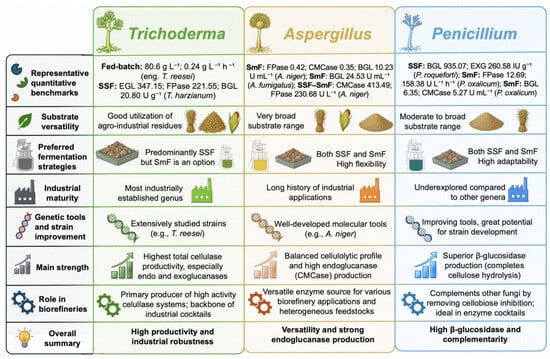
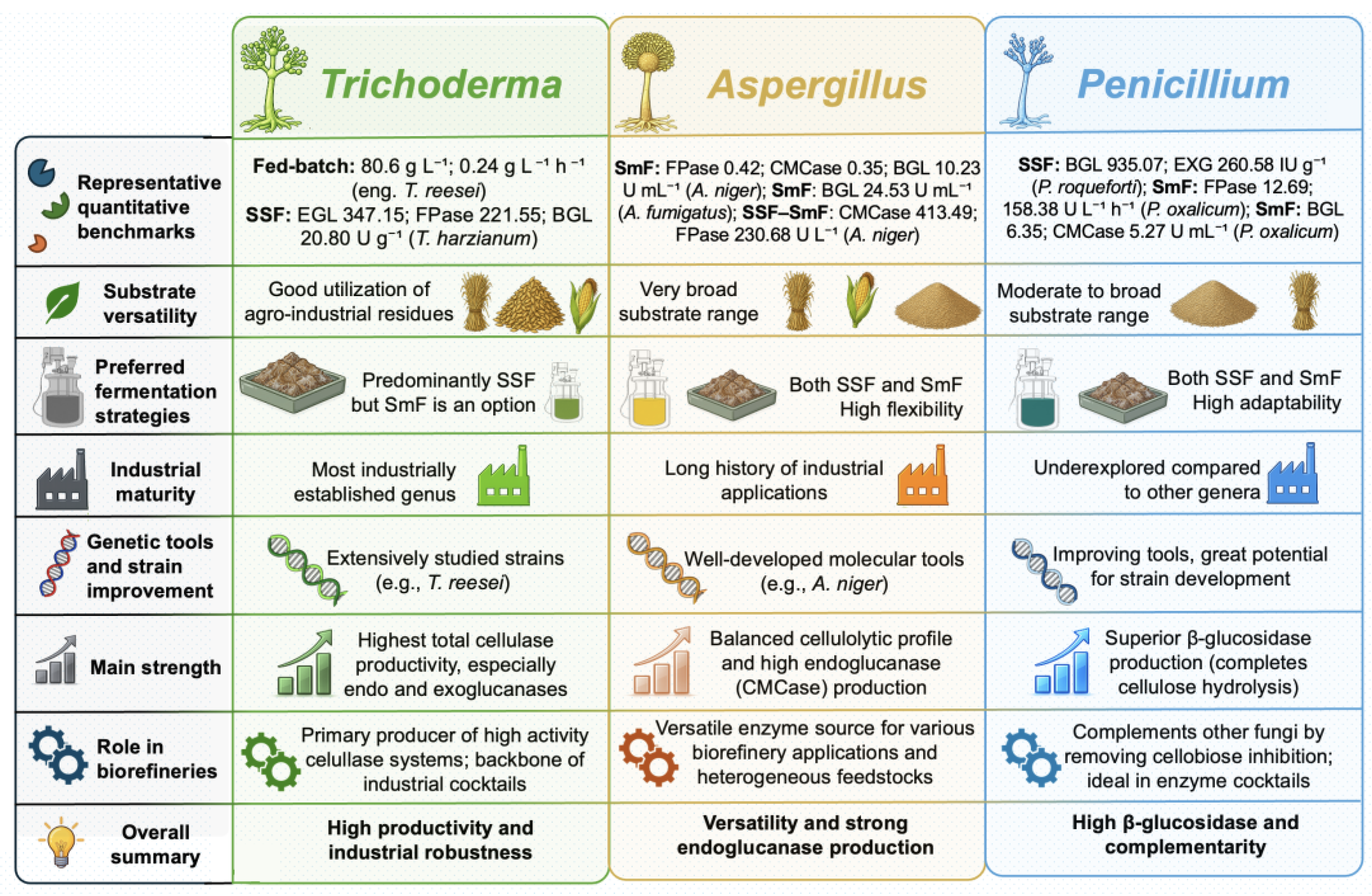
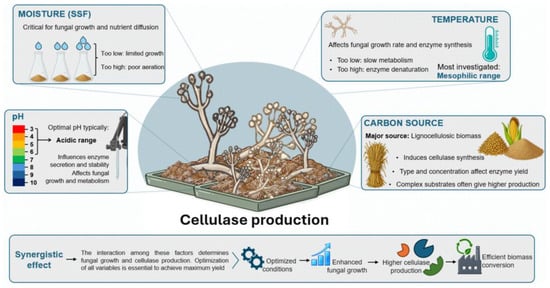
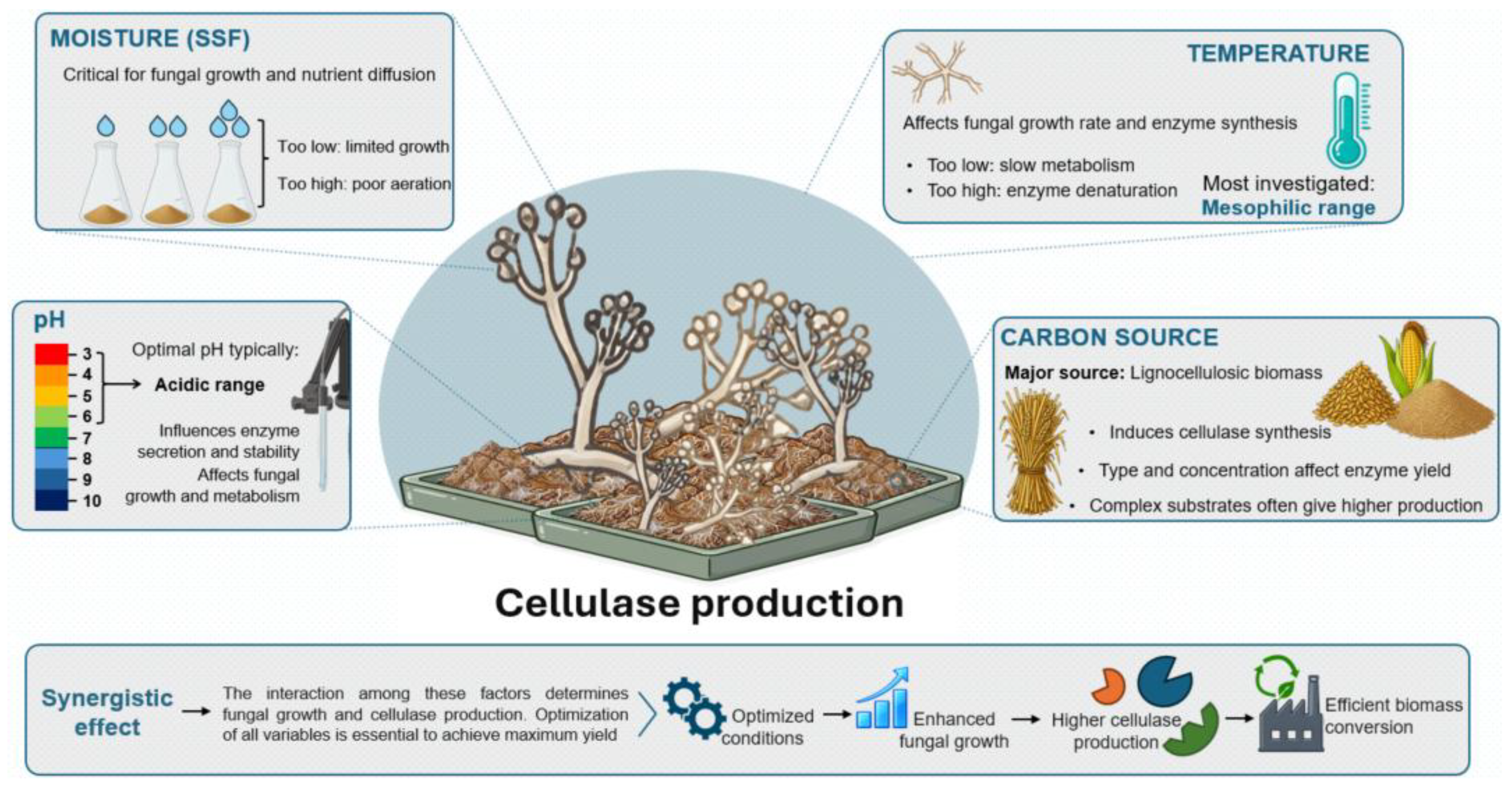

Disclaimer/Publisher’s Note: The statements, opinions and data contained in all publications are solely those of the individual author(s) and contributor(s) and not of MDPI and/or the editor(s). MDPI and/or the editor(s) disclaim responsibility for any injury to people or property resulting from any ideas, methods, instructions or products referred to in the content. |
© 2026 by the authors. Licensee MDPI, Basel, Switzerland. This article is an open access article distributed under the terms and conditions of the Creative Commons Attribution (CC BY) license.