


Abstract
Approximately 2.3 billion people still cook over open fires or on basic stoves using polluting fuels, generating indoor air pollution responsible for 3.7 million premature deaths annually. Progress toward real-world health impact has been constrained by a persistent disconnect between computational fluid dynamics (CFD) modeling, standardized experimental evaluation, and sociocultural adoption research. This scoping review maps the current state of evidence across these three domains, analyzing 143 peer-reviewed studies published between 2007 and 2025 using predefined inclusion criteria and bibliometric analysis with VOSviewer v.1.6.20. Thirteen cookstove technologies were characterized by compiling heterogeneous evidence from Water Boiling Tests (WBTs), CFD simulations with k-ε turbulence closure, and CO and PM2.5 emission protocols. Direct combustion stoves achieve thermal efficiencies of 10–21% under real-world conditions, while TLUD gasifiers and forced-draft systems with densified fuels reach 30–47%. Bibliometric analysis reveals that engineering, epidemiology, and social sciences operate as isolated research communities. None of the technology reviewed simultaneously integrated computational validation, field emissions assessment, and clinical impact evaluation; this a gap remains the central barrier to translating laboratory performance into measurable public health outcomes. These findings point toward integrated research designs connecting fluid dynamic optimization with exposure modeling, clinical follow-up, and the sociocultural needs of communities.
1. Introduction
Universal access to clean energy for cooking remains one of the most critical challenges facing global sustainable development [1,2,3]. Approximately 2.3 billion people worldwide still cook over open fires or on basic stoves using polluting fuels including firewood, charcoal, agricultural residues, and animal dung [3,4,5]. A broader estimate of approximately 2.7 billion people lacks access to clean cooking services when coal and kerosene users in inefficient devices are also included [6,7,8,9]. These figures differ because they reflect distinct methodological definitions: the former counts households dependent specifically on traditional solid biomass, while the latter encompasses all populations without access to clean cooking technologies regardless of fuel type [6,8]. The inefficient combustion of solid fuels in rudimentary stoves generates toxic levels of household air pollution (HAP) [10,11], creating a public health burden responsible for an estimated 3.7 million premature deaths annually, which falls disproportionately on women and young children [6,12,13,14,15,16,17].
Table 1 summarizes biomass dependence across the three regions with the highest global consumption. Asia accounts for approximately 1.3 billion people who lack access to clean cooking services [6,18,19], with countries such as India and China driving demand through their substantial rural energy needs. Africa ranks second, with an estimated 960 million people lacking access to clean cooking services, representing nearly half of the global access gap, with proportions exceeding 90% in countries such as Uganda and Malawi [18,20].
Table 1.
Global Overview of Biomass Use and Cooking/Heating Technologies.
Latin America presents a markedly different profile, with biomass accounting for approximately 14% of total national energy consumption [20]. In rural areas with limited access to modern energy infrastructure, however, dependence on forest biomass is effectively total [8,20]. In Europe, and particularly in Norway and Denmark, biomass serves a strategically different purpose: the generation of thermal energy for residential heating. In Norway alone, 66% of households are equipped with solid-fuel stoves or fireplaces [24,25,26].
Figure 1 illustrates the regional distribution of the population without access to clean cooking technologies. Developing Asia accounts for the largest absolute number, with approximately 1.3 billion people in this situation [15,27]. Sub-Saharan Africa accounts for approximately 960 million [2,15], representing nearly half of the global access gap. In the Americas, the figure drops to an estimated 78 million by 2024 [1,28]. However, these regional averages obscure a stark internal contrast: in Latin America, the burden is heavily concentrated in isolated rural areas where biomass dependence is effectively total, perpetuating profound local energy vulnerability even where national statistics appear comparatively favorable.
Figure 1.
Regional distribution of the population without access to clean cooking technologies, by world region (2023–2024) [1,2,15,27,28].
Worldwide, millions of people use solid biomass in their daily lives, primarily in the form of firewood, charcoal, agricultural waste, and manure [15,29]. The use of rudimentary combustion technologies has negative consequences. Open fires and three-stone stoves are energy-inefficient [29,30]. These practices harm public health, and inefficient combustion damages the integrity of ecosystems [31].
Despite these risks, the continued use of traditional stoves causes significant problems across multiple continents. A clear example is Mexico, where approximately 28 million people continue to rely on firewood for cooking and heating [32]. This consumption pattern remains stable in most regions and is in fact intensifying in certain rural areas, perpetuating cycles of energy poverty [33].
Beyond health risks, these practices carry significant environmental consequences. Smoke emissions act as short-lived climate forcers [32,34], with substantial global warming potential [34,35]. Inefficient biomass combustion thus simultaneously undermines human health and climate stability [36].
The adoption of improved technologies facilitates the transition toward more sustainable energy models. In the Americas, Africa, and Asia, new stove designs have been adapted to regional cooking traditions [27,37] and this cultural integration is widely considered essential to ensuring device adoption and maximizing environmental co-benefits [15].
The development of wood-burning stoves has traditionally been based on empirical knowledge and trial-and-error prototyping [7,38], a practice that is inefficient in terms of cost and development time and that limits optimization once construction is complete [33]. The absence of prior theoretical models has historically constrained improvements in energy efficiency, creating significant structural barriers to technological evolution [39].
The inherent complexity of internal combustion processes further hinders optimization. Multiple nonlinear phenomena operate in a highly coupled manner inside a stove: airflow turbulence and heat transfer profiles within the combustion chamber are difficult to quantify, and these internal dynamics remain beyond the reach of purely experimental analysis [18,39]. Reliance on empirical methods alone prevents a deep understanding of these processes and underscores the need for complementary computational tools capable of predicting local thermodynamic variables.
Overcoming these limitations requires a deeper engagement with combustion physics. Optimizing stove performance demands a thorough understanding of the internal thermochemical processes, as solid biomass undergoes complex thermal decomposition within the reaction chamber through sequential and overlapping stages: drying, pyrolysis, and oxidation [40,41].
Meeting this engineering challenge while also addressing the needs of diverse cultural contexts requires stoves that are both technically optimized and socially versatile [33]. To this end, recent research integrates Computational Fluid Dynamics (CFD) and Computer Aided Design (CAD) tools, allowing devices to be modeled and optimized before physical prototypes are manufactured [11,42].
Numerical modeling also enables detailed analysis of heat transfer mechanisms, simulating radiation, convection, and conduction toward the cooking surface [39,43] and allowing the prediction of hot spots and thermal gradients on the comal [44]. The chemical kinetics of reactive combustion species can be modeled explicitly [6,45], enabling researchers to minimize pollutant formation computationally before the first physical prototype is built [41,43]. In this way, CFD supports an optimized design process from the earliest stages of development [46].
This paper reviews the state of the art in the design, modeling, and evaluation of improved biomass stoves from a comprehensive perspective. It analyzes the technological classification of existing devices, the thermodynamic and computational principles that guide their optimization, the documented socio-environmental impacts, and the methodological gaps that still limit the translation of laboratory efficiency into real public health benefits. The objective is to identify the convergences and divergences between design engineering, evaluation protocols, and the social sciences, as a starting point for a truly integrative research agenda.
This study is structured around the following research questions:
RQ-1. What is the empirical limit of thermal efficiency achievable by the different technological categories of improved biomass stoves evaluated under standardized protocols (WBT, ISO 19867) [47].
RQ-2. To what extent do CFD models with k-ε turbulence closure reproduce experimentally measured thermodynamic parameters, and what validation gaps persist in the literature?
RQ-3. What is the structure of the scientific collaboration network in the field of clean cooking, and which disciplinary clusters operate in isolation according to bibliometric analysis?
RQ-4. What are the sociocultural barriers preventing the sustained adoption of improved stoves, and to what extent are these incorporated into current computational optimization models?
To answer these questions, the article is organized into the following sections: technological classification of devices (Section 2), engineering fundamentals and CFD modeling (Section 3, Section 4, Section 5 and Section 6), socio-environmental impact and barriers to adoption (Section 7), comparative performance analysis (Section 8), identified research gaps (Section 9), future trends (Section 10), evaluation protocols (Section 11), and bibliometric analysis (Section 12 and Section 13).
2. Methodology
2.1. Type and Design of the Review
This study was conducted as a scoping review following the methodological framework proposed by Arksey and O’Malley [48] and its extensions by Levac et al. [49], adapted to the field of energy engineering. Unlike a systematic review with a meta-analysis, a scoping review is the appropriate design when the objective is to map the extent, diversity, and nature of the available evidence in a field with high methodological heterogeneity. This condition precisely characterizes the literature on improved biomass stoves, where CFD studies, WBT laboratory tests, epidemiological studies, and sociocultural analyses coexist, with units, scales, and protocols that are not comparable.
2.2. Literature Search Strategy
The primary search was conducted in Scopus, covering the period from 2007 to 2025. Web of Science was consulted as a complementary source to verify literature coverage. The year 2007 was set as the lower limit because it corresponds to the publication of the seminal work by Smith et al. [50], which serves as the foundational bibliometric node of this field according to the bibliographic coupling analysis.
2.3. Inclusion and Exclusion Criteria
The selection of studies was conducted in two stages: (1) review of the title and abstract, and (2) reading of the full text, using the criteria described in Table 2.
Table 2.
Inclusion and exclusion criteria applied in the selection of studies.
It should be noted that the inclusion criterion encompasses both biomass cookstoves for domestic cooking and biomass heating appliances. Although these two categories differ substantially in their function, operating regime, user exposure profile, and applicable emission standards, both are included in this review because they share the same thermochemical combustion principles and CFD modeling approaches. Where relevant, evidence from cooking and heating applications is discussed separately throughout the manuscript.
The primary search was conducted in Scopus (Article title, Abstract, and Keywords field) using the term “biomass stoves”, applying sequential filters: publication year (2007–2025), document type (articles and reviews), and language (English). Web of Science was consulted as a complementary source to verify the literature coverage; institutional access limitations prevented independent record extraction. A total of 143 studies were included in the scoping review and exported in CSV format for bibliometric analysis using VOSviewer v.1.6.20.
2.4. Literature Selection Process
The selection of studies followed the four-phase structure recommended by the PRISMA 2020 guidelines [51], as illustrated in Figure 2.
Figure 2.
PRISMA 2020 flow diagram illustrating the literature search and selection process.
To progressively narrow the results to the most relevant literature, three sequential filters were applied to the Scopus records. First, the search was limited to the 2007–2025 period, reducing the pool to 853 records a threshold chosen because it coincides with the broader dissemination of improved cookstove programs promoted by the Global Alliance for Clean Cookstoves. Next, only original research articles and review articles were retained, yielding 702 records. Finally, the corpus was restricted to publications in English, the primary language of scientific dissemination in the field of energy engineering and indoor air quality research, resulting in 639 records eligible for screening.
The first screening stage involved reviewing the title and abstract of each of the 639 records against the criteria established in Table 2. This step led to the exclusion of 340 records: 281 because their content was not directly related to biomass cookstoves for domestic cooking or heating, and 59 because they fell outside the 2007–2025 window despite passing the automated database filter. The 299 records that passed this stage proceeded to full-text assessment.
During the eligibility stage, the full text of each remaining record was retrieved and carefully evaluated. Of the 299 articles reviewed, 156 were ultimately excluded. The main reasons for exclusion were the document was a conference proceeding without peer review (n = 61), the full text was not accessible through Scopus or the institutional repository (n = 43), the study addressed industrial-scale biomass systems rather than household cookstoves (n = 32), or the available content was limited to an abstract without sufficient methodological detail to assess eligibility (n = 20). The final corpus comprised 143 peer-reviewed studies, which were subsequently exported from Scopus in CSV format to serve as the basis for the bibliometric analysis described in Section 2.6.
The screening and eligibility assessment were conducted by a single reviewer (the first author). To mitigate the risk of selection bias, the eligibility criteria were defined and piloted on a random sample of 30 records before the full screening process began, and borderline cases were discussed with co-authors until consensus was reached.
2.5. Data Extraction and Organization
The information extracted from each study was organized into a synthesis matrix with the following variables: (1) technology evaluated; (2) fuel used; (3) evaluation method (CFD, WBT, field, hybrid); (4) reported thermal efficiency (ηt, %); (5) modified combustion efficiency (MCE, %); (6) CO emissions (g/kg or g/MJ); (7) PM2.5 emissions (mg/MJ or g/kg); (8) ISO 19867 Tier level; and (9) reported sociocultural dimensions. The complete synthesis matrix is available from the corresponding author upon reasonable request.
2.6. Bibliometric Analysis
To map the structure of the scientific literature included in this review, we used VOSviewer v.1.6.20, one of the most widely adopted tools for knowledge visualization in bibliometric research. The input corpus consisted of 143 articles from the final selection, exported from Scopus in CSV format. Each record included full metadata: authors, title, journal, year of publication, cited references, keywords, and institutional affiliation.
Two complementary analyses were carried out, each targeting a different dimension of how this field is organized scientifically.
The first was a co-authorship network, which allowed us to see who collaborates with whom and where the main research communities are concentrated. To be included in the network, an author needed to have at least 3 documents in the corpus and at least 2 co-authorship links with other authors. This threshold was set deliberately on the conservative side, loose enough to capture the main collaboration clusters, but strict enough to avoid cluttering the visualization with isolated authors who appear only marginally in the literature. The patterns identified through this analysis are discussed in detail in Section 12.
The second analysis was bibliographic coupling, a technique that groups documents based on how many references they share. When two articles cite many of the same sources, it is reasonable to assume they are addressing similar problems from a similar theoretical background, even if neither cites the other directly. A minimum of 10 shared references were required to establish a meaningful link between two documents. This approach was especially useful for identifying active research fronts in the field and tracing how the intellectual focus of cookstove research has shifted over time. The results are presented in Section 13.
Both analyses were run with the same visualization settings: normalization by association strength, which VOSviewer recommends as the standard for heterogeneous corpora; a cluster resolution of 1.0; and a minimum of 5 nodes per cluster. These parameters were chosen to produce clusters coherent enough to be interpreted meaningfully, without over-fragmenting the network into micro-communities too small to reveal broader patterns.
One limitation worth acknowledging is that any bibliometric analysis is only as complete as the database it draws from. Because the entire corpus was sourced from Scopus, the networks generated here reflect the portion of the cookstove literature indexed by that platform. Contributions published in regional journals, institutional repositories, or the grey literature that are not covered by Scopus are not represented in these maps a constraint that readers should keep in mind when interpreting the collaboration and citation patterns described in Section 12 and Section 13.
3. Technological Classification of Biomass Stoves
3.1. Classification of Biomass Stoves
The evolution of biomass stoves has undergone significant changes over time, with technological design driving progressive improvements in energy efficiency and the mitigation of socioenvironmental impacts [15,52]. The geometry of the system directly affects combustion quality, fluid dynamics, and heat transfer. In this context, the design of the combustion chamber is evolving to meet current efficiency requirements. Traditional stoves lack a defined combustion chamber [44], a structural deficiency that results in higher firewood consumption. In these stoves, air enters the combustion process without control, and hot air and pollutants are expelled into the surrounding environment without being directed toward the cooking surface [52].
Table 3 shows the classification of biomass stoves and their global distribution. The traditional hearth is a rudimentary technology that has spurred a line of research focused on the technical improvement of these systems. It generally consists of three stones placed on the ground, on which users place a pot or griddle directly [53]. Because most of the energy generated is wasted as it dissipates into the ground and the surrounding environment, the thermal efficiency of this technology typically ranges from 10% to 15% [22,54,55].
Furthermore, the traditional stove produces the highest emissions of air pollutants (CO and PM2.5) among the models studied [6,27,29], with high energy consumption stemming from poor heat transfer [56]. Although this technology is the most widely used in rural communities, it is also the most harmful to respiratory health. The traditional stove therefore serves as the standard methodological baseline for comparison with improved stoves in the scientific literature [20].
The Rocket model is one of the most successful improvements over the traditional stove. This device, invented in 1980, features an insulated, elbow-shaped combustion chamber [7] that thermally confines the fire and directs the flow of hot gases toward the cooking surface before the flame comes into direct contact with the cookware, achieving optimized heat transfer by convection. The Envirofit and StoveTec models are prominent examples of this technology [52].
Table 3.
Classification of biomass stoves by model and geographic area.
In addition, the design includes a flow inlet at the bottom as a key technical improvement. This opening allows clean air to enter the combustion chamber, providing direct benefits to the biomass pyrolysis process. As a result, the Rocket stove increases energy efficiency, reduces heat loss, and cuts fuel consumption by approximately 33%, which in turn reduces emissions of carbon monoxide (CO) and fine particulate matter (PM2.5) by 75% and 46%, respectively [65].
Within the category of improved technologies, the griddle model stands out. These units feature a griddle and a chimney as their predominant components [19,57,72]. The griddle consists of a flat metal surface for cooking staple foods, covering the top of the combustion chamber. This design meets specific cultural requirements, such as the preparation of tortillas [36,65]. The chimney efficiently vents smoke out of the home, a feature crucial for protecting users’ health [56] that drastically reduces indoor air pollution, with fugitive emissions accounting for only 1% to 5% of total emissions [56,73]. Due to their excellent sociocultural adaptation, griddle-type stoves are prevalent in Latin America. The Patsari, Lorena, Onil, and Enerchia models, along with the Ecostufa and Mera-Mera, represent the most widely documented rural technologies [56].
Thanks to the integration of the chimney, smoke is effectively removed from homes [56]. However, these stoves exhibit lower thermal efficiency in water boiling tests (WBT) [56,74]. Griddle-type models appear to perform worse than traditional direct-fire stoves, a difference that stems from heat transfer losses through the griddle [50]. Nevertheless, these devices demonstrate greater efficiency in controlled cooking and simmering processes [56], balancing cultural functionality with improved indoor air quality.
Table 3 also lists updraft gasifiers (TLUD), which represent another advanced category of improved technologies. This device operates via a thermochemical process comprising two distinct phases: the first stage (pyrolysis and gasification) generates combustible gases from solid biomass, while the second phase involves the combustion of these previously generated gases. In this system, the biomass burns in a downward flow, producing gases that rise and are burned in a separate secondary combustion zone at the top of the chamber [55]. Thanks to this separation of processes, gasifiers achieve thermal efficiencies in the 30–50% range [7,52], with emission profiles that approach those of systems using modern fuels [55,65,75].
An additional by product of the TLUD thermochemical process is biochar, a carbon-rich residue with documented capacity to improve soil water retention and nutrient cycling [55,63,76,77]. The commercial FabStove model is a prominent example of this technology category. The integration of fans (forced draft) represents an advanced technological advancement in biomass stoves, as shown across the models in Table 3. To overcome the limitation posed by the lack of an electrical supply, these fans are typically powered by batteries or thermoelectric generators (TEGs) [78,79]. These devices operate by harnessing the stove’s own waste heat to generate electricity, providing energy independence in rural areas without access to the electrical grid [80]. Field tests show that integrating a single TEG module can produce up to 4 W of electrical power, with an average daily consumption of 4.5 Wh sufficient to meet basic needs such as charging mobile phones, powering LED lamps, and operating radios [4].
Adding fluid-dynamic and thermal control through forced-draft mechanisms involves injecting primary or secondary air directly into the combustion chamber [81]. This aerodynamic action generates controlled turbulence, substantially increasing the turbulent kinetic energy within the device. This mitigates the fuel-rich zones that characterize natural diffusion flames and optimizes the mixing of air and fuel [15,45], promoting faster and more complete oxidation.
To further enhance these fluid-dynamic benefits, contemporary research demonstrates the advantages of technological integration. Advanced systems incorporating a forced-draft fan powered by solar photovoltaic energy provide the stove with operational autonomy and allow active control of airflow without relying on the electrical grid. Furthermore, when the device uses carbonized briquettes as its primary fuel, an exceptional thermochemical synergy is generated [63], enabling thermal efficiencies exceeding 35.8% and reducing carbon monoxide (CO) emissions to a minimum of 0.23 g/min [63].
The integration of technologies such as fans and TEGs reduces firewood consumption and lowers emissions of air pollutants. Most notably, this technology reduces the Total Global Warming Impact (TGWI) by 99% compared to the most popular traditional charcoal stoves in Ghana, far exceeding the environmental performance of Gyapa stoves [63]. Thus, integrating solar energy with densified fuels is advancing rural energy sustainability considerably [63].
Furthermore, forced-draft technologies effectively reduce emissions of particulate matter (PM) and carbon monoxide (CO), with environmental performance exceeding that of natural-draft stoves [45]. However, effective particulate reduction depends on a continuous power supply. The Philips and BioLite models, mentioned in Table 3, are notable examples in this category, demonstrating how forced ventilation maximizes combustion efficiency through active airflow control [52].
Table 3 also identifies pot-type stoves, a technology specifically designed for the high energy demands of schools or community kitchens (Figure 3). This technology is characterized by large cooking volumes, ranging from 20 to 100 L and in some cases up to 200 L [9,16]. In the Latin American context, a relevant application is nixtamalization in containers of 50 L or more [65]. To withstand these thermal loads, the stoves incorporate high-power combustion chambers suitable for large pots, with walls surrounding the container to maximize lateral heat transfer [9,16,65].
Figure 3.
Classification of stoves.
Finally, Table 3 lists hybrid stoves, which integrate a biomass combustion chamber with a solar energy concentrator, as shown in Figure 3 [22]. This technology uses solar radiation as the primary heat source when available, with biomass serving as a backup energy source during periods of low solar insolation [15,22]. The combined use of solar energy significantly improves the system’s overall efficiency [15].
The hybrid design also drastically reduces firewood consumption. However, the literature indicates that manufacturing costs exceed those of conventional devices due to their technical complexity, making hybridization an advanced but financially demanding solution for rural energy sustainability [15].
Figure 3 also shows multipurpose systems designed for space heating, including dual-purpose models for cooking and heating as well as dedicated boilers [7]. These technologies allow for cooking, water heating, and space heating simultaneously, utilizing waste heat from the chimney. Such stoves achieve an overall efficiency of nearly 80% [7].
In general, the technical evolution of biomass stoves does not follow a linear progression in efficiency. Development involves a search for a multidimensional balance in which the engineering challenge is not to achieve higher flame temperatures, but to align the precision of fluid mechanics with the thermophysical realities of traditional cooking processes while prioritizing social justice and energy autonomy.
3.2. Classification by Thermochemical Mechanism and Fluid Dynamics
According to Figure 4, biomass stoves are classified based on their thermochemical mechanism and fluid dynamics. The first criterion is defined by how the chemical energy of the biomass is converted into heat. Direct combustion occurs when drying, pyrolysis, and oxidation take place simultaneously [52,82], without the involvement of any intermediate medium. It is one of the most accessible ways to generate thermal energy in rural communities, with examples including traditional hearths, classic rocket stoves, and griddle-type stoves such as the Patsari and Lorena [52].
Figure 4.
Classification of stoves by combustion type.
The classification in Figure 4 also includes indirect combustion, or gasification. In this process, the biomass is first heated to high temperatures under severely restricted oxygen, leading to thermal decomposition of the solid into a combustible gas. This gas then rises and burns cleanly in a secondary zone as it mixes with combustion air. Notable examples of this technology include micro-gasifiers and advanced pellet stoves [52,83].
Stoves are also classified by air supply mechanism. The dynamics of oxygen entering the combustion chamber are critical for thermal performance and emissions [52]. Natural-draft stoves are driven by density differences and thermal buoyancy [16], while forced-draft stoves use external devices, fans or blowers to inject air. The high velocity of this injected air creates turbulence that mixes oxygen with the volatile gases [11,84], resulting in improved combustion efficiency [11,59]. Hybrid-draft stoves combine both principles: natural draft supplies the primary air during combustion, while forced draft is applied to the secondary air supply where smoke is burned, significantly reducing indoor air pollution [52,84,85].
Figure 4 details the internal design of the combustion phases. This system employs a rigorous thermodynamic approach that accounts for the coupled phases of biomass combustion: heating, drying, pyrolysis, homogeneous combustion of volatile gases, and heterogeneous oxidation of charcoal [82]. The primary system injects air around the firewood to break through the lean gas boundary layer [11], surrounding the firewood with oxygen-enriched air that reaches the burning charcoal and improves gasification and combustion rates. Simultaneously, the secondary system injects air from above; preheating this flow promotes exceptional chemical reactivity [52,86], generating turbulence that ensures mixing between oxygen and volatiles and allowing complete oxidation of the gases. This final aerodynamic action significantly reduces the formation of CO and PM2.5 [45,87].
3.3. Comparative Assessment of Biomass Stove Technologies
Looking across the five technology categories described above, a clear pattern emerges. Each generation of stove represents a genuine step forward in thermal performance and emissions control, but every step comes with trade-offs that can make or break real-world adoption [2,72].
Traditional open-fire stoves anchor one end of the spectrum [52]. With thermal efficiencies of just 10–15% and among the highest indoor pollutant emissions of any cooking technology, their continued use by hundreds of millions of households is not a matter of ignorance; it reflects the hard reality of affordability, cultural familiarity, and the simple absence of viable alternatives in many rural settings [37,52,88]. Rocket stoves represent the most successful step away from this baseline [60,65]. By enclosing the fire in an insulated elbow-shaped chamber, they cut fuel consumption by roughly a third and CO emissions by up to 75%, a remarkable improvement from what is essentially a geometric rethinking of where the fire sits [60,65]. Their low cost and ease of local fabrication have made them the backbone of cookstove programs across Sub-Saharan Africa, Latin America, and South Asia [60].
Griddle-type stoves occupy a more complicated position [56]. On paper, in water boiling tests they often look worse than open fires, because a significant fraction of the heat generated is lost through the metal griddle surface rather than transferred to the pot [56]. In practice, however, they are among the most successfully adopted stove designs in the world, precisely because they are built around how people cook. In Mexico and Central America, where making tortillas is a daily activity that shapes the rhythm of the household, a stove without a griddle simply does not work [1,57,89]. Add to this the fact that their chimneys route fugitive emissions outside, keeping indoor PM2.5 leakage to just 1–5% of total output, and it becomes clear that these stoves are as much a public health tool as an energy technology [56,73]. They are reminded that thermal efficiency, measured in a laboratory, is a very incomplete proxy for what a stove does for the people who use it [56,57].
TLUD gasifiers push performance into a different league entirely. By separating pyrolysis from combustion first breaking down the solid biomass into combustible gases, then burning those gases cleanly in a secondary zone [20,52], they achieve thermal efficiencies in the 30–50% range and emission profiles that begin to approach those of liquefied petroleum gas under controlled conditions [52,88]. The practical demands, however, are real: fuel moisture content, batch size, and ignition technique all significantly affect how well a TLUD performs [15,45], and the learning curve for households accustomed to simply throwing wood on a fire is steeper than for simpler technologies [90]. The biochar that these stoves produce as a byproduct is a genuinely exciting agronomic resource, capable of improving soil water retention and carbon sequestration [76], but only where the supply chains and local knowledge to use it exist, which in the communities that need these stoves most, they often do not [91]. Forced-draft systems, especially those powered by thermoelectric generators or small solar photovoltaic panels, represent where the technology frontier currently sits [52,79]. Active airflow control allows these stoves to achieve combustion consistency that no passive design can match [92], and the emission reductions can be dramatic. Some forced-draft systems coupled with densified fuels have been shown to reduce total global warming impact by as much as 99% compared to traditional charcoal stoves [63]. The constraint here is not engineering but infrastructure. In communities where supply chains for electronic components are unreliable and technical maintenance capacity is limited [52,72], a stove whose performance depends on a functioning fan or battery is only as good as its weakest component. When that component fails, the household goes back to the open fire [52].
Hybrid solar–biomass systems sit at the edge of what is technically possible today, and in that sense they are impressive. However, their cost and complexity put them well beyond the financial reach of the population, carrying the heaviest burden of household air pollution [15,91]. For now, they are best understood as platforms for demonstrating what integrated design can achieve, rather than as technologies ready for wide deployment [15].
4. Biomass Stove Engineering
From a thermal engineering perspective, the design of a household stove must incorporate critical elements to improve efficiency.
The design necessarily integrates engineering development and the use of materials that enhance thermal performance, without neglecting the cultural context; see Figure 5. This section explains the implementation of tools to improve the development of biomass stove technologies [93,94,95,96].
Figure 5.
Classification of stoves in a design and manufacturing approach.
4.1. Development and Engineering
4.1.1. Virtual Optimization
As shown in Figure 5, the design of wood-burning stoves is governed by rigorous principles, tools, and thermodynamic parameters. Advanced simulation tools are used to move beyond the traditional trial-and-error design approach, aiming to avoid the high costs of repeated prototyping.
Building on the CFD framework introduced in Section 1, recent research has pushed numerical modeling into considerably more demanding territory. The most sophisticated current approach couples Computational Fluid Dynamics with the Discrete Element Method (DEM), a combination that allows researchers to track the movement of each wood pellet inside the combustion chamber simultaneously [97]. Rather than treating the fuel bed as a homogeneous mass, this technique represents each pellet geometrically as a complex polyhedron that shrinks in real time as it dries, pyrolyzes, and burns. At the same time, the model calculates radiative heat transfer across the surface of each particle individually [97]. The result is a level of physical detail that was computationally inaccessible just a decade ago, and that allows for genuinely accurate prediction of how solid fuel behaves thermally throughout a cooking session. That said, even this level of sophistication has its limits: accurately predicting soot formation inside the combustion chamber and realistically simulating the physical contact between stacked logs remain the two most stubborn unsolved challenges in the biomass stove CFD literature [98].
In addition to numerical methods, artificial intelligence has also been applied to automate design optimization. Algorithms can evaluate thousands of geometric configurations to identify the optimal temperature distribution in the cooking zone that maximizes heat transfer to the container [97]. Furthermore, neural networks are used to predict thermal efficiency, accounting for input variables such as the heating plate’s radius, curvature, flame diameter, and the material’s thermal conductivity [38].
4.1.2. Thermal Architecture
From an aerodynamic and structural standpoint, the geometric design of the combustion chamber is crucial for ensuring proper mixing between the gases released by the biomass and the combustion air [15]. Elbow-type chambers (the Rocket design) isolate the fire from the reaction zone and direct the hot gases toward the cooking zone (pot or griddle). To optimize this dynamic, modifications to the chambers have been introduced, including the addition of chamfers, which significantly reduce friction losses and gas-flow resistance. Consequently, they increase the total mass flow rate exhausted through the chimney, altering the stove’s thermal behavior [44].
The inclusion of baffles in the design forces the gases to recirculate just below the cooking surface before escaping into the chimney [44]. This redirection of the flow improves gas mixing and increases the residence time of smoke in the high-temperature zone [44,99], resulting in cleaner and more complete secondary combustion [25,44]. In addition to reducing pollution, this physical restriction promotes more efficient convective heat transfer [44,95].
In conjunction with deflectors, another highly effective geometric strategy documented in the literature is the incorporation of metal fins. These thermodynamic structures can be designed as honeycomb-type arrays, rods, or annular fins, strategically positioned at the bottom of the pot, on the griddle, or in the exhaust ducts. The principle behind this modification is to increase the convective heat transfer area between the hot combustion gases and the solid surfaces [11,100]. Evidence shows that this increased contact area captures latent heat, substantially improving the system’s thermal efficiency. Recent studies have shown that adding fins beneath the cooking surface can increase the cooking surface temperature by between 115% and 134%, allowing more useful energy to be extracted from the same amount of biomass, reducing firewood consumption and shortening boiling times [7].
4.1.3. Airflow Dynamics
To ensure proper oxygen distribution, the aerodynamic flow design is governed by its propulsion mechanism, as shown in Figure 6. This dynamic is classified into natural-draft and forced-draft systems [38,101]. Natural-draft stoves rely on hot air rising, drawing cold air into the chamber through the bottom of the fuel bed. Forced-draft systems use air injection via fans, inducing a high-turbulence regime that improves the mixing of combustible gases with air and can overcome the limitations of natural draft, reducing smoke and particulate emissions [11,18,102].
Figure 6.
Materials used in the construction of biomass stoves.
In the thermodynamic design of these devices, the relationship with excess air is critical. Too much air cools the combustion chamber, quenching the chemical reactions and reducing thermal efficiency, while an insufficient supply of oxygen leads to incomplete combustion and the production of toxic smoke [41,101]. Therefore, geometric and aerodynamic optimization must ensure an excess air level that promotes turbulence sufficient to burn off soot, while maintaining the high temperatures required to transfer heat to the griddle or pot [33,103].
The chimney is one of the most critical and debated elements in the design of natural-draft biomass stoves (see Figure 6). From a thermodynamic perspective, it is driven by thermal buoyancy: the density difference between the hot combustion gases and the cold outside air creates a vertical pressure gradient that draws the flow through the chamber and expels pollutants [101].
Height determines the draft force; studies have shown that the optimal height is around 1.65 m [65,104,105], at which the combustion temperature is maximized. The diameter acts as a mass flow limiter: a smaller diameter increases friction, reducing excess air and thereby decreasing CO production [101]. The literature demonstrates that a chimney can vent more than 95% of PM2.5 and CO emissions to the outside [73]. However, excessive mechanical draft rapidly draws away hot gases before they can transfer their thermal energy to the griddle or pot [7,20], making the optimization of diameter and height essential for balancing draft with heat retention. Finally, from a public health perspective, chimneys do not destroy pollutants, they merely disperse them. This can transform indoor pollution into neighborhood pollution in densely populated areas [56,73].
4.2. Materials and Context in Construction
The thermodynamics of the equipment must be supported by a selection of materials that minimize heat loss and ensure its structural integrity [106,107].
4.2.1. Building Materials and Their Thermal Insulation
The materials used to manufacture the device depend on its structural requirements, specifically, whether it will be portable or permanently installed. The materials used to construct the combustion chamber vary, including refractory bricks, concrete, ceramics, and stainless steel [15]. The walls must be constructed adiabatically to harness the energy obtained from combustion and minimize heat loss to the outside [88,107]. Materials with low thermal conductivity, such as perlite, pumice, glass wool, or wood ash, are used for wall insulation [35,67,102]. Thermal insulation maintains the chamber at the high temperatures (800 °C to 1000 °C) required to burn tar and oxidize pollutant gases [7].
4.2.2. Design Focused on Interculturality
The literature agrees that the persistently low adoption rate of biomass stoves is largely due to designs that prioritize technical efficiency in the laboratory over actual user preferences [15,72,108]. To reverse this trend, ergonomic requirements and culinary culture must be integrated into stove design from the outset [37,89]. For example, in parts of Latin America it is essential to include a metal griddle that distributes heat evenly to ensure proper tortilla preparation. In other regions, designs intended for extended families focus on accommodating multiple pots to meet the need for cooking large volumes of food [104].
To diversify the energy mix and reduce deforestation, modern designs have been adapted to burn alternative and locally sourced fuels, such as pellets, coffee husks, coconut shells, peanut shells, sawdust, tree trimmings, and other waste materials. The literature highlights the incorporation of the Top-Lit Updraft (TLUD) system, which allows for biomass gasification while simultaneously generating biochar for soil remediation [23,76,109]. However, the transition to processed fuels requires strict quality control [110]. However, the transition to processed fuels requires strict quality control [108], as combustion performance depends directly on the chemical composition of the biomass. Manufacturing pellets from agricultural trimmings or wood with bark increases ash content [110,111], reducing thermal efficiency and increasing emissions of toxic pollutants such as CO, NOx, and SO2. Adequate preprocessing is therefore required for waste pellets to serve as a viable alternative to firewood [110,111].
Despite the sophisticated levels of optimization achieved through numerical modeling and genetic algorithms, the thermodynamic design of stoves faces serious structural limitations in real-world applications. The literature notes discrepancies between simulations and field conditions: standardized protocols assume stable laboratory conditions, whereas rural cooking is characterized by intermittent use and high fuel moisture content, both of which significantly reduce the aerodynamic efficiency predicted by models [33,112].
There is also a fundamental thermodynamic trade-off in the combustion chamber. Designs with high turbulence minimize particulate matter emissions, but secondary air injection introduces cold air into the system, decreasing heat transfer to the cooking vessel and reducing overall thermal efficiency [45]. Materials science presents additional challenges to system durability: clean oxidation requires temperatures exceeding 1000 °C, which accelerates thermal degradation and corrosion of local components [107]. The use of industrial alloys increases production and maintenance costs, creating a disadvantage for vulnerable populations. Engineering must therefore balance efficiency, resilience, and economic viability.
4.2.3. Analysis of Materials in Biomass Stoves According to Their Function
Beyond thermophysical optimization, the literature emphasizes that improved stoves must be designed to be acceptable to users [5,113]. To ensure technological adoption, three fundamental criteria are established. First, new designs must be low-cost and affordable within each region’s local economy, as traditional stoves remain the most economical option due to their simple design and readily available materials [15,114]. Second, they must be durable enough to withstand intensive use without deformation for at least one year [114]. Third, the design must facilitate construction and repair using locally available resources and tools [5,72]. Under these premises, and given the large number of biomass stove variants, the literature indicates that stoves can be classified by construction material, as shown in Figure 6 [27,29].
4.2.4. Structural Materials of the Body for Biomass Stoves
Considering the first operational layer of the design, the structural materials and body of the stove provide the frame and support of the device [15], contributing directly to its overall durability. These materials are divided into two main construction categories. On one hand, metals such as steel (stainless and mild) and cast iron are highly valued for their durability and mechanical strength, with galvanized or zinc sheet metal frequently used for exterior coverings [15]. On the other hand, masonry and earthen materials are used for stationary structures: mud and clay represent traditional, low-cost methods, while fired brick and stone are used for permanent and solid structures [72]. Concrete and cement are mainly used for the foundations of stationary stoves [15].
The impact of structural selection on environmental and thermal performance is dramatic. A comparative study between a traditional mud stove and an improved metal stove demonstrated the advantages of metal: its more airtight and controlled design reduced PM2.5 emissions by 73% and CO emissions by 51% [115]. Furthermore, the use of concrete, brick, and steel casings with optimized geometry has allowed Modified Combustion Efficiencies (MCE) to exceed 93% compared to conventional open-fire stoves. Notable examples include the ONIL stove (98.6%), the Ecostufa (98.4%), and the Patsari (97.5%) [14], as shown in Table 4 and Table 5.
Considering the second operational layer, insulation and refractory materials are designed to withstand high temperatures and retain heat within the combustion chamber [15]. The literature classifies these thermal barriers into three main groups. First, ceramics, such as chamotte, refractory brick, soapstone, and high-temperature-fired ceramics are common in designs such as the Rocket and Jiko stoves due to their excellent thermal inertia [106]. Second, mineral insulators such as perlite and pumice offer lightweight insulation due to their very low thermal conductivity, while rock wool and fiberglass are used to reduce heat loss through the walls. Third, organic mixtures are noteworthy: recent studies demonstrate that a mixture of sawdust and clay in a 1:1 ratio generates micropores when the sawdust burns, functioning effectively as an insulator, while ash and sand serve as alternative heat-retaining materials [15], as shown in Figure 7. This insulation not only reduces heat loss and minimizes smoke by maintaining high oxidation temperatures, but also serves a vital ergonomic function: protecting users from burns and exposure to unwanted radiant heat [116].
Figure 7.
Schematic of a biomass stove and its materials.
To quantify the thermal impact of these construction configurations, heat transfer models show that overall efficiency can increase by up to 10% by replacing the least insulating material with the most insulating one, while keeping all other variables constant [38]. Specifically, the parametric evaluation analyzes efficiency as a function of the thermal conductivity of the chamber material: concrete (1.7 W/mK) establishes a baseline efficiency of 34.3%; refractory brick (1.0 W/mK) reaches 35.2%; pumice (0.6 W/mK) achieves 36.4%; and perlite (0.05 W/mK) improves thermal efficiency to 43.2% [38]. To push these thermodynamic limits further, the literature reports that ceramic linings using double-layer configurations with clay-fiberglass blends have enabled exceptional thermal efficiencies of up to 64.4% [15].
The third operational layer encompasses the components that come into direct contact with the fire, cooking vessels, or smoke, as shown in Figure 7. The literature highlights three fundamental elements:
- Griddles: Typically made of carbon steel or cast iron to transfer heat to food and seal the combustion chamber [65]. The addition of geometric elements such as fins on the underside improves heat absorption before gases escape through the chimney [17].
- Grates: Made of high-strength steel or cast iron to withstand the weight and high temperatures of combustion [117]. Essential for inducing natural draft and increasing stove efficiency by 18% to 25% [118], and allow optimal distribution of primary air below the fuel, substantially improving the quality of the reactive mixture [116].
- Chimneys: Constructed mainly of galvanized steel pipes or sheet metal for the extraction of combustion gases. From an aerodynamic standpoint, the flue generates the pressure difference required to draw in gases [17,116], and its presence ensures that fugitive emissions within the building are minimized and indoor air quality is maintained [20,73].
5. Theory of Solid Biomass Combustion
From a physicochemical perspective, wood combustion is a highly transient and complex thermochemical process that is modeled in four or five stages [40,82].
- Drying: This occurs at temperatures between 100 °C and 200 °C, at which water vaporizes from the solid biomass. This process is endothermic, and ignition is delayed when the biomass has high moisture content [82,119].
- Pyrolysis: Components such as hemicellulose, cellulose, and lignin decompose at temperatures of 200–500 °C in the absence of oxygen. Pyrolysis releases volatile gases (tar, CO, H2, CH4), leaving a carbon-rich solid residue [38,119,120].
- Gasification: At temperatures between 500 °C and 900 °C, char reacts with CO2 and water vapor in endothermic reactions to form CO and free hydrogen [119].
- Homogeneous combustion: The gases obtained in the gasification phase mix with oxygen from the air and oxidize, producing the visible flame. This stage is critical from an energy standpoint, as it generates most of the heat released by the entire combustion system [11,82].
- Heterogeneous combustion: In this final phase, the char surface oxidizes. Although its reaction rate is slower, it generates most of the sustained and incandescent heat release [10,84]. This final stage thermally sustains the endothermic reactions of the preceding phases [40,82,98].
5.1. Fluid Mechanics and Buoyancy
Computational Fluid Dynamics (CFD) enables the prediction of the aerodynamic and thermodynamic behavior of the combustion system. Its mathematical architecture is based on universal conservation laws, and turbulent fluid flow is described by coupling the governing equations. This theoretical framework resolves the physical interactions within the biomass stove, as shown in Figure 8 [16,94].
Figure 8.
Physical laws, chemical principles, and mathematical formulations.
The governing equations of CFD for reacting flows in biomass stoves can be expressed in a unified conservative form that encompasses mass, momentum, energy, and species transport within a single mathematical framework. For a general scalar quantity φ, this unified transport equation takes the form:
where is the gas mixture density, is the velocity vector, is the effective diffusion coefficient for , and is the source term specific to each transported quantity. When = 1, this reduces to the continuity equation (Equation (2)); when = , it yields the Navier–Stokes momentum equations (Equation (3)); when = h (enthalpy), it governs energy transport including heat release from combustion reactions; and when = Yi (mass fraction of species i), it describes the transport of each chemical species involved in the combustion process.
For solid biomass combustion specifically, this framework must be extended to account for the heterogeneous gas–solid interactions that govern fuel degradation. The solid-phase wood undergoing drying, pyrolysis, and char oxidation is typically modeled either as a shrinking particle with time-dependent mass loss, or as a porous reactive bed using a volume-averaged formulation. In either case, the gas-phase equations are coupled to the solid phase through source terms that represent the mass, momentum, energy, and species exchanges between the degrading biomass and the surrounding combustion gases. This coupling distinguishes biomass CFD from simpler gas-phase combustion models and is the primary source of computational complexity in stove simulations. The individual governing equations derived from this unified framework are described in detail in the following subsections.
First, the conservation of mass is governed by the continuity equation, which guarantees that fluid is neither created nor destroyed within the computational domain. The mathematical formulation of this principle is presented in Equation (2) [16].
Second, the Navier–Stokes equation expresses the conservation of momentum. This vector expression, based on Newton’s second law, accounts for pressure gradients, viscous forces, and gravity, as shown in Equation (3).
where ρ is the density of the gas mixture, v is the velocity vector, p is the static pressure, τ is the viscous stress tensor, and represents the gravitational body force [42,65].
Because of the linear momentum conservation equation (Navier–Stokes), the air supply and gas exhaust in natural-draft systems are governed by the stack effect. Smoke extraction is driven by thermal buoyancy, which results from the density difference between the hot gas inside the chamber and the cold outside air [86]. Mathematically, this induced pressure difference is expressed in Equation (4).
where is the acceleration due to gravity, is the height of the chimney, and and correspond to the density of the outside ambient air and the density of the hot gas inside, respectively.
From an aerodynamic standpoint, the mixture of air and volatile gases is highly turbulent. For this reason, the Reynolds-Averaged Navier–Stokes (RANS) equations are employed. To achieve mathematical closure, semi-empirical models such as the standard k- model or its variants are implemented. These models solve two separate transport equations: one for turbulent kinetic energy and one for its dissipation rate [16,40]. The transport equations for this model are formulated as shown in Equations (5) and (6).
Turbulent kinetic energy equation ():
where is the density of the gas mixture, represents the turbulent kinetic energy, is time, and corresponds to the fluid velocity vector. The operator denotes divergence, while represents the gradient of the turbulent kinetic energy. Likewise, and represent the dynamic viscosity and turbulent viscosity, respectively, and is the turbulent Prandtl number for . quantifies the generation of turbulent kinetic energy due to mean velocity gradients, and is the generation due to thermal buoyancy forces. The product of the density and the turbulent dissipation rate () and the contribution of fluctuating expansion in compressible turbulence to the overall dissipation rate () are subtracted from these generation terms, finally adding , which corresponds to the additional source term for . The turbulent dissipation equation () is shown in Equation (6).
where is the density of the gas mixture, is the turbulent dissipation rate, is time, and is the turbulent kinetic energy. The operator denotes divergence, while represents the gradient of the turbulent dissipation rate. Likewise, and represent the dynamic viscosity and turbulent viscosity, respectively, and is the turbulent Prandtl number for .
The diffusion term is supplemented by the turbulent dissipation generation term, , which is the product of the empirical constant , the ratio of dissipation rate to turbulent kinetic energy , and the sum of two contributions: the generation of turbulent kinetic energy due to mean velocity gradients () and the generation due to thermal buoyancy forces (), the latter weighted by the empirical constant . This value is reduced by the dissipation destruction term, , ccalculated as the product of density (), the empirical constant , and the ratio of squared to . Finally, is an additional source term for .
5.2. Heat Transfer Theory
As previously established, stove efficiency is determined largely by the amount of energy transferred to the cooking surface (pot or griddle). This complex process is governed by three fundamental mechanisms [42].
The first mechanism, conduction, governs heat transfer through solid bodies [16]. The conductive heat flux is proportional to the thermal conductivity of the material (), the area (), and the temperature gradient (), and inversely proportional to the material thickness [16,38,42]. Its standard analytical form, based on Fourier’s Law, is shown in Equation (7). The negative sign indicates that energy flows inherently from higher to lower temperatures.
The second energy transfer mechanism is convection, which governs heat transfer driven by the movement of combustion gases that reach the bottom of the pot, the griddle, and the inner walls of the chimney [38,42]. Modeling this mechanism requires knowledge of the convective heat transfer coefficient, which depends on gas velocity and the thickness of the aerodynamic boundary layer. The Nusselt number () is used to determine the magnitude of convective heat transfer in the fluid [16,42]. The mathematical relationships for this mechanism are given by Newton’s Law of Cooling (Equation (8)) and the Nusselt number definition (Equation (9)).
where represents the rate of heat transfer by convection, h is the convective heat transfer coefficient, A is the heat transfer surface area, is the surface temperature, and , is the temperature of the fluid sufficiently far from the surface.
where Nu is the Nusselt number, a dimensionless parameter quantifying the ratio between convective and purely conductive heat transfer within the fluid. Here, is the convective heat transfer coefficient, is the equivalent diameter of the geometry through which the gases circulate, and is the thermal conductivity of the moving fluid.
The third governing mechanism is radiation. Through this mechanism, hot gases and embers emit energy as electromagnetic radiation toward the cooking surface and the internal walls [42]. The radiative flux () depends on the emissivity () of the surfaces involved and is proportional to the fourth power of the temperature () [42]. Due to the high nonlinearity of this phenomenon, it is computationally solved using the Discrete Ordinate Model (DOM or fvDOM) [11,41]. Net energy exchange is modeled using the Stefan–Boltzmann law, as shown in Equation (10).
where is the rate of heat transfer by radiation, is the surface emissivity, is the Stefan–Boltzmann constant, A is the surface area involved in the heat exchange, is the temperature of the emitting surface, and is the temperature of the surrounding environment.
As a complement to the calculation of radiative heat flux, the divergence of the total radiative flux in reactive fluids is solved using the Discrete Ordinate Model (DOM) [38], as shown in Equation (11).
where the term represents the divergence of the total radiative heat flux. On the right-hand side of the expression, is the Planck mean absorption coefficient of the medium, obtained by weighting the individual coefficients of the different combustion gases according to their partial pressures. This quantity modulates the net transfer computed from the difference between emitted and absorbed thermal energy: emission is described by the product of 4, the Stefan–Boltzmann constant (), and the local temperature () raised to the fourth power, from which is subtracted, representing the incident radiation on the medium integrated over all solid angles.
Chemical kinetics and emission formation for the reduction in polluting gases require the application of kinetic expressions for the chemical reactions involved in the oxidation of volatiles.
Reaction rate: The oxidation rate of CO and non-methane hydrocarbons (NMHCs) depends on system temperature and is calculated using the Arrhenius equation, which relates the rate constant to the activation energy and absolute temperature [39], as shown in Equation (12).
where represents the forward rate represents constant for reaction , denotes the pre-exponential factor is characteristic of the reaction, accounts for the thermal dependence of the rate, is the activation energy required to initiate the reaction, and R is the universal gas constant.
Turbulence-Chemical Interaction Models: In CFD simulations, reaction rates are modeled using the Eddy Dissipation Model (EDM) or the Eddy Dissipation Concept (EDC). These models assume that the combustion rate depends not only on chemical kinetics but also on the rate at which turbulence mixes the gaseous fuel with oxygen [6,86]. The reaction production rate in the EDM is shown in Equation (13) [11,82].
where represents the net production rate of species due to reaction . denotes the stoichiometric coefficient of species i in the reaction, and is its molecular weight. The aerodynamic influence on the combustion rate is captured through the product of the empirical constant , the fluid density , and the turbulent mixing timescale (). This is multiplied by the result of the function, which evaluates the ratio of the mass fraction of a reactant () to the product of its stoichiometric coefficient (′) and molecular weight (), ensuring that the reaction rate is limited by the locally deficient reactant.
Incomplete combustion: In theory, PM2.5 and CO emissions arise when the “3T rule” (time, temperature, and turbulence) is violated. This can occur due to oxygen deficit, a chamber temperature drop below the activation energy threshold, or insufficient gas residence time, causing volatile gases to escape without oxidizing and forming soot and carbon monoxide [121,122].
5.3. Modeling of Thermodynamic Performance
The metrics used for the overall energy balance of the system evaluated during protocols such as the WBT (water boiling test) are defined below:
Firepower (): Mathematically, it is the mass flow rate of biomass consumed by the lower heating value () or higher heating value (HHV) of the fuel, expressed in kW. See Equation (14) [55,123].
Thermal efficiency : Theoretically, thermal efficiency is the ratio between the useful thermal energy transferred to the pot and the total chemical energy released by the burned fuel [77]. For the WBT protocol, in which sensible and latent heat are transferred to the water in the pot, this is expressed in Equation (15).
where represents the overall thermal efficiency of the device, in the numerator of the expression, which quantifies the useful energy transferred and utilized by the container; m is the mass of the water; corresponds to its specific heat; and the difference between the maximum or boiling temperature reached (). The initial temperature () defines the sensible heat absorbed by the fluid. To this value is added the thermal energy used for the phase change, calculated as the product of the mass of water evaporated () and the latent heat of vaporization (). The denominator, on the other hand, represents the total theoretical energy supplied by combustion. This is calculated by multiplying the fuel consumption rate or mass flow rate () by the test duration (), which together equal the total mass of fuel burned, and by the Lower Heating Value (LHV) of the biomass used. Finally, the resulting quotient is multiplied by 100 to express the efficiency value as a percentage.
Modified combustion efficiency (): This is used to determine the efficiency with which biomass carbon is burned and gases are oxidized. It is calculated as the molar ratio of CO2 emitted to the sum of CO2 and CO [41]. See Equation (16).
where represents the Modified Combustion Efficiency, a key indicator of combustion completeness. In Equation (16), evaluated on a molar basis, denotes the molar emission rate of carbon dioxide, while the denominator represents total carbon emissions in the gas phase, adding to , the latter corresponding to the molar emission rate of carbon monoxide, a direct product of incomplete combustion. The resulting quotient is multiplied by 100 to express this efficiency index as a percentage.
6. Geometry and Thermal Modeling
Geometry and thermal modeling are fundamental to understanding internal transport phenomena and are used to optimize design without relying solely on trial and error.
6.1. Geometry and Spatial Configuration
To carry out CFD simulations, the first methodological step is the spatial definition of the system. From this numerical approach, the computational domain of a stove is defined by rigorously extracting its internal fluid volume [43,44]. This volume is frequently combined with adjacent solid volumes, such as the griddle, the pot, or internal baffles for joint evaluation. Geometry modeling varies depending on the stove’s purpose and combustion type.
- Pot-type stoves: Their computational models evaluate large volumes and chimney height [16,42]. CFD simulations indicate that the optimal chimney height is 1.65 m, results that have been experimentally validated [104]; see Figure 9. Above this height, the stove’s thermodynamic performance is optimal; however, the literature advises that the chimney should not exceed 2.8 to 3 m to avoid increased wood consumption. These greater heights are nonetheless typical in rural areas, where they are used to clear rooflines and prevent smoke from entering through walls.Figure 9. Optimal chimney height in stoves.
- Cylindrical Rocket Stoves: These are modeled as two-dimensional (2D) or three-dimensional (3D) systems, featuring a vertical channel and a critical gap between the pot and the combustion flame [33]. CFD has been used to model the effect of varying pot height, showing that altering these gaps by only a few millimeters drastically changes the induced airflow rate [33].
- Gasifiers and Double-Chamber Stoves: Geometrically, these structures consist of concentric cylinders designed to separate the thermal phases of pyrolysis and oxidation. For example, in Iran, the geometry of a stove model with a 150 mm diameter inner cylinder and a 200 mm outer diameter was evaluated for use with apple waste [59]. Similarly, the modeling of a two-chamber stove for pyrolysis reports optimal diameters of 180 mm (inner chamber) and 280 mm (outer chamber) [77]. The optimization of these cylindrical geometries also depends critically on the flow inlets. A prime example is the “Husky” device, whose geometry was optimized using parametric simulations testing fuel inlet diameters of 6 mm, 7 mm, 8 mm, and 9 mm. Computational analysis showed that the optimal diameter is 7 mm, at which the maximum internal temperature of the gas mixture was observed [40].
6.2. Thermal Model and Computational Fluid Dynamics
The numerical modeling process begins with the mathematical framework established in Section 5: the continuity equation (Equation (2)), the Navier–Stokes equations (Equation (3)), turbulent kinetic energy k (Equation (5)), and dissipation (Equation (6)). The computational implementation of this framework follows four methodological stages [65].
The first stage consists of establishing the conservation equations that govern the coupled transport phenomena within the device: mass (continuity), linear momentum (Navier–Stokes), energy, and chemical species transport [16,42].
In the second stage, the physical model is prepared. Due to the immense computational complexity of biomass degradation, nearly all studies simplify the fuel bed by replacing it with a volatile gas injection surface [44,103]. However, some more advanced models (such as Code Saturne) use a three-layer porous bed approach to solve, in a coupled manner, the drying, pyrolysis, and gasification of char [40].
In the third stage, the heat transfer mechanisms are defined: conduction, convection, and radiation [42]. To model radiative heat flux, the Discrete Ordinate Method (DOM or fvDOM) is generally used. The literature recommends resolving radiation intensity by evaluating the transfer equation at 32 solid angles [44].
In the fourth stage, mathematical models are selected to achieve closure of the flow and reaction equations [76]. For turbulence, the k-ϵ model is frequently employed, as it is well suited for obtaining stable mean flow solutions and resolving turbulent kinetic energy [11,39,86]. For gas-phase combustion, the Eddy Dissipation Model (EDM) or Chemical Species Transport Model is used [82,86,104], with reaction rates calculated based on turbulent gas mixing [11,39,86].
Finally, in the last preprocessing stage, a mesh-independence test is performed using hexahedral meshes to ensure that the solution is independent of the computational grid size. Three levels of refinement are evaluated: 480 k, 802 k, and 1.1 M cells. Sensitivity studies demonstrate that refining the mesh from 802 k to 1.1 M elements produces temperature variations are less than 1% [44], justifying the use of an intermediate mesh to optimize computational resources without sacrificing accuracy.
6.3. Overall Performance Statistics (Efficiency and Emissions)
Figure 10 compares thermal efficiencies and pollutant reductions among the various biomass stove technologies. The most noteworthy characteristics are:
Figure 10.
Relationship between efficiency and mitigation.
- Open Fire (TSF): This stove exhibits extremely low thermal efficiency (14–20%), accompanied by high CO emissions of approximately 62–65 g/kg of firewood, and PM2.5 emissions reaching rates of up to 3000 mg/MJ (see Table 4) [20,56,122].
- Rocket and Flat Stoves (Natural Draft): These stoves operate with improved thermal efficiency ranging from 20% to 30% [60], achieving average reduction in CO and PM2.5 of 40% to 75% compared to open fires. One aerodynamic feature revealed by simulations for these models is that their total mass flow rate remains nearly constant despite increases in firepower [19,65].
- Forced Draft Stoves and Gasifiers (TLUD): These advanced designs achieve thermal efficiencies of 30% to 47% [10,56,63,120]. Experimental and numerical evaluations demonstrate that a flat-bottomed, pot-type stove achieved an efficiency of 47.4% at a power output of 11.5 kW [16,65]. Additionally, forced draft and air premixing reduce PM2.5 and CO emissions by 45% to 79% beyond those of traditional stoves [115,124].
- Flame Temperatures: Computational models predict that the core of the turbulent flame (the primary oxidation zone) reaches temperatures between 1500 K and 1723 K. In gasification technologies, the optimum gas reaction temperature is around 1300 K (approximately 1030 °C) [6].
Table 4.
Experimental performance of biomass cooking technologies (WBT and field data).
6.4. Design Parameters Optimized Using CFD
Simulations reveal how small geometric changes alter the thermodynamics of stoves:
- Inlet Area Ratio (IAR): A parametric CFD study demonstrated that there is a critical IAR value of 0.70 [52,61]. Models show that increasing the IAR to 0.70 raises the flame temperature and firepower; however, if the area is below 0.70, power decreases sharply and CO levels increase due to a lack of oxygen [61].
- Position and Flow of Secondary Air (Injection): Forced draft simulations evaluated mass flow rates from 0.01 to 0.03 kg/s The results reported by Hayyat et al. [11] indicate that positioning the secondary air inlet 50 mm below the pot outlet yields greater thermal efficiency than positioning it at 6 mm, because injection close to the outlet introduces cold air that lowers gas temperature before it reaches the pot, severely reducing heat transfer [11].
- Jet Penetration in Air Injection: In advanced architectures with secondary air injection over the fire, jet aerodynamics are critical. CFD simulations have shown that injecting air at a flow rate achieving 50% penetration of the riser cylinder diameter reduces PM2.5 by more than 80% compared to natural-draft configurations [45]. However, if injected at a higher velocity, the excess cold air drastically reduces the device’s thermal efficiency [45].
- Aerodynamic Impact of Central Baffles: Although baffles are widely used, simulations show that adding a central baffle decreases the total primary airflow while substantially increasing turbulent mixing. However, this also causes more heat to be lost to the stove walls rather than reaching the pot. Consequently, the literature concludes that the size and location of these flow restrictions must be carefully calibrated to avoid efficiency losses [33].
6.5. Limitations and Uncertainties of CFD Modeling in Biomass Stoves
For all the predictive power that CFD brings to stove design, it is worth being honest about what these models can and cannot do, because the gap between what a simulation assumes and what happens inside a stove during a real cooking session is wider than the literature sometimes acknowledges [11,95].
The most pervasive simplification in biomass stove CFD is the treatment of the solid fuel itself [95]. Because modeling the coupled physics of wood drying, pyrolysis, and char oxidation simultaneously is computationally prohibitive, most published studies replace the fuel bed entirely with a surface that injects a constant flux of volatile gases, typically methane or a simplified surrogate mixture, at a fixed rate [33,44,46]. This is a pragmatic choice, but it comes at a cost [33,46]. Real wood combustion is fundamentally transient [26,120]. It passes through cold ignition, peak pyrolysis, and smoldering extinction phases, each with very different flow fields, temperatures, and emission profiles [26,120]. A steady-state model injecting a constant volatile flux captures none of these dynamics, which is why CFD predictions of CO and PM2.5 emissions frequently diverge from experimental measurements taken during actual cooking sessions [19].
The treatment of turbulence introduces a second layer of uncertainty [98]. The model is by far the most widely used closure in stove CFD, and for good reasons: it is computationally efficient and produces stable solutions for the mean flow field [82,98]. However, it is known to overpredict turbulent mixing in regions of strong flow curvature and recirculation. These conditions are common inside the elbow-shaped chambers of rocket stoves and the secondary combustion zones of gasifiers [98]. More importantly, the Eddy Dissipation Model used to couple turbulence with combustion chemistry tends to overestimate reaction rates in fuel-rich zones, which means that CO formation, the most clinically relevant emission from an indoor air quality standpoint, is systematically underpredicted in models that use this combination [7,40,98].
Gas–solid interactions present perhaps the most fundamental modeling challenge [97]. In TLUD gasifiers and other multistage combustion systems, the solid biomass and the surrounding gas phase exchange mass, energy, and momentum continuously throughout the combustion process [97,98]. Capturing this exchange accurately requires either a shrinking-particle model that tracks the evolving geometry of each piece, or a volume-averaged porous bed formulation that homogenizes the solid phase, both of which add significant complexity and computational cost [97,98]. Most studies in the reviewed corpus bypass this challenge entirely by assuming that the solid phase has already been converted to gas before the simulation begins, which makes the models easier to solve but fundamentally disconnects them from the physics of the ignition and early combustion phases that generate the highest emission peaks [33,45,120].
Radiative heat transfer is a further source of quantitative uncertainty [127]. At the flame temperatures typical of biomass combustion, between 1300 K and 1723 K, radiation accounts for a substantial fraction of total heat transfer. However, its accurate computation requires resolving the directional intensity field across dozens of solid angles using methods such as the Discrete Ordinate Model [33,39,98]. Several studies in the corpus acknowledge that their radiation treatment is approximate, and there is evidence that underestimating radiative losses leads to overprediction of gas temperatures in the combustion zone, which in turn inflates predicted thermal efficiency values relative to what WBT experiments measure [82].
Finally, nearly all published biomass stove CFD models assume steady-state operating conditions with idealized boundary conditions, meaning constant fuel supply, uniform moisture content, and fixed ambient temperature [11,39,120]. Real rural cooking involves intermittent use, wood reloading events that temporarily starve the fire of oxygen, fuel with highly variable moisture content depending on season and storage, and ambient conditions that change throughout the day [121]. The emission peaks that occur precisely during these transient events, when a user reloads the stove or relights a dying fire, are the moments most relevant to personal exposure assessment, and they are the moments that steady-state CFD models are structurally incapable of capturing [26,120].
None of these limitations diminish the value of CFD as a design tool [16,45]. They do, however, underscore why the thermal efficiencies reported in Table 5 should be interpreted as idealized upper bounds rather than predictions of field performance [124] and why closing the gap between computational models and real-world outcomes remains one of the central methodological challenges identified in this review [38].
Table 5.
Computational performance of biomass cooking technologies (CFD data).
7. Social and Environmental Impact
One of the major global challenges in public health, gender equality, and environmental sustainability is the continued use of traditional solid fuels in inefficient devices [17]. Campaigns promoting the adoption of improved cookstoves have been implemented across multiple regions; however, their uptake remains hindered by sociocultural factors that influence users’ choices [8,69]. This section critically analyzes the socioenvironmental impact of biomass use for cooking, examining the social consequences, deforestation, and climate forcing associated with traditional combustion practices.
7.1. Social Impact: Health, Gender Equality and Time Poverty
7.1.1. Diseases Caused by Using Firewood
As outlined in the mind map in Figure 11, the inefficient combustion of solid biomass such as firewood results in the release of PM2.5, CO, and other toxic compounds [59,84]. The process leads to the release not only of PM and CO but also of toxic and carcinogenic including volatile organic compounds (VOCs) and polycyclic aromatic hydrocarbons (PAHs) [34,128].
Figure 11.
Health consequences of using firewood.
Inhalation of the gases and particles generated by inefficient combustion can severely affect the respiratory system. Fine particulate matter such as PM2.5 penetrates deep into the lungs [64], and chronic exposure to smoke is a recognized cause of asthma and Chronic Obstructive Pulmonary Disease (COPD) in adults [36,121]. The medical literature indicates that up to 54% of deaths from indoor air pollution are attributable to these diseases [19]. Carcinogenic compounds present in smoke are responsible for an additional 2% of deaths associated with this type of pollution [17,103]. Pneumonia, another respiratory condition linked to indoor smoke, is the leading cause of death in children under five years of age in developing countries exposed to household air pollution, accounting for 44% of deaths in this age group [14,17]. Improved cookstoves have been documented to mitigate the progressive decline in lung function among women who cook daily with firewood [36,89,125,129].
The cardiovascular system is also affected, as fine particles that lodge in the lungs can enter the bloodstream, increasing the risk of acute cardiovascular events such as cardiac arrhythmias and myocardial infarction [124]. As a consequence, indoor air pollution is responsible for 18–27% of deaths from ischemic heart disease [17,103]. Furthermore, epidemiological evidence links exposure to biomass smoke with elevated blood pressure and hypertension [7,15,130].
Beyond respiratory and cardiovascular effects, the neurological system is also compromised by wood smoke. Epidemiological evidence indicates that stroke is a leading cause of premature death among people with prolonged exposure to wood smoke [17,18,20]. Additionally, the use of polluting fuels is associated with impaired cognitive function and an increased risk of developing dementia [8,121], underscoring that the toxicity of these emissions can cause direct neurological damage [8,131].
As shown in Figure 11, prolonged daily exposure to open fire also affects eye health. Acute problems such as irritation, pain, persistent tearing, and infections have been reported among women in rural communities [132]. The medical literature indicates that cooking-related tearing is a strong indicator of high indoor air pollution exposure [132], and long-term eye damage from this source contributes to the development of cataracts [12,68,129].
Finally, exposure to smoke during pregnancy can lead to fetal oxygen deprivation [8,36,128], interfering with healthy fetal development. Globally, household air pollution from wood smoke causes between 1.6 and 4.3 million premature deaths each year [18,29,52]. Given this critical public health situation, engineering proposes geometric and operational optimizations, which are detailed in the sections that follow.
Despite the benefits described, the literature takes a critical stance regarding the true effectiveness of improved stoves. While they significantly reduce emissions in laboratory settings, in practice emissions remain well above World Health Organization (WHO) guidelines [15,128]. This gap between design and reality is largely attributable to two dynamics. First, the sociocultural phenomenon of stove stacking is prominent in adoption studies: families rarely completely abandon the open fire, and the intermittent use of traditional technology negates the exposure reductions that the improved stove would otherwise achieve [17,18,89]. Second, the problem of community pollution arises when chimneys expel pollutants outdoors rather than destroying them; in densely populated communities, this smoke can re-infiltrate neighboring homes [56,73].
Several randomized controlled trials highlight a discrepancy between perceived and measured clinical benefits. Users often report immediate symptomatic improvements after receiving an improved stove, a phenomenon partly attributed to social desirability bias; however, objective biomarkers frequently do not reflect substantial protection. Comprehensive longitudinal assessments such as the RESPIRE and CRECER studies do not show significant differences in the rate of decline in lung function, nor do they report definitive reductions in the incidence of childhood pneumonia compared to control groups [133]. Engineering optimizations should therefore aim for ultra-low emissions, and achieving meaningful public health impact will also require the complete and exclusive replacement of the traditional stove [17,133].
In addition to these severe clinical impacts, sociocultural gender norms have historically assigned women and girls the responsibility for fuel collection and food preparation, exposing them to higher levels of pollutants [8,12]. These activities impose a form of “time poverty”: studies in rural communities in Latin America indicate that women dedicate between 35 and 70 h per month to making tortillas, a burden attributable to the low thermal efficiency of traditional stoves that accounts for 47% of total food production time and limits their opportunities to participate in economic, social, or educational activities [1,134].
7.1.2. From CFD Emission Predictions to Human Exposure and Health Risk
The clinical picture described above raises an obvious question for anyone working on stove design: if CFD can predict how much CO and PM2.5 a stove produces, can those predictions tell us anything about what a cook inhales during a typical meal? The answer is yes, but only if the analysis is deliberately extended beyond the combustion chamber and into the kitchen where people spend their time [56,73].
Most CFD studies of biomass stoves report emissions as mass flow rates at the stove exit, expressed in grams per minute or milligrams per megajoule of fuel consumed [135]. These are useful numbers for comparing stove designs, but they say nothing about the air a person breathes [15]. The PM2.5 concentration that a woman inhales while standing over a griddle for two hours depends on far more than the stove emission rate. It depends on the size of the room, how well-ventilated it is, how close it stands to the fire, how long the cooking session lasts, and whether smoke from a neighbor’s chimney is also drifting in through the window [7,73]. Turning a CFD emission output into a personal exposure estimate requires coupling that output with indoor air quality models that simulate how pollutants spread, dilute, and accumulate in a real domestic space [7,34].
Several tools exist for doing exactly this. The simplest is the single-zone mass balance model, which treats the kitchen as a well-mixed box and estimates steady-state PM2.5 concentration based on emission rate, room volume, and air exchange rate [7,73]. More detailed approaches use multi-zone models or room-scale CFD to map how pollutant concentrations vary across the cooking space, capturing the sharp gradient between the hot, polluted air near the stove and the relatively cleaner air near a door or window. When these spatial concentration estimates are combined with time-activity data showing how long different household members spend in the kitchen, the result is a personal daily exposure dose that can be directly compared against WHO indoor air quality thresholds [17].
The clinical relevance of this modeling chain becomes apparent when those exposure estimates are paired with the concentration–response functions that epidemiology has established over decades of research [12]. For PM2.5, each 10 μg/m3 increase in long-term average indoor concentration carries a measurable increase in the risk of COPD, ischemic heart disease, and childhood pneumonia [12,133]. For CO, the WHO recommends that indoor concentrations stay below 6 ppm as a 24 h average [12]. CFD models of natural-draft griddle stoves predict CO emission rates that, when translated through a basic mass balance model for a typical rural kitchen of 20 to 40 m3 with one air change per hour, produce indoor concentrations well above this threshold during cooking sessions [34,73]. This is not a complicated calculation. It requires little more than the CFD emission output and the room dimensions. However, it is rarely done in the engineering literature, leaving the link between stove performance and actual human health impact largely unquantified [56].
This gap matters more than it might seem. Randomized controlled trials such as RESPIRE and CRECER found that improved cookstoves, despite their documented emission reductions under laboratory conditions, often failed to produce measurable improvements in lung function or pneumonia rates among users [133]. Exposure modeling offers a plausible explanation for this disconcerting result: the emission reductions that these stoves achieve, while genuine, may not be large enough to bring indoor concentrations below the biological thresholds at which clinical benefits become detectable [12,13]. If stove designers routinely modeled the full chain from combustion output to indoor concentration to personal dose to health outcome, they would have a much more precise engineering target to aim for. Not simply “lower emissions than a traditional stove,” but “low enough to cross the threshold where health improvements become measurable.” That is the target that CFD, when connected to exposure science and clinical epidemiology, is uniquely positioned to help define [56].
7.2. Sociocultural Challenges and “Stove Stacking”
One reason for the limited success of improved cookstove programs is the assumption that increased household income leads to the abandonment of firewood. Evidence shows that rather than abandoning firewood, households tend to use multiple fuels simultaneously a behavior known as stove stacking [35,58]. Seasonal factors accentuate this phenomenon: during the rainy season, wet firewood produces excessive smoke and is difficult to ignite, prompting families to switch temporarily to coal or kerosene stoves, while during the dry season, kerosene scarcity drives users back to firewood [12]. This seasonality drastically alters cooking practices [10].
Fuel alternation is not exclusive to any one region. In African countries such as Ghana and Kenya, households that have adopted improved cookstoves (see Table 3) have not ceased concurrent use of traditional stoves [2,8]. The direct transition to truly clean fuels remains economically unfeasible for the poorest rural communities in Africa, making the mass implementation of efficient biomass stoves such as the local Jambar and Zama models a highly cost-effective intermediate strategy [131]. In countries like Senegal, women’s preferences for preparing traditional dishes ultimately determine the success or failure of improved cookstove technology [126].
In Latin America, the dynamics present remarkably similar challenges. In countries such as Peru and Ecuador, access to liquefied petroleum gas (LPG) has increased through subsidies, yet stove stacking persists [1,72]. The intermittent supply of LPG, combined with heating needs and deeply rooted culinary requirements such as flavor and the ability to cook large volumes drives continued reliance on open fires [1,35,136]. In Guatemala and similar regions, traditional open fires are still used exclusively for preparing large pots of nixtamal and tamales, while improved stoves are relegated to lighter tasks such as cooking eggs, rice, or tortillas [37]. Technological design is of little use if it ignores cultural beliefs and end-user perceptions [7].
7.3. Environmental Impact and Climate Forcing
Globally, demand for fuelwood accounts for a significant fraction of total timber extraction. In areas where harvesting exceeds natural regeneration, a fraction of non-renewable biomass is consumed, directly driving deforestation and the loss of carbon stocks [35]. Life cycle assessments show that the use of open fires represents the greatest potential for CO2 emissions among cooking technologies [35].
In Europe and North America, the challenge associated with biomass is not cooking but residential heating [136,137]. Burning biomass for heating contributes substantially to outdoor particulate matter (PM) concentrations, and gasification technologies are required to avoid compromising ambient air quality [137].
The energy transition is not a linear technological process but a hybrid cultural and economic one. Policies that combine modern fuels with efficient biomass technologies can help close the health and gender gap while mitigating the factors that drive global temperature rise.
8. Comparative Analysis of Energy Efficiency in Biomass Stoves
Before examining the performance data presented in this section, important methodological clarification is necessary. Table 4 and Table 5 compile experimental and computational data, respectively, and while they are presented together to facilitate a comprehensive overview of the technologies analyzed, the values they contain are not directly comparable [38]. Experimental data from Water Boiling Tests (WBTs) and field measurements reflect the actual dynamics of a cooking session with solid wood of varying moisture content, ambient temperature fluctuations, and user-dependent operating conditions [38,120]. CFD data, by contrast, are obtained under idealized steady-state conditions with simplified fuel models, controlled boundary conditions, and no representation of the transient phases of ignition, reloading, or smoldering that dominate real cooking events [11,26,33,95,120]. Any apparent numerical agreement between CFD-predicted efficiencies and WBT-measured efficiencies for the same technology should therefore be interpreted with caution: the similarity may reflect coincidental convergence rather than genuine validation [38,95]. True cross-validation between computational and experimental results requires controlled experiments specifically designed for that purpose, with matched fuel properties, geometry, and operating conditions, a methodological standard that only a minority of the studies reviewed here have met [38,95].
8.1. Fundamental Equations and Thermodynamic Definitions
The comparative analysis of the 13 technologies is based on the thermodynamic metrics defined in Section 5.3: thermal efficiency (ηt; Equation (15)), and modified combustion efficiency (MCE; Equation (16)). To facilitate comparison between studies using different measurement protocols, the percentage of the fuel’s chemical energy transferred to the cooking vessel, calculated based on the lower heating value (LHV) of each biomass, was adopted as the standardized unit.
8.2. Narrative Comparison of Performance by Technology
Table 4 compiles experimental performance data from Water Boiling Tests (WBT) and field measurements for the 13 technologies analyzed. The key result to highlight is the thermal efficiency ceiling of 21% for direct-combustion wood stoves operating with solid firewood under domestic conditions (rows 1–5), in contrast with the substantially higher values reported for gasification and forced-draft systems when operating with densified fuels (rows 6–9). Readers should consult the footnotes carefully before drawing cross-technology comparisons, as differences in fuel type, reporting units, and testing protocols limit direct numerical comparison across rows.
Traditional open fire: Open fires exhibit low thermal efficiency, ranging from 10% to 20% [44,55], with an average MCE of 93–95%. The absence of an insulated combustion chamber and the presence of free convection result in most of the energy dissipating into the environment, producing high pollutant emissions of up to 3000 mg/MJ of PM2.5, and CO emissions of approximately 62–65 g/kg of wood (see Table 4) [56].
Ground-type stoves (natural draft): These models are most prevalent in Latin America and operate in the 5–13 kW range [19]. Thanks to an insulated and confined combustion chamber and a chimney, they achieve an MCE of 97–99% [19,56], and a thermal efficiency of 10–22% during the WBT protocol compared to a traditional stove [56]. This efficiency is influenced by heat transfer through the griddle, which depends on its thickness. Models such as the ONIL without rings have demonstrated efficiencies of 21 ± 1% in the high-power phase, while the Enerchia stove achieves efficiencies of 17% [39,56].
Pot-type stoves and gasifiers: These are robust designs intended for 23 L to 50 L pots. Experimentally validated numerical models report thermal efficiencies of 40.3–47.1%, reaching up to 47.4% at a power output of 11.5 kW [16,65]. Micro-gasification stoves achieve thermal efficiencies of 30–45% [55]. Improving combustion efficiency is the primary means of achieving substantial reductions in particulate matter and carbon monoxide emissions, as it converts nearly all of the fuel’s energy into heat, leaving minimal unburned residue [138].
8.3. Impact of Design Variables and Thermal Modeling (CFD)
Computational fluid dynamics (CFD) demonstrates that efficiency is not static but depends on internal geometry and operating conditions. Thermal efficiency and combustion completeness exhibit opposing behaviors with respect to excess air: supplying too much air cools the flame, drawing heat away from the combustion zone and reducing heat transfer and ηt, while insufficient air leads to oxygen deficiency, reducing combustion efficiency and increasing CO formation [19]. CFD simulations demonstrate that overall thermal efficiency can be maximized by calibrating the air inlet ratio (IAR) to approximately 0.70 [68].
Similarly, parametric analyses of griddle-type stoves demonstrate that modifying the combustion chamber geometry increases the recirculation of turbulent flow within it, raising the average temperature on the griddle and achieving a thermal distribution exceeding 92%. Increasing the griddle temperature improves overall thermal efficiency by approximately 4% [44]. Another factor contributing to stove efficiency is the chimney effect, which governs the injection of primary air.
8.4. Technical and Emissions Characterization of Biomass Cooking Technologies
Table 4 and Table 5 presents separately the experimental and computational data available in the literature for the 13 technologies analyzed. This distinction is methodologically necessary: the thermal efficiency values obtained through CFD simulation (Table 5) are not directly comparable with the experimental WBT values (Table 4) due to fundamental differences in boundary conditions, fuel model, and assumed operating regime. CFD models typically use idealized fuels under steady-state conditions, whereas WBTs capture the actual dynamics of a cooking session with solid wood of varying moisture content.
Based solely on the experimental data in Table 4, which constitute the most externally valid evidence, the thermal efficiency of direct-combustion wood-burning devices (rows 1–5) is strictly grouped within the 10–21% range, with a maximum value of 21% for the ONIL stove under laboratory conditions. The only device exceeding the 30% threshold with experimental data and solid fuel is the Colombian TLUD (30.8–31.5%), but it operates with Patula pine pellets, which have a higher calorific value than oak firewood, preventing direct comparison with the stoves in rows 1–5. The devices achieving the highest efficiencies (Mimi Moto: 46.8%; pot-type stove: 40.3–47.4%) also operate with pellets or under controlled power conditions that are not replicable in everyday domestic cooking. These findings support the conclusion that the practical empirical limit of direct wood combustion under domestic conditions is approximately 10–21%, not the 47% that might be incorrectly inferred from a non-stratified reading of the data. This suggests that incremental improvement within the direct wood combustion paradigm is approaching its empirical limit, and that qualitative performance leaps require changes in fuel or combustion regime specifically, gasification or forced draft [11,15,111].
Closer examination of the experimental data in Table 4 reveals that MCE separates the dataset into two discrete groups rather than a continuum. Stoves operating with dry firewood (TSF, Patsari, Mera-Mera, Ecostufa, ONIL) report MCE values between 93% and 99% high values that paradoxically coexist with CO emissions of 19–82 g/kg [56]. This apparent contradiction is explained by the fact that MCE reflects the completeness of carbon oxidation but not the absolute amount of biomass consumed or the rate of pollutant generation per unit of time. The systems evaluated using CFD (Enerchia G1, G3B), presented in Table 5, report more conservative MCE values of 79–88%. However, this comparison is not valid in absolute terms, since CFD models use wood volatiles injected at a controlled rate rather than solid wood with its inherent variability in moisture content and composition [41].
This divergence demonstrates that achieving ultra-high efficiency requires considerably more complex technological approaches. A conclusive example is the RSM-optimized Hybrid Draft Stove, which achieves ISO Tier 4 (see Section 11 for the complete definition of the ISO 19867 tiered classification system) with 2.24 g CO/MJd and 34.67 mg PM/MJd, empirically demonstrating that Tier 4 is achievable through multivariable airflow optimization rather than simple geometric design [84].
When analyzing the technologies in Table 4 individually, the Stove-Warmer with a 34% reduction in fuel consumption compared to the TSF and a 75% reduction in CO emissions would be the strongest candidate in the group if the data were directly comparable [7]. However, its evaluation uses alternative fuels (grassland, sawdust, and husks) with lower calorific values and relative humidity levels that differ significantly from the oak firewood used in rows 1–5 [56], invalidating direct efficiency comparisons without LHV normalization.
Similarly, the Colombian TLUD gasifying stove operates with Patula pine pellets and produces CO ≈ 0 g/kg under laboratory conditions. However, its reported consumption unit (60–63 g/L of boiled water) is not directly comparable with the kg/day values of the griddle-type stoves evaluated in the field [55], as noted in footnote (a) of Table 4. This heterogeneity in reporting units reflects a broader methodological deficiency: approximately 60% of biomass stoves listed in international catalogs are marketed without evidence of standardized testing (ISO/IWA) [3], allowing devices that only reduce fuel consumption to be erroneously categorized as clean technologies from an emissions and health perspective [3].
Reading Table 4 and Table 5 together enables precise identification of the level of evidence available for each technology and the remaining validation gaps. In Table 5, the Enerchia/TUYA models (G1 and G3B) have only CFD data, without WBT testing or field emissions measurements; the institutional pot-type stove has CFD data with partial ηt validation but without emissions quantification; and the Cross Lateral Flow model (Galindo et al.) [21] is purely computational, with no associated experimental data. In contrast, in Table 4, the griddle-type stoves evaluated by Medina et al. [56] have complete WBT and emissions traceability but lack CFD validation and longitudinal clinical follow-up. Only the Optimized Hybrid (Kshirsagar et al.) [84] combines WBT with multivariable optimization using response surface methodology (RSM), though it also does not incorporate field health metrics.
This stratified analysis confirms the central finding of the review: none of the 13 devices included in this review simultaneously integrates the three levels of validation required to translate laboratory efficiency into proven clinical benefit, namely: (1) computational thermodynamic validation (CFD), (2) standardized experimental evaluation (WBT/ISO 19867), and (3) longitudinal clinical follow-up in the field. This finding is limited to the technologies included in the analyzed corpus and should not be interpreted as evidence of absence across the broader international literature. The literature has not yet produced a single study covering this entire methodological chain for a single device [15,67], which constitutes the priority research gap identified in this work and is discussed in detail in Section 10.
Table 5 presents the thermal efficiency values obtained through CFD simulation for the computational models reviewed. The key observation is that CFD-predicted efficiencies consistently exceed WBT-measured values for equivalent technologies, reflecting the idealized boundary conditions inherent to numerical modeling. This table should be read alongside Table 4 and the methodological clarification in Section 8.4, rather than as a standalone performance ranking.
9. Research Gaps
Following the statistical and technical analysis presented in the preceding sections, which together constitute a complete methodological flow, the gaps identified in the literature span from computational design (CFD) and experimental validation (WBT) to health impact assessment and field adoption [56,57]. A comprehensive study linking nominal laboratory efficiency with actual field efficiency would need to integrate the Fuel Correction Factor (FCF), account for the impact of ergonomics on performance through the Improved Usability and Ergonomics metric (IUE) and assess the retention of efficiency over time through stress tests such as the Practical Emissions Measurement (PEM) protocol.
At the other end of the methodological spectrum, epidemiological and exposure studies have demonstrated significant reductions in Lower Acute Respiratory Infections (LARI) and improvements in oxygen saturation [2,13,18,89,139]. However, these studies largely ignore the device’s internal thermodynamics, treating the stove as a black box. This approach prevents engineers from receiving feedback on which specific aerodynamic variables failed when the stove emitted smoke indoors [89].
A further gap exists in the standardization of the specific consumption parameter, which undermines many cross-comparisons in the literature [23,55]. While laboratory protocols such as the WBT measure consumption in grams of wood per liter of boiled water (g/L) [23,140], field studies report consumption in kilograms per day (kg/day) [8,35]. This disparity prevents a direct comparison of a TLUD gasifier against a stove evaluated in situ [36,56].
The literature frequently assumes biomass to be a homogeneous fuel. However, emissions and efficiency vary considerably depending on whether oak, coffee husk waste, or mixtures of straw and corn cobs are used [23,32,136]. Current CFD models lack transient combustion frameworks that incorporate pyrolysis kinetics or account for specific fuel conditions such as low calorific value or high moisture content. The literature also cautions that current numerical simulations are not yet sufficiently mature to accurately predict radiative heat exchange [127], with most models limiting themselves to injecting an idealized flux of wood volatiles represented as methane [39].
The failure of clean cookstove adoption programs, according to the literature, stems from a profound disconnect between design engineering and the social sciences [52,89]. This gap manifests in the neglect of the sociocultural dimensions of the user: culinary traditions (flavor preferences, griddle type), postural habits (ergonomics), and the relationship with the local environment (fuel collection practices). A comprehensive study must therefore integrate usability and acceptability metrics, ensuring that thermal efficiency gains do not compromise cultural identity or household comfort.
A common but poorly founded assumption in the field is that the introduction of LPG or improved stoves will lead to the abandonment of open fires. The literature demonstrates the opposite: the concurrent use of multiple fuels, commonly referred to as stove stacking, is a global phenomenon [1,17,35,89]. Rural families maintain the traditional hearth not out of ignorance but for pragmatic reasons that laboratory engineering cannot address [1,89]. Qualitative studies reveal high abandonment rates attributable to poor ergonomic design, complex chimney maintenance requirements, or the inability to accommodate large-diameter firewood [1,89]. A key area of opportunity lies in the fact that parametric CFD optimization rarely accounts for constraints imposed by local culinary practices [12,89].
Most CFD simulations assume steady-state operating conditions, injecting a constant firepower (Fp) [95]. However, biomass combustion is fundamentally transient, involving cold-ignition phases, violent pyrolysis, and smoldering-phase extinction [39].
Accurately predicting the behavior of toxic pollutants requires complex chemical kinetics coupled with turbulence models such as RANS k-ϵ. Many studies rely on the Eddy Dissipation Model, which is known to overestimate reaction rates in fuel-rich zones [11]. Addressing this gap requires the development of transient CFD combustion models validated against real-time measurements capable of capturing the emission peaks that occur during wood reloading or stove ignition [22,39,141]. Some studies have promoted the top-down ignition method placing large logs at the bottom and smaller kindling at the top which can eliminate up to 80% of particulate emissions compared to traditional bottom-up ignition [142].
To generate transformative research and practical solutions, future work must move beyond isolated disciplinary approaches. A new class of integrated full-cycle studies is needed studies that mathematically correlate the Nusselt number, turbulence design parameters from CFD, and standardized boiling rate from WBT, and translate these into measurable reductions in PM2.5 concentrations [46,57]. Only by closing these gaps will it be possible to achieve effective adoption, universal access to clean energy (SDG 7), and meaningful mitigation of global climate forcing [35].
10. Future Trends and Global Perspectives
The global literature indicates that the empirical performance ceiling of natural-draft direct-combustion stoves has been reached. To achieve superior emissions performance and substantially reduce fine particulate matter (PM2.5) and the incomplete combustion byproducts, the global trend is shifting toward forced-draft stoves and semi-gasification systems [15,45,70,143].
This trend is reinforced by studies conducted in China, which demonstrate that physically separating the pyrolysis and oxidation stages is the only mechanism capable of approaching zero-smoke emissions [70,140]. To achieve low emissions, primary and secondary air are injected using small fans, maximizing turbulence and air-fuel mixing [45].
Other emerging developments include field monitoring through the use of electronic instrumentation and telemetry for gas quantification [144]. his approach incorporates integrated sensors including thermocouples, optical light-scatter monitors for PM, and data loggers that enable real-time quantification of cooking events, smoke concentrations, and temperatures [144,145,146].
This type of instrumentation has been deployed in different parts of the world. Pioneering projects in rural districts of Nepal and India have demonstrated that the data provided by these wearable monitoring devices is fundamental for evidence-based program design [144,145]. The integration of this data aims to facilitate access to voluntary carbon markets, with the objective of obtaining international subsidies to finance real and sustained reductions in greenhouse gas emissions [17].
The literature also points toward a trend of promoting clean stacking [17,90,144]. In line with global public health policies, hybrid transition models are recommended in which LPG or electricity coexist with very high-efficiency biomass stoves [2,17]. In addition, future fuel supply strategies will depend increasingly on densified biomass pellets and briquettes derived from agro-industrial waste [102,136]. The densification of agricultural residues and invasive plant species into briquettes represents a fully viable energy alternative for domestic stoves [147].
11. Protocols in Operation of Biomass Stoves
Historically, countries and regions developed their own testing protocols based on local conditions, specific fuels, and particular cooking practices, making it difficult to compare the performance of a stove developed in Asia with one from Latin America. To address this lack of standardization, the international community established the following framework [67]:
11.1. International Standardization Protocols (ISO and IWA)
The regulatory evolution from IWA 11:2012 [148] to ISO 19867. IWA 11:2012 emerged from the Lima Consensus, signed under the auspices of the International Organization for Standardization (ISO), with the aim of establishing the first global guidelines and benchmarks for stove performance. ISO 19867-1 and ISO/TR 19867-3 [2,42,56,62] were its precursors. These standards drew on accumulated experience from leading testing centers worldwide, and IWA evolved into the current definitive harmonized ISO standard, whose objective is to allow the adaptation of metrics to a much wider variety of stove types.
These metrics account for solid fuels and diverse cooking practices, including multi-pot cooking, space heating, and pellet use [62], as shown in Figure 12.
Figure 12.
Regulatory framework for biomass stove testing.
According to the IWA/ISO guidelines, results do not assign a single pass or fail rating. Instead, stove performance is classified using Tiers, each representing a step in technological advancement, ranging from 0 to 4 [140]. Tier 0 represents the lower or benchmark limit and is typically associated with the traditional open fire. Tiers 1–3 indicate moderate to good progress in optimizing heat transfer and reducing pollutant emissions. Tier 4 represents excellence and is associated with disruptive technologies such as TLUD gasifiers or hybrid forced-draft stoves [52,84,91], which achieve near-complete combustion and virtually zero emissions.
The Tiers evaluates four dimensions [140]: thermal efficiency, total emissions, indoor emissions, and safety. Thermal efficiency measures the percentage of the fuel’s chemical energy transferred to the cooking pot relative to the total energy released. Total emissions quantify the mass of pollutants released into the atmosphere per unit of useful energy delivered [62,84]. Indoor emissions assess the fraction of smoke that accumulates inside the kitchen, quantified by measuring PM2.5 and CO concentrations in the kitchen environment and determining the rate of pollutant leakage into the interior. It is in this dimension that local designs such as griddle-type stoves with chimneys excel: recent studies demonstrate that their fugitive emissions are extremely low averaging only 5% leakage for PM2.5 and 1% for CO allowing them to achieve a Tier 4 classification for indoor CO emissions and Tier 3 for PM2.5, meeting the WHO’s provisional air quality targets [73]. Safety is evaluated through stability tests, fire risk assessments, and thermal monitoring of surfaces, with performance levels assigned according to the criteria of the ISO standard (see Figure 12).
Although ISO 19867 is intended to align metrics globally [62], it exhibits a bias toward open-combustion or chimneyless stoves [56], which severely penalizes griddle-type stoves by lacking a guideline for measuring fugitive emissions [56].
11.2. Laboratory and Field Tests (WBT, CCT and KPT)
The Water Boiling Test (WBT) is the most widely used protocol worldwide [36]. It simulates cooking in three phases cold start, hot start, and simmer to measure thermal efficiency and specific fuel consumption [7]. However, the WBT has notable shortcomings for griddle-type stoves: the protocol assumes that useful energy is that which enters the pot of water, meaning that much of the heat transferred through the metal griddle surface is classified as lost, resulting in apparent efficiencies of only 10–22% [57,135]. Furthermore, it treats the stove as a black box and evaluates only global variables, completely ignoring the spatial and temporal dynamics of internal fluid flow and combustion that CFD is designed to resolve [39].
The Controlled Cooking Test (CCT) compares stoves performing a locally relevant cooking task such as preparing beans or tortillas [7] and is therefore more realistic in terms of end-use conditions. However, it is not globally reproducible, as the metric of grams of biomass per kilogram of food is difficult to standardize across regions as diverse as sub-Saharan Africa and Mesoamerica, preventing direct comparisons in the literature.
The Kitchen Performance Test (KPT) evaluates fuel consumption in real households over several days. However, it relies heavily on surveys and manual measurements that are costly, invasive, and prone to human error and compliance bias [89]. The emerging trend calls for replacing traditional KPT methods with continuous-use sensors and telemetry systems.
11.3. Regional and National Regulations
The diversity of firewood use practices and modern technologies has driven the creation of local regulations; however, when these regional frameworks overlap, they generate inconsistent emission factors.
Asian standards include the Indian Bureau of Standards (IS 2994 [149] and IS 13152 [150]) and Chinese regulations for evaluating coal stoves [27,42,129]. Recent studies propose a new methodology for characterizing biomass stoves by treating them analogously to fluid mechanical systems specifically turbines or heat pumps. Researchers such as Sutar et al. (2018) develop specific performance curves that relate power input to thermal efficiency, enabling standardized comparison across different models and allowing stove engineering to adopt evaluation criteria from industrial thermodynamics [151].
European and North American standards focus on heating rather than cooking, applying strict regulations such as the EU Ecodesign Directive 2009/125/EC [71,152], standards for recovered fuels (EN 15359 [8]), fluid dynamic calculation methods for chimneys (UNE-EN 13384-1 [153]), standards for automated stoves (DS/EN 13240) [154], and US EPA sampling methods (EPA Test Method 1A) [129]. These standards apply to heating systems using standardized wood pellets and controlled-draft fireplaces. Applying them to open fires or rural stoves in countries such as Honduras or Rwanda is technically and economically unfeasible, creating an effective certification barrier for technologies developed in the Global South.
11.4. New Proposals in the Literature
Given the inadequacy of current standards in reflecting thermodynamic and cultural realities, the literature proposes several critical adaptations. The Heterogeneous Test Protocol presents the WBT as a flexible alternative capable of accommodating different combustion cycles and stove geometries [42,56]. Medina et al. proposed the Controlled Combustion Cycle (CBC) to address the shortcomings of the WBT protocol, allowing for the evaluation of simultaneous cooking tasks (multi-pot cooking), preheating phases, and the use of residual heat. The CBC helps explain why users prefer heavy griddle-type stoves despite their theoretically low water-boiling efficiency [43,57]. Tests such as the Comal-Olla and Mylar Pot tests also correct the heat transfer measurement errors introduced by ISO and WBT standards for griddle-type stoves, calling for the replacement of direct water boiling on flat metal surfaces with adapted pots or Mylar bags that genuinely capture heat flow through the griddle metal [56,57].
In this regard, several authors criticize the fact that current regulations are based almost exclusively on measuring the mass concentration of PM2.5 or PM10, arguing that future standards should require the measurement of additional parameters such as particle number (PN), black carbon (BC), the OC/EC ratio, and polycyclic aromatic compound (PAC) emissions to more comprehensively assess climate and health impacts [34].
The future of global assessment requires hybrid standards that integrate computational transient dynamics (CFD) with thermodynamic analysis [39], supported by field metrics from continuous sensors that eliminate the uncertainty introduced by human behavior. Under such a framework, reported emissions would cease to be laboratory indicators and become real clinical predictors of public health outcomes.
12. Density Map of a Bibliometric Co-Authorship Network
Figure 13 presents the ecosystem of researchers in the field of clean cooking and biomass stoves through a topological network analysis. At one end of the network, highlighted in green, are grouped the authors focused on Computational Fluid Dynamics (CFD), heat transfer, and laboratory thermodynamic validation. These include researchers such as A. Beltrán, P. Medina, D. Gómez-Heleria, and L. Borraz, whose publications focus exclusively on aerodynamic optimization, turbulence modeling, and combustion chamber geometry [65]. Documents such as Gómez-Heleria’s doctoral thesis, Borraz’s transient simulations, and the flow analyses of Núñez and Beltrán demonstrate a high density of collaboration within this cluster [39,44,46]. None of these fluid modeling studies include evaluations of clinical outcomes or sociocultural adoption, keeping the research strictly within the domain of applied physics.
Figure 13.
Bibliometric network analysis of co-authorship.
At the other end of the spectrum, highlighted in red, are the researchers focused on health impacts. Authors such as A. Schilmann, H. Riojas-Rodríguez, L.L. Needham, and T. Castro dominate this cluster, whose collaborations produce the most influential studies on chronic exposure to PM2.5 [18], respiratory symptoms, and qualitative analyses of technology adoption in rural communities following years of intervention [89]. As in the previous cluster, no engineers from the CFD group appear as co-authors in the key documents of this community [5,18,89]. The stove is evaluated for its environmental and health impact, but the aerodynamic mechanisms that generated the measured emissions are not mathematically analyzed.
The interconnection between engineering and public health does not emerge organically across the network, it depends on a small number of individual bridge authors. O. Masera and V.M. Berrueta occupy central nodes, highlighted in yellow. On one hand, they publish in engineering journals on the fluid dynamics and energy balances of the Patsari stove [35,46]; on the other, they simultaneously publish in the health literature on indoor smoke reduction and its respiratory benefits [5,18]. At the global scale, Kirk R. Smith (K.R. Smith) represents the most prominent bridge node, connecting local emissions and laboratory findings with WHO international agendas and Global Burden of Disease studies [18,66].
The co-authorship network analysis presented in Figure 13 reveals a structure of isolated communities interconnected only through restricted linkages in the science of clean cooking. Specialists in computational fluid mechanics and health sciences form closed clusters with no direct collaborative ties between them. The limited multidisciplinary integration that exists depends on a very small number of bridge nodes, notably O. Masera and V.M. Berrueta. For future stove designs to reach ISO Tier 4 and overcome current technological limitations, scientific publications in this field must integrate Navier–Stokes-based design with the monitoring of health-affecting emissions within a unified research framework.
13. Bibliographic Coupling Density Map
The map presented in Figure 14 shows that the global literature remains anchored to works published more than a decade ago. The bright purple highlight reflects the fact that nearly all articles in the corpus cite this foundational work on the impact of indoor air pollution on respiratory health [7]. Meanwhile, the blue highlight on [135] represents the consolidation of classic EPA laboratory protocols such as the WBT. The fact that citations remain concentrated around 2012 demonstrates that the literature is largely occupied with justifying the health problem and applying outdated WBT metrics, rather than citing and standardizing the new frontiers of computational thermodynamics.
Figure 14.
Bibliometric citation network analysis.
Scientists who publish engineering-focused articles do not prioritize health impacts. Examining the peripheries of the map, highlighted in yellow, confirms this pattern of bibliographic isolation. The emerging yellow cluster includes authors such as [19,44,84], Completely separate, highlighted in red, is the qualitative health cluster, centered on [5,18], which focuses on the eight-year longitudinal follow-up of Patsari stoves and the assessment of chronic PM2.5 exposure [15].
The reference lists of these two communities are divergent. Scientists focused on technical aspects cite studies of aerodynamic turbulence and mass balances while omitting the recent health-related literature an absence that reflects the actual shortcomings of these stoves in field conditions [18]. Conversely, experts studying health impacts [18,36] do not reference the Navier–Stokes equations or the CFD models of the stoves they evaluate.
In the upper corner of the map, highlighted in purple, are [67,129], isolated from the rest of the network. Their research addresses a fundamental pillar of the present discussion: the development, critique, and improvement of methodological evaluation protocols for measuring the thermal performance and emissions of stoves [67,129]. Despite working in different regions as Africa and India, respectively, both authors address the challenge of bridging the gap between what is measured in the laboratory and what occurs in the field.
Emerging in the upper left corner, highlighted in green, is a consolidated and highly active scientific ecosystem spanning publications from 2020 to 2024. Within this cluster, the research by Barbour et al. [45] serves as a central pillar and connector, initiating dialogue by evaluating the performance of improved cookstoves under real-world conditions and demonstrating how technical design reduces daily pollutant exposure. This line of inquiry is complemented by the studies [11,22,61,84] connect to the landmark work of Smith et al. [50], demonstrating that these current investigations derive organically from pioneering studies on the global burden of indoor air pollution.
It should be noted that, within the analyzed corpus, a significant proportion of publications on CFD applied to griddle-type stoves originate from a small number of research groups including Beltrán, Medina, Núñez, Berrueta, Masera, Gómez-Heleria, and Borraz. This concentration does not reflect selection bias on the part of the authors of this review, who have no affiliation with or collaborative relationship with these groups. Rather, it reflects the actual structure of the field as identified by the bibliometric analysis itself: a limited number of groups dominate the scientific output on CFD applied to biomass stoves, which reinforces the central finding of this review regarding the fragmentation and low disciplinary and institutional diversity of the field.
14. Conclusions
This scoping review set out to map the state of evidence on improved biomass cookstoves across three domains that the literature has historically treated in isolation: computational fluid dynamics modeling, standardized experimental evaluation, and sociocultural adoption research. The 143 studies analyzed between 2007 and 2025 confirm that meaningful advances have been made in each of these areas individually, but that the disciplinary boundaries separating them remain largely intact.
On the engineering side, the performance data reviewed here reveal a clear technological gradient. Direct combustion stoves achieve thermal efficiencies of 10–21% under real-world conditions with solid firewood, while gasification technologies such as TLUD systems reach 30–47% with densified fuels. These gains are real, but they have not translated proportionally into health improvements in the field, a discrepancy that the bibliometric analysis helps explain. The co-authorship and bibliographic coupling networks show that engineering, epidemiology, and social science communities cite each other only marginally, producing a research landscape where a stove can be computationally optimized, experimentally validated, and socioculturally dismissed in three separate publications with no shared authors, no shared methods, and no shared conclusions.
Several findings from this review deserve particular attention for future research prioritization. First, chimney-equipped griddle stoves consistently reduce indoor PM2.5 exposure to clinically meaningful levels despite their modest thermal efficiency ratings, a result that challenges the current over-reliance on thermal efficiency as the primary design target. Second, CFD-predicted efficiencies systematically exceed WBT-measured values for equivalent technologies, a gap that reflects the idealized assumptions of steady-state modeling and that will not close until transient fuel degradation and variable operating conditions are incorporated into standard simulation protocols. Third, no study in the reviewed corpus explicitly modeled the full chain from combustion emissions to indoor concentrations to personal exposure to clinical outcomes; therefore, the methodological integration that randomized controlled trials such as RESPIRE and CRECER suggest is necessary to detect health benefits in the field.
Looking ahead, the research directions with the greatest potential to bridge these gaps are the following. Coupling CFD emission outputs with indoor air quality dispersion models and concentration–response functions would allow engineers to define health-relevant performance targets rather than laboratory benchmarks. Adopting objective personal exposure monitoring through wearable sensors or continuous thermal sensors would replace the self-reported usage data that currently limits the interpretability of field studies. Finally, designing studies that explicitly cross disciplinary boundaries embedding engineers, epidemiologists, and social scientists in shared field protocols from the outset would address the fragmentation that this review identifies as the central structural barrier to progress.
This review is subject to several methodological boundaries that should be considered when interpreting its findings. The primary search was conducted in Scopus, a decision that prioritizes indexing quality and metadata consistency but may underrepresent contributions published in regional journals or the grey literature. The restriction to English reflects standard practice in scoping reviews of this field, though it may limit coverage of relevant research from South and Southeast Asia. As a scoping review, this study is designed to map the breadth and diversity of available evidence rather than to synthesize it quantitatively, a trade-off that is appropriate given the high methodological heterogeneity of the field but that precludes meta-analysis of performance data.
Despite these boundaries, the research assembled here is sufficient to identify the structural patterns and disciplinary gaps that define the current state of the field and to point toward the integrated research designs that the next generation of biomass cookstove science will require.
Author Contributions
Conceptualization; J.A.-G. and J.B.R.-O. methodology, P.Y.S.-C.; software, E.N.H.-E.; validation, J.A.-G. and J.B.R.-O.; formal analysis, J.A.-G. and J.B.R.-O.; investigation, J.A.-G. and J.B.R.-O.; resources, E.N.H.-E. and J.L.P.-R.; writing—original draft preparation, J.A.-G. and J.B.R.-O.; writing—review and editing, J.B.R.-O. and P.Y.S.-C.; project administration, J.B.R.-O. All authors have read and agreed to the published version of the manuscript.
Funding
This research received no external funding.
Informed Consent Statement
Not applicable.
Data Availability Statement
The data presented in this study are available on request from the corresponding author.
Acknowledgments
The authors would like to acknowledge the Secretaría de Ciencia, Humanidades, Tecnología e Innovación (SECIHTI) foundation for the financial support for Doctoral scholarship 890626, and the Sistema Nacional de Investigadoras e Investigadores (SNII). During the preparation of this manuscript, the authors used Gemini (version 1.5 Pro) to review the grammar of the full manuscript. The authors have reviewed and edited the output and take full responsibility for the content of this publication.
Conflicts of Interest
The authors declare no conflicts of interest.
References
- Troncoso, K.; Segurado, P.; Aguilar, M.; Soares Da Silva, A. Adoption of LPG for Cooking in Two Rural Communities of Chiapas, Mexico. Energy Policy 2019, 133, 110925. [Google Scholar] [CrossRef] [Scilit]
- Bensch, G.; Jeuland, M.; Lenz, L.; Ndiaye, O. A Bridge to Clean Cooking? The Cost-Effectiveness of Energy-Efficient Biomass Stoves in Rural Senegal. Energy Econ. 2024, 140, 107974. [Google Scholar] [CrossRef] [Scilit]
- Stanistreet, D.; Phillip, E.; Kumar, N.; Anderson De Cuevas, R.; Davis, M.; Langevin, J.; Jumbe, V.; Walsh, A.; Jewitt, S.; Clifford, M. Which Biomass Stove(s) Capable of Reducing Household Air Pollution Are Available to the Poorest Communities Globally? Int. J. Environ. Res. Public Health 2021, 18, 9226. [Google Scholar] [CrossRef] [Scilit] [PubMed]
- O’Shaughnessy, S.M.; Deasy, M.J.; Doyle, J.V.; Robinson, A.J. Adaptive Design of a Prototype Electricity-Producing Biomass Cooking Stove. Energy Sustain. Dev. 2015, 28, 41–51. [Google Scholar] [CrossRef] [Scilit]
- Pine, K.; Edwards, R.; Masera, O.; Schilmann, A.; Marrón-Mares, A.; Riojas-Rodríguez, H. Adoption and Use of Improved Biomass Stoves in Rural Mexico. Energy Sustain. Dev. 2011, 15, 176–183. [Google Scholar] [CrossRef] [Scilit]
- Scharler, R.; Archan, G.; Rakos, C.; Von Berg, L.; Lello, D.; Hochenauer, C.; Anca-Couce, A. Emission Minimization of a Top-Lit Updraft Gasifier Cookstove Based on Experiments and Detailed CFD Analyses. Energy Convers. Manag. 2021, 247, 114755. [Google Scholar] [CrossRef] [Scilit]
- Sutar, K.B.; Kohli, S.; Ravi, M.R.; Ray, A. Biomass Cookstoves: A Review of Technical Aspects. Renew. Sustain. Energy Rev. 2015, 41, 1128–1166. [Google Scholar] [CrossRef] [Scilit]
- Pérez, G.; Islas-Samperio, J.M.; Grande-Acosta, G.K.; Manzini, F. Socioeconomic and Environmental Aspects of Traditional Firewood for Cooking on the Example of Rural and Peri-Urban Mexican Households. Energies 2022, 15, 4904. [Google Scholar] [CrossRef] [Scilit]
- Wathore, R.; Mortimer, K.; Grieshop, A.P. In-Use Emissions and Estimated Impacts of Traditional, Natural- and Forced-Draft Cookstoves in Rural Malawi. Environ. Sci. Technol. 2017, 51, 1929–1938. [Google Scholar] [CrossRef] [Scilit] [PubMed]
- Fedak, K.M.; Good, N.; Walker, E.; Clark, M.L.; L’Orange, C.; Volckens, J.; Peel, J.L. An Expert Survey on the Material Types Used to Start Cookstoves. Energy Sustain. Dev. 2019, 48, 59–66. [Google Scholar] [CrossRef] [Scilit] [PubMed]
- Hayyat, U.; Khan, M.U.; Farooq, M.; Sultan, M.; Khan, M.M.H.; Liu, G.; Chunyu, X.; Alkhedher, M.; Riaz, F. CFD Simulation of a Forced Draft Biomass Cookstove for Different Airflow Conditions. Results Eng. 2024, 21, 101928. [Google Scholar] [CrossRef] [Scilit]
- Jewitt, S.; Atagher, P.; Clifford, M. “We Cannot Stop Cooking”: Stove Stacking, Seasonality and the Risky Practices of Household Cookstove Transitions in Nigeria. Energy Res. Soc. Sci. 2020, 61, 101340. [Google Scholar] [CrossRef] [Scilit]
- Benka-Coker, M.L.; Peel, J.L.; Volckens, J.; Good, N.; Bilsback, K.R.; L’Orange, C.; Quinn, C.; Young, B.N.; Rajkumar, S.; Wilson, A.; et al. Kitchen Concentrations of Fine Particulate Matter and Particle Number Concentration in Households Using Biomass Cookstoves in Rural Honduras. Environ. Pollut. 2020, 258, 113697. [Google Scholar] [CrossRef] [Scilit] [PubMed]
- Mbatchou Ngahane, B.H.; Afane Ze, E.; Chebu, C.; Mapoure, N.Y.; Temfack, E.; Nganda, M.; Luma, N.H. Effects of Cooking Fuel Smoke on Respiratory Symptoms and Lung Function in Semi-Rural Women in Cameroon. Int. J. Occup. Environ. Health 2015, 21, 61–65. [Google Scholar] [CrossRef] [Scilit] [PubMed]
- Yunusa, S.U.; Mensah, E.; Preko, K.; Narra, S.; Saleh, A.; Sanfo, S.; Isiaka, M.; Dalha, I.B.; Abdulsalam, M. Biomass Cookstoves: A Review of Technical Aspects and Recent Advances. Energy Nexus 2023, 11, 100225. [Google Scholar] [CrossRef] [Scilit]
- Commeh, M.K.; Agyei-Agyemang, A.; Tawiah, P.O.; Asaaga, B.A. CFD Analysis of a Flat Bottom Institutional Cookstove. Sci. Afr. 2022, 16, e01117. [Google Scholar] [CrossRef] [Scilit]
- Rosenthal, J.; Quinn, A.; Grieshop, A.P.; Pillarisetti, A.; Glass, R.I. Clean Cooking and the SDGs: Integrated Analytical Approaches to Guide Energy Interventions for Health and Environment Goals. Energy Sustain. Dev. 2018, 42, 152–159. [Google Scholar] [CrossRef] [Scilit] [PubMed]
- Schilmann, A.; Riojas-Rodríguez, H.; Catalán-Vázquez, M.; Estevez-García, J.A.; Masera, O.; Berrueta-Soriano, V.; Armendariz-Arnez, C.; Pérez-Padilla, R.; Cortez-Lugo, M.; Rodríguez-Dozal, S.; et al. A Follow-up Study after an Improved Cookstove Intervention in Rural Mexico: Estimation of Household Energy Use and Chronic PM2.5 Exposure. Environ. Int. 2019, 131, 105013. [Google Scholar] [CrossRef] [Scilit] [PubMed]
- Medina, P.; Núñez, J.; Ruiz-García, V.M.; Beltrán, A. Experimental and Numerical Comparison of CO2 Mass Flow Rate Emissions, Combustion and Thermal Performance for a Biomass Plancha-Type Cookstove. Energy Sustain. Dev. 2021, 63, 153–159. [Google Scholar] [CrossRef] [Scilit]
- Guerrero-Lemus, R.; Shephard, L.E. Biomass for Heating and Power Production. In Low-Carbon Energy in Africa and Latin America; Lecture Notes in Energy; Springer International Publishing: Cham, Switzerland, 2017; Volume 38, pp. 121–148. ISBN 978-3-319-52309-5. [Google Scholar]
- Galindo, Y.; Gómez-Heleria, D.; Núñez González, J.; Bustamante, C.A. CFD Simulation and Implementation of a Griddle-Type Biomass Stove for Rural Communities. Rev. Mex. Física 2025, 71. [Google Scholar] [CrossRef] [Scilit]
- Mekonnen, B.Y. Computational Study of a Novel Combined Cookstove for Developing Countries. Afr. J. Sci. Technol. Innov. Dev. 2021, 13, 657–661. [Google Scholar] [CrossRef] [Scilit]
- Kole, A.T.; Zeru, B.A.; Bekele, E.A.; Ramayya, A.V. Design, Development, and Performance Evaluation of Husk Biomass Cook Stove at High Altitude Condition. Int. J. Thermofluids 2022, 16, 100242. [Google Scholar] [CrossRef] [Scilit]
- Mohammadabadi, A.; Skreiberg, Ø.; Georges, L. Assessing the Impact of Wood Stoves on the Aggregated Electricity Hourly Load Profile of Norwegian Detached Houses. Energy Build. 2025, 335, 115548. [Google Scholar] [CrossRef] [Scilit]
- Motyl, P.; Wikło, M.; Bukalska, J.; Piechnik, B.; Kalbarczyk, R. The New Design of the Wood Stove Based on the Numerical Analysis and Experimental Research. E3S Web Conf. 2020, 154, 04001. [Google Scholar] [CrossRef] [Scilit]
- Bugge, M.; Haugen, N.; Skreiberg, O. Transient CFD Simulations of Wood Stoves with Varying Heat Storage Capacity. Chem. Eng. Trans. 2019, 74, 85–90. [Google Scholar] [CrossRef] [Scilit]
- Ahmad, R.; Ilyas, H.N.; Li, B.; Sultan, M.; Amjad, M.; Aleem, M.; Abbas, A.; Imran, M.A.; Riaz, F. Current Challenges and Future Prospect of Biomass Cooking and Heating Stoves in Asian Countries. Front. Energy Res. 2022, 10, 880064. [Google Scholar] [CrossRef] [Scilit]
- Ravillard, E.; Chueca, E.; Weiss, M.; Levy, A.; Tolmasquim, M.; Hallack, M. Removing Barriers to Clean Cooking Programs in Latin America. Energy Sustain. Dev. 2023, 73, 247–262. [Google Scholar] [CrossRef] [Scilit]
- Mehetre, S.A.; Panwar, N.L.; Sharma, D.; Kumar, H. Improved Biomass Cookstoves for Sustainable Development: A Review. Renew. Sustain. Energy Rev. 2017, 73, 672–687. [Google Scholar] [CrossRef] [Scilit]
- Sowgath, M.T.; Rahman, M.M.; Nomany, S.A.; Sakib, M.N.; Junayed, M. Cfd Study of Biomass Cooking Stove Using Autodesk Simulation Cfd to Improve Energy Efficiency and Emission Characteristics. Chem. Eng. Trans. 2015, 45, 1255–1260. [Google Scholar] [CrossRef] [Scilit]
- Adane, M.M.; Alene, G.D.; Mereta, S.T. Biomass-Fuelled Improved Cookstove Intervention to Prevent Household Air Pollution in Northwest Ethiopia: A Cluster Randomized Controlled Trial. Environ. Health Prev. Med. 2021, 26, 1. [Google Scholar] [CrossRef] [Scilit] [PubMed]
- Padilla-Barrera, Z.; Torres-Jardón, R.; Gerardo Ruiz-Suarez, L.; Castro, T.; Peralta, O.; Saavedra, M.I.; Masera, O.; Tan Molina, L.; Zavala, M. Determination of Emission Factors for Climate Forcers and Air Pollutants from Improved Wood-Burning Cookstoves in Mexico. Energy Sustain. Dev. 2019, 50, 61–68. [Google Scholar] [CrossRef] [Scilit]
- Pundle, A.; Sullivan, B.; Means, P.; Posner, J.D.; Kramlich, J.C. Predicting and Analyzing the Performance of Biomass-Burning Natural Draft Rocket Cookstoves Using Computational Fluid Dynamics. Biomass Bioenergy 2019, 131, 105402. [Google Scholar] [CrossRef] [Scilit]
- García-López, N.; Ingabire, A.S.; Bailis, R.; Eriksson, A.C.; Isaxon, C.; Boman, C. Biomass Cookstove Emissions—A Systematic Review on Aerosol and Particle Properties of Relevance for Health, Climate, and the Environment. Environ. Res. Lett. 2025, 20, 053002. [Google Scholar] [CrossRef] [Scilit]
- Serrano-Medrano, M.; García-Bustamante, C.; Berrueta, V.M.; Martínez-Bravo, R.; Ruiz-García, V.M.; Ghilardi, A.; Masera, O. Promoting LPG, Clean Woodburning Cookstoves or Both? Climate Change Mitigation Implications of Integrated Household Energy Transition Scenarios in Rural Mexico. Environ. Res. Lett. 2018, 13, 115004. [Google Scholar] [CrossRef] [Scilit]
- Berrueta, V.M.; Serrano-Medrano, M.; García-Bustamante, C.; Astier, M.; Masera, O.R. Promoting Sustainable Local Development of Rural Communities and Mitigating Climate Change: The Case of Mexico’s Patsari Improved Cookstove Project. Clim. Change 2017, 140, 63–77. [Google Scholar] [CrossRef] [Scilit]
- Bielecki, C.; Wingenbach, G. Rethinking Improved Cookstove Diffusion Programs: A Case Study of Social Perceptions and Cooking Choices in Rural Guatemala. Energy Policy 2014, 66, 350–358. [Google Scholar] [CrossRef] [Scilit]
- MacCarty, N.A.; Bryden, K.M. A Generalized Heat-Transfer Model for Shielded-Fire Household Cookstoves. Energy Sustain. Dev. 2016, 33, 96–107. [Google Scholar] [CrossRef] [Scilit]
- Borraz, L.; Reyes-Nava, J.A.; Beltrán, A.; Moreira-Acosta, J.; Ibáñez, G. Transient CFD Simulations of a Biomass Plancha-Type Cookstove Using Free Software. J. Braz. Soc. Mech. Sci. Eng. 2022, 44, 554. [Google Scholar] [CrossRef] [Scilit]
- Tabet, F.; Fichet, V.; Plion, P. A Comprehensive CFD Based Model for Domestic Biomass Heating Systems. J. Energy Inst. 2016, 89, 199–214. [Google Scholar] [CrossRef] [Scilit]
- Medina, P.; Mora, A.; Beltrán, A. Combustion Efficiency and CO/NO X Emissions for a Biomass Plancha-Type Stove: Effect of the Air Excess Ratio. Therm. Sci. Eng. Prog. 2024, 48, 102411. [Google Scholar] [CrossRef] [Scilit]
- Kole, A.T.; Ramayya, V. CFD Model Simulation and Experimental Testing of a Household Husky Biomass Cook Stove. Sci. Afr. 2025, 28, e02714. [Google Scholar] [CrossRef] [Scilit]
- Medina, P.; Beltrán, A.; Núñez, J.; Ruiz-García, V.M. Transport Phenomena in a Biomass Plancha-Type Cookstove: Experimental Performance and Numerical Simulations. Energy Sustain. Dev. 2022, 71, 132–140. [Google Scholar] [CrossRef] [Scilit]
- Gómez-Heleria, D.; Beltrán, A.; Núñez, J.; Berrueta, V.M. Evaluation of the Impact of Combustion Chamber Geometries for Biomass Plancha-Type Cookstoves. J. Braz. Soc. Mech. Sci. Eng. 2024, 46, 542. [Google Scholar] [CrossRef] [Scilit]
- Barbour, M.; Udesen, D.; Bentson, S.; Pundle, A.; Tackman, C.; Evitt, D.; Means, P.; Scott, P.; Still, D.; Kramlich, J.; et al. Development of Wood-Burning Rocket Cookstove with Forced Air-Injection. Energy Sustain. Dev. 2021, 65, 12–24. [Google Scholar] [CrossRef] [Scilit]
- Núñez, J.; Moctezuma-Sánchez, M.F.; Fisher, E.M.; Berrueta, V.M.; Masera, O.R.; Beltrán, A. Natural-Draft Flow and Heat Transfer in a Plancha-Type Biomass Cookstove. Renew. Energy 2020, 146, 727–736. [Google Scholar] [CrossRef] [Scilit]
- ISO 19867-1:2018; Clean Cookstoves and Clean Cooking Solutions—Harmonized Laboratory Test Protocols—Part 1: Standard Test Sequence for Emissions and Performance, Safety and Durability. ISO: Geneva, Switzerland, 2018.
- Arksey, H.; O’Malley, L. Scoping Studies: Towards a Methodological Framework. Int. J. Soc. Res. Methodol. 2005, 8, 19–32. [Google Scholar] [CrossRef] [Scilit]
- Levac, D.; Colquhoun, H.; O’Brien, K.K. Scoping Studies: Advancing the Methodology. Implement. Sci. 2010, 5, 69. [Google Scholar] [CrossRef] [Scilit] [PubMed]
- Smith, K.R.; Dutta, K.; Chengappa, C.; Gusain, P.P.S.; Berrueta, O.M.A.V.; Edwards, R.; Bailis, R.; Shields, K.N. Monitoring and Evaluation of Improved Biomass Cookstove Programs for Indoor Air Quality and Stove Performance: Conclusions from the Household Energy and Health Project. Energy Sustain. Dev. 2007, 11, 5–18. [Google Scholar] [CrossRef] [Scilit]
- Page, M.J.; McKenzie, J.E.; Bossuyt, P.M.; Boutron, I.; Hoffmann, T.C.; Mulrow, C.D.; Shamseer, L.; Tetzlaff, J.M.; Akl, E.A.; Brennan, S.E.; et al. The PRISMA 2020 Statement: An Updated Guideline for Reporting Systematic Reviews. BMJ 2021, 372, n71. [Google Scholar] [CrossRef] [Scilit] [PubMed]
- Hayyat, U.; Khan, M.U.; Farooq, M.; Sultan, M.; Amjed, M.A.; Liu, G.; Chunyu, X.; Riaz, F.; Alkhedher, M. Recent Developments and Challenges in Biomass Cookstove. Energy Rep. 2024, 12, 2193–2208. [Google Scholar] [CrossRef] [Scilit]
- Jain, T.; Sheth, P.N. Design of Energy Utilization Test for a Biomass Cook Stove: Formulation of an Optimum Air Flow Recipe. Energy 2019, 166, 1097–1105. [Google Scholar] [CrossRef] [Scilit]
- Panwar, N.L.; Rathore, N.S. Environment Friendly Biomass Gasifier Cookstove for Community Cooking. Environ. Technol. 2015, 36, 2308–2311. [Google Scholar] [CrossRef] [Scilit] [PubMed]
- De La Hoz, C.K.; González, W.A. Energy Performance and Variability of an Improved Top-Lit Updraft Biomass Cookstove under a Water Boiling Test Protocol. Energy Sources Part Recovery Util. Environ. Eff. 2024, 46, 16988–17007. [Google Scholar] [CrossRef] [Scilit]
- Medina, P.; Berrueta, V.; Martínez, M.; Ruiz, V.; Edwards, R.D.; Masera, O. Comparative Performance of Five Mexican Plancha-Type Cookstoves Using Water Boiling Tests. Dev. Eng. 2017, 2, 20–28. [Google Scholar] [CrossRef] [Scilit]
- Medina, P.; Berrueta, V.; Martínez, M.; Ruiz, V.; Ruiz-Mercado, I.; Masera, O.R. Closing the Gap between Lab and Field Cookstove Tests: Benefits of Multi-Pot and Sequencing Cooking Tasks through Controlled Burning Cycles. Energy Sustain. Dev. 2017, 41, 106–111. [Google Scholar] [CrossRef] [Scilit]
- Hafner, J.M.; Uckert, G.; Hoffmann, H.K.; Rosenstock, T.S.; Sieber, S.; Kimaro, A.A. Efficiency of Three-Stone Fire and Improved Cooking Stoves Using on-Farm and off-Farm Fuels in Semi-Arid Tanzania. Energy Sustain. Dev. 2020, 59, 199–207. [Google Scholar] [CrossRef] [Scilit]
- Rasoulkhani, M.; Ebrahimi-Nik, M.; Abbaspour-Fard, M.H.; Rohani, A. Comparative Evaluation of the Performance of an Improved Biomass Cook Stove and the Traditional Stoves of Iran. Sustain. Environ. Res. 2018, 28, 438–443. [Google Scholar] [CrossRef] [Scilit]
- Kshirsagar, M.P.; Kalamkar, V.R. A Mathematical Tool for Predicting Thermal Performance of Natural Draft Biomass Cookstoves and Identification of a New Operational Parameter. Energy 2015, 93, 188–201. [Google Scholar] [CrossRef] [Scilit]
- Pande, R.R.; Kshirsagar, M.P.; Kalamkar, V.R. Experimental and CFD Analysis to Study the Effect of Inlet Area Ratio in a Natural Draft Biomass Cookstove. Environ. Dev. Sustain. 2020, 22, 1897–1911. [Google Scholar] [CrossRef] [Scilit]
- Jou, M.; King, E.; Bentson, S.; O’Boyle, D.; MacCarty, N. Design and Testing of an Automated Cookstove Fuel Feeder for Standardized Laboratory Testing. Energy Sustain. Dev. 2022, 67, 1–20. [Google Scholar] [CrossRef] [Scilit]
- Akolgo, G.A.; Kemausuor, F.; Osei Essandoh, E.; Atta-Darkwa, T.; Bart-Plange, A.; Maria Branco De Freitas Maia, C. Design, Fabrication and Performance Evaluation of a Multi-Feed Gasifier Stove for Low Income Earners in Ghana. Cogent Eng. 2024, 11, 2366079. [Google Scholar] [CrossRef] [Scilit]
- Suresh, R.; Singh, V.K.; Malik, J.K.; Datta, A.; Pal, R.C. Evaluation of the Performance of Improved Biomass Cooking Stoves with Different Solid Biomass Fuel Types. Biomass Bioenergy 2016, 95, 27–34. [Google Scholar] [CrossRef] [Scilit]
- Gómez-Heleria, D.; Núñez, J.; Beltrán, A.; Berrueta, V.M.; García, C.A.; Masera, O.R. An Integrated Approach via Design, Experiment, and Simulation for the Development of a Pot-Type Stove for Energy-Intensive Cooking Tasks. Energy Sci. Eng. 2025, 13, 1798–1806. [Google Scholar] [CrossRef] [Scilit]
- Mukhopadhyay, R.; Sambandam, S.; Pillarisetti, A.; Jack, D.; Mukhopadhyay, K.; Balakrishnan, K.; Vaswani, M.; Bates, M.N.; Kinney, P.L.; Arora, N.; et al. Cooking Practices, Air Quality, and the Acceptability of Advanced Cookstoves in Haryana, India: An Exploratory Study to Inform Large-Scale Interventions. Glob. Health Action 2012, 5, 19016. [Google Scholar] [CrossRef] [Scilit] [PubMed]
- Makonese, T.; Bradnum, C. Design and Performance Evaluation of Wood-Burning Cookstoves for Low-Income Households in South Africa. J. Energy S. Afr. 2018, 29, 1–12. [Google Scholar] [CrossRef] [Scilit]
- Nayak, R.C.; Roul, M.K.; Roul, P.D. Design and Development of Smokeless Stove for a Sustainable Growth. Arch. Thermodyn. 2022, 43, 109–125. [Google Scholar] [CrossRef] [Scilit]
- Portillo, A.M.; Pedroza, M.; Ramirez, D.A.; Garcia, M.; Gutierrez, S. Design of an Eco-Friendly Insulated Solar Stove for Rural Areas in Mexico and Guatemala. In Proceedings of the 2021 IEEE Mexican Humanitarian Technology Conference (MHTC); IEEE: Puebla, Mexico, 2021; pp. 79–85. [Google Scholar]
- Deng, M.; Li, P.; Shan, M.; Yang, X. Optimizing Supply Airflow and Its Distribution between Primary and Secondary Air in a Forced-Draft Biomass Pellet Stove. Environ. Res. 2020, 184, 109301. [Google Scholar] [CrossRef] [Scilit] [PubMed]
- Sornek, K.; Filipowicz, M.; Żołądek, M.; Kot, R.; Mikrut, M. Comparative Analysis of Selected Thermoelectric Generators Operating with Wood-Fired Stove. Energy 2019, 166, 1303–1313. [Google Scholar] [CrossRef] [Scilit]
- Nuño, N.; Mäusezahl, D.; Hartinger, S.M.; Riley-Powell, A.R.; Verastegui, H.; Wolf, J.; Muela, J.; Paz-Soldán, V.A. Acceptance and Uptake of Improved Biomass Cookstoves in Peru—Learning from System Level Approaches to Transform Large-Scale Cooking Interventions. Energy Res. Soc. Sci. 2023, 97, 102958. [Google Scholar] [CrossRef] [Scilit]
- Ruiz-García, V.M.; Edwards, R.D.; Ghasemian, M.; Berrueta, V.M.; Princevac, M.; Vázquez, J.C.; Johnson, M.; Masera, O.R. Fugitive Emissions and Health Implications of Plancha-Type Stoves. Environ. Sci. Technol. 2018, 52, 10848–10855. [Google Scholar] [CrossRef] [Scilit] [PubMed]
- Quist, C.M.; Jones, M.R.; Lewis, R.S. Influence of Variability in Testing Parameters on Cookstove Performance Metrics Based on the Water Boiling Test. Energy Sustain. Dev. 2020, 58, 112–118. [Google Scholar] [CrossRef] [Scilit]
- Kumar, H.; Panwar, N.L. Experimental Investigation on Energy-Efficient Twin-Mode Biomass Improved Cookstove. SN Appl. Sci. 2019, 1, 760. [Google Scholar] [CrossRef] [Scilit]
- Liyanage, D.; Senavirathna, G.R.U.; Rodrigo, C.; Thennnakoon, P.; Madawala, P.; Dassanayake, K.M.M. Design of a Biomass Micro Gasifier Cookstove by CFD Modelling. Eng. J. Inst. Eng. Sri Lanka 2021, 54, 15. [Google Scholar] [CrossRef] [Scilit]
- Deng, L.; Torres-Rojas, D.; Burford, M.; Whitlow, T.H.; Lehmann, J.; Fisher, E.M. Fuel Sensitivity of Biomass Cookstove Performance. Appl. Energy 2018, 215, 13–20. [Google Scholar] [CrossRef] [Scilit]
- Najjar, Y.S.H.; Kseibi, M.M. Thermoelectric Stoves for Poor Deprived Regions—A Review. Renew. Sustain. Energy Rev. 2017, 80, 597–602. [Google Scholar] [CrossRef] [Scilit]
- Champier, D.; Bedecarrats, J.P.; Rivaletto, M.; Strub, F. Thermoelectric Power Generation from Biomass Cook Stoves. Energy 2010, 35, 935–942. [Google Scholar] [CrossRef] [Scilit]
- O’Shaughnessy, S.M.; Deasy, M.J.; Kinsella, C.E.; Doyle, J.V.; Robinson, A.J. Small Scale Electricity Generation from a Portable Biomass Cookstove: Prototype Design and Preliminary Results. Appl. Energy 2013, 102, 374–385. [Google Scholar] [CrossRef] [Scilit]
- Champier, D.; Bédécarrats, J.P.; Kousksou, T.; Rivaletto, M.; Strub, F.; Pignolet, P. Study of a TE (Thermoelectric) Generator Incorporated in a Multifunction Wood Stove. Energy 2011, 36, 1518–1526. [Google Scholar] [CrossRef] [Scilit]
- Husain, Z.; Tiwari, S.S.; Pandit, A.B.; Joshi, J.B. Computational Fluid Dynamics Study of Biomass Cook Stove—Part 1: Hydrodynamics and Homogeneous Combustion. Ind. Eng. Chem. Res. 2020, 59, 4161–4176. [Google Scholar] [CrossRef] [Scilit]
- Mack, R.; Schön, C.; Kuptz, D.; Hartmann, H.; Brunner, T.; Obernberger, I.; Behr, H.M. Influence of Pellet Length, Content of Fines, and Moisture Content on Emission Behavior of Wood Pellets in a Residential Pellet Stove and Pellet Boiler. Biomass Convers. Biorefinery 2024, 14, 26827–26844. [Google Scholar] [CrossRef] [Scilit]
- Kshirsagar, M.P.; Kalamkar, V.R. Application of Multi-Response Robust Parameter Design for Performance Optimization of a Hybrid Draft Biomass Cook Stove. Renew. Energy 2020, 153, 1127–1139. [Google Scholar] [CrossRef] [Scilit]
- Corbin, J.C.; Keller, A.; Lohmann, U.; Burtscher, H.; Sierau, B.; Mensah, A.A. Organic Emissions from a Wood Stove and a Pellet Stove Before and After Simulated Atmospheric Aging. Aerosol Sci. Technol. 2015, 49, 1037–1050. [Google Scholar] [CrossRef] [Scilit][Green Version]
- Kalla, S.; Marcoux, H.; Champlain, A. CFD Approach for Modeling High and Low Combustion in a Natural Draft Residential Wood Log Stove. Int. J. Heat Technol. 2015, 33, 33–38. [Google Scholar] [CrossRef] [Scilit]
- Caubel, J.J.; Rapp, V.H.; Chen, S.S.; Gadgil, A.J. Optimization of Secondary Air Injection in a Wood-Burning Cookstove: An Experimental Study. Environ. Sci. Technol. 2018, 52, 4449–4456. [Google Scholar] [CrossRef] [Scilit] [PubMed]
- Azad, M.A.K.; Bhuiyan, M.H.K. A Modular Improved Biomass Cookstove Design: Integrating Heat Recovery, Enhanced Efficiency, and Fuel Flexibility for Sustainable Energy Transitions and Emissions Reduction. Energy Convers. Manag. X 2026, 30, 101672. [Google Scholar] [CrossRef] [Scilit]
- Catalán-Vázquez, M.; Fernández-Plata, R.; Martínez-Briseño, D.; Pelcastre-Villafuerte, B.; Riojas-Rodríguez, H.; Suárez-González, L.; Pérez-Padilla, R.; Schilmann, A. Factors That Enable or Limit the Sustained Use of Improved Firewood Cookstoves: Qualitative Findings Eight Years after an Intervention in Rural Mexico. PLoS ONE 2018, 13, e0193238. [Google Scholar] [CrossRef] [Scilit] [PubMed]
- Marebane, T.S.; Paledi, K.; Language, B.; Wesch, N.S.; Mukwevho, P.; Burger, R.P.; Neomagus, H.W.J.P.; Annegarn, H.J.; Piketh, S.J. Semi-Continuous Coal Stove Indoor Air Quality Intervention in a South African Low-Income Settlement. Energy Sustain. Dev. 2026, 92, 101970. [Google Scholar] [CrossRef] [Scilit]
- Smebye, A.B.; Sparrevik, M.; Schmidt, H.P.; Cornelissen, G. Life-Cycle Assessment of Biochar Production Systems in Tropical Rural Areas: Comparing Flame Curtain Kilns to Other Production Methods. Biomass Bioenergy 2017, 101, 35–43. [Google Scholar] [CrossRef] [Scilit]
- Deng, M.; Zhang, P.; Yang, H.; Ma, R. Directions to Improve the Thermal Efficiency of Household Biomass Cookstoves: A Review. Energy Build. 2023, 278, 112625. [Google Scholar] [CrossRef] [Scilit]
- Shaisundaram, V.S.; Chandrasekaran, M.; Sujith, S.; Praveen Kumar, K.J.; Shanmugam, M. Design and Analysis of Novel Biomass Stove. Mater. Today Proc. 2021, 46, 4054–4058. [Google Scholar] [CrossRef] [Scilit]
- Urban, G.L.; Bryden, K.M.; Ashlock, D.A. Engineering Optimization of an Improved Plancha Stove. Energy Sustain. Dev. 2002, 6, 9–19. [Google Scholar] [CrossRef] [Scilit]
- Gómez-Heleria, D.; Núñez, J.; Fisher, E.M.; Ruiz-García, V.M.; Beltrán, A. Steady-State Behavior of a Biomass Plancha-Type Cookstove: Experimental and 3D Numerical Study. Sustain. Energy Technol. Assess. 2023, 57, 103172. [Google Scholar] [CrossRef] [Scilit]
- Firdaus, F.; Dahlan, M.H.; Faizal, M.; Kaprawi, K.; Arita, S. Prototype of Improved Green Neo-Local West Sumatera Stove for Boiling Gambir (Uncaria gambir Roxb.). J. Sustain. Dev. 2015, 8, p83. [Google Scholar] [CrossRef] [Scilit]
- Wiese, J.; Wissing, F.; Höhner, D.; Wirtz, S.; Scherer, V.; Ley, U.; Behr, H.M. DEM/CFD Modeling of the Fuel Conversion in a Pellet Stove. Fuel Process. Technol. 2016, 152, 223–239. [Google Scholar] [CrossRef] [Scilit]
- Haberle, I.; Skreiberg, Ø.; Łazar, J.; Haugen, N.E.L. Numerical Models for Thermochemical Degradation of Thermally Thick Woody Biomass, and Their Application in Domestic Wood Heating Appliances and Grate Furnaces. Prog. Energy Combust. Sci. 2017, 63, 204–252. [Google Scholar] [CrossRef] [Scilit]
- Agyei-Agyemang, A.; Commeh, M.K.; Tawiah, P.O.; Asaaga, B.A. Numerical Modeling of a Hot Plate Stove for Peanut Roasting. J. Eng. 2022, 2022, 9523767. [Google Scholar] [CrossRef] [Scilit]
- Prapas, J.; Baumgardner, M.E.; Marchese, A.J.; Willson, B.; DeFoort, M. Influence of Chimneys on Combustion Characteristics of Buoyantly Driven Biomass Stoves. Energy Sustain. Dev. 2014, 23, 286–293. [Google Scholar] [CrossRef] [Scilit]
- Harsono, S.S.; Tasliman; Fauzi, M.; Wibowo, R.K.K.; Supriyanto, E. Biomass Stove with Low Carbon Monoxide Emission Fueled by Solid Fuel Coffee-Husk Biopellet. Sustainability 2022, 14, 11192. [Google Scholar] [CrossRef] [Scilit]
- Pande, R.R.; Sharma, S.K.; Kalamkar, V.R. Experimental and Numerical Analyses for Designing Two-Pot Biomass Cookstove. J. Braz. Soc. Mech. Sci. Eng. 2019, 41, 350. [Google Scholar] [CrossRef] [Scilit]
- Faisal; Setiawan, A.; Wusnah; Khairil; Luthfi. Effective Height of Chimney for Biomass Cook Stove Simulated by Computational Fluid Dynamics. IOP Conf. Ser. Mater. Sci. Eng. 2018, 308, 012043. [Google Scholar] [CrossRef] [Scilit]
- Rogozin, S.S.; Ivashko, E.E. The Optimization of a Residential Wood Log Stove Using the BOINC System. In Proceedings of the 2018 Ivannikov Ispras Open Conference (ISPRAS); IEEE: Moscow, Russia, 2018; pp. 103–108. [Google Scholar]
- Skreiberg, O.; Seljeskog, M. Energy Efficiency Increase by Improved Heat Storage in Wood Stoves. Chem. Eng. Trans. 2025, 117, 55–60. [Google Scholar] [CrossRef]
- Hernandez-Estrada, E.N.; Robles-Ocampo, J.B.; Sevilla-Camacho, P.Y.; Zúñiga Reyes, M.A.; González Domínguez, R.A.; Rodriguez-Resendiz, J. Experimental Thermal Study of the Materials Used in the Construction of Combustion Chamber of Firewood Stoves in Southern Mexico and Central America. Thermo 2026, 6, 8. [Google Scholar] [CrossRef] [Scilit]
- Ángel, W.; Savage, S.; Moreno, N. Participatory Stoves: Designing Renewable Energy Technologies for the Rural Sector. In Proceedings of the 18th ACM Conference Companion on Computer Supported Cooperative Work & Social Computing; ACM: Vancouver, BC, Canada, 2015; pp. 259–262. [Google Scholar]
- Tesfaye Mengesha, T. Performance Evaluation of Pyrolysis Cookstove Using Water Boiling Test. Am. J. Mod. Phys. 2017, 6, 108. [Google Scholar] [CrossRef] [Scilit]
- Arranz, J.I.; Miranda, M.T.; Montero, I.; Sepúlveda, F.J.; Rojas, C.V. Characterization and Combustion Behaviour of Commercial and Experimental Wood Pellets in South West Europe. Fuel 2015, 142, 199–207. [Google Scholar] [CrossRef] [Scilit]
- Mack, R.; Schön, C.; Kuptz, D.; Hartmann, H.; Brunner, T.; Obernberger, I.; Behr, H.M. Influence of Wood Species and Additives on Emission Behavior of Wood Pellets in a Residential Pellet Stove and a Boiler. Biomass Convers. Biorefinery 2024, 14, 20241–20260. [Google Scholar] [CrossRef] [Scilit]
- Zhang, Z.; Zhang, Y.; Zhou, Y.; Ahmad, R.; Pemberton-Pigott, C.; Annegarn, H.; Dong, R. Systematic and Conceptual Errors in Standards and Protocols for Thermal Performance of Biomass Stoves. Renew. Sustain. Energy Rev. 2017, 72, 1343–1354. [Google Scholar] [CrossRef] [Scilit]
- López-Martínez, O.; Cuanalo de la Cerda, H.E. Participatory Action Research in the Design, Construction and Evaluation of Improved Cook Stoves in a Rural Yucatec Maya Community. Action Res. 2020, 18, 490–509. [Google Scholar] [CrossRef] [Scilit]
- Singh, S.K.; Kaushik, S.C.; Tyagi, V.V.; Tyagi, S.K. Experimental and Computational Investigation of Waste Heat Recovery from Combustion Device for Household Purposes. Int. J. Energy Environ. Eng. 2022, 13, 353–364. [Google Scholar] [CrossRef] [Scilit]
- Baqir, M.; Bharti, S.K.; Kothari, R.; Singh, R.P. Assessment of an Energy-Efficient Metal Chulha for Solid Biomass Fuel and Evaluation of Its Performance. Int. J. Environ. Sci. Technol. 2019, 16, 6773–6784. [Google Scholar] [CrossRef] [Scilit]
- Michel, S.J.; Ferdinand, F.; AnnieLaure, P.N.; Ghislain, T. Average CO2 Concentration Analysis of an Improved Cookstove and a Comparative Study of Experimental Results Carried Out on 4 Biomass Stoves in Cameroon. Energy Sci. Eng. 2025, 14, 33–46. [Google Scholar] [CrossRef] [Scilit]
- Okino, J.; Komakech, A.J.; Wanyama, J.; Ssegane, H.; Olomo, E.; Omara, T. Performance Characteristics of a Cooking Stove Improved with Sawdust as an Insulation Material. J. Renew. Energy 2021, 2021, 9969806. [Google Scholar] [CrossRef] [Scilit]
- Ruiz-García, V.; Medina, P.; Vázquez, J.; Villanueva, D.; Ramos, S.; Masera, O. Bioenergy Devices: Energy and Emissions Performance for the Residential and Industrial Sectors in Mexico. BioEnergy Res. 2022, 15, 1764–1776. [Google Scholar] [CrossRef] [Scilit]
- Rey, P.D.; Mujiyono, M.; Nurhadiyanto, D.; Kusuma, H.; Rusly, E. Development of Generating Heat Energy from Empty Oil Palm Bunch Powder in Cylinder Bio Stove with Pyrolysis and Gasification Technology. Results Eng. 2025, 26, 104741. [Google Scholar] [CrossRef] [Scilit]
- Anca-Couce, A.; Caposciutti, G.; Gruber, T.; Kelz, J.; Bauer, T.; Hochenauer, C.; Scharler, R. Single Large Wood Log Conversion in a Stove: Experiments and Modelling. Renew. Energy 2019, 143, 890–897. [Google Scholar] [CrossRef] [Scilit]
- Ahmadi, M.; Allen, G.; Stanway, J.; Traviss, N. Effect of Operating Conditions and Technology on Residential Wood Stove Emissions of Criteria, Greenhouse Gas, and Hazardous Air Pollutants. J. Air Waste Manag. Assoc. 2025, 75, 483–502. [Google Scholar] [CrossRef] [Scilit] [PubMed]
- Vicente, E.D.; Duarte, M.A.; Calvo, A.I.; Nunes, T.F.; Tarelho, L.; Alves, C.A. Emission of Carbon Monoxide, Total Hydrocarbons and Particulate Matter during Wood Combustion in a Stove Operating under Distinct Conditions. Fuel Process. Technol. 2015, 131, 182–192. [Google Scholar] [CrossRef] [Scilit]
- Srichat, A.; Vengsungnle, P.; Bootwong, A. A Study to Increasing the Thermal Efficiency of the Improvements Salt Boiling Stove Which the Fuel Was Firewood in Ban Dung Area, Udon Thani Province by CFD. Energy Procedia 2017, 138, 446–451. [Google Scholar] [CrossRef] [Scilit]
- Kaundal, A.; Powar, S.; Dhar, A. Numerical Investigation of the Effect of Air Supply on Cook Stove Performance. Inhal. Toxicol. 2021, 33, 1–11. [Google Scholar] [CrossRef] [Scilit] [PubMed]
- Riojas-Rodriguez, H.; Schilmann, A.; Marron-Mares, A.T.; Masera, O.; Li, Z.; Romanoff, L.; Sjödin, A.; Rojas-Bracho, L.; Needham, L.L.; Romieu, I. Impact of the Improved Patsari Biomass Stove on Urinary Polycyclic Aromatic Hydrocarbon Biomarkers and Carbon Monoxide Exposures in Rural Mexican Women. Environ. Health Perspect. 2011, 119, 1301–1307. [Google Scholar] [CrossRef] [Scilit] [PubMed]
- Nayak, R.C.; Roul, M.K.; Kulkarni, M.V. Design of an Innovative Fuel-efficient Stove for Reducing Air Pollution and Enhancing Sustainability. Environ. Prog. Sustain. Energy 2025, 44, e70022. [Google Scholar] [CrossRef] [Scilit]
- Haddad, S.; Parent, G.; Boulet, P.; Acem, Z.; Mehaddi, R.; Rogaume, Y. Thermal Radiation Emission in a Wood Stove. J. Phys. Conf. Ser. 2025, 3121, 012025. [Google Scholar] [CrossRef] [Scilit]
- Helen, G.S.; Aguilar-Villalobos, M.; Adetona, O.; Cassidy, B.; Bayer, C.W.; Hendry, R.; Hall, D.B.; Naeher, L.P. Exposure of Pregnant Women to Cookstove-Related Household Air Pollution in Urban and Periurban Trujillo, Peru. Arch. Environ. Occup. Health 2015, 70, 10–18. [Google Scholar] [CrossRef] [Scilit] [PubMed]
- Arora, P.; Das, P.; Jain, S.; Kishore, V.V.N. A Laboratory Based Comparative Study of Indian Biomass Cookstove Testing Protocol and Water Boiling Test. Energy Sustain. Dev. 2014, 21, 81–88. [Google Scholar] [CrossRef] [Scilit]
- Young, B.N.; Peel, J.L.; Rajkumar, S.; Keller, K.P.; Benka-Coker, M.L.; Good, N.; Walker, E.S.; Brook, R.D.; Nelson, T.L.; Volckens, J.; et al. Impact of the Wood-Burning Justa Cookstove on Glycated Hemoglobin (HbA1c): A Stepped-Wedge Randomized Trial in Rural Honduras. Environ. Health Perspect. 2025, 133, 057021. [Google Scholar] [CrossRef] [Scilit] [PubMed]
- Parsons, S.; Hayes, W.; Kabwe, G.; Yamba, F.; Serenje, N.; Bailis, R.; Jagger, P.; Grieshop, A.P. Impacts of Improved Cookstove Interventions on Personal Exposure to Carbon Monoxide and Particulate Matter in Zambia. GeoHealth 2025, 9, e2024GH001178. [Google Scholar] [CrossRef] [Scilit] [PubMed]
- Díaz, E.; Smith-Sivertsen, T.; Pope, D.; Lie, R.T.; Díaz, A.; McCracken, J.; Arana, B.; Smith, K.R.; Bruce, N. Eye Discomfort, Headache and Back Pain among Mayan Guatemalan Women Taking Part in a Randomised Stove Intervention Trial. J. Epidemiol. Community Health 2007, 61, 74–79. [Google Scholar] [CrossRef] [Scilit] [PubMed]
- Guarnieri, M.; Diaz, E.; Pope, D.; Eisen, E.A.; Mann, J.; Smith, K.R.; Smith-Sivertsen, T.; Bruce, N.G.; Balmes, J.R. Lung Function in Rural Guatemalan Women Before and After a Chimney Stove Intervention to Reduce Wood Smoke Exposure. Chest 2015, 148, 1184–1192. [Google Scholar] [CrossRef] [Scilit] [PubMed]
- Hoffmann, H.; Uckert, G.; Reif, C.; Müller, K.; Sieber, S. Traditional Biomass Energy Consumption and the Potential Introduction of Firewood Efficient Stoves: Insights from Western Tanzania. Reg. Environ. Change 2015, 15, 1191–1201. [Google Scholar] [CrossRef] [Scilit]
- Jetter, J.; Zhao, Y.; Smith, K.R.; Khan, B.; Yelverton, T.; DeCarlo, P.; Hays, M.D. Pollutant Emissions and Energy Efficiency under Controlled Conditions for Household Biomass Cookstoves and Implications for Metrics Useful in Setting International Test Standards. Environ. Sci. Technol. 2012, 46, 10827–10834. [Google Scholar] [CrossRef] [Scilit] [PubMed]
- Carlos-Hernández, S.; Carrillo-Parra, A.; Díaz-Jiménez, L.; Salas-Cruz, L.R.; Rosales-Serna, R.; Ngangyo-Heya, M. Transformation Processes for Energy Production Alternatives from Different Biomass Sources in the Highlands and Semi-Desert Areas of Mexico. Resources 2023, 12, 103. [Google Scholar] [CrossRef] [Scilit]
- Coccia, V.; Temporim, R.B.L.; Paglianti, A.; Di Giuseppe, A.; Cotana, F.; Nicolini, A. Energy and Environmental Valorisation of Residual Wood Pellet by Small Size Residential Heating Systems. Sustainability 2025, 17, 3814. [Google Scholar] [CrossRef] [Scilit]
- Venkataraman, C.; Sagar, A.D.; Habib, G.; Lam, N.; Smith, K.R. The Indian National Initiative for Advanced Biomass Cookstoves: The Benefits of Clean Combustion. Energy Sustain. Dev. 2010, 14, 63–72. [Google Scholar] [CrossRef] [Scilit]
- Benka-Coker, M.L.; Young, B.N.; Keller, J.P.; Walker, E.S.; Rajkumar, S.; Volckens, J.; Good, N.; Quinn, C.; L’Orange, C.; Weller, Z.D.; et al. Impact of the Wood-Burning Justa Cookstove on Fine Particulate Matter Exposure: A Stepped-Wedge Randomized Trial in Rural Honduras. Sci. Total Environ. 2021, 767, 144369. [Google Scholar] [CrossRef] [Scilit] [PubMed]
- Asabie, S.G.; Admasu, B.T. Design, Fabrication, and Performance Evaluation of a Pyrolysis Reactor for Charcoal Production from Eucalyptus. Comparison to Traditional Earth Kiln Method in Ethiopia. Results Eng. 2025, 28, 107379. [Google Scholar] [CrossRef] [Scilit]
- Kuye, A.; Kumar, P. Particulate Matter Exposure from Different Heating Stoves and Fuels in UK Homes. Sci. Rep. 2025, 15, 21394. [Google Scholar] [CrossRef] [Scilit] [PubMed]
- Haarløv, R.; Bille, M. Framed Uncertainty: Making Sense of Residential Wood Stove Emissions in Denmark. Sci. Technol. Stud. 2024, 38, 60–72. [Google Scholar] [CrossRef] [Scilit]
- Skreiberg, O.; Seljeskog, M.; Kausch, F.; Khalil, R. Emission Levels and Emission Factors for Modern Wood Stoves. Chem. Eng. Trans. 2023, 105, 241–246. [Google Scholar] [CrossRef]
- Miller, H.; Shrestha, J.; Lefebvre, O.; MacCarty, N. Use of an Integrated Suite of Sensors to Simultaneously Monitor Fuel Consumption, Air Quality, and Adoption Provides Important Insights and Validates Impact Metrics for Household Stoves. Dev. Eng. 2022, 7, 100099. [Google Scholar] [CrossRef] [Scilit]
- Pillarisetti, A.; Vaswani, M.; Jack, D.; Balakrishnan, K.; Bates, M.N.; Arora, N.K.; Smith, K.R. Patterns of Stove Usage after Introduction of an Advanced Cookstove: The Long-Term Application of Household Sensors. Environ. Sci. Technol. 2014, 48, 14525–14533. [Google Scholar] [CrossRef] [Scilit] [PubMed]
- Bhattu, D.; Zotter, P.; Zhou, J.; Stefenelli, G.; Klein, F.; Bertrand, A.; Temime-Roussel, B.; Marchand, N.; Slowik, J.G.; Baltensperger, U.; et al. Effect of Stove Technology and Combustion Conditions on Gas and Particulate Emissions from Residential Biomass Combustion. Environ. Sci. Technol. 2019, 53, 2209–2219. [Google Scholar] [CrossRef] [Scilit] [PubMed]
- Roy, M.M.; Corscadden, K.W. An Experimental Study of Combustion and Emissions of Biomass Briquettes in a Domestic Wood Stove. Appl. Energy 2012, 99, 206–212. [Google Scholar] [CrossRef] [Scilit]
- Guidelines for Evaluating Cookstove Performance; International Organization for Standardization: Geneva, Switzerland, 2012.
- Bureau of Indian Standards Electric Stoves—Specification; Bureau of Indian Standards: New Delhi, India, 1992.
- Bureau of Indian Standards Portable Solid Bio-Mass Cookstove (Chulha)—Specification; Bureau of Indian Standards: New Delhi, India, 2013.
- Sutar, K.B.; Singh, R.; Karmakar, A.; Rathore, V. Experimental Investigation on Thermal Performance of Three Natural Draft Biomass Cookstoves. Energy Effic. 2019, 12, 749–755. [Google Scholar] [CrossRef] [Scilit]
- Mitchell, E.J.S.; Lea-Langton, A.R.; Jones, J.M.; Williams, A.; Layden, P.; Johnson, R. The Impact of Fuel Properties on the Emissions from the Combustion of Biomass and Other Solid Fuels in a Fixed Bed Domestic Stove. Fuel Process. Technol. 2016, 142, 115–123. [Google Scholar] [CrossRef] [Scilit]
- Asociación Española de Normalización Chimeneas. Métodos de Cálculo Térmicos y Fluido-Dinámicos. Parte 1: Chimeneas Que Prestan Servicio a Un Único Aparato de Calefacción; Asociación Española de Normalización: Madrid, España, 2020. [Google Scholar]
- Illerup, J.B.; Hansen, B.B.; Lin, W.; Nickelsen, J.; Pedersen, V.H.; Eskerod, B.; Dam-Johansen, K. Performance of an Automatically Controlled Wood Stove: Thermal Efficiency and Carbon Monoxide Emissions. Renew. Energy 2020, 151, 640–647. [Google Scholar] [CrossRef] [Scilit]
- Danish Standards Roomheaters Fired by Solid Fuel—Requirements and Test Methods; Danish Standards: Copenhagen, Denmark, 2003.
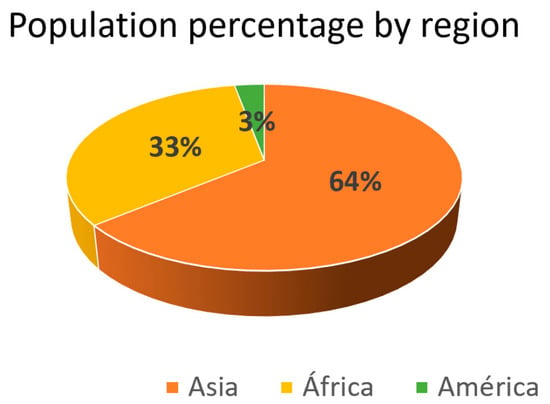
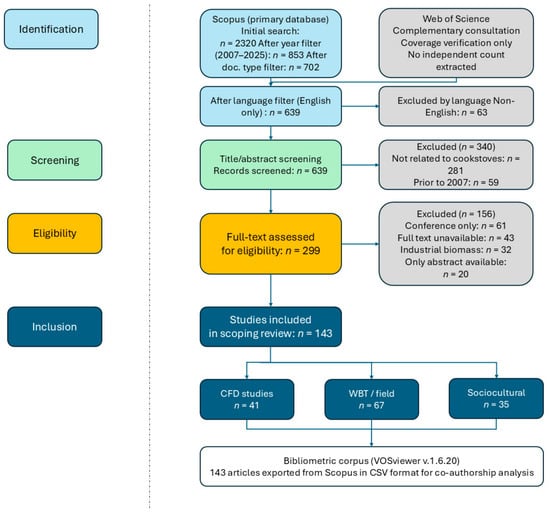
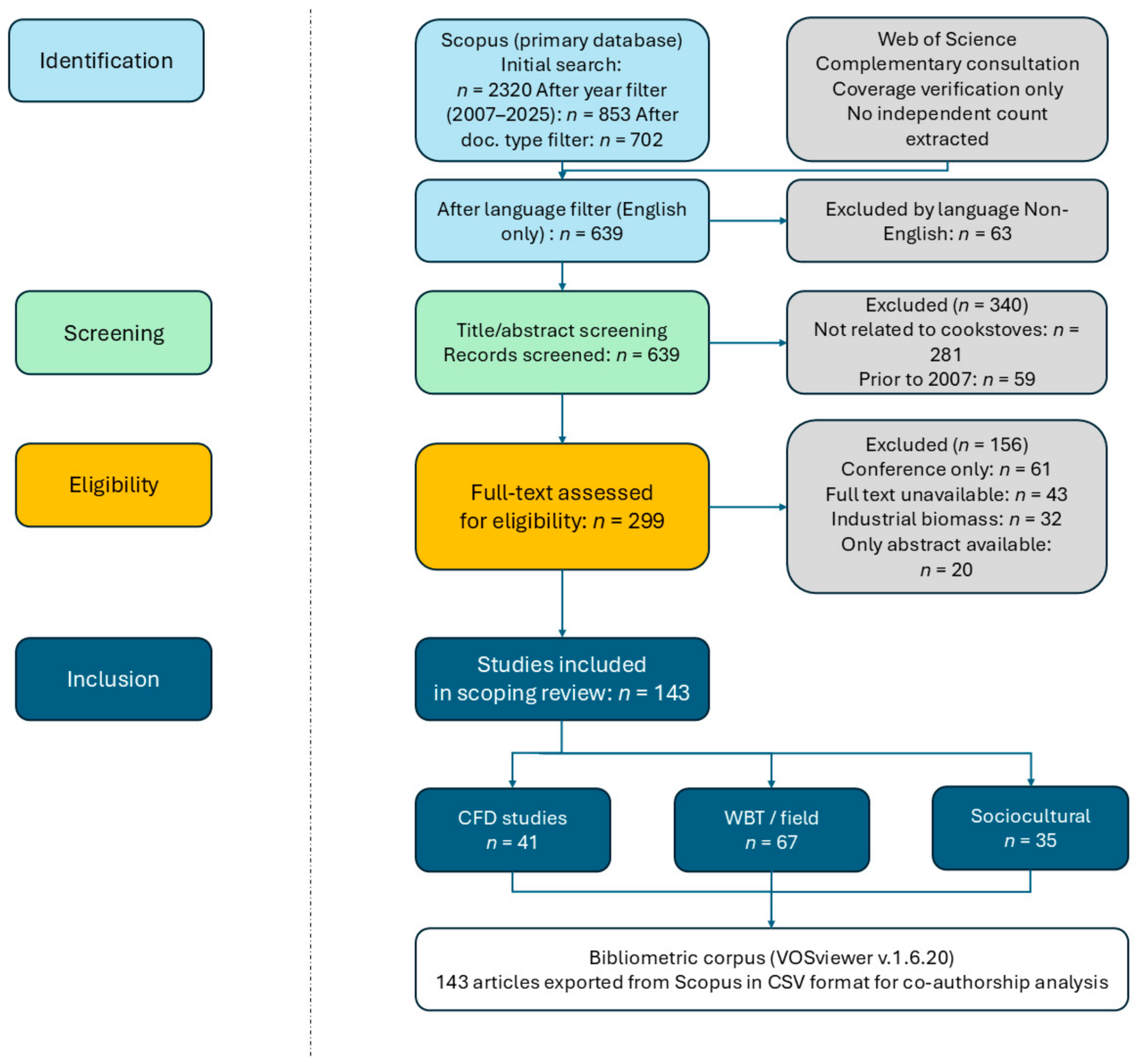
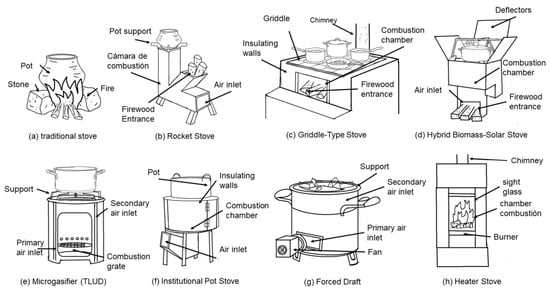
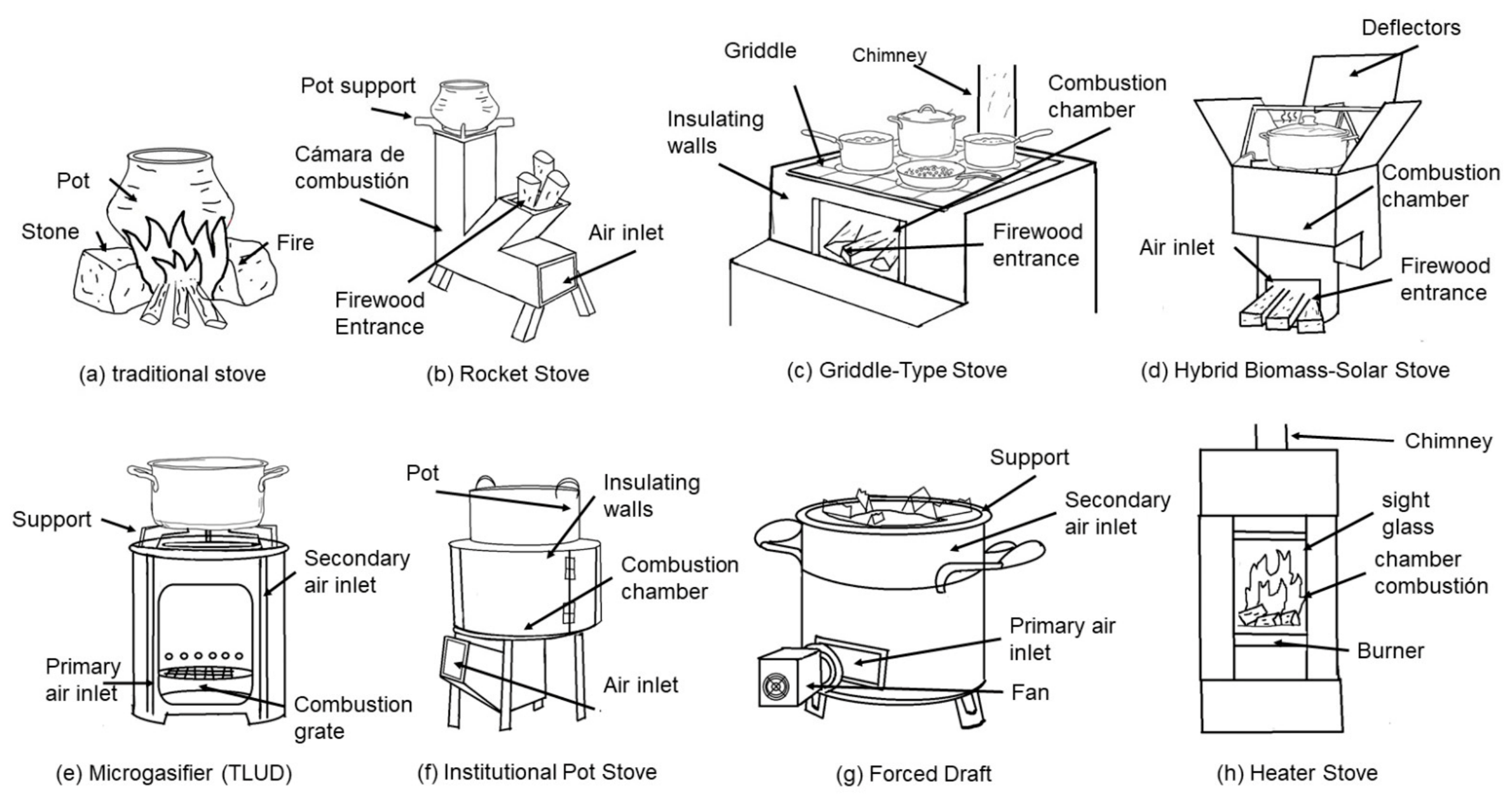
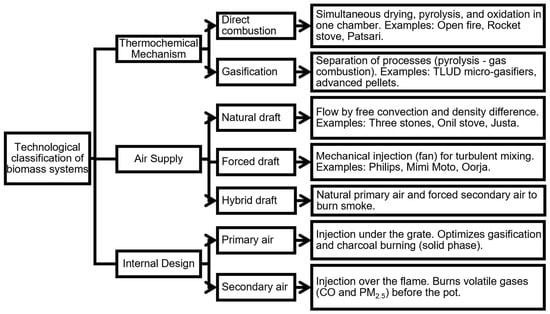
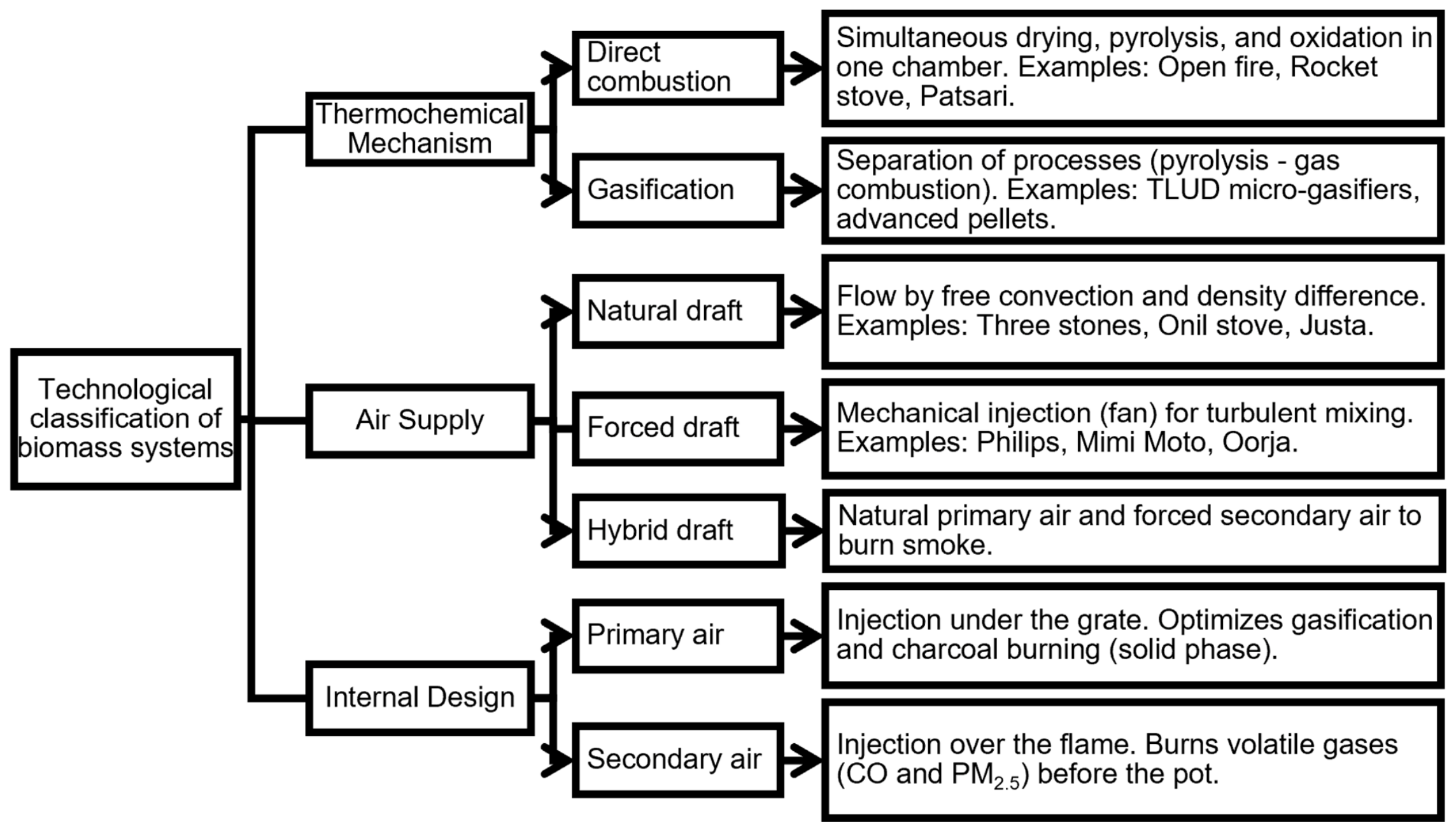
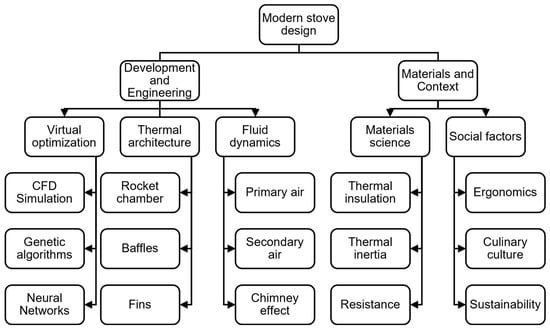
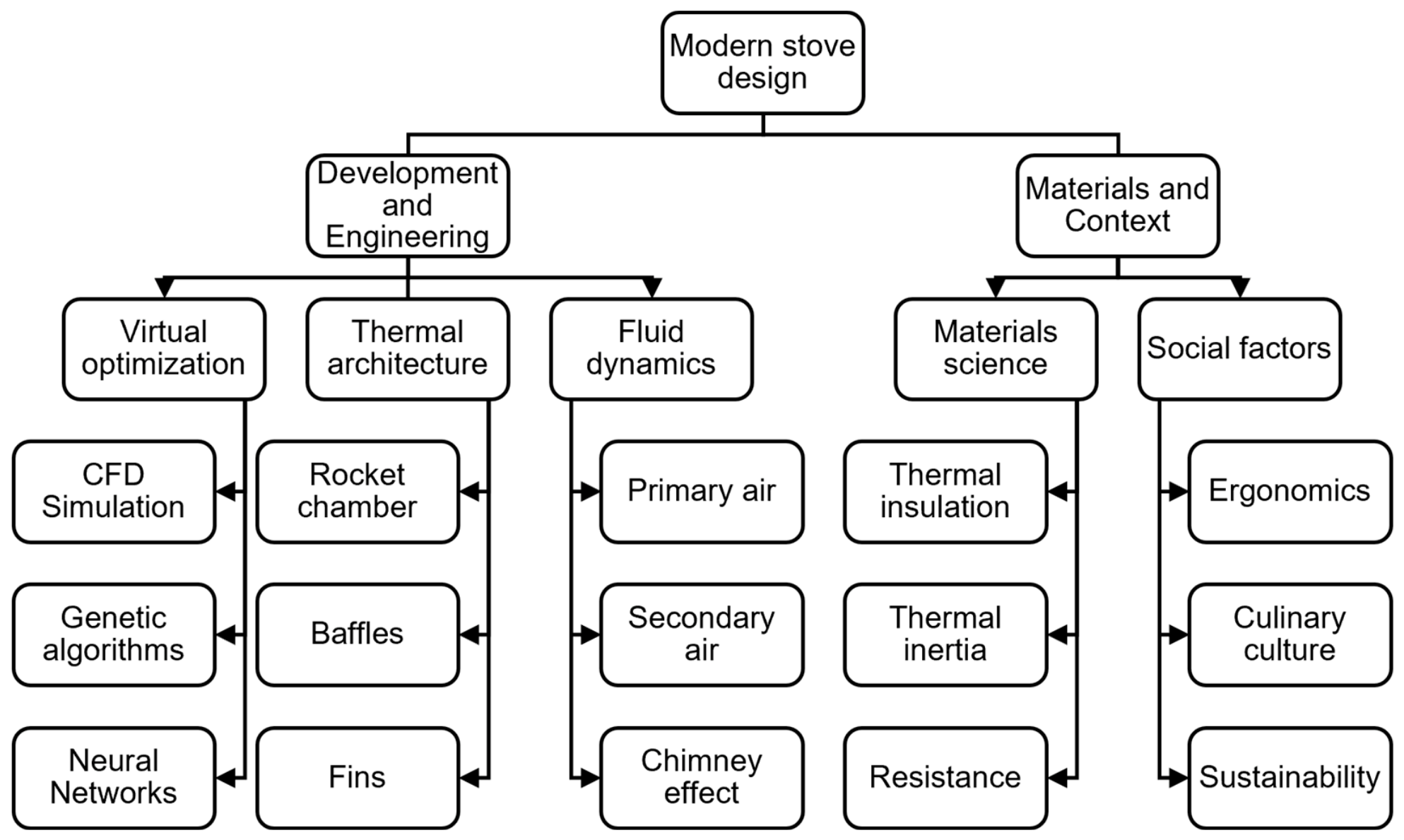
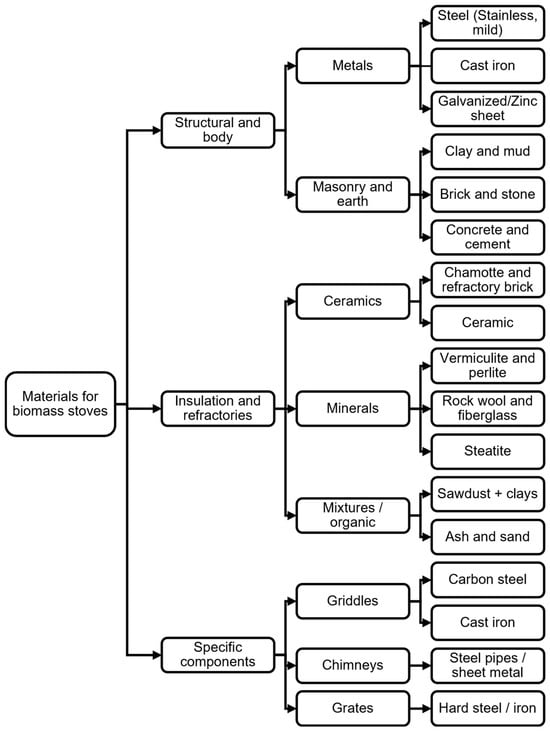
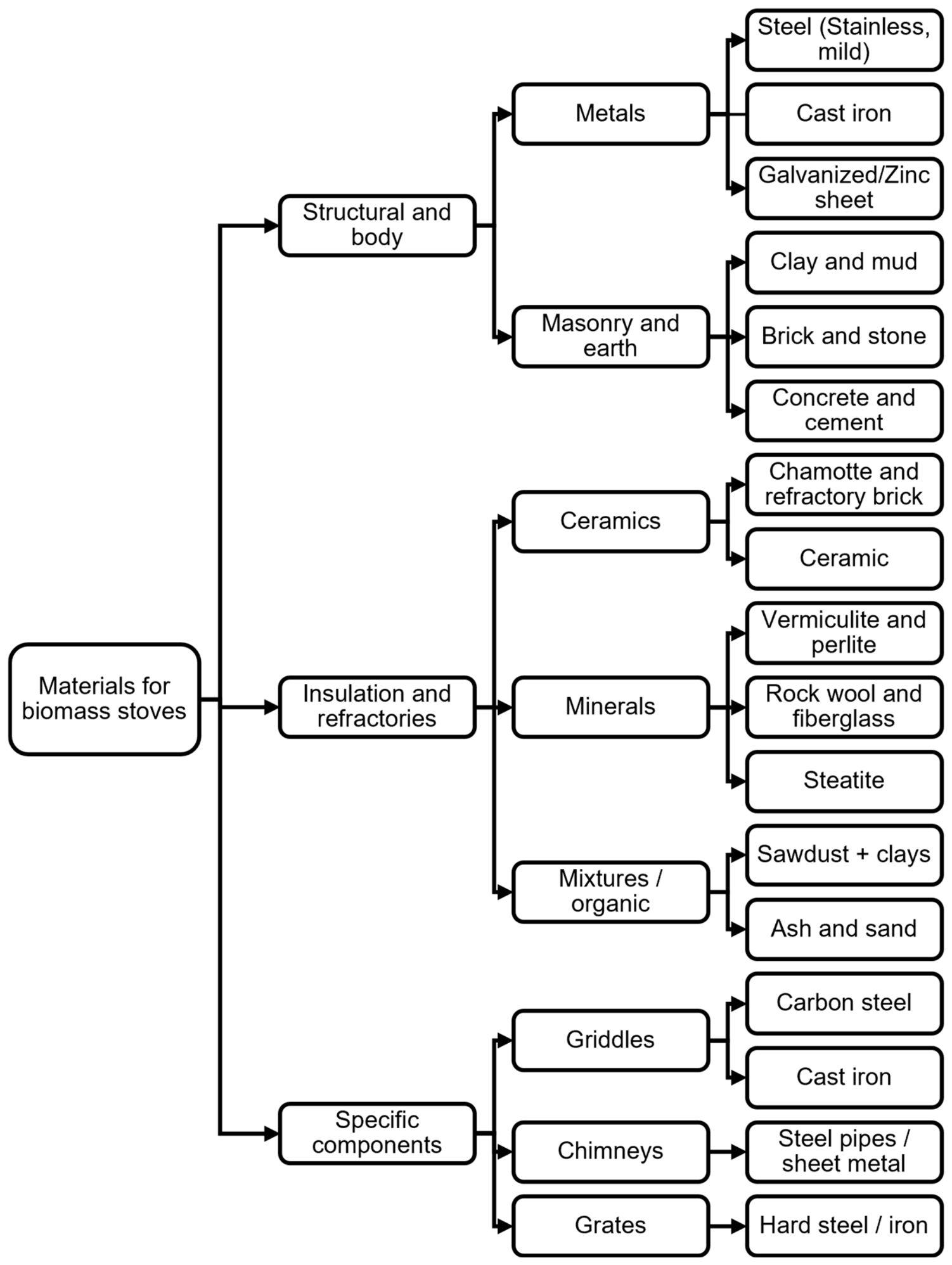
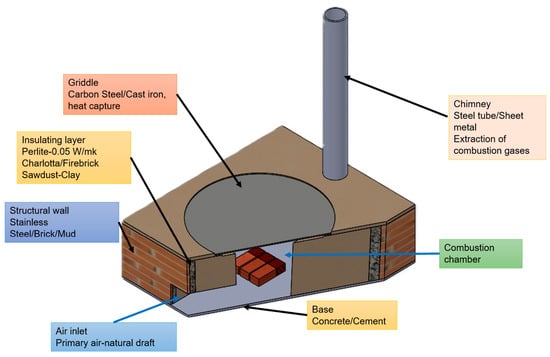
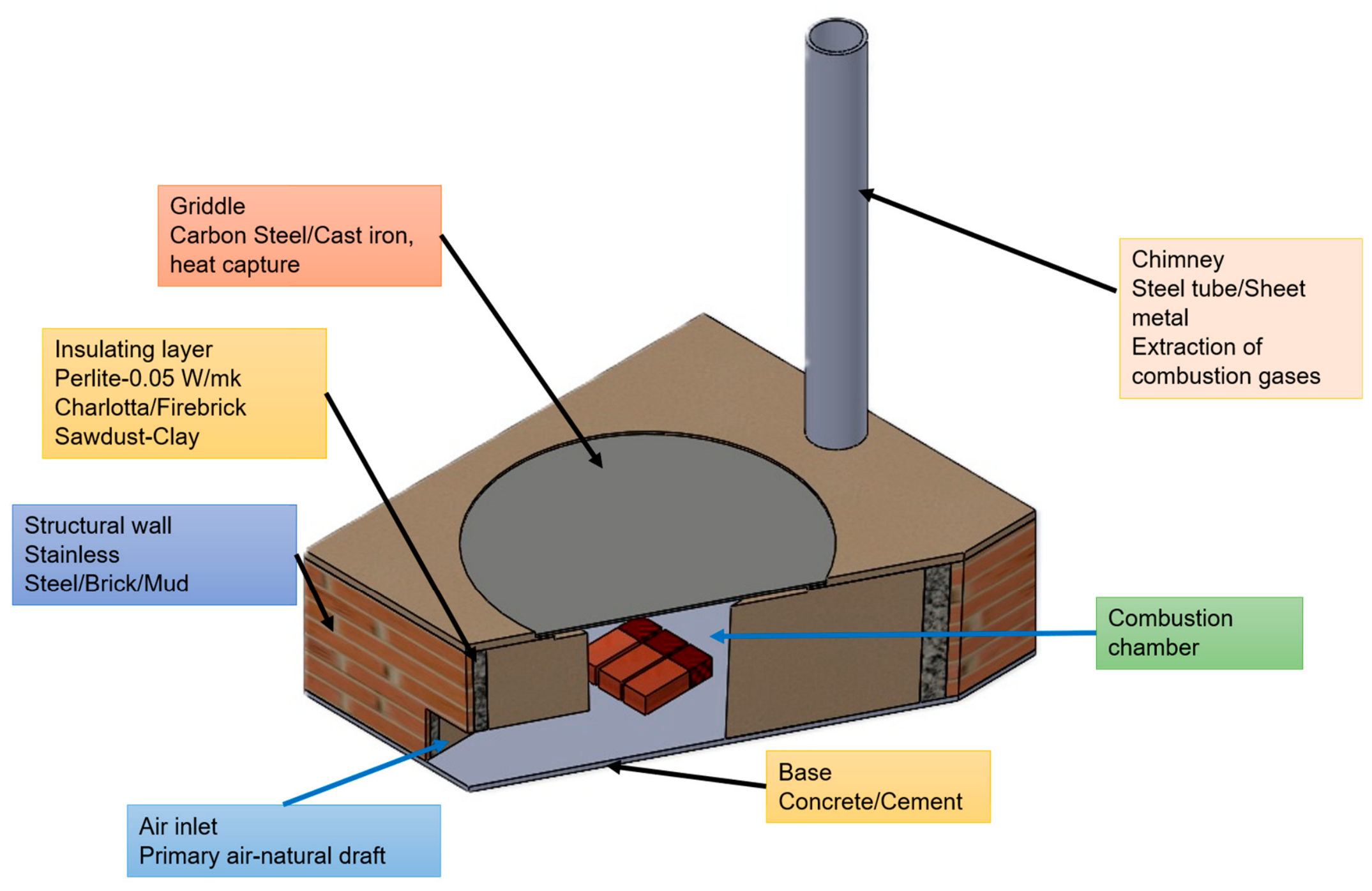
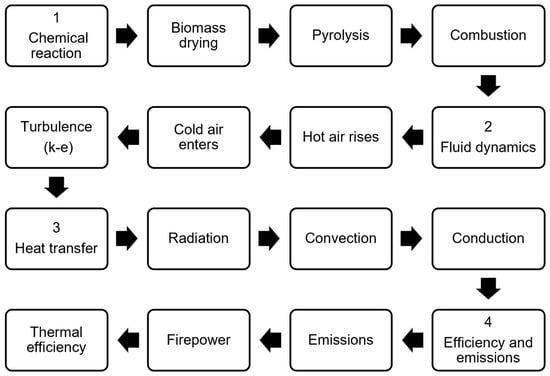
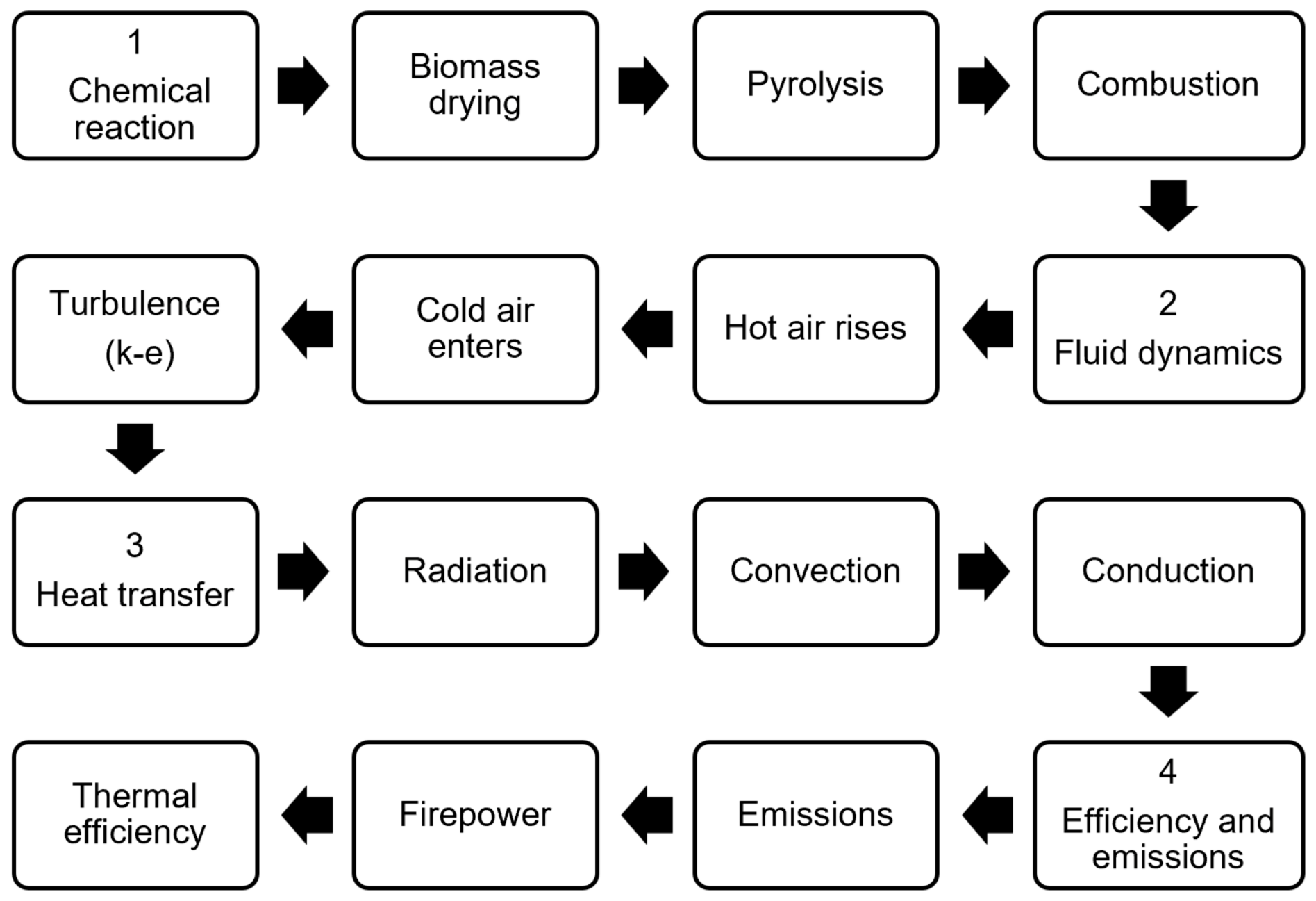
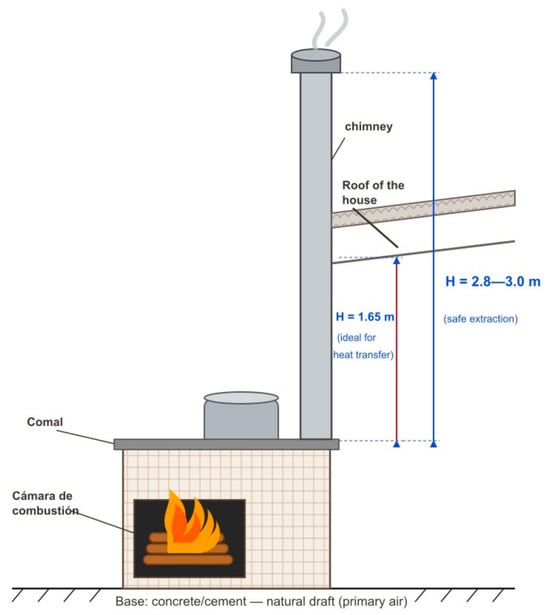
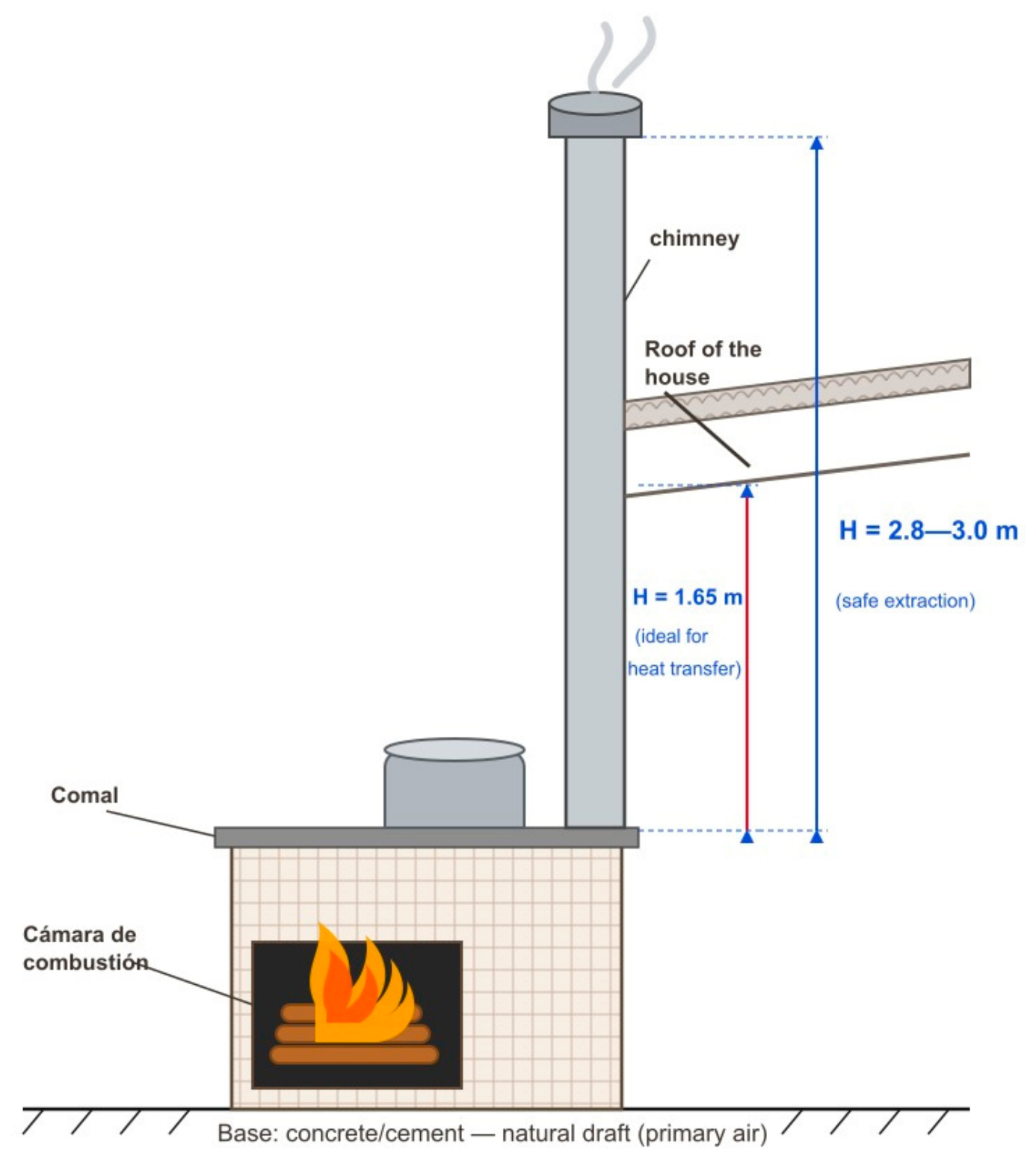
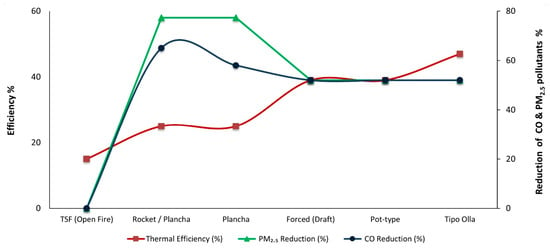
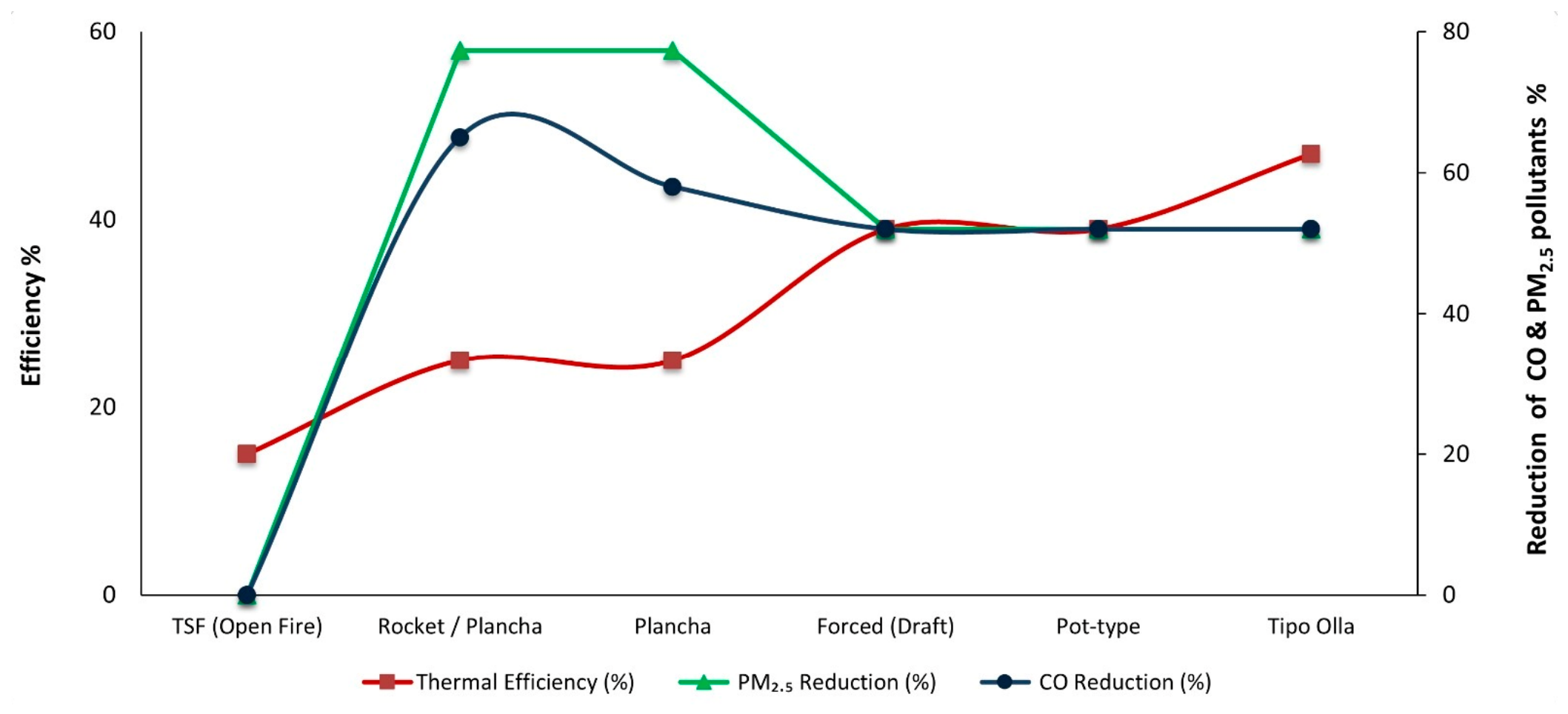
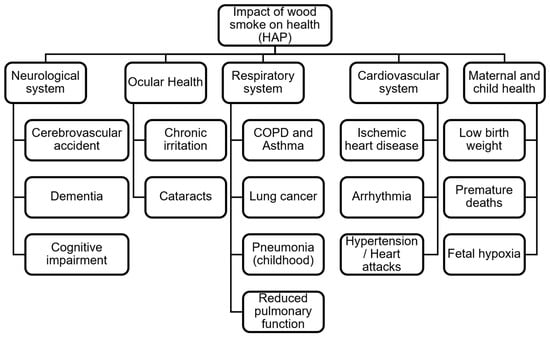
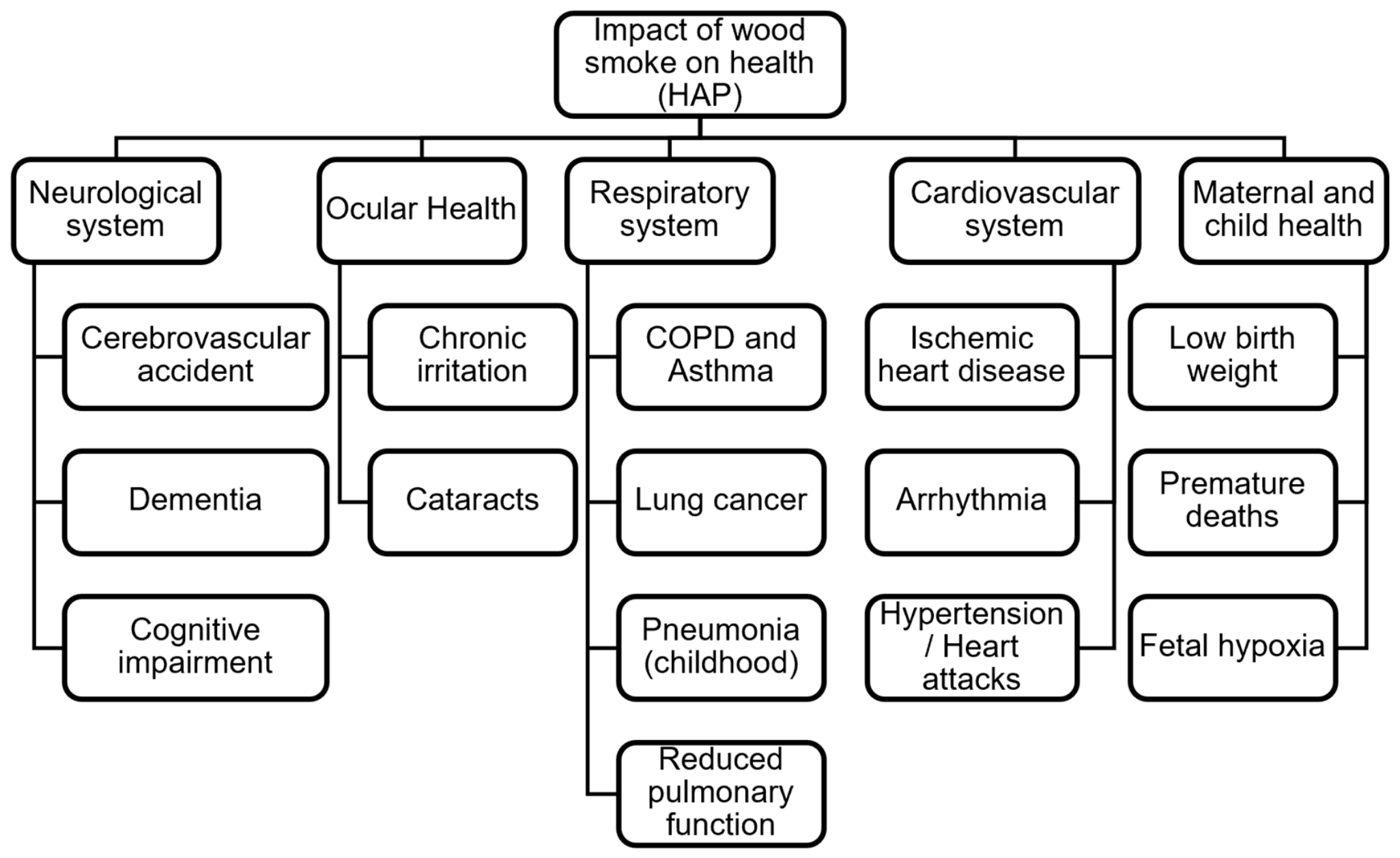
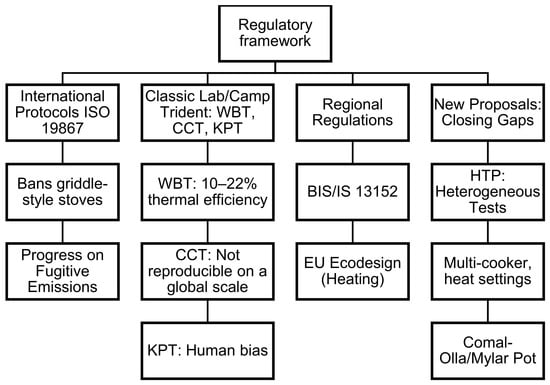
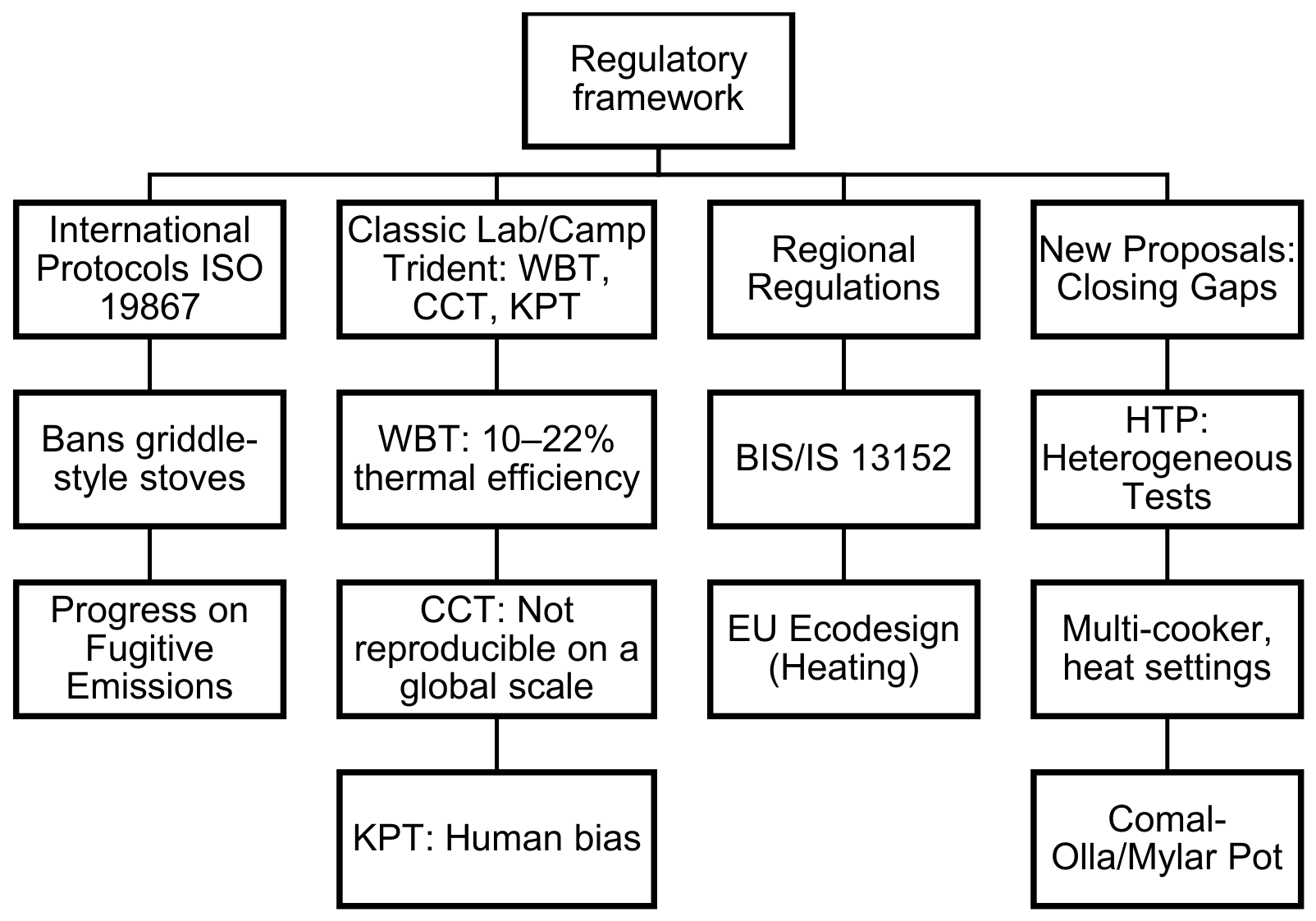
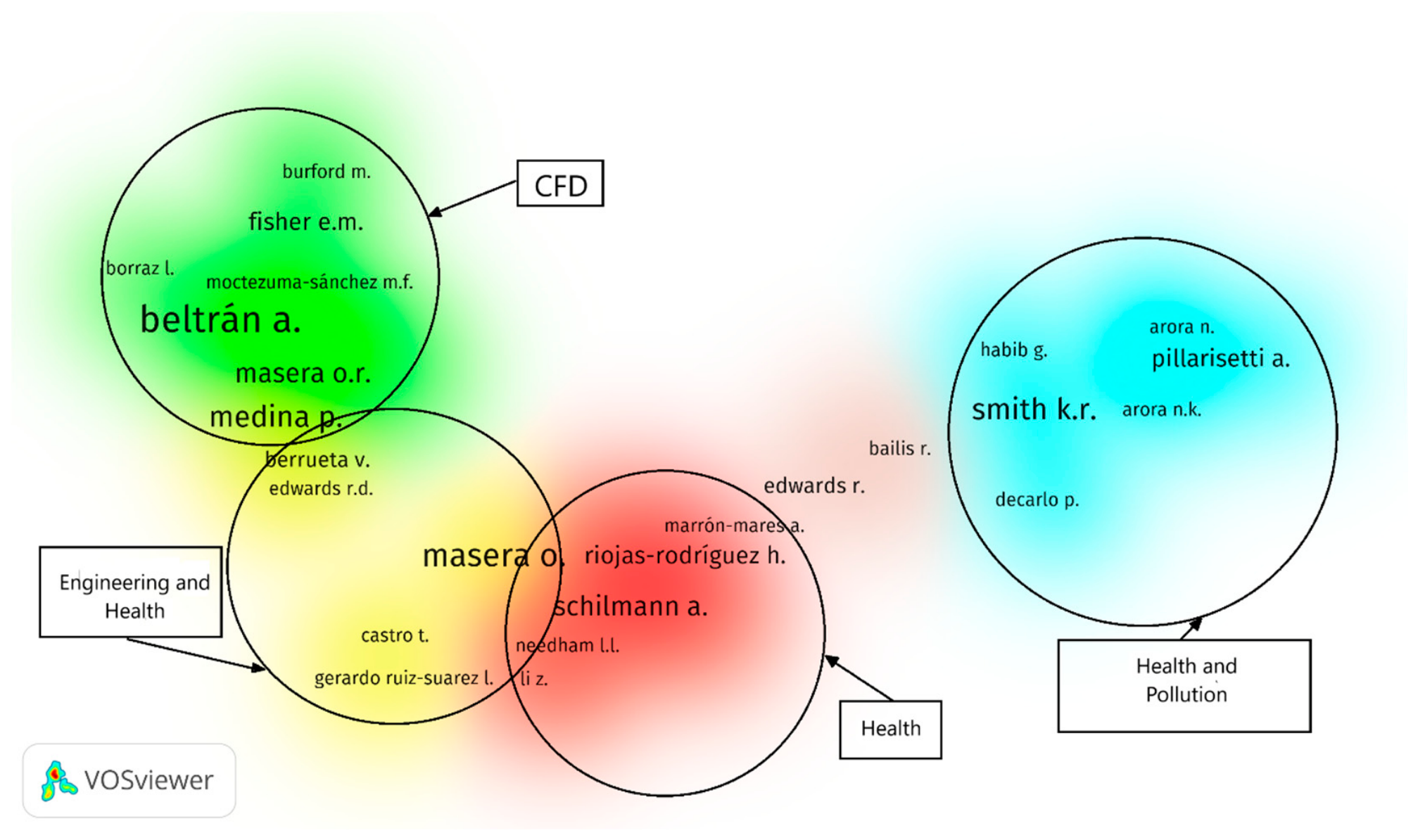
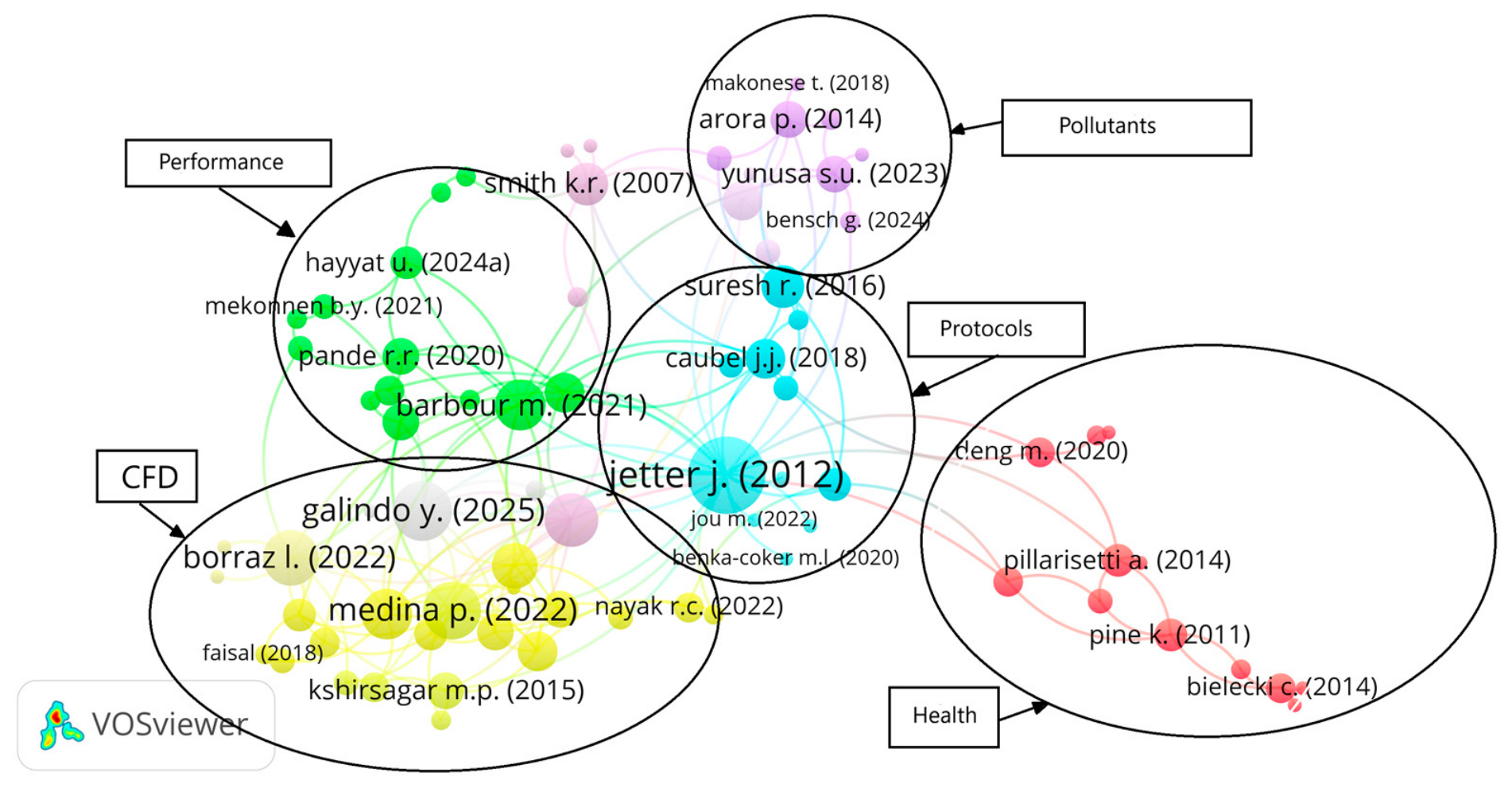

Disclaimer/Publisher’s Note: The statements, opinions and data contained in all publications are solely those of the individual author(s) and contributor(s) and not of MDPI and/or the editor(s). MDPI and/or the editor(s) disclaim responsibility for any injury to people or property resulting from any ideas, methods, instructions or products referred to in the content. |
© 2026 by the authors. Licensee MDPI, Basel, Switzerland. This article is an open access article distributed under the terms and conditions of the Creative Commons Attribution (CC BY) license.