Article

Adaptive Context-Aware VANET Routing Protocol for Intelligent Transportation Systems

by
Abdul Karim Kazi
1,
Muhammad Umer Farooq
1,
Raheela Asif
2 and
Saman Hina
3,*
1
Department of Computer Science and Information Technology, NED University of Engineering and Technology, Karachi 75270, Pakistan
2
Department of Software Engineering, NED University of Engineering and Technology, Karachi 75270, Pakistan
3
Department of Computing, Imperial College London, London SW7 2RH, UK
*
Author to whom correspondence should be addressed.
Network 2025, 5(4), 47; https://doi.org/10.3390/network5040047

Submission received: 15 September 2025 / Revised: 19 October 2025 / Accepted: 22 October 2025 / Published: 27 October 2025
(This article belongs to the Special Issue Emerging Trends and Applications in Vehicular Ad Hoc Networks)

Abstract

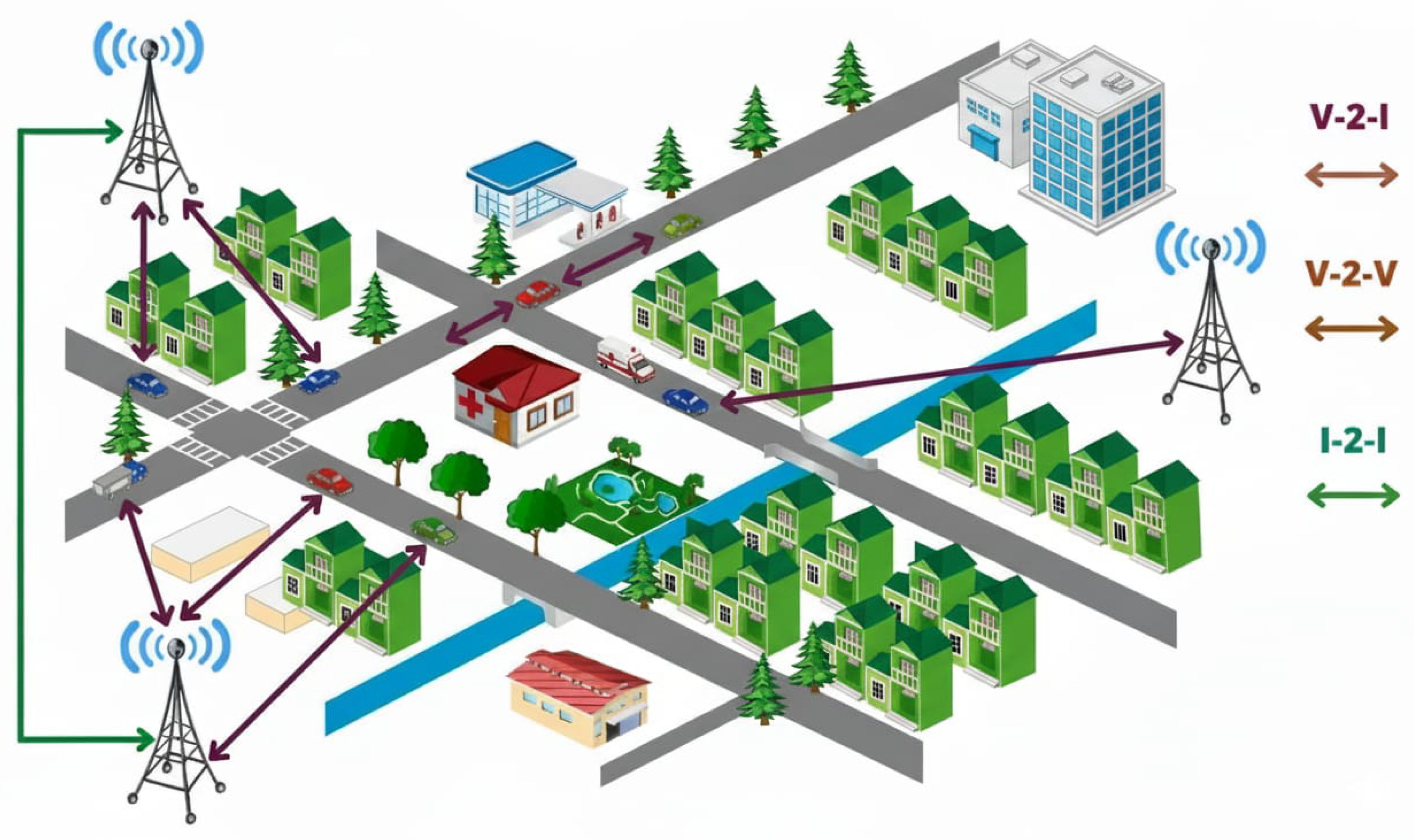
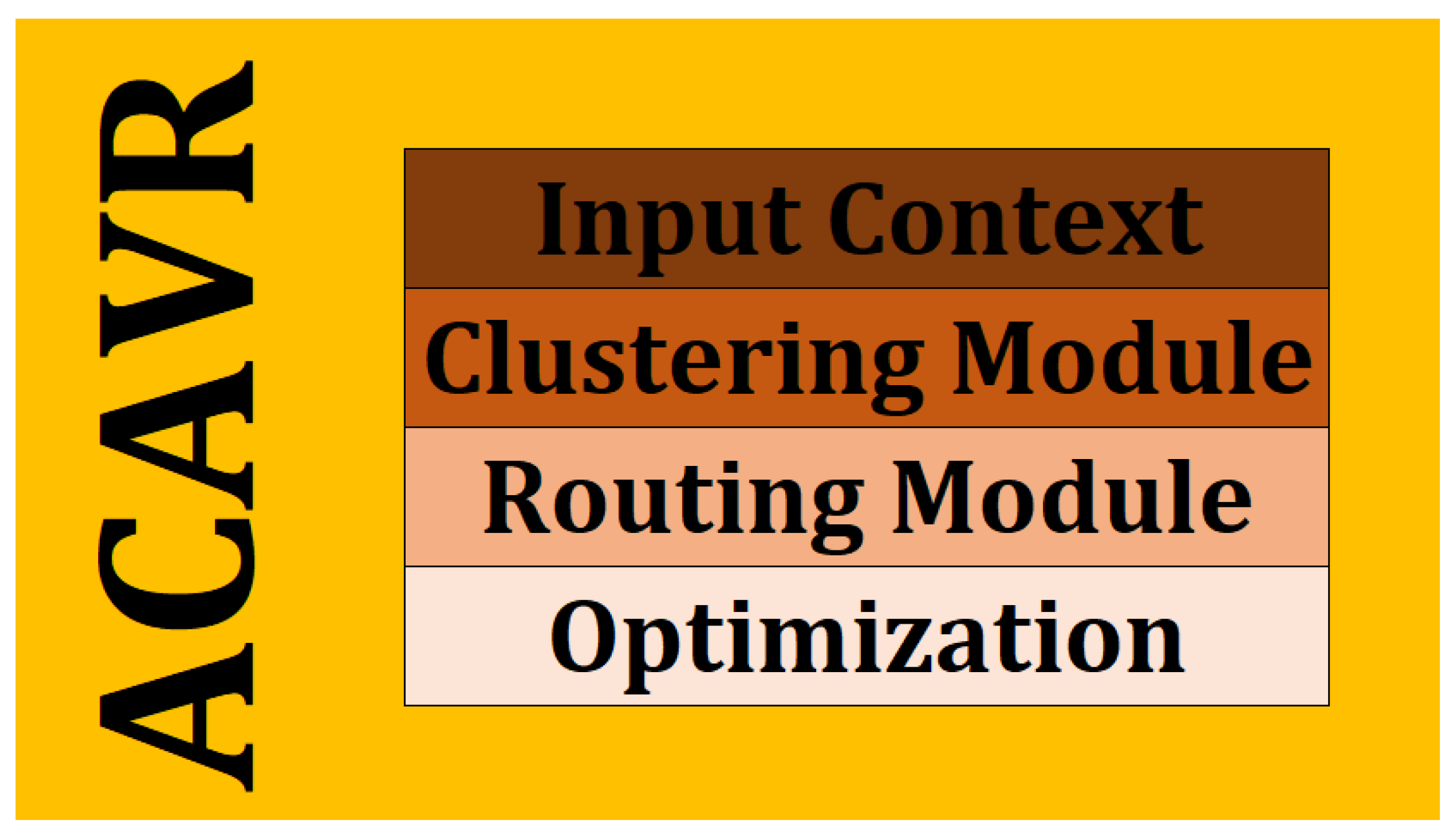
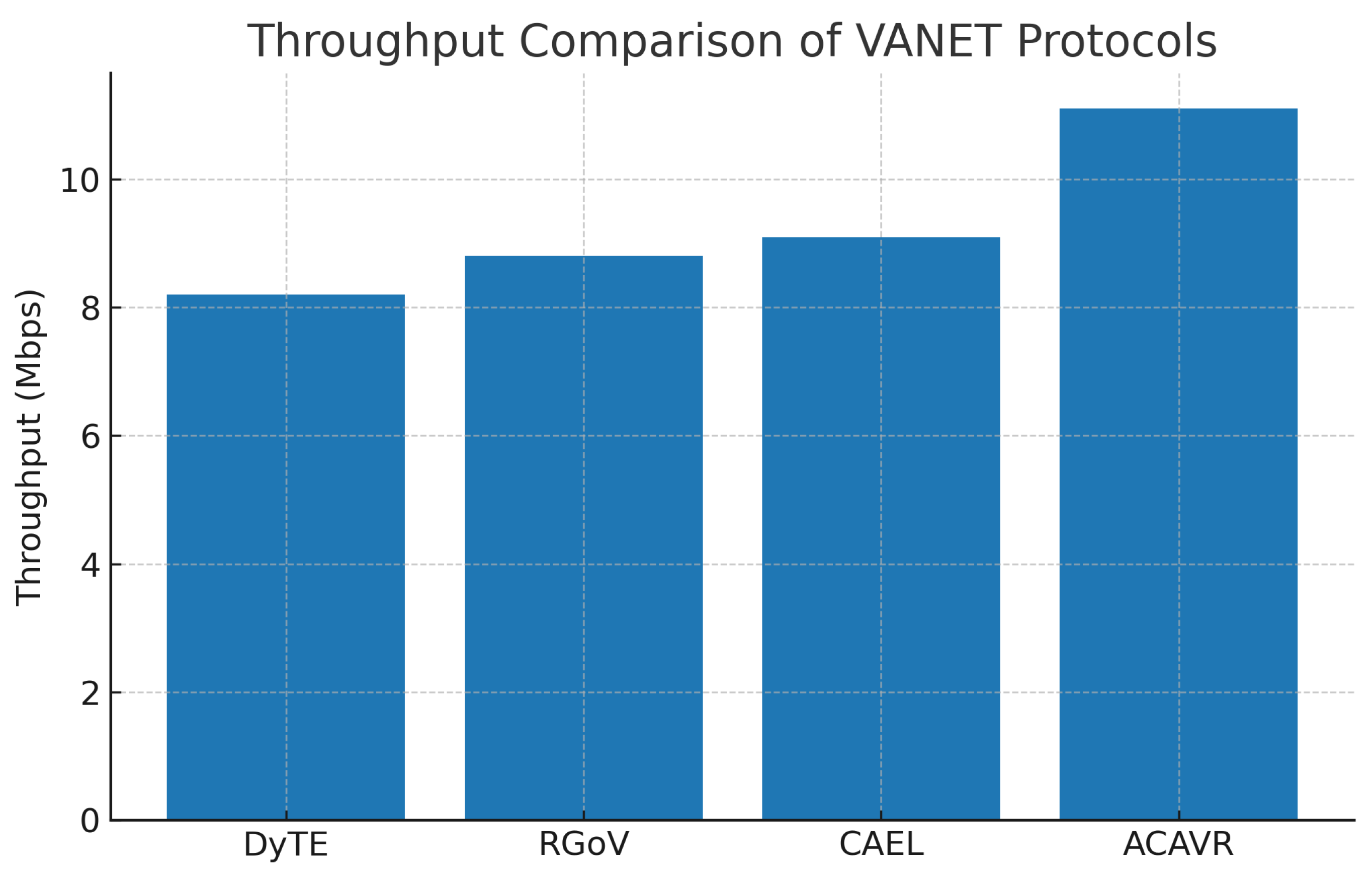
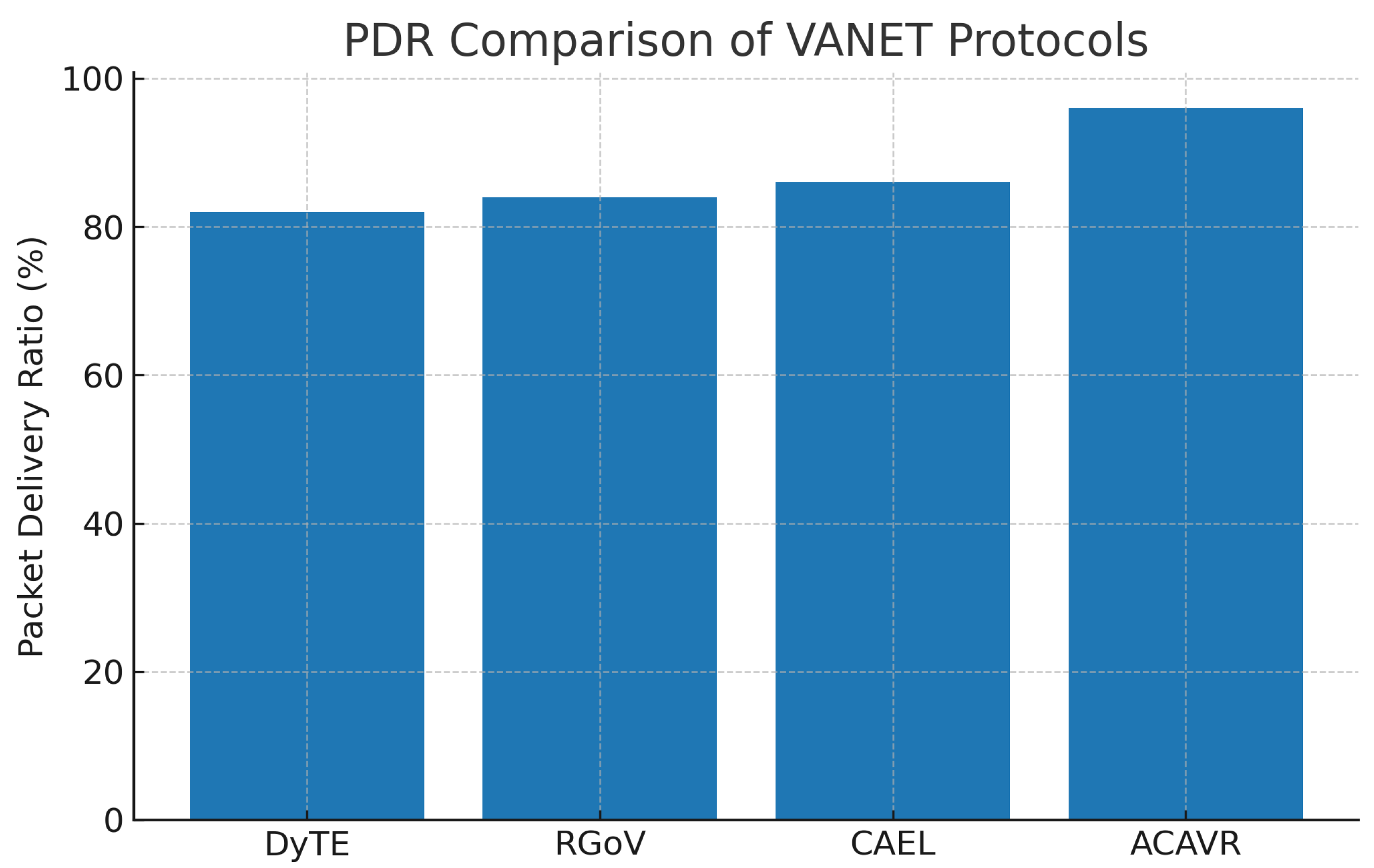
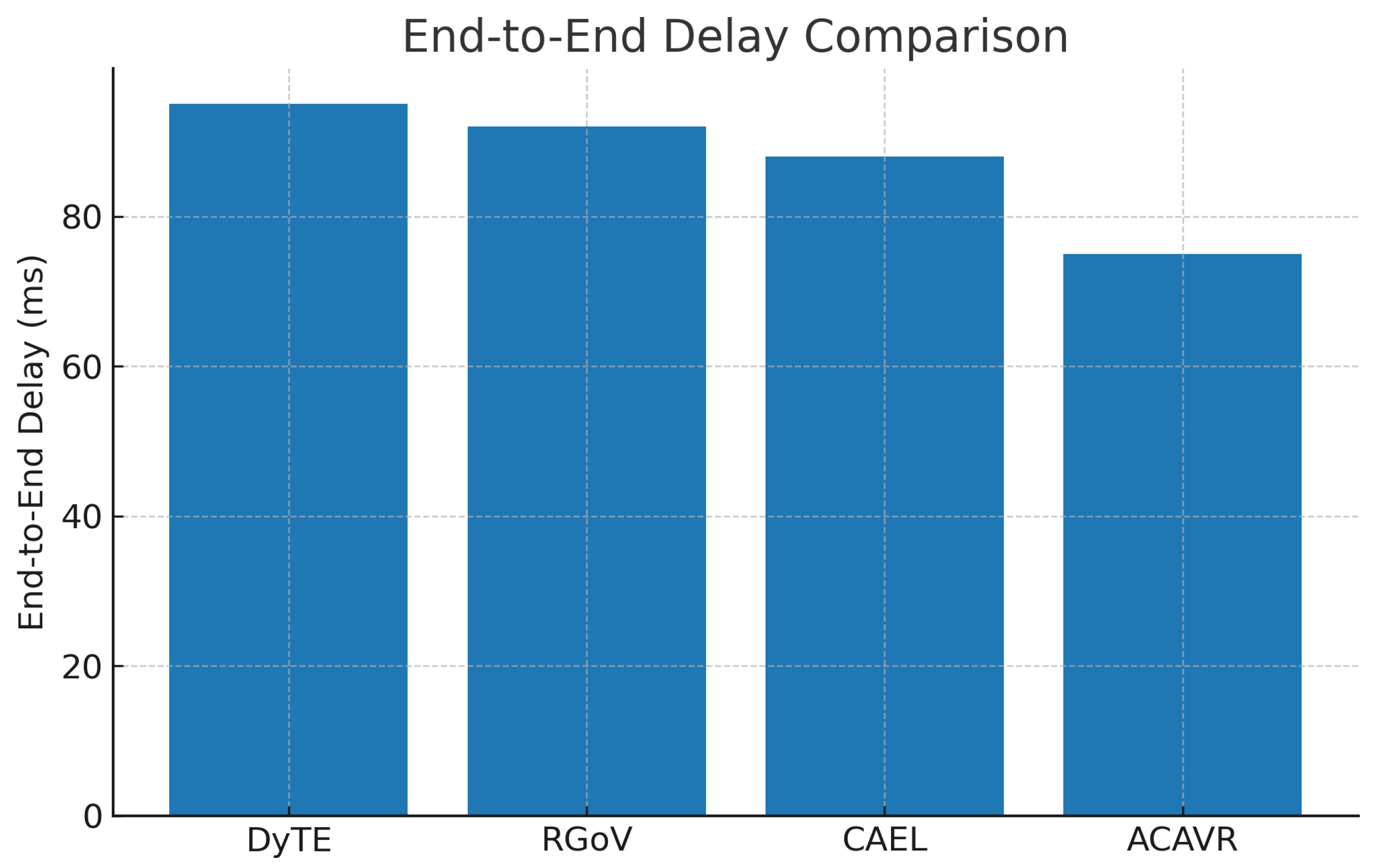
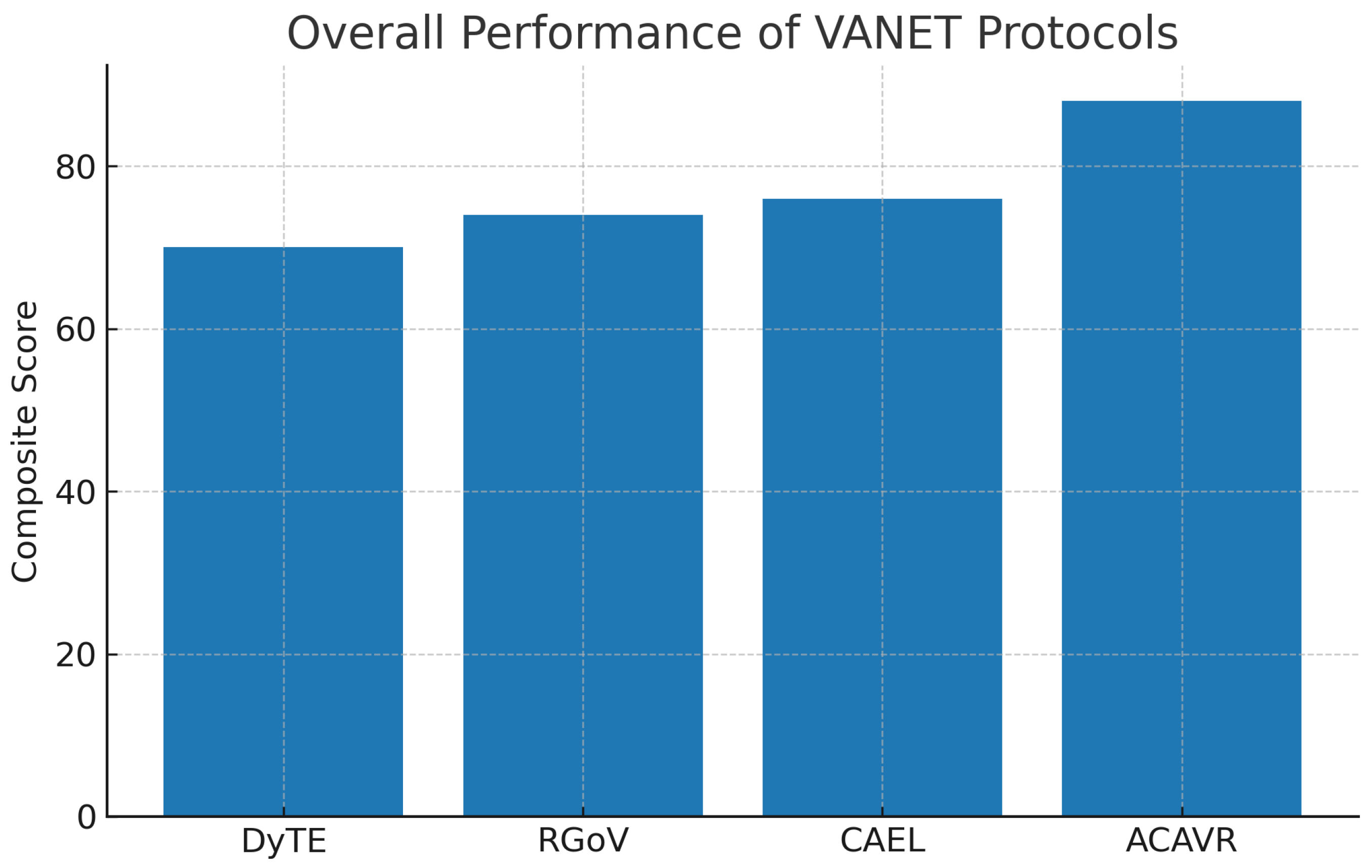
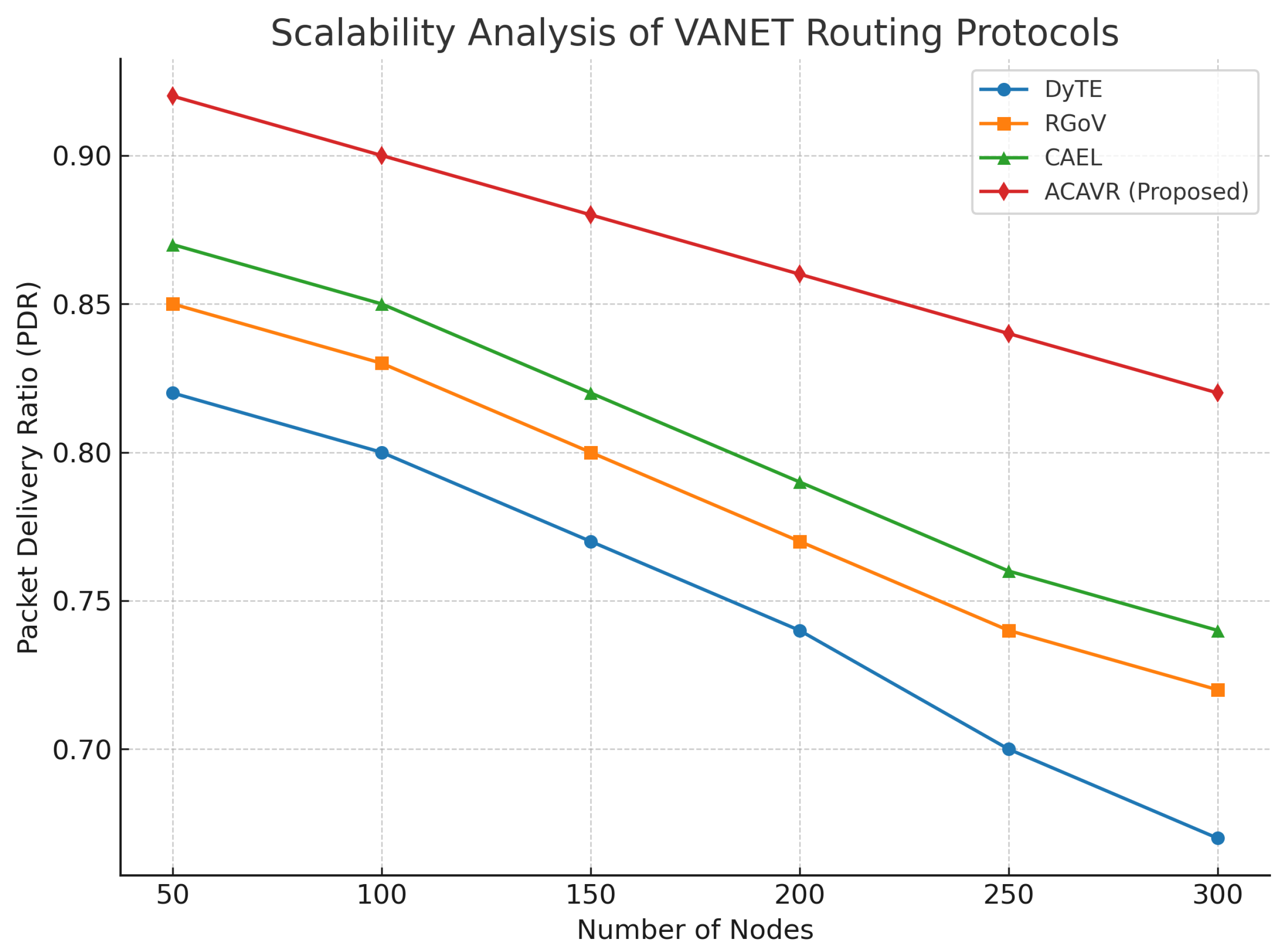
Vehicular Ad-Hoc Networks (VANETs) play a critical role in Intelligent Transportation Systems (ITS), enabling communication between vehicles and roadside infrastructure. This paper proposes an Adaptive Context-Aware VANET Routing (ACAVR) protocol designed to handle the challenges of high mobility, dynamic topology, and variable vehicle density in urban environments. The proposed protocol integrates context-aware routing, dynamic clustering, and geographic forwarding to enhance performance under diverse traffic conditions. Simulation results demonstrate that ACAVR achieves higher throughput, improved packet delivery ratio, lower end-to-end delay, and reduced routing overhead compared to existing routing schemes. The proposed ACAVR outperforms benchmark protocols such as DyTE, RGoV, and CAEL, improving PDR by 12–18%, reducing delay by 10–15%, and increasing throughput by 15–22%.
Keywords: VANET; routing protocol; wireless communications; Ad-Hoc Networks; context-aware; ITS VANET; routing protocol; wireless communications; Ad-Hoc Networks; context-aware; ITS