


Abstract
Latin American cities are fitting algorithmic systems into an urban structure that is already segregated, and the literature tends to treat the resulting effects as technical biases open to correction. This entry sets out a different reading: urban algorithmic inequality may operate as a system of reproduction whose components reinforce one another, so that acting on a single node leaves the cycle intact. The reading rests on 207 records retrieved from Scopus for the period 2016 to 2025, from which four mechanisms are described, namely data asymmetries, decisional opacity, spatially differentiated deployment and the normalisation of surveillance. The query targeted urban governance and inequality in the region and required no artificial intelligence term, so part of the retrieved set carries no algorithmic dimension, a boundary the entry states and quantifies. Across every specification tested, the literature attends more to the point where inequality becomes visible than to the point where it is produced: spatially differentiated deployment is flagged in 24.2 to 41.1 per cent of records according to the breadth of the term dictionary, against 2.4 to 12.6 per cent for data asymmetries, while a reading of a random sample of 40 records places the two at 30.0 and 5.0 per cent. The imbalance holds in sign under all four specifications and reaches significance under the stricter reading (McNemar exact test, p = 0.002) but not under the more permissive one (p = 0.210), so it is reported as a strong indicator and not as an established finding. The model is stated as four separately falsifiable propositions, each accompanied by the observation that would refute it. The normative position of ten countries is systematised from primary legal sources. Peru is the only jurisdiction with an instrument in force that requires an ex ante impact analysis of high-risk systems, binding on public bodies and voluntary for private operators, and no instrument among the ten frames an obligation in terms of distributive outcomes. The counterweight practices documented here act on the most accessible node of the cycle and not on the one where it begins.
1. Introduction
Latin America is the most urbanised developing region in the world, with roughly 80 per cent of its population living in cities [1]. Its inequality ranks among the highest recorded: the United Nations Development Programme places the region second among the regions of the world on income distribution and finds its countries more unequal than countries at comparable levels of development elsewhere [2]. That distribution takes spatial form, and the cities of the region are fragmented along it, with access to infrastructure, services and opportunity differentiated by income, race and territory [1]. Within this structure of socio-spatial segregation, artificial intelligence (AI) systems are being deployed to manage urban life, from predictive policing algorithms in São Paulo and Bogotá to automated resource allocation in Santiago and facial recognition in Buenos Aires.
The promise of smart cities rests on the premise that data-driven governance can improve urban efficiency, sustainability and quality of life [3,4]. A growing body of critical research nonetheless shows that algorithmic systems do not operate on neutral ground. Such systems encode, reproduce and may amplify pre-existing inequalities through biased training data, opaque decision architectures and uneven deployment patterns [5,6]. Where these systems are inserted into cities marked by extreme segregation, the consequences acquire particular political and ethical weight. Son et al. [7], reviewing the literature on algorithmic urban planning, observed that the field remains comparatively underdeveloped, above all as regards the distance between what is theorised and what is implemented.
The region’s digital divide compounds these risks. According to the United Nations Development Programme [8], only 46.4 per cent of lower-income households in Latin America have a fixed internet connection, against 84.6 per cent among higher-income households, with a connectivity deficit estimated at USD 68.5 billion. The populations most affected by algorithmic urban governance, namely residents of informal settlements, Indigenous and Afro-descendant communities and workers in the informal economy, are at once the least represented in the datasets that train these systems and the least equipped to contest automated decisions. As Cote-Muñoz [9] has noted, the dichotomy between smart cities and surveillance states is a central tension for the region, since pressure for rapid technological solutions may erode democratic safeguards.
Regional research has begun to document these dynamics. Irazábal and Jirón [10] characterise Latin American smart cities as oscillating between worlding infatuation and what they term crawling provincialisation, and report that smart projects concentrate benefits in higher-income areas while perpetuating territorial exclusions. Przeybilovicz and Cunha [11] have shown that modes of smart urban governance in São Paulo and Curitiba differ substantively from European models, since they emerge from specific interactions among technological artefacts, government entities and social actors. Franz [12] documented how the celebrated urban miracle of Medellín conceals dynamics of real estate speculation and population displacement. More recently, Schiavi et al. [13] have shown that the notion of digital sovereignty remains underdeveloped in Brazilian public policy frameworks for smart cities, taking up the contributions of Ricaurte [14] on data epistemologies, that is, the processes determining what counts as relevant data and who holds authority to extract knowledge from it.
Three interconnected gaps persist in this literature. First, while algorithmic bias has been examined at length in Global North contexts, particularly in criminal justice, hiring and healthcare, its manifestations in Latin American urban governance are scattered across case studies without systematic synthesis. The characteristics of the region, among them extreme inequality, extensive informal economies, limited institutional capacities and colonial legacies in urban planning, suggest that algorithmic inequality operates through mechanisms that available frameworks do not fully capture. Second, the relationship between AI deployment and socio-spatial segregation lacks theorisation specific to Latin American cities, since the available reviews privilege technocentric perspectives [15,16]. Third, the rapidly expanding regulatory landscape has not been assessed from the standpoint of algorithmic inequality. The CELE Legislative Observatory [17] has tracked 194 legislative proposals across 12 Latin American countries since 2023, a normative volume that calls for systematic analysis.
This entry addresses those gaps through an examination of the literature published between 2016 and 2025. It pursues three objectives: to map how algorithmic inequality is addressed in the governance of Latin American smart cities, identifying thematic, methodological and geographical patterns; to describe the mechanisms through which AI-driven urban systems interact with pre-existing socio-spatial segregation; and to assess the adequacy of emerging regulatory frameworks for addressing algorithmic inequality, with a view to proposing a research agenda oriented towards equitable and democratic governance of urban AI in the region.
The study contributes to research at the intersection of urban studies, science and technology studies, and regulatory governance. By centring the perspectives of scholars and institutions from the region itself, including analyses of digital sovereignty [13], algorithmic discrimination [18] and platform governance [19], it brings a Latin American standpoint to global debates on urban algorithmic governance. It responds to calls for contextualised analyses that move beyond universalising frameworks [7,20] and addresses the limited temporal window that, according to Levy Yeyati [21], countries in the region have for developing governance approaches on their own terms.
2. Theoretical Framework
Analysing algorithmic inequality in Latin American smart cities calls for a framework articulating three dimensions: the reproduction of urban stratification through algorithmic systems, the differentiated trajectories of the smart city model in the global periphery, and regulatory gaps as conditions that enable the deepening of inequalities.
2.1. Algorithmic Inequality and the Reproduction of Urban Stratification
The notion of algorithmic inequality designates the processes by which automated decision-making systems produce or reproduce unequal outcomes across social groups. Unlike the narrower category of algorithmic bias, which tends to be confined to correctable technical deficiencies in data or model design, algorithmic inequality locates the problem within social structure. Zajko [22] has argued that algorithms trained on data reflecting an unequal society do not present a technical anomaly but operate as intended: they reproduce the patterns of the social order feeding them. Eubanks [23] documented this dynamic in the United States, showing how automated systems for allocating social services penalise populations living in poverty. Noble [24] showed that search algorithms amplify racial and gender stereotypes, consolidating what Benjamin [25] termed the New Jim Code, that is, forms of racial discrimination encoded in technological architecture.
Within urban governance, Meijer [26] proposed the concept of the datapolis to characterise cities where data become a central governing resource, generating tensions among administrative efficiency, democratic transparency and rights protection. That tension sharpens where algorithmic decisions operate under conditions of opacity. Pasquale [27], in his work on the black box society, explained that algorithmic decision criteria remain inaccessible both to affected citizens and to public regulators. Alon-Barkat et al. [5] have taken this line further by showing, with empirical evidence, how citizens attribute responsibility when a public decision is algorithmically mediated. Sanchez et al. [6] systematised the ethical concerns raised by AI in urban planning, including the risk that historically marginalised communities be disproportionately affected by automated decisions on zoning, transport and service distribution.
The field of smart city studies has registered relevant advances in understanding these problems. Rasoulzadeh Aghdam et al. [28] identified interconnected research clusters covering participatory governance, data privacy, artificial intelligence, and ethical sustainable development. Meijer and Bolívar [29] distinguished four dominant perspectives on smart city governance: technological, human resource, actor collaboration, and integrative. Cugurullo [30] and Ruhlandt [31] have raised questions about human agency and democratic legitimacy under algorithmic urbanism. As Bibri et al. [32] and Dong and Liu [33] note, the converging technologies of AI, the Internet of Things and big data will transform sustainable urbanism, which makes theorisation that explicitly incorporates inequality a pressing task.
Most of this literature has nonetheless been produced from and for Global North contexts. The features defining Latin American urban inequality, namely the depth of stratification by income and race, the extent of informal economies whose actors do not appear in digital records, the weakness of institutional oversight capacities, and colonial legacies in the spatial configuration of cities, shape a setting in which algorithmic inequality acquires characteristics that conventional frameworks do not fully capture. The connectivity deficit of USD 68.5 billion estimated by the United Nations Development Programme [8] reflects not only infrastructural shortfall but also the exclusion of broad population sectors from the digital ecosystem that feeds urban algorithms.
2.2. Smart Cities in the Latin American Periphery
The smart city model has been adopted with varying intensity in Latin American cities over the past decade. The tension between imported conceptual frameworks and local implementation conditions is a central axis for understanding how algorithmic inequality operates in the region. Irazábal and Jirón [10], in a study published in Urban Studies, conceptualised that tension as an oscillation between worlding infatuation and crawling provincialisation in cities of Chile, Brazil and Colombia, and proposed the 6-Es framework, covering efficiency, economy, ecology, equity, education and engagement. Their analysis showed that smart city projects tend to concentrate benefits in higher-income areas. Duque Franco [34] identified, from cases in Argentina, Brazil, Chile, Colombia and Mexico, the formation of an elite epistemic community in which multilateral bodies and technology corporations define the parameters of what counts as smart with little regard for territorial particularities.
Empirical assessment of Brazilian cities supplies relevant evidence. Fachinelli et al. [35] assessed 27 state capitals and found that Florianópolis, São Paulo, Curitiba and Porto Alegre display the strongest performance in innovation and connectivity, while the main regional weaknesses concentrate in effective governance and social cohesion. In the same context, Przeybilovicz and Cunha [11] studied São Paulo and Curitiba and showed that smart governance modes emerge dynamically, taking shape through interaction among technological artefacts, government entities and social actors, in a process differing from European models grounded in centralised planning.
Outside Brazil, the evidence reveals equally complex trajectories. In Colombia, Franz [12] analysed the urban miracle of Medellín and documented that technological interventions articulate with real estate speculation and population displacement, calling celebratory narratives into question. Jurado-Zambrano et al. [36] examined Buenos Aires, Medellín and Mexico City, identifying three shared features in smart governance strategies linked to Sustainable Development Goal 16: technological solutions for persistent social problems, diverse citizen participation, and a sociotechnical approach transcending technological determinism. In Ecuador, Villao et al. [37] examined urban governance models in Quito, contributing evidence on adaptations of the smart model in Andean contexts. Rodríguez Bolívar et al. [20] further noted that the process of becoming a smart city remains diffuse in mid-sized Latin American cities.
These differentiated trajectories carry direct implications for algorithmic inequality. Where technological models designed for contexts of high institutional homogeneity are deployed in deeply fragmented societies, the effects are not simply of reduced efficacy but of active reproduction of pre-existing asymmetries. Mendes [38] illustrated this dynamic in examining Rio de Janeiro as a techno-utopian smart city, where climate governance is framed as an exclusively technical matter, the environmental footprint of smart technologies is neglected, and citizen data are collected with low levels of transparency. Tironi [39], through ethnographic work in Santiago de Chile, examined how the public frictions generated by urban prototypes reveal political effects exceeding the stated intentions of smart projects. Ulriksen [40], analysing the circulation of the smart city concept in Chile, explored its implications for emerging forms of urban planning and governance.
2.3. Urban Data Governance, Digital Sovereignty and Power Asymmetries
Urban data governance in Latin America takes shape within a context of deep asymmetries between local actors and transnational digital intermediaries. Schiavi et al. [13] examined four key Brazilian policy documents, namely the Brazilian Strategy for Digital Transformation 2022–2026, the Cartilha das Cidades of the National IoT Plan, the Brazilian AI Strategy and the Brazilian Charter for Smart Cities, and showed that the notion of digital sovereignty remains underdeveloped in public policy frameworks. These authors articulate the critical perspective on smart cities with theories of digital and data colonialism, taking up the contributions of Ricaurte [14] on data epistemologies.
Evidence on urban digital platforms reinforces this diagnosis. Aguerre and Bonina [19], studying the Por Mi Barrio platform of Montevideo, analysed how civil society organisations have played a leading role in the digital transformation of public services in the region, in contrast with trends observed elsewhere. Rotta et al. [41], applying the Municipal eGov Platform Assessment model to 903 municipal websites across Brazil, found that most display a low level of maturity as digital commons, which constrains citizen co-production and opportunities for smart governance.
The analysis by Gil-Garcia et al. [42] identified benefits and challenges of information sharing as a dimension of urban intelligence in Mexican megacities. Barns [43] had already argued that the interfaces of urban data platforms are themselves an object of governance, since they determine what a citizen may see and act upon. Juárez-Merino [44] mapped advances and persistent gaps in digital infrastructure, human capital, business technology adoption and digital government services, identifying Uruguay, Chile, Brazil and Argentina as regional leaders facing common challenges in digital inclusion and cybersecurity. Ochoa Guevara et al. [45] documented the gaps between discourses of algorithmic efficiency and the effective institutional capacities of Colombian local governments. Taken together, these findings indicate that urban data governance in the region stands at an early stage of development, with direct consequences for the capacity to identify, prevent, and remedy algorithmic inequality.
2.4. Regulatory Gaps as Vectors of Algorithmic Inequality
The analysis of regulatory gaps constitutes the third dimension of the framework. The hypothesis guiding this section is that normative gaps do not represent a neutral absence but a condition that favours the deepening of algorithmic inequalities. The regulatory landscape of personal data protection in Latin America displays significant heterogeneity. Chile was the regional pioneer with its 1999 law, followed by Argentina in 2000, Uruguay in 2008, Mexico in 2010, Peru in 2011, Colombia in 2012, Brazil in 2018, and Panama in 2019. The Data-Pop Alliance [46] has documented how habeas data constitutes a distinctive regional legal tradition coexisting with specific data protection legislation. The Future of Privacy Forum [47] identified Brazil, Mexico, Argentina, Uruguay, Colombia, Chile and Peru as the jurisdictions with the most active data protection authorities in the region.
In matters of AI regulation, legislative activity is intense but fragmented. The CELE Legislative Observatory [17] has tracked 194 legislative proposals across 12 countries since 2023. Peru enacted Law 31814 on 5 July 2023, which promotes the use of artificial intelligence and states a risk-based approach as a guiding principle [48]. Its implementing regulation, Supreme Decree 115-2025-PCM of 9 September 2025, gave that principle operative content. The regulation sorts systems into prohibited uses, high risk, and acceptable risk, and for high-risk systems it requires an impact analysis before development or implementation where the operator is a public body, together with human oversight, algorithmic transparency and an internal register, and it makes a security audit compulsory before a public body deploys such a system. For private operators the impact analysis is voluntary. It entered into force on 22 January 2026, and compliance periods run from one to four years by sector [49]. The Brazilian bill 2338/2023 was approved by the Senate in December 2024 and is now before a special committee of the Chamber of Deputies; its text classifies systems by risk and lists algorithmic impact assessment among the obligations of AI agents [50]. Flórez Rojas [51] mapped AI policy development in Argentina, Colombia, Chile, Costa Rica and Brazil, identifying tensions between declaratory ethical principles and effective implementation. The Future of Privacy Forum [52] reports that the regional bills show a marked preference for ex ante, risk-based regulation. The Brookings Institution [53] observed that, although a Brussels effect operates in the adoption of the European regulatory approach, the resulting requirements are generic and lack consistency across bills.
The AlSur consortium [54], documenting regulatory scenarios in Brazil, Peru, Colombia and Mexico, evidenced what it terms legislative reactivity without a comprehensive legal framework, together with a disregard for the material realities of each country. Derechos Digitales and AlSur [18], through their report on surveillance trends, warned of the normalisation of surveillance practices under pretexts of security or health control, particularly during the COVID-19 pandemic, with participation by private companies and international actors absent frameworks guaranteeing the protection of fundamental rights. The Electronic Frontier Foundation [55], through its Who Defends Your Data project, assessed the transparency and privacy commitments of telecommunications companies across ten countries in the region.
On emerging rights, Chile and Peru lead globally in legally defining neurodata as a category of sensitive personal data under maximum protection. Levy Yeyati [21] has argued that the region has a limited temporal window for developing AI governance on its own terms, a warning that gains urgency in light of administrative changes that may compromise the sustainability of regulatory initiatives.
Regulatory gaps can be operationalised, following the literature reviewed, through three categories. Coverage gaps are domains of urban algorithmic activity lacking specific regulation, such as facial recognition in public spaces or the monetisation of citizen data by private platforms. Implementation gaps are formally approved norms lacking effective enforcement mechanisms. Participation gaps are the absence of mechanisms guaranteeing citizen influence over urban technological deployment, which Cardullo and Kitchin [56] conceptualise as tokenistic citizenship in smart cities. Each type carries differentiated consequences according to the level of pre-existing inequality in a given territory, which explains why the same regulatory framework may produce markedly different outcomes in Curitiba and in a peripheral municipality of north-eastern Brazil.
The framework developed here supplies the analytical tools with which the corpus is examined. The articulation among algorithmic inequality as structural reproduction, differentiated trajectories of the smart city model, data governance under conditions of power asymmetry, and regulatory gaps as vectors of inequality allows the multidimensional character of the phenomenon to be addressed. The following section reports how the literature was retrieved, how the mechanisms were identified, and what the resulting set allows one to claim.
3. The Literature Examined
3.1. How the Corpus Was Retrieved and Delimited
The literature examined was retrieved from Scopus on 8 September 2026 by means of a single search string combining three Boolean blocks: the smart city paradigm and algorithmic urban governance; the dimensions of inequality, segregation, surveillance, opacity and regulation; and the names of the region’s countries, with terms in English, Spanish and Portuguese. The string is reproduced verbatim in Supplementary File S1, together with the database filters applied and the date of the search, so that the query can be repeated. One property of that string can be checked against the retained set and is reported because it bears on reproducibility: all 207 records satisfy the three Boolean blocks over title, abstract and keywords, which establishes that the string published here is the one that produced the set. A second property of the string requires the same treatment, because it bounds what the set can show. The first Boolean block admits urban governance without requiring any term for artificial intelligence, algorithms, or automated decision-making, so a record can satisfy the query by addressing urban governance and inequality with no algorithmic dimension at all. Screened against a closed list of terms for artificial intelligence, machine learning and algorithms, reported term by term in Supplementary File S2 together with the records each one matches, 35 of the 207 records carry at least one of them, which is 16.9 per cent of the set. Section 3.3 states what follows for how the corpus is described, and Section 5 records the matter as a limitation of the design.
The query returned 208 records. One pair of records proved to be the same article published twice in the same journal under two different digital object identifiers, so one record was removed, and the corpus comprises 207 records. That is the only deduplication the set required. The eligibility criteria were implemented as filters inside the database rather than as a subsequent screening stage, which means that no record was excluded by reading: the criteria of Table 1 describe the query, not a manual selection. The number of records discarded by each filter was not recorded at the time of the search and cannot be reconstructed from the export, a point the Limitations Section takes up. Figure 1 sets out the selection process with the counts that are documented and marks those that are not.
Table 1.
Criteria delimiting the corpus and how each was applied.
Figure 1.
Selection of the records that form the corpus. The diagram reports the counts documented by the export and marks as unrecorded those that the search did not preserve. The eligibility criteria were implemented as filters inside the database, so no record was excluded by reading.
Three properties of the retained set can be checked against the export and are reported here because they bear on the criteria. The publication years run from 2016 to 2025 with no record outside that interval. Every one of the 207 records names the region or one of its countries in the title, the abstract, or the keywords, so the geographical criterion holds for the set and not only for the query. The set contains 199 articles and eight reviews, and no other document type.
No language filter was imposed on the query. Two of the records are published in French, and the screened fields, namely title, abstract, and keywords, are available in English for both, which is why they entered the set and are retained. The two are the study by Belli et al. [57] on the governance of public data openness in Brazil and the comparison by Bishwende and Tello [58] of urbanisation in Kinshasa and Mexico City. Both fall within the thematic and geographical scope, so neither their retention nor their removal would alter the argument, but the criterion and the set now agree.
The search covers the decade from 2016 to 2025 as a single interval. Table 2 groups that decade into three blocks of similar length in order to show the trend over time, and no other division of the period is used anywhere in this entry.
Table 2.
Descriptive composition of the corpus (n = 207).
3.2. How the Mechanisms Were Identified
The four mechanisms were identified by applying a term dictionary to the title, the abstract, and the keywords of each record. The dictionary is reported in full in Supplementary File S2, term by term and in the three languages, and the classification has been run again from the record file. Supplementary File S3 contains the script, and Supplementary File S4 contains the record-level matrix with the terms that activated each assignment, so that any reader can reproduce every figure in this section or replace the dictionary with another one.
Two versions of the dictionary are run rather than one. The core version collects the terminology proper to each mechanism, the vocabulary a study uses when the mechanism is its object. The extended version adds synonyms and neighbouring terms that a study might use to describe the same phenomenon without naming it technically. Running both answers a question that a single list cannot: how much of the difference between mechanisms depends on the choice of terms and how much survives that choice. Matching is by substring over text normalised to lowercase without diacritics, so that a term covers its inflections.
Because assignment is automatic, it involves no coder judgement and is reproducible from the file. What it cannot establish is whether a record that carries the term addresses the mechanism, or whether a record that lacks the term ignores it. That question was examined by reading: a random sample of 40 of the 207 records was drawn with a fixed seed and each one was coded from its abstract under two criteria. The strict criterion records a mechanism when it is a stated object or finding of the study; the inclusive criterion records it when the study addresses it as a component. The reading was carried out by two of the authors, M.G.L.A. and R.A.H.P.G., working to the same written criteria. The worksheet records a single agreed verdict for each record rather than two independent codings, so no inter-coder reliability statistic is reported, a limitation declared in Section 5. The sample, the two codings and the reasons given for each verdict are supplied as Supplementary File S5, and Section 3.5 reports what the comparison shows.
Beyond the counts, the synthesis of what the records state proceeds by thematic narrative means [59], given the heterogeneity of designs across the set, and the ethical considerations that run through urban algorithmic governance are taken up following Kitchin [60].
3.3. Composition of the Corpus
The corpus brings together 207 records published between 2016 and 2025 and retrieved by a query on urban governance, inequality, and the countries of the region. It is not uniformly a literature on urban artificial intelligence. Thirty-five records name artificial intelligence, machine learning, or algorithms in the screened fields, and the remainder address urban governance and inequality in the region without that vocabulary, some of them at a distance from the subject of this entry. What the corpus documents is the regional literature on urban governance and inequality within which algorithmic questions arise, and the figures that follow describe the attention that set gives to each mechanism rather than the attention of a field delimited by algorithmic terms. Its distribution shows a pronounced acceleration: 54.1 per cent was published between 2023 and 2025, against 17.9 per cent in the first four-year block. Output concentrates in Brazil, named in 42.0 per cent of records, followed by Colombia with 14.5 per cent and Mexico with 11.6 per cent. A further feature distinguishes this set from others examined in the regional literature on education and sustainability: 65.2 per cent of records include at least one author with a Latin American affiliation, so the region appears not only as an object of study but as a place from which research is conducted. Table 2 summarises the composition and states the rule by which each variable was counted.
The table reports the countries with marginal presence rather than leaving them implicit, so that the reference is unambiguous wherever this entry mentions the geographical imbalance of the corpus. Uruguay and Bolivia are named in two records each, Venezuela, Panama, Cuba and the Dominican Republic in one each, and Paraguay, Costa Rica, Guatemala, Honduras, El Salvador and Nicaragua in none. Wherever this entry refers to the geographical imbalance of the corpus, it refers to that distribution and to no other.
Three features guide the reading of the subsections that follow. The first is the acceleration of output, concentrated in the last three years, which suggests a field in formation rather than a consolidated one. The second is the concentration in Brazil, whose magnitude prompts the question of whether the mechanisms described respond to Brazilian institutional configurations rather than to a regional pattern, a question Section 5 takes up. The third is the majority presence of regional authorship.
Alongside the works discussed individually in the subsections that follow, the corpus incorporates studies on civic platforms and open government, smart mobility, citizen security, municipal management and earlier reviews of the field, which supply context without on their own sustaining the mechanisms examined here [61,62,63,64,65].
3.4. Mechanisms of Algorithmic Inequality in Latin American Urban Governance
Analysis of the 207 records allows four mechanisms to be described through which urban AI systems interact with pre-existing socio-spatial segregation in Latin America. Table 3 reports, for each one, how many records the two versions of the dictionary flag, what the reading of the sample found, and which records of the corpus document it most directly.
Table 3.
Mechanisms of algorithmic inequality: how often the literature declares each one.
What these figures measure requires stating plainly. The counts record how many studies declare a mechanism in their title, abstract, or keywords. They are a measure of the attention the literature devotes to each mechanism, not a measure of how often the mechanism occurs in Latin American cities, and still less of its causal weight. A city where data asymmetries are severe and unstudied contributes nothing to the count. The denominator compounds the point. Since the query required no algorithmic term, the 207 records include studies with no algorithmic dimension, so a proportion computed over the whole corpus understates the attention of the subset that does address urban algorithmic systems.
Data asymmetries are flagged in five records under the core dictionary and 26 under the extended one, the lowest proportion of the four in both. The records that do address the mechanism place it at the origin of the process. Correa et al. [66] measured the density of mobile telephone antennas across the Metropolitan Area of Santiago and found it strongly associated with socio-economic status, so that lower-income areas have both less connectivity and less of the digital trace on which urban systems operate. Alderete [67] reached a comparable result at neighbourhood scale in Bahía Blanca, where the lower availability of internet and computers at home coincides with neighbourhoods classified as vulnerable. Rotta et al. [41] documented that 903 Brazilian municipal platforms display low maturity as digital commons, which entails that urban algorithmic systems are built on records that exclude a significant share of the population. Ricaurte [14] conceptualised exclusion as a manifestation of the coloniality of power within data epistemologies.
Decisional opacity is flagged in 46 records under the core dictionary, the second-highest proportion, and the figure barely moves when the dictionary is widened. Reia and Cruz [68] documented smart-washing processes in Brazilian cities, where the privatisation of urban digital infrastructure occurs under a rhetoric of modernisation without effective accountability. Ramiro and Cruz [69] examined the grey zones of public–private surveillance in Brazilian cities and showed that the delegation of facial recognition to private suppliers routinely lacks transparency while retaining the legitimacy of public administration. Schiavi et al. [13] confirmed that digital sovereignty remains underdeveloped in Brazilian policy frameworks, while López et al. [74] showed how Global South citizens develop folk theories to make sense of algorithmic public services they find opaque.
Spatially differentiated deployment is flagged in 50 records under the core dictionary and 85 under the extended one, the highest proportion in both. Tozi [70] examined the territorial selectivity of ride-hailing corporations in Brazil and described the resulting pattern as urban algorithmic inequality, showing that platform coverage follows the geography of income. Pilo’ [71] analysed electricity access in Rio de Janeiro and showed how infrastructural inequalities emerge within a network that has achieved universal coverage, which is the condition on which later digital layers are installed. Irazábal and Jirón [10] reported that smart interventions in the region are located in or benefit higher-income areas, and Franz [12] documented the articulation between technological intervention, real estate speculation and displacement in Medellín. Hernández Avilés and Osorio Tabares [75] report the same pattern in the digital management of water, where peripheral zones are underserved by smart monitoring systems.
The normalisation of surveillance is flagged in 13 records under both versions of the dictionary, the only mechanism whose count does not move at all when the terms are widened. Pereira et al. [72] traced the political economy of smart surveillance in Curitiba and showed how the infrastructure is assembled and justified. Derechos Digitales and AlSur [18] documented the normalisation of surveillance practices across seven countries, implemented as public health emergency measures without reversal mechanisms. Díaz et al. [76], in their bibliometric review on AI and crime in Latin America, found that evaluation practices for these systems are heterogeneous and that information on equity, accountability and transparency is limited.
3.5. What the Classification Detects and What It Misses
The reading of the sample and the dictionary agree to very different degrees across the four mechanisms, and the pattern matters for what can be claimed. Table 4 reports the comparison.
Table 4.
Agreement between the core dictionary and a reading of the abstract, over a random sample of 40 records.
For the normalisation of surveillance, the two procedures coincide on every record of the sample, with a kappa coefficient [77] of 1.00. For spatially differentiated deployment, agreement is substantial, 0.75, with three records that address the mechanism without carrying any of the terms. For decisional opacity, agreement falls to 0.37, because transparency and accountability are words that appear in studies concerned with public management in general and not with algorithmic decisions in particular. For data asymmetries, the two procedures do not coincide on a single record of the sample, which gives a kappa of −0.05, a negative value: the two records the dictionary flags are not the two the reading identifies.
That last result deserves emphasis rather than concealment, because the mechanism in question is the one carrying the central claim of this entry. Lexical detection is reliable for a mechanism named by a fixed technical vocabulary, as surveillance is, and unreliable for one that studies describe without naming, as happens with data asymmetries: a study that measures antenna density by income decile is documenting a representation gap without using the term. The consequence should be stated without hedging. For data asymmetries, the dictionary does not work, and a kappa of −0.05 means its agreement with the reading is no better than chance. What this entry claims about that mechanism therefore rests on the reading of the 40 sampled records and on the studies discussed in Section 3.4, and not on the counts of Table 3, whose first row records the vocabulary the literature uses rather than how much of it addresses the mechanism. That reading was carried out by two authors who recorded one agreed verdict for each record instead of coding independently, so it carries no reliability statistic of its own. The evidential base of the central claim is narrow in exactly that way, and Section 5 states what would widen it.
The imbalance between the two mechanisms nonetheless survives the change in procedure. Under the core dictionary, the ratio between the two is 10.0 to one, and under the extended dictionary, the ratio is 3.3 to one. Under the strict reading of the sample, it is 6.0 to one, with data asymmetries at 5.0 per cent (95 per cent interval 0.6 to 16.9) against 30.0 per cent for differentiated deployment (interval 16.6 to 46.5). Under the inclusive reading, the ratio narrows to 1.8 to one, with 20.0 and 35.0 per cent, respectively. Comparing the two mechanisms within the same records, the discordance is significant under the strict reading (exact McNemar test, p = 0.002) and is not significant under the inclusive one (p = 0.210).
Two conclusions follow, and they are different in strength. The direction of the imbalance holds under every specification tested, which is four: two dictionaries and two readings. Its magnitude does not: it ranges from under two to one to ten to one according to how broadly a mechanism is held to be addressed. The entry therefore treats the imbalance as a strong indicator that warrants dedicated research, and not as a measured quantity.
3.6. Enabling Practices and Counterweight Experiences
Alongside the mechanisms, the corpus and its adjacent literature document experiences that run against the dominant technocratic model. Table 5 summarises them, and the column recording the class of evidence is the one that governs how each row may be read.
Table 5.
Documented practices that run counter to the technocratic model.
That column separates three situations that are easily blurred. A measured outcome is one the study reports with indicators. An observed outcome is one the study documents qualitatively without quantifying it. A declared outcome is one the initiative itself states. None of the rows in Table 5 belongs to a fourth class that would be needed to sustain the stronger claim, namely a measured reduction in socio-spatial segregation attributable to the practice. No study in the corpus reports such a measurement, and this entry therefore does not claim that the practices reduce algorithmic inequality. What they demonstrate is narrower and still worth stating: that arrangements other than the imported technocratic model exist and have been documented.
One row calls for a distinction. The systematic assessment of Brazilian state capitals [35] is not itself a counterweight practice, and the table does not list it as one. An assessment study makes the cycle of inequality visible and supplies the evidence on which an intervention might later be built; it does not interrupt the cycle.
Read across the rows, the initiatives that have been documented share a participatory approach, an active public institutionality mediating with technological actors and deliberate adaptation to local conditions. Przeybilovicz and Cunha [11] showed that smart governance modes in São Paulo and Curitiba differ from European models precisely because they emerge from specific interactions among technological artefacts, government entities and social actors. Aguerre and Bonina [19] documented how civil society in Montevideo shaped the Por Mi Barrio platform, preventing the digitalisation of urban services from being reduced to the automation of bureaucratic processes. Moraes [78] identified regulatory sandboxes as a promising space for integrating privacy-by-design principles into AI systems, while warning that their implementation in the region remains at an early stage.
3.7. Regulatory Landscape and Normative Gaps
The third objective requires assessing the adequacy of emerging regulatory frameworks. Table 6 presents the comparative position of ten countries, and three features of its construction need stating.
Table 6.
Regulatory position of ten countries, verified on 15 November 2026.
The first is why these ten. Seven of them, namely Brazil, Colombia, Mexico, Chile, Ecuador, Argentina and Peru, are the countries with ten or more records in the corpus. The remaining three, Uruguay, Costa Rica and Panama, have marginal or no presence in the corpus and are included precisely so that the comparison is not confined to the countries the literature already covers. The contrast between the two groups is itself informative, since normative development and scholarly attention do not coincide.
The second is the source of each cell. The content of Table 6 derives from primary normative sources and institutional reports, not from the corpus: only a small minority of the records refer to regulatory frameworks, a proportion insufficient to sustain a country-level comparison. The final column names the source consulted for each row, and the whole table states the date on which it was verified: 15 November 2026. No claim is made about developments after that date.
The third is how the predominant gap was classified. A coverage gap is recorded where the urban algorithmic activity in question falls outside the scope of any instrument in force. An implementation gap is recorded where an instrument is in force and an authority exists, but the obligations lack enforcement mechanisms or sanctions. A participation gap is recorded where the instrument provides for citizen involvement without mechanisms that make it binding. Where more than one applies, the gap recorded is the one that the cited source identifies as the operative constraint.
Three findings follow. All ten countries have personal data protection legislation, which is a significant normative base, and the habeas data tradition documented by the Data-Pop Alliance [46] is a distinctive regional feature of it. AI-specific regulation presents a heterogeneous picture, and one jurisdiction has moved ahead of the others. Peru has an approved law [48] and, since 9 September 2025, its implementing regulation [49], in force since 22 January 2026, which turns the risk-based principle into enforceable duties. The Brazilian bill was approved by the Senate in December 2024 and remains before the Chamber of Deputies [50]. The remaining countries stand at the stage of strategies or plans without binding force. The CELE Legislative Observatory [17] has tracked 194 legislative proposals across 12 countries since 2023, a volume that AlSur [54] characterised as legislative reactivity without a comprehensive legal framework.
The third finding is the one most relevant to algorithmic inequality, and it requires care. No instrument among the ten establishes a general duty to audit algorithms used in urban government, understood as a duty attaching to automated municipal decisions as a class. That is not the same as the absence of any ex ante control. The Peruvian regulation [49] requires a public body to analyse the impact of a high-risk system before developing or implementing it, to maintain human oversight and an internal register of such systems, and to complete a security audit before deployment; its high-risk criteria reach systems that support essential services and systems used in education, employment, social programmes, credit scoring and health. The same analysis is voluntary for private operators; the regulation establishes no sanctioning regime of its own and refers enforcement to the authorities already competent, and its compliance periods extend to four years in some sectors, so the duty is binding in form while its reach depends on institutional capacity that the instrument does not create. The Brazilian bill classifies systems by risk and lists algorithmic impact assessment among the obligations of AI agents [50], which would extend comparable duties to private agents if enacted. Several data protection authorities hold powers of inspection that could in principle reach algorithmic processing [47]. What none of these instruments contains is an obligation framed in terms of distributive outcomes: none requires a public body to establish whether an automated allocation deepens or attenuates pre-existing segregation. The high-risk categories are drawn around harm to life, dignity and liberty, and around sectors of activity, rather than around the spatial distribution of what is allocated. A municipal system could therefore satisfy every requirement of the Peruvian regulation while concentrating its benefits in the districts that already have the infrastructure.
Two further developments merit mention. Chile and Peru lead globally in protecting neurodata as a category of sensitive personal data. The Brookings Institution [53] has noted that the influence of the European model generates generic requirements that do not necessarily respond to the specific conditions of the region, and Walter [80] documented how the global race to regulate AI produces frameworks that prioritise economic competitiveness over rights protection, a dynamic particularly problematic for countries with weaker bargaining capacity.
3.8. Integrative Synthesis: The Algorithmic Reproduction of Socio-Spatial Segregation
Integrating the preceding subsections yields a pattern of algorithmic reproduction of socio-spatial segregation whose logic can be summarised in a sequence. The structural conditions of the region, namely extreme inequality, extensive informality, institutional weakness and colonial legacies in spatial configuration, generate data asymmetries that feed urban algorithms with partial information. Those algorithms operate under opaque architectures which, in contexts of institutional weakness, lack effective public oversight. The resulting decisions distribute resources, services and surveillance in a spatially differentiated fashion. Regulatory gaps, which do not address distributive outcomes, operate as permissive conditions. Table 7 summarises these interrelations and states, for each component, which evidence comes from the corpus and which from sources outside it.
Table 7.
Integrative model: components, interactions and the evidence behind each.
The distinction recorded in the final column of Table 7 matters for how the model should be read. The quantitative characterisation of the literature in Section 3.3, Section 3.4 and Section 3.5 rests on the 207 records. The description of each component, by contrast, draws on a mixture of corpus records and contextual sources, among them reports by international organisations and conceptual works produced outside the region. Of the works cited in this entry, those marked in Supplementary File S4 as corpus records are the ones retrieved by the query; the rest were brought in to interpret what the corpus shows. Readers can therefore tell which claims are supported by the retrieved set and which are supported by the wider literature.
The contribution of the model lies in showing that urban algorithmic inequality in Latin America may not be reducible to a technical problem of correctable bias, and may instead operate as a system in which the pre-existing conditions of the region, the technological mechanisms and the regulatory gaps feed back on one another. The enabling practices documented in Table 5 act mainly on the node of decision architectures, by introducing citizen participation and local adaptation. The absence of regulation addressed to distributive outcomes, documented in Table 6, limits how far those experiences can scale.
Stated precisely, the model rests on four propositions. They are enunciated separately because each one is separately falsifiable, and Table 8 states, for each, the observation that would refute it. Supplying that column is what gives the claim of falsifiability a functional meaning: without it, any outcome could be read as consistent with the model.
Table 8.
The four propositions and what would refute each one.
From the articulation of the four propositions follows the central claim: the algorithmic reproduction of socio-spatial segregation would be a cumulative and non-linear process. Cumulative, because each decision cycle incorporates into the training set the outcomes of the preceding cycle, so that an initial absence of registration consolidates as structural absence. The mechanism is not conjectural in general terms: it is the feedback loop documented in predictive policing, where patrol allocation generates the records that justify further allocation to the same areas, and the literature on urban policing in the region supplies the setting in which such a loop would operate [72,73]. What this entry does not have is a study that measures the loop in a Latin American urban system, which is why the proposition is stated as falsifiable rather than established. Non-linear, because the four mechanisms would reinforce one another in a crossed rather than sequential fashion.
This formulation carries a consequence the prevailing literature does not draw. Were algorithmic inequality a design defect, technical correction of the bias would suffice to neutralise it. If instead it operates as a system of reproduction, an intervention acting on a single node produces local improvement without altering the cycle. That claim and the existence of counterweight practices are compatible, and the apparent tension between them dissolves once the two are stated at the right scale. A practice that introduces participation into the design of a municipal platform changes what that platform does; it does not change the observation boundary of the statistical system, the contractual arrangements through which opacity is acquired, or the geography of prior infrastructure. The policy implication is not that local intervention is futile, but that its effects remain local unless accompanied by action on the node where the cycle begins, and none of the practices documented here acts on that node.
4. Discussion
4.1. Algorithmic Inequality as a System of Reproduction
The central reading this entry proposes is that algorithmic inequality in Latin American urban governance may operate not as an isolated technical defect but as a system in which four mechanisms feed back into a cycle that the structural conditions of the region intensify and regulatory gaps permit. Evidence from different methodological traditions converges on that reading: empirical studies of specific cities [11,12,66], bibliometric reviews [76,81], critical analyses [10,14] and institutional reports [17,18,54].
Zajko [22] argued that algorithms trained on data from unequal societies do not present an anomaly but function as intended. The present results extend that thesis rather than contradicting it: in Latin America, what algorithms reproduce is not only income inequality but a socio-spatial segregation with colonial roots. The apparent tension between functioning as intended and paradoxically reinforcing the biases a system was meant to remedy is a tension between two levels of description, not between two findings. At the level of the sociotechnical system, the outcome is exactly what the inputs and the institutional arrangement predict. At the level of the stated purpose of a programme, which is usually to improve the allocation of a service, the same outcome is a reversal. This entry uses the first description, and reserves the language of paradox for the regulatory finding of Section 3.7, where the contrast is between a dense body of data protection norms and the absence of any obligation framed in distributive terms.
Three results of the corpus give that reading its empirical anchorage, and they are reported here rather than in general terms because the strength of the argument depends on them. Correa et al. [66] measured the association between antenna density and socio-economic status in Santiago, which is the observation boundary made quantitative. Tozi [70] documented the territorial selectivity of ride-hailing platforms in Brazil, which is differentiated deployment produced by a private algorithmic system rather than by a municipal one. Rotta et al. [41] assessed 903 Brazilian municipal platforms and found most of them to be immature as digital commons, which is the institutional capacity on which any auditing duty would have to rest. Those municipalities lack data not by accident but because they were never fully incorporated into the informational apparatus of the state, and AI systems deployed on that base reproduce a geography of invisibility that predates the technology.
4.2. Comparison with the Global North Literature
The dominant literature on algorithmic inequality was produced in settings whose implicit assumptions do not travel. Eubanks [23] studied automated eligibility systems in the United States, where the populations harmed are intensively registered: the Indiana welfare system, the Los Angeles homeless services registry and the Allegheny County risk model all operate on dense administrative records. Noble [24] and Benjamin [25] analysed how commercial platforms and public systems encode racial hierarchy in a society where race is an administrative category, recorded and reportable. Cardullo and Kitchin [56] examined smart citizenship in Dublin, where the question is the quality of participation offered by institutions that function.
Four contrasts follow for the Latin American setting, and they are differences in kind rather than in degree. The first concerns what exclusion consists of. In the North American cases, the harm arises from how a person is represented in the data; in the cases documented here, the harm arises from not being represented at all. Informality turns the problem of biased data into the problem of an entire population invisible to the information system, which is the reading Ricaurte [14] formalised as data epistemologies determined by power relations. A bias audit of the kind the Global North literature proposes cannot detect that harm, because the affected population leaves no trace in the file being audited.
The second concerns the source of opacity. Pasquale [27] described opacity as deliberate concealment protected by trade secrecy. In the cases documented here, the mechanism is frequently different: a municipality lacks the technical capacity to understand the system it has contracted, as Reia and Cruz [68] and Schiavi et al. [13] showed. Opacity that comes from incapacity calls for a different remedy from opacity that comes from concealment, since disclosure obligations do not create the capacity to read what is disclosed.
The third concerns the meaning of surveillance. The post-pandemic normalisation documented by Derechos Digitales and AlSur [18] acquires a specific political weight in societies with recent histories of authoritarian rule, where the infrastructures being normalised resemble those of a remembered past. Pereira et al. [72] and Hutta [73] describe arrangements in Brazilian cities in which public and private policing capacities interpenetrate, a configuration that has no close counterpart in the cases that anchor the Global North literature.
The fourth concerns the unit on which inequality is produced. The Global North literature is largely organised around the individual and the decision taken about that individual, whether a benefit, a sentence or a job. The evidence examined here is organised around territory: the antenna, the platform, the camera and the municipal register are distributed in space, and the inequality they produce is read off a map before it is read off a case file. Meijer [26] proposed the concept of the datapolis; what the present results suggest is that a Latin American city may contain a datapolis for its formal sector and a zone of algorithmic invisibility for its informal one, within the same municipal boundary.
Stating these contrasts is not a claim that the Global North findings fail to hold in the region. Noble and Benjamin describe mechanisms that the records examined here corroborate wherever race enters the analysis [82,83]. The claim is narrower: the diagnostic instruments that follow from that literature, and above all the bias audit performed on a model and its training set, are calibrated for a setting in which the affected population is already in the data. Where it is not, the instrument returns a clean result.
4.3. The Regulatory Paradox
The regulatory dimension presents a contrast worth stating carefully. All ten countries examined have data protection legislation in force, the oldest dating from 1999. The Data-Pop Alliance [46] documents habeas data as a distinctive regional legal tradition that coexists with that legislation, and the Future of Privacy Forum [47] identifies seven jurisdictions with active data protection authorities. Chile and Peru have legislated on neurodata ahead of most of the world, and the CELE Legislative Observatory [17] counts 194 AI proposals in two years. Whether that body of norms is more robust than those of other legal families is a question none of these sources answers, and this entry makes no claim about it.
Against that position stands the finding of Section 3.7. No instrument frames any obligation in terms of distributive outcomes, and the one binding ex ante regime in the region, the Peruvian regulation [49], asks whether a high-risk system threatens life, dignity or liberty rather than how its allocations fall across urban space. The contrast is therefore not between regulation and its absence. It lies between a dense body of norms addressed to personal data, now joined by a first set of duties addressed to risk, and the continuing absence of norms addressed to the distribution of automated decisions. The Peruvian case sharpens the paradox rather than dissolving it: an instrument can impose impact analysis, human oversight and audit on a municipal system and still never require anyone to ask whom that system leaves out.
The Brookings Institution [53] noted that the Brussels effect generates generic and ill-adapted requirements; Walter [80] documented that the global race prioritises competitiveness over rights; Levy Yeyati [21] warned that the window for approaches of the region’s own making is limited. The region could end up with frameworks that satisfy international standards in form while leaving its substantive problems untouched: the algorithmic exclusion of informal majorities, privatisation without accountability [68] and the territorial concentration of technological benefits. Moraes [78] identifies regulatory sandboxes as a promising if embryonic space, and De Souza and Taylor [79] situate these debates within a wider contest over the governance of data as a global norm.
4.4. Silences of the Literature and Silences of the Search Design
Three silences in the corpus are significant, and each requires separating what the literature does not study from what the search design could not retrieve. That separation changes how the silences should be read.
The first is the scant presence of affected communities as research subjects. López et al. [74] constitute an exception in documenting folk theories about algorithmic services, and the participatory mapping work carried out with informal communities in Brazil offers another. The search string carried no term for participatory or community-based methods, so the count understates this body of work by an unknown margin.
The second is the racial dimension. The Global North literature places race at the centre of analysis [24,25], whereas the records examined here address inequality predominantly in territorial and socio-economic terms. The magnitude of that silence can be bounded rather than asserted. Seven records, or 3.4 per cent of the corpus, use race-related terms in the screened fields; three refer to Afro-descendant populations and two to Indigenous ones. What makes that figure interpretable is that the search string contained no race-related term whatsoever: every one of those records entered the corpus through other vocabulary. The figure is therefore a lower bound on the attention the regional literature gives the racial dimension, not an estimate of it, and the works it identifies are substantial, among them the analysis by Munoz [82] of Afro-Colombian street vendors and the study by Henson [83] of Black labour and media technology in Salvador da Bahia. A search designed to retrieve this literature would require its own string, and the present corpus cannot stand in for one.
The third silence is geographical, and here the design accounts for part of what is observed. Brazil is named in 42.0 per cent of records, while Bolivia, Paraguay, Honduras, and the Central American countries are almost or entirely absent. Part of that distribution reflects the scientific output of each country and part reflects retrieval from a single commercial database: regional repositories such as SciELO and Redalyc, where a considerable share of Latin American output in Spanish and Portuguese resides, were not searched. The corpus contains 29 records in Spanish and 13 in Portuguese, which is 14.0 and 6.3 per cent, and that proportion would almost certainly rise were those repositories included. The geographical imbalance reported here is thus a property of the retrieved set and should not be read as a property of the regional literature.
These observations generate implications on two planes. For public policy, the model suggests that algorithmic transparency is necessary but insufficient: what is missing is an obligation to establish whether algorithmic outcomes deepen or attenuate pre-existing segregation. The enabling practices offer leads, since civil society mediation reconfigures the relationship between citizenry and technology [19] and emerging governance modes show that local adaptation is feasible [11]. For research, what the present results most clearly establish is the shape of a gap: studies that measure distributive effects directly, approaches that make the racial dimension explicit, extension towards countries with lower scientific output and high vulnerability, and participatory designs that incorporate communities as co-producers of knowledge.
4.5. What Is New in the Proposed Framework
Each of the four mechanisms is individually familiar. Data asymmetries restate a long-standing concern with representativeness; decisional opacity has been examined since Pasquale [27]; differentiated deployment belongs to the literature on uneven urban development; the normalisation of surveillance is the subject of an established field. A framework that merely assembled them would add nothing, so what it adds has to be stated.
Three things are stated as claims that could be wrong. The first is the ordering. The framework places the observation boundary of the statistical system, and not the model, at the origin of the process, which reverses the usual direction of analysis: the question becomes who is absent from the file rather than how the file is weighted. The second is the crossed rather than sequential arrangement, in which each mechanism disables the detection of another, so that the system possesses a property none of its components has, namely resistance to single-node intervention. The third is the status assigned to the regulatory gap, which the framework treats as an enabling condition inside the cycle rather than as context surrounding it: the absence of an auditing duty converts opacity from an infraction into a legitimate option, which is a causal role and not a backdrop.
The documentary imbalance reported in Section 3.5 is consistent with that ordering, since a mechanism defined by what is absent from the record leaves less trace in the literature than one defined by what is visible on the ground. That consistency is worth noting and is not evidence, because a model whose predictions are confirmed by the scarcity of evidence about it can be rescued from any result. Table 8 is the safeguard against that, since it commits each proposition to an observation that would refute it.
5. Limitations
The scope of what has been established here is bounded by nine limitations.
The first concerns the character of the entry, which is conceptual and documentary. It applies no systematic review protocol, has no prior registration in a public repository, and applies no formalised assessment of methodological quality to the works examined. The reporting of the retrieval follows the spirit of the PRISMA 2020 statement [84] without claiming conformity with it.
The second affects the documentary base. The corpus derives from a single database, which guarantees homogeneity in export fields but excludes regional repositories such as SciELO and Redalyc. The restriction to articles and reviews further leaves out conference papers and book chapters, formats in which this field publishes considerably. Both decisions favour traceability at the cost of exhaustiveness, and Section 4.4 states how they bear on the geographical distribution reported.
The third concerns the reach of the query. The Boolean string required a term for the urban or governance domain, a term for inequality or its cognates and a country or regional term, and no term for artificial intelligence, algorithms or automated decision-making. What it retrieved is therefore a literature on urban governance and inequality in the region, part of which addresses algorithmic systems and part of which does not: 35 of the 207 records name artificial intelligence, machine learning or algorithms in the screened fields, and of the 40 records read in full, 14 address none of the four mechanisms under the inclusive criterion and 21 address none under the strict one, several of them lying outside the subject of this entry. Proportions computed over the whole corpus consequently understate the attention of the subset concerned with urban algorithmic systems, and a query requiring an algorithmic term would retrieve a smaller and more exactly delimited set. The figures of Section 3 should be read with that boundary in view.
The fourth concerns the retrieval funnel. The number of records discarded by each filter applied in the database was not recorded at the time of the search, so Figure 1 reports the counts that the export documents and marks as undocumented those that it does not. Repeating the query with the string supplied in Supplementary File S1 would complete the funnel.
The fifth bears on the procedure for identifying mechanisms. Assignment proceeds by lexical detection over title, abstract and keywords, which records how studies are stated rather than how they were executed. Section 3.5 quantifies the consequence: agreement with a reading of the abstract is complete for the normalisation of surveillance, substantial for differentiated deployment, moderate for decisional opacity and absent for data asymmetries. The proportions reported in Table 3 are indicative of the attention the literature devotes to each mechanism and are not a measure of accumulated evidence for its existence.
The sixth concerns who performed that work and with what checks. The dictionary is applied automatically and is reproducible from the record file, so it involves no coder judgement. The reading of the 40 sampled records was carried out by two of the authors, M.G.L.A. and R.A.H.P.G., working to the written criteria stated in Section 3.2. They recorded a single agreed verdict for each record rather than coding independently, so no inter-coder reliability statistic can be computed, and the agreement figures in Table 4 compare an automatic procedure with that agreed reading. Independent double coding by two readers working separately, with a reliability statistic computed between them, would be a stronger design, and it is the step that would put the claim about data asymmetries on a firmer footing, since Section 3.5 shows that the dictionary cannot carry it. The sample and the verdicts are supplied as Supplementary File S5 so that the coding can be audited or repeated.
The seventh concerns the mixture of sources. The quantitative characterisation rests on the 207 records, but the description of the mechanisms and of the regulatory landscape draws substantially on sources outside the corpus, among them reports by international organisations, civil society documents and normative texts. Several of those are grey literature, which has not been subject to peer review. Supplementary File S4 marks which cited works belong to the corpus and which do not.
The eighth concerns the geographical imbalance. Brazil is named in 42.0 per cent of records. The mechanisms described could consequently respond to Brazilian institutional configurations rather than to a regional pattern, and the available evidence does not allow that possibility to be ruled out. The point is not rhetorical: of the records that document differentiated deployment with measured indicators, the majority are Brazilian or Chilean.
The ninth affects the status of the model. It is an analytical construction derived from a cross-cutting reading of the corpus, not a direct empirical finding and not a model that has been tested. Its four propositions are separately falsifiable, and Table 8 states what would refute each. None of the studies examined were designed to put them to the test, so the model should be understood as a structured working hypothesis rather than an established conclusion, and the abstract and the conclusions of this entry are worded accordingly.
6. Conclusions
This entry examined, over a corpus of 207 records published between 2016 and 2025, how artificial intelligence-driven urban governance interacts with socio-spatial segregation in Latin America. Four mechanisms are described, namely data asymmetries, decisional opacity, spatially differentiated deployment, and the normalisation of surveillance, and the entry proposes that they operate in crossed rather than sequential fashion. That proposal is a structured working hypothesis with four falsifiable propositions, not a demonstrated result.
The distribution of the corpus points to an imbalance that the literature has not flagged: the mechanism situated at the origin of the process attracts markedly less attention than the one constituting its visible manifestation. The direction of that imbalance holds under the two term dictionaries and the two readings reported in Section 3.5, while its magnitude ranges from under two to one to ten to one according to how broadly a mechanism is held to be addressed, and the difference is significant under the strict reading and not under the inclusive one. For data asymmetries, the term dictionary agrees with the reading no better than chance, so what is claimed about that mechanism rests on the reading of the sample and on the studies discussed in Section 3.4. The imbalance is therefore offered as a strong indicator that warrants dedicated research, and the research that would settle it is specified: a study that identifies, for a given city, which populations are absent from the registers feeding its urban systems, and what allocations those absences produce.
The regulatory position is dense in norms addressed to personal data, has begun to acquire norms addressed to risk, and remains empty of norms addressed to the distribution of automated decisions. Ten countries have data protection legislation and a regional habeas data tradition. Peru is the only one with an instrument in force that requires an ex ante impact analysis, human oversight and a security audit before deployment of a high-risk system, duties that bind public bodies and remain voluntary for private operators, and the Brazilian bill would extend comparable obligations if enacted. None of the instruments requires a public body to establish whether an automated allocation deepens or attenuates pre-existing segregation, so the normative activity of the past three years coexists with the absence of what addressing algorithmic inequality as a distributive problem would require.
The practices documented here, among them digital citizen participation in Montevideo and the emerging governance modes of São Paulo and Curitiba, show that arrangements other than the imported technocratic model exist. No study in the corpus measures a reduction in socio-spatial segregation attributable to any of them, so they are reported as documented alternatives and not as remedies of proven effect. What they share is the replacement of technology transfer by processes of social mediation that treat local conditions as a point of departure rather than an obstacle.
The study contributes to the literature at the intersection of urban studies, science and technology studies, and regulatory governance by proposing a model that articulates technological mechanisms, structural conditions and normative gaps as dimensions of a single phenomenon, and by supplying the material with which the model can be checked: the search string, the record-level classification, the term dictionary in two versions and the coded sample. The research agenda that follows requires empirical studies of distributive effects, explicit treatment of the racial dimension, extension towards countries with high vulnerability and low scientific output, and participatory designs that incorporate affected communities as co-producers of knowledge. The window for the region to develop approaches to algorithmic governance on its own terms is limited, and using it will depend on articulating the present normative intensity with an understanding of the inequalities that technology may reproduce.
Supplementary Materials
The following supporting information can be downloaded at: https://www.mdpi.com/article/10.3390/encyclopedia6120267/s1. File S1: The verbatim search string, the database filters and the date of the search. File S2: The term dictionary of the four mechanisms, in its core and its extended version, term by term and in the three languages, together with the screen of artificial intelligence and algorithm terms over the 207 records reported in Section 3.1 and the record-by-record result of that screen. File S3: The scripts that reproduce every figure reported in Section 3 from the record file. File S4: The record-level classification matrix of the 207 records, with the terms that activated each assignment and a column marking which of the works cited in this entry belong to the corpus. File S5: The random sample of 40 records, the two readings and the reason recorded for each verdict.
Author Contributions
Conceptualisation, D.A.L.-A. and E.G.B.A.; methodology, D.A.L.-A. and C.F.C.C.; formal analysis, D.A.L.-A., M.G.L.A. and R.A.H.P.G.; investigation, D.A.L.-A., E.G.B.A. and C.F.C.C.; data curation, M.G.L.A. and R.A.H.P.G.; writing—original draft preparation, D.A.L.-A.; writing—review and editing, E.G.B.A., C.F.C.C., M.G.L.A. and R.A.H.P.G.; visualisation, D.A.L.-A. and M.G.L.A.; supervision, E.G.B.A. and C.F.C.C. All authors have read and agreed to the published version of the manuscript.
Funding
This research received no external funding.
Institutional Review Board Statement
Not applicable.
Informed Consent Statement
Not applicable.
Data Availability Statement
The corpus is retrievable from Scopus with the string, the filters and the date declared in Supplementary File S1. The record-level classification matrix, the term dictionary and the coded sample are provided as Supplementary Material, so that every figure reported in Section 3 can be reproduced without recourse to the authors.
Conflicts of Interest
The authors declare no conflicts of interest.
References
- Economic Commission for Latin America and the Caribbean. Urban Report of Latin America and the Caribbean 2024; ECLAC: Santiago, Chile, 2024. [Google Scholar]
- United Nations Development Programme. Trapped: High Inequality and Low Growth in Latin America and the Caribbean; Regional Human Development Report 2021; UNDP: New York, NY, USA, 2021. [Google Scholar]
- Bibri, S.E. A foundational framework for smart sustainable city development: Theoretical, disciplinary, and discursive dimensions and their synergies. Sustain. Cities Soc. 2018, 38, 758–794. [Google Scholar] [CrossRef] [Scilit]
- Allam, Z.; Dhunny, Z.A. On big data, artificial intelligence and smart cities. Cities 2019, 89, 80–91. [Google Scholar] [CrossRef] [Scilit]
- Alon-Barkat, S.; Busuioc, M.; Schwoerer, K.; Weißmüller, K.S. Algorithmic discrimination in public service provision: Understanding citizens’ attribution of responsibility. J. Public Adm. Res. Theory 2025, 35, 469–488. [Google Scholar] [CrossRef] [Scilit]
- Sanchez, T.W.; Brenman, M.; Ye, X. The ethical concerns of artificial intelligence in urban planning. J. Am. Plan. Assoc. 2024, 91, 294–307. [Google Scholar] [CrossRef] [Scilit]
- Son, T.H.; Weedon, Z.; Yigitcanlar, T.; Sanchez, T.; Corchado, J.M.; Mehmood, R. Algorithmic urban planning for smart and sustainable development: Systematic review of the literature. Sustain. Cities Soc. 2023, 94, 104562. [Google Scholar] [CrossRef] [Scilit]
- United Nations Development Programme. Missed Connections: An Incomplete Digital Revolution in Latin America; UNDP: New York, NY, USA, 2024. [Google Scholar]
- Cote-Muñoz, N. AI in Latin America: Smart cities or surveillance states? Americas Quarterly, 22 September 2025. [CrossRef] [Scilit]
- Irazábal, C.; Jirón, P. Latin American smart cities: Between worlding infatuation and crawling provincialising. Urban Stud. 2021, 58, 507–534. [Google Scholar] [CrossRef] [Scilit]
- Przeybilovicz, E.; Cunha, M.A. Governing in the digital age: The emergence of dynamic smart urban governance modes. Gov. Inf. Q. 2024, 41, 101907. [Google Scholar] [CrossRef] [Scilit]
- Franz, T. Urban governance and economic development in Medellín: An “urban miracle”? Lat. Am. Perspect. 2017, 44, 52–70. [Google Scholar] [CrossRef] [Scilit]
- Schiavi, I.; da Silveira, S.A.; Pasti, A. Where does digital sovereignty lie in building the Brazilian smart city? Digit. Geogr. Soc. 2025, 9, 100137. [Google Scholar] [CrossRef] [Scilit]
- Ricaurte, P. Data epistemologies, the coloniality of power, and resistance. Telev. New Media 2019, 20, 350–365. [Google Scholar] [CrossRef] [Scilit]
- Shayan, S.; Kim, K.P.; Ma, T.; Nguyen, T.H.D. The first two decades of smart city research from a risk perspective. Sustainability 2020, 12, 9280. [Google Scholar] [CrossRef] [Scilit]
- Dashkevych, O.; Portnov, B.A. Criteria for smart city identification: A systematic literature review. Sustainability 2022, 14, 4448. [Google Scholar] [CrossRef] [Scilit]
- CELE Legislative Observatory. Regional Trends in Artificial Intelligence Regulation in Latin America; Universidad de Palermo: Buenos Aires, Argentina, 2025; Available online: https://observatoriolegislativocele.com/en/tendencias-regionales-en-la-regulacion-de-inteligencia-artificial/ (accessed on 4 November 2026).
- Derechos Digitales; AlSur. Surveillance Trends and Practices in Latin America: Case Studies from Brazil, Chile, Colombia, El Salvador, Mexico, Peru and Paraguay; AlSur Consortium: Santiago, Chile, 2024. [Google Scholar]
- Aguerre, C.; Bonina, C. Open government, civic tech and digital platforms in Latin America: A governance study of Montevideo’s urban app “Por Mi Barrio”. Inf. Syst. J. 2023, 34, 1037–1067. [Google Scholar] [CrossRef] [Scilit]
- Rodríguez Bolívar, M.P.; Pereira-Piedra, I.C.; Alcaide Muñoz, L. Looking for improving the urban areas: The case of Costa Rican cantons in their path to become smart. J. Knowl. Econ. 2025, 16, 8441–8495. [Google Scholar] [CrossRef] [Scilit]
- Levy Yeyati, E. Regulating AI on Latin America’s terms. Americas Quarterly, 30 June 2025.
- Zajko, M. Artificial intelligence, algorithms, and social inequality: Sociological contributions to contemporary debates. Sociol. Compass 2022, 16, e12962. [Google Scholar] [CrossRef] [Scilit]
- Eubanks, V. Automating Inequality: How High-Tech Tools Profile, Police, and Punish the Poor; St Martin’s Press: New York, NY, USA, 2018. [Google Scholar]
- Noble, S.U. Algorithms of Oppression: How Search Engines Reinforce Racism; New York University Press: New York, NY, USA, 2018. [Google Scholar]
- Benjamin, R. Race After Technology: Abolitionist Tools for the New Jim Code; Polity Press: Cambridge, UK, 2019. [Google Scholar]
- Meijer, A. Datapolis: A public governance perspective on “smart cities”. Perspect. Public Manag. Gov. 2018, 1, 195–206. [Google Scholar] [CrossRef] [Scilit]
- Pasquale, F. The Black Box Society: The Secret Algorithms That Control Money and Information; Harvard University Press: Cambridge, MA, USA, 2015. [Google Scholar]
- Rasoulzadeh Aghdam, S.; Bababeimorad, B.; Ghasemzadeh, B.; Irani, M.; Huovila, A. Social smart city research: Interconnections between participatory governance, data privacy, artificial intelligence and ethical sustainable development. Front. Sustain. Cities 2025, 6, 1514040. [Google Scholar] [CrossRef] [Scilit]
- Meijer, A.; Bolívar, M.P.R. Governing the smart city: A review of the literature on smart urban governance. Int. Rev. Adm. Sci. 2016, 82, 392–408. [Google Scholar] [CrossRef] [Scilit]
- Cugurullo, F. Frankenstein Urbanism: Eco, Smart and Autonomous Cities, Artificial Intelligence and the End of the City; Routledge: London, UK, 2021. [Google Scholar]
- Ruhlandt, R.W.S. The governance of smart cities: A systematic literature review. Cities 2018, 81, 1–23. [Google Scholar] [CrossRef] [Scilit]
- Bibri, S.E.; Krogstie, J.; Kaboli, A.; Alahi, A. Environmentally sustainable smart cities and their converging AI, IoT, and big data technologies and solutions: An integrated approach to an extensive literature review. Energy Inform. 2023, 6, 9. [Google Scholar] [CrossRef] [Scilit] [PubMed]
- Dong, L.; Liu, Y. Frontiers of policy and governance research in a smart city and artificial intelligence: An advanced review based on natural language processing. Front. Sustain. Cities 2023, 5, 1199041. [Google Scholar] [CrossRef] [Scilit]
- Duque Franco, I. Las smart cities en la agenda del planeamiento y la gobernanza urbana en América Latina. Cuad. Geogr. Rev. Colomb. Geogr. 2021, 30, 280–296. [Google Scholar] [CrossRef] [Scilit]
- Fachinelli, A.C.; Yigitcanlar, T.; Sabatini-Marques, J.; Bressan, F.; Selig, P.M. Urban smartness and city performance: Identifying Brazilian smart cities through a novel approach. Sustainability 2023, 15, 10323. [Google Scholar] [CrossRef] [Scilit]
- Jurado-Zambrano, D.A.; Velez-Ocampo, J.; López-Zapata, E. Smart governance strategies and their relationships with SDGs in three Latin American cities. Manag. Res. J. Iberoam. Acad. Manag. 2023, 21, 7–33. [Google Scholar] [CrossRef] [Scilit]
- Villao, D.; Soares, J.R.R.; González, R.C.L. Urban governance models in smart cities: Case of Quito-Ecuador. In Advanced Research in Technologies, Information, Innovation and Sustainability; Communications in Computer and Information Science; Springer: Cham, Switzerland, 2025; pp. 97–109. [Google Scholar]
- Mendes, V. Climate smart cities? Technologies of climate governance in Brazil. Urban Gov. 2022, 2, 270–281. [Google Scholar] [CrossRef] [Scilit]
- Tironi, M. Prototyping public friction: Exploring the political effects of design testing in urban space. Br. J. Sociol. 2019, 71, 503–519. [Google Scholar] [CrossRef] [Scilit] [PubMed]
- Ulriksen, C. Circulación del concepto de smart cities en Chile: Implicancias para nuevas formas de planificación urbana y gobernanza. EURE 2024, 50, 1–24. [Google Scholar] [CrossRef] [Scilit]
- Rotta, M.J.R.; Sell, D.; dos Santos Pacheco, R.C.; Yigitcanlar, T. Digital commons and citizen coproduction in smart cities: Assessment of Brazilian municipal e-government platforms. Energies 2019, 12, 2813. [Google Scholar] [CrossRef] [Scilit]
- Gil-Garcia, J.R.; Pardo, T.A.; Tuya, M.D. Information sharing as a dimension of smartness: Understanding benefits and challenges in two megacities. Urban Aff. Rev. 2019, 57, 81–114. [Google Scholar] [CrossRef] [Scilit]
- Barns, S. Smart cities and urban data platforms: Designing interfaces for smart governance. City Cult. Soc. 2018, 12, 5–12. [Google Scholar] [CrossRef] [Scilit]
- Juárez-Merino, M.A. Digital governance in Latin America: A comprehensive analysis and future perspectives. J. Smart Cities Soc. 2025, 4, 232–242. [Google Scholar] [CrossRef] [Scilit]
- Ochoa Guevara, N.E.; Díaz, C.O.; Dávila Sguerra, M.; Camargo Cepeda, S.F. Towards the design and implementation of a smart city in Bogotá, Colombia. Rev. Fac. Ing. Univ. Antioq. 2019, 93, 41–56. [Google Scholar] [CrossRef] [Scilit]
- Data-Pop Alliance. Habeas Data and Personal Data Protection in Latin America; Discussion Paper; Data-Pop Alliance: New York, NY, USA, 2025; Available online: https://datapopalliance.org/habeas-data-and-personal-data-protection-in-latin-america/ (accessed on 4 November 2026).
- Future of Privacy Forum. Regulatory Strategies and Priorities of Data Protection Authorities in Latin America; Issue Brief; FPF: Washington, DC, USA, 2024. [Google Scholar]
- Congress of the Republic of Peru. Law No. 31814, Law Promoting the Use of Artificial Intelligence in Favour of the Economic and Social Development of the Country; El Peruano: Lima, Peru, 5 July 2023. [Google Scholar]
- Presidency of the Council of Ministers of Peru. Supreme Decree No. 115-2025-PCM, Approving the Regulations of Law No. 31814, Law Promoting the Use of Artificial Intelligence in Favour of the Economic and Social Development of the Country; El Peruano: Lima, Peru, 9 September 2025.
- Chamber of Deputies of Brazil. Bill 2338/2023, Legal Framework for Artificial Intelligence: Presentation to the Special Committee; Chamber of Deputies: Brasília, Brazil, 2025; Available online: https://www2.camara.leg.br/atividade-legislativa/comissoes/comissoes-temporarias/especiais/57a-legislatura/comissao-especial-sobre-inteligencia-artificial-pl-2338-23 (accessed on 4 November 2026).
- Flórez Rojas, M.L. The shaping of AI policies in Latin America: A study of international influence and local realities. In Artificial Intelligence, Social Harms, and Human Rights; Springer: Cham, Switzerland, 2023; pp. 225–248. [Google Scholar]
- Future of Privacy Forum. AI Regulation in Latin America: Overview and Emerging Trends in Key Proposals; FPF: Washington, DC, USA, 21 August 2025; Available online: https://fpf.org/resource/ai-regulation-in-latin-america-overview-and-emerging-trends-in-key-proposals/ (accessed on 4 November 2026).
- Brookings Institution. Regional Cooperation for AI Safety and Governance in Latin America; Brookings Institution: Washington, DC, USA, 2025. [Google Scholar]
- AlSur. Caminos Regulatorios para la IA en América Latina: Recopilación de Estudios de Caso de Brasil, México, Perú y Colombia; AlSur Consortium: Santiago, Chile, 2024; Available online: https://www.alsur.lat/reporte/caminos-regulatorios-para-ia-en-america-latina-recopilacion-estudios-caso-brasil-mexico (accessed on 18 November 2026).
- Electronic Frontier Foundation. Who Defends Your Data in Latin America and Spain? A Comparative View of Telecom Companies’ Commitments to User Privacy; EFF: San Francisco, CA, USA, 2023; Available online: https://www.eff.org/document/who-defends-your-data-latin-america-spain-comparative-view-telecom-companies-commitments (accessed on 18 November 2026).
- Cardullo, P.; Kitchin, R. Being a “citizen” in the smart city: Up and down the scaffold of smart citizen participation in Dublin, Ireland. GeoJournal 2019, 84, 1–13. [Google Scholar] [CrossRef] [Scilit]
- Belli, L.; Barros, M.; Reia, J. Les enjeux de l’encadrement et de la gouvernance de l’ouverture des données publiques au Brésil. Rev. Fr. Adm. Publique 2018, 167, 585–600. [Google Scholar] [CrossRef] [Scilit]
- Bishwende, A.R.; Tello, C.A. L’urbanisation, entre la déviance et l’éthique: Les cas de Kinshasa et de Mexico. Afr. Focus 2021, 34, 237–261. [Google Scholar]
- Popay, J.; Roberts, H.; Sowden, A.; Petticrew, M.; Arai, L.; Rodgers, M.; Britten, N.; Roen, K.; Duffy, S. Guidance on the Conduct of Narrative Synthesis in Systematic Reviews; ESRC Methods Programme; Lancaster University: Lancaster, UK, 2006. [Google Scholar]
- Kitchin, R. The ethics of smart cities and urban science. Philos. Trans. R. Soc. A 2016, 374, 20160115. [Google Scholar] [CrossRef] [Scilit] [PubMed]
- Escobar, A.; Luna, J.; Caraballo, A. Innovating smart cities in Latin America: Addressing regional urban challenges and opportunities. J. Infrastruct. Policy Dev. 2024, 8, 8378. [Google Scholar] [CrossRef] [Scilit]
- Jacques, E.; Neuenfeldt Júnior, A.; De Paris, S.; Francescatto, M.; Siluk, J. Smart cities and innovative urban management: Perspectives of integrated technological solutions in urban environments. Heliyon 2024, 10, e27850. [Google Scholar] [CrossRef] [Scilit] [PubMed]
- Mora, L.; Bolici, R.; Deakin, M. The first two decades of smart-city research: A bibliometric analysis. J. Urban Technol. 2019, 24, 3–27. [Google Scholar]
- Viale Pereira, G.; Cunha, M.A.; Lampoltshammer, T.J.; Parycek, P.; Testa, M.G. Increasing collaboration and participation in smart city governance: A cross-case analysis of smart city initiatives. Inf. Technol. Dev. 2017, 23, 526–553. [Google Scholar] [CrossRef] [Scilit]
- Das, D.K. Digital technology and AI for smart sustainable cities in the Global South: A critical review of literature and case studies. Urban Sci. 2025, 9, 72. [Google Scholar] [CrossRef] [Scilit]
- Correa, J.; Ulloa-Leon, F.; Vergara-Perucich, F.; Aguirre-Nuñez, C.; Truffello, R. Infrastructural inequality: Exploring the emergence of digital classes in the Metropolitan Area of Santiago, Chile. Bull. Geogr. Socio-Econ. Ser. 2023, 62, 107–122. [Google Scholar] [CrossRef] [Scilit]
- Alderete, M.V. Neighborhoods and digital divide: An analysis of a smart city in Argentina. Theor. Empir. Res. Urban Manag. 2025, 20, 5–20. [Google Scholar]
- Reia, J.; Cruz, L. Smart-washing the city: A study on the privatization of urban digital infrastructures in the Global South. Int. J. Commun. 2025, 19, 930–952. [Google Scholar]
- Ramiro, A.; Cruz, L. The grey-zones of public-private surveillance: Policy tendencies of facial recognition for public security in Brazilian cities. Internet Policy Rev. 2023, 12, 1705. [Google Scholar] [CrossRef] [Scilit]
- Tozi, F. Ride-hailing corporations, territorial selectivity, and urban algorithmic inequalities in Brazil. In Economic Geography; Springer: Cham, Switzerland, 2024; pp. 33–48. [Google Scholar]
- Pilo’, F. Negotiating networked infrastructural inequalities: Governance, electricity access, and space in Rio de Janeiro. Environ. Plan. C Polit. Space 2021, 39, 265–281. [Google Scholar] [CrossRef] [Scilit]
- Pereira, G.; Israel, C.; Firmino, R.; Kramer, H.; Abad, J. Building a digital wall: The political economy of smart surveillance in Curitiba, Brazil. Globalizations 2026, 23, 1320–1340. [Google Scholar] [CrossRef] [Scilit]
- Hutta, J.S. Necropolitics beyond the exception: Parapolicing, milícia urbanism, and the assassination of Marielle Franco in Rio de Janeiro. Antipode 2022, 54, 1829–1858. [Google Scholar] [CrossRef] [Scilit]
- López, C.; Davidoff, A.; Luco, F.; Humeres, M.; Correa, T. Users’ experiences of algorithm-mediated public services: Folk theories, trust, and strategies in the Global South. Int. J. Hum.-Comput. Interact. 2025, 41, 5039–5056. [Google Scholar] [CrossRef] [Scilit]
- Hernández Avilés, D.M.; Osorio Tabares, C. Transformación digital de la gestión del agua: Avances en ciudades de países en desarrollo. Rev. EIA 2025, 22, 1855. [Google Scholar] [CrossRef] [Scilit]
- Díaz, F.; Cerna, N.; Liza, R. Artificial intelligence and crime in Latin America: A multilingual bibliometric review (2010–2025). Information 2025, 16, 1001. [Google Scholar] [CrossRef] [Scilit]
- Cohen, J. A coefficient of agreement for nominal scales. Educ. Psychol. Meas. 1960, 20, 37–46. [Google Scholar] [CrossRef] [Scilit]
- Moraes, T. Regulatory sandboxes for trustworthy artificial intelligence: Global and Latin American experiences. Int. Rev. Law Comput. Technol. 2024, 39, 55–74. [Google Scholar] [CrossRef] [Scilit]
- De Souza, S.P.; Taylor, L. Rebooting the global consensus: Norm entrepreneurship, data governance and the inalienability of digital bodies. Big Data Soc. 2025, 12, 1–15. [Google Scholar] [CrossRef] [Scilit]
- Walter, Y. Managing the race to the moon: Global policy and governance in artificial intelligence regulation. Discov. Artif. Intell. 2024, 4, 14. [Google Scholar] [CrossRef] [Scilit]
- Lartey, D.; Law, K.M.Y. Artificial intelligence adoption in urban planning governance: A systematic review of advancements in decision-making and policy making. Landsc. Urban Plan. 2025, 258, 105337. [Google Scholar] [CrossRef] [Scilit]
- Munoz, L. “Recovering” public space and race: Afro-Colombian street vendors in Bogotá, Colombia. Environ. Plan. C Polit. Space 2018, 36, 573–588. [Google Scholar] [CrossRef] [Scilit]
- Henson, B. Racial excess: Black labor and media technology in Salvador da Bahia, Brazil. Transform. Anthropol. 2024, 32, 3–13. [Google Scholar] [CrossRef] [Scilit] [PubMed]
- Page, M.J.; McKenzie, J.E.; Bossuyt, P.M.; Boutron, I.; Hoffmann, T.C.; Mulrow, C.D.; Shamseer, L.; Tetzlaff, J.M.; Akl, E.A.; Brennan, S.E.; et al. The PRISMA 2020 statement: An updated guideline for reporting systematic reviews. BMJ 2021, 372, n71. [Google Scholar] [CrossRef] [Scilit] [PubMed]
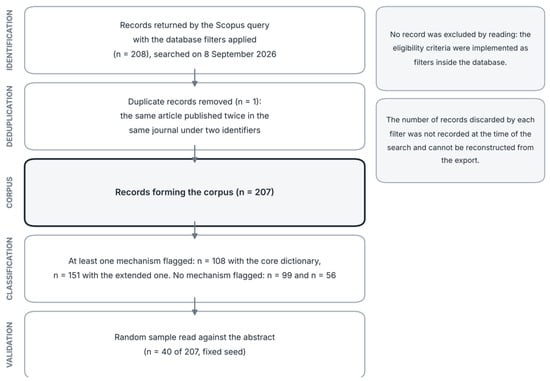
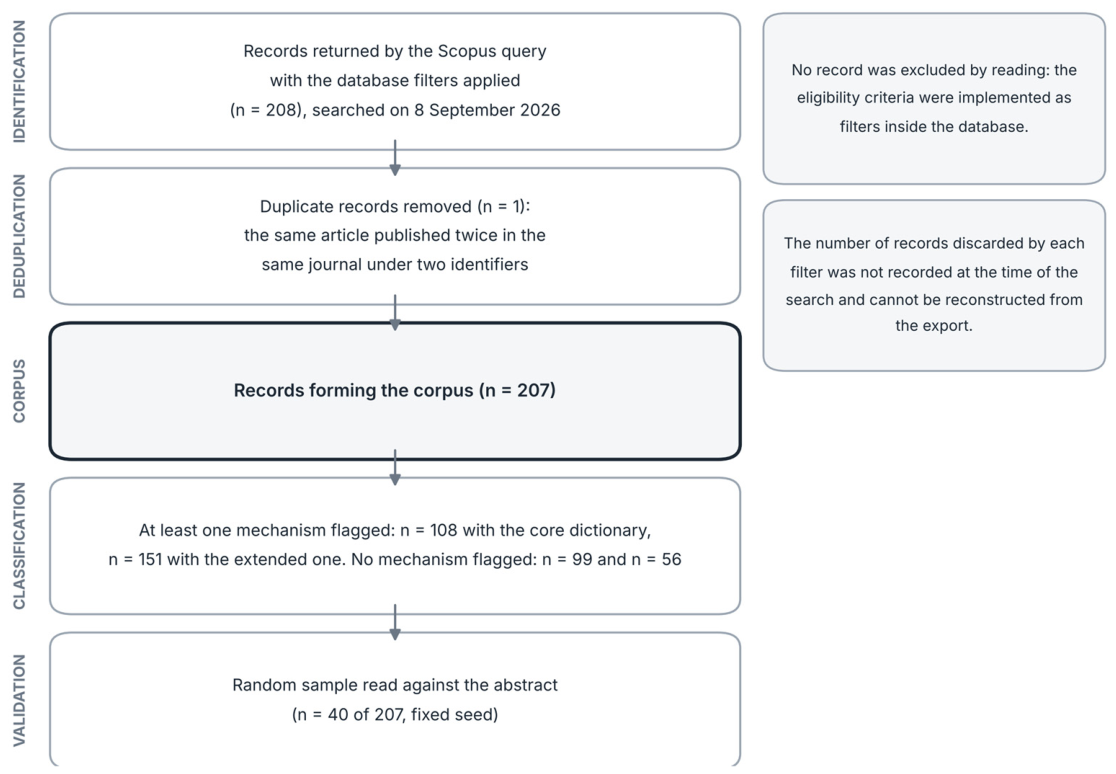

Disclaimer/Publisher’s Note: The statements, opinions and data contained in all publications are solely those of the individual author(s) and contributor(s) and not of MDPI and/or the editor(s). MDPI and/or the editor(s) disclaim responsibility for any injury to people or property resulting from any ideas, methods, instructions or products referred to in the content. |
© 2026 by the authors. Licensee MDPI, Basel, Switzerland. This article is an open access article distributed under the terms and conditions of the Creative Commons Attribution (CC BY) license.