


Abstract
The COVID-19 pandemic disrupted traditional financing channels, accelerating the adoption of crowdfunding as an alternative capital-raising mechanism across Africa. Limited access to finance for women entrepreneurs remains a pivotal issue globally, particularly in Africa, where most women are significantly underrepresented. This study investigates the role of gender differences in campaign design, communication, and signalling in crowdfunding success during the COVID-19 pandemic, rather than focusing on gender as a direct factor. Guided by signalling, Congruity, Feminist Economics, and Social Network theories, the research investigates whether gender-related differences in campaign presentation and communication strategies contributed to variations in funding outcomes. A quantitative research approach was adopted to analyse reward-based crowdfunding campaigns launched between March 2020 and December 2020. The study measures success through funding attainment ratios and goal achievement rates. The findings reveal nuanced gender effects, with male-led campaigns exhibiting strengths in social engagement and narrative appeal, while female-led campaigns demonstrated advantages in higher average contribution sizes. This awareness contributes to the literature on gender and entrepreneurial finance in crisis contexts, offering practical implications for platform design, policy interventions, and inclusive funding strategies in Africa’s evolving crowdfunding ecosystem. In line with the empirical results, the impact of gender is mostly indirect and mediated by campaign variables such as updates, videos, and engagement intensity.
1. Introduction
In the context of the COVID-19 pandemic, the determinants of successful crowdfunding have been found to be a function of a complex interplay between campaign characteristics, signalling processes, and uncertainty, in which gender potentially influences but does not independently impact campaign funding success. The several studies show that female-led campaigns faced a considerable “vertical success bias,” limiting their funding beyond initial goals compared to male-led campaigns [1,2,3]. Although women were more likely to reach their campaign targets, men received substantially higher funding afterwards [4,5]. This disparity was exacerbated during the pandemic, with men receiving dramatically increased backing while female-led campaigns saw less growth [6,7]. Industry type and the heightened uncertainty of the pandemic increased reliance on gender stereotypes, worsening biases against women in crowdfunding success [8]. Despite previous studies suggesting women had an advantage in crowdfunding, the pandemic revealed continued significant gender inequities in the support and funding women received [4,9]. Moreover, recent research has found that once campaign-level factors are controlled for, direct gender effects are minimised, suggesting that gender influences are primarily mediated through campaign presentation and communication processes.
During the pandemic, the number of campaigns utilising crowdfunding increased by an unprecedented amount [10]; however, general campaign success rates at the time remained low, with numerous campaigns failing to reach their fundraising targets [11]. Meanwhile, existing studies on the dynamics of the genders in the context of crowdfunding lead only to inconclusive findings; some posit that women perform on par with or ahead of men in the case of crowdfunding, while others theorise that women face undesired levels of competition in the context of crises [12,13]. Thus, the key question is not whether gender directly influences crowdfunding success, but whether it affects the effectiveness of signals used at the campaign level during a crisis, such as the COVID-19 pandemic.
This shifts the research focus from gender effects to mechanisms [14,15,16].
In Africa, in general, there is emerging but limited evidence of COVID-19-related crowdfunding. Empirical studies previously conducted on the continent have examined the drivers of crowdfunding success (e.g., target size, comment counts, duration, social-network indicators) during the COVID-19 pandemic period but have not always placed the gender dimension as the primary explanatory variable [17,18,19,20].
Signalling theory comes up frequently in crowdfunding (e.g., what campaign characteristics signal quality [21,22,23]), but few studies systematically incorporate gender as a moderator of the effectiveness of signals (i.e., do the same signals apply to women and men as creators [24,25]). There is a lot of gender-and-crowdfunding theory based on Western evidence; little conceptual work exists on African communal support mores, remittances, and gender roles as mediators of crowdfunding dynamics [26,27,28].
To address this persistent issue, the study collected data from the largest reward-based crowdfunding platform, comprising 215 crowdfunding projects in Africa from January 2020 to December 2020. The paper examines the factors associated with crowdfunding success during the COVID-19 pandemic. The research questions are as follows: (1) To what extent does the gender of the creator show a direct relationship with the success of crowdfunding in Africa during the COVID-19 pandemic, before and after the adjustment for the characteristics of the campaign? (2) To what extent do campaign-level characteristics of the campaign (such as updates, videos, duration, and funding model) mediate or absorb the differences in the success of crowdfunding related to gender?
To study the relationship between crisis and gender-specific entrepreneurial activity, we examine the COVID-19 pandemic as a case study. We evaluate its different effects on the entrepreneurial efforts of men and women within the context of reward-based crowdfunding.
The study contributes practically by providing guidance to entrepreneurs and crowdfunding platforms on how gender affects campaign success, thereby improving campaign design and targeting. It makes policy recommendations to assist women entrepreneurs in Africa, particularly in times of crisis such as the pandemic, when access to funds is constrained. It assists development goals (SDGs) by highlighting crowdfunding as an alternative financing vehicle for underrepresented populations, including women. It expands the conceptualisation of gender as a determinant of crowdfunding success in Africa, a topic underexplored in the existing literature. It addresses the question of whether Western gendered behaviour patterns (e.g., disadvantages or advantages for women) hold in Africa during times of crisis. The study utilises secondary data from African crowdfunding projects (2019–2020), contributing to methodological diversity in crowdfunding studies, which mostly over-rely on Western primary survey data. The research confirms the merit of analysing time-stamped crisis datasets (COVID-19 period), setting a precedent for analysing crowdfunding drivers in times of economic and social crisis. The research contributes to the richness of knowledge on entrepreneurial funding and crowdfunding by leveraging gender dynamics in an under-researched African setting compared to Western ones. It blends signalling, attribution, and expectancy theories to reveal how gendered knowledge informed backers’ decisions in the uncertainty of the COVID-19 pandemic.
The rest of the paper is structured as follows: Section 1.3 provides a literature review and develops the hypotheses. Section 2 presents the material, method, and conceptual framework, while Section 3 and Section 4 present the discussion of the findings. Section 5 is the conclusion.
1.1. Theoretical Framework
- Theoretical Framework: Gender Dynamics in Crowdfunding Success in Africa During the COVID-19 Pandemic
This framework lays the groundwork for exploring the relationship between gender, crowdfunding outcomes, and the specific socio-economic situation in Africa during the COVID-19 pandemic. Crowdfunding involves gathering small amounts of money from many people, usually online, to support a project or venture [29]. Collecting funds from backers is not gender-neutral [28]. Its success depends on a complicated mix of factors related to both the fund-seeker (the entrepreneur) and the fund-provider (the crowd) [30]. This framework draws on ideas from sociology, economics, and feminist studies to suggest how existing gender dynamics may have been worsened, altered, or eased in the African crowdfunding scene during the pandemic.
- Role Congruity Theory
Role Congruity Theory can be used to understand why communication approaches might be received differently depending upon the gender of the founder. The gender roles that backers use to perceive the founder’s entrepreneurial actions, such as empathy, openness, and high levels of communication, might be more likely to be associated with females, whereas stories of assertiveness and performance might be more associated with males. Therefore, communication is not just a means of sharing information; it is a means of mediating the connection between gender role expectations and legitimacy. This theory suggests that people are judged by how well their traits match the stereotypes of their social group, such as gender, and the demands of their specific role, such as being an entrepreneur [30]. In entrepreneurship and fundraising, traits such as leadership and competence often align with masculine qualities, such as assertiveness, risk-taking, and dominance [31,32]. Women entrepreneurs frequently face a “double bind.” If they display traits commonly seen as feminine, like warmth and cooperativeness, they may be viewed as less capable leaders [30]. Conversely, if they show traits typically seen as masculine, they might be criticised for breaking gender norms [33]. The pandemic crisis portrayed business ventures as high-risk activities that required strong, decisive leadership, a quality society often associates with masculine qualities [34]. As a result, women entrepreneurs seeking funding may have faced increased scrutiny over their perceived fit for the role, highlighting their “role incongruity” to potential investors. In contrast, projects that focus on social impact, care, or community support, viewed as feminine areas, might have received better acceptance and greater success [35].
- Signalling Theory
The theory of signalling holds that in an environment of high information asymmetry, investors place greater emphasis on signals than on static characteristics. On crowdfunding platforms, signals are becoming more communicational than structural [36]. The crowd reads these signals to judge the venture’s quality and the entrepreneur’s trustworthiness [37]. Key signals include human capital, like education and experience, social capital, which involves network size and endorsements, and pitch quality, such as the narrative and financial forecasts [38,39]. Gender plays a role in signalling; for example, a woman’s business experience might be undervalued compared to a man’s similar experience because of implicit bias [40]. The COVID-19 pandemic increased uncertainty, making strong, credible signals even more critical [41]. We believe that women may have needed to provide more or stronger signals to achieve the same level of trust as men. Additionally, the type of signal that worked might have changed, with signals of resilience, flexibility, and community involvement possibly being strengths of women-led networks in some African contexts, gaining importance over traditional signals such as prior growth in a stable market [42].
- Feminist Economics and Social Network Theory
Feminist economics criticises the standard economic model for overlooking unpaid care work and the gendered structure of economies [43,44]. Social network theory examines how a person’s position within a social structure affects their access to resources and information [45,46]. Before the pandemic, women, especially in Africa, carried a heavier load of unpaid care work. Feminist economics further emphasises the importance of communication, noting that women’s economic engagement is often embedded in trust, care, and relationship-based exchanges rather than in market transactions. In the context of crowdfunding, this means that communication styles are more likely to focus on social value, community benefit, and moral legitimacy, which become particularly important during times of crisis when financial decision-making becomes more values-based and socially embedded. They often operated within smaller, like-minded (gender-similar) networks [47,48]. The theory of social networks can be seen as a complement to this perspective, as it views communication as a way to activate and mobilise social networks. For example, updates, FAQs, and interactive engagement can help social ties become active support, and social capital become financial contributions. This is particularly important in Africa, where social norms, solidarity networks, and social ties mediated by digital technologies can play a crucial role in collective resource mobilisation. This situation can limit their access to larger, resource-rich, and diverse networks, which are important for successful crowdfunding [49]. School closures and health crises significantly increased domestic and care responsibilities, affecting women entrepreneurs’ time to develop and promote crowdfunding campaigns [50,51]. This creates a significant barrier to their participation and success. However, the pandemic also led to the rise in digital communities and solidarity networks [52]. Women-led initiatives that leveraged existing women-focused networks, such as market trader associations and professional women’s groups, may have found a strong alternative route to crowdfunding success [53,54].
1.2. The Conceptual Framework Conceptual Model
Through integrating these theories for the African context, this model shows the proposed relationships between the key constructs. It views the COVID-19 pandemic as a significant external event that changed the way to achieve crowdfunding success. It also explains how gender dynamics work through mediating factors and how the pandemic context influences or changes these dynamics. Thus, campaign elements such as updates, FAQs, videos, and narrative are conceptualised as mediating mechanisms that connect founders’ gender with crowdfunding success.
The COVID-19 pandemic serves as a context amplifier, where backers increasingly rely on dynamic communication signals rather than static founders’ characteristics.
In this regard, the revised conceptual framework includes the following:
- Founders’ gender as a conditioning factor that influences communication strategies and their effectiveness,
- Communication behaviours as primary mechanisms that connect founders’ gender with crowdfunding success,
- Crowdfunding success as an outcome of how effectively communication signals alleviate uncertainty, demonstrate commitment, and generate trust under crisis conditions.
Figure 1 below presents the conceptual model.
Figure 1.
The model can be represented visually and described as follows. Source: author’s own compilation.
1.3. Literature Review
Empirical studies indicate that various factors significantly impact crowdfunding success [55,56,57]. For example, visual data such as images and videos are good predictors: projects that have more pictures and videos do better than projects with none, because multimodal content creates lower information asymmetry levels and more backer interactions [58,59,60,61]. Higher goal (target) values tend to have a negative relationship with funding success: the larger the target, the harder it is to meet it, possibly because donors see it as less attainable [62,63,64,65]. Conversely, there is a positive relationship between a higher targeted amount and crowdfunding success [66,67]. Therefore, results remain inconclusive.
The length of the description is also negatively correlated with success; brief descriptions, perhaps by creating a sense of urgency and reducing sponsors’ risk perceptions, make it easier to evaluate trust [17,68]. The description’s quality and length initially increase funding and backer numbers by providing necessary details and reducing uncertainty [69]. A short description, however, may raise suspicions of low quality or illegitimacy, so an optimal length of description increases perceived trustworthiness [70,71]. Overall, description length impacts backer credibility and trust by achieving a balance between sufficient detail for transparency and engagement without causing information overload or suspicion, with the description being one of the main credibility signals in crowdfunding success
Finally, regular updates during the campaign are found to increase the chances of success by fostering commitment and transparency [17,72]. On the creator effect side, findings are more mixed: some show that influence is a function of prior experience with successful campaigns, while others see no significant effect [72,73]. The flexible funding model, under which campaigners keep all funds raised regardless of whether they reach their target, reduces donor confidence more than the fixed (all-or-nothing) model [74]. Under the fixed funding model, funds are raised only if the campaign is successful, which also serves as encouragement to supporters that the project has enough funds to be completed as stated [17]. Flexible funding generates less confidence, as donors may consider projects that continue even when clearly short of goals to be less genuine or more prone to failure [75,76]. This is because requesting partial funds could mean that the campaign cannot offer the full amount of its project. Studies have shown that since some platforms introduced flexible funding as an option, there have been drops in requested and raised amounts, especially for consumption-type loans or projects with urgent needs [77,78].
The project creator’s gender has also had some empirical consideration: some research detects no penalty for female creators, or even an advantage in some cases; but other research does detect a gender disparity, especially in more “seasoned” or repeat campaigns or in equity crowdfunding [79,80,81] (e.g., Gender differences in new venture financing: evidence from equity crowdfunding in Latin America, 2022; Gender Dynamics in Crowdfunding from Kickstarter for the year 2020).
However, there are still some gaps in this research in the literature. Firstly, the role of FAQ pages is relatively under-researched: while transparency and communication have been regarded as necessary, there is little empirical work on whether the number, quality of content, or frequency of FAQs affects success [82,83]. Secondly, interaction effects between variables are not explored sufficiently, e.g., how gender moderates goal size, duration, or video presence [84]. Thirdly, reward-based crowdfunding is the basis for these findings; it is unclear whether they generalise equally well to donation-, equity-, or loan-based crowdfunding. Fourth, “crowdfunding success” is often operationalized in different ways (e.g., “funding target met” vs. “money raised” vs. “number of supporters”), which makes knowledge comparison and synthesis challenging [85,86]. Finally, in the majority of geographic or cultural contexts (e.g., South Asia, Latin America, Africa), there are relatively fewer large-N empirical studies addressing all of these variables simultaneously, especially for more recent or less-studied variables like FAQs or threshold levels for goals in flexible funding models [87,88].
Several studies show that gender differences in fundraising performance are insignificant, especially in reward-based contexts [28,79]. Unlike traditional financial markets, crowdfunding sites are more egalitarian, and gender differences between fundraisers are less likely to influence investors’ choices. Previous studies have found that although female participants trail men in crowdfunding campaigns, male fundraisers are negatively correlated with campaign success [25,28,89]. On the other hand, female-headed campaigns tend to require greater investment and support, and they are more successful in project categories partly because they aim for lower funding levels and leverage social validation through networks such as Facebook [90]. Crowdfunding project-related factors and hypothesis development are below.
Development of Research Hypothesis
From a Feminist Economics perspective, these trends highlight how crowdfunding sites reduce structural barriers hitherto faced by women in finance and thereby create a more democratic space that seeks to advance collaboration, trust, and inclusion over vertical capital hierarchies [80,91]. Signalling Theory argues that women fundraisers can convey more powerful non-cash signals, such as credibility, commitment, and authenticity, through campaign designs and communication strategies that positively affect investor sentiment [15,92]. Prior research demonstrates that crowdfunding success is a dynamic process in which creators iteratively adjust their signals in response to backer feedback and early momentum [93,94]. Within this process, gender influences communication strategies, engagement intensity, and responsiveness, rather than exerting a uniform direct effect on success probabilities.
This difference could be strengthened by using research that emphasises the contextual suppression or transformation of social biases in crises and high-ambiguity situations [95]. Further evidence from reward-based crowdfunding also suggests that the observed gender differences tend to fade when the intensity of communication and engagement is taken into account, implying that gender operates in conjunction with, rather than independently of, campaign behaviour.
In addition, Role Congruity Theory can be employed to explain how women can succeed in crowdfunding: when their actions support communal and prosocial gender-role stereotypes (e.g., openness, empathy, cooperation), they are perceived more favourably by backers than men. Women-led campaigns may be able to capitalise on backers’ communal and prosocial qualities (Role Congruity), build higher relational trust and social network support (Social Network Theory), and send powerful non-cash credibility signals (Signalling Theory), especially during the uncertain period of the COVID-19 pandemic. Several studies on crowdfunding have shown that the roles of signal adjustment and responsiveness in iterative engagement are crucial for achieving outcomes [92,96]. Gender differences in crowdfunding success are primarily indirect, mediated by campaign-level characteristics such as communication intensity, signalling quality, and engagement mechanisms.
H1.
The gender of the crowdfunding creator has a significant influence on crowdfunding success.
As Vismara [97] and Kleinert & Volkmann [98] demonstrate, trust among investors can be increased by well-timed, well-intentioned communication, but overcommunication or communication lacking narrative structure can raise doubts or even signal distress. Previous studies have shown that institutional environments shape local trust conditions, and geographic factors play an important role in crowdfunding, particularly in emerging economies [99,100]. This interpretation is consistent with research on entrepreneurship in extreme conditions, where adaptive behaviour, communication, and risk-related decision-making are more important than identity-related characteristics [101,102].
Professional photos have a positive impact on investor confidence and campaign success because professional visual content can enhance expressiveness, credibility, and professionalism in crowdfunding campaigns [61,103]. Professional photos [53] further influence higher funding by improving affective perception and cognitive processing of the campaign, thereby enhancing investor confidence and monetary support, in line with signalling theory [104,105,106]. Empirical research shows that factors such as image clarity, colourfulness, and the extent to which imagery corroborates the campaign narrative are strongly associated with improved funding outcomes [107]. Furthermore, a professional image conveys competence and trustworthiness, which are crucial for attracting investor attention and commitment. Thus, we hypothesise below:
H2.
On Image (β3): Presenting images in the crowdfunding campaign increases the likelihood of success.
Fixed funding-based projects are perceived as less risky, thereby enhancing their appeal to more supporters [75,108]. There is evidence that flexible funding structures can make the project more appealing to potential supporters by reducing uncertainty and offering more flexible financial options [74]. That flexible funding-based projects are perceived as less risky, and therefore more appealing to more supporters, is in line with Feminist Economics and Social Network Theory in recognising that inclusive finance mechanisms expand participation and mobilise relational trust [109]. It is also supported by Signalling Theory, which holds that flexible funding signals lower project uncertainty and provide greater accessibility to sponsors. It is validated by Role Congruity Theory, which assumes that risk-reducing funding arrangements are congruent with socially expected supportive action, thereby increasing legitimacy and support, particularly for fundraisers from underrepresented groups [110,111].
Projects that employ flexible funding models are perceived as higher risks, which could attract fewer supporters [59]. This is further supported by research findings that fixed funding makes the project more appealing to potential supporters by reducing uncertainty and providing more funds than flexible funding [112,113]. Hence, a research hypothesis is proposed:
H3.
Flexible Funding (β4): Projects with flexible funding systems decrease the likelihood of crowdfunding success.
Campaigns that actively engage with FAQs are believed to enhance transparency and project success. Frequently Asked Questions (FAQs) are crucial to successful crowdfunding, as they enhance transparency and reduce information asymmetry between backers and project creators [55,72]. Role Congruity Theory defines how social role stereotypes and expectations affect perceptions in crowdfunding. Signalling Theory explains that high-quality FAQs signal quality and reduce information asymmetry between creators and backers [114,115]. Engagement with FAQs and responsiveness are dynamic indicators of commitment, credibility, and effort, especially during crises, when uncertainty is heightened [25,116]. More recent evidence indicates that updates are particularly pertinent during times of shock, such as the COVID-19 pandemic, as they indicate resilience, adaptability, and continued effort on the part of the founder [117]. Frequently Asked Questions that provide truthful answers to the most common questions ensure congruence between creators’ roles and backers’ expectations, reducing gender or role prejudices and increasing fairness in judgement, a result supported by Feminist Economics, which emphasises equitable economic participation and transparency [25,116]. Liang et al. [117] also point out that communication interaction, for example, in responding to FAQs, facilitates transparency through reducing information asymmetry and enhancing backer trust, resulting in increased support and project success. Such ongoing communication facilitates trust and accountability among supporters and creators, and thus, FAQ interaction serves as a transparency mechanism in crowdfunding [118,119].
H4.
Frequently Asked Questions (β5): Campaigns that actively interact with FAQs increase their likelihood of crowdfunding success.
Before commencing their campaigns, crowdfunding pros’ fundraisers are more likely to get it right. Experience equips fundraisers with enhanced campaign strategies, stronger networks, and better communication skills, which are essential for winning investors’ confidence and securing funds [55,89]. Studies have shown that crowdfunders with prior experience are more successful, as they have greater knowledge of platform mechanics and tactics for working with backers. The research anticipates that a campaign creator’s prior crowdfunding experience will positively affect crowdfunding success, as Feminist Economics and Social Network Theory suggest that experienced individuals have greater relational capital and access to helpful networks [120]. Signalling Theory asserts that experience transmits a signal of credibility and reduces information asymmetry for likely backers, while Role Congruity [116,118] Theory anticipates that experienced fundraisers will be evaluated as competent and aligned with their desired leadership roles, thereby contributing to campaign support and success [120,121]. In addition, experienced crowdfunding fundraisers have higher success rates due to their improved strategies, network influence, and platform expertise [122]. Thus, a hypothesis is put forward below:
H5.
Experience (β6): An entrepreneur’s experience in crowdfunding campaigns increases their likelihood of success.
Fundraising duration indicates the period from the start of the campaign until its conclusion. Earlier studies have suggested that an effective crowdfunding campaign should not exceed 40 days [122,123]. The research hypothesis is that project duration has a nonlinear impact on crowdfunding success, with moderate duration optimising visibility and support. Still, an extremely long duration repels perceived urgency and trustworthiness, as longer horizons may signal lower confidence (Signalling Theory) [67]. Therefore, it adversely impacts women-led campaigns due to systemic time-based opportunity costs, as emphasised in Feminist Economics [66,124]. Prior findings indicate that the length of crowdfunding campaigns is inversely related to their success, suggesting that longer campaigns are less likely to succeed [125,126]. This is because a longer duration communicates a negative message to investors, raises backers’ doubts about the project, and reduces the chances of a successful campaign. Longer crowdfunding campaign durations can help garner greater initial attention. Yet excessively long campaigns will reduce the perception of urgency of funding the project and undermine success [126]. Research suggests campaigns lasting 30 to 45 days offer a reasonable trade-off, providing sufficient time for promotion and gathering momentum while maintaining a sense of urgency that stimulates backer action [127]. Campaigns that run longer than this risk backer fatigue and momentum loss, leading to lower funding rates and diminished interest [128]. The hypothesis put forward is as follows:
H6.
Duration (β7): Longer duration of a crowdfunding campaign decreases the likelihood of success.
Solodoha and Rosenboim (2024) [104] highlights the importance of updates in strategic narratives, suggesting that updates that verify project credibility, social value, or milestones of progress are more successful than other forms of communication. In the African context of COVID-19, where uncertainty and a lack of trust were particularly prevalent, updates may have served as micro-signals of strength and legitimacy, helping creators reassure supporters that projects remained on track despite challenging circumstances.
The update cadence is positively associated with crowdfunding success [67,89]. The study hypothesis posits that a higher update frequency will positively affect crowdfunding success, as frequent updates signal project legitimacy, enhance social interaction, and foster network support [104]. The project updates align with inclusive participation models, ensuring equal visibility (Feminist Economics) and enhancing perceptions of the campaign creator’s competence and leadership in line with expected social roles [25]. However, updates on some topics, such as third-party certification, are sometimes negatively impactful. Overall, there is a potential benefit to increasing the frequency and information richness of updates, thereby raising backers’ interest and improving funding outcomes.
H7.
Update Frequency (β8): Frequent updates during the crowdfunding campaign increase the likelihood of success.
This goes a long way in explaining why video presence appears to be the strongest predictor of success in the empirical model. In a similar manner, the positive and significant influence of video presence should be understood to convey more than a quality signal. Videos provide a powerful multimodal trust signal that humanises the entrepreneur, offering backers an opportunity to evaluate credibility beyond the text-based narrative. The existing literature has shown that videos increase affective trust and relational commitment by providing backers with an opportunity to evaluate tone, confidence, and sincerity [60,98]. In a crisis situation, such as the COVID-19 pandemic, video communication can be particularly effective because it fills the gap left by the lack of physical interaction and enhances perceptions of transparency and accountability.
The inclusion of video in a crowdfunding campaign is expected to significantly increase its likelihood of success, as videos are credibility-enhancing signals that reduce information asymmetry [59,60]. The use of video mobilises trust and relational commitment in virtual communities [129,130]. The challenge is the stereotypical gendered expectations of entrepreneurial presence (Role Congruity Theory) and the empowerment of marginalised voices through democratising access to financial capital (Feminist Economics) [36]. The following hypothesis is put forward:
H8.
Video (β9): The presence of video in a crowdfunding campaign increases the likelihood of success.
Larger goal sizes are also negatively correlated with successful campaigning because they involve higher perceived financial risk, which signals lower feasibility to potential donors [37], reinforces gendered assumptions that women-run campaigns may be less likely to be able to achieve high goal levels [131,132], and limits the capacity to leverage dense social networks that are central to trust building and resource mobilisation for fundraising [45].
Conversely, if the funding goal is not met, indicating that the crowdfunding is unsuccessful, the money will be refunded to the investors. Most investors opt for smaller investments to avoid significant losses. There is widespread evidence that funding objectives influence funding outcomes. Research has shown that smaller funding amounts are simpler to secure via investment and, as a result, are more likely to succeed in crowdfunding [38,89,133]. Empirical studies indicate that the amount of funding sought in crowdfunding initiatives on the Kickstarter platform is directly and proportionately linked to the project’s success [88,134]. In other words, the smaller the funding target, the higher the likelihood of success. Therefore, the subsequent hypothesis is suggested.
H9.
Goal Amount (β): Larger goal amounts negatively correlate with campaign success.
2. Materials and Methods
This study used secondary data from three major reward-based crowdfunding platforms: Kickstarter, Indiegogo, and FundRazr. The dataset included projects initiated in 54 African countries from January 2019 to December 2020. Data points included gender (male or female), presence of images, funding model (fixed or flexible), frequently asked questions, entrepreneur’s experience, campaign length (in days), updates, videos, and goal amount. Previous studies have shown that legal systems, financial inclusion, cultural norms, and trust conditions are major factors that influence crowdfunding activities, especially in emerging and developing countries [100,101,102].
Model 1 OLS regression analysis
Model 2 Logistic regression analysis
Drawing on common practice in crowdfunding research [38,123]. The Table 1 below presents the measurement of the variables.
Table 1.
Measurements of crowdfunding variables.
3. Results and Discussion of Findings
Table 2 below presents descriptive statistics, including the mean, median, standard deviation, minimum, maximum, skewness, and kurtosis.
Table 2.
Descriptive statistics.
The crowdfunding success rate has a mean of 0.15, indicating that, on average, only 15% of campaigns were successful. The median is 0, confirming that most campaigns did not meet their targets. The distribution is positively skewed at 1.92 and leptokurtic, with a kurtosis of 4.70, indicating that many campaigns achieved high success rates. Gender (coded 1 for male, 0 for female) has a mean of 0.61, suggesting that about 61% of campaigns were started by men. The distribution is relatively balanced, with a negative skew at −0.47, meaning that men led slightly more campaigns. IM (Image presence) has a mean of 0.76, indicating that around 76% of campaigns included images. The variable is negatively skewed at −1.21, showing that including images was common. FXF (Fixed vs. Flexible funding) has a mean of 0.56, suggesting that just over half of campaigns used fixed funding models. Its distribution is slightly left-skewed, with a skewness of −0.25. The availability of FAQs (frequently asked questions) is rare, with a mean of 0.14, indicating that only 14% of campaigns included them. This variable is highly skewed at 8.20, with extreme kurtosis of 73.68, indicating that FAQ usage was rare but sometimes very extensive. EXP (Experience) has a mean of 0.24, indicating that approximately 24% of campaign creators had prior crowdfunding experience. The skewness of 1.24 suggests most creators lacked prior experience. DRN (Campaign duration) averages 42 days with a median of 41. Campaign lengths vary widely, with a standard deviation of 17.60 and a range of 3 to 67 days. UPD (Number of updates) has a mean of 1.59 but a highly skewed distribution, with a maximum of 41 updates. Most campaigns provided few or no updates. VD (Video presence) shows a mean of 0.55, meaning that just over half of campaigns included a video. The distribution is nearly symmetrical, with a skewness of −0.22. TA (Target amount, log-transformed) has a mean of 9.29, a median of 9.21, and a range of 5.89 to 15.94. The distribution is moderately skewed (0.53) and close to normal, with a kurtosis of 3.49. The Table 3 below presents the correlation matrix.
Table 3.
Correlation matrix.
Crowdfunding success is positively and significantly correlated with IM (0.15), FAQ (0.23), EXP (0.25), UPD (0.49), and VD (0.15). This means that including images, FAQs, videos, updates, and experience increases the chances of campaign success. On the other hand, it is negatively correlated with FXF (−0.20), DRN (−0.19), and TA (−0.19). This suggests that fixed funding, longer campaign durations, and higher targets lower the likelihood of success. UPD (updates) shows the strongest correlation with success (0.49 *), indicating that frequent communication with backers is key to success. Gender shows a weak negative correlation with success (−0.11 *), suggesting slight gender differences in campaign outcomes. The relationships among the predictors are mostly low to moderate. Notable associations include EXP with UPD (0.39), IM with FXF (−0.19), DRN with TA (0.34), and UPD with FAQ (0.23). Table 4 below illustrates multicollinearity using variance inflation factors.
Table 4.
Variance inflation factor.
- Multicollinearity
The correlation values do not indicate significant multicollinearity, as none of the coefficients exceed the commonly cited threshold of 0.70 [134]. The highest correlation between EXP and UPD is 0.39, well below the critical limit. All explanatory variables can stay in the regression model without risking inflated standard errors or unstable estimates.
3.1. Regression Analysis
The study employed an ordinary least squares (OLS) regression to examine the determinants of crowdfunding success in Africa during the COVID-19 pandemic. Table 5 presents the results.
Table 5.
Illustrates the ordinary least squares regression analysis.
The model explains about 31% of the variance in crowdfunded success (R2 = 0.312; Adjusted R2 = 0.282). While small, this explanatory capability is typical in behavioural and entrepreneurial research where outcomes are responsive to many unobservable factors. The combined model is statistically significant (F = 10.32, p < 0.001), concluding that the predictors collectively explain variation in crowdfunded success. The Durbin–Watson statistic (1.97) is close to 2, showing no serious autocorrelation in the residuals. The non-significant coefficient for gender in the OLS and logistic regression models indicates that the success rates of male- and female-led campaigns are equivalent when the roles of communication, multimedia, updates, and goal-setting are controlled for. What is particularly noteworthy here is that the absence of a statistically significant gender coefficient does not mean that gender does not play a role in campaign success. It merely reveals that gender affects campaign success through behaviours that are highly predictive of success.
It has been demonstrated that crowdfunding campaigns are dynamic. Entrepreneurs strategically respond to the behaviours of early supporters. Moreover, a study by Hornuf & Schwienbacher [16] demonstrated that responsiveness is critical to the success of a funding campaign. In the dynamic environment of crowdfunding, the role of gender lies in how entrepreneurs seek support.
This argument is supported by the empirical results presented in the study. It has been demonstrated that the variables most closely related to the dynamic engagement strategy, particularly updates and videos, are the strongest predictors of campaign success.
The variable UPD (Updates) displays the strongest and most significant effect (β = 0.0298, t = 6.15, p < 0.001). The result implies that frequent updates significantly increase the likelihood of campaign success, underscoring the importance of frequent contact with supporters. Video presence is also positive and significant (β = 0.0928, p = 0.0387), suggesting that including a campaign video increases the probability of success, likely by enhancing credibility and engagement. Target amount is significant and negative (β = −0.0278, p = 0.0328). The latter means that more difficult fundraising targets decrease the likelihood of fundraising success, in line with the idea that overly ambitious targets deter donations. The availability of Frequently Asked Questions exerts a significant, albeit positive, effect (β = 0.0360, p = 0.0884). The evidence suggests that FAQs can enhance campaign effectiveness, though this effect is weaker than that for updates and videos. Gender, images (IM), flexible funding, experience (EXP), and duration of campaign (DRN) are statistically insignificant (p > 0.10). The finding implies that, holding other variables constant, the characteristics do not significantly affect crowdfunding effectiveness in this sample. Importantly, the lack of significance for gender indicates that male- and female-pledge campaigns had similar levels of success after controlling for other campaign characteristics. The Table 6 below presents the logistic regression analysis.
Table 6.
Logistic regression analysis.
3.2. Logistic Regression Analysis (Model Fit)
The model has a good fit. McFadden R-squared = 0.36, which is very high for binary choice models, suggesting that the predictors explain a substantial proportion of variance in access to finance. The likelihood ratio (LR) statistic is 66.65, which is highly significant (p < 0.001) and confirms that the model fits the data much better than a null model with no predictors.
Number of Updates showed a coefficient of 0.329, z = 3.90, p < 0.001, indicating that campaigns that release more updates are significantly more likely to be funded than those that release fewer updates. Each extra update increases the log odds of success, highlighting the importance of frequent interaction and communication with supporters. The video presence shows a coefficient of 1.338, z = 2.14, p = 0.033, indicating that incorporating video into the campaign increases the likelihood of crowdfunding success. Visual narratives seem to gain confidence and draw in donations.
The goal amount (Target amount, log-transformed) indicates a coefficient = −0.491, z = −2.48, p = 0.013. The greater target amounts are negatively correlated with access to finance. High-target campaigns are less likely to be funded, perhaps because supporters find them riskier or more far-fetched. The following variables showed non-significant results: GENDER, IM (images), FXF (funding model), FAQ (frequently asked questions), EXP (experience), and DRN (duration). This implies that, during the study period, the factors in question did not independently predict access to finance. Specifically, gender (coefficient = −0.70, p = 0.156) is negative but insignificant, indicating that campaigns with female leaders were slightly less successful, though the effect is statistically weak.
4. Discussion
The lack of significance of a direct gender effect, even after controlling for campaign characteristics, indicates that gender is unlikely to have been a factor in determining crowdfunding success in Africa during the COVID-19 period. Gender differences were instead mediated by observable campaign characteristics, which are consistent with signalling and role congruity theories. The study thus confirms previous research that suggests that gender differences might be neutralised by crowdfunding platforms while rewarding differential access to and use of strategic signals.
The findings make several unequivocal contributions to technology adoption and crowdfunding literature. Firstly, they resoundingly confirm the utmost importance of project updates as a variable determining the success of crowdfunding [55,89]. The “Updates” variable was incredibly robust (p < 0.01) in both models, with the highest t-statistic (6.150) and z-statistic (3.901) among the significant variables. This definitively reaffirms and strengthens the findings of Mollick [38], Wu, Ye, Jensen & Liu [135], who found updates were a primary variable, and demonstrated its decisive superiority in a multi-competing-variables model. This suggests that active, real-time communication is a good and fundamental mechanism for building and maintaining backer trust and interest throughout the campaign. The findings show that video presence and updates have the strongest and most positive influence on crowdfunding success, with the largest coefficient in the model belonging to updates. Contrary to previous crowdfunding literature, which tends to view updates as static information disclosure, the recent literature views updates as dynamic trust-building processes that occur over time during the campaign life [98,99,121].
Secondly, the study provides a subtle understanding of the contribution of multimedia elements. The presence of a video was a robust positive predictor in both models; the “Image” factor was significant within the first model but not the second, which is supported by prior studies [61,94]. This deviation adds to the literature by proposing that visual media type is significant; dynamic video content can act as a stronger and more persistent indicator of project quality and effort from the creator than a static image, a discovery that helps polish the research of Koch and Siering [136] and Blanchard, Noseworthy, Pancer, & Poole [137] on project quality indicators.
Thirdly, the robust and negative correlation of “Goal Amount” with the likelihood of success in both models (Β = −0.0278, p < 0.05; Β = −0.4906, p < 0.05) validates the established principle of strategic goal-setting [38,89]. It contributes by confirming the persistence of this effect beyond control for other quality and communication signals, underscoring its privileged position in campaign strategy [138]. This interpretation is very much in line with the literature on entrepreneurship in extreme conditions, which suggests that adaptive behaviour, learning, and communication have a stronger mediating role in shaping entrepreneurial outcomes than identity-related attributes [103,104]. Finally, the study identifies which often-suggested factors are probably less consequential. The consistent insignificance of the creators’ “Experience,” the project’s “Duration,” and “Flexible funding” negates the hypothesis that they are success drivers [8,73]. This adds to the narrowing of theoretical models by suggesting that supporters’ decisions rely more on active project communication (updates, video) than on these static campaign structures or creator experiences.
5. Conclusions
This study aimed to investigate gender dynamics in reward-based crowdfunding campaigns in Africa during the COVID-19 pandemic, with special emphasis on campaign design, communication, and signalling strategies in times of crisis. The results show that gender, in and of itself, does not have a strong and direct impact on crowdfunding campaign success. Although minor gender differences are noted in descriptive results, regression results show that these differences are weak, indirect, and context-dependent.
This study shows that communication strategies, engagement management, and dynamic signalling are far more important factors in determining campaign success during crises. Update frequency, video usage, FAQ engagement, and goal setting are the strongest predictors of campaign success. What this implies is that in times of crisis, such as during the COVID-19 pandemic, what really matters in reward-based crowdfunding campaigns is the communication strategies used to convey credibility, engagement, and trust, rather than who you are. Thus, it can be asserted that the COVID-19 pandemic further emphasised the need for dynamic, transparent, and interactive campaign practices that can partly mitigate structural or perceptual gender-related disadvantages identified in other financing contexts
Theoretically, these results extend previous gender-based theories in the study of crowdfunding. Although Role Congruity Theory and Feminist Economics Theory are useful in understanding structural background conditions, these results suggest that gender-based theories should not be considered causal or universal in the study of reward-based crowdfunding in crisis environments.
The results of this study provide stronger support for Signalling Theory. This study suggests that signals are an important factor in uncertain environments. Although gender can affect how signals are interpreted, it does not diminish the overall significance of signals. This study suggests that gender is a contextual factor in crowdfunding research.
For entrepreneurs in a crisis situation, the results provide clear and useful advice:
- Communication frequency and response: The most important predictor of success is regular communication, indicating commitment, transparency, and project progress.
- Multimedia usage: Multimedia can be used strategically to enhance credibility and emotional engagement, thus reducing information asymmetry in uncertain situations.
- Engagement mechanism management: Responding to FAQs and maintaining communication channels can boost trust and backer confidence.
- Adaptive signalling strategies: Entrepreneurs should be flexible in their signalling strategies and highlight resilience, feasibility, and social value in crises rather than depending on campaign descriptions.
- Funding targets and campaign duration: Smaller funding targets and campaign durations can be set to maintain campaign urgency.
These strategies are gender-neutral, i.e., they can be applied equally well by all entrepreneurs, irrespective of gender, thus avoiding any indirect biases that may arise in such situations.
The implications for policymakers and crowdfunding platforms are clear: less emphasis should be placed on gender-based assumptions in favour of capacity-building in communication and digital engagement skills for underrepresented groups. Incentivizing features for creators, such as updates, FAQ interaction, and goal setting, may be particularly useful for enhancing campaign success during crises. This research has several limitations, which must be addressed in subsequent research.
1. Limited Model Explanatory Power: The fact that the R-squared was 0.311 in the initial model indicates that the variables employed within the model account for only 31% of the variance in the dependent variable. This would mean that variables beyond the model account for most of the factors contributing to crowdfunding success. Future work must explore other variables, such as the role of social media sharing, project category-specific effects, linguistic style of the project description, or creator network effects [139].
2. Shortness of Qualitative Depth: The quantitative nature of the data prevents much understanding of the “why” behind the correlations. For example, while “Updates” is essential, the model itself does not explain which types of content (e.g., emotional stories, factual update reports, new rewards) are most effective. Future research could utilise content analysis or interviews to assess the qualitative characteristics of effective communication.
3. Contextual and Platform Specificity: They are based on observations from a specific platform (or set of platforms) at a given time. The effectiveness of some signals will vary depending on the crowdfunding mode (i.e., donation-based vs. equity-based) or cultural context [140]. Replication across different contexts would enhance the external validity of the results.
4. Measurement of Variables: The “Experience” construct was not as predictive, but was perhaps narrowly measured (e.g., previous campaigns). Creator experience could also have existed in other forms that were not measured, such as professional background or subject matter expertise. More exact measurements of creator credibility and human capital can be applied in future studies.
In conclusion, this paper adds to the crowdfunding literature by showing that, during systemic shocks such as the COVID-19 crisis, process-level factors are more important than demographic variables in determining success. Future research could investigate the interaction between gender and specific signalling strategies across different crowdfunding platforms and cultures, rather than treating gender as a single variable.
Funding
This research received no external funding.
Institutional Review Board Statement
Not applicable.
Informed Consent Statement
Not applicable.
Data Availability Statement
The data will be made available upon request.
Conflicts of Interest
The author declares no conflicts of interest.
References
- Andrus, J.L.; Sullivan, D.W.; Bort, J.M.; Gupta, V.K. Does gender bias remain in crowdfunding? investigating the impact of vertical success bias. Front. Entrep. Res. 2021, 41, 66–71. [Google Scholar]
- Cowden, B.J.; Creek, S.A.; Maurer, J.D. Gender role congruity and crowdfunding success. J. Small Bus. Manag. 2021, 59, S134–S152. [Google Scholar] [CrossRef] [Scilit]
- Li, Y.; Sui, S.; Wu, S. The effect of gender fit on crowdfunding success. J. Bus. Ventur. Insights 2022, 18, e00333. [Google Scholar] [CrossRef] [Scilit]
- Bapna, S.; Ganco, M. Gender gaps in equity crowdfunding: Evidence from a randomized field experiment. Manag. Sci. 2021, 67, 2679–2710. [Google Scholar] [CrossRef] [Scilit]
- Wang, Y.; Li, Y.; Wu, J.; Fu, L.; Liang, R. How the interplay of gender and culture shapes crowdfunding performance: A multilevel study. Int. J. Entrep. Behav. Res. 2023, 29, 477–505. [Google Scholar] [CrossRef] [Scilit]
- Kumar, J.; Rani, M.; Rani, G.; Rani, V. Crowdfunding adoption in emerging economies: Insights for entrepreneurs and policymakers. J. Small Bus. Enterp. Dev. 2024, 31, 55–73. [Google Scholar] [CrossRef] [Scilit]
- Sithole, S.; Ramasamy-Gurayah, T.; Beharry-Ramraj, A. Crowdfunding as an alternative financing mechanism for health innovation in developing countries. J. Dev. Financ. 2024, 18, 45–60. [Google Scholar] [CrossRef] [Scilit]
- Xie, S.; Wang, J. Crisis and Gender Disparity in Entrepreneurial Activity: Evidence from Crowdfunding. SSRN 2025, 1–37. [Google Scholar] [CrossRef] [Scilit]
- Elitzur, R.; Solodoha, E. Does gender matter? Evidence from crowdfunding. J. Bus. Ventur. Insights 2021, 16, 1–12. [Google Scholar] [CrossRef] [Scilit]
- Igra, M.; Kenworthy, N.; Luchsinger, C.; Jung, J.K. Crowdfunding as a response to COVID-19: Increasing inequities at a time of crisis. Soc. Sci. Med. 2021, 282, 114105. [Google Scholar] [CrossRef] [Scilit]
- Fan-Osuala, O. All failures are not equal: Degree of failure and the launch of subsequent crowdfunding campaigns. J. Bus. Ventur. Insights 2021, 16, e00260. [Google Scholar] [CrossRef] [Scilit]
- Greenberg, J.; Mollick, E. Activist choice homophily and the crowdfunding of female founders. Adm. Sci. Q. 2017, 62, 341–374. [Google Scholar] [CrossRef] [Scilit]
- Johnson, N.E.; Short, J.C.; Chandler, J.A.; Jordan, S.L. Introducing the contentpreneur: Making the case for research on content creation-based online platforms. J. Bus. Ventur. Insights 2022, 18, e00328. [Google Scholar] [CrossRef] [Scilit]
- Yu, W.; Fei, J.; Peng, G.; Bort, J. When a crisis hits: An examination of the impact of the global financial crisis and the COVID-19 pandemic on financing for women entrepreneurs. J. Bus. Ventur. 2024, 39, 106379. [Google Scholar] [CrossRef] [Scilit]
- Chandna, V.; Axelton, Z. Tackling gender disparity and achieving optimal distinctiveness in crowdfunding platforms. Bus. Horiz. 2025, 68, 351–360. [Google Scholar] [CrossRef] [Scilit]
- Wang, J.; Luo, J.; Zhang, X. How COVID-19 has changed crowdfunding: Evidence from GoFundMe. Front. Comput. Sci. 2022, 4, 893338. [Google Scholar] [CrossRef] [Scilit]
- Mamaro, L.P.; Sibindi, A.B. The drivers of successful crowdfunding projects in Africa during the COVID-19 pandemic. J. Risk Financ. Manag. 2023, 16, 332. [Google Scholar] [CrossRef] [Scilit]
- Saleh, S.N.; Lehmann, C.U.; Medford, R.J. Early crowdfunding response to the COVID-19 pandemic: Cross-sectional study. J. Med. Internet Res. 2021, 23, e25429. [Google Scholar] [CrossRef] [Scilit]
- Yang, Y.; Koh, Y. Is restaurant crowdfunding immune to the COVID-19 pandemic? Int. J. Contemp. Hosp. Manag. 2022, 34, 1353–1373. [Google Scholar] [CrossRef] [Scilit]
- Behl, A.; Sampat, B.; Raj, S. An empirical investigation of repeated donations on crowdfunding platforms during COVID-19. Ann. Oper. Res. 2025, 348, 1849–1877. [Google Scholar] [CrossRef] [Scilit]
- Nurbaev, V.; Au, C.H.; Hou, J.R. Exploring Crowdfunding Campaign Success—A Signaling Theory Perspective. In PACIS 2024 Proceedings; AIS eLibrary: Atlanta, GA, USA, 2024; pp. 1–10. Available online: https://aisel.aisnet.org/pacis2024/track06_dpe/track06_dpe/7 (accessed on 13 January 2026).
- Tajvarpour, M.H.; Pujari, D. The influence of narrative description on the success of crowdfunding campaigns: The moderating role of quality signals. J. Bus. Res. 2022, 149, 123–138. [Google Scholar] [CrossRef] [Scilit]
- Wasti, S.M.H.A.; Ahmed, J.; Khan, M.H. Role of successive rounds as a quality signal in equity crowdfunding: Novel evidence from the perspective of investors’ preferences. PLoS ONE 2024, 19, e0297820. [Google Scholar] [CrossRef] [Scilit]
- Kleinert, S.; Mochkabadi, K. Gender stereotypes in equity crowdfunding: The effect of gender bias on the interpretation of quality signals. J. Technol. Transf. 2022, 47, 1640–1661. [Google Scholar] [CrossRef] [Scilit]
- Bonvino, C.; Bosio, A.O.; Giudici, G. Gender disparity in the participation to equity crowdfunding campaigns. Financ. Res. Lett. 2025, 74, 106744. [Google Scholar] [CrossRef] [Scilit]
- Ismaila, B. The state of crowdfunding in Africa and its potential impact: A literature review. Int. J. Res. Bus. Soc. Sci. 2023, 12, 258–268. [Google Scholar] [CrossRef] [Scilit]
- Singh, B.; Srivastava, S.; Chaudhuri, R.; Chatterjee, S.; Vrontis, D. Assessing the entrepreneurial business performance from a dynamic capability and TOE framework: Moderating role of crowdfunding support. J. Small Bus. Enterp. Dev. 2025, 32, 620–645. [Google Scholar] [CrossRef] [Scilit]
- Serwaah, P.; Shneor, R.; Nyarko, S.A.; Nielsen, K.R. Explaining gender differences in crowdfunding contribution intentions. Technol. Soc. 2024, 76, 102425. [Google Scholar] [CrossRef] [Scilit]
- Zakharkin, O.O.; Zakharkina, L.S.; Pokhylko, S.V.; Khreshchik, O.S. Development of crowdfunding as an innovative method of social projects funding. Financ. Crédit. Act. Probl. Theory Pract. 2019, 2, 509–517. [Google Scholar] [CrossRef] [Scilit]
- Mamaro, L.P.; Sibindi, A.B.; Godi, N.J. The Determinants of Reward-Based Crowdfunding Success in Africa. Risks 2025, 13, 94. [Google Scholar] [CrossRef] [Scilit]
- Gupta, P.; Singh, S.; Ghosh, R.; Kumar, S.; Jain, C. Regulatory framework on governing equity crowdfunding: A systematic literature review and future directions. J. Financ. Regul. Compliance 2024, 32, 421–444. [Google Scholar] [CrossRef] [Scilit]
- Thébaud, S. Status beliefs and the spirit of capitalism: Accounting for gender biases in entrepreneurship and innovation. Soc. Forces 2015, 94, 61–86. [Google Scholar] [CrossRef] [Scilit]
- Rudman, L.A.; Phelan, J.E. Backlash effects for disconfirming gender stereotypes in organizations. Res. Organ. Behav. 2008, 28, 61–79. [Google Scholar] [CrossRef] [Scilit]
- Anglin, A.H.; Courtney, C.; Allison, T.H. Venturing for others, subject to role expectations? A role congruity theory approach to social venture crowd funding. Entrep. Theory Pract. 2022, 46, 421–448. [Google Scholar] [CrossRef] [Scilit]
- Spence, M. Signaling in retrospect and the informational structure of markets. Am. Econ. Rev. 2002, 92, 434–459. [Google Scholar] [CrossRef] [Scilit]
- Ahlers, G.K.; Cumming, D.; Günther, C.; Schweizer, D. Signaling in equity crowdfunding. Entrep. Theory Pract. 2015, 39, 955–980. [Google Scholar] [CrossRef] [Scilit]
- Mollick, E. The dynamics of crowdfunding: An exploratory study. J. Bus. Ventur. 2014, 29, 1–16. [Google Scholar] [CrossRef] [Scilit]
- Courtney, C.; Dutta, S.; Li, Y. Resolving information asymmetry: Signaling, endorsement, and crowdfunding success. Entrep. Theory Pract. 2017, 41, 265–290. [Google Scholar] [CrossRef] [Scilit]
- Eddleston, K.A.; Ladge, J.J.; Mitteness, C.; Balachandra, L. Do you see what I see? Signaling effects of gender and firm characteristics on financing entrepreneurial ventures. Entrep. Theory Pract. 2016, 40, 489–514. [Google Scholar] [CrossRef] [Scilit]
- Colombo, M.G.; Montanaro, B.; Vismara, S. What drives the valuation of entrepreneurial ventures? A map to navigate the literature and research directions. Small Bus. Econ. 2023, 61, 59–84. [Google Scholar] [CrossRef] [Scilit]
- Bernardino, S.; Santos, J.F. Crowdfunding: An exploratory study on knowledge, benefits and barriers perceived by young potential entrepreneurs. J. Risk Financ. Manag. 2020, 13, 81. [Google Scholar] [CrossRef] [Scilit]
- Folbre, N. Measuring care: Gender, empowerment, and the care economy. J. Hum. Dev. 2007, 7, 183–199. [Google Scholar] [CrossRef] [Scilit]
- Elson, D. The economic, the political and the domestic: Businesses, states and households in the organisation of production. New Political Econ. 1998, 3, 189–208. [Google Scholar] [CrossRef] [Scilit]
- Granovetter, M. Network sampling: Some first steps. Am. J. Sociol. 1976, 81, 1287–1303. [Google Scholar] [CrossRef] [Scilit]
- Burt, M.G. The justification for applying the effective-mass approximation to microstructures. J. Phys. Condens. Matter 1992, 4, 6651. [Google Scholar] [CrossRef] [Scilit]
- Chant, S. Exploring the “feminisation of poverty” in relation to women’s work and home-based enterprise in slums of the Global South. Int. J. Gend. Entrep. 2014, 6, 296–316. [Google Scholar] [CrossRef] [Scilit]
- World Bank. The Global Findex Database 2021: Financial Inclusion, Digital Payments, and Resilience in the Age of COVID-19; World Bank: Washington, DC, USA, 2022; Available online: https://www.worldbank.org/en/publication/globalfindex (accessed on 4 May 2025).
- Zheng, H.; Li, D.; Wu, J.; Xu, Y. The role of multidimensional social capital in crowdfunding: A comparative study in China and US. Inf. Manag. 2014, 51, 488–496. [Google Scholar] [CrossRef] [Scilit]
- UN Women. Empowering Women at Work: Government Laws and Policies for Gender Equality. 2021. Available online: https://researchrepository.ilo.org/esploro/outputs/book/Empowering-women-at-work-government-laws/995218821002676 (accessed on 20 October 2025).
- Alon, T.; Doepke, M.; Olmstead-Rumsey, J.; Tertilt, M. The Impact of COVID-19 on Gender Equality; No. w26947; National Bureau of Economic Research: Cambridge, MA, USA, 2020; pp. 1–39. [Google Scholar] [CrossRef] [Scilit]
- Hajli, N.; Tajvidi, M.; Gbadamosi, A.; Nadeem, W. Understanding market agility for new product success with big data analytics. Ind. Mark. Manag. 2020, 86, 135–143. [Google Scholar] [CrossRef] [Scilit]
- Shneor, R.; Vik, A.A. Crowdfunding success: A systematic literature review 2010–2017. Balt. J. Manag. 2020, 15, 149–182. [Google Scholar] [CrossRef] [Scilit]
- Ryu, S. Antecedents and consequences of relationship motivation in reward-based crowdfunding. J. Altern. Financ. 2024, 1, 173–193. [Google Scholar] [CrossRef] [Scilit]
- Khadhraoui, F.; Ajina, A. What Drives Crowdfunding Success? An Exploration of Key Influencing Factors. Int. J. Innov. Manag. 2025, 29, 25500033. [Google Scholar] [CrossRef] [Scilit]
- Lin, S.; Liu, H. Review on the Influencing Factors of Crowdfunding Performance. Open J. Bus. Manag. 2025, 13, 1914–1939. [Google Scholar] [CrossRef]
- Liu, Z.; Ben, S.; Zhang, R. Factors affecting crowdfunding success. J. Comput. Inf. Syst. 2023, 63, 241–256. [Google Scholar] [CrossRef] [Scilit]
- Carradini, S.; Fleischmann, C. The effects of multimodal elements on success in kickstarter crowdfunding campaigns. J. Bus. Tech. Commun. 2023, 37, 1–27. [Google Scholar] [CrossRef] [Scilit]
- Mamaro, L.P.; Sibindi, A.B.; Makina, D. The Role of Campaign Descriptions and Visual Features in Crowdfunding Success: Evidence from Africa. J. Risk Financ. Manag. 2025, 18, 518. [Google Scholar] [CrossRef] [Scilit]
- Wang, R.; Xu, H.; Zhang, X. Impact of Image Content on Medical Crowdfunding Success: A Machine Learning Approach. J. Med. Internet Res. 2024, 26, e58617. [Google Scholar] [CrossRef] [Scilit]
- Kolbe, M.; Mansouri, S.; Momtaz, P.P. Why do video pitches matter in crowdfunding? J. Econ. Bus. 2022, 122, 106081. [Google Scholar] [CrossRef] [Scilit]
- Pinkow, F.; Emmerich, P. Re-examining crowdfunding success: How the crowdfunding goal moderates the relationship of success factors and crowdfunding performance. Cent. Eur. Bus. Rev. 2021, 10, 91–114. [Google Scholar] [CrossRef] [Scilit]
- Lim, J.Y. Funding Target, Number of Entrepreneurs and Venture Stage: Optimizing for Success in Equity Crowdfunding. Int. J. Bus. Sci. Appl. Manag. 2025, 20, 35–50. [Google Scholar] [CrossRef] [Scilit]
- Park, S.Y.; Loo, B.T. The use of crowdfunding and social media platforms in strategic start-up communication: A big-data analysis. In Start-Up and Entrepreneurial Communication; Routledge: London, UK, 2024; pp. 197–215. [Google Scholar] [CrossRef] [Scilit]
- Pinkow, F. The impact of common success factors on overfunding in reward-based crowdfunding: An explorative study and avenues for future research. J. Entrep. Manag. Innov. 2022, 18, 131–167. [Google Scholar] [CrossRef] [Scilit]
- Yasar, B.; Yılmaz, I.S.; Hatipoğlu, N.; Salih, A. Stretching the success in reward-based crowdfunding. J. Bus. Res. 2022, 152, 205–220. [Google Scholar] [CrossRef] [Scilit]
- Pan, X.; Dong, L. What determines the success of charitable crowdfunding campaigns? Evidence from China during the COVID-19 pandemic. Volunt. Int. J. Volunt. Nonprofit Organ. 2023, 34, 1284–1298. [Google Scholar] [CrossRef] [Scilit] [PubMed]
- Xu, D.; Hong, H.; Deng, L.; Zhang, X. Crowdfunding Success Factors: A Meta-Analytic Investigation. Inf. Syst. Res. 2025, 36, 1–23. [Google Scholar] [CrossRef] [Scilit]
- Adeniji, J.; Essuman, D.; Olabode, O.E. Saying enough vs saying too much: Lessons on optimizing project risk description for crowdfunding success in developing countries. Technovation 2026, 149, 103354. [Google Scholar] [CrossRef] [Scilit]
- Ellman, M.; Hurkens, S. Fraud tolerance in optimal crowdfunding. Econ. Lett. 2019, 181, 11–16. [Google Scholar] [CrossRef] [Scilit]
- Cai, W.; Polzin, F.; Stam, E. Crowdfunding and social capital: A systematic review using a dynamic perspective. Technol. Forecast. Soc. Change 2021, 162, 120412. [Google Scholar] [CrossRef] [Scilit]
- Elrashidy, Z.; Haniffa, R.; Sherif, M.; Baroudi, S. Determinants of reward crowdfunding success: Evidence from COVID-19 pandemic. Technovation 2024, 132, 102985. [Google Scholar] [CrossRef] [Scilit]
- Han, J.; Jiang, P.; Hua, M.; Childs, P.R. An exploration of the role of creativity in crowdfunding product design projects. Proc. Des. Soc. 2023, 3, 535–544. [Google Scholar] [CrossRef] [Scilit]
- Wang, Y.; Gu, M.; Huo, B.; Zhao, H. How do crowdfunding models impact crowdfunding performance? The mediating role of backers’ ambiguity and herding effects. Inf. Manag. 2025, 63, 104265. [Google Scholar] [CrossRef] [Scilit]
- Moy, N.; Chan, H.F.; Septianto, F.; Mathmann, F.; Torgler, B. Confidence is Good? too Much, not so Much: Exploring the effects on crowdfunding success. J. Bus. Res. 2024, 182, 114711. [Google Scholar] [CrossRef] [Scilit]
- Prasetyo, M.T.; Dazki, E. Enhancing Donation-Based Crowdfunding with Togaf & AI: Sustainability Case Study at Foundation XYZ. Indones. Interdiscip. J. Sharia Econ. (IIJSE) 2025, 8, 7261–7277. [Google Scholar] [CrossRef]
- Menyeh, B.O.; Acheampong, T. Crowdfunding renewable energy investments: Investor perceptions and decision-making factors in an emerging market. Energy Res. Soc. Sci. 2024, 114, 103602. [Google Scholar] [CrossRef] [Scilit]
- Yoo, J.J.; Kang, S. The Effect of Crowdfunding Models in Microfinance: Evidence from Kiva. Singap. Econ. Rev. 2025, 2025, 1–30. [Google Scholar] [CrossRef] [Scilit]
- Gafni, H.; Marom, D.; Robb, A.; Sade, O. Gender dynamics in crowdfunding (Kickstarter): Evidence on entrepreneurs, backers, and taste-based discrimination. Rev. Financ. 2021, 25, 235–274. [Google Scholar] [CrossRef] [Scilit]
- Groza, M.P.; Groza, M.D.; Barral, L.M. Women backing women: The role of crowdfunding in empowering female consumer-investors and entrepreneurs. J. Bus. Res. 2020, 117, 432–442. [Google Scholar] [CrossRef] [Scilit]
- Lin, T.C.; Pursiainen, V. Gender differences in reward-based crowdfunding. J. Financ. Intermediation 2023, 53, 101001. [Google Scholar] [CrossRef] [Scilit]
- Gupta, S.; Raj, S.; Gupta, S.; Sharma, A. Prioritising crowdfunding benefits: A fuzzy-AHP approach. Qual. Quant. 2022, 57, 379–403. [Google Scholar] [CrossRef] [Scilit]
- Chandler, J.A.; Dushnitsky, G.; Elitzur, R.; Hopp, C.; Kincaid, P.A.; Short, J.C. Reviewing recent crowdfunding research: Collective findings from the Journal of Business Venturing Insights. J. Bus. Ventur. Insights 2022, 18, e00354. [Google Scholar] [CrossRef] [Scilit]
- Kao, T.W.; Hsiao, S.H.; Su, H.C.; Ku, C.H. Deriving execution effectiveness of crowdfunding projects from the fundraiser network. J. Manag. Inf. Syst. 2022, 39, 276–301. [Google Scholar] [CrossRef] [Scilit]
- Zhao, K.; Wang, H.; Wang, W. Women entrepreneurs who break through in reward-based crowdfunding: The influence of entrepreneurial orientation. Sustainability 2023, 15, 9276. [Google Scholar] [CrossRef] [Scilit]
- Prasobpiboon, S.; Ratanabanchuen, R.; Chandrachai, A.; Triukose, S. Success factors in project fundraising under reward-based crowdfunding platform. Acad. Entrep. J. 2021, 27, 1–20. [Google Scholar]
- Hou, Y.; Phillips, R. A Comparative Study of Success Factors and Challenges for Reward-Based Crowdfunding Campaigns in The UK and China. SSRN 2024, 1–25. [Google Scholar] [CrossRef] [Scilit]
- Gómez-Olmedo, A.M.; Diéguez, M.E.; Pascual, J.A.V. Redefining success in innovative crowdfunding projects: Empirical evidence of effective mindful consumption promotion in Kickstarter. J. Innov. Knowl. 2024, 9, 100558. [Google Scholar] [CrossRef] [Scilit]
- Borrero-Domínguez, C.; Cordón-Lagares, E.; Hernández-Garrido, R. Analysis of success factors in crowdfunding projects based on rewards: A way to obtain financing for socially committed projects. Heliyon 2024, 6, e03744. [Google Scholar] [CrossRef] [Scilit]
- Zhou, Y.; Cui, J.; Wang, N. Do backers prefer crowdfunding or pre-order? An empirical study. Front. Psychol. 2022, 13, 984775. [Google Scholar] [CrossRef] [Scilit] [PubMed]
- Gao, H.; Wang, X.; Li, X.; Cotte, J. Crowdfunding Success for Female Versus Male Entrepreneurs Depends on Whether a Consumer Versus Investor Decision Frame Is Salient. J. Mark. Res. 2025, 62, 274–293. [Google Scholar] [CrossRef] [Scilit]
- Williams, D.; Wessels, B. Crowdfunding as an Alternative Way for Women-Led SMEs in Scotland to Access Finance; The Productivity Institute: Manchester, UK, 2025; pp. 1–24. Available online: https://www.productivity.ac.uk/wp-content/uploads/2025/09/THEMAT3.pdf (accessed on 20 October 2025).
- Liao, Y.C. Gender and quality signals: How does gender influence the effectiveness of signals in crowdfunding? J. Small Bus. Manag. 2021, 59, S153–S192. [Google Scholar] [CrossRef] [Scilit]
- Kuppuswamy, V.; Bayus, B.L. Does my contribution to your crowdfunding project matter? J. Bus. Ventur. 2017, 32, 72–89. [Google Scholar] [CrossRef] [Scilit]
- Hornuf, L.; Schwienbacher, A. Market mechanisms and funding dynamics in equity crowdfunding. J. Corp. Financ. 2018, 50, 556–574. [Google Scholar] [CrossRef] [Scilit]
- Kanze, D.; Huang, L.; Conley, M.A.; Higgins, E.T. We ask men to win and women not to lose: Closing the gender gap in startup funding. Acad. Manag. J. 2018, 61, 586–614. [Google Scholar] [CrossRef] [Scilit]
- Vismara, S. Sustainability in equity crowdfunding. Technol. Forecast. Soc. Change 2019, 141, 98–106. [Google Scholar] [CrossRef] [Scilit]
- Kleinert, S.; Volkmann, C. Equity crowdfunding and the role of investor discussion boards. Ventur. Cap. 2019, 21, 327–352. [Google Scholar] [CrossRef] [Scilit]
- Cumming, D.; Meoli, M.; Vismara, S. Investors’ choices between cash and voting rights: Evidence from dual-class equity crowdfunding. Res. Policy 2019, 48, 103740. [Google Scholar] [CrossRef] [Scilit]
- Anglin, A.H.; Short, J.C.; Drover, W.; Stevenson, R.M.; McKenny, A.F.; Allison, T.H. The power of positivity? The influence of positive psychological capital language on crowdfunding performance. J. Bus. Ventur. 2018, 33, 470–492. [Google Scholar] [CrossRef] [Scilit]
- Maymoni, L.; Solodoha, E. Crowdfunding beyond borders: Geographic disparities in crowdfunding success. J. Bus. Ventur. Insights 2025, 23, e00520. [Google Scholar] [CrossRef] [Scilit]
- Bullough, A.; Renko, M.; Myatt, T. Danger zone entrepreneurs: The importance of resilience and self–efficacy for entrepreneurial intentions. Entrep. Theory Pract. 2014, 38, 473–499. [Google Scholar] [CrossRef] [Scilit]
- Williams, T.A.; Shepherd, D.A. Building resilience or providing sustenance: Different paths of emergent ventures in the aftermath of the Haiti earthquake. Acad. Manag. J. 2016, 59, 2069–2102. [Google Scholar] [CrossRef] [Scilit]
- Solodoha, E.; Rosenboim, M. Entrepreneurship in extremes: The mediating role of risk-taking on entrepreneurial intentions during war. J. Innov. Entrep. 2025, 14, 111. [Google Scholar] [CrossRef] [Scilit]
- Wang, W.; Qin, Y.; Zheng, X.; Mou, J. Effect of Cover Image Content Orientation on Crowdfunding Performance: The Role of Narrative Emotion and Campaign Nature. Inf. Manag. 2025, 63, 104257. [Google Scholar] [CrossRef] [Scilit]
- Shneor, R.; Zhao, L.; Goedecke, J.F.M. On relationship types, their strength, and reward crowdfunding backer behavior. J. Bus. Res. 2023, 154, 113294. [Google Scholar] [CrossRef] [Scilit]
- Shneor, R.; Maehle, N.; Munim, Z.H.; Rykkja, A. What drives crowdfunding intentions of artist-entrepreneurs?–Evidence from Norway. Int. J. Entrep. Innov. 2024, 25, 1–24. [Google Scholar] [CrossRef] [Scilit]
- Guimarães, A.D.; Munim, Z.H.; Maehle, N.; Rykkja, A.; Bonet, L. Cultural and Creative Crowdfunding: How Project Categories Shape Adoption and Success on Kickstarter. J. Arts Manag. Law Soc. 2025, 55, 321–339. [Google Scholar] [CrossRef] [Scilit]
- Otte, P.P.; Maehle, N. The combined effect of success factors in crowdfunding of cleantech projects. J. Clean. Prod. 2022, 366, 132921. [Google Scholar] [CrossRef] [Scilit]
- Yang, J.; Li, Y.; Calic, G.; Shevchenko, A. How multimedia shape crowdfunding outcomes: The overshadowing effect of images and videos on text in campaign information. J. Bus. Res. 2020, 117, 6–18. [Google Scholar] [CrossRef] [Scilit]
- Li, C.; Li, X.; Wang, J.; Pan, M.; Gao, W. Signaling effect in social network and charity crowdfunding: Empirical analysis of charity crowdfunding of Sina MicroBlog in China. Front. Psychol. 2022, 13, 944043. [Google Scholar] [CrossRef] [Scilit] [PubMed]
- Escudero, S.B.; Anglin, A.H.; Allison, T.H.; Wolfe, M.T. Crowdfunding: A theory-centered review and roadmap of the multidisciplinary literature. J. Manag. 2025, 52, 131–184. [Google Scholar] [CrossRef] [Scilit]
- Zhai, Y.; Shen, W. Signaling theory in charity-based crowdfunding: Investigating the effects of project creator characteristics and text linguistic style on fundraising performance. Heliyon 2024, 10, e25756. [Google Scholar] [CrossRef] [Scilit]
- Steigenberger, N.; Garz, M.; Cyron, T. Signaling theory in entrepreneurial fundraising and crowdfunding research. J. Small Bus. Manag. 2025, 63, 1830–1855. [Google Scholar] [CrossRef] [Scilit]
- Zribi, S.; Khoufi, W. Signalling Strategy and Success of Crowdfunding Campaign. Int. J. Bus. Soc. 2022, 23, 1921–1938. [Google Scholar] [CrossRef] [Scilit]
- Theunissen, P.; Millone, M. Gender effects in crowdfunded business loan campaigns. PLoS ONE 2024, 19, 0305601. [Google Scholar] [CrossRef] [Scilit]
- Liang, L.; Xie, J.; Ren, J.; Wang, J.; Wang, C. Does transparency facilitate the fundraising capacity of public welfare crowdfunding? An empirical examination on Weibo. Ind. Manag. Data Syst. 2024, 124, 1846–1876. [Google Scholar] [CrossRef] [Scilit]
- Efrat, K.; Gilboa, S. Relationship approach to crowdfunding: How creators and supporters interaction enhances projects’ success. Electron. Mark. 2020, 30, 899–911. [Google Scholar] [CrossRef] [Scilit]
- Park, J.; Na, H.J. The impact of ESG content on the relationship between investor response and online crowdfunding success. Appl. Econ. Lett. 2025, 32, 1–7. [Google Scholar] [CrossRef] [Scilit]
- Yang, L.; Lehman, D.W.; Wang, Z. Falling from Grace: Understanding Successful Crowdfunding Experiences in Serial Entrepreneurship. J. Assoc. Inf. Syst. 2025, 26, 506–542. [Google Scholar] [CrossRef] [Scilit]
- Huang, S.; Pickernell, D.; Battisti, M.; Nguyen, T. Signalling entrepreneurs’ credibility and project quality for crowdfunding success: Cases from the Kickstarter and Indiegogo environments. Small Bus. Econ. 2022, 58, 1801–1821. [Google Scholar] [CrossRef] [Scilit]
- Bafera, J.; Kleinert, S. Signaling theory in entrepreneurship research: A systematic review and research agenda. Entrep. Theory Pract. 2023, 47, 2419–2464. [Google Scholar] [CrossRef] [Scilit]
- Shneor, R.; Zhao, L.; Flåten, B.T. Introduction: From fundamentals to advances in crowdfunding research and practice. In Advances in Crowdfunding: Research and Practice; Springer International Publishing: Cham, Switzerland, 2020; Available online: https://link.springer.com/chapter/10.1007/978-3-030-46309-0_1 (accessed on 16 October 2025).
- Salahaldin, L.; Varma, V.S.; Elayoubi, S.E. When and how to intervene for saving an entrepreneur’s crowdfunding campaign. Financ. Res. Lett. 2022, 50, 103189. [Google Scholar] [CrossRef] [Scilit]
- Salahaldin, L.; Angerer, M.; Kraus, S.; Trabelsi, D. A duration-based model of crowdfunding project choice. Financ. Res. Lett. 2019, 29, 404–410. [Google Scholar] [CrossRef] [Scilit]
- Jin, B.; Zhao, H.; Chen, E.; Liu, Q.; Ge, Y. Estimating the days to success of campaigns in crowdfunding: A deep survival perspective. Proc. AAAI Conf. Artif. Intell. 2019, 33, 4023–4030. [Google Scholar] [CrossRef] [Scilit]
- dos Santos Felipe, I.J.; Mendes-Da-Silva, W.; Leal, C.C.; Santos, D.B. Reward crowdfunding campaigns: Time-to-success analysis. J. Bus. Res. 2022, 138, 214–228. [Google Scholar] [CrossRef] [Scilit]
- Raab, M.; Schlauderer, S.; Overhage, S.; Friedrich, T. More than a feeling: Investigating the contagious effect of facial emotional expressions on investment decisions in reward-based crowdfunding. Decis. Support Syst. 2020, 135, 113326. [Google Scholar] [CrossRef] [Scilit]
- Ferreira, V.; Papaoikonomou, E.; Terceno, A. Unpeel the layers of trust! A comparative analysis of crowdfunding platforms and what they do to generate trust. Bus. Horiz. 2022, 65, 7–19. [Google Scholar] [CrossRef] [Scilit]
- Moysidou, K.; Hausberg, J.P. In crowdfunding we trust: A trust-building model in lending crowdfunding. J. Small Bus. Manag. 2020, 58, 511–543. [Google Scholar] [CrossRef] [Scilit]
- Eagly, A.H.; Karau, S.J. Role congruity theory of prejudice toward female leaders. Psychol. Rev. 2002, 109, 573–598. [Google Scholar] [CrossRef] [Scilit]
- Nelson, J.A. Feminism and economics. J. Econ. Perspect. 1995, 9, 131–148. [Google Scholar] [CrossRef] [Scilit]
- Edem, D.I.; Zhao, H.; Dedei, O.A.N.; Elijah, D. Determinant factors of crowdfunding success and its influence on SMEs in West African countries. J. Enterprising Cult. 2021, 29, 109–139. [Google Scholar] [CrossRef] [Scilit]
- van Otterloo, S. Measuring project success: The fulfillment rate of crowdfunded projects on Kickstarter. Comput. Soc. Res. J. 2022, 4, 1–14. [Google Scholar] [CrossRef] [Scilit]
- Gujarati, D.N. Essentials of Econometrics; Sage Publications: Thousand Oaks, CA, USA, 2021. [Google Scholar]
- Wu, Y.; Ye, H.; Jensen, M.L.; Liu, L. Impact of project updates and their social endorsement in online medical crowdfunding. J. Manag. Inf. Syst. 2024, 41, 73–110. [Google Scholar] [CrossRef] [Scilit]
- Koch, J.A.; Siering, M. Crowdfunding success factors: The characteristics of successfully funded projects on crowdfunding platforms. In Proceedings of the 23rd European Conference on Information Systems, Münster, Germany, 4 April 2015; pp. 1–15. [Google Scholar]
- Blanchard, S.J.; Noseworthy, T.J.; Pancer, E.; Poole, M. Extraction of visual information to predict crowdfunding success. Prod. Oper. Manag. 2023, 32, 4172–4189. [Google Scholar] [CrossRef] [Scilit]
- Westerlund, M.; Singh, I.; Rajahonka, M.; Leminen, S. Technology project summaries as a predictor of crowdfunding success. Technol. Innov. Manag. Rev. 2021, 11, 33–44. [Google Scholar] [CrossRef] [Scilit]
- Parhankangas, A.; Renko, M. Linguistic style and crowdfunding success among social and commercial entrepreneurs. J. Bus. Ventur. 2017, 32, 215–236. [Google Scholar] [CrossRef] [Scilit]
- La, L.; Jang, S.S. How signal portfolios affect success in equity-based crowdfunding: Evidence from the Chinese hotel industry. Int. J. Hosp. Manag. 2024, 123, 103938. [Google Scholar] [CrossRef] [Scilit]
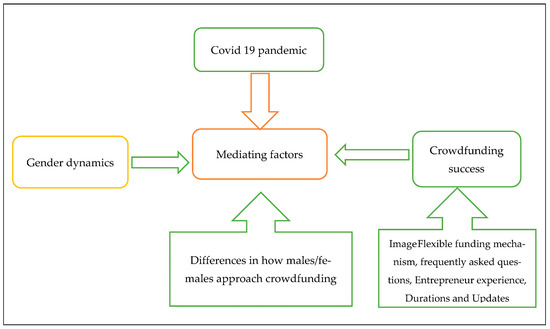
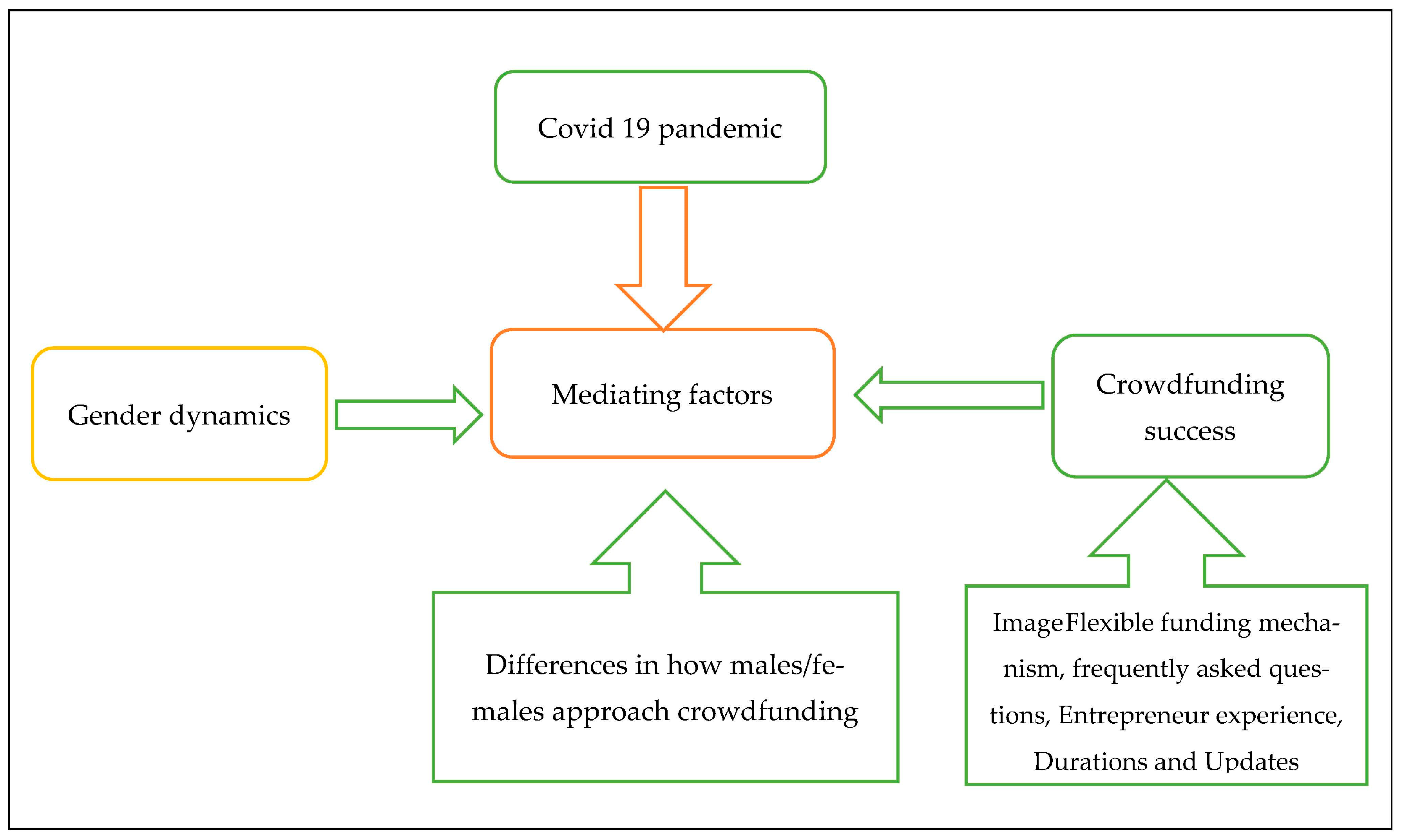

Disclaimer/Publisher’s Note: The statements, opinions and data contained in all publications are solely those of the individual author(s) and contributor(s) and not of MDPI and/or the editor(s). MDPI and/or the editor(s) disclaim responsibility for any injury to people or property resulting from any ideas, methods, instructions or products referred to in the content. |
© 2026 by the author. Licensee MDPI, Basel, Switzerland. This article is an open access article distributed under the terms and conditions of the Creative Commons Attribution (CC BY) license.