1. Introduction
Substance misuse and addiction impact many adults in the United States (U.S.), and according to the National Survey on Drug Use and Health (NSDUH), in 2021, 17.3% of Americans over the age of 18 met the criteria for a substance use disorder (SUD) in the past year [
1]. A concerning aspect of substance misuse is the lack of treatment seeking and treatment retention. Of individuals living with a past year SUD, 4.5% reported needing or wanting treatment [
1]. However, only 1.9% reported receiving services for their substance use disorder at any type of treatment center (e.g., residential treatment, outpatient treatment, individual therapy) [
1]. Treatment for SUDs can promote relapse prevention skills, healthy coping mechanisms, co-occurring disorders, and abstinence or reduced use of substances, lowering the likelihood of a substance-related death [
2,
3]. Understanding why individuals choose to enter treatment and what barriers they experience can be vital in promoting policies and interventions that encourage treatment seeking and receipt. Known factors that contribute to treatment-seeking include individual (e.g., motivation, stigma) and systemic (e.g., sociocultural, political systems) considerations [
4,
5,
6]. Understanding how SUD treatment factors changed during COVID-19 can lead to greater health equity and preparedness for future epidemics, pandemics, or other disasters that may reduce treatment accessibility.
2. Gelberg–Andersen’s Behavioral Model for Vulnerable Populations
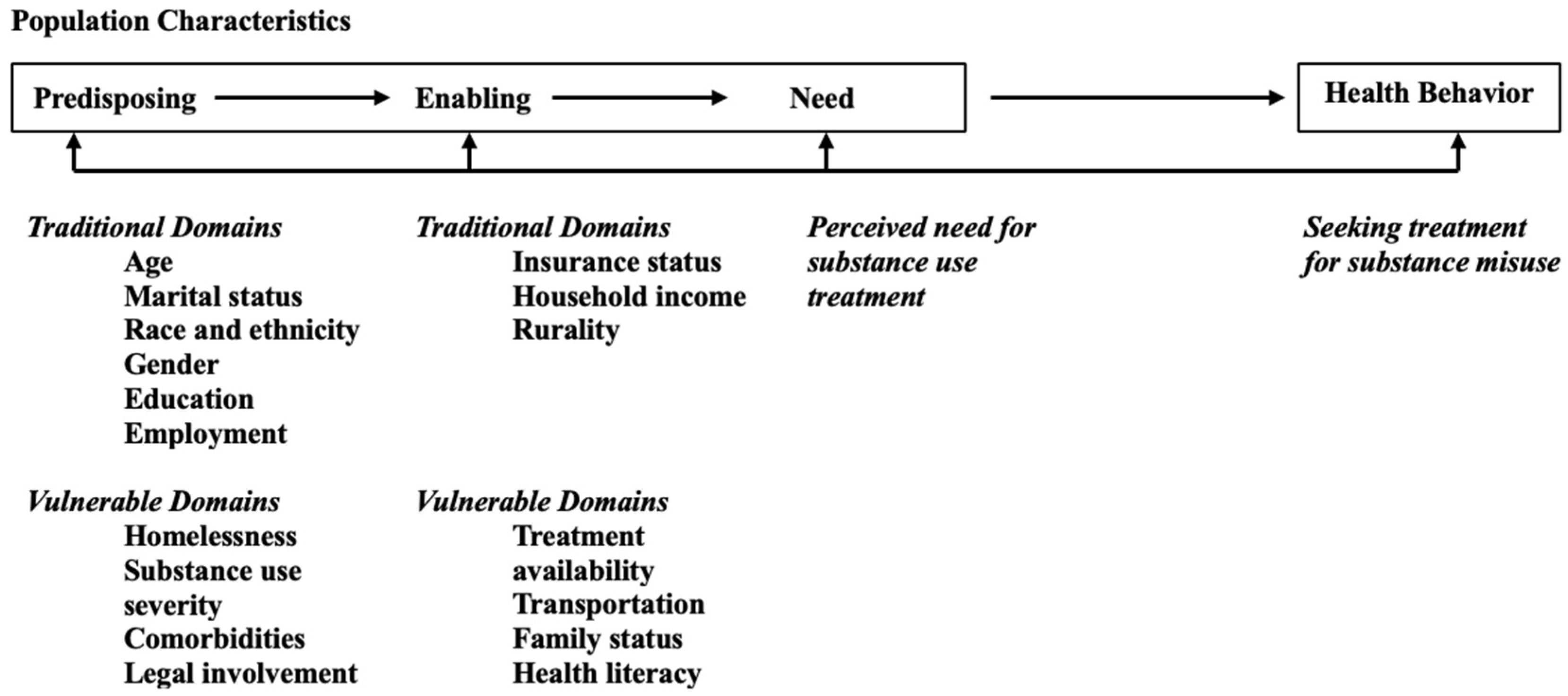
Gelberg–Andersen’s Behavioral Model for Vulnerable Populations (BMVP) has been applied to individuals who misuse substances as reasons they may or may not seek and attain treatment for their substance misuse. Developed in 1968, Andersen’s Behavioral Model (ABM) examines various determinants of health that impact a person’s decisions regarding help-seeking and medical care [
7], and in 2000, it expanded to create the BMVP as the original model may insufficiently explain health services utilization in otherwise vulnerable communities (e.g., individuals experiencing homelessness) [
8]. This model focuses on structural vulnerabilities that may inhibit someone from seeking healthcare. The original ABM incorporates three major components for help-seeking: predisposing, need, and enabling factors, and the BMVP expands to include traditional and vulnerable factors that impact treatment [
7,
8]. Traditional domains refer to commonly studied individual and structural factors that are theorized to either facilitate or impede treatment seeking, and vulnerable domains capture additional social and structural conditions associated with marginalization that create heightened barriers to accessing care [
8]. The BMVP is well-suited to assessing treatment seeking during public health emergencies, as it captures how structural constraints, service disruptions, and competing survival needs influence access to care at the population level. See
Figure 1 for examples of domains used in this study.
2.1. Predisposing, Enabling, and Need Factors Contributing to Treatment Seeking and Receipt Prior to COVID-19
Prior research has found that treatment seeking is influenced by both sociodemographic characteristics and clinical severity, with greater substance use severity and higher comorbidity associated with increased treatment receipt [
9,
10,
11,
12]. Structural vulnerabilities, including justice system involvement and housing instability, have also been linked to treatment access [
13,
14,
15,
16,
17].
Enabling factors contributing to treatment receipt for individuals with substance misuse include attitudes towards care, family influence, stigma, and health literacy [
13,
15,
17,
18,
19,
20,
21,
22,
23,
24,
25,
26,
27]. Transportation, too, contributes to overall access to treatment, as lacking transportation can contribute to missed or delayed appointments, leading to deficits in managing care [
28,
29].
Finally, perceived need for treatment is among the strongest and most consistent predictors of treatment seeking [
15,
19,
30,
31].
2.2. COVID-19 and Treatment Seeking
In January 2020, the U.S. saw its first COVID-19 case, with those numbers continuing to grow throughout the year [
32]. The COVID-19 pandemic substantially disrupted daily life and increased psychosocial stress across the population as workforce shortages, closures, and wage losses became common [
33,
34]. Many individuals faced the death of loved ones related to COVID-19, and fears rose that they could contract the virus, spread the virus to others, or die themselves [
35].
COVID-19 did not impact all who experienced it in the same way. COVID-19 exacerbated problems related to substance misuse in the U.S., as stress related to the pandemic exacerbated both mental health and substance use [
36]. Fatal overdose rates rose over 30% during COVID-19, with the U.S. crossing over 100,000 overdose-related deaths for the first time in 2021 [
37]. Close to one-third of all Americans reported an increase in alcohol use during COVID-19, and of individuals who used illicit substances, 30% reported an increase in their use [
38]. Over 50% of U.S. adults reported that the COVID-19 outbreak negatively impacted their mental health, including substance use as a maladaptive coping mechanism [
39]. Relapse for individuals with a history of substance misuse was not uncommon, as recovery supports were limited [
40]. Social support is a common coping strategy during crises; however, COVID-19 related quarantine and social distancing intensified isolation and psychological distress [
41,
42,
43,
44]. Even if individuals had wanted to seek treatment at the height of the pandemic, proper public health measures may have reduced those efforts, and individuals may have delayed treatment due to COVID-19 exposure risks [
45,
46,
47]. Although increased telehealth opportunities increased access for some, barriers related to technology access and perceived connection limited its acceptability for others [
48,
49,
50,
51].
3. The Current Study
Seeking treatment and recovery support does not happen based on individual need alone. While individuals may want care, various predisposing and enabling factors may prevent them from accessing it. Examining individual perceptions that contribute to treatment-seeking and receipt during COVID-19 is crucial. This research seeks to answer the following question: What predisposing, enabling, and need factors contributed to help-seeking during COVID-19?
Guided by Gelberg–Andersen’s BMVP, this study analyzes the individual factors contributing to treatment seeking during the COVID-19 pandemic. While research shows that substance use increased during the pandemic, little remains known about factors that led to treatment seeking during COVID-19. Emerging research shows that treatment admissions were down during COVID-19 [
52]. With the small numbers of people who perceive a need for treatment able to access care, research must consider how all predisposing, enabling, and need factors—traditional and vulnerable—are associated with treatment seeking. Knowledge of these factors is especially vital as COVID-19 exacerbated substance misuse among both the general population and those who already lived with substance misuse and substance use disorders. This research seeks to fill in gaps in the literature regarding predisposing, enabling, and need factors contributing to treatment seeking during COVID-19. Assessing how factors changed or remained the same during this unique time is vital. This study addresses the following hypotheses related to treatment seeking during COVID-19:
Hypothesis 1. Higher comorbidity and substance use severity (as a predisposing domain) will contribute to treatment seeking during COVID-19.
Hypothesis 2. Greater knowledge of and access to treatment centers and 12-step meetings in the area (as an enabling domain) will contribute to treatment seeking during COVID-19.
Hypothesis 3. Perceiving a need for treatment in the past year (as a need domain) will be associated with treatment seeking during COVID-19.
4. Methods
This study used a single-session, cross-sectional design that included individuals in the U.S. over 18 who self-identified as having a problem with alcohol or illicit substance misuse. The University of Tennessee’s Institutional Review Board (where the project was initiated) approved all procedures (Initial Approval Date: 2 September 2022; Amended Approval Date: 23 January 2023; UTK IRB-22-07103-XM).
4.1. Study Design
This study was cross-sectional in design and utilized a single-session online survey distributed through the Qualtrics XM platform (
www.qualtrics.com, Provo, UT, USA, accessed between 2 September 2022 and 31 January 2023).
4.2. Participants and Sampling Strategy
Participant inclusion criteria were (1) being at least 18 years old, (2) currently residing in the United States, and (3) self-identifying as currently having a problem with substance misuse or being in recovery from substance misuse. Exclusion criteria were (1) being 17 years old or younger, (2) not currently residing in the United States, and (3) not self-identifying as having a current or past problem with substance misuse.
Participants were recruited using a non-probability, convenience sampling. The first phase of recruitment occurred between September 2022 and January 2023. With permission of group administrators and moderators, recruitment posts were shared in public and private social media communities (e.g., Facebook and Reddit) focused on substance use recovery and peer support. A second round of recruitment was conducted through Centiment, an online survey panel provider, between December 2022 and January 2023 to increase sample size and demographic diversity. Participants recruited through social media were offered entry into a gift card drawing, and participants recruited through Centiment were compensated directly by the platform according to their panel agreement.
Potential participants encountered study advertisements through social media posts or Centiment panel invitations. Interested individuals accessed the survey link and completed a brief eligibility screening. Those who met the inclusion criteria were directed to the informed consent page prior to beginning the questionnaire, and those who did not meet the eligibility criteria were thanked for their time and removed from the survey.
4.3. Sample Power
The target sample size for this study was 153. This number was generated using G*Power (version 3.1.9.7) for logistic regression. Prior research has found that an odds ratio of 1.68 is equivalent to a Cohen’s d of 0.2, indicating the ability to see small effects [
53]. The power for this study was set at 0.80 with an alpha of 0.05. To account for missing and incomplete data, oversampling was used to reach a target sample size of 200.
4.4. Measures
The survey assessed treatment seeking during COVID-19 as the outcome variable. The primary dependent variables included: (1) predisposing factors (e.g., traditional demographics and vulnerable characteristics such as housing instability, justice involvement, substance use severity, and comorbidities); (2) enabling factors (e.g., insurance, rurality, prior treatment exposure, recovery supports, knowledge of local treatment resources, distance to services, and reliable transportation); (3) need factors (e.g., a perceived need for treatment).
4.4.1. Treatment Seeking During COVID-19
The outcome measure was self-reported treatment and recovery support seeking during the COVID-19 period. This was measured by the following question: “Have you actively sought out treatment or recovery supports (e.g., 12-step groups) during COVID-19?” This outcome was dichotomous, with “No” coded as 0 and “Yes” coded as 1. As data collection for this study occurred between September 2022 and January 2023, participants were recalling the time period up to when they took the survey (2020–2022), during which access to treatment and service delivery models varied.
4.4.2. Traditional Predisposing Factors
All traditional predisposing factors were assessed as potential confounding variables. Participants responded to several traditional predisposing factors, including age, race and ethnicity, gender, sexual orientation, education status, current employment, and marital status. Age was measured as a continuous variable. Race and ethnicity were measured categorically, where participants could select all categories that applied to them. Gender, sexual orientation, education status, current employment status, household income, and marital status were all categorical variables.
4.4.3. Vulnerable Predisposing Factors
Vulnerable predisposing factors measured by participants were housing status, past legal involvement, substance use severity, and comorbid conditions. Housing status was a categorical question, with participants stating their typical past-year arrangements. For past legal status, participants answered if they had ever been arrested, had ever experienced any past incarceration or probation or parole, or were currently awaiting sentencing or on probation or parole. All responses to these items were dichotomous “Yes” or “No.”
Additional confounding vulnerable predisposing factors included information about substance use and health conditions. Participants answered questions about their lifetime use of substances and if they experienced a relapse in the last year. Participants also answered questions related to their method of ingestion of substances. Participants also responded dichotomously to whether or not they had a health condition.
For hypothesis one, the primary variables of interest were substance use severity and co-morbid health and mental health diagnoses. Several questions regarding participants’ mental health and physical health comorbidities and substance use severity addressed the predisposing domains of hypothesis one. Individuals first answered whether they have ever been diagnosed with or treated for a mental health condition. The responses to this answer were dichotomous. If individuals responded “yes,” they were asked if they were currently receiving treatment for their mental health. Individuals also answered the Patient Health Questionnaire-4 (PHQ-4), an ultra-brief screening scale for anxiety and depression used in clinical and research settings [
54]. Due to issues with normality, a binary variable was created for those with likely depression or anxiety (1) and those who did not meet PHQ-4 criteria for likely depression and anxiety (0).
Two questions assessed comorbid health conditions and symptoms. The first question was a categorical item pulled from the 2019 National Survey on Drug Use and Health, which asked, “Please read the list and select all of the conditions that a doctor or other health care professional has ever told you that you have. Select all that apply.” These responses were then dichotomized, and an individual was viewed as either having a comorbid condition (1) or not having a comorbid health condition (0). The second question asked about the individuals’ perceptions of their physical health. Responses range from 1 (“Poor”) to 5 (“Excellent”). Finally, this study used the Mini-International Neuropsychiatric Interview (MINI) as a proxy for diagnosing substance use disorder [
55]. As substance use severity can lead to treatment receipt, a binary variable was created to indicate individuals who likely meet the criteria for a severe substance use disorder (1) and individuals who do not meet MINI criteria for a severe substance use disorder (0).
Transformation of the PHQ-4 and MINI Scores. Although logistic regression does not require the assumption of normality, it is important to assess all variables to determine how they perform and avoid biasing the results [
56,
57,
58]. The PHQ-4 and MINI scores in this sample were highly skewed, with limited variability, and most participants exceeded screening thresholds. For these reasons, binary variables were created to avoid attenuation of correlations and give more power to those who scored low on the MINI and PHQ-4 [
59]. As substance use severity can lead to treatment receipt, a binary variable was created to indicate individuals who likely meet the criteria for a likely severe substance use disorder (1) and individuals who do not meet MINI criteria for likely severe substance use disorder (0). For the PHQ-4, a score of three or greater indicates likely depression or anxiety. A binary variable was created for those with likely depression or anxiety (1) and those that did not meet PHQ-4 criteria for likely depression and anxiety (0). These cut points were created using clinical thresholds, acknowledging the loss of information inherent in dichotomization.
4.4.4. Traditional Enabling Factors
Traditional enabling domains were used as confounding variables and included U.S. geographical location, rurality, income, and insurance status. U.S. geographical location was a categorical variable defined by the Northeast, South, Midwest, and West census regions. Rurality was also a categorical variable in which participants indicated whether the area they lived in was rural, suburban, or urban/metro. Income was a categorical variable ranging from less than $5000 annually to $100,000 and above yearly.
4.4.5. Vulnerable Enabling Factors
Three vulnerable enabling factors were assessed as confounding variables. Participants were asked their number of dependents, which was a scale variable. Additionally, participants were asked about their past enrollment in treatment services, with the number measured as a scale variable. Finally, to assess support, participants were asked what supports they have for their recovery. This was a categorical variable with a select all that apply option.
To address hypothesis two and the primary enabling domains of interest, participants were asked about their awareness of treatment supports and accessibility in their area. Knowledge of treatment facilities was operationalized as knowing three or more facilities in their area (0 = fewer than three; 1 = 3 or more). They also indicated how far the treatment center and self-help group are from their current residence. This answer was dichotomized into a 20 min drive or less (0) and a 21 min drive or longer (1). Finally, participants responded if they have reliable transportation to attend treatment or a 12-step meeting, which was a dichotomous yes (1) or no (0).
4.4.6. Need Factors
Finally, to address hypothesis three and assess the need domain, participants were asked if they perceived a need for treatment in the past year.
4.5. Addressing Bias
Potential sources of bias include self-selection bias due to voluntary online recruitment, recall bias related to retrospective reporting of treatment seeking, and sampling bias associated with using online groups and panels for recruitment. Efforts to mitigate these biases included recruiting across multiple platforms, broad inclusion criteria, and theory-informed modeling to reduce spurious associations.
5. Data Analysis
Variables were assessed for issues with multicollinearity, and no variables were found to have VIF values greater than 2. Descriptive statistics were run on all individual demographics, substance use questions, treatment-seeking questions, and primary independent variables of interest. Before beginning multivariable analyses, bivariate analyses assessed whether any additional confounding variables impacted a person’s seeking care during COVID-19. Any significant bivariate results at the p < 0.05 level were input into the initial multivariable models. Primary predictors (e.g., comorbidity, substance use severity, knowledge of treatment centers, access to treatment centers, need for treatment) were specified a priori based on the BMVP and were evaluated at the multivariable level regardless of their bivariate associations.
To minimize criterion contamination arising from conceptual overlap between the outcome (treatment and recovery support seeking) and predictors, variables that directly reflected receipt of treatment services or formal treatment roles (e.g., 12-step sponsorship, having a therapist or treatment provider as sober support) were excluded from multivariable regression models, regardless of their bivariate association. These variables were included descriptively and initially at the bivariate level, but they were not retained in multivariable analyses to preserve conceptual independence between predictors and the outcome. Multivariable models were built using a theory-informed, purposeful selection approach rather than automated forward or backward stepwise procedures. In line with best practices for multivariable modeling, predictors were not removed solely based on non-significance as significance-driven variable selection can bias estimates and undermine model stability [
58,
60]. Intermediate models are discussed to show how BMVP domain-specific predictors contribute incrementally to treatment seeking. However, a final parsimonious model was estimated by retaining predictors that demonstrated statistically significant and theoretically consistent associations with treatment seeking across the initial domain-based models, consistent with recommendations for purposeful model selection in logistic regression [
57,
58].
Before beginning any bivariate or multivariable analyses, multiple imputation handled at the item level for the scale variables. No variables had over 1.5% missing, and no cases had over 10.5% missing, indicating acceptable levels of missing data [
61]. Little’s (1998) missing completely at random (MCAR) test provided evidence that the data used in analyses were MCAR (χ
2[143] = 142.911,
p = 0.486) [
62]. Forty total datasets were imputed.
6. Results
6.1. Descriptive Statistics
The final data set included a total of 201 participants.
Table 1 contains all descriptive information related to the predisposing, enabling, and need domains assessed in the study.
6.2. Bivariate Analysis
Point-biserial correlations were used to examine associations between dichotomized demographic variables, substance use characteristics, and treatment seeking during COVID-19. No demographic variables were significantly associated with treatment seeking. In contrast, several substance use–related factors and recovery supports were associated with treatment seeking, including lifetime use of inhalants, relapse during COVID-19, prior treatment exposure, and engagement with multiple forms of sober support (e.g., friends in recovery, therapists or treatment providers, online support communities, religious or spiritual communities, and 12-step–related supports). These results are presented in
Table 2.
6.3. Binary Logistic Regression
A base model was run with control variables identified as significant in bivariate screening analyses. More lifetime treatment attendance increased the likelihood of seeking treatment by a factor of 1.3, a religious or spiritual community by 3.3, and having friends in recovery by 2.4. Online support groups were also a notable factor, with a 4 times higher likelihood of treatment-seeking. The results of this base model can be found in
Table 3.
Subsequent intermediate models tested additional variables like substance use severity and comorbidities, access to treatment and support variables, and reliable transportation to treatment. Models were run sequentially to assess the changes brought in by each respective domain—predisposing, enabling, and need—independent from each other. The model with substance use severity and comorbidity, and the model with access to treatment and support variables, did not improve the base model’s predictive ability. However, reliable transportation increased the likelihood of seeking treatment by 3.2 times (
p = 0.048). The overall model was statistically significant (
χ2[7] = 72.56, p < 0.001), and the difference between this model and the base model was statistically significant (χ2[1] = 4.27,
p = 0.04). The results of this model are shown in
Table 4.
Extraneous variables that remained statistically non-significant across the models were removed from the final model. A final, parsimonious model was run with just the control variables that were consistently statistically significant. The enabling factor of reporting transportation to treatment and 12-step meetings was included in the final model, as was the need factor of endorsing a need for treatment during COVID-19. The results of the final model are in
Table 5. This overall model was statistically significant (χ2[6] = 85.95,
p < 0.001). All variables in this model were significantly associated with treatment seeking during COVID-19. Participants with friends in recovery were 2.3 times more likely to seek treatment, and those who had sober support in online groups and religious communities were over 3.4 times more likely to seek treatment. Those with reliable transportation to treatment were 3.3 times more likely to seek it, and those who reported a need for treatment were 4.5 times more likely to seek treatment than those who did not perceive a need.
7. Discussion
Treatment seeking during COVID-19 varied among individuals with substance misuse during the COVID-19 pandemic. Overall, 38.3% of individuals in this sample sought treatment for substance misuse during COVID-19. Hypothesis one stated that higher comorbidities and higher substance use severity would contribute to treatment seeking during COVID-19. Hypothesis two stated that greater knowledge of and access to treatment centers and 12-step groups would contribute to treatment seeking during COVID-19. Finally, hypothesis three stated that perceiving a need for treatment would be associated with treatment seeking during COVID-19. Variations were seen in enabling and need factors, with hypothesis two partly supported and hypothesis three supported. Hypothesis one, addressing predisposing factors, was unsupported.
7.1. Predisposing Factors Associated with Treatment Seeking During COVID-19
In this sample, while substance use severity and a mental health diagnosis did significantly correlate with treatment for substance misuse during COVID-19 at the bivariate level, after controlling for other variables, the relationship was no longer statistically significant. Additionally, mental health symptomology determined by the PHQ-4 and health comorbidities did not significantly correlate with or associate with treatment seeking during COVID-19. Measurement problems may have contributed to the inability to determine an associative relationship between substance use, mental health severity, and treatment seeking in this sample.
Those with higher comorbidities and substance use severity are more likely to engage in substance use treatment because they are typically already more engaged with a medical service provider and often feel more comfortable with engaging in the healthcare system [
12]. With this engagement, individuals can more easily receive a referral to specified substance misuse treatment through programming like Screening, Brief Intervention, and Referral to Treatment [
63]. Reduced in-person contact and reliance on solely telehealth may have limited opportunities for screening and referral during the pandemic. While not fully known in a population of individuals who misuse substances, emerging research shows that events like family and intimate partner violence, eating disorders, and psychological distress were more covert throughout the pandemic due to fewer interactions with care workers [
64,
65,
66,
67,
68].
Traditional predisposing factors like age, race, gender, and employment showed no significant correlation with treatment seeking in this study. This inconsistency might reflect the diverse demographics of those misusing substances, as the impact of these variables has varied across other studies. Vulnerable predisposing factors such as unstable housing and legal involvement did not correlate with treatment seeking, possibly due to sample size limitations. The COVID-19 pandemic posed additional challenges to communal living situations in substance abuse treatments and recovery homes, potentially hindering access to these services [
69,
70,
71].
7.2. Enabling Factors Associated with Treatment Seeking During COVID-19
Hypothesis two was partially supported in this sample. In the final regression model, individuals who reported reliable transportation to treatment were 3.3 times more likely to report treatment receipt during COVID-19. This supports Stewart and colleagues’ (2021) findings that even having transportation to treatment for the first session was likely to provide greater engagement in treatment overall [
72]. Lack of transportation is often cited in qualitative studies as a major barrier to treatment utilization and engagement [
28,
73], and that remained true for this sample of individuals during COVID-19. This is in line with other recent findings that assessed transportation access during COVID-19 [
74,
75]. Transportation insecurity serves as a barrier through multiple social determinants of health domains, and this insecurity needs to be addressed systemically to promote large-scale change [
76].
While knowledge of treatment centers and 12-step groups in a person’s area significantly correlated with treatment receipt, they did not statistically significantly impact treatment receipt when controlling for other variables in the model. For this sample, the ability to receive to treatment or recovery programs had more of an impact than having a greater knowledge of facilities in the area. This could be attributable to a few factors. First, this sample’s knowledge of treatment centers and sober support groups was heavily skewed, with many individuals knowing of no treatment and recovery support in their area. Over 28% of individuals knew of zero treatment centers, and 21.4% only knew of one treatment center. Even knowing one treatment facility does not ensure this agency has the services an individual needs. Not all agencies provide the same services, so if an individual wants inpatient care but only has access to outpatient, they may have to travel outside their area to receive care. Choice of treatment options remains critical to promoting treatment receipt, with reports that telehealth should be used alongside in-person options rather than replacing them [
77,
78,
79,
80].
It is possible that not knowing of treatment and 12-step groups had less of an impact on individuals who misused substances during COVID-19 due to the shift to online programming. Just as AA encouraged the shift to online meetings and a motto of “distanced but digitally connected,” many treatment centers moved to video and telephone programming to address treatment needs during COVID-19 [
50]. The complexity of online sober support is especially of interest, as those who reported sober support through online communities were 3.5 times more likely to report treatment seeking during COVID-19.
In the context of substance misuse treatment during COVID-19, the most significant control variables were the number of past treatment types attended and various recovery supports falling under enabling domains. Prior engagement in treatment and recovery support, through online groups and friends in recovery, was highly associated with future treatment seeking, as was involvement in religious or spiritual communities [
15,
17,
20,
81,
82]. However, engagement in recovery networks may both facilitate treatment seeking and be enforced by treatment engagement, highlighting the bidirectional nature of these relationships in cross-sectional data.
7.3. Need Factors Associated with Treatment Seeking During COVID-19
Perceiving a need for treatment was statistically significantly associated with treatment seeking during the COVID-19 pandemic, with individuals who perceived a need for treatment being almost four times more likely to report treatment seeking, suggesting that desire for change is critical. This supports treatment utilization literature in the years before COVID-19, as seeing a need for treatment remains a large factor for treatment seeking, regardless of other treatment factors [
15,
21,
30,
31]. Notably, 43.8% of individuals reported needing treatment in this sample, and 38.3% actively sought treatment. While less than half of the sample needed and received treatment, it was a greater rate than typically seen in the population [
1]. However, this could be anticipated as the sample was self-selected instead of randomly selected.
8. Implications and Future Directions
Findings from this study have several implications for practice, policy, and future research. According to the Center for Global Development (2021), there is a 47% to 57% probability of another deadly pandemic in the next 25 years, indicating that treatment centers, policymakers, and broader society should prepare for shutdowns to ensure continuity of care [
83]. At the practice level, results underscore the importance of reducing practical access barriers, particularly transportation, during public health disruptions. Though transportation is a barrier to care even under ideal conditions [
72,
76], where possible, treatment programs and recovery supports should integrate transportation, mobile services, and flexible scheduling into their emergency preparedness planning. Additionally, the strong association between need for treatment and help-seeking highlights the importance of proactive outreach, treatment literacy, and motivational engagement strategies, particularly during periods of social isolation.
At the systems and policy level, findings support the continued development of hybrid models that combine in-person and telehealth options, ensuring that the emergency expansions of telehealth do not inadvertently exacerbate inequities for individuals with limited digital access. Policymakers and funders should consider sustaining regular flexibilities and invest in infrastructure that supports continuity of care and choice of care during future public health emergencies and disasters.
Finally, future research should move beyond cross-sectional designs to examine longitudinal patterns of treatment engagement across different phases of public health crises. This should include how perceived need evolves over time and how structural barriers (e.g., transportation, service closures, housing instability, job loss, etc.) shape treatment trajectories. Qualitative and mixed-methods research could further highlight how individuals navigate help-seeking under conditions of disruption, particularly among populations with intersecting vulnerabilities. Comparison studies examining post-pandemic service utilization patterns may also clarify which COVID-era adaptations should be institutionalized to promote more equitable access to substance use treatment moving forward.
9. Limitations
This study is not without several limitations. First, while this sample size was large enough to see large effects, it was not large enough to potentially detect smaller effects that contributed to differences in treatment seeking during COVID-19. In the future, a greater sample size could allow for the examination of more subtle effects that impact treatment seeking. Second, recruitment occurred through online groups related to substance misuse and recruitment services, limiting generalizability to the larger population. Solely online recruitment potentially limits individuals who are less engaged in online groups related to substance misuse, as well as those who do not have access to the internet. Though this study was exploratory, using different methods, including flyering in community areas, could have allowed for better respondent variation. Third, the participants of this study did not accurately represent the population of individuals who misuse substances. This sample contained a high number of individuals who met the criteria for a severe SUD, even if they reported being in recovery from substance misuse. Individuals can misuse substances without meeting the criteria for a severe substance use disorder, and this sample skewed towards individuals with a SUD. Fourth, scale variables in this model were not normally distributed and could not be transformed to be normally distributed. They were dichotomized to avoid attenuation of correlations, limiting variability. Fifth, this study was conducted in the United States and has limited generalizability to other countries that may have different access to care.
Additionally, the timing and cross-sectional design of this study is a limitation. Given the cross-sectional, self-report design, observed associations likely reflect bidirectional relationships between engagement in recovery networks and treatment-seeking rather than unidirectional causal effects. Since recruitment occurred between September 2022 and February 2023. Vaccines became available to the general population in March of 2021 [
84], and after that time, severe illness rates fell [
85]. Mandated isolation ended in many parts of the country, and individuals were more able to engage with each other depending on their comfort level [
86]. By the time recruitment began for this study in September 2022, individuals had more choices regarding whether they wanted to engage in in-person services or online, with many still cautious about COVID-19 infection or reinfection. Individual perceptions of their treatment seeking could have been colored by how they perceive their treatment access now versus the early period of the pandemic when vaccinations were not available. Finally, this study focuses more on overall trends experienced by those who sought treatment and does not explore the nuances of individual experiences. COVID-19 disproportionately impacted those with low income and individuals from racial and ethnic minority populations [
87]. Individuals living with SUD who have intersecting marginalized identities may have faced greater challenges in treatment-seeking that are not captured by the quantitative methods employed in this research.
10. Conclusions
Findings from this study underscore that treatment seeking during COVID-19 was shaped by both structural access conditions and individual perceptions of need, highlighting the continued relevance of the BMVP for understanding help-seeking in vulnerable populations, particularly during times of crisis and social-isolation. Perceived need for treatment emerged as a driver of help-seeking, which highlight the need for treatment literacy, outreach, and motivational engagement. However, even if a person perceives a need for treatment, not being able to access treatment because of inequitable transportation poses a barrier. Together, these findings indicate that preparedness for substance use treatment should extend to include both structural access and readiness for care. Strengthening treatment infrastructure is essential to promoting equitable treatment access and preventing morbidity and mortality related to SUD during future public health emergencies.
Funding
The research received no external funding.
Institutional Review Board Statement
This study was approved by the University of Tennessee Institutional Review Board (UTK IRB-22-07103-XM, approved 2 September 2022, updated approval 23 January 2023).
Informed Consent Statement
Informed consent was obtained from all participants involved in the study.
Data Availability Statement
The raw data presented in this study are not publicly available due to institutional data-sharing restrictions; however, additional categorical descriptive statistics for all demographic variables are available upon reasonable request from the corresponding author.
Acknowledgments
Thank you to my advisor, Courtney Cronley, who supported me in this research. During the preparation of this work, the author used Grammarly in order to edit grammatical decisions, including word choice and punctuation. After using this tool/service, the author reviewed and edited the content as needed and takes full responsibility for the publication’s content.
Conflicts of Interest
The author declares no conflicts of interest.
References
- Substance Abuse and Mental Health Services Administration. 2021 NSDUH Detailed Tables. National Survey on Drug Use and Health; Health Services Administration: Rockville, MD, USA, 2023.
- Hickman, M.; Vickerman, P.; Robertson, R.; Macleod, J.; Strang, J. Promoting recovery and preventing drug-related mortality: Competing risks? J. Public Health 2011, 33, 332–334. [Google Scholar] [CrossRef] [Scilit]
- Center for Substance Abuse Treatment. What Is Substance Abuse Treatment? A Booklet for Families; Substance Abuse and Mental Health Services Administration: Rockville, MD, USA, 2014. Available online: https://store.samhsa.gov/sites/default/files/sma14-4126.pdf (accessed on 6 January 2026).
- Hewell, V.M.; Vasquez, A.R.; Rivkin, I.D. Systemic and individual factors in the buprenorphine treatment-seeking process: A qualitative study. Subst. Abus. Treat. Prev. Policy 2017, 12, 3. [Google Scholar] [CrossRef] [Scilit] [PubMed]
- Zwick, J.; Appleseth, H.; Arndt, S. Stigma: How it affects the substance use disorder patient. Subst. Abus. Treat. Prev. Policy 2020, 15, 50. [Google Scholar] [CrossRef] [Scilit] [PubMed]
- Hser, Y.-I.; Maglione, M.; Polinsky, M.L.; Anglin, M.D. Predicting drug treatment entry among treatment-seeking individuals. J. Subst. Abus. Treat. 1998, 15, 213–220. [Google Scholar] [CrossRef] [Scilit]
- Andersen, R.M. Revisiting the Behavioral Model and access to medical care: Does it matter? J. Health Soc. Behav. 1995, 36, 1–10. [Google Scholar]
- Gelberg, L.; Andersen, R.M.; Leake, B.D. The Behavioral Model for Vulnerable Populations: Application to medical care use and outcomes for homeless people. Health Serv. Res. 2000, 34, 1273–1302. [Google Scholar]
- Choi, N.G.; DiNitto, D.M.; Marti, C.N.; Choi, B.Y. Adults who misuse opioids: Substance abuse treatment use and perceived treatment need. Subst. Abus. 2019, 40, 247–255. [Google Scholar] [CrossRef] [Scilit]
- Mauro, P.M.; Samples, H.; Klein, K.S.; Martins, S.S. Discussing drug use with healthcare providers is associated with perceived need and receipt of drug treatment among adults in the United States: We need to talk. Med. Care 2020, 58, 617–624. [Google Scholar] [CrossRef] [Scilit]
- Crable, E.L.; Drainoni, M.L.; Jones, D.K.; Walley, A.Y.; Hicks, J.M. Predicting longitudinal service use for individuals with substance use disorders: A latent profile analysis. J. Subst. Abus. Treat. 2021, 132, 108632. [Google Scholar] [CrossRef] [Scilit]
- Dào, G.J.; Brunelle, C.; Speed, D. Impact of substance use and mental health comorbidity on health care access in Canada. J. Dual Diagn. 2019, 15, 260–269. [Google Scholar] [CrossRef] [Scilit]
- Liebling, E.J.; Yedinak, J.L.; Green, T.C.; Hadland, S.E.; Clark, M.A.; Marshall, B.D. Access to substance use treatment among young adults who use prescription opioids non-medically. Subst. Abus. Treat. Prev. Policy 2016, 11, 38. [Google Scholar] [CrossRef] [Scilit]
- O’Brien, P.; Henke, R.M.; Schaefer, M.B.; Lin, J.; Creedon, B. Utilization of treatment by Medicaid enrollees with opioid use disorder and co-occurring substance use disorders. Drug Alcohol Depend. 2020, 217, 108261. [Google Scholar] [CrossRef] [Scilit] [PubMed]
- Ober, A.J.; Watkins, K.E.; McCullough, C.M.; Setodji, C.M.; Osilla, K.; Hunter, S.B. Patient predictors of substance use disorder treatment initiation primary care. J. Subst. Abus. Treat. 2018, 90, 64–72. [Google Scholar] [CrossRef] [Scilit] [PubMed]
- Cox, K.B.; Malte, C.A.; Saxon, A.J. Characteristics and service utilization of homeless veterans entering VA substance use treatment. Psychol. Serv. 2017, 14, 208–213. [Google Scholar] [CrossRef] [Scilit] [PubMed]
- Timko, C.; Gupta, S.; Schultz, N.; Harris, A.H.S. Veterans’ service utilization patterns after alcohol and opioid detoxification in VHA care. Psychiatr. Serv. 2016, 67, 460–464. [Google Scholar] [CrossRef] [Scilit]
- Benz, M.B.; Cabrera, K.B.; Kline, N.; Bishop, L.S.; Reed, K.P. Fear of stigma mediates the relationship between internalized stigma and treatment seeking among individuals with substance use problems. Subst. Use Misuse 2021, 56, 808–818. [Google Scholar] [CrossRef] [Scilit]
- Benz, M.B.; Palm Reed, K.; Bishop, L.S. Stigma and help-seeking: The interplay of substance use and gender and sexual minority identity. Addict. Behav. 2019, 97, 63–69. [Google Scholar] [CrossRef] [Scilit]
- Hatch-Maillette, M.; Wells, E.A.; Doyle, S.R.; Brigham, G.S.; Daley, D.; DiCenzo, J.; Donovan, D.; Garrett, S.; Horigian, V.E.; Jenkins, L.; et al. Predictors of 12-step attendance and participation for individuals with stimulant use disorders. J. Subst. Abus. Treat. 2016, 68, 74–82. [Google Scholar] [CrossRef] [Scilit]
- Pinedo, M. A current re-examination of racial/ethnic disparities in the use of substance abuse treatment: Do disparities persist? Drug Alcohol Depend. 2019, 202, 162–167. [Google Scholar] [CrossRef] [Scilit]
- Kwon, I.; Shin, O.; Park, S.; Kwon, G. Multi-morbid health profiles and specialty healthcare service use: A moderating role of poverty. Int. J. Environ. Res. Public Health 2019, 16, 1956. [Google Scholar] [CrossRef] [Scilit]
- Haeny, A.M.; Oluwoye, O.; Cruz, R.; Iheanacho, T.; Jackson, A.B.; Fisher, S.; Crouch, M.; O’Malley, S. Drug and alcohol treatment utilization and barriers among Black, American Indian/Alaskan Native, Latine, Asian/Pacific Islander/Native Hawaiian, and White adults: Findings from NESARC-III. J. Subst. Abus. Treat. 2021, 131, 108569. [Google Scholar] [CrossRef] [Scilit] [PubMed]
- Villegas, N.A.; Chodhury, S.M.; Mitrani, V.B.; Guerra, J. Mothers in substance abuse recovery: Perspectives on motivators, challenges, and family involvement. Int. J. High Risk Behav. Addict. 2016, 6, e32558. [Google Scholar] [CrossRef] [Scilit] [PubMed]
- Murnan, A.; Ferber, M.F. Familial influences on treatment and substance use among mothers engaged in prostitution. Fam. Relat. 2021, 70, 1162–1177. [Google Scholar] [CrossRef] [Scilit]
- Seay, K.D.; Iachini, A.L.; DeHart, D.D.; Browne, T.; Clone, S. Substance abuse treatment engagement among mothers: Perceptions of the parenting role and agency-related motivators and inhibitors. J. Fam. Soc. Work. 2017, 20, 196–212. [Google Scholar] [CrossRef] [Scilit]
- Ostrach, B.; Leiner, C. “I didn’t want to be on Suboxone at first…” Ambivalence in perinatal substance use treatment. J. Addict. Med. 2019, 13, 264–271. [Google Scholar] [CrossRef] [Scilit]
- Browne, T.; Priester, M.A.; Clone, S.; Iachini, A.; DeHart, D.; Hock, R. Barriers and facilitators to substance use treatment in the rural South: A qualitative study. J. Rural. Health 2016, 32, 92–101. [Google Scholar] [CrossRef] [Scilit]
- Ngo, N.S.; Anand, K. Affordable transportation access to treatment for opioid use disorder. Transp. Policy 2024, 156, 152–163. [Google Scholar] [CrossRef] [Scilit]
- Pinedo, M. Help seeking behaviors of Latinos with substance use disorders who perceive a need for treatment: Substance abuse versus mental health treatment services. J. Subst. Abus. Treat. 2020, 109, 41–45. [Google Scholar] [CrossRef] [Scilit]
- Pinedo, M.; Villatoro, A.P. The role of perceived treatment need in explaining racial/ethnic disparities in the use of substance abuse treatment services. J. Subst. Abus. Treat. 2020, 118, 108105. [Google Scholar] [CrossRef] [Scilit]
- Centers for Disease Control Prevention [CDC]. CDCMuseum COVID-19 Timeline David, J. Sencer CDC Museum: In Association with the Smithsonian Institution. 2023. Available online: https://www.cdc.gov/museum/timeline/covid19.html#:~:text=January%2020%2C%202020,respond%20to%20the%20emerging%20outbreak (accessed on 12 November 2025).
- Taylor, S.; Landry, C.A.; Paluszek, M.M.; Fergus, T.A.; McKay, D.; Asmundson, G.J.G. COVID stress syndrome: Concept, structure, and correlates. Depress. Anxiety 2020, 37, 706–714. [Google Scholar] [CrossRef] [Scilit]
- Roy, S.; Dutta, R.; Ghosh, P. Identifying key indicators of job loss trends during COVID-19 and beyond. Soc. Sci. Humanit. Open 2021, 4, 100163. [Google Scholar] [CrossRef] [Scilit] [PubMed]
- Hoffart, A.; Johnson, S.U.; Ebrahimi, O.V. Loneliness during the COVID-19 pandemic: Change and predictors of change from strict to discontinued social distancing protocols. Anxiety Stress Coping 2022, 35, 44–57. [Google Scholar] [CrossRef] [Scilit] [PubMed]
- Panchal, N.; Kamal, R.; Cox, C.; Garfield, R. The Implications of COVID-19 for Mental Health and Substance Use; The Kaiser Family Foundation: San Francisco, CA, USA, 2021; Available online: https://pameladwilson.com/wp-content/uploads/4_5-2021-The-Implications-of-COVID-19-for-Mental-Health-and-Substance-Use-_-KFF-1.pdf (accessed on 13 November 2025).
- Kiang, M.V.; Acosta, R.L.; Kroenke, K.; Spitzer, R.L.; Williams, J.B.W.; Löwe, B. An ultra-brief screening scale for anxiety and depression: The PHQ-4. Psychosomatics 2009, 50, 613–621. [Google Scholar] [CrossRef] [Scilit] [PubMed]
- Kiang, M.V.; Acosta, R.J.; Chen, Y.-H.; Matthay, E.C.; Tsai, A.C.; Basu, S.; Glymour, M.M.; Bibbins-Domingo, K.; Humphreys, K.; Arthur, K.N. Sociodemographic and geographic disparities in excess fatal drug overdoses during the COVID-19 pandemic in California: A population-based study. Lancet Reg. Health—Am. 2022, 11, 100237. [Google Scholar] [CrossRef] [Scilit]
- Agovino, T. The COVID-19 Crisis Has Brought Substance Abuse to Light. 2021. Available online: https://www.shrm.org/hr-today/news/all-things-work/pages/covid-19-brought-substance-abuse-to-light.aspx (accessed on 13 November 2025).
- Avena, N.M.; Simkus, J.; Lewandowski, A.; Gold, M.S.; Potenza, M.N. Substance use disorders and behavioral addictions during the COVID-19 pandemic and COVID-19 related restrictions. Front. Psychiatry 2021, 12, 653674. [Google Scholar] [CrossRef] [Scilit]
- Dubey, M.J.; Ghosh, R.; Chatterjee, S.; Biswas, P.; Chatterjee, S.; Dubey, S. COVID-19 and addiction. Diabetes Metab. Syndr. Clin. Res. Rev. 2020, 14, 817–823. [Google Scholar] [CrossRef] [Scilit]
- Saltzman, L.Y.; Hansel, T.C.; Bordnick, P.S. Loneliness, isolation, and social support factors in post-COVID-19 mental health. Psychol. Trauma Theory Res. Pract. Policy 2020, 12, S55–S57. [Google Scholar] [CrossRef] [Scilit]
- Brooks, S.K.; Webster, R.K.; Smith, L.E.; Woodland, L.; Wessely, S.; Greenberg, N.; Rubin, G.J. The psychological impact of quarantine and how to reduce it: Rapid review of the evidence. Lancet 2020, 395, 912–920. [Google Scholar] [CrossRef] [Scilit]
- Jemberie, W.B.; Williams, J.S.; Eriksson, M.; Grönlund, A.-S.; Ng, N.; Nilsson, M.B.; Padyab, M.; Priest, K.C.; Sandlund, M.; Snellman, F.; et al. Substance use disorders and COVID-19: Multi-faceted problems which require multi-pronged solutions. Front. Psychiatry 2020, 11, 714. [Google Scholar] [CrossRef] [Scilit]
- Venkatesh, A.; Edirappuli, S. Social distancing in COVID-19: What are the mental health implications? BMJ 2020, 369, m1379. [Google Scholar] [CrossRef] [Scilit]
- Volkow, N. Collision of the COVID-19 and addiction epidemics. Ann. Intern. Med. 2020, 173, 61–62. [Google Scholar] [CrossRef] [Scilit] [PubMed]
- Pagano, A.; Hosakote, S.; Kapiteni, K.; Straus, E.R.; Wong, J.; Guydish, J.R. Impacts of COVID-19 on residential treatment programs for substance use disorder. J. Subst. Abus. Treat. 2021, 123, 108255. [Google Scholar] [CrossRef] [Scilit] [PubMed]
- Kumar, N.; Janmohamed, K.; Nyhan, K.; Martins, S.S.; Cerda, M.; Hasin, D.; Scott, J.; Sarpong Frimpong, A.; Pates, R.; Ghandour, L.A.; et al. Substance use in relation to COVID-19: A scoping review. Addict. Behav. 2022, 127, 107213. [Google Scholar] [CrossRef] [Scilit] [PubMed]
- Appleton, R.; Williams, J.; San Juan, N.V.; Neddle, J.J.; Schlief, M.; Jordan, H.; Sheridan Rains, L.; Goulding, L.; Badhan, M.; Roxburg, E.; et al. Implementation, adoption, and perceptions of telemental health during the COVID-19 pandemic: Systematic review. J. Med. Internet Res. 2021, 23, e31746. [Google Scholar] [CrossRef] [Scilit]
- Blandford, A.; Wesson, J.; Amalberti, R.; AlHazme, R.; Allwihan, R. Opportunities and challenges for telehealth within, and beyond, a pandemic. Lancet Glob. Health 2020, 8, E1364–E1365. [Google Scholar] [CrossRef] [Scilit]
- Molfenter, T.; Roget, N.; Chaple, M.; Behlman, S.; Cody, O.; Hartzler, B.; Johnson, E.; Nichols, M.; Stilen, P.; Becker, S. Use of telehealth in substance use disorder services during and after COVID-19: Online survey study. JMIR Ment. Health 2021, 8, e25835. [Google Scholar] [CrossRef] [Scilit]
- Tauscher, J.S.; DePue, M.K.; Swank, J.; Salloum, R.G. Determinants of preference for telehealth versus in-person treatment for substance use disorders: A discrete choice experiment. J. Subst. Use Addict. Treat. 2023, 146, 208938. [Google Scholar] [CrossRef] [Scilit]
- Mark, T.L.; Gibbons, B.; Barnosky, A.; Padwa, H.; Joshi, V. Changes in admissions to specialty addiction treatment facilities in California during the COVID-19 pandemic. JAMA Netw. Open 2021, 4, e2117029. [Google Scholar] [CrossRef] [Scilit]
- Chen, H.; Cohen, P.; Chen, S. How big is a big odds ratio? Interpreting magnitudes of odds ratios in epidemiological studies. Commun. Stat.—Simul. Comput. 2010, 39, 860–864. [Google Scholar] [CrossRef] [Scilit]
- Sheehan, D.V.; Lecrubier, Y.; Sheehan, K.H.; Janavs, J.; Weiller, E.; Keskiner, A.; Schinka, J.; Knapp, E.; Sheehan, M.F.; Dunbar, G.C. The validity of the Mini International Neuropsychiatric Interview (MINI) according to the SCID-P and its reliability. Eur. Psychiatry 1997, 12, 232–241. [Google Scholar] [CrossRef] [Scilit]
- George, D.; Mallery, P. IBM SPSS Statistics 27 Step by Step: A Simple Guide and Reference; Routledge: London, UK, 2021. [Google Scholar]
- Hosmer, D.W.; Lemeshow, S.; Sturdivant, R.X. Applied Logistic Regression; John Wiley & Sons, Inc: Hoboken, NJ, USA, 2013. [Google Scholar]
- Harrell, F.E. Regression Modeling Strategies with Applications to Linear Models, Logistic and Ordinal Regression, and Survival Analysis; Springer: Cham, Switzerland, 2015. [Google Scholar]
- Trafimow, D. The attenuation of correlation coefficients: A statistical literacy issue. Teach. Stat. 2015, 38, 25–28. [Google Scholar] [CrossRef] [Scilit]
- Babyak, M.A. What you see may not be what you get: A brief, nontechnical introduction to overfitting in regression-type models. Psychosom. Med. 2004, 66, 411–421. [Google Scholar] [CrossRef] [Scilit]
- Jakobsen, J.C.; Gluud, C.; Wetterslev, J.; Winkel, P. When and how should multiple imputation be used for handling missing data in randomized clinical trials—A practical guide with flow charts. BMC Med. Res. Methodol. 2017, 17, 162. [Google Scholar] [CrossRef] [Scilit] [PubMed]
- Little, R.J.A. A test of missing completely at random for multivariate data with missing values. J. Am. Stat. Assoc. 1988, 83, 1198–1202. [Google Scholar] [CrossRef]
- Babor, T.F.; McRee, B.G.; Kassebaum, P.A.; Grimaldi, P.L.; Ahmed, K.; Bray, J. Screening, Brief Intervention, and Referral to Treatment (SBIRT): Toward a public health approach to the management of substance abuse. Subst. Abus. 2007, 28, 7–30. [Google Scholar] [CrossRef] [Scilit] [PubMed]
- Xue, J.; Chen, J.; Chen, C.; Hu, R.; Zhu, T. The hidden pandemic of family violence during COVID-19: Unsupervised learning of tweets. J. Med. Internet Res. 2020, 22, e24361. [Google Scholar] [CrossRef] [Scilit]
- Zipfel, S.; Schmidt, U.; Giel, K. The hidden burden of eating disorders during the COVID-19 pandemic. Lancet Psychiatry 2022, 9, 9–11. [Google Scholar] [CrossRef] [Scilit]
- Livingston, J.D.; Youssef, G.J.; Francis, L.M.; Greenwood, C.J.; Olsson, C.A.; Macdonald, J.A. Hidden in plain sight? Men’s coping patterns and psychological distress before and during the COVID-19 pandemic. Front. Psychiatry 2022, 12, 772942. [Google Scholar] [CrossRef] [Scilit]
- Pinto, S.; Soares, J.; Silva, A.; Curral, R.; Coelho, R. COVID-19 suicide survivors—A hidden grieving population. Front. Psychiatry 2020, 11, 626807. [Google Scholar] [CrossRef] [Scilit]
- Biesen, J.N.; Fink, B.C.; Keeling, L.A.; Lindsey, L. The association between social contact frequency and intimate partner violence among patients with comorbid substance use and mental health disorders during COVID-19. J. Aggress. Maltreat. Trauma 2025, 34, 185–203. [Google Scholar] [CrossRef] [Scilit]
- Polcin, D.L.; Mahoney, E.; Wittman, F.; Sheridan, D.; Mericle, A.A. Understanding challenges for recovery homes during COVID-19. Int. J. Drug Policy 2021, 93, 102986. [Google Scholar] [CrossRef] [Scilit]
- Ashworth, M.; Thompson, R.; Fletcher, E.; Clancy, G.L.; Johnson, D. Recovery housing predictors of closures risk during COVID-19. J. Subst. Use 2024, 29, 162–167. [Google Scholar] [CrossRef] [Scilit]
- Jason, L.A.; Bobak, T.J.; O’Brien, J.; Majer, J. Recovery homes coping with COVID-19. J. Prev. Interv. Community 2022, 50, 151–162. [Google Scholar] [CrossRef] [Scilit] [PubMed]
- Stewart, R.E.; Shen, L.; Kwon, N.; Vigderman, J.; Kramer, S.; Mandell, D.S.; Candon, M.; Lamb, R.; Rothbard, A.B. Transporting to treatment: Evaluating the effectiveness of a mobile engagement unit. J. Subst. Abus. Treat. 2021, 129, 108377. [Google Scholar] [CrossRef] [Scilit] [PubMed]
- Scorsone, K.L.; Haozous, E.A.; Hayes, L.; Cox, K.J. Overcoming Barriers: Individual Experiences Obtaining Medication-Assisted Treatment for Opioid Use Disorder. Qual. Health Res. 2020, 30, 2103–2117. [Google Scholar] [CrossRef] [Scilit]
- Bachhuber, M.A.; Cunningham, C.O.; Lincourt, P.; Jordan, A.E. Estimation and comparison of travel burden to outpatient, opioid treatment program, and residential substance use disorder treatment programs. Subst. Use Addict. J. 2025. Online Ahead of Publication. [Google Scholar] [CrossRef] [Scilit]
- Yücel, S.G.; Higgins, C.D.; Gupta, K.; Palm, M. Public transport access to drug treatment before and during COVID-19: Implications for the opioid epidemic. Int. J. Drug Policy 2023, 116, 104032. [Google Scholar] [CrossRef] [Scilit]
- Semborski, S.; McCrae, J.S.; Cappello, D.; Courtney, K.O. Transportation insecurity as a critical social determinant of health. J. Soc. Serv. Res. 2025; Online Ahead of Publication. [CrossRef] [Scilit]
- Cales, R.H.; Cales, S.C.; Shreffler, J.; Huecker, M.R. The COVID-19 pandemic and opioid use disorder: Expanding treatment with buprenorphine, and combining safety precautions with telehealth. J. Subst. Abus. Treat. 2022, 133, 108543. [Google Scholar] [CrossRef] [Scilit]
- Qeadan, F.; Shimizu, S.; Tingey, B.; Kroth, P.J.; Markossian, T. The impact of increased telehealth use on the treatment of substance use disorder during the COVID-19 pandemic. SSM Popul. Health 2025, 30, 101780. [Google Scholar] [CrossRef] [Scilit]
- Wang, J.C. Telepsychiatry for substance use disorders: Evolution from rapid COVID-19 pandemic adoption to sustainable integration. Marshall J. Med. 2025, 11, 7. [Google Scholar] [CrossRef] [Scilit]
- Narváez-Camargo, M.; Mancheño-Velasco, C.; De la Rosa-Cáceres, A.; Sánchez, D.D.; Lozano-Rojas, O.M. Post-COVID-19 epidemiology of substance use and affective concerns. Curr. Addict. Rep. 2026, 13, 4. [Google Scholar] [CrossRef] [Scilit]
- Baptiste-Roberts, K.; Werts, N.; Coleman, K.; Hossain, M. Religious beliefs, treatment seeking, and treatment completion among persons with substance abuse problems. Addict. Health 2021, 13, 9–17. [Google Scholar] [CrossRef]
- O’Connell, M.J.; Flanagan, E.H.; Delphin-Rittmon, M.E.; Davidson, L. Enhancing outcomes for persons with co-occurring disorders through skills training and peer recovery support. J. Ment. Health 2020, 29, 6–11. [Google Scholar] [CrossRef] [Scilit]
- Smitham, E.; Glassman, A. The Next Pandemic Could Come Soon and Be Deadlier; Center for Global Development: Washington, DC, USA, 2021; Available online: https://www.cgdev.org/blog/the-next-pandemic-could-come-soon-and-be-deadlier (accessed on 16 February 2026).
- American Journal of Managed Care Staff [AJMC]. A Timeline of COVID-19 Vaccine Developments in 2021. 2021. Available online: https://www.ajmc.com/view/a-timeline-of-covid-19-vaccine-developments-in-2021 (accessed on 12 November 2025).
- Suthar, A.B.; Wang, J.; Seffren, V.; Wiegand, R.E.; Griffing, S.; Zell, E. Public health impact of COVID-19 vaccines in the US: Observational study. BMJ 2022, 377, e069317. [Google Scholar] [CrossRef] [Scilit]
- Kirby, J.; Sloane, S. Social Isolation and Loneliness: State Policies and Interventions for the Post-COVID Era; The Council on State Governments: Lexington, KY, USA, 2021. [Google Scholar]
- Kantamneni, N. The impact of the COVID-19 pandemic on marginalized populations in the United States: A research agenda. J. Vocat. Behav. 2020, 119, 103439. [Google Scholar] [CrossRef] [Scilit]
| Disclaimer/Publisher’s Note: The statements, opinions and data contained in all publications are solely those of the individual author(s) and contributor(s) and not of MDPI and/or the editor(s). MDPI and/or the editor(s) disclaim responsibility for any injury to people or property resulting from any ideas, methods, instructions or products referred to in the content. |