



Next Issue
Volume 6, February
Previous Issue
Volume 5, December


COVID, Volume 6, Issue 1 (January 2026) – 23 articles
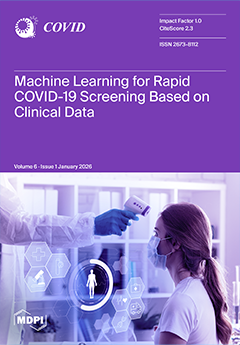
Cover Story (view full-size image): The COVID-19 pandemic necessitated rapid clinical tools to optimize healthcare resources. While molecular testing is the gold standard, delays and logistical hurdles limit its use during surges. This study introduces new computer-aided screening techniques leveraging six machine-learning algorithms—including random forests, neural networks, and support vector machines. By analyzing real-world clinical data such as demographics, vital signs, and comorbidities, the researchers developed a robust model for pre-diagnostic risk stratification. Utilizing variable importance metrics to identify 13 key predictors, the study demonstrates that kernel-based SVMs provide high predictive accuracy. This model offers a rapid, accessible screening solution for resource-constrained clinical settings. View this paper
  • Issues are regarded as officially published after their release is announced to the table of contents alert mailing list.
  • You may sign up for e-mail alerts to receive table of contents of newly released issues.
  • PDF is the official format for papers published in both, html and pdf forms. To view the papers in pdf format, click on the "PDF Full-text" link, and use the free Adobe Reader to open them.
Order results
Result details
Section
Select all
Export citation of selected articles as:
19 pages, 397 KB  
Article
Functional Dependence in Brazilian Adults One Year After COVID-19 Infection: Prevalence and Risk Factors in a Cross-Sectional Study
by Natália Milan, Carlos Laranjeira, Stéfane Lele Rossoni, Amira Mohammed Ali, Feten Fekih-Romdhane, Wanessa Baccon, Lígia Carreira and Maria Aparecida Salci
COVID 2026, 6(1), 23; https://doi.org/10.3390/covid6010023 - 20 Jan 2026
Viewed by 256
Abstract
One of the challenges post-COVID-19 is reducing the negative impacts on quality of life, performance, and independence in activities of daily living. Assessing functional dependence in adults one year after acute infection can help to understand the long-term consequences, evaluate the impact on [...] Read more.
One of the challenges post-COVID-19 is reducing the negative impacts on quality of life, performance, and independence in activities of daily living. Assessing functional dependence in adults one year after acute infection can help to understand the long-term consequences, evaluate the impact on quality of life, plan rehabilitation and healthcare, identify the most vulnerable groups, measure the socioeconomic impact, and support public policies and clinical decisions. Objectives: The objectives of this study are as follows: (a) to assess the prevalence of functional dependence in Brazilian adults with COVID-19; (b) to analyze the association between the study variables; and (c) to determine the factors associated with functional dependence. Methods: This was an observational, cross-sectional study with 987 adults (18 to 59 years old) living in the State of Paraná (Brazil) hospitalized for COVID-19 between March and December 2020. Data were collected by telephone 12 months after the acute infection using an instrument to retrieve sociodemographic and health information, and a functional dependence scale to assess dependence before COVID-19 retrospectively (using participant recall information) and at the time of the interview. Data were analyzed using penalized logistic regression after imputing missing data. Data were analyzed using penalized logistic regression after imputing missing data. Results: Functional dependence after COVID-19 was 5.0% and was associated with low levels of education, not having a partner, living with someone, not owning a home, experiencing job changes, requiring care, obesity, smoking, multimorbidity, ICU admission in the acute phase, use of invasive ventilation, or having Long COVID. Individuals who required care or used invasive ventilation support were, respectively, 9.3 and 6.5 times more likely to develop dependence after COVID-19. Despite adjustment for multiple factors, the magnitude of the observed effects warrants cautious interpretation, as unmeasured or residual confounding effects may still be present. Sample recall bias due to collection after 12 months and the presence of the alpha variant without COVID-19 vaccination coverage may limit data generalization. Conclusions: The results highlight the need to emphasize the public health implications of identifying functional dependence. In this vein, it is necessary to implement preventive measures, identify and monitor more vulnerable groups, plan rehabilitation programs, and develop public health policies. Full article
(This article belongs to the Special Issue Post-COVID-19 Muscle Health and Exercise Rehabilitation)
Show Figures

Figure 1

13 pages, 843 KB  
Article
Respiratory Rehabilitation After COVID-19: Efficacy of Inspiratory Muscle Training on Lung Function, Quality of Life and Sleep Quality: A Randomized Clinical Trial
by Jose Carlos Nóbrega Júnior, Daniella Brandão, Daiara Xavier, Roberta Torres, Simone Soares Brandão, Magno Formiga, James B. Fink, Arzu Ari, Shirley Campos and Armèle Dornelas de Andrade
COVID 2026, 6(1), 22; https://doi.org/10.3390/covid6010022 - 19 Jan 2026
Viewed by 246
Abstract
Background and Purpose: Post-COVID-19 syndrome significantly impacts respiratory function and quality of life. Inspiratory muscle training (IMT) has been proposed as a potential intervention to improve respiratory muscle strength and overall recovery. This study aimed to evaluate the effects of IMT on respiratory [...] Read more.
Background and Purpose: Post-COVID-19 syndrome significantly impacts respiratory function and quality of life. Inspiratory muscle training (IMT) has been proposed as a potential intervention to improve respiratory muscle strength and overall recovery. This study aimed to evaluate the effects of IMT on respiratory muscle performance, lung function, functional capacity, sleep quality, and quality of life in individuals with post-COVID-19 syndrome. Methods: Nineteen individuals with post-COVID-19 syndrome were randomized into an IMT group (N = 10) or a sham group (N = 9). The IMT group performed eight weeks of training at 50% of maximal inspiratory pressure (MIP), while the sham group used a non-load device. Outcomes included MIP (cm H2O), functional capacity (6MWT), lung function (spirometry), sleep quality (PSQI), and quality of life (SF-36). Results: The IMT group showed significant improvements in MIP (125.50 ± 22.50 vs. 93.67 ± 20.87 cm H2O; p = 0.036; Cohen’s d = 0.50), PSQI (4.40 ± 2.50 vs. 9.00 ± 2.80; p = 0.011; Cohen’s d = 0.60), and SF-36 (p = 0.030). The IMT group also increased 6MWT distance by 58.36 ± 25.10 m. Conclusions: IMT significantly improved respiratory muscle strength, sleep quality, and quality of life in post-COVID-19 syndrome. These findings suggest that IMT may be an effective intervention, warranting further studies to confirm long-term benefits. Full article
(This article belongs to the Section COVID Public Health and Epidemiology)
Show Figures

Graphical abstract

17 pages, 2142 KB  
Article
Longitudinal Landscape of Long Flu and Long COVID
by Ming Zheng
COVID 2026, 6(1), 21; https://doi.org/10.3390/covid6010021 - 18 Jan 2026
Viewed by 384
Abstract
Influenza is typically framed as an acute respiratory infection, yet accumulating evidence suggests that—like SARS-CoV-2—it may trigger persistent, multi-organ morbidity consistent with a post-acute infection syndrome (“long flu”). Leveraging the nationwide FinnGen registry infrastructure, we conducted a temporally stratified disease-wide association study (DWAS) [...] Read more.
Influenza is typically framed as an acute respiratory infection, yet accumulating evidence suggests that—like SARS-CoV-2—it may trigger persistent, multi-organ morbidity consistent with a post-acute infection syndrome (“long flu”). Leveraging the nationwide FinnGen registry infrastructure, we conducted a temporally stratified disease-wide association study (DWAS) to map antecedent risk factors and long-term sequelae following clinically diagnosed influenza and COVID-19. We assembled an exposed cohort comprising 9204 individuals with influenza (ICD-10 J09–J11) and 4258 individuals with COVID-19 (ICD-10 U072) recorded in specialist inpatient/outpatient care between 1998 and 2021, and an unexposed comparator cohort of 420,005 individuals with no recorded influenza or pneumonia (J09–J18) across their available medical history. Across harmonized clinical endpoints, we fitted age- and sex-adjusted Cox proportional hazards models and controlled for multiple testing using a stringent false discovery rate threshold (FDR-adjusted p < 0.001), further interrogating temporal persistence within 1-, 5-, and 15-year windows. The DWAS revealed that both infections are associated with broad, system-spanning disease signatures extending beyond the respiratory tract, including circulatory, neurological, metabolic, musculoskeletal, digestive, mental/behavioural, ocular, and oncologic endpoints. Predisposition analyses demonstrated that infection risk is concentrated in individuals with substantial pre-existing multimorbidity, most prominently cardiovascular disease, alongside cardiometabolic, respiratory, renal, neuropsychiatric, and inflammatory conditions. Post-infection analyses identified a durable burden of incident multi-system morbidity after influenza, with particularly robust and persistent cardiovascular and neurological signatures—encompassing thromboembolic disease and major adverse cardiovascular outcomes, as well as migraine, neurodegenerative disorders, and depression—together with metabolic and renal sequelae that, in subsets, extended across multi-year horizons. Collectively, these longitudinal findings reframe influenza as a systemic event embedded within a chronic disease continuum, motivate recognition of “long flu” as a clinically meaningful post-viral risk landscape, and support intensified prevention and risk-stratified surveillance strategies alongside analogous efforts for long COVID. Full article
(This article belongs to the Special Issue Post-Acute Infection Syndromes: Lessons from Long COVID and Long Flu)
Show Figures

Figure 1

16 pages, 869 KB  
Article
A Retrospective Cohort Study to Determine COVID-19 Mortality, Survival Probability and Risk Factors Among Children in a South African Province
by Asongwe Lionel Ateh Tantoh, Makhutsisa Charlotte Mokoatle and Thokozani P. Mbonane
COVID 2026, 6(1), 20; https://doi.org/10.3390/covid6010020 - 18 Jan 2026
Viewed by 171
Abstract
Numerous factors contributed to coronavirus 2019 (COVID-19) disease recovery and death rates. In many countries, socioeconomics, morbidities, the experience of symptoms and access to healthcare services are major contributors to recovery and death rates. A retrospective cohort study was conducted to determine the [...] Read more.
Numerous factors contributed to coronavirus 2019 (COVID-19) disease recovery and death rates. In many countries, socioeconomics, morbidities, the experience of symptoms and access to healthcare services are major contributors to recovery and death rates. A retrospective cohort study was conducted to determine the morbidity, mortality, survival probability, and risk factors associated with COVID-19 among children in the Free State province, South Africa. A total of 846 patients’ records were used in the study. Using SPSS version 28 software, survival probability was determined using Kaplan–Meier estimation curves and Cox regression was used to determine the effect of sociodemographics and clinical manifestation information on time of death. The COVID-19 mortality rate was 13.12% in our study. There were more female patients (60%) than male patients (40%). In total, 71 patients had two or more morbidities, while 414 patients were asymptomatic. Patients between 5 and 18 years old were at twice the risk of dying of COVID-19, and male children were at a higher risk as well. Having more than one symptom was also a risk for dying in this study. Severe COVID-19 is attributed to numerous factors, and these are closely associated with surrounding environments and public health systems. The findings are important for the clinical management of similar diseases and circumstances in the future. Full article
(This article belongs to the Special Issue Post-Acute Infection Syndromes: Lessons from Long COVID and Long Flu)
Show Figures

Figure 1

13 pages, 236 KB  
Article
Investigating Pediatric Musculoskeletal and Head Injuries During the COVID-19 Pandemic in Manitoba
by Monther Abuhantash, Luca Ramelli, Ashley Stewart-Tufescu, Tamara Taillieu, Isuru Dharmasena, Ian Laxdal, James McCammon and Tracie O. Afifi
COVID 2026, 6(1), 19; https://doi.org/10.3390/covid6010019 - 17 Jan 2026
Viewed by 159
Abstract
There is a paucity of evidence informing our understanding of how the COVID-19 pandemic affected pediatric trauma in Manitoba, Canada. The aim of this retrospective cohort study was to analyze the effect of the pandemic on pediatric trauma and its association with patients’ [...] Read more.
There is a paucity of evidence informing our understanding of how the COVID-19 pandemic affected pediatric trauma in Manitoba, Canada. The aim of this retrospective cohort study was to analyze the effect of the pandemic on pediatric trauma and its association with patients’ demographic characteristics. Pre-pandemic and pandemic patient cohorts were created, and the rates of these injuries were compared by patients’ sex, age, and area of residence. During the pre-pandemic period, ED presentations with an MSK or head injury were lower in patients from rural communities compared to urban communities (RR: 0.68, p < 0.001, RR: 0.51, p < 0.001). Hospitalizations with an MSK or head injury were higher in patients from rural communities (RR: 1.78, p < 0.001, RR: 1.14, p = 0.62). During the pandemic, MSK injury ED presentations (RR: 1.14, p = 0.037) and hospitalizations (RR: 1.78, p < 0.001) were higher in patients from rural communities. Patients from rural communities had a lower rate of head injury ED presentations (RR: 0.81, p < 0.001), but higher hospitalization rate (RR:1.96, p = 0.001). Differences in the rates of pediatric MSK and head injuries could be attributed to the limited healthcare resources in underserved rural communities. Efforts should be made to rectify these inequities to ensure fair access to healthcare for these patients. Full article
(This article belongs to the Section COVID Public Health and Epidemiology)
22 pages, 3725 KB  
Review
Health Conditions of Immigrant, Refugee, and Asylum-Seeking Men During the COVID-19 Pandemic
by Sidiane Rodrigues Bacelo, Vagner Ferreira do Nascimento, Anderson Reis de Sousa, Sabrina Viegas Beloni Borchhardt and Luciano Garcia Lourenção
COVID 2026, 6(1), 18; https://doi.org/10.3390/covid6010018 - 15 Jan 2026
Viewed by 205
Abstract
The COVID-19 pandemic exacerbated structural, social, economic, and racial inequalities affecting immigrant, refugee, and asylum-seeking men—vulnerable populations often overlooked in men’s health research. This study investigated the health conditions of immigrant, refugee, and asylum-seeking men during the COVID-19 pandemic. A scoping review was [...] Read more.
The COVID-19 pandemic exacerbated structural, social, economic, and racial inequalities affecting immigrant, refugee, and asylum-seeking men—vulnerable populations often overlooked in men’s health research. This study investigated the health conditions of immigrant, refugee, and asylum-seeking men during the COVID-19 pandemic. A scoping review was conducted following Joanna Briggs Institute guidance, and a qualitative lexical analysis (text-mining of standardized study syntheses) was performed in IRaMuTeQ using similarity analysis, descending hierarchical classification, and factorial correspondence analysis. We identified 93 studies published between 2020 and 2023 across 35 countries. The evidence highlighted vaccine hesitancy, high epidemiological risks (infection, hospitalization, and mortality), barriers to accessing services and information, socioeconomic vulnerabilities, psychological distress (e.g., anxiety and depression), and structural inequalities. Findings were synthesized into four integrated thematic categories emphasizing the role of gender constructs in help-seeking and gaps in governmental responses. Most studies focused on immigrants, with limited evidence on refugees and especially asylum seekers; therefore, conclusions should be interpreted cautiously for these groups. Overall, the review underscores the urgency of multisectoral interventions, universal access to healthcare regardless of migration status, culturally and linguistically appropriate outreach, and gender-sensitive primary care strategies to support inclusive and resilient health systems. Full article
(This article belongs to the Section COVID Public Health and Epidemiology)
Show Figures

Figure 1

18 pages, 840 KB  
Article
Utilizing Machine Learning Techniques for Computer-Aided COVID-19 Screening Based on Clinical Data
by Honglun Xu, Andrews T. Anum, Michael Pokojovy, Sreenath Chalil Madathil, Yuxin Wen, Md Fashiar Rahman, Tzu-Liang (Bill) Tseng, Scott Moen and Eric Walser
COVID 2026, 6(1), 17; https://doi.org/10.3390/covid6010017 - 9 Jan 2026
Viewed by 251
Abstract
The COVID-19 pandemic has highlighted the importance of rapid clinical decision-making to facilitate the efficient usage of healthcare resources. Over the past decade, machine learning (ML) has caused a tectonic shift in healthcare, empowering data-driven prediction and decision-making. Recent research demonstrates how ML [...] Read more.
The COVID-19 pandemic has highlighted the importance of rapid clinical decision-making to facilitate the efficient usage of healthcare resources. Over the past decade, machine learning (ML) has caused a tectonic shift in healthcare, empowering data-driven prediction and decision-making. Recent research demonstrates how ML was used to respond to the COVID-19 pandemic. This paper puts forth new computer-aided COVID-19 disease screening techniques using six classes of ML algorithms (including penalized logistic regression, random forest, artificial neural networks, and support vector machines) and evaluates their performance when applied to a real-world clinical dataset containing patients’ demographic information and vital indices (such as sex, ethnicity, age, pulse, pulse oximetry, respirations, temperature, BP systolic, BP diastolic, and BMI), as well as ICD-10 codes of existing comorbidities, as attributes to predict the risk of having COVID-19 for given patient(s). Variable importance metrics computed using a random forest model were used to reduce the number of important predictors to thirteen. Using prediction accuracy, sensitivity, specificity, and AUC as performance metrics, the performance of various ML methods was assessed, and the best model was selected. Our proposed model can be used in clinical settings as a rapid and accessible COVID-19 screening technique. Full article
Show Figures

Figure 1

9 pages, 480 KB  
Article
Minimal Detectable Changes by the 2-Minute Marching Test for Easy Evaluation of Cardiorespiratory Response in Youth Following COVID-19 Infection
by Patchareeya Amput, Weerasak Tapanya, Noppharath Sangkarit and Sirima Wongphon
COVID 2026, 6(1), 16; https://doi.org/10.3390/covid6010016 - 8 Jan 2026
Viewed by 230
Abstract
This study aims to evaluate the reliability and minimal detectable change (MDC) of the 2 min marching test (2MMT) for cardiovascular response, as well as to compare its outcomes with those of the 6 min walk test (6MWT), in youth recovering from post-COVID-19 [...] Read more.
This study aims to evaluate the reliability and minimal detectable change (MDC) of the 2 min marching test (2MMT) for cardiovascular response, as well as to compare its outcomes with those of the 6 min walk test (6MWT), in youth recovering from post-COVID-19 condition. Forty-four youth with post-COVID-19 condition underwent two assessment sessions, separated by five days, utilizing both the 6MWT and 2MMT to measure cardiorespiratory response parameters. Test–retest reliability was found to be excellent for the 6MWT (ICC = 0.83; MDC95 = 8.06%) and good for the 2MMT (ICC = 0.78; MDC95 = 15.61%) between initial and follow-up measurements. The 2MMT demonstrates good reliability and validity for assessing cardiovascular response in youth with post-COVID-19 condition. The reported MDC values provide clinically meaningful thresholds that enable clinicians to distinguish true changes in performance from measurement error. These findings support the use of the 2MMT as a practical tool for clinical assessment, providing preliminary guidance for interpreting changes in performance. However, longitudinal monitoring of patient progress was not directly assessed in this study. Full article
(This article belongs to the Section COVID Clinical Manifestations and Management)
Show Figures

Figure 1

16 pages, 14586 KB  
Article
Vaccination with Two Doses of AstraZeneca® (ChAdOx1-S) and Pfizer® (BNT162b2) Induces the Production of Immunoglobulin G for COVID-19 Without Damaging Hematological, Biochemical, Inflammatory and Oxidative Biomarkers
by Laura Smolski dos Santos, Genifer Erminda Schreiner, Elizandra Gomes Schmitt, Mariana Larré da Silveira, Camila Berny Pereira, Luana Tamires Maders, Silvia Muller de Moura, Mohammad Prudêncio Mustafá, Itamar Luís Gonçalves, Ilson Dias da Silveira and Vanusa Manfredini
COVID 2026, 6(1), 15; https://doi.org/10.3390/covid6010015 - 6 Jan 2026
Viewed by 253
Abstract
Background: In 2019, a new virus caused by SARS-CoV-2, called COVID-19, spread throughout the world, causing a pandemic state. As the pandemic progressed and cases continued to increase, safe vaccines were developed for the entire population. In Brazil, AstraZeneca® (ChAdOx1-S) and Pfizer [...] Read more.
Background: In 2019, a new virus caused by SARS-CoV-2, called COVID-19, spread throughout the world, causing a pandemic state. As the pandemic progressed and cases continued to increase, safe vaccines were developed for the entire population. In Brazil, AstraZeneca® (ChAdOx1-S) and Pfizer® (BNT162b2) vaccines were among those administered to the population. Objectives: The objective of this study was to analyze whether immunoglobulin G (IgG) is produced for COVID-19 in individuals immunized with two doses of AstraZeneca (ChAdOx1-S) and Pfizer (BNT162b2) vaccines and to evaluate several parameters in order to understand how our bodies respond to this immunization. Methods: The study involved the participation of 120 individuals: 49 in the control group, 44 vaccinated with the AstraZeneca vaccine, and 27 the vaccinated with Pfizer vaccine. Results: Hematological, biochemical, inflammatory, and oxidant/antioxidant parameters and the production of IgG antibodies were analyzed. An increase in some inflammatory parameters was observed in vaccinated individuals, which may have been caused by an immune reaction after vaccination. In terms of hematological parameters, the changes caused by vaccination appear to be transient and quickly resolved after immunization. In terms of biochemical parameters, an increase in IgG antibodies was observed in the group vaccinated with the Pfizer® vaccine; however, the AstraZeneca® and control groups also produced IgG, although to a lesser extent. In terms of the remaining parameters, there was little change after vaccination. Regarding the levels of oxidants/antioxidants, it was observed that there was a compensation by antioxidants due to the increase in oxidant parameters, which may act as corrective mechanism. Conclusions: Both the AstraZeneca® and Pfizer® vaccines induced anti-SARS-CoV-2 IgG production, accompanied by inflammatory, hematological, and oxidative changes. Full article
(This article belongs to the Special Issue COVID and Public Health)
Show Figures

Graphical abstract

13 pages, 741 KB  
Article
Unmasking COVID-19 Headaches in Healthcare Professionals: Phenotypic Continuity Across Infection, Reinfection, Vaccination and Post-COVID
by Marta Domínguez Gallego, Paula Panos Basterra, Alba Somovilla, Alicia Gonzalez-Martinez, Carmen Ramos, Ana Belen Lopez-Rodriguez, Álvaro Morales Caballero, Amparo López-Guerrero Almansa, Manuela García Cebrián, Jose Vivancos Mora and Ana Beatriz Gago-Veiga
COVID 2026, 6(1), 14; https://doi.org/10.3390/covid6010014 - 6 Jan 2026
Viewed by 238
Abstract
Headache is a common symptom during SARS-CoV-2 infection and may persist beyond three months. Both tension-type and migraine-like headaches have been described during SARS-CoV-2 infection and after immunization. The main objective was to characterize headache phenotype during SARS-CoV-2 infection and its relationship with [...] Read more.
Headache is a common symptom during SARS-CoV-2 infection and may persist beyond three months. Both tension-type and migraine-like headaches have been described during SARS-CoV-2 infection and after immunization. The main objective was to characterize headache phenotype during SARS-CoV-2 infection and its relationship with headache recurrence following reinfection and COVID-19 vaccination in a cohort of healthcare professionals. Secondary aims included profiling primary headaches and identifying predictors of post-COVID-19 headache persistence. We included 109 participants (86.2% women, mean age 45.3 ± 2.5 years). During infection, 49.5% met ICHD-3 criteria for tension-type headache and 12.8% for migraine. Headache recurred in 62.5% after reinfection and 59.2% after vaccination. A primary-headache history was present in 77.9% of sampled patients (25.9% migraine, 47.1% tension-type). The COVID-19 headache phenotype typically mirrored patients’ previous headache type during reinfection and post-vaccination. Persistent headache beyond three months from SARS-CoV-2 infection occurred in 22.9% and was associated with fibromyalgia and obesity. These findings suggest that COVID-19-related headache often mirrors the patient’s pre-existing primary headache and tends to recur with the same phenotype following reinfection or vaccination. Full article
(This article belongs to the Section COVID Clinical Manifestations and Management)
Show Figures

Figure 1

15 pages, 2594 KB  
Article
Hospital Readmission, Transitions of Care Bundle, and a Cohort of COVID-19 Patients—An Observational Study
by Jenny Bernard, Jazmin Cascante, Themba Nyirenda, Aimee Gabuya and Victor Carrillo
COVID 2026, 6(1), 13; https://doi.org/10.3390/covid6010013 - 6 Jan 2026
Viewed by 735
Abstract
Vulnerable populations experience higher mortality and readmission after hospital discharge. We sought to evaluate the impact of the Transitions Of Care Bundle (TOCB™) on COVID-19 patient outcomes post-discharge compared to a control cohort. This retrospective study used electronic health record data collected for [...] Read more.
Vulnerable populations experience higher mortality and readmission after hospital discharge. We sought to evaluate the impact of the Transitions Of Care Bundle (TOCB™) on COVID-19 patient outcomes post-discharge compared to a control cohort. This retrospective study used electronic health record data collected for 243 COVID-19 patients (65 TOCB™, 178 control) during the initial pandemic months at a large academic facility in Northeast New Jersey (NJ). Data included demographics, comorbidities, readmissions, mortality, and payor. The TOCB™ cohort had proportionally more Hispanic patients (56.92% vs. 48.3%, p = 0.0885). All TOCB™ patients were discharged home without needing additional services, compared to only 36% of the control group. The implementation of TOCB™ was associated with shorter hospital stays, a potential decrease in readmission rates, and fewer emergency department visits. These results imply that well-coordinated post-discharge services are linked to a diminished risk of mortality, possible hospital readmission, and other adverse health outcomes. Full article
(This article belongs to the Section COVID Clinical Manifestations and Management)
Show Figures

Figure 1

19 pages, 520 KB  
Article
Navigating the Digital Shift: How Indian LOOROs Coped Amid COVID-19
by Anasuya K. Lingappa, Bhaavya Maheshwari and Asish Oommen Mathew
COVID 2026, 6(1), 12; https://doi.org/10.3390/covid6010012 - 6 Jan 2026
Viewed by 235
Abstract
Local Owner-Operated Retail Outlets (LOOROs) in India faced unprecedented disruption during the COVID-19 pandemic, with digital transformation emerging as both a challenge and an opportunity. The growing dominance of larger online and offline competitors, who swiftly adopted digital payments, posed a threat to [...] Read more.
Local Owner-Operated Retail Outlets (LOOROs) in India faced unprecedented disruption during the COVID-19 pandemic, with digital transformation emerging as both a challenge and an opportunity. The growing dominance of larger online and offline competitors, who swiftly adopted digital payments, posed a threat to traditional business models of these small neighborhood retailers. This study employs the Stimulus–Organism–Response (S-O-R) framework to examine the antecedents shaping LOORO owners’ attitudes toward digital payment practices and how these attitudes influence their intention and actual adoption. A survey of 175 LOOROs in Navi Mumbai was analyzed using Partial Least Squares Structural Equation Modeling (PLS-SEM). The findings revealed that resource availability and customer care significantly influenced adoption, whereas competitor and customer pressure had little effect. Overall, LOORO owners demonstrated a positive outlook toward integrating digital payment systems, indicating their adaptive capacity to navigate the digital shift accelerated by the COVID-19 pandemic. Full article
(This article belongs to the Section COVID Public Health and Epidemiology)
Show Figures

Figure 1

15 pages, 300 KB  
Article
COVID-19 in the Neonatal Period in a Reference Maternity for High-Risk Pregnancy: A Hospital-Based Case-Control Study
by Roseane Lima Santos Porto, Sonia Oliveira Lima, Cristiane Costa da Cunha Oliveira, Vera Lúcia Corrêa Feitosa, Raissa Pinho Morais, Aline de Siqueira Alves Lopes, Ana Jovina Barreto Bispo and Francisco Prado Reis
COVID 2026, 6(1), 11; https://doi.org/10.3390/covid6010011 - 6 Jan 2026
Viewed by 252
Abstract
COVID-19 in newborns presents a multifaceted clinical spectrum, with the potential for severe outcomes. This study aimed to evaluate the clinical evolution and hospital outcomes of neonates with a molecular diagnosis of COVID-19. A case-control study was conducted in a public referral maternity [...] Read more.
COVID-19 in newborns presents a multifaceted clinical spectrum, with the potential for severe outcomes. This study aimed to evaluate the clinical evolution and hospital outcomes of neonates with a molecular diagnosis of COVID-19. A case-control study was conducted in a public referral maternity hospital for high-risk pregnancies. Two controls were selected for each case, matched by sex and gestational age. Variables related to birth data, symptoms, and clinical progression were collected from medical records and analyzed statistically, with crude and adjusted relative risks calculated using Poisson regression with robust standard errors. A total of 25 neonates with confirmed SARS-CoV-2 infection were identified among 875 newborns. Compared with controls, infected neonates had a longer hospital stay (median of 19 days vs. 8 days; p < 0.001) and higher readmission rates (16% vs. 0%; p = 0.03). After adjusting for potential confounders, COVID-19 infection was associated with a 2.41-fold higher risk of neonatal death (95% CI: 1.24–4.67; p = 0.009). No evidence of vertical transmission was found. These findings suggest that neonates with COVID-19 may experience longer hospitalizations and an adjusted higher risk of mortality, emphasizing the need for vigilant surveillance and supportive care. However, given the observational design of the study, these results indicate associations rather than causal relationships. Understanding the clinical behavior of COVID-19 in this population—characterized by inherently low immunity—and recognizing its interaction with other neonatal conditions are essential for improving hospital management and outcomes. Full article
(This article belongs to the Section COVID Clinical Manifestations and Management)
15 pages, 533 KB  
Article
Structural Variants in Severe COVID-19: Clinical Impact Assessment
by Johanna Kämpe, Jesper Eisfeldt, Per Nordberg, Agneta Nordenskjöld, Magnus Nordenskjöld, Miklos Lipcsey, Michael Marks-Hultström, Robert Frithiof, Jonathan Grip, Olav Rooijackers, Hugo Zeberg and Anders Kämpe
COVID 2026, 6(1), 10; https://doi.org/10.3390/covid6010010 - 5 Jan 2026
Viewed by 378
Abstract
Background: Several genes and genomic regions have been implicated in COVID-19 susceptibility and severity, but their clinical relevance remains uncertain. We comprehensively assessed both copy number variants (CNVs) and single-nucleotide variants (SNVs) disrupting genes implicated in COVID-19 in a Swedish cohort of ICU-treated [...] Read more.
Background: Several genes and genomic regions have been implicated in COVID-19 susceptibility and severity, but their clinical relevance remains uncertain. We comprehensively assessed both copy number variants (CNVs) and single-nucleotide variants (SNVs) disrupting genes implicated in COVID-19 in a Swedish cohort of ICU-treated COVID-19 patients with detailed phenotype data. Methods: Patients (n = 301) with severe COVID-19 treated in intensive care units (ICU) between March 2020 and January 2021 at two large Swedish university hospitals were included. Whole exome sequencing (WES) was performed to identify both large copy number variations (CNVs) and single-nucleotide variants (SNVs), including small indels, using the Genome Analysis Toolkit (GATK) pipelines. We focused our analyses on variants disrupting coding genes implicated in severe COVID-19, but also assessed variants known to cause human disease. Results: We identified 11 rare CNVs and several SNVs potentially linked to severe COVID-19. Patients carrying a CNV spanning a COVID-19-implicated gene had higher levels of the heart failure marker NT-proBNP (median 4440 [1558–8160] vs. 1170 [329–3152], p = 0.017), worse renal function at ICU admission (p = 0.0026), and a higher need for continuous renal replacement therapy (CRRT) (28% vs. 10%, p = 0.045) compared to patients without a potentially damaging CNV. Conclusions: Although patients with a potentially damaging CNV or SNV exhibited some differences in cardiac and renal markers, our findings do not support broad genetic screening as a predictive tool for COVID-19 severity. Full article
(This article belongs to the Section Host Genetics and Susceptibility/Resistance)
Show Figures

Figure 1

9 pages, 197 KB  
Article
Application of the ROSA Method for Evaluating Ergonomic Risk in University Students in Mexico During Remote Learning Due to COVID-19
by Nancy Esmeralda Sánchez-Duarte, Michelle Valencia-Arreola, Maribel Pallanez-Murrieta, Mabeth Burgos-Hernández, Hugo César De La Torre-Valdez and Daniel Morales-Romero
COVID 2026, 6(1), 9; https://doi.org/10.3390/covid6010009 - 31 Dec 2025
Viewed by 334
Abstract
It is imperative that society becomes aware of ergonomic risks, not only in an occupational place but also in everyday contexts where they can go unnoticed, such as the educational sector, and in the specific case of students. To identify this risk, an [...] Read more.
It is imperative that society becomes aware of ergonomic risks, not only in an occupational place but also in everyday contexts where they can go unnoticed, such as the educational sector, and in the specific case of students. To identify this risk, an ergonomic assessment was conducted on students in Mexico during remote learning due to COVID-19. To this end, a survey was applied, and the ROSA (Rapid Office Strain Assessment) method was used. According to the survey results, the students reported adopting inappropriate postures during online classes and suffering from musculoskeletal pains. Furthermore, they showed a strong interest in learning about ergonomics and improving their postures. In addition, the application of the ROSA method yielded a significant result 60% of the evaluated students are at high or very high ergonomic risk. Regardless of their profession, ergonomics should be integrated as part of educational programs. This measure would help prevent musculoskeletal disorders once students transition into their respective work environments. Full article
(This article belongs to the Section COVID Public Health and Epidemiology)
10 pages, 2891 KB  
Case Report
Posterior Reversible Encephalopathy Syndrome as an Under-Recognized Neurological Complication of Multisystem Inflammatory Syndrome in Children: A Case from Indonesia
by Ido Narpati Bramantya, Ratna Sutanto, Callistus Bruce Henfry Sulay and Gilbert Sterling Octavius
COVID 2026, 6(1), 8; https://doi.org/10.3390/covid6010008 - 31 Dec 2025
Viewed by 279
Abstract
Posterior Reversible Encephalopathy Syndrome (PRES) is a rare but potentially reversible neurological manifestation associated with Multisystem Inflammatory Syndrome in Children (MIS-C). We report an eight-year-old boy who developed PRES secondary to MIS-C following asymptomatic SARS-CoV-2 exposure. The patient presented with fever, seizures, decreased [...] Read more.
Posterior Reversible Encephalopathy Syndrome (PRES) is a rare but potentially reversible neurological manifestation associated with Multisystem Inflammatory Syndrome in Children (MIS-C). We report an eight-year-old boy who developed PRES secondary to MIS-C following asymptomatic SARS-CoV-2 exposure. The patient presented with fever, seizures, decreased consciousness, and visual disturbances. MRI revealed characteristic bilateral parieto-occipital and posterior temporal cortical–subcortical hyperintensities, while CT scans were normal. The patient achieved full neurological recovery with corticosteroid therapy, blood pressure control, and supportive management. This case underscores the importance of early MRI in detecting PRES when clinical or CT findings are inconclusive, emphasizing the need for heightened awareness among pediatric clinicians to prevent irreversible neurological sequelae. Full article
(This article belongs to the Section COVID Clinical Manifestations and Management)
Show Figures

Figure 1

10 pages, 444 KB  
Systematic Review
A Scoping Review of Long COVID and Menopause
by Gabrielle Humphreys, Ethan Berry, Lawrence D. Hayes, Sam Jensen, Roisin Moodley and Nilihan E. M. Sanal-Hayes
COVID 2026, 6(1), 7; https://doi.org/10.3390/covid6010007 - 24 Dec 2025
Viewed by 561
Abstract
Background: According to the National Institute for Health and Care Excellence (NICE), long COVID refers to symptoms persisting for four weeks or more after acute infection, with over 100 identified, including fatigue, cognitive dysfunction, and breathlessness. Women aged 45–54 are disproportionately affected, overlapping [...] Read more.
Background: According to the National Institute for Health and Care Excellence (NICE), long COVID refers to symptoms persisting for four weeks or more after acute infection, with over 100 identified, including fatigue, cognitive dysfunction, and breathlessness. Women aged 45–54 are disproportionately affected, overlapping with the typical age for perimenopause and menopause. This scoping review aimed to provide an overview of existing research on the intersection between long COVID and the menopausal transition. Methods: Five database (CINAHL ultimate, MEDLINE, ScienceDirect, Cochrane, and Scopus) searches yielded 387 articles; after removing 40 duplicates and screening 347 titles and abstracts, fourteen studies were reviewed in full, with seven meeting the inclusion criteria (examined both long COVID and menopause in their scope and are written in English language). Results: This scoping review identified a significant symptomatic overlap between long COVID and menopause reported by participants, particularly fatigue, cognitive difficulties, mood changes, and sleep disturbances. Preliminary evidence also suggests that hormonal fluctuations may influence symptom severity, though biological mechanisms remain insufficiently understood. Methodological limitations restrict generalisability, underscoring the need for longitudinal symptom tracking, diverse samples, and biomarker-informed studies. Recognising the intersection of long COVID and menopausal transition is essential for improving assessment, management, and targeted care for affected women. Full article
(This article belongs to the Special Issue Long COVID: Pathophysiology, Symptoms, Treatment, and Management)
Show Figures

Figure 1

12 pages, 387 KB  
Article
Pandemic Lessons for Equitable Maternity Care: Cross-Cultural Perspectives from Immigrant Mothers in Spain
by Sonia López-Gómez, Carolina Lechosa-Múñiz, Verónica Vejo-Landaida, Sonia Mateo-Sota, María Jesús Cabero and Carmen Sarabia-Cobo
COVID 2026, 6(1), 6; https://doi.org/10.3390/covid6010006 - 23 Dec 2025
Viewed by 292
Abstract
Background: The COVID-19 pandemic exacerbated pre-existing inequities in maternity care, particularly among culturally diverse and migrant women. Although data were collected during the early pandemic phase, revisiting these experiences offers valuable insights for strengthening equity, cultural safety, and system preparedness in maternal healthcare. [...] Read more.
Background: The COVID-19 pandemic exacerbated pre-existing inequities in maternity care, particularly among culturally diverse and migrant women. Although data were collected during the early pandemic phase, revisiting these experiences offers valuable insights for strengthening equity, cultural safety, and system preparedness in maternal healthcare. Methods: A qualitative phenomenological–hermeneutic study was conducted in a tertiary maternity hospital in Spain. Semi-structured interviews were carried out with six women from diverse cultural backgrounds. Data were analysed inductively through thematic analysis, followed by a secondary interpretive review in 2024 to identify enduring implications for culturally safe, equitable, and crisis-resilient maternity care. Results: Four main themes emerged: (1) heightened fear and uncertainty surrounding hospital care; (2) emotional distress linked to restrictions on companionship and support; (3) disruption of culturally embedded postpartum practices, resulting in isolation; and (4) health literacy barriers and dependence on informal information sources. Despite these challenges, participants demonstrated notable adaptability and resilience. Conclusions: COVID-19 amplified structural inequities in maternity care for culturally diverse mothers. The findings highlight the need to reinforce cultural safety, health literacy support, language mediation, family-centred care, and emotional wellbeing. These insights may inform efforts to strengthen resilient and equitable maternal health systems and improve preparedness for future public health emergencies. Full article
(This article belongs to the Special Issue COVID and Public Health)
29 pages, 1086 KB  
Article
Balneotherapy Enhances Musculoskeletal Health and Fatigue in Post-COVID-19 Patients: Results from a Longitudinal Single Blind Randomized Trial
by Lolita Rapolienė, Giedrė Taletavičienė, Aelita Bredelytė, Antonella Fioravanti and Arvydas Martinkėnas
COVID 2026, 6(1), 5; https://doi.org/10.3390/covid6010005 - 23 Dec 2025
Viewed by 536
Abstract
Background: Balneotherapy (BT) has been proposed as a supportive intervention for post-COVID-19 musculoskeletal (MSK) and fatigue-related symptoms; however, comparative evidence across different BT delivery modes remains limited. This study aimed to evaluate the long-term effects of a BT-based treatment program on MSK health [...] Read more.
Background: Balneotherapy (BT) has been proposed as a supportive intervention for post-COVID-19 musculoskeletal (MSK) and fatigue-related symptoms; however, comparative evidence across different BT delivery modes remains limited. This study aimed to evaluate the long-term effects of a BT-based treatment program on MSK health and related functional outcomes in individuals with a history of COVID-19. Methods: This secondary analysis was derived from a multicenter, randomized, controlled, single-blinded trial conducted from January to September 2023 across six Lithuanian medical spa centers. Participants with a self-reported history of COVID-19 and persistent multisystem symptoms were assigned to one of three BT modalities or a control group. Primary outcomes included MSK pain, muscle tension and spasm, handgrip strength, and trunk flexibility. Secondary outcomes included fatigue, sleep, quality of life, and analgesic use. Assessments were performed at baseline, post-treatment, and at three- and six-month follow-ups. The 2-week BT program consisted of daily sessions of light pool exercise, mineral baths, sapropel body wraps, and halotherapy. Data were analyzed using repeated-measures GLM in IBM SPSS Statistics (version 28.0). Results: Significant time effects were observed for MSK pain, muscle tension, spasms, fatigue, sleep disturbance, flexibility, and quality of life (all p < 0.05). Improvements occurred primarily within groups and were most pronounced immediately post-treatment, with partial maintenance at 3–6 months. Between-group differences were modest; however, ambulatory BT, inpatient BT, and BT combined with nature therapy demonstrated greater long-term improvements in several outcomes. Conclusions: BT was associated with beneficial changes across MSK and psychosocial domains in individuals recovering from COVID-19, although differences between BT modalities were limited. These findings support BT as a complementary component within multimodal post-COVID rehabilitation frameworks and highlight the need for further research on long-term maintenance and individualized treatment strategies. Full article
(This article belongs to the Special Issue Post-COVID-19 Muscle Health and Exercise Rehabilitation)
Show Figures

Figure 1

28 pages, 780 KB  
Article
Comparative Characteristics of the Immunometabolic Profile of Individuals with Newly Developed Metabolic Disorders and Classic Metabolic Syndrome
by Victoria Tsvetkova, Malvina Todorova, Milena Atanasova, Irena Gencheva and Katya Todorova
COVID 2026, 6(1), 4; https://doi.org/10.3390/covid6010004 - 22 Dec 2025
Viewed by 310
Abstract
Introduction: Immune dysfunction plays a significant role in Metabolic syndrome, contributing to both insulin resistance and chronic low-grade inflammation. This immune dysfunction is characterized by overproduction of inflammatory cytokines among which of primary importance are tumor necrosis factor-alpha (TNF-α), interleukin-6 (IL-6) and (MCP-1), [...] Read more.
Introduction: Immune dysfunction plays a significant role in Metabolic syndrome, contributing to both insulin resistance and chronic low-grade inflammation. This immune dysfunction is characterized by overproduction of inflammatory cytokines among which of primary importance are tumor necrosis factor-alpha (TNF-α), interleukin-6 (IL-6) and (MCP-1), whereas others such as interferon gamma (IFN-γ), IL-17A, and the anti-inflammatory IL-10 appear to be of secondary importance. Cytokines also play a significant role in Post-COVID disorders contributing to prolonged immune dysregulation and persistent subclinical inflammation. However, their role in the newly emerging metabolic disorders following infection remains poorly defined. Methods and materials: In the current study 78 patients (26 men and 52 women) were included, divided into two groups—group 1 (individuals with newly diagnosed carbohydrate disorders after proven COVID-19 or Post-COVID group; n = 35) and group 2 (COVID-19 negative persons with Metabolic Syndrome; n = 33). They were further divided into several subgroups according to type of metabolic disorder present. Standard biochemical, hormonal and immunological parameters were measured using ELISA and ECLIA methods, as well as some indices for assessment of insulin resistance were calculated using the corresponding formula. Results: Patients from both groups demonstrate similar metabolic parameters including BMI and unadjusted lipid and uric acid levels (p > 0.05). After adjustment for age, sex, and BMI revealed significant differences, Post-COVID status independently predicted higher fasting glucose, HbA1c, total cholesterol, LDL-cholesterol, triglycerides, uric acid, and insulin-resistance indices, indicating substantially impaired glycemic and metabolic control beyond traditional risk factors. Furthermore, the Post-COVID cohort demonstrated marked cytokine dysregulation, with significantly elevated levels of TNF-α, IFN-γ, IL-17A, and IL-10 after adjustment. Conclusions: The observed changes in both metabolic and immune parameters studied among the two groups show many similarities, but some significant differences have also been identified. Together, these findings indicate that Post-COVID metabolic dysfunction is characterized by inflammation-driven dyslipidemia, heightened oxidative stress, and persistent immune activation, distinguishing it from classical Metabolic syndrome. Full article
(This article belongs to the Section Long COVID and Post-Acute Sequelae)
Show Figures

Figure 1

17 pages, 788 KB  
Systematic Review
Nutritional Assessment of the Elderly Population with COVID-19: A Systematic Review
by Elena Moreno-Guillamont, Amparo Moret Tatay, Mar Tripiana Rallo, María Auxiliadora Dea-Ayuela, Nadia San Onofre and Jose M. Soriano
COVID 2026, 6(1), 3; https://doi.org/10.3390/covid6010003 - 20 Dec 2025
Viewed by 427
Abstract
Background: Elderly individuals represent one of the populations most affected by COVID-19, exhibiting high vulnerability to malnutrition, sarcopenia, and poor clinical outcomes. The association between nutritional status and disease progression highlights the need for standardized assessment and targeted nutritional interventions. Methods: A systematic [...] Read more.
Background: Elderly individuals represent one of the populations most affected by COVID-19, exhibiting high vulnerability to malnutrition, sarcopenia, and poor clinical outcomes. The association between nutritional status and disease progression highlights the need for standardized assessment and targeted nutritional interventions. Methods: A systematic review was performed using PubMed, Cochrane Library, and Google Scholar, covering studies published between January 2020 and October 2025. The review followed PRISMA guidelines and included studies evaluating nutritional status, screening tools, and nutritional support strategies for the elderly population (≥65 years old) with COVID-19 across inpatient, outpatient, and institutional care settings. Results: A total of seven studies met the inclusion criteria. Reported malnutrition prevalence ranged from 25% to 65%, increasing with both age and COVID-19 severity. The most frequently applied tools were the Mini Nutritional Assessment–Short Form (MNA-SF), the Global Leadership Initiative on Malnutrition (GLIM) criteria, and the Geriatric Nutritional Risk Index (GNRI). New evidence supports early nutritional screening, high-protein supplementation, and individualized dietary strategies to reduce complications and improve recovery trajectories. Conclusions: Nutritional risk screening and timely intervention are essential in the management of elderly patients with COVID-19. Standardized assessment tools and multidisciplinary nutrition approaches enhance clinical outcomes, minimize disease burden, and should remain integral components of geriatric care in infectious and post-pandemic contexts. Full article
(This article belongs to the Section COVID Public Health and Epidemiology)
Show Figures

Figure 1

17 pages, 403 KB  
Article
Influence of Trust in Information Sources on Self-Rated Health Among Latino Day Laborers During the COVID-19 Pandemic
by Jan Catindig, John Atkinson, Ana Llamas and Maria Eugenia Fernandez-Esquer
COVID 2026, 6(1), 2; https://doi.org/10.3390/covid6010002 - 20 Dec 2025
Viewed by 308
Abstract
This study examined the relationship between trust in COVID-19 information sources and self-rated health (SRH) among Latino Day Laborers (LDLs) and whether mental health mediated this association. Participants (N = 300) recruited at 18 job-seeking locations were interviewed in Spanish during November [...] Read more.
This study examined the relationship between trust in COVID-19 information sources and self-rated health (SRH) among Latino Day Laborers (LDLs) and whether mental health mediated this association. Participants (N = 300) recruited at 18 job-seeking locations were interviewed in Spanish during November and December 2021. Validated scales were used to measure trust in formal (e.g., broadcast news, newspapers, and radio) and informal sources (e.g., friends, family, and social media) and mental health (depression, anxiety, and stress), with SRH measured with a single item. Mediation analysis was conducted using Hayes’ SPSS PROCESS macro. Higher trust in formal sources of information was related to lower SRH, but this relationship was not mediated by mental health. However, depression and anxiety were associated with a decrease in SRH. There were no significant direct or indirect effects between trust in informal sources and SRH. Depression and anxiety remained significant predictors of lower SRH. Further research is warranted on the mechanisms underlying these associations and the differential impact of information sources on vulnerable populations, such as LDLs, during health crises. Full article
(This article belongs to the Section COVID Public Health and Epidemiology)
Show Figures

Figure 1

7 pages, 198 KB  
Brief Report
Neurodivergence as a Risk Factor for Post-COVID-19 Syndrome
by Rachael K. Raw, Jon Rees, Amy Pearson and David R. Chadwick
COVID 2026, 6(1), 1; https://doi.org/10.3390/covid6010001 - 19 Dec 2025
Viewed by 421
Abstract
Objectives: Neurodivergent (ND) individuals (e.g., autistic people) are more likely to experience health problems that are characterised by ‘Central Sensitisation’ (CS). Recent research suggests that a so-called ‘Long-COVID’ syndrome might also be explained by a heightened response to internal physiological stimuli, much like [...] Read more.
Objectives: Neurodivergent (ND) individuals (e.g., autistic people) are more likely to experience health problems that are characterised by ‘Central Sensitisation’ (CS). Recent research suggests that a so-called ‘Long-COVID’ syndrome might also be explained by a heightened response to internal physiological stimuli, much like in myalgic encephalomyelitis/chronic fatigue syndrome (ME/CFS). The primary objective of this study was to establish whether individuals who scored highly on a measure of CS would be more likely to experience long-term symptoms of COVID-19. A secondary aim considered if having a Type D personality was also linked to ongoing COVID-19 symptoms. Method: Using a standardised assessment tool, we examined whether traits associated with autism would predict long-term COVID-19 symptoms in 267 Healthcare Workers (HCWs). We also used a measure of Type D personality to establish if negative affect and social inhibition were related to Long-COVID. Results: A higher number of autistic traits predicted COVID-19 symptoms that lasted more than 12 weeks regardless of formal autism diagnosis. A personality measure also showed that negative affect was associated with experiencing COVID-19 symptoms for 4–12 weeks, though the direction of causality in this case is uncertain. Conclusions: Our main findings were (i) more HCWs scored above threshold for neurodivergence than those who were self-declared as having been diagnosed as neurodivergent; (ii) while there was no association between long-term COVID-19 and self-declared neurodivergent status, scores for the ‘sensory reactivity’ item of a standardised autism scale was predictive of COVID-19 symptoms lasting beyond 12 weeks post-infection; and (iii) HCWs with Type D Personality were not more likely to experience long-term COVID-19. Full article
(This article belongs to the Special Issue Long COVID: Pathophysiology, Symptoms, Treatment, and Management)
Previous Issue
Next Issue
Back to TopTop
