
Systematic Review

Nutritional Assessment of the Elderly Population with COVID-19: A Systematic Review
by
Elena Moreno-Guillamont
1,
Amparo Moret Tatay
2,
Mar Tripiana Rallo
3,
María Auxiliadora Dea-Ayuela
4,
Nadia San Onofre
5 and
Jose M. Soriano
6,7,*
1
Active Aging and Centers Service, Equality and Inclusive Policies Department, Valencian Government, 46018 Valencia, Spain
2
Public Health Laboratories Service, General Directorate of Public Health, Council of Healthcare, 46020 Valencia, Spain
3
Pharmacy Service, Nostra Senyora de Meritxell Hospital, AD700 Escaldes-Engordany, Andorra
4
Departament of Pharmacy, Faculty of Health Sciences, Universidad CEU Cardenal Herrera, CEU University, 46115 Alfara del Patriarca, Spain
5
NUTRALiSS Research Group, Faculty of Health Sciences, Universitat Oberta de Catalunya, Rambla del Poblenou 156, 08018 Barcelona, Spain
6
Food & Health Lab, Institute of Materials Science, University of Valencia, 46980 Paterna, Spain
7
Joint Research Unit on Endocrinology, Nutrition and Clinical Dietetics, University of Valencia-Health Research Institute La Fe, 46026 Valencia, Spain
*
Author to whom correspondence should be addressed.
Submission received: 2 November 2025 / Revised: 16 December 2025 / Accepted: 18 December 2025 / Published: 20 December 2025
(This article belongs to the Section COVID Public Health and Epidemiology)

Abstract

Background: Elderly individuals represent one of the populations most affected by COVID-19, exhibiting high vulnerability to malnutrition, sarcopenia, and poor clinical outcomes. The association between nutritional status and disease progression highlights the need for standardized assessment and targeted nutritional interventions. Methods: A systematic review was performed using PubMed, Cochrane Library, and Google Scholar, covering studies published between January 2020 and October 2025. The review followed PRISMA guidelines and included studies evaluating nutritional status, screening tools, and nutritional support strategies for the elderly population (≥65 years old) with COVID-19 across inpatient, outpatient, and institutional care settings. Results: A total of seven studies met the inclusion criteria. Reported malnutrition prevalence ranged from 25% to 65%, increasing with both age and COVID-19 severity. The most frequently applied tools were the Mini Nutritional Assessment–Short Form (MNA-SF), the Global Leadership Initiative on Malnutrition (GLIM) criteria, and the Geriatric Nutritional Risk Index (GNRI). New evidence supports early nutritional screening, high-protein supplementation, and individualized dietary strategies to reduce complications and improve recovery trajectories. Conclusions: Nutritional risk screening and timely intervention are essential in the management of elderly patients with COVID-19. Standardized assessment tools and multidisciplinary nutrition approaches enhance clinical outcomes, minimize disease burden, and should remain integral components of geriatric care in infectious and post-pandemic contexts.

1. Introduction

The COVID-19 pandemic has posed a major global challenge to healthcare systems, particularly affecting the elderly and multi-pathological patients, groups already at high risk of malnutrition [1,2]. From the early stages of the pandemic, it became evident that individuals over 65 years of age showed the highest mortality and complication rates [3,4]. The increased mortality in this population could be linked to immunosenescence, multimorbidity, and policy-related factors such as limited food access and appetite loss due to anosmia, dysgeusia, or diarrhea, all of which contribute to disease-related malnutrition [5,6,7]. Several studies confirm that malnutrition continues to be prevalent among elderly COVID-19 patients, even after hospital discharge, and remains a key predictor of adverse outcomes, including frailty, sarcopenia, and prolonged recovery [8,9,10]. Nutritional risk screening and intervention are therefore essential in this population. Tools such as the Mini Nutritional Assessment (MNA), the Geriatric Nutritional Risk Index (GNRI), and the controlling nutritional status (CONUT) score have demonstrated predictive value for clinical outcomes [11,12,13]. The Global Leadership Initiative on Malnutrition (GLIM) criteria are now the preferred standard for diagnosis, endorsed by ESPEN, ASPEN, and BDA/BAPEN guidelines [14,15,16]. This review aims to analyze the impact of SARS-CoV-2 infection on nutritional status, the prevalence of malnutrition, and the screening tools and dietary recommendations most frequently applied to elderly patients with COVID-19.

2. Materials and Methods

To ensure methodological transparency and reproducibility, the review was structured according to the PICO framework (Population, Intervention, Comparison, Outcomes) [17] commonly applied in MDPI systematic reviews:
  • Population (P): Elderly individuals (≥65 years old) [18] affected by COVID-19 in inpatient, outpatient, or institutional settings.
  • Intervention (I): Nutritional assessment and management strategies, including several screening tools [19,20,21,22,23,24,25,26,27], which are included in Table 1, and nutrition support interventions (oral or enteral).
  • Comparison (C): Usual care or studies without nutritional intervention; where applicable, between different nutritional risk tools or intervention types.
  • Outcomes (O): Prevalence of malnutrition, risk classification, clinical outcomes (mortality, hospital stay length, recovery), and functional or biochemical parameters.
This review was conducted according to the Preferred Reporting Items for Systematic Reviews and Meta-Analyses (PRISMA) 2020 statement [28]. The literature search was performed separately for each database, with the following final search dates: PubMed (1 October 2025), Cochrane Library (1 October 2025), and Google Scholar (1 October 2025). Full Boolean search strings, including MeSH field tags, database filters, and exported search syntax, are presented in Supplementary Material S1. The methodology followed the same structure as the previous version of this study, extending the search period to include publications from 1 January 2020 to 1 October 2025. A comprehensive search was conducted using controlled vocabulary and free-text terms combined with Boolean operators. The PubMed and Cochrane searches used complete MeSH-based Boolean strategies and standard filters (Humans, English, 2020–2025). Because Google Scholar does not support reproducible Boolean strings, it was operationalized by screening the first 10 pages (~100 results) per query, sorted by relevance, applying a custom date range (2020–2025), and manually removing duplicates against PubMed and Cochrane before screening. The final number of included studies (n = 7) reflects the strict inclusion criteria applied: studies had to involve elderly participants (≥65 years), apply at least one validated nutritional assessment tool, and report clinical or functional outcomes. Only peer-reviewed articles in English and involving human participants were included. Grey literature was not systematically searched, although national, European, and international professional guidelines (ESPEN, ASPEN, SEEN, SEMICYUC–SENPE, and CIENUT) were incorporated into the qualitative synthesis to contextualize findings but were not counted as primary studies in the PRISMA flow. Preprints and duplicate records were removed; when multiple versions of the same guideline existed, the most recent or updated version was retained. Furthermore, professional guidelines (ESPEN, ASPEN, SEEN, SEMICYUC–SENPE, CIENUT, and others) were not included in the PRISMA counts, as they do not represent primary research articles. These documents were used exclusively for narrative contextualization and to complement interpretation of the findings, remaining analytically separate from the systematic review evidence throughout. Inclusion criteria: studies that (1) evaluated nutritional status or malnutrition risk in elderly adults with COVID-19; (2) employed at least one validated screening or diagnostic tool (MNA, MNA-SF, NRS-2002, MUST, GNRI, PNI, CONUT, NRI, modified NUTRIC score, or GLIM criteria); and (3) reported clinical or functional outcomes such as mortality, hospital stay, or recovery. Exclusion criteria: studies not involving elderly adults and those focusing on specific pathologies, parenteral nutrition recommendations, or immunomodulatory micronutrient therapy, as well as studies excluded because they did not use a validated tool or did not separate participants aged ≥ 65 years. Many potentially relevant COVID-19 nutrition papers were excluded because they used non-validated screening approaches (generic risk scores, non-standard anthropometry) or because data for adults ≥65 years were not reported separately. This explains the relatively low number of studies included in the quantitative synthesis despite the extended search period. Two independent reviewer pairs (E.M.G., A.M.T., M.T.R., and M.A.D.) screened titles, abstracts, and full texts, extracted data, and evaluated generalizability. Disagreements were resolved by a third pair (N.S.O. and J.M.S.). Thematic synthesis identified recurrent findings in at least half of the included studies, structured into three sections: (1) prevalence of malnutrition, (2) nutritional assessment tools, and (3) dietary and nutritional support recommendations for elderly COVID-19 patients. This systematic review followed the PRISMA 2020 guidelines, and the completed PRISMA 2020 checklist is provided as Supplementary Material S2.

3. Results

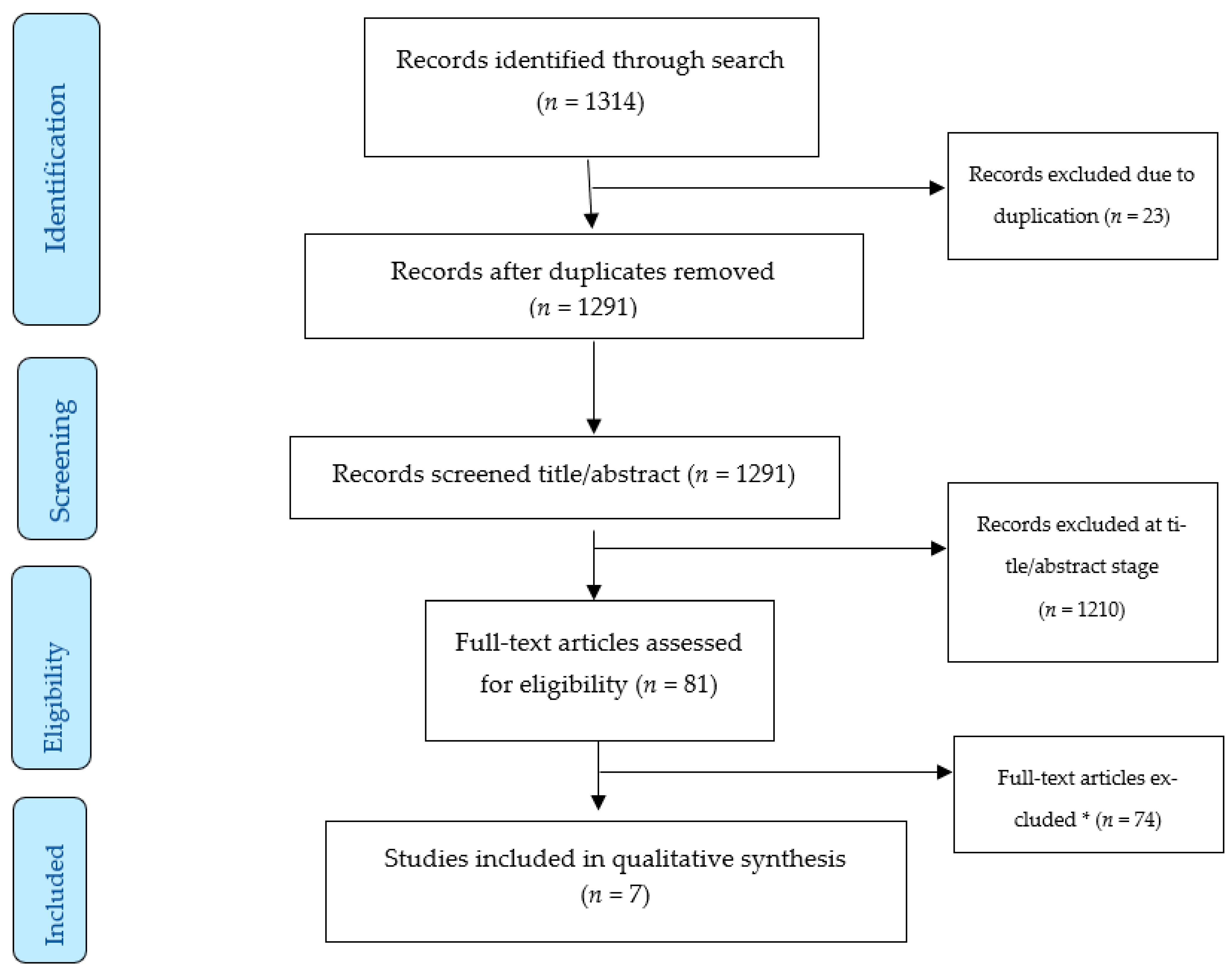
This review followed the Preferred Reporting Items for Systematic Reviews and Meta-Analyses (PRISMA) 2020 guidelines [28]. The PRISMA 2020 checklist is provided as Supplementary Material S1. A total of 1314 records were identified. After removing 23 duplicates, 1291 records remained. Titles and abstracts were screened, and 1210 records were excluded for not meeting the objectives of the review (no validated nutritional assessment tool, non-elderly population, lack of clinical outcomes, or non-original research). Of the 81 full-text articles assessed for eligibility, 74 were excluded for the following predefined reasons: studies did not employ a validated nutritional assessment or screening tool (n = 28), studies included mixed-age populations and did not report results separately for participants aged ≥ 65 years (n = 21), studies did not report clinical or functional outcomes relevant to this review (n = 15), articles focused on specific pathologies or highly selected subgroups outside the scope of the review (n = 6), and narrative reviews, editorials, commentaries, or opinion papers without original data (n = 4). Finally, seven studies met all inclusion criteria and were included in the qualitative synthesis (Figure 1). After title and abstract screening, most records were excluded because they did not focus on elderly individuals, did not include patients with confirmed COVID-19, or did not report nutritional status. The full texts of the remaining articles were then assessed for eligibility.
At this stage, a substantial number of full-text articles were excluded for one or more of the following reasons: (i) absence of a validated nutritional assessment or screening tool; (ii) lack of separate data for participants aged ≥ 65 years; (iii) no clinical or functional outcomes reported; (iv) focus on specific pathologies or highly selected subgroups outside the scope of this review; or (v) narrative or opinion papers without original data. After applying these strict criteria, seven studies were finally included in the qualitative synthesis [29,30,31,32,33,34,35] (Table 2).
Quality ratings of the reviewed literature, as assessed by applying the National Heart, Lung and Blood Institute criteria [36] (Table 3).
As clarified in the Methods section, these guidelines were not part of the PRISMA flow and were included only to enrich the narrative interpretation, ensuring full analytical separation between primary studies and expert recommendations. In parallel, several national, European, and international professional guidelines on nutrition in COVID-19 (ESPEN, ASPEN, SEEN, SEMICYUC–SENPE, CIENUT, and others) were identified. These documents were not counted as “studies” in the PRISMA flow but were incorporated into the qualitative synthesis to contextualize and triangulate the findings from primary research. The seven included studies were published between 2020 and 2025 and were conducted in China, Italy, Iran, Saudi Arabia, and Korea [29,30,31,32,33,34,35]. Most were observational, hospital-based studies, including both general wards and intensive care units (ICUs), with sample sizes ranging from 86 to 670 elderly participants. The median or mean age in all studies was above 65 years, and women represented between one-quarter and slightly more than half of the samples. All studies evaluated nutritional status using at least one validated screening or diagnostic tool. The instruments used were NRS-2002, MNA-SF, MUST, and NRI in a Chinese cohort of hospitalized elderly patients [29]; GNRI in Italian hospitalized older adults [30] and in Korean patients with severe COVID-19 [35]; the modified NUTRIC score and GLIM criteria in critically ill ICU populations [31,32]; and PNI plus CONUT score in a large cohort of critically ill elderly patients in China [33]. Collectively, these tools captured both phenotypic and etiological dimensions of malnutrition, integrating anthropometric, biochemical, inflammatory, and clinical variables.
To improve the interpretability of the prognostic findings, Table 4 summarizes the nutritional tools used to predict clinical outcomes, their main cut-offs, and whether associations were adjusted for age, comorbidities, or frailty.
As summarized in Table 4, the prevalence of malnutrition or high nutritional risk was consistently elevated across settings, although the magnitude varied by tool and clinical severity. In the study by Liu et al. [29], conducted in hospitalized elderly COVID-19 patients in China, the proportion of patients at nutritional risk ranged from 41.1% with MUST to 85.1% with NRS-2002, while 77.3% were at risk or malnourished according to MNA-SF, and 60.4% were at risk according to NRI. In an Italian single-center study of older hospitalized patients, 72.5% were classified as at risk of malnutrition according to GNRI, with 61.5% presenting moderate-to-severe risk [30]. In ICU cohorts, the burden of nutritional risk was particularly high. Zhang et al. [31] reported that 69.8% of critically ill elderly patients were in the high-risk category according to the modified NUTRIC score. In an Iranian ICU population, 63.4% of older adults fulfilled GLIM criteria for malnutrition [32]. Similarly, in a large Chinese cohort of critically ill elderly patients, PNI identified 78.9% of patients as moderately or severely malnourished, while the CONUT score classified 97.7% as having at least mild malnutrition, with 40.7% in the severe category [33]. In post-acute and non-ICU settings, the prevalence remained substantial but somewhat lower. In a Saudi Arabian cohort, 6.3% of elderly patients were at nutritional risk according to NRS-2002, whereas MNA-SF identified 40.2% at risk and 11.3% as frankly malnourished [34]. In the Korean study of patients with severe COVID-19, 67.2% of individuals aged ≥ 65 years were at risk of malnutrition based on GNRI [35]. Overall, across the seven included studies, between 41% and 98% of elderly patients with COVID-19 were classified as malnourished or at high nutritional risk, depending on the assessment tool and clinical setting.
Several of the included studies also explored the relationship between nutritional status and clinical outcomes such as mortality, length of ICU stay, complications, and functional decline. In hospitalized older adults, low GNRI values were associated with higher in-hospital mortality and worse prognosis [30,35]. Zhang et al. [31] showed that a high modified NUTRIC score in critically ill elderly patients predicted poorer outcomes, supporting its dual role as a marker of nutritional risk and disease severity. Wang et al. [33] reported that lower PNI and higher CONUT scores were independently associated with severe outcomes in elderly patients with critical COVID-19, including increased mortality and prolonged ICU admission. Gholi et al. [32] observed that malnutrition defined by GLIM criteria was associated with an increased risk of delirium and longer ICU stay among critically ill older patients. Although not all studies adjusted for the same confounding factors, and effect sizes varied, the overall pattern suggests that malnutrition and high nutritional risk are consistently linked with adverse outcomes in elderly individuals with COVID-19.
National and international guidelines converged in highlighting the importance of early nutritional risk screening and timely intervention in elderly COVID-19 patients. ESPEN, ASPEN, SEEN, SEMICYUC–SENPE, CIENUT, and other professional bodies recommend systematic use of validated tools (e.g., MNA/MNA-SF, NRS-2002, MUST, GNRI, GLIM, PNI, CONUT) and advocate for hypercaloric and high-protein nutritional strategies, with early oral or enteral support and later rehabilitation-focused nutrition. These recommendations are consistent with the high prevalence of malnutrition observed in the primary studies and provide a framework for translating the evidence into clinical practice in acute, post-acute, and community settings. To clarify the analytic approaches across studies, Table 4 summarizes each nutritional tool, its cut-off value, the outcomes examined, and whether associations were adjusted for age, comorbidity burden, or frailty.

4. Discussion

Although a large number of records were initially identified, only seven studies met the strict inclusion criteria of involving elderly participants (≥65 years), applying validated nutritional assessment tools, and reporting clinical or functional outcomes. Many full-text articles were excluded because they focused on mixed-age populations without separate data for older adults, used non-validated nutritional measures, or did not report outcomes relevant to this review. This systematic review shows that malnutrition and high nutritional risk are highly prevalent among elderly individuals with COVID-19 and are consistently associated with worse clinical outcomes. Despite a comprehensive search strategy yielding 1314 records, only seven studies met our strict inclusion criteria of age ≥65 years, use of at least one validated nutritional assessment tool, and reporting of clinical or functional outcomes. This explains the relatively small number of included studies while reinforcing the methodological robustness and internal coherence of the review. The main limitations were (1) the restricted access to subscription-only databases and (2) the limited number of observational studies indexed in Cochrane Library, which constrained inclusion of certain real-world data relevant to this population.
The findings of the individual studies included in this review are in line with broader evidence on the impact of COVID-19 on nutritional status in older adults. Previous systematic reviews and meta-analyses including mixed-age or adult populations have reported high rates of malnutrition and nutritional risk in hospitalized COVID-19 patients and demonstrated associations with mortality, ICU admission, and prolonged hospital stay [4,37]. By focusing specifically on elderly individuals and on validated tools, our review refines this picture and confirms that older adults represent a particularly vulnerable subgroup, with malnutrition prevalence often exceeding 50–60% in ICU and critically ill cohorts. The prevalence ranges observed in the present review (approximately one-quarter to two-thirds of patients at risk or malnourished, depending on the tool and setting) are comparable to those reported in non-COVID geriatric populations with acute illness, frailty, or multimorbidity. This suggests that COVID-19 acts as an additional stressor superimposed on pre-existing vulnerabilities, accelerating the development or worsening of malnutrition and sarcopenia in older adults.
An important contribution of this review is the comparative perspective on different nutritional instruments used in elderly COVID-19 patients. Tools such as NRS-2002, MNA-SF, and MUST were originally designed for general hospital or community settings and focus on weight loss, BMI, reduced intake, and disease burden. In the included studies, these tools identified a high proportion of patients at risk, but their prevalence estimates varied widely (e.g., 41.1% with MUST vs. 85.1% with NRS-2002 in the same cohort [29]).
By contrast, indices incorporating biochemical and inflammatory parameters—such as GNRI, PNI, CONUT, modified NUTRIC score, and GLIM criteria—tended to classify an even higher proportion of elderly COVID-19 patients as malnourished or at high risk, especially in critical care settings [30,31,32,33,35]. These tools may better capture the combined effects of chronic undernutrition, acute inflammation, and catabolic stress triggered by severe infection. However, the heterogeneity of cut-off values, clinical settings, and outcome definitions across studies prevents us from recommending a single “best” tool. Instead, our results support the use of complementary approaches: simpler bedside instruments (MNA-SF, NRS-2002, MUST) for rapid initial screening, followed by more detailed assessments (GNRI, GLIM, PNI, CONUT) in high-risk patients to guide prognosis and tailor interventions.
Across the included studies, several reported high prevalence rates of malnutrition and associations with adverse outcomes. Although these findings cannot be pooled statistically, they underline the clinical importance of early identification. Taken together, the primary studies and professional guidelines point in the same direction: early identification of nutritional risk, prompt initiation of individualized support, and close monitoring throughout the disease trajectory. ESPEN, ASPEN, SEEN, SEMICYUC–SENPE, CIENUT, and other expert groups recommend hypercaloric and high-protein strategies (approximately 25–30 kcal/kg/day and 1.2–2.0 g protein/kg/day, adjusted to clinical status), preferentially via oral or enteral routes, with parenteral nutrition reserved for cases of intolerance or contraindication [38,39,40,41,42,43,44,45,46]. In elderly patients, high-protein oral nutritional supplements and enriched diets are particularly useful to counteract acute catabolism, prevent further muscle loss, and support functional recovery. Combining nutritional interventions with progressive physical activity, swallowing rehabilitation when needed, and caregiver education appears essential to preserve autonomy and quality of life in the post-acute phase.
According to the National Heart, Lung and Blood Institute criteria, most included studies were rated as having good methodological quality (Table 4), with clear research questions, well-described populations, and valid, consistently implemented outcome measures. Nevertheless, several limitations should be acknowledged. First, all studies were observational, and most were conducted at a single center, limiting causal inference and generalizability. Second, there was substantial heterogeneity in the nutritional tools, cut-offs, and timings of assessment (at admission, during ICU stay or post-acute) used, which complicates direct comparisons and precludes a formal meta-analysis. Third, not all studies adjusted for key confounders such as comorbidities, baseline frailty, socioeconomic status, or pre-existing functional limitations, which may partly mediate the association between malnutrition and outcomes. Finally, the geographic distribution was skewed towards Asia and Europe, with no eligible studies from many low- and middle-income regions where both malnutrition and COVID-19 burden are high. These limitations indicate that the true impact of malnutrition on outcomes in elderly COVID-19 patients may be even greater than what is captured by current evidence and highlight the need for more robust, prospective, multicenter studies with standardized nutritional assessments.
On the other hand, although it is true that obesity is in itself a global pandemic frequently observed in the elderly population, we find ourselves investigating individuals at the opposite end of the nutritional spectrum, namely malnourished elderly people that, as has been demonstrated, represent a population with an elevated risk of aggressive coronavirus infections. In this situation, it should be taken into account that a malnourished individual, especially in older age, exhibits reduced lymphocyte levels. This is an important factor that should be considered, as lymphopenia, along with other serological markers, is one of the factors that predict an adverse disease course [1]. Building on this, it must be added that a malnourished patient will have worse mobility, lower respiratory capacity, and a reduced quantity of elements like cofactors such as zinc, whose presence appears to be beneficial [37,38]. Patients infected with coronavirus, especially with the more severe variants, develop inflammatory responses that produce metabolic alterations with an augmentation of energy and release of amino acids from muscular tissues [38]. Within the published information on the subject, it is worth stressing that a poor nutritional state at the time of admission, with low levels of albumin, vitamin D, and selenium predisposes the patient to the more severe ramifications of the disease [13]. Malnutrition is compounded with pulmonary infection that is the main disease induced by the virus (COVID-19 pneumonia) [30].
Given the crucial role of direct patient assessment in obtaining a complete nutritional screening, including anthropometric measurements such as tricipital skinfold, brachial circumference, calf circumference, and the visual evaluation of physical appearance, to detect sarcopenia or malnutrition, the restrictions imposed during the pandemic made in-person evaluations difficult. As a result, remote and hybrid nutritional assessment tools were introduced, incorporating telemedicine-based screening and validated short forms such as MNA-SF and GNRI [39]. Remote anthropometric assessment was validated in several studies involving older adults through proxy or caregiver-assisted measures, such as mid-arm circumference, calf circumference, and self-reported weight change obtained via teleconsultation. These indirect methods have shown good concordance with direct measurements in hospitalized and institutionalized elderly populations [39]. Nevertheless, ESPEN reaffirmed its recommendation for combined analytic and physical evaluations, emphasizing that biochemical markers alone, such as albumin or lymphocyte count, may underestimate nutritional risk in elderly patients [21,22]. Several systematic reviews have identified that nutritional risk affects between one-quarter and two-fifths of hospitalized COVID-19 patients, especially those over 65 years of age. Among the validated instruments, the tools previously described (Table 1) demonstrate high sensitivity for detecting malnutrition, while GNRI and PNI stand out as reliable predictors of mortality and prolonged hospital stay [23,24,25]. The MUST tool continues to exhibit greater specificity in community and outpatient settings, whereas MNA-SF and GNRI are preferred in clinical environments for their rapid application and prognostic capacity [19,24]. Although the NUTRIC score remains a valid indicator in critically ill patients, ESPEN and ASPEN do not recommend its exclusive use due to its heavy reliance on APACHE II and SOFA scores, which predict mortality but are less precise in assessing nutritional parameters [26]. Both societies propose integrated models combining clinical, biochemical, and functional indicators to more accurately characterize nutritional risk in patients with COVID-19 [27]. With regard to nutritional support, European and international scientific societies of clinical nutrition have published guidelines based on experience from previous pandemics (SARS-CoV-1, Influenza H1N1) and adapted to the present context (Table 5) [40,41,42,43,44,45,46]. These recommendations advocate for early, individualized, hypercaloric, and high-protein nutrition until full recovery, with particular emphasis on the elderly population. For these patients, the use of high-protein oral or enteral formulas (≥20% protein) during the acute phase of the illness is encouraged, followed by a phase of progressive rehabilitation including physical exercise and micronutrient optimization (vitamin D, zinc, selenium). These combined interventions have been shown to improve recovery and reduce complications in elderly individuals with COVID-19 [28,29,30]. Thus, various authors and expert committees provide diverse tools or support materials that include, as shown in Table 5, examples of hypercaloric and hyperproteinic menus and practical guidelines or recipes that allow professionals, patients, and caregivers to acquire the knowledge, competence, and ability necessary to translate these recommendations into practice. These dietary resources and practical ideas focus on eight key considerations.
First, nutritional status assessment. The International Committee for Consensus Development and Standardization in Nutriology (CIENUT) emphasizes the importance of evaluating the nutritional status of patients with COVID-19 and states that critically ill patients who are in a state of severe stress are at high nutritional risk. Therefore
  • Nutritional screening should be performed using validated tools that consider age, weight loss, reduced intake, decreased sense of taste and smell, inflammation, or any condition that increases energy expenditure.
  • When nutritional risk is identified, a full assessment must follow, including the evaluation of clinical signs of deficiency or excess, nutrient–drug interactions, food intake, physical activity, body composition, nutritional biochemistry, visceral reserve, immune competence, and catabolic status [47].
Second, nutrition and hydration management.
The American Society for Parenteral and Enteral Nutrition (ASPEN) highlights nutrition and hydration as key factors in the fight against COVID-19 and provides the following recommendations:
  • Daily requirements: approximately 3 L of fluids, 2000–2500 kcal, and 75–100 g of protein.
  • Fluids should be consumed regularly: at least 2–4 ounces every 15 min. Optimal beverages include calorie- and protein-containing fluids, oral rehydration solutions, or sports drinks.
  • Consume a high-calorie, high-protein diet: prioritize protein-rich foods (milk, eggs, yogurt, cheese, meat, fish, poultry, nuts, or protein shakes). Increase the portions of energy-dense foods such as butter, cream cheese, sour cream, and avocado [48].
Third, oral nutritional supplements (ONS) recommendation.
The British Dietetic Association (BDA), Royal College of Nursing (RCN), and British Association for Parenteral and Enteral Nutrition (BAPEN) recommend an ONS prescription of two supplements per day for about four weeks after COVID-19 infection [49].
  • ESPEN suggests that patients with severe disease may require ONS providing ≥400 kcal/day and ≥30 g protein/day when oral intake is insufficient; these correspond to high-protein ONS formulations.
  • Compact low-volume ONS (125 mL, >2 kcal/mL) may be particularly beneficial for patients with persistent poor appetite or breathlessness following infection [48].
Fourth, sarcopenia management. Both the CIENUT and the BDA/RCN/BAPEN emphasize fatigue, muscle loss, and post-illness weakness frequently observed in COVID-19 patients, particularly among elderly adults.
  • Adequate protein intake should be ensured, with ONS prescribed when necessary.
  • These nutritional interventions should be combined with simple resistance and mobility exercises.
Such combined strategies contribute to maintaining muscle mass, improving function, and preserving daily activities [47,49].
Fifth, dysphagia management. Fernández et al. [50] describe three phenotypes of COVID-19 patients with dysphagia: (1) ICU patients with oropharyngeal dysphagia secondary to intubation or tracheostomy, (2) patients with pneumonia requiring high oxygen concentrations or non-invasive ventilation, and (3) post-acute patients developing dysphagia due to frailty. These authors recommend
  • Adjusting liquid viscosity using commercial thickeners according to the severity of dysphagia.
  • Modifying food texture based on swallowing capacity.
  • Implementing hygiene and posture guidelines, including safe meal positions and consistency adaptations for liquids and solids [50].
Sixth, appetite loss and fatigue management.
The Spanish Society of Endocrinology and Nutrition (SEEN) advises increasing not the volume but the caloric and protein density of foods. Their practical recommendations include
  • Eating small, frequent meals—around six per day every 2–3 h—to raise caloric and protein intake without early satiety.
  • Starting meals with protein-rich foods such as eggs, fish, meat, poultry, or legumes and avoiding low-nutrient bulky foods.
  • Maintaining adequate hydration, spacing liquids 30–60 min away from meals, and prioritizing nutrient-dense beverages like smoothies or juices [43].
Seventh, physical exercise management.
The Spanish Society of Internal Medicine (SEMI) proposes a progressive exercise plan tailored to mobility limitations in COVID-19 patients:
  • In cases of severe limitation: passive mobilization of the upper and lower extremities.
  • With moderate limitation: resistance exercises using light weights, sit-to-stand exercises, and slow, progressive walking.
  • With mild limitation: strengthening of hips and calves and gradual walking with increasing duration and intensity [51].
Eighth, food hygiene management.
The Spanish Academy of Nutrition and Dietetics (AEND) and the General Council of Official Associations of Dietitians-Nutritionists (CGCODN) highlight safe food-handling practices: proper handwashing, thorough cooking of meat and fish, and prevention of cross-contamination between cooked and raw foods [52].
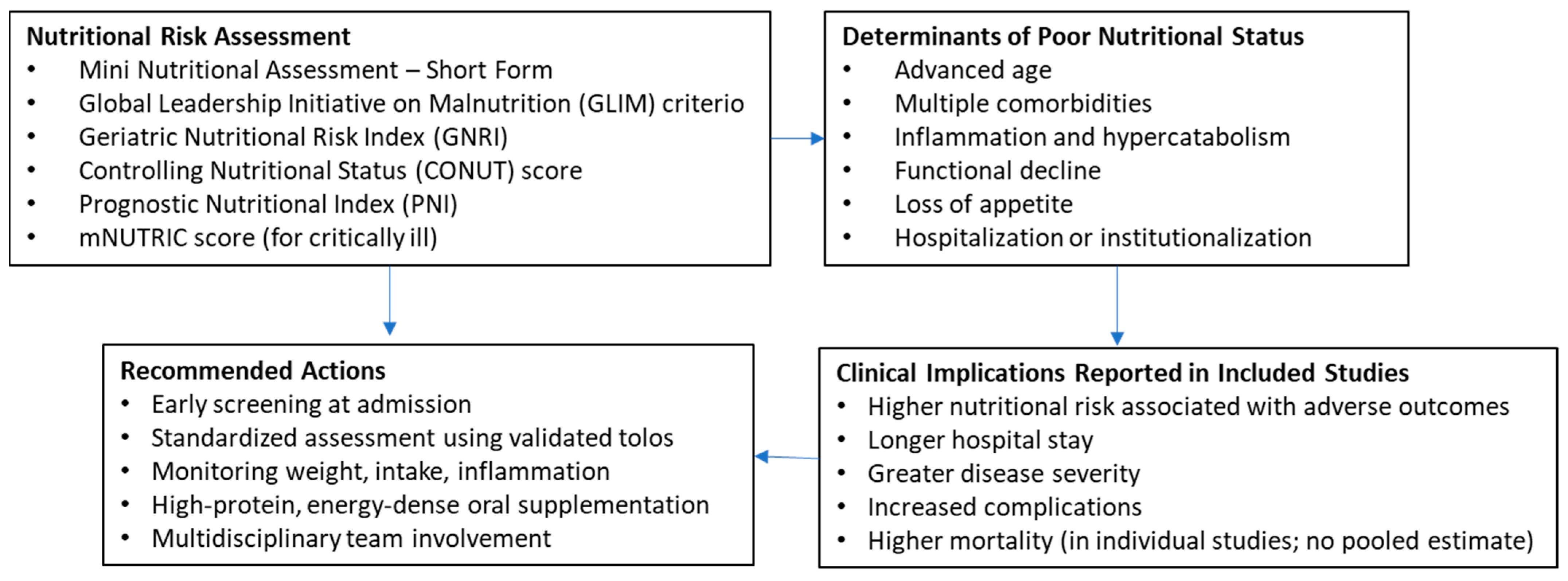
Elderly people with chronic diseases have been disproportionately affected by the COVID-19 pandemic. This population represents an extremely vulnerable group characterized by motor dysfunction and a high prevalence of malnutrition. Multiple factors contribute to this vulnerability, including social isolation, decreased physical activity, stress, anxiety, depression, and fear of infection, all of which diminish appetite [53]. Consequently, pre-existing malnutrition often worsens during infection, further aggravating disease progression and delaying recovery [20,24]. As shown in Figure 2, the main domains include validated assessment tools, determinants of nutritional decline, clinical implications, and recommended management strategies.

5. Conclusions

This systematic review indicates that malnutrition and nutritional risk were frequently reported among elderly individuals with COVID-19, with prevalence varying according to the assessment tool and clinical setting. Although the included studies did not permit pooled analyses, several reported associations between poorer nutritional status and adverse clinical outcomes within their individual analyses. The heterogeneity of tools and study designs highlights the need for consistent, standardized diagnostic criteria and structured assessment pathways in this population. The findings also emphasize the clinical relevance of early nutritional screening and comprehensive assessment in elderly patients, while recognizing that evidence for specific nutritional interventions remains limited in the primary studies included. High-protein and energy-dense nutritional strategies are recommended by professional society guidelines (ESPEN, ASPEN, SEEN, CIENUT), but these documents were used only for narrative contextualization and were not part of the systematic review evidence. In conclusion, nutritional assessment and monitoring should remain central components of the care of elderly patients with COVID-19. Early identification of nutritional risk and coordinated multidisciplinary management may facilitate more timely supportive care, but further research is needed to clarify the impact of targeted nutritional interventions on clinical outcomes in this population.

Supplementary Materials

The following supporting information can be downloaded: https://www.mdpi.com/article/10.3390/covid6010003/s1. Supplementary Material S1. Search strategy used in this review; Supplementary Material S2: PRISMA 2020 Checklist.

Author Contributions

Conceptualization, methodology, formal analysis, investigation, and data curation, E.M.-G., A.M.T., M.T.R., M.A.D.-A., N.S.O. and J.M.S.; writing—original draft preparation, E.M.-G., A.M.T., and M.T.R.; writing—review and editing, M.A.D.-A. and J.M.S. All authors have read and agreed to the published version of the manuscript.

Funding

This research received no external funding.

Institutional Review Board Statement

Not applicable.

Informed Consent Statement

Not applicable.

Data Availability Statement

The original contributions presented in the study are included in the article. Further inquiries can be directed to Elena Moreno-Guillamont.

Conflicts of Interest

The authors declare no conflicts of interest.

References

  1. Bencivenga, L.; Rengo, G.; Varricchi, G. Elderly at time of COronaVIrus disease 2019 (COVID-19): Possible role of immunosenescence and malnutrition. Geroscience 2020, 42, 1089–1092. [Google Scholar] [CrossRef]
  2. Bartleson, J.M.; Radenkovic, D.; Covarrubias, A.J.; Furman, D.; Winer, D.A.; Verdin, E. SARS-CoV-2, COVID-19 and the aging immune system. Nat. Aging 2021, 1, 769–782. [Google Scholar] [CrossRef]
  3. Song, F.; Shi, N.; Shan, F.; Zhang, Z.; Shen, J.; Lu, H.; Ling, Y. Nutritional screening based on objective indices at admission predicts in-hospital mortality in patients with COVID-19. Nutr. J. 2021, 20, 46. [Google Scholar] [CrossRef]
  4. Abate, S.M.; Chekole, Y.A.; Estifanos, M.B.; Abate, K.H.; Kabthymer, R.H. Prevalence and outcomes of malnutrition among hospitalized COVID-19 patients: A systematic review and meta-analysis. Clin. Nutr. ESPEN 2021, 43, 174–183. [Google Scholar] [CrossRef]
  5. Cunha, L.L.; Perazzio, S.F.; Azzi, J.; Cravedi, P.; Riella, L.V. Remodeling of the immune response with aging: Immunosenescence and its potential impact on COVID-19 immune response. Front. Immunol. 2020, 11, 1748. [Google Scholar] [CrossRef]
  6. Russell, C.D.; Lone, N.I.; Baillie, J.K. Comorbidities, Multimorbidity and COVID-19. Nat. Med. 2023, 29, 334–343. [Google Scholar] [CrossRef]
  7. Carrillo-Larco, R.M.; Altez-Fernandez, C. Anosmia and dysgeusia in COVID-19: A systematic review. Wellcome Open Res. 2020, 5, 94. [Google Scholar] [CrossRef]
  8. Tosato, M.; Calvani, R.; Ciciarello, F.; Galluzzo, V.; Martone, A.M.; Zazzara, M.B.; Pais, C.; Marzetti, E.; Landi, F. Malnutrition in COVID-19 survivors: Prevalence and risk factors. Aging Clin. Exp. Res. 2023, 35, 2257–2265. [Google Scholar] [CrossRef]
  9. Grund, S.; Bauer, J.M. Malnutrition and sarcopenia in COVID-19 survivors. Clin. Geriatr. Med. 2022, 38, 559–571. [Google Scholar] [CrossRef]
  10. Álvarez-Hernández, J.; Matía-Martín, P.; Cáncer-Minchot, E.; Cuerda, C.; López, I.S.; Martínez, C.G.; Gavidia, C.; Lizán, L. Long-term outcomes in critically ill patients who survived COVID-19: The NUTRICOVID Observational Cohort Study. Clin. Nutr. 2023, 42, 2029–2035. [Google Scholar] [CrossRef]
  11. Yuan, Y.; Mao, J.; Ou, X.; Huang, L.; Tu, Q.; Wang, N. Geriatric Nutritional Risk Index Assessment in elderly patients during the COVID-19 outbreak. Health Sci. Rep. 2022, 5, e560. [Google Scholar] [CrossRef] [PubMed]
  12. Zou, S.; Lin, P.; Chen, X.; Xia, L.; Liu, X.; Su, S.; Li, Y. Comparative analysis of six nutritional scores in predicting prognosis of COVID-19 patients. Front. Nutr. 2024, 11, 1501132. [Google Scholar] [CrossRef]
  13. Jarosz, I.; Gorecki, K.; Kalisz, G.; Popiolek-Kalisz, J. Nutritional status assessment tools in cardiovascular patients. Nutrients 2025, 17, 2703. [Google Scholar] [CrossRef]
  14. Matsumoto, Y.; Iwai, K.; Namikawa, N.; Matsuda, S.; Wakano, C.; Heya, H.; Yamanaka, M. The relationship between existing nutritional indicators and Global Leadership Initiative on Malnutrition (GLIM) Criteria: A one-institution cross-sectional analysis. Clin. Nutr. 2020, 39, 3099–3104. [Google Scholar] [CrossRef]
  15. De van der Schueren, M.A.E.; Keller, H.; Cederholm, T.; Barazzoni, R.; Compher, C.; Correia, M.I.T.D.; GLIM Consortium. Global Leadership Initiative on Malnutrition (GLIM): Guidance on validation of the operational criteria for the diagnosis of protein-energy malnutrition in adults. Clin. Nutr. 2020, 39, 2872–2880. [Google Scholar] [CrossRef]
  16. Wei, W.; Yan, P.; Wang, F.; Bai, X.; Wang, J.; Li, J.; Yu, K. Malnutrition defined by the Global Leadership Initiative on Malnutrition (GLIM) Criteria in hospitalized patients with ulcerative colitis and its association with clinical outcomes. Nutrients 2023, 15, 3572. [Google Scholar] [CrossRef] [PubMed]
  17. Eriksen, M.B.; Frandsen, T.F. The impact of Patient, Intervention, Comparison, Outcome (PICO) as a search strategy tool on literature search quality: A systematic review. J. Med. Libr. Assoc. 2018, 106, 420–431. [Google Scholar] [CrossRef]
  18. United Nations Department of Economic and Social Affairs, Population Division. World Population Ageing 2020 Highlights (ST/ESA/SER.A/451); United Nations: New York, NY, USA, 2020; Available online: https://www.un.org/development/desa/pd/sites/www.un.org.development.desa.pd/files/undesa_pd-2020_world_population_ageing_highlights.pdf (accessed on 15 December 2025).
  19. Daradkeh, G.; Essa, M.M.; Al-Mashaani, A.; Al-Adawi, S.; Arabawi, S. Malnutrition indicators: Which is more predictive? Nutrition Risk Index (NRI) or Malnutrition Universal Screening Tool (MUST). J. Clin. Nutr. Metab. 2018, 2, 2. [Google Scholar]
  20. Stratton, R.J.; Hackston, A.; Longmore, D.; Dixon, R.; Price, S.; Stroud, M.; Elia, M. Malnutrition in hospital outpatients and inpatients: Prevalence, concurrent validity and ease of use of the ‘Malnutrition Universal Screening Tool’ (‘MUST’) for Adults. Br. J. Nutr. 2004, 92, 799–808. [Google Scholar] [CrossRef]
  21. Barbosa, A.A.D.O.; Vicentini, A.P.; Langa, F.R. Comparison of NRS-2002 criteria with nutritional risk in hospitalized patients. Cienc. Saude Coletiva 2019, 24, 3325–3334. [Google Scholar] [CrossRef]
  22. de Vries, M.C.; Koekkoek, W.A.C.; Opdam, M.H.; van Blokland, D.; van Zanten, A.R. Nutritional assessment of critically ill patients: Validation of the Modified NUTRIC Score. Eur. J. Clin. Nutr. 2018, 72, 428–435. [Google Scholar] [CrossRef]
  23. Guigoz, Y. The Mini Nutritional Assessment (MNA®) review of the literature—What does it tell us? J. Nutr. Health Aging 2006, 10, 466–485. [Google Scholar]
  24. Huo, Z.; Chong, F.; Yin, L.; Lu, Z.; Liu, J.; Xu, H. Accuracy of the GLIM Criteria for diagnosing malnutrition: A systematic review and meta-analysis. Clin. Nutr. 2022, 41, 1208–1217. [Google Scholar] [CrossRef]
  25. Lo Buglio, A.; Bellanti, F.; Carmignano, D.F.P.; Serviddio, G.; Vendemiale, G. Association between Controlling Nutritional Status (CONUT) Score and body composition, inflammation and frailty in hospitalized elderly patients. Nutrients 2024, 16, 576. [Google Scholar] [CrossRef]
  26. Cereda, E.; Limonta, D.; Pusani, C.; Vanotti, A. Assessing elderly at risk of malnutrition: The New Geriatric Nutritional Risk Index versus Nutritional Risk Index. Nutrition 2006, 22, 680–686. [Google Scholar] [CrossRef]
  27. Bai, B.; Liu, X.; Li, H. Predictive value of Prognostic Nutritional Index (PNI) for the long-term prognosis of elderly patients with fracture: A systematic review and meta-analysis. Front. Nutr. 2025, 12, 1631128. [Google Scholar] [CrossRef] [PubMed]
  28. Page, M.J.; McKenzie, J.E.; Bossuyt, P.M.; Boutron, I.; Hoffmann, T.C.; Mulrow, C.D.; Shamseer, L.; Tetzlaff, J.M.; Akl, E.A.; Brennan, S.E.; et al. The PRISMA 2020 Statement: An updated guideline for reporting systematic reviews. BMJ 2021, 372, n71. [Google Scholar] [CrossRef]
  29. Liu, G.; Zhang, S.; Mao, Z.; Wang, W.; Hu, H. Clinical significance of nutritional risk screening for older adult patients with COVID-19. Eur. J. Clin. Nutr. 2020, 74, 876–883. [Google Scholar] [CrossRef] [PubMed]
  30. Recinella, G.; Marasco, G.; Serafini, G.; Maestri, L.; Bianchi, G.; Forti, P.; Zoli, M. Prognostic role of nutritional status in elderly patients hospitalized for COVID-19: A monocentric study. Aging Clin. Exp. Res. 2020, 32, 2695–2701. [Google Scholar] [CrossRef] [PubMed]
  31. Zhang, P.; He, Z.; Yu, G.; Peng, D.; Feng, Y.; Ling, J.; Wang, Y.; Li, S.; Bian, Y. The Modified NUTRIC Score can be used for nutritional risk assessment as well as prognosis prediction in critically ill COVID-19 patients. Clin. Nutr. 2021, 40, 534–541. [Google Scholar] [CrossRef]
  32. Gholi, Z.; Rezaei, M.; Vahdat Shariatpanahi, Z.; Momen, R.; Fallah Bagher Shaidaei, M.; Gholami, M.; Rajabi, M.R. Malnutrition elevates delirium and ICU stay among critically ill older adult COVID-19 patients. Front. Med. 2024, 11, 1259320. [Google Scholar] [CrossRef]
  33. Wang, X.; Ke, J.; Cheng, R.; Xian, H.; Li, J.; Chen, Y.; Yi, Y. Malnutrition is associated with severe outcome in elderly patients hospitalised with COVID-19. Sci. Rep. 2024, 14, 24367. [Google Scholar] [CrossRef]
  34. Shamlan, G.; Albreiki, M.; Almasoudi, H.O.; Alshehri, L.A.; Ghaith, M.M.; Alharthi, A.S.; Aleanizy, F.S. Nutritional Status of Elderly Patients Previously Ill with COVID-19: Assessment with Nutritional Risk Screening 2002 (NRS-2002) and Mini Nutritional Assessment (MNA-SF). J. Infect. Public Health 2024, 17, 372–377. [Google Scholar] [CrossRef] [PubMed]
  35. Yeo, H.J.; Lee, D.; Chun, M.; Jang, J.H.; Park, S.; Lee, S.H.; Cho, W.H. Relationship between the Geriatric Nutrition Risk Index and the prognosis of severe coronavirus disease 2019 in Korea. Tuberc. Respir. Dis. 2025, 88, 369–378. [Google Scholar] [CrossRef] [PubMed]
  36. National Heart, Lung, and Blood Institute (NHLBI). Study Quality Assessment Tools. National Institutes of Health, U.S. Department of Health and Human Services. Available online: https://www.nhlbi.nih.gov/health-topics/study-quality-assessment-tools (accessed on 15 November 2025).
  37. Damayanthi, H.D.W.T.; Prabani, K.I.P. Nutritional determinants and COVID-19 outcomes of older patients with COVID-19: A systematic review. Arch. Gerontol. Geriatr. 2021, 95, 104411. [Google Scholar] [CrossRef]
  38. Lahaye, C.; Parant, F.; Haesebaert, J.; Goldet, K.; Bendim’red, L.; Henaff, L.; Saadatian-Elahi, M.; Vanhems, P.; Cuerq, C.; Gilbert, T.; et al. Minerals and antioxidant micronutrients levels and clinical outcome in older patients hospitalized for COVID-19 during the first wave of the pandemic. Nutrients 2023, 15, 1516. [Google Scholar] [CrossRef] [PubMed]
  39. Viana Bagni, U.; da Silva Ribeiro, K.D.; Soares Bezerra, D.; Cavalcante de Barros, D.; de Magalhães Fittipaldi, A.L.; Pimenta da Silva Araújo, R.G.; Ferreira, A.A. Anthropometric assessment in ambulatory nutrition amid the COVID-19 pandemic: Possibilities for the remote and in-person care. Clin. Nutr. ESPEN 2021, 41, 186–192. [Google Scholar] [CrossRef]
  40. Barazzoni, R.; Bischoff, S.C.; Breda, J.; Wickramasinghe, K.; Krznarić, Ž.; Nitzan, D.; Pirlich, M.; Singer, P. ESPEN expert statements and practical guidance for nutritional management of individuals with SARS-CoV-2 infection. Clin. Nutr. 2022, 41, 1028–1044. [Google Scholar] [CrossRef]
  41. Barazzoni, R.; Deutz, N.E.P.; Bischoff, S.C.; Breda, J.; Wickramasinghe, K.; Krznarić, Ž.; Burkhard, P.; Singer, P.; Teplan, V.; Laviano, A.; et al. ESPEN Practical Guidelines: Clinical Nutrition in COVID-19. Clin. Nutr. 2023, 42, 1505–1525. [Google Scholar]
  42. American Society for Parenteral and Enteral Nutrition (ASPEN). Guidelines for the Provision of Nutrition Support Therapy in the Adult Critically Ill Patient: Update for COVID-19; ASPEN: Silver Spring, MD, USA, 2024; Available online: https://www.nutritioncare.org (accessed on 15 December 2025).
  43. Sociedad Española de Endocrinología y Nutrición (SEEN). Abordaje de la Desnutrición Relacionada con la Enfermedad (DRE) en Pacientes Hospitalizados con COVID-19; SEEN: Madrid, Spain, 2023; Available online: https://www.seen.es/ModulGEX/workspace/publico/modulos/web/docs/apartados/2056/040221_045753_1717842103.pdf (accessed on 15 December 2025).
  44. SEMICYUC & SENPE (Grupo de Metabolismo y Nutrición). Recomendaciones de Tratamiento Nutricional en Pacientes Críticos con COVID-19; SEMICYUC–SENPE: Madrid, Spain, 2023; Available online: https://semicyuc.org (accessed on 15 December 2025).
  45. American Society for Parenteral and Enteral Nutrition (ASPEN); European Society for Clinical Nutrition and Metabolism (ESPEN). Joint Position Paper on Post-COVID Recovery: Nutritional Support for Rehabilitation and Sarcopenia Prevention; ASPEN–ESPEN: Silver Spring, MD, USA; Vienna, Austria, 2024. [Google Scholar]
  46. Volkert, D.; Beck, A.M.; Cederholm, T.; Cruz-Jentoft, A.J.; Goisser, S.; Hooper, L.; Kiesswetter, E.; Maggio, M.; Raynaud-Simon, A.; Sieber, C.; et al. ESPEN Practical Guidelines: Clinical Nutrition and Hydration in Geriatrics. Clin. Nutr. 2023, 42, 511–538. [Google Scholar] [CrossRef]
  47. Comité Internacional para la Elaboración de Consensos y Estandarización en Nutriología (CIENUT). Posición de Expertos Sobre el Manejo Nutricional del Coronavirus COVID-19; CIENUT: Ciudad de México, Mexico, 2020; Available online: https://cienut.org/comite_internacional/declaraciones/pdf/declaracion2.pdf (accessed on 15 December 2025).
  48. American Society for Parenteral and Enteral Nutrition (ASPEN). Nutrition and Hydration: Key Factors in the Fight Against COVID-19; ASPEN: Silver Spring, MD, USA, 2020; Available online: https://www.nutritioncare.org (accessed on 15 December 2025).
  49. British Dietetic Association (BDA); Royal College of Nursing (RCN); British Association for Parenteral and Enteral Nutrition (BAPEN). A Community Healthcare Professional Guide to the Nutritional Management of Patients during and after COVID-19 Illness; BDA: Birmingham, UK, 2020; Available online: https://www.rcn.org.uk/workingwithus/-/media/Royal-College-Of-Nursing/Documents/Working-with-us/Endorsements/A-Guide-to-the-Nutritional-Management-of-Patients-During-and-After-COVID-19-Illness.pdf (accessed on 15 December 2025).
  50. Fernández, M.; Ortega, O.; Clavé, P. Oropharyngeal dysphagia in COVID-19 patients: Management recommendations. Nutrients 2022, 14, 3122. [Google Scholar]
  51. Sociedad Española de Medicina Interna (SEMI). Plan de Ejercicio Físico Adaptado a la Situación Funcional en Pacientes Con COVID-19; SEMI: Madrid, Spain, 2020; Available online: https://www.fesemi.org (accessed on 15 December 2025).
  52. Academia Española de Nutrición y Dietética (AEND); Consejo General de Colegios Oficiales de Dietistas-Nutricionistas (CGCODN). Recomendaciones de Alimentación y Nutrición Para la Población Española Ante la Crisis Sanitaria del COVID-19; AEND/CGCODN: Madrid, Spain, 2020; Available online: https://academianutricionydietetica.org/NOTICIAS/alimentacioncoronavirus.pdf (accessed on 15 December 2025).
  53. Taher, M.K.; Salzman, T.; Banal, A.; Morissette, K.; Domingo, F.R.; Cheung, A.M.; Cooper, C.L.; Boland, L.; Zuckermann, A.M.; Mullah, M.A.; et al. Global prevalence of post-COVID-19 condition: A systematic review and meta-analysis of prospective evidence. Health Promot. Chronic Dis. Prev. Can. 2025, 45, 112–138. [Google Scholar] [CrossRef] [PubMed]
Figure 1. PRISMA flow diagram for studies retrieved through the searching and selection process. * Reasons to exclude are no validated nutritional assessment tool, participants < 65 years or elderly subgroup not separated, no clinical or functional outcomes reported, and narrative review/editorial/commentary.
Covid 06 00003 g001
Figure 2. Summary framework for nutritional assessment and management in elderly patients with COVID-19.
Covid 06 00003 g002
Table 1. Nutritional assessment tools [19,20,21,22,23,24,25,26,27].
ToolsCriteriaScore
(Nutritional Risk)
Population
SOFANRI score = (1.519 × serum albumin (g/L) +
41.7 × (present weight/usual weight)
No risk > 100
Mild risk: 97.5–100
Moderate risk: 83.5–97.5
Severe risk < 83.5
Hospitalized and ambulatory adults
MUSTStep 1: BMI score
Step 2: weight loss score
Step 3: acute disease effect score
Step 4: overall risk of malnutrition
Step 5: management guidelines
Low risk: 0
Medium risk: 1
High risk ≥ 2
Hospitalized, community and other care settings adults
NRS-2002Pre-Screening:
  • BMI, weight loss, reduced food intake, critical illness
Screening:
  • Nutritional status (A)
  • Stress metabolism/severity of the disease (B)
  • Age
TOTAL = (A) + (B) + 1 point if age ≥ 70 years
Nutritional risk ≥ 3Hospitalized patients
Modified NUTRIC ScoreAge: <50 (0 points); 50–74 (1 point); ≥75 (2 points).
APACHE II: <15 (0 points); 15–19 (1 point); 20–28 (2 points); ≥28 (3 points).
SOFA: <6 (0 points); 6–9 (1 point); ≥10 (2 points).
Number of co-morbidities: 0–1 (0 points);
≥2 (1 point).
Days from hospital to ICU admission: 0 < 1 (0 points); ≥1 (1 point).
Low score: 0–4
High score: 5–9
Intensive care unit (ICU) patients
MNAAnthropometric assessment: maximum 8 points
General status assessment: maximum 9 points
Dietary assessment: maximum 9 points
Self-perceived health and nutrition states: maximum 4 points
Normal: 24–30
Nutritional risk: 17–23.5
Malnutrition <17
Elderly population
MNA–Short FormDecrease in food intake: maximum 2 points
Weight loss: maximum 3 points
Mobility: maximum 2 points
Psychological stress or acute disease: maximum 2 points
Neuropsychological problems: maximum 2 points
Body Mass Index or calf circumference: maximum 3 points
Normal: 12–14
Nutritional risk: 8–11
Malnutrition: 0–7
Elderly population
GLIM CriteriaPhenotypic Criteria:
  • Weight loss
  • Low BMI
  • Reduced muscle mass
Etiologic Criteria:
  • Reduced food intake or assimilation
  • Inflammation
Moderate malnutrition: stage 1
Severe malnutrition: stage 2
Adults in clinical settings
CONUT ScoreLymphocyte count (mm3)
Total cholesterol (mg/dL)
Serum albumin (g/dL)
Normal: 0–1
Mild high: 2–4
Moderate high: 5–8
Market high: 9–12
Hospitalized patients
GNRIGNRI = [1.489 × Albumin (g/L)] + [41.7 × (weight/WLo)]Not malnourished: >98
Risk of malnutrition: 92–98
Malnutrition: <92
Hospitalized elderly patients
PNIPNI = Serum albumin (g/L) + 5 total lymphocyte count (109/L)Absent malnutrition: >38
Moderate malnutrition: 35–38
Severe malnutrition <35
Hospitalized patients
NRI: Nutritional Risk Index; MUST: Malnutrition Universal Screening Tool; BMI: body mass index; NRS-2002: Nutritional Risk Screening Tool 2002; NUTRIC: Nutrition Risk in the Critically ill; APACHE: Acute Physiology and Chronic Health Evaluation; SOFA: Sepsis-related Organ Failure Assessment; MNA: Mini Nutritional Assessment; GLIM: Global Leadership Initiative on Malnutrition; CONUT: controlling nutritional status; GNRI: Geriatric Nutritional Risk Index; PNI: Prognostic Nutritional Index.
Table 2. Prevalence of malnutrition in the elderly population with COVID-19.
PopulationnNutritional Assessment ToolResults aReference
Hospitalized COVID-19
Elderly (65–87)
♀: 51.8%
China
141NRS-2002NRS-2002 n (%) = 120 (85.1%)[29]
MNA-sfMNA-sf n (%) = 109 (77.3%)
MUSTMUST n (%) = 58 (41.1%)
NRINRI n (%) = 101 (60.4%)
Hospitalized COVID-19
Elderly: 83 (76–91.5)
♀: (50.4%)
Italy
109GNRIAt risk of malnutrition = 79 (72.5%):
Low risk = 12 (11%)
Moderate–severe risk = 67 (61.5%)
[30]
ICU’s critically ill COVID-19 patients
Elderly (≥65)
China
86 mNUTRIC scoreHigh-nutritional-risk group n (%) = 60 (69.8%)
Low-nutritional-risk group n (%) = 26 (30.2%)
[31]
ICU’s critically ill COVID-19 patients
Elderly
(73.29 ± 6.91)
♀: 41.3%
Tehran, Iran
310GLIMPrevalence of malnutrition= 63.4%[32]
Hospitalized COVID-19 critically patients
Elderly: 77 (69–85)
♀: (26.6%)
China
437PNIPNI n (%)
Absent malnutrition = 92 (21.1%)
Moderate malnutrition = 88 (20.1%)
Severe malnutrition = 257 (58.8%)
[33]
CONUTCONUT n (%)
Mild malnutrition = 10 (2.3%)
Moderate malnutrition = 249 (57%)
Severe malnutrition = 178 (40.7%)
COVID-19 elderly patients
(67.2± 0.70)
♀: (52.5%)
Saudi Arabia
159NRS-2002NRS-2002:
risk of malnutrition = 10 (6.3%)
[34]
MNA-sfMNA-sf:
risk of malnutrition = 64 (40.2%)
malnourished = 18 (11.3%)
COVID-19 elderly patients
(≥65)
Korea
670 GNRIAt risk of malnutrition = 450 (67.2%)[35]
a At risk of malnutrition and/or malnutrition. Abbreviations: ICU: intensive care unit; GNRI: Geriatric Nutritional Risk Index; MNA: Mini Nutritional Assessment; MNA-sf: Mini Nutritional Assessment–Short Form; MUST: Malnutrition Universal Screening Tool; NRI: Nutritional Risk Index; NRS-2002: Nutritional Risk Screening Tool 2002; mNUTRIC: Modified Nutrition Risk in the Critically ill; GLIM: Global Leadership Initiative on Malnutrition; PNI: Prognostic Nutritional Index; CONUT: Controlling Nutritional Status Score.
Table 3. Methodological quality assessment for studies selected according to the criteria of the National Heart, Lung and Blood Institute [36].
Item a\Reference[29][30][31][32][33][34][35]
1. + ++++++
2. +++++++
3. +++++++
4. +++++++
5. -?+?+?+
6. +++++++
7. +++++++
8. +++++++
9. +++++++
Quality Rating b 8898988
Affirmative (+); negative (-) or other, including “cannot determine”, “not applicable”, and “not reported”; and unclear (?) answers. a Items from the National Heart, Lung and Blood Institute [21] were; 1 = Was the study question or objective clearly stated?; 2 = Was the study population clearly and fully described, including a case definition?; 3 = Were the cases consecutive?; 4 = Were the subjects comparable?; 5 = Was the intervention clearly described?; 6 = Were the outcome measures clearly defined, valid, reliable, and implemented consistently across all study participants?; 7 = Was the length of follow-up adequate?; 8 = Were the statistical methods well-described?; 9 = Were the results well-described? b Quality rating [21] was good (7–9), fair (4–6), or poor (≤3).
Table 4. Summary of nutritional tools, cut-off values, and whether associations with clinical outcomes were adjusted for confounders in the included studies.
StudyNutritional ToolCut-Off/Risk DefinitionOutcomes AssessedAdjusted for Age/Comorbidity/Frailty
China [29]NRS-2002≥3 (nutritional risk)In-hospital mortalityNo
China [29]MNA-sf≤11 (risk/malnutrition)MortalityNo
China [29]MUST≥1 (risk)MortalityNo
China [29]NRI≥1 (risk)MortalityNo
Italy [30]GNRI≤98 (at risk)In-hospital mortalityYes (age, comorbidities)
China [31]mNUTRIC≥5 (high risk)Mortality, length of ICU stayYes (severity scores, age)
Iran [32]GLIMStage 1–2 malnutritionLength of ICU stay, deliriumYes (age, comorbidities)
China [33]PNI<38 (moderate–severe)Mortality, ICU stayYes (age, comorbidities)
China [33]CONUT≥2 (malnutrition)MortalityYes (age, comorbidities)
Saudi Arabia [34]NRS-2002≥3 (risk)Clinical severityNo
Saudi Arabia [34]MNA-SF≤11 (risk/malnutrition)Functional statusNo
Korea [35]GNRI≤98 (at risk)Mortality Yes (age, comorbidities)
Table 5. Nutrition requirements in COVID-19 patients according to severity degree.
OrganizationDate of Publication Severity Degree Recommendations
Energy NeedsProtein NeedsOther Considerations
American Society for Parenteral and Enteral Nutrition (ASPEN) [42]2024Severe/Critical25–30 kcal/kg actual body weight/day1.2–2.0 g/kg actual body weight/dayInitiate enteral nutrition (EN) within 24–36 h; advance gradually over the first week. Include propofol calories in total energy. Monitor for refeeding syndrome
European Society for Clinical Nutrition and Metabolism (ESPEN) [40,41]2023Mild–Moderate27–30 kcal/kg body weight/day≥1.0 g/kg/day (adjusted for inflammation, activity, tolerance)Begin progressively; target of 30 kcal/kg cautiously achieved in underweight patients. Fat/CHO ratio 30:70 (no respiratory failure) to 50:50 (ventilated). Maintain hydration.
ESPEN (Critical Illness Guidance) [40]2022Severe/ICU20 kcal/kg/day initially; increase to 30 kcal/kg by day 41.3 g/kg/day (target by day 3–5)If oral/EN intake insufficient, initiate parenteral nutrition (PN). Prefer combined EN/PN strategy when indicated.
ESPEN Geriatric Nutrition Consensus [46]2023Elderly/Post-acute25–30 kcal/kg/day1.0–1.2 g/kg/dayEmphasize adequate hydration (1.5–2.0 L/day), vitamin D supplementation, and gradual physical activity for sarcopenia prevention.
Spanish Society of Endocrinology and Nutrition (SEEN) [43]2023Mild–Moderate25–30 kcal/kg/day1.5 g/kg/dayEncourage high-protein oral diet; fortify foods for appetite loss. In respiratory distress, use specific lipid/CHO formulas.
Spanish Society of Intensive and Critical Medicine & Clinical Nutrition (SEMICYUC–SENPE) [44]2023Severe/ICUDay 1–3: 20 kcal/kg; Day > 4: 25–30 kcal/kg; Recovery: up to 30–35 kcal/kgDay 1–3: 1.2 g/kg; Day > 4: 1.5–1.8 g/kg; Recovery: up to 2.0 g/kgStart at 50% caloric requirement if refeeding risk. Consider non-nutritional calories (glucose, propofol, citrate). Prefer EN; PN if intolerance.
ASPEN–ESPEN Joint Position on Post-COVID Recovery [45] 2024 Post-acute/Rehabilitation 30–35 kcal/kg/day 1.5–2.0 g/kg/day Combine high-protein, omega-3-enriched supplements with physical therapy. Adjust energy targets for sarcopenic obesity.
EN: Enteral nutrition; PN: Parenteral nutrition; CHO: Carbohydrates; ASPEN: American Society for Parenteral and Enteral Nutrition; ESPEN: European Society for Clinical Nutrition and Metabolism; SEEN: Sociedad Española de Endocrinología y Nutrición; SEMICYUC: Sociedad Española de Medicina Intensiva y Unidades.
Disclaimer/Publisher’s Note: The statements, opinions and data contained in all publications are solely those of the individual author(s) and contributor(s) and not of MDPI and/or the editor(s). MDPI and/or the editor(s) disclaim responsibility for any injury to people or property resulting from any ideas, methods, instructions or products referred to in the content.