Review

Health Conditions of Immigrant, Refugee, and Asylum-Seeking Men During the COVID-19 Pandemic

by
Sidiane Rodrigues Bacelo
1,
Vagner Ferreira do Nascimento
2,
Anderson Reis de Sousa
3,
Sabrina Viegas Beloni Borchhardt
4 and
Luciano Garcia Lourenção
1,5,*
1
School of Nursing, Federal University of Rio Grande, Rio Grande 96200-400, Brazil
2
Indigenous Intercultural College, Mato Grosso State University, Barra do Bugres 78390-000, Brazil
3
College of Nursing, Federal University of Bahia, Salvador 40231-300, Brazil
4
School of Nursing, Federal University of Pelotas, Pelotas 96010-610, Brazil
5
Minister’s Office, Ministry of Social Security, Federal Government of Brazil, Brasília 70059-900, Brazil
*
Author to whom correspondence should be addressed.
COVID 2026, 6(1), 18; https://doi.org/10.3390/covid6010018
Submission received: 16 December 2025 / Revised: 9 January 2026 / Accepted: 13 January 2026 / Published: 15 January 2026
(This article belongs to the Section COVID Public Health and Epidemiology)

Abstract

The COVID-19 pandemic exacerbated structural, social, economic, and racial inequalities affecting immigrant, refugee, and asylum-seeking men—vulnerable populations often overlooked in men’s health research. This study investigated the health conditions of immigrant, refugee, and asylum-seeking men during the COVID-19 pandemic. A scoping review was conducted following Joanna Briggs Institute guidance, and a qualitative lexical analysis (text-mining of standardized study syntheses) was performed in IRaMuTeQ using similarity analysis, descending hierarchical classification, and factorial correspondence analysis. We identified 93 studies published between 2020 and 2023 across 35 countries. The evidence highlighted vaccine hesitancy, high epidemiological risks (infection, hospitalization, and mortality), barriers to accessing services and information, socioeconomic vulnerabilities, psychological distress (e.g., anxiety and depression), and structural inequalities. Findings were synthesized into four integrated thematic categories emphasizing the role of gender constructs in help-seeking and gaps in governmental responses. Most studies focused on immigrants, with limited evidence on refugees and especially asylum seekers; therefore, conclusions should be interpreted cautiously for these groups. Overall, the review underscores the urgency of multisectoral interventions, universal access to healthcare regardless of migration status, culturally and linguistically appropriate outreach, and gender-sensitive primary care strategies to support inclusive and resilient health systems.

1. Introduction

The intensification of international migration movements in recent decades has highlighted a complex set of social, economic, and health challenges that affect displaced populations in different ways. Among these groups, male immigrants, refugees, and asylum seekers are often overlooked in global health policies and studies. The experiences of migration and refuge involve processes of rupture, identity reconstruction, and cultural adaptation, permeated by discrimination, insecurity, and restrictions on access to fundamental rights, especially in receiving countries [1,2]. The exclusion of vulnerable groups, such as immigrants and refugees, is exacerbated by the lack of integrated policies that address their specific needs [3].
The COVID-19 pandemic has aggravated this scenario by exposing and amplifying pre-existing inequalities. Measures to contain the health crisis, such as closing borders and limiting human mobility, have directly impacted the lives of people in forced displacement, hindering migration regularization and access to basic protection and health services [4].
In Brazil, for example, although the law guarantees immigrants and refugees the right to health and social assistance, government responses to the pandemic have proven insufficient to ensure equitable coverage and access, resulting in exclusion and institutional neglect [5].
These limitations were compounded by increased expressions of xenophobia, the stigmatization of foreigners as potential transmitters of the disease, and worsening job insecurity, which disproportionately affected migrant workers [6]. These factors reflect the intertwining of structural, social, economic, and racial inequalities that define the social determinants of health for this population [7].
It is important to note that immigrants, refugees, and asylum seekers do not form homogeneous groups. Immigrants generally move voluntarily in search of better living conditions, employment, and security [8]. Refugees and asylum seekers, on the other hand, are forced to leave their countries of origin due to persecution, armed conflict, or threats to their physical and political integrity, and are protected by international conventions that guarantee the right of non-refoulement [1,2]. These different trajectories have repercussions on social integration and access to health and protection services, especially when combined with linguistic, cultural, and institutional barriers [3].
Recent data show that among asylum seekers in Brazil, males predominate, mostly in economically active age groups [8]. This profile reflects both labor demands and sociocultural gender constructs that associate men with the role of provider and self-reliance, which tends to hinder the recognition of care needs and the seeking of health services [9,10]. These aspects help to explain the underutilization of primary and preventive care services among migrant and refugee men.
On a global scale, the health crisis caused by COVID-19 has put pressure on already fragile health systems, deepening inequalities between and within countries. Living, work, income, and access to information conditions have determined different levels of exposure to the virus and access to care, especially among displaced populations [2,11]. Recognizing these determinants and their disproportionate effects on migrants and refugees is essential for strengthening global health and universal health coverage [12].
Despite a growing body of COVID-19 research on migrant populations, the literature remains fragmented regarding men’s health conditions across migration statuses (immigrants, refugees, and asylum seekers) and seldom integrates a gender- and intersectionality-informed lens. Existing syntheses frequently focus on migrants in general or emphasize legal/administrative vulnerability without systematically examining how masculinities, work-related exposure, and intersecting social positions (e.g., race and class) shape health risks, access to care, and vaccine uptake during the pandemic. Therefore, a global scoping review focusing specifically on immigrant, refugee, and asylum-seeking men is needed to map what is known, identify blind spots (notably for asylum seekers), and generate actionable implications for health systems and policy.
By combining scoping review methods with a complementary lexical analysis of study syntheses, this review provides both an evidence map and an integrative thematic structure that supports policy translation.
Thus, this study is guided by the following question: what were the health conditions of immigrant, refugee, and asylum-seeking men during the COVID-19 pandemic? The starting point is the hypothesis that these groups suffered specific and disproportionate impacts on their health and well-being due to structural inequalities, the fragility of public policies, and the absence of adequate responses in the pandemic context. In this context, the study aimed to investigate the health conditions of immigrant, refugee, and asylum-seeking men during the COVID-19 pandemic.

2. Materials and Methods

This is a documentary study with a qualitative approach, developed in two complementary stages. In the first stage, a scoping review was conducted according to the methodological guidelines of the Joanna Briggs Institute (JBI) [13]. The review protocol is registered on the Open Science Framework: https://osf.io/uz937/ (accessed on 1 December 2025) and was published in the Online Brazilian Journal of Nursing [14].
This scoping review followed the PCC (Population, Concept, Context) framework to define eligibility criteria. The population (P) included adult men who were immigrants, refugees, or asylum seekers. The concept (C) comprised impacts on health conditions, operationalized as biological/clinical outcomes, psychological/mental health outcomes, and social or health-system outcomes (e.g., access barriers, information barriers, vaccination uptake/hesitancy). The context (C) was the COVID-19 pandemic. We included empirical studies published from 11 March 2020 onwards, in Portuguese, English, or Spanish. We excluded reviews, editorials, and study protocols; studies not focused on immigrant/refugee/asylum-seeking men (or not reporting sex-disaggregated data); studies not conducted in the COVID-19 pandemic context; and studies that did not report health outcomes/conditions relevant to the PCC (clinical, mental health, access to care, or vaccination-related outcomes).
A comprehensive search strategy was conducted in PubMed, LILACS, Web of Science, Embase, Scopus, and SciELO using DeCS/MeSH terms combined with Boolean operators (AND/OR). Searches were performed up to 31 December 2023, and the full search strategy is provided in a scoping review protocol [14]. Gray literature was searched in Brazilian Digital Library of Theses and Dissertations, Catalog of Theses and Dissertations of the Coordination of Superior Level Staff Improvement (CAPES), and Open Access Scientific Repositories from Portugal, using the same eligibility criteria [14].
Study selection was performed by three independent reviewers (blinded), with deduplication in EndNote and screening in Rayyan, and is reported using the PRISMA-ScR flow diagram. Data extraction was performed using an instrument adapted from the JBI, capturing title, year, country, study design, and reported impacts [14].
This stage aimed to map and synthesize the available scientific evidence on the impacts of the COVID-19 pandemic on the health conditions of immigrant, refugee, and asylum-seeking men, identifying knowledge gaps and supporting the development of public policies and health care strategies for this population in contexts of vulnerability and human mobility.
In the second stage, a descriptive and exploratory analysis was performed using a qualitative approach, based on the corpus obtained from the scoping review, and in accordance with the international protocol Consolidated Criteria for Reporting Qualitative Research (COREQ). The choice of a qualitative approach was motivated by the need for an in-depth and close understanding of the subjective reality under study, allowing a comprehensive interpretation of the phenomena and processes involved in the context of the health of immigrant, refugee, and asylum-seeking men during the COVID-19 pandemic [15]. Health conditions/impacts were operationalized as clinical outcomes (infection, hospitalization, mortality), mental health outcomes (e.g., anxiety, depression), and health system outcomes (access barriers, information barriers, vaccination uptake/hesitancy), as reported by the primary studies (self-reported and/or administrative/clinical records).
The corpus was subjected to lexical analysis using IRaMuTeQ software, version 0.7 Alpha 2, and R version 3.2.3. Similarity analysis, factor analysis, descending hierarchical classification, and word cloud generation were performed, allowing for a comprehensive and detailed exploration of the themes and patterns present in the syntheses.
This lexical analysis does not constitute a separate study; rather, it is a complementary analytic layer applied to the textual syntheses derived from the scoping review to enhance thematic integration and interpretability of the mapped evidence.
For each included article, we produced one standardized textual synthesis (one per study; n = 93) by extracting and condensing the main conclusions and implications reported by the original authors (e.g., Section 5 and/or concluding statements from the abstract). These syntheses were prepared by two reviewers using a predefined template to preserve meaning while ensuring comparability across studies. Each synthesis was treated as one Initial Context Unit (ICU) in IRaMuTeQ (C_1 to C_93). Disagreements in synthesis extraction were resolved by consensus.
After transcription, performed using LibreOffice Writer from the LibreOffice.org package, the file was saved as a text document using UTF-8 (Unicode Transformation Format 8-bit) character encoding.
For the analysis of the summaries of the impacts of the pandemic on the lives and health of immigrant, refugee, and asylum-seeking men, 93 Initial Context Units (ICUs) were also used. Each was separated by a command line and comprised a single variable (I), according to the number/code assigned to each article (I_1 to I_93). After transcription in LibreOffice Writer, the file was saved as a text document using UTF-8 (Unicode Transformation Format 8-bit) character encoding.
IRaMuTeQ was selected because it enables reproducible, corpus-based lexical analyses (e.g., similarity analysis and Descending Hierarchical Classification) grounded in established textual statistics, facilitating transparent identification of co-occurrence structures and lexical classes in a large multilingual corpus.

3. Results

Results are reported in two complementary layers: (i) the scoping review evidence map and (ii) a lexical analysis applied to standardized study syntheses to support thematic integration.
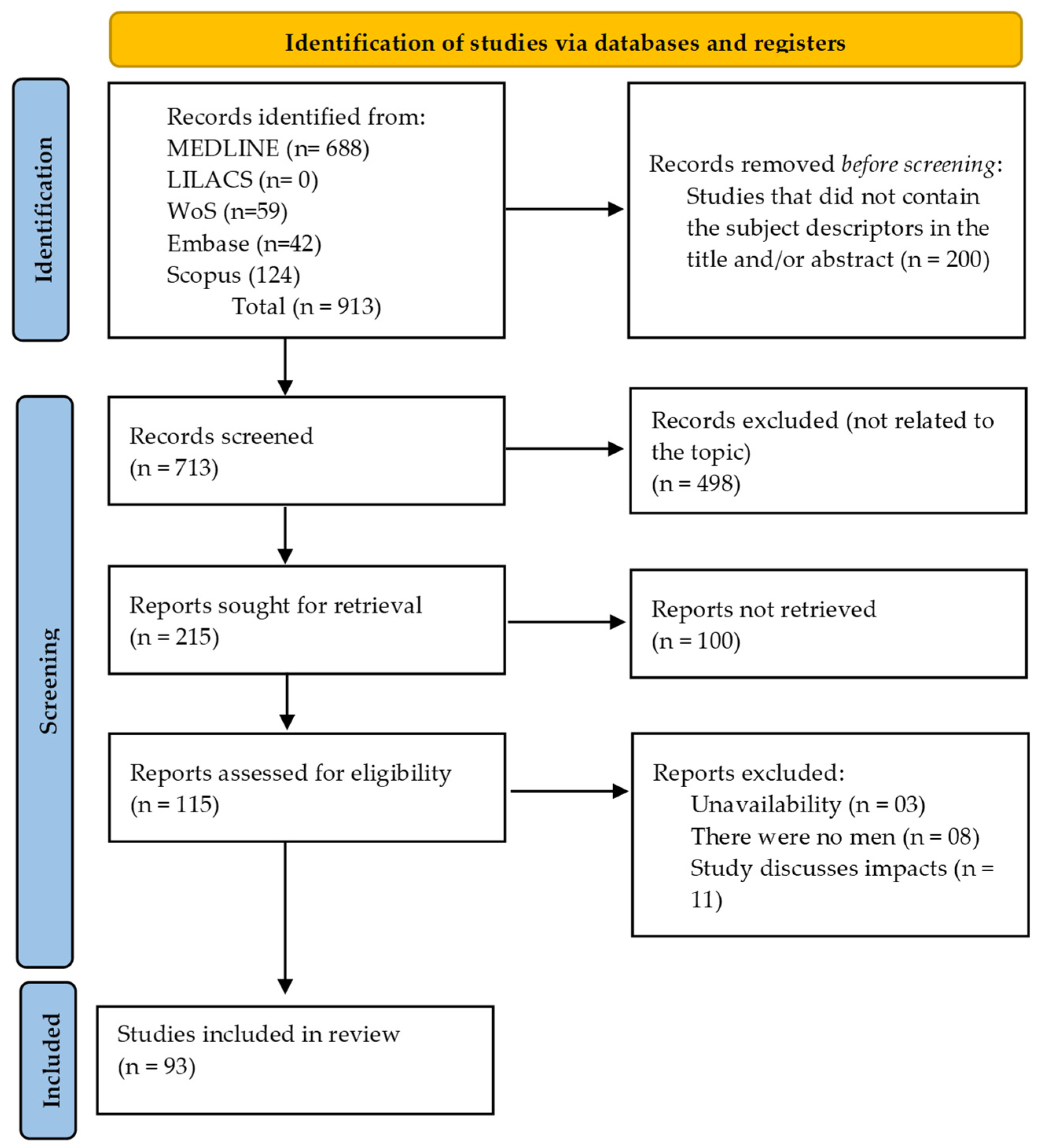
The mapping of scientific publications on the impacts of the COVID-19 pandemic on the health conditions of immigrant, refugee, and asylum-seeking men identified 93 studies, as shown in Figure 1.
The studies analyzed were conducted on five continents, covering 35 countries and one global study. Using the World Bank income classification, studies were predominantly conducted in high-income settings (67.7%), with fewer studies from low- and middle-income countries (32.3%), which may limit transferability to contexts where structural barriers are more severe.
There was an increase in publications from 2020, peaking in 2022 and decreasing in 2023, attributed to the time limitation of the data collection period. There was a concentration of research focused on immigrants (75.3%), compared to refugees (16.1%) and asylum seekers (1.1%), totaling 3,834,446 immigrants, 4318 refugees, and 49 asylum seekers, highlighting the predominance of studies on immigrants over other groups.
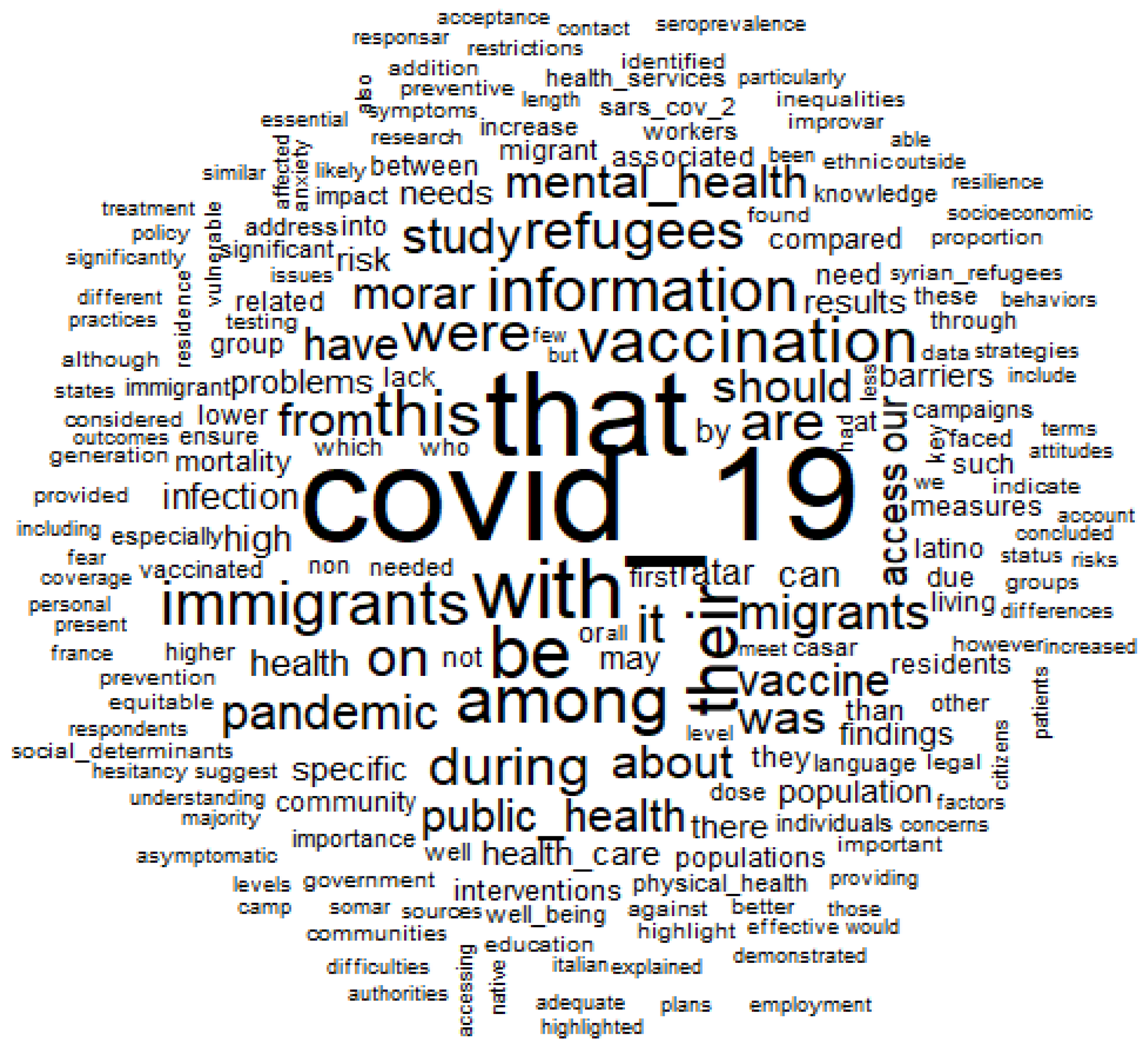
The contextual analysis of the corpus of study conclusions presented in Figure 2 highlights the most frequent terms in the standardized conclusion syntheses, with prominence of words related to vaccination, access barriers, mental health, and inequalities. Overall, the lexical profile reinforces that the corpus concentrates on structural vulnerability, health service access, and pandemic outcomes among migrant men.
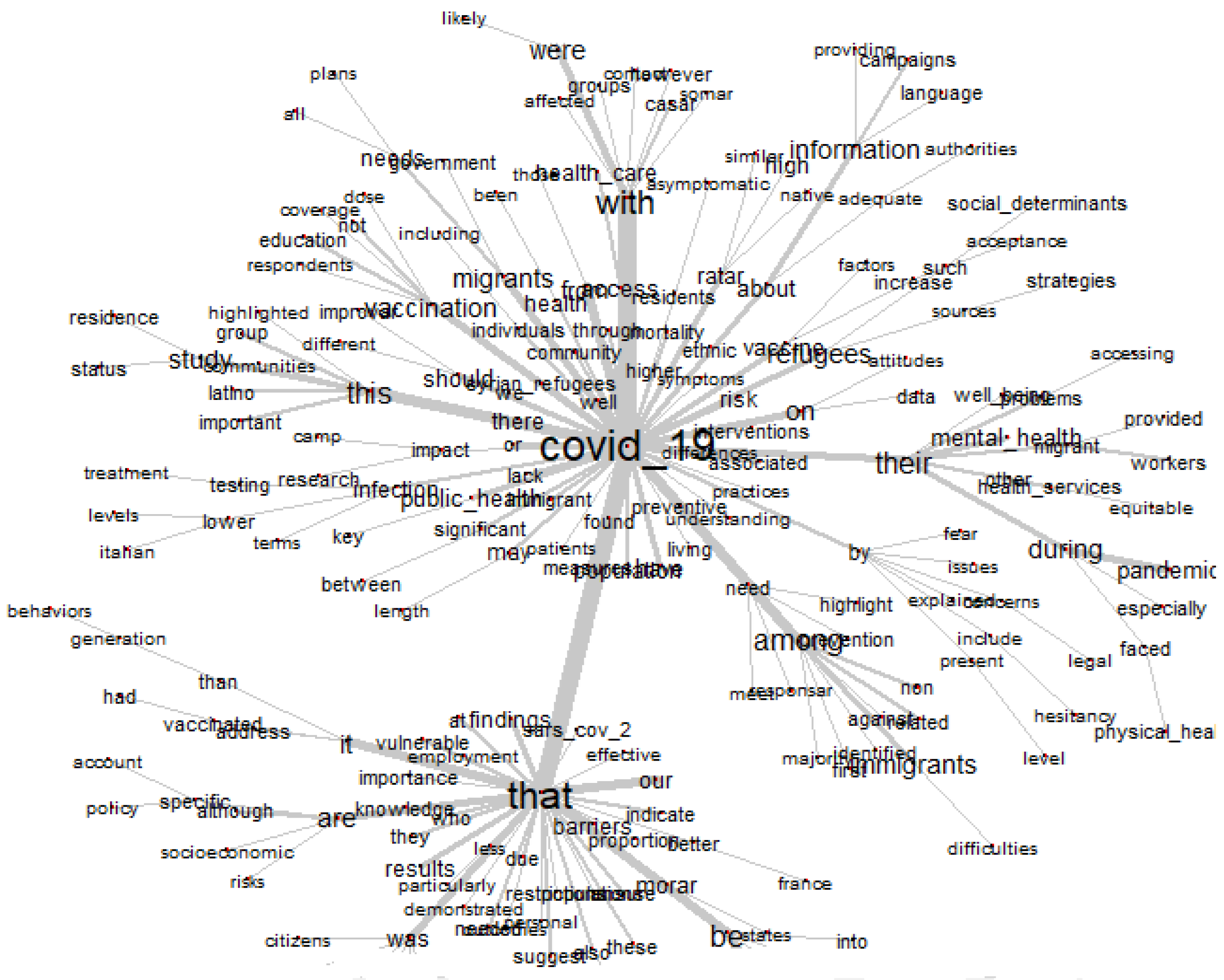
Figure 3 (similarity analysis) shows the co-occurrence structure of key terms in the corpus, organized around COVID-19-related outcomes and interlinked with vaccination, access, and community support terms, indicating a tightly connected semantic network across studies.
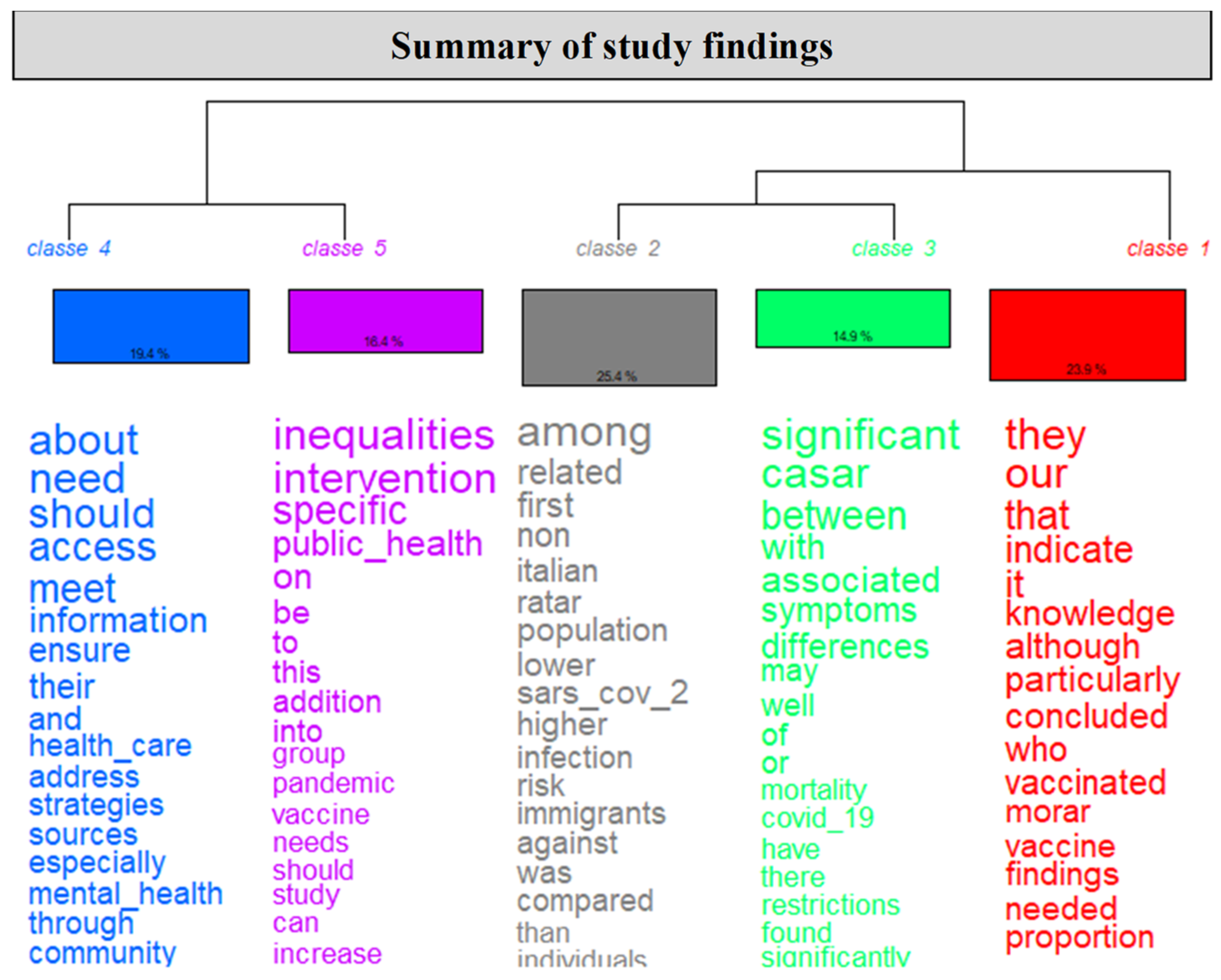
The Descending Hierarchical Classification (DHC) analysis of the study conclusion summaries resulted in five lexical classes, distributed according to the dendrogram shown in Figure 4. Each class represents groups of terms that share specific semantic fields, allowing the identification of the main thematic axes discussed in the corpus.
Class 4 (19.4%), represented in blue, brings together terms associated with needs, access, information, and health care, including words such as about, needs, should, access, information, health care, mental health, and community. This set indicates a focus on informational needs, access to health services, and ensuring adequate care, including mental health care and community action.
Class 5 (16.4%), shown in pink, focuses on terms related to inequalities and public health interventions, such as inequalities, interventions, specific, public health, pandemic, needs, vaccine, and increase. This class points to discussions about disparities, intervention measures, emerging needs, and public health actions in the context of the pandemic.
Class 2 (25.4%), shown in gray, highlights terms related to comparisons between populations, risk of infection, and epidemiological conditions, including among, population, higher, lower, infection, risk, immigrants, and compared. This grouping highlights comparative analyses between groups, especially involving immigrants and different levels of risk associated with COVID-19.
Class 3 (14.9%), marked in green, covers terms that reflect significant differences, symptoms, mortality, and impacts associated with COVID-19. This class indicates the presence of relevant statistical results and clinical and restrictive effects resulting from the pandemic.
Class 1 (23.6%), represented in red, brings together terms related to results, conclusions, knowledge, and vaccination, including they, indicate, knowledge, vaccinated, vaccine, findings, and proportion. This set highlights conclusions from studies related to vaccination coverage, observed proportions, and interpretive syntheses related to the findings.
Overall, the five classes reveal complementary dimensions of the scientific production analyzed, ranging from issues of access and inequalities to epidemiological, clinical, behavioral, and conclusive aspects. Figure 4 demonstrates how these semantic fields are articulated, reflecting the diversity of approaches and the complexity of factors associated with COVID-19 among immigrant populations and in contexts of vulnerability.
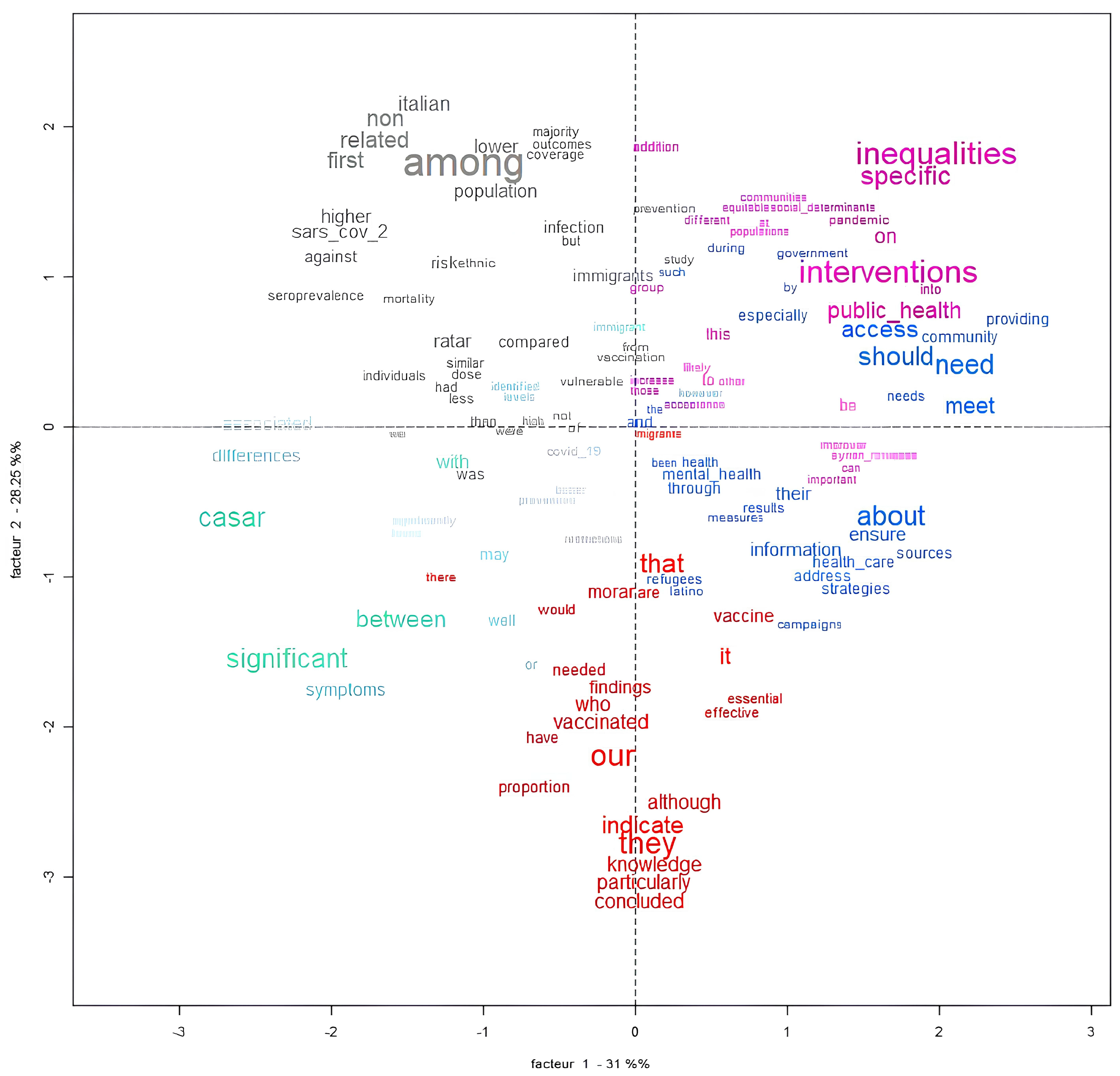
Correspondence Factor Analysis (Figure 5) allowed us to visualize the distribution of words associated with the classes obtained in the Descending Hierarchical Classification. In the upper left quadrant (Factor 1 negative, Factor 2 positive), there was a concentration of terms related to epidemiological characterization, such as among, population, infection, risk, and immigrants, indicating the proximity between content addressing population comparisons and risk factors.
The upper right quadrant (Factor 1 positive, Factor 2 positive) brought together words such as inequalities, specific, interventions, public health, and access, representing the set of context units associated with health inequalities and interventions targeting the immigrant population.
In the lower left quadrant (Factor 1 negative, Factor 2 negative), terms such as significant, differences, between, and symptoms stood out, suggesting that this axis brings together content related to statistically significant differences between groups or outcomes analyzed.
The lower right quadrant (Factor 1 positive, Factor 2 negative) featured words such as indicate, they, our, and that, associated with context units dealing with the interpretation and synthesis of the findings presented in the studies.
Central words, such as COVID-19, vaccine, knowledge, information, and immigrant, were located near the center of the factorial plane, indicating a cross-cutting character and influence on different thematic dimensions. The colors highlighted the separation of the lexical clusters, reinforcing the thematic organization between epidemiological characterization, inequalities and health interventions, statistical differences, and interpretation of results.
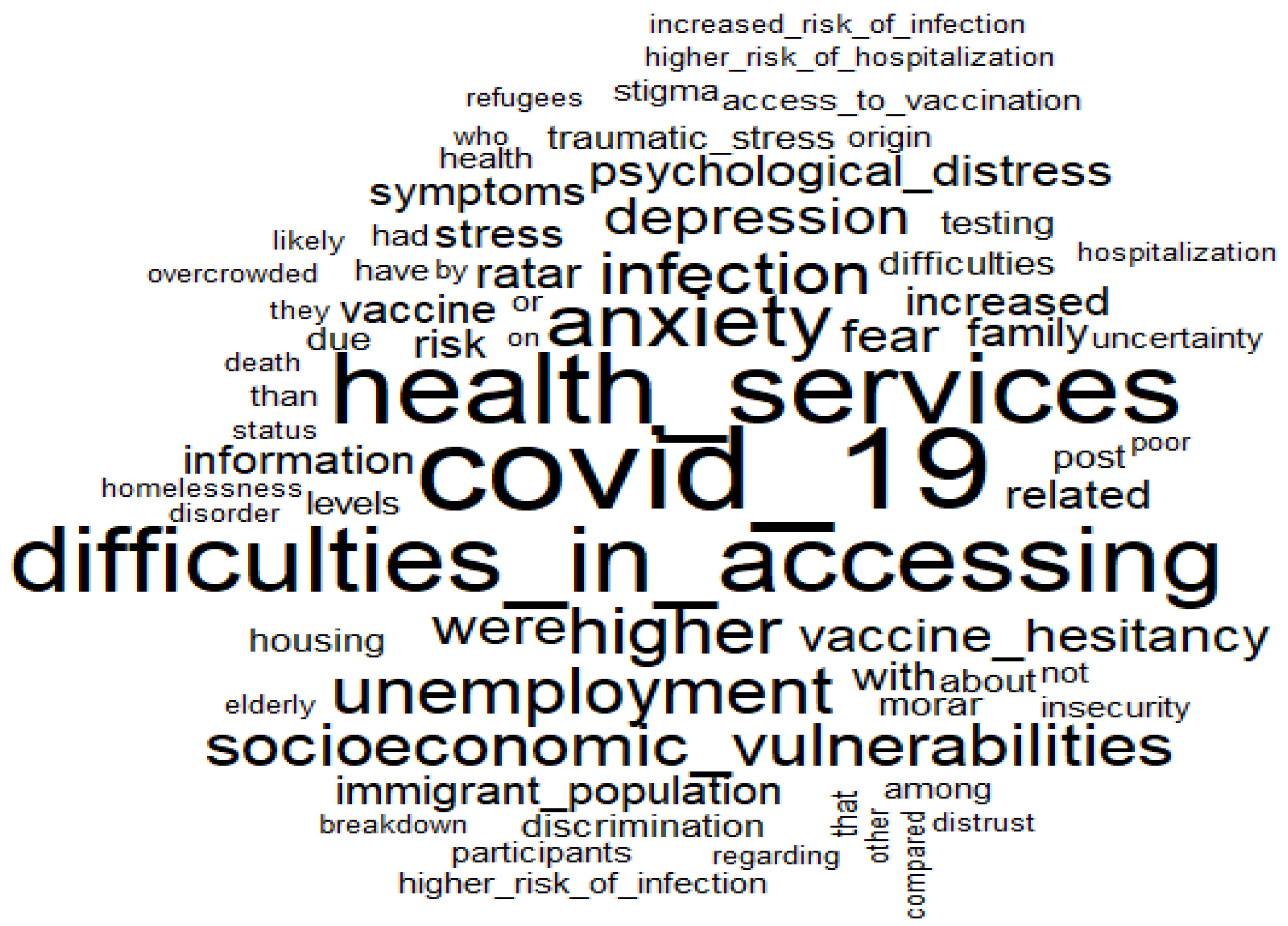
The analysis of the summaries addressing the impacts of the pandemic on the health of immigrants, refugees, and asylum seekers resulted in the word cloud shown in Figure 6. The most frequent and central terms in the corpus were COVID-19, health services, and difficulties in accessing, indicating that many of the studies’ conclusions highlight the challenges these groups face in accessing health services during the pandemic.
Words related to psychosocial conditions also appeared prominently, such as anxiety, psychological distress, and depression, reflecting the emphasis placed by studies on the mental health impacts of the pandemic on this population. Terms such as unemployment, socioeconomic vulnerabilities, and discrimination reinforce that social and economic aspects were recurrent in analyses of the impacts observed.
In addition, words such as infection, higher risk of infection, and vaccine hesitancy suggest the presence of elements related to infection risk, vaccination hesitancy, and weaknesses in the health response. Overall, the word cloud shows that difficulties accessing services, socioeconomic vulnerabilities, and mental health impacts constitute the main thematic axes present in the summaries analyzed.
In this context, lexical analysis of the study conclusions allowed us to identify five central dimensions related to the impacts of the COVID-19 pandemic on the health of immigrant, refugee, and asylum-seeking men. These dimensions emerge consistently from the Descending Hierarchical Classification (DHC) classes, corroborated by Correspondence Factor Analysis (CFA) and word clouds, reflecting interconnected thematic axes in the corpus of 93 studies analyzed. They synthesize the complex interaction between social determinants of health, pre-existing vulnerabilities, and inadequate institutional responses, highlighting gaps in scientific production, such as the underrepresentation of asylum seekers, and calling for urgent equitable actions.
Aspects related to vaccination and study findings (Class 1): Emphasizes vaccine hesitancy, adherence rates, and observed results, such as higher coverage among young immigrants, but persistent barriers in low-income groups (e.g., concerns about efficacy and side effects). This dimension highlights quantitative evidence that exposes flaws in inclusive vaccination campaigns.
Epidemiological risks and indicators (Class 2): Focuses on high infection, mortality, and hospitalization rates associated with geographic mobility and overcrowding. Critically, it reveals structural inequalities that increase susceptibility to severe outcomes.
Significant differences and symptoms associated with COVID-19 (Class 3): Addresses clinical variability, mental symptoms (e.g., anxiety, post-traumatic stress), and gender/migration differences, raising concerns about underreporting in informal populations and the intersectionality of vulnerabilities.
Needs, access to services, information, and community health (Class 4): Highlights linguistic, economic, and informational barriers, with an emphasis on community support and mental health (e.g., preference for oral communication networks). This class criticizes the digitization of services that excludes essential workers, exacerbating job insecurity.
Inequalities, interventions, and public health actions (Class 5): Encompasses structural vulnerabilities, government responses, and recommendations for equity (e.g., extension of National Policy for Comprehensive Men’s Health Care to migrants, aligned with the Sustainable Development Goals. It argues that multisectoral policies are urgently needed to mitigate discrimination and ensure universal access, transforming gaps into opportunities for resilience.
We subsequently performed an interpretive synthesis by grouping lexically proximate classes (as indicated by CFA proximity and thematic overlap) into four higher-order categories to support a clearer public health narrative and reduce redundancy across findings.

4. Discussion

The COVID-19 pandemic has exposed and amplified structural inequalities that disproportionately affect immigrant, refugee, and asylum-seeking men, challenging the effectiveness of global health systems in protecting vulnerable populations. The findings of this study, anchored in a scoping review and qualitative lexical analysis, highlight how social, cultural, economic, and health elements intertwine to generate multifaceted vulnerability. This synthesis suggest that vulnerability was produced through the interaction of structural barriers, gendered social roles, and uneven institutional responses, rather than by individual factors alone.
The categories identified, influenced by sociocultural factors of gender, socioeconomic precariousness, difficulties in accessing vaccination and care, and limitations in public policies, illustrate how these elements shaped health experiences and outcomes during the pandemic. Below, we discuss each category considering international literature and normative frameworks, further exploring the interrelationships between social vulnerability, risks of illness, and inadequate institutional responses, to advocate for the urgent need for equitable and culturally sensitive policies.
  • Category 1: Social implications of the pandemic on the lives of immigrant, refugee, and asylum-seeking men in light of the changes brought about by social and health restrictions
The COVID-19 pandemic has caused profound social changes, disproportionately impacting the living conditions and health of immigrant, refugee, and asylum-seeking men by accentuating biological, mental, moral, and social inequalities and erecting structural barriers that demand a critical examination of narratives of “individual resilience” without systemic support. These men’s reactions to the crisis may vary according to the cultural characteristics of their countries of origin, such as adherence to collective norms, sense of civic duty, public trust, and respect for government decisions, elements that, ironically, have been undermined by inconsistent restrictive measures in host nations [16,17]. Sociocultural gender models, deeply rooted in society, construct stereotypes of masculinity that influence perceptions of self-care, perpetuating the idea that vulnerability is “unmanly.” Breaking with the paradigm that health care is an exclusively female practice is imperative, recognizing it as an equally valid male responsibility [18].
Gender categories, as socially constructed attributes and functions, shape differences and interrelationships between the sexes beyond biology, where being a man implies incorporating traits of strength that mask weaknesses, self-assessing and acting within specific cultural contexts [19]. This cultural construct associates men with the suppression of signs of weakness, fear, anxiety, and insecurity, positioning them as “invulnerable” in comparison to women, which results in low demand for medical services and greater exposure to pandemic risks, a critical contradiction that exacerbates gender inequalities in public health [19].
These groups faced post-traumatic stress, difficulties in accessing health services, resistance to vaccination, and increased vulnerability, while health professionals interacted less with men, offering superficial explanations about risks, thus reinforcing patterns of masculinity and femininity [20,21,22]. In Brazil, the National Policy for Comprehensive Men’s Health Care (PNAISH, in Portuguese) calls for a paradigm shift, questioning why male perceptions of self-care and family care remain marginalized, and calling for actions that transform health services into inclusive and male-friendly spaces [23]. Access and reception require inclusive reorganization, where men see services as their own spaces and professionals recognize their care needs. This policy example is further discussed in Category 4, including considerations on transferability beyond Brazil.
Socio-health restrictions such as lockdowns intensified housing and economic insecurity, increasing avoidable risks of infection and mortality [24,25]. Economic precariousness, aggravated by job losses, was evident in a Swiss study of 117 immigrants, where more than two-thirds reported financial or housing insecurity, and 61% reported food insecurity, highlighting failures in social safety nets that should have mitigated these impacts [26]. Insecure housing conditions and overcrowding compromised adherence to preventive measures, increasing risks to physical and mental health [19] and contributing to outbreaks of anxiety, depression, and post-traumatic stress, a humanitarian crisis that reflects financial problems and isolation as central aggravating factors [27,28,29,30,31,32].
These feelings of stress, anxiety, depression, and hopelessness were exacerbated by fear of infection and economic impacts, reducing willingness to seek care and adhere to protective measures [33,34,35,36,37,38]. Language barriers and the digitization of services excluded those who lack access to technology [39,40].
Studies in Brazil confirm this emotional vulnerability in men, where sociodemographic factors such as job insecurity amplify perceived stress, mediated by low self-compassion and barriers to self-care, a pattern that questions the adequacy of gender interventions in local pandemic contexts [19,41]. Men, underrepresented in services due to the conception of care as “feminine,” face labor barriers, inflexible schedules, and early socialization into non-caregiving roles [19].
The pandemic intensified racial discrimination and xenophobia, increasing psychological distress, and blocking access to care [42,43,44,45]. The stigma surrounding COVID-19 further marginalized immigrants, amplifying social exclusion [46,47]. Unemployment, family breakdown, and residential overcrowding forced multifaceted survival strategies, with recourse to informal and community networks for emotional and material support [20,48,49,50,51,52]. This family breakdown not only increases health risks but also amplifies the intrinsic human vulnerability of the family unit, where emotional ties become fragile in contexts of migration and pandemic crises, requiring interventions that consider the family as a unit of comprehensive care [53].
Taken together, Category 1 shows that the pandemic widened inequalities through intertwined social restrictions, economic precarity, and gendered norms that constrained help-seeking and intensified psychosocial distress. Lockdowns exacerbated housing and economic instability, while discrimination and language barriers intensified marginalization. Community support emerged as an adaptive strategy, fostering collective resilience and mitigating socio-health impacts, but this does not absolve governments of responsibility for structural failures.
In the Brazilian context, a qualitative study with migrant men corroborates this dynamic, revealing how informal support networks mitigate stress and isolation during the pandemic, but highlight the need for more inclusive local policies for refugee populations [9]. This evidence reinforces the criticism of the underreporting of local experiences in global reviews, demanding greater integration of national perspectives for health equity.
  • Category 2: The vulnerability of immigrant, refugee, and asylum-seeking men and the risks of mortality from COVID-19
The vulnerability of immigrant, refugee, and asylum-seeking men is intrinsically linked to high geographic mobility, lack of sanitation, instability, poor access to vaccination, and overcrowding in shelters, factors that call for criticism of the insufficient prioritization of resources in overburdened health systems [41,54,55,56]. Mobility, essential for survival, increased exposure to the virus, while border closures prevented returns and access to cross-border assistance, exposing contradictions in migration policies [57].
A comprehensive systematic review and meta-analysis underscores these disparities, revealing that migrants and refugees face 1.8–2.5 times higher odds of SARS-CoV-2 infection compared to host populations, driven by socioeconomic determinants and structural barriers [58]. This global synthesis highlights the need for intersectional approaches in pandemic response.
Inequalities in infection and mortality were striking, with higher rates among immigrants compared to the general population, questioning the equity of pandemic responses [59,60,61,62,63,64]. Higher infection rates correlated with elevated risks of hospitalization and intubation [20,65]. About 20% of infections required advanced care, 15% had serious complications, and 5% required ICU care, contributing to hospital overcrowding and ventilator shortages, a systemic failure that exposed male vulnerabilities [19,66]. Furthermore, disparities extend to post-acute sequelae, with migrant patients experiencing higher incidence and prolonged symptoms of Long COVID compared to non-migrants, underscoring the need for targeted follow-up care [67].
The findings of this study reinforce that factors such as male gender, age, comorbidities, and intubation significantly increase the risk of death [68]. Male immigrants had worse clinical outcomes, even when younger than non-migrant men [65].
In Brazil, clinical experiences of men with COVID-19 reveal similar patterns, with a higher prevalence of worsening symptoms in vulnerable populations, including migrants, due to barriers to early diagnosis and treatment, highlighting the need for epidemiological surveillance that is sensitive to gender and migratory status [10]. This reinforces male specificities, aligning with PNAISH, which prioritizes prevalent pathologies for comprehensive care and risk mitigation [23].
Residential overcrowding and reliance on public transportation increased exposure in vulnerable neighborhoods [69,70,71,72,73,74,75,76]. Barriers such as informal residence, low educational attainment, economic constraints, and language barriers exacerbated vulnerability and mortality [77,78,79,80,81,82]. Moreover, the prevalence of infection was higher among immigrants and refugees [83,84,85], with increased risks of hospitalization and ICU admission [84].
Overall, the evidence indicates that elevated infection and mortality burdens among immigrant, refugee, and asylum-seeking men are shaped by the interaction of gendered exposures, overcrowding, and structural barriers to timely prevention and care, reinforcing the urgency of equity-oriented interventions.
  • Category 3: Access to information, healthcare, and vaccination for the protection of immigrant, refugee, and asylum-seeking male workers
Access to information, healthcare, and vaccination emerged as major challenges for immigrant, refugee, and asylum-seeking men during the pandemic. Evidence across settings indicates that informational and communication barriers—interacting with legal insecurity and mistrust—amplified vulnerability and reduced uptake of preventive measures.
Moreover, disaggregating vaccination data by language proficiency is crucial, as it uncovers hidden disparities among newcomers, where non-English speakers exhibit 20–30% lower coverage rates, necessitating tailored multilingual outreach [86]. This approach can enhance equity in vaccine distribution for linguistically diverse migrant populations.
Cross-border networks disseminated early information, generating both anxiety and adherence to preventive measures [87,88], but difficulties in obtaining clear data and a lack of PPE in workplaces increased infection rates [89,90]. Essential workers, such as drivers and delivery personnel, faced intense stress without adequate institutional support, highlighting the need for occupational health approaches to limit workplace transmission [91,92]. Layoffs and reduced working hours exacerbated financial insecurity, affecting both mental and physical health.
The pandemic exposed fragile access to reliable information, while mistrust and misinformation hindered vaccination uptake, underscoring the need for culturally adapted campaigns. Immigrants tend to prefer oral and visual communication from trusted sources, a strategy that helps overcome language barriers [39,93]. Trust placed in community networks was associated with greater compliance with preventive behaviors [94,95].
Vaccine hesitancy stemmed from concerns about safety, efficacy, and side effects [96,97,98,99], exacerbated by vague official messages and misinformation [98,100,101,102]. Uncertainty about vaccines, limited access, and distrust in authorities fueled hesitancy [93,103,104,105,106]. In the United Kingdom, 72% of newcomers hesitated, citing concerns about vaccine composition, adverse effects, and fears of prosecution or deportation [107,108,109], barriers that adequate communication strategies could mitigate.
Although refugees generally showed lower hesitancy than natives, barriers such as legal insecurity and discrimination persisted [110,111,112]. Vaccination coverage varied: it was higher among immigrants under 50 but remained low among older and low-income groups [103], reflecting the impact of health system organization that often excludes vulnerable populations [113]. Unemployment increased non-vaccination and the risks of infection and hospitalization [25,39,85,114,115,116].
Addressing language barriers, mistrust, and socioeconomic constraints is essential for equity. Strategies such as multilingual materials and community-based support structures are particularly effective for protecting these workers and preventing outbreaks.
  • Category 4: Interventions and public policies for the prevention and treatment of COVID-19, ensuring basic and health needs for immigrant, refugee, and asylum-seeking men
Public policies represent government responses to social, economic, and cultural demands, but their implementation frequently fails to prioritize migrant men, highlighting a profound gap in the public health agenda [117]. Multi-sectoral collaboration with international organizations is essential for providing financial and material support [118] and for aligning national actions with global agendas such as the SDGs, thereby strengthening evidence-based interventions [119].
The evidence underscores the urgency of public health interventions that guarantee access to services regardless of migration status. Documentary barriers were frequently associated with non-vaccination and reveal shortcomings in social protection [39,78,120,121,122]. Strategies adopted in Nepal, Japan, and South Africa—such as mobile vaccination centers and community-based education—were reported to reduce access barriers, supporting their practical feasibility in specific contexts [49,118].
Socioeconomic programs for housing and social assistance would reduce pressures on migrant communities, while culturally sensitive campaigns could improve adherence to preventive measures [42,123,124]. Policies must address individual, cultural, and financial barriers to promote equity, strengthen international collaboration, and reduce mortality [75].
Male invisibility in health care reflects shortcomings in policy implementation and professional training, which often fail to consider men as legitimate targets for care [19,26]. The National Policy for Comprehensive Men’s Health Care seeks to expand access for men aged 20–59 years, focusing on welcoming care, sexual and reproductive health, fatherhood, prevalent conditions, and violence prevention. Its extension to migrant populations is both necessary and justified [23]. Although PNAISH is Brazil-specific, its underlying principles (gender-sensitive primary care and active outreach) are transferable; however, implementation requires adaptation to country-specific governance arrangements, financing capacity, and legal frameworks.
International declarations establish health as a universal right, yet national policies frequently exclude migrants. Mobility mapping is essential for surveillance, as demonstrated during Ebola outbreaks [119]. Key recommendations include expanding vaccination by eliminating access barriers [125]; strengthening multilingual communication [40,100]; implementing socioeconomic support programs [49,118]; and integrating mental health care [27,35]. Such strategies promote equity and inclusion.
Understanding vulnerabilities is fundamental for equitable health systems. Policies should mitigate social determinants of health, ensuring access and reducing discrimination to build a resilient response for future pandemics.
Beyond mapping barriers and impacts, these findings also have implications for implementation and political feasibility. Implementing gender- and equity-sensitive responses for immigrant, refugee, and asylum-seeking men during and after large-scale health emergencies requires moving beyond information campaigns and addressing the practical conditions that shape exposure, service use, and compliance.
Across the included evidence, barriers were not merely individual (knowledge deficits), but were strongly mediated by legal insecurity, language and health-system navigation barriers, precarious employment conditions, and mistrust linked to discrimination—consistent with this Category’s emphasis on documentation-related exclusion and the need to ensure access regardless of migration status. Therefore, policy implications should be articulated as an integrated package of service availability, effective access, and institutional legitimacy, rather than as isolated communication interventions.
A central implementation challenge is that men’s health behaviors in migrant contexts are shaped by gendered social roles and expectations, which may intensify vaccine hesitancy and delay care-seeking when vaccination is perceived as compromising short-term work capacity (e.g., side effects, lost wages) or as conflicting with norms of endurance and self-management. These pressures interact with intersecting positions (e.g., race/ethnicity, class, housing precarity, and legal status), increasing vulnerability among men in essential or high-exposure occupations and reinforcing the “invisibility” of men in care pathways discussed above. Political feasibility can be strengthened by complementing rights-based arguments with a pragmatic risk-management framing (reducing outbreaks in essential sectors and avoidable late-stage care), supported by intersectoral arrangements that distribute costs while preserving accountability for equity outcomes. Finally, because messaging rarely translates into uptake without enabling conditions, social protection (paid leave for vaccination/isolation, protection against workplace retaliation, and reduced administrative barriers) should be treated as a core component of emergency preparedness for migrant men’s health. Future research should test which combinations of service design, protection, and community engagement most improve outcomes, considering the limitations of the evidence base (uneven representation of statuses and settings).

Limitations and Contributions

This scoping review has limitations that should be considered when interpreting the findings. First, the linguistic restriction to Portuguese, English, and Spanish may have resulted in the exclusion of relevant evidence published in other languages, especially those from countries with intense migratory flows. Furthermore, there was an asymmetry in the representativeness of the populations investigated, with a predominance of studies focused on immigrants, to the detriment of refugees and, above all, asylum seekers, which limits the generalization of the findings to the latter group, which is known to be more exposed to extreme vulnerabilities.
Another aspect to be considered refers to the nature of the synthesized evidence. Populations in situations of human mobility often occupy contexts of informality and legal precariousness, which favors underreporting of epidemiological conditions and outcomes, especially in health emergency scenarios. Finally, although the literature mapping was comprehensive, the scoping review, by methodological definition, does not include an assessment of the quality of the primary studies, making it impossible to draw conclusive inferences about the risk of bias and the robustness of the estimates of morbidity, mortality, and clinical outcomes reported during the COVID-19 pandemic.
Additionally, heterogeneity in how primary studies defined migration status (immigrant/refugee/asylum seeker) and reliance on administrative datasets in some settings may have introduced comparability challenges and selection biases. Evidence concentration in high-income contexts may further limit inference for low-resource settings.
The findings of this study offer relevant contributions to professional practice and health management by providing evidence-based support for the qualified care of immigrant men, refugees, and asylum seekers, who have historically been marginalized in health systems. By highlighting the intersections between gender, migration status, and programmatic vulnerability, the results can support managers in formulating strategies for active outreach, health surveillance, and the organization of care networks that recognize linguistic, cultural, and institutional barriers as social determinants of health.
For frontline professionals, the mapping reinforces the centrality of cultural competence and a gender-sensitive approach, expanding care beyond the strictly clinical dimension and incorporating actions for reception, guidance, and social protection. In the field of public policy, the results offer empirical elements for improving the policy and programs aimed at migrant and refugee populations, signaling that promoting equity in the global health systems requires surveillance and care mechanisms that are attentive to the specificities of migration and masculinity in contexts of health crises.

5. Conclusions

This study shows that the COVID-19 pandemic acted as a catalyst for pre-existing inequalities, deepening structural vulnerabilities that cut across the health experiences of immigrant men, refugees, and asylum seekers. The synthesis of evidence demonstrates that the impacts of the health crisis were not limited to clinical conditions but also involved social, economic, and institutional dimensions that conditioned the risk of illness, the severity of outcomes, and the possibility of timely access to care.
The findings indicate that the combination of poor housing conditions, unstable employment, movement in higher-risk areas, and weaknesses in social protection mechanisms produced scenarios of disproportionate exposure to infection, hospitalization, and mortality. These factors were aggravated by institutional and communication barriers that hindered access to reliable information, primary care, and prevention strategies, highlighting the limits of health systems’ capacity to respond equitably to contexts of intense human mobility.
An integrated analysis of the thematic categories reinforces that responses to the pandemic were insufficient to largely address the specificities associated with gender and migratory status. The persistence of care models that are insensitive to masculinities, combined with the absence of intersectional approaches in public policies, contributed to the maintenance of health inequalities and the reproduction of forms of institutional exclusion, even in systems guided by the principle of universality.
Given this scenario, the results of this study support the need to reposition health care for migrant men at the center of public health agendas, especially in health emergency contexts. Strengthening primary care, integrating intersectoral actions, and systematically incorporating strategies that are sensitive to migratory dynamics and social constructions of gender are key elements for building more inclusive and resilient responses.
In summary, promoting health equity in contexts of human mobility requires overcoming fragmented and reactive approaches, moving toward models of care and governance capable of recognizing and addressing the structural inequalities that shape the processes of illness and care. Such a commitment is not limited to an ethical requirement but constitutes a strategic condition for strengthening health systems that are more equitable, prepared, and socially responsive to present and future health crises.

Author Contributions

Conceptualization, S.R.B. and L.G.L.; methodology, S.R.B., V.F.d.N. and L.G.L.; software, S.R.B. and V.F.d.N.; validation, S.R.B., V.F.d.N., A.R.d.S., S.V.B.B. and L.G.L.; formal analysis, S.R.B., V.F.d.N. and L.G.L.; in-vestigation, S.R.B. and S.V.B.B.; resources, S.R.B., V.F.d.N. and L.G.L.; data curation, S.R.B., V.F.d.N. and L.G.L.; writing—original draft preparation, S.R.B., V.F.d.N. and L.G.L.; writing—review and editing, A.R.d.S. and S.V.B.B.; visualization, S.R.B., V.F.d.N., A.R.d.S., S.V.B.B. and L.G.L.; supervision, L.G.L.; project administration, S.R.B. and L.G.L.; funding acquisition, S.R.B. and L.G.L. All authors have read and agreed to the published version of the manuscript.

Funding

This study was financed by the Coordenação de Aperfeiçoamento de Pessoal de Nível Superior–Brazil (CAPES)–Funding Code 001.

Institutional Review Board Statement

Ethical review and approval were waived for this study because it is a scoping review that relies exclusively on secondary data from the literature, with no primary data collection involving human participants.

Informed Consent Statement

Not applicable.

Data Availability Statement

The raw data supporting the conclusions of this article will be made available by the authors on request.

Acknowledgments

During the preparation of this manuscript, the authors used GenIA from Adapta ONE (version 26) for the purposes of revising the text and the quality of the translation. The authors have reviewed and edited the output and take full responsibility for the content of this publication.

Conflicts of Interest

The authors declare no conflicts of interest.

Abbreviations

The following abbreviations are used in this manuscript:
CAPESCoordenação de Aperfeiçoamento de Pessoal de Nível Superior–Brazil
CFACorrespondence Factor Analysis
DeCSDescriptors in Health Sciences
DHCDescending Hierarchical Classification
GenIAGenerative IA
ICUsInitial Context Units
IRAMUTEQInterface de R pour les Analyses Multidimensionnelles de Textes et de Questionnaires
JBIJoanna Briggs Institute
MeSHMedical Subject Headings
PCCPopulation, Concept, Context
PNAISHNational Policy for Comprehensive Men’s Health Care
UTF-8Unicode Transformation Format 8-bit

References

  1. Mengesha, Z.; Alloun, E.; Weber, D.; Smith, M.; Harris, P. “Lived the Pandemic Twice”: A Scoping Review of the Unequal Impact of the COVID-19 Pandemic on Asylum Seekers and Undocumented Migrants. Int. J. Environ. Res. Public Health 2022, 19, 6624. [Google Scholar] [CrossRef]
  2. Arab, R.A.E.; Somerville, J.; Abuadas, F.H.; Rubinat, E.; Sagbakken, M. Health and well-being of refugees, asylum seekers, undocumented migrants, and internally displaced persons under COVID-19: A scoping review. Front. Public Health 2023, 11, 1145002. [Google Scholar] [CrossRef]
  3. Brandenberger, J.; Tylleskär, T.; Sontag, K.; Peterhans, B.; Ritz, N. A systematic literature review of reported challenges in health care delivery to migrants and refugees in high-income countries—The 3c model. BMC Public Health 2019, 19, 755. [Google Scholar] [CrossRef]
  4. Benjamen, J.; Girard, V.; Jamani, S.; Magwood, O.; Holland, T.; Sharfuddin, N.; Pottie, K. Access to Refugee and Migrant Mental Health Care Services during the First Six Months of the COVID-19 Pandemic: A Canadian Refugee Clinician Survey. Int. J. Environ. Res. Public Health 2021, 18, 5266. [Google Scholar] [CrossRef]
  5. Alves, J.d.S.; Costa, J.F. Saúde do homem: Desafios para assistência de enfermagem. Rev. Remecs 2020, 5, 42–51. [Google Scholar] [CrossRef]
  6. Arab, R.A.E.; Urbanavice, R.; Jakavonytė-Akstinienė, A.; Skvarčevskaja, M.; Austys, D.; Briones-Vozmediano, E.; Rubinat-Arnaldo, E.; Istomina, N. “We want our freedom back, that’s our only need”: A qualitative study of health and social needs among asylum seekers and undocumented migrants crossing the borders from belarus to lithuania. Front. Public Health 2024, 12, 1371119. [Google Scholar] [CrossRef]
  7. Glover, R.E.; Schalkwyk, M.C.I.v.; Akl, E.A.; Kristjannson, E.; Lotfi, T.; Petkovic, J.; Petticrewa, M.P.; Pottief, K.; Tugwellg, P.; Welch, V. A framework for identifying and mitigating the equity harms of COVID-19 policy interventions. J. Clin. Epidemiol. 2020, 128, 35–48. [Google Scholar] [CrossRef]
  8. Hayward, S.E.; Deal, A.; Cheng, C.; Crawshaw, A.F.; Orcutt, M.; Vandrevala, T.; Carballo, M.; Ciftci, Y.; Requena-Mendez, A.; Greenaway, C. Clinical outcomes and risk factors for COVID-19 among migrant populations in high-income countries: A systematic review. J. Migr. Health 2021, 3, 100041. [Google Scholar] [CrossRef] [PubMed]
  9. Santos, R.V.P.d.S.; Cruz Neto, J.; Bacelo, S.R.; José, O.Y.F.; Vergara-Escobar, O.J.; Machuca-Contreras, F.; Moraes, M.C.L.d.; Lourenção, L.G.; Sousa, Á.F.L.d.; de Oliveira, L.B.; et al. Migrant Men Living in Brazil during the Pandemic: A Qualitative Study. Int. J. Environ. Res. Public Health 2024, 21, 109. [Google Scholar] [CrossRef] [PubMed]
  10. Boas, A.R.S.V.; Santos, D.G.; Teixeira, J.R.B.; Lourenção, L.G.; Santos, J.L.G.D.; Silva, R.A.R.D.; Carvalho, A.R.B.; Sousa, A.F.L.; Sousa, A.R. Clinical and epidemiological characteristics and individual experiences of illness in men with COVID-19: Mixed method study. Sao Paulo Med. J. 2022, 140, 798–805. [Google Scholar] [CrossRef]
  11. Filho, A.R.P.; Moglia, B.H.; Terra, M.F. Enfrentamento à infodemia da COVID-19 na atenção primária à saúde: Relato de experiência/confronting COVID-19’s infodemia in primary health care: Experience report. Arq. Med. Hosp. Fac. Cienc. Med. Santa Casa Sao Paulo 2021, 66, 28. [Google Scholar] [CrossRef]
  12. Figueiredo, D.C.M.M.d.; Shimizu, H.E.; Ramalho, W.M.; Figueiredo, A.M.d.; Lucena, K.D.T.d. Quality of primary health care in brazil: Patients’ view. Rev. Bras. Enferm. 2018, 71, 2713–2719. [Google Scholar] [CrossRef] [PubMed]
  13. Joanna Briggs Institute. JBI Manual for Evidence Synthesis; JBI: Adelaide, Austria, 2020. [Google Scholar]
  14. Bacelo, S.R.; Borchhardt, S.V.B.; Cruz Neto, J.; Araújo, P.O.d.; Sousa, A.R.d.; Lourenção, L.G. Influence of the COVID-19 pandemic on the health of immigrant, refugee, and asylum-seeking men: A scoping review protocol. Online Braz. J. Nurs. 2024, 23, e20246749. [Google Scholar] [CrossRef]
  15. Minayo, M.C.S. O Desafio do Conhecimento: Pesquisa Qualitativa em Saúde; Hucitec: São Paulo, Brazil, 2017. [Google Scholar]
  16. Budak, F.; Bostan, S. The Effects of COVID-19 Pandemic on Syrian Refugees in Turkey: The Case of Kilis. Soc. Work. Public Health 2020, 35, 579–589. [Google Scholar] [CrossRef]
  17. Singh, G.P.; Arun, P.; Chavan, B.S. Migrant Workers’ Needs and Perceptions While Lodged in a Shelter Home in India During the COVID-19 Pandemic. Prim. Care Companion CNS Disord. 2020, 22, 20m02753. [Google Scholar] [CrossRef]
  18. Gele, A.; Sheikh, N.S.; Kour, P.; Qureshi, S.A. Uptake of COVID-19 Preventive Measures Among 10 Immigrant Ethnic Groups in Norway. Front. Public Health 2022, 10, 809726. [Google Scholar] [CrossRef]
  19. Medrado, B.; Lyra, J.; Nascimento, M.; Beiras, A.; Corrêa, Á.C.P.; Alvarenga, E.C.; Lima, M.L.C. Men, masculinity and the new coronavirus: Sharing gender issues in the first phase of the pandemic. Ciência Saúde Coletiva 2021, 26, 179–183. [Google Scholar] [CrossRef] [PubMed]
  20. Sousa, A.R.; Cerqueira, S.S.B.; Santana, T.S.; Suto, C.S.S.; Aparício, E.C.; Carvalho, E.S.S. Meanings and metaphors of COVID-19 in the experience of adult men who have had the disease. Rev. Baiana De Enferm. 2022, 36, e43414. [Google Scholar] [CrossRef]
  21. Akhtar, A.; Bawaneh, A.; Awwad, M.; Al-Hayek, H.; Sijbrandij, M.; Cuijpers, P.; Bryant, R.A. A longitudinal study of mental health before and during the COVID-19 pandemic in Syrian refugees. Eur. J. Psychotraumatol. 2021, 12, 1991651. [Google Scholar] [CrossRef] [PubMed]
  22. Jumaa, J.A.; Bendau, A.; Ströhle, A.; Heinz, A.; Betzler, F.; Petzold, M.B. Psychological distress and anxiety in Arab refugees and migrants during the COVID-19 pandemic in Germany. Transcult. Psychiatry 2022, 60, 62–73. [Google Scholar] [CrossRef]
  23. Brasil. Ministério da Saúde. Portaria GM/MS nº 3.562, de 12 de dezembro de 2021; Altera o Anexo XII da Portaria de Consolidação GM/MS nº 2, de 28 de setembro de 2017, Para Dispor Sobre a Política Nacional de Atenção Integral à Saúde do Homem (PNAISH); Ministério da Saúde: Brasília, Brazil, 2021. Available online: https://bvsms.saude.gov.br/bvs/saudelegis/gm/2021/prt3562_15_12_2021.html (accessed on 12 December 2025).
  24. Gosselin, A.; Melchior, M.; Carillon, S.; Gubert, F.; Ridde, V.; Kohou, V.; Zoumenou, I.; Senne, J.N.; Desgrées du Loû, A.; MAKASI Study Group. Deterioration of mental health and insufficient COVID-19 information among disadvantaged immigrants in the greater Paris area. J. Psychosom. Res. 2021, 146, 110504. [Google Scholar] [CrossRef] [PubMed]
  25. Pham, P.N.; Keegan, K.; Johnston, L.G.; Rodas, J.; Restrepo, M.A.; Wei, C.; Vinck, P. Assessing the impact of the COVID-19 pandemic among Venezuelan refugees and migrants in Colombia using respondent-driven sampling (RDS). BMJ Open 2022, 12, e054820. [Google Scholar] [CrossRef]
  26. Burton-Jeangros, C.; Duvoisin, A.; Lachat, S.; Consoli, L.; Fakhoury, J.; Jackson, Y. The Impact of the COVID-19 Pandemic and the Lockdown on the Health and Living Conditions of Undocumented Migrants and Migrants Undergoing Legal Status Regularization. Front. Public Health 2020, 8, 596887. [Google Scholar] [CrossRef]
  27. Spiritus-Beerden, E.; Verelst, A.; Devlieger, I.; Langer Primdahl, N.; Botelho Guedes, F.; Chiarenza, A.; De Maesschalck, S.; Durbeej, N.; Garrido, R.; Gaspar de Matos, M.; et al. Mental Health of Refugees and Migrants during the COVID-19 Pandemic: The Role of Experienced Discrimination and Daily Stressors. Int. J. Environ. Res. Public Health 2021, 18, 6354. [Google Scholar] [CrossRef] [PubMed]
  28. Al-Awaida, W.; Alkuz, I.; Albatineh, A.; Al-Bataineh, O.; Al-Smadi, A.; Al-Bataineh, O.; Al-Bataineh, O. Psychological effects of quarantine on Syrian refugees, compared to the Jordanian populations. Int. Migr. 2022, 60, 123–140. [Google Scholar] [CrossRef]
  29. Cuijpers, P.; Heim, E.; Abi Ramia, J.; Burchert, S.; Carswell, K.; Cornelisz, I.; Knaevelsrud, C.; Noun, P.; van Klaveren, C.; Van’t Hof, E.; et al. Effects of a WHO-guided digital health intervention for depression in Syrian refugees in Lebanon: A randomized controlled trial. PLoS Med. 2022, 19, e1004025. [Google Scholar] [CrossRef] [PubMed]
  30. Acharya, S.R.; Moon, D.H.; Chun, J.H.; Shin, Y.C. COVID-19 and mental health: Anxiety disorders among immigrants due to COVID-19 outbreak in South Korea. Int. J. Psychiatry Med. 2022, 57, 323–337. [Google Scholar] [CrossRef]
  31. Pineros-Leano, M.; Pérez-Flores, N.J.; Damian, K.; Rodrigues, K.; Ortiz, G.; Simonovich, S.D. Mental health disparities in Latinx immigrant communities residing in the United States during COVID-19: Implications for policy and practice. Front. Public Health 2022, 10, 1000233. [Google Scholar] [CrossRef]
  32. Yazji, S.; Ginjupalli, P.M.; Harbin, Z.; Kester, N.; Roka, A. Assessment of San Antonio refugee health clinic telehealth response and refugees’ needs during the COVID-19 pandemic. J. Migr. Health 2023, 7, 100190. [Google Scholar] [CrossRef]
  33. Hu, Q.; Umeda, M. Stress, Anxiety, and Depression for Chinese Residents in Japan during the COVID-19 Pandemic. Int. J. Environ. Res. Public Health 2021, 18, 4958. [Google Scholar] [CrossRef]
  34. Serafini, R.A.; Powell, S.K.; Frere, J.J.; Saali, A.; Krystal, H.L.; Kumar, V.; Yashaswini, C.; Hernandez, J.; Moody, K.; Aronson, A.; et al. Psychological distress in the face of a pandemic: An observational study characterizing the impact of COVID-19 on immigrant outpatient mental health. Psychiatry Res. 2021, 295, 113595. [Google Scholar] [CrossRef]
  35. Richardson, B.N.; Noh, H.I.; Webster, C.I.; Zhang, W.; Kim, S.; Yang, I.; Bai, J. Oral Microbiome, Mental Health, and Sleep Outcomes During the COVID-19 Pandemic: An Observational Study in Chinese and Korean American Immigrants. OMICS 2023, 27, 180–190. [Google Scholar] [CrossRef]
  36. Ghaddar, A.; Khandaqji, S.; Kansoun, R.; Ghassani, A. Access of Syrian refugees to COVID-19 testing in Lebanon. East. Mediterr. Health J. 2023, 29, 15–23. [Google Scholar] [CrossRef]
  37. Zhang, M.; Payton, C.; Gurung, A.; Anglewicz, P.; Subedi, P.; Ali, A.; Ibrahim, A.; Haider, M.; Hamidi, N.; Atem, J.; et al. COVID-19 Infection and Contact Tracing Among Refugees in the United States, 2020–2021. J. Immigr. Minor. Health 2023, 25, 1239–1245. [Google Scholar] [CrossRef] [PubMed]
  38. Baluku, M.M.; Nansubuga, F.; Kibanja, G.M.; Ouma, S.; Balikoowa, R.; Nansamba, J.; Ruto, G.; Kawooya, K.; Musanje, K. Associations of psychological inflexibility with posttraumatic stress disorder and adherence to COVID-19 control measures among refugees in Uganda: The moderating role of coping strategies. J. Context. Behav. Sci. 2023, 28, 278–288. [Google Scholar] [CrossRef]
  39. Knights, F.; Carter, J.; Deal, A.; Crawshaw, A.F.; Hayward, S.E.; Jones, L.; Hargreaves, S. Impact of COVID-19 on migrants’ access to primary care and implications for vaccine roll-out: A national qualitative study. Br. J. Gen. Pract. 2021, 71, e583–e595. [Google Scholar] [CrossRef] [PubMed]
  40. Zlotnick, C.; Dryjanska, L.; Suckerman, S. Factors linked to accessing COVID-19 recommendations among working migrants. Public Health Nurs. 2022, 39, 24–32. [Google Scholar] [CrossRef] [PubMed]
  41. Palma, E.M.S.; de Sousa, A.R.; Teixeira, J.R.B.; Moreira, W.C.; de Araújo, A.C.M.; Souza, L.F.V.; dos Anjos, J.C.R.; de Almeida Portela, H.S.; de Carvalho, H.E.F.; de Oliveira Muniz, V.; et al. Influence of Sociodemographic and Emotional Factors on the Relationship between Self-Compassion and Perceived Stress among Men Residing in Brazil during the COVID-19 Pandemic. Int. J. Environ. Res. Public Health 2022, 19, 8159. [Google Scholar] [CrossRef]
  42. Yusuf, K.K.; Madu, E.; Kutchava, S.; Liu, S.K. The Coronavirus (COVID-19) Pandemic and Mental Health of African Immigrants in the United States. Int. J. Environ. Res. Public Health 2022, 19, 10095. [Google Scholar] [CrossRef]
  43. Singer, E.; Molyneux, K.; Gogerly-Moragoda, M.; Kee, D.; Baranowski, K.A. The COVID-19 pandemic and its impact on health experiences of asylum seekers to the United States. BMC Public Health 2023, 23, 1376. [Google Scholar] [CrossRef]
  44. Duerto, C.M.B. In Limbo: Survey of Impact of COVID-19 on Venezuelan Migrants in Trinidad and Tobago. J. Refug. Stud. 2021, 34, 4445–4455. [Google Scholar] [CrossRef]
  45. Nakhaie, R.; Ramos, H.; Vosoughi, D.; Baghdadi, O. Mental Health of Newcomer Refugee and Immigrant Youth During COVID-19. Can. Ethn. Stud. 2022, 54, 1–28. [Google Scholar] [CrossRef]
  46. Bojórquez, I.; Odgers-Ortiz, O.; Olivas-Hernández, O.L. Psychosocial and mental health during the COVID-19 lockdown: A rapid qualitative study in migrant shelters at the Mexico-United States border. Salud Ment. 2021, 44, 167–175. [Google Scholar] [CrossRef]
  47. Sudhinaraset, M.; Choi, H.Y.; Nwankwo, E.; De Trinidad Young, M.E. Association between immigration enforcement encounters and COVID-19 testing and delays in care: A cross-sectional study of undocumented young adult immigrants in California. BMC Public Health 2022, 22, 1558. [Google Scholar] [CrossRef]
  48. Thomas, K.J.A. Health behaviours and COVID-19 prevention among immigrants in the United States. Sociol. Health Illn. 2023, 45, 837–854. [Google Scholar] [CrossRef]
  49. Tefera, G.M.; Lembani, M.; David, I.; Majee, W. COVID-19 and Migrant Coping Strategies: A Person in Environment Perspective on Experiences of Malawian Migrants Living in South Africa. J. Soc. Serv. Res. 2023, 49, 447–460. [Google Scholar] [CrossRef]
  50. Al-Hourani, D.; Al-Wriekat, M.; Llamas-Ramos, R.; Llamas-Ramos, I. The Psychological Impact Among Syrian Refugees in Host Countries. Healthcare 2025, 13, 488. [Google Scholar] [CrossRef] [PubMed]
  51. Kheirallah, K.A.; Ababneh, B.F.; Bendak, H.; Alsuwaidi, A.R.; Elbarazi, I. Exploring the Mental, Social, and Lifestyle Effects of a Positive COVID-19 Infection on Syrian Refugees in Jordan: A Qualitative Study. Int. J. Environ. Res. Public Health 2022, 19, 12588. [Google Scholar] [CrossRef]
  52. Singh, G.P.; Arun, P. Subjective Well-being Among Migrant Workers Residing in a Shelter Home During Lockdown: A Pilot Survey from North India. Prim. Care Companion CNS Disord. 2021, 24, 21m02991. [Google Scholar] [CrossRef] [PubMed]
  53. Oliveira, J.F.; Oliveira, A.M.N.; Barlem, E.L.D.; Lourenção, L.G. The vulnerability of the family: Reflections about human condition. Rev. Bras. Enferm. 2021, 74, e20190412. [Google Scholar] [CrossRef]
  54. Fernández-Santos, N.A.; Hamer, G.L.; Garrido-Lozada, E.G.; Rodríguez-Pérez, M.A. SARS-CoV-2 Infections in a High-Risk Migratory Population Arriving to a Migrant House along the US-Mexico Border. Trop. Med. Infect. Dis. 2022, 7, 262. [Google Scholar] [CrossRef]
  55. Maifredi, G.; Magoni, M.; Ercolanoni, M.; Lazzeretti, M.; Gennaro, N.; Ferroni, E.; Silvestri, C.; Profili, F.; Spadea, T.; Rusciani, R.; et al. SARS-CoV-2 epidemic among Italians e resident immigrant population: Differential incidence from an interregional multicentre study. Epidemiol. Prev. 2022, 46, 41–48. [Google Scholar] [CrossRef]
  56. Martínez-Vega, R.A.; Bolívar-Grimaldos, A.; Rincón-Orozco, B. Seroprevalencia de SARS-CoV-2 y factores asociados en migrantes con vocación de permanencia, Bucaramanga, Colombia. Rev. Cuid. 2023, 13, e2657. [Google Scholar] [CrossRef]
  57. Martuscelli, P.N. How are refugees affected by Brazilian responses to COVID-19? Rev. Adm. Pública 2020, 54, 1446–1457. [Google Scholar] [CrossRef]
  58. Hintermeier, M.; Gottlieb, N.; Rohleder, S.; Oppenberg, J.; Baroudi, M.; Pernitez-Agan, S.; Lopez, J.; Flores, S.; Mohsenpour, A.; Wickramage, K.; et al. COVID-19 among migrants, refugees, and internally displaced persons: Systematic review, meta-analysis and qualitative synthesis of the global empirical literature. EClinicalMedicine 2024, 74, 102698. [Google Scholar] [CrossRef]
  59. Ferroni, E.; Gennaro, N.; Barbiellini Amidei, C.; Avossa, F.; Maifredi, G.; Spadea, T.; Cacciani, L.; Silvestri, C.; Bartolini, L.; Petrelli, A.; et al. Impact of COVID-19 on the immigrant population in the Veneto Region (Northern Italy), by geographical area of origin. Epidemiol. Prev. 2022, 46, 81–88. [Google Scholar] [CrossRef] [PubMed]
  60. Giacomelli, A.; Ridolfo, A.L.; Bonazzetti, C.; Oreni, L.; Conti, F.; Pezzati, L.; Siano, M.; Bassoli, C.; Casalini, G.; Schiuma, M.; et al. Mortality among Italians and immigrants with COVID-19 hospitalised in Milan, Italy: Data from the Luigi Sacco Hospital registry. BMC Infect. Dis. 2022, 22, 63. [Google Scholar] [CrossRef] [PubMed]
  61. Sohrabi, M.R.; Amin, R.; Maher, A.; Janbazi, S.; Zali, A.R. Migrant Health and COVID-19 Pandemic: A Cross-sectional Study of Characteristics, Clinical Features, and Health Outcome from Iran. J. Epidemiol. Glob. Health 2022, 12, 449–455. [Google Scholar] [CrossRef]
  62. Dios, B.; Pérez-Jacoiste, A.; Lalueza, A.; Maestro, G.; García-Reyne, A.; Lizasoain, M.; Lumbreras, C. Disparities between Latinx migrants and Spanish natives in COVID-19 outcome in Madrid. Pathog. Glob. Health 2023, 117, 590–595. [Google Scholar] [CrossRef]
  63. Passos-Castilho, A.M.; Labbé, A.C.; Barkati, S.; Luong, M.L.; Dagher, O.; Maynard, N.; Tutt-Guérette, M.A.; Kierans, J.; Rousseau, C.; Benedetti, A.; et al. Outcomes of hospitalized COVID-19 patients in Canada: Impact of ethnicity, migration status and country of birth. J. Travel. Med. 2022, 29, taac041. [Google Scholar] [CrossRef] [PubMed]
  64. Vanthomme, K.; Gadeyne, S.; Lusyne, P.; Vandenheede, H. A population-based study on mortality among Belgian immigrants during the first COVID-19 wave in Belgium. Can demographic and socioeconomic indicators explain differential mortality? SSM Popul. Health 2021, 14, 100797. [Google Scholar] [CrossRef] [PubMed]
  65. Golshani, K.; Akhlaghi, H. Effects of the COVID-19 pandemic on healthcare delivery to an immigrant population in the Islamic Republic of Iran. East. Mediterr. Health J. 2022, 28, 719–724. [Google Scholar] [CrossRef] [PubMed]
  66. Peckham, H.; Gruijter, N.M.d.; Raine, C.; Radziszewska, A.; Ciurtin, C.; Wedderburn, L.R.; Rosser, E.C.; Webb, K.; Deakin, C.T. Male sex identified by global COVID-19 meta-analysis as a risk factor for death and itu admission. Nat. Commun. 2020, 11, 6317. [Google Scholar] [CrossRef] [PubMed]
  67. Chilunga, F.P.; Appelman, B.; van Vugt, M.; Kalverda, K.; Smeele, P.; van Es, J.; Wiersinga, W.J.; Rostila, M.; Prins, M.; Stronks, K.; et al. Differences in incidence, nature of symptoms, and duration of long COVID among hospitalised migrant and non-migrant patients in the Netherlands: A retrospective cohort study. Lancet Reg. Health Eur. 2023, 29, 100630. [Google Scholar] [CrossRef]
  68. Palaiodimos, L.; Kokkinidis, D.G.; Li, W.; Karamanis, D.; Ognibene, J.; Arora, S.; Southern, W.N.; Mantzoros, C.S. Severe obesity, increasing age and male sex are independently associated with worse in-hospital outcomes, and higher in-hospital mortality, in a cohort of patients with COVID-19 in the Bronx, New York. Metabolism 2020, 108, 154262. [Google Scholar] [CrossRef]
  69. Fiorini, G.; Rigamonti, A.E.; Galanopoulos, C.; Adamoli, M.; Ciriaco, E.; Franchi, M.; Genovese, E.; Corrao, G.; Cella, S.G. Undocumented migrants during the COVID-19 pandemic: Socio-economic determinants, clinical features and pharmacological treatment. J. Public Health Res. 2020, 9, 1852. [Google Scholar] [CrossRef]
  70. Guijarro, C.; Pérez-Fernández, E.; González-Piñeiro, B.; Meléndez, V.; Goyanes, M.J.; Renilla, M.E.; Casas, M.L.; Sastre, I.; Velasco, M.; Alcorcón COVID Investigators. Differential risk for COVID-19 in the first wave of the disease among Spaniards and migrants from different areas of the world living in Spain. Rev. Clin. Esp. 2021, 221, 264–273. [Google Scholar] [CrossRef]
  71. Strully, K.; Yang, T.C.; Liu, H. Regional variation in COVID-19 disparities: Connections with immigrant and Latinx communities in U.S. counties. Ann. Epidemiol. 2021, 53, 56–62.e2. [Google Scholar] [CrossRef]
  72. Ruedin, D.; Probst, J.; Wanner, P.; Efionayi-Mäder, D.; Bodenmann, P. COVID-19-Related Health Literacy of Socioeconomically Vulnerable Migrant Groups. Int. J. Public Health 2022, 67, 1604664. [Google Scholar] [CrossRef]
  73. Gosselin, A.; Warszawski, J.; Bajos, N.; EpiCov Study Group. Higher risk, higher protection: COVID-19 risk among immigrants in France-results from the population-based EpiCov survey. Eur. J. Public Health 2022, 32, 655–663. [Google Scholar] [CrossRef]
  74. Johari, S.N.; Azmi, A.; Monteil, C. Being Migrant and Being Vulnerable: An Overview of the COVID-19 Situation in Kuala Lumpur. J. Health Transl. Med. 2023, 2, 167–172. [Google Scholar] [CrossRef]
  75. Jiménez-Lasserrotte, M.D.M.; Granero-Molina, J.; Lardon Galindo, V.; Hernández Sola, C.; Ventura-Miranda, M.I.; Hernández-Padilla, J.M.; El Faqyr, K.E.M. Irregular migrants’ experiences of health disparities while living in informal settlements during the COVID-19 pandemic. J. Adv. Nurs. 2023, 79, 1868–1881. [Google Scholar] [CrossRef]
  76. Clapham, H.E.; Chia, W.N.; Tan, L.W.L.; Kumar, V.; Lim, J.M.; Shankar, N.; Tun, Z.M.; Zahari, M.; Hsu, L.Y.; Sun, L.J.; et al. Contrasting SARS-CoV-2 epidemics in Singapore: Cohort studies in migrant workers and the general population. Int. J. Infect. Dis. 2022, 115, 72–78. [Google Scholar] [CrossRef]
  77. Galletly, C.L.; Lechuga, J.; Dickson-Gomez, J.B.; Glasman, L.R.; McAuliffe, T.L.; Espinoza-Madrigal, I. Assessment of COVID-19–Related Immigration Concerns Among Latinx Immigrants in the US. JAMA Netw. Open 2021, 4, e2117049. [Google Scholar] [CrossRef] [PubMed]
  78. Hernández-Vásquez, A.; Vargas-Fernández, R. Non-vaccination Against COVID-19 Among Venezuelan Refugees and Migrants Adults in Peru: A Cross-sectional Study, 2022. J. Prev. Med. Public Health 2023, 56, 397–406. [Google Scholar] [CrossRef]
  79. İkiışık, H.; Surmeli, A.; Sever, F.; Maral, I. Perceived Risk of COVID-19 and Anxiety in Syrian Refugees in Turkey. Soc. Work. Public Health 2023, 38, 259–267. [Google Scholar] [CrossRef]
  80. Hraiech, S.; Pauly, V.; Orleans, V.; Auquier, P.; Azoulay, E.; Roch, A.; Boyer, L.; Papazian, L. COVID-19 among undocumented migrants admitted to French intensive care units during the 2020–2021 period: A retrospective nationwide study. Ann. Intensive Care 2023, 13, 99. [Google Scholar] [CrossRef]
  81. Martínez-Martínez, O.A.; Valenzuela-Moreno, K.A.; Coutiño, B. Effect of comorbidities and risk conditions on death from COVID-19 in migrants in Mexico. Int. J. Equity Health 2021, 20, 257. [Google Scholar] [CrossRef]
  82. Yuguero, O.; Calahorra, M.; Cuevas, S.; Giménez, N.; Hernández, I.; Lacasta, J.D.; Porque, J.; Pardos, C. Cross-sectional study of SARS-CoV2 clinical characteristics in an immigrant population attended in a Hospital Emergency Department in the Catalunya Health Region in Spain. J. Migr. Health 2021, 4, 100055. [Google Scholar] [CrossRef]
  83. Pagani, G.; Conti, F.; Giacomelli, A.; Oreni, L.; Beltrami, M.; Pezzati, L.; Casalini, G.; Rondanin, R.; Prina, A.; Zagari, A.; et al. Differences in the Prevalence of SARS-CoV-2 Infection and Access to Care between Italians and Non-Italians in a Social-Housing Neighbourhood of Milan, Italy. Int. J. Environ. Res. Public Health 2021, 18, 10621. [Google Scholar] [CrossRef]
  84. Fabiani, M.; Vescio, M.F.; Bressi, M.; Mateo-Urdiales, A.; Petrone, D.; Spuri, M.; Sacco, C.; Del Manso, M.; Bella, A.; D’Ancona, F.; et al. Differences in the incidence and clinical outcomes of SARS-CoV-2 infection between Italian and non-Italian nationals using routine data. Public Health 2022, 211, 136–143. [Google Scholar] [CrossRef]
  85. Islamoska, S.; Petersen, J.H.; Benfield, T.; Norredam, M. Socioeconomic and demographic risk factors in COVID-19 hospitalization among immigrants and ethnic minorities. Eur. J. Public Health 2022, 32, 302–310. [Google Scholar] [CrossRef]
  86. Steiner, A.; Rodrigues, K.K.; Mudenge, N.; Young, J.; Rasulo, R.; Payton, C.; DeSilva, M.; Michel, J.; Fabio, M.; Yun, K. Increasing COVID-19 Vaccination Coverage for Newcomer Communities: The Importance of Disaggregation by Language. Am. J. Trop. Med. Hyg. 2023, 109, 90–93. [Google Scholar] [CrossRef]
  87. Cao, X.; Sun, K.C.-Y. Seeking transnational social protection during a global pandemic: The case of Chinese immigrants in the United States. Soc. Sci. Med. 2021, 287, 114378. [Google Scholar] [CrossRef]
  88. Redditt, V.; Wright, V.; Rashid, M.; Male, R.; Bogoch, I. Outbreak of SARS-CoV-2 infection at a large refugee shelter in Toronto, April 2020: A clinical and epidemiologic descriptive analysis. CMAJ Open 2020, 8, E819–E824. [Google Scholar] [CrossRef] [PubMed]
  89. Al-Jayyousi, G.F.; Nour, M.; Suliman, J.; Abed Alah, M.; Ali, K.; Abdeen, S.; Al-Thani, M.; Jaffrey, S.; Al-Romaihi, H.E.; Farag, E. Barriers to Practicing COVID-19 Preventive Behaviors Among Migrant Workers in Qatar: A Qualitative Study During the First Wave of the Pandemic. Int. J. Public Health 2022, 67, 1604881. [Google Scholar] [CrossRef]
  90. Mahmoodi, Z.; Bahrami, G.; Ghavidel, N.; Seddighi, H. The effect of social determinants of health on quality of life among Afghan refugees in Iran during the COVID-19 pandemic: A path analysis. BMC Psychiatry 2023, 23, 11. [Google Scholar] [CrossRef] [PubMed]
  91. Lulli, L.G.; Giorgi, G.; Pandolfi, C.; Foti, G.; Finstad, G.L.; Arcangeli, G.; Mucci, N. Identifying Psychosocial Risks and Protective Measures for Workers’ Mental Wellbeing at the Time of COVID-19: A Narrative Review. Sustainability 2021, 13, 13869. [Google Scholar] [CrossRef]
  92. Grimmond, T.; King, T.; LaMontagne, A.D.; Oostermeijer, S.; Harrap, B.; Newberry-Dupé, J.; Reavley, N. Workplace-related determinants of mental health in food and bar workers in Western, high-income countries: A systematic review. Am. J. Ind. Med. 2024, 67, 696–711. [Google Scholar] [CrossRef]
  93. Crawshaw, A.F.; Kitoko, L.M.; Nkembi, S.L.; Lutumba, L.M.; Hickey, C.; Deal, A.; Carter, J.; Knights, F.; Vandrevala, T.; Forster, A.S.; et al. Co-designing a theory-informed, multicomponent intervention to increase vaccine uptake with Congolese migrants: A qualitative, community-based participatory research study (LISOLO MALAMU). Health Expect. 2024, 27, e13884. [Google Scholar] [CrossRef]
  94. Papwijitsil, R.; Kosiyaporn, H.; Sinam, P.; Phaiyarom, M.; Julchoo, S.; Suphanchaimat, R. Factors Related to Health Risk Communication Outcomes among Migrant Workers in Thailand during COVID-19: A Case Study of Three Provinces. Int. J. Environ. Res. Public Health 2021, 18, 11474. [Google Scholar] [CrossRef]
  95. Page, K.R.; Genovese, E.; Franchi, M.; Cella, S.; Fiorini, G.; Tlili, R.; Salazar, S.; Duvoisin, A.; Cailhol, J.; Jackson, Y. COVID-19 vaccine hesitancy among undocumented migrants during the early phase of the vaccination campaign: A multicentric cross-sectional study. BMJ Open 2022, 12, e056591. [Google Scholar] [CrossRef]
  96. Hnuploy, K.; Sornlorm, K.; Soe, T.K.; Khammaneechan, P.; Rakchart, N.; Jongjit, W.; Supaviboolas, S.; Chutipattana, N. COVID-19 Vaccine Acceptance and Its Determinants among Myanmar Migrant Workers in Southern Thailand. Int. J. Environ. Res. Public Health 2022, 19, 13420. [Google Scholar] [CrossRef] [PubMed]
  97. Shaw, J.; Anderson, K.B.; Fabi, R.E.; Thompson, C.A.; Harris, M.; Aljabbarin, N.; Bolourchi, D.; Mozo, N.; Lichtenstein, D.; Lupone, C.D.; et al. COVID-19 vaccination intention and behavior in a large, diverse, U.S. refugee population. Vaccine 2022, 40, 1231–1237. [Google Scholar] [CrossRef]
  98. Alabdulla, M.; Reagu, S.M.; Al-Khal, A.; Elzain, M.; Jones, R.M. COVID-19 vaccine hesitancy and attitudes in Qatar: A national cross-sectional survey of a migrant-majority population. Influenza Other Respir. Viruses 2021, 15, 361–370. [Google Scholar] [CrossRef] [PubMed]
  99. Asim, S.; Wang, K.; Nichini, E.; Yip, F.F.; Zhu, L.; Fung, H.C.E.; Zeng, Y.; Fang, Z.; Cheung, A.W.; Wong, E.L.; et al. COVID-19 Vaccination Preferences Among Non-Chinese Migrants in Hong Kong: Discrete Choice Experiment. JMIR Public Health Surveill. 2023, 9, e40587. [Google Scholar] [CrossRef] [PubMed]
  100. Pourmarzi, D.; Fitzpatrick, P.; Allen, K.; Yuen, A.; Lambert, S. “They said we’re all in it together, but we were kind of separated”: Barriers to access, and suggestions for improving access to official information about COVID-19 vaccines for migrants in Australia. BMC Public Health 2023, 23, 1690. [Google Scholar] [CrossRef]
  101. Führer, A.; Pacolli, L.; Yilmaz-Aslan, Y.; Brzoska, P. COVID-19 Vaccine Acceptance and Its Determinants among Migrants in Germany-Results of a Cross-Sectional Study. Vaccines 2022, 10, 1350. [Google Scholar] [CrossRef]
  102. Svallfors, S.; Larsson, E.C.; Puranen, B.; Ekström, A.M. COVID-19 vaccine hesitancy among first-generation immigrants living in Sweden. Eur. J. Public Health 2023, 33, 687–694. [Google Scholar] [CrossRef]
  103. MacDonald, S.E.; Paudel, Y.R.; Du, C. COVID-19 vaccine coverage among immigrants and refugees in Alberta: A population-based cross-sectional study. J. Glob. Health 2022, 12, 05053. [Google Scholar] [CrossRef]
  104. Sheikh, N.S.; Winje, B.A.; Gleditsch, R.; Nordstrøm, C.; Vedaa, Ø.; Kour, P.; Gele, A. Vaccine hesitancy among immigrants during the COVID-19 pandemic—A qualitative study. Tidsskr. Nor. Laegeforen. 2023, 143. [Google Scholar] [CrossRef]
  105. Kirchoff, C.; Penn, A.; Wang, W.; Babino, R.; De La Rosa, M.; Cano, M.A.; Sanchez, M. COVID-19 Vaccine Acceptance Among Latino/a Immigrants: The Role of Collective Responsibility and Confidence. J. Immigr. Minor. Health 2023, 25, 1246–1253. [Google Scholar] [CrossRef]
  106. Talafha, Q.M.; Al-Haidose, A.; AlSamman, A.Y.; Abdallah, S.A.; Istaiteyeh, R.; Ibrahim, W.N.; Hatmal, M.M.; Abdallah, A.M. COVID-19 Vaccine Acceptance among Vulnerable Groups: Syrian Refugees in Jordan. Vaccines 2022, 10, 1634. [Google Scholar] [CrossRef] [PubMed]
  107. Deal, A.; Hayward, S.E.; Huda, M.; Knights, F.; Crawshaw, A.F.; Carter, J.; Hassan, O.B.; Farah, Y.; Ciftci, Y.; Rowland-Pomp, M.; et al. Strategies and action points to ensure equitable uptake of COVID-19 vaccinations: A national qualitative interview study to explore the views of undocumented migrants, asylum seekers, and refugees. J. Migr. Health 2021, 4, 100050. [Google Scholar] [CrossRef]
  108. Badar, A.; Alshammari, F.; Alotaibi, M.; Alharbi, A.; Alharbi, N.; Alqahtani, S.; Alharbi, A.; Alharbi, A. COVID-19 vaccine acceptance and COVID-19-induced income disruption among migrant workers in Saudi Arabia. East. Mediterr. Health J. 2023, 29, 354–361. [Google Scholar] [CrossRef]
  109. Zhang, M.; Gurung, A.; Anglewicz, P.; Subedi, P.; Payton, C.; Ali, A.; Ibrahim, A.; Haider, M.; Hamidi, N.; Atem, J.; et al. Acceptance of COVID-19 Vaccine Among Refugees in the United States. Public Health Rep. 2021, 136, 774–781. [Google Scholar] [CrossRef] [PubMed]
  110. Al-Hatamleh, M.A.I.; Hatmal, M.M.; Mustafa, S.H.F.; Alzu’bi, M.; AlSou’b, A.F.; Abughanam, S.N.S.; Olaimat, A.N.; Kateeb, E.T.; Mohamud, R. Experiences and perceptions of COVID-19 infection and vaccination among Palestinian refugees in Jerash camp and Jordanian citizens: A comparative cross-sectional study by face-to-face interviews. Infect. Dis. Poverty 2022, 11, 123. [Google Scholar] [CrossRef] [PubMed]
  111. Khai, T.S.; Asaduzzaman, M. Preventive knowledge, attitude, and vaccination challenges for COVID-19 among Myanmar refugees and irregular migrants in Malaysia. Vaccine X 2023, 15, 100360. [Google Scholar] [CrossRef]
  112. Teng, Y.; Hanibuchi, T.; Nakaya, T. Does the Integration of Migrants in the Host Society Raise COVID-19 Vaccine Acceptance? Evidence From a Nationwide Survey in Japan. J. Immigr. Minor. Health 2023, 25, 255–265. [Google Scholar] [CrossRef]
  113. Contreras-Pérez, M.E.; Diaz-Martinez, J.; Langwerden, R.J.; Hospital, M.M.; Morris, S.L.; Wagner, E.F.; Campa, A.L. Preliminary Analysis of COVID-19 Vaccination Factors among Native and Foreign-Born Hispanic/Latine Adults Residing in South Florida, U.S.A. Int. J. Environ. Res. Public Health 2022, 19, 13225. [Google Scholar] [CrossRef]
  114. Lin, S. COVID-19 Pandemic and Im/migrants’ Elevated Health Concerns in Canada: Vaccine Hesitancy, Anticipated Stigma, and Risk Perception of Accessing Care. J. Immigr. Minor. Health 2022, 24, 896–908. [Google Scholar] [CrossRef]
  115. Langkulsen, U.; Mareke, P.; Lambonmung, A. Migrants and Healthcare during COVID-19, the Case of Kanchanaburi Province in Thailand. Healthcare 2023, 11, 2724. [Google Scholar] [CrossRef]
  116. Wanigaratne, S.; Lu, H.; Gandhi, S.; Shetty, J.; Stukel, T.A.; Piché-Renaud, P.P.; Brandenberger, J.; Abdi, S.; Guttmann, A. COVID-19 vaccine equity: A retrospective population-based cohort study examining primary series and first booster coverage among persons with a history of immigration and other residents of Ontario, Canada. Front. Public Health 2023, 11, 1232507. [Google Scholar] [CrossRef] [PubMed]
  117. Souza, D.O. The COVID-19 pandemic beyond Health Sciences: Reflections on its social determination. Cien Saude Colet. 2020, 25, 2469–2477. [Google Scholar] [CrossRef] [PubMed]
  118. Bhandari, D.; Kotera, Y.; Ozaki, A.; Abeysinghe, S.; Kosaka, M.; Tanimoto, T. COVID-19: Challenges faced by Nepalese migrants living in Japan. BMC Public Health 2021, 21, 752. [Google Scholar] [CrossRef]
  119. International Organization for Migration. World Migration Report 2024; International Organization for Migration: Geneva, Switzerland, 2024. [Google Scholar] [CrossRef]
  120. Liddell, B.J.; Murphy, S.; Mau, V.; Bryant, R.; O’Donnell, M.; McMahon, T.; Nickerson, A. Factors associated with COVID-19 vaccine hesitancy amongst refugees in Australia. Eur. J. Psychotraumatol. 2021, 12, 1997173. [Google Scholar] [CrossRef]
  121. Al-Kassab-Córdova, A.; Silva-Perez, C.; Mendez-Guerra, C.; Herrera-Añazco, P.; Benites-Zapata, V.A. Factors associated with not receiving the primary series and booster dose of the COVID-19 vaccine among Venezuelan migrants in Peru: A population-based cross-sectional study. Travel. Med. Infect. Dis. 2023, 53, 102563. [Google Scholar] [CrossRef] [PubMed]
  122. Gama, A.; Marques, M.J.; Rocha, J.V.; Azeredo-Lopes, S.; Kinaan, W.; Machado, A.S.; Dias, S. ‘I Didn’t Know Where to Go’: A Mixed-Methods Approach to Explore Migrants’ Perspectives of Access and Use of Health Services during the COVID-19 Pandemic. Int. J. Environ. Res. Public Health 2022, 19, 13201. [Google Scholar] [CrossRef]
  123. Mancini, T.; Imperato, C.; Vesco, S.; Rossi, M. Digital Communication at the Time of COVID-19: Relieve the Refugees’ Psychosocial Burden and Protect Their Wellbeing. J. Refug. Stud. 2022, 35, 511–530. [Google Scholar] [CrossRef]
  124. Halder, C.E.; Hasan, M.A.; Mohamud, Y.M.; Nyawara, M.; Okello, J.C.; Mizan, M.N.; Sayum, M.A.; Hossain, A.; Willam, A.; Tassdik, H. COVID-19 preventive measures in Rohingya refugee camps: An assessment of knowledge, attitude and practice. PLoS ONE 2024, 19, e0282558. [Google Scholar] [CrossRef]
  125. Gordon, A.C.T.; Crenstil, C.; Mamluk, L. Attitudes and experiences of asylum seekers and refugees to the COVID-19 vaccination: A qualitative study. BJGP Open 2023, 7, BJGPO.2023.0016. [Google Scholar] [CrossRef] [PubMed]
Figure 1. PRISMA flow diagram of the identification and selection of articles on the health conditions of immigrant, refugee, and asylum-seeking men during the COVID-19 pandemic.
Covid 06 00018 g001
Figure 2. Contextual analysis of the summaries of the study conclusions using a word cloud.
Covid 06 00018 g002
Figure 3. Similarity analysis of the summaries of the study conclusions. Red dots represent terms with greater relevance in the network analysis, based on higher frequency and/or centrality in the co-occurrence map.
Covid 06 00018 g003
Figure 4. Dendrogram of the five lexical classes obtained from the descending hierarchical classification of the summaries of the study conclusions.
Covid 06 00018 g004
Figure 5. Correspondence factor analysis of the most frequent active words in each of the lexical classes obtained in the descending hierarchical classification of the summaries of the study conclusions.
Covid 06 00018 g005
Figure 6. Word cloud (contextual analysis) of the corpus of summaries on the impacts of the pandemic on the health of immigrants, refugees, and asylum seekers.
Covid 06 00018 g006
Disclaimer/Publisher’s Note: The statements, opinions and data contained in all publications are solely those of the individual author(s) and contributor(s) and not of MDPI and/or the editor(s). MDPI and/or the editor(s) disclaim responsibility for any injury to people or property resulting from any ideas, methods, instructions or products referred to in the content.