1. Introduction
The COVID-19 pandemic, caused by SARS-CoV-2, has resulted in substantial global morbidity and mortality, leaving many survivors with prolonged health consequences. Approximately 6% of infected individuals develop post-COVID-19 condition, or long COVID, characterized by persistent or fluctuating symptoms lasting at least three months after acute infection [
1]. Common manifestations include fatigue, myalgia, arthralgia, dyspnea, cognitive difficulties, sleep disturbances, and reduced physical capacity, which can impair daily functioning and quality of life [
1,
2,
3,
4]. Up to 15% of individuals may continue to experience symptoms beyond 12 months [
5]. Long COVID is a heterogeneous, multisystem condition with variable courses, and no laboratory test can definitively link symptoms to prior SARS-CoV-2 infection [
6]. In 2024, the National Academies of Sciences, Engineering, and Medicine defined it as a chronic, infection-associated condition persisting ≥3 months, potentially relapsing, remitting, or progressing, affecting one or more organ systems with diverse clinical presentations [
7]. The multisystem nature and functional impact of long COVID highlight the need for supportive and rehabilitative interventions to alleviate long-term symptoms and improve recovery.
Muscular involvement in COVID-19 is multifactorial. Mechanisms include direct viral entry into skeletal muscle via ACE2 receptors, immune-mediated hyperinflammation with elevated IL-6 and TNF-α, hypoxia-induced mitochondrial dysfunction, microvascular ischemia, rhabdomyolysis, and post-viral myopathy, all contributing to muscle weakness, fatigue, and reduced functional capacity [
8,
9,
10,
11,
12,
13]. Mitochondrial and skeletal muscle damage are central to post-viral syndromes, resulting in exertional intolerance, post-exertional malaise, and persistent fatigue [
14]. Reduced skeletal muscle strength has emerged as a potential biomarker of ongoing muscular dysfunction, correlating with fatigue, pain, and limited exercise tolerance.
Therapeutic options for post-COVID-19 condition remain largely supportive, focusing on symptom relief and general rehabilitation [
15]. This highlights the need for interventions targeting underlying pathophysiological mechanisms—such as inflammation, impaired muscle perfusion, and mitochondrial dysfunction—to promote recovery of physical function and quality of life.
Balneotherapy (BT), the therapeutic use of mineral-rich waters, mud, or thermal springs, has long been employed to treat musculoskeletal (MSK) and systemic conditions. BT exerts thermal, mechanical, chemical, and neuromodulatory effects that can improve muscle perfusion, reduce inflammation, enhance metabolic activity, alleviate pain, and promote functional recovery [
16,
17,
18,
19,
20,
21,
22]. Immersion in warm mineral waters increases local muscle temperature, promoting vasodilation, enzymatic activity, and tissue repair, while mineral constituents provide anti-inflammatory, antioxidant, and analgesic effects at both cellular and systemic levels [
18,
19,
20,
21,
22]. These mechanisms directly target COVID-19–related muscular and systemic sequelae, suggesting potential utility in post-COVID rehabilitation.
In parallel, nature-based therapies—including walking, structured exercise, and mindfulness practices—support recovery through complementary mechanisms. Physical activity enhances mitochondrial function, muscle strength, and aerobic capacity, while mindfulness reduces stress and modulates neuroendocrine and inflammatory responses. Combining BT with nature therapy may therefore provide synergistic benefits: BT addresses local muscular and systemic inflammatory processes, whereas exercise and mindfulness promote functional restoration, fatigue reduction, and overall well-being.
Despite promising preliminary evidence, research on BT and integrative nature-based therapies for post-COVID-19 condition is limited, and standardized protocols have yet to be established [
23,
24]. This study aimed to evaluate the long-term effects of a BT-based treatment program on MSK health and related functional outcomes in individuals with a history of COVID-19.
2. Materials and Methods
2.1. Participants
This substudy was conducted within a larger randomized clinical trial evaluating BT-based rehabilitation in adults with moderate stress levels. For the present analysis, a pre-specified subset of participants was selected based on two self-report screening items. Inclusion criteria were: (1) self-reported history of COVID-19 infection at baseline and (2) presence of at least one musculoskeletal (MSK) symptom at baseline, including musculoskeletal pain, muscle spasm, reduced spinal mobility, or general weakness, regardless of underlying cause.
The substudy was defined a priori to evaluate MSK and functional outcomes specifically in individuals with prior COVID-19 exposure. COVID-19 history was determined through the baseline screening item: “Have you had a confirmed COVID-19 infection?” Because medical documentation was unavailable, infection and persistent symptoms were confirmed exclusively by self-report; this limitation is acknowledged. No formal “time-from-infection” criterion was applied, consistent with expert consensus that post-infection symptom onset may be continuous or delayed by weeks to months [
7].
All health complaints were documented using an author-developed symptom questionnaire informed by common post-COVID presentations, demonstrating excellent internal consistency (Cronbach’s α = 0.900). Participants reported a wide range of symptoms—including fatigue, weakness, sleep problems, anxiety, cognitive difficulties, MSK pain, headaches, gastrointestinal disturbances, and autonomic complaints—indicating a high multisystem symptom burden at baseline. Individuals with coexisting chronic conditions (e.g., MSK, cardiovascular, or other disorders) were not excluded, given the recognized overlap between long COVID presentations and other chronic health conditions.
Exclusion criteria included: (1) absence of current MSK symptoms and (2) major disorders affecting MKS function or mobility, which had been excluded in the original trial protocol; mild comorbidities may have contributed to symptom variability and are acknowledged as a limitation.
The substudy preserved all eligibility criteria of the main trial: adults aged 18–65 years with moderate stress intensity (>3/10) or reduced stress management ability (<7/10), and without uncontrolled systemic disease, active infection, malignancy, recent major surgery or trauma, recent balneotherapy, pregnancy or lactation, bleeding disorders, or severe mental/physical impairment.
This sampling approach allowed evaluation of BT effects in a clinically relevant post-COVID population presenting with persistent, heterogeneous symptoms, consistent with expert definitions recognizing the absence of diagnostic biomarkers for long COVID [
6].
As per the parent study, eligible participants were organized into the Klaipėda and Druskininkai clusters by administrative staff. Each participant received a unique code and was randomly allocated to one of six intervention groups (Groups 1–6) using a computer-generated SPSS randomization protocol following baseline screening (T0). Baseline characteristics—including age, sex, and stress levels—were compared across groups using Pearson chi-square tests or ANOVA with Tukey’s post hoc analysis, with no significant differences observed. Group assignment was independent of COVID-19 status or baseline symptoms.
Inpatient BT allocation was determined as part of the parent trial’s design to evaluate treatment delivery mode. Baseline characteristics between ambulatory and inpatient BT groups did not differ significantly, though differences in symptom burden may have influenced treatment responsiveness; these are addressed in the discussion. From the eligible sample, participants meeting the COVID-19 criterion were grouped according to their original randomization assignment, ensuring that the comparative design of the substudy reflected the same intervention conditions and duration as in the parent trial.
2.2. Study Design
This study represents a secondary analysis (COVID-19 substudy) derived from the multicenter, randomized, controlled, single-blinded (researcher-blinded) clinical trial conducted from January to September 2023 in six Lithuanian medical spa centers: Gradiali (Palanga), Atostogų Parkas (Kretinga District), Eglė and Draugystė (Druskininkai), Tulpė, and Versmė (Birštonas) [
25].
The substudy focused specifically on participants who reported a previous COVID-19 infection in their baseline questionnaire. Data from this subset were extracted and analyzed independently to evaluate the effects of BT-based rehabilitation interventions on MSK and functional outcomes in a post-COVID-19 population.
The original study adhered to the principles of the Declaration of Helsinki, was approved by the Kaunas Regional Biomedical Research Ethics Committee (Approval No. BE-2-87), and was registered at ClinicalTrials.gov (Identifier: NCT06018649).
2.3. Treatments
Three intervention groups and one control group, each with treatments or conditions of equal duration (two weeks), were included in the substudy analysis:
ABT—Two-week ambulatory BT program.
ABT+NT—Two-week ambulatory BT combined with nature therapy (NT).
IBT—Two-week inpatient BT program.
Control—No therapeutic intervention—Participants in this group followed their usual routine without receiving any active or rehabilitative treatment. The use of symptomatic medications was not permitted during the study period.
The distinction between inpatient and ambulatory balneotherapy was predetermined by the design of the parent randomized trial. Inpatient treatment was intended to evaluate a more intensive, residential rehabilitation format, whereas ambulatory treatment represented standard outpatient BT as practiced in routine clinical settings. Allocation to inpatient or ambulatory formats followed the original randomization scheme and was independent of COVID-related symptoms or participant characteristics.
Ambulatory BT was delivered as outpatient daytime procedures integrated into participants’ usual daily and work routines. In contrast, inpatient BT involved a residential stay in the sanatorium, providing continuous supervision, a structured daily schedule with meals, and designated rest periods. Although the BT procedures were identical in content and duration across groups, differences in contextual factors—such as recovery intensity, rest intervals, and environmental exposure—may contribute to variations in long-term outcomes.
2.3.1. Balneotherapy Program
The BT intervention consisted of six daily sessions per week with one rest day, delivered over a 2-week period, totaling 11 sessions. Each BT session followed a standardized sequence of four procedures with up to 30 min rest periods:
Light physical activity in a tap water pool for 20 min.
Sapropel (peloid) body wrap for 20 min.
Mineral or geothermal water bath (34–36 °C) for 20 min.
Halotherapy (salt therapy) session for 25 min.
These components were applied identically across the three treatment groups to ensure comparability of therapeutic exposure.
2.3.2. Nature Therapy (For ABT+NT Group)
Participants in the ABT+NT group additionally completed a structured nature therapy intervention designed by the researchers. This consisted of a 45 min outdoor session that included walking in a natural setting (forest or seaside); low-intensity strength and breathing exercises; sensory engagement with the environment (visual, olfactory, and auditory stimuli); mindfulness-based awareness activities; and natural sunlight exposure (heliotherapy). The procedure components were as follows: Walking for 5 min (500–600 m, up to 800 m); Mindfulness Station involving very slow movement for up to 100 m or seated practice for 15–20 min; Movement Station for 10–15 min; Walking for 5–10 min (500–700 m, up to 1 km); and a Closing phase.
The first session was supervised by a physiotherapist, and subsequent sessions were performed independently following standardized written and verbal instructions.
2.3.3. Natural Resources
The therapeutic materials used in the spa centers included mineral waters with total dissolved solids (TDS) of 16.750–82.445 g/L, and peloids (sapropel, peat) with pH 6.6–7.0, moisture content 70.5–96%, and mineralization 38.5–20,000 mg/L. Specific parameters of natural resources at each center are presented in
Table 1 and
Table 2.
2.4. Study Outcomes
Primary outcome parameters included: (1) musculoskeletal (MSK) pain (frequency and intensity), (2) muscle spasm (involuntary, sustained contraction of a muscle or muscle group, documenting neuromuscular excitability), (3) muscle tension (neck region), (4) handgrip strength, and (5) trunk flexibility as a measure of functional mobility and soft-tissue elasticity. These endpoints were selected for their clinical relevance to post-COVID MSK dysfunction and their sensitivity to the thermal and hydrostatic effects of BT.
Secondary outcomes included: (1) sleep (frequency of sleep difficulties and sleep quality), (2) fatigue, (3) quality of life (overall well-being and daily functional capacity), and (4) analgesic use as an indirect indicator of clinical improvement and reduced pain dependence. Together, these parameters provide a multidimensional assessment of BT effects, capturing both objective physical performance (flexibility, handgrip strength) and subjective health outcomes (pain, fatigue, sleep, and quality of life). Improvements in musculoskeletal parameters were expected to correlate with reduced pain and muscle tension, which may enhance sleep quality, reduce fatigue, and improve overall well-being. Reduced pain medication use served as an additional indicator of clinical benefit.
Study Outcome Measures
Pain intensity was measured using the Numerical Rating Scale (NRS), ranging from 0 (no pain) to 10 (worst imaginable pain), with participants rating their pain at the time of assessment. MSK pain frequency, muscle spasm, analgesic use, sleep difficulties (including non-restorative sleep, nocturnal awakenings, and difficulty initiating sleep), and quality of life were evaluated using 4- and 5-point Likert scales, which are reliable and valid for clinical assessments [
26]. Likert scales were chosen for consistency with the parent trial and to reduce participant burden; although validated questionnaires (e.g., WHOQOL, PSQI) provide greater granularity, the selected scales demonstrated adequate sensitivity to change in spa-based rehabilitation settings.
Response options for pain frequency, muscle spasms, and sleep difficulties were:
1 = Rarely/Never (≤1 time per week)
2 = Sometimes/Occasionally (2–3 times per week)
3 = Frequently (4–5 times per week)
4 = Daily/Always (6–7 times per week)
Pain medication use—including acetaminophen, non-steroidal anti-inflammatory drugs (NSAIDs—ibuprofen, naproxen, diclofenac), gabapentinoids (gabapentin, pregabalin), opioids, or combinations—was scored as:
1 = Never (no use in past week)
2 = Rarely (1–2 doses/week)
3 = Sometimes (3–4 doses/week)
4 = Often (5–6 doses/week)
5 = Daily (as needed every day)
Quality of life was self-rated on a 5-point scale:
1 = Excellent (fully functional, no limitations, very satisfied)
2 = Good (few limitations, generally satisfied)
3 = Moderate/Fair (some limitations, manageable)
4 = Poor (noticeable limitations or dissatisfaction)
5 = Very poor (extremely limited functioning or satisfaction)
Muscle tension/tone, reflecting local muscle tone and relaxation, was assessed by a trained physician through manual palpation using standardized hand placement and pressure, with the participant seated and muscles relaxed. The upper trapezius (neck/shoulder region) was evaluated, as it is a key postural and stress-related muscle group. Muscle tone was rated on a 1–4 scale:
1 = Low/Normal—fully relaxed, soft, no resistance
2 = Mild tension—slight stiffness, easily movable
3 = Moderate tension—noticeable stiffness, some resistance to movement
4 = High/Rigid—very firm, substantial resistance to passive movement
Scale is easy to use, but its subjectivity is a major limitation, especially for assessing subtle changes. Scores are ordinal; higher scores = higher muscle tone.
Handgrip strength, representing objective muscle function and overall physical performance, was measured using a hand dynamometer following standardized procedures [
27].
Trunk flexibility was assessed via the FFD test using a metal ruler in centimeters; smaller values indicated greater mobility [
28].
Fatigue, reflecting energy restoration and post-viral recovery, was measured with the Fatigue Assessment Scale (FAS), a validated 10-item instrument assessing both physical and mental exhaustion. Items 4 and 10 were reverse-scored. Each item was rated: 1 = Never, 2 = Sometimes, 3 = Regularly/Often, 4 = Mostly/Very Often, 5 = Always, yielding a total score from 10 (no fatigue) to 50 (severe fatigue), with 22–34 indicating mild to moderate fatigue [
29].
Sleep quality was evaluated using the validated SQS—a single-item measure assessing overall perceived sleep quality over the past 7 days, encompassing sleep duration, initiation, night awakenings, early morning awakenings, and subjective restfulness. Participants rate their sleep on a 0–10 numeric scale: 0 = terrible, 1–3 = poor, 4–6 = fair, 7–9 = good, and 10 = excellent. Higher scores indicate better sleep quality. Changes in SQS scores over time reflect improvement or deterioration, making it suitable for evaluating interventions such as balneotherapy or rehabilitation. The scale’s simplicity minimizes participant burden while providing a valid global assessment of sleep, with clinical relevance for fatigue, functional recovery, and overall well-being [
30].
2.5. Assessment Periods
Participant evaluations were conducted at four time points: baseline (T0; 27–29 January), post-treatment (T1; 5 and 11–12 February), three-month follow-up (T2; 6 and 13–14 May), and six-month follow-up (T3; 5 and 12–13 August).
2.6. Sample Size
From the main randomized trial, we included only participants who self-reported a previously confirmed COVID-19 infection and completed all baseline assessments. This subgroup comprised cases
n. 38–51. The parent study employed a probabilistic nested (cluster) sampling design, and sample size calculations—performed in G*Power 3.1.9.5 using previously published data—indicated that 52 participants per group were required to detect a rehabilitation effect size of 0.4 [
31]. A subgroup of approximately 51 participants provides ~80% power to detect a moderate paired effect (d ≈ 0.4), consistent with the assumptions of the main study. Subgroup sizes closer to
n = 38 retain adequate power to detect larger effects (d ≥ 0.5) but are underpowered for smaller effects (d ≈ 0.32). Therefore, this substudy represents the COVID-19–positive portion of the originally planned sample and includes all eligible individuals meeting the substudy criteria.
2.7. Statistical Analysis
All analyses were performed using IBM SPSS Statistics version 28.0 (IBM Corp., Armonk, NY, USA). Continuous variables are reported as means ± standard deviations (SD), and categorical variables as frequencies and percentages.
Baseline group comparisons for continuous variables were conducted using independent-samples t-tests or one-way ANOVA, with Tukey’s HSD post hoc tests when appropriate. Categorical variables were compared using Chi-square or z-tests for proportions.
Changes in outcomes across time points (baseline T0, post-treatment T1, 3-month T2, and 6-month T3) were analyzed using repeated-measures General Linear Models (GLM), with time as a within-subject factor and group as a between-subject factor. Sphericity violations were corrected using the Greenhouse–Geisser method. Post hoc pairwise comparisons were adjusted with the Bonferroni correction. Nonparametric alternatives (Friedman test or Wilcoxon signed-rank test) were applied when normality assumptions were not met. Effect sizes were reported as partial eta squared (η2), with additional reporting of omega-squared (ω2) or epsilon-squared (ε2) where relevant.
Multiple linear regression analyses were performed to identify independent predictors of musculoskeletal pain frequency and intensity, including variables such as handgrip strength, muscle tension, muscle spasm, fatigue, sleep quality, well-being, and selected biochemical markers. Model assumptions, including multicollinearity (VIF), independence of residuals (Durbin–Watson), homoscedasticity, and normality of residuals, were checked. Adjusted R2 values were reported to account for model complexity.
All tests were two-tailed, with statistical significance set at p < 0.05. Trends (0.05 ≤ p < 0.10) were noted where relevant.
3. Results
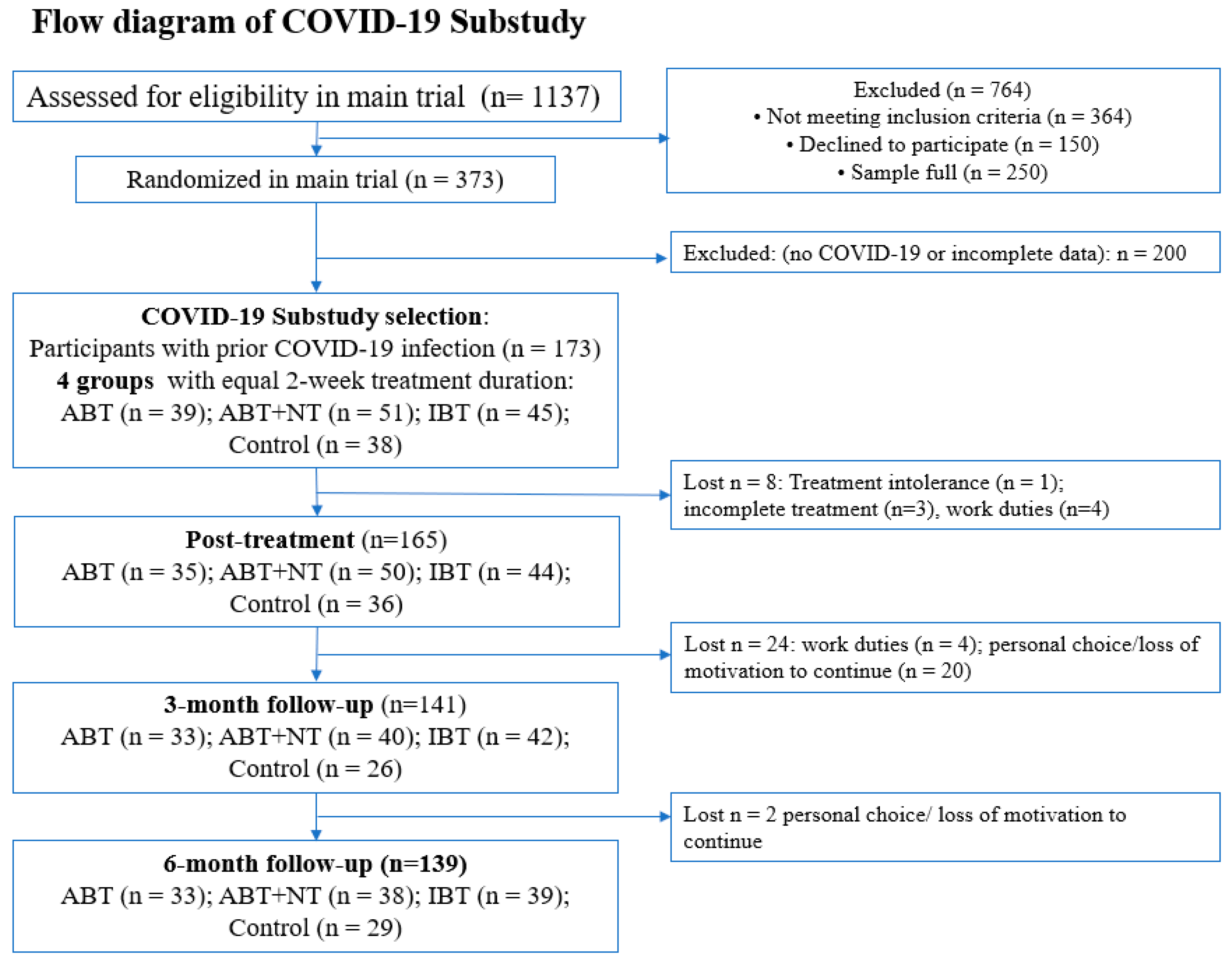
The study flow diagram is presented in
Figure 1.
Thirty-four participants (20%) were lost to follow-up due to various reasons, including work and family obligations (n = 4), incomplete treatment course (n = 8), and personal choice or loss of motivation (n = 22). One participant withdrew due to treatment intolerance (heartbeat irregularities and fatigue).
At baseline, participants reported a wide range of physical and psychological complaints. The most prevalent symptoms were fatigue (93.6%), general weakness (83.1%), sleep disturbances (83.1%), anxiety (82.6%), and impaired memory or concentration (82.6%), indicating a high overall symptom burden. Digestive problems and low mood were also common, reported by 80.2% of participants. Musculoskeletal and neurological complaints, including joint and muscle pain (75.4%), headaches (74.5%), and skin problems (70.3%), were frequently endorsed. Moderate levels of muscle cramps (66.9%), elevated heart rate, palpitation (61.6%), limb numbness (60.5%), and bowel irregularities (58.7%) were noted. Less frequent, but still substantial, symptoms included changes in appetite (55.2%), low blood pressure (50.6%), abdominal pain (48.8%), dizziness (47.7%), and sensation of a lump in the throat (47.7%). Smaller proportions reported urination difficulties (29.1%), limb swelling (29.7%), reduced pulse rate (30.2%), breathing difficulties (33.1%), limb tremors (34.5%), and cough (41.3%). Overall, participants entered the study with a high baseline symptom load across multiple physiological and psychological domains.
Chronic comorbidities were recorded via a screening survey. The most common conditions were cardiovascular disorders (16.9%), musculoskeletal conditions (14.5%), and endocrine disorders (13.4%). Allergic conditions (8.7%), dermatological disorders (8.1%), and ophthalmological conditions (7.0%) were also relatively frequent. Smaller but meaningful proportions reported gastrointestinal (6.4%), neurological (6.4%), hearing-related (5.2%), respiratory (4.7%), and urogenital disorders (4.1%). Hematological conditions were rare (0.6%). Overall, the morbidity profile reflects a heterogeneous sample with a moderate burden of chronic conditions across multiple physiological systems.
The study included 173 participants across four groups: ABT (n = 39), ABT+NT (n = 51), IBT (n = 45), and control (n = 38). Mean age ranged from 45.7 to 50.8 years, with no significant differences between groups (p = 0.100). Most participants were women (74–85%) and had university-level education (54–78%), with similar distributions across groups (p = 0.653 and p = 0.166, respectively). The majority were married (61–76%) and resided in urban areas (58–76%). Approximately half self-reported at least one chronic disease (52–59%), 73–82% had COVID-19 infection more than six months prior, and 27–51% reported post-COVID symptoms (p = 0.929, p = 0.787, and p = 0.105, respectively). Overall, the groups were well-matched regarding sociodemographic and clinical characteristics.
Main characteristics of participants across groups are presented in
Table 3.
3.1. Effect of Balneotherapy Treatment on MSK Health
3.1.1. Change in Musculoskeletal Pain
Change in MSK Pain Frequency
MSK pain decreased significantly over time in all groups (main effect of time:
p < 0.001). Polynomial contrasts revealed significant linear, quadratic, and cubic trends (all
p ≤ 0.001), reflecting an early reduction followed by a modest rebound. The time × group interaction approached significance (
p = 0.056), with Roy’s Largest Root indicating differential temporal patterns across interventions (
p = 0.006). This suggests that, although the overall interaction was modest, the trajectory of improvement differed across treatment modalities, with pain reduction following a non-linear pattern of early improvement and partial rebound (
Table 4).
Within-group effects:
Ambulatory BT: Significant reduction from baseline to 3 months (p < 0.01).
Ambulatory BT+NT: Significant reduction from baseline to 3 months (p ≤ 0.05), with a slight increase from 3 to 6 months.
Inpatient BT: The most consistent improvements, significant immediately post-treatment, at 3 months (p < 0.001), and at 6 months (p = 0.042).
Control: Mixed pattern, with initial reduction from baseline to 3 months (p = 0.018) followed by increases at later time points (p ≤ 0.05).
Between-group differences were not statistically significant (p = 0.916), and post hoc comparisons showed no pairwise differences at individual time points. However, the overall pattern favored the BT groups, which exhibited more stable and clinically meaningful reductions compared with the control group.
Overall, all groups experienced some reduction in MSK pain, but BT produced the most sustained improvements, particularly in the inpatient BT group, where pain frequency decreased by 28% post-treatment, 37% at 3 months, and 21% at 6 months. The other BT groups showed reductions of up to 35% at 3 months, whereas the control group experienced inconsistent changes without stable long-term improvement. These findings indicate that BT supports more durable MSK pain relief than no intervention, despite modest between-group statistical differences.
Change in MSK Pain Intensity
Pain intensity improved significantly over time across all groups (
p < 0.001), with the largest reductions observed immediately post-treatment, followed by partial increases at later follow-ups (
Table 4).
Within-group effects:
Ambulatory BT: Pain decreased from 3.07 at baseline to 1.21 post-treatment (−1.9 VAS, −61%, p < 0.001). No other time point differences were significant (all p > 0.05).
Ambulatory BT+NT: Pain dropped from 2.63 to 0.71 at post-treatment (−1.9 VAS, −73%, p < 0.001). At 3 months, pain rose modestly to 2.46 (p < 0.001 vs. T1) but remained below baseline, with a slight increase to 2.83 at 6 months (p < 0.001 vs. T1).
Inpatient BT: Pain improved from 3.00 to 2.05 post-treatment, with no significant changes thereafter.
Control group: Pain increased from 2.75 to 3.65, with no statistically significant changes at any time point (all p > 0.05).
Between-group differences: A significant time × group interaction was observed (quadratic contrast: p < 0.001, η2 = 0.175), indicating distinct pain trajectories across interventions. Between-group differences were significant only immediately post-treatment (T1), with medium effect sizes (η2 = 0.152, p < 0.001). All BT groups had significantly lower pain than the control:
Control > ABT (MD = 1.972, p < 0.001)
Control > ABT+NT (MD = 2.032, p < 0.001)
Control > IBT (MD = 1.377, p = 0.010)
These findings demonstrate a strong immediate analgesic effect of BT. At baseline, 3 months, and 6 months, no significant between-group differences were detected. BT groups achieved rapid early gains, whereas the control group showed gradual improvement without surpassing BT outcomes.
Overall, pain intensity decreased substantially in the ABT and ABT+NT groups post-treatment (61–73% reductions). Although some rebound occurred at later time points, BT groups maintained pain levels near baseline, whereas the control group showed no meaningful improvement, and in some cases, worsening. Between-group differences were most pronounced immediately after treatment, confirming that balneotherapy provides rapid and clinically significant analgesic benefits, with long-term differences diminishing over time.
3.1.2. Change in Hand-Grip Strength
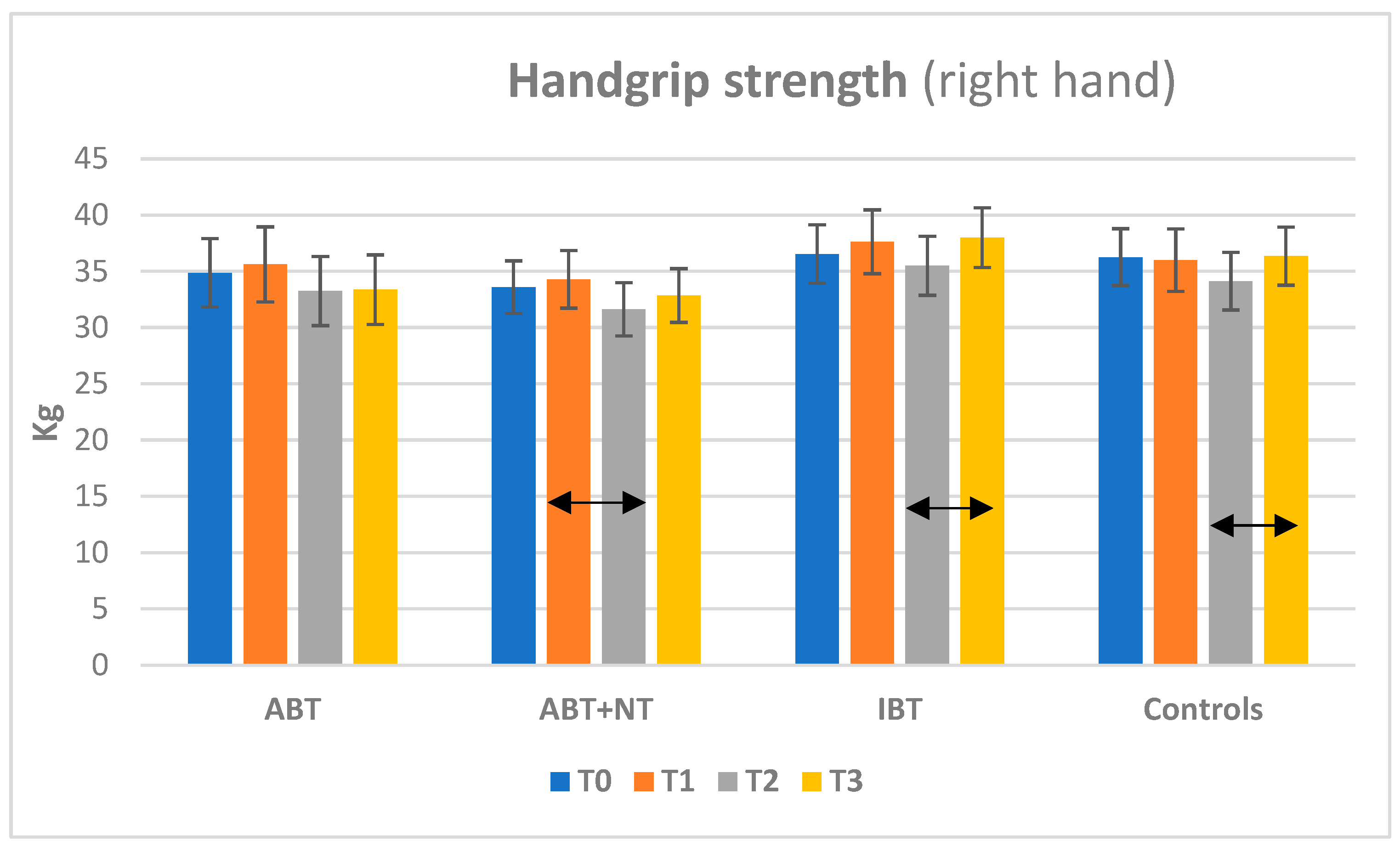
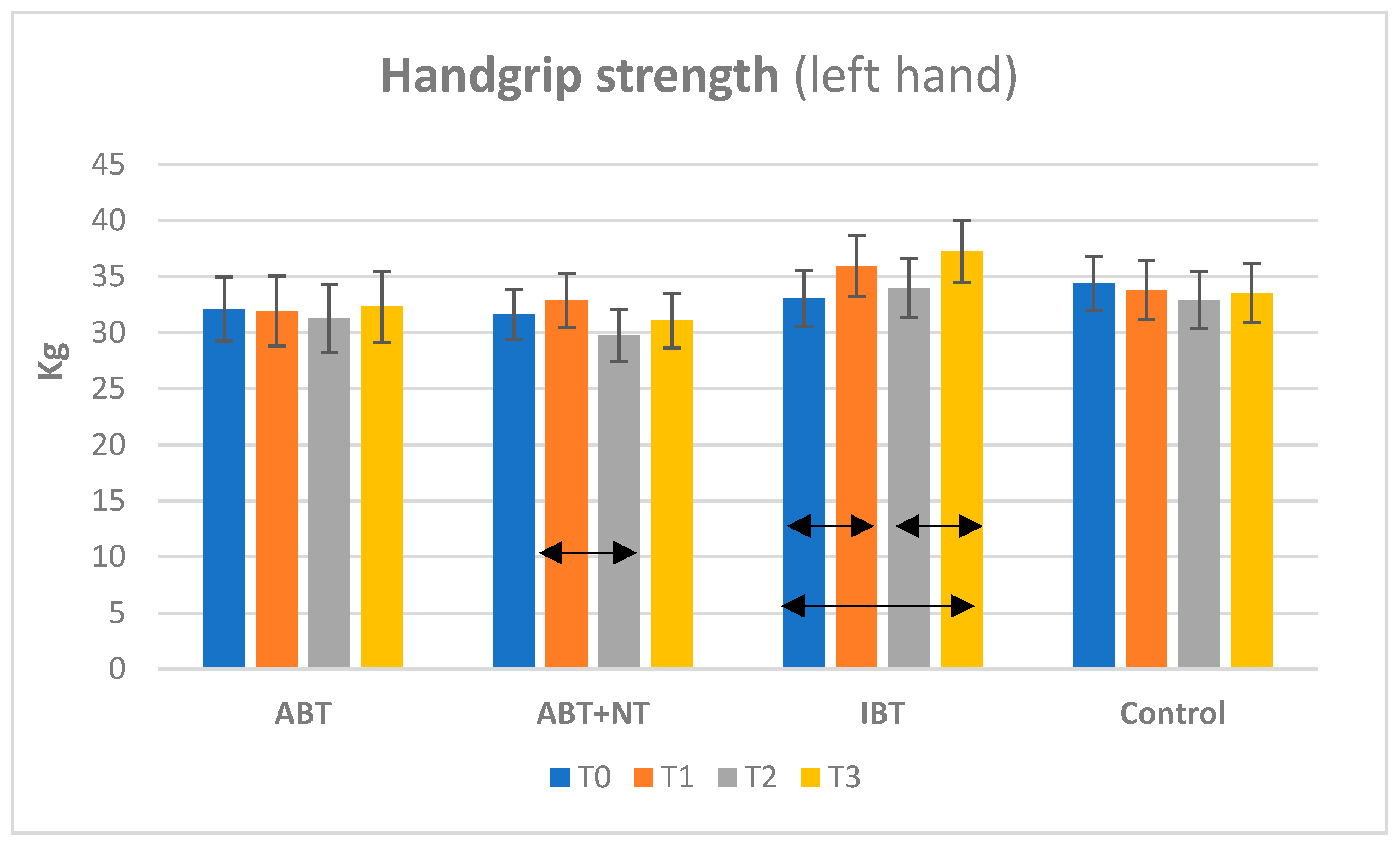
Hand-grip strength changed significantly over time (right hand: p < 0.001; left hand: p = 0.002), following a non-linear pattern characterized by early improvement, a dip at 3 months, and partial recovery at 6 months. While between-group differences were not statistically significant, distinct group-specific trends were observed, with the inpatient BT group showing the most favorable overall trajectory.
Right-Hand Grip Strength
Ambulatory BT: Strength remained stable across all time points, with no significant changes (p > 0.05).
Ambulatory BT+NT: A significant short-term decline occurred from post-treatment to 3 months (p = 0.002), followed by stabilization.
Inpatient BT: Strength improved from 3 to 6 months (p = 0.017), indicating delayed but meaningful recovery.
Control group: A modest increase was observed from 3 to 6 months (p = 0.038), but patterns were inconsistent
No significant between-group differences were detected, although the inpatient BT group demonstrated the most consistent improvement over time.
Left-Hand Grip Strength
Left-hand grip strength varied across the four measurement points (range: 29.76–37.24 kg), with the inpatient BT group consistently showing the highest mean values and the ABT+NT group the lowest.
Ambulatory BT: No significant changes over time (p > 0.05).
Ambulatory BT+NT: Significant short-term decline from post-treatment to 3 months (p < 0.001), with partial recovery by 6 months.
Inpatient BT: Demonstrated the clearest and most sustained improvements: 2.9 kg (9%) gain post-treatment (p = 0.033), 4.2 kg (13%) gain at 6 months (p = 0.001), including significant recovery between 3 and 6 months (3.2 kg, p < 0.001).
Control group: No significant changes at any time point (p > 0.05).
Between-group differences were not significant (p = 0.717).
Overall, grip strength showed a complex pattern of change across the study period. These changes were consistent across both hands. Left-hand grip strength exhibited significant time-dependent changes but no overall group differences. The inpatient BT group showed the most pronounced and sustained gains, with clear improvements both immediately post-treatment and at 6 months. Other BT groups showed smaller or more variable changes, while the control group remained largely stable. These findings indicate that BT—particularly in an inpatient setting—supports early and sustained strength recovery, although differences between treatment formats were modest.
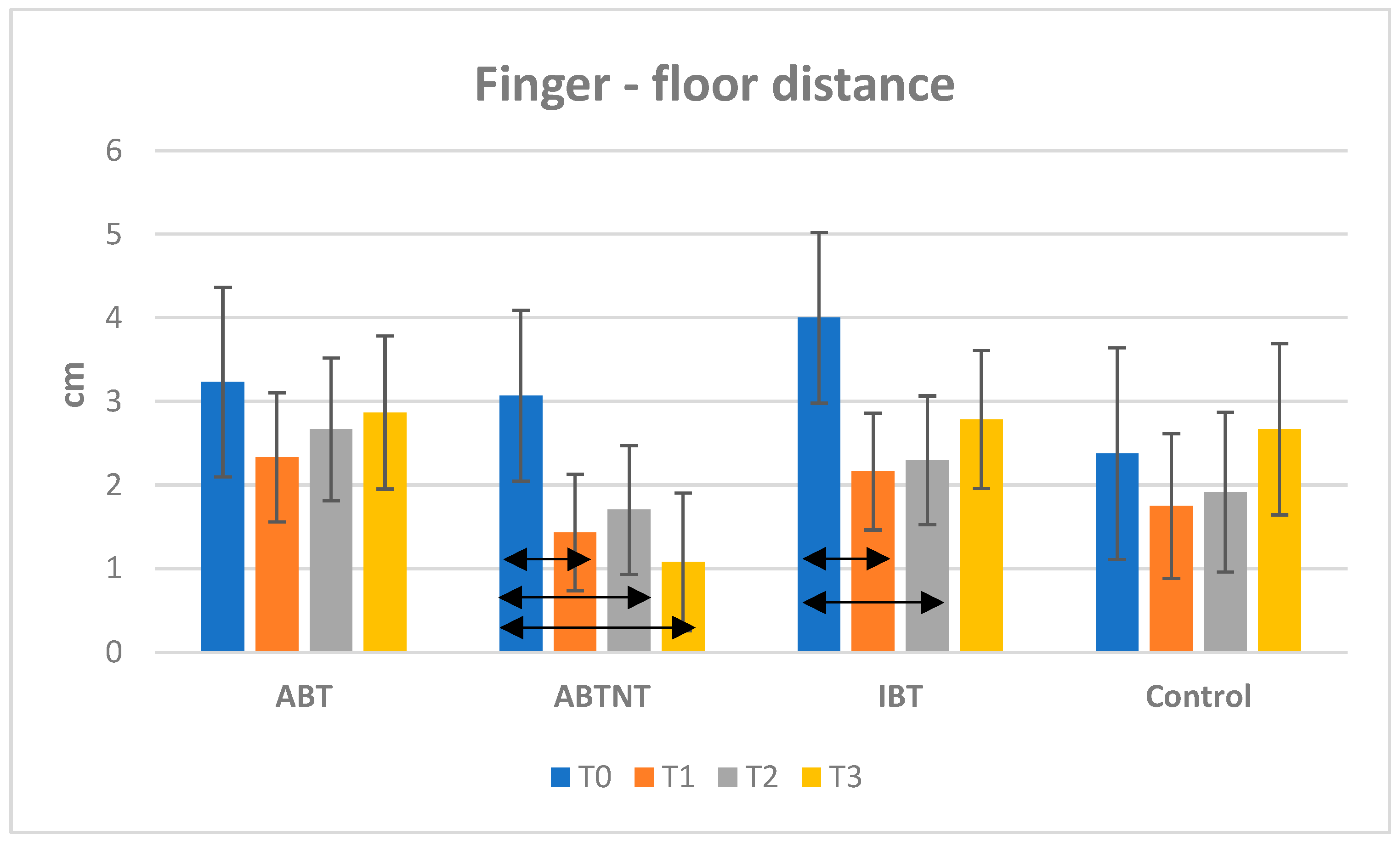
3.1.3. Change in Finger-Floor Distance
FFD improved significantly over time across all participants, indicating enhanced trunk flexibility (main effect of time:
p < 0.001). Pairwise comparisons confirmed significant improvements from baseline to both post-treatment and 3-month assessments (both
p ≤ 0.002). Although the time × group interaction was not significant—suggesting broadly similar overall trajectories—clear within-group improvements emerged in the BT groups (
Figure 4).
Within-group effects.
Ambulatory BT: Small, non-significant reductions at all time points (p > 0.05).
Ambulatory BT+NT: Demonstrated the most consistent gains, with FFD reductions of 1.6 cm (53%, p = 0.004) post-treatment, 1.4 cm (45%, p = 0.044) at 3 months, and 2.0 cm (65%, p = 0.008) at 6 months.
Inpatient BT: Also showed substantial early improvement, with decreases of 1.8 cm (46%, p < 0.001) post-treatment and 1.7 cm (43%, p = 0.005) at 3 months.
Control group: No significant changes at any time point (p > 0.05).
Between-group differences were not statistically significant; however, the pattern indicates that BT—particularly ABT+NT and inpatient BT—produced the greatest and most sustained flexibility gains, whereas no spontaneous improvement occurred in the control group.
Overall, FFD improved significantly over time in the sample, with the ABT+NT and inpatient BT groups demonstrating the largest and most consistent gains (up to 65% improvement at 6 months). These changes were absent in the control group, suggesting that BT—especially when combined with NT or delivered in an inpatient setting—meaningfully enhances trunk flexibility.
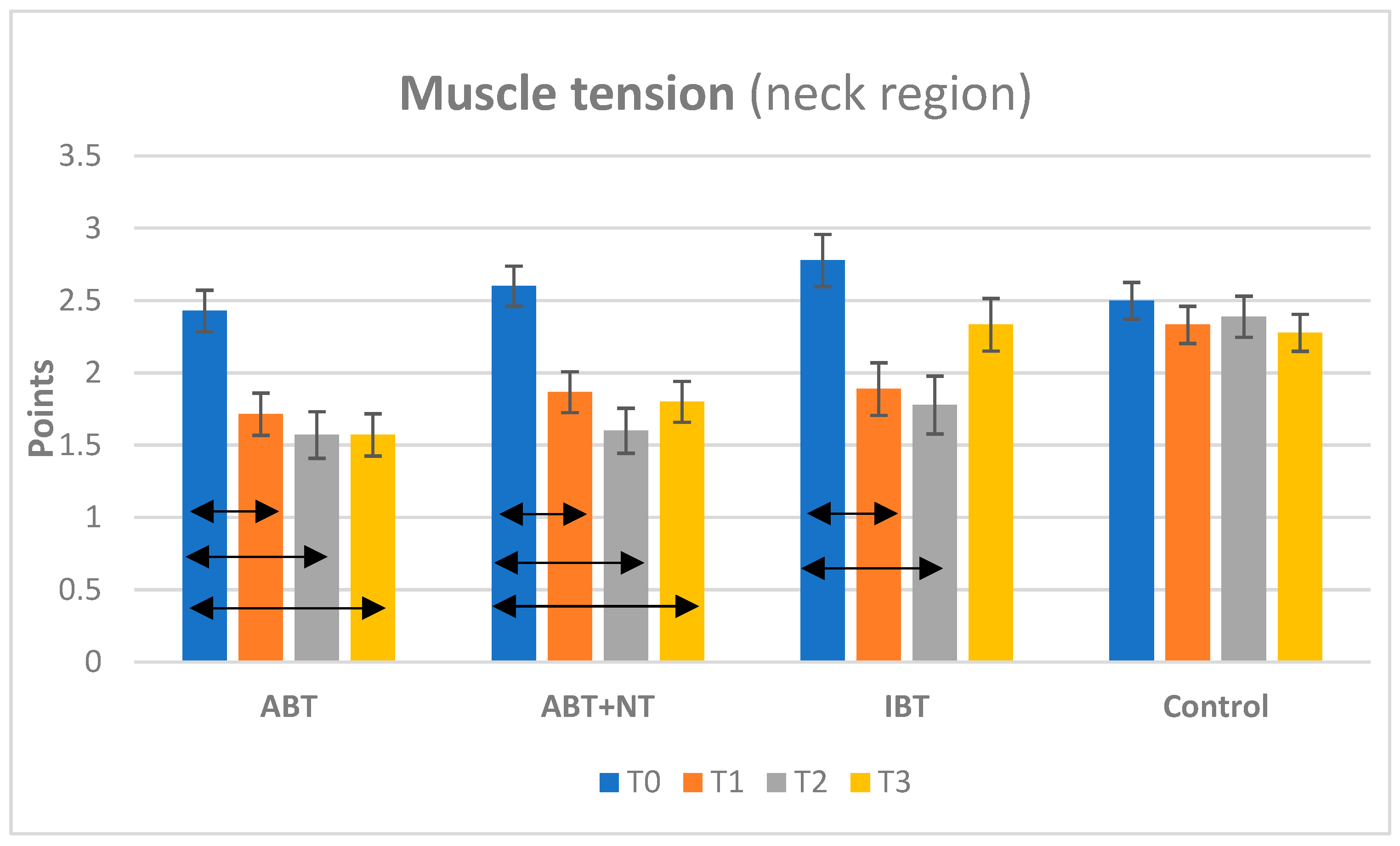
3.1.4. Change in Neck Muscle Tension (NMT)
NMT decreased significantly over time in all BT groups, while the control group showed minimal change. A strong main effect of time (
p < 0.001) confirmed overall relaxation across the study period. At every measurement point, the control group consistently demonstrated higher tension than all BT groups (
Figure 5).
Within-group effects.
Ambulatory BT: Significant reductions at all follow-up assessments (all p < 0.001), with total improvement of 0.86 points (29–35% decrease).
Ambulatory BT+NT: Significant reductions at all time points (p < 0.001), with 0.90–1.0-point improvement (28–38% decrease).
Inpatient BT: Significant reductions through the 3-month follow-up (p < 0.001), followed by a small, non-significant rebound at 6 months (32–36% decrease overall).
Control: No significant changes (p > 0.05), with tension levels remaining consistently elevated.
Between-group differences further confirmed the superiority of BT interventions. No differences were present at baseline, indicating comparable starting levels. Significant between-group differences emerged immediately after treatment (p < 0.001), with a large effect size (η2 = 0.195), reflecting a strong early treatment response. Post hoc tests showed that the control group had significantly higher neck muscle tension than all BT groups:
Control > ABT: MD = 0.545, p = 0.008;
Control > ABT+NT: MD = 0.617, p = 0.002;
Control > IBT: MD = 0.659, p < 0.001.
These differences remained pronounced at the 3-month follow-up (η2 = 0.225, p < 0.001), representing the greatest separation between groups and the peak therapeutic effect. The control group again showed significantly higher tension than all BT groups (vs ABT: MD = 0.821, p < 0.001; vs. ABT+NT: MD = 0.686, p = 0.002; vs. IBT: MD = 0.600, p = 0.011). At 6 months, the effect size remained substantial though slightly smaller (η2 = 0.183, p = 0.005). The control group continued to differ significantly from ABT (MD = 0.653, p = 0.007), while differences versus ABT+NT and IBT approached significance (p = 0.085 and p = 0.067, respectively). Epsilon-squared and omega-squared indices showed similar patterns, underscoring the robustness of the treatment effects.
Overall, NMT decreased significantly across time in all BT groups, whereas the control group demonstrated only minimal, non-significant improvement. Ambulatory BT and ABT+NT produced the most pronounced and sustained reductions (28–38%), while inpatient BT showed strong early improvement with partial rebound at 6 months. These results indicate that BT is effective in reducing neck muscle tension compared with no intervention, with ambulatory formats showing slightly stronger long-term effects.
3.1.5. Change in Muscle Spasm
Muscle spasm decreased significantly over time across the entire sample (
p < 0.001), with the greatest improvements observed immediately after treatment. The overall trajectory followed a non-linear pattern, characterized by an early reduction followed by a partial rebound at later follow-ups (
Table 4).
Within-group effects.
Ambulatory BT: Moderate, statistically significant reduction from baseline to post-treatment (−0.5 points; p = 0.015), with an additional significant improvement by 6 months (−0.5 points; p = 0.039).
Ambulatory BT+NT: A reduction was observed post-treatment, but it did not reach statistical significance.
Inpatient BT: Exhibited the most pronounced immediate improvement, with a 0.74-point reduction (37%; p < 0.001).
Control: No significant changes at any time point.
Between-group differences were not statistically significant (p = 0.626), although the pattern clearly favored the BT groups. Both ABT and IBT demonstrated clinically meaningful reductions, whereas the control group showed minimal change. No significant time × group interaction was detected.
Overall, muscle spasm decreased significantly following BT, with the strongest short-term effects seen in the inpatient BT group (37%) and meaningful reductions also apparent in ambulatory BT (26%). Although some rebound occurred over time, the control group showed no improvement. These findings indicate that BT effectively reduces muscle spasm in the short term, though maintaining benefits may require ongoing monitoring or periodic retreatment.
3.1.6. Change in Analgesic Use
Analgesic use changed significantly over time across the sample (
p < 0.001), with the largest reduction occurring immediately after treatment and a modest rebound at later follow-ups. Although between-group differences were limited, the ambulatory BT group showed the clearest and most clinically relevant improvement (
Table 4)
Within-group effects:
Ambulatory BT: Demonstrated the strongest and most consistent decline in medication use, with reductions of 1.85 points (63%) post-treatment (p < 0.001), 31% at 3 months (p < 0.01), and 36% at 6 months (p = 0.004). A slight increase between 3 and 6 months occurred, but usage remained markedly below baseline.
Ambulatory BT+NT: Only small, non-significant reductions were observed.
Inpatient BT: Showed modest but non-significant changes throughout follow-up.
Control: Analgesic use slightly increased over time, with no significant changes.
Significant between-group differences were found only at baseline (η2 = 0.155, medium), with the ambulatory BT group reporting the highest medication use compared with the inpatient and control groups (ABT > IBT: MD = 0.962, p < 0.001; ABT > Control: MD = 1.218, p < 0.001; ABT+NT > Control: MD = 0.740, p = 0.008). These differences disappeared immediately after treatment and remained non-significant at the 3- and 6-month follow-ups (η2 = 0.008–0.019), indicating that the observed reductions were predominantly driven by within-group changes rather than between-group contrasts. The higher baseline use in the ABT group partially explains its larger absolute reductions.
Overall, analgesic use declined significantly over time, with the greatest reduction occurring immediately after balneotherapy. The ambulatory BT group showed a substantial and clinically meaningful decrease—up to 63%—that persisted throughout follow-up, whereas the other BT groups demonstrated smaller, non-significant changes. The control group showed no improvement. These findings indicate that balneotherapy, particularly ambulatory programs, can substantially reduce reliance on analgesic medication, although maintaining long-term reductions may require continued monitoring or repeated treatment cycles.
3.2. The Effects of Balneotherapy Treatment on the MSK Health-Related Parameters
3.2.1. Change in Fatigue
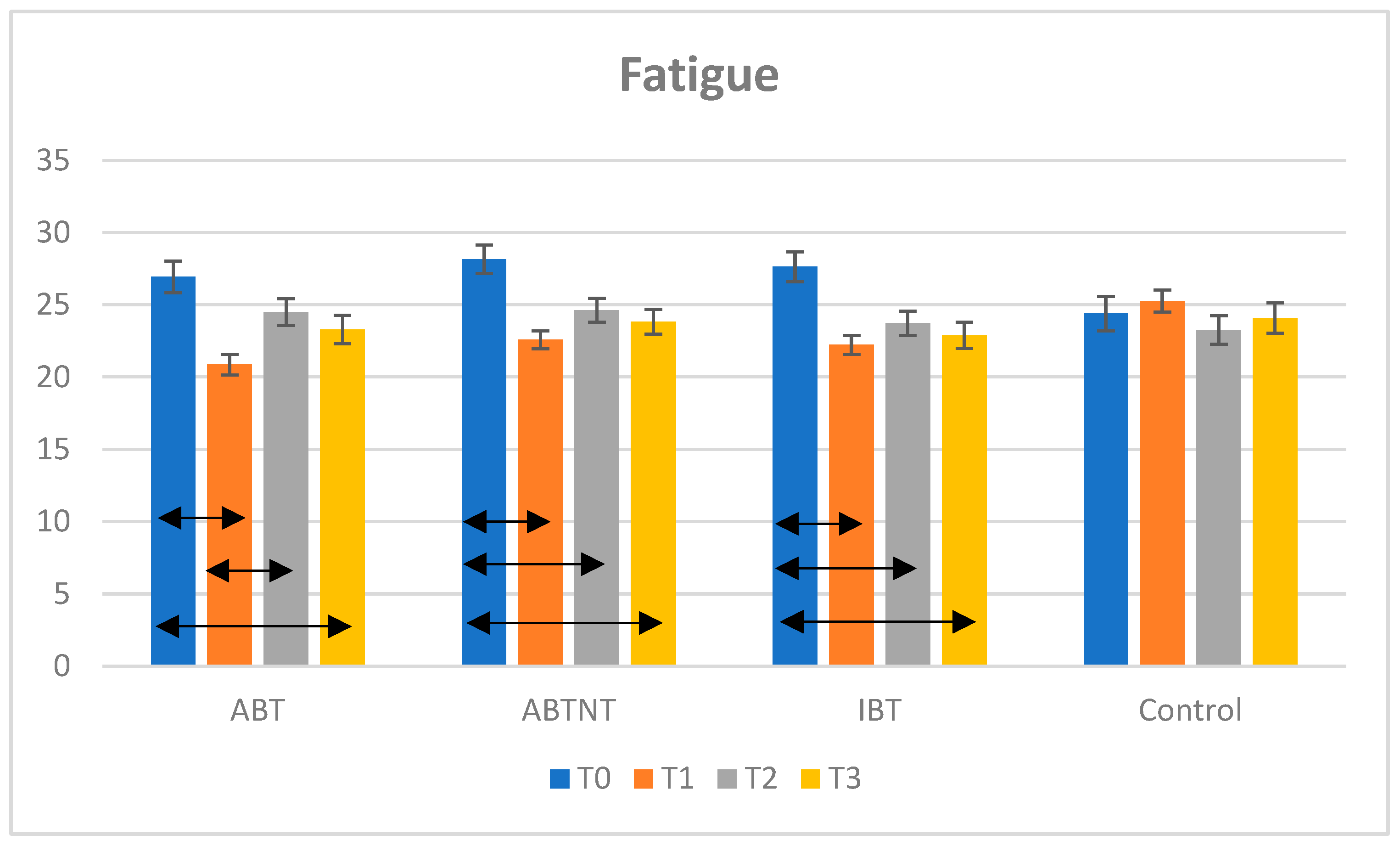
Fatigue decreased significantly over time (
p < 0.001), with the greatest improvement observed immediately after treatment. Although scores partially rebounded at later follow-ups, all BT groups maintained levels below baseline. The control group showed no meaningful improvement (
Figure 6).
Within-group effects.
Ambulatory BT: A large reduction from baseline to post-treatment (23%; p < 0.001), followed by a slight increase at 3 months (p < 0.001) and a significant improvement again at 6 months (p = 0.035).
Ambulatory BT+NT: Significant reductions were observed throughout the 6 months, with decreases of 20% post-treatment, 13% at 3 months, and 15% at 6 months (all p < 0.001).
Inpatient BT: Demonstrated consistent and significant improvements at all follow-ups: 20% post-treatment, 14% at 3 months, and 17% at 6 months (all p < 0.001).
Control: Fatigue remained stable, with no significant change over time.
Between-group differences. A significant time × group interaction (p < 0.001) indicated distinct fatigue trajectories across interventions. Between-group differences emerged only at the post-treatment assessment, where a significant medium-sized effect was observed (η2 = 0.129, p < 0.001). At this time point, the control group reported substantially higher fatigue scores compared with all BT groups. Pairwise comparisons showed significantly poorer outcomes in the control group relative to:
Control > ABT (MD = 4.403, p < 0.001),
Control > ABT + NT (MD = 2.690, p = 0.046),
Control > IBT (MD = 3.041, p = 0.019).
No between-group differences were detected at baseline, 3 months, or 6 months (η2 = 0.008–0.012), indicating that although fatigue improved significantly within all groups, long-term differences between treatment modalities were minimal.
Overall, fatigue improved significantly in all balneotherapy groups, with the largest reductions occurring immediately after treatment. Improvements of 20–23% were observed across BT modalities, whereas the control group showed no change. Although some rebound occurred over time, BT consistently outperformed no intervention, with inpatient BT and combined BT+NT demonstrating the most stable long-term improvements.
3.2.2. Change in Sleep
Change in Frequency of Sleep Difficulties
The frequency of sleep difficulties decreased significantly over time (
p < 0.001), with the largest improvements observed immediately after treatment (
Table 4). All BT groups showed meaningful reductions, whereas the control group exhibited no significant change.
Within-group effects.
Ambulatory BT: A significant reduction from baseline to post-treatment (−0.96 points; 39%; p < 0.001), followed by smaller, non-significant changes thereafter.
Ambulatory BT+NT: Significant improvements during the initial follow-up period, including a −1.03-point decrease post-treatment (38%; p < 0.001) and a −0.72-point reduction at 3 months (p = 0.003).
Inpatient BT: The most consistent gains, with significant reductions at all time points: −1.19 points post-treatment (39%; p < 0.001), −1.26 points at 3 months (42%; p < 0.001), and −1.07 points at 6 months (35%; p < 0.001).
Control: No significant changes across the study period (p = 0.563).
Between-group differences. A significant time × group interaction (p = 0.002) indicated differing improvement trajectories across interventions.
At baseline, small–medium between-group differences were present (η2 = 0.095, p < 0.001), with the inpatient BT group reporting higher sleep-disturbance levels than both ABT and control (IBT > ABT: MD = 0.680, p = 0.006; IBT > Control: MD = 0.780, p = 0.001). Immediately after treatment, group differences trended toward non-significance (η2 = 0.047, p = 0.062). The only significant pairwise contrast was lower sleep disturbance in the ABT group compared with controls (Control > ABT: MD = 0.535, p = 0.049), indicating a short-term beneficial effect of BT on sleep regulation. No other comparisons reached significance. At the 3- and 6-month follow-ups, between-group differences disappeared, suggesting that improvements were driven primarily by within-group changes rather than sustained between-group separation.
Overall, sleep difficulties decreased substantially in all BT groups—by 38–39% post-treatment—while remaining essentially unchanged in the control group. Inpatient BT produced the largest and most consistent improvements, followed by ABT+NT and ABT. These findings indicate that BT effectively reduces sleep difficulties, particularly in the early post-treatment period, and outperforms no intervention.
Change in Sleep Quality
Sleep quality improved significantly over time in all three BT groups, whereas changes in the control group were minimal and non-significant (
Table 4). Strong within-group effects were observed across BT modalities (Pillai’s Trace = 0.246–0.795, all
p < 0.001; η
2 = 0.49–0.80), indicating large effect sizes. In contrast, the control group showed no significant time effect (
p = 0.111; η
2 = 0.056, small).
Within-group effects.
Ambulatory BT: Sleep quality increased from 6.19 at baseline to 8.30 immediately post-treatment (+34%; p < 0.001), with maintained improvements at later follow-ups.
Ambulatory BT+NT: Significant increases from 5.03 to 7.94 post-treatment (+58%; p < 0.001), with sustained gains at both 3- and 6-month assessments.
Inpatient BT: The greatest and most consistent improvement, rising from 4.39 to 6.83 post-treatment (+56%; p < 0.001), further improved to 7.47 at 3 months and stabilized at 7.53 by 6 months.
Control: Only minimal fluctuations were observed (p = 0.228).
Between-group differences. At baseline, small-to-medium differences were present (η2 = 0.112; p < 0.001), with the IBT group reporting poorer sleep quality than ABT and control (IBT < ABT: MD = −1.816, p = 0.002; IBT < Control: MD = −1.958, p < 0.001). Post-treatment, between-group differences increased (η2 = 0.152, medium; p < 0.001), with both ABT and ABT+NT demonstrating significantly better sleep quality than IBT and controls (ABT > IBT: MD = 1.380, p = 0.001; ABT > Control: MD = 1.600, p < 0.001; ABT+NT > IBT: MD = 1.127, p = 0.005; ABT+NT > Control: MD = 1.347, p < 0.001).
At the 3- and 6-month follow-ups, between-group differences were no longer significant (p > 0.10), indicating a convergence of sleep quality outcomes across groups.
Overall, sleep quality improved substantially across all balneotherapy interventions, with the most pronounced gains occurring immediately after treatment. Between-group differences were evident only at the post-treatment assessment, where BT groups outperformed the control group with medium effect sizes. Improvements persisted within BT groups through the follow-up period, supporting the short-term efficacy and sustained benefits of balneotherapy for enhancing sleep quality.
3.2.3. Change in Quality of Life
Overall quality of life improved significantly over time across the sample (
p < 0.001). The largest gains were observed between baseline and the post-treatment follow-up, with additional improvement evident at the 6-month assessment. Overall trajectories were similar across groups, and no significant between-group differences emerged at any time point (
Table 4).
Within-group effects.
Ambulatory BT: Quality-of-life scores remained relatively stable, with no significant changes across assessments (p > 0.05).
Ambulatory BT+NT: Demonstrated meaningful improvements, with a 20% increase post-treatment (p = 0.004) and an 18% improvement at 6 months (p = 0.002).
Inpatient BT: Showed the strongest gains overall, with a 26% improvement post-treatment (p < 0.001) and an 18% increase at 6 months (p < 0.001).
Control: Quality of life remained unchanged across all time points (p > 0.05).
Between-group differences. At baseline, a small-to-medium effect was observed (η2 = 0.094; p < 0.001), driven by poorer quality-of-life scores in the ABT+NT group relative to controls (ABT+NT < Control: MD = −0.681, p < 0.001). By post-treatment and at both follow-ups, these differences were no longer present, indicating that BT reduced initial disparities regardless of treatment setting or the addition of nature therapy.
Overall, quality of life improved modestly but consistently in participants receiving balneotherapy—particularly in the ABT+NT and inpatient BT groups—while remaining unchanged in the control group. Post-treatment improvements of 18–26% suggest that balneotherapy meaningfully enhances well-being, aligning with the observed reductions in pain, muscle tension, muscle spasm, fatigue, and analgesic use.
Across outcomes, all BT groups showed significant within-group improvements in MSK symptoms, physical function, sleep, fatigue, and quality of life—particularly immediately after treatment. Most benefits were maintained at the 3- and 6-month follow-ups, although partial rebound was evident for several measures. Between-group differences were generally modest, with no consistent superiority of one BT modality across all time points. Nonetheless, all BT groups outperformed the control group, especially regarding neck muscle tension, sleep disturbances, analgesic use, and fatigue immediately post-treatment. The ambulatory BT and BT+NT groups demonstrated the most sustained improvements in neck muscle relaxation, while inpatient BT produced the most consistent gains in handgrip strength and quality of life. Baseline differences—such as higher analgesic use in the ABT group—may have contributed to the magnitude of observed change. Overall, BT produced clinically meaningful within-group benefits across multiple domains, whereas between-group contrasts remained comparatively small.
3.3. Predictors of Musculoskeletal Pain Improvement Before and After BT
Multiple linear regression analyses were conducted to identify predictors of MSK pain frequency and overall pain intensity in post-COVID patients before BT. Seventeen variables were included, such as muscle cramps, muscle tension, fatigue, sleep quality, well-being, handgrip strength, and selected biochemical markers.
The model predicting MSK pain frequency was significant (F(17, 59) = 4.55, p < 0.001), explaining 56.7% of the variance (R2 = 0.567; adjusted R2 = 0.442). Residuals met model assumptions (Durbin–Watson = 2.02). Significant predictors were:
Muscle cramps (β = 0.35, p < 0.001)
Muscle tension (β = 0.40, p < 0.001)
Left-hand grip strength (β = 0.60, p = 0.035)
Right-hand strength showed a negative, borderline trend (β = −0.54, p = 0.061). Other variables—including sleep quality, fatigue, well-being, and biochemical indicators—were not significant. For overall pain intensity, the model was also significant (F(16, 59) = 3.98, p < 0.001), explaining 51% of the variance (R2 = 0.512; adjusted R2 = 0.421). Pain intensity was significantly predicted by:
Muscle cramps (β = 0.39, p = 0.002)
Muscle tension (β = 0.34, p = 0.004)
Handgrip strength, sleep, and well-being were not independent predictors. These results indicate that neuromuscular factors—particularly cramps, tension, and asymmetrical strength—were central determinants of both pain frequency and intensity before treatment. The opposing directional effects of left- and right-hand strength suggest lateralized neuromuscular imbalance or compensatory loading, consistent with asymmetric post-COVID motor dysfunction [
28].
After BT, the regression model for pain frequency remained significant (F(16, 59) = 2.93, p = 0.001), though it explained less variance (adjusted R2 = 0.292). Only overall pain intensity (β = 0.37, p = 0.025) and quality of life (β = −0.37, p = 0.049) were significant predictors. Muscle cramps, tension, and grip strength were no longer meaningful contributors.
For overall pain intensity after BT, the model was marginally significant (F(16, 59) = 1.95, p = 0.045), accounting for 21% of variance; no predictors reached significance, although improved sleep quality showed a near-significant trend (β = −0.25, p = 0.078).
Overall, before BT, both pain frequency and intensity were strongly shaped by neuromuscular dysfunction—including cramps, tension, and strength asymmetry—highlighting persistent post-COVID muscular imbalance. After BT, these neuromuscular predictors lost their influence, while general pain perception and quality of life became the primary determinants. This shift suggests that balneotherapy reduces peripheral and muscle-based contributors to pain, resulting in a pain experience more closely tied to functional well-being.
These findings support the therapeutic value of BT in restoring neuromuscular balance, reducing pain burden, and enhancing overall quality of life in post-COVID patients.
4. Discussion
The present randomized, controlled substudy provides new evidence on the potential benefits of BT-based rehabilitation for individuals with a history of COVID-19 and persistent multisystem symptoms. Across all BT formats—ambulatory, inpatient, and ambulatory combined with NT—participants demonstrated meaningful short-term improvements in MSK pain, muscle tension and spasm, trunk flexibility, fatigue, sleep quality, and overall quality of life measures. While between-group statistical differences were modest and largely limited to the immediate post-treatment period, the overall pattern suggests that BT accelerates symptom reduction and supports partial maintenance of gains over three to six months, compared with the minimal spontaneous improvement observed in the control group.
Previous studies have shown that BT and mud therapy can reduce pain, fatigue, dyspnea, and sleep disturbances in individuals with post-COVID symptoms, particularly when combined with physical activity and climate- or nature-based therapies [
16,
18,
23,
24,
32]. The present study extends this evidence by demonstrating consistent improvements across musculoskeletal domains while comparing multiple BT delivery formats within the same trial framework.
4.1. Musculoskeletal Outcomes
The BT-based program produced clear short-term analgesic effects, with substantial reductions in pain intensity (−1.9 VAS) and frequency immediately after treatment. Although some symptoms partially returned during follow-up, pain levels generally remained improved compared with baseline in all BT groups. These findings align with established thermal and neuromodulatory mechanisms of mineral water and peloids, which reduce inflammation, improve microcirculation, and modulate nociceptive signaling [
33,
34,
35,
36,
37,
38,
39,
40,
41,
42,
43].
Asymmetrical improvement of handgrip strength suggests that treatment effects on strength recovery may depend on initial functional status or treatment intensity. Prior studies corroborate findings in the left hand, showing that mud and mineral water therapies increase muscle strength and reduce pain by improving perfusion and reducing inflammation [
39,
44,
45]. The temporal pattern aligns with detraining effects observed when thermal and mechanical stimulation is discontinued [
46]. The observed pattern in grip strength may reflect multiple physiological factors. Early improvements likely represent rapid neuromuscular adaptation to the interventions, whereas later fluctuations could be influenced by temporary reductions in training stimulus or individual differences in recovery. These factors should be considered when interpreting the clinical significance of grip strength changes over time.
Muscle tension and spasms decreased significantly across BT groups, with the largest medium-term improvement observed in the ABT+NT and inpatient groups. These changes reflect known physiological effects of warm mineral water and peloids, including reduced sympathetic arousal, improved perfusion, decreased muscle excitability, and enhanced neuromuscular relaxation [
33,
47,
48,
49]. The partial rebound at later follow-ups is consistent with detraining phenomena once thermal and mechanical stimulation ceases.
Trunk flexibility improved significantly in both the ABT+NT and inpatient BT groups, with reductions of up to 2 cm from baseline, indicating enhanced mobility and soft tissue elasticity. These findings are consistent with prior research reporting significant functional improvements in flexibility and joint mobility following BT and multimodal spa-based interventions [
49,
50,
51].
Analgesic use decreased markedly in the ABT group, indicating reduced symptom burden and lower dependence on pain medication. Although baseline analgesic use was higher in this group—suggesting greater initial pain severity or differing patterns of medical management—this imbalance likely contributed to the larger relative reduction observed. These differences underscore the need for cautious interpretation of between-group comparisons, as residual imbalances may persist even after randomization in pragmatic trial settings. Nevertheless, the reduction in analgesic consumption aligns with the clinical relevance of BT for pain management and is consistent with previous evidence in musculoskeletal disorders [
43,
52].
4.2. Fatigue, Sleep, and Quality of Life
Fatigue decreased significantly across all BT interventions, with reductions of 13–20% sustained up to 6 months. Improvements were greatest and most stable in the ABT+NT group. These findings align with post-COVID rehabilitation studies showing reduced fatigue following structured BT or aquatic exercise programs [
16,
24,
53], as well as evidence from chronic MSK conditions in which BT enhances circulation, reduces inflammation, and improves tissue elasticity [
54]. The rebound in fatigue observed at follow-up may reflect a waning effect of the intervention, seasonal or lifestyle influences, or psychological factors such as stress or motivation. While the precise cause cannot be determined, this highlights the need for ongoing support or booster sessions to maintain benefits.
BT also produced meaningful improvements in sleep. All treatment groups showed large post-treatment reductions in sleep disturbances (38–39%) and marked increases in sleep quality (34–58%), with IBT demonstrating the most sustained benefits. These findings are consistent with evidence that BT improves sleep, mood, and psychosocial well-being [
55,
56], and with post-COVID studies reporting enhanced physical and emotional functioning after spa-based rehabilitation [
16,
18,
24].
Quality of life improved significantly in the ABT+NT and IBT groups and remained elevated at 6 months. This pattern is consistent with studies showing that interventions targeting pain, fatigue, and functional limitations lead to substantial gains in overall life satisfaction and psychosocial functioning [
54]. Similar benefits have been documented in post-COVID rehabilitation programs incorporating BT and neuromuscular training [
18,
40].
Given that fatigue, sleep disturbances, and reduced quality of life are central symptoms of post-COVID condition [
1,
2,
3,
4,
5,
6,
7], the consistent improvements across these domains highlight BT as a promising non-pharmacological modality. Mechanistically, warm-water immersion and low-intensity physical activity may enhance mitochondrial efficiency, reduce perceived exertion, and support autonomic recalibration—processes frequently disrupted in post-COVID syndromes [
14,
15]. Improvements in sleep may also be mediated by pain reduction, decreased muscle hypertonicity, and the relaxation effects of hydrothermal and inhalation therapies. These results align with recent evidence showing that comprehensive health-resort rehabilitation improves functional outcomes in long COVID [
56]; although the referenced study suggests that extended four-week programs may enhance benefits further, our findings demonstrate that even a shorter, two-week BT course can produce meaningful improvements across multiple symptom domains.
4.3. Ambulatory vs. Inpatient Balneotherapy and the Role of Nature Therapy
Although treatment modalities were similar across groups, contextual factors such as the residential environment, structured daily routines, and supervised recovery may have contributed to the stronger and more sustained outcomes observed in the inpatient cohort. However, no statistically significant differences were found between the outpatient and inpatient groups. These findings are consistent with previous evidence indicating that the rehabilitation setting—clinic, inpatient, or home-based—does not produce clinically meaningful differences in functional outcomes, pain, or quality of life [
57].
The ABT+NT group in our study achieved comparable benefits in several domains, including trunk flexibility, sleep quality, and quality of life, supporting existing evidence that nature exposure and outdoor physical activity enhance psychological well-being and autonomic balance. Nonetheless, the additive effects of NT were modest, suggesting that BT itself accounted for the majority of the therapeutic response. Our results align with Huber et al., who demonstrated that combining green exercise with BT leads to greater improvements in pain, MSK function, and quality of life compared with exercise alone or no intervention, highlighting the potential value of multi-modal BT-based therapies [
58]. Additionally, systematic reviews indicate that nature exposure may offer meaningful benefits for stress reduction and broader applications in healthcare and public health policy [
59]. Despite these potential benefits, we did not observe significant differences between the ABT and ABT+NT groups in our study, suggesting that the primary therapeutic effects were driven by BT itself rather than the addition of NT.
4.4. Neuromuscular Determinants of Pain
Before treatment, MSK pain frequency and intensity were most strongly associated with neuromuscular factors—muscle spasm, increased tension, and asymmetric handgrip strength—indicating that post-COVID pain may be driven more by localized neuromuscular dysfunction than by psychosocial or systemic biochemical factors. These findings align with reports describing altered neuromuscular excitability and impaired calcium handling in post-infectious fatigue and long COVID [
60]. Notably, left-hand strength was positively associated with pain, whereas right-hand strength showed an opposite trend, suggesting lateralized adaptations or compensatory overuse.
Following BT, these neuromuscular predictors were no longer significant; quality of life and subjective pain perception instead became the main determinants of pain outcomes. This shift suggests that BT may normalize muscle tone, improve strength symmetry, and reduce neuromuscular-driven pain, reinforcing its value in post-COVID MSK rehabilitation.
4.5. Clinical Implications
Balneotherapy demonstrated consistent benefits across MSK and psychosocial outcomes, despite the heterogeneous symptom profiles typical of real-world post-COVID presentations. Given the limited availability of effective interventions for post-COVID-19 condition, these findings support incorporating structured BT into multidisciplinary rehabilitation pathways.
Improvements in pain, muscle tension, fatigue, sleep, and flexibility—along with reduced analgesic use—indicate that BT may help address common post-COVID symptom clusters and contribute to better functional recovery. Although between-group differences were modest, sustained within-group improvements suggest value in periodic treatment cycles.
Overall, BT offers a feasible, non-pharmacological adjunct that may enhance quality of life and support recovery in individuals with post-acute sequelae of SARS-CoV-2 infection [
61,
62].
4.6. Strengths and Limitations
Key strengths of this study include its randomized controlled design, standardized intervention protocol, multicenter implementation, and combination of subjective and objective outcomes. The six-month follow-up also permitted examination of sustained benefits.
Several limitations should be acknowledged. COVID-19 infection and symptoms were based solely on self-report, which may introduce diagnostic heterogeneity. The substudy population was clinically diverse, with participants presenting both post-COVID–related and other chronic symptoms, potentially diluting treatment effects. Some outcomes relied on simplified or non-validated scales, and no objective physiological or biochemical markers of muscle or inflammatory status were collected. As a secondary analysis of a broader stress-recovery trial, the design was not optimized specifically for post-COVID evaluation; baseline differences, small subgroup sizes, and attrition at follow-ups may have reduced statistical power. Because balneotherapy involved multiple therapeutic components, the specific effects of individual modalities cannot be isolated, and participant blinding was not feasible.
Future trials should use standardized diagnostic criteria for post-COVID condition, include validated multidimensional symptom questionnaires, integrate objective biomarkers of inflammation, autonomic regulation, and muscle function, and ensure larger, more homogeneous post-COVID samples with adequate long-term follow-up. Factorial or component-specific study designs may help determine the relative contributions of individual balneotherapy elements. Stratification by symptom phenotype or baseline severity may also clarify which subgroups benefit most.




 ,
,