1. Introduction
Aluminium-based metal matrix composites (MMCs) continue to attract sustained interest for aerospace and structural applications, largely because they combine low density with relatively high specific strength and improved wear resistance when compared with monolithic aluminium alloys [
1,
2,
3]. Within this broader class, high-strength 7xxx-series alloys are often selected for load-bearing components, as their strength-to-weight ratio remains difficult to match using other aluminium systems [
4,
5]. Also, hard ceramic reinforcements are introduced to further enhance stiffness and hardness, but the benefits come with a clear trade-off: conventional machining becomes increasingly problematic [
6,
7].
This difficulty is particularly evident in particulate-reinforced aluminium MMCs containing ultra-hard ceramic phases such as zirconium diboride (ZrB
2). ZrB
2 is characterised by high hardness, a high melting point, and good chemical compatibility with aluminium matrices, which together promote grain refinement and effective load transfer during service [
8,
9]. These attributes also impart improved thermal stability and resistance to high-temperature degradation. From a manufacturing perspective, however, the same properties significantly accelerate tool wear and promote surface damage during conventional cutting operations. Tool–particle interactions tend to be dominated by abrasion and micro-chipping, which limits achievable surface quality and often leads to premature tool failure. In practice, this constraint necessitates the use of non-traditional machining routes [
10].
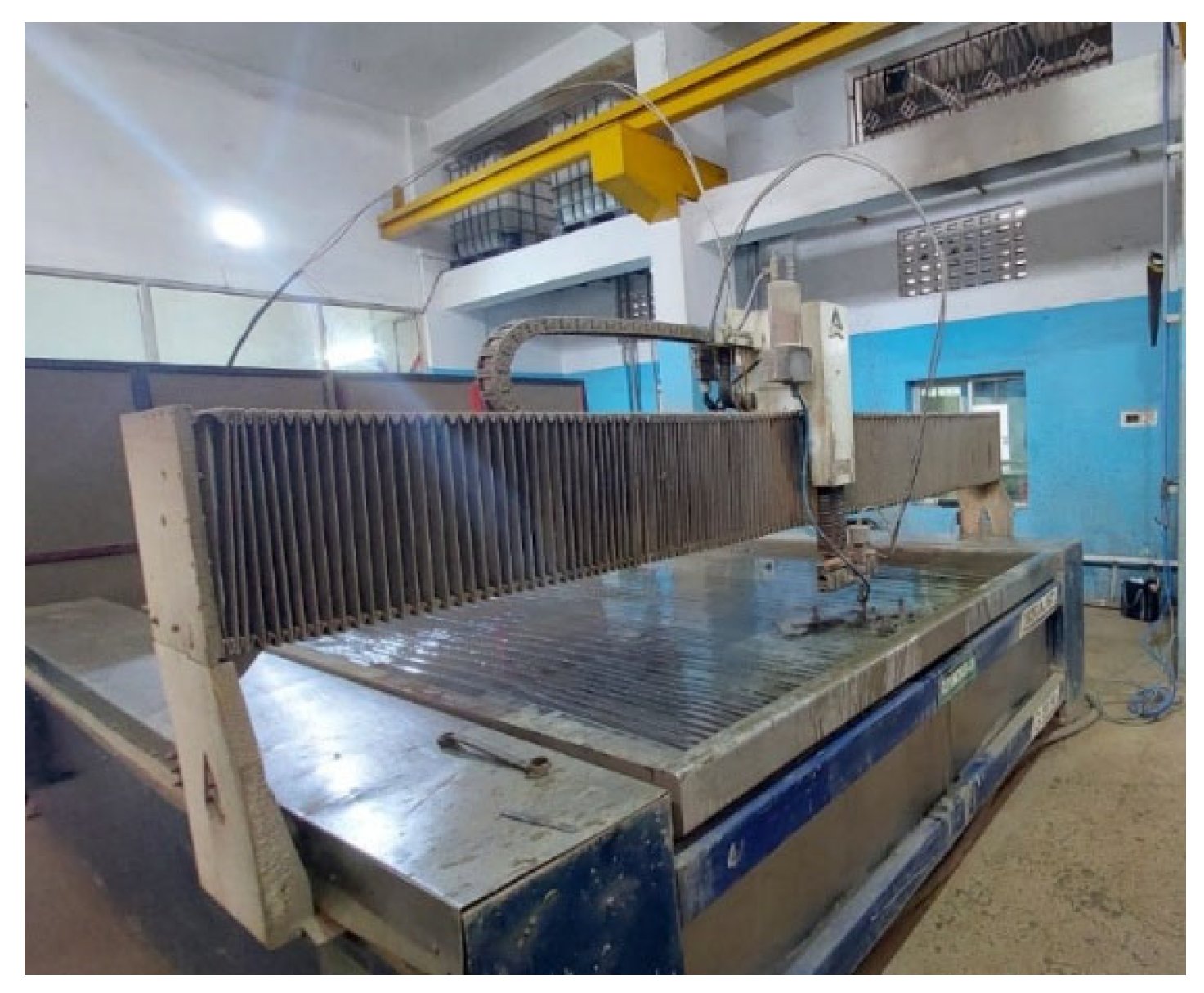
Abrasive water jet machining (AWJM) has therefore emerged as a viable alternative for machining aluminium MMCs, largely because it is a cold process with negligible heat-affected zones and relatively low cutting forces [
11,
12]. Material removal in AWJM occurs primarily through high-velocity abrasive particle impacts, involving a combination of micro-cutting, ploughing, and brittle fracture, depending on both process conditions and material response. For aluminium MMCs, this erosion-dominated mechanism avoids many of the tool-related issues encountered in conventional machining [
13]. Nevertheless, AWJM performance is far from trivial and depends sensitively on several interacting process parameters.
Previous investigations consistently identify jet pressure, traverse speed, standoff distance, and abrasive flow rate as the primary variables governing AWJM performance [
13,
14]. Jet pressure is widely regarded as the dominant factor controlling material removal rate (MRR), as it directly influences abrasive particle velocity and, consequently, impact energy. Higher jet pressures generally promote more effective micro-cutting and fracture of hard reinforcements, although the extent of this benefit depends on reinforcement hardness and fracture toughness. Traverse speed plays a different role. By regulating jet–material interaction time, it strongly affects surface roughness and kerf geometry. At higher traverse speeds, the reduced exposure time often results in incomplete erosion at greater depths, which manifests as increased surface roughness and kerf taper, particularly in particle-reinforced systems [
15].
Standoff distance further complicates this interaction. At small standoff distances, the jet remains relatively coherent, preserving energy density at the workpiece surface and enabling deeper, more uniform penetration. As standoff distance increases, jet divergence and energy dissipation become more pronounced, leading to reduced cutting efficiency and wider kerf taper [
16]. Abrasive flow rate influences the number of effective cutting particles delivered to the surface; however, several studies report diminishing returns beyond an optimum level. In such cases, particle–particle collisions within the jet reduce individual particle velocity, limiting further gains in erosion efficiency. It is worth noting that the precise balance between these effects remains material dependent [
17].
From a materials standpoint, most AWJM studies on aluminium MMCs have focused on AA6061- or AA7075-based composites reinforced with SiC, B
4C, Al
2O
3, or hybrid ceramic particulates. These works provide useful insight into parameter significance and erosion mechanisms, yet their findings cannot be directly extrapolated to diboride-reinforced systems. ZrB
2 differs fundamentally from SiC or B
4C in terms of hardness, elastic modulus, and fracture resistance. As a result, ZrB
2-reinforced aluminium composites require higher impact energy to initiate particle fracture and removal, which alters the prevailing erosion regime during AWJM. Limited studies addressing diboride-reinforced composites suggest increased resistance to erosion, heightened sensitivity to jet pressure, and more pronounced kerf taper under unfavourable conditions [
9,
11]. However, these studies typically emphasise single-response outcomes or simple parameter ranking, offering limited insight into interaction effects or process non-linearity.
Methodologically, this limitation is compounded by the frequent use of Taguchi-based designs or one-factor-at-a-time approaches, which are inherently inadequate for capturing the coupled and non-linear nature of AWJM processes. The CCD provides a more rigorous framework. It allows regression-based modelling, quantification of interaction and quadratic effects, and simultaneous optimisation of multiple machining responses [
18]. Despite these advantages, systematic RSM-based investigations on AWJM of high-strength aluminium MMCs reinforced with ZrB
2 remain scarce. Against this backdrop, systematic multi-response machinability studies on AA7175–ZrB
2 composites are still lacking, especially those that integrate statistical modelling with physically grounded interpretation of erosion mechanisms.
The present study used Central Composite Design (CCD) because of its effectiveness in developing second-order regression models and analysing interaction effects among various parameters in abrasive water jet machining. In contrast to the Taguchi method, which primarily emphasises factor optimisation with restricted interaction analysis, the CCD allows accurate predictions of non-linear interactions and curvature effects among process parameters. In comparison to Box–Behnken Design (BBD), CCD has a more extensive experimental domain due to the inclusion of axial points, hence enhancing the dependability of response surface modelling and optimisation. Moreover, CCD has been widely used in machining research due to its ability to generate precise mathematical models with a reduced number of experimental trials and excellent predictive accuracy for machining reactions, including surface roughness, kerf width, and material removal rate [
19,
20].
Further, 15 wt.% ZrB
2 was selected to improve the mechanical strength and processability, while keeping the material integrity and processability. A rigorous literature review and early trial tests were carried out before completing this composition to guarantee the uniform distribution of reinforcement and stable machining properties. The selected combination presented an enhanced level of performance compared to lower reinforcement percentages reported in earlier studies [
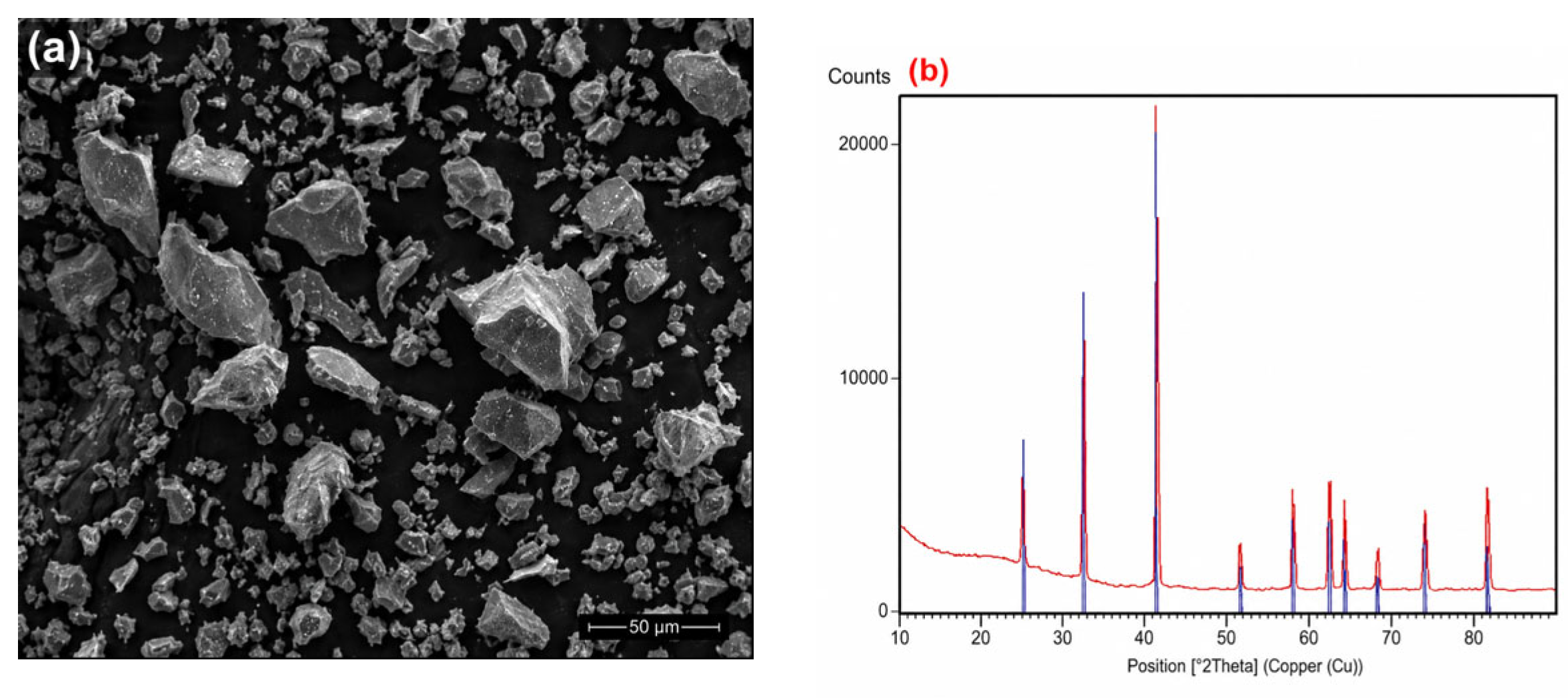
21]. Further, the fabricated composite is subjected to SEM and XRD analysis.
3. Results and Discussion
3.1. Microstructure and Phase Analysis of the Composite
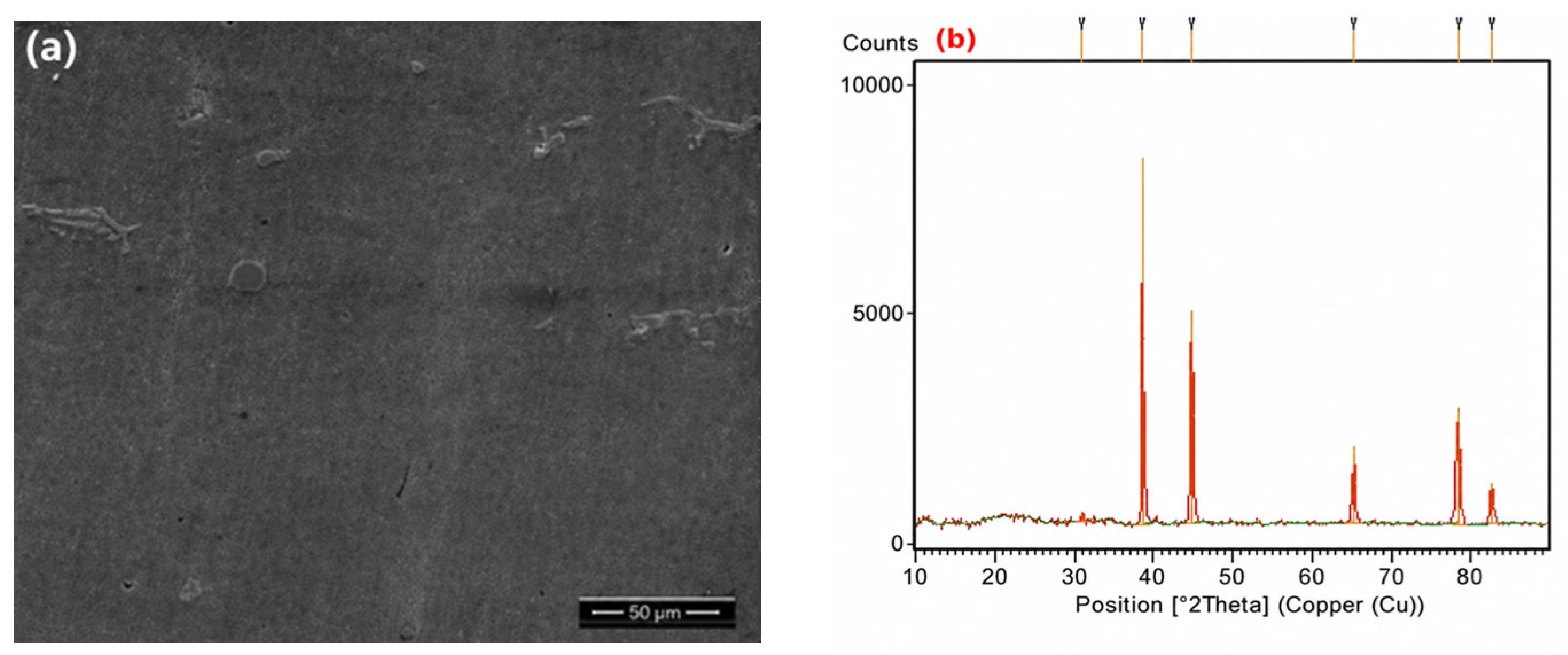
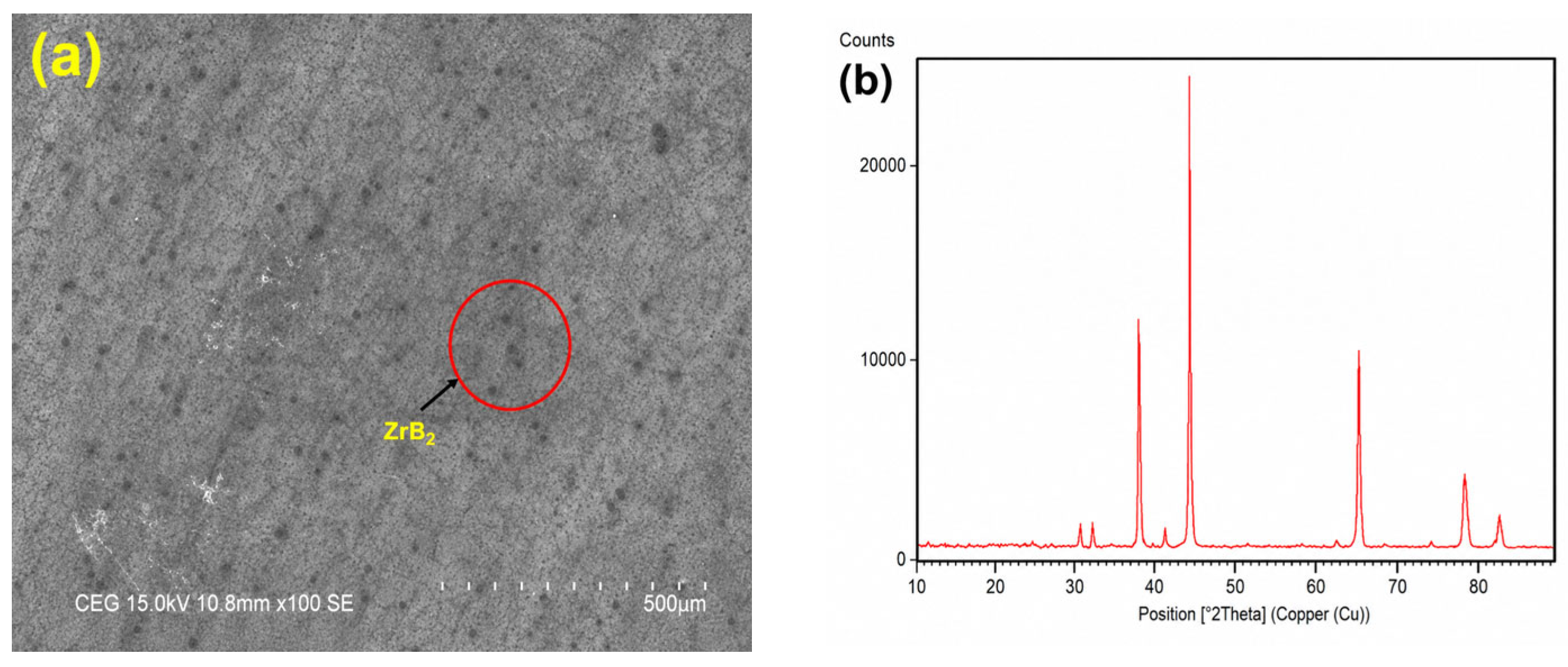
The microstructural characteristics and phase constitution of the fabricated AA7175–15 wt.% ZrB
2 composite were examined using SEM and XRD, as shown in
Figure 6a and
Figure 6b, respectively. SEM observations reveal that ZrB
2 particles are reasonably well distributed within the AA7175 aluminium matrix, with no evidence of large-scale particle agglomeration or macroscopic segregation. While minor local clustering cannot be entirely ruled out an inherent limitation of stir casting the overall dispersion appears sufficiently uniform for subsequent machinability investigations.
A noticeable refinement of the aluminium matrix grains is evident in the composite microstructure. This grain refinement is likely associated with the presence of ZrB
2 particles acting as heterogeneous nucleation sites during solidification, thereby restricting grain growth of the aluminium matrix. Similar grain-refining effects have been reported for diboride-reinforced aluminium systems and are generally attributed to the high thermal stability and crystallographic compatibility of ZrB
2 with aluminium alloys [
19]. Such microstructural refinement is expected to contribute to enhanced mechanical performance, although it may also increase resistance to material removal during machining.
The absence of visible oxide layers at the particle–matrix interfaces suggests that the adopted fabrication route, including particle preheating and magnesium addition, was effective in limiting oxidation during processing [
24]. In this context, ZrB
2 particles formed or retained within the melt without significant surface oxidation are known to exhibit improved interfacial bonding with aluminium matrices. This improved interfacial condition can reduce the effective wetting angle between the molten aluminium and the ceramic particles, thereby facilitating better particle incorporation and load transfer [
25]. However, it should be noted that interfacial quality at the microscale may still vary locally, which can influence erosion behaviour during abrasive water jet machining.
The XRD pattern of the composite, presented in
Figure 6b, confirms the presence of ZrB
2 reinforcement within the AA7175 matrix. Distinct diffraction peaks corresponding to ZrB
2 are observed alongside the characteristic aluminium peaks, with no detectable secondary phases or reaction products [
26]. The XRD patterns revealed any undesirable secondary phases or brittle intermetallic compounds, indicating the chemical stability of ZrB
2 inside the aluminium matrix.
3.2. Effect of AWJM Process Parameters on Material Removal Rate (MRR)
Material removal rate (MRR) is a practical indicator of machining efficiency in abrasive water jet machining (AWJM). MRR reflects that the influence of the kinetic energy carried by abrasive particles is transferred to the workpiece surface, while accounting for jet stability and the local interaction time. In the present study, the combined effects of jet pressure (P), standoff distance (SOD), traverse speed (TS), and abrasive flow rate (AFR) on the MRR of AA7175–15 wt.% ZrB
2 composites were analysed using a regression-based statistical framework. The ANOVA results are summarised in
Table 3, and the corresponding model adequacy metrics are reported in
Table 4.
The regression model describing MRR was statistically robust, as evidenced by a high model F-value of 113.87 and an associated probability value of less than 0.0001. Such a low p-value strongly suggests that the observed trends are not due to random variation within the experimental window. The coefficient of determination (R2 = 0.9025) indicates that nearly 98% of the total variability in MRR is captured by the selected AWJM parameters. Importantly, the adjusted R2 value (0.8725) remained close to R2, implying that the model retains predictive relevance without artificial inflation due to excessive terms. This point matters, particularly for regression-based optimisation studies, where overfitting can mask physically meaningful trends. The relatively low RMSE (0.27) further supports the adequacy of the model for describing MRR within the investigated parameter space, although extrapolation beyond this range should be approached cautiously.
Among all factors, jet pressure clearly dominated the MRR response, exhibiting the highest F-value. This outcome is physically intuitive and aligns well with established erosion theory. Increasing jet pressure directly increases abrasive particle velocity, and hence the kinetic energy available for material removal scales approximately with the square of velocity. In the case of AA7175–ZrB
2 composites, this additional energy is expended in two parallel mechanisms: plastic deformation and micro-cutting of the aluminium matrix, and brittle fracture or debonding of the ZrB
2 reinforcement. Given the high hardness and elastic modulus of ZrB
2, a threshold impact energy is required to initiate cracking or interfacial failure. Once this threshold is exceeded, reinforcement fragmentation and pull-out become more frequent, contributing disproportionately to mass loss. Similar pressure-dominated behaviour has been reported for particle-reinforced aluminium systems by Ref. [
27], although the absolute MRR values reported in the present work are slightly lower, likely due to the relatively high-volume fraction and fracture resistance of ZrB
2.
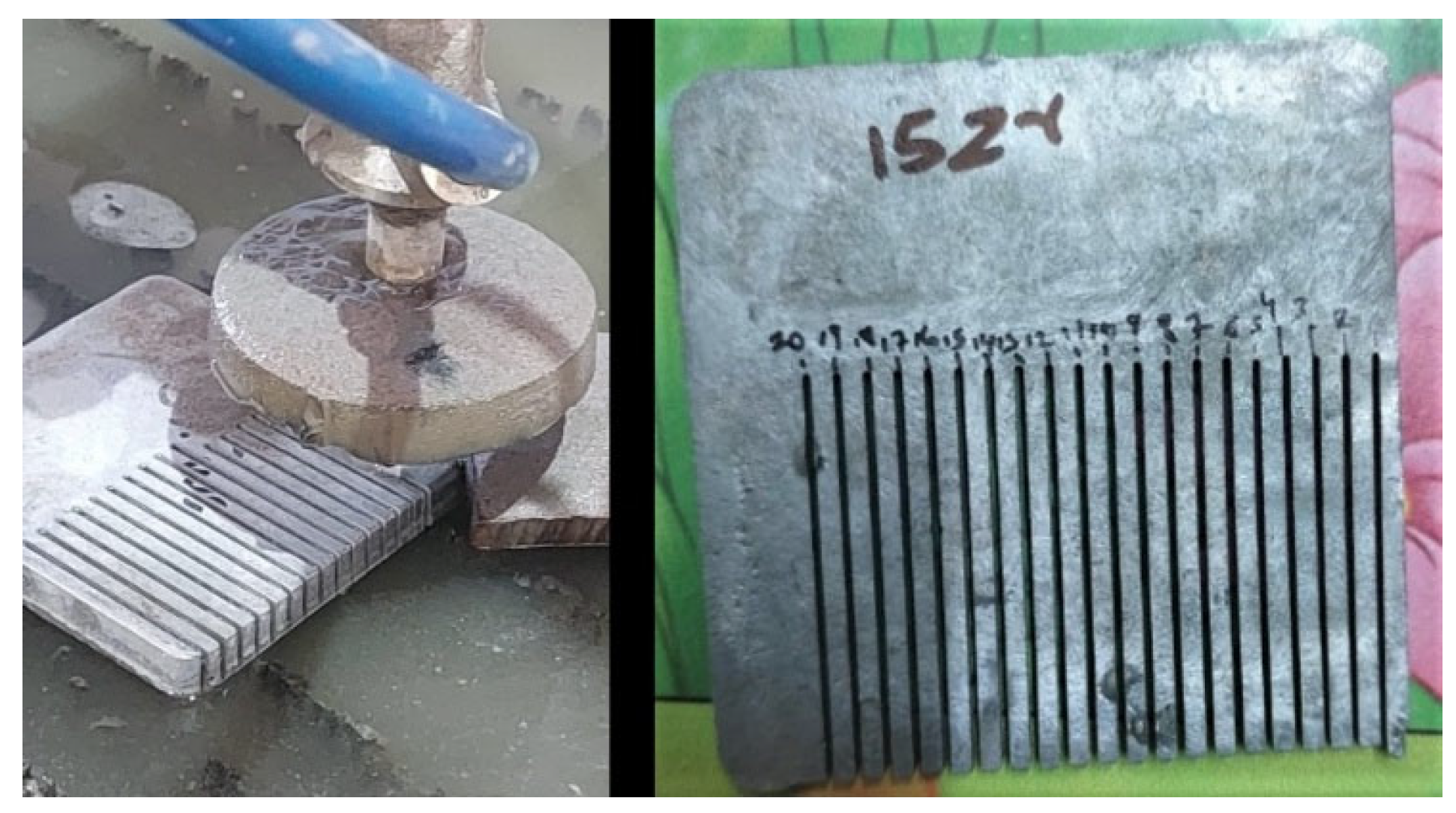
Standoff distance also exerted a statistically significant, though secondary, influence on MRR. At smaller SOD values, the jet impinges on the surface with higher coherence and energy density, resulting in concentrated impact stresses and efficient erosion (as illustrated in
Figure 3). As SOD increases, jet spreading and air entrainment reduce the effective particle velocity at the target surface. This energy loss becomes particularly detrimental when machining hard ceramic reinforcements, where insufficient impact energy may lead to partial matrix erosion without effective particle fracture. While this trend broadly agrees with observations by Mohamed et al. [
17] for SiC-reinforced aluminium, the sensitivity of MRR to SOD in the present study appears slightly higher. This may be attributed to differences in particle morphology and interfacial bonding strength between ZrB
2 and the aluminium matrix, although direct microstructural evidence would be needed to confirm this assumption.
Traverse speed showed a clear inverse relationship with MRR, consistent with an erosion-dominated removal mechanism. At lower TS, the jet dwells longer at a given location, allowing repeated abrasive impacts and progressive damage accumulation. This extended interaction time promotes crack initiation within ZrB
2 particles, followed by crack growth, fragmentation, and eventual pull-out. In contrast, at higher traverse speeds, the reduced exposure time limits the number of effective particle impacts per unit area. As a result, erosion becomes incomplete, particularly in regions with a high local reinforcement concentration. This behaviour has been widely reported for metal matrix composites under AWJM, although the degree of MRR reduction with increasing TS can vary depending on reinforcement size and distribution [
28].
Compared to the other parameters, abrasive flow rate contributed the least to MRR variation, although its effect remained statistically significant. Increasing AFR increases the population of abrasive particles within the jet, which initially enhances erosion by increasing the frequency of impacts. However, beyond a certain level, intensified particle–particle interactions within the jet can reduce the velocity and impact efficiency of individual abrasives. For hard particle-reinforced composites such as AA7175–ZrB
2, this reduction in particle velocity is particularly critical, as subcritical impacts may be insufficient to fracture the reinforcement. Consequently, the incremental gain in MRR with increasing AFR diminishes, and AFR assumes a supporting rather than controlling role. Similar saturation-type behaviour has been observed although the onset of saturation in the present study occurs at slightly lower AFR values, possibly due to higher jet loading conditions [
29].
Taken together, the statistical trends and mechanistic interpretations consistently indicate that effective energy delivery and retention at the workpiece surface govern MRR during AWJM of AA7175–15 wt.% ZrB2 composites. Jet pressure primarily controls the available impact energy, while SOD and traverse speed regulate how efficiently that energy is transferred and utilised at the surface. Abrasive flow rate, although necessary to sustain erosion, does not compensate for insufficient particle velocity. From a process optimisation perspective, these findings suggest that maximising MRR requires prioritising pressure and jet coherence, while carefully balancing TS and AFR to avoid inefficient erosion or excessive abrasive consumption. Nevertheless, some uncertainty remains regarding the relative contribution of reinforcement pull-out versus fragmentation, which could be clarified through post-machining microstructural analysis of eroded surfaces.
3.3. Effect of AWJM Process Parameters on Surface Roughness
Surface roughness (Ra) is widely regarded as a critical descriptor of surface integrity in abrasive water jet machining (AWJM), particularly when machining particle-reinforced metal matrix composites. In such systems, material removal does not proceed uniformly. Instead, it evolves through a combination of ductile deformation of the aluminium matrix and brittle fracture or pull-out of ceramic reinforcements. For AA7175–15 wt.% ZrB2 composites, the pronounced contrast in hardness, stiffness, and fracture behaviour between the matrix and reinforcement introduces competing erosion mechanisms, including micro-cutting, ploughing, interfacial debonding, and particle fragmentation. As a result, the final surface morphology is highly sensitive to process parameters that regulate abrasive particle energy, jet coherence, and the effective interaction time between the jet and the workpiece.
The ANOVA results for surface roughness, along with the associated fit statistics, are presented in
Table 5 and
Table 6. The developed regression model exhibited a high coefficient of determination, indicating that the selected AWJM parameters capture the majority of Ra variation within the explored experimental window. Jet pressure emerged as the most statistically dominant factor influencing surface roughness, followed by abrasive flow rate, traverse speed, and standoff distance. This hierarchy is revealing. It suggests that surface quality in AWJM of ZrB
2-reinforced aluminium composites is governed primarily by parameters that control abrasive particle kinetic energy and impact stability, rather than by kinematic effects alone.
Jet pressure showed a pronounced inverse relationship with surface roughness. At elevated pressures, abrasive particles achieve higher velocities and more consistent trajectories, enabling sustained micro-cutting of the aluminium matrix while simultaneously promoting controlled fracture of ZrB
2 particles. Under these conditions, erosion proceeds in a relatively stable manner, and the tendency for large-scale reinforcement pull-out is reduced. This stabilisation suppresses random ploughing events and limits the formation of deep grooves, resulting in smoother and more uniform surface profiles. In contrast, at lower jet pressures, the impact energy of individual particles may be insufficient to fracture hard ZrB
2 reinforcements or to cut the surrounding matrix cleanly. Instead, localised plastic deformation and interfacial debonding become more prevalent, producing uneven erosion and higher Ra values. The strong statistical contribution of pressure therefore reflects its fundamental role in stabilising the erosion regime across the cutting zone [
30].
Abrasive flow rate ranked as the second most influential parameter affecting Ra. Increasing AFR raises the number of abrasive particles available for material removal, which improves erosion continuity and reduces surface waviness, particularly along the kerf walls. In practical terms, sufficient abrasive availability ensures that material removal proceeds through successive, overlapping micro-cutting events rather than sporadic impacts that promote striation formation. That said, the influence of AFR is not strictly monotonic. At excessively high flow rates, particle–particle interactions within the jet intensify, leading to partial velocity attenuation and less efficient cutting by individual abrasives. In the context of hard particle-reinforced composites, this reduction in effective impact energy can limit further improvements in surface finish. We also observed saturation-type behaviour of Ra with AFR for abrasive-laden high-pressure jets [
31].
Traverse speed exhibited a statistically significant, though comparatively weaker, influence on surface roughness. Increasing TS reduces the local jet–material interaction time, thereby limiting the number of effective abrasive impacts per unit length. This reduced exposure promotes incomplete material removal, particularly near ZrB
2 particles where the surrounding aluminium matrix may undergo plastic deformation rather than efficient cutting. As a consequence, erosion becomes less uniform, and surface features such as striations and ploughing marks become more pronounced, especially toward the lower regions of the cut. Although traverse speed clearly affects surface morphology through interaction time effects, its lower statistical contribution suggests that energy-controlled parameters dominate Ra evolution under the present machining conditions. Similar trends have been noted, although the sensitivity to TS can vary depending on reinforcement size and distribution [
32].
Standoff distance had the weakest statistical influence on surface roughness within the investigated range, yet its mechanistic role should not be overlooked. At smaller SOD values, the abrasive jet remains relatively coherent, preserving high energy density and consistent particle trajectories at the point of impact. As SOD increases, jet divergence and energy dissipation become more pronounced, resulting in a broader distribution of impact angles and particle velocities. This loss of coherence promotes uneven erosion, increased waviness, and more pronounced striation patterns, thereby increasing Ra.
Overall, the surface roughness behaviour of AA7175–15 wt.% ZrB2 composites under AWJM appears to be governed predominantly by parameters controlling abrasive particle energy and delivery stability. Jet pressure and abrasive flow rate dictate whether erosion proceeds via stable micro-cutting or devolves into ploughing and reinforcement pull-out, while traverse speed and standoff distance modulate surface morphology through interaction time and jet coherence effects. These statistical trends are consistent with the surface features observed in scanning electron microscopy, including striation bands, abrasive ploughing grooves, fractured ZrB2 particles, and localised pull-out cavities. Taken together, the combined statistical and microstructural evidence indicates that achieving low surface roughness in AWJM of particle-reinforced aluminium composites requires prioritising energy-dominated parameters, while treating kinematic controls as secondary but still necessary contributors. Some uncertainty remains regarding the relative contribution of particle fracture versus debonding, which warrants further targeted microstructural investigation.
3.4. Effect of AWJM Process Parameters on Kerf Taper Angle (KA)
Kerf taper angle (KA) reflects how effectively an abrasive water jet retains its cutting capability as it penetrates through the thickness of a workpiece. Unlike surface roughness, which is largely governed by near-surface erosion dynamics, kerf taper is controlled by depth-wise energy dissipation and jet stability. This distinction becomes particularly important in particulate-reinforced aluminium matrix composites, where a ductile aluminium matrix is locally interrupted by hard, erosion-resistant ceramic phases. In AA7175–15 wt.% ZrB2 composites, taper formation therefore arises from the combined effects of jet divergence, progressive loss of abrasive particle momentum, and the heterogeneous resistance imposed by ZrB2 reinforcements embedded within the matrix. As a result, KA serves as a sensitive indicator of erosion stability along the cutting depth rather than initial cutting efficiency alone.
The ANOVA results for kerf taper angle, together with the corresponding fit statistics, are summarised in
Table 7 and
Table 8. The regression model exhibited high statistical adequacy, indicating that the selected AWJM parameters capture the dominant physical mechanisms governing taper formation within the investigated parameter window. Among the process variables, jet pressure emerged as the most influential factor affecting KA, followed by abrasive flow rate, traverse speed, and standoff distance. This ranking suggests that kerf geometry is primarily controlled by parameters that regulate abrasive particle momentum retention and impact effectiveness as the jet advances toward the exit region of the cut.
Jet pressure exerted the strongest influence on kerf taper angle, which is consistent with its direct control over abrasive particle velocity and momentum. At higher pressure levels, the jet can sustain sufficient erosive capacity beyond the entry zone, allowing effective material removal to continue deeper into the composite. This reduces the difference between the top and bottom kerf widths, resulting in a lower taper angle (as schematically illustrated in
Figure 7). In contrast, at lower pressures, particle energy decays rapidly as the jet penetrates the workpiece. This attenuation is especially pronounced when the jet encounters ZrB
2 particles, which resist erosion and promote premature energy loss. Under such conditions, cutting efficiency deteriorates near the bottom of the kerf, producing a narrower exit width and a pronounced taper. The overwhelming statistical dominance of pressure, therefore, highlights that energy availability, rather than kinematic control, is the primary limiting factor for taper minimisation in hard particle-reinforced aluminium composites [
32].
Abrasive flow rate emerged as the second most influential parameter, underscoring the role of abrasive delivery continuity in sustaining cutting effectiveness along the kerf depth. Increasing AFR increases the number of active cutting particles, which helps compensate for the gradual decay in particle energy as the jet progresses through the material. This improved erosion persistence enhances material removal near the bottom of the kerf and reduces taper. That said, the influence of AFR is inherently bounded. At elevated abrasive concentrations, intensified particle–particle interactions within the jet can reduce individual particle velocity and momentum, limiting further gains in kerf geometry. In this sense, AFR improves taper control up to an optimal level, beyond which its effectiveness plateaus.
Traverse speed exhibited a statistically significant but secondary influence on kerf taper formation. Increasing traverse speed reduces the residence time of the jet at any given location, which restricts the extent of material removal in deeper regions of the cut. For ZrB2-reinforced composites, this reduction in interaction time is particularly detrimental, as sustained jet action is required to erode hard ceramic particles and their surrounding matrix. When exposure time is insufficient, erosion near the bottom of the kerf becomes incomplete, leading to an increased taper angle. Although this mechanism is physically intuitive, the lower statistical contribution of traverse speed indicates that its effect remains subordinate to that of parameters governing abrasive particle energy.
Standoff distance showed the weakest influence on kerf taper angle within the investigated range. Increasing SOD promotes jet spreading and air entrainment prior to impact, which reduces particle coherence and impact intensity. This degradation in jet quality can marginally impair erosion efficiency at greater depths, thereby contributing to taper formation. However, the relatively low statistical significance of SOD suggests that, under moderate operating conditions, its effect on kerf geometry is limited when compared to pressure and abrasive flow rate. It is likely that SOD would play a more pronounced role outside the present range, particularly at excessively large stand-off distances, although this was not explored here.
Overall, the kerf taper behaviour observed during AWJM of AA7175–15 wt.% ZrB2 composites indicates that dimensional accuracy is governed primarily by the jet’s ability to retain abrasive particle momentum throughout the cutting depth. Parameters that directly control particle energy and abrasive delivery dominate taper formation, whereas kinematic and geometric parameters exert secondary, moderating effects. From a process control perspective, these findings imply that minimising kerf taper in particle-reinforced aluminium composites requires prioritising energy-dominated parameters to ensure stable erosion from entry to exit. Some uncertainty remains regarding the relative contribution of reinforcement fracture versus interfacial debonding near the kerf bottom, which could be clarified through detailed subsurface microstructural analysis.
3.5. Optimisation and Validation
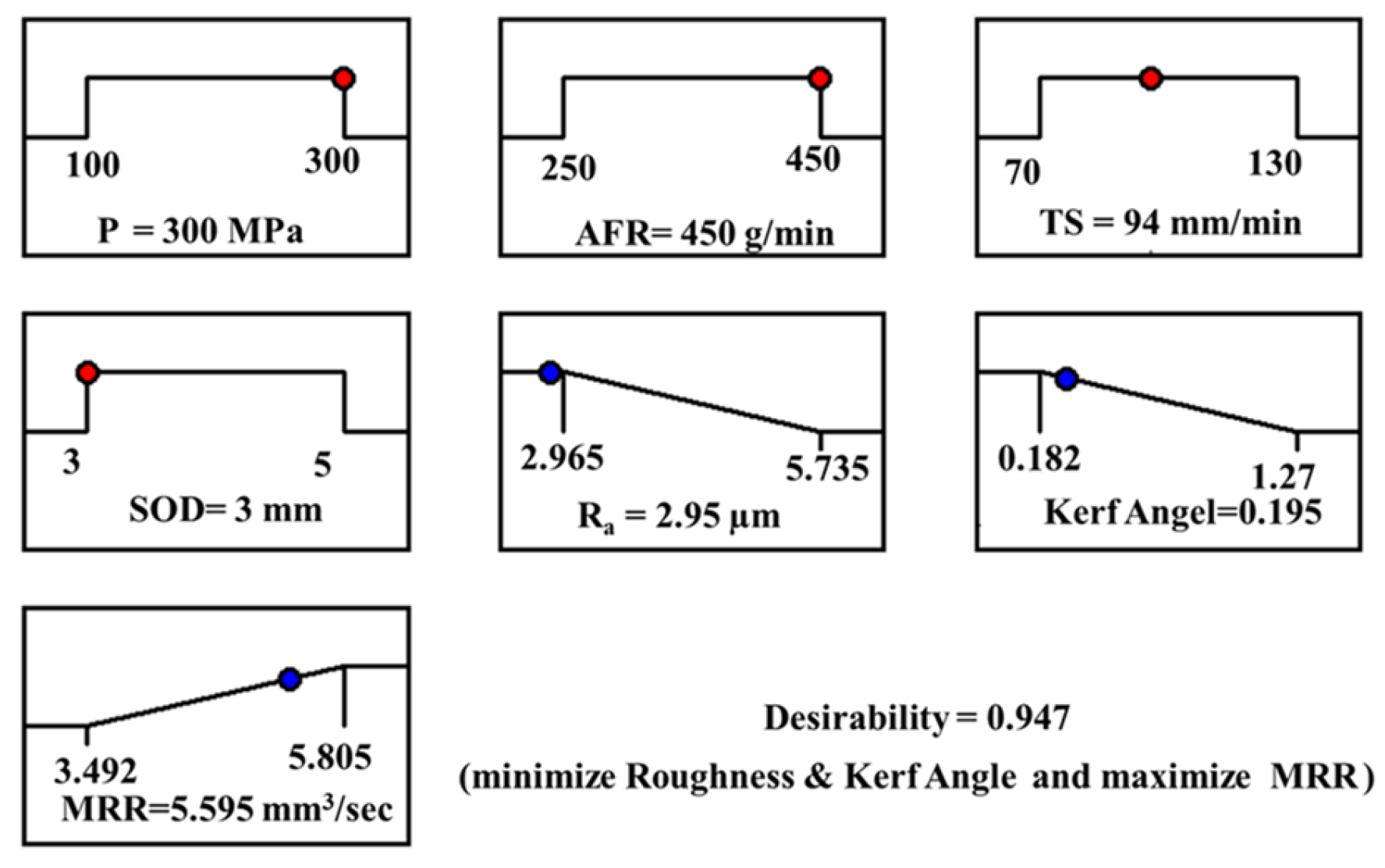
The quality evaluation of the machined composites considers different variables. To determine the optimal levels of the machining variables that affect the multiple responses, the desirability function approach was employed. In this method, the responses are transformed into a dimensionless desirability value (D) using Equation (1). As shown in
Table 9, the parameters for the optimisation process were based on minimising kerf angle and Ra and maximising MRR with the maximum significance assigned to the specified machining conditions.
where
is the corresponding response and n is the number of responses;
= 1 when the predicted response value is less than the obtained lower value;
= 0 when the predicted response value is greater than the obtained higher value.
Table 9.
Optimisation condition: minimise kerf angle and Ra and maximise MRR.
Table 9.
Optimisation condition: minimise kerf angle and Ra and maximise MRR.
| Input AWJD Variables | Unit | Assigned Target | Limit | Importance | Optimised Values |
|---|
| Low | High |
|---|
| P | MPa | is in range | 100 | 300 | 5 | 300 |
| SOD | mm | is in range | 3 | 5 | 5 | 3 |
| TS | mm/min | is in range | 70 | 130 | 5 | 94 |
| AFR | g/min | is in range | 250 | 450 | 5 | 450 |
| Ra | µm | minimise | 2.965 | 5.735 | 5 | 2.95 |
| Kerf angle | Degree | minimise | 0.182 | 1.27 | 5 | 0.195 |
| MRR | mm3/s | maximise | 3.492 | 5.805 | 5 | 5.595 |
Figure 7 (ramp graph) represents the desirability of the parameters and response. It helps visualise the trade-offs between different parameters and responses, allowing us to identify the combination of parameter settings that leads to the desired overall performance.
Validation
The AWJ experiments were conducted on composite settings that optimised the parameters as shown in
Table 10. It was found that the error was less than 5%. The fact that the findings were verified by experimentation with a deviation below 5% indicates that the established optimisation framework is both statistically sound and practically applicable.
3.6. SEM-Based Surface Morphology and Erosion Mechanisms
Scanning electron microscopy (SEM) was employed to examine the surface morphology of AWJM-machined AA7175–15 wt.% ZrB
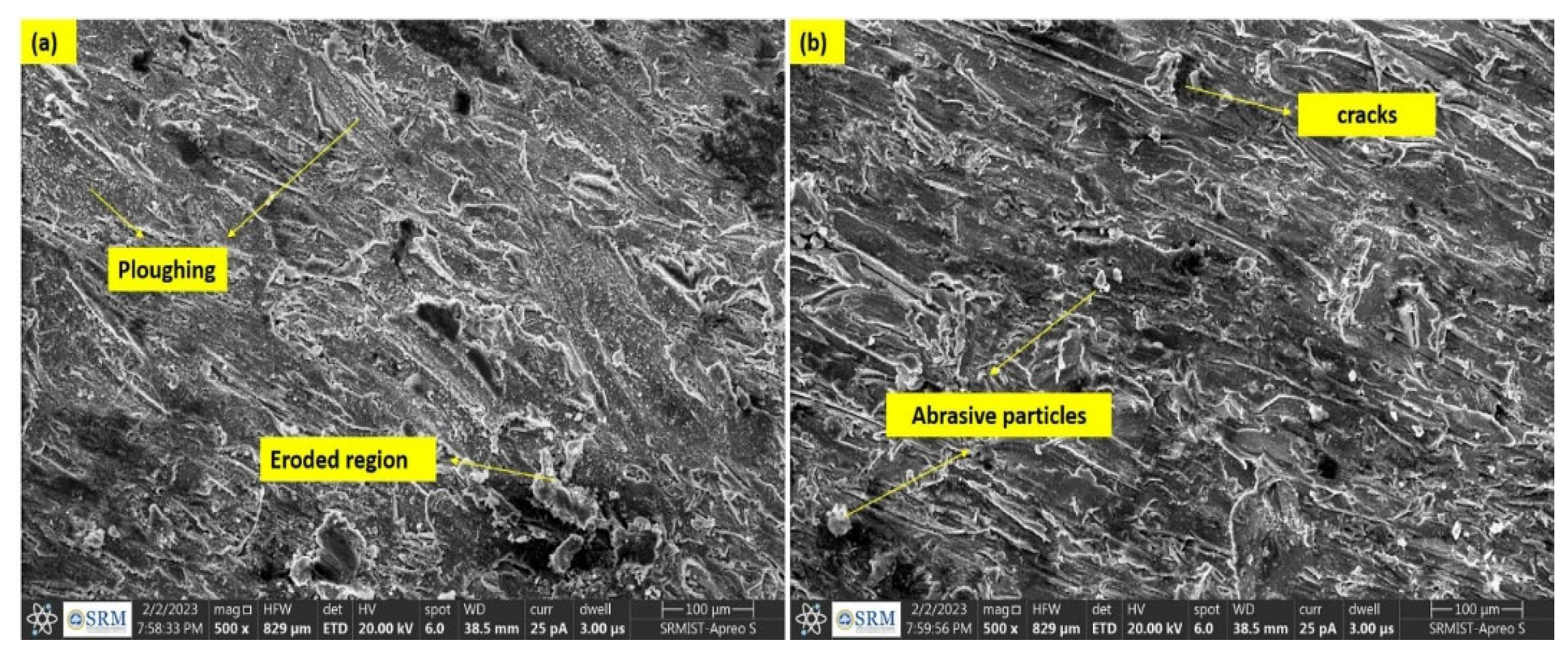
2 composites to identify the dominant erosion mechanisms and to establish microstructural correlations with the observed machining responses. Representative SEM micrographs are presented in
Figure 8.
The SEM observations indicate that material removal during AWJM of the ZrB
2-reinforced composite occurs through a combination of micro-cutting of the aluminium matrix, abrasive ploughing, brittle fracture of ZrB
2 particles, and reinforcement particle pull-out. The relative contribution of these mechanisms varies significantly with machining parameters, reflecting changes in abrasive particle energy, jet coherence, and jet–material interaction time. Under favourable machining conditions, characterised by higher jet pressure and lower traverse speed, the machined surfaces exhibit comparatively smooth topographies with fine, uniformly distributed striations aligned with the jet traversal direction [
29].
In these cases, abrasive particles possess sufficient kinetic energy to penetrate the aluminium matrix and induce brittle fracture of ZrB
2 particles rather than their debonding. As a result, erosion proceeds more stably and uniformly, which is consistent with the lower surface roughness and reduced kerf taper observed under these conditions, as evident from
Figure 8a. Only limited evidence of particle pull-out is observed, suggesting effective interfacial bonding and efficient energy transfer from the abrasive particles to the composite.
In contrast, surfaces machined at higher traverse speeds show pronounced striation patterns, irregular grooves, and localised surface damage. The reduced jet–material interaction time under these conditions’ limits repeated abrasive impacts, leading to incomplete erosion and non-uniform material removal, particularly at greater cutting depths [
29].
Figure 8b depicts the partially fractured ZrB
2 particles embedded within smeared aluminium matrix regions, indicating insufficient impact energy for complete particle removal. These features correlate well with the experimentally observed increase in surface roughness and kerf taper angle at higher traverse speeds. An increase in standoff distance further exacerbates erosion instability, as evidenced by widened striation spacing and uneven erosion patterns on the machined surfaces. Greater standoff distances promote jet divergence and air entrainment, resulting in reduced particle velocity and dispersed impact angles at the workpiece surface. This loss of jet coherence diminishes erosive effectiveness at the lower regions of the cut, contributing to higher kerf taper and rougher surface profiles. Under such conditions, particle pull-out becomes more prevalent, likely due to localised stress concentrations at the particle–matrix interface combined with insufficient fracture energy [
31].
The influence of abrasive flow rate on surface morphology is comparatively subtle but still discernible. At moderate abrasive flow rates, SEM images show improved erosion uniformity, reflecting a sufficient population of effective cutting particles [
26]. However, at higher abrasive flow rates, surface damage becomes more pronounced, with increased ploughing marks and surface irregularities. This behaviour may be attributed to particle crowding and inter-particle collisions within the jet, which reduce individual particle velocity and limit effective penetration. These observations are consistent with the statistically identified secondary role of abrasive flow rate in governing surface roughness and kerf characteristics.
Overall, the SEM-based morphological analysis provides direct physical evidence supporting the trends identified through ANOVA and regression modelling. Improved surface integrity and reduced kerf taper are associated with machining conditions that maintain jet coherence and sufficient abrasive particle energy throughout the cutting depth. Conversely, degraded surface quality and increased taper arise under conditions that promote rapid energy dissipation and unstable erosion. This strong agreement between microstructural observations and statistical analysis reinforces the reliability of the developed models and the proposed machinability trends for AWJM of AA7175–ZrB2 composites.
4. Conclusions
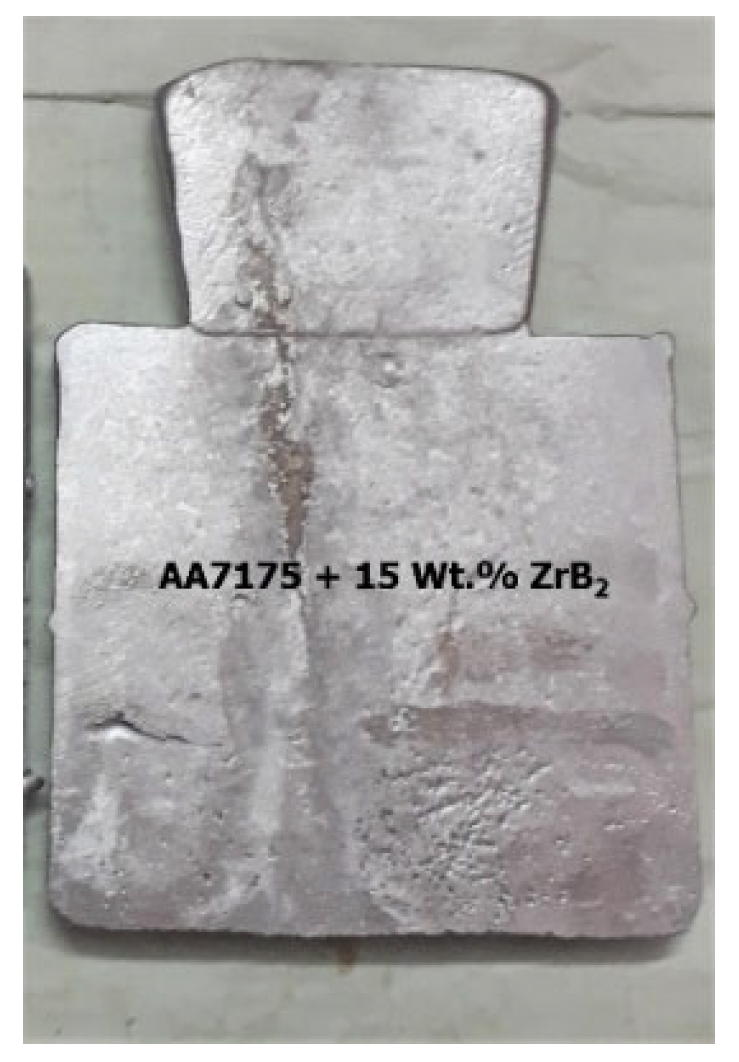
The present study systematically examined the machinability of AA7175–15 wt.% ZrB2 metal matrix composites fabricated by a two-step stir casting route using abrasive water jet machining. Response surface methodology based on a central composite design was employed to quantify and optimise the effects of jet pressure, traverse speed, standoff distance, and abrasive flow rate on material removal rate (MRR), surface roughness (Ra), and kerf taper angle (KA). Based on the experimental results, statistical analysis, and microstructural observations, the following conclusions can be drawn:
Jet pressure was identified as the dominant parameter governing material removal rate. Higher pressure levels significantly increased MRR by enhancing abrasive particle velocity and impact energy, thereby promoting effective micro-cutting of the aluminium matrix and brittle fracture of embedded ZrB2 particles.
Traverse speed exerted the strongest influence on surface roughness and kerf taper angle. Lower traverse speeds improved surface finish and reduced kerf taper by increasing jet–material interaction time, enabling more uniform erosion and sustained material removal through the composite thickness.
Standoff distance played a critical role in maintaining jet coherence and penetration capability. Reduced standoff distances preserved energy density at the workpiece surface, resulting in smoother surfaces and lower kerf taper, whereas excessive standoff distances led to jet divergence, rapid energy dissipation, and non-uniform erosion.
Abrasive flow rate exhibited a secondary but statistically significant influence on all machining responses. Moderate abrasive flow rates enhanced erosion uniformity, while excessively high flow rates offered limited additional benefit due to particle–particle interactions that reduced effective particle velocity.
The developed RSM-based regression models demonstrated strong predictive capability for all responses, with coefficients of determination exceeding 0.95 and statistically insignificant lack-of-fit, confirming their suitability for process prediction and multi-response optimisation within the investigated parameter range.
SEM-based surface morphology analysis revealed erosion mechanisms dominated by abrasive micro-cutting, ploughing, brittle fracture of ZrB2 particles, and particle pull-out. These mechanisms showed strong correlation with the statistically observed trends in MRR, Ra, and KA, providing physical validation of the developed models.
This study establishes optimised AWJM parameter windows for improving machining efficiency and surface integrity of AA7175–ZrB2 composites and provides mechanistic insight into erosion-controlled material removal in hard particle-reinforced aluminium alloys. The findings are expected to assist in the effective machining of advanced aluminium MMCs where conventional cutting methods are limited.