


Abstract
This study investigated the epidemiology and incidence of citrus Huanglongbing (HLB) disease in citron (Citrus medica L.) under varying field conditions. This research specifically aimed to quantify disease severity, assess populations of the primary vector, the Asian citrus psyllid (Diaphorina citri), and identify potential alternative host plants sustaining the vector and the pathogen. Field surveys were executed across three sites characterised by distinct elevations and management practices. Site-level soil nutrient profiles exhibited moderate acidity (pH 4.67–5.74) and significant differences in organic matter and nitrogen. These findings suggest that localised deficiencies in calcium and boron may exacerbate disease severity, contributing to the varied epidemiological patterns observed across sites. Analysis revealed that both HLB disease severity and D. citri population density were significantly influenced by altitude, field condition, and orchard management. The low-elevation site (860 m above sea level (ASL)), characterised by poor maintenance, exhibited the highest mean psyllid populations (averaging 13 individuals per sticky trap per day) and the most severe disease symptoms. Conversely, the high-elevation site (1674 m ASL) displayed significantly lower infection rates and healthier tree conditions. Symptomatic citron trees across all sites consistently exhibited characteristic HLB foliar and fruit symptoms (blotchy mottle and lopsided fruits). Quantitative Polymerase Chain Reaction (qPCR) successfully detected the causal agent, Candidatus Liberibacter asiaticus (CLas), in symptomatic citron samples from all locations, with the highest relative fold-change (2−ΔΔCt = 4628.24). Crucially, multiple developmental stages of D. citri were observed infesting the common weed Bidens pilosa. Furthermore, qPCR confirmed the presence of CLas DNA within the B. pilosa tissue itself (2−ΔΔCt = 210.84). This finding constitutes the first field-based evidence that B. pilosa can serve as a novel alternative host that supports both the D. citri vector and the CLas pathogen. These results establish citron as a highly susceptible host and identify B. pilosa as a new, critical epidemiological link in the HLB transmission cycle, thereby underscoring the necessity for integrated, landscape-level disease management strategies.
1. Introduction
Citrus medica L., commonly known as citron (Chinese: Ning’er Giant; Italian: Cedar; Thai: Ma Ngaow), is a small tree or evergreen shrub prevalent in Southwestern China and subtropical Asia. Despite being a progenitor of the cultivated citrus group and thriving across most warm citrus-growing regions—including Yunnan province of China and Northern Thailand—citron’s commercial scale remains considerably smaller than that of its cultivated derivatives. Sweet orange alone accounts for approximately 65% of global citrus production, followed by mandarin (19%), lemon and lime (11%), and grapefruit (5%) [1]. Beyond commercial cultivation, citron is valued in traditional medicine, in ornamental horticulture, and as a food source in both fresh and processed form. This species exhibits diverse phenotypes, including the fingered citron, which arises from a unique developmental anomaly. In typical citron fruits, variations in shape, size, taste (sweet vs. acid-sour), and style persistence among cultivars remain largely unexplained at the genetic–physiological level [2,3]. Taxonomically, common citrons are characterised by locules with absent or rudimentary juice vesicles. The predominantly self-pollinating nature of C. medica is likely a contributing factor to its comparatively lower genetic diversity compared with other citrus species [3]. This limited genetic variability simplifies genomic studies but also suggests a potentially uniform response to environmental stresses and pathogens across different cultivars. As one of the three foundational progenitor species of citrus, C. medica is, nonetheless, a critical resource for understanding the genetic basis of traits introduced into modern commercial hybrids like lemons and limes [4]. Therefore, characterising its genome remains essential for breeding efforts, including the search for novel resistance genes, even though common citron cultivars are generally susceptible to most known pathogens.
Huanglongbing (HLB), or citrus greening, is a devastating disease threatening the global citrus industry. The causal agent is the phloem-limited bacterium Candidatus Liberibacter asiaticus (CLas), vectored by the Asian citrus psyllid (Diaphorina citri Kuwayama) [5]. CLas multiplication is optimised between 22 °C and 27 °C, while at higher altitudes, temperatures above 30 °C can significantly reduce bacterial titres [6,7]. Furthermore, high altitudes (above 1000 m ASL) have been shown to limit the incidence of both the pathogen and its vector [8]. Disease management is exceptionally difficult, complicated not only by the vector’s mobility but also by the presence of alternative host plants that can harbour the psyllid and, in some cases, the pathogen itself, making control efforts within citrus groves insufficient. The psyllid vector reproduces almost exclusively on plants within the Rutaceae family, and common ornamentals like orange jessamine (Murraya paniculata) serve as critical, often unmanaged, reservoirs for the insect population [9]. Recent studies have confirmed that the pathogen CLas is not restricted to these psyllid hosts. The bacterium has now been detected in the phloem of common, non-rutaceous weeds found in and around citrus orchards, such as Spanish needle (Bidens pilosa) [10]. The presence of these pathogen reservoirs profoundly complicates disease management, as these weeds can provide a persistent source of inoculum, undermining control efforts focused solely on citrus and the psyllid.
HLB infection induces significant alterations in the morphological, structural, physiological, and biochemical characteristics of citrus trees. The symptoms of HLB-infected citrus include the anomalous accumulation of starch in leaves and the abnormal enlargement of starch granules. Leaf etiolation is also a common symptom. The compromised phloem function is hypothesised to cause feedback inhibition of photosynthesis. This disruption leads to disorganisation of grana lamellae in chloroplasts, ultimately impairing photosynthetic function and the translocation of photosynthetic products [5,11].
While these physiological disruptions explain the decline in the primary citrus host, the persistence of HLB in the field often depends on external biological reservoirs that remain unaffected by such visible collapse. To fully understand how the disease maintains its presence in citron orchards despite the severe physiological compromise of the trees, it is necessary to examine the surrounding vegetation and, critically, to distinguish between two ecologically distinct roles, viz., a temporary secondary host for D. citri and a true CLas reservoir host. The temporary secondary host, often referred to as a transient or shelter host, is a plant species upon which adult psyllids may temporarily land or engage in xylem-feeding to avoid desiccation, but which cannot sustain the reproductive cycle of the insects or the systemic multiplication of the pathogen [12]. D. citri has been documented on a wide range of non-rutaceous plants; most serve only as short-term refuges without contributing to the disease inoculum [10]. In contrast, a true CLas reservoir host must demonstrate functional criteria, such as supporting the vector’s full life cycle, particularly the nymphal stages, which are more efficient at acquiring the pathogen than adults. Moreover, it must allow for the systemic colonisation and high-titre multiplication of CLas within its phloem [13]. The identification of B. pilosa as a host in this study is novel because it moves beyond transient detection.
Citron and the citrus species with citron ancestry have often been reported to exhibit low or absent HLB symptoms; these trees are characterised by dense canopies, minimal leaf loss, and vigorous growth [14,15,16]. However, long-term field evaluations in the USA have revealed that citron is highly susceptible to CLas, displaying typical HLB symptoms [17]. Reports from China also indicate that HLB induces physiological changes in citron (C. medica L. var. sarcodactylis Swingle) [5]. While ‘fingered’ citron is traditionally cultivated for ornamental and medicinal purposes in Thailand, commercial cultivations of the common variety in the Fang and Chai Prakan districts of Chiang Mai, Northern Thailand, primarily cater to the European market. The commercial production in this region alone is approximately 1000 tons annually (Johannes Rogaar, pers. commun.). Although numerous studies have investigated HLB in common citrus species cultivated in Thailand, including mandarin (C. reticulata), sweet orange (C. sinensis), pummelo (C. maxima), lime (C. aurantifolia), and Kaffir lime (C. hystrix) [18,19], no reports on HLB associated with citron are available to date. Commercial citron cultivation in Chiang Mai, Thailand, has recently been impacted by symptoms indicative of systemic infection, including foliar yellowing and distinct blotchy mottle patterns. Affected trees frequently produce underdeveloped, lopsided fruit characterised by poor colouration and greyish-white waxy rind markings. To investigate these disease symptoms and confirm their cause, this study sought to characterise these symptoms under field conditions and confirm the presence of CLas using real-time PCR.
2. Materials and Methods
2.1. Plant Material Sampling and Collection
Plant samples were collected from suspected field plots and transported to the laboratory for analysis. For each citron tree, approximately 5–10 leaves were randomly collected. Sampling specifically targeted symptomatic foliage, including leaves with characteristic blotchy mottle or chlorosis. Upon arrival at the laboratory, the leaf samples were surface sterilised and cut into small pieces (2 mm) for subsequent DNA extraction. Additionally, productivity data of the previous year (2024) were obtained from Royal Steensma Co., Ltd., Chiang Mai, Thailand.
2.2. Insect Pest Identification
A survey was conducted in April 2025 in the northeastern districts of Chiang Mai, Thailand (Figure 1 and Table 1), which revealed suspected symptoms in three commercial citron fields. The field selection was based on grower reports of abnormal fruit and leaf symptoms and differences in production intensity, ensuring representation of typical commercial production systems in the region. The incidence of the suspected disease was visually assessed by examining both asymptomatic and symptomatic plants in these fields In the field with severe infestation (Location 3), we also deployed ten 10 × 20 cm yellow sticky traps on the citrus plants and ten traps 20 cm above the ground between the rows. The sample size (n = 20 traps) was determined following trapping guidelines for orchard-scale monitoring, which recommends a minimum of ten traps per hectare to capture spatial variability in flying insect populations [20]. After three days, the traps were collected and sent to the Queen Sirikit Botanic Garden (QSBG) for insect identification (Taxonomic Key). Soil surface and 30 cm deep soil samples were also collected for nutrient analysis.
Figure 1.
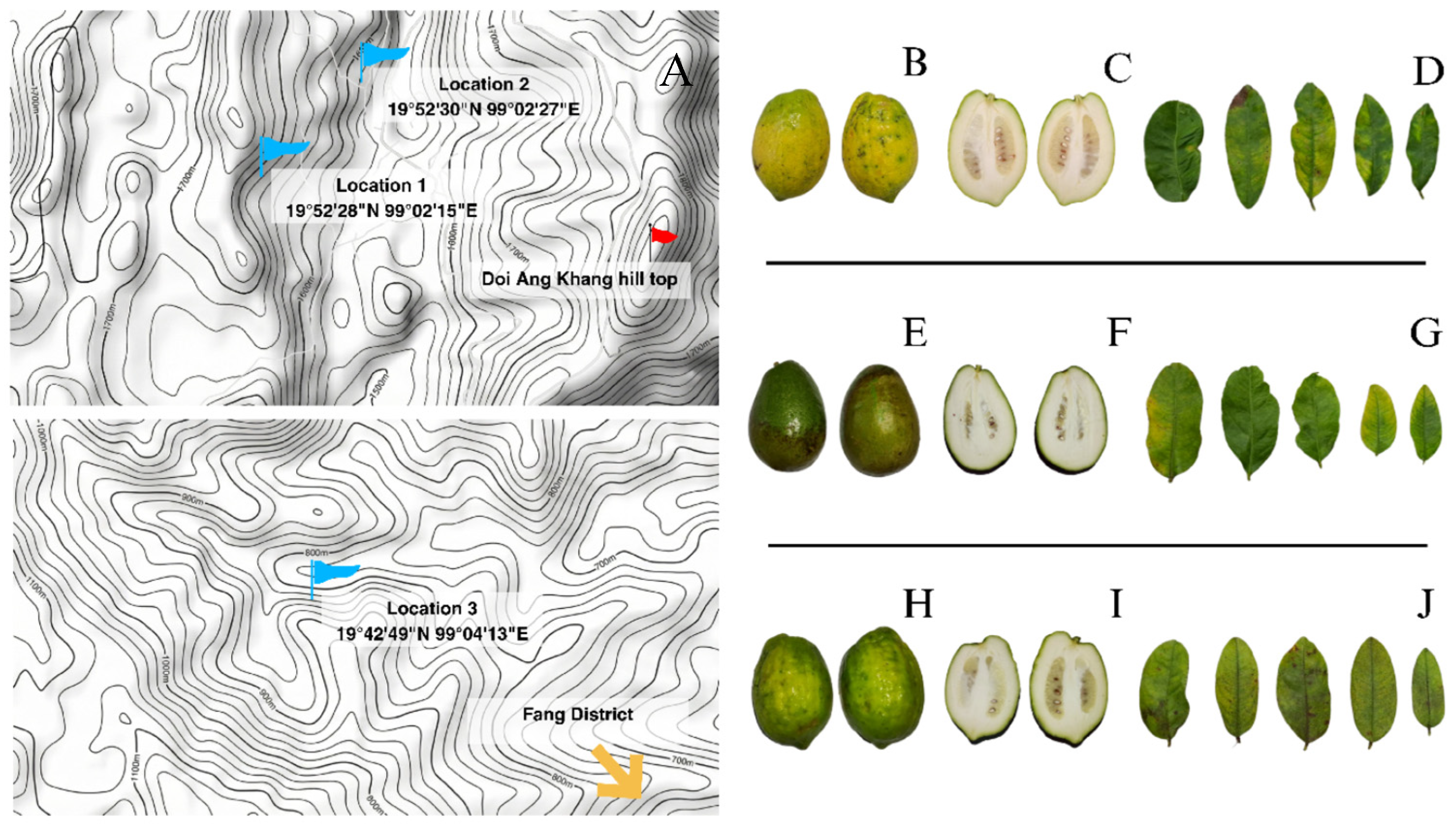
Survey four locations of citron orchards (A). The topographical map illustrates the rugged terrain of the Northern highlands; contour lines represent 100 m elevation intervals and characteristic HLB symptoms: small, lopsided, and misshapen fruits with blotchy mottle leaves observed at Location 1 (B–D), Location 2 (E–G), and Location 3 (H–J).
Table 1.
Field and description of the observed symptoms.
2.3. Soil Sampling and Nutrient Analysis
To better understand the environmental and nutritional factors associated with the observed field symptoms, soil samples were collected and analysed for their chemical and nutrient properties (Table 1). Rhizosphere soil samples were randomly collected from a depth of 0–15 cm, with 10 sampling points combined into one composite sample per plot. Additionally, deep-soil samples were randomly collected from a depth of 15–30 cm. The composite soil samples were air-dried at room temperature, sieved through a 2 mm mesh, and stored in a desiccator for nutrient analysis. The chemical characteristics and soil nutrient analysis included soil pH (in H2O) [21]. Soil organic matter content (% SOM) was determined using the Walkley–Black method [22], and total N [23] as well as available phosphorus (P) by Bray II [24,25]. Exchangeable potassium (K), calcium (Ca), magnesium (Mg), and boron (B) were extracted with 1N ammonium acetate (NH4OAc) and determined by atomic absorption spectrophotometry [26,27]. All data were subjected to one-way analysis of variance (ANOVA) to determine differences between sampling locations and soil depths. Mean separation was performed using Fisher’s Least Significant Difference (LSD) test at p < 0.05. The coefficient of variation (CV) and standard deviation (SD) were calculated to assess data variability and precision. Statistical analyses were conducted using SPSS version 28.0 (IBM Corp., Armonk, NY, USA). The resulting soil nutrient profiles and statistical analyses provided essential baseline data for interpreting potential relationships between soil fertility, plant health, and HLB symptom expression across locations.
2.4. Confirmation of CLas with Real-Time PCR
2.4.1. DNA Extraction
The identification of CLas, the putative causal agent of HLB, followed the National Diagnostic Protocol published by the Australian Department of Agriculture [28]. The plant and psyllid samples were transferred to the Bioactive Compound Laboratory at Chiang Mai University (CMU). Upon arrival at the lab, the leaf samples were surface-sterilised by immersing them in 80% (v/v) ethanol for 2 min. Midribs (~1.0 g) were excised, cut into small pieces (~2 mm in length), and either stored in a refrigerator or immediately used for DNA extraction. Individual psyllids were used for psyllid samples. Genomic DNA was extracted from the sterilised midribs and individual psyllids using a Genomic DNA extraction kit (DNA Plant-extraction kit, Tiangen, Beijing, China) according to the manufacturer’s instructions, with some modifications.
2.4.2. Detection of CLas Using Real-Time PCR
Multiplex qPCR assays, utilising the A2/J5 primer pair, were conducted for the detection and quantification of CLas. The primers were combined with specific TaqMan probes to verify the quality of the DNA and ensure the absence of PCR-inhibiting substances. The probes targeted plant cytochrome oxidase (COX) [29]. Each 20 μL reaction contained 2 μL of total DNA template and was performed using a Biorad qPCR instrument (The CFX96 Optical Reaction Module, Hercules, CA, USA). To identify extracts containing PCR-inhibiting substances, the CLas primer pair Fd1/RP2 was included in a multiplex reaction with universal primers. The details of all primers used in this study are provided in Appendix A, Table A1 [30,31,32]. Samples positive for CLas were expected to amplify both the diagnostic fragment and a fragment derived from the 16S rRNA gene. The master mix (2X PCR SuperMix, Bio-Helix, New Taipei City, Taiwan) composition for the multiplex reaction of CLas species-specific primers and 16S rDNA primers is detailed in Appendix A, Table A2. The qPCR amplification program for CLas DNA was as follows: a denaturation (initial) step at 95 °C for 3 min (1 cycle), followed by 40 cycles of denaturation at 95 °C for 10 s and annealing/extension at 55 °C for 10 s.
Real-time fluorescence data were acquired during the annealing/extension phase. Multiplexed sequence detection was achieved using target-specific oligonucleotide probes: 6-carboxyfluorescein (FAM) for the 16S rDNA region of CLas, and hexachloro-fluorescein (HEX) for the host plant’s cytochrome oxidase (COX) internal reference gene. Initial pathogen density was determined using extrapolated cycle threshold (Ct) values, where baseline-corrected fluorescence signals intercept an optimised threshold line. Background fluorescence was calculated from cycles 1 to 10 (Figure A1 in Appendix A), establishing definitive thresholds at 20.0 RFU (FAM) and 28.0 RFU (HEX).
Pathogen loading was evaluated against a confirmed CLas-positive control (PC; Ct = 28.45 for FAM and 29.82 for HEX). Nuclease-free water was used as a negative control (NC) to monitor for contamination. For relative quantification of pathogen density across tissue cohorts, the raw Ct outputs from both the FAM (target) and HEX (reference) channels were integrated into the comparative 2−ΔΔCt Equations (1) and (2):
Assay performance was validated using a five-point, ten-fold serial dilution series (1 to 10−4) generated from a confirmed CLas-positive template in triplicate. The analytical limit of detection (LoD) was established at the 10−3 dilution threshold (Figure A2).
3. Results
3.1. Field Conditions and Productivity
The survey revealed significant variations in citron cultivation and health across the three studied locations (Table 1). Location 1, situated at a high elevation (1674 m) with a cultivation area of approximately 2869 m2 (700 trees), exhibited the highest standards of field condition and plant health. In contrast, Location 3, characterised by a lower altitude (851 m) and higher planting density (≈1200 trees in 1578 m2), showed substantial signs of stress; more than 40% of the trees displayed sticky black residues associated with insect activity or sooty mould. Table 1, location 3, also states that this location received a frequent insecticide application at intervals of once every 10 days. Location 2, positioned at a mid-elevation (1555 m) with 250 trees on ≈4957 m2, displayed a moderate yield performance. Notably, even at sites utilising drip irrigation and frequent insecticide applications (every 10 days), dense surrounding vegetation and inadequate canopy management were recorded.
Across the studied locations, the soil nutrient profile indicated consistently moderately acidic conditions, with pH values ranging from 4.67 to 5.74 (Table 2). Soil organic matter (SOM) varied extensively, spanning from 0.28% to 6.97%, yet remained consistent across soil depths within each site. A significant finding was the enrichment of the rhizosphere, which contained significantly higher SOM levels (p < 0.05) compared with the deeper soil layers. This variation extended to the macronutrient levels, where total nitrogen (TN), available phosphorus (Avail. P), and exchangeable potassium (Exch. K) exhibited significant differences between soil depths across all locations (p < 0.05). Specifically, TN and Exch. K were generally more concentrated in the rhizosphere (0.20–0.25% and 237.70–816.50 mg/kg, respectively), although a notable exception occurred at Location 1, where deep soil levels dropped to 0.06% TN and 40.81 mg/kg Exch. K. Similarly, available P concentrations were markedly higher in the rhizosphere, ranging from 116.18 to 268.78 mg/kg, whereas deep soil levels remained substantially lower, between 1.96 and 18.74 mg/kg. In addition to macronutrient trends, the micronutrient analysis revealed that only exchangeable magnesium (Exch. Mg), calcium (Exch. Ca), and boron (Exch. B) differed significantly between locations (p < 0.05). Exch. Mg showed the highest degree of heterogeneity, with concentrations fluctuating between 105.50 and 274.25 mg/kg across the sites. At Location 1, Exch. Ca levels in the rhizosphere were significantly lower (708.75 mg/kg) than the averages found at other locations, which ranged from 1353.25 to 2483.00 mg/kg. Conversely, Location 2 exhibited significantly higher Exch. B levels in both the rhizosphere and deep soil (2.27 and 0.68 mg/kg, respectively), while the remaining locations showed average values between 0.38 and 0.63 mg/kg. These distinct nutrient signatures underscore the variability in soil properties and management practices encountered across the survey area.
Table 2.
Fruit production and soil nutrient data.
3.2. Insect Pest Observation
We identified disease symptoms across three commercial citron fields. While visual and molecular assessment of disease incidence was performed on both asymptomatic and symptomatic plants, a more detailed entomological survey was conducted in the field with severe infestation (Location 3). The insect collection from the 10 × 20 cm traps revealed a total of 518 individual insects (Table 3). The distribution of insects across different orders is presented in Table 4. Hemiptera represented the most abundant order, accounting for 289 individuals, followed by Diptera with 136 individuals, and Hymenoptera with 57 individuals. Coleoptera and Lepidoptera were present in lower numbers, with 25 and five individuals, respectively. The least abundant orders were Blattodea and Orthoptera, with two and four individuals, respectively (Table 3). This order includes sap-feeding insects and several known vectors of plant pathogens, highlighting their relevance in citrus health surveillance.
Table 3.
Insect orders and abundance from sticky traps in citron orchard (Location 3).
Table 4.
Taxonomic identification of insects captured from sticky traps in the citron orchard (Location 3).
Further taxonomic analysis (Table 4) confirmed the repeated presence of D. citri, the Asian citrus psyllid, which was detected in 13 individual specimens across multiple trap plates.
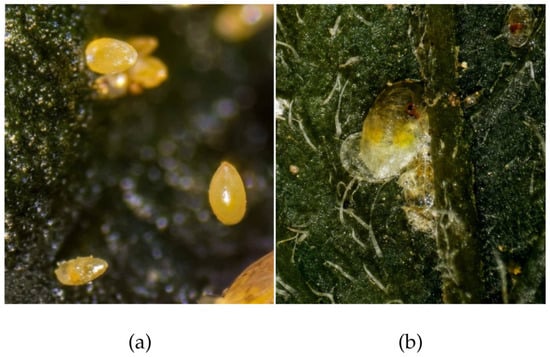
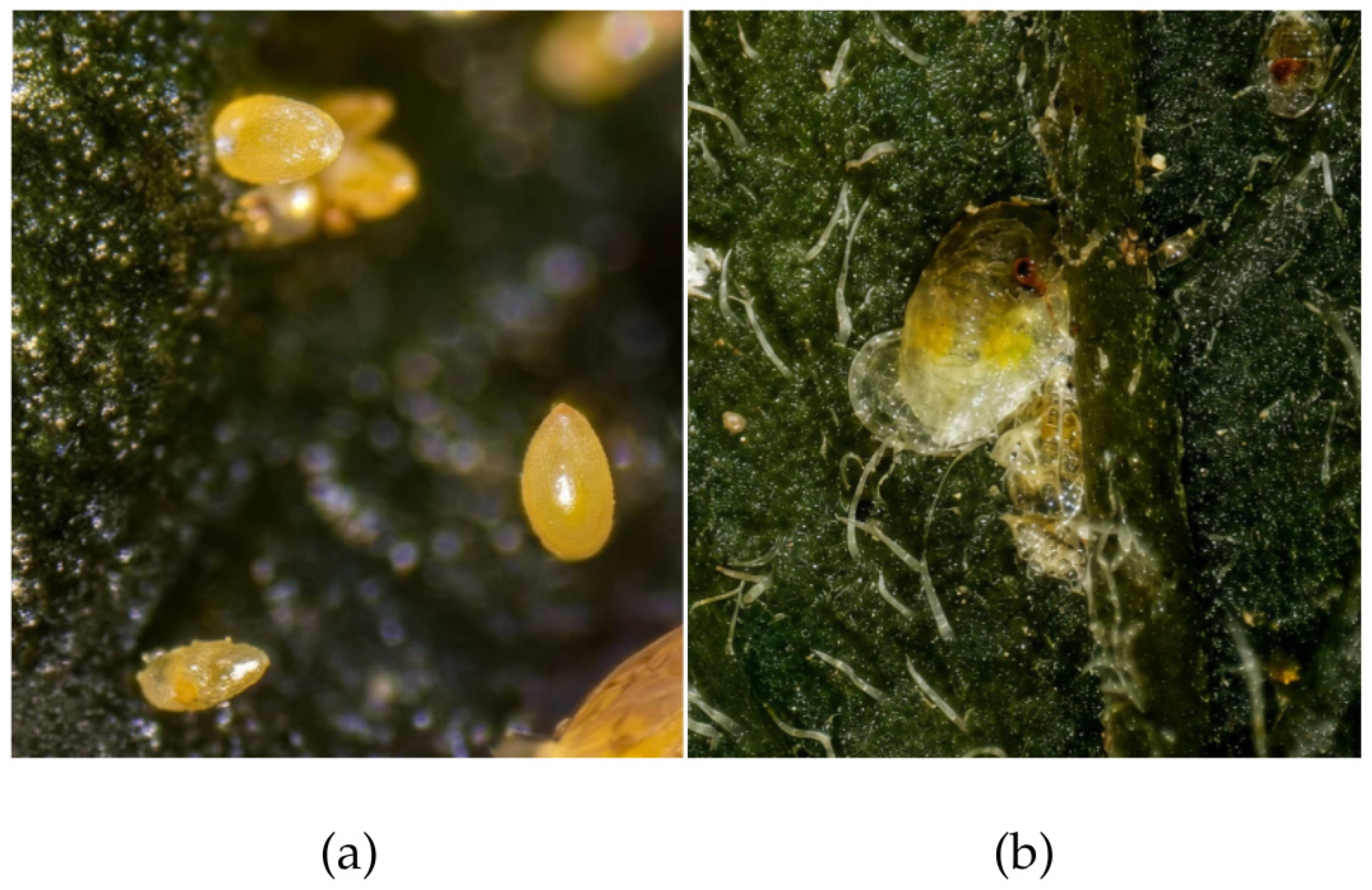
Notably, the substantial representation of D. citri aligns with field observations of severe HLB-like symptoms, especially in the poorly managed Location 3. This supports the hypothesis that inadequate field sanitation and higher weed density, conditions conducive to alternative psyllid hosts, may exacerbate vector prevalence and disease severity. To better understand the ecological context and potential sources of D. citri infestation within the orchards, we further examined the vegetation between crop rows, particularly the weedy undergrowth suspected of HLB insect vectors. This investigation aimed to determine whether common weed species serve as alternative hosts that support the psyllid life cycle, thereby sustaining populations even when primary citrus hosts are limited or treated with insecticides. We identified the pest insect community between crop rows where Bidens sp. was the predominant weed (Supplementary Video). Weed samples were collected, and voucher specimens were deposited at the Bioactive Compound Laboratory, the Faculty of Agriculture, CMU. The aerial parts were examined under a light microscope to detect evidence of Asian citrus psyllid. Various developmental stages of the psyllid were observed, including eggs, fifth-instar nymphs, and adults, as shown in Figure 2. Leaf tissues from the collected Bidens sp. plants were used for CLas DNA extraction. The plants were later identified as B. pilosa, which occurs in two forms: one with ray florets (radiated) and one without ray florets (discoid). When present, the ray florets range from white to salmon in colour, are approximately 5 mm long, and have cypselas primarily with 2–3 awns.
Figure 2.
Citrus psyllid (a) eggs and (b) 3–5 instar nymphs found on leaf surface of Bidens pilosa L.
3.3. Symptoms and Confirmation of CLas
The field assessment revealed a consistent progression of HLB symptoms in Citron, which were characterised by distinct foliar and fruit pathologies at each study site, as shown in Figure 1B–J. At Location 1, trees primarily displayed the diagnostic blotchy mottle and lopsided fruits (Figure 1B), undersized fruits containing shrivelled and aborted seeds (Figure 1C,D). Location 2 exhibited more advanced physiological stress, with leaves showing both asymmetrical mottling and zinc-like chlorosis (Figure 1E), while the fruits (Figure 1F,G) demonstrated significant colour inversion and a displaced central core upon internal examination. Finally, Location 3 presented the most chronic impacts of the disease, including thick, leathery leaves with prominent corky veins (Figure 1H) and severely stunted, greening fruits (Figure 1I,J) that failed to ripen and displayed a thickened, pale rind. Collectively, these observations across all three locations underscore a uniform high disease pressure, where the pathogen systematically disrupts both the photosynthetic capacity of the foliage and reproductive development.
Prior to molecular confirmation, field observations across all three locations revealed characteristic HLB-like symptoms, with severity increasing at lower elevations (Figure 1B–J). At Location 1, symptoms were mild with occasional blotchy mottle and slight leaf yellowing affecting less than 10% of the canopy. Location 2 displayed more pronounced scattered mottling and asymmetrical yellowing at approximately 25% severity, while Location 3 exhibited the most severe manifestations, including extensive blotchy mottle, stunted growth, sooty mould residues, and consistently malformed fruits at more than 40% severity. These observations provided the basis for targeted sample collection and subsequent molecular confirmation. The multiplex real-time PCR assay successfully differentiated CLas titres across the surveyed sites, as reflected by the target-specific FAM Ct values and relative fold changes (2−ΔΔCt) normalised against the internal control (HEX) and the positive control in Table 5. High CLas bacterial loads were prominently detected in sample L2R1 and the weed host (W1), yielding low Ct values of 19.54 and 18.52, which corresponded to substantial relative expression levels of 4628.24 and 210.84, respectively. In contrast, the remaining replicates at locations 1 and 3 exhibited significantly lower titres, with FAM Ct values ranging between 34.18 and 37.20, which indicated weak or late-stage amplification. Notably, target DNA was not detected in replicates L2R2, W2, and W3.
Table 5.
Quantification cycle (Ct) values for CLas diagnosis.
These findings imply that citron orchards in highland production systems cannot rely solely on elevation, low-temperature periods, or routine foliar insecticide sprays for protection. Instead, integrated epidemiological management will likely require coordinated vector control, removal or suppression of alternative weed hosts, and nutritional support to maintain root function and canopy integrity in infected trees.
4. Discussion
The quantitative contrasts among the three locations indicate that altitude, planting density, and maintenance intensity are likely contributors to differences in HLB prevalence. The superior health of trees at Location 1 likely stems from cooler temperatures and minimal insect pressure, suggesting that high-elevation environments may offer natural suppression of psyllid vectors [33,34]. Conversely, the high incidence of sooty mould and insect residues at Location 3 highlights a potential link between the absence of vector control and increased disease incidence [35]. Even with chemical intervention, the persistence of psyllids at certain sites suggests that dense vegetation and poor canopy management facilitate reinfestation, as noted by GottwaldGottwald [36]. While these site-level epidemiological patterns are informative, they must be interpreted with caution. These findings are derived from a single-period survey (April 2025) and a non-randomised sampling of three commercial blocks. Consequently, the results may not fully capture the heterogeneity of climatic regimes or management practices across the wider region. The associations identified between elevation, canopy management, and HLB-like symptoms should be regarded as exploratory and correlational rather than demonstrably causal. Future research employing randomised, longitudinal sampling is necessary to establish the causal mechanisms underlying these observed trends. The moderately acidic pH observed across locations is a critical determinant of orchard health, as pH influences the biological and chemical properties essential for growth [37]. While some nutrients are accessible in acidic conditions, the departure from near neutrality may limit the availability of essential minerals [38]. The significant enrichment of SOM in the rhizosphere driven by root exudates and microbial biomass creates a dynamic environment that supports a metabolically active microbiome. Beyond nutrition, high SOM is associated with beneficial taxa that trigger induced systemic resistance (ISR) via signalling pathways like jasmonic acid and salicylic acid [39,40]. HLB typically reduces fibrous root mass and induces nutrient deficiencies. However, evidence suggests that elevated SOM can mitigate these effects by stimulating root formation and mucigel production [41,42]. Given that growers must manage symptoms via nutrient application [43], the variations in K, Ca, and Mg across our sites are significant. K regulates stomatal function and structural barriers, while Ca is essential for cell-wall integrity and defence signalling [44,45]. The low Ca at Location 1 and potential B deficiencies elsewhere may explain differences in disease susceptibility, as resistant cultivars typically maintain higher levels of these minerals [46,47]. Our findings suggest that HLB risk in citron production is a spatial and management challenge. High-elevation blocks may benefit from “climatic suppression” of vectors, while warmer, densely planted lowland blocks favour psyllid persistence [34]. Furthermore, the shift in rhizosphere microbiome is often compromised by HLB. Li et al. [48] suggested that strategic manipulation of microbial populations, such as using Burkholderia sp., could offer a sustainable management path [49]. Collectively, these factors move citron production from being “low-risk by default” to “conditionally at-risk” based on vector ecology and soil management. Furthermore, multiple studies confirm that Hemiptera, including aphids and psyllids, are significant pests in citrus orchards and serve as vectors for serious plant diseases such as citrus greening (HLB) [50,51]. This psyllid is the confirmed vector of CLas, the causal agent of HLB, making its presence particularly alarming in all surveyed locations, especially in Location 3, where infestation levels were highest [51]. The identification of D. citri among other hemipterans such as Cicadellidae and Aleyrodidae suggests a complex and potentially competitive insect community, with implications for vector dynamics and disease spread. The detection of other Diptera families, such as Cecidomyiidae, and Coleoptera sp., including Coccinellidae (beneficial predators), further underscores the ecological interactions present in these citrus orchards [52,53]. D. citri utilises weeds and other secondary host plants as reservoirs or way stations while searching for preferred reproductive hosts such as citrus spp. and orange jasmine Murraya paniculata Jack (Rutaceae) [54]. In a study evaluating the survivorship and preference of the Asian citrus psyllid on potential secondary hosts, B. alba was selected due to its abundance in tropical citrus groves [55]. Additionally, Wenninger et al.Wenninger, et al. [56] suggested that D. citri exhibits attraction to certain visual cues such as yellow colouration, and Biden sp. produces yellow flowers. The in vitro study indicated that B. alba was the preferred weed choice, possibly due to accessible feeding sites on its main stem. The observations highlight the importance of plant physiology and architecture in conjunction with visual cues for host selection by D. citri. When evaluating secondary host plants for potential feeding and shelter, D. citri adults likely integrate information from several sensory modalities, especially when their primary citrus hosts are unavailable or rendered unpalatable by insecticide applications [55,57]. The detection of multiple life stages of D. citri on B. pilosa shifts the understanding of vector persistence in citron orchards. These findings suggest that non-citrus vegetation in the inter-row groundcover functions as a persistent reservoir for the vector. This is supported by electrical penetration graph (EPG) recordings, where no-choice behavioural assays demonstrated that D. citri adults can obtain nutrition through xylem feeding on weed species, allowing them to survive for short intervals when primary host conditions are unfavourable [10]. However, George, Kanissery, Ammar, Cabral, Markle, Patt and StelinskiGeorge, Kanissery, Ammar, Cabral, Markle, Patt and Stelinski [10] demonstrated that D. citri adults predominantly engage in xylem feeding on weed species including Bidens spp. The detection of CLas DNA in B. pilosa tissue in the present study may reflect bacterial deposition via salivary secretions during stylet probing or phloem penetration attempts, particularly by nymphs, which are known to engage in significantly more phloem ingestion activity and acquire CLas at substantially higher rates than adults [12]. Furthermore, CLas DNA detected by qPCR confirms the presence of bacterial genetic material, suggesting that B. pilosa may serve as a passive inoculum reservoir facilitating CLas persistence in the orchard environment between citrus flush periods [30,58].
Within citrus, CLas colonises the phloem sieve elements, which depend entirely on nutrients derived from the host because its reduced genome lacks essential biosynthetic pathways. In the psyllid vector, CLas infects the midgut and salivary glands, which propagate intracellularly within endoplasmic reticulum-derived vacuoles before being transmitted to new plants. This circulative–propagative transmission strategy, combined with physiological effects on the vector and its microbiome, facilitates efficient spread while highlighting the highly specialised intracellular pathogen and interspecies lifestyle [33,59,60,61]. These findings are consistent with regional and global studies reporting that high bacterial loads of HLB in citrus are associated with low qPCR Ct values and increased disease severity [58]. Mathematically, because raw qPCR Ct values possess an inverse, exponential relationship with initial template concentrations, calculating relative fold-changes through the 2−ΔΔCt method directly translates these logarithmic cycles into a linear, biological perspective, demonstrating how subtle micro-drops in Ct thresholds mirror exponential surges in CLas replication and severe host defence deregulation [62,63]. Specifically, the 2−ΔΔCt value reveals the exact relative fold-change of a target gene or bacterial gene marker in an infected sample compared with a healthy, uninfected control, normalised against an internal reference gene [64]. To analyse these data, a calculated value of 1.0 represents baseline or unchanged levels; values significantly greater than 1.0 indicate the exponential upregulation of host stress pathways or accelerating bacterial proliferation, whereas values below 1.0 signify a lower titre of the pathogen. Our results confirm that citron is a susceptible host for CLas, and that B. pilosa may act as a silent reservoir for both the vector and the pathogen. This reinforces global recommendations emphasising integrated weed and vector management as essential components of effective HLB control strategies [65,66]. HLB poses an exceptional management challenge due to the global susceptibility of all commercial citrus species and cultivars. Compounding this, HLB symptoms vary significantly across different citrus species and geographical regions, making diagnosis more complex. While leaf mottling and premature fruit drop are commonly observed, the disease’s devastating and complex nature impacts a broad spectrum of citrus, with symptoms differing even among cultivars [67,68]. HLB symptoms vary across commercial citrus species but share core manifestations that serve as diagnostic indicators. Infected mandarin (C. reticulata) typically presents as asymmetrical blotchy mottling mimicking nutrient deficiencies, alongside anatomical disruptions, including starch accumulation, phloem collapse and chloroplast degradation with lopsided and thicker-peeled fruits [62,69,70]. Sweet orange (C. sinensis) similarly exhibits blotchy mottle with yellow veins, canopy thinning, and small lopsided fruits retaining green at the blossom end, progressing to root decline and tree death [71,72]. Pummelo or C. maxima shows yellowed shoots and twig dieback, accompanied by poorly coloured, bitter-tasting fruits with aborted seeds, although some varieties display partial tolerance [63,73]. Lime (C. aurantifolia) and Kaffir lime (C. hystrix) share the characteristic blotchy mottling and lopsided fruits with irregular ripening, though C. hystrix is considered relatively tolerant, potentially due to enhanced defence mechanisms [74,75]. Across all species, these shared symptom profiles confirm HLB as a systemic, phloem-disrupting disease with broad host impact within the genus Citrus. As we mentioned above, HLB symptoms in citron, including varieties such as C. medica var. sarcodactylis (Buddha’s hand citron), exhibit susceptibility to HLB. Symptom manifestation in citron shares commonalities with other infected citrus species, while also presenting specific nuances depending on the geographical context. In China, HLB-infected citron typically presents with blotchy mottle and chlorotic patterns on leaves, yellow shoots, and a shortened tree height [1,76]. Infected leaves frequently display etiolation, indicative of chloroplast damage, and demonstrate an anomalous accumulation of starch. Affected fruits are often abnormal and improperly coloured, sometimes exhibiting “greening” or a distinctive “red nose fruit” appearance. These fruits are typically lopsided with a curved columella and contain mostly aborted seeds, with a notably lower sugar content in the juice [5]. Similarly, in the USA, particularly in states with high HLB prevalence such as Florida, Texas, and California, citron demonstrates susceptibility to the disease. General HLB symptoms observed across various citrus hosts in the USA, and thus applicable to citron, include blotchy mottle (asymmetrical yellowing) on leaves, often visually mimicking zinc deficiency. Other foliar symptoms encompass small and upright leaves, yellow shoots, and progressive twig dieback, contributing to overall tree decline. Fruits are typically small, lopsided, and poorly coloured, frequently retaining green at the stylar end. Aborted seeds are also present in these fruits, which have a distinctive acrid or salty flavour [77,78]. The primary vector responsible for HLB spread is the Asian citrus psyllid. As a previous report has demonstrated, psyllid adults can obtain nutrition through xylem feeding on weed species, enabling their survival for short intervals when primary host conditions are unfavourable [10]. In addition, temperature is a primary environmental determinant of HLB progression. CLas thrives in warmer climates typical of Florida, Brazil, and much of Asia. While extreme high temperatures (e.g., consistently above 38 °C) can reduce bacterial populations in plants and vectors and impair transmission efficiency, optimal temperatures between 16 and 33 °C (with a peak around 25 °C) are highly conducive to CLas proliferation and disease spread [76,79]. Consequently, variations in temperature, as might be expected across different highland locations, could directly influence the observed differences in pathogen concentration and disease severity. Moreover, the distribution and density of primary psyllid vectors are paramount to HLB spread. The presence of alternative host plants for D. citri further complicates disease management and epidemiology. For instance, in the present study, weeds identified as B. pilosa served as secondary hosts, harbouring various developmental stages of the psyllid, including eggs, nymphs, and adults.
5. Conclusions
This study provides the first field-based confirmation of HLB infection in citron in Chiang Mai, Thailand, expanding the known host range of CLas within Southeast Asia. Across the three surveyed orchards, disease severity was highest in low-elevation, poorly maintained fields with high weed density, high psyllid pressure, and reduced nutrient status. Our findings highlight the role of soil health, particularly soil organic matter and nutrient availability, in supporting root vigour and potentially mitigating HLB-induced decline. Importantly, we report the first field confirmation of B. pilosa serving as an alternative host for D. citri and as a reservoir for CLas under natural field conditions. The presence of psyllid eggs, nymphs, and adults on B. pilosa, alongside molecular detection of CLas in the weed tissue, highlights its role as a potential reservoir for both the vector and the pathogen. This discovery has substantial implications for HLB epidemiology and management, particularly in regions with dense inter-row weed growth. Together, these findings underscore the need for integrated HLB management strategies that incorporate vector control, weed management, and site-specific nutrient optimisation. Future research should prioritise evaluating the efficacy of weed management and soil amendment practices to maintain soil health, particularly through organic matter supplementation and adequate levels of Ca, K, and Mg to support root function and delay HLB-associated decline. Additionally, studies should focus on reducing vector persistence and quantifying the seasonal population dynamics of D. citri on B. pilosa and other weeds. These targeted investigations will inform the development of sustainable, region-specific strategies for long-term HLB suppression in citrus-growing areas.
Supplementary Materials
The following supporting information can be downloaded at https://www.mdpi.com/article/10.3390/crops6030058/s1. Supplementary video.
Author Contributions
S.R.S.: Formal Analysis, Investigation, Methodology, Validation, Visualisation, and Writing—Original Draft. J.S. and T.T.: Conceptualisation, Project Administration, and Writing—Review and Editing. K.P., K.C., C.C. and T.N.: Investigation and Methodology. All authors have read and agreed to the published version of the manuscript.
Funding
This research project was partially supported by Chiang Mai University.
Data Availability Statement
The data supporting the findings of this study are available and can be obtained from the corresponding author upon reasonable request.
Acknowledgments
We would like to especially thank Chiang Mai University, Thailand, and Dawn Food Products, Inc.
Conflicts of Interest
The authors declare no conflicts of interest.
Abbreviations
| CLas | Candidatus Liberibacter asiaticus |
| HLB | Citrus Huanglongbing |
| qPCR | Quantitative Polymerase Chain Reaction |
Appendix A
Figure A1.
Quantitative PCR (qPCR) amplification curves for the detection of Candidatus Liberibacter asiaticus (Las). (a) FAM channel amplification curves targeting the Clas gene region across various samples, positive control (PC), and negative control (NC) relative to a baseline-corrected fluorescence threshold of 20.0 RFU. (b) HEX channel amplification curves acting as the internal control (plant reference gene) to verify DNA extraction quality and the absence of PCR inhibition across all corresponding samples relative to a threshold of 28.0 RFU.
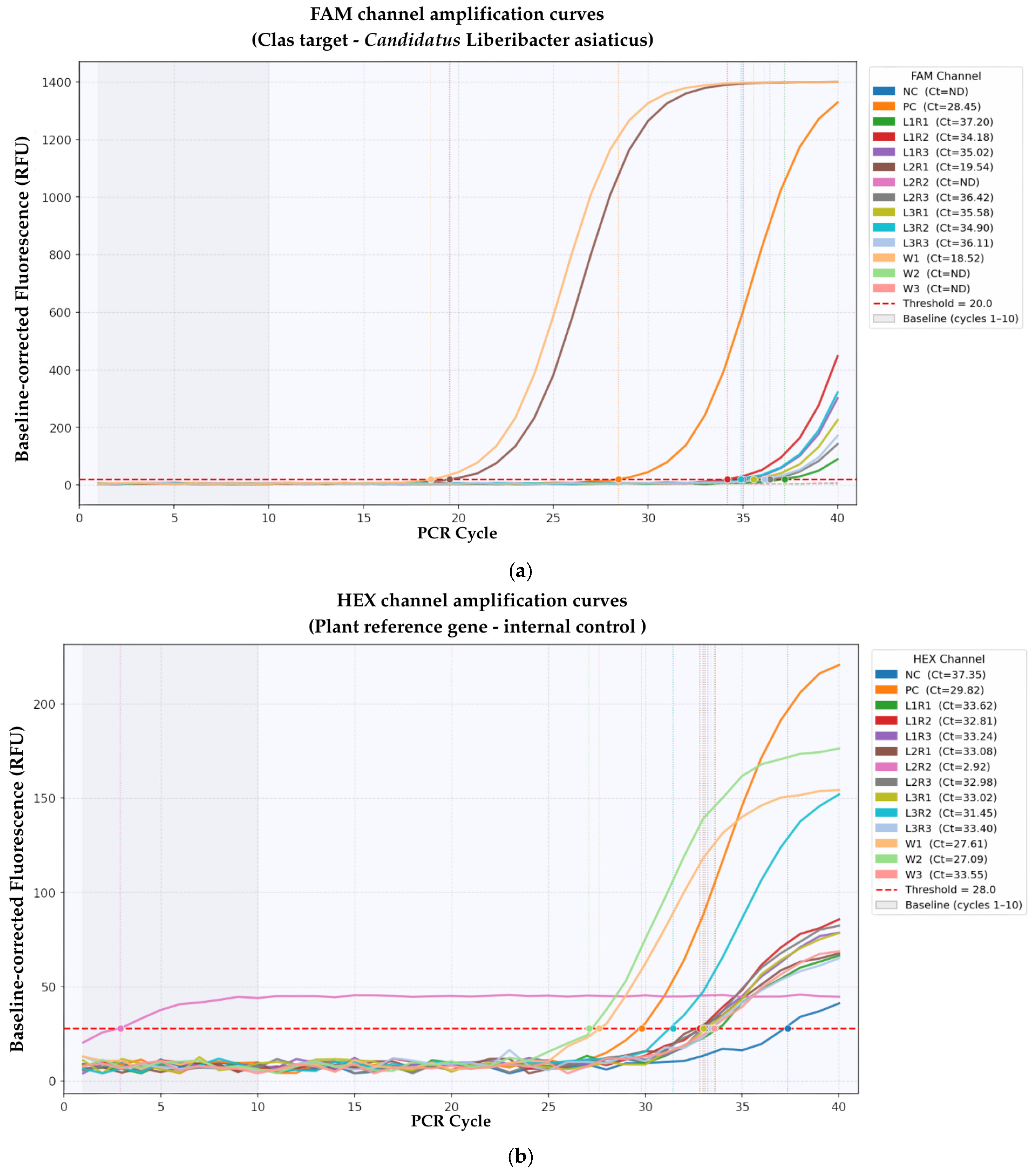
Figure A2.
Dual-channel standard curve validation for the duplex qPCR assay. FAM channel (CLas-specific target), limit of detection established at the 10−3 dilution (mean Ct = 38.00), as the 10−4 dilution (mean Ct = 39.11) overlapped with the NC mean (39.07). HEX channel (plant reference gene). The substantial and consistent discrepancy between FAM and HEX Ct values at each dilution point reflects the fundamental difference in molecular targets: CLas-specific low-copy DNA (FAM).
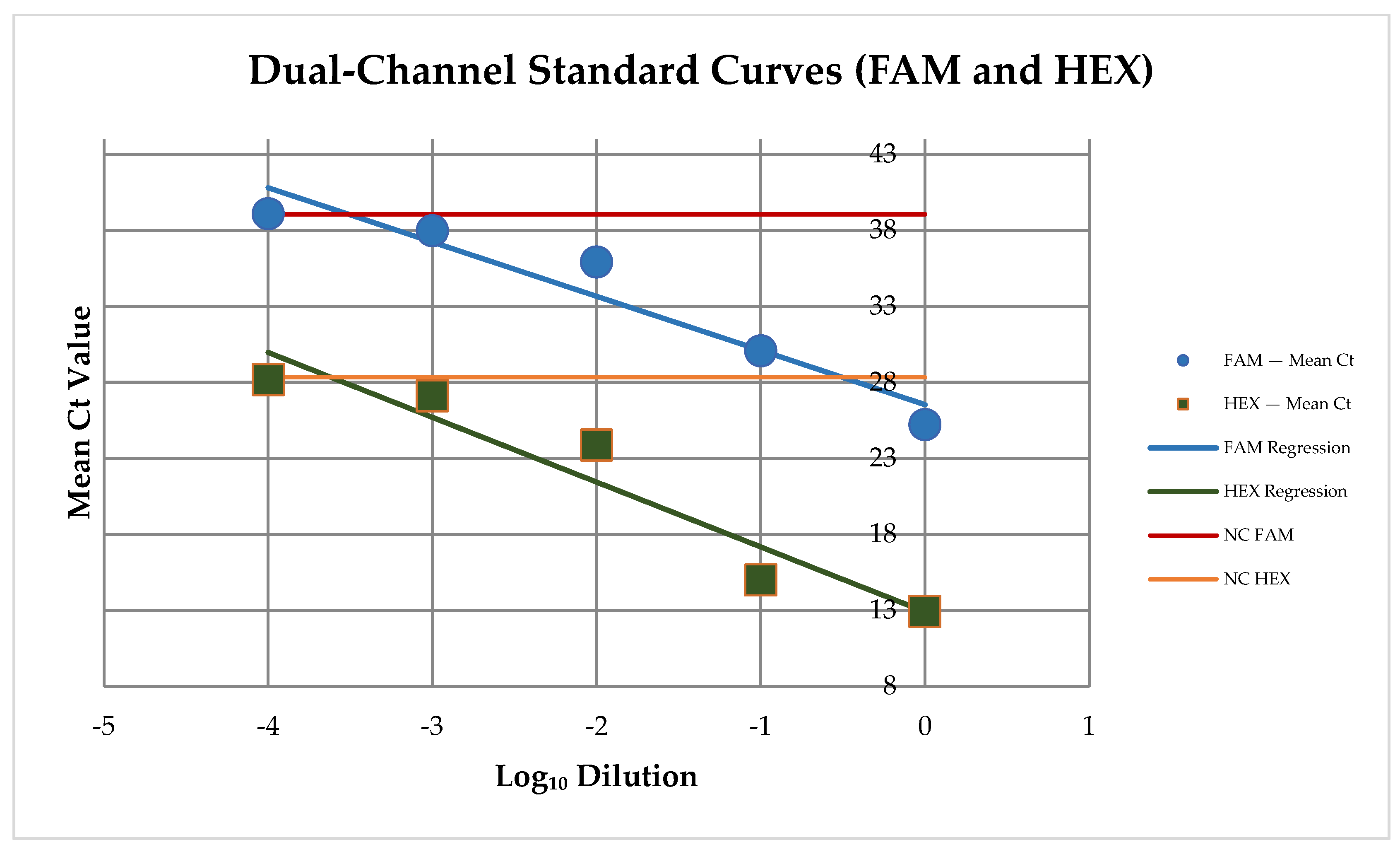
Table A1.
Primer set used for the detection of ‘Candidatus Liberibacter asiaticus’ species.
Table A2.
Master mix for ‘Candidatus Liberibacte africanus’ species primers used in a multiplex reaction.
References
- Karp, D.; Hu, X. The citron (Citrus medica L.) in China. In Horticultural Reviews; John Wiley & Sons, Inc.: Hoboken, NJ, USA, 2018; Volume 45, pp. 143–196, Reprint in The Citron Compendium: The Citron (Etrog) Citrus medica L.: Science and Tradition; Springer: Berlin/Heidelberg, Germany, 2023; pp. 217–263. [Google Scholar]
- Goldschmidt, E.E. New insights in citron (Citrus medica L.) genomics and fruit development. HortScience 2017, 52, 823–826. [Google Scholar] [CrossRef] [Scilit]
- Yang, X.; Li, H.; Liang, M.; Xu, Q.; Chai, L.; Deng, X. Genetic diversity and phylogenetic relationships of citron (Citrus medica L.) and its relatives in Southwest China. Tree Genet. Genomes 2015, 11, 129. [Google Scholar] [CrossRef] [Scilit]
- Wu, G.A.; Terol, J.; Ibanez, V.; López-García, A.; Pérez-Román, E.; Borredá, C.; Domingo, C.; Tadeo, F.R.; Carbonell-Caballero, J.; Alonso, R. Genomics of the origin and evolution of Citrus. Nature 2018, 554, 311–316. [Google Scholar] [CrossRef] [Scilit] [PubMed]
- Cai, Q.; Liu, C.; Yuan, M.; Pan, L.; Yang, Q.; Zhou, L. HLB induce changes in the tree physiology of citron (Citrus medica L. var. sarcodactylis Swingle). Physiol. Mol. Biol. Plants 2022, 28, 517–531. [Google Scholar] [CrossRef] [Scilit] [PubMed]
- Ghosh, D.; Motghare, M.; Gowda, S. Citrus greening: Overview of the most severe disease of citrus. Adv. Agric. Res. Technol. J. 2018, 2, 83–100. [Google Scholar]
- Lopes, S.A.; Luiz, F.; Martins, E.C.; Fassini, C.; Sousa, M.; Barbosa, J.C.; Beattie, G. Candidatus Liberibacter asiaticus’ titers in citrus and acquisition rates by Diaphorina citri are decreased by higher temperature. Plant Dis. 2013, 97, 1563–1570. [Google Scholar] [CrossRef] [Scilit] [PubMed]
- Holford, P.; Om, N.; Donovan, N.; Beattie, G.; Subandiyah, S.; Gunadi, R.; Poerwanto, M. High Altitudes Limit the Incidence of Huanglongbing snd Its Vector, Diaphorina citri, in Citrus Orchards. IOP Conf. Ser. Earth Environ. Sci. 2022, 1018, 012019. [Google Scholar] [CrossRef] [Scilit]
- Iftikhar, Y.; Rauf, S.; Shahzad, U.; Zahid, M.A. Huanglongbing: Pathogen detection system for integrated disease management—A review. J. Saudi Soc. Agric. Sci. 2016, 15, 1–11. [Google Scholar] [CrossRef] [Scilit]
- George, J.; Kanissery, R.; Ammar, E.-D.; Cabral, I.; Markle, L.T.; Patt, J.M.; Stelinski, L.L. Feeding behavior of Asian citrus psyllid [Diaphorina citri (Hemiptera: Liviidae)] nymphs and adults on common weeds occurring in cultivated citrus described using electrical penetration graph recordings. Insects 2020, 11, 48. [Google Scholar] [CrossRef] [Scilit] [PubMed]
- Keeley, M.; Rowland, D.; Vincent, C. Citrus photosynthesis and morphology acclimate to phloem-affecting huanglongbing disease at the leaf and shoot levels. Physiol. Plant. 2022, 174, e13662. [Google Scholar] [CrossRef] [Scilit] [PubMed]
- George, J.; Ammar, E.-D.; Hall, D.G.; Shatters, R.G., Jr.; Lapointe, S.L. Prolonged phloem ingestion by Diaphorina citri nymphs compared to adults is correlated with increased acquisition of citrus greening pathogen. Sci. Rep. 2018, 8, 10352. [Google Scholar] [CrossRef] [Scilit] [PubMed]
- Hall, D.G.; Richardson, M.L.; Ammar, E.D.; Halbert, S.E. Asian citrus psyllid, Diaphorina citri, vector of citrus huanglongbing disease. Entomol. Exp. Appl. 2013, 146, 207–223. [Google Scholar]
- Qiu, W.; Soares, J.; Pang, Z.; Huang, Y.; Sun, Z.; Wang, N.; Grosser, J.; Dutt, M. Potential mechanisms of AtNPR1 mediated resistance against Huanglongbing (HLB) in citrus. Int. J. Mol. Sci. 2020, 21, 2009. [Google Scholar] [CrossRef] [Scilit] [PubMed]
- Shi, Q.; Pitino, M.; Zhang, S.; Krystel, J.; Cano, L.M.; Shatters, R.G., Jr.; Hall, D.G.; Stover, E. Temporal and spatial detection of Candidatus Liberibacter asiaticus putative effector transcripts during interaction with Huanglongbing-susceptible,−tolerant, and-resistant citrus hosts. BMC Plant Biol. 2019, 19, 122. [Google Scholar] [CrossRef] [Scilit] [PubMed]
- Alves, M.N.; Lopes, S.A.; Raiol-Junior, L.L.; Wulff, N.A.; Girardi, E.A.; Ollitrault, P.; Peña, L. Resistance to ‘Candidatus Liberibacter asiaticus,’ the huanglongbing associated bacterium, in sexually and/or graft-compatible Citrus relatives. Front. Plant Sci. 2021, 11, 617664. [Google Scholar] [CrossRef] [Scilit] [PubMed]
- Ramadugu, C.; Keremane, M.L.; Halbert, S.E.; Duan, Y.P.; Roose, M.L.; Stover, E.; Lee, R.F. Long-term field evaluation reveals Huanglongbing resistance in Citrus relatives. Plant Dis. 2016, 100, 1858–1869. [Google Scholar] [CrossRef] [Scilit] [PubMed]
- Puttamuk, T.; Zhang, S.; Duan, Y.; Jantasorn, A.; Thaveechai, N. Effect of chemical treatments on ‘Candidatus Liberibacter asiaticus’ infected pomelo (Citrus maxima). Crop Prot. 2014, 65, 114–121. [Google Scholar] [CrossRef] [Scilit]
- Puttamuk, T.; Zhou, L.; Thaveechai, N.; Zhang, S.; Armstrong, C.M.; Duan, Y. Genetic diversity of Candidatus Liberibacter asiaticus based on two hypervariable effector genes in Thailand. PLoS ONE 2014, 9, e112968. [Google Scholar] [CrossRef] [Scilit] [PubMed]
- USDA. National Exotic Fruit Fly Detection Trapping Guidelines; USDA: Washington, DC, USA, 2015.
- Chinachanta, K.; Herrmann, L.; Lesueur, D.; Jongkaewwattana, S.; Santasup, C.; Shutsrirung, A. Influences of farming practices on soil properties and the 2-acetyl-1-pyrroline content of Khao Dawk Mali 105 rice grains. Appl. Environ. Soil Sci. 2020, 2020, 8818922. [Google Scholar] [CrossRef] [Scilit]
- Salehi, M.; Beni, O.H.; Harchegani, H.B.; Borujeni, I.E.; Motaghian, H. Refining soil organic matter determination by loss-on-ignition. Pedosphere 2011, 21, 473–482. [Google Scholar] [CrossRef] [Scilit]
- Palanivell, P.; Susilawati, K.; Ahmed, O.H.; Majid, N.M. Compost and crude humic substances produced from selected wastes and their effects on Zea mays L. nutrient uptake and growth. Sci. World J. 2013, 2013, 276235. [Google Scholar] [CrossRef] [Scilit] [PubMed]
- Bray, R.H.; Kurtz, L.T. Determination of total, organic, and available forms of phosphorus in soils. Soil Sci. 1945, 59, 39–46. [Google Scholar] [CrossRef] [Scilit]
- Chien, S.; Goh, K.; Ng, H. Use of Bray-2 test to evaluate available phosphorus in soils treated with phosphate rocks for oil palm: A review. Environ. Sci. Agric. Food Sci. 2018, 9, 64–72. [Google Scholar]
- Wolf, A.; Beegle, D. Recommended soil tests for macronutrients: Phosphorus, potassium, calcium, and magnesium. Recomm. Soil Test. Proced. Northeast. U. S. Northeast. Reg. Bull. 1995, 493, 25–34. [Google Scholar]
- Combatt Caballero, E.; Mercado Lázaro, J.; Begambre Berrio, A. Evaluation of available boron content using eight methods of extraction in different soils from Córdoba and sucre in Colombia. Commun. Soil Sci. Plant Anal. 2018, 49, 2016–2024. [Google Scholar] [CrossRef] [Scilit]
- Pat Barkley, P.H.; Davis, R.; Hailstones, D.; Donovan, N.; Miles, A.; Weinert, M.; Malipatil, M.; Beattie, A.; Gottwald, T.; Irey, M.; et al. National Diagnostic Protocol for ‘Candidatus Liberibacter asiaticus’, the putative causal agent of huanglongbing (HLB). In Agriculture; Australian Government: Canberra, Australia, 2019. [Google Scholar]
- Kakoti, R.K.; Nath, P.D.; Borah, M.; Barbora, A.C. Molecular detection of Candidatus liberibacter asiaticus causing huanglongbing (HLB) in khasi mandarin orchards (Citrus reticulata) of Assam, India. Int. J. Curr. Microbiol. Appl. Sci. 2020, 9, 1057–1061. [Google Scholar] [CrossRef] [Scilit]
- Li, W.; Hartung, J.S.; Levy, L. Quantitative real-time PCR for detection and identification of Candidatus Liberibacter species associated with citrus huanglongbing. J. Microbiol. Methods 2006, 66, 104–115. [Google Scholar] [CrossRef] [Scilit] [PubMed]
- Hocquellet, A.; Toorawa, P.; Bové, J.-M.; Garnier, M. Detection and identification of the two Candidatus Liberobacter species associated with citrus huanglongbing by PCR amplification of ribosomal protein genes of theβ operon. Mol. Cell. Probes 1999, 13, 373–379. [Google Scholar] [CrossRef] [Scilit] [PubMed]
- Bao, M.; Zheng, Z.; Sun, X.; Chen, J.; Deng, X. Enhancing PCR capacity to detect ‘Candidatus Liberibacter asiaticus’ utilizing whole genome sequence information. Plant Dis. 2020, 104, 527–532. [Google Scholar] [CrossRef] [Scilit] [PubMed]
- Bové, J.M. Huanglongbing: A destructive, newly-emerging, century-old disease of citrus. J. Plant Pathol. 2006, 88, 7–37. [Google Scholar]
- Liu, Y.H.; Tsai, J.H. Effects of temperature on biology and life table parameters of the Asian citrus psyllid, Diaphorina citri Kuwayama (Homoptera: Psyllidae). Ann. Appl. Biol. 2000, 137, 201–206. [Google Scholar] [CrossRef] [Scilit]
- Wilson, A.L.; Courtenay, O.; Kelly-Hope, L.A.; Scott, T.W.; Takken, W.; Torr, S.J.; Lindsay, S.W. The importance of vector control for the control and elimination of vector-borne diseases. PLoS Neglected Trop. Dis. 2020, 14, e0007831. [Google Scholar] [CrossRef] [Scilit] [PubMed]
- Gottwald, T.R. Current epidemiological understanding of citrus huanglongbing. Annu. Rev. Phytopathol. 2010, 48, 119–139. [Google Scholar] [CrossRef] [Scilit] [PubMed]
- Neina, D. The role of soil pH in plant nutrition and soil remediation. Appl. Environ. Soil Sci. 2019, 2019, 5794869. [Google Scholar] [CrossRef] [Scilit]
- Riaz, M.U.; Ayub, M.A.; Khalid, H.; ul Haq, M.A.; Rasul, A.; ur Rehman, M.Z.; Ali, S. Fate of micronutrients in alkaline soils. In Resources Use Efficiency in Agriculture; Springer: Berlin/Heidelberg, Germany, 2020; pp. 577–613. [Google Scholar]
- Pieterse, C.M.; Zamioudis, C.; Berendsen, R.L.; Weller, D.M.; Van Wees, S.C.; Bakker, P.A. Induced systemic resistance by beneficial microbes. Annu. Rev. Phytopathol. 2014, 52, 347–375. [Google Scholar] [CrossRef] [Scilit] [PubMed]
- Vallad, G.E.; Goodman, R.M. Systemic acquired resistance and induced systemic resistance in conventional agriculture. Crop Sci. 2004, 44, 1920–1934. [Google Scholar] [CrossRef] [Scilit]
- Trinchera, A.; Torrisi, B.; Allegra, M.; Rinaldi, S.; Rea, E.; Intrigliolo, F.; Roccuzzo, G. Effects of organic fertilization on soil organic matter and root morphology and density of orange trees. Acta Hortic. 2015, 1065, 1807–1814. [Google Scholar] [CrossRef] [Scilit]
- Hallman, L.M.; Fox, J.-P.; Paoli, J.P.; Hussain, K.; Wright, A.L.; Rossi, L. Soil organic matter influences citrus growth, nutrient uptake, and root system architecture. HortScience 2024, 59, 1781–1788. [Google Scholar] [CrossRef] [Scilit]
- Kadyampakeni, D.M.; Chinyukwi, T. Are macronutrients and micronutrients therapeutic for restoring performance of trees affected by citrus greening? A discussion of current practices and future research opportunities. J. Plant Nutr. 2021, 44, 2949–2969. [Google Scholar] [CrossRef] [Scilit]
- Spann, T.M.; Schumann, A.W. The Role of Plant Nutrients in Disease Development with Emphasis on Citrus and Huanglongbing; IFAS: Gainesville, IL, USA, 2009. [Google Scholar]
- Zekri, M.; Obreza, T. Importance of Nutrients for Citrus Trees; IFAS: Gainesville, IL, USA, 2012; pp. 6–16. [Google Scholar]
- Uthman, A.; Garba, Y. Citrus mineral nutrition and health benefits: A review. In Citrus Research-Horticultural and Human Health Aspects; IntechOpen: London, UK, 2023. [Google Scholar]
- Tadayon, M.S. The role of nutritional management in improving the symptoms of citrus decline. J. Plant Nutr. 2020, 43, 1555–1570. [Google Scholar] [CrossRef] [Scilit]
- Li, H.; Song, F.; Wu, X.; Deng, C.; Xu, Q.; Peng, S.a.; Pan, Z. Microbiome and metagenome analysis reveals huanglongbing affects the abundance of citrus rhizosphere bacteria associated with resistance and energy metabolism. Horticulturae 2021, 7, 151. [Google Scholar] [CrossRef] [Scilit]
- Zhang, Y.; Xu, J.; Riera, N.; Jin, T.; Li, J.; Wang, N. Huanglongbing impairs the rhizosphere-to-rhizoplane enrichment process of the citrus root-associated microbiome. Microbiome 2017, 5, 97. [Google Scholar] [CrossRef] [Scilit] [PubMed]
- Pitino, M.; Hoffman, M.T.; Zhou, L.; Hall, D.G.; Stocks, I.C.; Duan, Y. The phloem-sap feeding mealybug (Ferrisia virgata) carries ‘Candidatus Liberibacter asiaticus’ populations that do not cause disease in host plants. PLoS ONE 2014, 9, e85503. [Google Scholar] [CrossRef] [Scilit] [PubMed]
- Leong, S.S.; Leong, S.C.; Beattie, G.A. Integrated pest management strategies for Asian citrus psyllid Diaphorina citri Kuwayama (Hemiptera: Psyllidae) and huanglongbing in citrus for Sarawak, East Malaysia, Borneo. Insects 2022, 13, 960. [Google Scholar] [CrossRef] [Scilit] [PubMed]
- Ducatti, R.; Tironi, S.; Mariano-da-Silva, S.; Radünz, A.; Tramontin, M. First report of Coccinellid (Coleoptera: Coccinellidae) species found on Citrus orchards from the Central-West region of Santa Catarina, Brazil. Braz. J. Biol. 2019, 80, 482–484. [Google Scholar]
- Irvin, N.A.; Milosavljević, I.; Hoddle, M.S. Monitoring of coccinellid (Coleoptera) presence and syrphid (Diptera) species diversity and abundance in southern California citrus orchards: Implications for conservation biological control of Asian citrus psyllid and other citrus pests. Fla. Entomol. 2024, 107, 20240060. [Google Scholar] [CrossRef] [Scilit]
- Thakuria, D.; Chaliha, C.; Dutta, P.; Sinha, S.; Uzir, P.; Singh, S.B.; Hazarika, S.; Sahoo, L.; Kharbikar, L.; Singh, D. Citrus Huanglongbing (HLB): Diagnostic and management options. Physiol. Mol. Plant Pathol. 2023, 125, 102016. [Google Scholar] [CrossRef] [Scilit]
- Johnston, N.; Stansly, P.A.; Stelinski, L.L. Secondary hosts of the Asian citrus psyllid, Diaphorina citri Kuwayama: Survivorship and preference. J. Appl. Entomol. 2019, 143, 921–928. [Google Scholar] [CrossRef] [Scilit]
- Wenninger, E.J.; Stelinski, L.L.; Hall, D.G. Roles of olfactory cues, visual cues, and mating status in orientation of Diaphorina citri Kuwayama (Hemiptera: Psyllidae) to four different host plants. Environ. Entomol. 2009, 38, 225–234. [Google Scholar] [CrossRef] [Scilit] [PubMed]
- Stelinski, L.L. Ecological aspects of the vector-borne bacterial disease, citrus greening (Huanglongbing): Dispersal and host use by Asian citrus psyllid, Diaphorina citri Kuwayama. Insects 2019, 10, 208. [Google Scholar] [CrossRef] [Scilit] [PubMed]
- Keremane, M.L.; McCollum, T.G.; Roose, M.L.; Lee, R.F.; Ramadugu, C. An improved reference gene for detection of “Candidatus Liberibacter asiaticus” associated with citrus huanglongbing by qPCR and digital droplet PCR assays. Plants 2021, 10, 2111. [Google Scholar] [CrossRef] [Scilit] [PubMed]
- Jagoueix, S.; Bove, J.-M.; Garnier, M. The phloem-limited bacterium of greening disease of citrus is a member of the α subdivision of the Proteobacteria. Int. J. Syst. Evol. Microbiol. 1994, 44, 379–386. [Google Scholar] [CrossRef] [Scilit] [PubMed]
- Achor, D.; Welker, S.; Ben-Mahmoud, S.; Wang, C.; Folimonova, S.Y.; Dutt, M.; Gowda, S.; Levy, A. Dynamics of Candidatus Liberibacter asiaticus movement and sieve-pore plugging in citrus sink cells. Plant Physiol. 2020, 182, 882–891. [Google Scholar] [PubMed]
- Darolt, J.C.; Bento, F.d.M.M.; Merlin, B.L.; Peña, L.; Cônsoli, F.L.; Wulff, N.A. The genome of “Candidatus Liberibacter asiaticus” is highly transcribed when infecting the gut of Diaphorina citri. Front. Microbiol. 2021, 12, 687725. [Google Scholar] [CrossRef] [Scilit] [PubMed]
- Kim, J.-S.; Sagaram, U.S.; Burns, J.K.; Li, J.-L.; Wang, N. Response of sweet orange (Citrus sinensis) to ‘Candidatus Liberibacter asiaticus’ infection: Microscopy and microarray analyses. Phytopathology 2009, 99, 50–57. [Google Scholar] [CrossRef] [Scilit] [PubMed]
- Gao, C.; Li, C.; Li, Z.; Liu, Y.; Li, J.; Guo, J.; Mao, J.; Fang, F.; Wang, C.; Deng, X. Comparative transcriptome profiling of susceptible and tolerant citrus species at early and late stage of infection by “Candidatus Liberibacter asiaticus”. Front. Plant Sci. 2023, 14, 1191029. [Google Scholar] [CrossRef] [Scilit] [PubMed]
- Livak, K.J.; Schmittgen, T.D. Analysis of relative gene expression data using real-time quantitative PCR and the 2−ΔΔCT method. Methods 2001, 25, 402–408. [Google Scholar] [CrossRef] [Scilit] [PubMed]
- Garcia, A.G.; Jamielniak, J.A.; Diniz, A.J.; Parra, J.R. The importance of Integrated Pest Management to flatten the huanglongbing (HLB) curve and limit its vector, the Asian citrus psyllid. Entomol. Gen. 2022, 42, 349–359. [Google Scholar] [CrossRef] [Scilit]
- Pérez-Hedo, M.; Hoddle, M.S.; Alferez, F.; Batista, L.; Beattie, G.A.; Chakravarty, S.; Holford, P.; Khamis, F.M.; Ajene, I.J.; Manrakhan, A. Global strategies to manage huanglongbing (HLB) and its vectors: Insights and implications for the Mediterranean region. Entomol. Gen. 2025, 45, 1. [Google Scholar] [CrossRef] [Scilit]
- Gill, R.A.; Li, X.; Duan, S.; Xing, Q.; Müller-Xing, R. Citrus threat huanglongbing (HLB)-Could the rootstock provide the cure? Front. Plant Sci. 2024, 15, 1330846. [Google Scholar] [CrossRef] [Scilit] [PubMed]
- Tang, L.; Singh, S.; Vashisth, T. Association between fruit development and mature fruit drop in Huanglongbing-affected sweet orange. HortScience 2020, 55, 851–857. [Google Scholar] [CrossRef] [Scilit]
- Zhong, Y.; Cheng, C.; Jiang, B.; Jiang, N.; Zhang, Y.; Hu, M.; Zhong, G. Digital gene expression analysis of Ponkan mandarin (Citrus reticulata Blanco) in response to Asia citrus psyllid-vectored Huanglongbing infection. Int. J. Mol. Sci. 2016, 17, 1063. [Google Scholar] [CrossRef] [Scilit] [PubMed]
- Sajid, A.; Iftikhar, Y.; Ghazanfar, M.U.; Mubeen, M.; Hussain, Z.; Moya-Elizondo, E.A. Morpho-chemical characterization of Huanglongbing in mandarin (Citrus reticulata) and orange (Citrus sinensis) varieties from Pakistan. Chil. J. Agric. Res. 2022, 82, 484–492. [Google Scholar] [CrossRef] [Scilit]
- Tang, L.; Chhajed, S.; Vashisth, T. Preharvest fruit drop in Huanglongbing-affected ‘Valencia’sweet orange. J. Am. Soc. Hortic. Sci. 2019, 144, 107–117. [Google Scholar] [CrossRef] [Scilit]
- Neupane, A.; Shahzad, F.; Bernardini, C.; Levy, A.; Vashisth, T. Poor shoot and leaf growth in Huanglongbing-affected sweet orange is associated with increased investment in defenses. Front. Plant Sci. 2023, 14, 1305815. [Google Scholar] [CrossRef] [Scilit] [PubMed]
- Stover, E.; McCollum, G.T.; Driggers, R.; Lee, R.; Shatters, R., Jr.; Duan, Y.; Ritenour, M.; Chaparro, J.X.; Hall, D.G. Resistance and tolerance to Huanglongbing in citrus. Acta Hortic. 2015, 1065, 899–903. [Google Scholar] [CrossRef] [Scilit]
- Estrella-Maldonado, H.; González-Cruz, C.; Matilde-Hernández, C.; Adame-García, J.; Santamaría, J.M.; Santillán-Mendoza, R.; Flores-De la Rosa, F.R. Insights into the molecular basis of huanglongbing tolerance in Persian lime (Citrus latifolia Tan.) through a transcriptomic approach. Int. J. Mol. Sci. 2023, 24, 7497. [Google Scholar] [CrossRef] [Scilit] [PubMed]
- Gottwald, T.R.; Graça, J.V.d.; Bassanezi, R.B. Citrus huanglongbing: The pathogen and its impact. Plant Health Prog. 2007, 8, 31. [Google Scholar] [CrossRef] [Scilit]
- Zhang, J.; Liu, Y.; Gao, J.; Yuan, C.; Zhan, X.; Cui, X.; Zheng, Z.; Deng, X.; Xu, M. Current epidemic situation and control status of citrus Huanglongbing in Guangdong China: The space–time pattern analysis of specific orchards. Life 2023, 13, 749. [Google Scholar] [CrossRef] [Scilit] [PubMed]
- Miles, G.P.; Stover, E.; Ramadugu, C.; Keremane, M.L.; Lee, R.F. Apparent tolerance to huanglongbing in citrus and citrus-related germplasm. HortScience 2017, 52, 31–39. [Google Scholar] [CrossRef] [Scilit]
- Stover, E.; Hall, D.G.; Shatters, R.G., Jr.; Moore, G.A. Influence of citrus source and test genotypes on inoculations with Candidatus Liberibacter asiaticus. HortScience 2016, 51, 805–809. [Google Scholar] [CrossRef] [Scilit]
- Wu, F.; Huang, J.; Xu, M.; Fox, E.G.; Beattie, G.A.C.; Holford, P.; Cen, Y.; Deng, X. Host and environmental factors influencing ‘Candidatus Liberibacter asiaticus’ acquisition in Diaphorina citri. Pest Manag. Sci. 2018, 74, 2738–2746. [Google Scholar] [CrossRef] [Scilit] [PubMed]

Disclaimer/Publisher’s Note: The statements, opinions and data contained in all publications are solely those of the individual author(s) and contributor(s) and not of MDPI and/or the editor(s). MDPI and/or the editor(s) disclaim responsibility for any injury to people or property resulting from any ideas, methods, instructions or products referred to in the content. |
© 2026 by the authors. Licensee MDPI, Basel, Switzerland. This article is an open access article distributed under the terms and conditions of the Creative Commons Attribution (CC BY) license.